Saturday, 7 December 2019

Porky Hefer's Molecules are hanging seats modelled on chemical compounds

South African designer Porky Hefer has extended his collection of hanging chairs at this year's Design Miami with a series of leathery seats that each represent a different molecular compound.
Porky Hefer Southern Guild at Design Miami
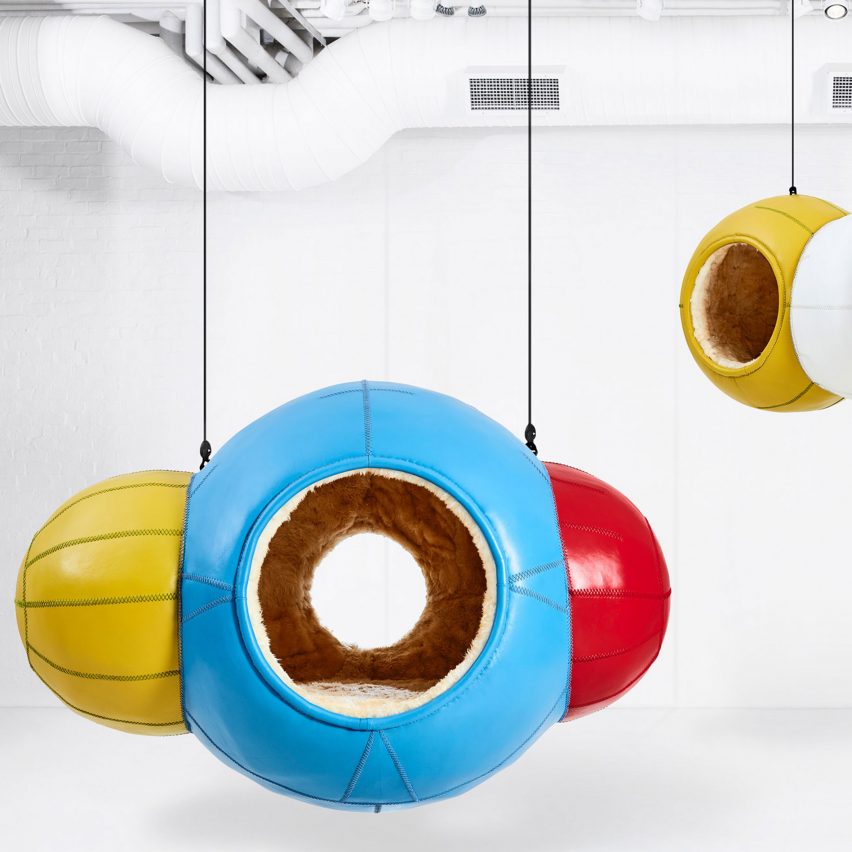
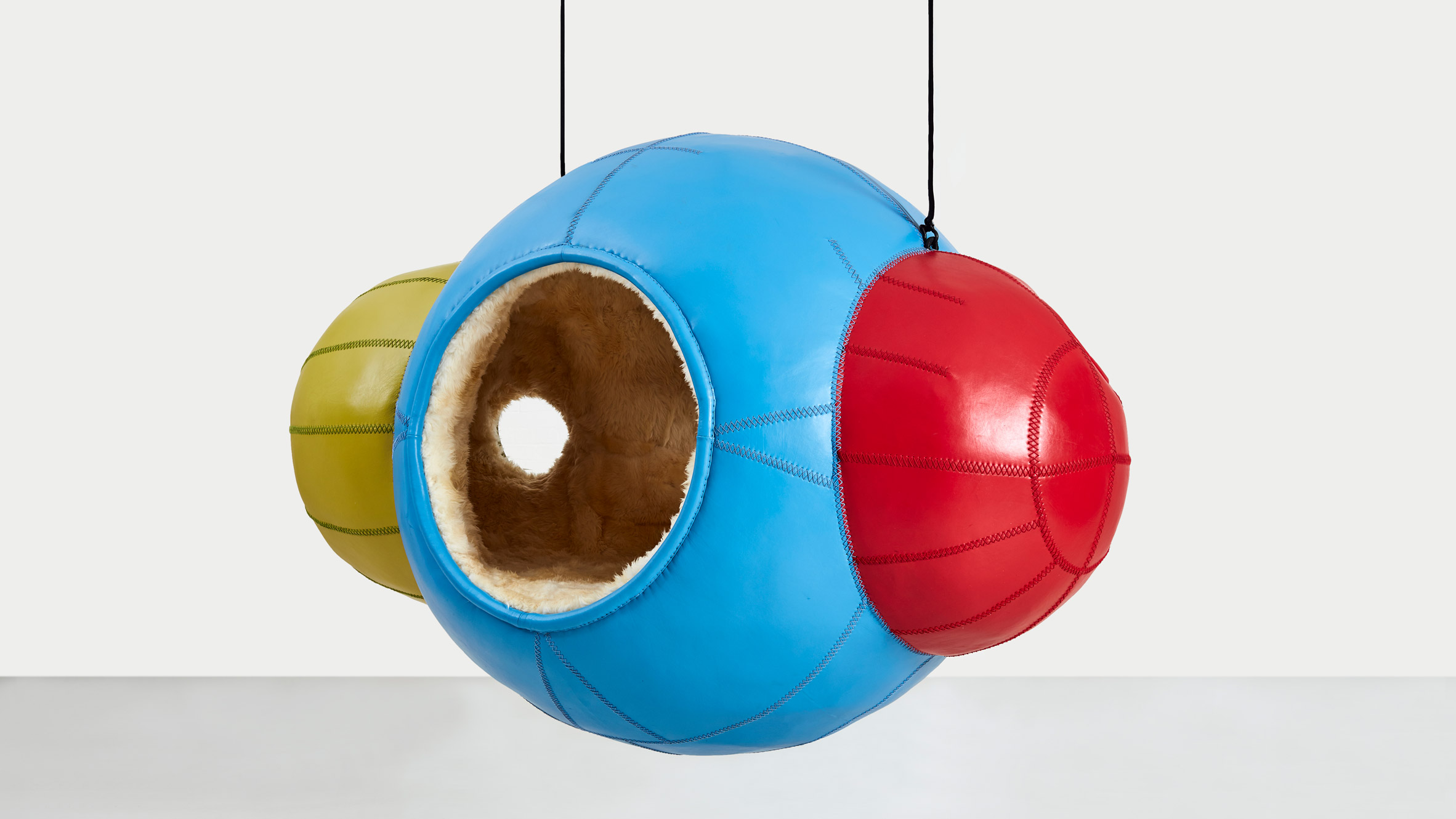
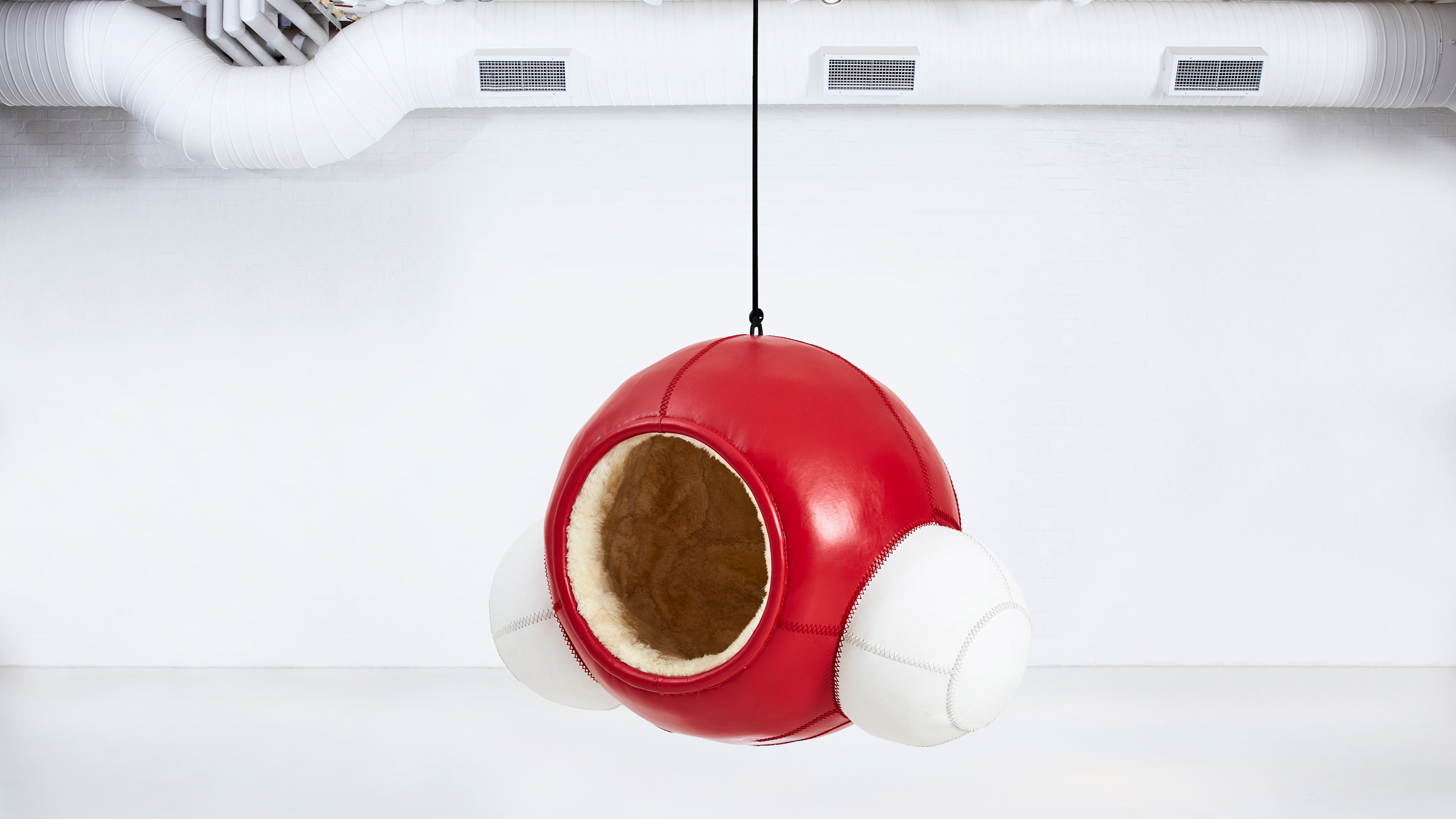
Each Molecules chair are modelled on a different molecular compound, with the stitched leather colours representing a different atom

The Molecules collection comprises three hanging seats modelled on a different chemical compound: Dihydrogen Monoxide, Fluoroheliate Monoxide and Hydrogen Difluoride.

Each comprises three rounded forms that are covered in a colour level to represent the different atoms, with white used for hydrogen, red used for oxygen, and green for chlorine. Hefer crafted the forms from a steel frame and then worked with Cape Town leather company Wolf & Maiden.
Porky Hefer Southern Guild at Design Miami
The chairs are hung from a cord and lined with a cosy sheepskin interior

Circular openings puncture the forms to allow people to crawl into the pods, which are covered in a cosy white sheepskin.

The trio are all designed to hang from the ceiling by cables, and follow from a series of imaginative, hanging chairs created by Hefer. Others include human-sized nests made from woven plant stalks and a chair shaped like a killer whale that he exhibited at Design Miami 2015.
Southern Guild at Design Miami
Hefer's series forms part of a Design Miami exhibit of South African designers that also includes works by Dokter and Misses

Also presented at this year's Design Miami, Molecules forms the centrepiece South African design collective Southern Guild's exhibit at Design Miami 2019. All of the displayed pieces are newly launched collections from the collective’s South African talent. Southern Guild described their booth as "an exploration of vibrant colour, futuristic forms and strong shapes."

"Rather than commenting on what it means to be a designer in South Africa today, these works remain open-ended and serve as observations and poetic glyphs that ask us to reflect on our relationships with each other and the world around us," said Julian McGowan, co-founder of Southern Guild.

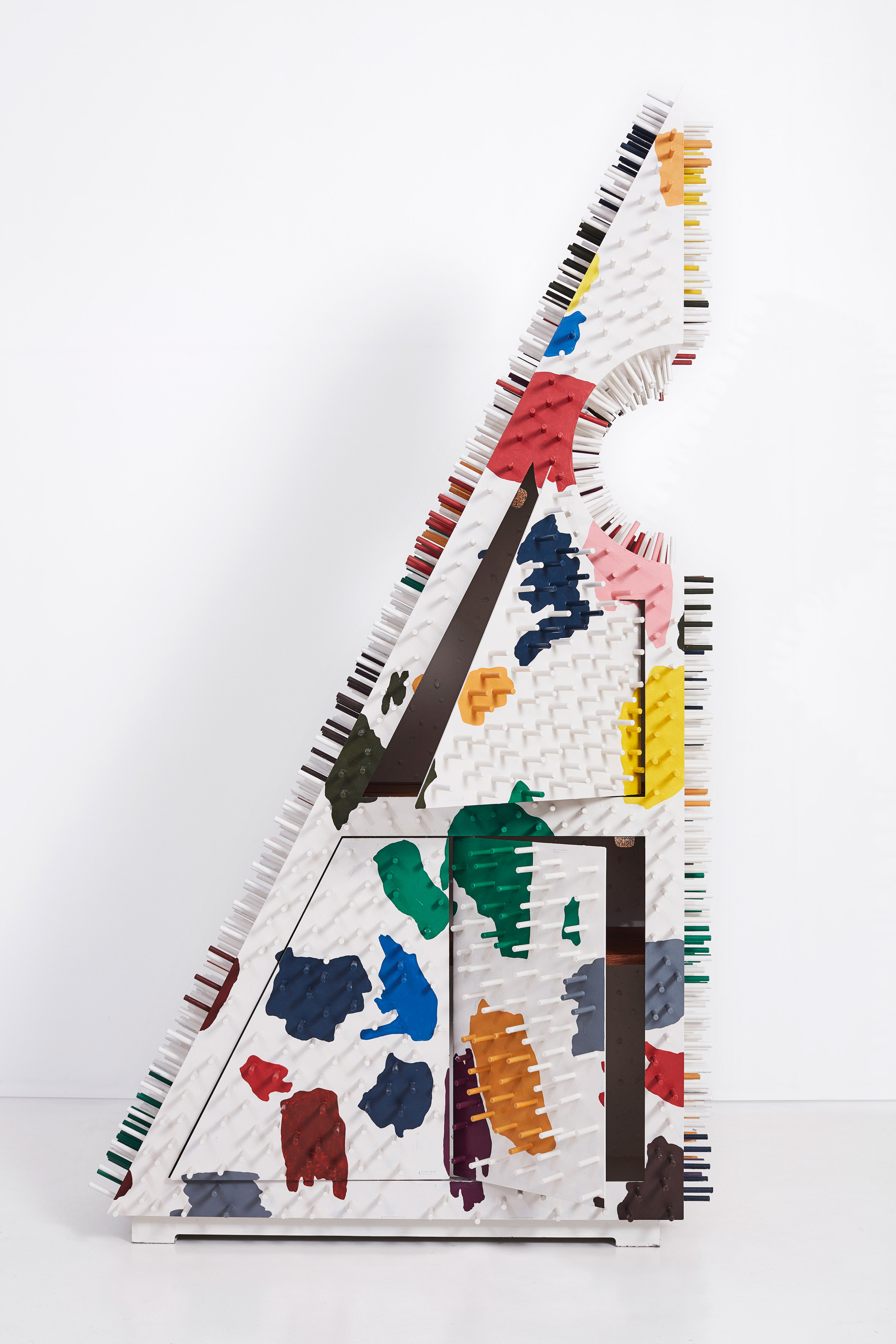
Five pieces from Dokter and Misses's series Practically Everywhere are also on display in the gallery’s space. The shelving units and cabinets combine jagged shapes and overlaid textures.
Southern Guild at Design Miami
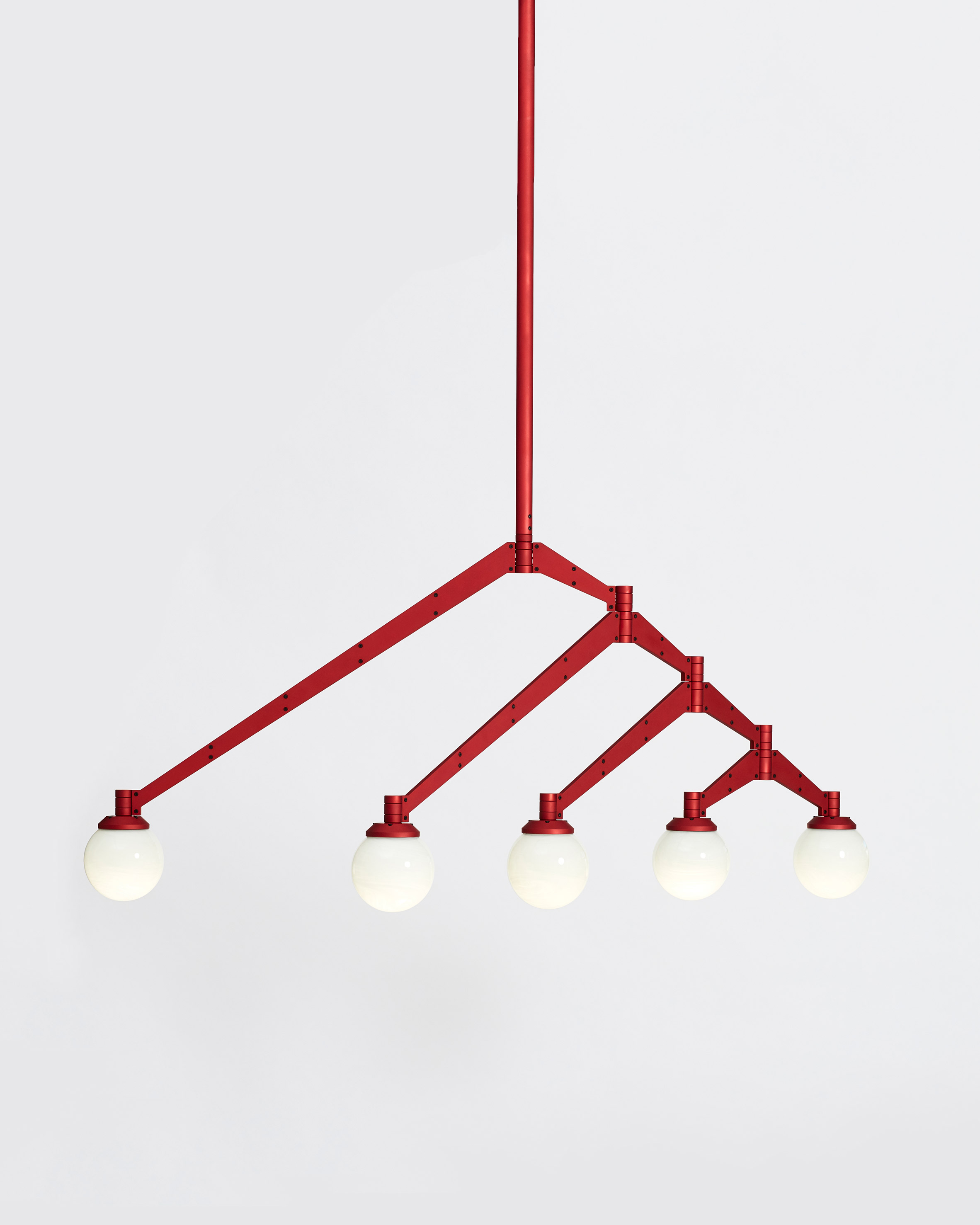
MAK and Nøde presented a light fixture that features red aluminium arms with spherical glass bulbs

Dokter and Misses came up with the piece’s unique designs during observation of the routine happenings of downtown Johannesburg. The design's uneven forms and use of pattern are evocative of Tramp Art – a technique that involves layering small geometric shapes of salvaged wood.

"The works were inspired by the entropy and oversaturation the designers experience on a daily basis in downtown Johannesburg and in urban ecosystems in general," Southern Guild said. "Inspired in part by Tramp Art and the notion of needing to be busy, the cabinets and desk make use of irregular forms and dysfunctional clutter."
Southern Guild at Design Miami
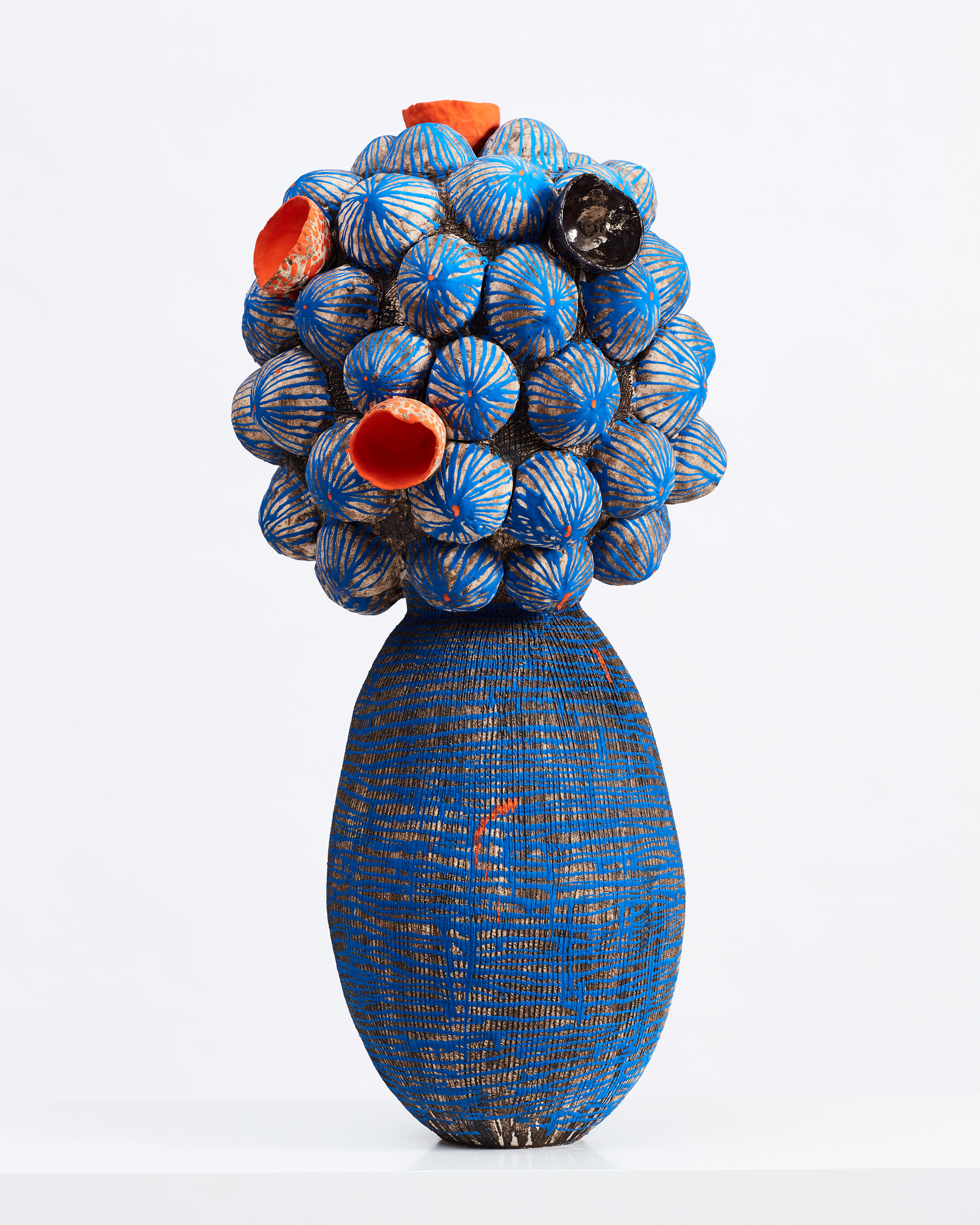
Zizipho Poswa showcased colourful ceramic works made from stoneware clay

A light fixture with five aluminium arms and spherical glass-blown lights by MAK and Nøde is also featured. Other sculptures and furnishings including a bronze figure by Justine Mahoney and colourful ceramic works by Zizipho Poswa.
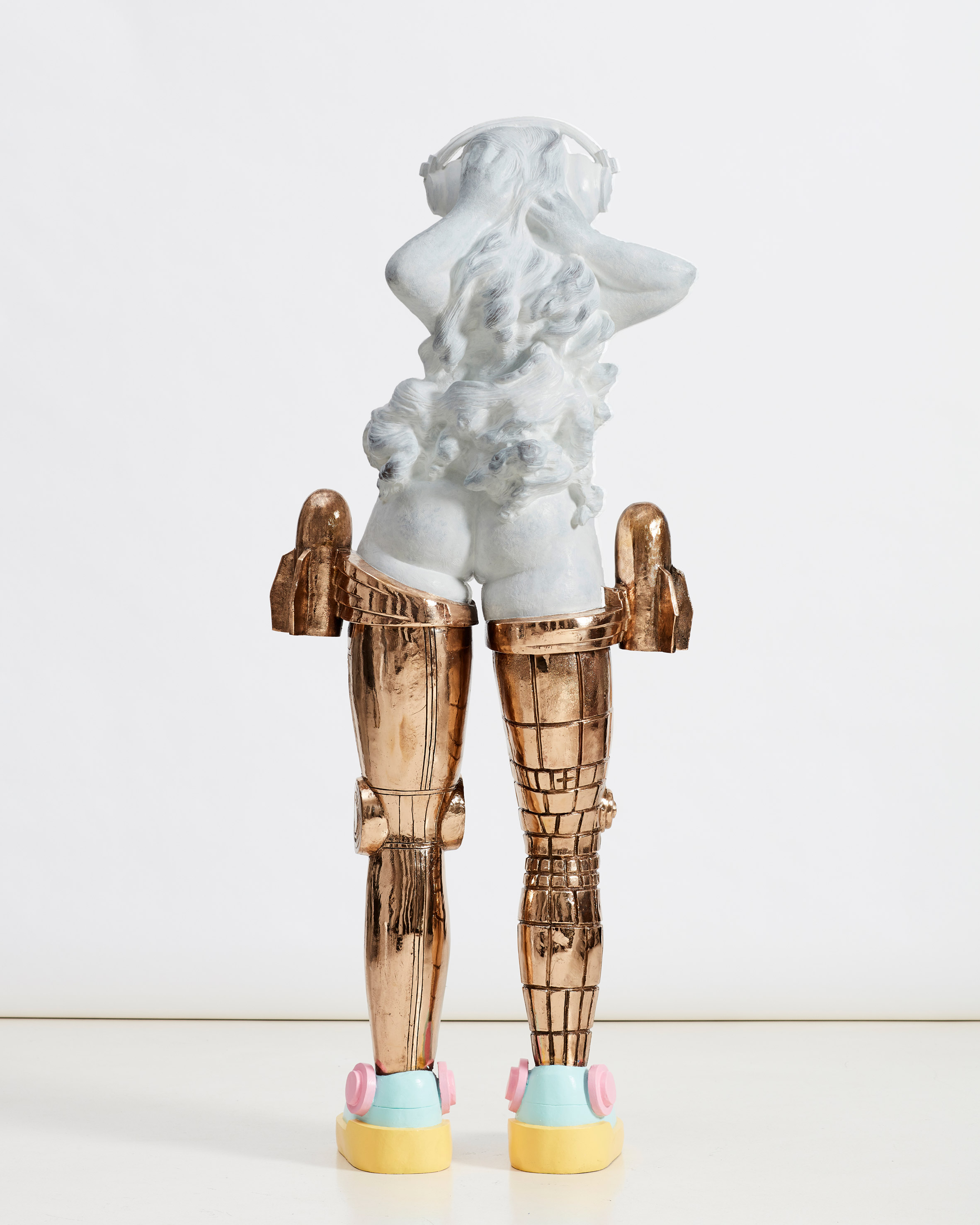
Southern Guild at Design Miami
A bronze figurine by Justine Mahoney was also on display in Southern Guild's booth at Design Miami

Southern Guild is a design collective in South Africa founded in 2008 by Trevyn and Julian McGowan. It commissions, produces and exhibits works by a number of South African artists and designers.

Previous project by its designers include a series of surrealist light fixtures that Dokter and Misses created to experiment with glass and a lamp that mimics the trajectory of an orbiting moon.

Design Miami is taking place from 3 to 8 December 2019. Other works showcased during the event include a sofa stuffed with old Balenciaga clothing and futuristic furniture by Daniel Arsham.

Photography is by Hayden Phipps.

The post Porky Hefer's Molecules are hanging seats modelled on chemical compounds appeared first on Dezeen.


from Dezeen https://ift.tt/2PkTC6h

CROX designs aluminium-clad museum shaped like an instrument

Liyang Museum Floating Melodies by CROX

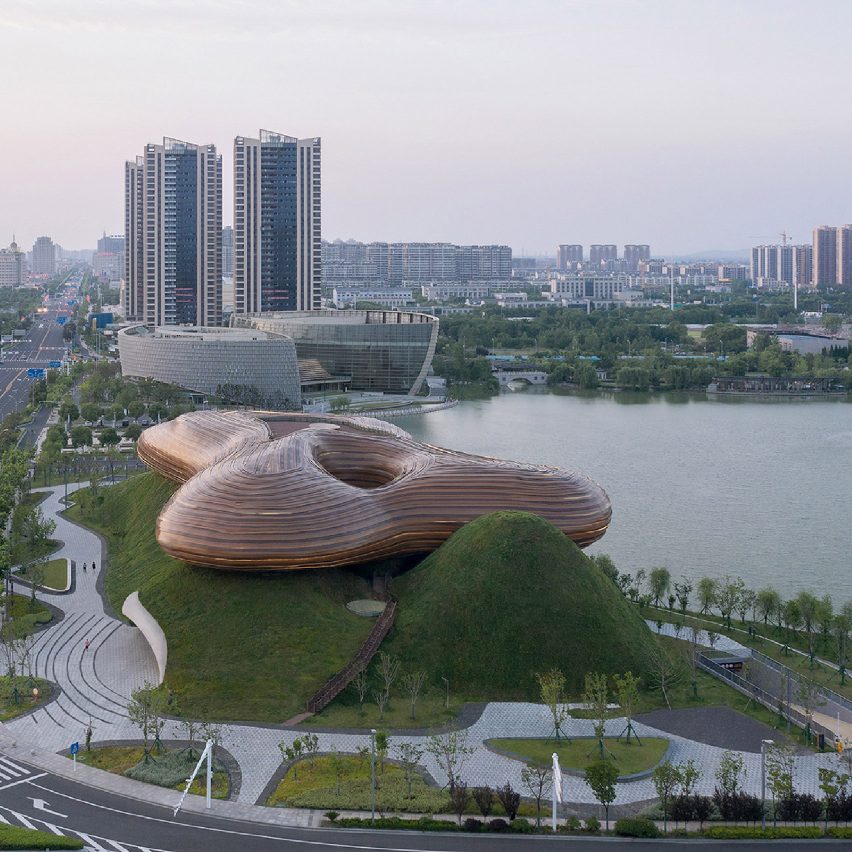
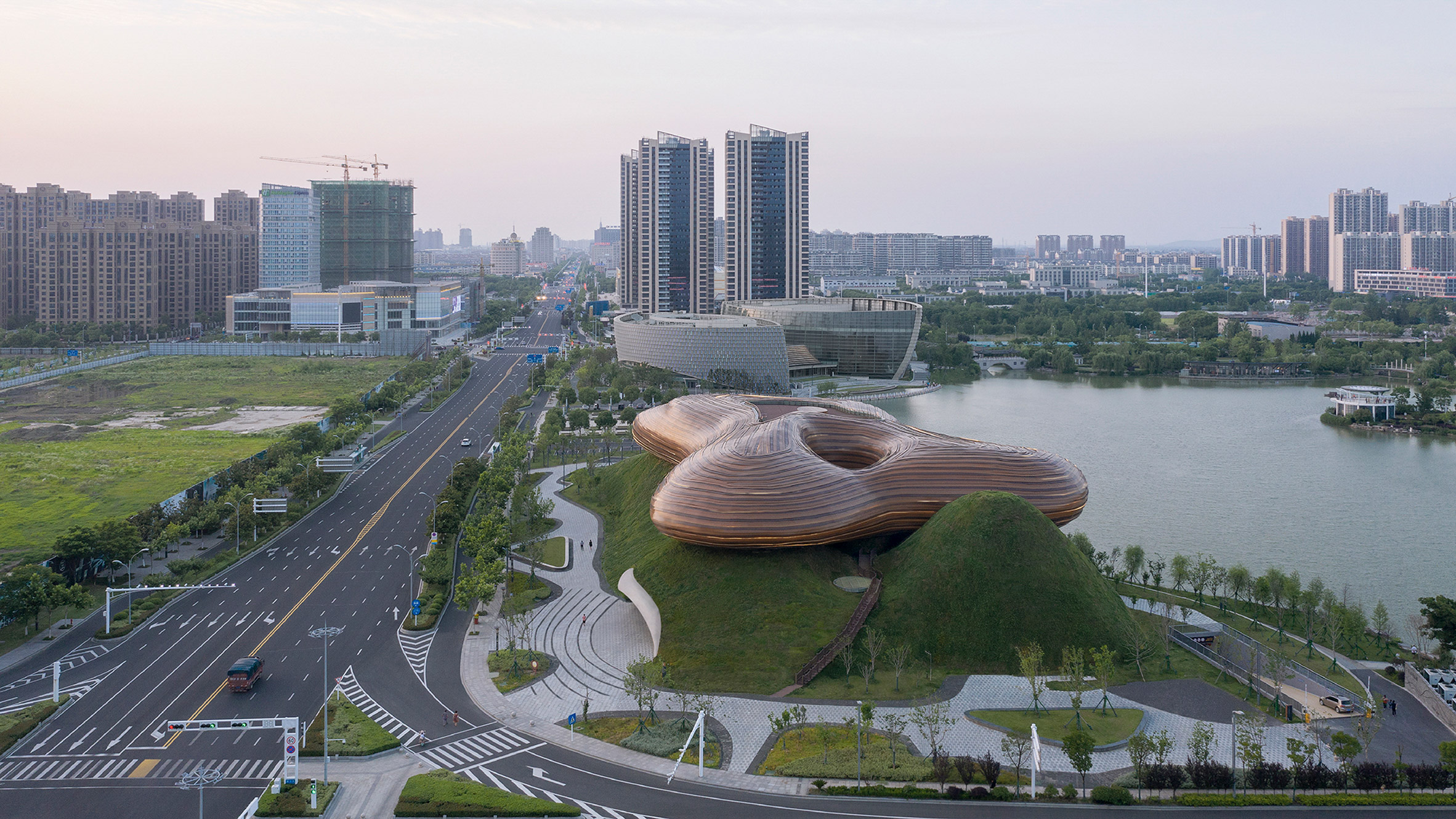
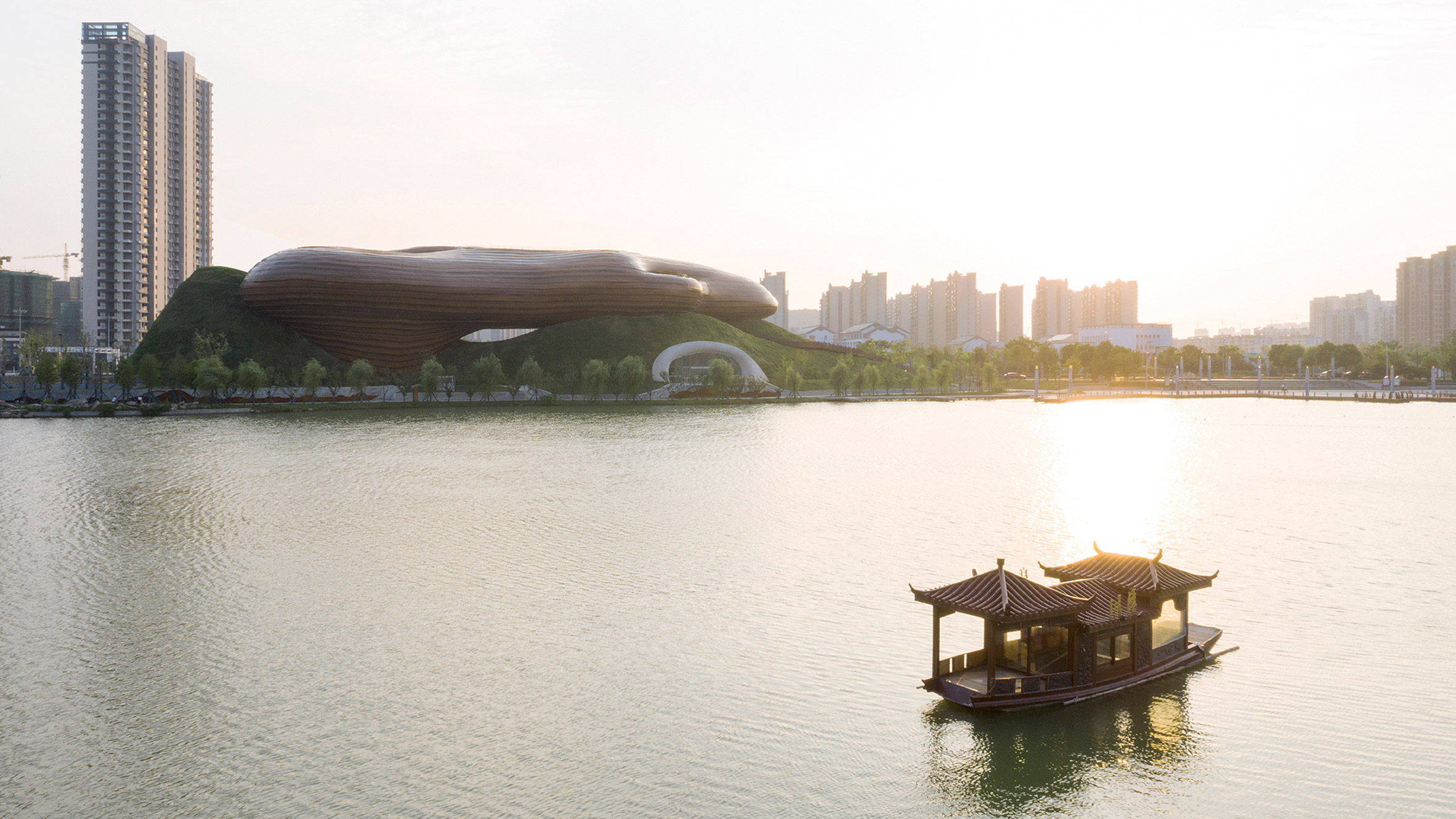
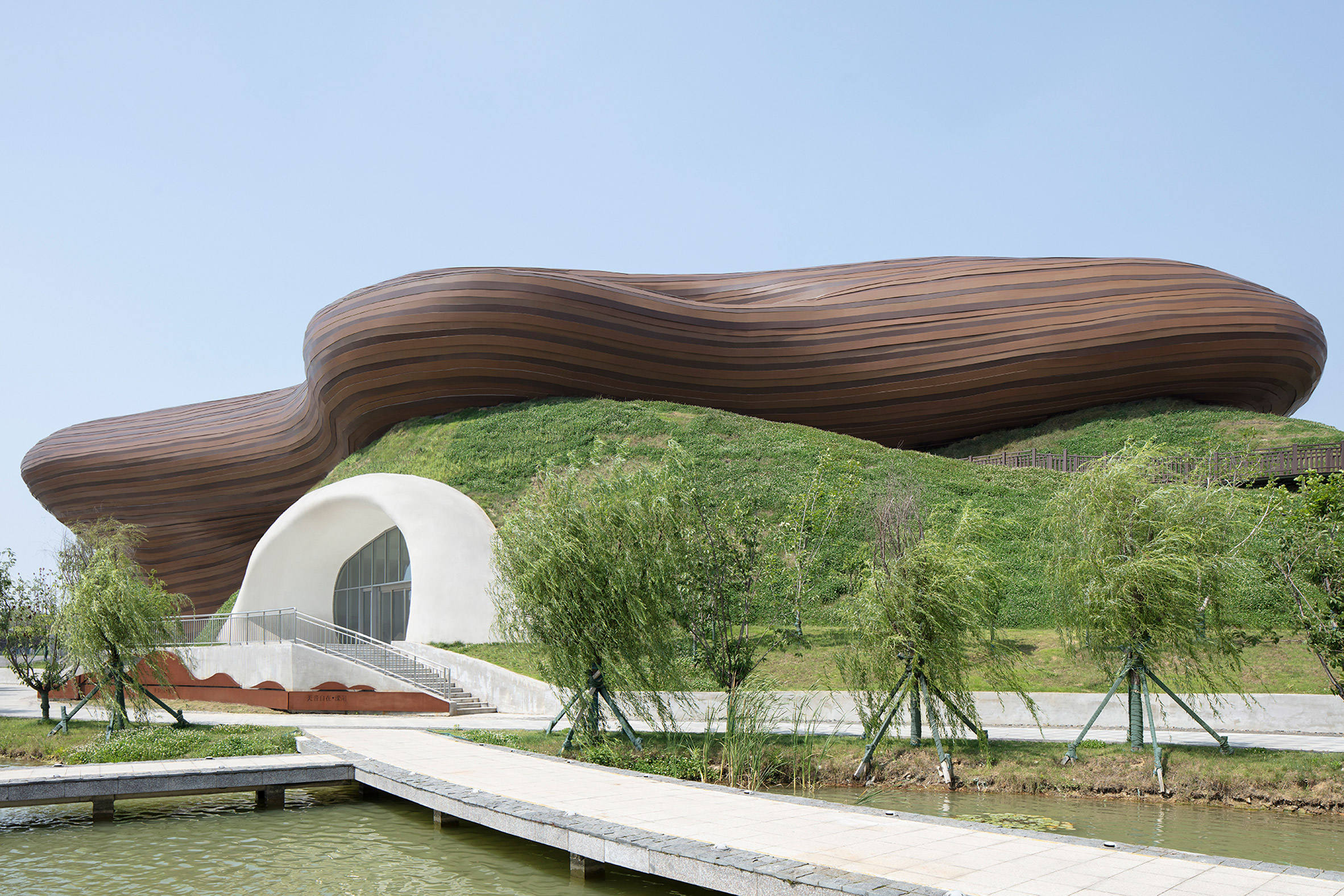
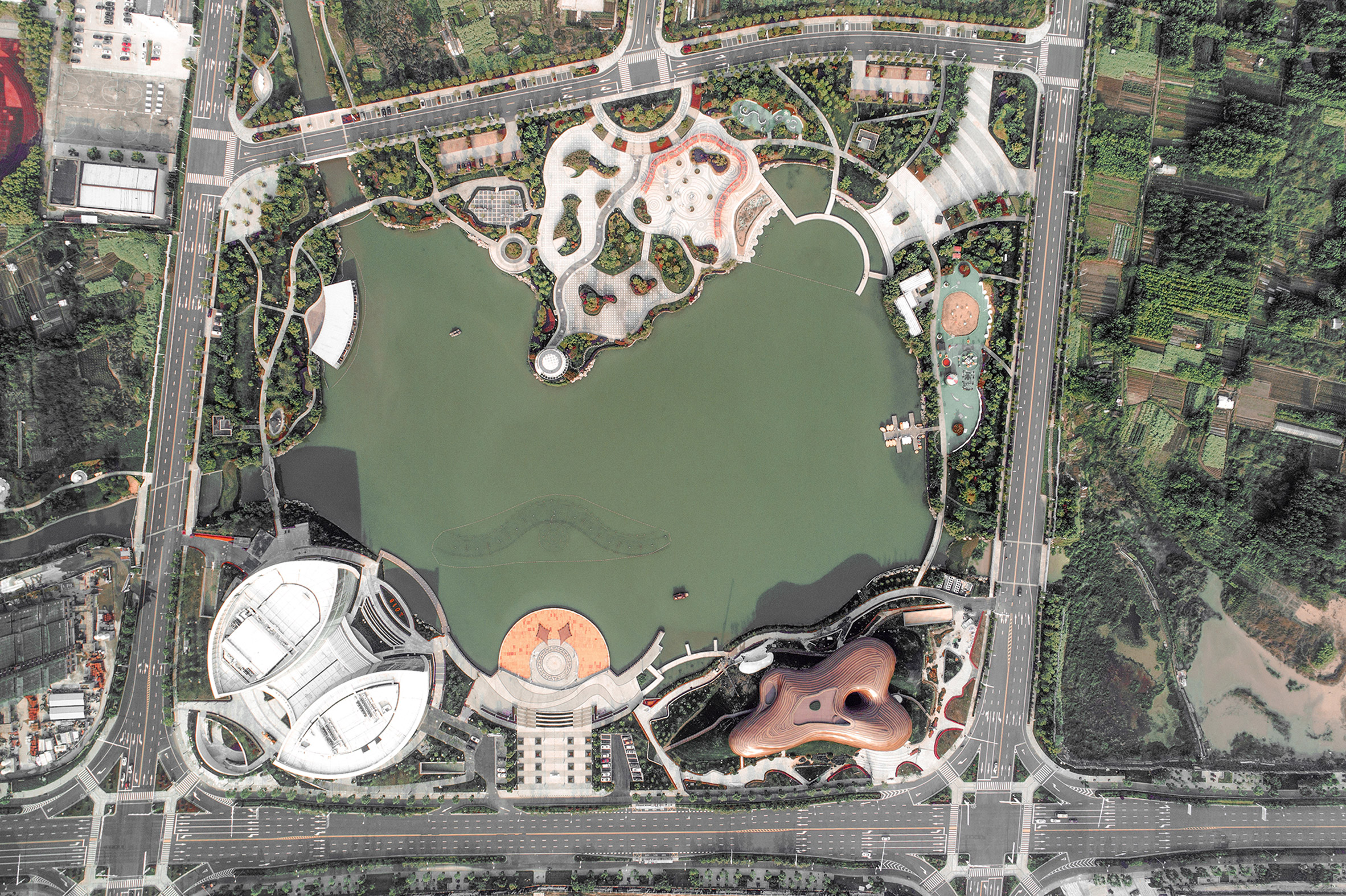
The curvaceous, aluminium-clad form of Liyang Museum in China, was designed by architecture practice CROX to recall the essence of a musical instrument.

Liyang Museum, sits in a landscape of undulating green hills alongside a lake in in Jiangsu Province.

Liyang Museum Floating Melodies by CROX

CROX wanted to translate the sound of an ancient Chinese instrument called the Guqin, a seven-stringed zither, into the shape of the building.

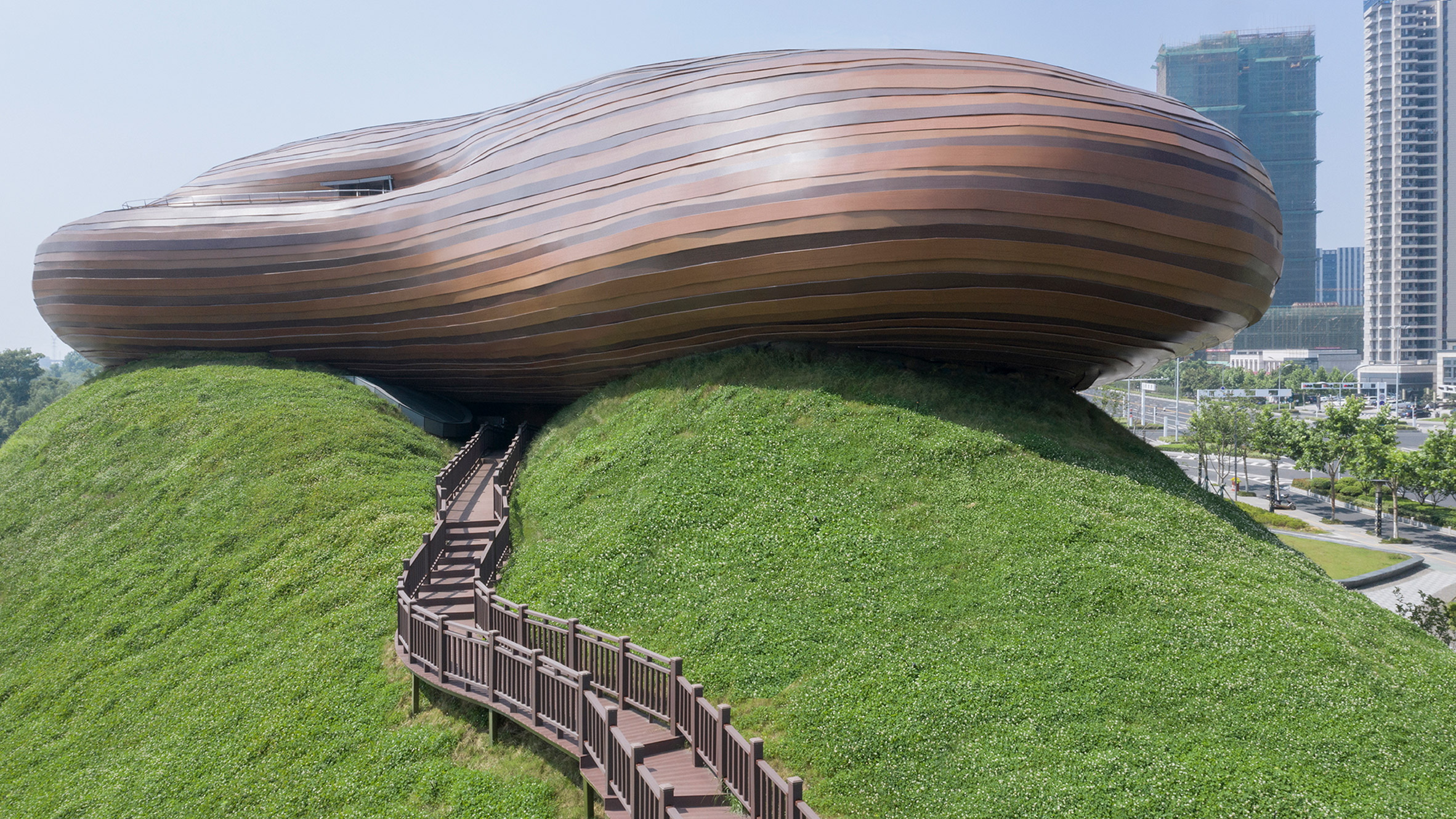
Thin strips of aluminium cladding in varying shades of brown recall the carved wood of the musical instrument.

Liyang Museum Floating Melodies by CROX

The metal's reflective qualities create a play of light across the amorphous structure.

"Liyang Museum's top section is a floating architecture," said the studio. "It feels like poetry, smooth and thoughtful"

Liyang Museum Floating Melodies by CROX

Exhibition halls sit in the hollow section below this top section.

Two paths lead to the museum. One, an extension of the paved pathway that wraps around the site, leads into an underground lobby dug into the hill itself via an entrance facing out to the lake and surrounded by a white-rendered concrete portal.

Liyang Museum Floating Melodies by CROX

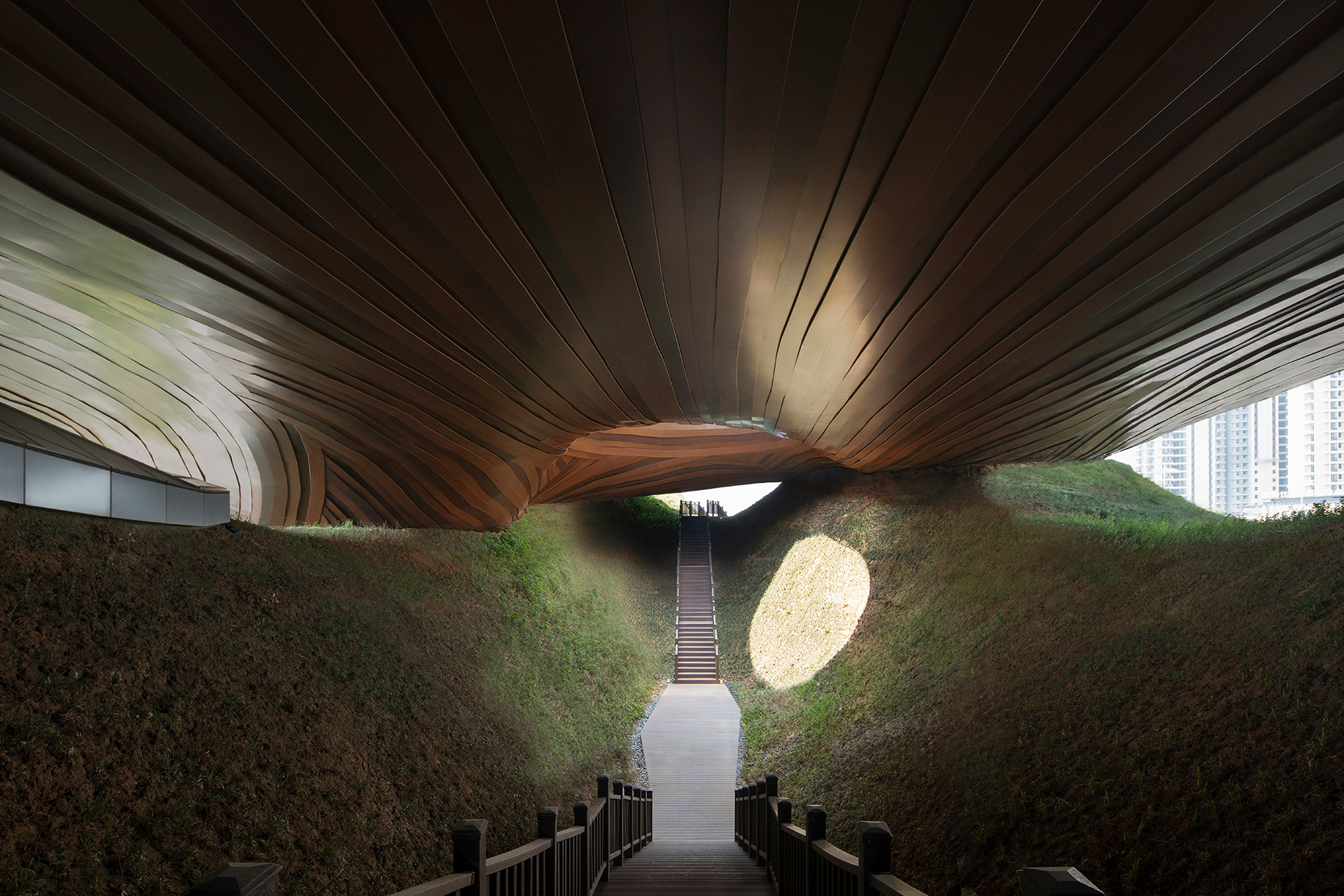
Another entrance is accessed via large wooden stairway that follow the slope of the green hill.

This path leads up into the interstitial space between the landscape and the museum's form creating a shaded courtyard space.

Liyang Museum Floating Melodies by CROX

The second floor of the museum touches the landscape at four separate points.

Its aluminium-clad form has been divided into four individual spaces, housing offices, educational areas and exhibition halls.

Liyang Museum Floating Melodies by CROX

At third-floor level, the plan opens up to create a single, large space, with a more private section at the northern end designed to provide an area for conferences.

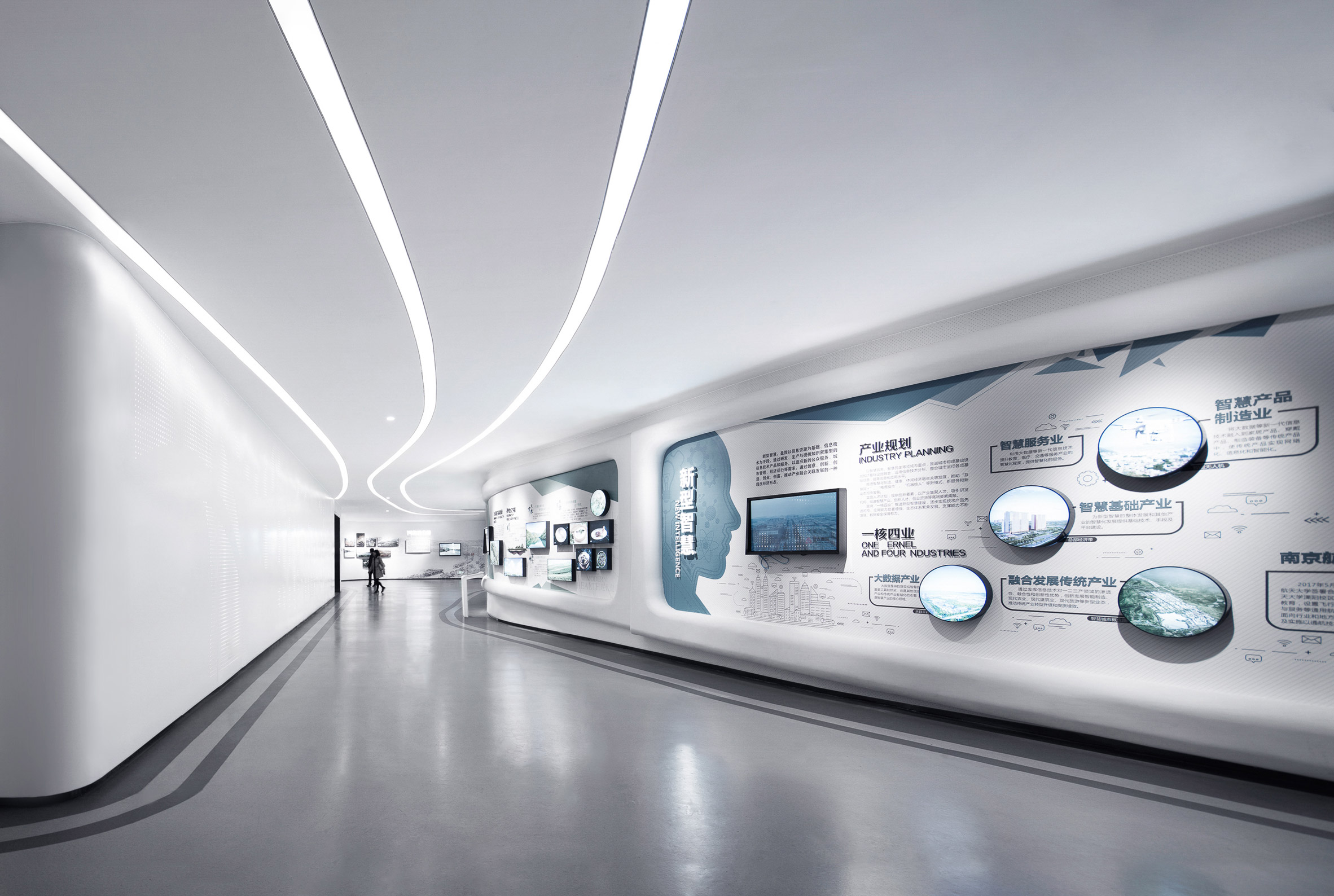
Inside, the exhibitions occupy white spaces that mirror the form of the exterior.

Liyang Museum Floating Melodies by CROX
Photo is by Hou Bowen

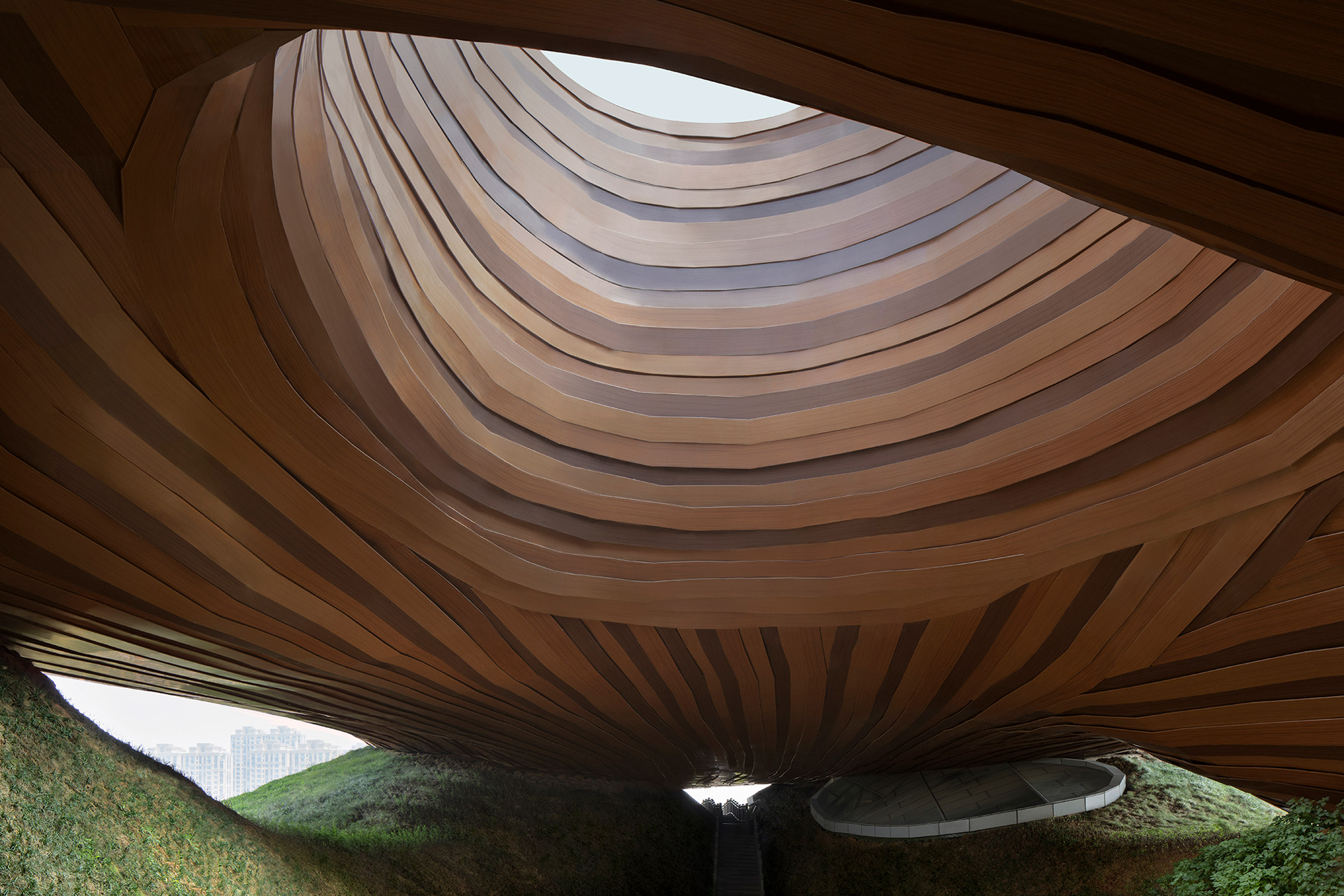
Light filters through to the underground areas via large skylights in the hills above.

Two terrace spaces, one "water-drop shaped" and facing northwards and the other located in the centre of the roof, offer visitors dramatic views out across the adjacent lake and the landscaped areas that wrap around it.

Liyang Museum Floating Melodies by CROX

"At night, the patio on top of the courtyard acts like an open window, pushing light out to the sky," said CROX.

CROX was founded by architect C R Lin and has offices in Taipei and Shanghi.

Canadian studio Revery Architecture also used aluminium to clad an opera house in Hong Kong, and Frank Gehry used hundreds of reflective aluminium tiles to cover the Luma Arles arts complex.

Photography is by Xia Zhi unless stated otherwise.


Project credits:

Client: Suwan China Cooperation Demonstration Area Construction
City cultural consultant and system service design: Shangyuan Academy
Architecture and landscape design firm: CROX
Design team: CR Lin, Darcy Chang, Dr Zheng-Hao Song, Yue Jiang, Saunaam Yip, Tian-Ye Zhou, Jia-Yi Zhu, Li-Dong Sun, Nicky Ni
LDI: Nanjing Yangtze River Urban Architectural Design
Curtain wall design consultant: Schmidlin Curtain Wall Technology
Design materials: Glass curtain wall, aluminium plate
Brand: Hai Tai, Tai Shan, TOTO

The post CROX designs aluminium-clad museum shaped like an instrument appeared first on Dezeen.


from Dezeen https://ift.tt/2OZiS2U

Dezeen's top 10 pavilions of 2019

Next up in our review of 2019, Daria Casalini picks out the year's 10 most impressive pavilions, including a floating circular staircase and a fibre-composite structure built by two robots.


Stone 27 installation at Burning Man 2019 by Benjamin Langholz

Stone 27, USA, by Benjamin Langholz

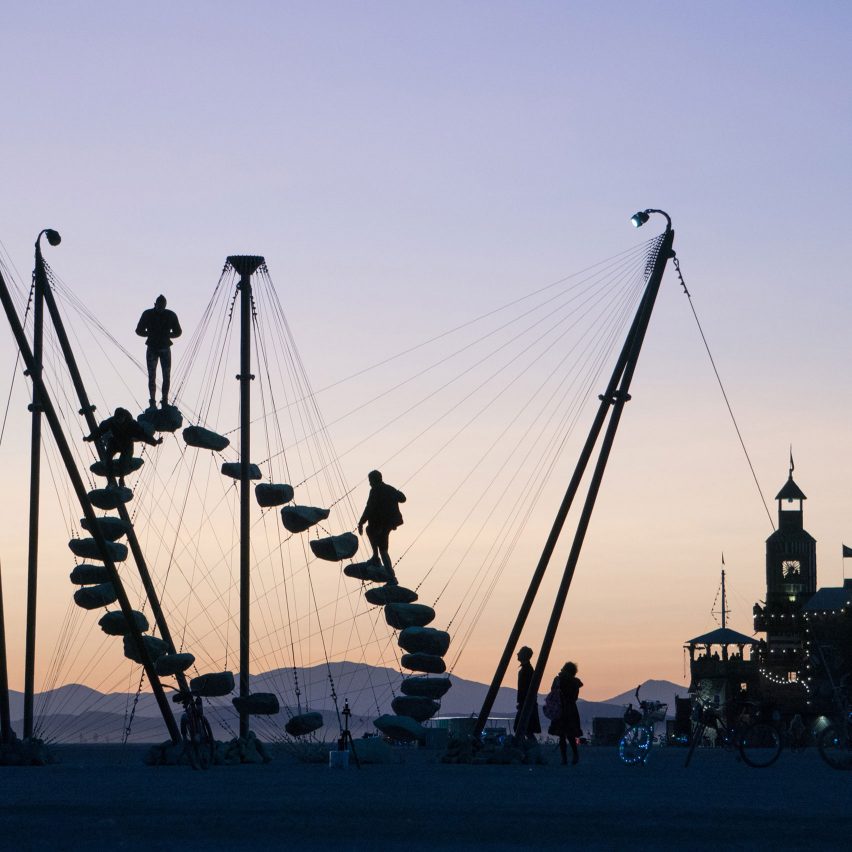
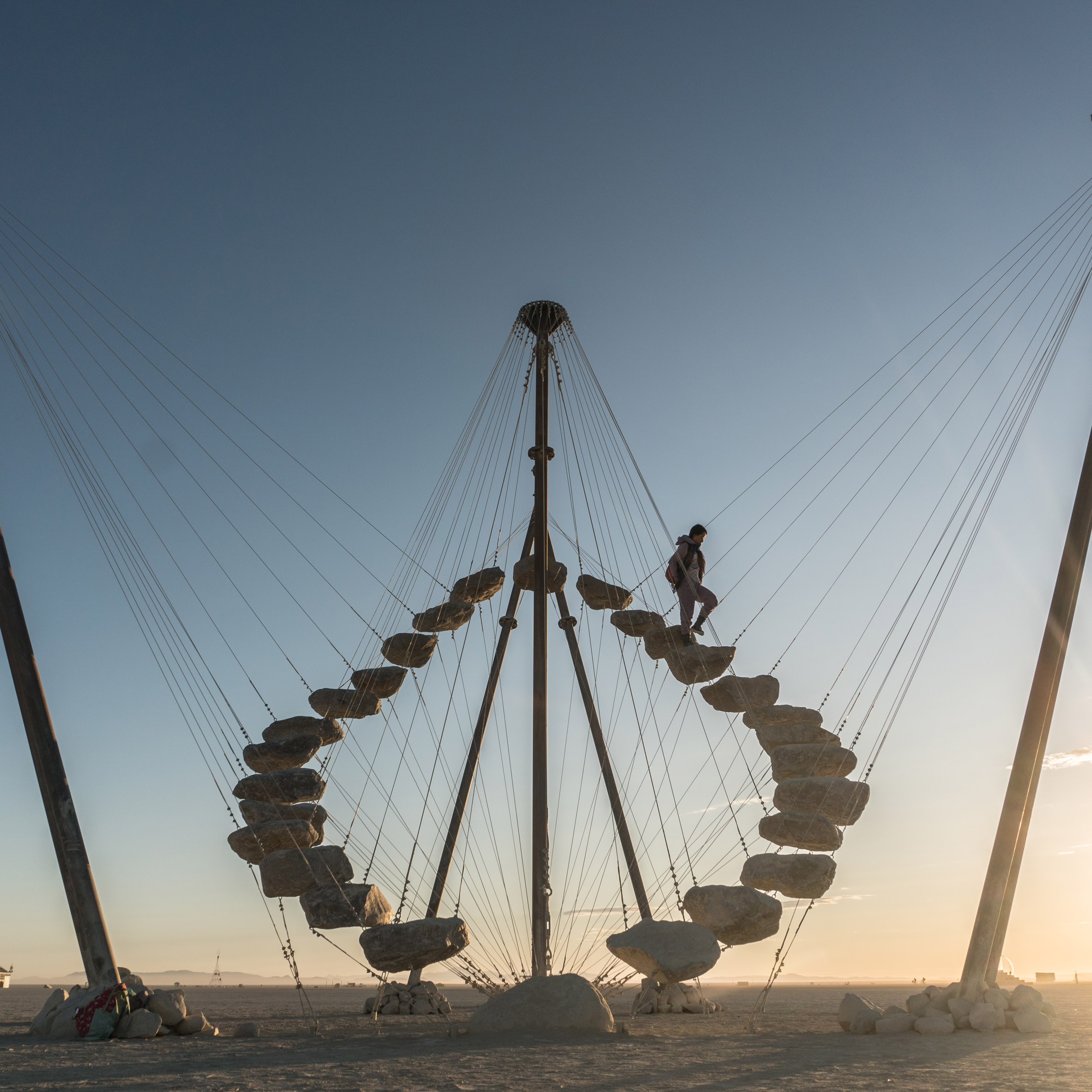
Benjamin Langholz arranged huge stones in an ascending circle for a pavilion at this year's Burning Man in Black Rock City, Nevada.

A central pillar and three pairs of steel columns support the basalt stones, forming a "floating walk" designed to make visitors' experience "a moment of complete presence".

Find out more about Stone 27 ›


Serpentine Pavilion, UK, by Junya Ishigami

Serpentine Pavilion, UK, by Junya Ishigami

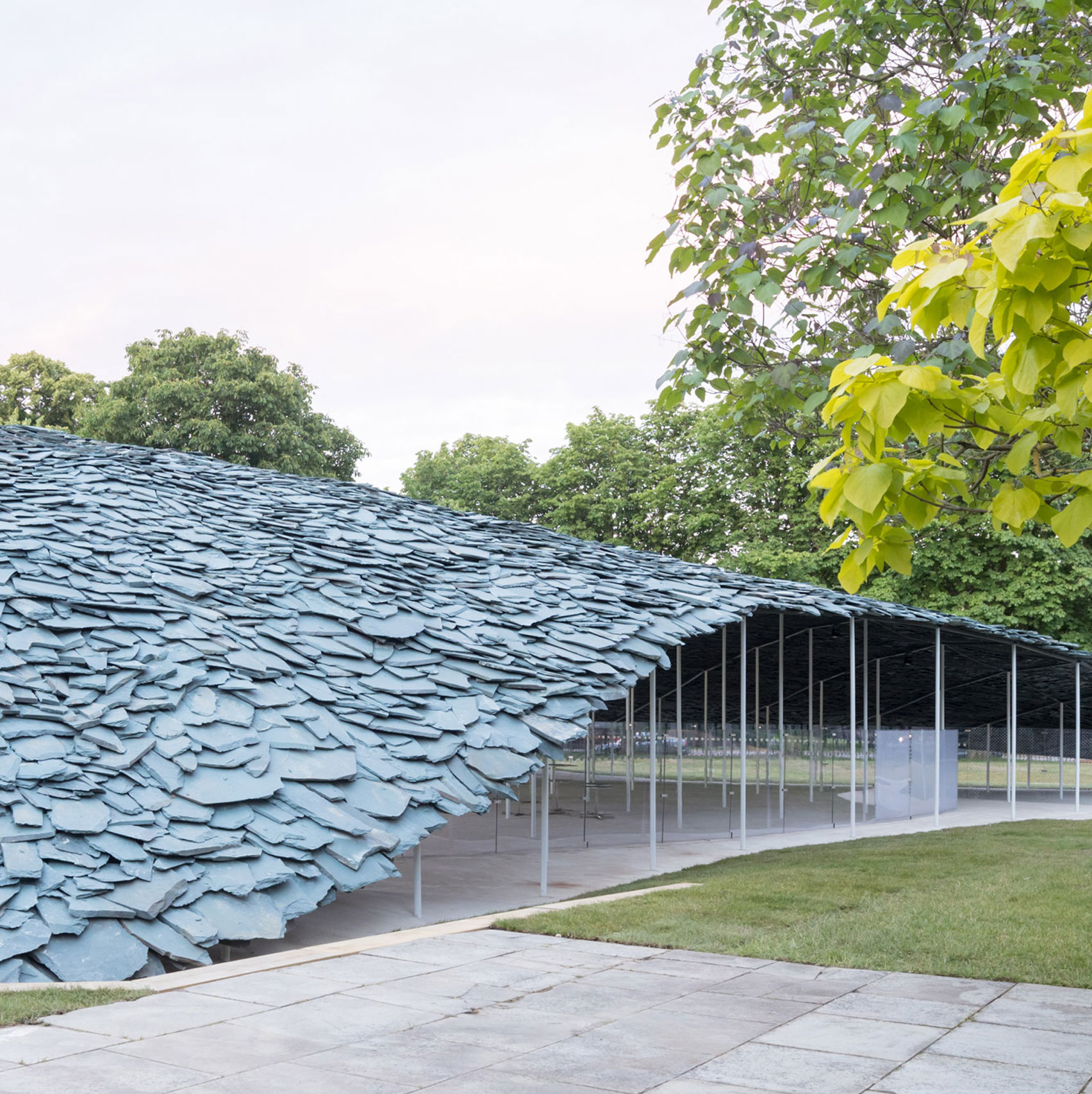
For this year's Serpentine Pavilion in London, Japanese architect Junya Ishigami designed a structure he describes as a "hill made out of rocks".

Ishigami used 61 tonnes of Cumbrian slate to create a rocky canopy supported by 106 pin-ended columns. He arranged the columns randomly to give visitors the sense of being in a "forest".

Find out more about the Serpentine Pavilion ›


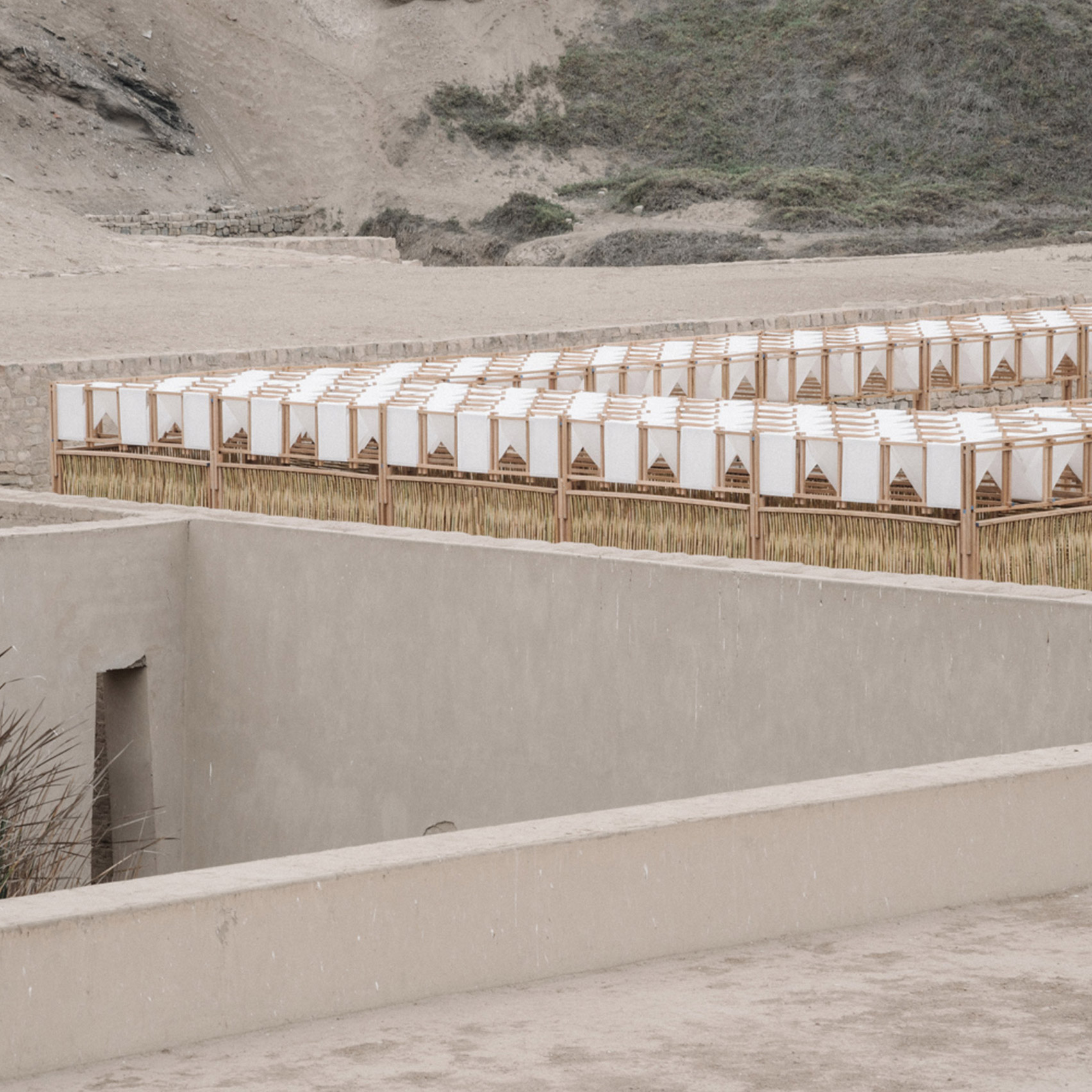
Pachacamac by Studio Tom Emerson and Taller 5

The Room for Archaeologists and Kids, Peru, by Studio Tom Emerson and Taller 5

Students from Studio Tom Emerson at ETH Zurich and Taller 5 at PUCP collaborated with architects Guillaume Othenin-Girard and Vincent Juillerat to build this pavilion on an archaeological site outside Lima.

Designed to provide shelter from the desert sun for archaeologists, the pavilion features earthen floors, bamboo cane walls and a woven white canopy.

Find out more about The Room for Archaeologists and Kids ›


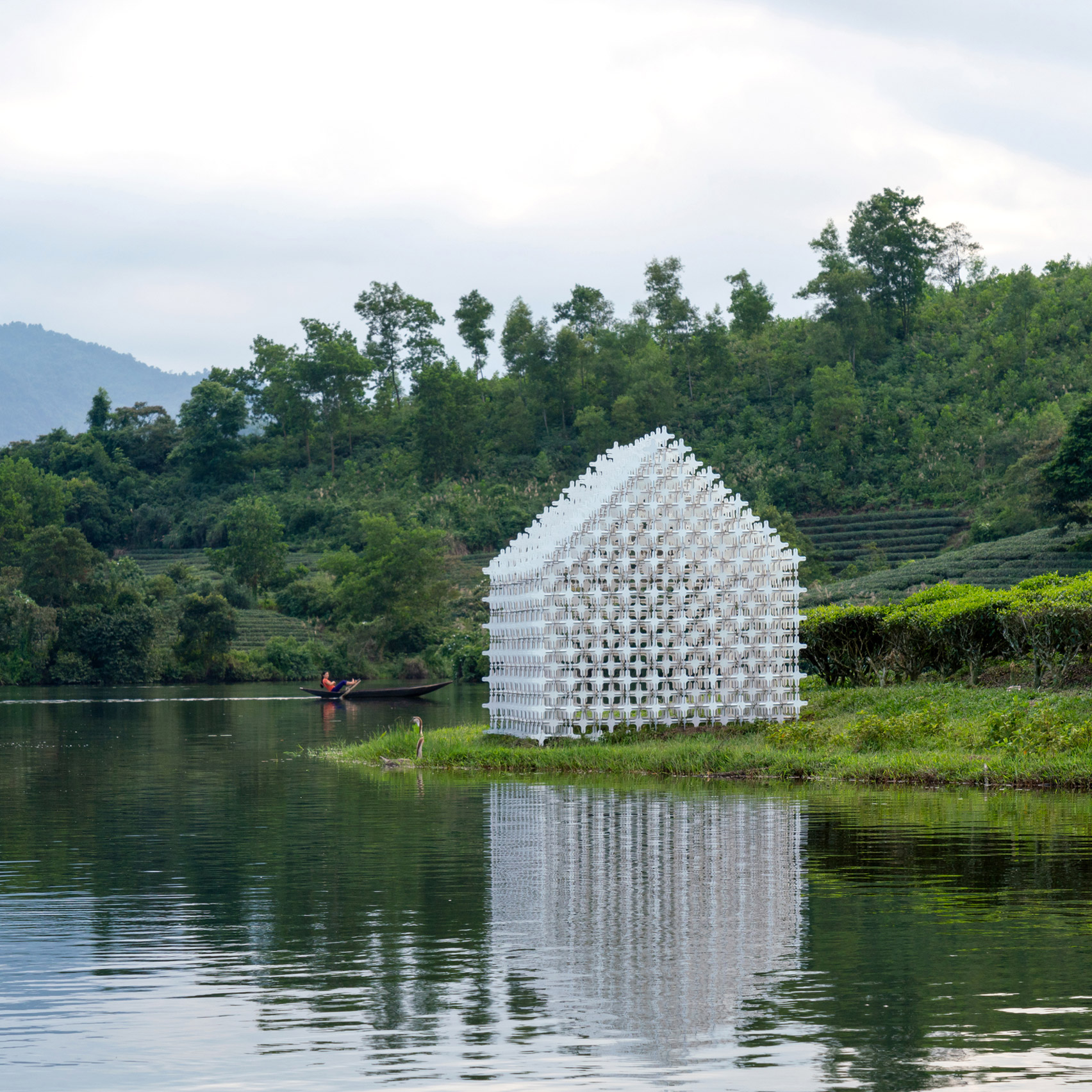
Module+ pavilion by NKPA

Module+, Vietnam, by Nguyen Khac Phuoc Architects and Dang + Partners

Over 2,000 modular wooden components are slotted together to form this white pavilion, intended as a gathering place for tea farmers in rural Vietnam.

Vietnamese architecture studios Nguyen Khac Phuoc Architects and Dang + Partners designed the space for visitors to experience "the peace of the land".

Find out more about Module+ ›


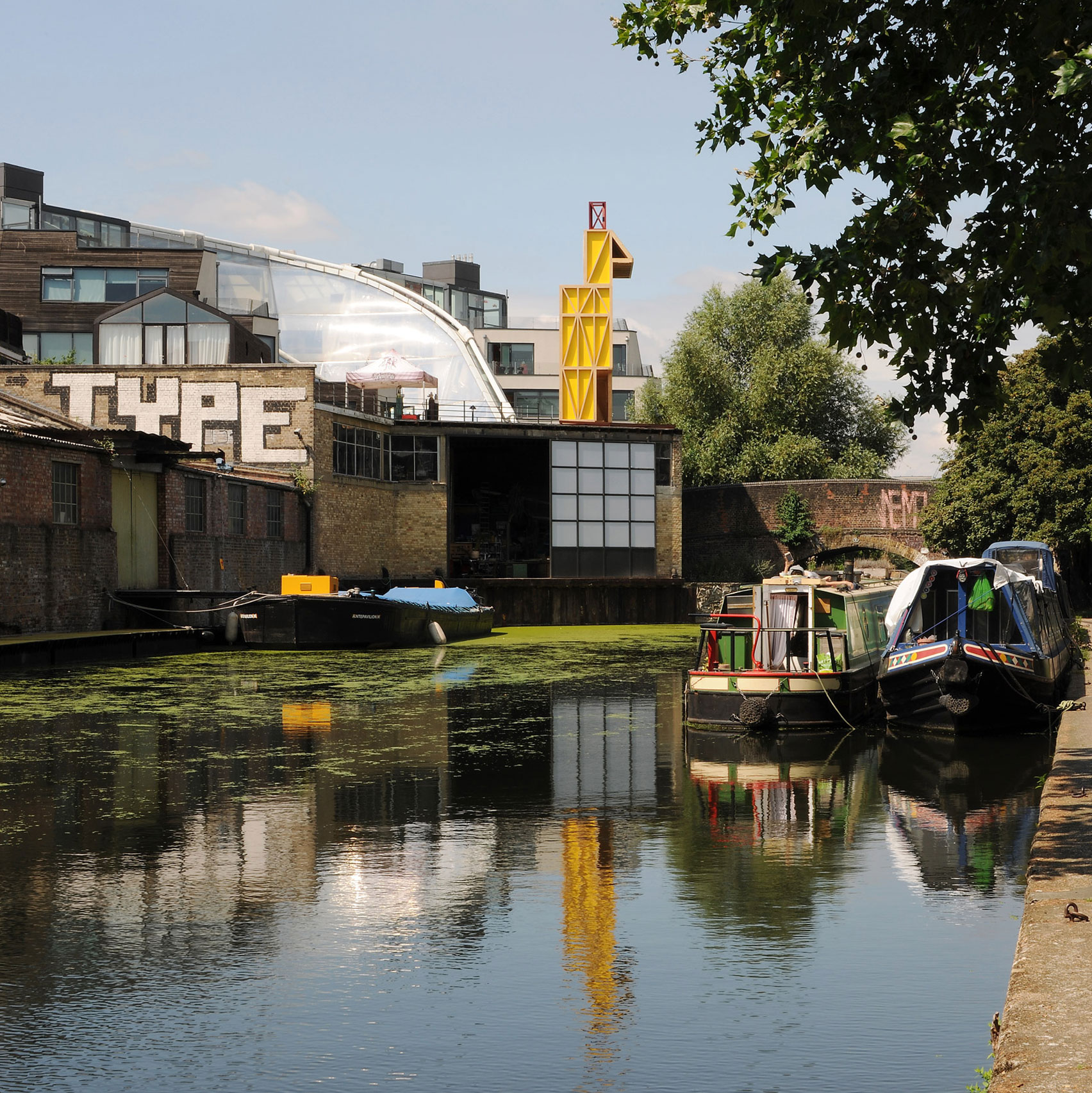
Potemkin Theatre, UK, by Maich Swift Architects

Potemkin Theatre, UK, by Maich Swift Architects

A chequered green facade and a winding yellow staircase are among the features of this timber pavilion designed by London-based Maich Swift Architects.

The theatre was the winning entry in the annual Antepavilion competition and it was built to host a wide variety of events.

Find out more about Potemkin Theatre ›


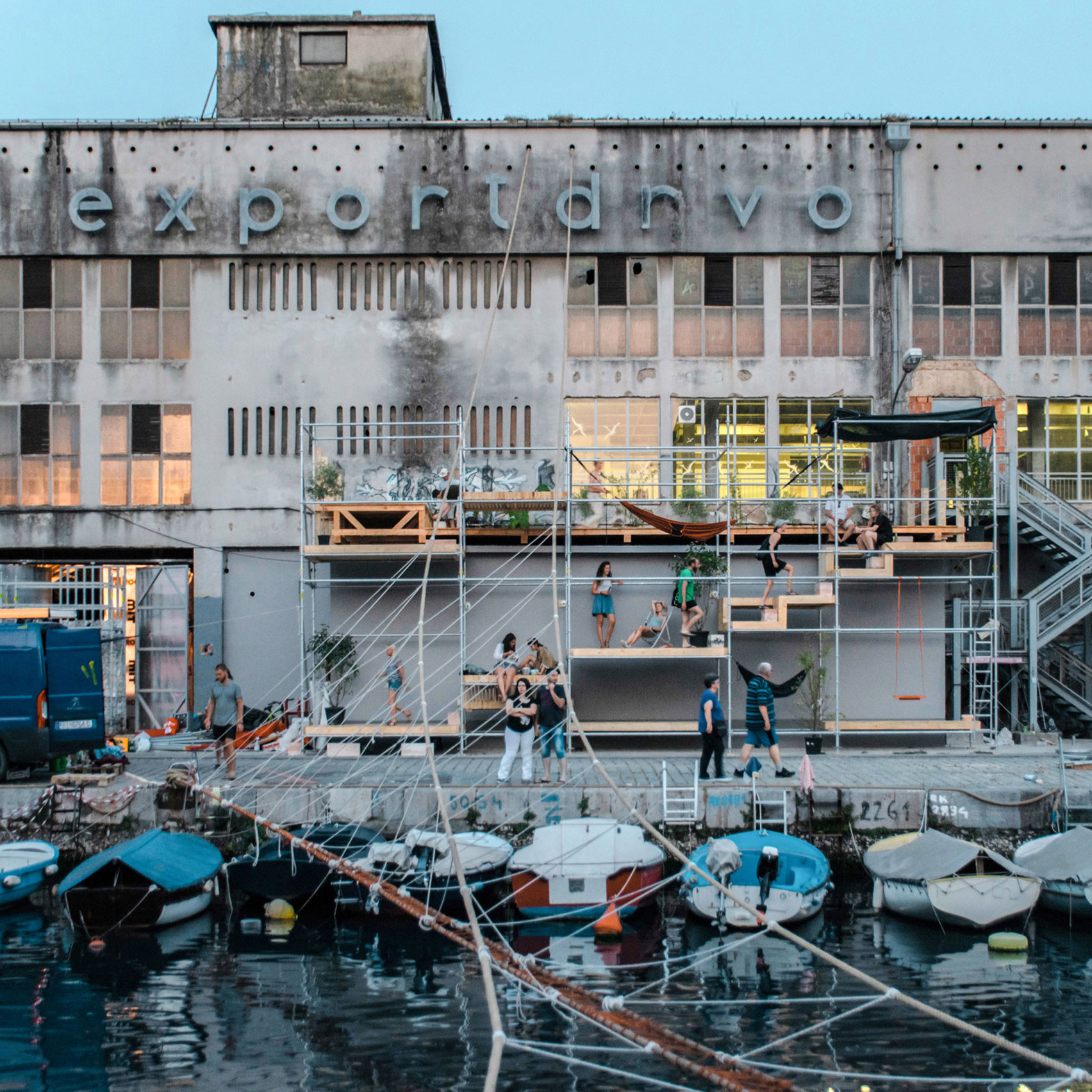
Level Up, Croatia, by Brett Mahon, Joonas Parviainen, Saagar Tulshan and Shreyansh Sett

Level Up, Croatia, by Brett Mahon, Joonas Parviainen, Saagar Tulshan and Shreyansh Sett

Locals can relax and socialise on this multi-level pavilion made of steel scaffolding, wooden boards and decking. On the top level, a platform provides a viewing terrace over the city port.

The Croatian city of Rijeka is set to become the European Capital of Culture in 2020, and the pavilion was built as one of the key venues for the celebratory event.

Find out more about Level Up ›


MPavilion, Australia, by Glenn Murcutt

MPavilion, Australia, by Glenn Murcutt

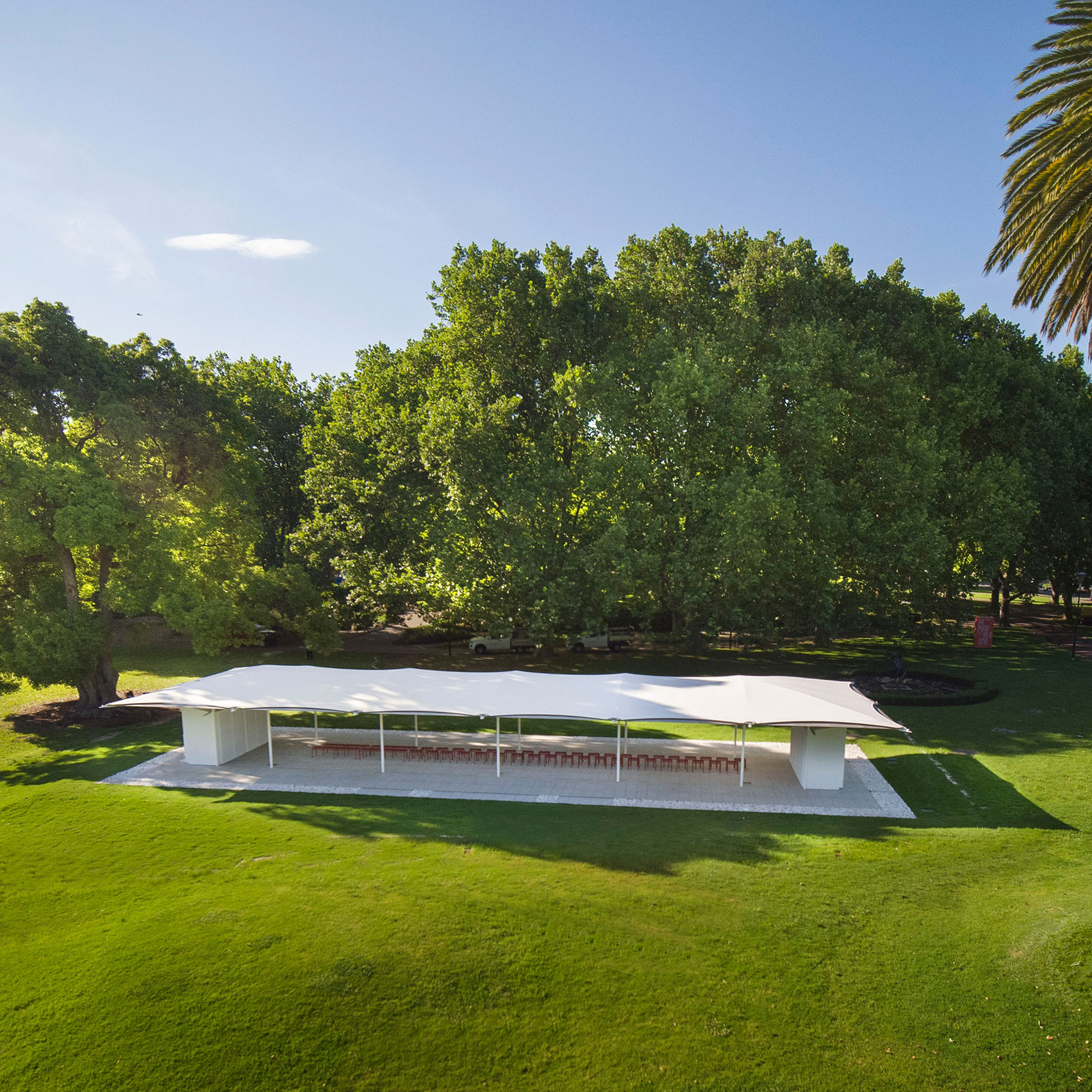
Australian architect Glenn Murcutt placed a large, translucent roof on top of a minimal steel structure to create this year's MPavilion in Melbourne's Queen Victoria Gardens.

The roof conceals LED lighting, allowing the structure to glow at night like a lantern. Murcutt designed the pavilion as a "sleek and adaptable" shelter that can be easily dismantled.

Find out more about MPavilion ›


The Colour Palace, UK, by Yinka Ilori and Pricegore

The Colour Palace, UK, by Yinka Ilori and Pricegore

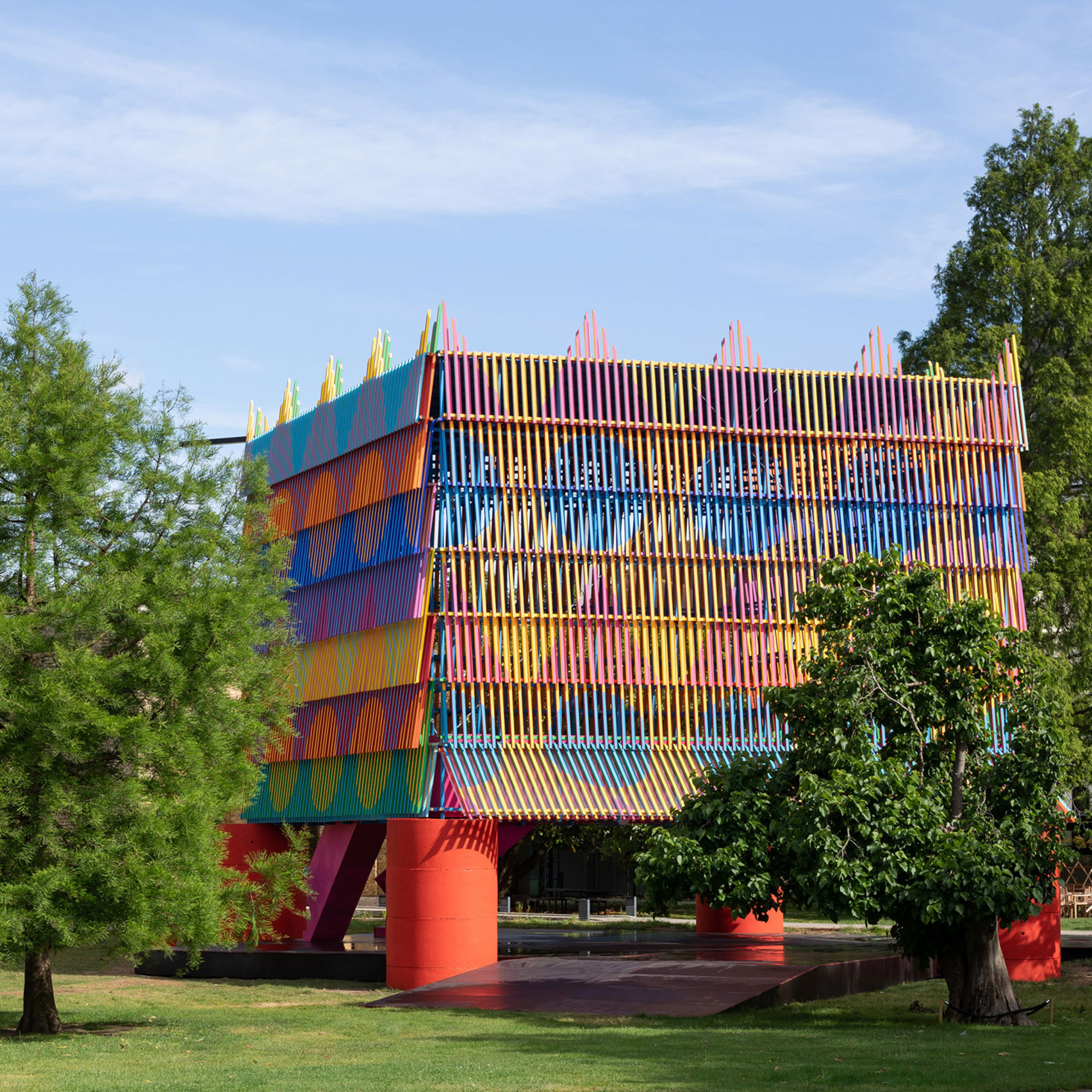
Traditional African textiles from Lagos, Nigeria, inspired the bright colour palette of Yinka Ilori and architecture studio Pricegore's pavilion outside Dulwich Picture Gallery in London.

To soften the structure's strong angles and geometric form, the designers created a facade made of pieces of timber that have been hand-painted with brightly-hued colours.

Find out more about The Colour Palace ›


BUGA Fibre Pavilion, Germany, by University of Stuttgart

BUGA Fibre Pavilion, Germany, by University of Stuttgart

Two robots developed by the University of Stuttgart built this fibre-composite pavilion, which is inspired by the shape of beetle wings.

The team wanted the pavilion to be mimic nature so used building materials that they thought shared key characteristics with natural composites.

Find out more about BUGA Fibre Pavilion ›


Luum Temple, Mexico, by CO-Lab Design Office

Luum Temple, Mexico, by CO-Lab Design Office

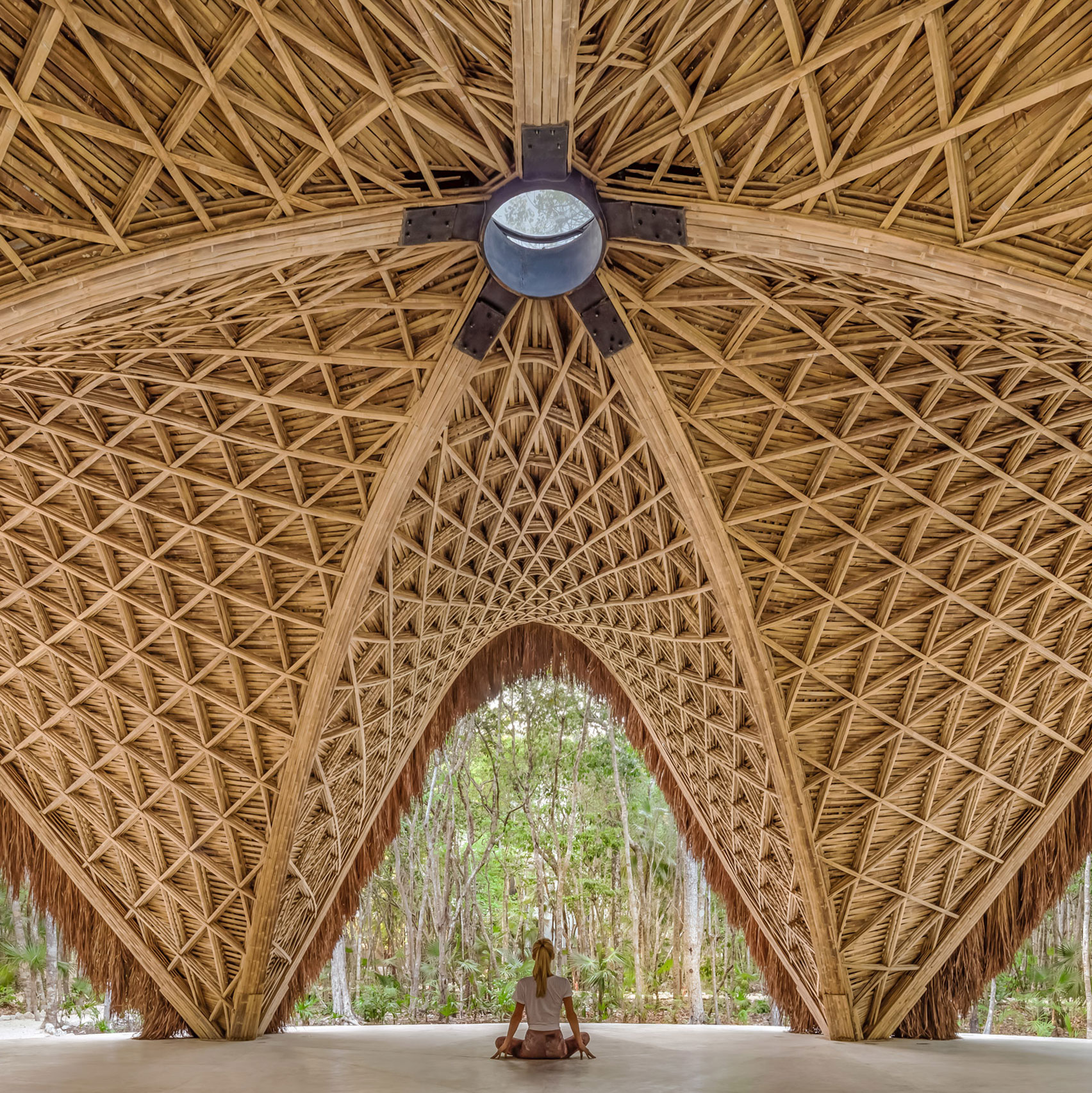
Mexican studio CO-Lab Design Office created this bamboo pavilion to host a variety of yoga and meditation workshops in the jungles of Tulum.

The structure is made entirely out of bamboo beams, which have been bent and strapped together on-site. A layer of local Zacate grass was also added to the roof to protect the pavilion from rainstorms.

Find out more about Luum Temple ›

The post Dezeen's top 10 pavilions of 2019 appeared first on Dezeen.


from Dezeen https://ift.tt/2OZqqTg

This week, Pantone predicted the colour of the year

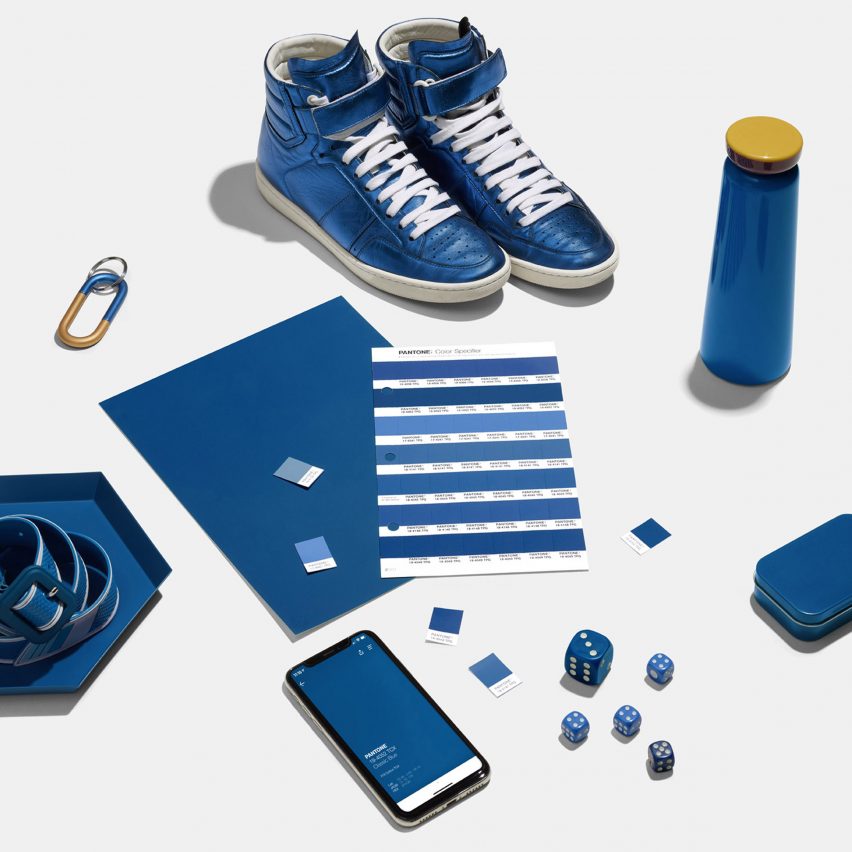
This week, Pantone predicts Classic Blue as colour of the year

This week on Dezeen, Pantone announced Classic Blue as the colour of the coming year, while we looked back at 2019 with the launch of our year in review series.

A dark shade of blue, reminiscent of the evening sky, was chosen by the American colour company to best encapsulate 2020 – a calm and collected antidote to its predecessor, last year's energetic Living Coral.

The "solid and dependable" hue is already proving popular in interiors, where it is gracing everything from kitchen cabinets to shutters and a stairwell cum bookshelf.

This week, Pantone predicts Classic Blue as colour of the year
Dezeen's top 10 museums and galleries of 2019

Elsewhere on the site, we've started rounding up the best projects of the past 12 months, with Dezeen's editor Tom Ravenscroft picking his 10 favourite churches and chapels across nine different countries from Lebanon to South Korea.

We also reported on the biggest trends across design and technology, including the rise and rise of folding phones and designers' preoccupation with the right to privacy both on- and offline.

Dezeen's Semi Han meanwhile looked at the museums and galleries that opened their doors this year, designed by practices from BIG to David Chipperfield Architects.

This week, Pantone predicts Classic Blue as colour of the year
Lorenz relaunches self righting clock that kickstarted Richard Sapper's career

In the design world, a number of studios turned their hand to gravity-defying clocks. Nendo released one that consists of a single aluminium cube, balanced on one of its corners with the hands formed by two shards that were cut from the original form.

Watch company Lorenz re-released the Static clock, which was famously created by German designer Richard Sapper from former military torpedoes. Its cylindrical shell is tilted precariously backwards and can right itself when tipped over.

This week, Pantone predicts Classic Blue as colour of the year
"We banned renders" from the design process says Tatiana Bilbao

As expected, Elon Musk's Cybertruck remains controversial, with the co-curator of the V&A's Cars exhibition calling it "a mutant vision of 1930s streamlining" in an opinion piece.

Meanwhile in architecture, Denmark's Louisiana Museum is giving visitors a behind the scenes look at the projects and processes of Tatiana Bilbao, with the help of original models, hand-drawn sketches and collages.

In an exclusive interview with Dezeen, the Mexican architect explained that she prefers these more associative visualisations to working with renders, which she calls "dangerous and damaging to the creative process".

This week, Pantone predicts Classic Blue as colour of the year
Circular rooflight illuminates meditation room in Mexican beach house

Over in the Americas, wellness was on the agenda as Verona Carpenter Architects transformed a Brooklyn soda factory from the 1930s into a public bathhouse, complete with underground saunas, thermal pools and a sensory deprivation tank.

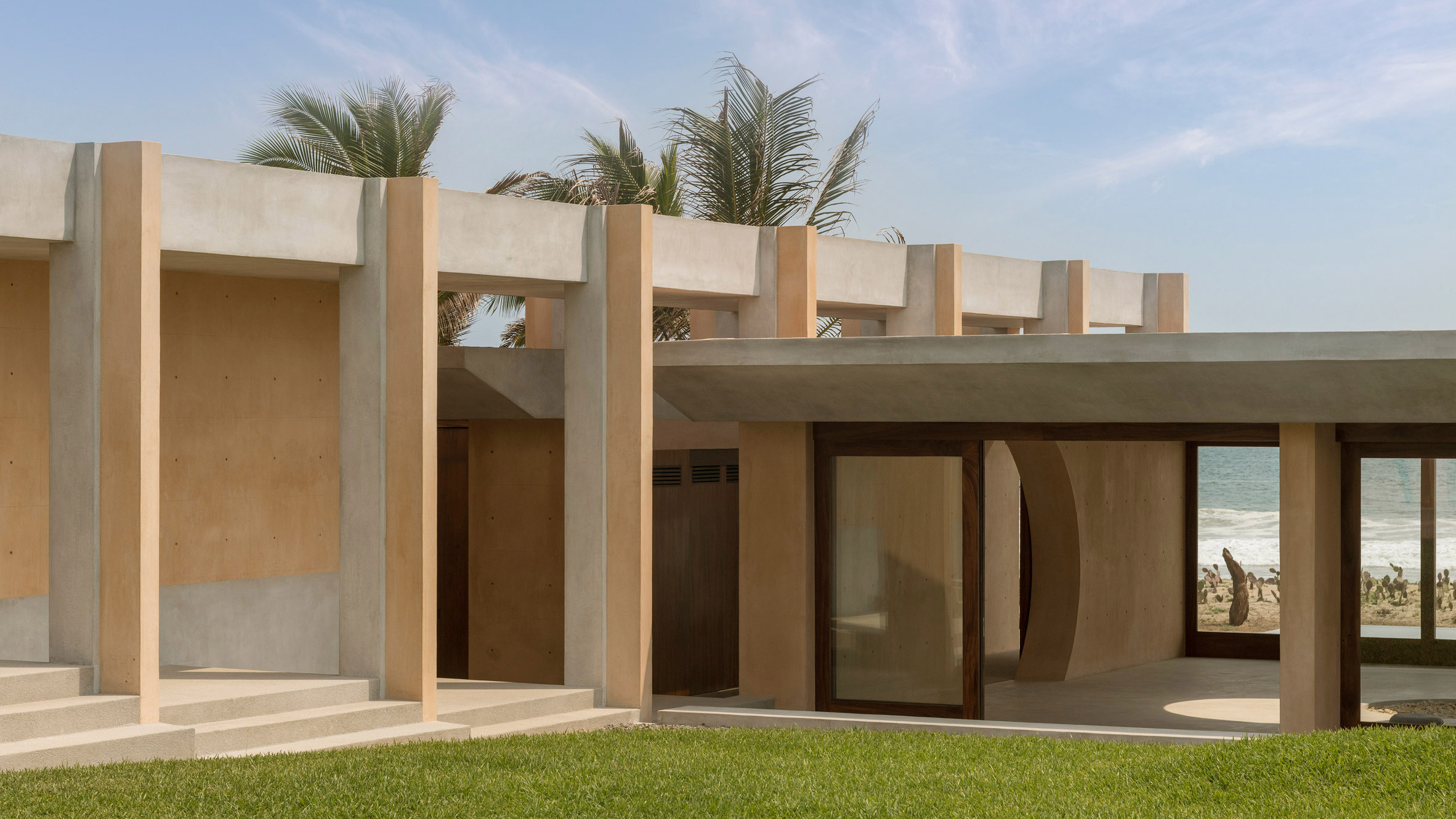
Meanwhile a Mexico beach house, designed by local studio Colectivo Lateral de Arquitectura, contains an indoor-outdoor mediation room that is exposed to the elements through a large, circular opening in the roof, with views of the L-shaped swimming pool and the ocean beyond.

This week, Pantone predicts Classic Blue as colour of the year
Kengo Kuma designs his first ever trainer for Asics

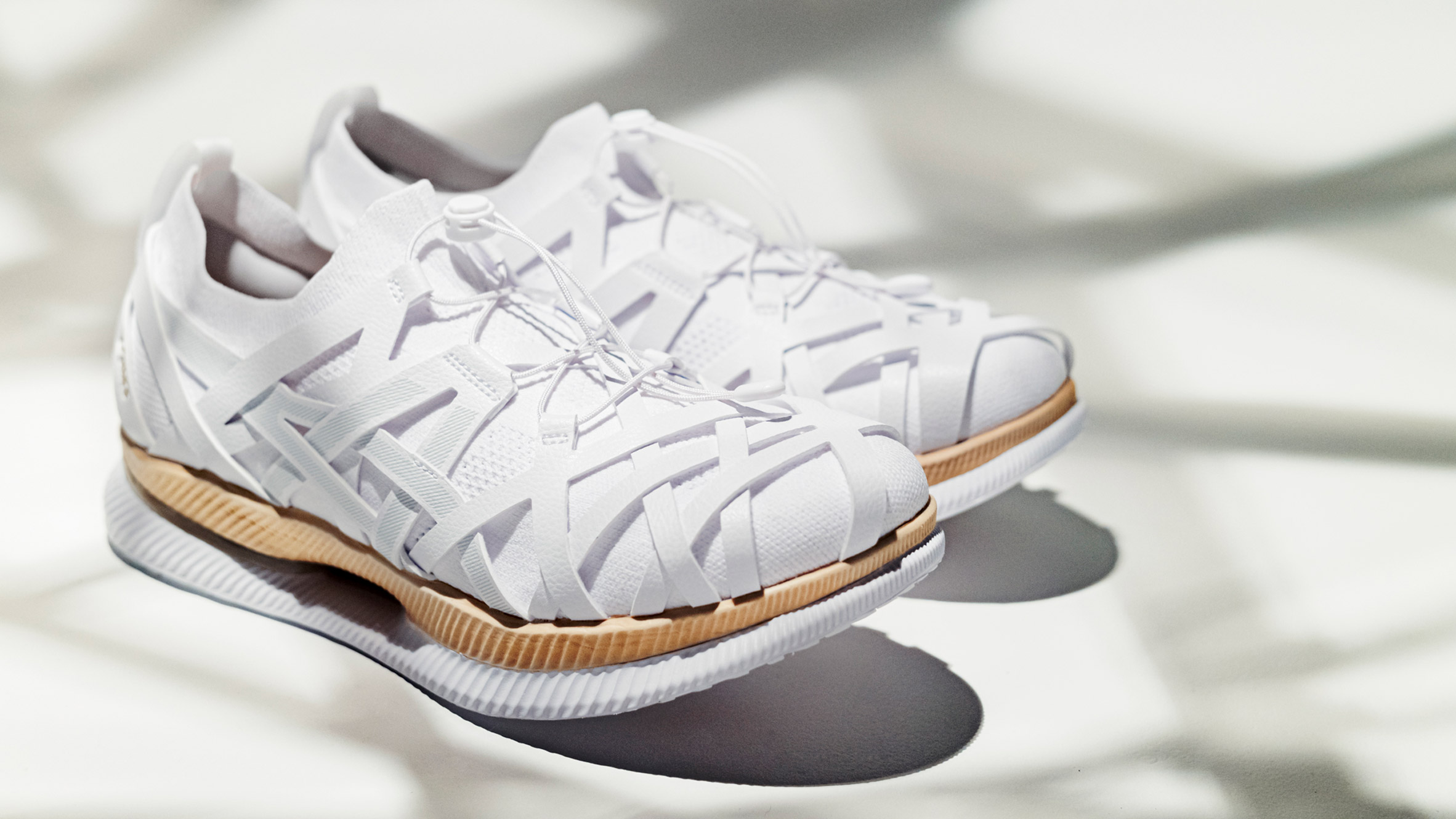
Among the other most-read stories this week was Kengo Kuma's first footwear design for Asics, BIG's venture into smart door locks and a London house extension with a timber partition that doubles as a storage room and window seat.

The post This week, Pantone predicted the colour of the year appeared first on Dezeen.


from Dezeen https://ift.tt/36dh2kN

Friday, 6 December 2019

Meydan Levy creates 4D-printed artificial fruit filled with nutrients

Meydan Levy 4D-prints edible fruit using cellulose and nutrient liquids

Bezalel Academy of Art and Design graduate Meydan Levy has developed five edible artificial fruits, which comprise printed cellulose skins filled with a cocktail of vitamins and minerals.

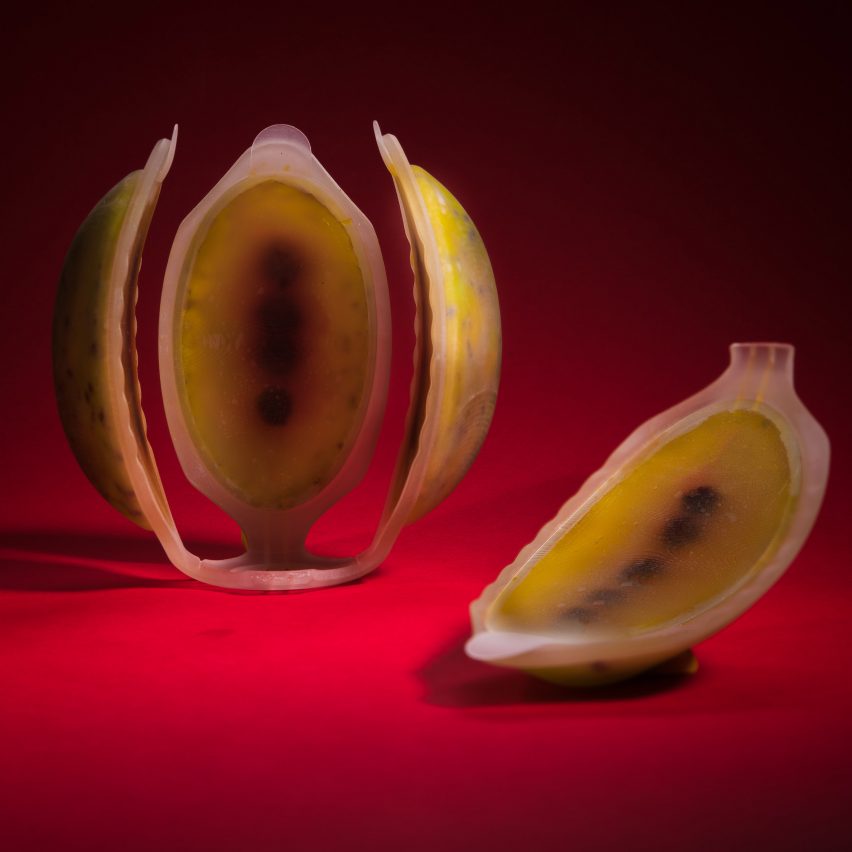
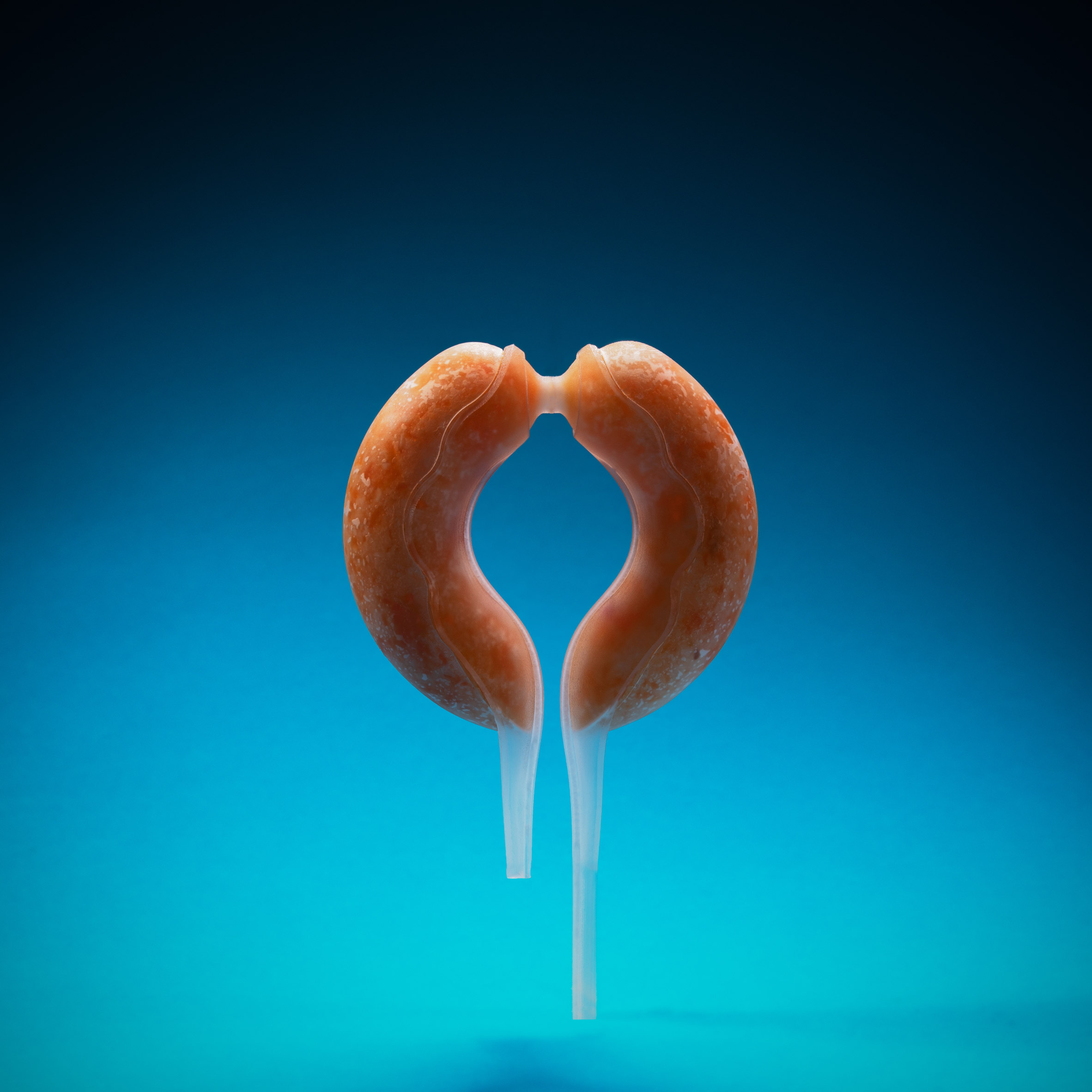
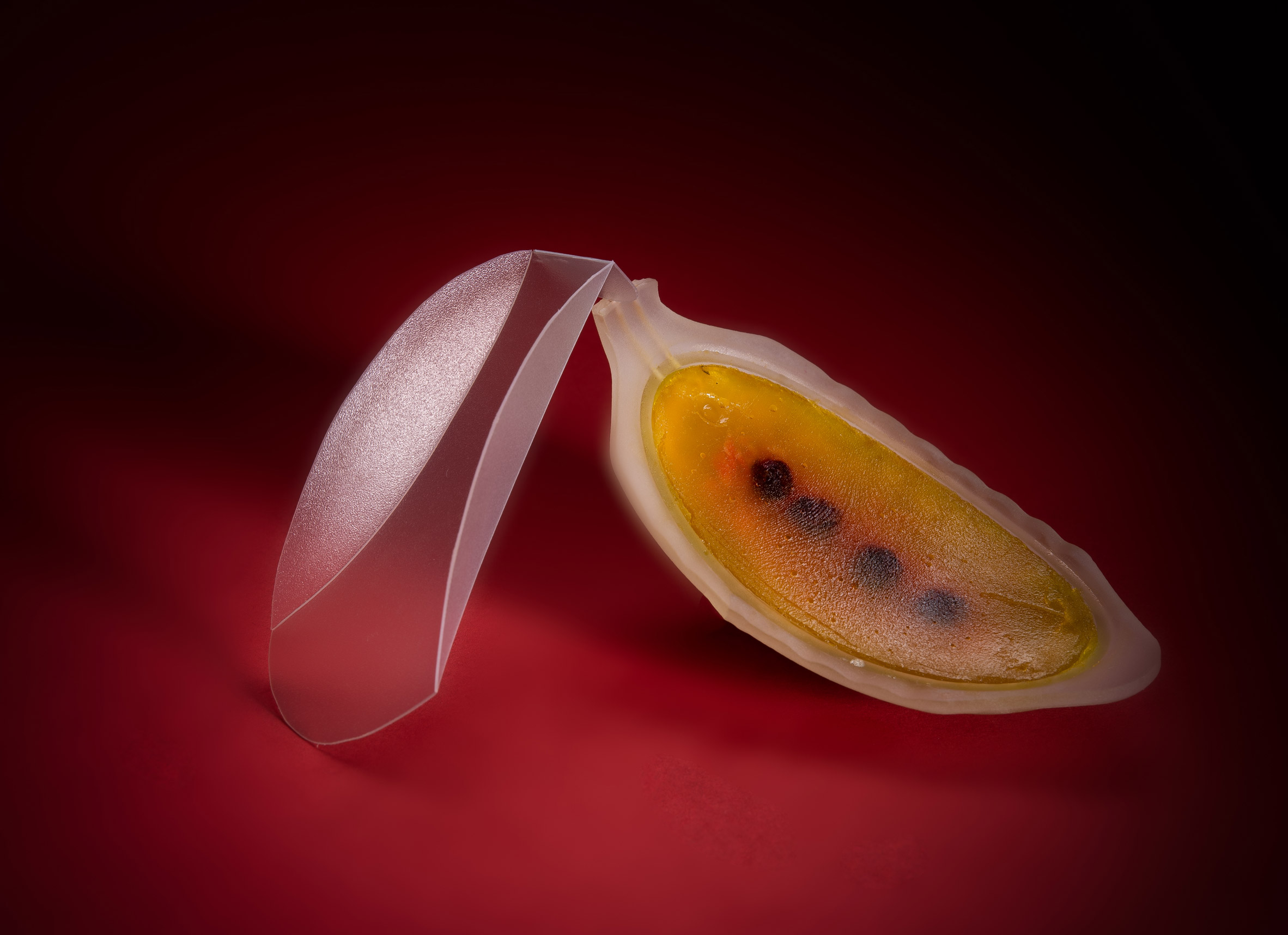
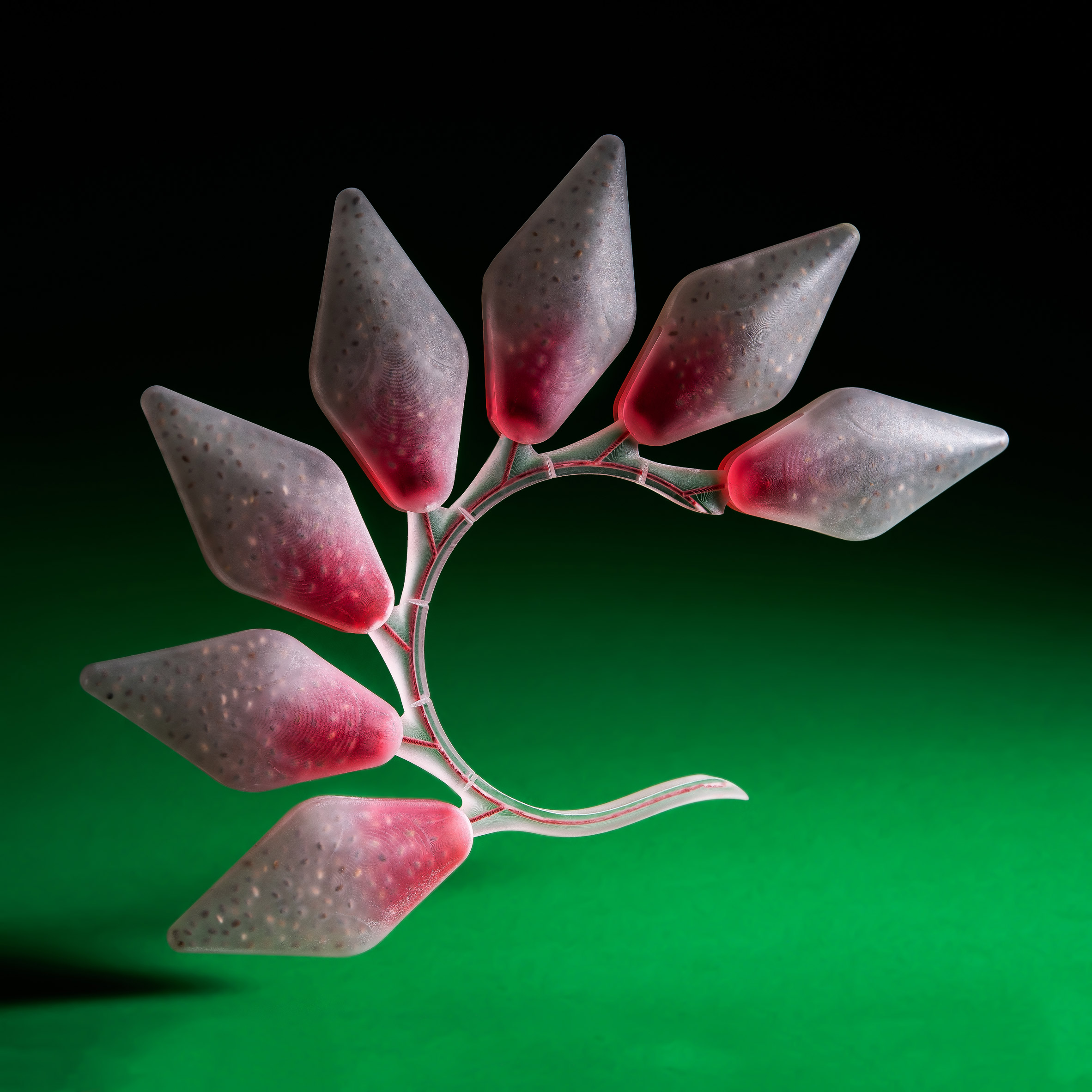
Called Neo Fruit, Levy's fake fruit have soft cases that are 3D-printed from translucent cellulose – an organic compound that gives plants their structure.

These skins are then injected with nutrient-rich liquids with various colours and flavours.

Meydan Levy 4D-prints edible fruit using cellulose and nutrient liquids

Levy describes the process as 4D printing because, unlike traditional 3D printing, the final form of the fruit changes after it comes out of the printer.

The cellulose skins are printed in a flat, compressed form, and only take on their final fruit-like appearance once the liquid is added.

The final form of the fruit is determined by built-in arteries, or micro-tubes, in the 3D-printed structures, which fill up to give the fruit volume.

Meydan Levy 4D-prints edible fruit using cellulose and nutrient liquids

"Until the fourth dimension is activated, the dry fruit is flat and lightweight allowing for a long shelf life, efficient storage and ease of transport," Levy told Dezeen.

"Adding the liquids and activating the fourth dimension gives the fruit life because from that moment it can be eaten. The liquid becomes the biological clock of the fruit and gives it a certain life, meaning it will remain at its best for a limited but pre-planned time."

Meydan Levy 4D-prints edible fruit using cellulose and nutrient liquids

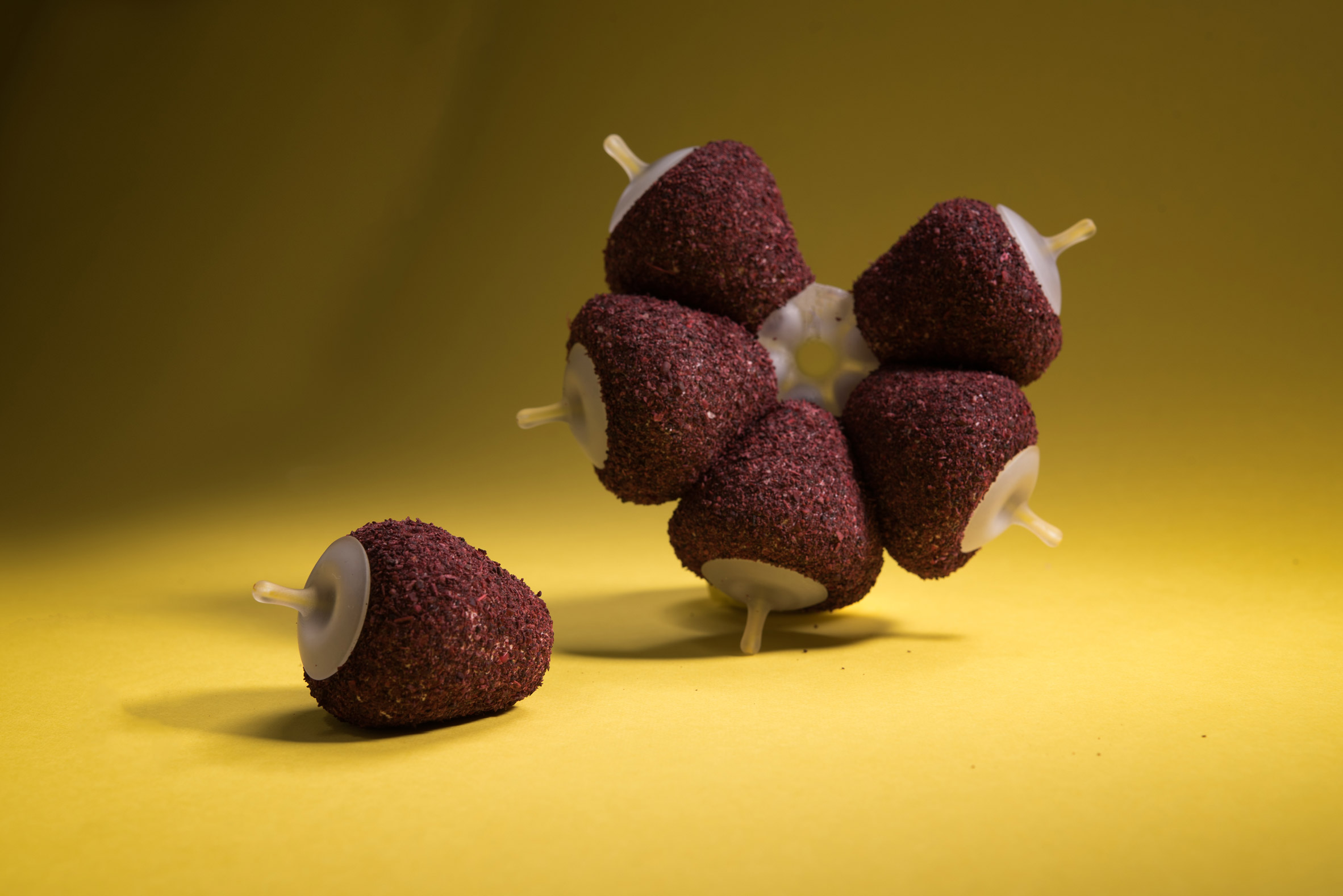
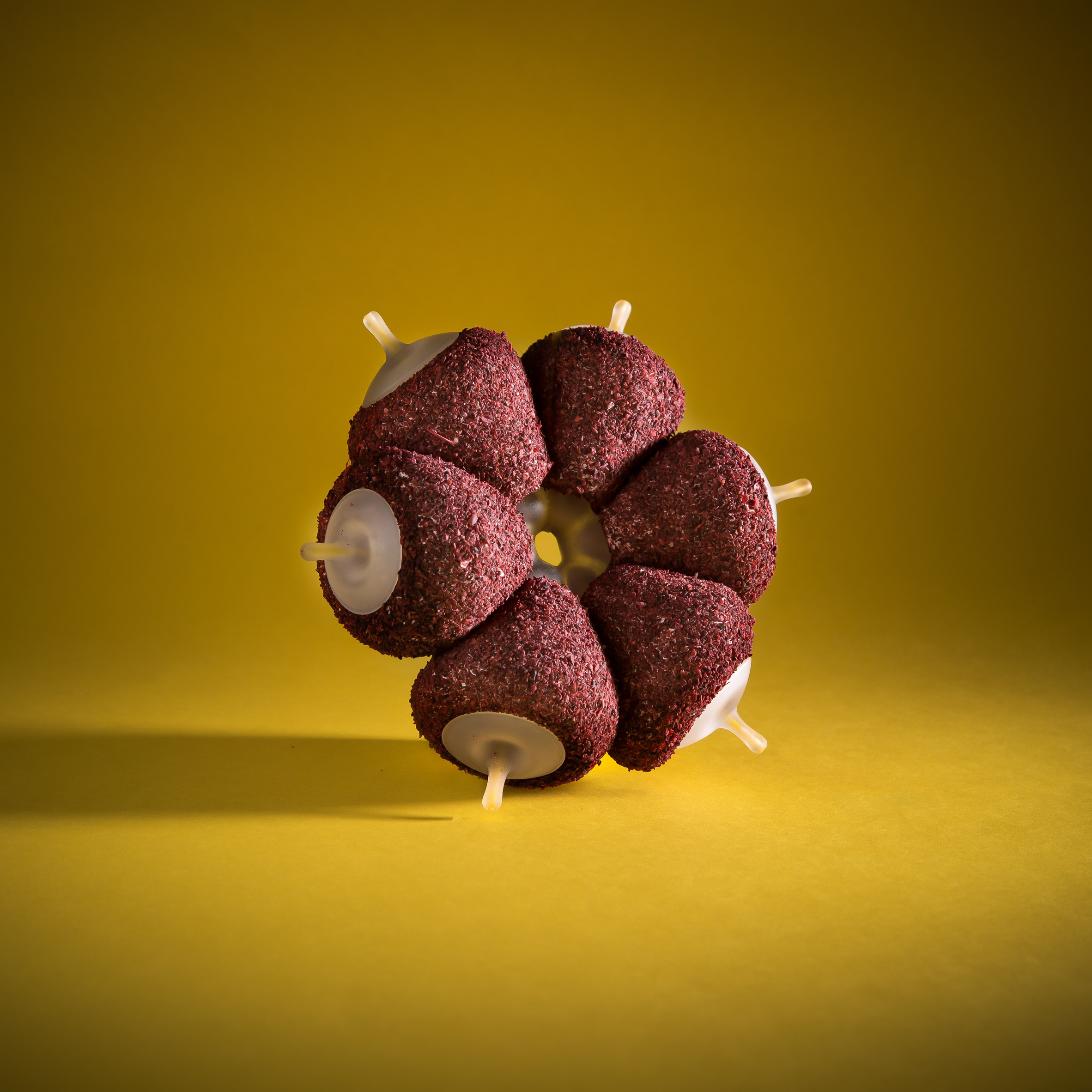
Despite looking like they come from an alien planet, all of the fruits are edible.

However, rather than mimicking the taste of real fruit, each of Levy's Neo Fruit has a unique flavour that is combined from a number of base ingredients.

Meydan Levy 4D-prints edible fruit using cellulose and nutrient liquids

"I developed a device that allows me to extract oils, flavours and smells from almost any existing substance and it allows me to experiment with diverse and interesting taste and smell combinations," Levy explained.

"I developed the textures with the help of expert chefs in molecular cooking and researched the edible raw materials available to produce the appropriate colour and texture for each fruit."

Meydan Levy 4D-prints edible fruit using cellulose and nutrient liquids

One of Levy's fruits consists of a series of small pods strung together like molecules. It requires the eater to crack it open and scrape the contents out with their teeth like an artichoke leaf.

Another is reminiscent of the interior of a passion fruit, but divided into three segments and held together by an outer and inner skeleton.

"This fruit contains additional nutrients which can be chewed and squeezed out of the 'bone'," Levy told Dezeen. "This is meant to extend the eating experience and preoccupation with the fruit."

Meydan Levy 4D-prints edible fruit using cellulose and nutrient liquids

Levy's aim was to find new ways to feed the ever-growing human population and offer a more appealing alternative to using food supplements to improve nutrition.

He worked with nutritionists in order to develop a different blend of vitamins and minerals for each fruit, which are intended to meet the human body's wide range of nutritional needs.

Meydan Levy 4D-prints edible fruit using cellulose and nutrient liquids

Levy looked at the way that real fruit is able to offer a sensory eating experience while communicating essential information.

The colour of a piece of fruit is not just an added extra, he suggested.

The pigments that make carrots orange, for example, are also a source of vitamin A, which is crucial for strengthening the immune system.

Meydan Levy 4D-prints edible fruit using cellulose and nutrient liquids

"Fruit is a whole product in perfect packaging, it holds both envelope and content in perfect reference to each other," Levy said.

"Fruits interact with the environment – changing colour and texture to indicate ripeness. The compounds that give them colour also have nutritional value and even taste components."

Meydan Levy 4D-prints edible fruit using cellulose and nutrient liquids

Other examples of 4D printing include a concept for flat-pack furniture that unfolds when exposed to heat and a shape-changing dress.

Elsewhere, designers have used additive manufacturing to create snacks from food waste and vegan steaks.

The post Meydan Levy creates 4D-printed artificial fruit filled with nutrients appeared first on Dezeen.


from Dezeen https://ift.tt/2RoOZe5