Sunday, 8 December 2019

Dezeen's top 10 furniture designs of 2019

Dezeen's top 10 furniture designs of 2019

This year, furniture designs ventured out of the home onto the streets and into prisons. Design reporter Jennifer Hahn picks out her top 10 projects for our review of 2019, from public seating in Beirut to silicone chairs.

Dezeen's top 10 furniture designs of 2019

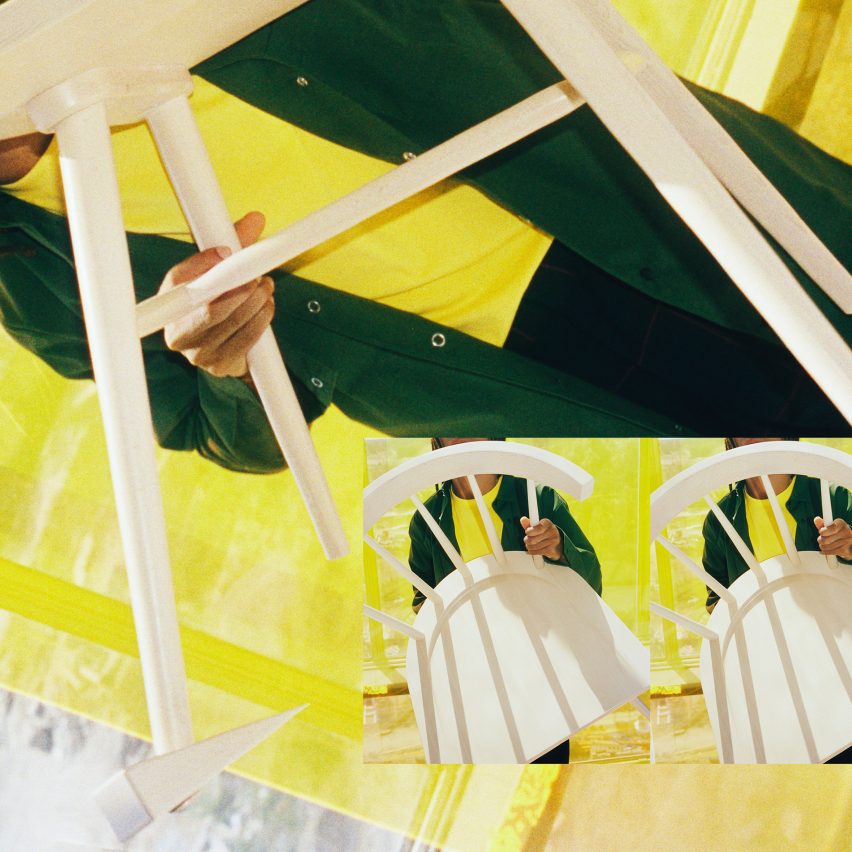
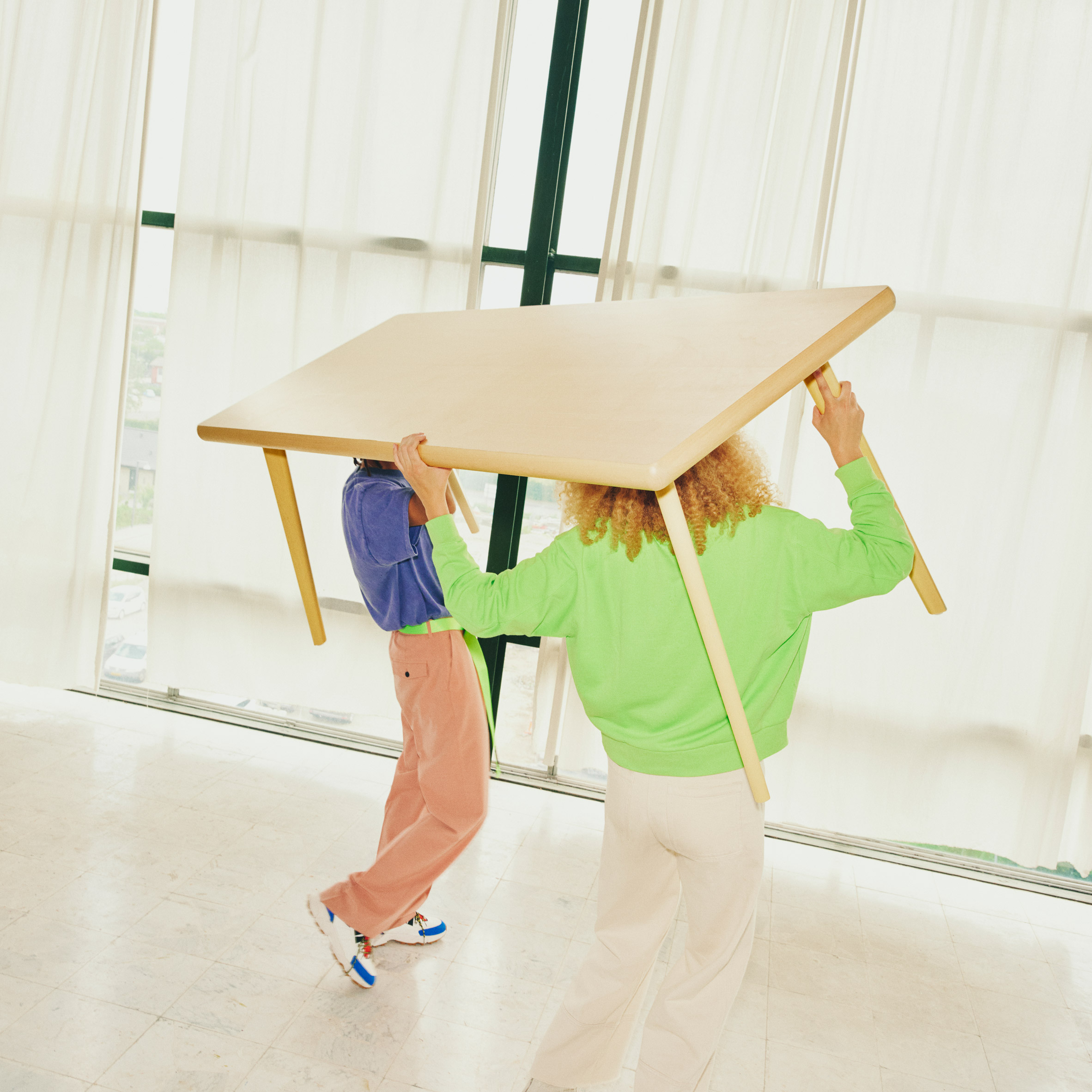
Markerad by IKEA and Virgil Abloh

After hacking the Vitra archive in June, this year's most hyped launch saw Virgil Abloh make his latest foray into furniture design with an IKEA collection that includes a bed, dining table, chair and cabinet, made from light pine and beech wood.

The pieces are deceptively minimal, save for a number of small, tongue-in-cheek details – an integrated doorstop here, a red-nail handle there – which Abloh has become known for in his designs for Off-White.

Find out more about the Markerad collection›

Dezeen's top 10 furniture designs of 2019

Holidays in the Sun by T Sakhi

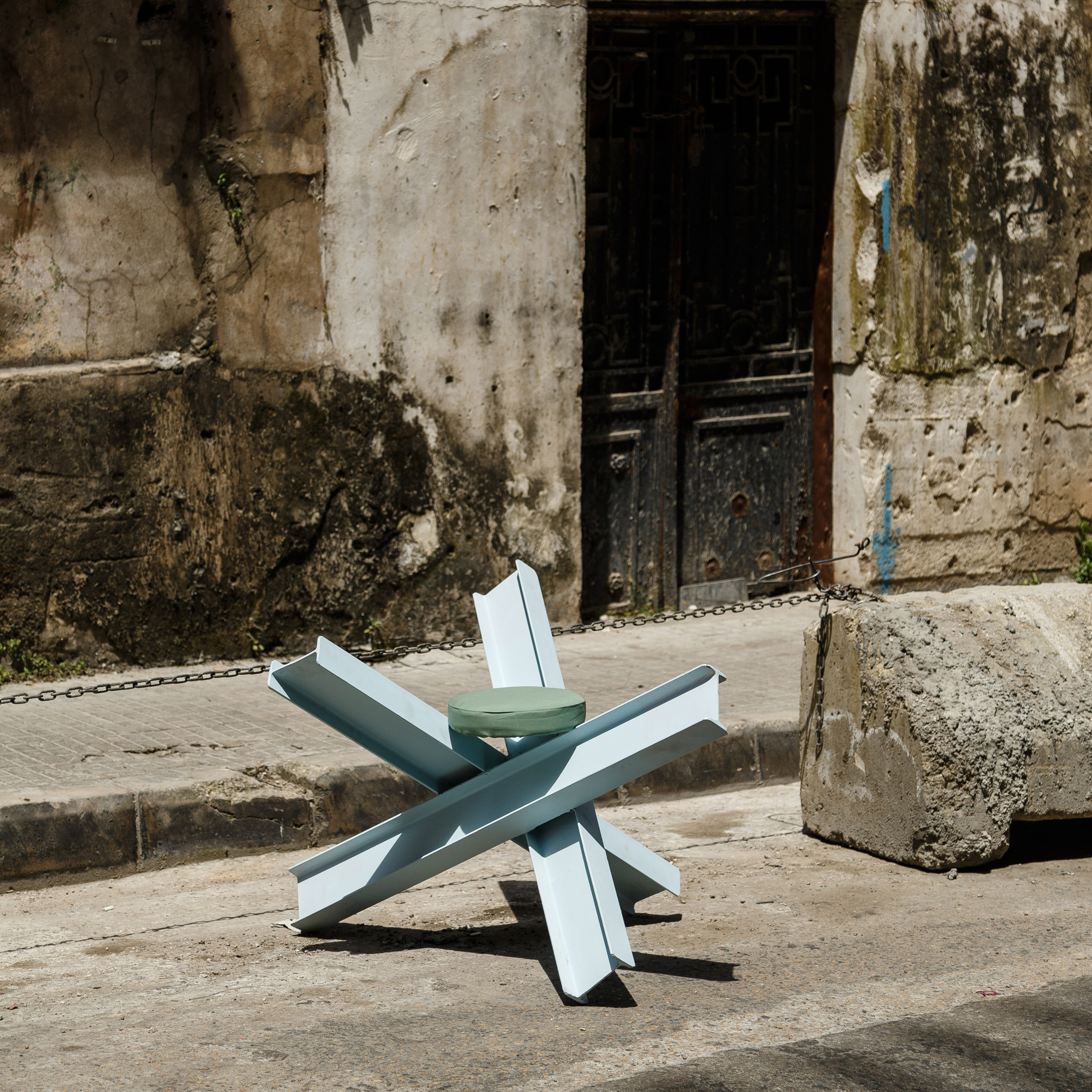
With Lebanon in a period of civil unrest, various designers have staged installations across the capital this year in an attempt to give citizens a sense of ownership over their city.

In one of the stand-out projects, design duo T Sakhi used Beirut's ever-present security infrastructure against itself, turning damaged military barriers into public seating and reimagining crowd-control fences as planters.

Find out more about T Sakhi's Holidays in the Sun›

Dezeen's top 10 furniture designs of 2019

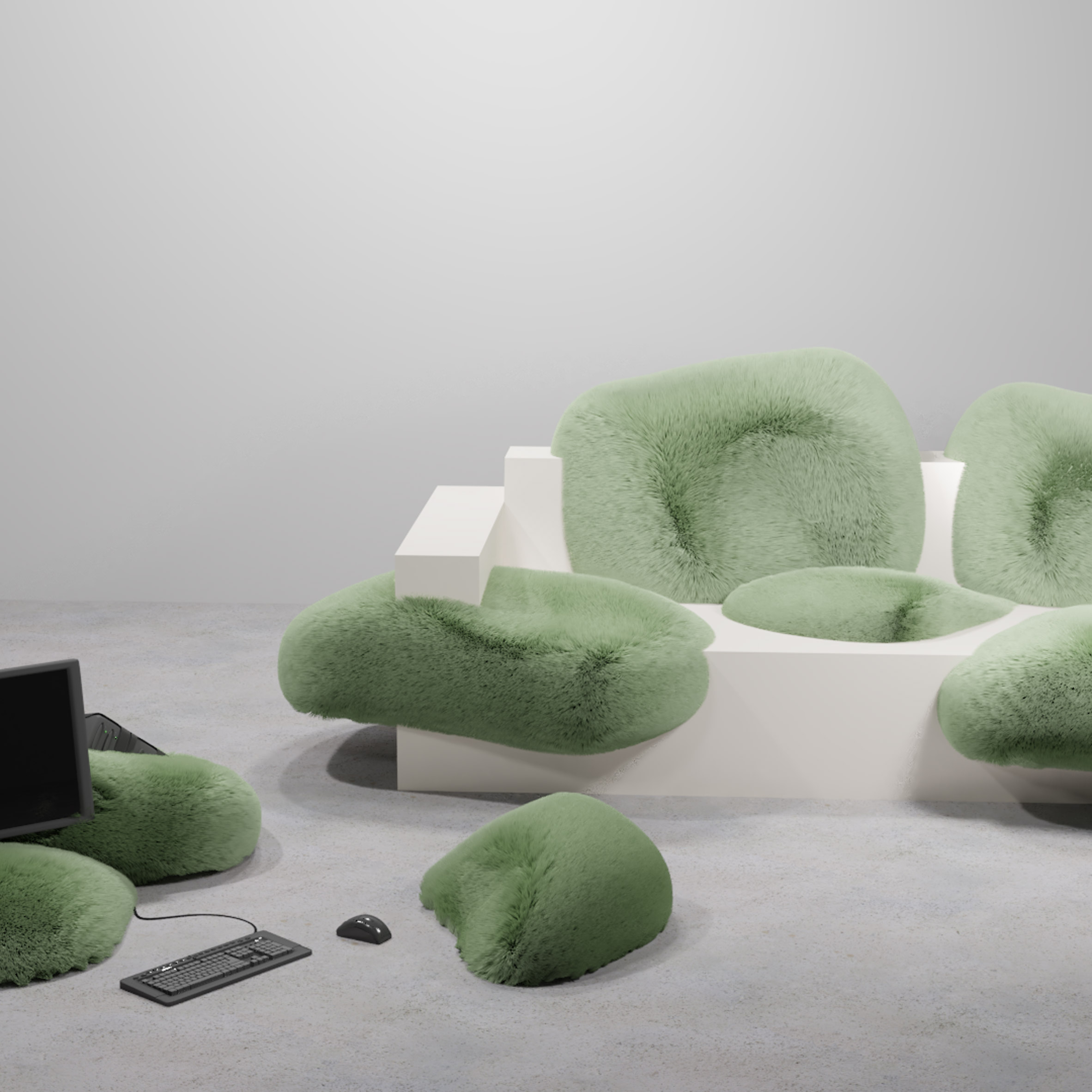
CrossFit by Schimmel & Schweikle

Renders become real in this collection from Janne Schimmel and Moreno Schweikle, as minimal furniture designs are digitally mashed up with furry, blob-like shapes and finally translated into actual furniture.

Rather than using 3D renders to visualise an existing concept, CrossFit is an experiment in letting the unrealistic, unexpected ways that materials behave in computer models push the boundaries of what is possible in a physical object.

Find out more about Schimmel & Schweikle's CrossFit›

Dezeen's top 10 furniture designs of 2019

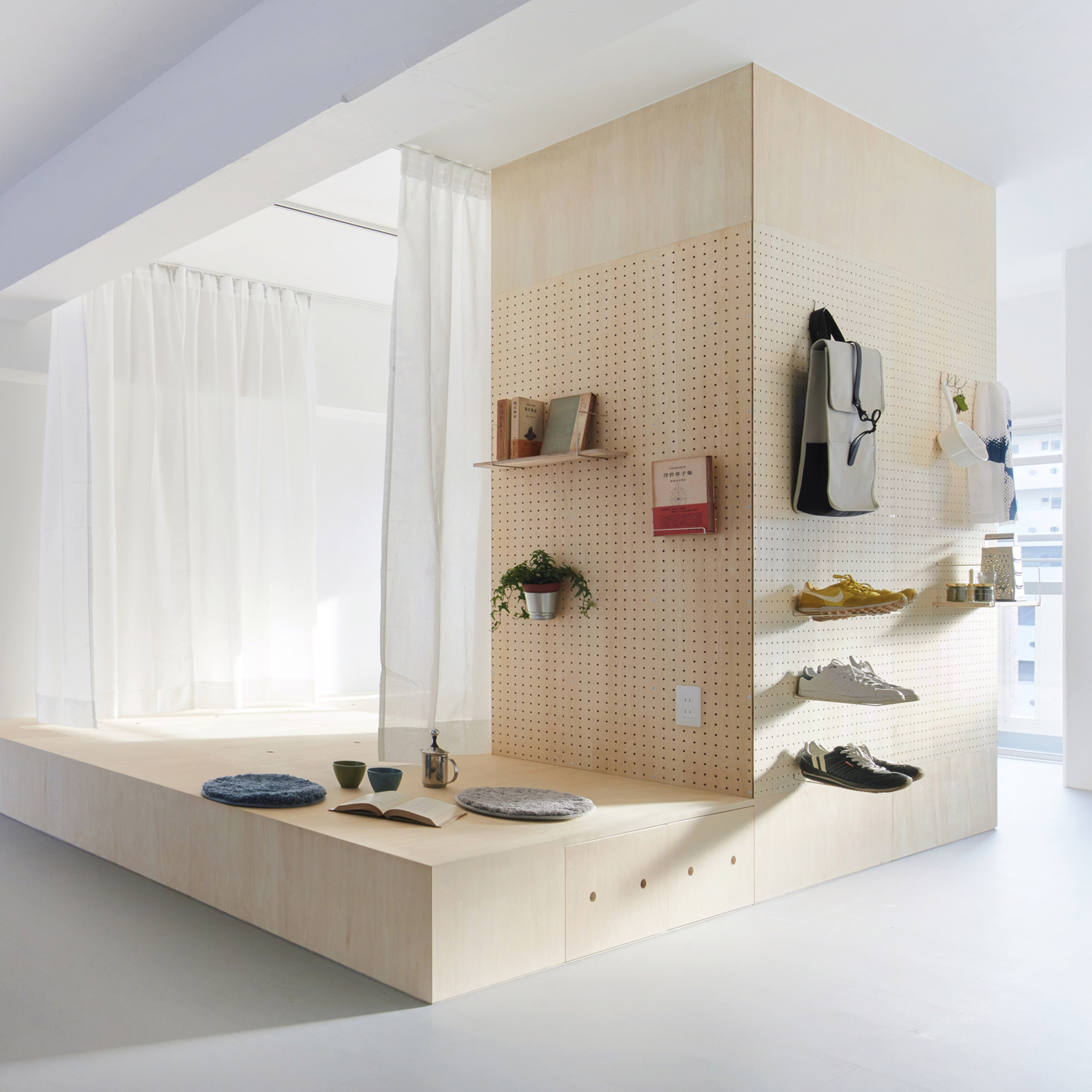
Shima by Nmstudio Architects

With Shima, Nmstudio joined a number of architecture practices crossing over into furniture design this year. The name, which means island in Japanese, in this case refers to a multifunctional plywood unit that was created for a public-housing complex in Osaka.

Consisting of raised floors and pegboard walls, they allow residents to customise the layout of their otherwise identical apartments, with simple modifications like hooks, cushions or mattresses turning the module into a place to sit, sleep and store.

Find out more about Nmstudio's Shima project›

Dezeen's top 10 furniture designs of 2019

Exploring Eden by Bethan Gray and Nature Squared

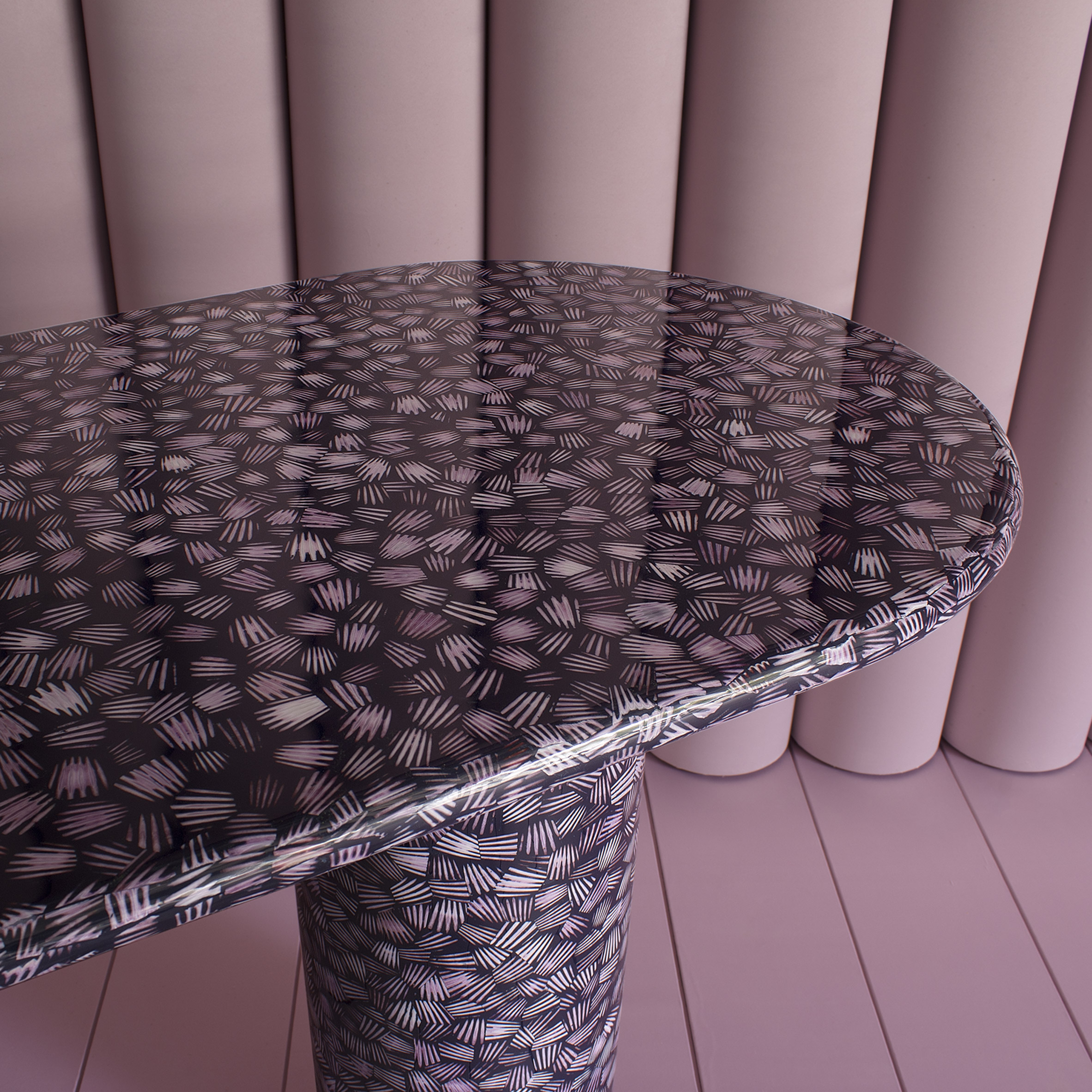
As calls for a more circular economic system grow, a host of projects are making use of post-industrial waste materials, for example from the production of aluminium or beer or coffee, to help us reconsider our throwaway culture.

For her part, Bethan Gray turned to the seafood and farming industries, using byproducts like shells and feathers to create a sleek collection of shelves, seats and tables that let the natural qualities of the materials shine through.

Find out more about Bethan Gray's Exploring Eden›

Dezeen's top 10 furniture designs of 2019

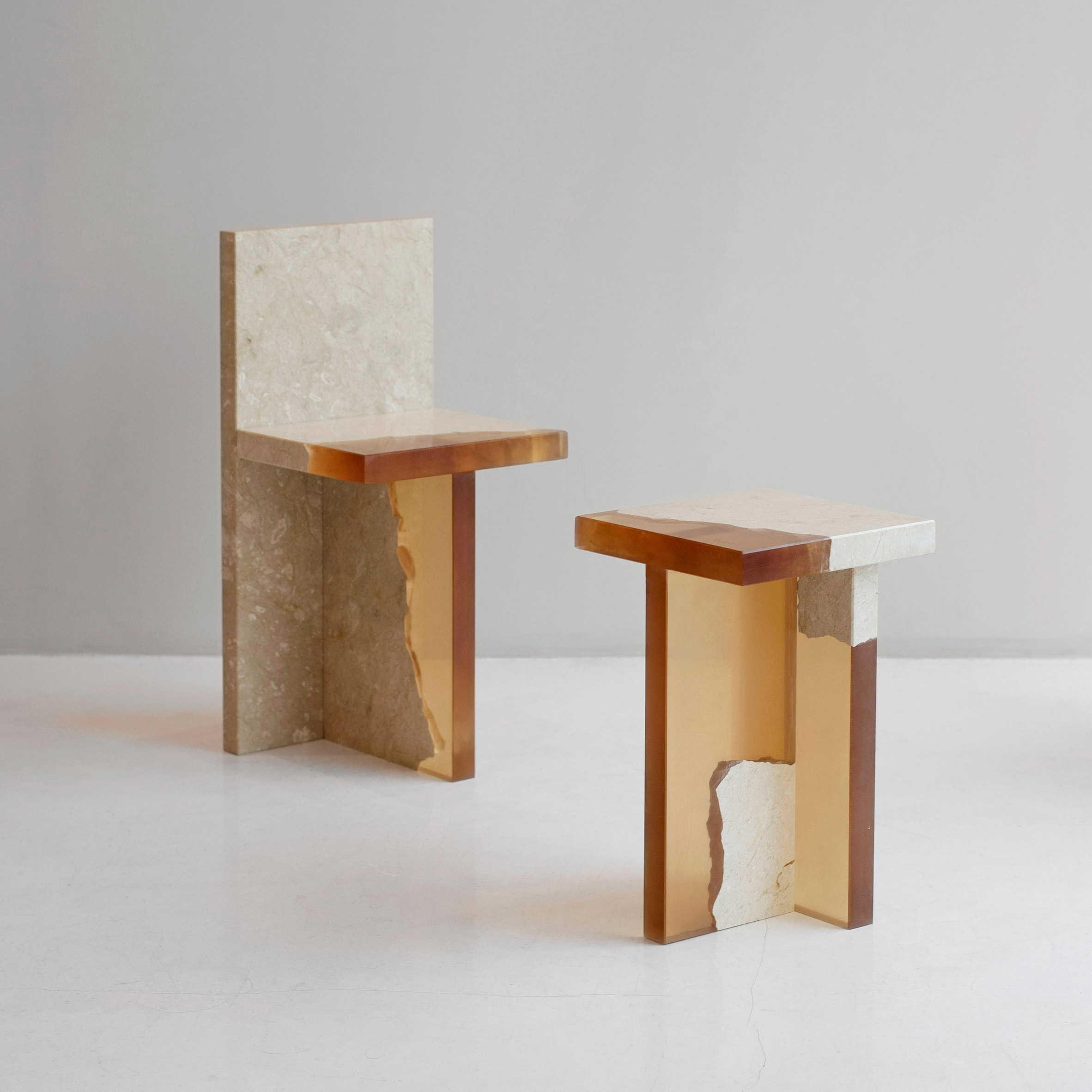
Fragments by Fict Studio

On the more glamorous side of waste repurposing is a collection by South Korean Fict Studio, which consists entirely of pieces of broken marble that were discarded by manufacturers and subsequently encased in a light golden resin like insects in amber.

Elsewhere, marble industry offcuts were suspended in resin by London designer Robin Grasby to create a terrazzo material, while Italian architect Piero Lissoni created bistro tables using slabs left over from the construction of famous buildings like Notre Dame and St Peter's Basilica.

Find out more about Fict Studio's Fragments collection›

Dezeen's top 10 furniture designs of 2019

Cell Furniture by Central Saint Martins students and HMPPS

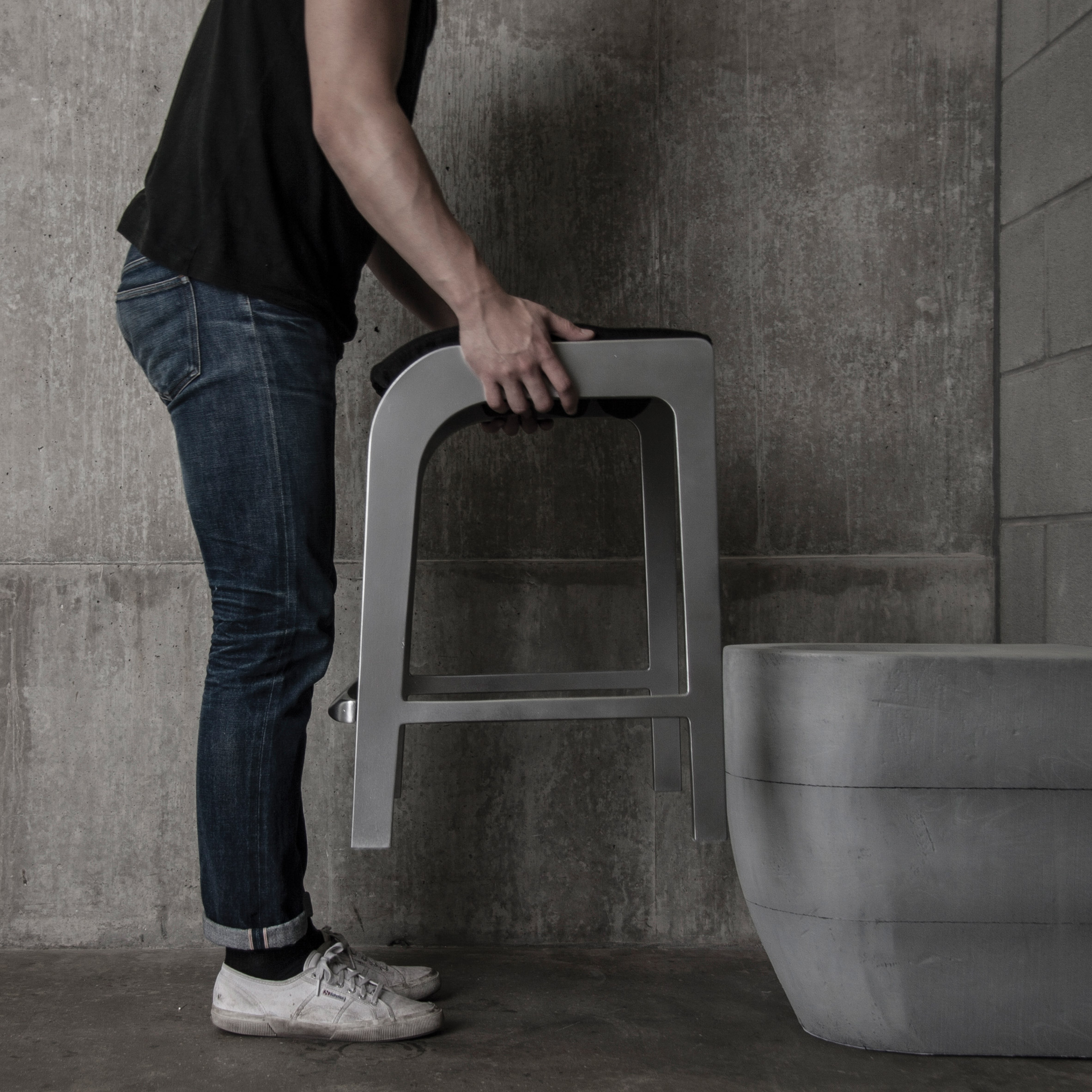
This year's Central Saint Martins degree show featured a collection of multi-purpose cell furniture, created by a group of 16 students in partnership with prisoners and prison staff.

The prototypes – which include a stool that also functions as a toilet bowl cover and a cardboard rocking chair that works as a low desk and shelf – are meant to make life for inmates more comfortable while imparting them with vocational skills through taking responsibility for their production.

Find out more about the Cell Furniture project›

Dezeen's top 10 furniture designs of 2019

Dolomies by Elissa Lacoste

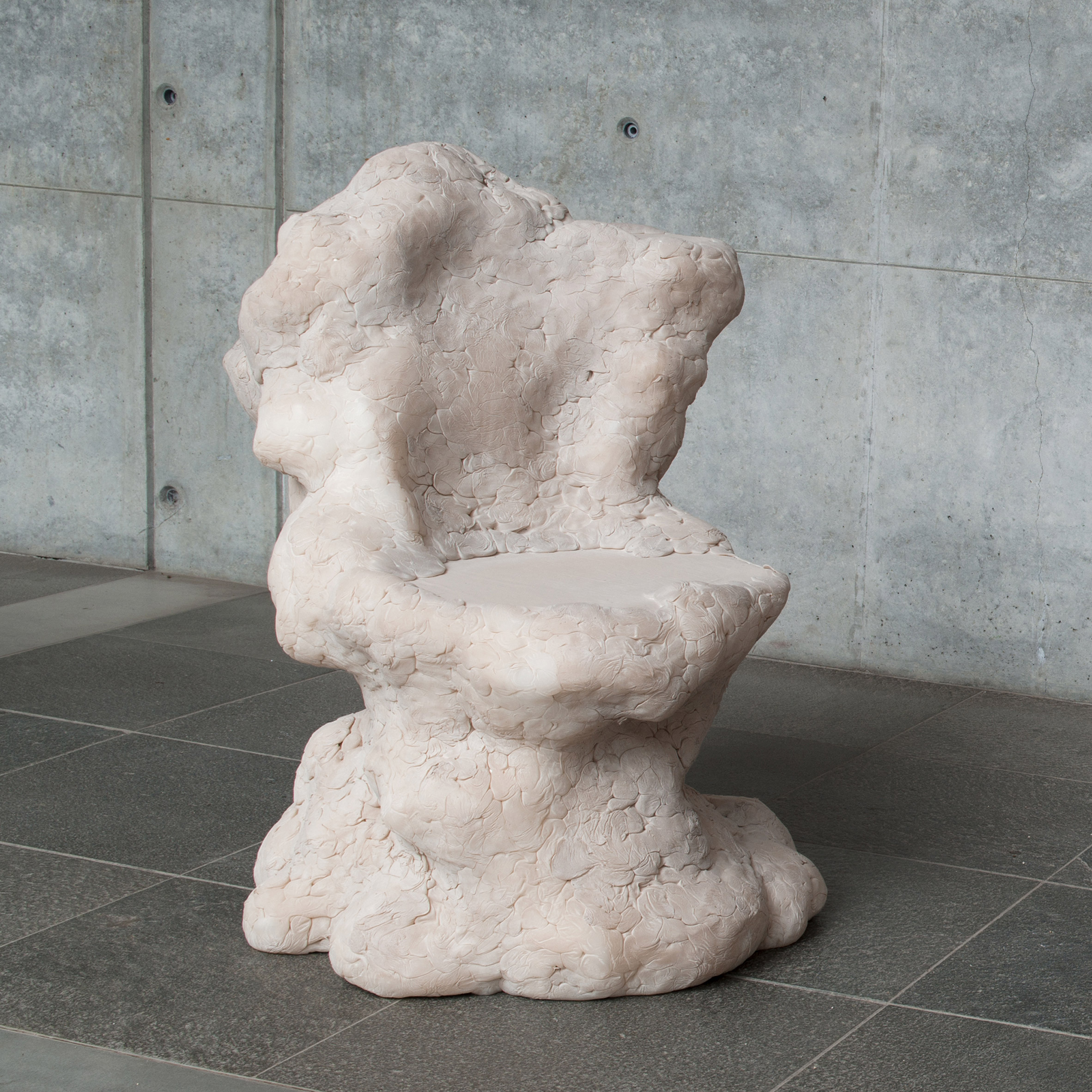
For the amorphous Dolomies chair, French designer Elissa Lacoste worked with silicone "in the manner of a classical sculptor," letting the material dictate the form of the final object.

Clay powder was used to create organic textures like grooves and ripples to emulate the appearance of stalagmites and similar geological formations that are rarely found in the built environment.

Find out more about Elissa Lacoste's Dolomies›

Dezeen's top 10 furniture designs of 2019

Överallt by IKEA and Design Indaba

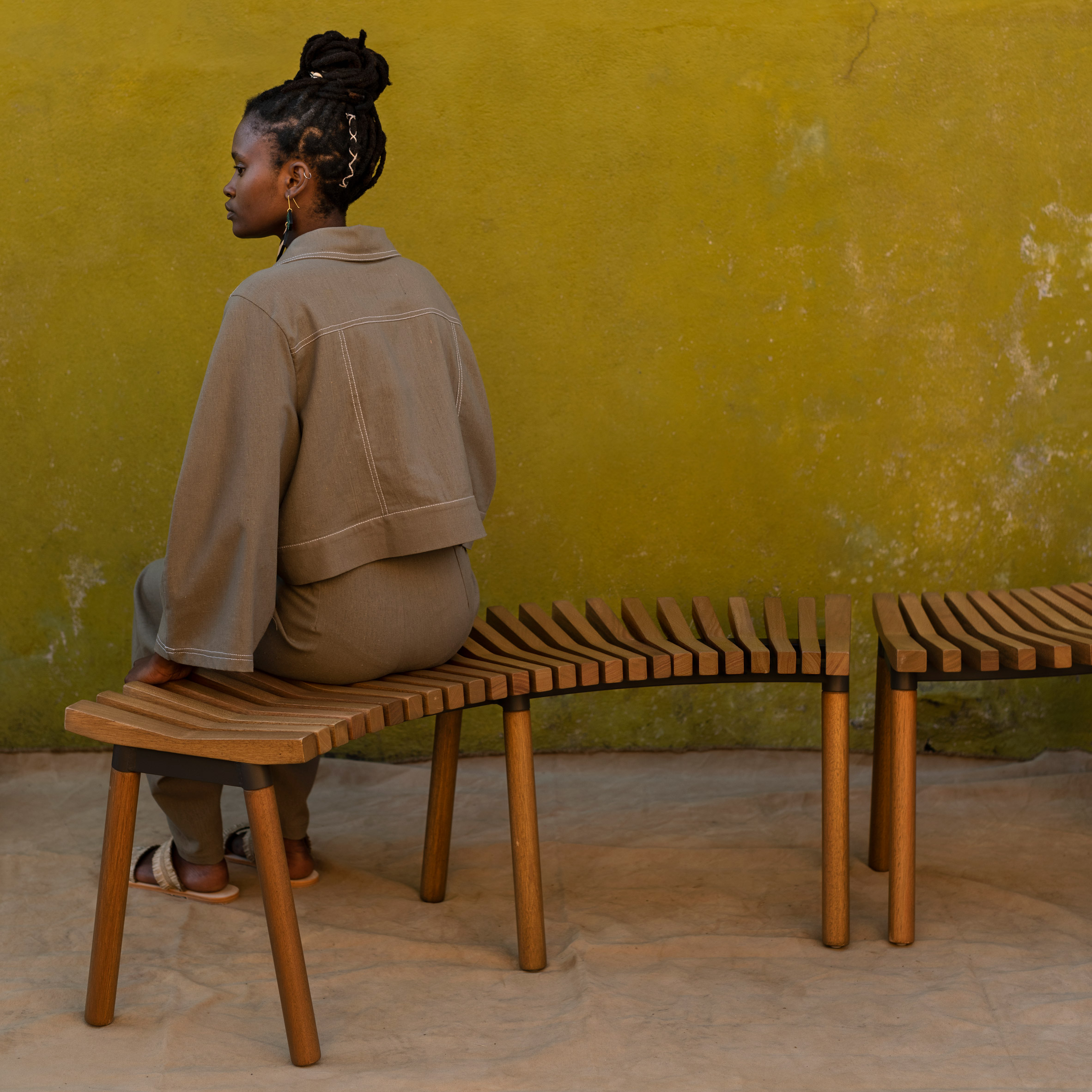
Another year, another long list of IKEA collaborations, which included Olafur Eliasson, speaker brand Sonos and – in what was by far Dezeen's most read furniture story of 2019 – a cast of designers from five African countries.

Hailing from a range of different disciplines, each shared their take on what African design means, with Ivorian architect Issa Diabaté creating a chair from one sheet of plywood and zero fixings, while Kenyan design workshop Studio Propolis made a modular, curving bench to facilitate socialising.

Find out more about the Överallt collection›

Dezeen's top 10 furniture designs of 2019

Ripple by Layth Mahdi

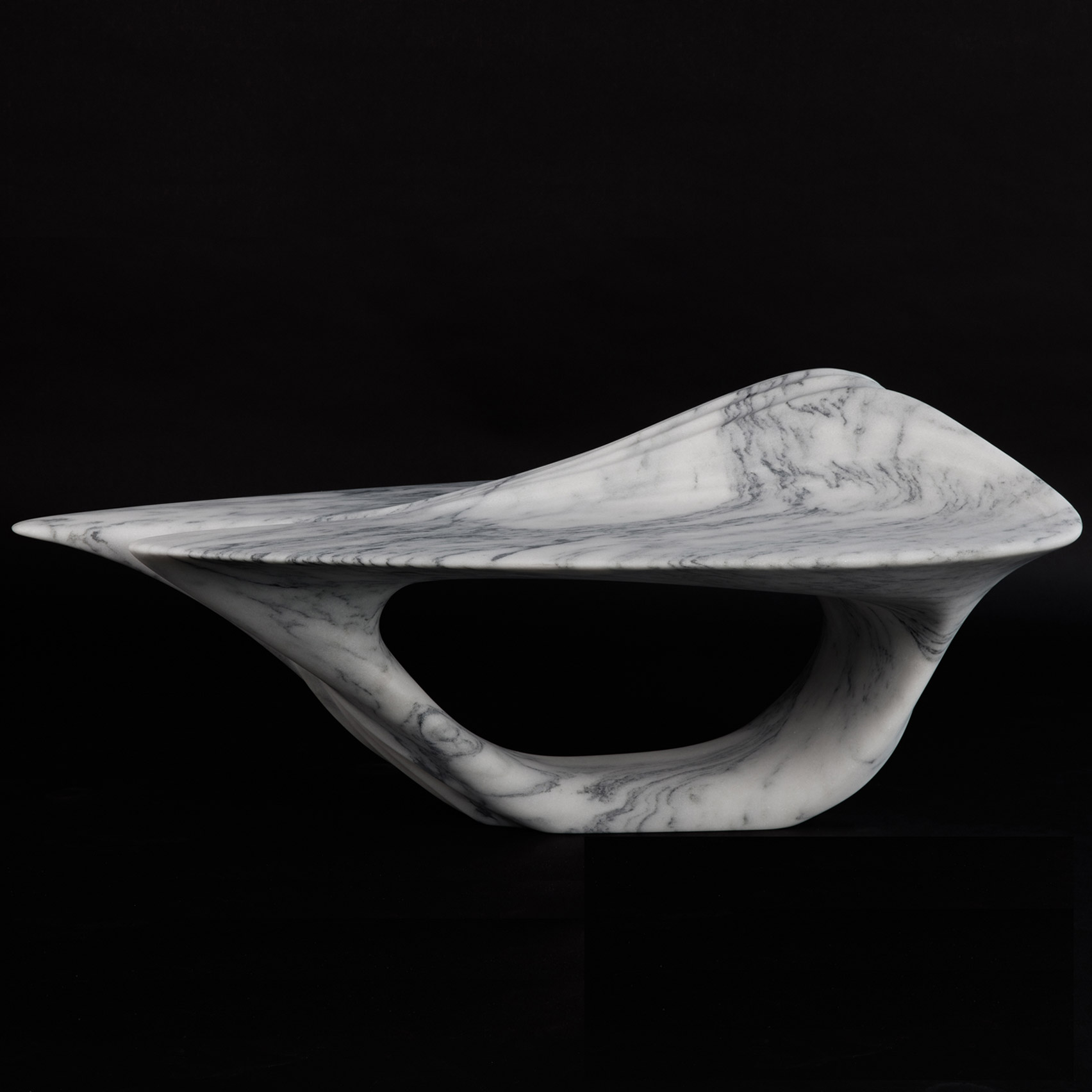
To imbue a rigid material like marble with an unexpectedly fluid shape, Emirati designer Layth Mahdi enlisted an algorithm for the conception of this coffee table and a 7-Axis robot for its milling.

Despite recent concerns that such automation might put creative workers like architects out of business, Mahdi believes that "the future is collaborative" with humans filling in the skill gaps of robots and vice versa.

Find out more about Layth Mahdi's Ripple›

The post Dezeen's top 10 furniture designs of 2019 appeared first on Dezeen.


from Dezeen https://ift.tt/366HMDw

View snowy architecture scenes on our Pinterest board

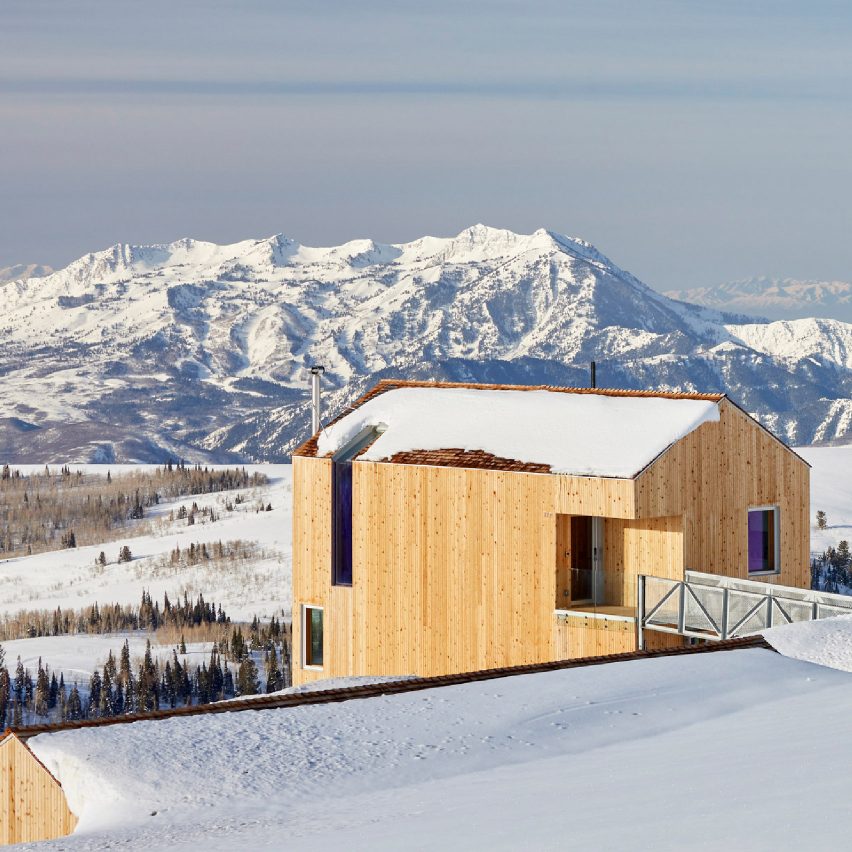
Horizon winter sports resort by MacKay-Lyons Sweetapple

Winter is here in the northern hemisphere, so we've updated our Pinterest board depicting snowy architecture scenes. The board features dozens of projects including mountain cabins, ski lodges and cosy winter retreats. Follow Dezeen on Pinterest or visit our snow-scenes board to see more.

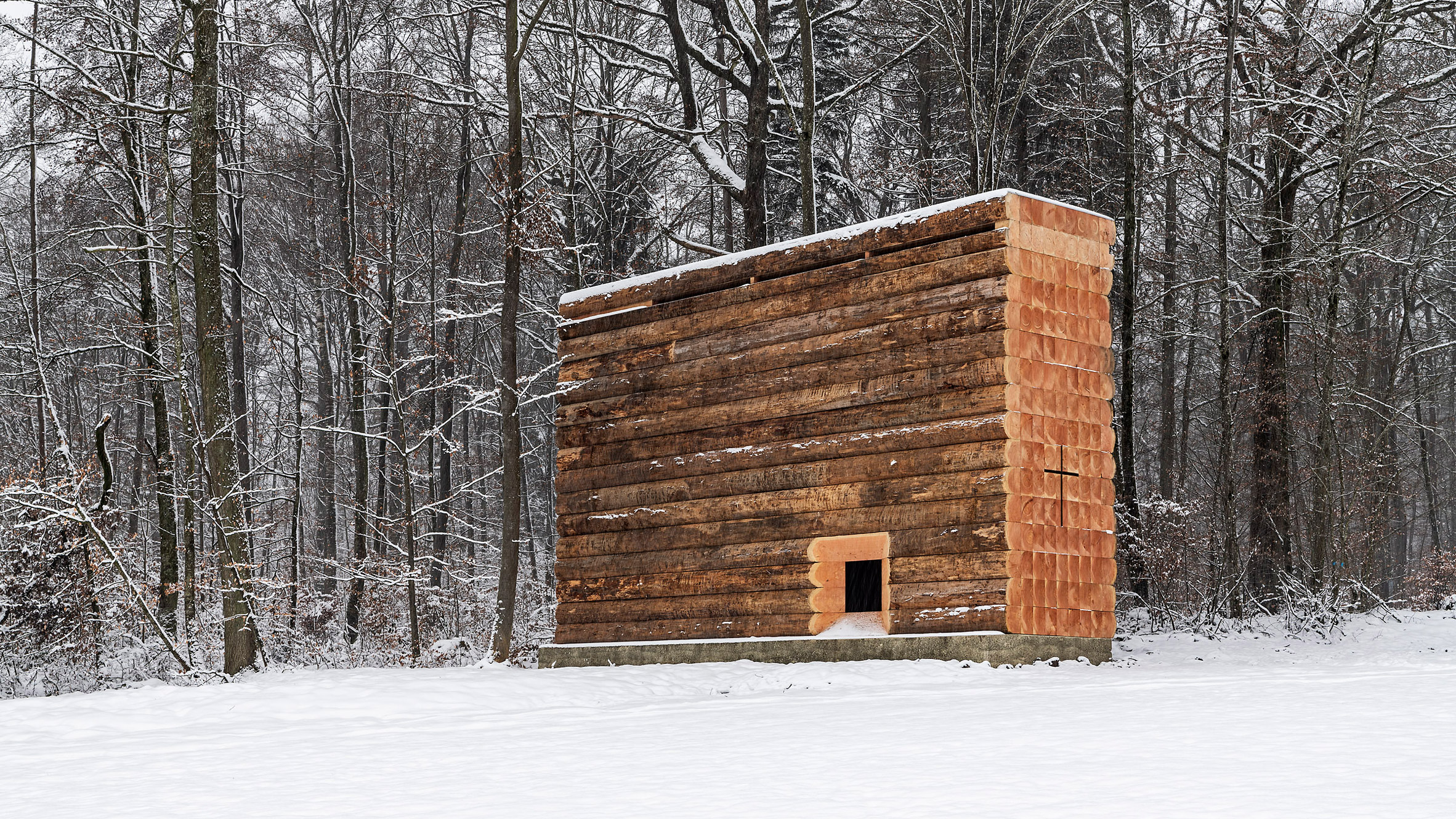
John Pawson's log chapel is included on the Pinterest board

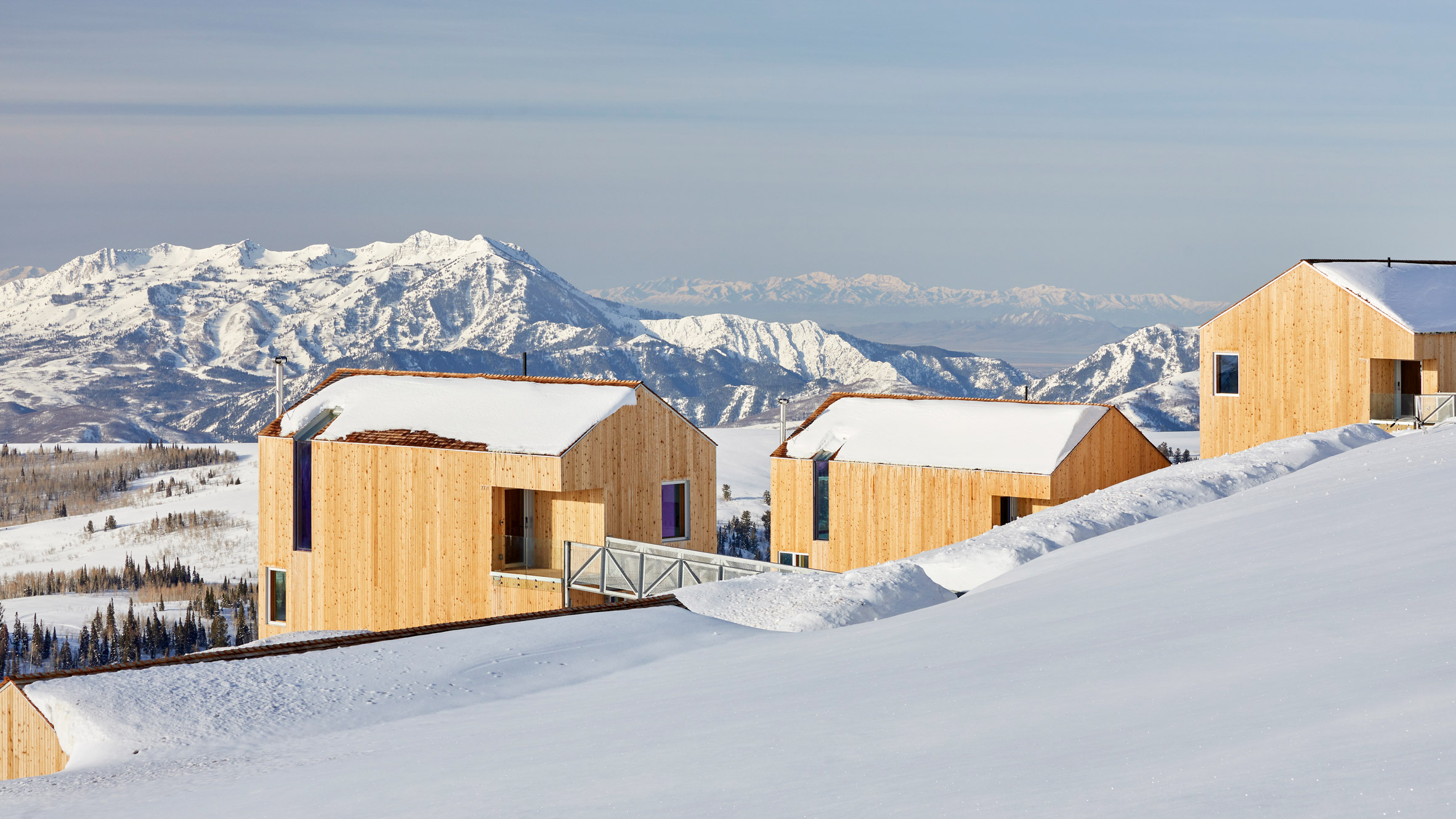
Projects featured on the board include a winter-sports retreat on Utah's Powder Mountain and John Pawson's inconspicuous log chapel in a Bavarian forest.

There's also a cabin in the Laurentian Mountains designed for skiing holidays. Explore more wintry images on our winter-retreats tag.

The Pinterest board includes numerous chalets including a group designed by MacKay-Lyons Sweetapple 

Dezeen's Pinterest account features thousands of images, organised into hundreds of boards. Follow us on Pinterest to keep up to date with our latest pins.

The post View snowy architecture scenes on our Pinterest board appeared first on Dezeen.


from Dezeen https://ift.tt/2YtGeRx

Saturday, 7 December 2019

Frama uses neutral tones for Beirut concept store The Slow

The Slow concept store by Frama

Multidisciplinary design studio Frama tried to emulate a relaxed neighbourhood atmosphere inside this Beirut concept store, which features limewashed surfaces and simple concrete fixtures.

The Slow – which was formerly an old-school cafe – accommodates a shop, eatery, co-working area and meeting room that locals can hang out in throughout the day.

It's situated in Mar Mikhael, a trendy part of Beirut populated with an abundance of restaurants, art galleries and boutiques.

The Slow concept store by Frama

For the interiors of the store, Frama curated a material and colour palette that they felt captured the laid-back feel of the neighbourhood and wider Beirut's "energetic mix of old and new".

The Slow concept store by Frama

"When designing The Slow, the context absolutely took an influence in the design," head designer at the studio, Cassandra Bradfield, told Dezeen.

"I wanted to create a neutral and relaxed atmosphere that suits the culture of the area but with some memorable features."

The Slow concept store by Frama

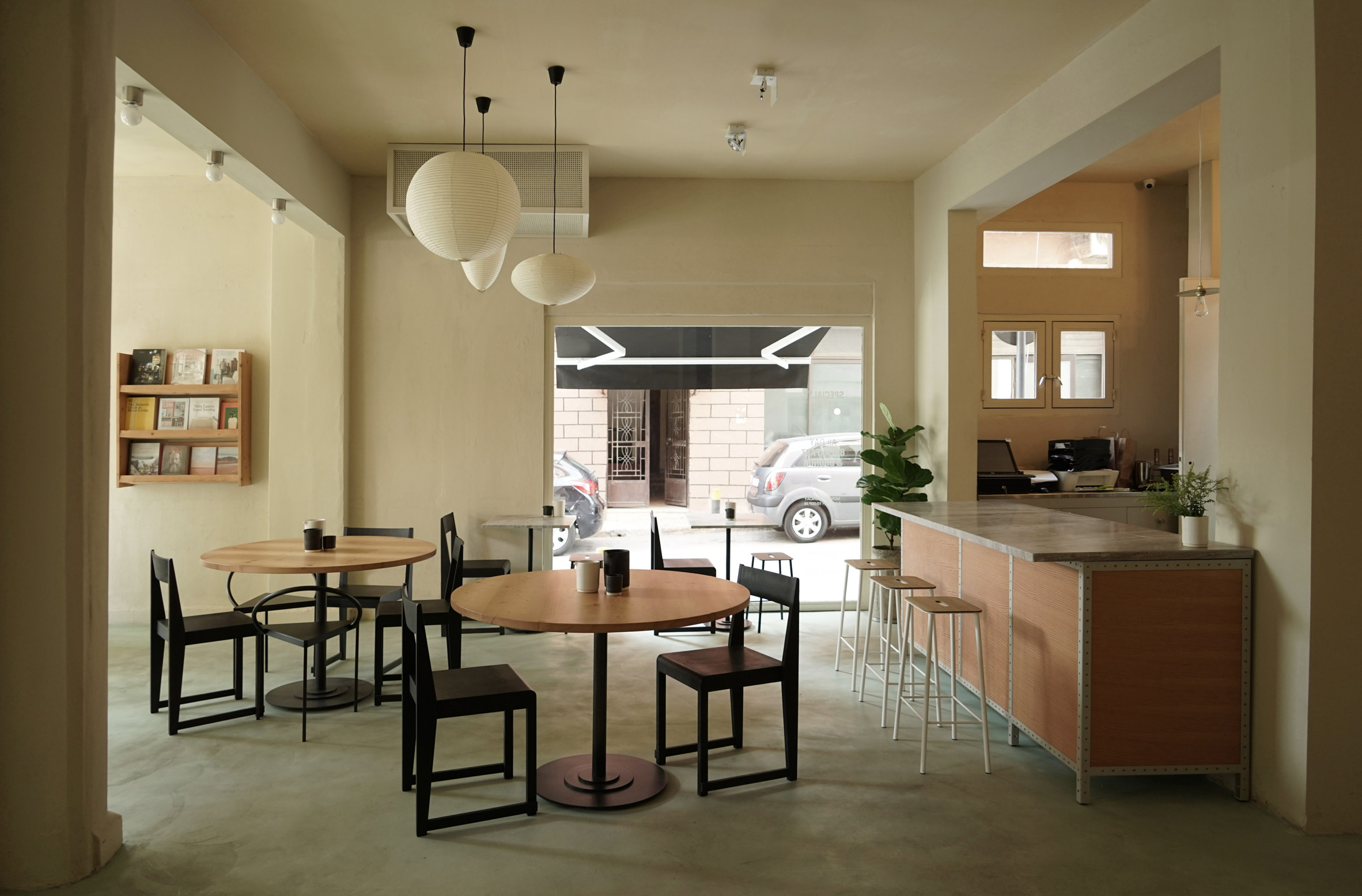
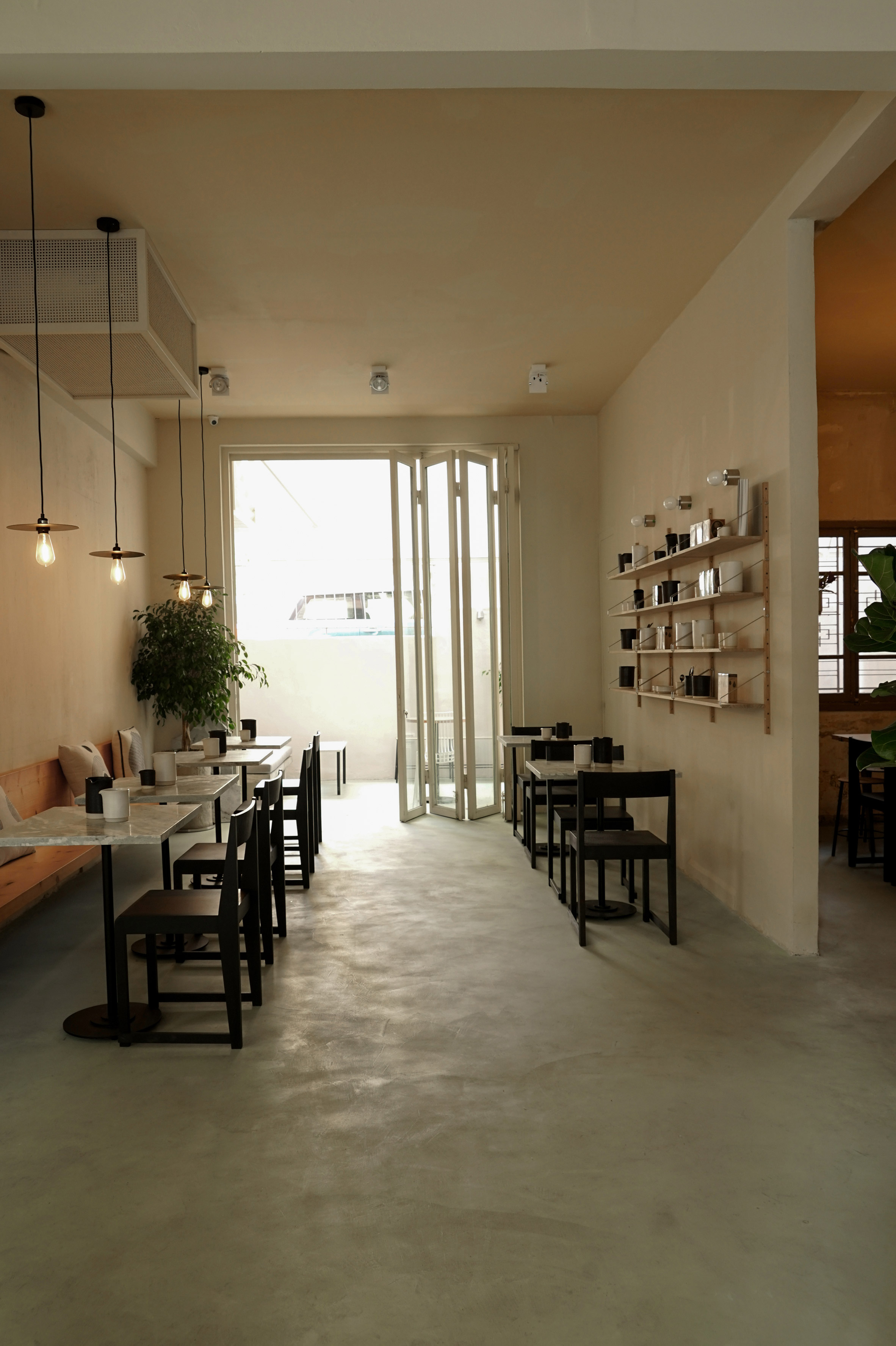
Towards the front of the store lies the cafe, which has been dressed with circular, wooden tables and jet-black iterations of Frama's Chair 01 model.

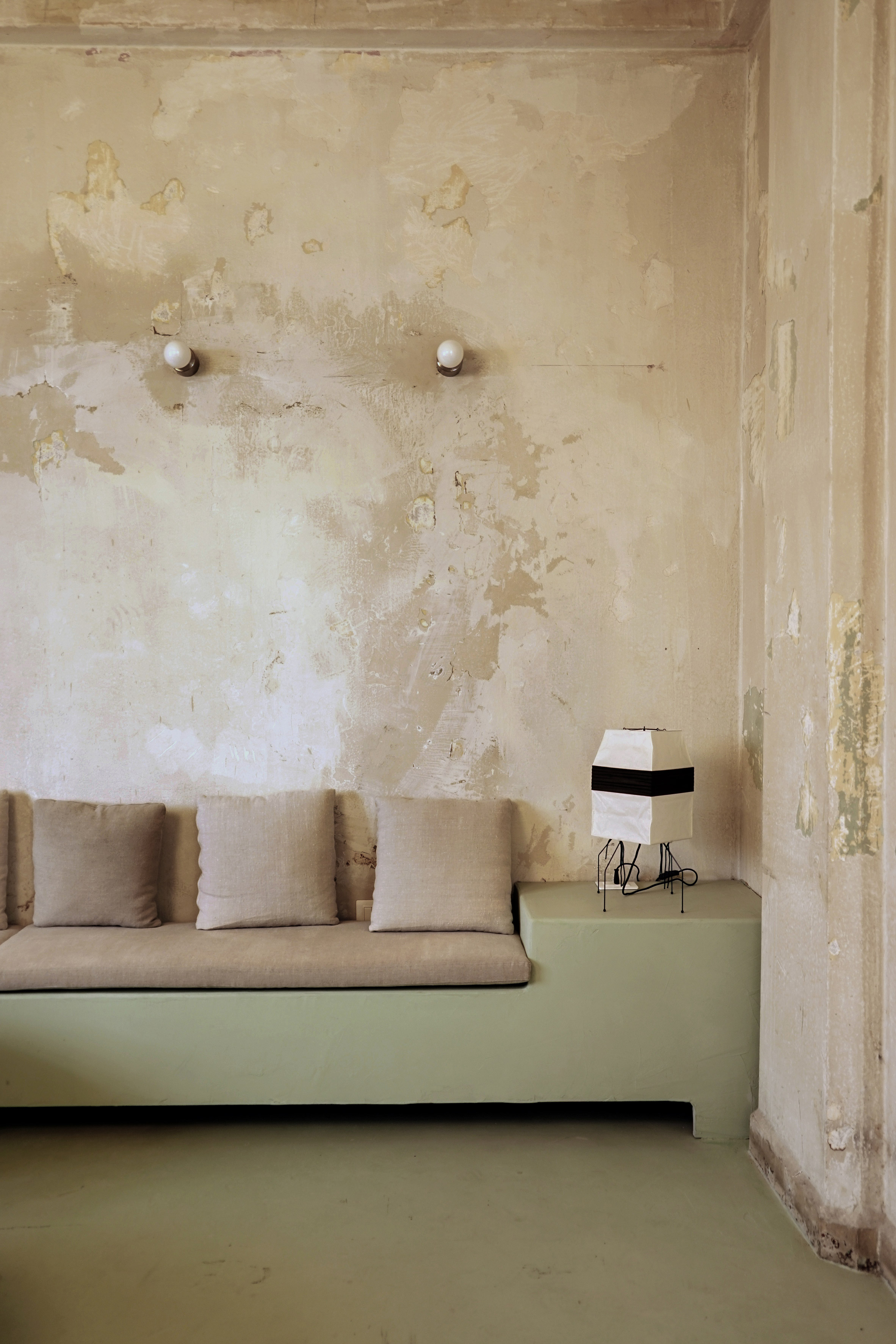
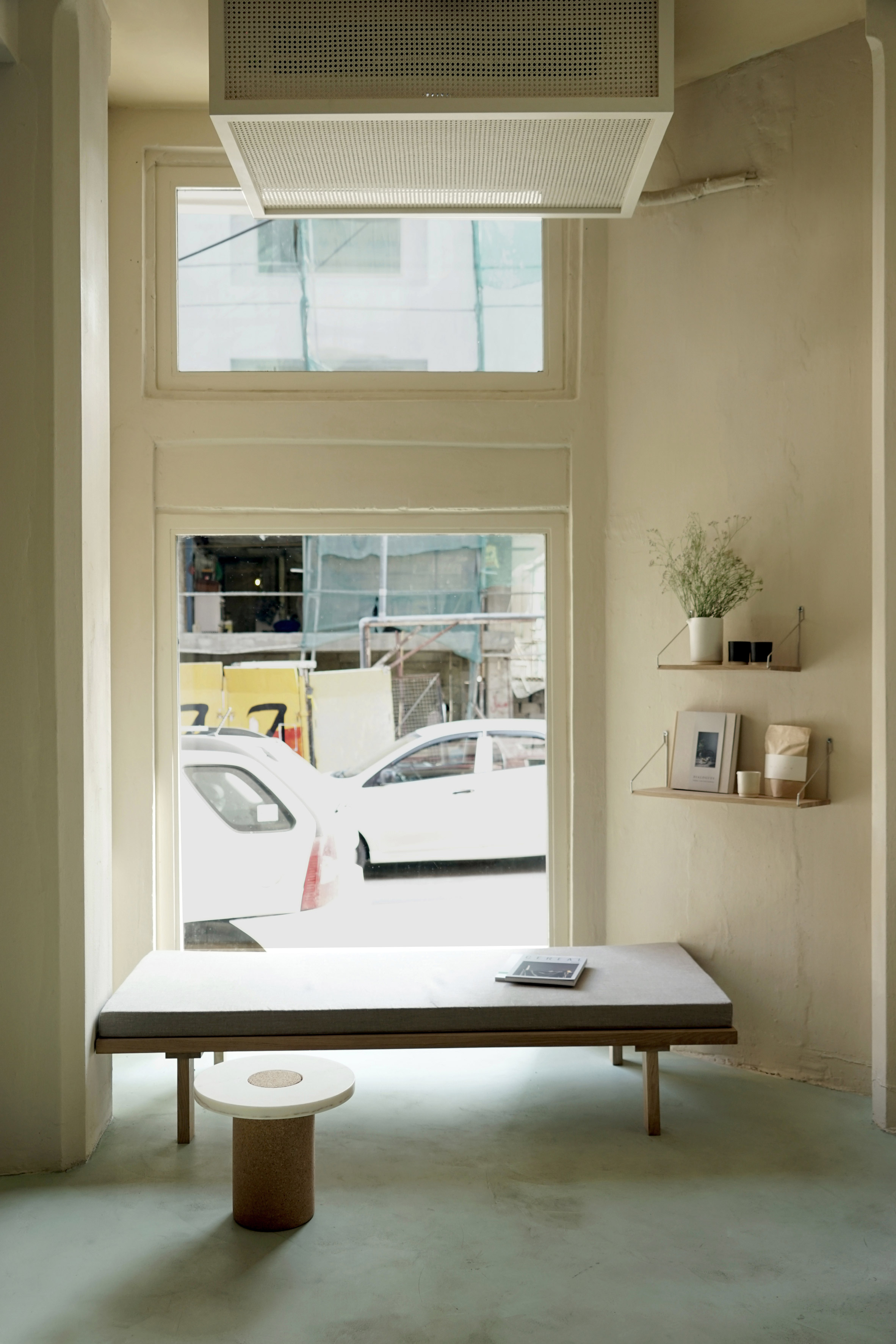
Customers can alternatively perch on simple stool seats that surround a steel-framed service counter. Grey-cushioned bench seats positioned by the windows also form casual reading nooks.

The Slow concept store by Frama

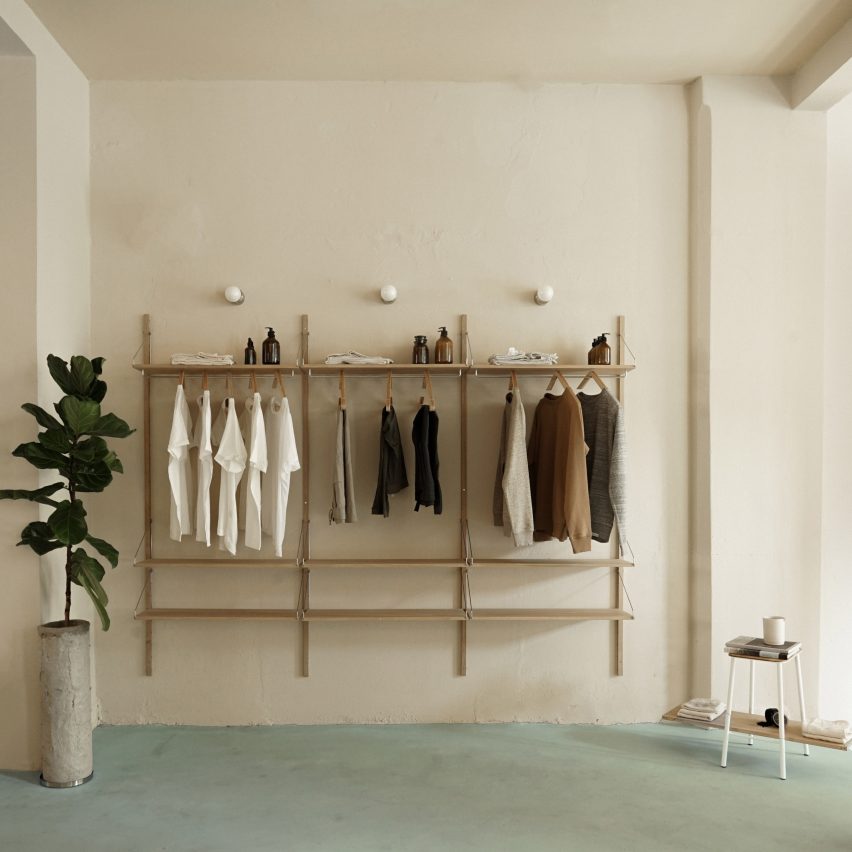
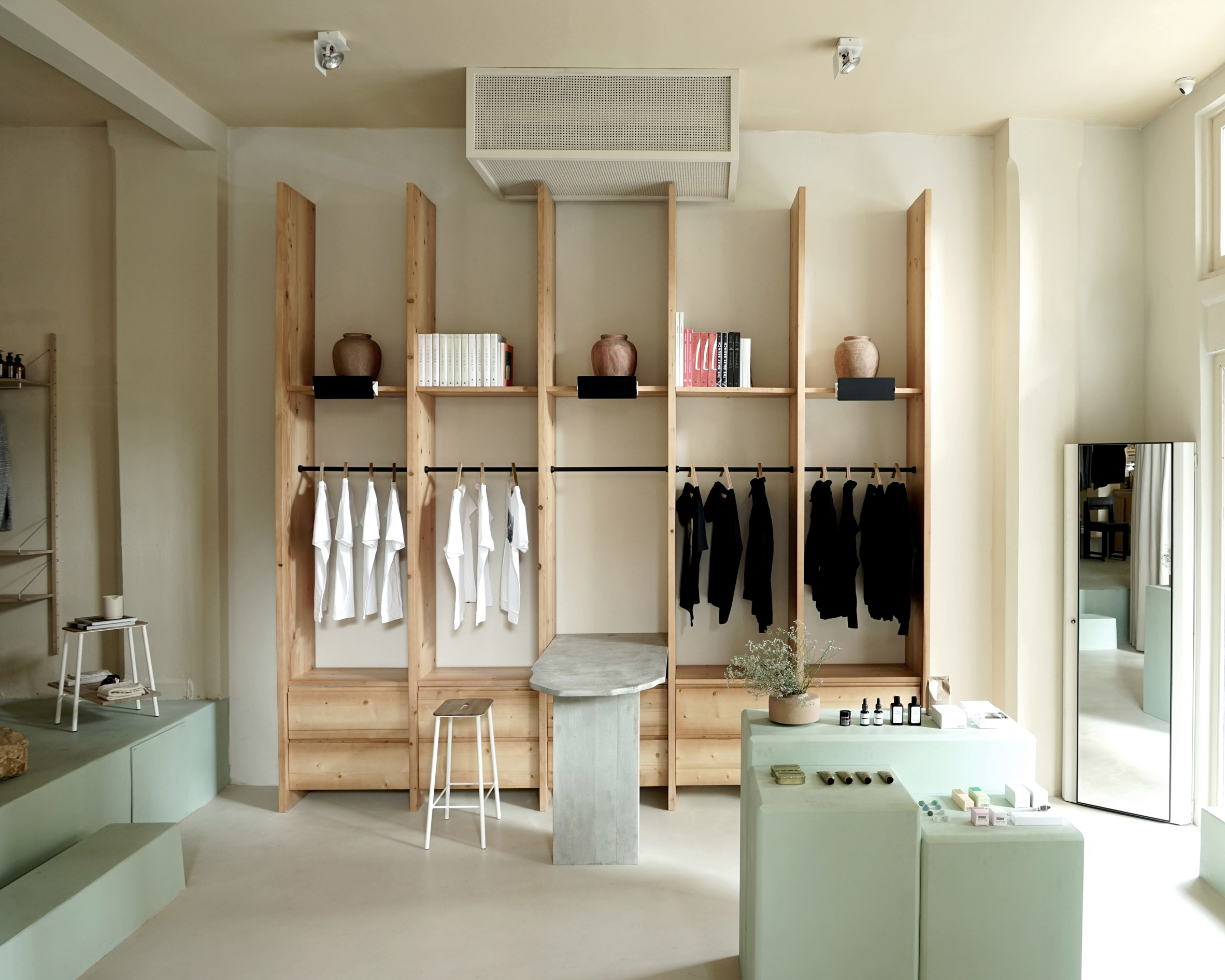
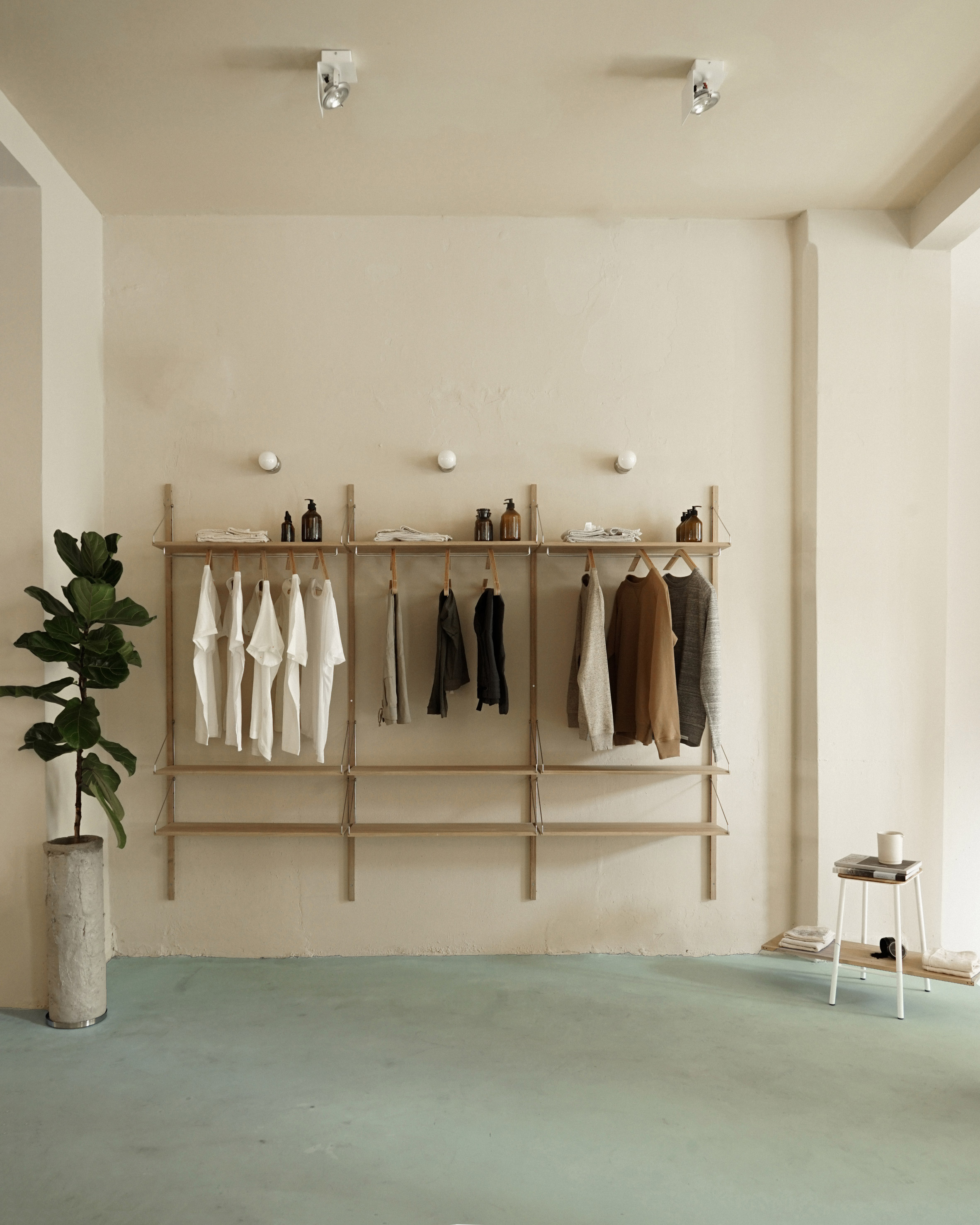
A short flight of steps leads down to the retail space, where clothing garments are openly displayed inside a tall, timber shelving-unit that's been pushed up against the wall.

The same minty green cement that covers parts of the store's floor has been used here to craft chunky display plinths and an in-built sofa, features that the studio hopes will "achieve a permanency to the space".

An off-white curtain has also been fixed to a circular track to form a small changing room.

The Slow concept store by Frama

At the rear of the store lies a work area that features marble-topped tables and exposed-bulb pendant lamps.

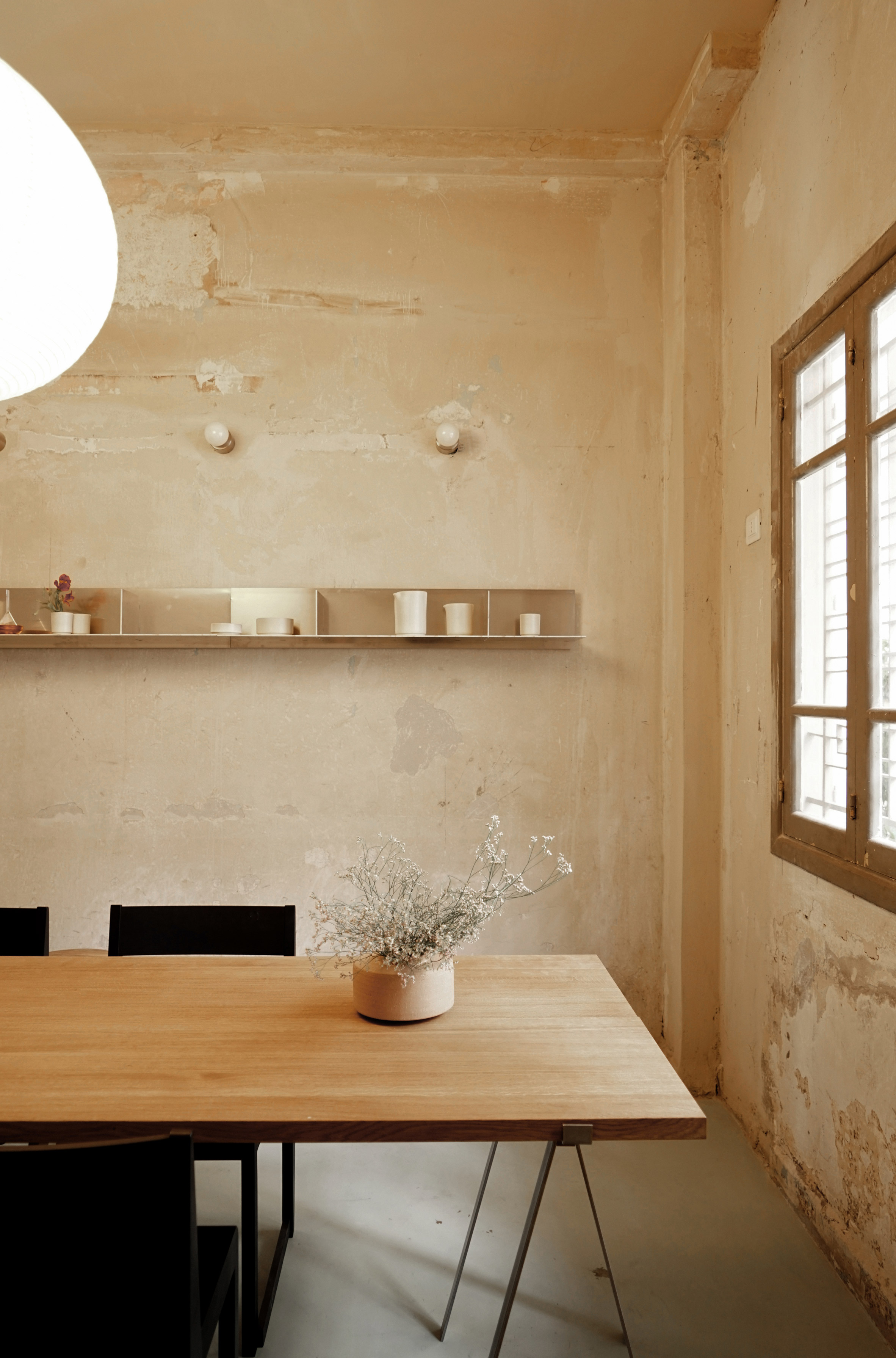
Surfaces throughout the store have been covered in a beige-tinted limewash, excluding the meeting room where walls have been left in an unfinished state.

The Slow concept store by Frama

Frama, which is based in Copenhagen, also saw The Slow as an opportunity to incorporate design details that they typically have to omit on home turf.

"A folding glass door that remains open to the courtyard most of the year creates the sort of indoor-outdoor space that works beautifully in Beirut – such features would not usually work in a Nordic context," explained Bradfield.

The Slow concept store by Frama

The Slow is the latest project to be realised by the interiors-dedicated department of Frama, which also creates minimalist furnishings, homeware and skincare.

Earlier this year the studio also developed the aesthetic of Copenhagen restaurant Yaffa, which is meant to evoke the same ambience as a bustling French bistro.

The post Frama uses neutral tones for Beirut concept store The Slow appeared first on Dezeen.


from Dezeen https://ift.tt/2PnbCwO

Green plywood cabinets outfit Maharishi store in New York City

Maharishi by ABA

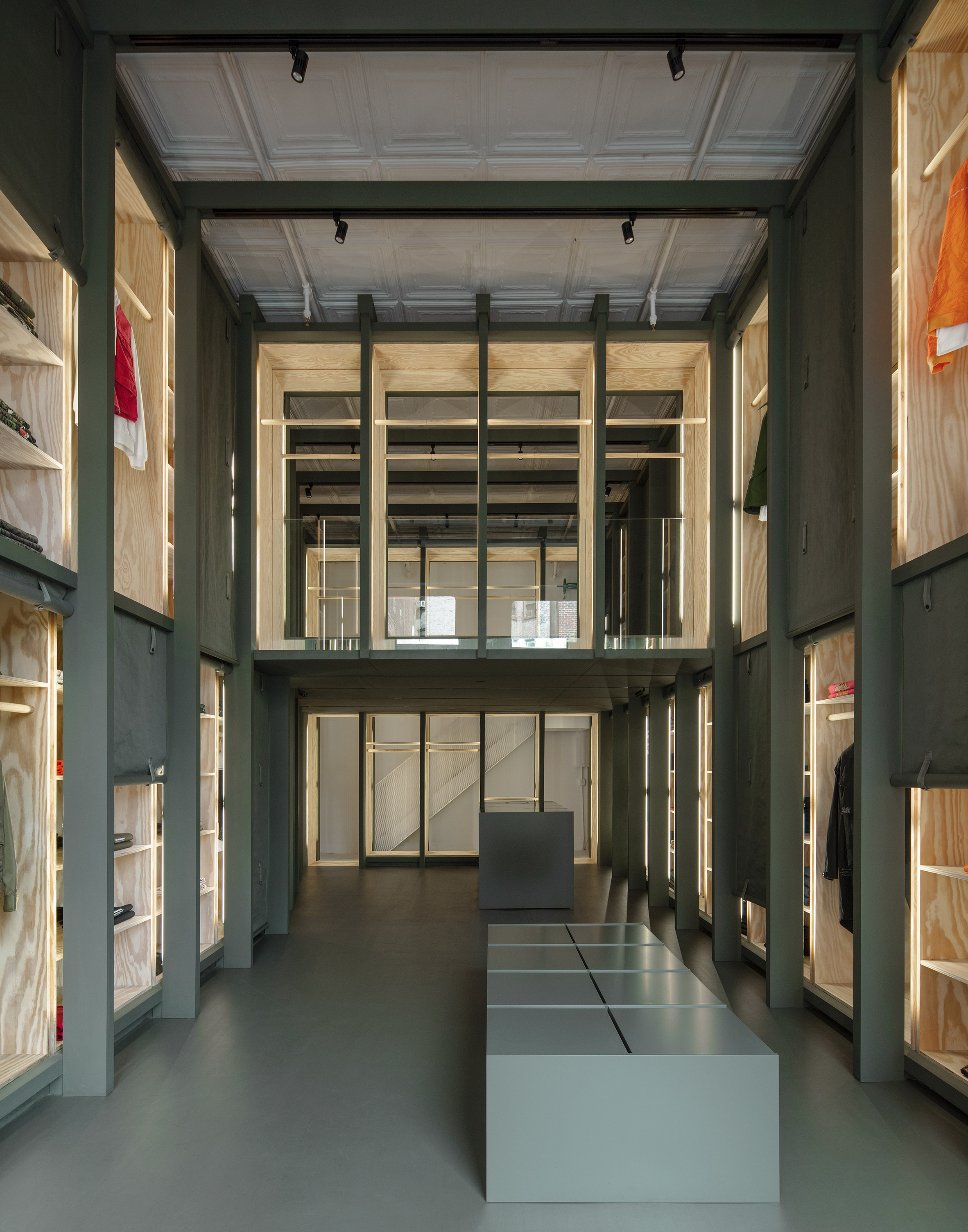
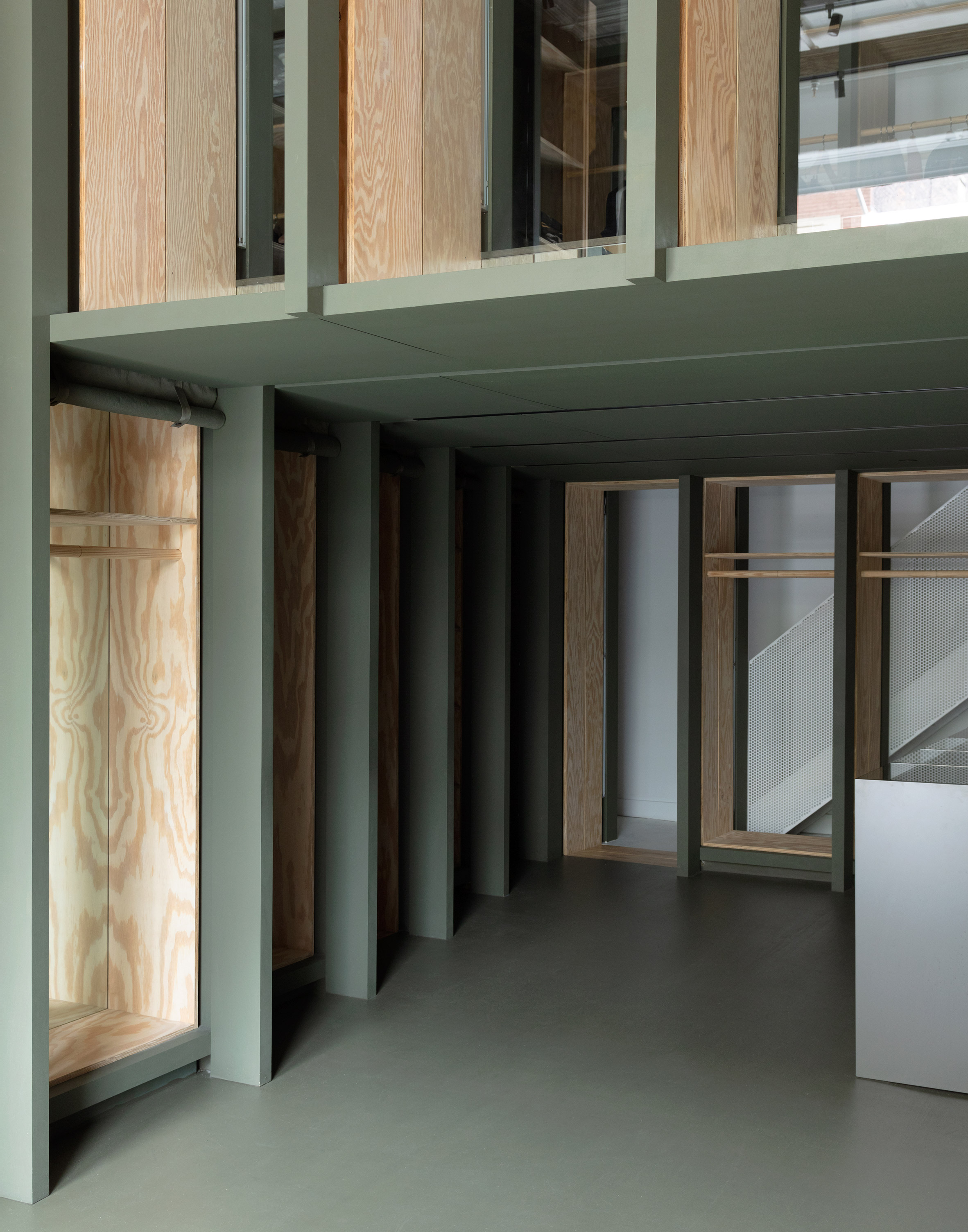
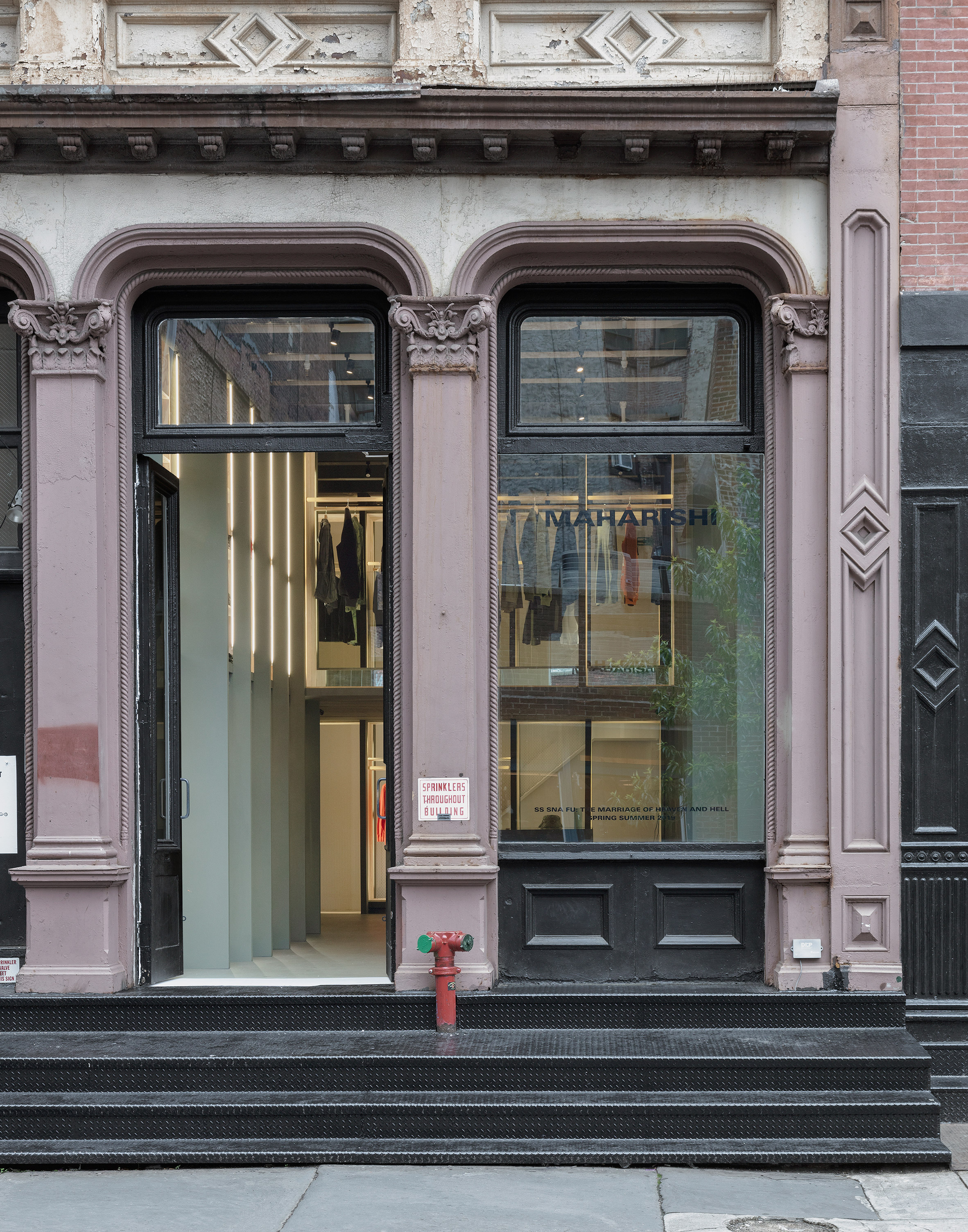
Plywood is used to make cabinets, nooks and dividers inside this olive green retail store in Lower Manhattan that Brooklyn studio ABA has designed for London streetwear brand Maharishi.

Maharishi by ABA

Designed by architects Emily Abruzzo and Gerald Bodziak of Abruzzo Bodziak Architects​ (ABA), the store in New York's Tribeca neighbourhood is Maharishi's first location outside London.

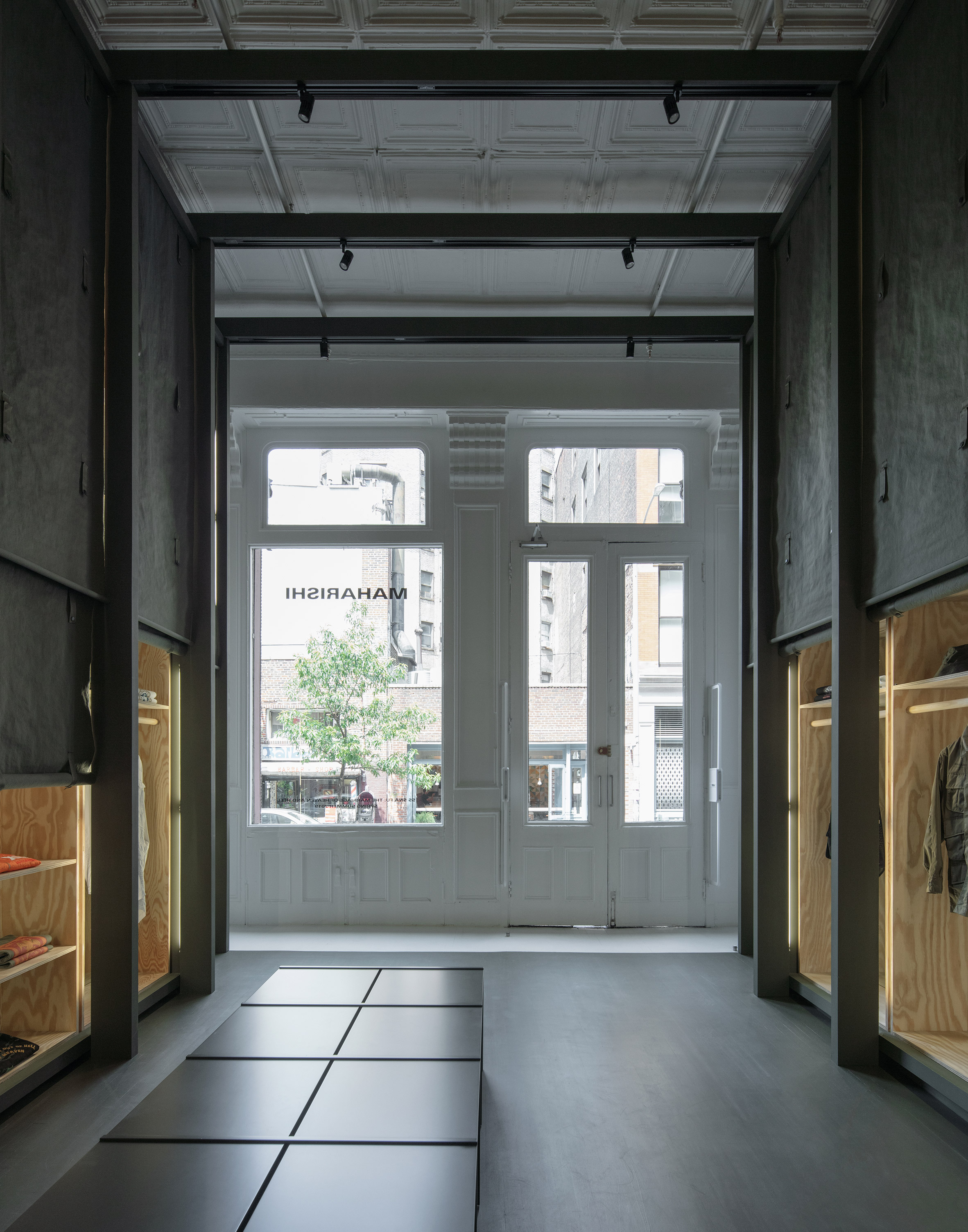
The US outpost measures 1,280 square feet (119 square metres) and has a rectangular plan with large windows facing the street.

Maharishi by ABA

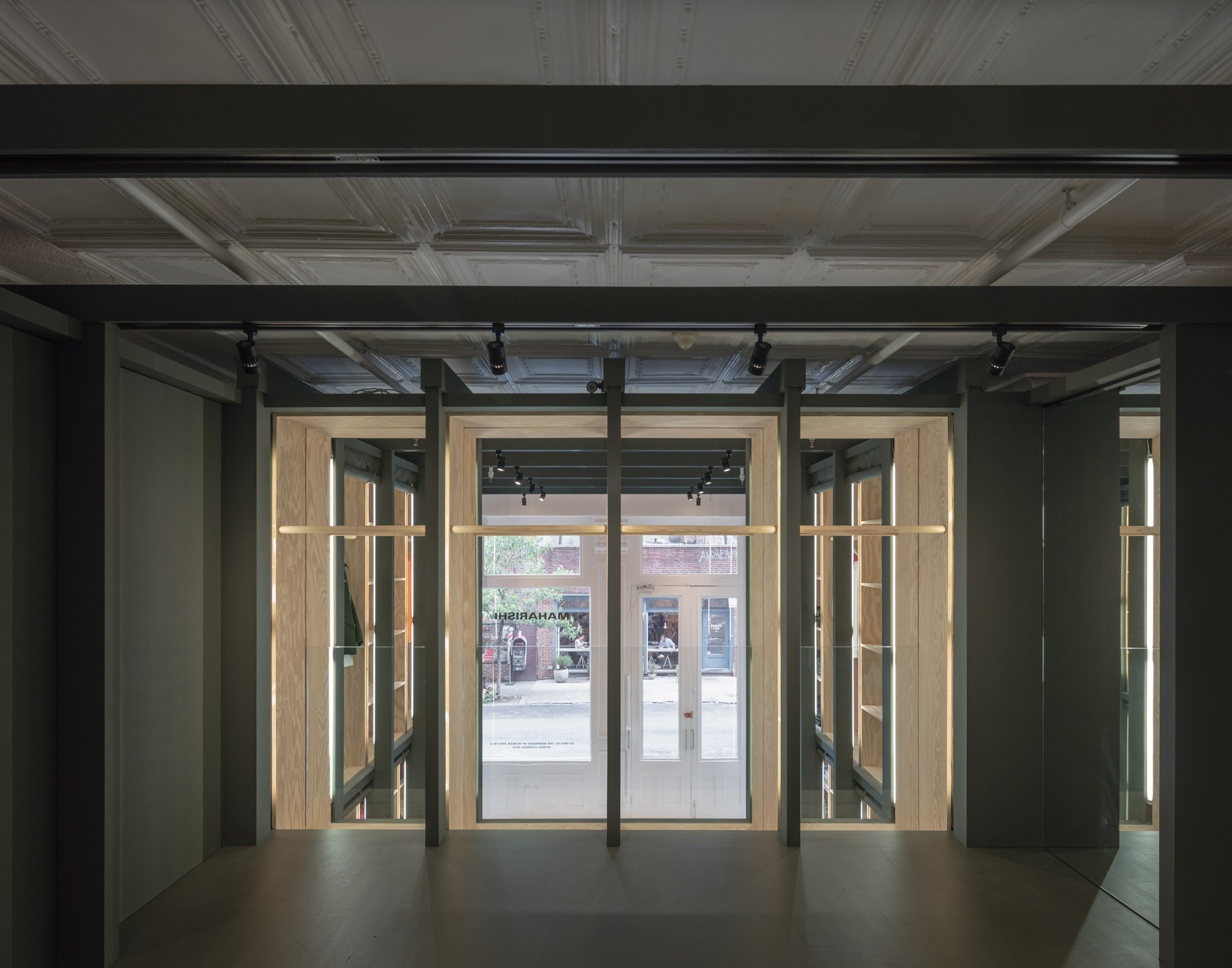
ABA designed the plywood cabinetry as an intervention that would also preserve the space's historic details.

Original wood floors are painted in the same green shade, while historic white moulding and concrete remain left untouched.

Maharishi by ABA

"We left the existing space, with its historic facade and ceiling — as a found condition," Bodziak said.

"This highlights, by contrast, the new, olive green shop inserted within."

Maharishi by ABA

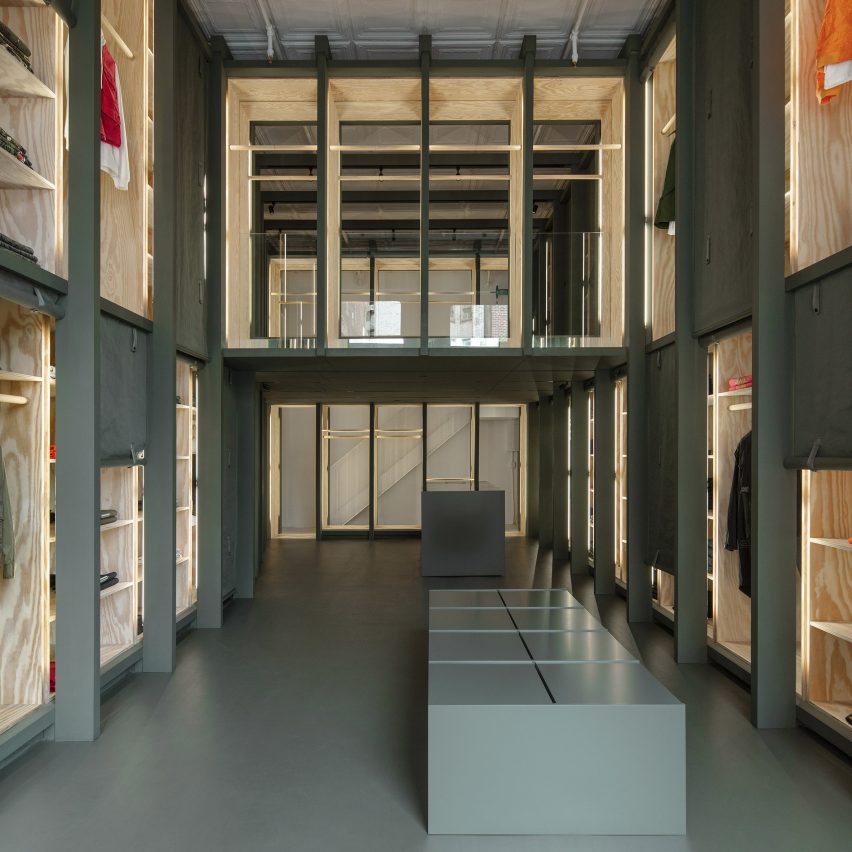
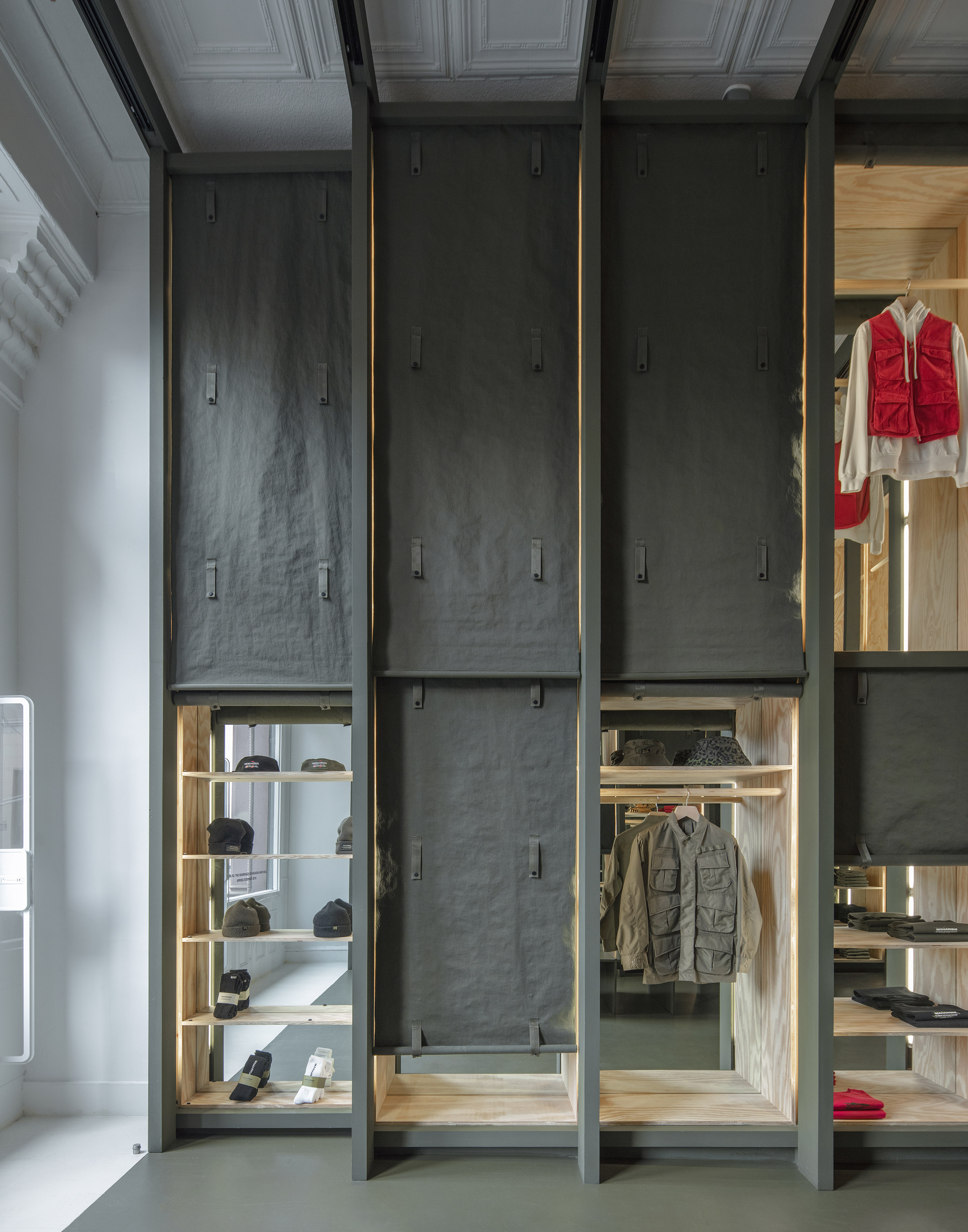
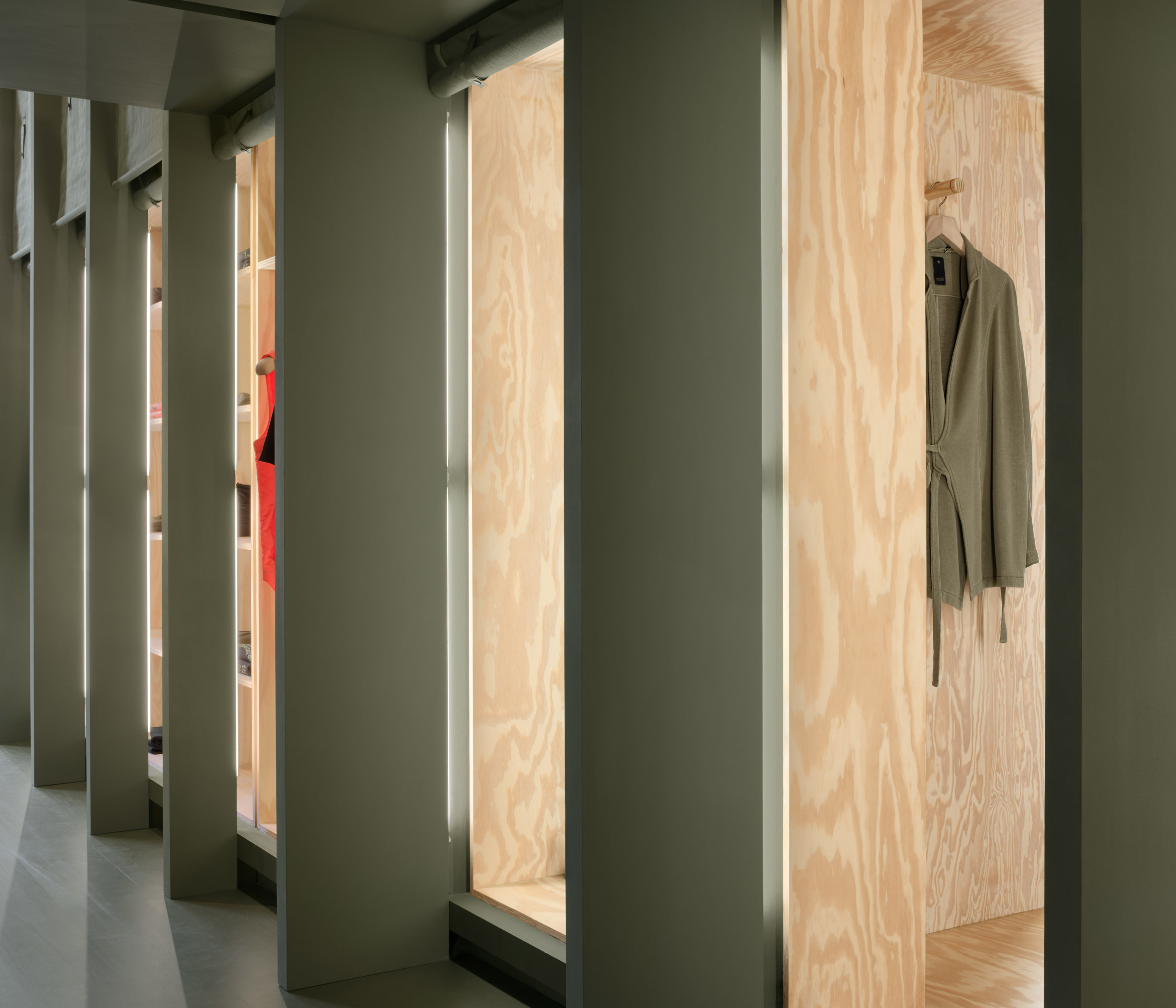
Inside, walls are covered in a gridwork of floor-to-ceiling cabinets and nooks made from the pine plywood.

The industrial material is mostly painted in green colour intended as a reference to Japanese gardens and military supply warehouses.

Maharishi by ABA

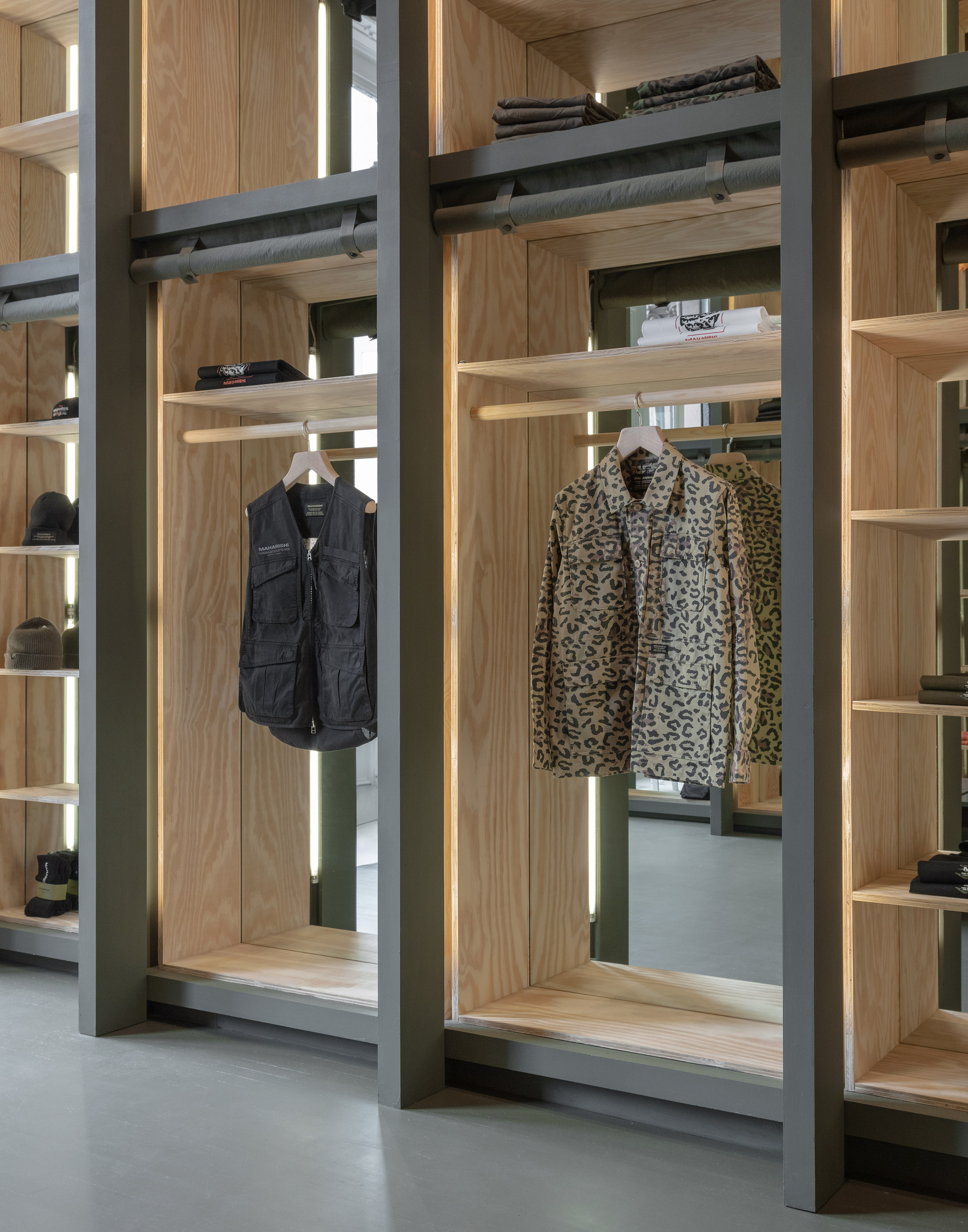
Some portions are left bare to expose the grain and golden tone, matching the wood that is also used to form clothes rods within the volumes.

"In this way, something straightforward – warehouse-like shelving – is imbued with character much in the same way that the brand's clothing reinterprets utility," Abruzzo added.

Maharishi by ABA
Photo by Rafael Gamo

Maharishi's clothes are placed sparingly throughout the storage units. In addition to the grid of cabinetry, the team has created optical illusions in the store by placing mirrors at the back of nooks to give views of garments on two sides.

Wherever the mirrors are not placed, cabinets and shelves are built to have a physical double.

Maharishi by ABA
Photo by Rafael Gamo

Each storage section is accompanied with a Japanese custom woven cotton that can be rolled down to convert it from display to storage.

This feature was included because the store serves as both a retail showroom and a distribution hub for the brand.

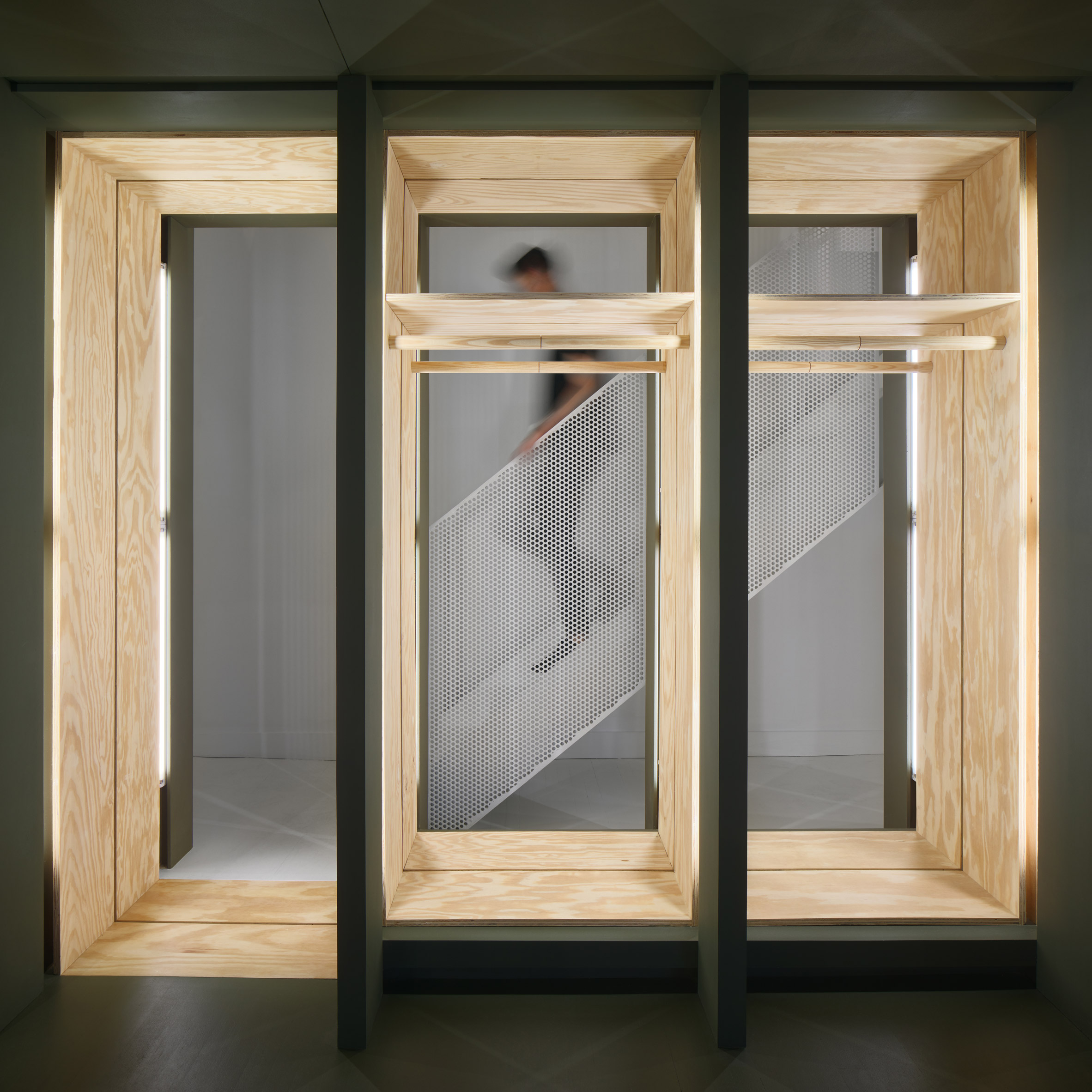
Maharishi's Tribeca store is complete with a corridor coloured a pale grey, and a stairwell with a perforated railing in the rear that leads to a mezzanine level.

One of the plywood built-ins has an open back to reveal this access point.

Maharishi by ABA

Maharishi was founded in 1994 by British designer Hardy Blechman, as a streetwear brand produces fair-trade, utilitarian clothing with natural hemp fibres, organic cotton and recycled military clothing.

Maharishi by ABA

Other stores in New York City are a Lunya store styled like a "glitzy, upscale apartment", a denim shop for R13 by Leong Leong and a Brooklyn outpost for direct-to-consumer brand Everlane.

Photography is by Naho Kubota unless stated otherwise.


Project team:

Design: ABA
Structural engineer: A Degree of Freedom
Lighting: Dot Dash
Contractor: Kerim Aydagul
Curtain fabrication: Curtains for You
Furniture fabrication: Level Craft
Finishing: Canopy Creative
Creative consultant: Devon Turnbull

The post Green plywood cabinets outfit Maharishi store in New York City appeared first on Dezeen.


from Dezeen https://ift.tt/2OWQDSp

Figures From Classical Paintings Experience Contemporary Life in Collages by Alexey Kondakov

Ukrainian artist Alexey Kondakov (previously) lifts figures out of classical paintings and drops them into modern-day photographs. Elegantly posed in dynamic lighting, his figures commute on public transit, dance in nightclubs, and peek around corners in otherwise mundane digital collages. The juxtaposition of the two worlds is humorous and at times seamless in its execution.

Through placement and shadows, Kondakov’s images sell the idea that the classical figures are three-dimensional objects photographed in a three-dimensional world. An image from an upcoming nightlife series depicts a mostly nude woman in a unique pose that, in context, can be read as dancing. Other images from his ongoing “Daily Life of Gods” use architecture and landscapes to ground the painted figures in an alternate reality.

To see more of his period-blending collages, give Alexey Kondakov a follow on Instagram.


from Colossal https://ift.tt/2rn0jMY