Tuesday, 10 December 2019

8th Annual Light Festival Illuminates Amsterdam with Glowing Sculptural Installations

“Butterfly Effect” by Masamichi Shimada. All photographs, unless noted, © Janus van den Eijnden

This year’s Amsterdam Light Festival, running November 28, 2019 to January 19, 2020, lights up the Scandinavian city with illuminated art installations. The festival, now in its eighth year, attracts tourists and engages locals at a time when the city is cloaked in darkness for about sixteen hours each day. Visitors to the Light Festival use a phone app to guide themselves through Amsterdam’s city center, perusing twenty light works by artists from around the world. This year’s show theme was “DISRUPT!” and artists reflected the concept in pieces that ruminate on climate change, national history, technology, and more. See some of our favorites here, by Masamichi Shimada, UxU StudioSergey Kim and others. You can explore the full line-up and programming on the Amsterdam Light Festival website.

“Butterfly Effect” by Masamichi Shimada

“Neighborhood” by Sergey Kim

“Neighborhood” by Sergey Kim. Photograph courtesy of the artist

“Nacht Tekening” by Krijn de Koning 

“Big Bang” by UxU Studio

“Big Bang” by UxU Studio

“Order Disorder” by Lambert Kamps

“Order Disorder” by Lambert Kamps

“Atlantis” by Utskottet

“Surface Tension” by Tom Biddulph and Barbara Ryan

“Surface Tension” by Tom Biddulph and Barbara Ryan


from Colossal https://ift.tt/2P7KN0I

Sasha Bikoff references 1990s Versace campaigns for Design Miami exhibit

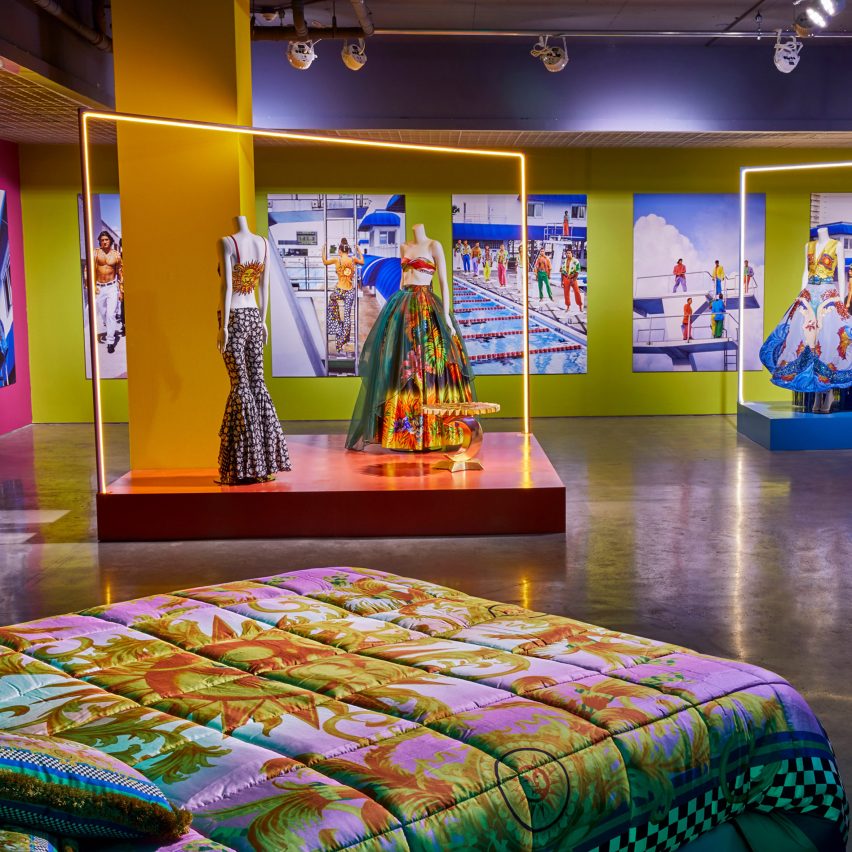
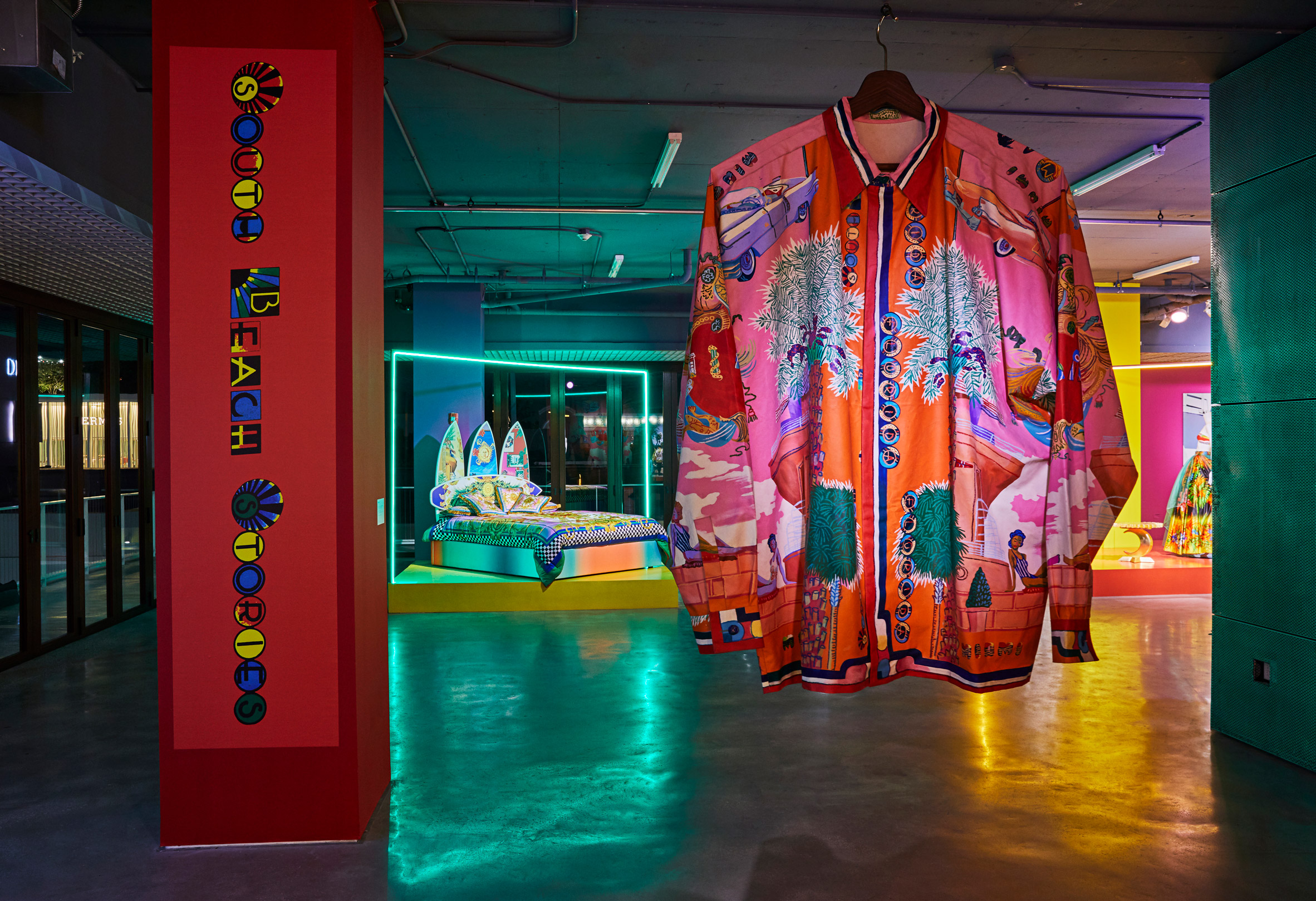
South Beach Stories by Sasha Bikoff for Versace

New York interior designer Sasha Bikoff has designed furniture that takes cues from looks in Versace's old fashion campaigns for an exhibition in Miami.

Called South Beach Stories, the Versace exhibit was located in a dim room at the Palm Court event space in the Miami Design District for this year's Design Miami, which took place last week.

South Beach Stories by Sasha Bikoff for Versace

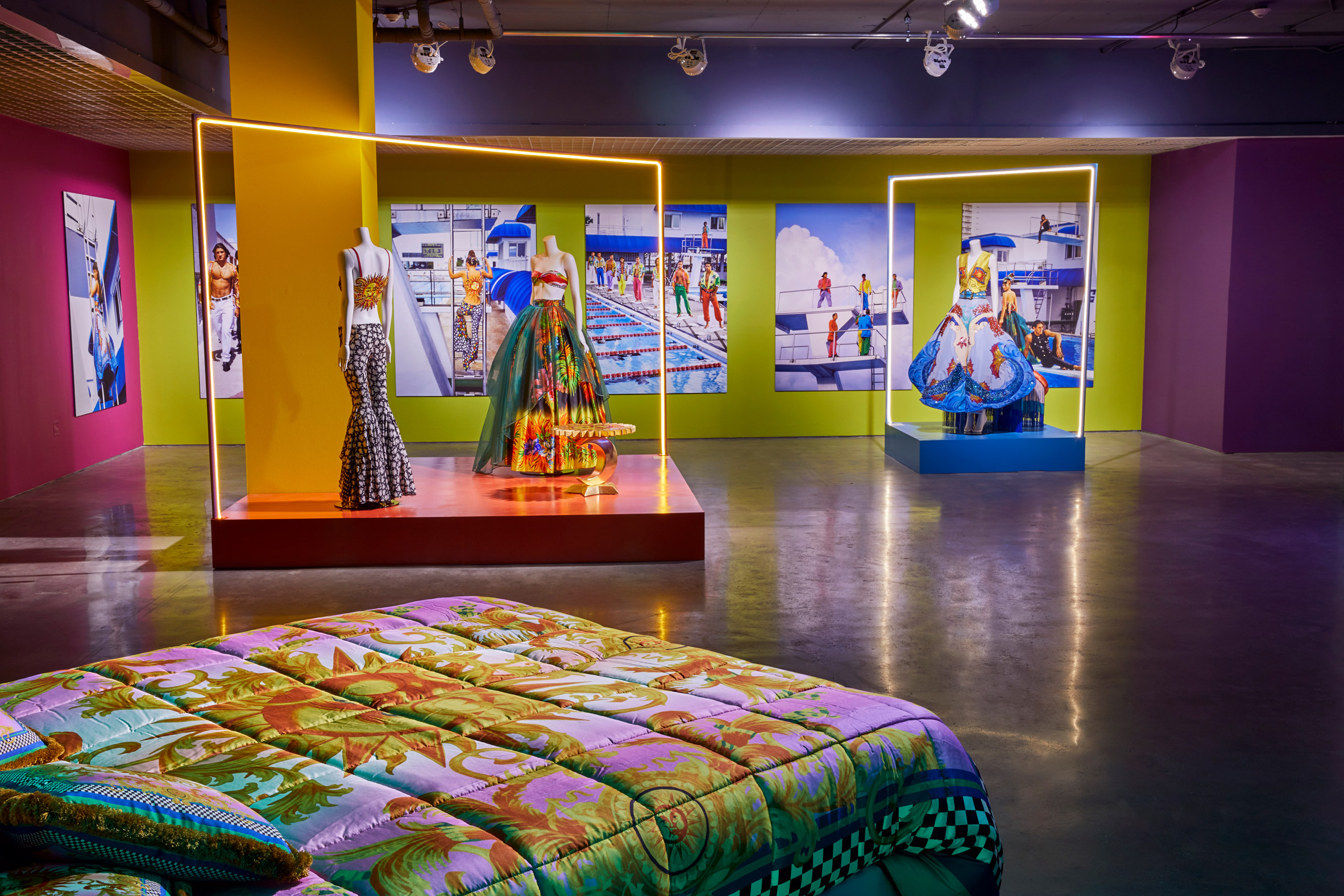
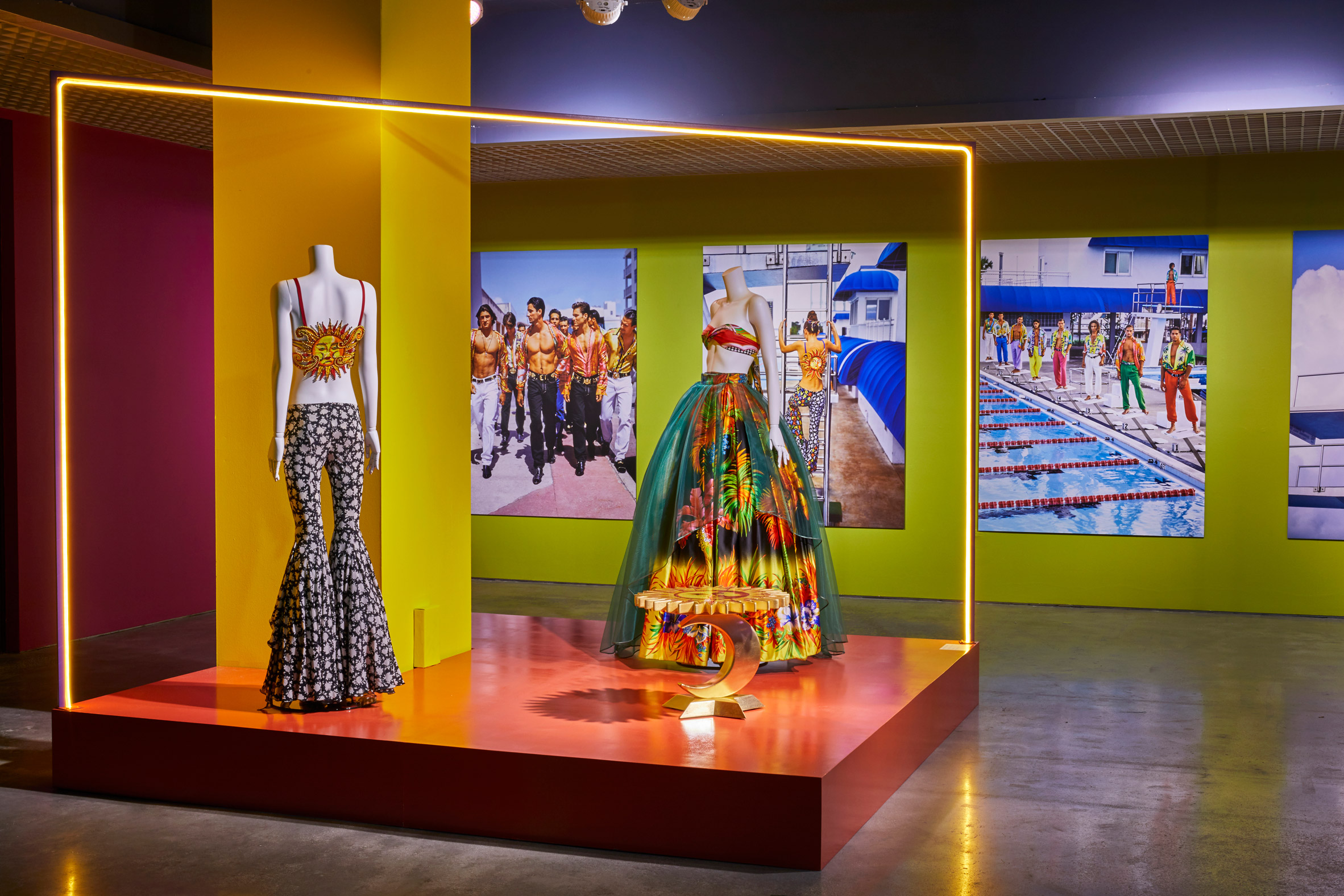
Sasha Bikoff created the furniture and pieces on show to reference set designs and outfits that feature in Versace's campaigns photographed in Miami from the early 1990s. In the exhibit, the designer presented the pieces alongside the vintage clothing they represented.

South Beach Stories by Sasha Bikoff for Versace

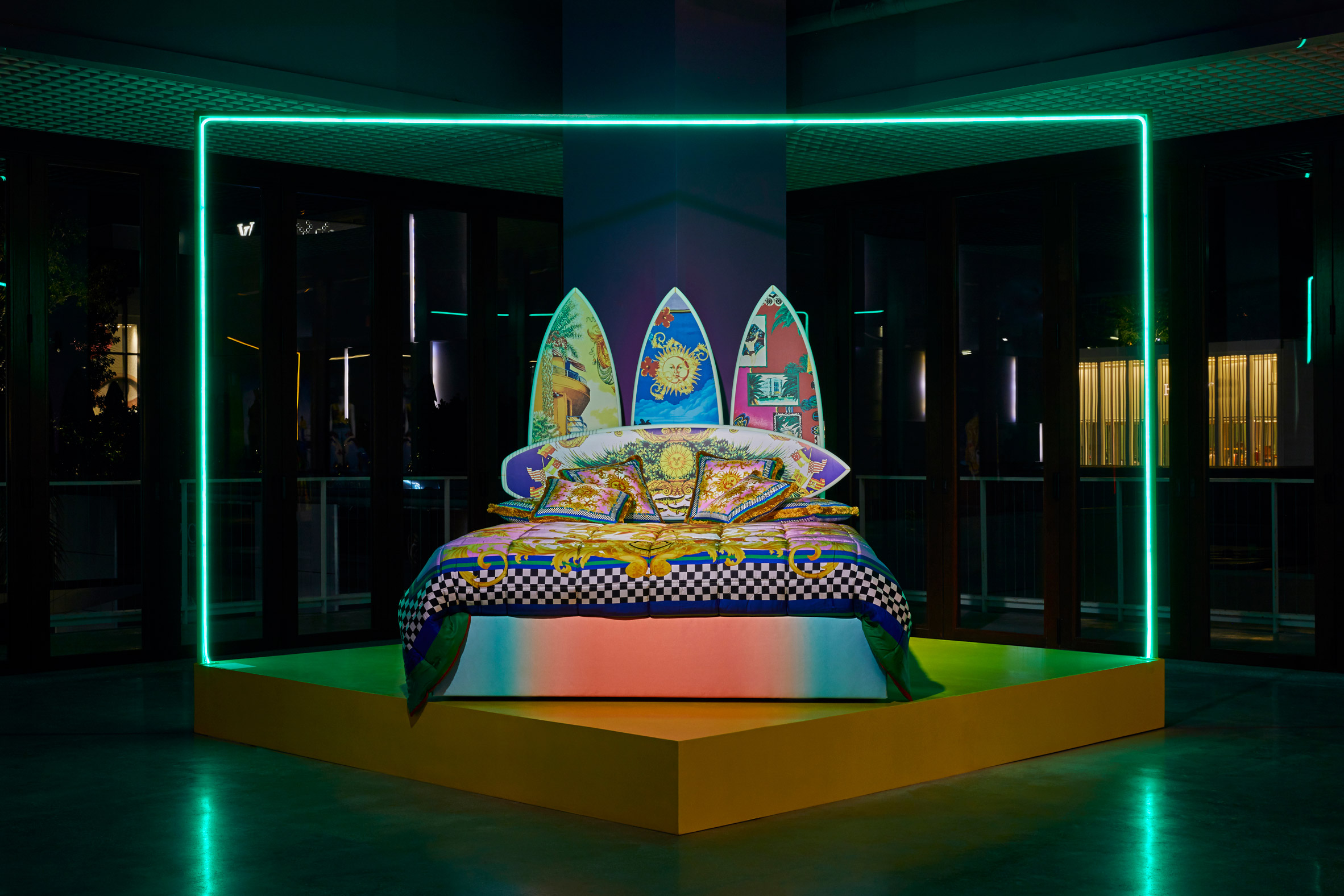
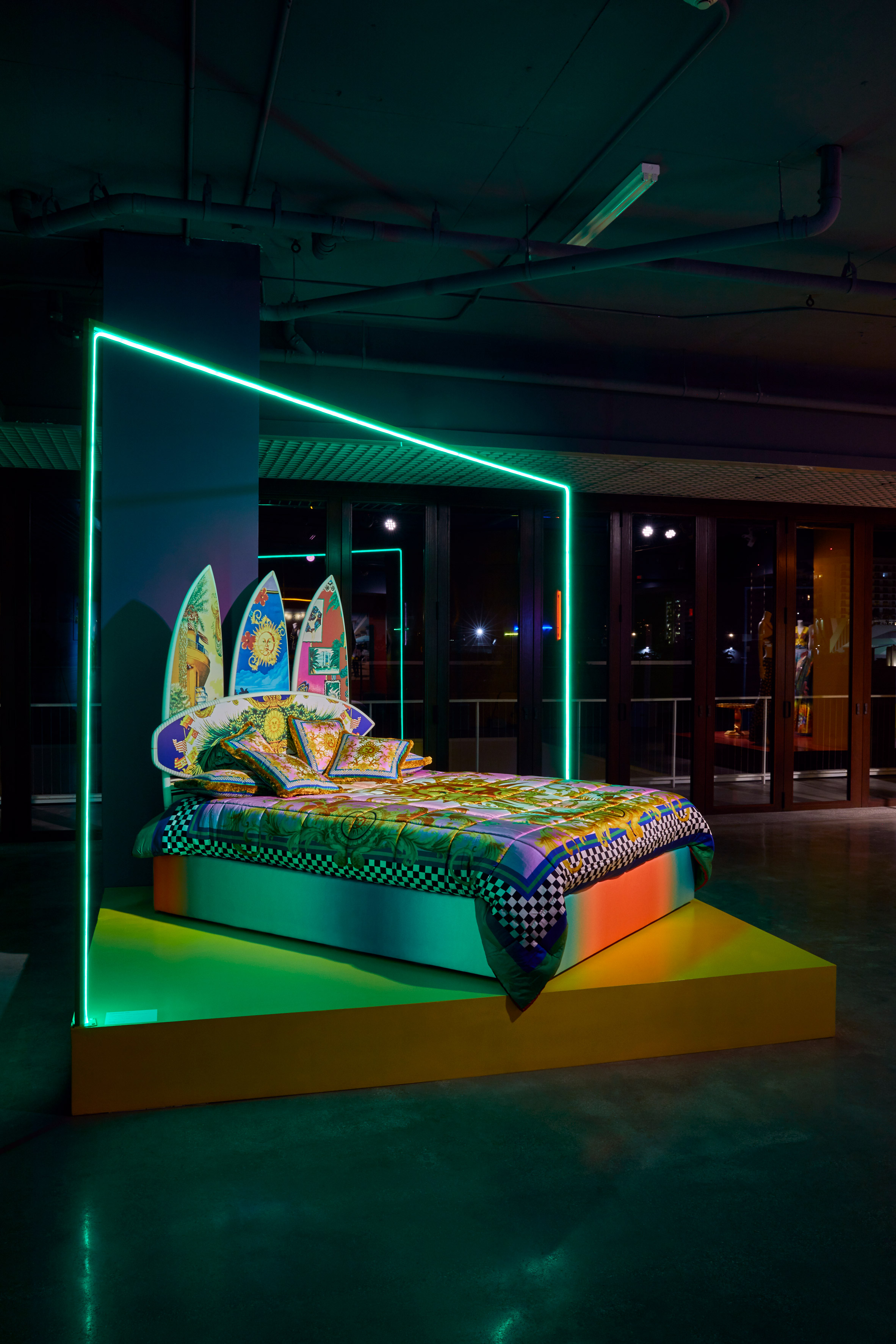
A feature of the exhibit was a surfboard headboard and bed covered in colourful sateen linens, decorated in the fashion house's prints from decades ago.

A golden wood coffee table topped with the sun provided a reference to a garment from the brand's spring-summer 1993 collection.

Dresses from Versace's Miss S&M line in 1992 were transformed into a leather bondage swing, with hardware of a gilded Medusa as featured in Versace's logo.

Free-standing, colourful LED frames served as display cases for the ensembles, while walls were painted pink, lime and purple for additional flair. The LED structures were a nod to the neon signage on Miami Beach's Ocean Drive.

South Beach Stories by Sasha Bikoff for Versace

Bikoff also created two limited-edition Virtus leather handbags by Versace for the event, taking cues from her favourite art-deco buildings in South Beach. The bags have seafoam green, peach and blue tones, and V-shaped hardware lacquered in green and red.

The name of the installation, South Beach Stories, comes from a book published by the Versace family in 1993 that celebrates Miami with fashion photographs by Doug Ordway, sketches by Manuela Brambatti and paintings by Roberto Juarez.

South Beach Stories by Sasha Bikoff for Versace

"Similar to the book, the exhibition shares the life of a family of true artists that came to this city and made such a big cultural and creative impact that is still in our minds and hearts today," Bikoff said.

Other details included a wall lined with photos of Versace's spring-summer 1994 campaign, taken by Ordway and curated by Bikoff. These photos are also included in the book.

South Beach Stories by Sasha Bikoff for Versace

Versace was founded in 1978 by Italian fashion designer Gianni Versace, and was taken over by his sister Donatella when he was murdered outside his Miami home in 1997.

Design Miami 2019 took place from 4 to 8 December in tandem with the city's Art Basel festival. Other highlights of the annual showcase included Daniel Arsham's office-like, turquoise booth and a traffic jam covered in sand, called Order of Importance.

The post Sasha Bikoff references 1990s Versace campaigns for Design Miami exhibit appeared first on Dezeen.


from Dezeen https://ift.tt/2LIejIi

Partisans to turn Canadian town into "city of the future" The Orbit

The Orbit by Partisans

Architecture studio Partisans has unveiled plans to transform a Canadian town into a smart community, combining fibre optics, autonomous vehicles and drone ports within a rural setting.

The Toronto firm has developed the proposal for Innisfil, Canada, a primarily agrarian and residential town 60 kilometres north of Toronto.

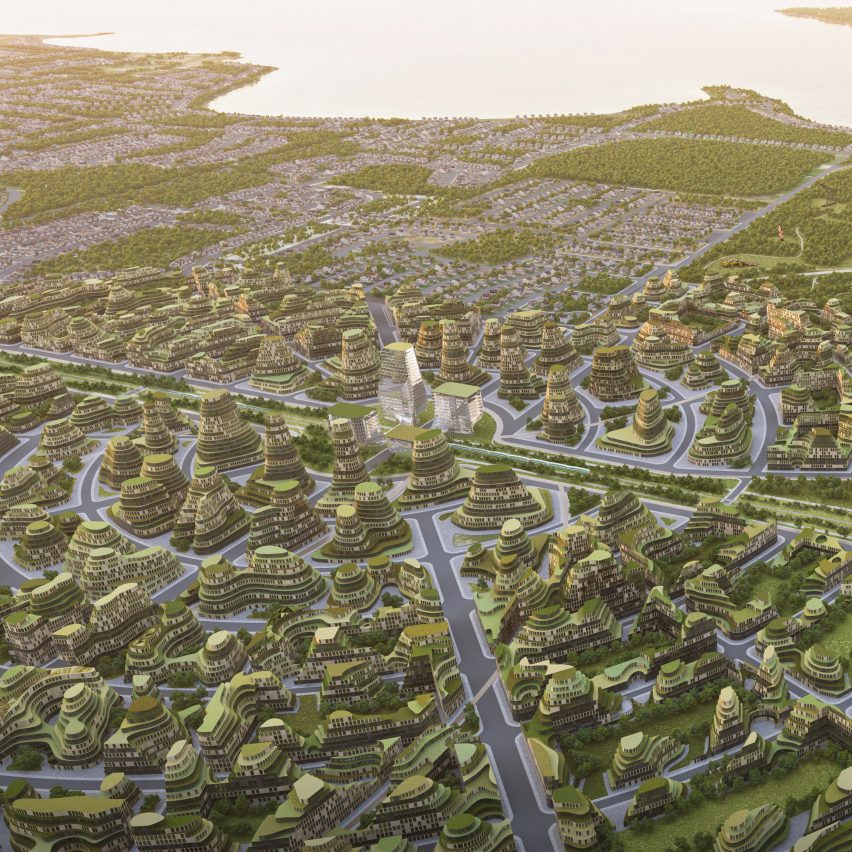
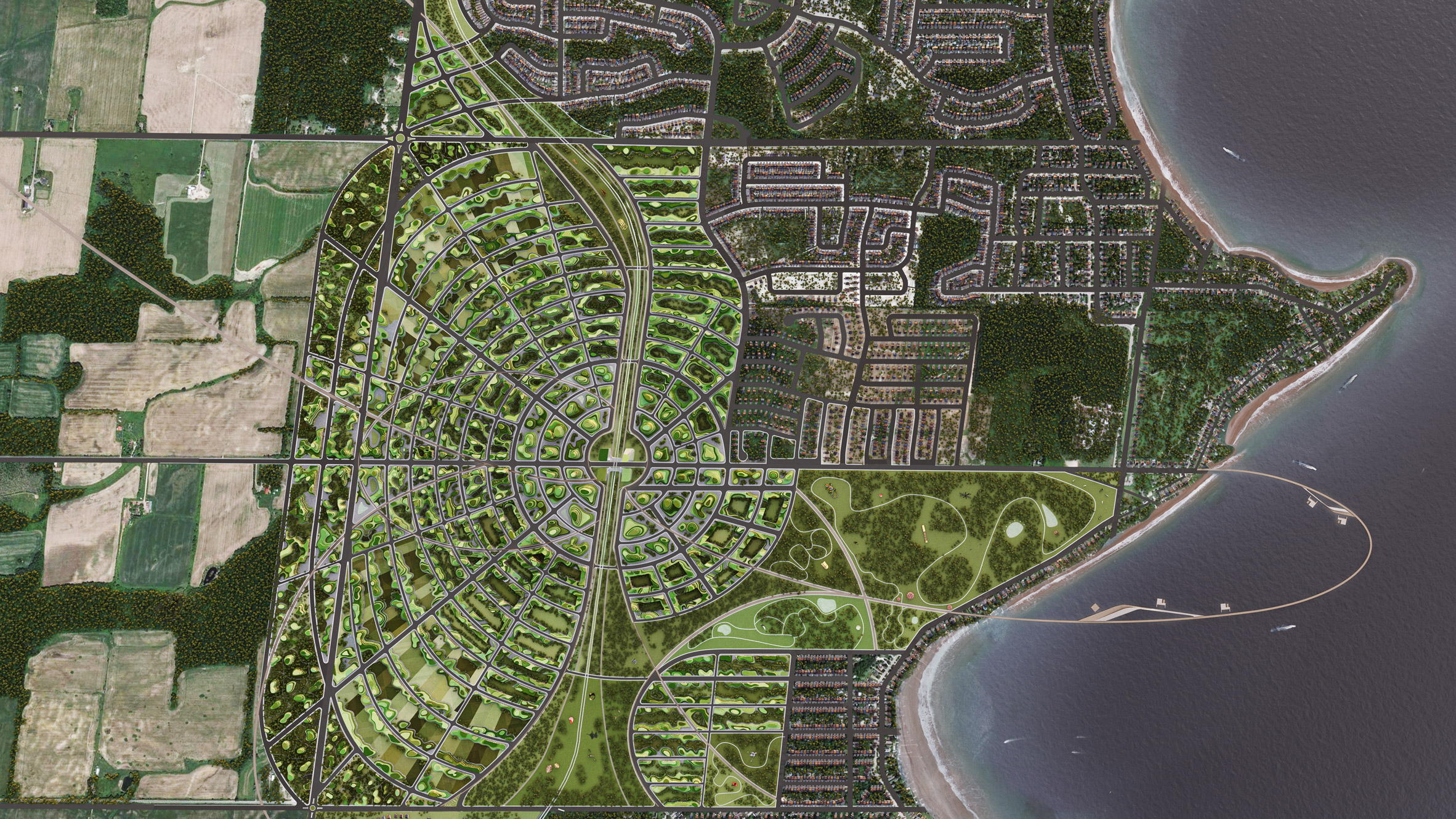
Called The Orbit, the proposal aims to develop it into "the city of the future" with a host of new technologies, while also maintaining the existing agriculture and lush setting.
The Orbit by Partisans

"The Orbit is our vision for a complete, cutting-edge community where small town and rural lifestyles are enhanced by the benefits and attributes of urban living," said Partisans.

Advancements will include the introduction of a network of fibre optics – cables that transfer information quickly using optical technology – which will be used to provide connectivity across the development such as sidewalks, streets and buildings.

Drone ports and infrastructure for driverless cars among possibilities

The data collected from the system will then be governed by the appropriate privacy protection policies, according to the firm.

The project, which will span over 450 acres (182 hectares), marks the latest development for Innisfil. Partisans said the area is "renowned for thinking big," noting that it currently accepts cryptocurrency payments for municipal taxes and fees, and was among the first places to pilot the Uber ride-sharing app.
The Orbit by Partisans

"The type of fibre and what it will be used for is still to be determined but given Innisfil's record, everyone should expect great pilot programmes for technology to be used and integrated responsibly," Partisans co-founder Alex Josephson told Dezeen.

"We have also discussed the possibilities of the following: state of the art health and wellness campus connected to larger hospitals in the region by technology, drone ports on top of the station for last-mile delivery, autonomous driving infrastructure and more," he added.

Development follows Sidewalk Lab's Toronto smart city

Partisans' masterplan is backed by local developer by Cortel Group and was recently passed by Innisfil Town Council last night. It forms one of a number of proposals for smart cities in North America that will be based on high-tech systems, and collect data to use for developments.

Among these is Sidewalk Toronto – a proposal for a smart neighbourhood on the waterfront of the Candian city led by Alphabet subsidiary Sidewalk Labs.

"Sidewalk Toronto involved a serious negotiation and policy plan on data rights as well as privacy in future smart cities," said Josephson.
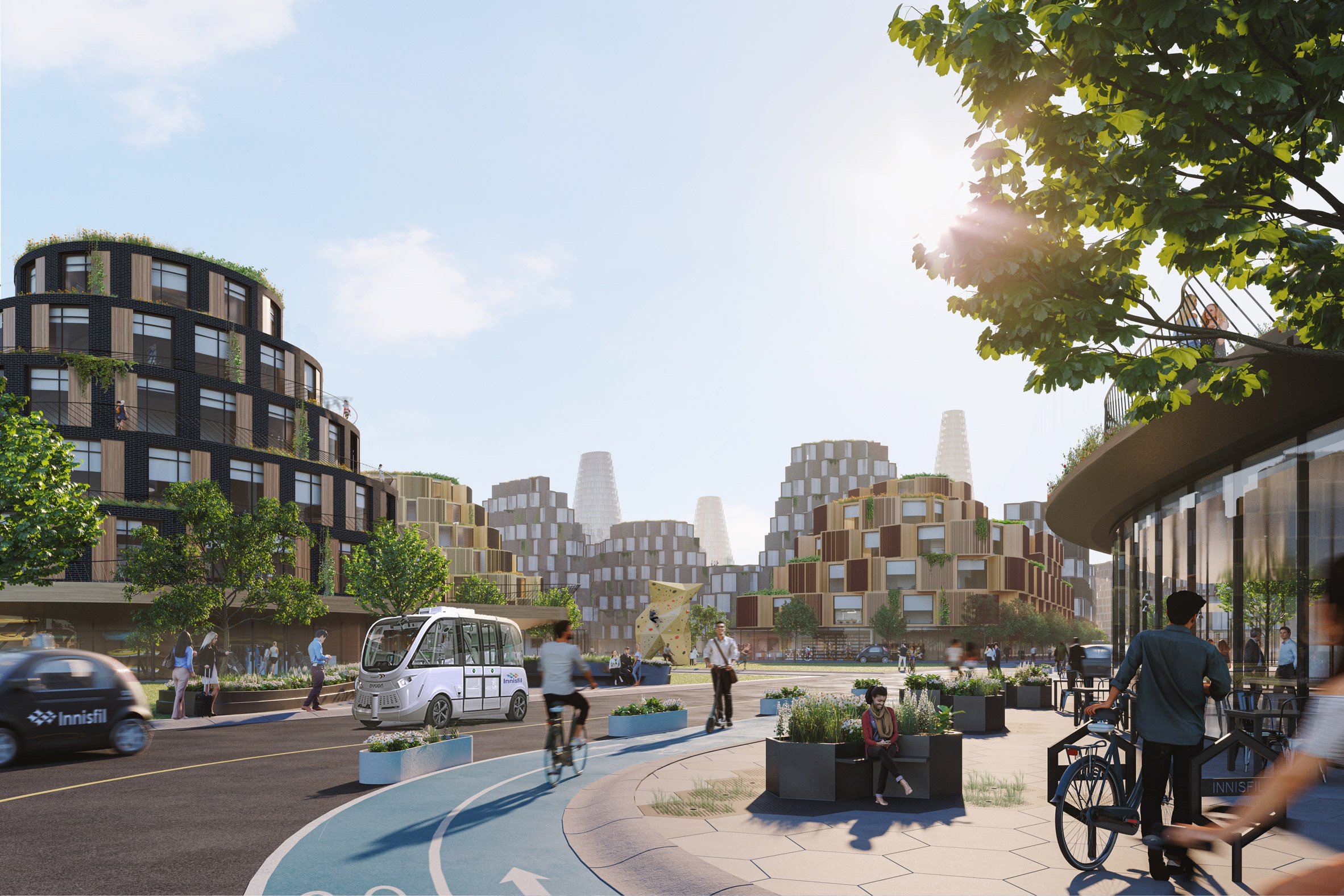
The Orbit by Partisans

"Thus, our region is going to be one of the best positioned in the free world to manage the risks and opportunities of building smart communities," he added.

The Orbit was prompted by the introduction of a new Metrolinx rail station, known as GO Transit, in Innisfil. It will join the existing regional public transit that services the Greater Toronto and Hamilton areas, and also provide a quicker connection between the city centre and more distant hamlets.

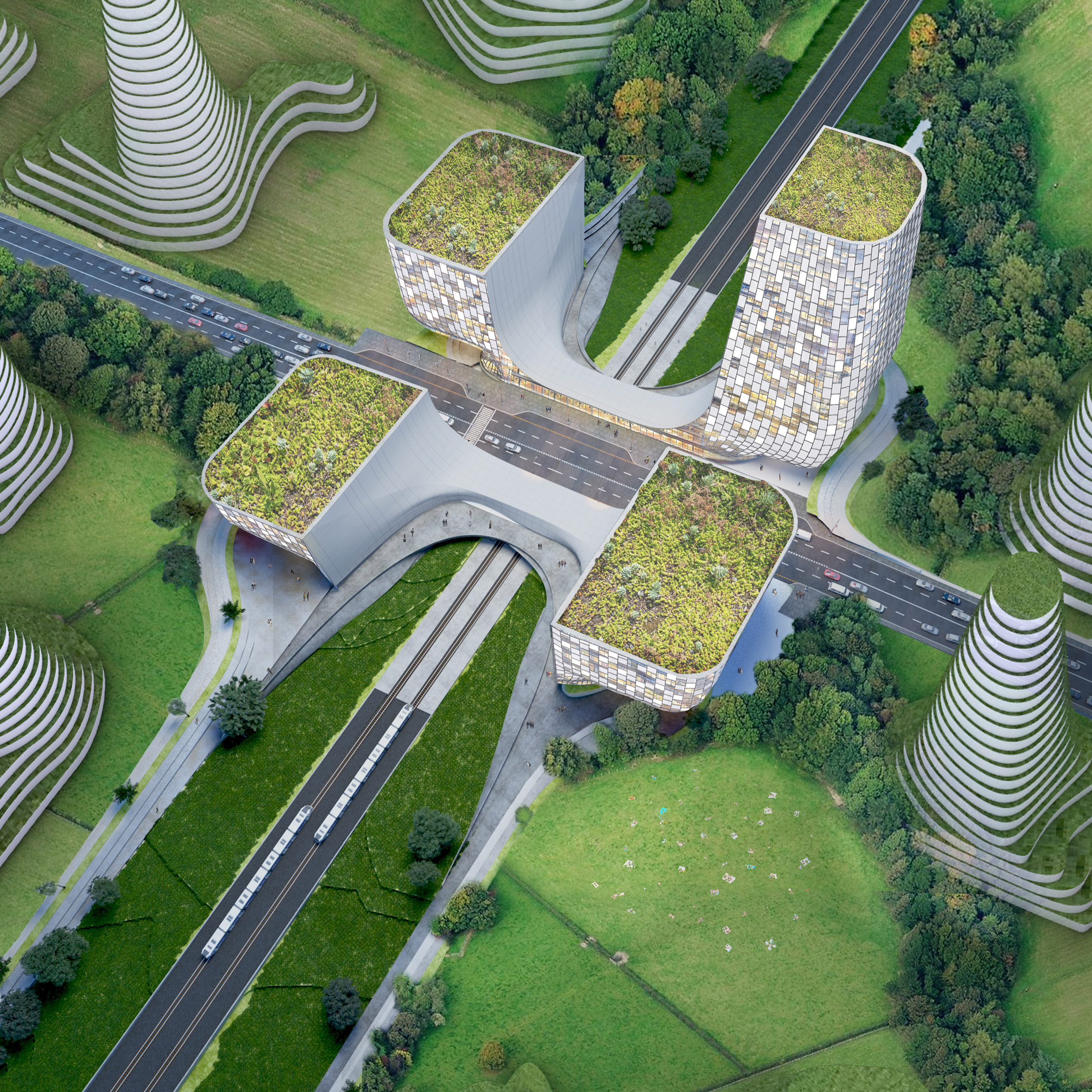
The new transit hub will form the centre of The Orbit layout, and will feature two mixed-use towers that will also house offices, retail spaces and residences.

The Orbit by Partisans

Roadways will wrap around this centre point and gradually expand in size. Partisans describes the shape of the streets as "squircles" – a mix between circles and squares.

"The city, inspired by the idea of an orbit will ripple outwards from this hub in a circular pattern, containing development, while embracing Innisfil’s agricultural roots," the firm said. "Essentially, residents will be able to balance the benefits of living in an urban and rural community."

Circular streets will merge with the existing street grid of the town, and be segmented into parcels, which renderings show with ample grass and trees. Buildings are also depicted as grass-covered and curvilinear, following the aesthetic of the masterplan.

Masterplan influenced by Garden City movement

According to Partisans, the scheme is influenced by the Garden City movement of the early 20th century, which advocates for the fusion of urban and agrarian life.

"Imagine that our squircle is a modern version of an old European city layout, combining a predictable pattern of streets with an added degree of irregularity and cut-through paths for pedestrians."

On the outskirts, there will be spaces for agrarian activities, as the masterplan advocates for open areas.
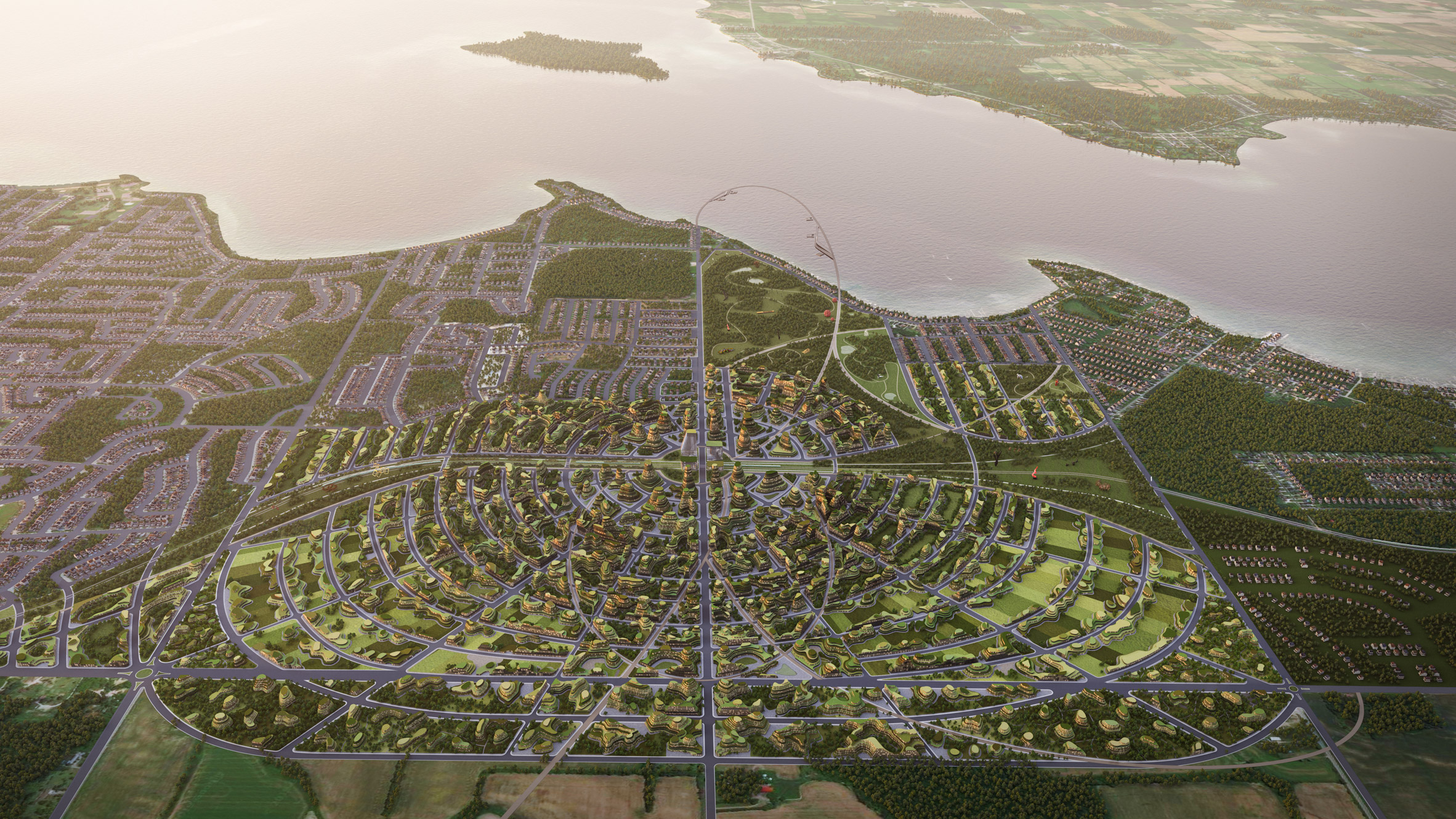
The Orbit by Partisans

The transit system will also incorporate driverless vehicles and ride-sharing, to accompany pedestrian walkways and cycling paths. Access to trails and Lake Simcoe's waterfront will also be created.

In total, The Orbit stretches over 40 million square feet (four million square meters) and is designed to accommodate a population that will grow from 30,000 to 150,000 people in Innisfil.

The studio believes the project provides a model alternative to the suburban sprawl, which is symptomatic of North American towns.

Masterplan is "more efficient" model for suburban developments

According to the firm, it will condense the area occupied by the same population from 50 square kilometres to "a more efficient and sustainable" model of two square kilometres.

"Through intelligent and superior architectural design, the Orbit seamlessly consolidates and reduces sprawl, while providing communities with a closer relationship to nature while reducing pressure on infrastructure," it said.

A school with a daycare, a farmer's market and a library will also be included, as well as sports and recreational centres, and arts and cultural buildings.

Other proposals for smart cities in North America are a smart forest in Mexico and a Nevada community that would be powered by blockchain.

The post Partisans to turn Canadian town into "city of the future" The Orbit appeared first on Dezeen.


from Dezeen https://ift.tt/34eCg0o

"Do we still need girls showing boobs to sell a smartphone?"

Escobar Fold One smartphone by Escobar Inc

In this week's comments update, readers are disgusted by a marketing campaign for a gold flip phone launched by Pablo Escobar's brother. 

Moral high-ground: readers have been left furious after Roberto Escobar, brother of the infamous drug lord Pablo Escobar, used a highly sexualised campaign featuring women in their underwear to promote the launch of a gold folding phone.

"Does the phone only work when you are in your lingerie?" asked James Beckett sarcastically.

"Do we still need girls showing boobs to sell a smartphone?" continued HZ. "From where did the money come?"

"I feel like I've entered a time machine and have been transported back to the 1970s," said Redge. "And then I realise the ad is for a mobile phone. I'm male and whilst I am a big fan of the female form, is it just me that finds this sort of ad unacceptable?"

"A misogynistic, remora-fish-of-a-criminal raises money from all his friends to blow on a horrifically designed piece of tech, all so that he can hang out with some Russian models for a few hours," lamented Christopher Gon De Leeuw. "The very sad thing is that a lot of people will buy this and put it on their nightstand, underneath scarface posters and next to a Monster energy drink."

This reader thought the story was a joke:

What do you think of the campaign? Join the discussion ›


Cameron Sinclair 

Money matters: commenters are divided over humanitarian architecture pioneer Cameron Sinclair's claims that unpaid architecture interns in Japan are exploited by their employers.

"Young, inventive, struggling with day to day journeys... this is the learning field," said Bill Barker. "They will be far better for it. If they are talented enough to be selected they will be creative enough to make it work."

Happy Pancakes felt similarly: "Maybe it’s more about discipline than exploitation that’s part of the Japanese culture. Sushi chefs in training have to boil rice for six years before they can even touch a piece of fish. 'Wax on Wax off' – Mr. Miyagi."

"I’m glad someone is taking on this issue publicly," said Scholar in contrast. "Unpaid labor should be illegal and should be punished."

"I would suggest that Sinclair starts with London and big name practices, then the UK, then Europe prior to venting his Ire on Japan," concluded Clichy.

This reader agreed:

Are unpaid architecture interns in Japan exploited by their employees? Join the discussion ›


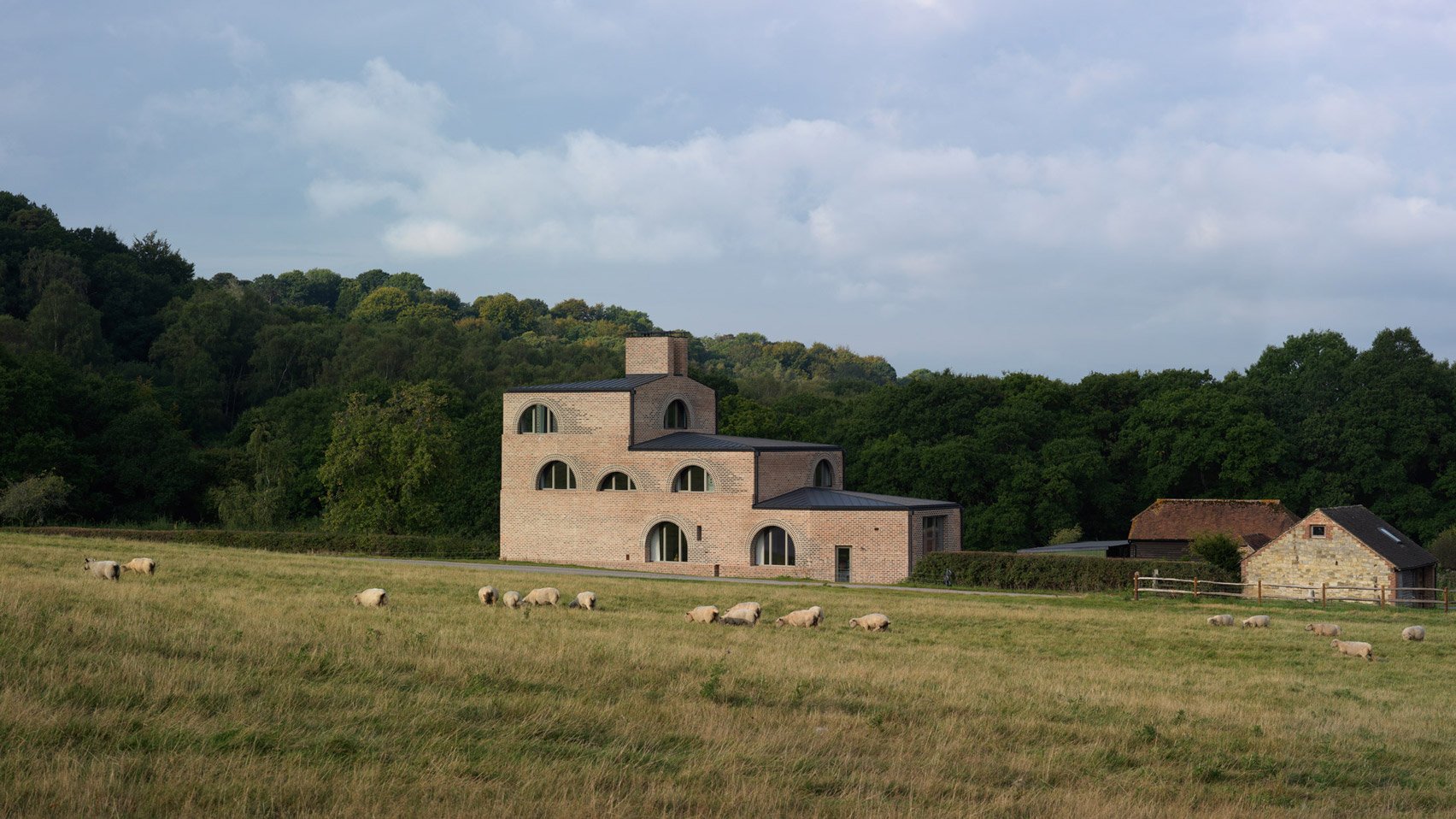
Nithurst Farm by Adam Richards in England, UK

Location house: British architect Adam Richards has modelled his home in Petwork, England, on the Russian science-fiction film Stalker, and readers are intrigued.

"If someone asks me 'what does pretentious mean?' I will show them this house," said Miles Teg.

"I find it rather personal," replied James. "It's eccentric, sure, but I don't find anything pretentious about it."

JZ went on: "The Hejdukian, allegorical qualities are strong with this one. Rich material palette. Clearly planned with a series of processional experiences in mind. When you have these kinds of resources, I find this design a much more substantive use of them rather than the typical Modernist blow-outs."

"All credit to the architect who wants their family home to be influenced by a Russian dystopian nightmare," added Alfred Hitchcock.

This reader was diplomatic:

How do you feel about Richards' design? Join the discussion ›


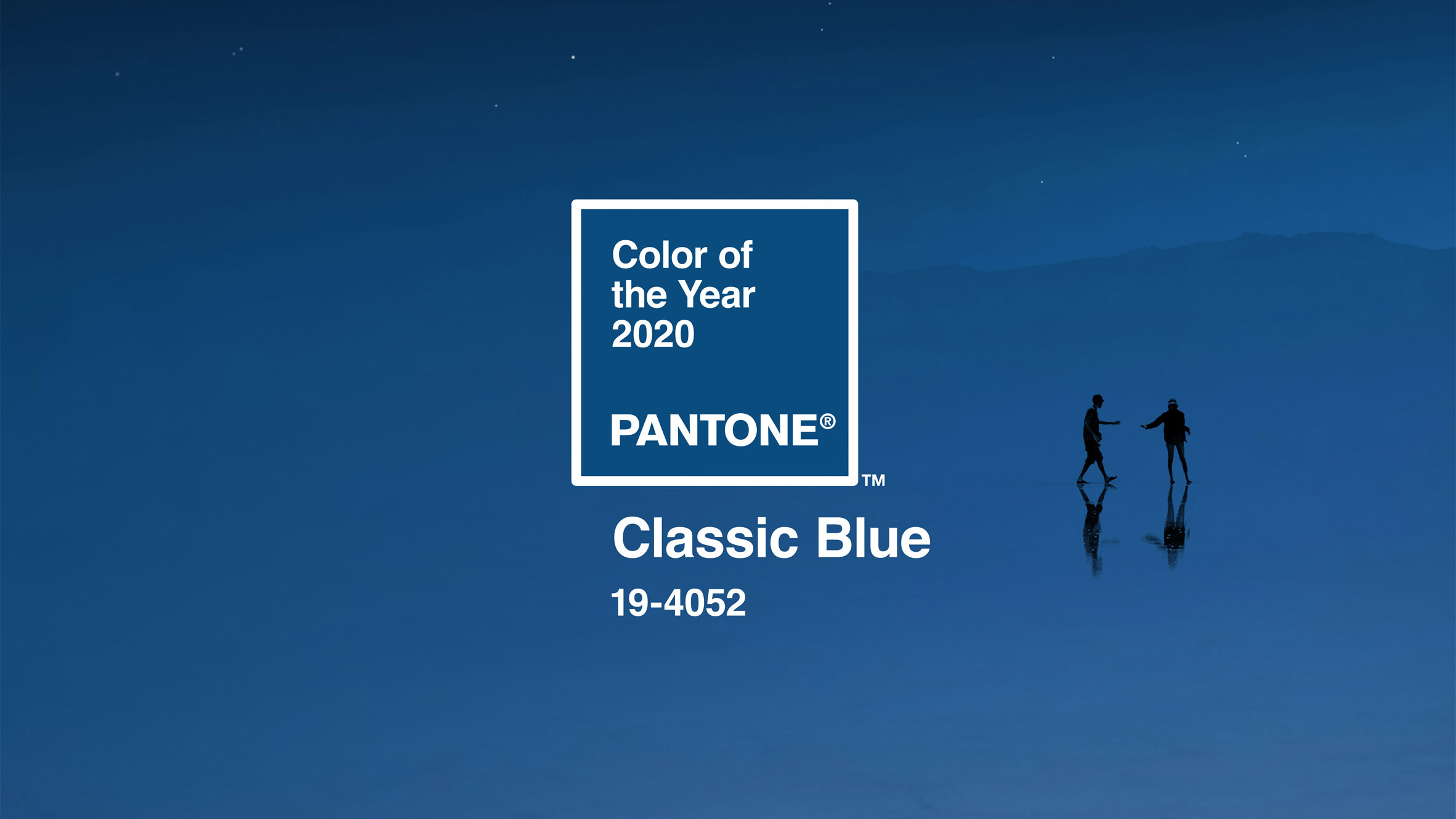
Pantone colour of the year 2020 is Classic Blue

Trend setter: Pantone has chosen its colour of the year for 2020 – "universal favourite" Classic Blue – which it describes as "a reassuring presence instilling calm, confidence and connection". Readers aren't convinced though.

"Design's equivalent of reading horoscopes," said Louis Heatlie.

"And why is this relevant design news?" continued Philippe. "Some schmuck decides he or she is going to like blue next year – 'damn, now I need to change all my belongings otherwise I'll be so 2019.' Think I'm going to stick to black, like all the other years."

Archiplan agreed: "It is better to precede fashion than to follow it."

"It feels like a depressingly accurate prediction of the upcoming UK election," added Charlie Humble-Thomas on a different note.

This reader had an alternative name for the colour:

What do you think of Pantone's choice? Join the discussion ›

The post "Do we still need girls showing boobs to sell a smartphone?" appeared first on Dezeen.


from Dezeen https://ift.tt/2PzmzeG

Dramatic Brush Strokes Energize Trees in Paintings by Adam S. Doyle

All photographs (c) Adam S. Doyle, shared with permission

Artist Adam S. Doyle (previously) is known for his paintings of birds and other animals that call attention to, rather than mask, his brush strokes. In his latest series, “Night Fall Trees,” Doyle shifts his focus to a different living entity. “By putting trees front and center as subjects, instead of relegating them to the background where they usually are, I’m saying these silent sentinels of our planet deserve our full attention and respect,” the artist shares with Colossal.

Like his other series, “Night Fall Trees” centers on Doyle’s obsession with energy. The swirling tree branches are wound tightly within each other, the tufts of leaves envelop the top branches, and the widespread roots bury themselves into the ground. Inspired by a nighttime glimpse of a well-lit tree last October, Doyle also says this series is about the seasons and the resilience the trees have.

Fall is often associated with colorful foliage, which is best seen during the day. But fall is also a season about transition, heading in for the long nights and bone-chilling cold. Winter is a hard time. Trees get through it, though. These paintings reflect on being ready for what’s to come and like the trees knowing we’ll get through it. There will be blossoming once again in the spring.

Doyle tells Colossal his creative plans include writing fiction and nonfiction. You can keep up with the artist’s latest energized paintings on Facebook. He even has another site for his children’s projects.


from Colossal https://ift.tt/2rpBAIa