Those unable to experience the black-and-white murals of Belgian artist ROA (previously) in person can admire photographs of his works in the recently published Codex. Released by Lannoo Publishers, the 352-page book contains four chapters centered on Eurasia, Africa, America, and Oceania, regions where ROA’s depictions of local animals blanket building walls. The photographs portray a snake wound around itself, six difference species perched on vertical ledges, and an alligator on its back with its tail scaling a fire escape.
ROA works directly on the building, foregoing sketches and projections, and uses the architecture to inform the ways he paints birds, rodents, and other native creatures. Captivated by anatomy, the artist attempts to animate his paintings, giving energy and life to species often disregarded by humans. “Exploration of nature, more specifically of the animal world, can lead to increased empathy,” he says. “It teaches you something substantial about how one should live a good life.” The monochromatic murals’ scale often makes animals larger than their real-life bodies, securing and emboldening their monumental presence.
Codex, which is available now, also incorporates writing from RJ Rushmore, Lucy R. Lippard, Johan Braeckman, Gwenny Cooman, Robert R. Williams, and Kathy De Nève.
With tomorrow’s election nearly upon us, Timothy George Kelly celebrates the people of the UK through a minute-and-a-half-long film in support of the Labour party.
“Offerings” (2019), Pen, watercolor, ink, gel pen and colored pencil on paper. 26.75 x 42.5 inches
Sinuous, intertwined wildlife bridge worlds of the living and the dead in Lauren Marx’s intricate multi-media work. Twisting fox heads, disemboweled deer, and lambs bursting with flowers and birds are rendered with watercolor, ink, pen, and colored pencil. Marx often places her animal compositions on semi-abstract backgrounds, awash with grey tones that give a sense of weightlessness to the dense drawings by evoking fog or clouds.
The artist, who resides in her hometown of Saint Louis, Missouri, cites frequent trips to the Saint Louis Zoo, biology classes, and National Geographic television shows as cultivating her lifelong interest in animals. Her latest body of work debuts December 14, 2019, at Corey Helford Gallery. The show, titled Chimera, is an evolution from her previous pieces, combining multiple animals into each artwork to combine their symbolic meanings.
“From Our Flesh” diptych (2015), Pen, ink, colored pencil, graphite, and gel pen, 17.75 x 10 inches
“Chimera further explores my concepts of fauna representations of emotions, personal mental health, family, and self,” Marx shares in a statement. “I am creating a mythological world, centered around North American flora and fauna, to better expresses my image of who I am, how I am perceived, my struggles with mental health, and to explore self-healing.”
Marx studied Fine Art at Webster University and draws inspiration from zoology, mythology, scientific illustration, and Northern Renaissance themes. The artist shares with Colossal that at this juncture in her career, she is looking to continue to challenge herself technically and conceptually, and that works in the Chimera show brought her practice to new levels in terms of scale and complexity.
See Chimera through January 18, 2020, at Corey Helford Gallery in Los Angeles, and explore more of Marx’s intricate illustrative artwork on Instagram. The artist also offers prints and stickers on Etsy.
“Honey” (2019) Pen, watercolor, ink gel pen, gouache and colored pencil on mixed media paper, 31 x 37.25 inches
“Self-inflicted” (2016), Pen, ink, graphite, colored pencil, and gel pen on paper, 20 x 20 inches
“Nested Fawn” (2019), Pen, watercolor, ink, gel pen, gouache, and colored pencil on mixed media paper, 25.75 x 40 inches
“The First” (2016), Pen, ink, graphite, colored pencil, and gel pen on paper, 20 x 24 inches
“Snake-Bird” (2019), Pen, watercolor, ink, gel pen and colored pencil on mixed media paper 20 x 38 inches
“The Second” (2016), Pen, ink, graphite, colored pencil, gel pen, and acrylic on paper, 20 x 24 inches
“Lovely” (2018), Pen, watercolor, ink, colored pencil, gel pen, and graphite on paper, 17.5 x 22 inches
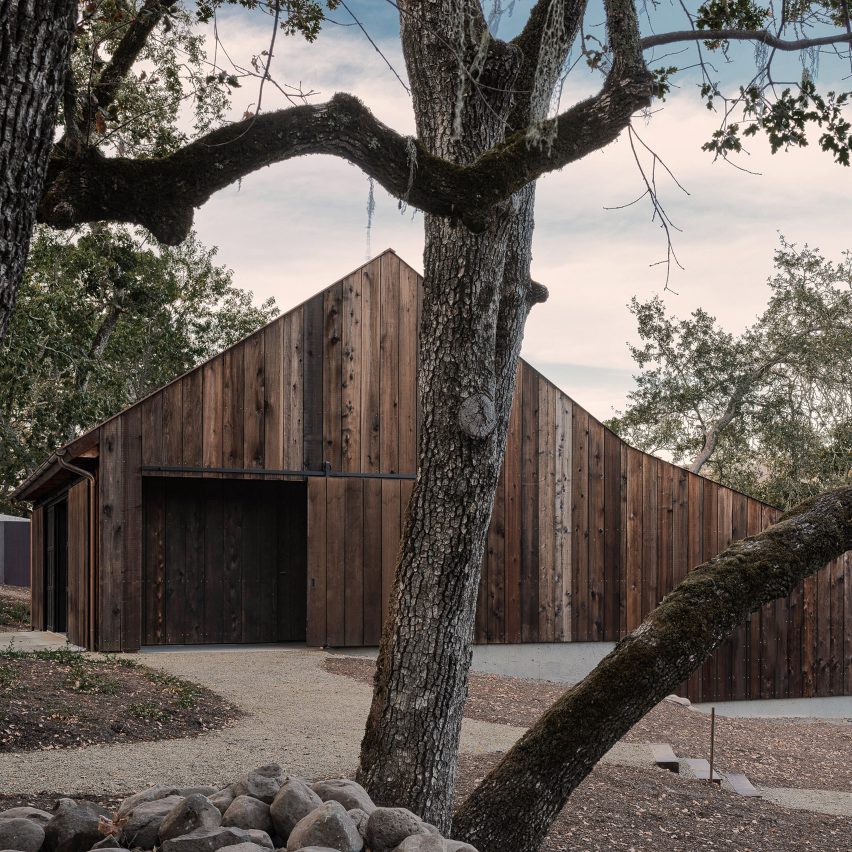
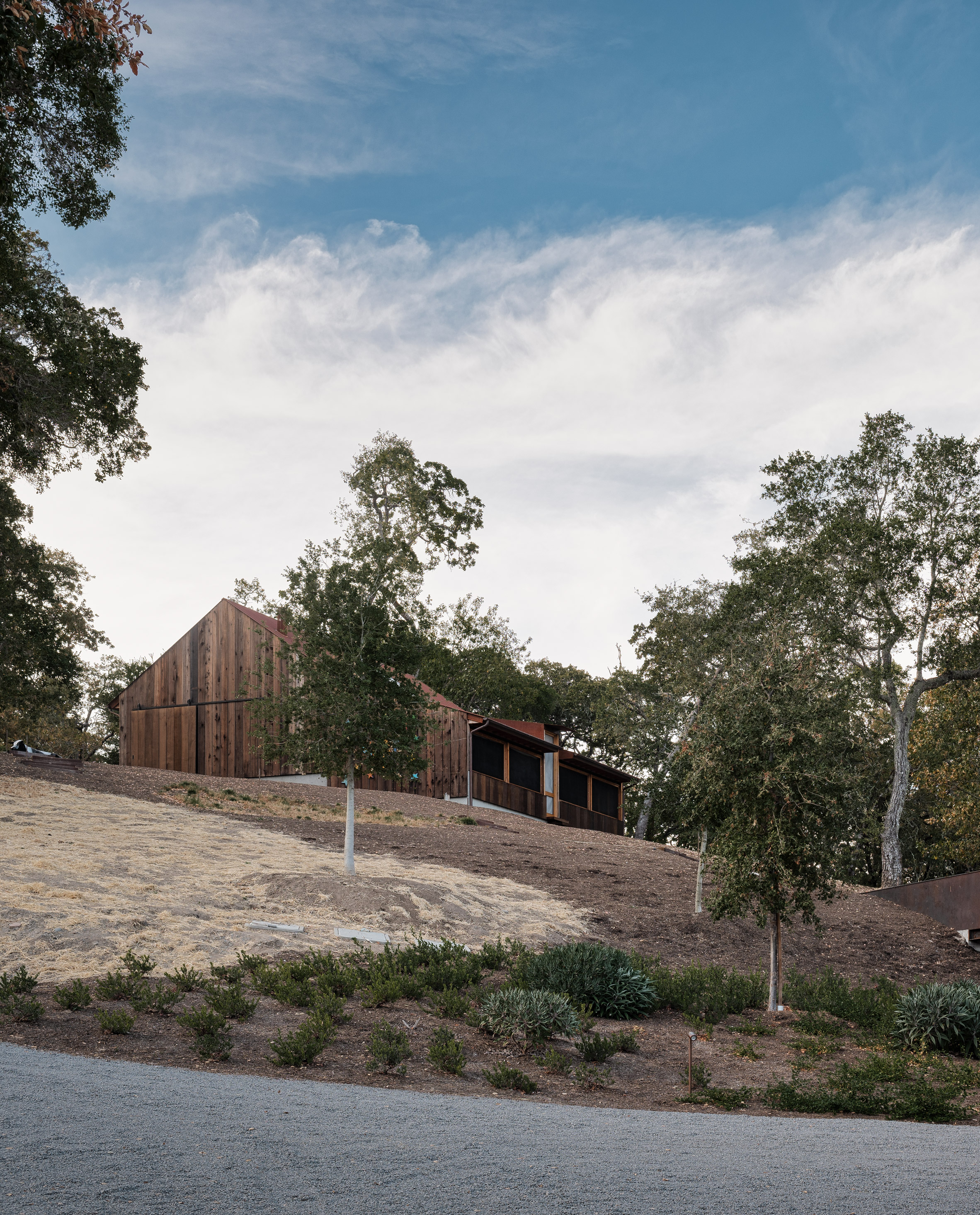
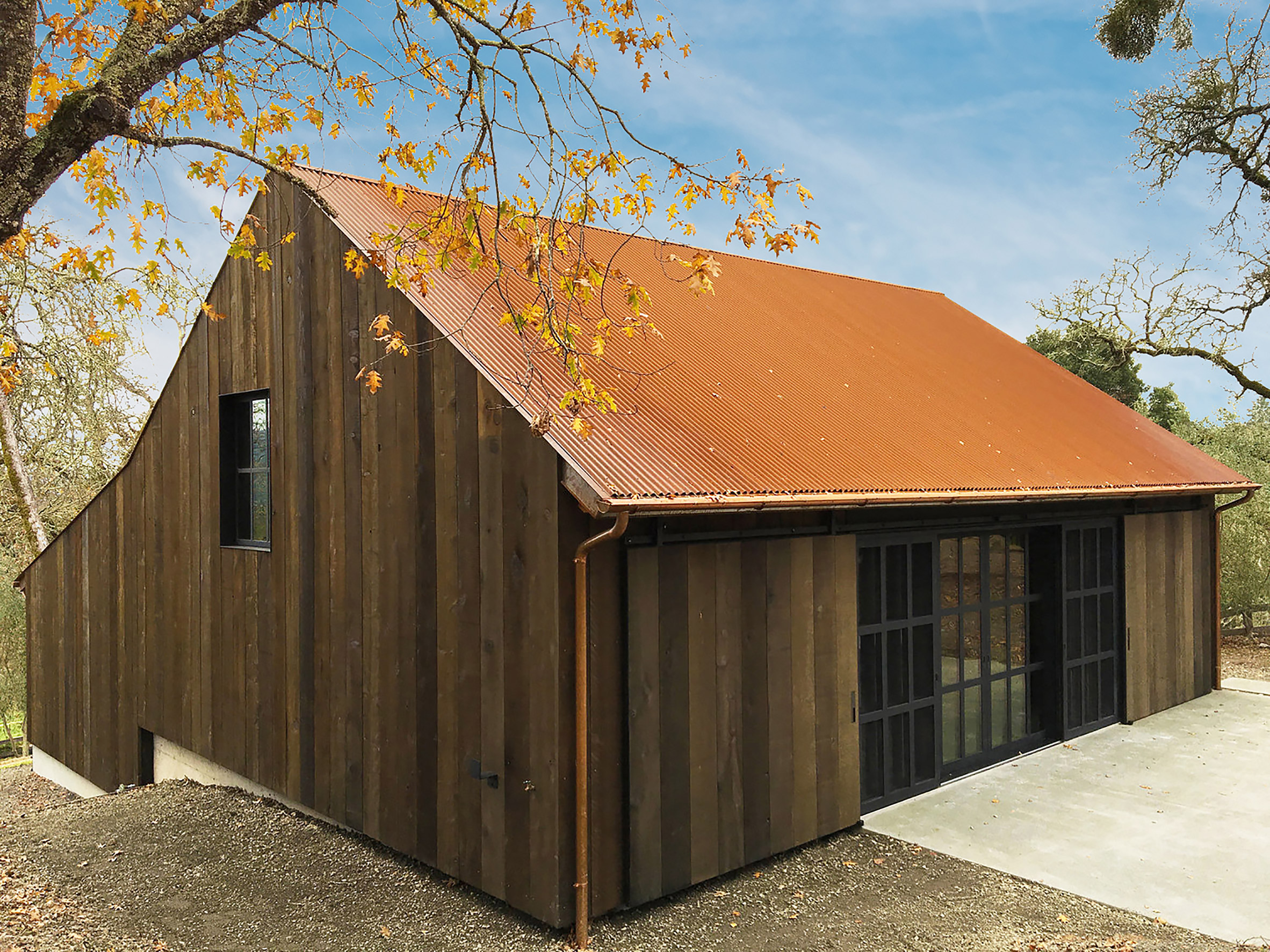
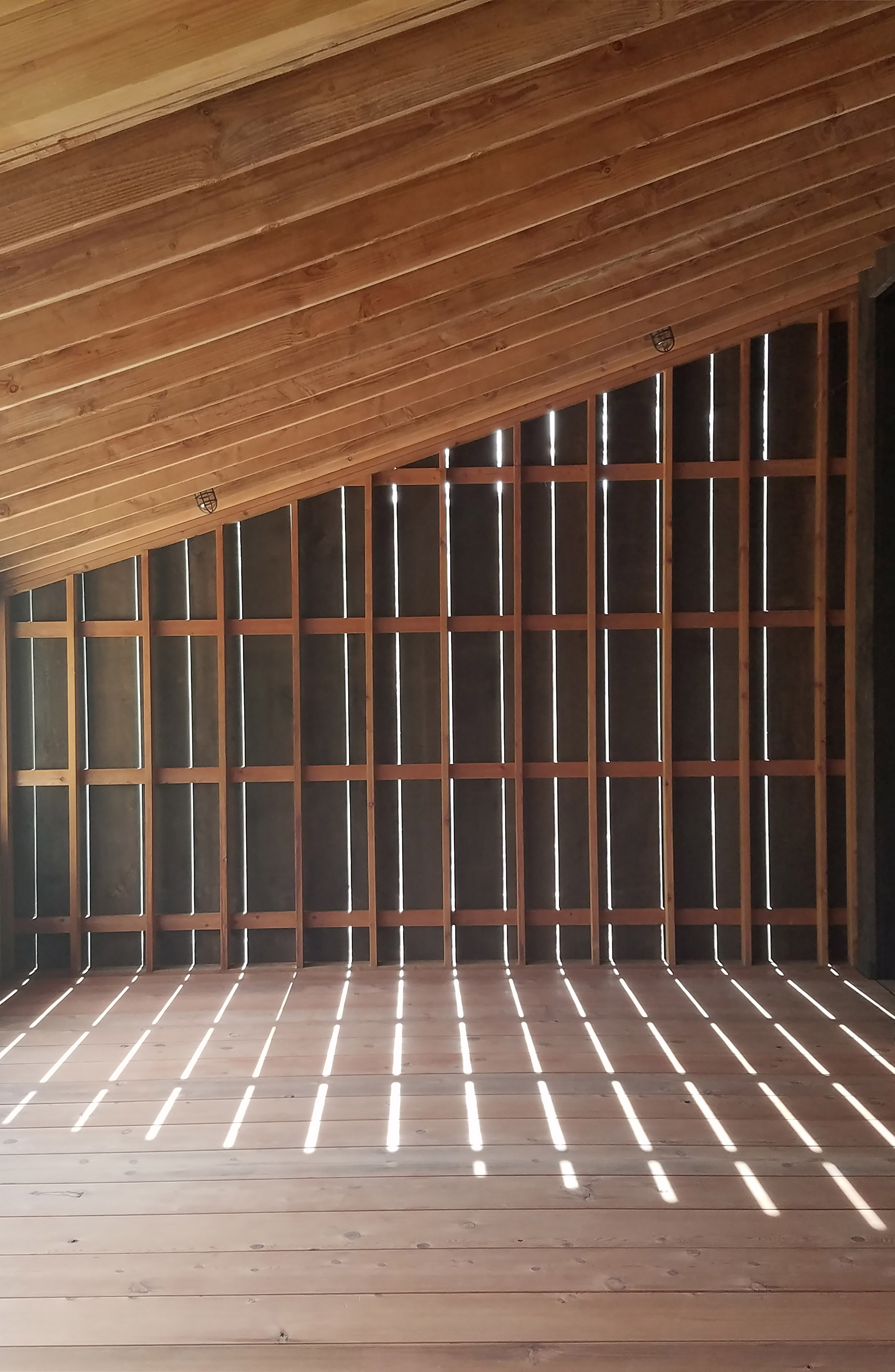
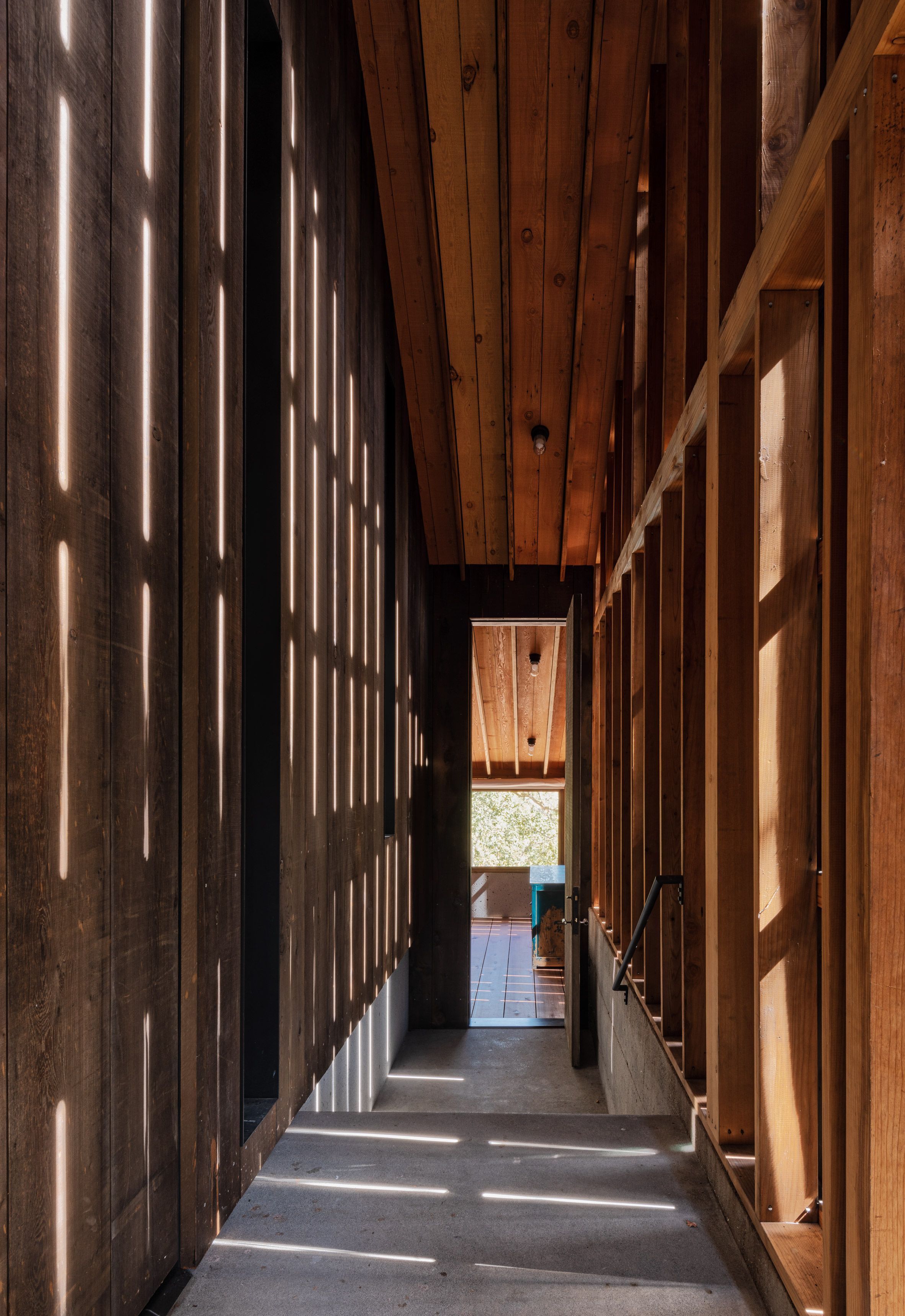
American studio Faulkner Architects has transformed a rustic building in northern California into a simple dwelling sheathed in salvaged redwood and weathering steel.
The project, called Tack Barn, entailed renovating a 1950s, gabled-roof building that once was used for storing saddles, bridles and other horse-related equipment. Adjoining the building was a shaded area for horses topped with a shed roof.
The building is tucked into a hillside in Glen Ellen, a village in Sonoma County with a deep agricultural heritage. The famed novelist Jack London lived in the area for many years before his death in 1916.
Photograph by Hammond and Company
"Attracted by the same aspirations as Jack London a century before, a San Francisco family of four and repeat client came to us with the request to reclaim the old barn as living space," said Faulkner Architects, a studio with offices in Berkeley and Truckee, both in California.
The goal was to convert the barn into a little retreat where the family could stay on the weekends as they researched the area and built a new full-sized residence, which was completed in 2018.
Photograph by Hammond and Company
The clients requested a minimalist space with areas for sleeping, bathing and light cooking. The adaptive reuse project involved significant alterations to both the interior and exterior, with many original elements kept in place.
The original structural frame, made of Douglas fir, was retained, helping preserve the building's history. Exterior walls were wrapped in a redwood rainscreen, and the roof was covered in weathering steel.
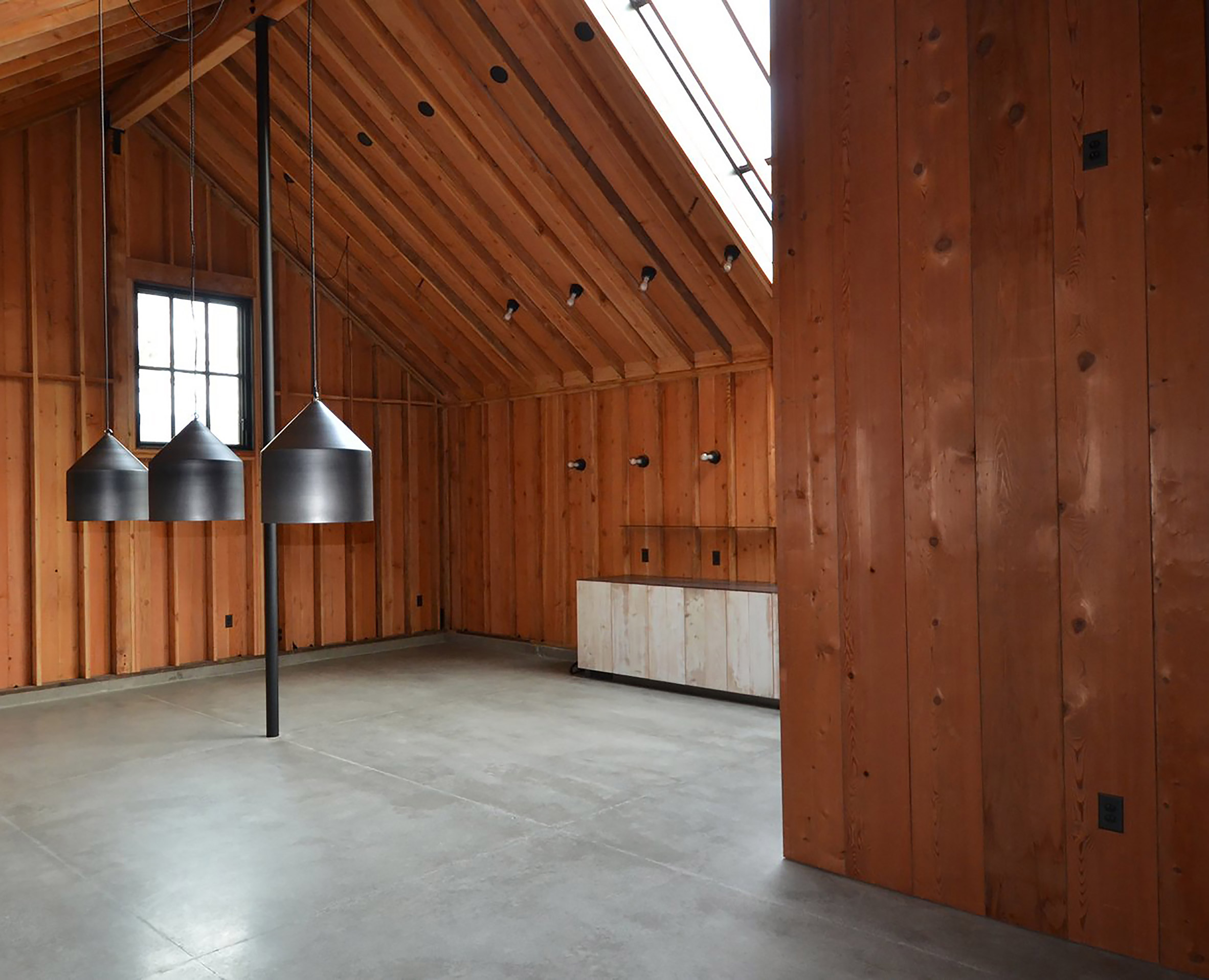
Within the building, the team removed a sleeping attic and installed a new concrete floor slab, replacing a gravel floor. Two wooden columns were removed and replaced with steel versions.
Encompassing 839 square feet (78 square metres), the overhauled tack room features an open living space, a kitchen with a sink and refrigerator, and a compact bathroom with a shower.
Photograph by Hammond and Company
A radiant floor heating system keeps the space warm during cool weather. A propane boiler heats up water that circulates through the floor, along with heating up water used for cooking and bathing.
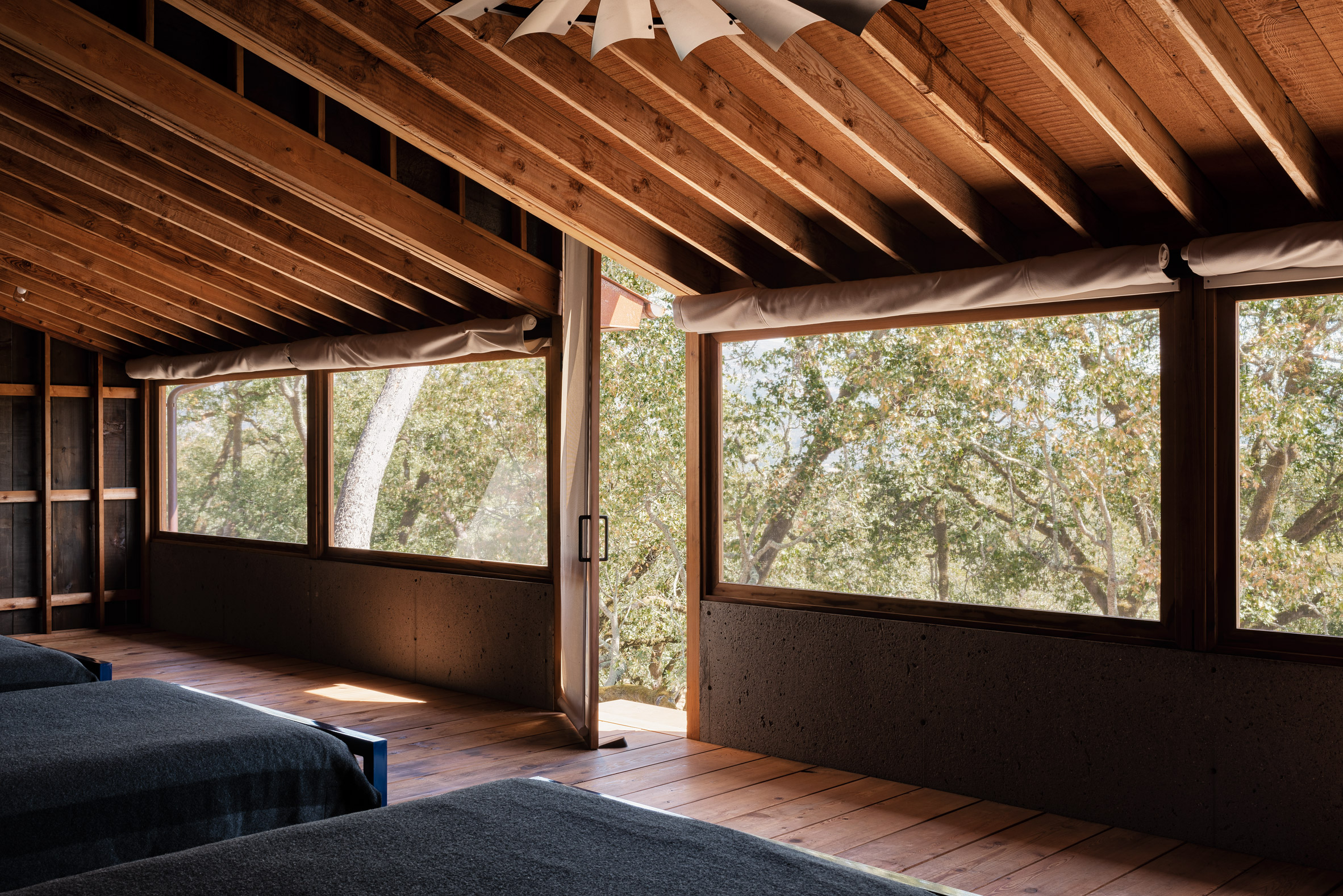
To create more livable space, the team transformed the shaded area for horses into a screened-in "sleeping porch" that totals 579 square feet (54 square metres). The room features wooden flooring and exposed timber beams.
The porch uses no mechanical heating or cooling, enabling the project to meet a local rule that prohibits accessory structures from exceeding 850 square feet (79 square metres).
Throughout the building, the team used an earthy material palette that includes salvaged Douglas fir and redwood. In the main living area, large pendants by LifeSpaceJourney hang overhead.
Overall, the architects sought to update the building for contemporary use while honouring its history.
"The intention here was to maintain and use the embodied energy of the familiar barn in the neighbourhood while allowing signs of human inhabitation to be subtle but evident," the team said.
Faulkner Architects, which was formed by Greg Faulkner in 1998, has completed a number of residential projects in the American West. Others include a remote getaway in California that was designed to preserve existing boulders, and a family dwelling in the Sierra Nevada Mountains that makes use of wood, glass and textured concrete.
Photography is by Joe Fletcher, unless stated otherwise.
Project credits:
Architecture: Faulkner Architects Contractor: Hammond and Company Civil engineer: Lea & Braze Engineering Structural engineer: CFBR Structural Group Mechanical/electrical engineer: Sugarpine Engineering Geotechnical engineer: NV5 Landscape: Michael Boucher Landscape Architecture Lighting: Concept Lighting Lab
The British photographer and 2009 Prix Pictet winner has released The Meeting, a book containing over 200 portraits of modern luminaries, including Barack Obama, David Attenborough and Werner Herzog.