This week, we've selected four exciting opportunities for senior architects on Dezeen Jobs, including vacancies at international architecture firms BIG and UNStudio.
UNStudio has revealed plans for Karle Town Centre, a smart city in India's Bangalore where buildings will be covered in cooling white paint. The studio is recruiting a senior architect with extensive experience of building international, large-scale projects to join its Shanghai office in China.
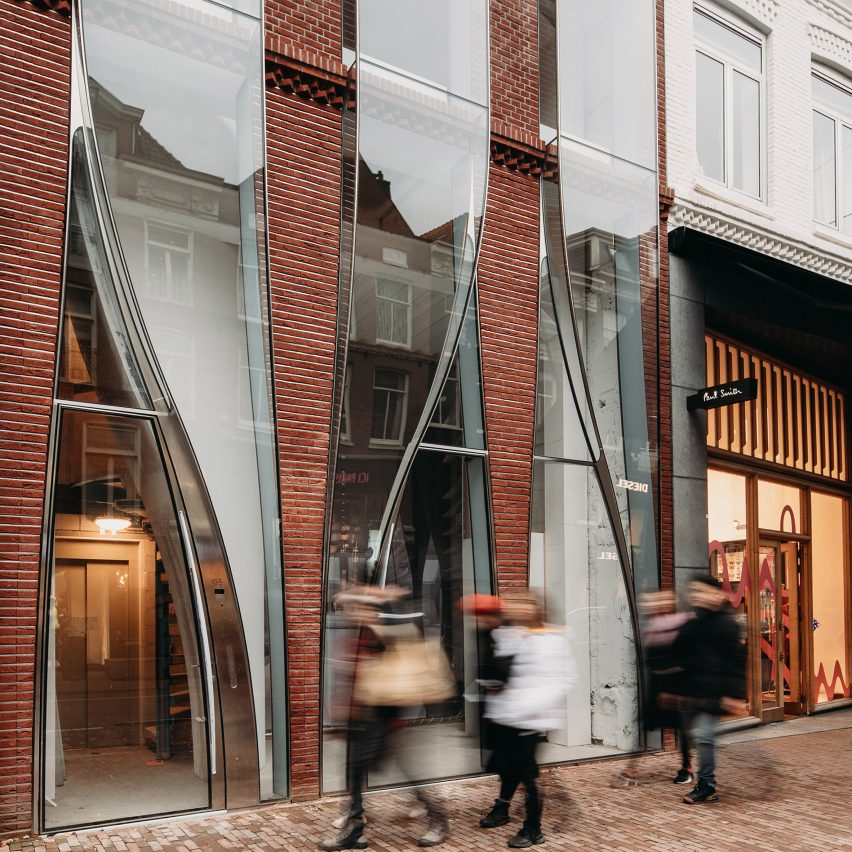
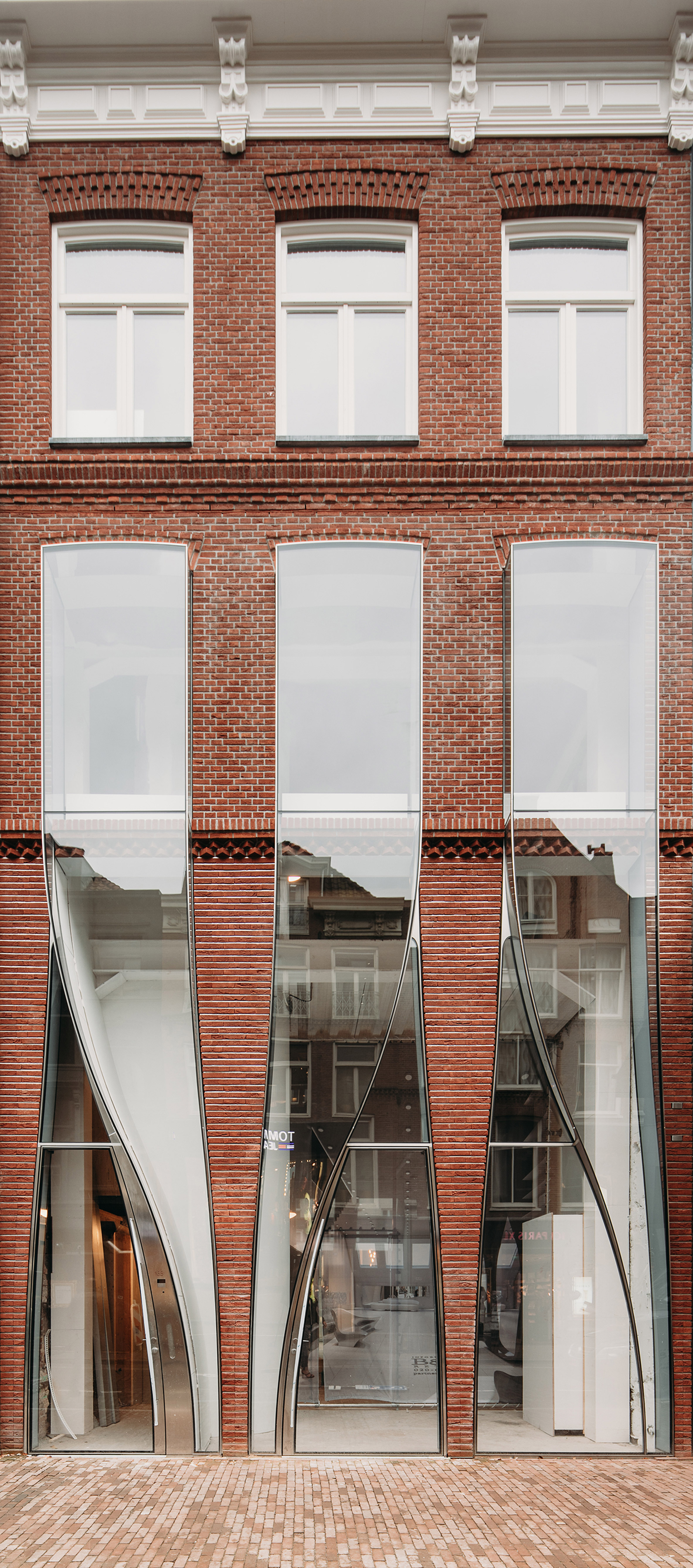
Dutch architectural practice UNStudio has created three curved, glass boxes that "mimic billowing transparent cloth" from the facade of a store on PC Hooftstraat in Amsterdam.
Named The Looking Glass, the store has been designed to be a flagship for a fashion brand on PC Hooftstraat – a shopping street in Amsterdam that is a hub for luxury fashion brands like Prada and Dior.
The store was designed for developer Warenar Real Estate, which also owns the Crystal House – a glass-fronted townhouse designed by MVRDV that is currently an Hermès store.
UNStudio designed the facade with three curved-glass boxes that flow down the front of the facade as a "celebration of textiles" that "mimics billowing transparent cloth".
These glass boxes project forward from the building's brick front and will be used to display clothing, once a tenant moves into the store. The tenant will also complete the store's fit out.
"In a fluid gesture, fashion and architecture come together to represent and celebrate the craftsmanship and geometry of high-end, tailored clothing, creating harmony between aesthetics and function," explained the studio.
"The storefront reinterprets the traditional display window by creating new ways to view art and fashion."
The three glass boxes were all assembled in a factory before being transported to the store.
The curved and straight panes of glass were connected to each other using structural silicone joints that are covered with stainless steel.
"One of the challenges was that the geometry of the manufactured curved glass panels can be different than originally designed," said the studio.
"Our edge details are designed in such a way that the eight-millimetre silicon joints allow for these tolerances."
Above the store, on the building's top two storeys, is an apartment that has also been designed by UNStudio. This apartment is still under construction and will be occupied after the tenant is found for the store.
Client: Warenar Real Estate Architect: UNStudio Team: Ben van Berkel, Astrid Piber with Ger Gijzen, Marc Salemink, Sontaya Bluangtook and Lars van Hoften, Pauline Caubel, Paul Challis, Tiia Vahula Facade engineer: ARUP Structural engineer: Brouwer en Kok Executive architect for main construction: Gietermans & Van Dijk Architecten Main contractor: Wessels Zeist Facade contractor: Octatube Nederland
Designed by Tom Gottelier and Bobby Petersen, who work together as Designers on Holiday, the Chicken Caravan is a solar-powered chicken coop. The lightweight, automated, mobile unit was created for The Ecology Center farm in San Juan Capistrano, California. Activated by solar sensors, the aluminum-clad cabin doors automatically open at sunrise to allow the hens out. The coop itself can be towed by a tractor to help fertilize new areas of the farm with the chickens’ manure—it also comes with a portable fence to keep the birds in the desired zone. Lastly, a solar battery keeps everything charged and ready. See more of Designers on Holiday’s innovative projects and explore their collaborative camp for designers on the company’s website. (via Inhabit)
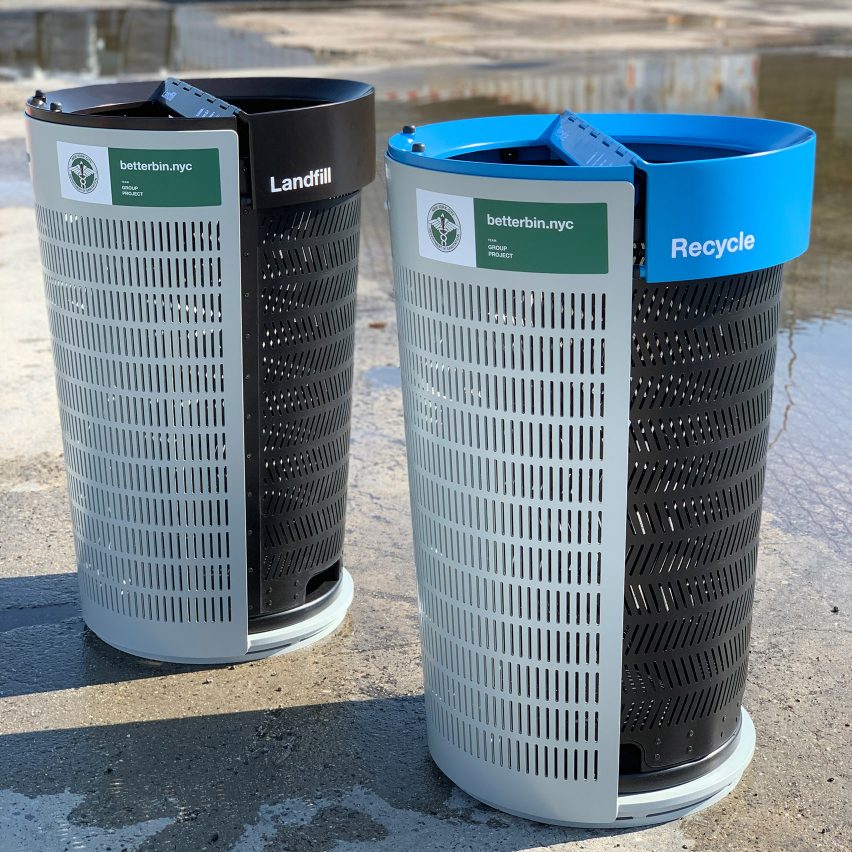
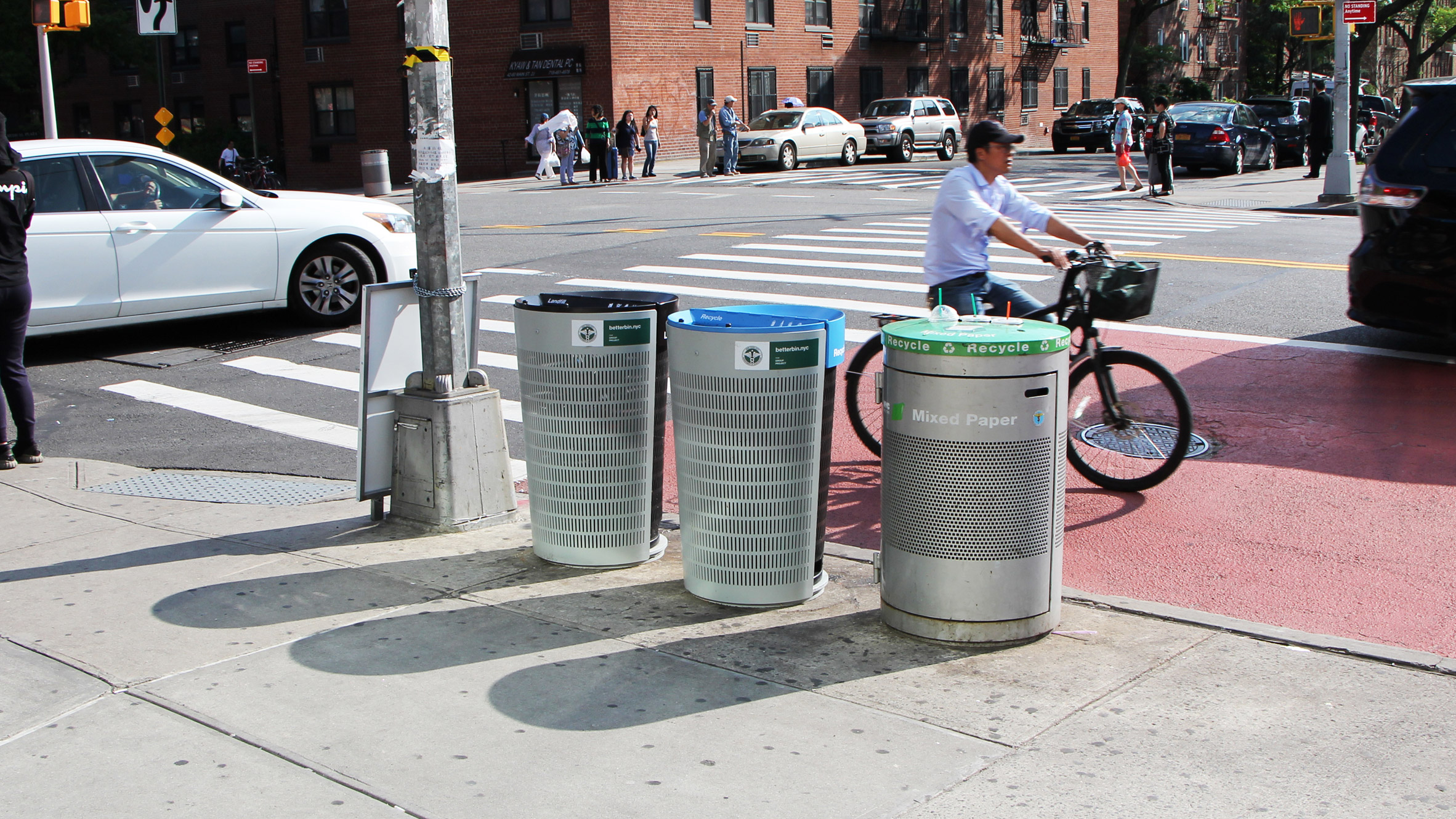
New York studio Group Project has designed new rubbish bins for New York City streets that include a "sleek aesthetic, bold recycling messaging, and significant ergonomic improvements."
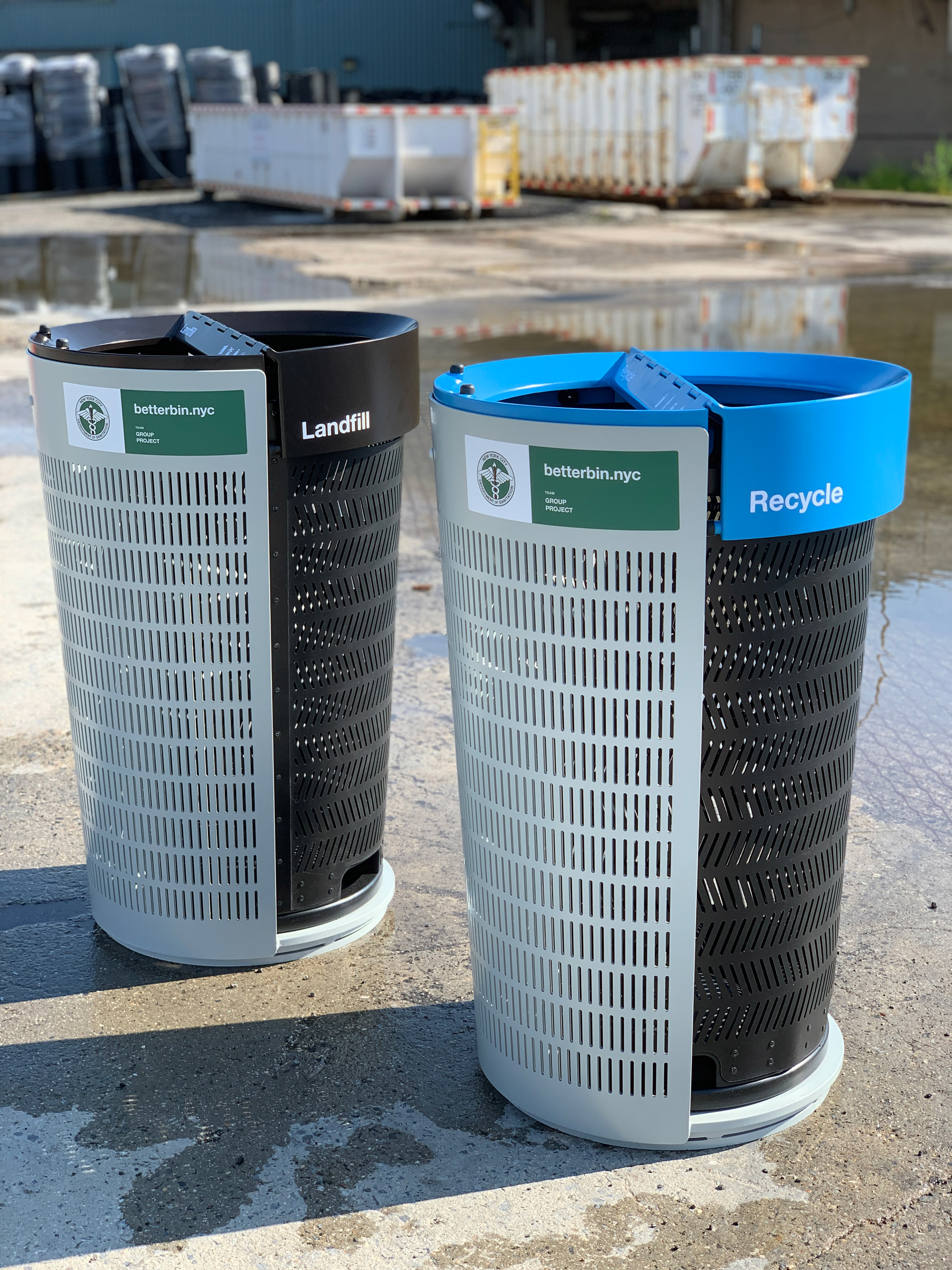
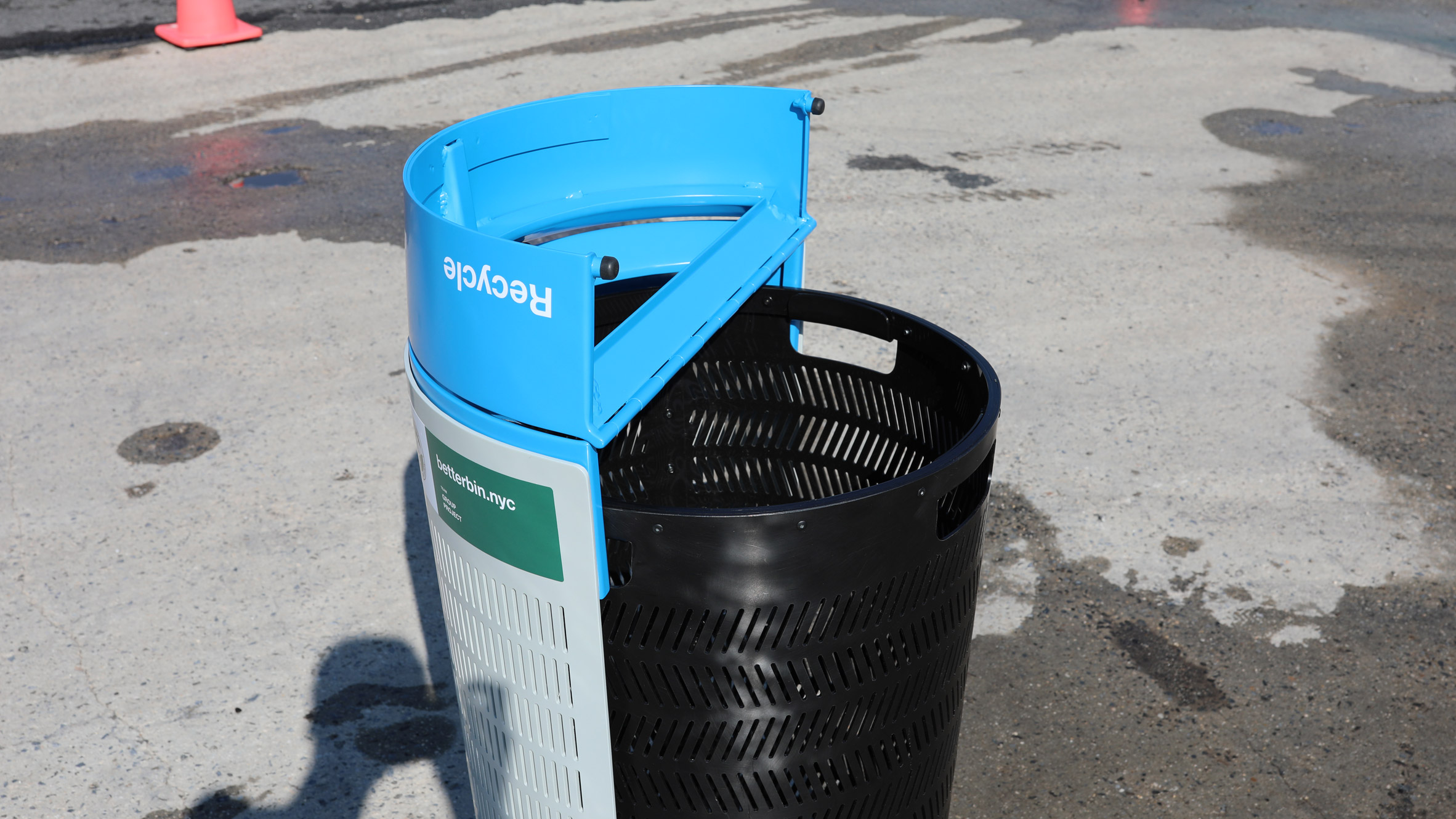
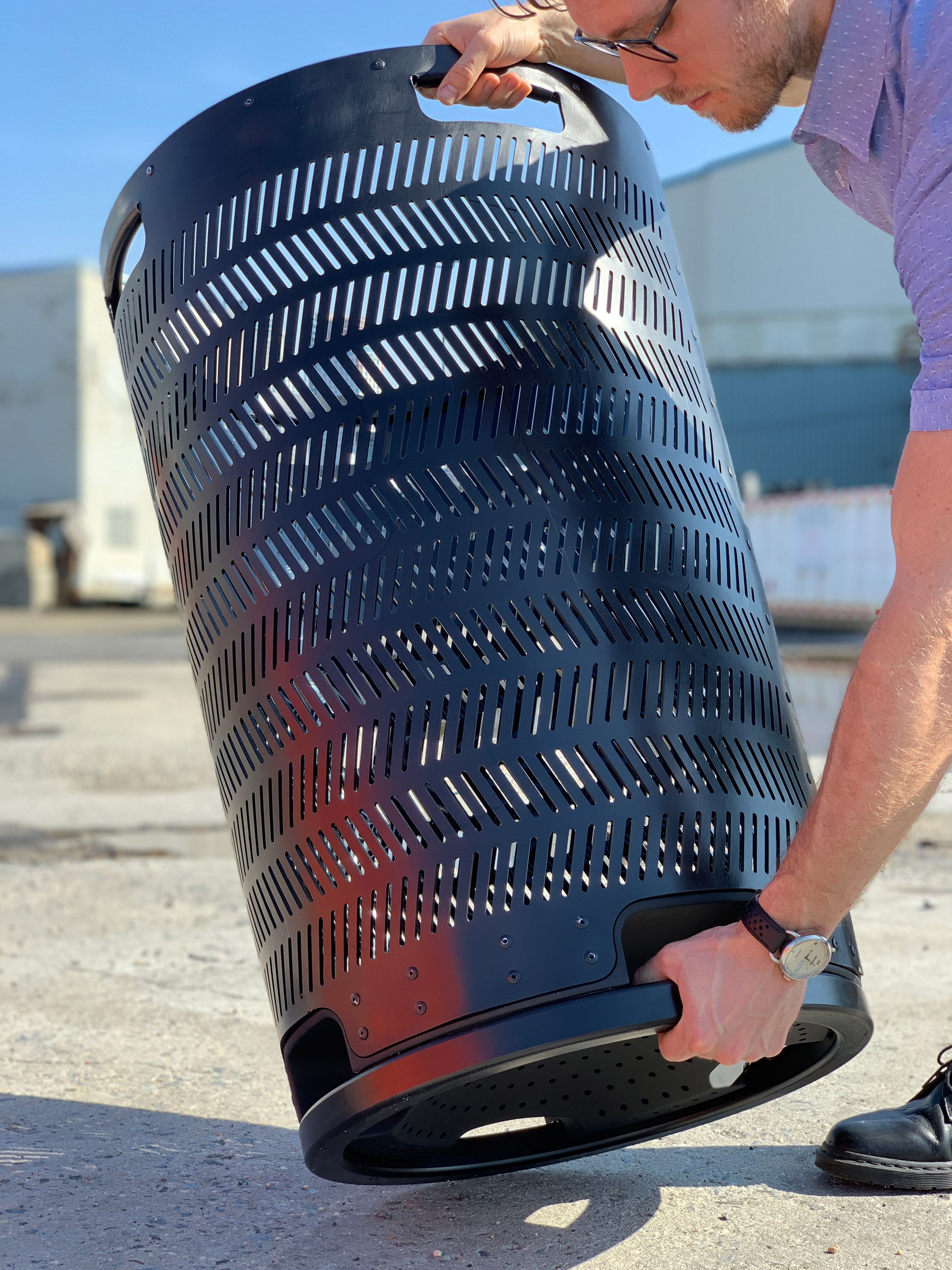
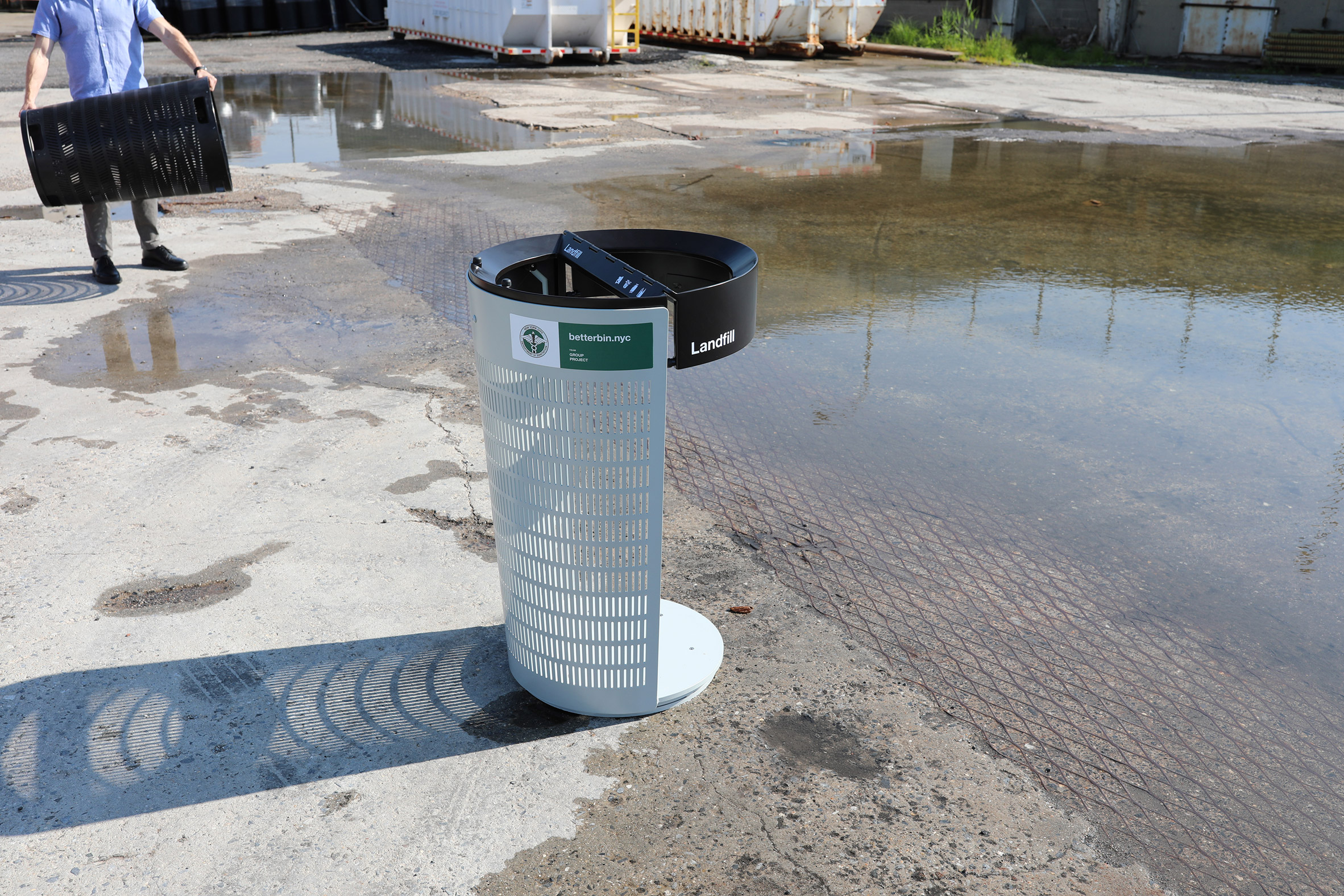
Group Project's winning scheme features a grey exterior shell perforated with diagonal lines. These attach to a lid that opens up to allow garbage collectors to easily access and pull out an improved wire mesh container that holds the refuse. The interior liner is 50 per cent lighter than that in current trash cans.
Eight grips, four on the top and four on the bottom, are adhered to the canister so that it can be lifted from any angle and easily flipped over to dump out its contents.
Colour-coded lids printed with bold white text identify the difference between different waste; landfill refuse is marked by a black lid, while recycling bins are topped with a blue lid.
"The design received positive feedback from both Sanitation Workers and the public for its sleek aesthetic, bold recycling messaging, and significant ergonomic improvements," the studio said.
A panel of nine jury members, including industrial design specialists and sanitation workers, chose the winning design based on prototype performance, public response, and feedback from the Department's Sanitation Workers.
"The re-design of this iconic trash bin considers its impact on the lives of the multiple users that interact with the bin – from the hard working DSNY staff that service the bins to the busy residents of NYC and the photo hungry visitors to the city," said judge and industrial designer Vijay Chakravarthy.
"The winning design by the Group Project team demonstrates that design can be a powerful tool to improve working conditions for Sanitation Workers and better engage New Yorkers as our partners to keep the city healthy, safe and clean," Sanitation Commissioner Kathryn Garcia added.
For the contest, the team of designers produced 12 full-size prototypes that were tested in three New York city neighbourhoods for a 90-day period. Starting in December 2019, Group Project will work with the Department of Sanitation to mass-produce the bins so they can ultimately replace the current green wire mesh ones.
New York's redesign follows other designers that have reimagined bins in an effort to encourage more environmentally friendly practices.
American company Heliogen has managed to concentrate solar energy to temperatures of more than 1000 degrees Celsius – hot enough to provide a fossil-fuel-free way to make concrete.
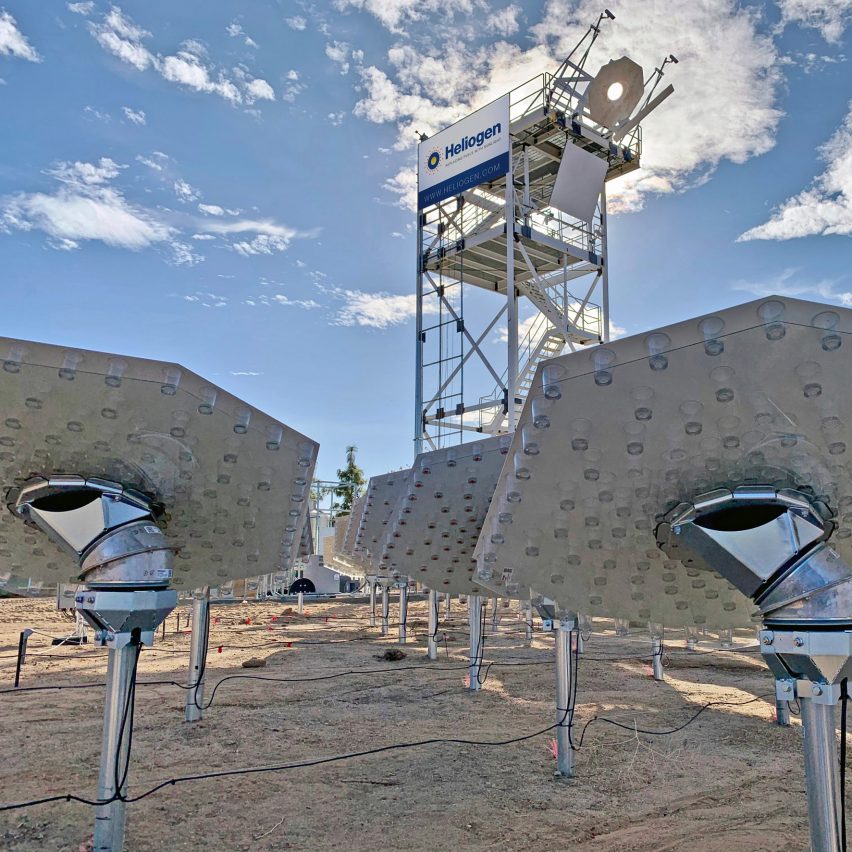
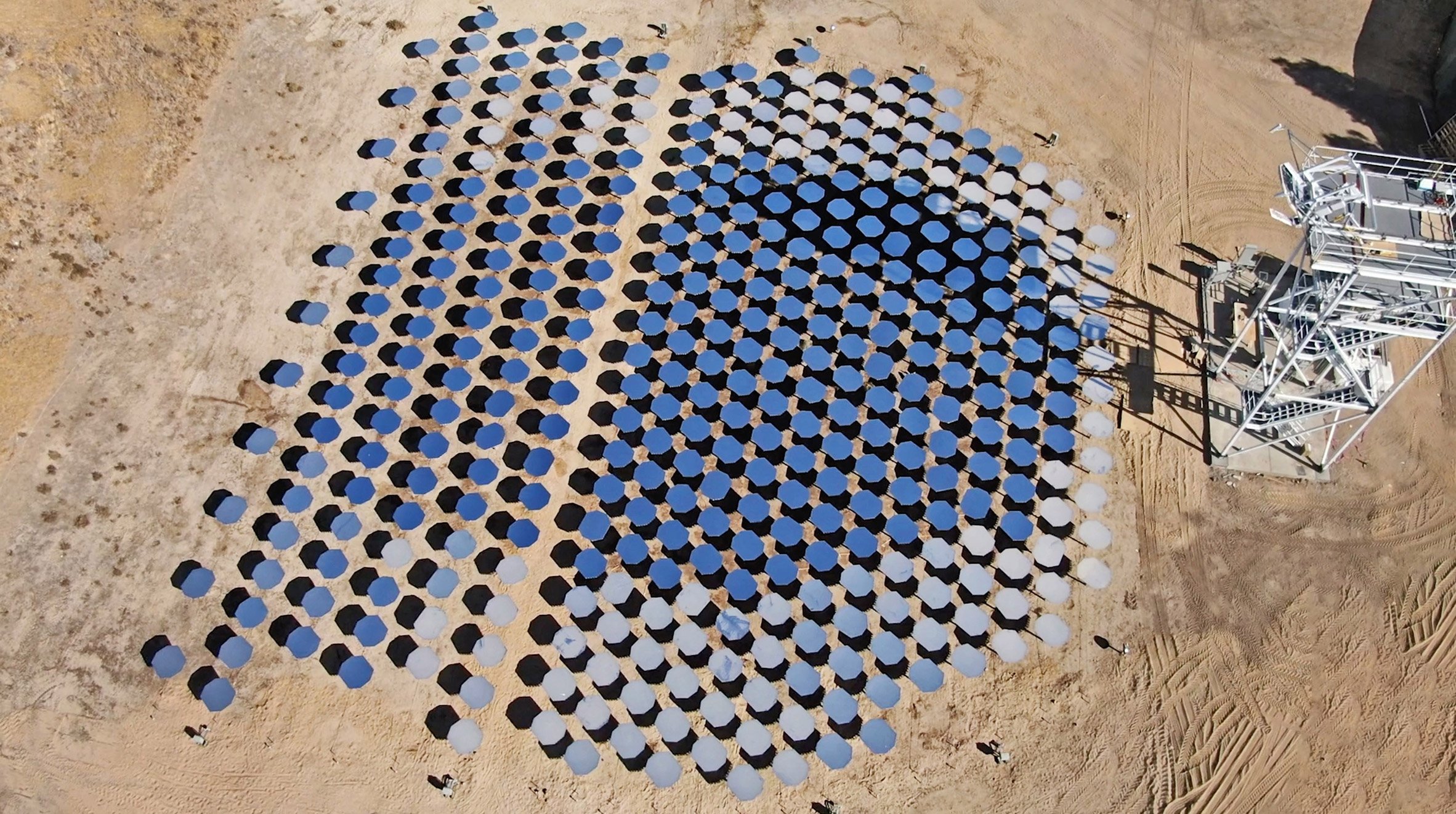
The company creates ultra-high heat using a precisely aligned array of mirrors to focus sunlight onto a single target — a technology it describes as a "multi-acre magnifying glass".
Its breakthrough means that in the future solar thermal energy could be used for industrial processes that currently require the burning of fossil fuels.
Chief among these is the production of cement, which requires high temperatures to form a composite from a mix of materials such as limestone, chalk and slate that are then ground into a powder.
Heliogen creates ultra-high heat using a precisely aligned array of mirrors to focus sunlight onto a single target
But Heliogen's technology could create the ultra-high heat required for its production via the sun, lowering concrete's carbon footprint. Around 50 per cent of cement's CO2 emissions come from the chemical reaction of converting calcium carbonate into calcium hydroxide, however, so those would remain.
The company's founder and CEO Bill Gross said Heliogen technology represented "an opportunity to make meaningful contributions to solving the climate crisis".
"We've made great strides in deploying clean energy in our electricity system," he said. "But electricity accounts for less than a quarter of global energy demand."
"Heliogen represents a technological leap forward in addressing the other 75 per cent of energy demand: the use of fossil fuels for industrial processes and transportation."
The company named steel and petrochemical production as two other industrial processes that it could potentially power.
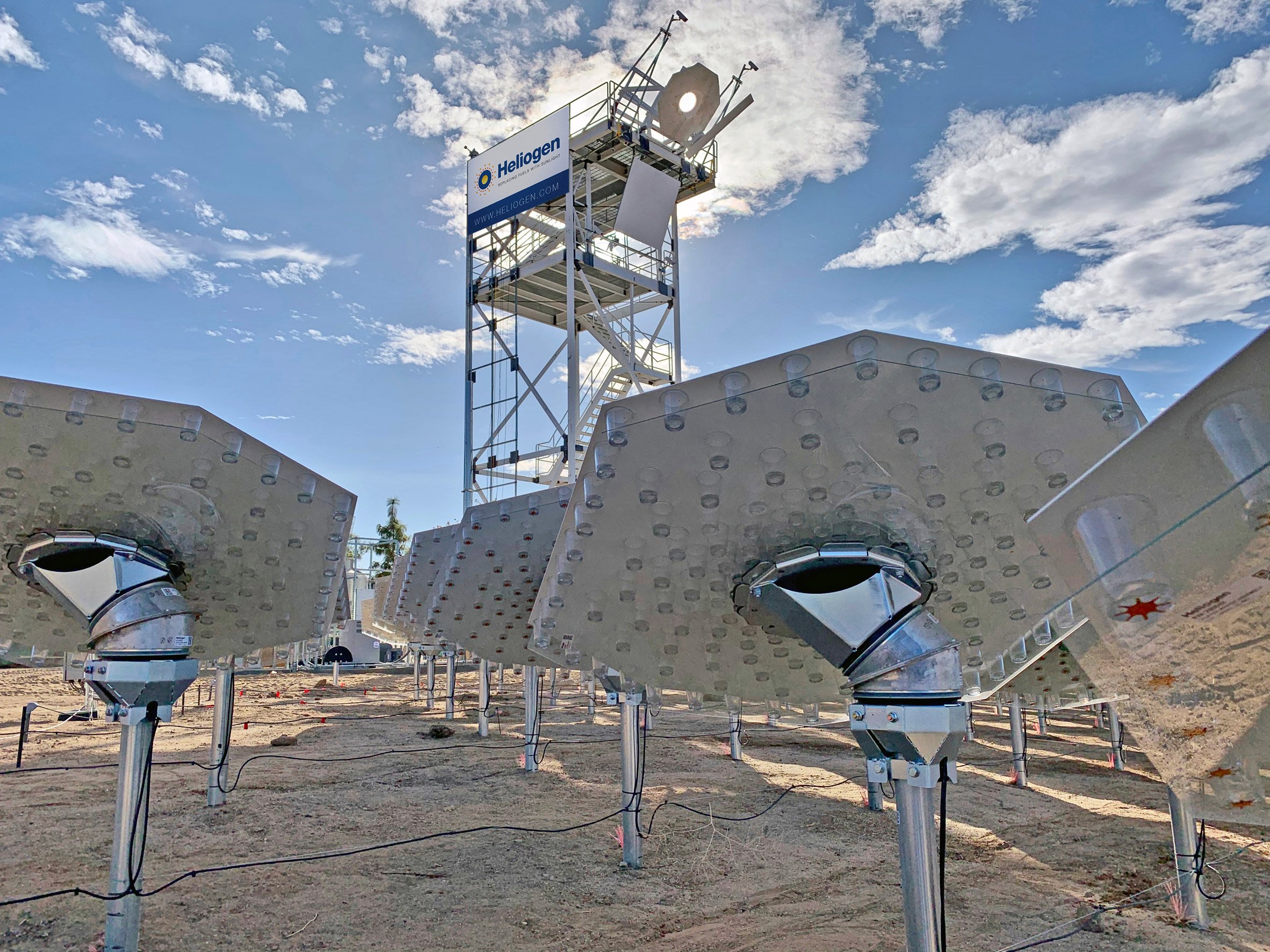
Heliogen's patented system relies on a computer-controlled array of mirrors that precisely direct sunlight onto a target on a nearby tower and receiver. Magnified by the mirrors, the captured sunlight is equivalent to more than 1,200 suns, according to Heliogen.
Heliogen intends to use the technology to create two products. It plans to use the solar thermal energy for industrial processes such as cement production, which it calls HelioHeat. But it also hopes to be able to use the technology to create its own brand of clean fuel, which is calls HelioFuel.
The captured sunlight, which is directed onto a target on a nearby tower and receiver, is equivalent to more than 1,200 suns, according to Heliogen
In order to produce fuel, the company will need to achieve even higher temperatures – at least 1,500 degrees Celsius. At this heat, it could be used to make fuels such as hydrogen or syngas – a fuel comprising a mixture of hydrogen and carbon monoxide.
Heliogen's system is different to photovoltaic (PV) solar panels, which are used to power the electricity grid, and more like the solar hot-water systems some people have in their homes.
At Heliogen's scale, the solar thermal system could be more efficient and take up less space than the equivalent PVs.
The company currently has one commercial facility in Lancaster, California. It launched this week with the announcement that Microsoft co-founder Bill Gates, the world's richest person, was among its high-profile investors.
Gates said Heliogen technology was "a promising development in the quest to one day replace fossil fuel".
"Today, industrial processes like those used to make cement, steel, and other materials are responsible for more than a fifth of all emissions," Gates said. "These materials are everywhere in our lives but we don't have any proven breakthroughs that will give us affordable, zero-carbon versions of them."
"If we're going to get to zero-carbon emissions overall, we have a lot of inventing to do."