Photo by Michael Schneider, shared with permission
On a November trip to the Arosa mountains in the Swiss Alps, Michael Schneider snapped a photo using his iPhone 11. The Zurich-based photographer and writer says the image he captured as the fog dissipated shows small ice crystals in the clouds, which break up the sunlight. The crystals’ insides reflect the sun, which is then broken again as it leaves the inside chamber, resulting in the halo of light.
Ice halos happen when tiny crystals of ice are suspended in the sky. The crystals can be high up in cirrus clouds, or closer to the ground as diamond dust or ice fog. Like raindrops scatter light into rainbows, the crystals of ice can reflect and refract light, acting as mirrors or prisms depending on the shape of the crystal and the incident angle of the light.
You can find an analysis by Mark McCaughrean of the atmospheric optics at work in the image below. Keep up with Schneider’s travel writing and the frozen landscapes he frequents on his Instagram. (via Kottke)
Architecture firm Wolfgang Tschapeller has renovated a library at Cornell University and added suspended shelving, which prompted criticisms about the potential for upskirting when it opened in earlier this year.
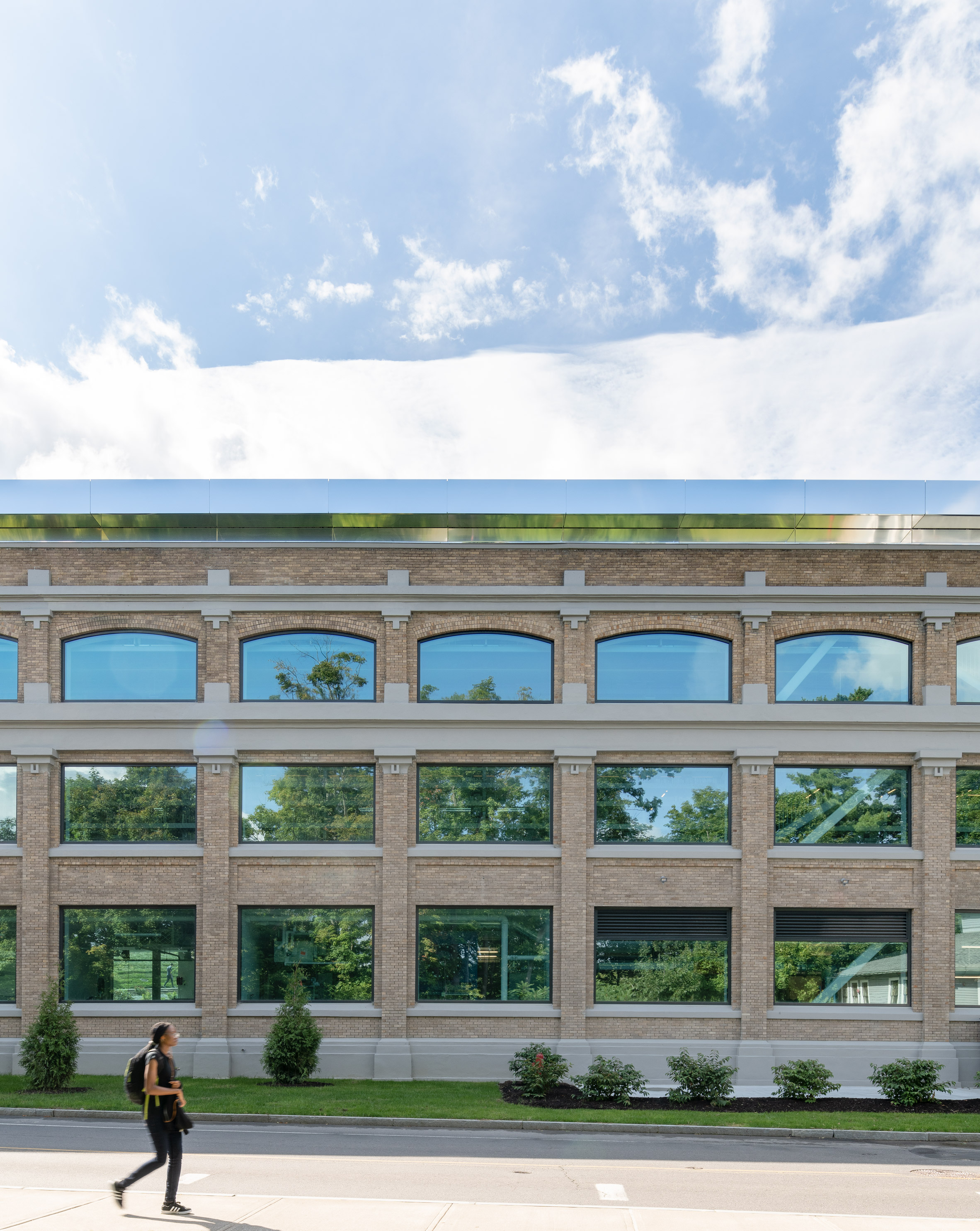
Completed in 1911, the library houses the College of Architecture, Art and Planning's collection of fine art and design materials.
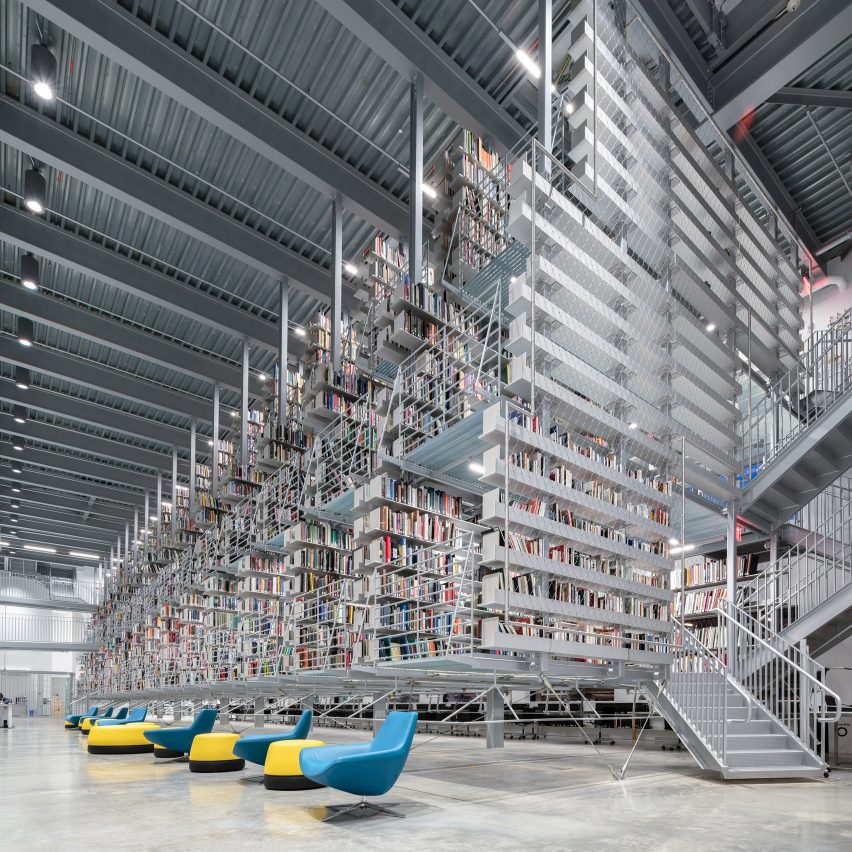
The Austrian architecture studio removed a floor from the building to create room for a massive shelving structure that now stands within building's open-plan reading room.
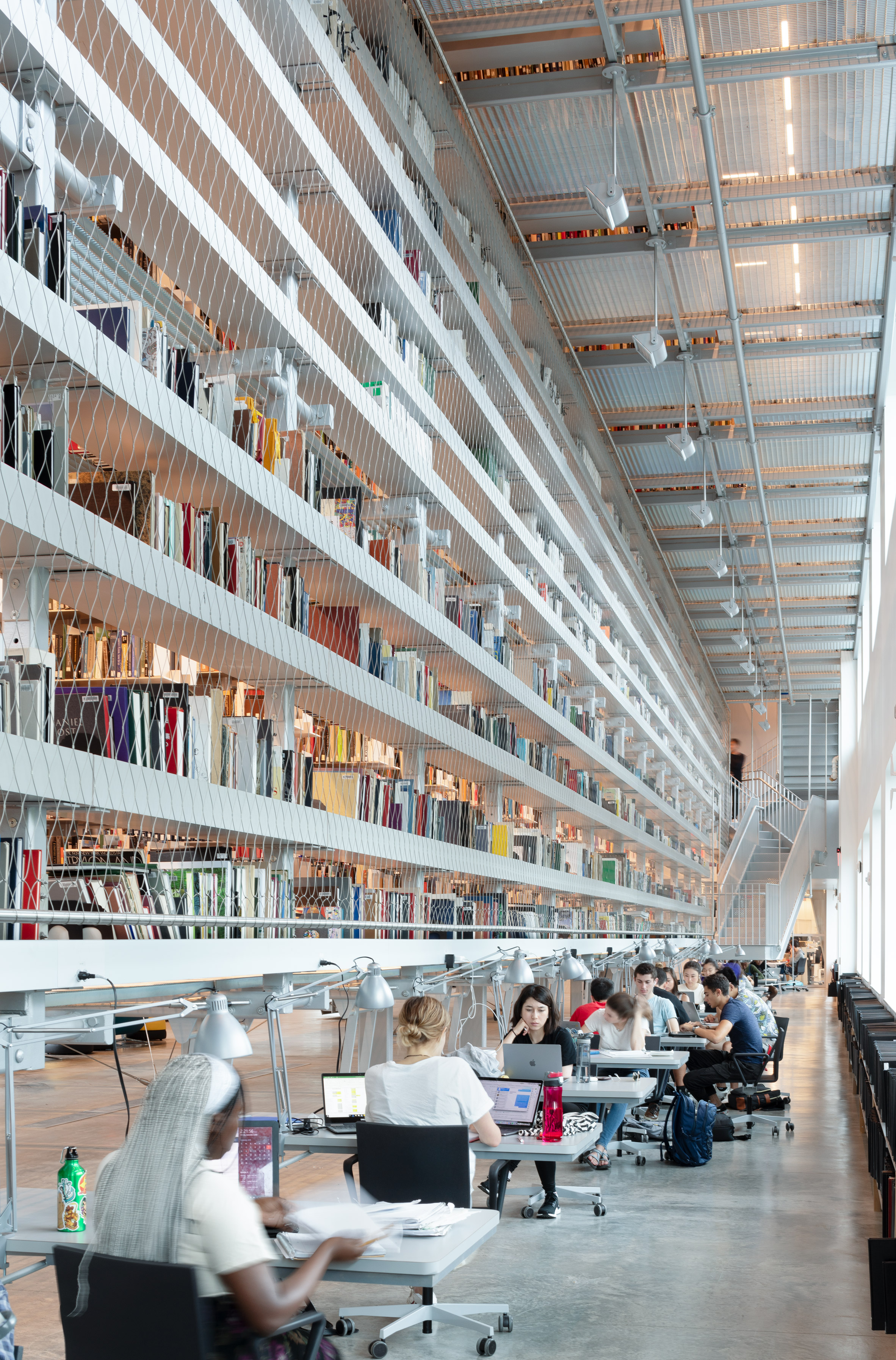
The floors of the lifted structure are made from grated steel, with walkways connecting the aisles of books and also connecting the library to seminar rooms and offices. The shelving units do not have walls to create "transparency" within the structure.
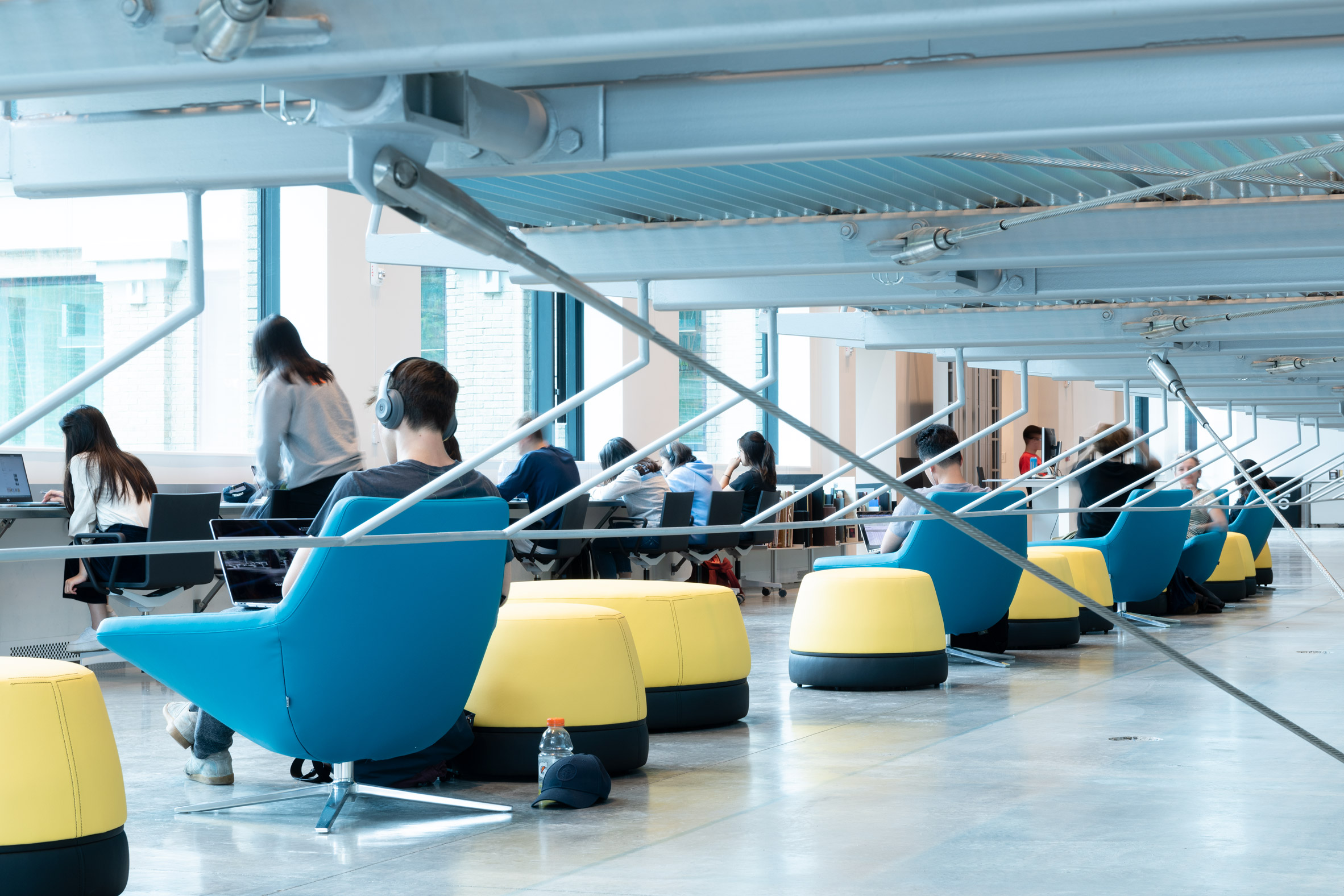
"The entire volume of more than 125,000 books is constructed as one floating volume hanging from the roof beams, not to ground and not to floor, but four feet 10 inches above the floor, leaving a free space, a void," the firm said.
"Free of walls, the transparency across and between levels provides visitors multiple overlapping views across interior spaces and outward to the natural surroundings."
"With semi-transparent floors made of steel grating and an absence of walls within the stacks, full sight lines are created from one end of the atrium to the other," added David Ziskind, chief architect at consultancy STV, which also worked on the project.
"These new, expansive views of the building's interior become integrated into the facade, creating a transparency that serves as a beacon and invitation on campus."
Wolfgang Tschapeller, founder of the eponymous studio, graduated from Cornell's Master's programme in 1987. He conceived the shelving volume as an "inverted ziggurat".
"The stacks accommodate approximately 100,000 volumes in a configuration forming an inventive inverted ziggurat of books," explained the studio.
Bookshelves and walkways occupy 17 horizontal platforms that extend three stories high. Each array is supported by a horizontal beam that connects it to the wall, rectangular poles that attach to the ceiling and series of metal cords and columns support and lift the structure approximately 1.47 metres off the ground.
The design was criticised when it opened for the fall semester this year because the three floors of the stacked volumes are formed from metal grating that allows people on lower levels to see up the skirts of those standing above.
"Multiple women I spoke with for this article have noticed the space's upskirt potential and are adjusting their library use accordingly", wrote author Audrey Wachs in Metropolitan Mag, which was among the first to report on the issue.
"Architects! If you are currently designing a library you need to think hard about all your users including those with wheels and skirts and canes," tweeted architecture critic Alexandra Lange.
Austrian architect Tschapeller has defended the design.
"The design decisions made for the Mui Ho Fine Arts Library stem from a curiosity around how otherwise tight spaces might be made more open and generous," he told Dezeen.
"The use of floor grating was discussed from various perspectives throughout the project and selected as a result of a careful architectural investigation."
J Meejin Yoon, Gale and Ira Drukier dean of the College of Architecture, Art, and Planning, added that the school was listening to the criticisms of the scheme.
"Public discussion of the fine arts library is evolving, and we're taking it in," said Yoon.
"Each point raised is an opportunity to think through the design and function of the library and its overall mission," she continued. "The building is fully ADA compliant, and time and use will allow us to explore options that ensure that the space is inclusive, welcoming, and inspiring to all."
The renovation also involved adding wood, metal and digital fabrication shops, a makerspace, research lab and small-tool repository to the building's ground floor.
"Thus, we have two factories in one building," said Tschapeller. "One is the factory for the material, and one is the factory for thought and concepts — both wrapped by Rand Hall to one interacting volume."
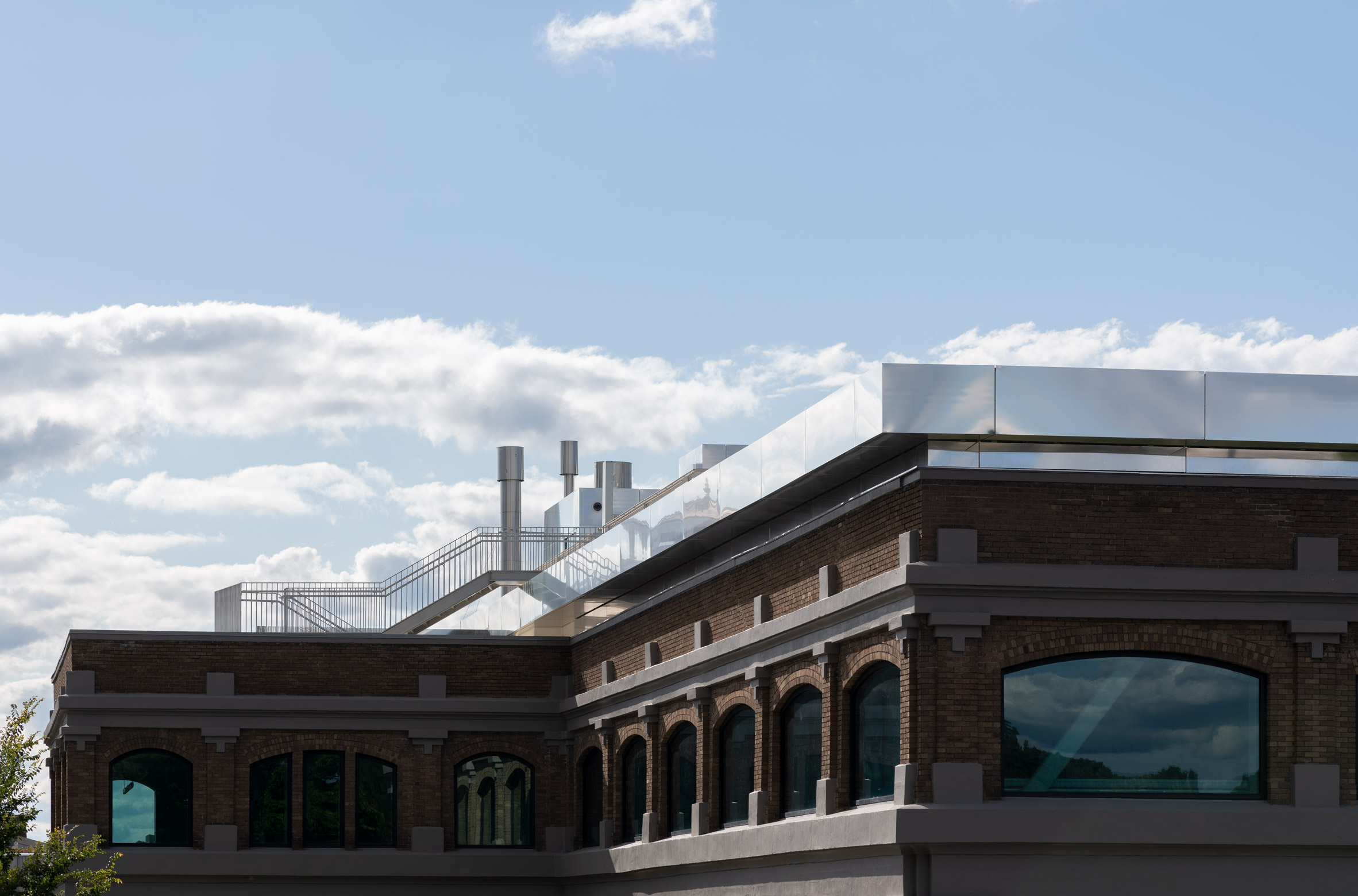
On the exterior, a rooftop deck was installed to the top of the former industrial building to provide space for hosting temporary experimental structures created by students and faculty. A mirrored cornice was also installed along the perimeter of the building, below the roofline.
Mui Ho Fine Arts Library is currently undergoing review to be LEED-certified. Upgrades, including rigid foam insulation, double-glazed windows and replacement of all mechanical systems, were completed and are estimated to cut the library's energy use by 70 percent.
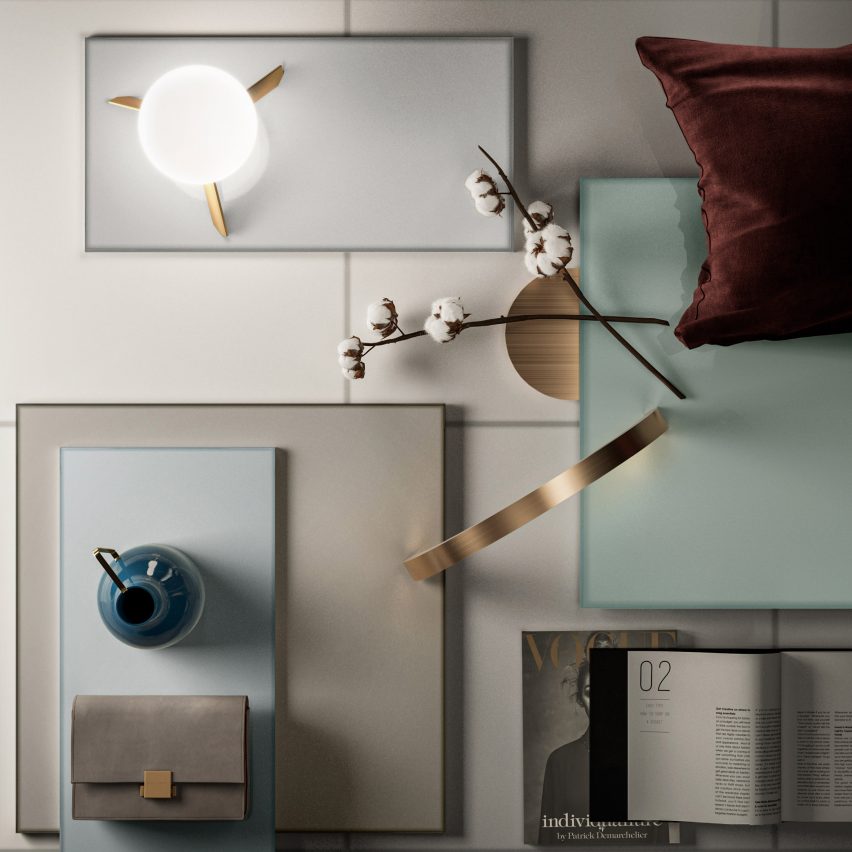
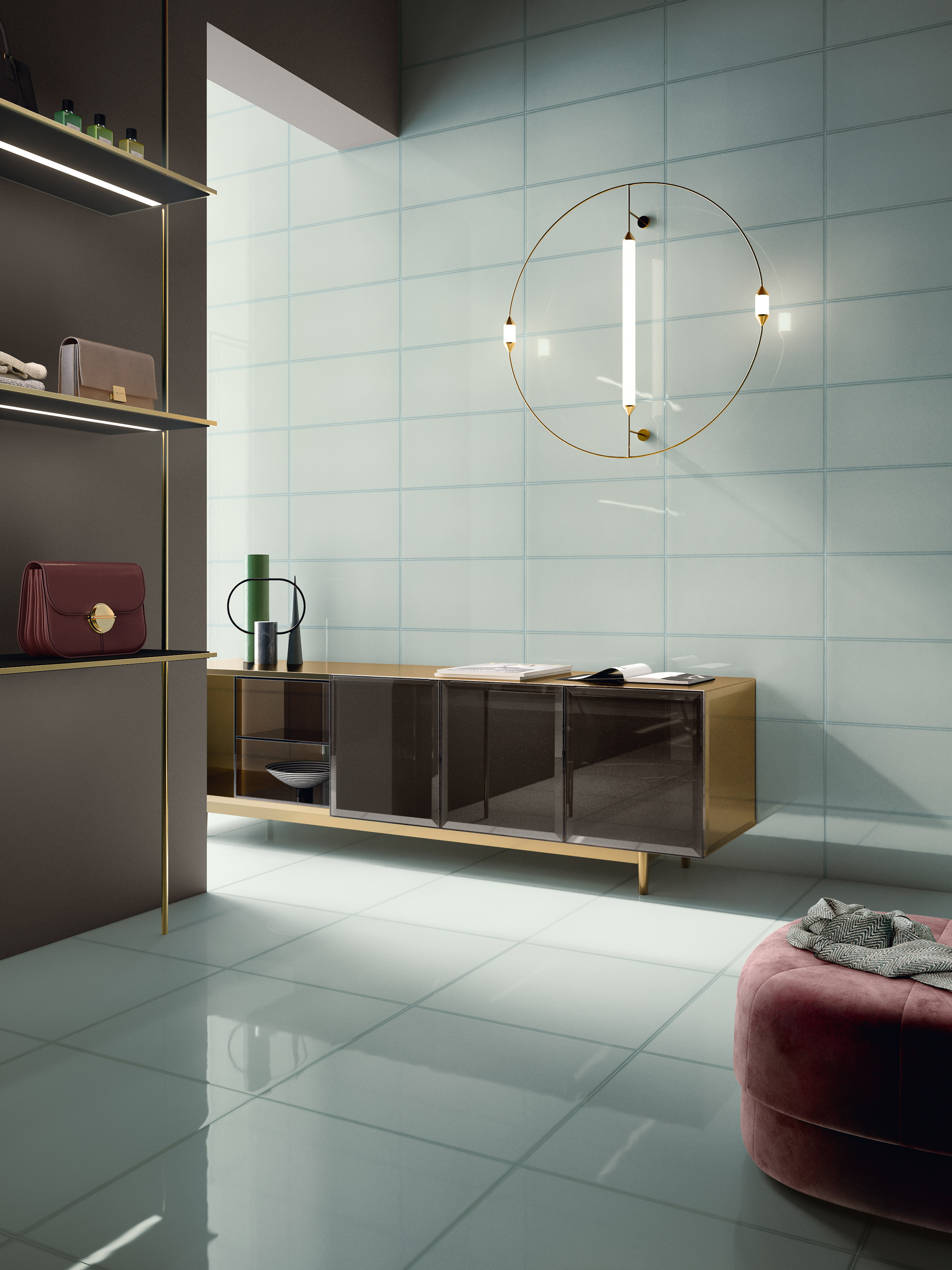
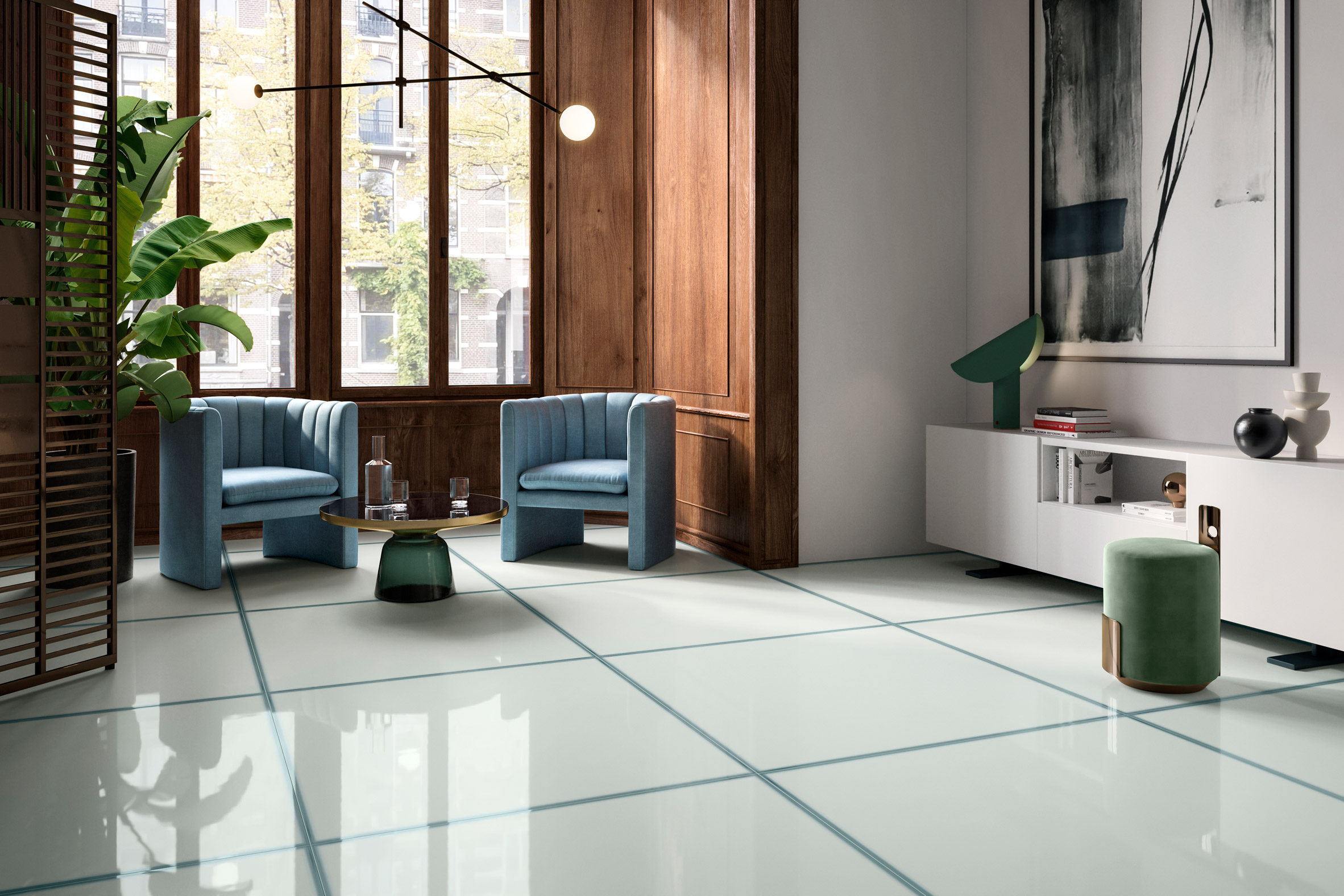
Dezeen promotion: Italian tile manufacturer Ceramiche Refin has released a collection of porcelain tiles that take design cues from the clarity of glass surfaces.
Ceramiche Refin designed the Vetri collection to combines the "emotional power of glass" with the resistance, safety and practicality of stoneware.
While traditional ceramics can have a heavy appearance, Ceramiche Refin's Vetri collection aimed to utilise the fact that glass can be both opaque and transparent, as well as robust and fragile, to create brighter spaces.
The collection stems from Ceramiche Refin's research into the material, which saw it use "the most sophisticated manufacturing technologies" to create glass-effect surfaces.
"[Glass] has taken its place in modern architecture as an element oozing a strong personality, the star of visually scarce structures, that appear weightless," said the brand.
"[This] led to the creation of original glass-inspired surfaces with a notable innovative personality."
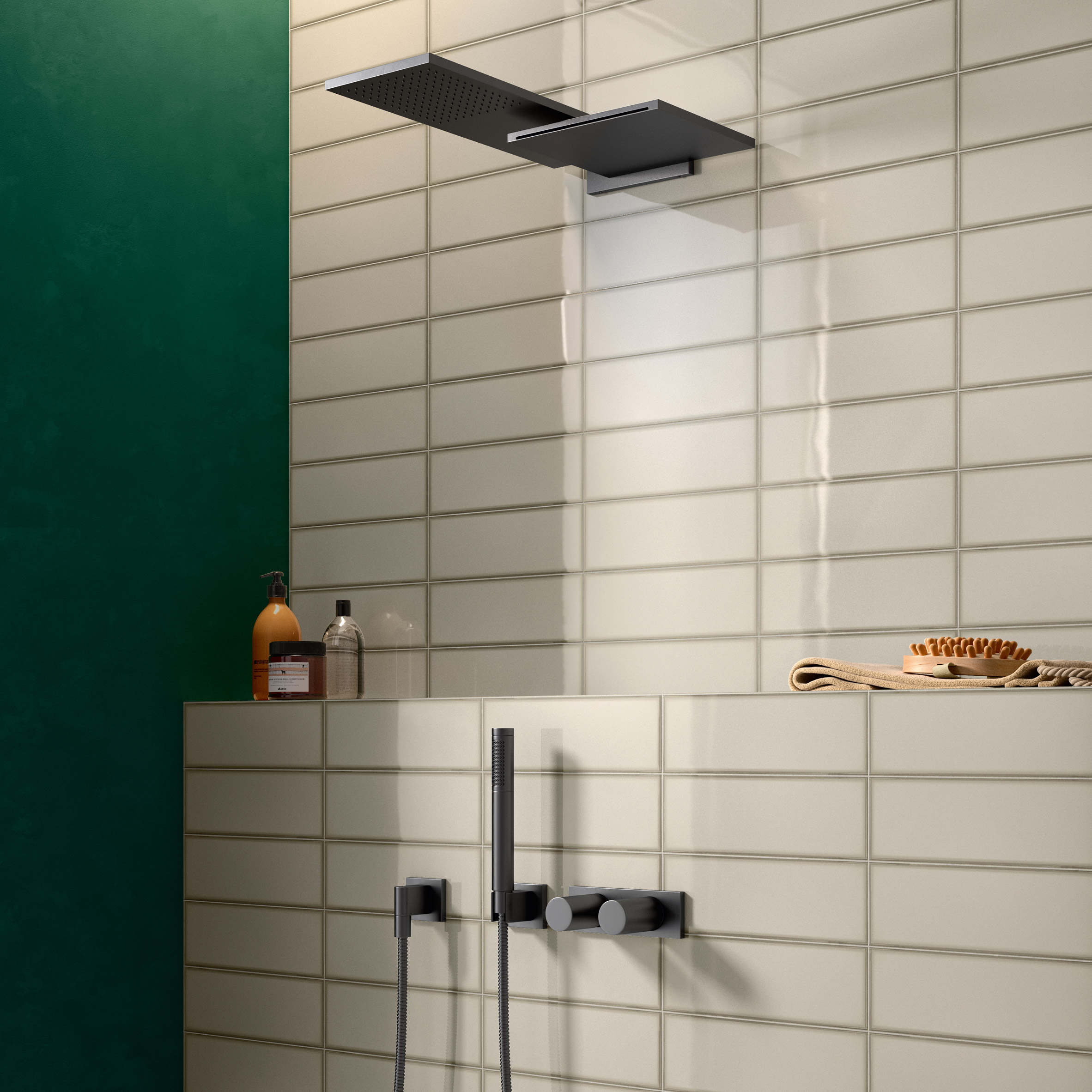
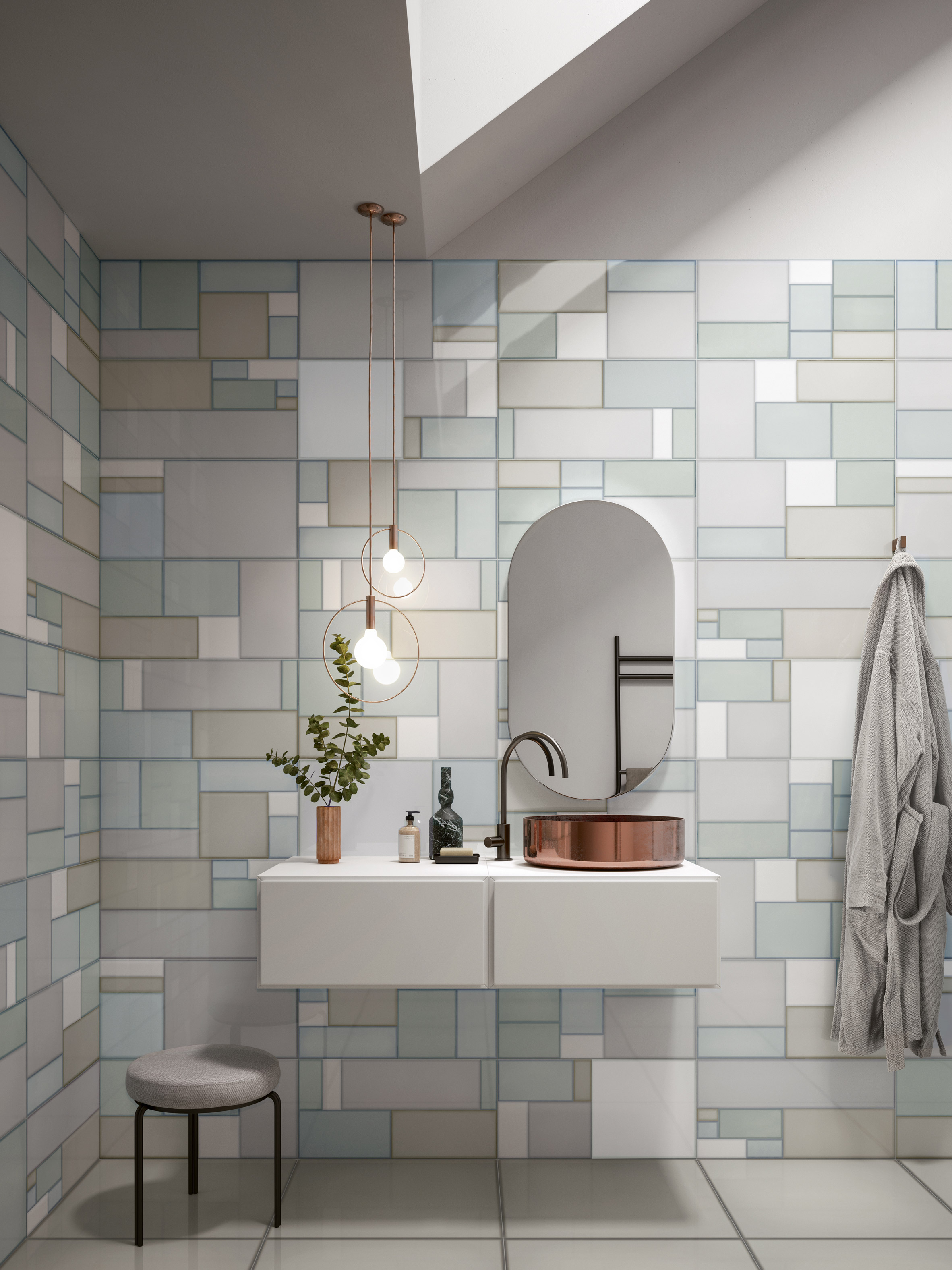
Vetri comes in a variety of natural colours, including the saturated tones of Fumé and Bronzo and the delicate shades of Bianco, Acqua and Naturale.
The edge of each tile is a slightly darker shade of the colour that fills its centre, in a bit to create an "elegant geometrical mesh" when placed side by side.
The tiles are available in multiple sizes – with a smaller, 10 by 30 centimetre version suited for more decorative use on walls, and larger formats for floors.
The entire range has a glossy finish that is designed to reflect light, giving spaces an extra brightness.
It also has the benefit of being environmentally friendly, as ceramic is a natural material that can be recycled and are LEED compliant. Ceramiche Refin's production process also achieved the Environmental Product Declaration and Product Environmental Footprint certifications.
Ceramiche Refin has been manufacturing products since 1962, and is one of the world leaders in ceramic tile production.
The company recently opened its first flagship showroom in Milan, which functions as a meeting point for architects and designers.
More information about Ceramiche Refin's Vetri collection can be found on the company's website.
Designed by Spanish architects SelgasCano, a Los Angeles workspace has popped up in a formerly empty parking lot in Hollywood. The recently opened SecondHome Hollywood boasts a 50,000-square-foot garden of 6,500 trees and plants and 700 tons of soil and vegetation. It is Los Angeles’s densest urban forest and is also home to 112 native species.
The Hollywood location, which is the first in the United States, contains sixty yellow-roofed office pods. It also encompasses the Anne Banning Community House, a ’60s building designed by prominent architect Paul Williams who is known for defining much of Los Angeles’s architectural aesthetic throughout the 20th century. (via Jeroen Apers)
Much is said about the influence of childhood experience on personal development, and in the case of Dutch artist, Nazif Lopulissa, it is those early years that continue to shape his creative output. “A lot of my work is actually inspired by childhood memories, inspired by objects or events when I was a child,” he says.