Friday, 13 December 2019

Daan Roosegaarde and design students create a "smog-eating billboard" in Mexico

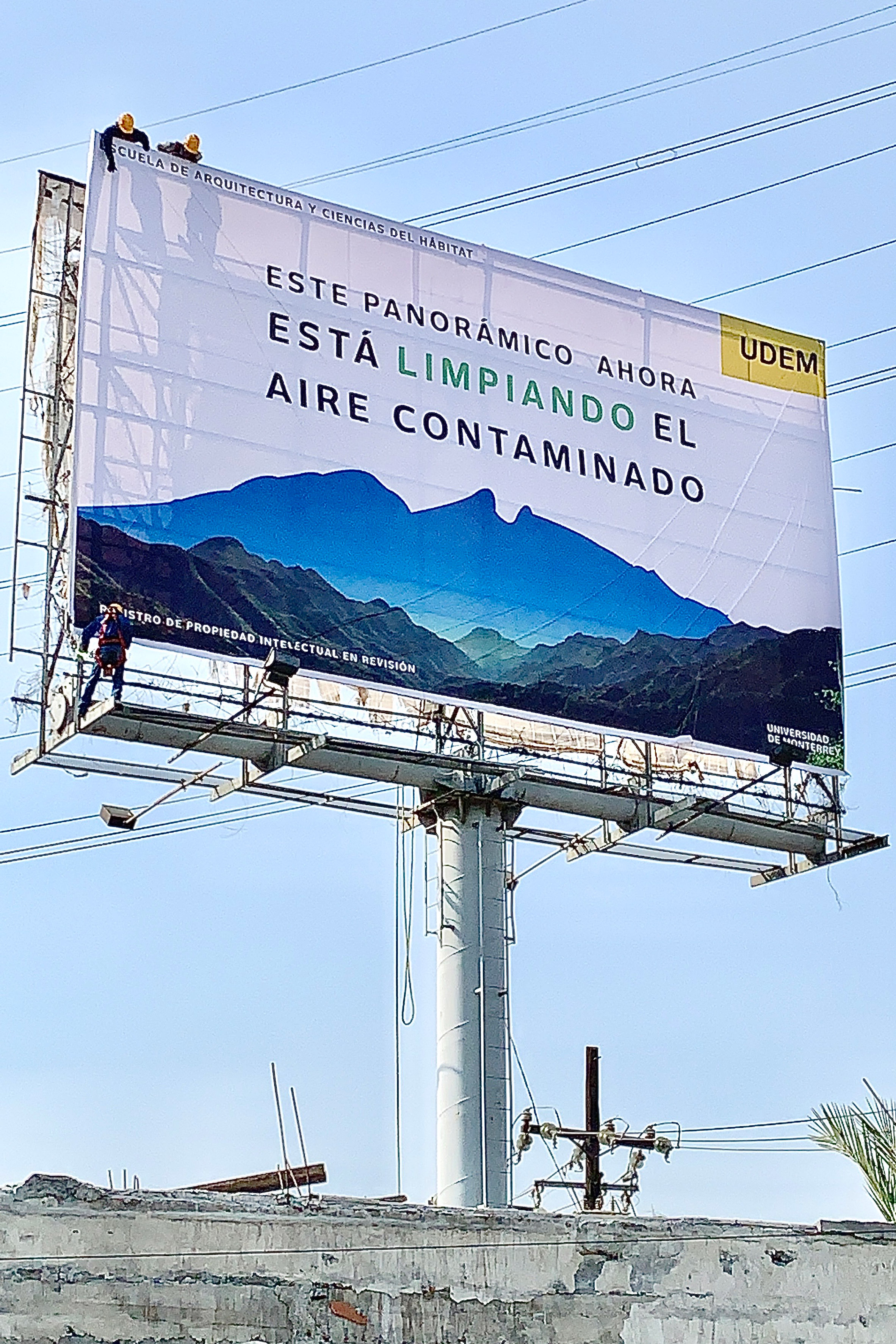
Smog Eating Billboard by Studio Roosegaarde

Dutch designer Daan Roosegaarde has covered advertising billboards in Monterrey, Mexico in an air-purifying resin that can eat up the city's smog.

The billboard advertisements are coated with a special resin that, when hit by sunlight, prompts a photocatalytic process to turn smog into clean air.

"This project proposes to take advantage of existing city panoramic structures to clean up polluting particles through an intelligent coating process that involves sunlight and wind," Studio Roosegaarde told Dezeen.

"It offers an additional alternative solution to mitigate air pollution and generate a real impact."

Smog Eating Billboard by Studio Roosegaarde

The photocatalytic process is similar to photosynthesis in which plants convert carbon dioxide and water into food. Furniture brand IKEA also used a photocatalyst mineral in its air-purifying Gunrid curtain.

In Roosegaarde's project, a material called Pollu-Mesh is activated by natural light and used to separate oxygen from carbon dioxide.

"The smog-eating billboard uses a nanotechnology coating that is activated with sunlight, making a photocatalysis process in which, when in contact with the contaminating particles, it neutralises them, releasing oxygen," the studio added.

Pollu-Mesh is Roosegaarde's latest effort to tackle pollution in cities, following on from a series of smog-eating towers installed in Rotterdam and Beijing.

Monterrey is very susceptible to smog – it has limited space for trees and is situated in a valley surrounded by mountains, all of which are circumstances known to trap pollution.

He created the material as visiting professor on the University of Monterrey's (UDEM) new environmental design course, with a group that included industrial design students Frida Fernanda Leal and Karen Tellez, architecture student Ana Cecilia Álvarez and sustainable innovation and energy engineer Ana María Peñúñuri.

Pollu-Mesh boards are installed in strategic locations in the city, where there is high vehicular flow and therefore a greater concentration of pollution.

Each roadside advertisement measures 12.7 by 7.2 metres and provides the same amount of oxygen that 30 trees can provide over a six-hour period, according to the studio.

Monterrey has 9,760 billboards, which could together do the work of 292,800 trees in six hours. One billboard can function for up to five years, according to the team.

Smog Eating Billboard by Studio Roosegaarde

A graphic on each advertisement shows an image of a local mountain and is accompanied by text that translates to "This panoramic is now cleaning the air."

Daan Roosegaarde founded Studio Roosegaarde in 2007. In addition to its smog-eating towers, the studio has designed other products and installations that focus on the environment.

These include a light show that illustrates the location of floating space junk and an interactive exhibition designed to show visitors their environmental impact.

The post Daan Roosegaarde and design students create a "smog-eating billboard" in Mexico appeared first on Dezeen.


from Dezeen https://ift.tt/2qNDbae

Aerial Embroidery Showcases the Hidden Patterns of Cultivated Farmland

Humble fields become abstracted artworks in thread paintings by Victoria Rose Richards. The artist uses a combination of tight, straight lines and lush French knots to emulate the rural patterning of closely-cropped fields divided by hedges and woods. Richards, who is 21 years old and based in South West Devon, U.K., draws inspiration from the natural beauty that surrounds her. “My art is influenced by my love of the environment and conservation, which I developed during my biology degree I completed this year,” Richards tells Colossal.

A lifelong artist who also manages chronic pain and Asperger’s syndrome, Richards landed on embroidery during college as a way to lift her spirits and engage her mind between classes and studying. “I pulled some nice blues and greens out of my grandmother’s old embroidery tin and had my first go at an embroidery landscape in October 2018,” Richards explains.

The artist is constantly learning new techniques to broaden her range of textures and patterns, finding community and inspiration through the global network of embroiderers who are connected through social media. You can follow along with Victoria Rose Richards’s thread paintings on Instagram.


from Colossal https://ift.tt/2PgnFx4

NYC studio EyeBodega transforms Enorme gallery into a hotbed of indie publishing

Eyebodega-enorme-bookshop-event-itsnicethat-01

New York-based graphic design studio EyeBodega has put together one hell of a Christmas treat for the book-loving fans of the city. The studio has transformed Manhattan gallery Enorme into a pop-up shop featuring publications from small presses and independent artists from all over the world, providing a whistle-stop tour of the great and the good in illustration, independent publishing and print-making.

Read more


from It's Nice That https://ift.tt/2rLIes6

Andrés Reisinger turns Insta-famous CGI render into real chair

Andrés Reisinger turns Insta-famous CGI render into real chair

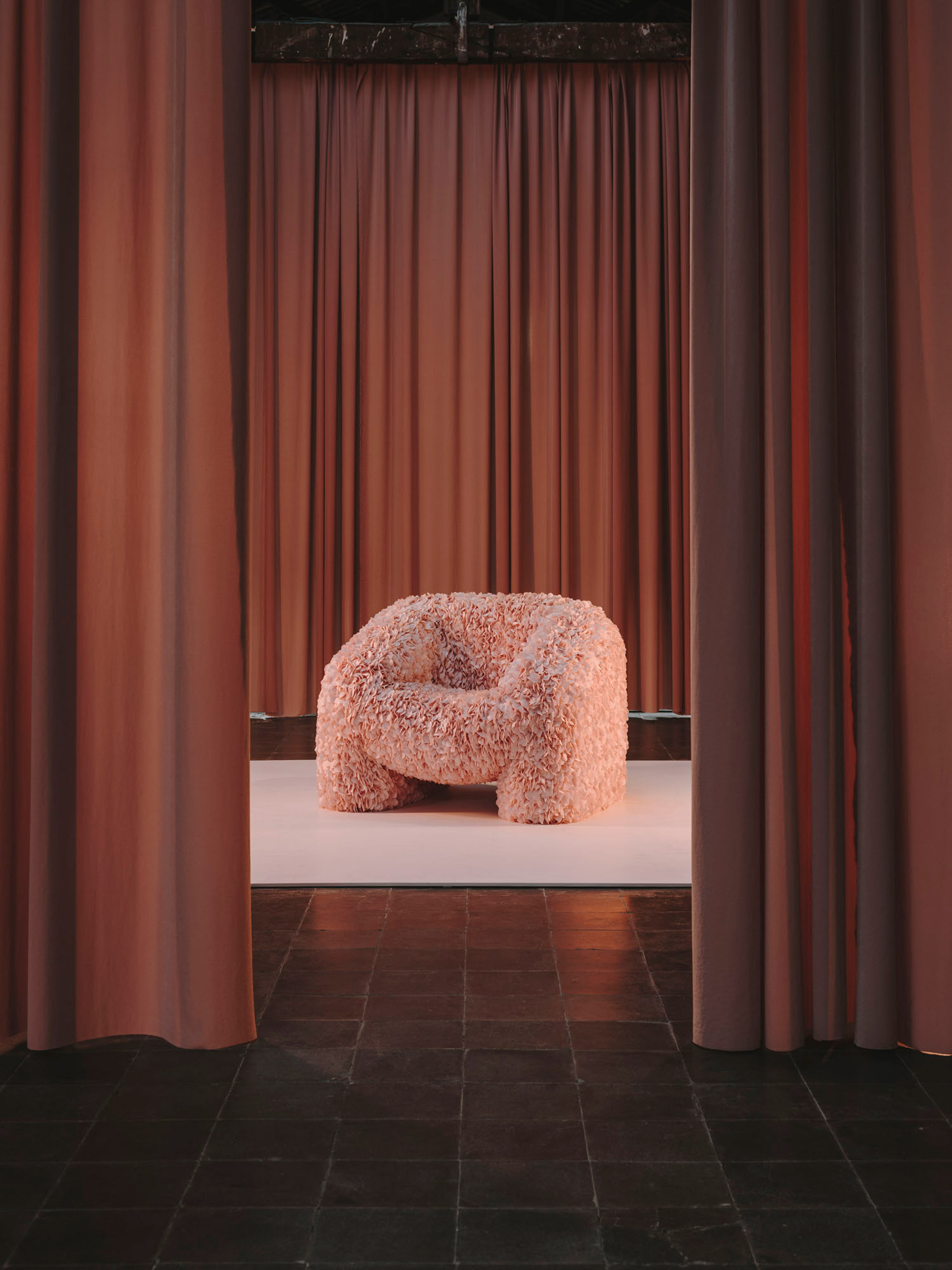
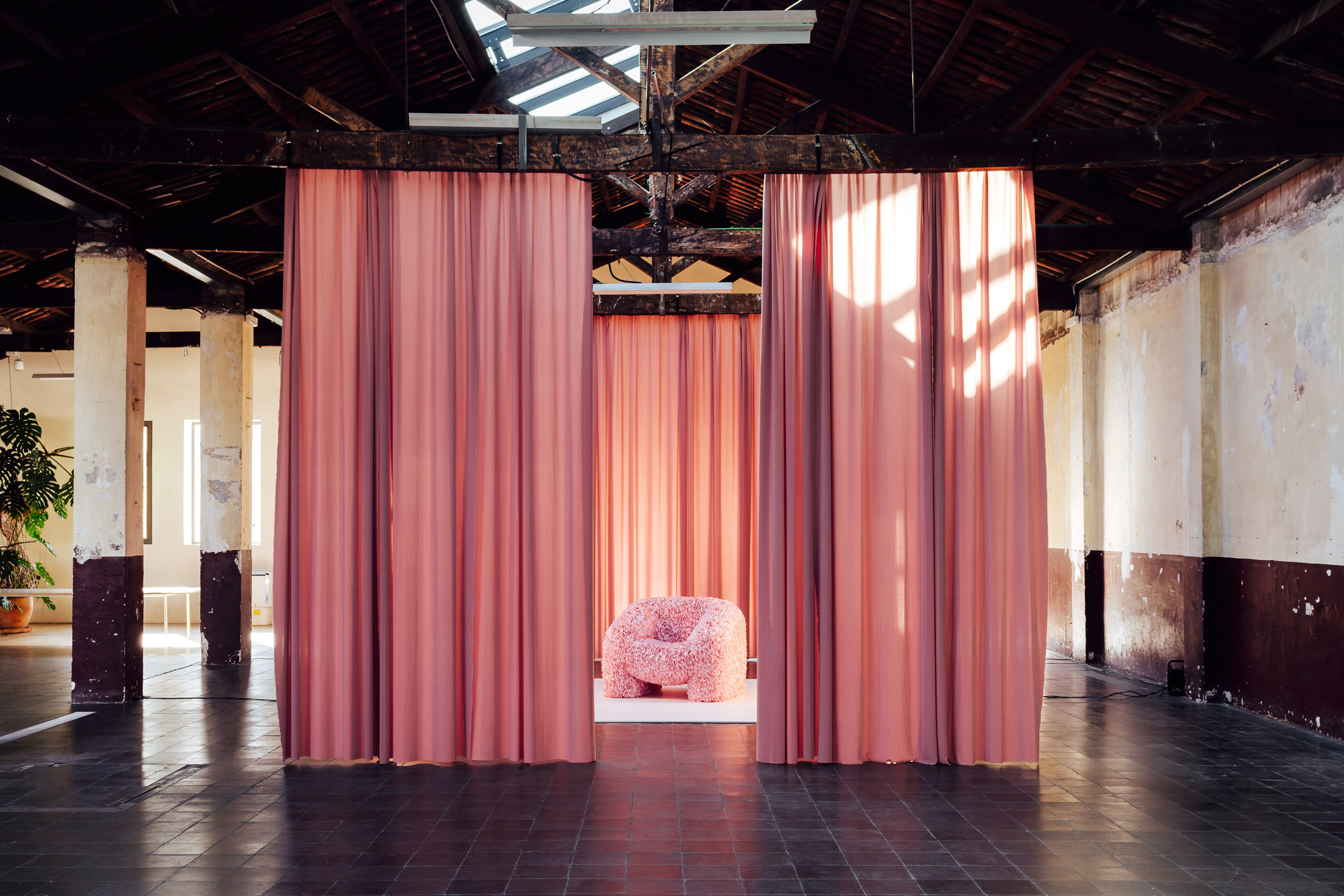
After his 3D rendering of a cloud-like armchair went viral on social media last year, Argentinian designer Andrés Reisinger has made the Hortensia chair a reality with the help of 20,000 fabric petals.

Reisinger, who works primarily with CGI, first posted the bulbous, light pink rendering on Instagram in July of 2018.

Since then, it has accumulated thousands of likes and been shared in design magazines alongside real furniture, prompting three orders for a non-existent chair.

Andrés Reisinger turns Insta-famous CGI render into real chair
The render was featured in design publications alongside real furniture

Now, after a year of research and development, the first real version of the Hortensia chair is on display at the Montoya gallery in Barcelona.

"I have been working with 3D softwares for more than 10 years now," Reisinger told Dezeen. "When I reached that goal in my digital work, I knew that my next challenge was to stop imagining and really start building the world as I see it."

"I stumble on all sorts of problems and roadblocks when working with the physical world," he continued. "That's something that empowers my process, that asks for my attention and improvisation."

Andrés Reisinger turns Insta-famous CGI render into real chair
The first real version of the chair is now on display in Barcelona

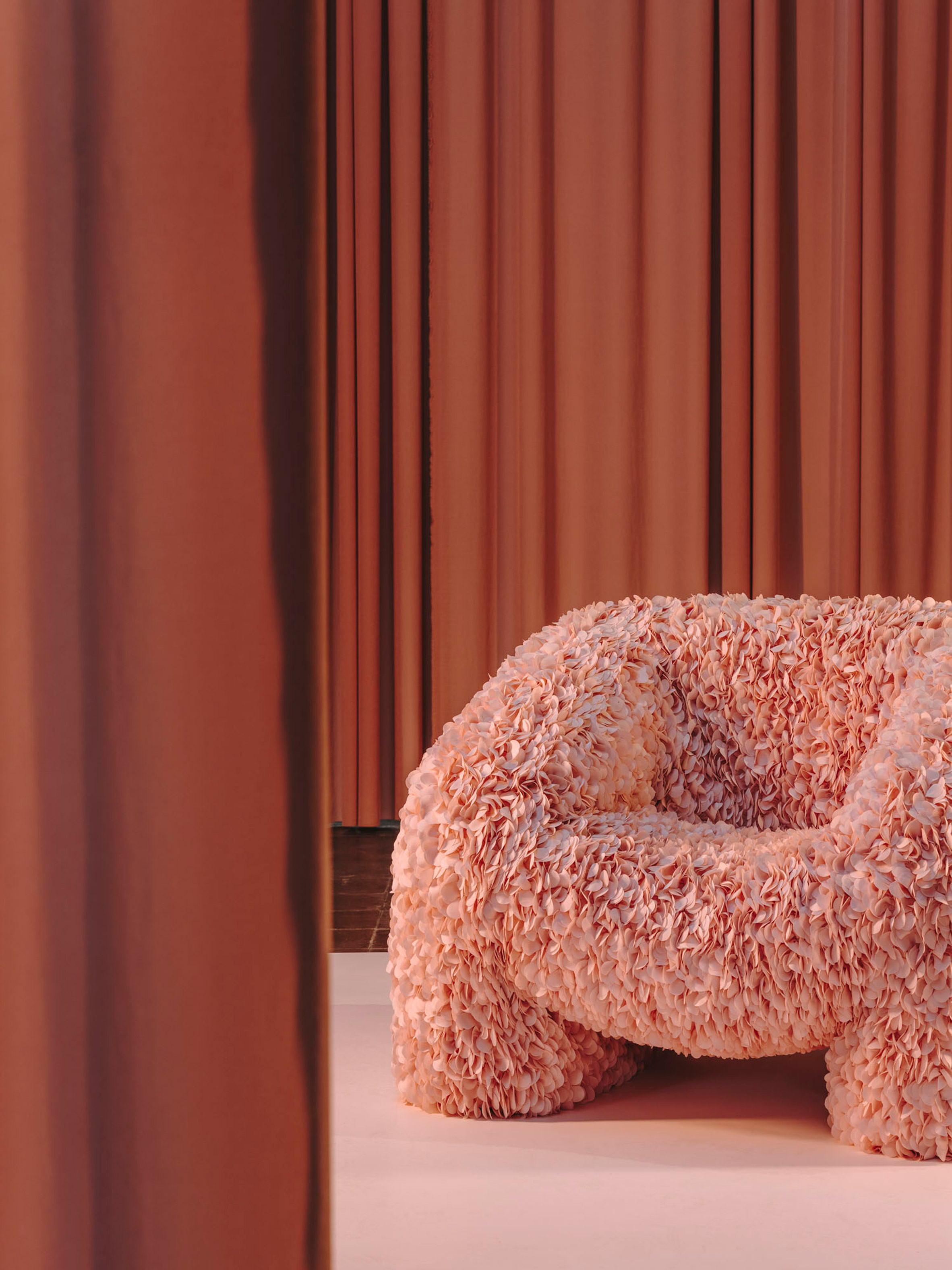
The primary challenge when it came to this particular project was mimicking the hyper-tactile, almost fluffy exterior which is meant to evoke the hortensia or hydrangea flower that gives the chair its name.

It took Reisinger six months to find collaborators that were convinced that this particular texture could be replicated in real life.

"I contacted lots of different production teams and manufacturing partners, but nobody was feeling confident about achieving the same look as the renders," he remembered.

"Then I found Júlia Esqué, who is a product designer that focuses on textiles, and together we created a completely new production process in order to make the chair."

Andrés Reisinger turns Insta-famous CGI render into real chair
Reisinger worked with Júlia Esqué to make the unique texture of the chair a reality

"I think many manufacturers prefer to keep doing what they already know," he continued.

"Nobody wants to lose time and money doing research, but I see the research as a part of the product. And as the majority of my products are strange looking, you always have to find new ways of producing in order to build them correctly."

Andrés Reisinger turns Insta-famous CGI render into real chair
The upholstery consists of 20,000 fabric petals

The resulting technique is based on an assemblage of individual modules – long strips of fabric with scalloped edges that are laser cut into pink polyester, before being ruched together into clusters.

Each of these has 40 distinct petals, with the chair made up of around 500 modules.

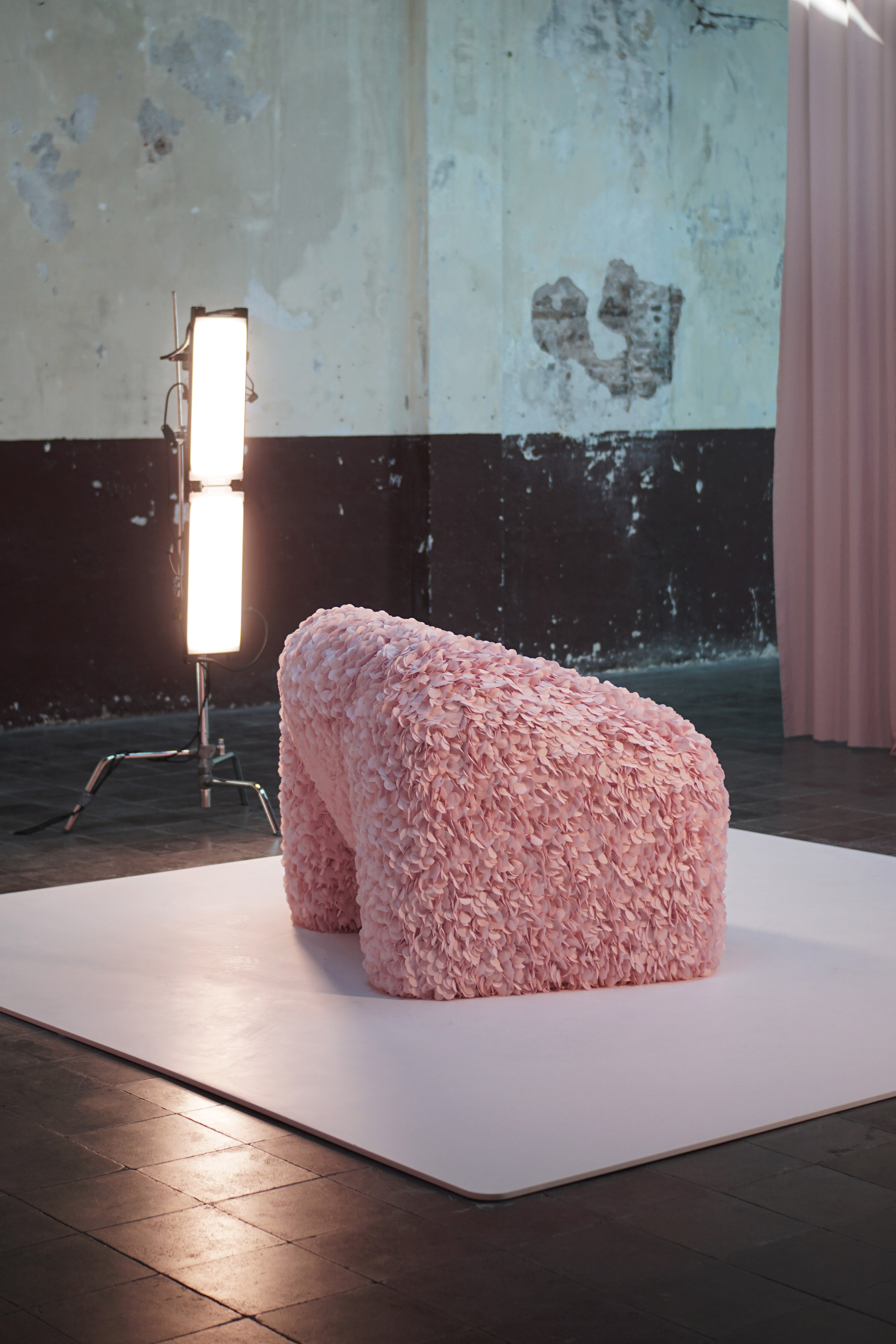
"The laser cut modules are sewn into a thicker, backing textile to create the upholstery," he explained. "This is then pulled over sculpted, high density foam which is supported by a wooden frame."

Andrés Reisinger turns Insta-famous CGI render into real chair
The petals are laser cut from polyester in modules

Reisinger believes that letting the act of designing be guided by the process of rendering, rather than simply using the technology to visualise existing ideas, can forge a new kind of approach for designers.

"Working only in the physical world, you are limited by its borders and you begin to think only of objects that can be easily developed," he said. "That is a very common mistake in the market, to avoid any complication of production."

"With 3D tools, there are no limits. They give me the freedom to design whatever I can imagine, without problems of matter or development, and that helps me develop unpredictable processes."

Andrés Reisinger turns Insta-famous CGI render into real chair
The chair is made of around 500 modules carrying 40 petals each

On the other hand, he explained, renders can also help designers do the exact opposite – predicting the outcome of a project before it is actually put into practice.

"You can figure out what you want through trial and error but before wasting materials and resources during the process," he said.

"CGI gives me the ability to test if things will work as expected when using physical material. I can trial how colours, materials and textiles will behave during the upholstery stage or simulate where there might be wrinkles."

Andrés Reisinger turns Insta-famous CGI render into real chair
The base of the chair is made of wood and high-density foam

Reisinger is one of a cohort of graphic designers – also including Alexis Christodoulou – that have found an audience on Instagram through sharing immaculate, hyper-stylised renders of surreal interiors and objects.

These images are created almost exclusively for digital consumption, and are rarely translated into real products or spaces.

Some practitioners are less convinced of the technology's potential, with Mexican architect Tatiana Bilbao recently revealing in an interview that the use of renders has been banned in her studio because they can be "dangerous and damaging" to the creative process.

The post Andrés Reisinger turns Insta-famous CGI render into real chair appeared first on Dezeen.


from Dezeen https://ift.tt/36yiePT

"Sexist advertising for the Escobar phone is everything tech wishes it could still get away with"

Pablo Escobar's brother gold folding phone

Holly Brockwell is unimpressed by the sexist advertising for the gold folding phone launched by Pablo Escobar's brother, but is not surprised.


Like most people, when I saw the Escobar Fold 1 I thought it was a hoax. But as with many new products in tech, the gold-coloured folding phone bearing the monogram of notorious deceased drug king Pablo Escobar turned out to be as real as it is baffling.

Created by Pablo's brother Roberto, the phone looks a lot like a rebranded version of the Royole Flexpai from 2018. That's not surprising – hardly any manufacturers have managed to get a functional folding phone to market, so it would be quite the event if a former drug accountant managed to beat them to it.

Oddly, the Escobar Fold 1 – intriguingly named as if it'll be the first in a series of cartel-themed smartphones – is offered for sale at just $349 (about £266) for the 128GB version, whereas the Flexpai and other folding phones  cost a grand each. It's not clear how the Fold 1 is so much cheaper, but perhaps Royole gave Roberto a good deal on a bunch of unsold stock. We probably wouldn't negotiate too hard with him, either.

However, the most interesting thing about the Fold 1 isn't the price or the, "celebrity" endorsement – it's the advertising. As you might expect for a gaudy gold phone displaying a greyscale photo of a deceased criminal, the marketing materials have been firmly aimed at men.

Promotional photos and videos feature a single handset (do they only have one?) shared between lingerie-clad glamour models who stroke it seductively against their bare skin while pulling faces of crazed ecstasy. One of the videos features a woman entirely naked except for some tape barely covering her nipples. The tape, of course, has Pablo Escobar emblazoned across it.

As you might expect for a gaudy gold phone displaying a greyscale photo of a deceased criminal, the marketing materials have been firmly aimed at men

Somewhat reassuringly, the reaction to the marketing has been pretty negative, with lots of people (yes, including straight men) complaining that it's reductive and sexist. Dezeen commenters were outraged that the promotional material had been published. But I can't help feeling that if there hadn't been such a strong feminist backlash against macho and misogynist practices in the tech industry over the last few years, this is how a lot of its products would be promoted.

The truth is that sadly, despite its abundant genius and genuine innovation, tech isn't very good at selling its wares, and has fallen back on sexist stereotypes many, many times to compensate. We've been repeatedly let down by genuinely good products nonetheless marketed like sex toys, and it's only when public dissent got too loud to ignore that those habits started to change.

If the big tech companies didn't have PR and legal specialists warning them off, would they still be above the Blurred Lines approach? Would booth babes have been (mostly) dropped, and Mad Men-style ads (mostly) phased out? Having seen and heard what goes on behind the scenes at some of those companies, I very much doubt it. There's often still an attitude of "you can't get away with anything anymore", with a wistful sigh for the glory days of b*tches and blow. The sexist advertising for the Escobar phone is everything tech wishes it could still get away with.

The thing is, though, "sex sells" is bullshit when it comes to tech. Sexist advertising just doesn't work. Obviously it turns off anyone with class and taste, but also it does absolutely nothing to convince you of the virtues of the product. If it was good, why would they need to sink so low? When it's so easy to directly compare specs, features and innovations across brands, why would you need to distract us with boobs unless your product will fail the comparison?

Sex sells is bullshit when it comes to tech. Sexist advertising just doesn't work

The daft thing about using this approach for the Escobar phone in particular is that foldable phones are genuinely cool, not many people outside the tech industry are aware of them yet, and there are lots of positive points you could make honestly. You just don't need to plumb those depths.

In fact, even for macho advertising, the Escobar Fold 1 campaign lacks imagination. You've got a phone that folds up like a wallet being sold with the name of a drug dealer – lots of fertile ground there, surely? Or something about being "flexible" with the rules. Even if you were insistent on going down the naked ladies route, you could do better: the Flexpai lends itself perfectly to being "the centrefold phone", if not something even more explicit involving the opening of two halves...!

That's not to say that associating a phone with drug dealing is necessarily a bad idea. The Huawei Mate S got a lot of attention back in 2015 for having the ability to weigh small amounts of material directly on its screen. But of course Huawei chose to simply demonstrate the amazing new tech involved and let us decide for ourselves what we'd use it for – a much subtler approach that doesn't assume anything negative about its customers.

Even for macho advertising, the Escobar Fold 1 campaign lacks imagination

All of which leads me to ask, who IS the target customer for the Escobar Fold? I can't help picturing someone like "pharma bro" Martin Shkreli, currently in prison for fraud. Roberto Escobar can of course relate – he was released from jail in 2004, eleven years after his brother was killed in a shootout with the Colombian police.

Olof Gustafsson, CEO of Escobar Inc, tells Dezeen that he and the company "believe we can beat Apple". Considering Apple hasn't even hinted at a foldable phone, it's not clear what they're going to beat it at. Escobar Inc overtaking them as the biggest company in the world doesn't seem likely anytime soon. Tech has its own kinds of cartels, and they're tricky to topple even for established brands.

Gustafsson goes on to say that "Roberto Escobar, just like his brother Pablo, has always wanted the best". That's surprising too, considering that the Royole Flexpai isn't the best or most prestigious folding phone made so far. Also the Escobar Fold 1 bafflingly comes with a horrible brown leather-look case reminiscent of the awful LG G4.

Not only does the case cover up the yellow gold phone fascia and its ugly PE monogram – one of the only things that sets it apart from the main Flexpai – it isn't even real leather. It's polymer, essentially plastic. Not very gangster, is it?

Tech has its own kinds of cartels, and they're tricky to topple even for established brands

The apps on the phone aren't, either. Obviously, using Android means you're tied into the generally legit apps on the Google Play Store, but there are still better choices for wannabe narcos than those shown in the pictures. You'd be taking some big risks as a cartel leader using the native Android texting and calling apps, and Facebook-owned WhatsApp – surely Signal would have been a better choice.

Taken together, the design and marketing choices strongly suggest the phone is not actually intended for drug dealers. Rather it is aimed at those who want to be associated with the lifestyle, like white collar workers who spend their weekends blasting hip-hop from speakers they got in the mystery aisle at Lidl.

For the final verdict on the handset, though, we turn once again to its own promotional materials. They boldly proclaim that Escobar Inc's phone: "Is always ready to fold!" We suspect this new tech brand won't be far behind.

The post "Sexist advertising for the Escobar phone is everything tech wishes it could still get away with" appeared first on Dezeen.


from Dezeen https://ift.tt/38CAgCb