Saturday, 14 December 2019

This week, the $120,000 Art Basel banana art was removed and Foster + Partners introduced a sustainability manifesto

Comedian at Art Basel Miami Beach

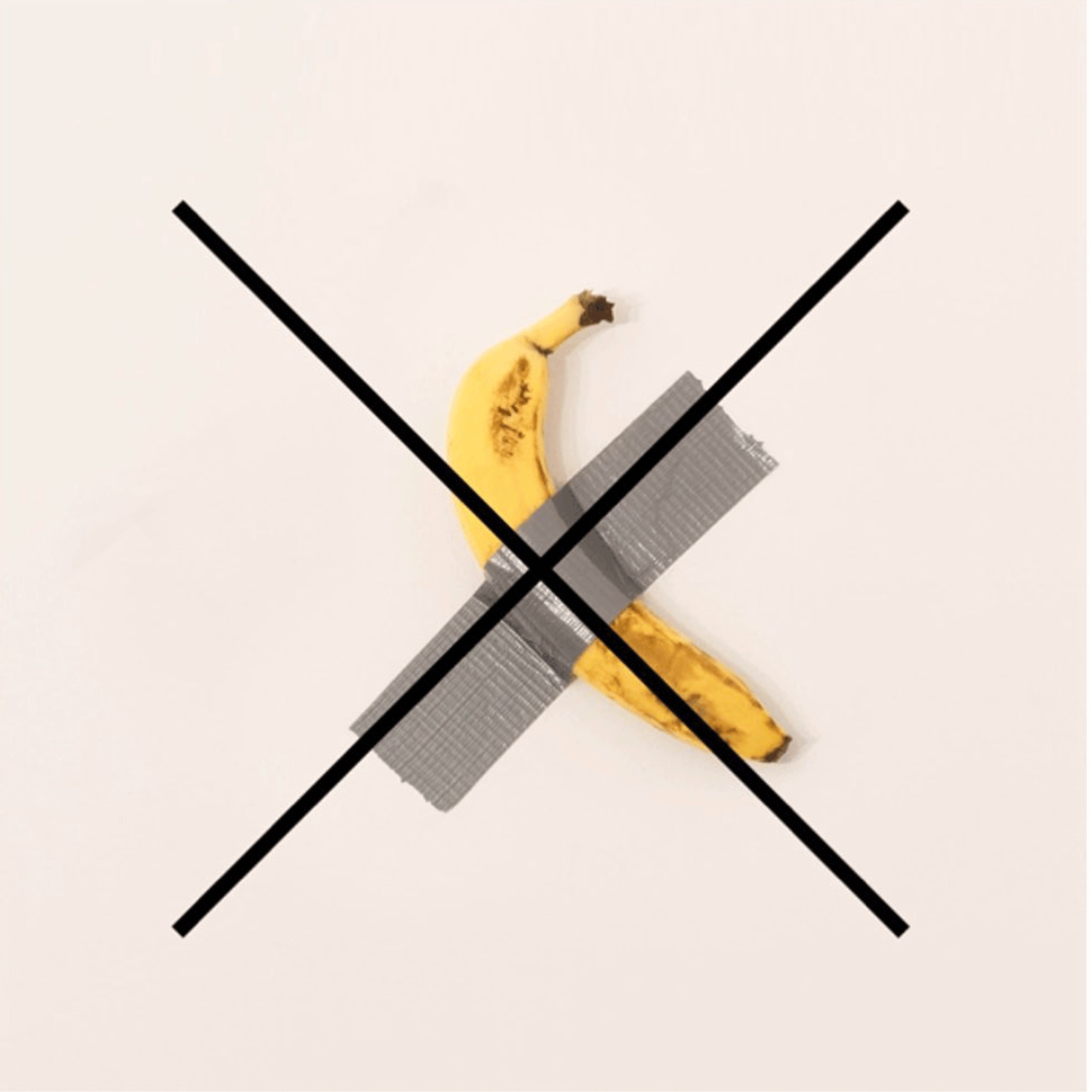
This week on Dezeen, Maurizio Cattelan's $120,000 banana at Art Basel Miami Beach was removed from display and Foster + Partners launched its sustainability manifesto.

A banana taped to a wall by Italian artist Cattelan, named Comedian, was removed from its display at Art Basel Miami Beach after "several uncontrollable crowd movements", which included another artist eating it.

In its place, the white wall onto which it was taped has been marked with red-lipstick graffiti that reads "Epstien (sic) didn't kill himself" – vandalism believed to have formed part of an art performance.

It is the second art scandal that Cattelan has been embroiled in this year, after his solid gold $5 million toilet was stolen from an exhibition at Blenheim Palace.
Foster + Partners launches sustainability manifesto

This week also saw Foster + Partners introduce an eight-page sustainability manifesto that outlines its methodology for designing buildings.

The document says the studio will go beyond current environmental certification schemes, stating that these standards will not reduce carbon emissions enough to meet the Paris climate agreement.
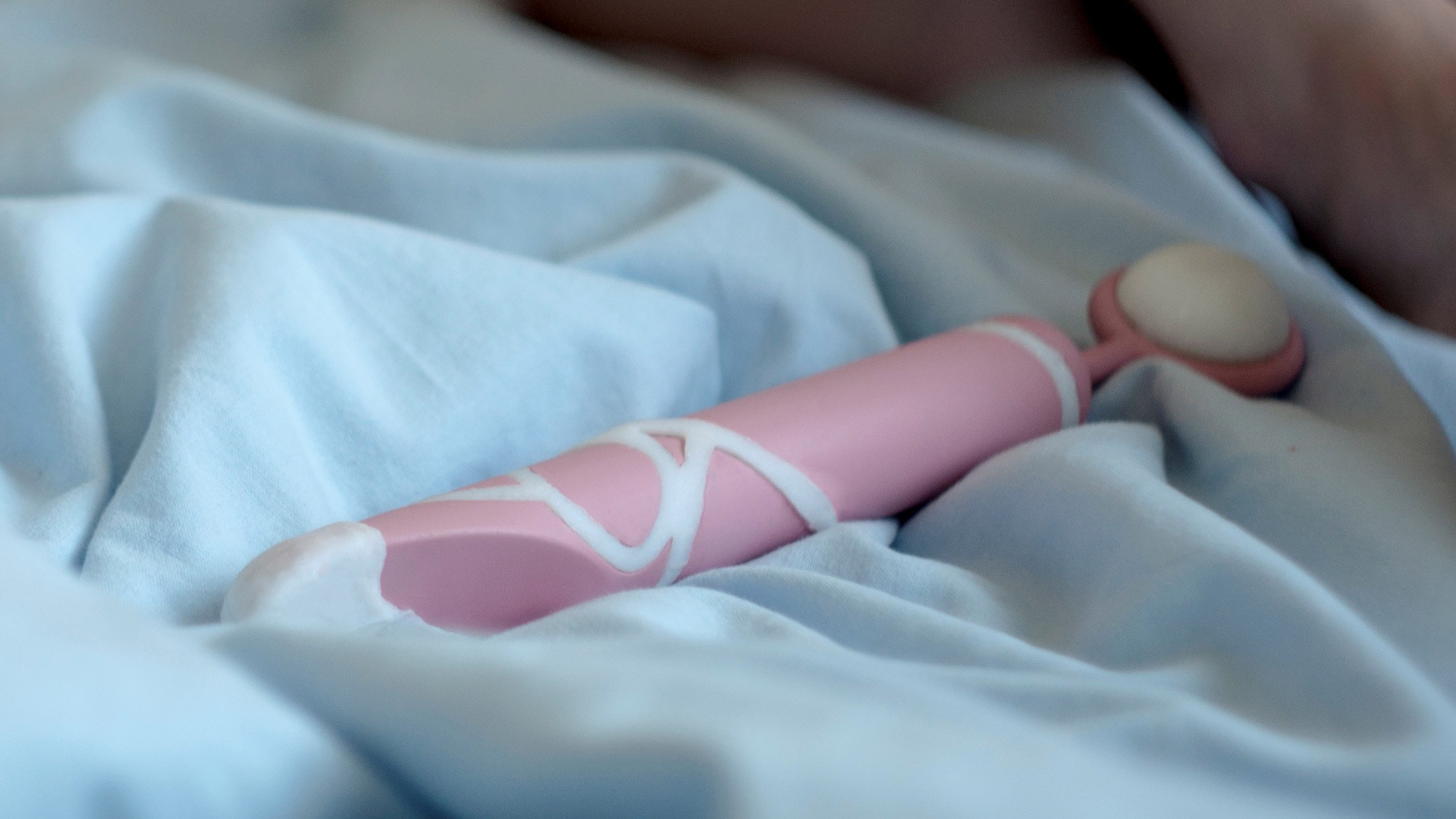
Kamila Rudnicka designs home insemination kit for use as part of sex
Kamila Rudnicka designs at-home insemination kit for use as part of sex

In the design world, Kamila Rudnicka stole the spotlight as Dezeen reported on her design of an at-home insemination kit for use as part of sex. The Polish designer hopes it will help restore pleasure to the often clinical process.

The gold folding phone designed by Pablo Escobar's brother came under fire as Holly Brockwell shared an opinion piece addressing its sexist advertising, which features "lingerie-clad glamour models". 
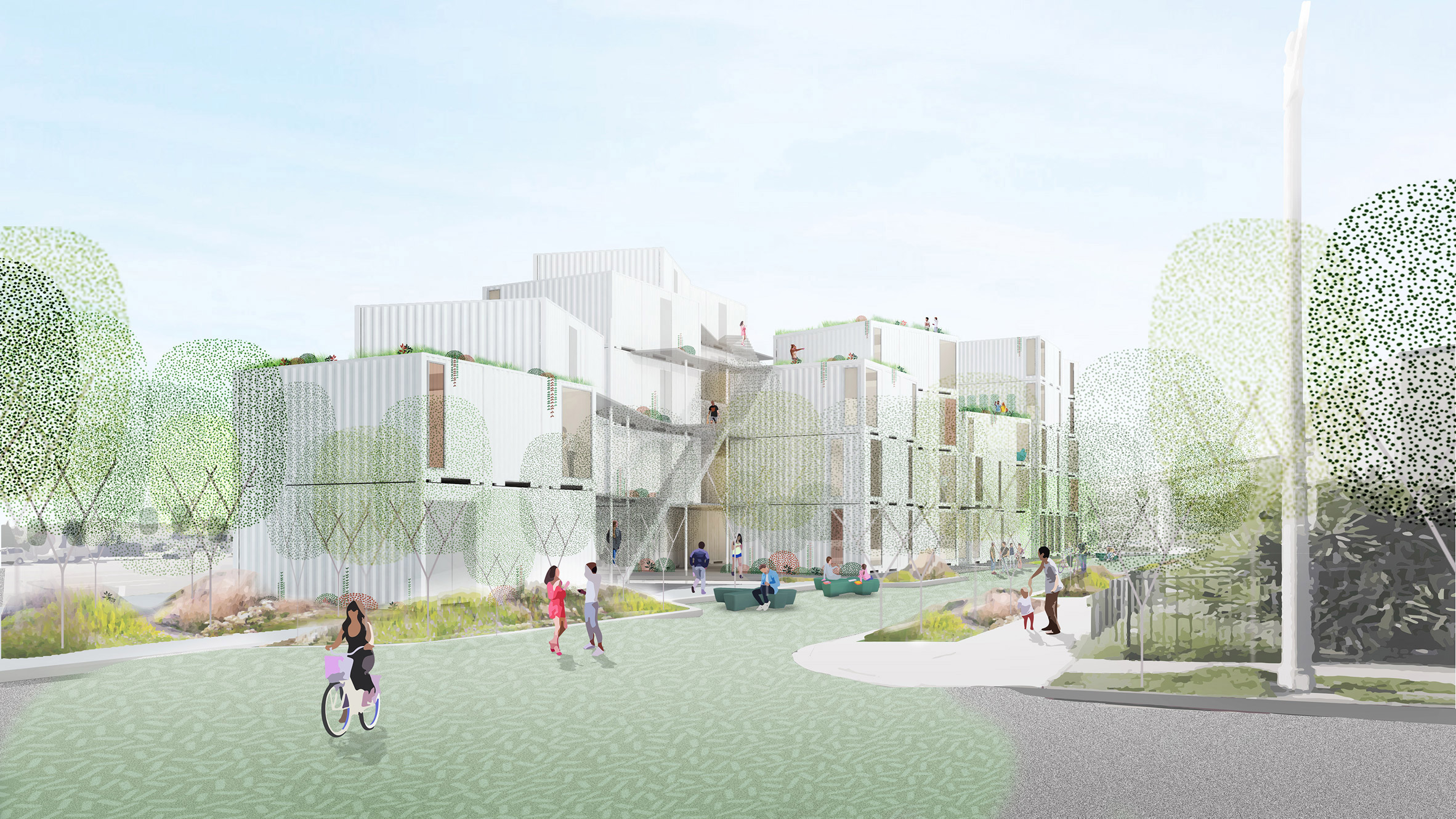
Isla Intersections by LOHA
LOHA designs affordable housing complex for difficult site in Los Angeles

Architecture news this week included the reveal of BIG and Field Operations' design for a resilient park and skyscrapers in Williamsburg, and LOHA's proposal for an affordable housing complex made from stacks of shipping containers.

Arkansas architect Marlon Blackwell also became the 76th recipient of the AIA Gold Medal, which is awarded annually to architects in recognition of their legacy to the industry.
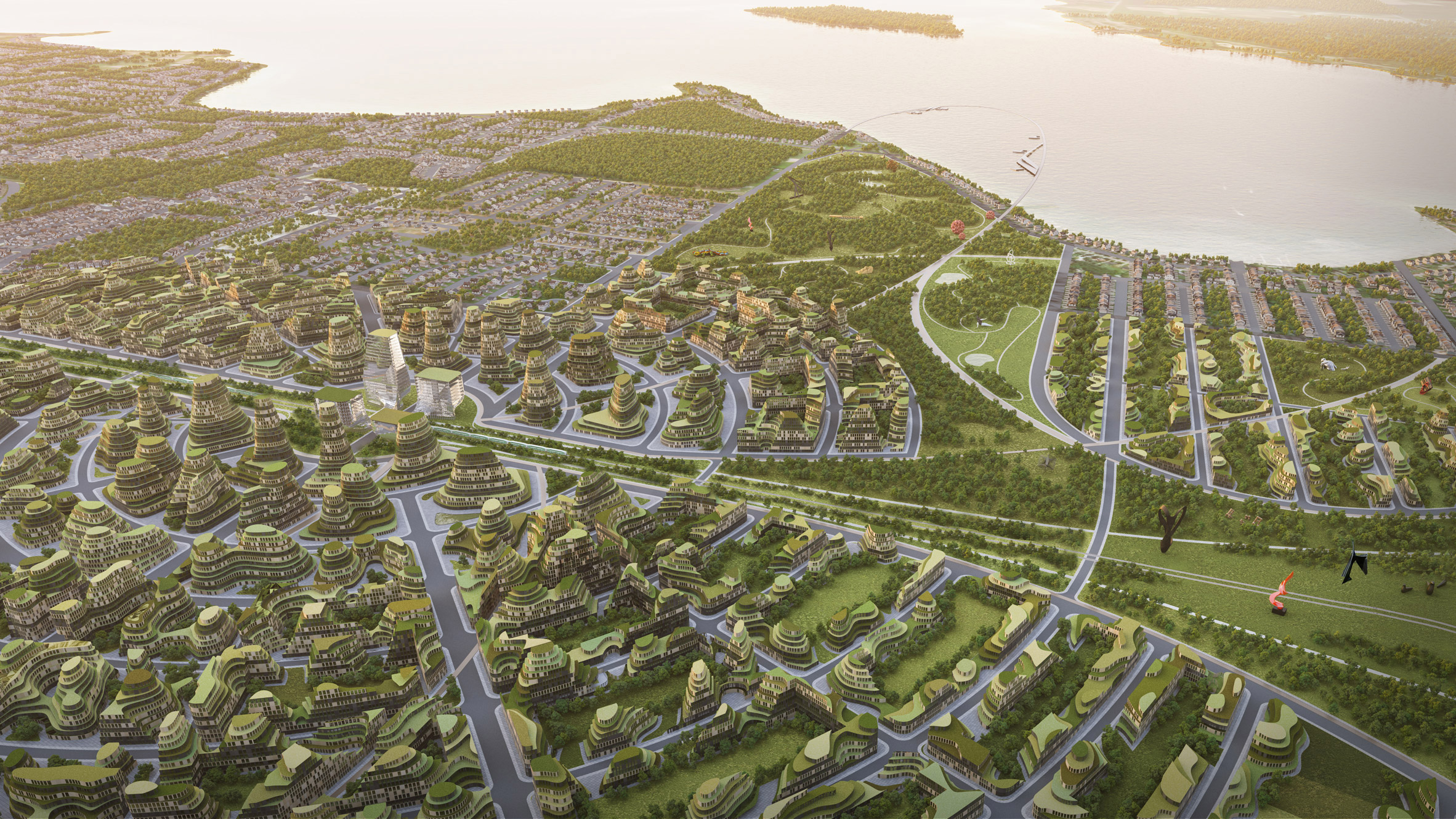
The Orbit by Partisans
Partisans to turn Canadian town into "city of the future" The Orbit

Eyes turned to the rural Canadian town of Innisfil as architecture studio Partisans unveiled its plans to transform it into "the city of the future", using fibre optics, autonomous vehicles and drone ports.

Israel was also in the spotlight when Asaf Mann told Dezeen that "there's something very inspiring happening again", likening its thriving architecture scene to the Bauhaus boom in Tel Aviv.
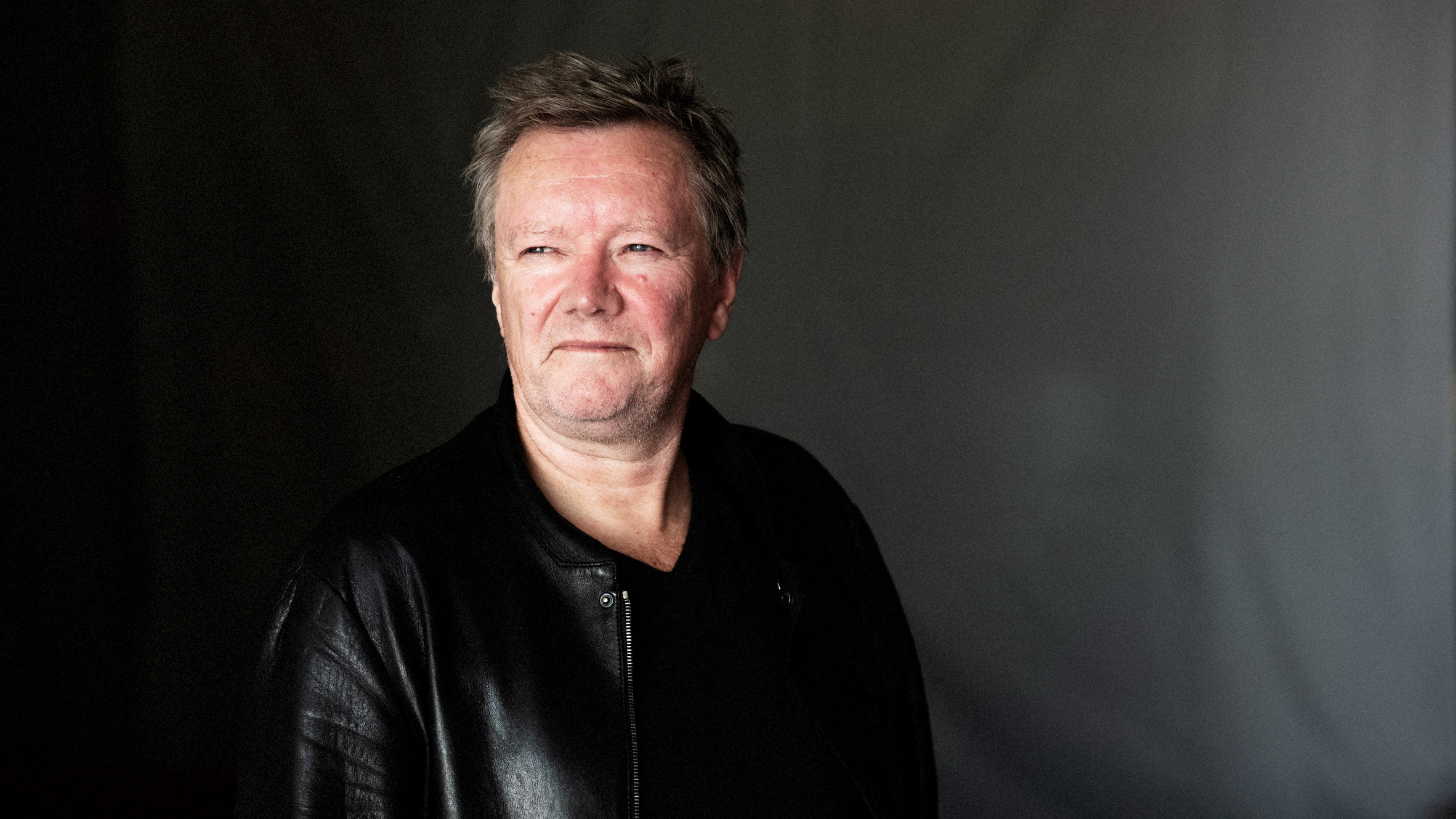
Kjetil Trædal Thorsen of Snøhetta
Architects must plan for "armageddon situations" says Snøhetta's Kjetil Trædal Thorsen

Dezeen shared highlights from an exclusive two part interview with Snøhetta's co-founder Kjetil Trædal Thorsen this week, who shed light on the firm's ambition to make buildings for the betterment of society.

As a pioneer of eco-friendly architecture, Thorsen also spotlighted the climate crisis and warned architects that they must plan for "armageddon situations".
Dezeen's top 10 furniture designs of 2019

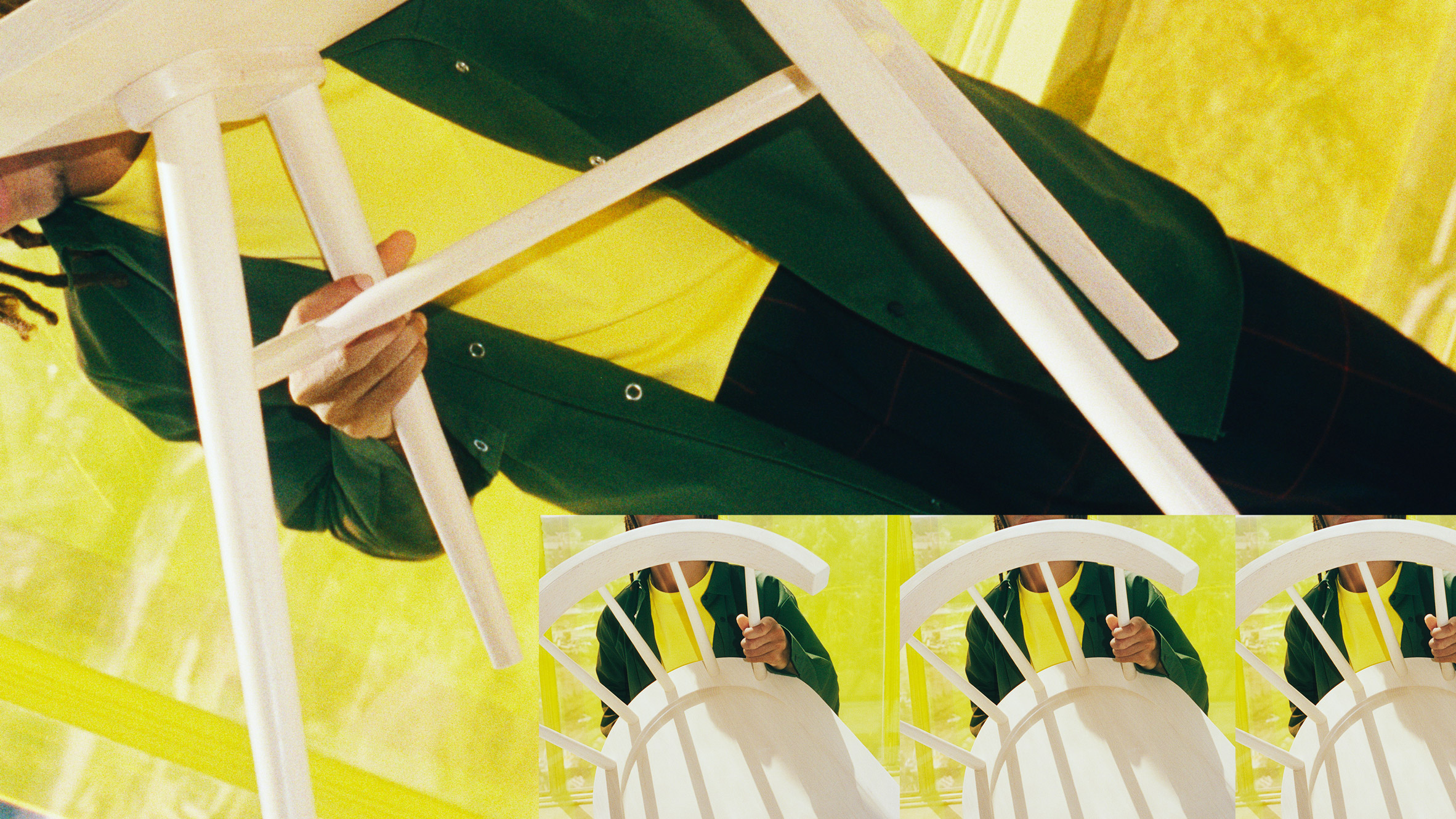
Dezeen also continued its review of 2019, with roundups highlighting the best furniture pieces and  transport designs of the past year.

We also rounded up the most impactful British architecture projects of 2019, including a museum for boats and a football stadium.
Shakespeare Tower apartment by Takero Shimazaki Architects
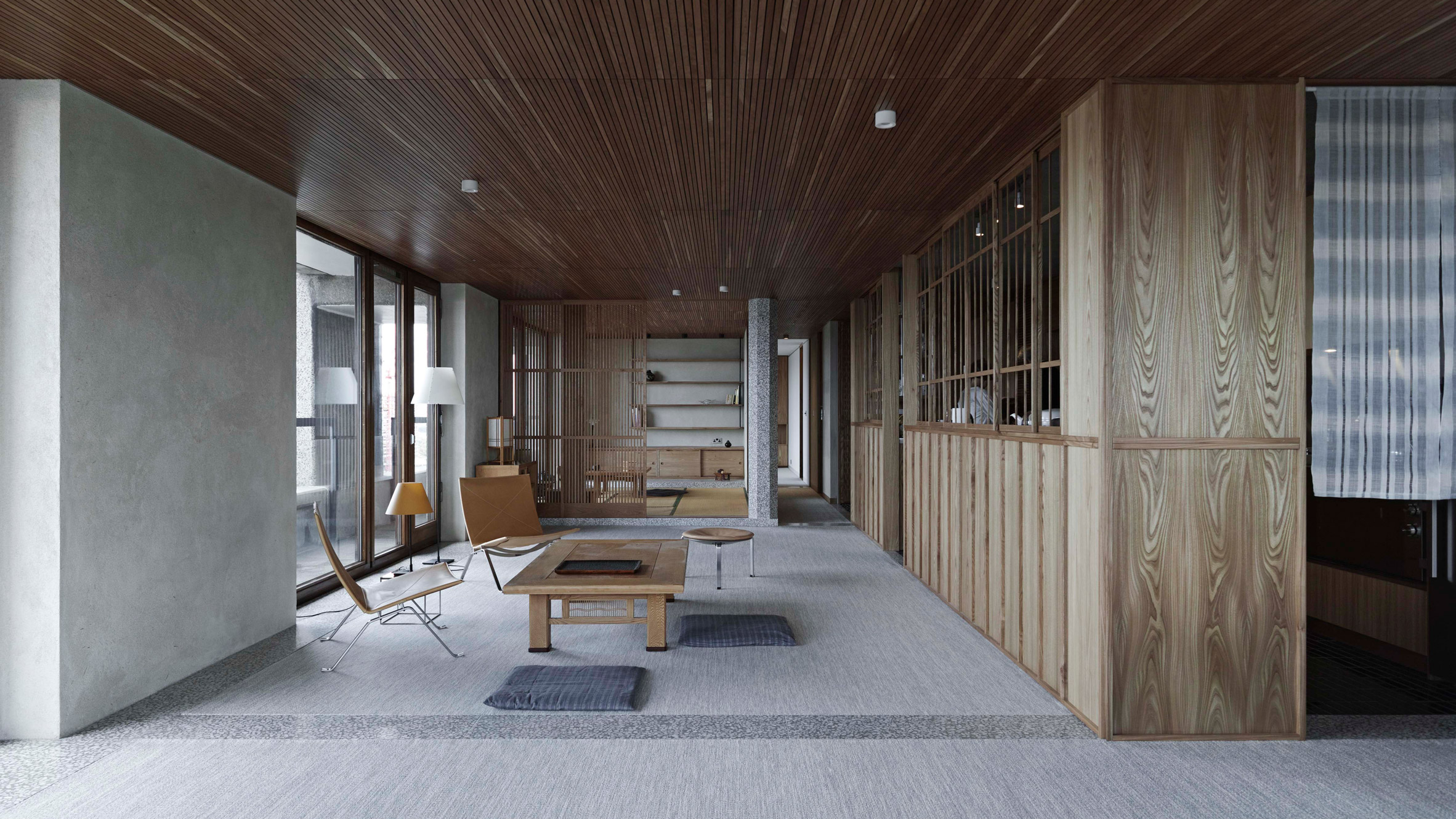
Takero Shimazaki Architects infuses Barbican flat with Japanese details

Projects enjoyed by readers this week included Takero Shimazaki Architects' overhaul of a Barbican flat with Japanese details, a store in New York City filled with green plywood cabinets and Richard Chivers photography series of England's remaining gas holders.

The post This week, the $120,000 Art Basel banana art was removed and Foster + Partners introduced a sustainability manifesto appeared first on Dezeen.


from Dezeen https://ift.tt/2su99so

Friday, 13 December 2019

Anne Hardy transforms Tate Britain into a ghostly ruin

The Depth of Darkness, the Return of the Light by Anne Hardy at Tate Britain

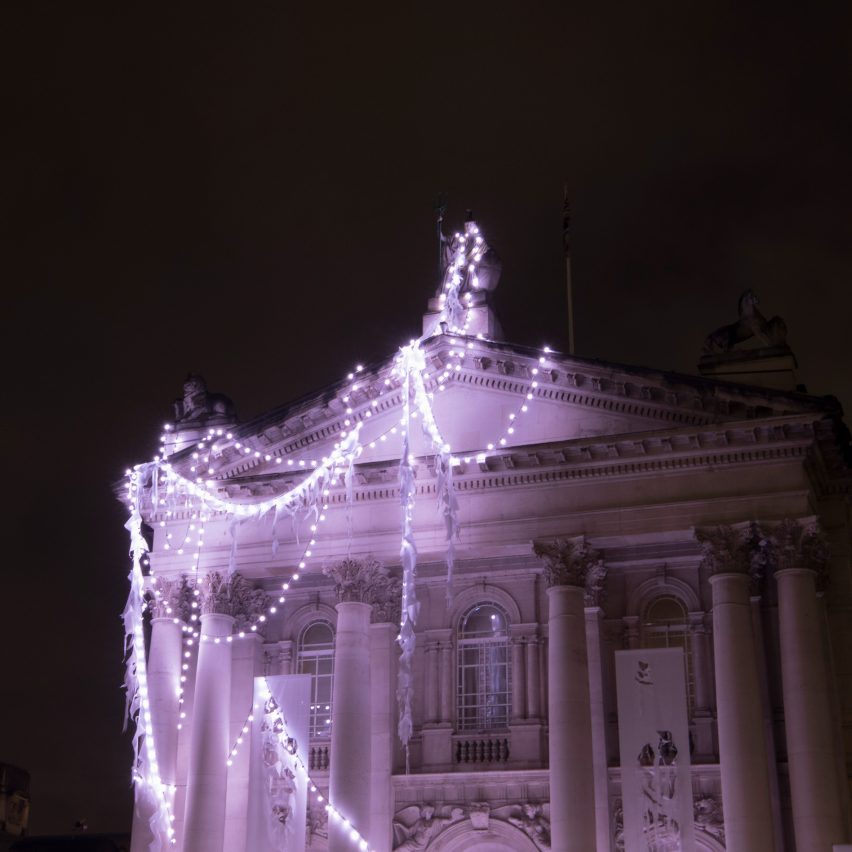
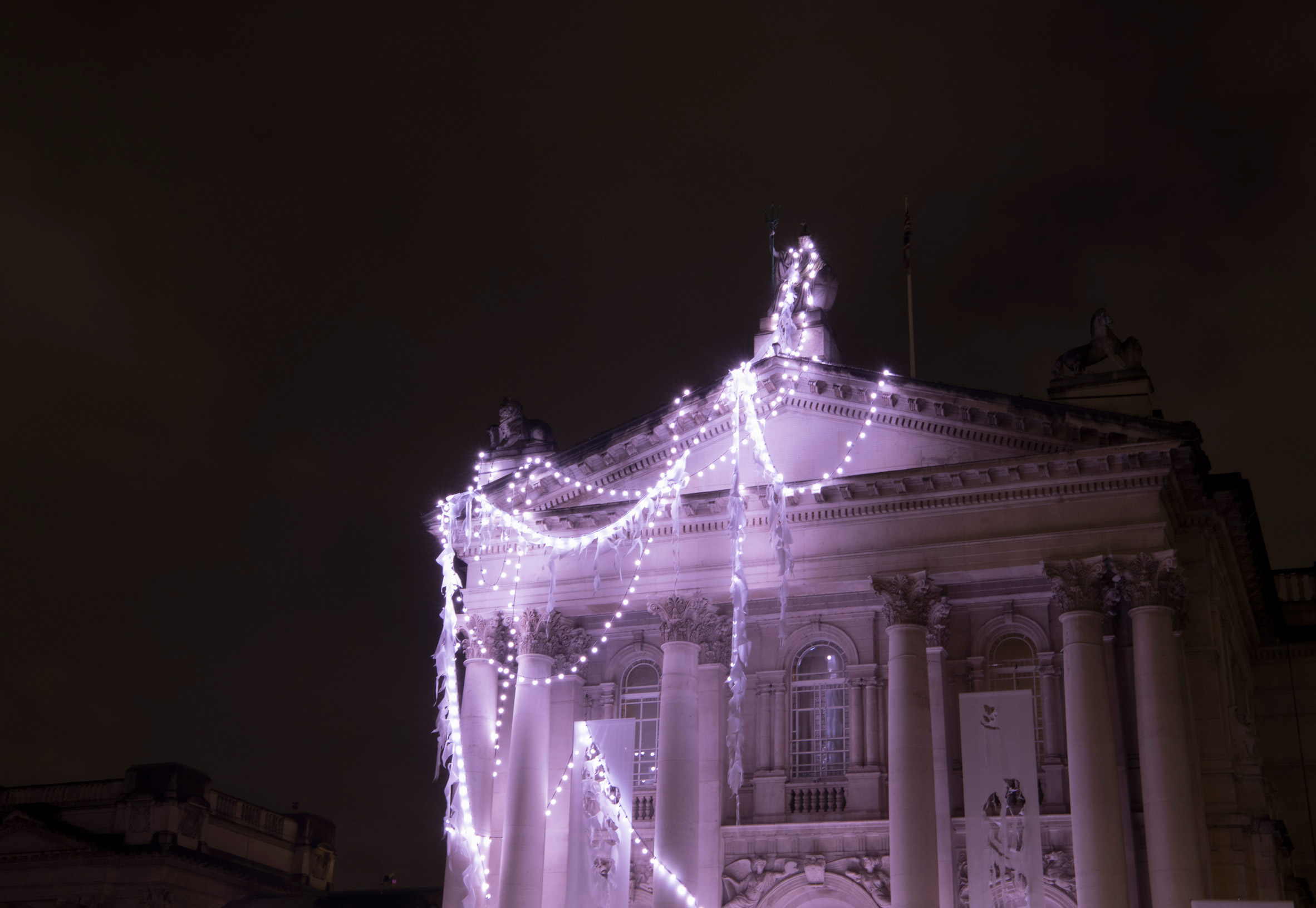
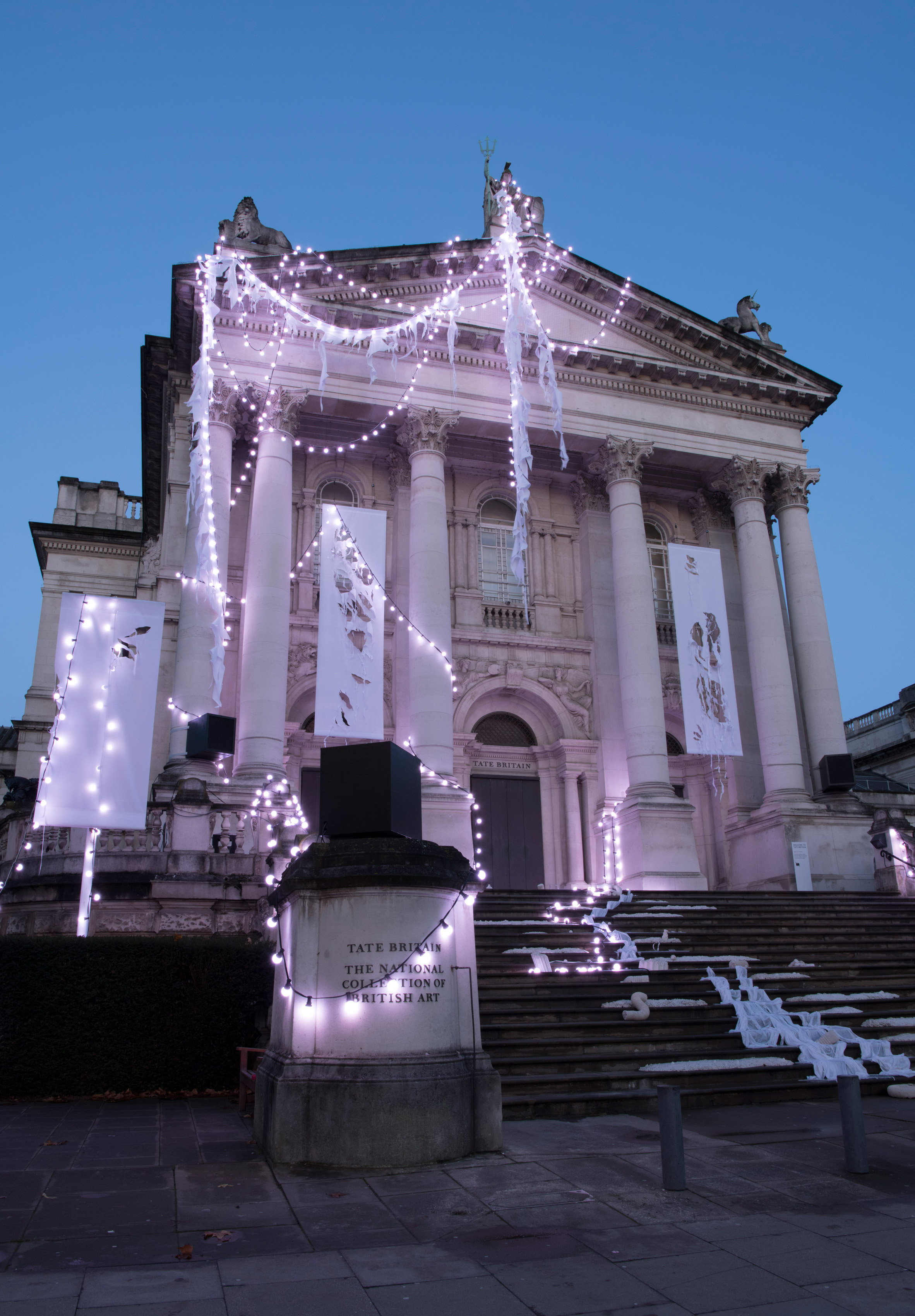
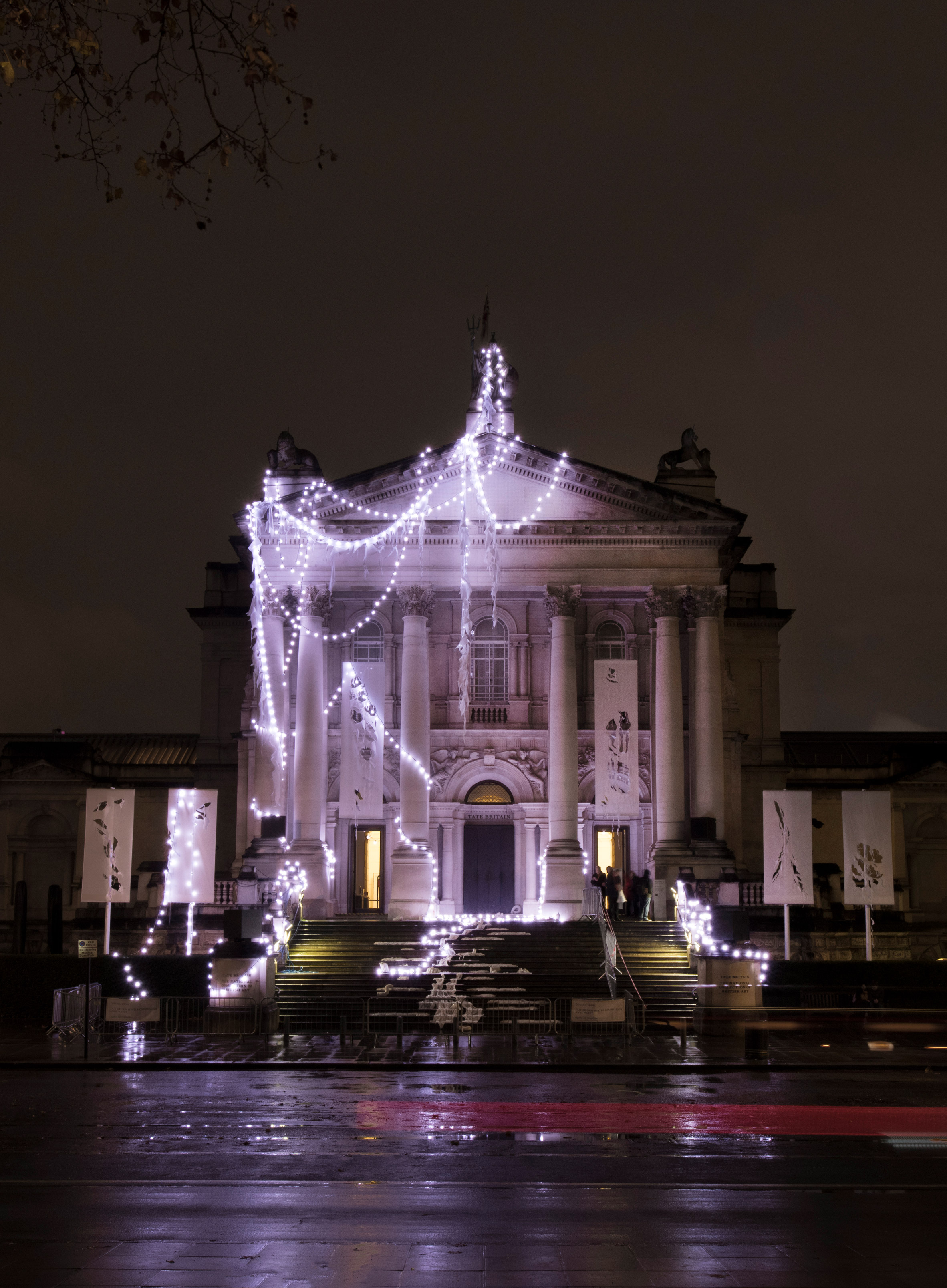
Artist Anne Hardy has decorated the facade of London's Tate Britain gallery to make it look like a temple marooned by rising sea-levels, in a bid to raise awareness about the impact of climate change.

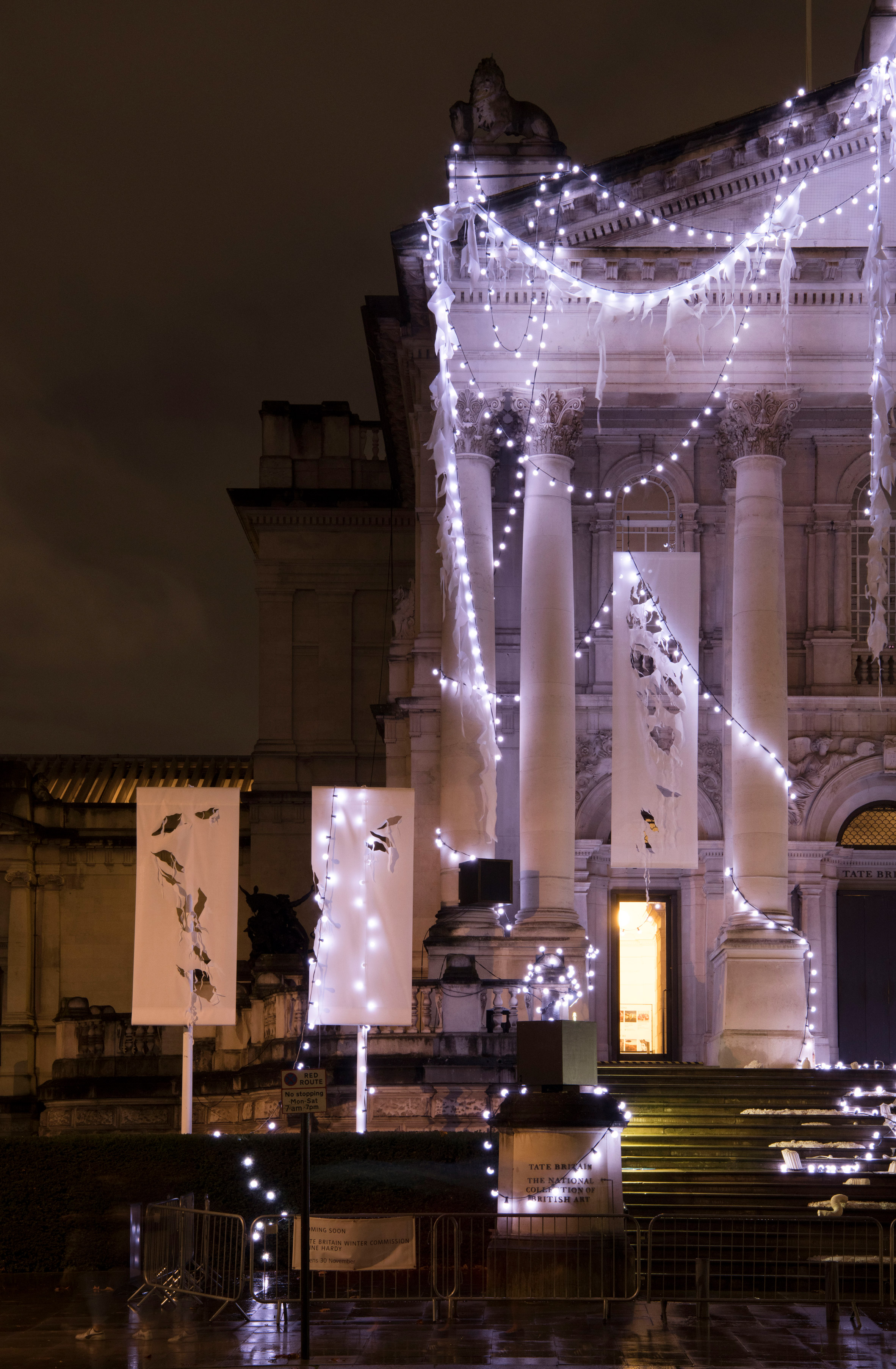
Hardy's installation for the gallery's annual winter commission uses tangled lights, tattered banners and other objects to transform the 19th-century building's grand entrance into a post-apocalyptic scene.

The artwork, titled The Depth of Darkness, the Return of the Light, anticipates the upcoming winter solstice and is informed by the rhythms of the earth and the tides of the adjacent River Thames.

The Depth of Darkness, the Return of the Light by Anne Hardy at Tate Britain

"The title is inspired by pagan descriptions of the winter solstice – the darkest moment of the year," said Tate Britain in a statement announcing the commission.

"It refers to seasonal cycles and longer-term ecological patterns, as well as alluding to contemporary social and political issues and the hope for positive change."

The Depth of Darkness, the Return of the Light by Anne Hardy at Tate Britain

Objects representing the detritus found littering the rivers and oceans cascade down the steps from the shuttered central door, seemingly trapped in a monochrome slick of flowing liquid.

Hardy also created a 21-minute quadrophonic sound work as part of the commission, using field recordings she gathered while kayaking along the river.

The installation is typical of the large-scale sculptural works Hardy likes to create, which combine physical materials with light and sound to immerse viewers in a multi-sensory environment.

It draws on the artist's research into the history of the riverbank site, which was once marshland and could become submerged by rising sea-levels in the coming century. This urgent environmental message informed the artwork's dystopian aesthetic.

The Depth of Darkness, the Return of the Light by Anne Hardy at Tate Britain

"The light and sound elements of the work are site specific and have been choreographed in situ to give the impression that the building has become possessed," the gallery added.

"Manifesting these environmental changes through the material and aural changes to the site, the commission appears to transport visitors through time and place to a parallel prehistoric world or post-apocalyptic future."

The Depth of Darkness, the Return of the Light by Anne Hardy at Tate Britain

Now in its third year, the Winter Commission invites an artist to create a response to the site and the building that remains in situ throughout the Christmas season. Hardy's installation will be on show until 26 January 2020.

Last year's installation by Monster Chetwynd featured two giant slugs that appeared to have left a slimy trail across the gallery's facade.

For the inaugural commission in 2017, Alan Kane used off-the-shelf Christmas decorations to evoke the way people decorate their homes at this time of year.

The Depth of Darkness, the Return of the Light by Anne Hardy at Tate Britain

In 2016, Tate Britain marked the festive season by hanging a Christmas tree upside down from its ceiling. Its recent exhibitions have included a retrospective of Rachael Whiteread's cast sculptures and a large-scale lighting installation by Cerith Wyn Evans.

Photography is by Oliver Cowling.

The post Anne Hardy transforms Tate Britain into a ghostly ruin appeared first on Dezeen.


from Dezeen https://ift.tt/2LV5ydQ

Researchers Unearth World’s Oldest Figurative Artwork in Indonesian Cave

A recent finding in Sulawesi, Indonesia, is changing our conceptions of the origins of visual art. Fifteen researchers this week published an article in Nature describing prehistoric cave art that they believe was created about 43,900 years ago. The art depicts multiple therianthropes—mythical creatures that have both human and animal characteristics like beaks and tails—hunting wild pigs and cattle with spears. Traditionally, therianthropes were employed for sharing folklore, religious myths, and spiritual beliefs. Clear renderings of the creatures are uncommon, the report says. The oldest depiction previously recorded is a carved figurine with the head of a cat that originated in Germany and dates back nearly 40,000 years. These Indonesian findings also predate the Lascaux cave paintings found in France by about 20,000 years. “This hunting scene is—to our knowledge—currently the oldest pictorial record of storytelling and the earliest figurative artwork in the world,” the report said. (via Artnet)


from Colossal https://ift.tt/2PI4IlV

Weiss Manfredi wins competition to redevelop La Brea Tar Pits

La Brea Tar Pits by Weiss Manfredi

New York studio Weiss Manfredi has beaten competition from Dorte Mandrup and Diller Scofidio + Renfro to develop the park and museum accompanying Los Angeles' historic La Brea Tar Pits.

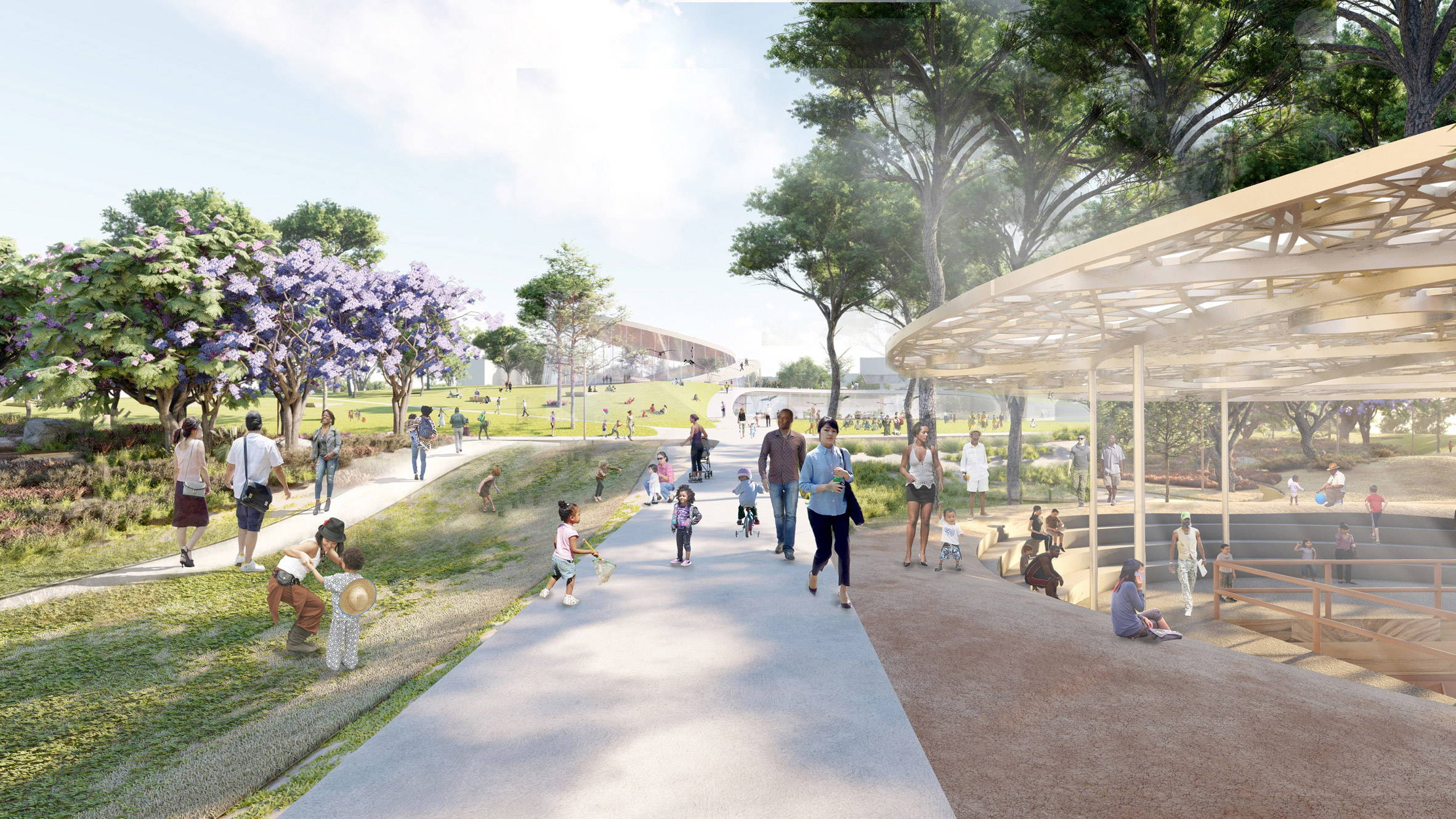
Weiss Manfredi's design will occupy the active paleontological research centre situated on the eastern portion of Hancock Park and add renovations to the George C Page Museum.

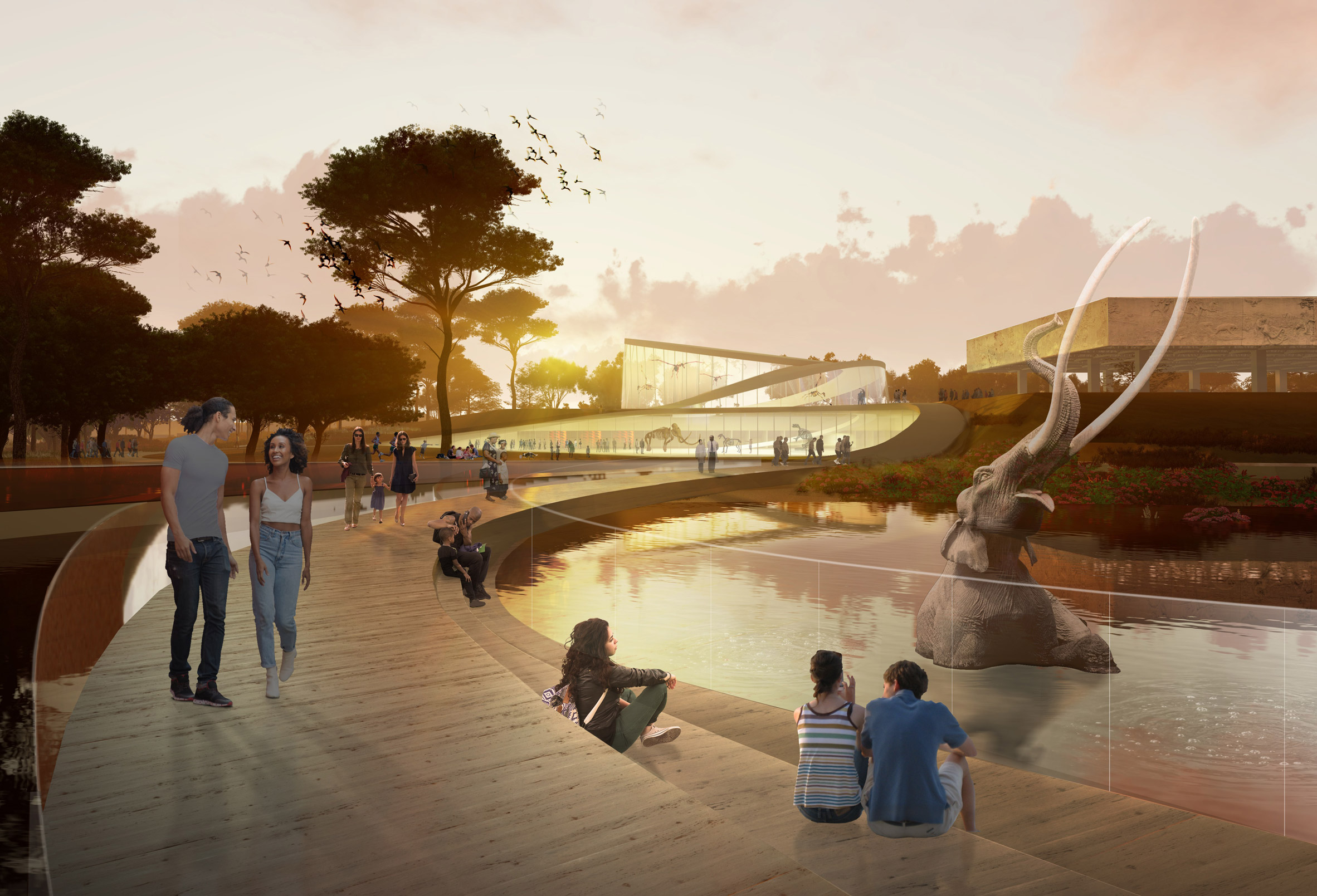
La Brea Tar Pits is a group of asphalt lakes, created from tar that seeped up from the ground over a period of thousands of years, trapping and preserving the animals that lived on site.

La Brea Tar Pits by Weiss Manfredi

The competition to update the 13-acre (five-hectare) campus was organised by the National History Museums of Los Angeles County (NHMLAC). It marks the historical property's first update in over 40 years.

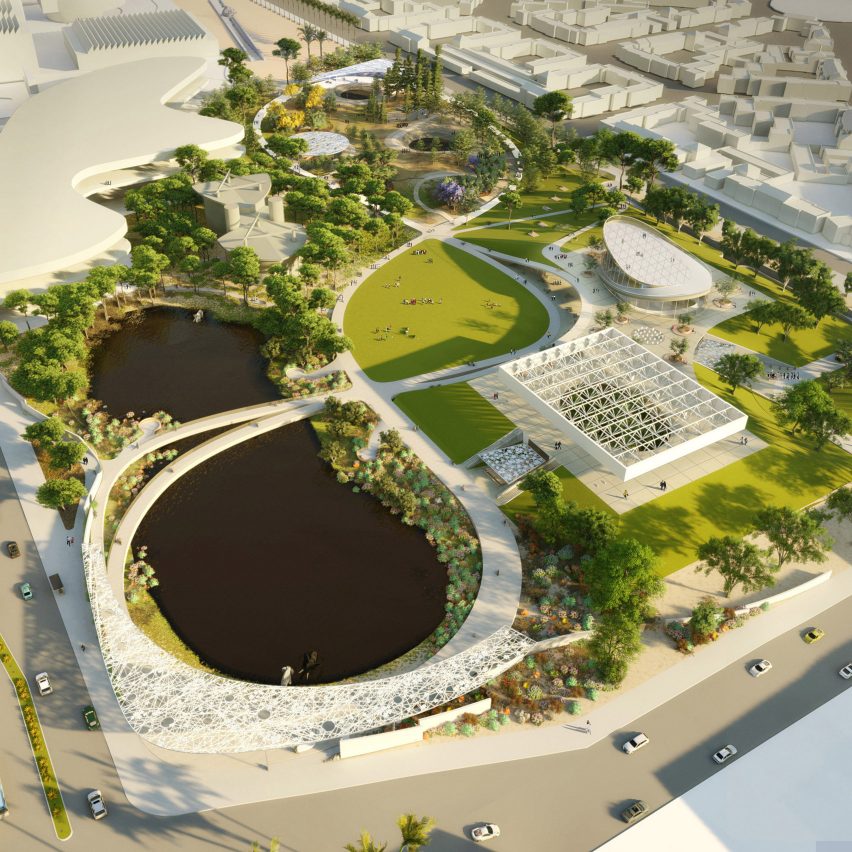
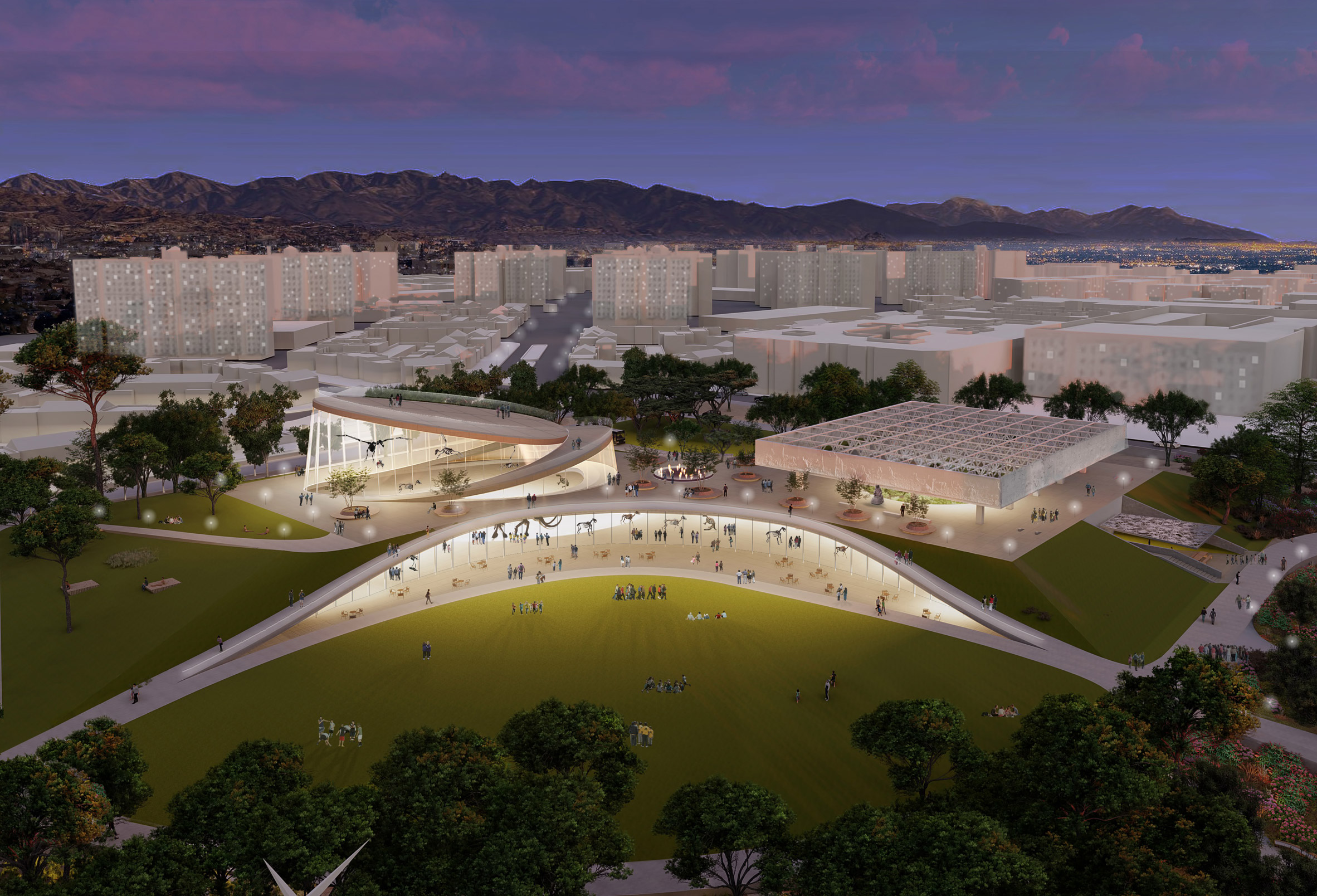
In the winning proposal, titled Loops and Lenses, the focus is a one-kilometre long pathway that curves through the public park joining three distinct themes of the site identified by the architects.

"There is truly no place in the world as magical as La Brea Tar Pits," said Weiss Manfredi principals Marion Weiss and Michael Manfredi. "Our 'Loops and Lenses' concept creates new connections between the museum and the Park, between science and culture, and envisions the entire site as an unfolding place of discovery."

La Brea Tar Pits by Weiss Manfredi

"The park areas connected by the loops capture three distinguishing themes: research and revelation, community and culture, and spectacle and urban fiction," they added.

The first theme, Research and Revelation, is defined by several active excavation pits and the dozens of plant species inside the Pleistocene Garden, while the second theme, the Community and Culture loop, occupies the central lawn where the Page museum is located. The final theme called Spectacle and Urban comprises the edge of the park where the lake pits meet the city street.

"Lenses" are created by framed views along the route, which include dig activity, the museum and sculptures of animals found on the site.

"The lenses, as framed views throughout the park and museum, bring into focus the research and museum collection that contains over 3.5 million specimens," said the architects.

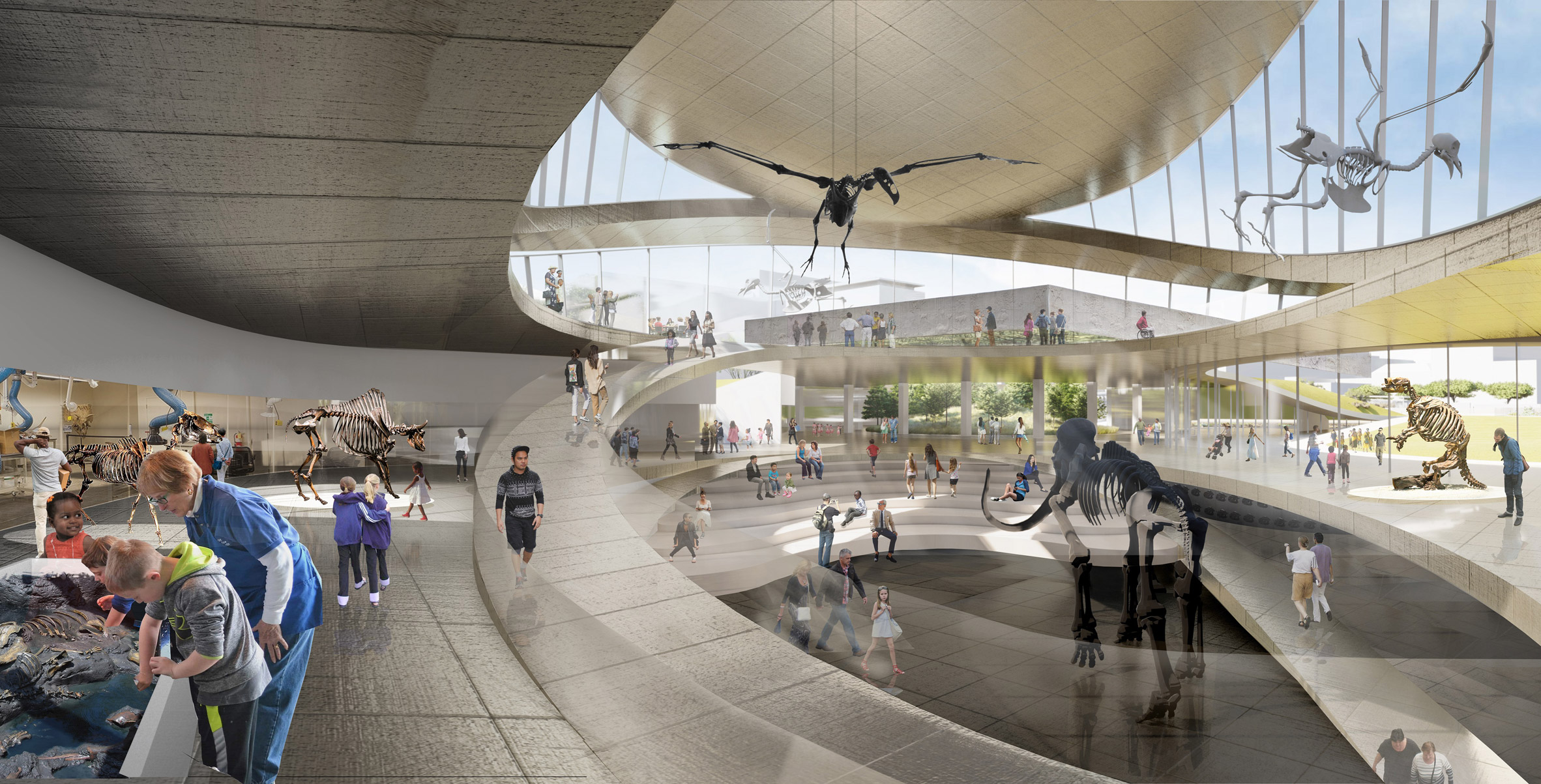
Weiss Manfredi's proposed design for the Page Museum, which houses a vast collection of paleontological findings, aims to preserve and enhance the existing building built by Frank Thornton and Willis Fagan in 1977. It doubles the size of the rooftop terrace creating space for hosting public events and adds a glass facade to reveal La Brea's artefacts to the outside.

La Brea Tar Pits by Weiss Manfredi

"The proposed design of the Page Museum expansion is rooted in a close analysis of the existing building, preserving and magnifying its unique strengths," the studio said. "The beloved grass slope and terrace of the museum is doubled in size and made accessible in the expansion to provide more opportunities for recreation."

The multidisciplinary team will work with the Natural History Museum of Los Angeles County (NHMLAC) over the course of several years to realise the masterplan, alongside experts including experimental designer Karin Fong, horticulturist Robert Perry, paleobotanist Carole Gee, naturalist and artist Mark Dion and designer Michael Bierut.

La Brea Tar Pits by Weiss Manfredi

NHMLAC invited Dorte Mandrup, Diller Scofidio + Renfro and Weiss Manfredi to devise plans for the development in March this year, each studio's initial concepts and proposals were presented to the public in August.

In Dorte Mandrup's proposed plan an extension added to the museum featured a rooftop garden and open foyer, while Diller Scofidio + Renfro's simple design involved inserting a massive glass volume inside the building to host the collection and placing a gridded network across the rest of the site.

Weiss Manfredi was founded by Marion Weiss and Michael Manfredi. In early 2019, the studio unveiled its masterplan for the renovation of Edward Durell Stone's modernist US embassy in New Delhi, India.

The post Weiss Manfredi wins competition to redevelop La Brea Tar Pits appeared first on Dezeen.


from Dezeen https://ift.tt/2PGmYfC

Artist Yuko Shimizu Utilizes Repetition and Primary Colors in Her Idiosyncratic Illustrations

All images © Yuko Shimizu, shared with permission

Award-winning artist Yuko Shimizu describes her detailed illustrations in a note to Colossal as “a bit off, weird, and dreamy.” Her work, which is often centered on but not limited to Japanese culture, frequently employs primary colors and repetitive elements. In one illustration, the artist portrays a marcher wearing a red uniform and blowing into a multiple-belled instrument with blue birds and yellow flowers in the mix; another features a female figure ascending from dark, swirling waters with a mask seemingly ready to be fitted to her face.

Shimizu says her “Blow Up” series was designed originally for a show at the Society of Illustrators where the images first were exhibited stretching from floor to ceiling. One work depicts dozens of legs donning red and white striped socks that are bound together by a thick rope. It’s what Shimizu terms her illustration about “wind blowing up to form a human-storm.” In another piece, a body stands knees pointed inward with just the mouth visible in a blur of red swirls. The series is inspired by multiple definitions of the phrase “blow up.”

The artist has a background in marketing and advertising, and many of the works she produces today are commissioned for an impressive list of clients, including Apple, Microsoft, and Nike. Based in New York City, Shimizu also teaches at the School of Visual Arts. Keep up with all of her unusual imagery on Instagram.


from Colossal https://ift.tt/36AV9MC