Sunday, 15 December 2019

Dezeen's top 10 installations of 2019

Alex Chinneck installation at Milan design week

Next up in our review of 2019, Kristine Klein picks out the 10 most arresting installations on Dezeen, including Banky's pop-up, pink seesaws slotted between the border wall and a sauna at Burning Man.

Banksy opens online store called Gross Domestic Product

Gross Domestic Product, UK, by Banksy

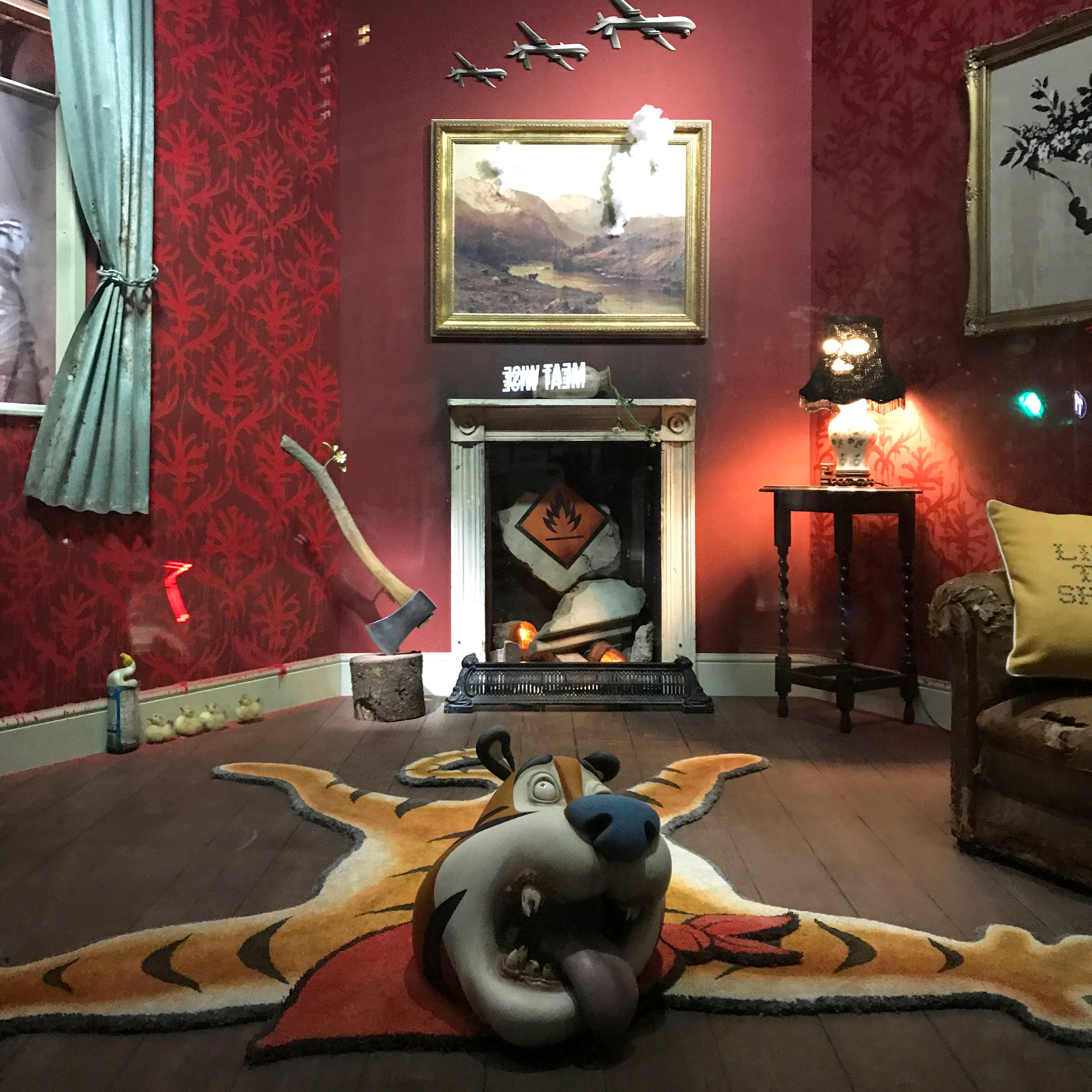
British graffiti artist Banksy opened up a "for display purposes only" pop-up shop in East Croydon to showcase his merchandise, which is for sale online. The retail space was created in response to actions by a greeting card company trying to "seize legal custody" of his name.

The installation in Croydon consists of a series of window displays that contain several works of art created by Banksy, including the stab vest worn by rapper Stormzy for a concert this summer. Many of the retail products were made exclusively for the online shop and include t-shirts and mugs adorned with the artist's famous works.

Find out more about Gross Domestic Product ›

Amsterdam Light Festival Starry Night

The Starry Night, The Netherlands, Ivana Jelić and Pavle Petrović

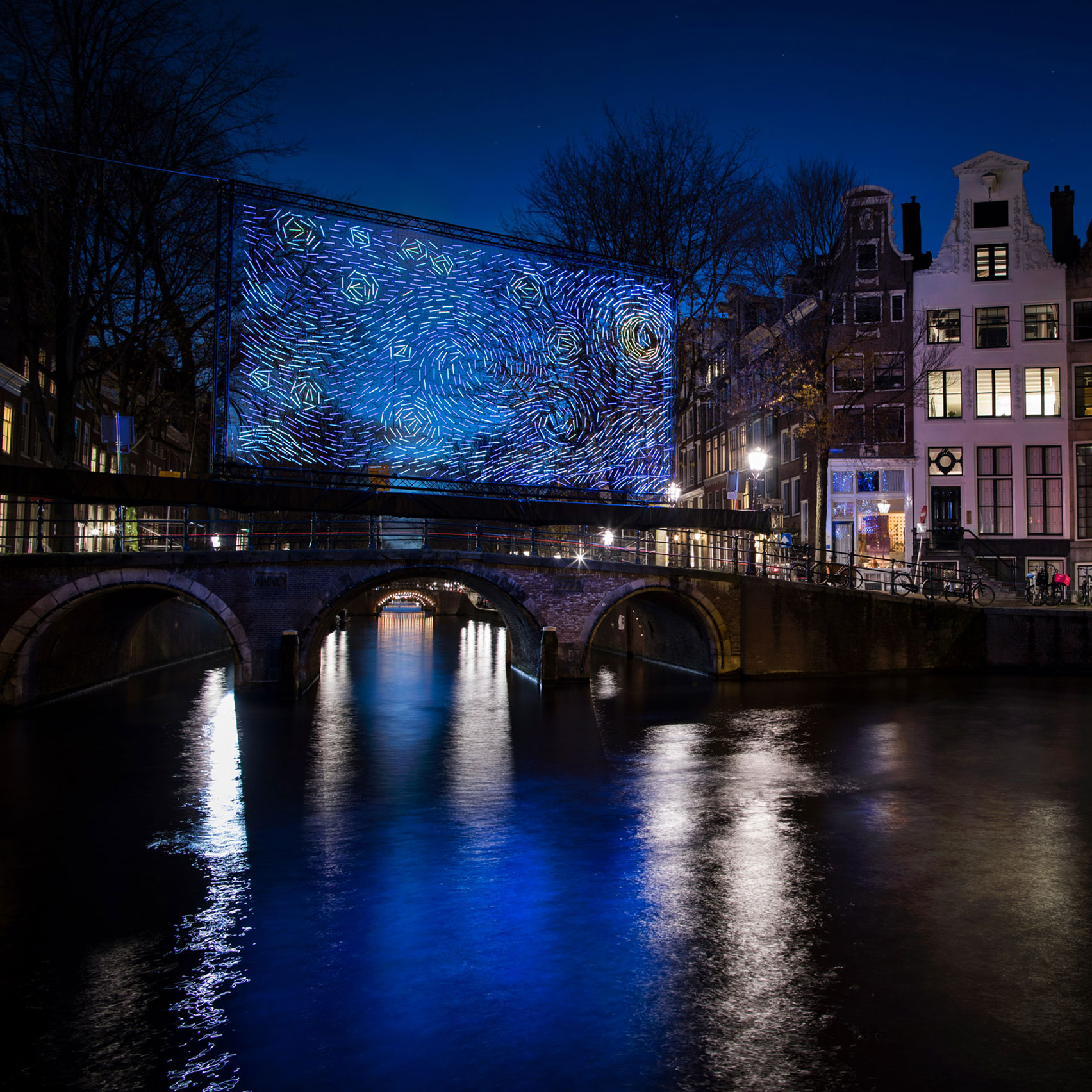
To highlight the issue of light pollution in urban areas, Serbian artists Ivana Jelić and Pavle Petrović installed a series of LED lights that together form Van Gogh's Starry Night over a canal in Amsterdam.

Using 1,400 acrylic rods illuminated by small LED lights the designers were able to imitate the artist's brushstrokes and recreate the painting's swirling night sky pattern.

Find out more about The Starry Night ›
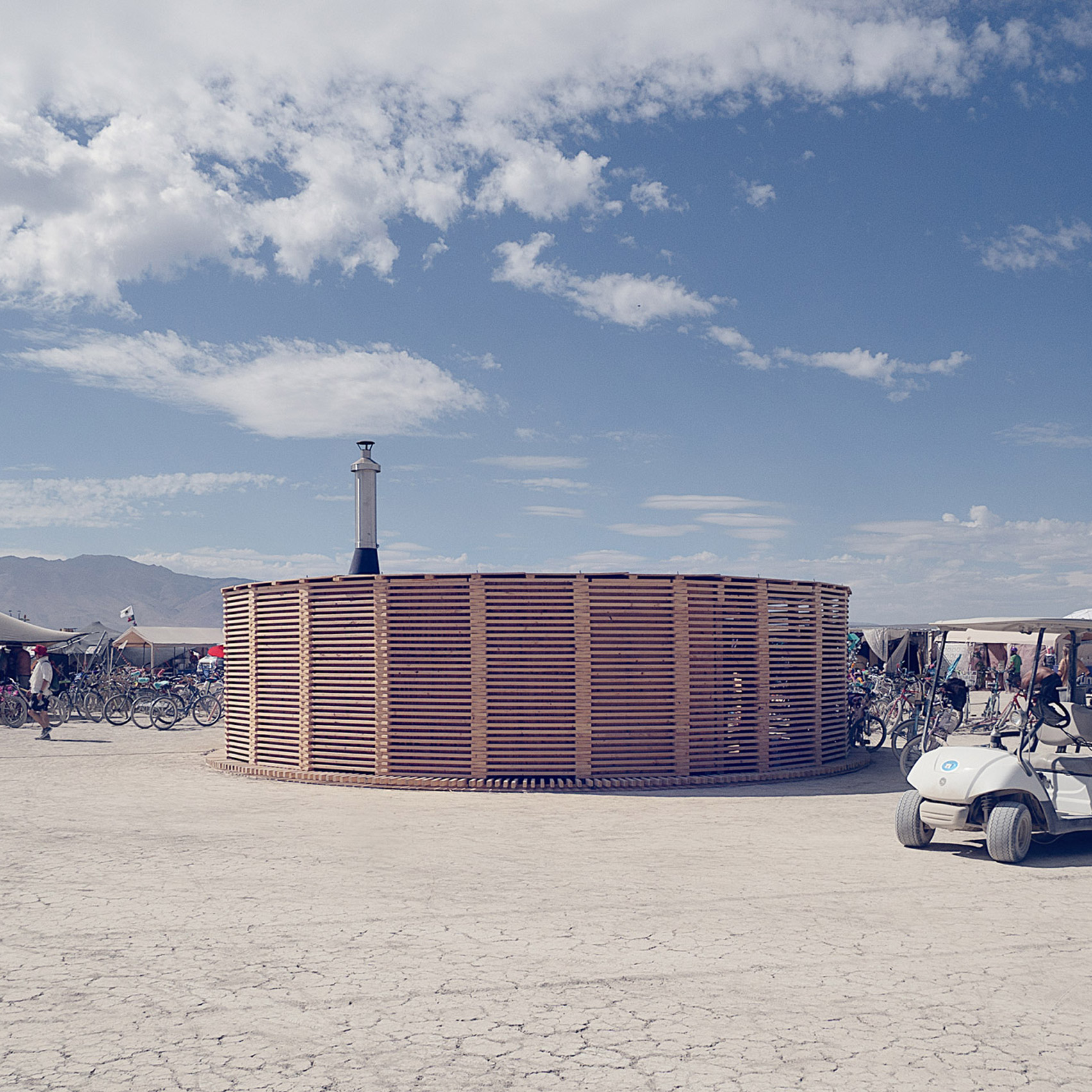

Burning Man Steam of Life by JKMM

Steam of Life, USA, JKMM Architects

Finnish studio JKMM brought a sauna to this year's Burning Man festival in the Nevada desert. To create the circular pavilion, Steam of Life, the team of architects stacked timber slabs.

The interior was lined with benches and an open atrium for cooling down and meditative relaxation formed the centre of the structure. Apart from the sauna stove, which was transported from Finland, all of the building materials were locally sourced.

Find out more about Steam of Life › 
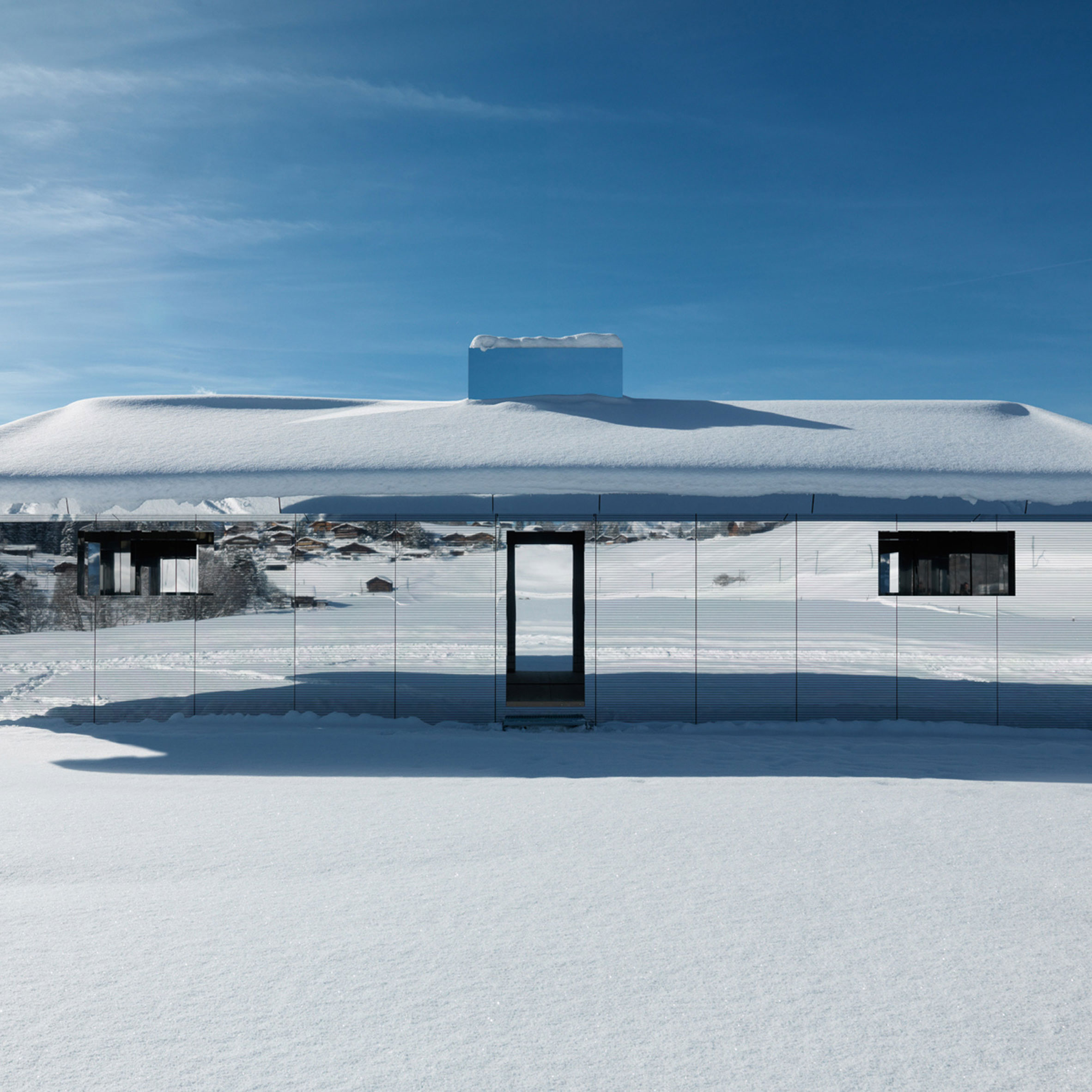

Doug Aitken Gstaad mirrored house installation

Mirage house, Switzerland, Doug Aitken

American artist Doug Aitken built a ranch-style residence clad in mirrors for a site in Switzerland surrounded by mountains, where it will stay for two years. The reflective material of the building casts the scenic landscape, which changes with the seasons, across its exterior.

Inside the mirrored structure kaleidoscopic panels installed on the walls and ceilings refract light and distort the interiors.

Find out more about Mirage house › 
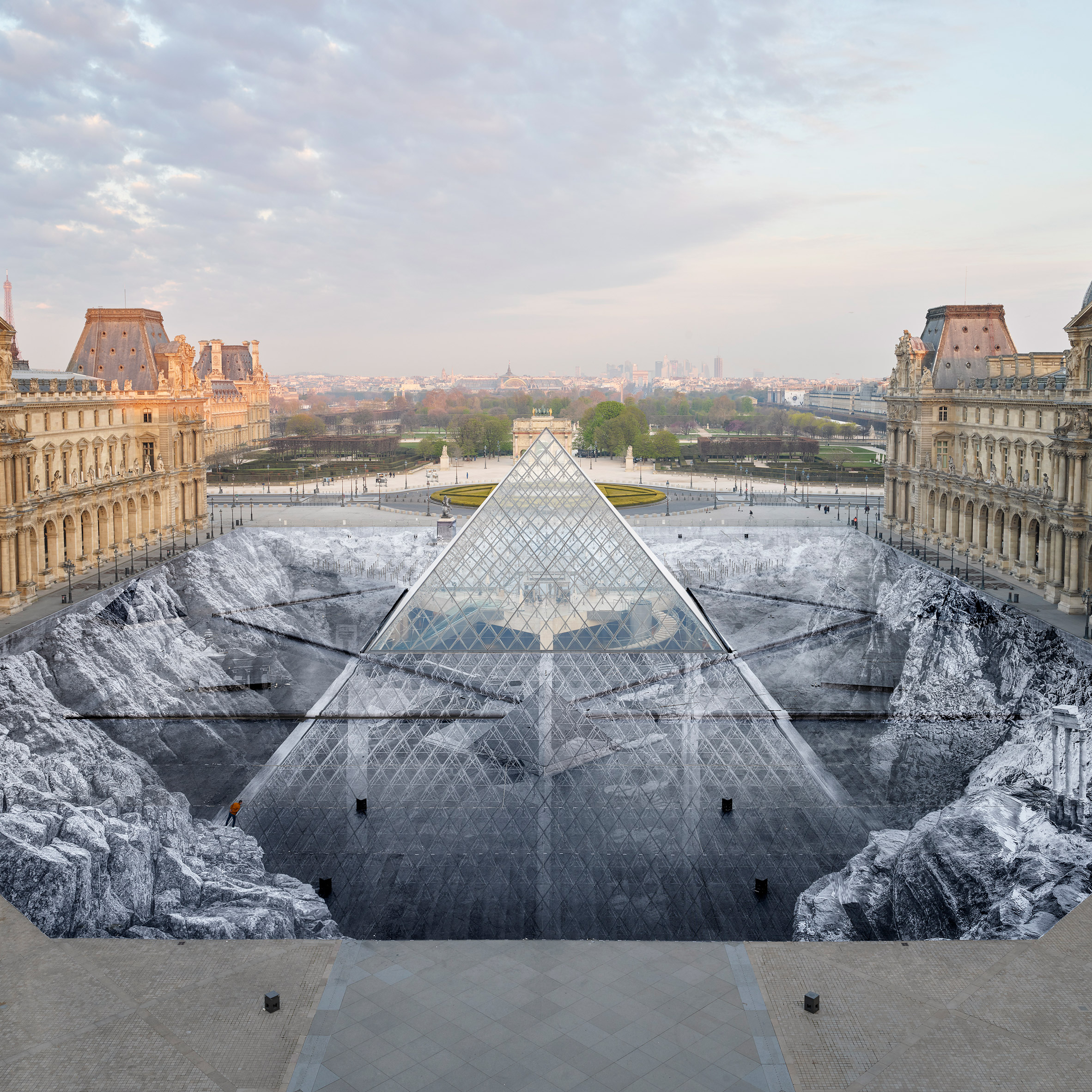

The Secret of the Great Pyramid by JR at the Louvre Museum in Paris, France

The Secret of the Great Pyramid, France, JR

French artist JR placed a massive optical illusion made from thousands of paper stickers on the grounds surrounding IM Pei's Louvre pyramid in Paris, to celebrate the building's 30th anniversary.

The collage, which measured 17,000 square metres, formed an imaginative image that proposed the continuing underground construction of the iconic triangular structure. JR's work was only on display for one day, the museum's daily stream of visitors left the piece in shreds.

Find out more about The Secret of the Great Pyramid › 
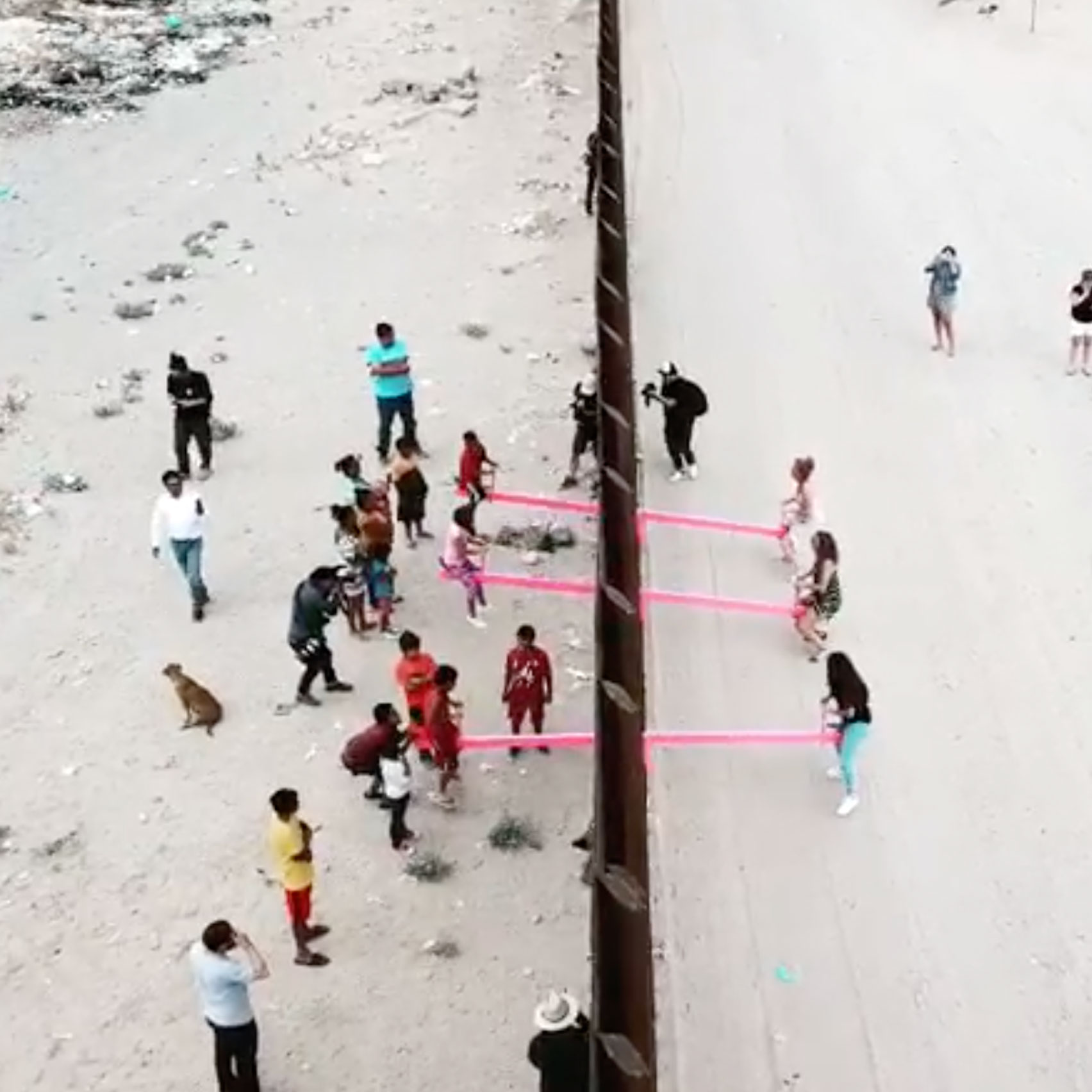

Teeter Totter wall by Rael San Fratello at US-Mexico border

US-Mexico border wall seesaws, USA, Mexico, Rael San Fratello

Rael San Fratello inserted three pink seesaws between metal slats of the US-Mexico border wall, so that children on either side can play together. The playground equipment was inserted along the portion of the wall that extends from El Paso, Texas to Ciudad Juárez in Mexico. Rael produced the installation through a collaboration with Taller Herrería, a workshop located in Ciudad Juárez.

"The wall became a literal fulcrum for US-Mexico relations and children and adults were connected in meaningful ways on both sides with the recognition that the actions that take place on one side have a direct consequence on the other side," the designer said on Instagram.

Find out more about US-Mexico border wall seesaws › 
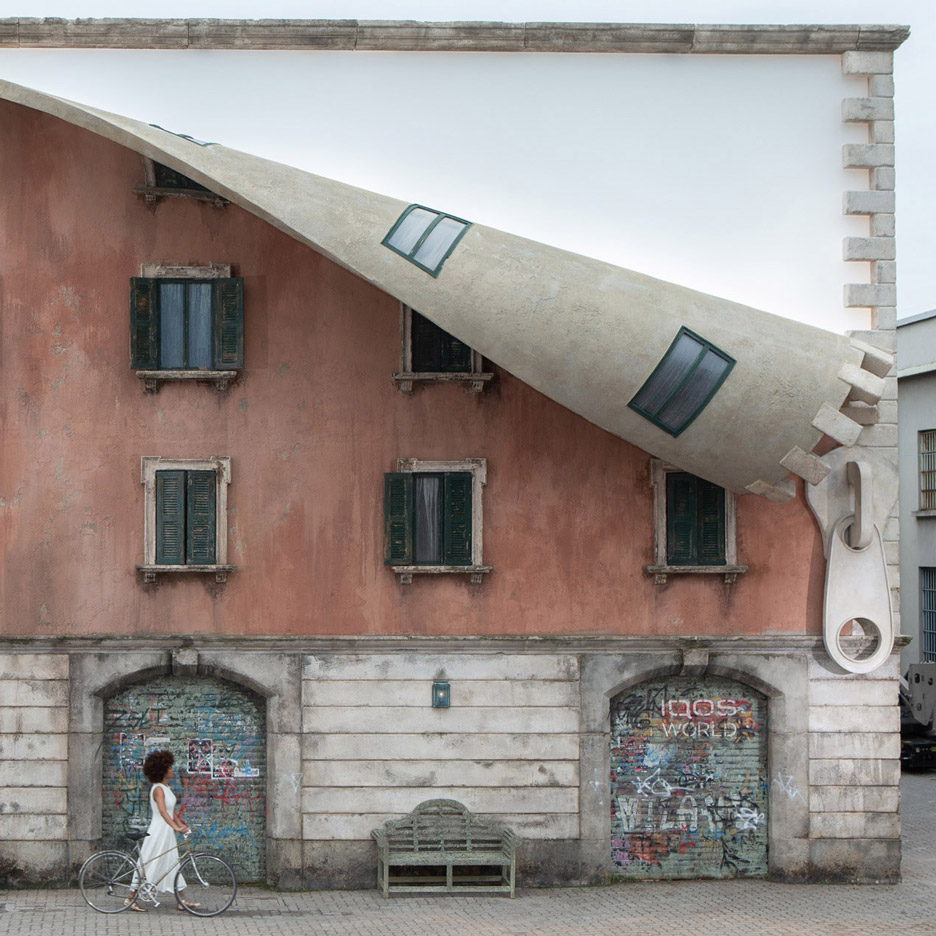

Alex Chinneck installation at Milan design week

Unzipping Milan building, Italy, Alex Chinneck

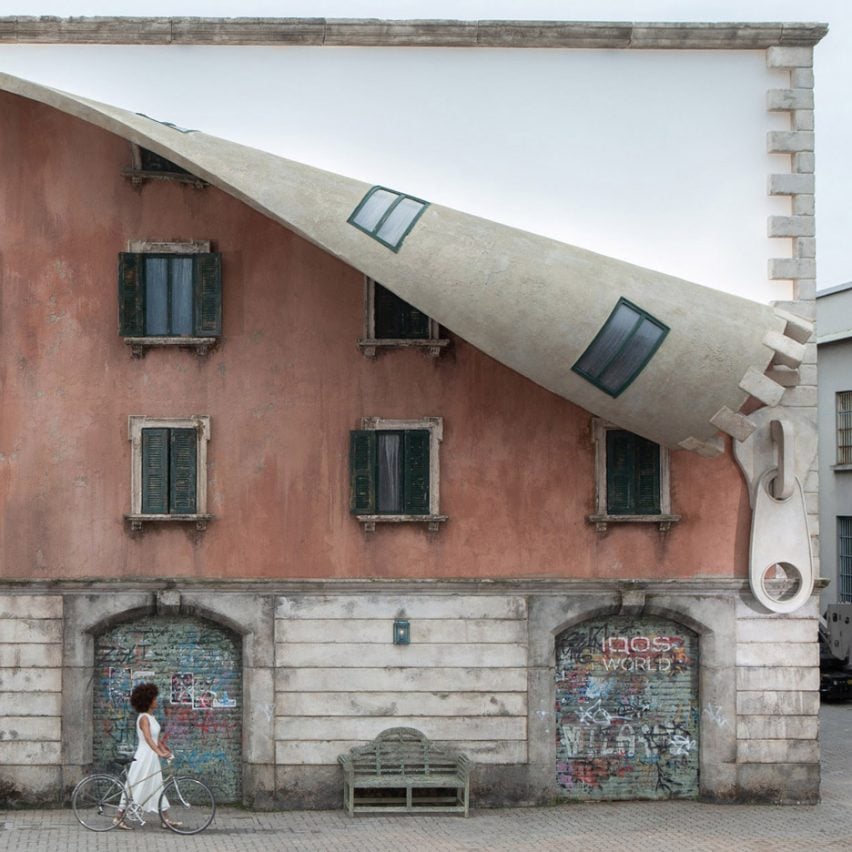
For Milan design week British artist Alex Chinneck installed a giant zipper on the face of a historic Venetian building to give the illusion that it is being peeled open. The installation was created for vape and tobacco brand Iqos.

The 17-metre-wide facade features a large zipper on its right side designed to create an opening that reveals bright lights. Inside the edifice, sculptural zippers attached to the interior walls and a circular opening on the floor also reveals glowing lights.

Find out more about unzipping Milan building ›
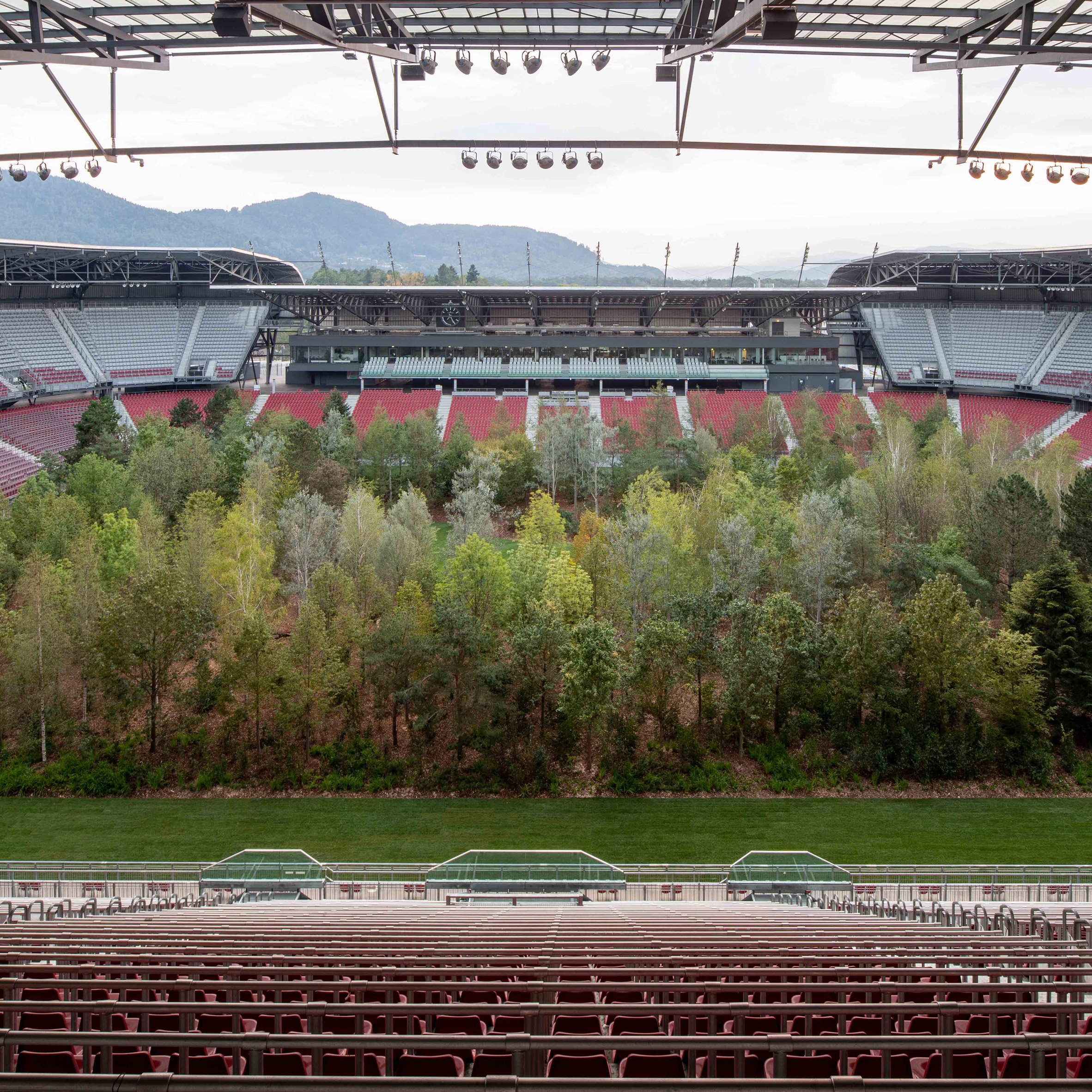

For Forest by Klaus Littmann

For Forest, Austria, Klaus Littmann

Klaus Littmann planted 300 trees in Wörthersee Stadion, a football arena, in Klagenfurt, Austria to send a message about the anthropocene, deforestation and climate change. For Forest replicates the the types of plantings typically found in European forests.

It memorialises nature as an "artistic sculpture" and was designed to gather people together so that they contemplate the environment and the importance of its protection.

After the installation closed the hundreds of trees were re-planted on a nearby plot of land. A wooden pavilion that provides visitors with educational information accompanies the small forest.

Find out more about For Forest › 
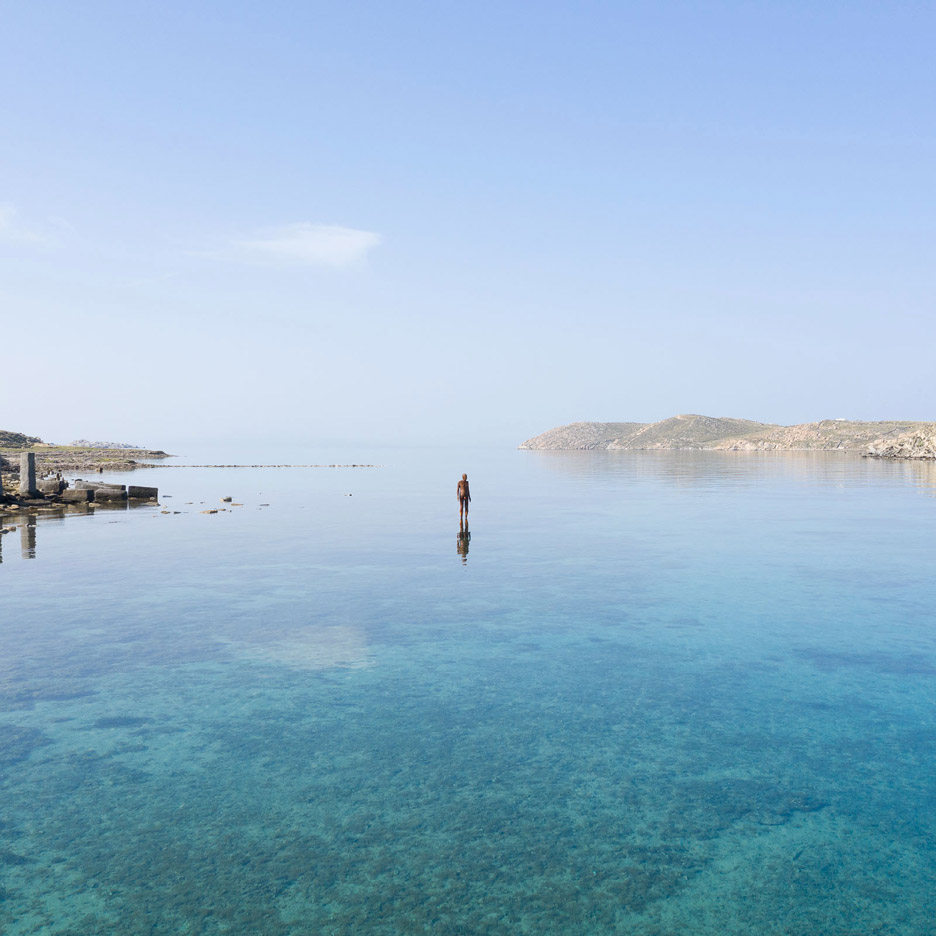

Sight exhibition on Delos by Anthony Gormley

Sight, Greece, Antony Gormley

British sculptor Antony Gormley placed 29 humanoid sculptures atop hills, inside architectural ruins and along the coast line of the Greek Island Delos near the Aegean sea. Works in Gormley's collection titled Sight were made using iron and formed abstract versions of human bodies.

The exhibition was organised in collaboration with the Ephorate of Antiquities of Cyclades and commissioned by Neon, a nonprofit art foundation.
Find out more about Sight ›


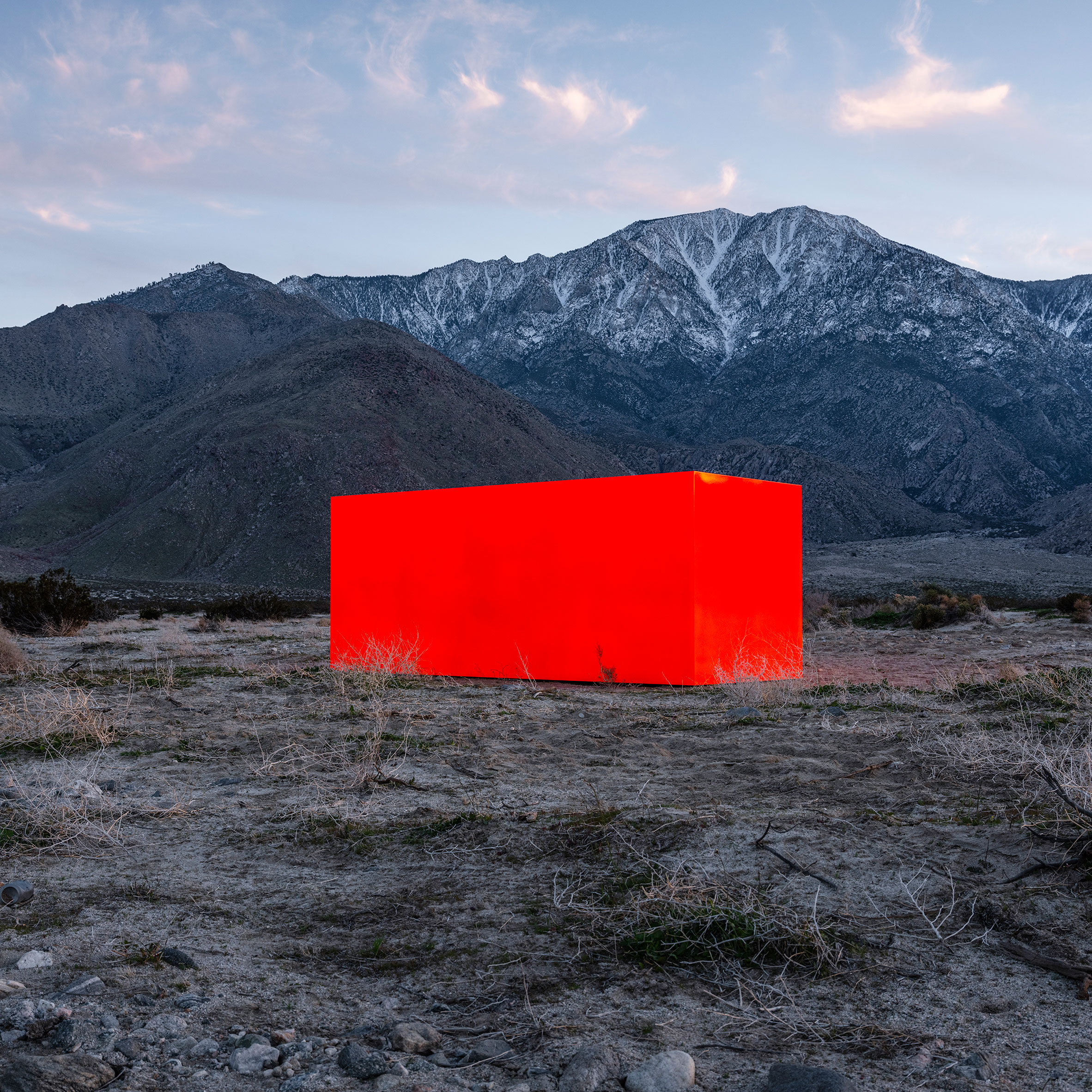
Sterling Ruby's installation for Desert X 2019

Desert X installations, USA, Sterling Ruby, John Gerrard and Pia Camil

Works by 18 artists and groups including Sterling Ruby, John Gerrard and Pia Camil were featured in a series of installations displayed at the biennial art festival Desert X in California's Coachella Valley. The arid landscape, located East of Los Angeles, is the site of the annual Coachella music festival.

Highlights of the exhibition were Sterling Ruby's monolithic rectangular block coated in fluorescent orange and Lover's Rainbow by Pia Camil, made from arched rebar, painted every colour of the rainbow. Camil realised the work as the twin for a matching sculpture located on the other side of the US-Mexico border, the piece sheds light on the current immigration policies between the United States and Mexico.

Find out more about Desert X installations ›

The post Dezeen's top 10 installations of 2019 appeared first on Dezeen.


from Dezeen https://ift.tt/2Pqf8I6

Rhomboid roof brings light into COBE's Halftime building on the Adidas campus

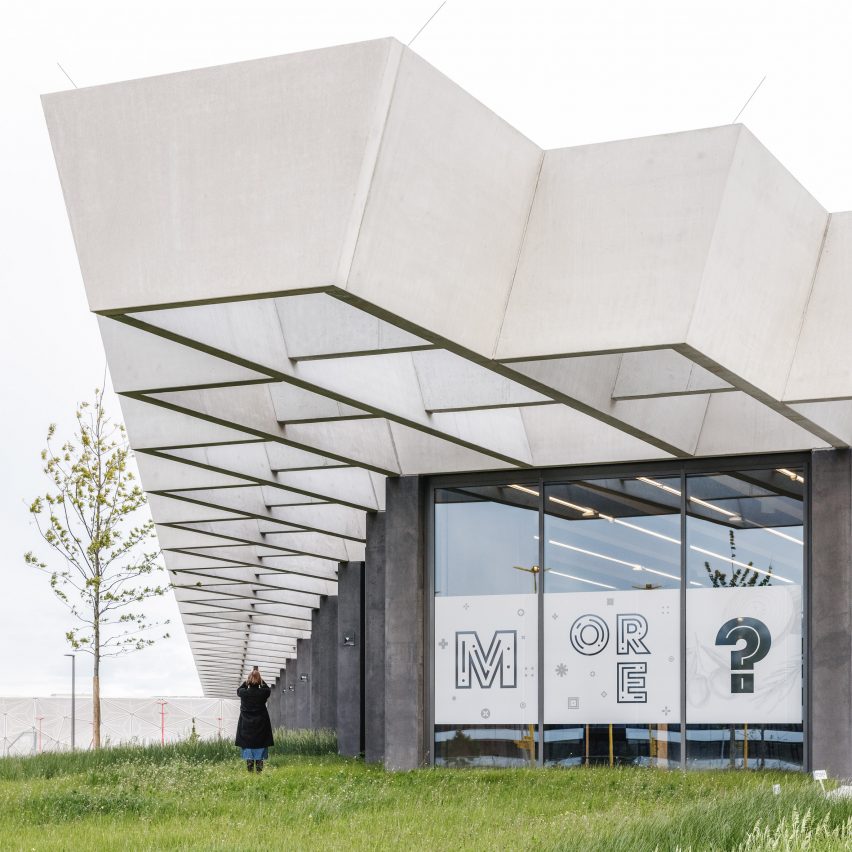
Halftime by COBE at the Adidas' World of Sports campus in Germany

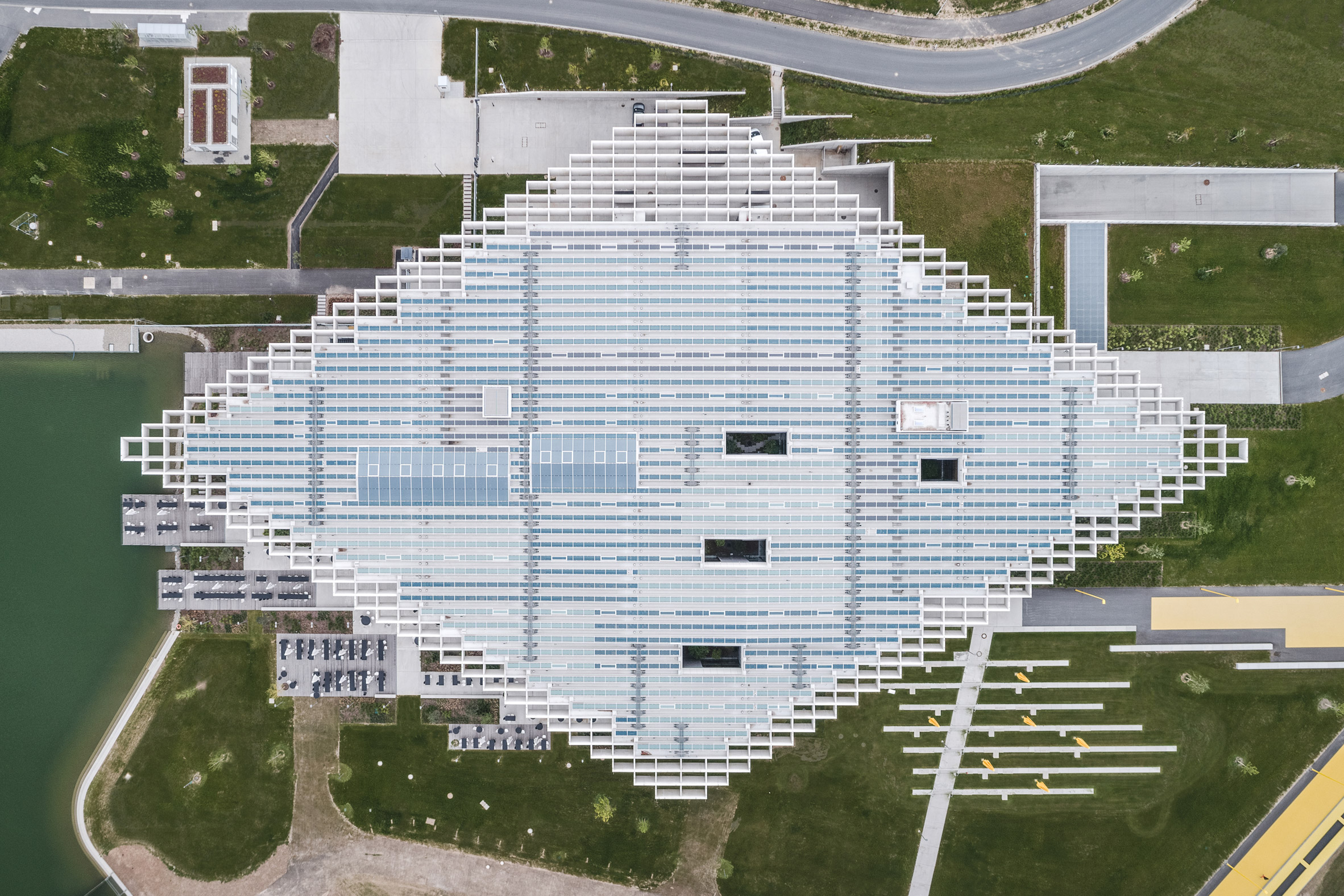
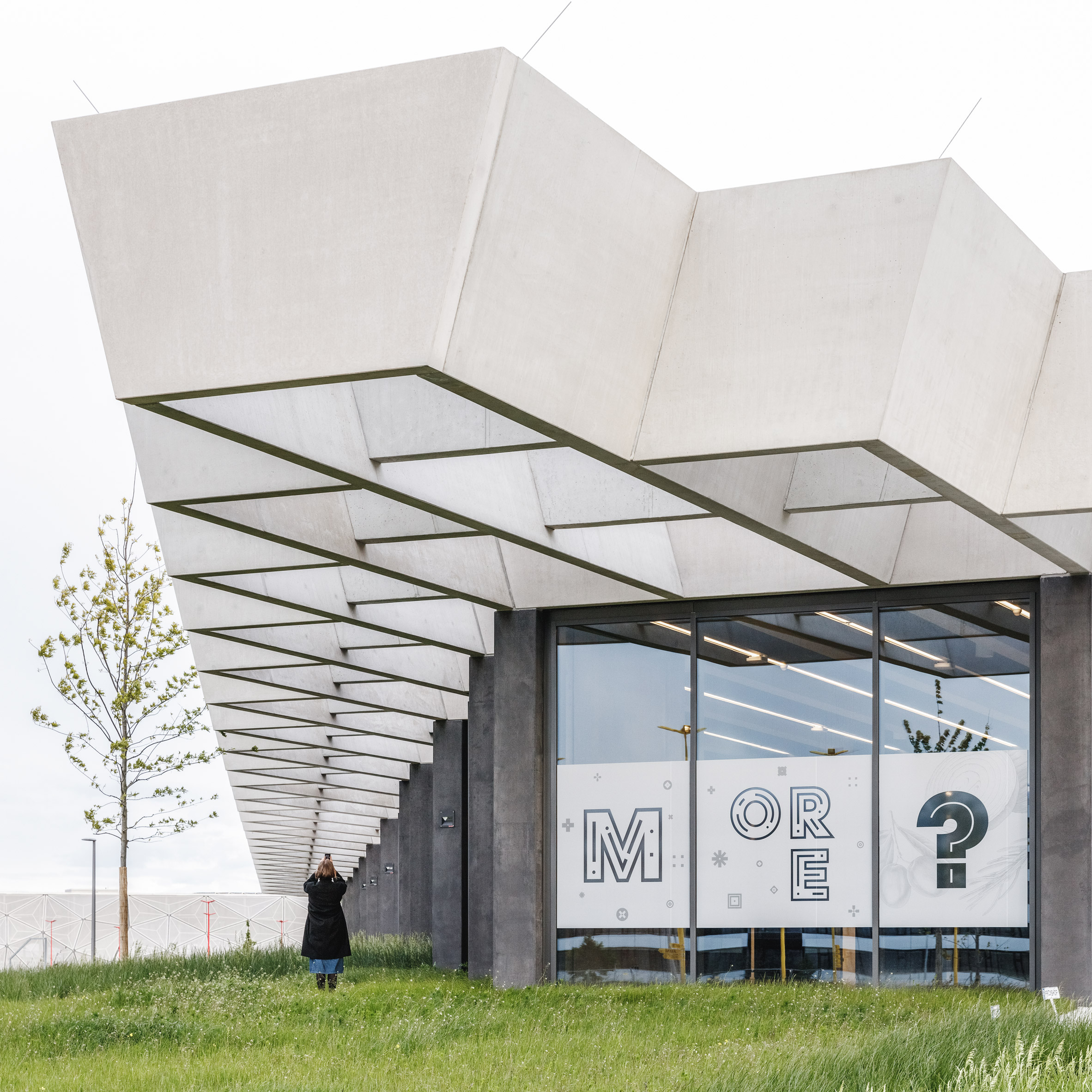
COBE has completed the Halftime building at the Adidas headquarters in Herzogenaurach, Germany, which is distinguished by a giant rhomboid-shaped roof.

The 15,500-square-metre Halftime building was designed by COBE as a multifunctional venue that provides staff, brand ambassadors and visitors to Adidas' World of Sports campus with an array of formal and informal meeting spaces.

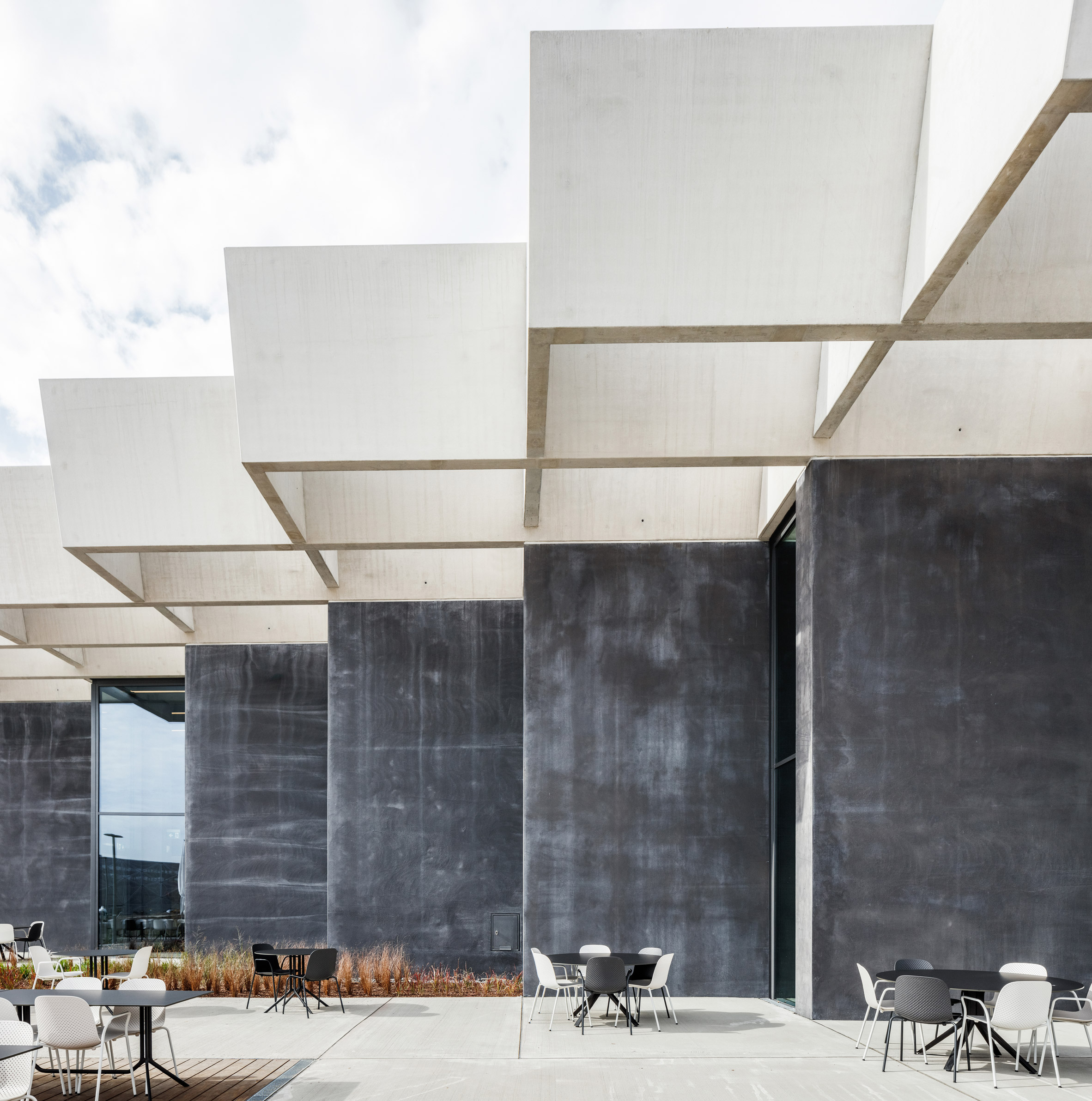
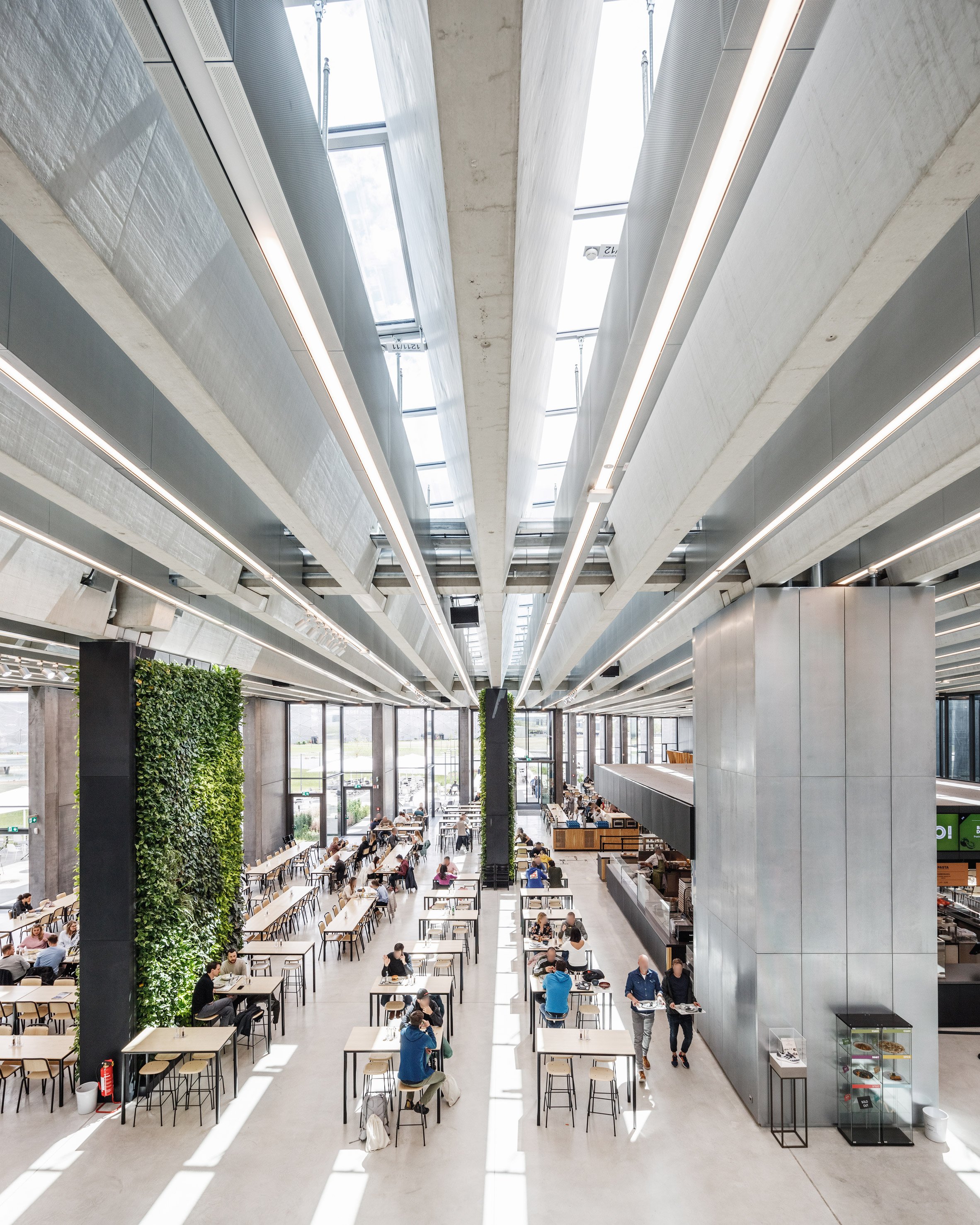
Its facilities are unified by its giant flat roof, which is made from V-shaped concrete beams and dedicates a third of its footprint to skylights that maximise natural light inside.

Halftime by COBE at the Adidas' World of Sports campus in Germany

"To accommodate the many internal and public functions that Halftime includes, we designed a versatile, multi-purpose building that brings as many of the company's activities and functions as possible together under one roof," says COBE's founder, Dan Stubbergaard.

"The huge rhomboid roof covers the entire building like a carpet, bringing staff, visitors and brand ambassadors together in the same building and thus enabling more and wider contacts.”

Halftime by COBE at the Adidas' World of Sports campus in Germany

Halftime was the winning entry in a competition held in 2014 as part of a wider masterplan for the Adidas' World of Sports campus, which is being transformed into a visitor attraction.

Its completion follows Behnisch Architekten's construction of an office and reception building designed to look like a sports stadium and the addition of bright landscaping by LOLA Landscape Architects.

Halftime by COBE at the Adidas' World of Sports campus in Germany

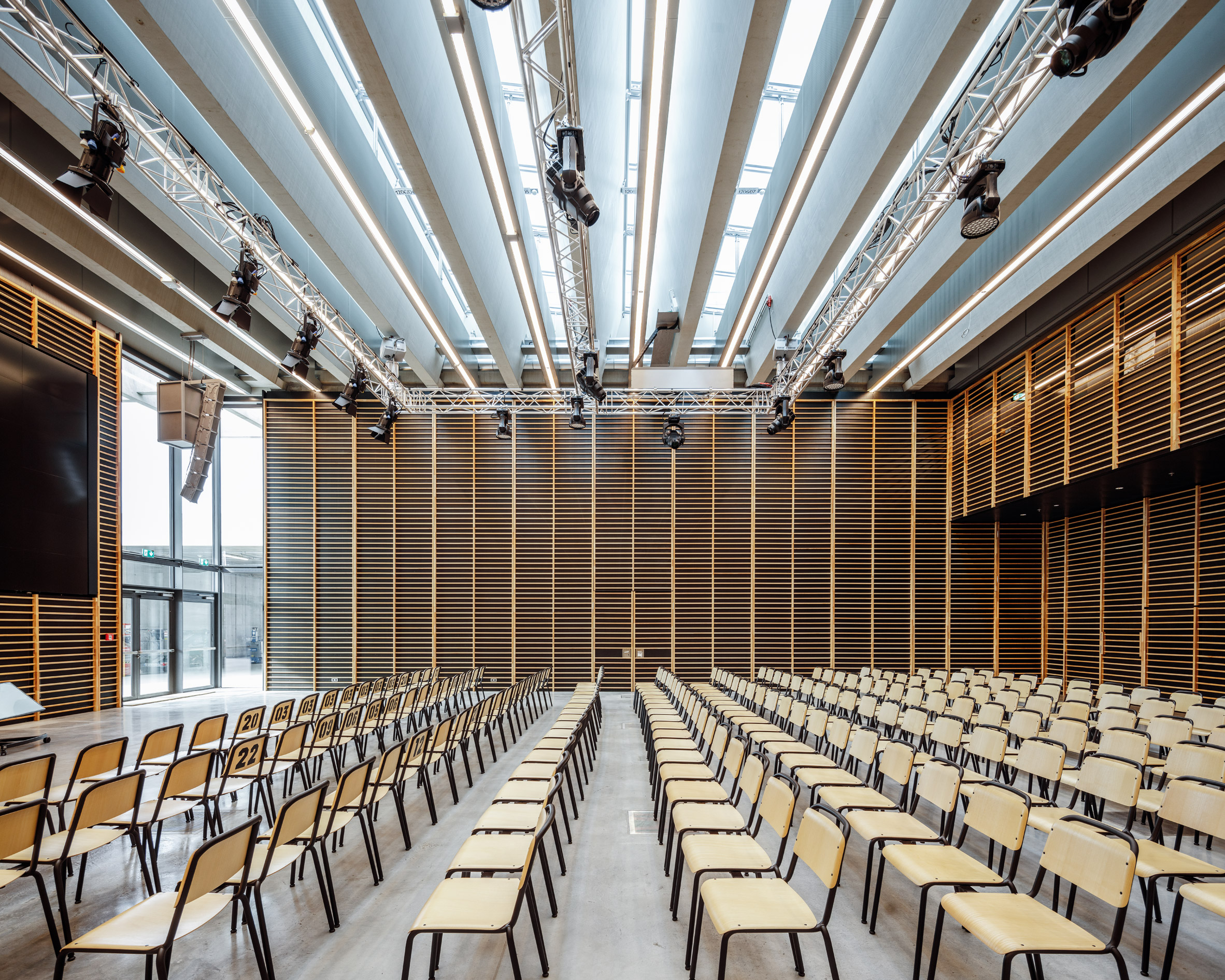
Inside, Halftime contains 12 workshops and a large event hall for 1,500 people, alongside meeting rooms, a conference centre and a large canteen.

It is complete with a showroom, which COBE incorporated to enable the company's brand ambassadors to see the latest designs, collections and ideas.

Halftime by COBE at the Adidas' World of Sports campus in Germany

According to COBE, the building was designed to echo Adidas' culture and has a variety of playful, dynamic and "unusual spaces inside.

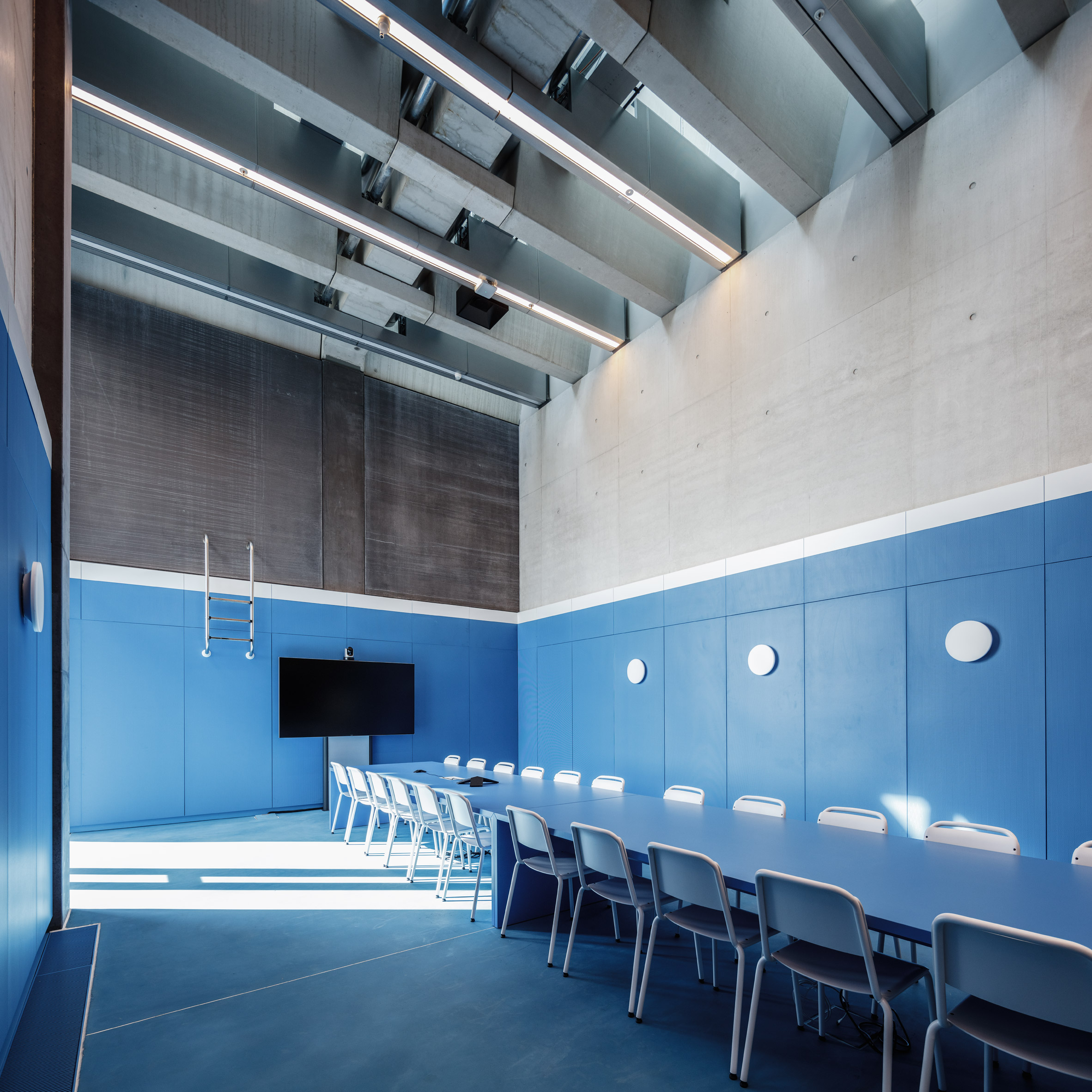
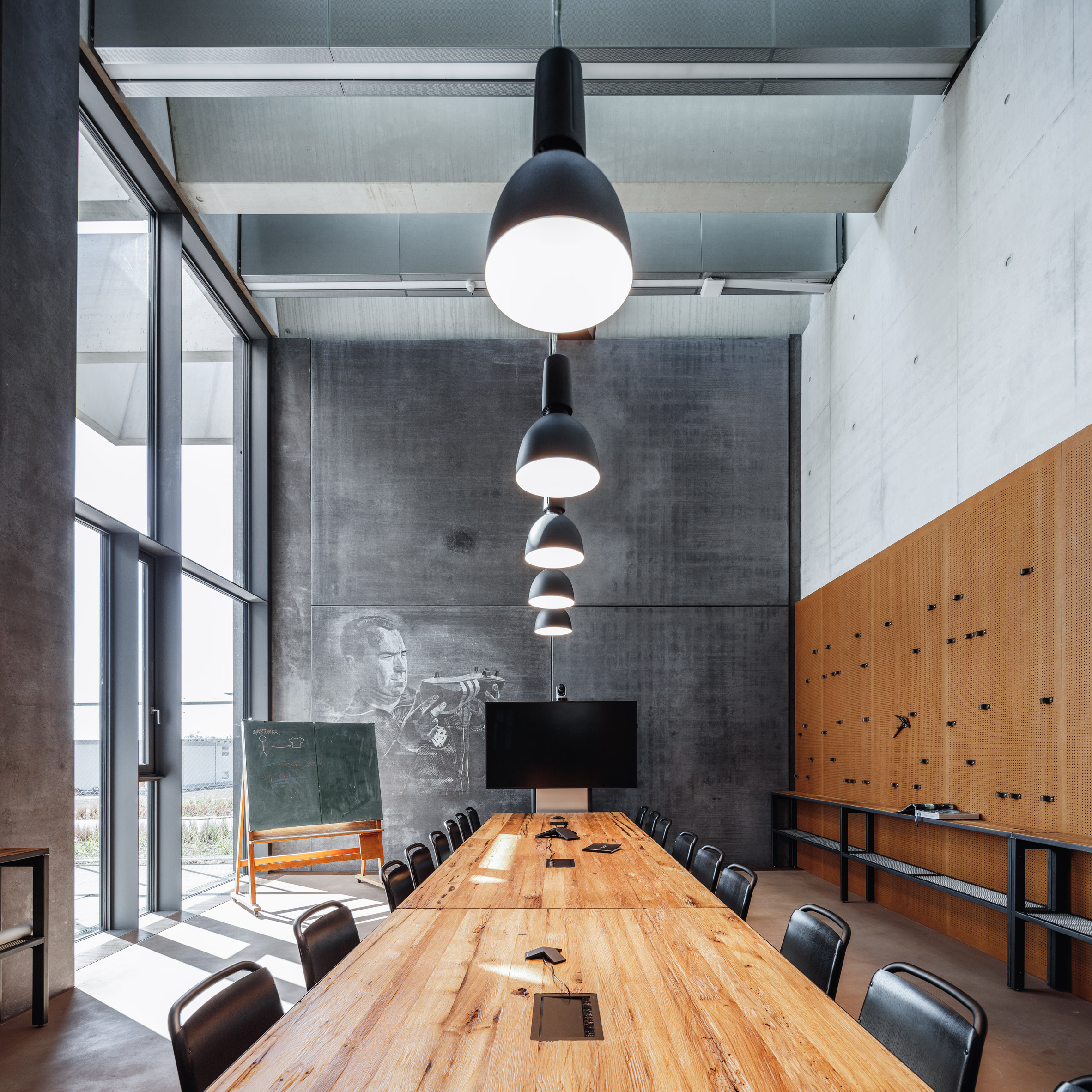
This includes two meeting rooms that resemble a swimming pool and the Adidas founder's old workshop, and main event space, which has wooden wall bars to evokes the interior of a school gym.

Halftime by COBE at the Adidas' World of Sports campus in Germany

"A key task was to create the right atmosphere to reflect the unique Adidas culture. We did this, in part, by matching the different needs with different sports, making room for big ideas and large gestures as well as a touch of humor," added Stubbergaard.

"In addition to the event hall, which is designed as a gym, you can hold meetings at the bottom of a bright blue swimming pool, in a locker room or in the Adidas founder Adi Dasler's old workshop, complete with tools."

Halftime by COBE at the Adidas' World of Sports campus in Germany

COBE also sought to create a strong connection with the outside throughout Halftime. Interior finishes use natural materials and have floor-to-ceiling windows, while planted walls and conservatories with trees and plant beds are dotted throughout.

As part of the project, COBE also designed a chair for the building in collaboration with the Danish design brand HAY that is used throughout.

Halftime by COBE at the Adidas' World of Sports campus in Germany

COBE is an architecture firm founded in Copenhagen in 2006 by the architect Dan Stubbergard. Halftime is the the studio's first completed project in Germany.

Other recent projects by the practice include the Roskilde Festival Folk High School that is built in an abandoned factory, the extension to the Danish Red Cross headquarters with an "urban living room", and a wedge-shaped library in Copenhagen.

Photography is by Rasmus Hjortshøj of COAST.


Project credits:

Competition team: COBE, CLMAP, Knippers Helbig, Transsolar, COBE Berlin
Design and execution team: ARGE COBE & CLMAP (lead consultant), Knippers Helbig, Fact, Bartenbach, Soda, PMI, HMP
Wayfinding and signage: COBE & EIGA Interior design: COBE

The post Rhomboid roof brings light into COBE's Halftime building on the Adidas campus appeared first on Dezeen.


from Dezeen https://ift.tt/34nV5hA

Yinka Ilori creates brightly coloured Christmas tree for London hotel

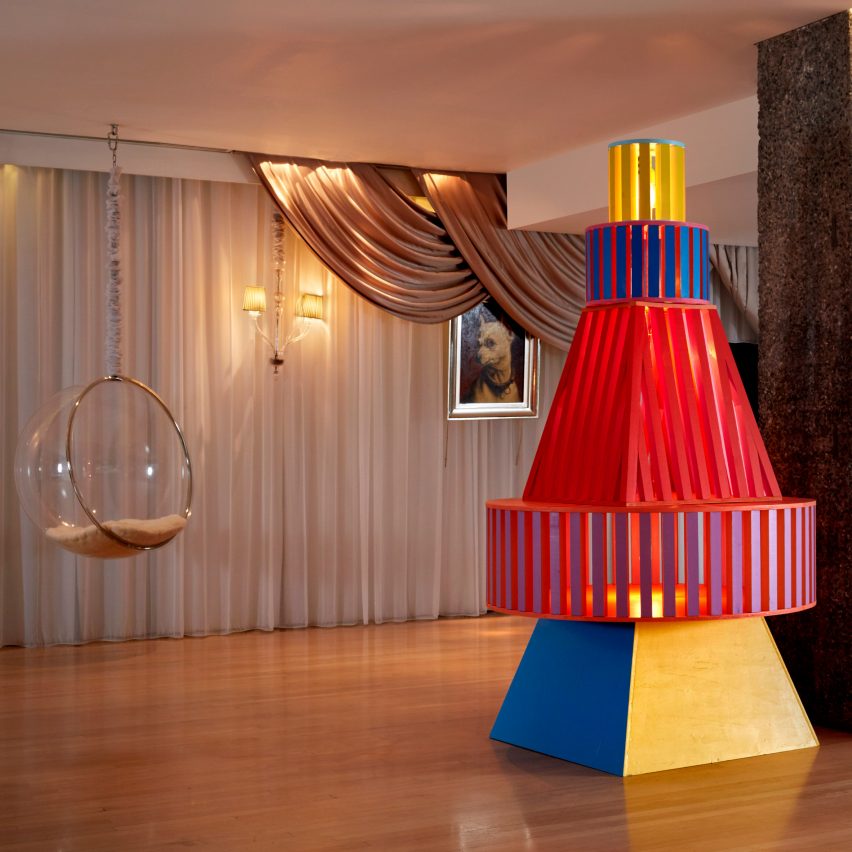
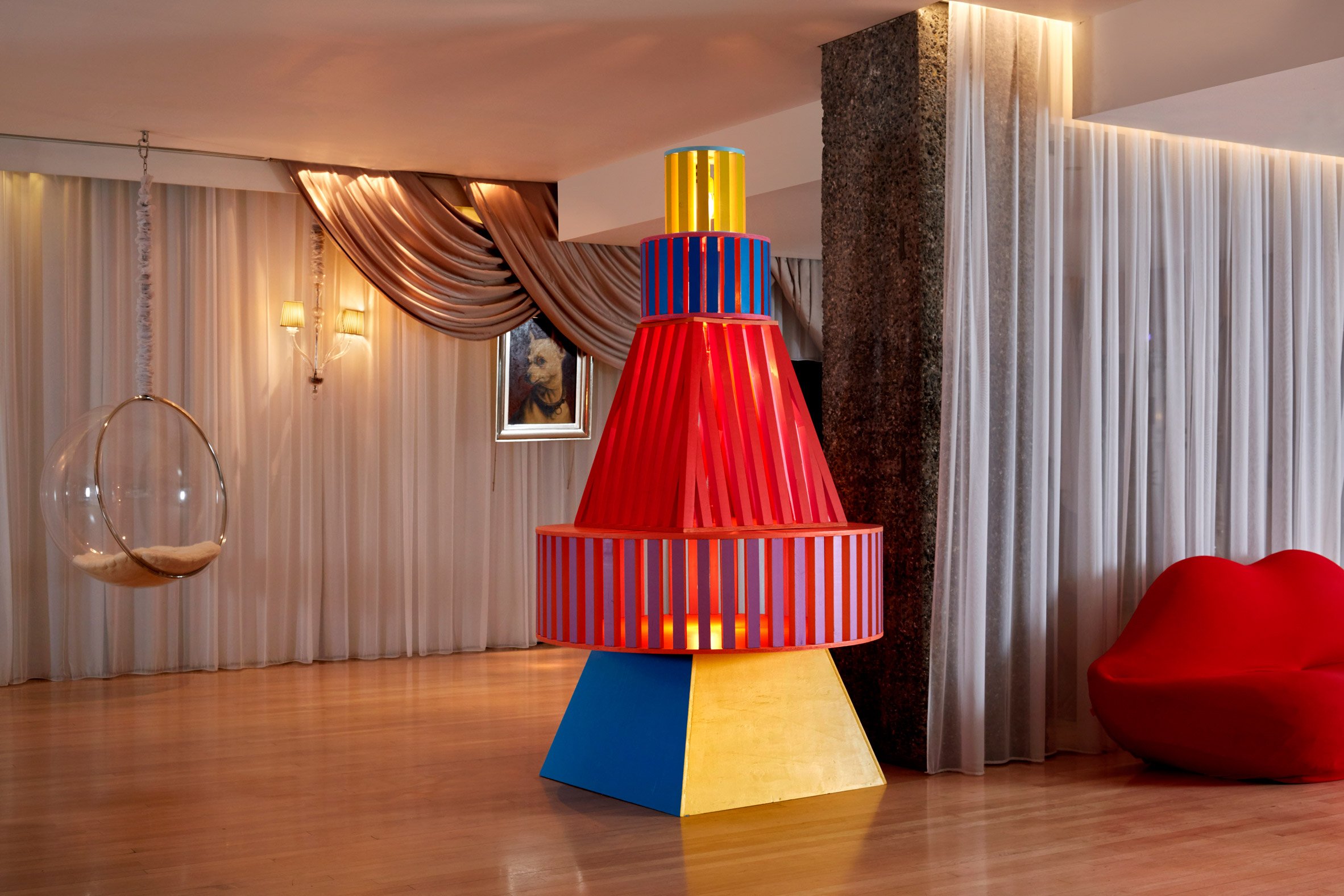
Yinka Ilori Christmas tree installation at Sanderson London hotel

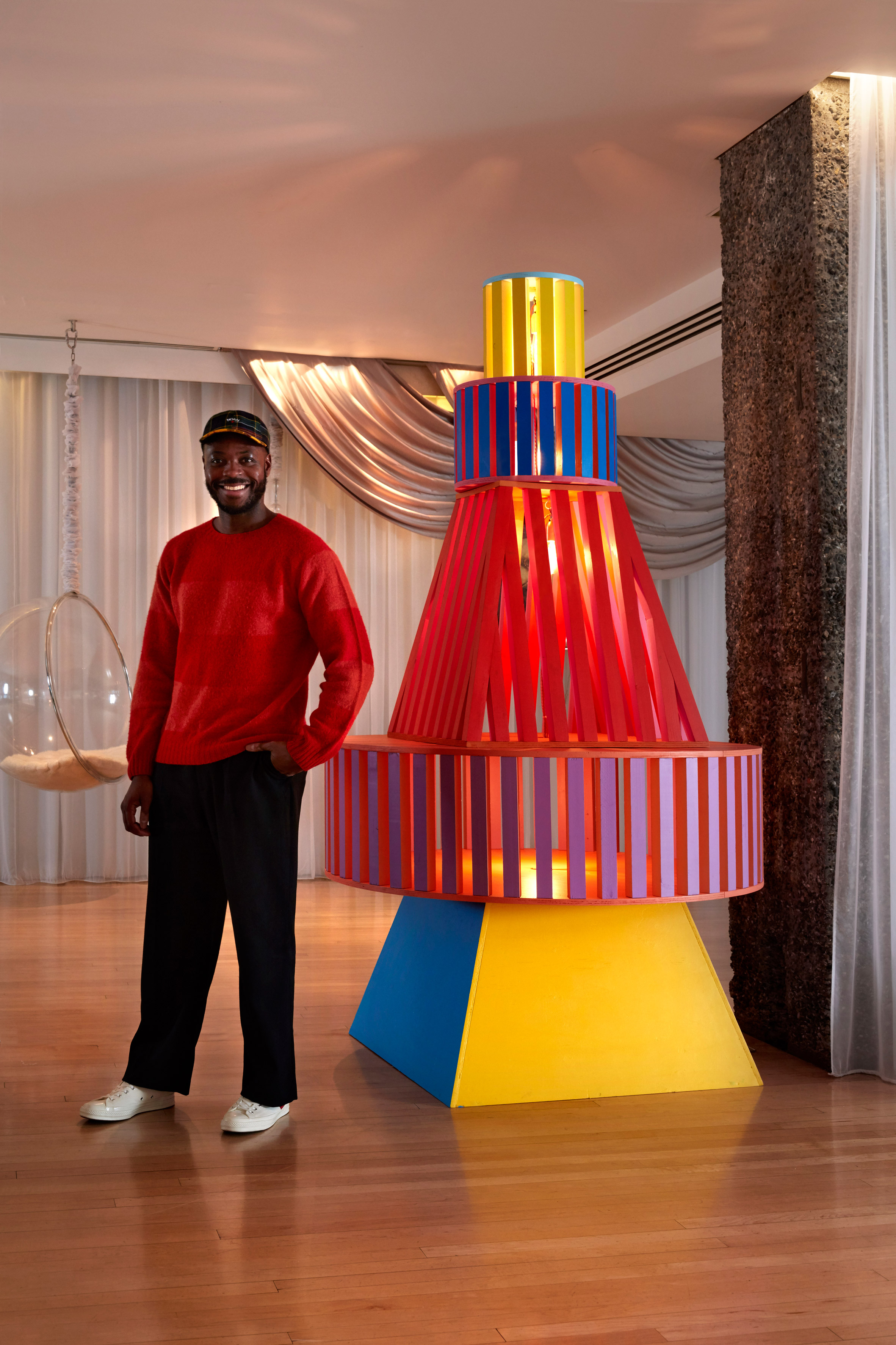
Yinka Ilori has rounded off a busy year by designing a stylised Christmas tree for London's Sanderson hotel, featuring his signature colourful and graphic aesthetic.

Ilori designed the 2.5-metre-tall Christmas tree to greet guests as they enter the lobby of the Philippe Starck-designed hotel on Berners Street.

The sculptural installation comprises five geometric forms that are layered to create a simplified representation of a Christmas tree. The design of the tree is also intended to evoke a stack of colourfully wrapped presents.

Yinka Ilori Christmas tree installation at Sanderson London hotel

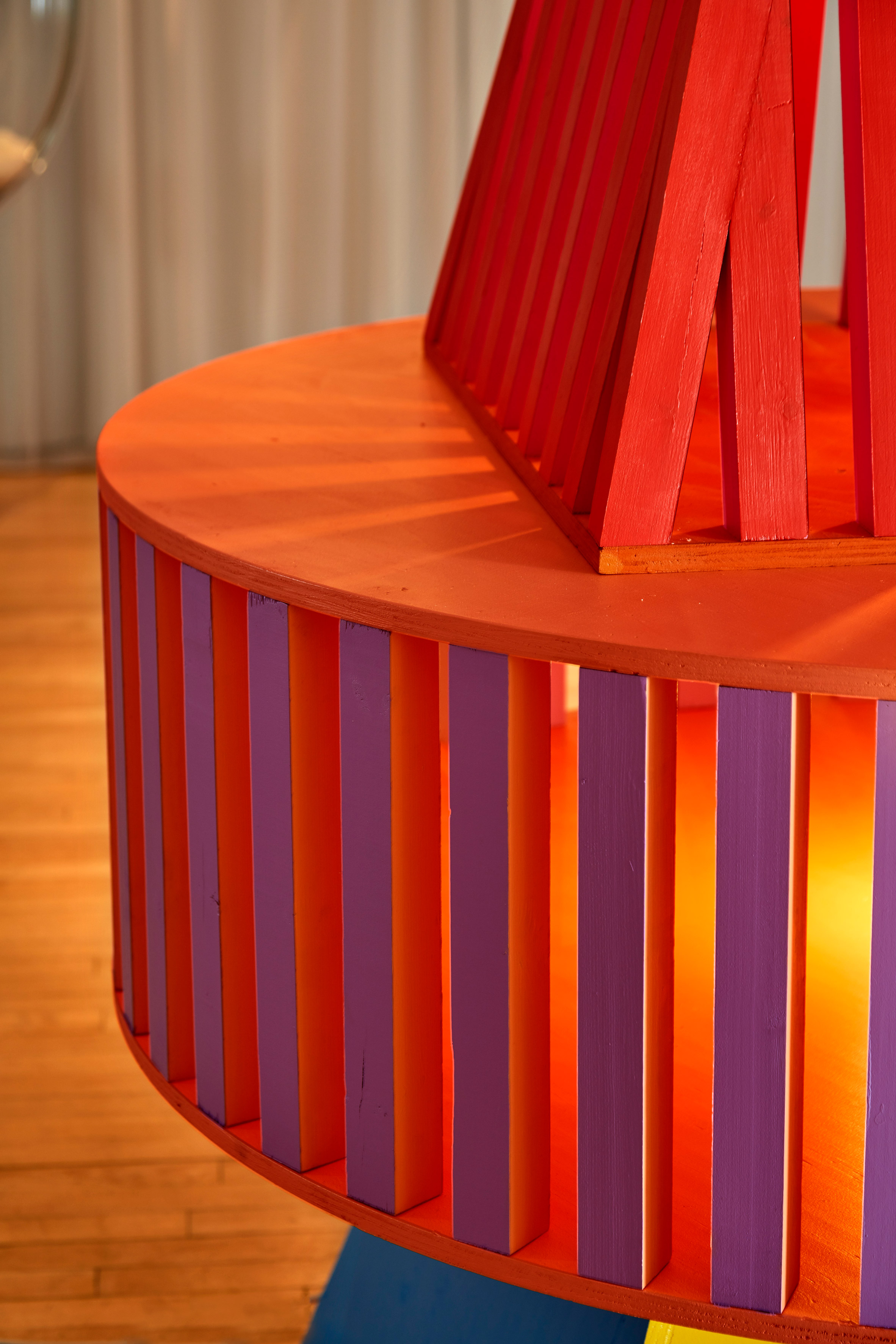
Each element is rendered in a different colour, with adjacent surfaces on some of the components also contrasting to enhance the three-dimensionality of the construction.

Ilori designed the installation to be made using standard industrial materials including pieces of sawn timber and plywood sheets.

The solid base contains a light source that illuminates the centre of the open structure. Light passing through gaps in the structure casts shadows on the surrounding surfaces.

The tree occupies a prominent spot in the lobby of the West End hotel, which was completely refurbished by Starck in 2000. The heritage-listed 1950s building was originally a company headquarters and retains many of its original features.

The Christmas tree is the latest in a long list of commissioned projects in the capital that has seen the designer revitalise an unloved railway bridge, co-create a multicoloured pavilion at Dulwich Picture Gallery, and handle the design of an exhibition celebrating black creativity at Somerset House.

Yinka Ilori Christmas tree installation at Sanderson London hotel

Ilori also participated in the judging panel for the 2019 Dezeen Awards and gave an interview in which he expressed concern about being merely as a colourist rather than a multidisciplinary designer.

His other projects have included a geometric-patterned playground installation for Pinterest and a collection of brightly coloured chairs created together with volunteers from a social enterprise.

Yinka Ilori Christmas tree installation at Sanderson London hotel

Designers are often asked to create imaginative Christmas tree designs in public places.

Previous examples include a latticed pavilion with a stepped internal form evoking a typical tree's silhouette, an installation made from illuminated light fixtures, and a full-sized Christmas tree that appeared to be encased in ice.

The post Yinka Ilori creates brightly coloured Christmas tree for London hotel appeared first on Dezeen.


from Dezeen https://ift.tt/2YR6e9i

See faceted architecture and design on our new Pinterest board

Cybertruck by Tesla

This week, we've made a new Pinterest board to showcase faceted architecture and design. The board features the Tesla Cybertruck, which was revealed last month, as well as numerous other angular buildings and design projects. Follow Dezeen on Pinterest or visit our faceted architecture and design board to see more.

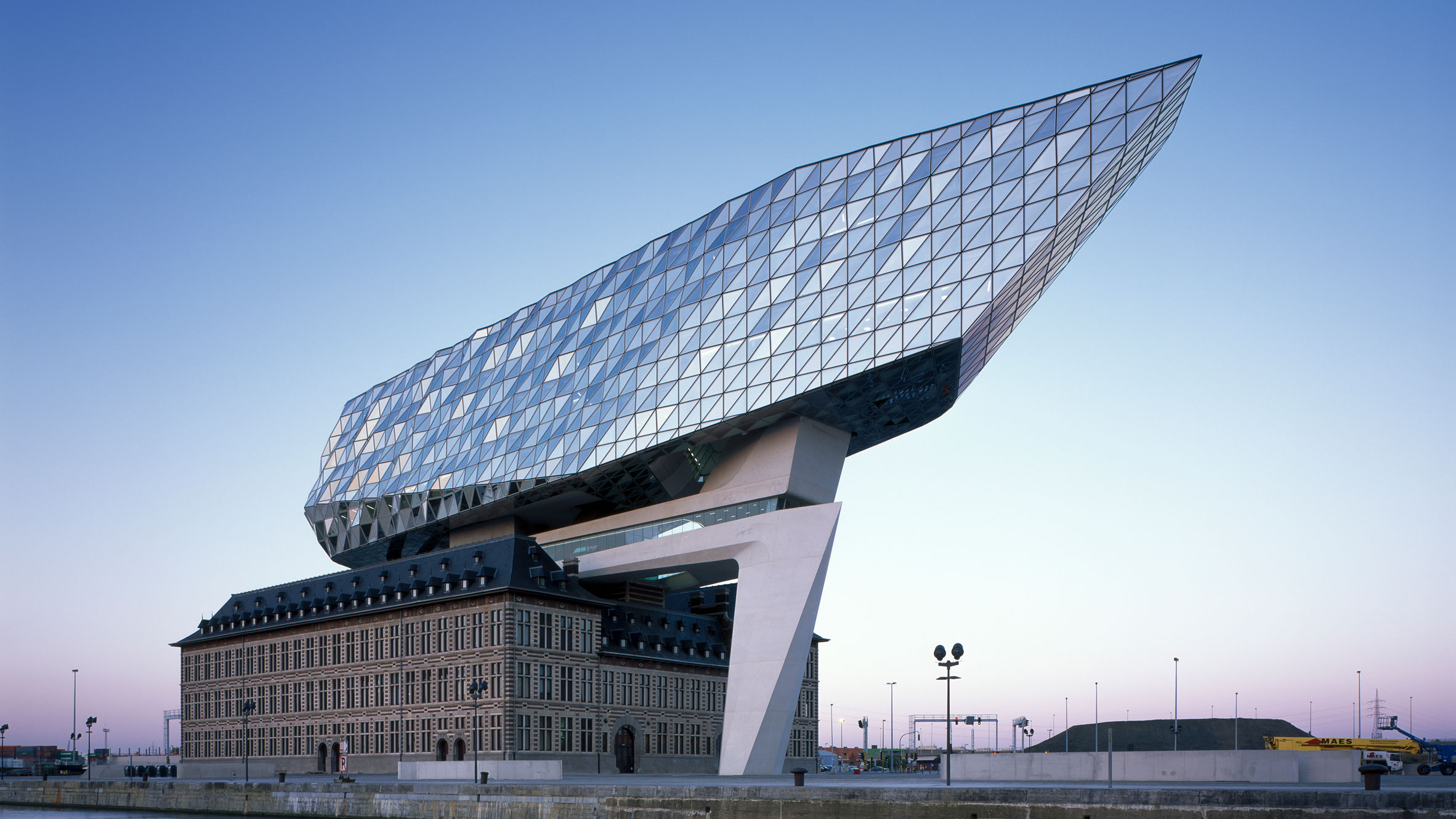
Port House by Zaha Hadid Architects
Zaha Hadid Architects' glass volume on Port House is an example of facets in architecture on our new board

The board features several projects designed by Zaha Hadid Architects including the angular facades of the studio's extension to the Port House in Antwerp and an oil research centre in Riyadh.

Ice Shoes by United Nude
Design projects on our board includes Ice Shoes, with a multifaceted platform designed as if sculpted from ice

It also features faceted products including Tom Dixon's Y Chair and a pair of eight-inch 3D-printed heels designed by United Nude.

Dezeen's Pinterest account features thousands of images, organised into hundreds of boards. Follow us on Pinterest to keep up to date with our latest pins.

The post See faceted architecture and design on our new Pinterest board appeared first on Dezeen.


from Dezeen https://ift.tt/2YMZc5w

Saturday, 14 December 2019

CAN adds blue and white striped extension to London house

A Brockley Side London house extension and renovation by CAN

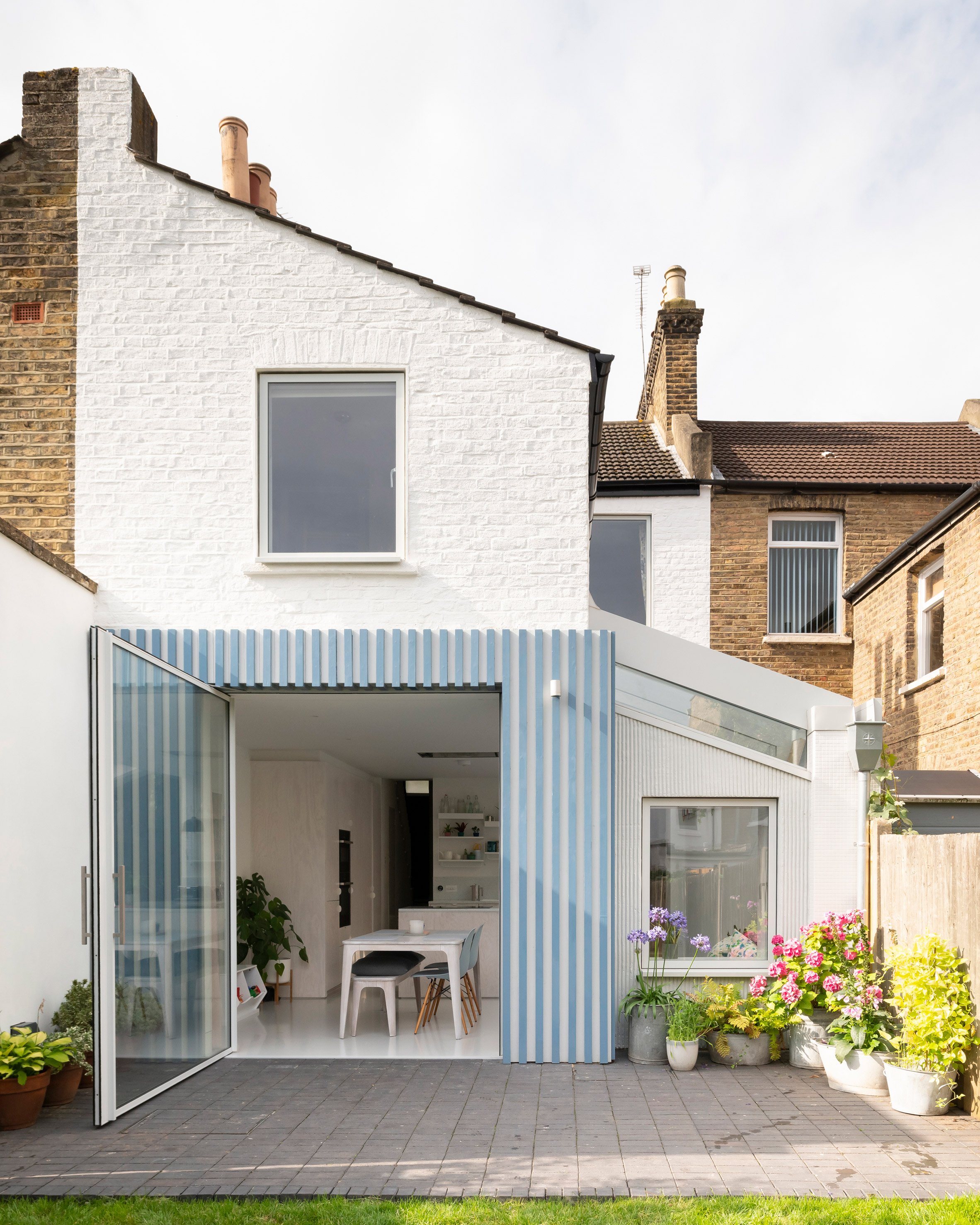
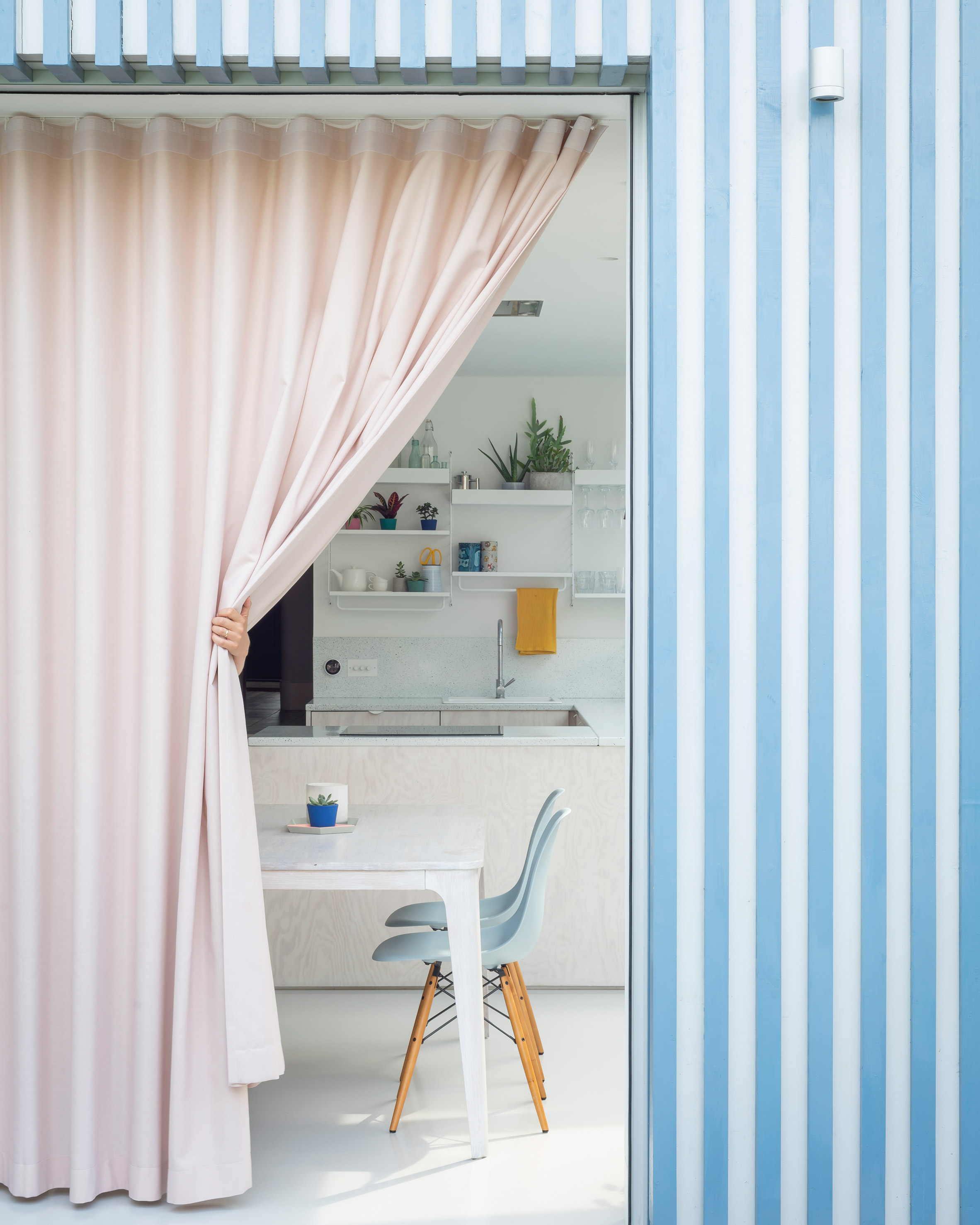
Architecture studio CAN has added a blue and white striped extension to a Victorian terrace in London, which features a statement pink curtain.

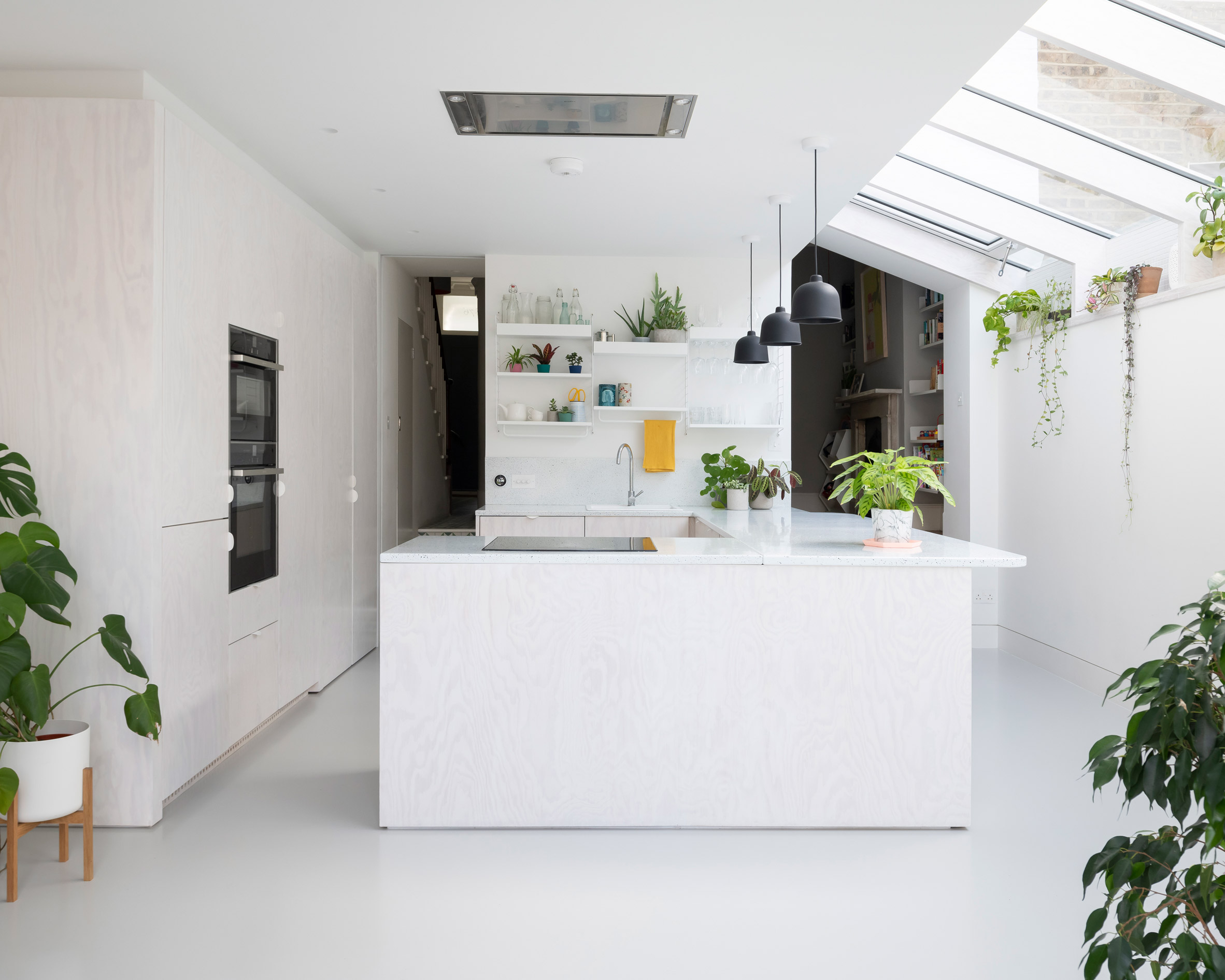
CAN extended and renovated the house's kitchen adding a side extension that expanded the room to fill the entire width of the site and a small rear extension. The studio named the project A Brockley Side.

A Brockley Side London house extension and renovation by CAN

The studio used different materials to define the three volumes – the original building and two extension – on the rear facade.

The small white rear extension has slatted-timber stripes painted in blue to create a stripped look. The colour was chosen to complement both the exterior patio and resin floor inside.

"The blue was a happy medium between the dark blue patio and light grey used elsewhere," Mat Barnes, founder of CAN, told Dezeen.

A Brockley Side London house extension and renovation by CAN

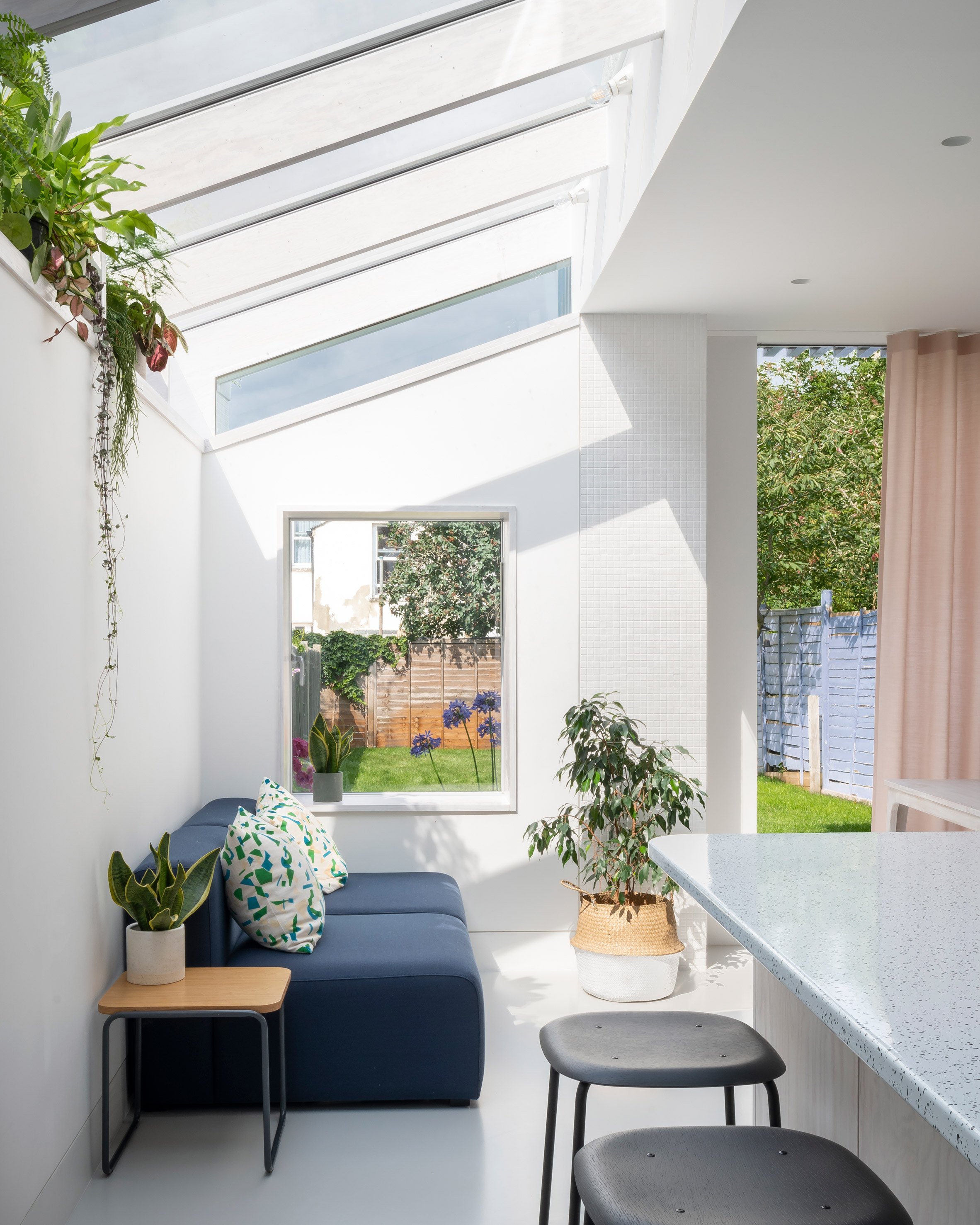
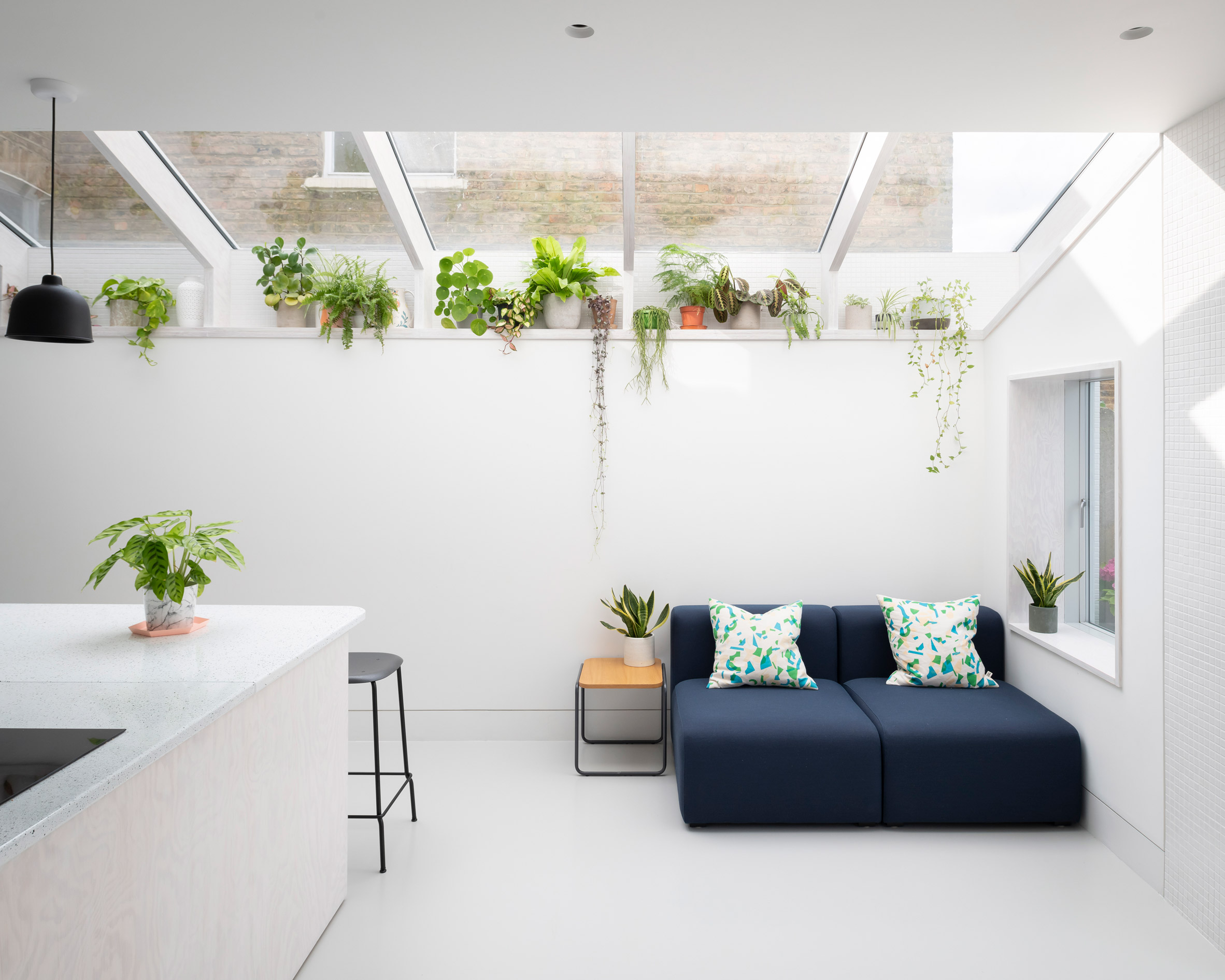
The side extension, which has a glazed roof, is finished with a white ribbed facade. Its boundary wall is clad in square, glossy white tiles, which continue inside behind a shelf of plants that runs towards the back of the extension.

The third volume is the original house, which is made from the original brick masonry painted white.

A Brockley Side London house extension and renovation by CAN

The studio installed a large, glazed pivot door at the rear of the room to give unobstructed views to the garden.

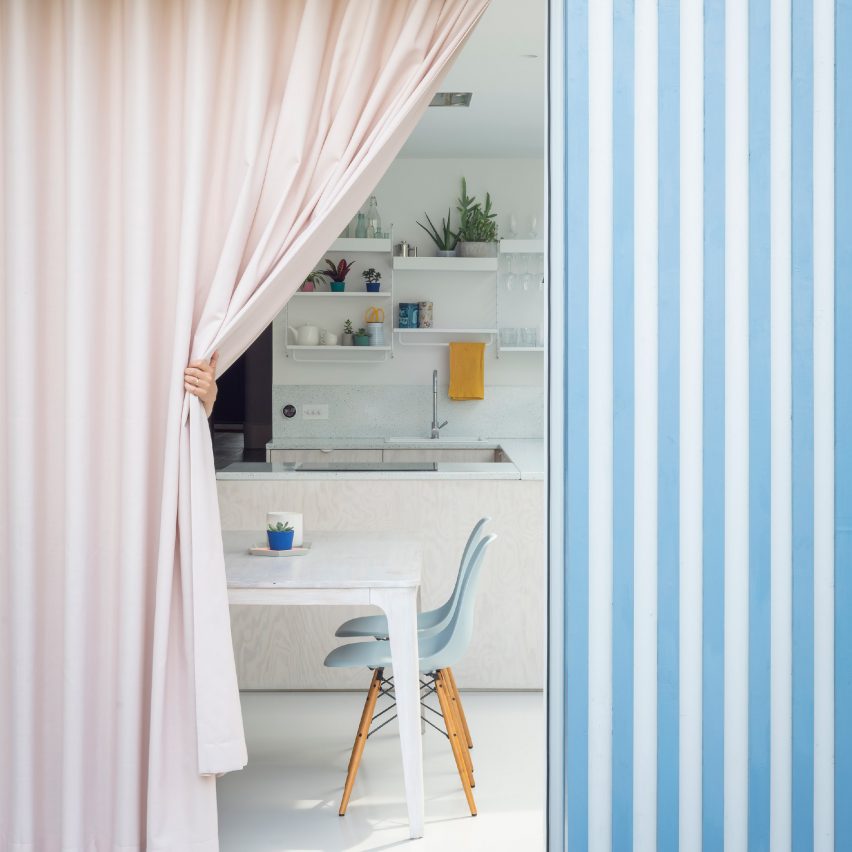
A pink curtain can be drawn for shading and privacy, and adds a "visual counterpoint" to the extension's pastel colour palette.

A Brockley Side London house extension and renovation by CAN

On the wall beside the pivot door, the studio placed a strip of tiles to reference where the previous exterior wall used to be.

"We wanted to visually separate the new from the existing when you look down the new side extension towards the garden," Barnes explained. "The tiles also frame the window better and the glossy finish bounces light around."

A Brockley Side London house extension and renovation by CAN

The existing stepped decking on the side of the previous extension was removed, and the kitchen and dining area extended to meet the garden wall.

A new glazed roof with vertical fins encloses the top of the space.

A Brockley Side London house extension and renovation by CAN

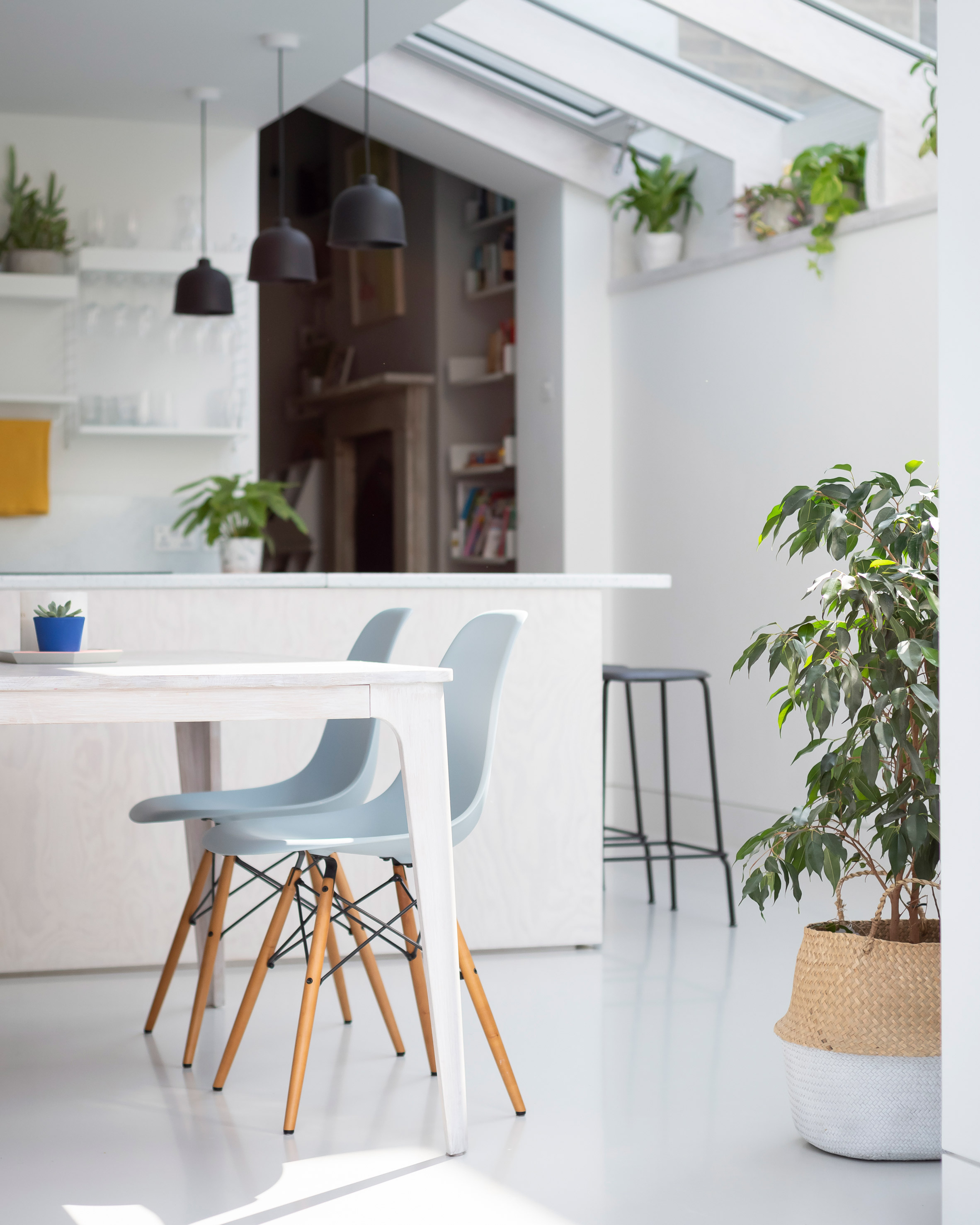
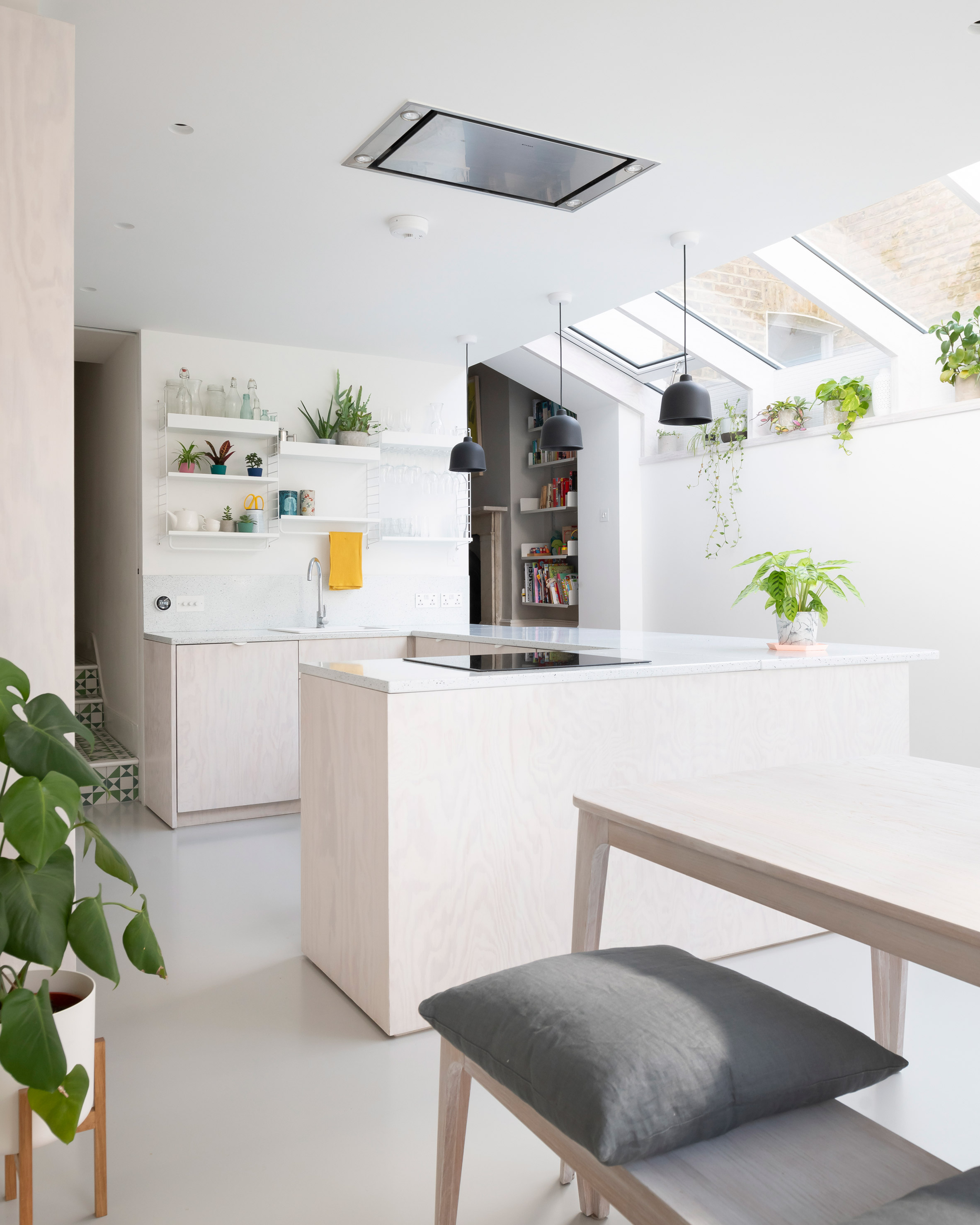
The kitchen counter was relocated to the centre of the extension and faces a new breakfast perch. The expansion also made room for sofa seating under the glazed roof.

Throughout the space the floor was sunk to be level with the patio, giving the extension a higher ceiling height than the main house.

A Brockley Side London house extension and renovation by CAN

For the interior, whitewashed Douglas fir, which has naturally occurring pink hues, has been used for the furniture, cupboards and roof fins. CAN chose the pink curtain to match the fir, whilst contrasting the blue panels on the exterior.

A white enamel top with a black-splatter pattern sits on top of the breakfast perch and kitchen counter.

Other London house extensions featurning Douglas-fir interiors include the black timber-clad A House for Four and Douglas House, which is named for the abundant use of the material.

Photography is by Jim Stephenson.

The post CAN adds blue and white striped extension to London house appeared first on Dezeen.


from Dezeen https://ift.tt/2tmooV7