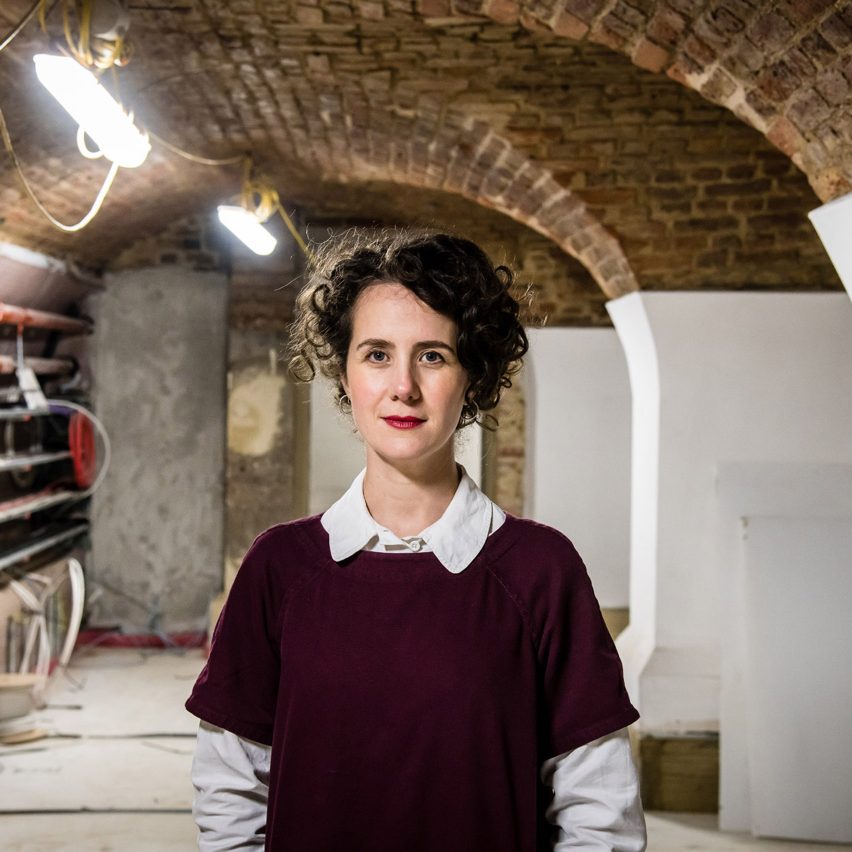
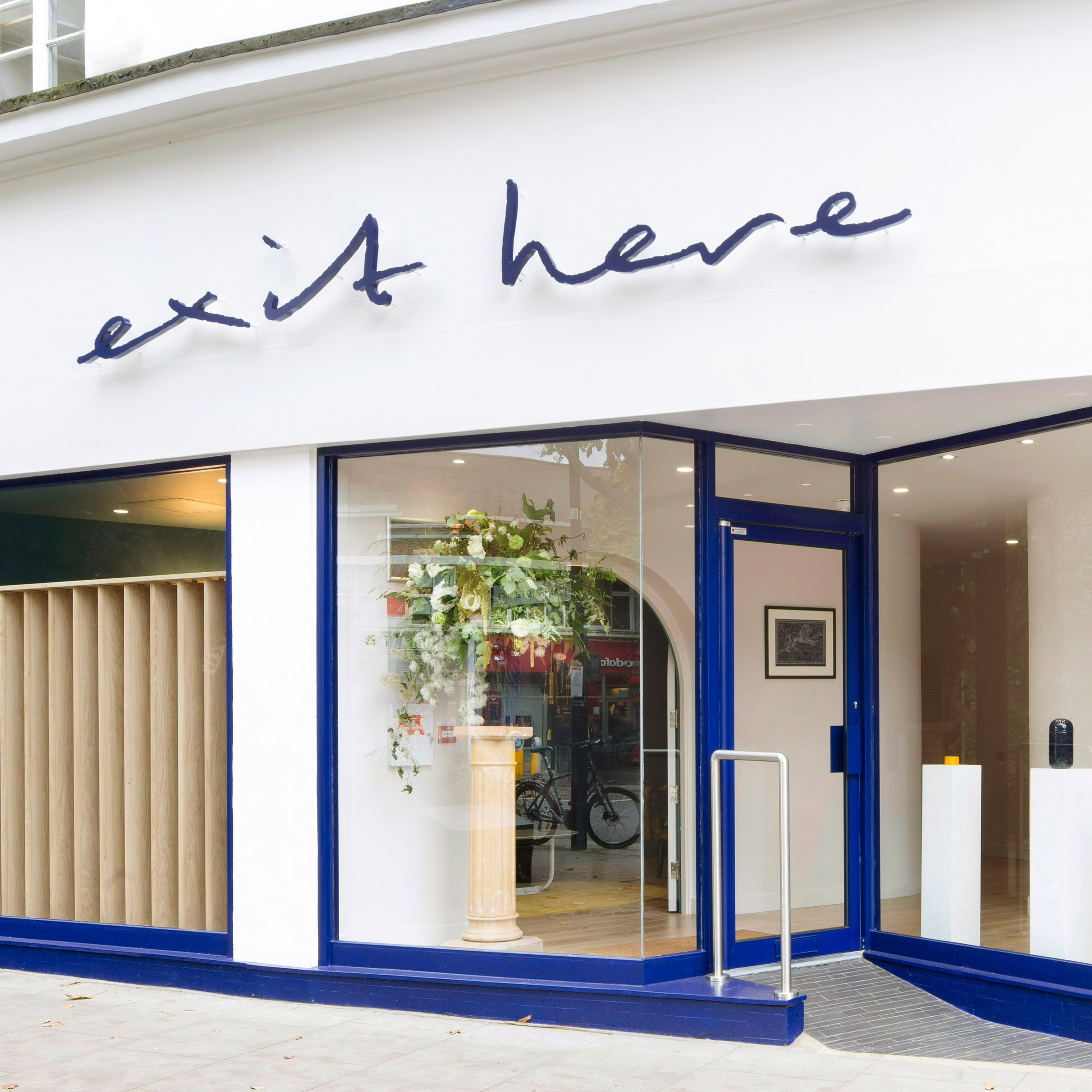
As London's Geffrye Museum sets to reopen as the Museum of the Home for summer 2020, director Sonia Solicari explains why she thinks the history of interiors is "absolutely relevant" in contemporary society.
After receiving an £18.1 million capital development fund, the Geffrye Museum in east London's Hoxton neighbourhood will reopen its doors in 2020 as the Museum of the Home.
Director Sonia Solicari says that the museum – which will present domestic artefacts that date from 1600 to the present day – is opening at an opportune moment.
"The past has got quite a lot to offer in terms of contemporary debates," Solicari told Dezeen in an exclusive interview.
"There's lots of people discussing climate change, and rightly so – but actually, more and more people are looking to the past for more eco-friendly, sustainable solutions to everything from cleaning products to furniture," she continued.
"And it's wonderful that we've got history to draw upon in terms of our collections and our expertise, because I think that is what adds richness to some debates."
Redesign will "bring more of museum into public use"
History is also playing a key role in the architectural redevelopment of the heritage-listed museum building, which comprises a series of 300-year-old almshouses – charitable residences originally built to accommodate poor or vulnerable members of the community.
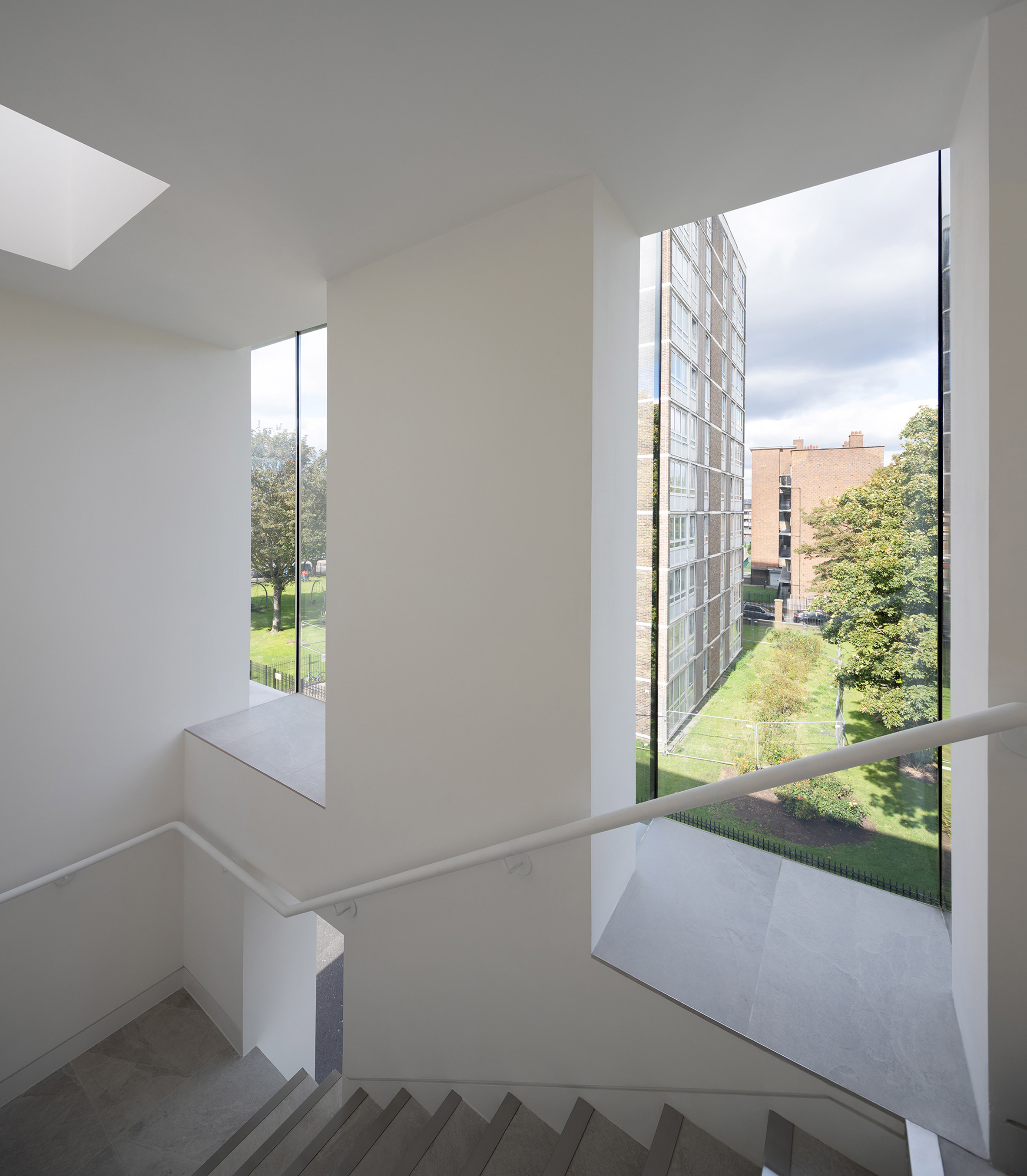
Camden-based practice Wright & Wright Architects is carrying out a delicate restoration, updating its outdated and damp-damaged rooms so that the museum's collection can be better displayed.
Solicari, who was previously head of London's Guildhall Art Gallery and curator of ceramics and glass at the V&A, says the process has "definitely been a challenge".
"I have to say this is one of the hardest buildings I've ever had to curate," she continued.
"It was all about shoring up this amazing building for the next few hundred years, but also bringing more of it into public use, so that people could enjoy the whole site."
"There were windows and doors and quirky bits, nothing measured the same – but that's the beauty of it as well. It isn't that 'white cube', it's been a home," she added.
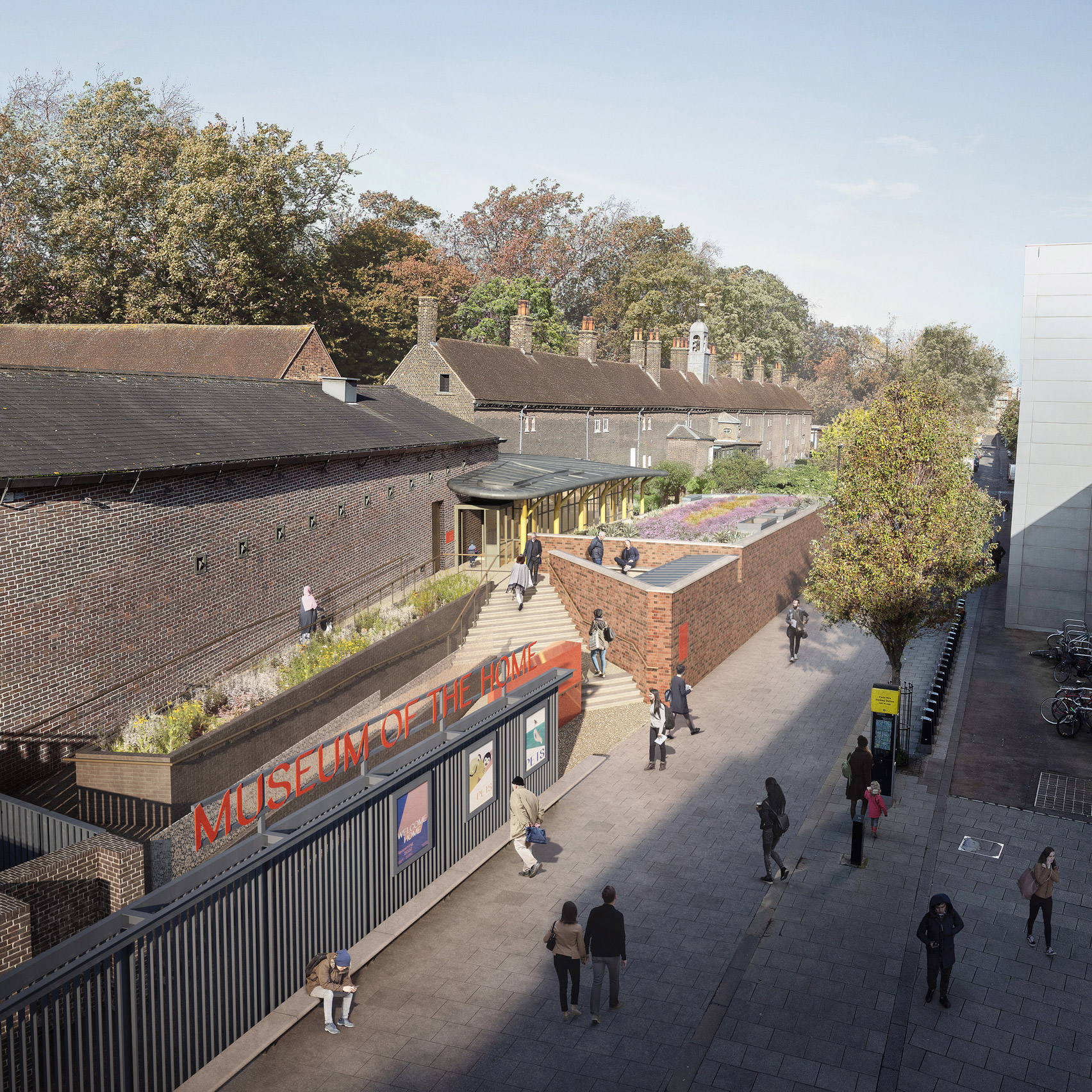
The most significant addition to the building is the creation of The Home Galleries, which are being constructed directly beneath the almshouses.
The museum's Rooms Through Time – which chronologically present model interiors from different time periods – will remain, with an additional Room of Now that will be updated through the year.
The Home Galleries will be "much more thematic and discursive", presenting an array of photographs, furnishings, audio recordings, textiles and more.
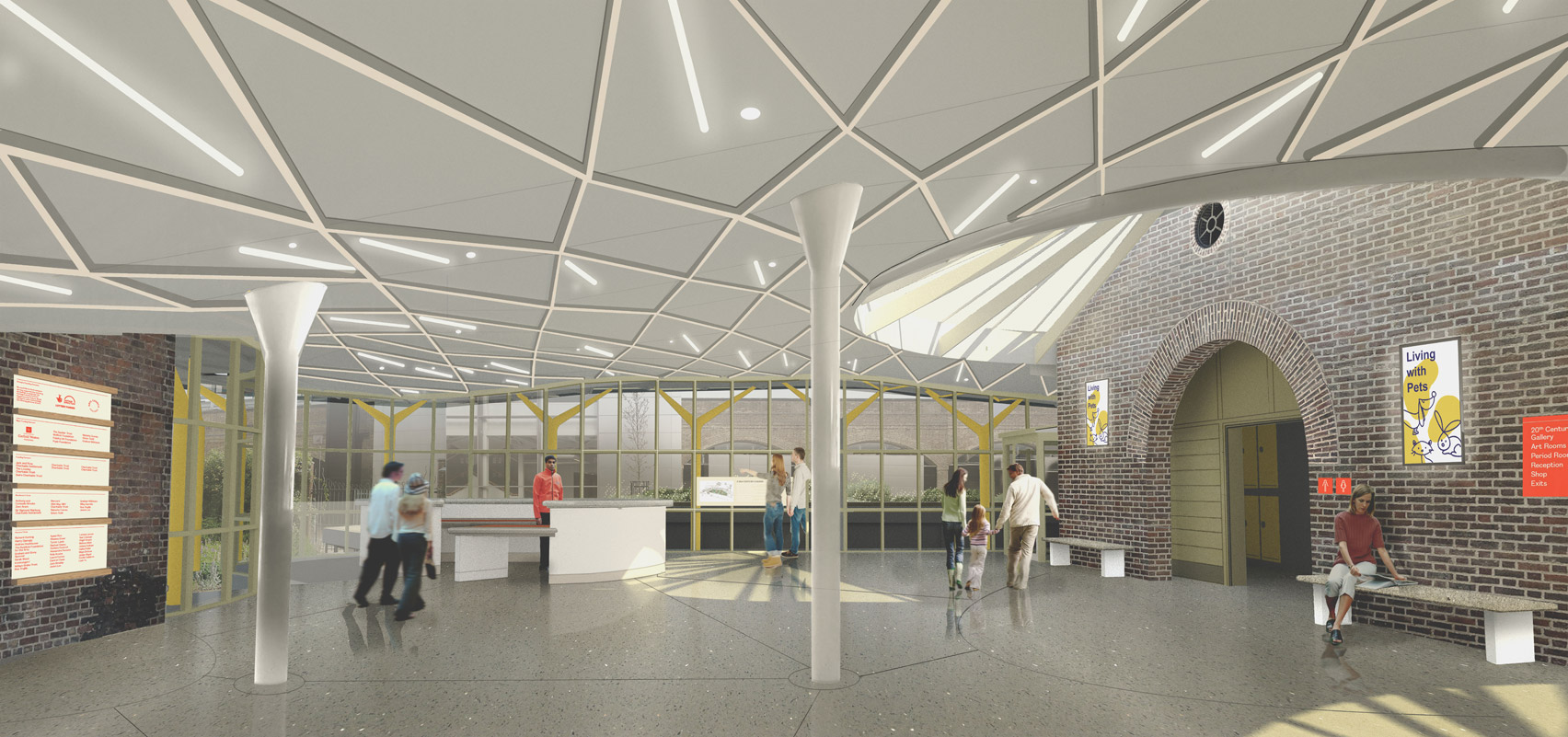
Additionally there will be a "game-changing" entrance to the museum erected opposite Hoxton station, attracting members of the public spilling off the overground train line, as well as a new cafe and learning pavilion that will host talks, festivals and other events.
Museum campus to be "like a magazine"
Design consultancy DN&CO has also tweaked the museum's website to give it a more editorial tone – Q&As, commissioned articles and behind the scenes-style stories will now be a regular offering.
"It's no longer a place where people just go to find out the opening hours," said Solicari.
"We're thinking about the whole campus, including digital, as a magazine, which is a bit of a shift for a museum, but it's about that dip-in and dive-in content," she said.
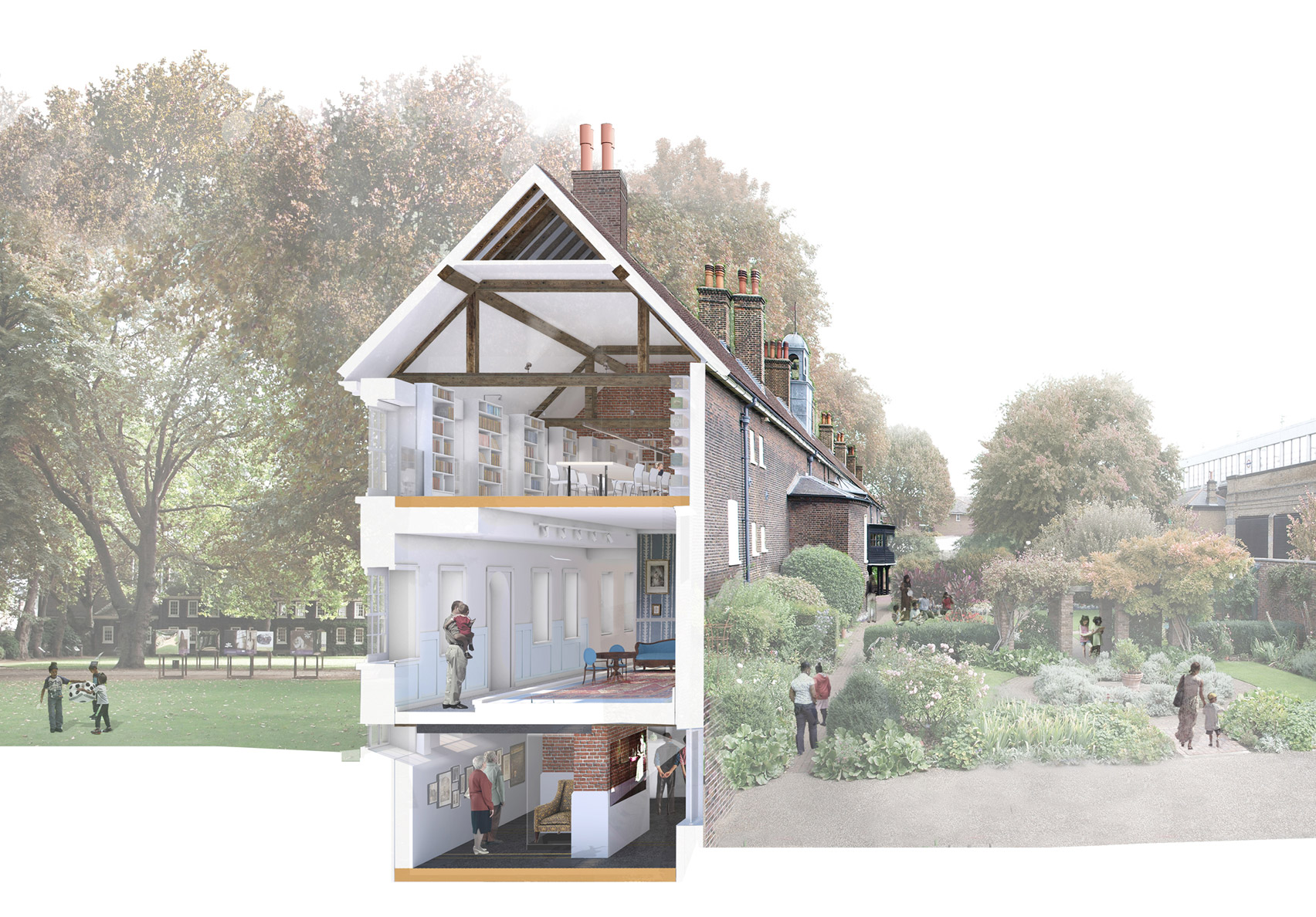
The opportunity for visitors to dive in arises on the museum's third floor in The Collections Library, a new room where anyone can request to sift through the archives or take a closer look at specific textiles or furnishings on-site.
"It's about making our collections accessible so that things aren't just all shut away and for people to wonder whether it's for them – it is for them," said Solicari.
The library, along with the other newly developed spaces, is also an attempt to make the museum a "dynamic" site that visitors can wander through for reasons other than the exhibitions.
"Choice is absolutely key," added Solicari, "and it just makes sense as well in the digital age that there's that sense of place, a physicality."
Museum will have "global" presence in next decade
Once complete, the Museum of the Home is projected to receive 170,000 visitors per year – 50,000 more than the Geffrye Museum's 120,000 annual visitors before its closure in January 2018.
However, it isn't all about numbers – Solicari is also hoping that the overhaul of the museum's physical and online presence will draw in crowds from beyond its east London locale.
"I think that the Museum of the Home's identity can be global," she said. "It's going to be much more obvious why we've got a place at the table in all kinds of conversation."
"In 10 years time, I would love to see [the museum] having projects popping up all over the UK, and internationally as well. This new identity really gives us the scope and permission to do that."
Solicari stresses that there's no need for visitors to be interiors aficionados.
"Our idea is that home is universally relevant but deeply personal – so our subject matter has got the potential to engage anyone and everyone," she explained. "It's just about how we do that and how we make sure that we are in the right places for people to take notice."
"I would hope that we will be absolutely pivotal and key to most people's thinking around the home, but about museums also," she continued.
London's already rich cultural scene will be undergoing further changes in the near future – the Victoria & Albert museum recently announced plans for V&A East, a new five-storey outpost for Stratford's Olympic Park.
Read on for an edited transcript of the conversation with Sonia Solicari:
Natasha Levy: So the museum will have less of a chronological focus, and more on personal stories?
Sonia Solicari: We very much hope that our visitors will then look at the rooms through time with a different prism of questions, conversation, debate. We're very conscious that those rooms through time don't present the vast majority of lived experience, but the aim is that the people will look at those rooms and will be asking directly how is this the same/how is this different from your experience, either because it's so far in the past or it's so far from your sort of social-cultural experience,what is this raising for you?
We have huge ambitions for our public programming to really be a centre for debate, so to have much more chaired Q&A's, curated film seasons, commissioned content on our website – our website is no longer a place where people just go to find out the opening hours, much more editorial. We're thinking about the whole campus, including digital, as a magazine, which is a bit of a shift for a museum, but it's about that dip-in and dive-in content. It's about those regular pieces, like the q&a and those editorials. It's a shift in how we're thinking about the space, but by space, I do mean both digital and physical.
Natasha Levy: Do you think that under the rebrand of Museum of the Home, do you think you're going to be getting more of a sort of London-wide audience? Because I think for some people Hoxton seems quite tucked away.
Sonia Solicari: I think that for us, Museum of the Home identity can be global. So I think it's going to be much more obvious why we've got a place at the table in all kinds of conversation. But in terms of structure people here to the physical site, I think it will hopefully raise our profile and be much more obvious to people who aren't from the locality what the museum does and what they might see here.
But we definitely want to up our international visitors, national and international visitors. And we feel that something which the home can really do that, because our idea is really that home is universally relevant but deeply personal. So our subject matter has got the potential to engage anyone and everyone, it's just about how we do that and how we make sure that we are in the right places for people to take notice.
The new entrance hub is an absolute game-changer for us because it means that the site is much more visible for people pouring in through that Overground route which over the years has been growing and growing in terms of use.
I think people having to come round onto Kingsland Road from that angle was confusing so it makes it much easier, much more accessible. But it means that actually the site is more dynamic because people will be entering Kingsland Road, from Hoxton, and there'll be much more choice over the visitors journey around the site.
Before it was one entrance and everyone was funnelled down one corridor and now they can come into that entrance and can go to the shop and just buy a card if they want and then leave. Or they can just come to see our temporary exhibition, or they can go straight into the gardens or they can go down to our new home galleries. So choice is absolutely key. And that element of the new design just it opens up.
Natasha Levy: I wanted to talk about the future – how do you see things 10, 20 years down the line, what kind of institution are you hoping for the Museum of the Home to be, and how do you imagine it standing against the other bastions of culture in London at the moment and big institutions?
Sonia Solicari: I would hope that with the subject matter that we've got, that we will be absolutely pivotal and key to most people's thinking around home, but about museums also. So we kind of have that dual possibility that we can impact general conversations on home as well as being an actual museum and being part of that museum sector.
For me, we've always been collaborative, but I think now the possibilities for collaboration with other organisations are much bigger. And in 10 years time, I would love to see us having projects popping up all over the UK, and internationally as well. And I think this new identity really gives us sort of scope and permission to do that.
Natasha Levy: What encouraged the big name change? I know that the scope of things that you're going to be encompassing is greater but was that the key reason to make it the Museum of the Home?
Sonia Solicari: It's kind of been an evolution. From the point when the museum opened and it was more straightforwardly the Geffrye Museum but it told the story of the local furniture trade, and that was back in 1914. Then it became Museum of English Domestic Interiors, then it became the Geffrye Museum of the Home in about 2011. So it's kind of been this evolution of our offer.
What's brilliant about it is that it's been quite audience-led, so the organisation has flexed and changed depending on what people want and what people are asking for, which is how it should be. So it felt that with the development, that was the kind of catalyst for that final shift into the museum being called the museum of the home. But we haven't abandoned the Geffrye by any means, we're making more of it than ever before. It just makes sense as well in the digital age that there's that sense of place, a physicality and that there's a kind of identity that is broader than that.
Natasha Levy: In terms of the exhibitions and the themes that you've got planned – I think the press release mentioned homelessness, immigration, big, heavy things that society is dealing with today – but in terms of the history of the home and why it's important, and how interiors and design have changed over the time, do you think that is still of massive relevance to society now? Do you still think there is a core society that is really interested in the design of the home?
Sonia Solicari: Interiors are going to always be a key part of the story that we tell. I think my argument would be that within those interiors, there are all those issues at play. So, migration, how does that affect the items that we live, who's designed them, why they are in the home. Things like flexible living and the changing role of the family, that's always been something which has massively influenced design. We've seen through history things like open-plan and flexible, adjustable furniture coming in and out of fashion right from the 1600s onwards really. So I think that design always opens up onto those bigger topics.
It's absolutely relevant whether brown furniture is in or not in, you know, how are people feeling about their tastes and identity is a huge aspect, and how people feel about where they live. So that is always going to be a key element of you know, we're just putting that alongside other big topics. But I wouldn't say those other topics are bigger, I'd say they're equal to taste and identity.
It's wonderful that we've got that history to draw upon in terms of our collections and our expertise, because I think that is what adds richness to some of the debates, because there are lots of people discussing climate change and rightly so – but actually, more and more people are looking to the past for more eco-friendly, sustainable solutions to everything from cleaning products to furniture. So actually, the past has got quite a lot to offer in terms of those contemporary debates.
Natasha Levy: That's really interesting to know, because I guess as much as you want people to learn from the space, it's about it becoming a kind of inspiration destination as well.
What led the decision to have that space at the top? Do you think it's important for new cultural spaces to have more than one side, to be multi-faceted? I guess for some people, with museums, they kind of just see it as like a bunch of objects on plinths and that's it...
Sonia Solicari: Yeah, absolutely. It's about making more of the site. When I was talking about that dip-in and dive in content, this would be dive in. [The room] is for people who want to spend that extra bit of time, and it's about making our collections accessible as well, so that things aren't just all shut away and for people to wonder whether it's for them, it is for them. We want our collections to be used, it'd be wonderful to see that room busy and bustling.
Natasha Levy: I don't know how much involvement you've had with the architectural side because I know it's Wright & Wright that are doing it. Did you have a big brief that you gave them or has it kind of been working around funding?
Sonia Solicari: We were really keen to make more of the historic site, so it was all about bringing the almshouses into better use because there was a lot of unused space or space that wasn't being used as efficiently as it should be. And spaces that were being used inappropriately. So there were spaces where our collections were stored that were quite damp.
So it was all about shoring up this amazing building for the next few hundred years, but also bringing more of it into public use so that people could enjoy the whole site. And it's how one brings a building of this age into contemporary uses. How does it operate as a modern museum? And Wright & Wright have been absolutely brilliant in responding to that brief and creating a modern museum in a historic space.
But it's definitely been a curatorial challenge, I have to say this is one of the hardest buildings I've ever had to curate if you like, because there were windows and doors and quirky bits, and nothing measured the same. But that's the beauty of it as well. It isn't that white cube, it's been a home.
The post "The past has a lot to offer to contemporary debates", says Museum of the Home director appeared first on Dezeen.
from Dezeen https://ift.tt/35uRbVm