Wednesday, 18 December 2019

ALL designs faceted facade to create a play of light across Bodø City Hall

Bodø Town Hall by Atelier Lorentzen Langkilde

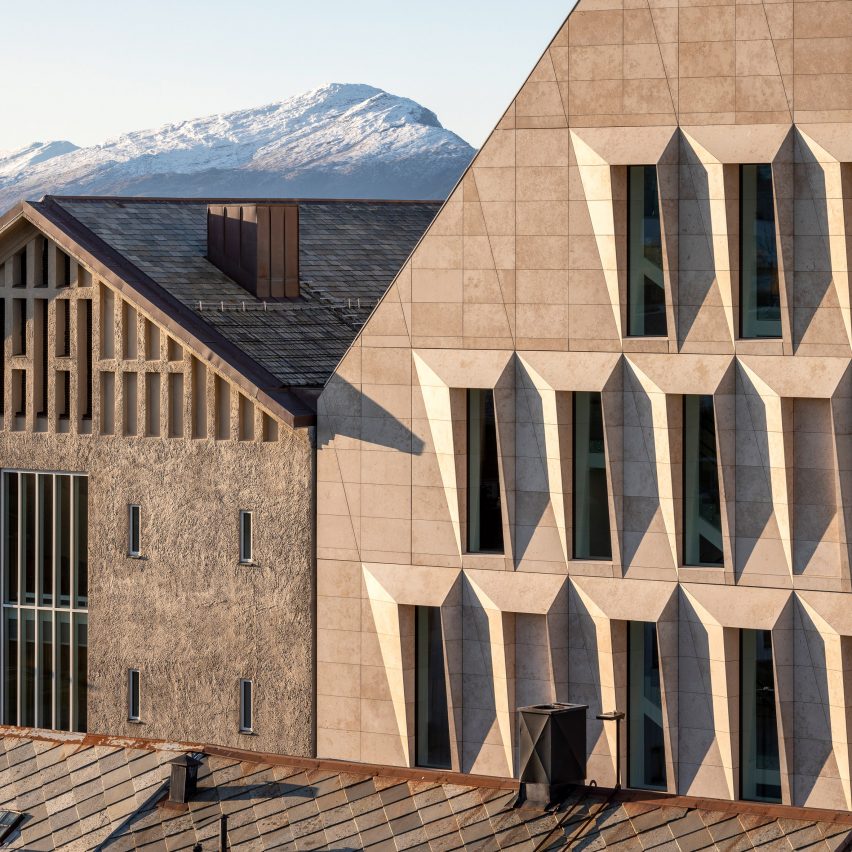
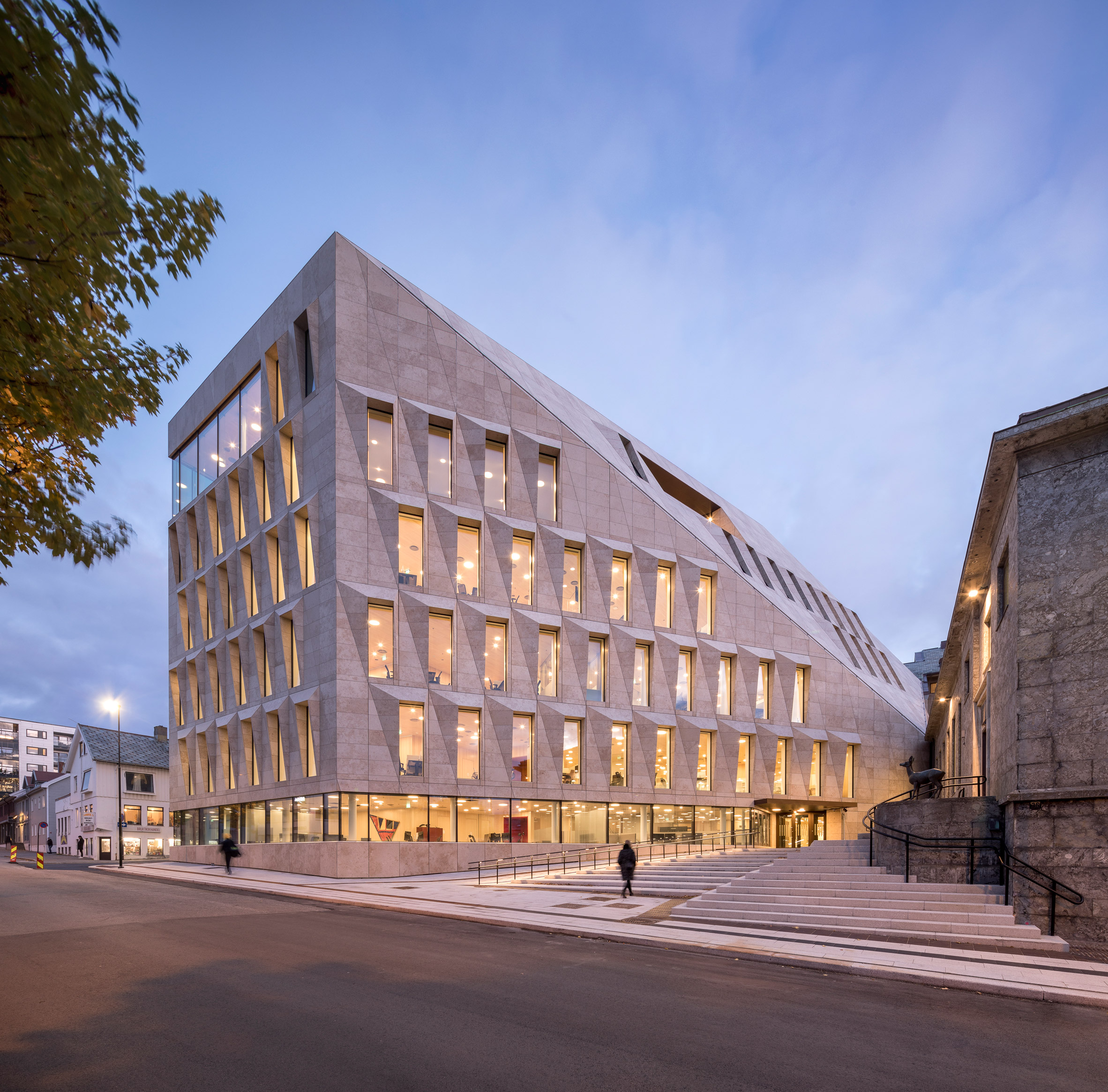
The faceted, limestone-clad facades of this town hall in Bodø, Norway, have been designed to capture the dramatic changes in light and shadow that are characteristic within the Arctic Circle.

Designed by Danish studio Atelier Lorentzen Langkilde (ALL), the town hall in northern Norway combines a contemporary building with two existing structures – the original city hall and a former bank.
Bodø Town Hall by Atelier Lorentzen Langkilde

The facades of the existing buildings were preserved, with the beige Jura Gelb limestone cladding of the new building chosen to mirror both the brown plaster of the old city hall and the natural stone of the former bank

The angles that define its facades take their cues from the sloping rooflines of the surrounding buildings. They have been created using modular stone sections defined by horizontal and diagonal lines as well as angular window surrounds.
Bodø Town Hall by Atelier Lorentzen Langkilde

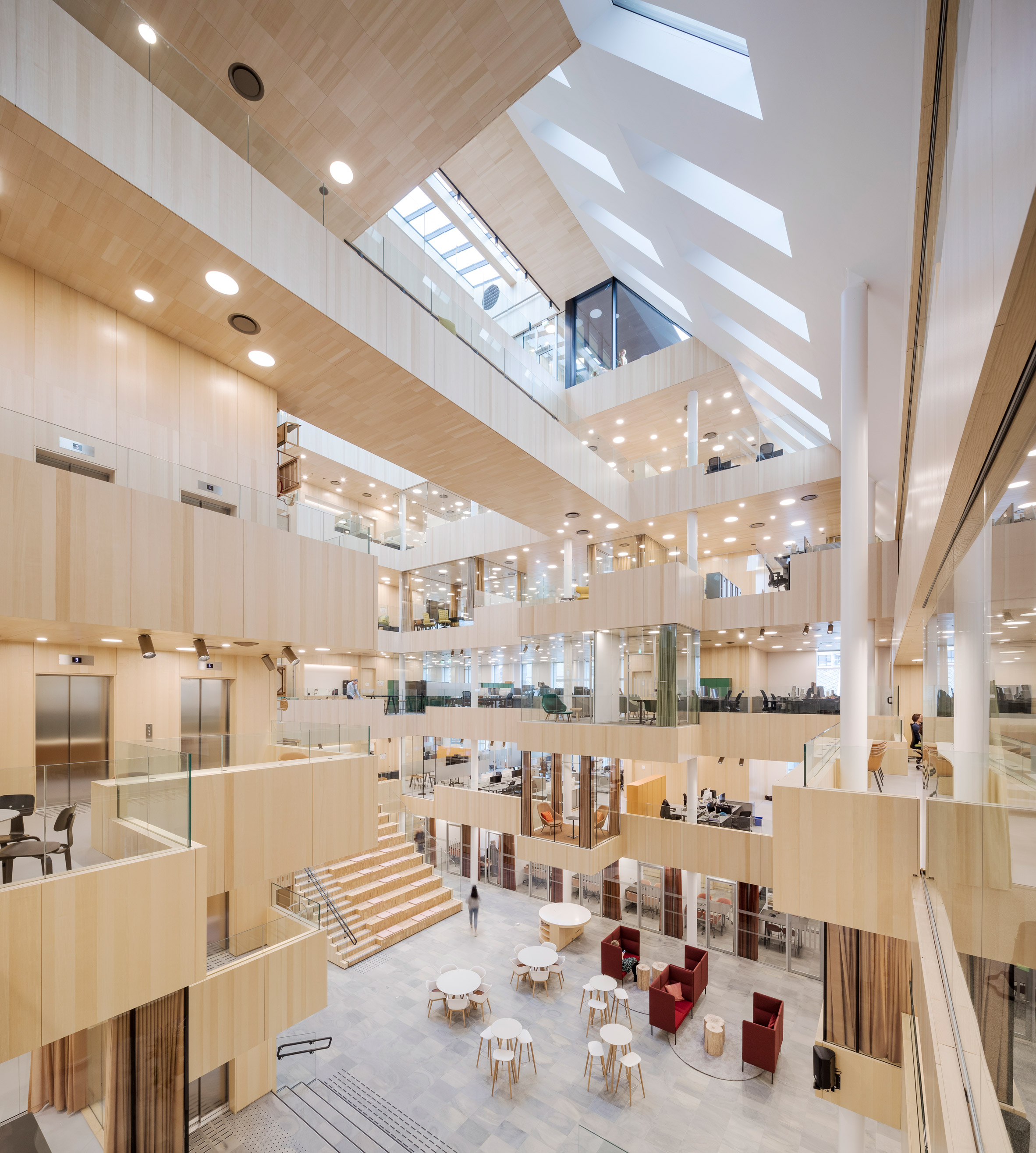
The new building is attached to both the existing buildings and is arranged around a large central atrium, which is known as the "citizen's forum".

"It is a keystone linking and transforming the flow of the existing buildings to create a flexible, circular flow around a tall and dramatic atrium," explained the studio.
Bodø Town Hall by Atelier Lorentzen Langkilde

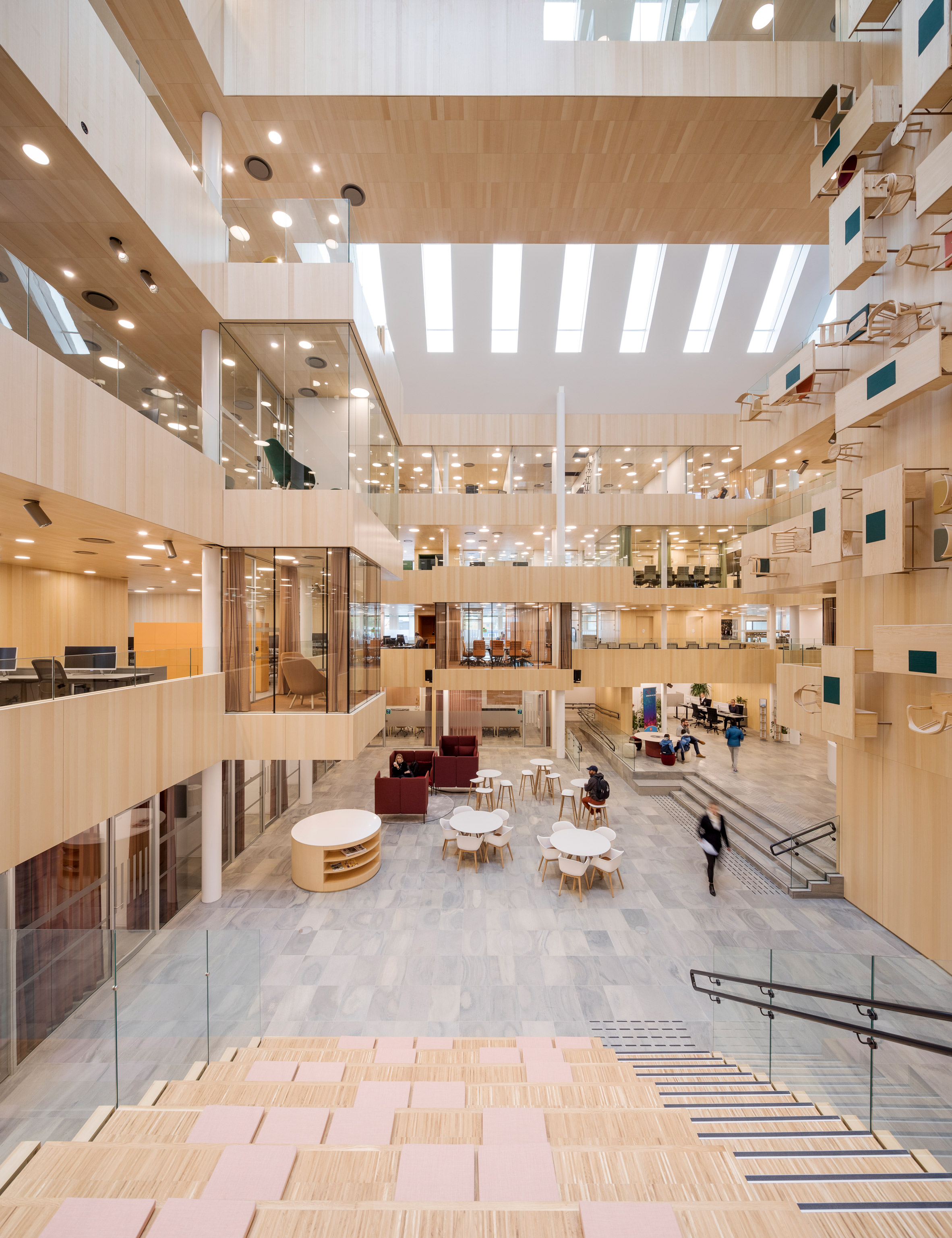
Drawing on the complex spaces shown in the etchings of Giovanni Battista Piranesi, the atrium features staggered balconies, numerous floor levels and protruding meeting rooms.

An artwork by Per Kristian Nygård entitled Dikt till Byråkriatiet, which translates as Poem for the Bureaucracy, continues the Piranesi reference and lends a surreal feeling to the atrium. The artwork is made up from an arrangement of chairs and tables mounted on the wall perpendicular to the offices, so that it appears as though the building has been folded in on itself.
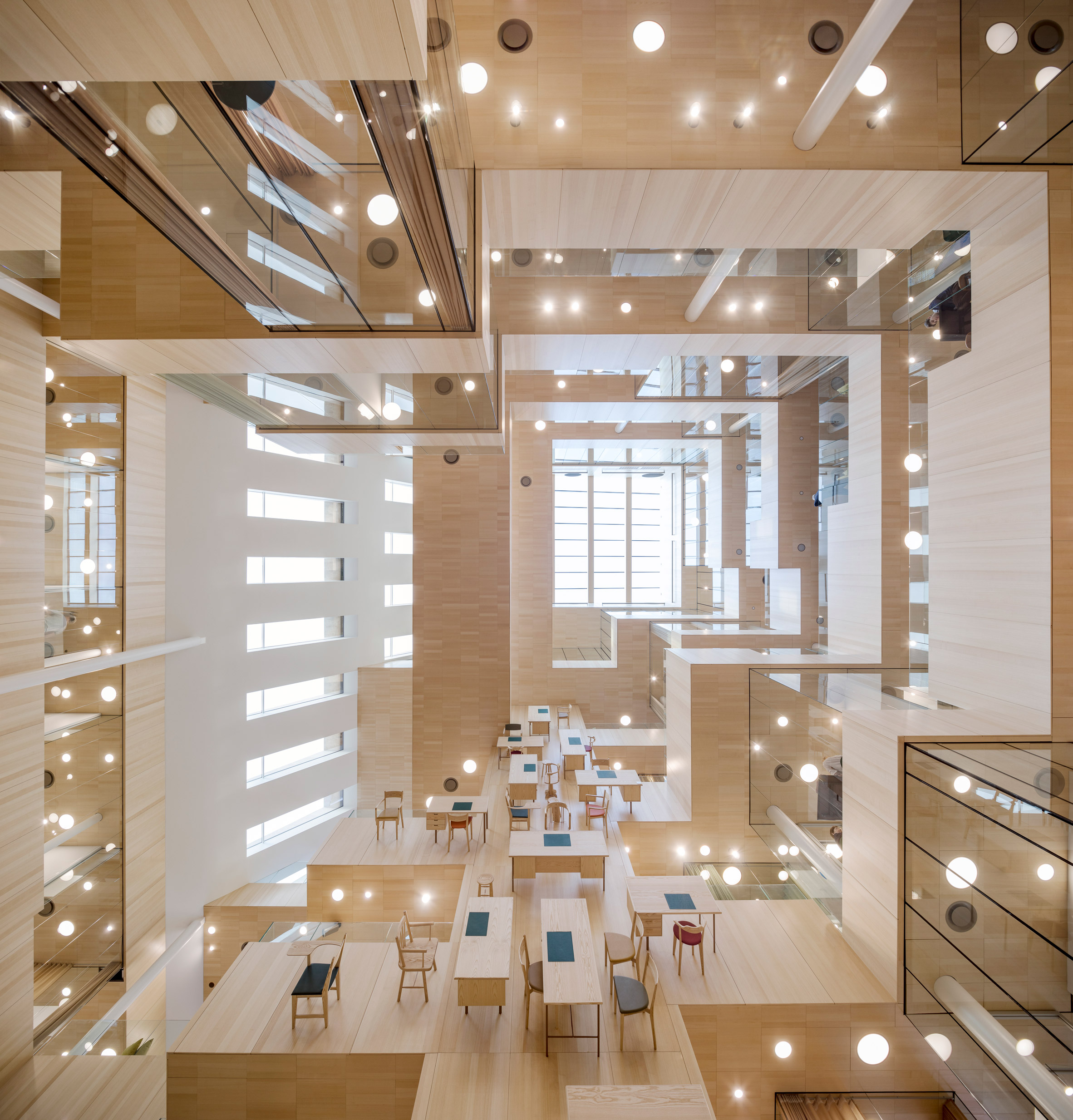
Bodø Town Hall by Atelier Lorentzen Langkilde

Five floors of workspaces have been arranged around this atrium, benefitting from both views out to the city outside as well as views across the building's various levels.

Corridors link the new extension to the two existing buildings simply and directly, ensuring that they also feel closely connected to the central atrium space.

Ceilings and walls have been lined in light ash wood to bring a "warm, Scandinavian home-like feeling," with informal workspaces providing a range of different seating areas.
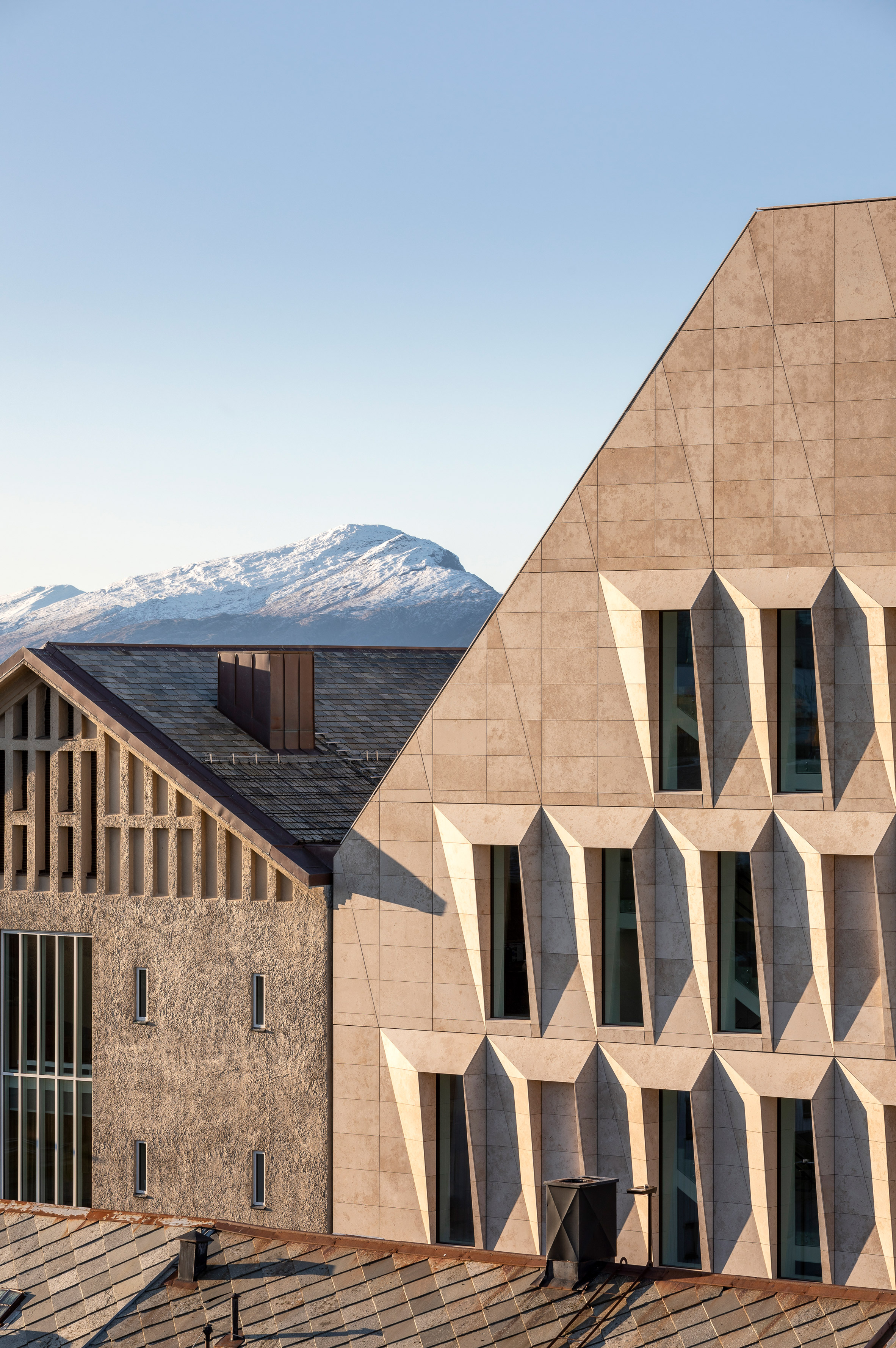
Bodø Town Hall by Atelier Lorentzen Langkilde

On the sixth floor, a strip of glazing wraps around the corner of the extension to illuminate a large canteen, providing views out across the nearby ocean and mountains, as well as down to the landscaped area at the building's base. This area has been finished with natural stone.

Based in Copenhagen, ALL was founded by Kasper Lorentzen and Kristian Langkilde. The practice recently collaborated with PLH Arkitekter for a proposed visitor centre on the site of a Viking fortress in Denmark.

Photography is by Adam Mørk.


Project credits:

Design team: Atelier Lorentzen Langkilde
Client: Municipality of Bodø
Concept design: Buro Happold, Hjellnes Consult
Detailed design: ÅF Engineering AS
Landscape: Atelier Lorentzen Langkilde
Building contractor: Building: Gunvald Johansen
Technical contractor: Caverion
Artists: Per Kristian Nygård, Rune Johansen

The post ALL designs faceted facade to create a play of light across Bodø City Hall appeared first on Dezeen.


from Dezeen https://ift.tt/2S4mdiY

Tuesday, 17 December 2019

Competition: win a three-night stay at the Ameron Frankfurt Neckarvillen Boutique hotel

Ameron Frankfurt Neckarvillen Boutique hotel

In our latest competition, we're offering our readers the chance to stay at the Ameron Frankfurt Neckarvillen Boutique hotel, which occupies a series of historic buildings at the heart of the German city's centre.

One fortunate reader and their guest will be invited for a three-night stay at the Ameron Frankfurt Neckarvillen Boutique, which includes use of the hotel's breakfast buffet and complimentary chocolates and wine.

Ameron Frankfurt Neckarvillen Boutique hotel

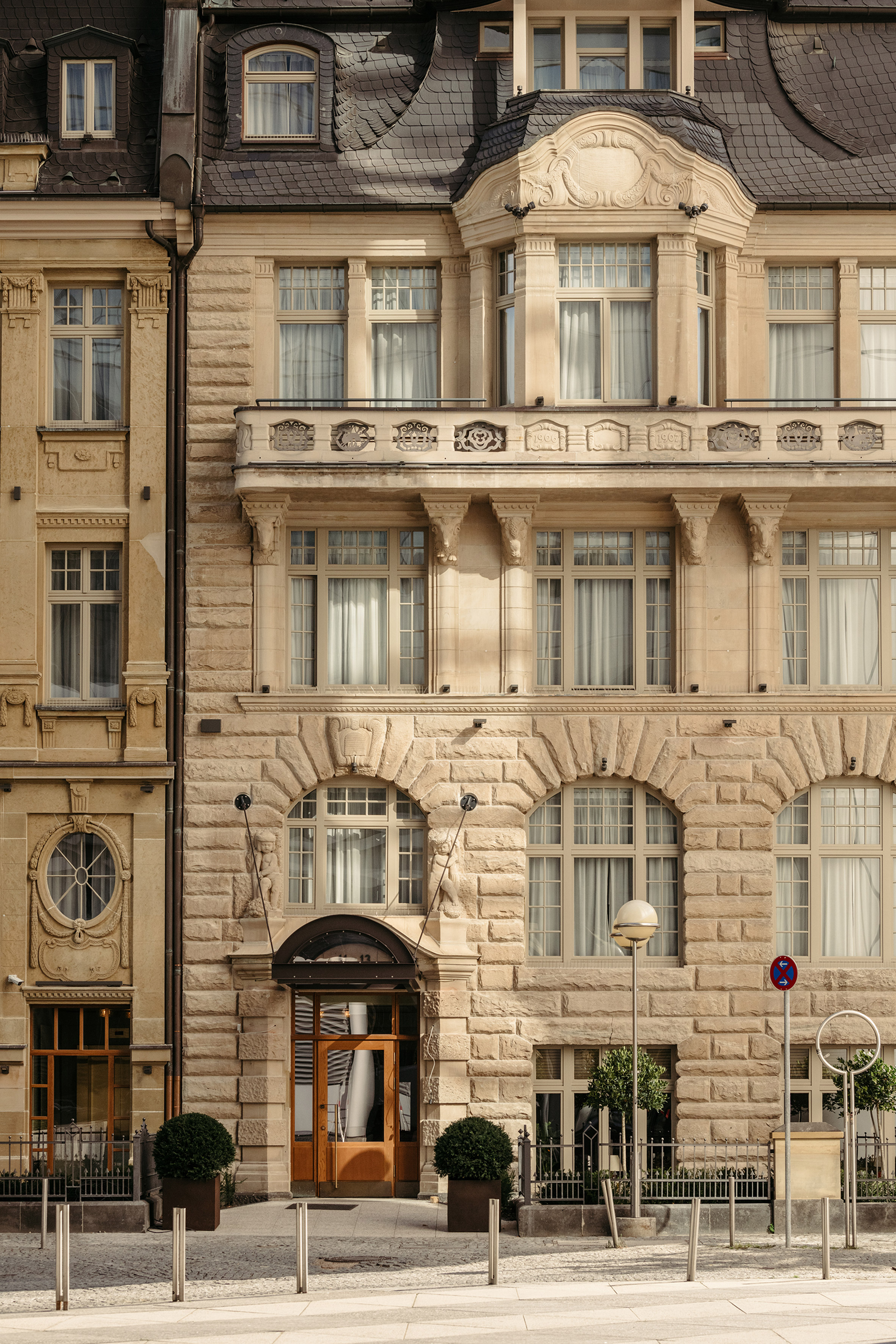
Situated in the city's buzzing Bahnhofsviertel neighbourhood, the hotel takes over a row of four early 20th-century buildings which formerly served as villas. Together they've been carefully renovated to accommodate plush guest rooms and communal areas.

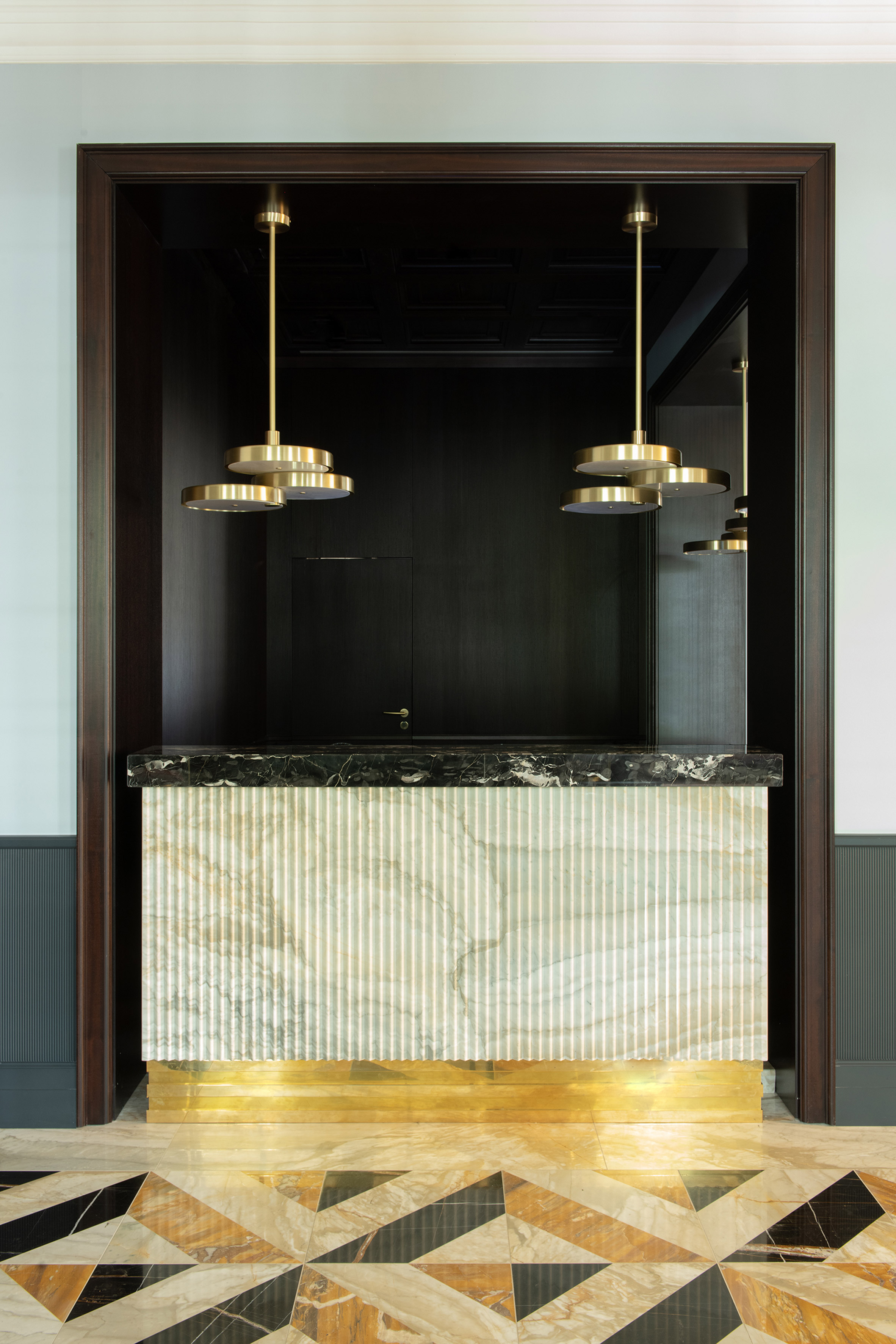
Its interiors are the work of Italian designer Luigi Fragola, who has worked to develop an aesthetic that merges art-deco style with "classic elegance and modern lightness".

Ameron Frankfurt Neckarvillen Boutique hotel

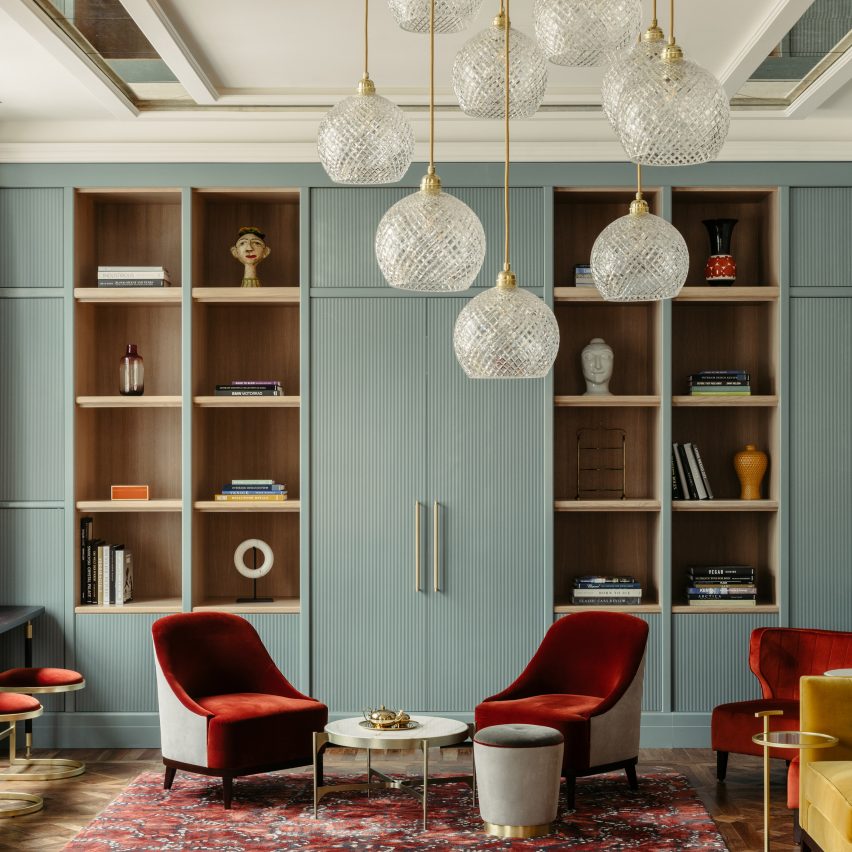
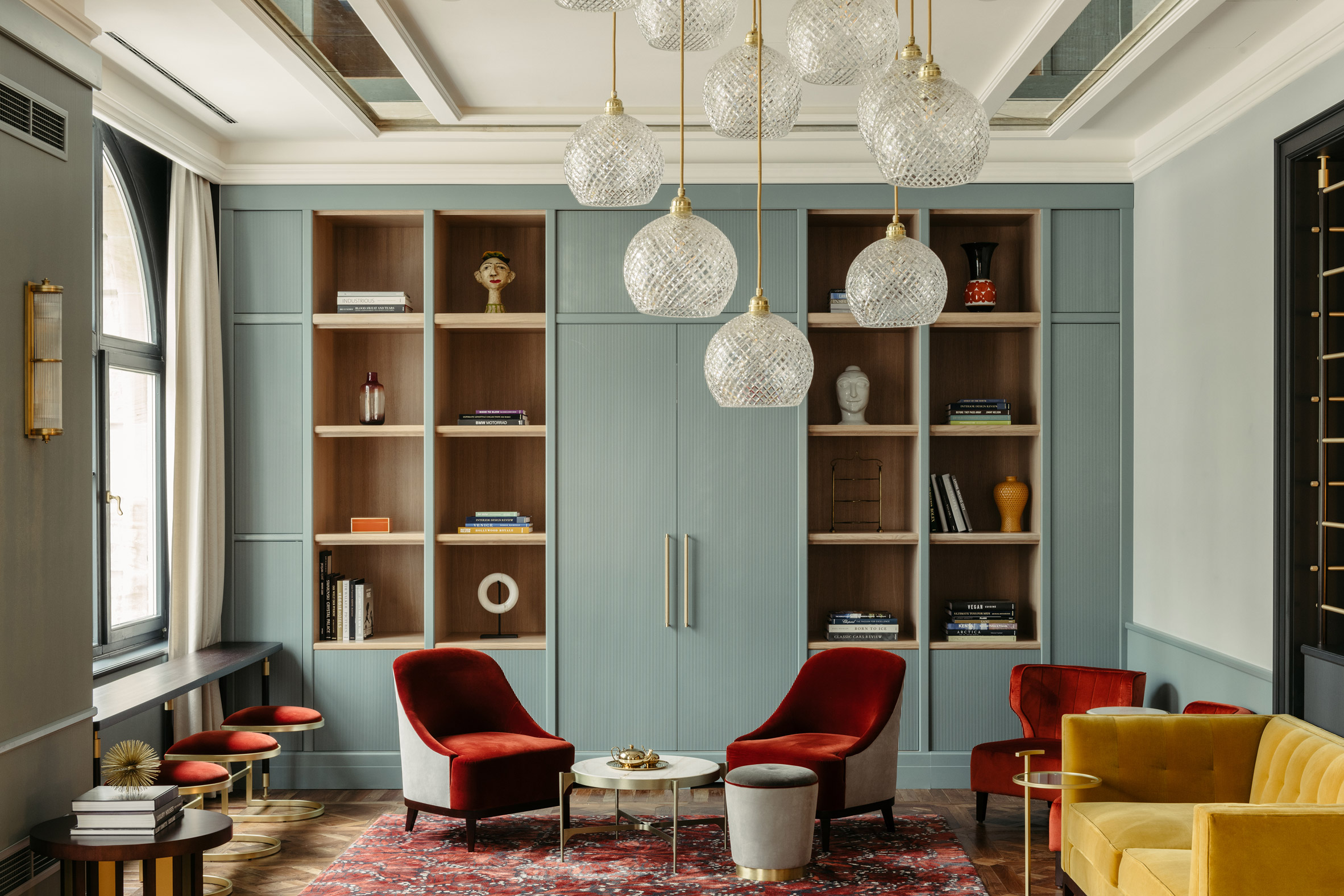
This mix is seen in the grandiose hotel lobby, which boasts pale-blue surfaces and wooden parquet floors. Red and egg-yolk yellow velvet furnishings have been dotted throughout, complemented by brass-edged side tables and glass light fixtures.

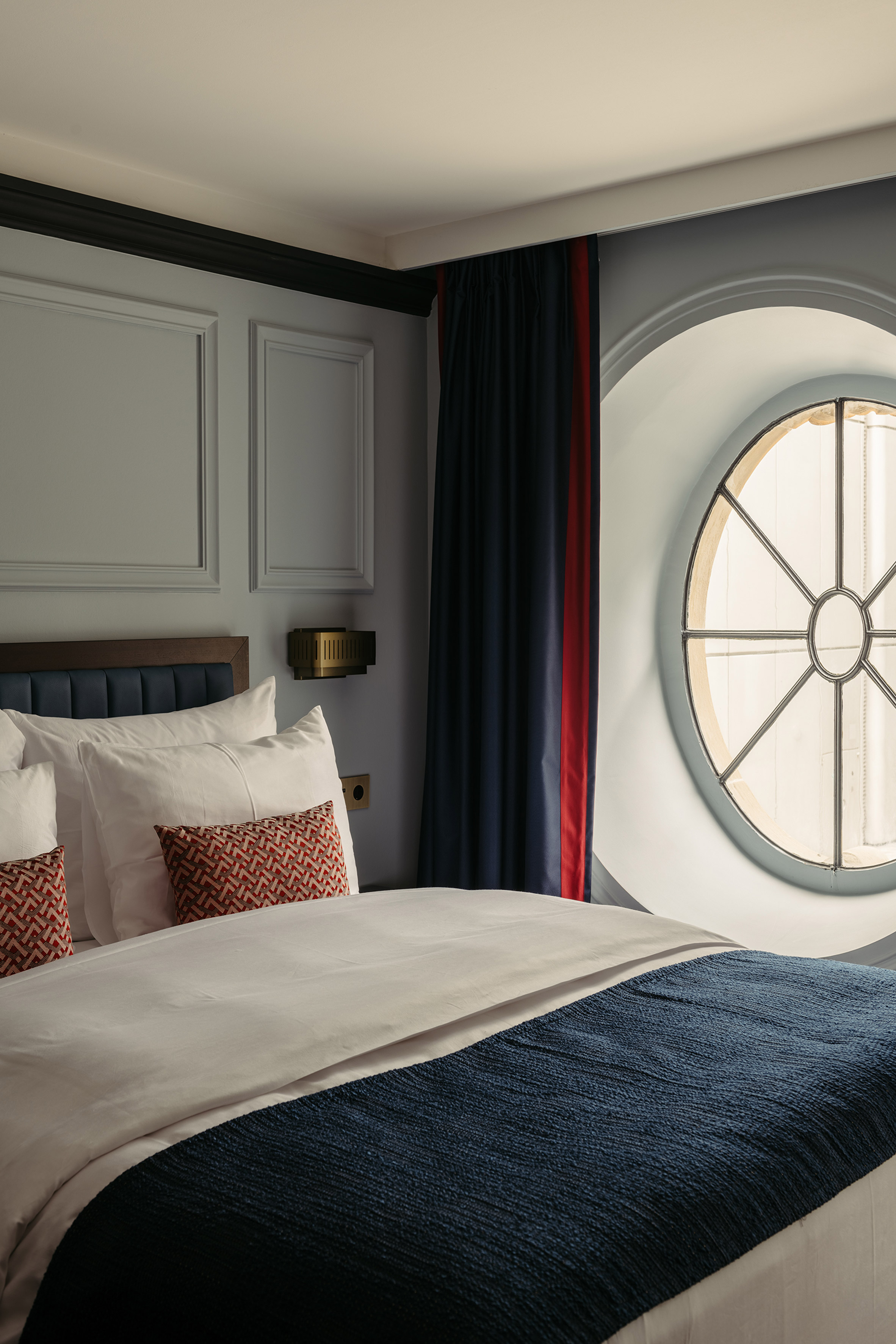
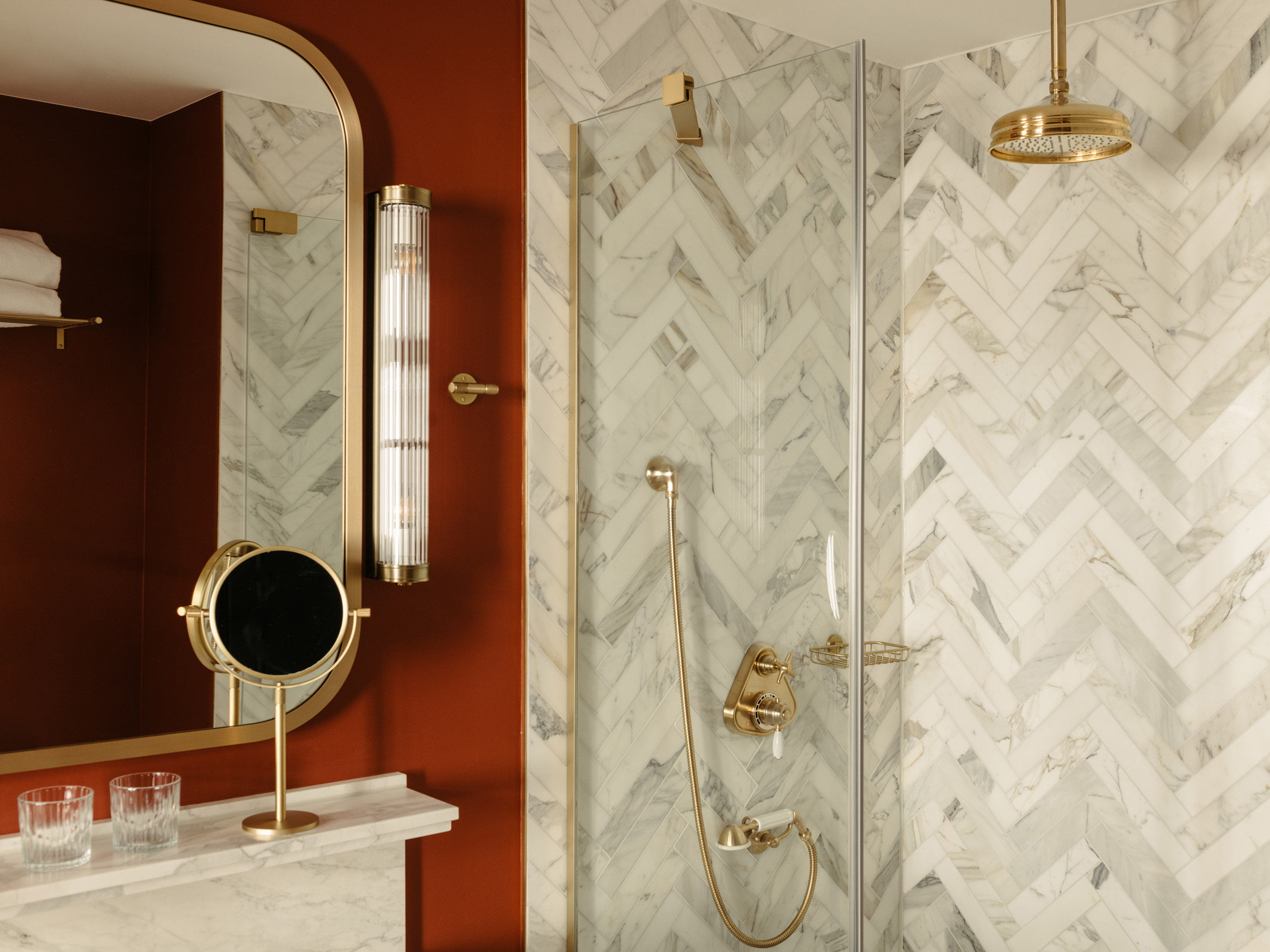
A similar colour and material palette has been applied throughout the 133 guest rooms, some of which have huge porthole windows that overlook the surrounding Frankfurt streets. Calacatta oro marble has been used to form bathroom sinks and herringbone-pattern shower cubicles.

Rooms are also adorned with an array of artworks specially curated by artist Celena Ohmer.

Ameron Frankfurt Neckarvillen Boutique hotel

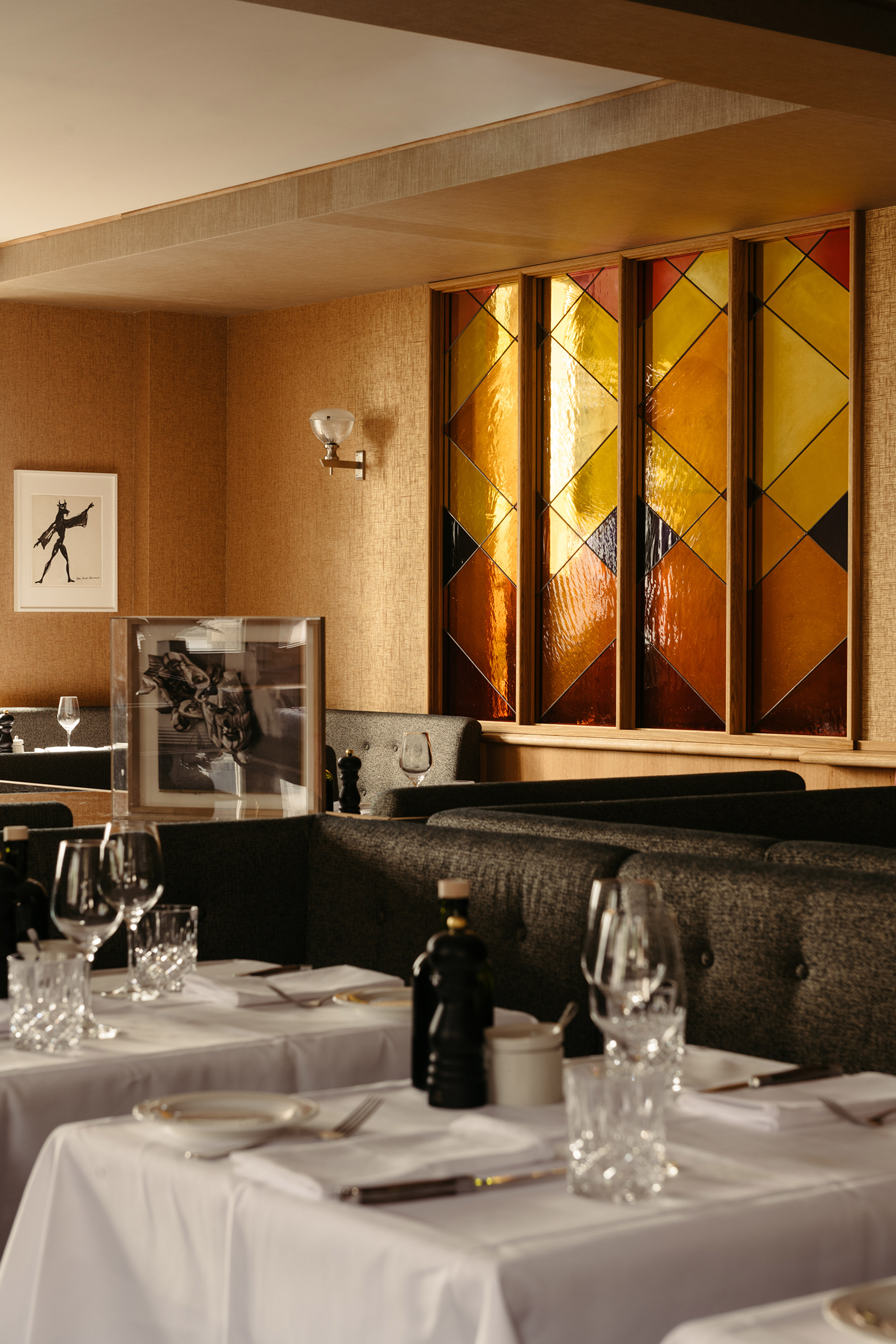
The ground-floor restaurant, named Le Petit Royal Frankfurt, has been given a cosier feel. Textured gold wallpaper covers almost every surface of the room, while some of the windows have been inlaid with amber-hued glass.

Cushioned booths provide seating for almost 80 diners, who can order from a French-inspired menu of steak, seafood and seasonal vegetables.

Ameron Frankfurt Neckarvillen Boutique hotel

Should guests opt to head out for dinner, they can choose from the wealth of eateries in Bahnhofsviertel which offer a variety of global cuisines.

The neighbourhood is also just a stone's throw from attractions like the Schauspiel Frankfurt theatre, as well as popular shopping streets Zeil and Goethestrasse.

Ameron Frankfurt Neckarvillen Boutique hotel

Ameron Frankfurt is just one of the hotel chain's German locations, joining branches in Berlin, Hamburg, Cologne and Bonn. There are also Ameron properties in the Swiss towns of Lucerne and Davos.

The hotels are presided over by hospitality group Althoff Hotels.

"With the new space in Frankfurt, we are implementing the first boutique concept on a luxury level for Ameron, while remaining true to the brand's DNA with our special location and focus on exceptional design and art," said Thomas H Althoff, founder of Althoff Hotels.

Ameron Frankfurt Neckarvillen Boutique hotel

One winner and a guest will enjoy a three-night stay at Ameron Frankfurt, with complimentary use of the hotel's breakfast buffet.

Photography is by Robert Rieger.

Competition closes 15 January 2020. One winner will be selected at random and notified by email, and his or her name will be published at the top of this page. Terms and conditions apply. Flights not included.

The post Competition: win a three-night stay at the Ameron Frankfurt Neckarvillen Boutique hotel appeared first on Dezeen.


from Dezeen https://ift.tt/36J0RvN

The Ocean Cleanup to make products from collected marine plastic

The Ocean Cleanup

The Ocean Cleanup has revealed plans to turn the plastic it has collected from the Great Pacific Garbage Patch into "beautiful, sustainable products".

The Ocean Cleanup's founder and CEO Boyan Slat made the announcement last week that plastic collected by the project will be used to make useful products.

"We're going to turn it into beautiful, sustainable products," Slat said at the event on 12 December in Vancouver. "These are not going to be gimmicks. These are going to be products that you will actually want."

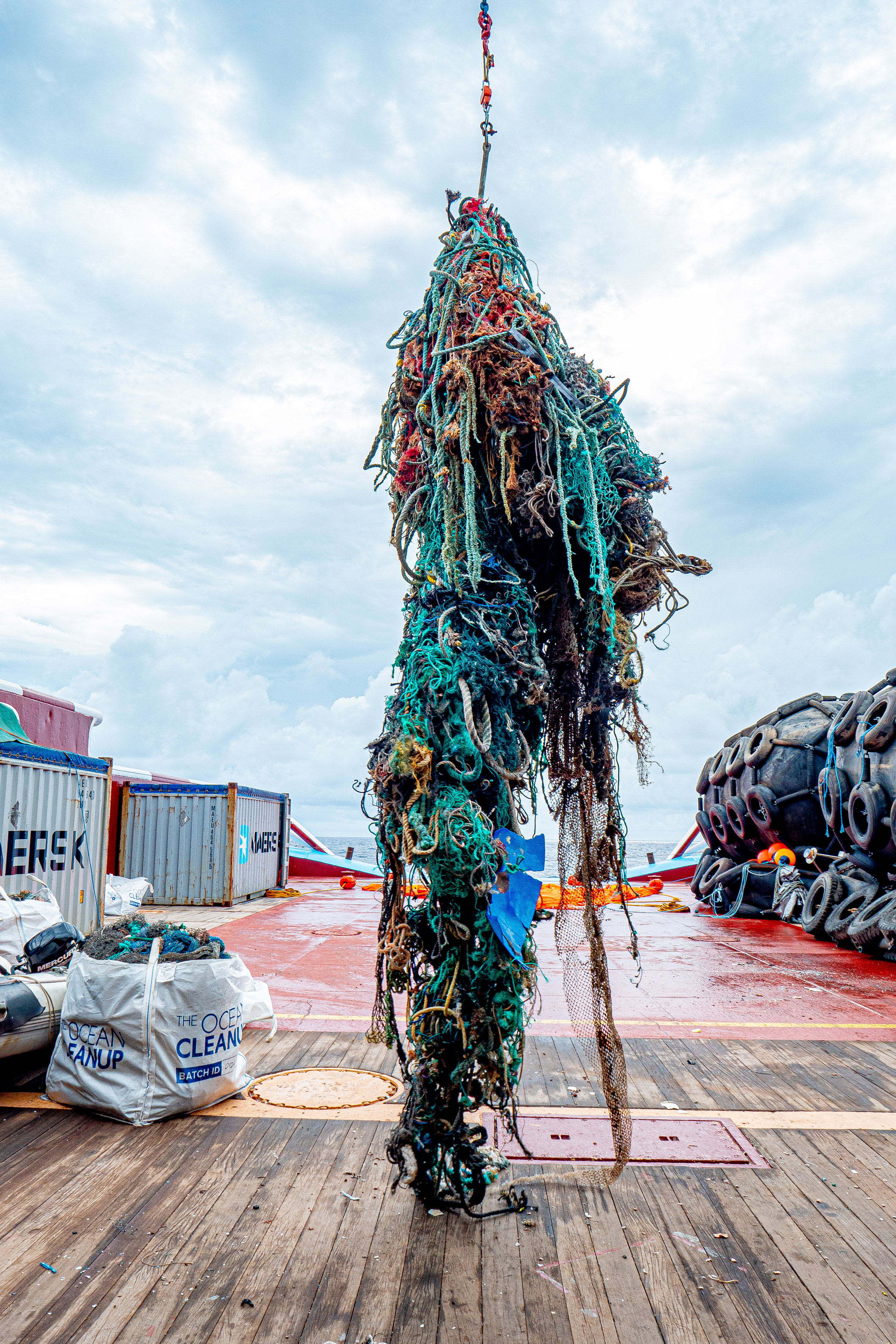
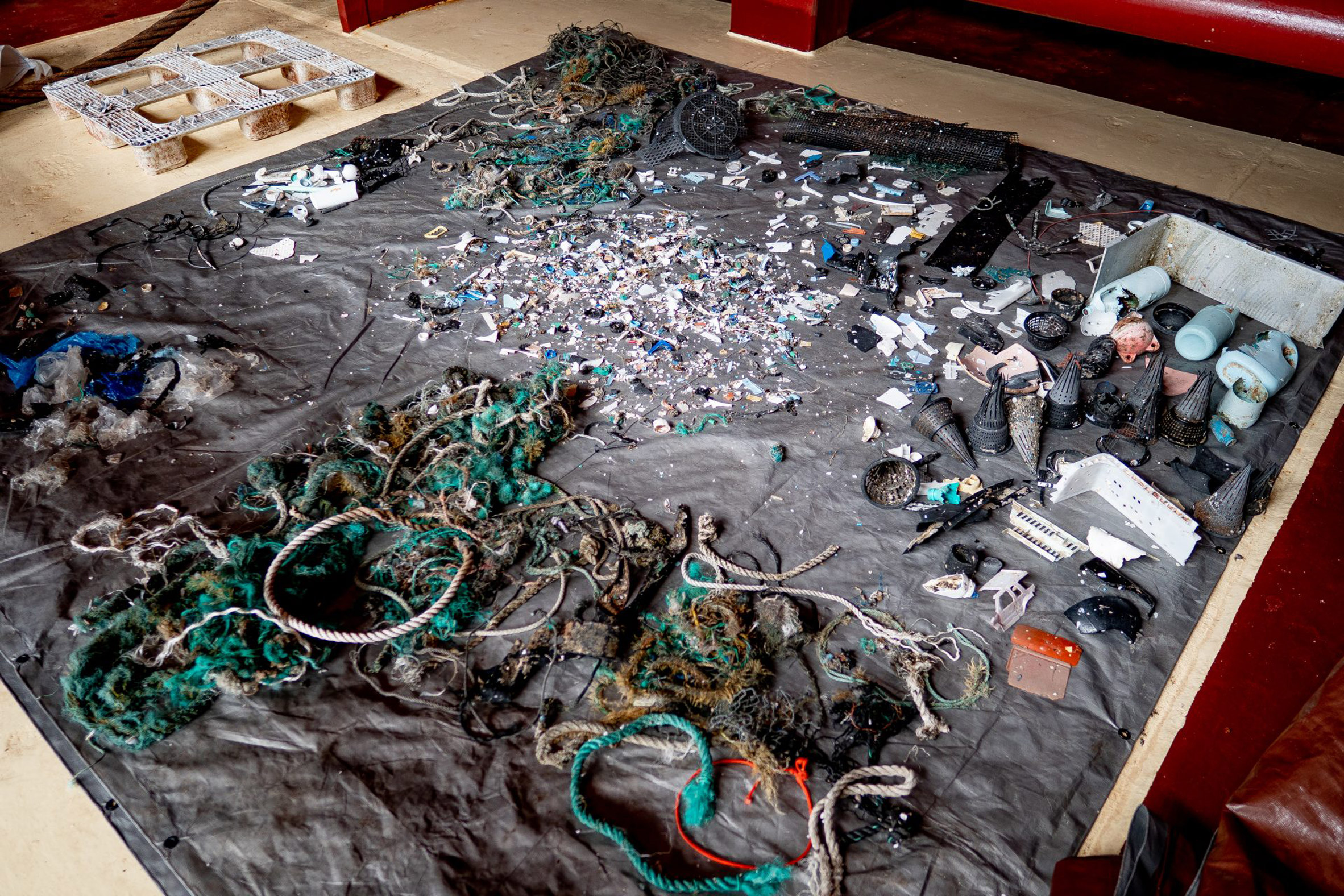
Slat revealed the news standing alongside 60 large white bags filled with plastic the organisation has collected.

The ocean waste is the first material that the Dutch nonprofit has collected from the so-called Great Pacific Garbage Patch – an area located between Hawaii and California that contains an estimated 1.8 trillion pieces of plastic, most of which are just a few millimetres in size.

Products will be entirely made of collected waste

Several other organisations are also making products from recycled plastic retrieved from the world's oceans and rivers. This includes Parley for the Oceans which has created trainersswimwear and football shirts with brands such as Adidas and Stella McCartney.

All the products will be produced under the Ocean Plastic brand, which was trademarked by company founder Cyrill Gutsch.

The Ocean Cleanup
The Ocean Cleanup has collected its first batch of marine plastic waste

However, while these items are predominantly made from plastic that has been intercepted on its way into the ocean, The Ocean Cleanup's items will be entirely made of waste sourced from the waters.

"I believe we can use this trash to turn a problem into a solution by transforming this unique material into a beautiful product," said Slat, who added that he intends the products to raise awareness about The Ocean Cleanup project.

"As most people will never go to the Great Pacific Garbage Patch, through these products, we aim to give everyone the opportunity to take part in the cleanup," he said.

The Ocean Cleanup encounters "several ups and downs"

The Ocean Cleanup will next try to create a method of verifying that plastic is collected from the ocean and not elsewhere, and will launch a new public standard to verify such ocean plastic. It will work with Norwegian company DNV GL to develop and employ the blockchain to analyse collection processes.

The nonprofit intends to launch the plastic products in September 2020, with all proceeds used to support The Ocean Cleanup project.

The Ocean Cleanup
It intends to use the materials to make new "beautiful" products

Slat founded the Ocean Cleanup in 2013 with the ambition of clearing 90 per cent of plastic waste from the world's oceans, using fleets of 600-metre-long floating rigs.

The recent announcement followed what the company describes "several ups and downs" with the project. These include its first sea-trial being abandoned late last year following a fracture in the tube.

Engineers discovered that as the rig was moving slower than the plastic in the ocean, much of the waste it collected was floating back into the sea.

Experts skeptical of The Ocean Cleanup

The mission was relaunched in June with a new, improved tech called System 001/B. The company revealed in the following October that it had started to successfully collect plastic waste.

Critics, however, are skeptical of The Ocean Cleanup's approach to ridding the plastic from waters.

Speaking to Dezeen earlier this year, architect and plastic recycling expert Arthur Huang said that The Ocean Cleanup "cannot be a plausible solution", and Italian environmental journalist Cristina Gabetti called it "a dream that seduced many people".

Designers and environmentalists also questioned its recent decision to start burning collected plastic in waste-to-power plants, saying the move "makes no sense" and could be more harmful for the environment than good.

The post The Ocean Cleanup to make products from collected marine plastic appeared first on Dezeen.


from Dezeen https://ift.tt/2PtLKk7

"How to not solve a non-existent problem"

Cornell Fine Arts Library by Wolfgang Tschapeller

In this week's comment update, readers share their thoughts on the feasibility of suspended shelving in a university library and question the aesthetics of an at-home insemination kit.

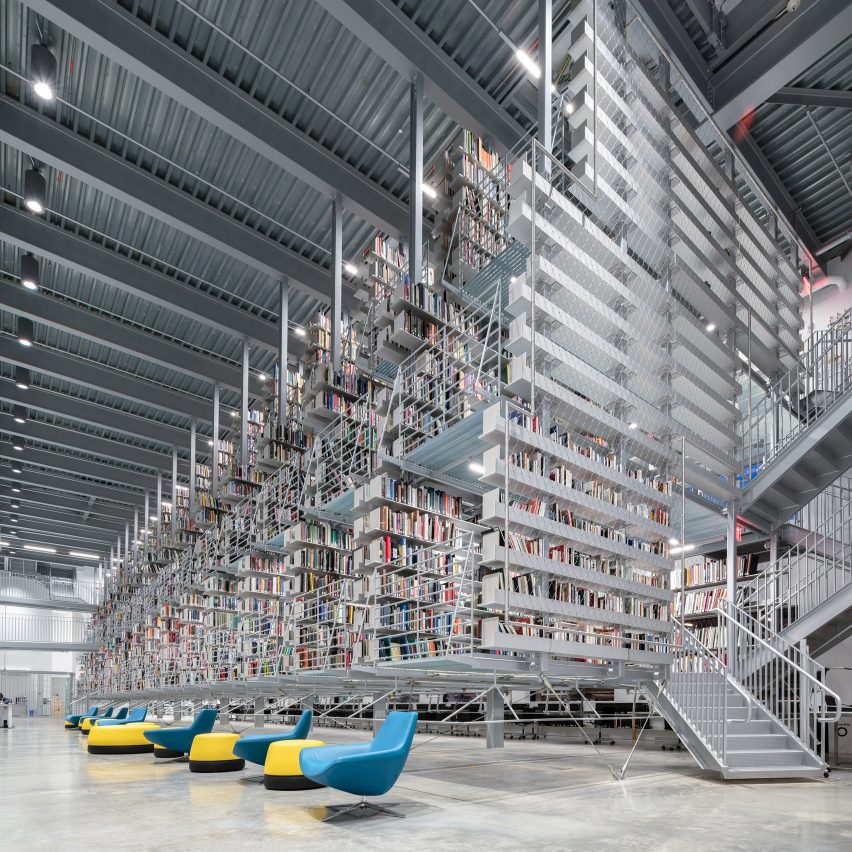
Novel idea: suspended shelving in this renovated library at Cornell University has Dezeen readers worrying about logistics and making comparisons to well-known retailers.

"I can't imagine how this could be anything but an acoustic nightmare," said Aaron, giving thought to the library's intended use. "A giant hard-surfaced void where every footfall strikes metal grating. Doesn't seem conducive to the quiet focus most strive for in a reading room."

Nivora had the same concern: "It's unfortunate they don't write anything about the acoustics, it's a vital aspect of the function and this building seems hard to create a good comfort for that."

"Imagine having to clean that floor underneath," pondered Sim. "Maybe they'll employ those robot hoovers for the floor."

The design reminded Ty-Phoo-Suk of a children's film: "They made the Monsters Inc-door storage scene into a library, even the curvy transport rail made it in."

Thisismattia's comparison, on the other hand, was less magical: "All the warmth of studying in an Amazon warehouse can be yours too at Cornell!"

"Looks like an IKEA warehouse," agreed John.

This reader felt the library's renovation missed its mark:

What does Wolfgang Tschapeller's renovation remind you of? Join the discussion ›


Kamila Rudnicka designs home insemination kit for use as part of sex

Baby making: an artificial insemination tool that doubles as a sex toy has commenters questioning whether such a design was necessary and pondering its materiality.

"Is it made of plasteline?" asked Donacio Cejas Acosta. While another commenter felt the product was more suited to the kitchen than bedroom: "It looks a lot like a roll of raw ham," fabian-k.-z. said.

"Why? Is there a shortage of children on the planet?" asked Pierre with a hint of sarcasm.

Other commenters were more complimentary.

"Thoughtful!" said LoveYourHairHopeYouWin, with trewus describing the tool as "stunning and brave!"

"You may think that pleasure can improve the success of insemination," said ARCHIPLAIN thoughtfully, adding: "Even if I do not know precise statistics or scientific studies on the subject."

This commenter felt the design tackled the wrong aspect of procreation:

What do you think of the design? Join the discussion ›


River street waterfront skyscraper

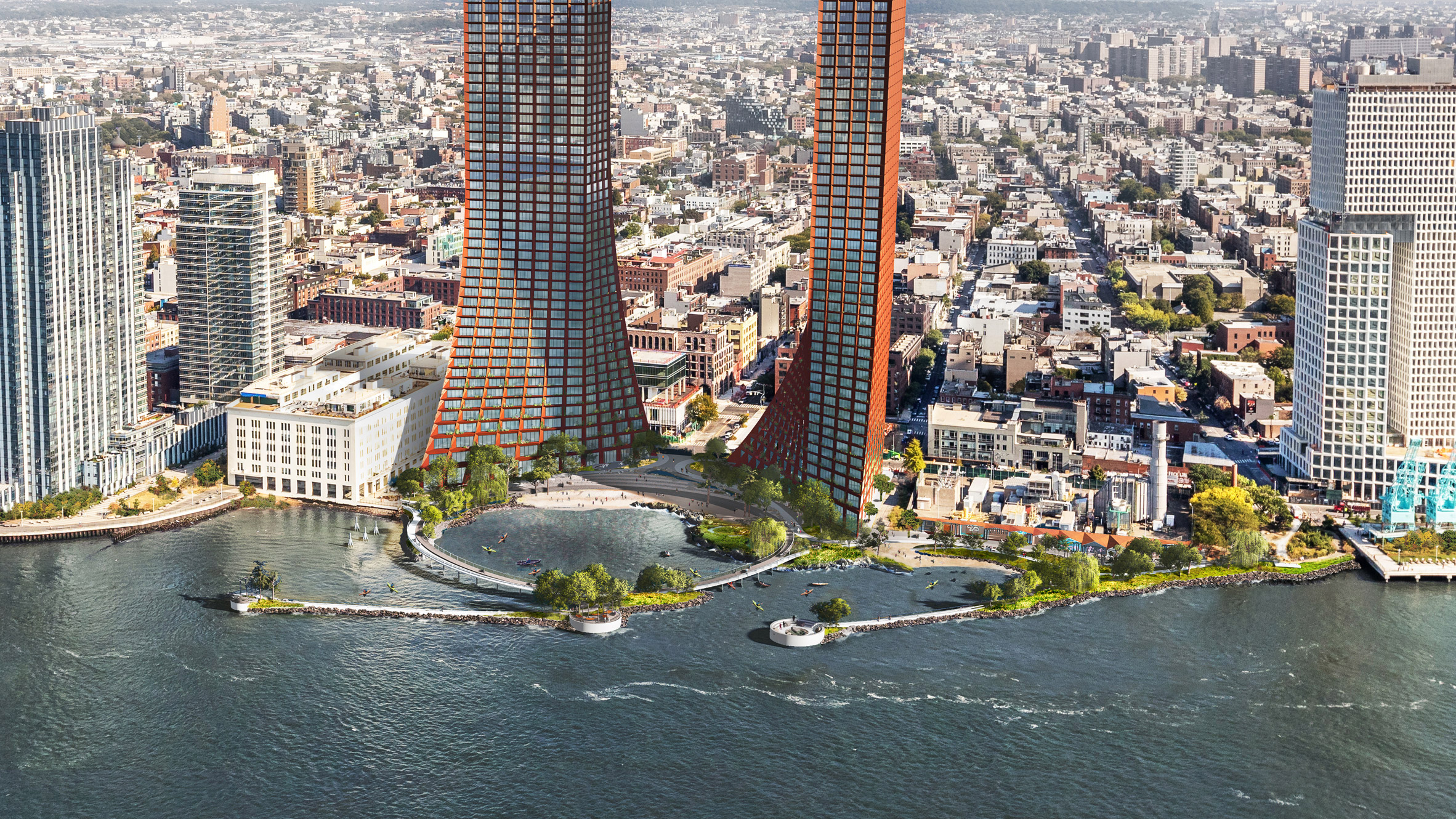
Beachside the point: BIG and landscape architecture firm James Corner Field Operations have revealed plans for a mixed-use development on the waterfront in Williamsburg, Brooklyn. Commenters are far from won over by the beach included in the proposal that the firms say could bolster the resiliency of the shoreline.

"Ocean rise equals future fish habitat," said Benny. "Nice to have an aquarium downstairs in one's own building."

Patrick Sardo expressed similar concerns: "This'll look really good underwater after another hurricane hits the city."

Other readers felt the additional housing, and therefore people, in the area will be unsustainable.

"Who's going to occupy these apartments, and how will the L train, already way overcrowded, handle these new residents?" asked Janice Kirkwood, adding: "Williamsburg on the weekend is already a traffic jam of Ubers."

"Will be interesting to see how these folks will fit onto the already packed L train," said Alon, in a similar vein.

Stuy guy offered some words of reassurance to those with transport concerns: "It's right by a ferry dock, Citi Bikes, and not too far from Marcy J train, so that should help."

"Sure sign your development is out of scale with the context when it can't even avoid casting a shadow on itself," commented HeywoodFloyd.

One reader felt the renderings looked familiar:

Will the development cause more problems than it solves? Join the discussion ›


Yinka Ilori Christmas tree installation at Sanderson London hotel

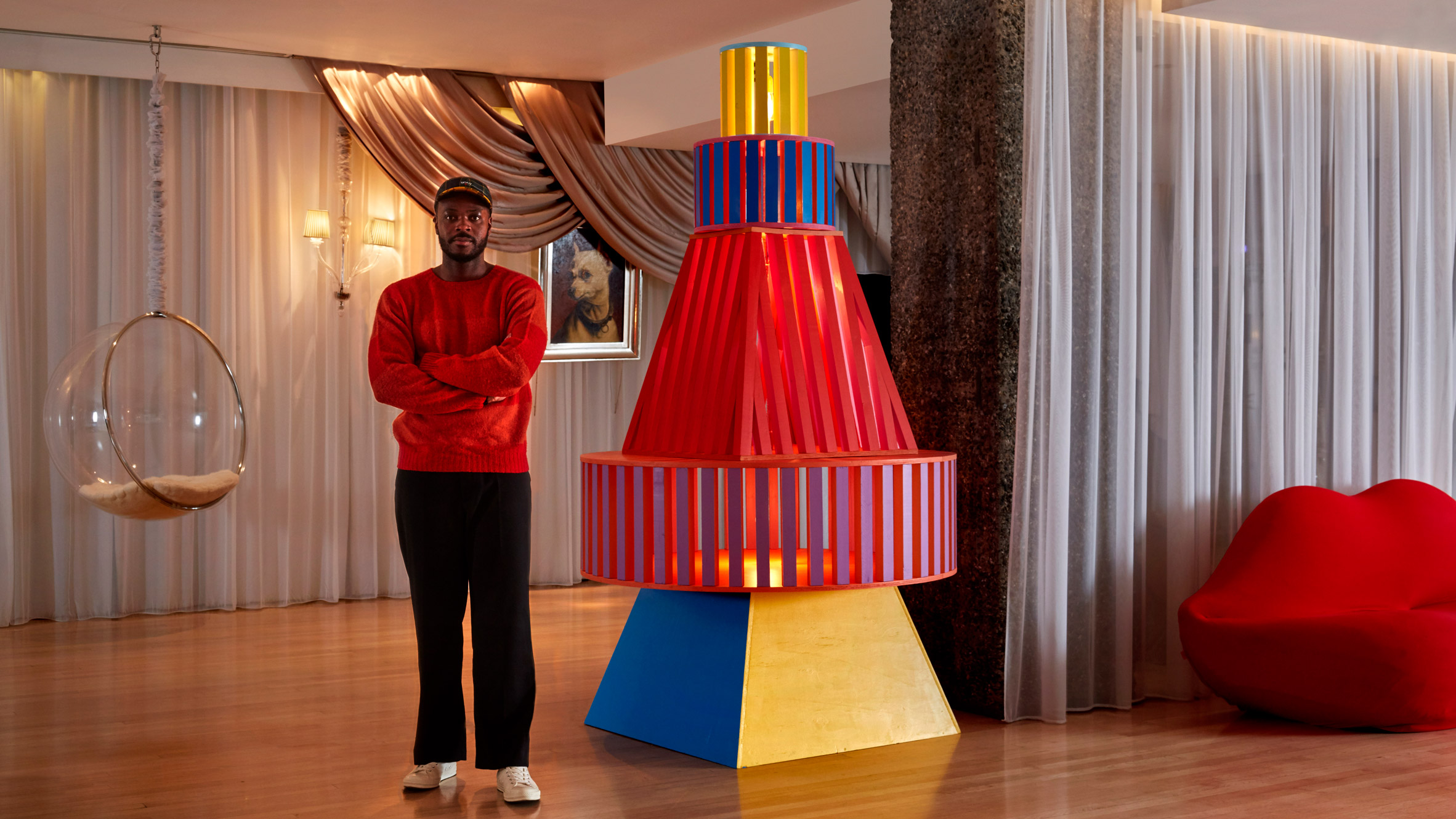
Deck the halls: commenters are lamenting Yinka Ilori's stylised Christmas tree designed for London's Sanderson hotel.

"Nothing says 'Christmas!' more strongly than the space capsule that sent John Glenn into orbit," chris_becket commented sarcastically.

LoveYourHairHopeYouWin felt similarly: "If he didn't say it's a Christmas tree, would you still call it a Christmas tree?"

"Nonsense," MarkR declared, adding: "Might as well call every triangular object a Christmas tree, and never have a dedicated proper Christmas tree ever again."

"This is not a Christmas tree," proclaimed Kadmos. "It is a pile of discarded samples of cloth material."

But the tree is not without fans.

"Playful, imaginative and avoids all that fey tat that has become associated with Christmas," described orangikaupapa in defence. "I like this man's work."

Geofbob also enjoyed the tree's deviation from the norm: "Eye-catching, playful change from the conventionally decorated fir tree - and no needles to hoover up daily!"

This reader couldn't decide what the tree looked like:

Is Yinka Ilori's tree a decoration too far? Join the discussion ›

The post "How to not solve a non-existent problem" appeared first on Dezeen.


from Dezeen https://ift.tt/38QvRM4

Amsterdam Storefront Windows Imitate Billowing Transparent Fabric in Renovation by UNStudio

All images © Evabloem

A soon-to-be fashion shop in Amsterdam has a new facade that mimics flowing textiles. Designed by UNStudio, a Dutch architecture firm, “The Looking Glass” features three glass panels mounted on the building’s brick front. Each low-iron annealed glass piece is attached with silicone to adjacent panels and has stainless steel edges that form a glass box. Eight millimeters of silicone also sit between the steel to account for any shifts or changes in the pieces. The structures were assembled in a factory before being transported for installation to the store, which is located at P.C. Hooftstraat 138 on one of the city’s best-known shopping streets.

Extending away from the building, the boxes eventually will be used to display clothing. “In a fluid gesture, fashion and architecture come together to represent and celebrate the craftsmanship and geometry of high-end, tailored clothing, creating harmony between aesthetics and function,” the firm says of the project.

Follow UNStudio’s upcoming work, which includes a cable car connecting Heihe, China to Blagoveshchensk, Russia, on Instagram. (via designboom)


from Colossal https://ift.tt/34u2rjB