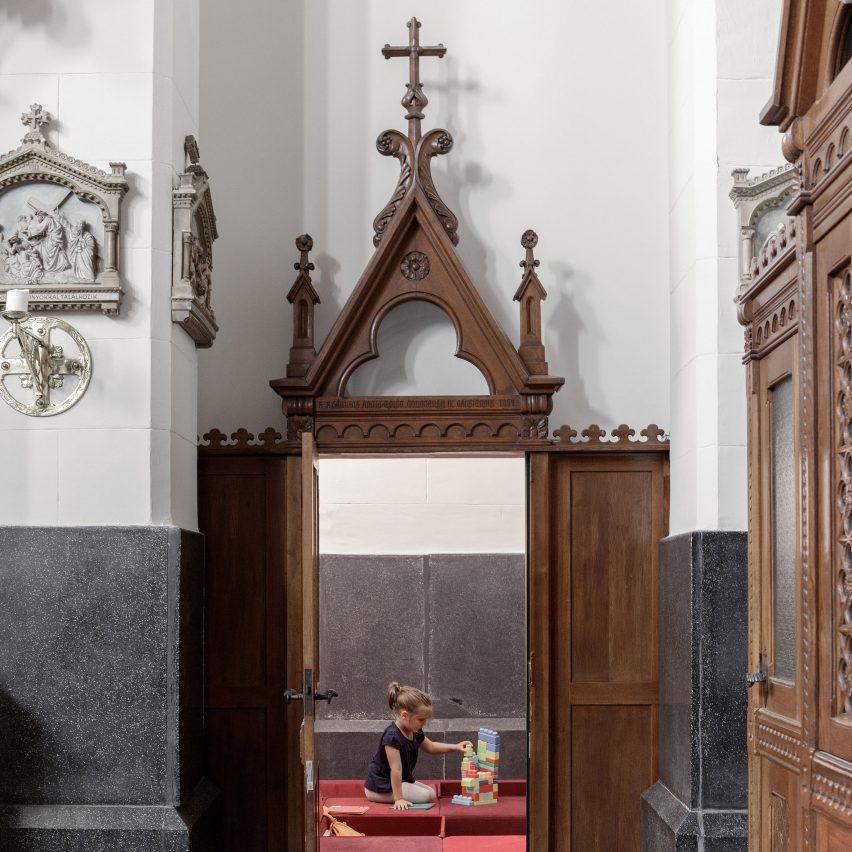
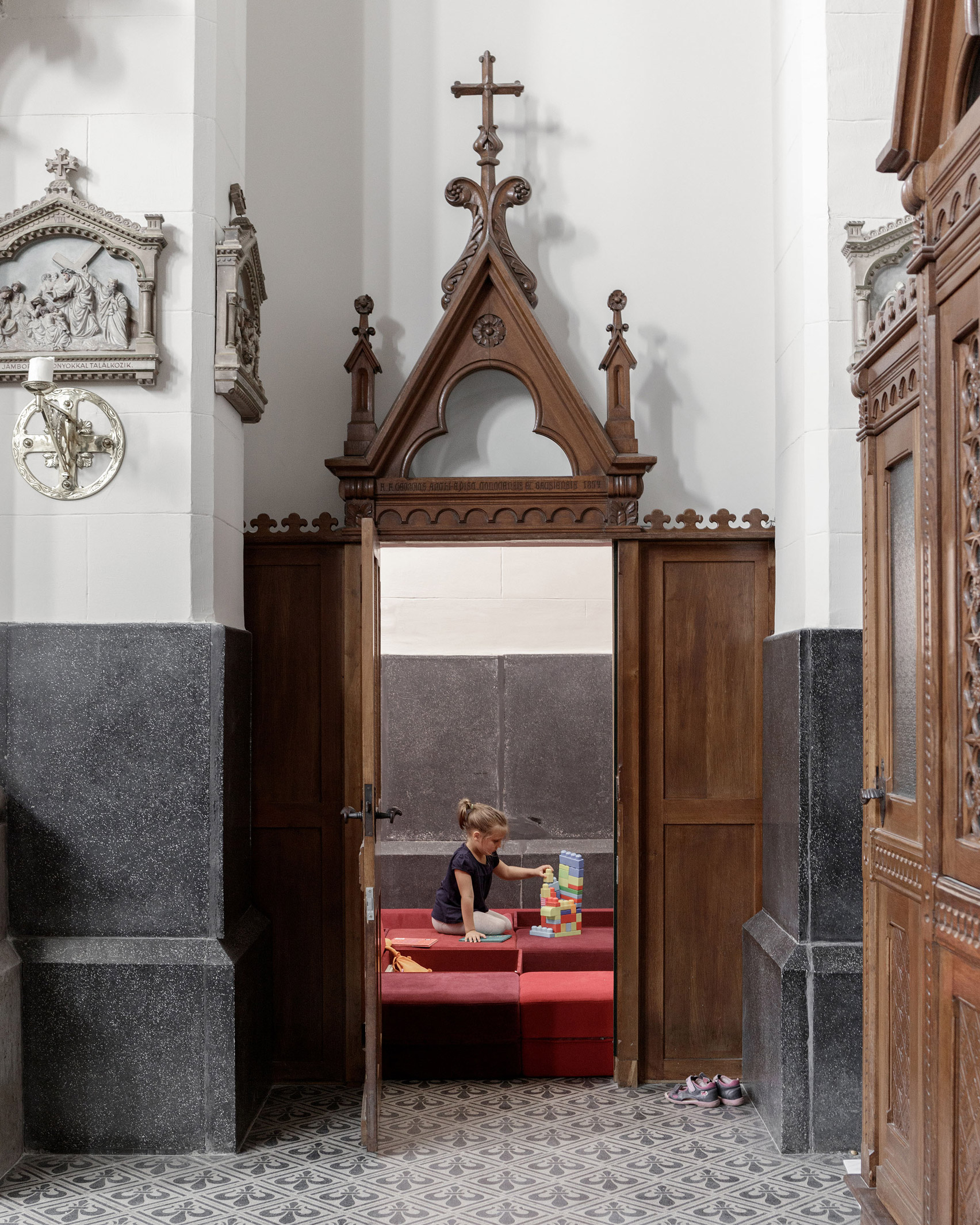
PRTZN Architecture has used upholstered foam blocks to transform a tiny room in a Hungarian church into a children's playroom.
Commissioned by Sacred Heart Jesuit Church in Budapest, the room is used as a space for children to play during holy mass services.
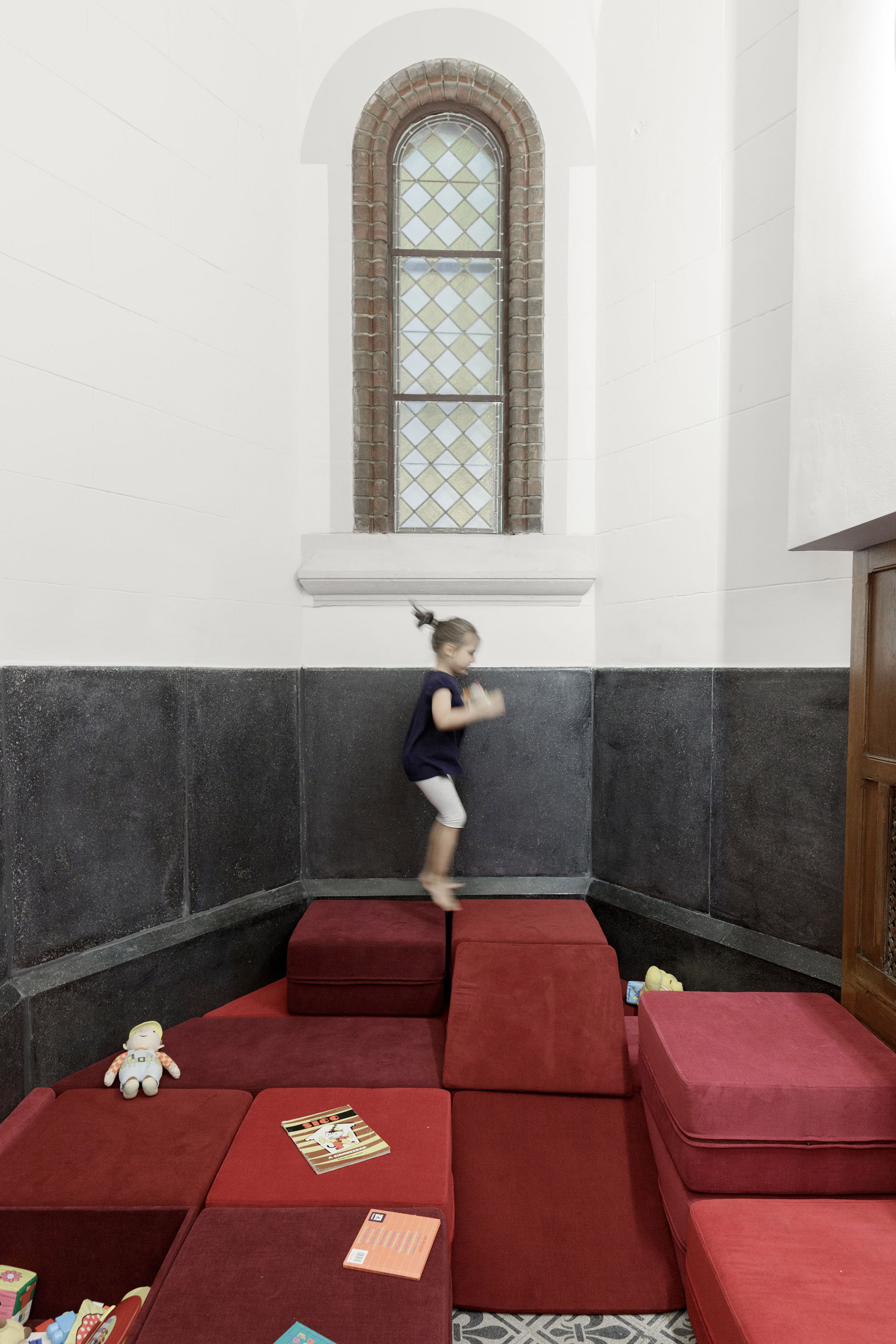
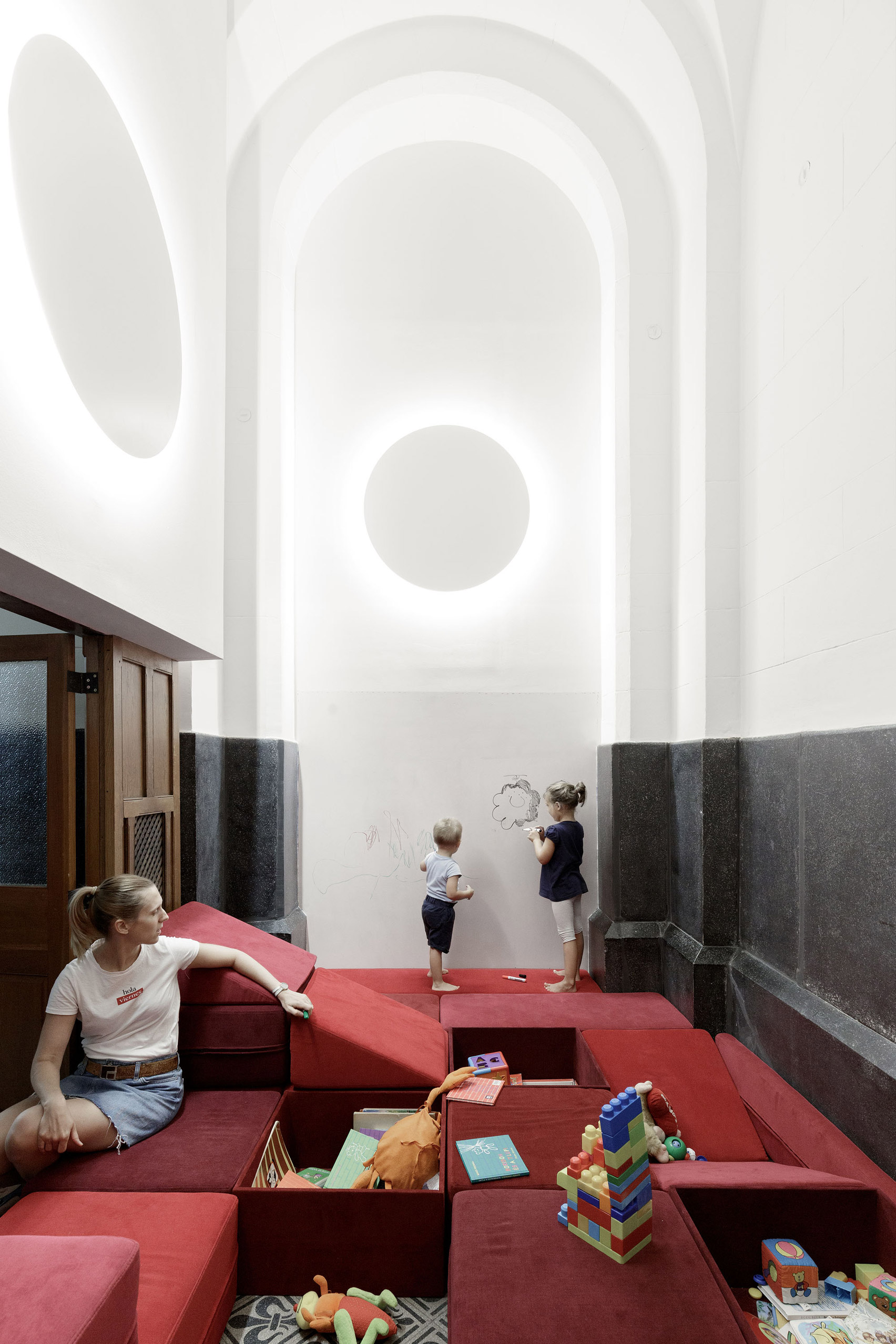
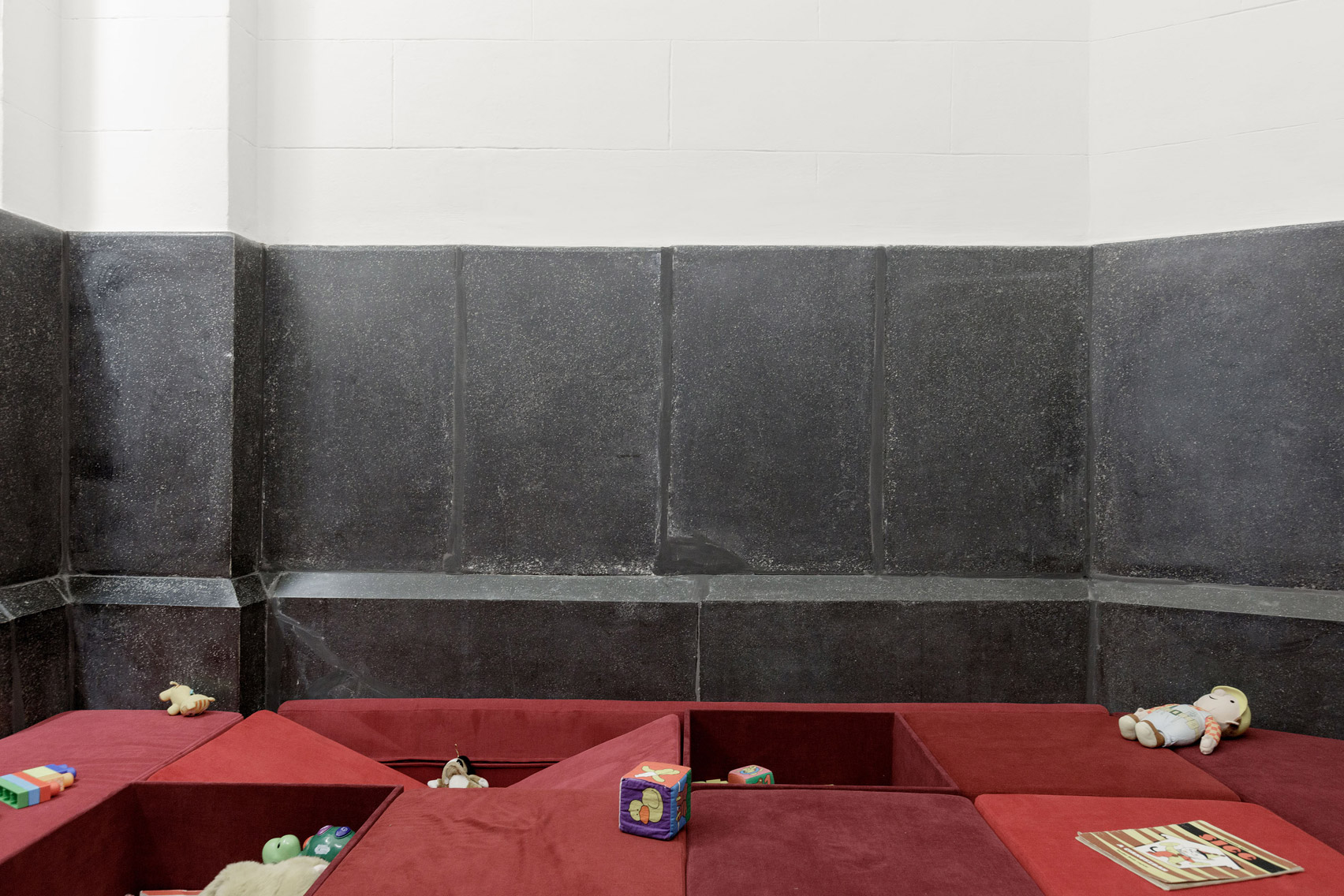
Measuring just 12 square metres, the narrow space is filled wall-to-wall with modular foam blocks where the children can climb, sit and store their toys.
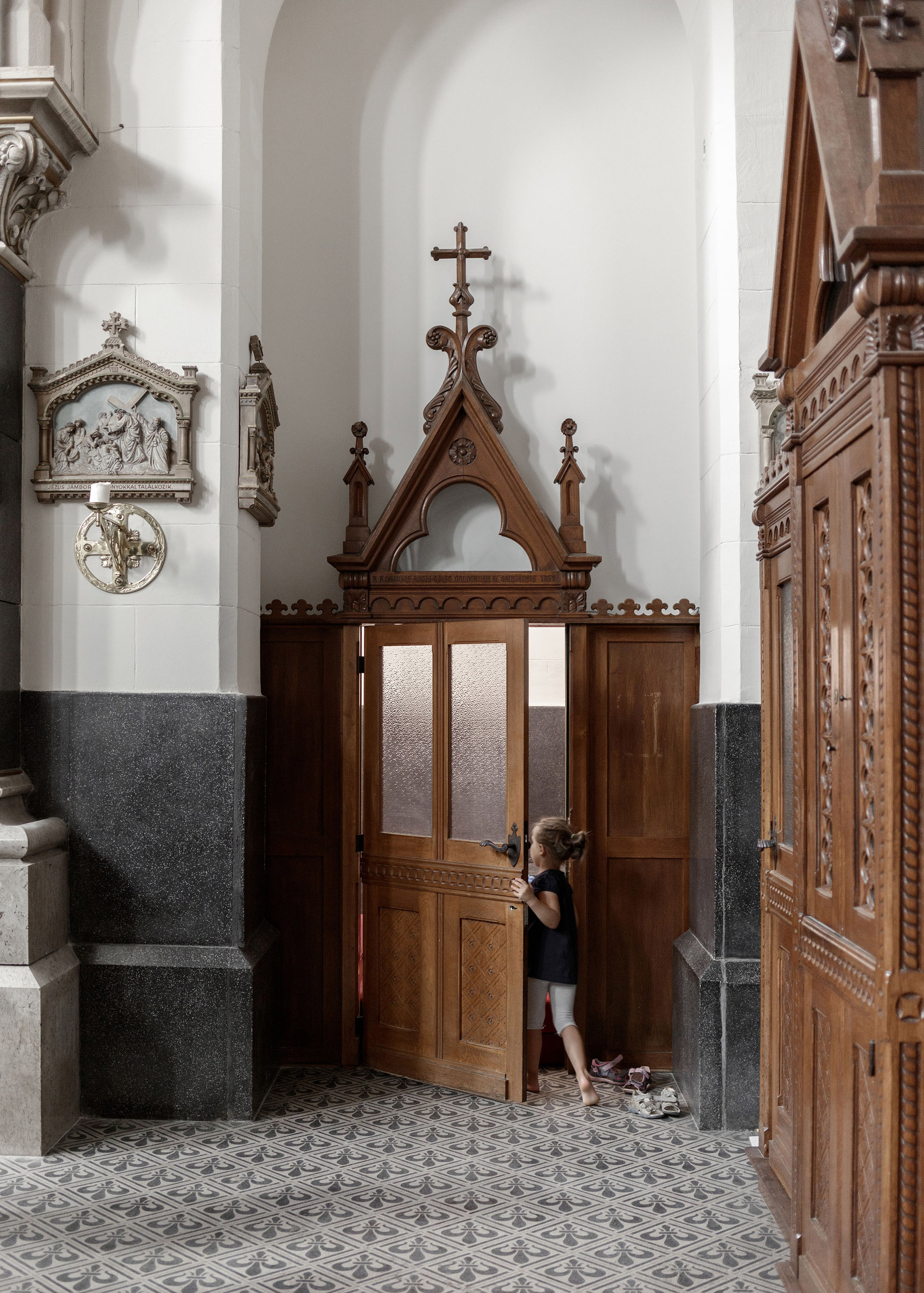
The room is located on the church's southern aisle and formerly served as just a storage area. It featured a high vaulted ceiling, black granite cladding and an uneven floor.
Budapest-based practice PRTZN Architecture was tasked with transforming the unwelcoming room into a child-friendly area that respects the church's existing architecture, lending the project its name of Play in Sacral Spaces.
"When we came into contact with the leadership of the church in 2018, the space had already been functioning as a playroom for one year, though it was furnished in quite an ad-hoc way with old, worn-out pieces of furniture," said Péter Müllner, who founded the practice in 2013 with Gergely Hory and Zoltán Major.
"The leadership commissioned us to enhance the quality of this space in order to serve the needs of its users better, and adapt it to the historic architectural environment of the church which opened in 1909."
The practice outlined three key issues that needed to be resolved. The first and greatest challenge was the room's narrow dimensions, while the second worry was that the existing cement tile floor did not provide adequate heat and comfort for a playroom.
The third issue concerned the relationship between the building and the furnishings within the space – the studio felt that regular furniture would feel out-of-scale in an interior with such a high vaulted ceiling and narrow plan.
A modular foam "landscape" that covers the room's entire floor was created. Upholstered in different tones of red fabric, the squishy blocks can be stacked into different compositions to serve as both seating and storage, or create a continuous flat surface where the children can move freely.
"The intervention provided not only a new elevated floor level for kids to play, but the installation itself became a toy as well," said the practice. "At the same time, the interior of the church remained untouched."
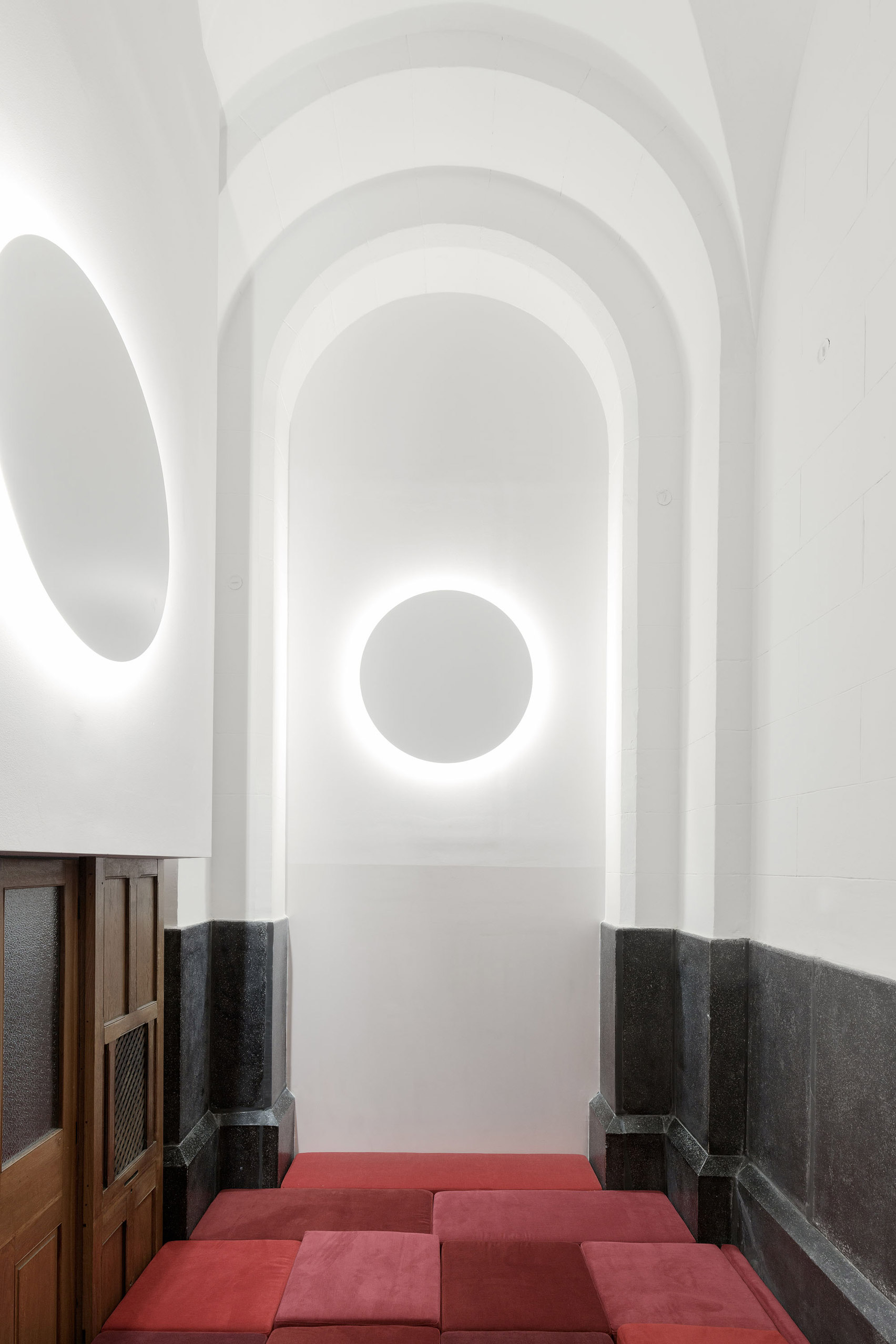
The space is illuminated by circular lamps crafted from powder-coated aluminium sheets.
"We wanted to create indirect lighting for this space, with lamps gently blending into the existing architectural environment," the studio added.
"We also wanted to accommodate the form of the lamps with the curved geometry of the vaulted ceiling, which represent monumentality."
PRTZN Architecture is not the first studio to create a children's play area in an unorthodox building. In 2016 architect Yasutaka Yoshimura completed a kindergarten on the site of a disused warehouse in Japan.
It features a tent-like structure wrapped in a translucent membrane that recalls the shape of the original building.
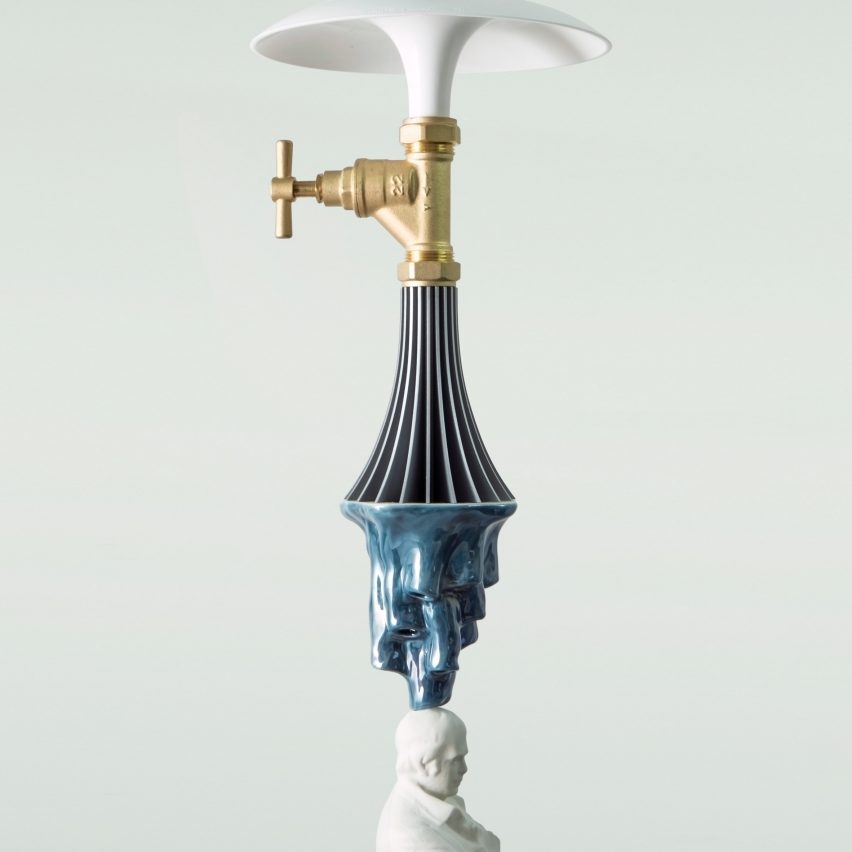
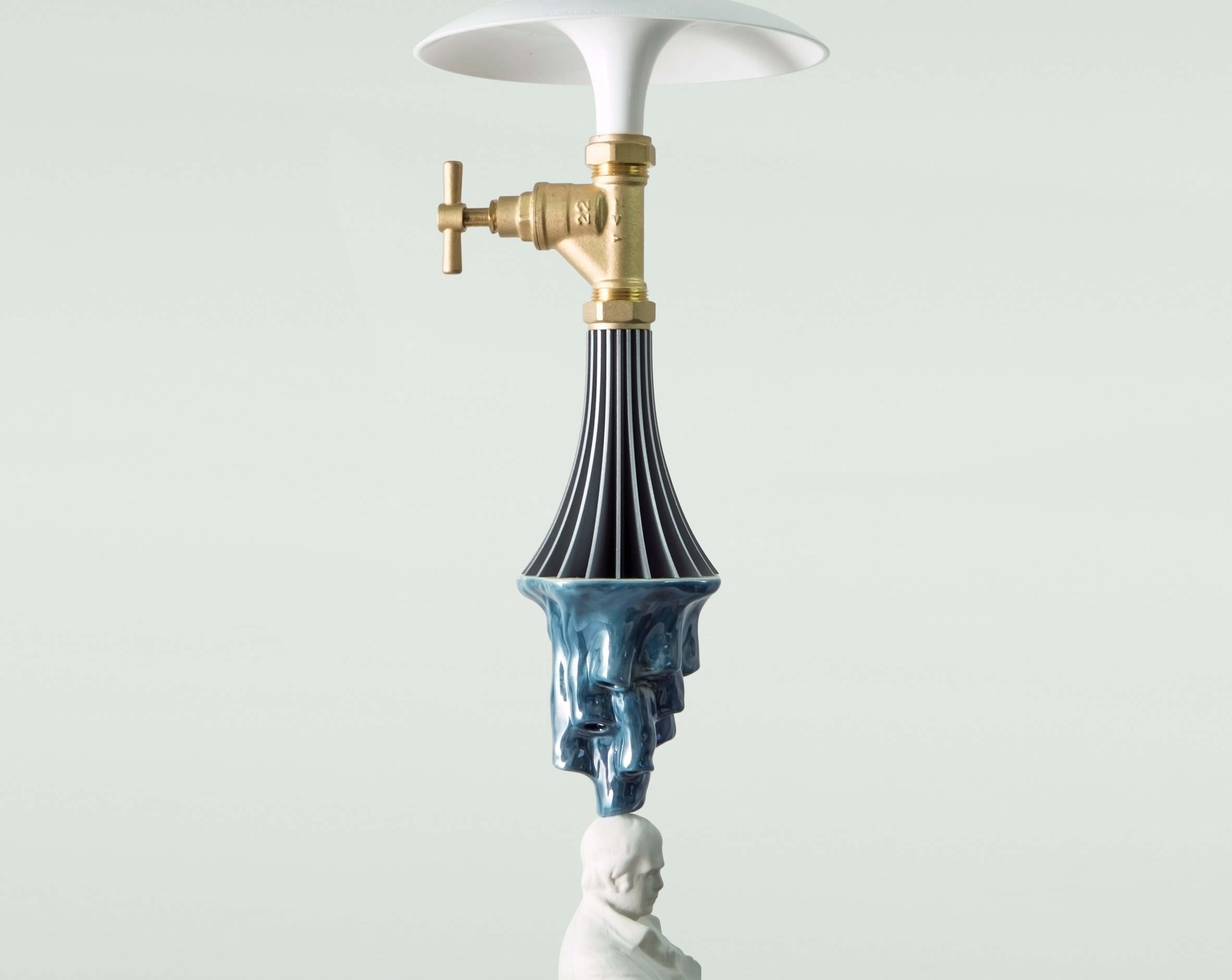
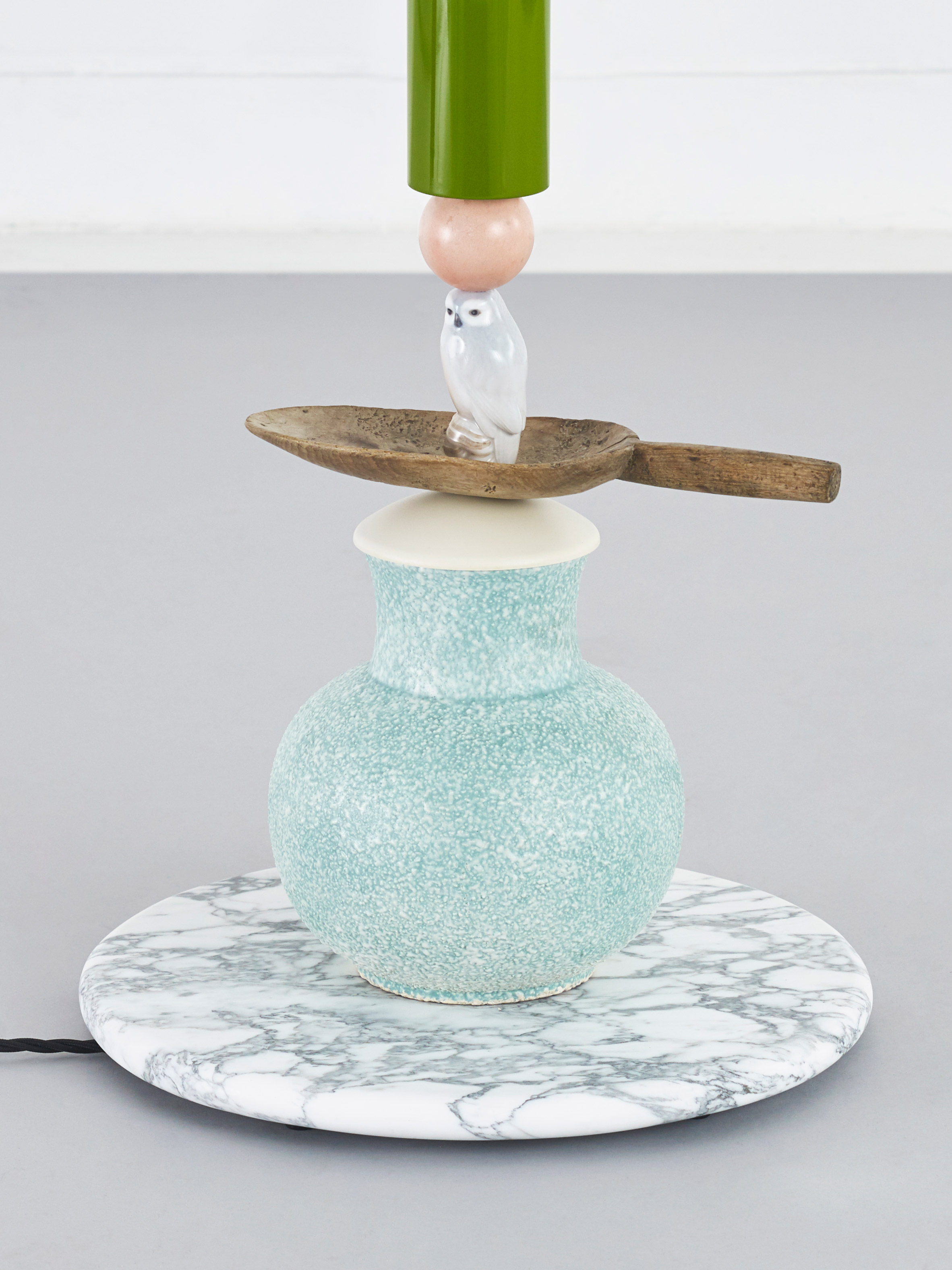
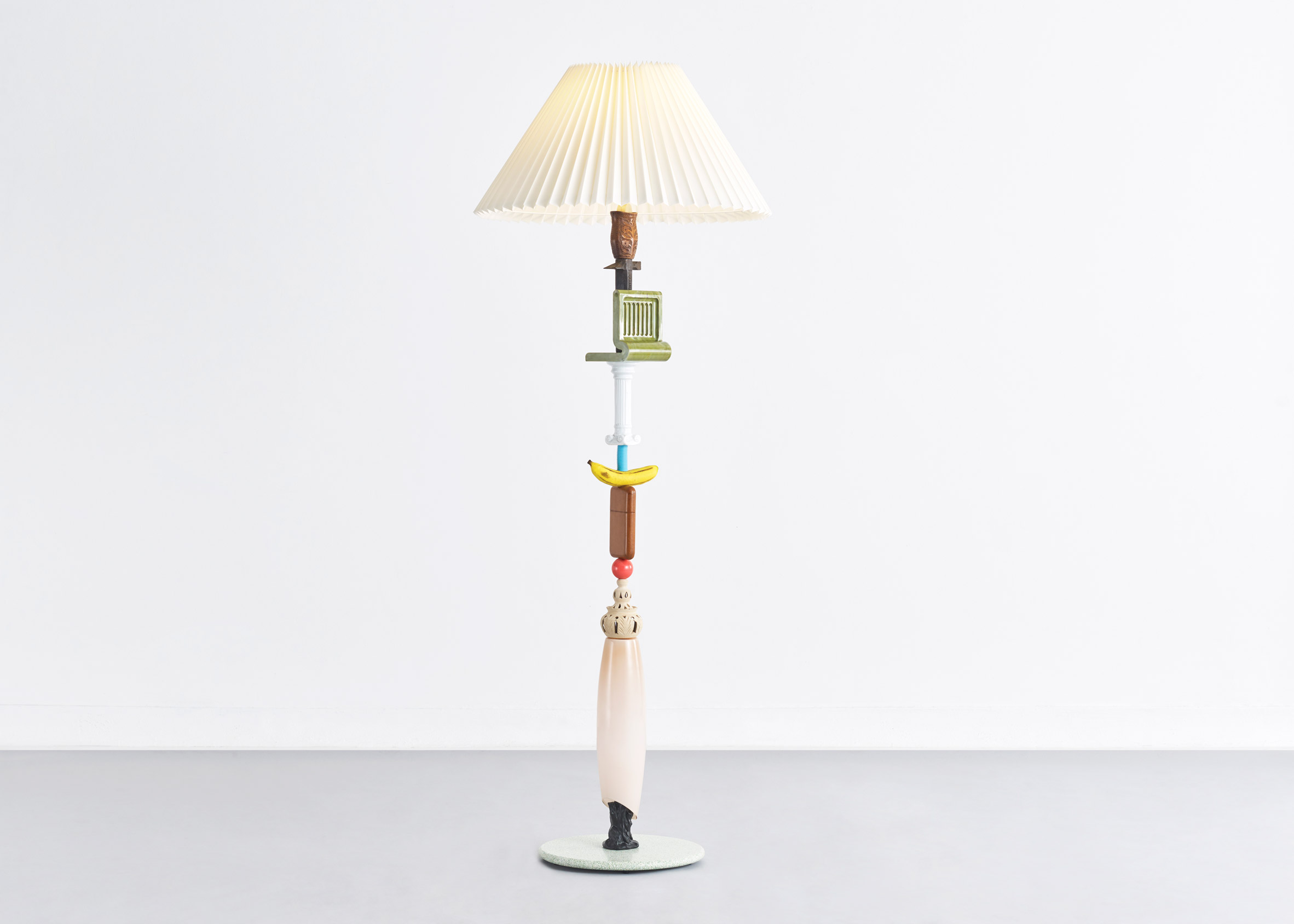
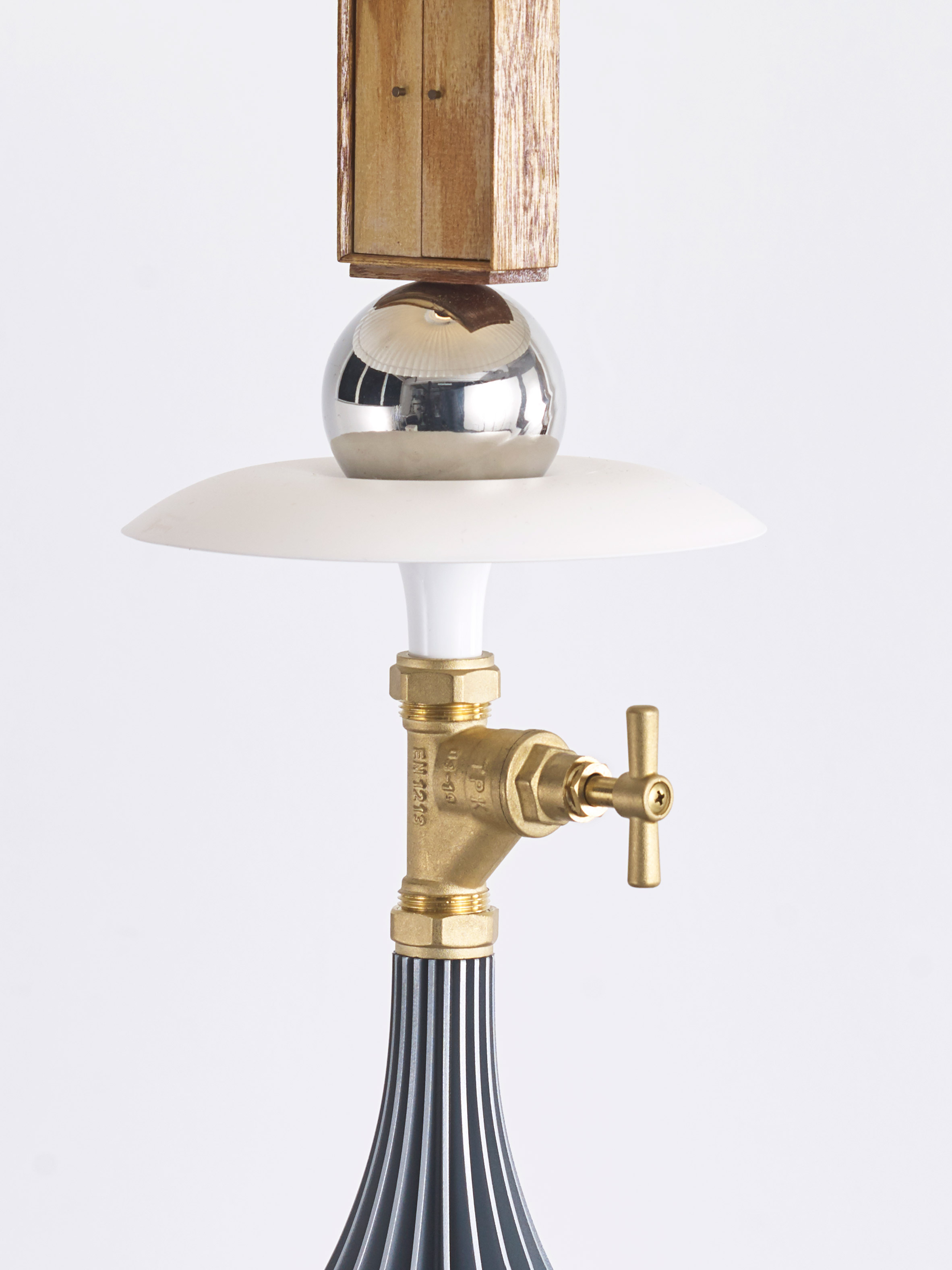
British design brand Established & Sons and design studio Committee have released new versions of their Kebab Lamps, featuring miscellaneous found objects skewered on a central pole.
The stacks of trinkets challenge people to face their love of stuff said Committee, which is headed by artists Harry Richardson and Clare Page.
"If we don't declare honestly that humans love objects, fashion, novelty, beauty and visual pleasure then it seems unlikely to us that we will find sensible ways to fix our overconsumption," said Richardson and Page.
Committee created four Kebab Lamps, featuring an updated pleated fabric shade and stone base. They'll presented as part of the Established & Sons Limited Edition collection at the the upcoming Nomad St Moritz art and design event.
Each lamp is a unique object made by stacking eclectic found objects on a central stem. The combined effect is intended to highlight the impact of mass production and our consumerist habits.
Committee told Dezeen that the original Kebab Lamps anticipated the adoption of the term anthropocene, which is used to describe how human beings are influencing the global environment.
"Obviously, the lamps were no solution themselves to excessive consumerism, but they were not intended to be," the designers said.
"They were an illustration of it."
Rather than being purely critical of mass consumption, the products aim to fuel debate that could help address some of the issues associated with our dependence on producing and consuming.
"With the Kebab Lamps we wanted to show there is a joy in owning objects, as well as a cost," the designers added.
"Each lamp is a small, visual poem on globalisation; impressive and yet simultaneously 'too much'."
The process used to produce the Kebab Lamps today is much the same as when they were first developed in 2003.
Their creators said the main difference is the use of objects that they would perhaps have overlooked ten years ago.
Many of the objects are sourced from the "tat markets of south London," they said, "where we are confronted by the under-belly of retail, the wastage of globalised, mass consumerism".
The new pieces feature fabric shades that are made using traditional methods by a Danish manufacturer.
The crisp finishing on the pleated shades enhances their graphic aesthetic and the plain fabric creates a contrast with the maximalist assemblage of objects.
The new bases are made from stone offcuts that the designers selected from specialist supplier Diespeker to suit the aesthetic of each individual lamp.
Every lamp is unique, with Committee producing up to eight examples per year. Each piece has its own name and is carefully assembled to tell a story about various themes such as thought, power, civilisation, luxury and responsibility.
Established & Sons was founded in 2005, initially as a platform for promoting British design and manufacturing. It went on to work with international designers, including Konstantin Grcic and Ronan and Erwan Bouroullec.
In 2017, one of the brands original co-founders, Sebastian Wrong, returned as design director and vowed to ensure its collection focuses on the founding principles of "artistry, freedom, ingenuity and a pursuit of the extraordinary".
Nomad St. Moritz takes place in the Swiss town of Samedan from 6-9 February 2020.
Called The Platform, the project is a homage to the superstructures designed by radical 1960s Italian practice Superstudio.
The collective, whose founders recently passed away, imagined the world encircled by gridded structures. They also produced a series of furniture in this shape, covered in white tiled effect.
Photo is by Peter Tijhuis
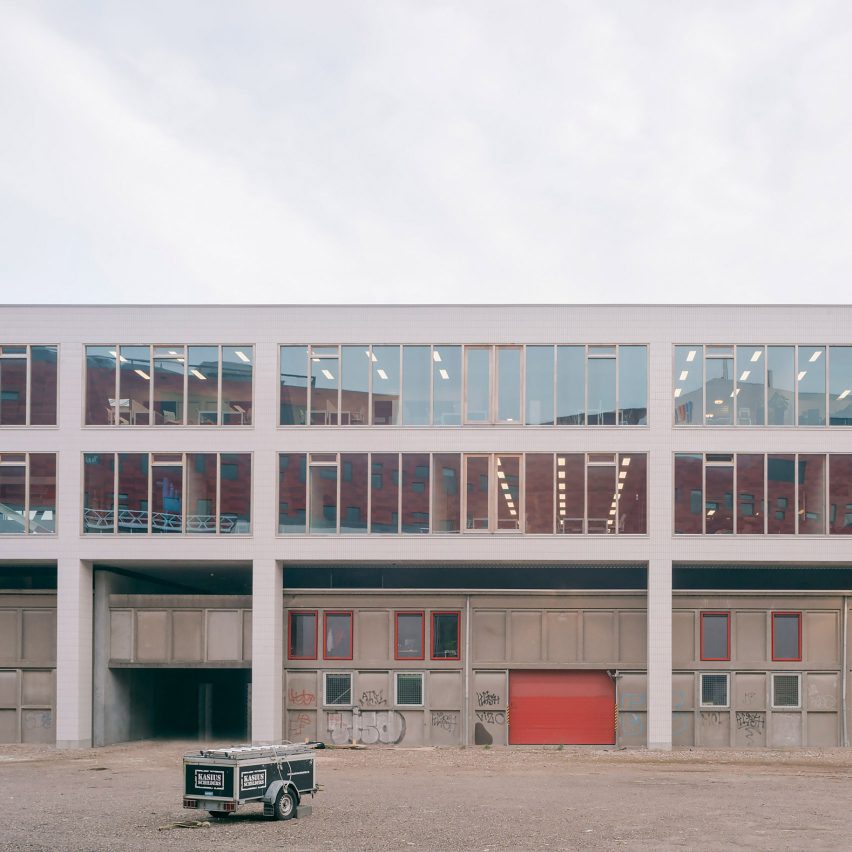
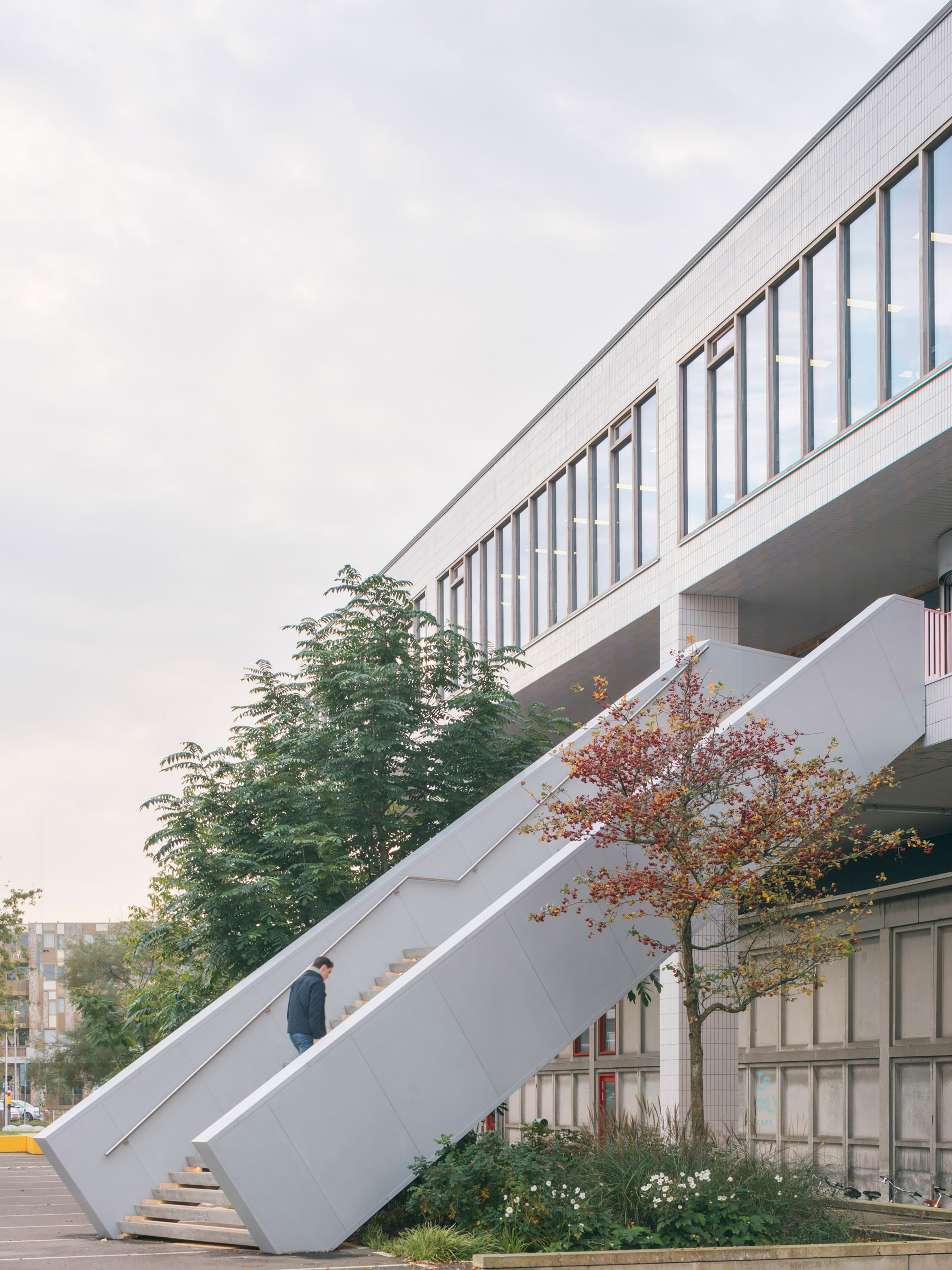
Located in De Niewe Stad innovation district, The Platform, was commissioned by Schipper Bosch Development.
It adds two floors of workspace without disturbing the building below.
Photo is by Peter Tijhuis
This brick and concrete building, formerly a warehouse for the Prodent factory, currently houses online supermarket Picnic as well as a pop-up venue space.
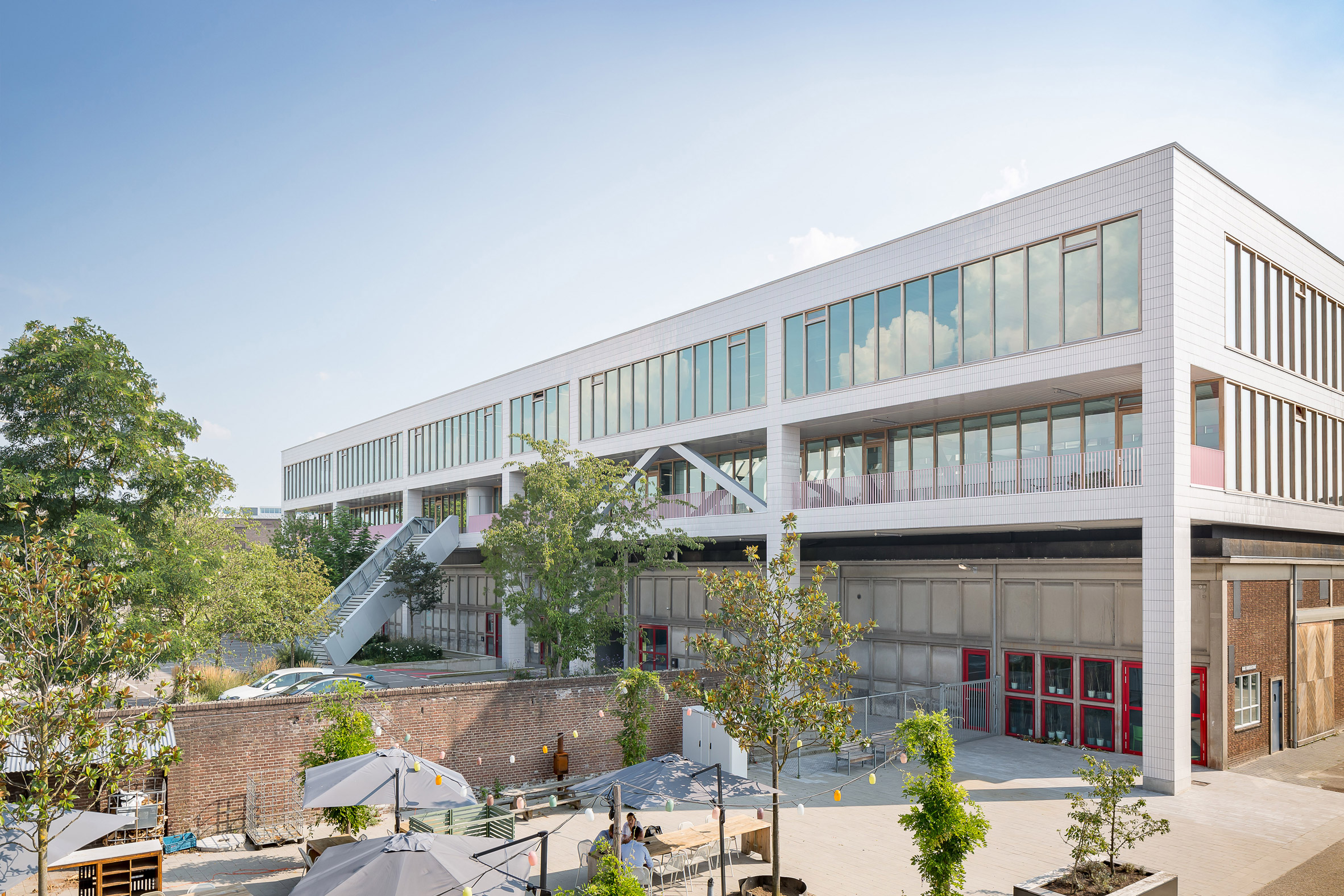
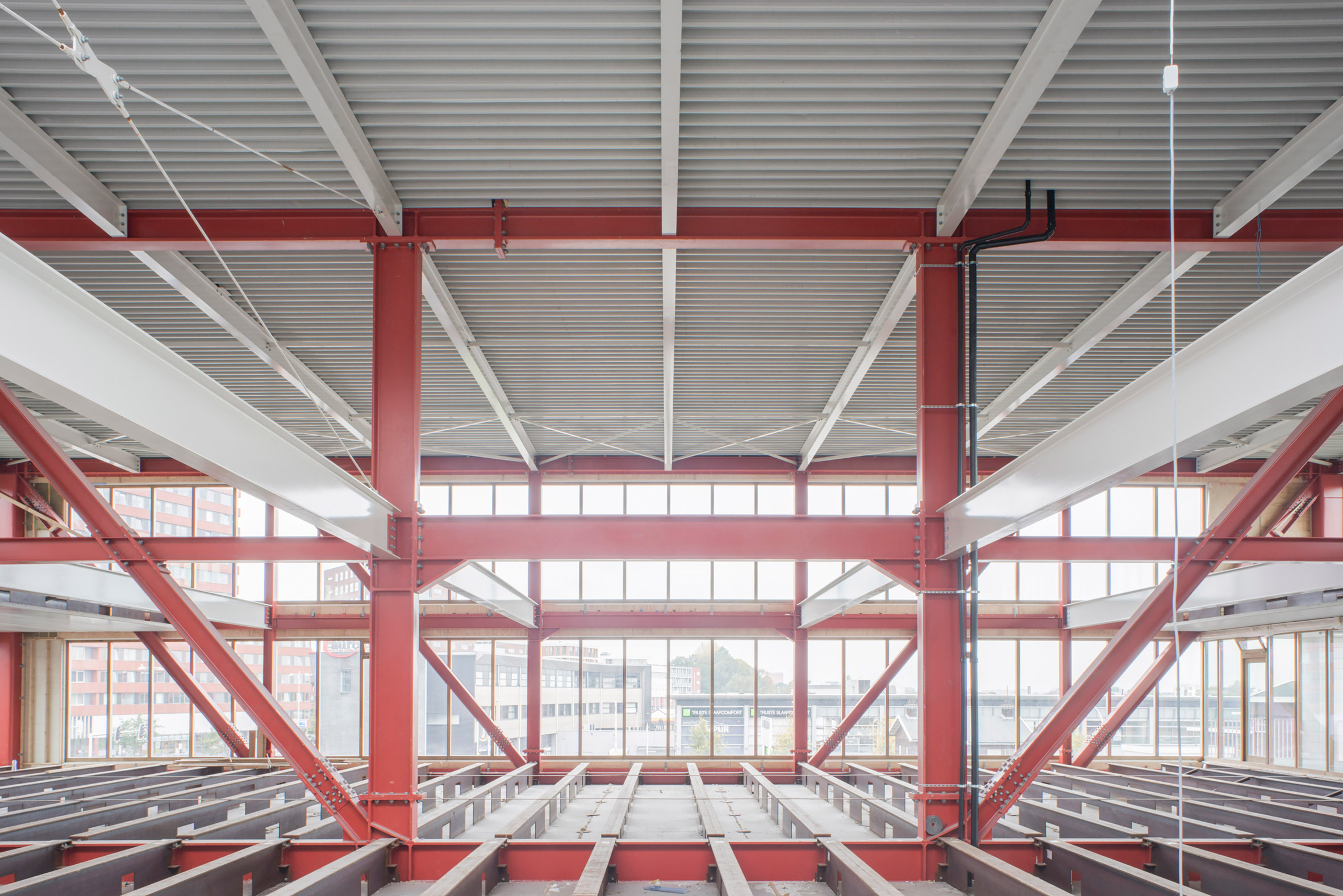
Space Encounters installed a system of seven steel trusses spanning 34 metres above the existing structure.
The Platform spans the entire length of the warehouse, with supports only necessary around its edge.
"Constructively is is more like a bridge than a building - a typological crossover," said the studio.
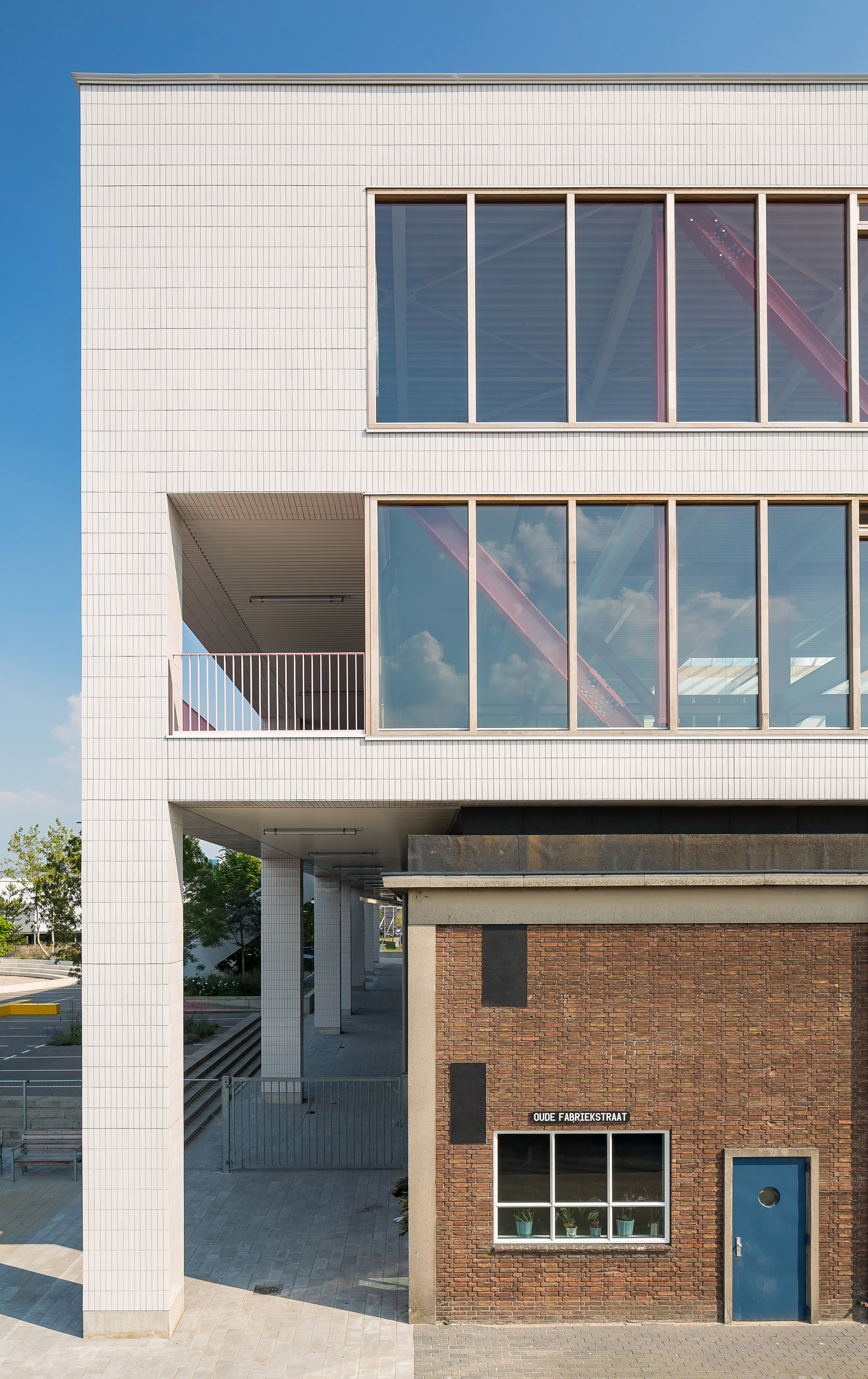
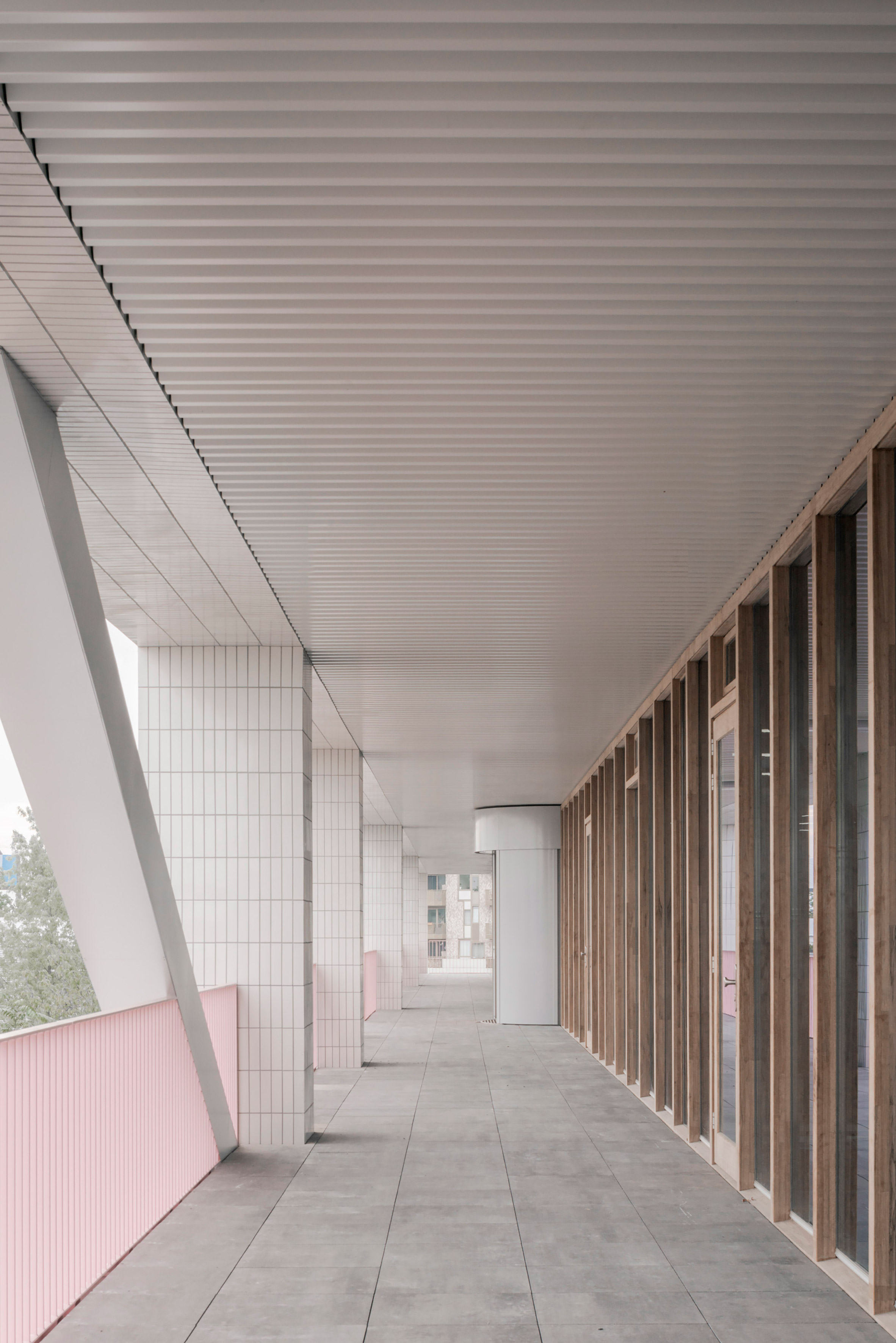
It's slight overhand creates an arcade-like space at the front of the building.
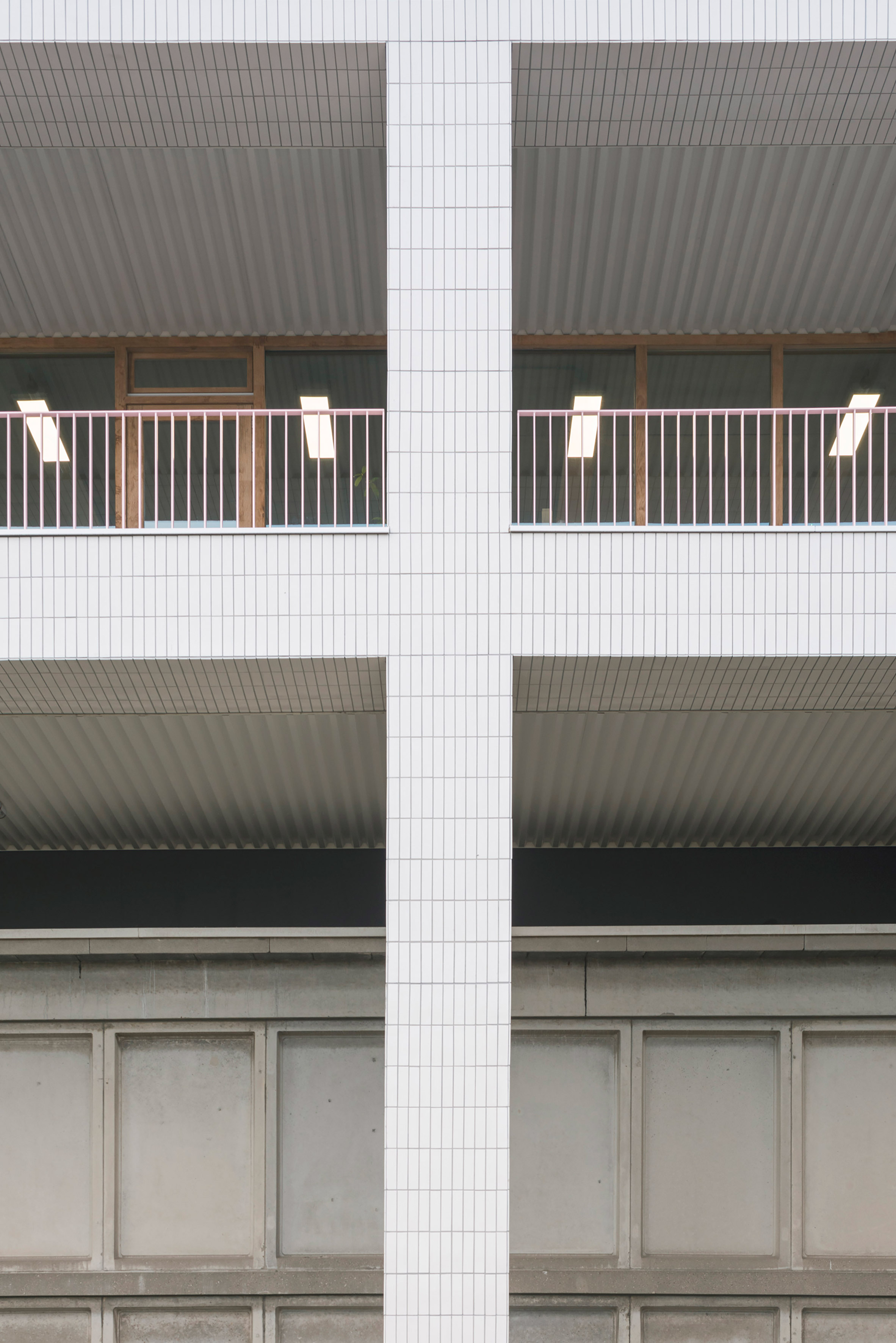
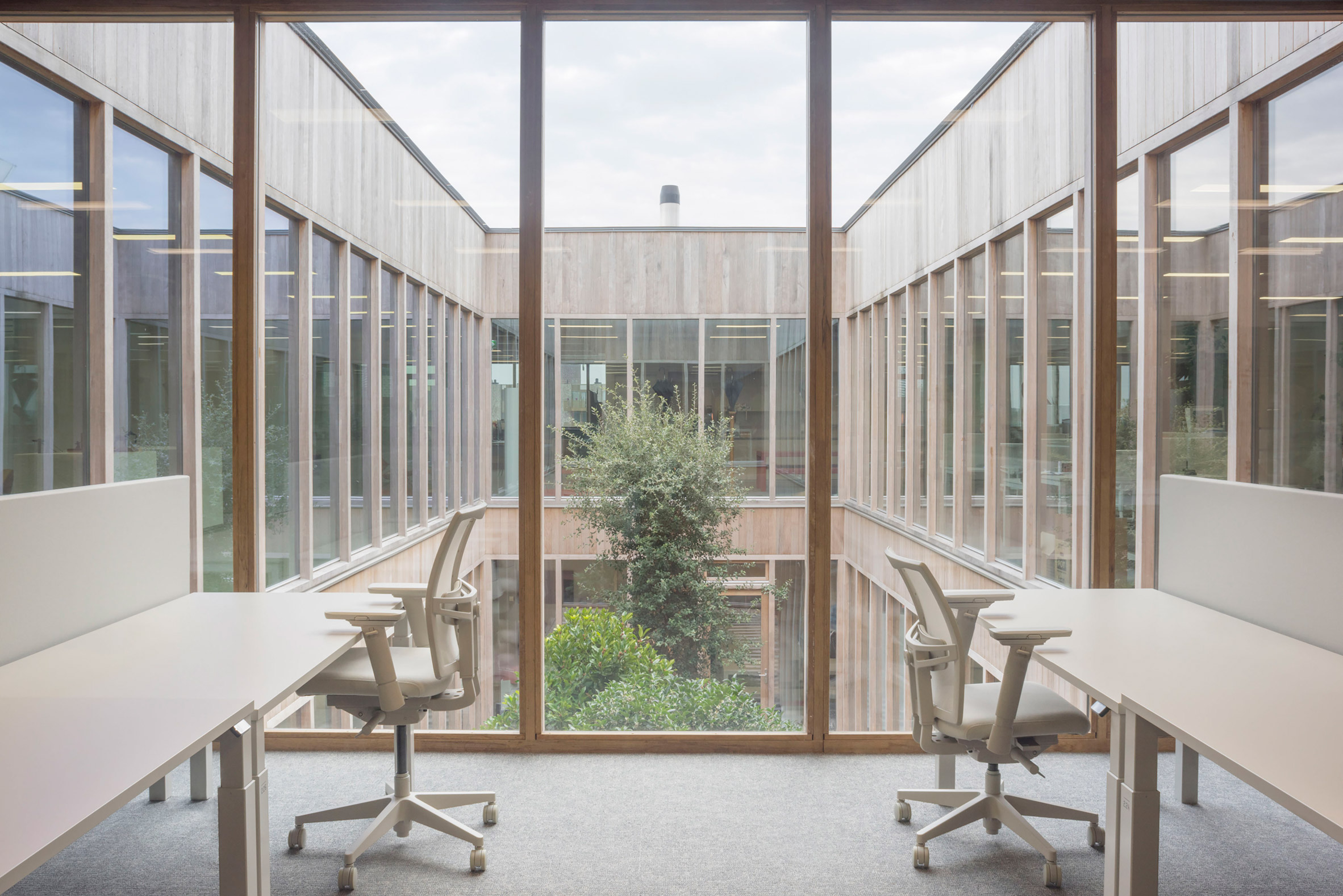
White tiles cover the exterior of the new building, with thin window frames made using Fraké hardwood.
"The white glazed ceramic tiles are traditionally used in industrial interiors because of their resilience," said the practice.
"By placing them on the facade, the enormous scale of the building becomes tactile and connects with the history of the place."
Slimline prefabricated floor panels were instead of pouring wet concrete above the warehouse, so the space below could still be occupied during construction.
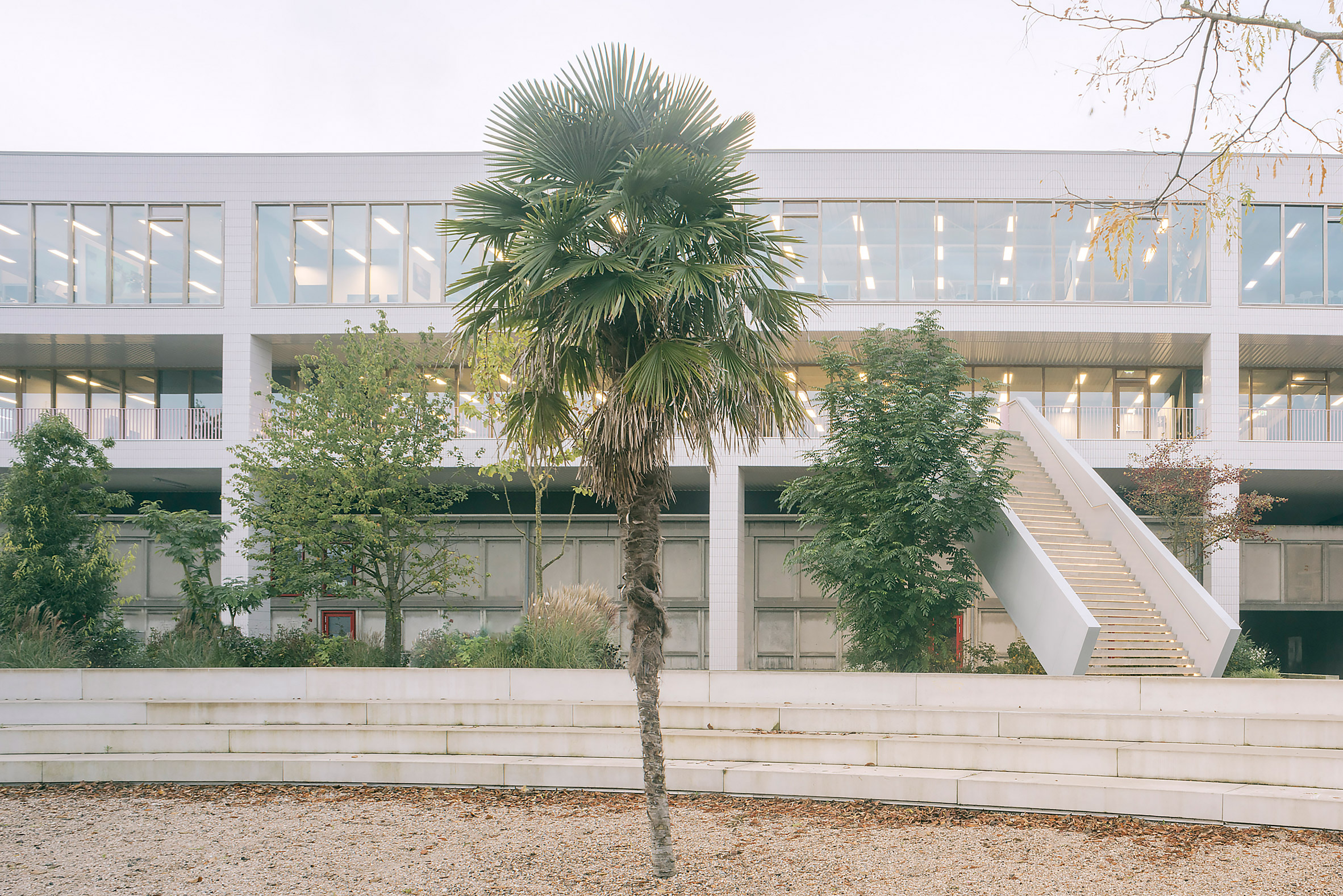
A large concrete staircase leads up from the public square to The Platform.
A long balcony extends three metres over the edges of the warehouse to create a covered entrance area.
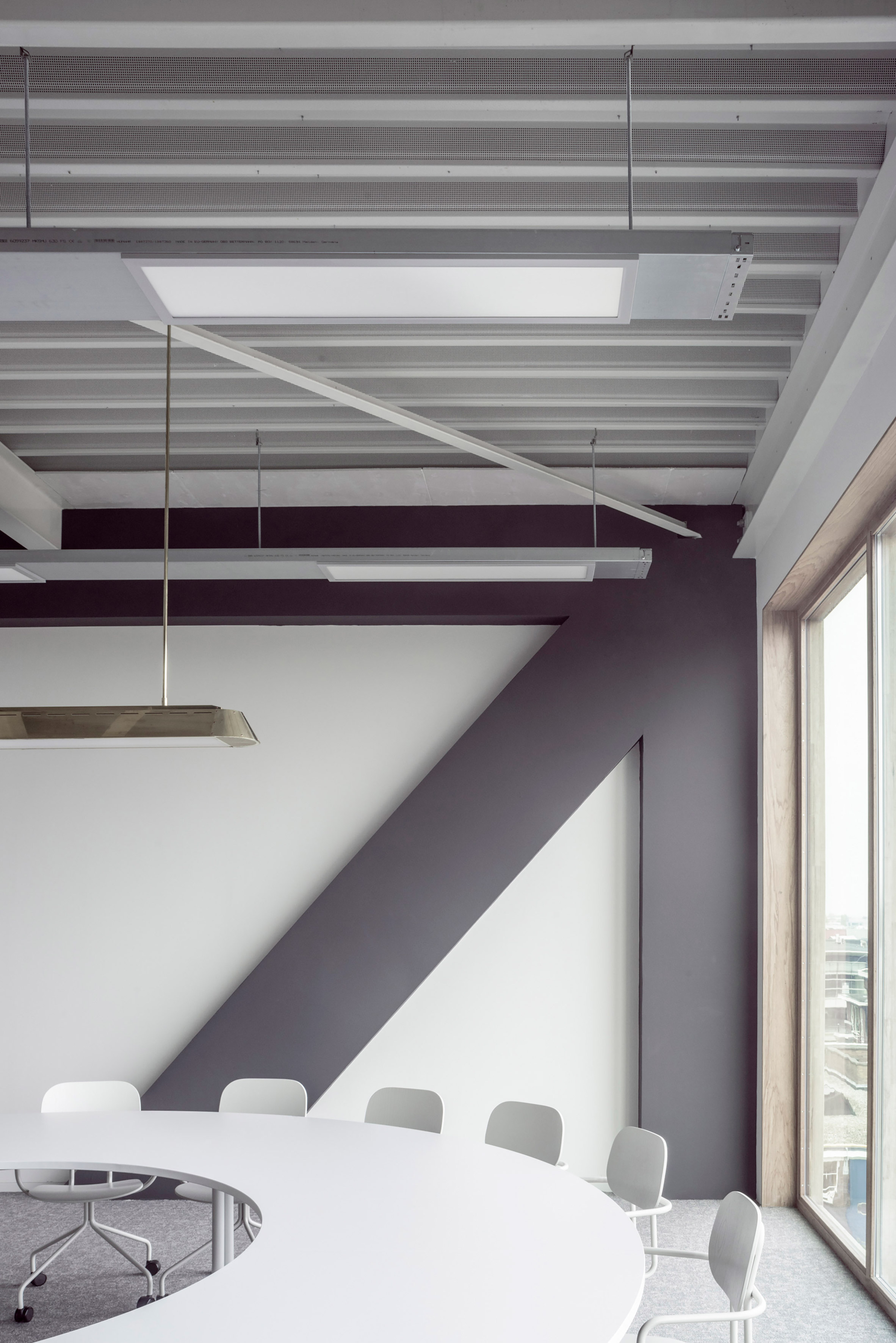
Workspaces are arranged around a double-height planted courtyard on the roof of the warehouse below.
Hardwood walls, bright red-painted steel supports at the building's edges and pastel-pink balustrades contrast with the white tiles of the exterior.
Service and bathroom spaces have been combined in separate blocks, to help emphasise the open feeling of the rest of the office space.
Previous workspace projects by Space Encounters include an office in Amsterdam that uses soft partitions of columns and curtains, and an office in Utrecht featuring planted divisions that provide privacy for workers.
Architect: Space Encounters Lead architects: Gijs Baks, Joost Baks, Remi Versteeg, Stijn de Weerd Design team: Vincent van Leeuwen, Bram van den Heuvel, Carlos Callejo, Agatha Popieluch, Clara Jansen, Matilde Scali Client: Schipper Bosch Structural engineer: Van Rossum Raadgevende Ingenieurs MEP consultant: Hiensch Engineering Contractor: Bouwonderneming Van Bekkum Interior architect: Space Encounters Graphic design: Sanne Beeren
A draft order by Donald Trump to make all new federal buildings classical is the latest example of how traditional architecture is used to disguise racist agendas, says Phineas Harper.
Who could have predicted that a president famed for his eponymous sub-Miesian skyscrapers would come out as a classicist? Yet this week, news broke of a White House executive order to dictate a style for all US federal architecture – and that style is classicism.
Entitled Making Federal Buildings Beautiful Again, the draft order demands that "the classical architectural style shall be the preferred and default style" for all new government buildings. Dead good lobbying by Robert Stern? A dead-cat policy to distract from the surging Bernie Sanders? Or something more deadly?
The American Institute of Architects said it "strongly opposes uniform style mandates", but Trump's edict should be seen as part of a far more worrying agenda than a mere taste tussle. The order is not just about the look of buildings – it is part of a jingoistic culture war waged against black and ethnic minority Americans. Trump's order venerating classical aesthetics is intended to wrap the buildings of American authority not just in stone cladding but in the architectural shorthand of his core political project: white supremacy.
It is not hard to see how Trump's executive order fits into an established pattern of mixing xenophobia with anti-modernist rhetoric
Of course, classical antiquity wasn't white. Ancient Greek architecture was hugely influenced by north African buildings, while the Roman empire stretched from Morocco to Iran. But for Trump and his supporters, these facts are irrelevant. Regardless of history, classical aesthetics have become a dog whistle for a certain pocket of nationalists – a code for whiteness.
I am a defender of traditional architecture, which has many strengths, in particular ecological. But it is no secret that toxic factions lurk at the sidelines of the traditionalist movement, in particular within classicism. It is not hard to see how Trump's executive order fits into an established pattern of mixing xenophobia with anti-modernist rhetoric.
Take YouTuber Paul Joseph Watson, known for posting crackpot conspiracy theories and criticising Islam and feminism. What else does Watson care about? Alarmingly, the answer is architecture.
In 2018, Watson posted a film titled Why Modern Architecture SUCKS to his nearly two million subscribers, lambasting modernist urbanism and praising classical and other historic styles. For those sympathetic to the critiques of post-war city planning, it was chilling to see sensible arguments weaponised within a wider project clearly intended to stir paranoia and racial hatred.
White supremacy has been allowed to fester within the traditional architecture movement
Watson's films, like Trump's executive order, use architecture to divide the supposedly authentic inheritors of classical antiquity from the foreign modern other.
Watson is supported by Infowars, a site run by conspiracy theorist Alex Jones, who has argued that the 2012 Sandy Hook Elementary School shooting was a hoax orchestrated by left-wing lobbyists to increase political support for gun control. Jones and Watson are not the allies any decent person would want on their side in a debate about architectural style. Yet, in terms of the audiences they reach, they are among classical architecture's most powerful advocates.
Are traditional architects damned by the company they keep? It would be wrong to argue that all proponents of historic styles are complicit in Watson and Jones' hate-mongering, yet neither is it enough for us to shrug off the accusation that white supremacy has been allowed to fester within the traditional architecture movement.
Traditional architecture is for many now not associated with its core values
Instead, we should ask what it is about traditional architecture narratives that find such a ready audience among feminist-hating Islamophobes. What ethical blindspots have allowed the arguments of traditional architecture to be co-opted by political extremists unchecked?
In fact, this is nothing new. Traditional architecture has frequently been leveraged to support violent political agendas, for example, in justifying modernist housing estate demolition. Traditionalist housing campaigners like Alice Coleman did much to debilitate architecture's capacity to effect positive change by popularising a lie that modern architecture breeds social decay. Though utterly specious, this idea, like Trumpian climate denial, is hard to shake.
Through Coleman and others, enemies of social housing found an unholy alliance with architectural traditionalists who provided the intellectual scaffolding to justify many estate demolitions. Traditional architecture is for many now not associated with its core values of practicality, heritage and connecting people with place, but with the exact opposite – advocating brutal interventions in the name of taste and destroying whole communities' lifelines to their neighbourhoods.
For too long the fans of traditional architecture have ignored the darker side of our movement
Traditional architects have a responsibility to think and act more critically when it comes to how their work is used and abused by others. It is not acceptable that good arguments about building in vernacular forms, or with natural materials, are ever used to make the residents of modernist flats homeless or, even worse, habilitate white supremacy.
For too long, the fans of traditional architecture have ignored the darker side of our movement. For too long, we have allowed Watson, Jones and now Trump to hijack classical and other historic sympathies to push their political goals unchallenged. Where were the traditional architects, who speak so eloquently about respecting local communities, when the bulldozers came for the Heygate Estate, for example? Where are the ranks of classical architects now marching to American embassies around the world to protest Trump's co-option of their craft in his racist agenda?
We need to become ferocious defenders of threatened communities whatever style of housing they live in
Critical debate often degenerates to lazy comparisons with Nazi Germany, but it is no coincidence that the Third Reich also insisted on classical and traditional buildings. Like Trump, they too drew political popularity from vilifying minorities.
Deploying a classical architectural vocabulary was a propaganda tool intended to help mythologise an imagined white European volk while excluding Romani, Black and Jewish people. Seeing the White House's order in the light of that history is not just apt — it's essential.
In response to Trump's order, classical architects and the wider traditional architecture movement should refuse to allow the president to distort our values. We now need to become ferocious defenders of threatened communities, whatever style of housing they live in.
We need to debunk myths about modernism causing crime and social decay. We need to state loudly and clearly that when far-right conspiracy theorists talk about the value of classical proportions and traditional craft in the same breath as spewing racist, sexist hate, they do not speak for us.
Made in an impressive time span of 24 hours, “Dinosaurs In Love” is the official video for a 3-year-old London girl’s song of the same name. Directed by Hannah Jacobs, Katy Wang, and Anna Ginsburg, the pastel work features two dinosaurs snacking on a cucumber and enjoying a party, before it takes a sad turn and shows the pair blown to bits by the Big Bang. The trio created the surprisingly tragic film using 2D frame-by-frame animation.
In late January, Tom Rosenthal posted a video on Twitter of his daughter Fenn singing the short tune that speaks frankly about life and death. Since then, it has garnered viral attention, although according to Tom, Fenn hasn’t recognized her newfound fame. “She literally did this song, we listened back to it five or six times, and then she’s on with the rest of her life,” he told BuzzFeed.
For more animated projects from Jacobs, Wang, and Ginsburg, head to Instagram.
Do stories and artists like this matter to you?Become a Colossal Member and support independent arts publishing. Join a community of like-minded readers who are passionate about contemporary art, apply for our annual grant, and get exclusive access to interviews, partner discounts, and event tickets.