Friday, 7 February 2020

Form Us With Love declares war on plastic with launch of powder-to-liquid soap 

Form Us With Love cuts down on plastic with Forgo powder-to-liquid soap 

Swedish design studio Form Us With Love has used Stockholm Design Week as a platform to unveiled its first foray into cosmetics with a concentrated powder that is mixed with tap water to make soap.

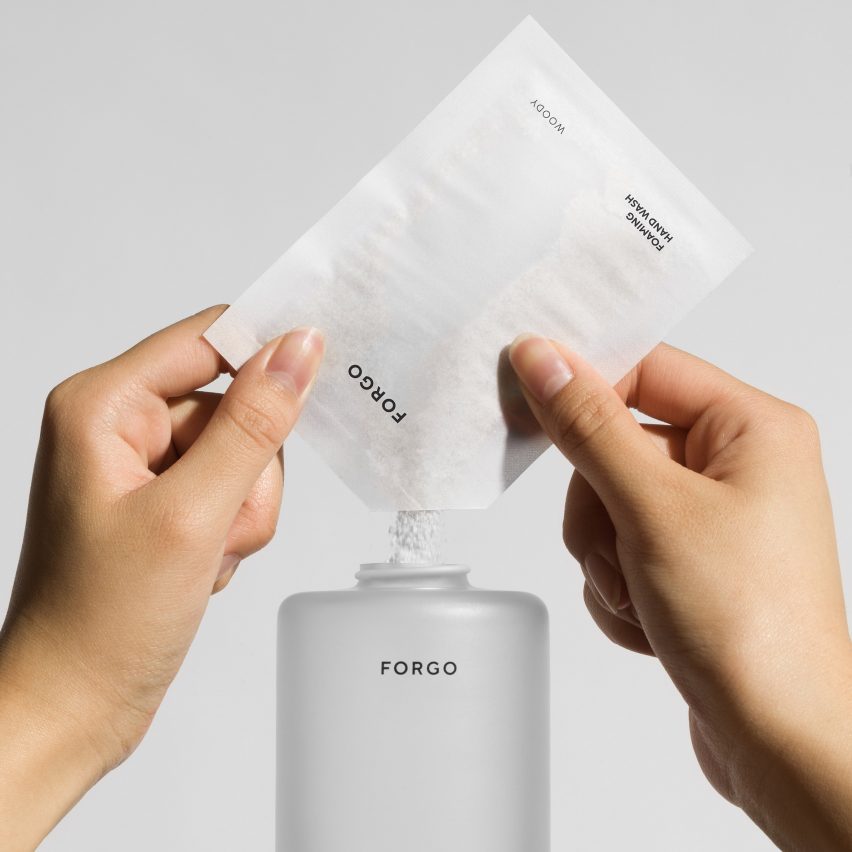
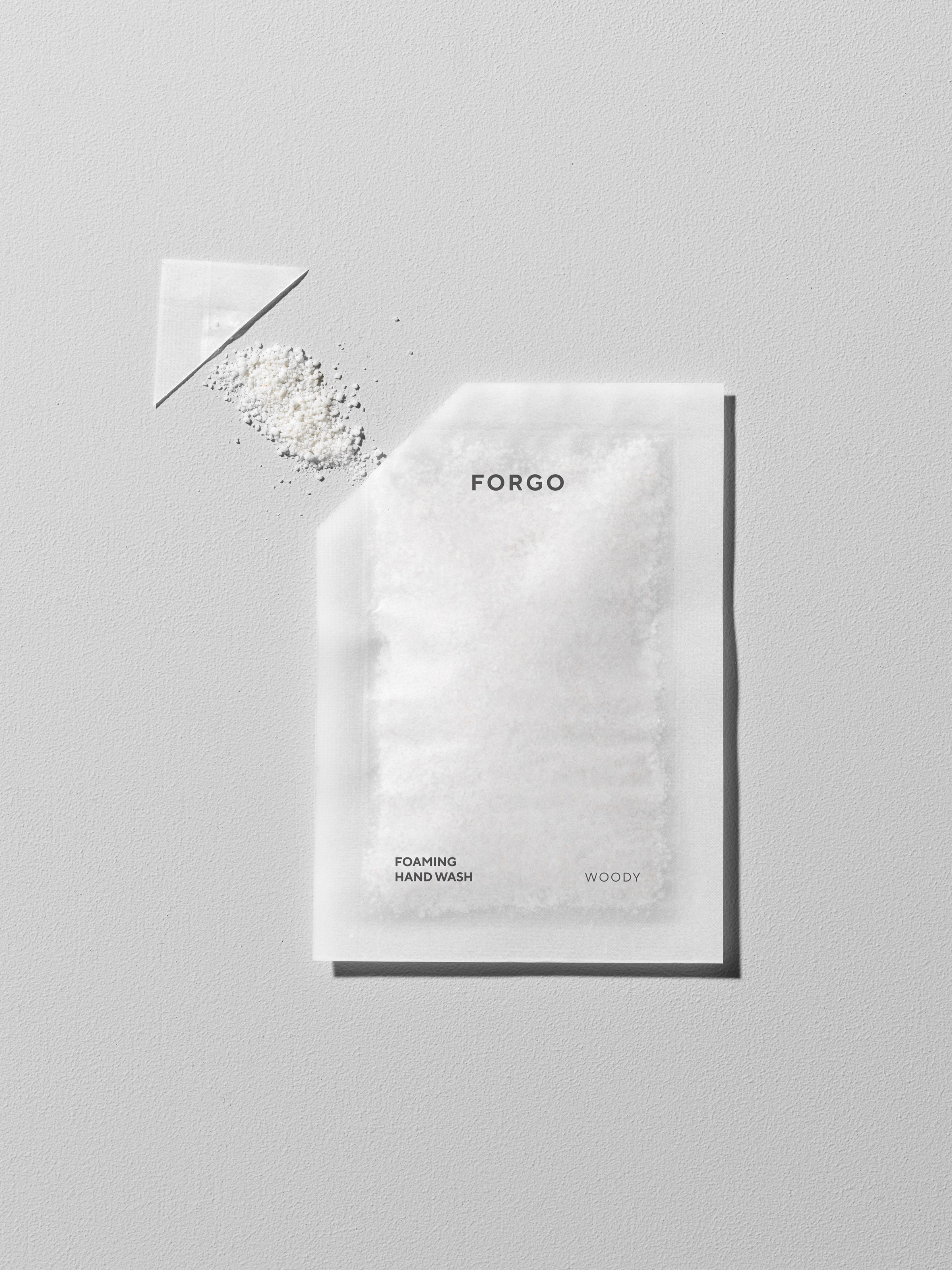
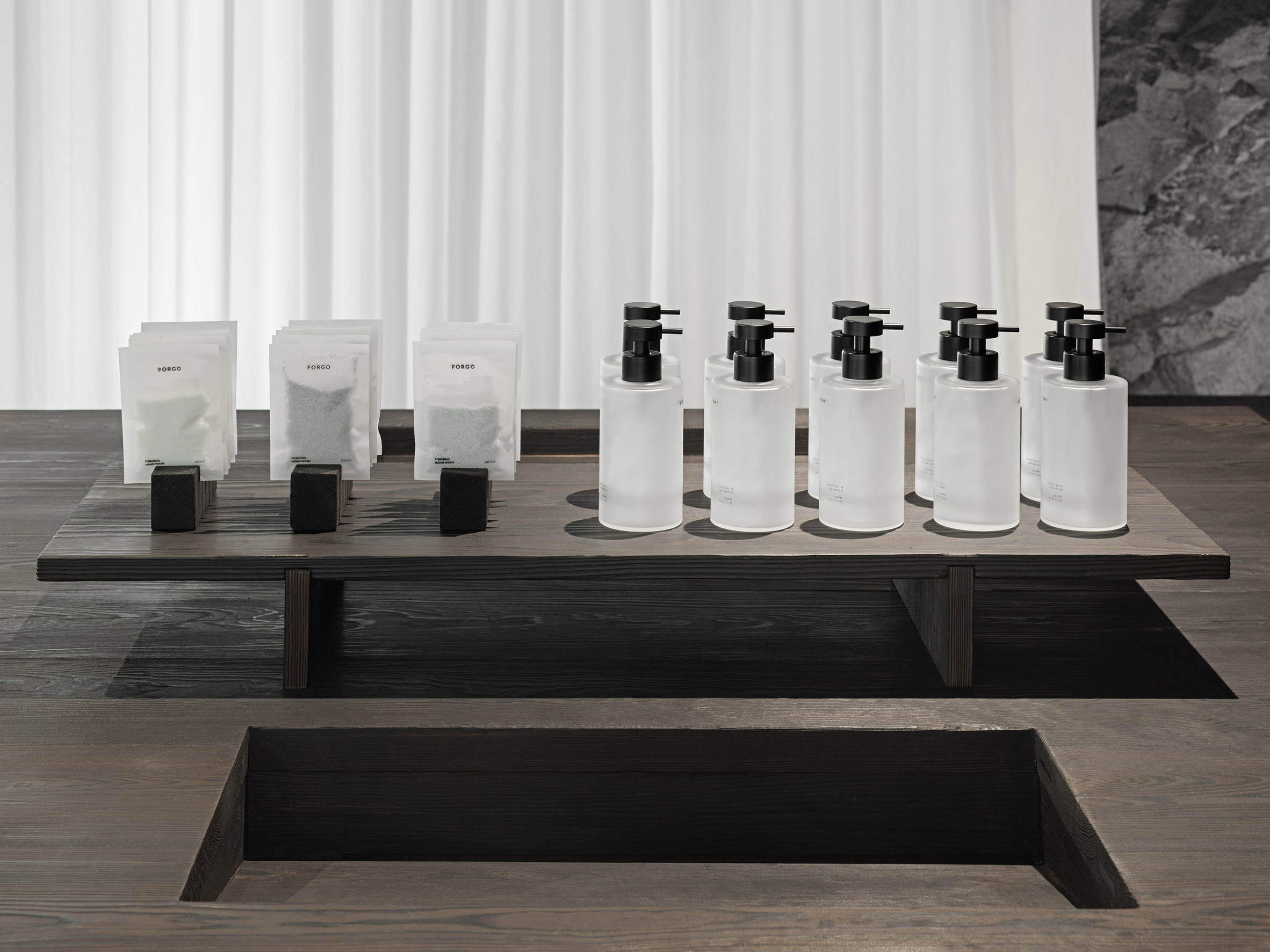
A single paper sachet contains 12 grams of powder and creates 250 millilitres of hand soap.
This drastically cuts down the amount of plastic needed to package and saves the emissions produced by shipping larger, heavier containers.

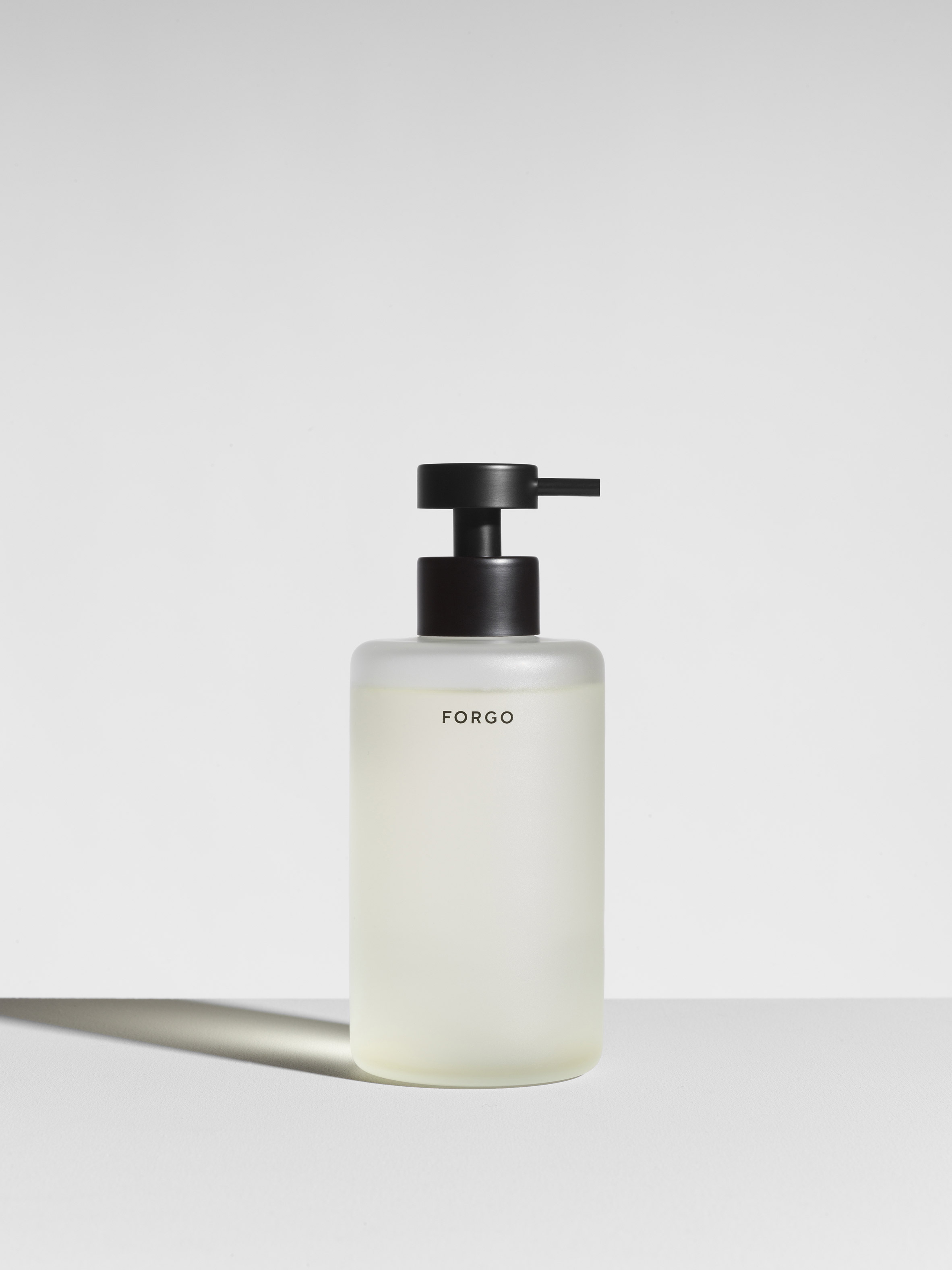
The product is the first release from a dedicated, newly-launched brand called Forgo. It comes with a simple glass bottle alongside the re-fill sachets.
"The personal care industry is extremely wasteful," said Allon Libermann, design manager at Form Us With Love, and co-founder of Forgo.

"We asked ourselves: is it really that hard to make something better? And the answer to that was: not really."
Drawing on the expertise of a lab specialised in natural cosmetics, the team realised that the six core ingredients that make up the product are already readily available in concentrated powder form.

So far, cosmetics companies have simply been mixing them with their different liquid components in-house and packaging them up for consumers.
"The ingredients are quite standard, they have been around since the 80s," Libermann told Dezeen.

"We haven't actually innovated at all. The only, deceptively simple idea we introduced is: what if you just add the water at home?"
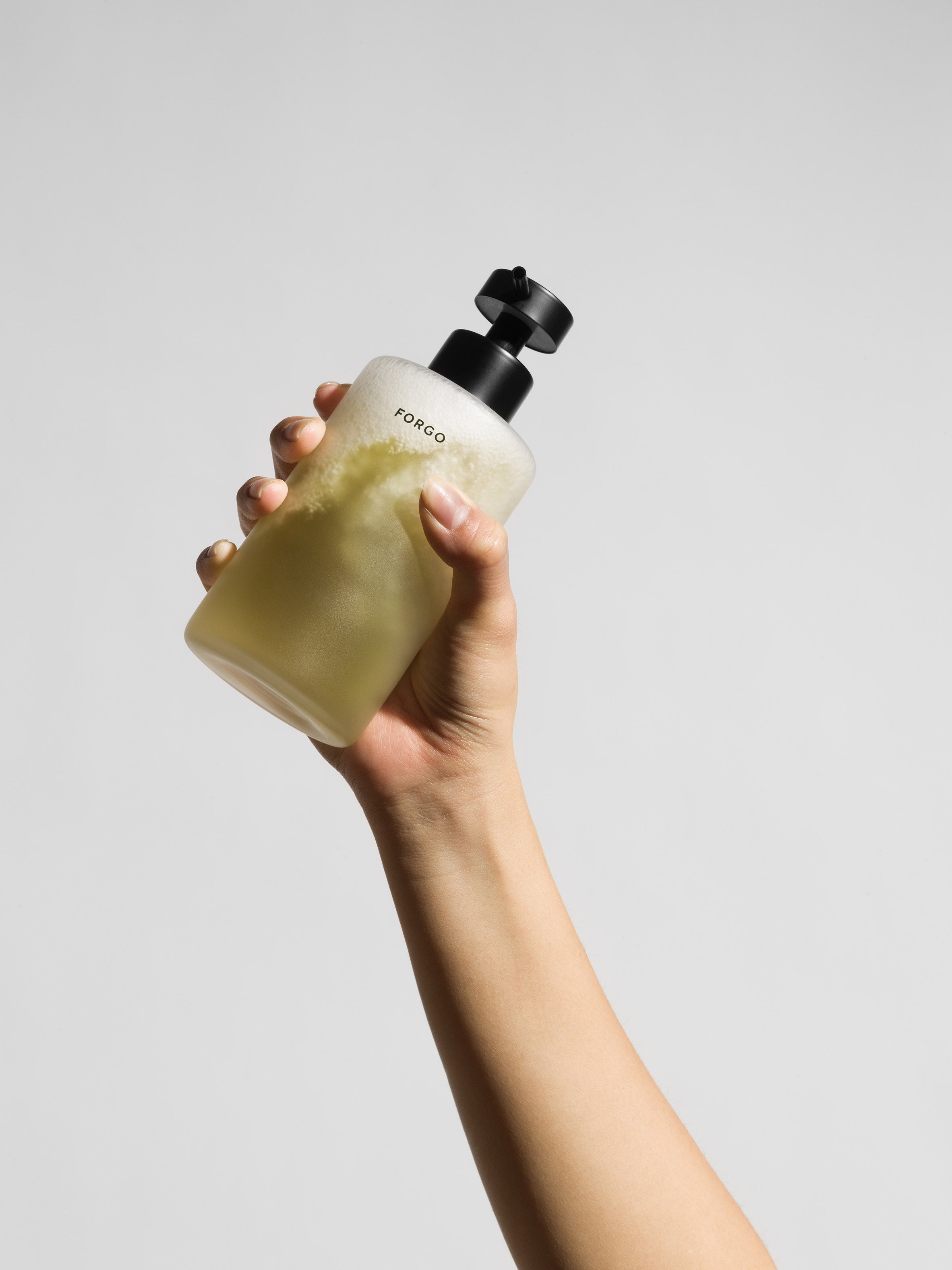
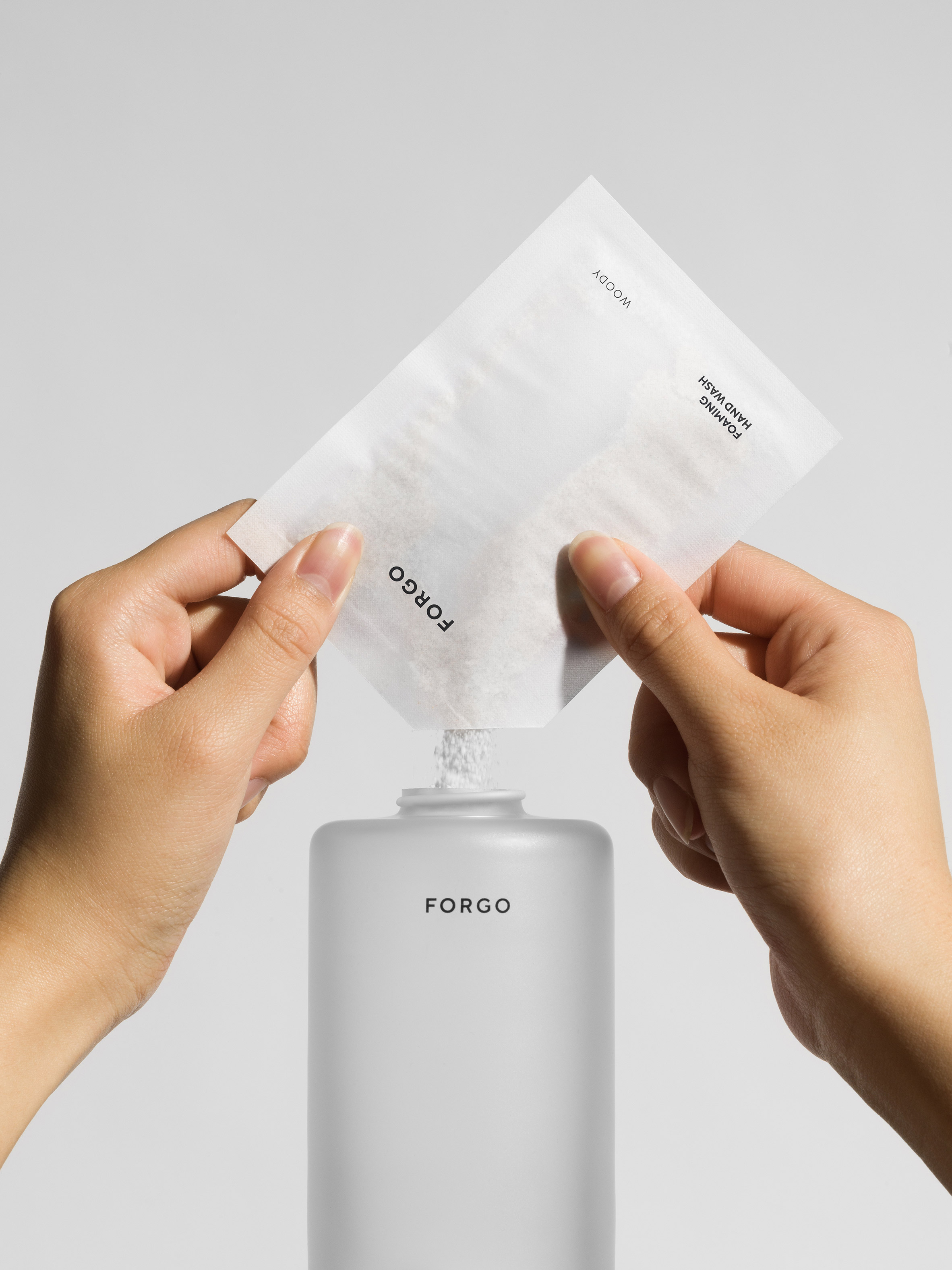
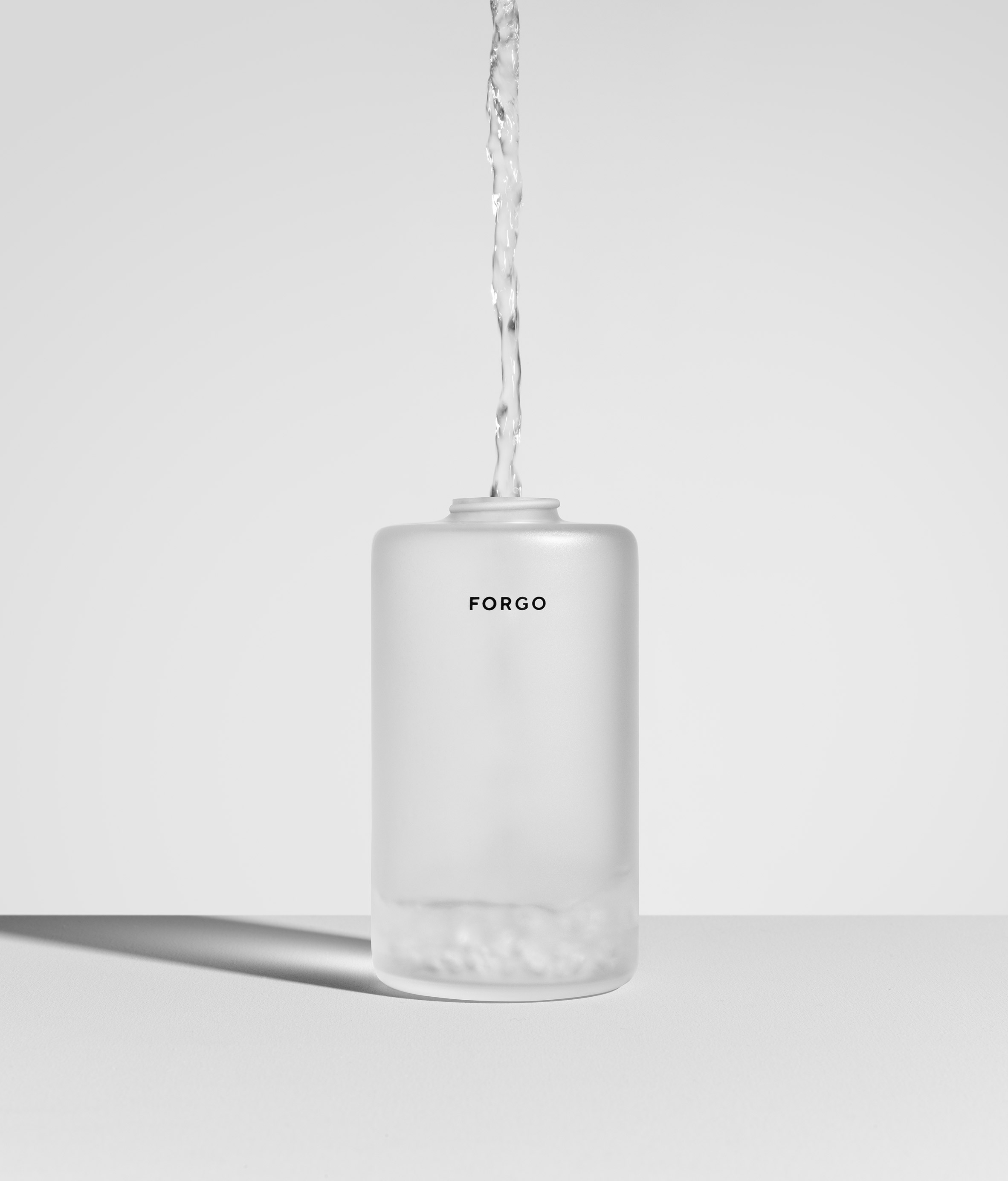
The process of mixing the product takes less than a minute, as a sachet is emptied into the bottle, which is filled with hot tap water and shaken thoroughly.

At this point, the mixture is a liquid, but a fine mesh filter in the pump aerates it into a user-friendly foam.

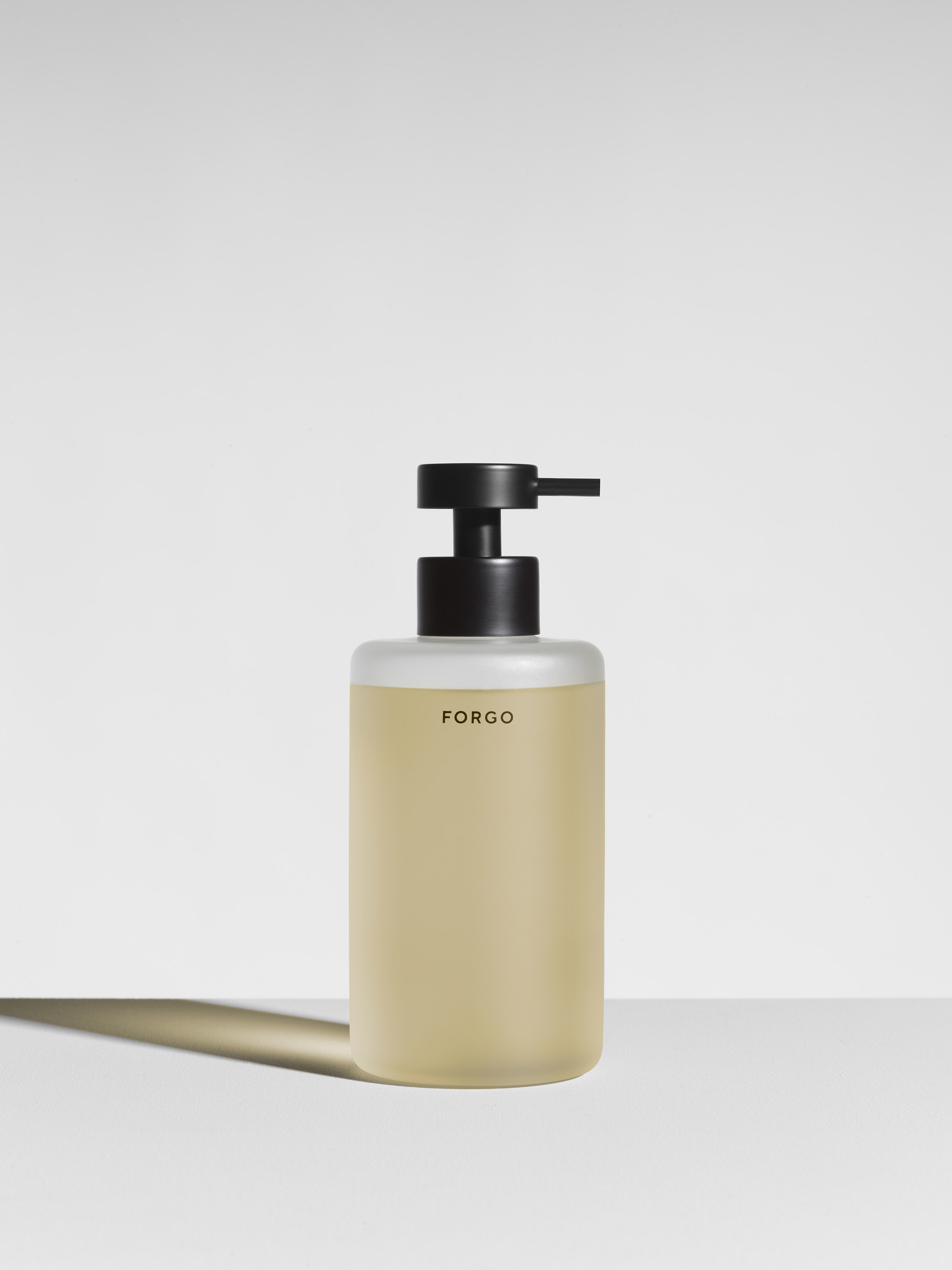
Beyond standard, neutral soap, the product also also comes in two different scents – citrus and wood.

These are distilled from post-industrial waste materials, specially wood offcuts from timber yards in Canada and the unused pulp and peel from organic juicing plants in the Caribbean.
Much like the the packets that hold an individual sugar serving, the sachets are made of paper.

"But sugar sachets are actually coated with plastic, so when you throw those out they're very hard to recycle," explained Libermann.

"It took us ages to find this one company, who are the only ones making a water-soluble, compostable paper coating. It's kind of like ink, so when the packaging gets recycled, the coating dissolves just through water, heat and friction."
In an effort to keep transport-related CO2 emissions to a minimum, the team behind Forgo set out to source all the individual elements in Europe and North America.

The paper for the sachets comes from the company in the UK, the glass bottle is made in Portugal and the ingredients are ultimately assembled in Canada.

"Unfortunately in the end, we had to make some compromises as most of the actual ingredients that go into the soap are tropical," said Libermann. "But we're working on creating a non-tropical version."

"The pumps, which are the only plastic component, unfortunately come from China. There are no pump manufacturers in America – zero. But we're working to switch to one in the Netherlands. So it’s a work in progress but it's better to start with something than to not do anything at all."

Provided that next week's crowdfunding round goes well, the aim is to establish the product as a subscription-based service.

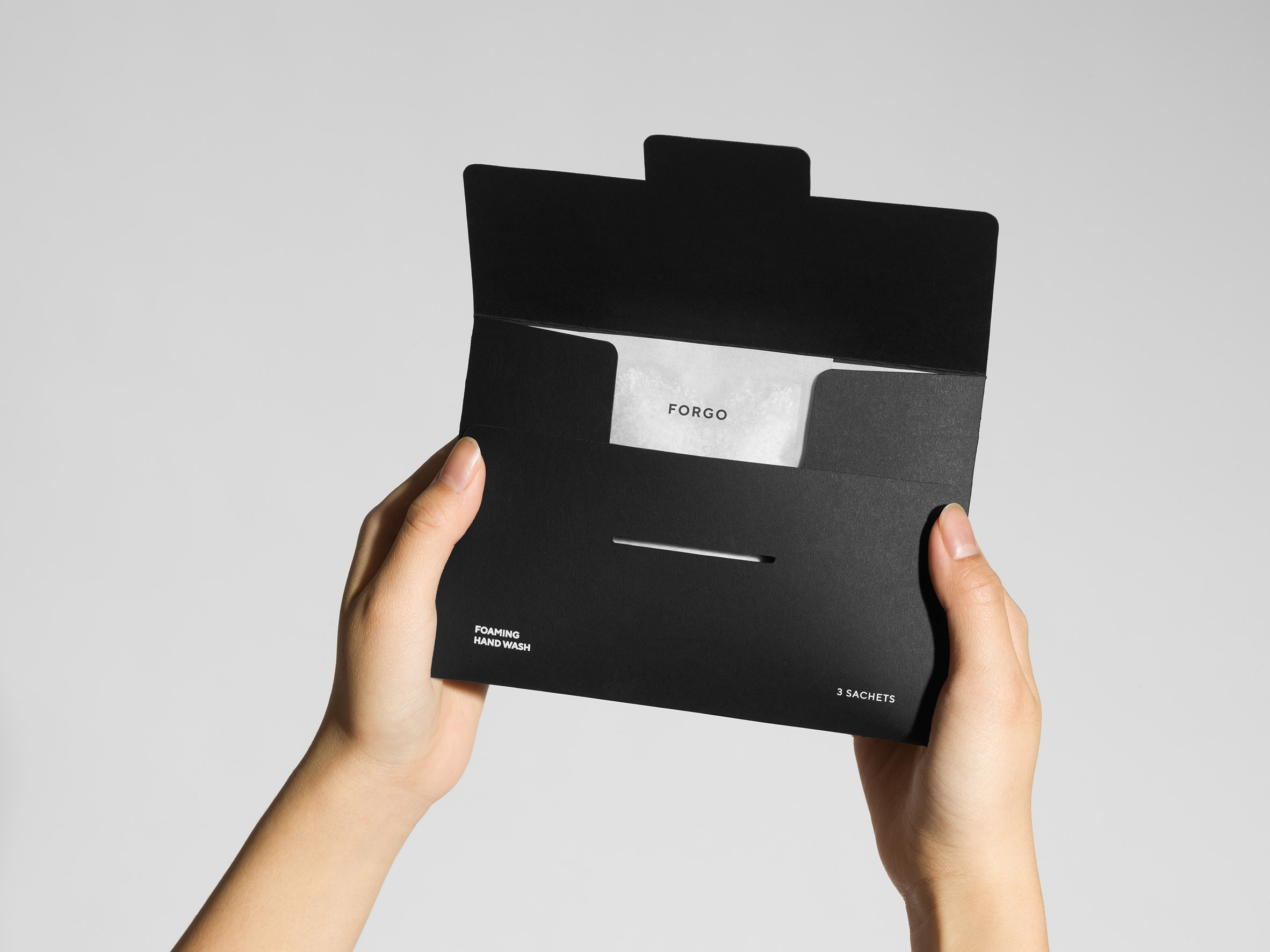
After the initial delivery, refills will be sent to customers in a set of three within a simple paper envelope.
After that, Libermann has his eyes on extending the product range under the Forgo brand.

"We can do this for everything – body wash, face wash, deodorant, toothpaste," he said.

"I'm actually testing the current product myself and it works great with dishes. It's all the same really, the only reason we branded it as a hand wash is because customers are apparently more into that separation. But eventually, we can do a more radical one that is just universal soap."

The debut Forgo product was officially launched via an installation inside of an old wartime bunker turned toy museum at Stockholm Design Week, which gave visitors an insight into the two year development process behind the product.

Among the more than 200 other events taking place across the city for the occasion was a "staged fantasy" installation by Norm Architects, that allowed visitors to step inside the home of an imaginary artisan.

Local brand Massproductions, meanwhile, launched its outdoor sofa Roadie, which was crowned product of the year at the Stockholm Furniture & Light Fair.

The post Form Us With Love declares war on plastic with launch of powder-to-liquid soap  appeared first on Dezeen.


from Dezeen https://ift.tt/2tCVYqh

Nike designs Space Hippie footwear to have "lowest carbon footprint scores ever"

Nike releases Space Hippie footwear made from recycled factory waste

Nike used factory scraps and recycled "space waste yarn" to create the Space Hippie sneakers in an experimental project to reduce the carbon impact of its products.

Each of the four different designs in the collection – named Space Hippie 01, 02, 03 and 04 – are made from scrap material taken from Nike's factory floors, which the brand has named "space junk", and other recycled materials.

The brand said that the result "is the creation of Nike footwear with our lowest carbon footprint scores ever".

"It is about figuring out how to make the most with the least material, the least energy and the least carbon," said John Hoke, Nike's chief design officer. "I'd say Space Hippie attacks the villain of trash."

"It's changed the way we look at materials, it's changed the way that we look at the aesthetics of our product," he added. "It's changed how we approach putting product together."

Nike releases Space Hippie footwear made from recycled factory waste
Nike has launched four versions of the sneaker called Space Hippie 01, 02, 03 and 04

Nike said the shoe is a first step towards employing the process of the circular economy, which aims to eliminate waste and pollution from manufacturing.

"We believe the future for product will be circular," said Seana Hannah, vice president of sustainable innovation at Nike.

"We must think about the entire process: how we design it, how we make it, how we use it, how we reuse it and how we cut out waste at every step. These are the fundamentals of a circular mindset that inform best practices."

Nike releases Space Hippie footwear made from recycled factory waste
The brand claims Space Hippie "is the creation of Nike footwear with our lowest carbon footprint scores ever"

The upper part of Space Hippie, which resembles Nike's Flyknit design, is knitted from what Nike calls "space waste yarn". This is made from 100 per cent recycled material including plastic water bottles, T-shirts and textile scraps.

When combined with other design elements, Nike claims the shoe upper consists of a total of 90 per cent recycled content.

The middle, cushioning part of the trainer is made from surplus ZoomX foam taken from the production of the Nike Vaporfly 4% Flyknit running shoe. It was recently permitted for use in the Tokyo 2020 Olympics, while the shoe Eliud Kipchoge wore to break the two-hour marathon record was banned.

According to Nike, it repurposes this lightweight foam in a manner that uses around half the carbon dioxide equivalent as the creation of typical Nike foams.

Nike releases Space Hippie footwear made from recycled factory waste
The upper is knitted from what Nike calls "space waste yarn"

The outsole part of each shoe in the Space Hippie collection is built from "crater foam", made from a mixture of standard Nike foams and 15 per cent recycled waste rubber that has been ground down into granules, which Nike has branded as Nike Grind.

In addition to reducing the use of virgin materials, allowing for a lower carbon footprint, the use of Nike Grind also grants each shoe's midsole a unique texture and colour combination.

"Consider Space Hippie an example of advancing human potential," said Nike. "New benchmarks in use of recycled content set a new bar for responsible design. It challenges convention in material sourcing."

Nike releases Space Hippie footwear made from recycled factory waste
The middle, cushioning part of the trainer is made from surplus ZoomX foam

Nike based its project on the In-Situ Resource Utilization (ISRU) method employed in space travel. ISRU suggests that the further humans go into space, the more important it will be for them to use local materials to generate their own products.

"There's this idea in space exploration that if you're going to fly to the moon or fly to Mars and stay there and do something, you have to create things with what you find there," said Nike designer Noah Murphy-Reinhertz.

"They say there's no resupply mission coming to Mars – there's no resupply mission coming to earth either."

Hoke added: "The Space Hippie product line presents itself as an artefact from the future. It's avant-garde; it's rebelliously optimistic."

Nike releases Space Hippie footwear made from recycled factory waste
A mixture of standard Nike foams and recycled waste rubber forms the outsole

Space Hippie 01, 02, 03 and 04 will be available in spring this year for Nike members, as well as at Nike House of Innovation flagship locations and selected retailers.

Alongside the new Space Hippie shoe collection, Nike recently unveiled skateboarding uniforms for three countries competing in the sports' first-ever Olympic competition set to take place in the Tokyo 2020 summer games.

Created for the United States, France and Brazil, the colourful uniforms were designed in collaboration with Dutch artist and ex-skateboarder Piet Parra.

The post Nike designs Space Hippie footwear to have "lowest carbon footprint scores ever" appeared first on Dezeen.


from Dezeen https://ift.tt/3773ibt

Palazzo Daniele is a "contemporary place with an ancient structure"

Architect Roberto Palomba describes his firm's approach to renovating the Palazzo Daniele hotel in Puglia, Italy, in this video produced by Dezeen for the AHEAD Awards.

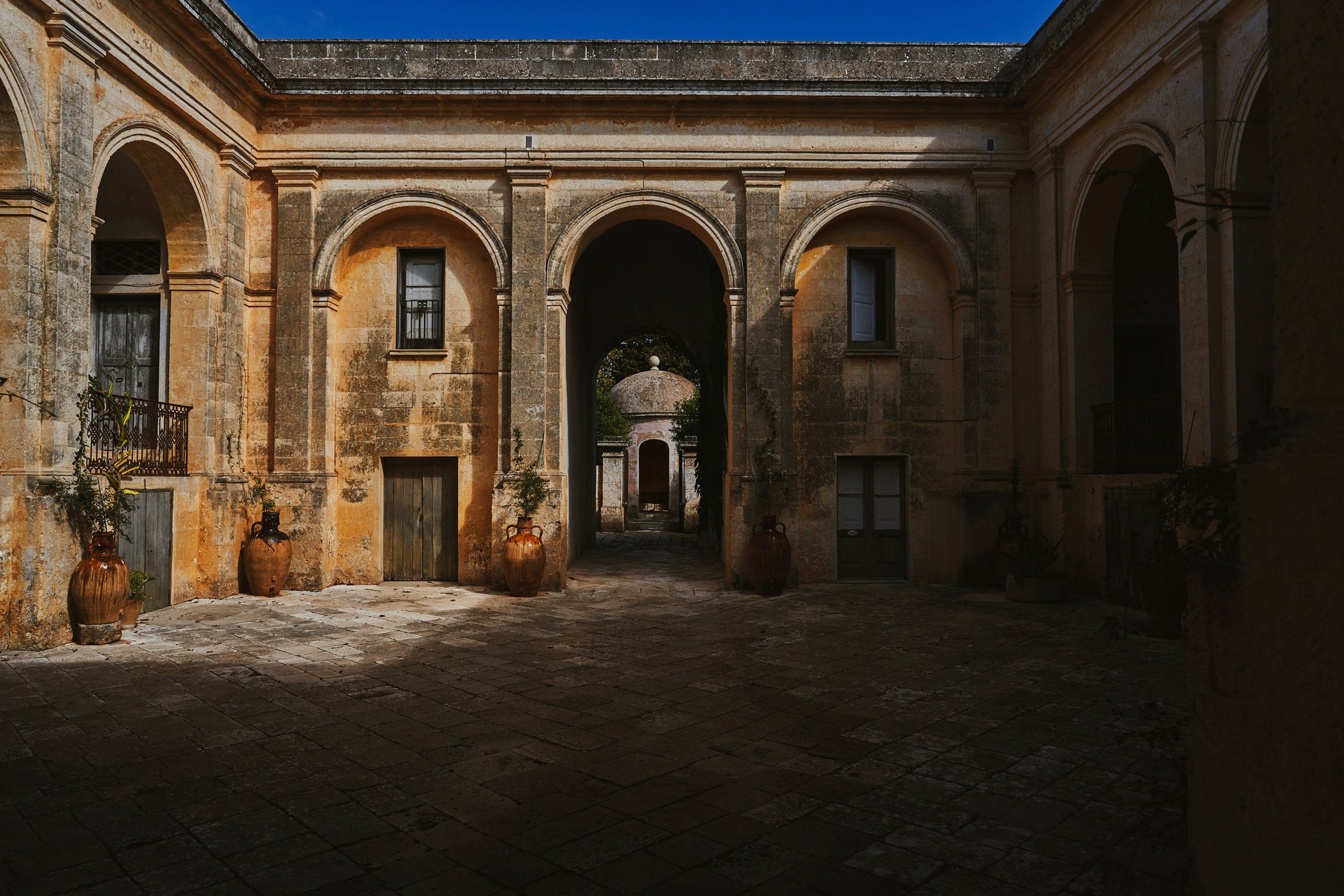
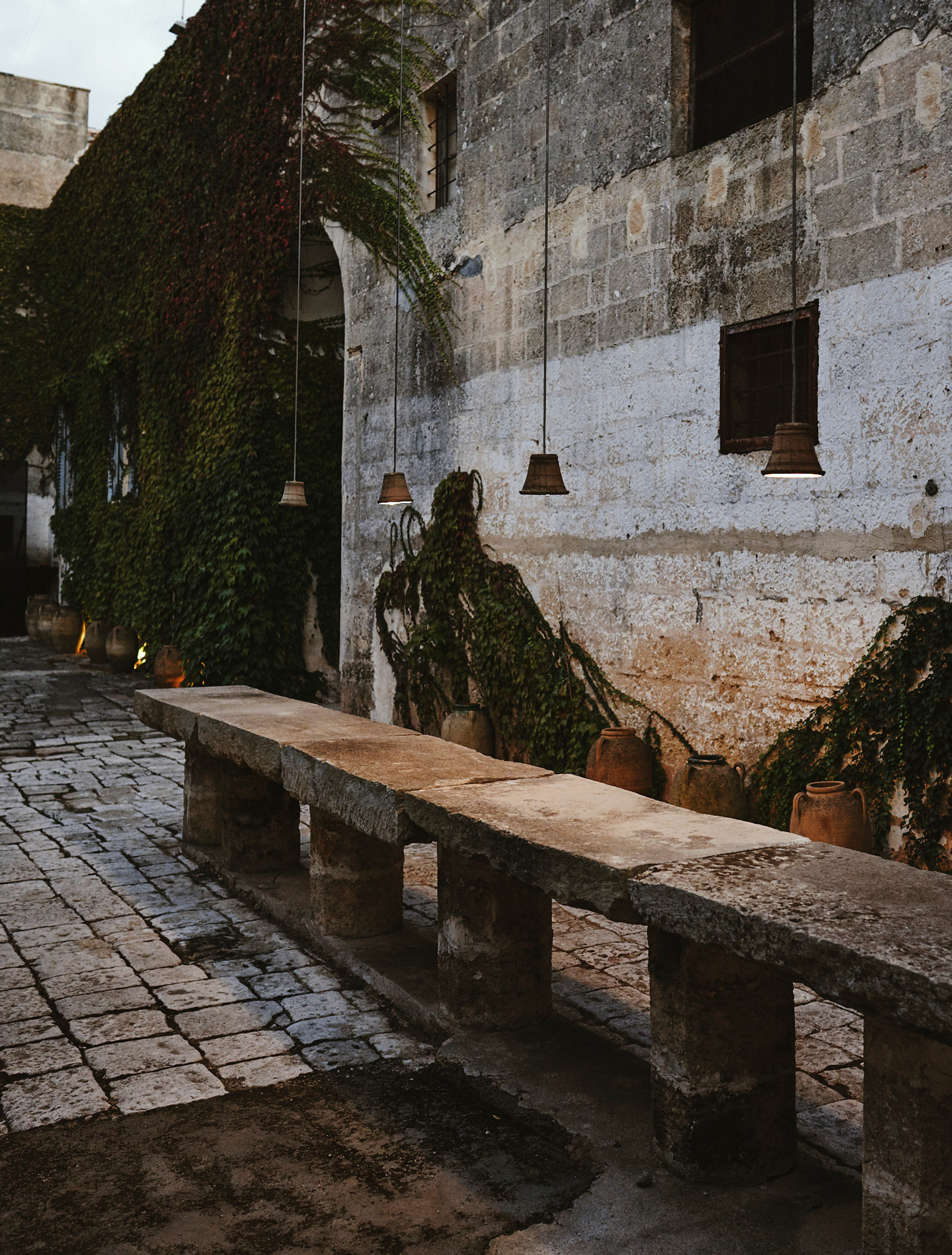
Palazzo Daniele, which was named Hotel of the Year at the 2019 AHEAD Europe hospitality awards, is a nine-suite boutique hotel housed in a 158-year-old palazzo located near the southern tip of the Salento peninsula in Puglia.

The project was also awarded for its guest rooms at the a ceremony that took place in London in November.

Palazzo Daniele hotel in Puglia, Italy by Palomba Serafini Associati
Palazzo Daniele by Palomba Serafini Associati was awarded Hotel of the Year at the 2019 AHEAD Europe awards

The renovation of the building was handled by Palomba Serafini Associati, the architecture practice that Palomba runs with his partner Ludovica Serafini.

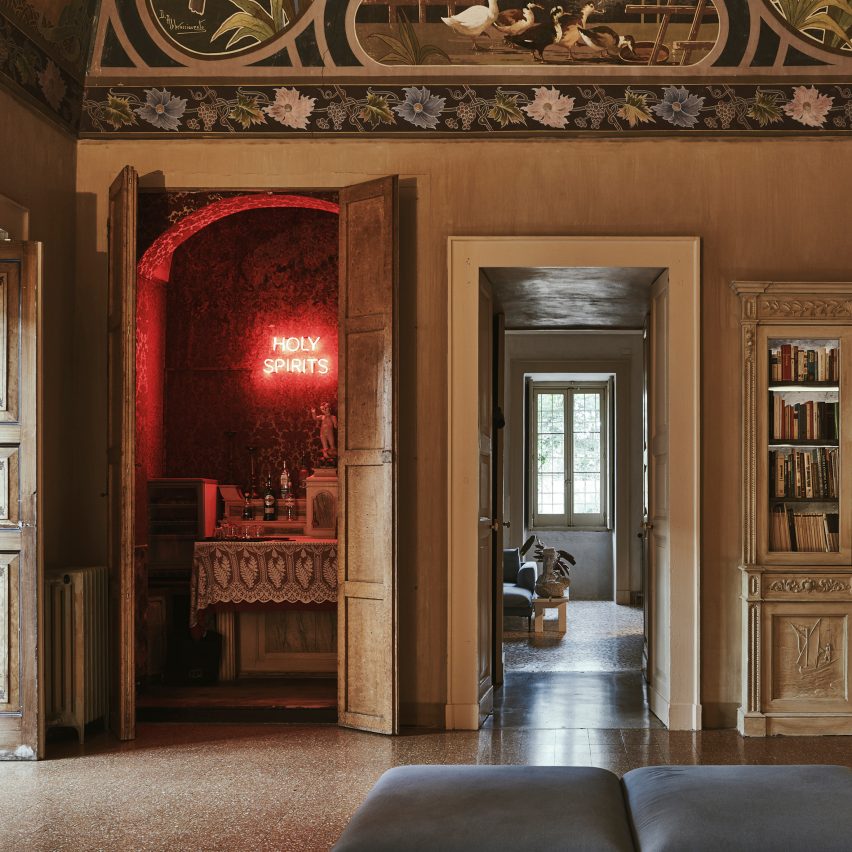
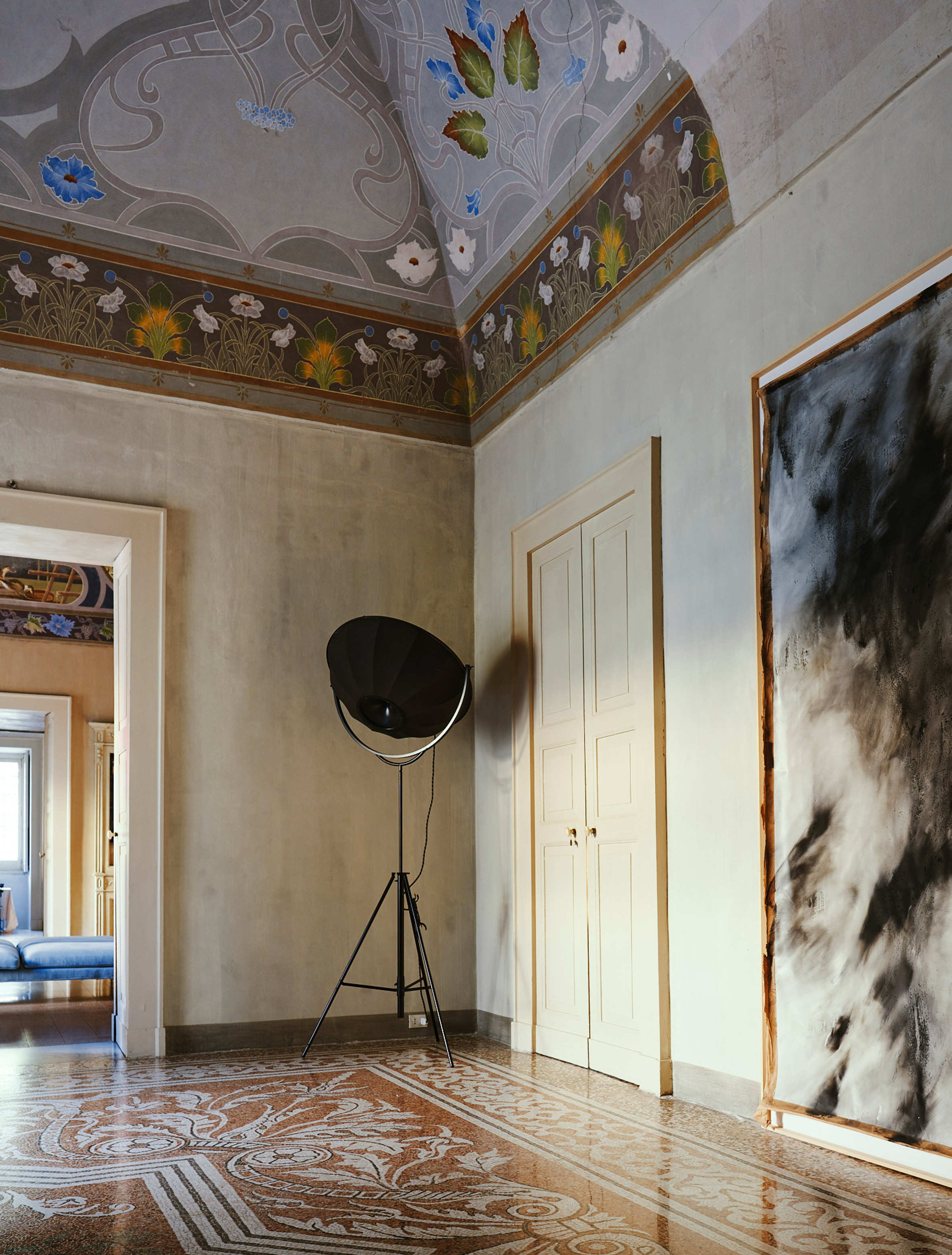
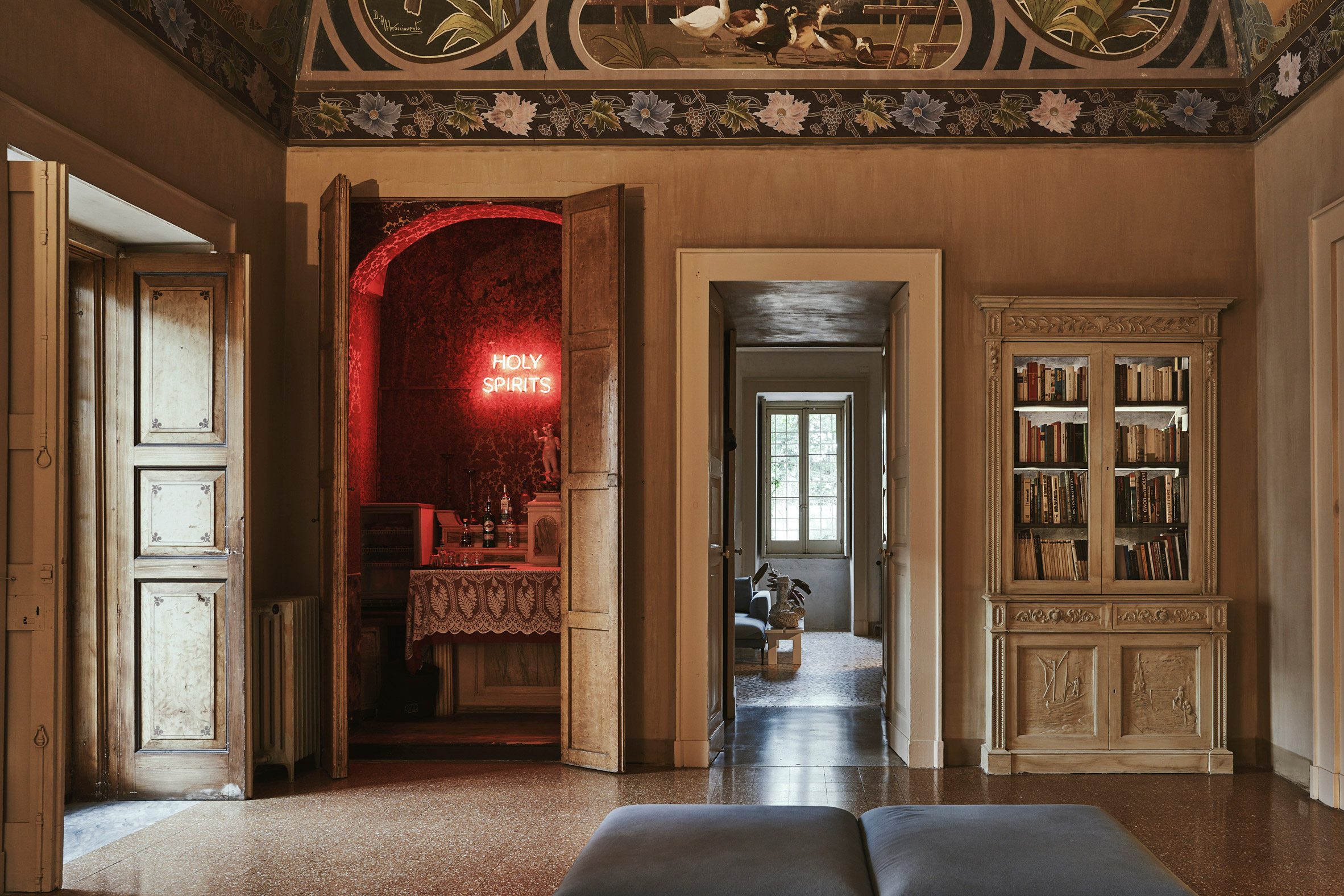
Rooms and public spaces host the hotel owner's art collection. A number of frescoes on the walls and ceilings were restored during the renovation.

Palazzo Daniele hotel in Puglia, Italy by Palomba Serafini Associati
As part of the renovation, the studio restored frescoes on the walls and ceilings

"When we found the building it was in a very bad condition," says Palomba in the video interview, which was shot by Dezeen at White City House in London.

"The whole renovation was quite complicated because we had to save some parts of the paintings on the walls or on the ceiling."

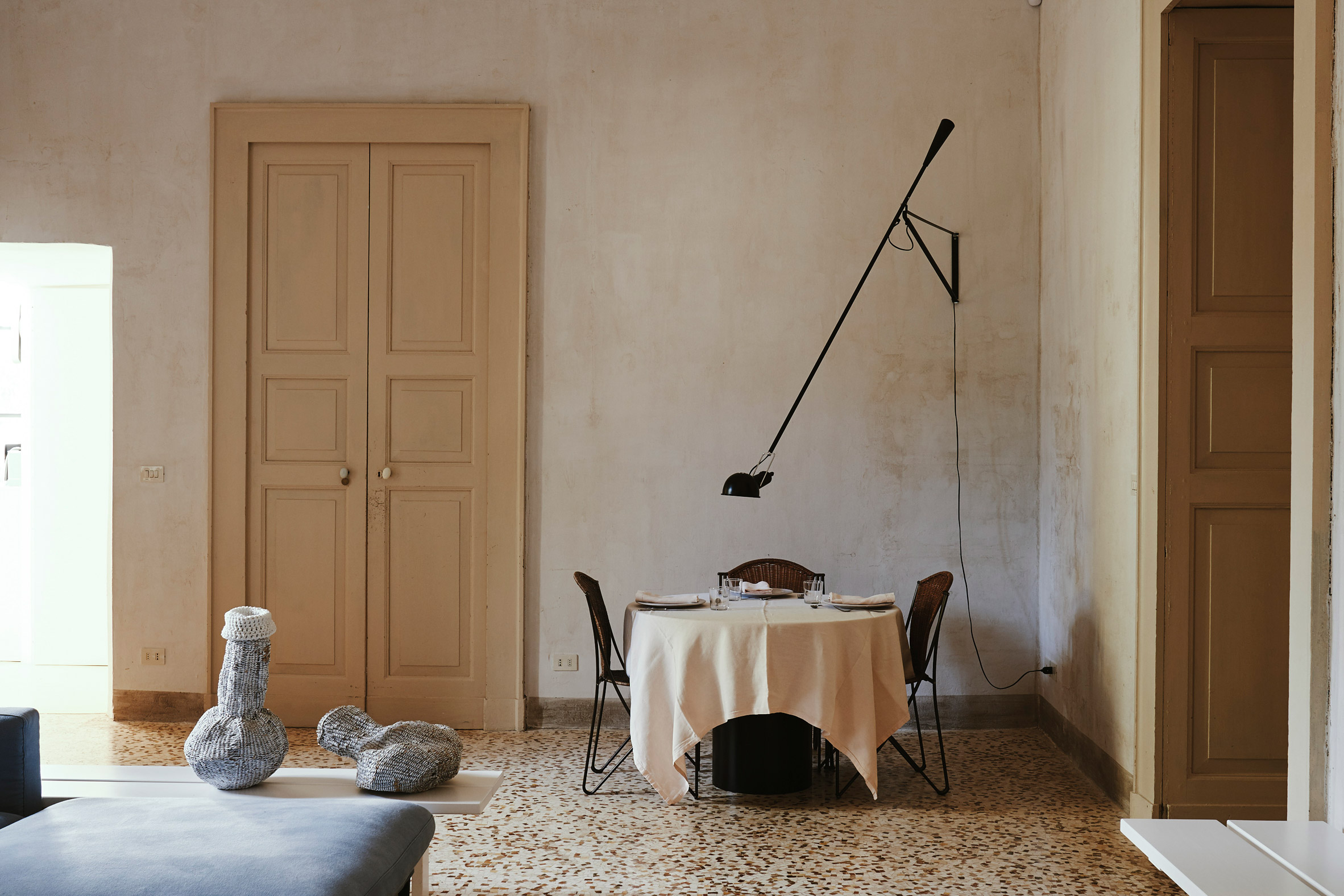
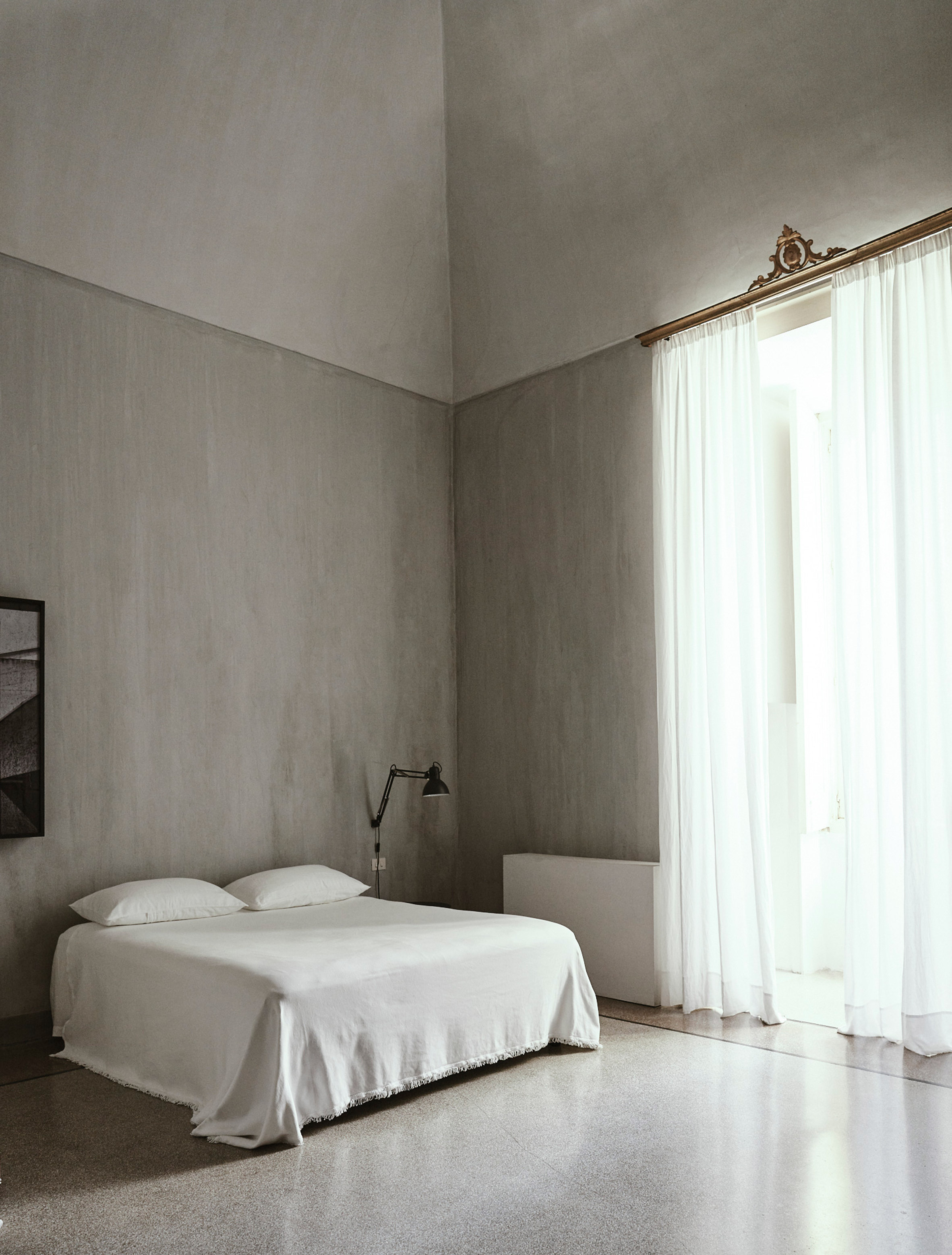
Palomba Serafini Associati took a sparing approach to furnishing the space in order to draw attention to the building's historic structure.

Palazzo Daniele hotel in Puglia, Italy by Palomba Serafini Associati
The designers took a minimalistic approach to furnishing the interiors

"All the rooms are really pure," he said. "There is not much furniture, we tried to reduce it to the maximum."

"You really feel that you are in a contemporary place with an ancient structure."

Palazzo Daniele hotel in Puglia, Italy by Palomba Serafini Associati
Palomba Serafini Associati sought to emphasise the ancient building's history

According to Palomba, the approach to the design of the space went beyond aesthetics to a holistic approach to guest experience.

"It was very important for us not only to design the architecture or the interiors, but to design the experience of the place," he said. "We didn't want this place to look like a hotel. You're not visiting, you're living the experience."

Amongst the hotel's  personal features is a kitchen that acts as the social centre of the building, where guests can discuss the day's menu with the chefs and try their hand at cooking.

Palomba says that guests are increasingly seeking out such experiences rather than material luxuries.

Palazzo Daniele hotel in Puglia, Italy by Palomba Serafini Associati
The hotel is an attempt to create a holistic guest experience

"[People] don't want to see another room in another hotel - they want to be part of an experience that is completely different," he said.

"For us it was very important to create this sort of experience, not just to have a nice design."

Palazzo Daniele hotel in Puglia, Italy by Palomba Serafini Associati
The hotel eschews luxury materials in favour of creating a more personal atmosphere

This video was produced by Dezeen for AHEAD. It was filmed at White City House in London.

Photography is by Adrian Gaut, courtesy of Palomba Serafini Associati.

The post Palazzo Daniele is a "contemporary place with an ancient structure" appeared first on Dezeen.


from Dezeen https://ift.tt/3bjtSBn

Achieving zero-carbon architecture is "the biggest challenge we have" says Alexandra Hagen of White Arkitekter

Portrait of White Arkitekter's Alexandra Hagen

Swedish architecture firm White Arkitekter has pledged that every building it designs will be carbon neutral by 2030.

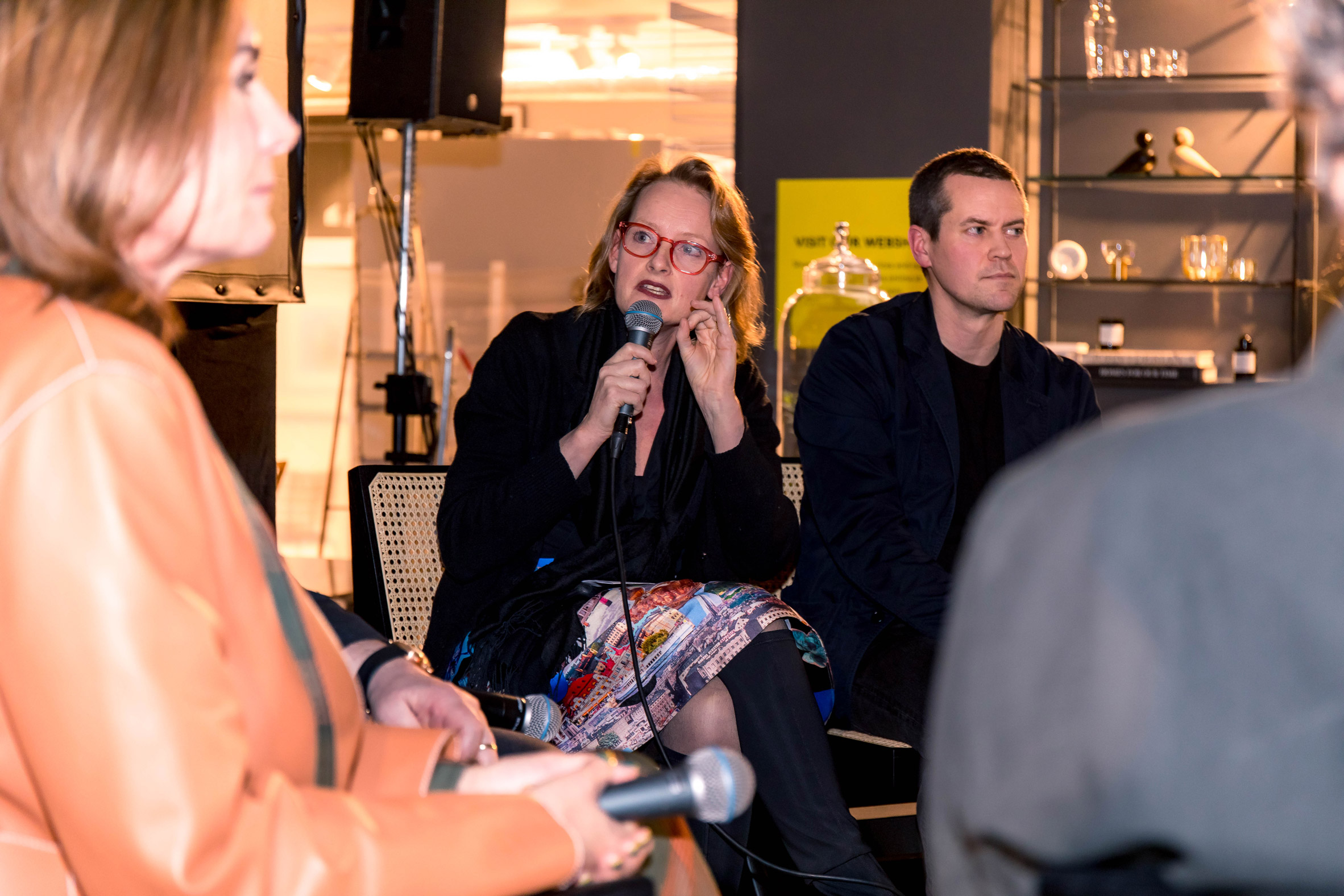
Alexandra Hagen, the firm's CEO, made the pledge at a panel discussion organised by Dezeen in Stockholm earlier this week.

"At White Arkitekter have made the promise that by the end of the decade all of our projects will be carbon neutral," said Hagen.

The discussion, organised to celebrate the launch of Dezeen Awards 2020, centred on the priorities for architects and designers over the coming decade.

Portrait of White Arkitekter's Alexandra Hagen
White Arkitekter's CEO, Alexandra Hagen, made the pledge at the discussion organised by Dezeen

"Climate change is the most important challenge for the future for this decade," said Hagen, who is a judge for the 2020 edition of Dezeen Awards. "We know that the materials used for products and for buildings are the major cause of carbon emissions."

"So we have to use our abilities as designers to transform into a circular economy."

Fellow panellists Annika Eklund of Bolon, Eero Koivisto of Claesson Koivisto Rune and Andreas Bozarth Fornell of Specific Generic all agreed that addressing climate change is the key priority for architects and designers over the coming decade.

White Arkitekter joins British architects Foster & Partners and Mikhail Riches, who have both promised to shift towards zero-carbon construction.

Norwegian firm Snøhetta has gone further, declaring that all its projects will absorb more carbon than they emit within 20 years.

White Arkitekter, which is headquartered in Gothenburg and employs 800 people, sets out its plans for zero-carbon buildings on its website.

"The goal is to have a minimum of CO2 emissions from materials and energy throughout the life cycle of every building and to balance all emissions with climate-positive initiatives," it states.

Hagen said that the firm has already completed 25 carbon-neutral projects in the past three years, but this represents just a fraction of the 3,000 projects currently underway.

"Moving from one per cent to 100 per cent carbon-neutral projects in 10 years in the biggest challenge we have," she said.

Alexandra Hagen of White Arkitekter on Dezeen's panel at Stockholm Design Week 2020
She said the move to make buildings carbon neutral in 10 years is the "biggest challenge we have"

She added that her company's long-term goal is to create buildings that have a positive impact on the environment, rather than simply being neutral.

"We believe that human beings, like any other living beings on the planet, need to contribute to the ecosystem rather than taking away from it," she said. "So that is definitely the goal."

Achieving zero-carbon or carbon-negative construction has become a key objective for architecture as the profession struggles to address its impact on climate change, with the construction industry responsible for 40 per cent of global carbon emissions.

The Dezeen Awards 2020 launch event took place at Nordiska Galleriet in Stockholm on 4 February, during Stockholm Design Week.

Dezeen Awards is open for entries until 2 June.

The post Achieving zero-carbon architecture is "the biggest challenge we have" says Alexandra Hagen of White Arkitekter appeared first on Dezeen.


from Dezeen https://ift.tt/2utrAPn

Red foam blocks turn cramped church room into a play space for kids

Play In Sacral Spaces by PRTZN Architecture

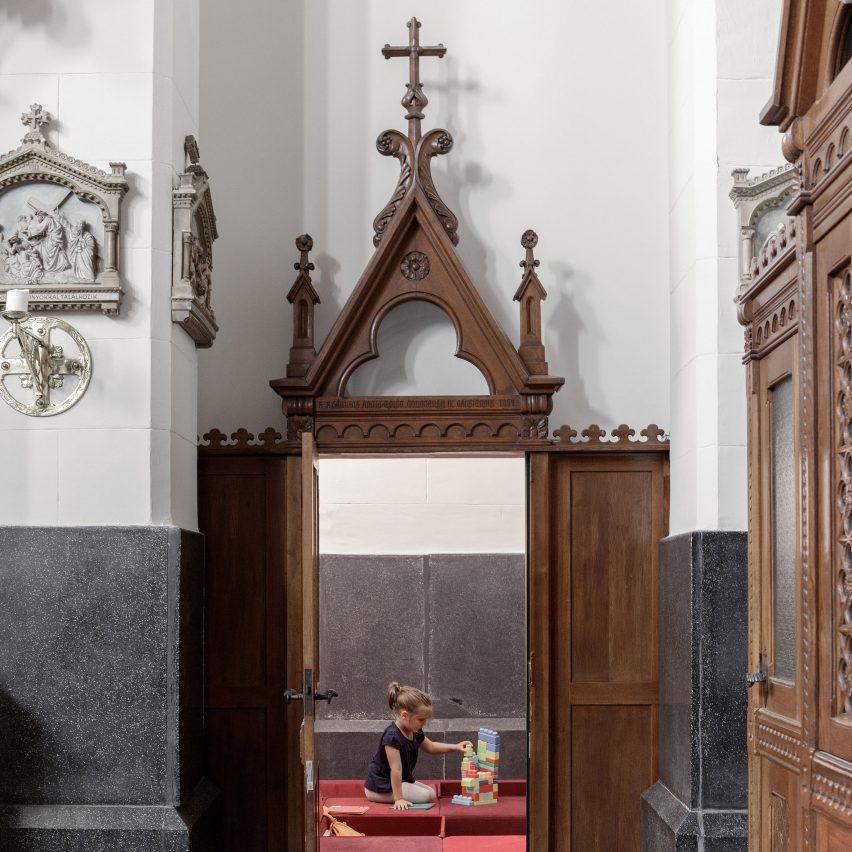
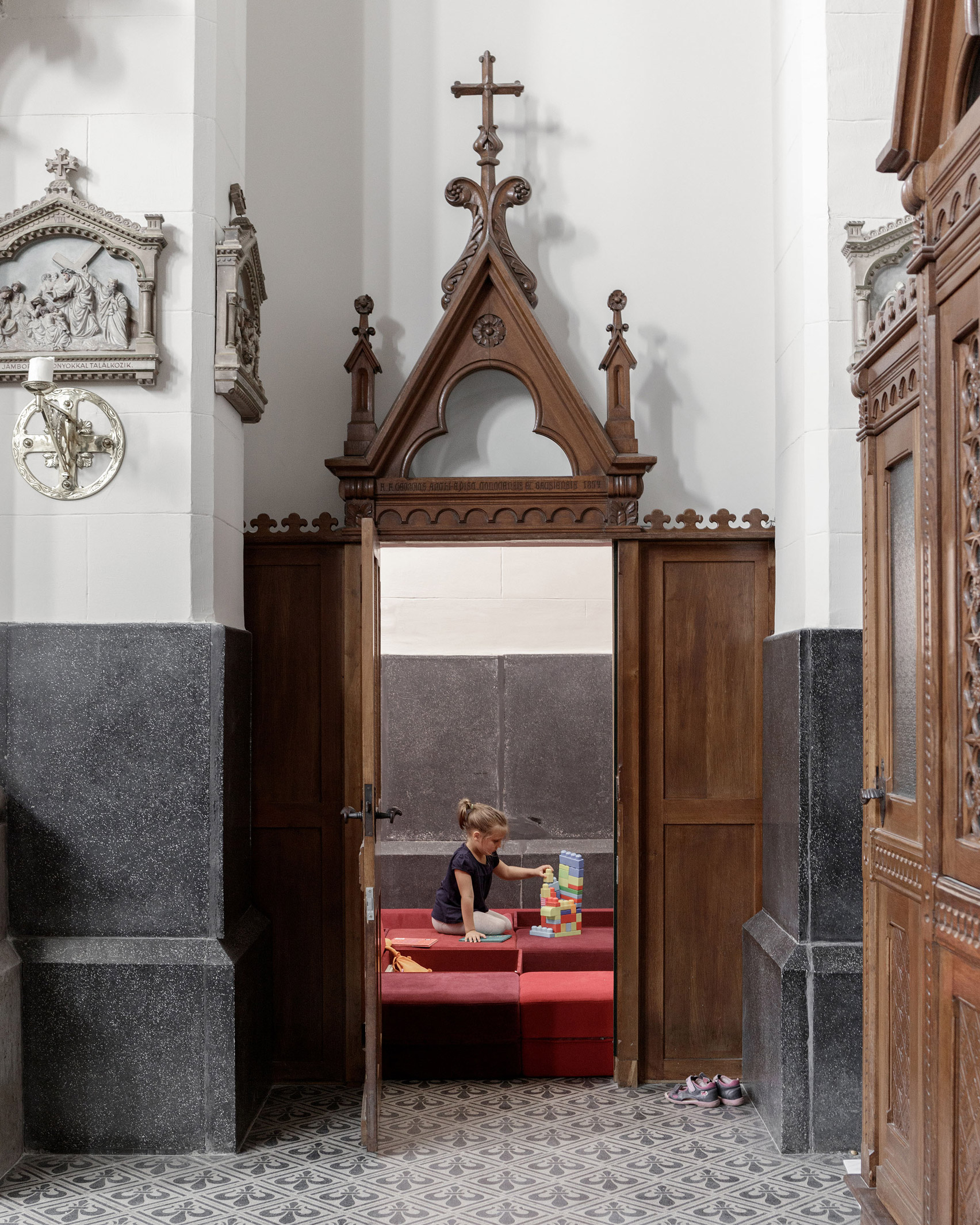
PRTZN Architecture has used upholstered foam blocks to transform a tiny room in a Hungarian church into a children's playroom.

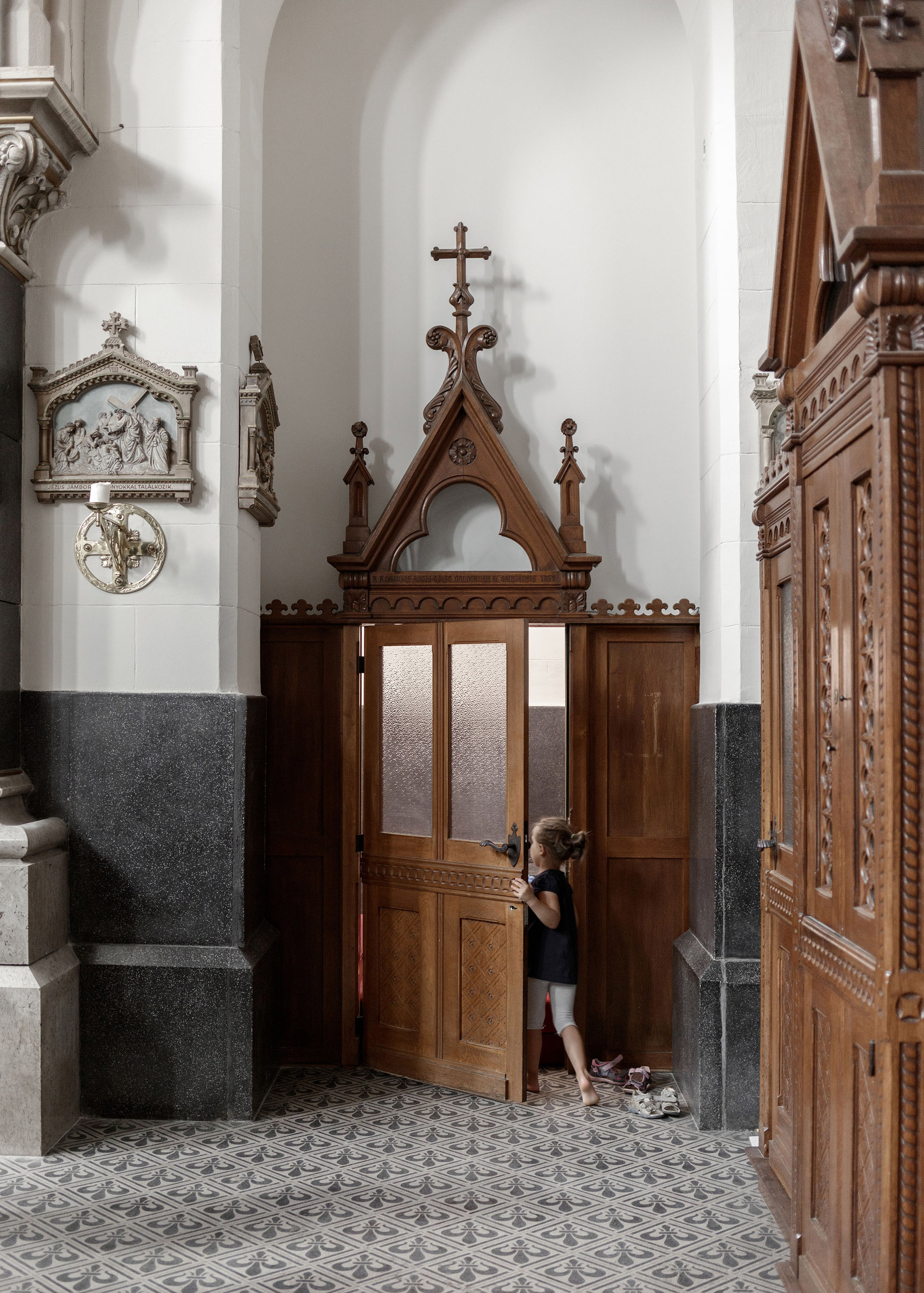
Commissioned by Sacred Heart Jesuit Church in Budapest, the room is used as a space for children to play during holy mass services.

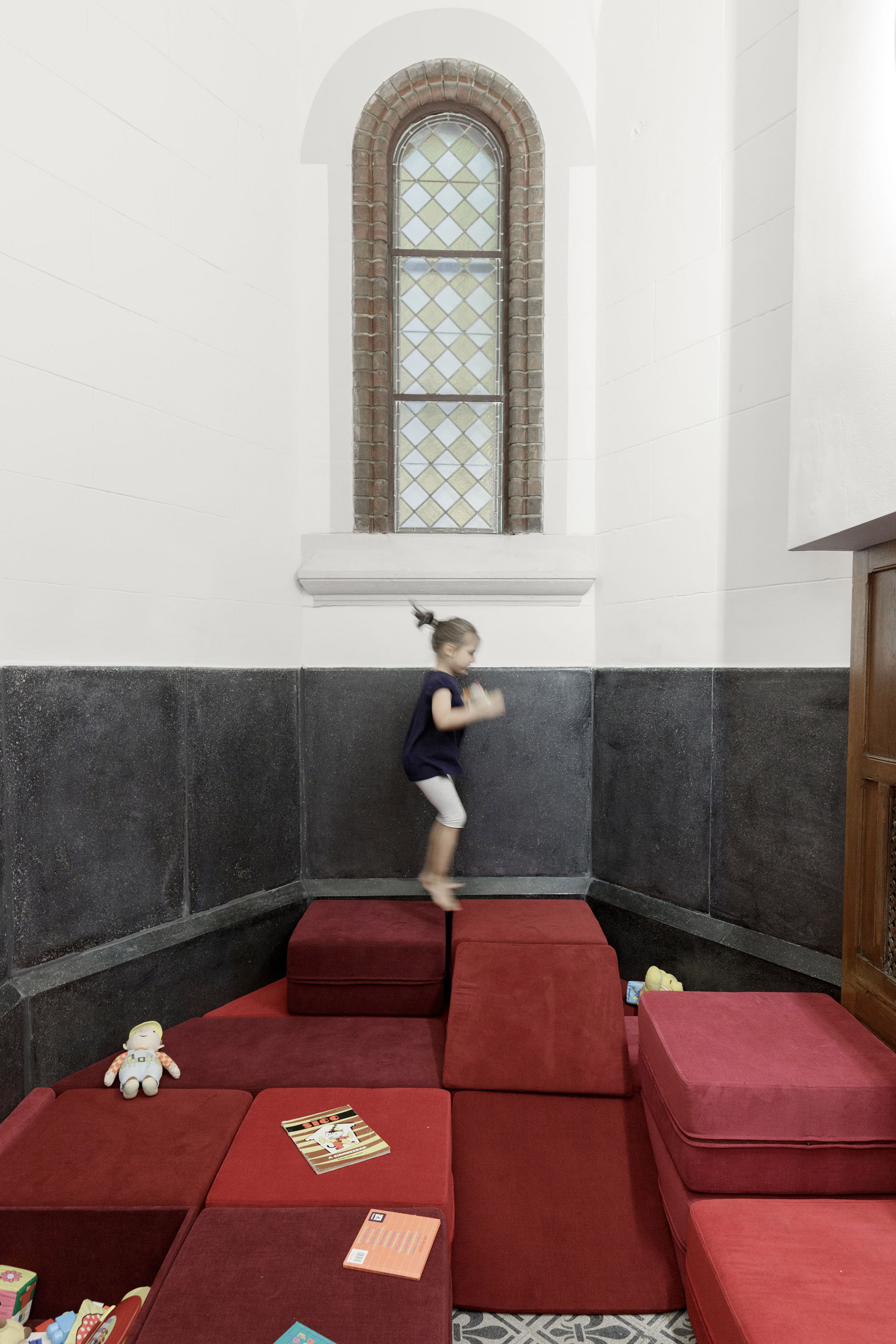
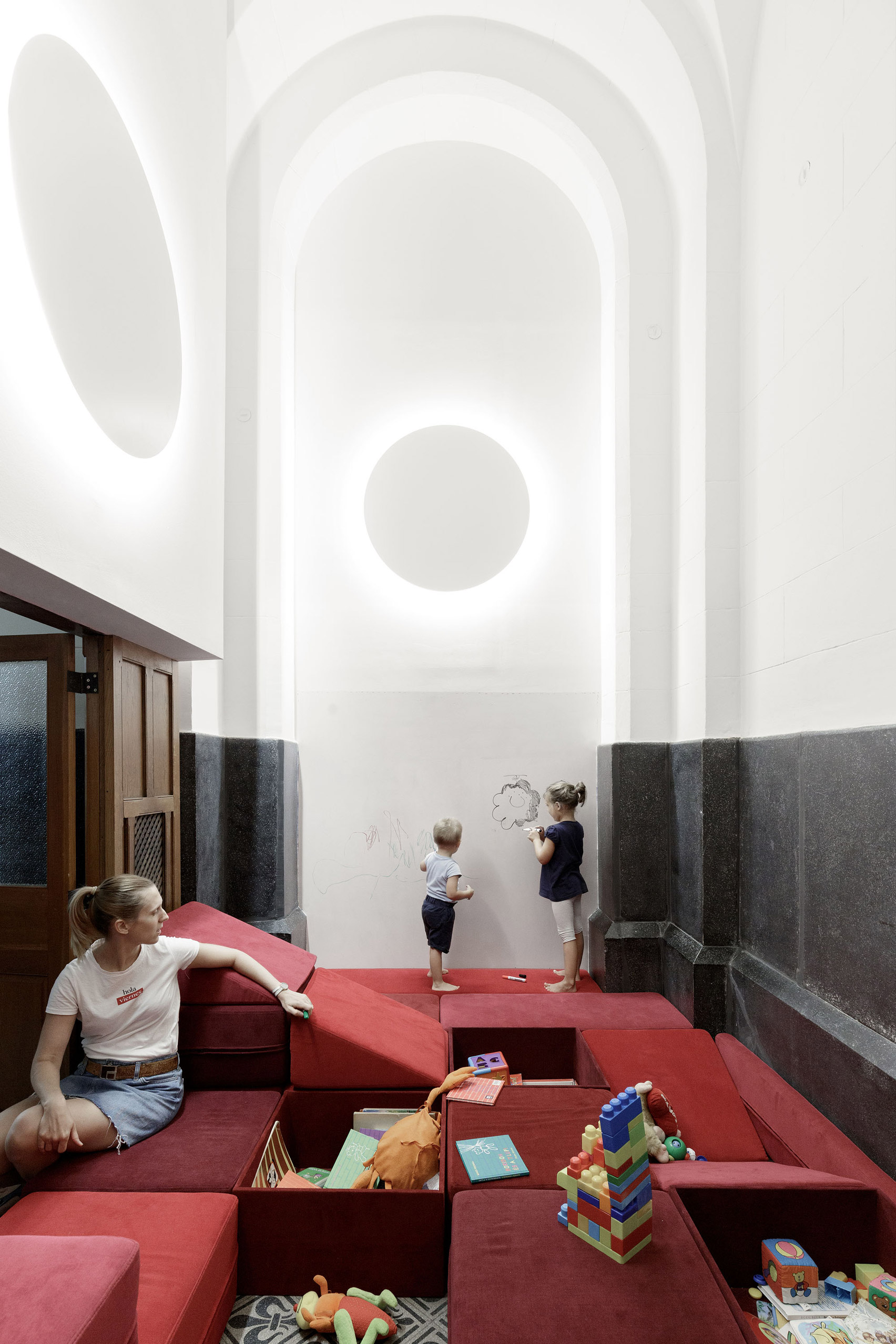
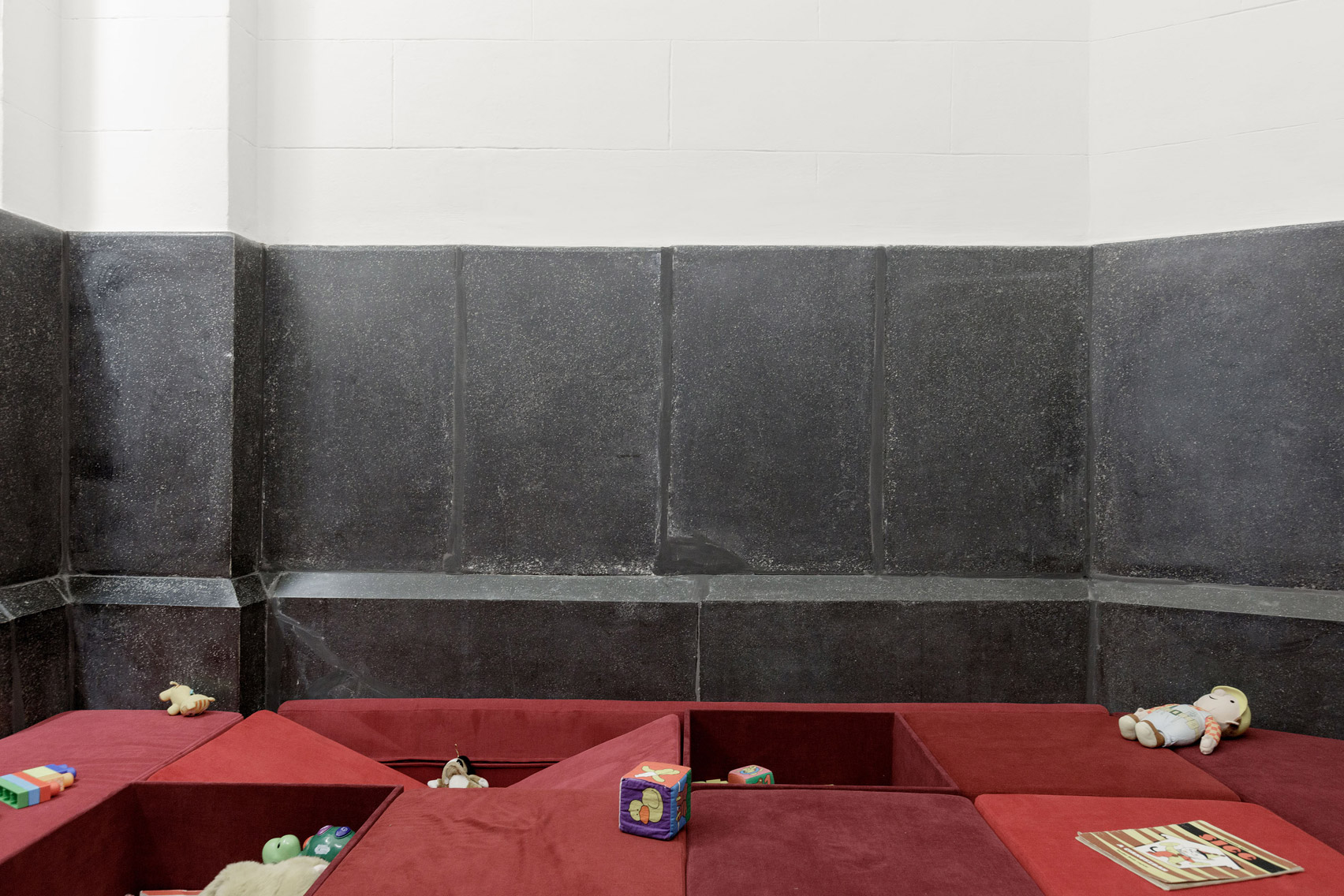
Measuring just 12 square metres, the narrow space is filled wall-to-wall with modular foam blocks where the children can climb, sit and store their toys.

Play In Sacral Spaces by PRTZN Architecture

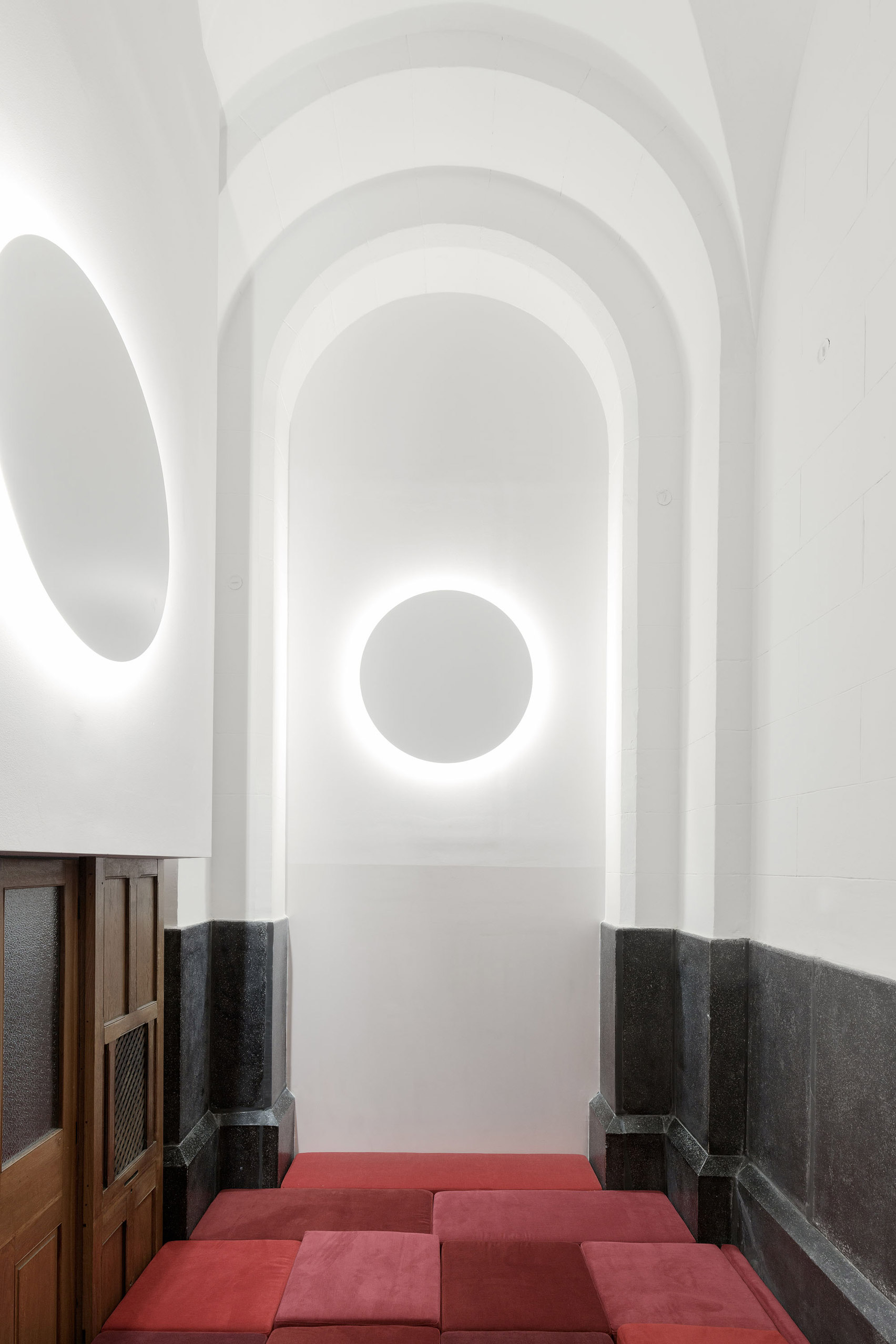
The room is located on the church's southern aisle and formerly served as just a storage area. It featured a high vaulted ceiling, black granite cladding and an uneven floor.

Budapest-based practice PRTZN Architecture was tasked with transforming the unwelcoming room into a child-friendly area that respects the church's existing architecture, lending the project its name of Play in Sacral Spaces.

Play In Sacral Spaces by PRTZN Architecture

"When we came into contact with the leadership of the church in 2018, the space had already been functioning as a playroom for one year, though it was furnished in quite an ad-hoc way with old, worn-out pieces of furniture," said Péter Müllner, who founded the practice in 2013 with Gergely Hory and Zoltán Major.

"The leadership commissioned us to enhance the quality of this space in order to serve the needs of its users better, and adapt it to the historic architectural environment of the church which opened in 1909."

Play In Sacral Spaces by PRTZN Architecture

The practice outlined three key issues that needed to be resolved. The first and greatest challenge was the room's narrow dimensions, while the second worry was that the existing cement tile floor did not provide adequate heat and comfort for a playroom.

The third issue concerned the relationship between the building and the furnishings within the space – the studio felt that regular furniture would feel out-of-scale in an interior with such a high vaulted ceiling and narrow plan.

Play In Sacral Spaces by PRTZN Architecture

A modular foam "landscape" that covers the room's entire floor was created. Upholstered in different tones of red fabric, the squishy blocks can be stacked into different compositions to serve as both seating and storage, or create a continuous flat surface where the children can move freely.

"The intervention provided not only a new elevated floor level for kids to play, but the installation itself became a toy as well," said the practice. "At the same time, the interior of the church remained untouched."

Play In Sacral Spaces by PRTZN Architecture

The space is illuminated by circular lamps crafted from powder-coated aluminium sheets.

"We wanted to create indirect lighting for this space, with lamps gently blending into the existing architectural environment," the studio added.

"We also wanted to accommodate the form of the lamps with the curved geometry of the vaulted ceiling, which represent monumentality."

Play In Sacral Spaces by PRTZN Architecture

PRTZN Architecture is not the first studio to create a children's play area in an unorthodox building. In 2016 architect Yasutaka Yoshimura completed a kindergarten on the site of a disused warehouse in Japan.

It features a tent-like structure wrapped in a translucent membrane that recalls the shape of the original building.

The post Red foam blocks turn cramped church room into a play space for kids appeared first on Dezeen.


from Dezeen https://ift.tt/2S5hBbY