Friday, 20 March 2020

Extravagant Masks by threadstories Offer Cultural Commentary on Selfhood and Social Media

All images © threadstories, shared with permission

Covered in full-face masks of fringe and knotted details, threadstories (previously) explores the tension between contemporary portrayals of public and private life. The Irish artist poses in front of gray backdrops for her self-portraits that obscure her face and only sometimes reveal a set of eyes or a mouth through the crocheted exterior.

threadstories tells Colossal that the process for creating each piece is similar. She begins by crocheting the balaclava—sometimes adding space for further detail like pointed ears or a hand-drawn face—before crafting various tufts and dense patches. “The yarns I use when tufting will create an endless array of outcomes from the same technique,” she writes. “The choice of yarn can mean the difference between a mask with a lot of movement or a mask with a strong form that can be brushed and manipulated to hold numerous forms.”

Once she’s photographed the finished project, threadstories deconstructs the pieces to transform them into a new extravagant work. “Generally speaking, I am working intuitively, no design or drawings in advance. I am thinking with my hands,” she says. “For me, it is the photograph or mask on film that is the artwork, not the physical mask. I don’t create pieces like a designer might. The masks are always in a state of flux.”

Each fiber-based creations serves as a visual representation of how people obscure their lives, both intentionally and not, for public consumption. “The masks are sometimes monstrous, other times farcical façades that poke at the performative nature social media cultivates and celebrates,” she writes. Each caption helps build a narrative.

threadstories is questioning how the erosion of personal privacy in the digital age shapes how we view and portray ourselves online. The masks deny the viewer the full story of who the sitter is, echoing the curated or false personas we view online daily. My masks are photographed against a sanitised white square, I know there is often chaos, mess and noise just beyond the margins of that photograph, but the messiness of life doesn’t make the edit for social media.

Find more of the artist’s work that intersects art and cultural commentary on Instagram.


View this post on Instagram


A post shared by threadstories (@threadstories) on


View this post on Instagram


A post shared by threadstories (@threadstories) on


Do stories and artists like this matter to you? Become a Colossal Member and support independent arts publishing. Join a community of like-minded readers who are passionate about contemporary art, apply for our annual grant, and get exclusive access to interviews, partner discounts, and event tickets.


from Colossal https://ift.tt/2JfUcQd

Elimination of Boat Traffic in Venice Attracts Wildlife and Creates Clear Water in the Canals

Swans swim through the canals in Venice, via Marco Contessa 

Articles and op-eds have been circling the internet during the last few weeks comparing the global response to the coronavirus outbreak to that of the climate crisis. Fast Company published an article outlining potential measures to slow environmental destruction that would be analogous to those being taken to stop the virus. A piece in the New York Times even explicitly ties the two crises together, speaking to the connections between air pollution and respiratory illness.

Amid the outpouring of bleak news, though, the global pandemic is proving the immediate effects humans’ daily habits have on the environment and the potential benefit of drastic measures, even if they’re not directed at combating climate change. People around the world have been sharing photographs on social media showing just how quickly nature takes over when people are quarantined in their homes.

Swans and dolphins have returned to the canals winding through Venice, and the water is clear enough to see through to the bottom due to a lack of boats turning up silt. One of the city’s natives even shared an image of a wild boar in the middle of the street.

Similarly, the thick haze of smog that seemingly was suspended permanently above Los Angeles has lifted, offering a surprisingly clear view of the city’s skyline. NASA also has released satellite images that show how the air quality over China has improved dramatically since the outbreak. As one Twitter user said, “Seems like Corona is the vaccine and we are virus of the nature!” (via Hyperallergic)

A surprisingly clear view of the Los Angeles skyline, via Michael Rippe

Water in the Venice canals is clear enough to see fish swimming and through to the bottom, via Marco Capovilla


View this post on Instagram


A post shared by Gianluca De Santis (@lucab8ta) on


Do stories and artists like this matter to you? Become a Colossal Member and support independent arts publishing. Join a community of like-minded readers who are passionate about contemporary art, apply for our annual grant, and get exclusive access to interviews, partner discounts, and event tickets.


from Colossal https://ift.tt/396Dm0n

Facebook scraps its trademark blue navigation bar in significant desktop redesign

Featuring a new dark mode, fewer columns and cleaned up icons, the redesign will roll out for most users across the next few months.


from It's Nice That https://ift.tt/2Um4DXm

Press & Fold argues the days of luxury meaning “abundance, opulence, extravagance” are over

The new issue looks into luxury within the fashion industry, presenting a new vanguard of creatives who are seeking to create alternative, more inclusive ways of defining it.


from It's Nice That https://ift.tt/3djRdni

Marc Thorpe imagines Citizens of Earth installation at US-Mexico border

Citizens of Earth by Marc Thorpe

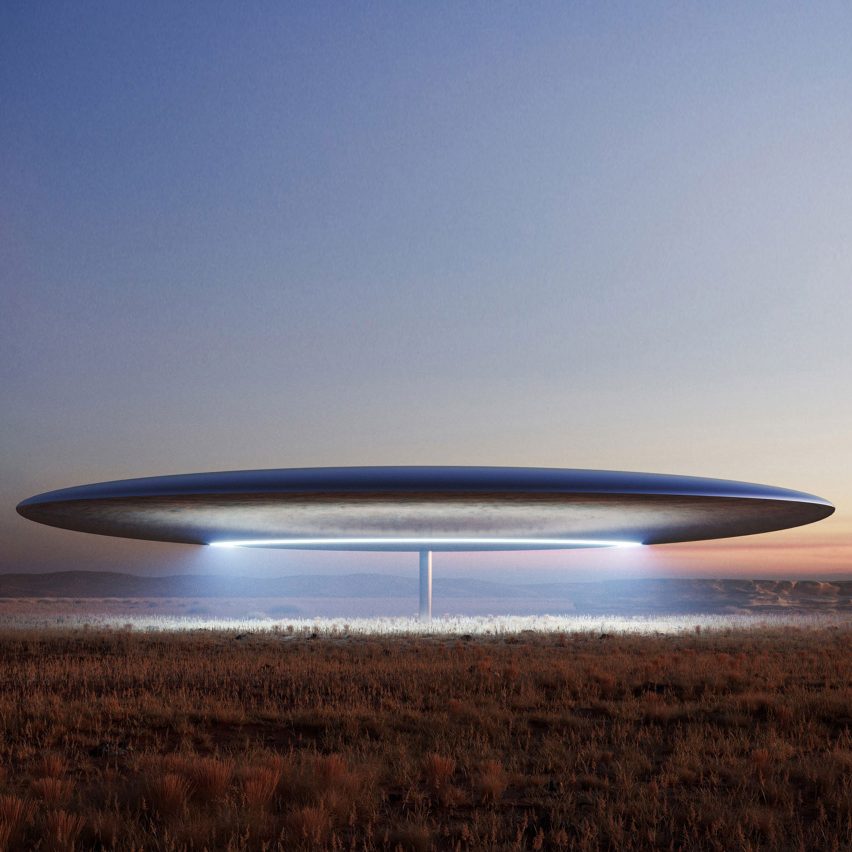
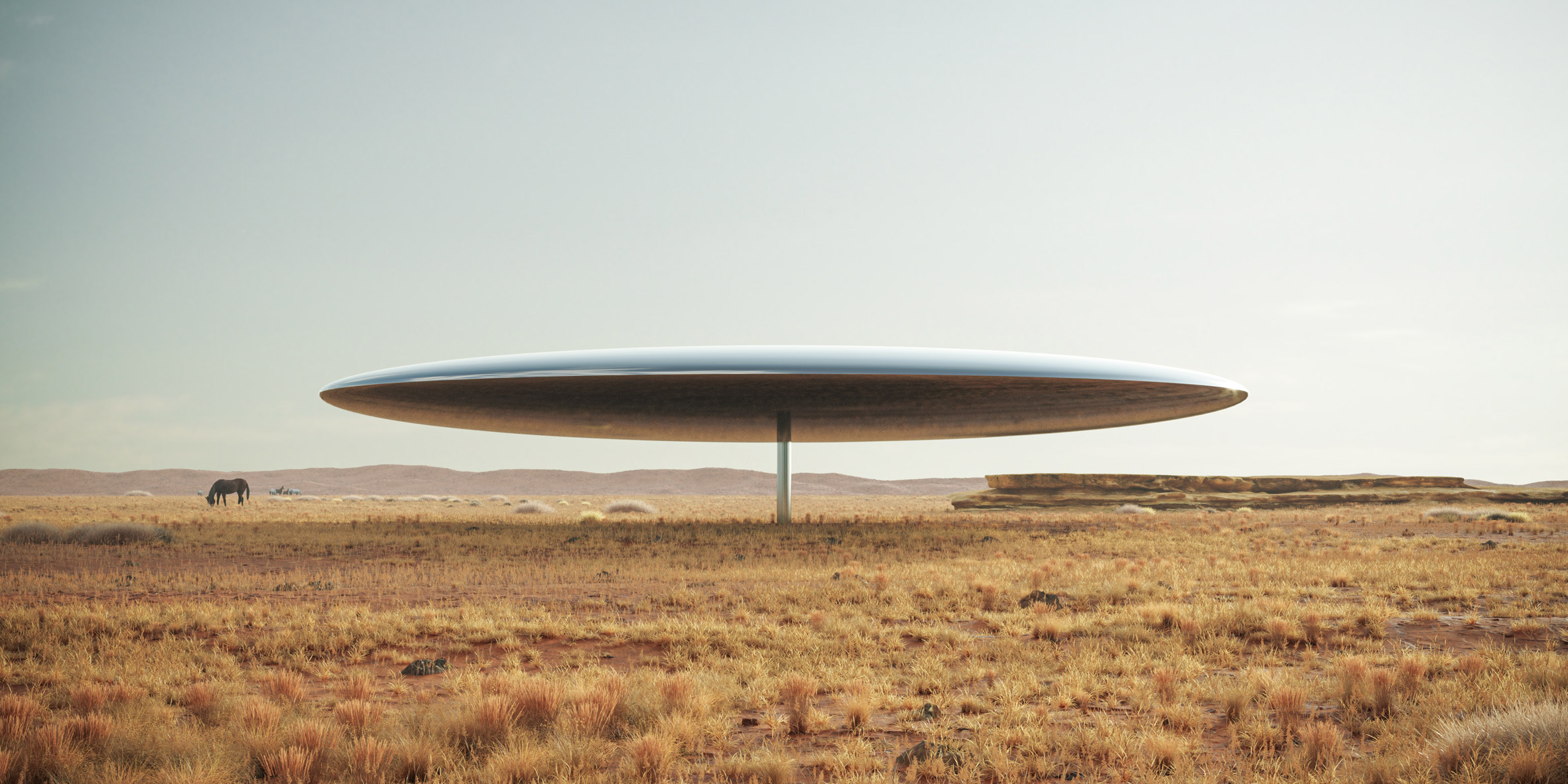
American architect Marc Thorpe has developed a conceptual installation near Marfa and the border of Mexico that resembles a large spaceship landing on earth.

Thorpe's imaginary design is a huge polished steel volume with rounded edges that is supported on a slender pillar.

"The installation for the desert of Marfa would be a polished steel disc that appears to hover in the desert, gently reflecting the surrounding border of the United States and Mexico," Thorpe said.

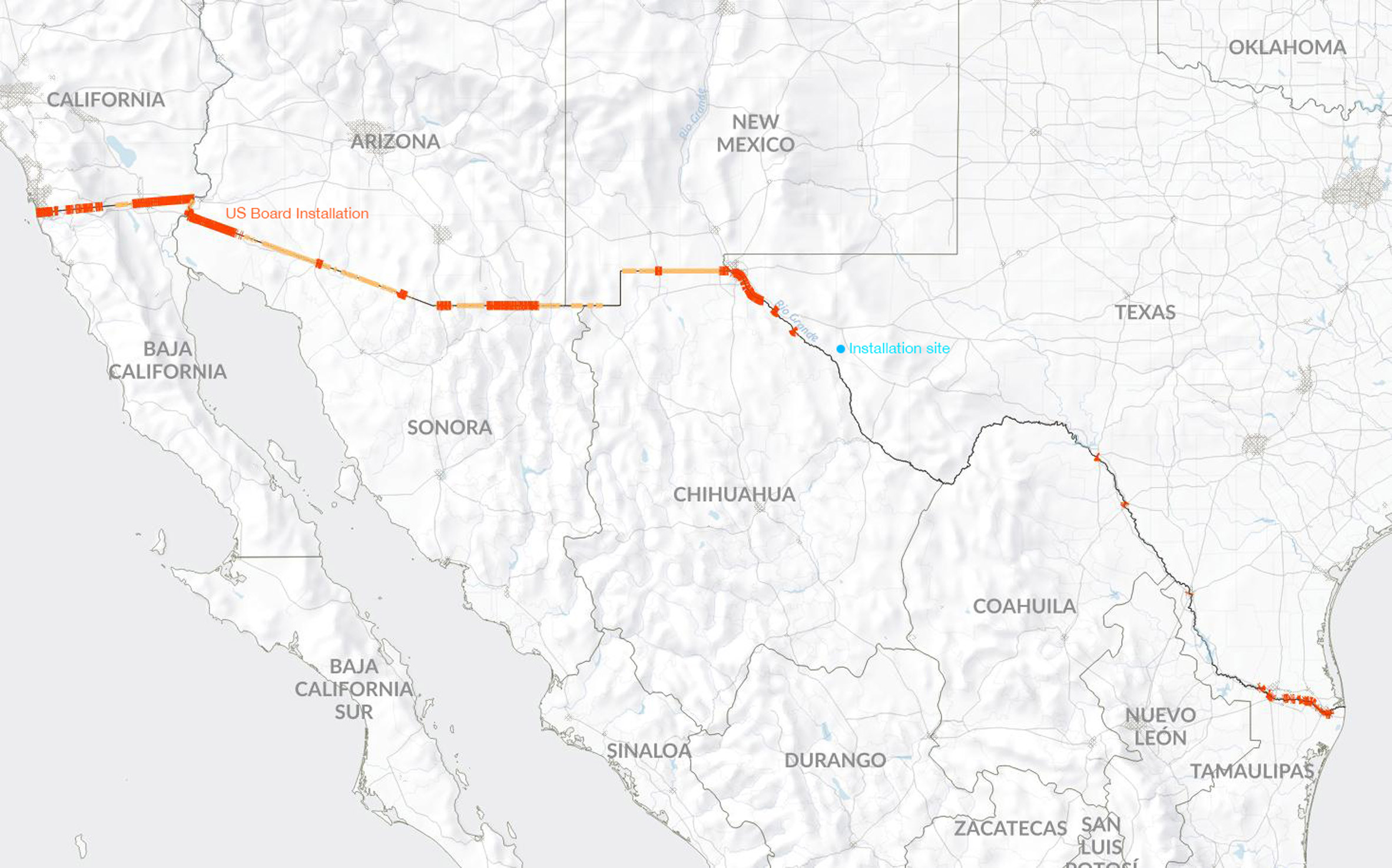
Called Citizens of Earth, the installation is proposed for a barren piece of land on the boundary separating the United States and Mexico. The architect, who is based in New York, said it is intended to examine borders and imagine a world without them.

Citizens of Earth by Marc Thorpe
Thorpe's imaginary design is a huge polished steel orb with a light that glows underneath

"The intention of the project is to question the value of international borders within the context of the 21st century," Thorpe said.

"What if there were no more borders? What would it take for mankind to shift from me to we? What if we all understood ourselves as citizens of earth working towards a common purpose? What would our new unified purpose be?"

Thorpe envisions the structure for about 20 miles (32 kilometres) outside of Texas town Marfa, which is an art mecca home to works by late American artist Donald Judd and others.

The shape of the design is intended to reference flying saucers and extraterrestrial life. In renderings, a light glows from its underbelly at dusk, which provides a nod to popular images of spaceships landing on earth.

Thorpe said that he also chose the orb shape to symbolise humanity and something beyond borders.

"Figuratively and literally, the disc reflects our existence on this planet," said Thorpe. "The disc stands a symbol of our humanity as citizens of earth."

"It suggests that if we are not alone in the universe that we must represent ourselves as one united civilisation," he added. "A new perspective on borders would be in an effort to secure the future of humanity on earth and beyond."

The US-Mexico border has been the centre of controversy with Donald Trump's presidency, who has advocated for a new barrier wall to stop unauthorised migration into the US.

A number of architects and designers have proposed projects to challenge the president's plans to build a wall between the two countries. They include a binational city on the border, an installation of seesaws and a spoof of an IKEA furniture kit for cheaply building the barrier.

Citizens of Earth by Marc Thorpe
Called Citizens of Earth, it is designed near Marfa and the border of Mexico

Thorpe's installation delves into the issues caused by borders, which he explores in his proposal.

"War, poverty, famine, disease, political and economic instability, terrorism, environmental degradation, racism, genocide and much more are all byproducts of the ceaseless reinforcement of borders," he said.

"The socio-political rationalisation for borders drawn on the earth have proven throughout history to be problematic," he added.

Thorpe has also built a black off-the-grid cabin in New York and envisioned a housing prototype for Senegal.

Images are by Marc Thorpe.

The post Marc Thorpe imagines Citizens of Earth installation at US-Mexico border appeared first on Dezeen.


from Dezeen https://ift.tt/2vCBDCt