
Through a series of flash-lit diptychs, Güle Güle examines the political and societal change currently prevailing in the city.

from It's Nice That https://ift.tt/2WzX2qY
Through a series of flash-lit diptychs, Güle Güle examines the political and societal change currently prevailing in the city.

In her debut photo book, Death Magick Abundance, the photographer captures a group of people who have fought their way back from a catastrophe.


Launching a competition with the Design Museum in support of The British Red Cross, the studio is asking creatives for their take on hand sanitiser pumps for an upcoming exhibition.

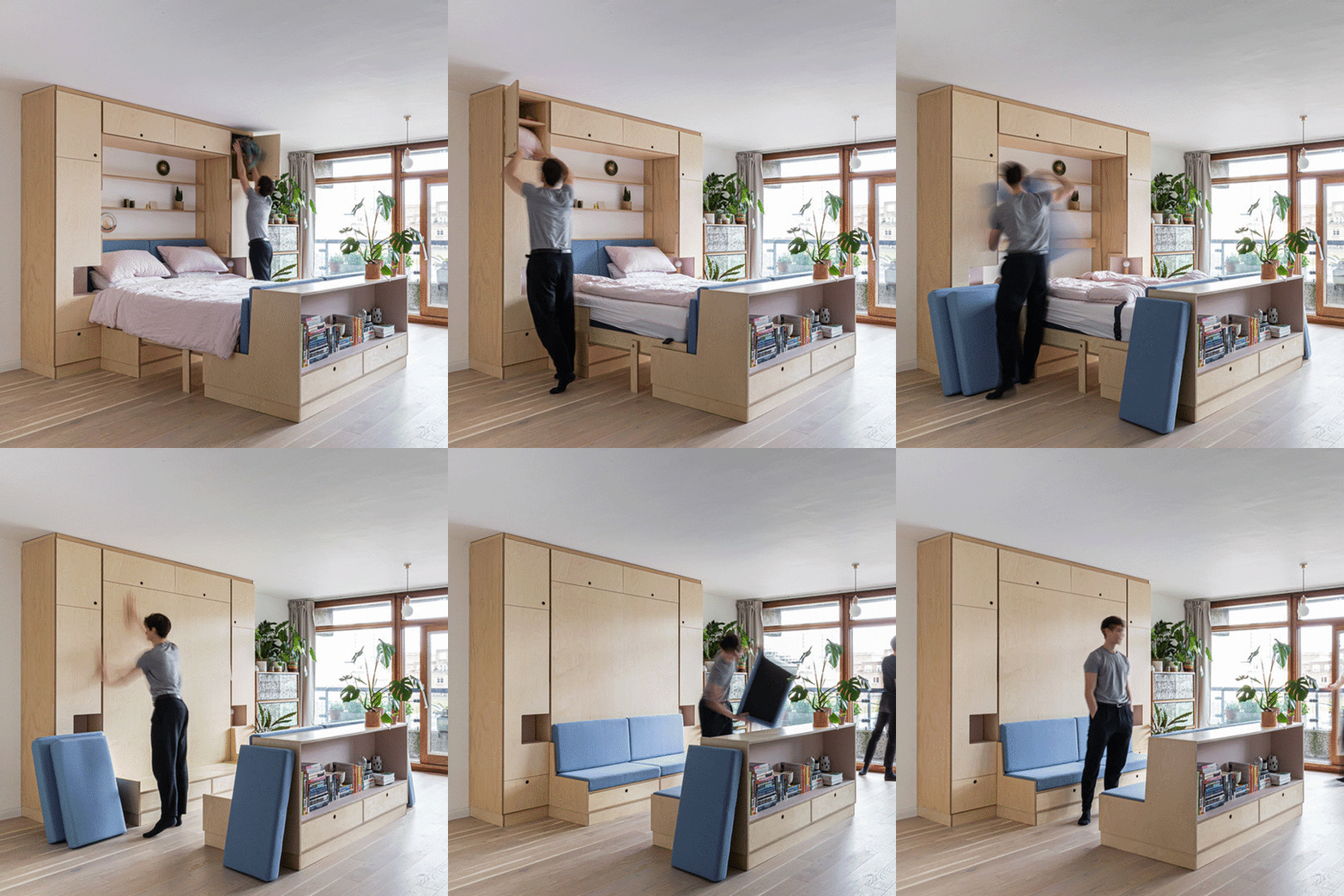
Intervention Architecture has installed shapeshifting furniture in a Barbican apartment in London, allowing it to transform from a home into a dance studio.
Barbican Dancer's Studio is a compact studio flat in the Barbican Estate, owned by a professional ballerina.
With very little space on offer, the challenge for Intervention Architecture was to create generous spaces for eating and sleeping, but to also give the client the room he needed to practice his choreography.
The Birmingham-based studio did this by developing a a multi-purpose piece of plywood furniture that can take on various configurations.
Mobile and folding elements integrate seating, surfaces, storage and a bed.
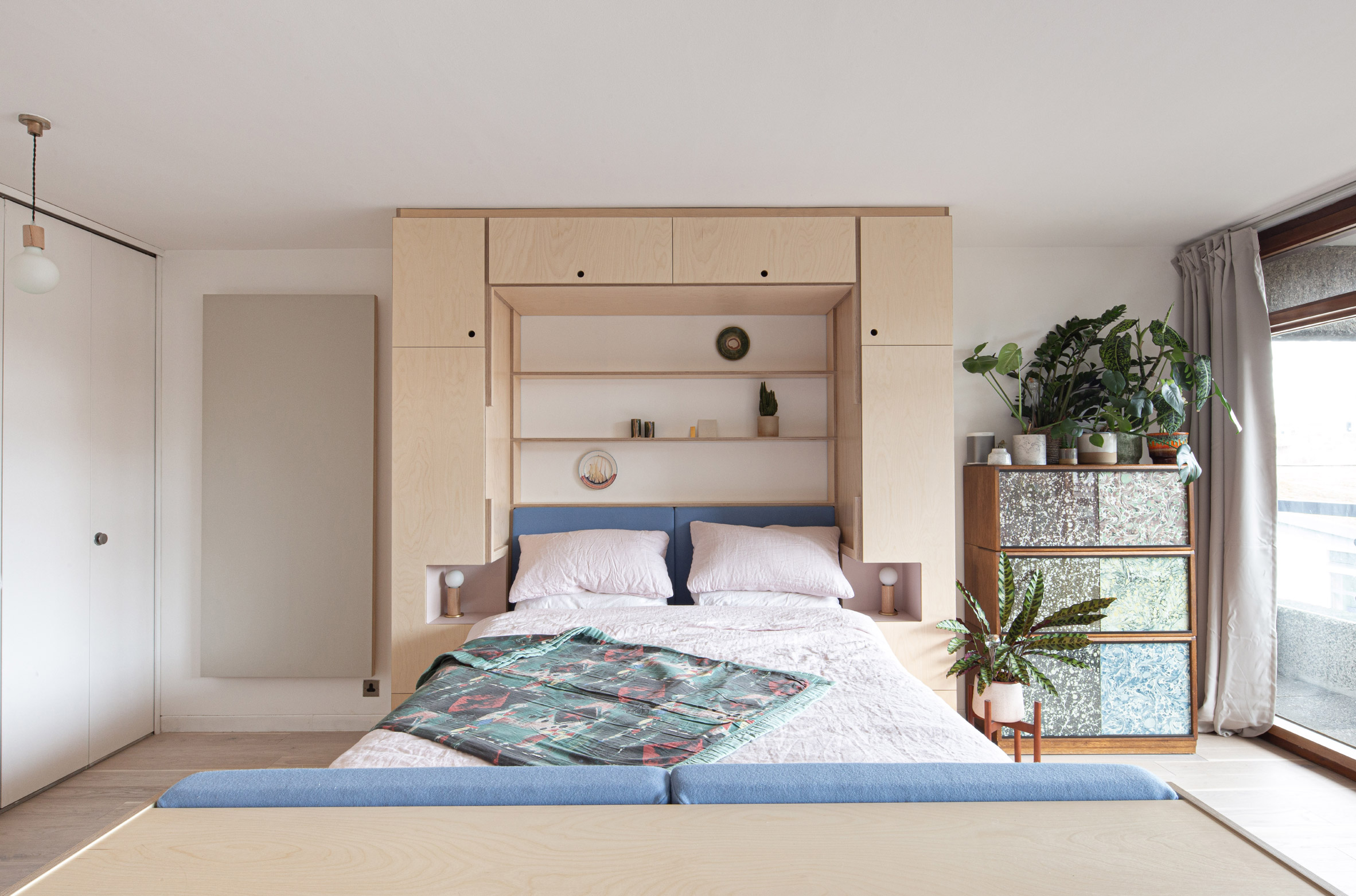
"We injected movement within the space with a changeable joinery solution to maximise storage, and create alternate uses and zones within a compact floor area," explained studio director Anna Parker.
"As a young dancer, the client's energy and dynamism was something we really wanted to capture in the ergonomics of the design in the Barbican studio space, to maximise the compact layout and bring it to life," she told Dezeen.
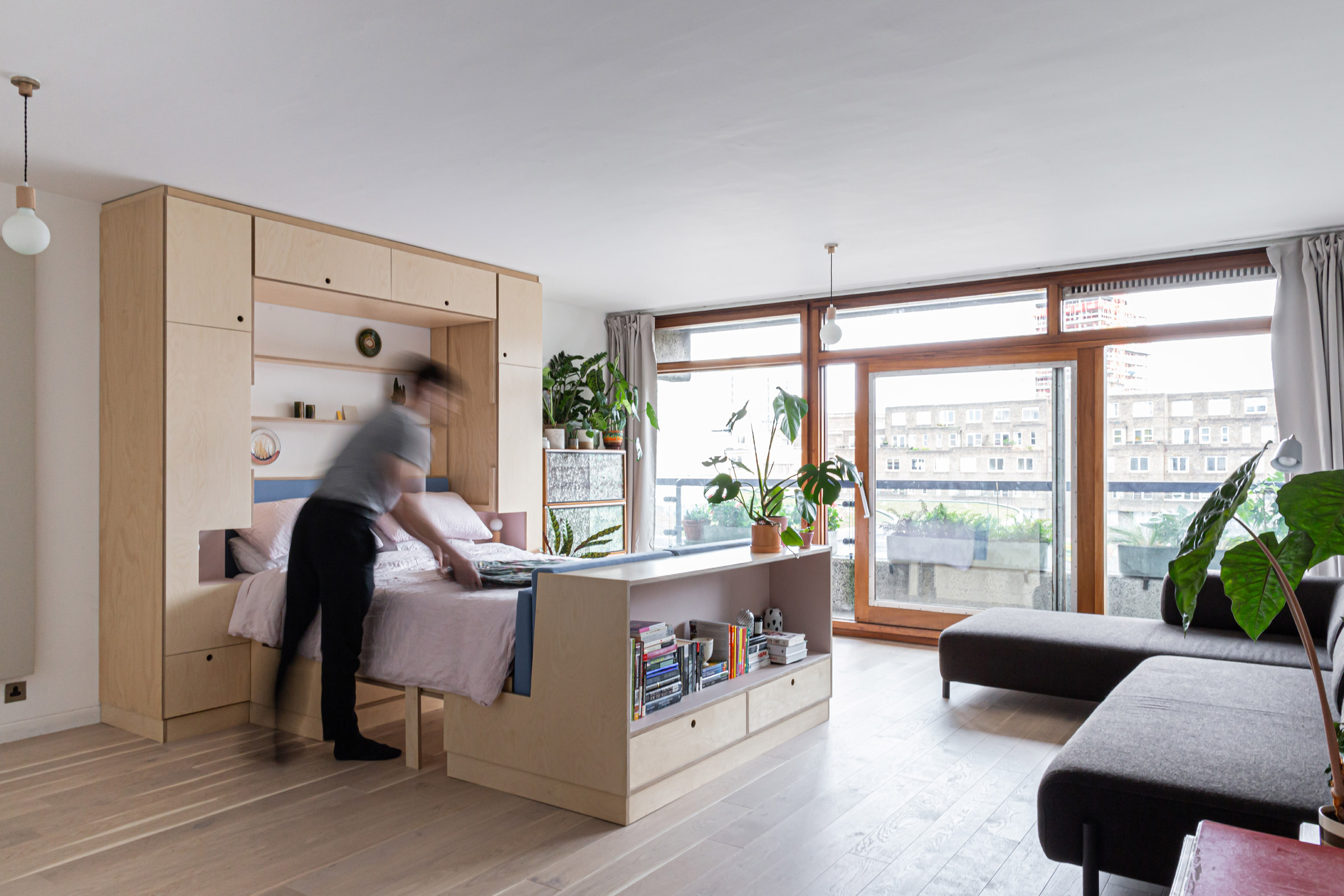
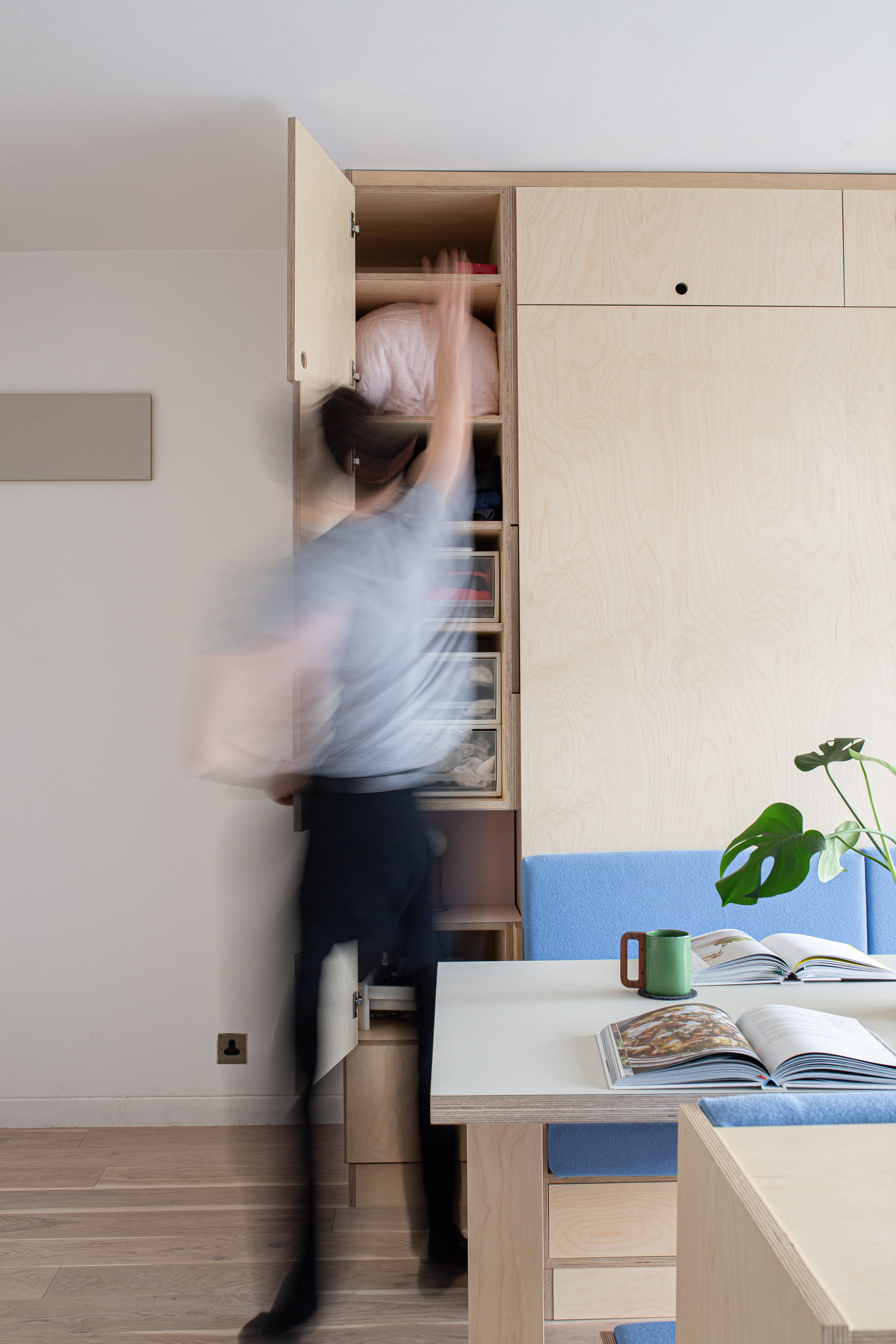
The space-saving furniture is made up of several modules. The main pieces are a ceiling-height storage unit, which integrates the fold-down bed, and a library-style bookshelf.
Both of these pieces integrate bench seating, which is revealed when the bed is folded up against the wall. A flat-pack table can also be slotted in, supported on removable legs.
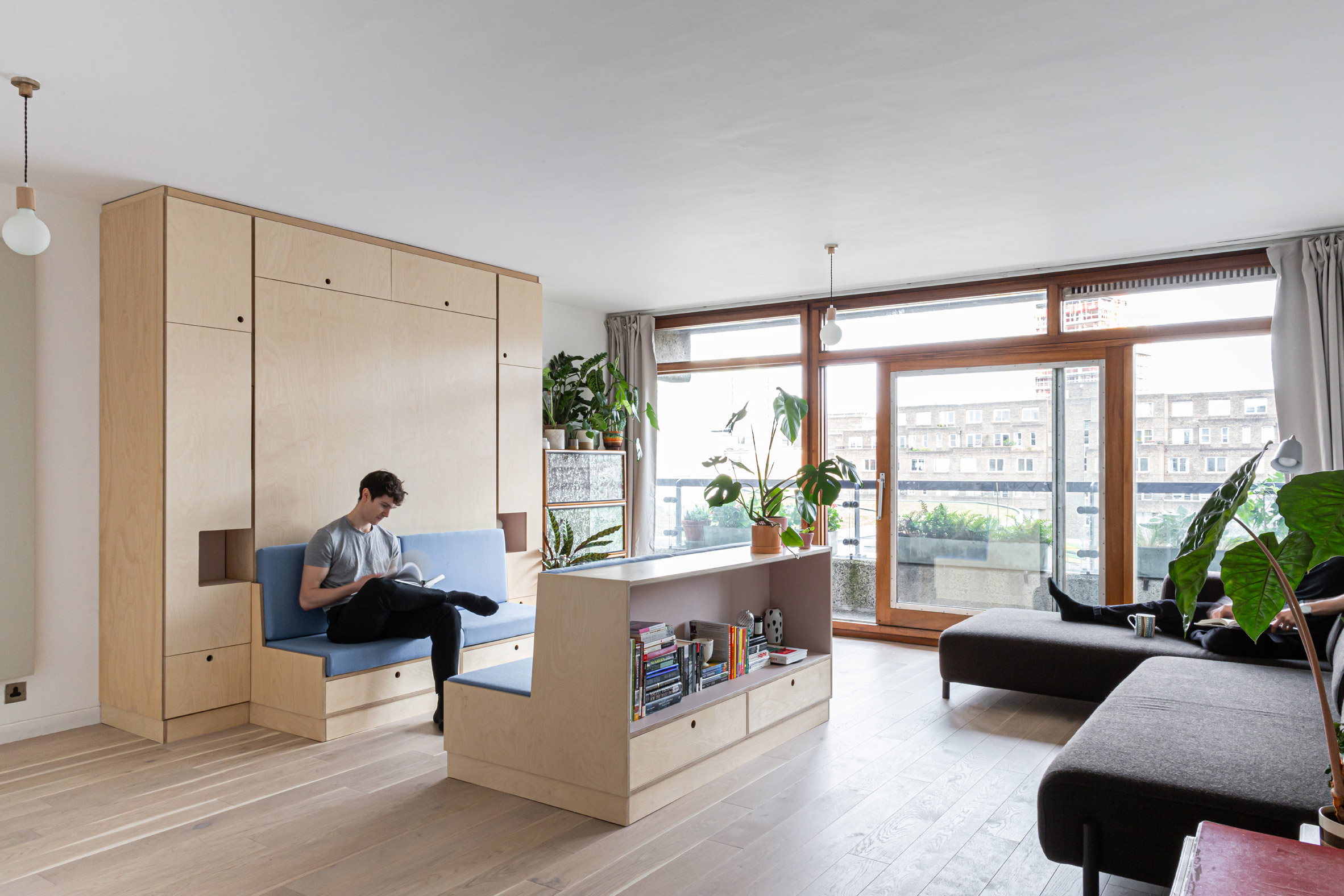
To make space for dancing, the library-style bookshelf and seat can be simply moved to a different part of the room. Other configurations are also possible – the idea is for the space to be as flexible as possible.
"It is very quick to assemble and de-assemble from the main modes, around two minutes," explained Parker.
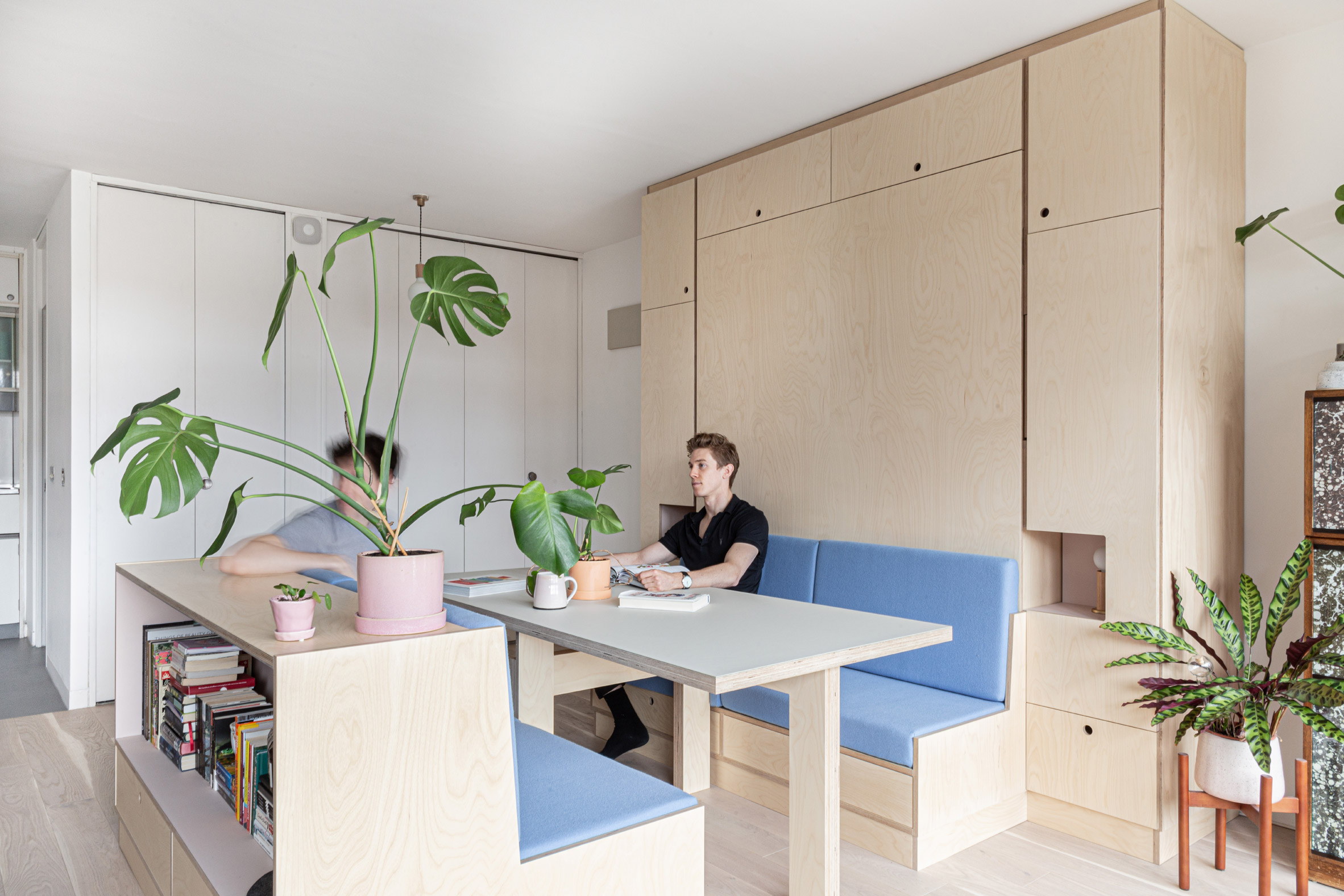
"It was important to us as designers to ensure we were specifying compatible systems for the moving/folding, so it would be easy to reconfigure," she continued.
"This is especially essential when transferring from lounge/dining mode into bed mode, as you are most likely tired when doing this, so you don't want to think too much about getting into your bed space."
Various cupboards create plenty of space to store pillows, bedding and seat cushions when they are not in use. There are also small niches that function as bedside tables.
Flats in the brutalist Barbican Estate are highly sought after, thanks to their unique design aesthetic and east London location. Many have been refurbished recently, by designers including John Pawson and Ben Allen.
Intervention Architecture's renovation was designed to celebrate the building's architectural heritage. Shades of blue and pink were chosen to complement the raw concrete and exposed woodwork.
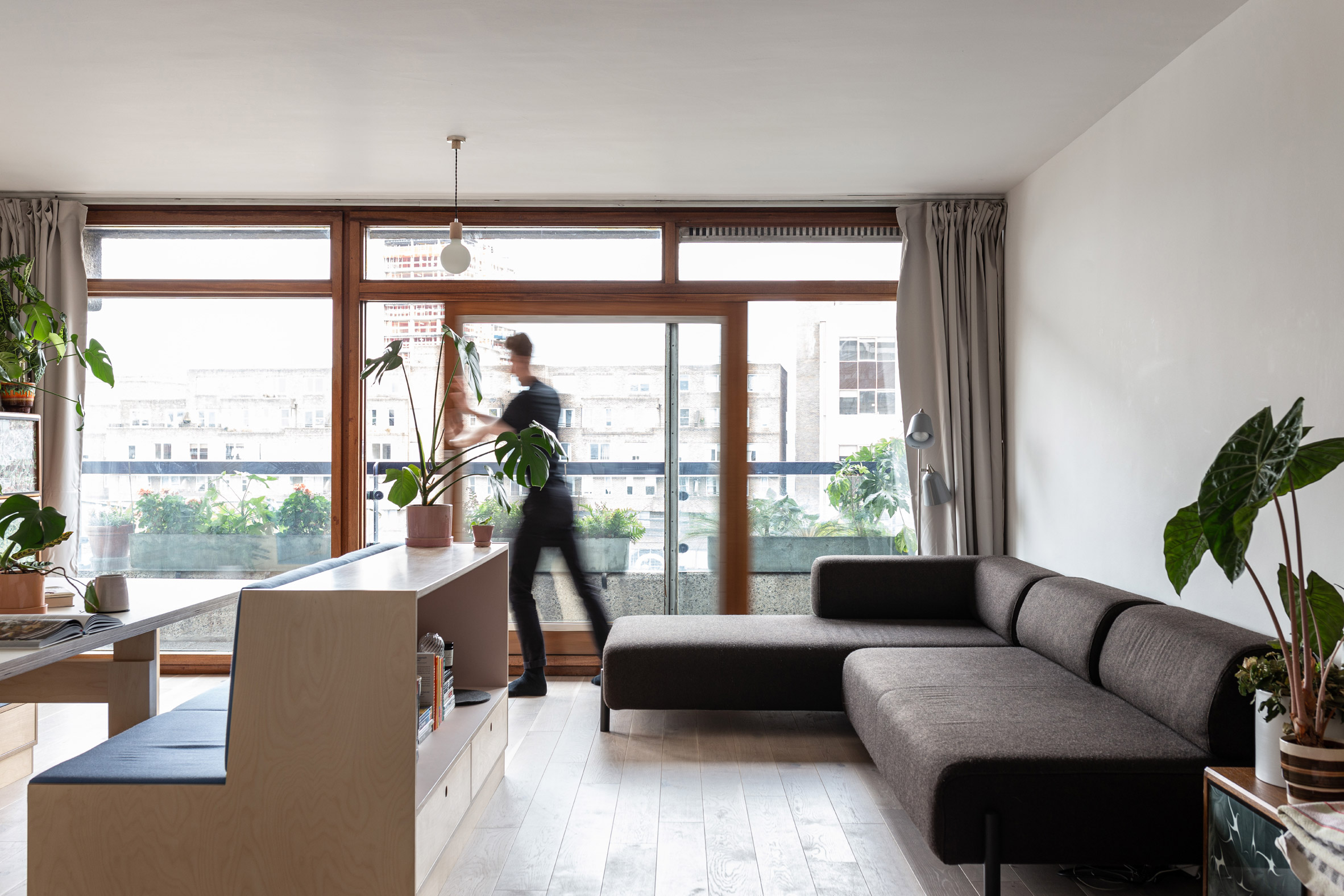
"The modernist backdrop provided a heavy material palette, which we contrasted internally with lighter materials," said Parker.
"We wanted to allow the original features to shine through as much as possible."
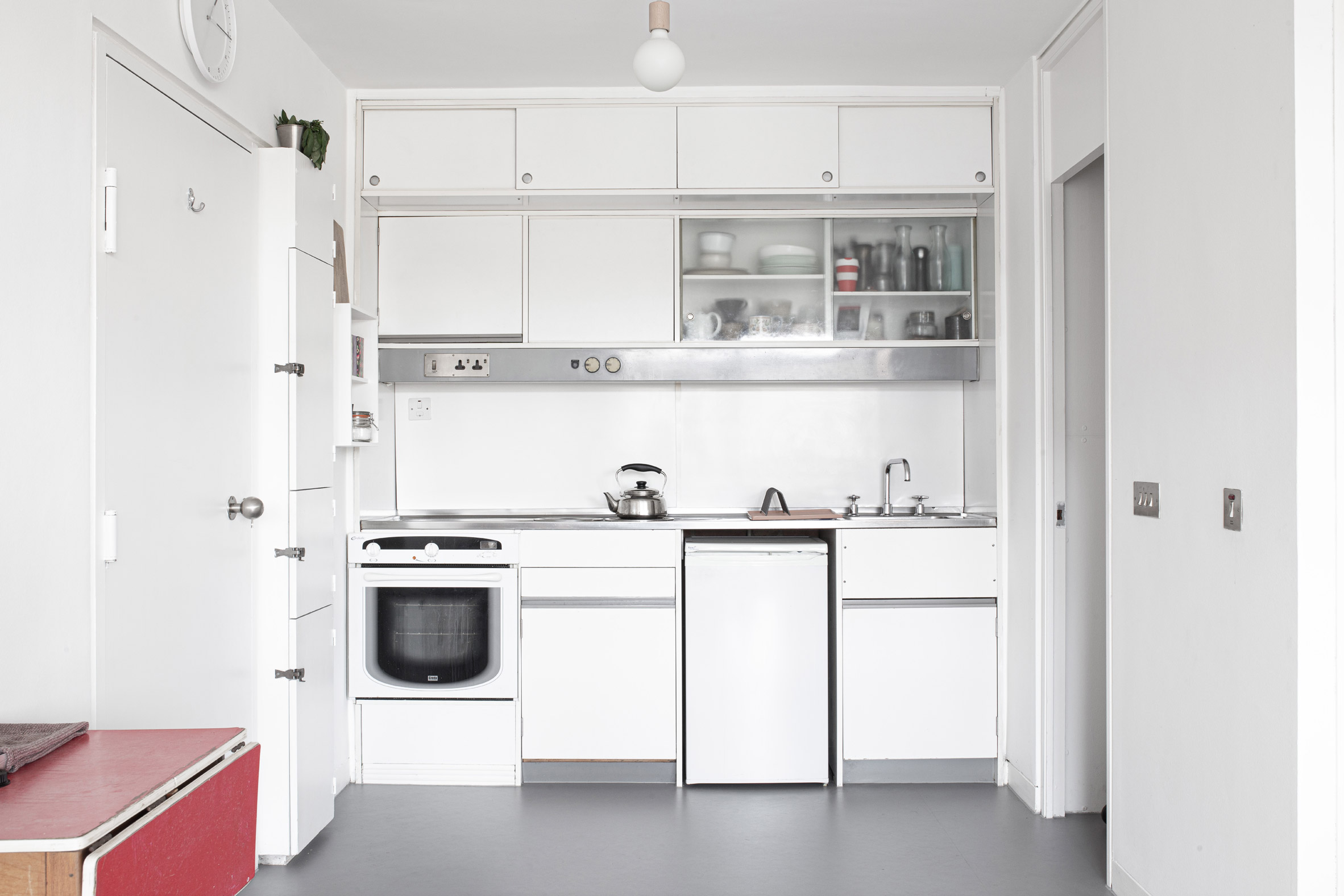
Because of the existing concrete slabs and underfloor heating, only thin flooring materials could be specified.
The design team got around this by adding engineered wooden flooring in the living space and simple grey marmoleum in the kitchen.
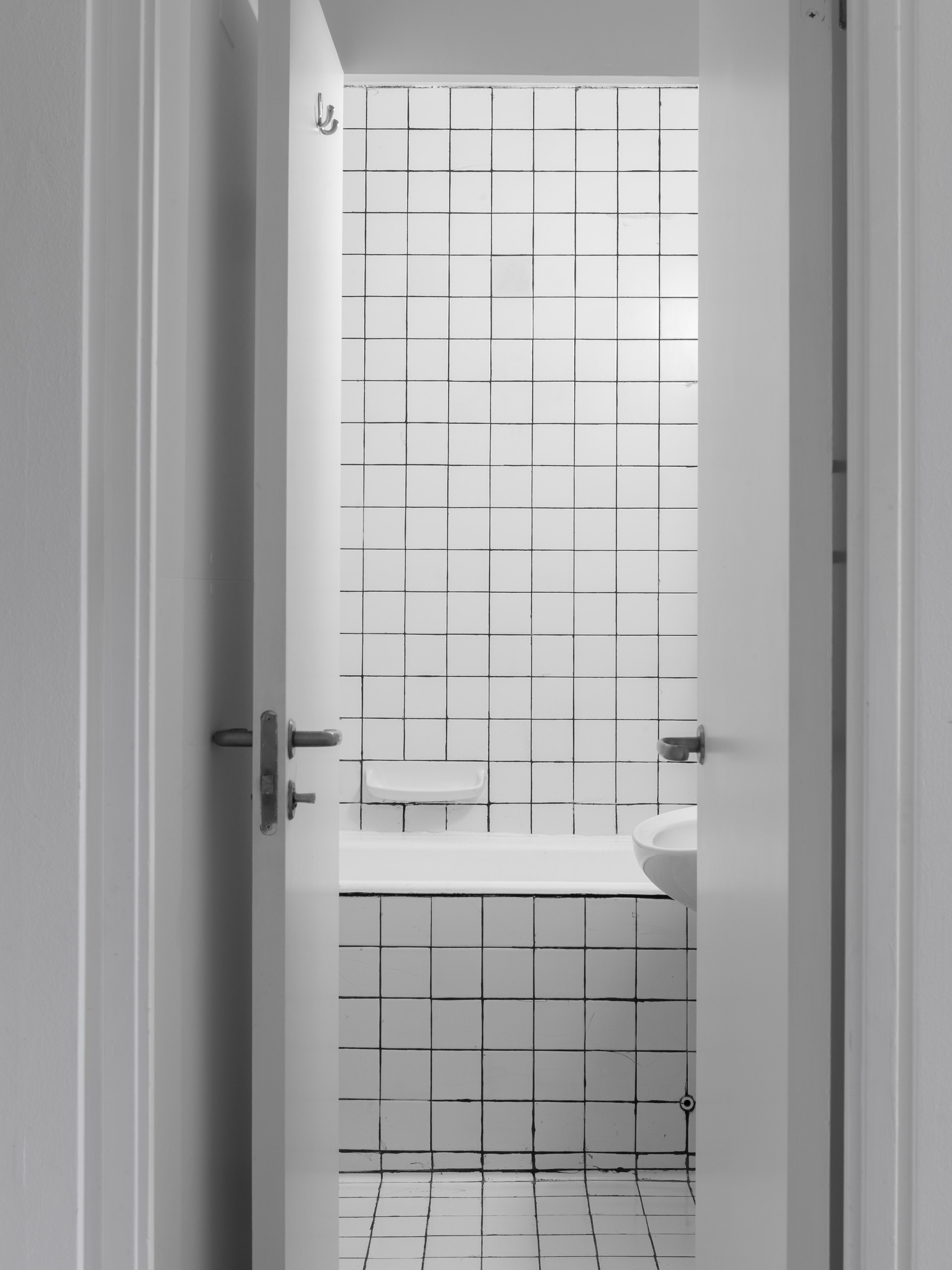
For the bathroom and kitchen, existing cabinets were retained and restored, and tiling was refreshed with a new dark grout.
Photography is by Handover.
Project credits:
Architecture: Intervention Architecture
Joinery install: The Winding House
Flooring install: Marmoleum & Parky flooring
The post Barbican flat by Intervention Architecture transforms into a ballet studio appeared first on Dezeen.
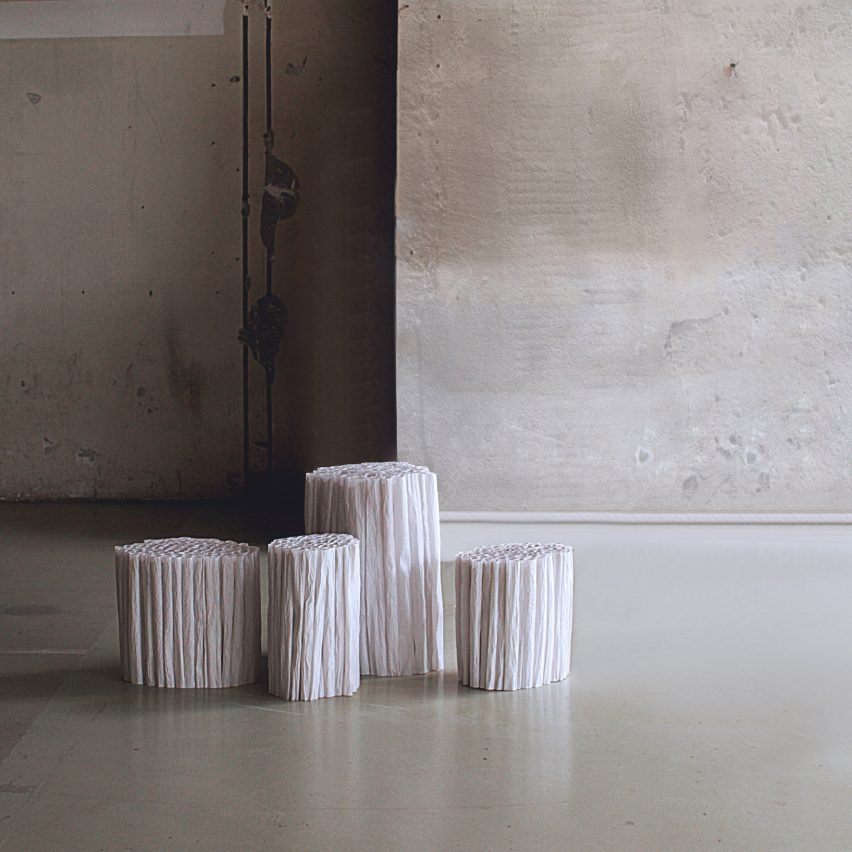
Hui Kao's has created the Paper Pleats furniture collection from paper bound with rice glue, which was developed as a result of the designer's sensitivity to chemicals and desire to create recyclable products.
The collection includes stools, coffee tables, a dining table set, shelving, a space divider and a ceiling lamp.
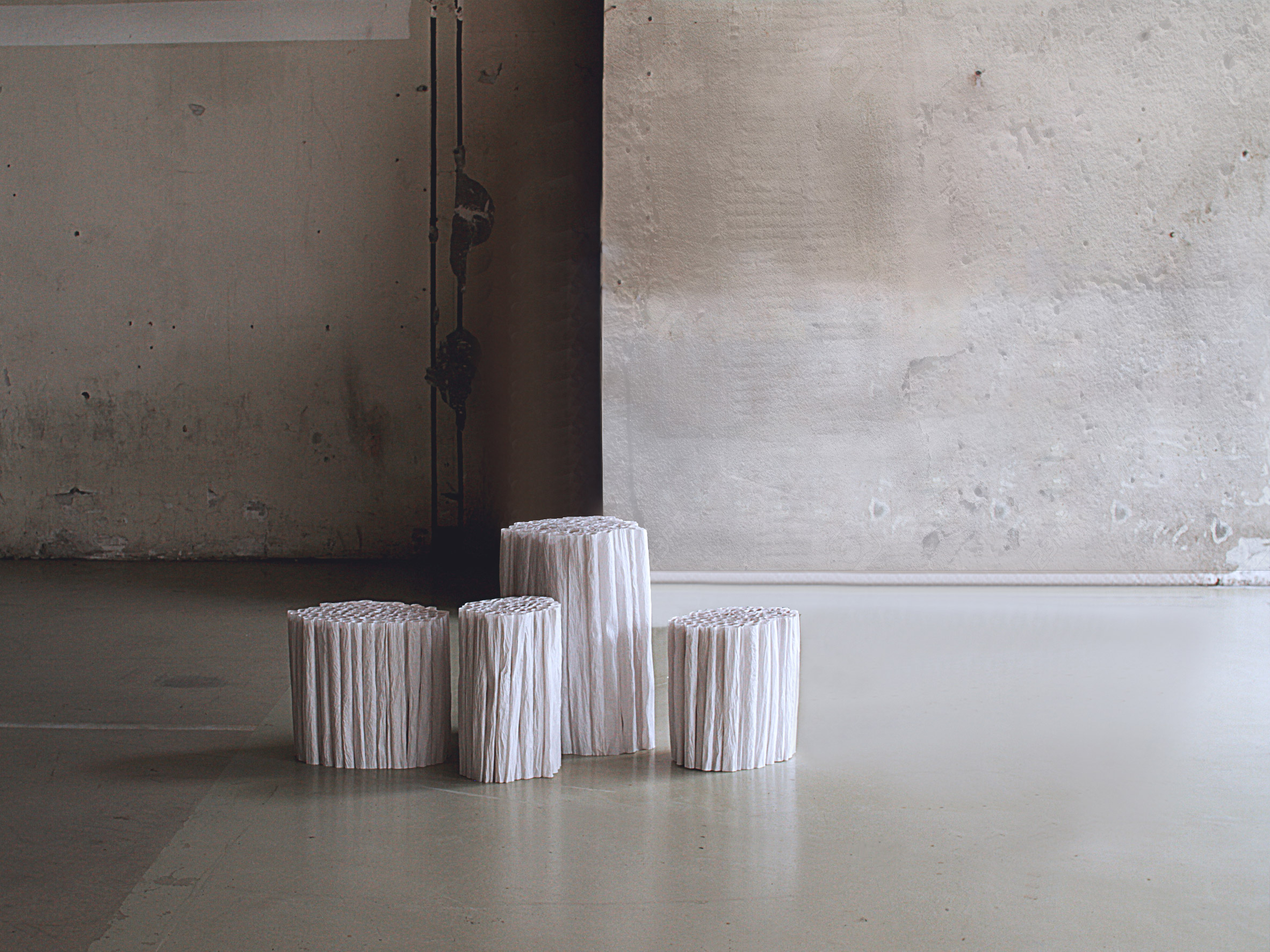
Every piece is made from tracing paper that is soaked in rice water that acts like glue, binding the sheets of paper together.
As the paper absorbs the water it shrinks and wrinkles, helping to create a strong, rigid structure once the material dries out.
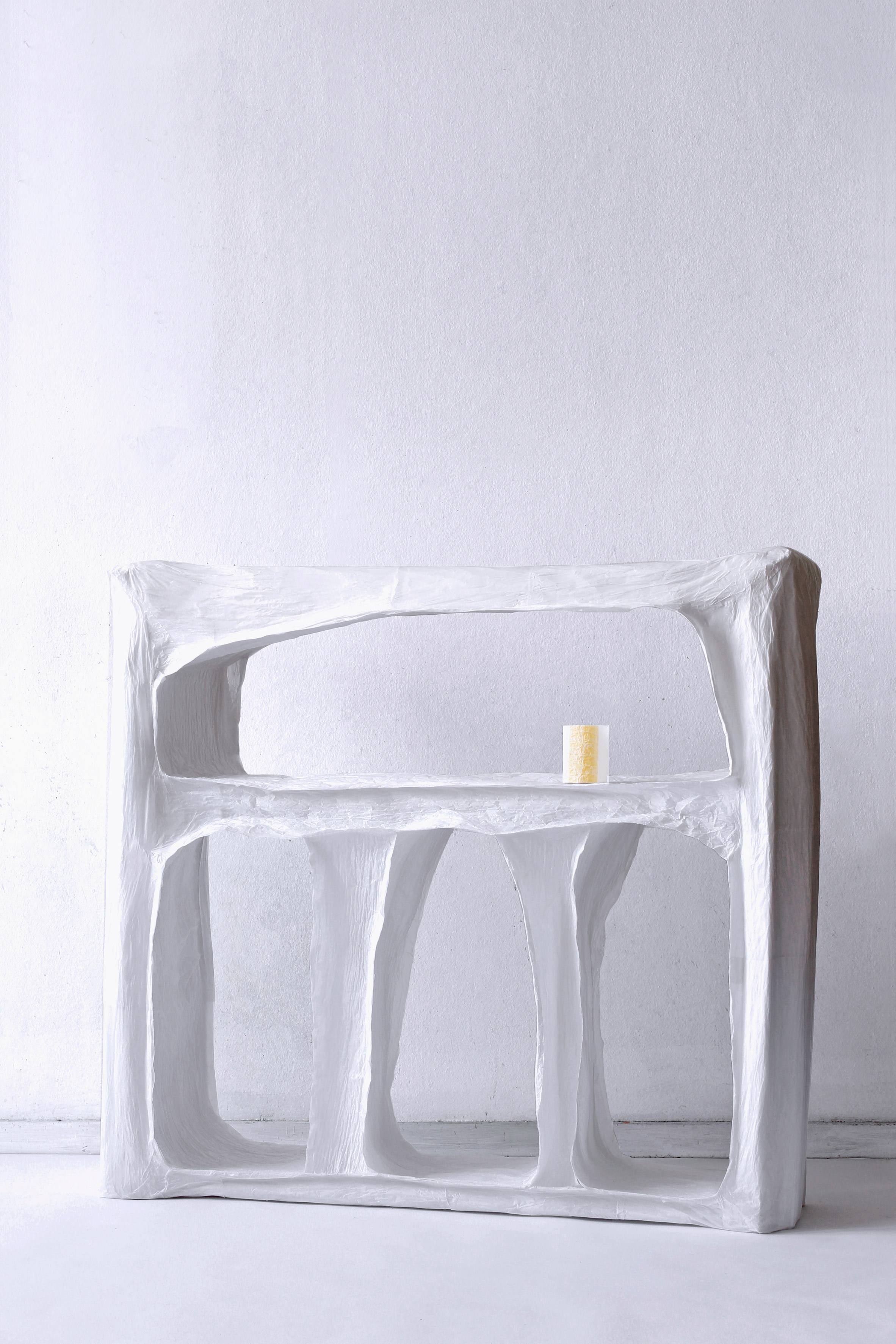
Hui Kao has developed a series of bespoke tools to shape the paper while it is still wet, including moulds. These allow the designer to retain the wrinkles in the paper and create regular patterns and pleats.
"Paper is made out of fibre and the biological features of a tree partly remain," the designer told Dezeen.
"Water is a perfect trigger to wake up its self-shaping ability. By controlling key elements of the paper-making procedure, such as humidity and drying temperature, I try to encourage the paper to achieve a certain shape and texture. It's almost like I've learnt how to team up with the material to design the object."
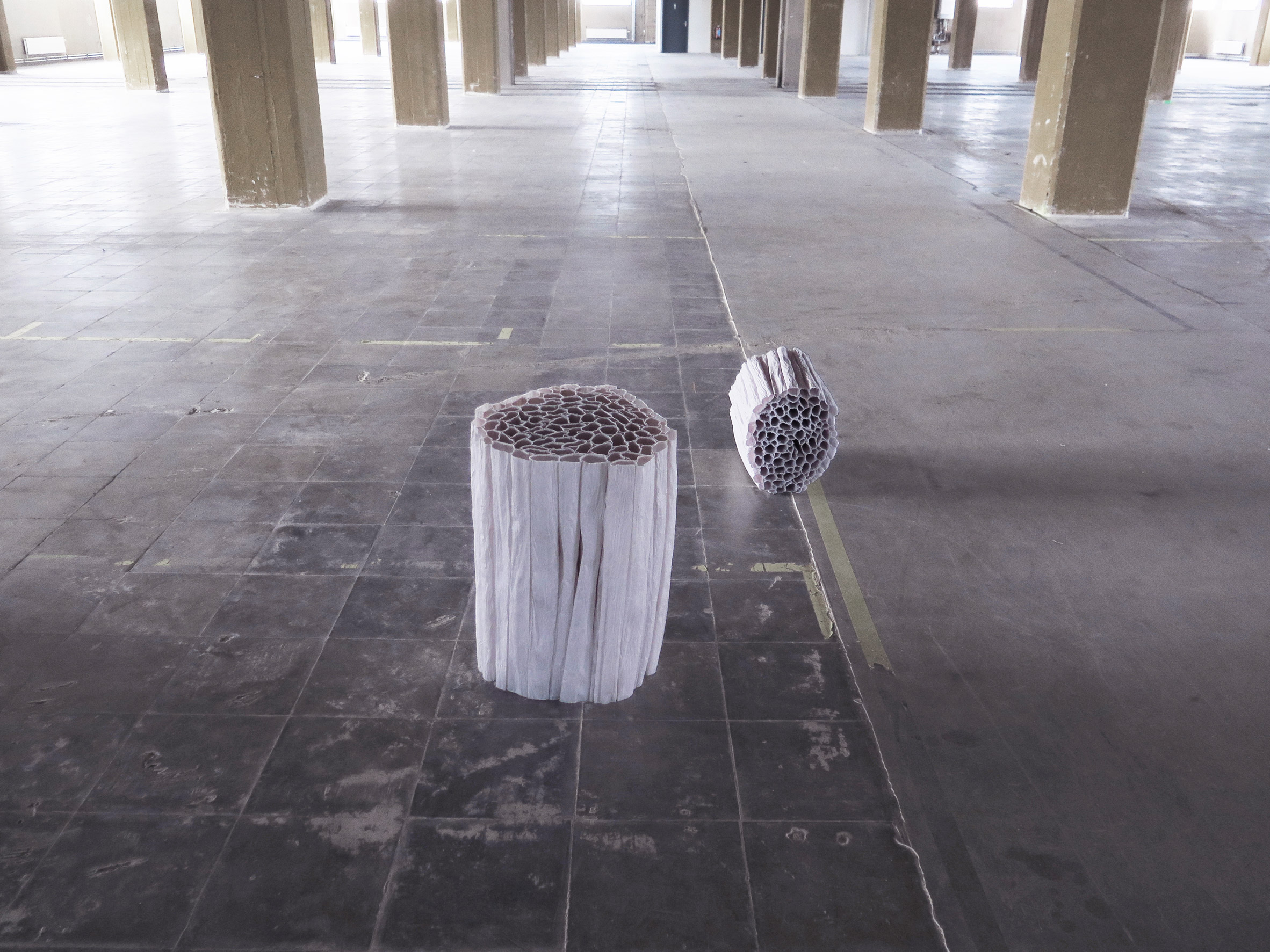
To create objects that can support significant weight, the designer creates lots of irregular tubes of paper, which are then bound together by the rice water. The final effect is objects that look fragile but are surprisingly strong.
The designer developed the process while studying at Design Academy Eindhoven and has continued to develop it since 2016. The latest pieces, including three stools, were on show at the Collectible design fair in Brussels earlier this month as part of a presentation by Belgian gallery Spazio Nobile.
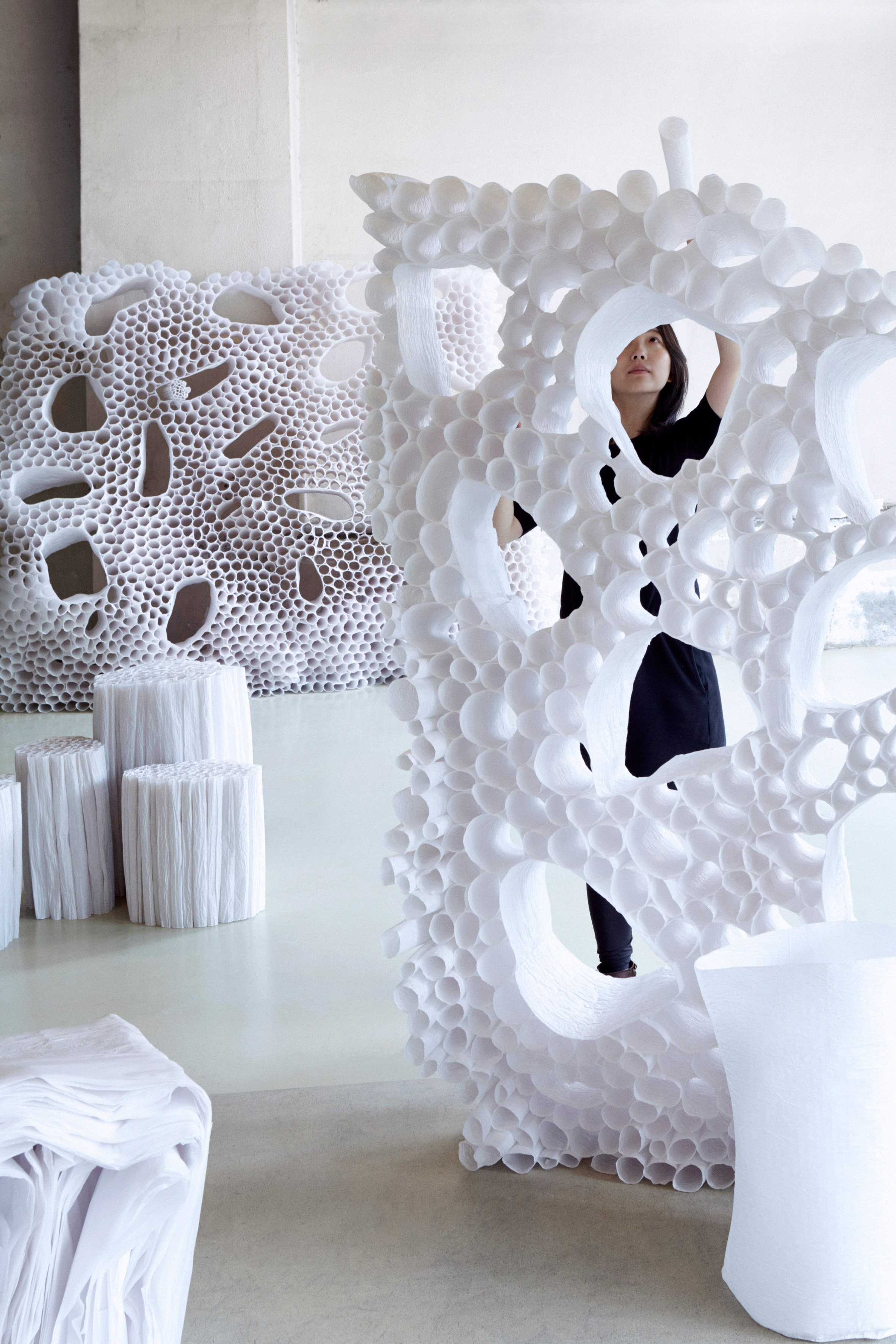
Hui Kao was drawn to working with paper after discovering she had allergic reactions to a number of chemical ingredients used in other man-made materials, including pigments and coatings. She was also interested in finding a material to work with that would have minimal environmental impact after use.
"From my personal experiences of collaborating with eco-friendly industries, I was aware how a small decision made by designers could affect not only manufacturing process but a whole recycling system," she said.
"By having a better understanding of how recycling systems work in real life, I tend to investigate a new way of creating objects, and study the relationship between objects, bodies, and recycling systems. Paper is the perfect fit – it's one of the daily used goods and a really neutral material. Also the making process is relatively simple and clean."
Other paper-based designs on show at Collectible included the Speckle Lamps by Hannah Bigeleisen, which are made from papier-mache and were among Dezeen's lighting highlights from the fair.
The post Pao Hui Kao makes furniture collection from tracing paper appeared first on Dezeen.


