Thursday, 26 March 2020

Dvele creates prefabricated homes that generate and store their own energy

Dvele Self-Powered home

California company Dvele has designed prefabricated, off-grid houses with solar panels that allow people to stop relying on "antiquated power grids".

Dvele – named after the Norwegian word for a dwelling – has been selling prefabricated homes since it was established in 2017 in San Diego. It has recently made the switch so that all of its models are self-powered.

The homes are intended to serve as a "solution that addresses climate change and power grid resilience" according to Dvele.

Devel offers 11 residential designs, ranging from a tiny home to a four-bedroom dwelling. The homes are modern in style with a flat roof and minimal ornamentation. Layouts can be customised as needed, and the starting cost is $190,000 (£163,500).
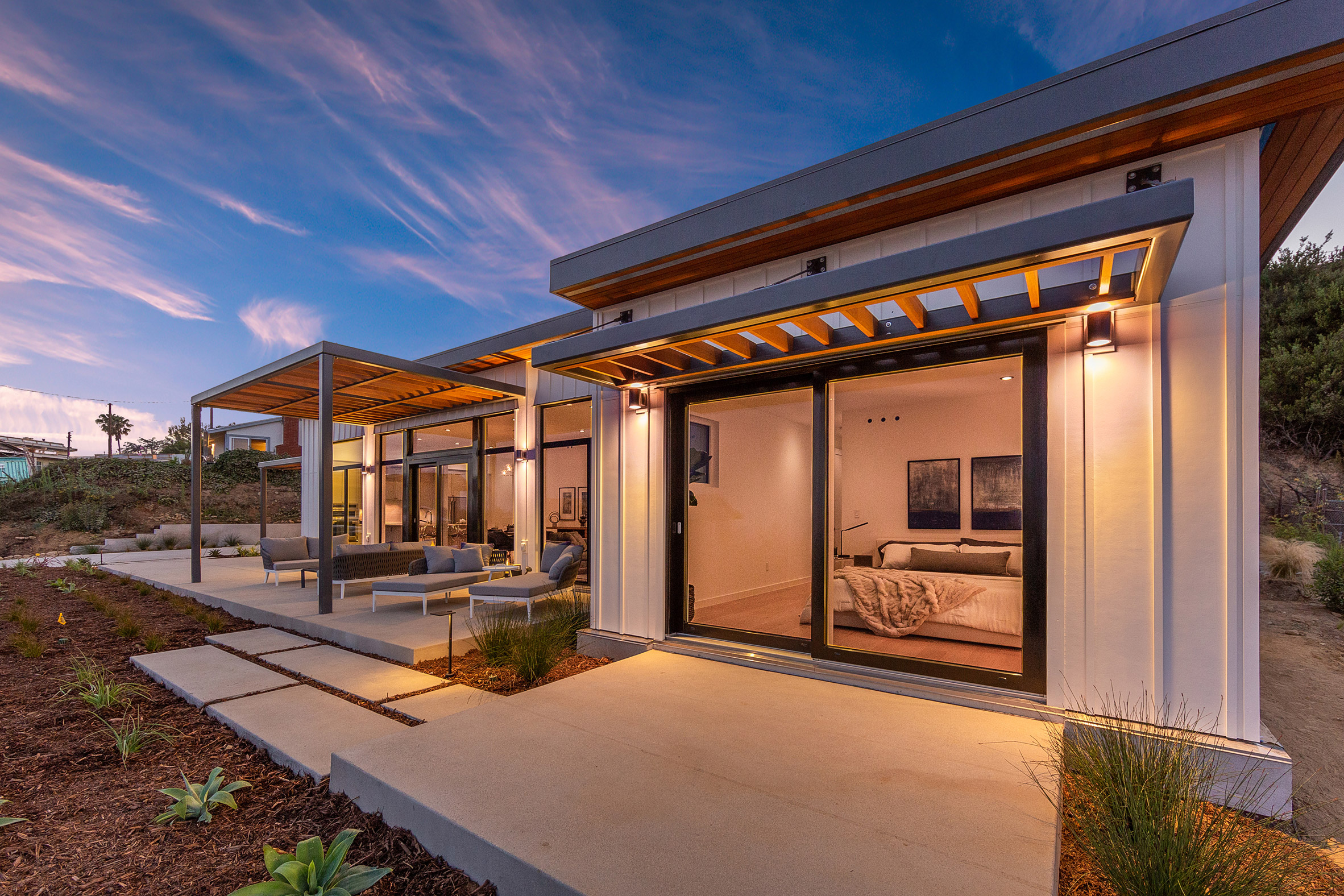
Dvele Self-Powered home

All systems are powered by electricity, and the new designs come with 28 solar panels that can generate at least 6,400 kilowatt hours per year for a California building. Energy that is not used right away can be stored in a battery.

"A Dvele home is capable of utilising its solar array and battery backup system to make them fully grid-independent and insulated from the inconveniences and safety risks associated with long-term power outages, not to mention significant financial savings," the company said.

Dvele co-founder and CEO Kurt Goodjohn added that self-powered homes, such as those offered by Dvele, help address the issue of "an antiquated power grid that will take many years and billions of dollars to fix".

The new designs coincide with a new California building code that requires newly constructed homes to come equipped with photovoltaic panels. The mandate was passed in 2018 and went into effect on 1 January this year.

Dvele Self-Powered home

In addition to being able to generate and store clean energy, Dvele emphasised that its homes are designed to reduce power usage. Combined, these factors enable them to operate independently of the electric grid.

"The solar mandate is a great step in the right direction for creating more green energy, but it fails to solve the entire problem, which also includes the inefficient management and use of energy in most homes by our antiquated power grids," said Goodjohn.

Another key feature of a Dvele home is a high-performance building envelope. The framing system consists of kiln-dried wooden studs measuring two by six feet (61 by 183 centimetres). Engineered wooden trusses comprise the floor and ceiling structure.

Walls are made of structural-grade plywood and high-performance insulation with an R-value of 16. An air and weather barrier is applied to seal up any openings. For the roof, the company uses structurally insulated panels, commonly referred to as SIPs.

Dvele Self-Powered home

There are several options for exterior cladding, including corrugated metal panels and tongue-and-groove wooden siding.

The homes come with energy-efficient appliances, such as induction stovetops and electric hot water heaters. Other features are multi-paned windows, in-wall monitors for detecting moisture, and air and water filtration systems.

Dvele claims its building process is more sustainable and expedient than traditional construction methods, as do most other prefab housing manufacturers.

To help reduce construction waste and unforeseen delays, the buildings compose of modules that are fabricated in a foundry and then transported to the site. A crane is used to secure the modules to a pre-built foundation – a process that takes under 24 hours.
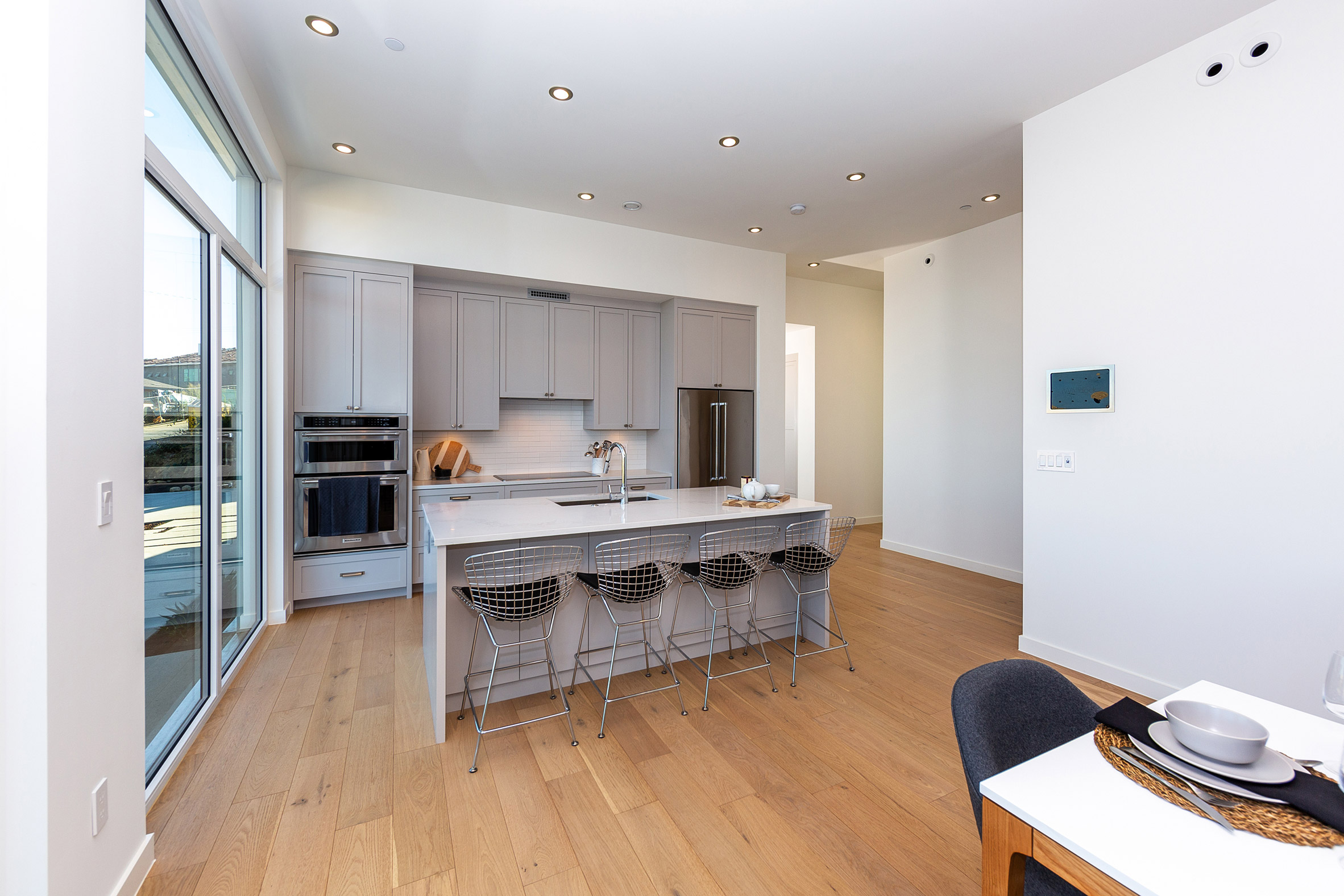
Dvele Self-Powered home

"The final steps involve stitching the modules together, patching drywall, attaching the roof and connecting utilities," said Brandon Weiss, Dvele's chief innovation officer.

The company said its overarching goal is to bring "energy independence to homeowners" and to provide housing solutions in an era of climate change.

Designs for off-grid buildings are emerging as climate change and natural disasters intensify around the globe. Other self-sufficient designs include a rustic dwelling in Chile that is lifted above the ground, a black cabin in Upstate New York by Marc Thorpe, and a prefab residence on a Brazilian farm by Studio MK27.

Photographs are by Dvele.

The post Dvele creates prefabricated homes that generate and store their own energy appeared first on Dezeen.


from Dezeen https://ift.tt/33LtDM4

Dezeen Weekly features architecture and design documentaries and our latest podcast

The latest edition of Dezeen Weekly includes a round-up of documentaries on architecture and design to keep you entertained during isolation and our latest Face to Face podcast featuring Hella Jong. Subscribe to Dezeen Weekly ›

The post Dezeen Weekly features architecture and design documentaries and our latest podcast appeared first on Dezeen.


from Dezeen https://ift.tt/3dtaeEd

Dyson designs ventilator in 10 days to supply NHS

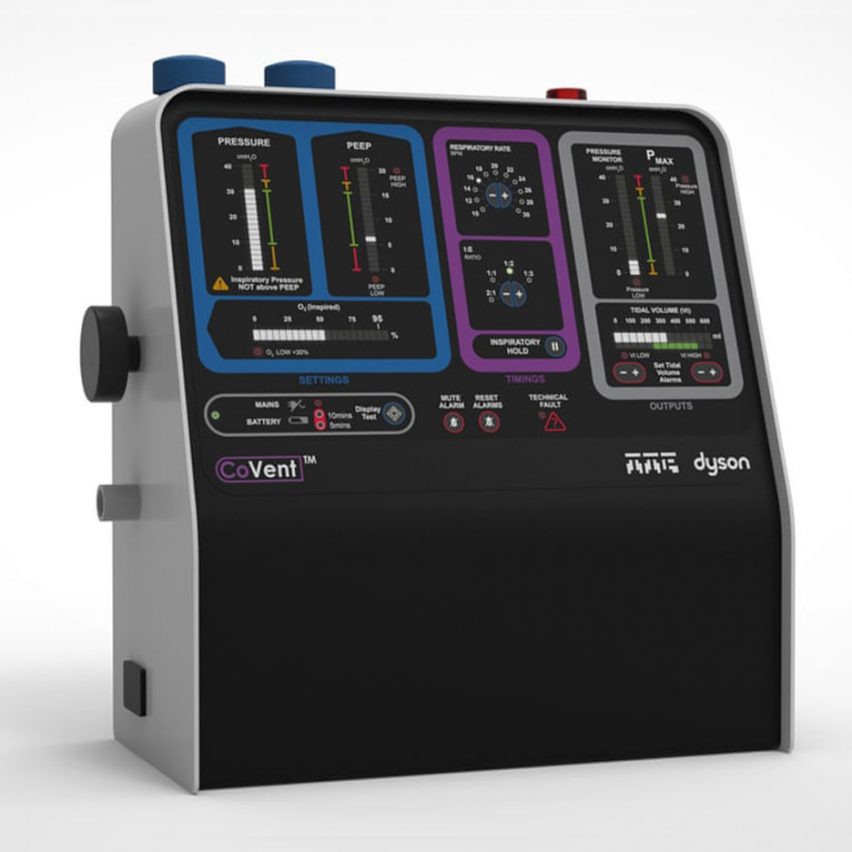
British technology company Dyson has designed a ventilator and is primed to produce 15,000 units in the coming weeks to help meet the demand caused by the coronavirus pandemic.

Named CoVent, the ventilator was developed by the company in only 10 days, after Dyson was among the manufacturers contacted by Prime Minister Boris Johnson to help bolster the National Health Service's supply of ventilators.

According to the government, the NHS needs to increase its number of ventilator from 8,175 to 30,000. They are needed in order to accommodate the expected number of Covid-19 patients, who in severe cases of the disease rely on the ventilators to breathe.

Dyson to supply 10,000 units to NHS

Given regulatory approval, which Dyson expects to be granted by Friday, 10,000 units could be supplied to  the UK government.

The company's founder James Dyson explained in an email to staff that he would donate a further thousand to the country himself, while 4,000 will be donated abroad.

Rather than gaining permission to reproduce a proprietary design, the company worked with the medical device company The Technology Partnership (TTP) to create the product from the ground up.

"The core challenge was how to design and deliver a new, sophisticated medical product in volume and in an extremely short space of time," Dyson wrote.

The final design utilises Dyson's existing digital motor, while engineers drew on their "air purifier expertise" to devise the filtration and air flow system.

"Race is now on to get it into production"

The CoVent is battery-powered, portable and can easily be mounted to a patient's bed, making it suitable for a range of different clinical settings.

"This new device can be manufactured quickly, efficiently and at volume," Dyson wrote. "The race is now on to get it into production."

The government is reportedly testing the viability of the prototype, along several others in collaboration with clinicians.

While Dyson has designed a device from scratch, the Airbus-led consortium Ventilator Challenge UK is set to supplement the production of existing ventilator models pending the go-ahead from regulators.

The government has also placed orders with existing medical device manufacturers such as Inspiration Healthcare, that have a small-scale but shorter turnaround time than manufacturers usually geared towards other products.

The shortage of ventilators is far from restricted to the UK. In the US, Tesla and SpaceX founder Elon Musk, as well as car manufacturers General Motors and Ford are investigating how they could help bolster the supply.

Meanwhile in Italy, a local 3D printing company had to resort to reverse engineering and fabricating emergency valves for the devices, when a hospital could not meet the unprecedented demand.

The post Dyson designs ventilator in 10 days to supply NHS appeared first on Dezeen.


from Dezeen https://ift.tt/3akhVuc

Honeycombs and Origami Cranes Dangle in Fragile Stained-Glass Suspensions by Lesley Green

Ten honeycomb drops, stained glass, glass, and copper foil. All images © Lesley Green

Phoenix-based artist Lesley Green (previously), of Bespoke Glass, merges natural pigments and geometric shapes in her stained-glass pieces. Some of her recent work includes a trio of translucent birds that mimic paper cranes and circular pieces patterned with multi-hued rounds. Green’s yellow honeycomb drops, though, were one of her first completely hand-cut designs and are created in single hexagons and groupings of two, three, and four.

The artist said on Etsy that her light-refracting projects are the result of “considering (the) ways stained glass could be reimagined to be flexible, customizable and portable,” rather than a permanent feature fixed in a house or building. To see the delicate formations Green has available, check out Etsy or Instagram.

Origami cranes, stained glass and copper foil

stained glass, glass, and copper foil

Demi round, stained glass and copper foil, 10 inches

stained glass, glass, and copper foil

Fans round, stained glass and copper foil, 10 inches


Do stories and artists like this matter to you? Become a Colossal Member and support independent arts publishing. Join a community of like-minded readers who are passionate about contemporary art, apply for our annual grant, and get exclusive access to interviews, partner discounts, and event tickets.


from Colossal https://ift.tt/2WMJWqC

The Washington Post's "simple simulations" showing how to slow coronavirus become its most popular story ever

The Washington Post coronavirus simulator by Harry Stevens

Infographics that reporter Harry Stevens created to explain how coronavirus spreads have become the most-viewed story ever published on The Washington Post.

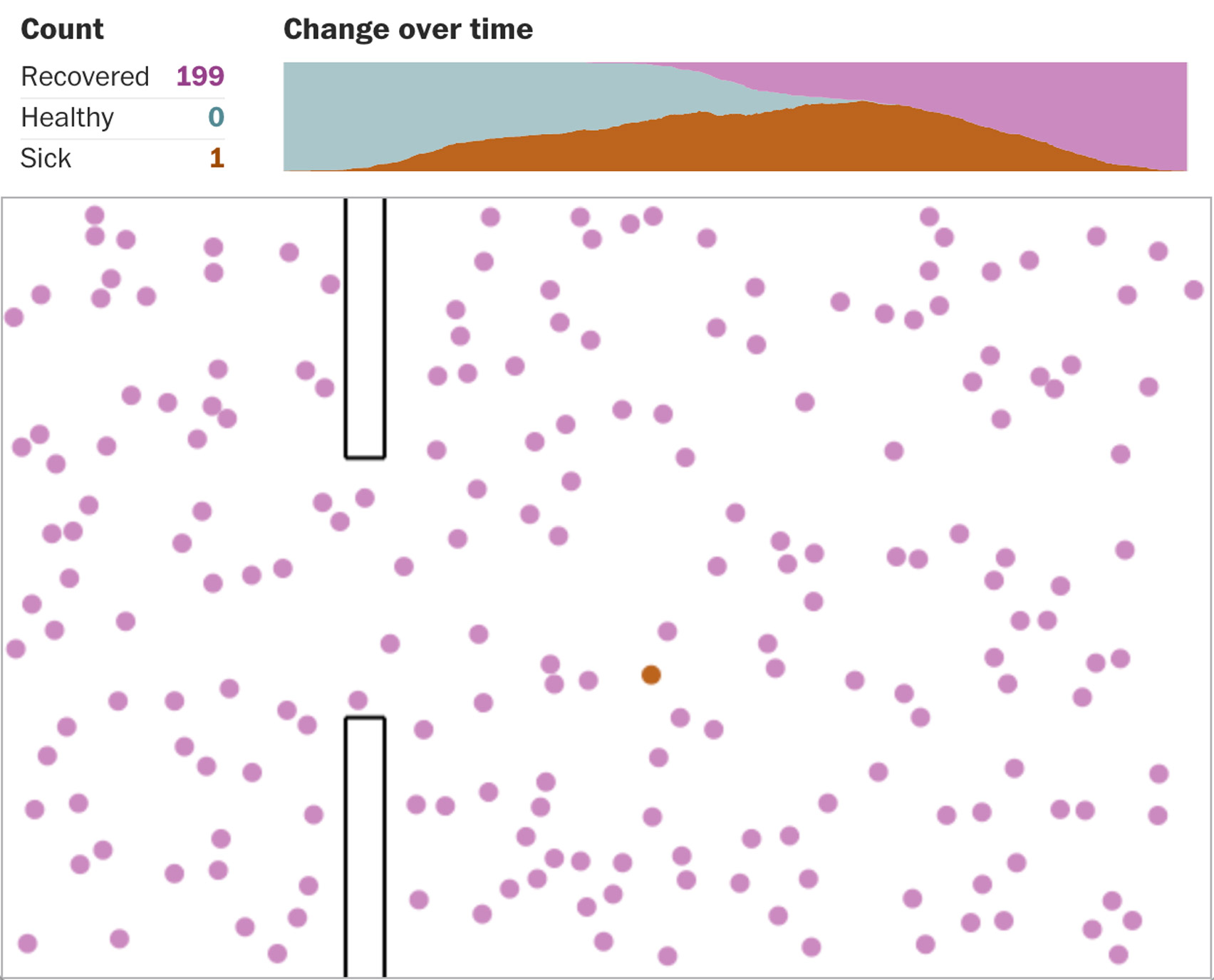
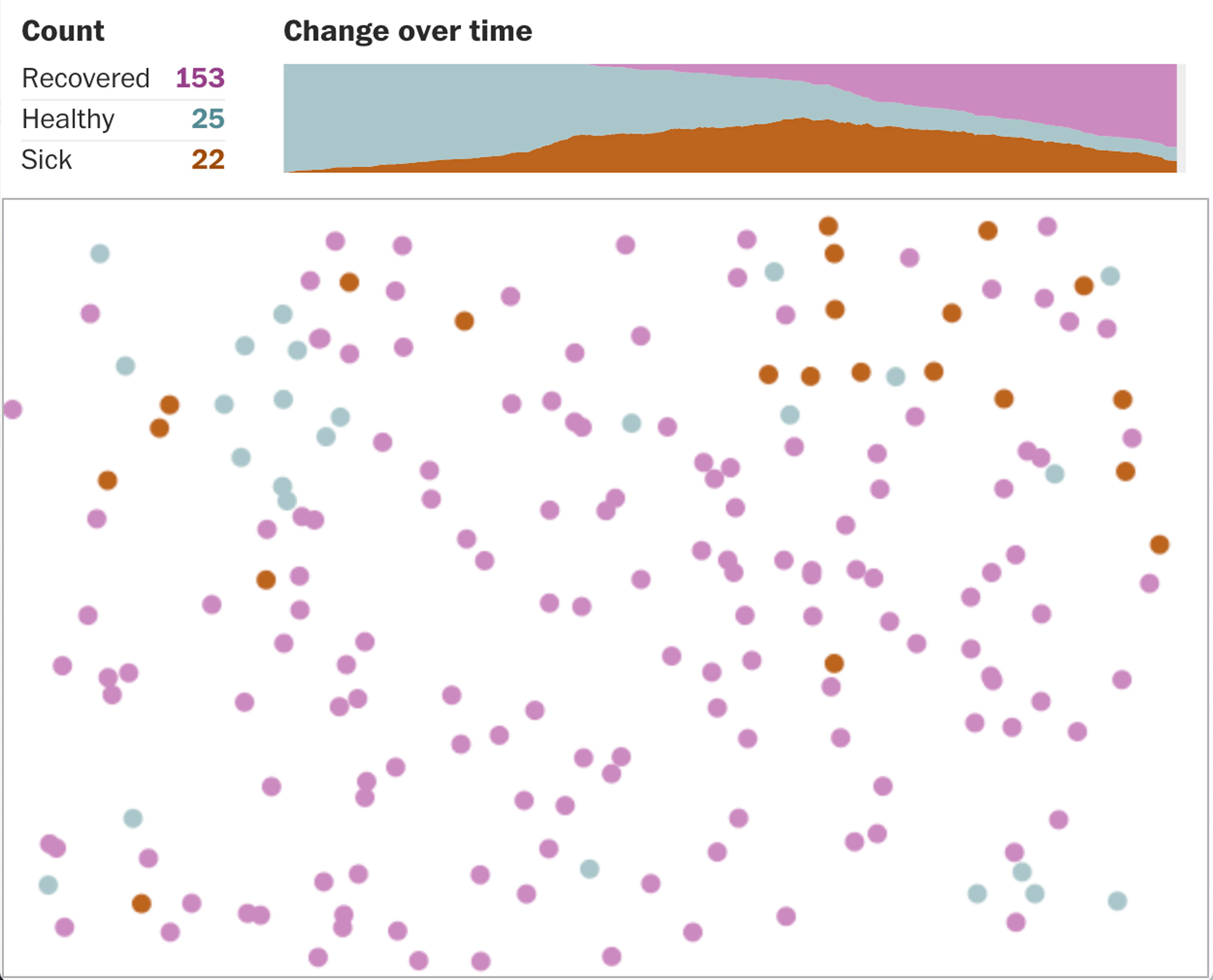
Stevens created the infographics for The Washington Post to demonstrate the impact that different conditions, known as network effects, can have on the spread of an imaginary virus in a fake town of 200 residents.

The spread is explored under a free-for-all, in which residents don't change behaviour, quarantine and self-isolation to show that the latter is the most successful way to contain the fictional disease called "simulitis".

"Even though they're very simple simulations, they help people understand how network effects work," Stevens told Dezeen. "When you see it on a computer screen, it suddenly becomes very clear, even though the simulations are so simple."

The Washington Post coronavirus simulator by Harry Stevens
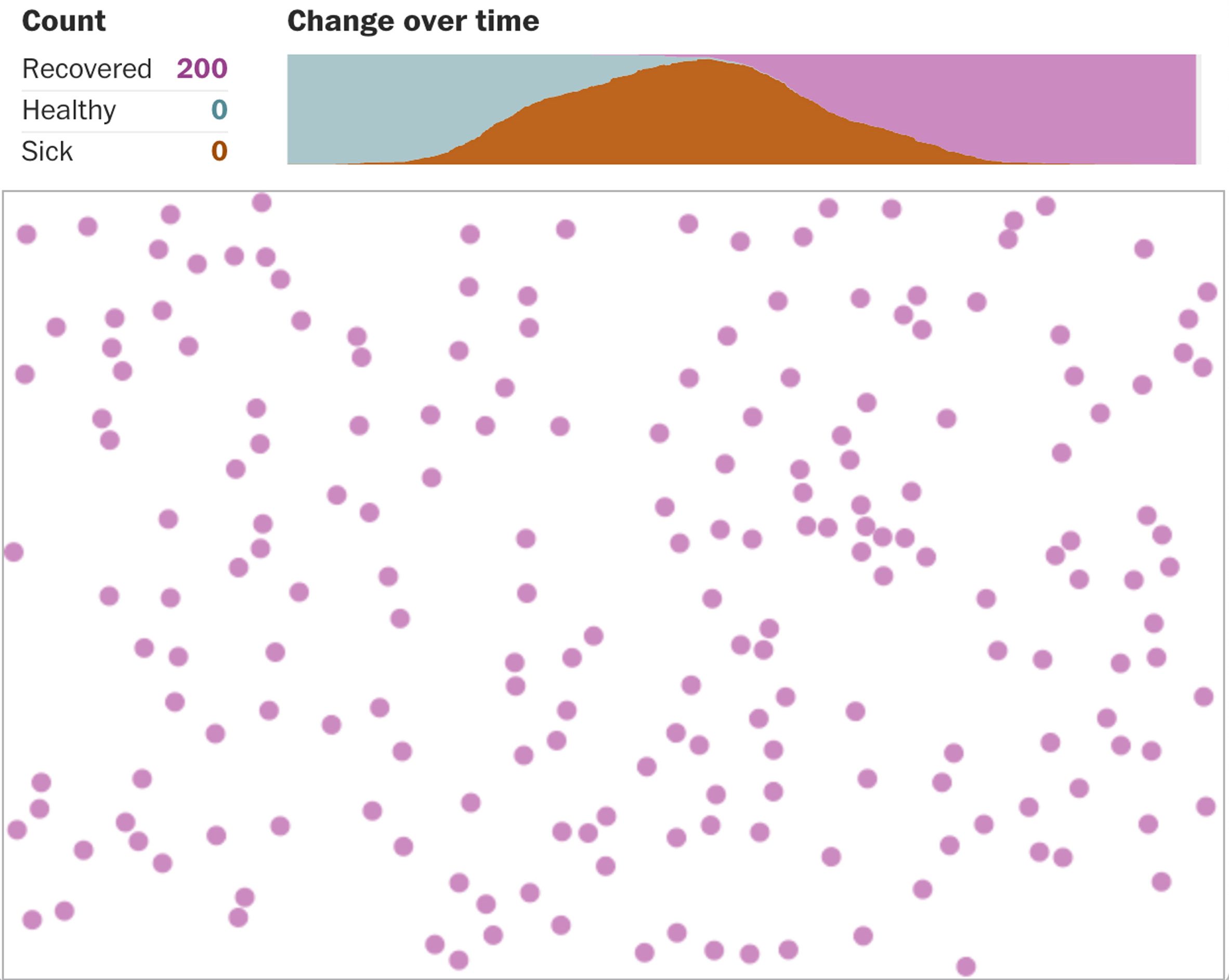
The free-for-all shows how an infected resident causes the entire population to quickly become sick. This then reduces as residents become immune

The Washington Post published the article Why outbreaks like coronavirus spread exponentially and how to "flatten the curve" on 14 March and made it available to read free of charge. It is now the newspaper's most-read online story.

Stevens believes the story was so popular because it helps people realise that their actions can have a positive impact amid the coronavirus crisis and makes them feel less powerless.

"One of the things that my friends who have read it have told me was that it actually made them feel hopeful, which is not a result that I anticipated," Stevens said. "But I can understand because people are feeling really anxious right now and what the simulations show is that by adapting our behaviour, we actually can hopefully slow this thing down."

"When people are feeling scared and powerless, it's useful to know that there's something that they can control," the graphics reporter added. "They can control their own behaviour and that will hopefully help to see people's lives and end this sooner."

The Washington Post coronavirus simulator by Harry Stevens
The second network effect, attempted quarantine, shows that it is almost impossible to keep sick people away from the healthy

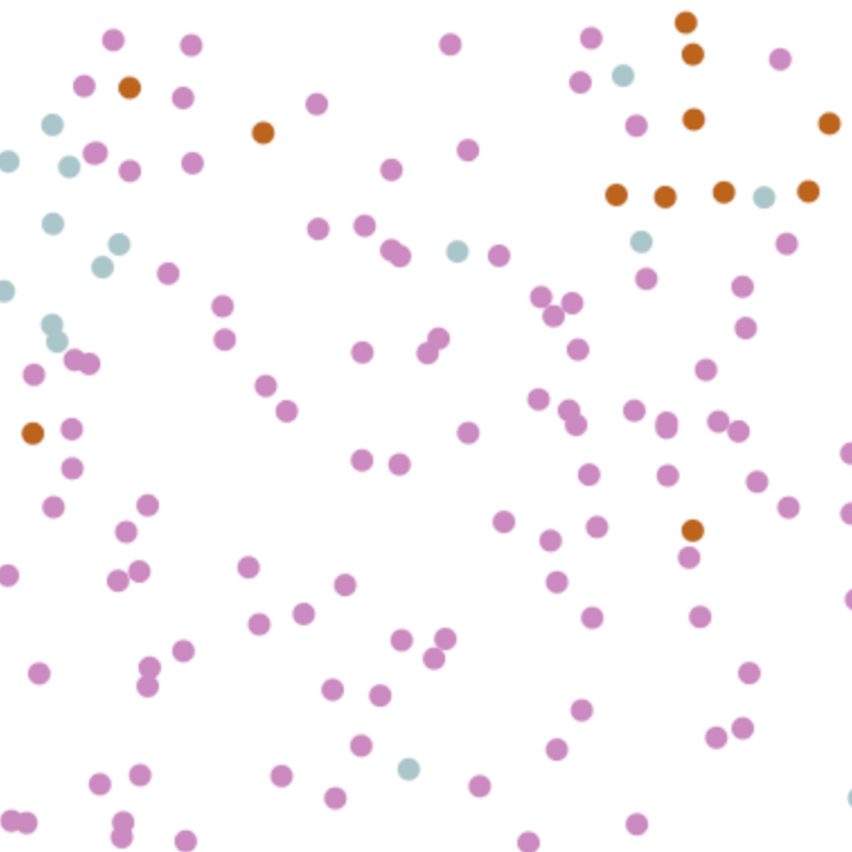
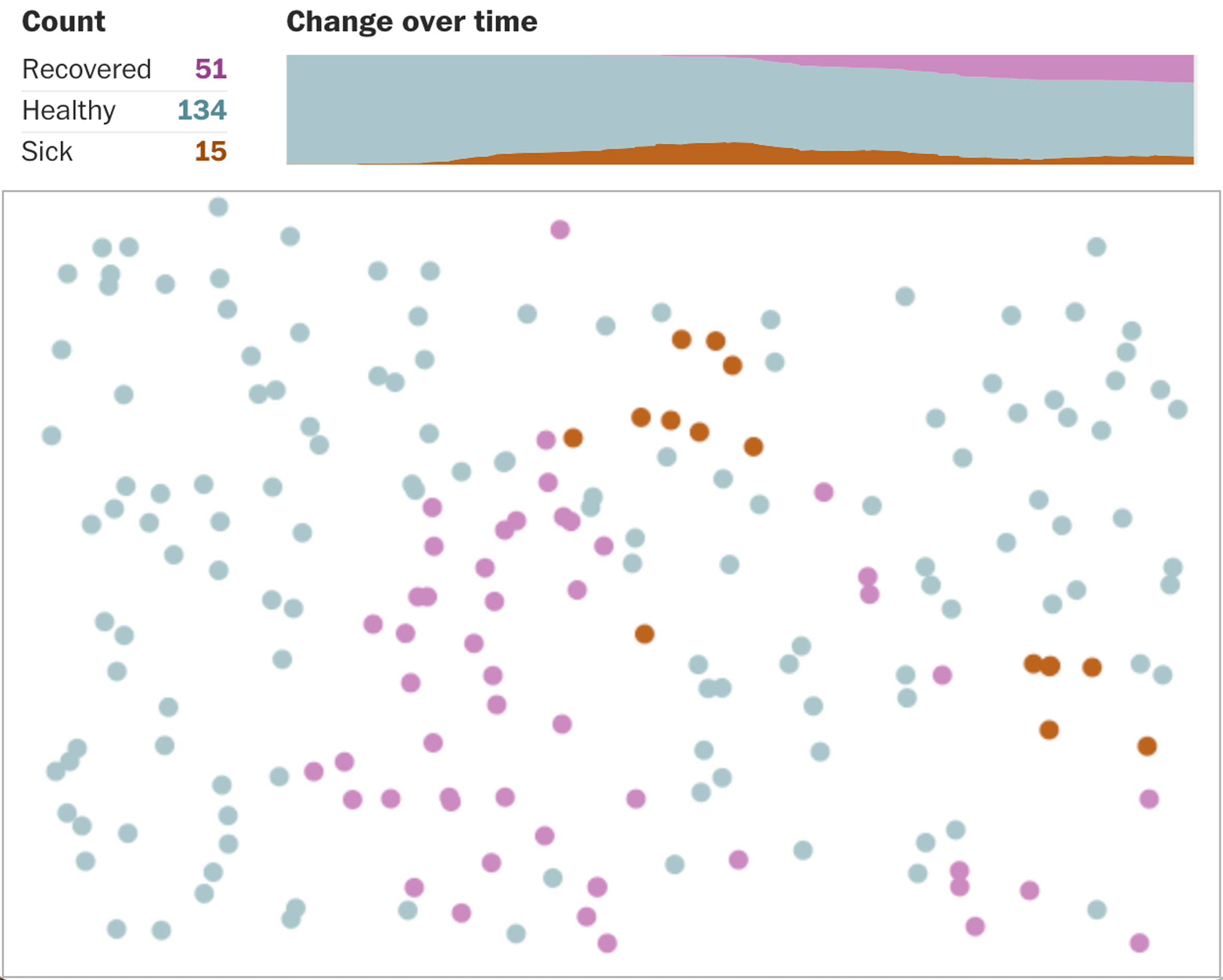
The graphics comprise dots in different colours used to represent healthy, sick or recovered people. The dots move around according to the different conditions and change colour as they hit each other, representing the spread of the virus.

Stevens made the visuals using JavaScripts codes so that they start moving about as readers scroll down the article. He developed the idea to follow another model he had been working on some years before.

"I had been experimenting with collision detection about a year ago, which was just like getting circles to move around on a screen, and then when they get near each other to bounce away in the other direction," he said. "That was part of the inspiration for this."

"I never thought of it in terms of modeling a disease or even trying to simulate a network effect," Stevens added. "It was just like trying to figure out how to get these circles to bounce off of each other."

Stevens chose to base the graphics on a fake virus after consulting with Lauren Gardner, a scientist who had been producing models of outcomes of the coronavirus pandemic with a team of PhDs at Johns Hopkins University. Gardner told him it would be "too complicated" to replicate something for an interactive magazine article.

"Speaking to her and understanding how difficult it is to forecast the real disease, is what encouraged me to make a fake disease," he said. "They have to account for so many complex variables, like how people use airports and how much they travel and various potential health policies that might be put into place and so on and so forth."

The Washington Post coronavirus simulator by Harry Stevens
The moderate version of social distancing shows the impact of preventing three-quarters of the population from moving around

In the article, a graphic grows above each circle graphic to represent how the condition could help to "flatten the curve" – a term used to describe slowing down the rate of infection to lessen the pressure on medical services.

The first is the free-for-all, where one resident is infected and roams unawares, subsequently infecting a high number of others and causing a spike in cases. This then reduces as residents become immune.

The second network effect, attempted quarantine, is modelled on the forced quarantine that was implemented in China's Hubei province during outbreaks. It shows that it is almost impossible to keep sick people away from the healthy.

The final two present different extents of social distancing, which promotes keeping two metres away from anyone not in the same household.

The Washington Post coronavirus simulator by Harry Stevens
Extensive social distancing is shown to be the most successful in "flattening the curve"

In the moderate version, one-quarter of the population are allowed to move, while the more severe version halves this amount to just one eighth. The experiment shows the latter to be the most successful in "flattening the curve".

Stevens' infographics are among a number of informative visuals that creatives have developed to circulate advice on how to slow the spread of coronavirus, which was first identified in December 2019 in Wuhan, China.

Cartoonist Toby Morris and microbiologist Siouxsie Wiles also created a series of graphics to explain the importance of social distancing during the pandemic. Their series went viral after they were published by a website in New Zealand.

Images are courtesy of The Washington Post.

The post The Washington Post's "simple simulations" showing how to slow coronavirus become its most popular story ever appeared first on Dezeen.


from Dezeen https://ift.tt/33MmuLv