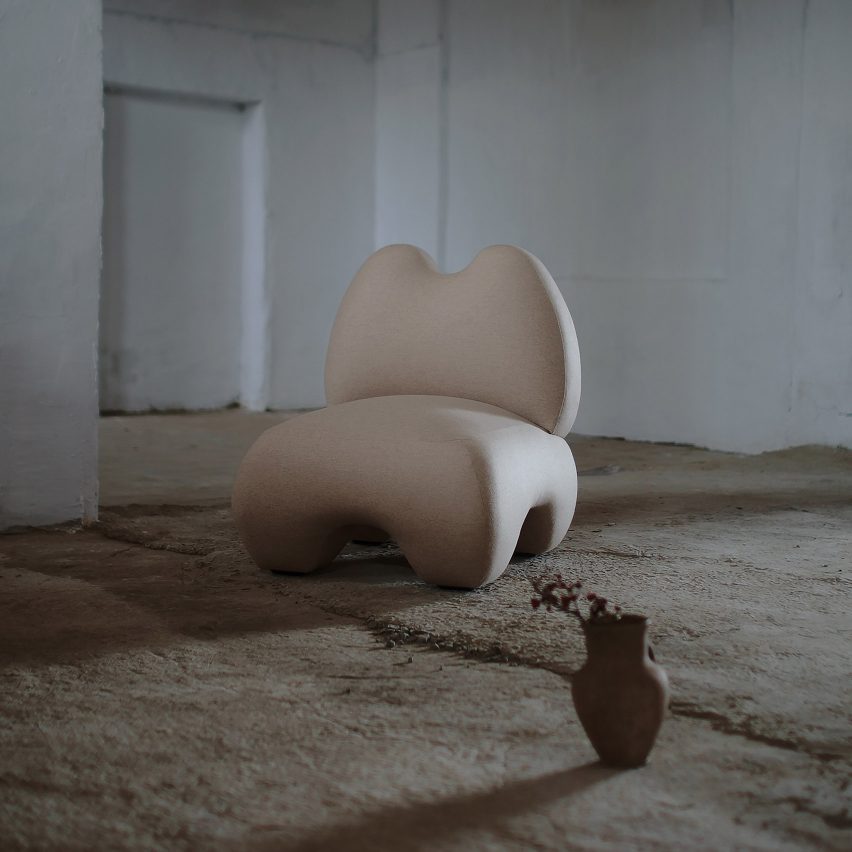
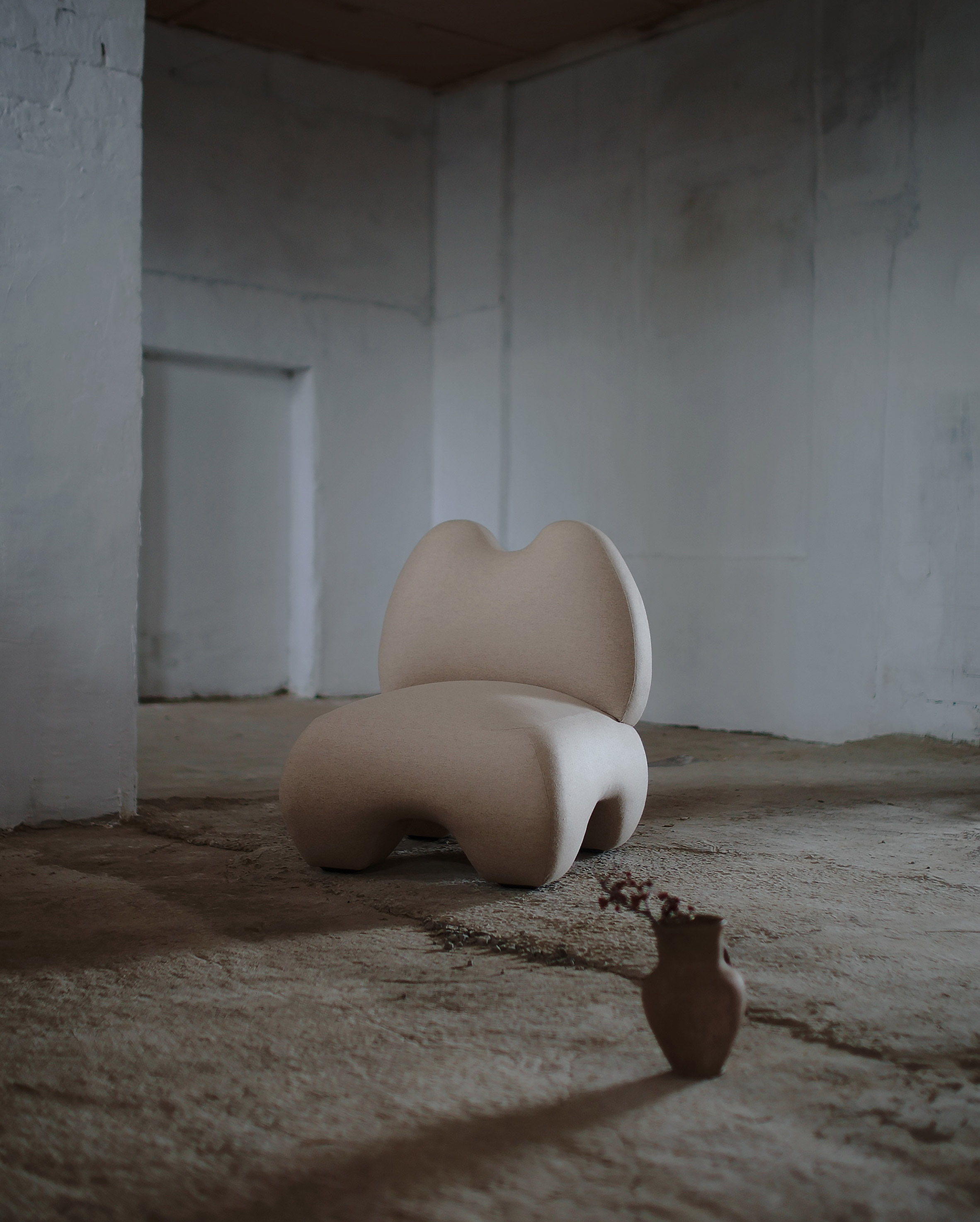
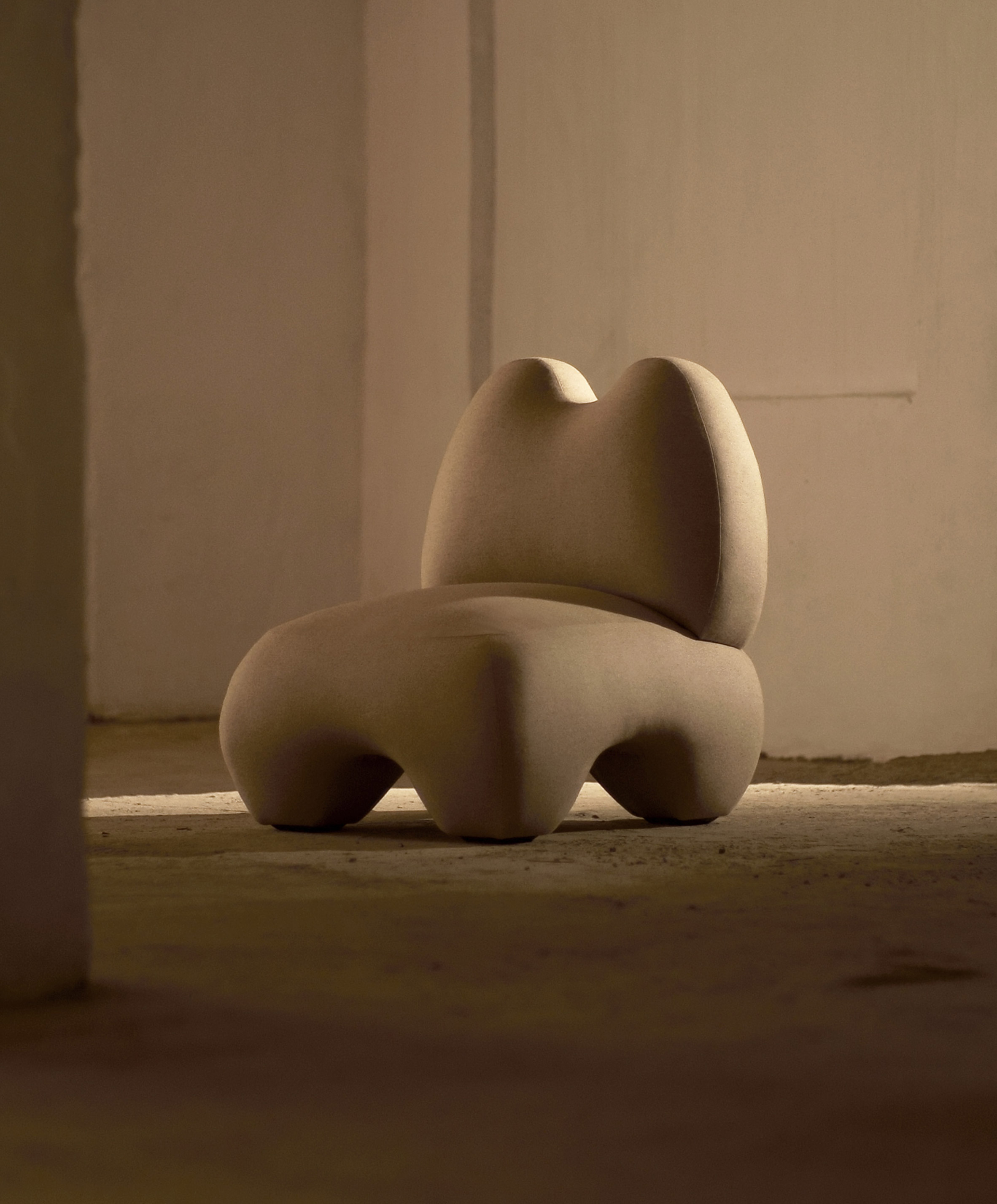
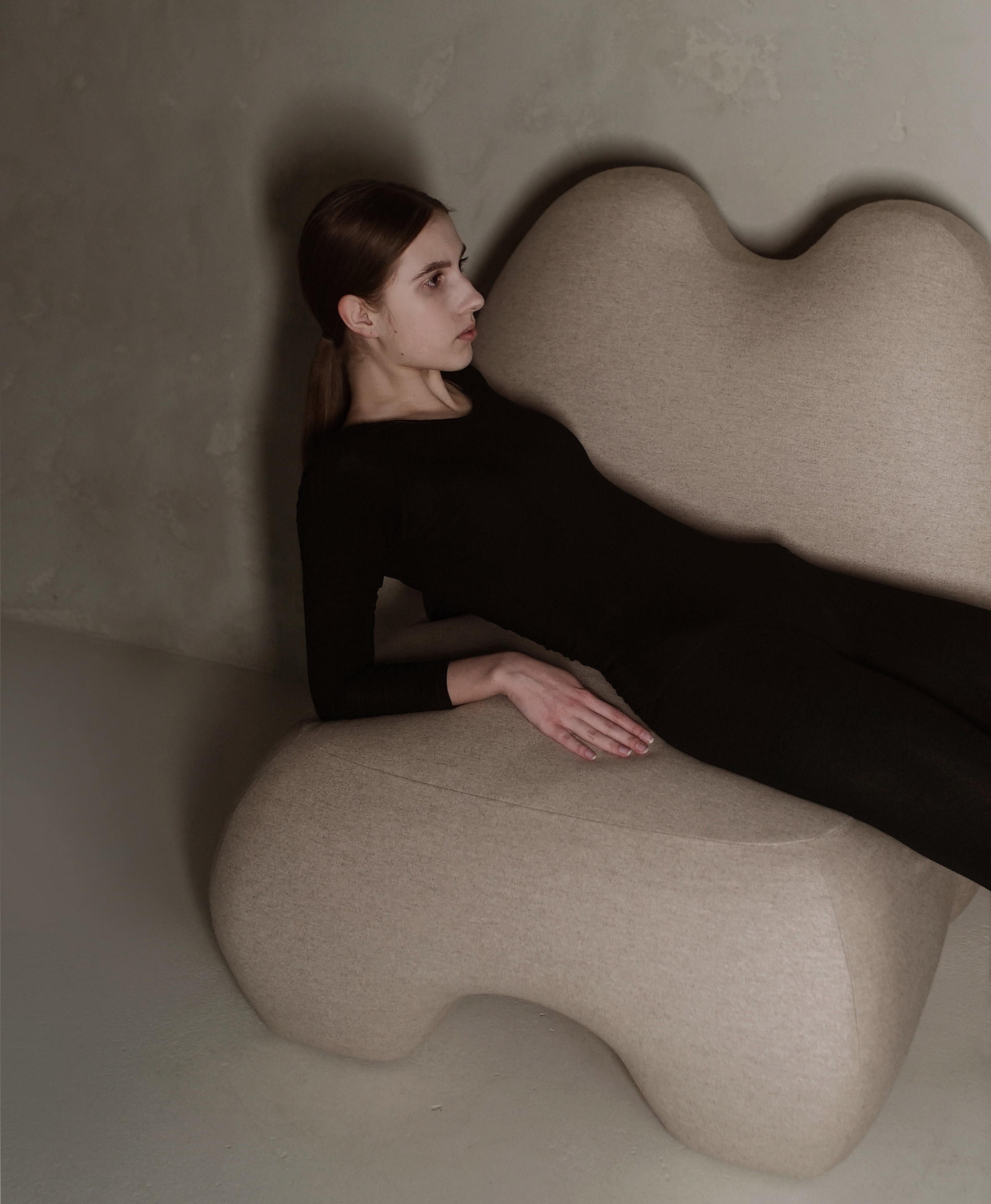
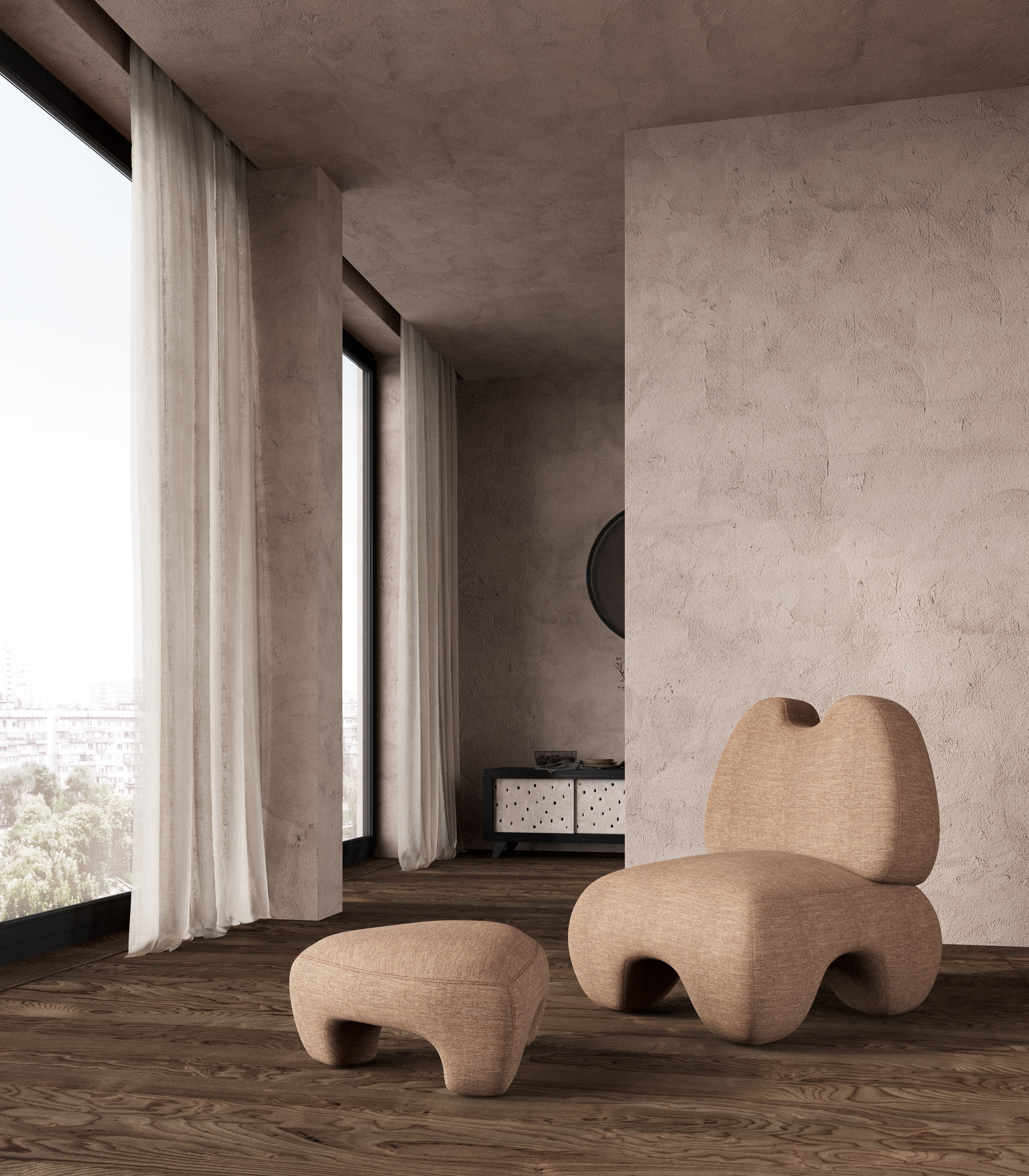
Ukrainian design brand Faina looked to ancient depictions of the female form when creating this "cloud-like" armchair, which takes cues from archaeological finds.
The Domna armchair has a bulbous form made up of two cushioned elements joined together.
Victoria Yakusha, founder of Faina, based the chair's shape on an anthropomorphic ceramic artefact that was found by archaeologists on Cetatuia Hill in Romania in 1942.
Made by the Cucuteni-Trypillia culture around approximately 5,400 to 2,700 BC, the sculpture depicted the bodily form of a goddess.
It was believed that four of these feminine forms facing inwards in an interlinked circle represented a hora – a ritualistic dance.
According to the designer, these figures of the female goddess' body served as talismans, to bring good luck on families and particularly farming culture.
Yakusha wanted to achieve a "mild feminine form" with the Domna armchair, which she describes as having a warmth and "cloud-like softness".
On this same thread, she named the chair after the Ukrainian word Domna, which translates as stove, but is also a rare female name meaning priestess.
As Yakusha explained, her work is intended as a celebration of modern Ukrainian design, and is typically rooted in the country's cultural heritage.
She hopes each of her pieces will become like "family members" for their owners.
The armchair was debuted at this year's Collectible design fair in Brussels, which took place from 5-8 March.
Here it was presented alongside other bespoke design pieces by Faina, including the Ztista dining table and chair, the Solod sideboard with a ceramic facade and the Kumanec and Hata ceramic vases.
Yakusha looked to traditional, local materials for these furniture items, which are made from clay, wood, willow and flax, with some being covered with a special biopolymer coating.
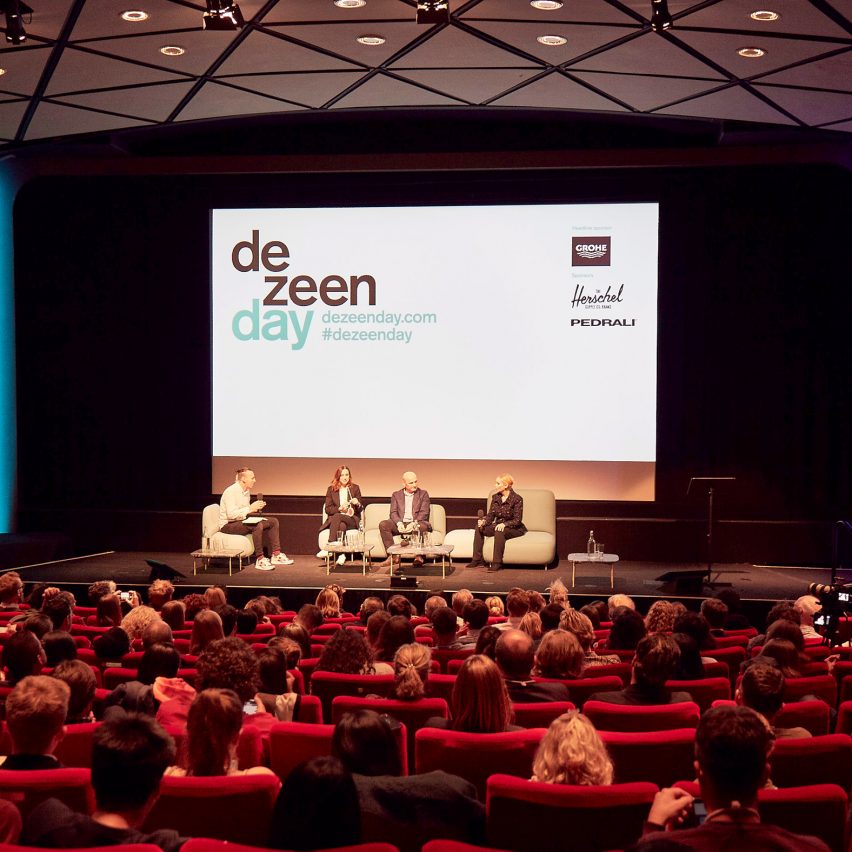
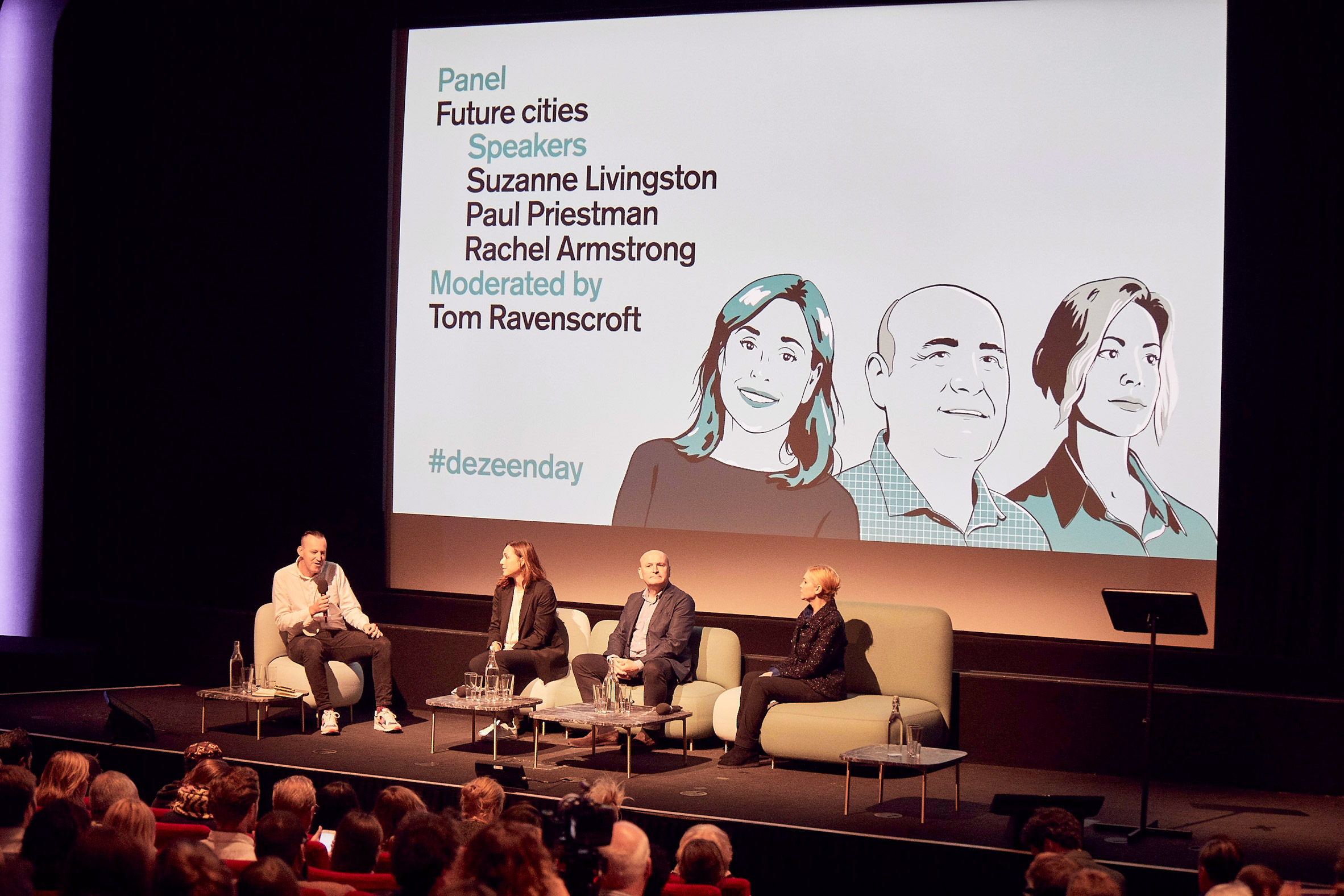
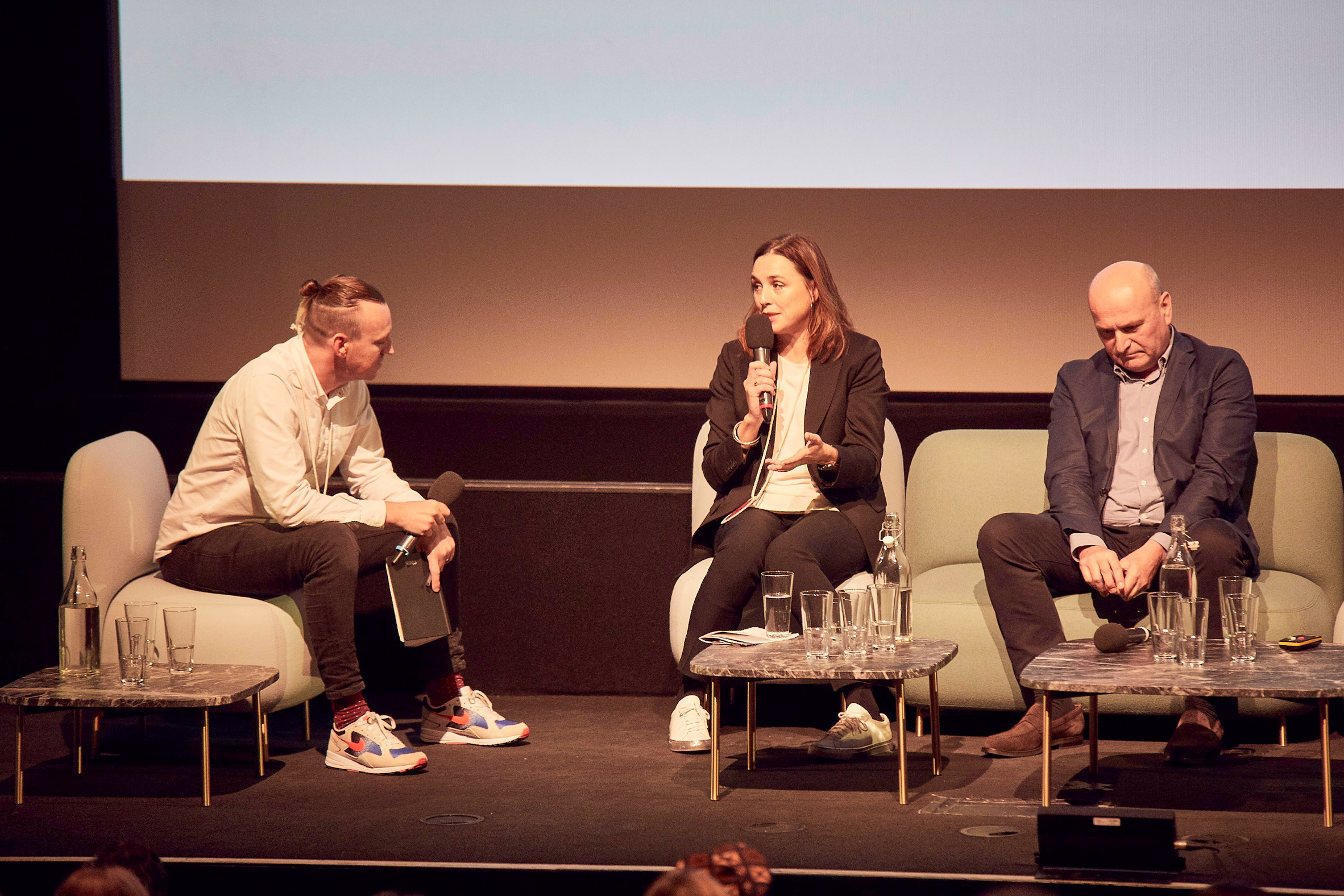
Architecture professor Rachel Armstrong, brand consultant Suzanne Livingston and transportation designer Paul Priestman discussed how people will deal with the increasing complexity of future cities at the Dezeen Day conference last year.
The panel of experts discussed the positive and negative impacts technology will have on cities and the difficulties in navigating these increasingly complex urban spaces.
"I think there's some serious ethical challenges with the way we go forward from here, and the world has become suddenly more complex," said Armstrong, professor of experimental architecture at Newcastle University.
"There's no good or bad decision," she continued. "We need to stay present with the decision making, whether that's technology or how our cities evolve."
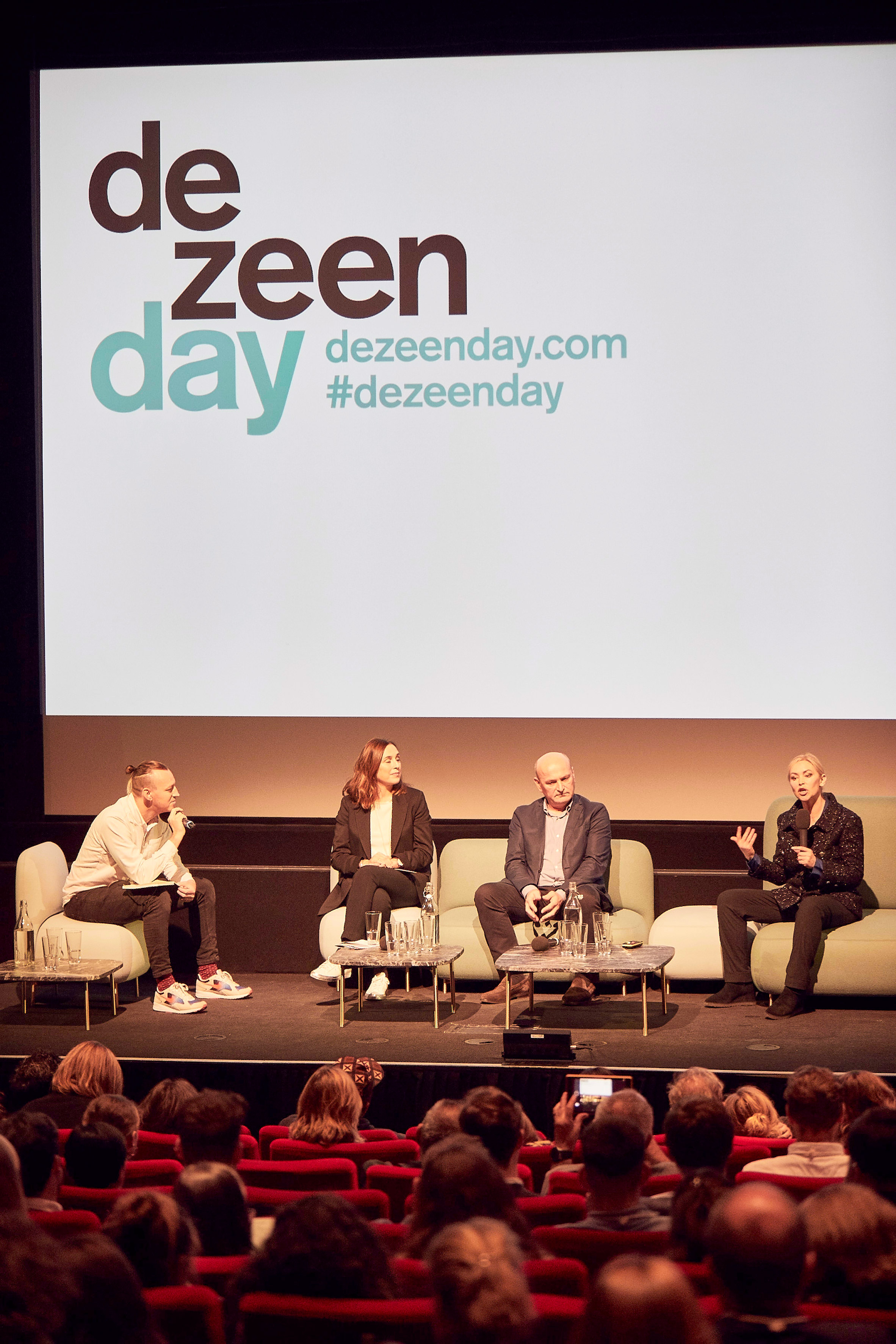
Paul Priestman, Rachel Armstrong and Suzanne Livingston discussed the future of cities at Dezeen Day
Livingston, who curated the AI: More than Human exhibition at the Barbican Centre, agreed that working out which technologies will have a positive impact, and which will have a negative impact, is extremely difficult.
"There's a habit in our culture to categorise technology and these advanced technologies as either good or bad," she said. "And the fact of the matter is, they're good and bad at the same time, and we're going to have to learn how to navigate this."
According to Livingston, this makes it hard to make broad decisions on what actions to take as cities develop.
"It's really a time in society where we're going to have to stay incredibly informed," she said. "It's hard to take broad decisions at the moment."
There are "some serious ethical challenges" ahead said Armstrong
Numerous designers are trying to create solutions that allow people to live and move around these complex cities.
"I think cities will become more enjoyable to live in the way you travel around the city. I think there'll be more walking."
"I think transport will become, in some respects, almost like creating communities. So as you travel around a city, then those are hubs where you meet people regularly through the way that you communicate with your food transport. "
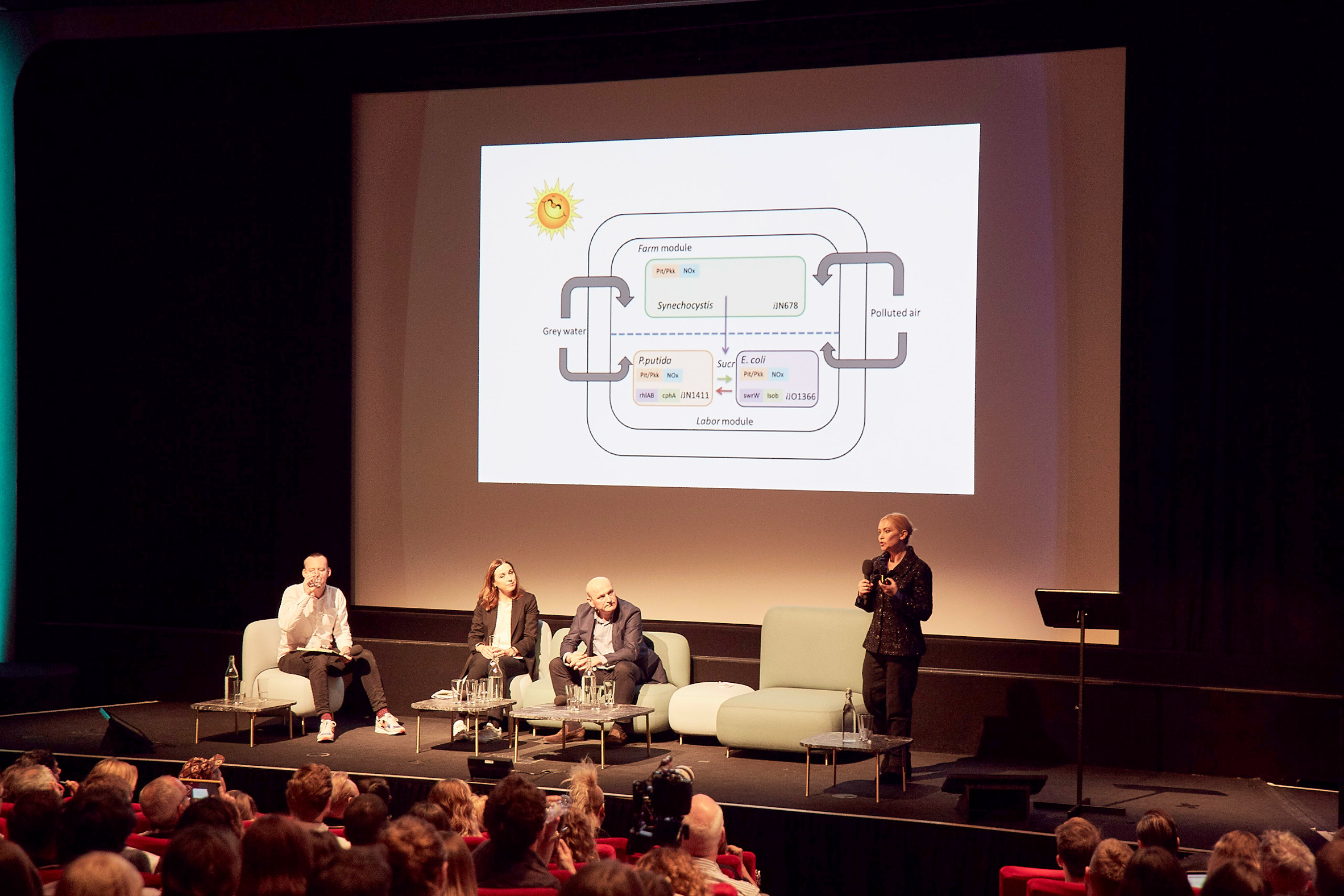
Cities are going to be "intelligent ecosystems" said Livingston
As cities become more complex, they will also change the people who are living within them, according to Livingston.
"Cities are going to be substantially intelligent ecosystems," she said. "And the thing I'm most interested in is whilst they reconfigure themselves, they'll also be reconfiguring us."
"It's very easy for us to look at these design systems and say they're changing and this that or the other way, but we will be changed," she continued. "We will be physically and mentally changed by these environments."
"For me, it's evolution on both fronts. It's the evolution of city, the evolution of physical spaces matter coming to life, but we will be evolving until we forget that we're an evolving species. We forget that we think that we're static, but the world out there isn't static, and we're not static."
The talk was part of the inaugural Dezeen Day event
The future cities panel was moderated by Dezeen editor Tom Ravenscroft and was one of a number of topics discussed at the inaugural Dezeen Day, which was held at London's BFI Southbank on 30 October last year.
Created in partnership with Dove and Girlgaze, the $10,000 #ShowUs Grant is for international photographers authentically representing women and non-binary people.
When a gloopy substance runs over a countertop or other surface, a common reaction is to grab a towel and wipe it up before it spreads farther and makes a mess. But for Dallas-based sculptor and painter Dan Lam (previously), the more dripping and oozing the better. The artist creates technicolor sculptures made of polyurethane foam, resin, and acrylic onto which she pipes small spikes.
Categorized as drips, blobs, and squishes, Lam’s neon gradients appear to gush over shelves and drop into rounded puddles. Most are paired with optimistic names, like “Strong Genes” and “Just Lovely,” and consider the relationships between “attraction and repulsion, motion and stillness, seriousness and playfulness, softness and hardness,” said a statement about her work.
If you’re in Portland, Lam’s solo show Supernatural is on view at Stephanie Chefas Projects by appointment through April 25. Otherwise, follow the artist on Instagram, where she’s even given a peek at some of her upcoming plans to create phone cases that change colors and are covered in small points.
Left: “Strong Genes,” polyurethane foam, resin, and acrylic, 16 x 14 x 13 inches. Right: “Good Traits,” polyurethane foam, resin, and acrylic, 15.5 x 15 x 16 inches
“Signalling Theory,” polyurethane foam, resin, and acrylic, 35 x 30 x 6.5 inches
Left: “He’s So Picky!” polyurethane foam, resin, and acrylic, 8.5 x 11 x 6 inches. Right: “Just Lovely,” polyurethane foam, resin, and acrylic, 9 x 9 x 5 inches.
“Hidden Preference,” polyurethane foam, resin, and acrylic, 39 x 42 x 9 inches
“Just Think,” polyurethane foam, resin, and acrylic, 9 x 14 x 7.5 inches
Left: “#5,” polyurethane foam, resin, and acrylic, 3.5 x 3 x 1 inches. Right: “#24,” polyurethane foam, resin, and acrylic
4.5 x 4 x 1.5 inches
Do stories and artists like this matter to you?Become a Colossal Member and support independent arts publishing. Join a community of like-minded readers who are passionate about contemporary art, apply for our annual grant, and get exclusive access to interviews, partner discounts, and event tickets.
Prada, COS and Louis Vuitton are among the leading fashion brands that are retooling to manufacture surgical face masks in response to the shortage caused by Covid-19.
Yves Saint Laurent and Balenciaga have begun production of cotton face masks. Other brands including COS, Zara and Mango have also committed to making the surgical masks, while luxury conglomerate LVMH (Moet Hennessy Louis Vuitton) has promised to donate millions of masks and medical-grade respirators to replenish dwindling supplies.
Prada to supply over 100,000 medical masks
Prada has announced that it will be producing 80,000 medical overalls and 110,000 masks in its factory in Montone in Umbria. These will be allocated to healthcare personnel in Tuscany, following a request from the Italian region's government.
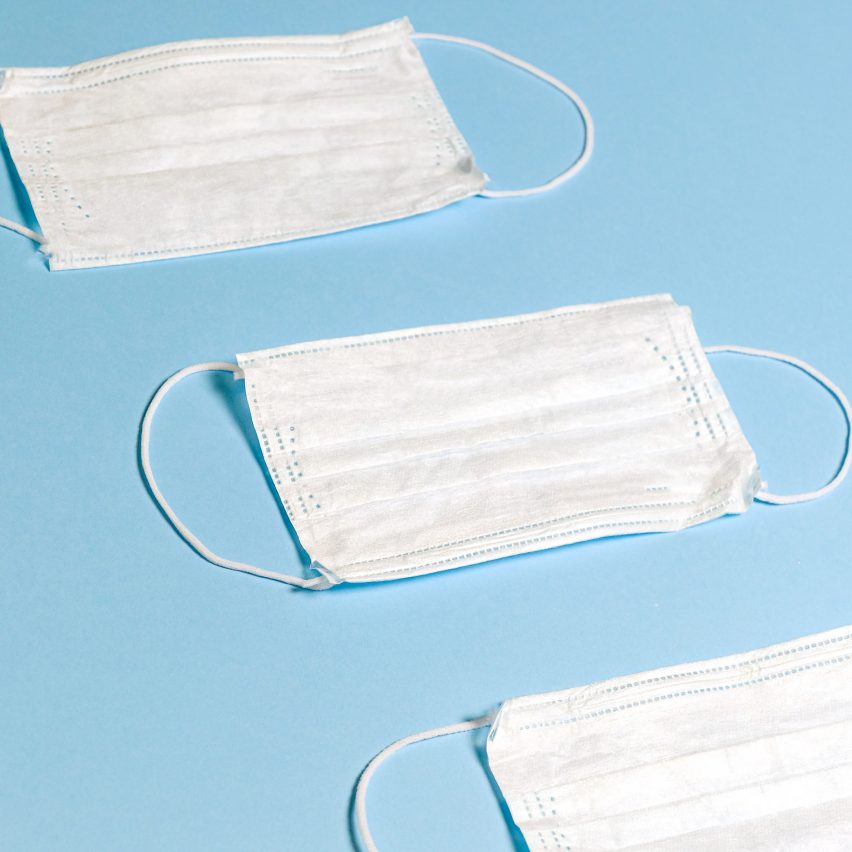
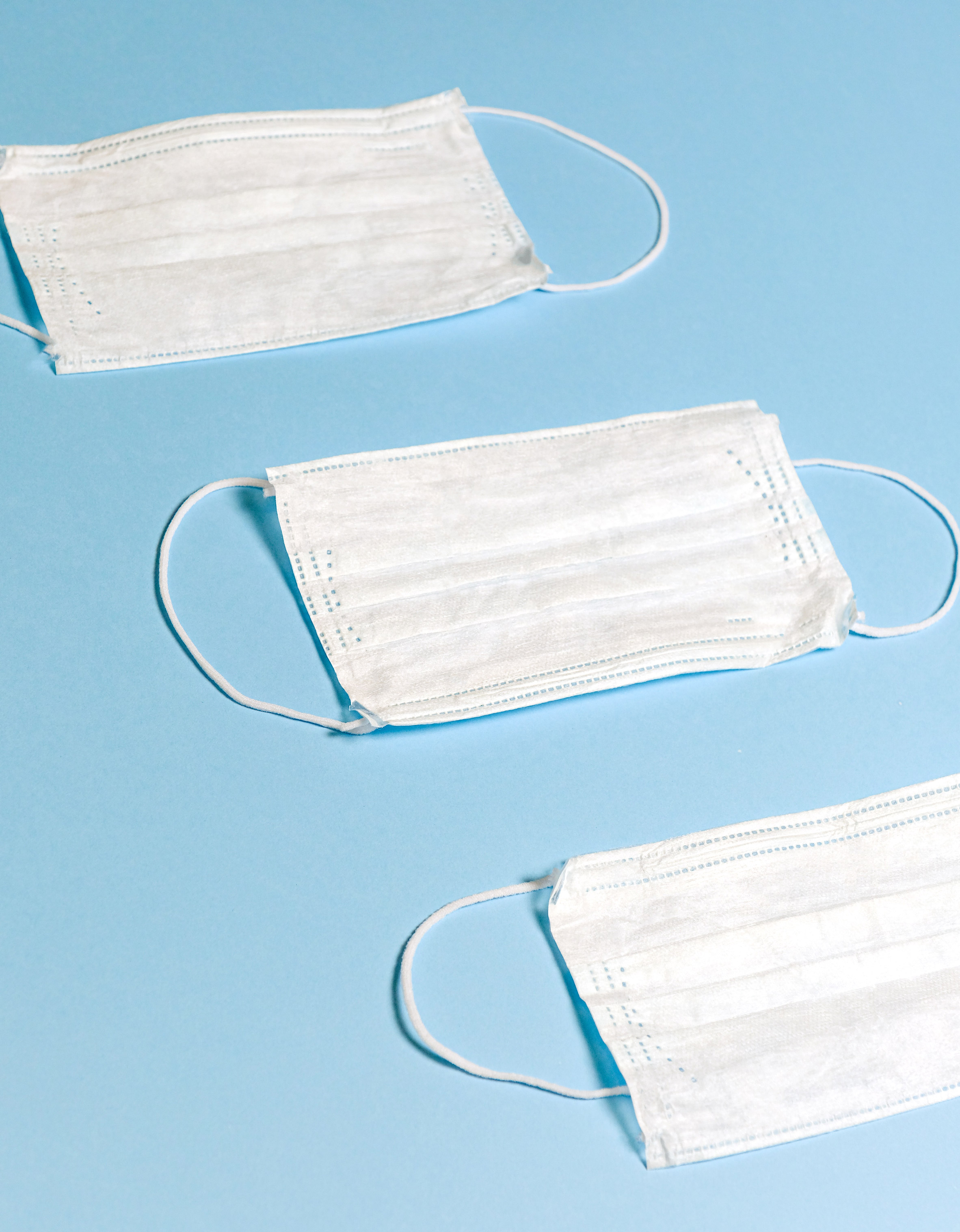
The company is making loose-fitting cloth masks that cover the nose and mouth, offering one-way protection to capture bodily fluid leaving the wearer. Although these masks can't provide full coverage against coronavirus they can stop coughs and remind the wearer not to touch their face.
Los Angeles Apparel founder Dov Charney and American fashion designer Christian Siriano have also announced that their brands will be making cotton masks.
While Charney hopes his factory can produce 300,000 masks and 50,000 gowns in a week, Siriano has reassigned 10 seamstresses in New York to make a few thousand masks per week.
Balenciaga and Yves Saint Laurent to begin mask production
French luxury group Kering has announced it is purchasing and importing three million surgical masks from China to donate to the French health service.
Kering-owned Balenciaga and Yves Saint Laurent are also preparing to manufacture masks, although it is unclear to what timescale.
Other brands like Prada, COS and Zara will be making cotton surgical face masks
"The French workshops of Kering's Houses Balenciaga and Yves Saint Laurent are preparing to manufacture masks while complying with the strictest health protection measures for their staff members, with production getting underway as soon as the manufacturing process and materials have been approved by the relevant authorities," Kering said in a statement released on 22 March.
Gucci, also owned by Kering, has said it will donate over one million masks and 55,000 pairs of medical overalls to Italy in the coming weeks.
COS, Zara and Mango set to make masks
High-street brands have also joined in the fight. Spanish group Inditex – owner of Zara and Mango – has pledged to produce surgical masks, and claims to be in the process of distributing two million donated masks across Spain.
COS, owned by H&M Group, announced in an Instagram post that it is preparing to produce masks for healthcare workers as a "first step", and will share more updates of its actions in the following weeks. It is not yet known what type of masks COS intends on producing.
LVMH to donate three million FFP2 respirators
Luxury goods conglomerate LVMH announced it will be ordering a total of 40 million FFP2 disposable particulate respirators and surgical masks from China to be distributed to healthcare workers in France.
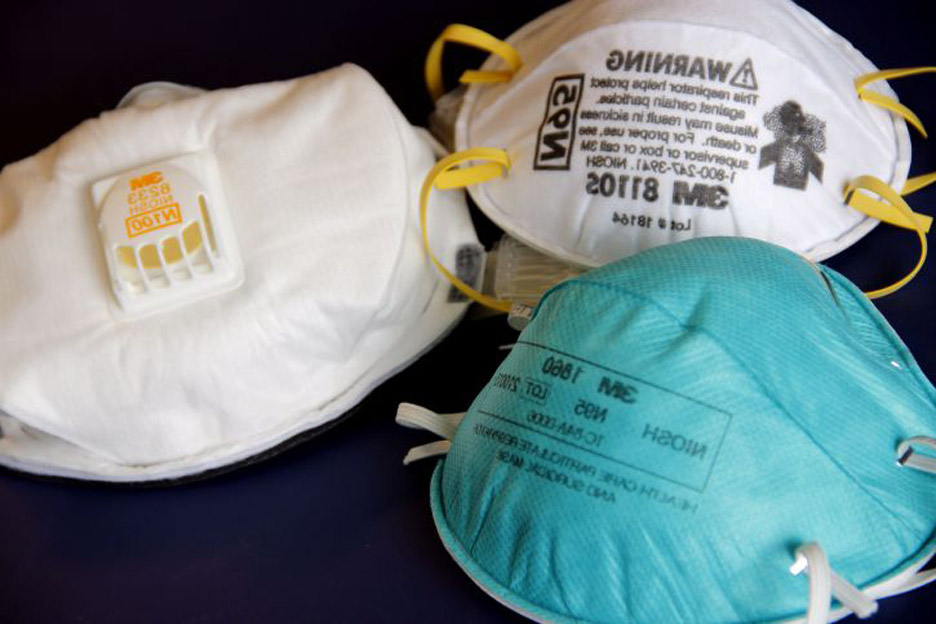
These tight-fitting respirator masks, the most common of which are those labeled FFP2 in Europe or N95 in the US, provide two-way protection, and are harder to manufacture.
LVMH will be donating FFP2 respirators, similar to N95 masks, which fit tight around the face and come with or without a valve
LVMH, which owns well-known brands like Dior, Givenchy and Fendi, explained in a statement that seven million surgical masks and three million FFP2 masks would be delivered in the days following the announcement. This order will be repeated for at least four weeks in similar quantities.
Apple, Ford and Tesla to manufacture medical supplies
Meanwhile, non-fashion companies are also working to restock dwindling medical supplies. Apple CEO Tim Cook announced in a tweet on 21 March that the company was donating "millions of masks for health professionals in the US and Europe".
The American car brand announced yesterday that it is working with 3M to manufacture at scale Powered Air-Purifying Respirators (PAPRs), which come in the form of a hood, or full-face mask.