
The Chengdu-based illustrator expresses creative happiness in her unique 60s rock 'n' roll depictions.

from It's Nice That https://ift.tt/3asUaA9
The Chengdu-based illustrator expresses creative happiness in her unique 60s rock 'n' roll depictions.
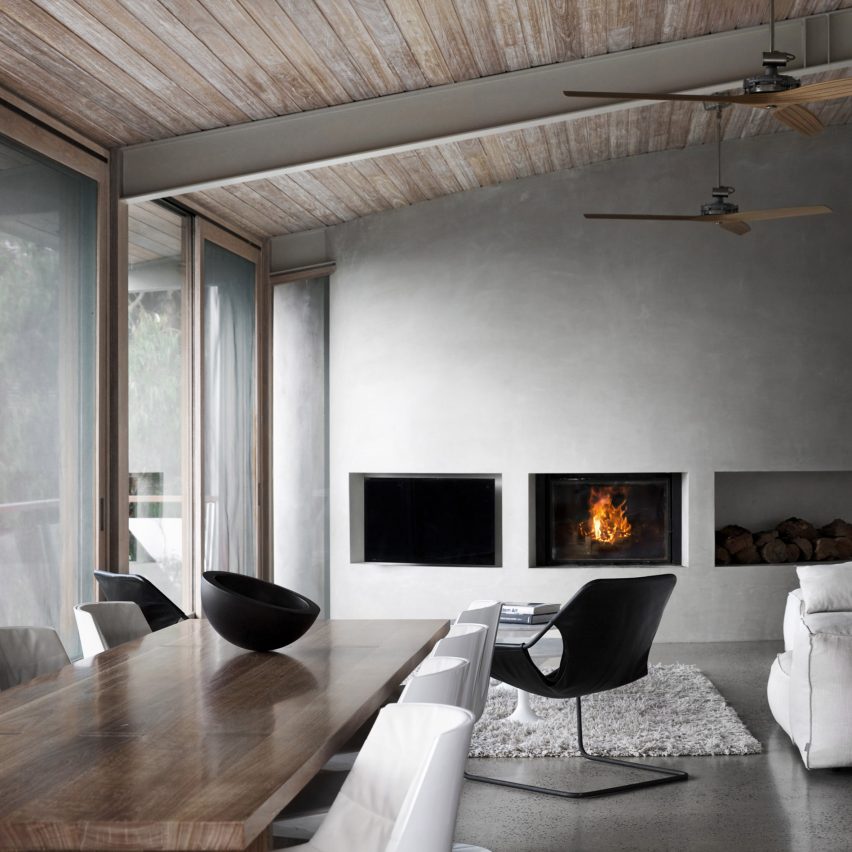
Architect Rob Mills has built a weekend retreat beside Australia's Great Ocean Road, with a simple interior that allows the view to take centre stage.
Ocean House combines the clean lines of a contemporary concrete house with the warmth and tactility of a humble beach house.
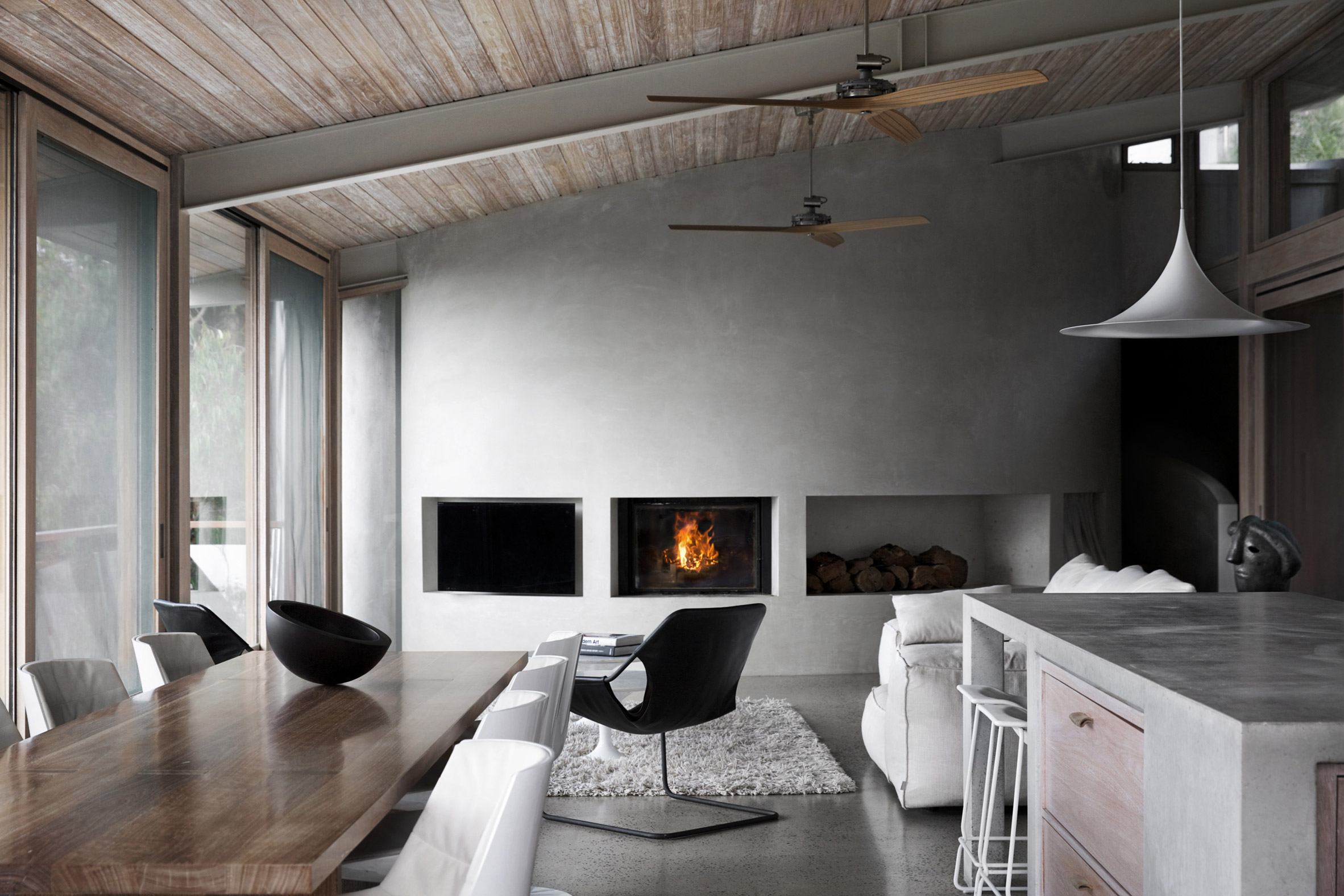
Located along one of the world's most scenic coastal drives, it is a vacation home for Mills and his family.
"As a family we have holidayed on the Great Ocean Road for generations," the architect told Dezeen. "My great grandfather was the first to holiday there; it is a place where my family and I have created many wonderful memories."
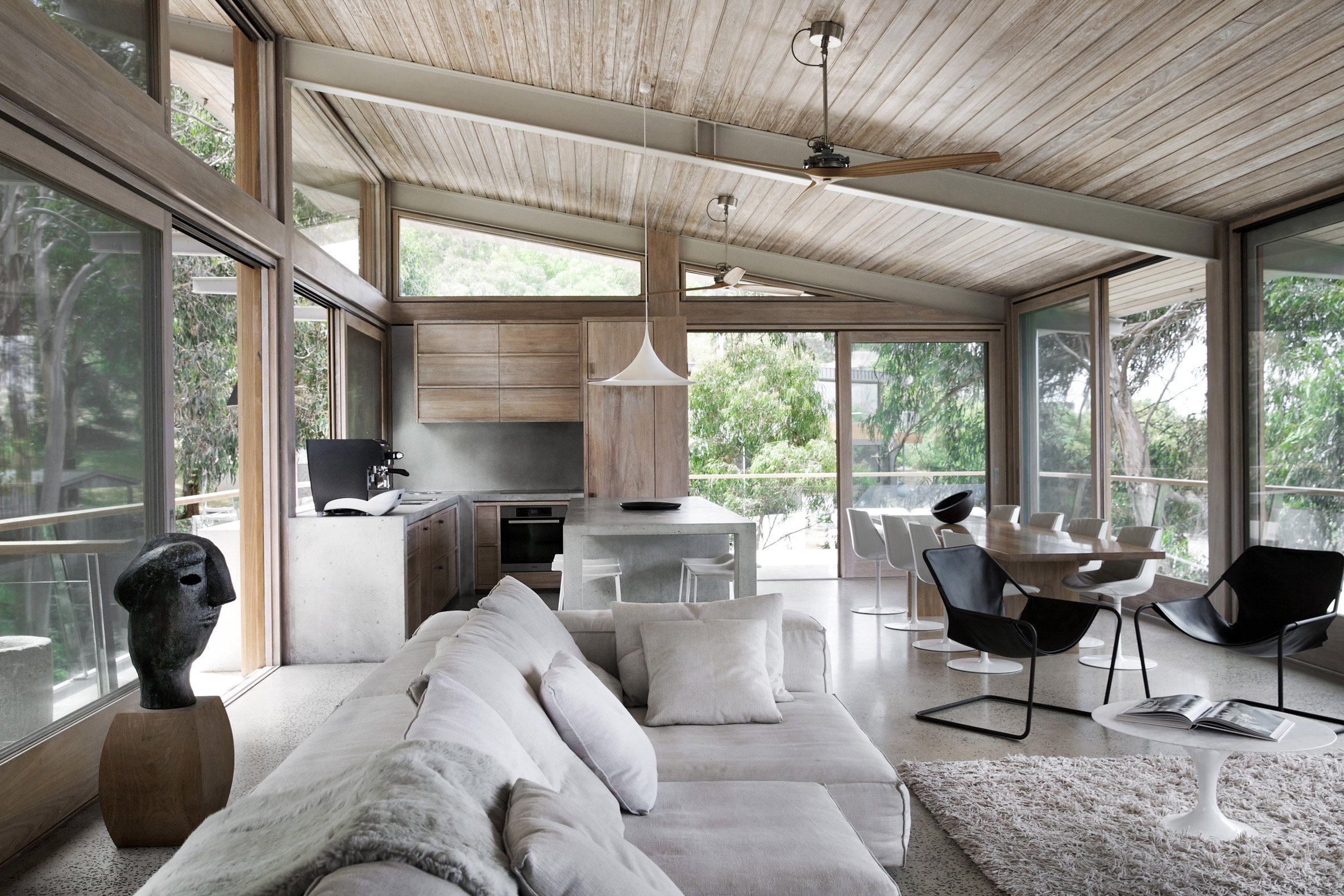
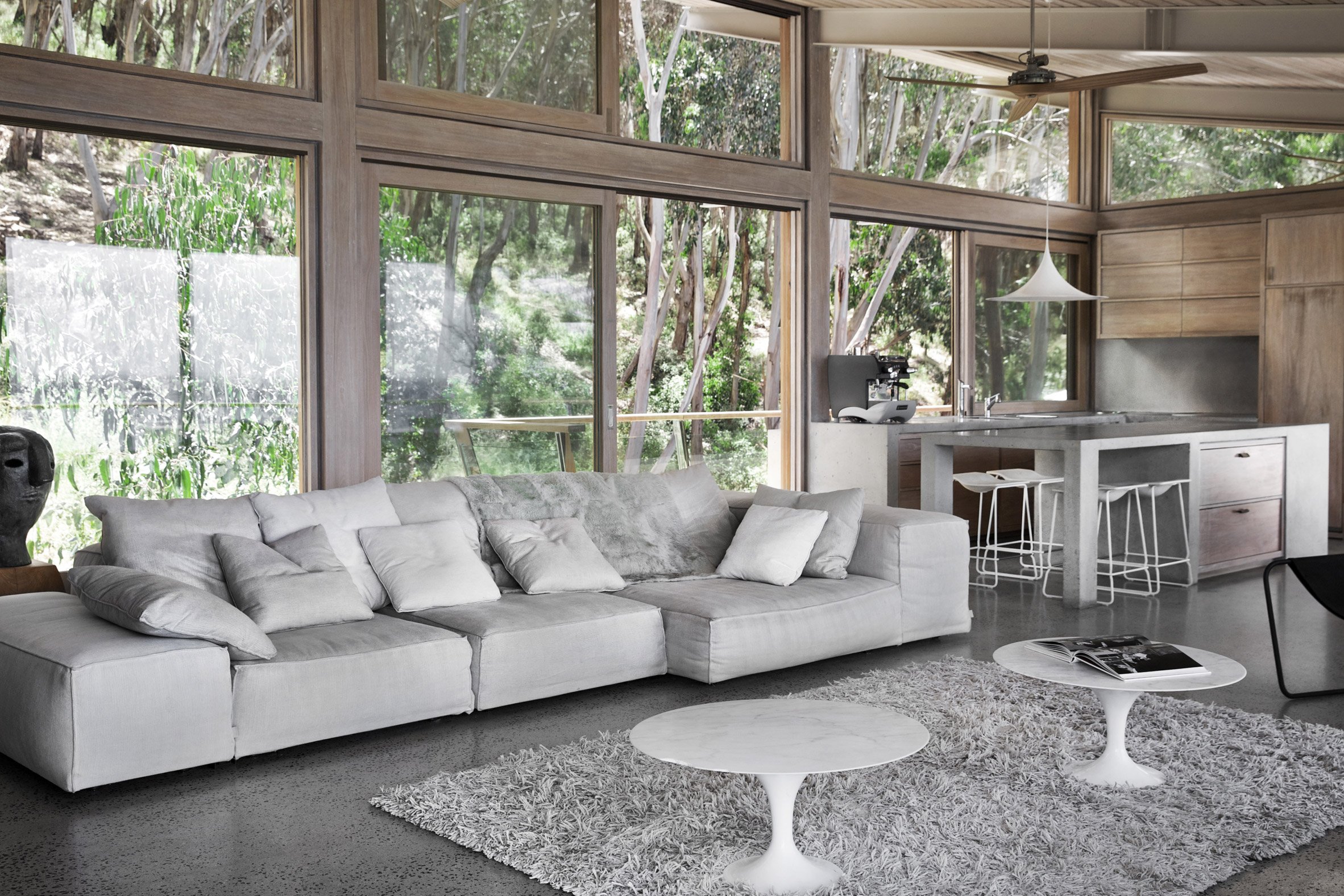
Mills chose to give the house a subtle interior, to better suit the idyllic setting. Pale concrete surfaces are complemented by whitewashed wood and monochrome furnishings. But the effect isn't minimalist, according to Mills, rather it is subtle and calm.
"I don't see the design as being stark," he said. "The interior is organic and tactile, and incorporates neutral fabrics."
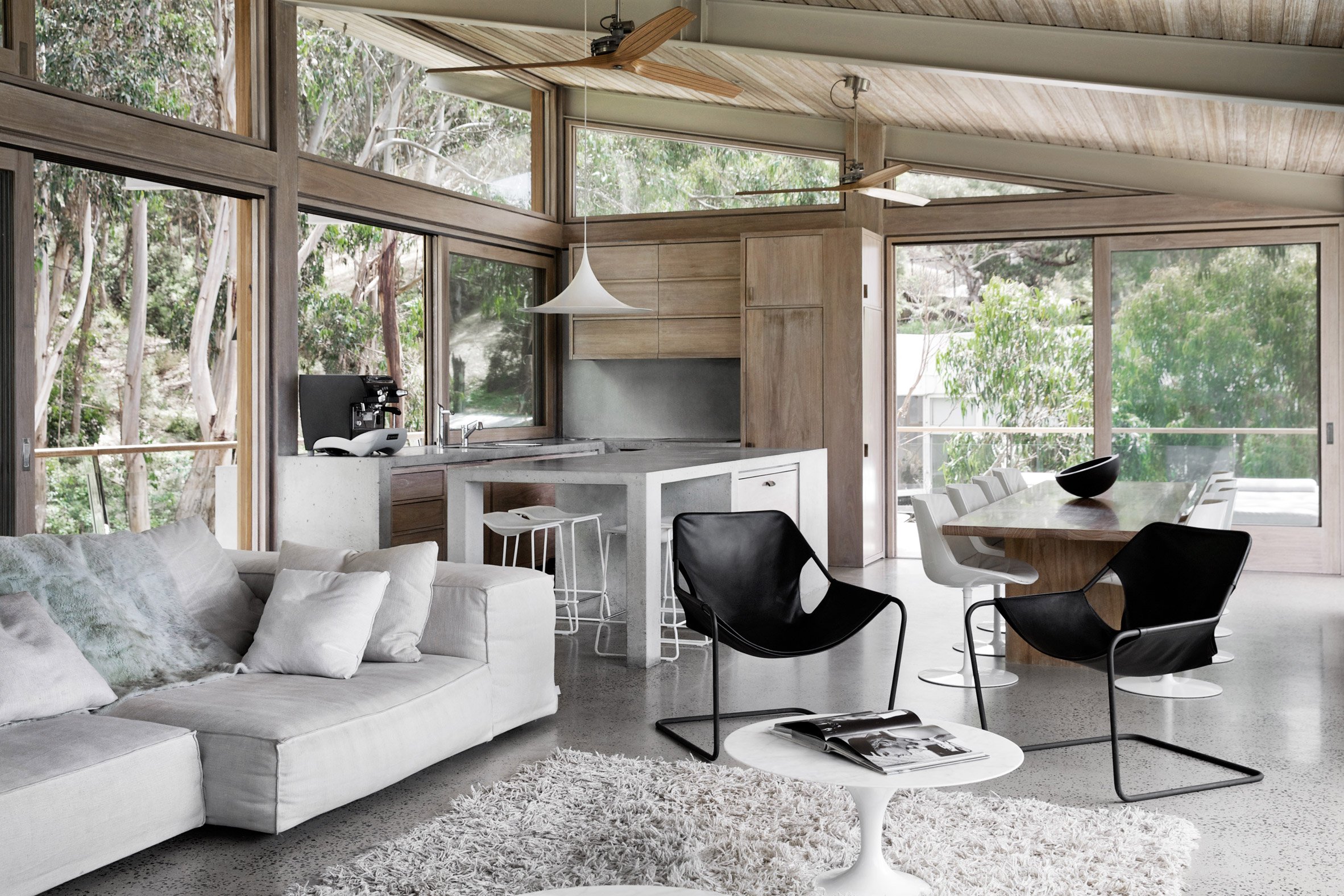
The same aesthetic continues outside, where stucco surfaces are intended to match the light colour of local tree bark.
"The design respects the environment it is nestled within," Mills added. "If it was rich in colour, the connection to the outdoors would be lost."
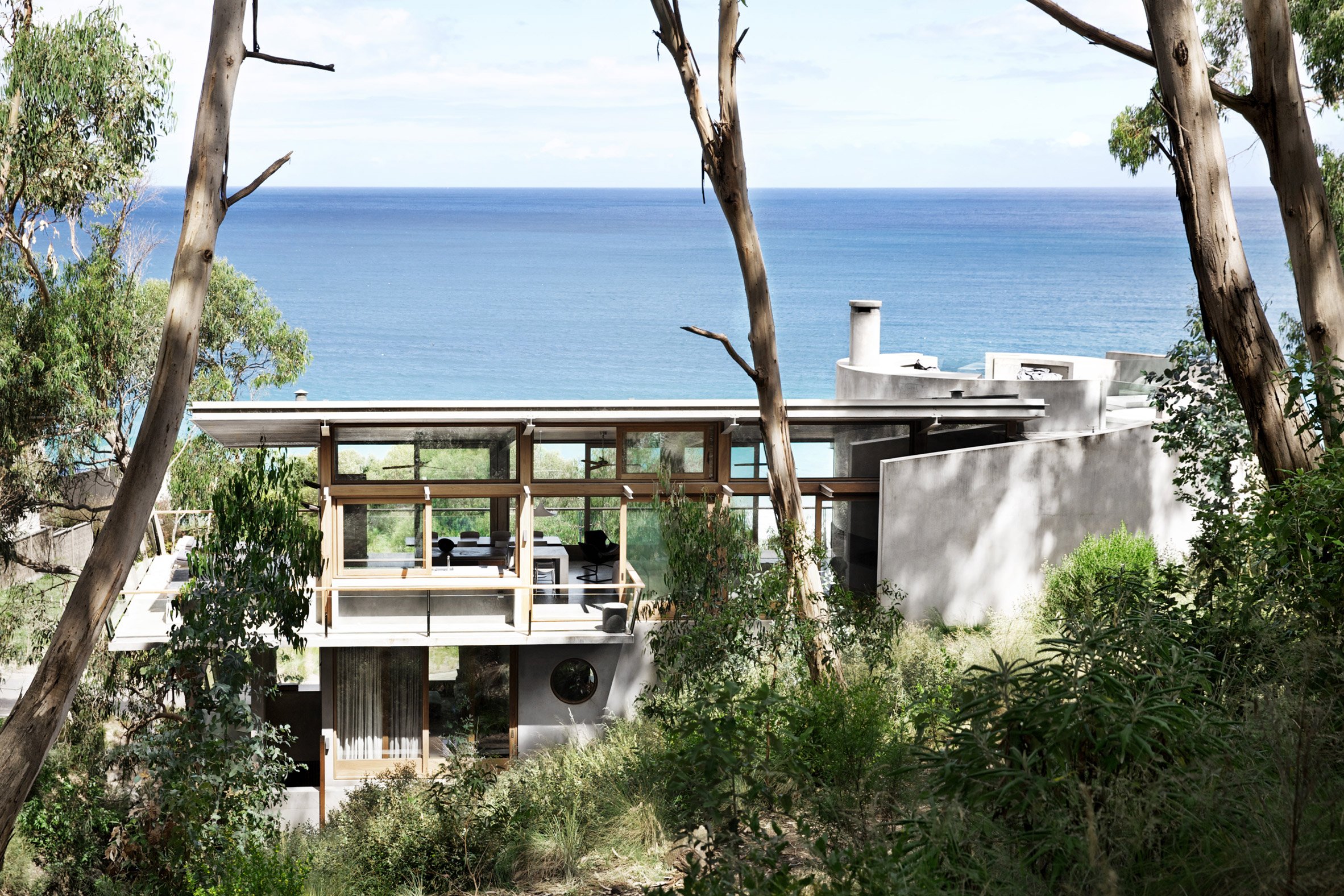
Built on a steeply sloping site between ocean and woodland, the seven-bedroom house is divided over three storeys.
Both living spaces and bedrooms are divided over the ground and first floors, meaning the house could be easily divided into two properties at a later date. The uppermost level is an entrance floor, containing utility rooms and two parking garages.
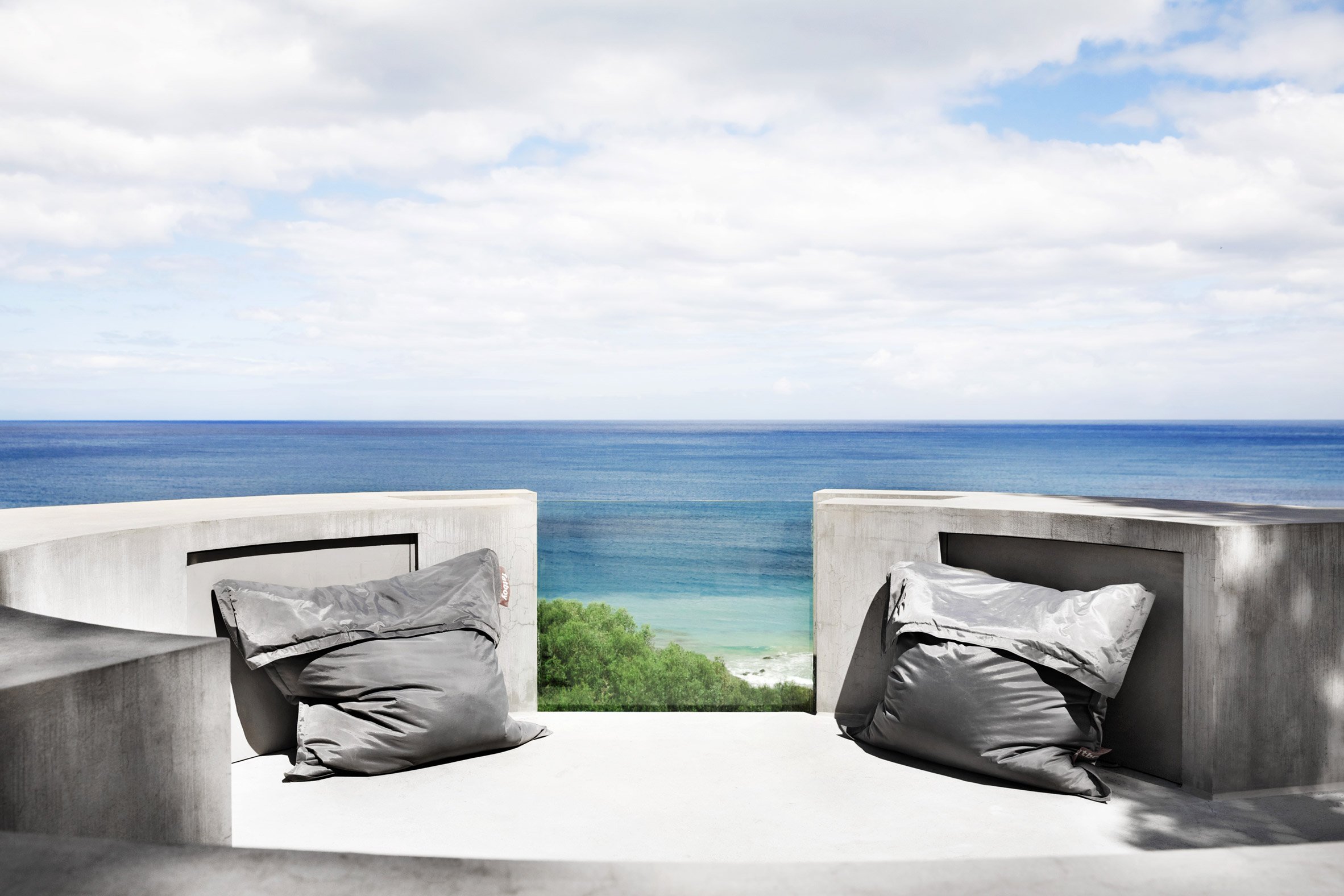
The form of the building is made up of two volumes. The first portion is a cuboid, where concrete floor plates extend out beyond walls of floor-to-ceiling glazing. The second is an opaque drum with concentric walls of curving concrete.
Wraparound terraces create various spaces for residents to take in the landscape.
"The power of Ocean House is its unique positioning and the way in which the design responds to that," explained Mills.
"It is a glazed pavilion which allows you to live in two quite different environments at the same time, a unique wilderness experience where the ocean below and the forest above become integral elements."

"The two personalities of the residence work together as one," he continued.
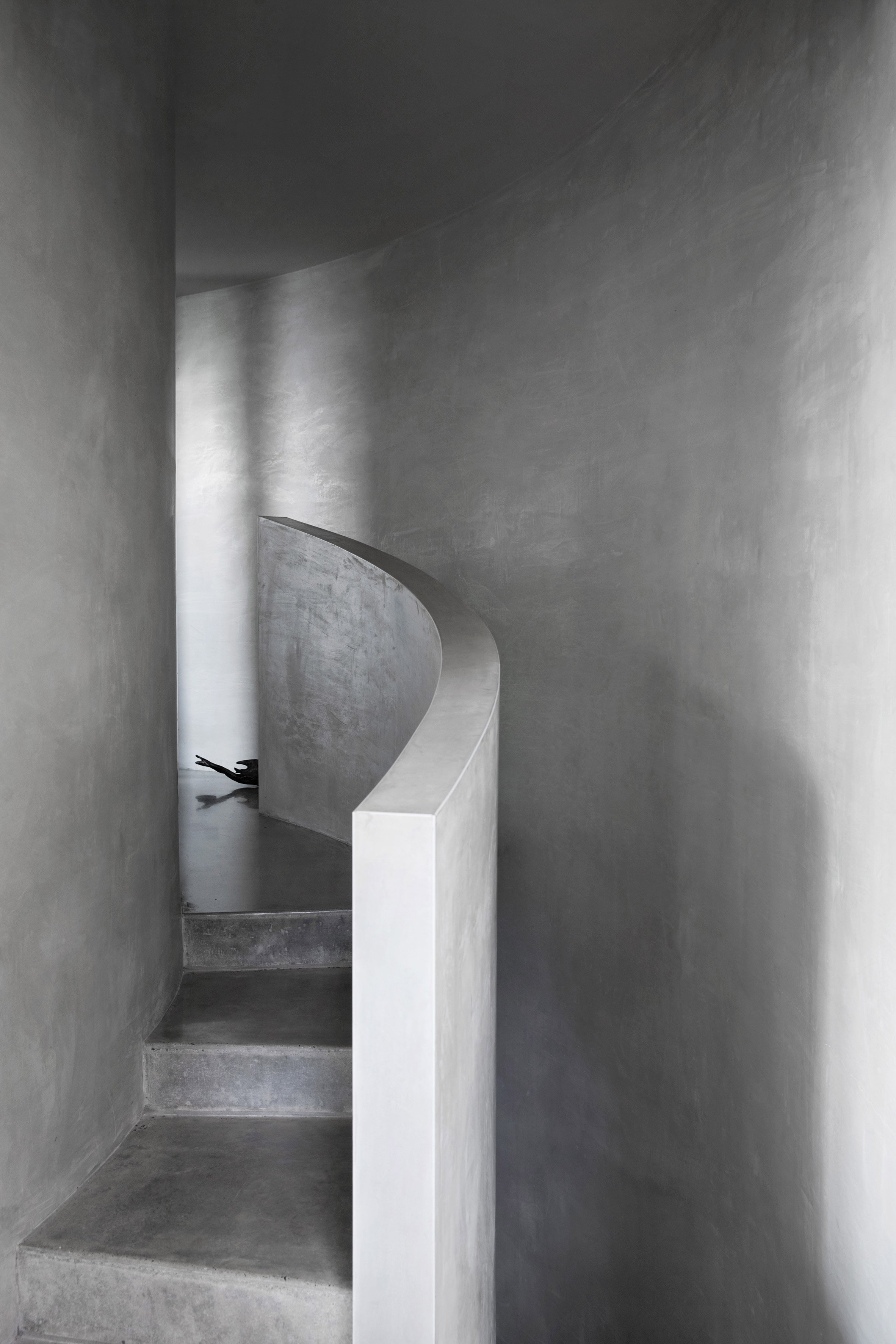
"The concrete section, which houses the bedrooms, is very purposeful, sheltering the home from the storms and deadening sound, in contrast to the connection with nature in the living section."

Mills came across the site by accident. His family were renting a beach house nearby and he happened to notice that the land had just become available.
The Mills family plan to stay in the home as often as they can. When they are not using it themselves, they plan to open it up to friends, but also to rent it out for holiday lets.
The architect hopes it will remain in his family for many generations to come.
"I purposely designed the house to be available for holiday bookings, to ensure that as the house is passed down through the generations of my family and it can remain self-sufficient from a financial point of view," he added.
Photography is by Caitlin Mills.
The post Ocean House is an Australian beach house with a minimal interior appeared first on Dezeen.

The Munich-based studio are back with a new and joyous identity for Converse’s new cultural skate program, Push.


The magazine uses its first double cover in the April 2020 Earth Day edition to show how the planet might be saved or lost based on our choices today.

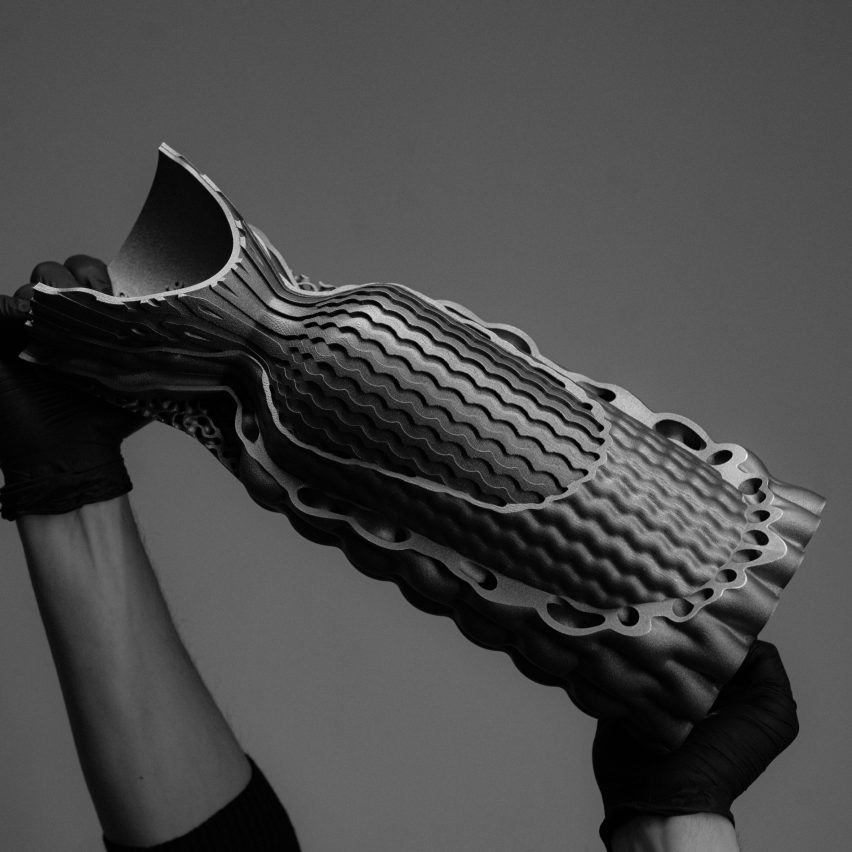
German software company Hyperganic has developed a 3D-printed rocket engine prototype, which was completely designed by artificial intelligence.
Unlike a traditional rocket engine, which consists of individually designed parts that are combined together, the AI-designed demonstrator is 3D printed as one continuous piece.
This includes both the combustion chamber where fuel and oxidiser is burned and the surface channels, through which the fuel is circulated to cool the chamber and keep it from overheating.

"In a rocket, the cooling channels are generally welded onto the combustion chamber, which through wear and tear can cause errors and explosions," explained Hyperganic's design director Duy-Anh Pham.
"The components are engineered separately, so the design is not actually holistically optimised to be the best, most efficient it can be," he continued. "Our engine in contrast is made up of only one piece, that has been designed to have the lowest weight and most effective cooling, and so the highest possible performance for a given rocket."
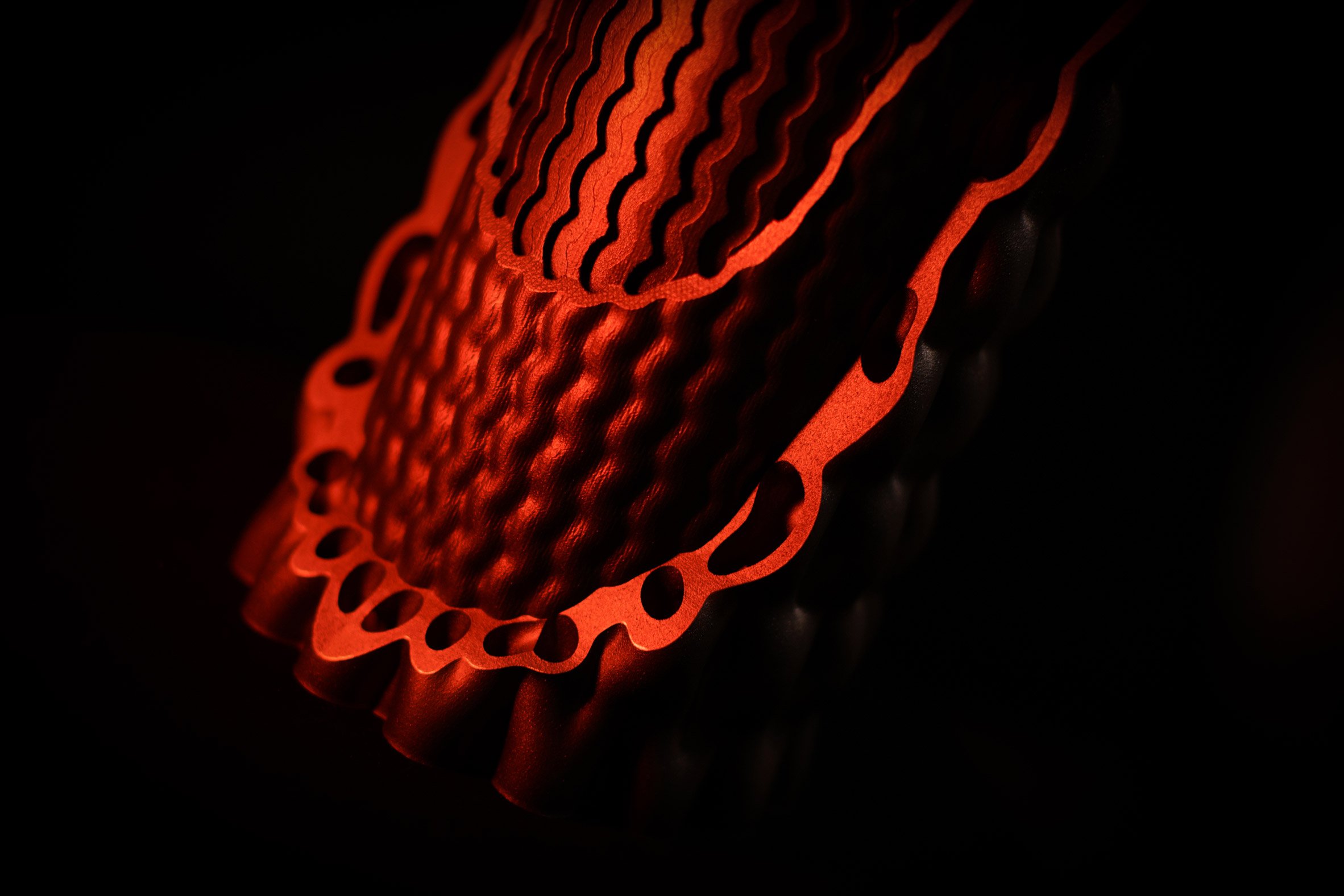
To create the engine, a rocket scientist first stipulated the core features of a rocket engine – the shape of the combustion chamber and the necessary cooling performance.
Rather than being translated into CAD files, this information is expressed as formulas and stored in an Excel sheet, in a format that can be read by Hyperganic's algorithm.
This algorithm then uses the data to generate the geometry of the final piece from the bottom up.
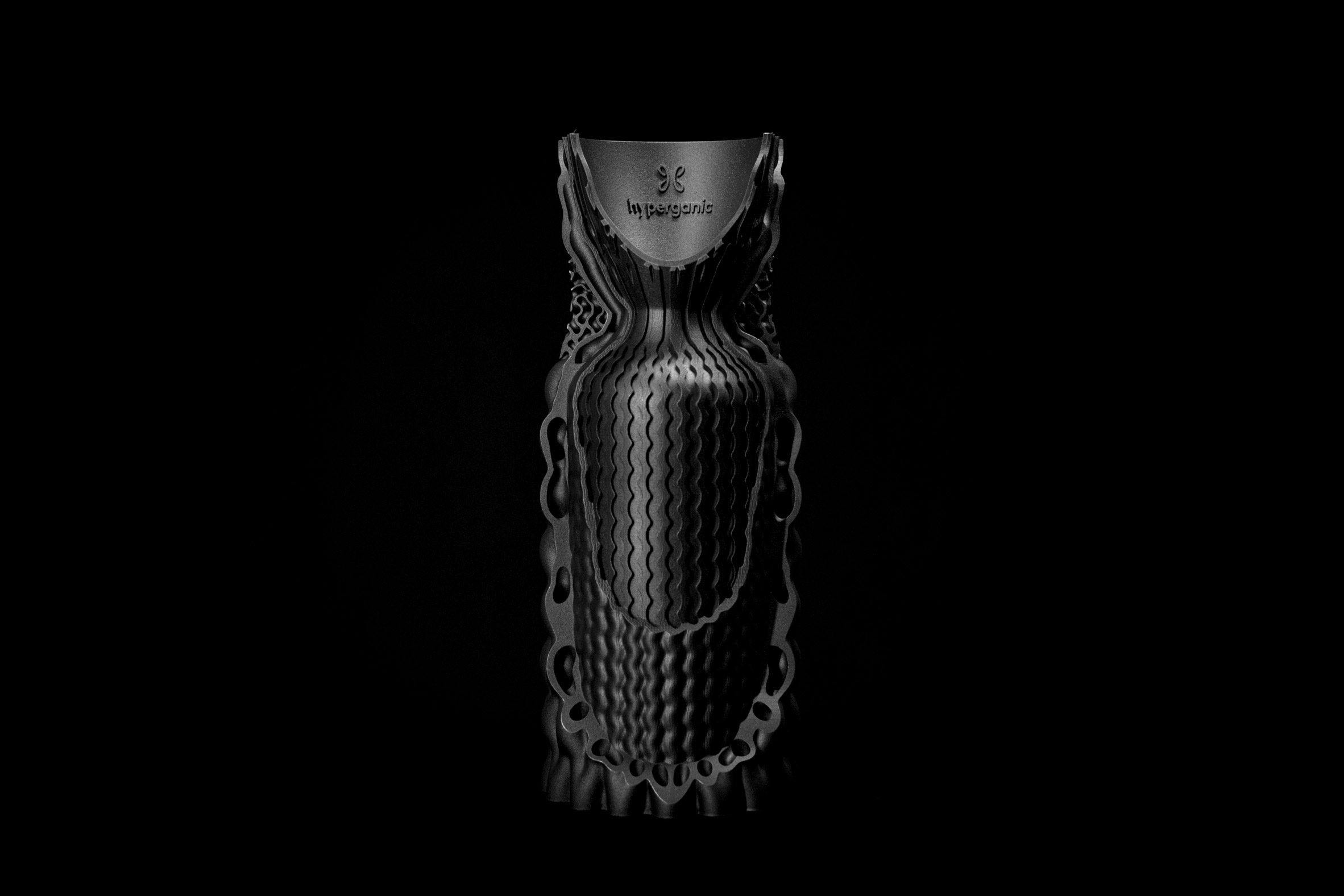
"We compare the process to growing rather than designing," Pham told Dezeen.
"You're telling the algorithm what you need the object to do and then the algorithm is kind of growing the object with the performance you had in mind, with the specifications. So the process doesn't create a blueprint, but the DNA for an object."

From there, the information is fed to an industrial 3D printer, which realises it using an aerospace nickel alloy called Inconel 718.
"We are able to print in different material densities, a method which has not been used in rocket design so far," said Pham.
"So the inner part is very solid, while towards the outside the structure becomes more porous to save on weight. Every extra pound counts."
Hyperganic is currently in talks with different space companies about how this approach could be integrated into their design process.
If the process is implemented by an aerospace organisation, the design will be further refined using a digital evolution feedback loop.
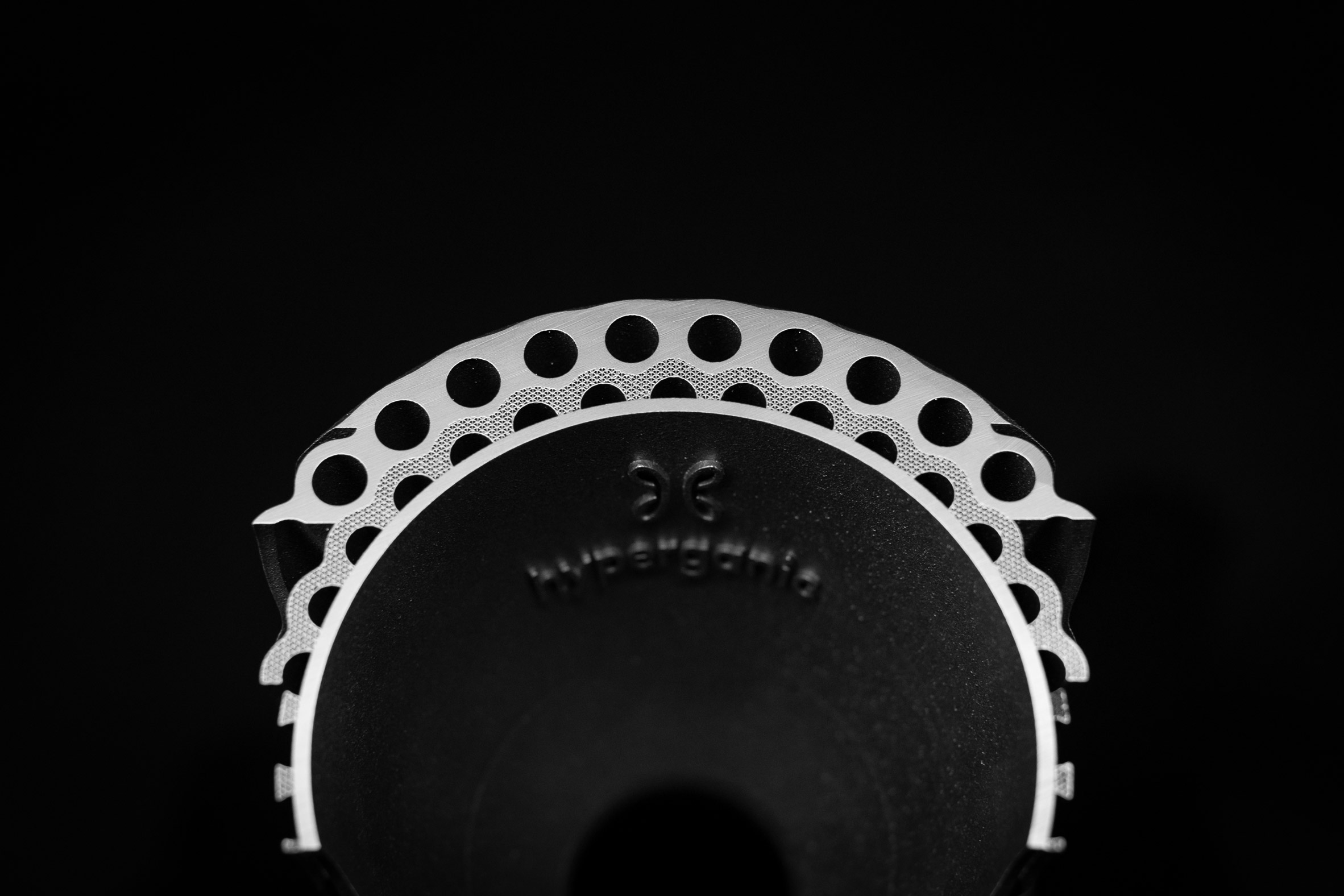
"You test the first design or run simulations of how it would perform, input the data from the test into the algorithm and it uses that to improve the design of the next model," Pham explained.
"It's self-optimising, rendering one solution after another, always comparing. The new models are always generated from scratch. Every time you change your requirements, you get another rocket that is perfectly designed for for the needs that you've set out."

Beyond rocket engines, the company's AI-driven software platform also lends itself to an almost infinite range of other products.
"Our system is completely modular," said Pham. "Every solution, in this case the rocket engine algorithm, is made up on a combination of algorithmic components."
"Applying components from the rocket algorithm might not work when applying it to something else because it's not a rocket. But a component like the cooling channels is very similar to our blood vessels so you could take these components from the rocket and design another solution for creating a synthetic organ for example."
In the US, dedicated aerospace manufacturer Relativity Space has developed a 3D-printed rocket that is built using autonomous robots and has one percent as many individual parts as a traditional rocket.
While designer Sebastian Errazuriz has argued that the rise of AI-driven design would put architects out of business, Hyperganic argues that its method is still dependant on human-input with the AI simply doing the heavy lifting.
Last year, a patent application filed for AI-designed products was denied by the European Patent Office, stating that the inventor designated in the application has to be a human being.
The post Hyperganic uses AI to design 3D-printed rocket engine appeared first on Dezeen.


