Sunday, 5 April 2020

Daytrip digs beneath east London townhouse to create contemporary living spaces

Powerscroft Road by Daytrip

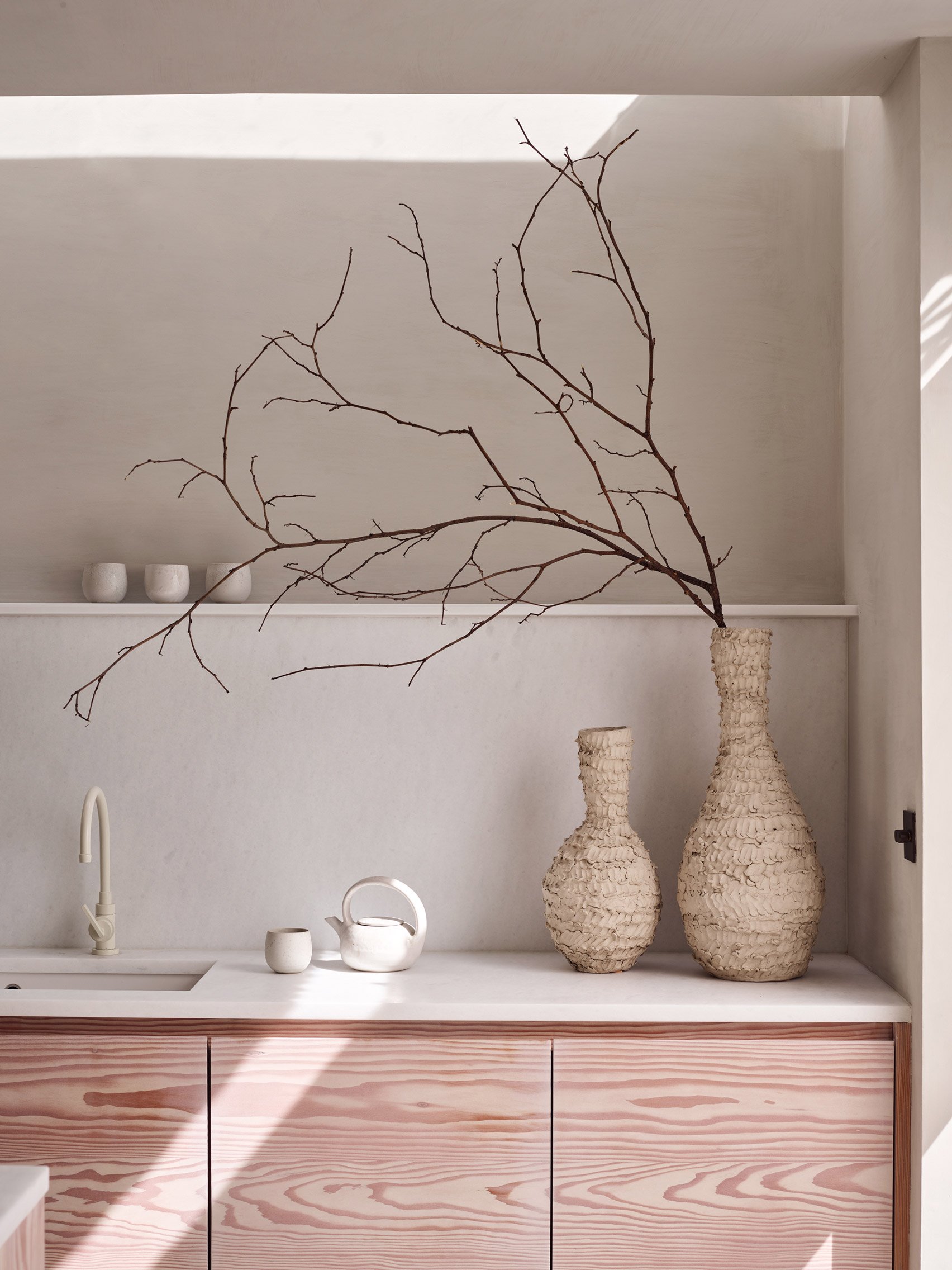
White-washed walls, Douglas fir joinery and creamy furnishings appear inside this east London home, which design studio Daytrip has renovated and expanded by excavating its basement.

The five-storey Powerscroft Road townhouse is situated in the neighbourhood of Clapton and had previously been host to several "unloved" living spaces.
Powerscroft Road by Daytrip

A majority of the rooms were plastered in dated 1970s wallpaper and had worn, deep-pile carpet across the floor.

Beneath the ground-floor kitchen there was also a dark and damp basement, with an inconveniently low ceiling.
Powerscroft Road by Daytrip

The owners of the house, a married couple who had purchased the property with the hope to resell, approached Daytrip to carry out a complete overhaul.

While there was no particular buyer lined up, the studio still wanted the house to appear as though "every element had been considered and detailed for the homeowner".
Powerscroft Road by Daytrip

"[The clients] trusted us to do what we felt was right," Iwan Halstead, co-founder of the studio, told Dezeen.

"We knew we wanted a calm and serene home, away from the hustle of inner city, but we also wanted it to have the quality and craftsmanship we adhere to in all our projects."
Powerscroft Road by Daytrip

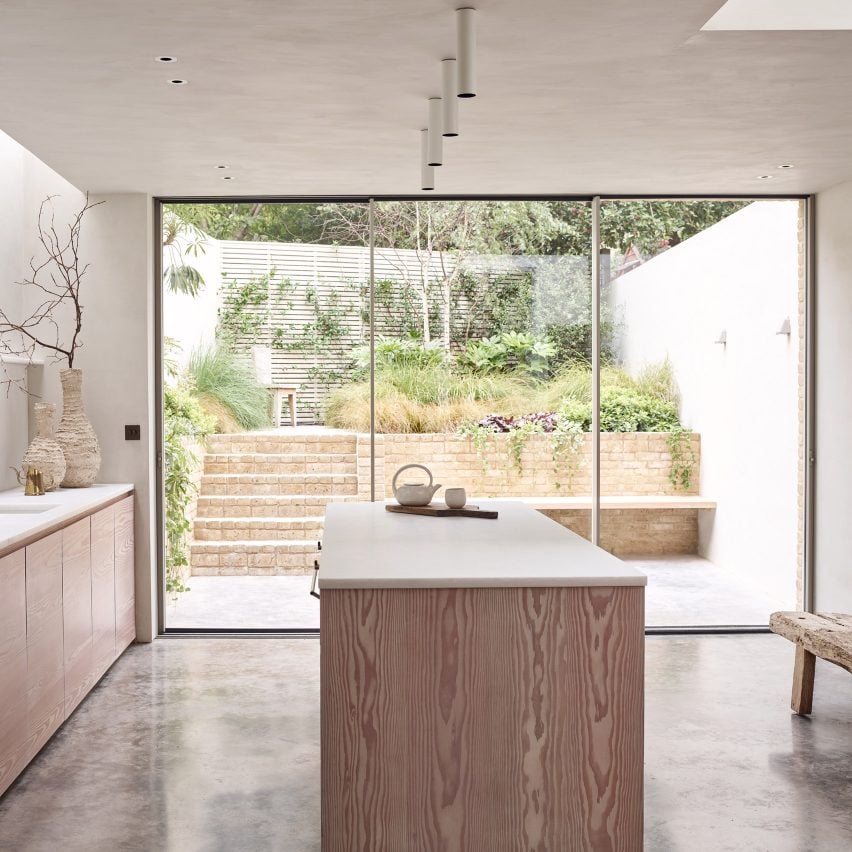
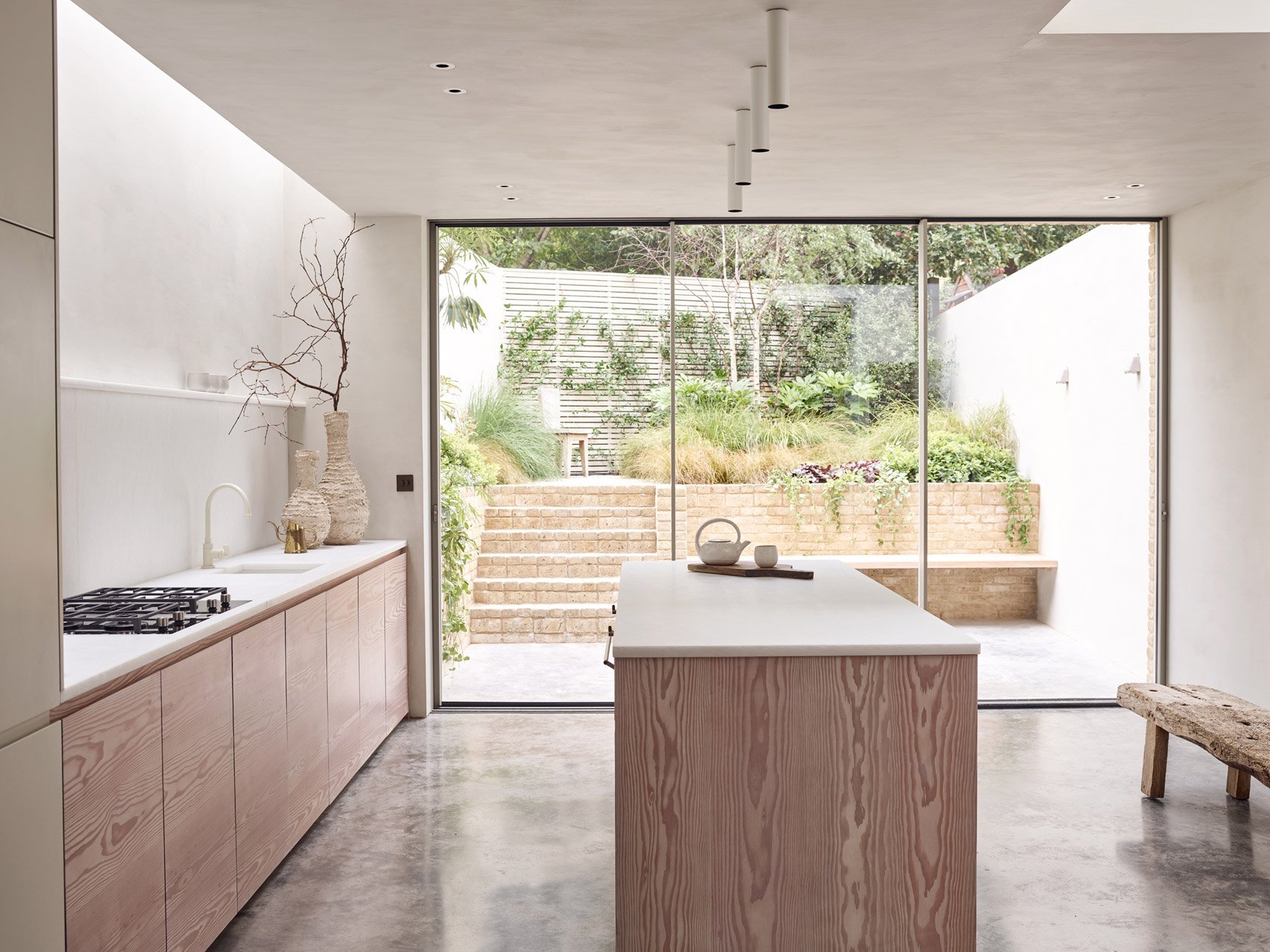
To begin, the studio further excavated the existing basement to create an expansive, light-filled kitchen. The space is now fronted by full-height glass panels that offer views of a newly landscaped garden.

The cabinetry and the base of the central breakfast island have been crafted from Douglas fir wood, while countertops are made from pale Evora marble.
Powerscroft Road by Daytrip

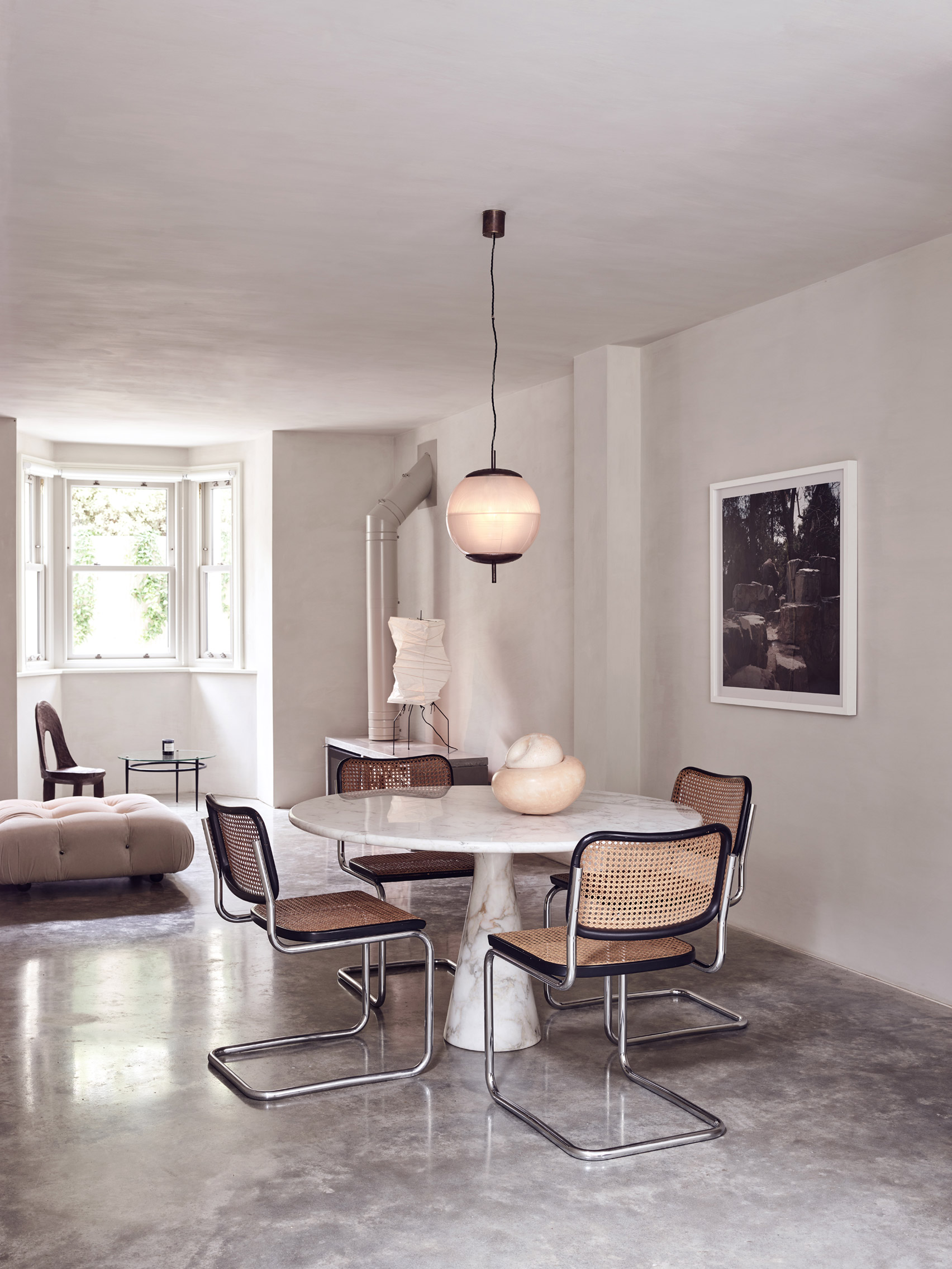
Surrounding surfaces have been loosely lime-washed to leave an almost "painterly" surface finish, while the floors are polished concrete.

"A muted and pale palette of off-whites are paired with honest materials which promote their inherent patterns and textures without feeling 'over-designed' or mass-produced," Halstead explained.
Powerscroft Road by Daytrip

At the rear of the kitchen lies a dining area, which boasts a veiny stone table and tubular steel-frame rattan chairs. There is also a cosy sitting room with low-lying cream sofas and a wood burner.

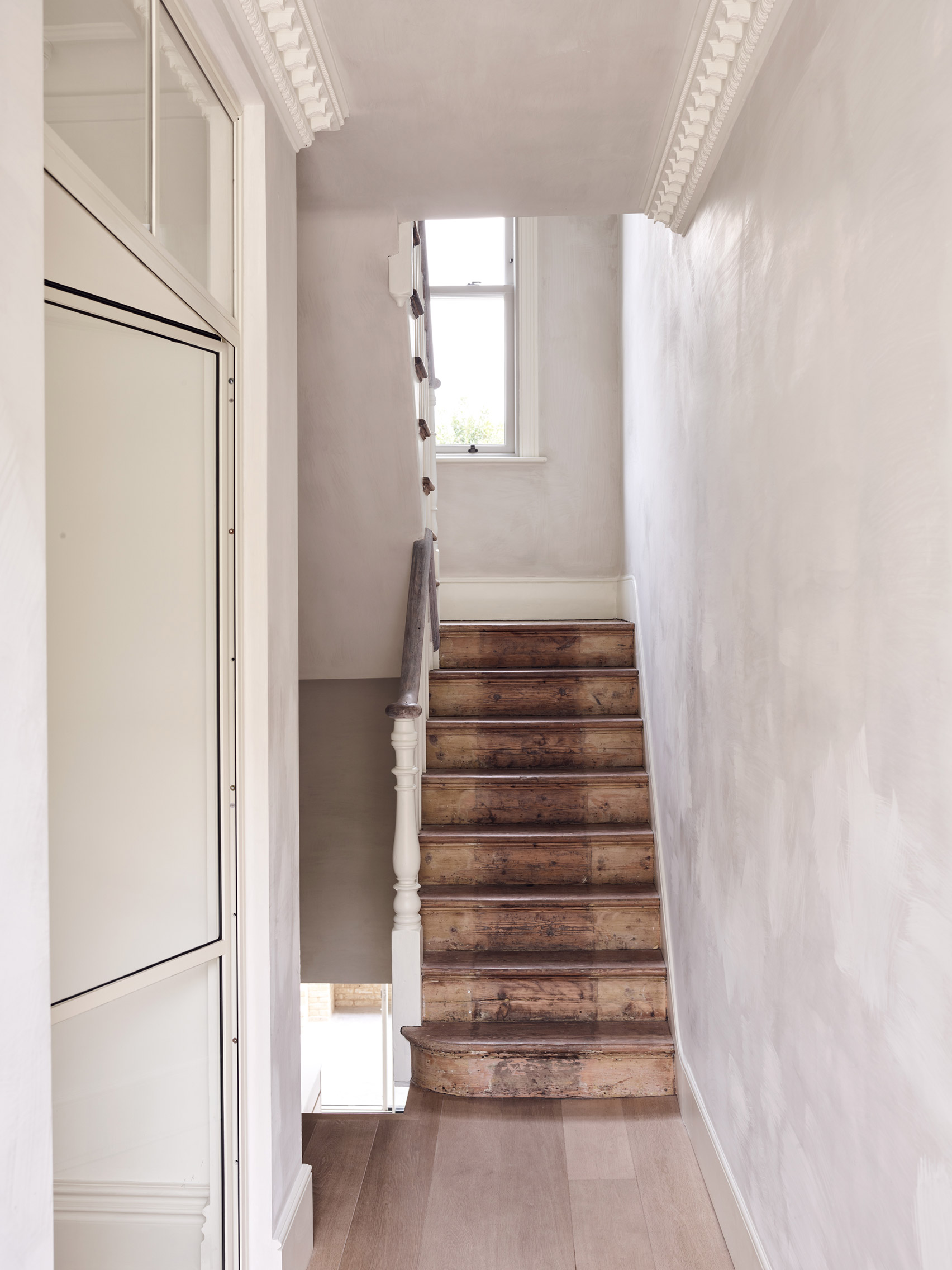
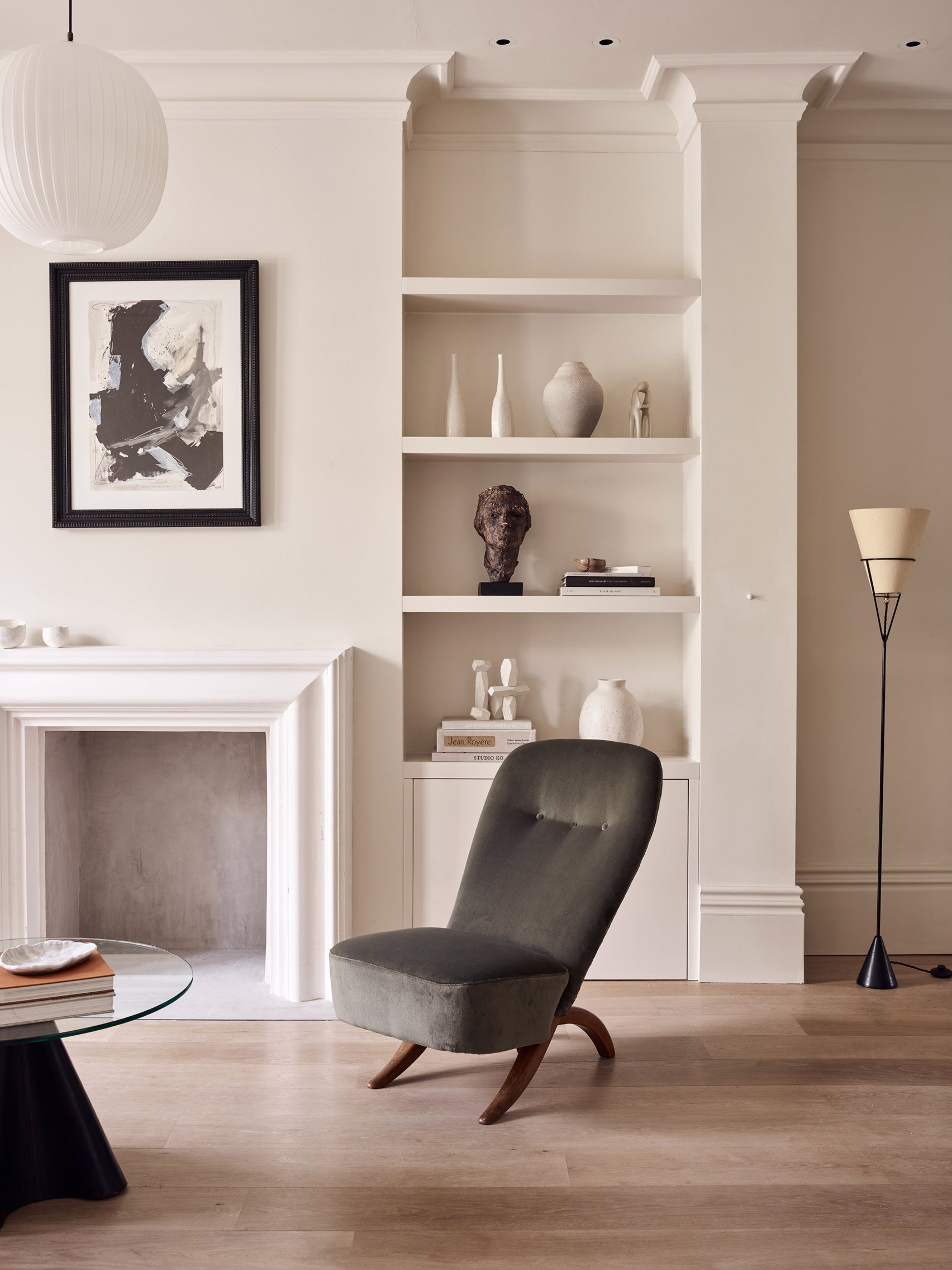
In the upper levels of the home, the studio set out to revive original details such as the ornate ceiling cornicing and wooden floorboards.
Powerscroft Road by Daytrip

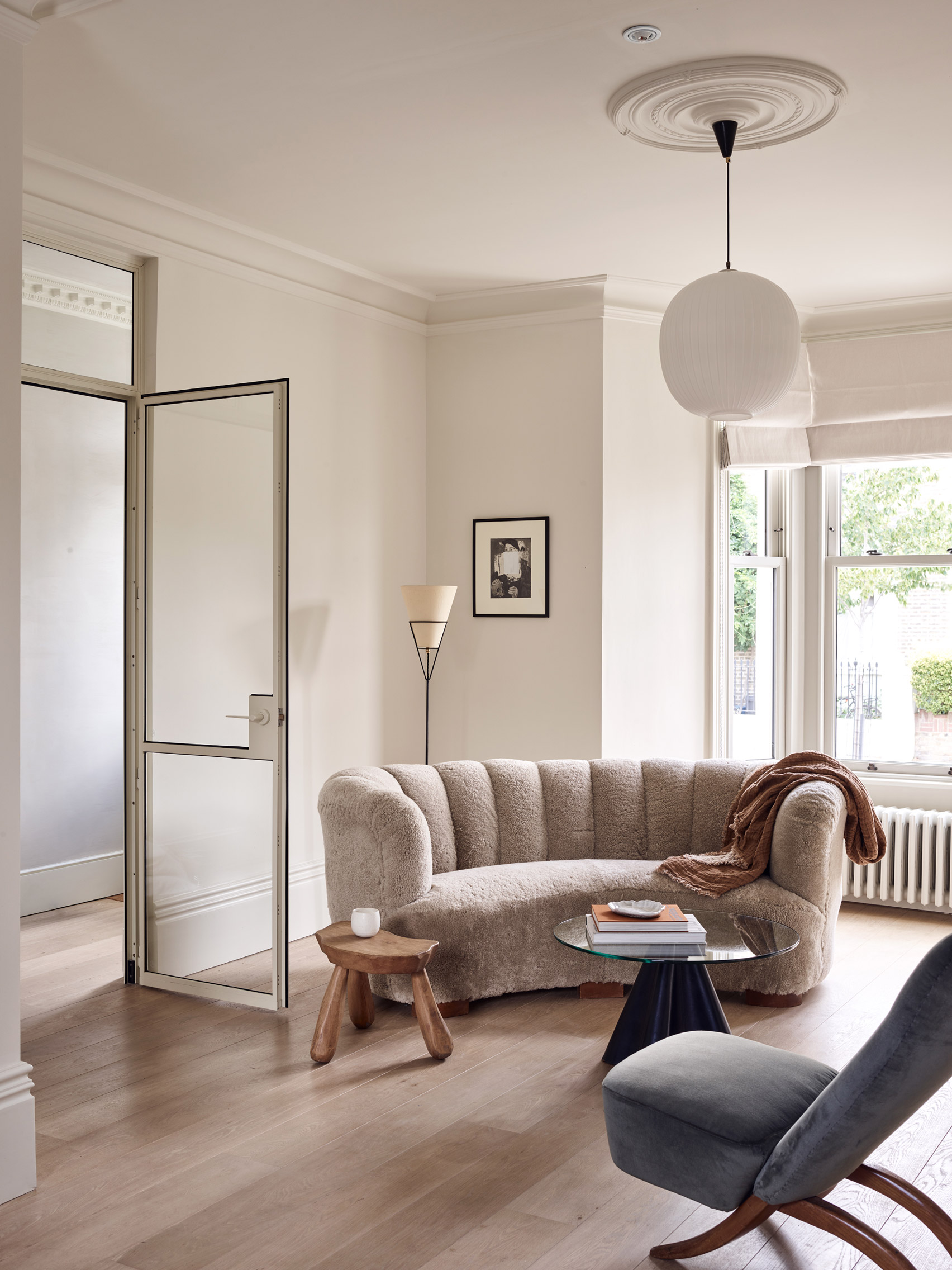
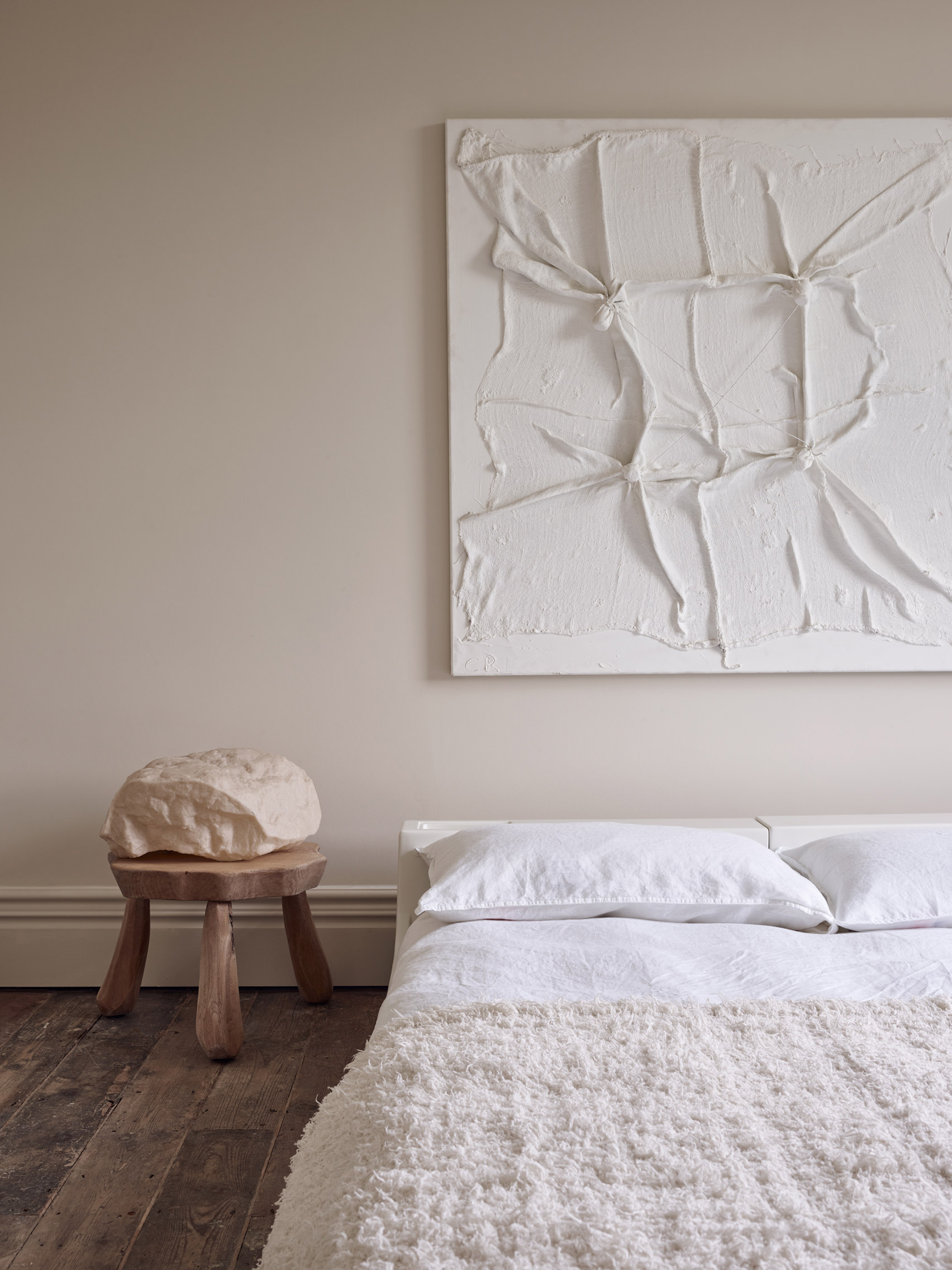
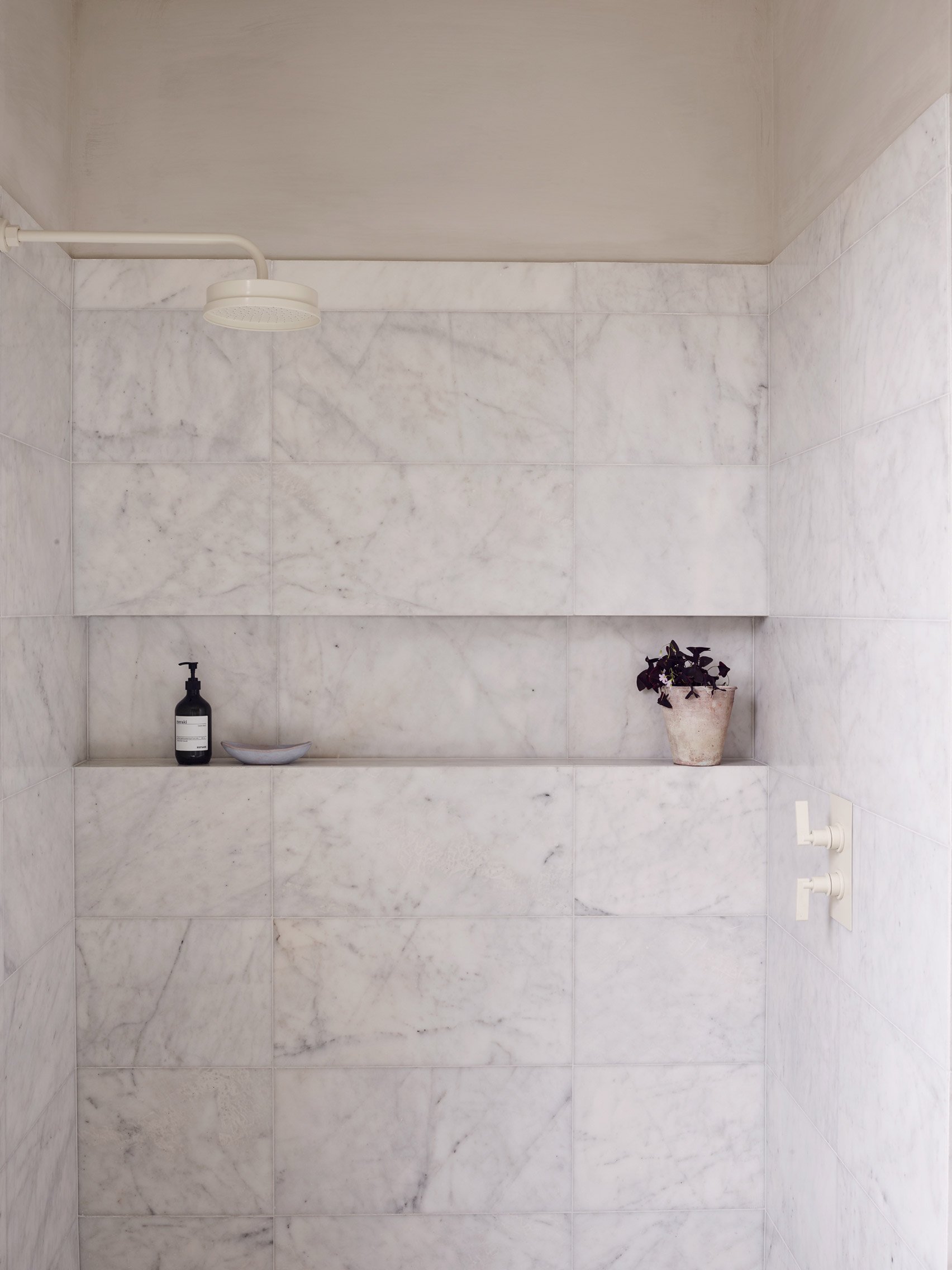
Walls have been freshened up with a coat of eggshell-coloured paint, apart from in the bathrooms, where Calcatta marble tiles have been introduced.

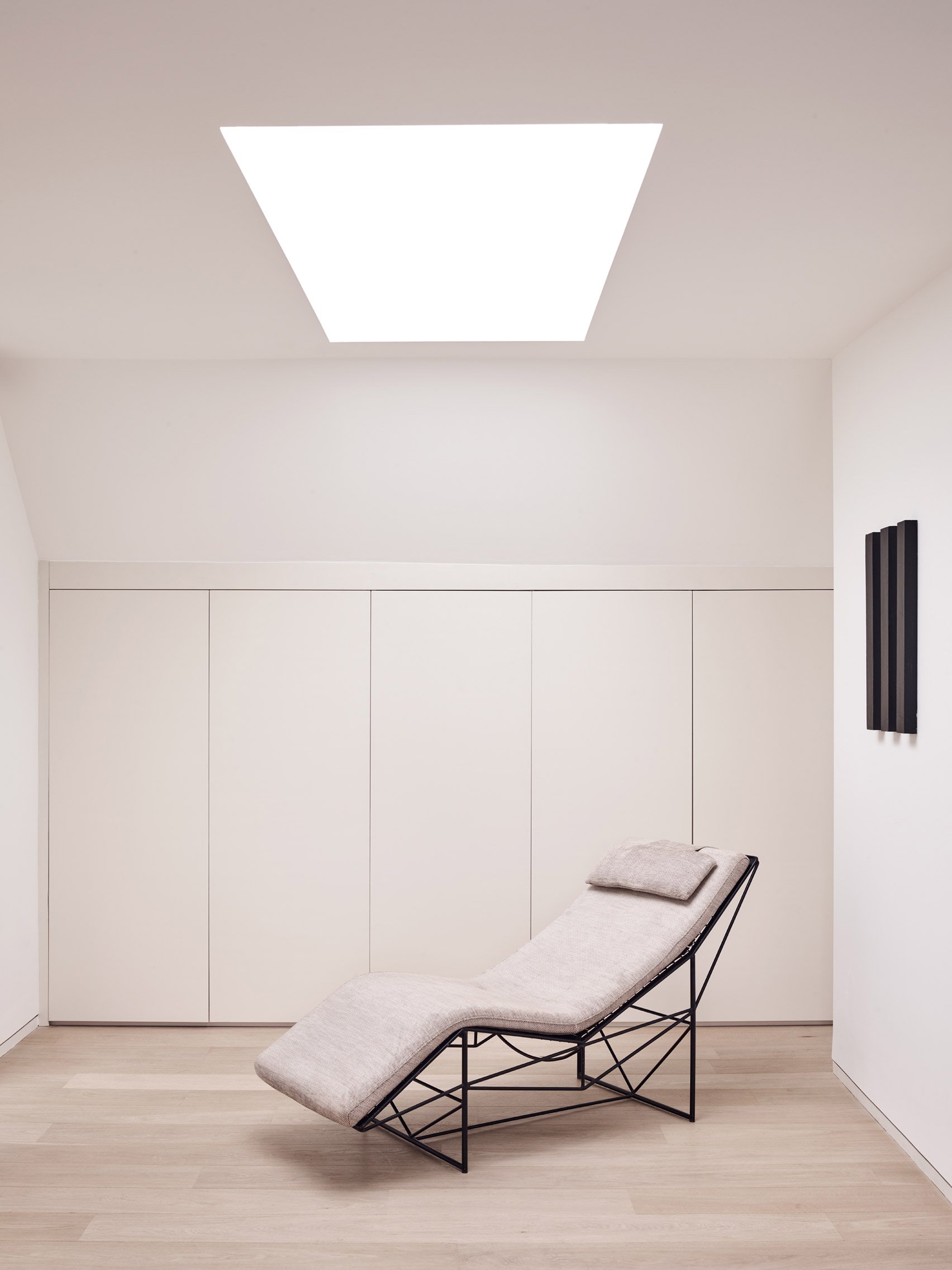
Some of the openings between rooms have been widened or fitted with crittall doors. Three skylights punctuate the roof of the home to let more sunlight into the attic.
Powerscroft Road by Daytrip

Furnishings used to style the home – including those in the basement – were picked out by Modern Art Hire, which worked to accrue an array of antique, mid-century and modern pieces.
Powerscroft Road by Daytrip

Daytrip is based in Hackney, east London, and led by Iwan Halstead and Emily Potter.

It isn't the only studio that's dug down below ground level to provide additional room for living. In 2018, Gianni Botsford Architects excavated the ground beneath a home in London's Notting Hill to create a subterranean swimming pool and gallery-style sitting room.

In Hackney, David Adjaye renovated the Mole House, which was undermined by secret tunnels.

Photography is by Jake Curtis and Elliot Sheppard.

The post Daytrip digs beneath east London townhouse to create contemporary living spaces appeared first on Dezeen.


from Dezeen https://ift.tt/34mVanv

Urban Cabin is a micro apartment in Italy with custom seating and storage

Urban Cabin by Francesca Perani

Architect Francesca Perani has transformed the porch of an Italian villa into a 25-square-metre micro apartment with plenty of hidden storage.

Designed for a local couple, Urban Cabin replaces the porch of a house in Albino, a small town in the Italian province of Bergamo.

Perani's renovation, completed with the help of interior designer Ilenia Perlotti, turns the former storage space into a separate, self-contained residence that can be used for a number of purposes.

Urban Cabin by Francesca Perani micro apartment

The clients can use it as a workspace, invite guests to stay or, one day, let their grown-up children move in. Recently, because of the coronavirus crisis, one of the pair has been using it as a self-isolation space.

To suit all these purposes, the designers planned the micro apartment to be as flexible as possible, with plenty of storage. But they also designed it to have a sense of fun, filled with graphical shapes and vibrant colours.

Urban Cabin by Francesca Perani micro apartment

"I am very interested in experimenting and pushing myself towards risky options," explained Perani.

"I believe can make spaces more emotionally involving," she told Dezeen. "Since the beginning of my practice, I have always battled against straight lines and the minimalist approach. I am curious about exploring a pop architecture."

Urban Cabin by Francesca Perani OSB interior

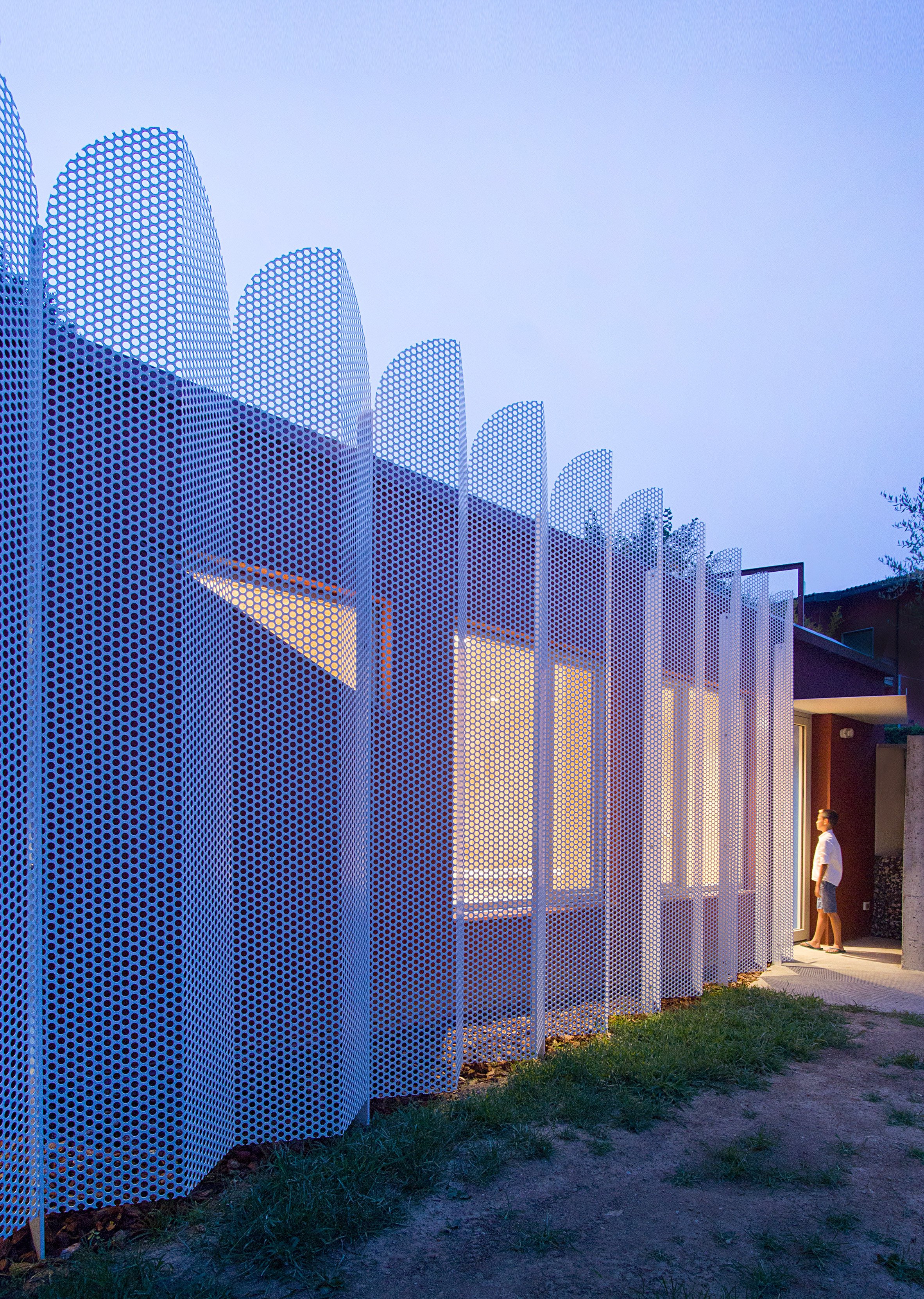
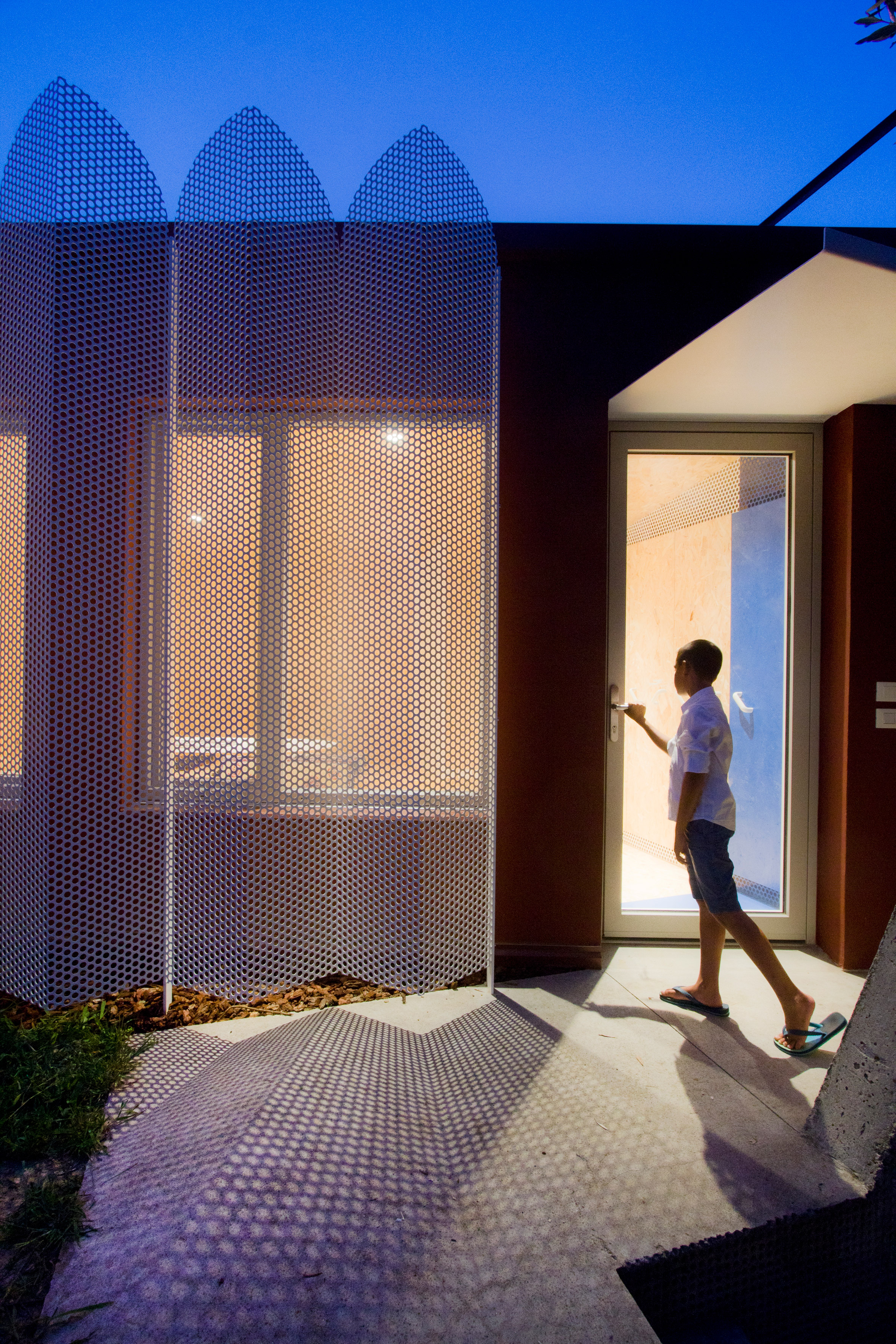
Perani worked on the renovation of the main house back in 2008. Externally, this new addition is designed in the same spirit, with a red earth-coloured facade and details that reference the clients' Persian heritage.

Folded sheets of perforated metal create a series of arches in front of the home, acting a sun shade. This made it possible for Perani to design large windows, even though the home faces directly south.

Urban Cabin by Francesca Perani OSB interior

Inside, the layout is kept open to make it feel spacious. Apart from the bathroom, all activities take place in a single room.

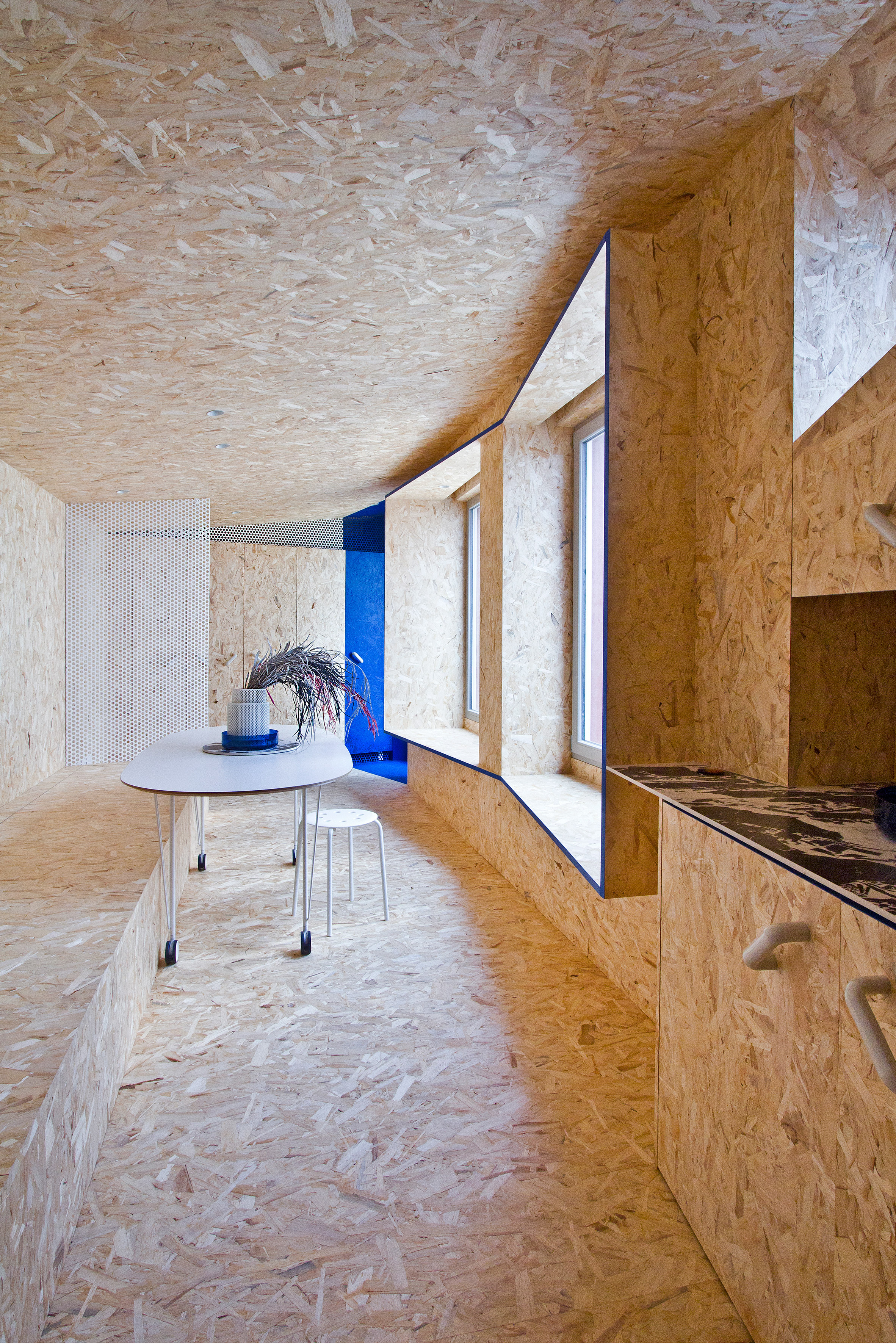
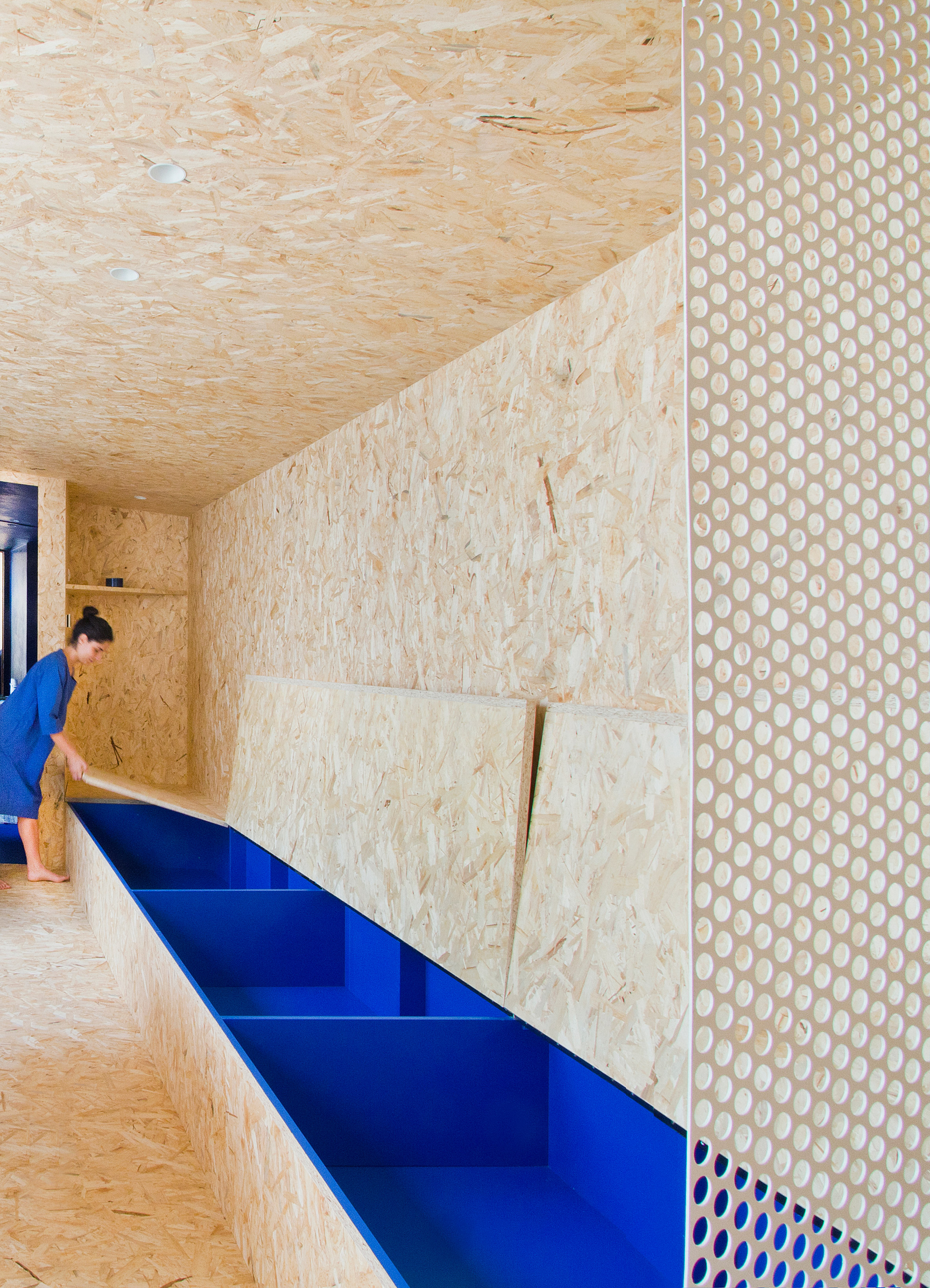
The open-plan living space includes a distinct kitchen, along with various multifunctional furniture pieces. Storage areas are slotted in and around these elements, to make the most of space.

Urban Cabin by Francesca Perani inbuilt storage

"The limited dimensions and extreme narrowness of the existing building suggested a full custom-designed interior, where flexibility and multi-usage became key factors," explained Perani.

"Diagonal lines are deliberately used in order to deliver more functionality and movement."

Urban Cabin by Francesca Perani OSB interior

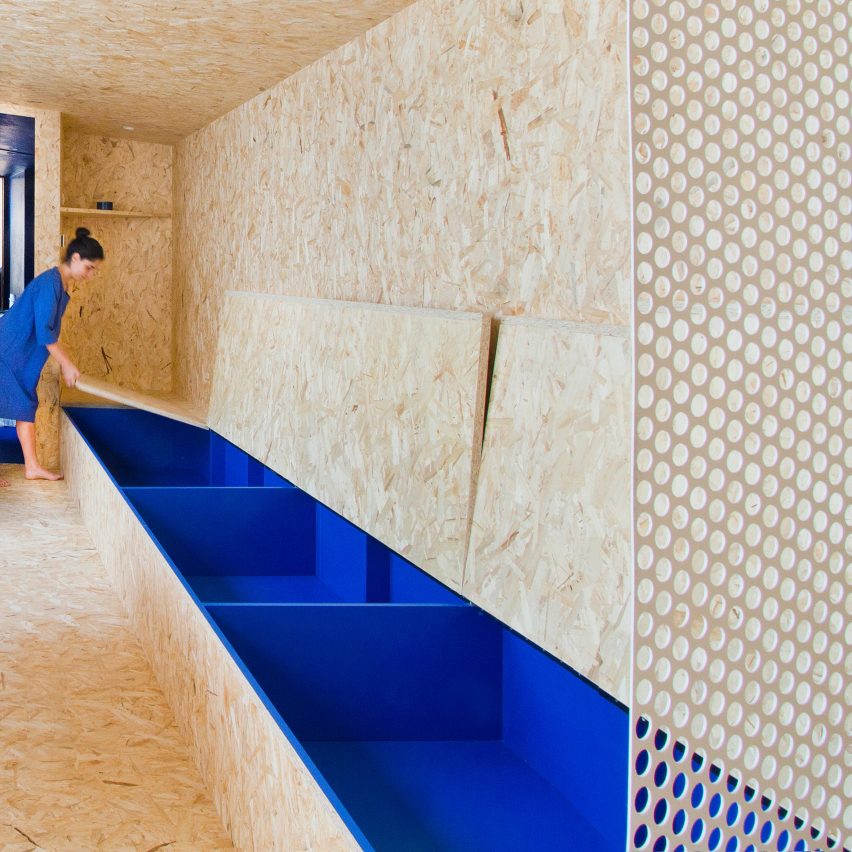
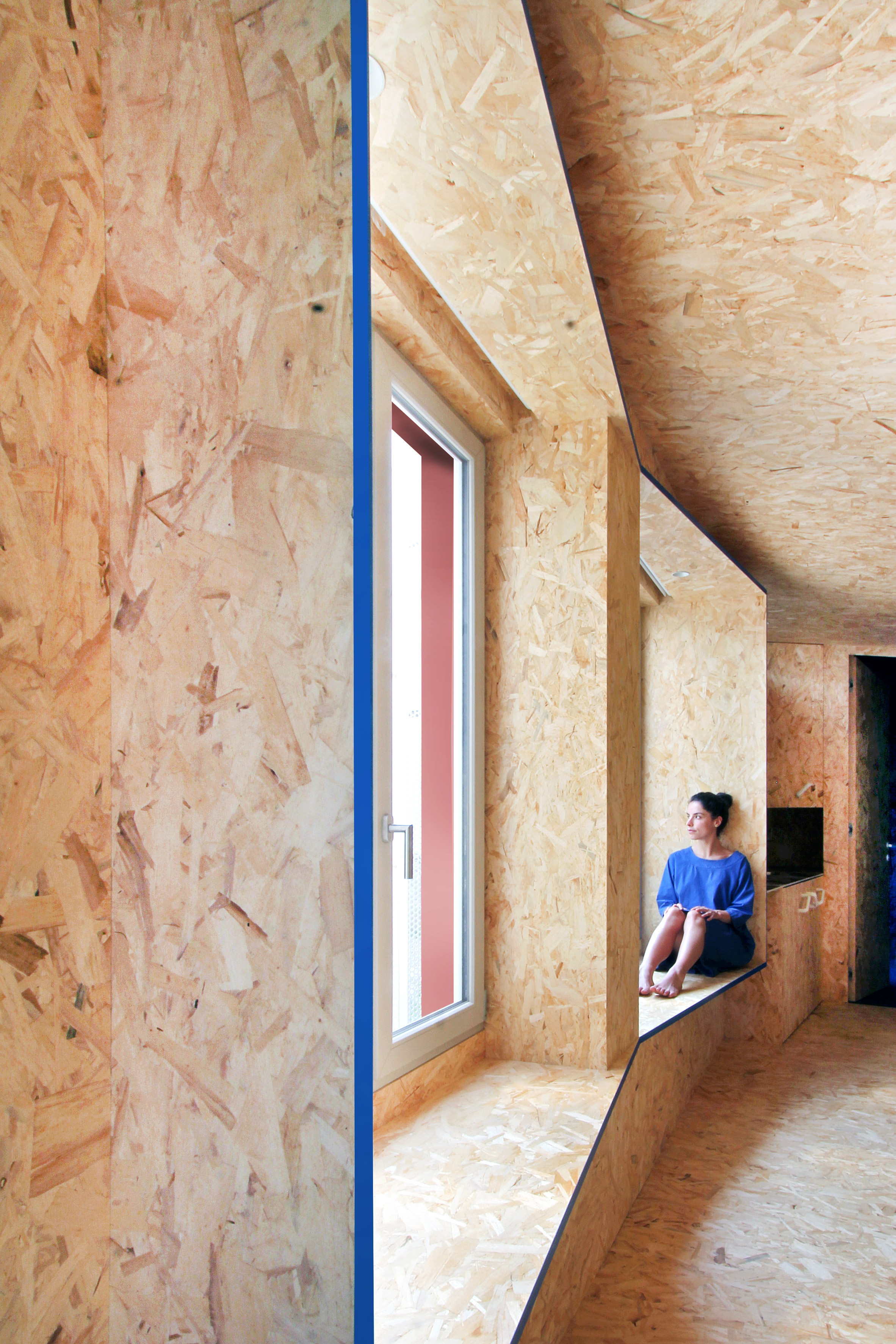
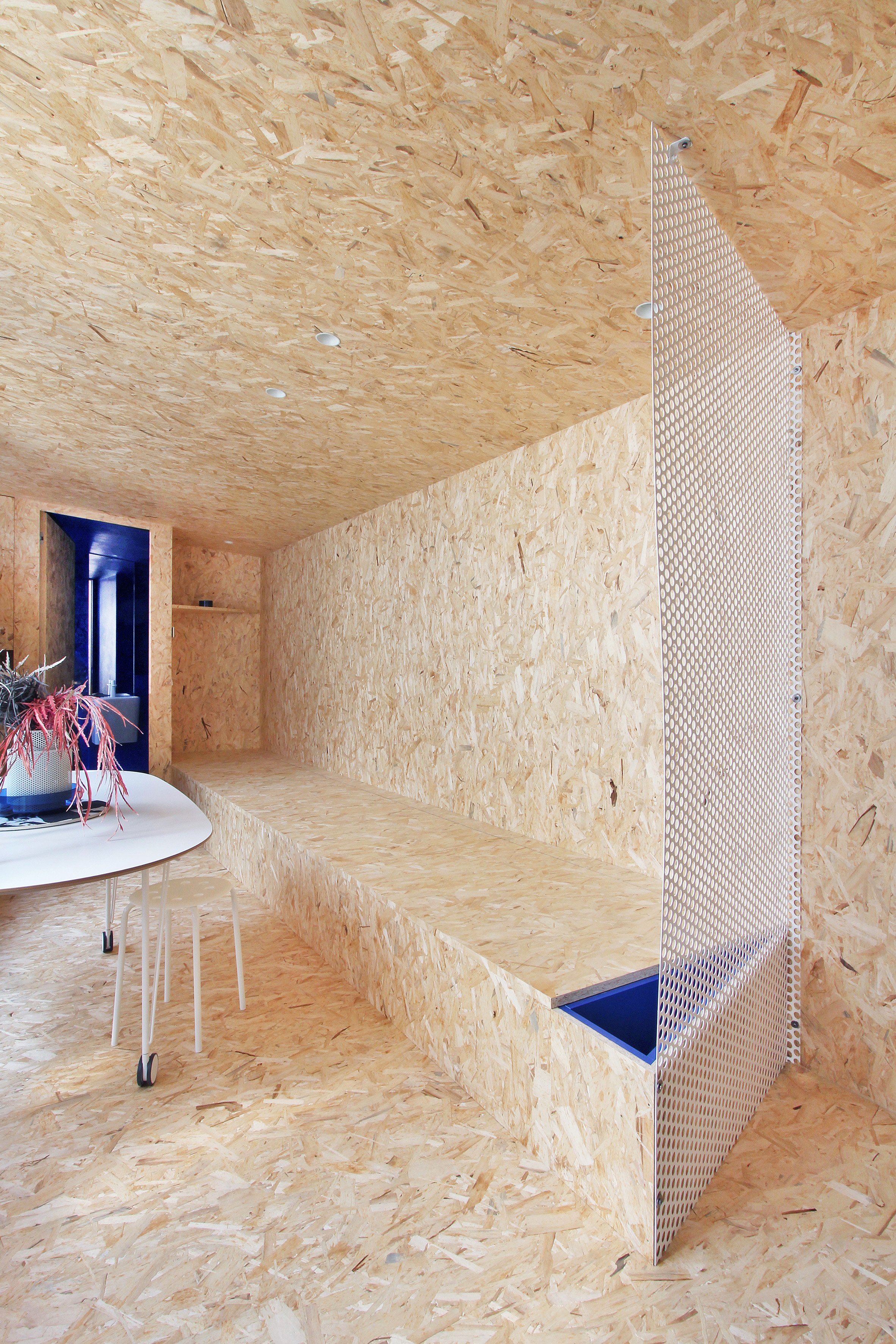
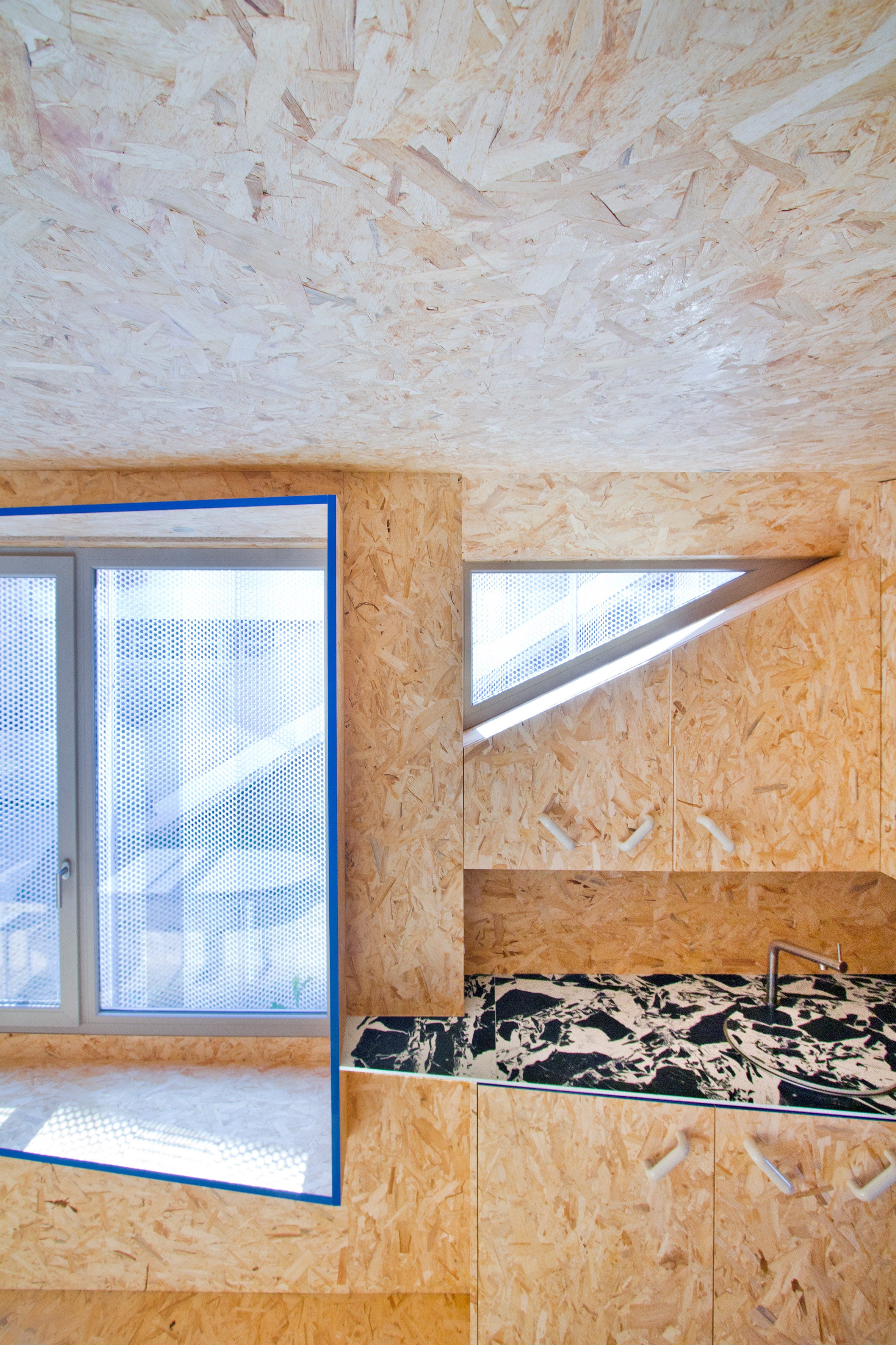
Surfaces and objects in this space are built from oriented strand board, or OSB, a type of engineered board featuring large wood strands. This includes window boxes that double as seats and a long daybed/storage chest.

There are also wardrobes beside the entrance, which conceal the heating system and washing machine, but also accommodate a study desk.

Urban Cabin by Francesca Perani

"I wanted to give the space a sense of warm comfort," said Perani. "I wanted a fluid continuous pattern that could make the space feel bigger, one texture for floor, paving, walls and soffit."

"I have always seen OSB used on building sites and I love its textural irregularity, random organic composure and recycled properties," she added.

Urban Cabin by Francesca Perani bathroom

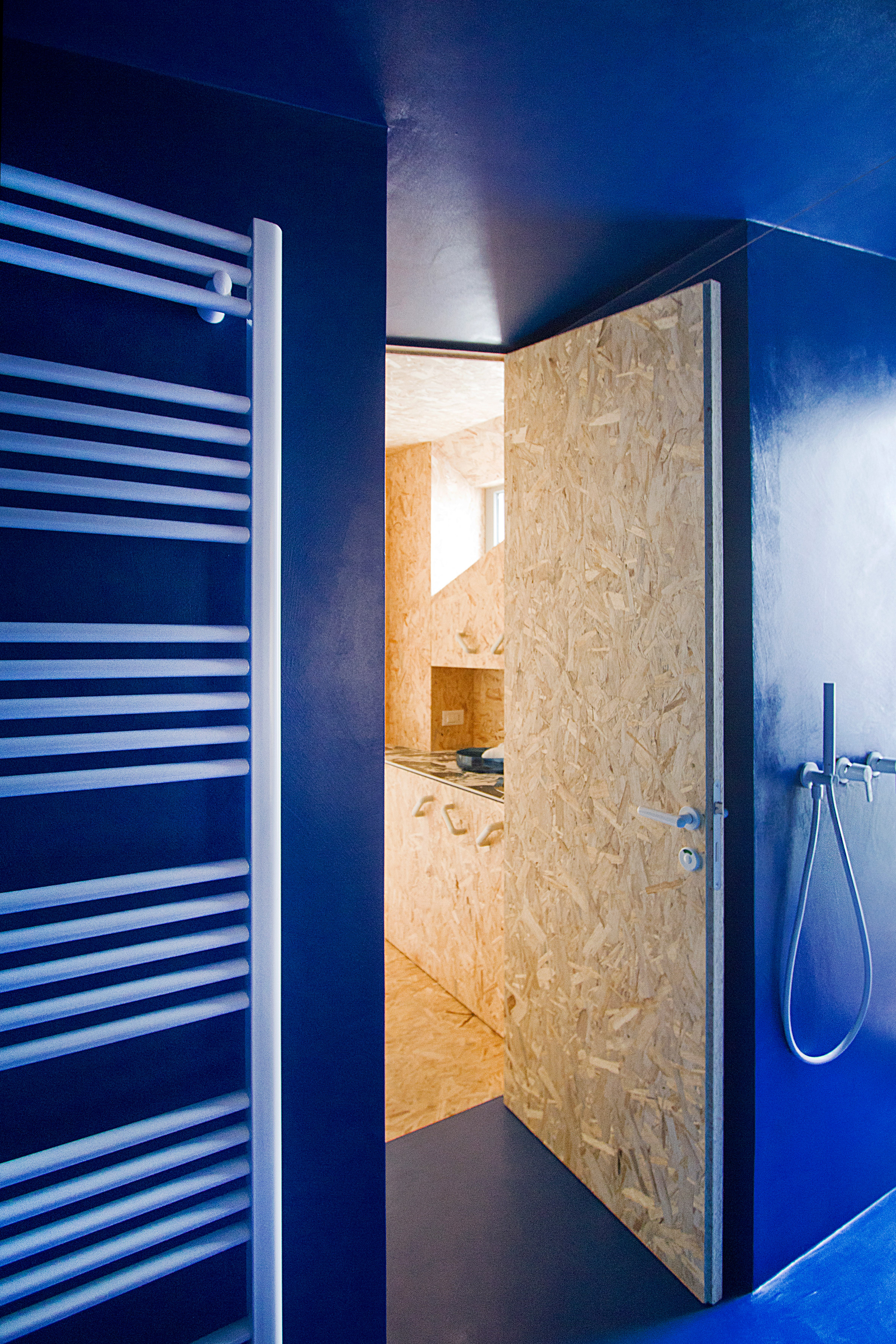
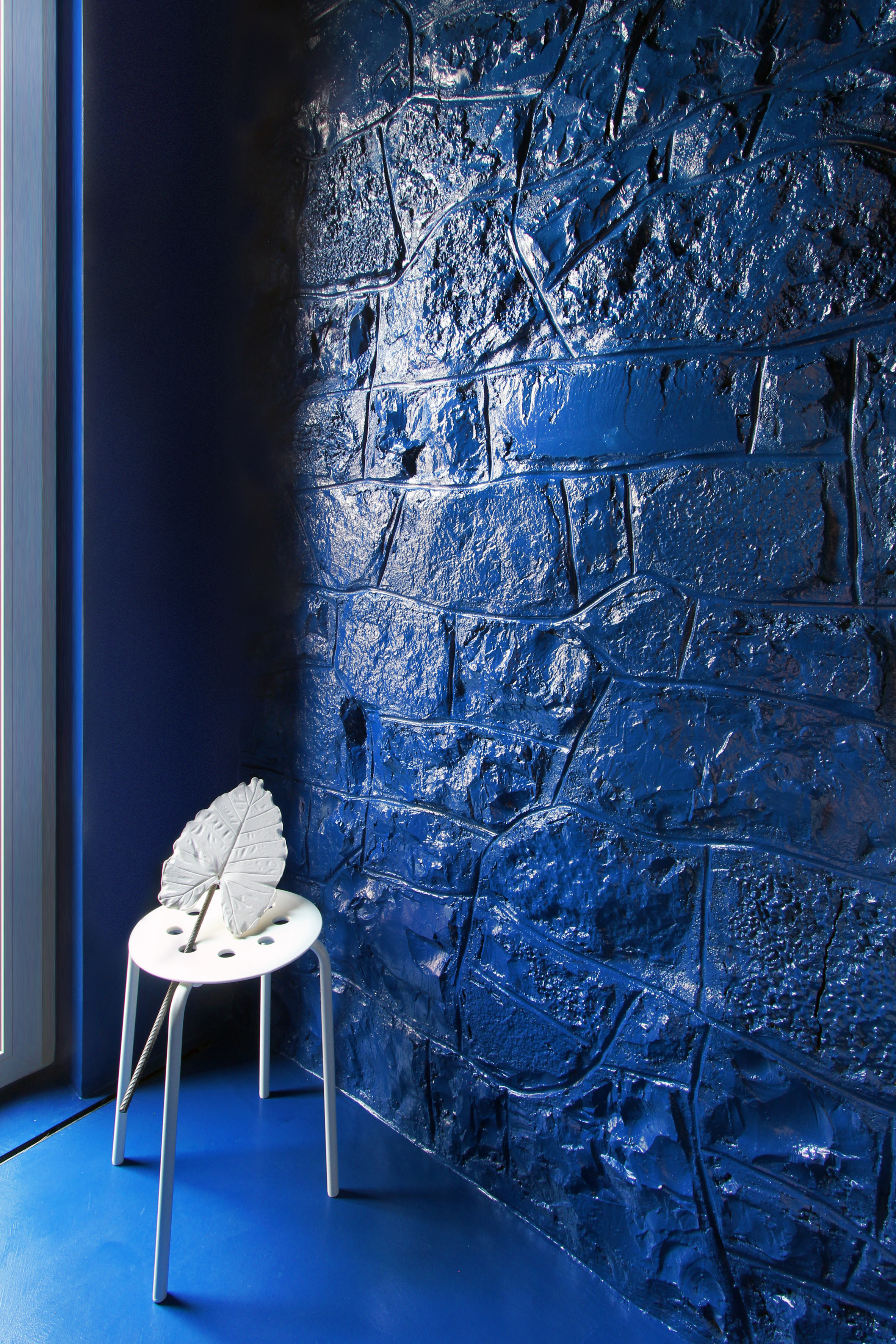
Details are picked out in royal blue, the same colour used in the bathroom, while the kitchen worktop features a monochrome print designed to resemble marble.

Despite the home's small size, the bathroom is designed to feel generous. A window fronts the shower, so that residents can look out over the garden but without fear of losing their privacy.

Urban Cabin by Francesca Perani perforated metal facade

As well as being an architect, Perani is also a graphic designer and an activist.

She leads RebelArchitette, a campaign group that fights for women's rights in architecture, while her side project Cutout Mix offers resources for architectural illustrations.

Photography is by the architect, with styling by Chiara Birolini.


Project credits:

Project leader: Francesca Perani
Interior designer: Ilenia Perlotti
Junior architect: Ilaria Odoli
Engineer: Roberto Belotti
Heat engineer: Luca Noris – Progterm
Builder: Gherardi Giuseppe
Metal shadings: Valoti Giovanni
Decorator: Diego Armellini
Carpenter: DueMMe
Lighting: Due Effe Illuminazione

The post Urban Cabin is a micro apartment in Italy with custom seating and storage appeared first on Dezeen.


from Dezeen https://ift.tt/34aDf36

Saturday, 4 April 2020

Muller Van Severen constructs Alltubes furniture series from rows of aluminium pipes

Muller Van Severen construct furniture series from rows of aluminium tubes

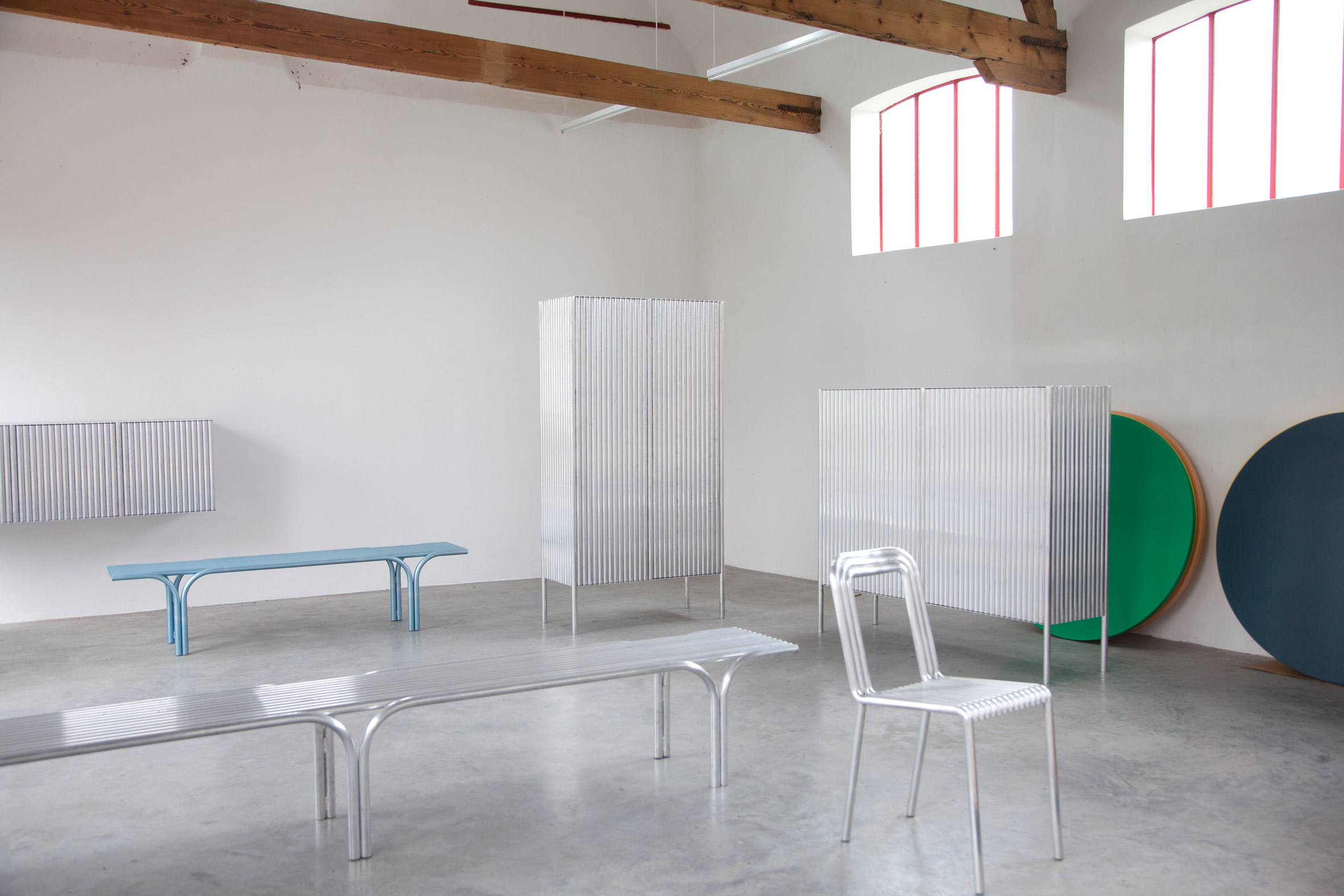
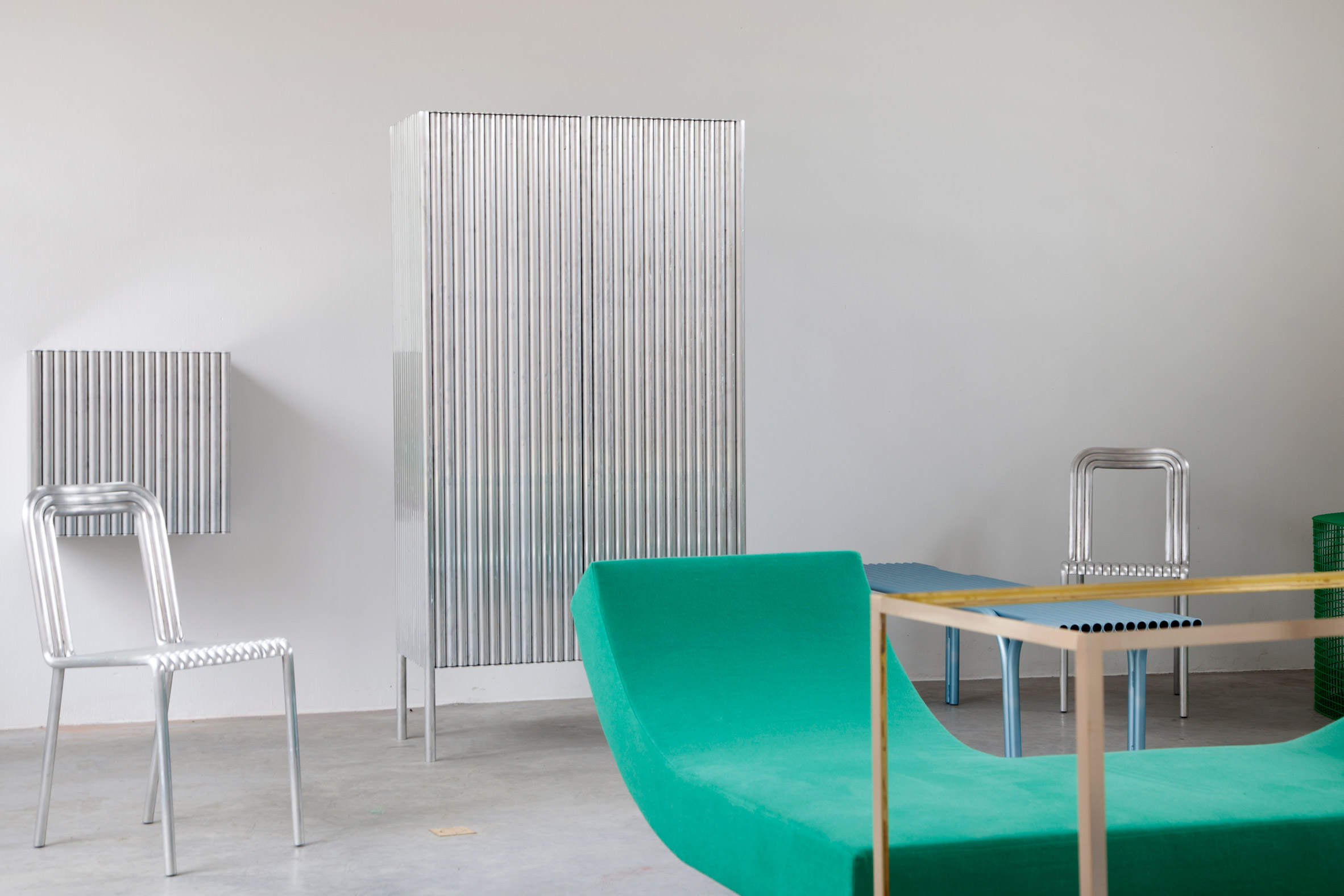
Belgian design duo Fien Muller and Hannes Van Severen aimed to explore the possibilities of aluminium tubing in their latest furniture collection, which sees metal pipes lined up in welded rows.

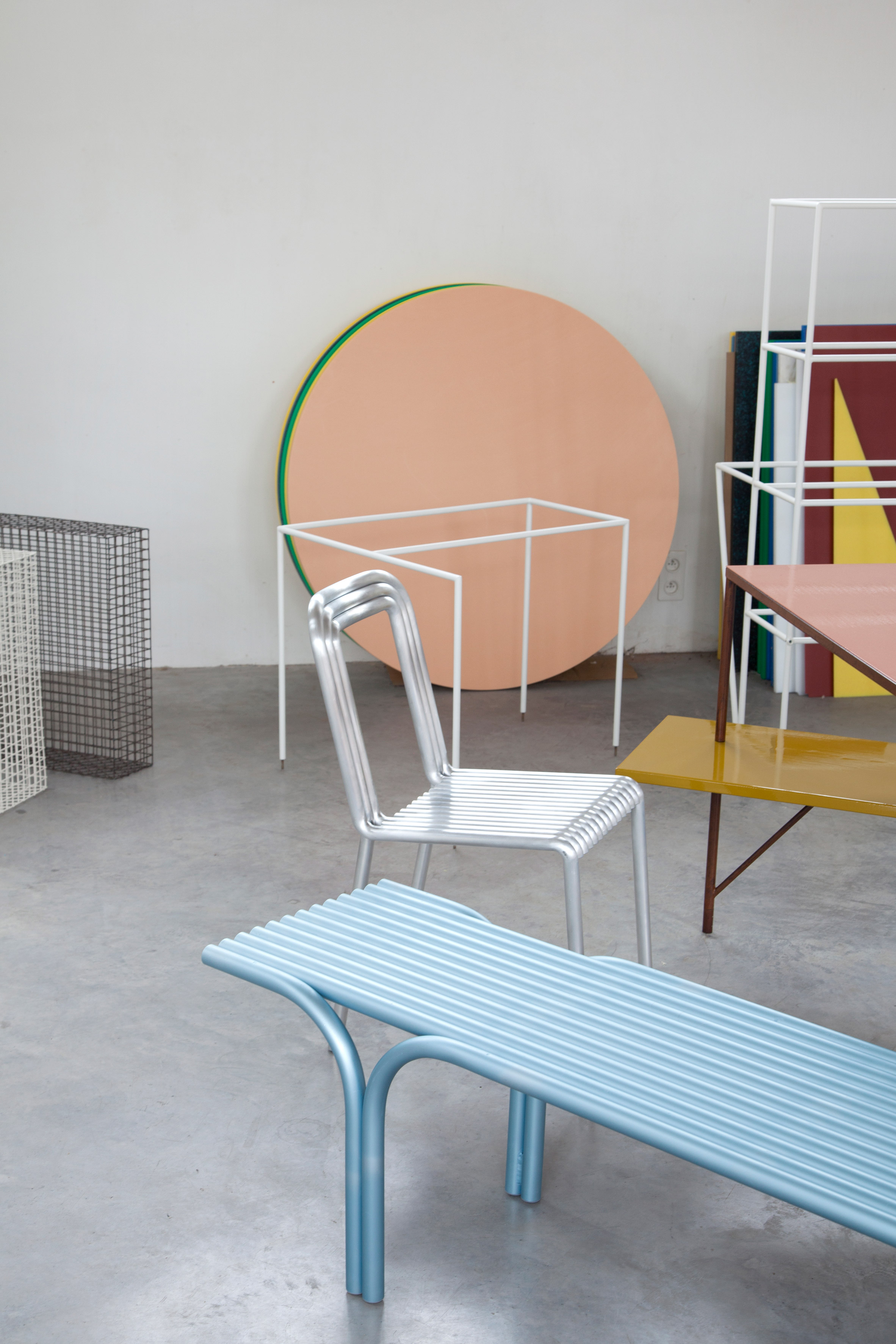
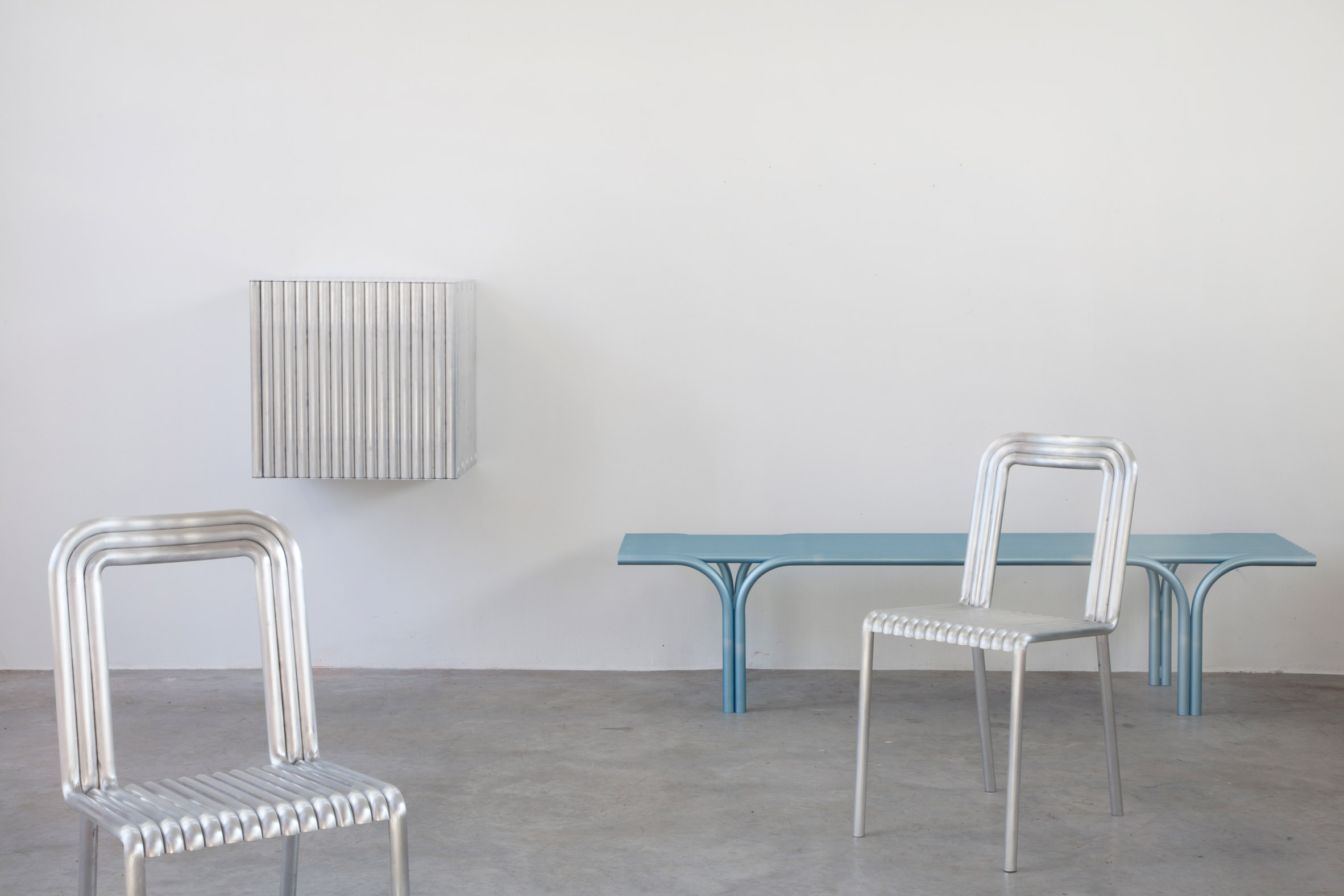
Consisting of a chair, a bench and a variety of cabinets – including freestanding and wall-mounted versions – the Alltubes collection is named for its primary material.

Muller Van Severen construct furniture series from rows of aluminium tubes

Using different diameters, Muller and Van Severen developed a way to make standardised pieces of aluminium tubing both decorative and structural.

By lining the tubes up in welded rows, they created walls and surfaces. Bending sections of tubing allowed them to form legs and rails that extend seamlessly from the body of each piece.

Muller Van Severen construct furniture series from rows of aluminium tubes

"At the metalman's we saw a series of tubes next to each other, we were immediately surprised by the beautiful wavy surface and how the light reacted to it," Muller and Van Severen told Dezeen.

"One element becomes a strong surface by multiplying it, hinges and doorways can be hidden in the tubes, and by extending or bending, legs or railings are created," the duo continued.

"Everything can flow naturally into each other in this way. We only had to work with one profile and yet we could create a whole world with it."

Muller Van Severen construct furniture series from rows of aluminium tubes

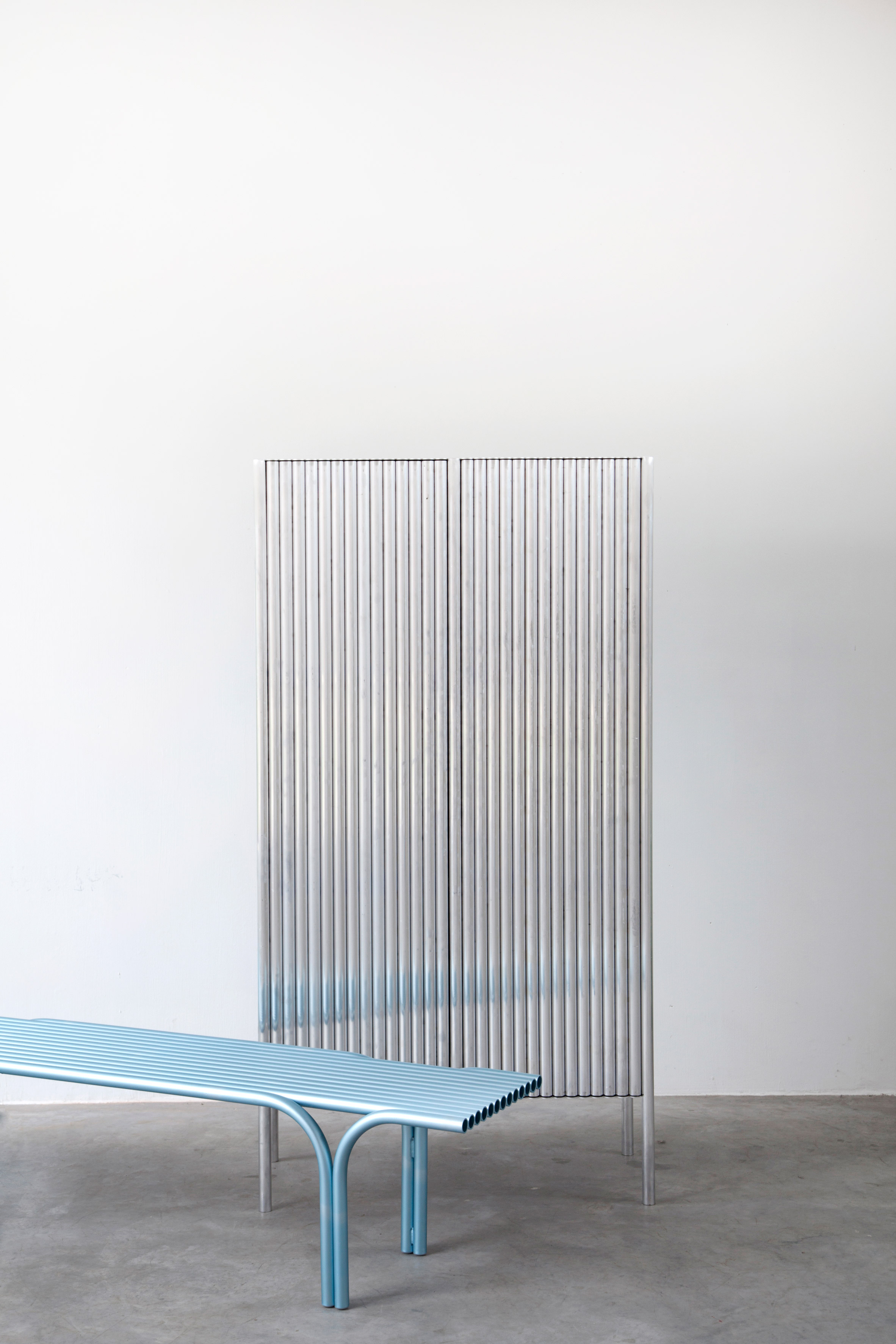
The cabinets feature flat tops, shelves and bottoms, each with a scalloped edge that matches the profile of the tubes that form the walls of the designs.

Two of the cabinets are the same size, but use different diameters of tubing – five centimetres and three centimetres – to create a different effect.

Muller Van Severen construct furniture series from rows of aluminium tubes

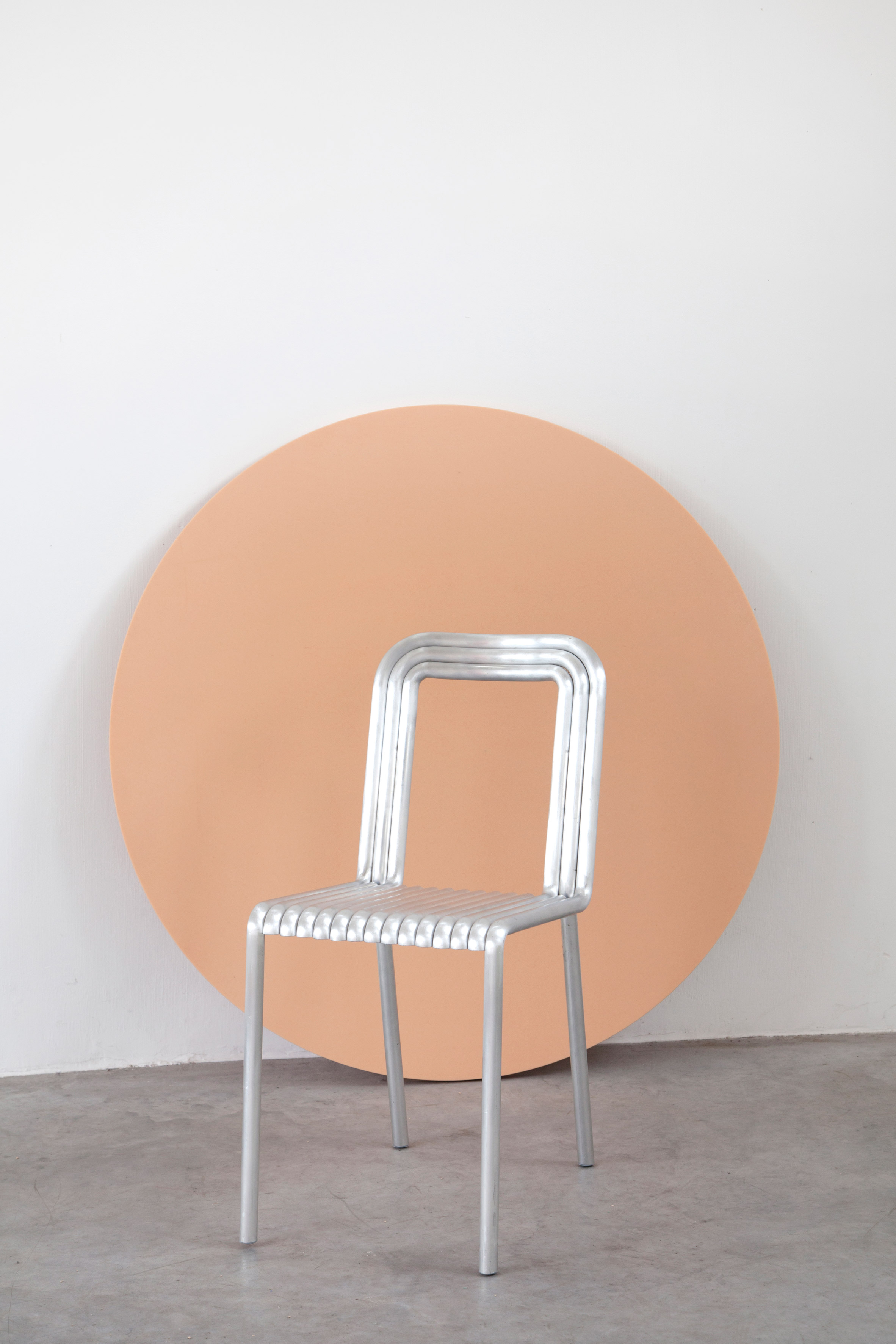
The chair uses a smaller diameter of tubing – 2.5 centimetres – than other pieces in the collection. "We found that this proportion fits better," explained the designers.

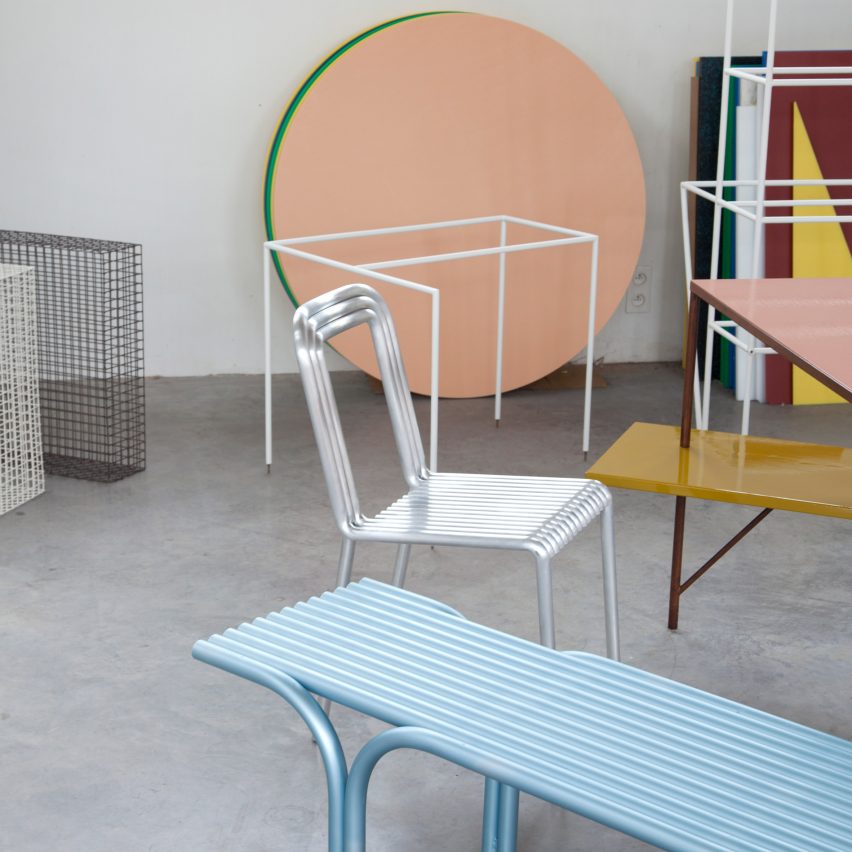
The seat of the chair is made from 15 pieces of tubing. Two of these bend down at the front to create legs. The back is formed of three pieces of tubing – two that extend up from the seat and one that extends down to create the back legs.

The bench, which is 175 centimetres long and features a blue finish, uses 11 lengths of five-centimetre diameter tubing for the main body, with an additional three pieces on each side that are bent to create the double-width legs.

"In the case of the cabinets, the repetitive rhythm of the pipes placed next to each other – causing undulations – makes you forget the coldness of the material," said the duo. "In the bench and the chair, bending the material softens its hardness."

Muller Van Severen construct furniture series from rows of aluminium tubes

Originally both artists, Muller and Van Severen founded their furniture studio in 2011. Based in Evergem, Belgium, they use materials as the starting point for their designs.

Previous examples include curving loungers made from wire netting, polyethylene cabinet hacks for IKEA kitchens, suspended leather seats and colourful, intersecting tables and shelving.

"We almost always start from a standard material with its standard dimensions in its naked form, which is composed in a seemingly simple way," the duo told Dezeen.

"The strength of the material itself is also expressed [in Alltubes]. The simplicity of the idea and then creating a whole world with it. Thinking as far as possible from one material. And going as far as possible."

Muller Van Severen construct furniture series from rows of aluminium tubes

Alltubes was launched at this year's Collectible design fair in Brussels, which took place from 5-8 March.

The fair also saw Dutch startup Plasticiet create a series of furniture from monolithic slabs of recycled polycarbonate, which feature a swirling, shiny finish reminiscent of mother of pearl.

The post Muller Van Severen constructs Alltubes furniture series from rows of aluminium pipes appeared first on Dezeen.


from Dezeen https://ift.tt/348IHUc

Roth Sheppard cantilevers black metallic extension from 1930s Rabbit House

Rabbit House by Roth Sheppard

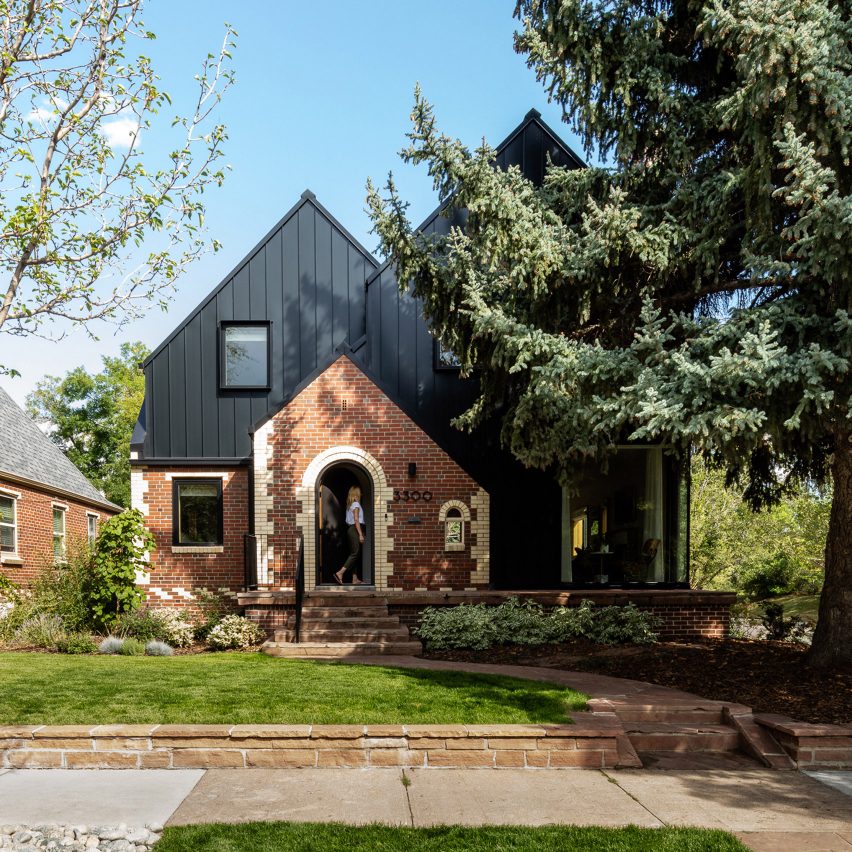
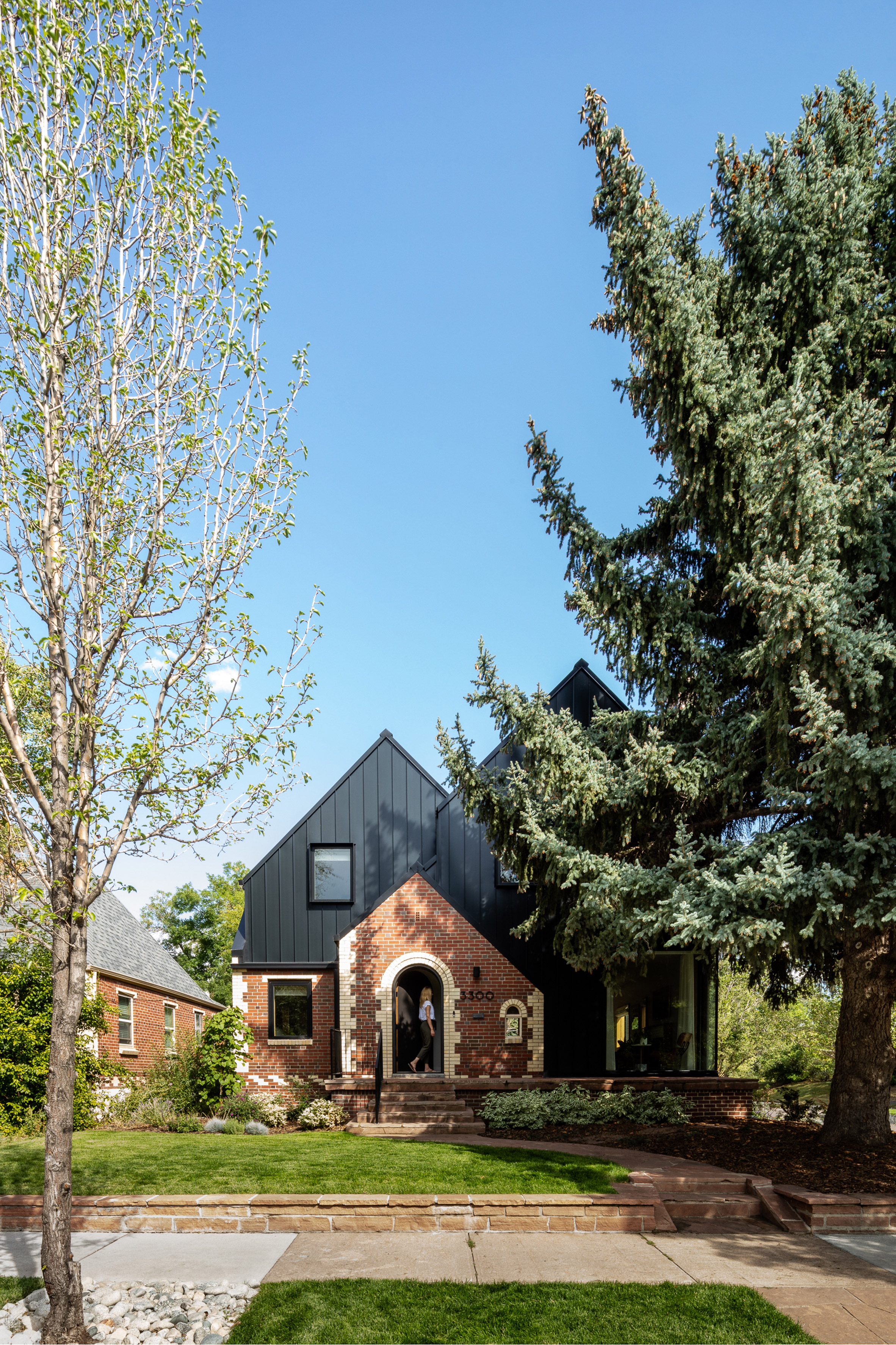
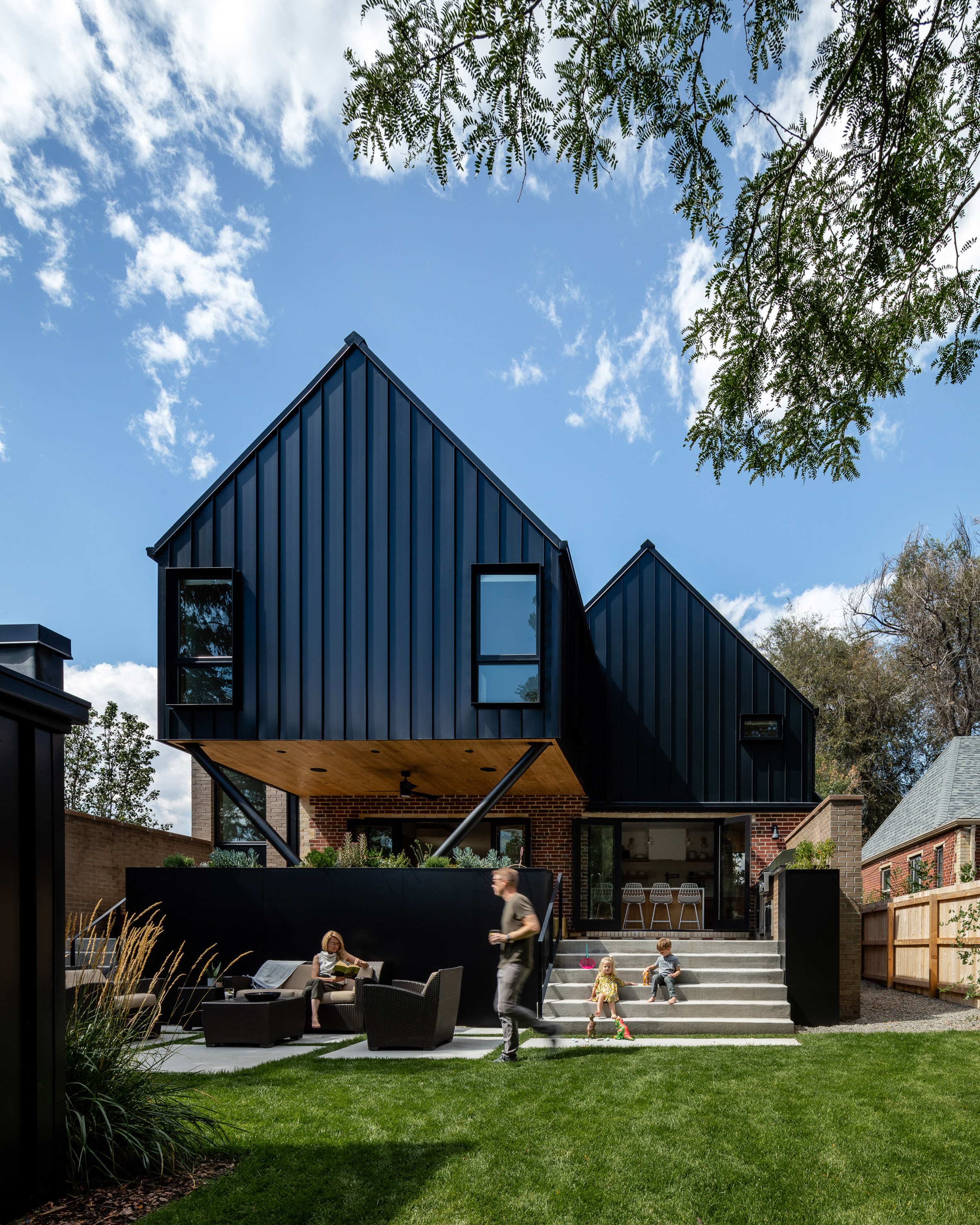
Architecture firm Roth Sheppard has added a pair of steeply pitched metal gables to this brick Tudor Revival house in Denver.

Rabbit House by Roth Sheppard

The local firm designed the renovation and extension of Rabbit House, which is located on Packard Hill in Denver's Potter Highlands Historic District. It was originally built in 1938 by Welsh architect R O Parry.

The house received its name from a neighbourhood resident who used to visit the alfalfa fields that previously occupied the lot to gather hay for her pet rabbits.

Rabbit House by Roth Sheppard

Roth Sheppard's project added 1,760 square feet (164 square metres) to the single-storey Tudor Revival-style property so it now totals 4,442 square feet (413 square metres).

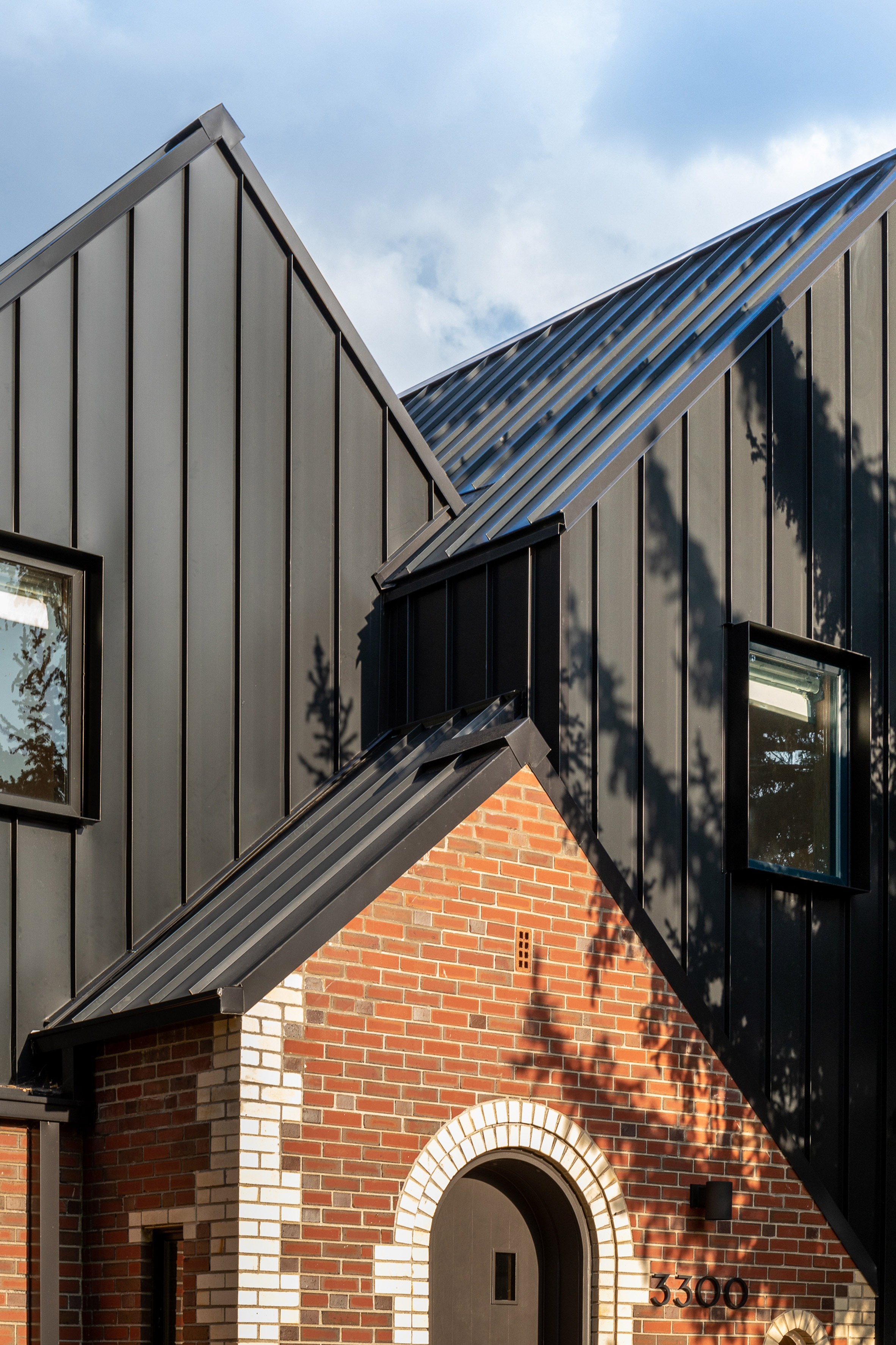
It combines traditional Tudor details such as a multi-gabled roofline, large chimney and decorative entryway with modern elements including metal cladding and open floor plan.

Rabbit House by Roth Sheppard

"The juxtaposition between old and new showcase the sophisticated integration of modern design concepts," Roth Sheppard said.

On the exterior two steep gables clad in black standing-seam metal are paired with the brick facade.  Existing details including the arched doorway, small rounded window and brick stoop remain on the front of the house.

Rabbit House by Roth Sheppard

"The new brick and metal material palette was inspired by traditional noble materials, brick, stone and slate, that were used to construct these historic Tudor Revival residences," the studio added.

The larger of the two gables forms a cantilever on the backside of the home to extend over deck. It is supported by slanted columns that are set in a large black planter box is used to separate the covered area from the outdoor patio space.

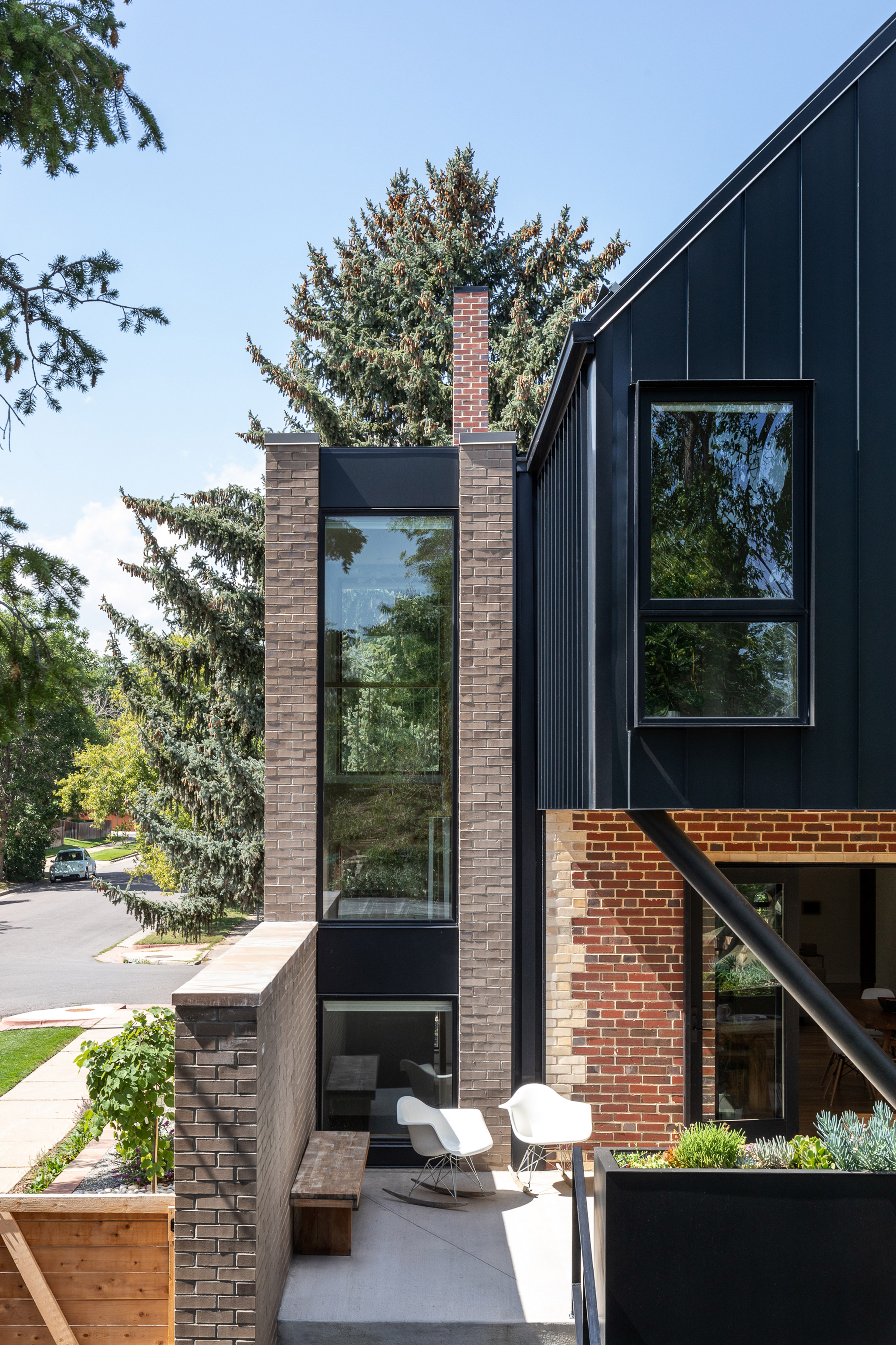
A large brick fireplace with two narrow windows attaches to the house's southern elevation. All of the existing windows were also updated to make them more energy-efficient versions.

Roth Sheppard also added a brick circulation tower to house the staircase so that the main living area could be open plan. The new brick structure attaches to the side and features glass panels.

Rabbit House by Roth Sheppard

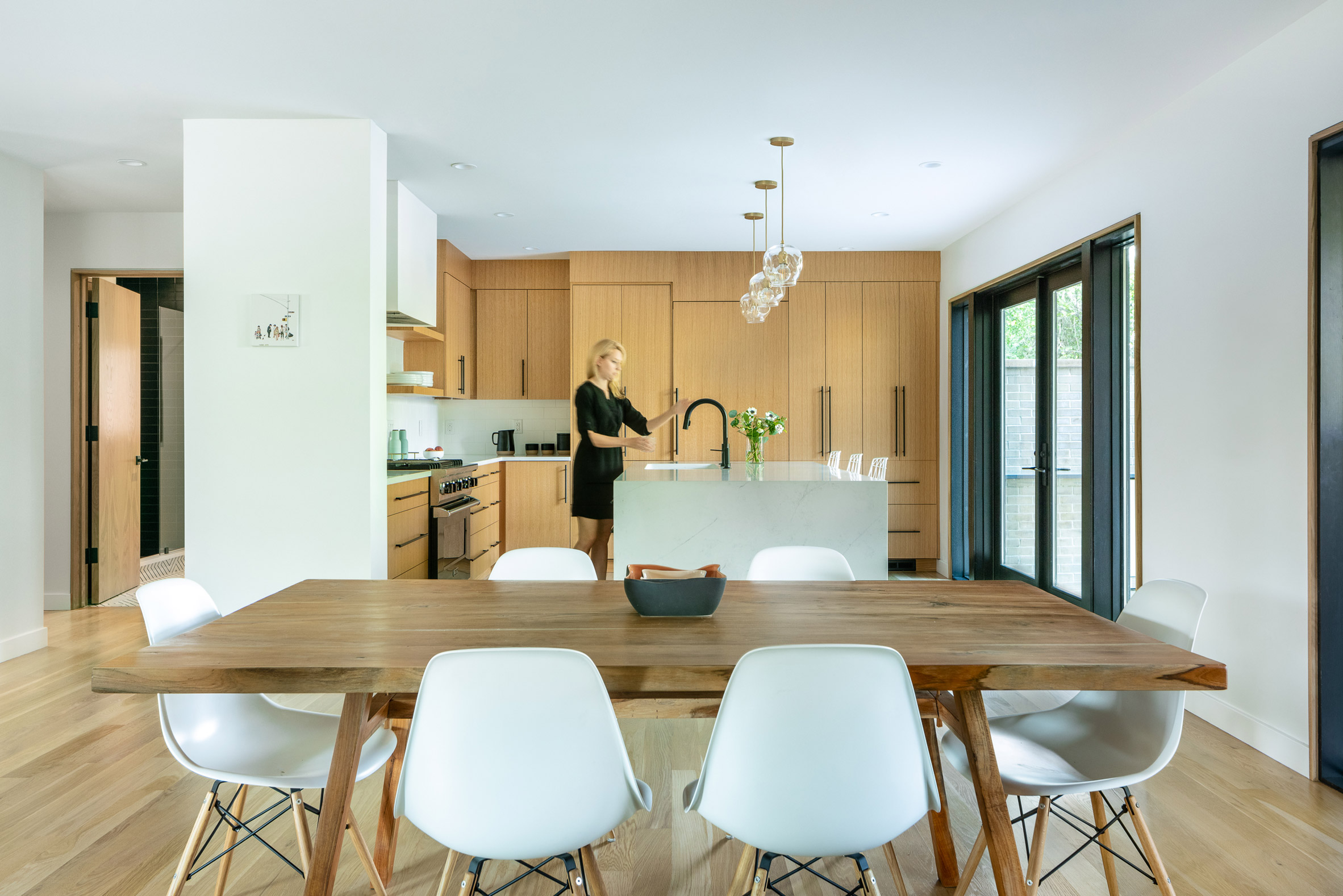
The ground floor comprises an open-plan lounge, kitchen and dining room. The latter two are placed at the rear and flanked by sliding glass doors that open onto a patio.

They form part of a series of floor-to-ceiling windows and glazed doors that bring natural light inside.

Rabbit House by Roth Sheppard

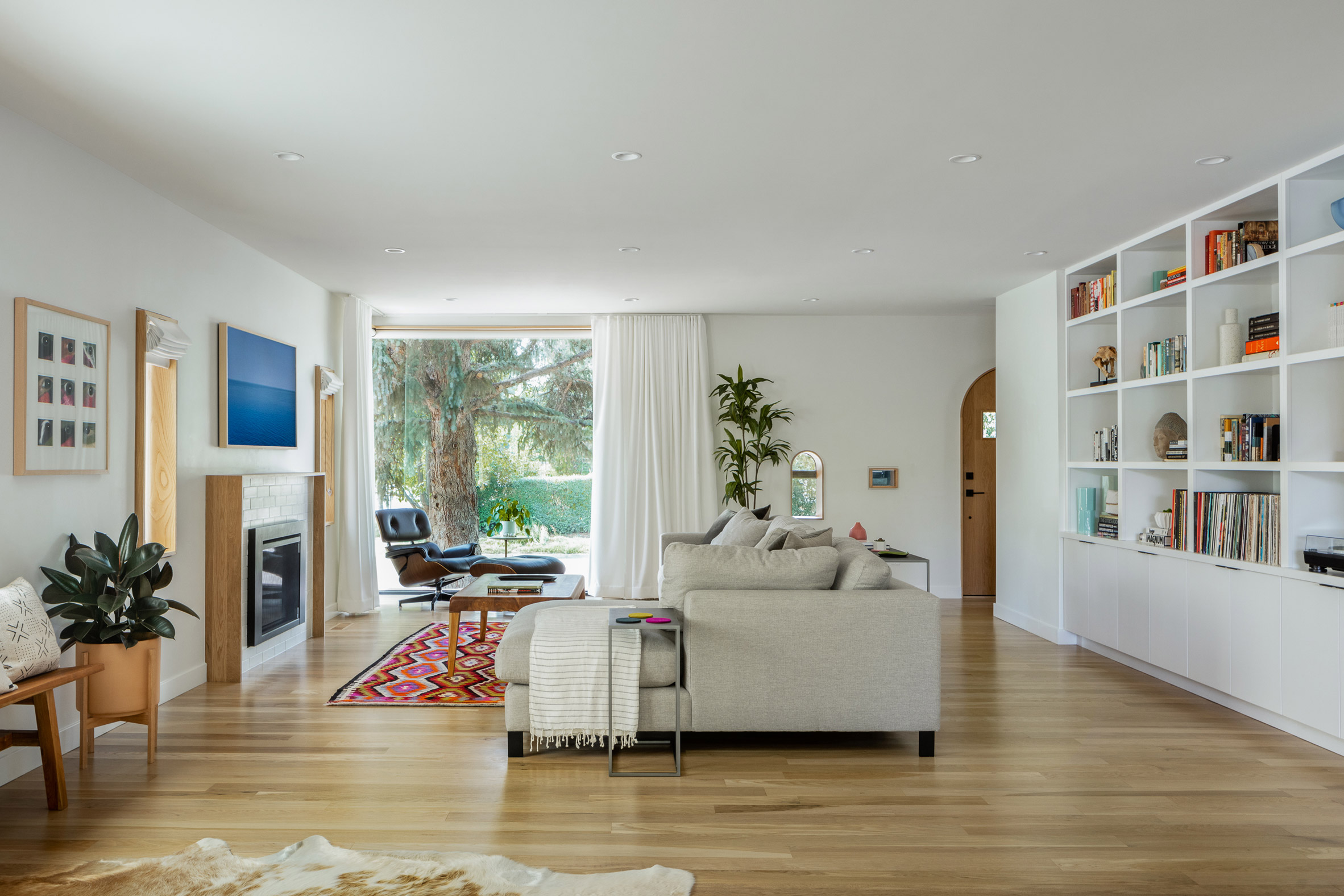
Honey-coloured white oak floors run throughout the interiors. The pale hardwood also covers some ceilings to show where the original structure meets the addition.

In the kitchen, wood cabinets are accented with thin black handles. A white hood covering the range, a large island and glass pendant lights also feature in the kitchen.

Rabbit House by Roth Sheppard

Other details include pale wood reveals around the casement windows and doorways that create shadow boxes to add depth and dimension to the space.

Roth Sheppard is a Denver architecture firm founded in 1983 by Jeff Sheppard and Herb Roth.

Rabbit House by Roth Sheppard

Other houses in Denver, Colorado include a low-lying brick residence fronted with walnut panels and large glass panes and house clad with recycled wooden shipping pallets.

Photography is by James Florio.

The post Roth Sheppard cantilevers black metallic extension from 1930s Rabbit House appeared first on Dezeen.


from Dezeen https://ift.tt/2X8Rvbe

A Massive Faux Staircase Punctuates A Glass-Sided Home Before Flowing into an Outdoor Garden

The design team at Nendo knew they’d need a way to connect the three generations—and eight cats—living inside a newly constructed home in the Shinjuku area of Tokyo, so they created an enormous staircase. Spanning from the outdoor garden to the third floor, the steel-and-concrete structure isn’t designed for climbing between floors but does serve as a multi-level garden area and space for the cats to lounge. It also conceals bathrooms and the staircase residents actually will use, while the white-paneled walls hold additional storage.

Aptly named Stairway House, the interruptive project juxtaposes connection and separation within one home, the design studio said in a statement.

A stairway and greenery gently connected the upper and lower floors along a diagonal line, creating a space where all three generations could take comfort in each other’s subtle presence. Not only does the stairway connect the interior to the yard, or bond one household to another, this structure aims to expand further out to join the environs and the city —connecting the road that extends southward on the ground level, and out into skylight through the toplight.

While a white facade masks the front of the house, the back is covered in windows that face the mature persimmon tree preserved on the property. For more of Nendo’s disruptive architecture, head to Instagram. (via Dezeen)


Do stories and artists like this matter to you? Become a Colossal Member and support independent arts publishing. Join a community of like-minded readers who are passionate about contemporary art, apply for our annual grant, and get exclusive access to interviews, partner discounts, and event tickets.


from Colossal https://ift.tt/2Xa0NDG