Sunday, 5 April 2020

Eldridge London's trefoil-shaped house has a "sense of the theatrical"

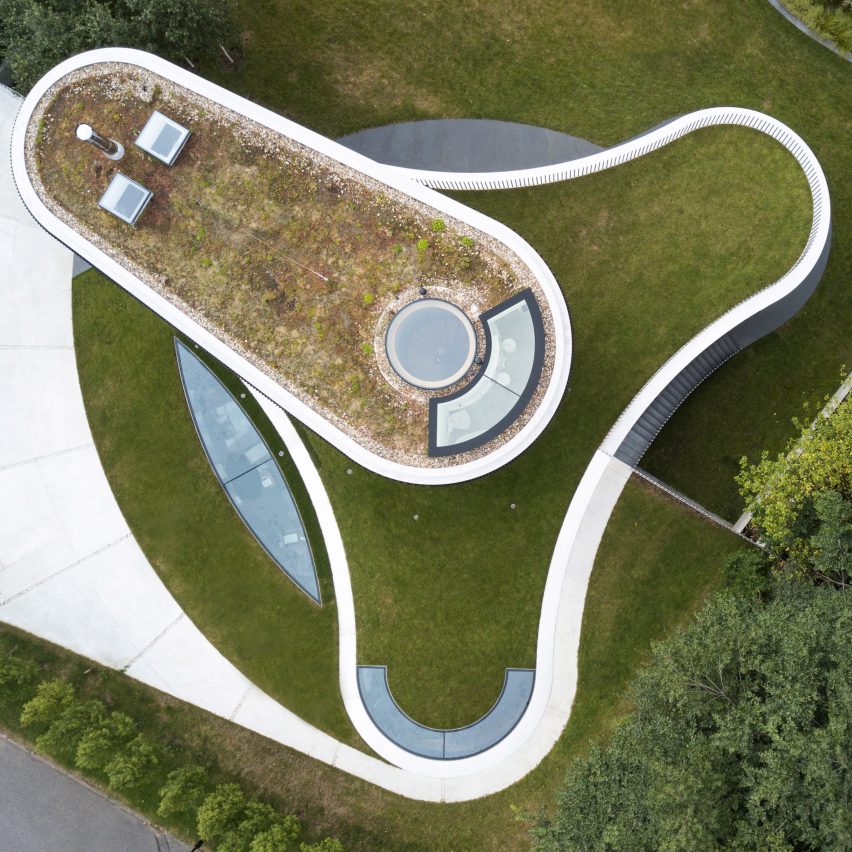
House in Coombe Park by Eldridge London grass roof

Curved walls and metallic details bring drama to this family house in southwest London, by architecture studio Eldridge London.

House in Coombe Park is located in leafy Kingston-upon-Thames, but offers a departure from the "pastiche neoclassical" buildings of the area.
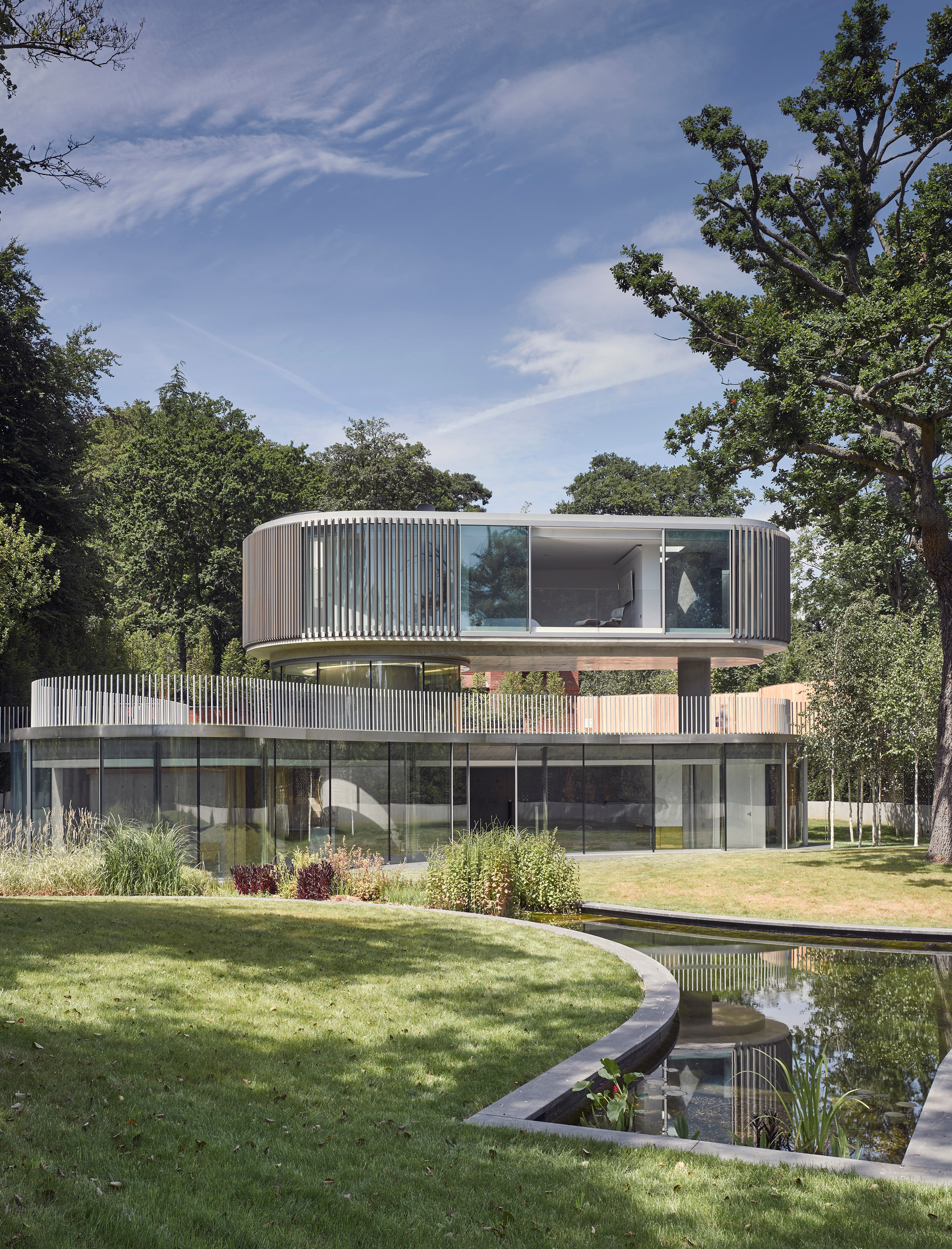
Eldridge London, led by architect Nick Eldridge, designed the 505-square-metre building with a trefoil-shaped plan, meaning almost every section of wall is curved.

The exterior is a mix of floor-to-ceiling glazing and a bronze-toned cladding system made from lengths of profiled aluminium, while the interior features white marble, fair-faced concrete, oak and polished brass.
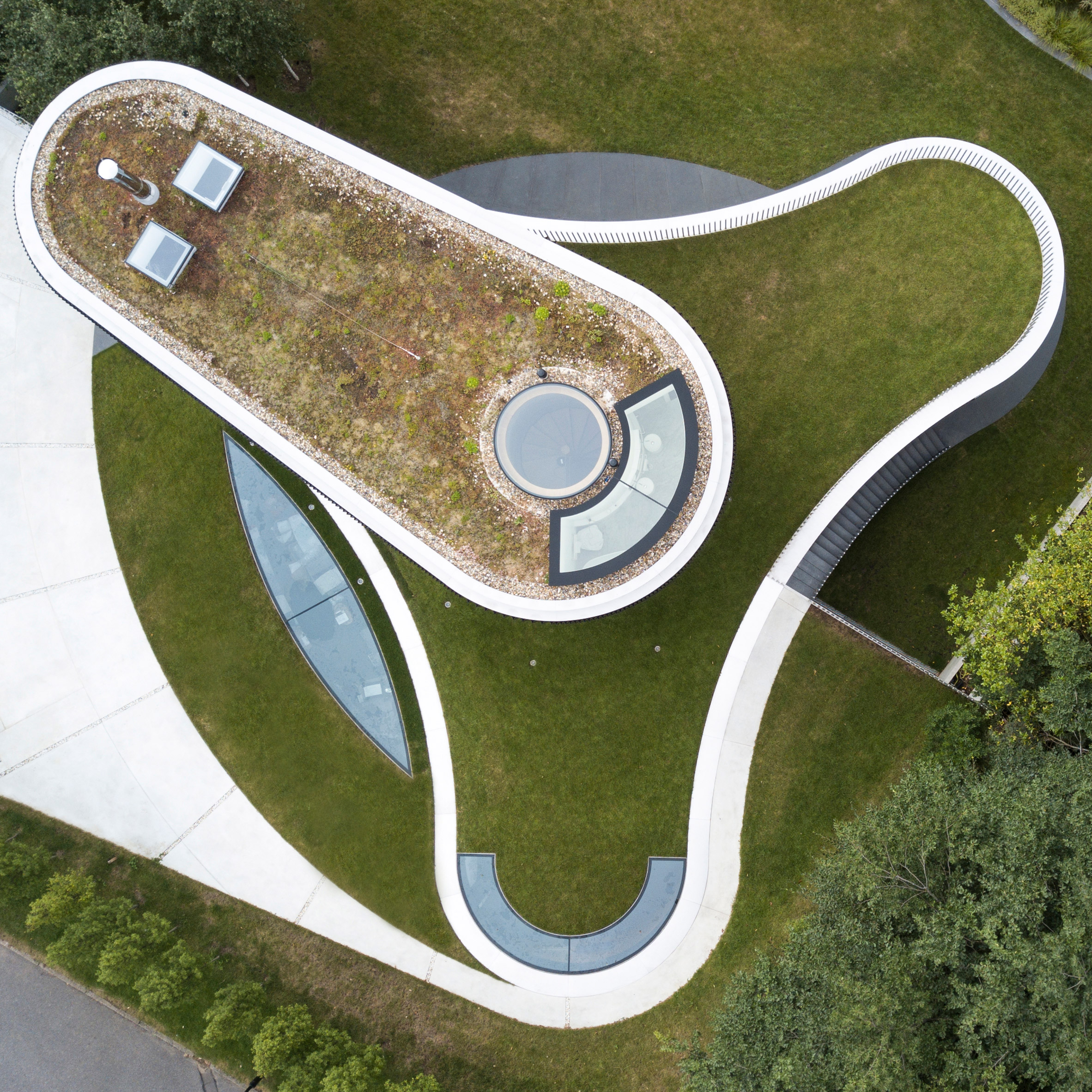
House in Coombe Park by Eldridge London grass roof

These materials, along with a selection of bespoke furnishings, allow the building to become a showpiece for the client.

"The client runs a business that make structures and spaces for events, so a sense of the theatrical is integrated into the scheme," explained project architect Mike Gibson.
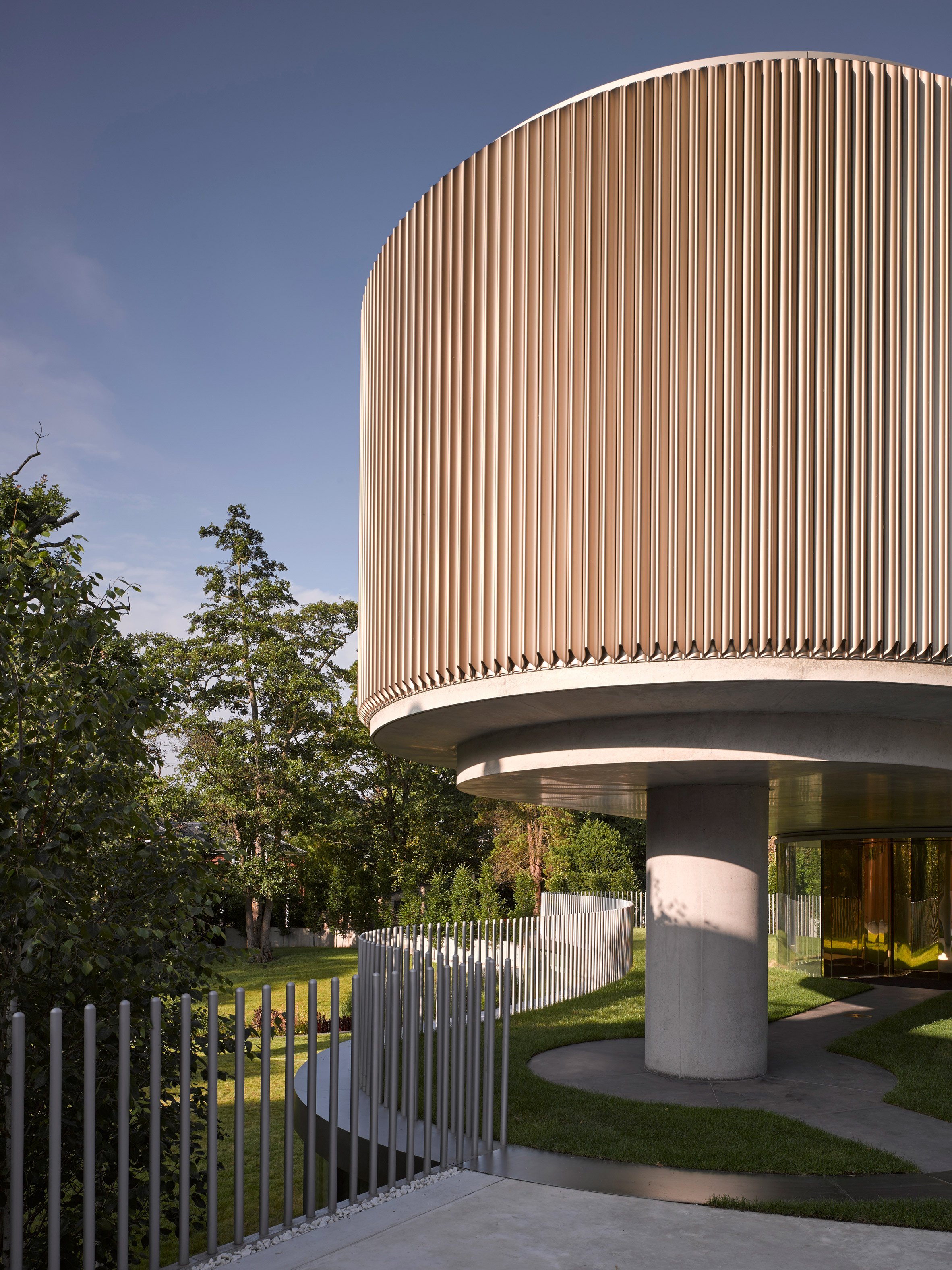
House in Coombe Park by Eldridge London exterior

"The house needed to function as a family home but also provide drama as a space for entertaining," he told Dezeen, referencing details that include a free-flowing plan, use of mirrors, automated voile curtains and a concealed spiral staircase.

The building comprises three floors, although very little is located on the middle storey, which aligns with the street. This level primarily functions as an entrance, with a car parking garage off to one side.
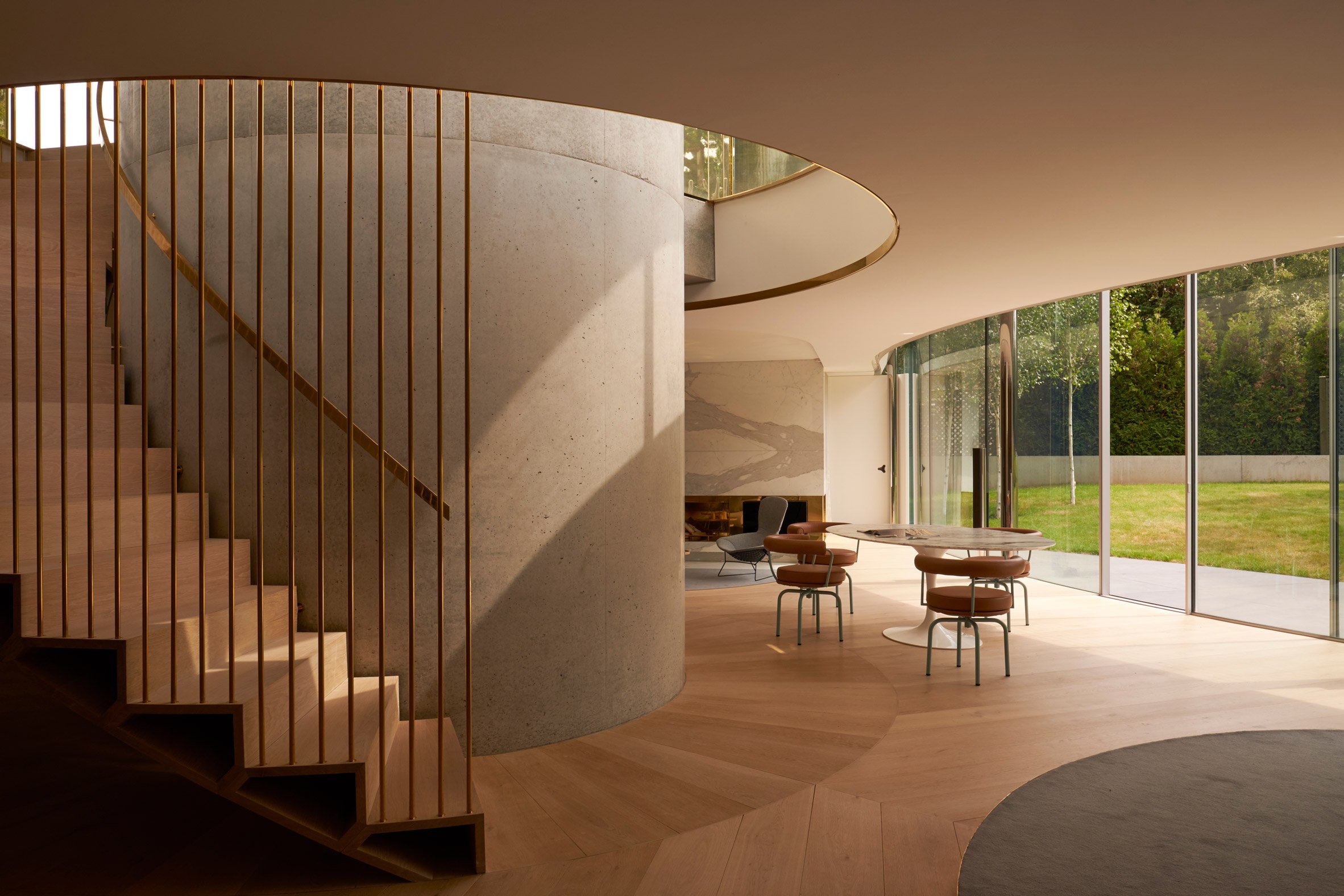
House in Coombe Park by Eldridge London staircase

Most rooms are located on the basement floor, which opens out to the garden, while the upper level contains a master bedroom suite.

The geometry of each level is different, but each one is designed to respond to the specific characteristics of the street and garden.
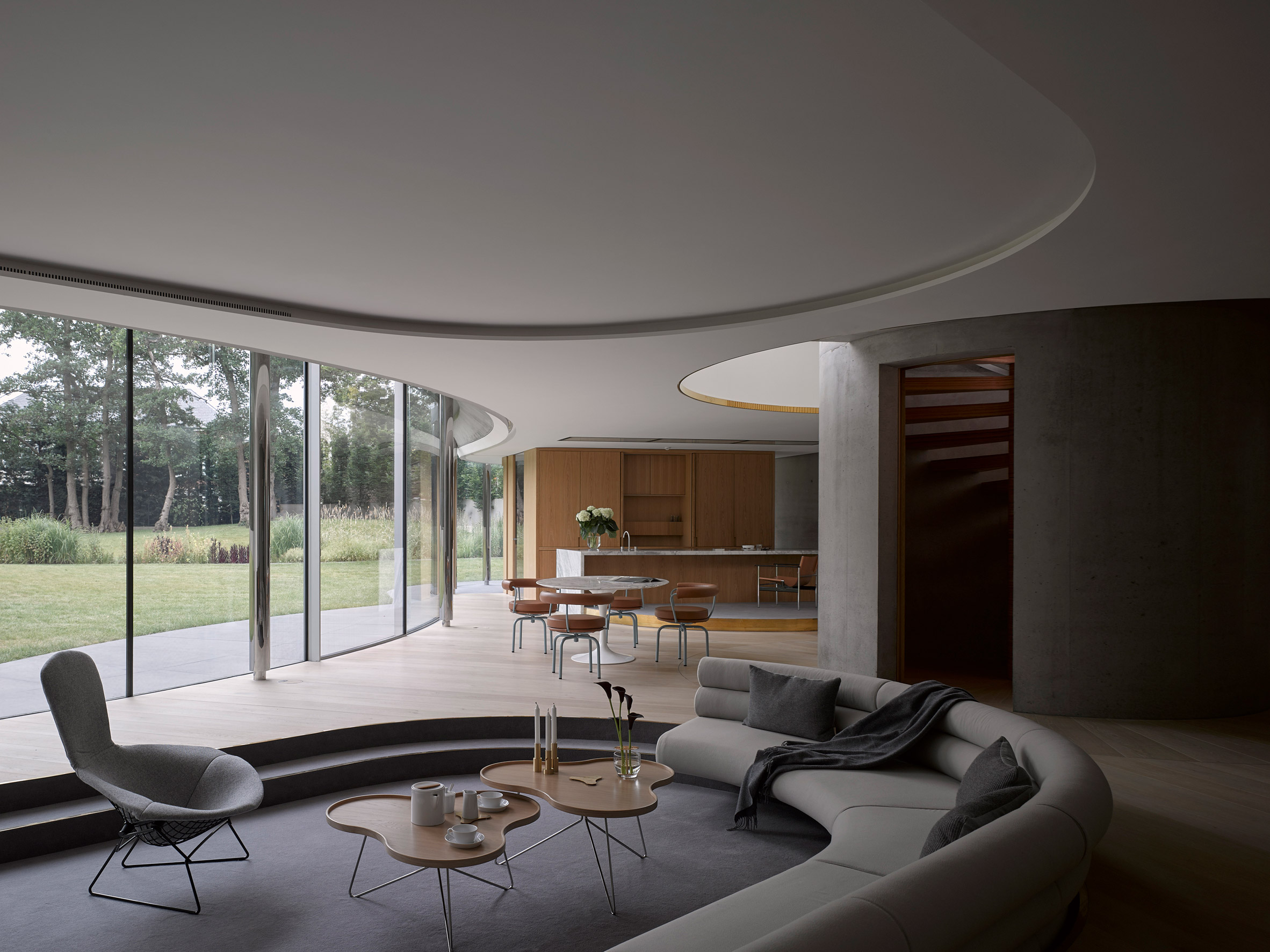
House in Coombe Park by Eldridge London lounge

"We found the main context to respond to was the landscape, specifically the sloping hillside and the ancient oak tree," said Gibson.

"The oak tree defines the geometry, the existing building line defines the position of the house, and the hillside slope and tree canopies inspired the section."
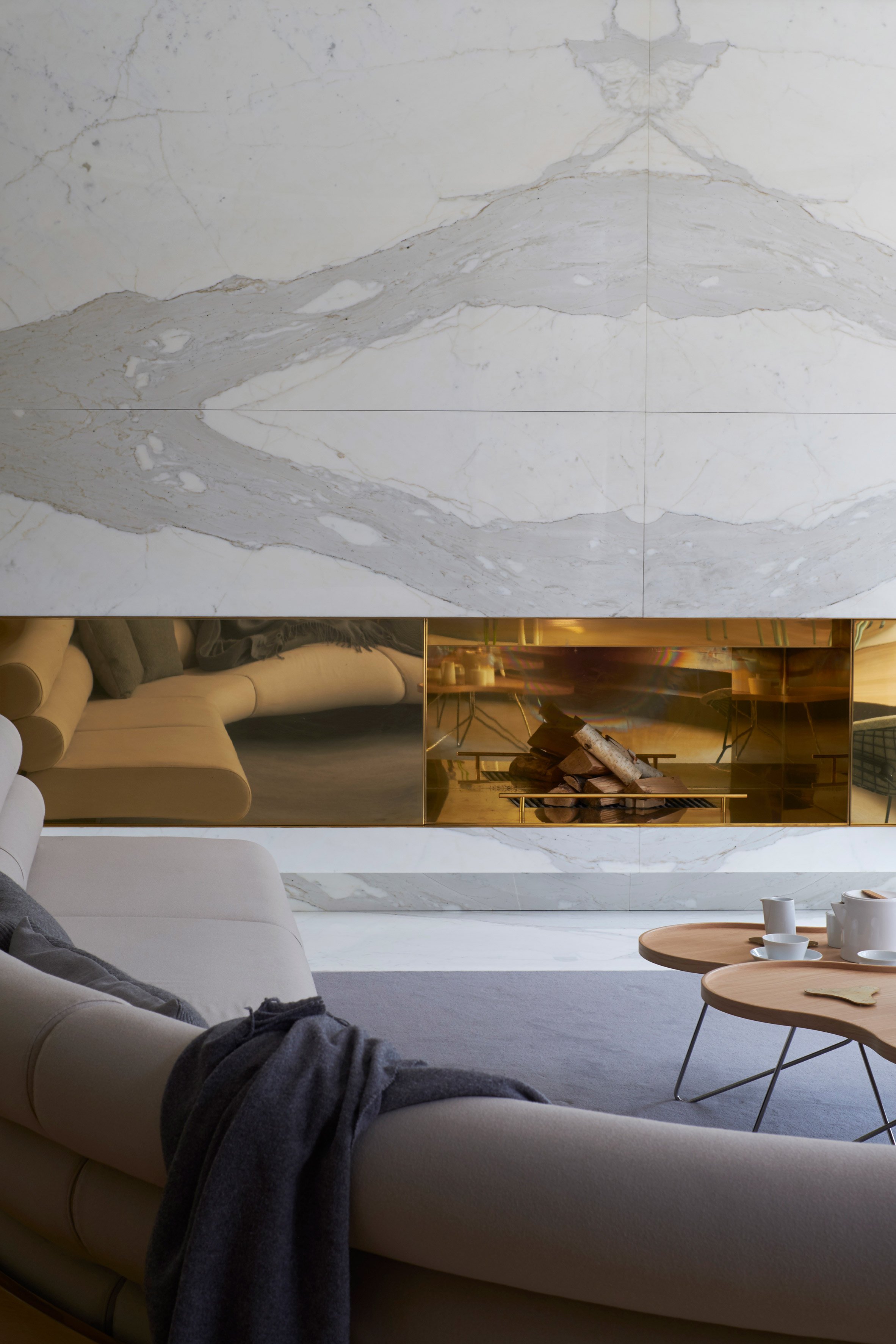
House in Coombe Park by Eldridge London lounge

The majority of the garden floor serves as an open-plan living and dining room, with level changes to subtly divide up the space.

The kitchen, with its oak cabinets and marble counter, is outlined by a raised platform. In another wing, a curved, sunken lounge is framed by a large bespoke sofa. This change is emphasised by a transition from oak flooring to soft grey carpet.
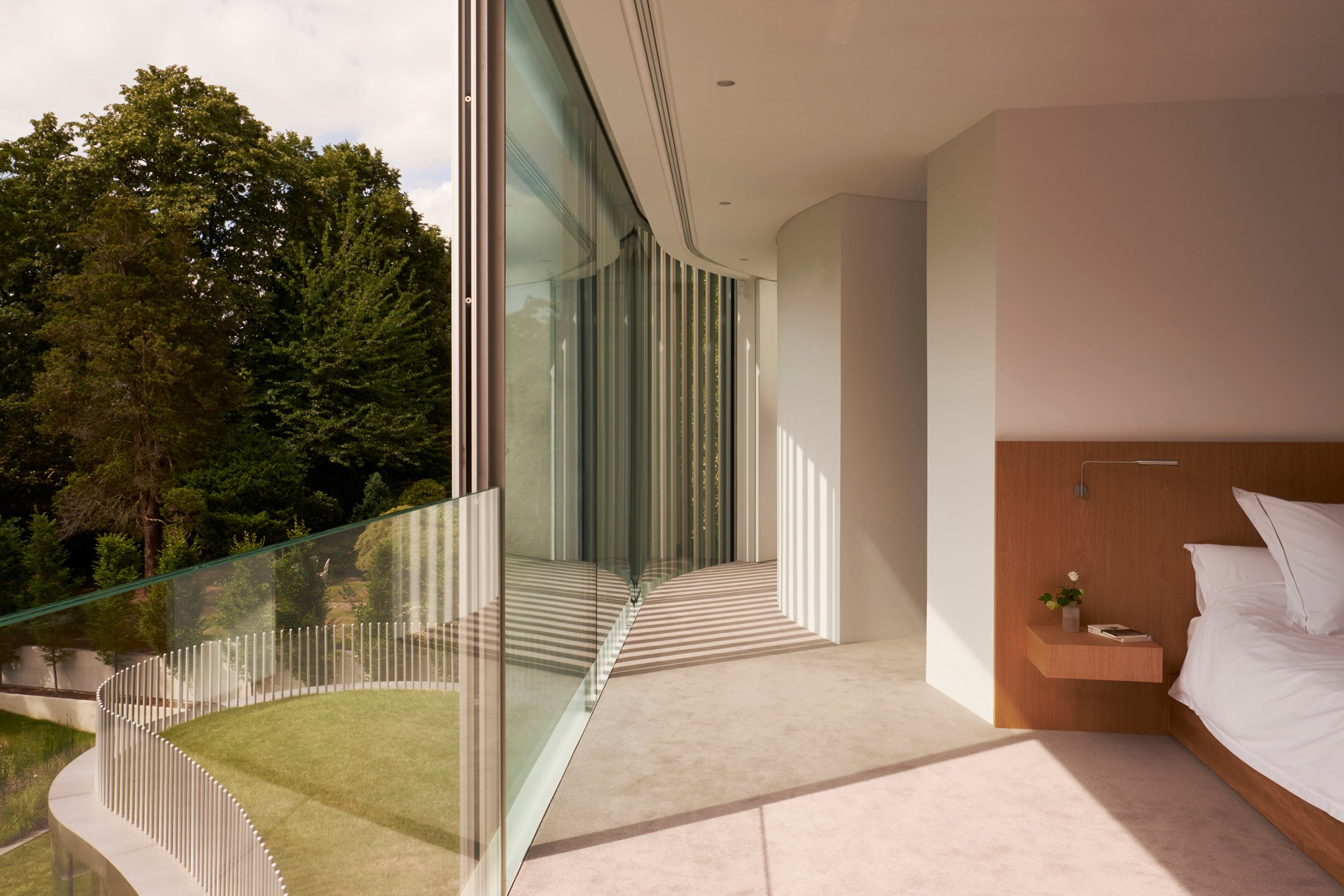
House in Coombe Park by Eldridge London bedroom

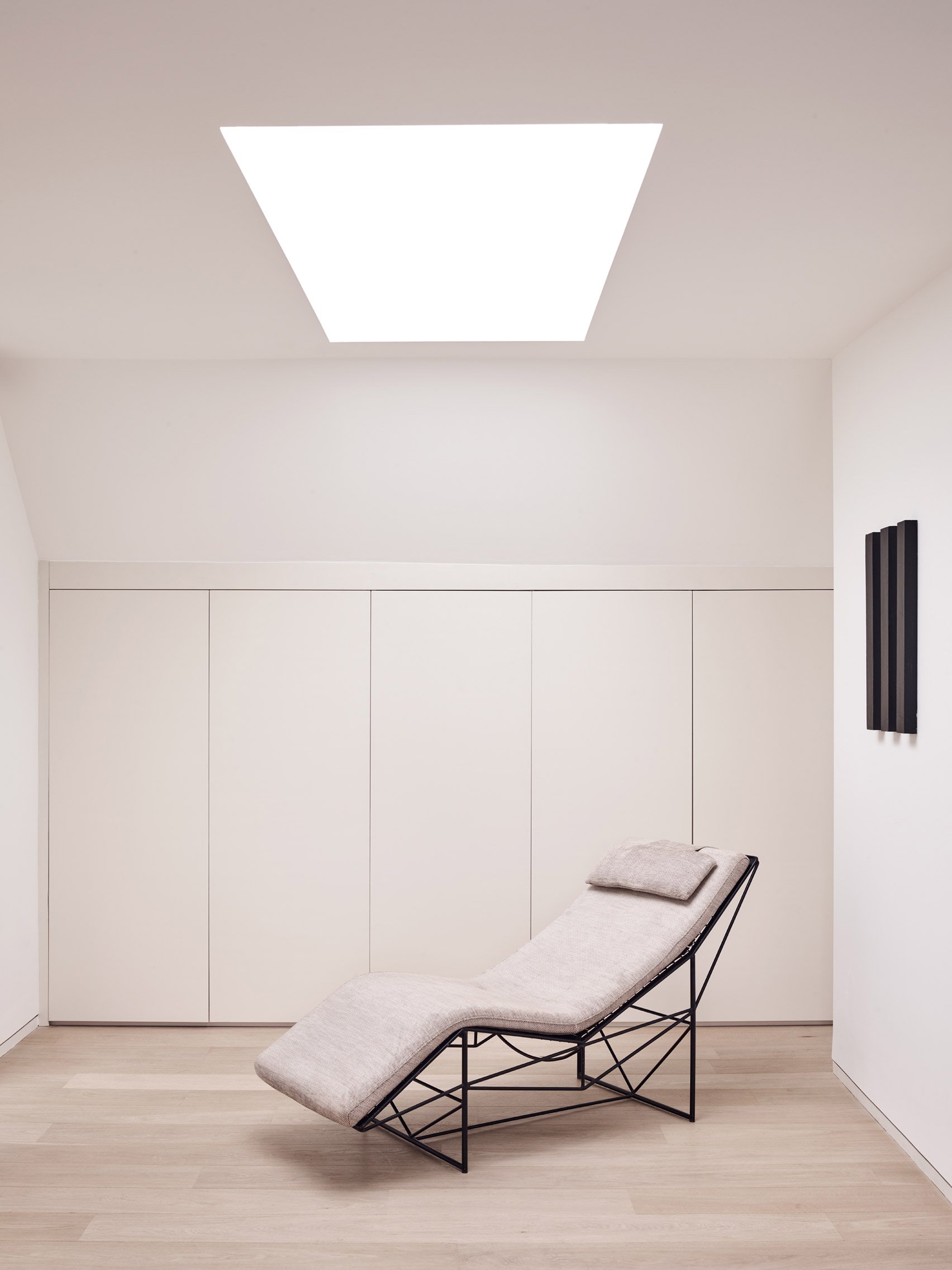
There are two bedrooms on this floor, tucked away in the corners of the plan, along with an enclosed media room. There is also a gym, which has no windows but is lit from above by a large lens-shaped skylight.

The spiral staircase, located at the centre of the plan, is the only route up to the master bedroom. As well as a large en-suite, this floor also includes a space originally designed as a dressing room, but which later became a nursery.
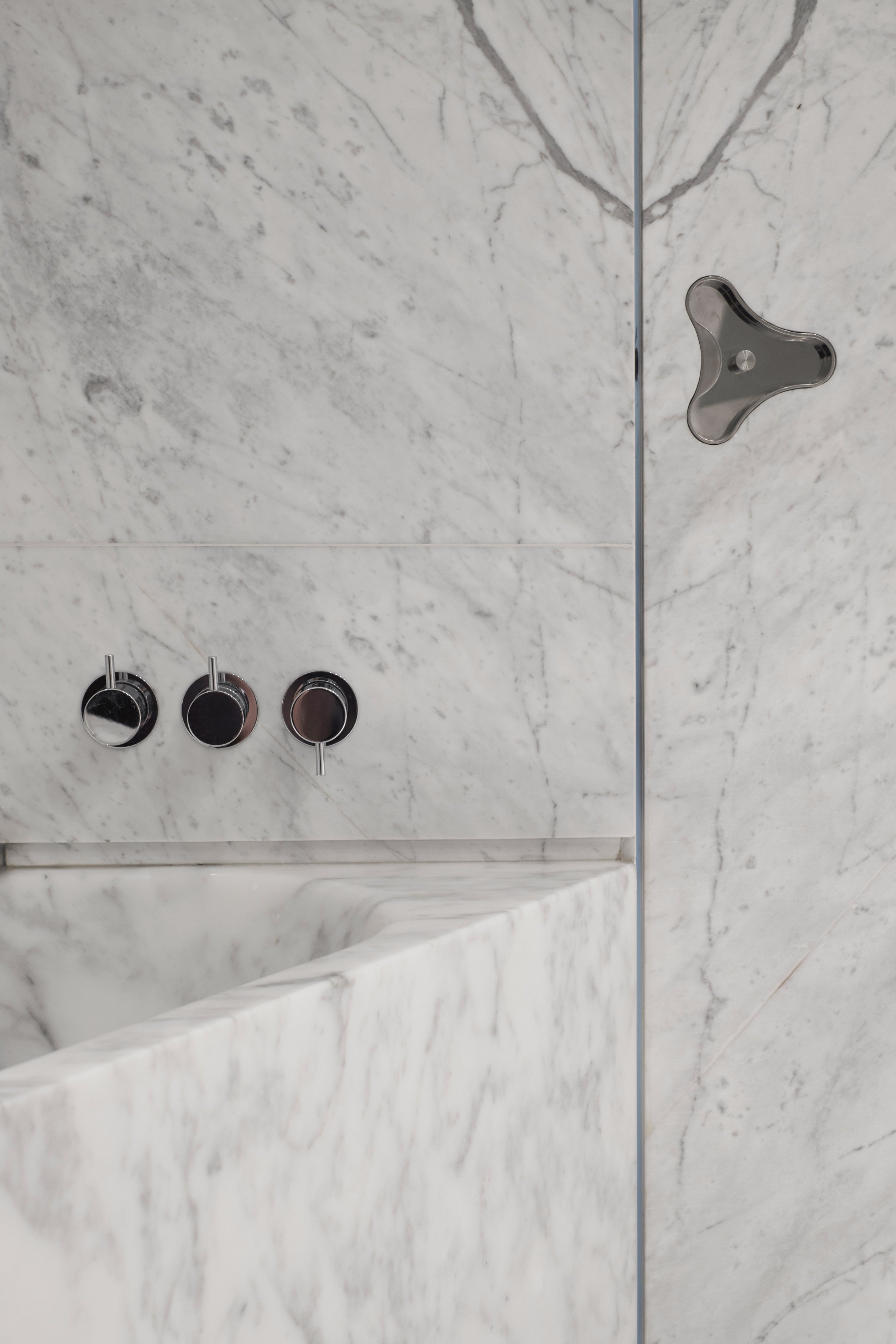
House in Coombe Park by Eldridge London bathroom

Eldridge London had little problem gaining planning permission for the house, as it was described by the local design review panel as a "quintessentially Coombe house".

The difficulties came in the build stage, where several details had to be custom designed or built to work with the curves.
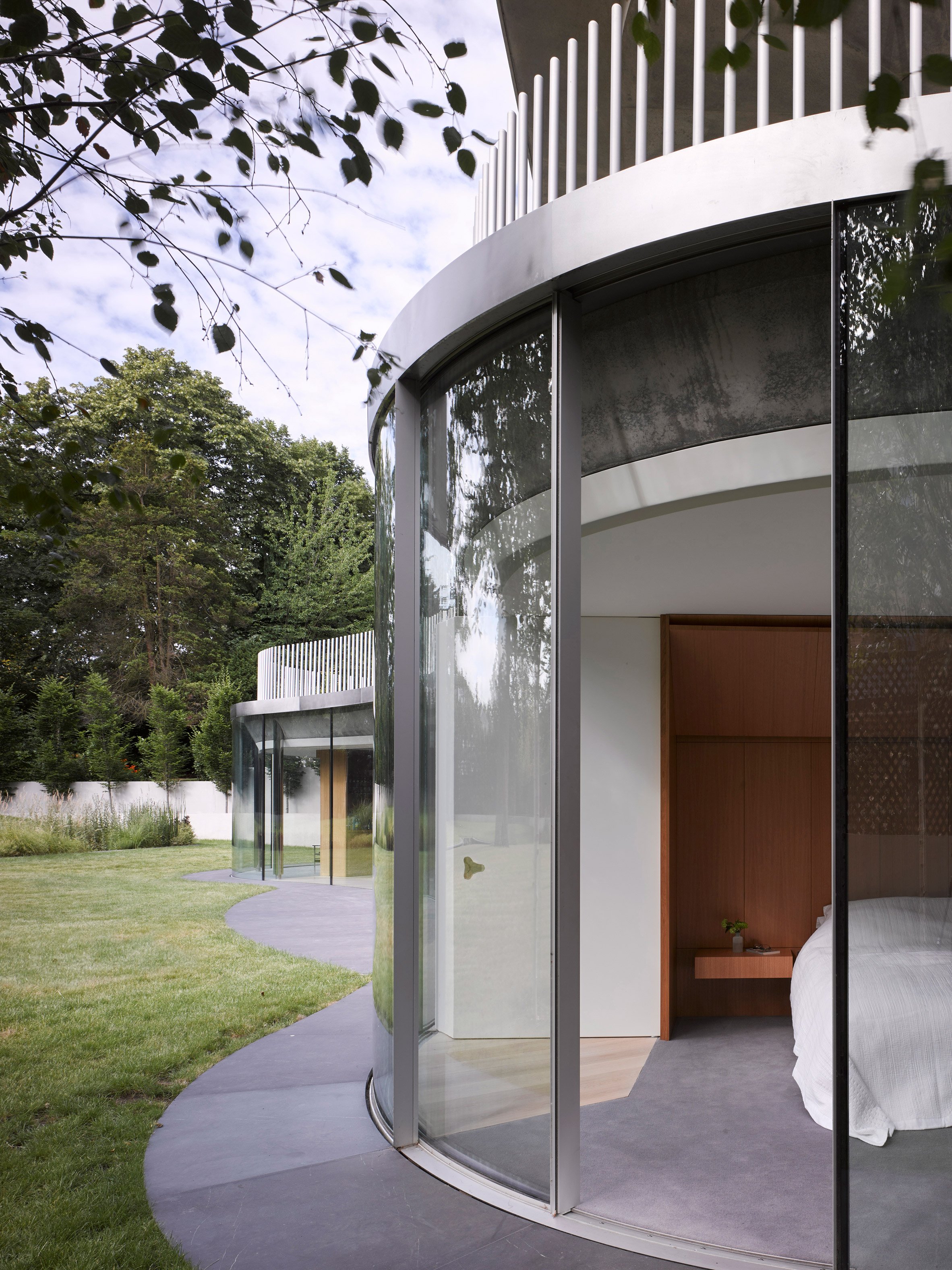
House in Coombe Park by Eldridge London curved glazing

The facade system, for instance, was created using a die designed by the architects'. The profiles are extruded 3.6-metre lengths created in collaboration with sustainable aluminium brand Hydro.

"It is the first thing you see as you approach, so we wanted something that will look as good in 10 years as it did on the day of installation," said Gibson.
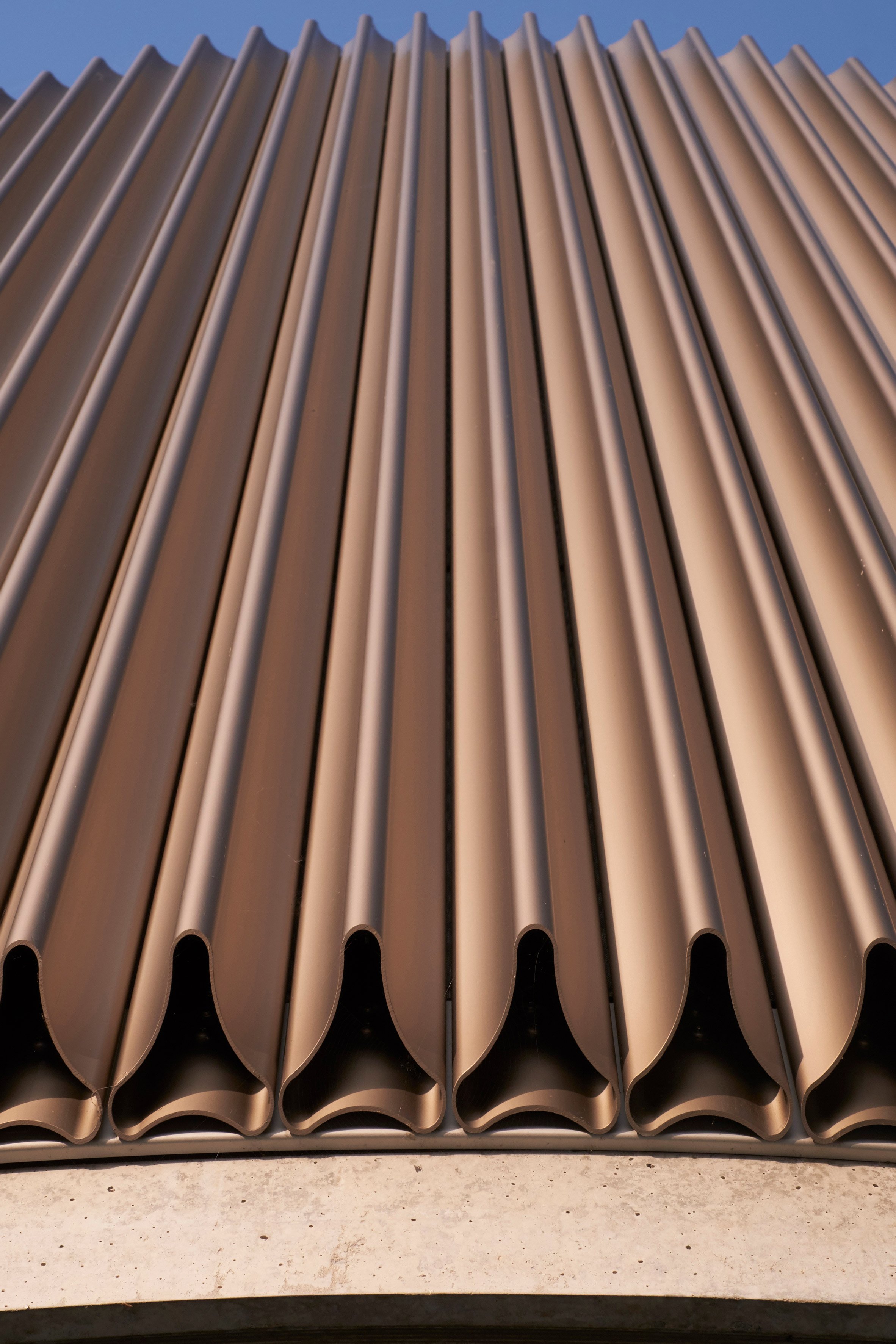
House in Coombe Park by Eldridge London aluminium facade

Glazing also presented a challenge. With very precise tolerances, some of the curved sliding glass doors had to be remade several times in order to make them fit.

The curves are celebrated in many of the interior details, from the coffee tables in the lounge, to inset door handles.
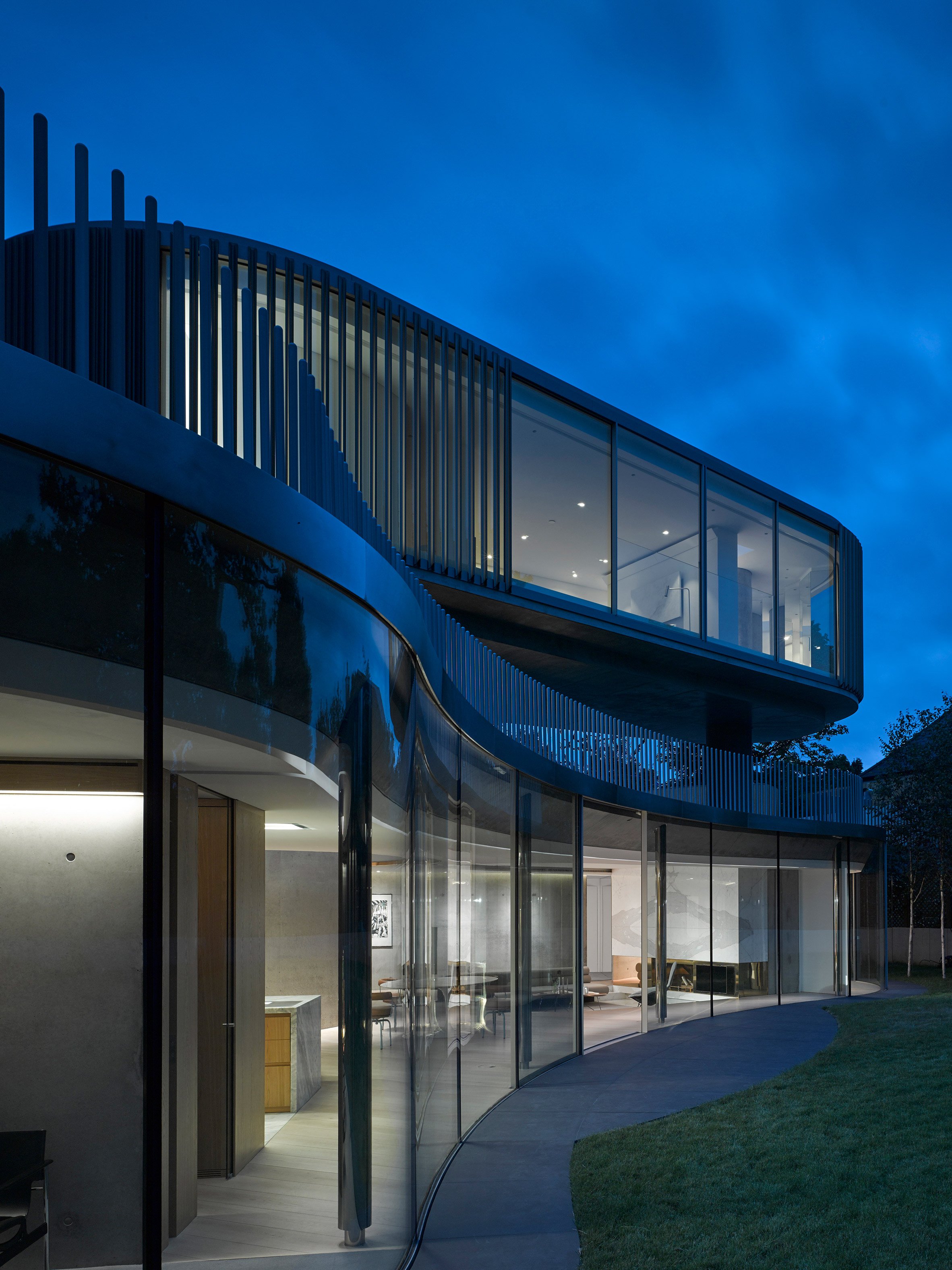
House in Coombe Park by Eldridge London night

Founded in 1998, Eldridge London was previously named Eldridge Smerin. Other projects by the office include House on Swain's Lane, which overlooks Highgate Cemetery in north London.

Photography is by Nick Guttridge.


Project credits:

Client: Jim Mason
Architect: Eldridge London
Project team: Nick Eldridge, Mike Gibson, Nico Giuriato, Will Flint, Emily Quesne, Alison Poole
Contractor: NBS/NBS Joinery
Fairfaced concrete: NBS / NBS Joinery
Kitchen/joinery/staircase: Joe Mellows Furniture Makers
Bespoke metalwork: Detail Metalwork
Bespoke sofa: Coakley & Cox
Oak floor: Dinesen
Marble: Pisani/Modo di Marmi
Bathroom fittings: Vola
Aluminium cladding: Sapa Aluminium
Swimming pond: Aquascapes

The post Eldridge London's trefoil-shaped house has a "sense of the theatrical" appeared first on Dezeen.


from Dezeen https://ift.tt/2JFU3FL

Geometric Insects Navigate Sparse Flora in Pastel Illustrations by Hoàng Hoàng

All images © Hoàng Hoàng

Based in Ho Chi Minh City, graphic designer and illustrator Hoàng Hoàng merges science and art into a series of illustrations that mimic both insects in their natural habitats and those pinned in display cases for preservation. The Insect World Collection is comprised of varicolored stripes, semicircles, and other angular shapes that form multi-hued wings and rotund bodies. Set on pastel backgrounds, each arthropod features both Vietnamese and English translations of the insects’ common and scientific names. Head to Instagram and Behance to check out more of Hoàng’s geometric illustrations.


Do stories and artists like this matter to you? Become a Colossal Member and support independent arts publishing. Join a community of like-minded readers who are passionate about contemporary art, apply for our annual grant, and get exclusive access to interviews, partner discounts, and event tickets.


from Colossal https://ift.tt/2RcYPP3

John Lum Architecture reimagines charming San Francisco home with modern extension

19th Street by John Lum Architecture

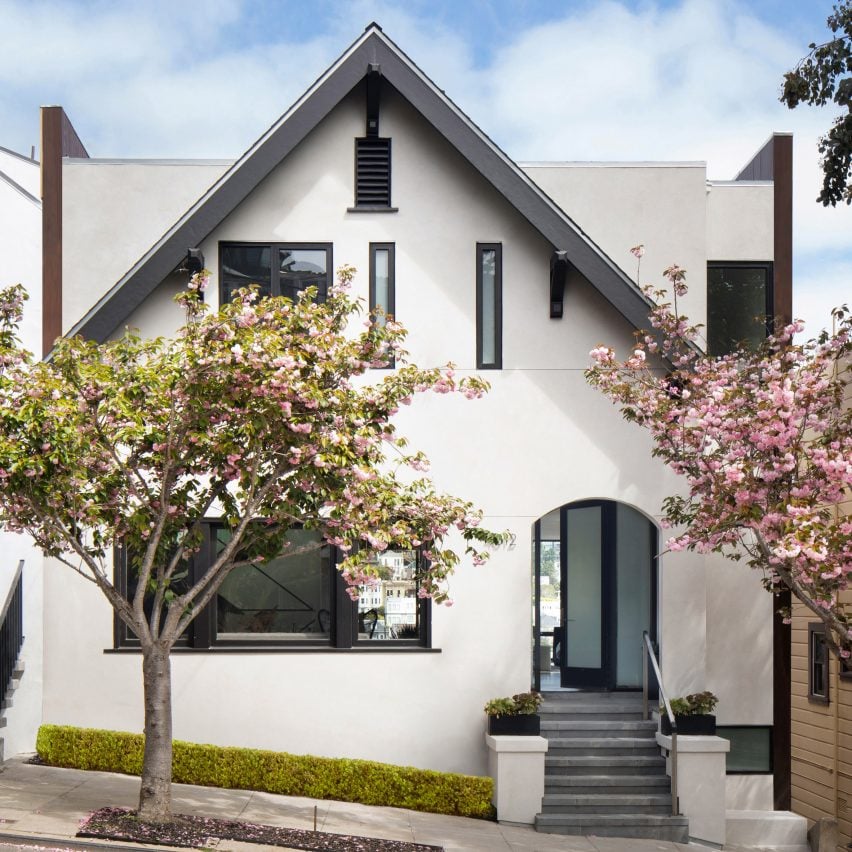
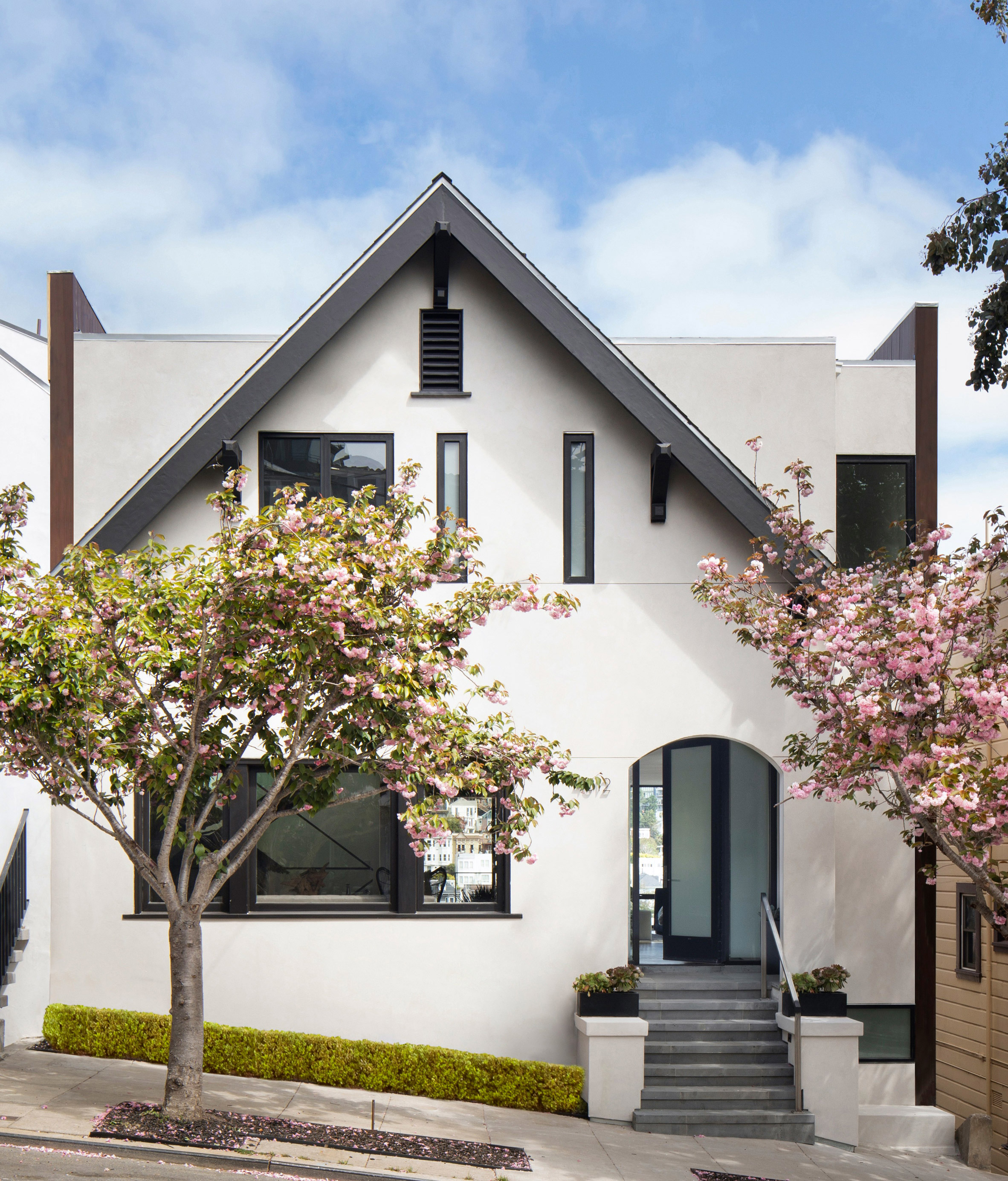
San Francisco studio John Lum Architecture has contrasted the look of this cottage-style house in the city with a steel-and-glass extension at the back.

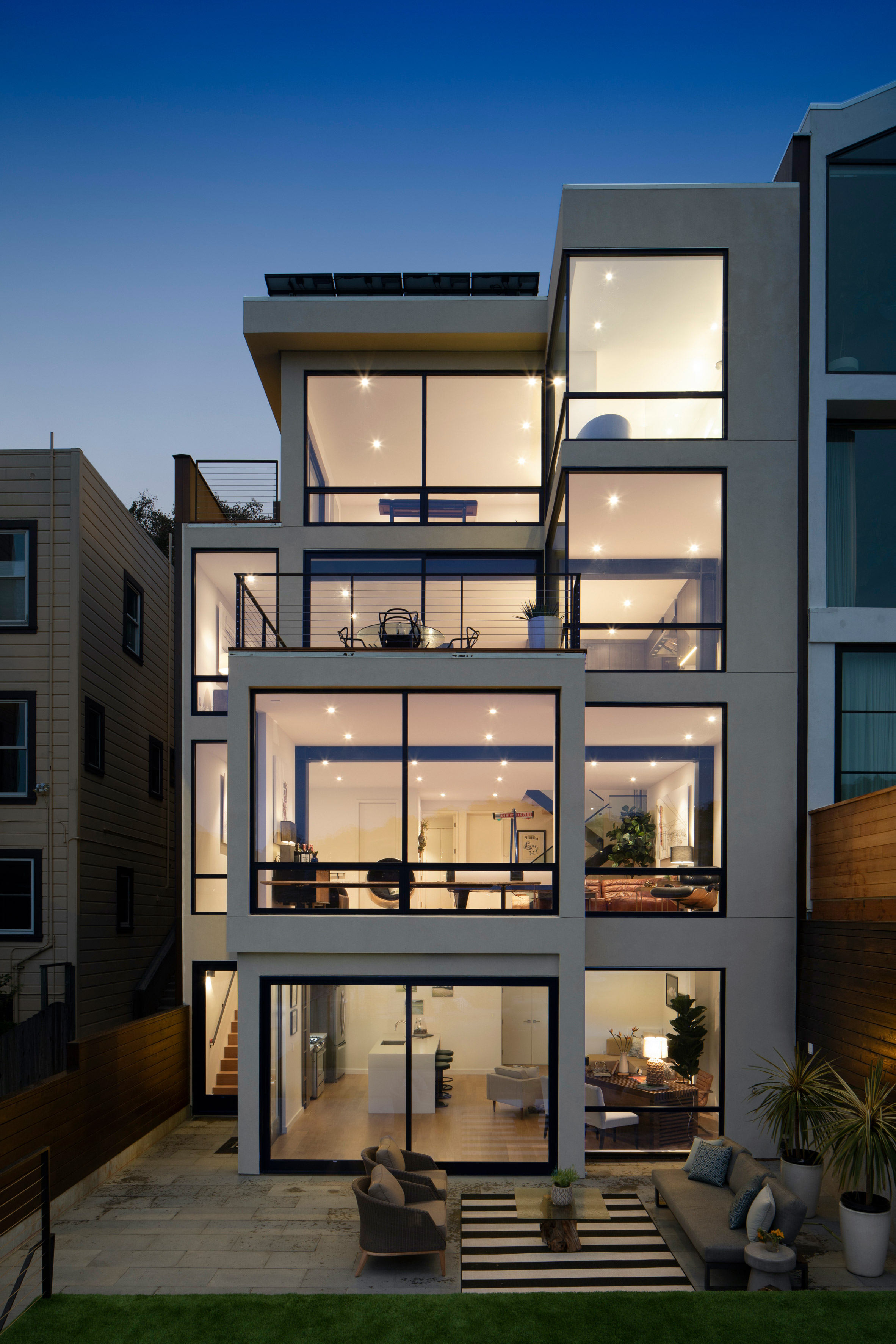
John Lum Architecture renovated the dwelling on a sloping property in the city's Eureka Valley neighbourhood, which spans 19th Street and Thorp Lane. The project, called 19th Street, features a one-storey, gabled portion at the front and an addition in the rear that scales five levels.

19th Street by John Lum Architecture

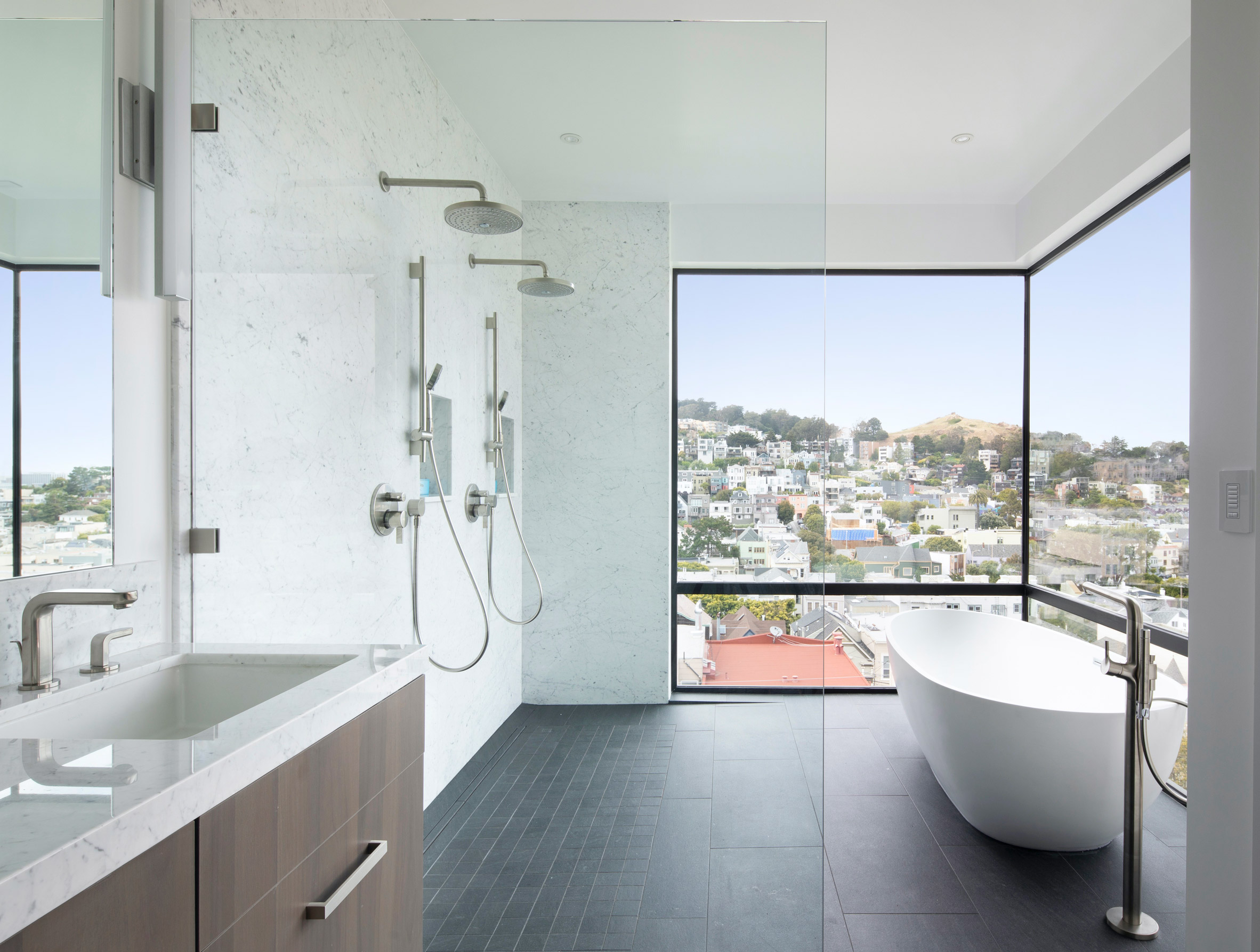
The studio demolished a large portion of the rear of the existing residence and replaced it with a larger, flat-roofed addition. With steel cladding and floor-to-ceiling windows, it offers a stark contrast to the original home, as well as more natural light, larger floorplates and higher ceilings inside.

19th Street by John Lum Architecture

"We renovated this family house to maximise views while preserving the architectural integrity of the neighbourhood," said John Lum Architecture.

"Charming cottage style in the front. Cool modern multi-level design in the back."

19th Street by John Lum Architecture

The front facade has been refreshed with a recurved entry, new glass front door and windows. Its previous light blue exterior has been painted white with black trim to match the contemporary extension, while still reflecting the neighbourhood's vernacular.

19th Street by John Lum Architecture

The property joins a number of San Francisco houses updated with contemporary rear extensions to contrast with the original front facades.

Others include Jensen Architects' Alamo Square Residence, a Victorian home by Fougeron Architecture, 29th Street Residence by Schwartz and Architecture and Edmonds + Lee's Gable House.

19th Street by John Lum Architecture

"Known for its rows of charming houses, San Francisco is riddled with historic homes designed for a time gone by," John Lum Architecture added.

The 19th Street property features a garage on its lowest level and four storeys above. At the rear, two terraces provide outdoor living space and sliding glass doors on each level allow rooms to open to the outdoors.

19th Street by John Lum Architecture

The residence measures 4,500 square feet (418 square metres) and has five bedrooms and five bathrooms in total.

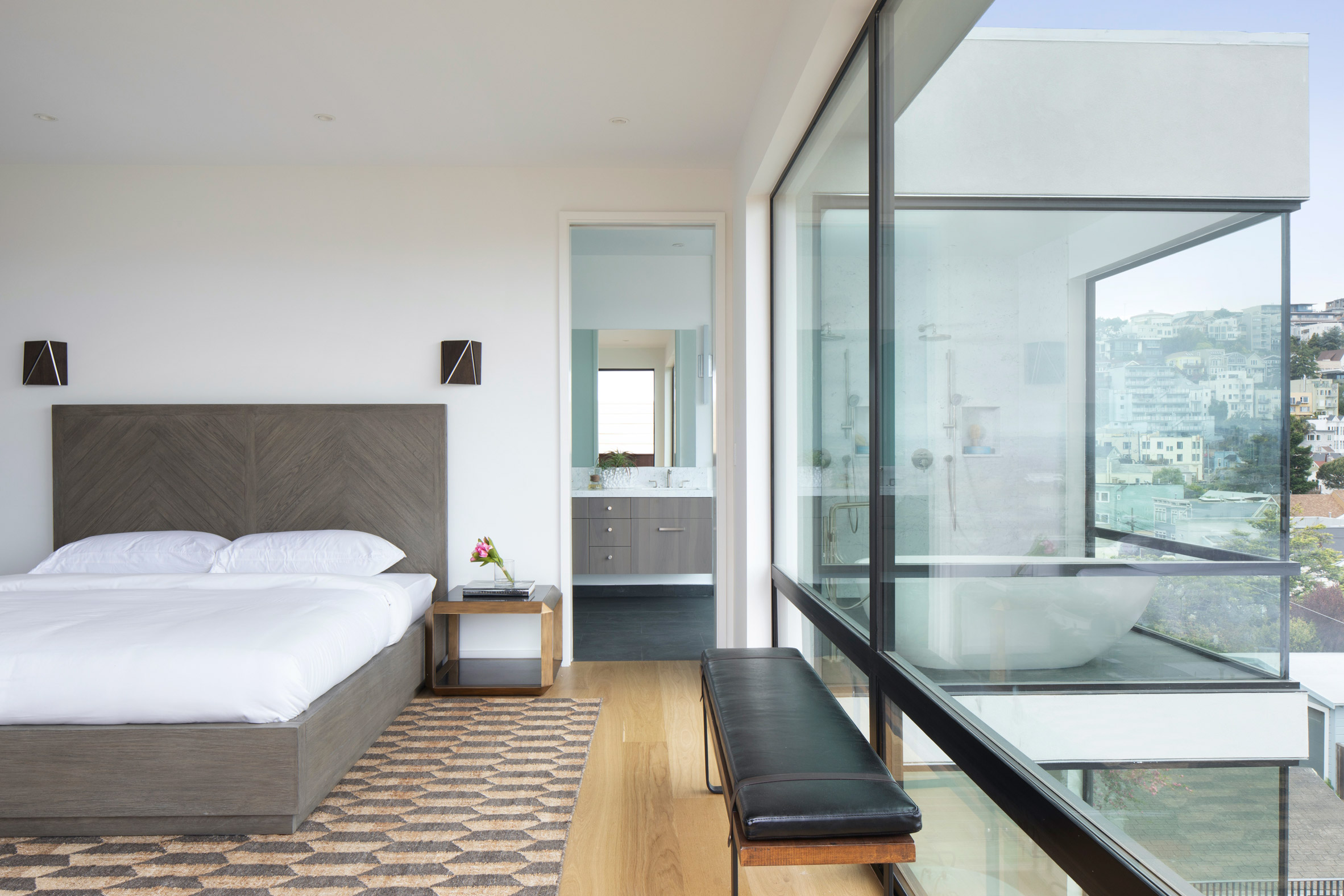
The entrance is located on the top floor and accessed from 19th Steet. Upon entering are a living room, dining area, kitchen and second sitting area. Three bedrooms are downstairs, and a bathroom features a bathtub enclosed by glass walls.

19th Street by John Lum Architecture

Above the garage is a level that also contains a kitchen, living room, bedroom and bathroom.

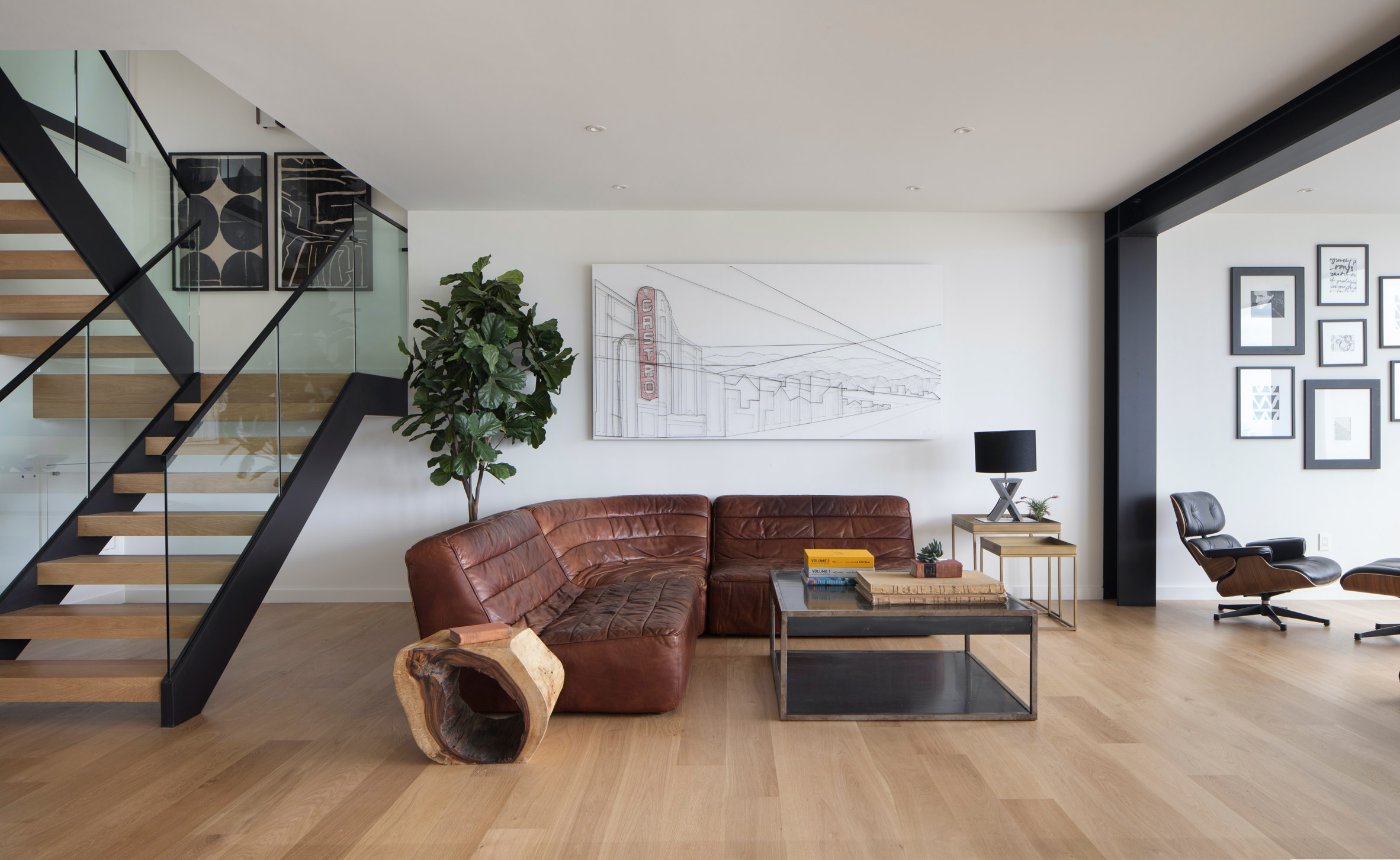
John Lum Architecture inserted a new glazed staircase that allows for light to pass through the floors for an airy feel and replaces a stairwell that lacked natural light.

19th Street by John Lum Architecture

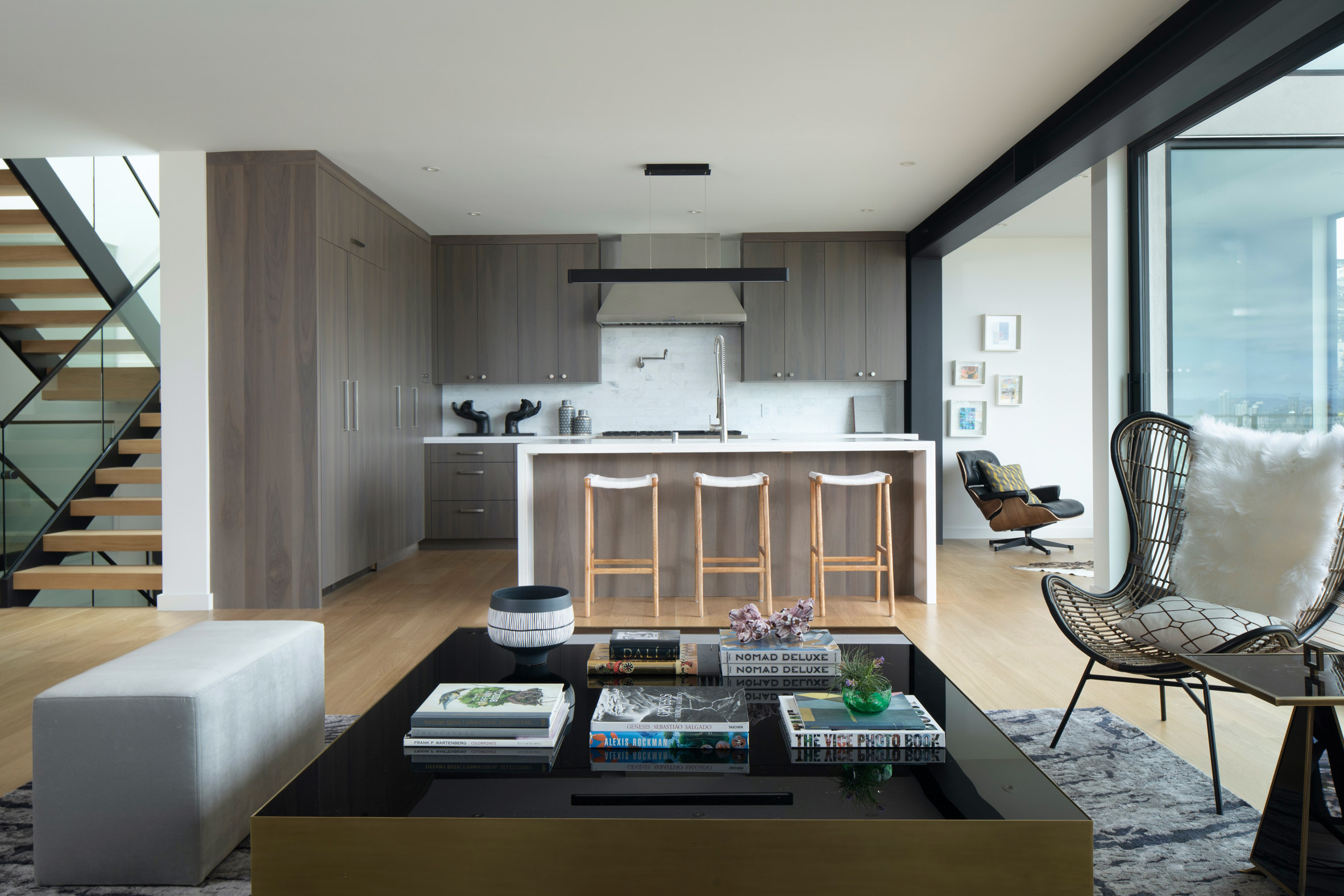
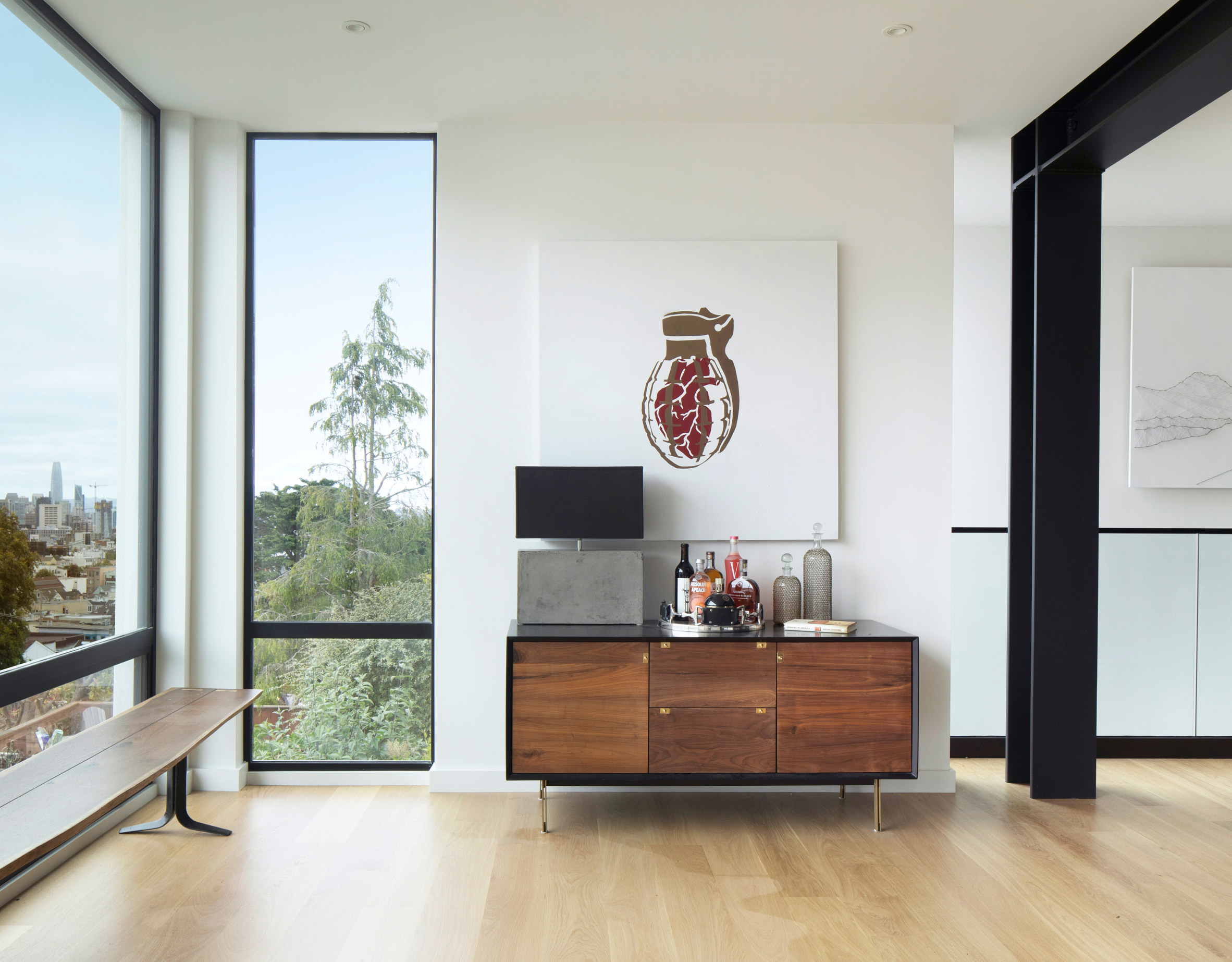
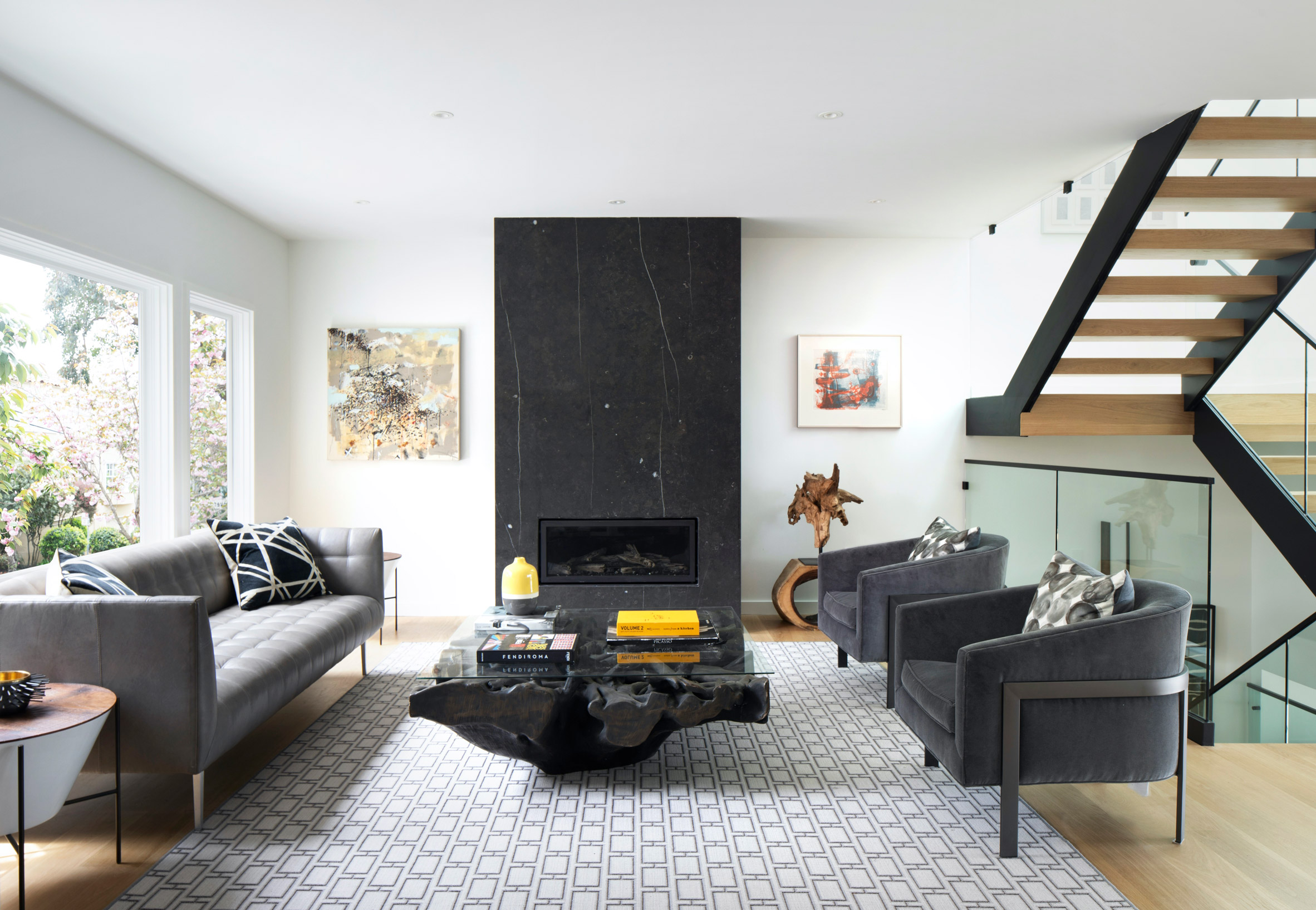
The decor is modern and includes a leather sectional, rattan chairs, grey cabinets, light wood floors and white countertops and walls.

It is close to San Francisco's Dolores Heights neighbourhood and Mission Dolores Park. Elda restaurant, Dolores Heights Residence by John Maniscalco and Ryan Leidner's Harrison Street House are among the projects nearby.

Photography is by Paul Dyer.

The post John Lum Architecture reimagines charming San Francisco home with modern extension appeared first on Dezeen.


from Dezeen https://ift.tt/3dUstm0

Yangyang Ding designs metal tools to help Mandarin speakers pronounce English sounds

Pronunciation tools by Yangyang Ding

Rhode Island School of Design student Yangyang Ding has created a series of metal instruments to help Mandarin speakers pronounce difficult English sounds.

Pronunciation tools by Yangyang Ding
Yangyang Ding's pronunciation tools help Mandarin speakers with difficult English phonemes or units of sound

The 12 pronunciation tools, some of which are adapted from dental instruments, wrap around the jawline, press down the tongue or curl lips in various ways depending on the intended phonetic sound.

"This set of tools is designed to dissolve the difference between Chinese and English pronunciation," the industrial design student said.

Pronunciation tools by Yangyang Ding
Among the designs is a metal ring with a chin strap that prevents the mouth from opening wider than necessary

"The tools focus on dealing with the relationship between lips, tongue and the front side of the upper and lower jaws."

Each tool corresponds to a specific English phoneme, or unit of sound. When worn, it automatically correct the speaker's mistake.

Pronunciation tools by Yangyang Ding
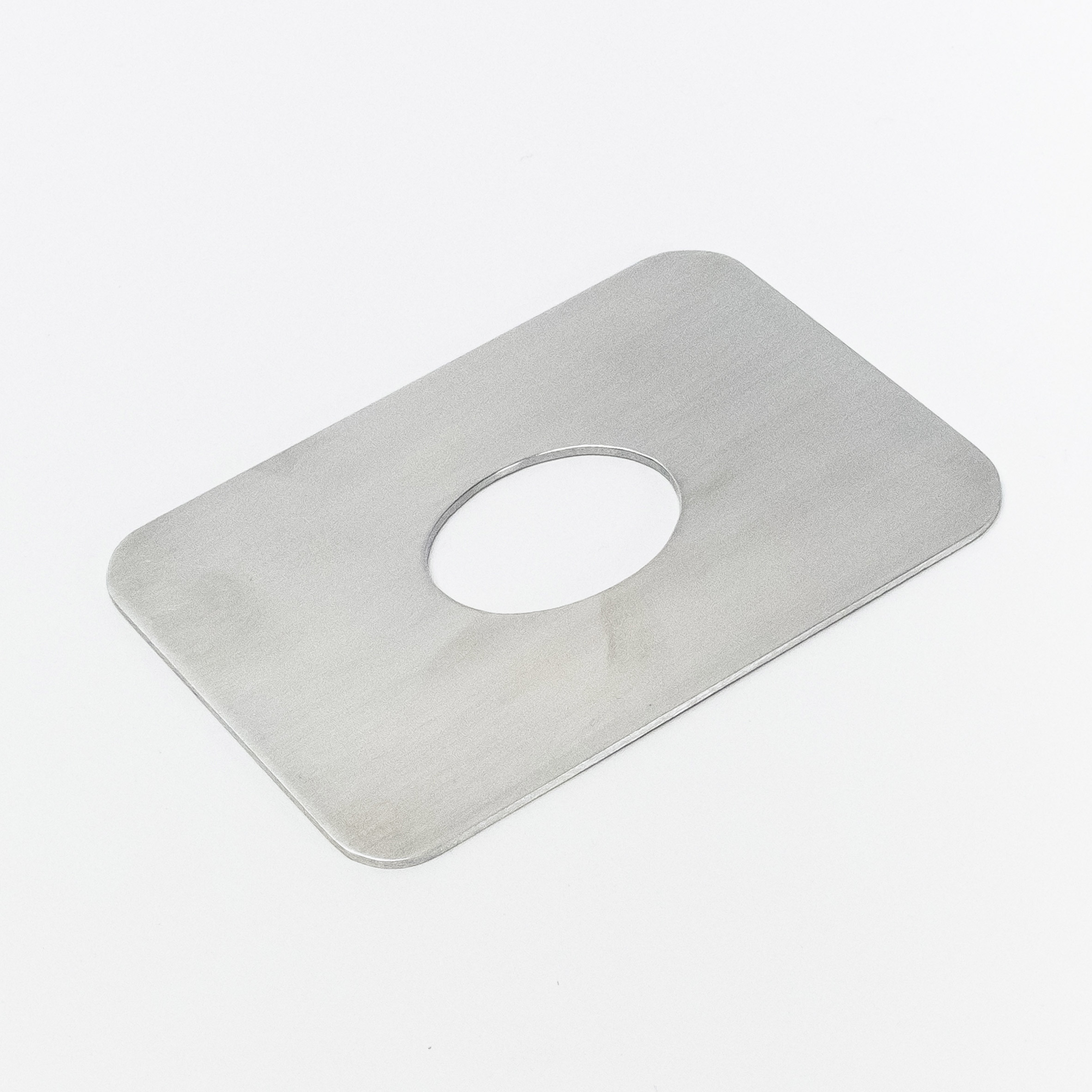
Speakers can use this small rectangle with an ellipse cutout to pronounce words with short vowels sounds

"The difficulties of pronouncing individual English words, compounded by problems with intonation, result in the heavily accented English of many Chinese learners," Ding said.

Certain English phonetic and intonation patterns are particularly difficult for native Chinese speakers to pronounce because they don't exist in Chinese, according to Ding.

The designer said that one of the common difficulties is pronouncing the "v" sound, as there isn't a similar one in Mandarin. A curved piece of metal wedged between the upper teeth and lower lip align the mouth to create the correct mouth shape to produce the sound.

To correct errors in the pronunciation of middle central vowel sounds – as found in words like love – speakers wear a metalhead and chin strap. This locks the jaw into place to prevent the mouth from naturally opening wider than needed.

Pronunciation tools by Yangyang Ding
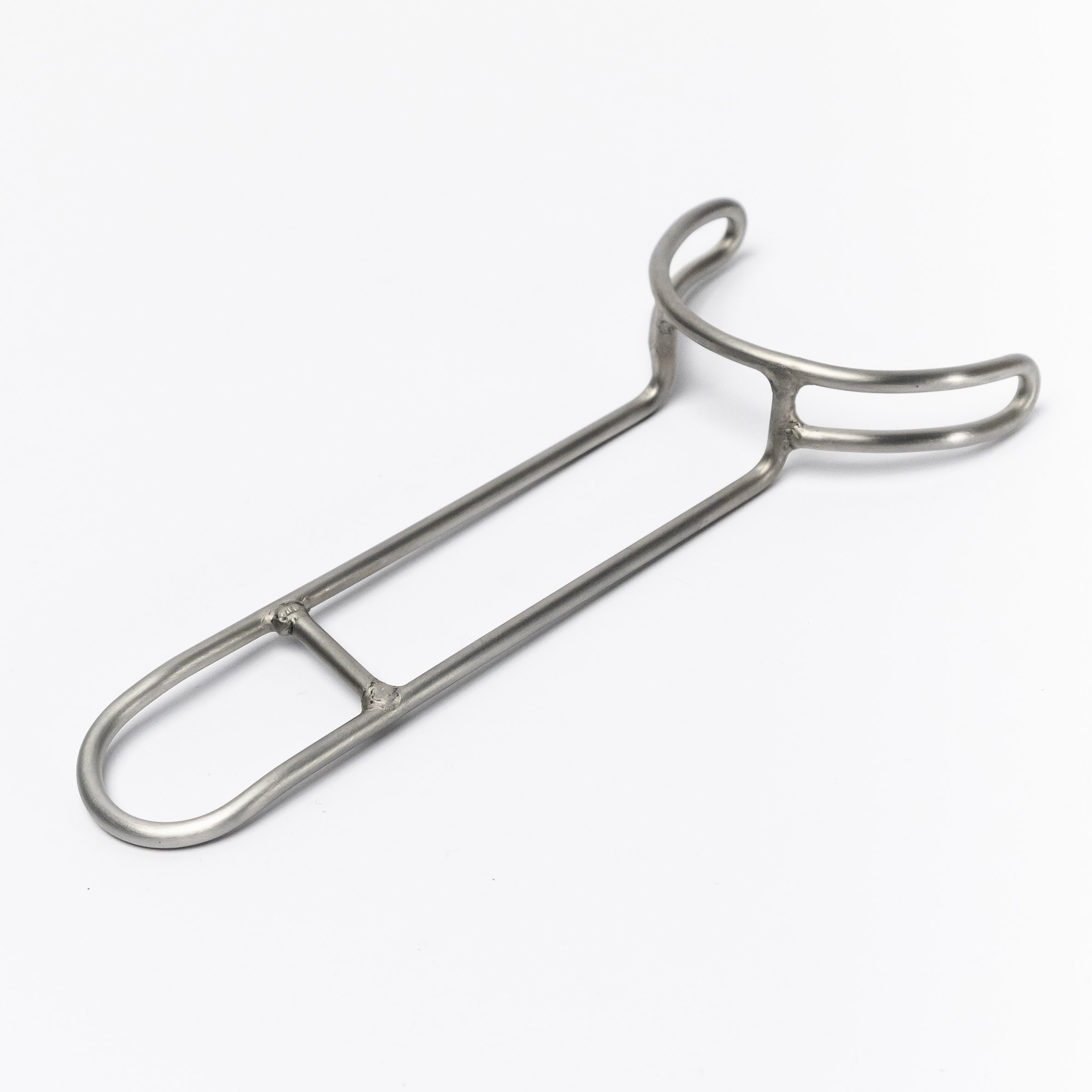
Ding adapted several of the objects from actual dental tools, including this one with a long handle and metal brace that fits over teeth

Another instrument helps to fix words with short vowels sounds, like the "I" sound in the word lit. The small rectangle has an ellipse cutout in its centre. The circular hole creates an outline or guide for the speaker's lips to form around, which results in the correct pronunciation.

One of the objects is adapted from a dentist tool. It comprises a long handle that inserts it into the mouth, while a curved metal brace covers the teeth.

Pronunciation tools by Yangyang Ding
A piece of metal wedged between the upper teeth and lower lip makes it easier to pronounce the"v" sound, which doesn't exist in Mandarin

This form keeps lips in an elongated ellipse shape to make it easier to say the "eI" sound used in words like strange.

Other projects that experiment with sound and voice include a gadget by Royal College of Art graduate George Philip Wright that transform the user's voice into musical instruments and a wearable headset for blind people that sends three-dimensional sound information to make cities easier to navigate.

The post Yangyang Ding designs metal tools to help Mandarin speakers pronounce English sounds appeared first on Dezeen.


from Dezeen https://ift.tt/2UK6ve4

Daytrip digs beneath east London townhouse to create contemporary living spaces

Powerscroft Road by Daytrip

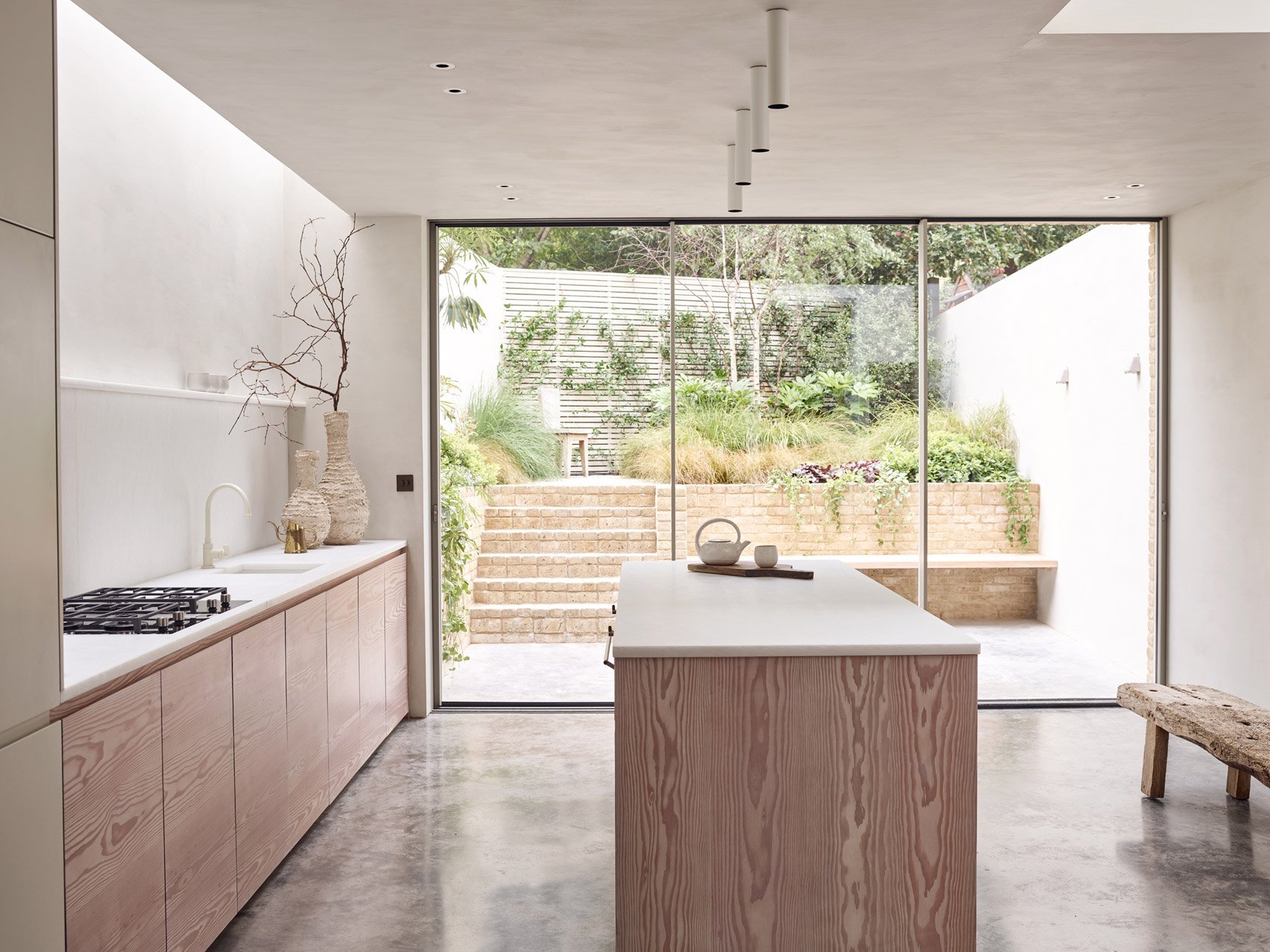
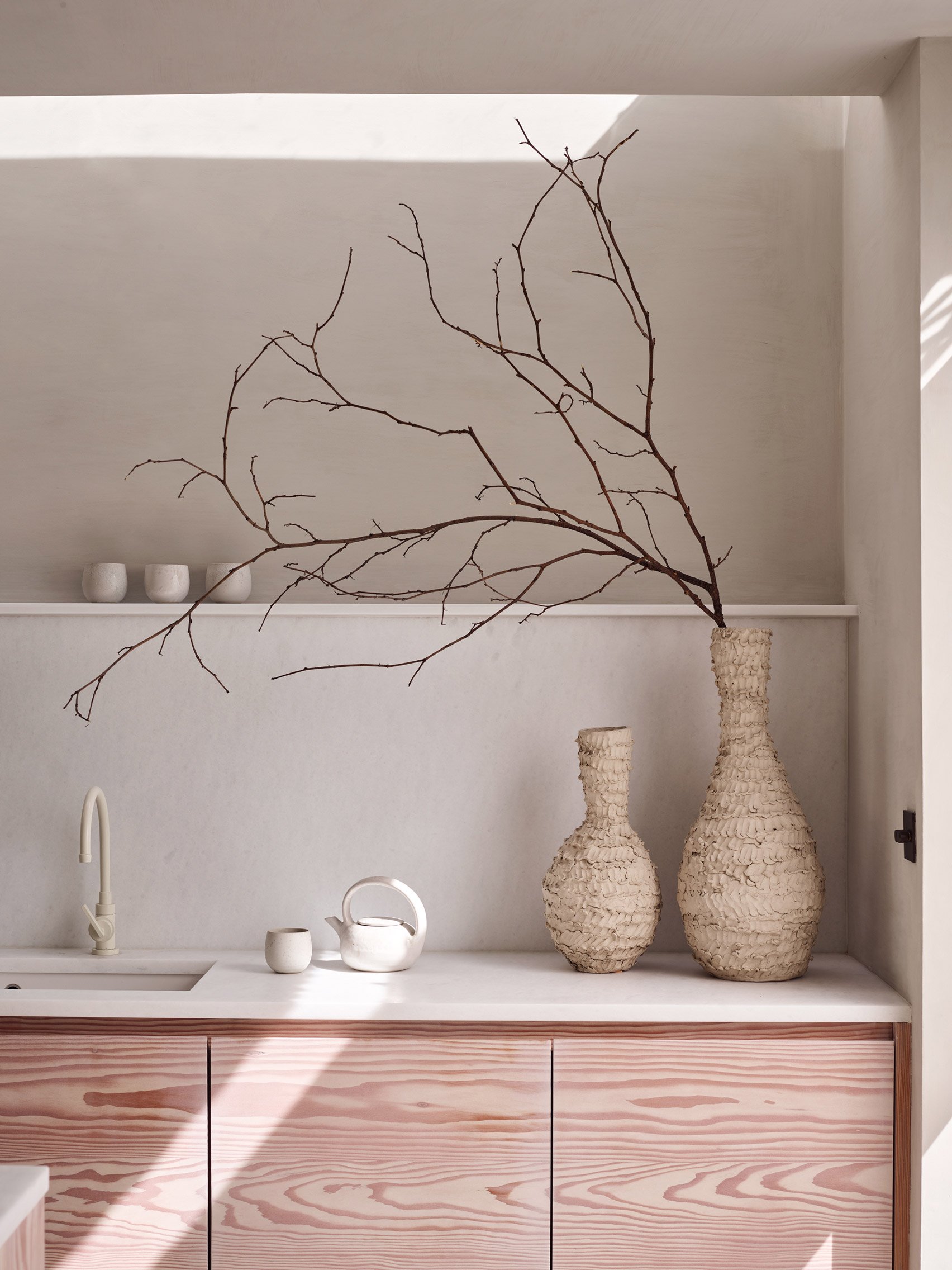
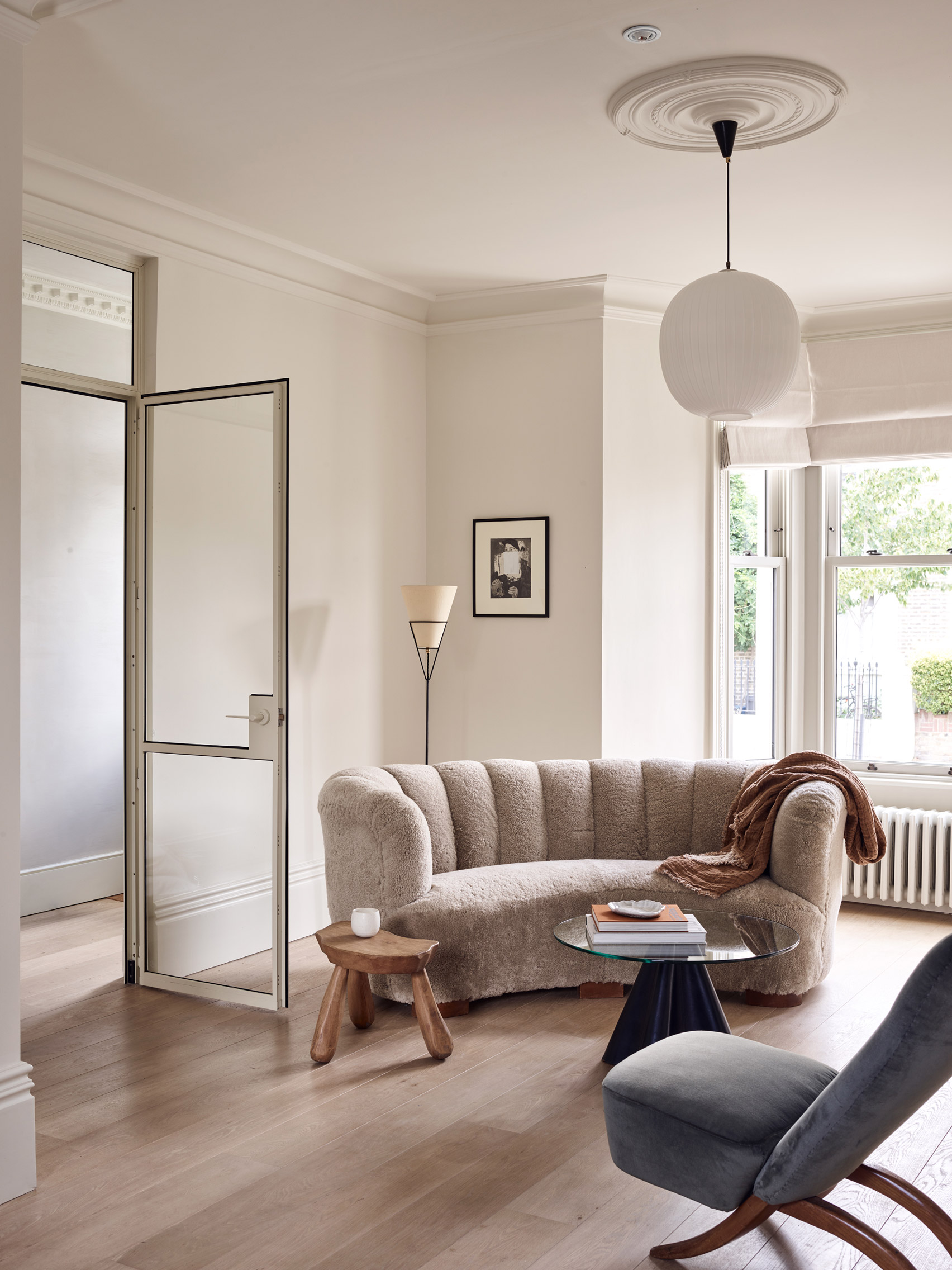
White-washed walls, Douglas fir joinery and creamy furnishings appear inside this east London home, which design studio Daytrip has renovated and expanded by excavating its basement.

The five-storey Powerscroft Road townhouse is situated in the neighbourhood of Clapton and had previously been host to several "unloved" living spaces.

Powerscroft Road by Daytrip

A majority of the rooms were plastered in dated 1970s wallpaper and had worn, deep-pile carpet across the floor.

Beneath the ground-floor kitchen there was also a dark and damp basement, with an inconveniently low ceiling.

Powerscroft Road by Daytrip

The owners of the house, a married couple who had purchased the property with the hope to resell, approached Daytrip to carry out a complete overhaul.

While there was no particular buyer lined up, the studio still wanted the house to appear as though "every element had been considered and detailed for the homeowner".

Powerscroft Road by Daytrip

"[The clients] trusted us to do what we felt was right," Iwan Halstead, co-founder of the studio, told Dezeen.

"We knew we wanted a calm and serene home, away from the hustle of inner city, but we also wanted it to have the quality and craftsmanship we adhere to in all our projects."

Powerscroft Road by Daytrip

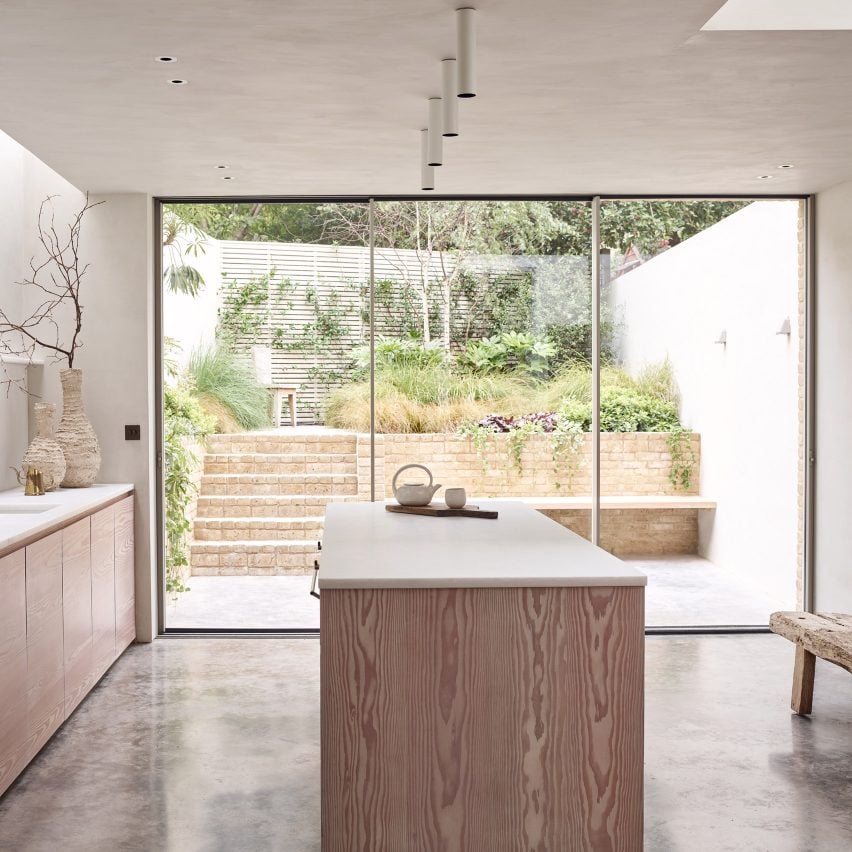
To begin, the studio further excavated the existing basement to create an expansive, light-filled kitchen. The space is now fronted by full-height glass panels that offer views of a newly landscaped garden.

The cabinetry and the base of the central breakfast island have been crafted from Douglas fir wood, while countertops are made from pale Evora marble.

Powerscroft Road by Daytrip

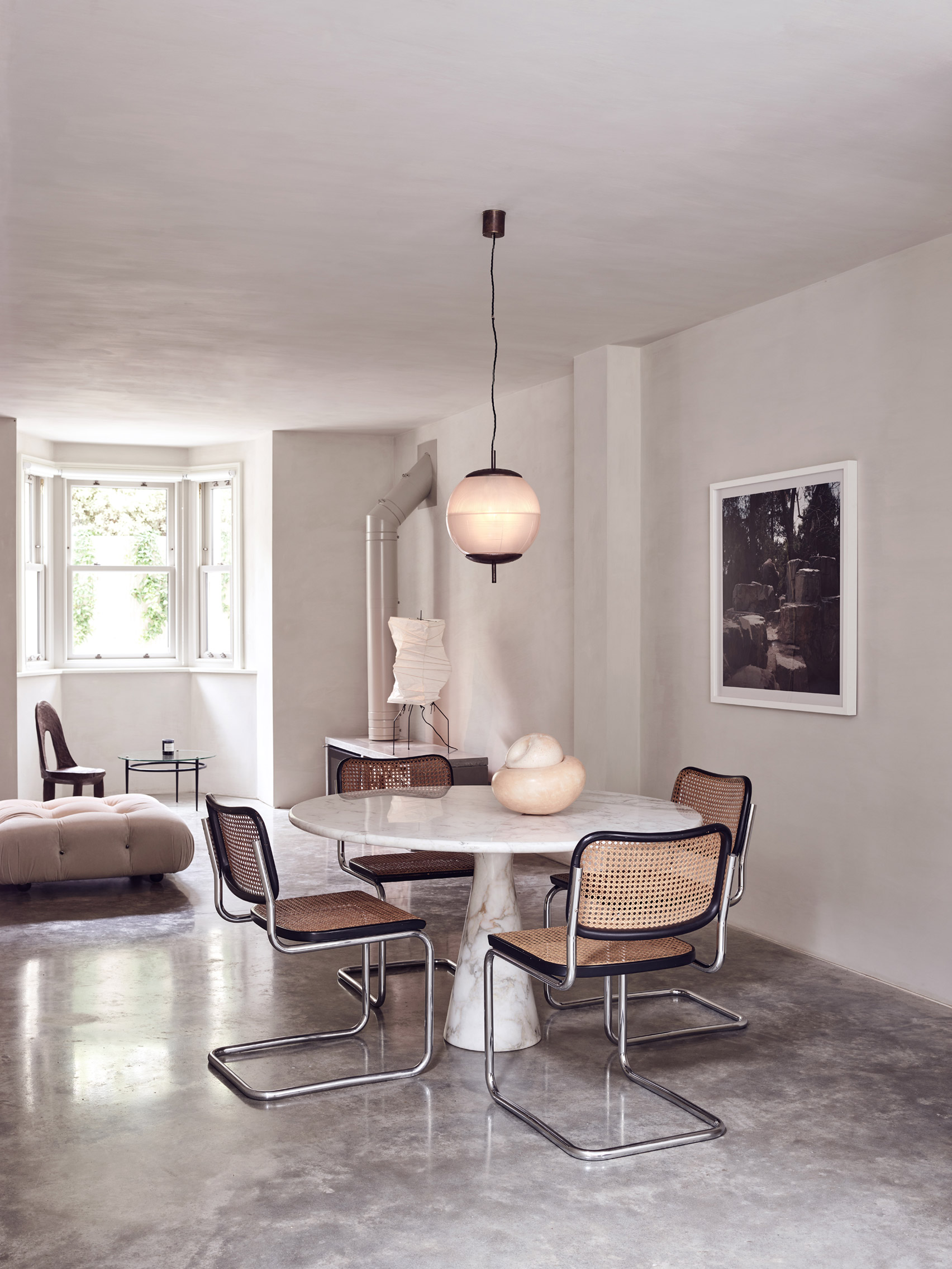
Surrounding surfaces have been loosely lime-washed to leave an almost "painterly" surface finish, while the floors are polished concrete.

"A muted and pale palette of off-whites are paired with honest materials which promote their inherent patterns and textures without feeling 'over-designed' or mass-produced," Halstead explained.

Powerscroft Road by Daytrip

At the rear of the kitchen lies a dining area, which boasts a veiny stone table and tubular steel-frame rattan chairs. There is also a cosy sitting room with low-lying cream sofas and a wood burner.

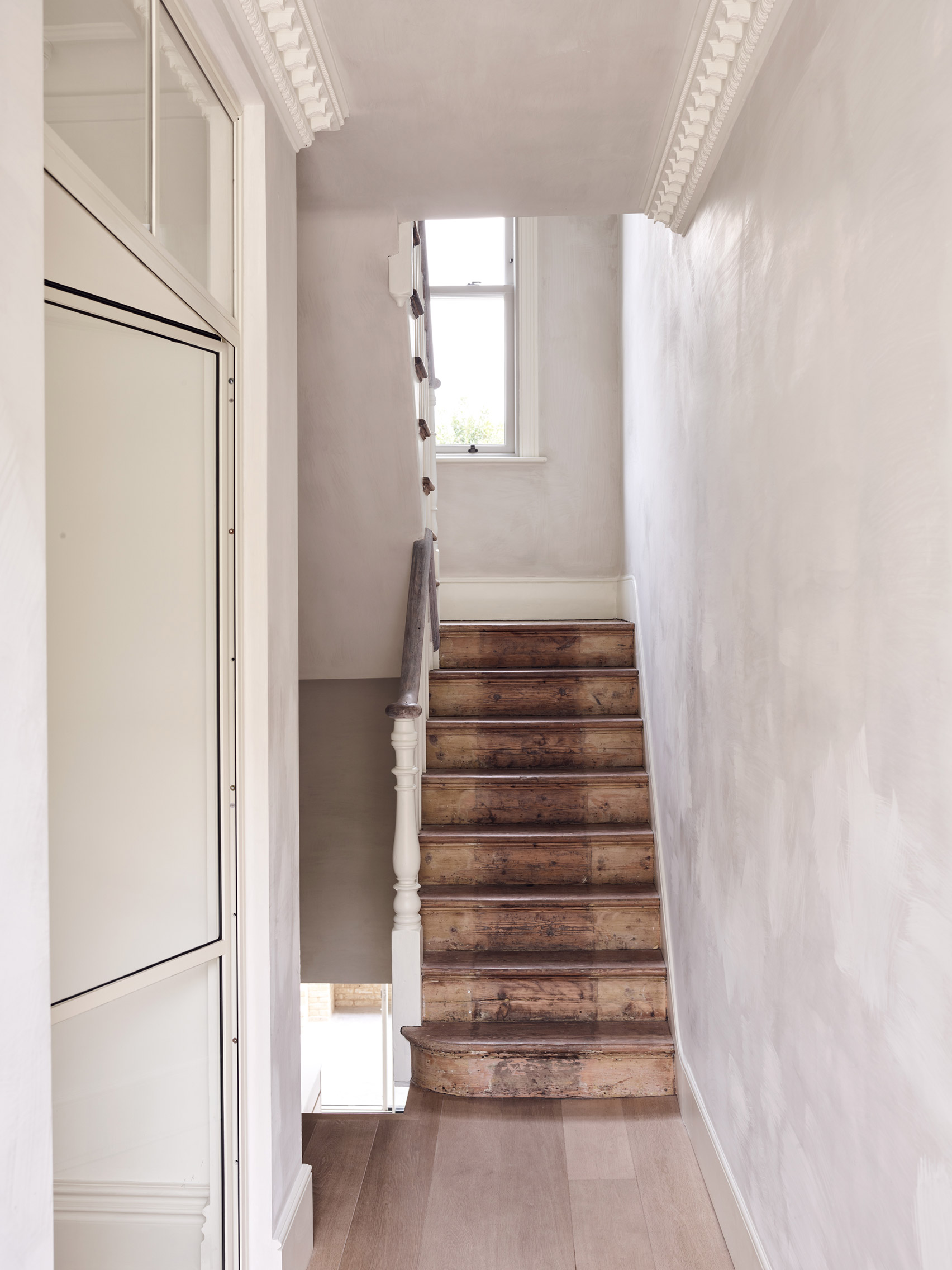
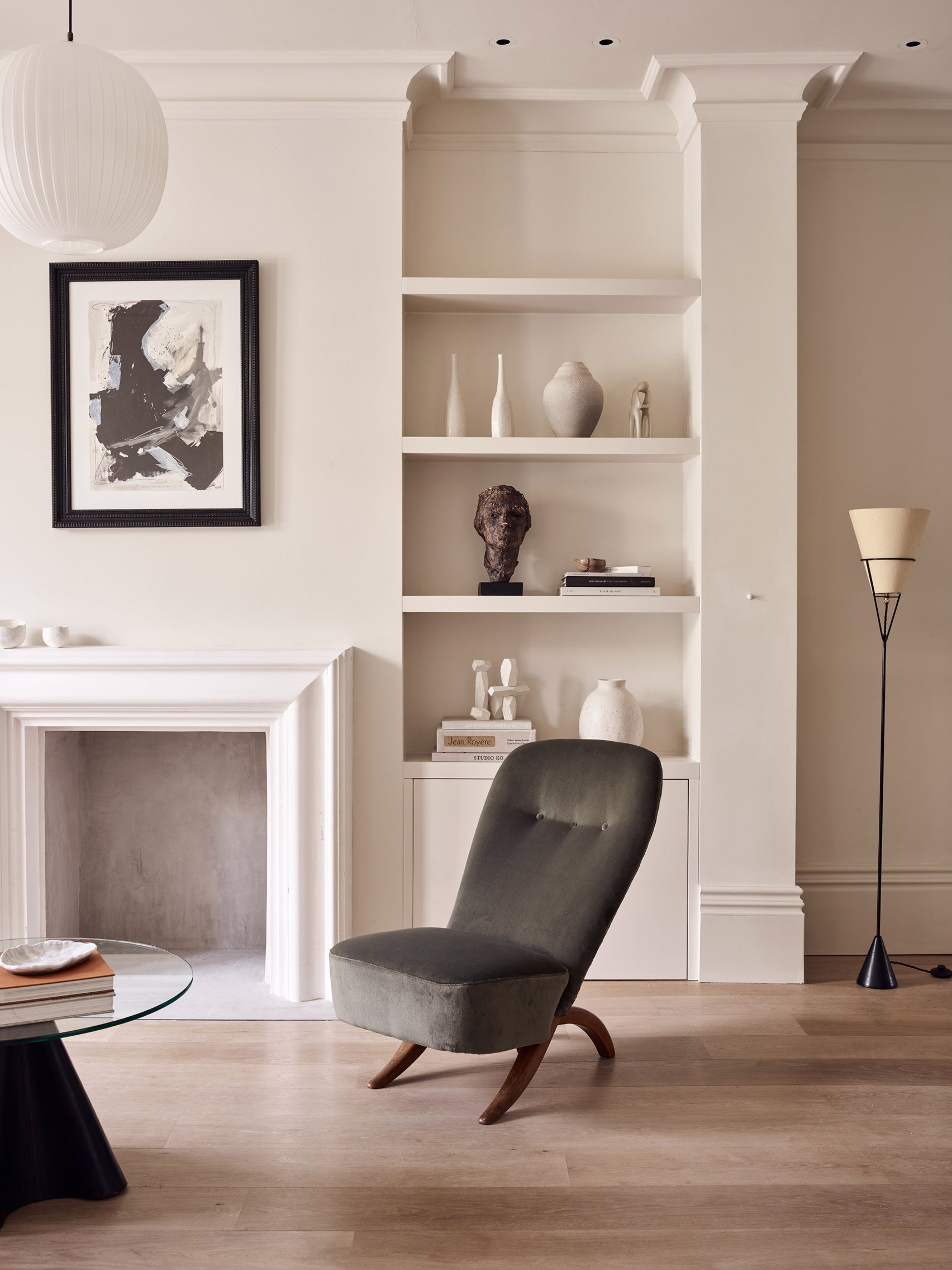
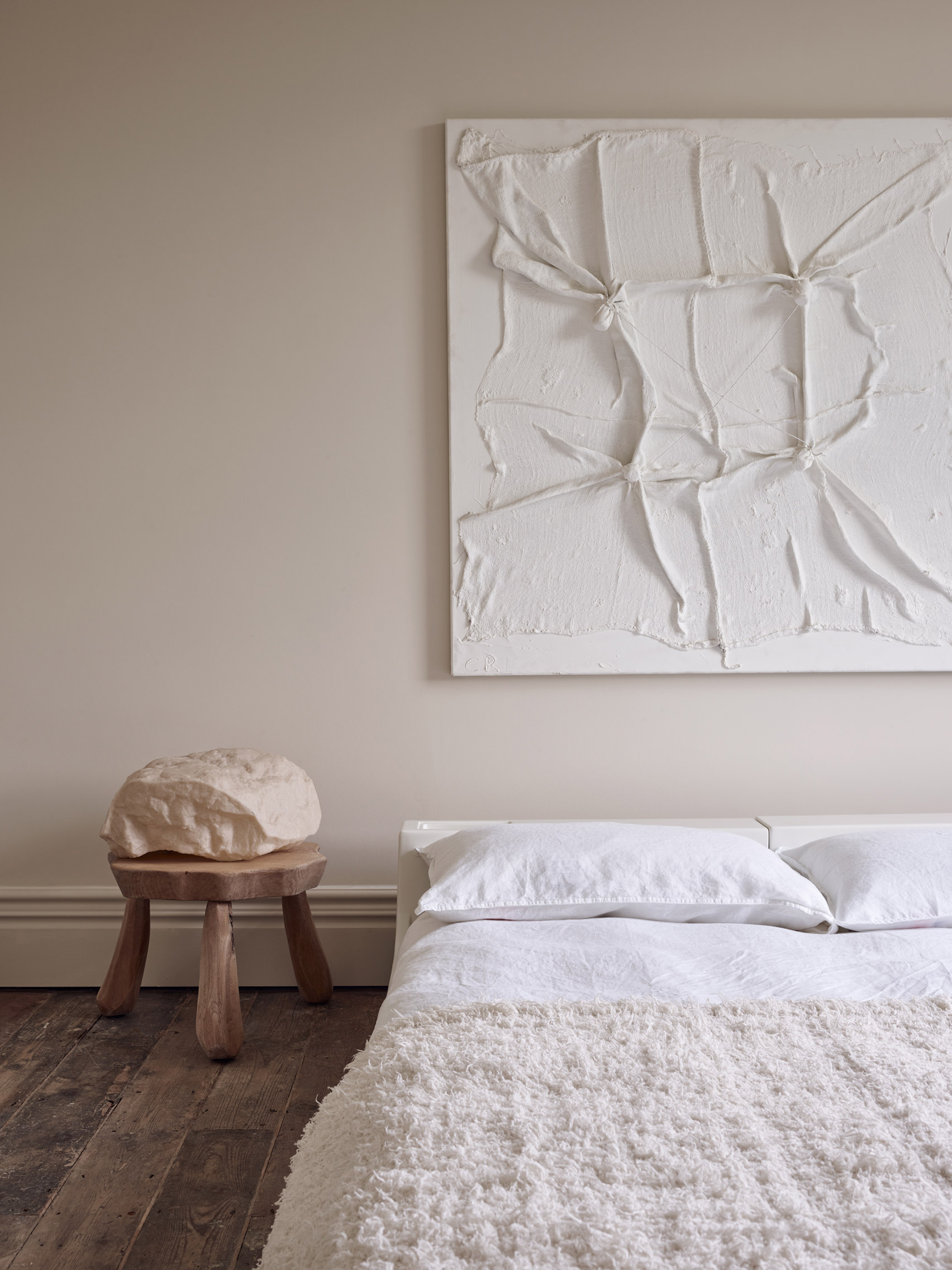
In the upper levels of the home, the studio set out to revive original details such as the ornate ceiling cornicing and wooden floorboards.

Powerscroft Road by Daytrip

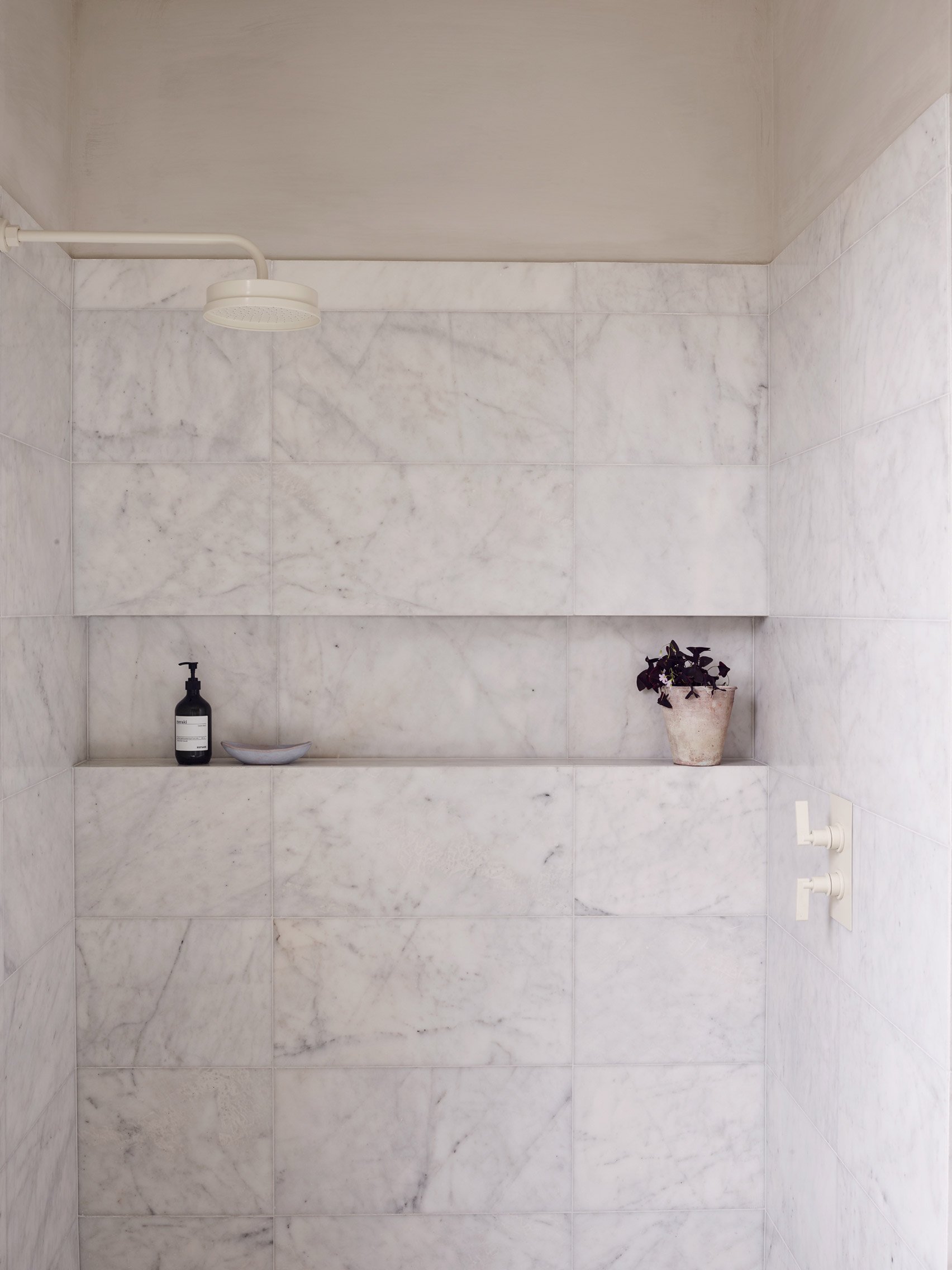
Walls have been freshened up with a coat of eggshell-coloured paint, apart from in the bathrooms, where Calcatta marble tiles have been introduced.

Some of the openings between rooms have been widened or fitted with crittall doors. Three skylights punctuate the roof of the home to let more sunlight into the attic.

Powerscroft Road by Daytrip

Furnishings used to style the home – including those in the basement – were picked out by Modern Art Hire, which worked to accrue an array of antique, mid-century and modern pieces.

Powerscroft Road by Daytrip

Daytrip is based in Hackney, east London, and led by Iwan Halstead and Emily Potter.

It isn't the only studio that's dug down below ground level to provide additional room for living. In 2018, Gianni Botsford Architects excavated the ground beneath a home in London's Notting Hill to create a subterranean swimming pool and gallery-style sitting room.

In Hackney, David Adjaye renovated the Mole House, which was undermined by secret tunnels.

Photography is by Jake Curtis and Elliot Sheppard.

The post Daytrip digs beneath east London townhouse to create contemporary living spaces appeared first on Dezeen.


from Dezeen https://ift.tt/34mVanv