Monday, 4 May 2020

"The cruelness of demolishing LACMA when Angelenos are unable to bear witness should not be ignored"

LACMA demolition Mimi Zeiger Opinion

With the demolition of Los Angeles County Museum of Art underway for Peter Zumthor's redesign, Mimi Zeiger is concerned about what will be left for the city and its residents following coronavirus lockdown.


"LACMA belongs to the people of Los Angeles County and it should reflect the tremendous diversity, creativity, and openness to change that can be found here," reads a headline on the buildinglacma.org, a website ostensibly tracking the design and construction of the controversial, squiggle of a proposal by Swiss architect Zumthor.

Such marketing copy, written the voice of Los Angeles County Museum of Art (LACMA) director Michael Govan, is meant to rally support (public and financial) under a banner of shared values. But that last phrase – openness to change that can be found here – is suspect on two accounts.

While all but the most essential workers were home under shelter-in-place orders, demolition crews began

In a time of semi-facts and dog whistles, "openness to change" is a riposte to the public campaigns and individuals advocating to preserve the original buildings or, at least, seriously reconsider a $650-million (£523-million) design that reduces the museum's gallery square footage by up to 10 per cent yet willfully spans Wilshire Boulevard with the aplomb of a pedestrian overpass.

By suggesting opponents are closed-minded or stuck in the past, the website's language throws shade at those who had hoped that critical essays and advertisements in the Los Angeles and New York Times would slow down the inevitable destruction of four buildings on the museum's campus.

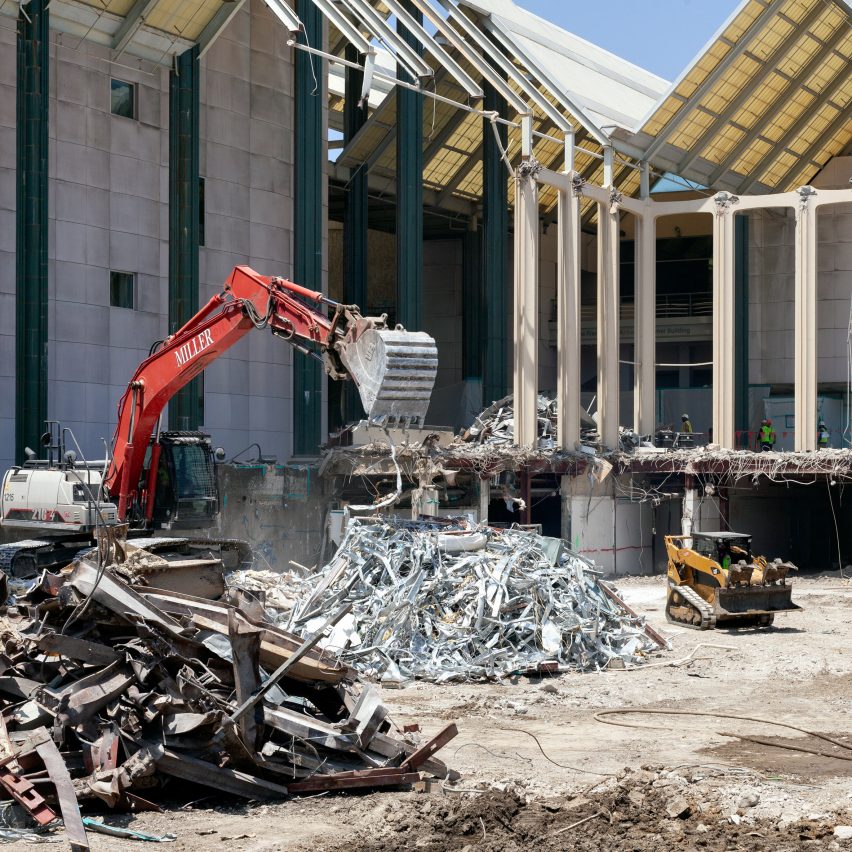
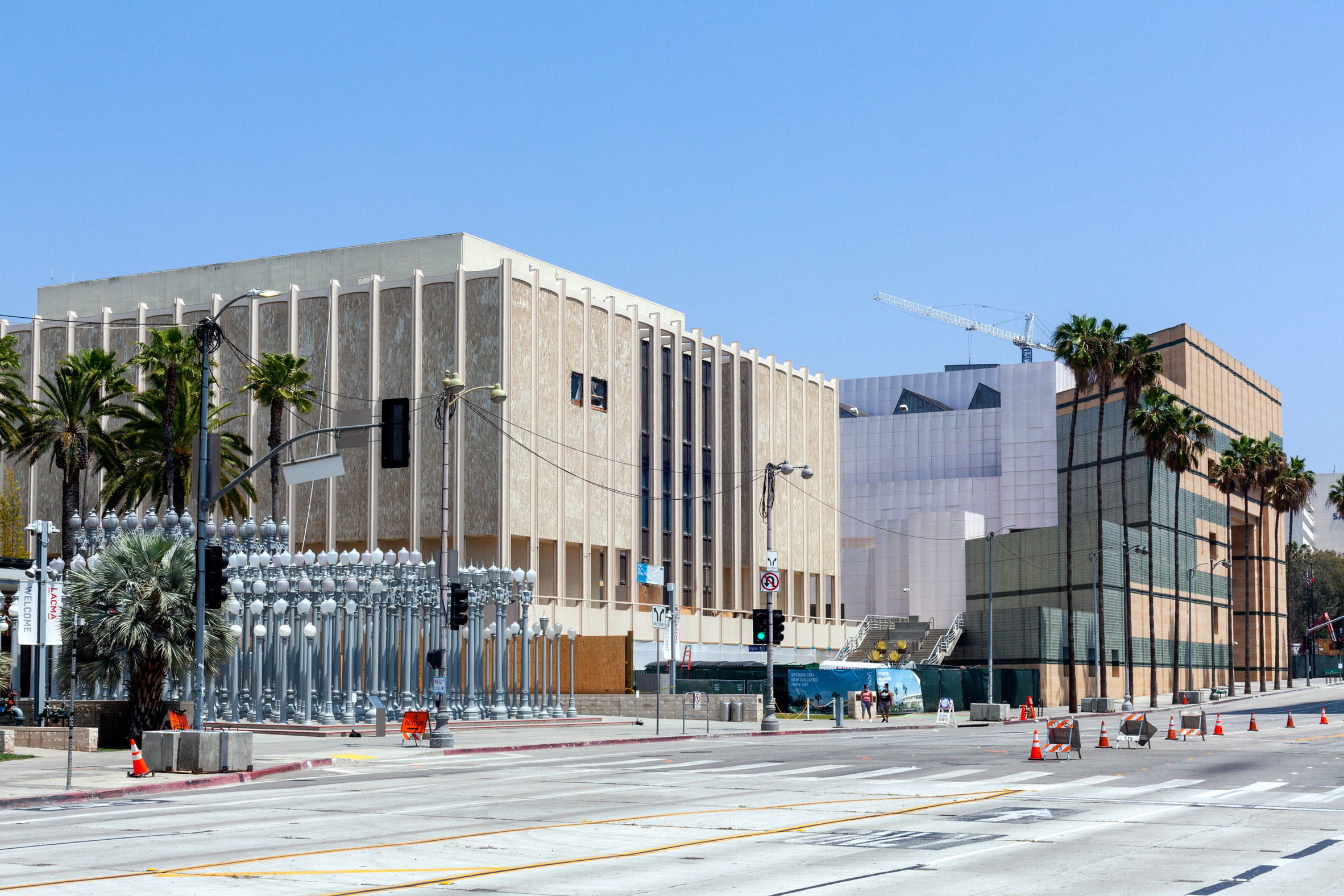
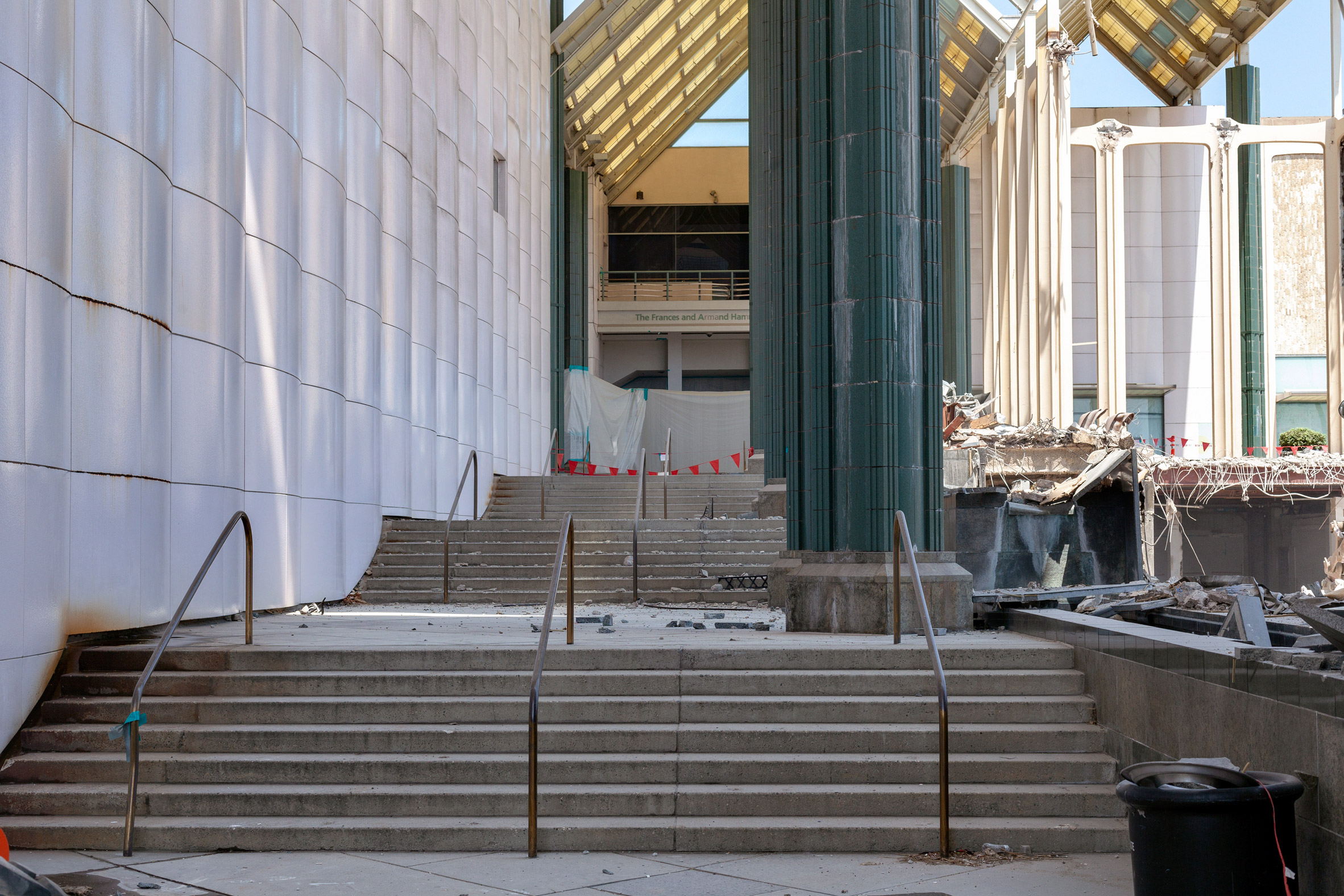
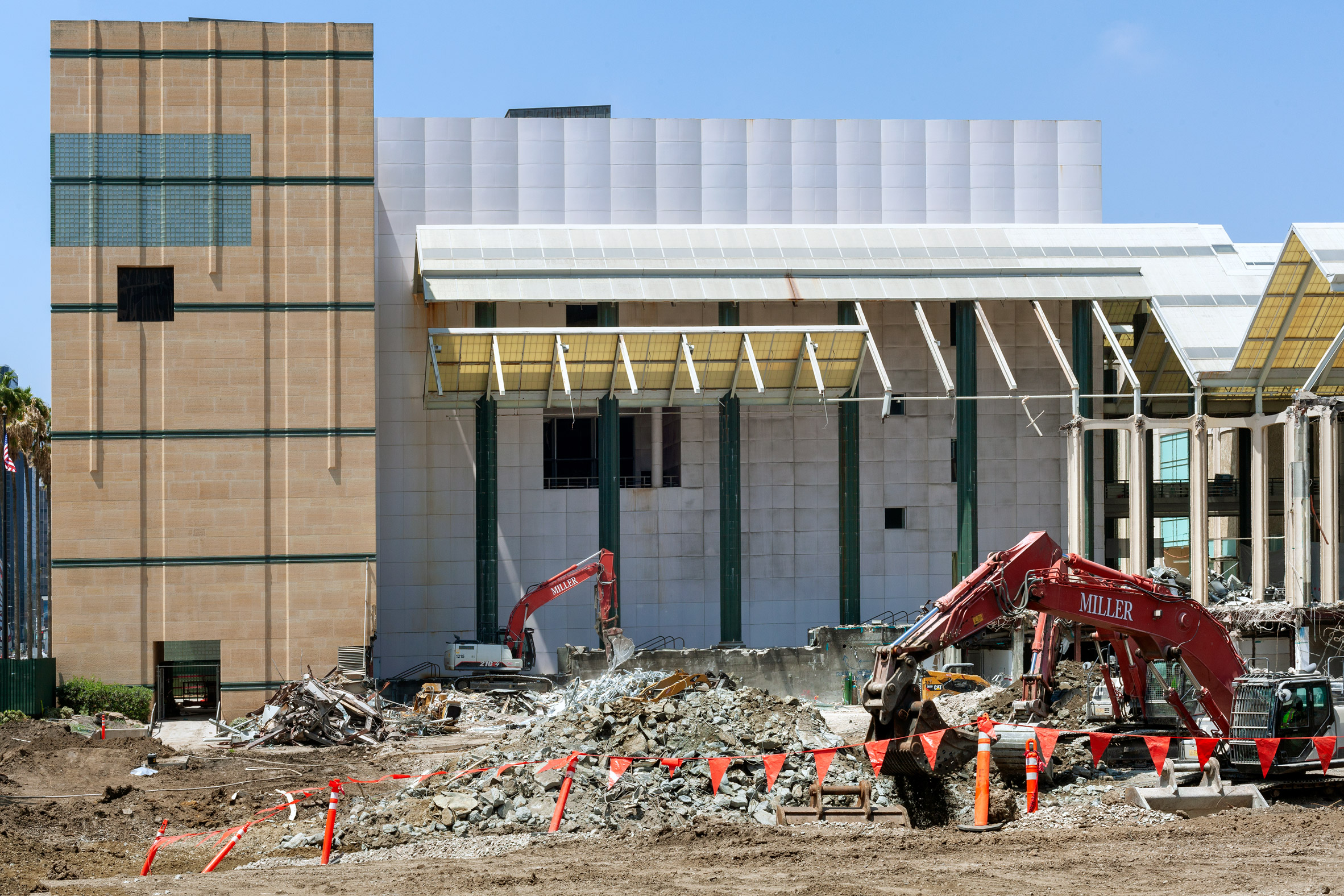
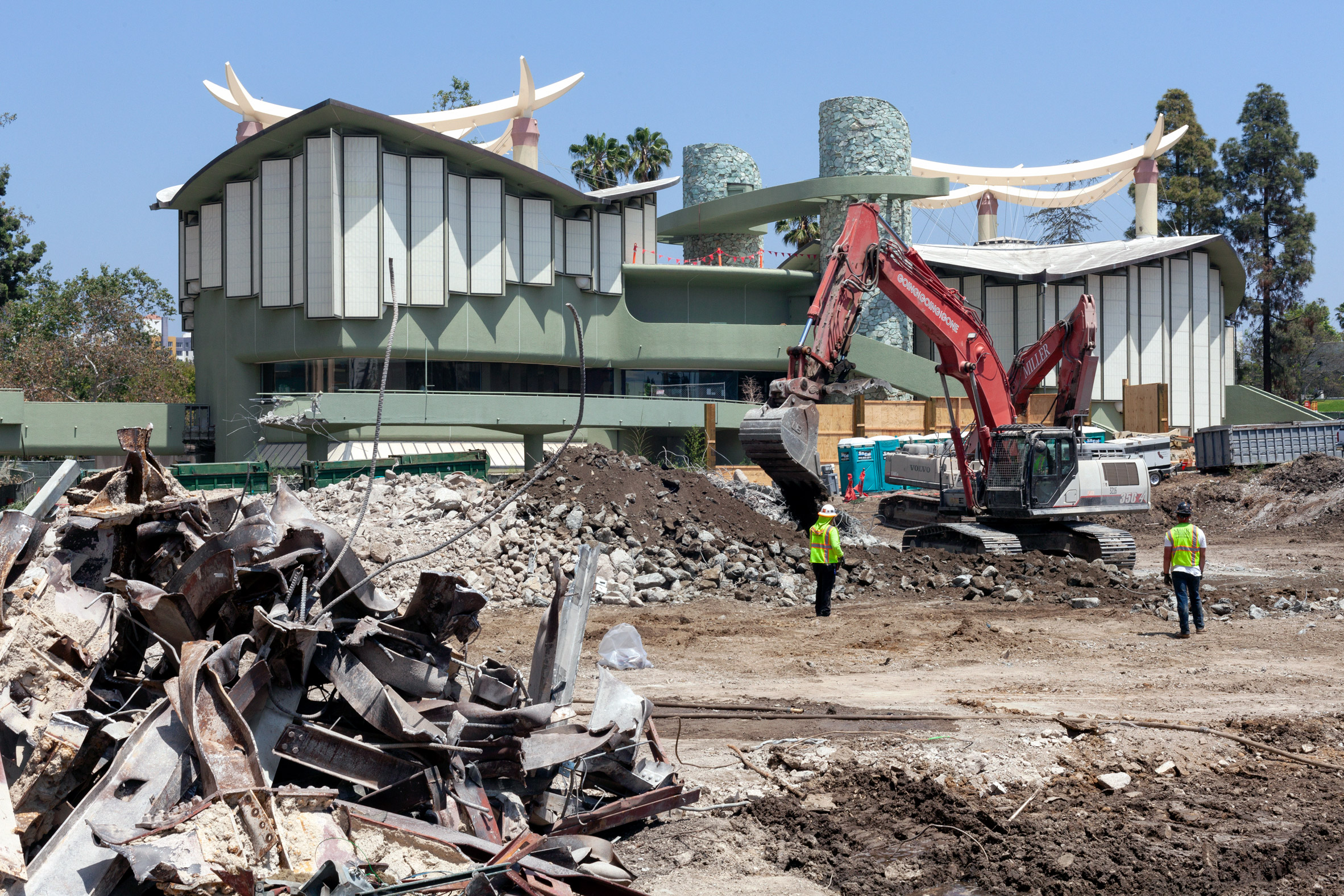
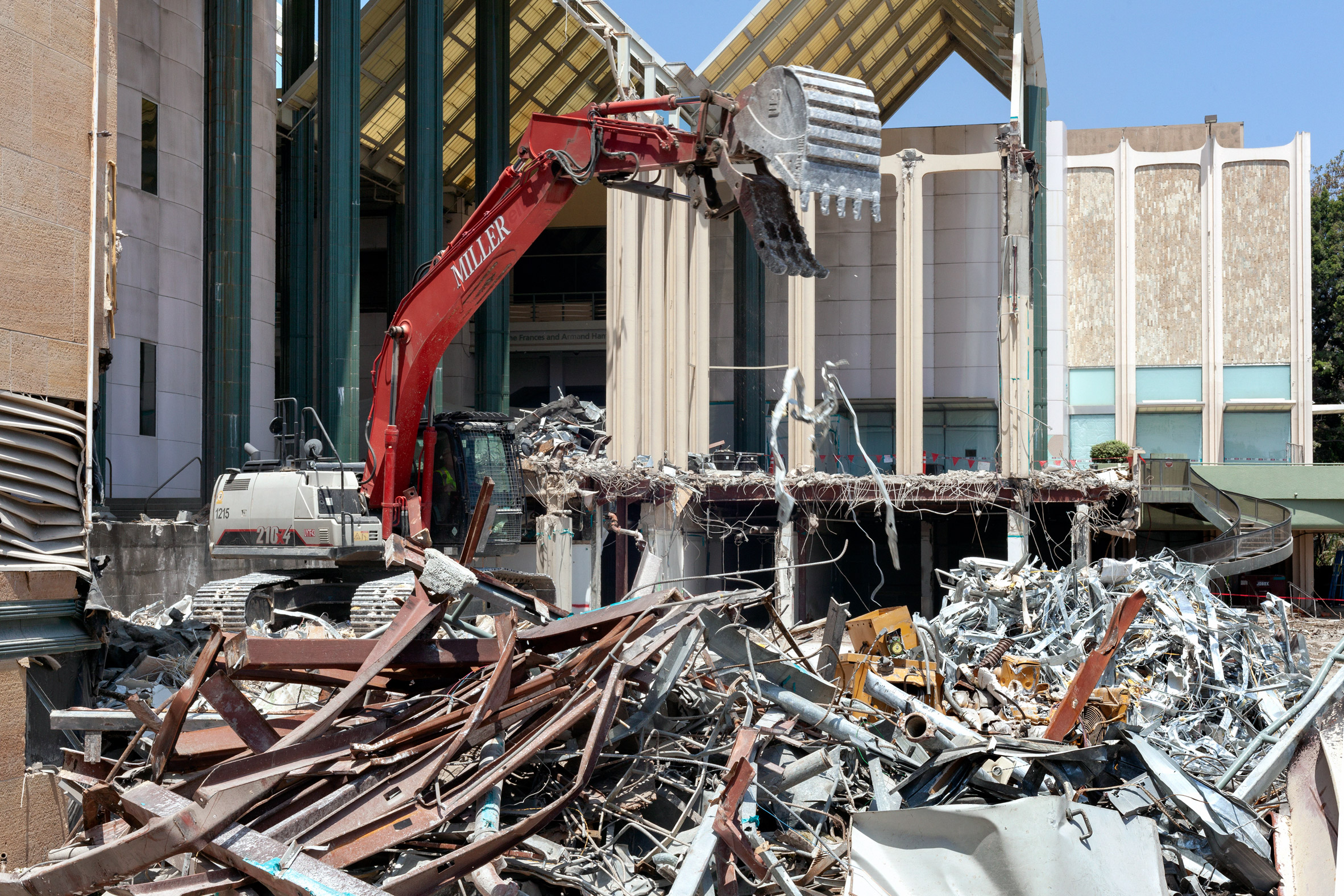
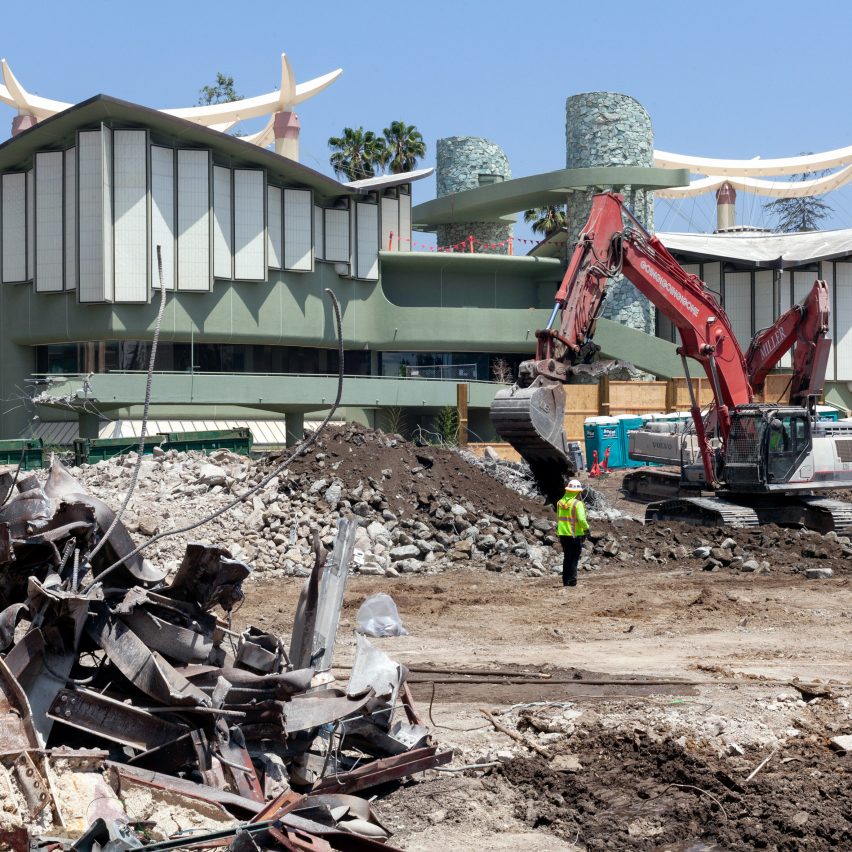
"Found here" presents a different shade of the truth. In April, while all but the most essential workers were home under shelter-in-place orders, demolition crews began tearing down the three structures by LA modernist architect William Pereira that were part of the original 1965 scheme, as well as the never-loved 1986 addition by Hardy Holzman Pfeiffer Associates. As of last week, the museum's Bing Theater reduced to a pile of debris.

At some point in the near future we will put on real pants and emerge to find chunks of cultural infrastructure gone

The real truth is that there's no longer a "here" there. Bruce Goff's beautifully weird Japanese Pavilion overlooks a hole and an excavator.

Whether one supports Zumthor's design, grieves for the Pereira buildings, or neither (like me), the cruelness of demolishing LACMA, a significant piece of LA architecture, at a moment when Angelenos are unable to bear witness should not be ignored.

The Covid-19 pandemic has put necessary pause on civic life. We can't congregate, we can't go to museums, yet our expectations remind us that this contraction from of the public sphere is only temporary. At some point in the near future we will put on real pants and emerge to find chunks of cultural infrastructure gone.

Half of LACMA will be erased. The LA County budget that underwrites $125 million (£100 million) of the new building's cost will be in tatters. Funders will be gun shy. And all we will be left with is the museum's ambiguous future in the form of a construction shed surrounding a ditch seeping tar.

The museum as hole in the ground is symbolic of the shuttering of other cultural outlets

Govan, of course, doesn't share such belief in LACMA's uncertainty. In a 9 April project update on LACMA's website, he expressed confidence in construction staying on schedule and funders committed to the project, writing "our new building is a powerful and visible signal to Los Angeles of renewed vitality and an engine for recovery after this crisis".

But the museum as hole in the ground is symbolic of the shuttering of other cultural outlets and canceled public programing. It's impossible to predict which galleries and arts organisations will have the funds to reopen.

Over the course of his 14-year tenure at LACMA, Govan succeeded in making the museum campus more than a destination for blockbuster shows and selfies in front of Chris Burden's Urban Light. The architecture, new and old, was pretty mediocre, but Angelenos would hang out there, listen to music, grab a coffee. Activities that showed proof of concept for a renewed civic life in a city that is often falsely portrayed as having none.

LACMA's mash-up of structures on Wilshire Boulevard in Hancock Park offered informality and in-between space

These days, the ideas of "museum as destination" and "experience" often overshadow more old-fashioned notions of "civic identity" or "pedagogy". Each one of these four concepts get pretty wobbly under the gaze of decolonisation, when the onus for one institution (or one building) to represent plurality is shaky at best. But LACMA's mash-up of structures on Wilshire Boulevard in Hancock Park offered informality and in-between space rather than heroic unity.

As a director skilled in bridging the worlds of Hollywood industry and the global art scene, Govan redefined LACMA through the lens of contemporary art and effectively obscured its roots as an encyclopedic museum. Especially with the openings of two additions: the Broad Contemporary Art Museum building in 2008 and the Resnick Pavilion two years later.

Both buildings by Renzo Piano will be incorporated into the Zumthor campus redesign and both reflect an ambient museum architectural aesthetic: big boxes housing well-lit and endlessly flexible galleries.

Activist group is petitioning museum trustees and Los Angeles county and city officials to stop demolition

In thinking about what LACMA and its wide-ranging permanent collection means for Los Angeles, writer and independent curator Greg Goldin touches on the founding of the county's first museum of art and natural history in 1913, a Beaux-Arts structure in Exposition Park that would later evolve into to the art museum and the city's Museum of Natural History.

"LACMA grows out of Los Angeles as a city that was coming onto its own and making its own identity," he explained. "LA wasn't going to be a reflection of itself, we could look outward at other cultures and see how those cultures were reflected our own. It was a move away from provincialism and towards cosmopolitanism."

Goldin, along with architecture critic Joseph Giovannini, co-chairs of The Citizens' Brigade to Save LACMA. The activist group is petitioning museum trustees and Los Angeles county and city officials to stop demolition and revisit plans.

Products of a three-week charette, the schemes aren't particularly great. Then again, neither is Zumthor's

In late April, the Citizen's Brigade announced the winners of an ideas competition to redesign the museum. Entitled LACMA not LackMA, a dig at the reduced square footage of the Zumthor scheme, the selection of six finalists is meant to show a widening of possible futures for the site and critique the lack of public review and input that has marked Govan's process.

The winning designs for LACMA's East Campus include entries from Coop Himmelb(l)au, RUR Architecture, and Reiser + Umemoto, among others. Some are more expressive – Coop Himmelb(l)au's features a bubble to rival the Academy Museum's sphere – and others practical.

Artists, architects, Angelenos all have vested interest in the future of the campus

Paul Murdoch Architects, the only LA-based finalist, proposed a multi-story glazed box resembling a department store. Products of a three-week charette, the schemes aren't particularly great. Then again, neither is Zumthor's. He's had seven years.

Still, there is something hopeful, even resilient in seeing more concepts for LACMA rather than continuing an exhausting debate over the merits of a single design. Govan's efforts to push forward his vision denied the public a process to reimagine architecture that represents the culture of LA today.

Artists, architects, Angelenos all have vested interest in the future of the campus, its potential to inspire creativity and foster civic life. While we all sit at home imagining the moment when we can once again flock to art openings, concerts, and coffees with friends, I doubt anyone is dreaming of a hole.

Photography is by Monica Nouwens.

The post "The cruelness of demolishing LACMA when Angelenos are unable to bear witness should not be ignored" appeared first on Dezeen.


from Dezeen https://ift.tt/2SBqzO5

Photography reveals LACMA demolition during coronavirus pandemic

Photography reveals demolition of LACMA buildings during coronavirus pandemic

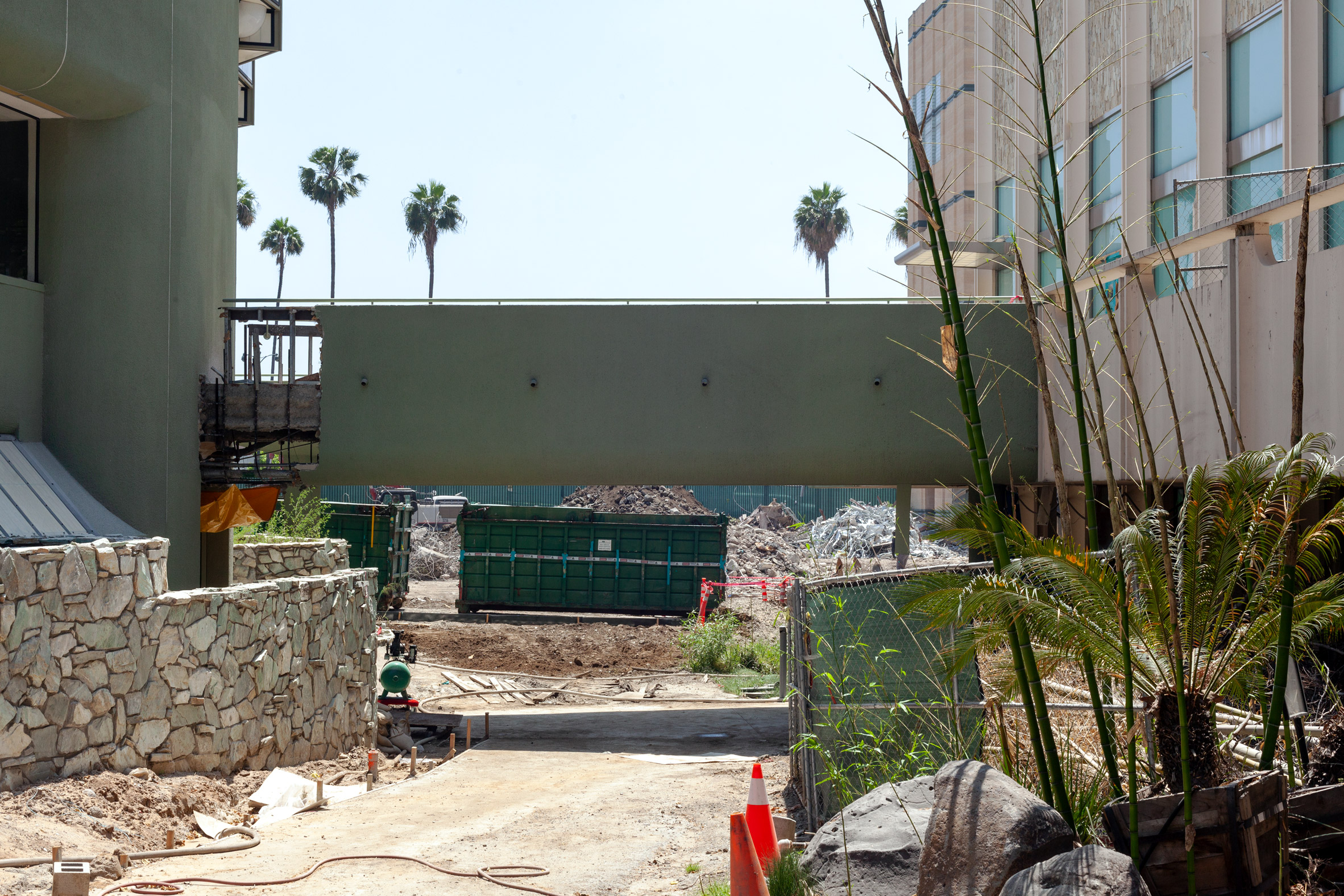
This exclusive photography by Monica Nouwens captures the razing of the Los Angeles County Museum of Art, as part of controversial plans to redevelop the site with a Peter Zumthor-designed building.

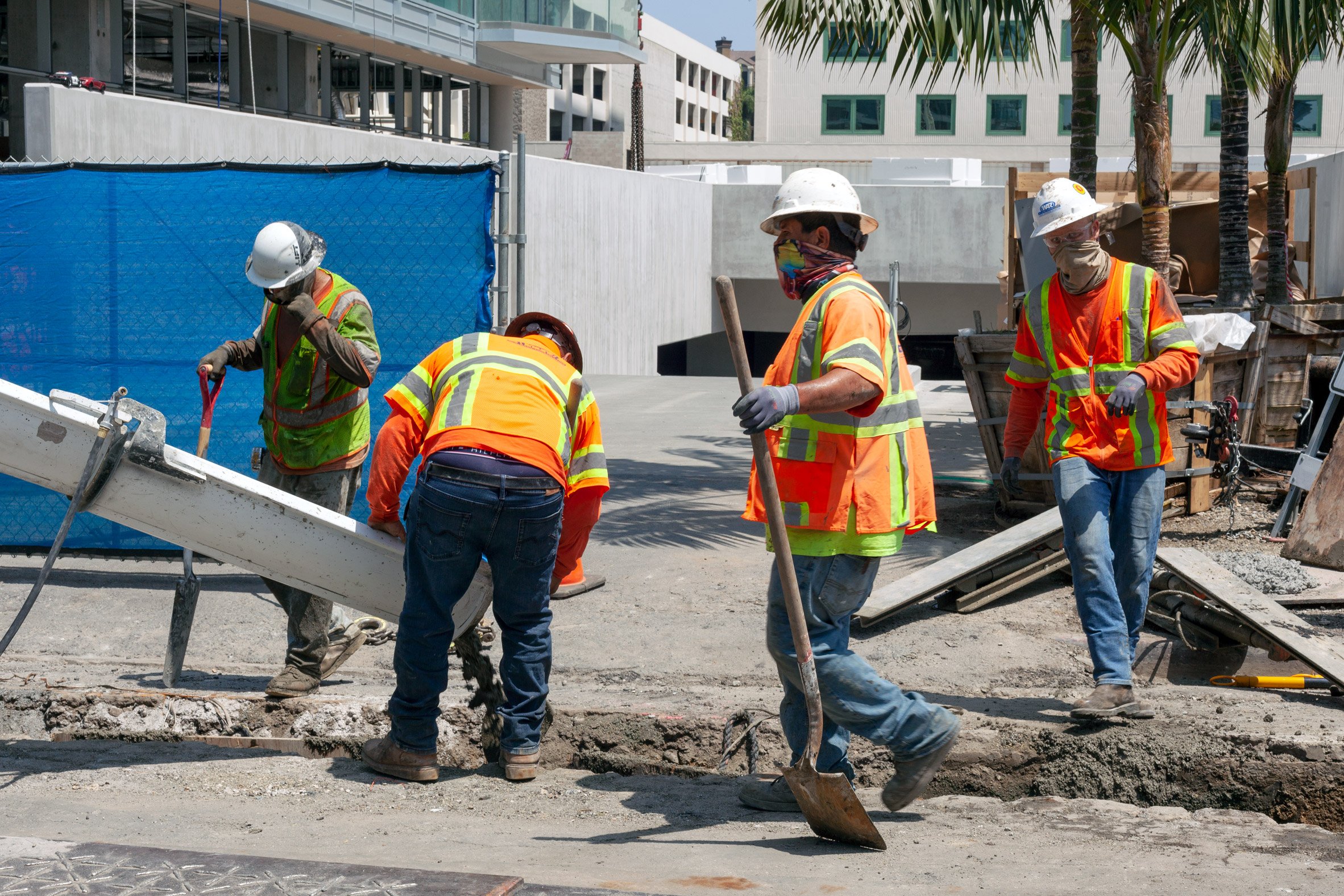
LACMA's demolition continued as part of essential activities during the city's coronavirus lockdown as announced last month.

Photography reveals demolition of LACMA buildings during coronavirus pandemic

The photos by locally based Nouwens capture construction workers amid rubble piles, machinery and red tape. They are wearing face covers, gloves and glasses to form protective gear to help mitigate the potential spread of Covid-19 on-site.

The demolition will raze of the Ahmanson, Art of the Americas, Bing, and Hammer buildings that are described as having "significant structural problems".

Photography reveals demolition of LACMA buildings during coronavirus pandemic

Their removal marks the beginning of the $650-million (£523-million) project designed by the Pritzker Prize-winning architect Zumthor, which was approved by the County of Los Angeles Board of Supervisors one year ago.

Zumthor has faced opposition and setbacks with the project since he unveiled the scheme in 2013.

Photography reveals demolition of LACMA buildings during coronavirus pandemic

The Swiss architect initially proposed demolishing the 1965 building by William L Pereira and a 1980s extension by Hardy Holzmann Pfeiffer Associates, and replacing them with an undulating black form that matched the size of the current buildings

When concerns were raised that the new building would damage the nearby La Brea Tar Pits, he introduced a revised, smaller version one year later.

Photography reveals demolition of LACMA buildings during coronavirus pandemic

A key feature is a bridge that will extend over Wilshire Boulevard – one of LA's biggest and busiest roads. Zumthor then revised this scheme again with a new, even smaller iteration.

"LACMA has become the Incredible Shrinking Museum," said Los Angeles Times art critic Christopher Knight. He critiqued the scheme in a piece that called for the board to not approve the environmental report.

Photography reveals demolition of LACMA buildings during coronavirus pandemic

Protestors of the design recently launched an unofficial competition called LACMA not LackMA.

It calls for an alternative proposal after finding Zumthor's "inadequate and dysfunctional".

Photography reveals demolition of LACMA buildings during coronavirus pandemic

Six shortlisted designs by Barkow Leibinger, Coop Himmelb(l)au, Kaya Design, Paul Murdoch Architects,  Reiser + Umemoto, and TheeAe are intended encourage the museum board and the County Board of Supervisors to review the scheme,

However, Zumthor did receive support from an unlikely source, when movie star Brad Pitt spoke up for the Swiss architect at a planning consultation. The actor described the latest design as a "mastery of light and shadow".

Photography reveals demolition of LACMA buildings during coronavirus pandemic

Zumthor, 75, has received a number of high-profile awards, including the Praemium Imperiale in 2008, the Pritzker Prize in 2009 and the RIBA Gold Medal in 2013.

He has designed numerous buildings in Europe including the Therme Vals spa in Switzerland, the Zinc Mine Museum in Norway and the Brother Klaus Field Chapel in Germany. LACMA will be his first in the US.

The post Photography reveals LACMA demolition during coronavirus pandemic appeared first on Dezeen.


from Dezeen https://ift.tt/2YztUBk

A Dramatic Performance by Juilliard Students Brings a Socially Distant Approach to Ravel’s Boléro

Maurice Ravel’s Boléro is a particularly collaborative composition in that it passes the melodic theme through a series of solos. The sequential performances highlight the distinct tones and sounds of each instrument, whether it be a flute, violin, or the anomalous saxophone. In a spectacular new project, dozens of Juilliard students who now are quarantined in their respective homes bring a socially distant approach to the classic orchestral composition. What makes it especially impressive, though, is not just appearances by famous alumni—watch for Yo-Yo Ma, Laura Linney, Patti LuPone, and Itzhak Perlman—but because it coordinates the instrumental piece in addition to a range of dramatic and choreographed elements that appear to transcend individual frames.

In a statement about the project, Juilliard said the hundreds of video clips were filmed separately before being edited and overlayed into a single composition. “Bolero Juilliard, assembled by a team of artists all working from remote locations, is part narrative, part collage. Most of all, it is a collective endeavor that captures a snapshot of a specific global moment and the possibilities of creative connection in an uncertain world,” the school said. The assembled video is “a complex online puzzle with many components being conceived, rehearsed, and produced simultaneously.”

If you enjoyed Juilliard’s project, check out this music video filmed entirely on Zoom and these quarantine dispatches. (via Kottke)


from Colossal https://ift.tt/3dgesy2

Live interview with architect Carlo Ratti as part of Virtual Design Festival

VDF Screentime Carlo Ratti

Architect Carlo Ratti speaks to Dezeen in this Screentime conversation sponsored by Enscape as part of Virtual Design Festival today. Watch it live from 4:00pm UK time.

Italian architect Ratti is the founder of international design and architecture studio Carlo Ratti Associati and is a professor at Massachusetts Institute of Technology (MIT), where he directs the SENSEable City Lab.

Today, he will talk about his work with Dezeen editor-in-chief Marcus Fairs. Among Ratti's recent projects are two that focus on helping to fight the coronavirus and adapting to a post-pandemic world.

VDF Screentime Carlo Ratti
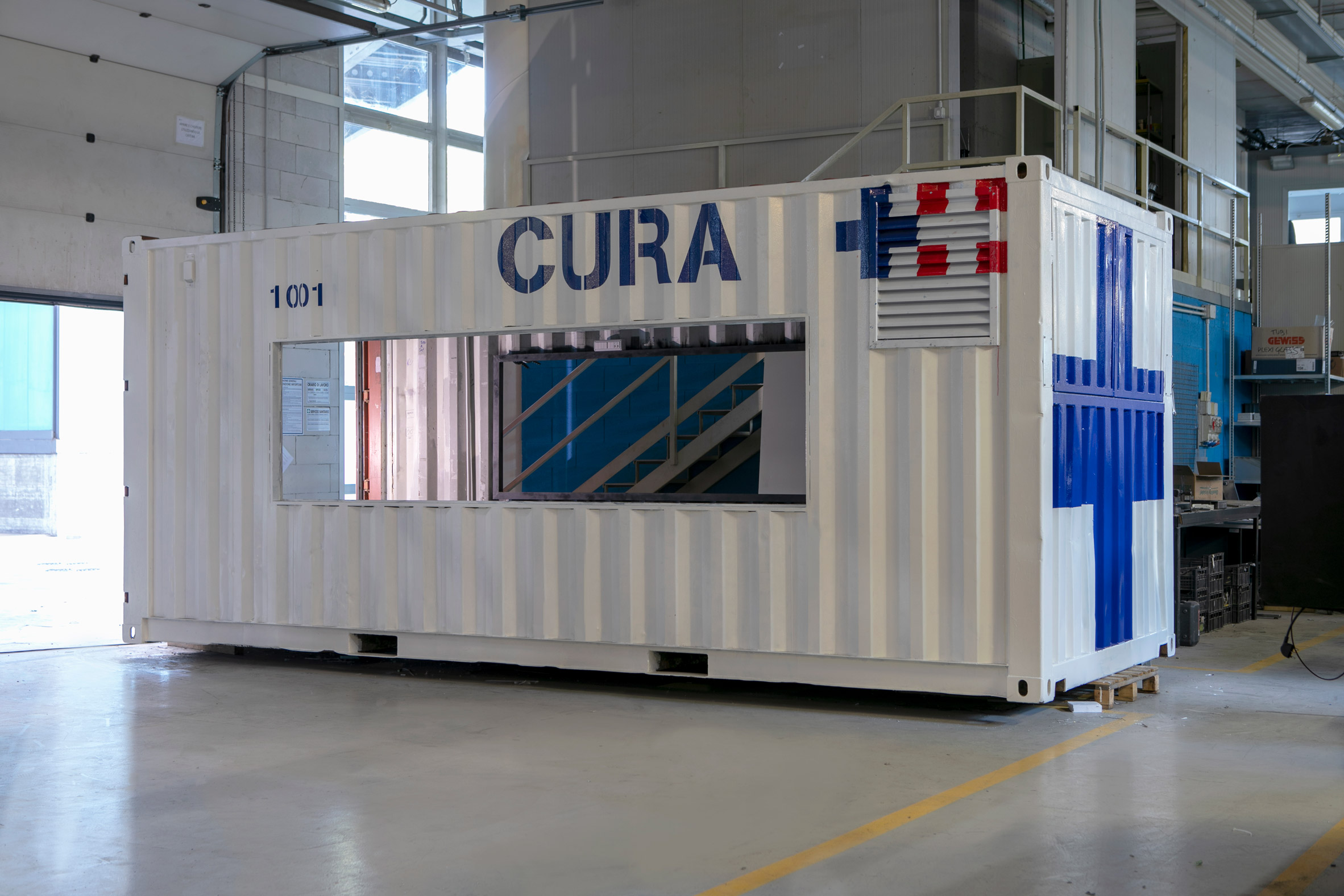
Ratti's CURA intensive care unit in a shipping container

The shipping-container intensive care unit, CURA, designed by Ratti and Italo Rota, was built at a Turin hospital in March and can treat two patients.

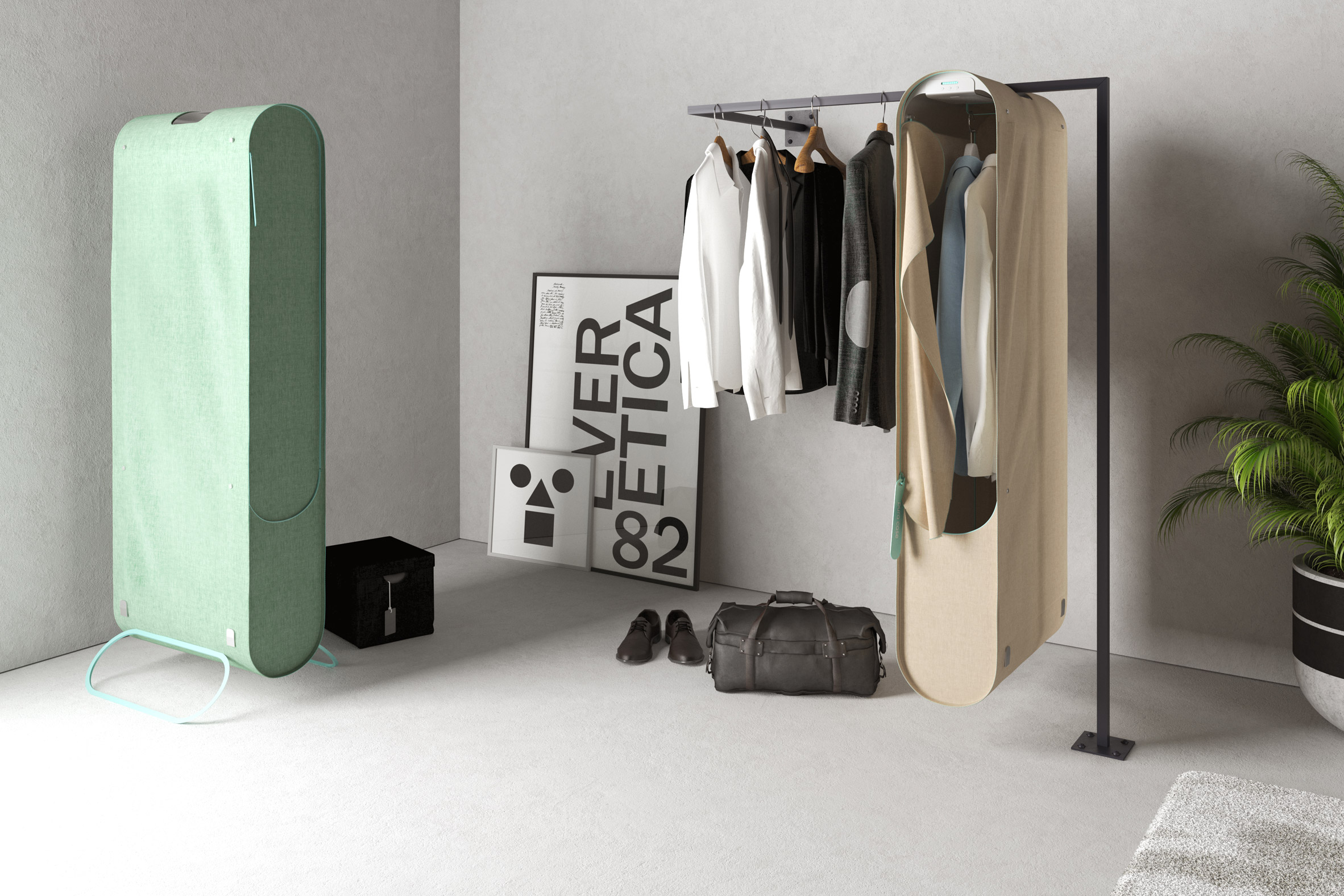
Ratti will speak about CURA, which admitted its first patient on 19 April, in the interview. He will also discuss Pura-Case, a concept for a battery-powered wardrobe purifier that uses ozone to remove viruses and bacteria from clothes.

Previously, he's installed facial-recognition tech in a working train station in China to track visitors as part of the Bi-City Biennale of Urbanism\Architecture in Shenzhen, and launched Scribit, a small robot that draws erasable images on vertical surfaces in marker pens.

Ratti was also featured in our launch video for Virtual Design Festival, in which he said that what we need to do today is use the crisis to rethink what we do, and to see how we can use our skills in order to contribute solutions.

VDF Screentime Carlo Ratti
The Pura-Case uses "ozone power" to sanitise clothes

Other creatives featured in our Screentime series include trend forecaster Li Edelkoort, architect Dong-Ping Wong, New York architecture practice SO-ILThe World Around curator Beatrice Galilee, filmmaker Gary Hustwit and British-Israeli architect Ron Arad.

This Screentime conversation is sponsored by Enscape, a virtual reality and real-time rendering plugin for architectural design programme Autodesk Revit.

Virtual Design Festival is the world's first online design festival, taking place from 15 April to 30 June. For more information, or to be added to the mailing list, contact us at virtualdesignfestival@dezeen.com.

The post Live interview with architect Carlo Ratti as part of Virtual Design Festival appeared first on Dezeen.


from Dezeen https://ift.tt/35wdKtW

Make Your Own Paper Prawn Using This Pattern Designed by Artist Lisa Lloyd

All images © Lisa Lloyd, shared with permission

We’ve been admirers of Lisa Lloyd’s meticulous birds and bees crafted from countless strips of paper for a while, and the London-based artist now is offering an amusing tutorial to create her tiny paper prawns at home. The downloadable instructions, which are available for free on her site, are complete with a printable template and a supply list. She also released a simple video series for those who prefer visual learning.

Lloyd tells Colossal that before the coronavirus outbreak locked down nations around the world, she was crafting a life-size bald eagle with a two-meter wingspan. Soon after the U.K. imposed quarantine restrictions, she decided to shift her focus to a smaller project. “I wanted to create a free papercraft tutorial that was fun and different and could be made using materials found around the home… such as cereal boxes and printed card(s),” she says.  

Check out the delightful crustaceans people have been crafting under the hashtag #paperprawn, and share your own, too.


from Colossal https://ift.tt/2VZ3mrm