Wednesday, 6 May 2020

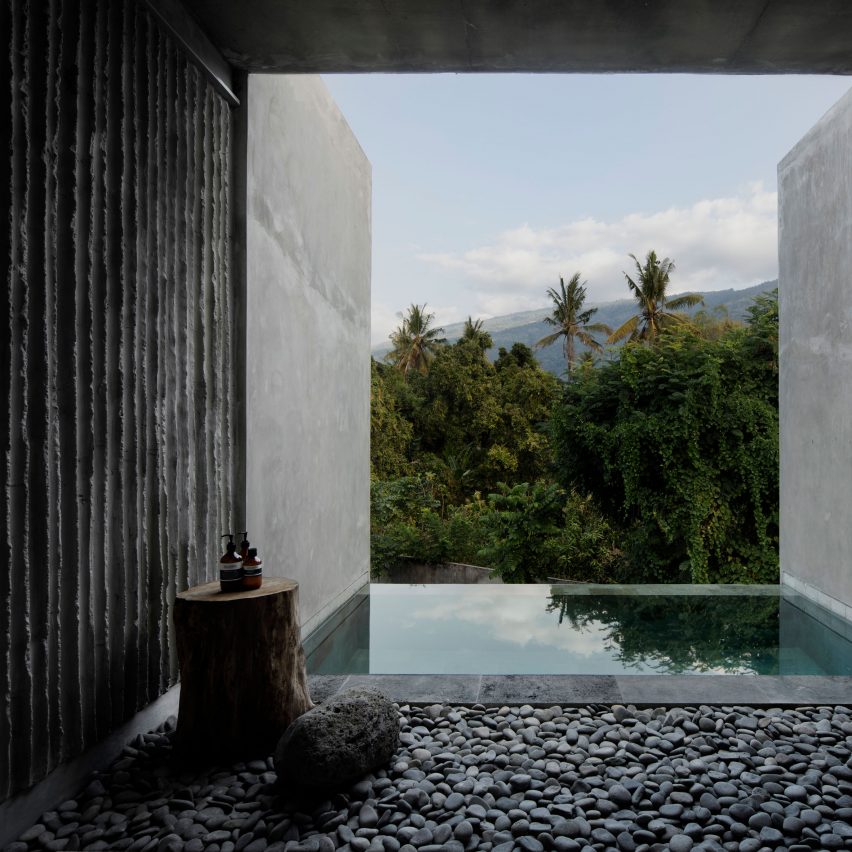
Rough concrete walls frame jungle views at The Tiing hotel in Bali

The Tiing hotel in Bali by Nic Brunsdon

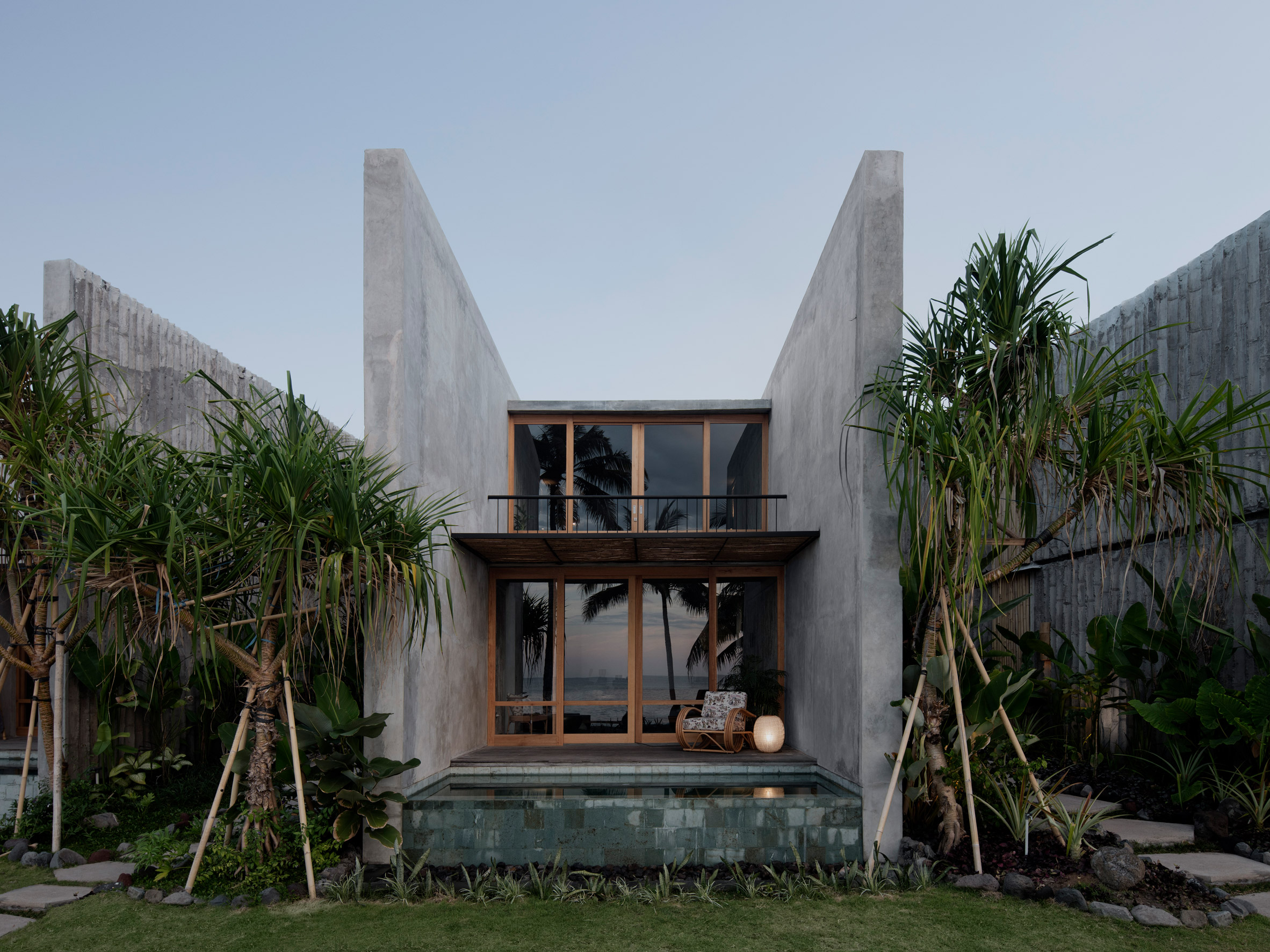
Concrete was cast against bamboo to create the rugged walls of this boutique hotel in Bali, by Australian architect Nic Brunsdon.

The Tiing is a 14-room resort on the northern coast of Bali, away from the busy tourist spots in the south.
The Tiing Bali hotel by Nic Brunsdon

Designed by Perth-based Nic Brunsdon in collaboration with local studio Manguning, the hotel celebrates its location. Rooms are designed as funnels, directing views towards the impressive jungle backdrop in one direction, and the ocean in the other.

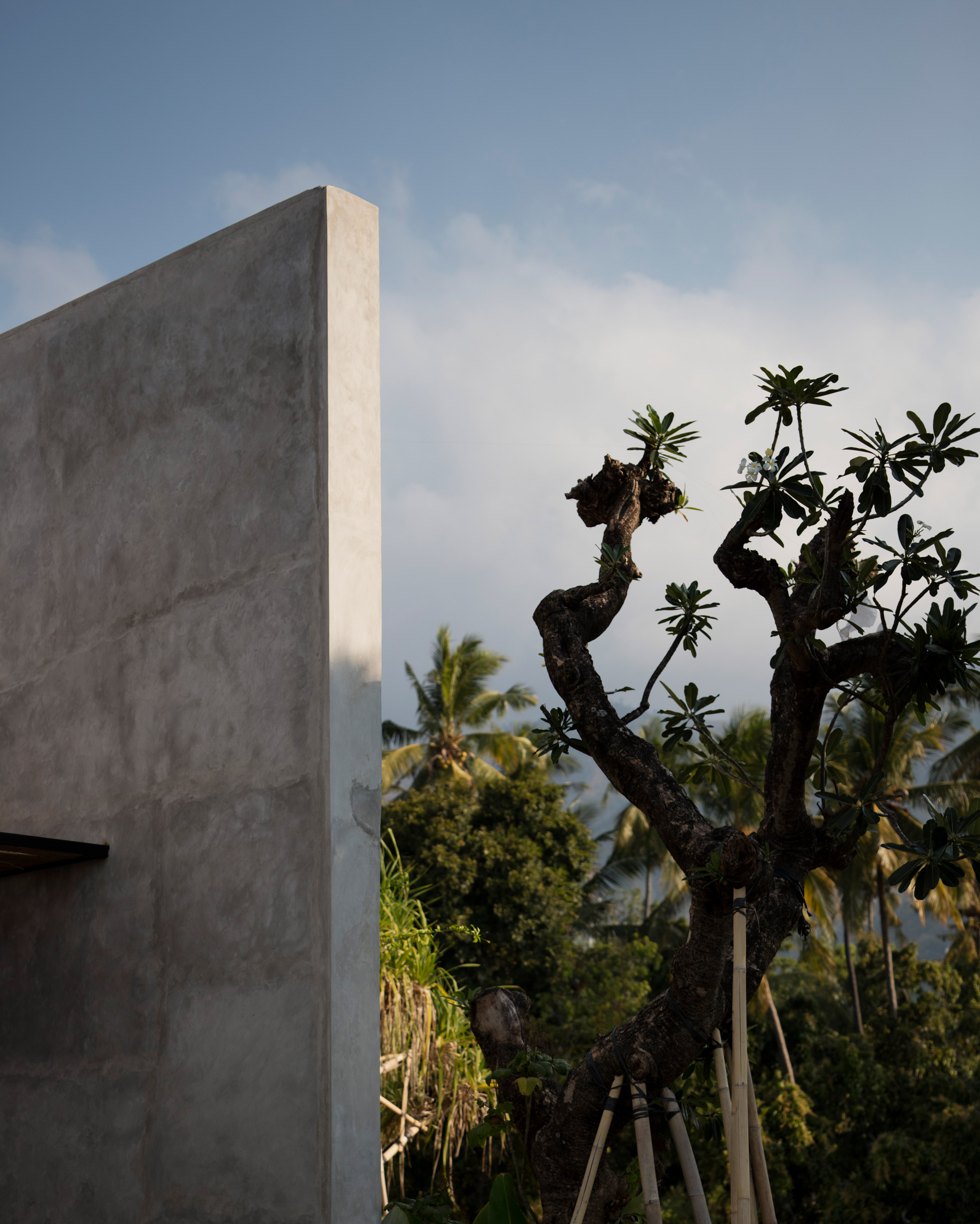
Brunsdon opted to keep the material palette simple. Bamboo was used as it is abundant in the region along with concrete, as it is the most common building material on the island.
The Tiing Bali hotel by Nic Brunsdon

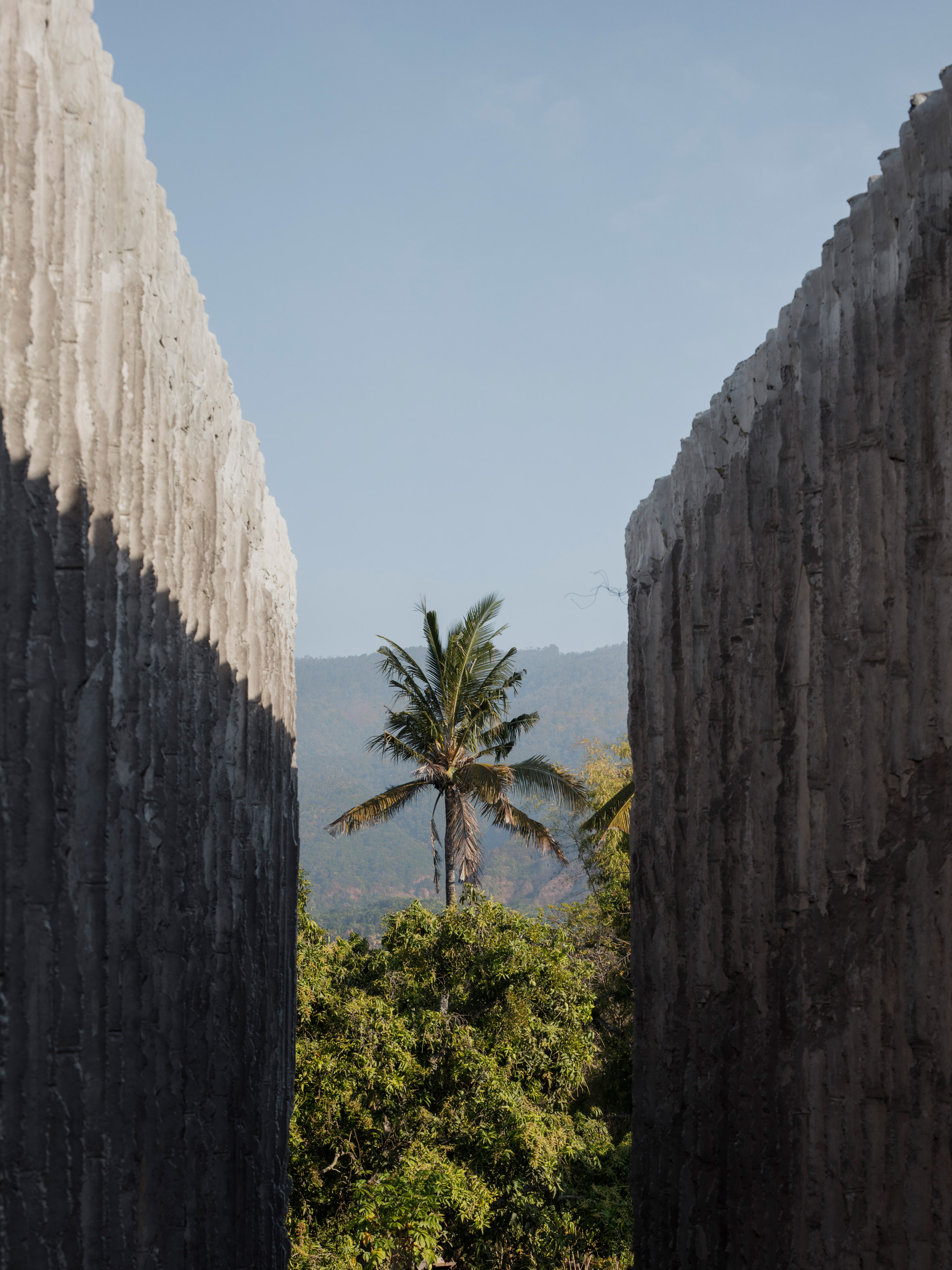
Both materials are used alone, creating smooth rendered walls and textured wooden screens. But in many places the bamboo has been used as a formwork for cast concrete, giving it a ridged texture that blends with the natural surroundings.

"The materiality of this project aims to work within the local context, construction techniques, resources and climate – a rugged regionalism," explained Brunsdon.
The Tiing Bali hotel by Nic Brunsdon

"In a tropical climate, a clean finish would require much maintenance; here, the material will weather in, enhancing the character of the architecture and place," he continued.

"Importantly, this also became the finishing. Expressing the texture and form of the bamboo as a negative impression in the patina of the concrete becomes this project's motif."
Bamboo-formed concrete walls

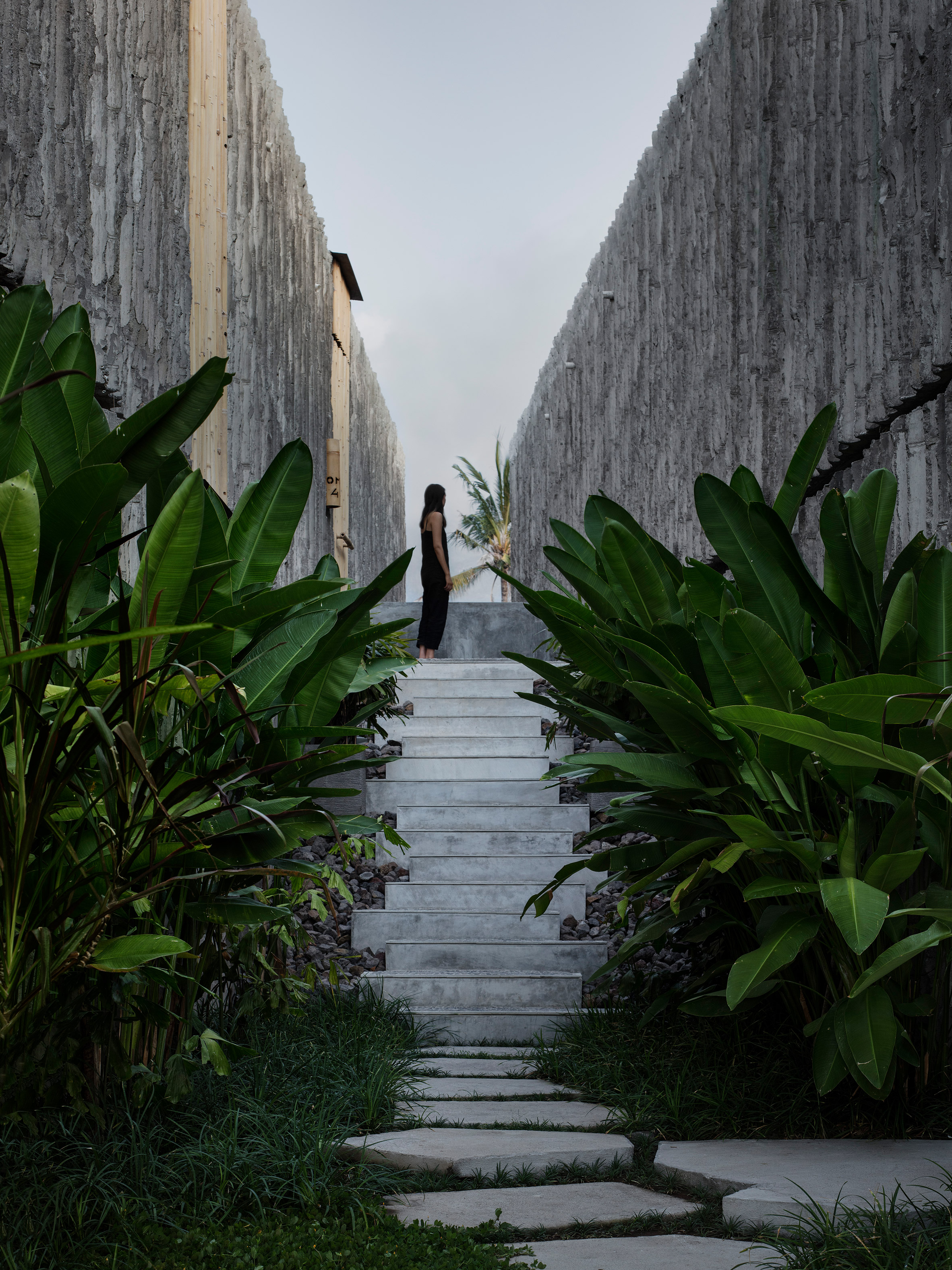
The Tiing consists of seven two-storey blocks, separated by cobbled pathways.

Even more than the rooms, these pathways create tunnel-like views towards the trees, framed by the textured concrete walls.
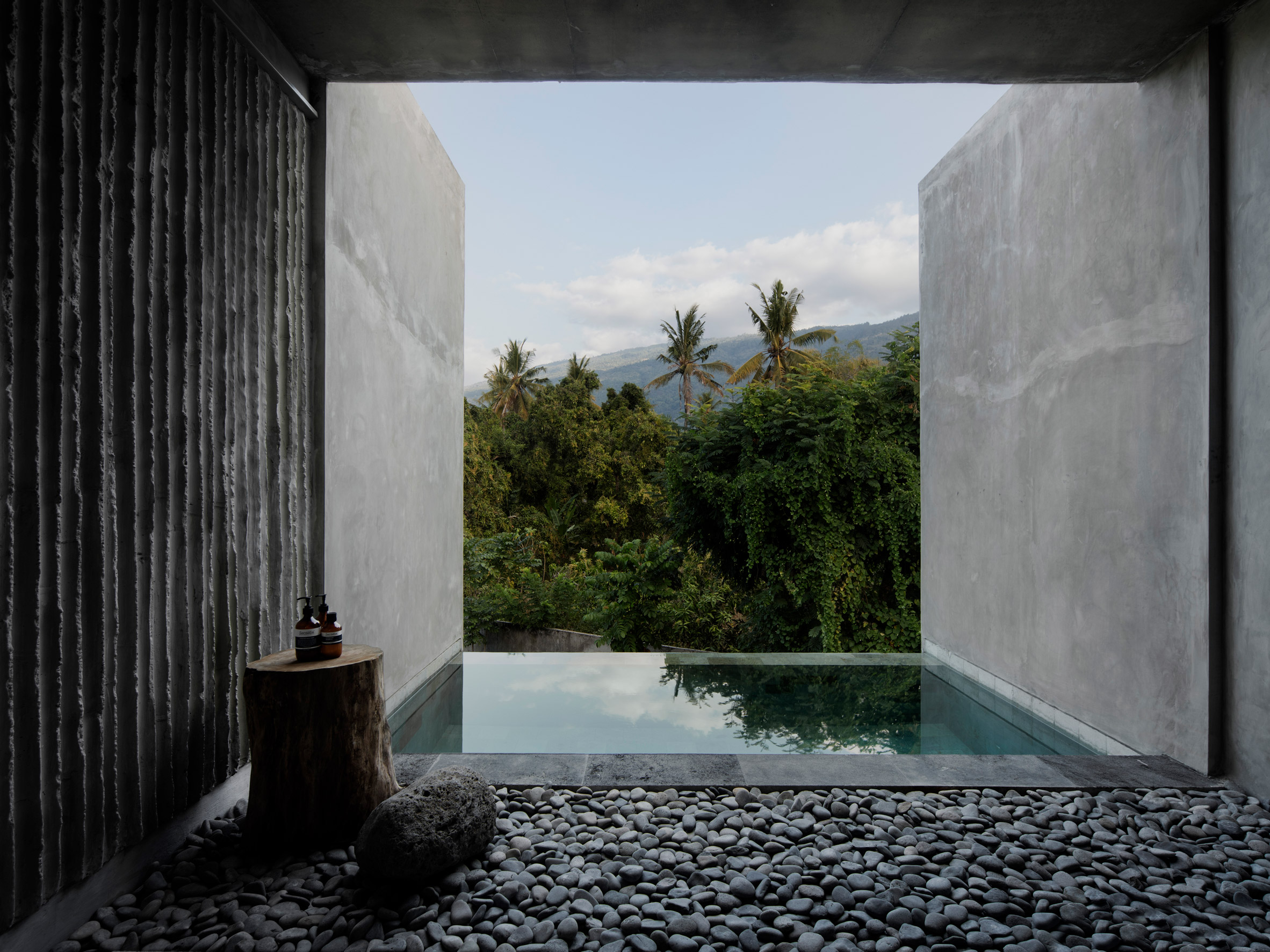
Bathing pool

Each block contains two suites, one on the ground floor and another above. All rooms have their own private bathing pool, with some facing north and others facing south.

A bedroom and living space are located at opposite ends of each, each directed towards a different view, while the shower room is a round space at the centre of the plan.
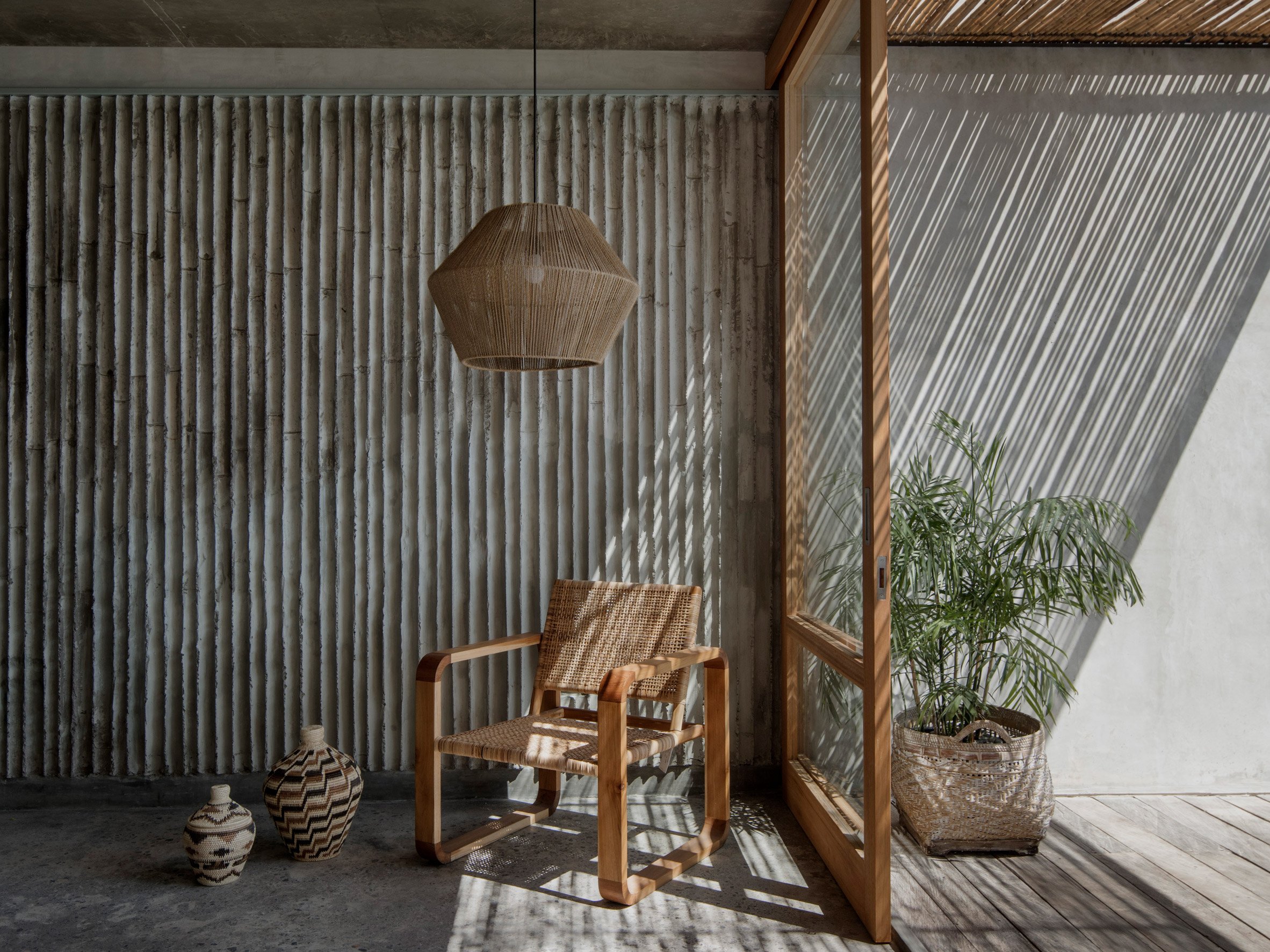
Living space

Skylights bring daylight into these washrooms, even on the ground floor, thanks to a clever stagger in the plans.

"Protected, hidden, and central, this space becomes a welcome surprise, a place of refuge and delight," said Brunsdon. "This is a place for unwinding reconnecting to the self and to nature."

The hotel also features a red public bathing pool, designed to offer "an energising arrival moment".
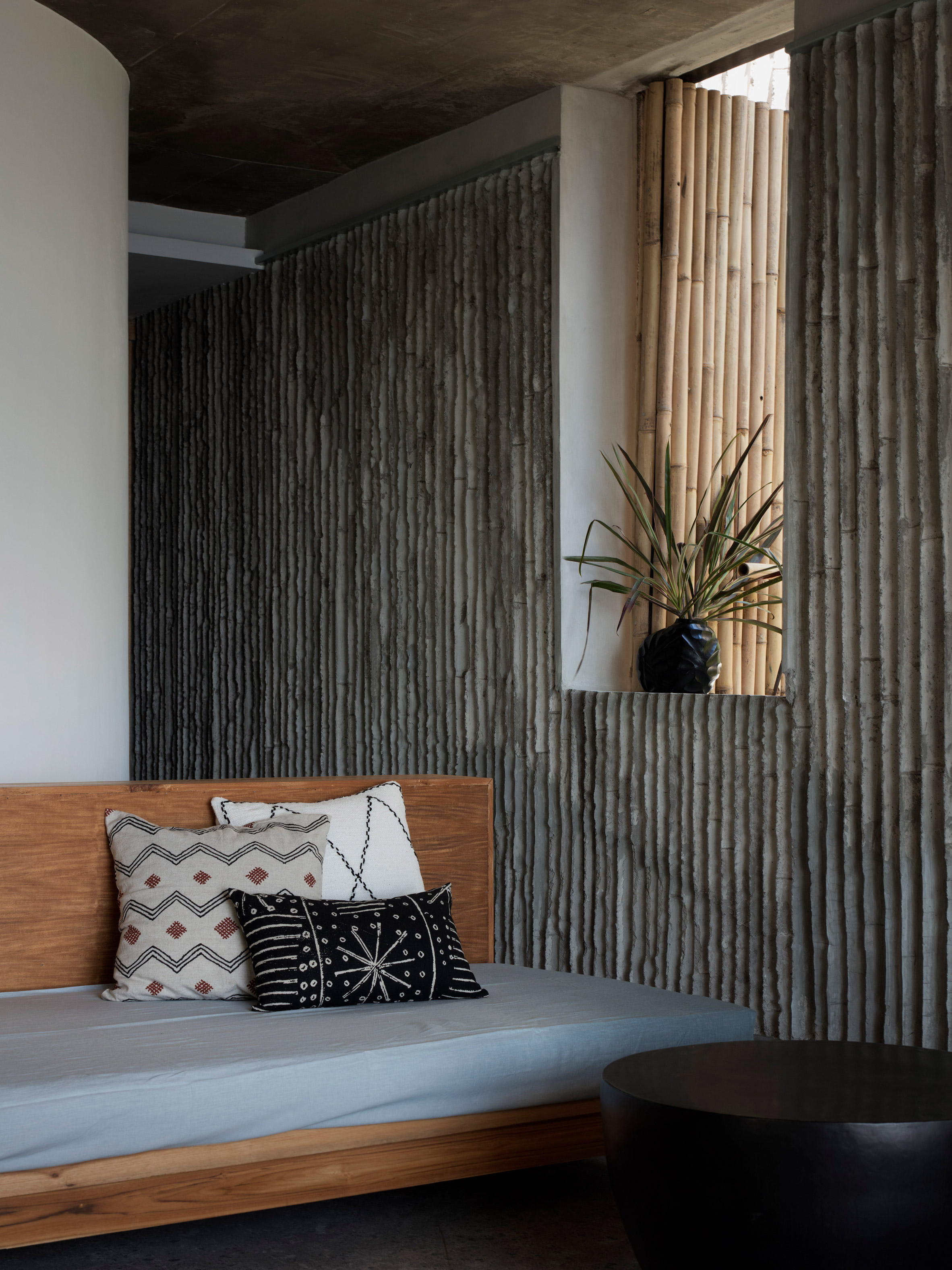
Lounge space

Bali has seen a big rise in tourism in recent years, with the arrival of several new luxury resorts and attractions.

The OMA-designed Potato Head Studios recently opened, while other new additions include hotel Katamama and the Uluwatu Surf Villas.

Brunsdon hopes The Tiing can offer something in a slightly different spirit, thanks to its more remote location.
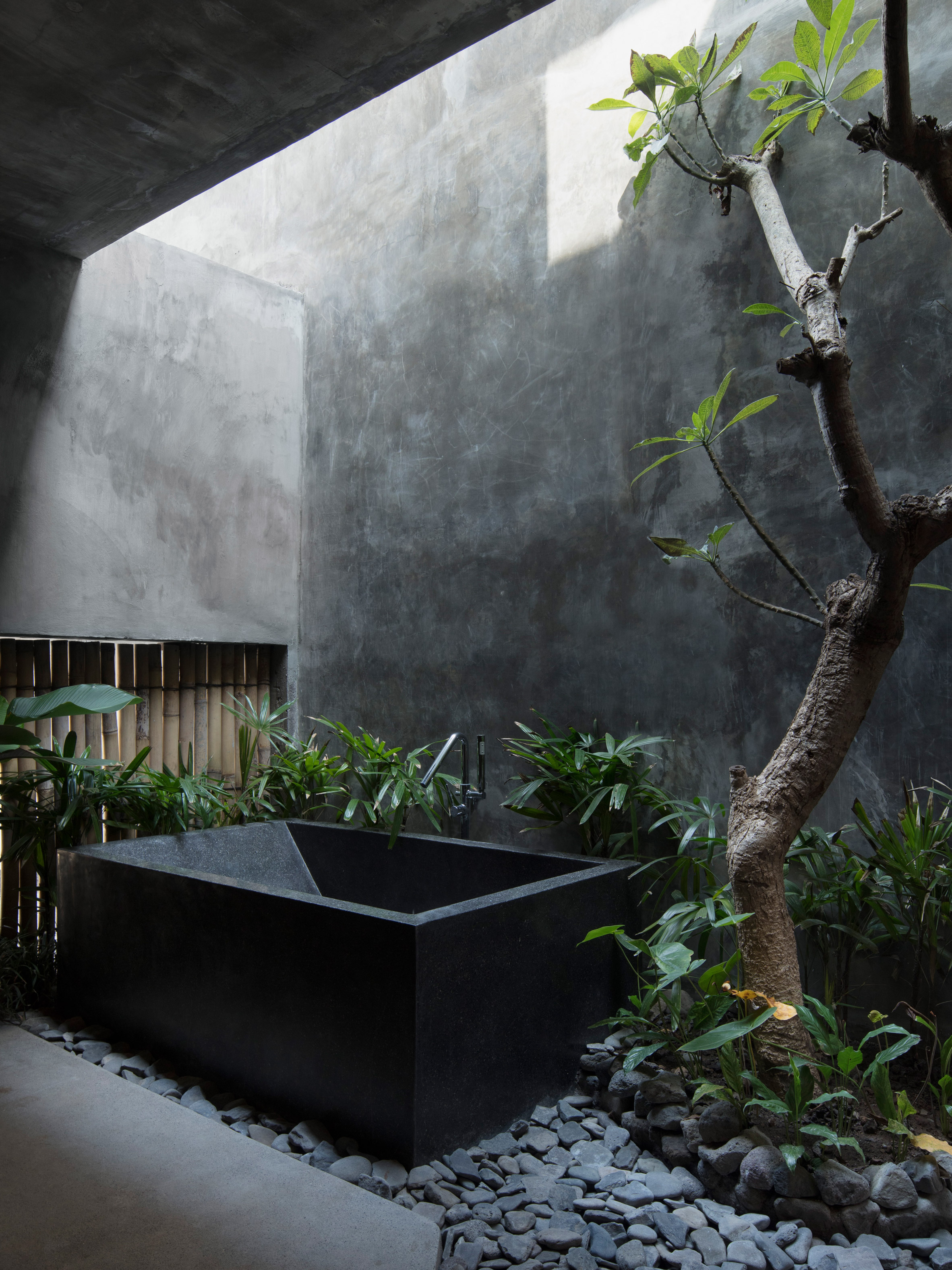
Bath tub

"The Tiing has been designed as a reward for the intrepid," he added. "It is embedded into its local and cultural context."

Photography is by Ben Hosking.

The post Rough concrete walls frame jungle views at The Tiing hotel in Bali appeared first on Dezeen.


from Dezeen https://ift.tt/35AXzeJ

Peter Saville and Fergadelic design stickers to support the NHS

Peter Saville and Fergadelic design Stick Together stickers to support the NHS

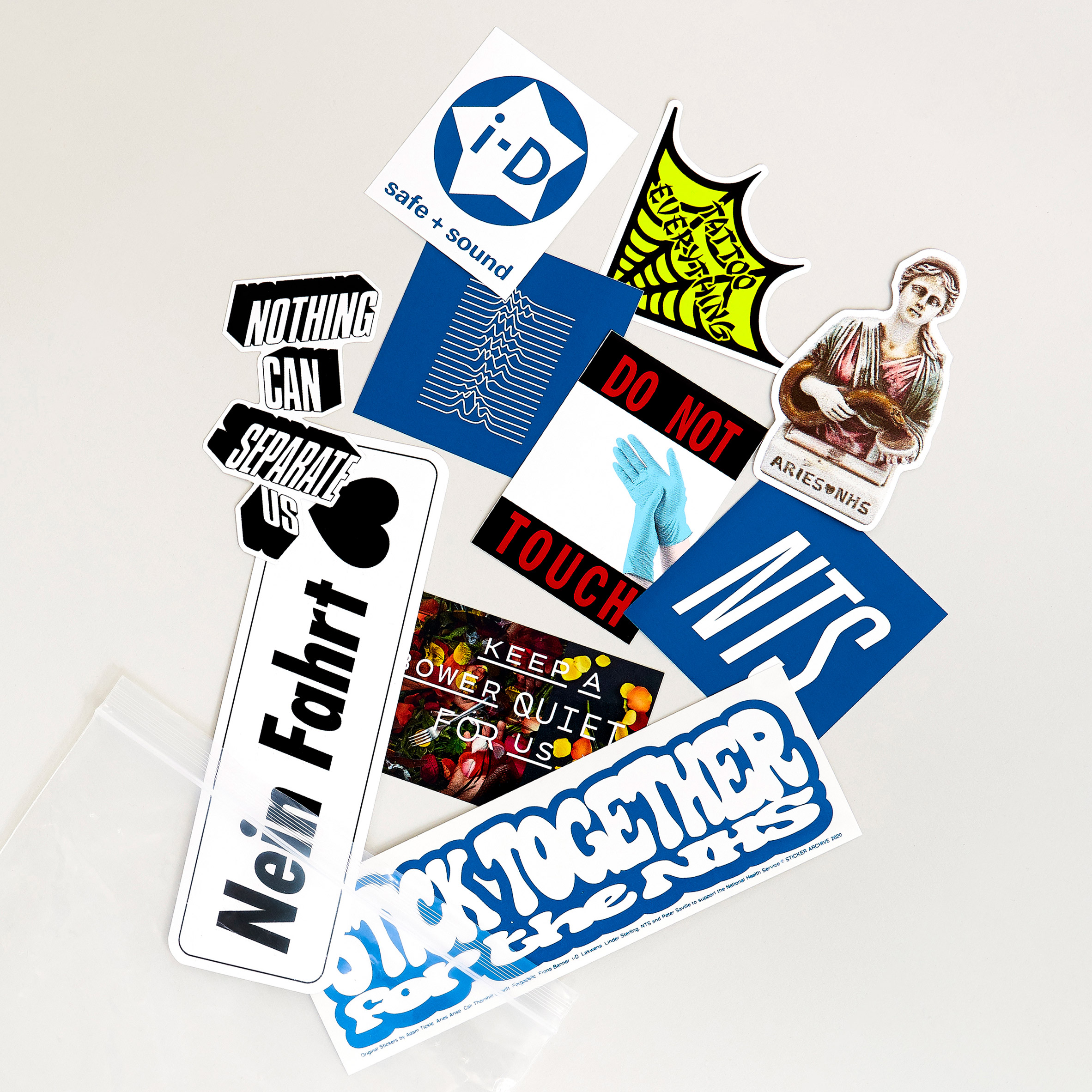
Artists including Peter Saville and Fergadelic have contributed to the Stick Together sticker collection that is being sold to support the NHS, plus today's other design-related coronavirus news.

The collection of 10 stickers, called Stick Together, was organised by curator Francesca Gavin and founder of Sticker Archive website Alex Powis to raise funds for the NHS.

Peter Saville and Fergadelic design Stick Together stickers to support the NHS

Each of the stickers was created by an artist to show support for the NHS, with graphic designer Adam Tickle creating a sticker that says Stick Together for the NHS to represent the series.

"Stickers can act as a badge – a powerful symbol of support for a cause that you believe in," said Powis.

"We wanted to take this and put it to good use for the NHS as they fight Covid-19 for all of us, raising vital money and showing our appreciation at the same time."

Peter Saville and Fergadelic design Stick Together stickers to support the NHS

Several of the designs incorporate NHS blue, including British graphic designer Peter Saville's contribution, which is a reworking of his seminal cover for Joy Division's Unknown Pleasures album.

Digital radio station NTS and fashion magazine i-D have both reworked their logos in the colour.

Peter Saville and Fergadelic design Stick Together stickers to support the NHS

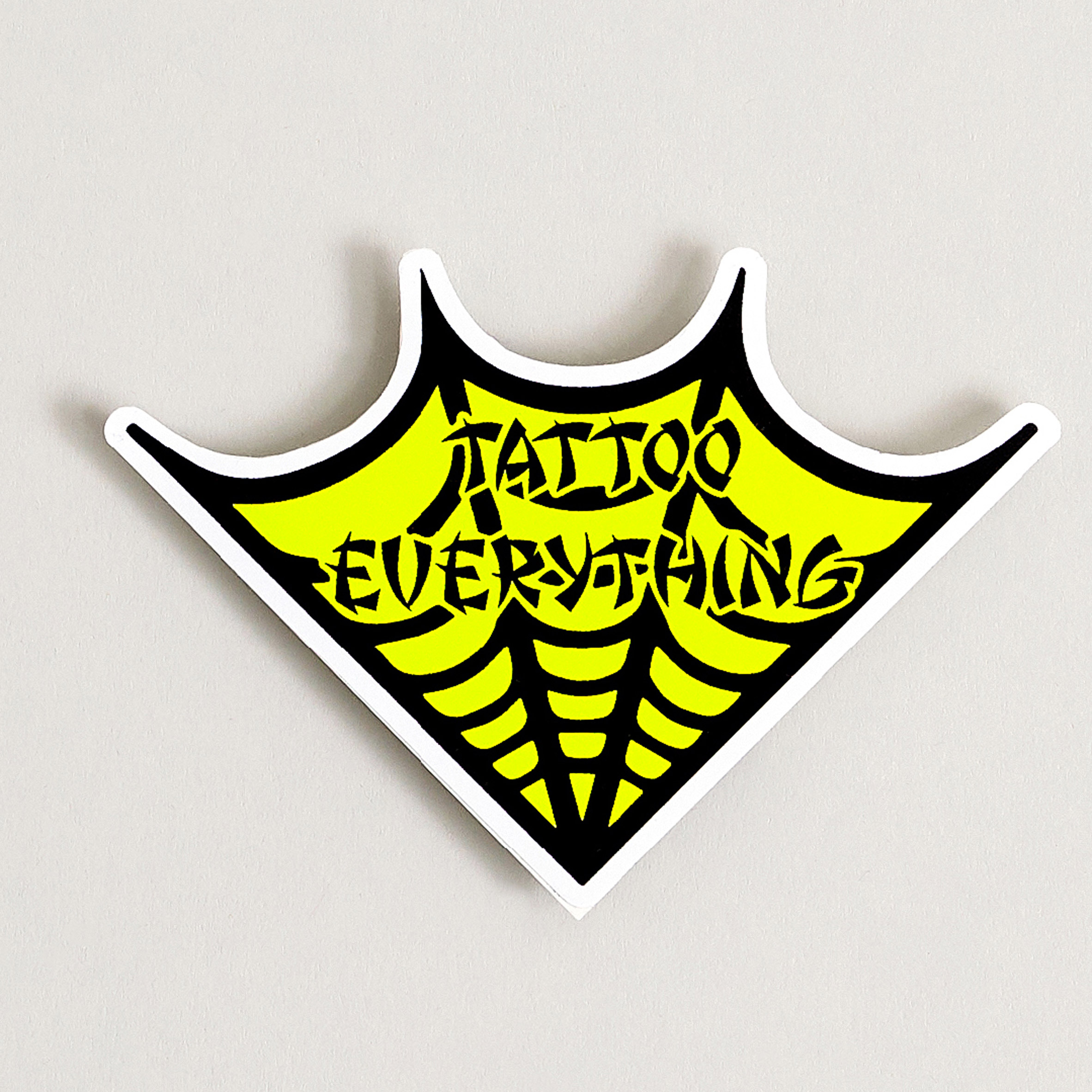
Graphic artist Fergus Purcell, who is known as Fergadelic and designed the iconic logo for Palace Skateboards, designed a web with the words "tattoo everything" for the collection.

The other contributors to Stick Together are Aries Arise, Cali Thornhill DeWitt, Fiona Banner, Lakwena and Linder Sterling.

The packs of stickers are available on the Sticker Archive website, with all profits being donated to NHS Charities Together.

"Covid-19 is bringing the NHS to its knees, and we wanted to do something," said Francesca Gavin. "The stickers are an accessible and affordable way to show support. We chose these artists and brands because they are pioneers of independent creative expression – something that feels incredibly vital at this moment."

Here are six more coronavirus-related architecture and design news stories from today:


Coronavirus daily briefing

McDonald's trials social-distancing restaurant

Fast food chain McDonald's has trialled a social-distancing restaurant in the city of Arnhem, the Netherlands. The restaurant had a hand sanitiser stand at its entrance, designated waiting spots and food that was delivered on trollies (via Reuters).

llustrator Anna Gibb draws Isolation Escapes architecture montage

British architect and illustrator Anna Gibb has combined buildings by architects including Le Corbusier and Mies Van der Rohe to create an architectural montage of places people would like to be quarantined in during the coronavirus pandemic (via Dezeen).

London's BDP-design Nightingale hospital being wound down

The Nightingale hospital, which was designed by BDP and built in less than two weeks in London's Excel centre, is set to close after receiving no new patients this week (via Independent).

Plastique Fantastique makes iSphere mask informed by 1950s sci-fi comics

Berlin-based art collective Plastique Fantastique has created an open-source, retro-futuristic face shield shaped like a fish bowl to protect wearers against coronavirus (via Dezeen).

Artist Gareth Fuller creates humorous Quarantine Pandemic Survival Map

Beijing-based artist Gareth Fuller has drawn a humous illustrated map of tips on how to survive self isolation during the pandemic (via Guardian).

Inaugural Helsinki art biennial delayed until 2021

Helsinki Biennial 2020, which was set to take place in June, has been postponed until 2021 due to the pandemic. "We believe this is the most responsible option when considering both our local citizens and international guests," said Helsinki mayor Jan Vapaavuori (via Helsinki Biennial 2020).

The post Peter Saville and Fergadelic design stickers to support the NHS appeared first on Dezeen.


from Dezeen https://ift.tt/3b9QEuj

Dalton Maag’s Monte Stella typeface celebrates the “imperfect” post-war vernacular lettering of Milan

Milanese designer Riccardo De Franceschi took inspiration from the “accidental” aesthetic of 50s, 60s and 70s signage around his home city.


from It's Nice That https://ift.tt/2YKPgM9

Inspired by sci-fi and myths, Sammy Stein's illustrations are a postmodern ode to the past

Since we last spoke to the Paris-based illustrator, he’s been keeping busy producing dozens of zines, magazines and books.


from It's Nice That https://ift.tt/2SItd4H

Inflatable face shield designed for socialising post pandemic

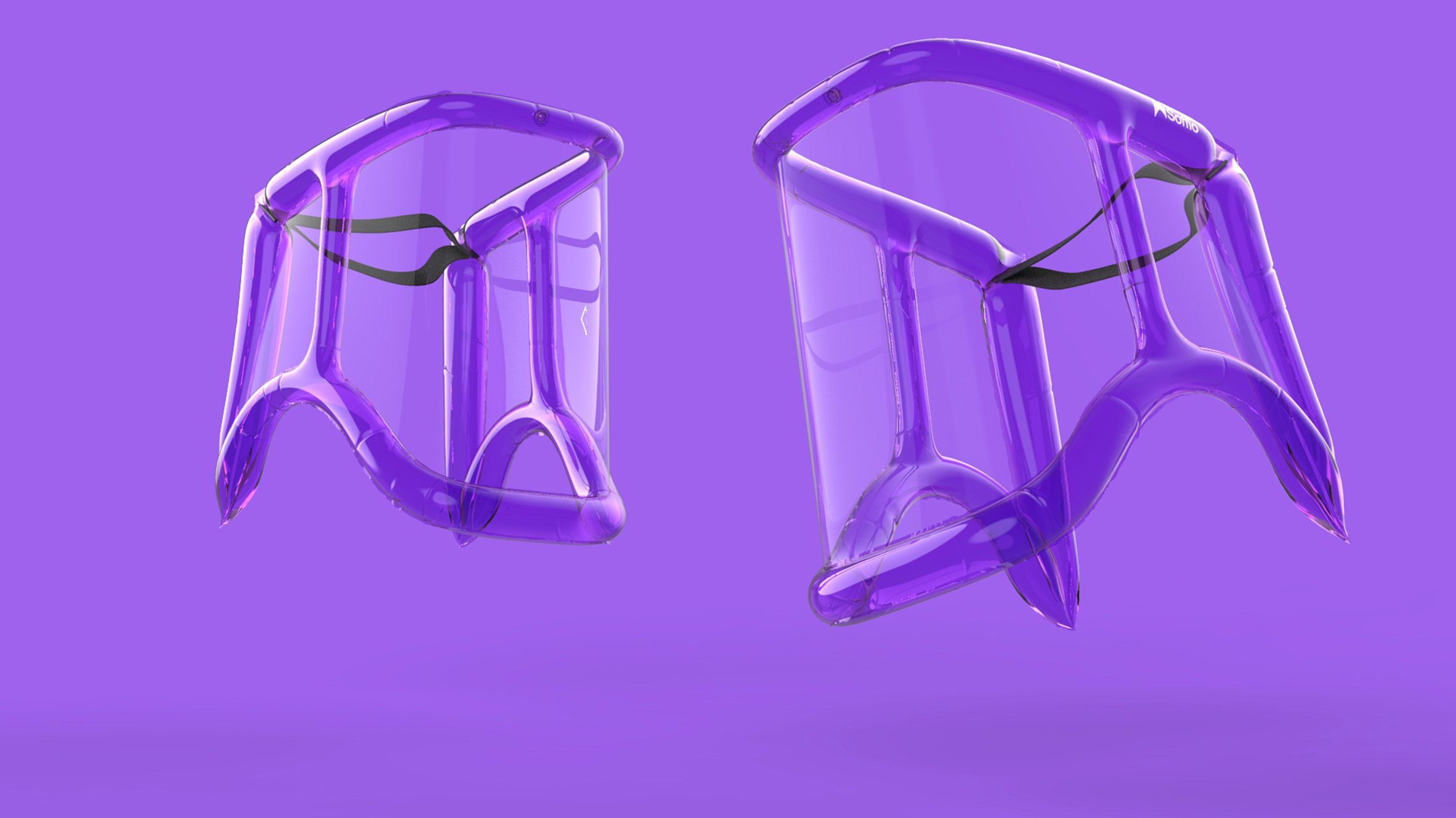
Soffio inflatable face shield by MARGstudio, Alessio Casciano Design and Angeletti Ruzza

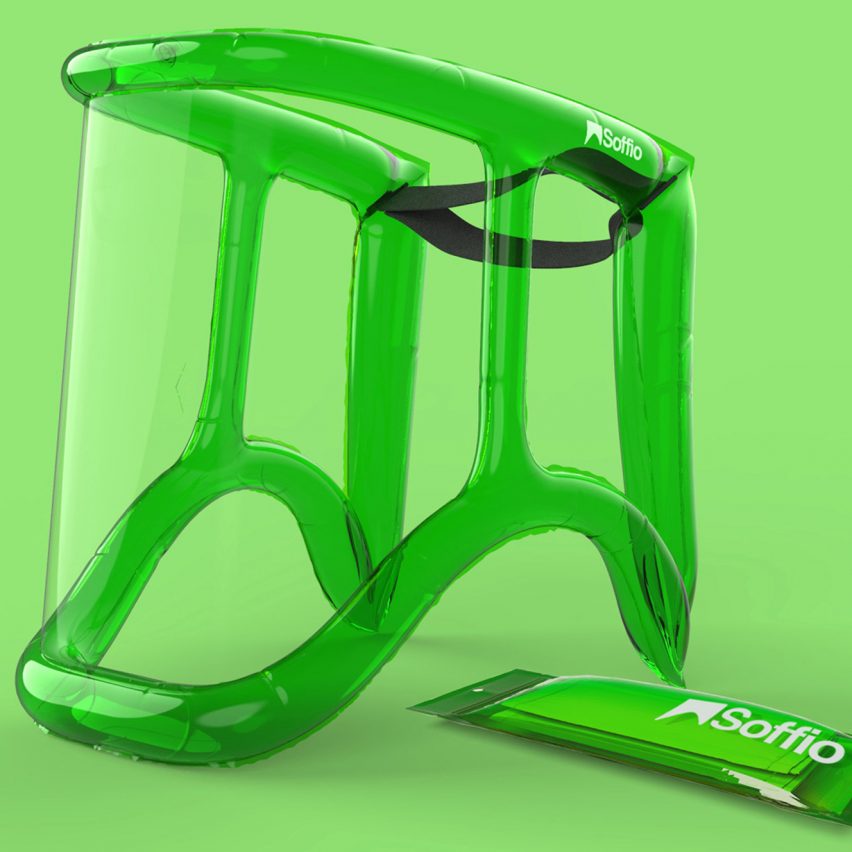
MARGstudio, Alessio Casciano Design and Angeletti Ruzza have designed a colourful, inflatable face shield that could be used to allow people to socialise following the peak of the coronavirus pandemic.

Italian designers MARGstudio, Alessio Casciano Design and Angeletti Ruzza created the concept as they wanted to find a way that people could return to restaurants or eating at friends' homes.

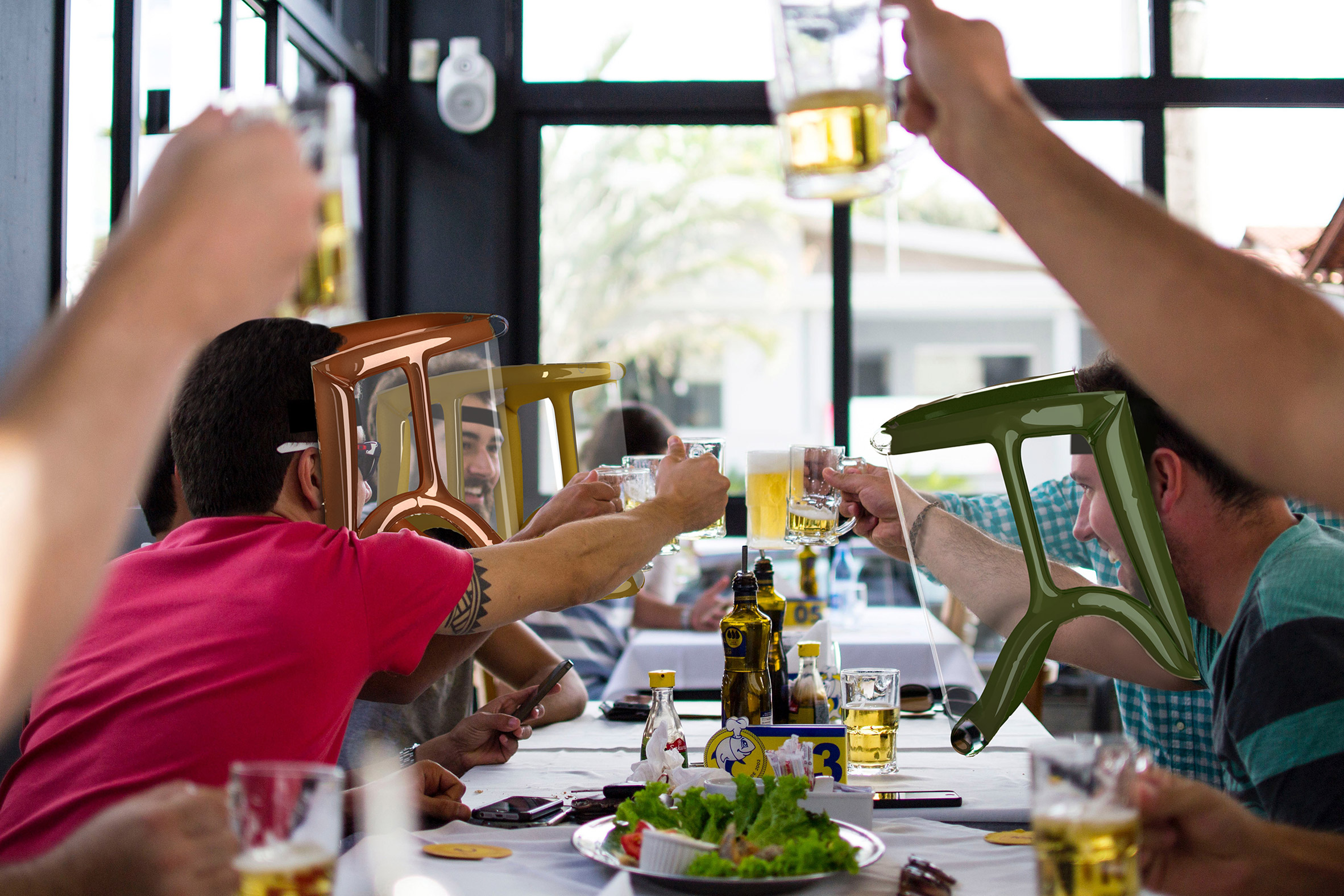
"The shield is designed for all people who want to return to live the conviviality of a lunch, dinner or drink in a public place, near friends and family," said Annalisa Grasselli of MARGstudio.

"The main purpose of the shield is to protect individuals and, at the same time, to allow freedom of movement in eating and drinking," she told Dezeen.

Soffio inflatable face shield by MARGstudio, Alessio Casciano Design and Angeletti Ruzza

Face shields have become an important piece of personal protective equipment for health workers fighting the coronavirus, with Apple, Foster + Partners and Nike among the companies that are making the items to combat a global shortage.

The mask envisioned by the Italian designers, however, is not meant for use by health workers, but for people wanting to return to normal life after lockdown restrictions have been eased, but some social distancing is still required.

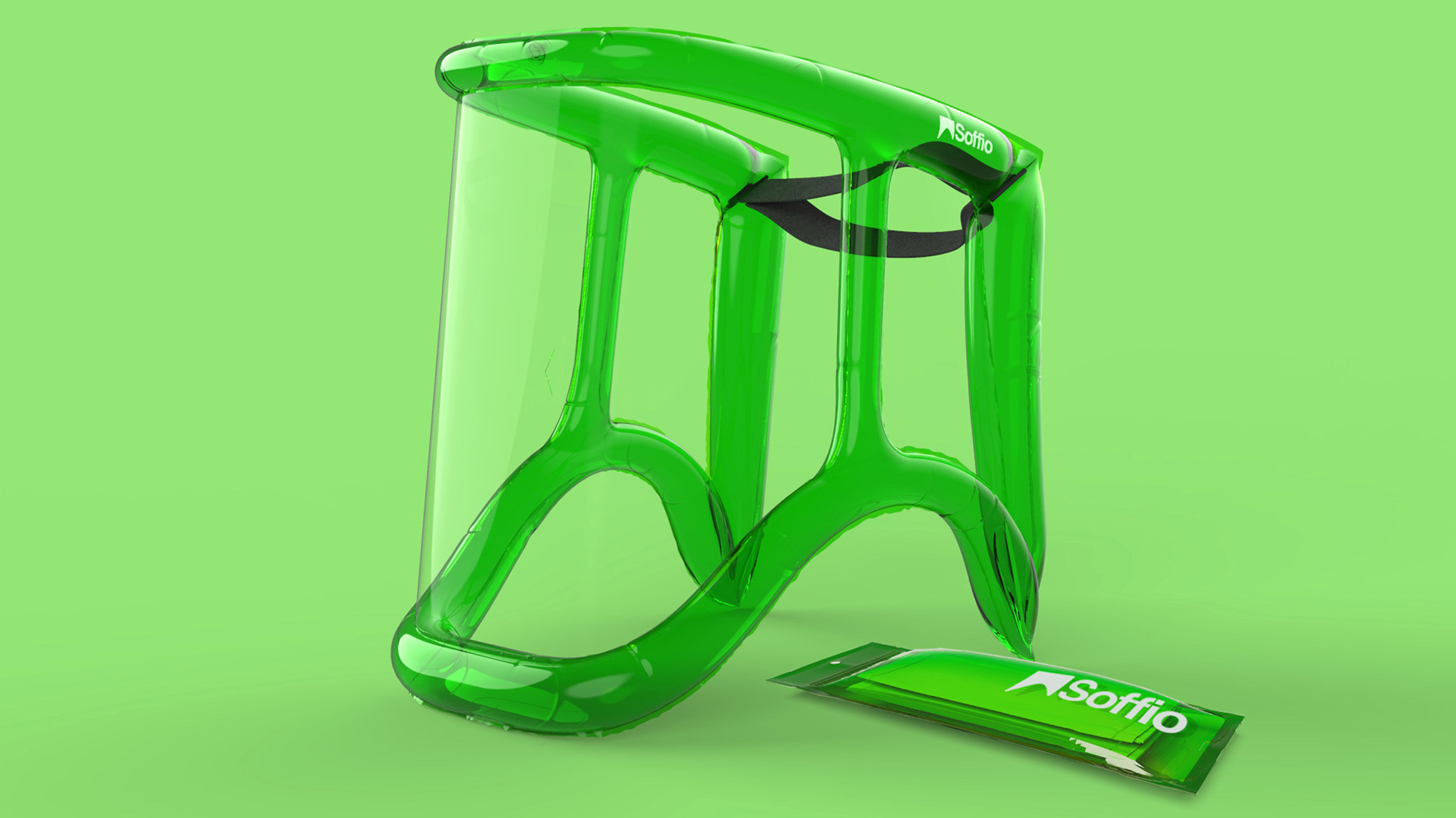
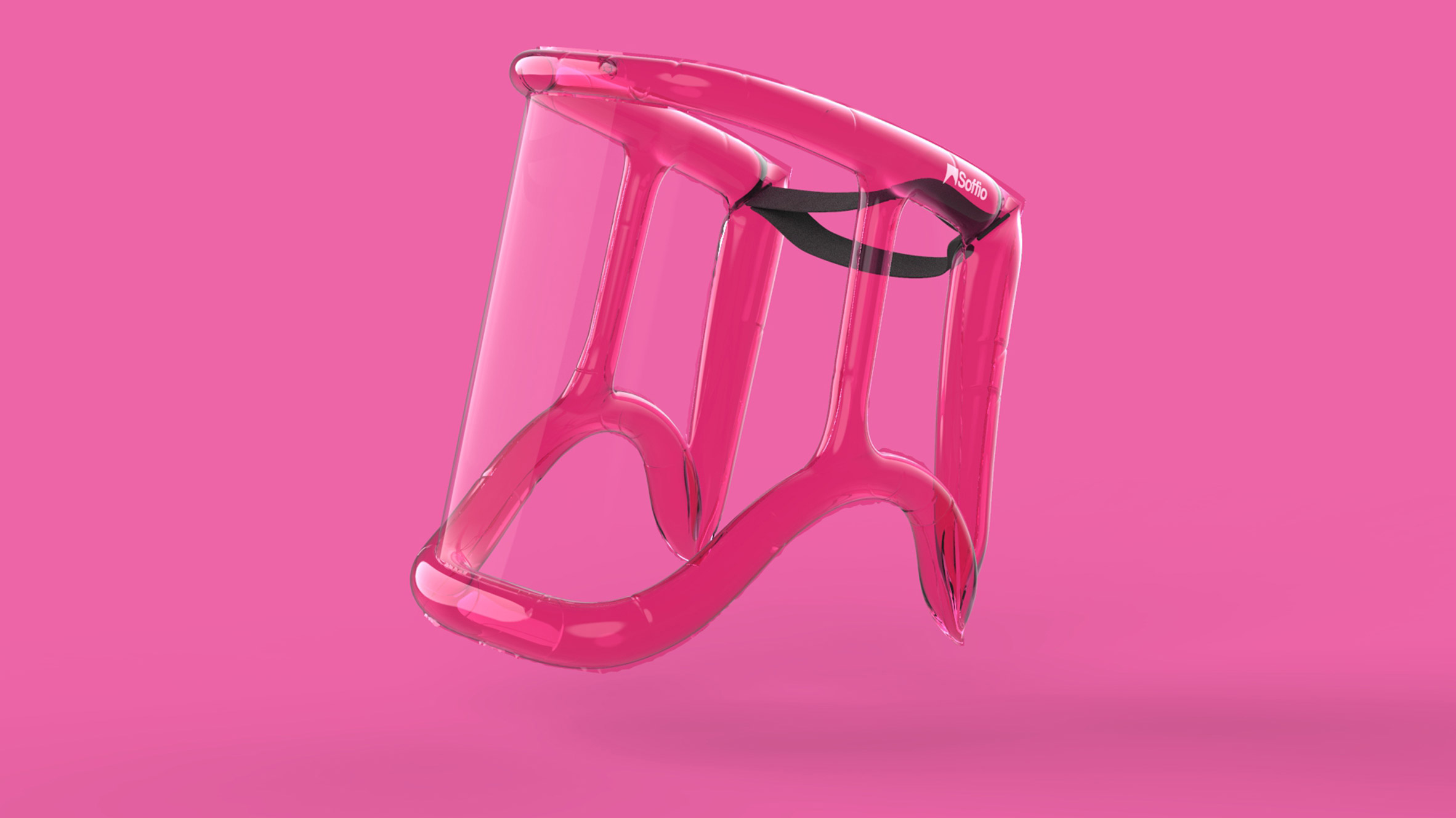
Named Soffio, which translates into English as blow, the face shield would have an inflatable structure made from PVC supporting a plastic visor with an elastic head strap. The shield is positioned away from the face to allow for the user to eat or drink while wearing it.

Soffio inflatable face shield by MARGstudio, Alessio Casciano Design and Angeletti Ruzza

"It differs from other masks because it is a cantilevered mask: inside the mask we design a 'protected personal space' in which you can take food and drinks," explained Grasselli.

"Soffio creates a private environment only around the head and allows us to wear it and continue drinking and eating, the inside space is design to eat – for example – a slice of pizza or drink a glass of wine and, in the same time, look to our friend, talk and listen to other people – the mask it is fixed on the temples and leaves the ears free to hear."

Soffio inflatable face shield by MARGstudio, Alessio Casciano Design and Angeletti Ruzza

The designers hope that the shield could help allow restaurants and bars to reopen after the coronavirus pandemic.

"Soffio allows you to continue to perform the actions of drinking and eating exactly as we did them before, but safely," said Grasselli. "It does not change our ways of experiencing social life in restaurants or bars."

"We wanted to find a practical solution for the world of restaurants and bars, in the Covid era," she continued. "As good Italians, who love to live sociality around a table, we could'nt think not helping the categories that are suffering so much in this pandemic."

Soffio inflatable face shield by MARGstudio, Alessio Casciano Design and Angeletti Ruzza

Each mask could be manufactured for less than one Euro and the designers envision them being distributed by restaurants and bars, which could brand the items.

"It is an inexpensive, fun and portable object," added Grasselli. "Realisable in a very short time and distributable in less time, the coronavirus is now and we should solve the problem today."

While numerous face masks being created for health care workers, other designers have also been focusing on non-medical masks. Plastique Fantastique envisioned the iSphere mask based on 1950s sci-fi comics and Joe Doucet designed his face shield as a fashion accessory.

The post Inflatable face shield designed for socialising post pandemic appeared first on Dezeen.


from Dezeen https://ift.tt/35BRtdX