Thursday, 7 May 2020

Architectural knowledge is "very useful for material development" in fashion says Iris van Herpen

In the second of our three exclusive video interviews with Iris van Herpen for Virtual Design Festival, the Dutch fashion designer explains how working with architects has informed her approach to textile design and led to her working on a full-scale museum extension last year.

Van Herpen is known for creating elaborate, sculptural couture fashion collections. She often collaborates with architects to help her develop the unusual materials and techniques she uses in her designs.

"In a way, the knowledge that lies within architecture is very useful for material development on the smaller scale," she said in the video, which Dezeen filmed at her atelier in Amsterdam earlier this year. "So really translating techniques on the larger scale into fine textures or fabrics."
Architectural knowledge is "very useful for material development" in fashion says Iris van Herpen
Iris van Herpen is known for her architectural collaborations

Van Herpen was one of the first fashion designers to pioneer the use of 3D printing in her collections, a technology that was introduced to her by the Amsterdam studio Benthem Crouwel Architects.

"They were using 3D printing for their model making and I was really fascinated by the intricacy in detail," Van Herpen said.

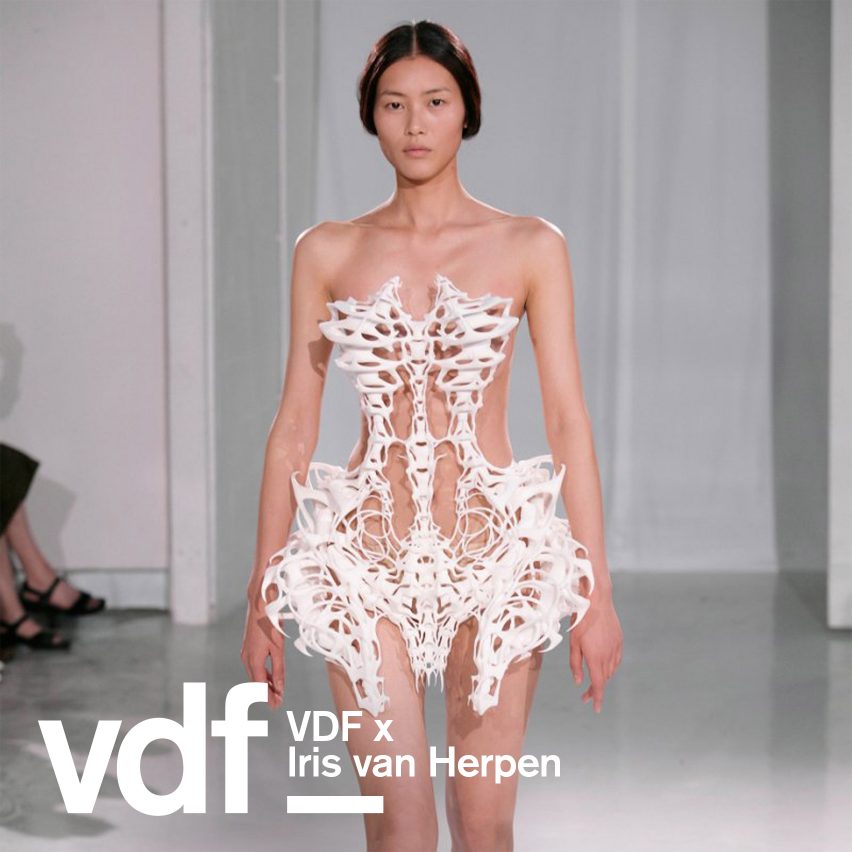
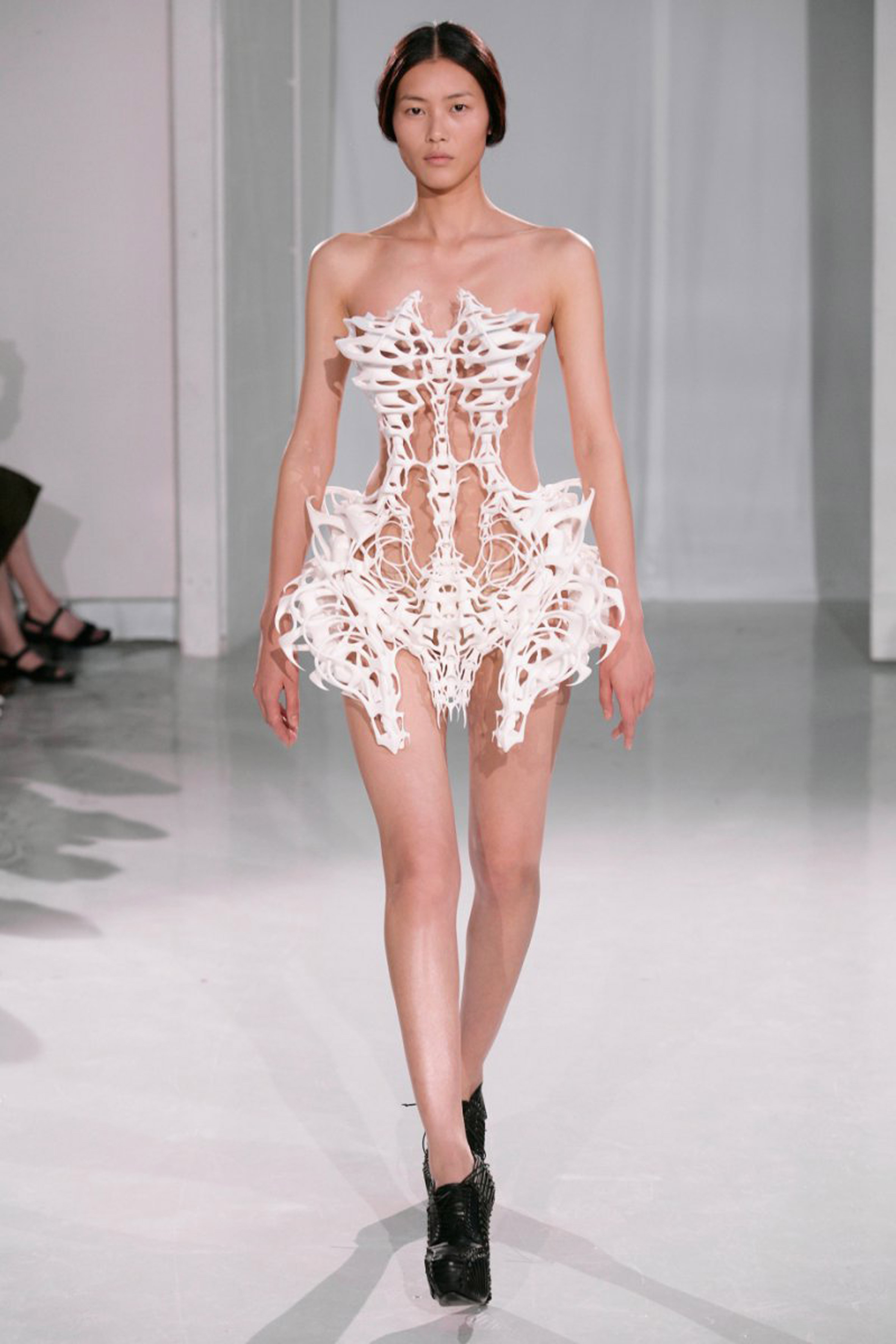
For her Crystallization collection in spring 2011, she worked with Benthem Crouwel Architects alongside architect Daniel Widrig to create a series of dramatic 3D-printed garments.
Architectural knowledge is "very useful for material development" in fashion says Iris van Herpen
Van Herpen's 2011 skeleton dress was made in collaboration with architect Isaïe Bloch

She followed this up with an entirely 3D-printed skeleton-like dress as part of her Capriole collection in autumn 2011, which was created in collaboration with architect Isaïe Bloch.

Van Herpen has continued to use 3D printing in her work ever since, such as her Voltage collection in 2013 and her Magnetic Motion collection in 2015. She has also collaborated with Rem D Koolhaas to create a pair of 3D-printed high heels reminiscent of tree roots.

However, Van Herpen said that more recently she has used the technology to create softer materials that behave more like traditional fabrics.

"When I started with 3D-printing, I was using it very much the way an architect would be using it but now the knowledge of fabric making is really implemented in the way we work with a 3D printer," she explained.

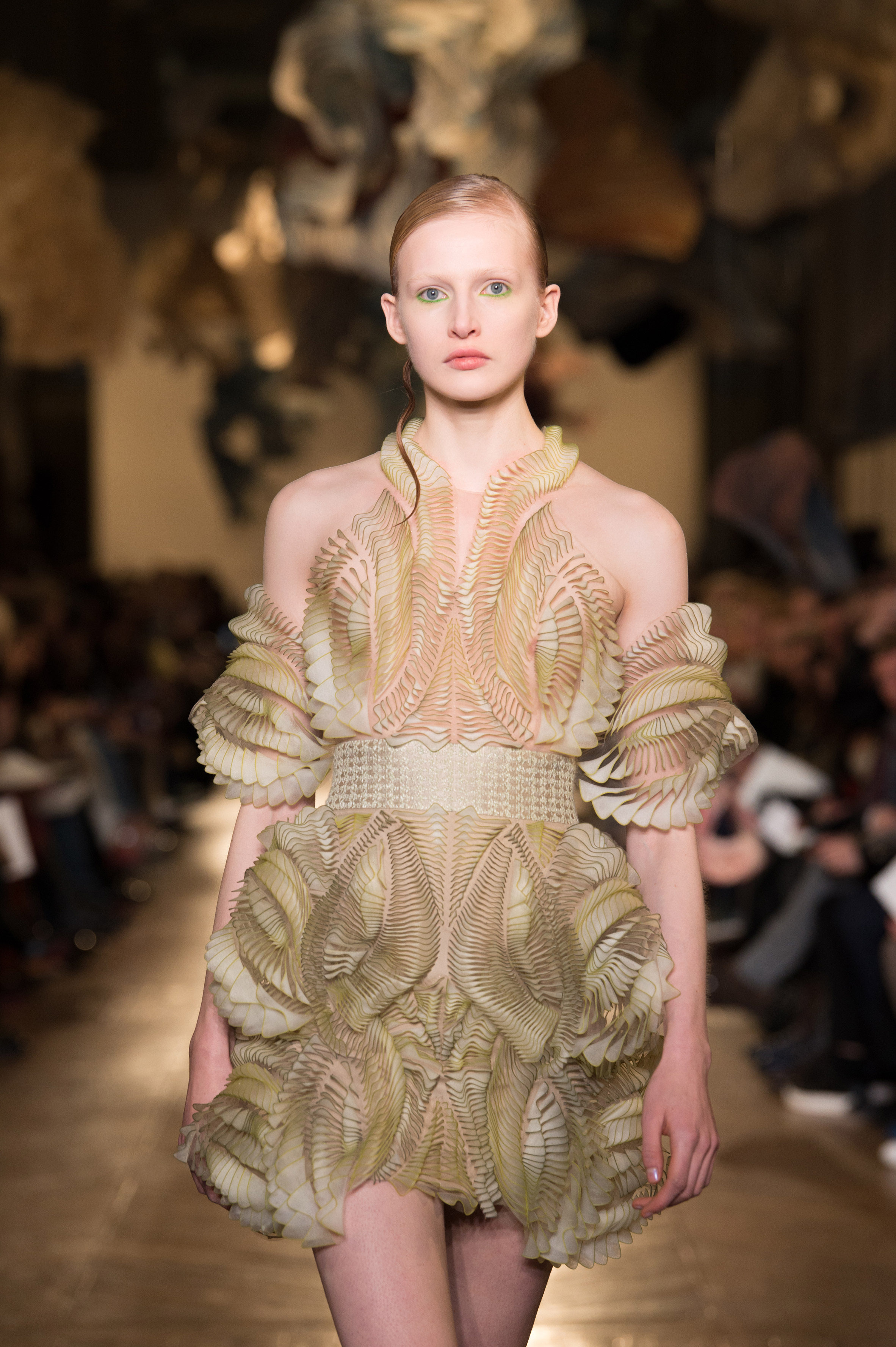
For her spring 2018 collection, she collaborated with the University of Technology in Delft in the south of the Netherlands to create a dress made from leaf-like patterns, which were 3D-printed directly onto a tulle fabric.

"The 3D printer becomes more like a new form of embroidery," Van Herpen said.
Architectural knowledge is "very useful for material development" in fashion says Iris van Herpen
Her spring 2018 collection was made in collaboration with the University of Technology in Delft

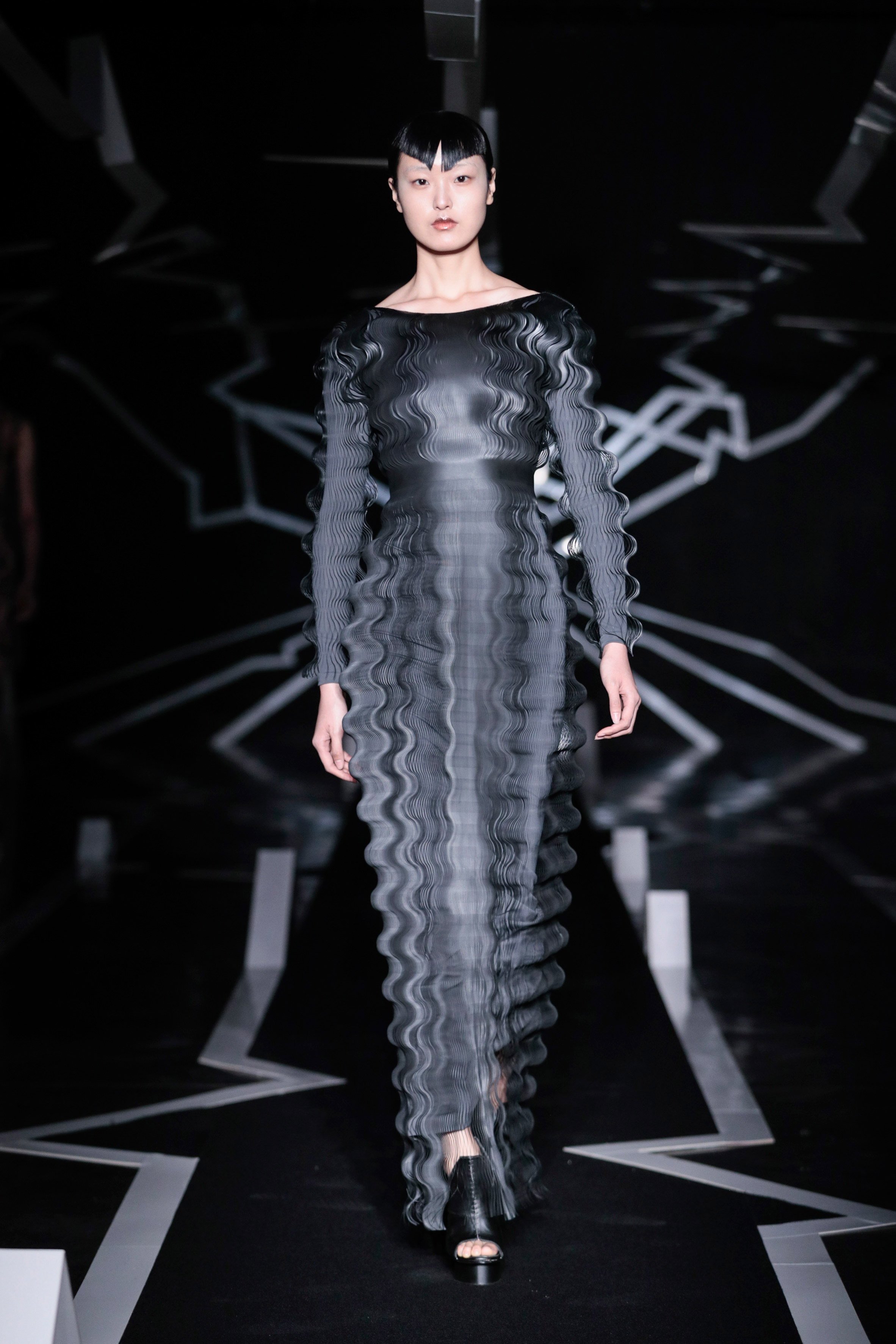
Van Herpen also has a longstanding collaboration with Toronto-based architect Philip Beesley, who has developed materials for several of her collections such as her Between the Lines collection in 2017, which included dresses made from a thin mylar fabric that creates an optical illusion when it moves.

Van Herpen's collaborations with architects have not only influenced her fashion design, but also led to her contributing to buildings.

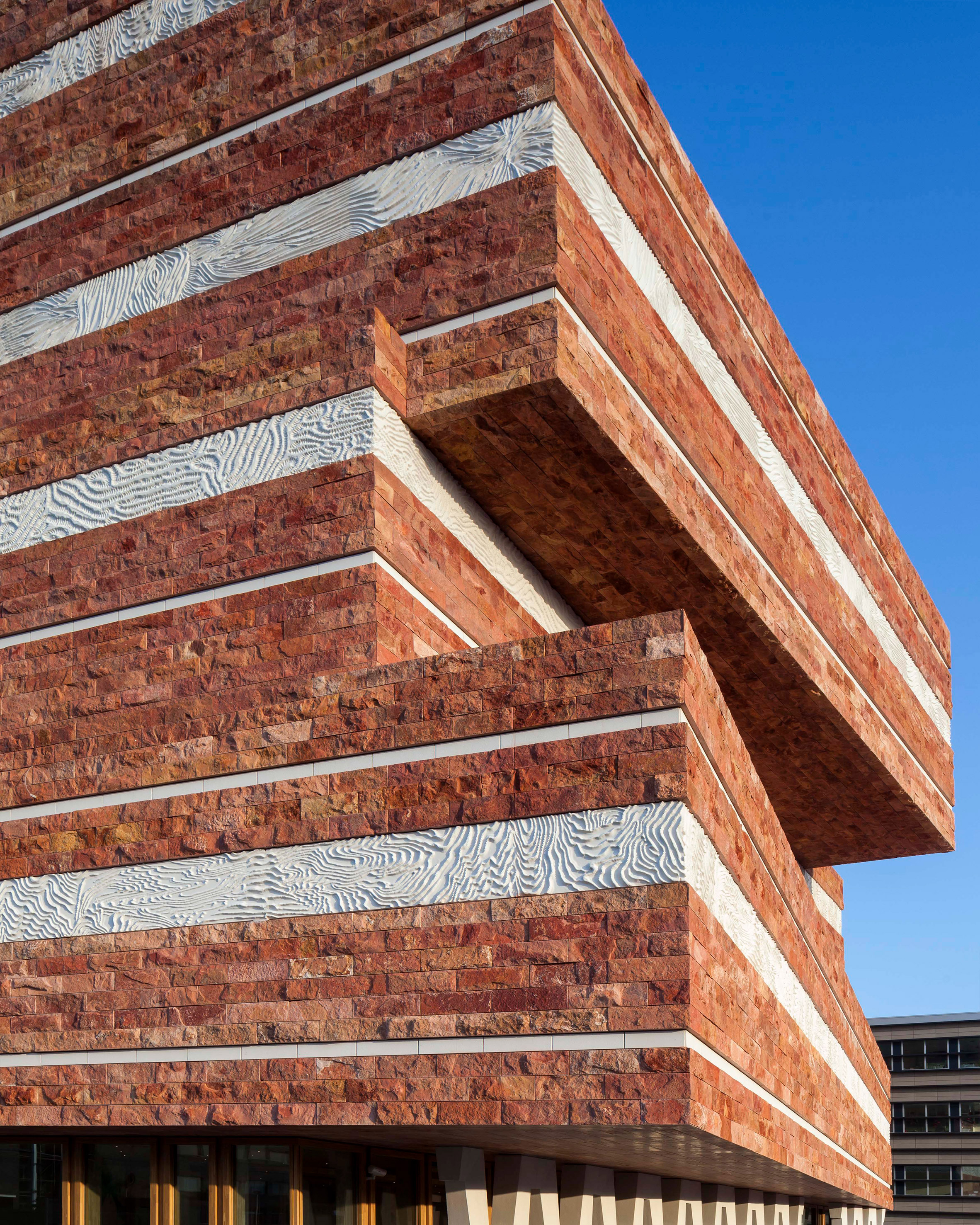
In 2019, she worked with Neutelings Riedijk Architects to wrap their design for the extension of Leiden's Naturalis Biodiversity Center in sculptural, three-dimensional panels.
Architectural knowledge is "very useful for material development" in fashion says Iris van Herpen
Van Herpen collaborated with Neutelings Riedijk Architects an extension to Leiden's Naturalis Biodiversity Center. Photo: Daria Scagliola and Stijn Brakke

Each of the 263 panels, which wrap both the inside and the outside of the building, were moulded from concrete and small-grained white marble aggregate in order to simulate a texture that is reminiscent of fabric.

"I wanted to add some softness to the building and of course I can't bring in the softness of my work into a skill like that but I did want it to look as soft as a garment," she said.

Van Herpen does not just collaborate with architects. She has previously collaborated with experts from a host of different disciplines. She also frequently collaborates with artists and designers for her runway shows.
Architectural knowledge is "very useful for material development" in fashion says Iris van Herpen
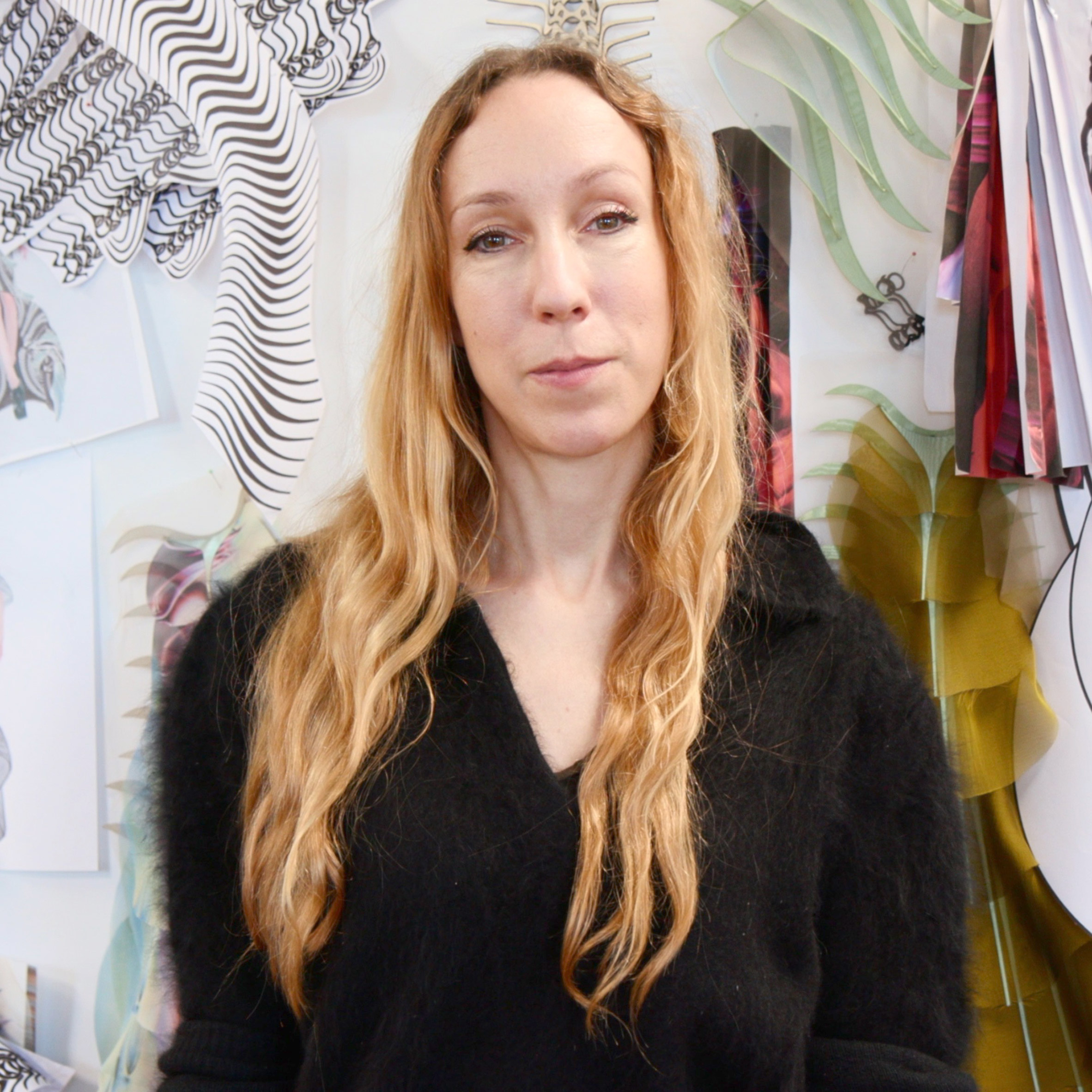
Dezeen interviewed Van Herpen at her atelier in Amsterdam

For her autumn 2018 collection she worked with Studio Drift on a kinetic sculpture mimicking the motion of a birds wing in motion and in 2019 she collaborated with American sculptor Anthony Howe on a hypnotising sculpture for her Fall 2019 collection.

This video was filmed by Dezeen at Van Herpen's Amsterdam atelier. It is the second in a three-part exclusive series exploring the pioneering fashion designer's work as part of Virtual Design Festival.

About Virtual Design Festival

Virtual Design Festival, the world's first digital design festival, runs from 15 April to 30 June 2020. It is a platform that will bring the architecture and design world together to celebrate the culture and commerce of our industry, and explore how it can adapt and respond to extraordinary circumstances.

VDF will host a rolling programme of online talks, lectures, movies, product launches and more, complementing and supporting fairs and festivals around the world that have had to be postponed or cancelled and it will provide a platform for design businesses, so they can, in turn, support their supply chains.

Find out more here or email vdf@dezeen.com for details or to join our mailing list.

The post Architectural knowledge is "very useful for material development" in fashion says Iris van Herpen appeared first on Dezeen.


from Dezeen https://ift.tt/3frjmKr

The National Portrait Gallery wants your photos of the Covid-19 emergency

The British institution is calling for photographic portraits taken during the pandemic for its new mass project Hold Still.


from It's Nice That https://ift.tt/3cdTe3w

Joshua Osborne’s latest project is a documentary featuring Tom Misch and Yussef Dayes that you won’t want to end

The film titled What Kinda Music, named after their collaborative album, compliments the soundtrack and tells the story of its making.


from It's Nice That https://ift.tt/2yywTPy

Precht creates monochromatic interiors for RayData office in Beijing

Raydata office headquarters by Precht

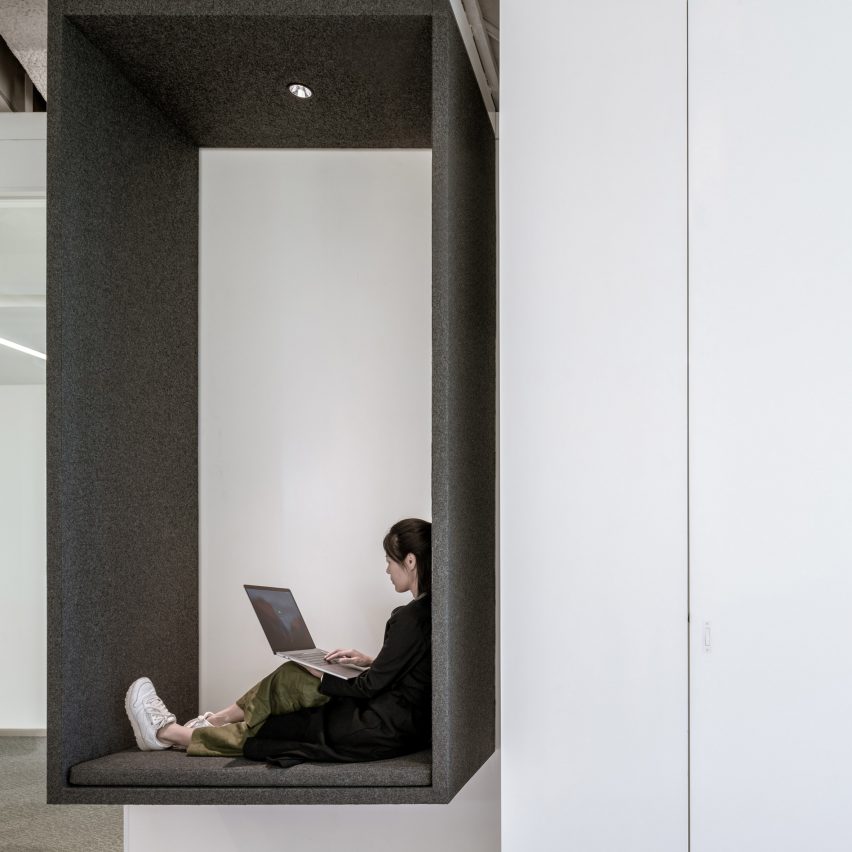
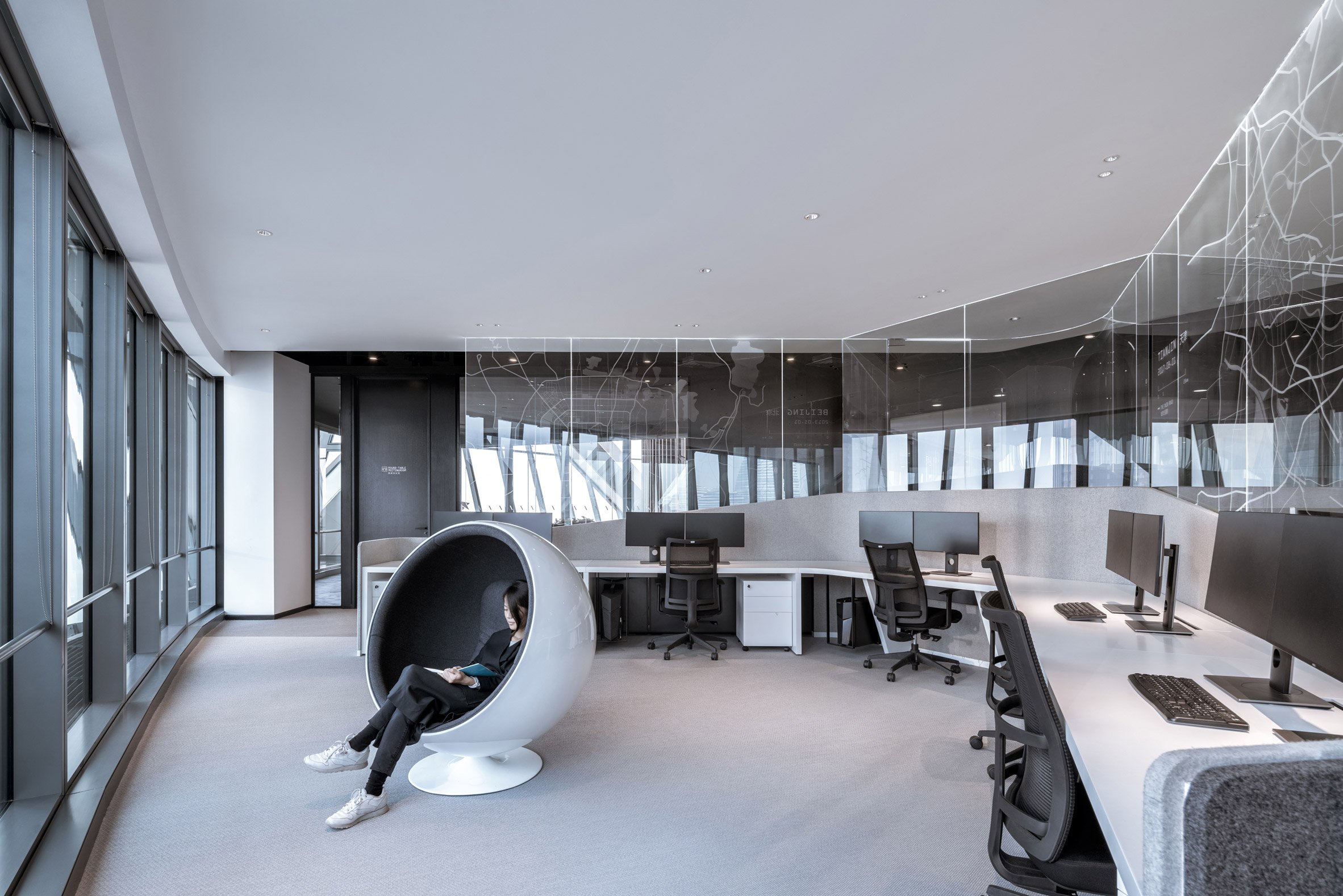
Grey upholstery helped architecture studio Precht bring a "human touch" to the interior of this data office in Beijing, which features black walls and white zigzag desks.

RayData's Beijing office takes over the 19th floor of Poly International Plaza, a 31-storey skyscraper completed by Skidmore Owings & Merril in 2017.

The building's cylindrical form and latticed shell ended up becoming a key point of reference for Precht, which was brought on board to develop the office's interior design scheme.

Raydata office headquarters by Precht

The 980-square-metre office follows the building's looping plan but has been split into two halves – the north-facing side contains work areas for employees, while the south-facing side is dedicated to communal areas like the reception and company showroom.

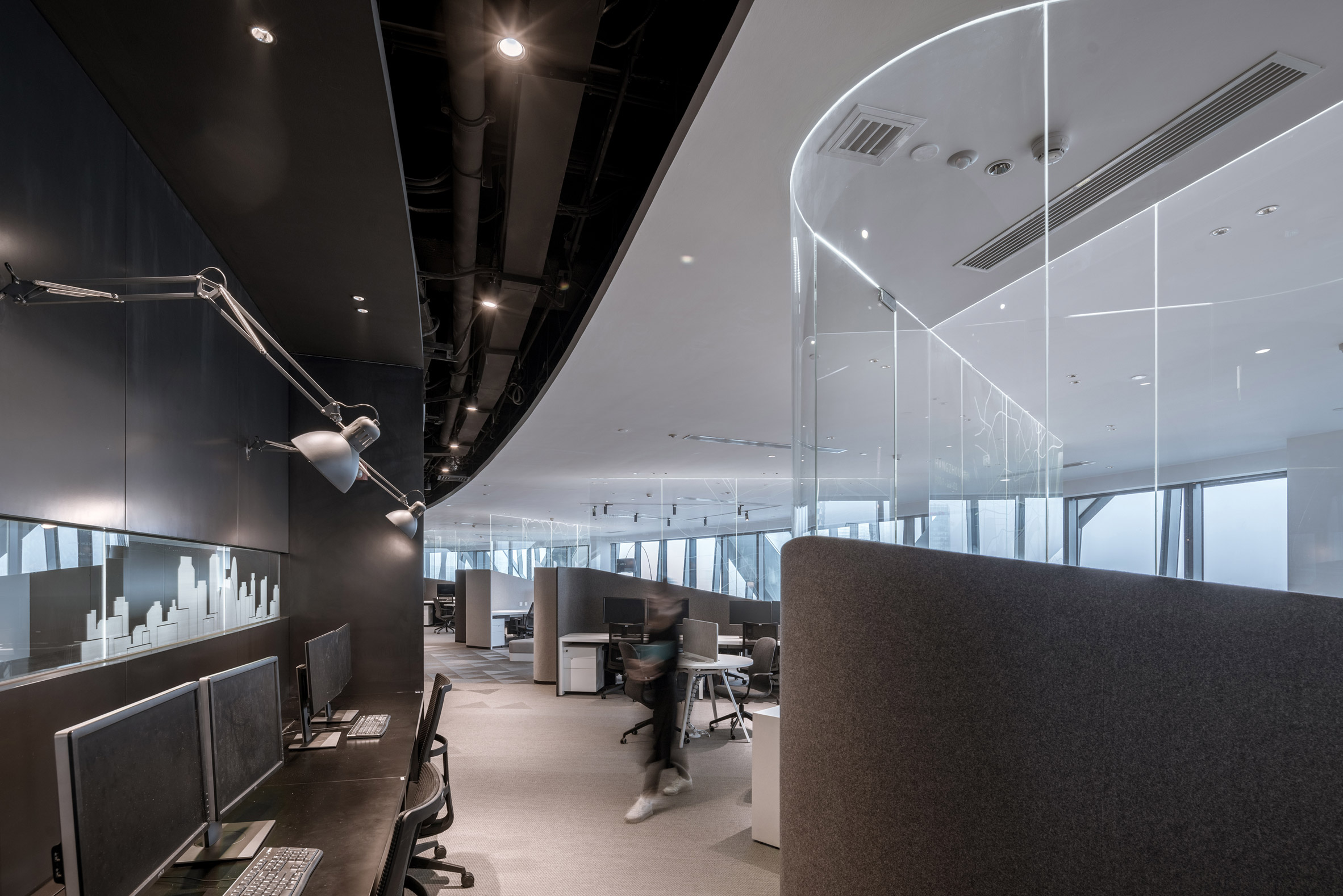
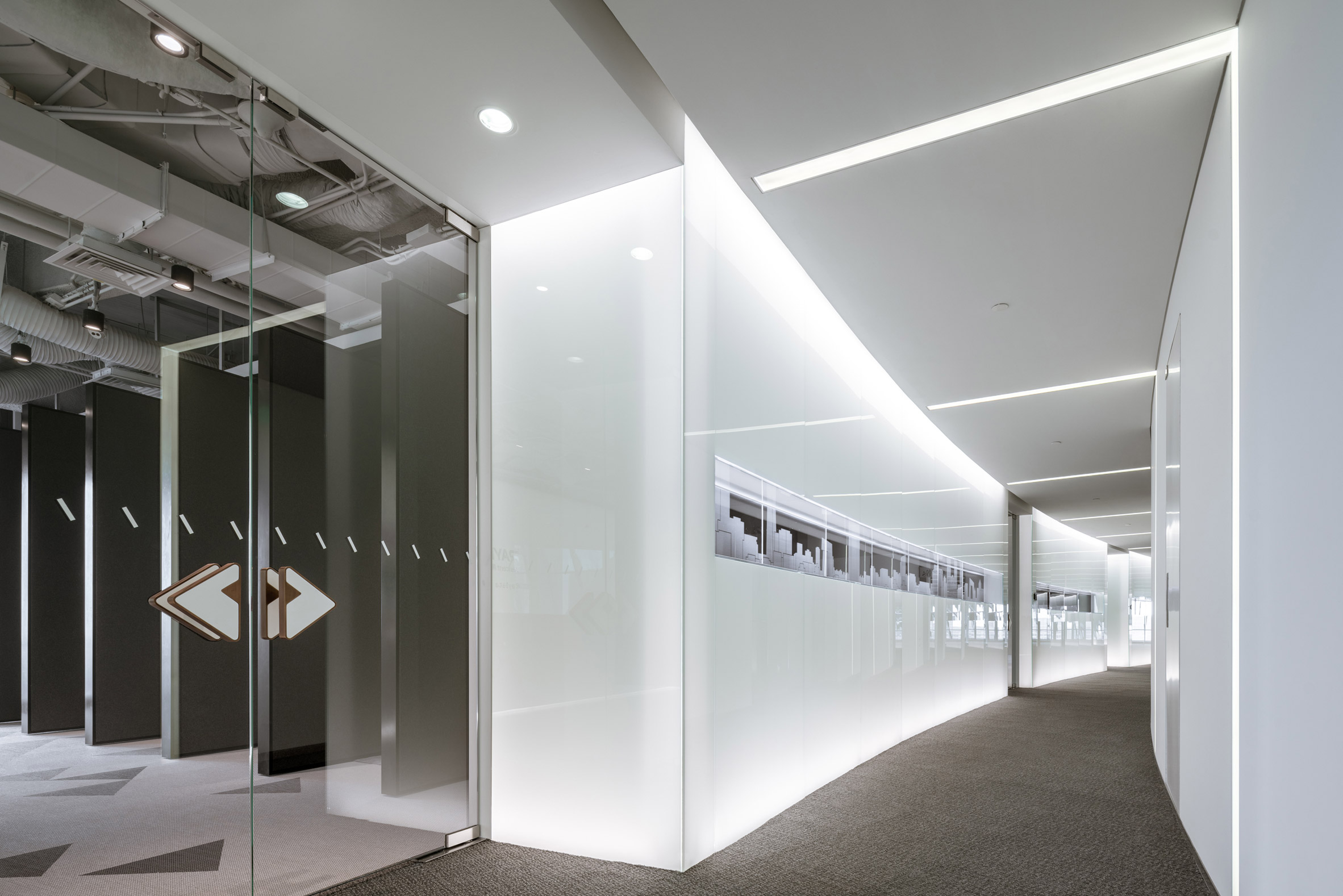
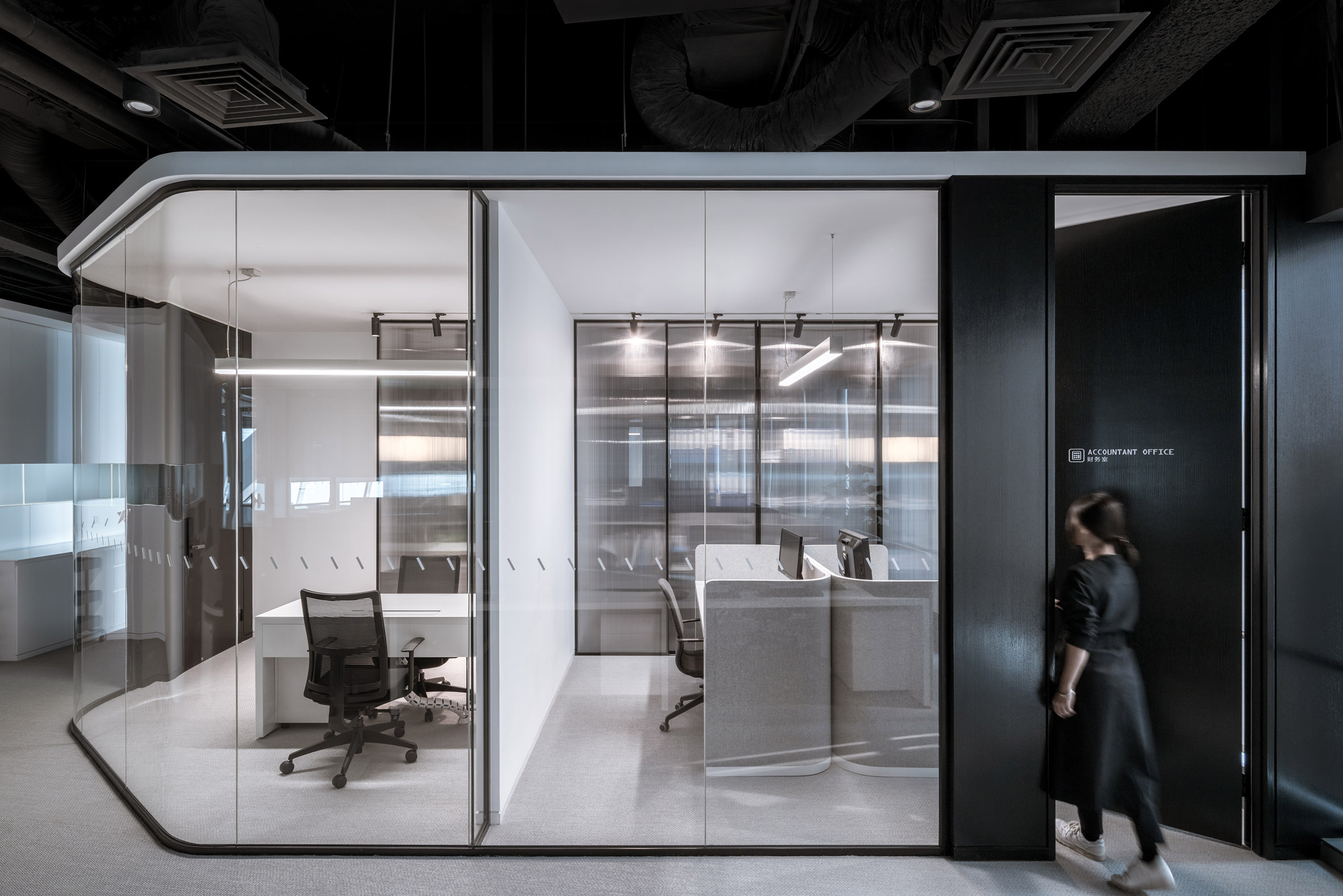
An almost-black corridor leads through to the work areas which, in contrast, largely feature white surfaces to create a bright and relaxed environment for staff.

Raydata office headquarters by Precht

Triangular desks have been arranged in a zigzag pattern across the room, to subtly mimick the latticework on the building's facade.

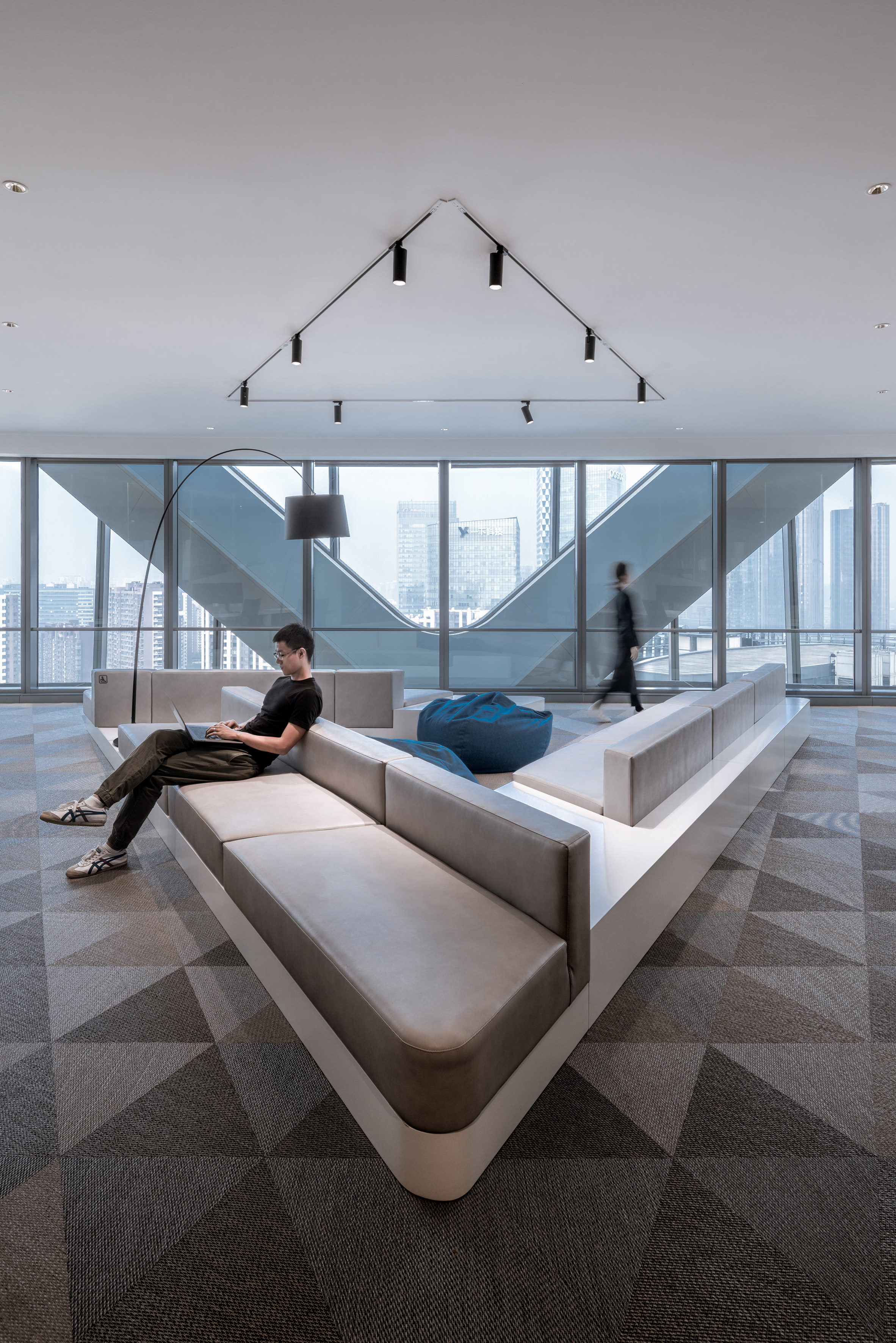
Spotlights on the office's ceiling, bench-style sofas and door handles are also triangular in shape, in a nod to RayData's logo.

Raydata office headquarters by Precht

Each desk is partially lined with slate-coloured fabric from Danish brand Kvadrat. The studio hopes that, along with the grey carpeting, this will help manage acoustics in the office and bring a comforting sense of tactility.

"With all the advancing technology in the space, we were looking at how to bring a human touch and haptic materials to the design," explained Fei Precht, who leads the studio alongside her husband Chris Precht.

Raydata office headquarters by Precht

"I don't believe that the future of offices will look like your WeWork living room nor like your sci-fi white-plastic fluid space," she continued.

"For this project, I think the movie Her was a source of inspiration, which connects technology with a very warm and tactile atmosphere."

Raydata office headquarters by Precht

"I think we need this balance of technology and facility," added Chris Precht. "The tasks of tech companies is to ask 'how can we know more' and transform this knowledge into information or products."

"The tasks of architects, on the other hand, is to ask 'how we can feel more'. Yes, information and knowledge are important for the future – but so is consciousness and the connection to our senses. I think that's an interesting balance."

Raydata office headquarters by Precht

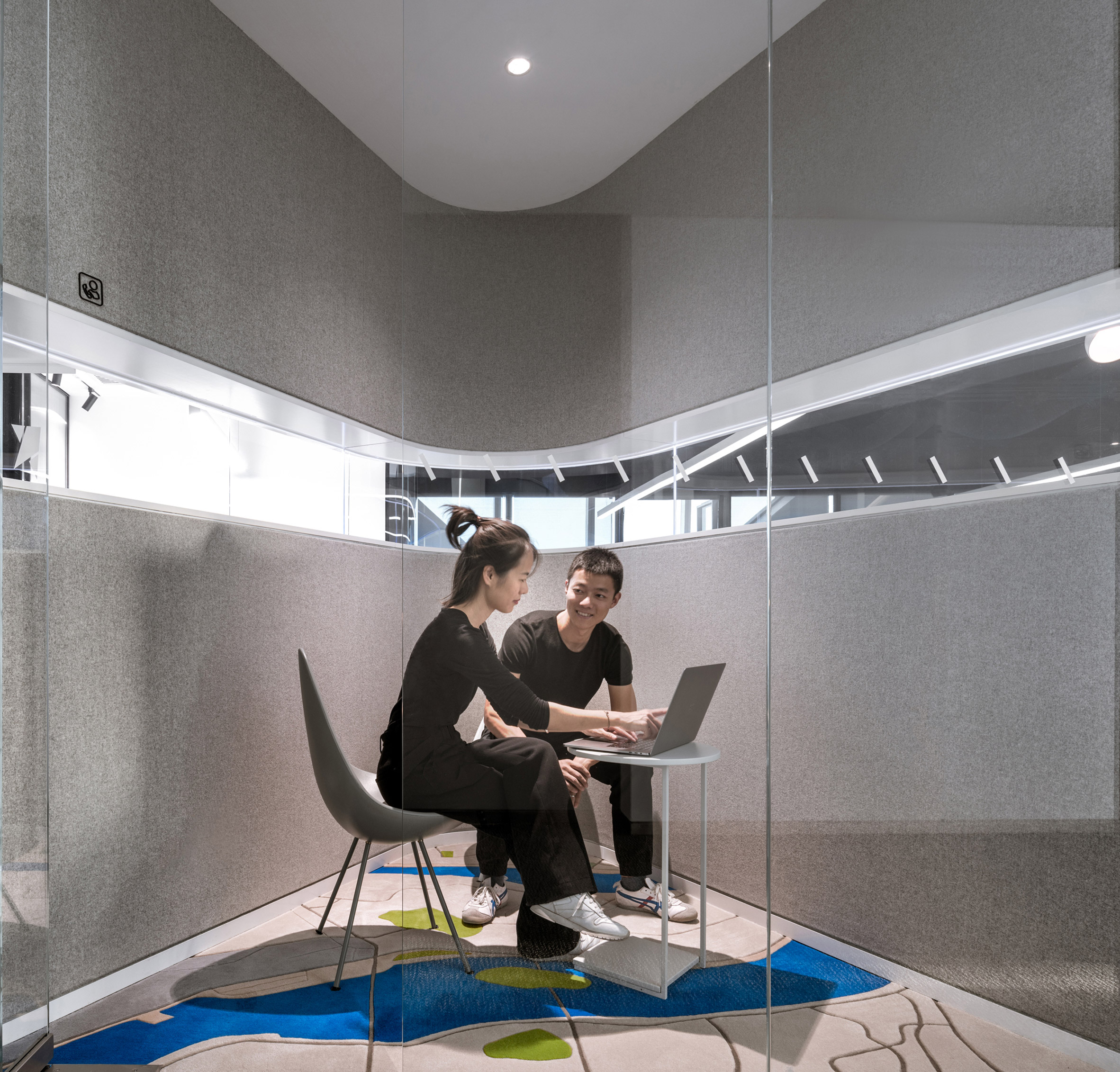
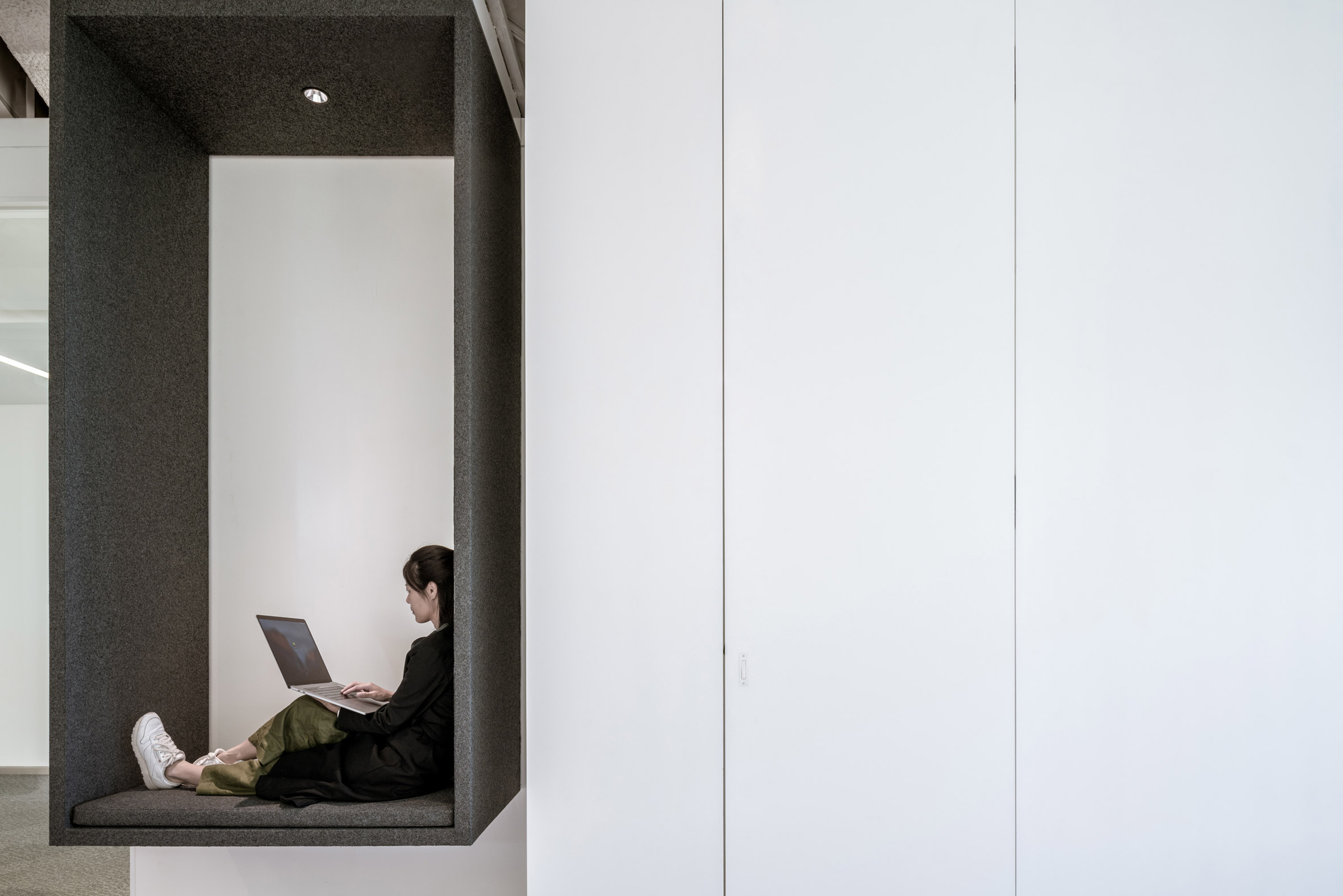
Staff are separated by large panes of glass engraved with geographical maps of different cities, however should they want more privacy they can head to one of the textile-covered booths that have been created in the corners of the room.

White pod chairs have additionally been dotted throughout.

Raydata office headquarters by Precht

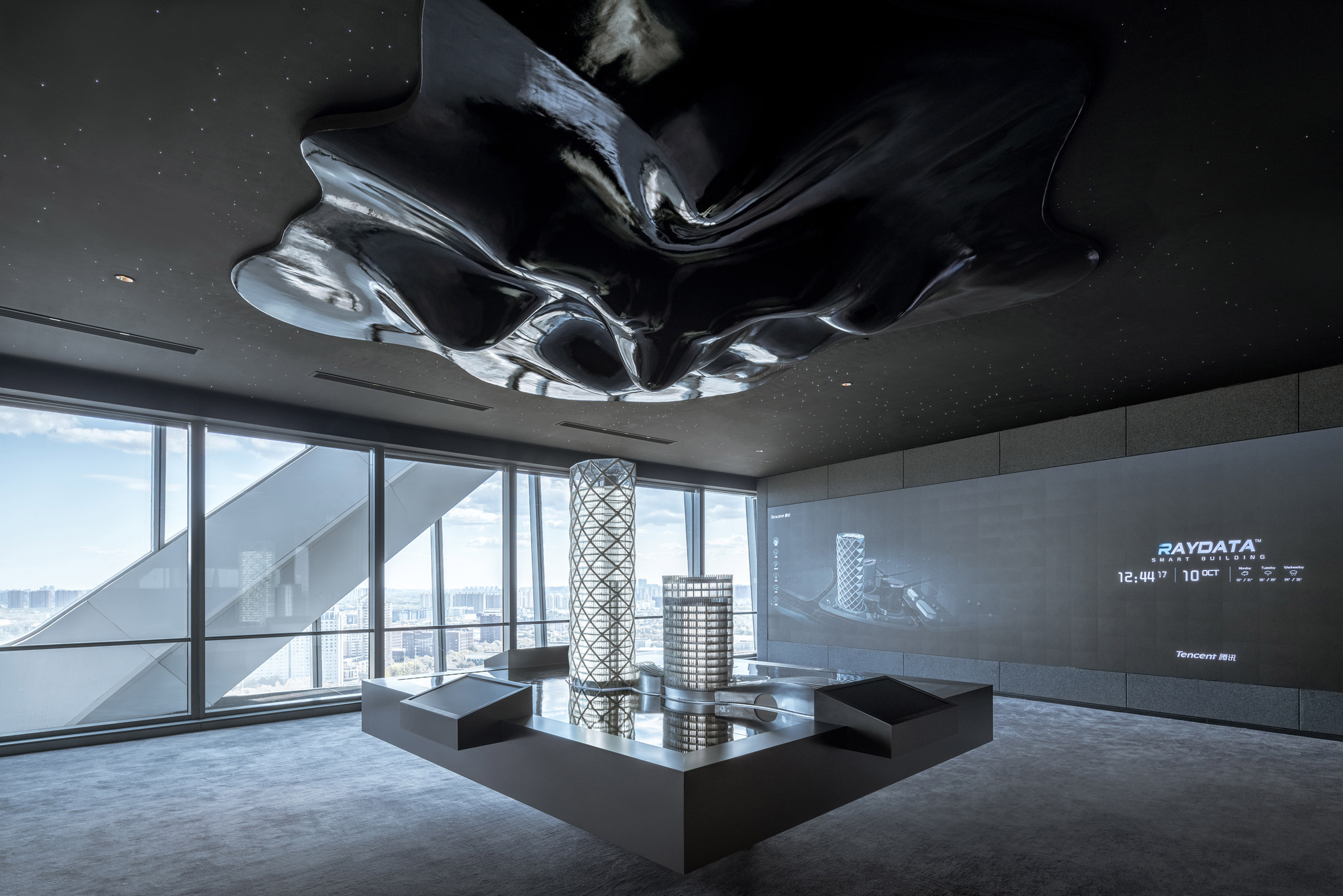
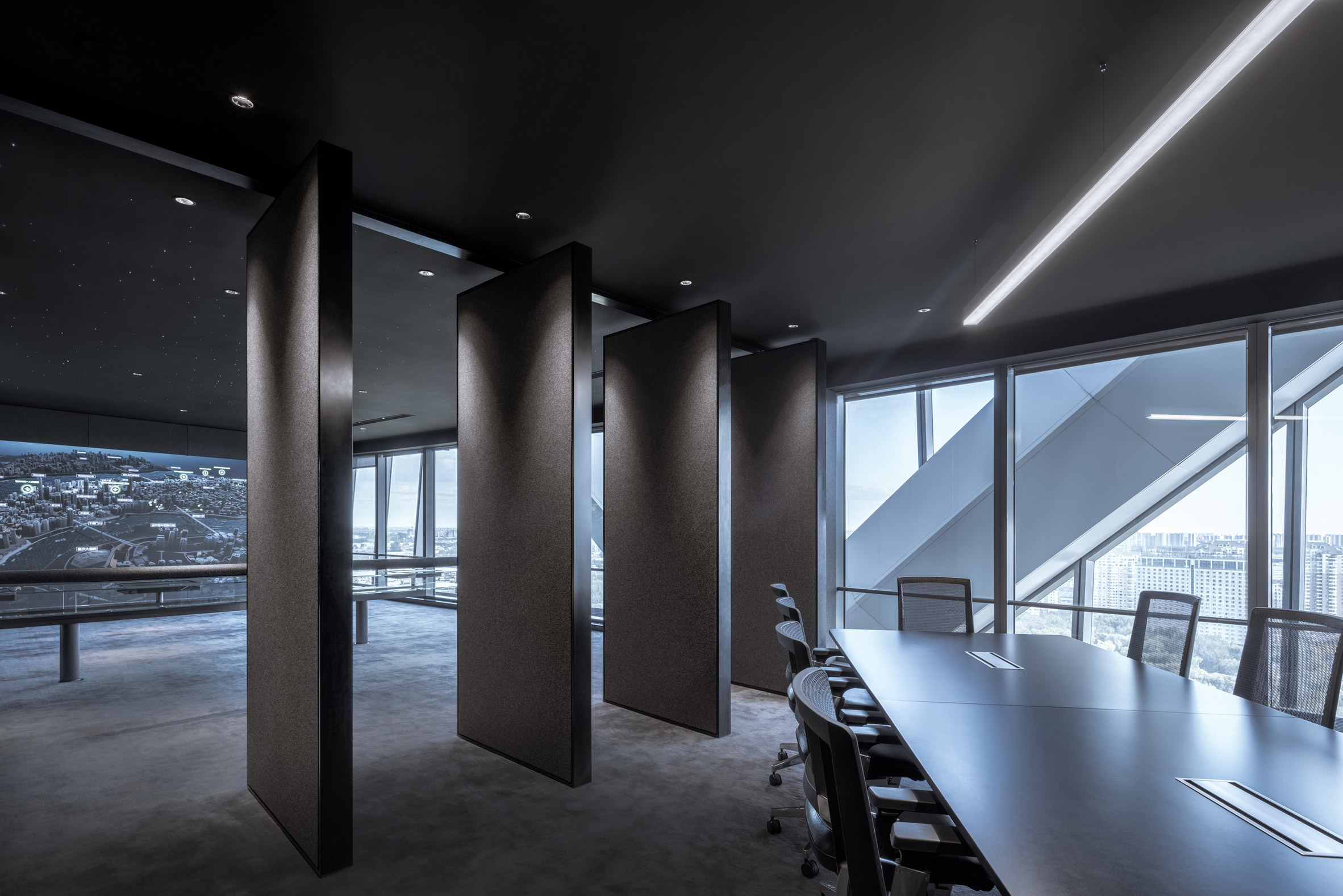
The southern side of the office is accessed by a bright-white walkway, but the studio has completed rooms here in a darker palette to dramatise the appearance of the presentation screens and interactive models on-site.

LED strip lighting has also been installed to channel the "unique atmosphere of the AI-era office".

Raydata office headquarters by Precht

Although the office is meant to largely feel open-plan, some spaces are divided by pivoting floor-to-ceiling screens upholstered in the same Kvadrat fabric that appears on the desks.

At the core of the plan lies a further fleet of meeting rooms where staff can chat one-on-one or work in small groups.

Raydata office headquarters by Precht

Chris Precht recently spoke to Dezeen as part of our Virtual Design Week, where he talked through his studio's body of work from his home in the Austrian mountains.

Recent projects by the studio include Parc de la Distance, a conceptual, maze-like park divided by towering hedges that would allow people to safely spend time outdoors while social distancing.

At the beginning of this year, the studio also collaborated with Mamou-Mani Architects to create an intricate installation that was 3D printed with sand.

Photography is by CreatARimages.


Project credits:

Design: Precht
Project team: Fei Tang Precht, Chun Chen, Zizhi Yu, Chengcheng Liu, Yanyan Gu, Mei Li, Chris Precht
Structural consultant: Haifeng Li
Lighting consultant: Yuebo Min
Construction team: Beijing Million Partner Construction Company
Carpet design in booths: Florian Pucher, Bo Liu
Furniture suppliers: Hay, Matsu, Human Scale
Fabric supplier: Kvadrat
Carpet supplier: Bolon

The post Precht creates monochromatic interiors for RayData office in Beijing appeared first on Dezeen.


from Dezeen https://ift.tt/2YGOrUw

Indoors Zine: a zine about the great indoors entirely made from home

Download your free copy of Indoors Zine for some comfort (and a laugh!) while we're all inside.


from It's Nice That https://ift.tt/2L7fsZ5