Thursday, 7 May 2020

Escapist restaurant interiors could be "lasting design legacy of the pandemic" says Roar trends report

Coronavirus will lead to a rise in escapist restaurant interiors, while physical menus, cash payments and buffets will largely be abandoned, according to a trends report by Dubai-based studio Roar.

Roar, which is led by Pallavi Dean, worked with 170 industry professionals, as well as a focus group of nine experts, to predict ways that the Covid-19 pandemic will change the design of restaurants.

The report aimed to distinguish the short-term impacts from the long-term trends that will be seen in future dining experiences.

Restaurateurs "know there will be fewer people dining out"

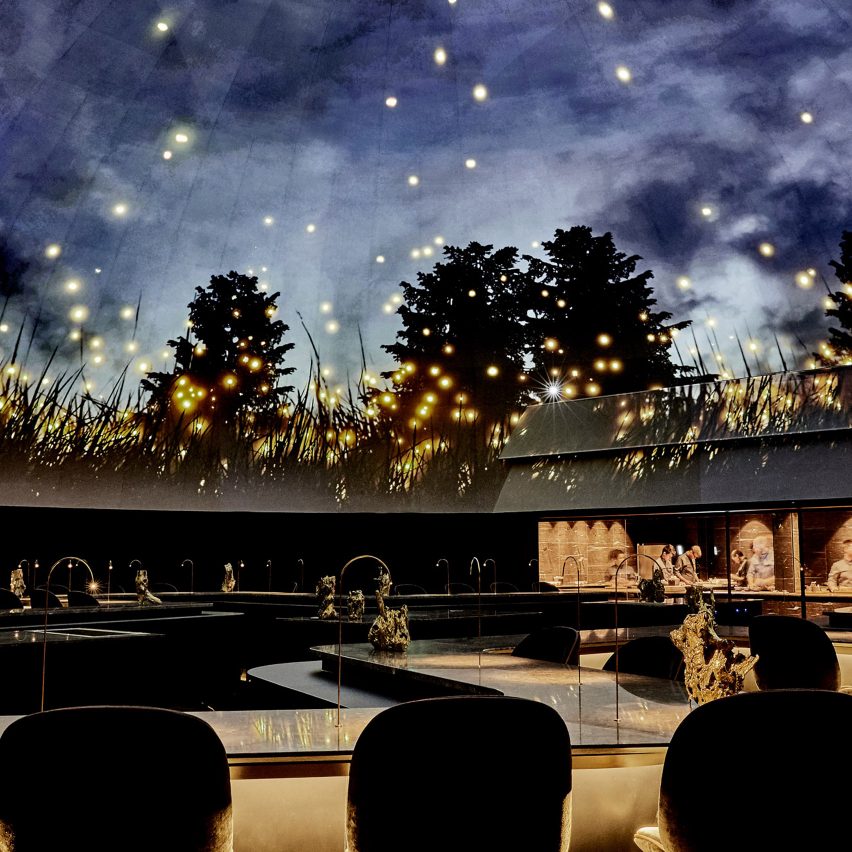
Using original and escapist design to create "slightly surreal" and special experiences in restaurants could be "the lasting design legacy of the pandemic," said one panelist.

"Restaurateurs are not really asking for new spacing – but they are pushing for more originality," read the report.

"They know there will be fewer people dining out, so they are asking us to challenge the briefs they have given us, and asking for more originality."
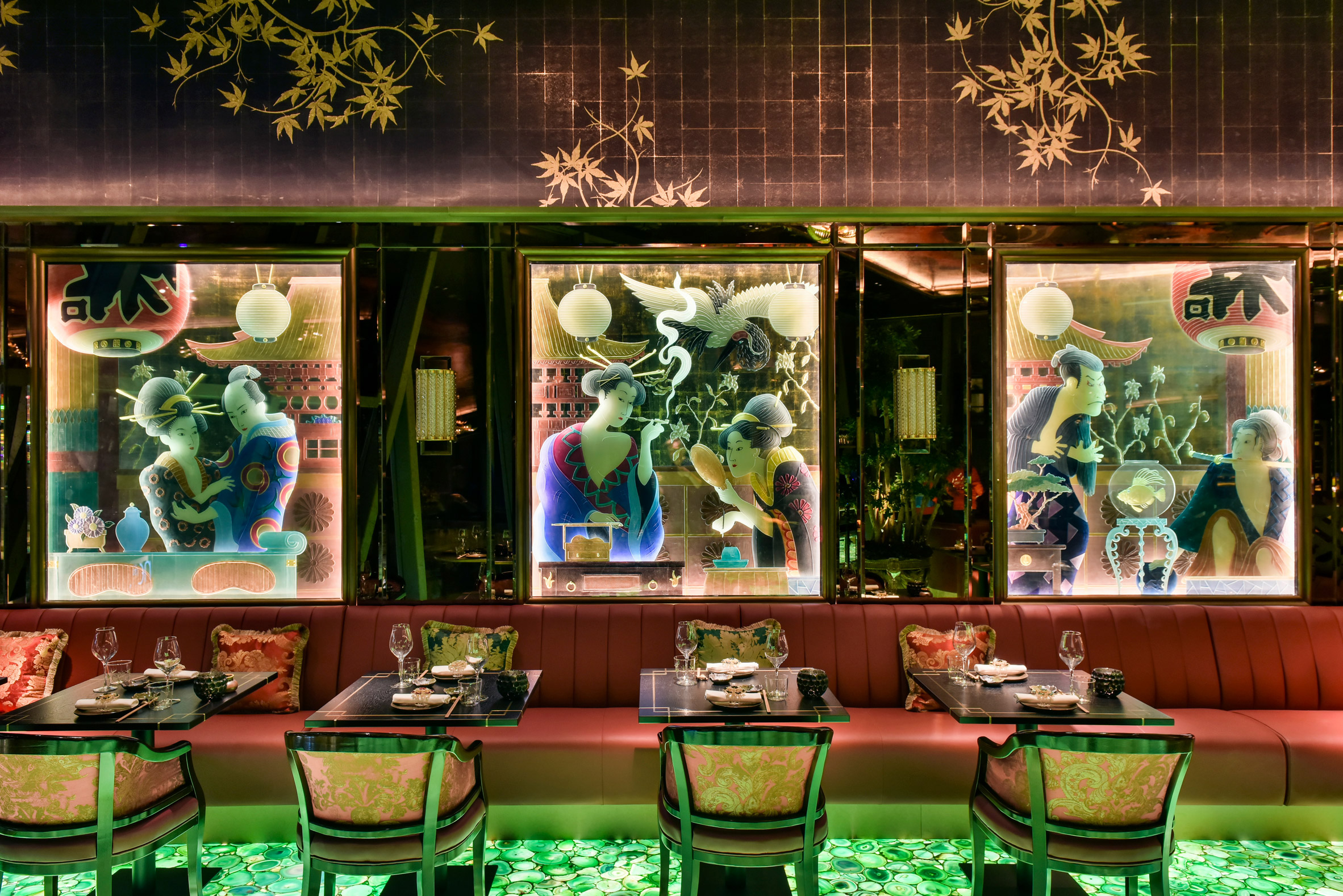
Decadent and escapist interiors like The Ivy Asia in London could become the biggest post-Covid trend

Another panellist predicted that a new form of architectural modernism would arise. The mid-century design style is interpreted by some historians as a response to early 20th century health crises like cholera, typhoid and flu.

It included "the embrace of simple lines, strict geometries and modern materials, and the rejection of ornamentation such as intricately carved wooden furniture that collected dangerous microbes."

It is possible that the current pandemic could give birth to a similar transformation in building design, predicts the report.

More open kitchens predicted post pandemic

The forecast suggests that we will see more open kitchens after the pandemic, as they promote "transparency". Surfaces built or clad in anti-microbial materials will also "be a given".
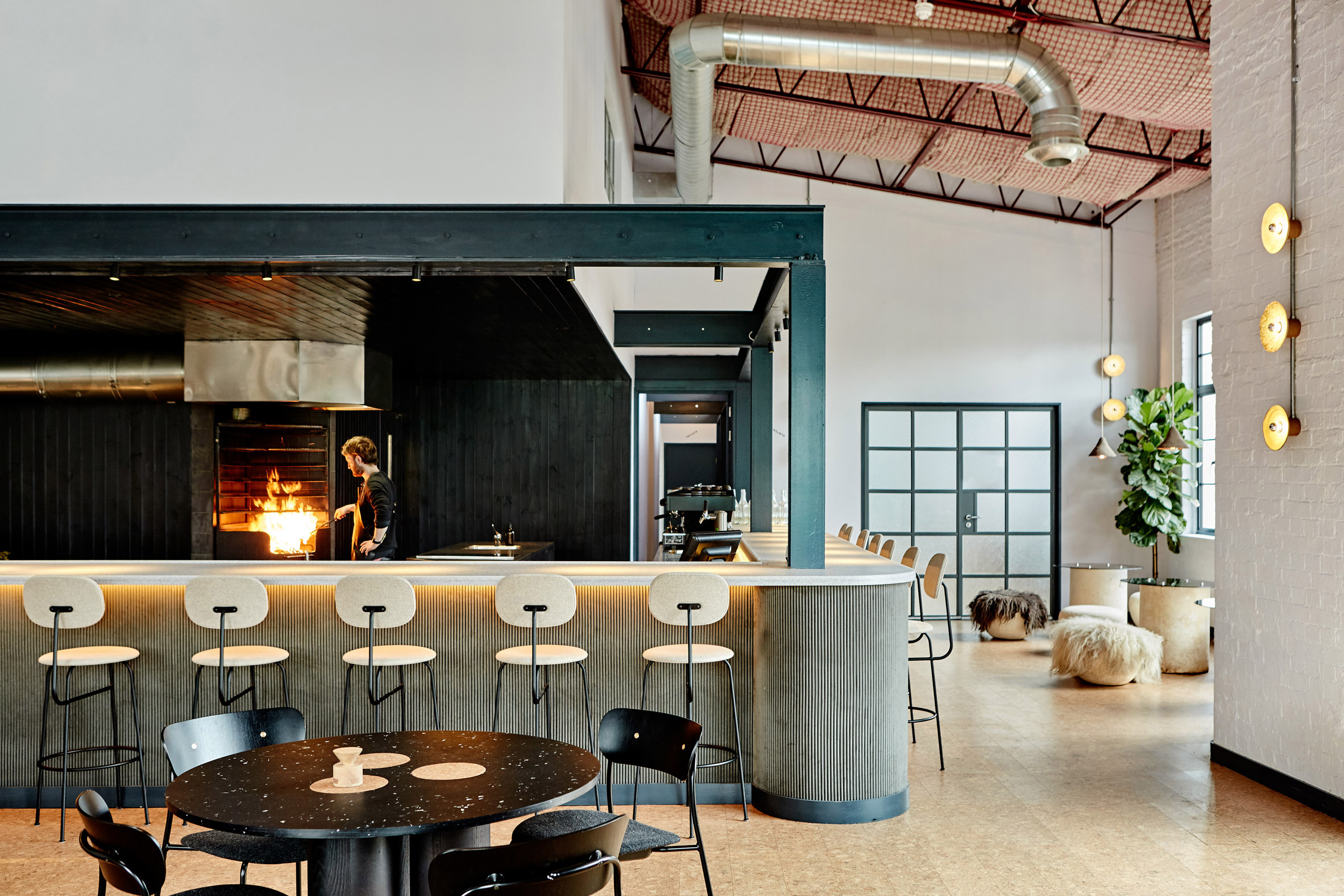
Open kitchens like the one featured in London's Silo restaurant by studio Nina+Co are also forecast to become more popular

"Anti-microbial surfaces are not new to the foodservice industry – but some designers observed that they are sometimes value-engineered out of the final build specification for restaurants," read the report.

"Panelists broadly agreed that this will no longer be the case."

The three trends that Roar headlined as the most significant in the future of dining were layout and spacing, contactless dining and food concepts.

Restaurant spacing restrictions will be "severe but short-lived"

Pre-Covid it was recommended that restaurants give each seated dinner of 1.4 square metres of space. Amid the pandemic however, the World Health Organisation (WHO) has recommended this be increased to 2.5 square metres per diner for any outlets that remain open.

Roar founder Dean, who is a judge at this year's Dezeen Awards, thinks layout and spacing restrictions will be "severe but short-lived".

According to the report, more than a quarter think spacing in restaurants will return to normal later this year, however most predict that social distancing measures won't be left behind until early 2021.

Physical menus and cash payments to become rare

While many might think the second forecast of contactless dining is "a given", in reality it is more nuanced, argues the report, as nearly half of survey respondents voted that it is "a passing fad".

Instead of contactless, Roar uses the term "contact-light", which would see physical menus and cash payments become rare "if not extinct", alongside communal condiments like salt and pepper.

Restrooms is where the most change will be seen. Referred to as "a vital battleground in the war against infection", the report imagines that most bathroom doors will be removed except from private cubicles, and those that remain will be open and closed by foot or via wireless sensors.

"Customers will rarely, if ever, touch a tap"

"Japanese-style robot WCs (replacing a new piece of paper over the seat after each visit) will go from novelties to must-have, although in the interim a packet of Dettol wipes may have to suffice," reads the report.

"Customers will rarely, if ever, touch a tap, soap dispenser or hand dryer again. All this technology already exists, it's simply a case of using it."

In terms of food concepts, the report predicts that buffet and sharing-style forms of eating "cannot survive in their present form."

Many of these trends, from increased automation and the death of buffets to an increasing demand for escapism concepts, had already begun pre-pandemic, argues the report.

The pandemic will simply accelerate these design trends that were already in play.

Roar's report was created with the help of nine industry professionals, including founder of Gates Hospitality, Naim Maadad, partner at Flip International, Jamal Wick, founder of The Free Spirit Project, Briar Jacques and founder of Bishop Design, Paul Bishop.

Roar founder Dean – who featured in Dezeen's VDF launch movie – created the report with the help of eight other industry professionals, including founder of Gates Hospitality, Naim Maadad, partner at Flip International, Jamal Wick and founder of The Free Spirit Project, Briar Jacques.

Other participants include Paul Bishop from Bishop Design, Isabel Pintado from Wilson Associates, Georgy John from Gastronomica, David McAdam from the Middle East Council of Shopping Centers and Samantha Wood from FooDiva.

London studio Bompas & Parr also predicted a series of design and lifestyle trends that will emerge both during and after the Covid-19 pandemic, from virtual spas to an increase in DIY creativity at home.

Once the main impact of the virus is over, the studio predicts a rise in haptic museums, to get people used to touch again, and a continued obsession with hygiene and hand-washing.

The post Escapist restaurant interiors could be "lasting design legacy of the pandemic" says Roar trends report appeared first on Dezeen.


from Dezeen https://ift.tt/3dmreeg

Heena Chung on the pursuit of graphic design after four years in another industry

The Pasadena-based creative talks us through her recent project on the design of non-places.


from It's Nice That https://ift.tt/2yBUuij

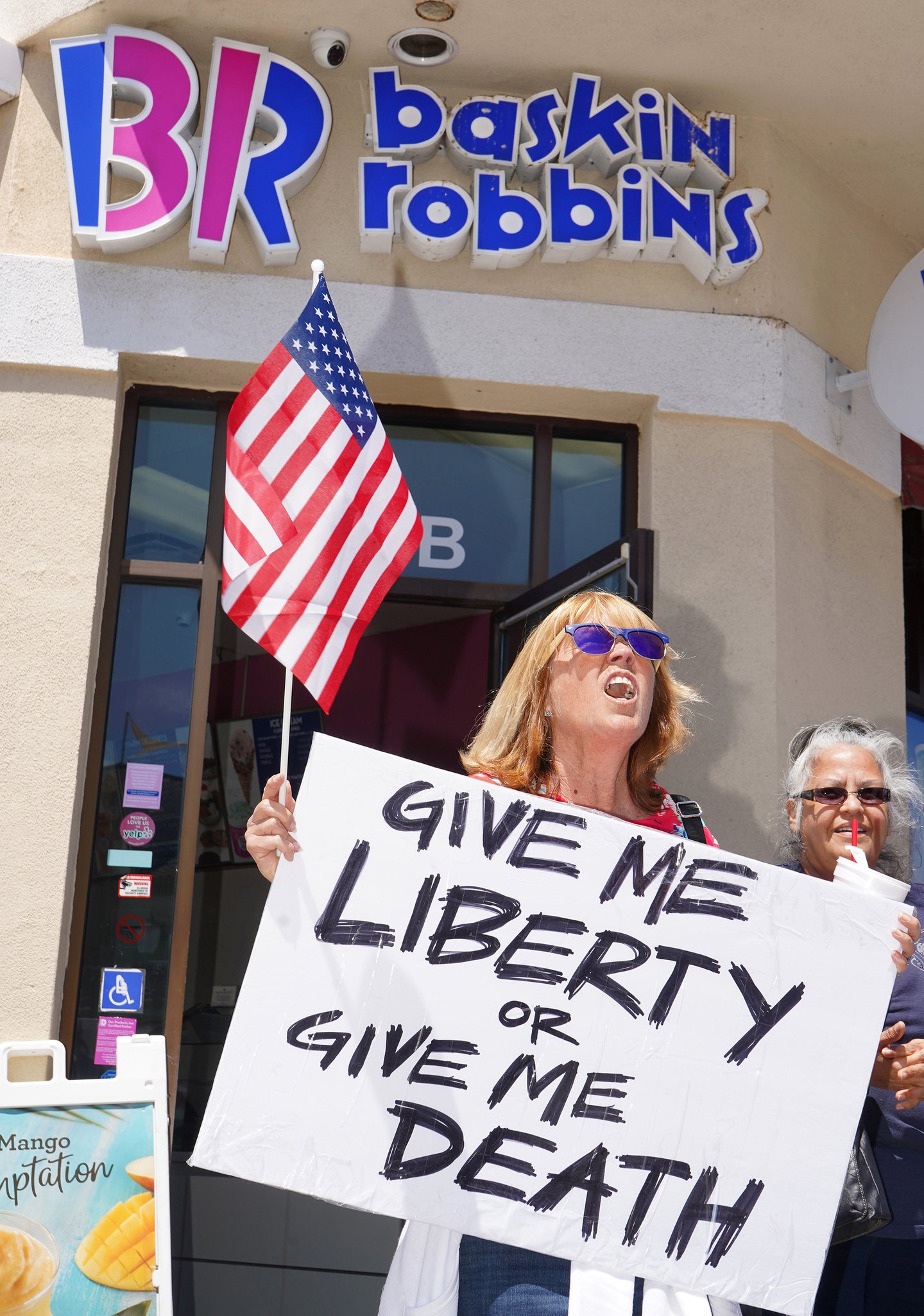
Jamie Lee Curtis Taete on how and why he ventured among LA’s quarantine protests

The photographer, whose portrait of a lockdown defier outside Baskin Robbins has gone viral, tells the stories behind his impactful portraits.


from It's Nice That https://ift.tt/2Lajq38

London, New York, Paris and Milan give streets to cyclists and pedestrians

Coronavirus cities cyclists and pedestrians

Cities across Europe and the Americas are drawing up plans to take street space away from cars in favour of cyclists and pedestrians in response to the coronavirus pandemic.

Urban spaces are being temporarily remapped to prioritise people walking and cycling while maintaining social distancing of up to two metres in major cities around the world including London, New York, Paris, Berlin, Milan and Bogata.

The initiatives come amid growing support for measures to make cities more friendly to pedestrians and cyclists.

"Whenever feasible, consider riding bicycles or walking," the World Health Organisation has advised.

"The way to enhance freedom of movement without raising the risk of infection is to create more space," said environmentalist George Monbiot. "Shutting streets to cars, so pedestrians can use them instead, is a good start. So is opening up golf courses, locked squares and other exclusive green places."

Today London has announced Streetscape, an action plan for rapidly building temporary cycle lanes and blocking vehicle traffic on residential streets.

London plans may become permanent

Mayor Sadiq Khan and Transport for London (TfL) announced that temporary cycle lanes are being planned for major routes around the city, and on-street parking and car lanes will be commandeered to create wider pavements.

"Many Londoners have rediscovered the joys of walking and cycling during lockdown and, by quickly and cheaply widening pavements, creating temporary cycle lanes and closing roads to through traffic we will enable millions more people to change the way they get around our city," said the mayor.

TfL predicts that the city's public transport system will only be able to run at a fifth of pre-coronavirus capacity, so residents who cannot work from home still will need to walk or cycle. The WHO has warned that people should avoid public transport at peak times, keep one metre away from passengers at all times. Bus and train users should avoid touching handrails and wash their hands as soon as possible after their journey.

"The capacity of our public transport will be dramatically reduced post-coronavirus as a result of the huge challenges we face around social distancing," continued Khan.

TfL said the scheme, while temporary, could become permanent.

New York creates more space for cyclists 

New York mayor Bill de Blasio has announced plans to close 40 miles of road in the city to cars during the month of May. Seven miles have already been given over to people walking, jogging or cycling, according to a report by NPR.

Eventually the city government wants to have 100 miles of road temporarily turned into "open streets" near its parks for cyclists and pedestrians.

On the other side of the country, Oakland in California has enacted a scheme called Oakland Slow Streets, which consists of 15 corridors, totalling 14 miles in length, where people can walk, cycle and run while social distancing.

Soft closure barriers, such as signs and traffic cones, mean that emergency vehicles can still access the roads closed to vehicle traffic.

Paris forges ahead with plans for car-free city centre

The Rue de Rivoli, one of Paris' most famous shopping street, was closed to cars on 30 April and will continue to be pedestrian and cyclist-only for the summer.

To ease pressure on existing public transport routes, cycling lanes that follow the Paris Metro's most popular routes are also being considered. In total, 400 miles of temporary cycle routes are planned for post-lockdown Paris.

Paris' mayor Anne Hidalgo had already been enacting a long-term plan to make the French capital greener before coronavirus struck, planting "urban forests" and phasing out older and more polluting cars from the city centre.

She doubled down on this commitment at a council meeting last week about France's plans to ease its lockdown on 11 May.

"It is out of the question that we allow ourselves to be invaded by cars and by pollution," said Hidalgo, warning "it will make the health crisis worse".

Milan limits cars in the city after coronavirus

Milan, which has started to ease its strict lockdown this week, plans to gradually introduce 22 miles of temporary cycle lanes over the summer.

Called Strade Aperte, or Open Roads, the plan lays out new road layouts with wider pavements. A 20 mile per hour speed limit will also be imposed on some roads and bridges.

Some neighbourhoods will be temporarily pedestrianised so children can play outside and people can use the streets for exercise.

The city is also considering requisitioning some public space for bars and cafes to place tables for customers to make up for those lost space indoors now that people have to social distance.

Berlin pushes through temporary cycle lanes

In Berlin, local officials have used the crisis to push through measures such as temporary cycle lanes much faster than usual as car traffic has dropped by 40 per cent.

"Road traffic regulations state that if there is a change in traffic volume, we can act quickly and create new, perhaps temporary, cycling lanes," Berlin Roads and Parks Department official Felix Weisbrich told German broadcaster Deutsche Welle.

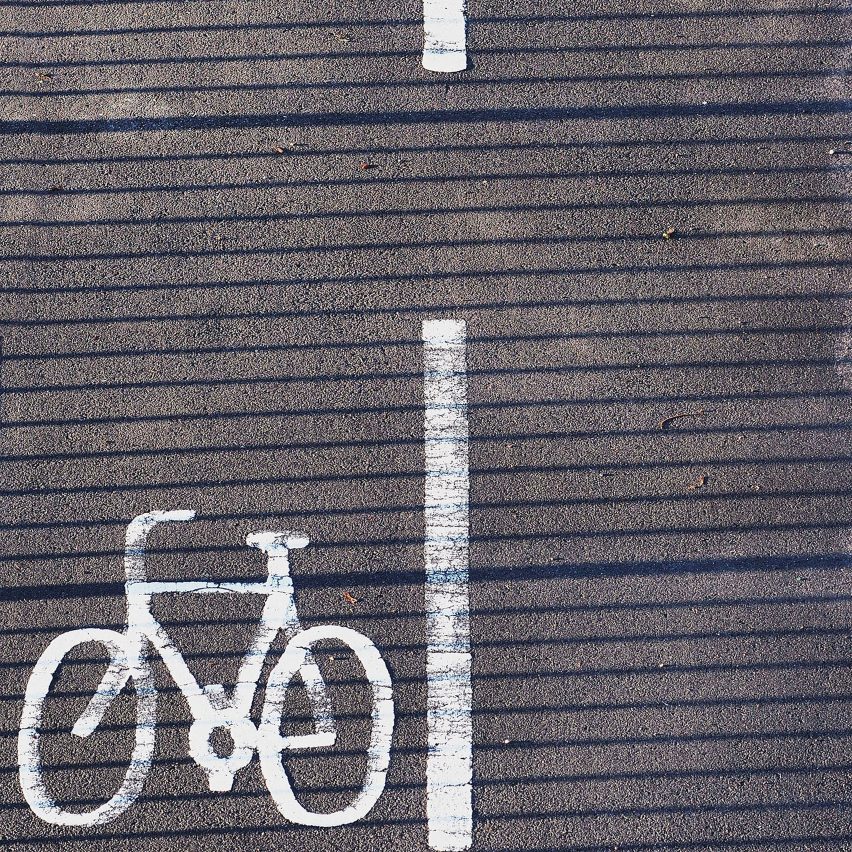
Lines on the roads now mark the new boundaries of cycle lanes that have been widened by a metre to allow people, especially key workers, to move around while maintaining a safe distance.

"As a cyclist, should be well protected during this pandemic," added Weisbrich. "When you pass other bikers you need to be at least one-and-a-half-meters away from them."

Bogota increases cycle lanes for commuting key workers

In South America, Colombian capital Bogota is using cycle lanes to keep people moving. Colombia's president Iván Duque announced yesterday that the country would extend its lockdown until 26 May.

Bogota's local government has introduced 200 miles of temporary cycle lanes for key workers to use for commuting. Cyclists using the routes must wear personal protective equipment such as face masks, gloves and goggles.

"We expanded the number of kilometres so that the citizens who go out to work can use these new corridors," said Bogota director of recreation Blanca Inés Duran.

Temporary hand-washing stations have also been erected at public transport stations.

Main image is by Andrew Martin from Pixabay.

The post London, New York, Paris and Milan give streets to cyclists and pedestrians appeared first on Dezeen.


from Dezeen https://ift.tt/3dnppxz

Which route should Ragged Edge take on this rebrand? Cast your vote

“Branding is an opaque business” so the design studio is making its process transparent, to be unpacked and scrutinised by anyone.


from It's Nice That https://ift.tt/2W8GSEe