Thursday, 7 May 2020

Rosy Eyes Peer Out From Leaves and Insects in Bizarre Illustrations by Ana Miminoshvili

“Jasmine” (2018). All images © Ana Miminoshvili

Tbilisi-based illustrator and designer Ana Miminoshvili captures the essence of modern surveillance by hiding it in plain sight. In Blooming Eyes, she implants her verdant leaves and botanical compositions with numerous eyes that peer out from their natural surroundings. Red speckles indicate that they’re bloodshot and strained, giving the scleras a rosy hue that complements and blends with the pink florals.

Miminoshvili describes the surreal series as commentary “on anxiety, (the) fear of being watched, and pressure of social media exposure.” The staring eyes disguise themselves in unusual and yet organic places like ladybugs’ spots and a newly opened flower. In a statement, the illustrator said she prefers “creating warm ambiances and combining strict, geometric shapes with more free and natural lines,” after pinpointing a tight color palette that allows her to merge the otherwise disparate elements.

Follow Miminoshvili’s ongoing illustrations and embroideries that consider privacy in contemporary life on Instagram and Behance, and purchase a print in her shop.


“Ladybugs” (2018)

“Blooming face” (2020)

“Caterpillar” (2020)

“Eyeballs” (2019)


from Colossal https://ift.tt/3fwiK67

Virtual Design Festival is "a chance to stay together" says Maurizio Stocchetto of Bar Basso

In a video message recorded for Virtual Design Festival, the owner of Bar Basso in Milan says the design community has a chance to stay together despite the coronavirus pandemic causing design fairs to be cancelled.

Maurizio Stocchetto, owner of the bar that attracts thousands of designers each night during Milan design week, contributed the opening sequence to the Virtual Design Festival launch movie, which was published last month and which we are streaming ahead of our live interview with Stocchetto later today.

"As we all know, this year Salone del Mobile will not be held in our city," Stocchetto said in the movie, which shows him unlocking the empty bar that is usually crammed with designers.

"But with the Dezeen Virtual Design Festival, we still have a chance to stay together."

Bar Basso was established in 1933 and since the 1980s has been a staple watering hole for the design community during Milan design week, with attendees spilling out into the street until late in the night.

Stocchetto's video message features in the VDF launch movie alongside contributions from 34 other architects, designers and artists in lockdown around the world, including Stefano GiovanniEs DevlinIni Archibong, and Bec Brittain.

As part of Virtual Design Festival, Stocchetto will be speaking to Dezeen's founder and editor-in-chief Marcus Fairs in a live interview about the history of the bar, followed by a cocktail masterclass in how to make its signature drink, Negroni sbagliato. Tune in here from 5:00pm UK time.

About Virtual Design Festival

Virtual Design Festival runs from 15 April to 30 June 2020. It brings the architecture and design world together to celebrate the culture and commerce of our industry, and explore how it can adapt and respond to extraordinary circumstances.

To find out what's coming up at VDF, check out the schedule. For more information or to join the mailing list, email vdf@dezeen.com.

The post Virtual Design Festival is "a chance to stay together" says Maurizio Stocchetto of Bar Basso appeared first on Dezeen.


from Dezeen https://ift.tt/3dvxq3T

Saskia Jenssen humorously illustrates the “things that people do to entertain themselves”

Observational and funny, the illustrator, aka Studio Ski, looks at the ways that people interact with modern society as her muse.


from It's Nice That https://ift.tt/3ftXSws

Oliver Chapman Architects combines technology and craft in Flitch House

Flitch House by Oliver Chapman Architects

Oliver Chapman Architects has added a garden room to a house in Edinburgh, combining an Arts and Crafts approach with smart-home technologies.

Flitch House is an extension to an end-of-terrace family home in Trinity, built in 1895 by prominent local architect Alexander Hunter Crawford.

Flitch House by Oliver Chapman Architects

To respect the house's architectural character, the extension is designed by Oliver Chapman Architects as a contemporary interpretation of the Arts and Crafts style – a movement that promoted traditional craftsmanship and honest use of materials, rather than mass production.

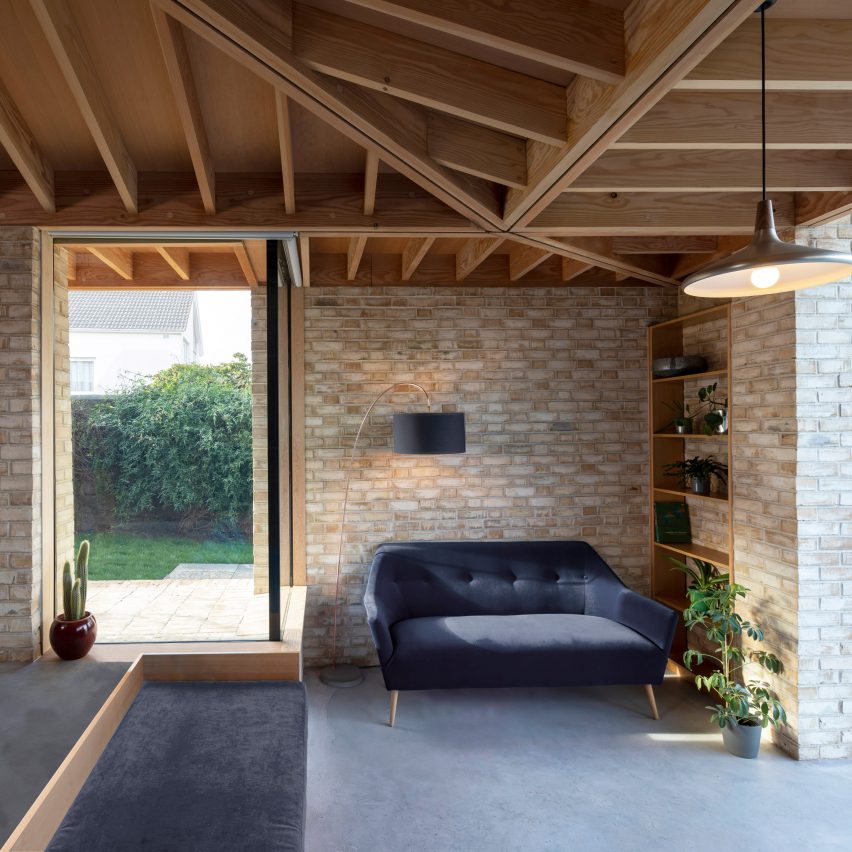
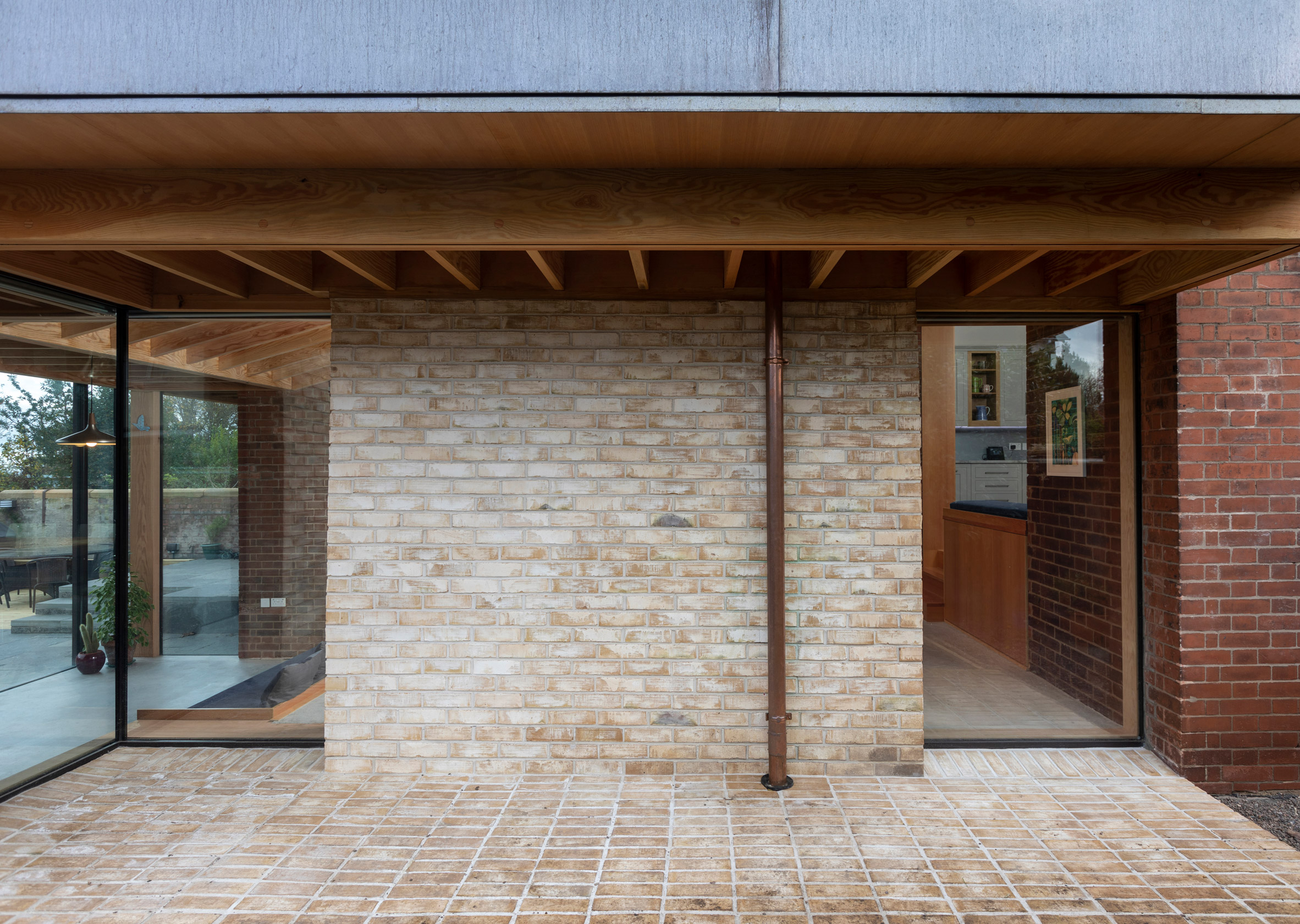
The garden-room extension celebrates its construction, with brick walls visible both inside and out, a pattern of ceiling beams exposed overhead, and custom furniture elements dotted throughout.
Flitch House by Oliver Chapman Architects

However unlike the Arts and Crafts houses of the 19th and early 20th century, the building also embraces technology, with integrated gadgets including wireless lighting and automated blinds.

The architects describe it as "Arts and Crafts without the bell pull".
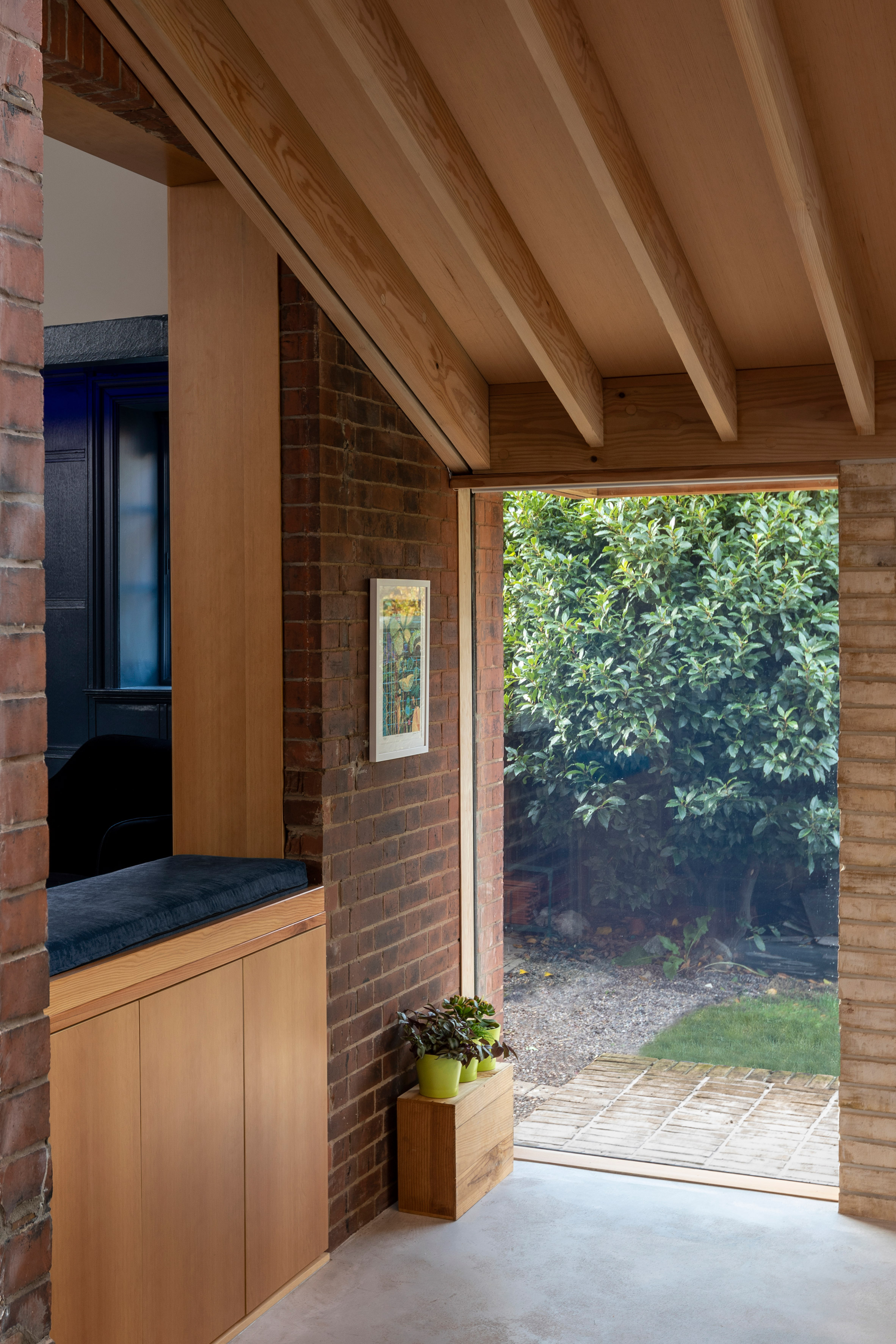
Douglas fir joinery

"Many of the ideals of Arts and Crafts – materiality, craft, open and connected spaces scaled to different uses – are virtues that continue to be highly valued in architecture today," explained project architect Nick Green.

"The movement initially arose as a rebellion against mass production and a wave of industrialisation," he continued, "but in today's world it is modern product developments that are allowing us to maximise the performance of our building elements and create details that make the most of the materials we use."
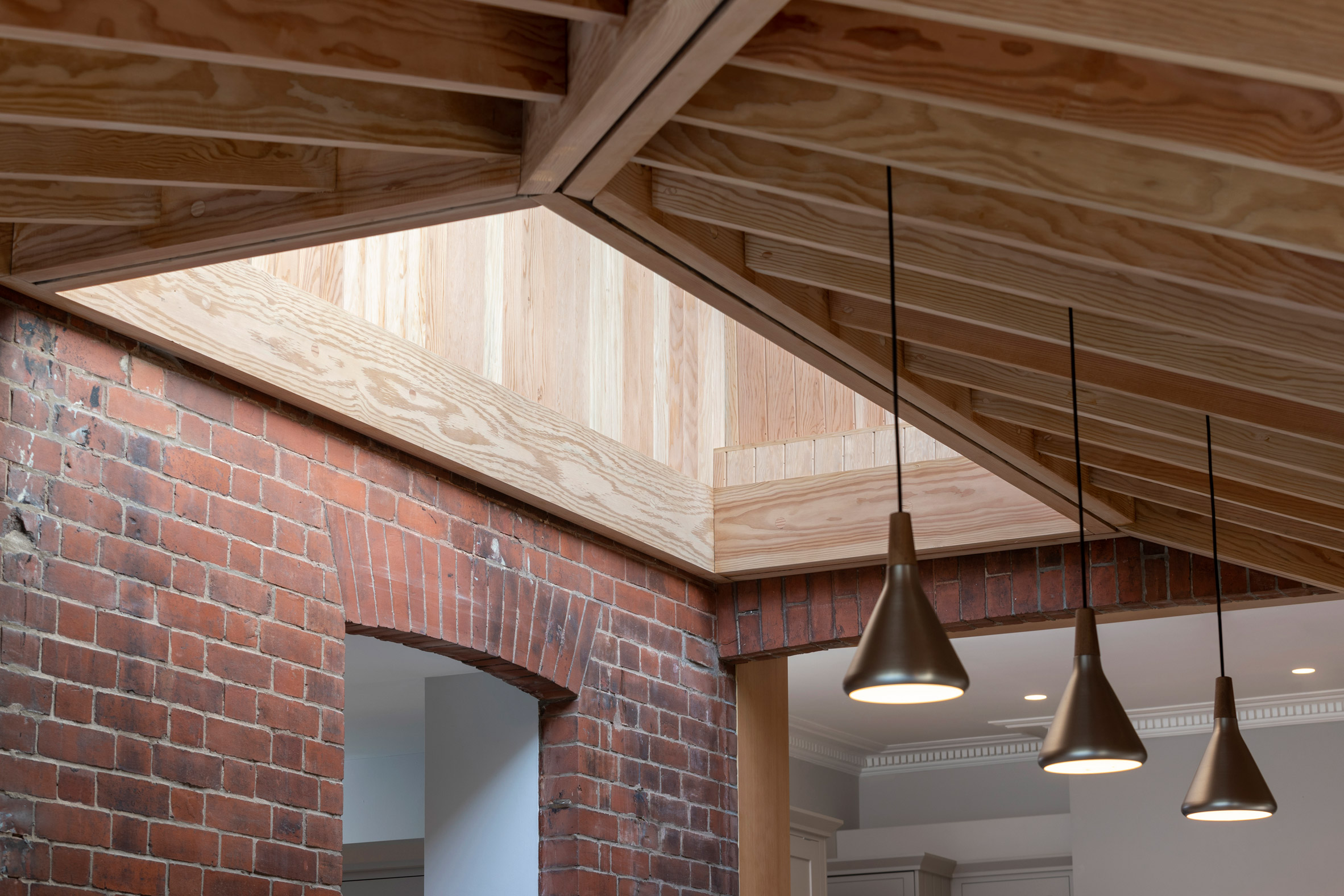
Flitch Beam roof

Digital devices are not the only use of technology in Flitch House.

As the project name suggests, the design includes Flitch Beams, which are dual-beams with steel ribbons sandwiched into the centre. These give additional strength to the roof structure, allowing it to lift up at the edges, to preserve views over the Firth of Forth.

In line with the Arts and Crafts approach, these details are left uncovered and visible.
Flitch House by Oliver Chapman Architects

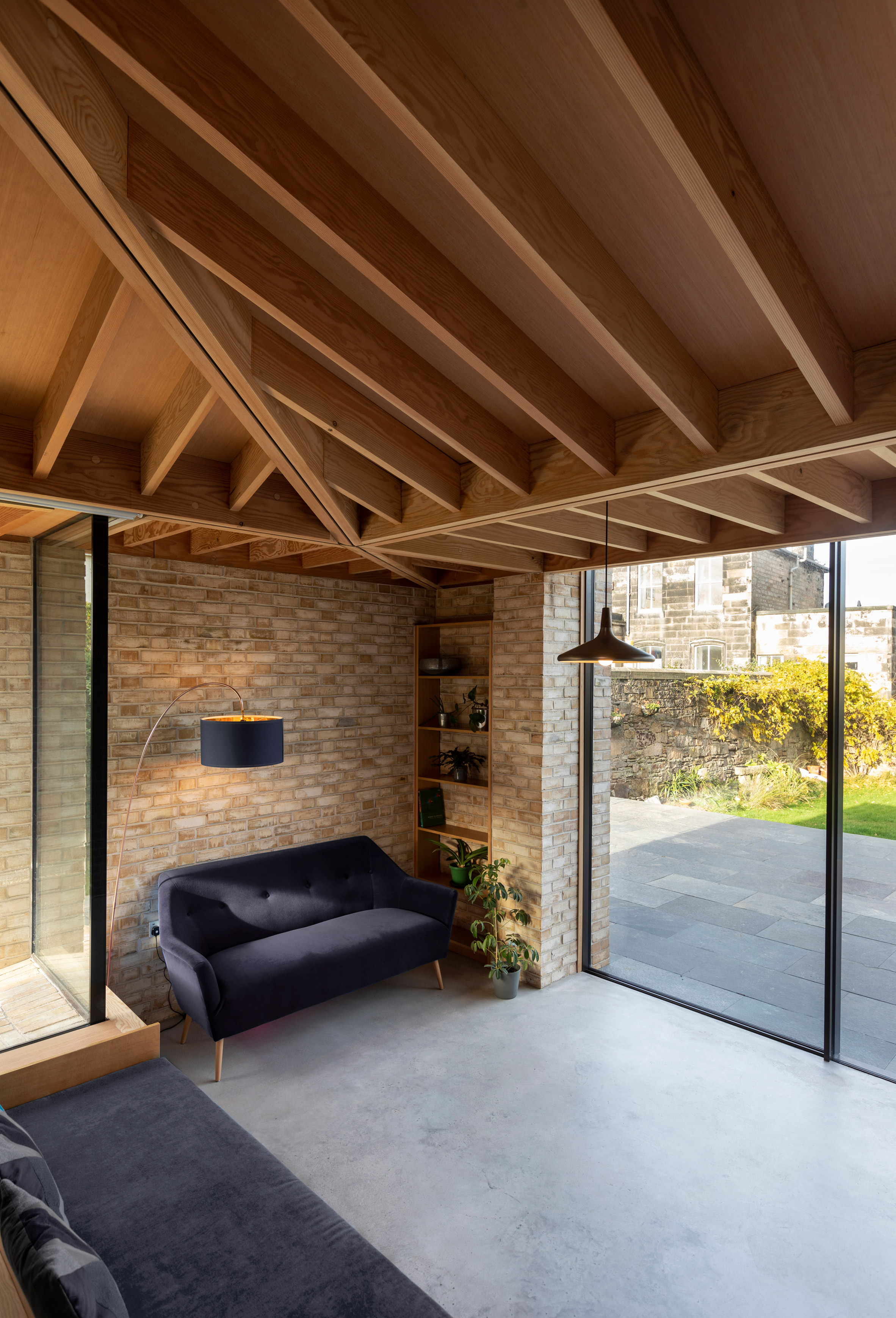
A pale Danish brick was chosen for the walls, to contrast but complement the original red brick.

"Our approach at Flitch House was to choose materials which could be both structural and aesthetic," Green told Dezeen.

"While the new walls and roof are necessarily not as simple as they appear, with insulation and waterproofing membranes hidden from view, they nevertheless allow the basic construction of the building to be read and understood clearly."
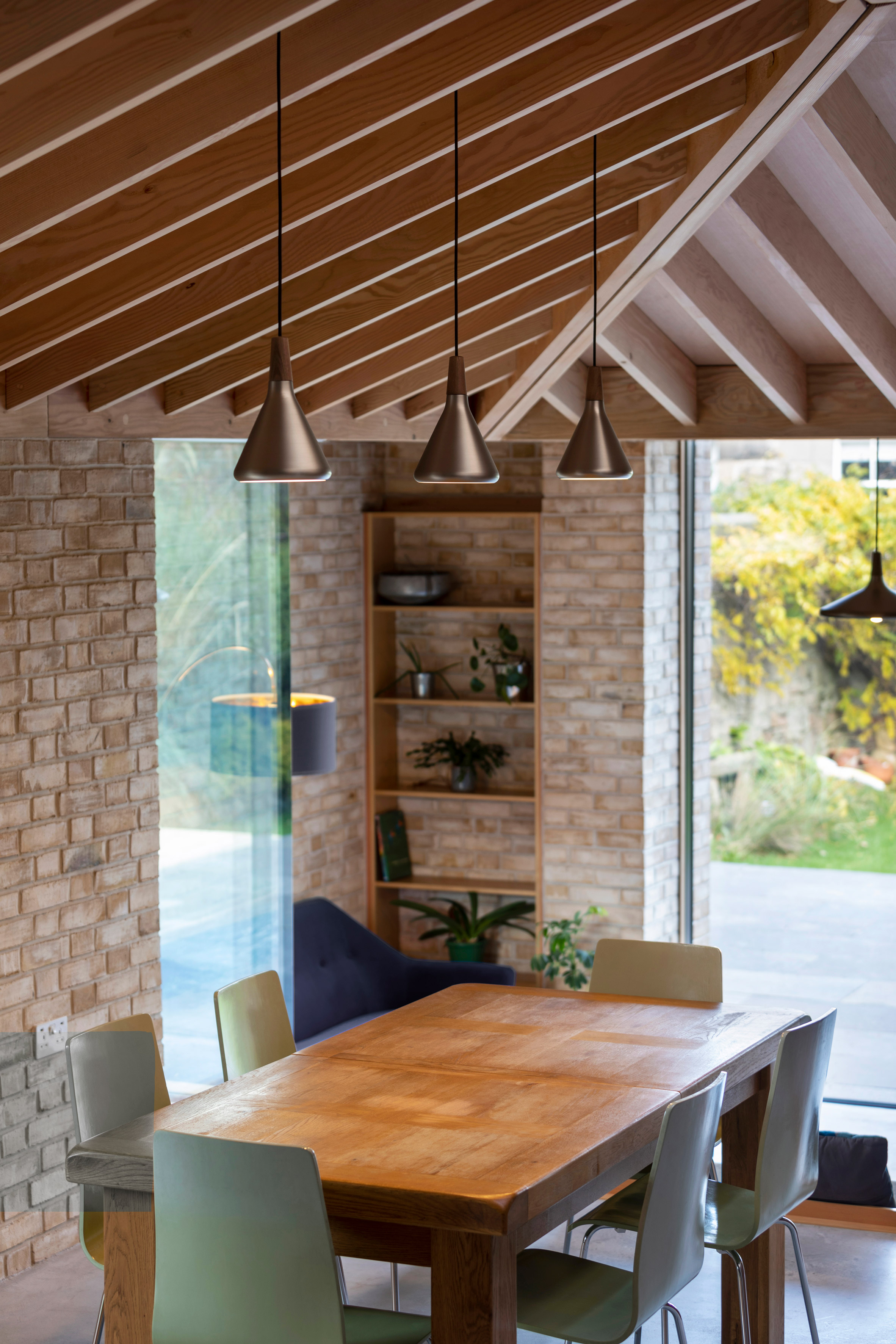
Dining space

A split-level floor divides the extension into two rooms. On the upper level is a dining space, connected to the family kitchen, while the lower level is more of a conservatory space.

Architectural details help to give these rooms extra character. Steps integrate upholstered seating areas and storage, while a projecting corner creates a reading nook, furnished with a bookcase and sofa.
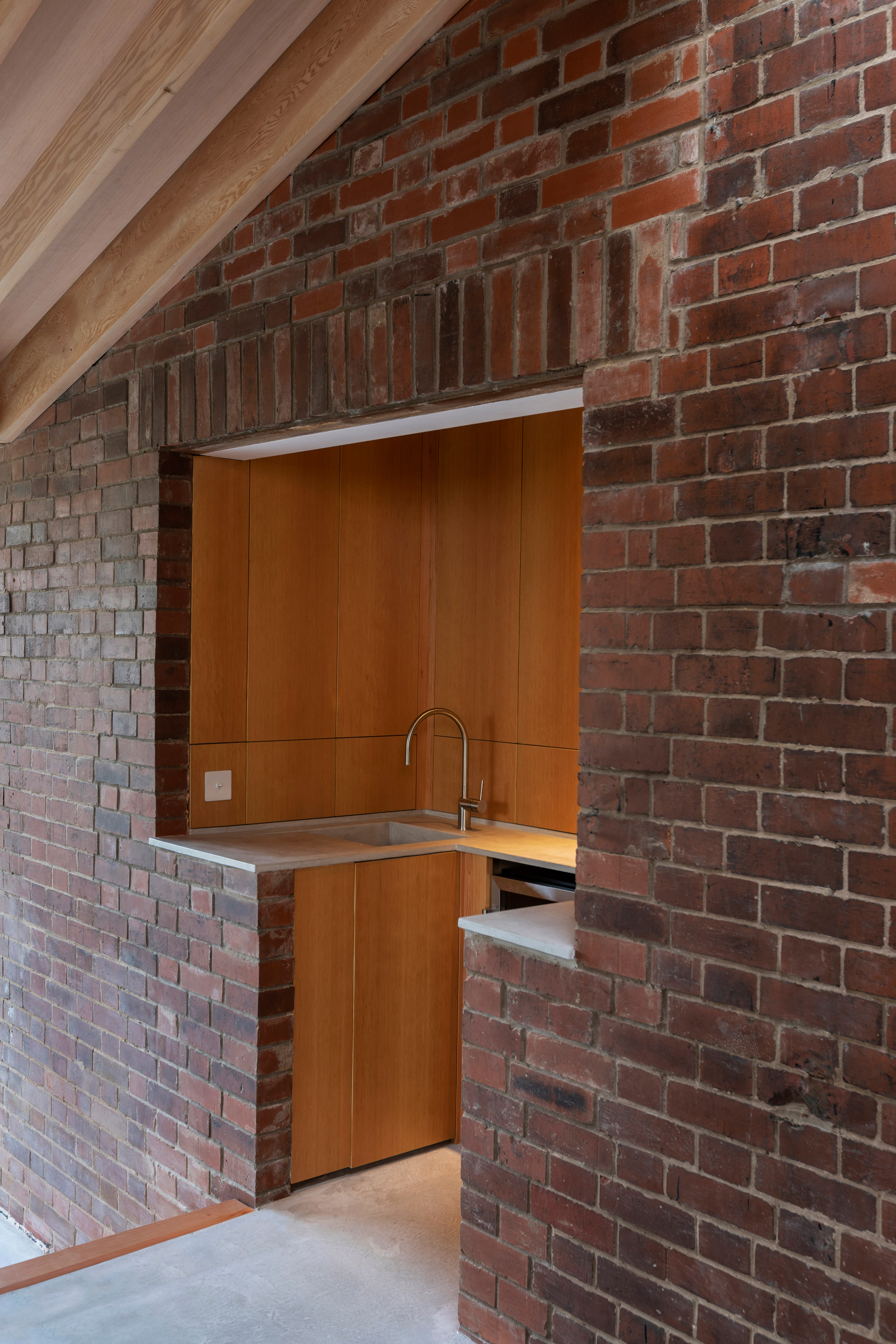
Drinks nook

There's also a mini recessed kitchen, lined in Douglas fir joinery, which provides a space for preparing drinks.

"Intimate spaces, or nooks, are characteristic of Arts and Crafts houses, and we were keen to develop this idea in a contemporary approach," explained Green.

"Our clients enjoy entertaining and so we designed this nook as a discreet bar area off the new dining area, allowing the main space to be as open as possible," he said. "It references the existing panelled alcove around the fireplace in the kitchen."

The space is finished with a micro-concrete floor, which matches the colour of the garden terrace beyond.
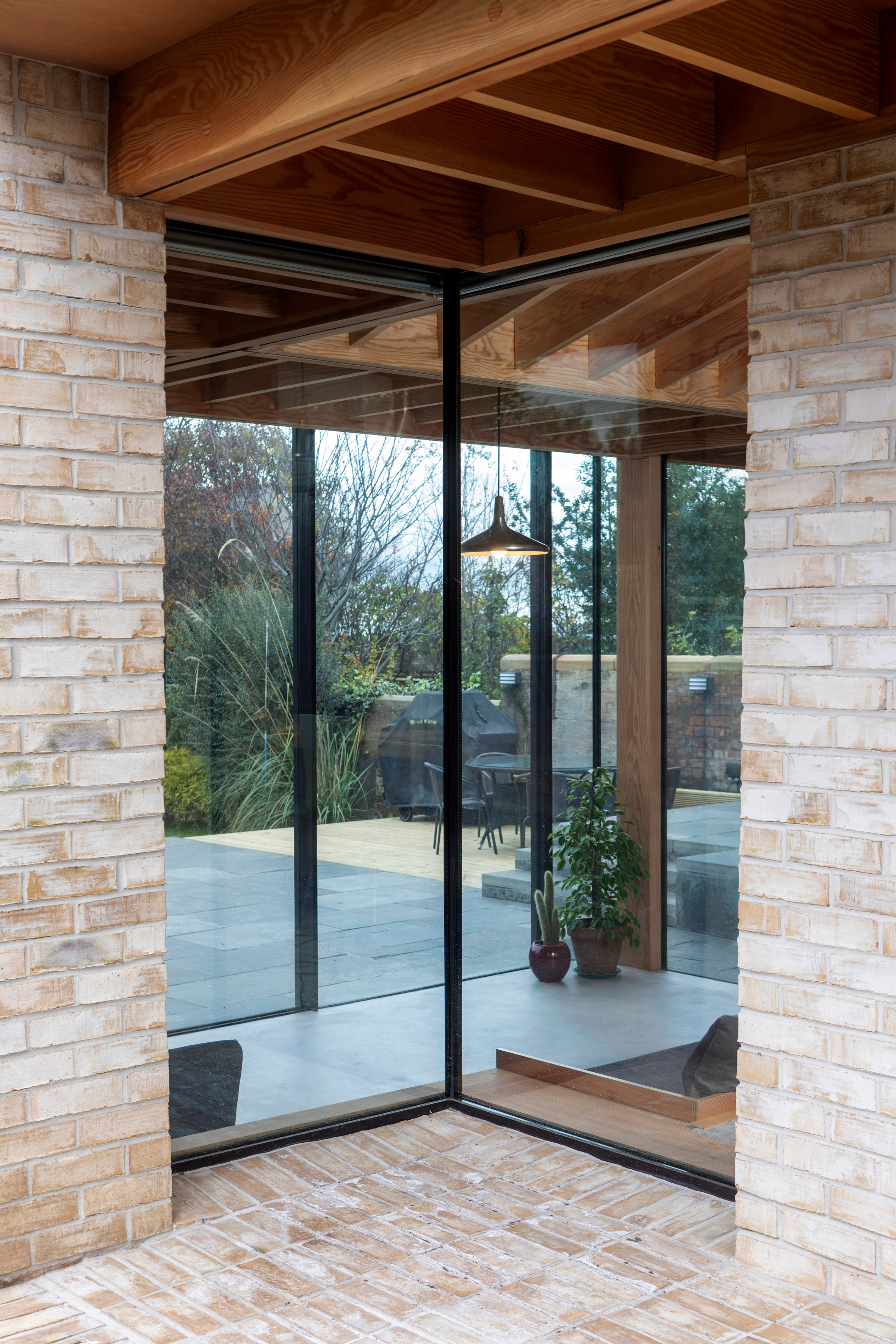
Flitch House by Oliver Chapman Architects

Previous house renovation in Edinburgh include architecture studio Archer + Braun red sandstone extension to a Victorian villa and Izat Arundell conversion of a former blacksmith's workshop into a compact apartment.

Photography is by Angus Bremner.


Project credits:

Architect: Oliver Chapman Architects
Structural engineer: David Narro Associates
Quantity surveyor: Thomson Gray
Main contractor: Ballina Construction

The post Oliver Chapman Architects combines technology and craft in Flitch House appeared first on Dezeen.


from Dezeen https://ift.tt/2WzM5nx

C'entro is a fibreglass frame to help people social distance in public parks

C'entro by blengini Ghiradelli for coronavirus daily briefing

Design studio SBGA Blengini Ghirardelli has created a concept for social distancing within parks, plus today's other design-related coronavirus news.

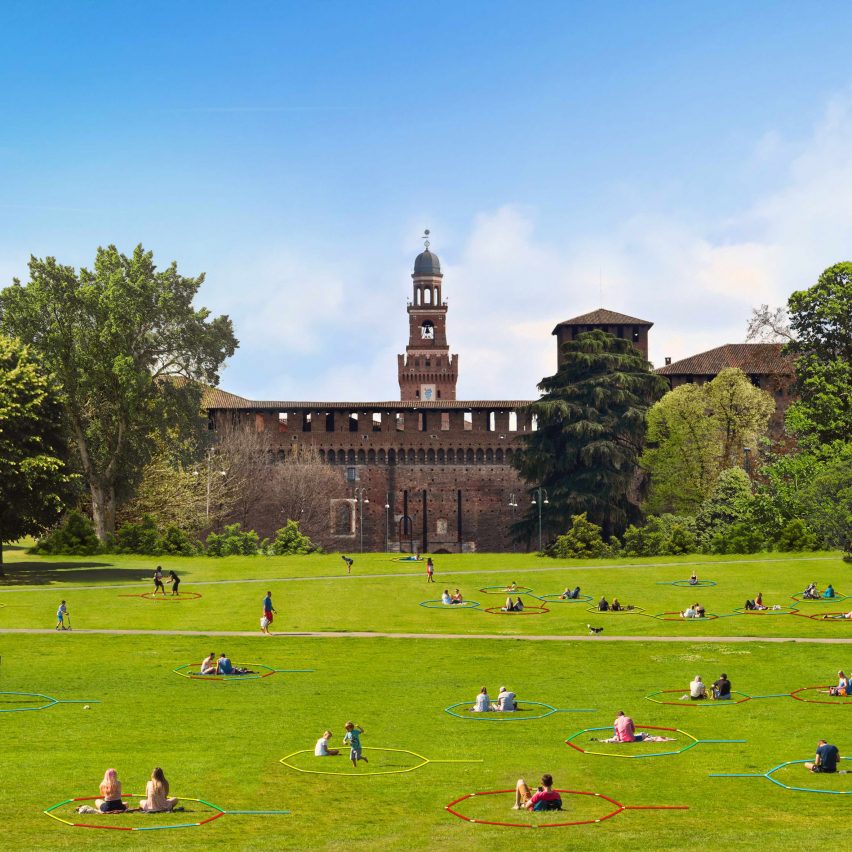
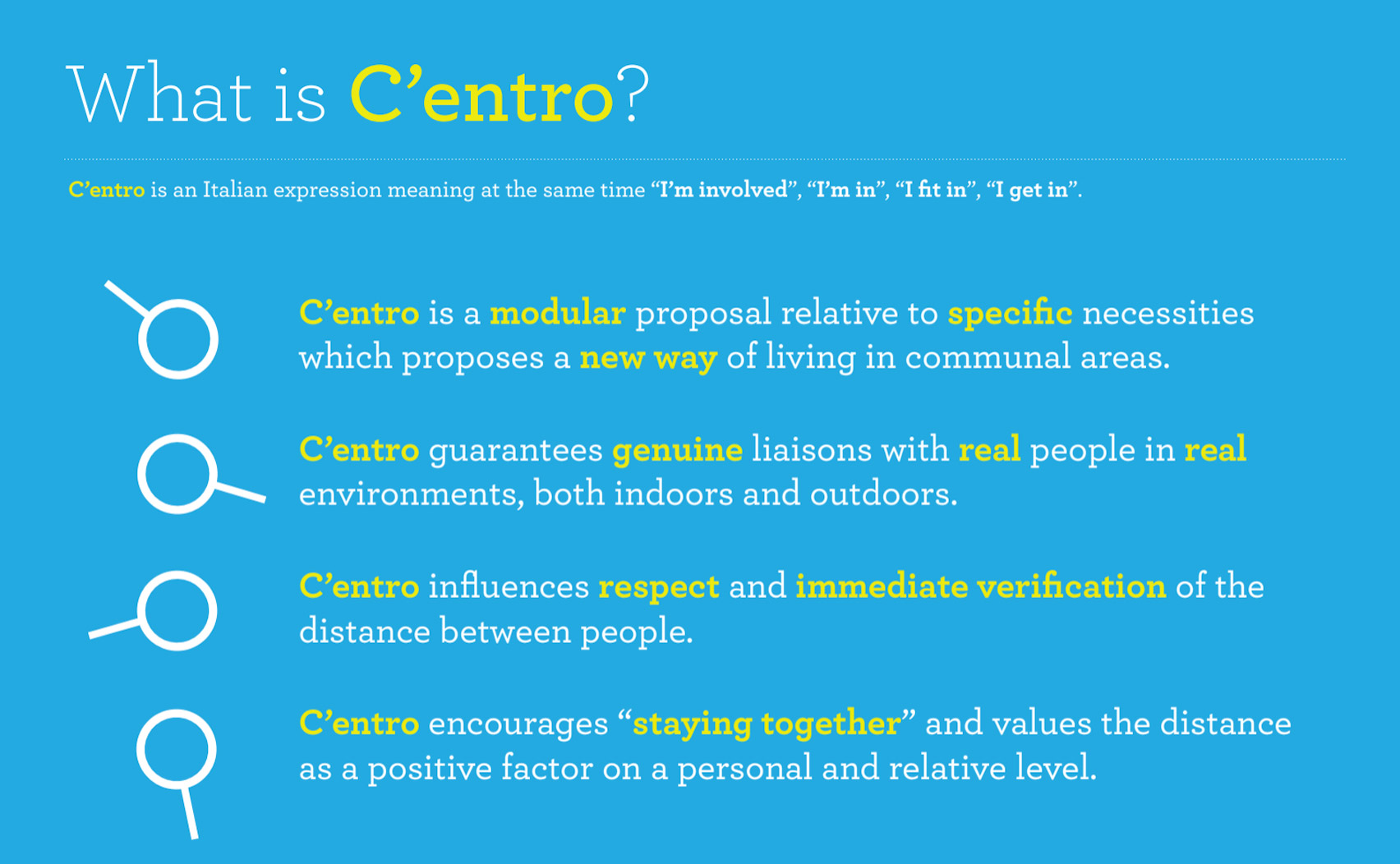
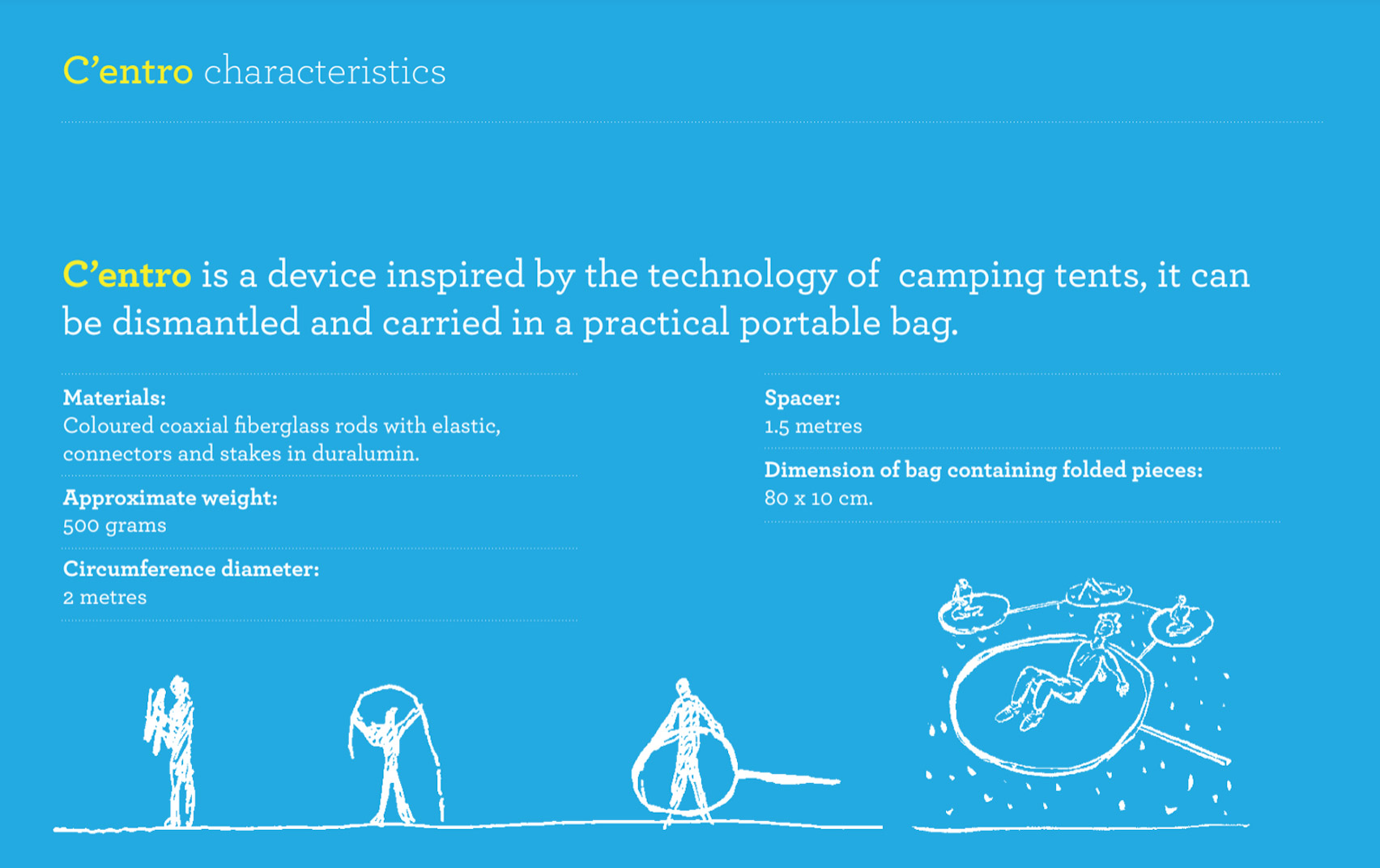
C'entro is a modular frame made of colourful fibreglass rods that would snap together to form a circle on the ground for up to two people to sit inside.

Spacers between each hoop would show people the distance they need to keep between each other to slow the transmission of coronavirus.

C'entro by blengini Ghiradelli for coronavirus daily briefing
SBGA Blengini Ghirardelli designed C'entro to help people social distance in parks

"We like to define C'entro as an instrument to socialise rather than a barrier," said SBGA Blengini Ghirardelli co-founder Agostino Ghirardelli.

"This device originated from the research into new methods of socialisation, to make the physical separation easier by not blocking interaction between people."

The Italian studio created the concept after Milan's mayor Giuseppe Sala posted on Facebook asking people to come up with ideas for how the city can reopen after two months of lockdown.

C'entro by blengini Ghiradelli for coronavirus daily briefing
The ring lets people know how far they need to be away from each other

C'entro would let people sit outside and be social with each other without any barriers but with a strong visual guide for distancing.

SBGA Blengini Ghirardelli said the rods could be easily disassembled and carried around in a bag, and would weigh only 500 grams.

Here are seven more coronavirus-related architecture and design news stories from today:


Coronavirus daily briefing

London, New York, Paris and Milan give streets to cyclists and pedestrians

Cities across Europe and the Americas are drawing up plans to take street space away from cars in favour of cyclists and pedestrians in response to the coronavirus pandemic (via Dezeen).

London designers create and manufacture PPE to donate to health workers

Young industrial designer Cameron Suckling has developed a face shield that's cheap and can be flat packed. He is collecting donations to manufacture and deliver them to NHS staff and care workers in need of personal protective equipment (via Cameron Suckling).

Escapist restaurant interiors could be "lasting design legacy of the pandemic" says Roar trends report

Coronavirus will lead to a rise in escapist restaurant interiors, while physical menus, cash payments and buffets will largely be abandoned, according to a trends report by Dubai-based studio Roar (via Dezeen).

Crowd-sourced short film champions connection through distancing

American filmmaker Ivan Cash and Jacob Jonas have created a "joy-spreading and hope-inducing" short film called A Social Distance using footage crowdsourced from people in 30 countries around the world sharing their hand washing, face mask-wearing and elbow bumping routines (via Yellow Trace).

M-Rad designs mobile Covid-19 testing unit concept from "virus-destroying" copper

California-based design and architecture studio M-Rad proposes using the natural antimicrobial properties of copper alloy to create a travelling Covid-19 testing unit (via Dezeen).

Tulip planning inquiry has been delayed by the pandemic

The public inquiry into Foster + Partners plans for The Tulip tower plans being turned down by London mayor Sadiq Khan has been pushed back five months due to the coronavirus crisis (via the Architects' Journal).

Inflatable face shield designed for socialising post pandemic

MARGstudio, Alessio Casciano Design and Angeletti Ruzza have designed a colourful, inflatable face shield that could be used to allow people to socialise following the peak of the coronavirus pandemic (via Dezeen).

The post C'entro is a fibreglass frame to help people social distance in public parks appeared first on Dezeen.


from Dezeen https://ift.tt/3ccJoPx