Sunday, 10 May 2020

Hundreds of Womxn Are Photographing How They Cope During Quarantine

Isabella Lanave (@isalanave) is a freelance photographer based in Curitiba, Brazil. “I think this quarantine is more physically isolating than socially isolating for me. I live with friends and this is a time to coexist. Time to stop and listen, to find out more.”

Since being quarantined inside her home in Buenos Aires, Lucía Morón has struggled with insomnia. “I have not been sleeping well and there are even days when I cannot seem to find the energy to get out of bed,” she says. As a way to manage her difficult moments, Morón has been documenting her uneasiness. “Photographing helps me to externalize and exorcise my inner fears, nightmares, and anxieties,” she says. “It has become a way of escape in which to express myself during (these) hard and lonely times.”

Morón’s joined more than 400 other womxn with similar practices on a collaborative project that’s helping to capture the mundane, monotonous, and worrisome moments in their lives. Organized by photographers Charlotte Schmitz and Hannah Yoon, The Journal is an extension of Women Photograph, which is an initiative led by Daniella Zalcman to elevate visual journalists who identify as non-binary or women.

While many photographs during the last few weeks have focused on hospitals, essential supplies, and frontline workers, The Journal retreats from the traumatic coverage in favor of intimacy. “Our collective photo project brings nuance to the way the current pandemic is being covered as we turn the camera on ourselves, our families, and the private space,” organizers said. It encompasses work from womxn in more than 80 countries and ensures that marginalized voices have a platform as freelance and media budgets are slashed globally. 

Morón’s image (shown below) is black and white and depicts a single arm and leg at the left edge of the frame. It corresponds to her feelings of being “‘submerged’ in bed. As if I was trapped or being ‘eaten’ by my own bed,” she says. The puffy sheets resemble a dreamy, floating cloud, linking the image more directly to her insomnia.

While Morón has pivoted inward as a way to cope with her private emotions and feelings, though, other participants describe an experience that centers on their subject matter. For photojournalist Nyimas Laula, turning the camera to herself poses many difficulties because she typically focuses on others’ stories, not her own.

As a photojournalist, the biggest part of my job is listening to people that I’ll be photographing. My work has always been speaking about others, whether it’s addressing issues that I deeply care about or extension of voices from people that yet to be heard. In this isolation, I’m pushed to point the camera to myself, no one to ask, no one to speak to, other than myself. I constrain myself to this voluntary isolation out of responsibility to help contain the spread of the virus. I find myself deeply disoriented by that.

Now confined to her home in Indonesia, Laula has been capturing her surroundings and otherwise private life. She talks about an inner impulse she feels guiding her. “I’ve been photographing things around me, out of intuition, without any particular reason or stories. As if I’m trying to describe the complexity of feelings that I experience during isolation,” she says. “This time, I’m listening to myself, rediscovering myself. It might tell something about myself that I didn’t know before.”

Each week, The Journal’s curators announce a theme like nature, connection, or self-portrait that 8-10 participants from different countries work on together. Some shoot the images, while others provide creative guidance or edit. “As these relationships form, we can see important visual stories emerging, bringing representation to women and their stories from all over the world,” organizers said. Photographers are separated into intentionally diverse groups to ensure a variety of perspectives. 

As the project continues, Morón hopes to direct conversations around the ongoing pandemic to new spaces. “We can find a certain relief from this difficult situation by changing its images. It’s like a trap. I think that many people will feel identified with our stories of quarantine,” she writes.

To see the growing collection of global dispatches, follow The Journal on Instagram.


Lucía Morón (@ph.lumo) is a freelance photographer and architect based in Buenos Aires, Argentina. April 2, 2020. “Self-portrait in my bedroom.”

Karolin Klüppel (@karolinklueppel) is a freelance photographer and visual artist based in Berlin. “Since the lockdown in Berlin, I have started to create self-portraits of myself and my family. I am looking for an image that creates a new world and is free of time and space.”

María Gutierrez (@maru.gut) is a freelance photographer based in Argentina. “Since the second day of the quarantine, I live with a strong contracture in my body. I made this self-portrait while I was taking a hot shower to calm the pain. From this body ache that I am feeling, I´m doing these photos.”

Hannah Yoon (@hanloveyoon) is a freelance photographer based in Philadelphia. “I moved into a new house so I’m learning how to do basic things on my own like put up curtains.”

Haruka Sakaguchi (@hsakag) is a freelance photographer based in New York. “This is me in multiple exposures trying to stay busy and productive throughout the day, so my mind doesn’t wander off to dark places.”

Jessica Pons (@ponsphotos) is an Argentinean-American photographer and director based in Los Angeles. Los Angeles, March 17, 2020: I made this self-portrait at home at the beginning of the quarantine, with great uncertainty about the future.

Khadija Farah (@farahkhad) is a photographer based in Nairobi, Kenya. “Some days I don’t wake up feeling like a wet rag. When this happens, I muster enough energy to do a face mask, paint my nails, and gab with my best friends around the world over non-virus related issues. These days are becoming more frequent and when I feel a bit more of myself coming back.”

Laurence Philomene (@laurencephilomene) is a freelance photographer based in Montreal, Canada. “Self-portrait shot while taking a bath with an orange bath bomb. Shot in my home in Montreal, Canada during the COVID-19 pandemic outbreak, as part of my ongoing project ‘Puberty.'”


from Colossal https://ift.tt/3bgBF1H

Michael Godmer and Mathieu Turgeon renovate their Montreal design studio and home

Maison-Boutique Coloniale by Michael Godmer and Mathieu Turgeon

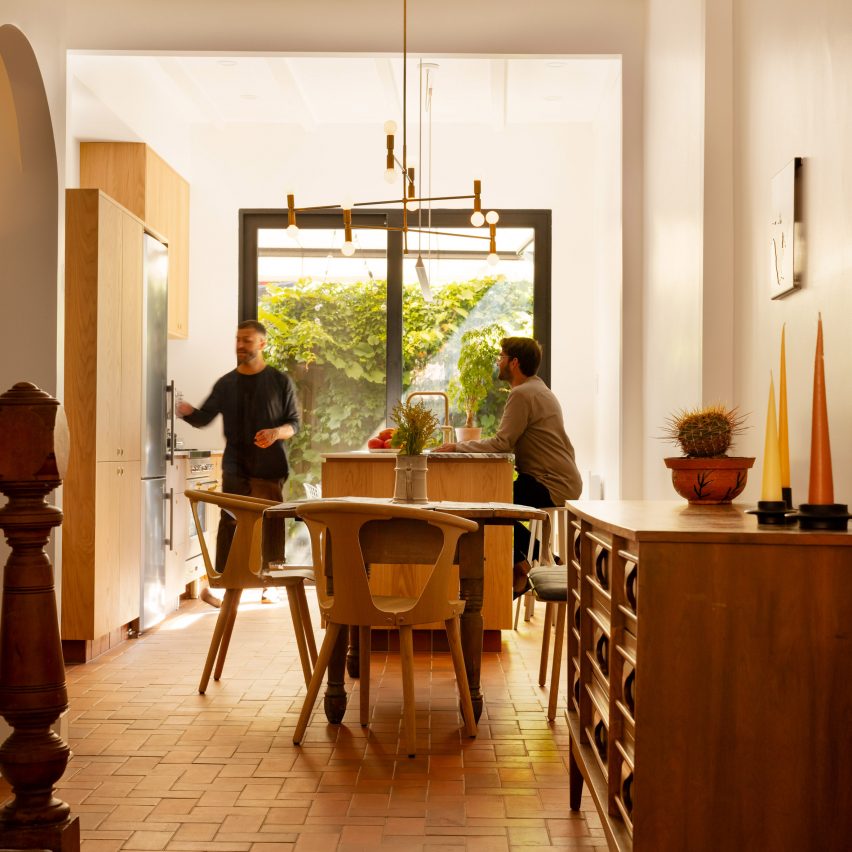
Designers Michael Godmer and Mathieu Turgeon's home in Montreal features contemporary Danish pieces alongside oak, terracotta and marble.

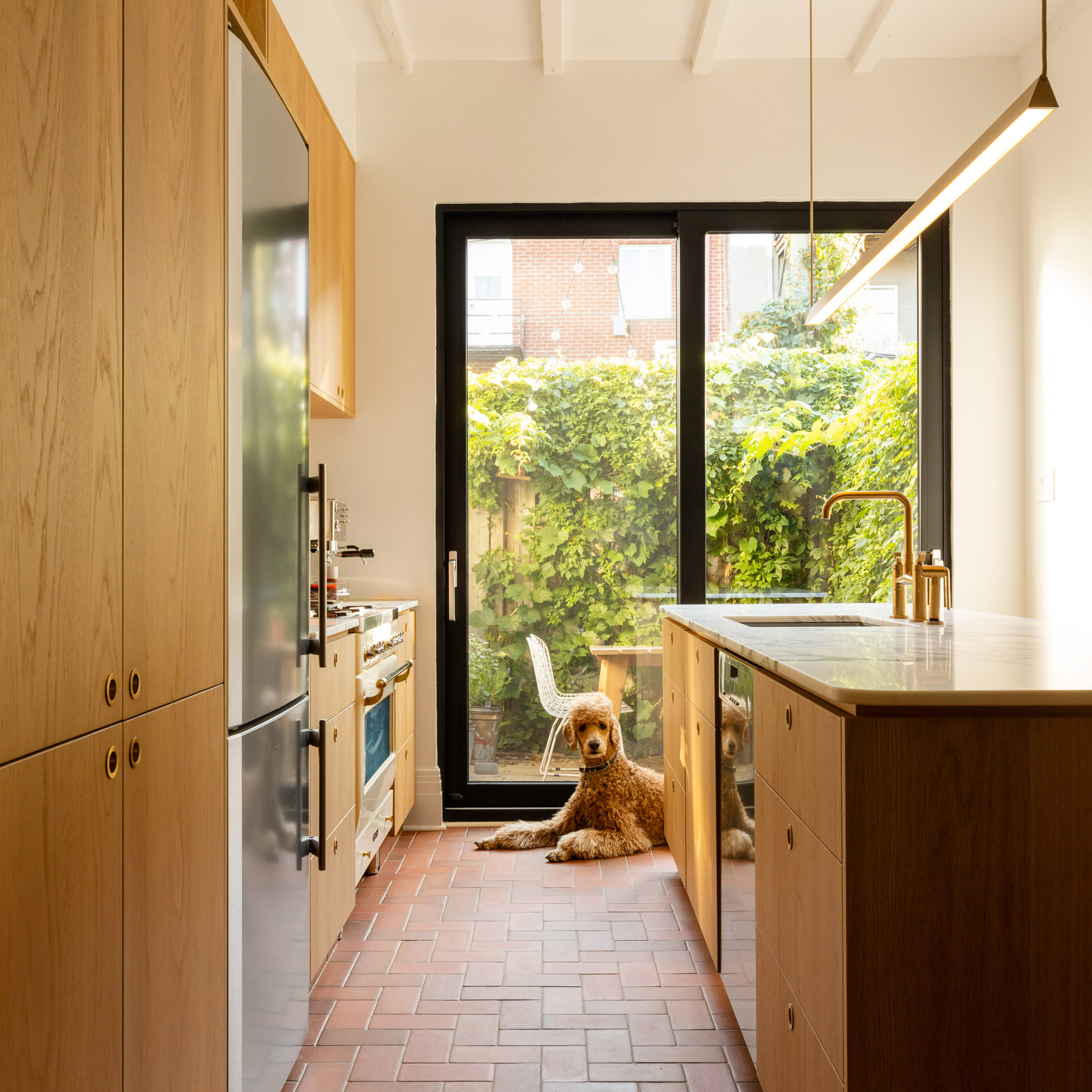
Located in the city's Plateau Mont-Royal neighbourhood, the Victorian-era brick home was renovated by the couple to accommodate a design studio and residence for them and their two poodles.

Maison-Boutique Coloniale by Michael Godmer and Mathieu Turgeon

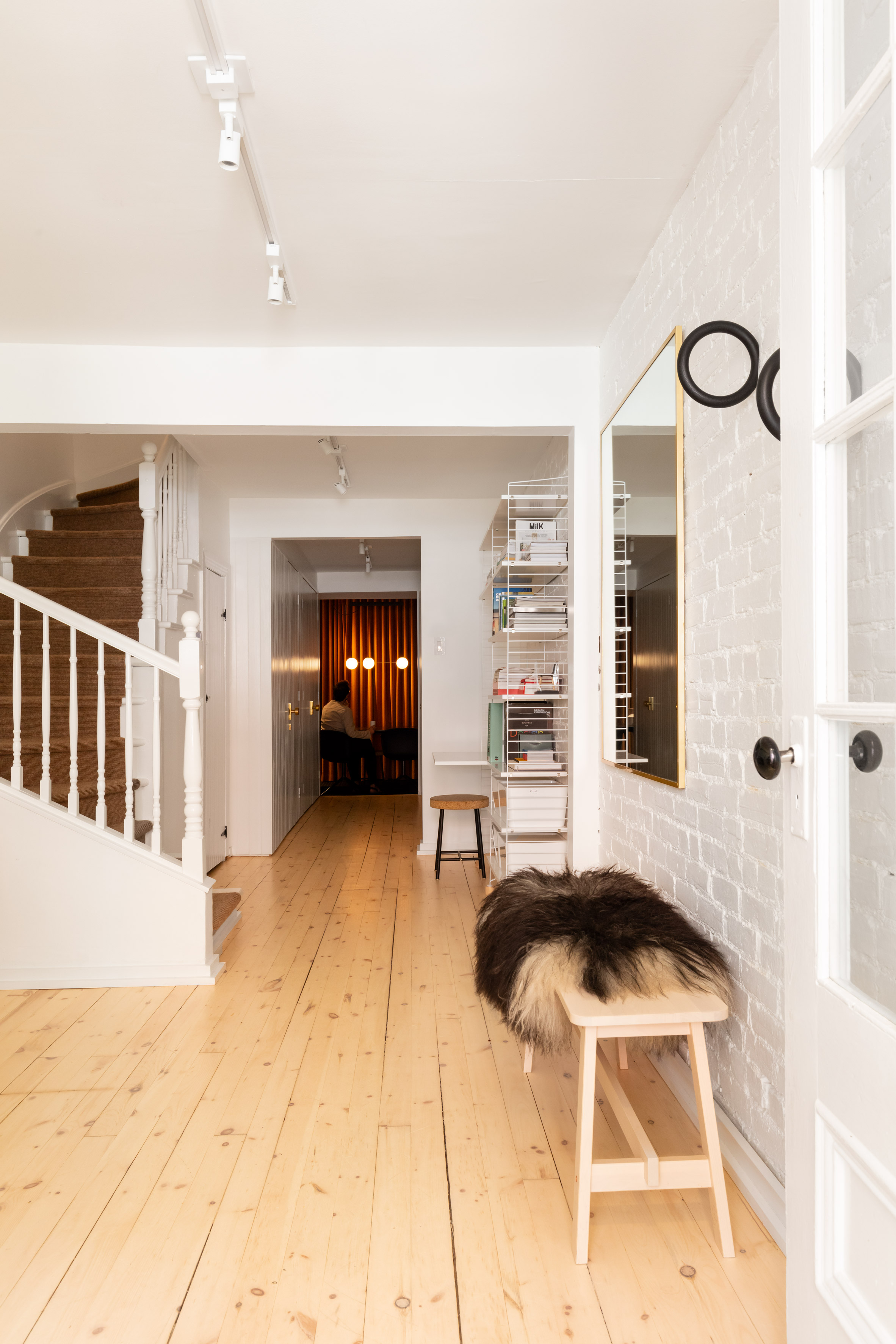
Completed in 1885, the residence has a slender width of 3.1 meters and three storeys. It has an entry almost at the basement level that includes the duo's offices and workshop. Above is a kitchen and living room, while bedrooms are on the next level.

Called Maison-Boutique Coloniale, the project has pared-down interiors chosen by Godmer and Turgeon, with white walls and natural and tactile surfaces that are offset by contemporary designs.

Maison-Boutique Coloniale by Michael Godmer and Mathieu Turgeon

An existing staircase, which the duo sought to keep intact, is painted white with new brown Trettford carpet in lambswool.

In 1980, the home was renovated and many original architectural elements were changed, so the designers sought to retain as much as remaining details as possible during their intervention, particularly the moulding and floors.

Maison-Boutique Coloniale by Michael Godmer and Mathieu Turgeon

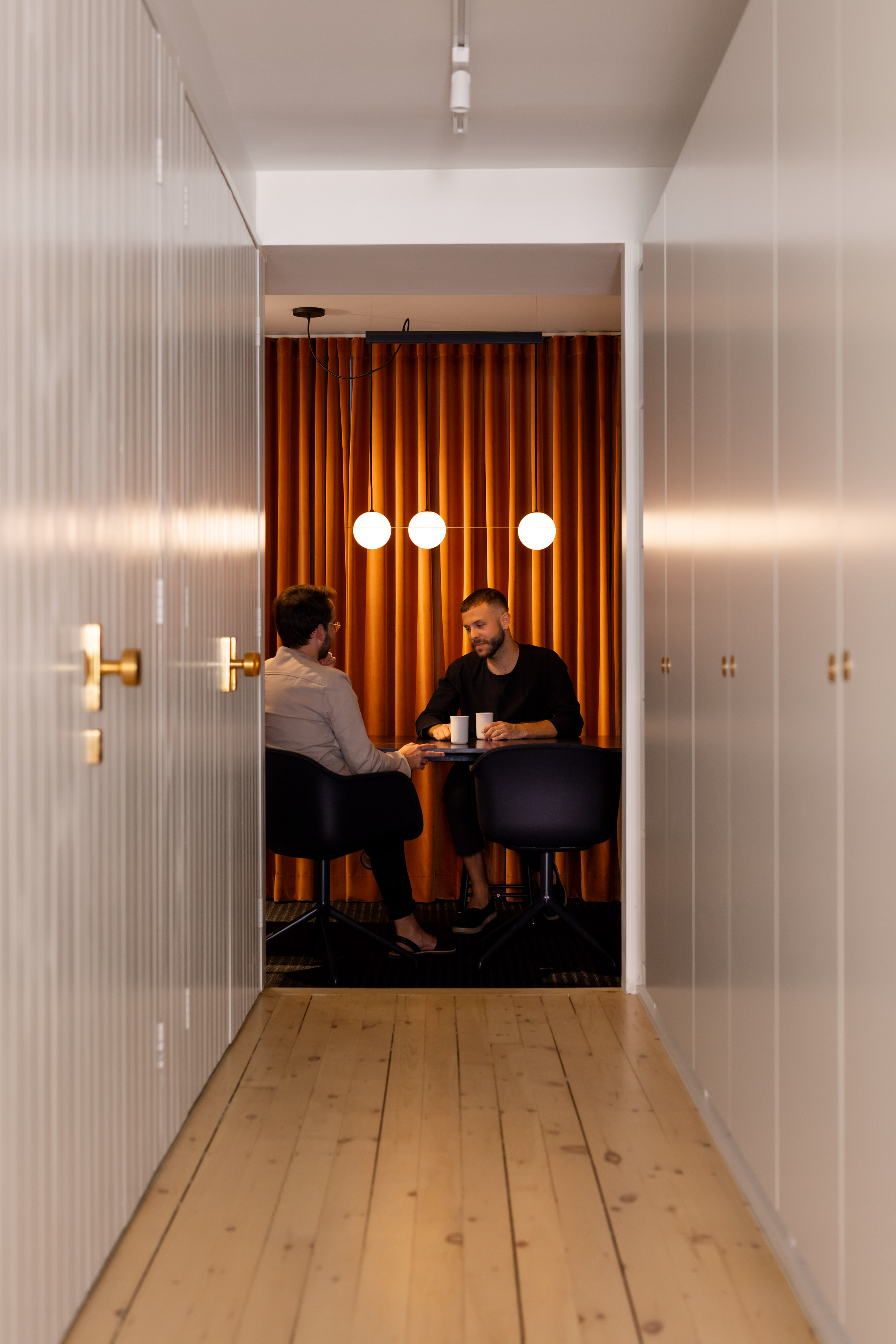
On the office level is a meeting room designed as a dimly lit nook with a black table arrangement by Muuto and &tradition. Plush orange curtains soften and add warmth to existing stone and brick walls left exposed.

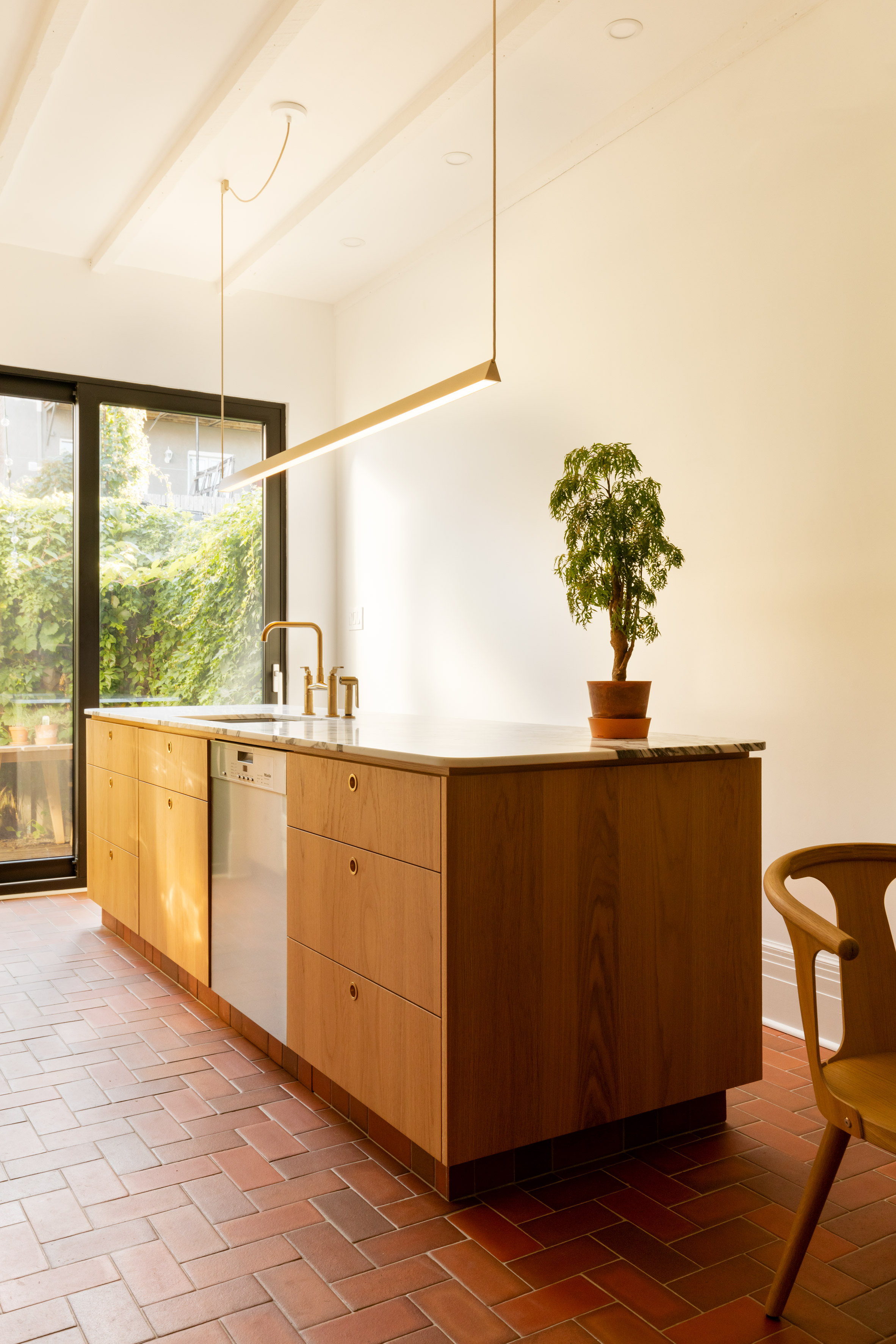
The level above features the kitchen with oak cabinetry by Éco-Ébénisterie Saint-Dominique, which also assisted in the construction, and white marble countertops with rounded corners and brass fixtures.

Maison-Boutique Coloniale by Michael Godmer and Mathieu Turgeon

New sliding glass doors access a patio. Terracotta tile floors are also new but were chosen to resemble what was originally there.

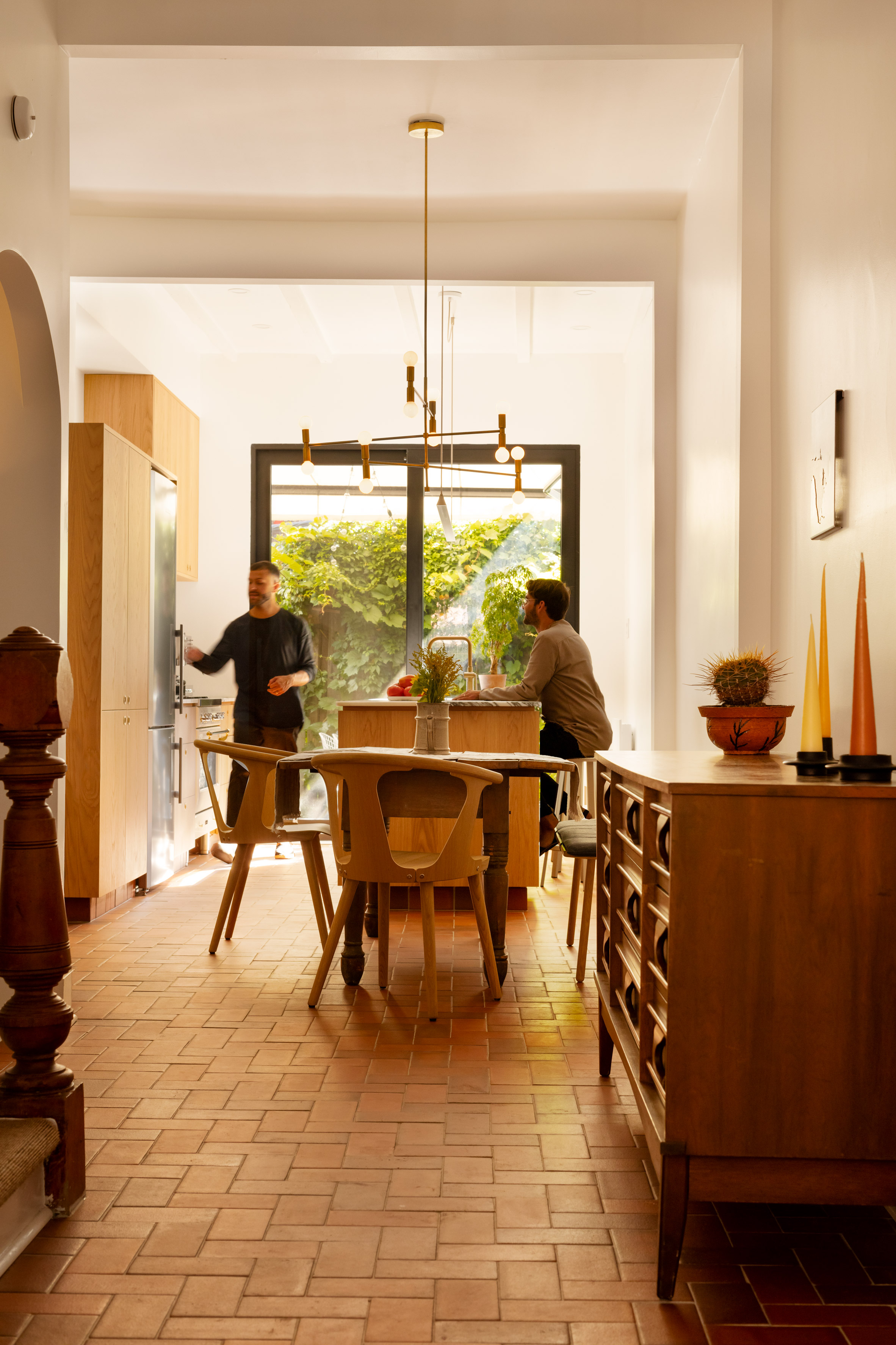
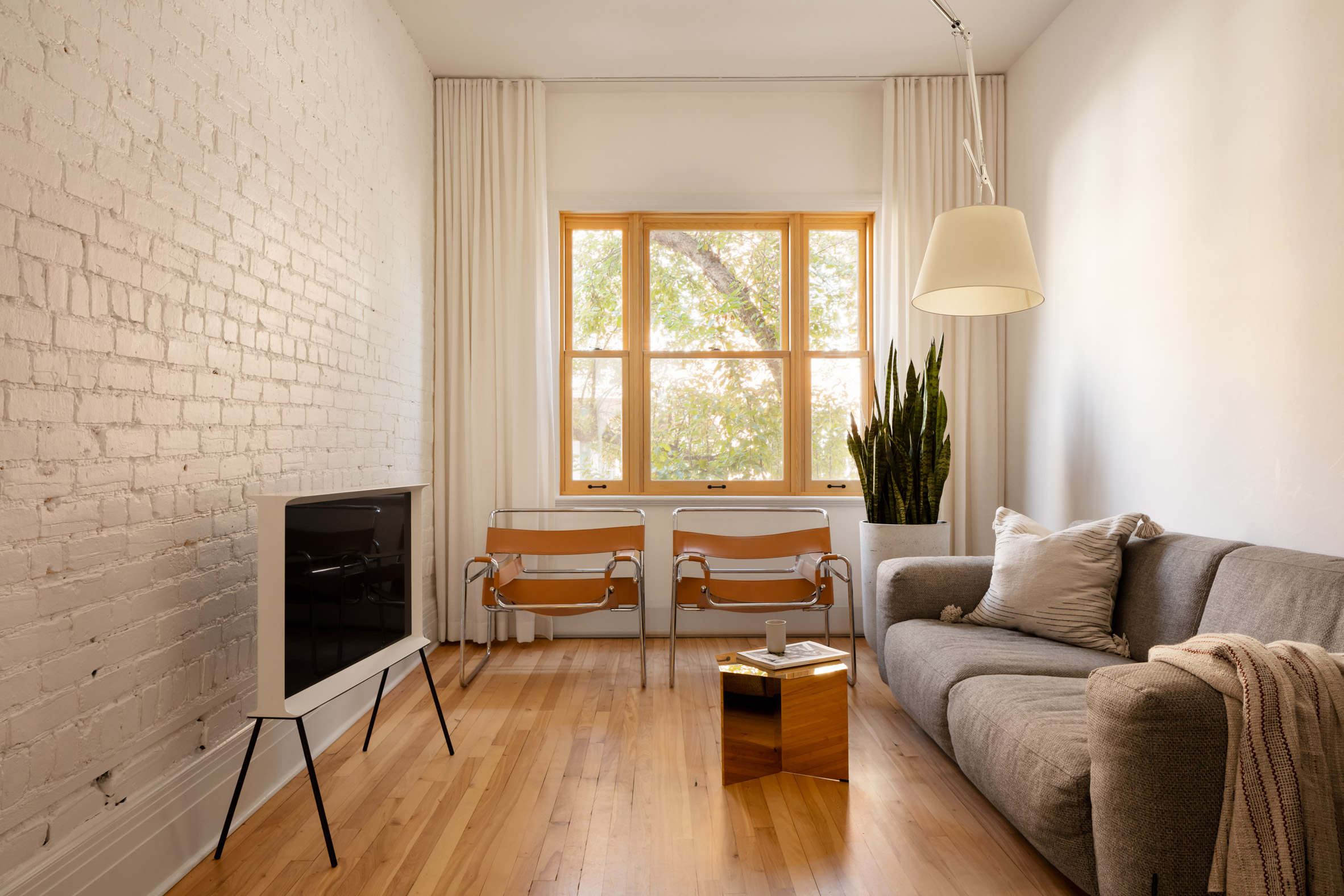
Rounding out this middle storey is an eating nook and a living room located at the front of the home.

Maison-Boutique Coloniale by Michael Godmer and Mathieu Turgeon

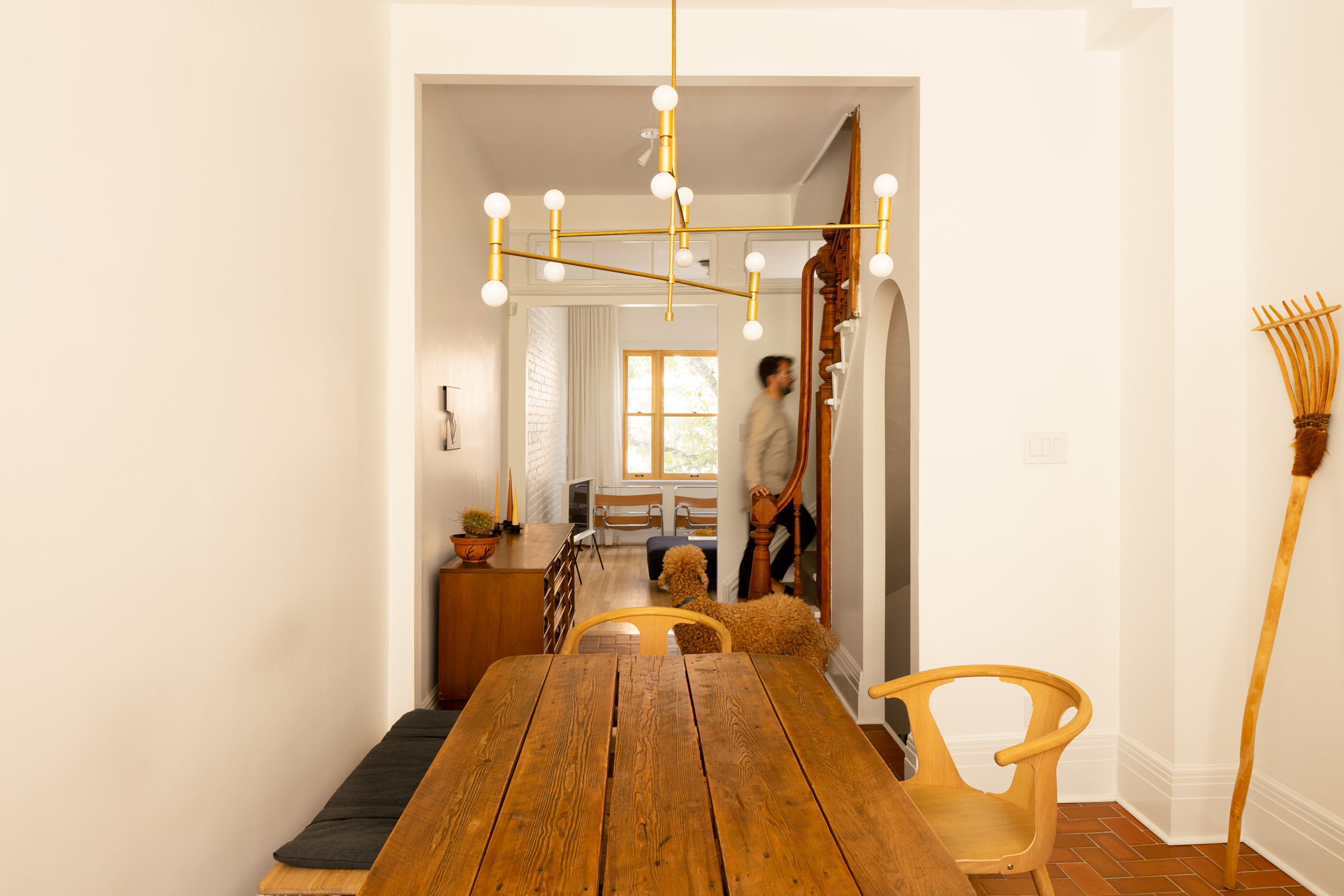
A mix of family heritage antiques and the couple's favourite pieces feature at Maison-Boutique Coloniale. Above a weathered wood dining table hangs an aged-brass chandelier and the office floor below has a lamp in polished brass – both by local studio Lambert & Fils.

Other lights also include a white Artemide pendant lamp, a portable Carrie lamp by Menu and a Bubble lamp by George Nelson.

Maison-Boutique Coloniale by Michael Godmer and Mathieu Turgeon

There are also Skagerak dining chairs, a white Samsung television by the Bouroullec brothers, a pair of Wassily chairs by Marcel Breuer, a Flloyd bed and a metallic side table, grey barstools and a pink pillow by Danish brand Hay.

Maison-Boutique Coloniale measures 1,800 square feet (167 square metres). On the top floor, it contains two bedrooms and a bathroom that will be renovated in an upcoming project.

Maison-Boutique Coloniale by Michael Godmer and Mathieu Turgeon

Godmer has also renovated a two-storey Victorian townhouse in Montreal's Outremont neighbourhood for a client, after previously redesigning the owner's chalet about an hour drive outside of the city.

Photography is by Maxime Brouillett.

The post Michael Godmer and Mathieu Turgeon renovate their Montreal design studio and home appeared first on Dezeen.


from Dezeen https://ift.tt/3ds7jKQ

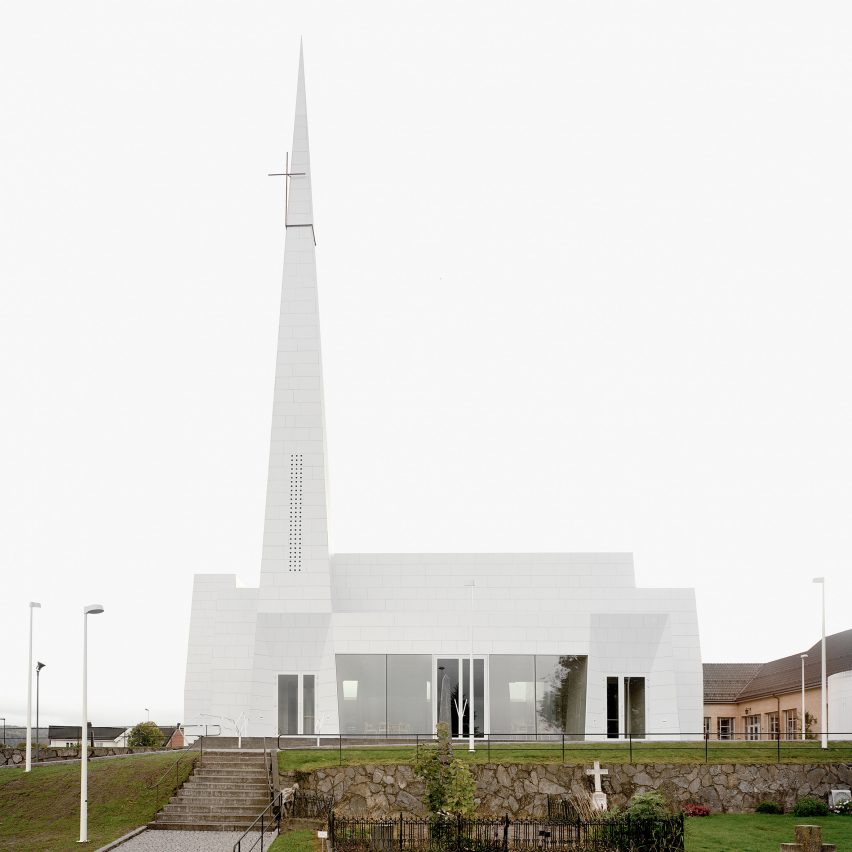
Espen Surnevik clads Porsgrunn's "resurrection church" entirely in porcelain

Porsgrunn church by Espen Surnevik in collaborationwith Trodahl Architects

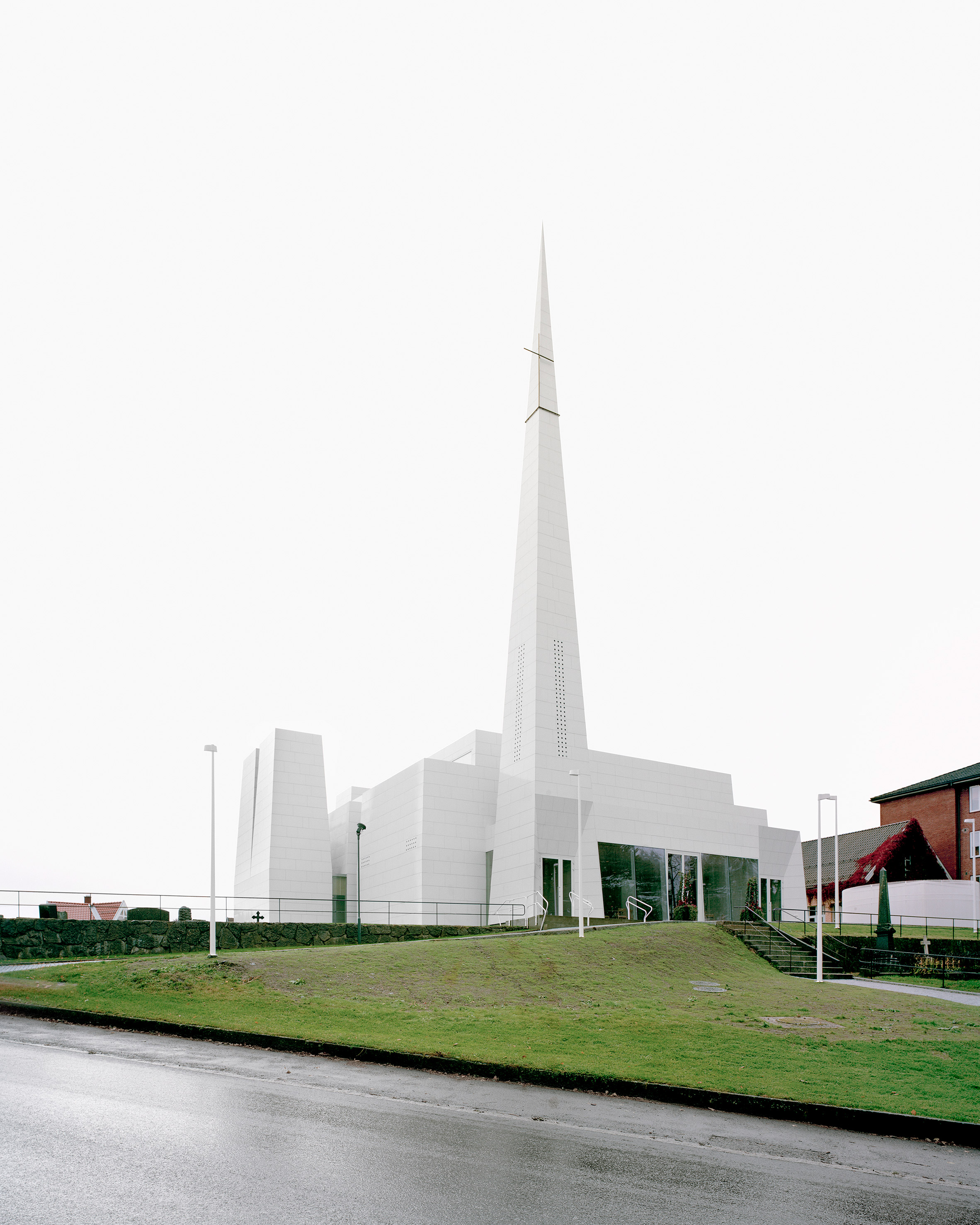
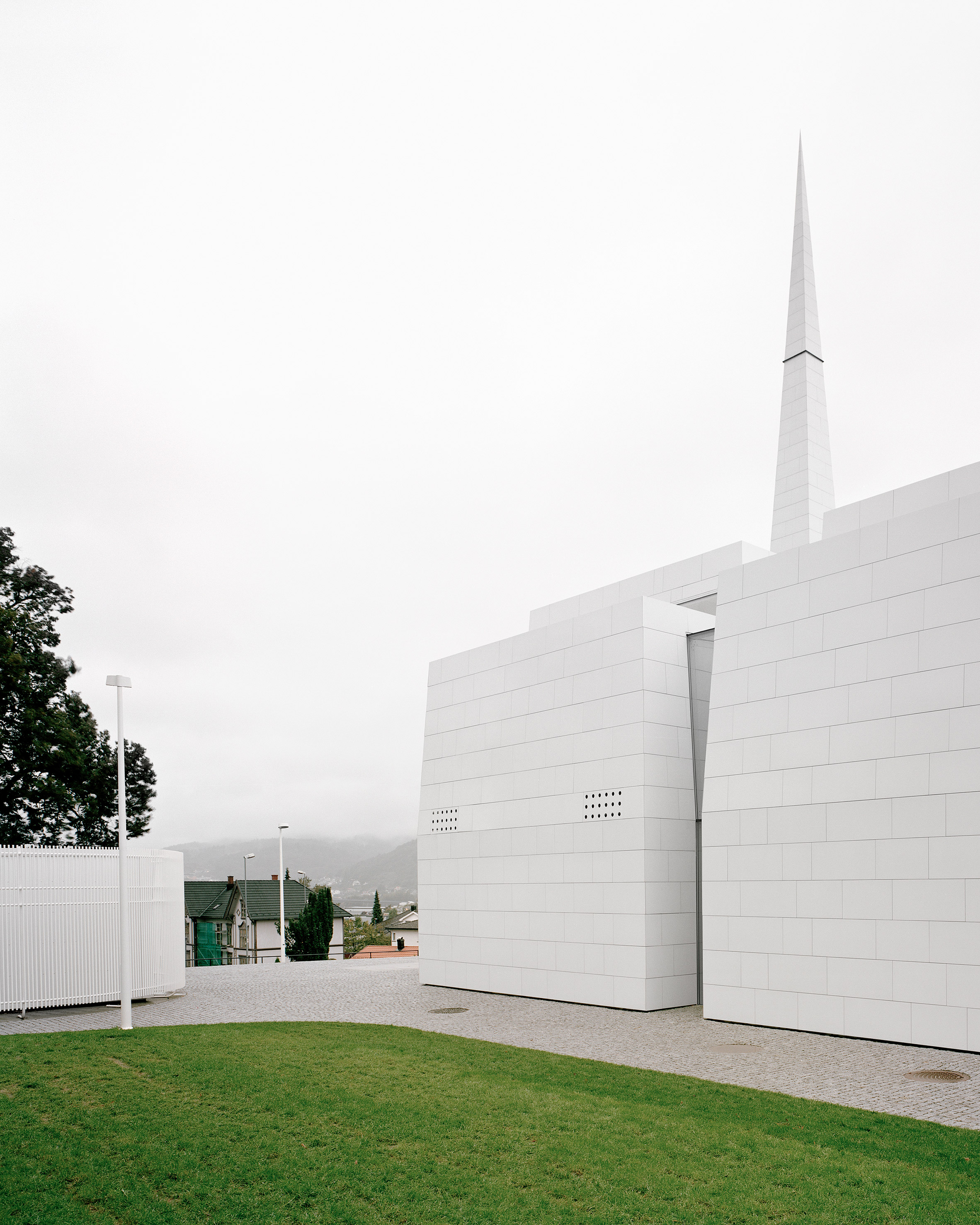
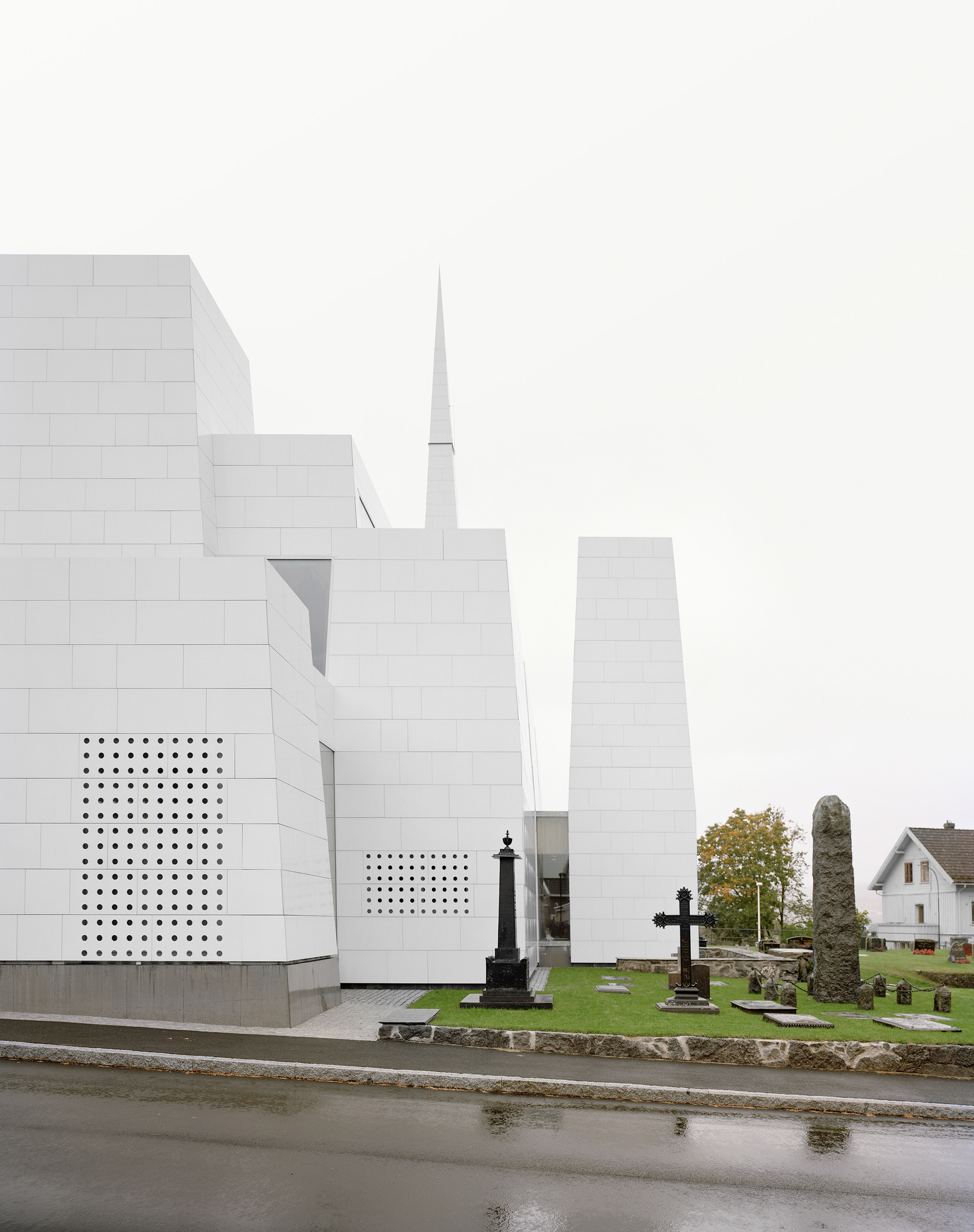
Architect Espen Surnevik has collaborated with Trodahl Architects to design a geometric, porcelain-covered church in the city of Porsgrunn, Norway.

Surnevik's modern church replaces Porsgrunn's 18th century church, which was destroyed in a fire in 2011. While extremely modern looking, this new "resurrection church" aims to retain the monumental nature of its predecessor.

Porsgrunn church by Espen Surnevik in collaborationwith Trodahl Architects

"The old rococo church had a monumental appearance and our goal was to recreate this monumentality, but in a totally new way 250 years later," Surnevik told Dezeen.

"We wanted to create the experience of something new and extraordinary, in the same way that the elegant old church represented something extraordinary and significant from its age."

Porsgrunn church by Espen Surnevik in collaborationwith Trodahl Architects

Surnevik aimed to create a modern church that was appropriate for its 21st century congregation, but related to the previous building and wider religious architectural history.

"Maybe the core architectural principle for Porsgrunn church is to reinvestigate the potential, for our time, of the traditional long-church plan, as we have seen it span from the dark ages up until today," he said.

"And by doing so, seek a contemporary church, with contemporary meaning, but based on a wish of continuity of thousand years of evolution on the simplest church typology."

Porsgrunn church by Espen Surnevik in collaborationwith Trodahl Architects

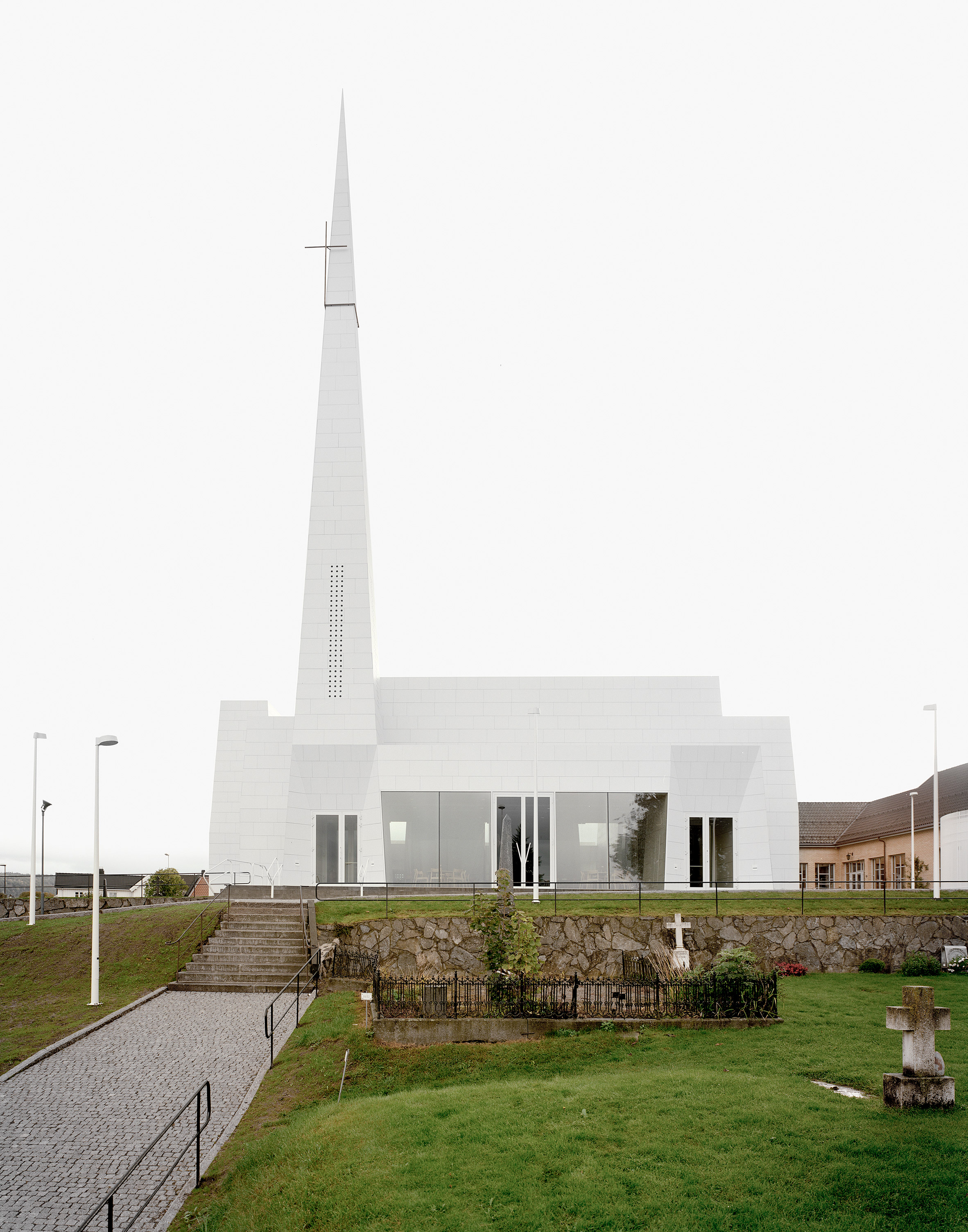
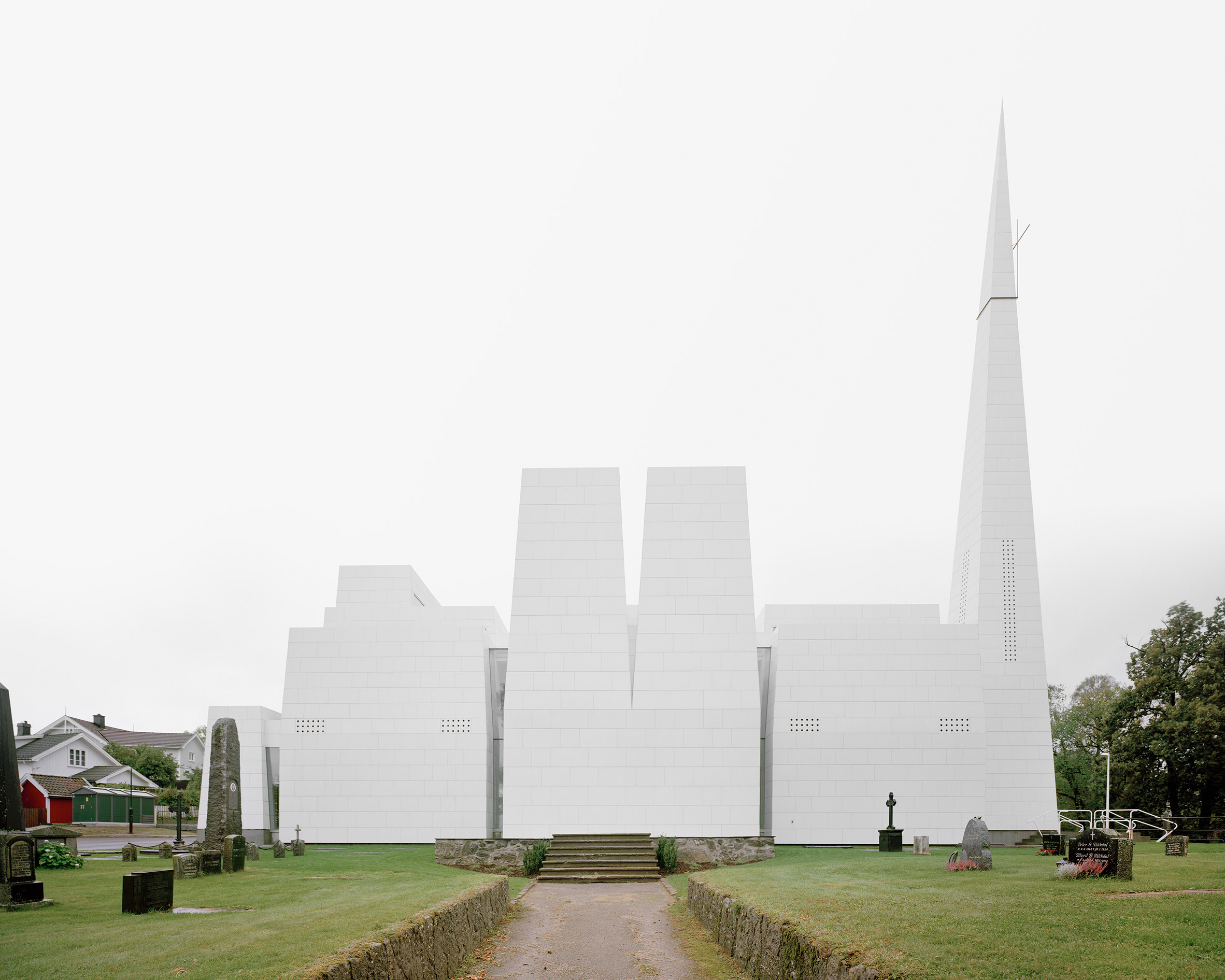
The church occupies 11 different geometric volumes that are ordered by height based on their importance.

Designed to attract attention to the building, the spire is the highest form, followed by a pair of chapels that are topped by towers.

Porsgrunn church by Espen Surnevik in collaborationwith Trodahl Architects

Six slightly shorter structures, which surround the church's main hall, contain other functions including the sacristy and the organ, while the technical spaces are in the shortest volume at the rear of the building.

Each of the forms is sloped to match the spire's angle of inclination of 3.3 degrees.

Porsgrunn church by Espen Surnevik in collaborationwith Trodahl Architects

The new church is built on the footprint of the burned down building and takes its structural grid and distinctive white colour from the lost church.

"The plan of the old church was traditionally designed over a clear mathematical quadratic grid, which structured the building," explained Surnevik.

"The new church was developed over the same old grid, making the new footprint reflect the old church. The old church was painted shining white, which is traditional in Norway, therefore we chose to make the new church to connect with the past."

Porsgrunn church by Espen Surnevik in collaborationwith Trodahl Architects

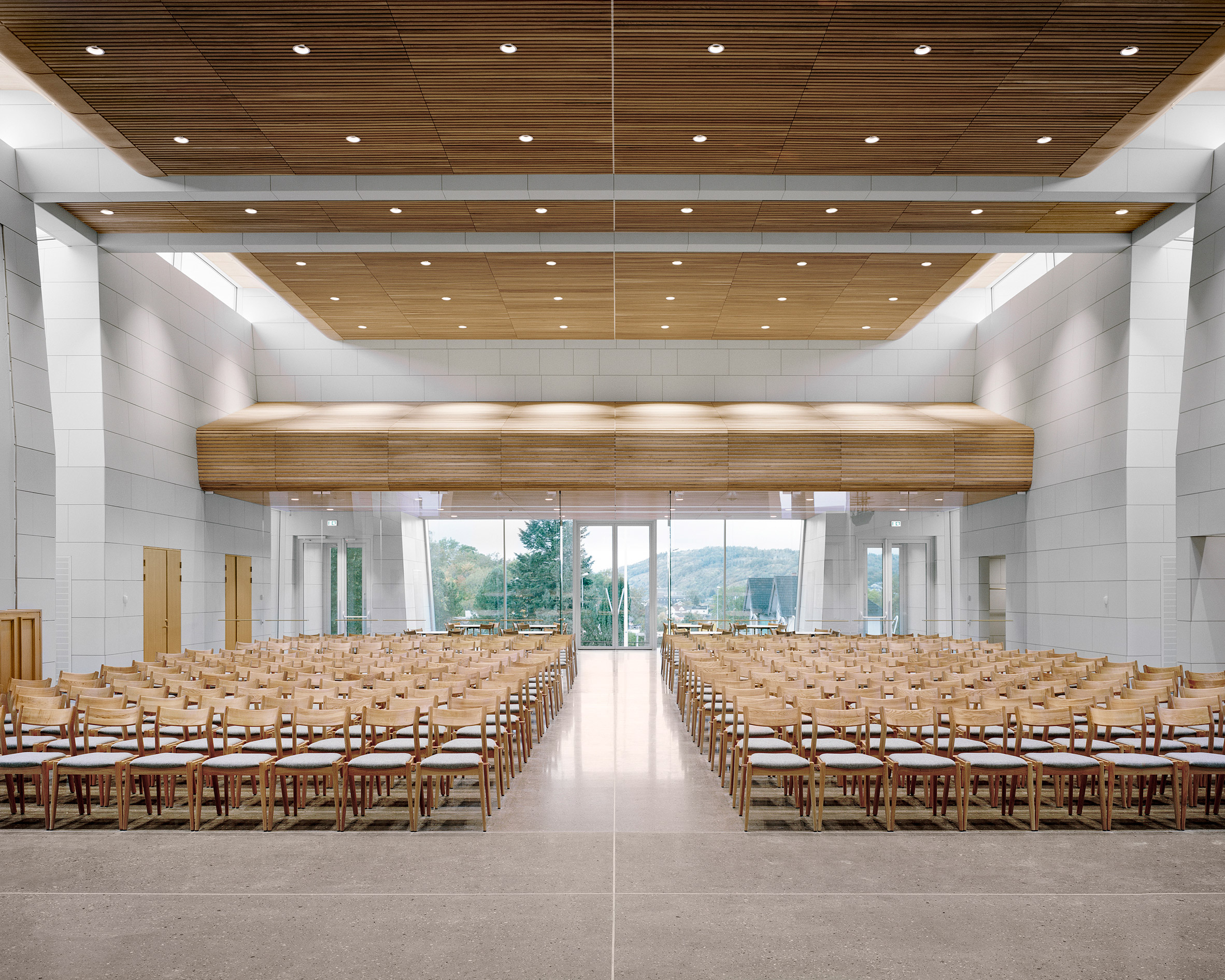
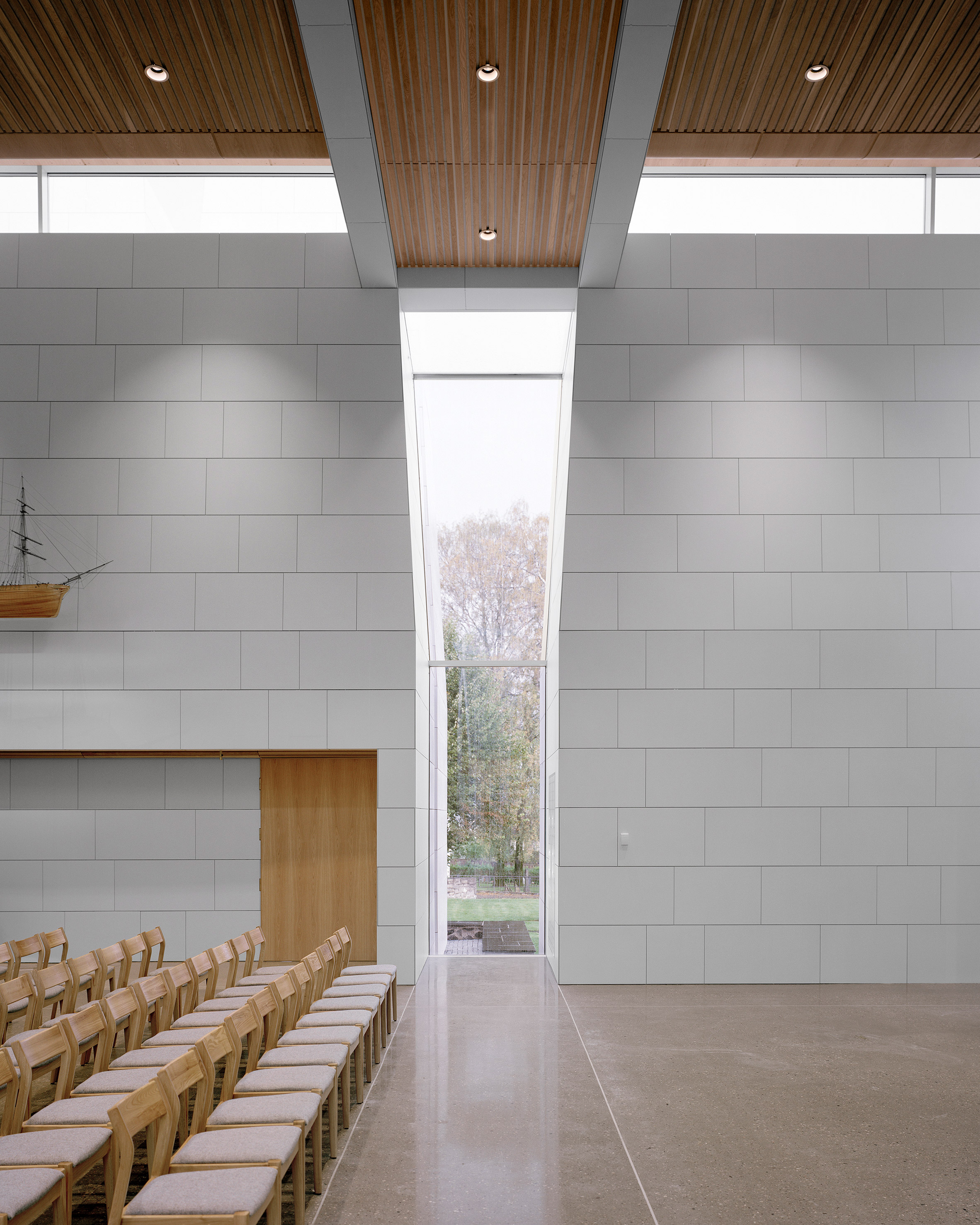
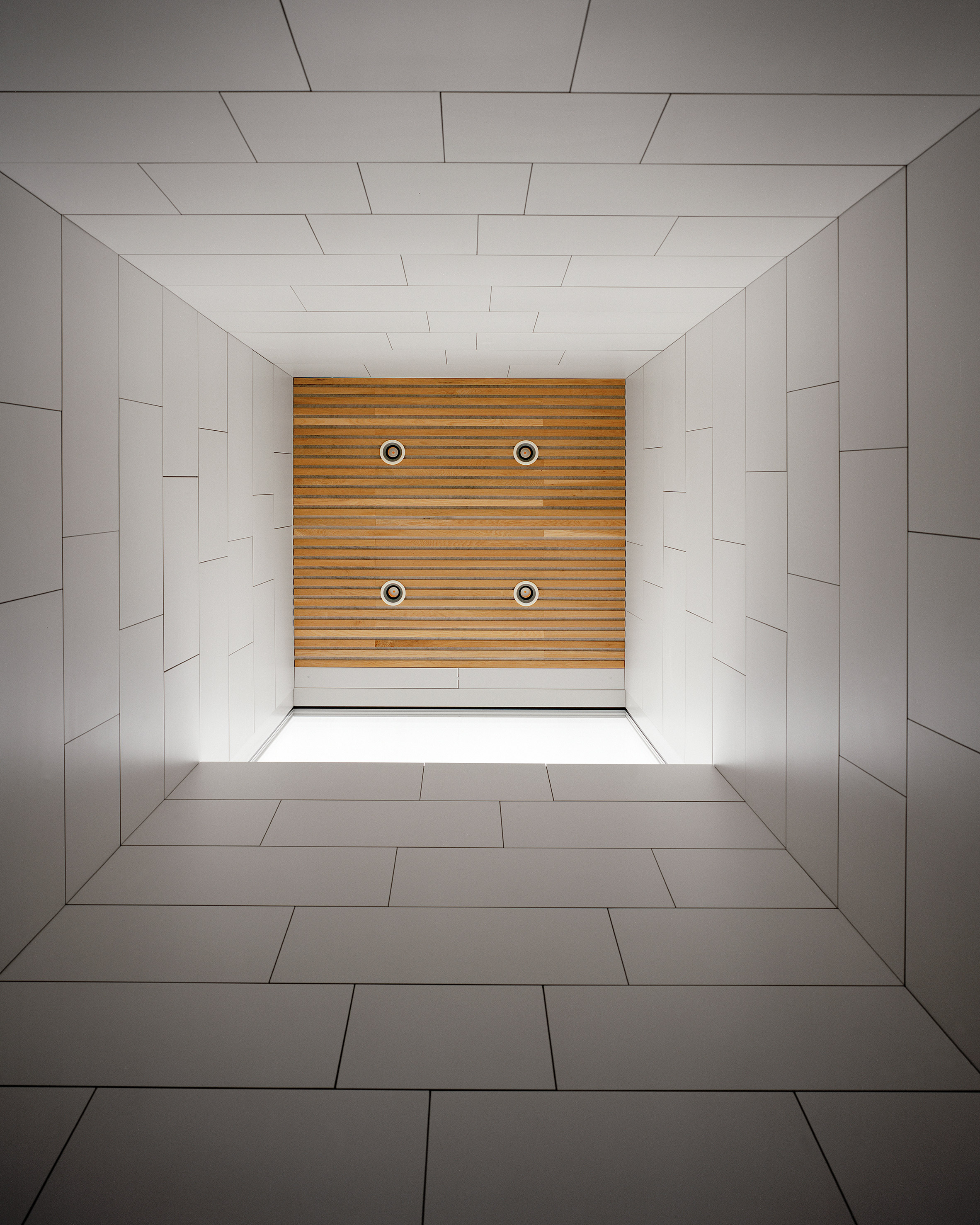
The entire exterior, and much of the building's interior is clad in porcelain, a material that was manufactured in the city throughout the 20th century.

Surnevik choose the material due to this historic connection, but also because of its bright, clean appearance and fire resistant characteristics.

Porsgrunn church by Espen Surnevik in collaborationwith Trodahl Architects

"Porcelain is a fantastic material in many ways," said Surnevik. "Its density is very special and keeps it very clean, by preventing dirt from sticking to the material."

"The clean bright surfaces are meant to give the church a kind of purity linked to the liturgy, in the same way that old white-painted traditional Norwegian wooden churches did." he continued.

"After the fire the client had a specification for a more fire resistant church, so porcelain's total fire resistance made it very suitable."

Porsgrunn church by Espen Surnevik in collaborationwith Trodahl Architects

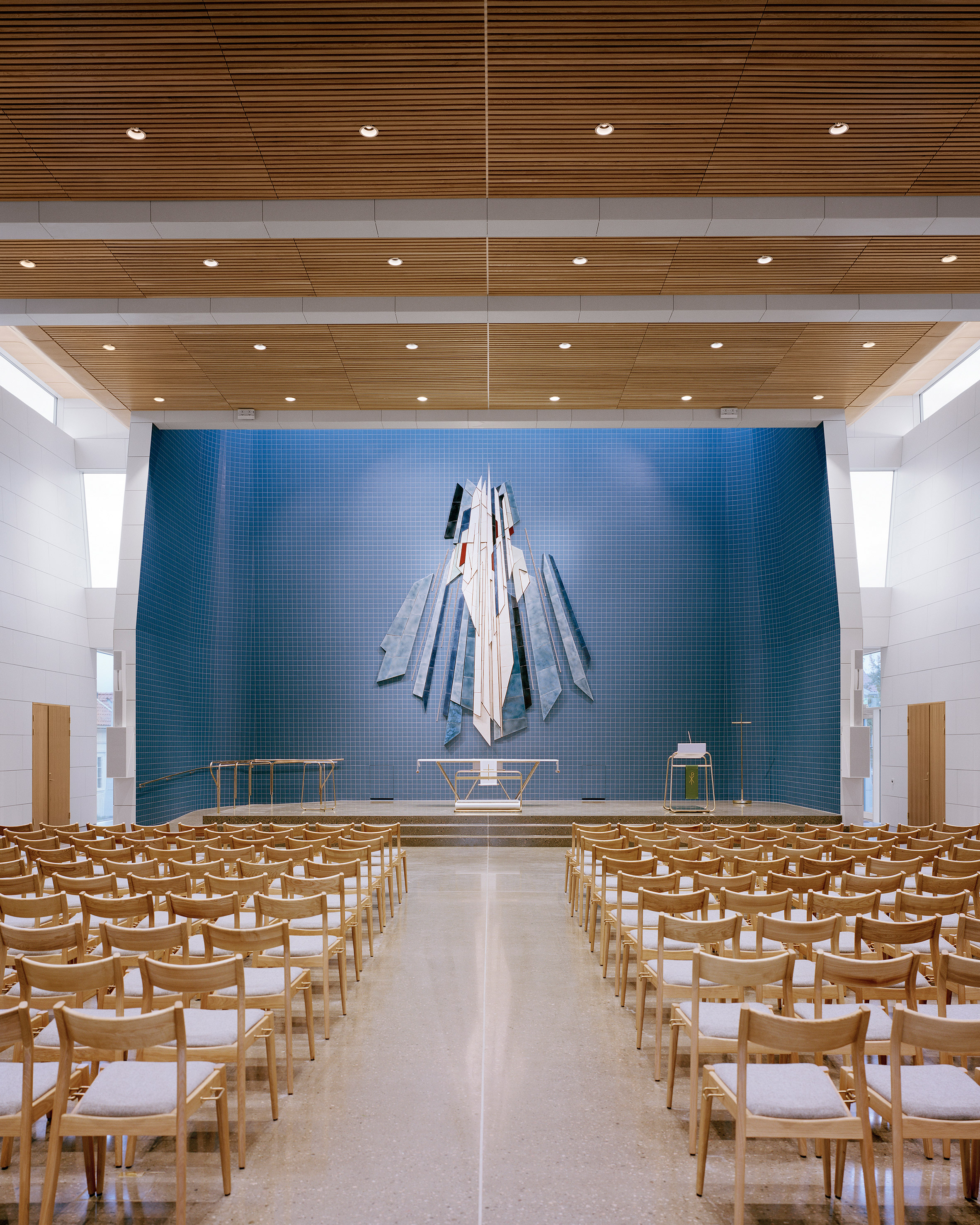
Within the church, its doors, suspended ceiling and furniture are all made from oak to contrast the porcelain walls and add warmth to the interior.

Above the altar is a frieze made from one hundred pieces of burnt glazed porcelain designed by artists Espen Dietrichson and Marie Buskov.

Porsgrunn church by Espen Surnevik in collaborationwith Trodahl Architects

Surnevik believes that this building forms part of a trend for more modern and open churches being built in Norway.

"The Norwegian church is evolving across Norway," he said. "The Church organisation is opening up, being less dogmatic, and inviting many to broad discussions across all parts of society."

"This church tries to combine a flexible modern cultural church with the rich architectural church history from the past," he continued.

Surnevik previously built an angular wooden church to replace a 19th-century church lost to a fire in the Norwegian village of Våler.

Photography is by Rasmus Norlander.


Project credits:

Architect: Espen Surnevik
Collaborating architect: Trodahl Architects
Structural engineer: A.L.Høyer Skien
Ventilation engineer: Erichsen & Horgen
Electro engineer: Malnes og Endresen
Landscape architect: Sivilarkitekt Espen Surnevik
Interior architect: Sivilarkitekt Espen Surnevik
Client's representative: WSP
Acoustic engineer: Multiconsult
Fire engineer: Erichsen & Horgen
Main contractor: Tor Entreprenør

The post Espen Surnevik clads Porsgrunn's "resurrection church" entirely in porcelain appeared first on Dezeen.


from Dezeen https://ift.tt/3blLxac

Esoteriko pairs timber and metal inside Shelter wellness centre in Sydney

Shelter wellness centre designed by Esoteriko

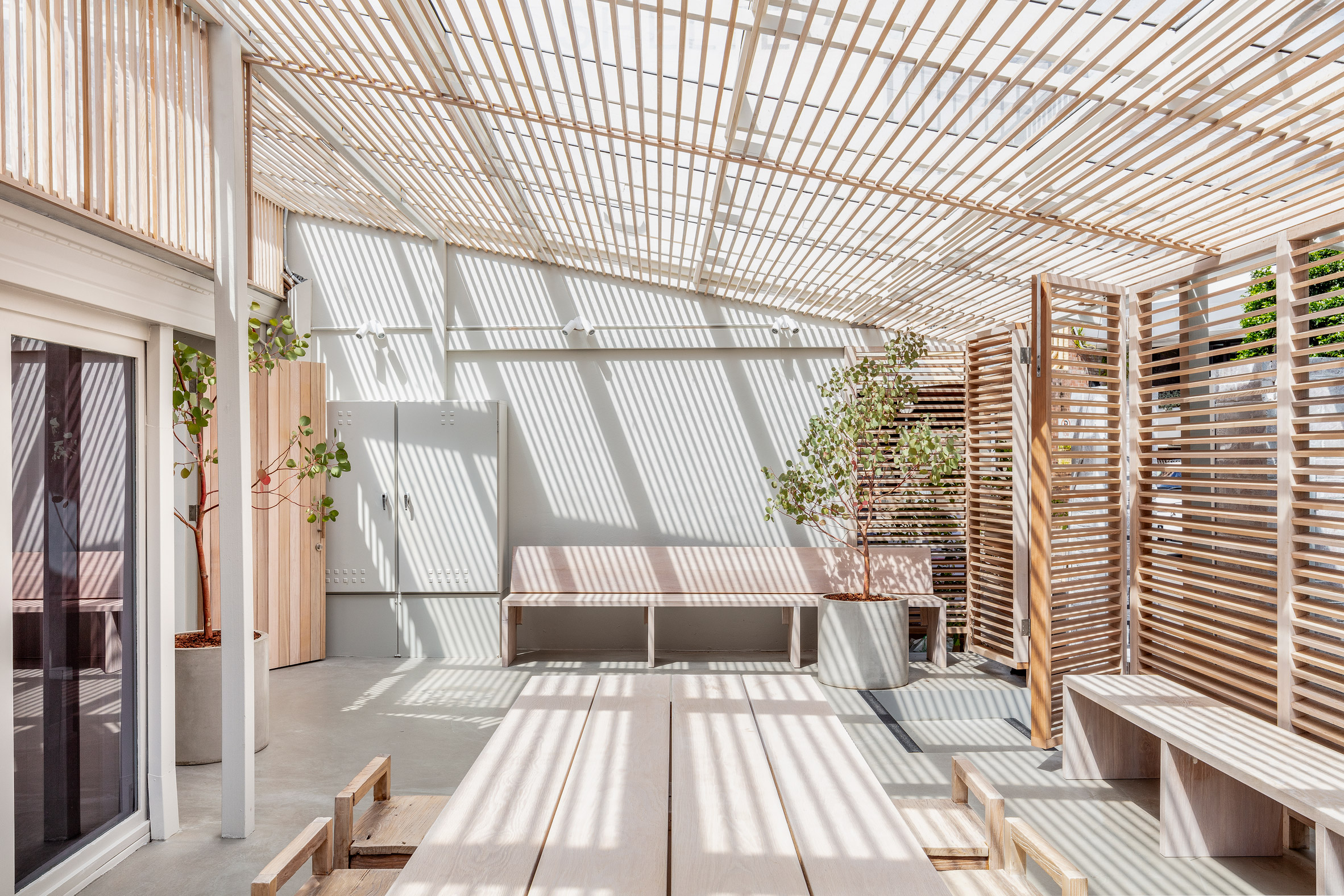
Cedar furnishings, leafy eucalyptus branches and steel partitions feature within this spa and wellness centre in Sydney, which has been designed by local practice Esoteriko.

Located in a former restaurant unit in the back lanes of Sydney's Double Bay neighbourhood, Shelter is a wellness centre equipped with ice baths, saunas, a gym and juice bar.

Spread over two floors, the interior was created by Sydney-based interior architecture practice Esoteriko, which was founded by Anna Trefely in 2017.

Shelter wellness centre designed by Esoteriko

According to Trefely, the interior is designed to emulate the quality of the Australian lifestyle. All of the human senses were considered during the design process, from texture and sound to light, as well as particular scents.

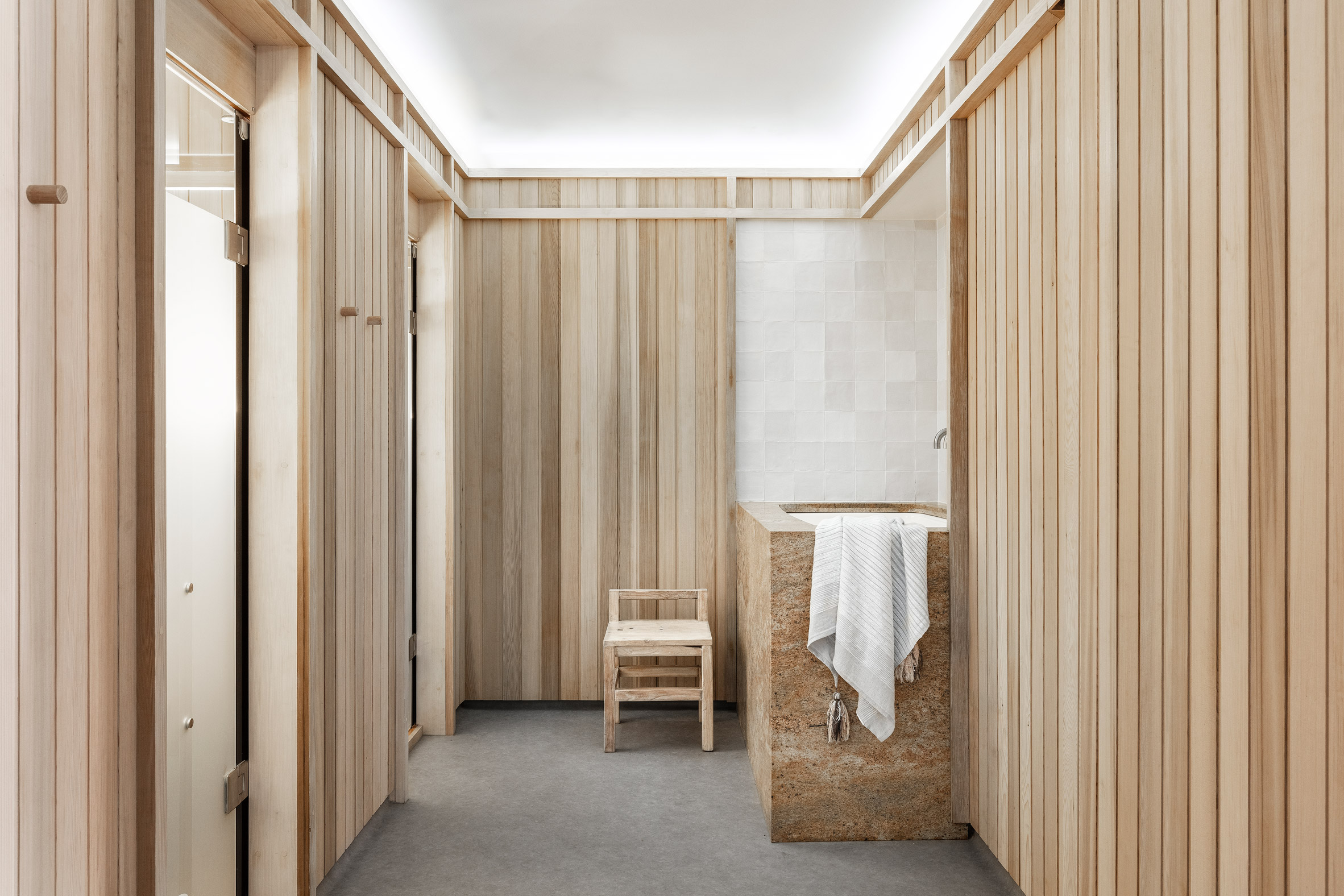
Key features of the space include an abundance of natural light and the use of woods that are native to Australia such as cedar and eucalyptus.

"Our client's vision was to combine four distinct yet inter-related programmes of wellness under one roof. Ice baths, saunas, gym and juice bar – hot, cold, loud, quiet, dark, light," said Trefely.

Shelter wellness centre designed by Esoteriko

The biggest challenge was fitting all of these amenities into the building's existing shed-like structure, which has a relatively small 200-square-metre footprint.

"The design approach was a simple organisation of space with a restrained and carefully considered palette of materials," Trefely explained.

"The interior planning was refined to express itself in an uncomplicated and efficient manner."

Shelter wellness centre designed by Esoteriko

The practice used light textures and colours, greenery, and indoor-outdoor spaces to create the feeling of space and openness.

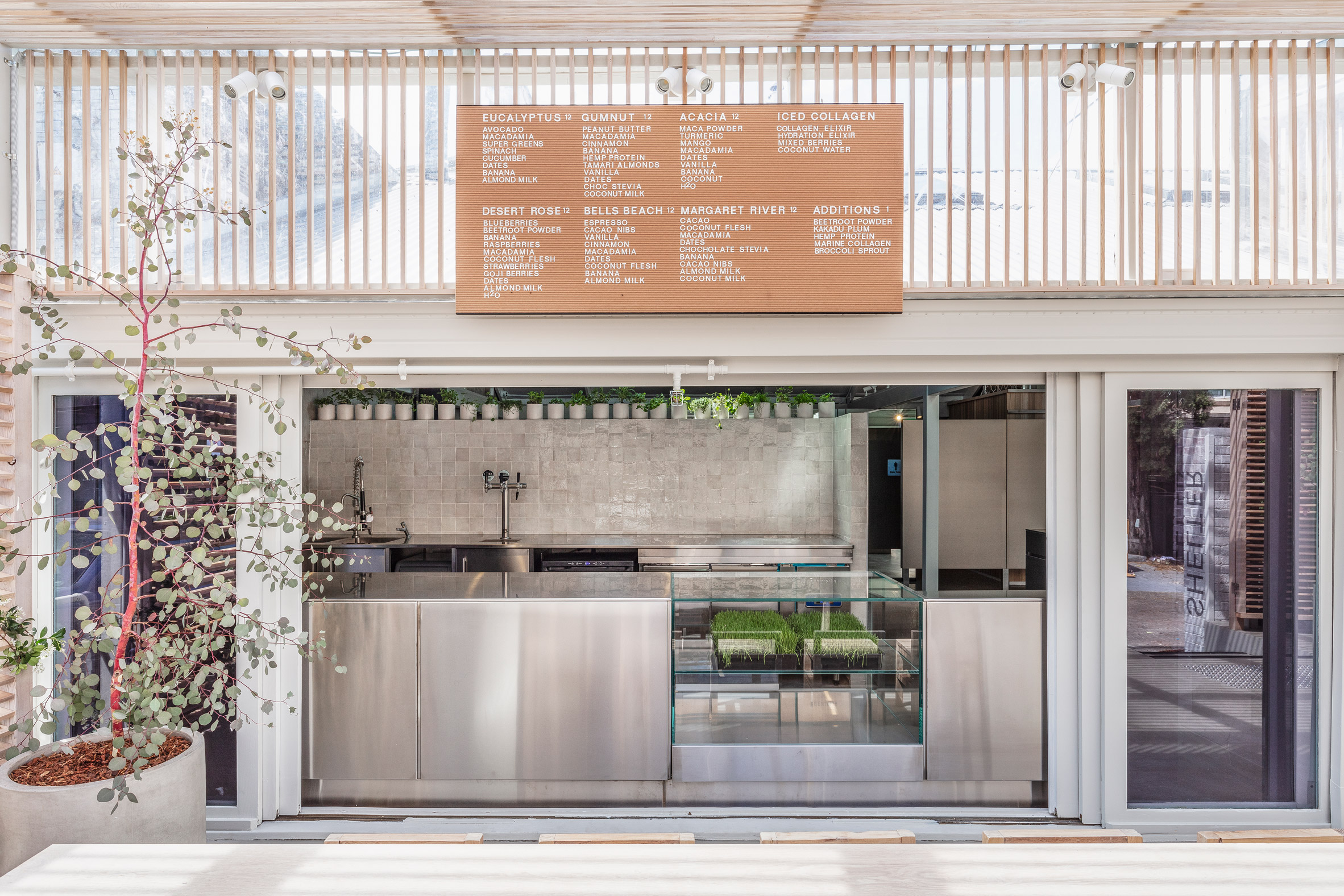
Customers enter via a juice bar at the front of the building that's shaded by a verandah. Sunshine filters through the slatted timber screens of its roof, dappling surfaces with patches of light.

Shelter wellness centre designed by Esoteriko

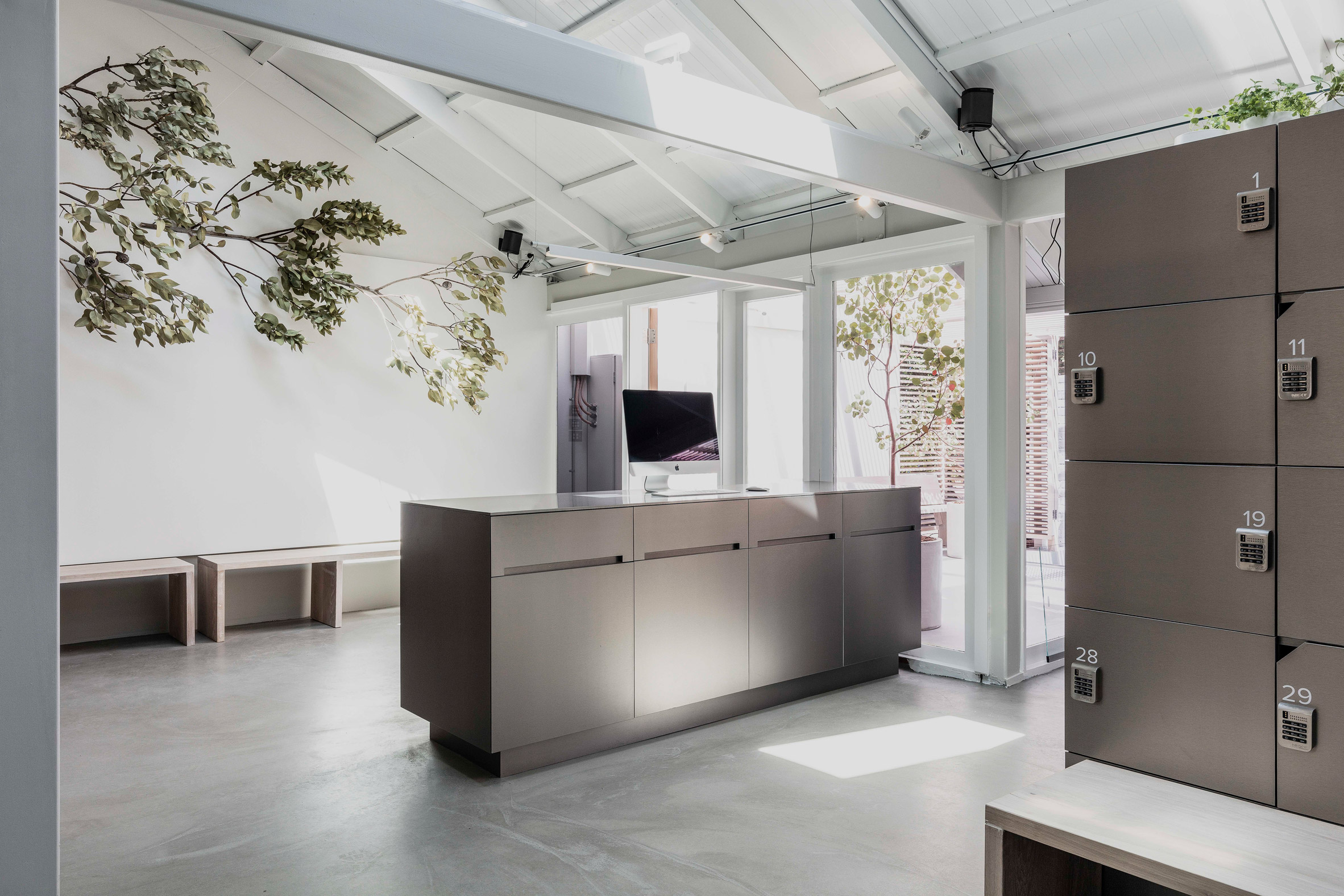
This is followed by a minimalist reception area that has a cedar bench seat running around its perimeter.

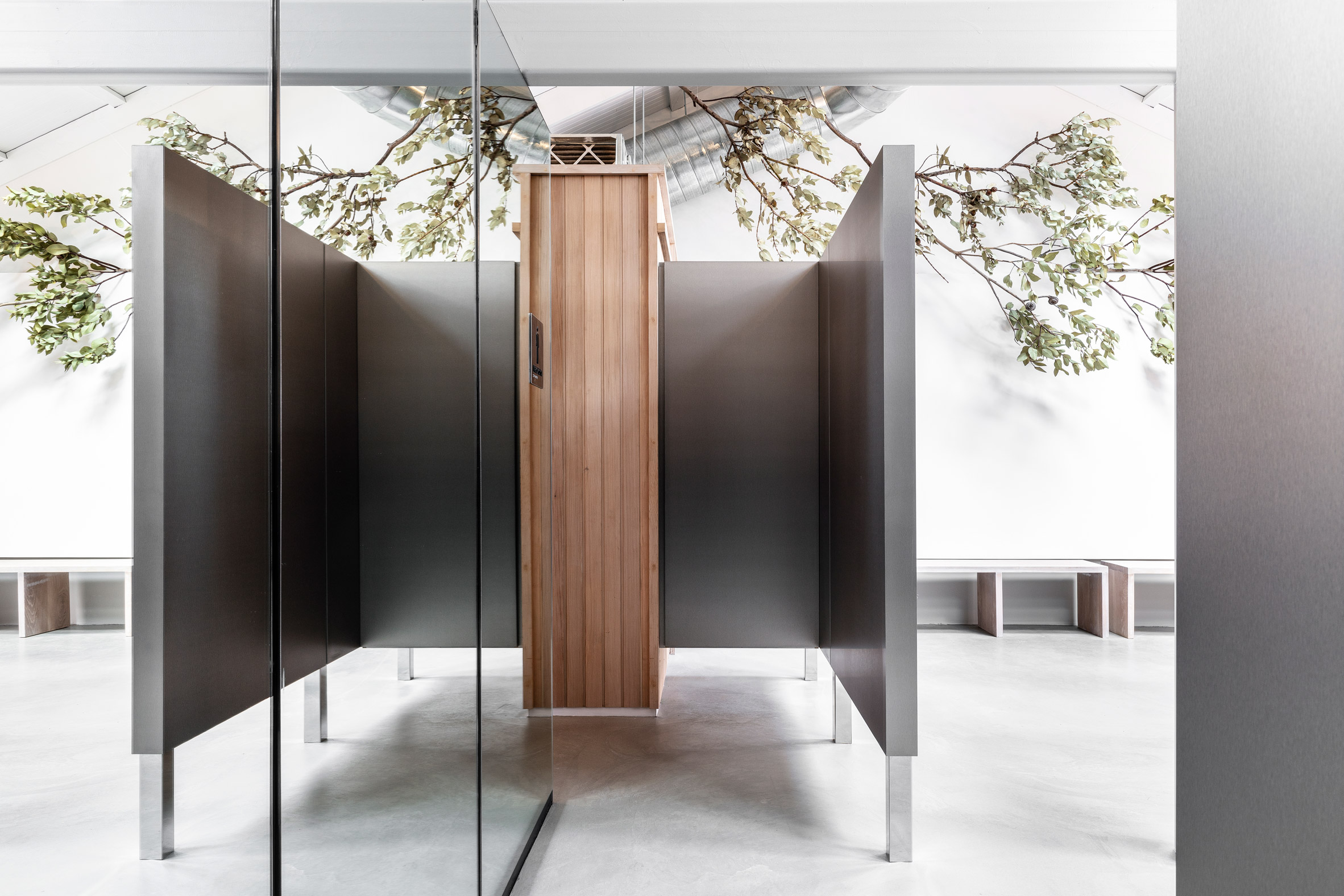
The space is crowned by leafy eucalyptus branches, which have been wound around a wire so that they appear to be growing across the ceiling.

"These are branches that we sourced with the help of a florist," informed Trefely. "They are a particular type of eucalyptus that dries well. They move delicately and cast shadows."

Shelter wellness centre designed by Esoteriko

The reception leads through to the ice baths and sauna, while a spin room is located up on the first floor.

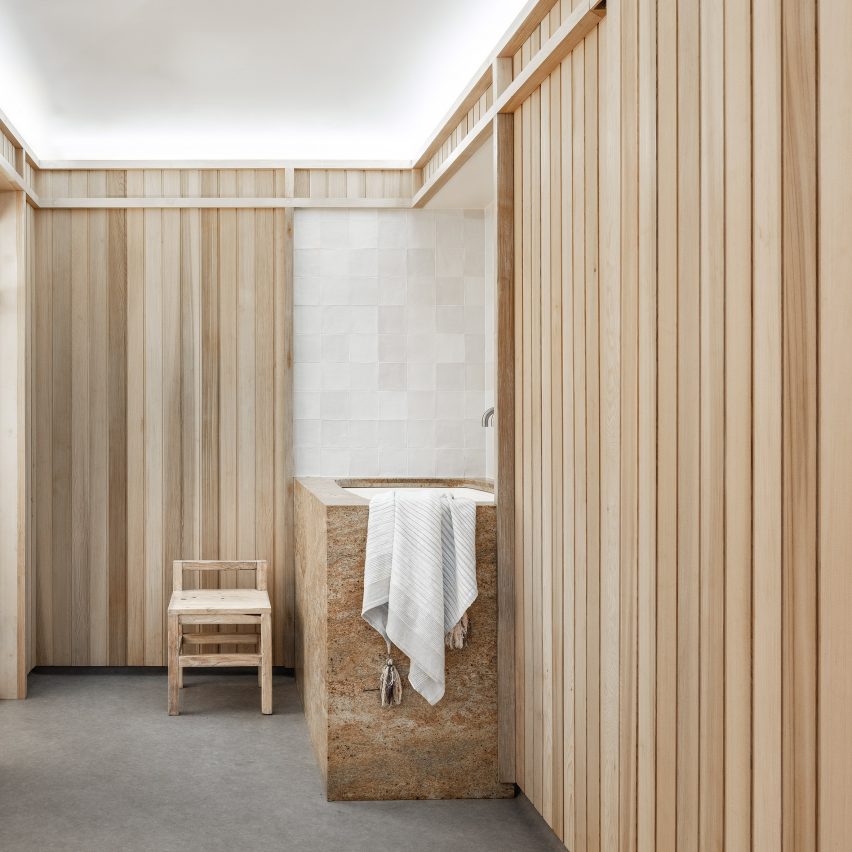
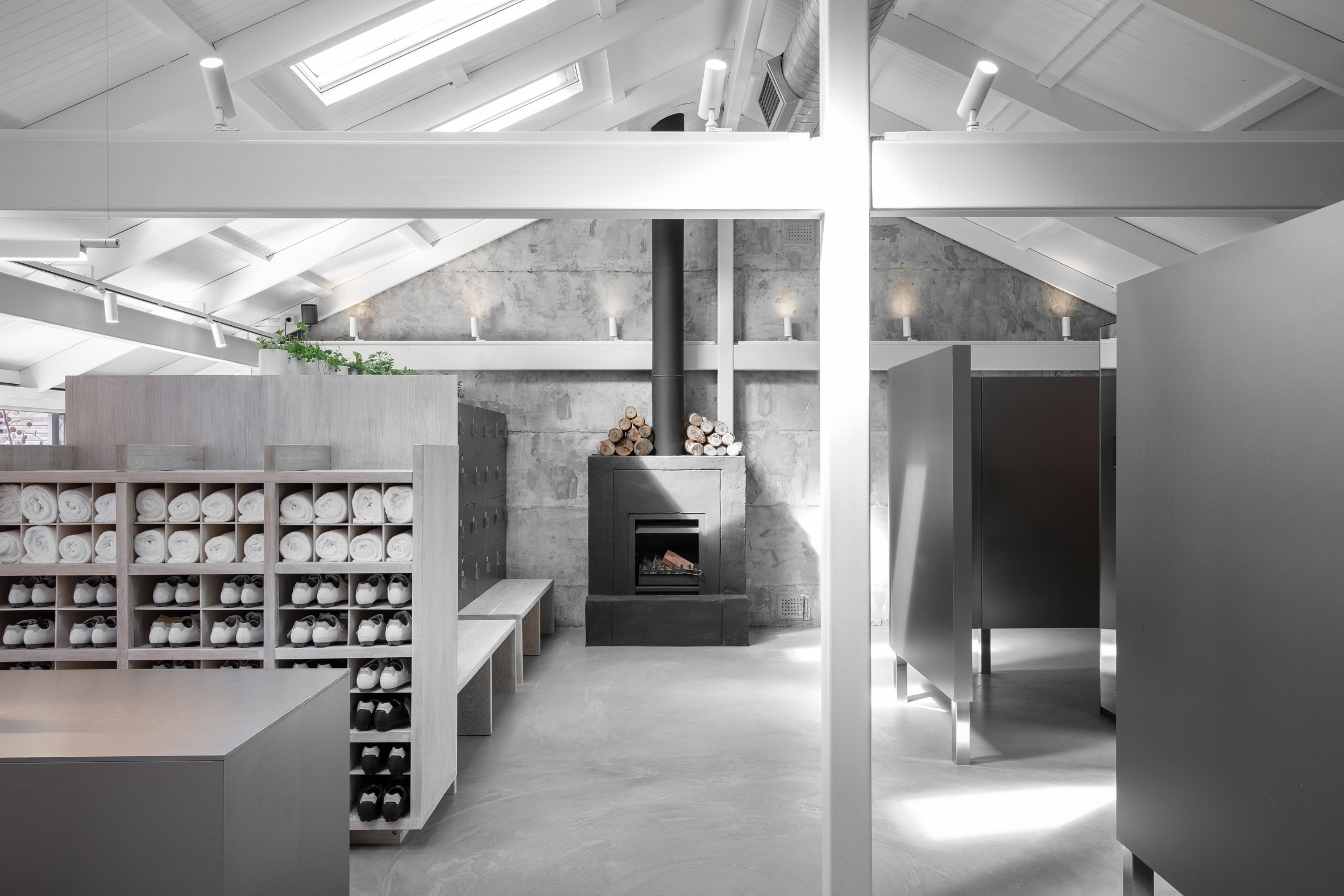
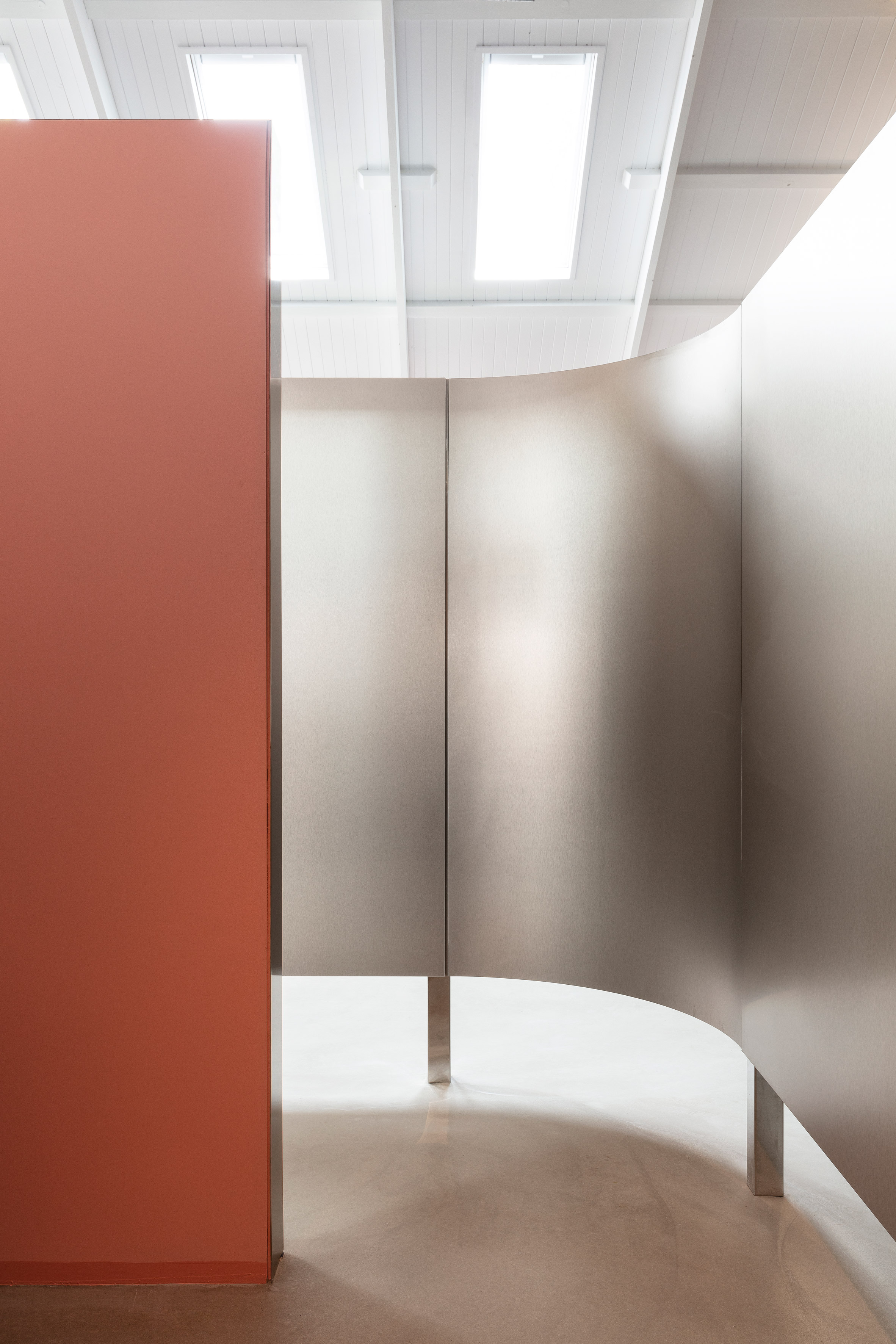
To enhance Shelter's industrial shell and temper its pink-hued timber walls, Esoteriko has used stainless steel to create several elements.

This includes the guest lockers and curved screens that wrap around the changing and treatment rooms. These have purposefully been made to sit below the ceilings to amplify the centre's lofty interior.

Shelter wellness centre designed by Esoteriko

Grey concrete flooring creates continuity between the different spaces, along with white-painted timberwork and grey walls.

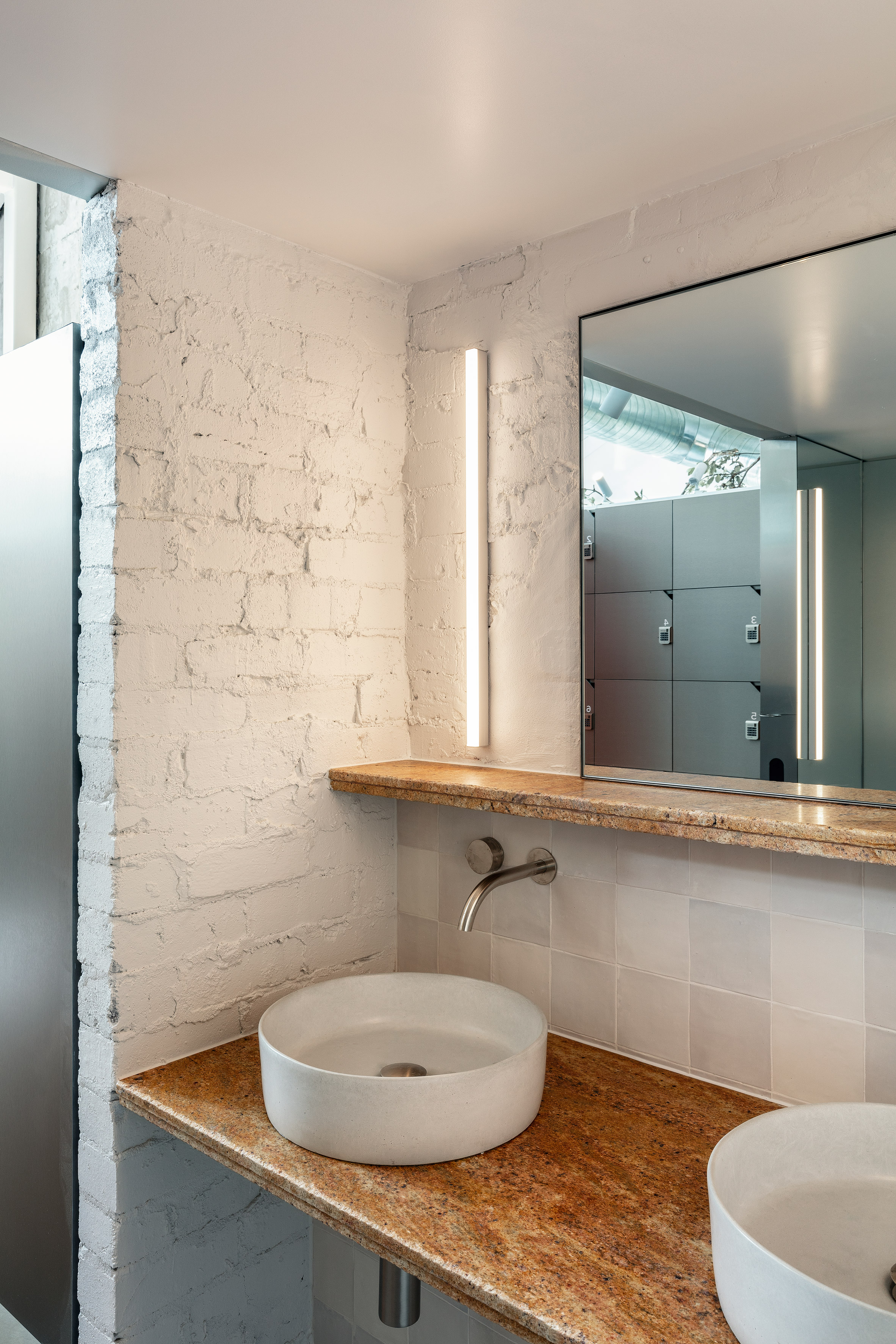
Certain fixtures like the sink basins and vanity stands have been made from contrasting orange granite. Some surfaces have also been clad in an array of off-white tiles that were cut by hand.

Shelter wellness centre designed by Esoteriko

Trefely told Dezeen that sound was also a particularly important consideration in the design process.

"Both the amplification of sound, as music, as well as the acoustic attenuation has been considered in different areas," she said.

"As an example balanced speakers wash the reception space with a curated playlist that leads occupants either through to the spin room, where there is high energy strong bass music or into the acoustically-insulated sauna room, which is a space for quiet contemplation," she continued.

"The music or the silence dictates a particular mood or designated programme for the space."

Shelter wellness centre designed by Esoteriko

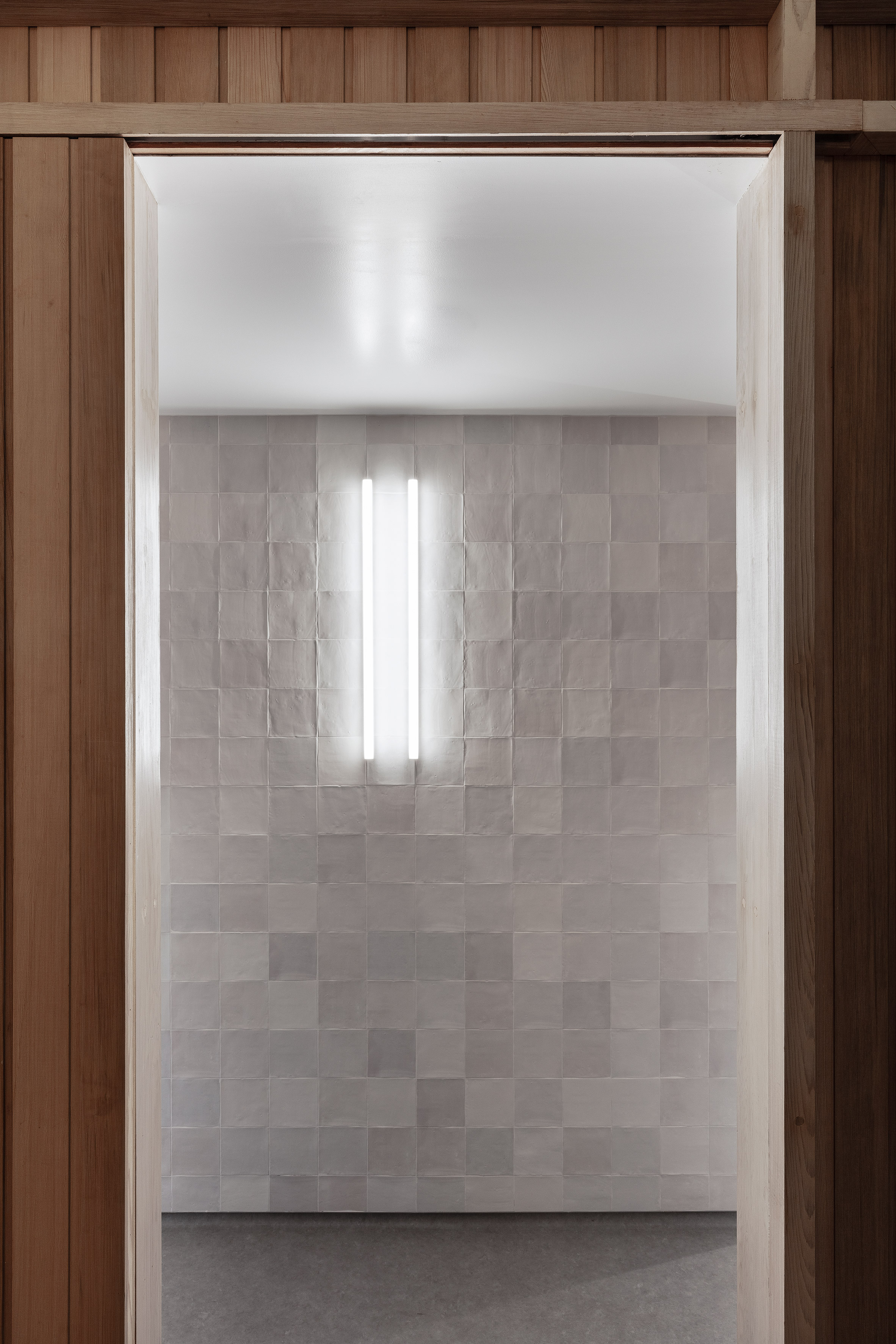
The practice took care to ensure that there is a gradual transition from the naturally-lit open entrance into the darker and more intimate spaces such as the gym and sauna beyond.

Spotlights have therefore been dotted across the ceiling beams and simple strip lights have been placed vertically on the walls.

Shelter wellness centre designed by Esoteriko

Other design-focused wellness spaces include the Euphoria spa in Greece, which is carved into the base of a mountain, and Yoko Kitahara spa in Israel, which occupies an Ottoman-era home.

Photography is by Tom Ferguson.

The post Esoteriko pairs timber and metal inside Shelter wellness centre in Sydney appeared first on Dezeen.


from Dezeen https://ift.tt/2AflbtQ

Saturday, 9 May 2020

Kaoi studio designs modular Ebba chairs based on Ettore Sottsass' Memphis movement

Kaoi studio designs modular Ebba chairs based on Ettore Sottsass' Memphis movement

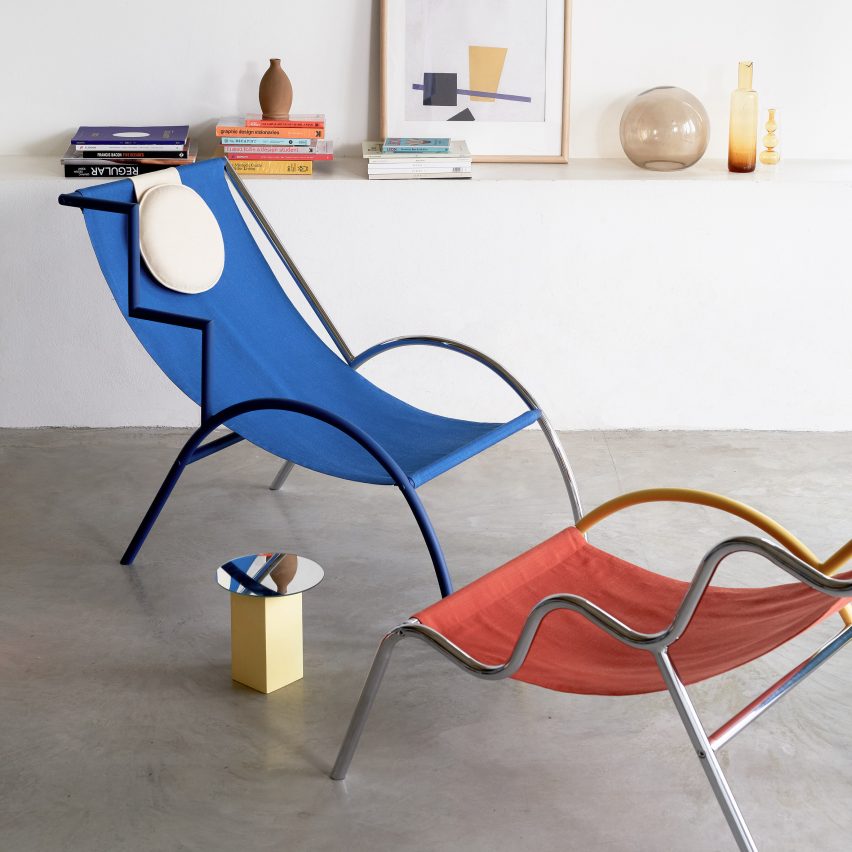
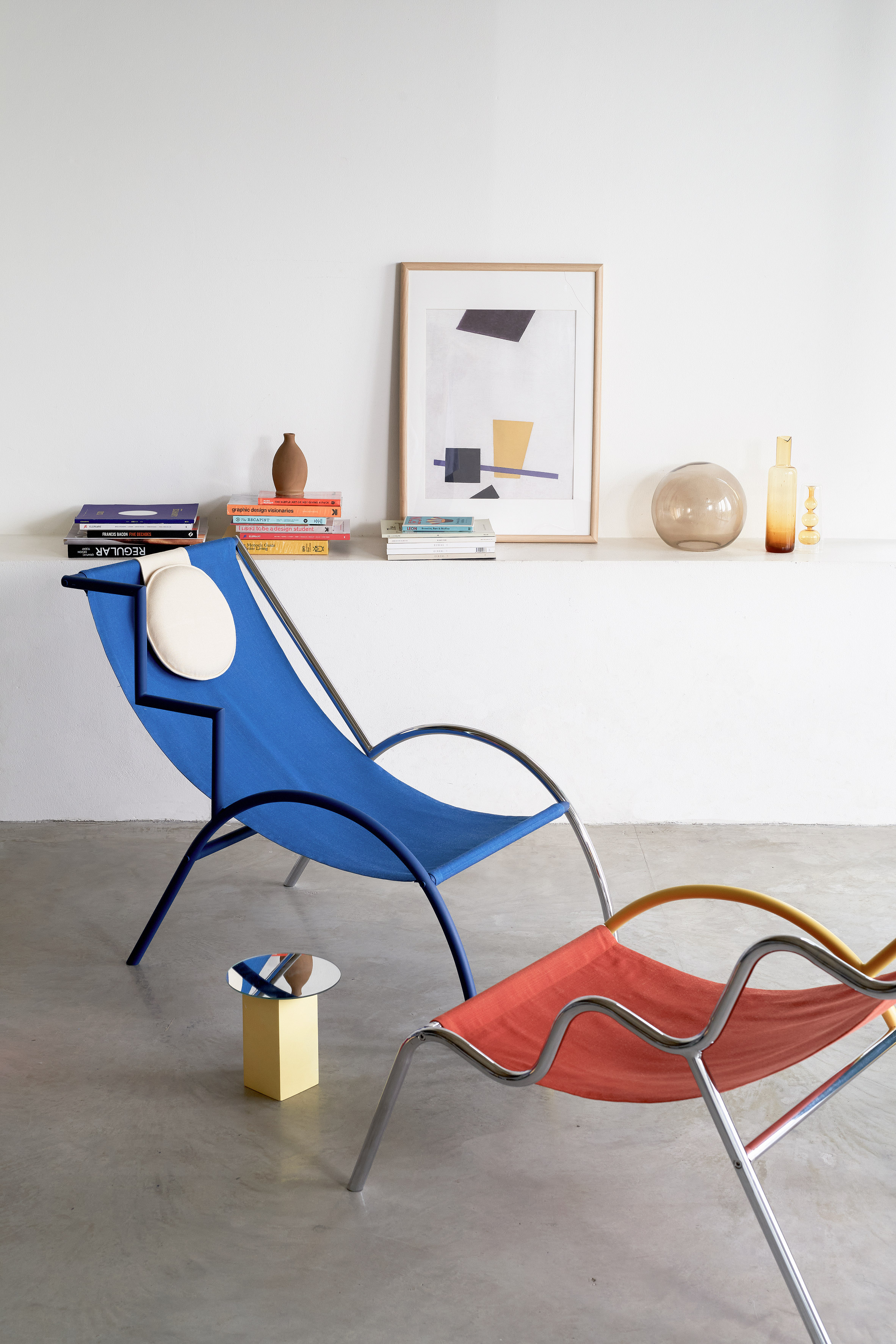
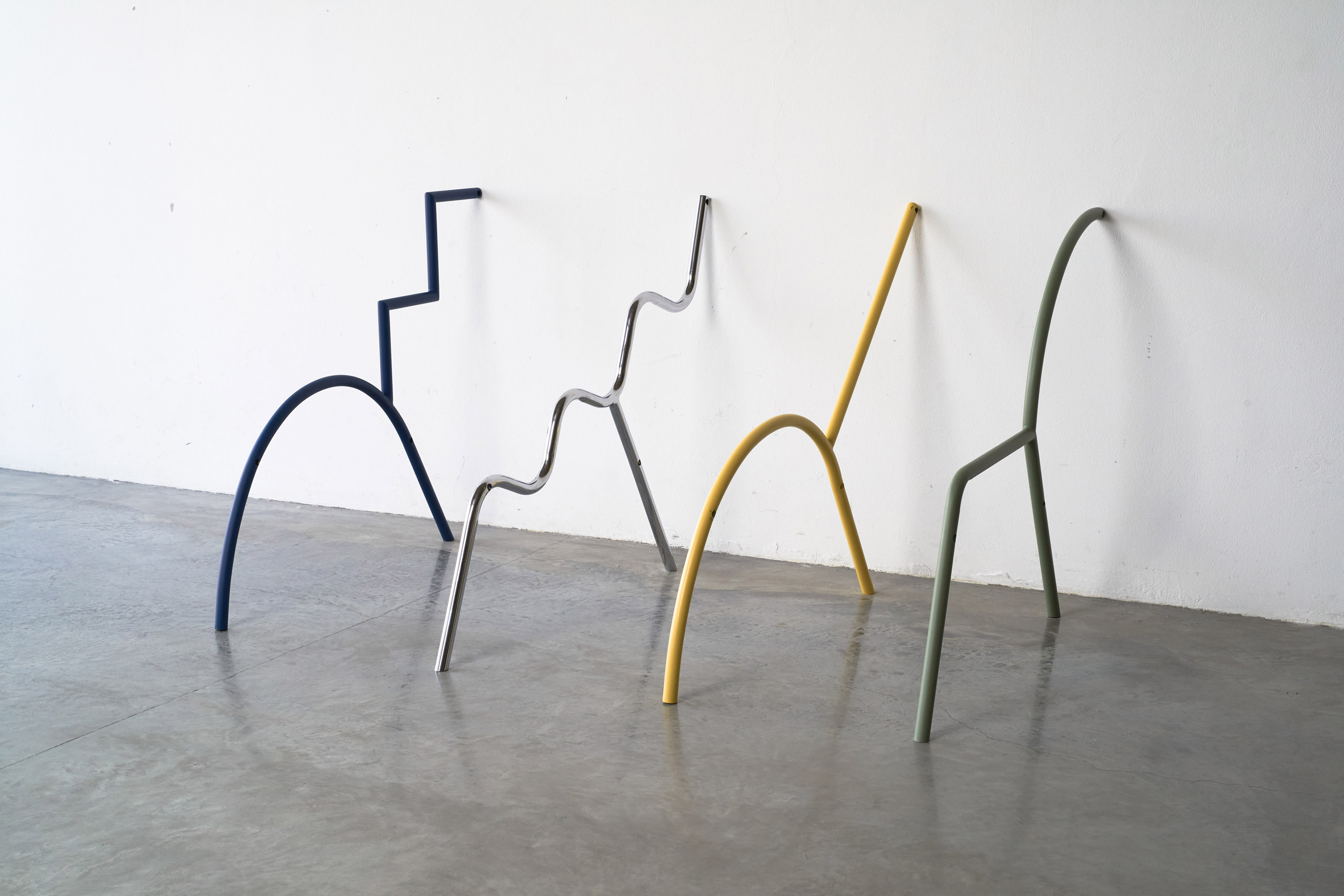
This modular chair collection by Thai design studio Kaoi takes cues from the 1980s Memphis Group, featuring four graphic armrests that can be mixed and matched to offer different aesthetic "personalities".

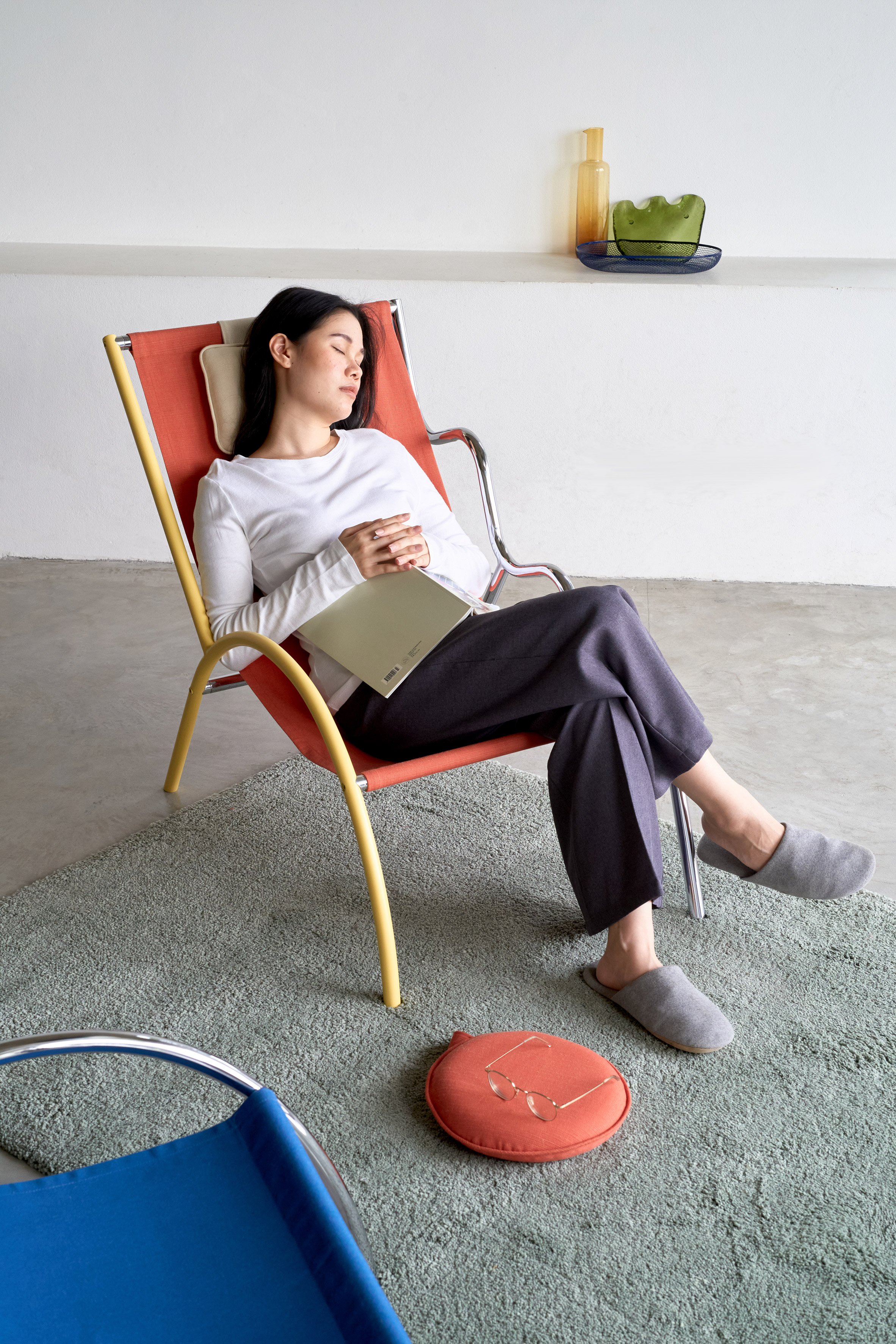
Designed in collaboration with THINKK studio, Kaoi's Ebba chair collection is composed of three deckchair-style seats that can be brought to life with four variations of armrests.

The two Bangkok-based studios channelled the geometric lines that defined the 1980s Memphis movement founded by Italian architect and designer Ettore Sottsass.

Taking their titles after typically Danish names, the armrests – Han, Somma, Franz, and Mujoel – boast bold forms in the shape of squiggles, zigzags and arcs reminiscent of the confetti-like pattern called Bacterio that Sottsass designed in 1978.

The Memphis collective was born in 1980 during a meeting at Sottsass' Milan apartment with fellow designers Michele de Lucchi, George Sowden, Martine Bedin, Nathalie Du Pasquier, Marco Zanini and Matteo Thun.

In founding Memphis, Sottsass' intention was to define a new approach to design that broke free of the restrictions of functionalism.

The group's name is allegedly taken from the 1966 Bob Dylan track titled Stuck Inside of Mobile with the Memphis Blues Again, which was played throughout the group's meeting.

"Each of the different styles was designed to portray a variety of personalities," explained Kaoi studio. "From gentle, simple lines to super playful and fun curves."

These shapes are paired with vibrant hues including buttercup yellow, midnight indigo, olive green and shiny chromium.

The designers found colour inspiration in a Philippe Starck quote: "You create your own decoration. You choose your colour, you choose your mood. If you are depressed, you put some bright yellow and suddenly you are happy."

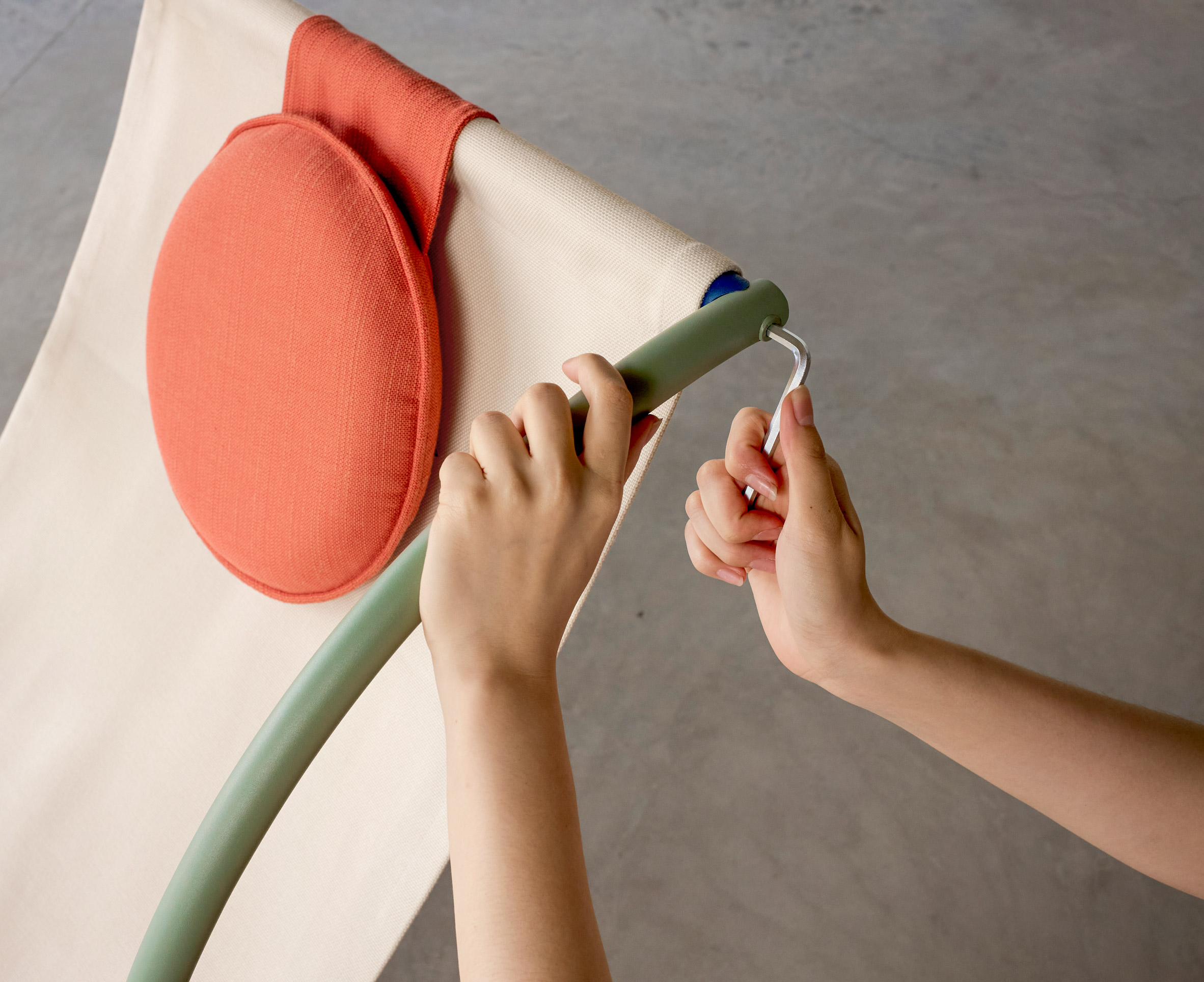
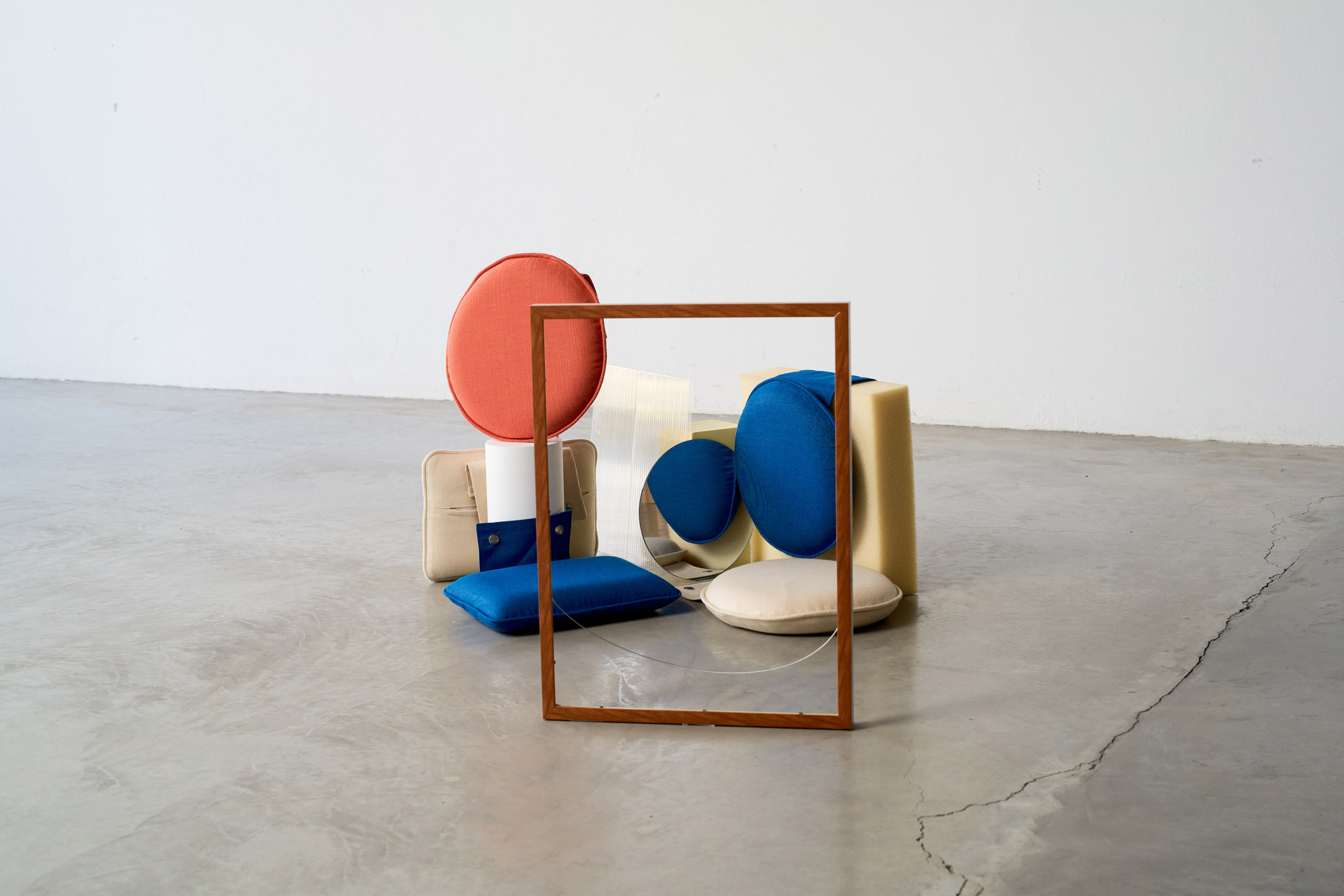
Each of the different components of the chair – its armrests, seat and pillow – can be mixed and matched according to the user's personal taste.

"We wanted to create a design that would allow the customer to freely mix and match and recreate their own chair based on their individual personality, because we believe that design defines you better than you define yourself," the studio told Dezeen.

This is the first time Kaoi, which was founded at the beginning of January 2020, has worked with Bangkok-based THINKK studio.

The Ebba chair collection was showcased as part of the THINKK Together exhibition that was held during Bangkok Design Week 2020, which tasked 21 designers with answering the question "Why do we need another chair?".

THINKK studio has previously created a contemporary furniture collection called Made In Thailand, which is designed to "present an unorthodox overview of contemporary Thai design and manufacturing".

Each of the nine furniture and homeware items boasts a modern and minimal aesthetic while still incorporating traditional manufacturing techniques and materials like bamboo and wicker.

The post Kaoi studio designs modular Ebba chairs based on Ettore Sottsass' Memphis movement appeared first on Dezeen.


from Dezeen https://ift.tt/2xSlAl6