
Inspired by Robert Frank and Tony Ray-Jones, the photojournalist took a “loving but harsh approach” to depicting the then-fading glamour of Butlin’s holiday camps.

from It's Nice That https://ift.tt/3bmdG0T
Inspired by Robert Frank and Tony Ray-Jones, the photojournalist took a “loving but harsh approach” to depicting the then-fading glamour of Butlin’s holiday camps.

Catching up with the Welsh graphic designer after a few years, we learn how changing processes has kept Ben in love with design.

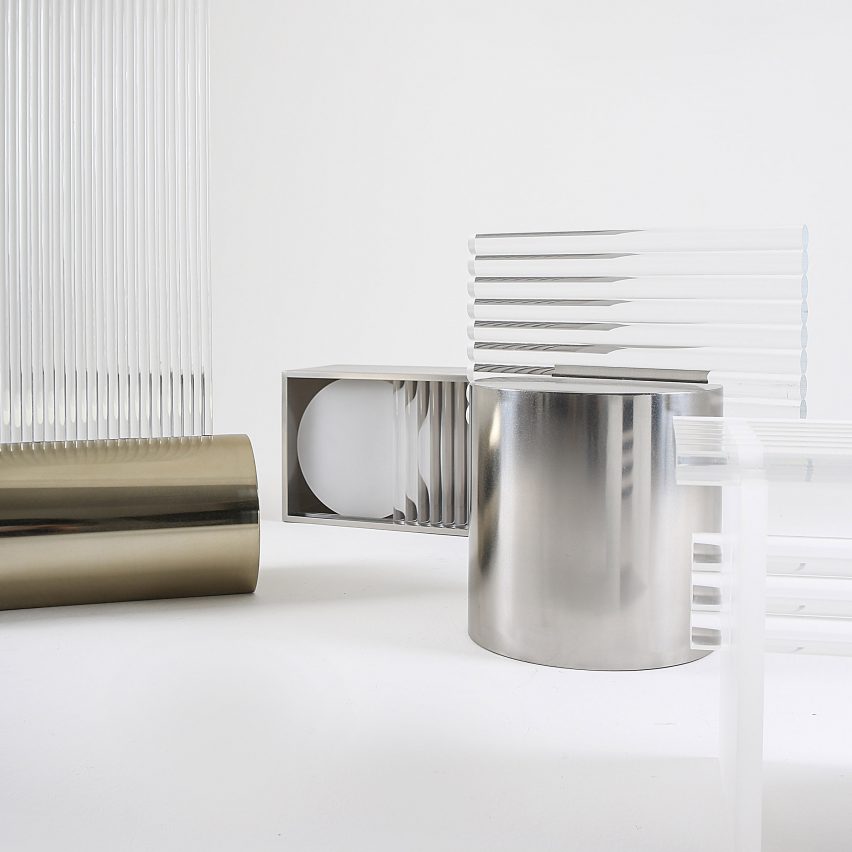
Hongik University graduate Jihye Kang built her Purity furniture from acrylic and stainless steel as an exploration of the refractive effects that can be achieved with simple materials and shapes.
Fascinated by the way light plays with certain materials, Kang begun researching the various characteristics and potentials of acrylic, focusing on its reflective and refractive properties.
After studying the thickness, shape and size of acrylic, the Seoul-based designer found that the refraction of the material was expressed best through the form of round rods.
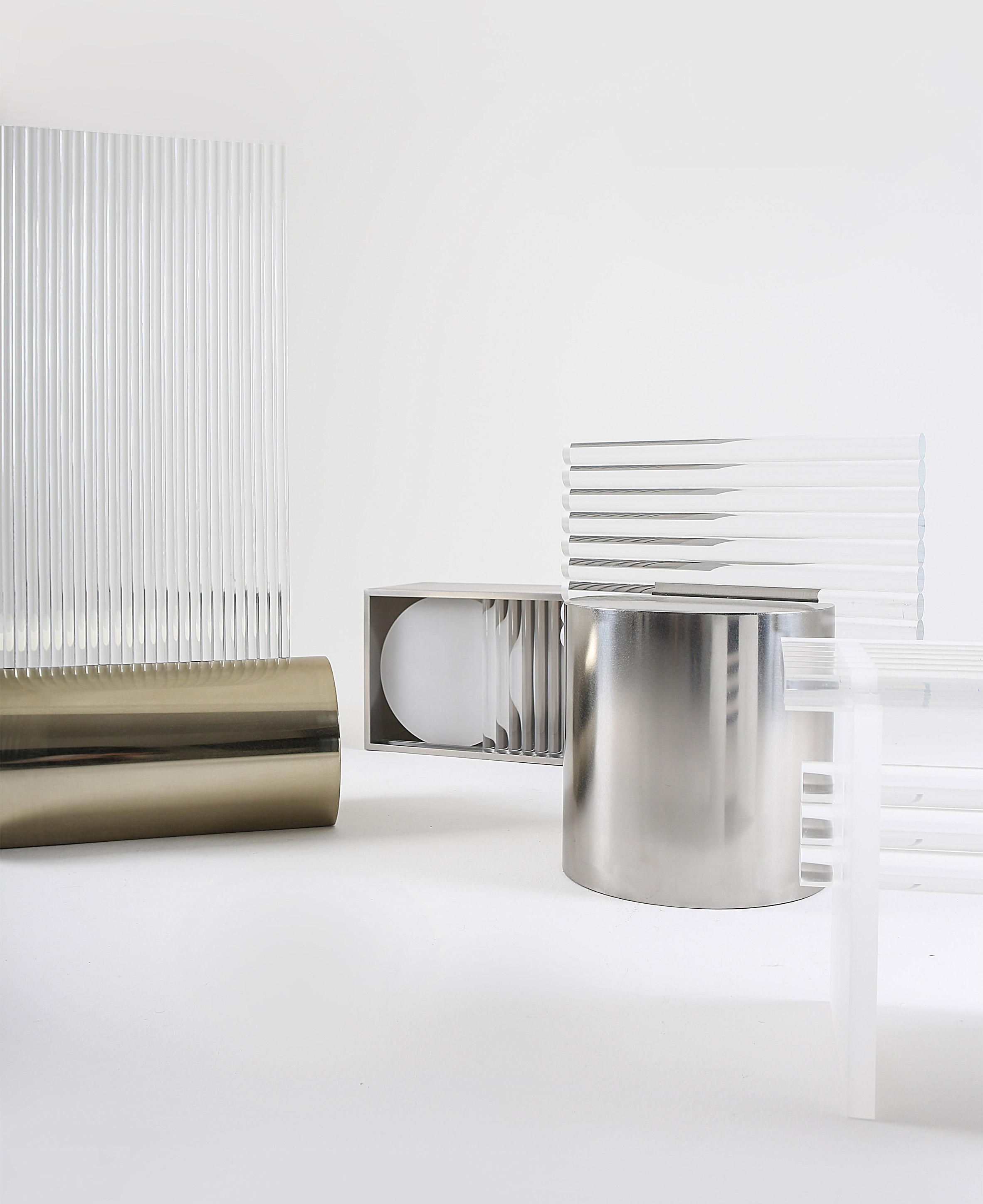
The 10-piece furniture series comprises side tables, chairs, stools and partitions made up of thick, cylindrical acrylic rods that are arranged in neat rows and often mounted on clean-cut stainless steel bases.
Kang wanted to pair the acrylic with a material that would express its refractive qualities. She crafted the steel into different shapes and sizes, experimenting with what would best bend and warp the reflective image.
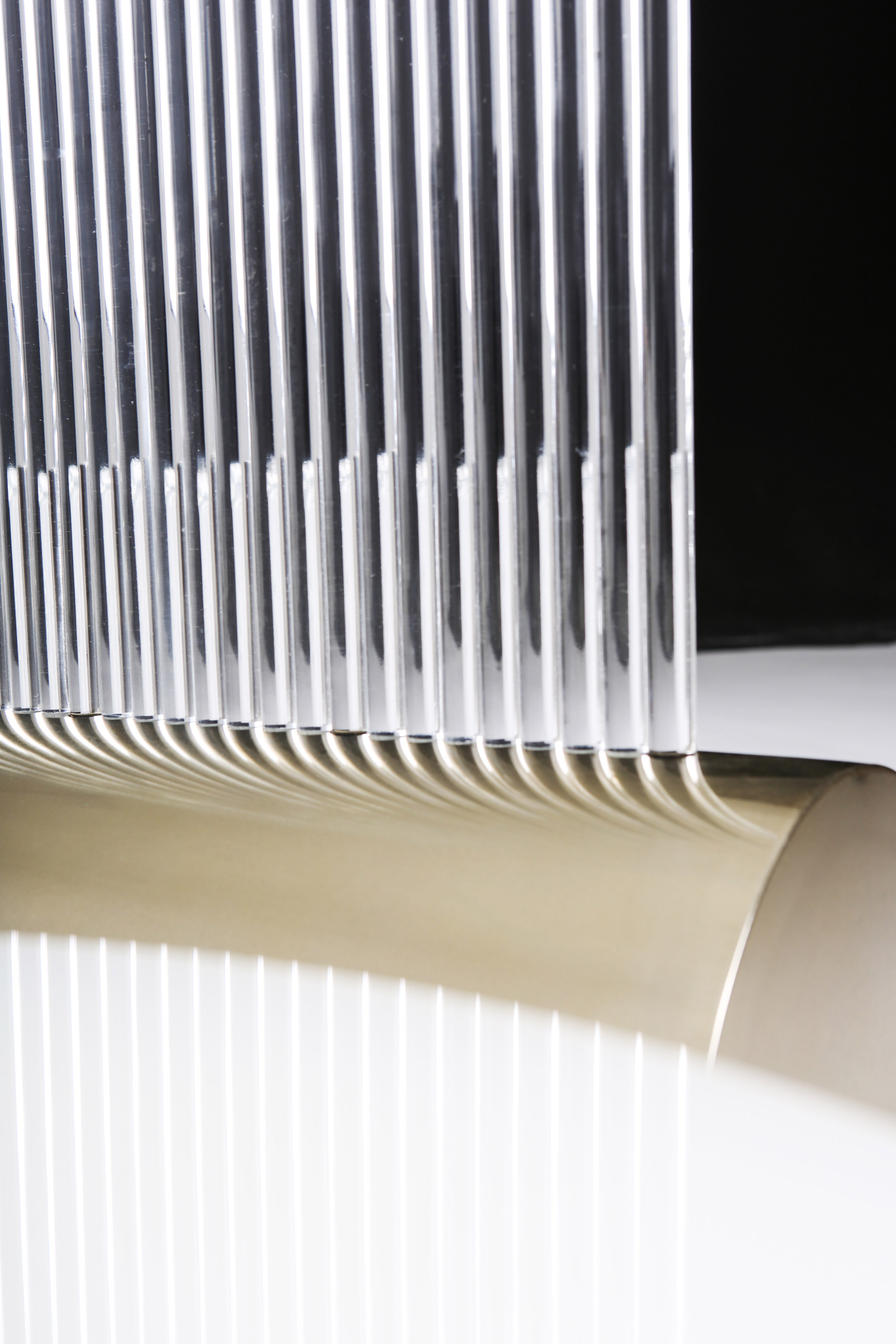
"Although the common first impression of acrylic is that it is hard and static, its transparency creates an interaction between the material and other objects and movements," said Kang.
"The relationship between these elements makes the material livelier and more dynamic than what otherwise might be expected," she added.
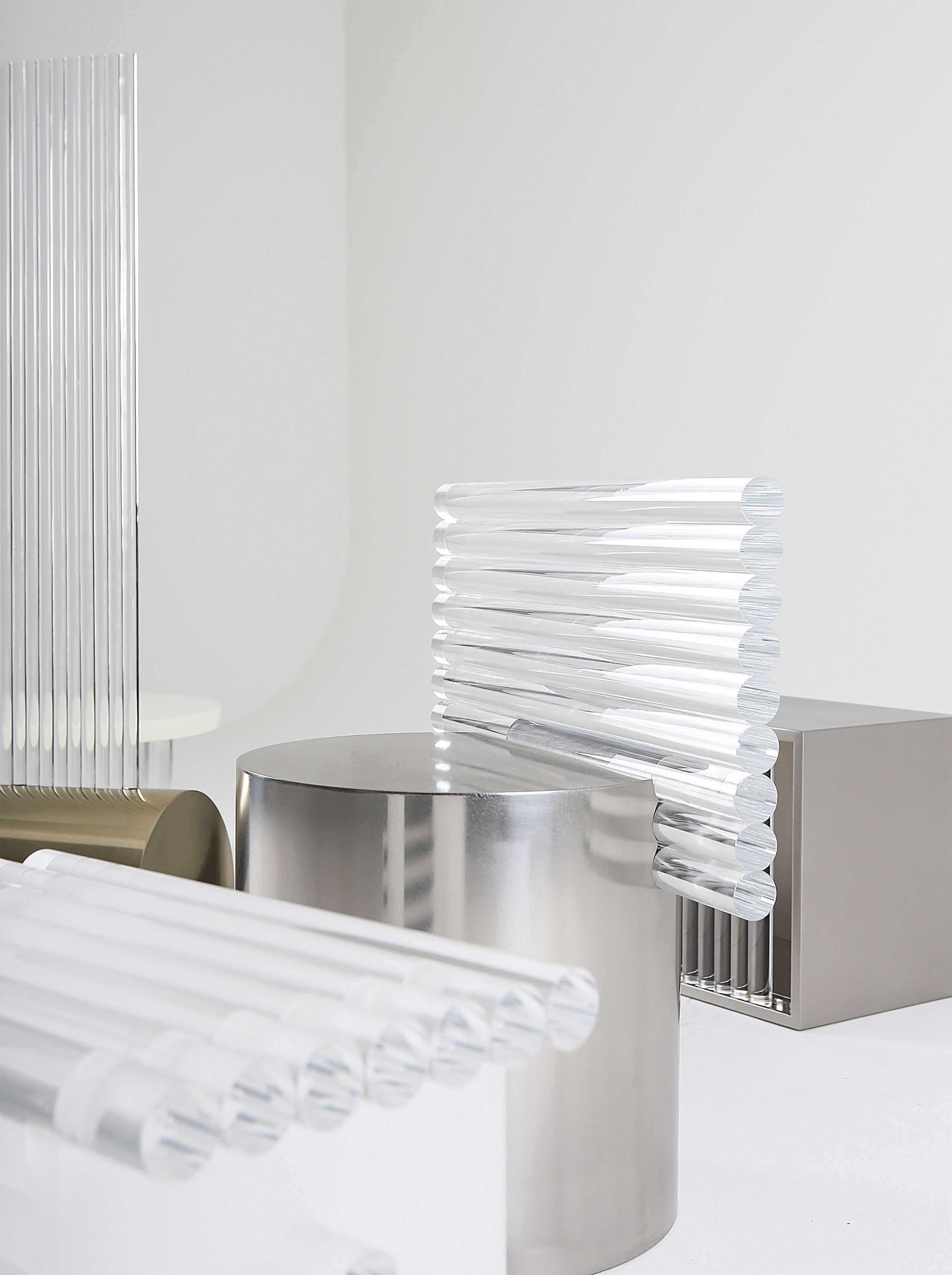
As Kang explains, the furniture collection has "basic rules": firstly, the round acrylic rods should be uniform in size and alignment.
Secondly, the objects and materials that are introduced with the acrylic should be of regular shape. This will allow users to clearly observe the effects of refraction, which change at random in relation to the viewer's line of sight.
The last rule is employing "the most basic" forms, avoiding any particularly decorative elements.
Yang uses a special adhesive to secure the various acrylic components together that make up each furniture object, making sure to conceal the joints in order to not detract attention from the qualities of the material itself.
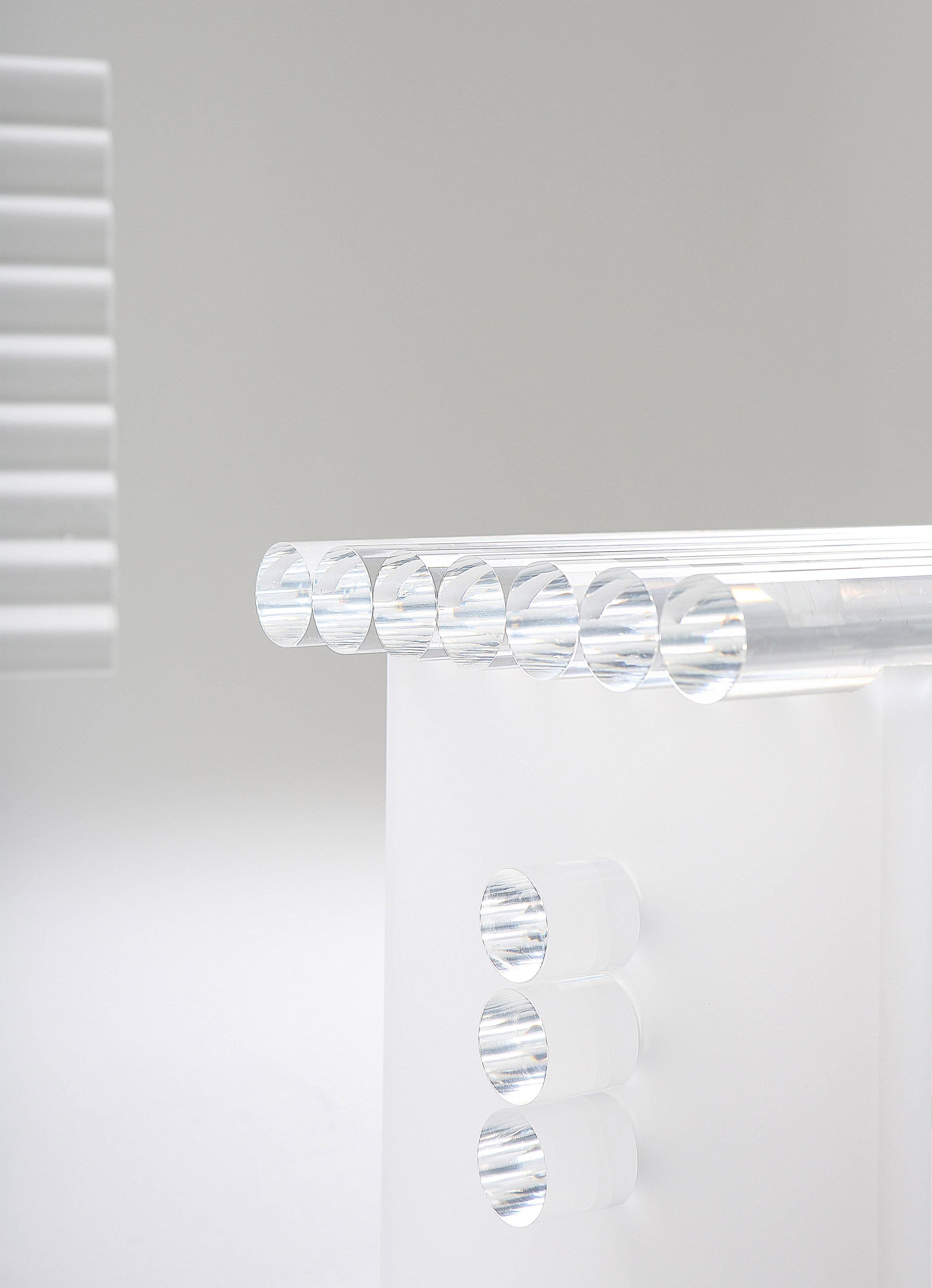
To familiarise herself with the "unpredictable" qualities of the acrylic, she experimented with a variety of surface finishes as well as making a 1:10 scale mock-up of each piece before manufacturing it in its real dimensions.
"There are still several points that I cannot predict," Kang told Dezeen. "The Purity series reveals effects that were not intended, because the clear acrylic is affected by the sense of place such as background, lighting, natural light, movement of user, angle of viewer."

"So not only during the production period, but also after completion, I always feel satisfied and lacking at the same time in my work," she added.
Belgian design duo Fien Muller and Hannes Van Severen also employed a tubular design in their Alltubes furniture collection, which features metal pipes lined up in welded rows.
The post Jihye Kang creates refractive furniture from rows of acrylic rods appeared first on Dezeen.

Two years in the making, Gabriele Galimberti’s joyful series reminds us of the comfort that kids find in teddies, trucks, dolls and dinosaurs.

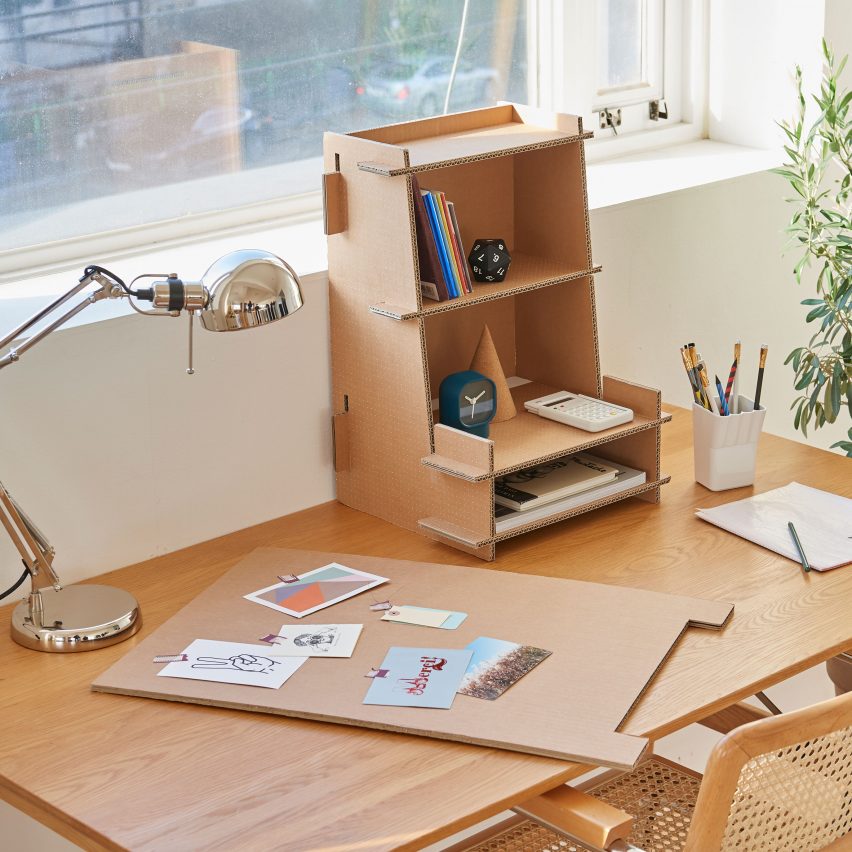
There are just three weeks left to enter the Dezeen x Samsung Out of the Box Competition to design household objects made from repurposed cardboard packaging.
The contest, which is free to enter for anyone over the age of 18, closes for entries on Friday 29 May. Click here to find out how to enter.
With many countries in lockdown around the world, the design challenge provides people with an opportunity to express their creativity at home.
Interest in the contest has been extremely high, with over 200 articles from media outlets around the world reporting on it.
"Repurposing cardboard packaging is not an idea that electronics companies have generally applied to their products," said Samsung. "The high interest in the Eco-Packaging and the competition with Dezeen validates this unexpected idea to help improve the environment."
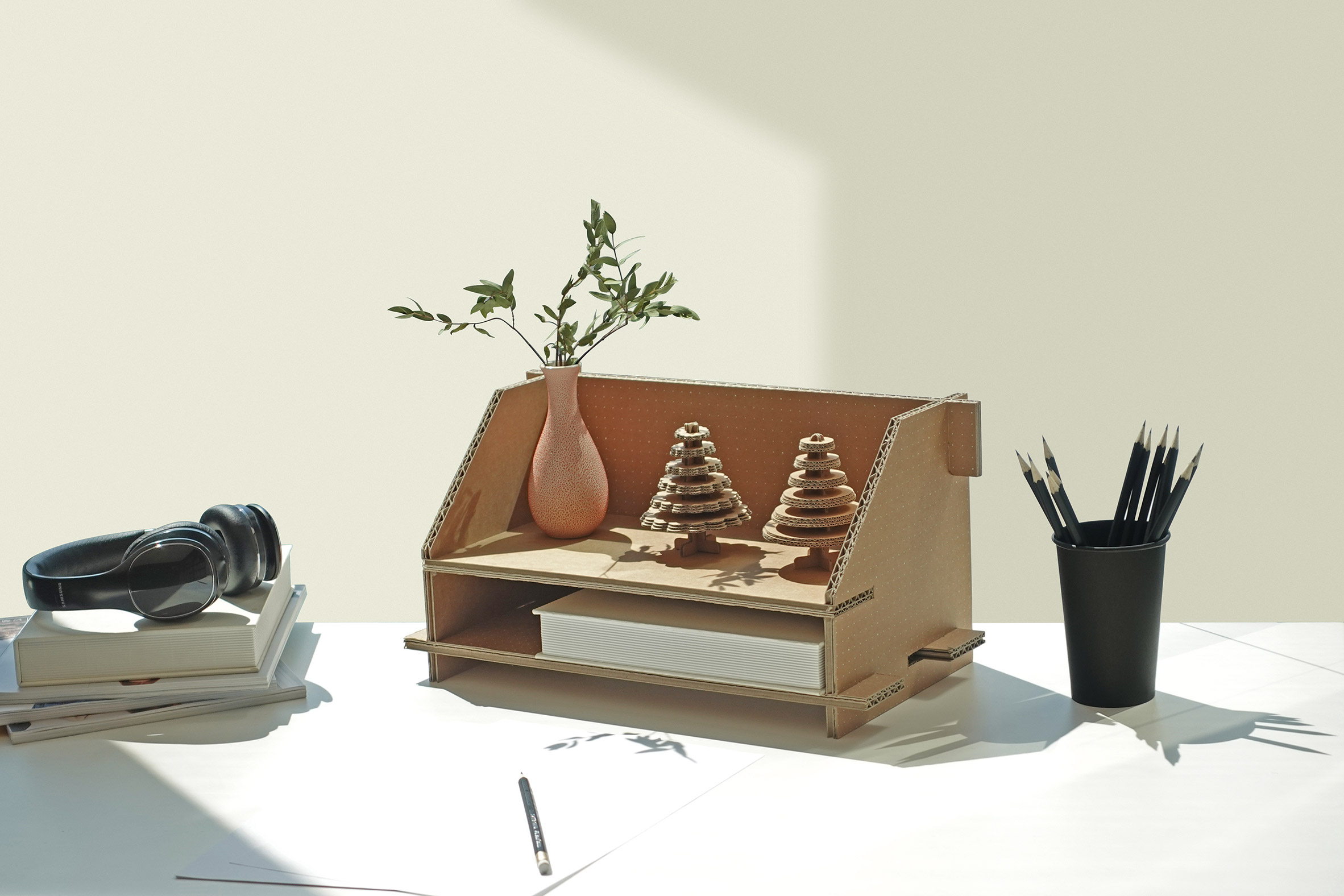
The competition challenges entrants to create innovative designs for the home that can be made by repurposing cardboard, with total prize money of $20,000.
Contestants are free to design any kind of functional object for the home that can be made by reusing cardboard packaging.
The design must be something that anyone could build for themselves at home. It must be practical to assemble with everyday household tools and not require any specialist skills or equipment.
Entrants should also consider who their product is designed for and how it will fit in with and enhance their lifestyle.
Entrants must submit a short description of their concept explaining what lifestyle the object has been designed for and how it is assembled. In addition, they should submit up to ten images showcasing their design.
Click here for more information about how to enter, including the brief and entry rules.
Competition inspired by Samsung's Eco-Packaging
The competition is inspired by Samsung's Eco-Packaging, which was named an honouree at this year's CES Innovation Awards.
The packaging is part of Samsung's ongoing efforts to make its business more sustainable, which it set out in a report last year, by making its components and manufacturing more environmentally friendly, and reducing greenhouse emissions and other waste.
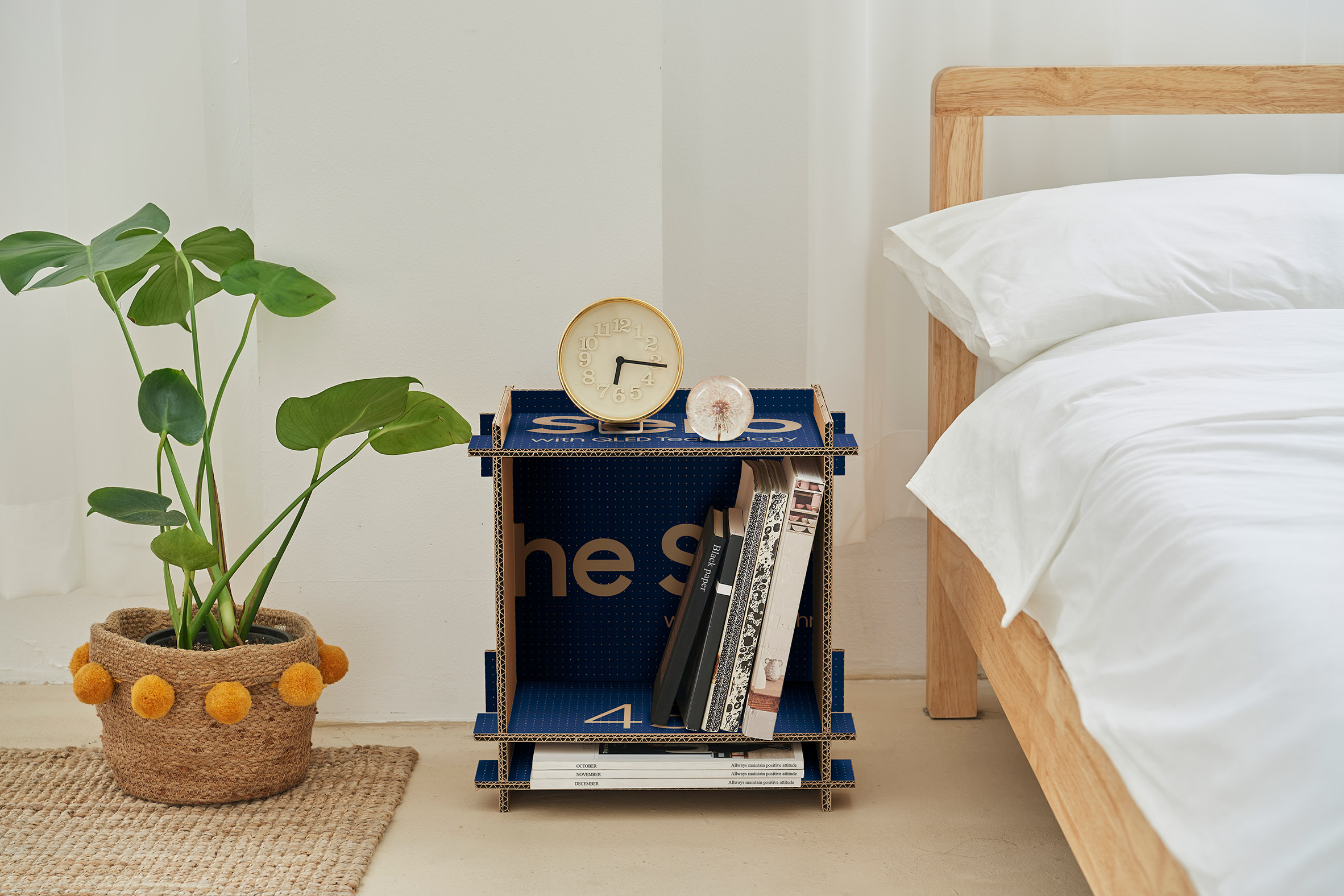
Electronics companies use thick, corrugated cardboard boxes for shipping in order to properly protect the goods inside.
These boxes often end up as waste, as the size and weight of the cardboard boxes means they are difficult to recycle in an average home, which contributes to around 90 billion cardboard boxes being discarded after a single use every year in the US alone.
The Eco-Packaging concept, which is a first in the industry according to Samsung, aims to reduce this waste by providing customers with a way to repurpose its television packaging into new household items.
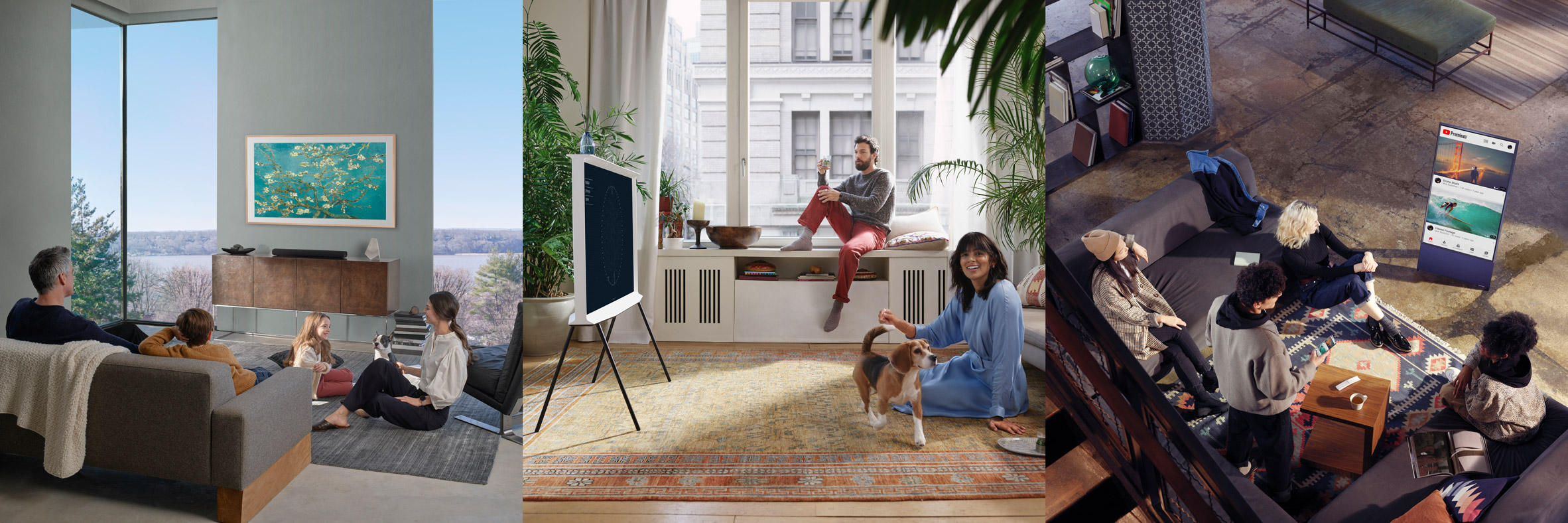
Samsung currently uses Eco-Packaging to ship its The Serif, The Frame and The Sero televisions to customers and plans to introduce the concept to more televisions in future.
The Serif television features a distinctive I-shaped profile. Designed by French designers Ronan and Erwan Bouroullec, it is intended to be more like a sculptural item of furniture than a piece of technology.
The Frame is designed to look like a framed piece of art, either hung on the wall or on an easel. Users can choose to display a range of artwork on the screen when it's not in use, so that it disappears into the decor of the room it's in.
The Sero, which means "vertical" and "new" in Korean, is a television with the ability to pivot between horizontal and vertical orientations. It has been designed to smoothly display both traditional video content, as well as vertical video formats designed for mobile consumption.
Each Eco-Packaging cardboard box is printed with a special dot matrix pattern, which, when the box is opened out flat, can be used as a guide to create a range of different objects for the home by cutting and reassembling the box.
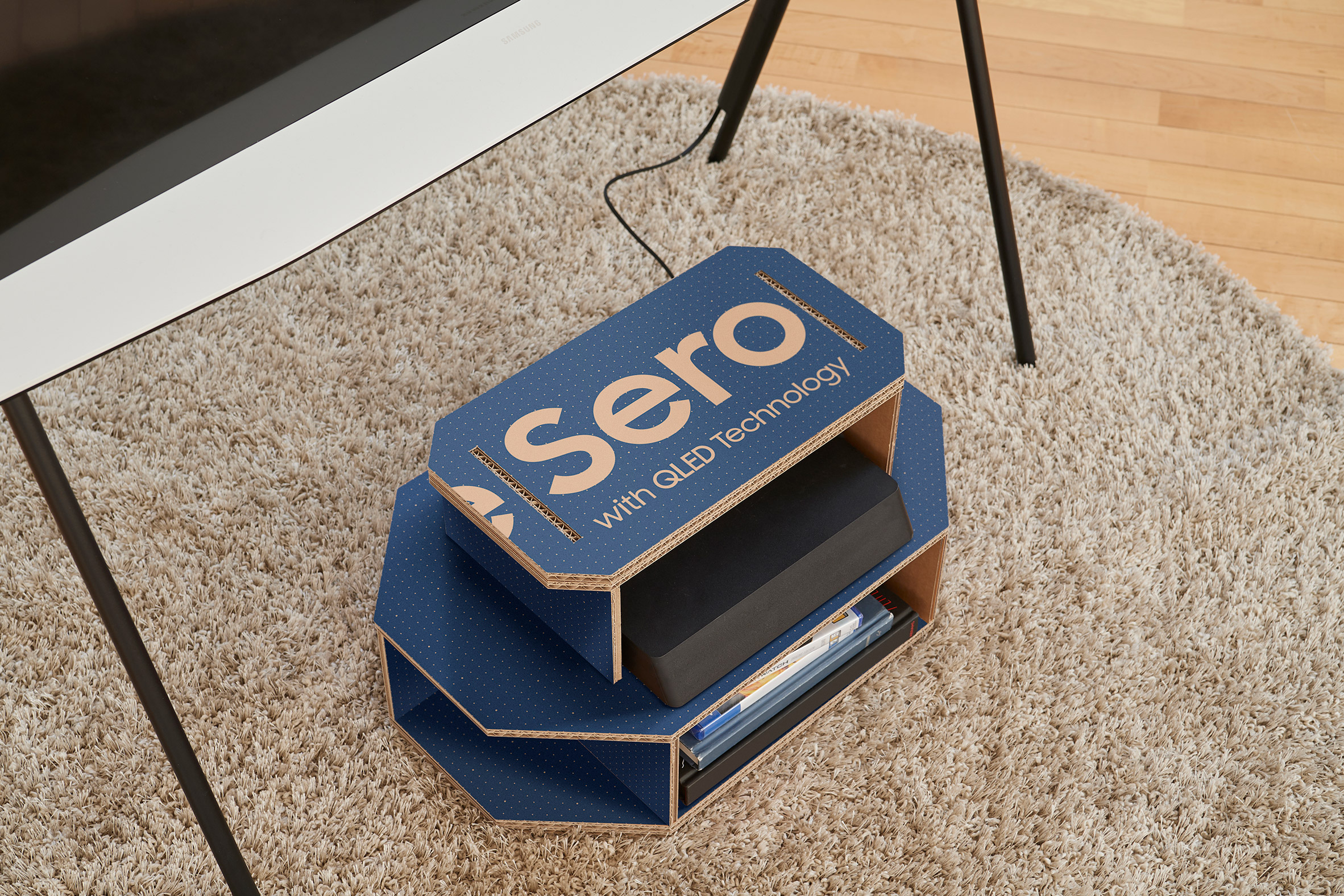
The sturdy nature of the cardboard makes it suitable for constructing a range of different objects. Samsung provides instructions for different furniture designs through a QR code located on the box. Currently available designs include a TV console, a storage box, a magazine rack and even a cat house.
By launching the design contest, Samsung hopes to increase awareness of its Eco-Packaging concept and get more people thinking about and sharing ideas for how cardboard packaging can be repurposed.
"The competition with Dezeen is a way to make our eco-friendly message more widespread, with innovative ideas from entrants," said Samsung. "It is a chance for audiences to consider how to help protect our environment by thinking 'out of the box' about how we can reuse cardboard packaging."
Competition closes on 29 May
Entries for the Samsung Out of the Box competition close at 23:59 BST (UK time) on 29 May 2020.
A shortlist of the best designs will be published on Dezeen in July, with five finalists announced in August.
A jury comprising Samsung executives and Dezeen editors will select first, second and third place. These will be announced on Dezeen and published on Samsung’s @SamsungTV Instagram account in September 2020.
The winner will receive a top prize of $10,000, the runner up will receive $5,000 and third place will receive $3,000. The fourth- and fifth-placed entrants will receive $1,000 each.
For more information about how to enter, including the brief and rules, entry form and full terms and conditions, go to www.dezeen.com/outofthebox.
The post Last chance to enter Samsung and Dezeen's contest for innovative recycled cardboard designs appeared first on Dezeen.


