Monday, 11 May 2020

TAOA designs see-through walls for Landscape House in Beijing

Landscape House by TAOA

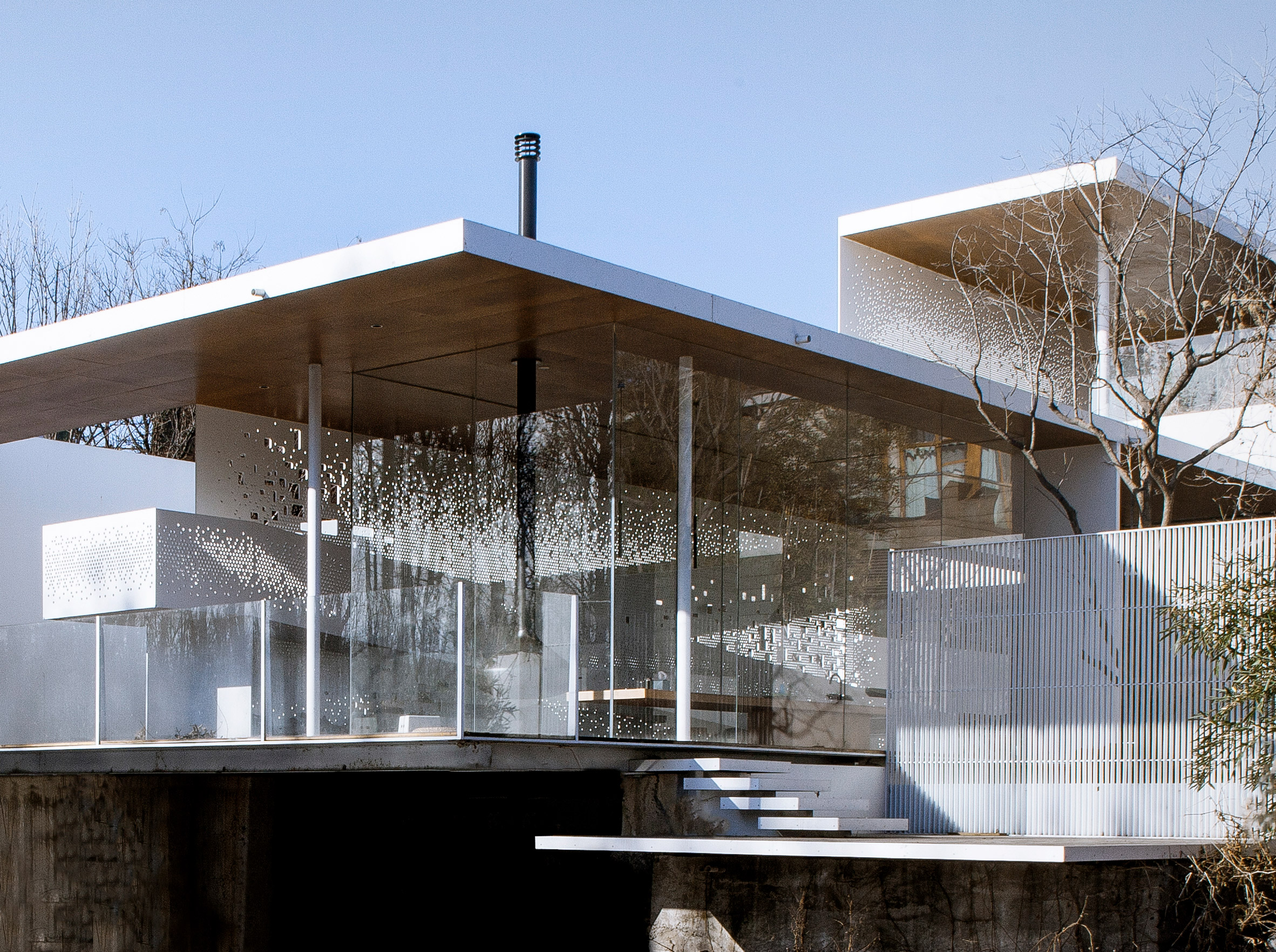
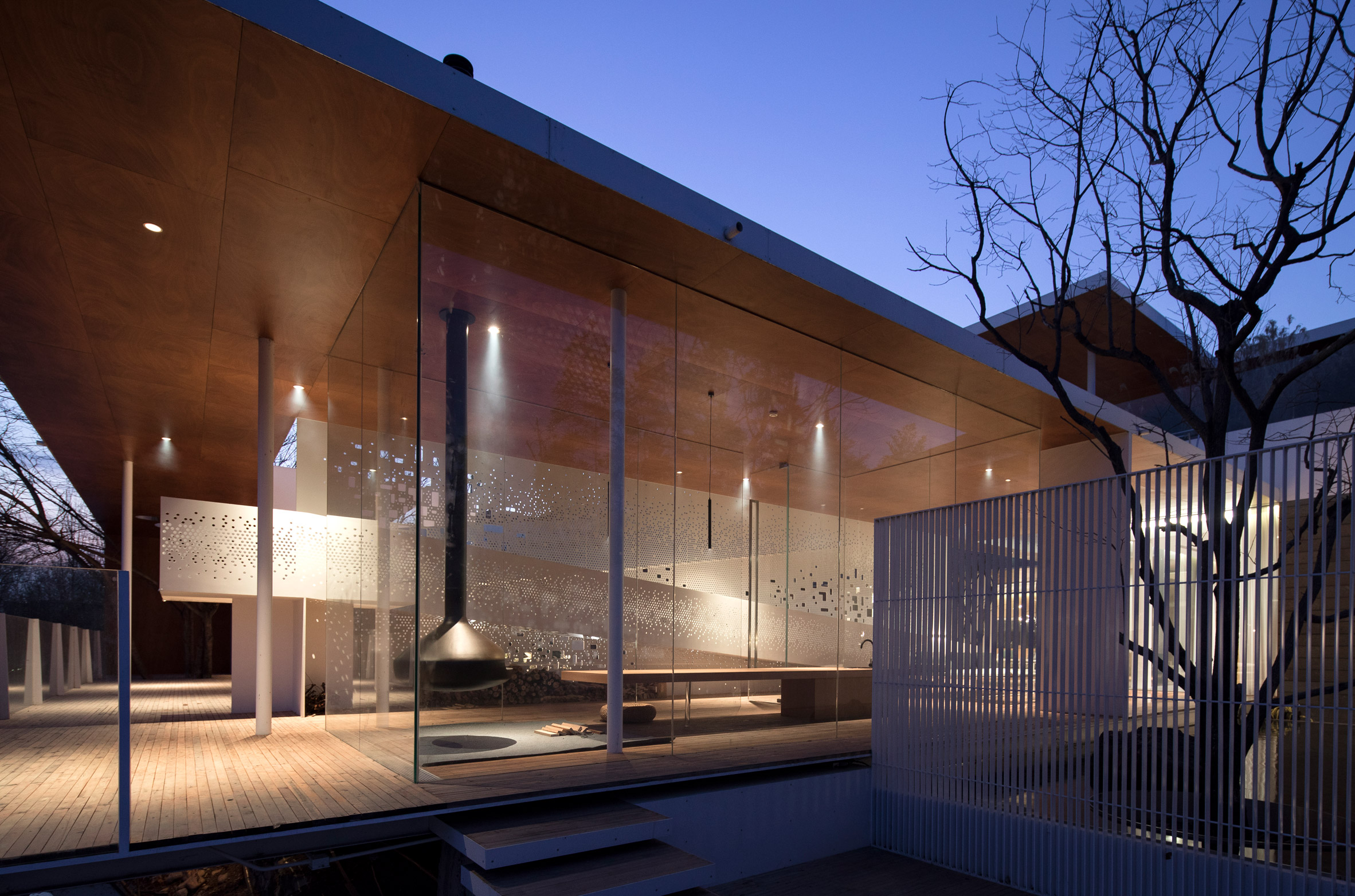
Glass walls and perforated metal screens help to blur the boundaries between inside and outside for this house in Beijing by architecture studio TAOA.
Landscape House by TAOA

Landscape House is a three-storey family home that faces out over a neighbourhood park and lake.

TAOA, led by architect Tao Lei, designed the building to take full advantage of this view. Instead of solid walls, its facade is primarily made up of overlapping see-through surfaces.
Landscape House by TAOA

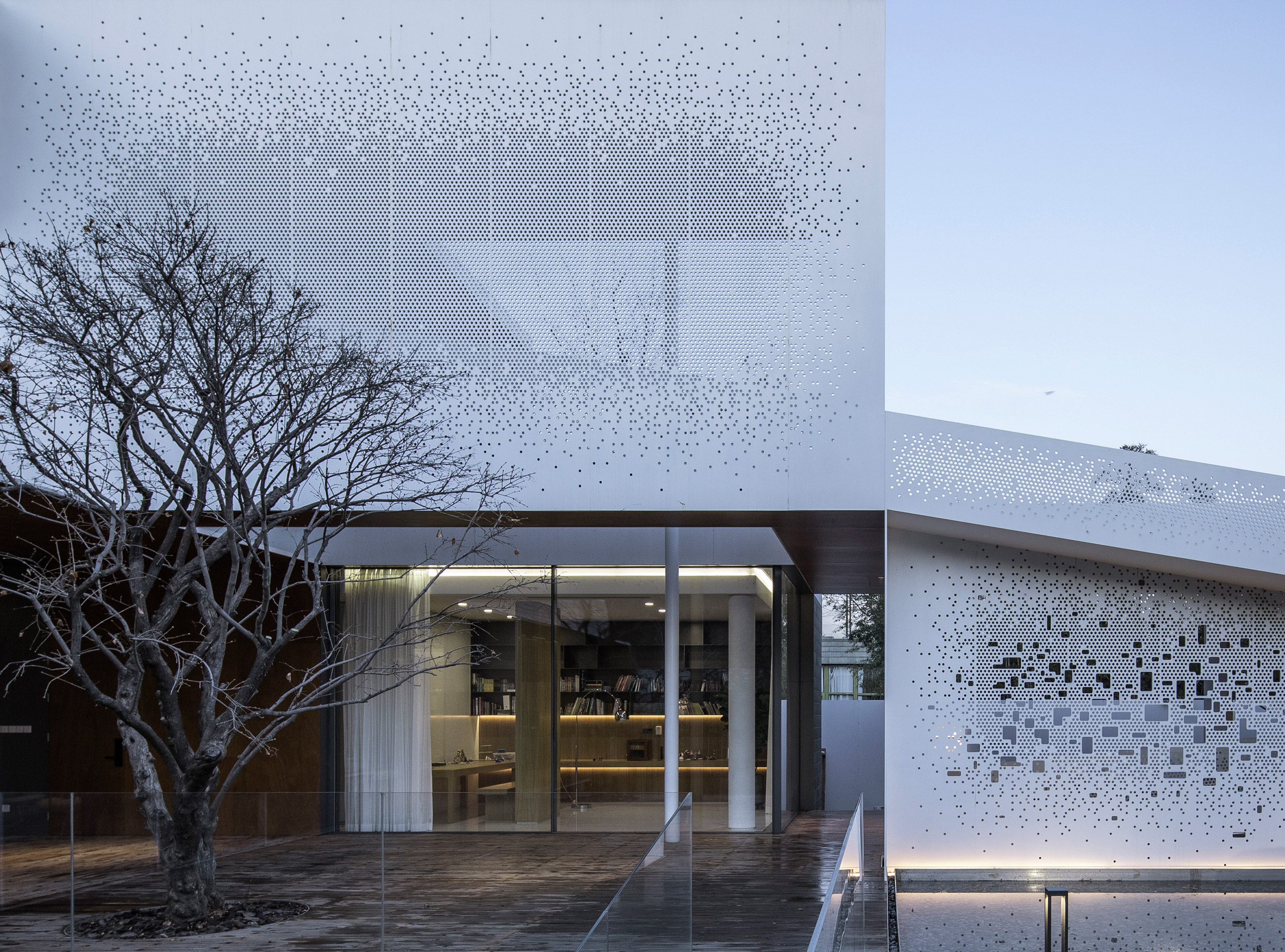
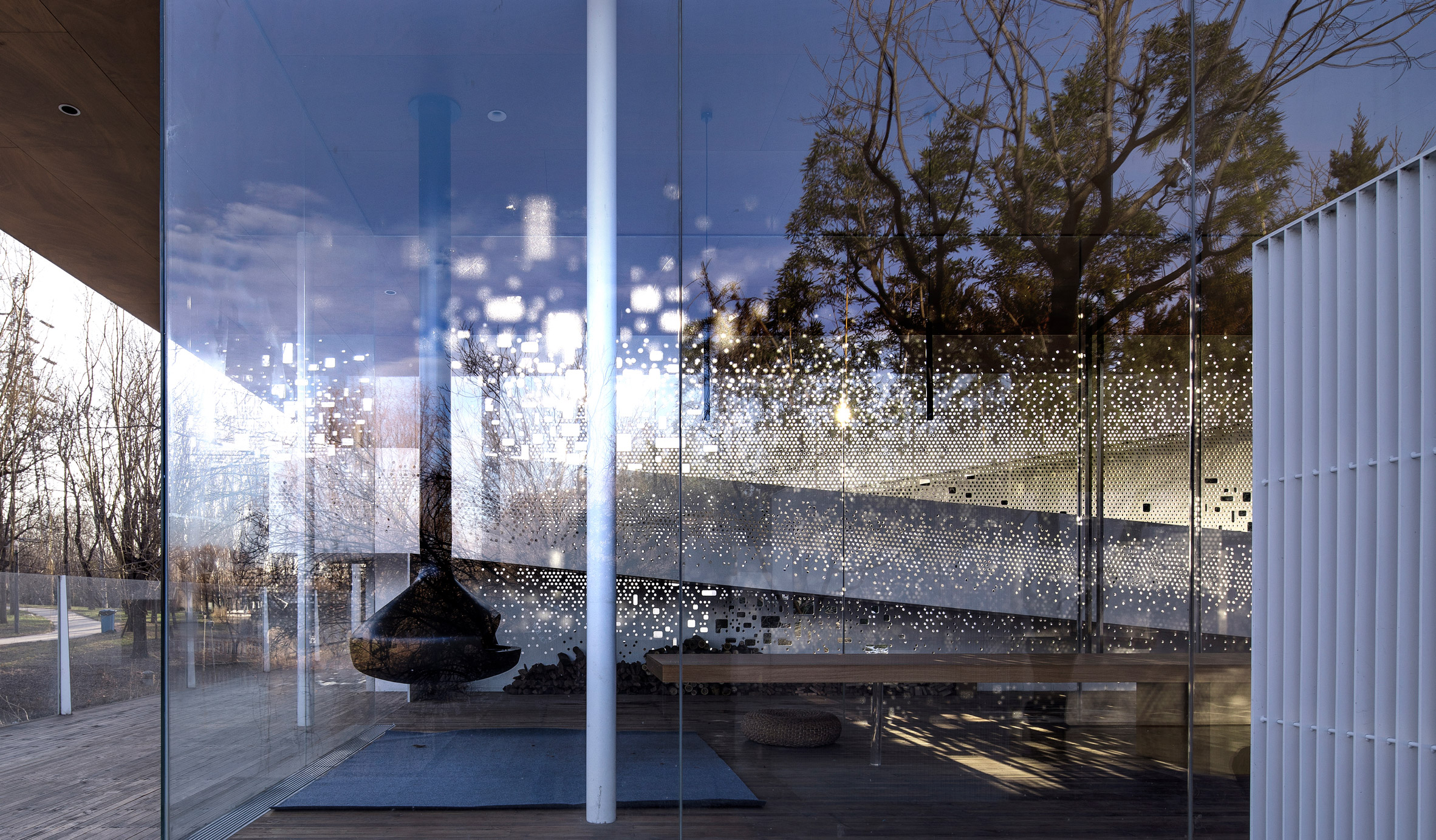
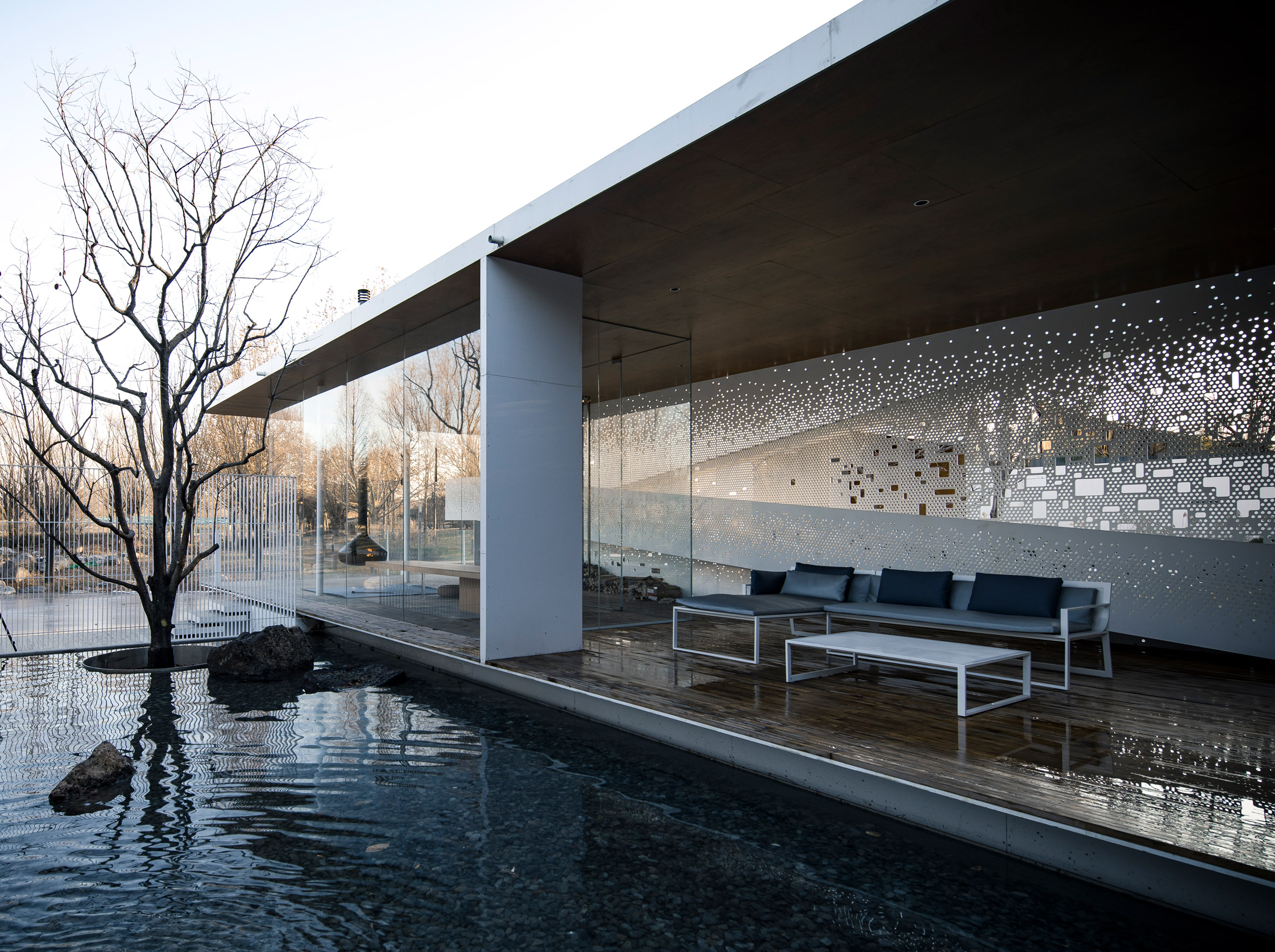
Glass planes span floor to ceiling, creating vast window walls, while white-painted steel panels are punctured by dotted panels, giving occupants a degree of privacy as well as views.

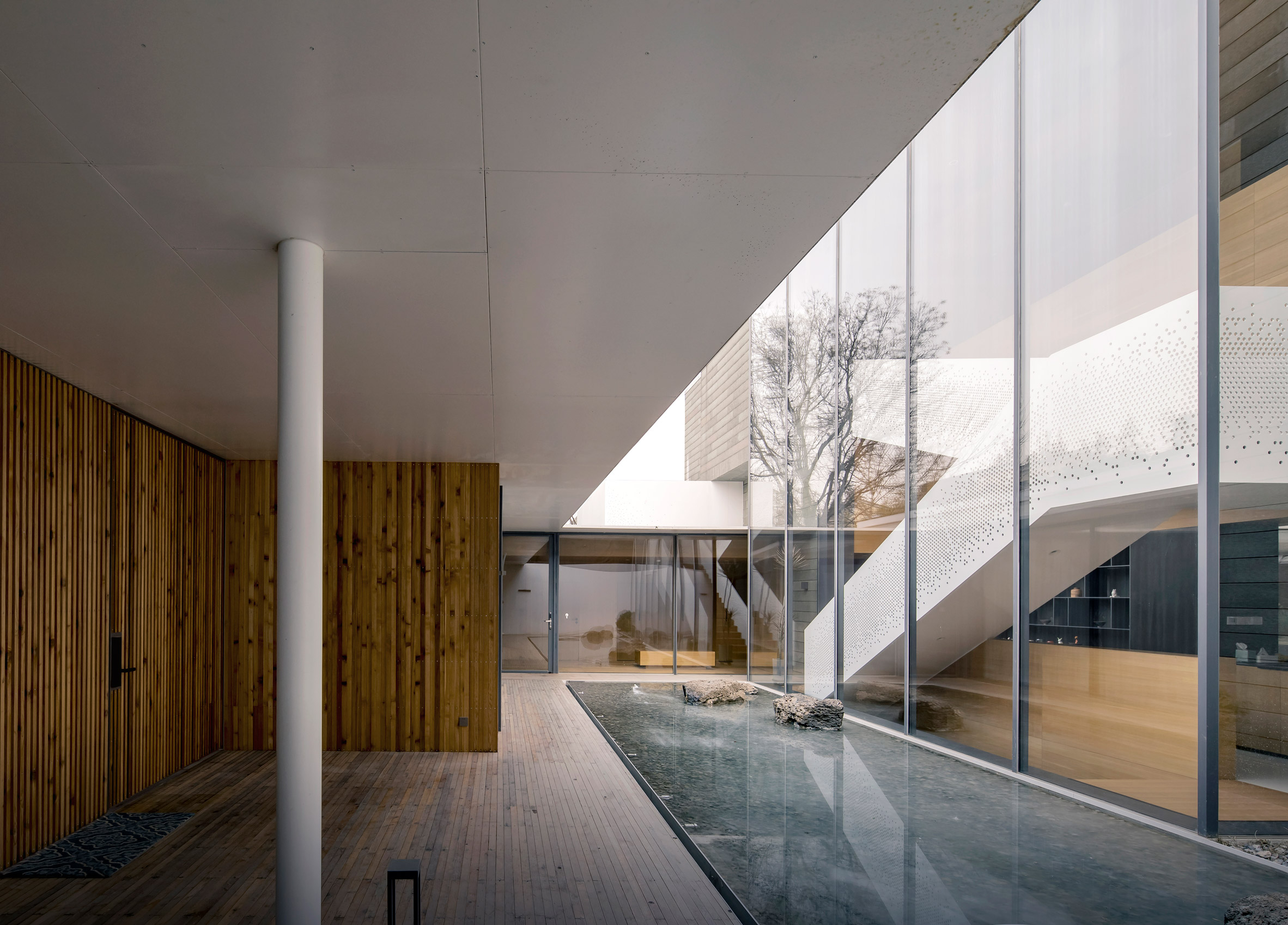
Rooms also wrap around courtyards, creating more opportunities for rooms to face outwards.
Landscape House by TAOA

"The intention of the architecture is to lead the indoor life to the outdoor, so that the owners can enjoy the beautiful environment better," said the studio.

"Because of its special position facing away from the community, the architecture is designed as a semi-private and semi-open space."
Courtyard

The starting point for Landscape House was an existing house that stood on the site. TAOA retained some elements of this structure, but others were replaced in order to create more transparency.

The new building consists of two storeys above ground and one basement floor, organised around two distinct courtyards.
Courtyard

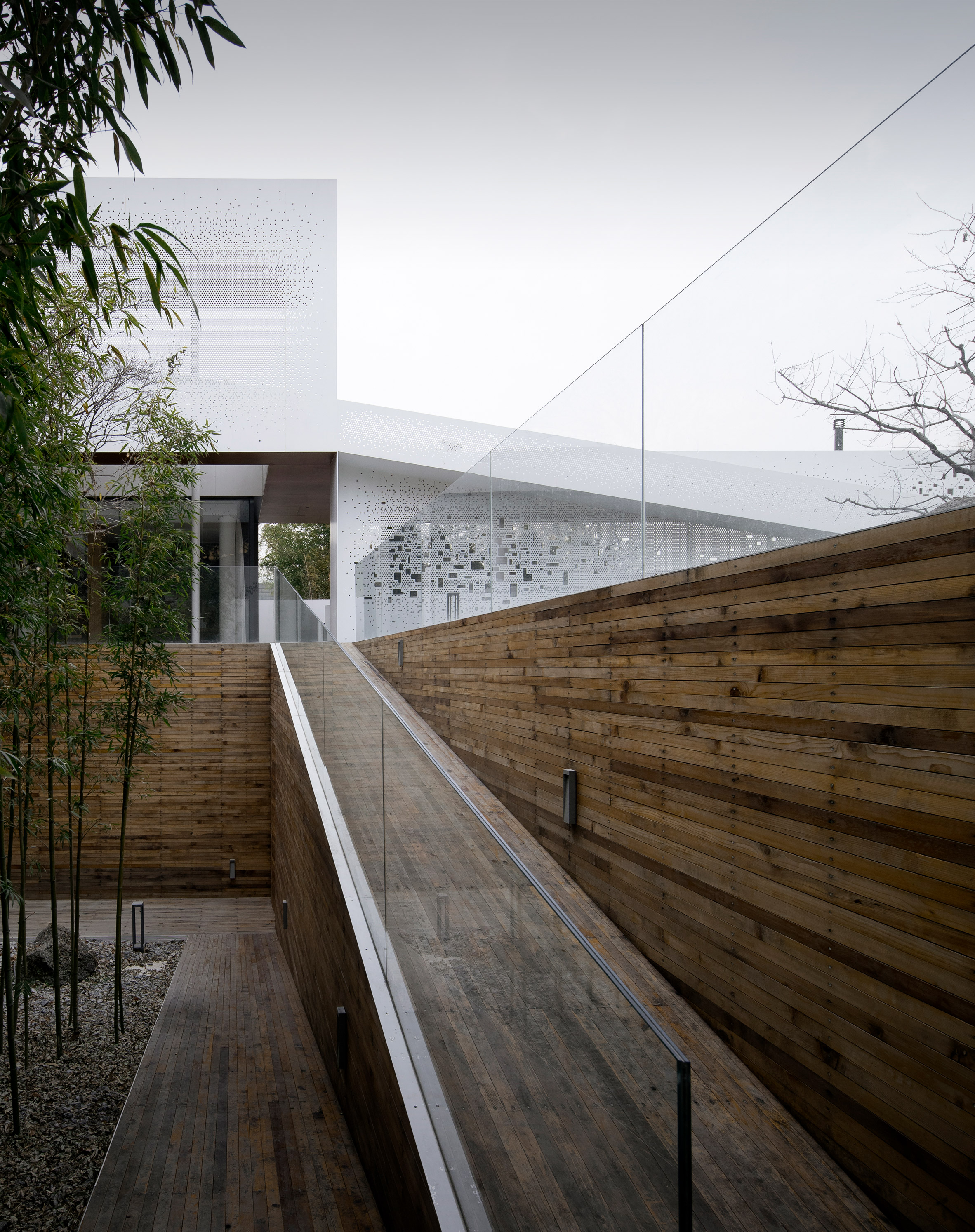
One courtyard is at ground level, while the other reaches down to the basement, to allow as much natural light in as possible.

"The sunken courtyard is designed as a sloping field, which integrates the underground space and the second floor into the continuous and three-dimensional landscape system," said TAOA.
Landscape House by TAOA

The majority of living spaces are located on the ground floor, so that they can easily spill out onto the terrace, while the basement mostly contains rooms less suited to being on show, like the laundry room and the children's playroom.

Three bedrooms are located on the top floor and there is also a guest annex on there ground floor to house grandparents.
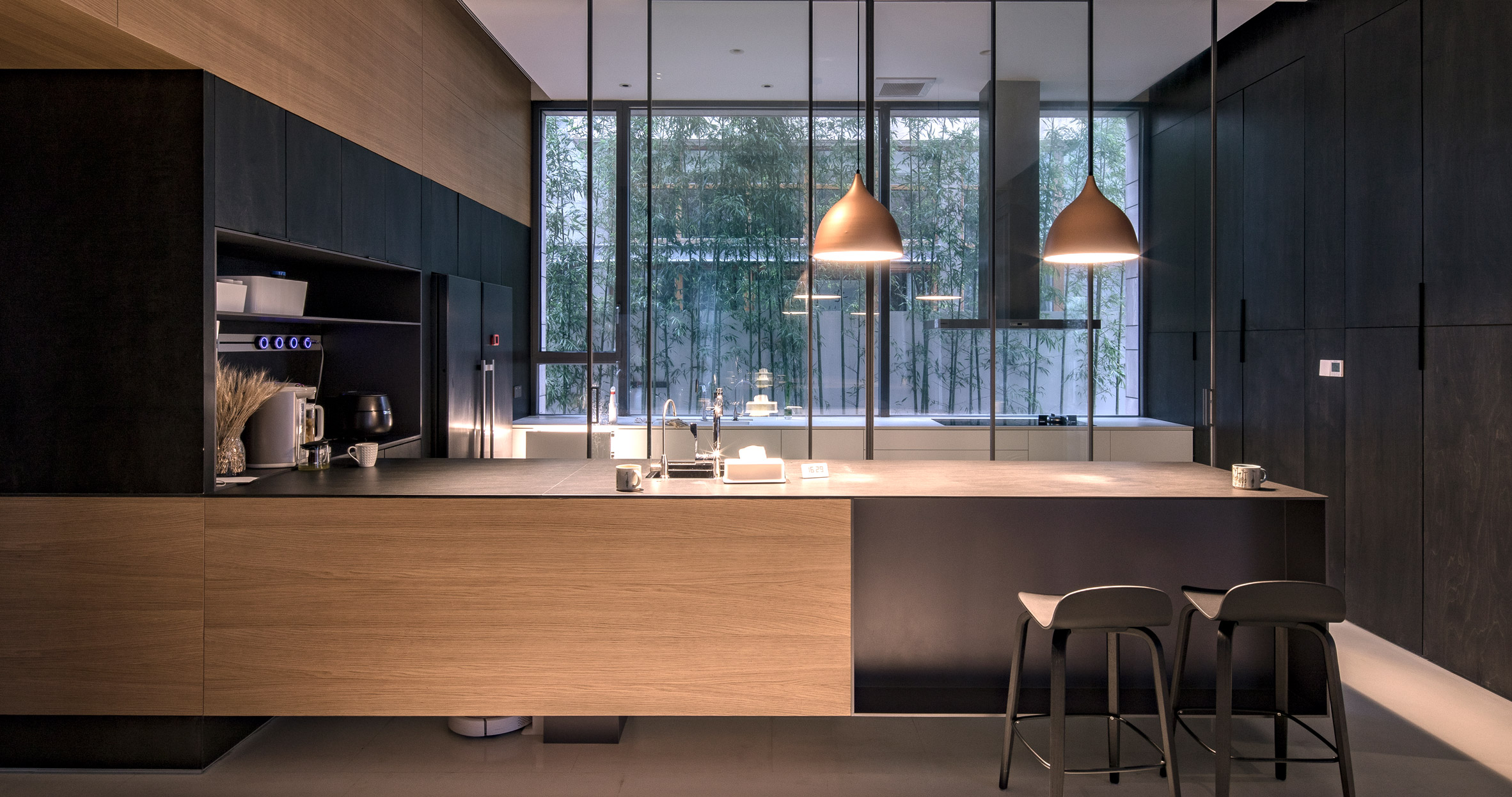
Kitchen

The perforated steel surfaces feature on both internal and external surfaces, helping to tie both parts together. Their speckled perforations create unusual reflections across the glazed walls.

These materials might have appeared cold, but wooden floors and furniture help to achieve a sense of warmth.
Landscape House by TAOA

Other recent house projects completed in China include a converted cement factory in Xiamen and a residence in Yangqing clad in pale green tiles.

Photography is by Tao Lei.


Project credits:

Architecture firm: TAOA
Lead architect: Tao Lei
Design team: Tao Lei, Kang Bozhou, Chen Zhen, Zhao Weixin, Zhou Yumuling
Engineering consultant: Wang Qinghai
Landscape: TAOA
Interior: TAOA
Construction: Team Sheng Changwei

The post TAOA designs see-through walls for Landscape House in Beijing appeared first on Dezeen.


from Dezeen https://ift.tt/3bj7FlG

Maarten Baas creates video showing his designs as "silent witnesses to the limitless opulent world from the past"

Maarten Baas' video looks into the future

Dutch designer Maarten Baas has created a short satirical movie set in a future where Western society has suffered a dramatic decline and his works are found gathering dust in his warehouse.

The film, set "Somewhere in the future, somewhere in Western Europe" according to the opening titles, shows pieces from Baas' career including his Sweeper Clock and Smoke collection sitting on warehouse shelves.

"At the dawn of the 21st century, Maarten Baas was internationally recognized and celebrated as one of the world's most influential designers," says the voiceover.

"His work graced the collections of prestigious museums such as the Victoria & Albert in London and the MoMA in New York at a time when these leading capitals were physical manifestations of a rich and successful Western society".

"Maarten Baas himself was once a symbol of this time of conspicuous wealth and freedom, his warehouse a vivid epicentre of artistic activities," the narration continues.

"Today, artworks that used to break records at auctions are now only catching dust. They're silent witnesses to the limitless opulent world from the past."

The movie ends with a closing title that says: "Let's reset".

The film follows the video message Baas filmed for Dezeen's Virtual Design Festival, which saw the designer explaining how he is faring during coronavirus lockdown.

"This is how I cope with the situation," Baas says in the movie, which features various shots of him pondering what to do.

The post Maarten Baas creates video showing his designs as "silent witnesses to the limitless opulent world from the past" appeared first on Dezeen.


from Dezeen https://ift.tt/2WlzWUj

Mark Odom pays homage to the 1950s with Inglewood Residence in Austin

Inglewood Residence by Mark Odom Studio

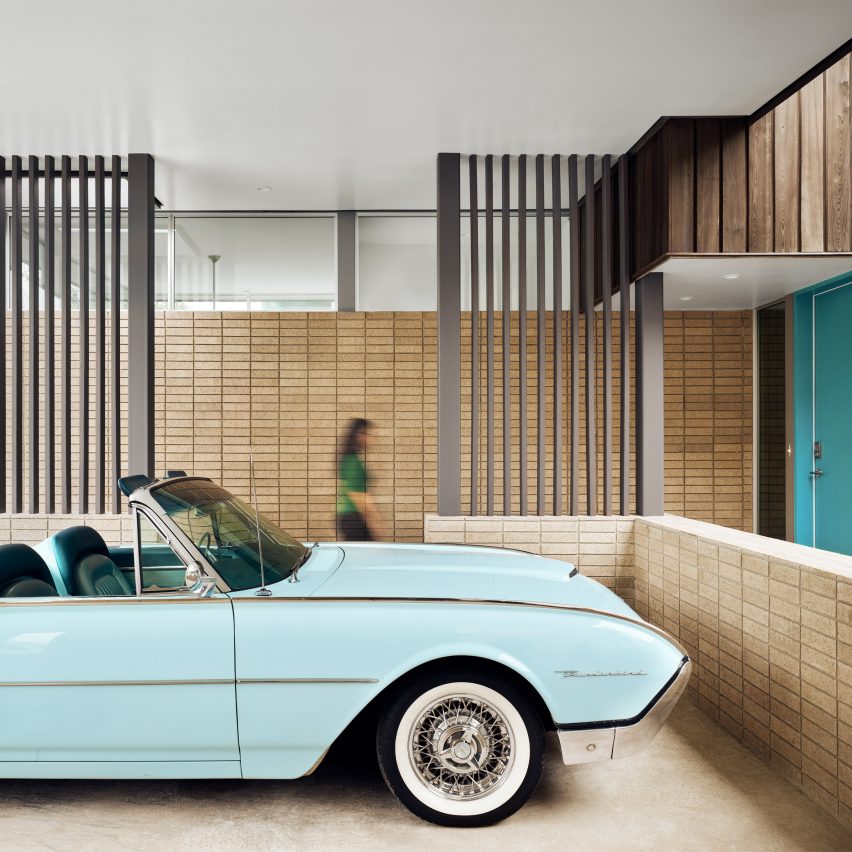
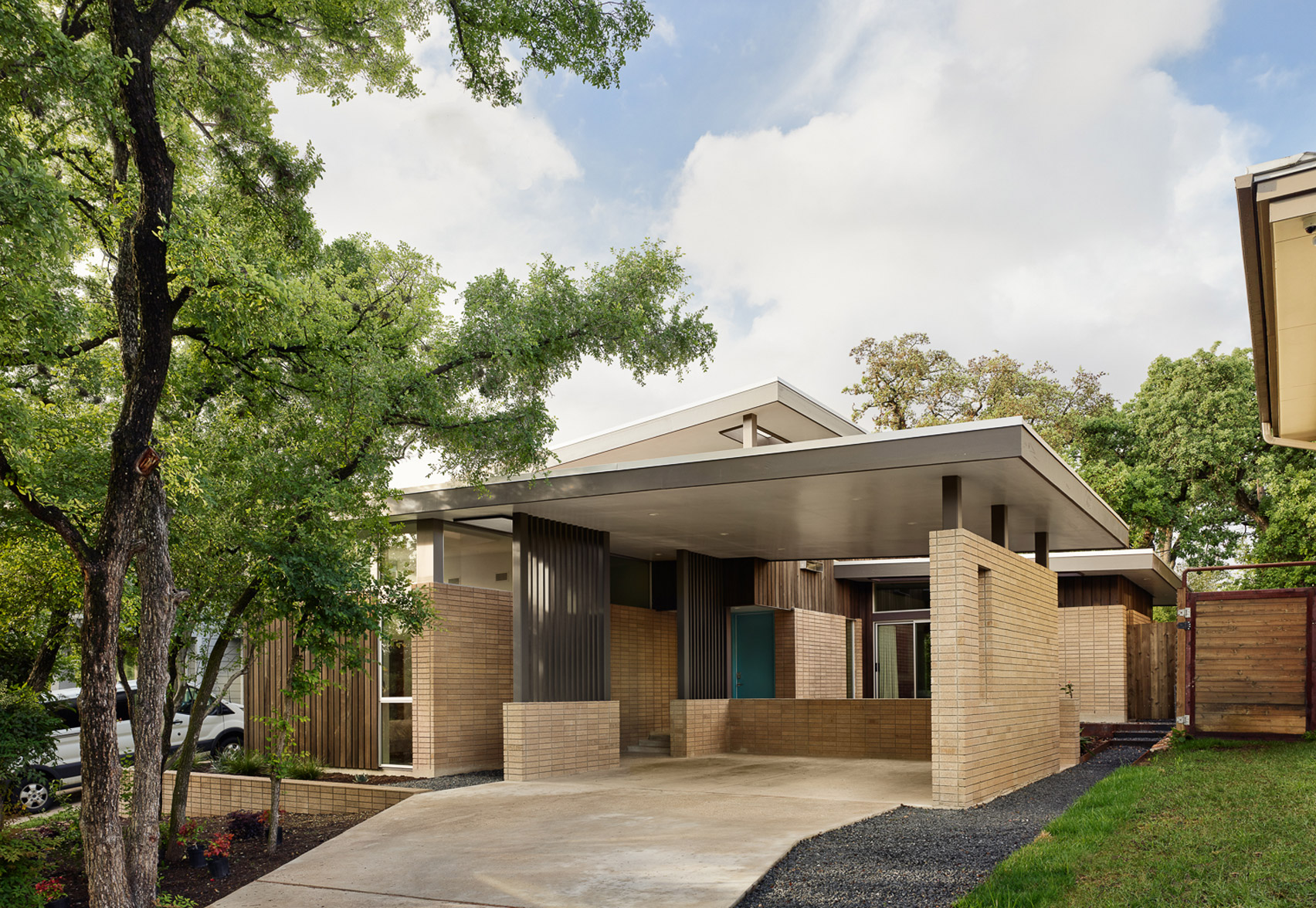
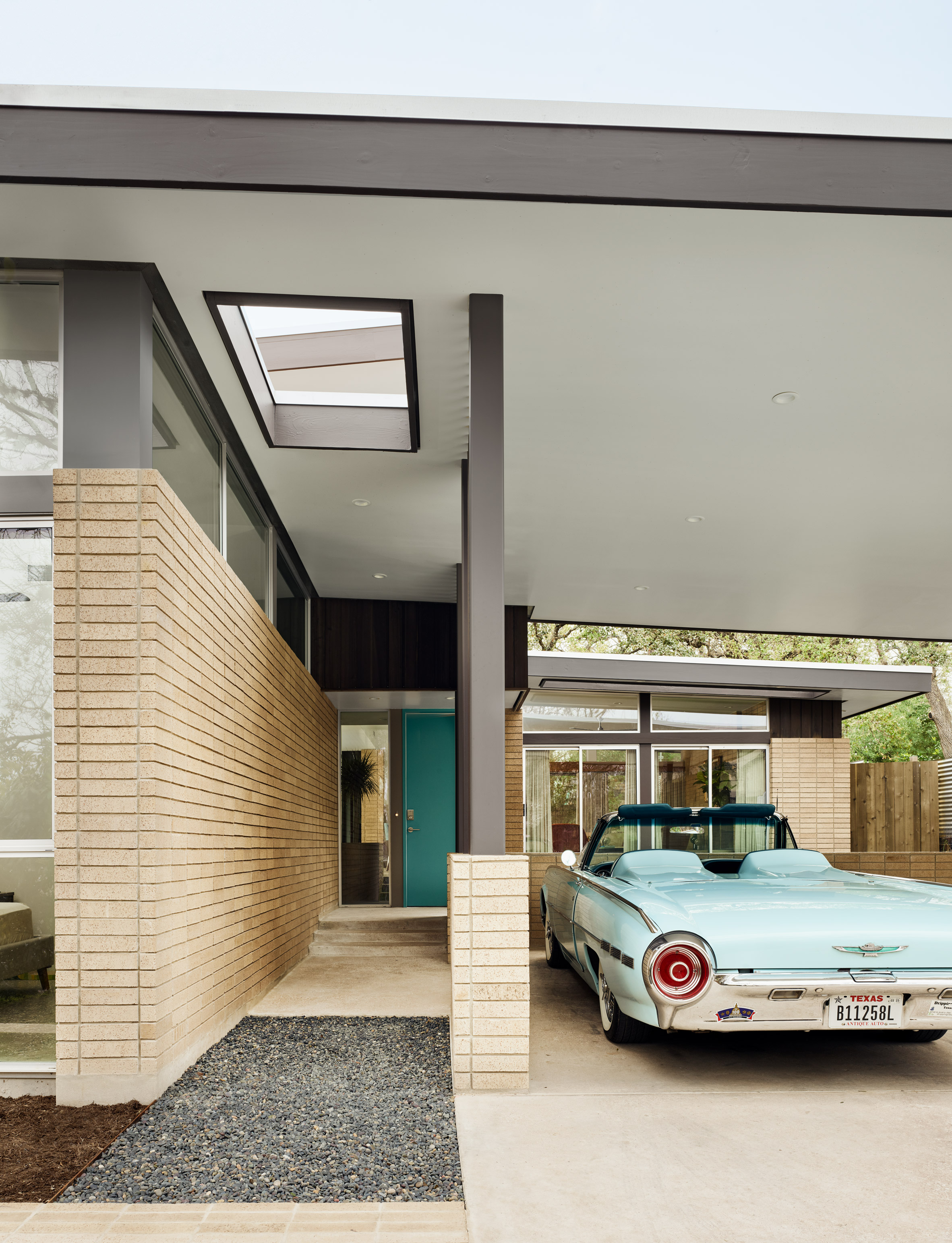
A vintage El Camino parked outside this house in Austin, designed by Texas firm Mark Odom Studio, adds to its mid-century modern aesthetic.

Slatted screens, pale masonry walls, and a pebbled roof are among the features typical to 1950s homes included in the project, called Inglewood Residence.

Inglewood Residence by Mark Odom Studio

"The homeowner has a deep appreciation for mid-century architecture and expressed wanting all the elements you would find in a quintessential mid-century design home," said studio founder Mark Odom.

The resident, who was the civil engineer on the project, is also a fan of the aqua vintage El Camino, shown in parked in the covered garage at the front in photographs. Its colour informed the hue of the front door.

Inglewood Residence by Mark Odom Studio

Measuring 2,400 square feet (223 square metres), the residence is built to preserve existing trees growing on the site. The garage is placed in front of a small entrance yard where one of the trees grows, while the others are located in the back garden.

Mark Odom Studio placed a long, slender volume on one side of the plot to make way for these outdoor areas. The open-plan lounge, kitchen and dining room is arranged to protrude from this form and sit in between the front and rear yards.

Inglewood Residence by Mark Odom Studio

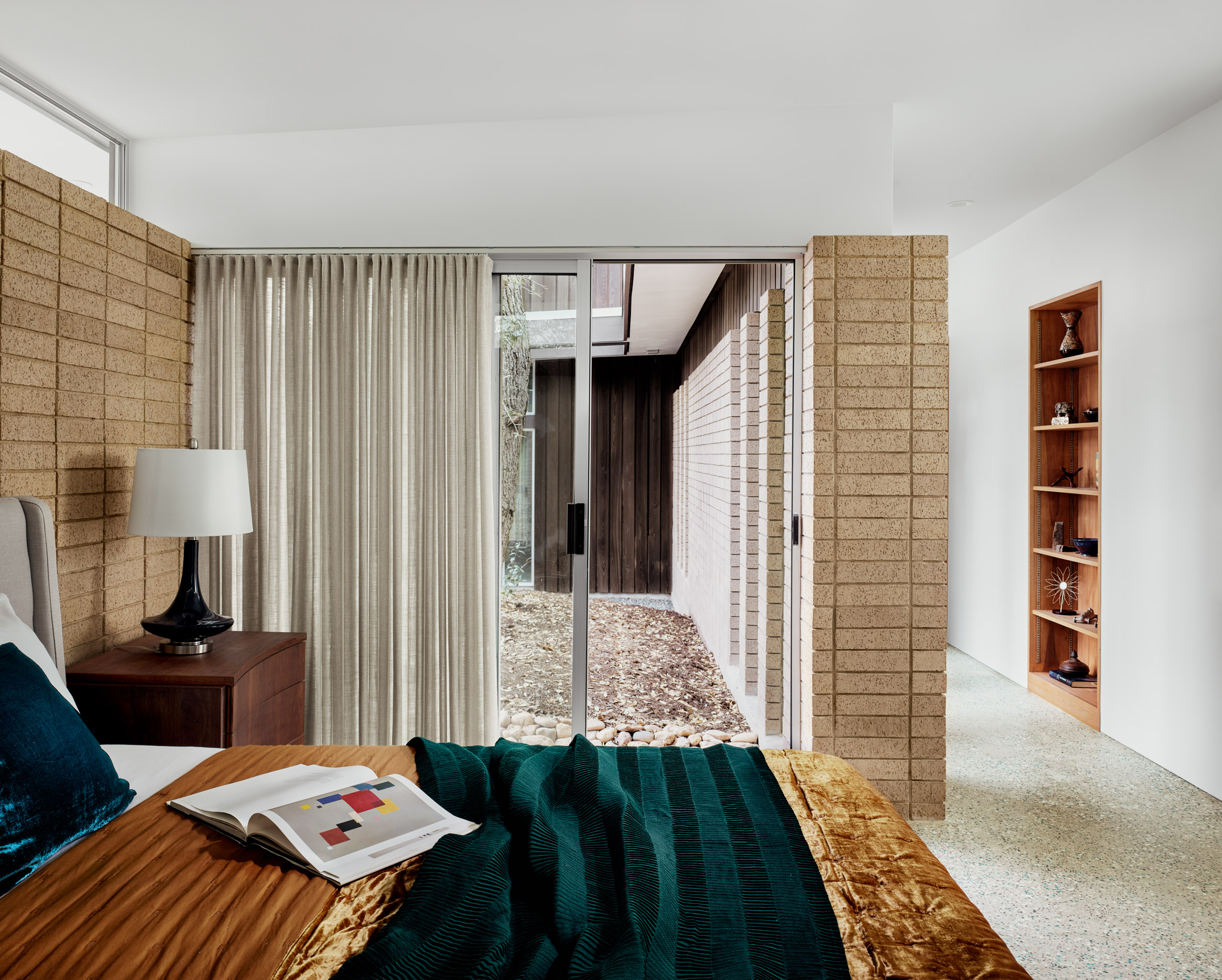
A third courtyard is also placed next to the kitchen, with sliding glass doors allowing for plenty of natural light.

"The intended experience is to feel continuously connected with nature while moving through the house," said Odom.

Inglewood Residence by Mark Odom Studio

"The design inspiration was based on the 'courtyard house', centered around the existing trees as well as making sure natural light spilled into all interior spaces," he added.

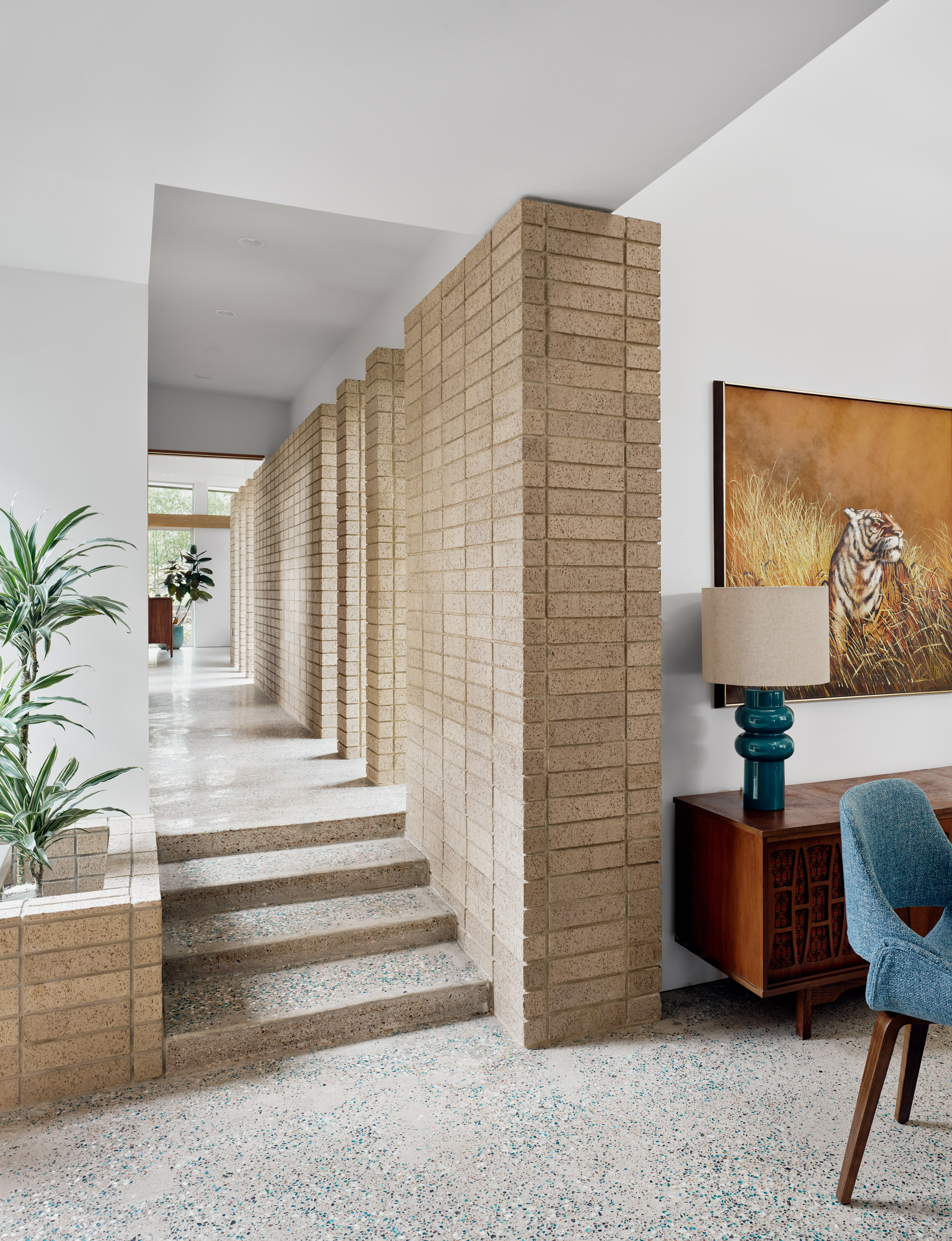
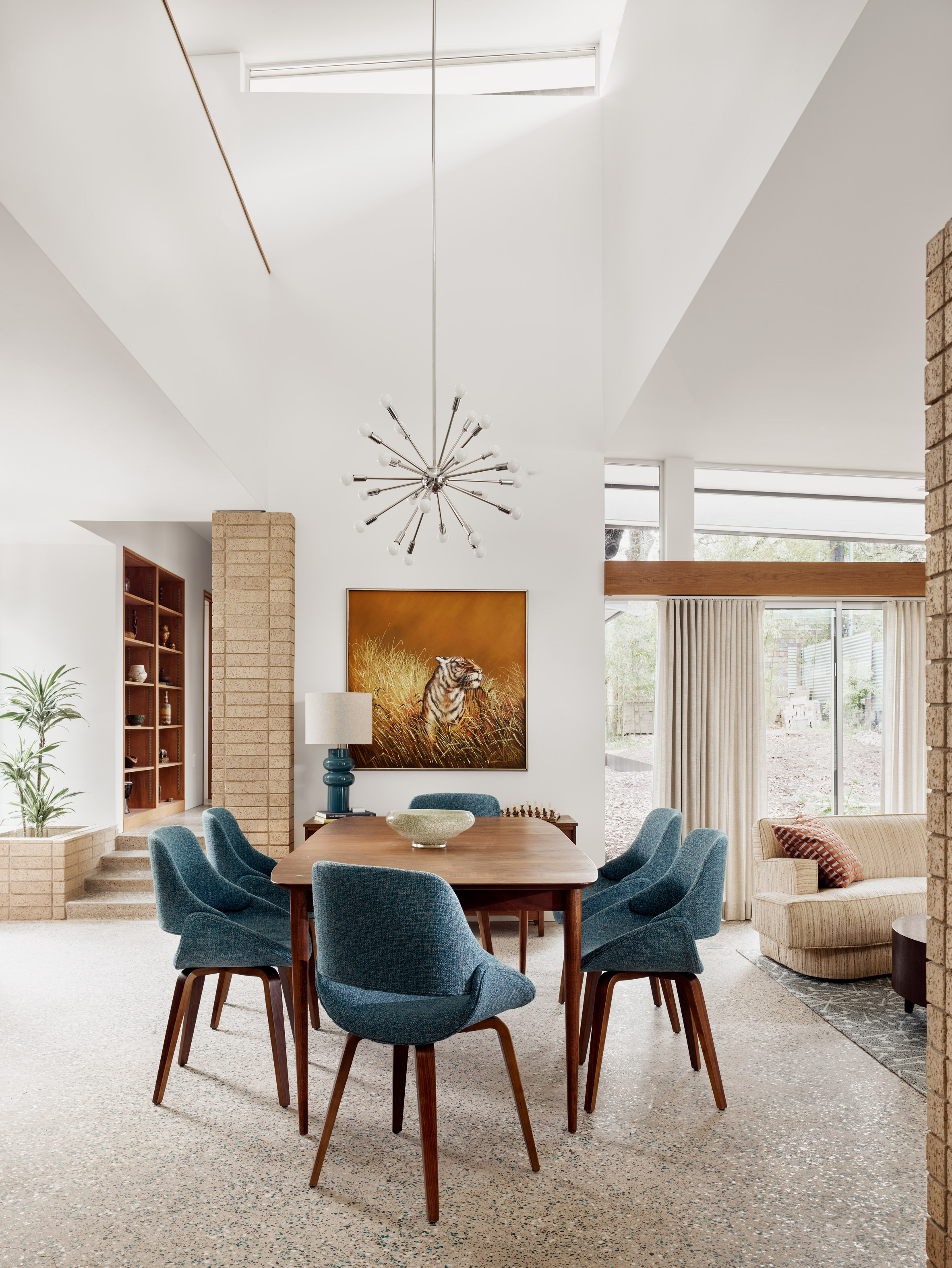
Pale masonry blocks on the exterior continue inside forming a spine that runs lengthways down the residence.

Inglewood Residence by Mark Odom Studio

Inglewood Residence is mainly on the ground floor, apart from a small second mezzanine loft. Slight level changes are therefore used as a way to differentiate between areas.

Three steps, for example, lead from the entrance hallway up to the main living area. Another set of steps lead from the kitchen to down to two bedrooms placed towards the front of the house.

Inglewood Residence by Mark Odom Studio

A master bedroom suite and a utility room are set on a slightly higher level towards the rear of the house.

Covering the floor is terrazzo made from 1800 pounds of coloured glass the team "hand spread" as the concrete foundation was laid. Interior walls are then all painted white, aside from the exposed brick.

Inglewood Residence by Mark Odom Studio

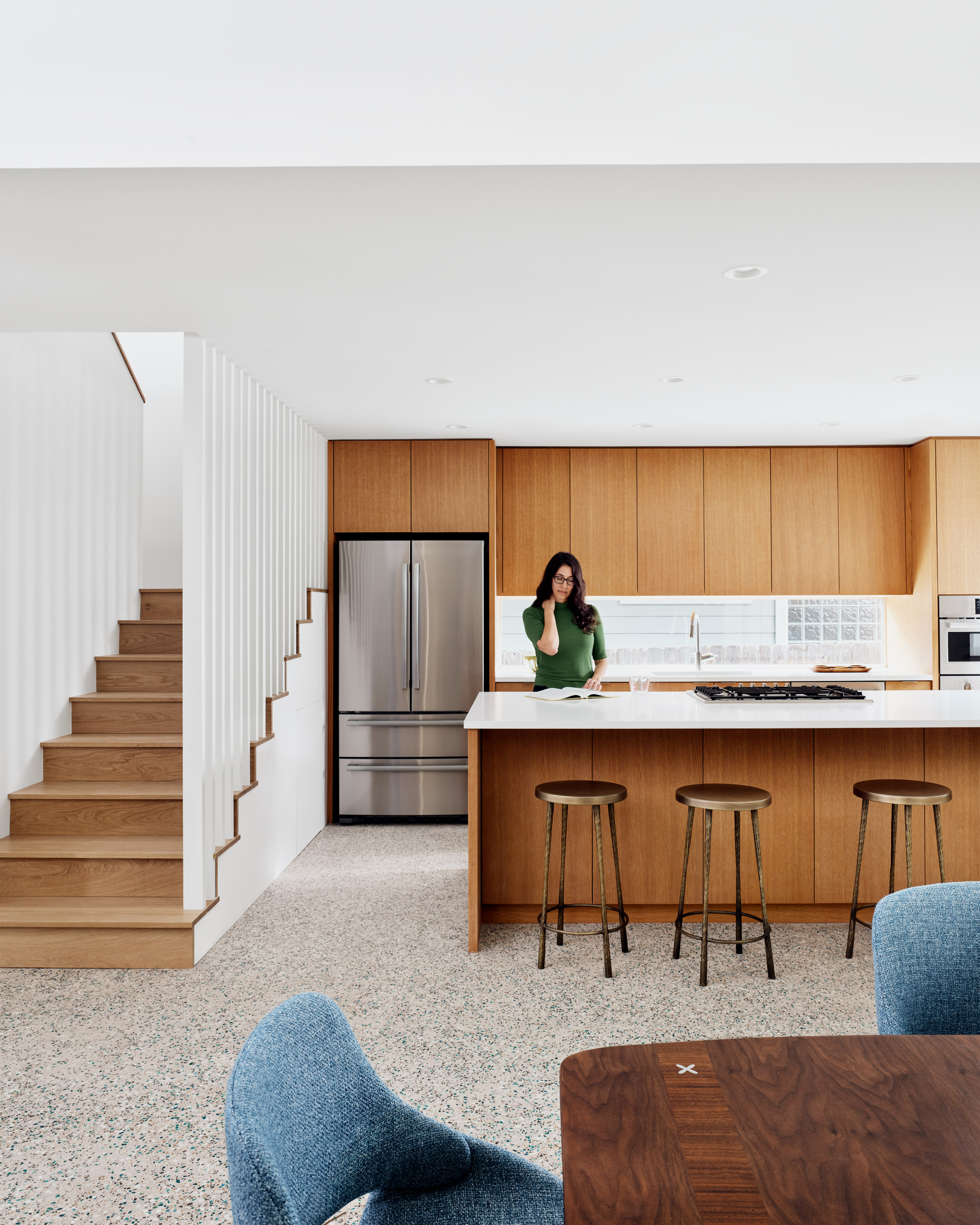
Details are offered by touches of wood like the kitchen cabinetry and treads of the staircase, which peep through the slatted white balustrade and wall that separates the stair from the kitchen.

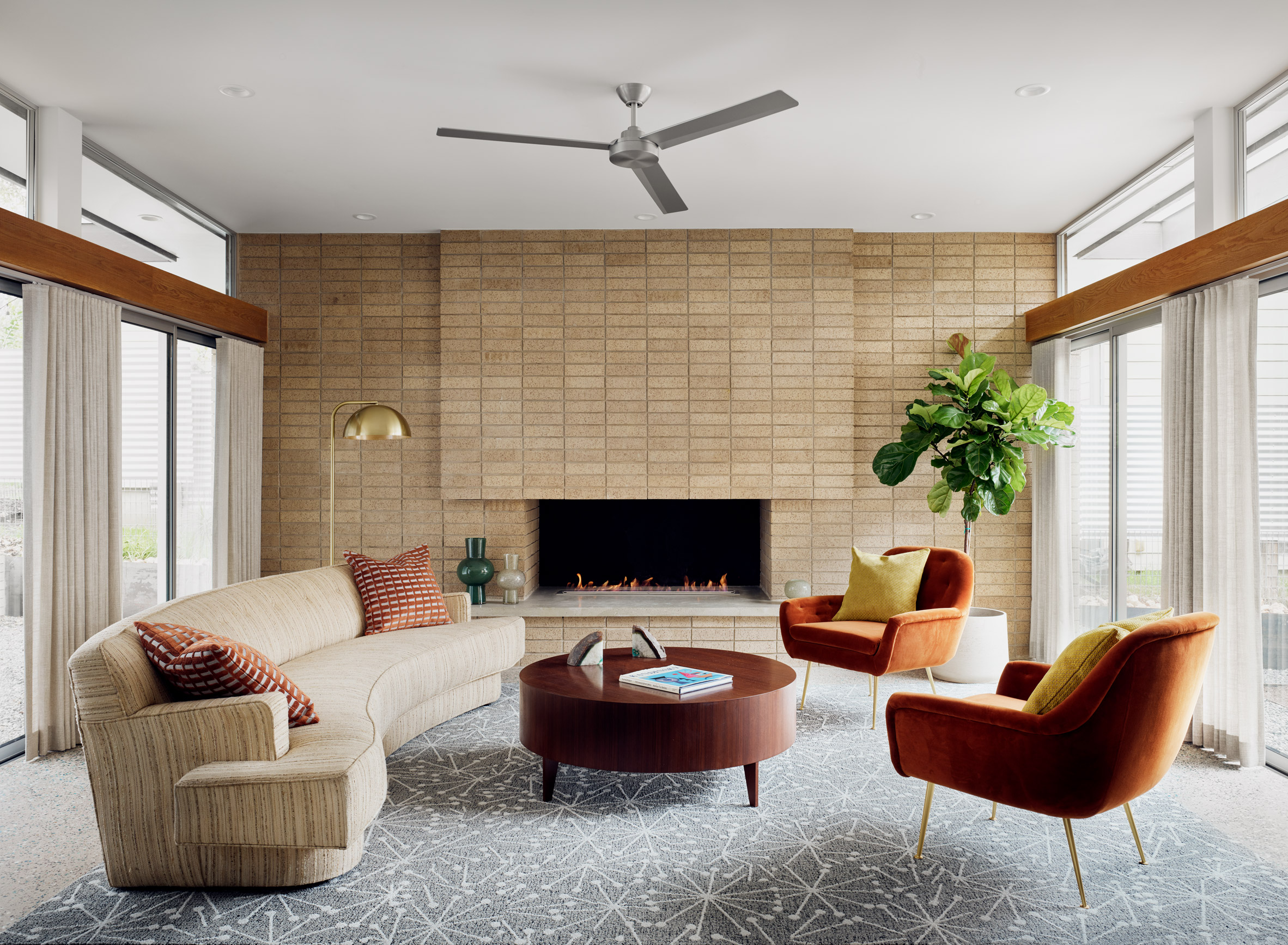
In the lounge, wooden frames for lightweight, white curtains run below clerestory windows. Other nods to the mid-century in this room include the brickwork fireplace and the furnishings, like the curved sofa.

Inglewood Residence by Mark Odom Studio

The team also used wooden bookshelves sourced from the classroom of the client's father, who used to be a school teacher.

Mark Odom Studio was founded in 2004, and has offices in both Austin and San Antonio. The firm's previous projects include the restoration of a mid-century building for Austin insurance company BKCW.

Photography is by Casey Dunn.


Project credits:

Architect: Mark Odom Studio
Structural: PCW Construction, Inc.
Civil: Thrower Design, Neslie Cook (owner)
Builder: Doug Cameron, Eco Safe Spaces
Landscape: Mark Odom Studio Eco Safe Spaces
Interiors: Mark Odom Studio
Interior furnishing: Ruby Cloutier

The post Mark Odom pays homage to the 1950s with Inglewood Residence in Austin appeared first on Dezeen.


from Dezeen https://ift.tt/3bmapih

A Woman and A Fish Time Travel Through A Heartfelt Short Film Directed by Ben Brand

“Does everything you throw in the ocean eventually come back to you?” asks Amsterdam-based director Ben Brand. His new short film, titled “Sea You,” opens with a gray-haired woman sitting at her dining table, except rather than a tear rolling down her cheek, it retreats to her watering eye. This sets in motion a series of events chronicled in reverse: the protagonist is shown riding her bike backward toward the market, while the fish she intended to eat earlier undergoes a packing process in which it’s unwrapped.

Brand said the sincere animation was born out of a story of loss. “When my girlfriend told me the story of her family spreading her deceased grandmother’s ash over the sea (like a lot of people around the world do), I started wondering what actually happens to all that ash,” he writes. As the director reveals in “Sea You,” everything released into the water somehow returns.

Watch the full video below, and follow Brand’s thoughtful animations on Vimeo and Instagram.


from Colossal https://ift.tt/3dA1on5

"Offices are going to get much smaller" after pandemic says Sevil Peach

"Offices are going to get much smaller" after pandemic says Sevil Peach

Large offices will become a thing of the past according to interior designer Sevil Peach, who predicts that corporate towers will be replaced by smaller hubs as staff work from home offices and co-working spaces as a result of coronavirus.

Companies will maintain smaller offices as central "hubs" while large company headquarters in tall buildings are "just going to go", the designer predicted.

"What is likely to happen is that the offices are going to get much smaller inside," said Peach, cofounder of London architecture and interiors studio SevilPeach.

"There's going to be more home working, or working away from the office."

"That could be in a co-working place, for example, for people who cannot work from home because not every home is suitable for working," she added. "You may have four children running around and you may not have enough rooms."

"There's going to be more flexible working"

Crowded offices that make social distancing difficult could hamper efforts to contain the virus as countries attempt to return to normal after lockdown.

"There's going to be more flexible working," said Peach. "So people could work locally from wherever they are, whether it's from a cafe or from a co-working place."

Peach, who was both a judge and a winner at Dezeen Awards 2019, made the comments during a live conversation with other judges and winners held as part of Virtual Design Festival last week.

Employees will visit office hubs for face-to-face meetings and to carry out work that cannot be done remotely, Peach said during the live conversation, which also involved architect Arthur Mamou-Mani, designer Adam Nathaniel Furman and gallerist Talenia Phua Gajardo, all of whom are judges for Dezeen Awards 2020.

"But we'll be also coming to a central hub, which will be the smaller office of the companies," she said. "I think the nature of 23-storey-high offices is just going to go. We are going to get much smaller, I think."

Social distancing will have long-term impact 

Peach's comments come as architects and designers attempt to divine the long-term impact the pandemic, and the potential need for ongoing social distancing rules, will have on their work.

In a report published last week, Dubai interiors studio Roar predicted that restaurants will abandon menus, buffets and cash payments and commission escapist interiors.

SevilPeach was named Interior designer of the year at Dezeen Awards 2019. "SevilPeach's work is intelligent and skilfully put together," said the judges. "It designs peaceful, calming spaces that appear effortless."

"The animated interiors play with light, acoustics and moments of colour."

Projects by SevilPeach include the headquarters for Finnish furniture brand Artek, and the conversion of a London house once owned by a Victorian illustrator.

The deadline for entries to Dezeen Awards 2020 is 2 June.

The post "Offices are going to get much smaller" after pandemic says Sevil Peach appeared first on Dezeen.


from Dezeen https://ift.tt/3dD9RWy