
For her portraits, the London-based photographer seeks out the intimate and unexpected connections made between people.

from It's Nice That https://ift.tt/3cqzZDZ
For her portraits, the London-based photographer seeks out the intimate and unexpected connections made between people.
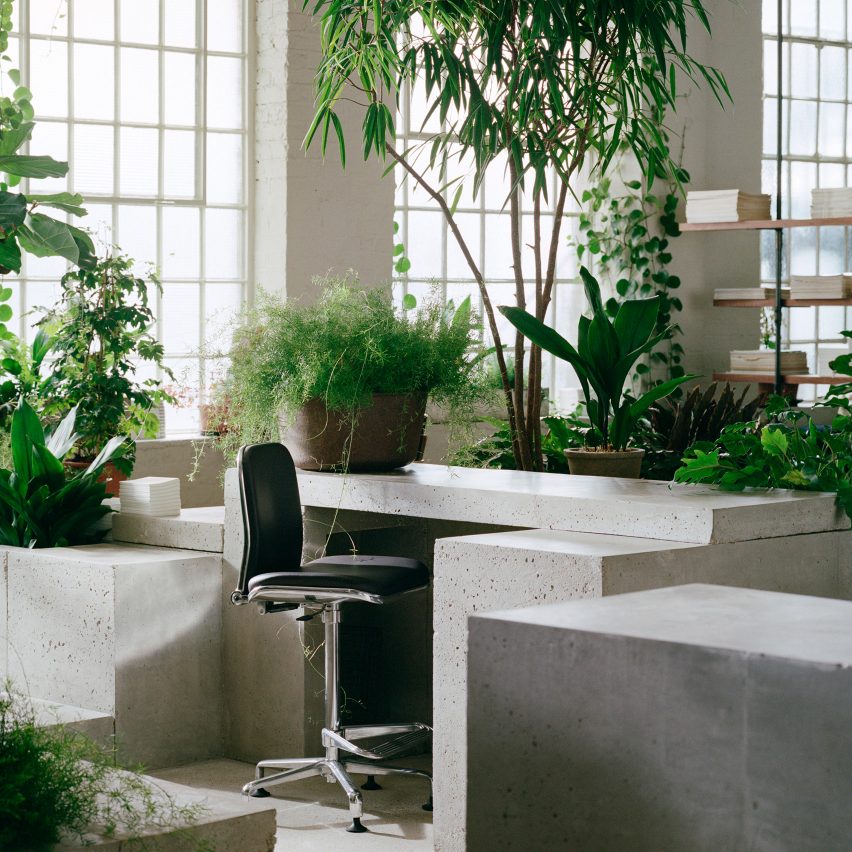
Blocky concrete plinths dominate lighting brand PSLab's London HQ, which local studio JamesPlumb has designed to evoke "quiet brutalism".
Tucked down a quiet side street in south London's Bermondsey neighbourhood, PSLab's HQ occupies a Victorian-era tannery – a place where animal hides are processed to produce leather.
The lighting brand, which originally launched in Beirut, tasked JamesPlumb with transforming the historic building into a sequence of "defined yet intertwined" work areas where its staff could easily interact and collaborate.
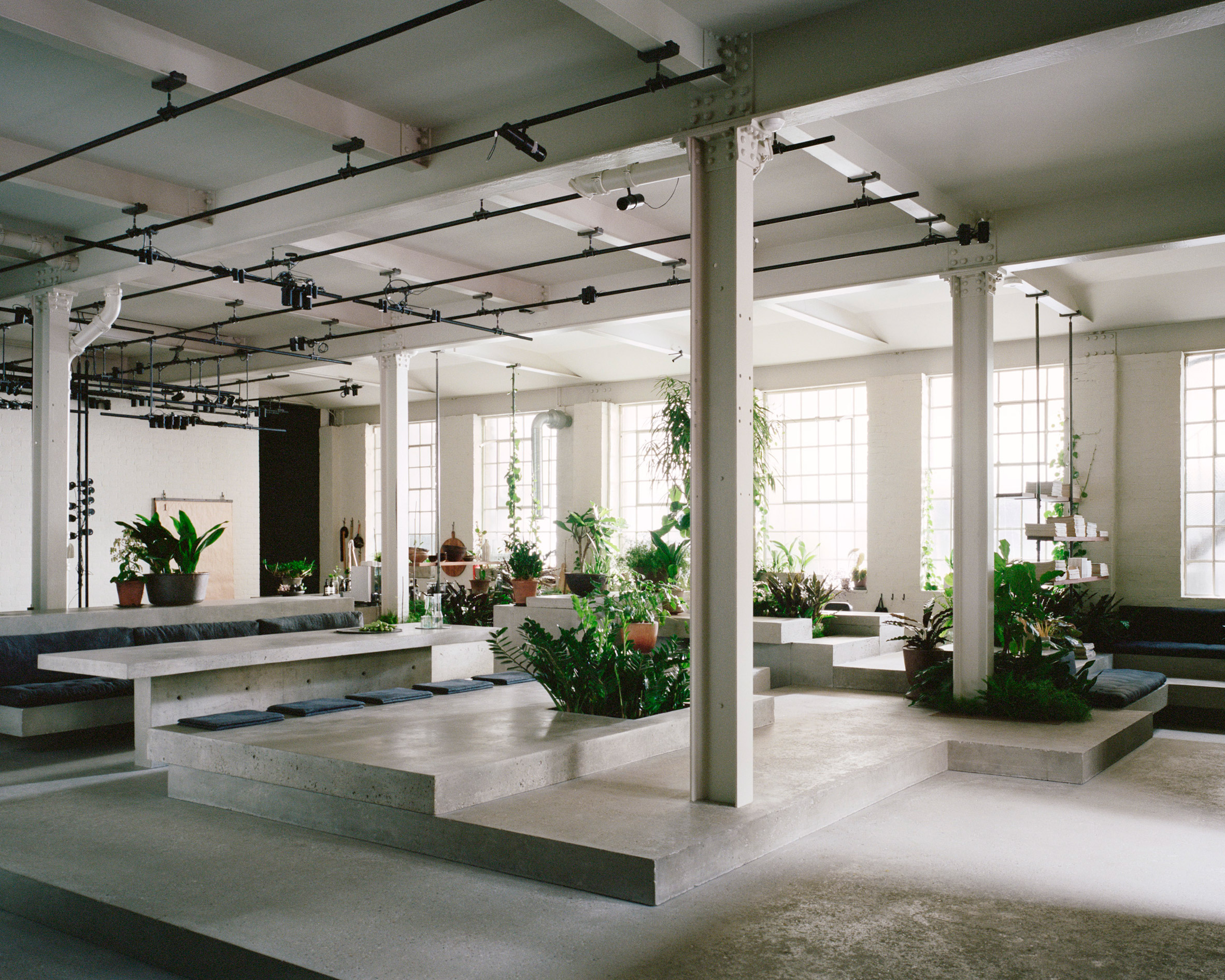
"We all agreed from very early on that the key was for it not to be an office, nor a showroom – but to become a home for PSLab in London," said the studio's founders, James Russell and Hannah Plumb, who had first worked with PSLab on the design of an Aesop store in London back in 2015.
"We admire and respect each other's ways of working – at the heart of any project is not just the aesthetic - but how it feels to inhabit the environment," they told Dezeen.
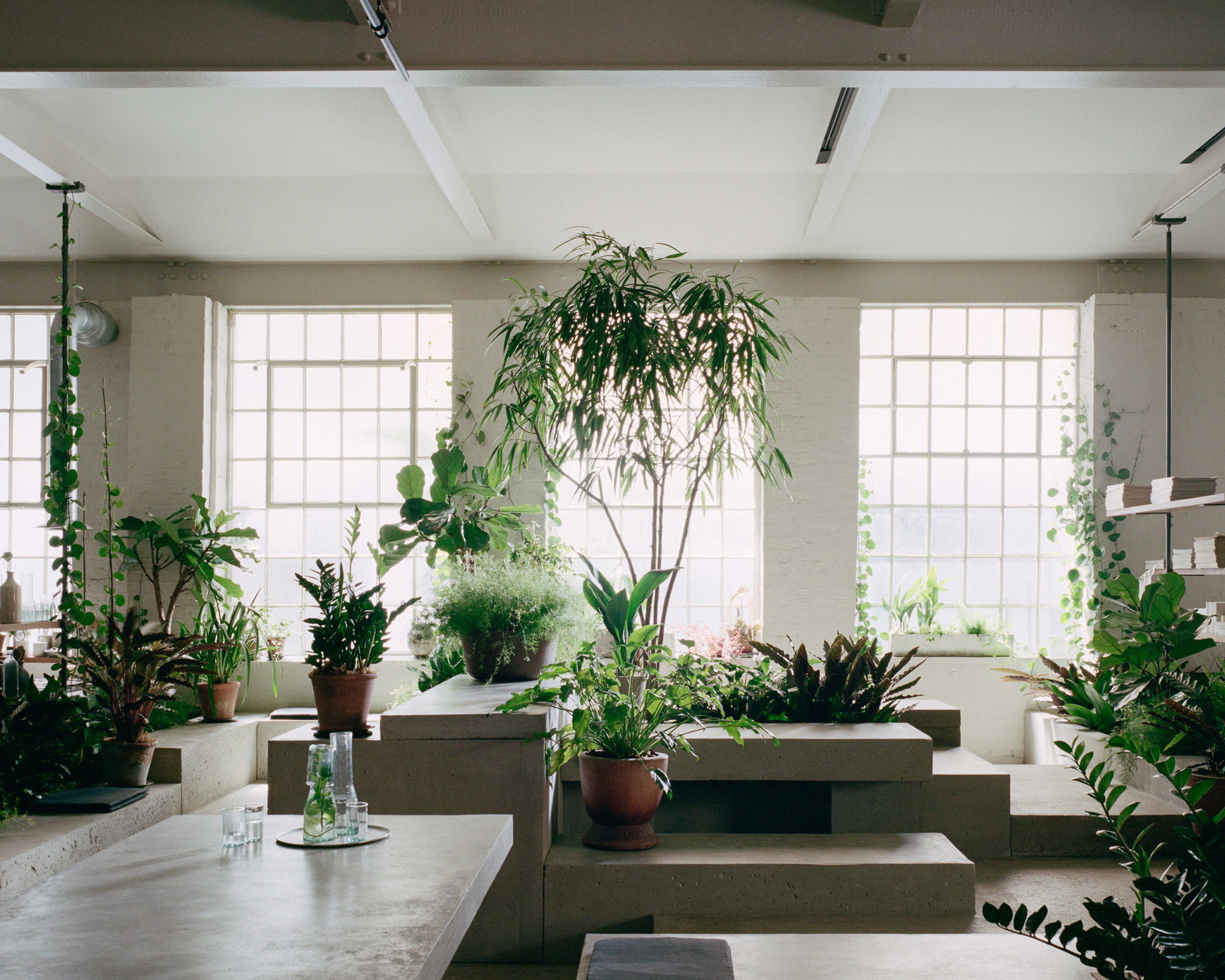
The studio completely stripped back the building to expose its industrial shell, only leaving behind its bare-brick walls, steel columns and a number of sunken pits that would have once been used to dye animal hides.
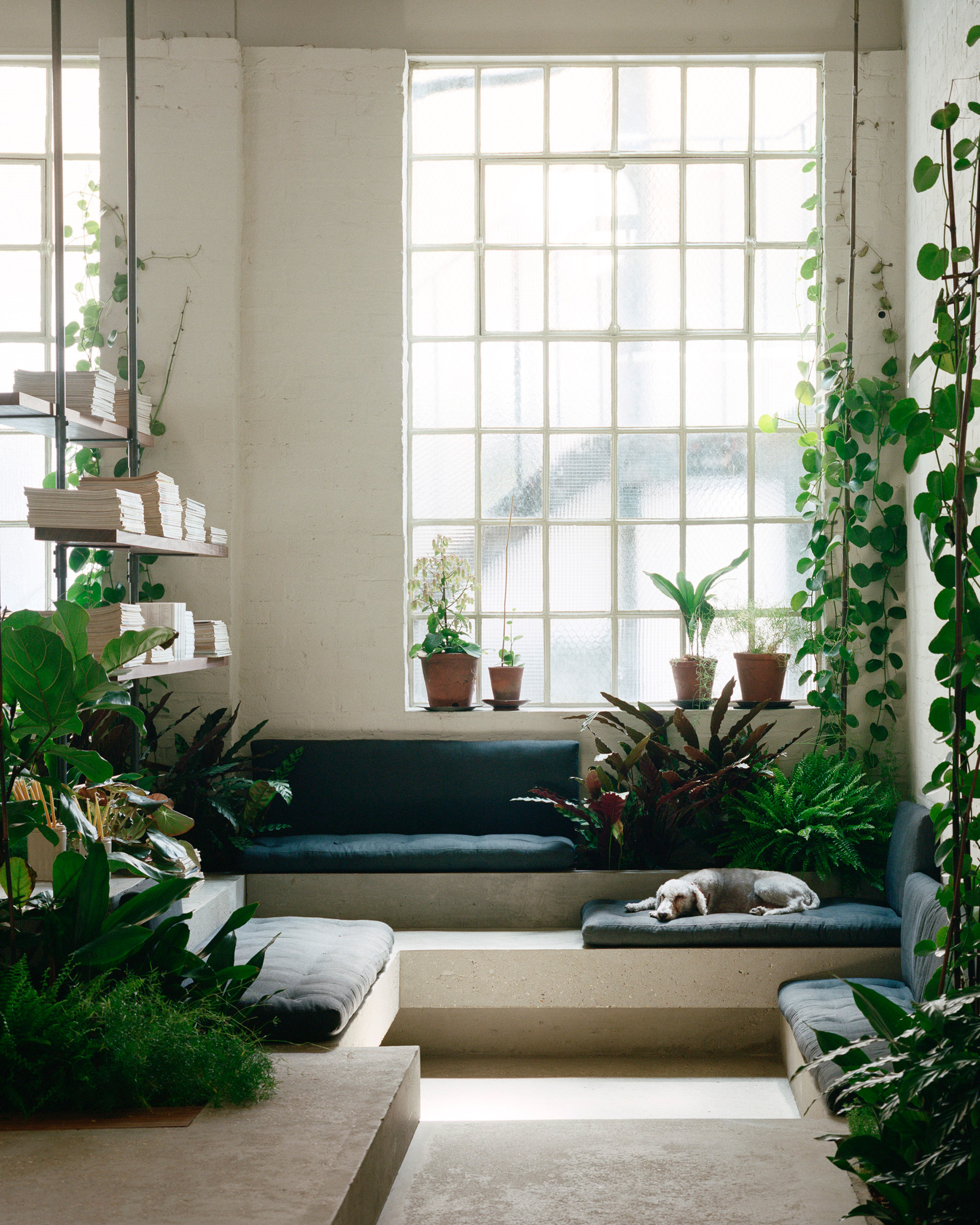
These pits have been filled with concrete to create a series of different-height plinths, their blocky shape a subtle reference to monolithic structures that Russell and Plumb came across in a book called Bunker Archaeology by French philosopher Paul Virilio.
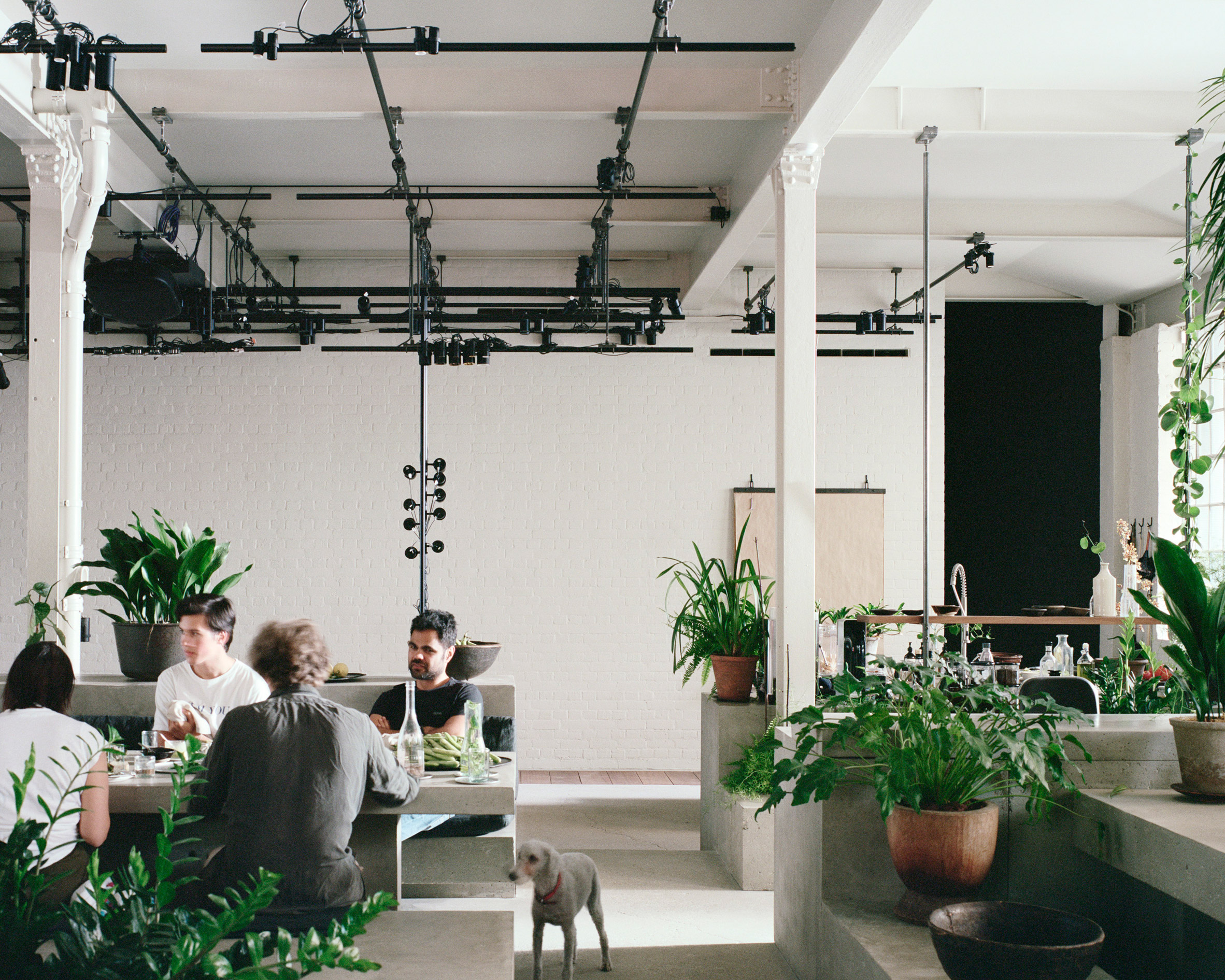
The plinths provide staff with a casual place to perch and work during the day, but can also serve as auditorium-style bench seating when the brand hosts large-scale events.
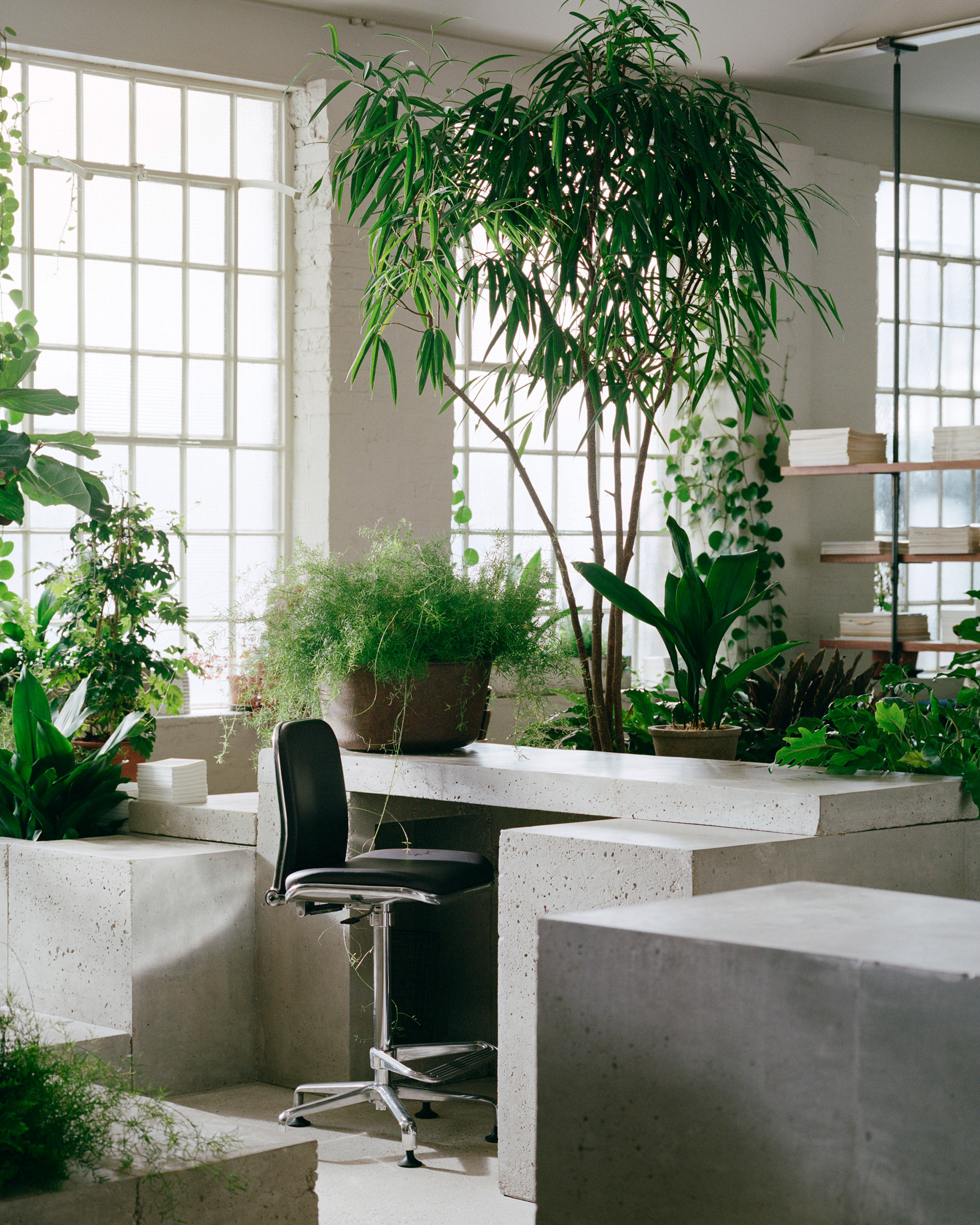
Some of them have been topped with slabs of concrete to create more formal work desks, while others have been dressed with linen-covered horsehair cushions to give some areas a cosy, lounge-like feel.
Planters have also been integrated into several of the plinths which, combined with the potted trees and leafy vines that trail from the ceiling, are meant to channel the verdant greenhouses of the Orto Botanico garden in Palermo, Italy.
"The creative direction of the project was informed by a multitude of inspirations," Russell and Plumb explained.
"Through all of these we developed this sense of what we called a 'quiet brutalism', an internal concrete landscape, solid and permanent, yet inviting to the hand and to inhabit," the pair continued.
"Textures, deliberate imperfections, and intentional subtle misalignments all helped to bring a more human feel."
Over 350 pieces of black iron were used to build a gantry directly above the plinths. It has been fitted with several spotlights that can be adjusted to create dramatic lighting for talks or product presentations.
"The [lighting] scheme in the space was inspired by our work process, we all wanted the experience of the space to feel in a sense like the experience of working with us," PSLab's founder, Dimitri Saddi, told Dezeen.
"The lights are not products showcased on a shelf – it is not a showroom in that sense - instead they are part of the living space itself and the starting point of a dialogue on the possibilities of light and shadow to be tailored to each project."
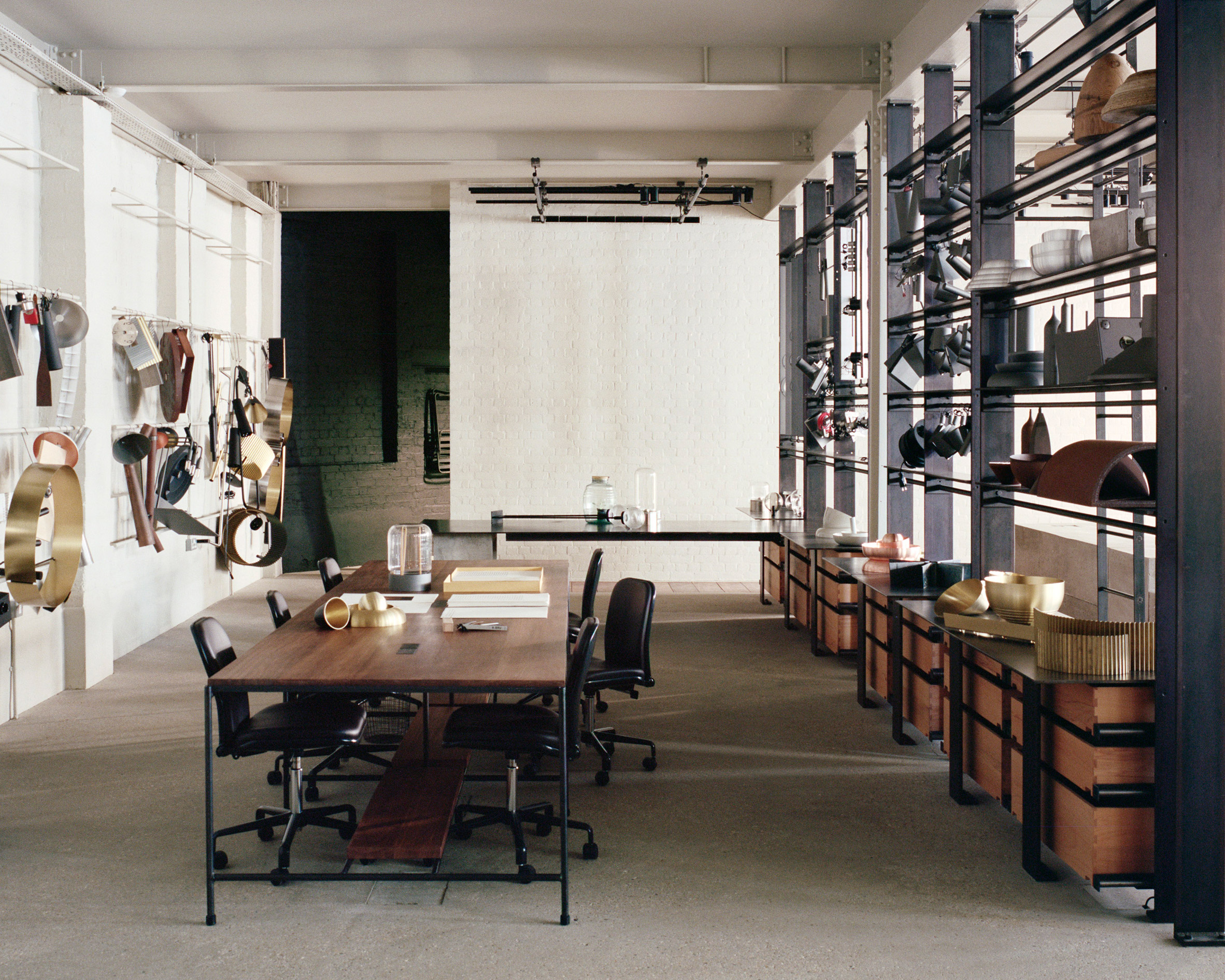
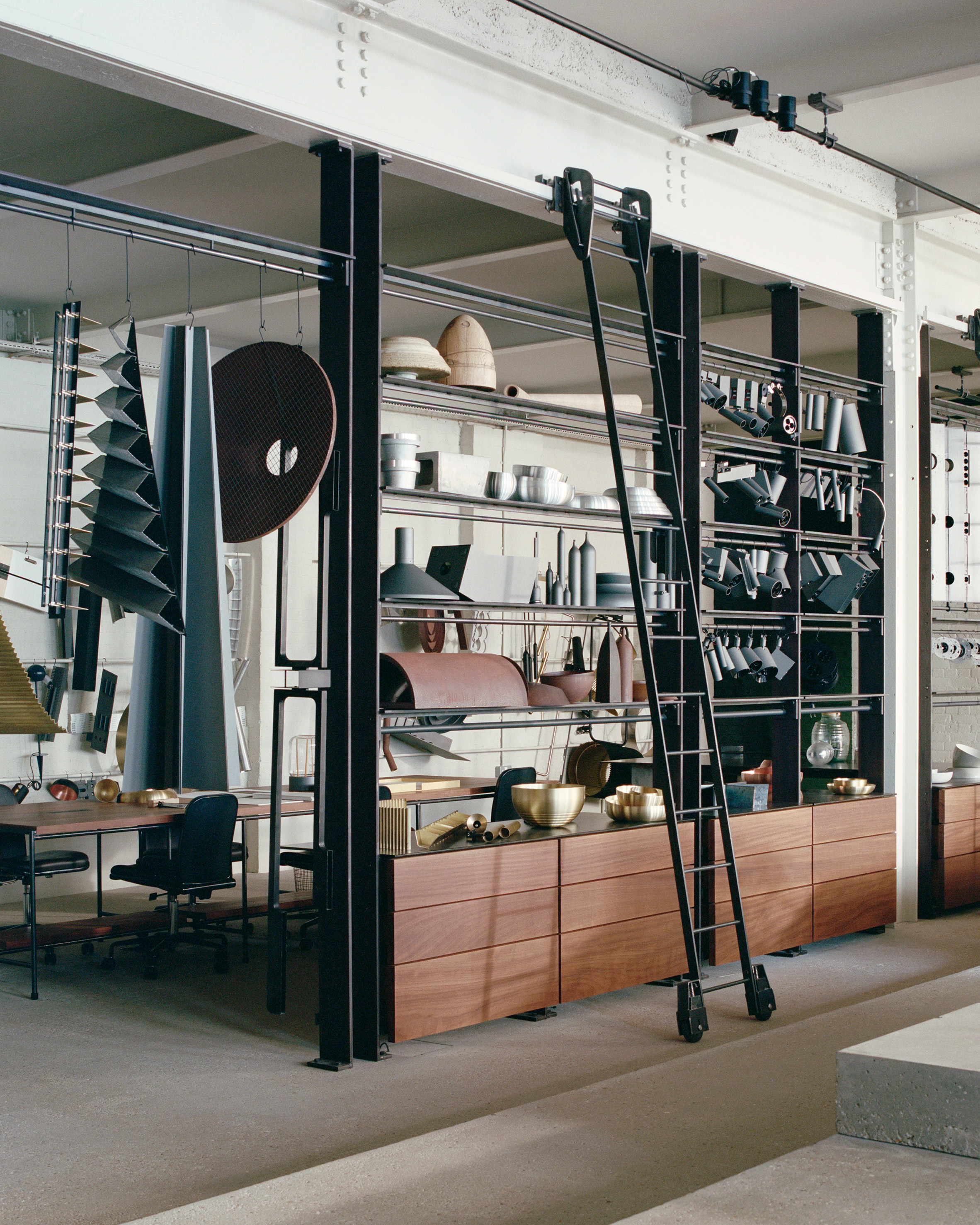
A gridded steel framework that displays sample materials, models and lighting prototypes has been erected on one side of the room, acting as a "spine" between the main office floor and the atelier space.
Beechwood drawers run along the bottom, while higher shelves are accessed by a traditional library-style ladder.
Typical factory-style doors close off a private meeting room with almost-black walls, which has been finished with a mustard-yellow bench and seating by Finnish designer Yrjö Kukkapuro.
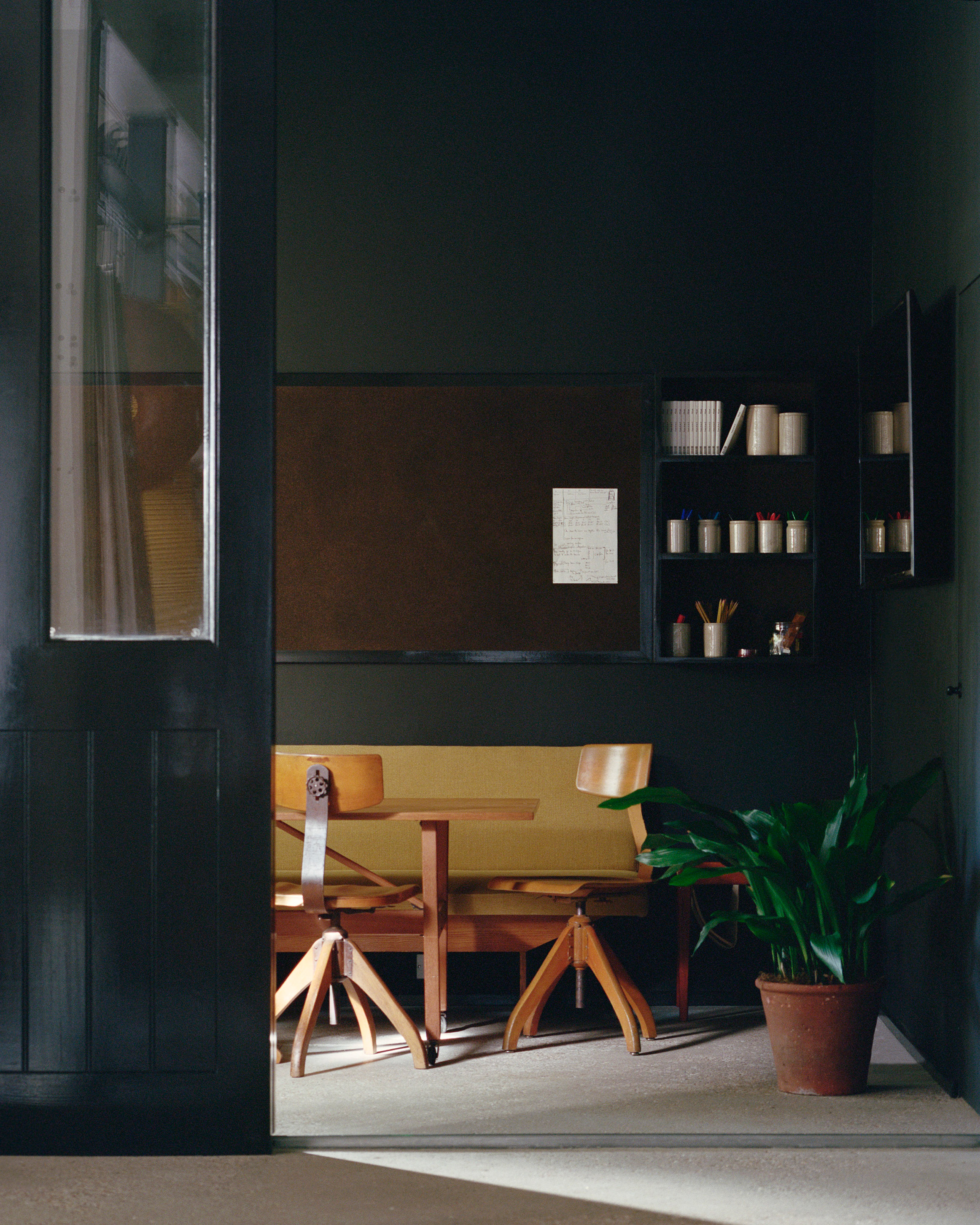
This is the latest project by south London-based JamesPlumb, which creates design objects as well as interiors.
Last year, the studio used rubble salvaged from demolition sites to fashion a collection of delicate chandeliers and candelabras.
It also designed an Aesop branch in the English city of Bath, decking out the shop floor with reclaimed chapel tiles and rough chunks of stone.
Photography is by Rory Gardiner.
The post JamesPlumb converts Victorian tannery into London HQ for PSLab appeared first on Dezeen.

British designer Faye Toogood discusses her unconventional career path and the story of her latest collection in this video interview as part of our ongoing collaboration with Friedman Benda for VDF.
"I always feel like the person that didn't train, that didn't go to the RCA, and didn't know what I was doing," Toogood revealed to curator, Glenn Adamson, in the Design in Dialogue talk.
Dezeen has partnered with New York gallery Friedman Benda to publish a selection of the best conversations with leading creatives from the Design in Dialogue series as part of Virtual Design Festival throughout May and June.
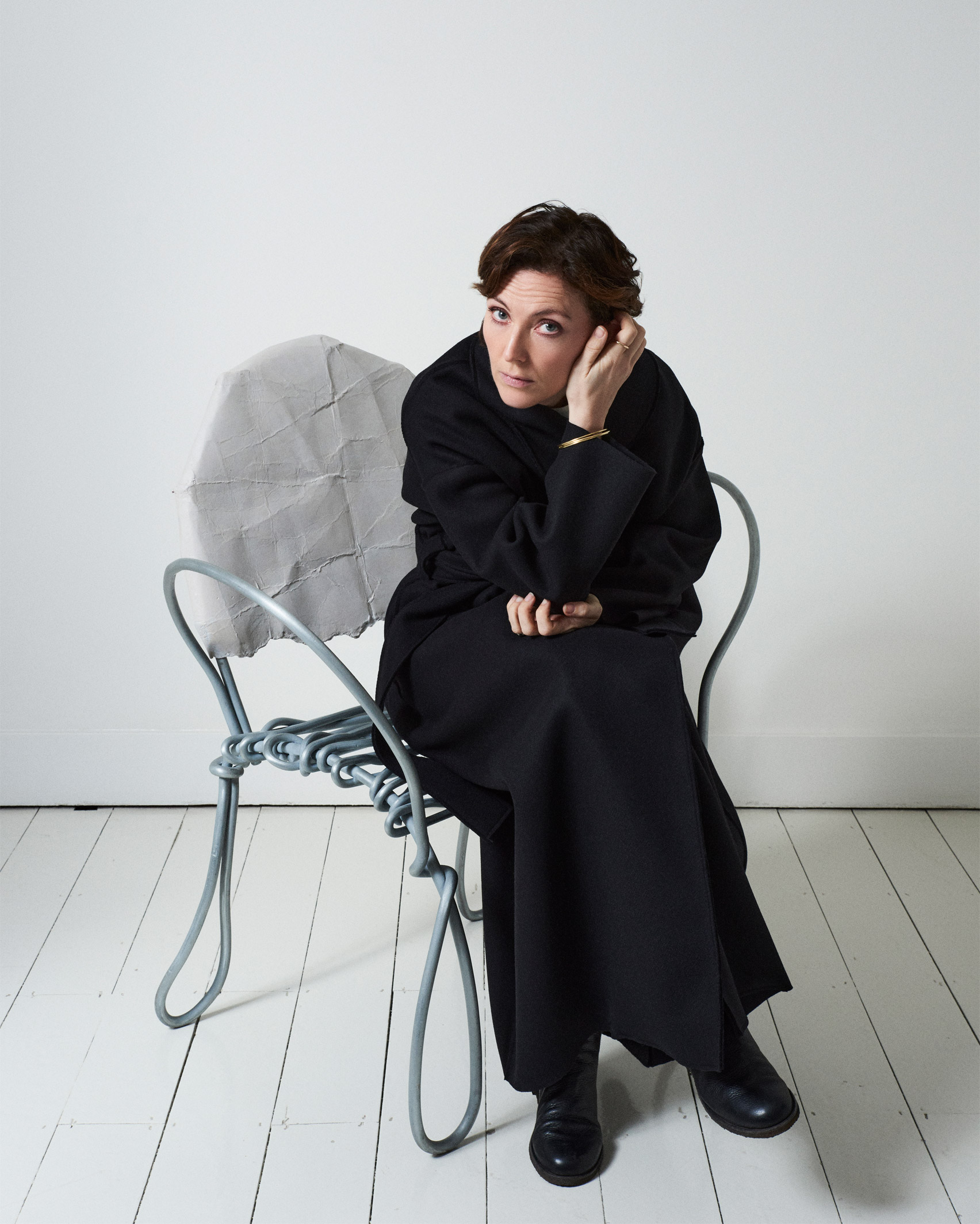
Toogood is best known as the founder of Studio Toogood, whose work spans a diverse range of disciplines including sculpture and fashion. She has a degree in history of art and started her career as an editor for The World of Interiors magazine.
Her interview with Friedman Benda is the second conversation published as part of VDF, during which she discussed how her lack of a traditional design education impacted her direction as a designer.
"I always feel like the fraud in the room"
She also gave an insight into the stories behind some of her past works, such as Assemblage Five, before discussing her latest collection, Assemblage Six: Unlearning, for the first time.
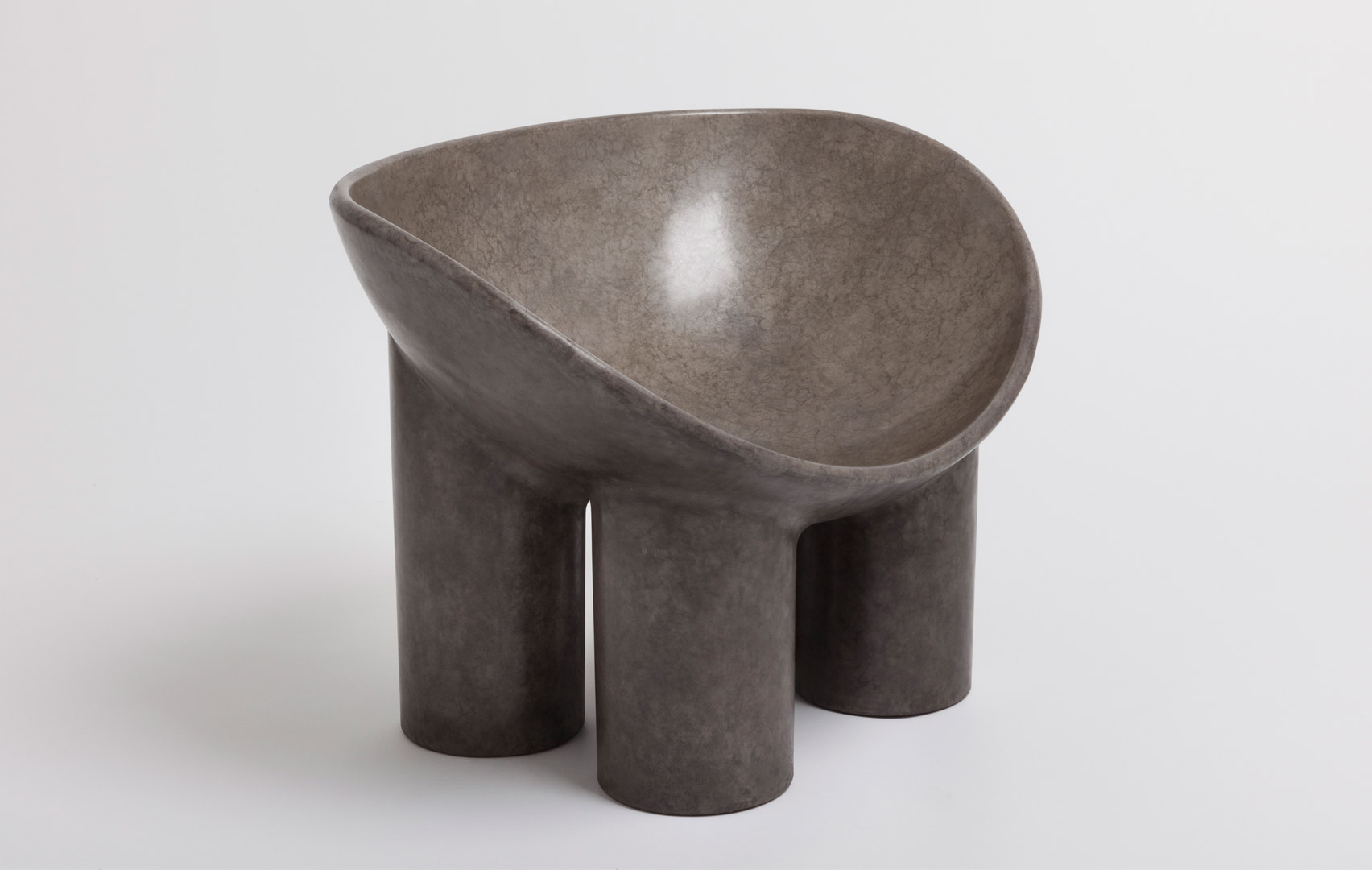
Toogood cites the names of the two furniture collections as examples of her experience of imposter syndrome.
"Someone once asked me why they're called assemblages," Toogood explained.
"Because I didn't train in design, I always feel like the fraud in the room. I didn't call them collections because I didn't feel they were worthy of the word collection".
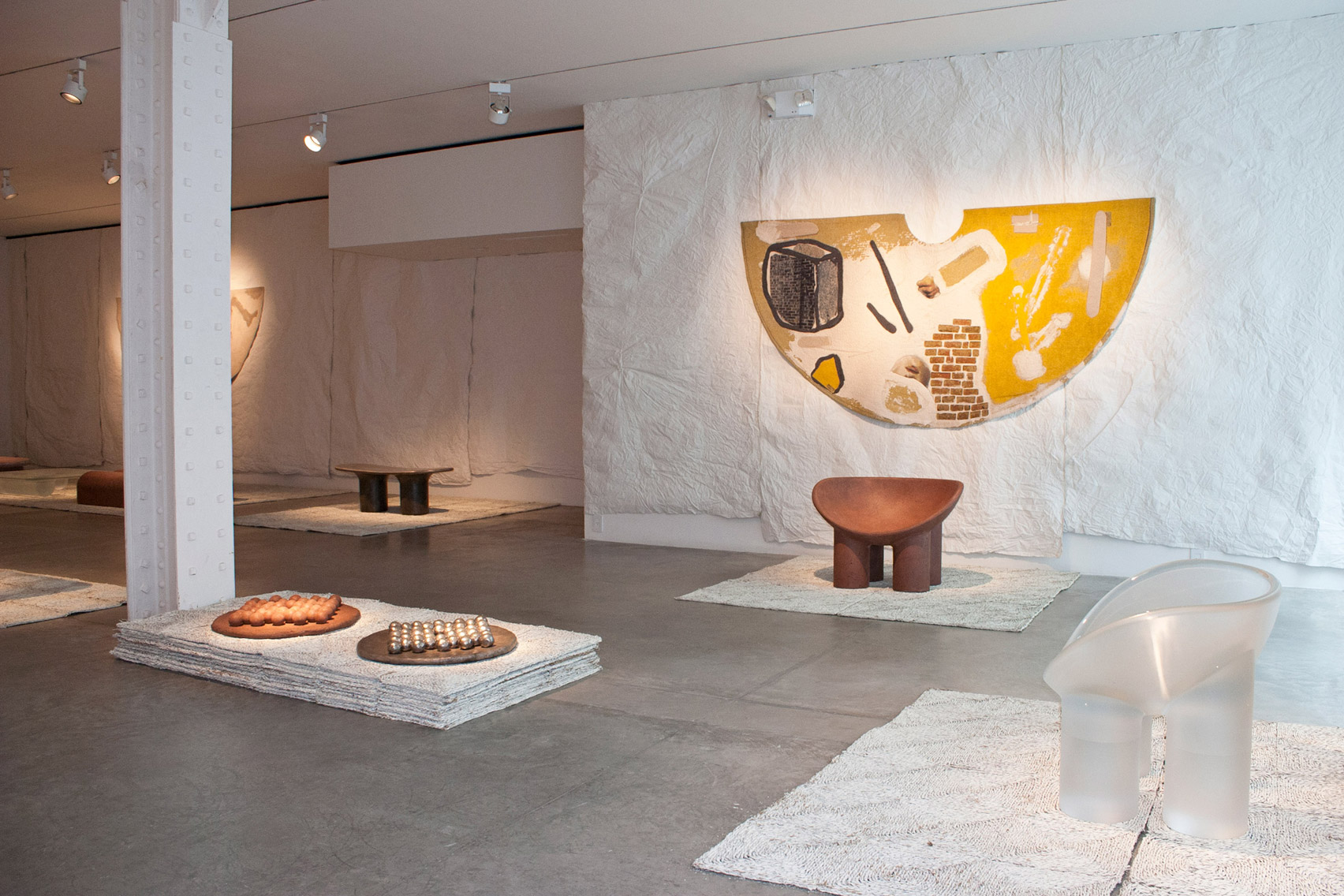
However, Toogood added that she also believes the word assemblage is a truer reflection of her work and the studio's unique multidisciplinary design approach.
"So I called them assemblages, because that's sort of what I feel I do, I cut and paste and curate, and edit and put things together."
"Having studied the history of art, all those references are there for me to kind of cut and paste and create. It's referenced all in one space."
Studio is a space for "misfits"
Toogood said that her approach to design of "cutting and pasting" different influences is also reflected in the makeup of the team – referred to by Toogood as The Misfits.
"Along the way I've gathered what I call The Misfits," she explained.
"The group of people have worked either at an architect's firm, as an artist, or as a fashion designer, graphic designer, sculptor, and they've got frustrated working within their environments doing the same thing over and over again."
Overtime, Toogood has developed the studio into a series of spaces for these creatives to escape convention and experiment.
"I wanted to create a space where we could all just play, essentially," she told Adamson. "We have a fashion floor, our tool house, a product floor – everyone is working on different spaces and using different materials."
"You'll get a coat being painted on one floor and then a clay ball being made on another, and we're doing it all together."
She compared this to the process of running a magazine, another influence of her early career.
"I kind of run it like a magazine, there's different departments, but we're all working on the same thing," said Toogood.
"There's different pages we've all got to get out, there's an issue that's got to be produced, and we know what the theme is for that issue, and we're all on the same on the same trajectory to create it."
Assemblage Six: Unlearning
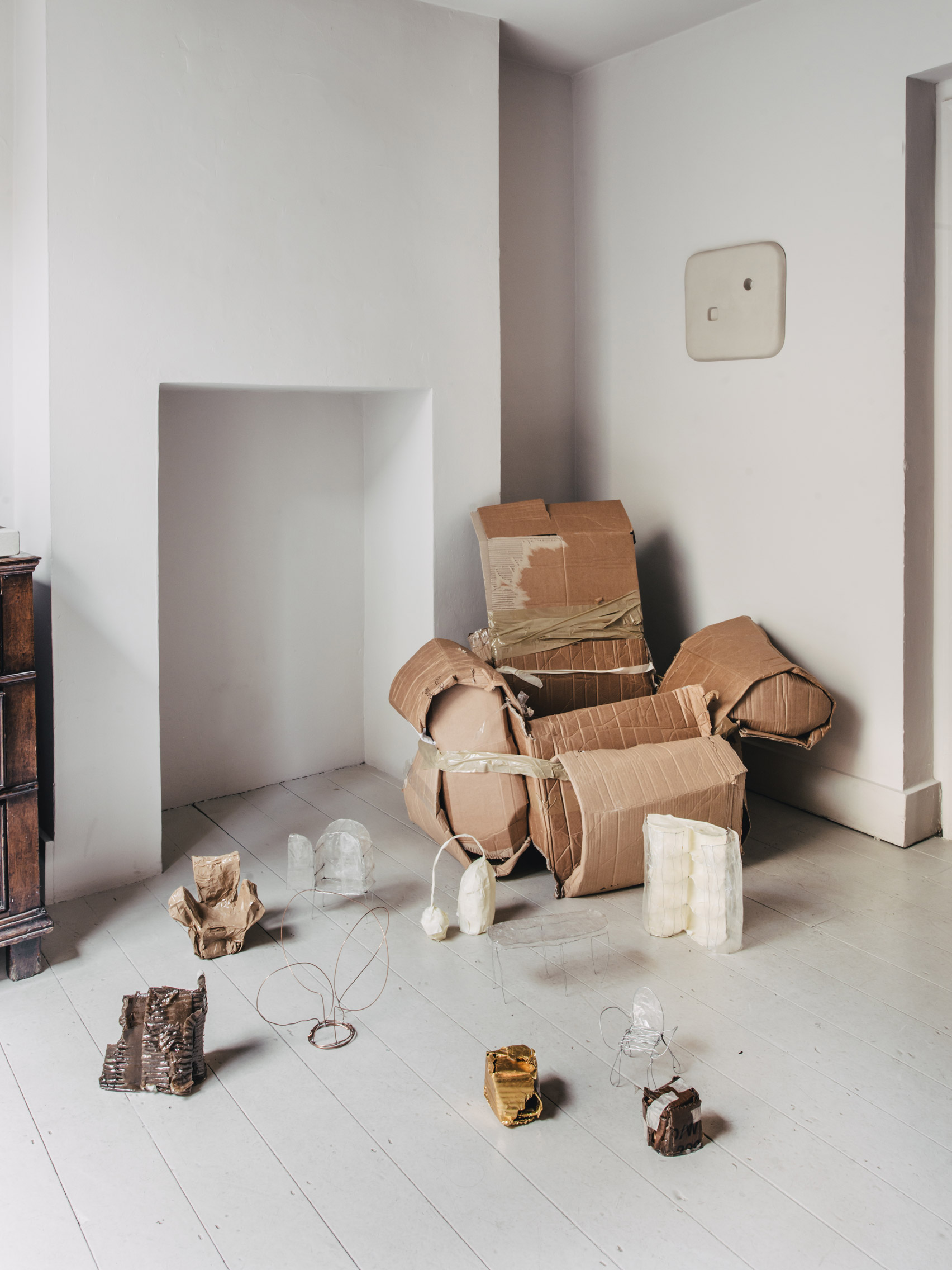
The studio's latest collection, entitled Assemblage 6: Unlearning, is a collection of furniture pieces that are larger replicas of rough, playful maquettes that the studio produced at the outset of the project.
This includes a heavy bronze stool that evokes a cardboard box, and a floor light made from resin and canvas that resembles a sculpture made from masking tape.
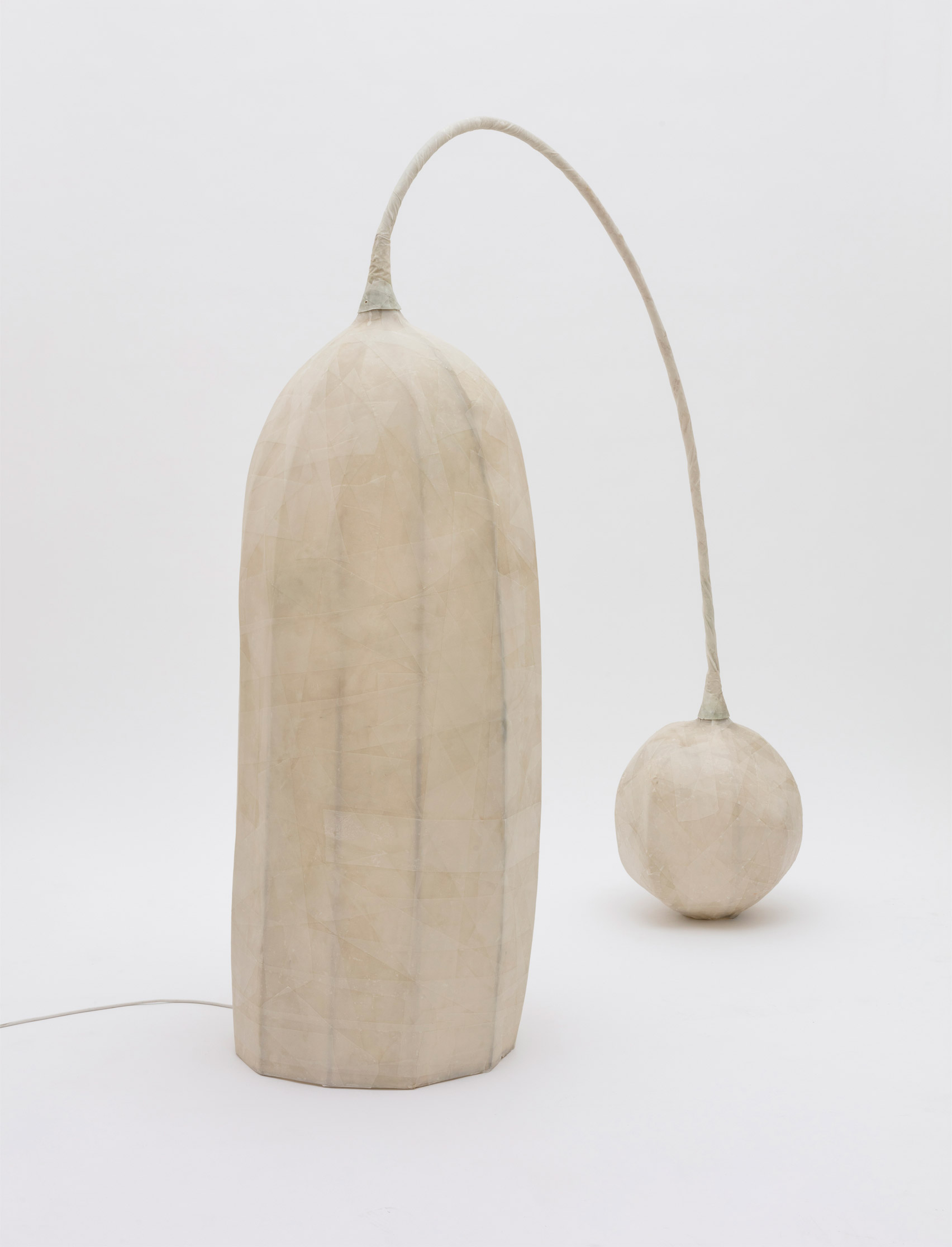
Assemblage 6 was developed by Toogood to challenge all of the studio's previous work and "unlearn" its typical design process, which involves periods of long and thorough development.
Instead, the collection celebrates the very first moment of creativity and guttural instinct a designer experiences at the beginning of a project.
"I was just desperate to find a geometry that I felt was truly unique and a sense of working that could basically take me over the next few years, that was completely not referential of any work I'd done before," she explained.
"It was just starting again like a child would if you presented them with a roll of sellotape and some cardboard."
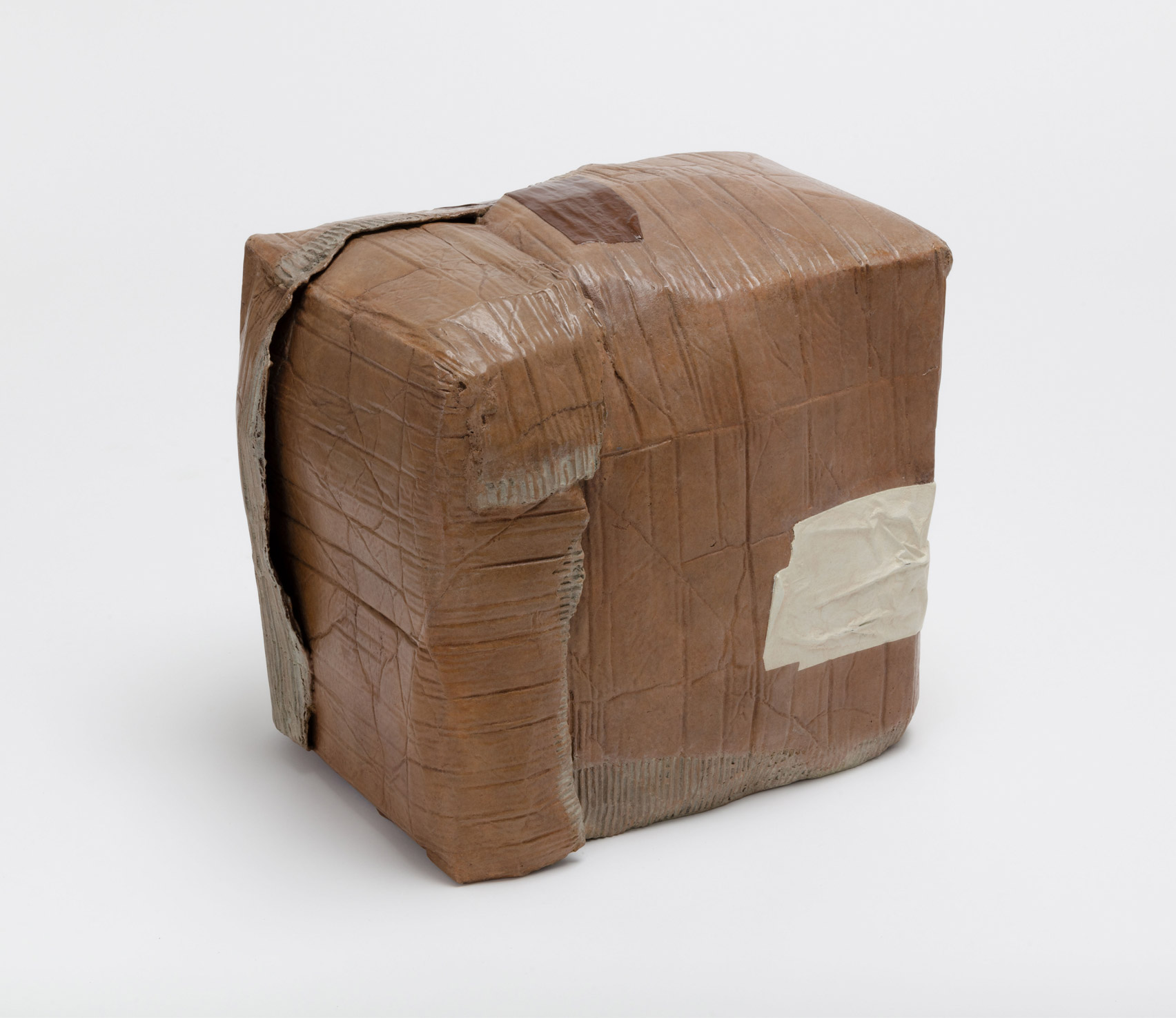
According to Toogood, the project is about vulnerability, exposing the studio's creative process in a way that it has not previously, or other designers would not consider.
"For designers to show maquettes is quite personal, it's quite a quite a big reveal," she explained.
"For me, this collection feels very much like it's about vulnerability, I'm really showing and exposing a process here."
Design in Dialogue
Toogood's conversation with Adamson is the second in a series of Friedman Benda's Design in Dialogue talks we are broadcasting as part of Virtual Design Festival.
The first talk was with pioneering architect James Wines, who said that "all cities are becoming exactly alike" and called out for more buildings that "reach out to people". Other designers featured in the series include Ron Arad and Misha Kahn.
All photography is courtesy of Friedman Benda and Faye Toogood.
The post "I always feel like the fraud in the room" says Faye Toogood appeared first on Dezeen.

In need of some creative inspiration? Look no further than The Midweek Mentor, a weekly newsletter we launched to share motivational advice and creative tips.

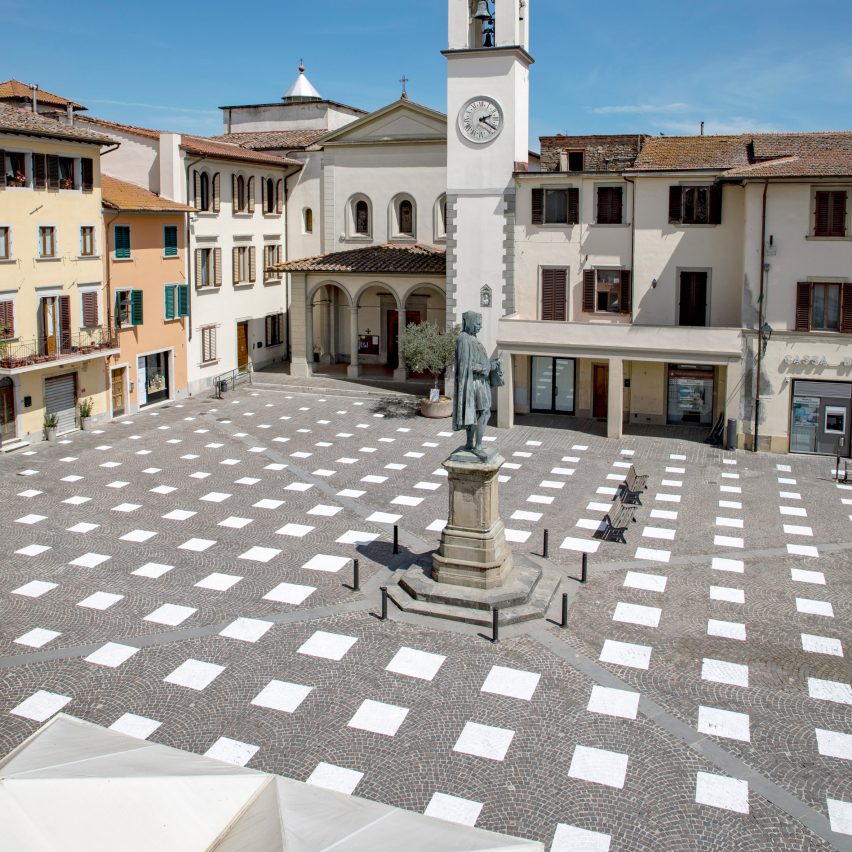
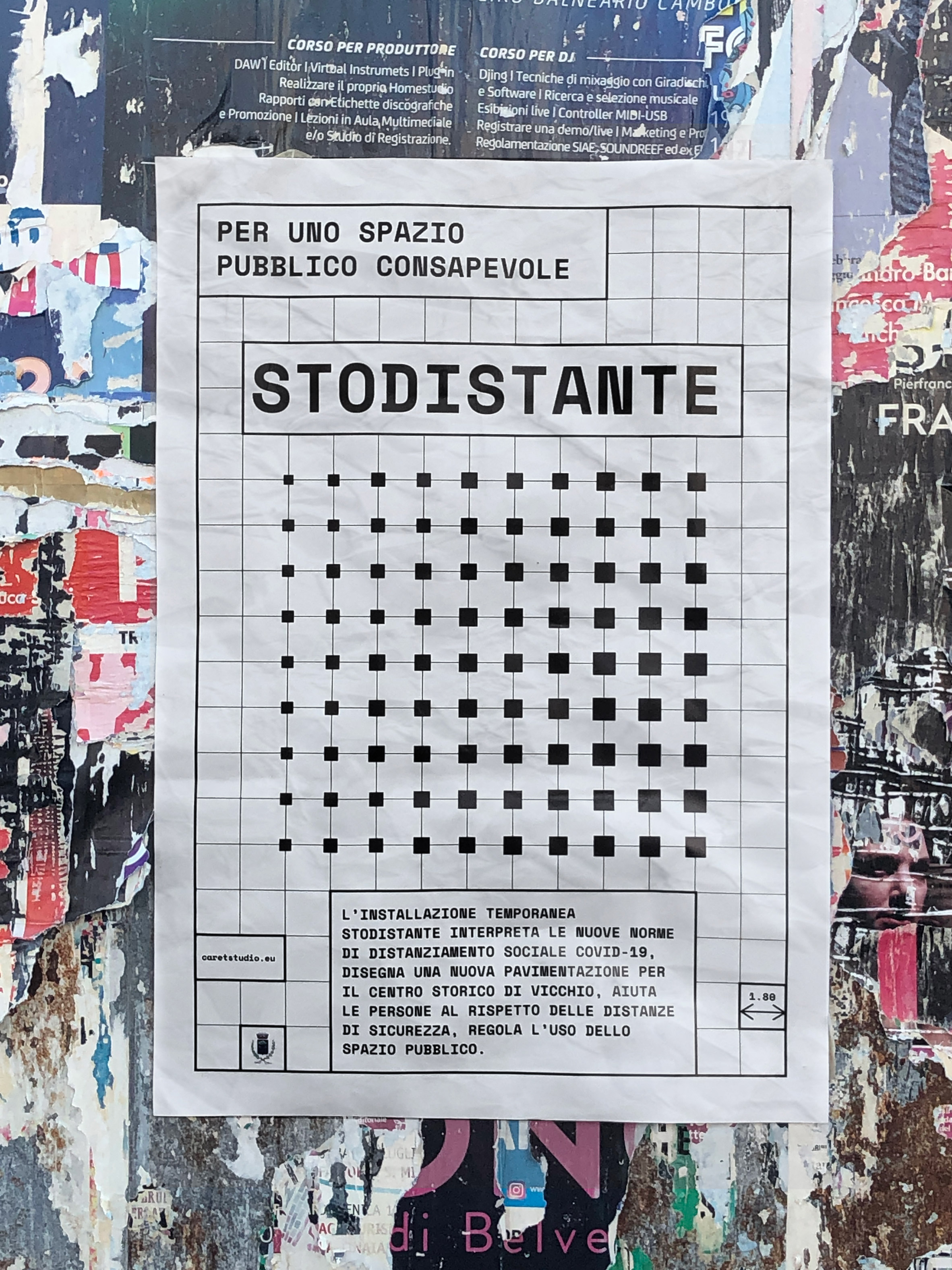
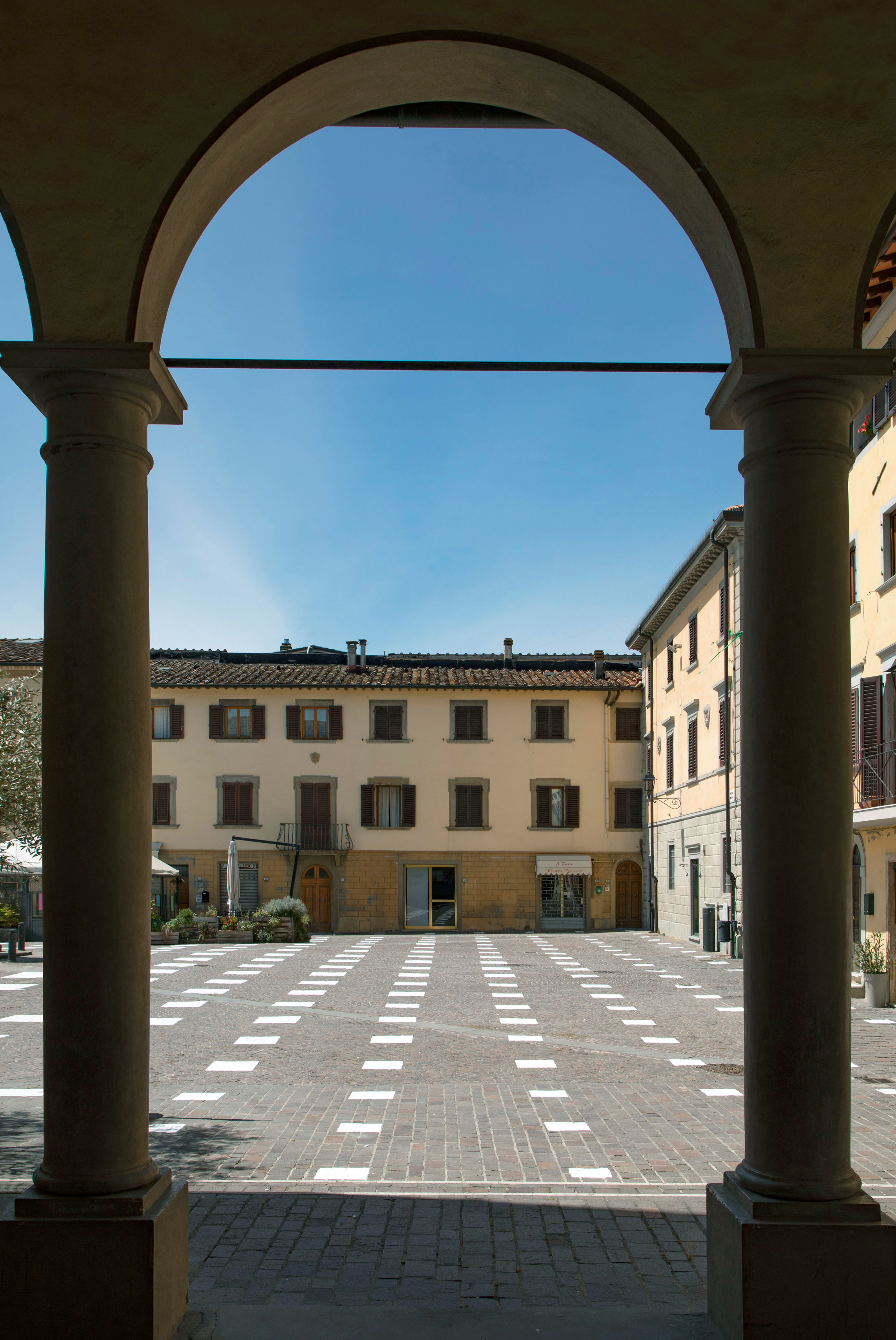
Italian practice Caret Studio has installed the StoDistante installation in an Italian square to encourage social-distancing as a temporary solution for reactivating public spaces after Covid-19 lockdown ends.
The StoDistante installation, which sees the plaza floors painted with white squares in a grid-like format, has been implemented in Piazza Giotto – a plaza located in the town of Vicchio near Florence, Italy.
White, square markers act as visual representations of the distance people should keep from each other in order to slow the spread of the Covid-19 virus.
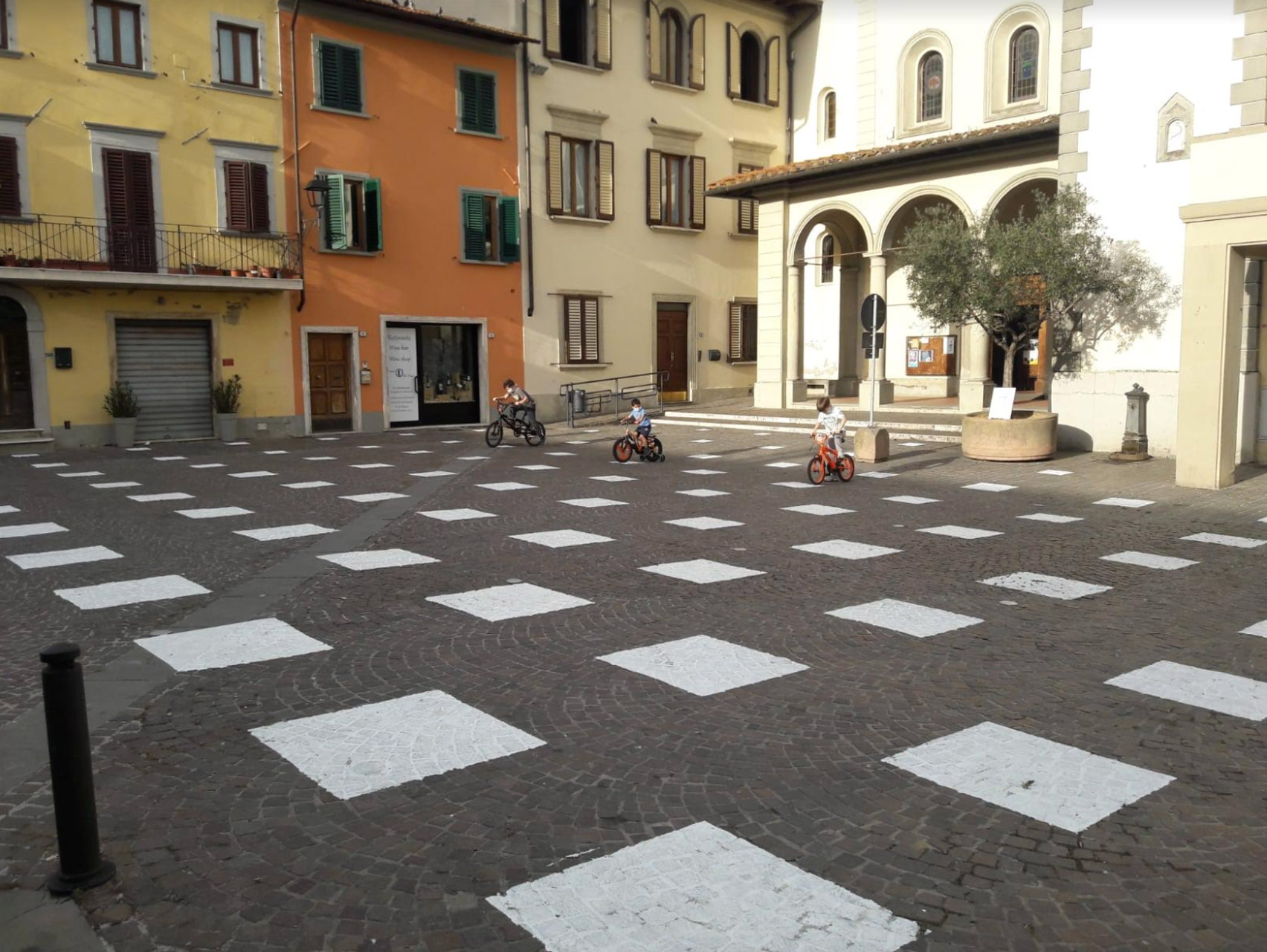
The installation is based on a social distancing guideline established by the region of Tuscany, which sets the minimum safe distance to be maintained between people as 1.8 metres in order to limit the spread of the virus.
The white squares are made from removable paint, and have been added to the cobblestone floor of the public area in a lattice-like layout to act as a marker of how people can safely navigate around the square.
When the pandemic is over, the water-resistant paint can be easily removed, and the square can revert back to its original configuration.
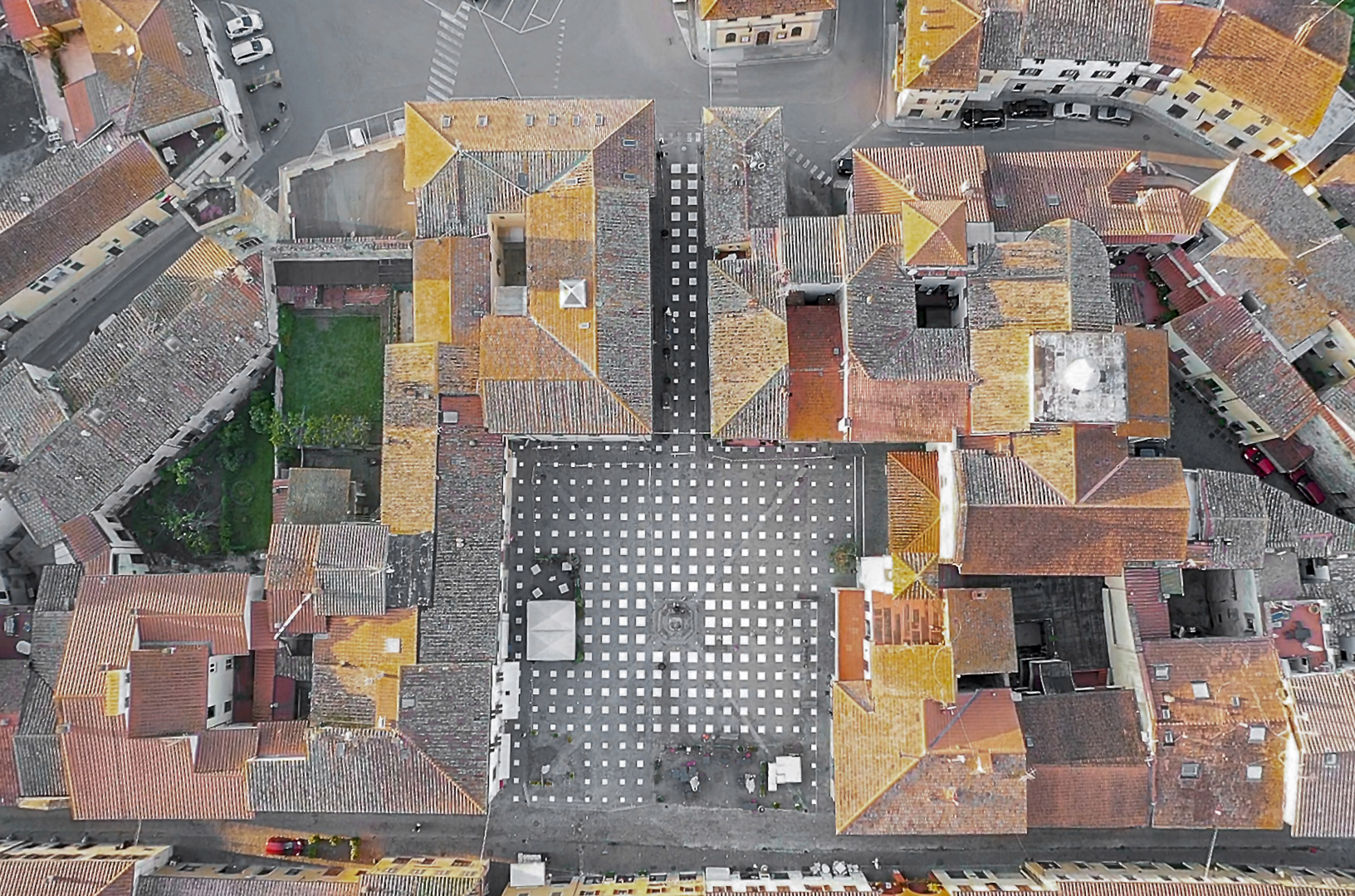
Matteo Chelazzi, Federico Cheloni and Giulio Margheri, who founded Caret Studio in 2014, describe the installation as a temporary solution for "conscious use" of the public space under the country's current safety measures.
"During these weeks of quarantine, social distancing and its implications have been a very actual topic, and has made us reconsider some of our routines and the way we use the space," the designers told Dezeen.
"StoDistante is a reflection on the new forms of social distancing imposed during the spread of the Covid-19 emergency," they added.
"[The installation] is conceived as a platform for citizens to reclaim and reactivate open spaces through the hosting of a series of initiatives as rules are relaxed in the coming weeks."
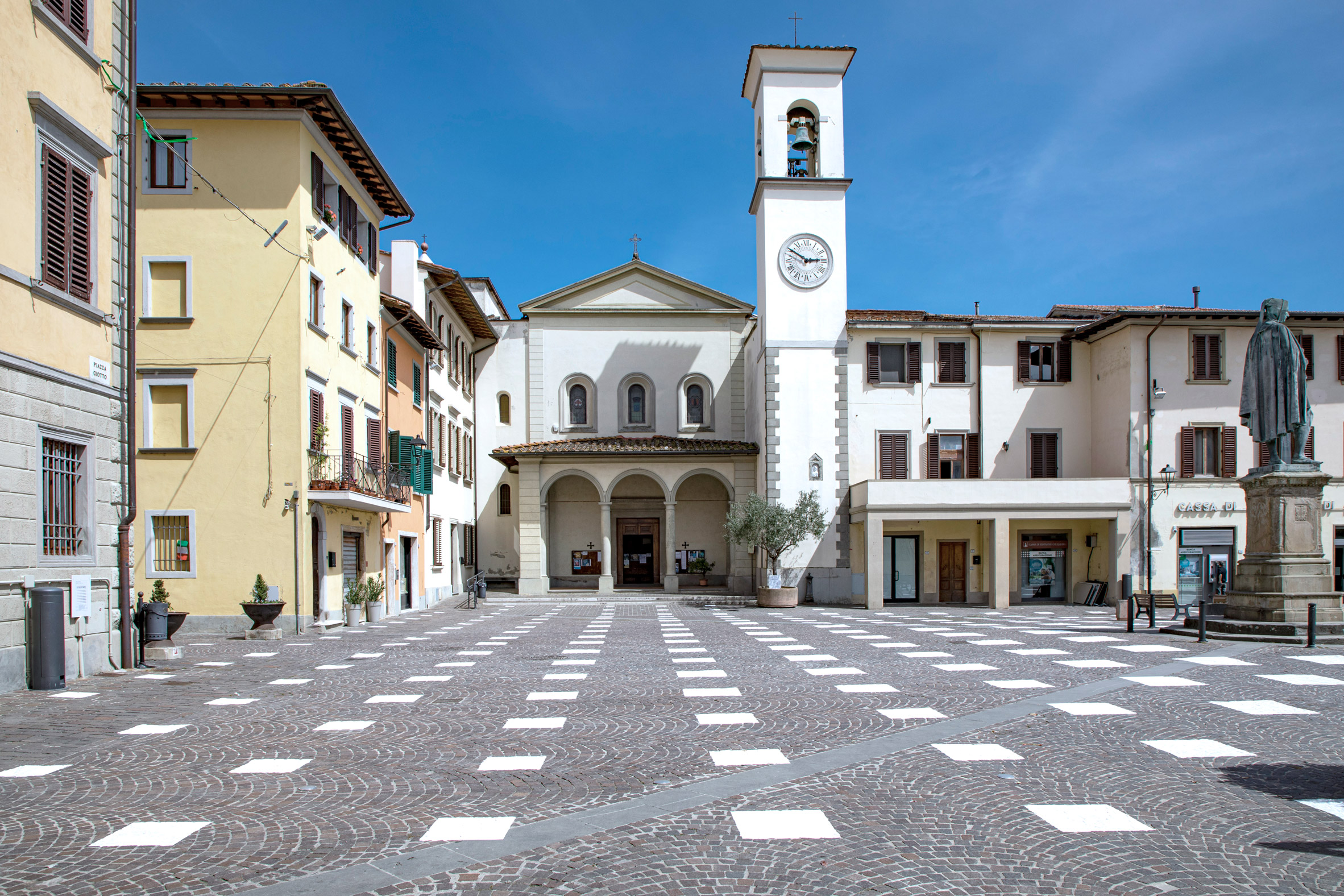
Arranged in a gridded formation, the squares get larger the closer to the centre they are. This "gradient" style is designed to offer different perspectives and interactions within the piazza.
"The idea is to create a temporary infrastructure for a new social life, becoming an opportunity to reflect on the use of public spaces during these times."
Gatherings are still banned in Italy until 18 May, however some people and children have been using the installation for the past few days to move across the square.
According to the designers, as safety rules continue to be relaxed in the coming weeks there are plans for the community to use StoDistante for other purposes too, such as an open-air cinema, a gym or for church services.
While Stodistante has been applied for the first time in Vicchio, Caret Studio hope it can be installed in other public areas in different towns and cities.
Many designers have been focusing their efforts towards creating concepts that would make life after lockdown safer.
Design studio SBGA Blengini Ghirardelli designed a concept for colourful fibreglass rods that would snap together to form a circle on the ground of parks for up to two people to sit inside, while Paul Cocksedge created a social distancing picnic blanket.
The Commune di Milano is also asking architects and designers to devise social-distancing devices such as spacers to keep people apart, signs to remind people to distance, and layouts for indoor and outdoor spaces to enable the city's shops and public spaces to safely reopen.
The post Caret Studio installs gridded social-distancing system inside Italian plaza appeared first on Dezeen.


