Wednesday, 13 May 2020

“Rather than attempt to reconcile museums' contradictions, we should start again”

Museums rethink coronavirus opinion

Museums should use the disruption caused by coronavirus to fundamentally rethink how they operate and what their purpose is, says Owen Hopkins.


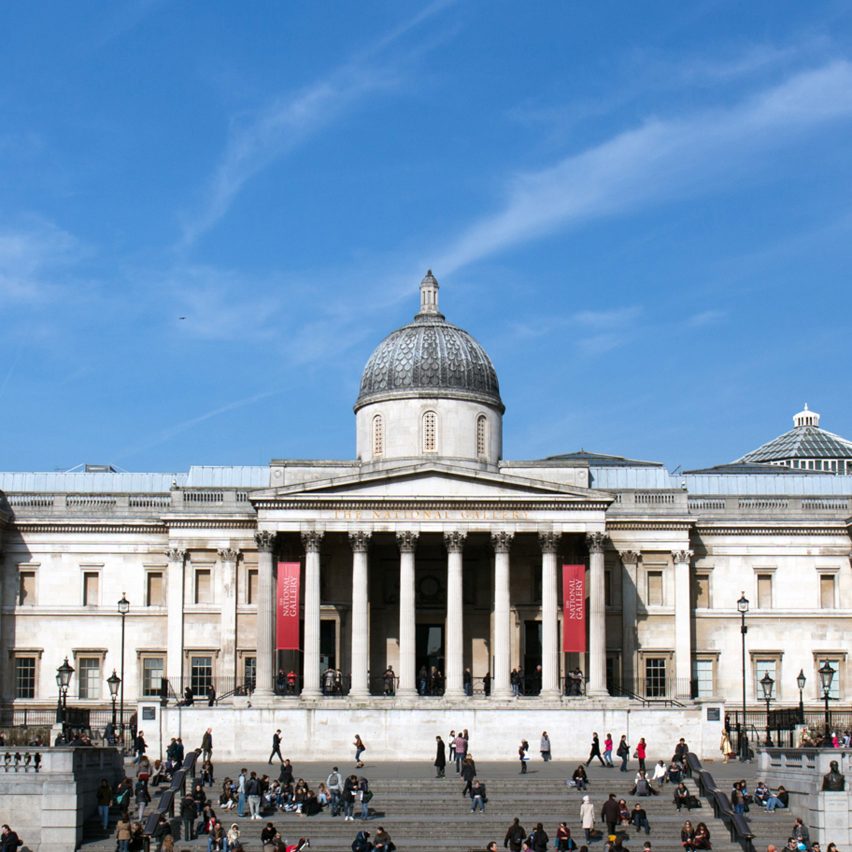
In late summer 1939, in anticipation of the imminent start of the second world war, all the paintings in London's National Gallery were taken down and transported to an old slate mine in Wales for safe keeping. As the bombs rained on the city during the blitz, the gallery organised a series of lunchtime concerts taking place in its empty galleries.

Once the worst of the bombing had abated, the gallery allowed one painting per month to be brought back to London and put on public display. Attracting huge crowds and much attention, these exhibitions demonstrated the importance not simply of art or culture but for people to find ways to come together at a time of profound national crisis.

Museums have become public buildings without a public

Today, the National Gallery is empty not of paintings but of people. This situation is repeated in museums across the world as their doors remain closed in response to the coronavirus pandemic. Everything remains in situ, just no-one is allowed access, save for the security guards who now have the run of museums by day as well as by night. Museums have become public buildings without a public.

In the absence of visitors on-site, many museums have looked to engage people online. Soon after the lockdown, the British Museum reported a surge in online visitors. Other institutions, such as the Royal Academy of Arts, have gone for an irreverent approach attempting to lighten the mood with amusing tweets. Meanwhile, the #GettyMuseumChallenge has produced countless memes of people re-creating famous artworks from the confines of their homes.

The success of many of these initiatives will no doubt inform many museums' approaches to audience engagement as and when lockdown restrictions are relaxed. But despite the positivity online, the situation remains dire for museums large and small, with many likely to struggle to reopen.

The absence of the visiting public has brought into stark relief the extent to which many museums are utterly dependent on footfall for their financial viability. Visitor numbers are critical not just for entry fees for those museums that charge them, but to drive ‘secondary spend' in cafes, shops and memberships. With social distancing the new normal, the age of the blockbuster exhibition, with people packed into galleries to catch a glimpse of a must-see masterpiece, seems all but over.

The homogenising effect of social media means museums risk losing much of what vitally distinguishes the experience of a visiting a museum

But beyond finances, museums face less immediate, but arguably even more fundamental challenges as their activities shift online. While digital initiatives are keeping museums in the public eye and potentially connecting them to new audiences, the homogenising effect of social media means museums risk losing much of what vitally distinguishes the experience of a visiting a museum to that of other leisure activities, say, going a theme park or even cinema.

Not only is the audience that engages with museums on social media a demographic subset of those who visit them in person (which itself is hardly representative of the public at large), but the content produced for these platforms is necessarily determined by what's most likely to appeal in the online marketplace of attention. Museums become just another brand.

The consequence of this is that museums risk losing what we might call their exceptionalism. Beyond simply differentiating what they offer from other forms of leisure, this is the notion that visiting a museum offers a way of making sense of the world around us. That as repositories of human creativity and endeavour, museums are almost sacred spaces existing outside of time, connecting the past to the future of human existence.

Aside from the present crisis, this status, which has been frequently claimed for museums since their origins in the Enlightenment, has been under sustained critique for some decades now. For the the Guerrilla Girls in the 1980s, it was a question of representation, pointing out in one of their most famous works that "Less than 5 per cent of the artists in the Modern Art Sections are women, but 85 per cent of the nudes are female", and asking, Do Women Have To Be Naked To Get Into the Met. Museum?

For today's decolonisation movement, what's in question is the whole basis of the museum as a project of colonialism. Museums, we are rightly reminded, are not eternal institutions, but have a history, which in the case of our "encyclopaedic" national museums, is inextricably tied to the age of empire. Museums are "not neutral", but entirely ideological spaces.

It's not museums' exceptionalism that we should be debating, but the museum itself

This has led to a variety of arguments for change, from the simplistic student politics of the call that museums should "display it like you stole it", to more nuanced, heterodox approaches to recontextualisation and even restitution. And, of course, these have been countered by those worried about the loss of museums' unique ability to hold up a mirror to the world, however contested this may be.

But maybe both sides are missing the point and it's not museums' exceptionalism that we should be debating, but the museum itself. A telling comparison here is the crisis faced by print media with the rise of the internet in the 2000s. Until then, a magazine was the physical object. How could it survive online? But, of course, this question was answered by new formats and new financial models.

So perhaps when it comes to thinking about museums, we should take a step back and similarly think from first principles about what it is they are for and then work out the best model for delivering that – whether it is a museum as conventionally conceived or something else. My hunch is that rather than attempt to reconcile the contradictions inherent in museums, we should start again and rethink them from the ground up.

This thinking has got to happen outside the museum world as much as within. Like all institutions, museums have a vested interest in sustaining themselves.

Museums should use the present moment to rethink the fundamental relationship between object and viewer

In a recent article, the V&A director, Tristram Hunt, suggested that "Museums should use the long journey back to normality to renew their mission, connect with new audiences in new ways and help reconnect the public with material works of profound creativity". While on the surface it sounds progressive, underneath it is really just an argument for the status quo.

Even if we take Hunt's aspirations at face value, there might be better models for achieving them than the traditional museum, ones that are less fixed, less centralised, less hierarchical, and taking a cue from online media, less defined by the physical form of their existence – that is, architecture.

Just as the crisis imposed by the move online forced magazines to refocus their attention on the relationship between reader and content, so museums should use the present moment to rethink the similarly fundamental relationship between object and viewer. There may not be a better opportunity.

The post “Rather than attempt to reconcile museums' contradictions, we should start again” appeared first on Dezeen.


from Dezeen https://ift.tt/3dH5mKI

Interior design students at Chelsea College of Arts present conceptual restaurant and bar designs

Chelsea School of Art, UAL school show for VDF

Students at Chelsea College of Arts in London present designs for bars and restaurants developed on their interior design course in this digital student exhibition for Virtual Design Festival.

The eight students completed the projects while studying Module Two of the Interior Design short course at the school, which is part of University of the Arts London (UAL). Taught by Lyndall Fernie and Natalie Weavers, the course focuses on the development of commercial interiors.


Interior Design short course, Module Two at Chelsea College of Arts

University: Chelsea College of Arts, UAL
Course: Interior Design short course, Module Two
Tutors: Lyndall Fernie and Natalie Weavers

Course statement:

"Interior Design Module Two is an intensive practical course included in a three-part program for aspiring interior designers.

"Each 12-day course takes place over 12 weeks and has been carefully designed to equip students with the skills to professionally undertake both residential and commercial interior design projects.

"In Module Two students work on a commercial project designing a bar or a restaurant – developing skills in surveying, detail drawing, designing staircases and one-point perspective drawing.

"By the end of the course, students gain new-found confidence in developing commercially viable designs and presenting their ideas professionally.

"Their work is presented as part of the Virtual Design Festival student and schools initiative, which offers a simple and affordable platform for student and graduate groups to present their work during the coronavirus pandemic. Click here for more details."


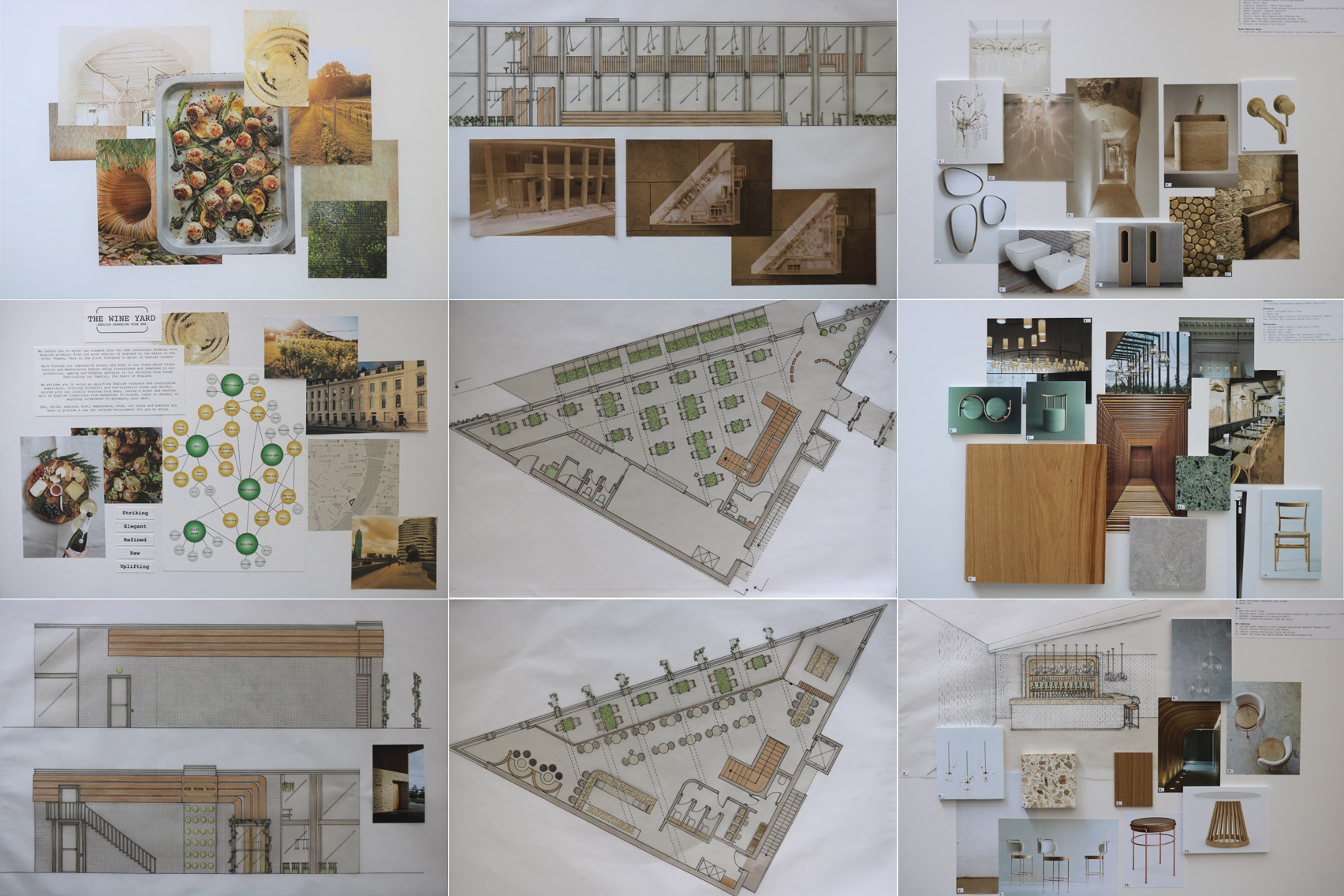
The Wine Yard: English Sparkling Wine Bar by UAL student Christine Newman for VDF student show

The Wine Yard: English Sparkling Wine Bar by Christine Newman

"The Wine Yard brings the look and feel of a vineyard to London, specialising in the booming English sparkling wine market.

"Key words to describe the concept are striking, elegant, refined, raw and uplifting. Customers enter through the impressive winery and dine in the vineyard before being taken on a journey through the production process and can enjoy drinking bubbles in the farmhouse.

"The design incorporates the light, temperature and materials conditions required for sparkling wine fermentation. The journey and different areas captures this entire production process, from growing vines through to ageing, riddling and consumption."

Christine Newman
cnewdesign.wordpress.com


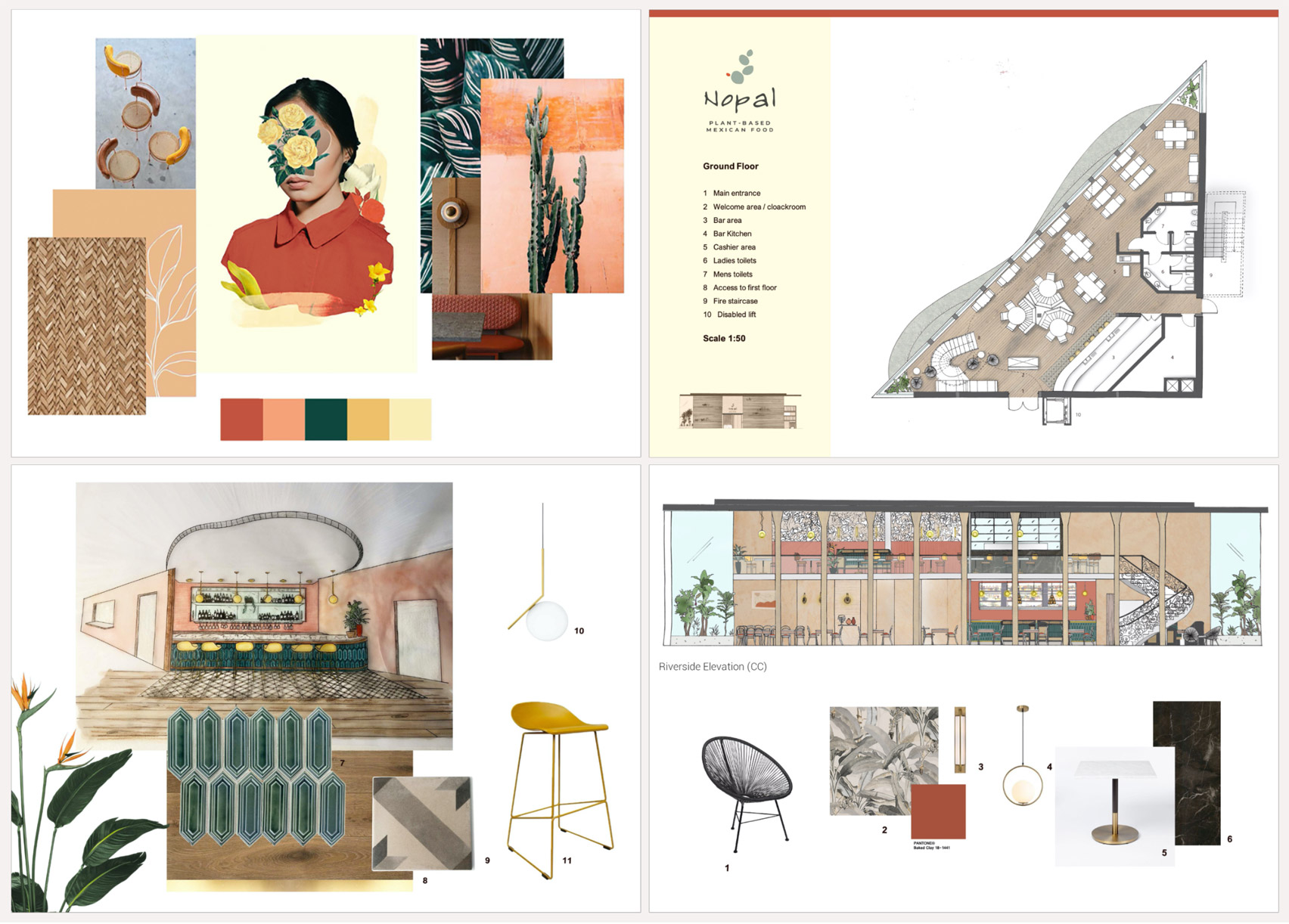
Nopal: A Sophisticated Mexican Restaurant and Tapas Bar by UAL student Ella Forster for VDF student show

Nopal: A Sophisticated Mexican Restaurant and Tapas Bar  by Ella Forster

"Moving away from clichés, this design reflects a modern, sophisticated London-based restaurant that echoes its Mexican roots.

"Dark greens, earthy tones and a red accent colour bring the warmth and vibrance of South America. Together, these elements create a tropical atmosphere that feels cosy and inviting, even on gloomy winter days.

"Each space is designed to impress and enhance the dining experience. An earthy colour scheme of soft clay and terracotta paired with prints inspired by tropical forest creates a warm and welcoming atmosphere.

"The bar area is beautifully dressed in mosaic and decorative tiles and the furniture creates a unique space where modern designs meet Spanish colonial pieces. Iconic Acapulco chairs complete the look."

Ella Forster
ellaforster.com


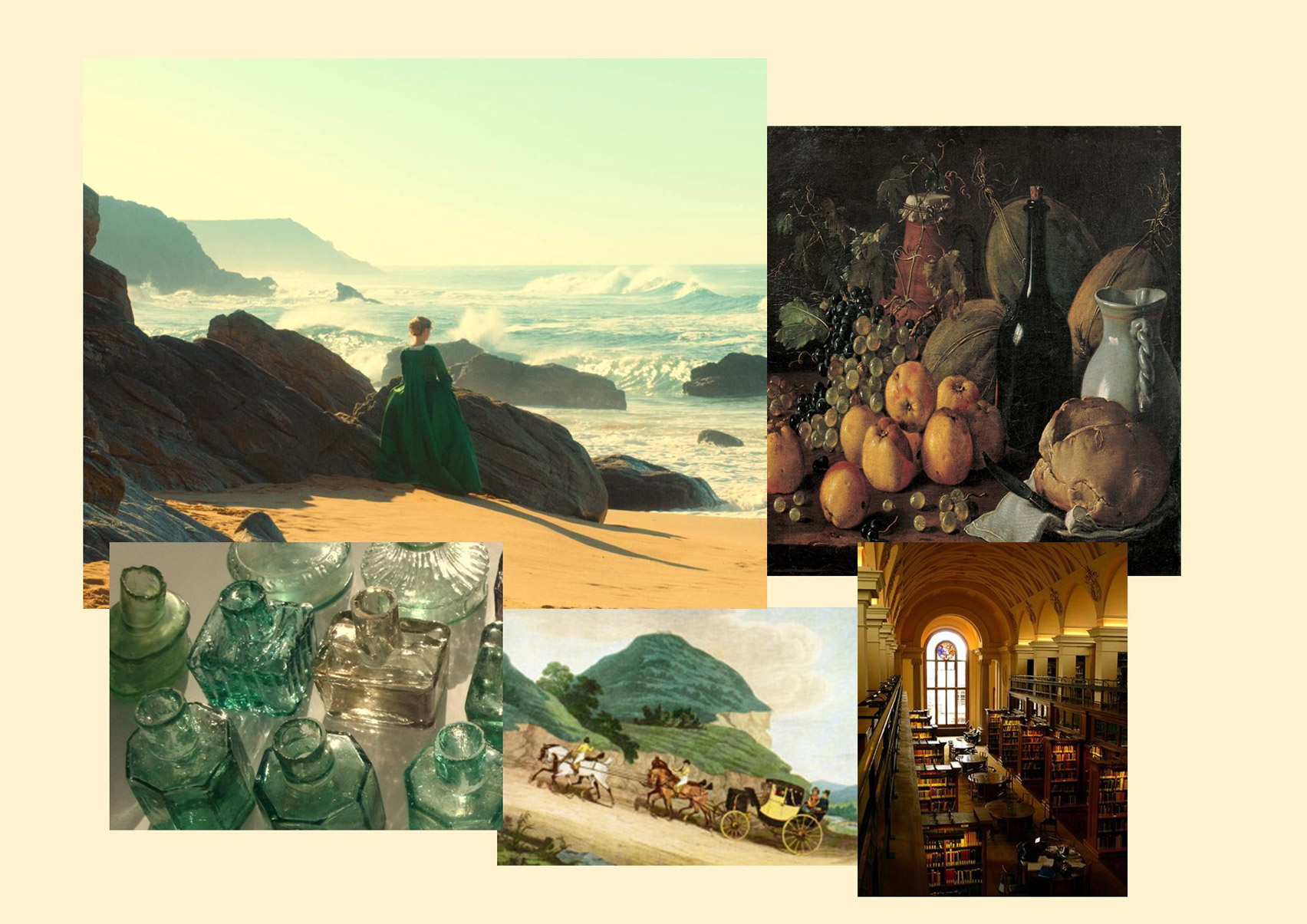
Poet's Corner: Fine Dining by UAL student Katrien Goossens at VDF student show

Poet's Corner: Fine Dining by Katrien Goossens

"Poet's Corner is inspired by the original Poet's Corner in Westminster Abbey. Key words to describe the restaurant concept are poetic, romantic, analogue, bookish and dramatic.

"Its exterior features classical Corinthian white stone pillars and cornicing, combined with the large glass panes, creating a building that honours the past and fits in with the modern skyline.

"Its interior is a tribute to English literary giants from the Romantic era, achieved through choice of exclusive materials, colours, lighting and layout. The restaurant's split level offers a variety of dining experiences. Books and poetry are the main recurring themes throughout."

Katrien Goossens
arts.ac.uk/study-at-ual/short-courses/stories/student-story-katrien-goossens-interior-design


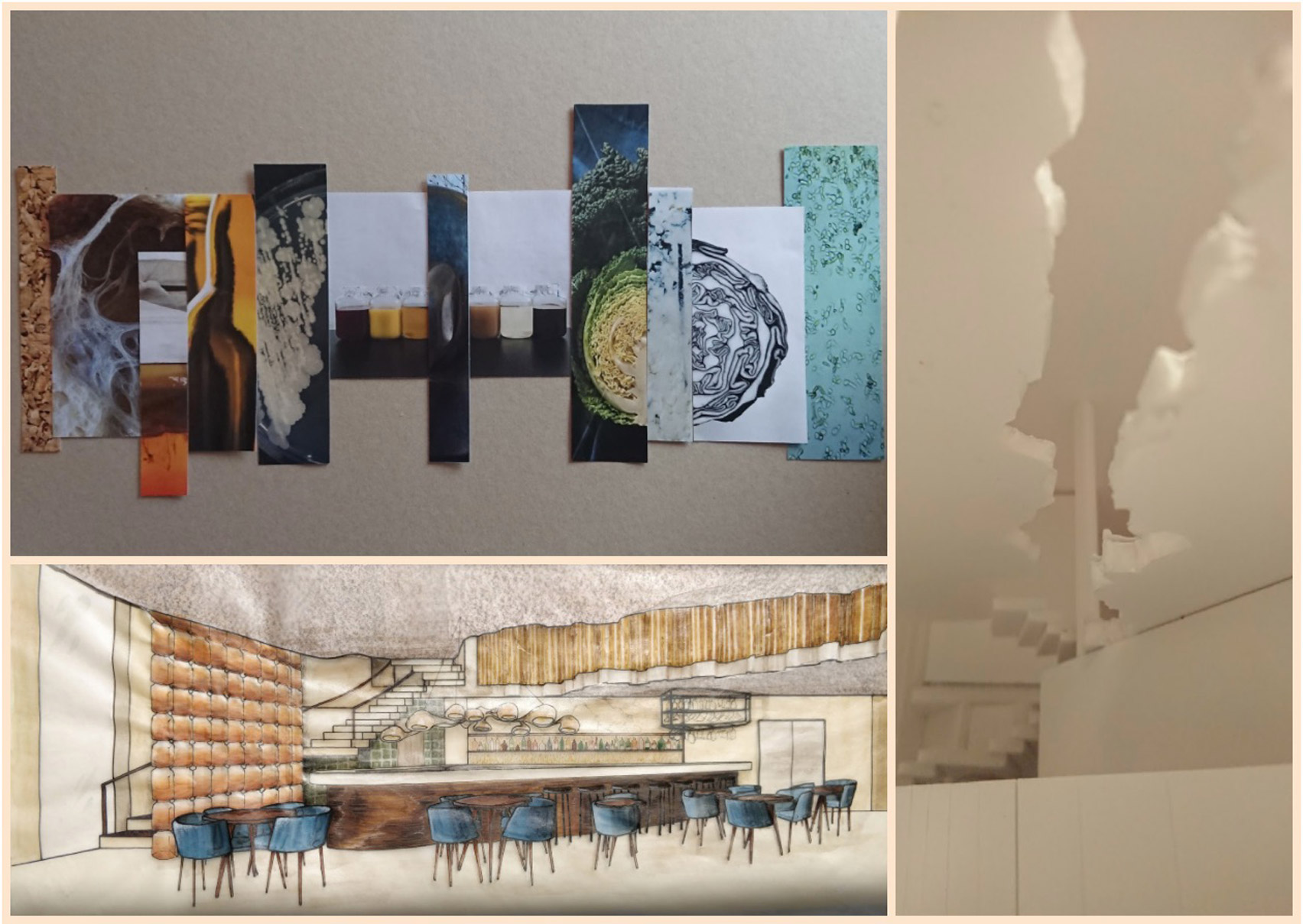
Alegar: Fermentation House by UAL student Mary Curran for VDF student show

Alegar: Fermentation House by Mary Curran

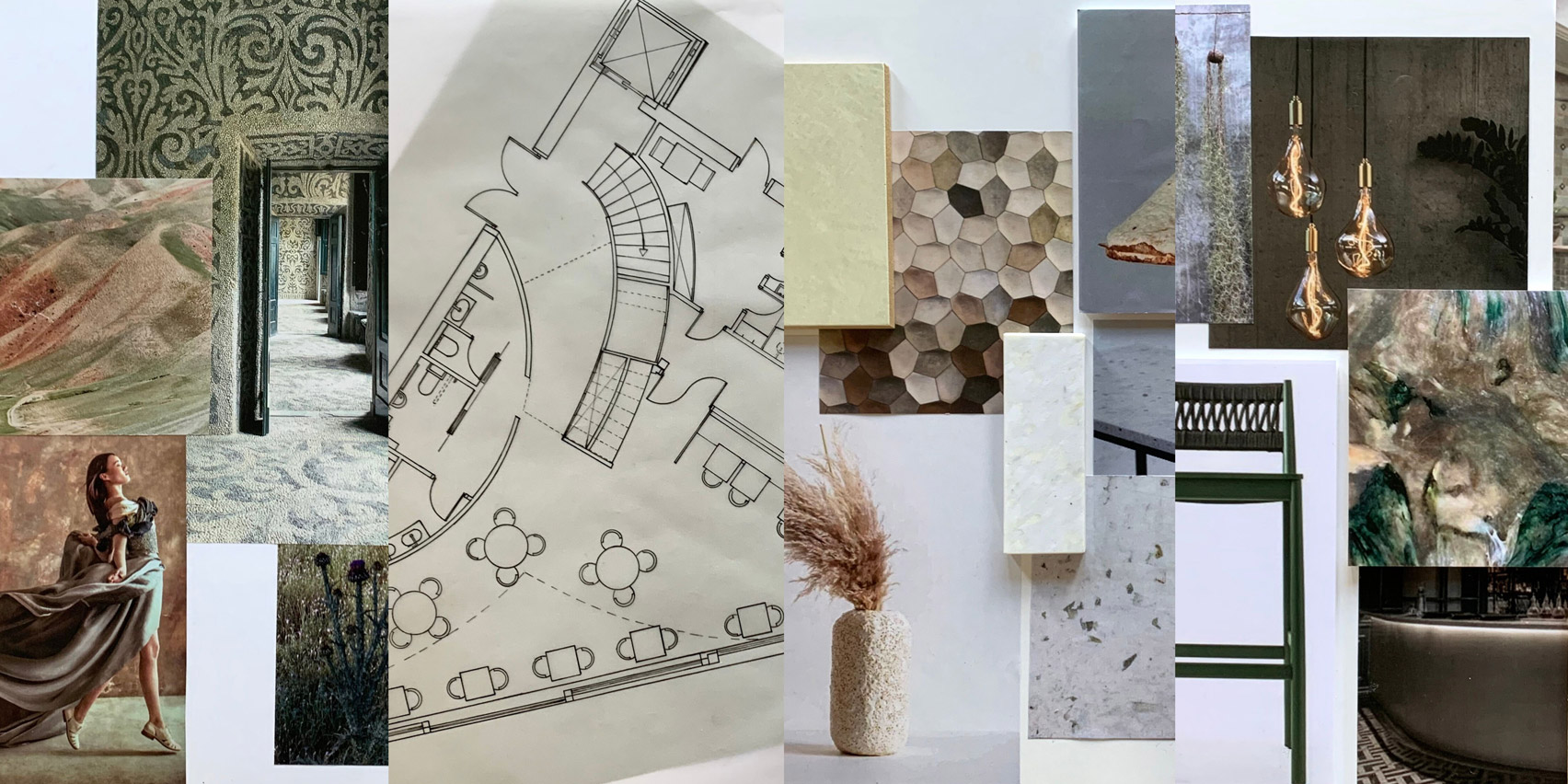
"Alegar is a proposed restaurant specialising in pickling and fermentation, giving a unique experience of complex flavours and new appreciation of plant-based cuisine.

"As the diner enters the space they will meet a stunning double-height wall of fluid-filled jars, diffusing light and adding intrigue to what lies beyond.

"Inspired by the layers present in vegetable anatomy, stacked glass, sandstone and cork give a juxtaposition of texture. The organic shape of the split-level originates from the undulating pattern produced by microscopic yeast growth, pushing the diner to consider what we consume on another level."

Mary Curran
marylcurran@gmail.com


Totum: Sustainable Fish Restaurant Bar by UAL student Lucy Morgan-Hobbs for VDF student show

Totum: Sustainable Fish Restaurant Bar by Lucy Morgan-Hobbs

"I strongly believe sustainable design is the future of interior and architectural design.

"My concept is a sustainable fish restaurant championing the 'fin-to-gill movement', promoting a circular economy from food to design.

"If fulfils three key objectives: long-lasting eco-friendly design, spatially-aware design utilising the best of its surroundings, and stunning interiors that create an unforgettable experience – all whilst commercially viable.

"This concept showcases how cutting edge, leading sustainable and eco-friendly design can be incorporated into a visually stunning restaurant bar experience."

Lucy Morgan-Hobbs
lucymorganhobbs.com


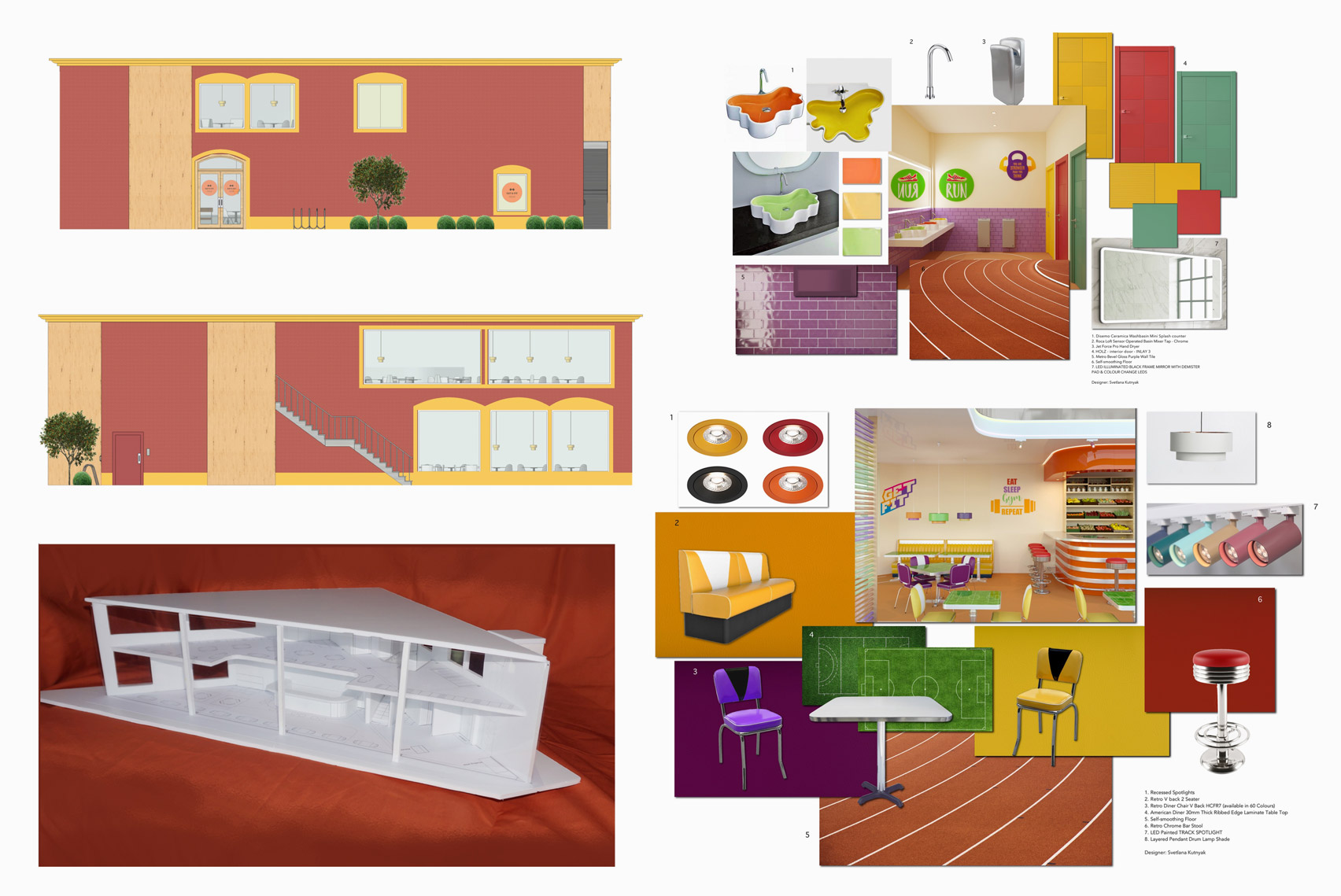
Eat&Fit: Fitness Food Restaurant by UAL student Svetlana Kutnyak at VDF student show

Eat&Fit: Fitness Food Restaurant by Svetlana Kutnyak

"It is really important to eat healthy food especially after a workout, because  diet will help to achieve most of your fitness goals.

"Although fit food is considered as something boring, this project tries to create a fun and colourful design for the fitness food restaurant. I assume that fitness food is associated with a lunchbox, which has informed the mezzanine and bar shapes.

"Also I drew inspiration from retro 1950s American diners. The floor throughout the whole restaurant imitates a running track. I think it is funny and easy to add real directions for people not to be lost.

"The dumbbell shapes are used everywhere: in the logo, on the walls and it is a shape of the chandeliers too. I suppose this restaurant should be really motivating to keep fit."

Svetlana Kutnyak
veta.kutnyak@gmail.com


Chelsea School of Art, UAL school show for VDF

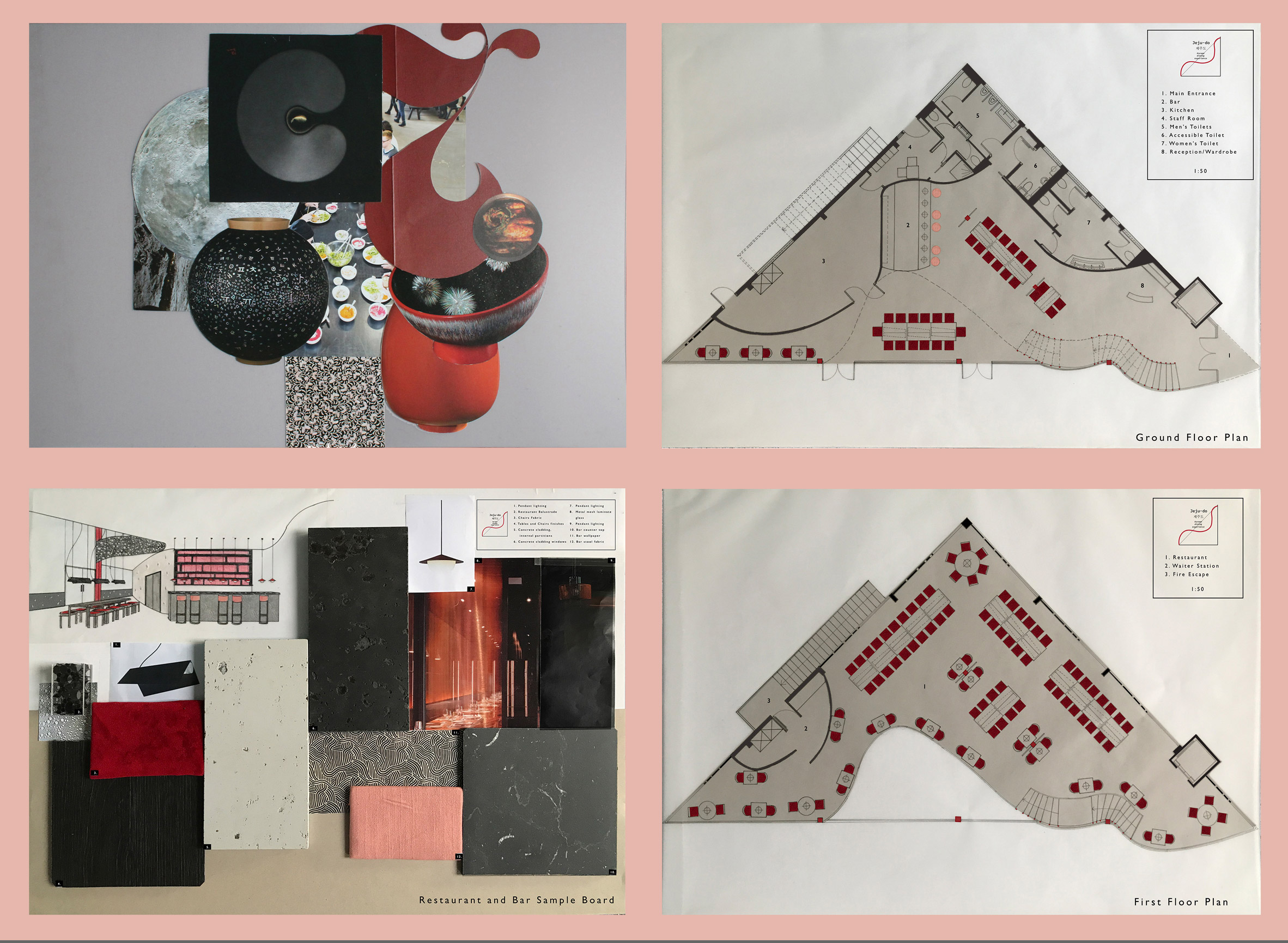
Jeju-do: Korean Dining Experience by Maria Pia Polizzi

"Named after an island in South Korea, Jeju-do exudes all the qualities of traditional Korean fine dining with a contemporary plant-based menu.

"Overlooking the Thames in the heart of Pimlico, you are sure not to miss this triangular architectural delight. Upon entering the beautifully symmetrical glass exterior, you are welcomed with an intimate communal dining experience.

"Gone are the harsh edges of the exterior, the interior is abundant with fluid lines capitalised by the steel staircase that waves you to the next level. As the city lights start to adorn the river and day turns into night, the restaurant comes into its own."

Maria Pia Polizzi
arts.ac.uk/study-at-ual/short-courses/stories/student-story-maria-pia-polizzi-interior-design


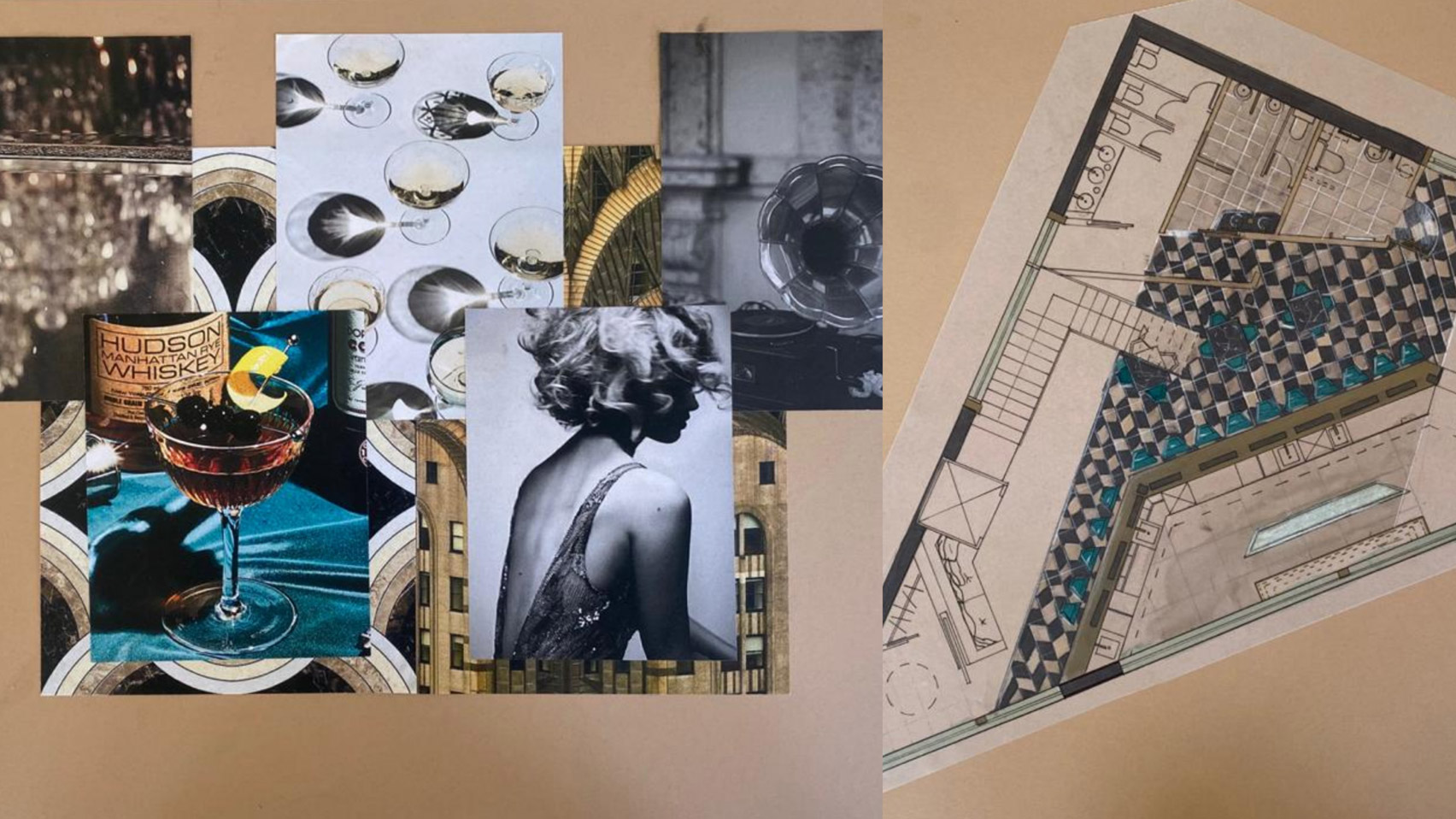
Venti: Speakeasy & Oyster bar by UAL student Cristina Iazzetta at VDF student show

Venti: Speakeasy & Oyster bar by Cristina Iazzetta

"My project is a speakeasy oyster bar called Venti. The five words I used to describe it are 'roaring 20s' and 'retro', because this style is inspired by the 1920s, one of the most elegant eras ever.

"Another is 'speakeasy', because it was mainly the concept of a secret bar that inspired me. Speakeasies were born in this era to escape the laws of prohibition.

"Finally, the words 'elegant' and 'experience', because I hope that a customer doesn't enter into this place just for a quick bite, but to live a new experience by immersing themself in another era in a luxurious and elegant environment."

Cristina Iazzetta
arts.ac.uk/study-at-ual/short-courses/stories/student-story-cristina-Iazzetta-interior-design

The post Interior design students at Chelsea College of Arts present conceptual restaurant and bar designs appeared first on Dezeen.


from Dezeen https://ift.tt/2T0j5nX

Meander through the strange and beautiful world of illustrator Dura Lee

Having previously studied fashion, the illustrator tells us about her delectable work and how she landed on her chosen discipline.


from It's Nice That https://ift.tt/35Xlwgh

Vikki's Place by Curious Practice is a family home for three generations

Vikki's Place by Curious Practice

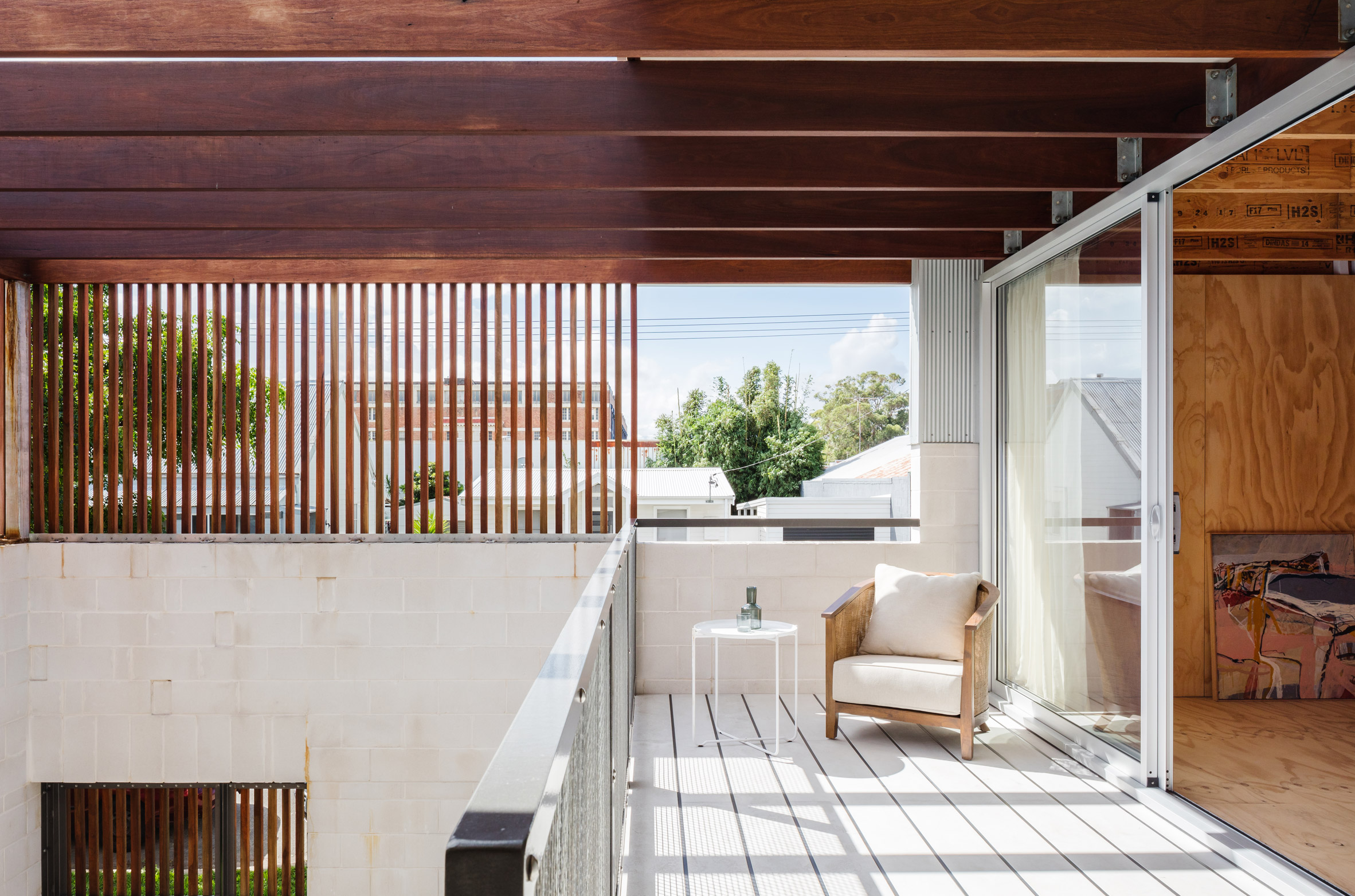
Split-level flooring and slim wooden blinds separate the living spaces of this multi-generational home in the Australian city of Newcastle, New South Wales.

The eponymous owner of Vikki's Place needed a home that could accommodate herself and her grown-up son, who comes to stay for long periods of time with his own family of four.

Locally-based Curious Practice set about creating a cosy multi-generational home that "does not presume separation between family members".

Vikki's Place by Curious Practice

The home sits on flood-prone land, so living spaces are exclusively designated to the home's first floor, supported by a concrete block-work volume at ground level.

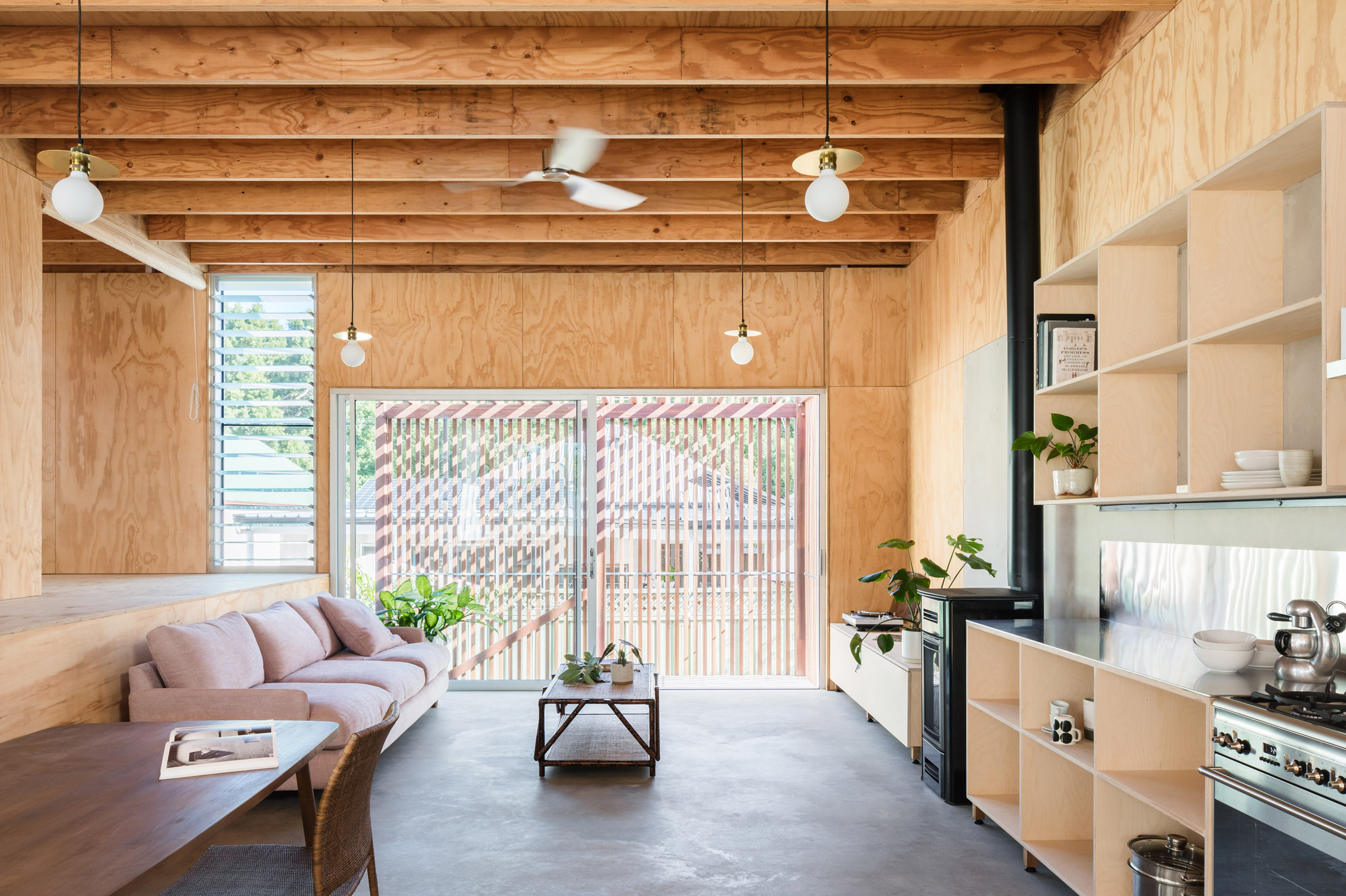
One side of Vikki's Place plays host to an open living and dining area.

Vikki's Place by Curious Practice

Birch plywood has been used to craft simple open-face cabinets in the kitchen, with countertops clad in stainless steel.

The space is otherwise dressed with a wood burner, mauve-coloured sofa and a long dark-wood table where the family can enjoy meals.

Vikki's Place by Curious Practice

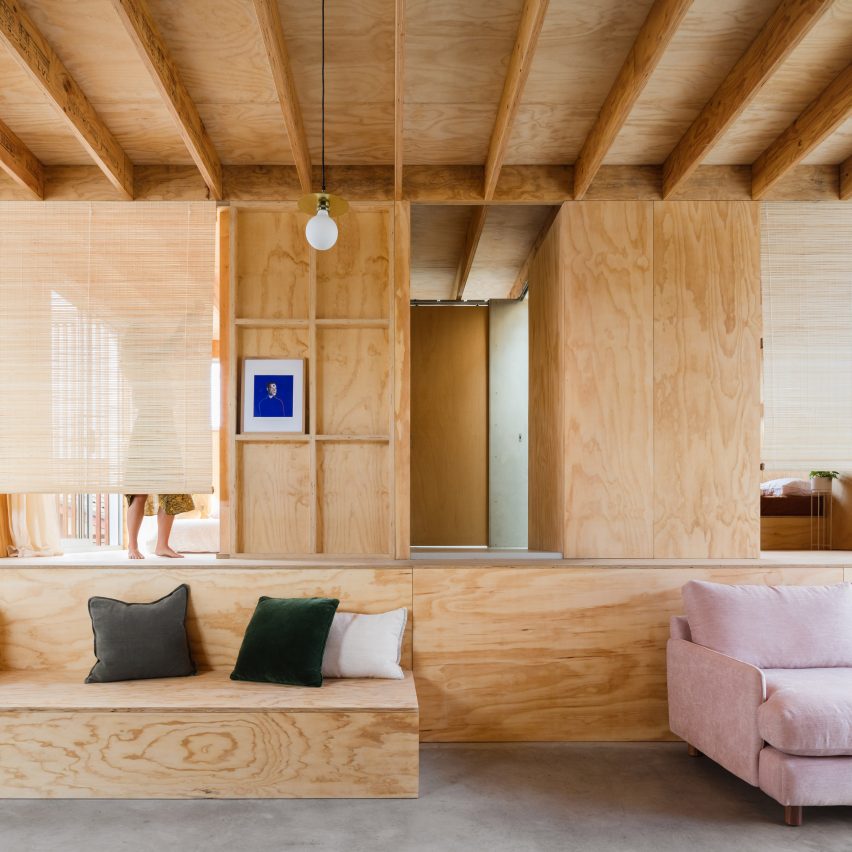
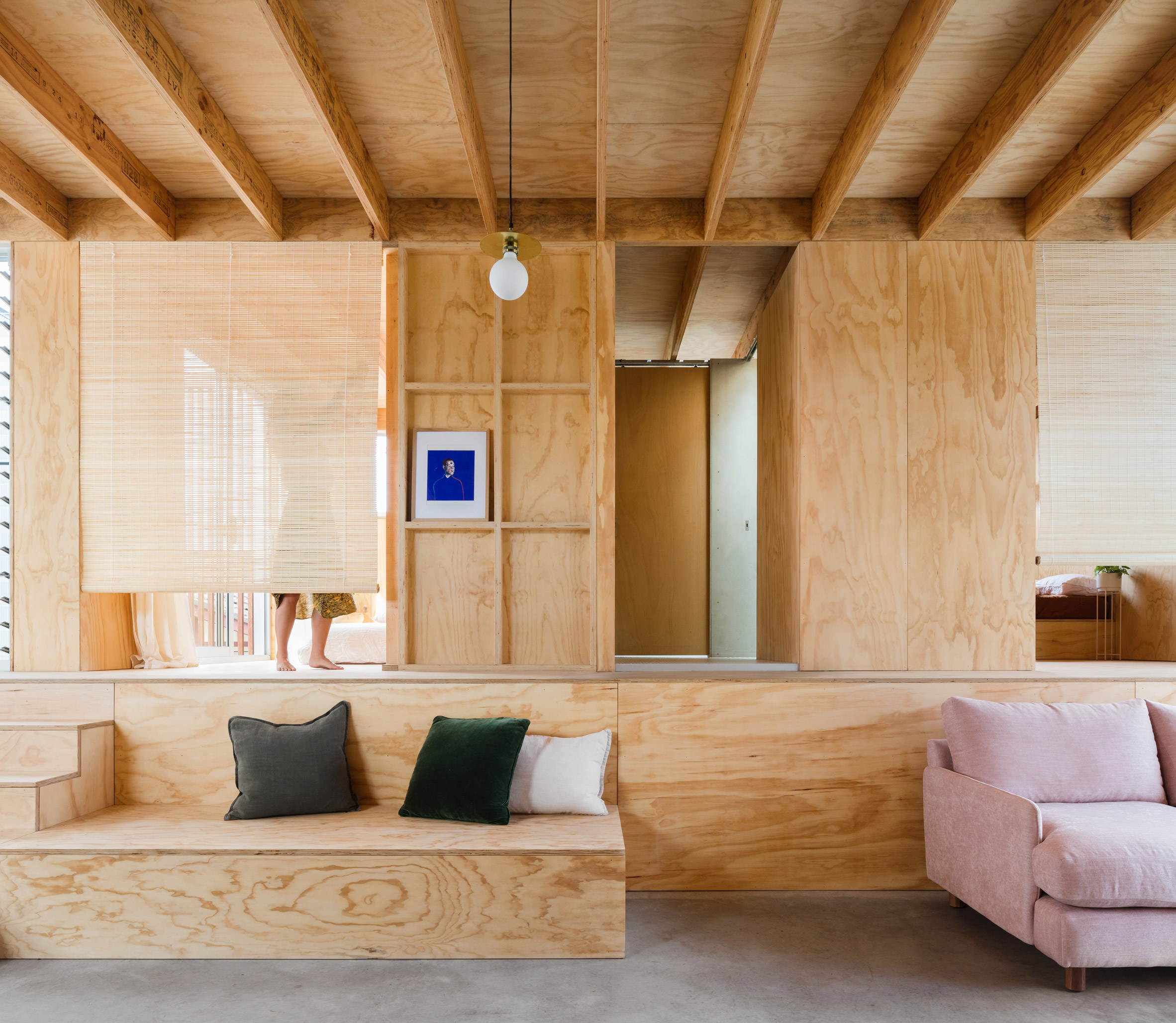
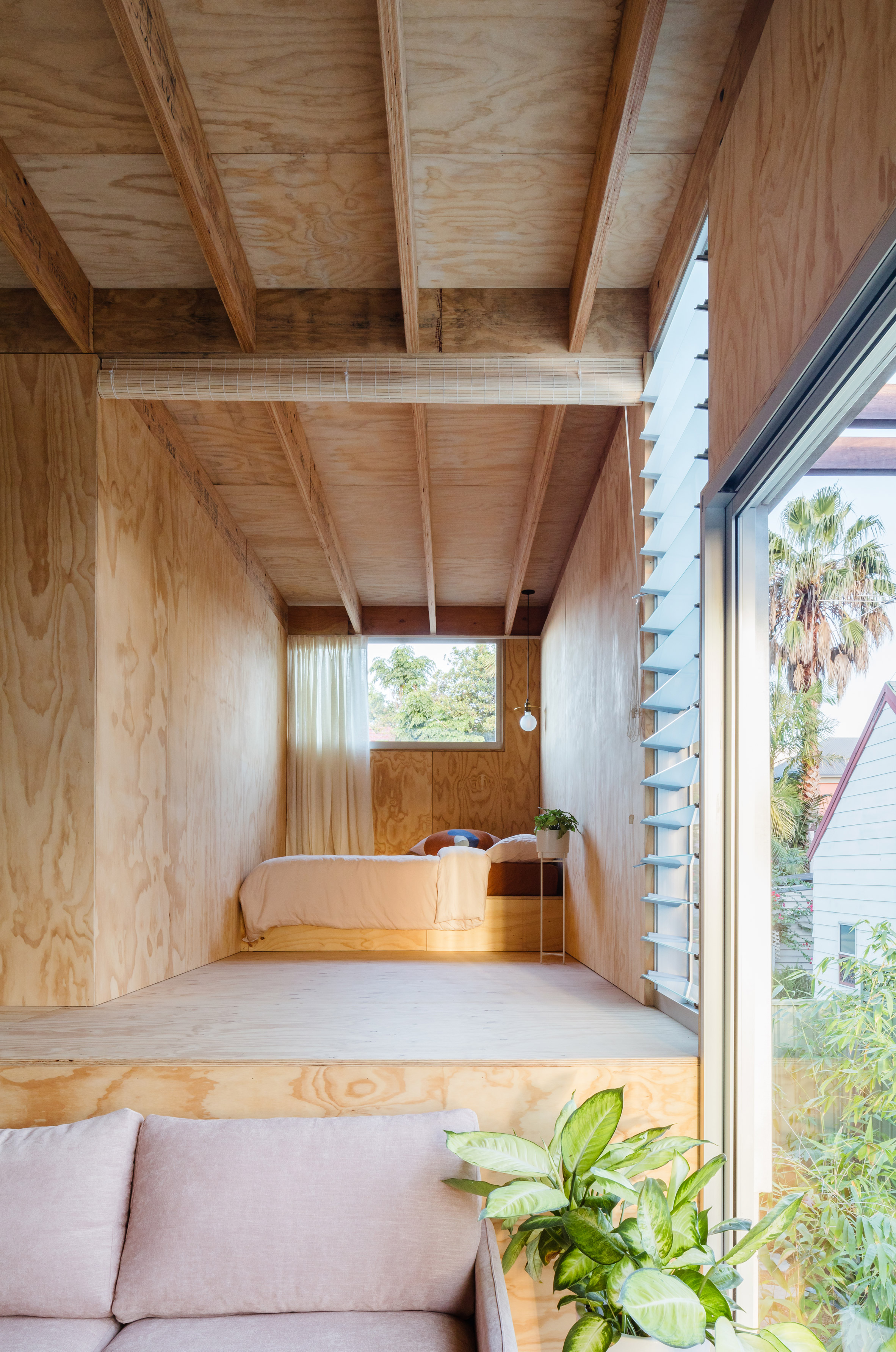
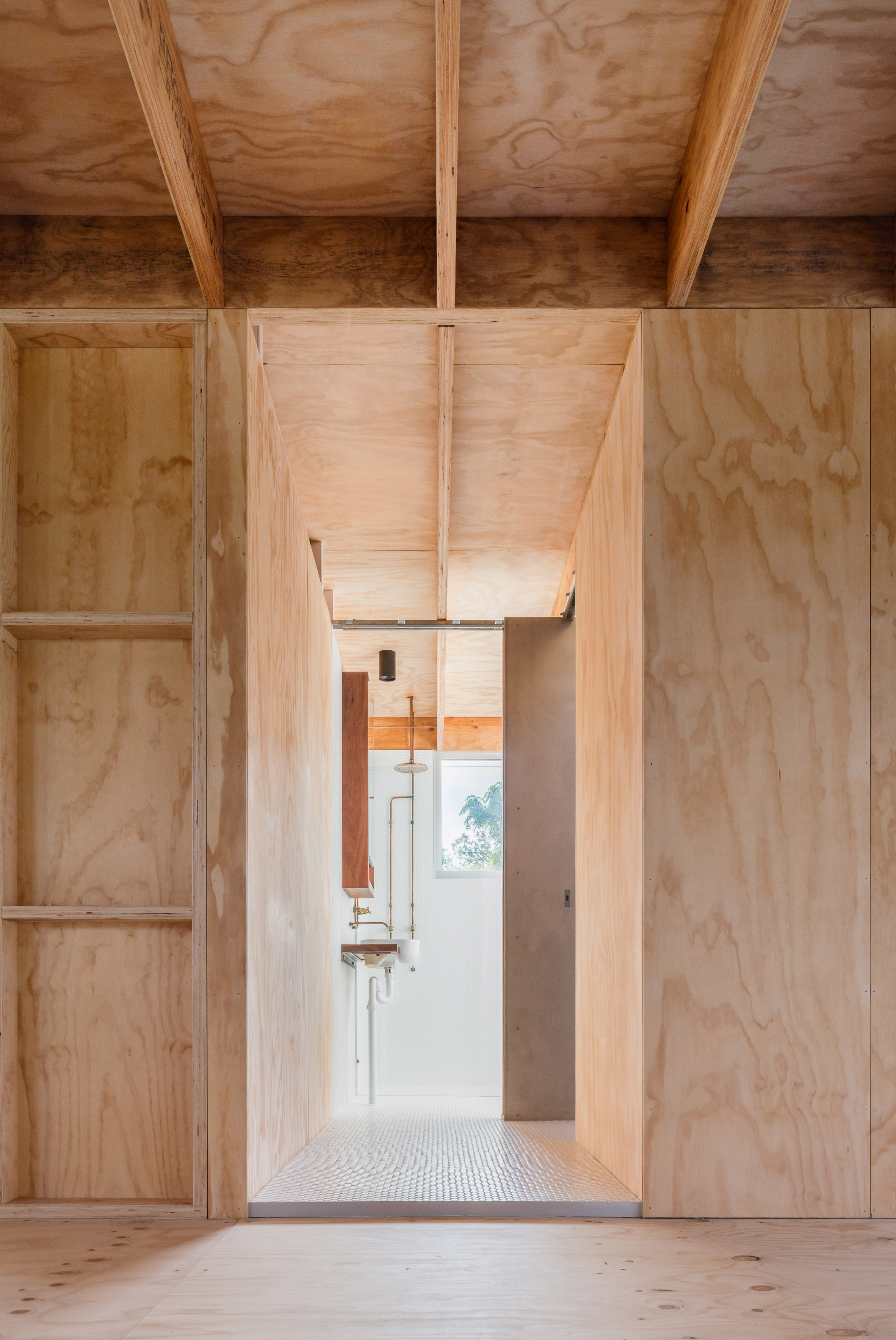
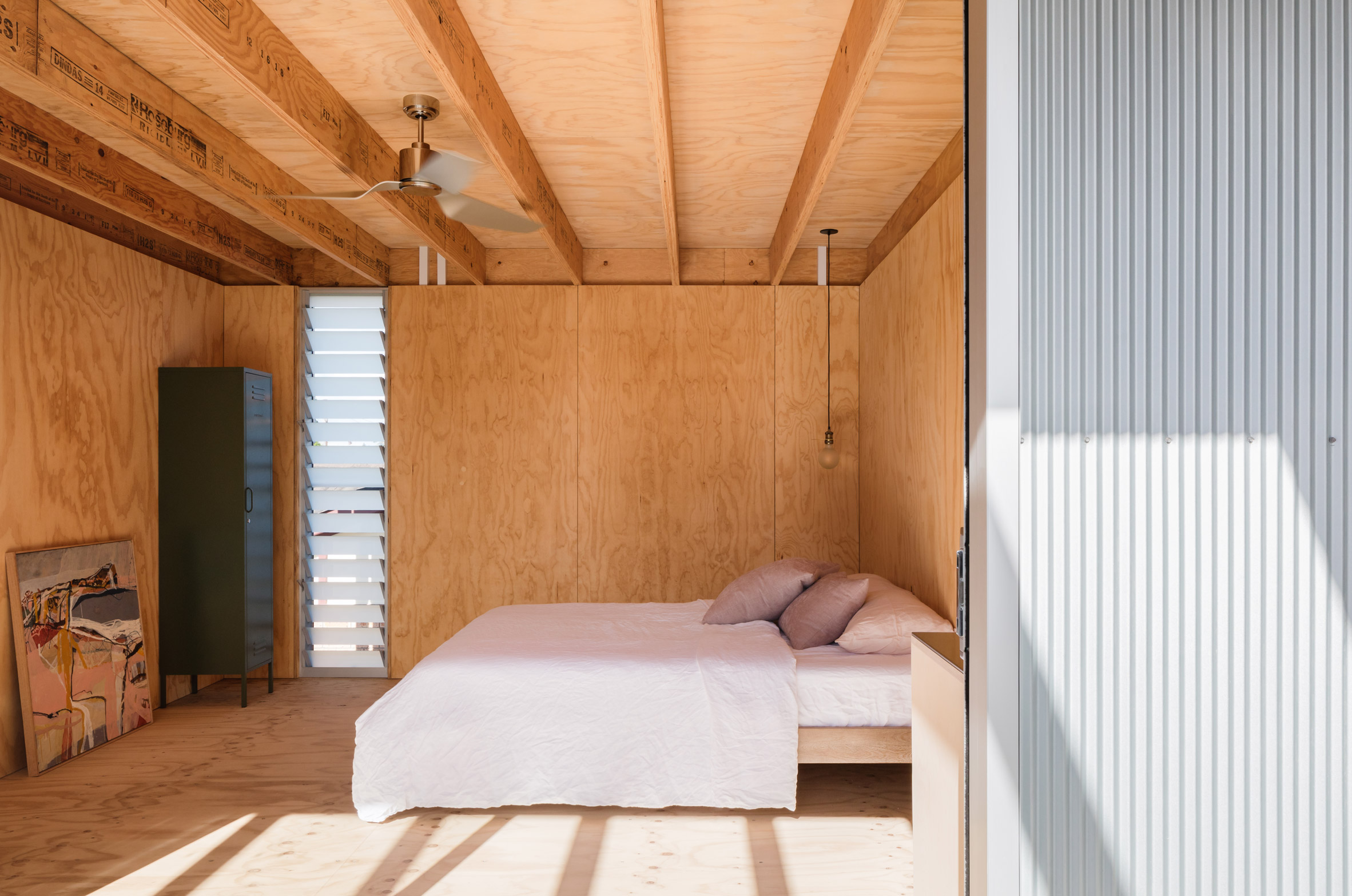
A short set of steps leads up to a pair of plywood-lined bedrooms, which sit on a slightly elevated platform at the rear of the floor plan.

Traditional doors have been omitted – each room is instead fronted by light wooden blinds, which can be rolled down if inhabitants want privacy.

Vikki's Place by Curious Practice

"The play with the levels enables the architecture to act as furniture which accommodates more or fewer guests for different occasions," architect Warren Haasnoot told Dezeen.

"Manoeuvring between spaces and levels invokes a sense that one is navigating between levels of terrain rather than moving room to room or outside to inside," he continued.

"This allows the dwelling a level of comfort and flexibility when occupied by any number of people."

Vikki's Place by Curious Practice

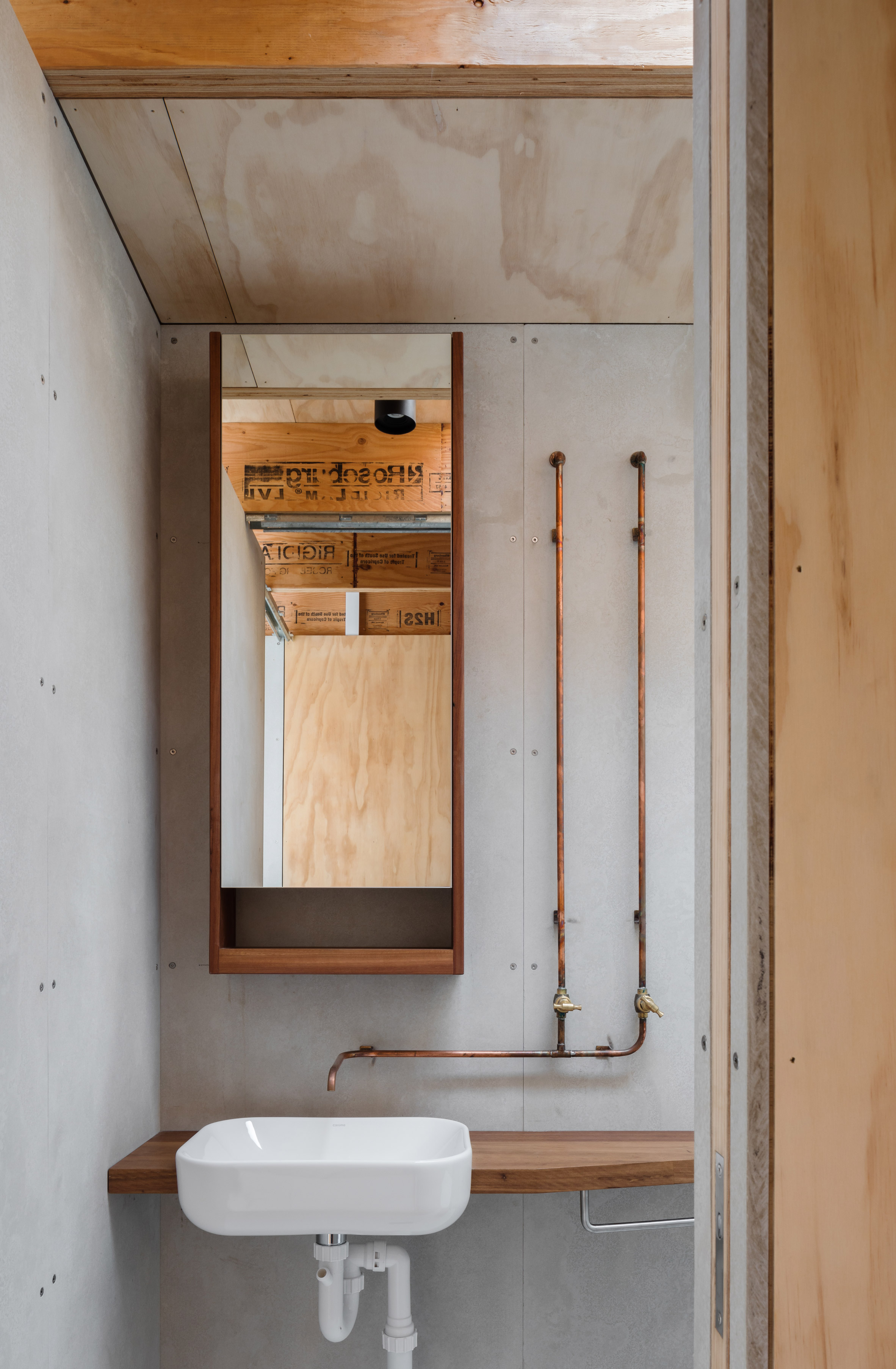
A bathroom is nestled between the two bedrooms, which features exposed copper pipework.

Screws that affix panelling to the walls have also been left exposed, and manufacturing stamps have been left on the timber beams that run across the ceiling.

Vikki's Place by Curious Practice

"An interior of craft and honesty is prioritised over style or glamour," the studio explained.

"It is this elemental, almost primitive construction of space coupled with the raw material treatment which on visiting the house, makes one feel instantly at home."

Vikki's Place by Curious Practice

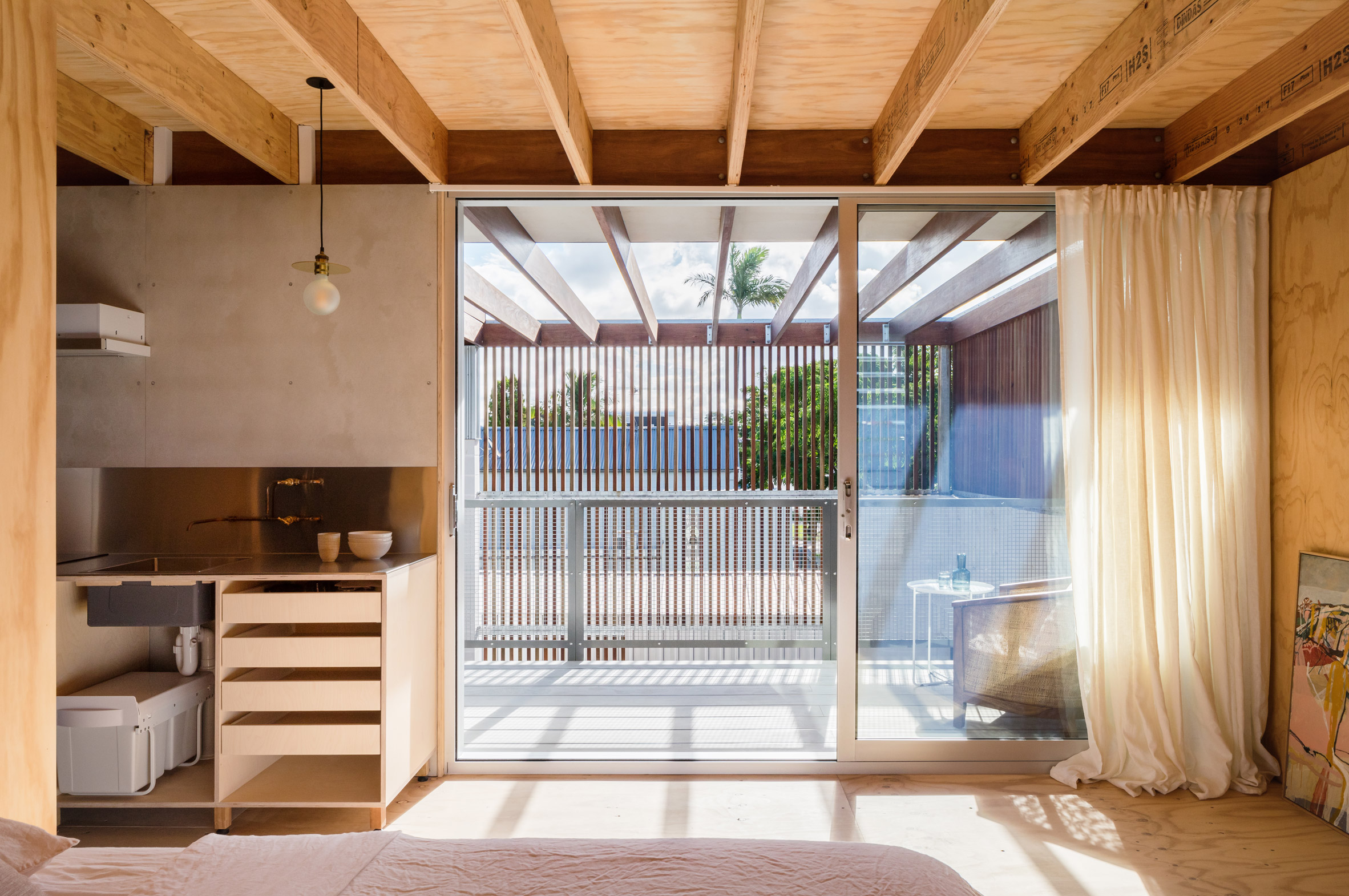
The only "discrete" living space on the first floor is a self-contained studio that's been built towards the front of the plan, overlooking the driveway.

As well as a spacious bathroom, it has its own kitchenette and wash facilities.

Vikki's Place by Curious Practice

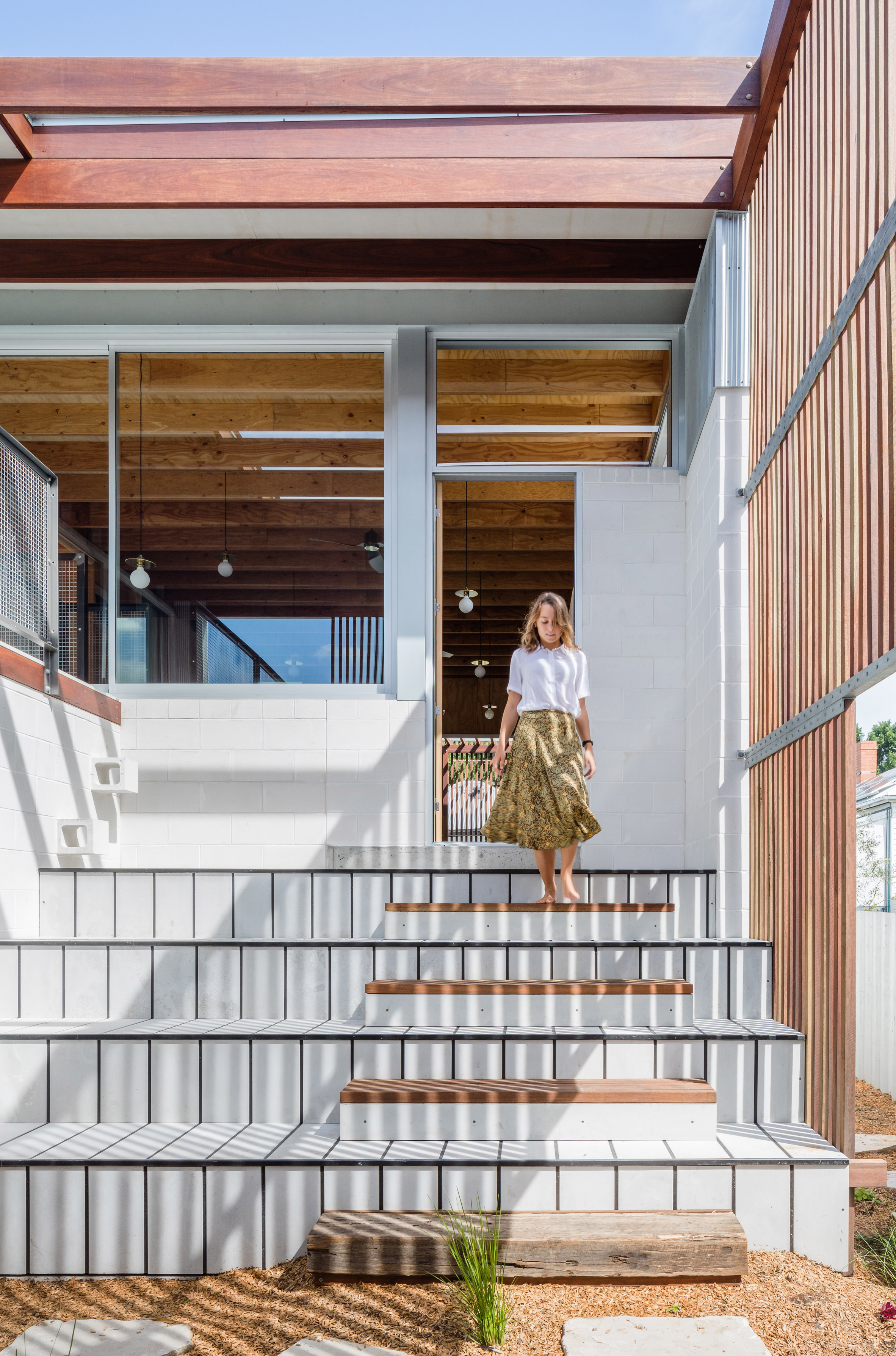
A flight of white-tile steps shaded by screens made from spotted-gum wood leads down to a gravelled courtyard at ground level.

From here inhabitants can cut through to the garage, laundry room and storage space that sit beneath Vikki's Place.

Vikki's Place by Curious Practice

Vikki's Place joins a growing number of multi-generational homes popping up across Australia.

Other examples include McIlwrick Street Residences by B.E. Architecture, where relatives' living quarters are connected by a series of indoor courtyards, and Mixed Use House by architect Matt Gibson, where different family members' rooms occupy a stack of zinc-clad boxes.

Photography is by Katherine Lu.


Project credits:

Design: Curious Practice
Architect: Warren Haasnoot
Project team: James Ellis, Chris Bourke, Nina Mocke, Angus Vinden
Builder: Built By Eli
Engineer: Skelton Consulting Engineers
Landscaping: Curious Practice and Built By Eli

The post Vikki's Place by Curious Practice is a family home for three generations appeared first on Dezeen.


from Dezeen https://ift.tt/2Ln9lQq

Just 20 days left to save 50 per cent on all Dezeen Awards studio categories

With just 20 days to go until entries for Dezeen Awards 2020 close, there's limited time left to enter one of our studio categories at a lower price!

This is your for chance to be crowned architect, designer or interior designer of the year. Hurry and start your entry now!

You can now save 50 per cent on entering one of our studio categories.

Enter 50STUDIO at the payment stage to receive a 50 per cent discount on your studio award entry.

What are the studio categories?

The Dezeen Awards studio categories have been specifically created to highlight the architects and designers producing the most outstanding work.

There are six studio categories, two in each sector for both emerging and established studios:

Architecture

Architecture studio of the year

Emerging architecture studio of the year

Interiors

Interior design studio of the year

Emerging interior design studio of the year

Design

Design studio of the year

Emerging design studio of the year

20 days left to enter Dezeen Awards

Entries close on 2 June 2020 at 23:59 BST, so get started on your entry before it's too late!

Remember, use 50STUDIO at the checkout to get your discount.

Enter Dezeen Awards now

The post Just 20 days left to save 50 per cent on all Dezeen Awards studio categories appeared first on Dezeen.


from Dezeen https://ift.tt/2Lo3ZED