
Known for his weird and wonderful photographic narratives, here the Parisian photographer discusses how his practice is centred on movement, exemplified in a recent shoot: Room with a View.

from It's Nice That https://ift.tt/3fPTA2s
Known for his weird and wonderful photographic narratives, here the Parisian photographer discusses how his practice is centred on movement, exemplified in a recent shoot: Room with a View.

Following on from our event with Wix Playground, we hear from the lucky designers – from a “fresh freelance” to a creative director running her own company – who held one-on-one video calls with the creatives they admire most.


The Amsterdam studio’s founders Els Woldhek and Georgi Manassiev talk us through their varied and hands-on approach to product design.

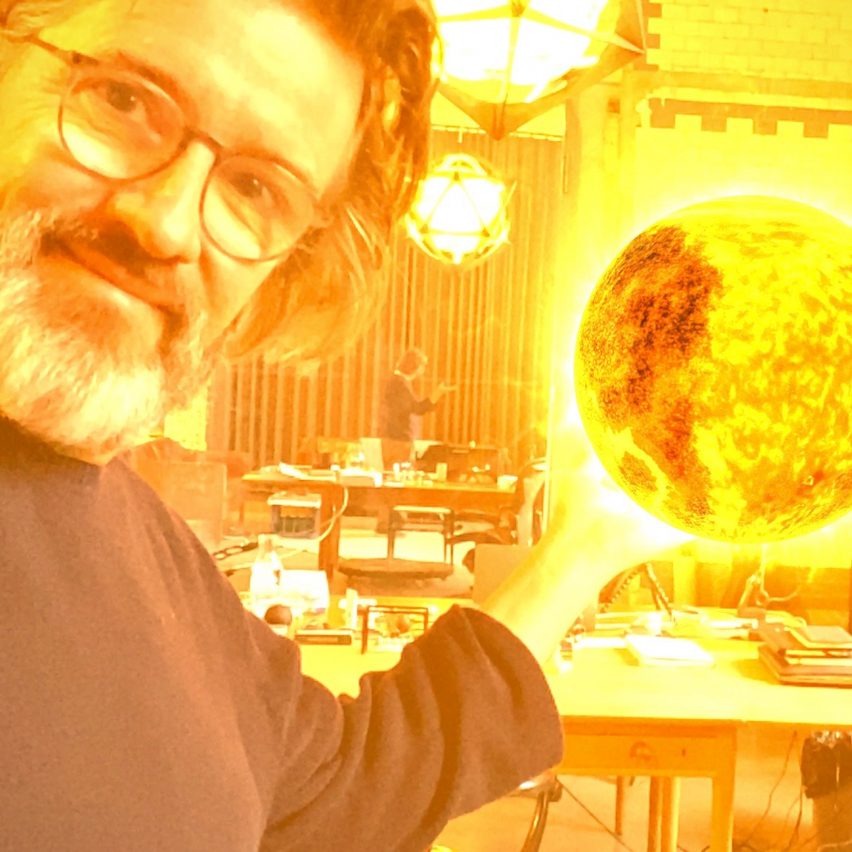
Danish-Icelandic artist Olafur Eliasson is bringing rare natural matter, including a burning sun and a sprightly puffin, into people's homes with his AR Wunderkammer works.
The Wunderkammer project, which is available through an app, marks the first time that Eliasson has employed augmented reality (AR).
The artist used the technology to create extraterrestrial rocks and rare animals that viewers can experience as if they have appeared in front of them.
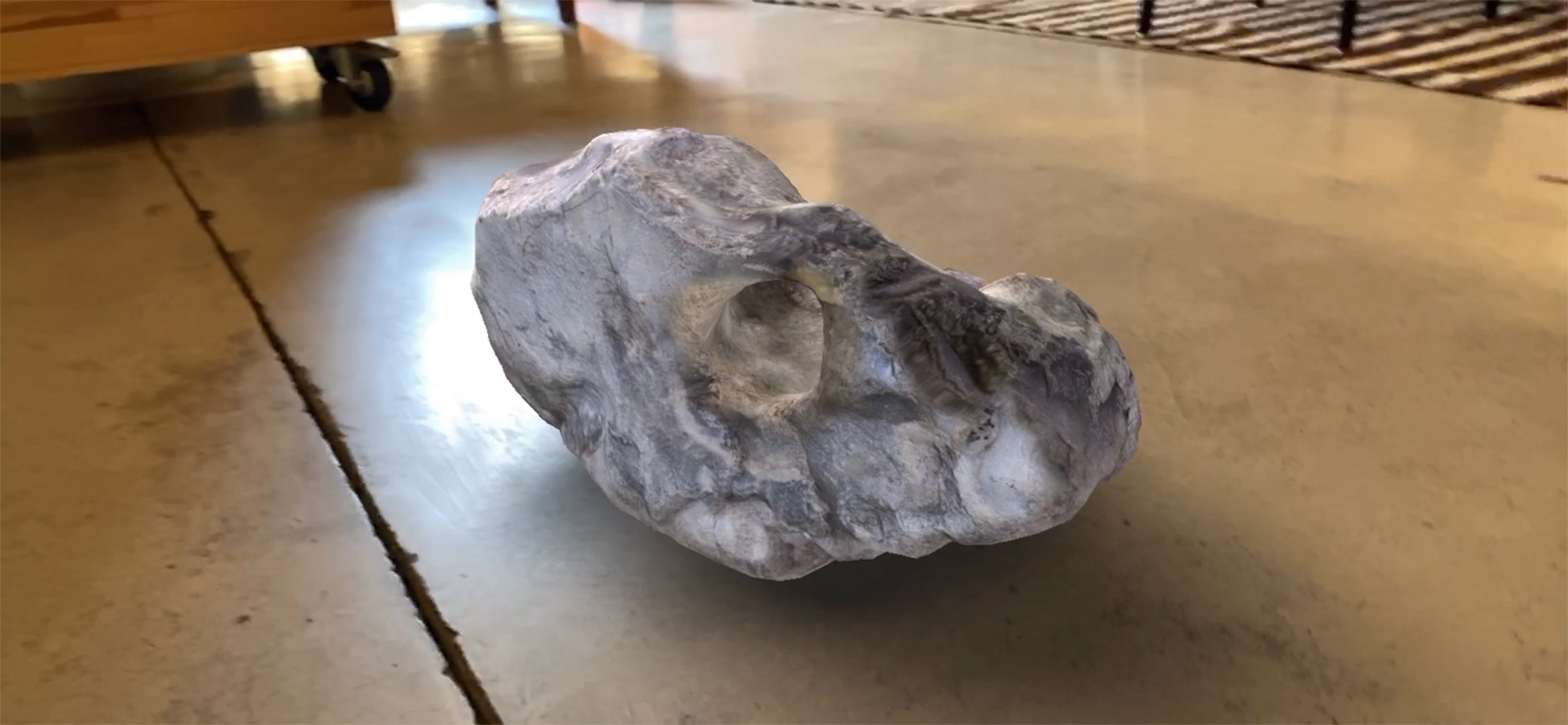
The audience is invited to "bring the outside in" by creating their own environment as they add AR objects, atmospheres and "imaginary friends" to their own, personal space.
The designer hopes this will allow people across the globe to digitally access art from their own homes while on lockdown during the coronavirus pandemic.
View this post on Instagram
Titled Wunderkammer, the project takes its name from the German word for "cabinets of curiosities" – a trend that began in Europe in the mid-sixteenth-century to keep collections of exotic objects.
Each of the works depict aspects of nature that we often take for granted.
This includes elements such as the sun, rainbows or rainclouds, as well as insects and rare birds like the puffin, and various objects including a compass.
Eliasson often creates works that encourage their viewers to think about climate change and the environment.
His 2018 Ice Watch installation saw him extract 30 blocks of glacial ice from the waters surrounding Greenland and place them in public spaces across London, where they were left to melt.
A retrospective exhibition featuring three decades of work by the artist was also on show at London's Tate Modern in July 2019, and included a tunnel of fog and other works designed to make people consider their impact on the planet.
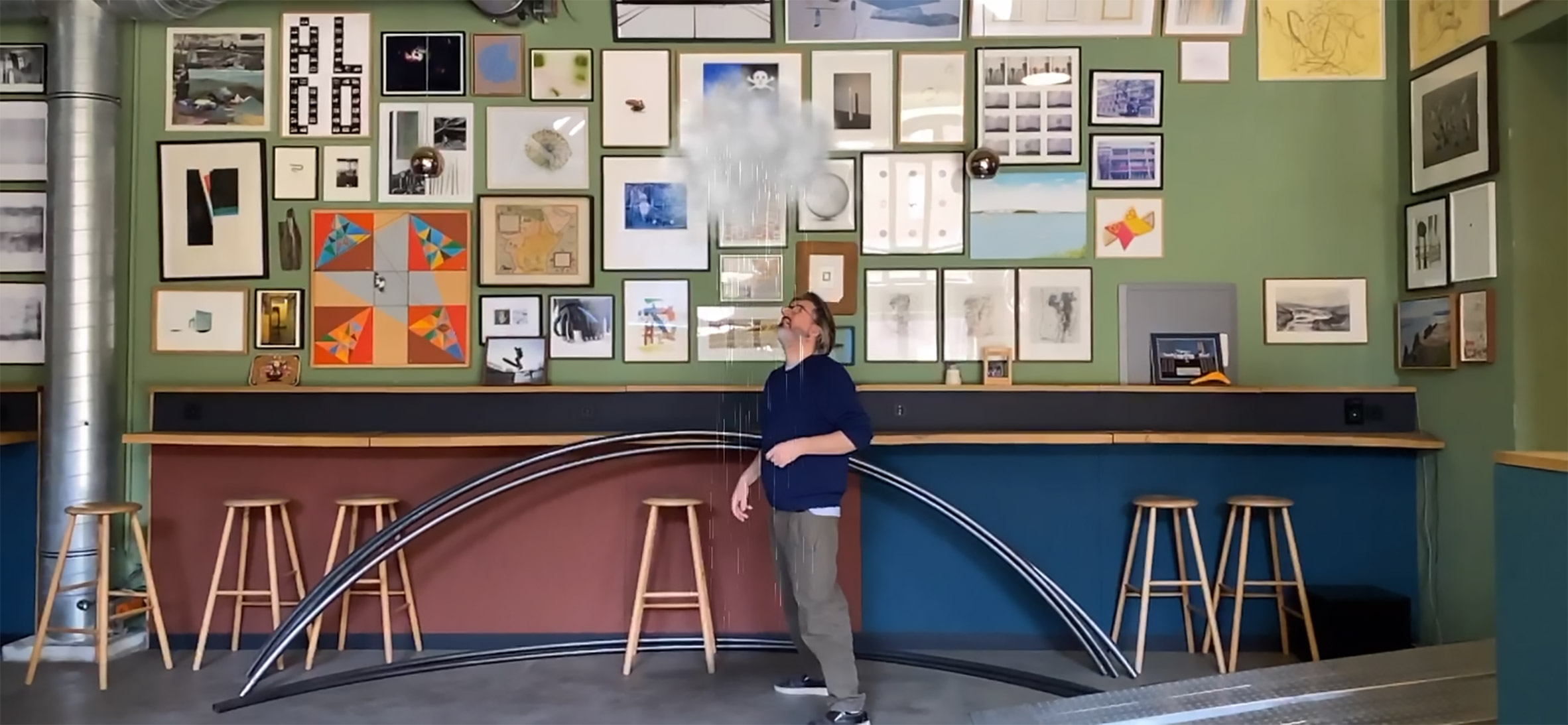
Wunderkammer was made in collaboration with Acute Art – a virtual and augmented reality production studio that specialises in creating digital artworks.
The artworks will be available to experience for free through the Acute Art app and the artist plans to release a further series at a later date.
"Can today's immersive technologies, virtual reality (VR) and augmented reality (AR), change and expand the ways we experience art?" asked Acute Art director Daniel Birnbaum.
"I think the potential is enormous and that that these tools will be essential to new forms of international visual culture and exchange," he continued. "Acute Art was founded on the vision of democratising art and bringing it to places where it could not be before."
"It's always been our ambition to reach audiences outside of the art world’s traditional institutions. In these difficult times, our aspiration has gained new relevance and urgency," added Birnbaum. "The new works by Olafur are offered to anyone, anywhere."
The post Olafur Eliasson creates an augmented-reality cabinet of curiosities appeared first on Dezeen.
The creative director of design studio Framework has turned a neglected 19th-century warehouse in Amsterdam into a plush family home for his wife and two children.
The house is located along the waters of the city's Prinsengracht canal and occupies a disused warehouse that was originally constructed back in 1896.
Over the years the five-storey building had fallen into a state of almost complete ruin, but owner Thomas Geerlings – founder of local design studio Framework – saw it as the ideal place to create his own family home.
Framework first had to figure out how to work around the building's meagre 50-square-metre footprint and narrow four-metre-wide facade, which was allowing very little natural light into the rear internal rooms.
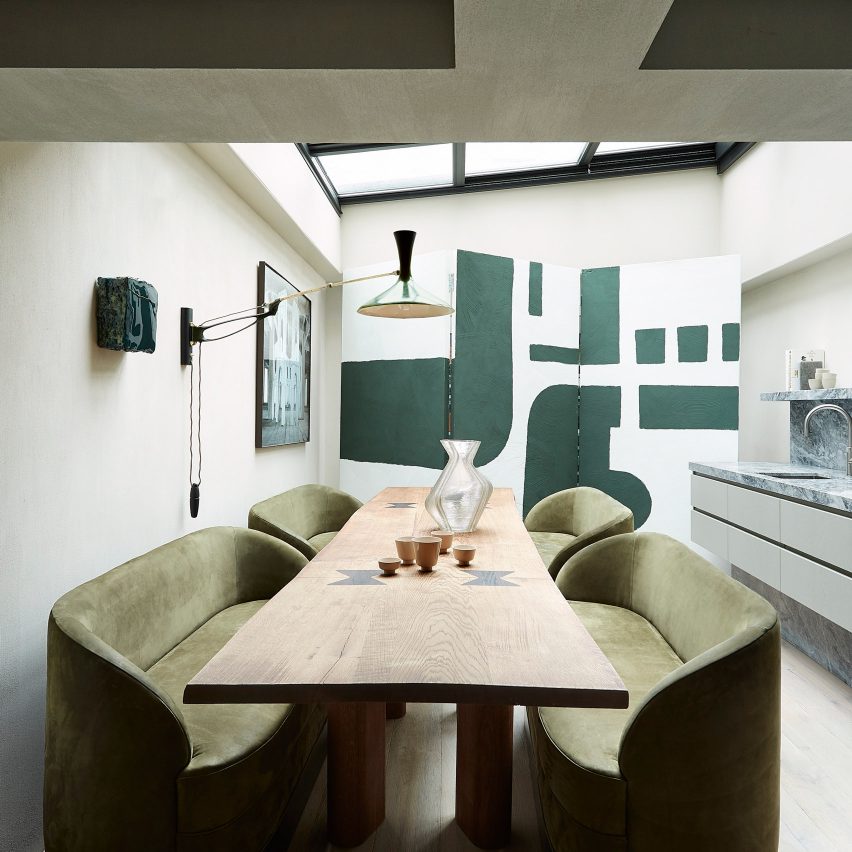
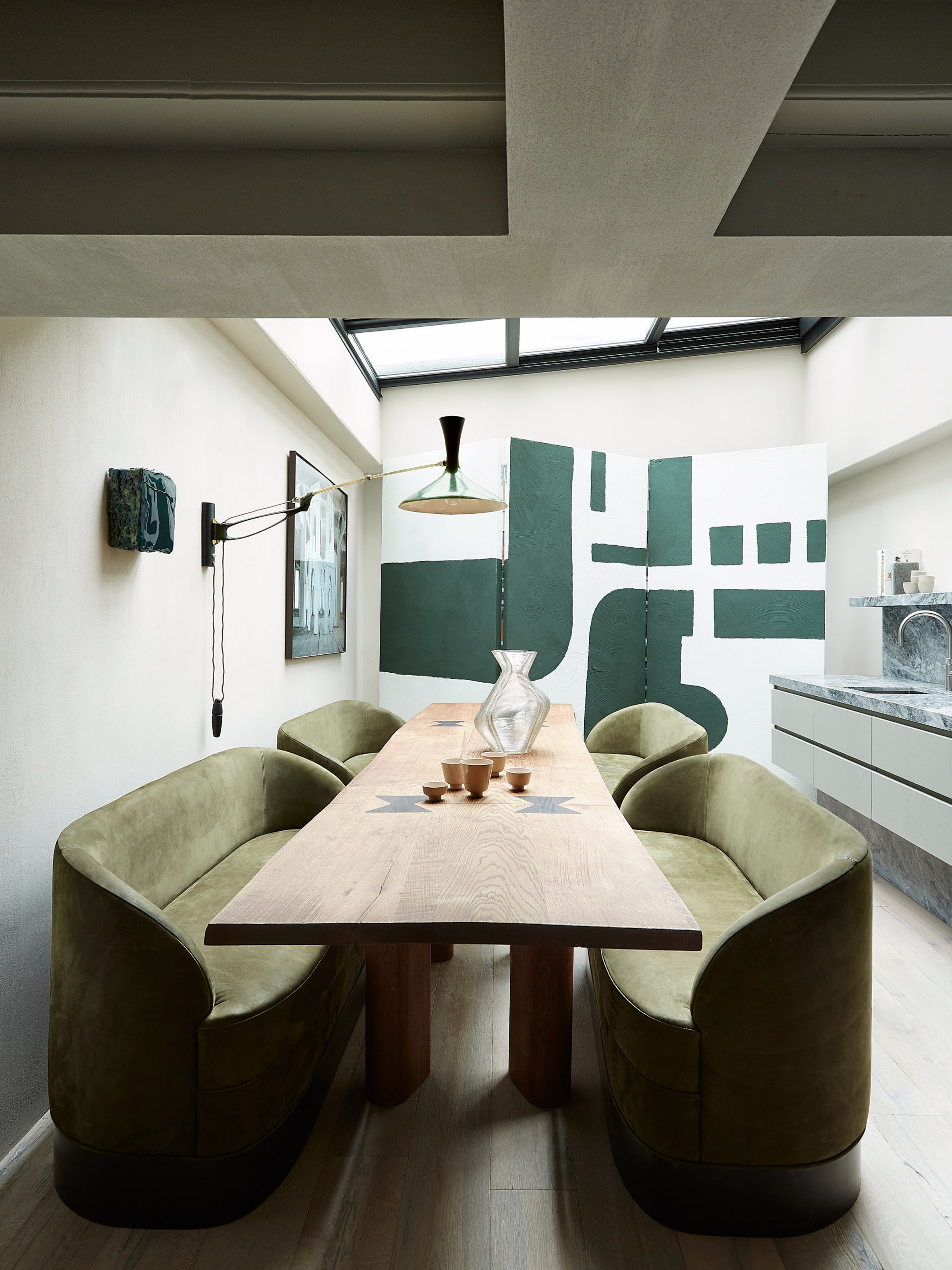
The studio decided to insert a black-framed glass roof above the kitchen. As the home doesn't have a garden, Geerlings also ensured that the roof was retractable so that, in good weather, the room can be opened up to the outdoors.
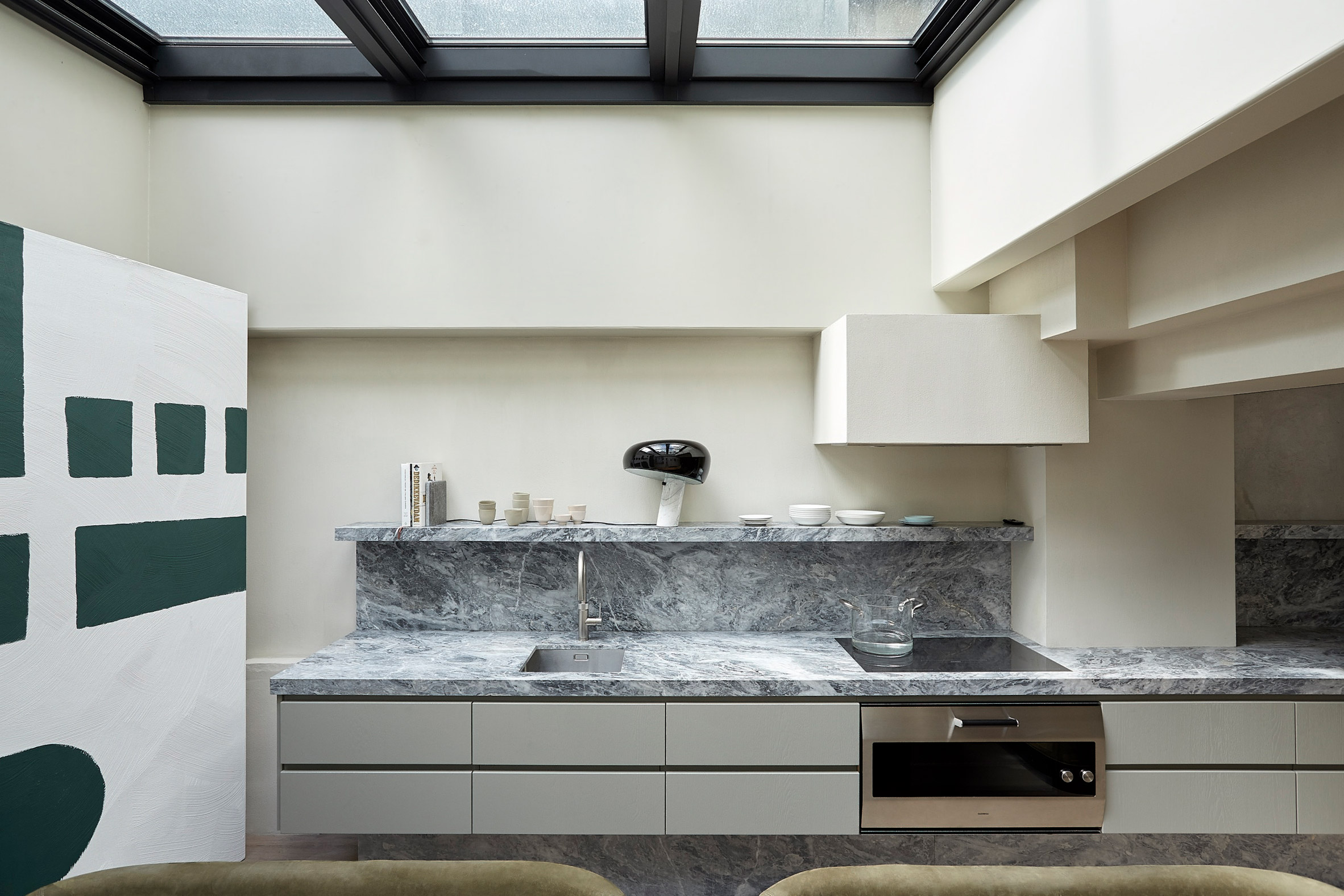
Directly underneath sits a long timber table and wide, olive-green dining chairs that were custom made by the studio. Grey marble has been used to craft a splashback and chunky countertop above the kitchen's low-lying cabinetry.
A white screen painted with abstract emerald-coloured shapes has been erected at the rear of the space.
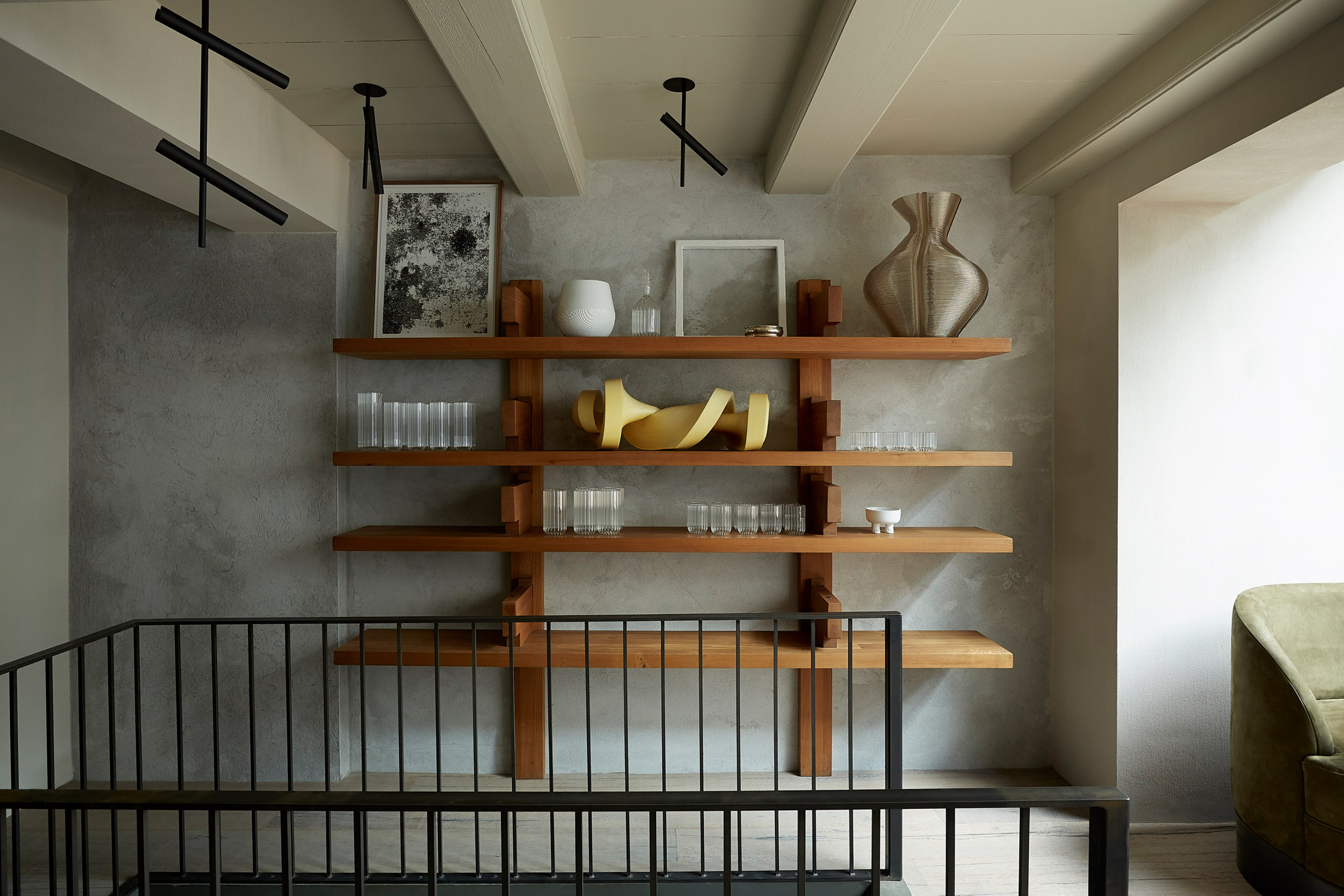
Although the studio initially had to strip away most of the building's dilapidated interior, a structural partition on the first floor had to be left in place.
It now divides a formal dining area and a nook with a five-metre-long bench seat where the parents can work or the two kids can do arts and crafts.
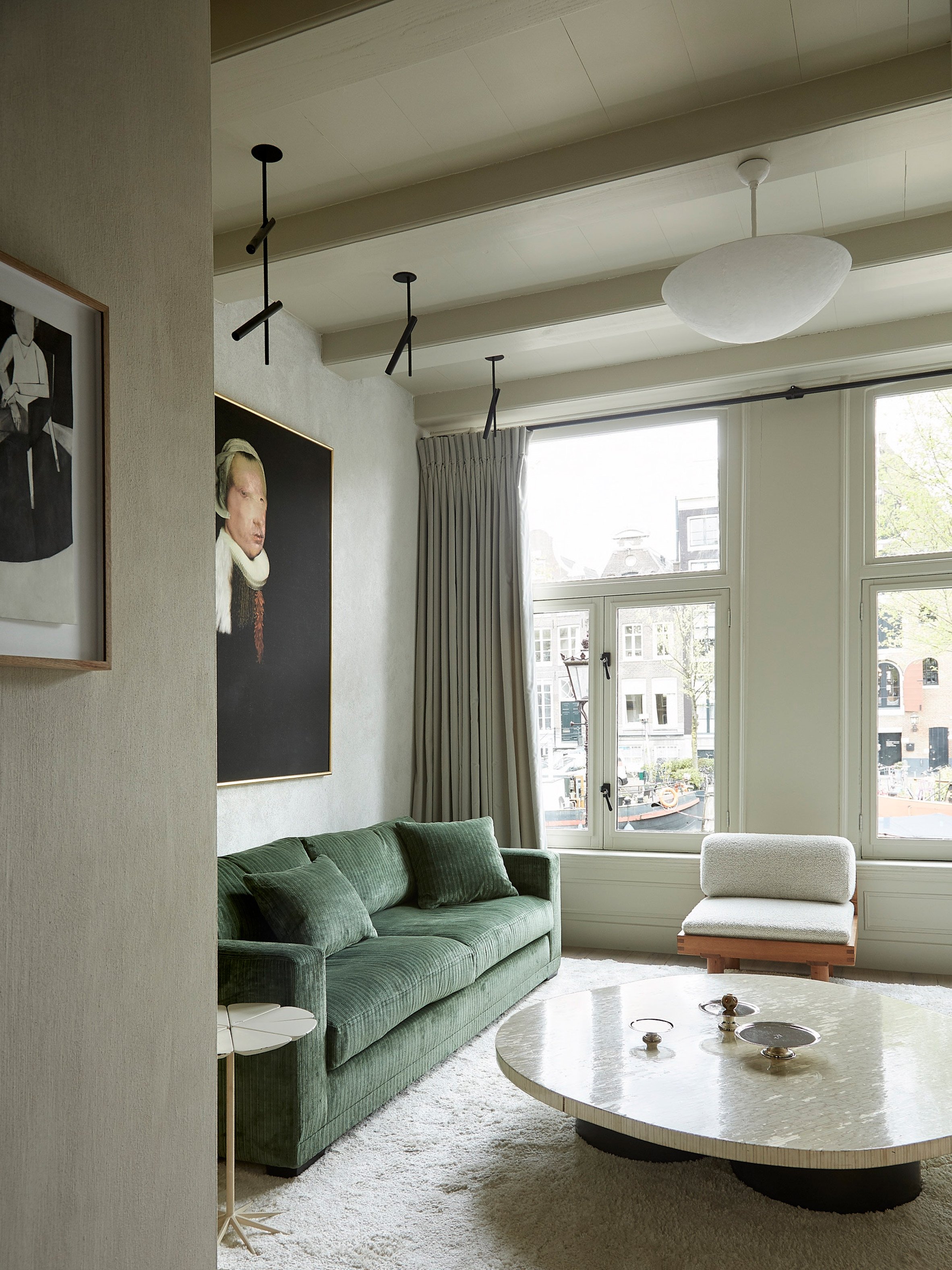
The other side of the first floor accommodates a sitting room.
It's dressed with a stone-topped coffee table, sofa upholstered in deep green corduroy and a huge painting. Made by Italian artist Lamberto Teotino Titolo, it is a playful take on traditional paintings by the Dutch masters.
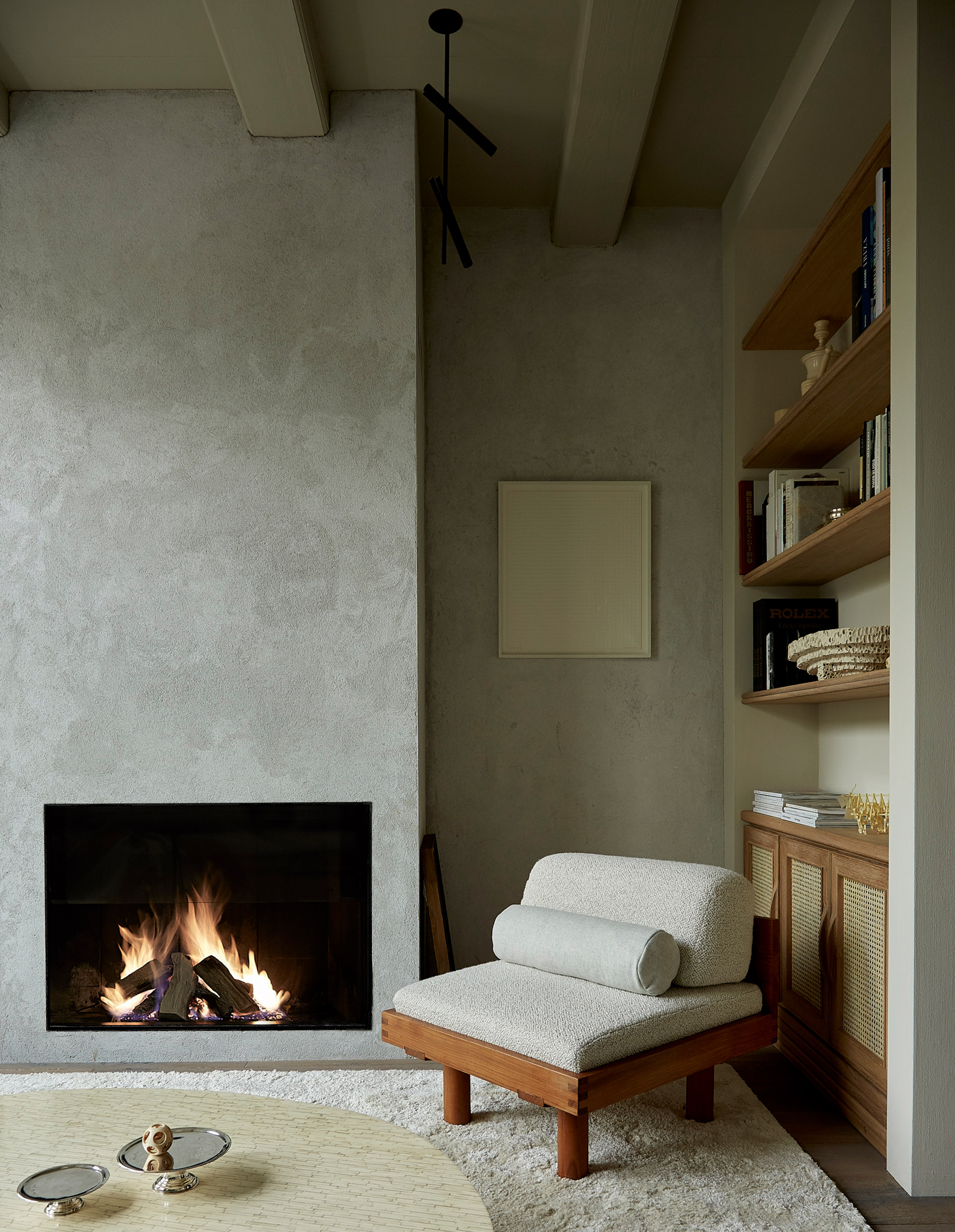
Oakwood floorboards run throughout, complementing the walls that have been loosely rendered in concrete stucco.
"The original character of the building made us go back to the rough grey tones and wooden floors," Geerlings told Dezeen.
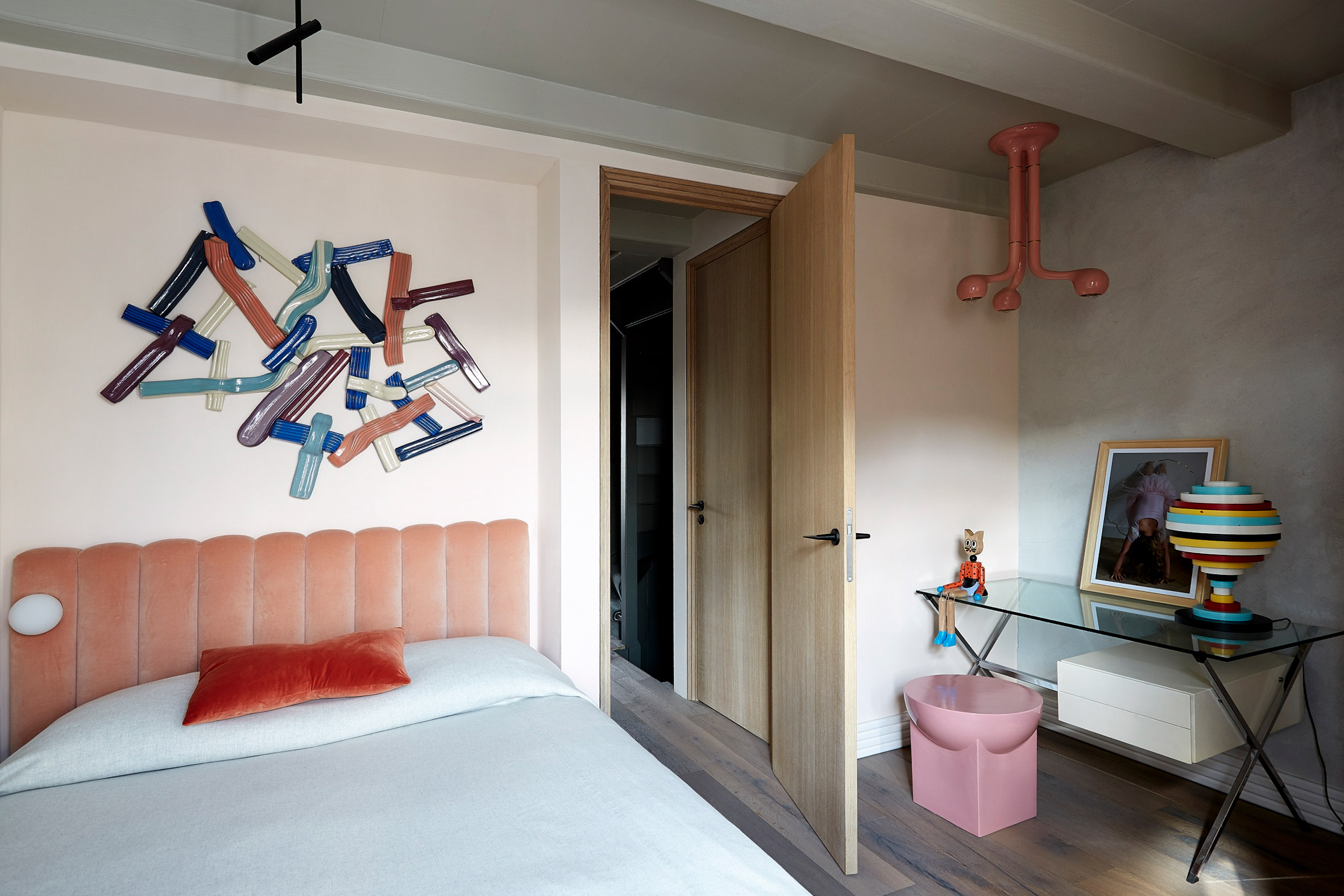
Bolder colours, materials and furnishings appear in other rooms of the house. Surfaces have been painted dusky pink in one of the kid's bedrooms, where there is a vintage statue of Disney character Pluto.
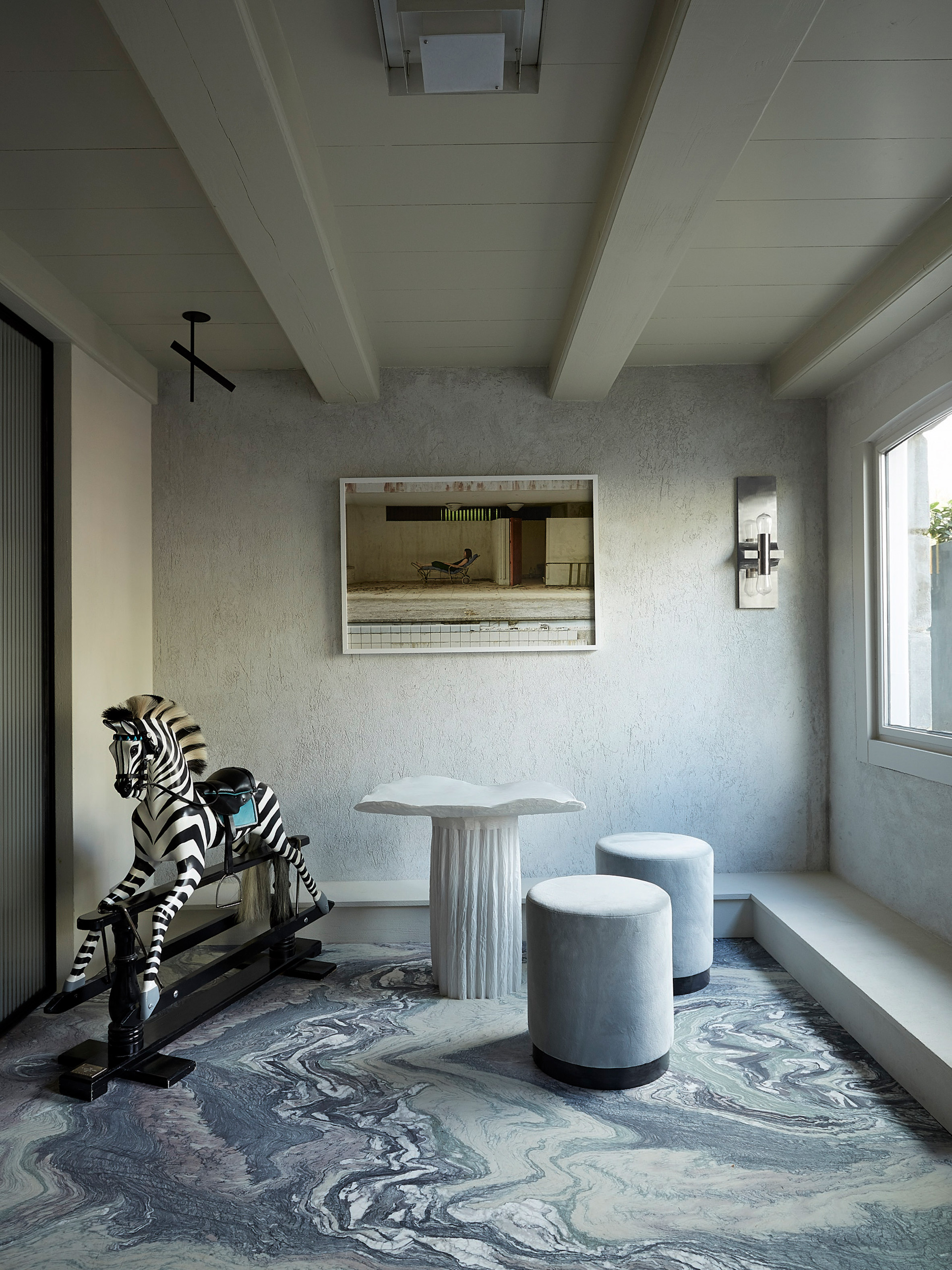
The home's entryway also has veiny natural stone flooring and a zebra rocking horse that Geerlings had handmade in England.
Framework was established by Thomas Geerlings in 2006 and has offices in Ibiza, Paris and Amsterdam.
Geerling's house joins a number of striking homes that line the Dutch capital's canalways – others include this loft apartment designed by Standard Studio, which features expansive skylights and a central open-air courtyard.
Photography is by Kasia Gatkowska.
The post Thomas Geerlings converts canal-side Amsterdam warehouse into contemporary home appeared first on Dezeen.


