Stefanie Schwarz and Dirk Wachowiak, the founders of the typographic research lab, spent four years in archives before creating their typeface, which pays homage to the design heritage of the Stuttgart State Academy of Art and Design.
Archigram was an experimental collective of architects that became famous for its radical architecture concepts in the 1960s and 1970s.
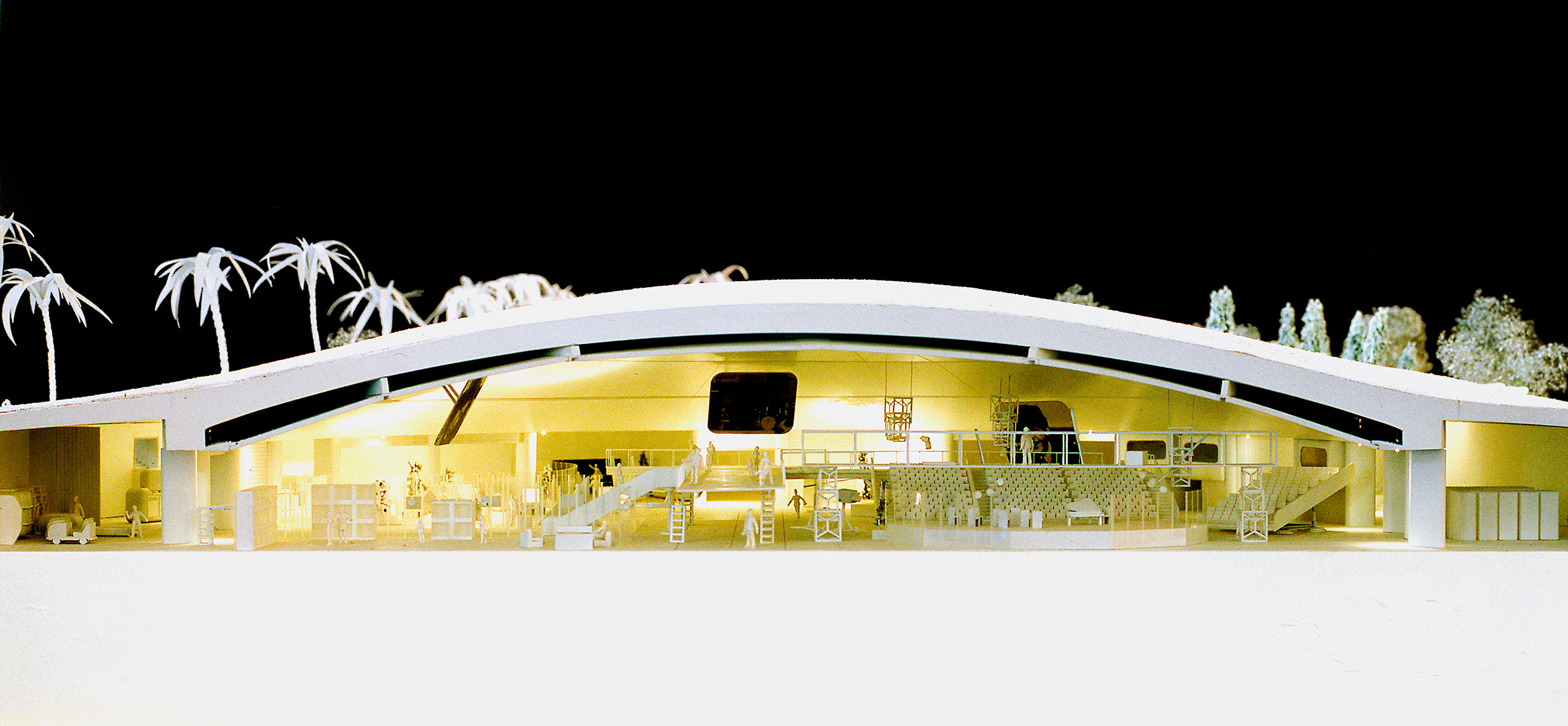
Archigram won a competition to design an entertainment centre in Monte Carlo in the early 1970s
Although individual Archigram members have built buildings – before or after their involvement in the collective – Archigram famously never completed a building as a group.
Archigram almost built a building in the 1970s
Things could have been different, according to Crompton, who believes that many of Archigram's ideas could have been realised.
"There is a practical side to what Archigram members do, it's not just highfalutin, funny, pretty colourful drawings and so on," he said in the video, which Dezeen filmed in London and is sponsored by Enscape.
Archigram would have built a building in Monte Carlo, but the financial crash in the 1970s scuppered the project
"Had all been well, we would have built a building in Monte Carlo in the 1970s. As it happens, in 1974, there was a tremendous international financial crisis and our clients suddenly weren't able to continue with the project, so it was cancelled."
"What are we doing here?"
In 1969, Archigram was invited to take part in an international competition to design a sports and entertainment centre by the sea in Monte Carlo, Monaco. Other invited participants included architects such as Ricardo Bofill, Fernando Higueras, Frei Otto and Reima and Raili Pietilä.
The architecture collective, which comprised Crompton, Peter Cook, Michael Webb, David Greene, Warren Chalk and Ron Herron, initially believed they had been invited to take part in order to provide light relief, according to Crompton.
"We looked at the list of participants and it's full of all the star architects of the time," he recalled. "And there was Archigram. We thought: 'What are we doing here?'"
"We thought: 'Oh, we know what it is. They want something that, at the end of the day, rather than looking at yet another architect's thing, the jury can be taken over and have a drink and look at what Archigram have been doing. Great fun.'"
"So we thought: 'Sod these guys! We are not the entertainment. We are going to put into practice what we learned from our work of the past seven or eight years. We'll do this job.'"
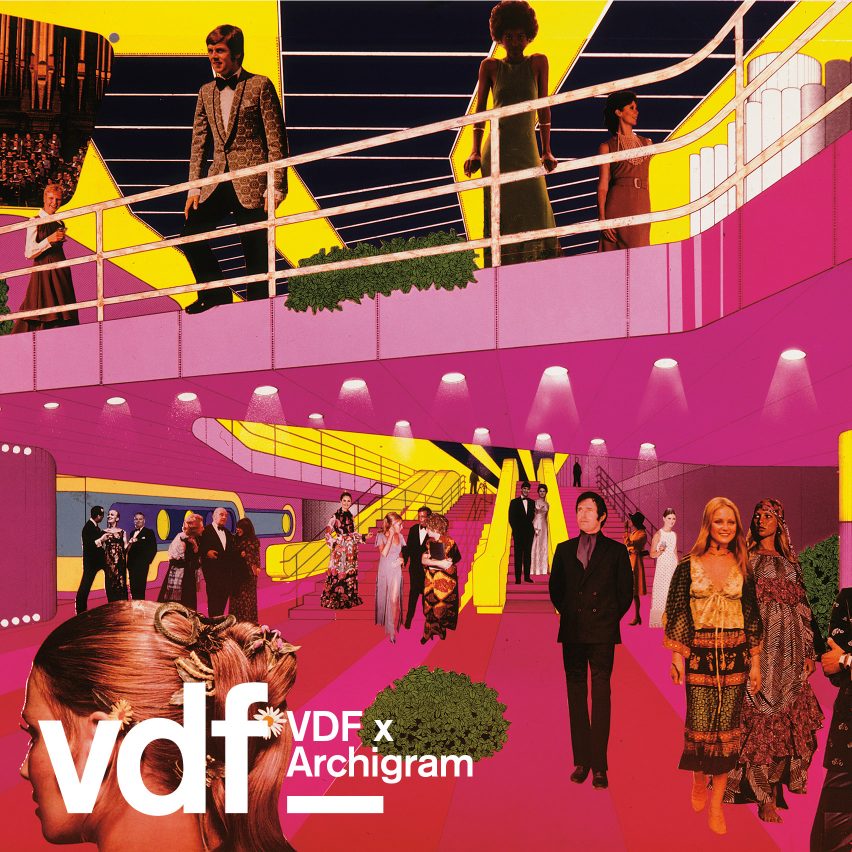
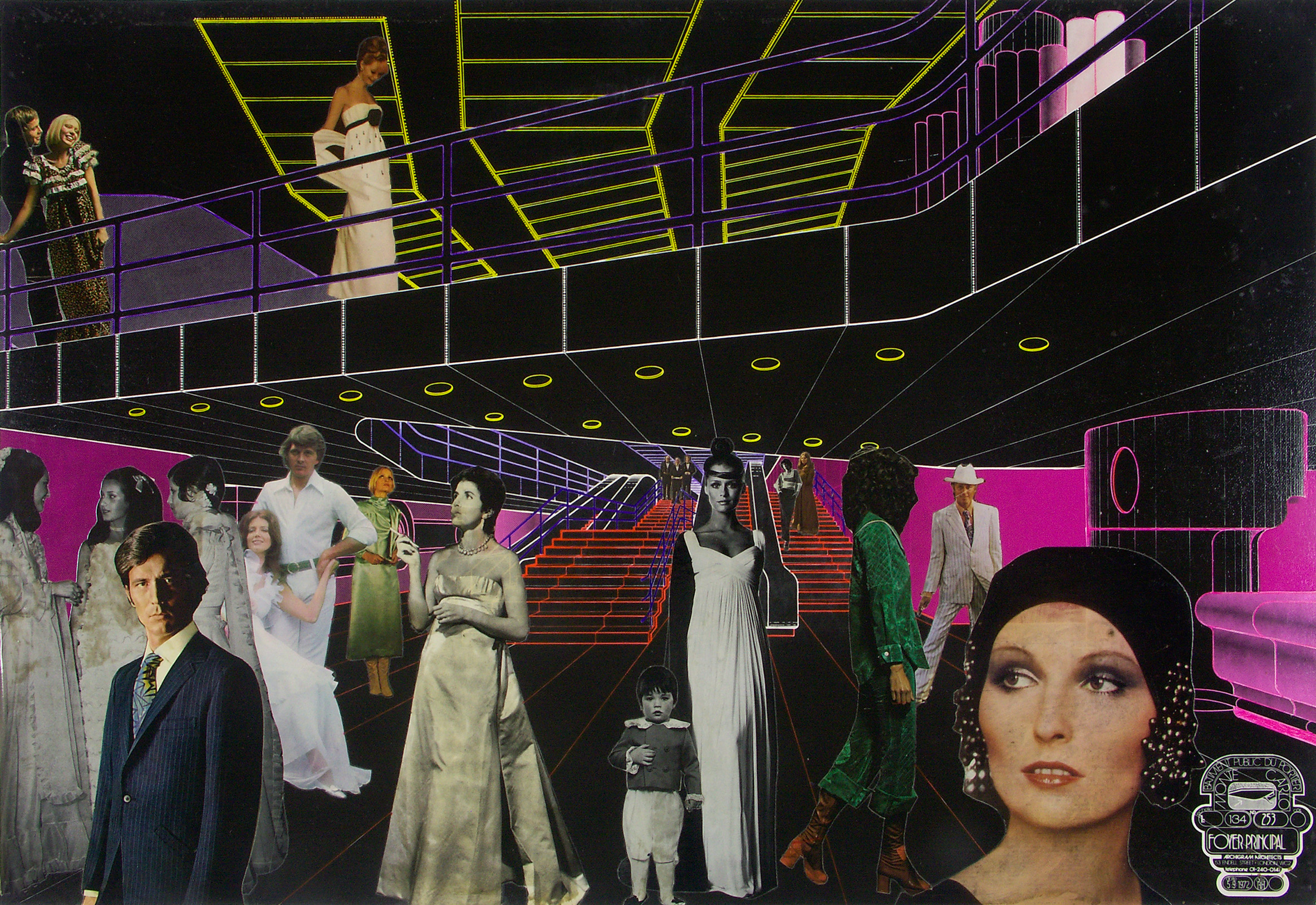
Archigram's Monte Carlo proposal could be reconfigured for different purposes via a kit of moveable parts
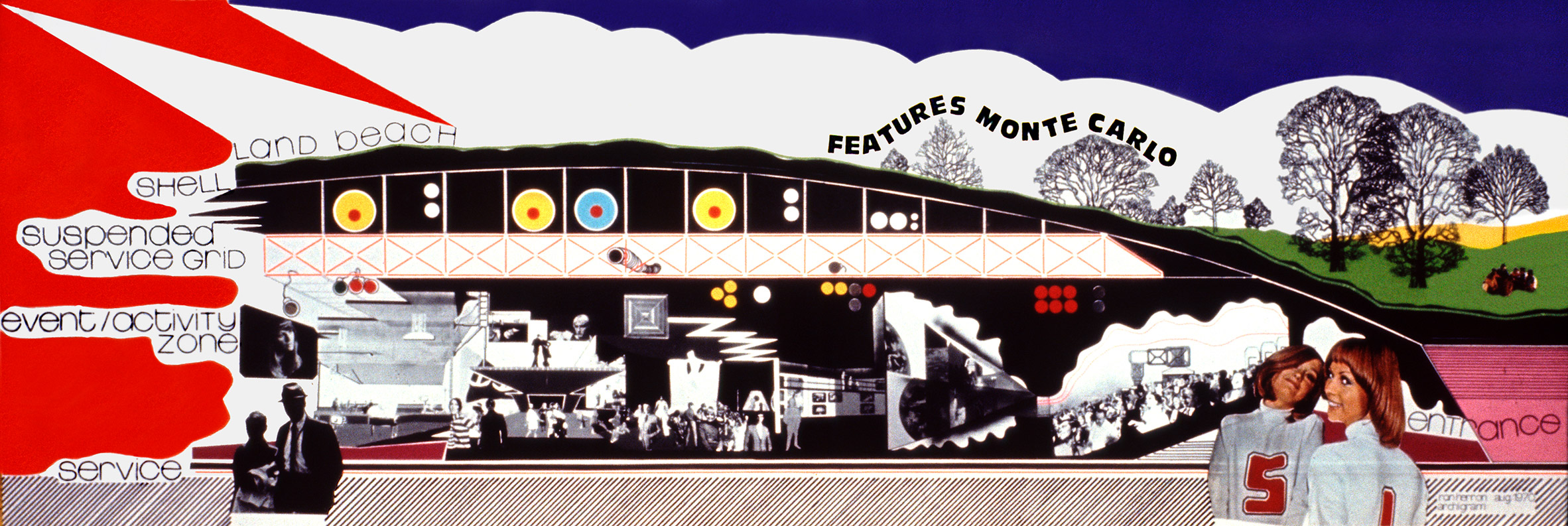
Archigram proposed a domed structure, which was partially submerged and covered with grass to provide green public space on top.
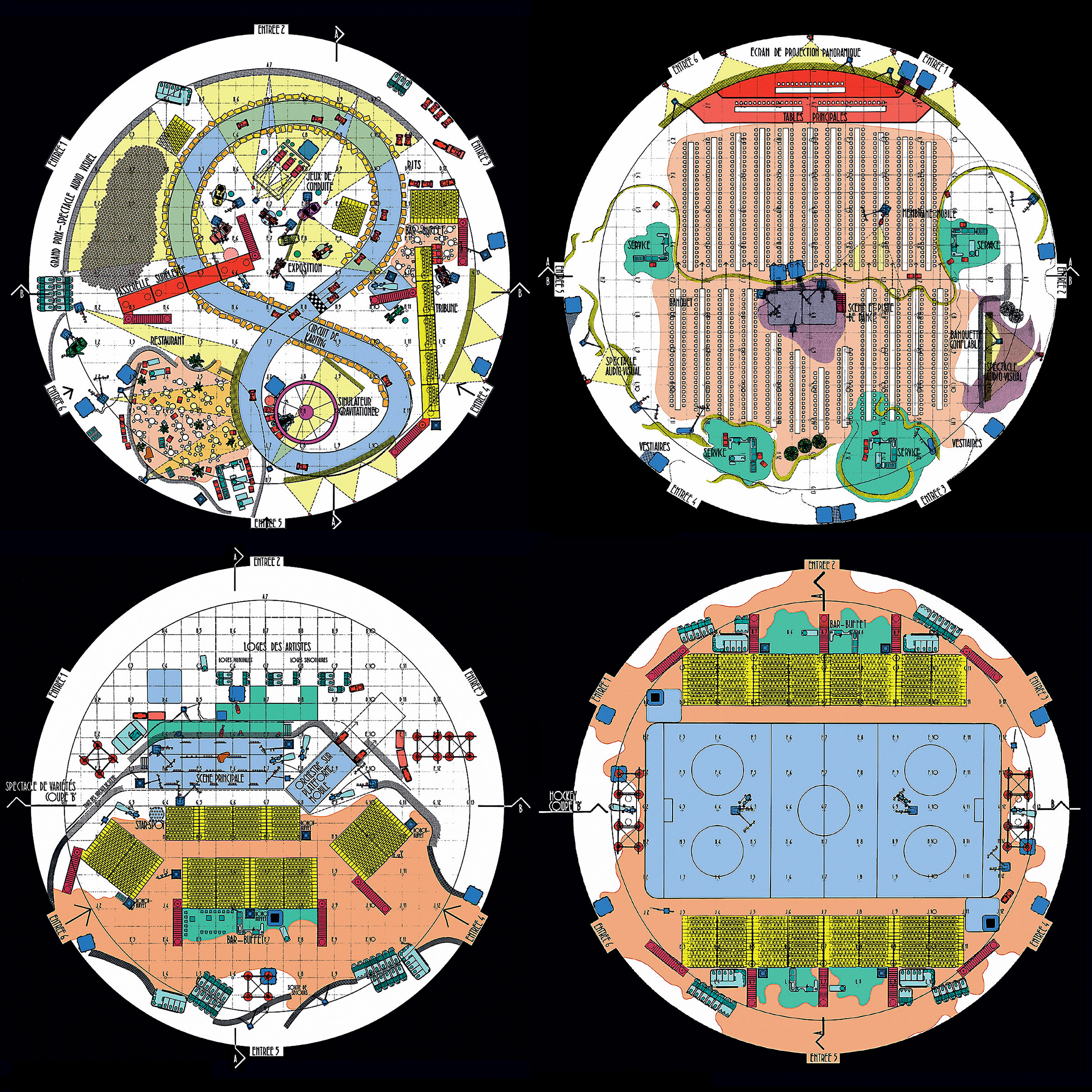
Inside, the building featured a central circular space, which could be reconfigured for different purposes via a kit of moveable parts, an idea that drew from Archigram's Instant City concept, which former member Cook discussed in the previous video in the series.
"To the amazement of the English architectural community, we won the competition"
"The brief was for an entertainment centre," Crompton said. "And in order to illustrate our solution, we had to produce eight different layouts that were possible in this centre, for different situations, including a gala dinner, an ice-hockey match, a Grand Prix exhibition, a go-kart track."
"So we thought: 'That's what we'll do. We'll invent a whole series of building components, which can be manipulated to service different situations.' And to the amazement of the English architectural community, we actually won the competition and got the contract to build the building."
Archigram proposed a domed structure, which was partially submerged and covered with grass
Ultimately, the financial crash caused by the 1973 oil crisis and 1973-74 stock market crash scuppered the project, and Archigram disbanded a few years later in 1975.
"If the situation in the 1970s had been different, we would have built our building in Monte Carlo," Crompton said.
Exclusive video series explores the origins and key projects of Archigram
Founded in 1961, Archigram was an influential avant-garde collective of architects. Although the group never built a building, its radical conceptual projects would influence many subsequent architects, including pioneers of high-tech architecture such as Renzo Piano, Richard Rogers and Norman Foster.
The video series was filmed by Dezeen in London and sponsored by Enscape, a virtual reality and real-time rendering plugin for architectural design programme Autodesk Revit.
All images are courtesy of and copyright of Archigram. You can browse more images from Archigram's archive online at The Archigram Archival Project.
A medical illustrator behind the first 3D images of the coronavirus particle has spoken to Dezeen about how his team branded an invisible disease that "needed an identity".
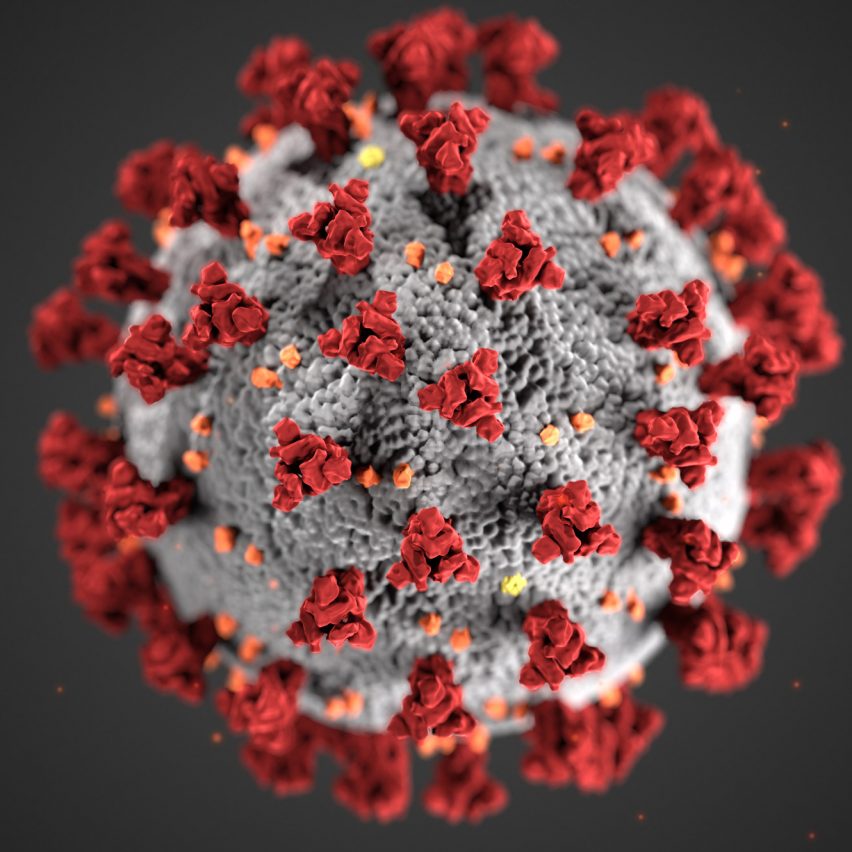
The team at the Centers for Disease Control and Prevention (CDC) in Atlanta, Georgia was aware they were creating a visual identity Covid-19 by creating the now-iconic images of an individual virus particle, or virion.
"Based on previous outbreaks, we knew the CDC needed an identity when presenting public health information of Covid-19," said Dan Higgins, a medical illustrator at the CDC.
Released to the public on 31 January – the day after the World Health Organisation declared a global health emergency – the illustration immediately gave tangible form to a disease that had already killed 213 people in China.
CDC wanted to create "something that says this virus is real"
Two days later, the first death was recorded outside China when a 44-year-old man died in the Philippines.
However, while coronavirus was making headlines around the world, few people knew what the virus was, what it looked like or how it spread. This made it hard for the CDC to communicate the risks of Covid-19 to the public.
"Instead of being referred to it as 'invisible,' we wanted to create a realistic virus that people can envision when walking into public places or coming in close contact with strangers," Higgins said. "Something that says this virus is real, and it's to be taken seriously."
Dan Higgins is part of a team at CDC that created the now-iconic illustration of Covid-19
Yet the images also had to have scientific integrity, Higgins told Dezeen via email.
"Because part of CDC's mission is providing public health information to save lives, we felt it needed to be as accurate as possible," said Higgins, who is credited with creating the illustrations along with fellow medical illustrator Alissa Eckert.
"We took artistic license on the color, but we wanted the specific structures of the virus to be as close to real life as possible."
Illustration of microscopic virion
Higgins and Eckert worked with scientists at CDC to understand the microscopic virion, which measures just 125 nanometres, or 125 thousand-millionths of a metre, in diameter.
"When creating illustrations, animations and other infographics that represent microscopic subjects, the challenge is presenting something that has no visual reference," said Higgins.
Visible only through an electron microscope, the particle resembles a grey blob surrounded by a blurry haze of protein spikes that have become the signature of the virus.
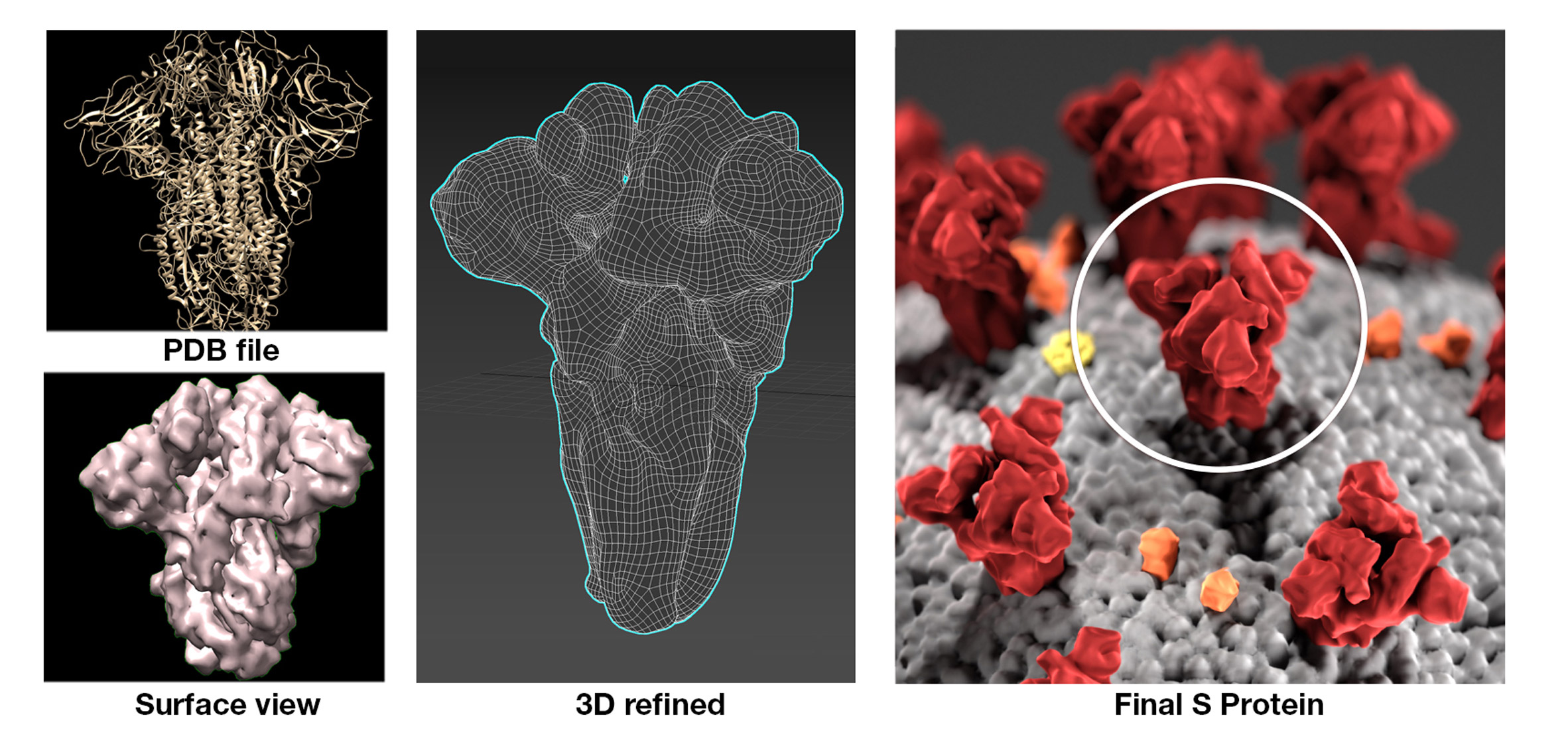
The CDC team imported a 3D model of Covid-19's signature "spike" protein from an online data bank
"After we researched the basic morphology of the structure, we consulted subject matter experts in the lab at CDC," said Higgins, who modelled the virion in 3D Studio Max, using 3D files from Protein Data Bank, a library containing 3D models of proteins and other microscopic particles.
"Once we knew what all structures were that we needed from this virus, we went to the Protein Data Bank," he said. "There, we were able to download the actual 3D shapes of each of the proteins that make up Covid.
"From there, we optimized them and then took them into 3D software where we created all our lights, materials colors etc."
Colours chosen to "deliver the right punch"
Higgins and Eckert then had to make a series of design decisions, adding form, colour, texture and shadow that would help clearly communicate the virus to the public. Their priorities were "accuracy and presenting a serious mood".
"Designers at CDC came up with a design guide to be used with all material related to Covid-19," explained Higgins. "We chose variations of the colors from their palate that we thought would help deliver the right punch to the viewers."
Higgins (left) designed the illustration as part of a team at CDC including James Archer, Stephanie Rossow, Meredith Newlove, Alissa Eckert and Jennifer Oosthuizen
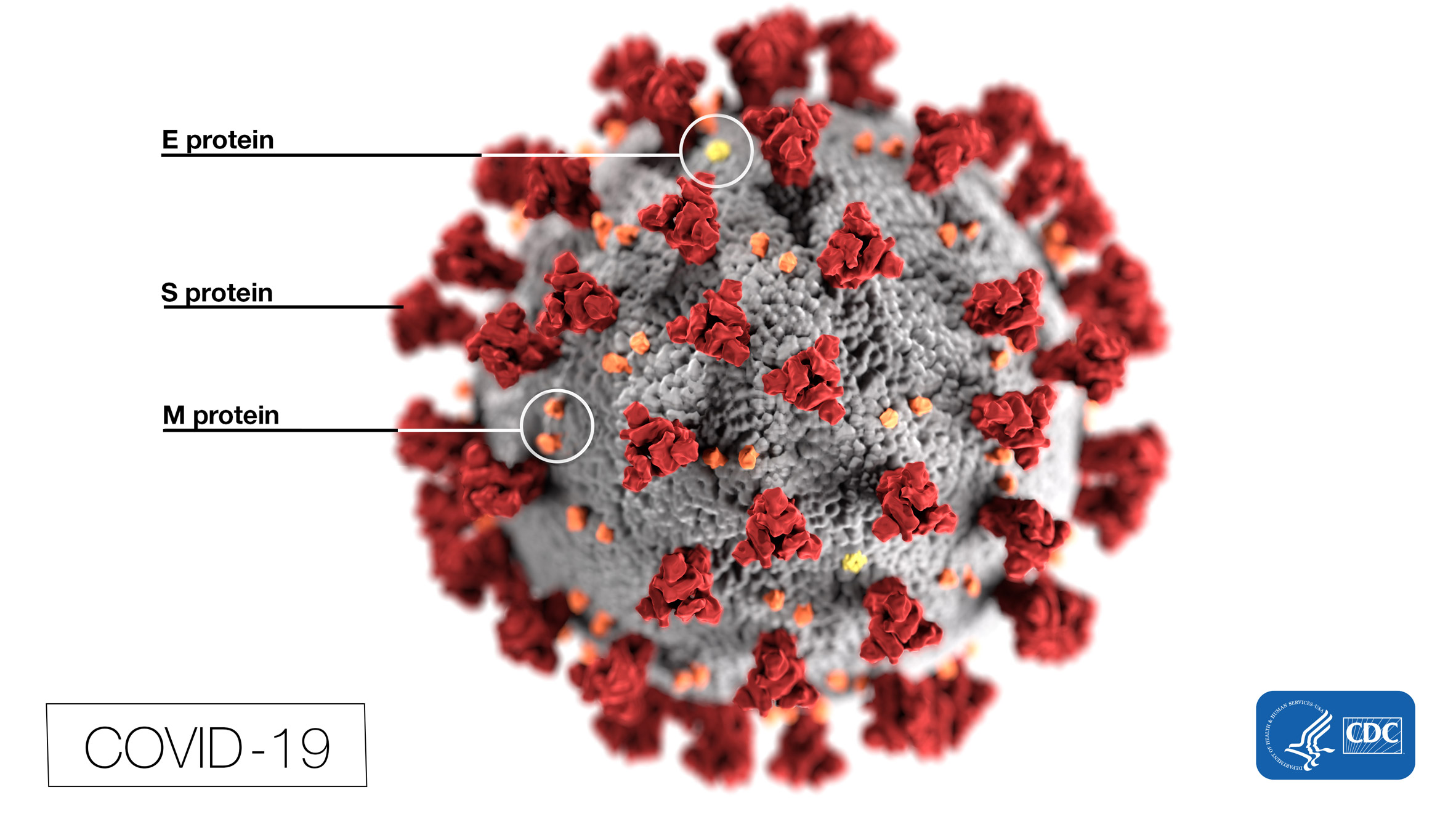
In the illustration the virion's spherical lipid envelope, which protects its RNA genetic code, is represented by a grey surface with a "stony" texture.
The surface of this sphere is studded with three types of proteins. The signature spiky S proteins, which attach to host cells to allow the virion's RNA to enter the host and replicate, are coloured red. The crumb-like M proteins that dot the spherical membrane are coloured orange. The small E proteins, or envelope proteins, are yellow.
The colours were chosen for visual impact. "The bold red of the S proteins contrasted by the gray of the viral wall, adds a feeling of alarm," said Higgins. "The orange M proteins and the yellow E proteins make it more colorful, but don't compete too much with the red."
"Shadows add to the realism"
"We chose less saturated colors so that it didn't come across as too playful… we knew this virus had to be taken seriously," he continued. "The strong shadows of the textured surfaces add to the realism of the virus."
In reality, microscopic particles such as virions do not have colour, texture or shadows. The CDC team added these to make the illustration comprehensible to people unfamiliar with nano-scale biology.
The aim was to make it appear "so real that you can almost touch it," Higgins said. "This virus, often referred to as invisible, suddenly has a face and is brought to life."
Known for his weird and wonderful photographic narratives, here the Parisian photographer discusses how his practice is centred on movement, exemplified in a recent shoot: Room with a View.