Thursday, 14 May 2020

Illustrated Florals Adorn A Gold-Wrapped Tarot Deck Infused with Botanic History

All images © Beehive Books

By pairing a classic tarot deck with stunning botanical illustrations, Kevin Jay Stanton merges the spiritual practice with the historical mythology behind plants and flowers. “Their archetypal symbols have mystical, philosophical, and psychological implications that allow us to understand our past, our future, and ourselves,” the illustrator said in a Kickstarter explainer. “But even older than that is the symbolism we’ve always assigned to the plants that grow around us.”

Lined with gold foil, the 78-card deck is replete with acrylic and ink renderings on a dark backdrop. While the Major Arcana features lone specimens, the Minor Arcana details botanical compositions with suit-specific objects like coins or cups. Every court card is adorned with royal notations.

Stanton’s pairings of The Queen of Swords and red oleander, The Devil and nightshade, and The High Priestess and elderflower each expand the potential readings. “Divination is the process of finding meaning in symbols or patterns, and similarly, the act of reading tarot is finding patterns, meaning, and visions in the symbols,” he said. “A larger picture is created when a story is formed from how one card interacts with the next, as a bouquet is created from the harmony between many flowers.”

To pick up your own set, three editions—the Herbalist, Dark Alchemist, and Enchanter—are available for pre-order through Beehive Books. Stay up-to-date with Stanton’s mythical projects on Instagram. And if you’re interested in another entrance into the divine, check out Salvador Dalí’s deck.


from Colossal https://ift.tt/3bAdwmK

Funny and full of whimsy, meet illustrator Lily Lambie-Kitchin

With commissions already under her belt for the likes of Vice, The Financial Times and The Guardian, the Norwich-based illustrator is an emerging creative to keep an eye on.


from It's Nice That https://ift.tt/3dIdOti

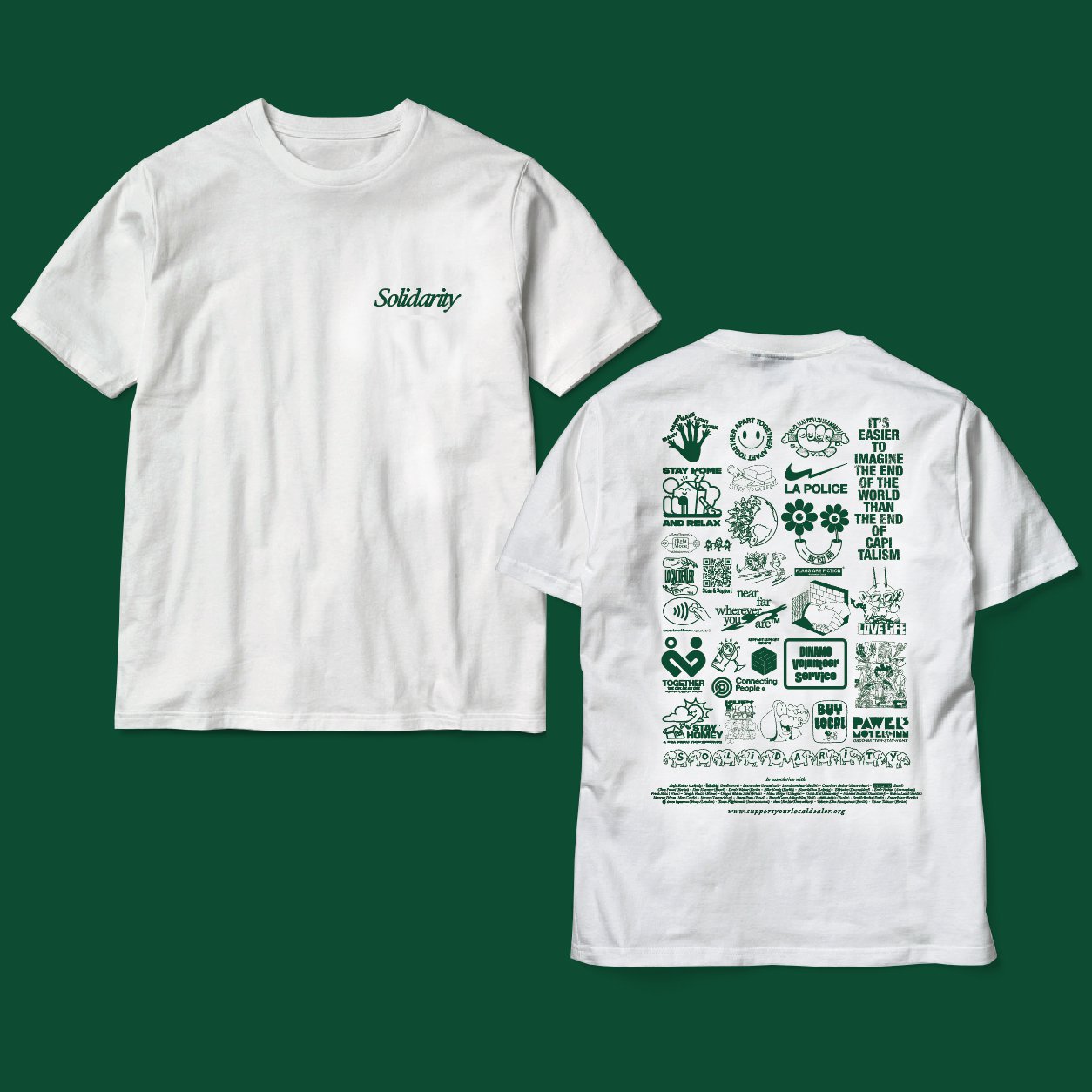
This T-shirt featuring logos by Eike König and Dinamo is raising thousands for local businesses

Inspired by 90s marathon T-shirts, the Support Your Local Dealer project brings together 32 global creatives on the back of one tee.


from It's Nice That https://ift.tt/2yM2cH2

Weston Williamson + Partners envisions social-distancing office

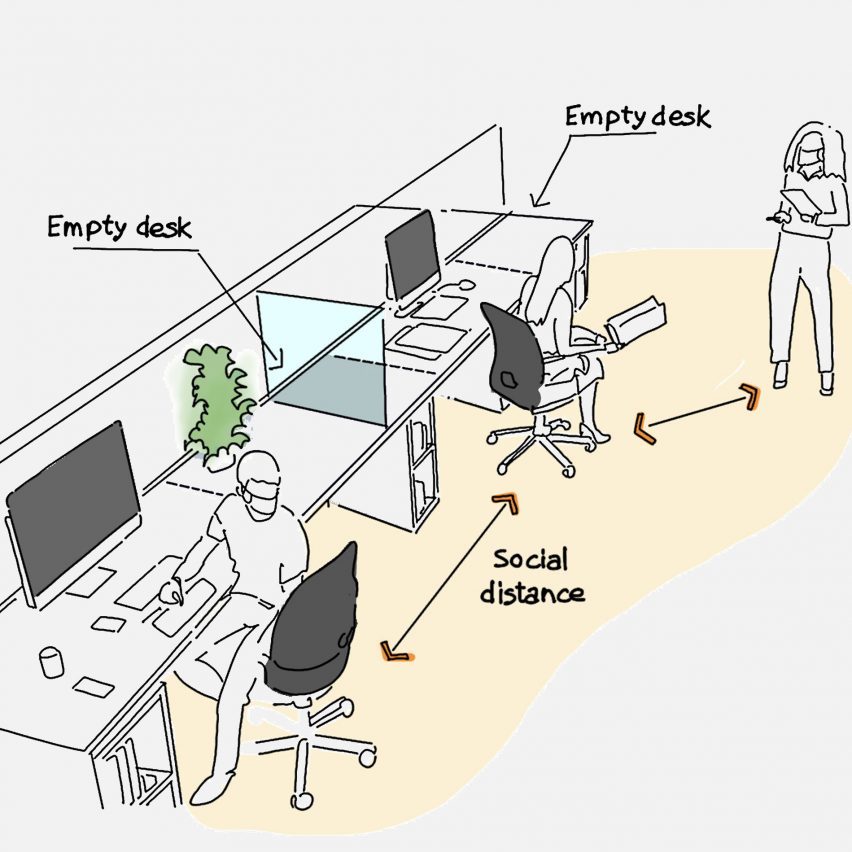
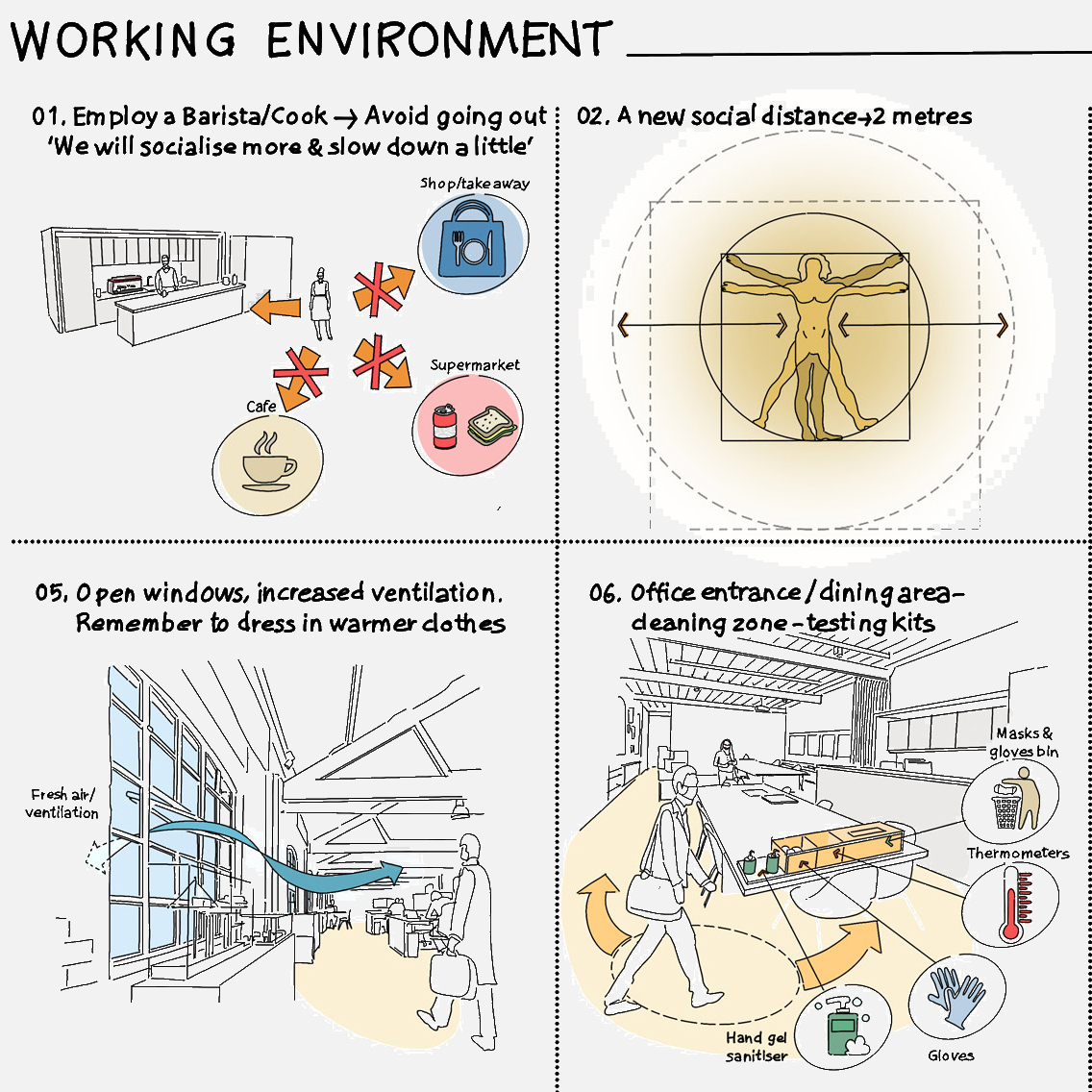
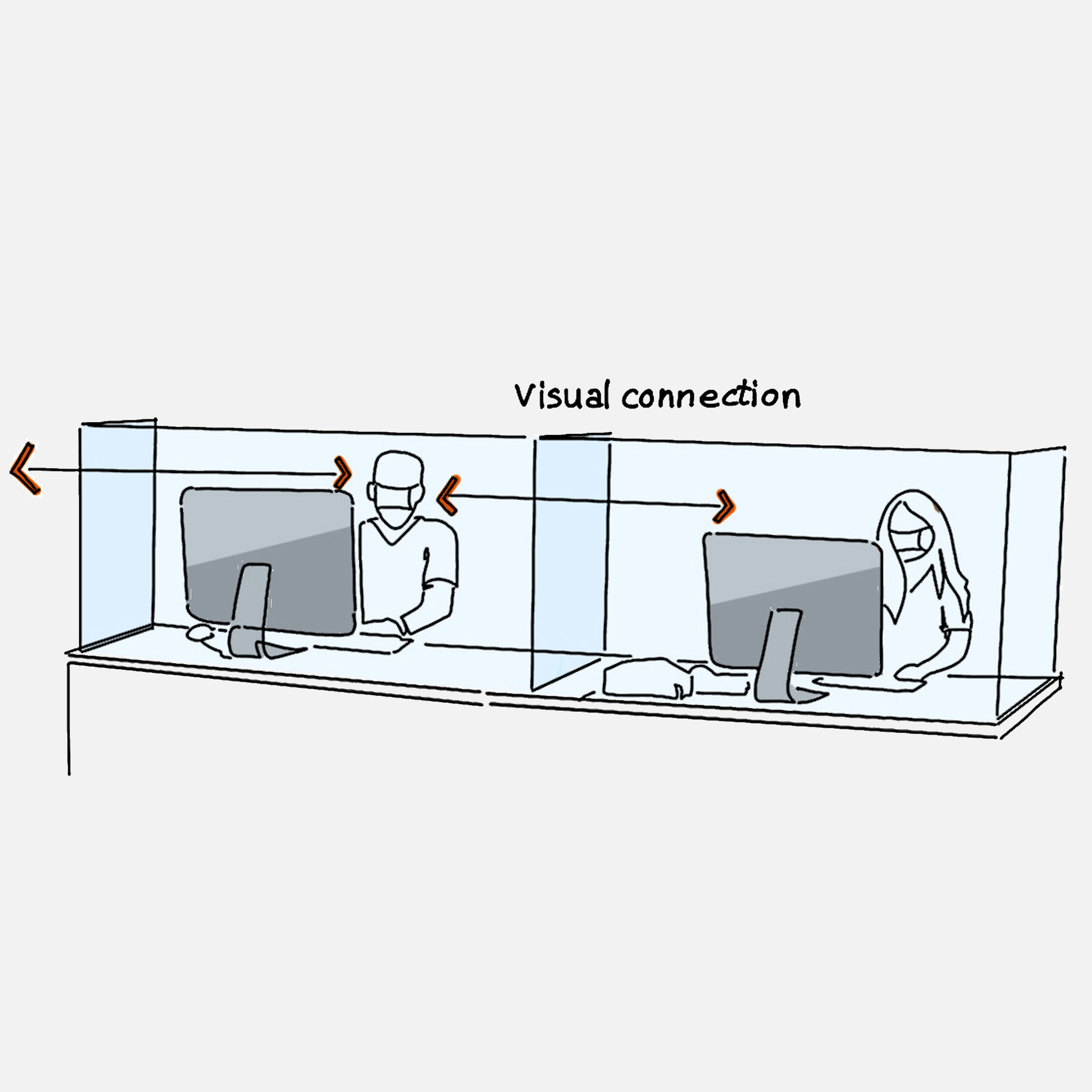
Weston Williamson + Partners has outlined its plans for a social-distancing workplace, with transparent screens around desks, hands-free doors and a barista, to allow employees to safely return to its office following the coronavirus lockdown.

The London-based architecture studio has created graphics to illustrate the adaptions it plans to make to its office to allow its employees to safely return to work.
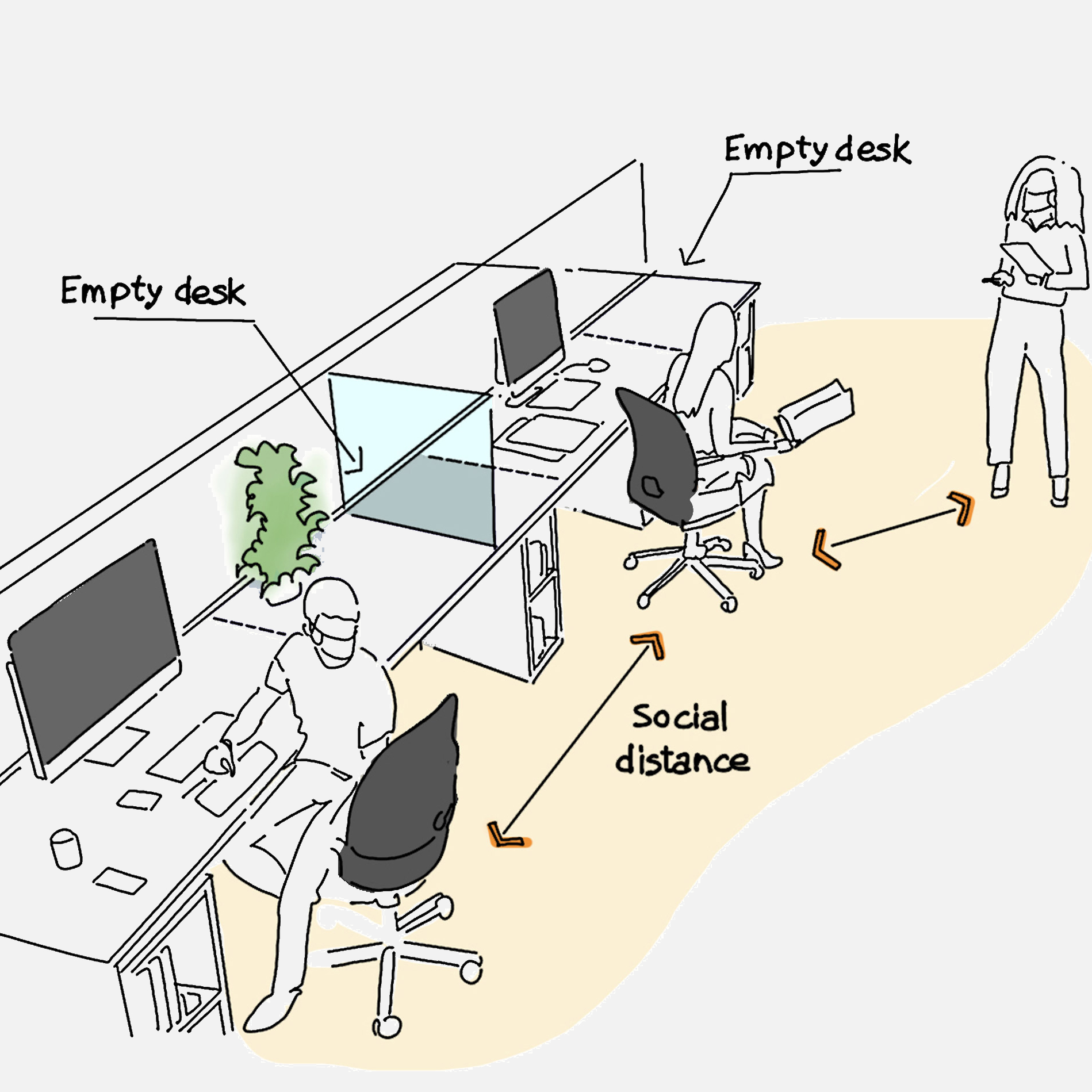
Weston Williamson + Partners intends to combine changes in working practices with physical alterations to its workspace to allow employees that want to return to the office the opportunity to do so.

"The drawings show our response with the focus on safety," explained Chris Williamson.

"We want to give our colleagues the choice," he told Dezeen. "Some are very enthusiastic about moving out of their flats and getting back to some sort of normality. Others have some concerns. We need to be mindful of both. It's a whole new level of flexible working."
Weston Williamson + Partners envisions the social-distancing office

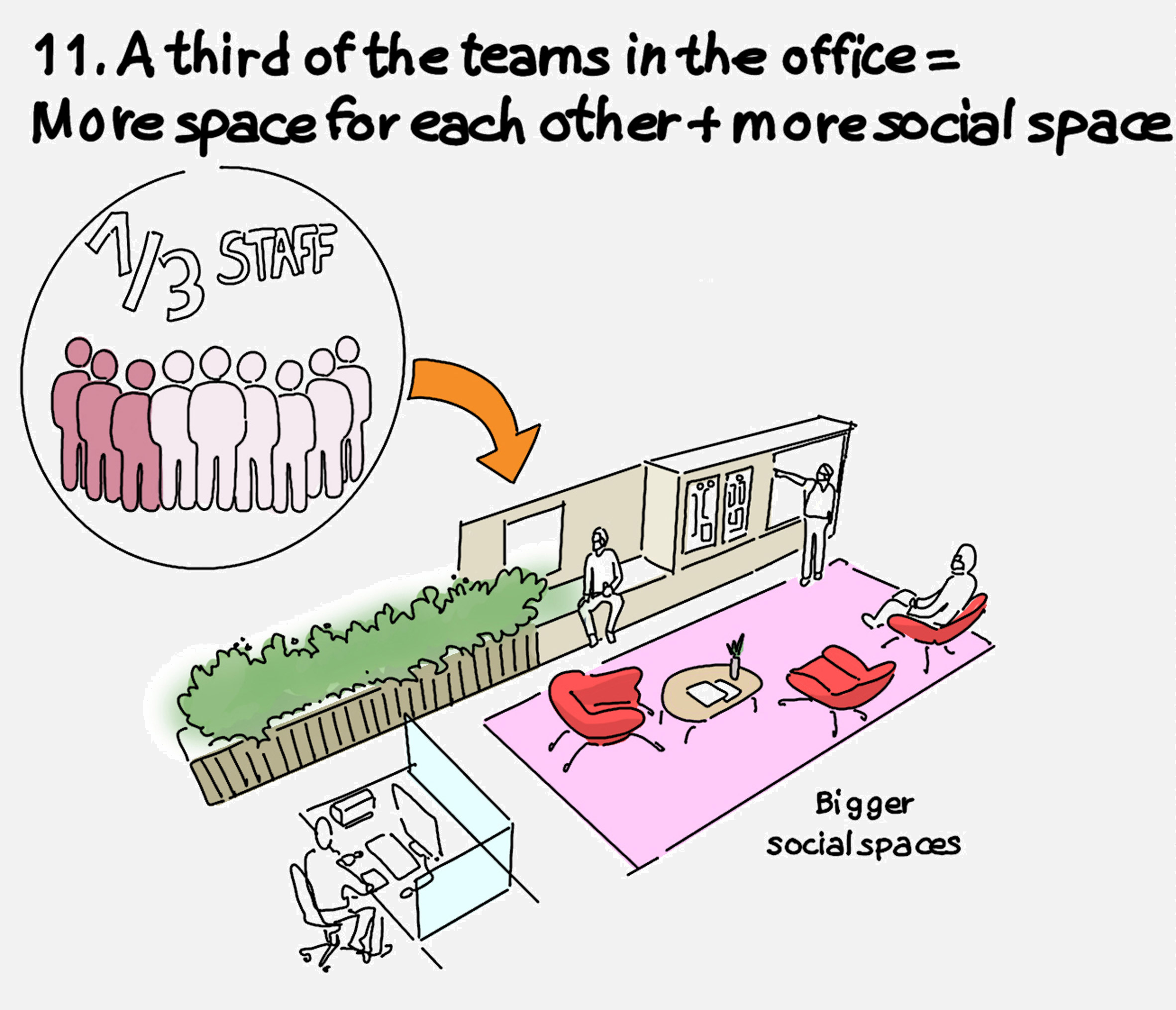
To increase the amount of space available per person, the studio intends on allowing at least half of its 100 staff to work from home each day, with office attendance assigned by day.

The alterations that Weston Williamson + Partners intend to make include installing a cleaning zone within its lobby, placing transparent screens around each desk and adapting doors to allow for hands-free opening.
Weston Williamson + Partners envisions the social-distancing office

The studio also intends on holding meetings in open areas rather than enclosed meeting rooms and employing a barista and a cook so employees don't have to use a shared kitchen.

Although Weston Williamson + Partners has made its plans based on its own office, Williamson believes that it could serve as a template for other companies trying to figure out how employees can safely return to the office.

"It will depend on the layout of each office, but the drawings we have prepared show what we intend to do at Weston Williamson + Partners and we think they could be useful to other offices," he explained.

"There will be additional difficulties for say Rogers Stirk Harbour, who are on the 14th floor of the Cheesegrater, where vertical circulation will take much longer."
Weston Williamson + Partners envisions the social-distancing office

Williamson wants to use the pandemic to make lasting improvements to the office and expects many of the adaptions to the office to be made permeant.

"We have always tried to have a relaxed, friendly studio with a kitchen table feel and this will continue," he said.

"The key is to do these modifications with style and grace and use these unfortunate circumstances to actually improve how we work with climate change in mind," he continued.

"Investment in video conferencing and distance working facilities has paid off during the lockdown and we see future investment being essential to allow greater flexible working."
Weston Williamson + Partners envisions the social-distancing office

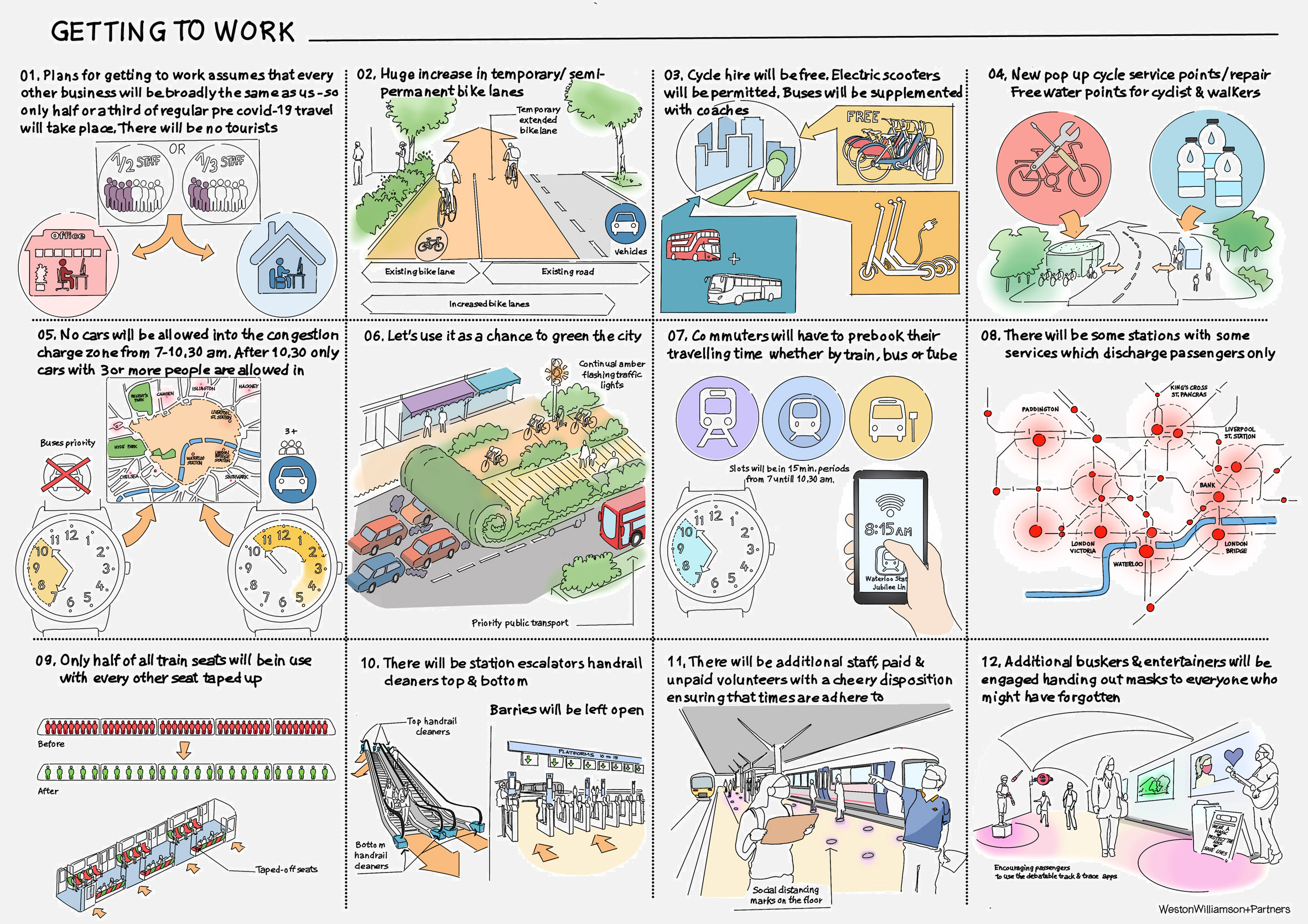
Alongside adapting its office Weston Williamson + Partners is also concerned about how its employees will be able to travel to work safely.

Based on a major survey that the studio carried out last year on commuter attitudes in 10 global cities, it has made a series of proposals to improve London's public transport infrastructure.

These include increasing the number of bike lanes, widespread free cycle hire, banning cars from central London in peak periods, the legalisation of electric scooters and prebooking public transport.
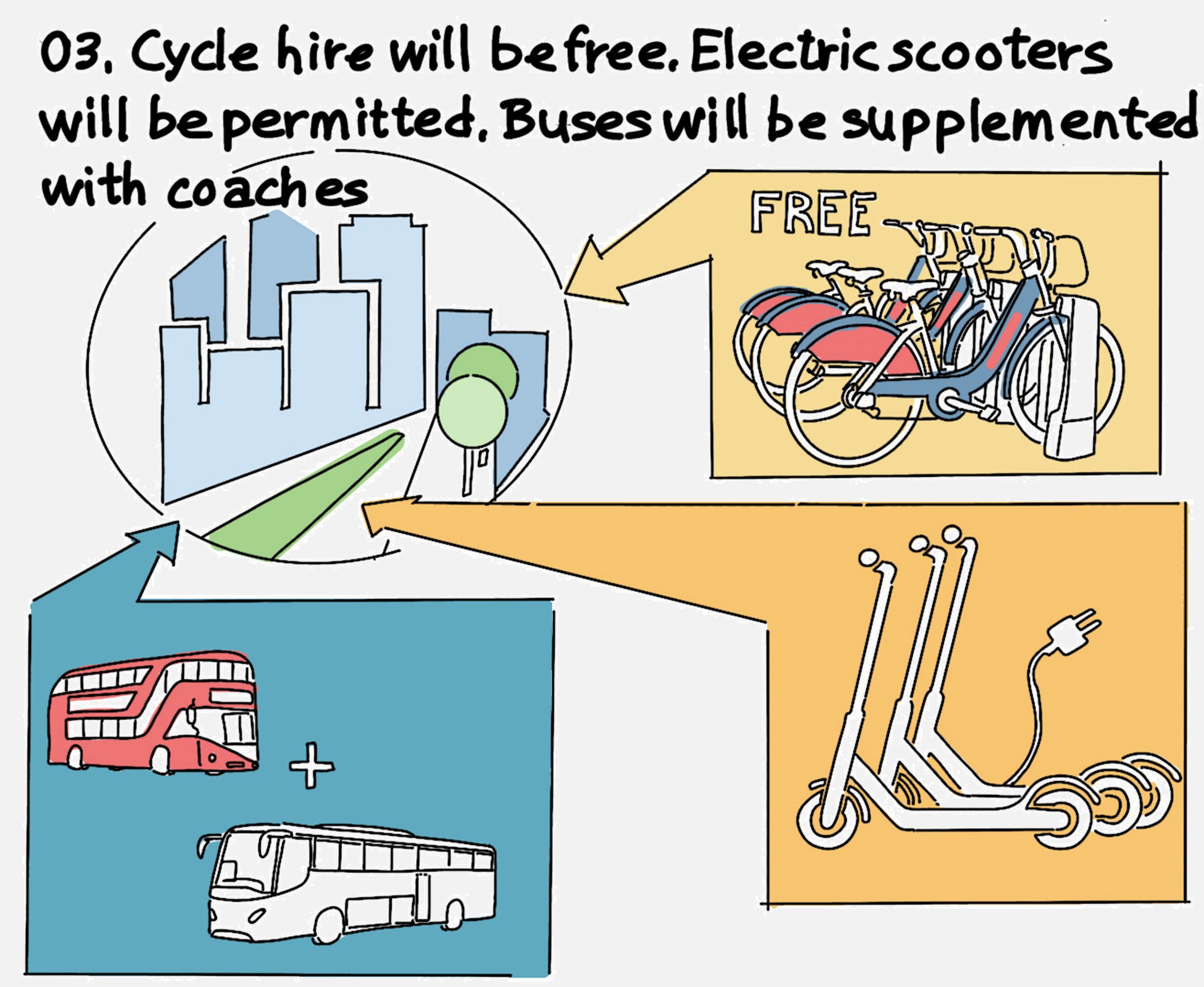
Weston Williamson + Partners envisions the social-distancing office

"We have a comprehensive knowledge of how everyone commutes and are encouraging everyone to cycle wherever possible and subsidise electric bike purchases," said Williamson.

"We are very disappointed in the government encouraging everyone to jump in their cars. In some cities that might be ok but in London, cars should be banned between 7-10 within the congestion charge zone with the roads given over to cyclists and electric scooters."
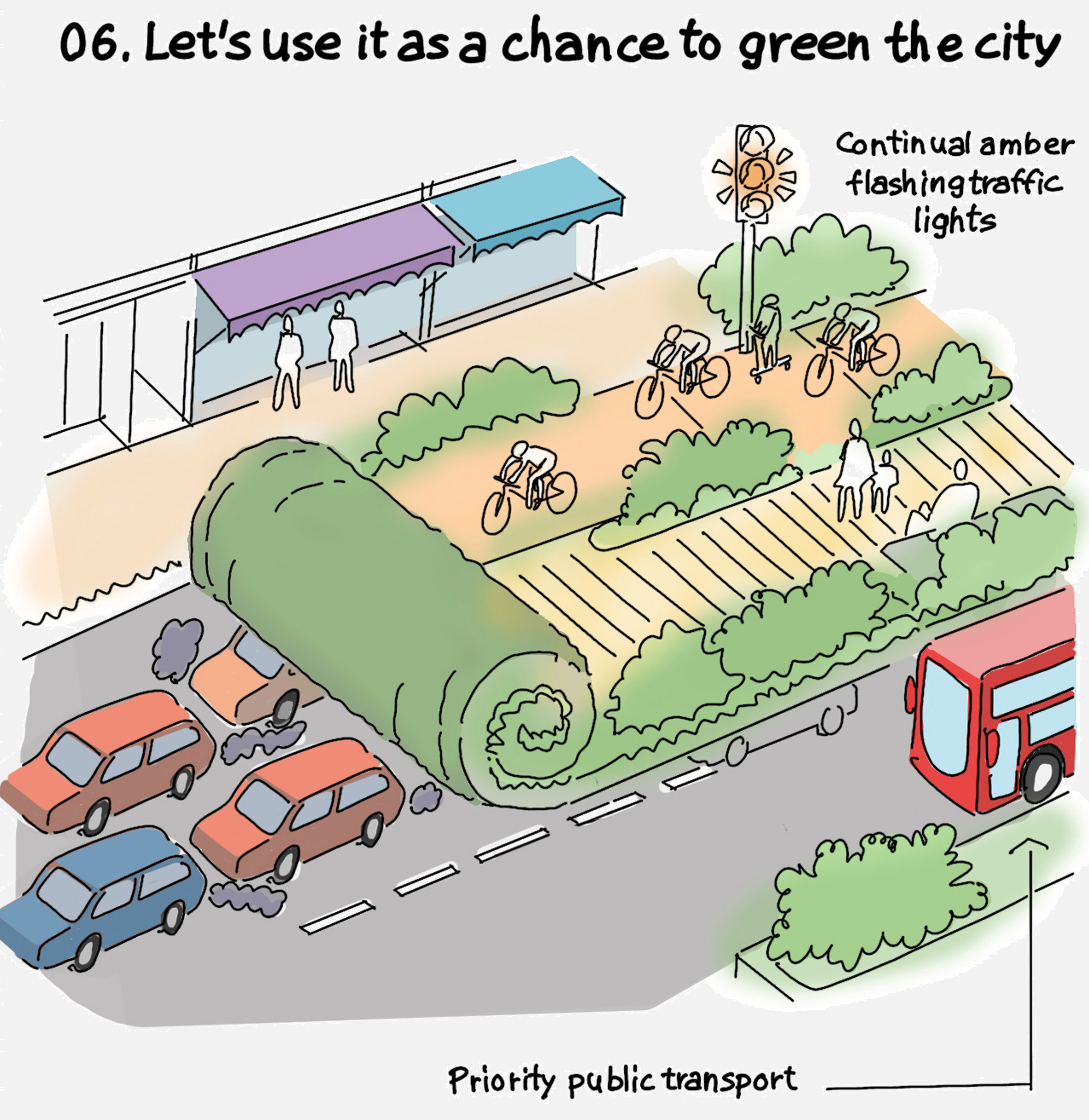
Weston Williamson + Partners envisions the social-distancing office

As with its office, Williamson believes that the coronavirus should provide the impetus to improve London and other cities.

"Again, the intention is to implement these changes beautifully – unlike the knee jerk additions to terrorist attacks – to consider how we travel to improve our city in the short term and the planet for the long term," he said.

"Many of these are ideas we should be doing," he continued. "At Weston Williamson + Partners we are passionate about creating civilised cities. 2020 could be the year that a virus that killed so many taught us how to live."

Architects and designers are envisioning socially distanced spaces for after country's coronavirus lockdowns end. Curl la Tourelle Head designed a concept for socially distanced tent classrooms, while Precht designed a socially distanced park.

The post Weston Williamson + Partners envisions social-distancing office appeared first on Dezeen.


from Dezeen https://ift.tt/3fMMZG1

China bans copycat architecture and restricts supertall skyscrapers

CTBUH Skyscraper Report 2018

The Chinese government has issued a decree "strictly prohibiting" the plagiarism of buildings in the country and severely limiting the construction of supertall skyscrapers.

The new policy, released on the Ministry of Housing and Urban-Rural Development's website, sets a wide range of measures designed to strengthen architectural standards in the country.

It bans "copycat behaviour", states that skyscrapers over 500 metres "are not allowed", buildings over 250 metres should be "strictly restricted", and establishes the role of chief architects in its cities.

"To embody the spirit of the city, to show the style of the times, and to highlight Chinese characteristics, we hereby notify the relevant matters as follows," stated the policy, which Dezeen has translated from the original Chinese.

"Copycat behaviour strictly prohibited"

The policy provides guidance on the design and construction of major buildings including "municipal stadiums, exhibition halls, museums, and grand theatres".

For these large-scale projects "building plagiarism, imitation, and copycat behaviour are strictly prohibited," said the policy.

In the past, numerous monuments and buildings constructed in China have been direct replicas of those in Europe. London's Tower Bridge, Paris' Arc de Triomphe, Sydney's Opera House and the Eiffel Tower have all been recreated in the country.

Le Corbusier's Ronchamp Chapel was also recreated in Zhengzhou, while more recently Zaha Hadid's Wangjing Soho complex was copied by a developer in Chongqing.

This policy seems to spell an end for this trend in the country.

"Buildings over 500 metres are not allowed to be built" 

The policy's guidance on large-scale projects also aims to restrict the widespread construction of skyscrapers in the country, with a focus on the tallest landmark buildings.

The government will "strictly restrict the blind planning and construction of super high-rise skyscrapers," said the policy.

"Generally, new buildings over 500 metres are not allowed to be built," it continued.

The policy also states that the country will "strictly restrict the construction of new buildings over 250 metres".

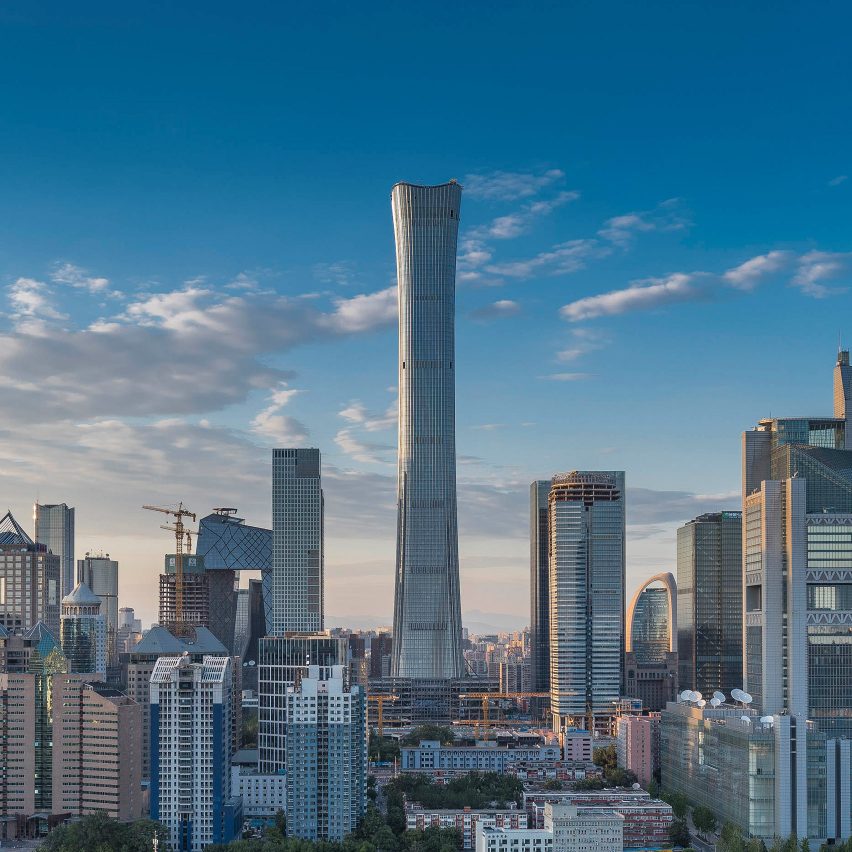
Last year was a record year for the construction of supertall skyscrapers – buildings over 300 metres – with the 530-metre-high Tianjin CTF Finance Centre by SOM the tallest tower constructed. In total,l 57 buildings over 200 metres were completed in China in 2019 according to the Council on Tall Buildings and Urban Habitat.

The policy also highlights that new skyscrapers should have a focus on fire protection, earthquake resistance, and energy saving.

Restrict construction of "strange buildings"

Along with a focus on landmark schemes and skyscrapers, the policy aims to "strengthen the guidance" on architectural style across the country.

"Architectural designs must conform to urban design requirements in terms of shape, colour, volume, height and space environment," said the policy.

It also states that officials must "comprehensively carry out urban physical examinations, and promptly remediate various 'urban diseases' including strange buildings".

Officials are also tasked with organising architectural reviews, while the Ministry of Housing and Urban-Rural Development will establish the role of chief architects in cities across China.

This advice aligns with views expressed by president Xi Jinping, who called for an end to "weird architecture" during a talk in 2014. This was followed by a directive in 2016 banning "oversized, xenocentric and weird" architecture.

During an interview with Dezeen, MAD co-founder Ma Yansong stated that Chinese cities should draw more from the country's traditional architecture.

The post China bans copycat architecture and restricts supertall skyscrapers appeared first on Dezeen.


from Dezeen https://ift.tt/3dIavSJ