Friday, 15 May 2020

Nanimarquina unveils four new collections of rugs

Nanimarquina unveils four new collections of rugs

Dezeen promotion: decaying flowers, abstract blocks of colour and imaginary characters feature in Nanimarquina's latest rug collections.

Flora, Telares, Colors and Silhouette are the names of the four rug ranges that make up Nanimarquina's 2020 range.

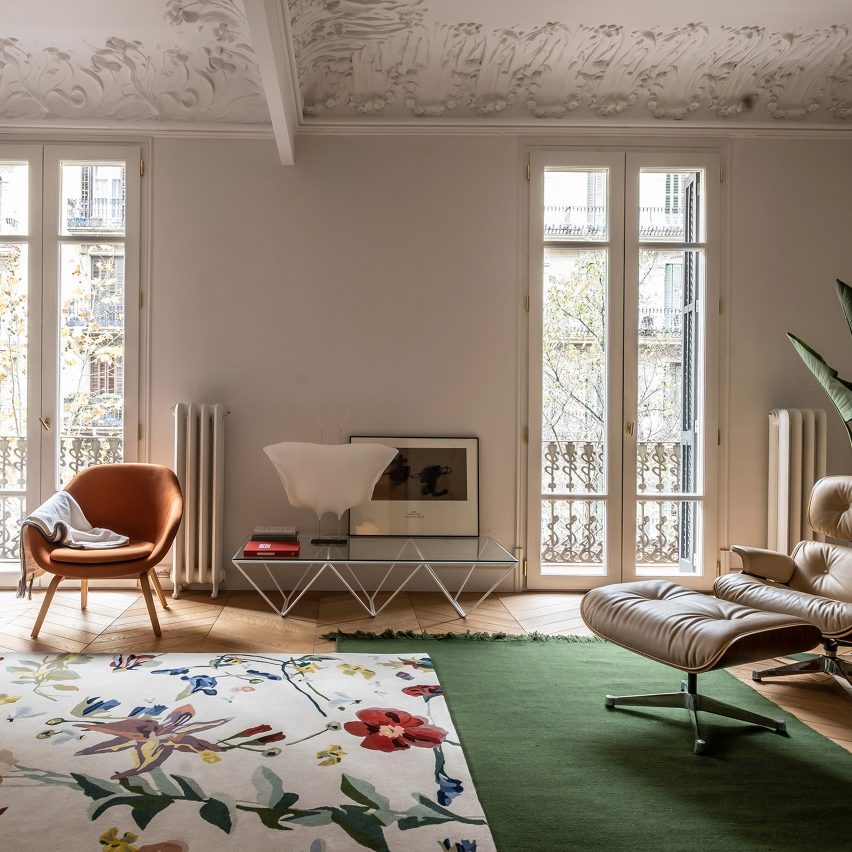
Flora was created in collaboration with Barcelona-based artist Santi Moix, who uses imagery of flowers to explore the fragility of life and death.

"His use of colour is beyond the merely decorative: it enhances and accentuates certain details paying special attention to in-betweens – those intermediate processes in flowers like the moments before their birth, their explosion of colour, and their decay," said Nanimarquina.
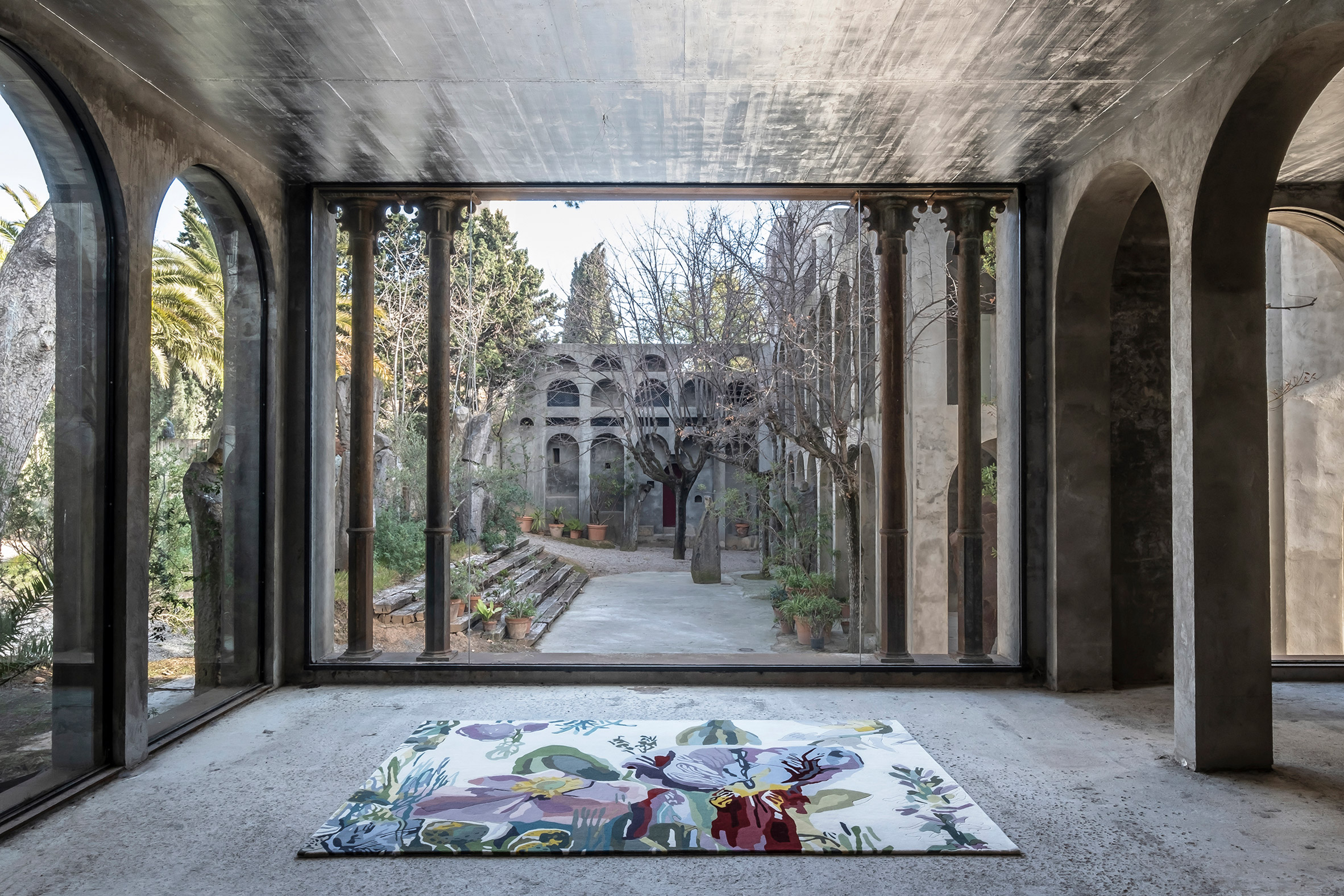
Nanimarquina Flora rugs
The Flora rug collection was designed by Barcelona-based artist Santi Moix

There are three hand-tufted rug models available – Promenade, which boasts a jumble of brightly-hued florals, and Backyard, which depicts the wildflowers typically found in a home's garden.

The final model, Bloom, is available in two versions that capture different moments in a flower's life cycle: one is shaped like a flower in blossom, while the other is shaped like a flower in decay.

These rugs are smaller and were designed to be set against the monochromatic rugs in the Colors range.
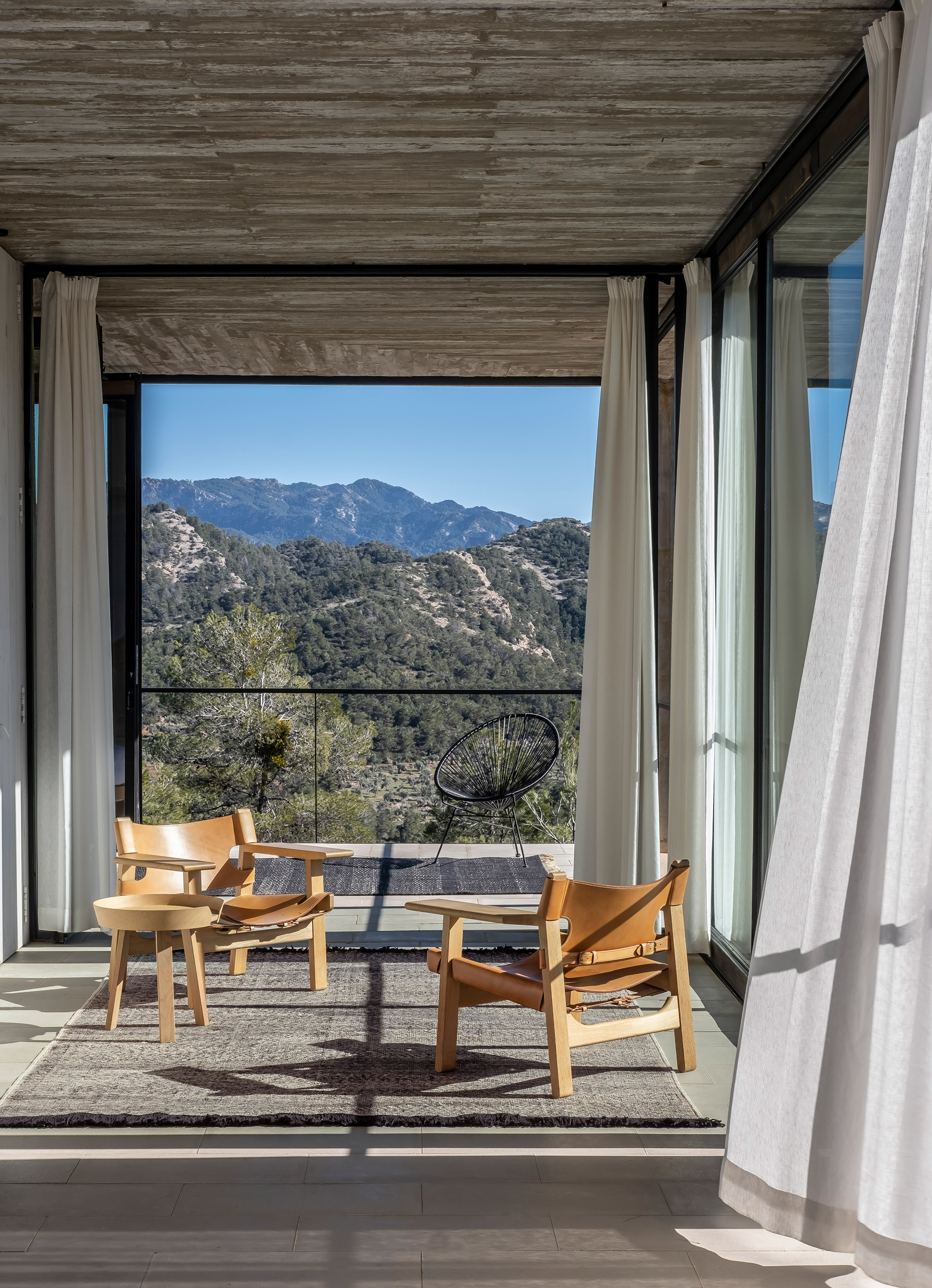
Nanimarquina Telares rugs
The textured Telares collection is designed to reflect craftsmanship

Afghan wool has been handwoven at various intensities to create the textured rugs in another range, called Telares, which are meant to reflect the "authenticity of craftsmanship".

"The changes in the pattern, which are born from the tension applied between weft and warp, give the rug an appearance full of nuances, thus evoking the most primary manual work: the insistent trial and error process of the craftsman," the brand explained.

They can be produced in five different colours – Ebony, an almost-black, Carmine, a rich red, Indigo, a deep purple, Fog, a dusky beige and Pine, a forest-green.
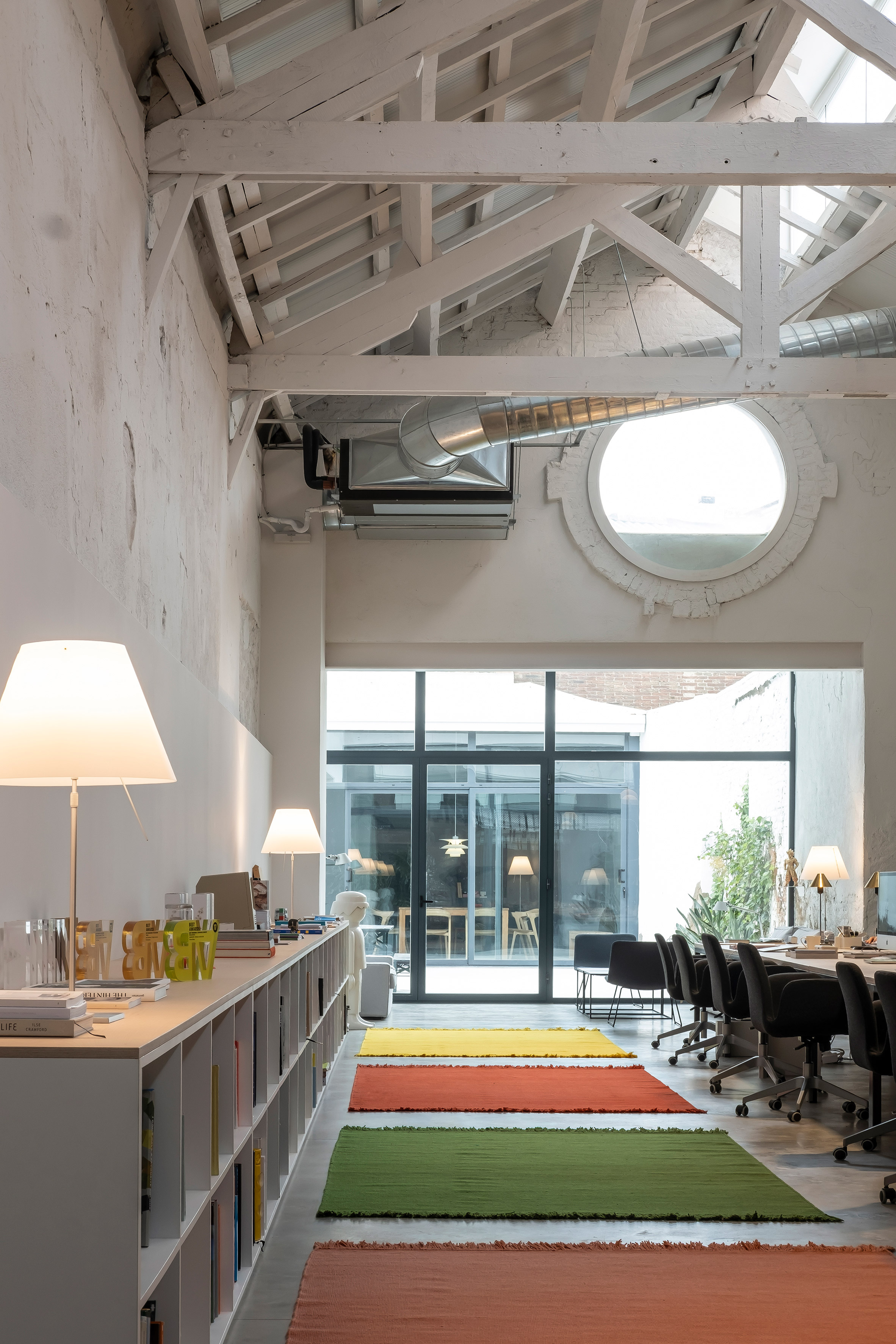
Nanimarquina Colors rugs
Each of the colour-block rugs in the Colors range features a fringed edge

The next Colors range comprises plain block-colour rugs that are meant to offer an "abstract interpretation" of hues seen in nature.

They come in four shades – Nectar, a warm yellow, Blush, a deep pink, Saffron, a strong red and an earthy green called Basil.

Each one is finished with a fringed edge, riffing on the style of South Asian dhurries – thin woven rugs that can be used as floor coverings, bedding or packaging.
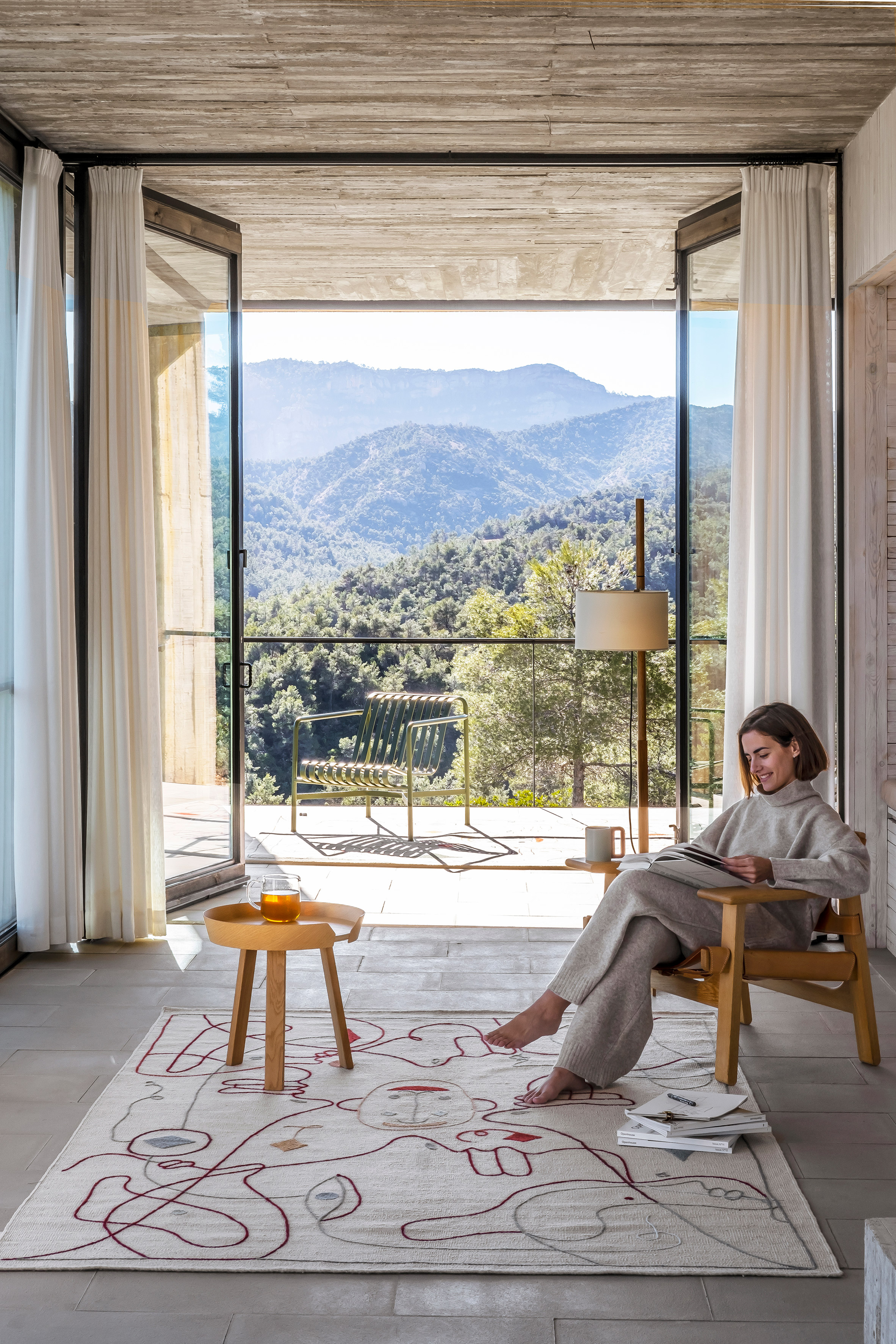
Nanimarquina x Jaime Hayon Silhouette rugs
The Silhouette collection by Jaime Hayon features freehand drawings of imagined faces

The fourth and final range, Silhouette, was designed in partnership with Jaime Hayon. The rugs can be used indoors or outdoors and boast spindly illustrations of imagined faces.

"It's a freehand drawing, similar to the work in my sketchbooks," explained Hayon.

"There are infinite characters that are part of my imaginary; they change and evolve, according to my current interests," he continued. "There are characters that are endearing, others are more ironic, and some even provoke fear on occasion."
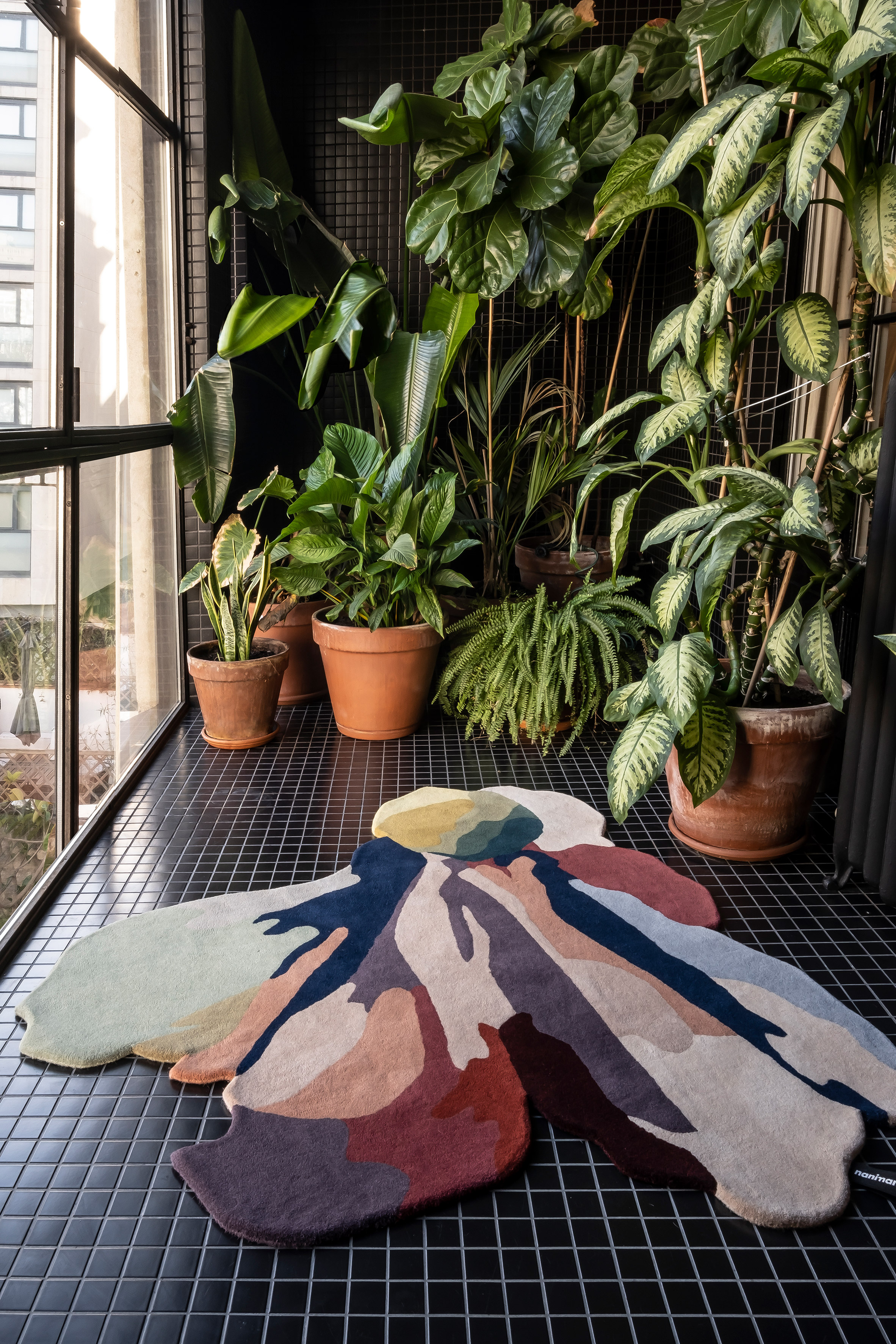
Nanimarquina Flora rugs
The rugs can be used indoors or outdoors

Nanimarquina was established in 1987 and is based between Barcelona and New York.

Jaime Hayon is just one notable designer that the brand has worked with – in 2014, it joined forces with London studio Doshi Levien to create floor coverings that payed homage to traditional rugs crafted by tribes in India's Gujarat region.

The post Nanimarquina unveils four new collections of rugs appeared first on Dezeen.


from Dezeen https://ift.tt/365xwg6

Ventura Projects ends operations after 10 years of promoting designers at Milan design week

Ventura Projects to wind up after 10 years at Milan design week

Influential design exhibitions platform Ventura Projects is to cease operating after ten years of organising exhibitions in Milan and other cities due to the impact of coronavirus.

Ventura Projects founder and art director Margriet Vollenberg announced that the company would stop operating following the cancellation of Milan design week and other fairs, plus uncertainty over future events.

"My decision to stop Ventura Projects was based on multiple things," Vollenberg told Dezeen. "First of all, it's a financial disaster to have such a big event cancelled a few weeks before it was due to take place."

"Secondly, the future of the other projects that were on schedule became very uncertain and with a team of 10 people in two countries it was very hard for my company to manage the costs."

"A great catalyst has been lost"

Designers expressed shock and sadness at the demise of a platform that has helped numerous well-known creatives establish their careers.

"I was shocked by the news and with the loss of Ventura Projects," said Dutch designer Maarten Baas, who has exhibited at many of Ventura Projects' shows over the years. "A great catalyst has been lost.”

"From scratch, Ventura Projects created something unique and was able to renew and expand their concept during the years," Baas added. "Many designers, including myself, have been given and seized opportunities to show themselves through Ventura Projects. They gave colour to Milan design week and visitors knew they could expect something good."

Ventura Projects ends operations after 10 years of promoting designers at Milan design week
Ventura Projects will cease operating after ten years of organising exhibitions in Milan

"We are very surprised and saddened by this sudden and sad announcement," said Satoshi Yoshiizumi of Japanese collective Takt Project, who exhibited at Ventura Centrale in 2019. "I think it was one of the best opportunities of Milan design week."

Yoshiizumi added that Ventura Projects offered "a very important place for an independent design studio like us, and a point of contact between visitors from all over the world, especially for works that are experimental and open to the future of design."

"It is a new reality"

"A very common reaction that I got is that people just cannot believe that such a big name stops existing," said Vollenberg.

"But by communicating this, I also want people to understand that this is really happening right now, it is a new reality which hopefully will change soon, or which in any case will produce new positive things."

The organisation was responsible for numerous exhibitions and installations in Milan and other cities

The organisation, based in Utrecht in the Netherlands and Milan, organised the Ventura Centrale and Ventura Future showcases during Milan design week and previously ran the groundbreaking Ventura Lambrate design district in the city.

Ventura Projects was set to make its 11th appearance at this year's Milan design week. However, the week was first postponed from April to June and then cancelled altogether due to the pandemic.

The organisation's last show was a digital collaboration with Dezeen's Virtual Design Festival, which last month gave a platform to many of the designers that had planned to show in Milan this year.

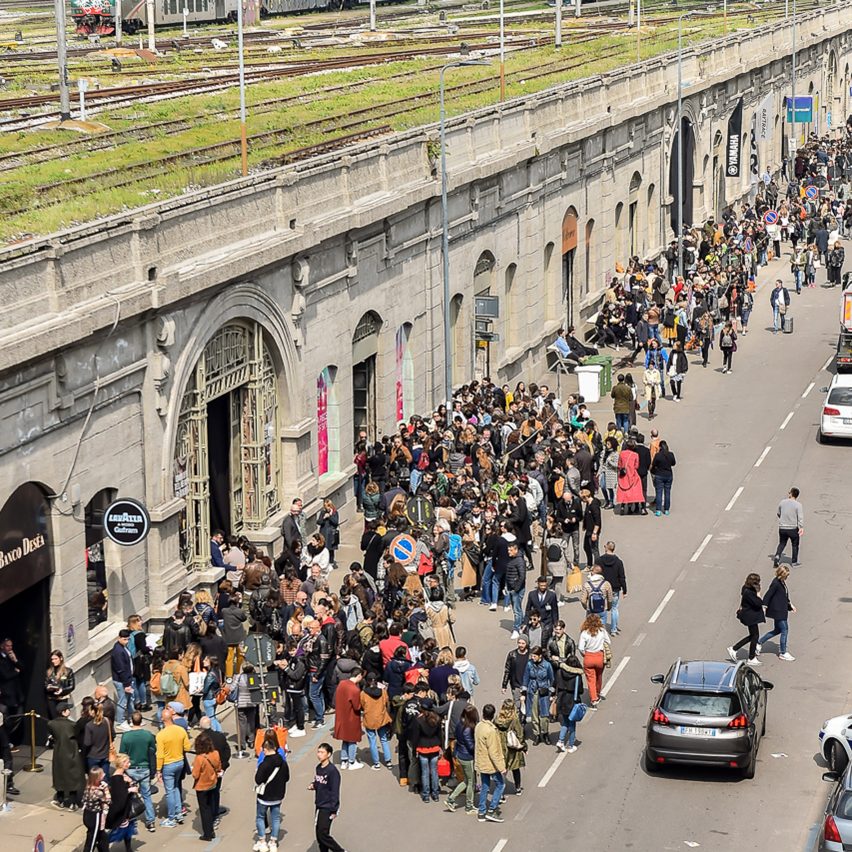
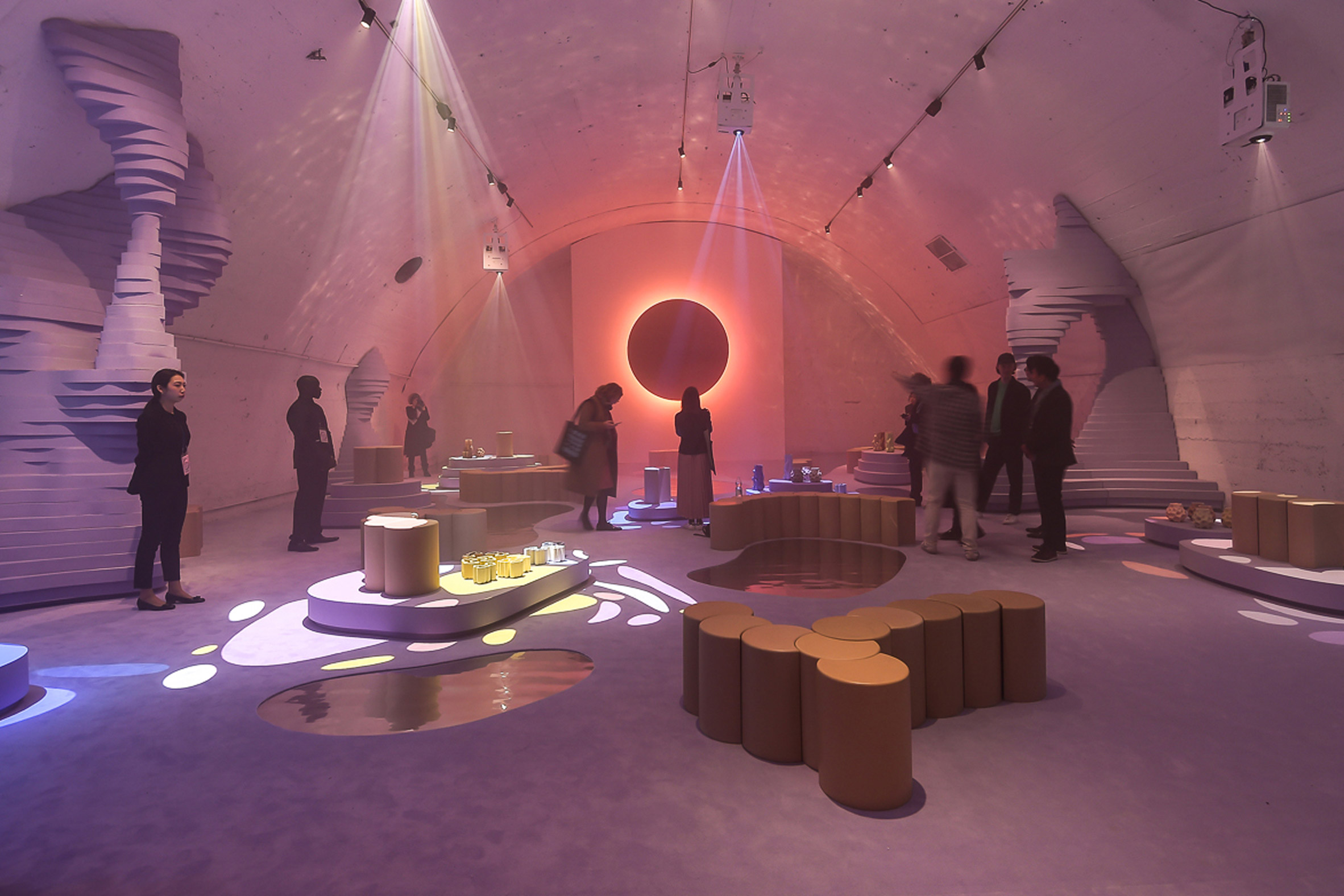
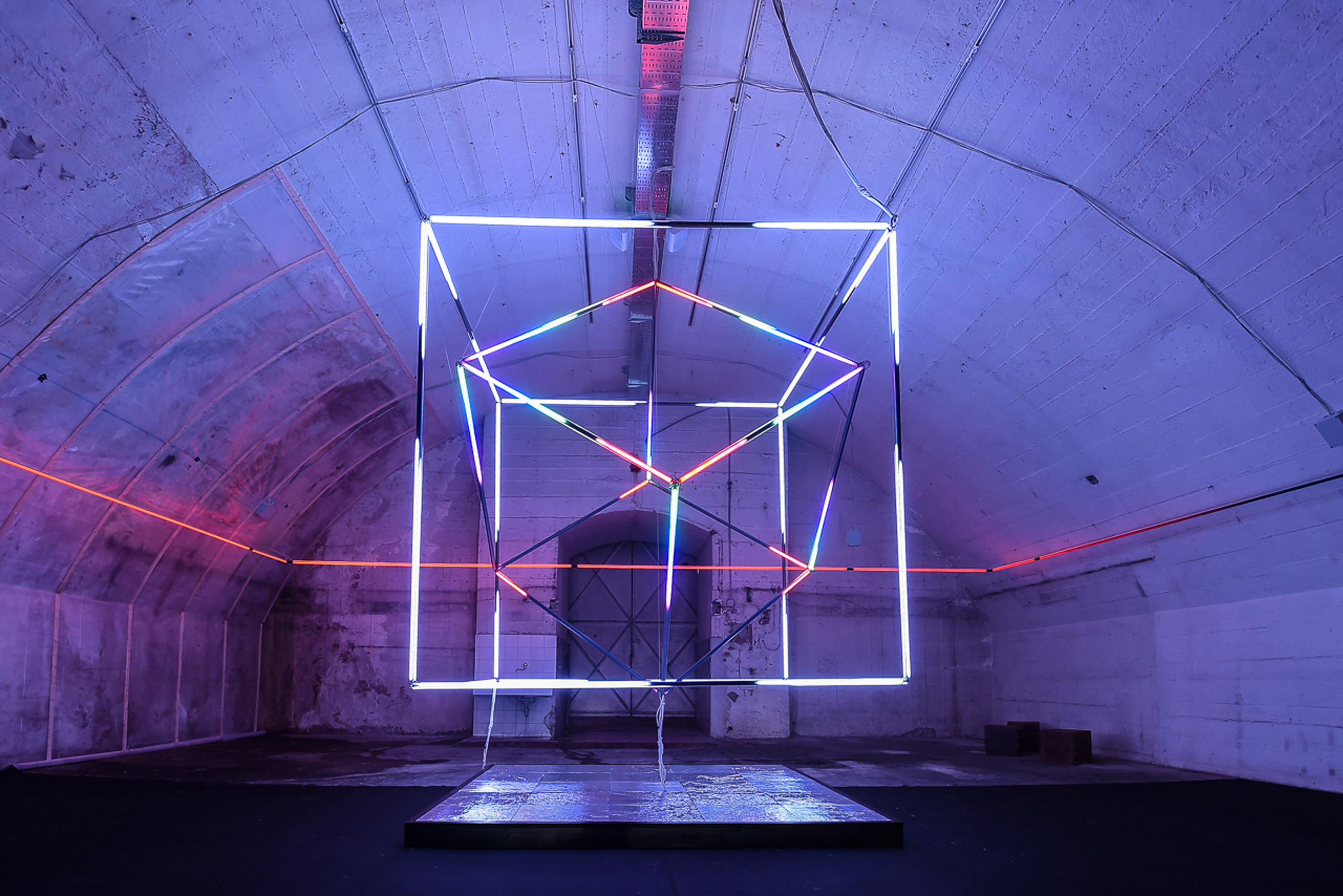
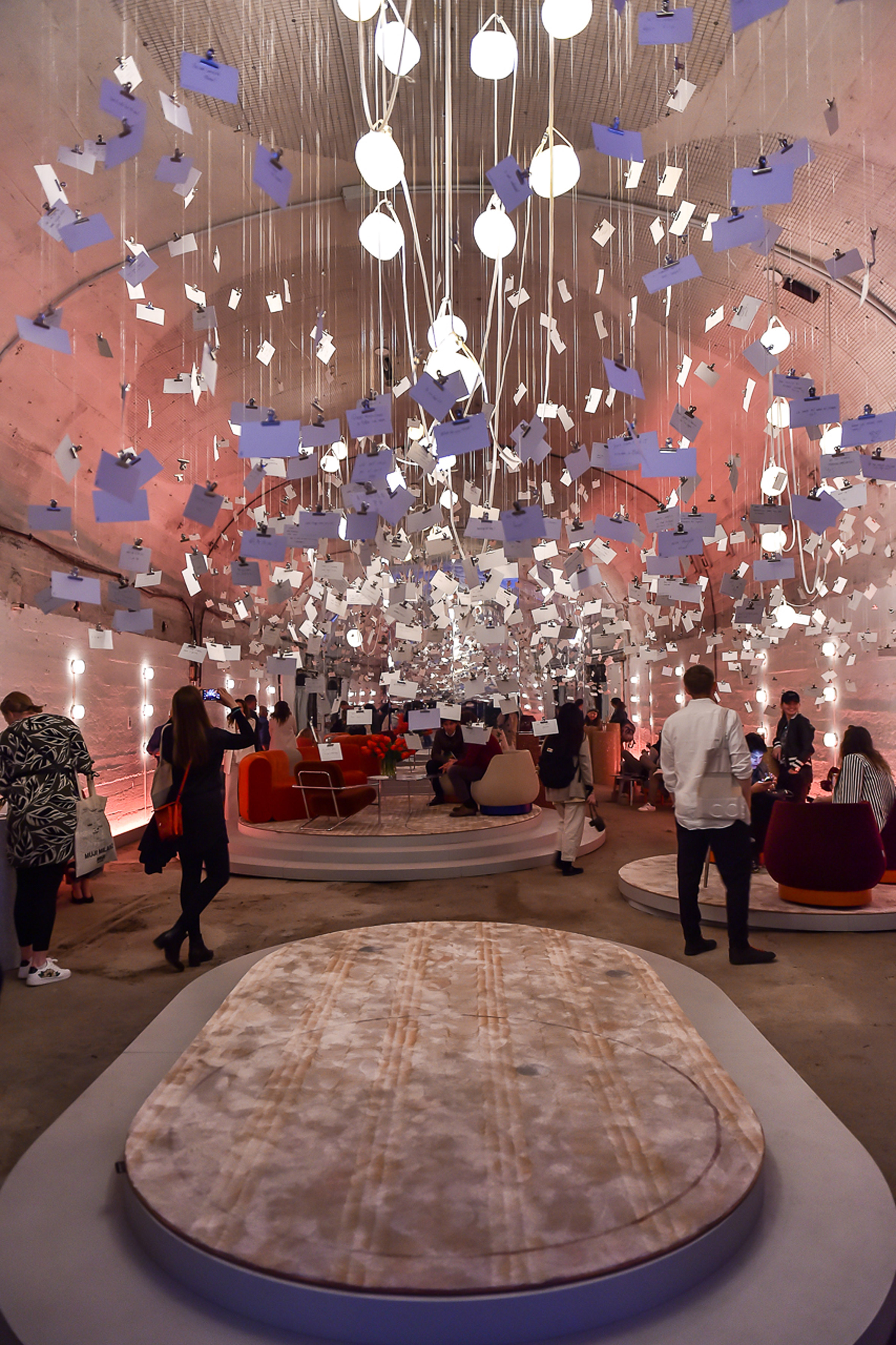
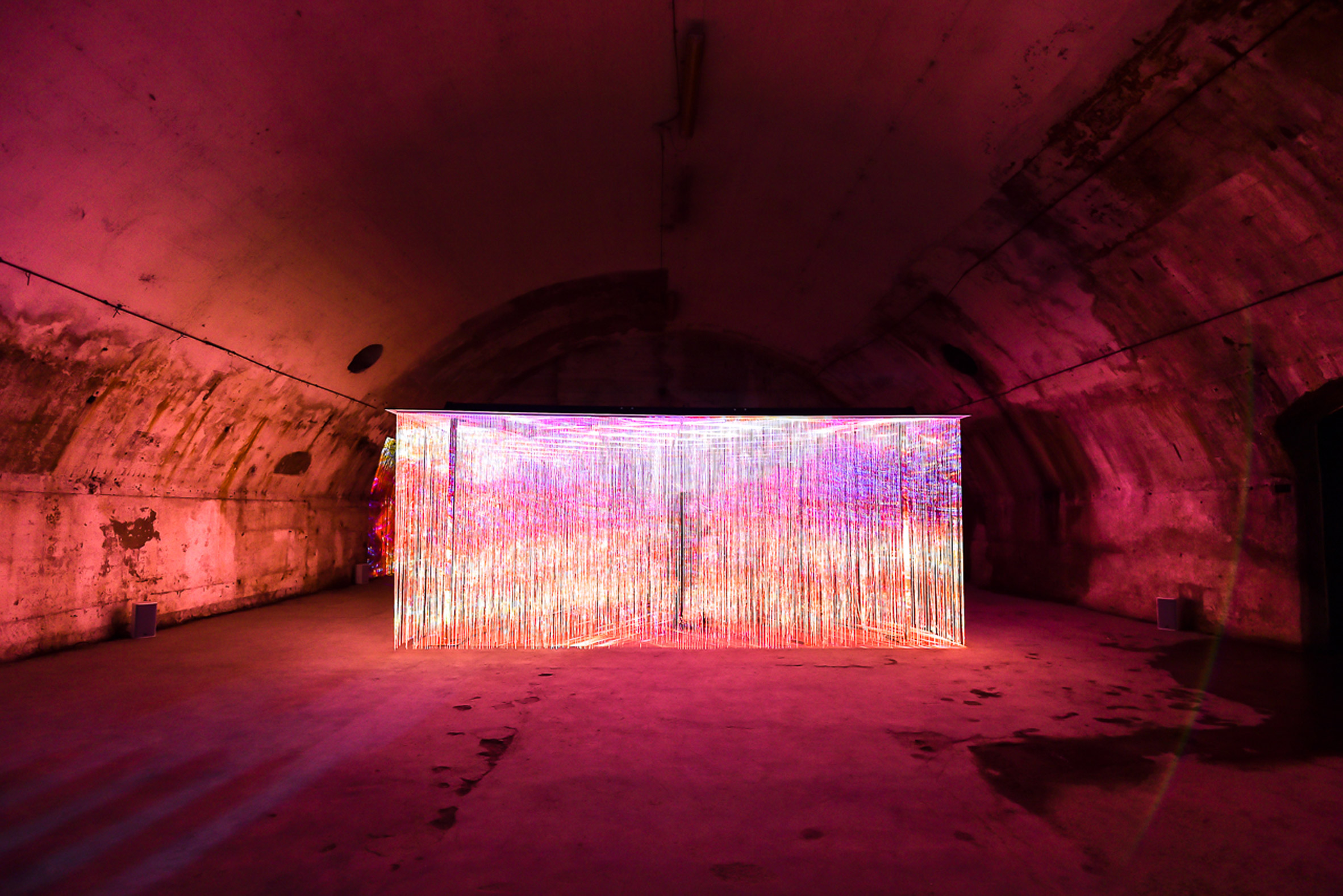
Ventura Centrale took place in vaulted warehouses beneath railway tracks in Milan

Ventura Lambrate, Ventura Projects' first show in Milan, was launched in 2010 and continued until 2017. Each April, it turned a former industrial area on the edge of the city into a vibrant design district.

Ventura Centrale was established in 2017 with installations and exhibitions within the vaulted warehouses beneath tracks leading into Milan's central railway station, while Ventura Future launched in 2018 to focus on the future of design.

"It's a symbol of what is ahead"

Vollenberg expected other exhibition and design companies to cease operations in the coming months as the financial impacts of the coronavirus continue to be felt.

"Ventura Projects was especially meaningful for independent and upcoming designers from all over the world and unfortunately that part of Ventura Projects cannot exist anymore through the events that we did," she said.

"In that way, it's a symbol of what is ahead and will happen in the near future, there will be many losses in terms of companies and events that won't be there anymore," she continued.

"On the other hand, I think design becomes even more important because there is a whole new world to develop and to rethink and we need designers for that. But I think we also have to look back with pride and that is what we do now."

Ventura Centrale 2019 included this installation by Freitag

Vollenberg also runs Dutch design promotions agency Organisation in Design.

"To be honest, I still don't know if Organisation in Design will survive this crisis after 15 years of existence," Vollenberg said. "But for me, it is less important in what way we survive, but more if we can still create relevant things for the design world in the future, which is something we have always done."

Photography is by Claudio Grassi.

The post Ventura Projects ends operations after 10 years of promoting designers at Milan design week appeared first on Dezeen.


from Dezeen https://ift.tt/367N4Qj

Adam Richards Architects uses brick and black zinc for Walmer Castle learning centre

Walmer Castle and Gardens learning centre and cafe designed by Adam Richards Architects

A huge arched window punctuates the grey-brick exterior of and education centre built by Adam Richards Architects in the grounds of a 16th-century castle in the English town of Deal, Kent.

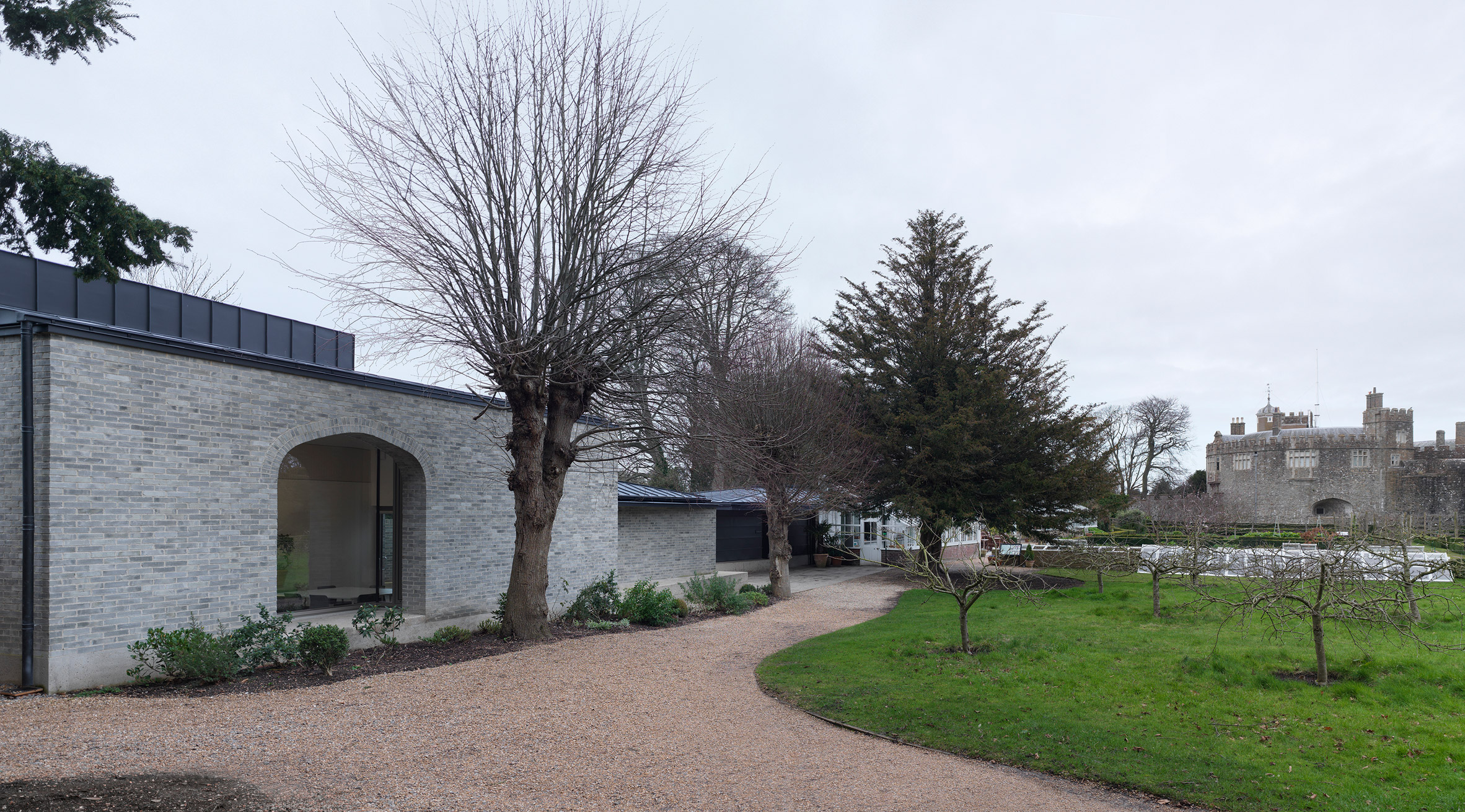
The learning centre designed by Adam Richards Architects is the first significant building to be added to the English Heritage-listed Walmer Castle and Gardens site in 145 years.

Walmer Castle and Gardens learning centre and cafe designed by Adam Richards Architects

Nestled amongst eight acres of verdant grounds, the castle was erected between 1539 and 1540 to serve as an artillery fortress.

From the 18th century onwards it became living quarters for figures such as Winston Churchill and the Duke of Wellington – whose life and career is now documented in the exhibition rooms inside.

Walmer Castle and Gardens learning centre and cafe designed by Adam Richards Architects

The learning centre will cater to the 3,000 education visitors that come to the castle every year. Up until now, school pupils and groups of older learners haven't had a dedicated on-site space for activities.

"Designing a contemporary building for a historic site like Walmer Castle is the sort of thing our practice loves doing," studio founder Adam Richards told Dezeen.

"In briefing us for the project, English Heritage was both ambitious and cautious, so we're delighted with the outcome."

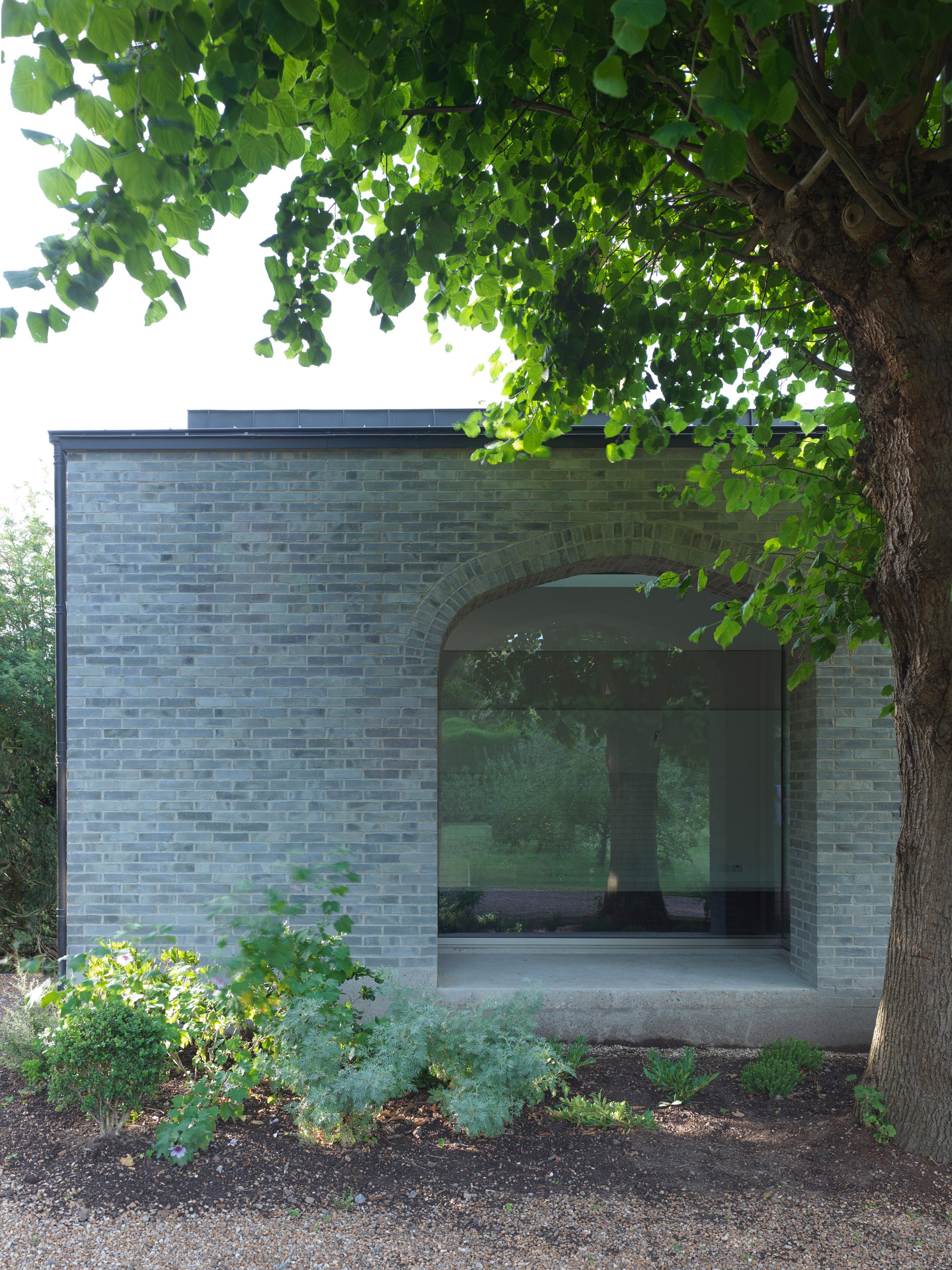
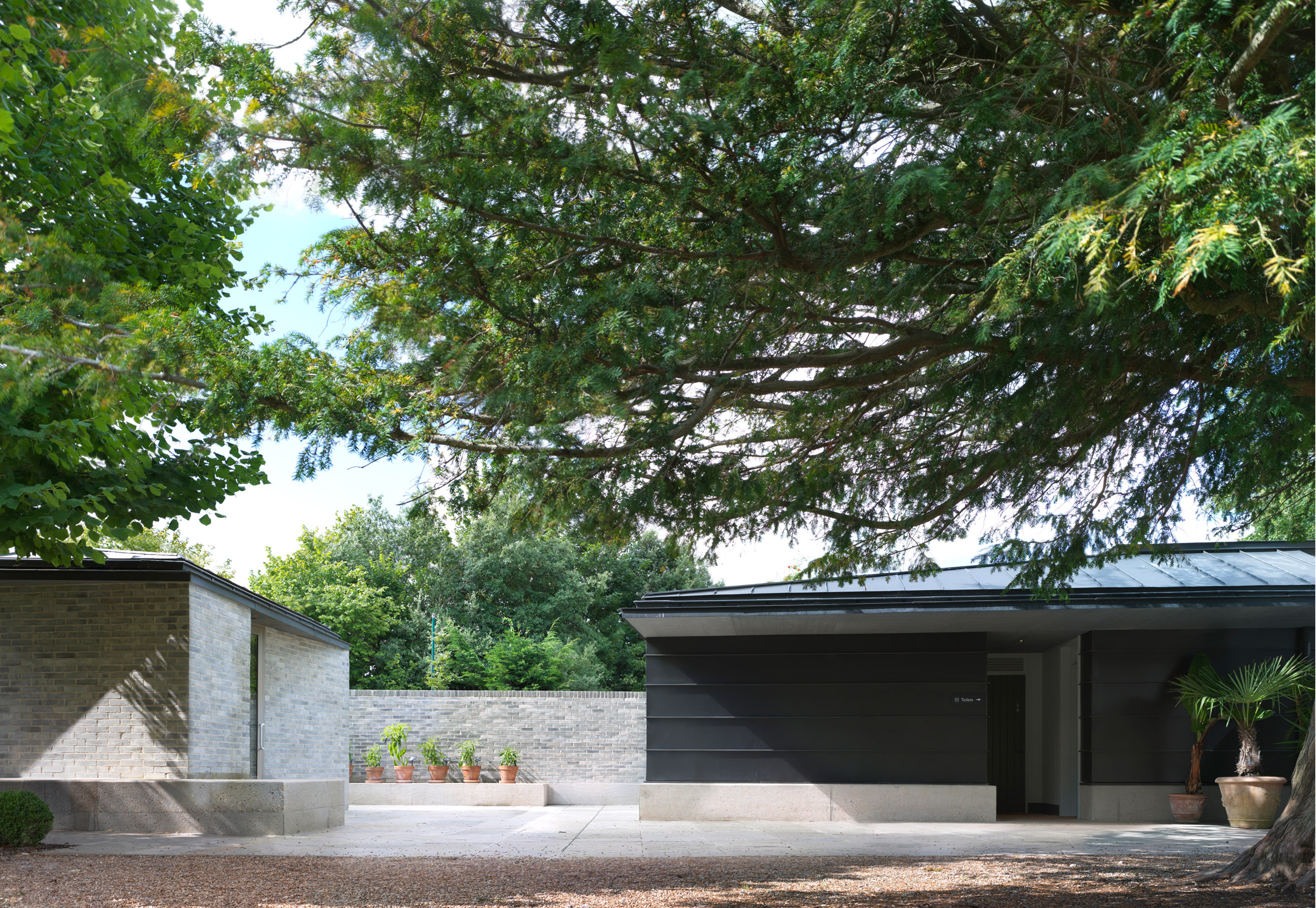
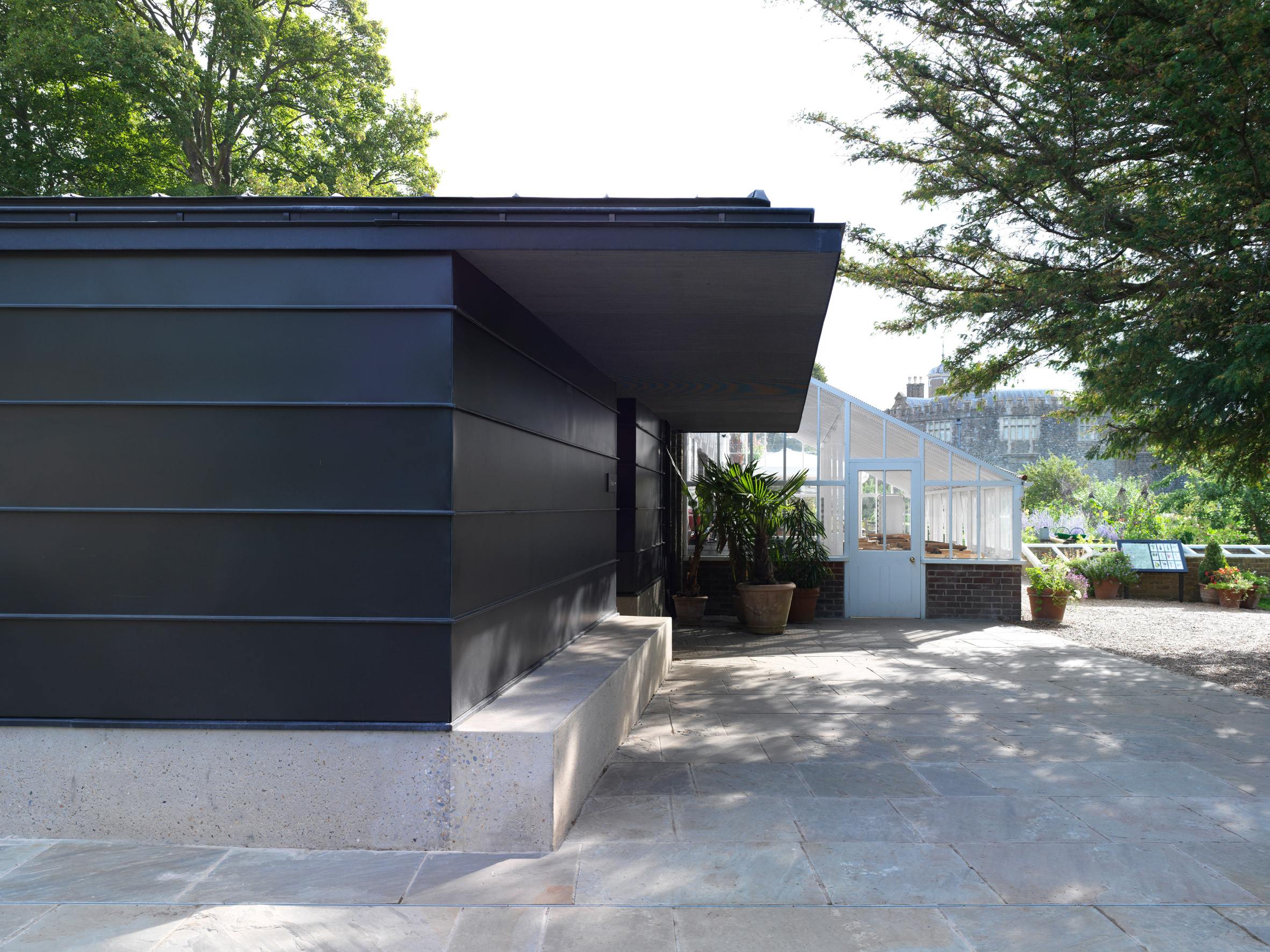
The crentre comprises a pair of grey-brick volumes with peaked roofs made from blackened zinc, which together perch on a sand-blasted concrete plinth.

Walmer Castle and Gardens learning centre and cafe designed by Adam Richards Architects

These materials were specifically chosen by the practice to match the "brooding quality" of the adjacent castle.

Exposed aggregate in the plinth is also meant to be a subtle visual nod to the shingled beaches along Deal's coastline.

Walmer Castle and Gardens learning centre and cafe designed by Adam Richards Architects

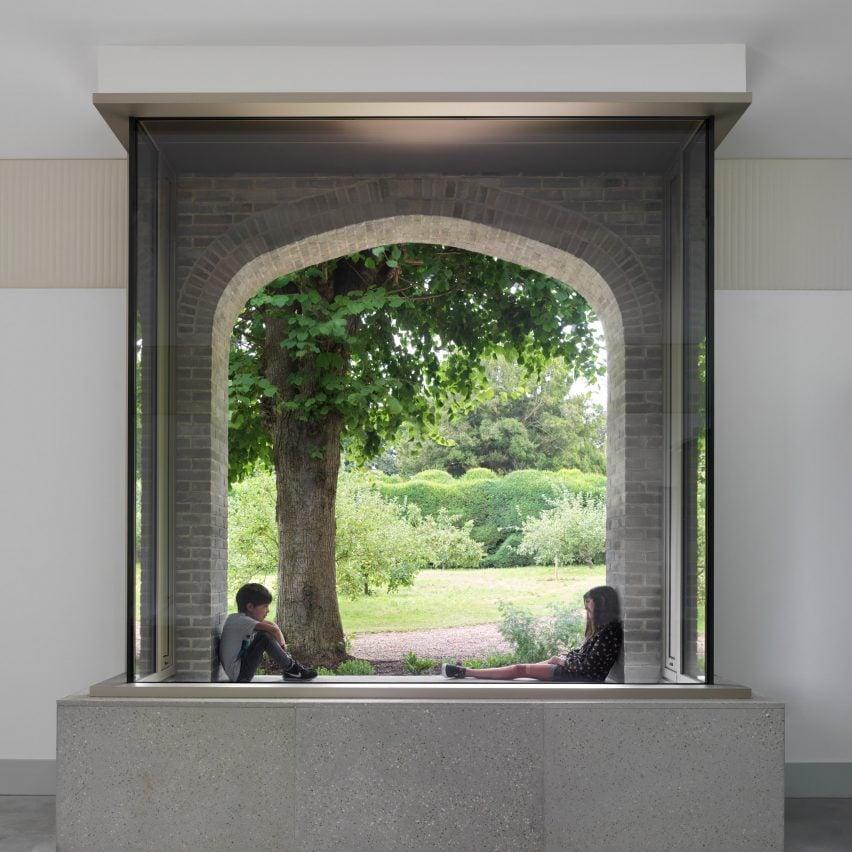
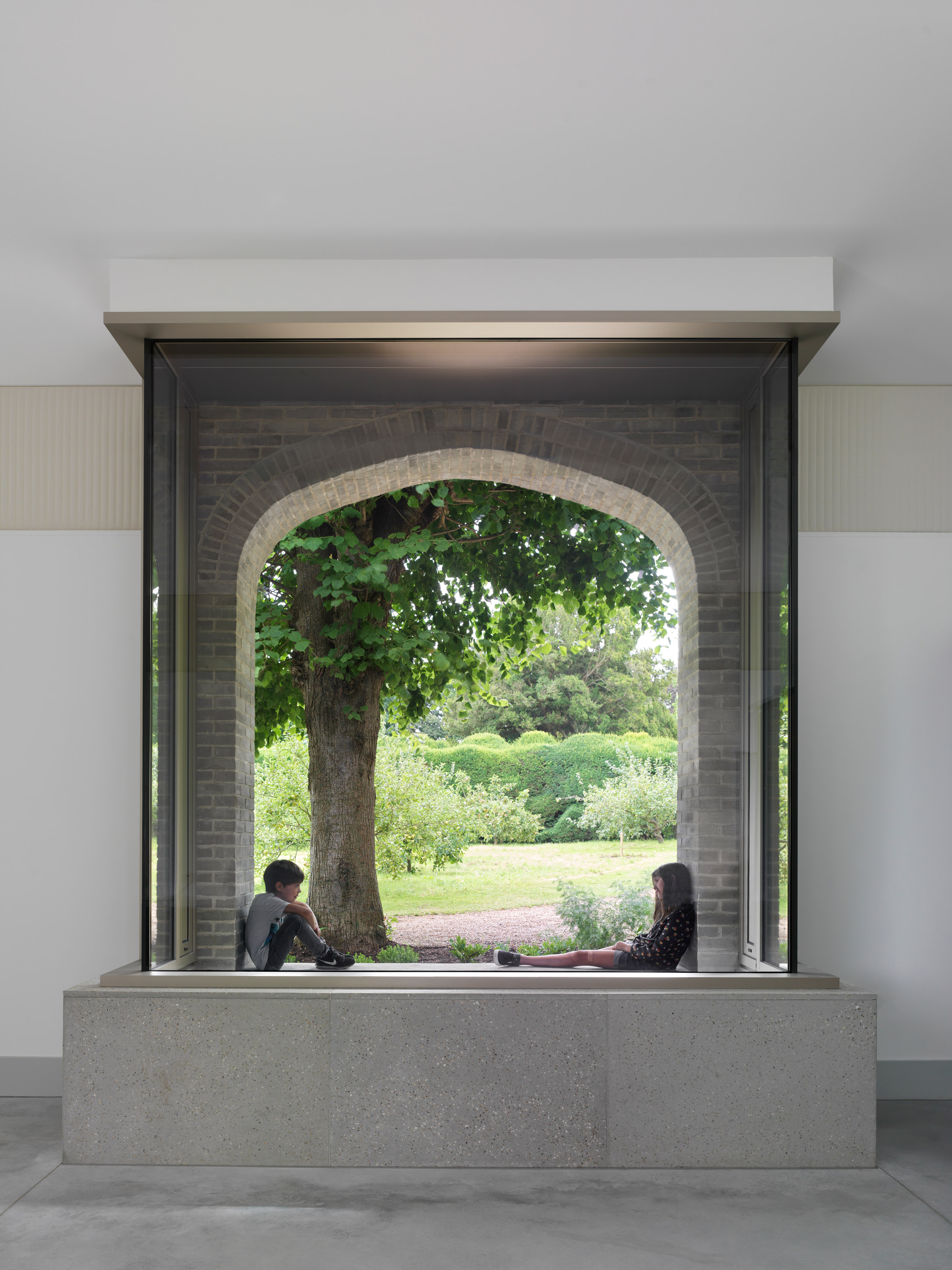
The south-facing facade of the larger volume features an arched picture window, which is meant to mimic the form of the castle's gun ports.

"It frames a view of the picturesque, cloud-shaped double row of hedges bordering the kitchen garden, making the garden the focal point of the space," explained the practice.

Walmer Castle and Gardens learning centre and cafe designed by Adam Richards Architects

The building is accessed via a forest-green entryway where there are toilets and rows of wooden hooks where visitors can hang their coats and bags.

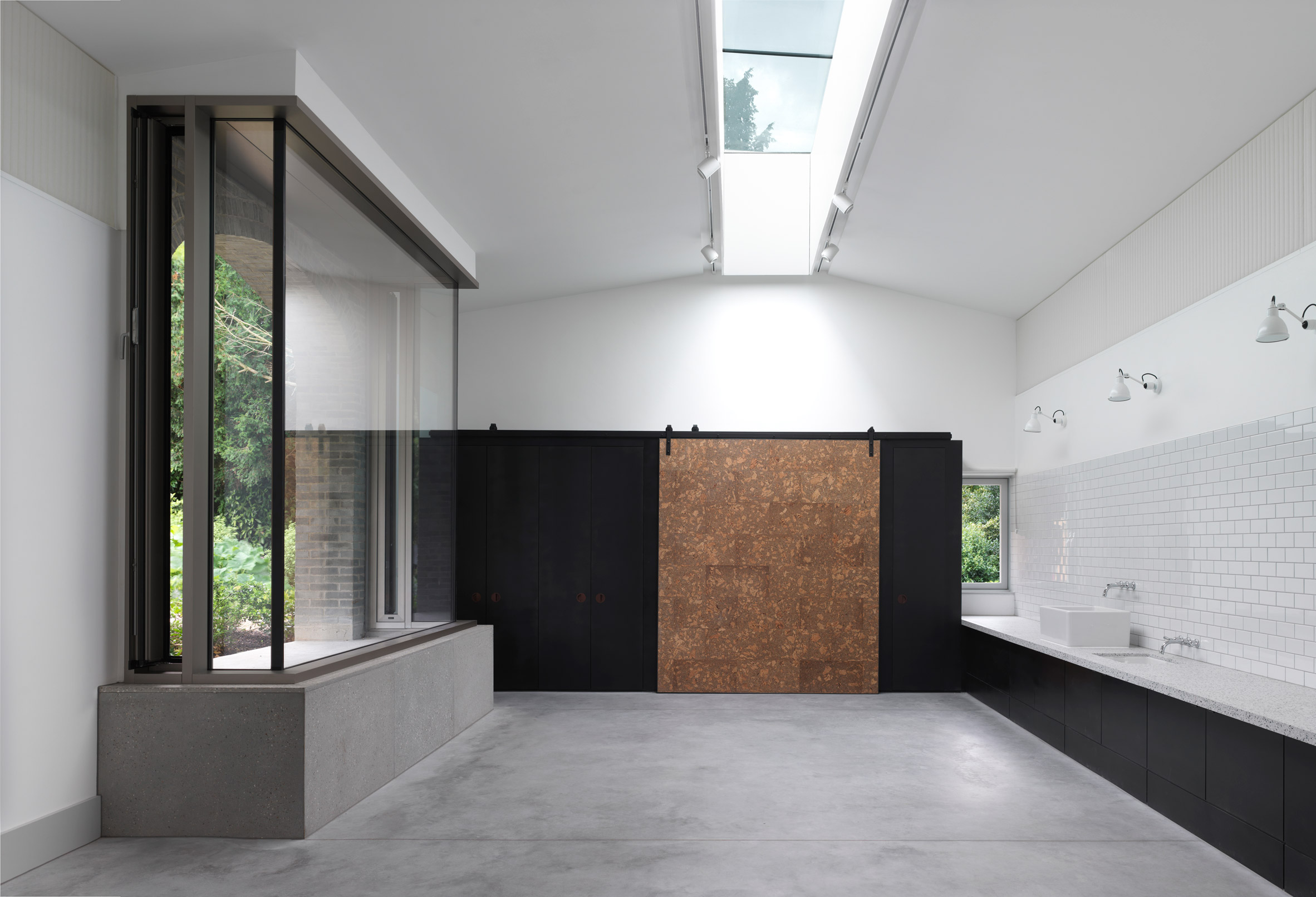
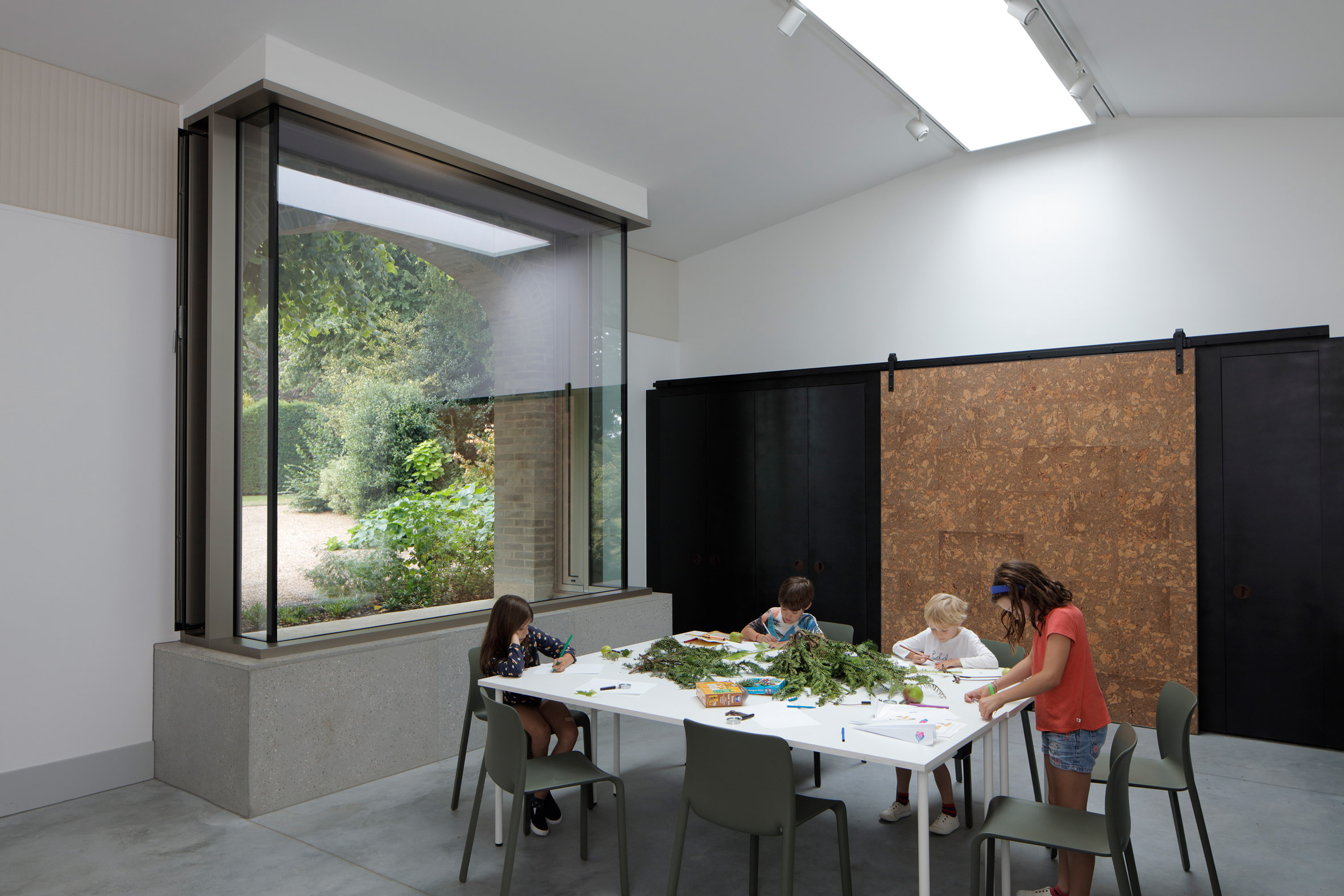
It leads through to the main activity room, where there are work tables and a white-tile wash area where children can clean up after messy craft sessions.

Walmer Castle and Gardens learning centre and cafe designed by Adam Richards Architects

A cafe that was also created by the practice takes over an adjacent timber-framed greenhouse.

This backs onto another new zinc-clad building that accommodates a kitchen, plant room and additional toilet facilities.

Walmer Castle and Gardens learning centre and cafe designed by Adam Richards Architects

Part of the project, which was backed by The National Lottery Heritage Fund, also required Adam Richards Architects to devise a connection between the main grounds of the castle and The Glen – a planted chalk quarry nearby that has been inaccessible for the past century.

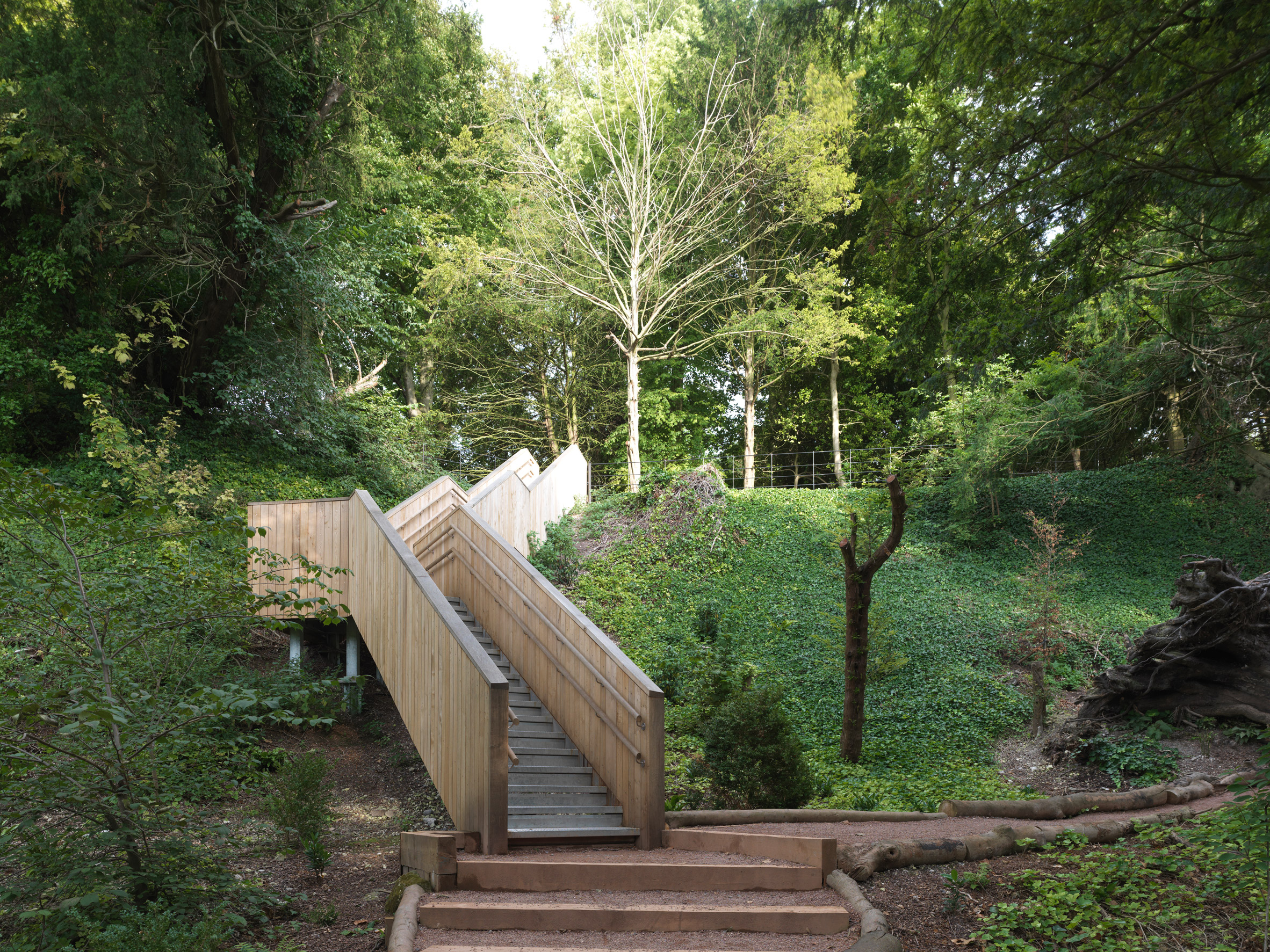
Visitors to Walmer Castle can now head down to the quarry using a new zig-zagging flight of stairs crafted from galvanised steel and Oakwood.

Walmer Castle and Gardens learning centre and cafe designed by Adam Richards Architects

Adam Richards Architects was established in 2002. Previous projects include the refurbishment of the Ditchling Museum of Art + Craft, where they added a series of pitched-roof volumes, and the creation of a home in Sussex, which features a curved outer wall made from recycled clay tiles.

Late last year, construction work finished on Adam Richards' own home in Petworth. The property boasts a series of grand concrete rooms that nod to the storyline of post-apocalyptic film Stalker.

Photography is by Brotherton Lock.


Project credits:

Clients: English Heritage and The National Lottery Heritage Fund
Architect: Adam Richards Architects
Project architects: Adam Richards, Joseph Mackey
Structural engineer: Historic England
Services engineer: Martin Thomas Associates
Main contractor: Walker Construction
QS: Press and Starkey
Landscape designer: LUC
Play equipment: Studio Hardie

The post Adam Richards Architects uses brick and black zinc for Walmer Castle learning centre appeared first on Dezeen.


from Dezeen https://ift.tt/3dRhKb1

Thursday, 14 May 2020

Individual greenhouses let guests dine at a distance during pandemic

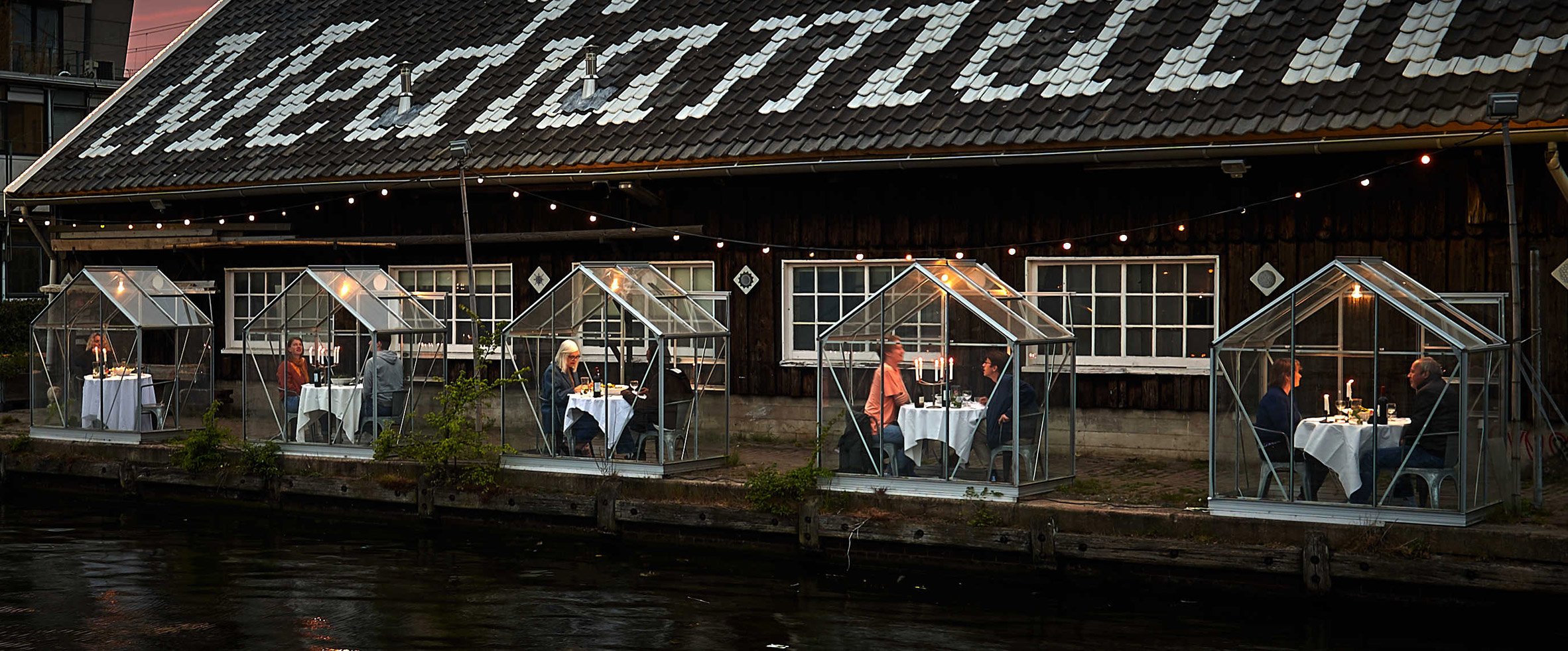
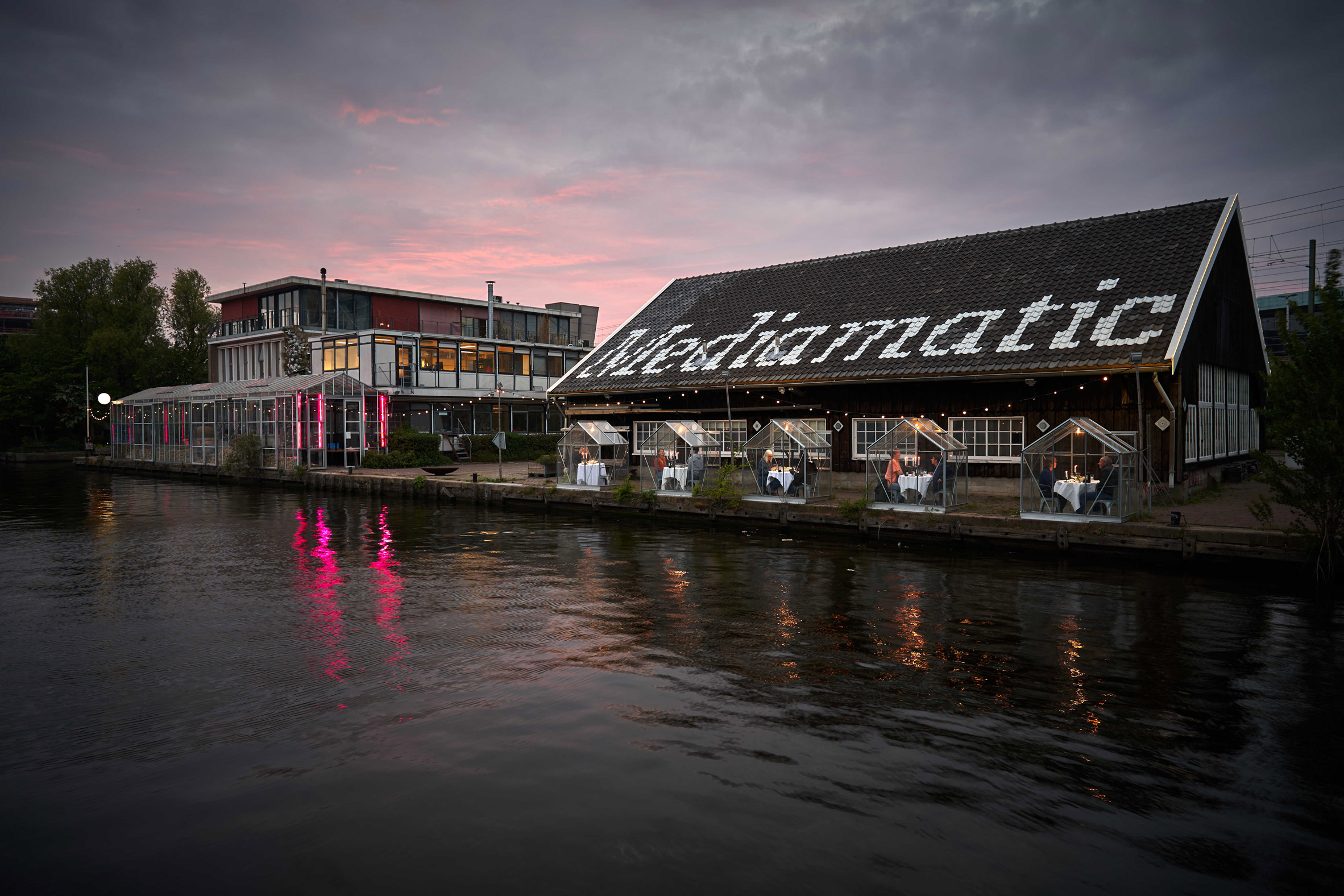
Amsterdam arts centre Mediamatic has set up a socially-distanced dining experience where guests sit in their own greenhouse and hosts wear face shields.

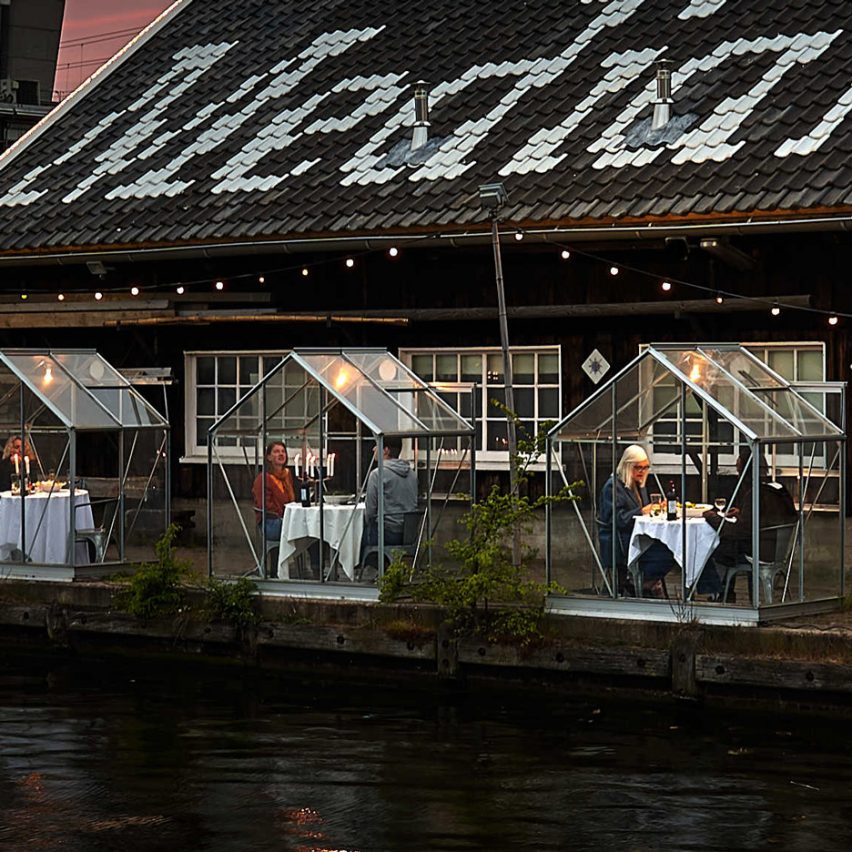
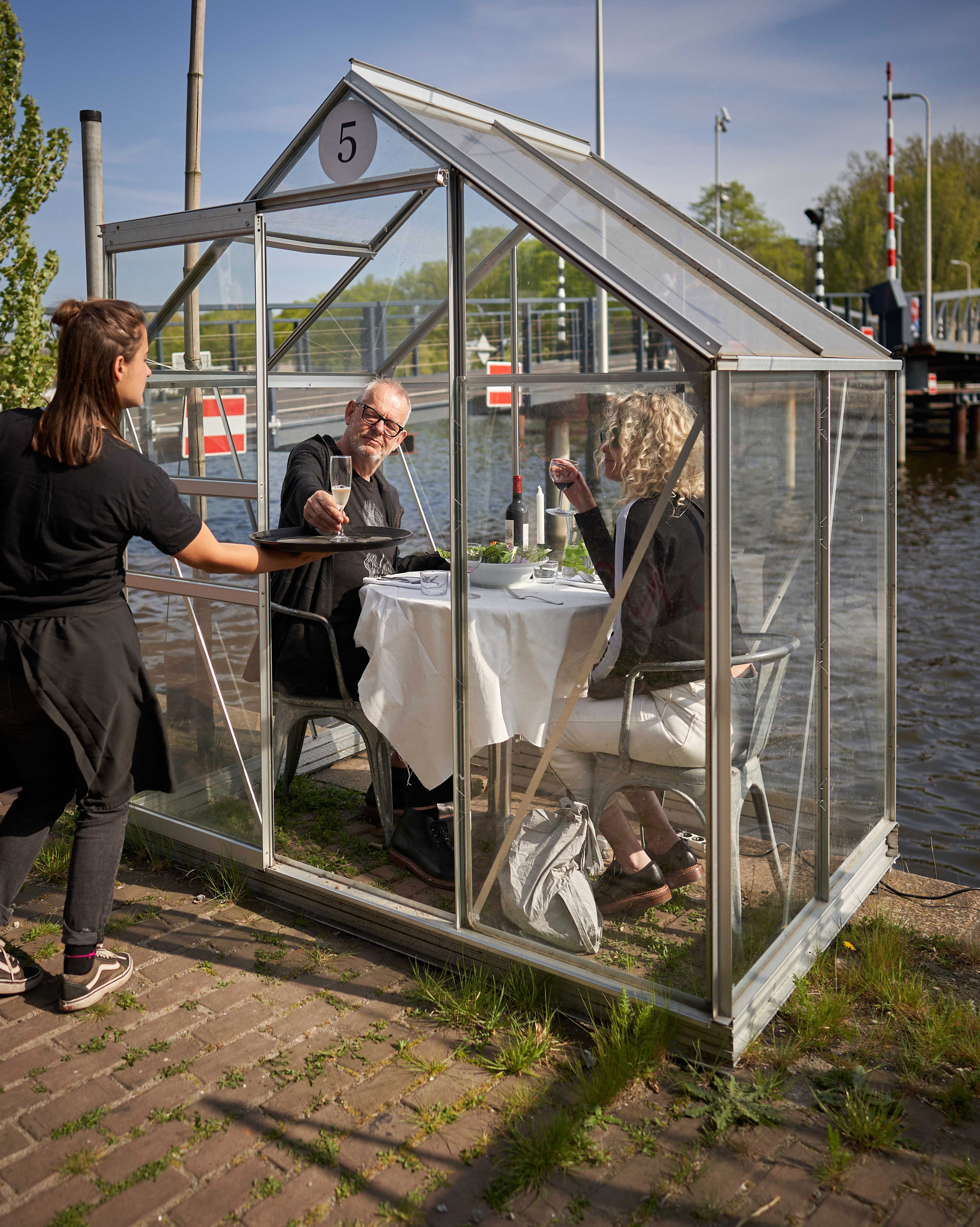
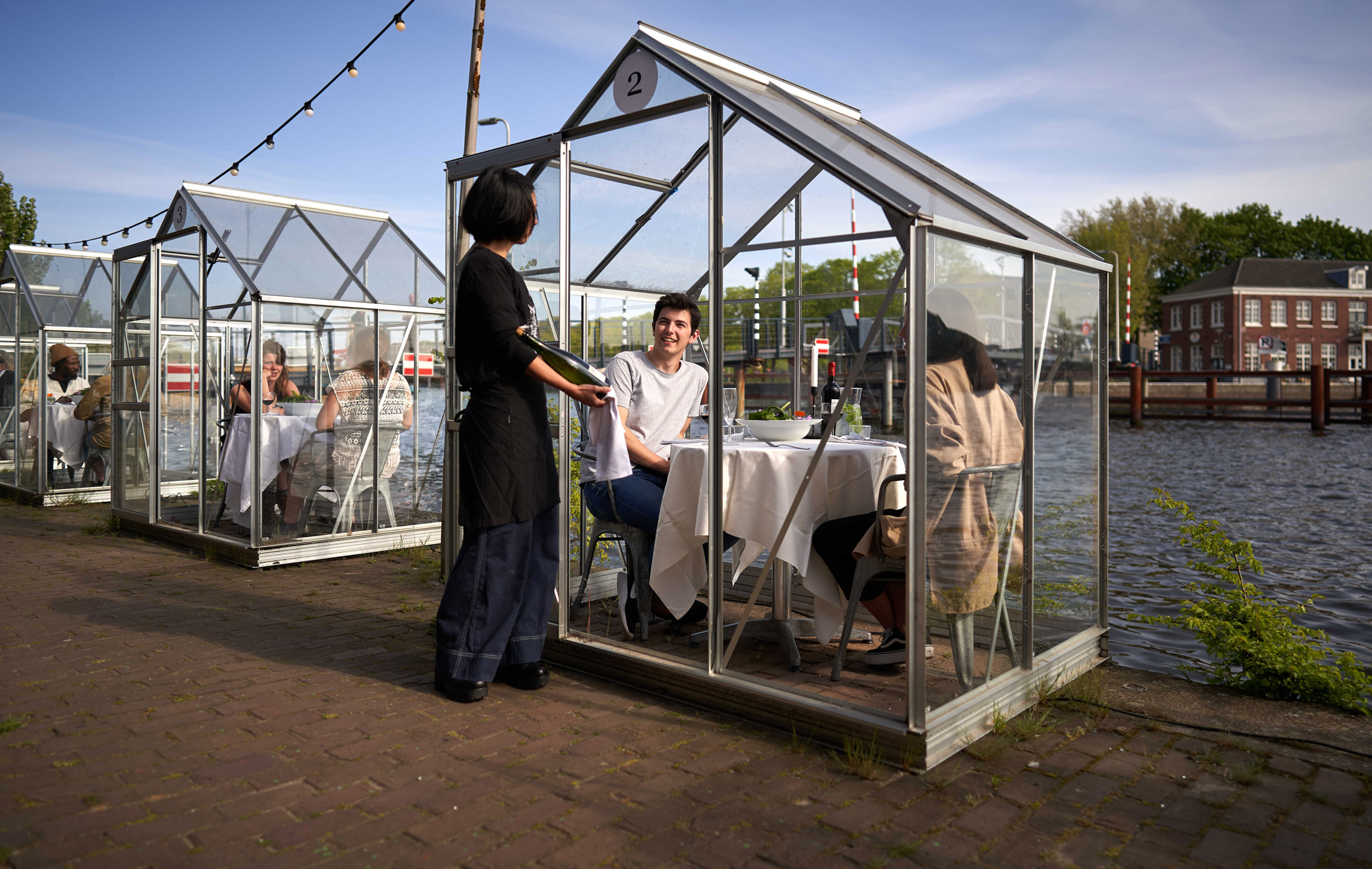
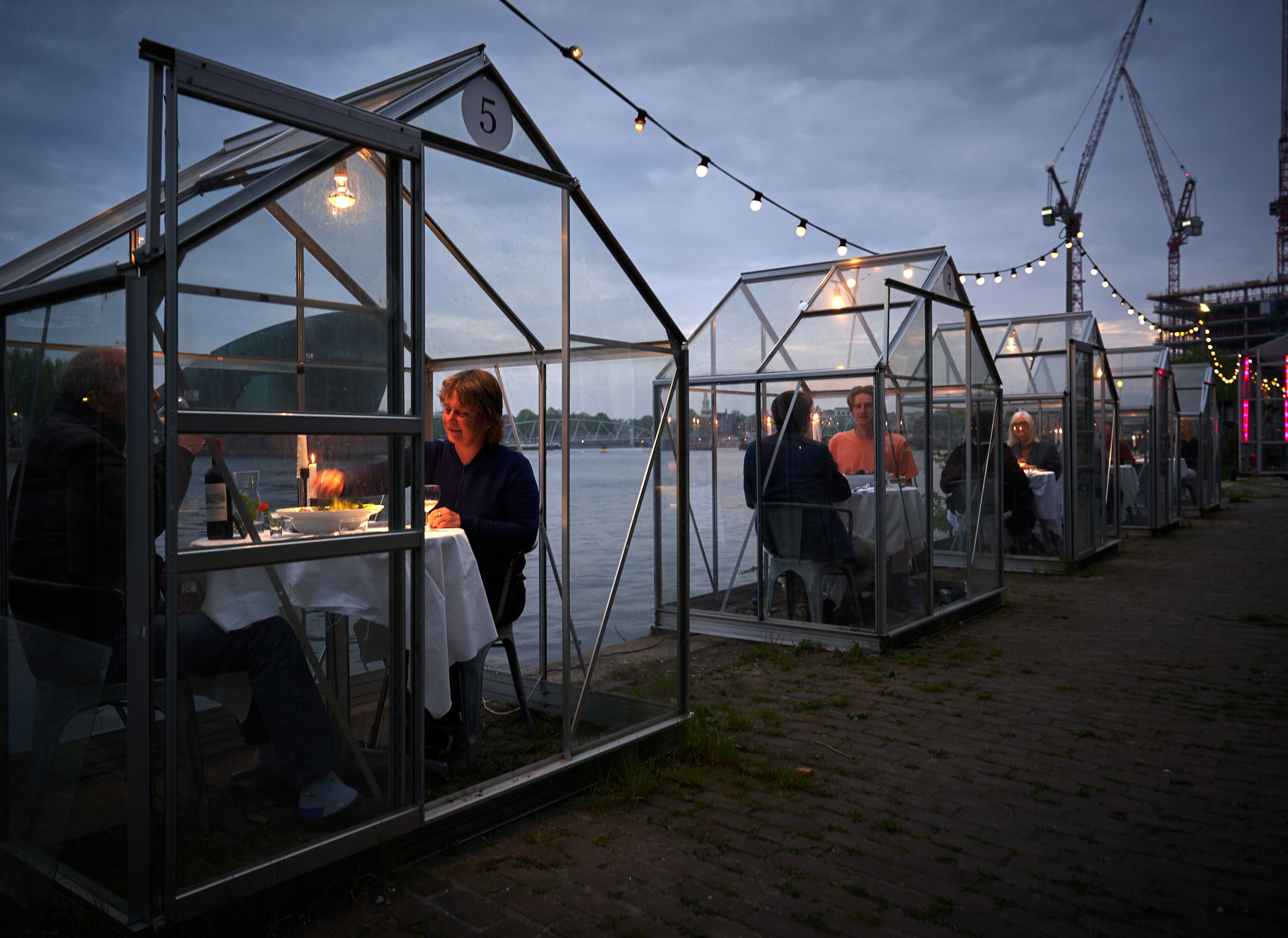
Pentagonal glasshouses by the side of the canal each shelter a pair of diners, who have to be from the same household, sitting across from each other over a table covered in white cloth.

The project's name, Serres Séparées, is a play on the French phrase chambre séparée for private dining areas. The dining pods are at once separate and intimate, and visible and public.

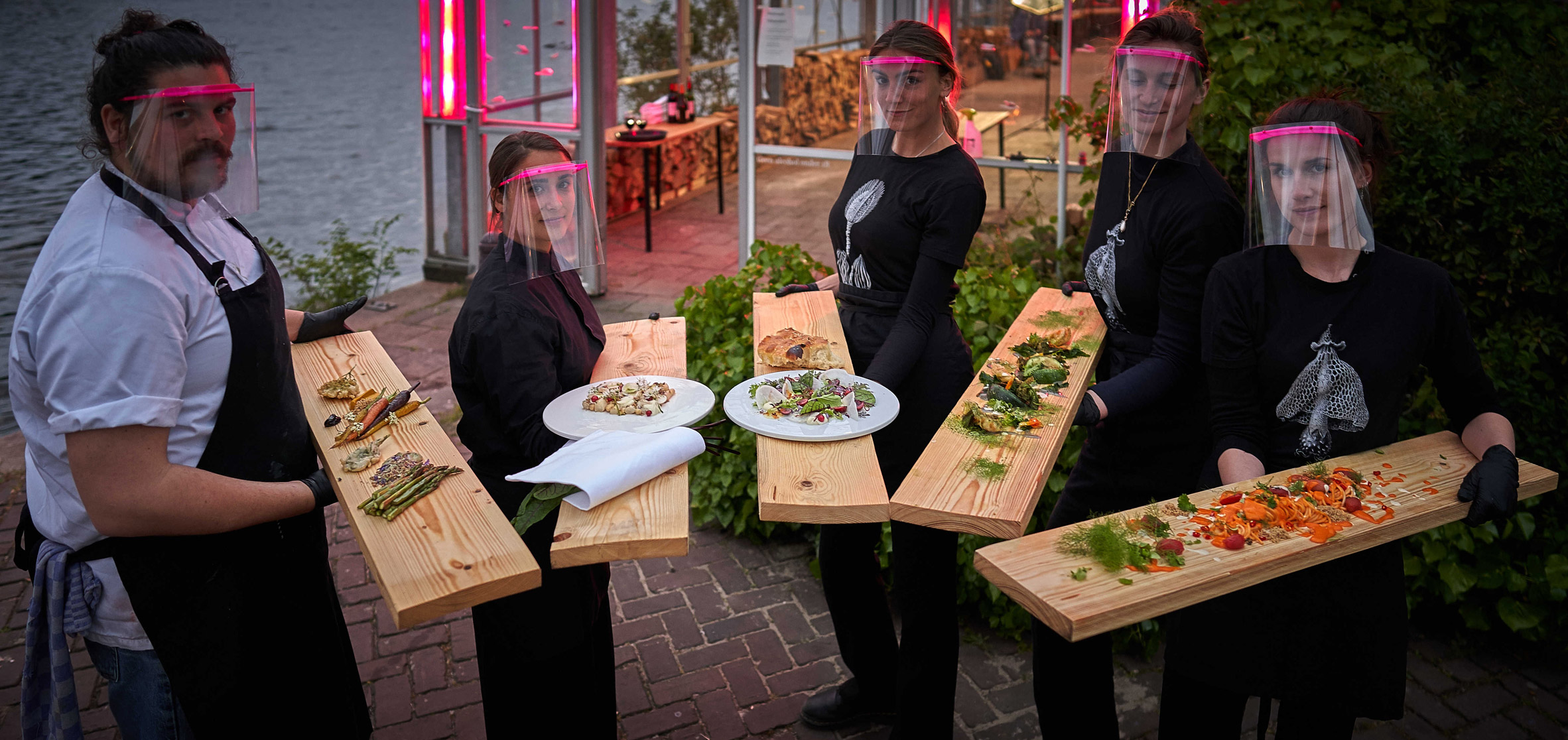
A four course plant-based menu arrives courtesy of waiters wearing personal protective equipment in the form of face shields.

Dishes are served on the ends of long wooden planks that allow servers to deliver food to the table without entering the individual greenhouses.

Mediamatic was founded in Amsterdam in 1983, and organises talks, events and projects on nature, science, biotech and art from its canalside location.

The arts centre already has a large greenhouse for its aquaponics setup, and had a set of smaller glasshouses on hand.

"The greenhouses are built by a Dutch ecological greenhouse company called Tuinkassenwinkel," Mediamatic artist Tobias Leingruber told Dezeen.

"We purchased them already long before the outbreak and they have been used in many Mediamatic projects before."

The art centre was trying to think of ways to keep its restaurant open during the pandemic and alighted on the greenhouses. "Our director Willem Velthoven and the chefs Giulia Soldati and Tommaso Buresti should be given all credit," added Leingruber.

So far the organisation has run three trial events for friends and family, and is taking bookings from the public.

Mediamatic hopes that the model could lead the way for other restaurants and cafes looking for safer ways to run their businesses during the coronavirus pandemic.

"We see around us how some other restaurants are making their own versions of our concept – which we are very happy about," said Leingruber.

"As Mediamatic, we like to experiment with new ideas and hand them over to others as soon as they become more widely known," he added.

"I think we prove with this dining concept that you can still experience intimacy in a special setting within what our government calls an 'anderhalvemetersamenleving' – 'a six-feet society'."

The Dutch government has adopted a "targeted" lockdown approach, with residents asked but not forced to stay home and only businesses that require touching – such as beauty salons and brothels – asked to close.

Most people in contact-based roles were able to resume their work from 11 May.

Restaurants and cafes are open for takeaways, and people can go outside if they maintain 1.5 metres between each other.

Coronavirus transmission rates increase in enclosed spaces where people spend a lot of time in close proximity, which makes normal restaurant setups too risky for the time being.

The hospitality industry and designers are looking for ways to adapt spaces and practices. One recently published trend report predicted that "slightly surreal" and highly original conceptual dining experiences – just like Mediamatic's Serres Séparées – would become popular in the short term.

Photography is by Anne Lakeman.

The post Individual greenhouses let guests dine at a distance during pandemic appeared first on Dezeen.


from Dezeen https://ift.tt/3cDq7Ha

Eight houses designed to showcase cars feature in today's Dezeen Weekly newsletter

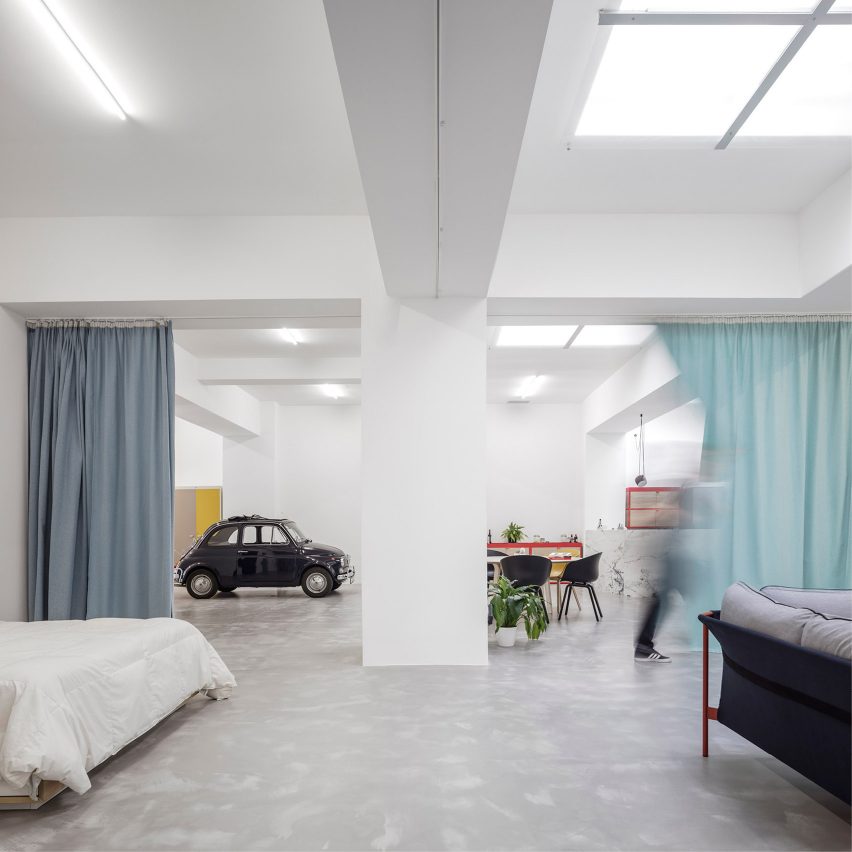
Garage house Lisbon by Fala Atelier

The latest edition of our Dezeen Weekly newsletter includes a roundup of houses designed to showcase their owners' beloved cars.

Eight residences feature in the roundup, including a house in Takamatsu deigned by FujiwaraMuro Architects to draw attention to the owner's sports car.

The otherwise private home is all-white with a glass wall that provides a full view of the car from a downstairs living room, leading one reader to call the design out as "sheer eccentricity".

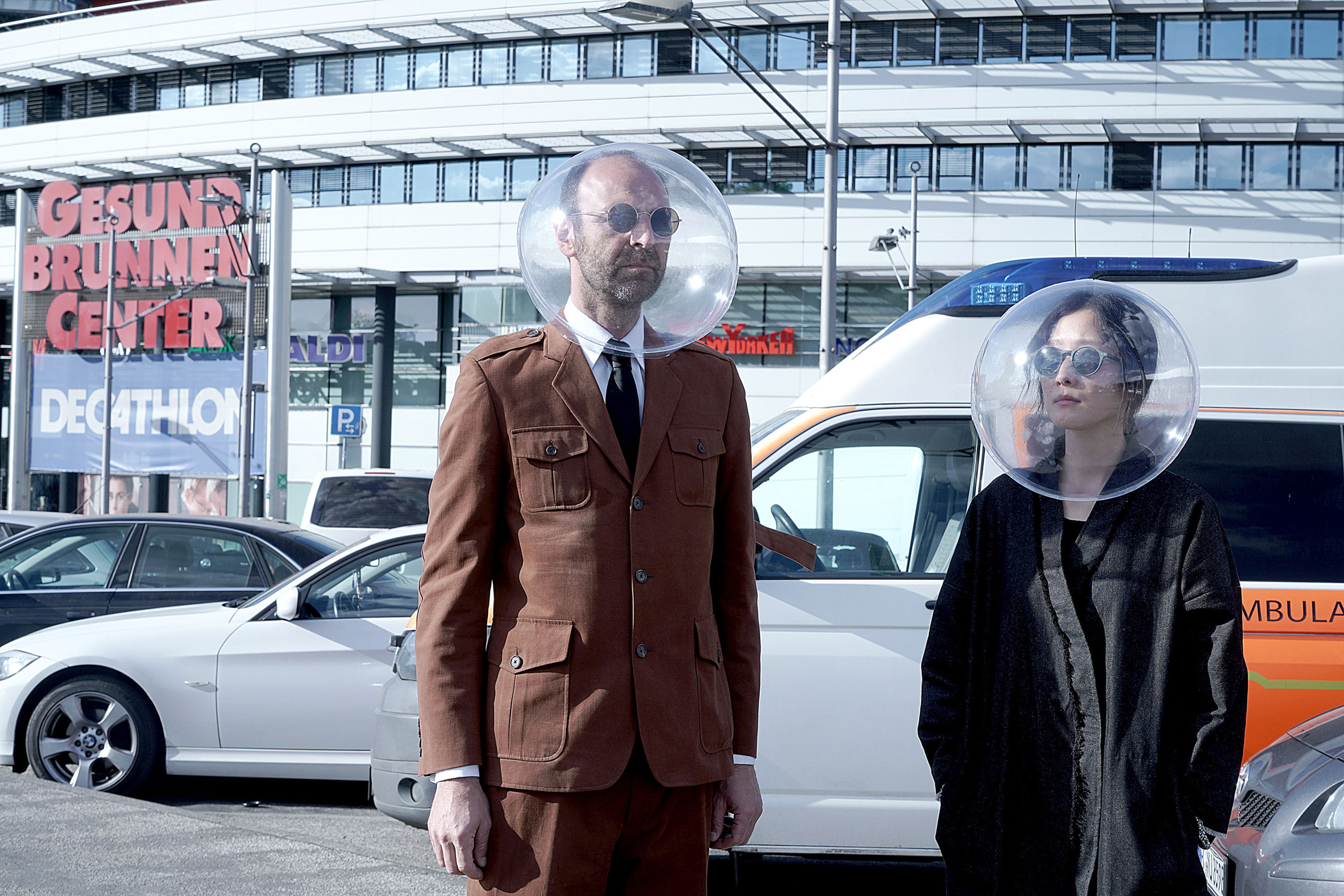
Plastique Fantastique makes iSphere mask informed by 1950s sci-fi comics

Other stories in this week's newsletter include a face shield shaped like a fishbowl to protect wearers against coronavirus, Sidewalk Labs abandoning its plans to create a smart neighbourhood in Toronto and a boutique hotel in Bali featuring rugged concrete and bamboo walls.

Subscribe to Dezeen Weekly

Dezeen Weekly is a curated newsletter that is sent every Thursday, containing highlights from Dezeen. Dezeen Weekly subscribers will also receive occasional updates about events, competitions and breaking news.

Read the latest edition of Dezeen Weekly. You can also subscribe to Dezeen Daily, our daily bulletin that includes every story published in the preceding 24 hours.

Subscribe to Dezeen Weekly ›

The post Eight houses designed to showcase cars feature in today's Dezeen Weekly newsletter appeared first on Dezeen.


from Dezeen https://ift.tt/3dNHtB8