Friday, 15 May 2020

This week, architects and designers looked to a socially distanced future

Curl la Tourelle Head proposes tent classrooms to allow social distancing in schools

This week on Dezeen, architects and designers envisioned socially distanced offices, schools and planes, while a gridded social-distancing system was installed in an Italian piazza.

London architecture studio Curl la Tourelle Head designed a concept for pop-up classrooms in tents that would allow pupils to remain two meters apart, while Weston Williamson + Partners outlined its plans for an office with transparent screens around desks, hands-free doors and a barista.

To allow social distancing to be achieved on planes aviation consultancy Factorydesign proposed the Isolation screen divider, which would be placed in the middle seat of a row of three.

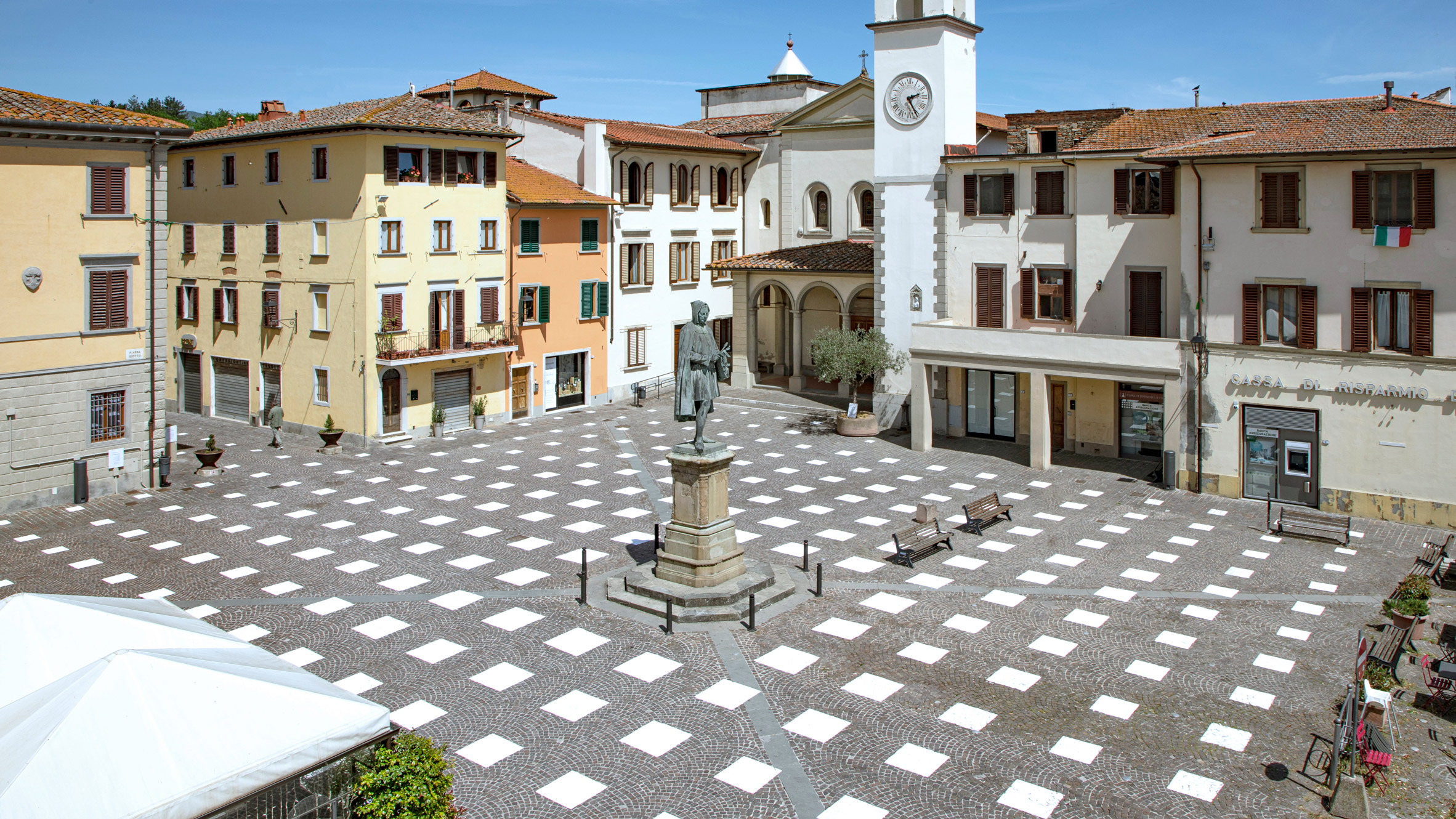
Caret Studio installs gridded social-distancing system inside Italian piazza

In Italy Caret Studio installed a gridded system across a piazza the town of Vicchio near Florence to clearly inform people of the social-distancing advice circulated by the Tuscan authorities.

For children that are still in lockdown Dezeen rounded up a series of architecture, design and engineering activities for children.

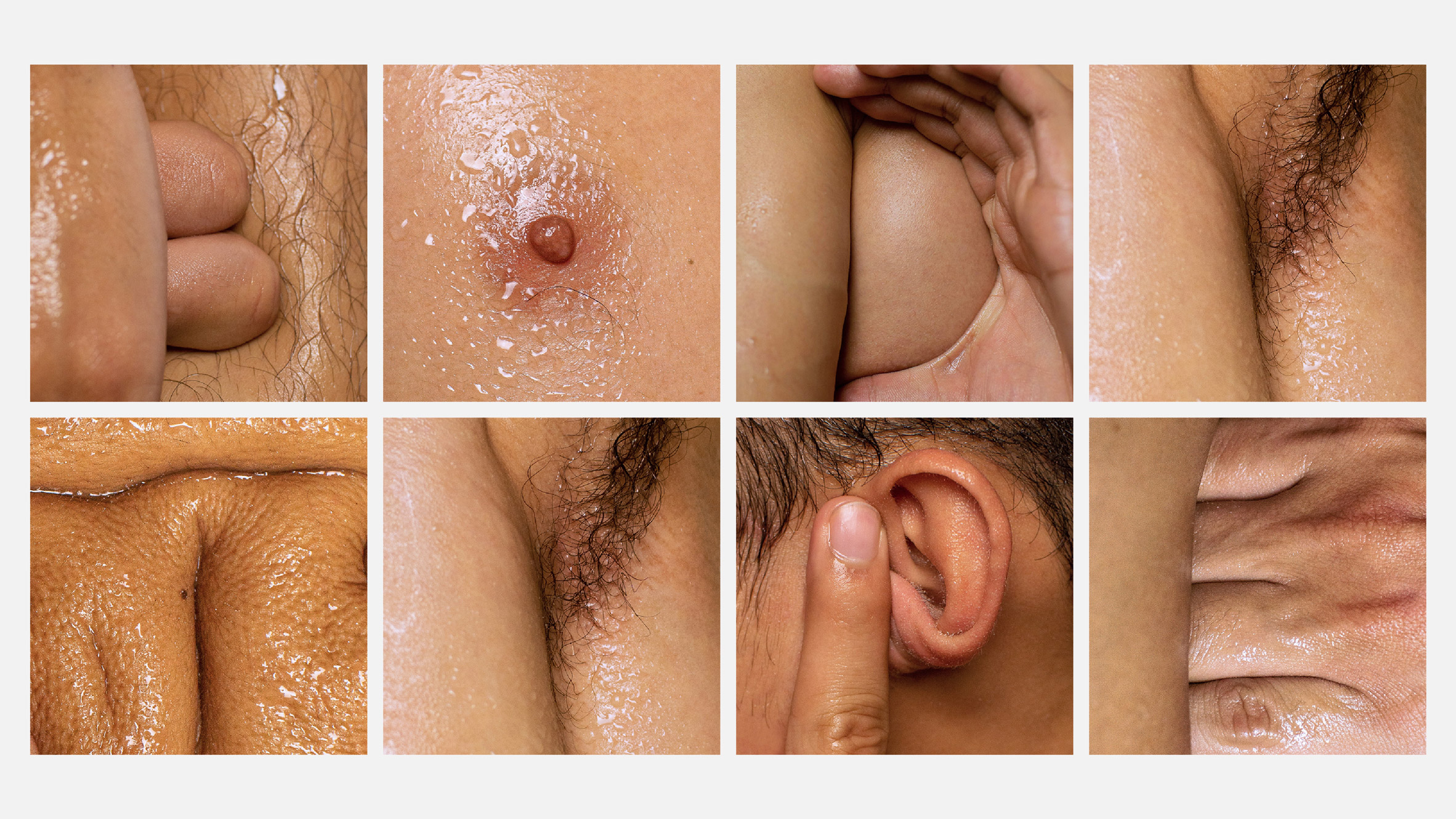
Julius Raymund Advincula makes "provocative" typeface from cleverly positioned body parts

In design news Julius Raymund Advincula created a "provocative" typeface using his own body. The series was featured on designer Stefan Sagmeister's Instagram design clinic.

"A very talented student of mine had the exact same idea about a decade ago, even some of the letters are exactly the same," he said.

"As I am sure you had no way of seeing her class work, this is just another case of great minds thinking alike. Sometimes we all fish in the same river close to each other.⁠"

"Design pervert" Karim Rashid wins 2020 American Prize for Design

In other design news Karim Rashid was named the winner of the 2020 American Prize for Design, which is regarded as "the highest and most prestigious design award in the United States.

"Design is my lifelong hobby," Rashid said. "Design is something that can be so emotional, so experiential, so romantic, so poetic, and so human and yet constantly moves us forward."

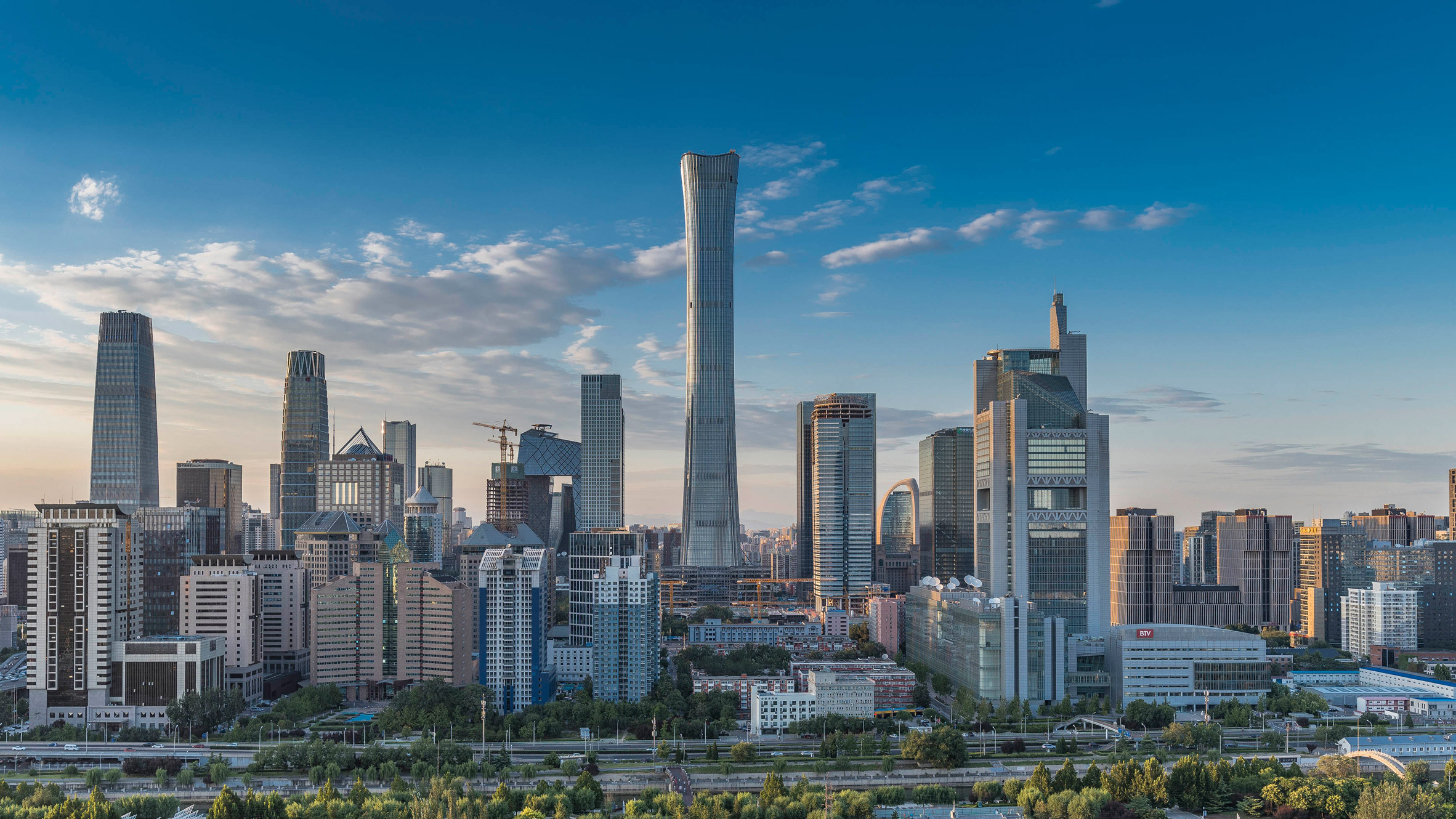
China bans copycat architecture and restricts supertall skyscrapers

In China the government sought to curtail copycat architecture and supertall skyscrapers by issuing a decree to improve architectural standards.

The policy released by the Ministry of Housing and Urban-Rural Development stated that "building plagiarism, imitation, and copycat behaviour are strictly prohibited," while "generally, new buildings over 500 metres are not allowed to be built."

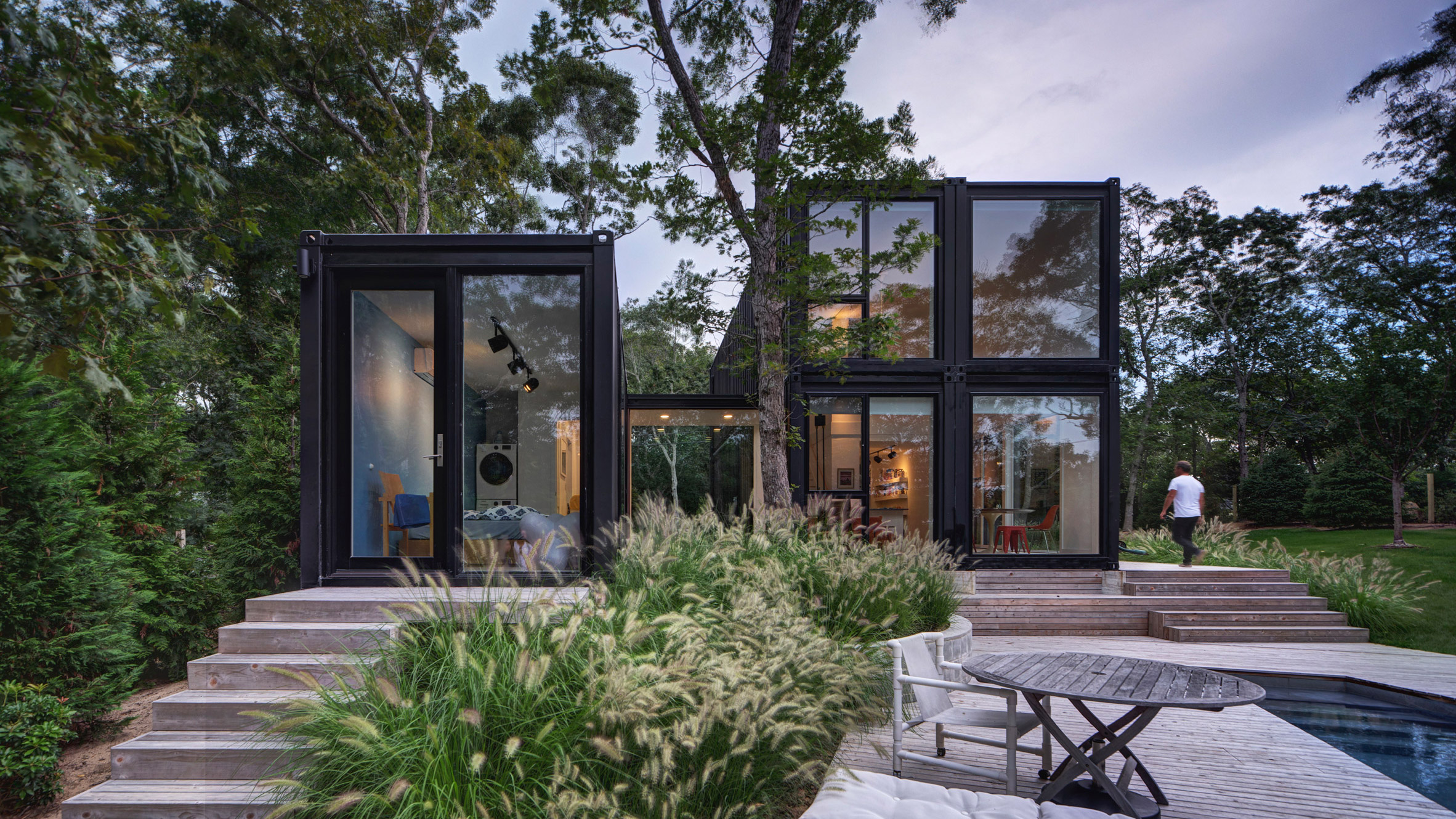
MB Architecture stacks shipping containers to form Amagansett holiday home

Shipping containers continued to be in the news with the modular steel boxes being used to build houses in the United States and Germany.

In Amagansett, New York, MB Architecture stacked five shipping containers to create a holiday home, while in the town of Wertheim, Germany, Containerwerk built 21 micro apartments in containers.

Inglewood Residence by Mark Odom Studio
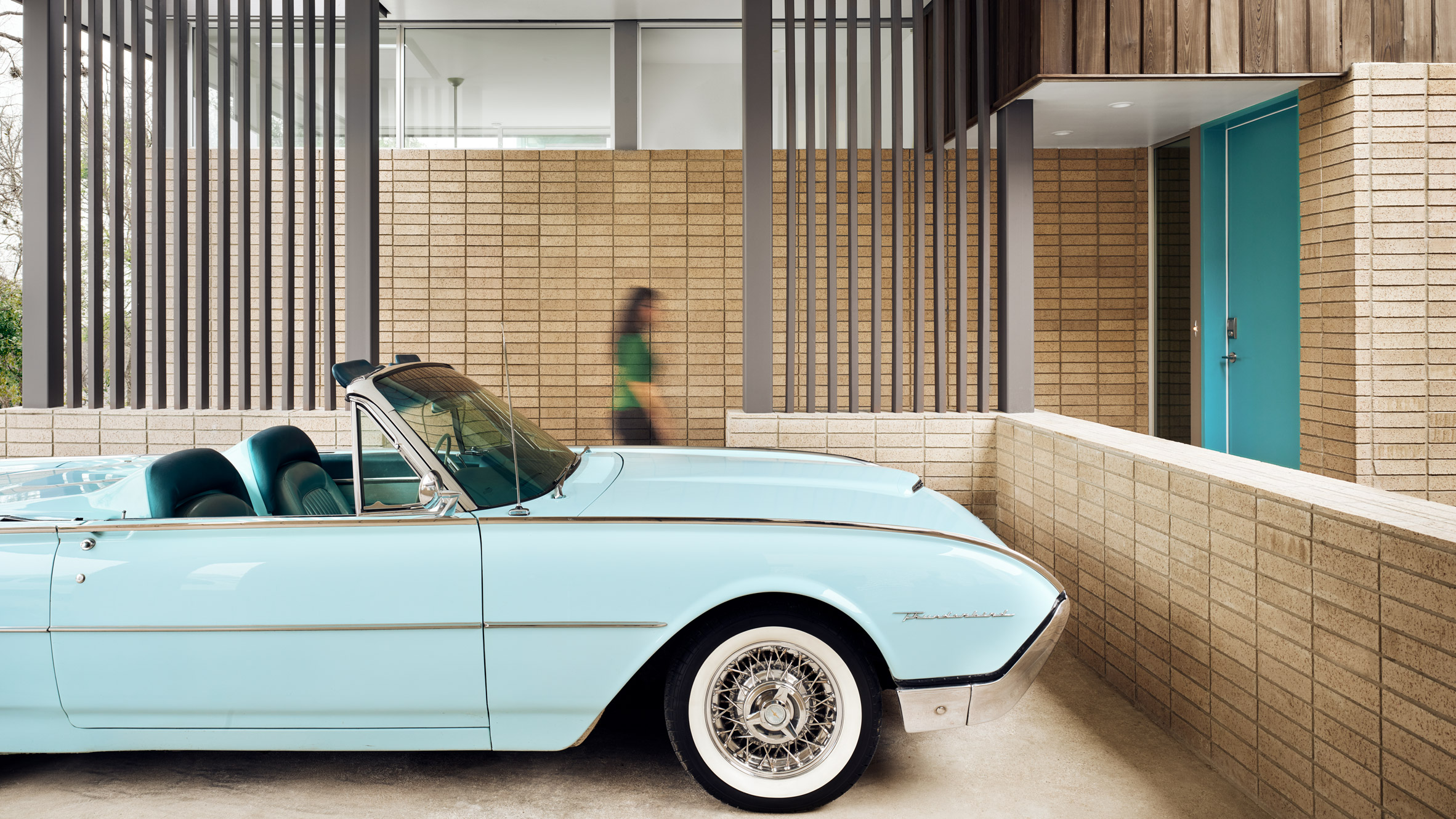
Mark Odom pays homage to the 1950s with Inglewood Residence in Austin

In Austin, Texas, Mark Odom paid homage to the 1950s by designing a house with a mid-century modern aesthetic, which was photographed with a vintage car parked outside.

Dezeen rounded up eight other houses that were designed to show off their owners' cars.

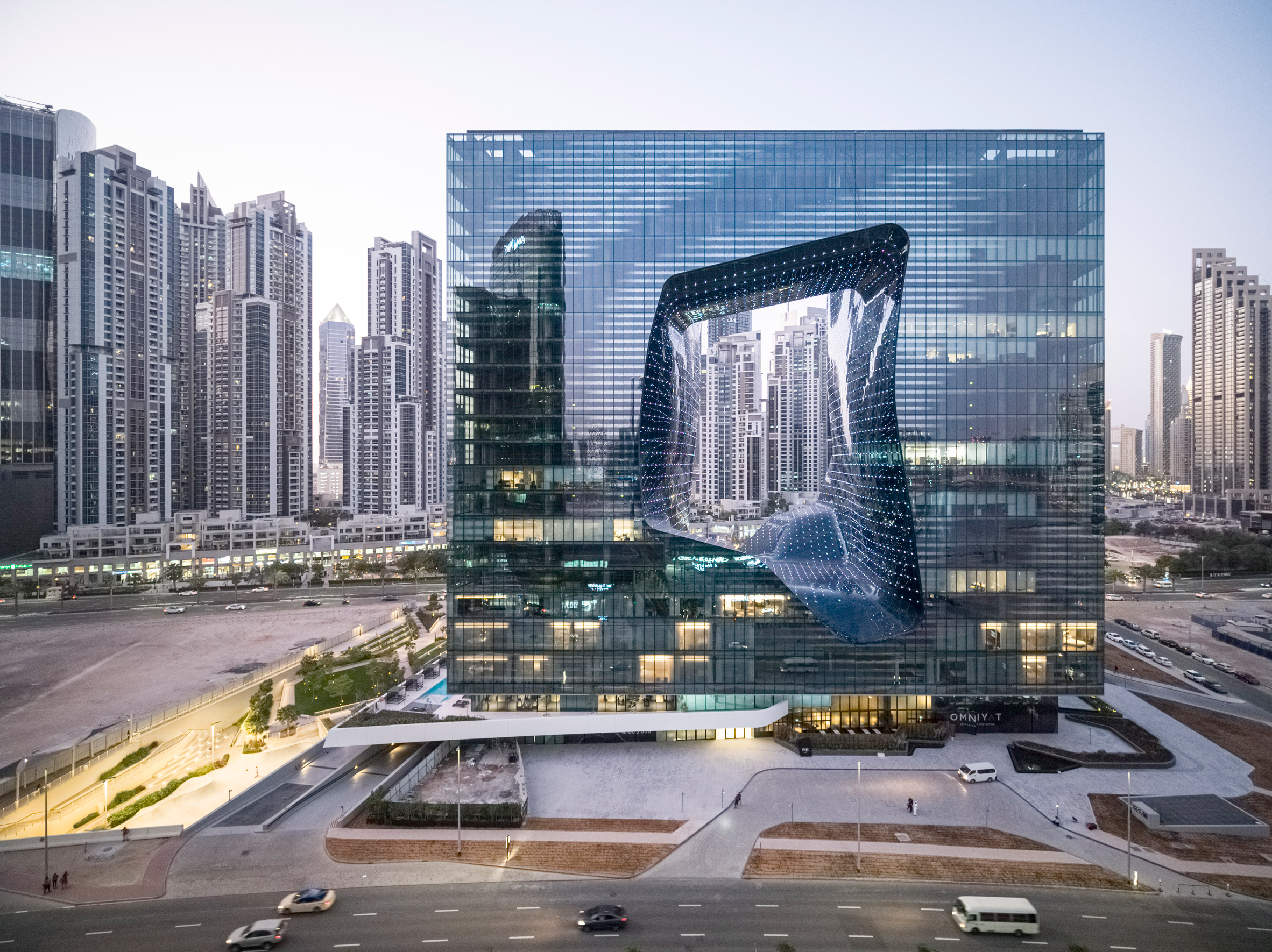
ME Dubai hotel at the Opus by ZHA
Zaha Hadid Architects reveals interiors of ME Dubai hotel at the Opus

Other projects that have been popular with Dezeen readers this week include the ME Dubai hotel at the Opus by Zaha Hadid Architects, an off-grid cabin in New York clad with infested wood, and a light-filled house in San Francisco designed by Malcolm Davis Architecture.

The post This week, architects and designers looked to a socially distanced future appeared first on Dezeen.


from Dezeen https://ift.tt/361VeK4

Tom Kundig describes 10 highlights of his architecture career

Tom Kundig has selected his 10 favourite projects, including a house in Rio de Janeiro and a hillside winery in British Columbia, ahead of the release of a monograph detailing the American architect's work.

Called Tom Kundig: Working Title, the publication details 29 projects designed by Kundig, a principal of Seattle architecture office Olson Kundig.

The book, which will be released next month by publisher Princeton Architectural Press presents each with photographs, drawings and sketches that offer insight into his working process.

Read on for Kundig's explanations of his 10 chosen projects:
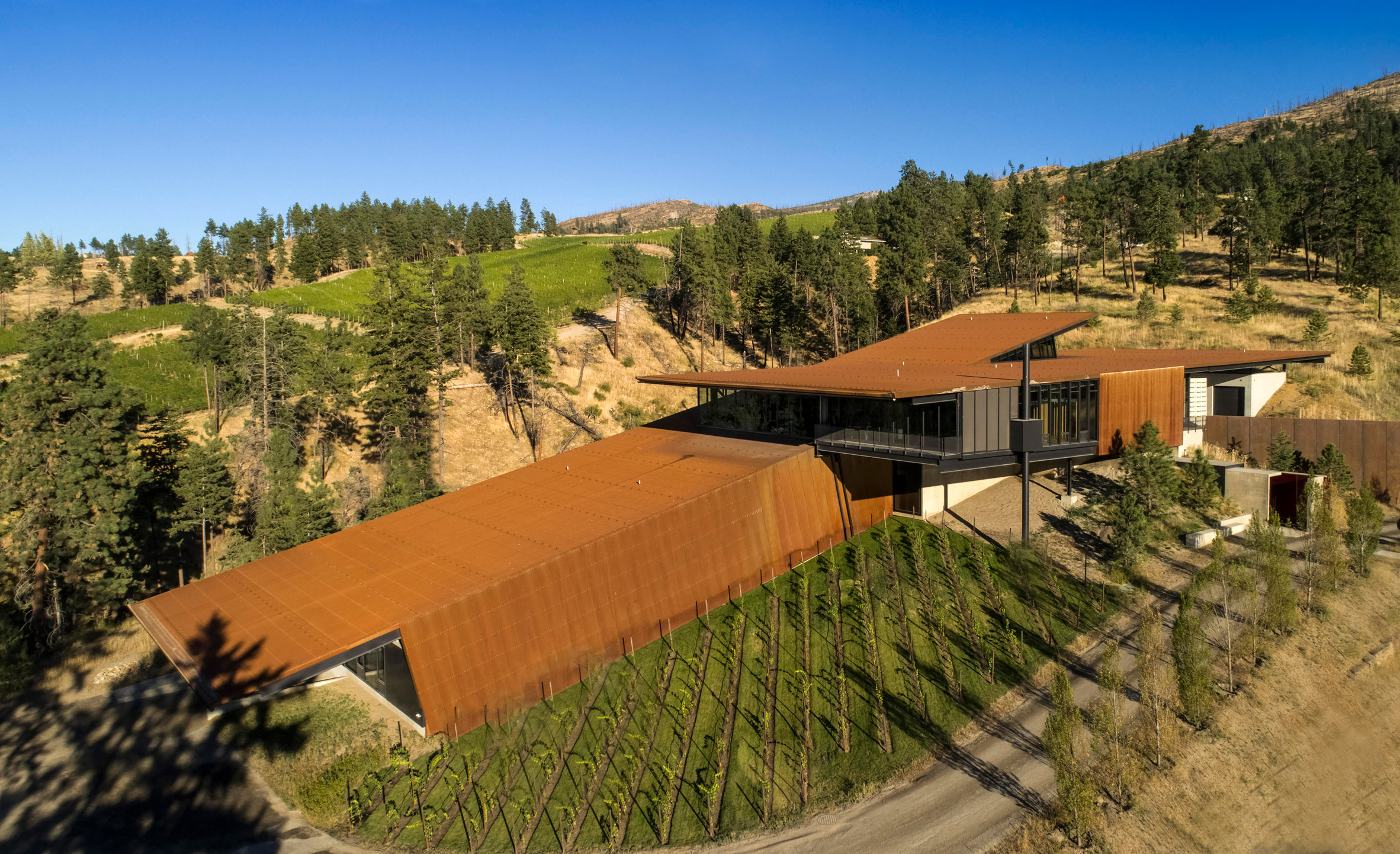

Martin's Lane Winery, Kelowna, British Columbia, Canada, 2016

The owner of this winery had an ambition to produce the best pinot noir in the world, and he wanted a facility that would communicate both the world-class product and its gravity-fed method of production.

The building is rectangular with a central "fracture" down the middle; the production side of the building follows the direction of the site, using the downhill slope for the gravity-flow process, while the public side cantilevers out into the vineyard, following the horizon line.

This building respects the delicate nature of the winemaking process, and the way it fits into the landscape makes logical sense. My favorite element of the project is the magic that happens when the functional side and the poetic side come together in that way. This project is also the cover image of my new book.
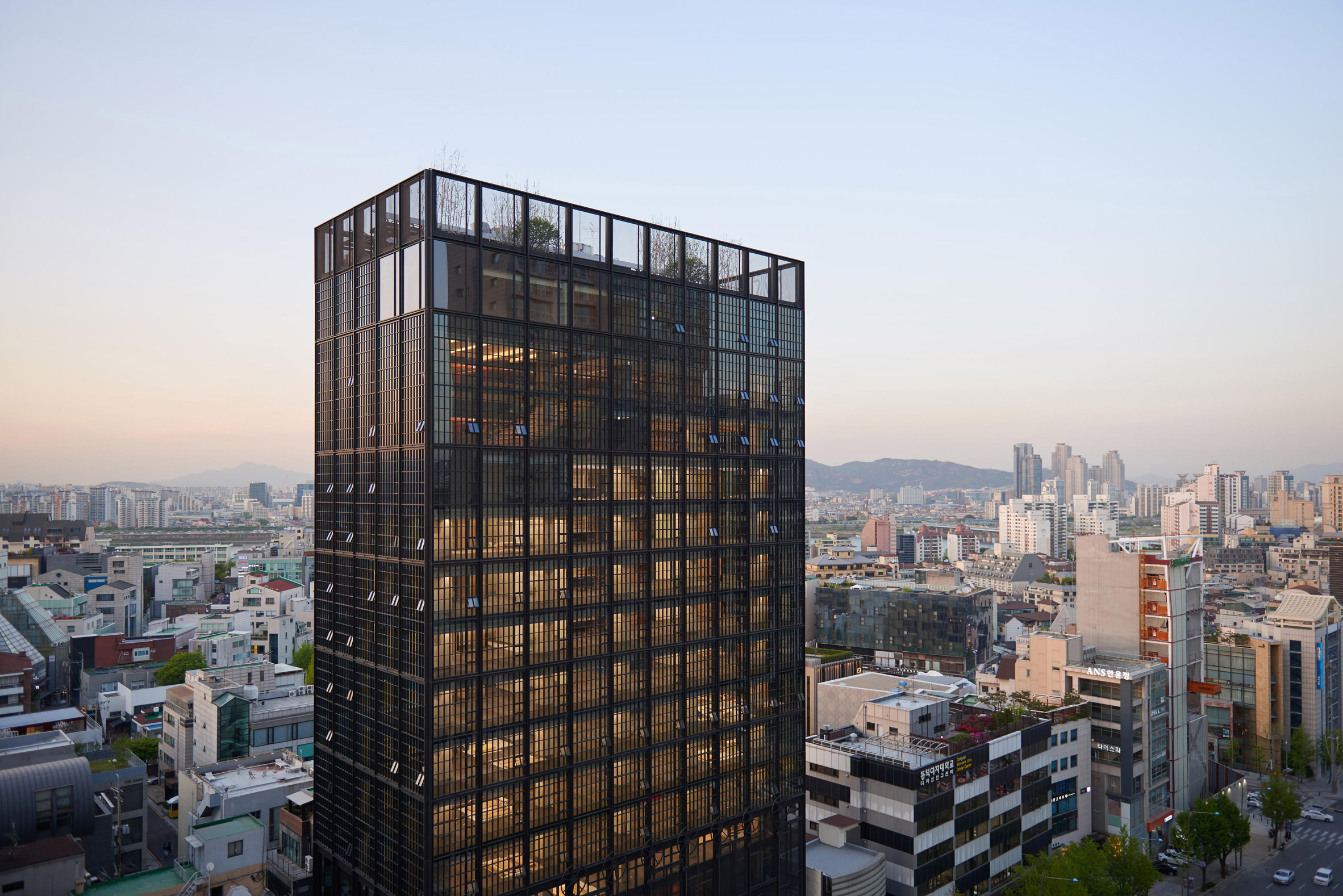

Shinsegae International, Seoul, South Korea, 2015

This is a special project for me, as it was my first high-rise tower. The site is on a busy road in Gangnam-gu, one of the largest districts in Seoul, and very visible to the surrounding neighborhood.

Shinsegae International is one of Korea's oldest and largest luxury fashion brands, and this tower is their new headquarters and flagship facility, so it was very important that the building stand as a representation of their business.

There are a number of nods to the fashion industry throughout the design, but one of the most prominent elements are seven custom, eight-foot-diameter steel wheels that open and close 35-foot-tall external panels. These kinetic components allow users to alter the exterior of the building throughout the day, animating the facade and engaging with the surrounding district.
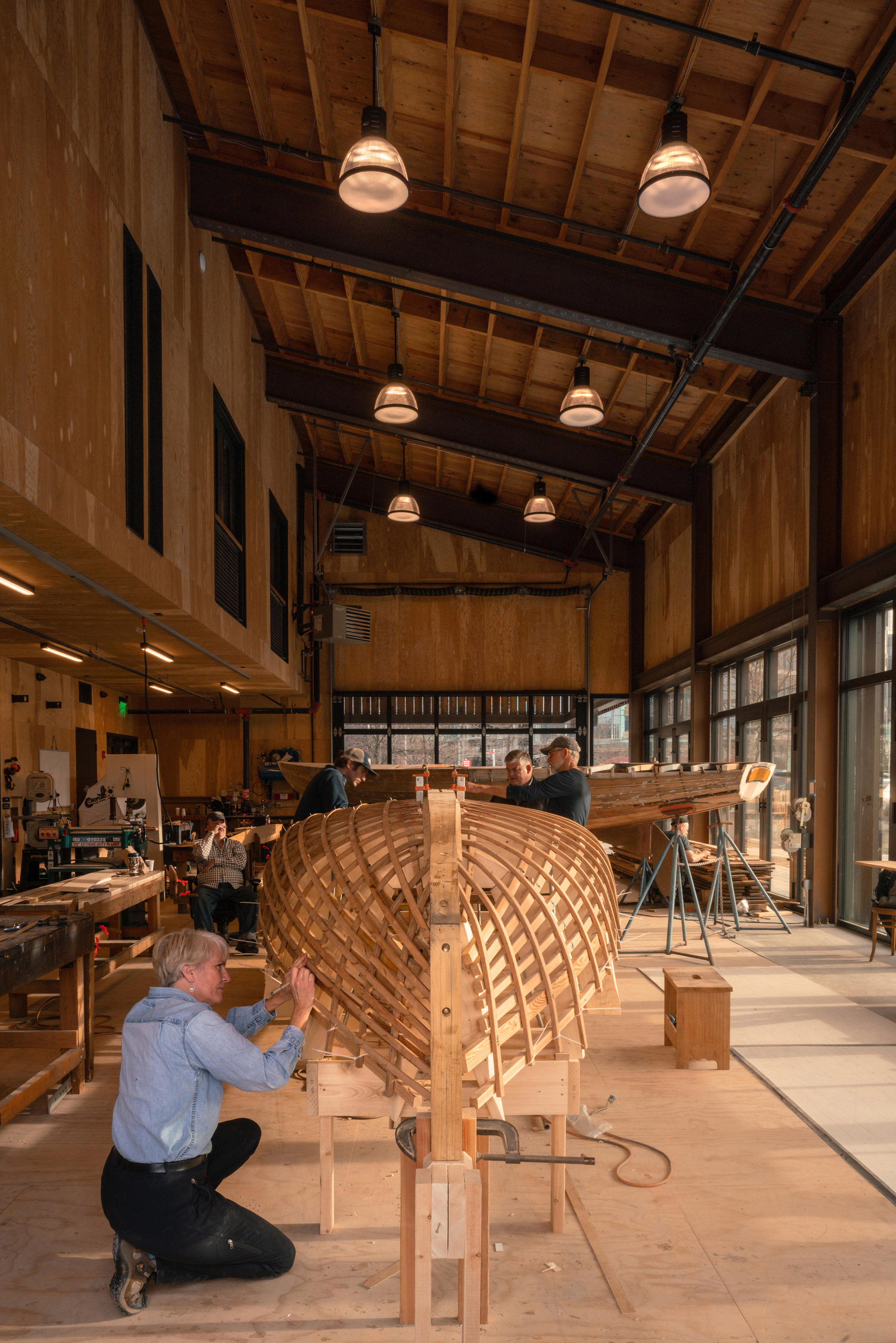

Wagner Education Center at The Center for Wooden Boats, Seattle, USA, 2019

This building is essentially a boat shed – and, like a boat shed, it's more about the boats than about the architecture. The architecture is deliberately simple, following the established language of a historical boat shed, while providing flexibility for the many activities that the Center for Wooden Boats hosts.

The building itself is just an armature that supports the display, restoration and appreciation of wooden boats. The main workspace includes double-height window walls to literally display ongoing work in the shop, while a wooden shutter system lets the users control the interior light levels.

This shutter system mirrors a central tenet of sailing: you have to work with natural forces and make adjustments to optimize performance.

Tillamook Creamery, Tillamook, USA, 2018

The design of Tillamook Creamery reflects the history of the area and the importance of the local dairy tradition. I imagined the design in the spirit of a barn: a rational and flexible building that responds directly to the surrounding climate.

The building tells the story of Tillamook's farmer-owned cooperative through interactive and educational exhibits, as well as through the warm, simple materials palette and exposed structure.

The dining experience also centers around gathering, spilling out into the surrounding landscape as another way to celebrate the Tillamook community.
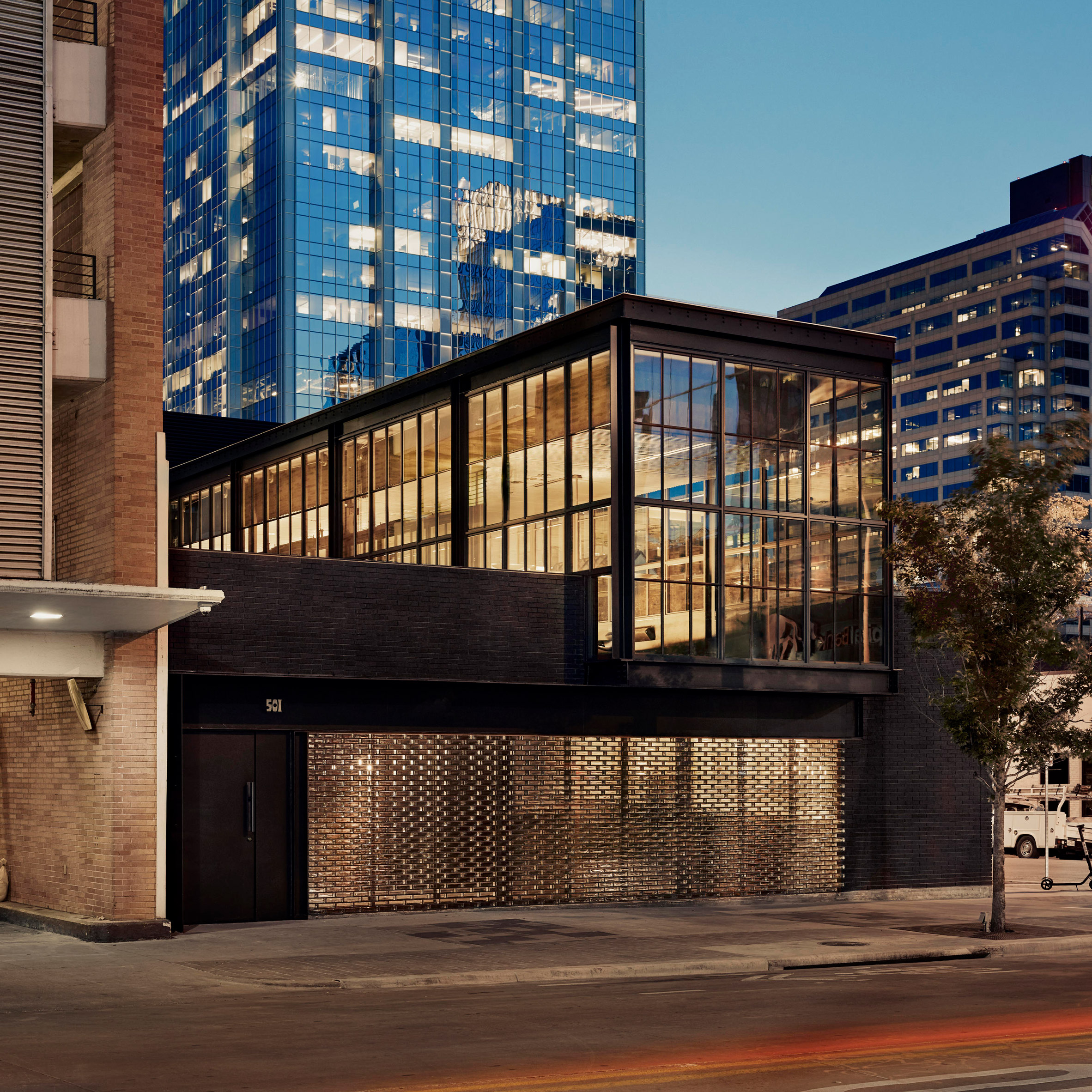

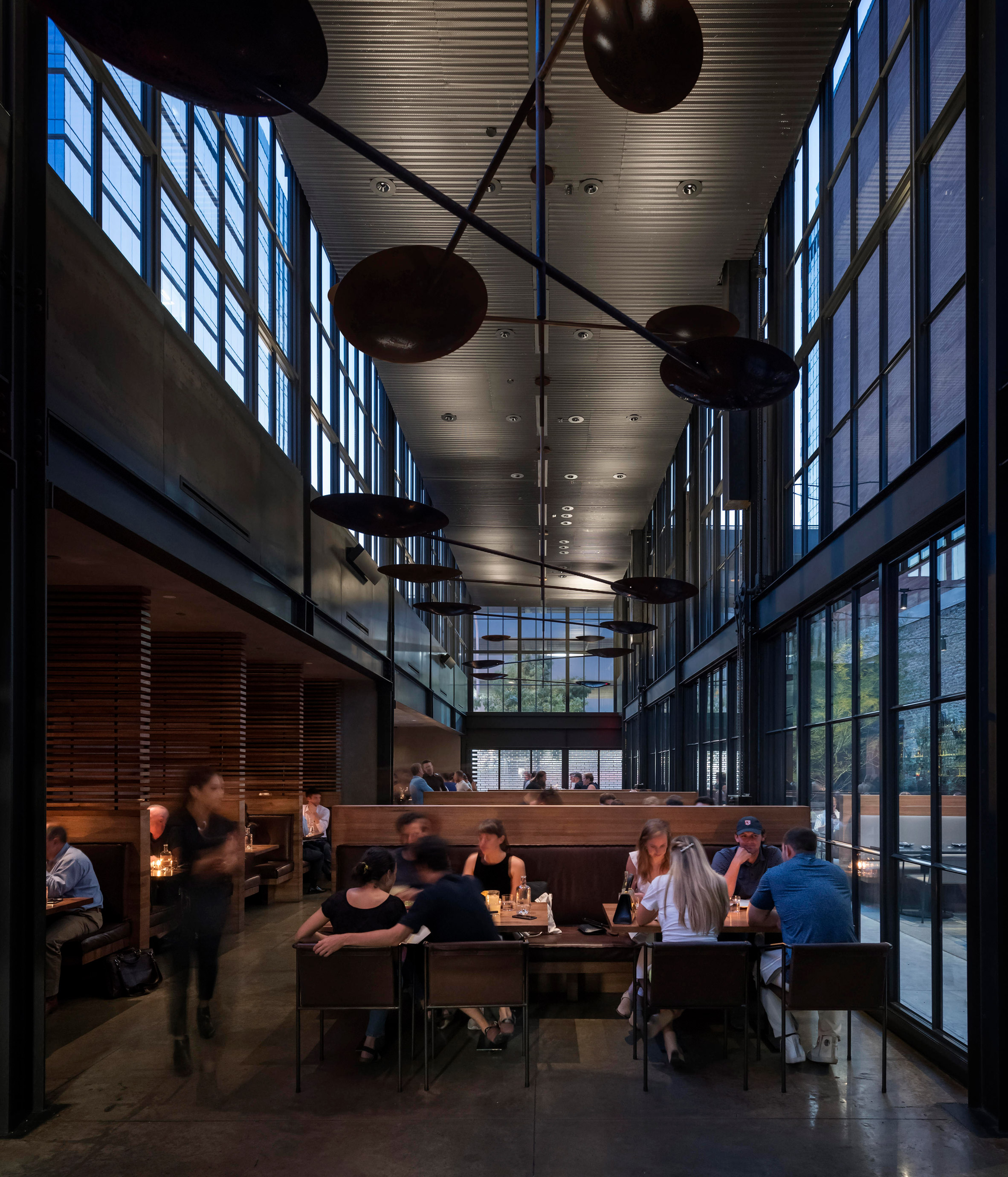
Comedor restaurant in Austin by Olson Kundig

Comedor, Austin, USA, 2019

Comedor occupies one of the busiest corners in Austin's central business district, and it intentionally engages that corner position in order to frame an interior courtyard.

While the building's exterior creates a recognizable landmark on the street, the dining experience turns inward to insulate guests from the activity the street outside. Within the restaurant, you're aware of the presence of the city beyond, but protected from it.

The shape of the building further creates a protected internal courtyard, where guests can enjoy Austin's climate in a sort of urban oasis. Four retractable guillotine window walls – operated manually with hand cranks – open the dining room completely to the courtyard, allowing the activity of the restaurant to flow between spaces.
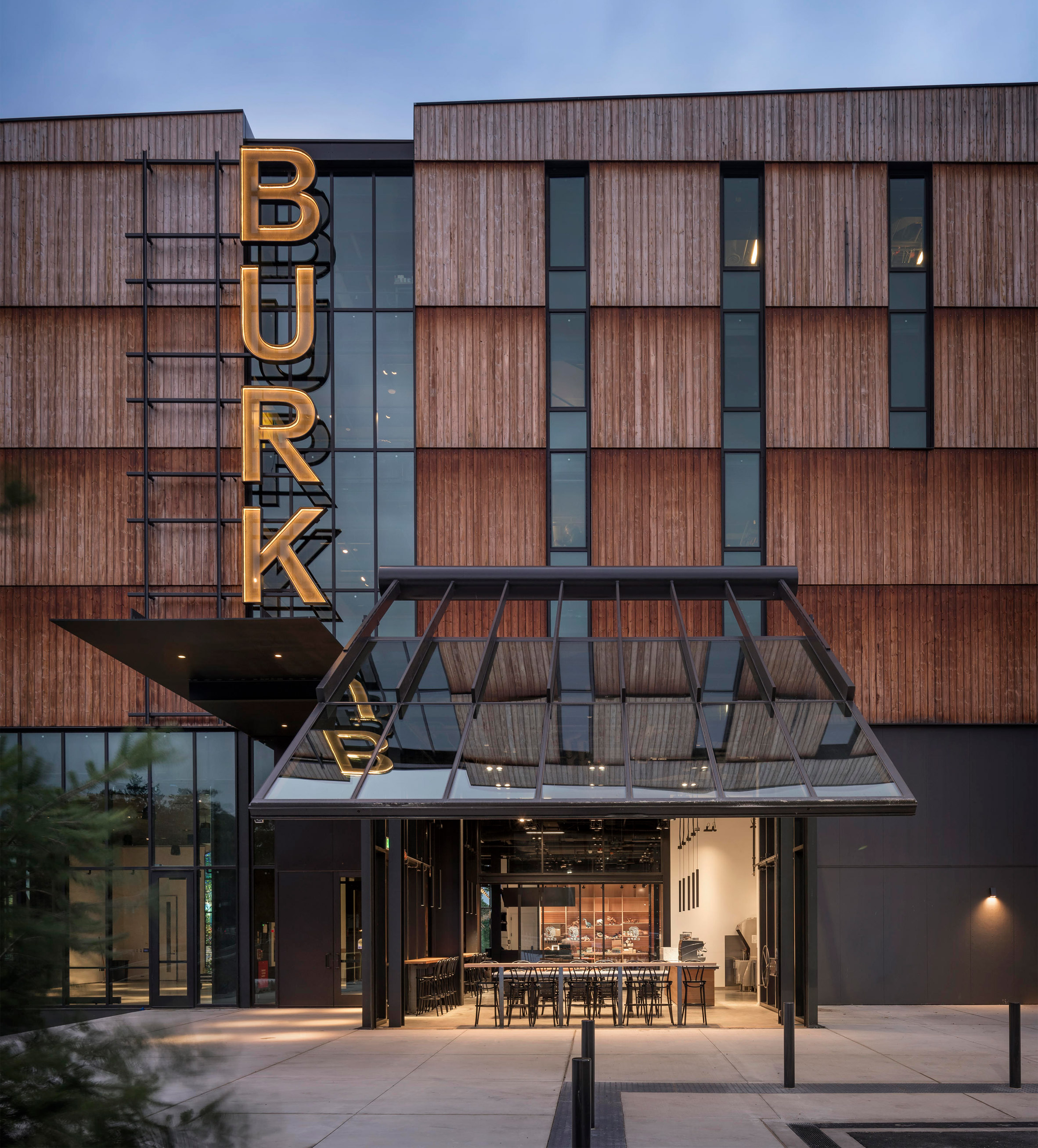

Burke Museum of Natural History and Culture, Seattle, USA, 2019

The Burke Museum of Natural History & Culture is the oldest public museum in Washington with a collection of over 16 million artifacts and specimens; in addition to outgrowing its existing building, the Burke wanted to try a new strategy for displaying its collections.

As a result, the building is extremely transparent and porous, with extensive visual connections between interior and exterior, as well as between guests and traditionally hidden "back of house" research spaces. The new building also had to predict the Burke's somewhat unpredictable future as collections continue to grow and exhibits and storage needs change over time.

To provide flexibility for future changes, the architecture of the new Burke Museum is deliberately rational and simple, it can be rearranged and reorganized as needed.
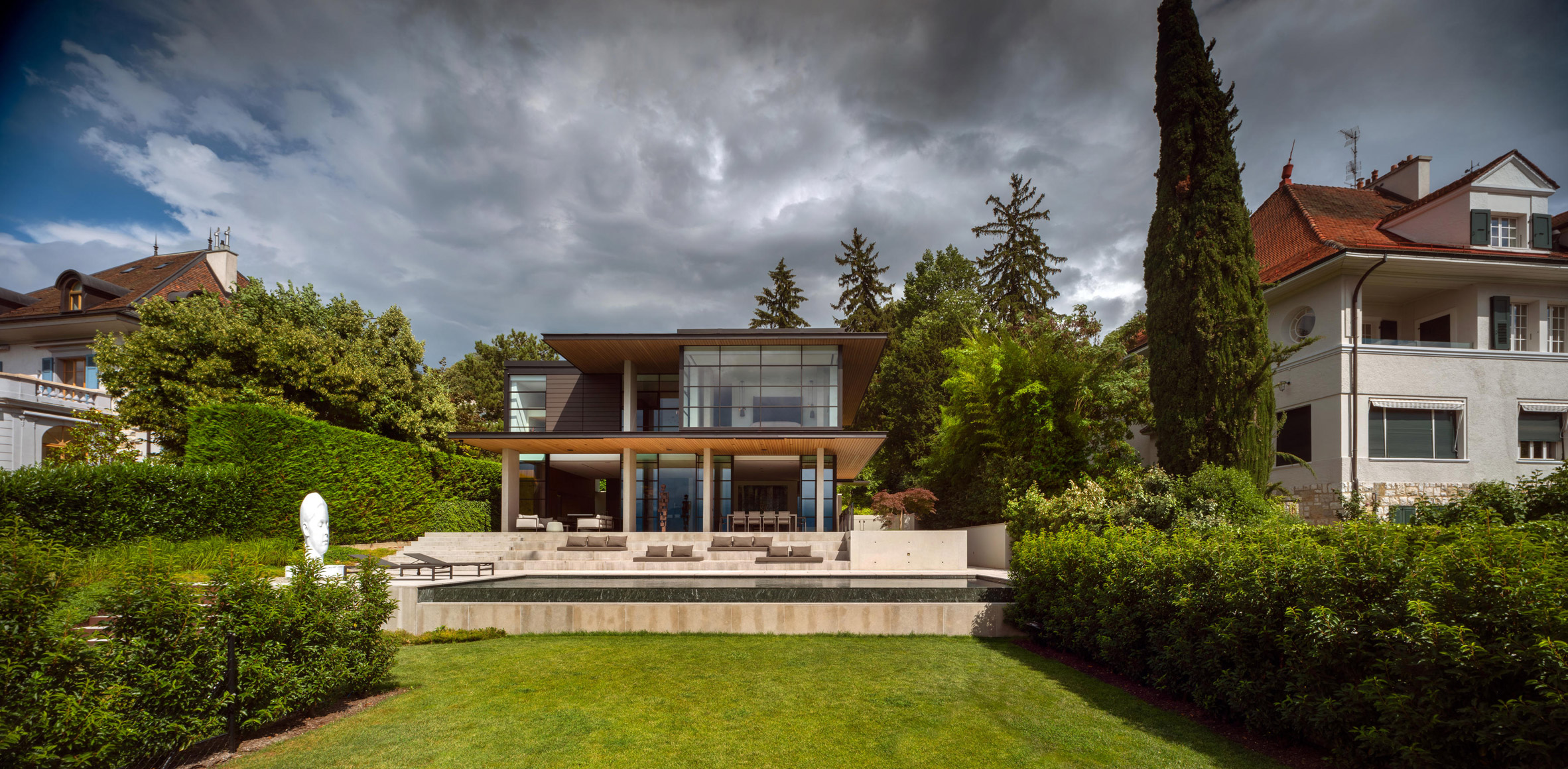

Chemin Byron, Geneva, Switzerland, 2017

This private home represents a modern insertion into a historic area outside of Geneva, Switzerland. The design intentionally responds to the proportions and scale of the surrounding neighborhood while reflecting a modern architectural language.

I worked to carefully integrate the home with the steeply sloping property, allowing the building to fit into the landscape rather than sitting on top of it. Chemin Byron was also my first project in Switzerland, which was exciting because I'm a Swiss citizen.

I spent a few years in Switzerland during my childhood and have important family connections there. It's my homeland in a sense, and I was excited to be returning home for this project.
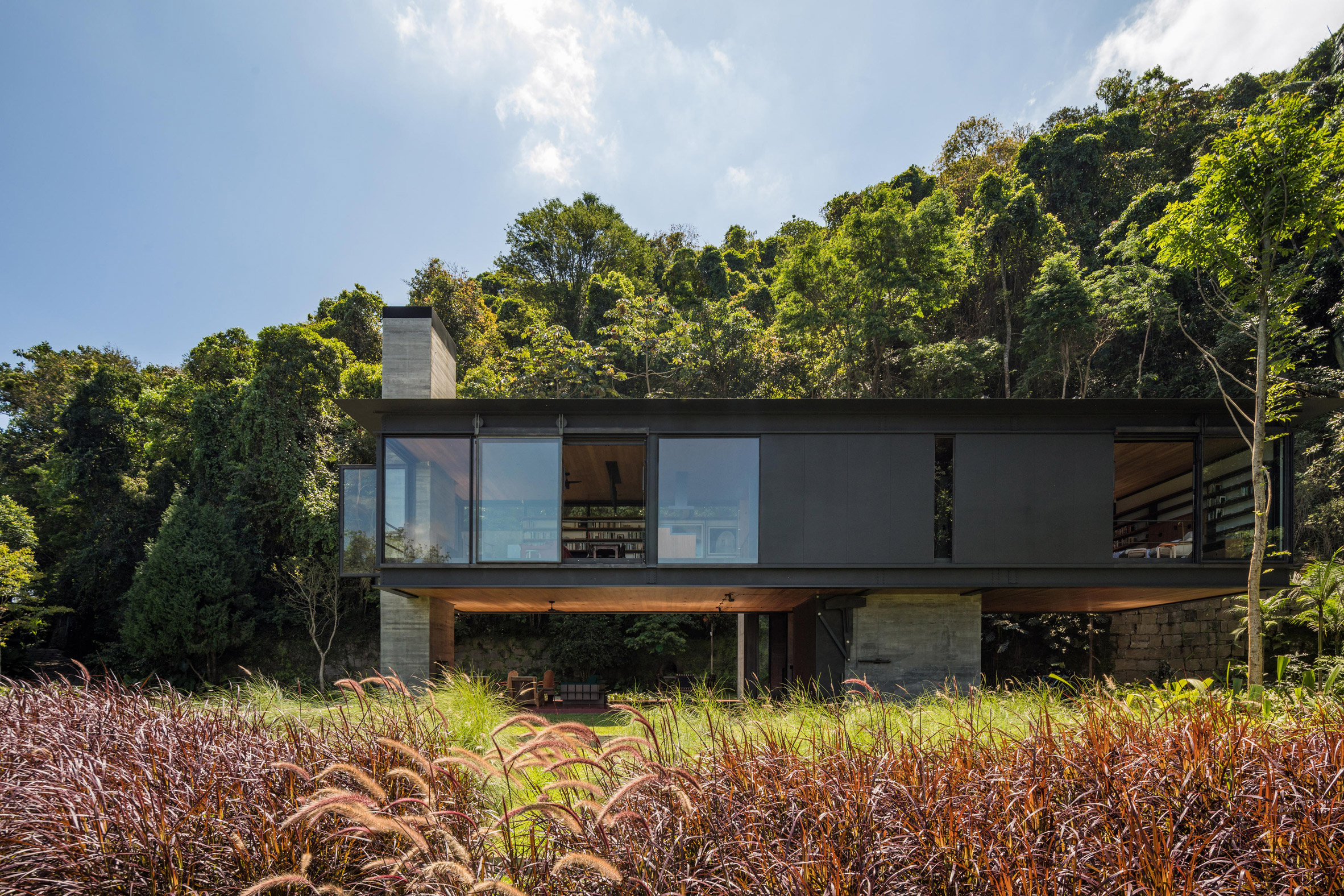

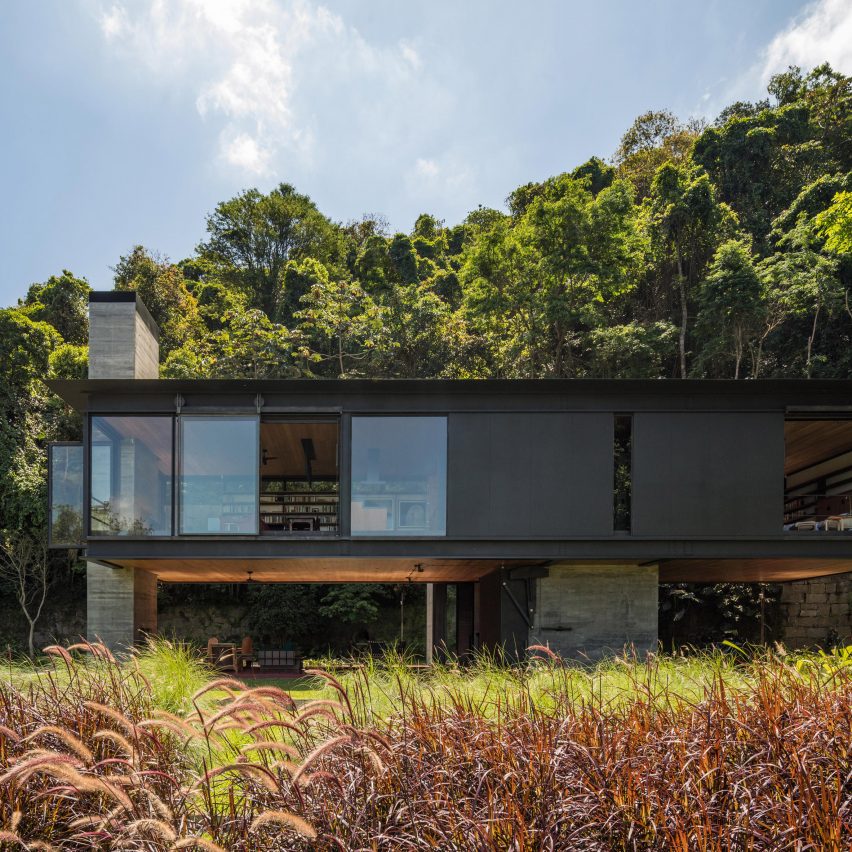
Rio House, Rio de Janeiro, Brazil, 2018

My clients on this project – my first in Brazil – wanted a small house where they could live together in a large landscape. Like me, they're the kind of people that would rather be outside than inside.

The home is deliberately small and hovers above the jungle, providing some separation from the humidity and insects while remaining very open to the environment.

Ultimately, the architecture provides a platform to enjoy the beautiful landscape, both smaller and more intimate refuge views back into Tijuca National Park and the larger horizon views into the distance.
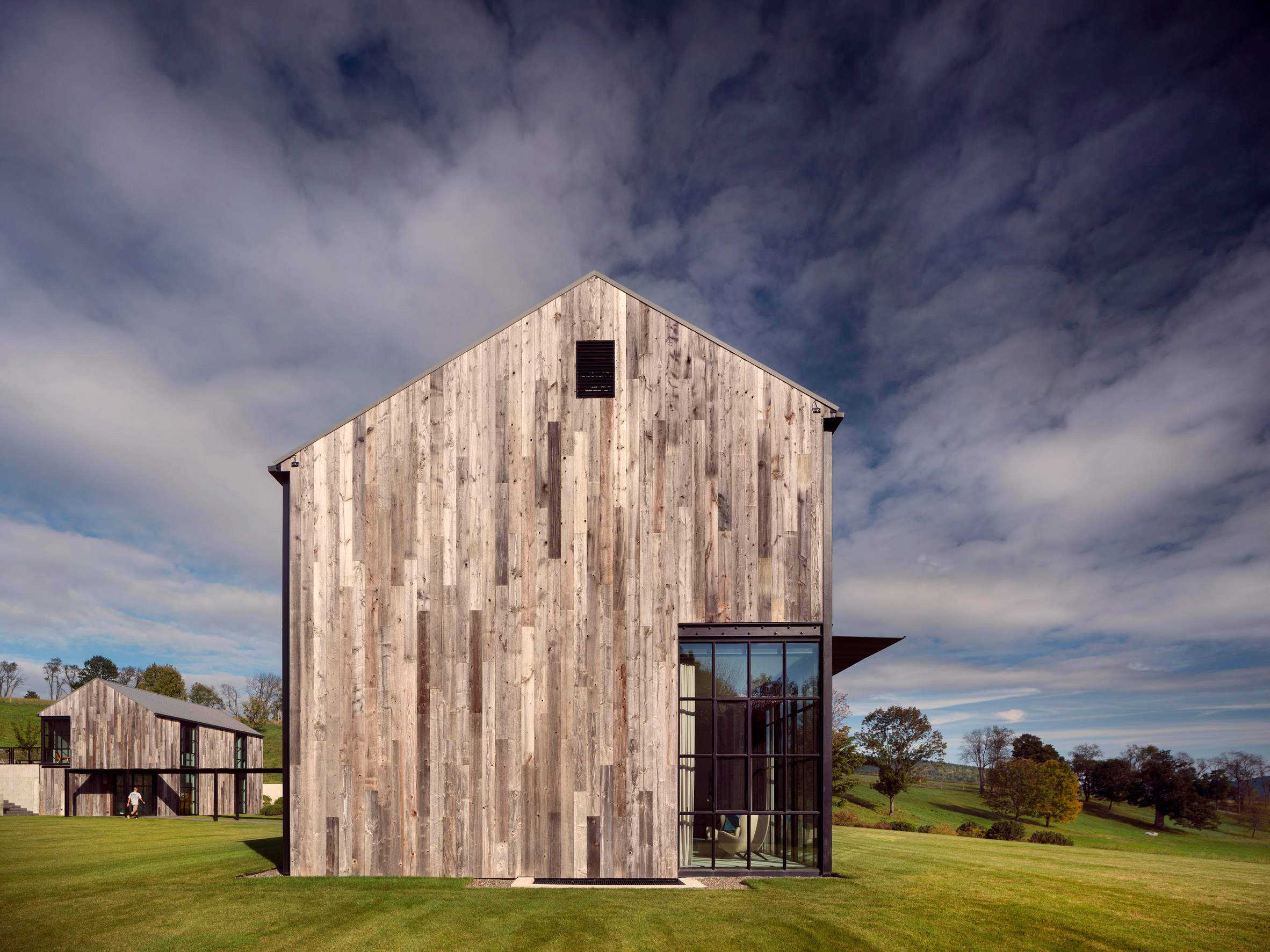

Millerton Farmhouse, Millerton, USA, 2016

This project presented an interesting design opportunity, because my clients wanted a space where their large, extended family could gather together but that would also feel welcoming for smaller groups or couples, or even individuals traveling alone.

As a result, the home's multiple buildings and covered walkways establishes a family compound that changes scales easily depending on how much of the family is gathering.

The design language is intended to reflect a modern interpretation of the vernacular farm architecture of upstate New York, with materials that harmonize with the surrounding landscape.
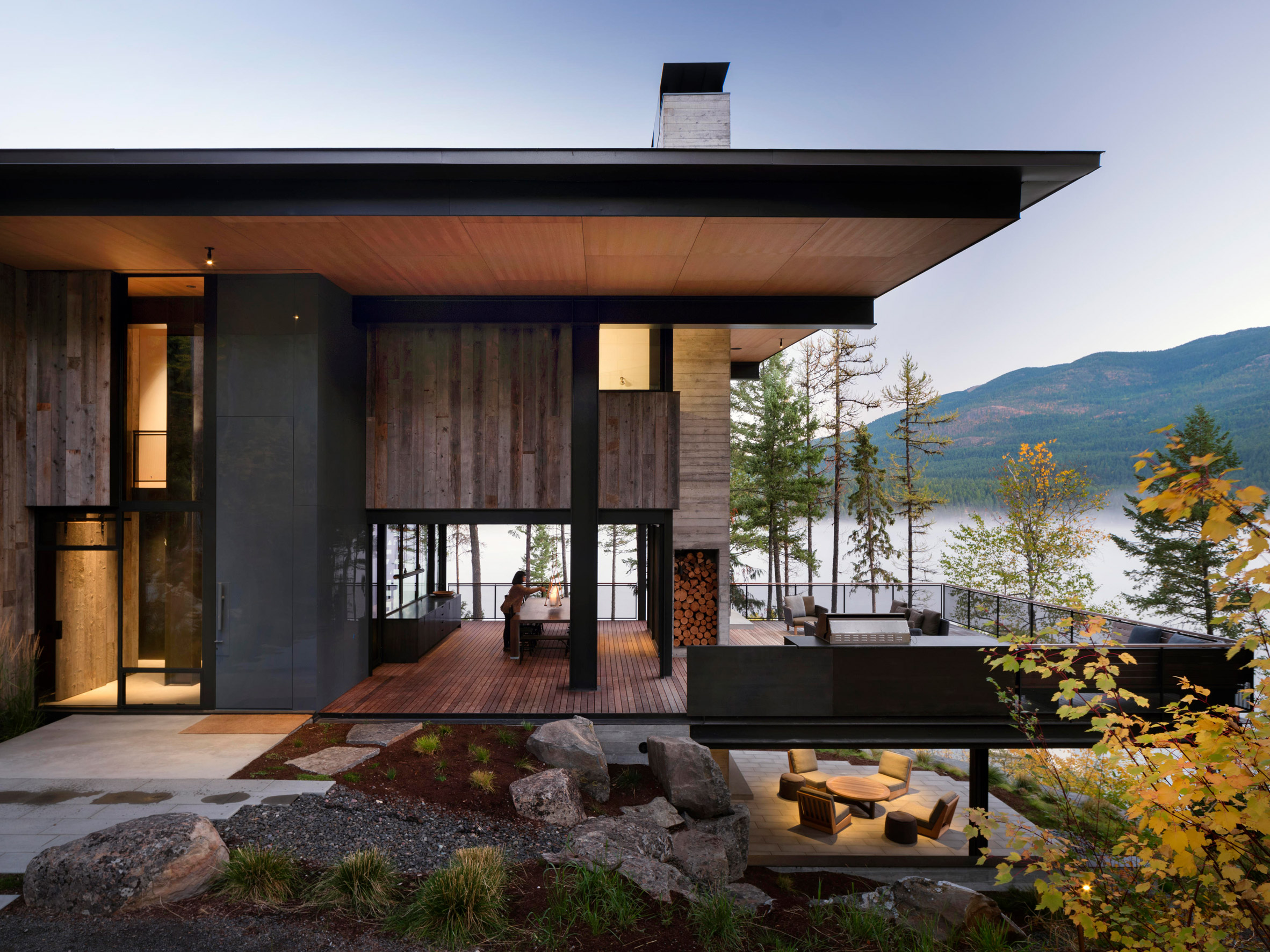

Dragonfly, Whitefish, USA, 2016

This project is intentionally designed to disappear into the mixed forest of western Montana, sitting lightly on the land like a dragonfly.

The proportions of the home's openings are a continuation of the scale of the forest and the openings between trees.

Likewise the roof establishes a horizon line that complements the boundary of the lake beyond. Dragonfly seems to grow out of the forest as it overlooks the lake below – celebrating its ecotone condition, but quietly, respectfully.

The post Tom Kundig describes 10 highlights of his architecture career appeared first on Dezeen.


from Dezeen https://ift.tt/361n3C4
Live interview followed by exclusive performance by musician Rosey Chan

Musician Rosey Chan speaks to Dezeen live and shows an exclusive improvisational performance

As the final part of today's VDF x Rosey Chan collaboration, the musician will speak live to Dezeen before sharing two exclusive improvised performances. Watch the broadcast from 5:00pm UK time.

Chan will discuss her music and collaborations with various artists and creatives with Dezeen's founder and editor-in-chief Marcus Fairs, and will then perform two specially pre-recorded piano improvisations.

The performance concludes the day-long collaboration with Chan that also featured an exclusive preview of her collaboration with artist Eyal Gever and dancer and choreographer Sharon Eyal, an animation she made with architect Patrik Schumacher, and a video showcasing Chan’s performance at the opening of Fredrikson Stallard’s Hybridae exhibition.

About Virtual Design Festival

Virtual Design Festival runs from 15 April to 30 June 2020. It intends to bring the architecture and design world together to celebrate the culture and commerce of our industry, and explore how it can adapt and respond to extraordinary circumstances.

To find out what's coming up at VDF, check out the schedule. For more information or to join the mailing list, email vdf@dezeen.com.

The post Live interview followed by exclusive performance by musician Rosey Chan appeared first on Dezeen.


from Dezeen https://ift.tt/2ZiJilZ

Athena Skates is a sun-drenched documentary that follows a group of young female roller skaters

Directed by Elliott Gonzo, and made with his team at Hijra Collective, the film is a luminous depiction of a young generation fighting for change in Athens.


from It's Nice That https://ift.tt/2Z8eMuD

Studio ThusThat's work unearths potential of the material world

Studio Thusthat profile for VDF

VDF studio profiles: scientific research meets design at Studio ThusThat, a multidisciplinary practice whose work exposes the hidden potential in the material world.

Based in London and Amsterdam, Studio ThusThat is led by three Innovation Design Engineering graduates from the Royal College of Art and Imperial College London.

It exists to improve the understanding of materials in a world of finite resources and demonstrate the potential of waste materials.

Studio Thusthat profile for VDF
Studio ThusThat is a design practice whose work seeks to unearth the full potential of the material world

"The materials in our everyday lives are much more complex than they initially seem," explained the studio. "Each one has myriad places of origin, complex processes, and many different uses that make up its narrative."

"But every material comes at a cost; vast quantities of byproducts and wastes are left in its wake before it ever reaches your hands," the studio added.

"Studio ThusThat aims to overturn how we understand our material world by uncovering their hidden backstories, digging into their origins, and exploring that which was left behind as waste."

Studio Thusthat profile for VDF
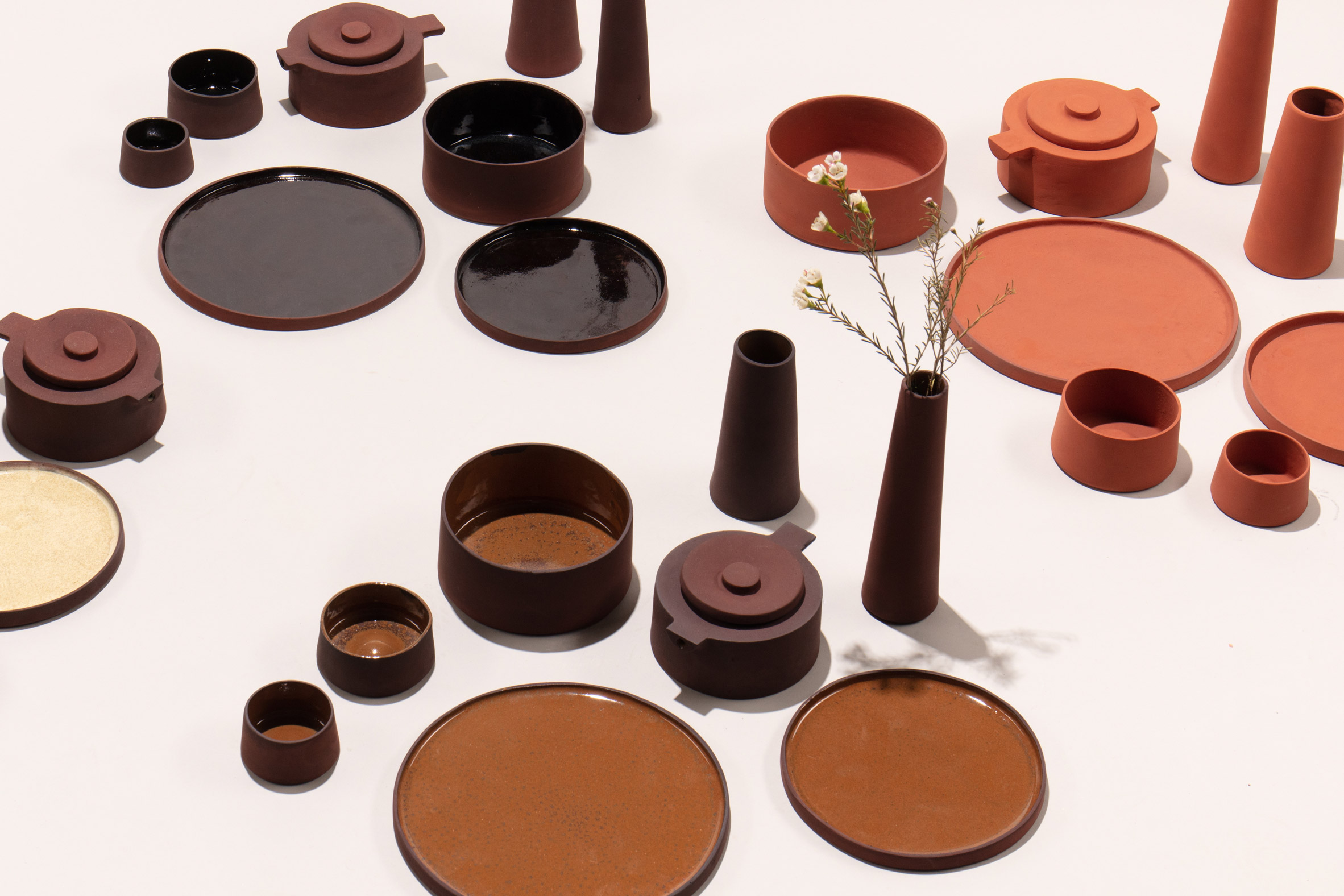
Red is a collection of ceramics made using Bauxite Residue, a waste product from the alumina industry

The key to Studio ThusThat's design process is immersive research, which it conducts through collaborating with scientists and various material experts from around the world. This enables it to work with many unknown materials that are often limited to scientific study.

"It's important to not stay confined to the design bubble," explained said Kevin Rouff, a member of Studio ThusThat. "We need to get out of the lab, away from the desk, and out of the workshop to move more fluidly."

A project by the studio that demonstrates this concept is the From Wasteland to Living Room series, which explores the potential of industrial waste from the mining and metallurgical sectors.

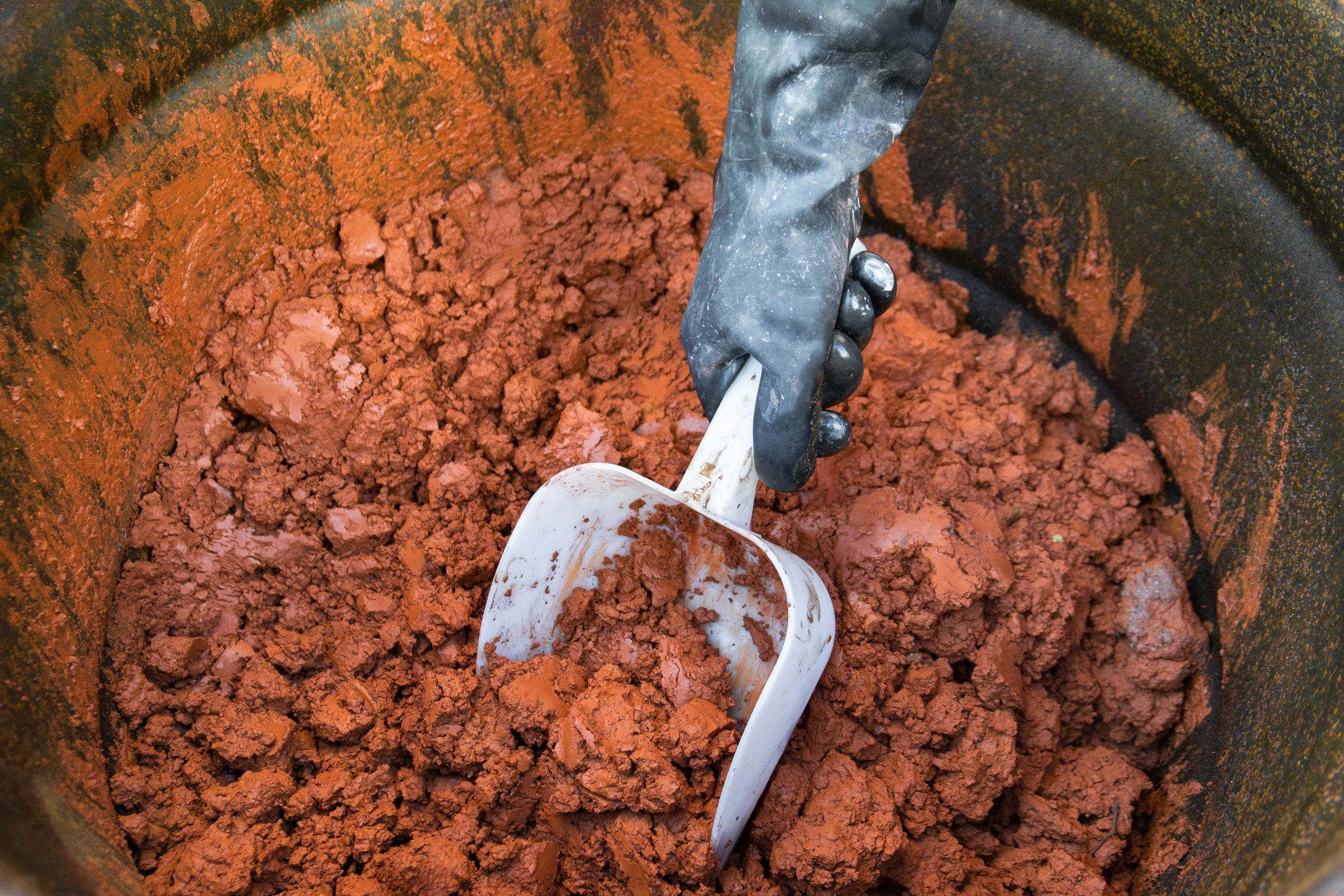
The first part of the series, Red, investigates the potential of bauxite residue, which is a byproduct of the aluminium industry otherwise known as red mud.

Studio Thusthat profile for VDF
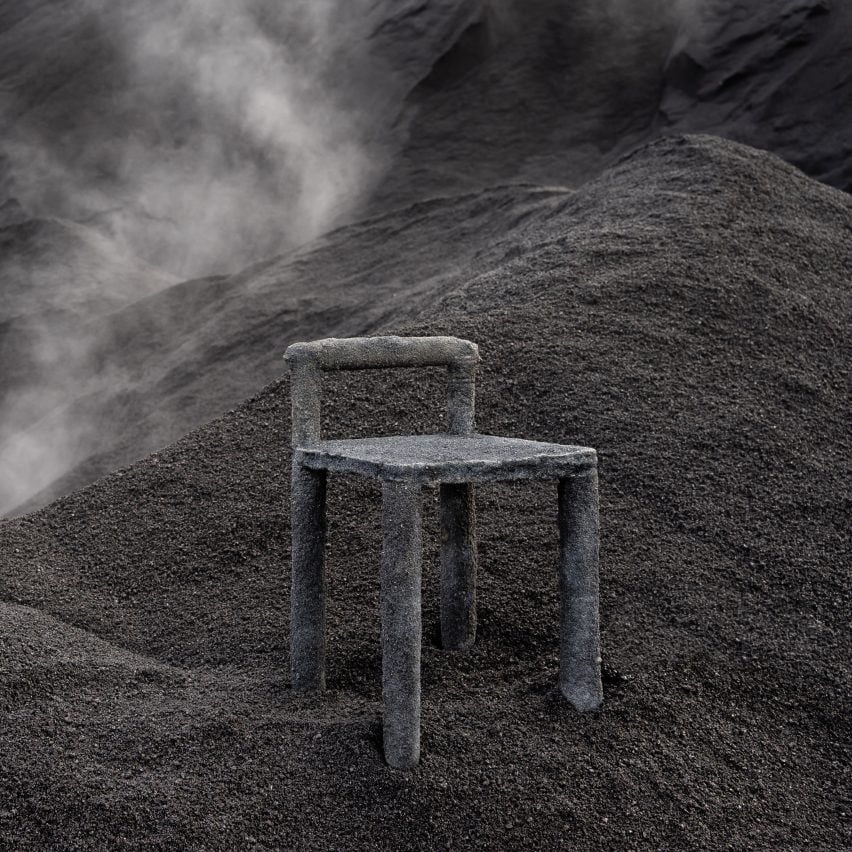
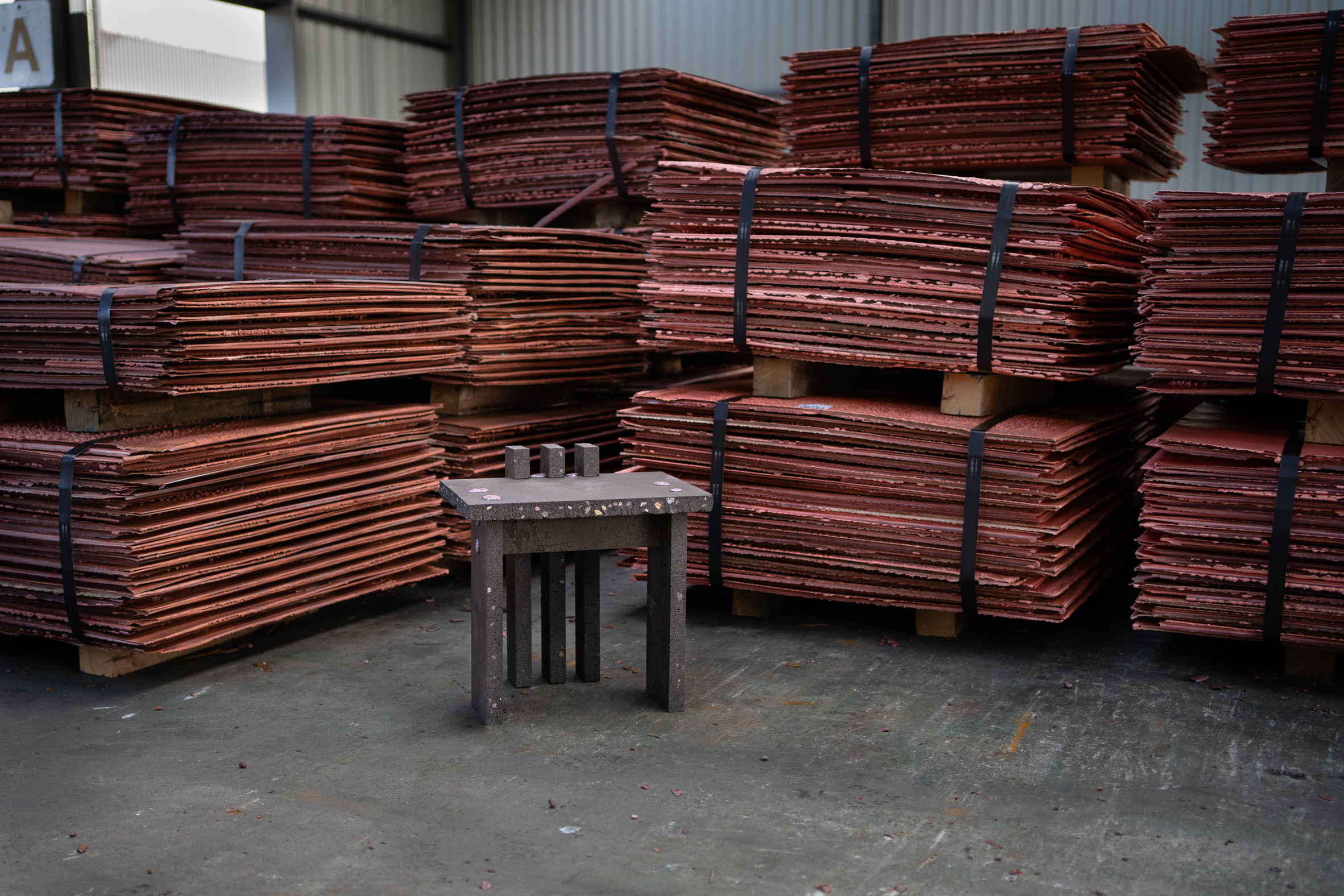
Another collection is called This is Copper that comprises furniture made from slag

As part of the investigation, the studio worked with factories and research labs to use red mud to create a collection of ceramics and glazes. The aim was to invite people to question the notion of waste and demonstrate the value of secondary materials by providing them with a new aesthetic.

It is now continuing its exploration of red mud and collaborating with mining companies such as Rio Tinto to find real world applications for the material.

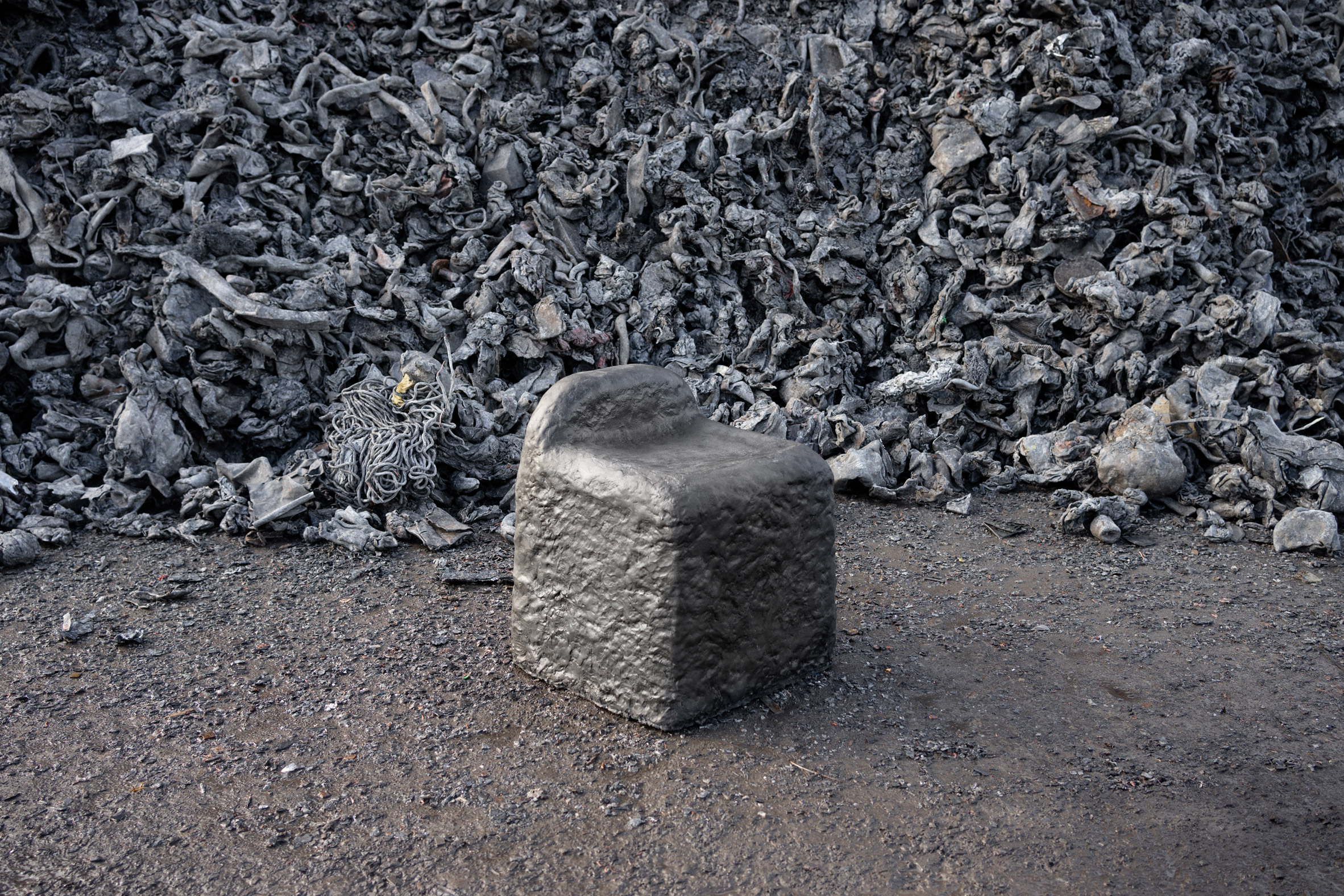
The second part of the From Wasteland to Living Room series is This is Copper, which explores the transformation of slag – a waste product of copper mining – into a cement alternative called a geopolymer. Geopolymers have a significantly smaller carbon footprint than standard cement but offer the same structural performance.

The project was conducted by Studio ThusThat in collaboration with a copper recycling factory and material scientists from KU Leuven in Belgium and resulted in a collection of chairs, tables, lamps, tiles that showcase the limits of the medium.

Studio Thusthat profile for VDF
This is Copper seeks to highlighter the potential of geopolymers as a cement alternative

"In a way, we are constantly reinterpreting the designer's role within the systems that already exist around a material," said Studio ThusThat's Paco Böckelmann.

Rouff concluded: "Ultimately, we try to balance between revealing a hidden story and telling a new one through the objects we make. It's as much about critiquing, as it is about suggesting a possible alternative."

Studio: Studio ThusThat
Website:
thusthat.com
Contact address: studio@thusthat.com


About Virtual Design Festival

Virtual Design Festival is the world's first online design festival, taking place from 15 April to 30 June. For more information, or to be added to the mailing list, contact us at vdf@dezeen.com.

A studio profile on Virtual Design Festival could expose your work to Dezeen's three million monthly website visitors. Each studio profile will be featured on the VDF homepage and included in Dezeen's daily newsletter, which has 170,000 subscribers.

The post Studio ThusThat's work unearths potential of the material world appeared first on Dezeen.


from Dezeen https://ift.tt/3fUvuUg