Sunday, 17 May 2020

Six holiday havens on the Long Island beach town of Amagansett

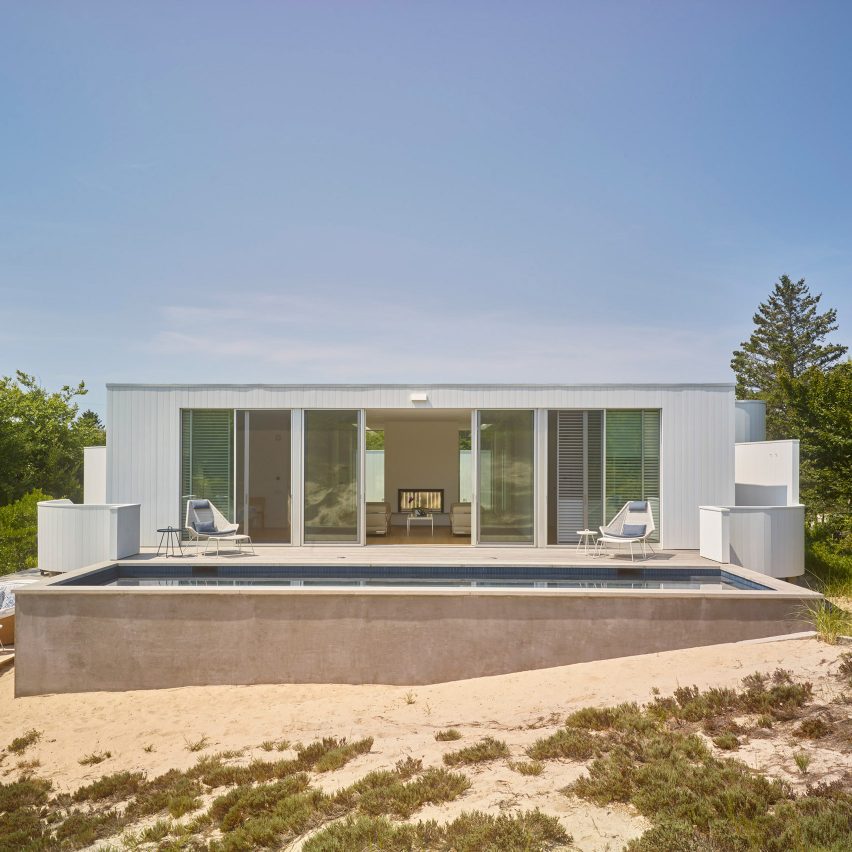
House in Amagansett by 1100 Architect

Long Island seaside town Amagansett has become a hotspot for New Yorker’s holiday homes. We’ve rounded up six retreats for welcoming warmer days.

A two-hour drive from New York City, Amagansett is on the eastern end of Long Island in the Hamptons area.

While not as famous as nearby Montauk, it is home to a number of striking houses that have sprung up in recent years. Many feature a combination of contemporary and traditional details like expansive glass walls, gable roofs and wood cladding.

Read on to discover six houses in Amagansett:

House in Amagansett by 1100 Architect

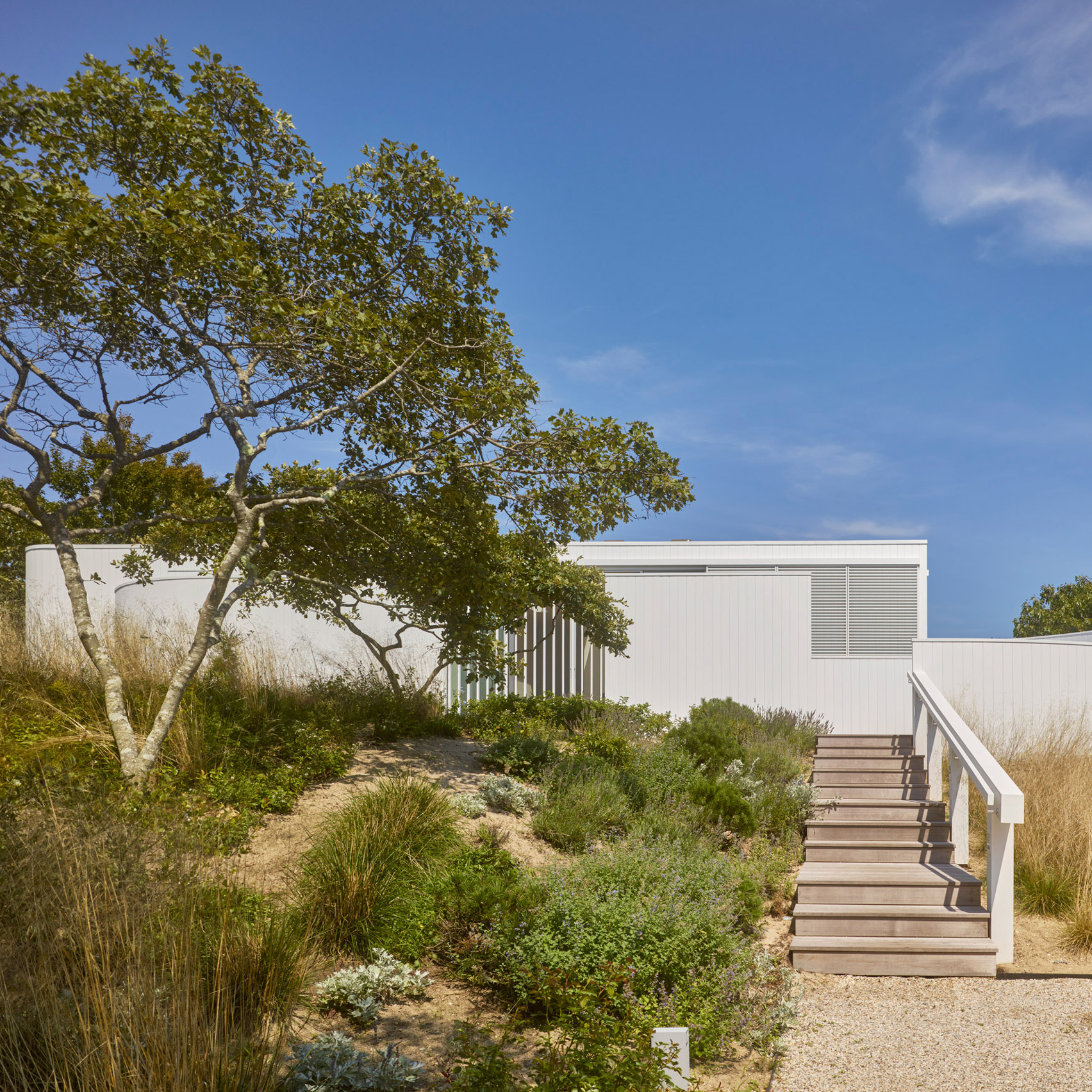
The House in Amagansett by 1100 Architect

This white house is built on a sandy plot close to the ocean and comprises the renovation of a 1970s cottage.

A recent renovation designed by New York studio 1100 Architect – which also has an office in Frankfurt, Germany –  opened up the interiors, added more windows and created a new deck and swimming pool.

Find out more about The House in Amagansett ›

Amagansett Dunes House by Bates Masi Architects

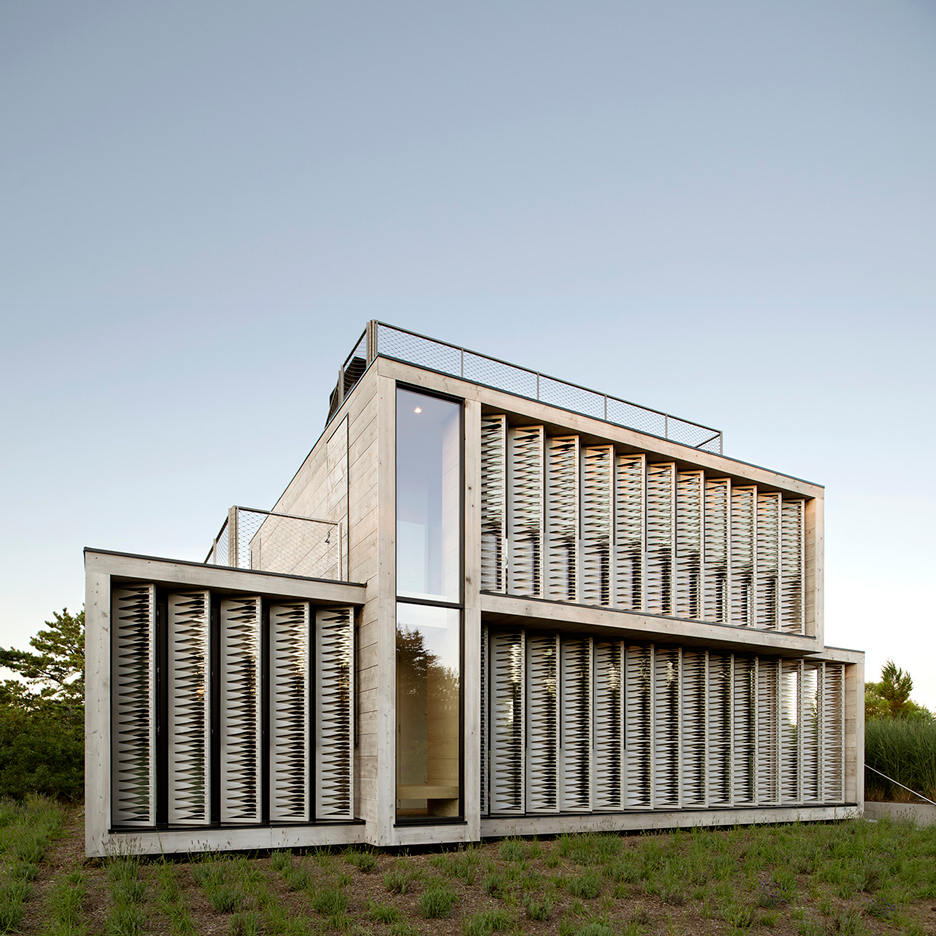
Amagansett Dunes House by Bates Masi Architects

Board-marked concrete and screens characterise this dwelling by Bates Masi Architects.

The home is designed to take advantage of its breezy property close to the coast and built on dunes that back up to a wooded nature preserve.

Find out more about Amagansett Dunes House ›

Amagansett Modular House by MB Architecture

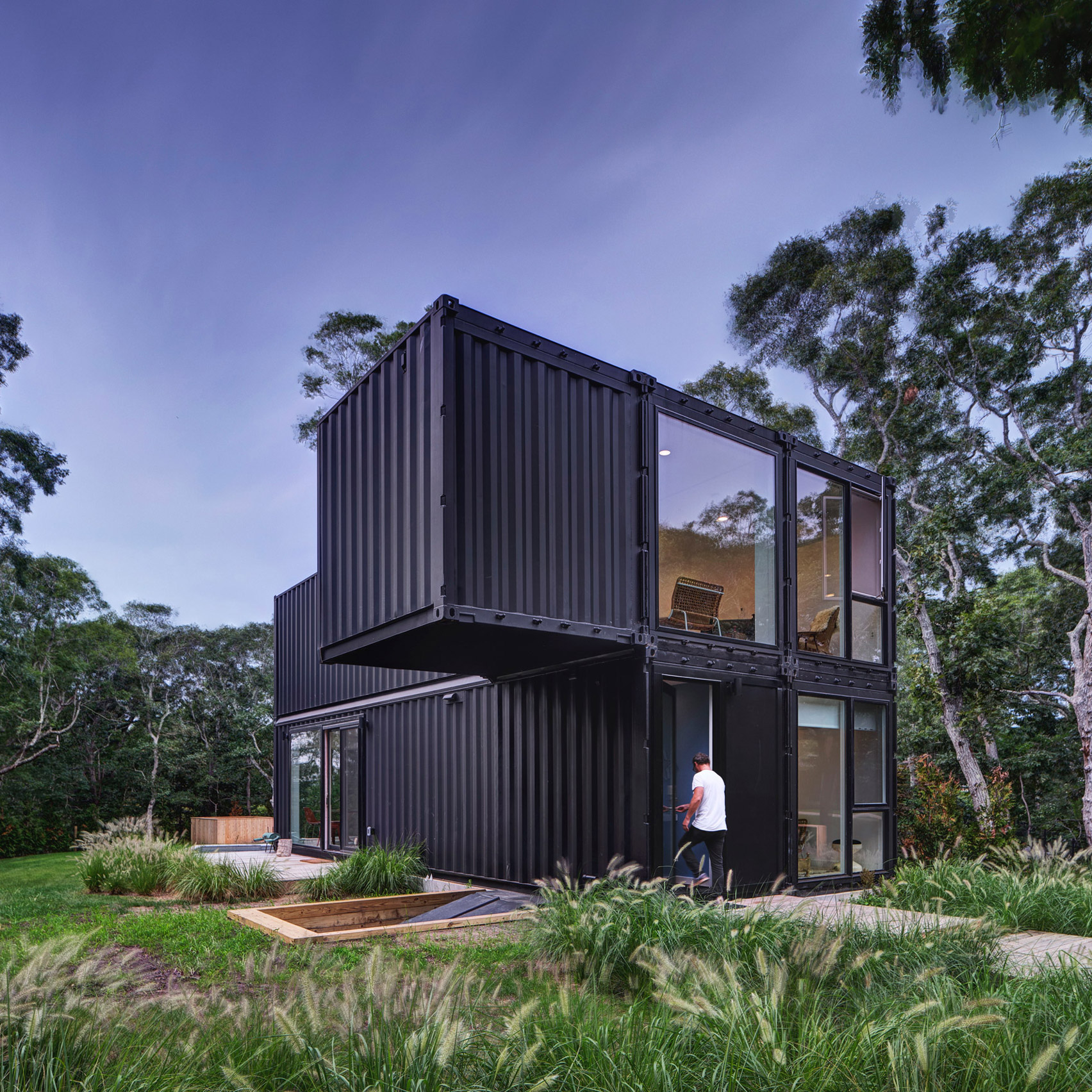
Amagansett Modular by MB Architecture

MB Architecture created this black, two-storey unit as a vacation home for a couple with three kids.

The studio used shipping containers to cut costs, as the clients had a limited budget but were open to exploring new ideas.

Find out more about Amagansett Modular ›
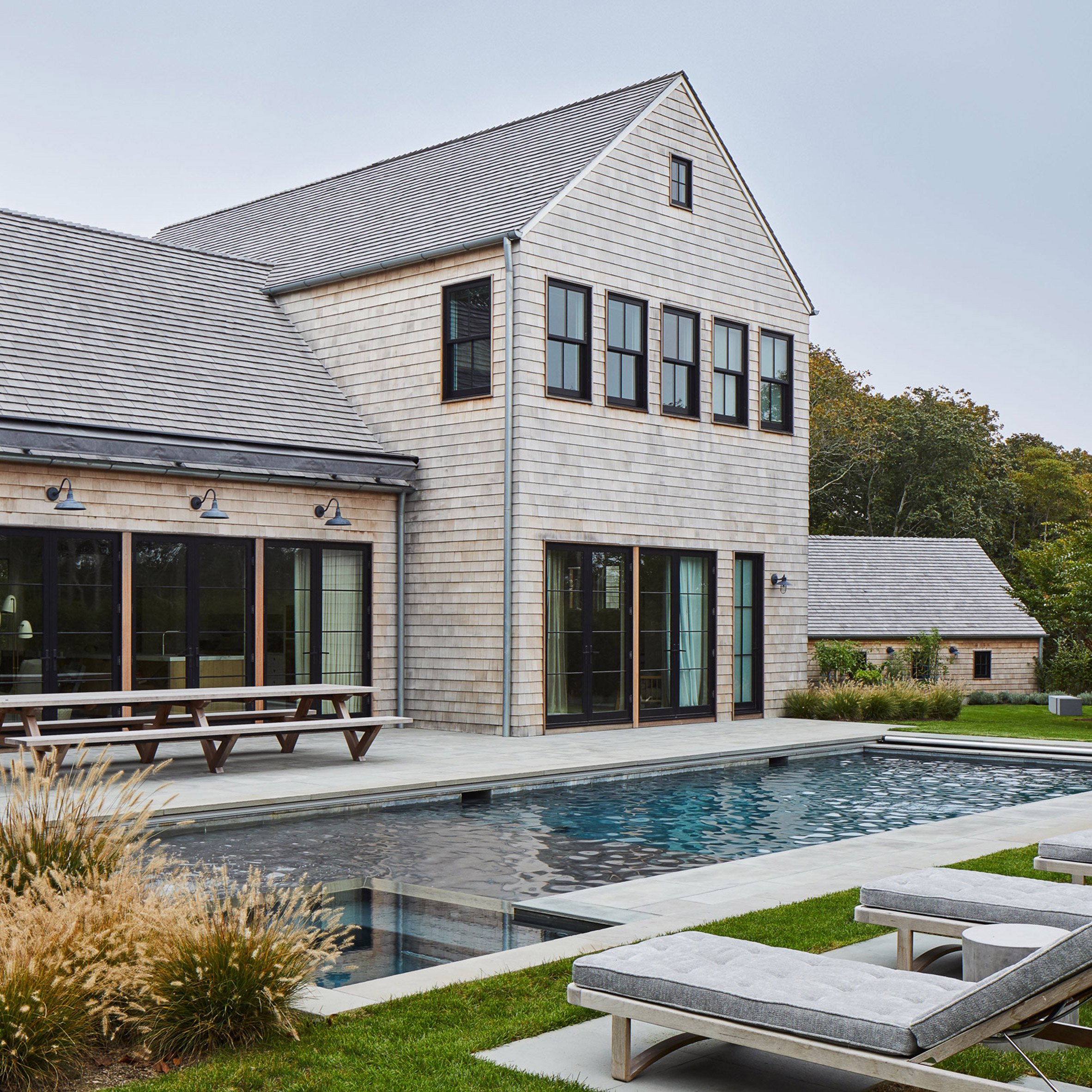

Amagansett Beach 3 by KOS+A

Amagansett Beach 3 by KOS+A

Alaskan Yellow cedar shingles cover this residence as a nod to the vernacular architecture of Long Island by local architecture studio KOS+A.

The project contains two gabled wings linked by a lower, one-storey portion whose roofline nestles into their sides.

Find out more about Amagansett Beach 3 ›
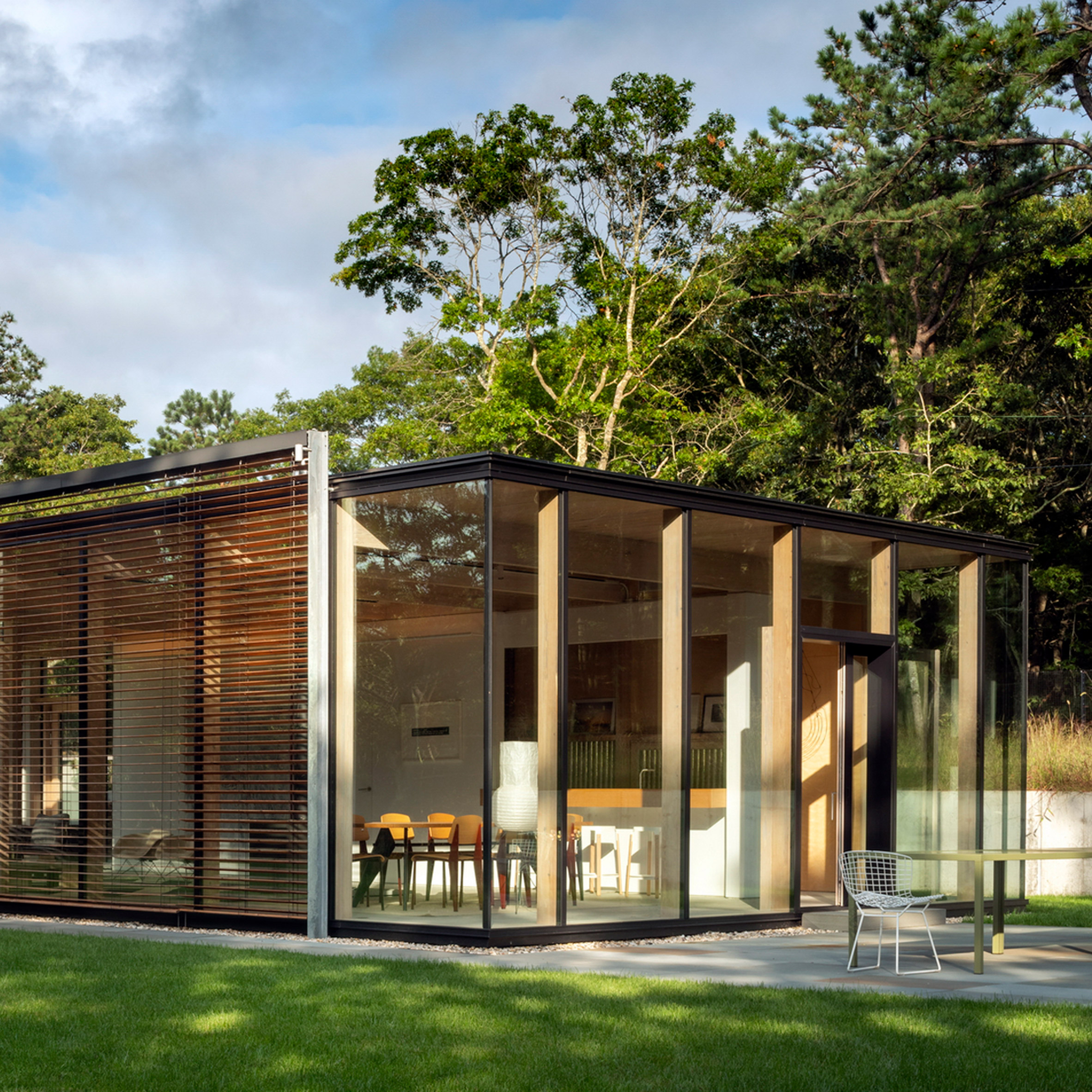

Wuehrer House in upstate New York by Jerome Engelking

Wuehrer House by Jerome Engelking

Long glass walls define in this low-slung house that New York architect Jerome Engelking created for his Austrian in-laws.

The house is a retreat for family gatherings and glazed portions on its rear overlook a grassy garden, while the front is more concealed for privacy.

Find out more about Wuehrer House ›
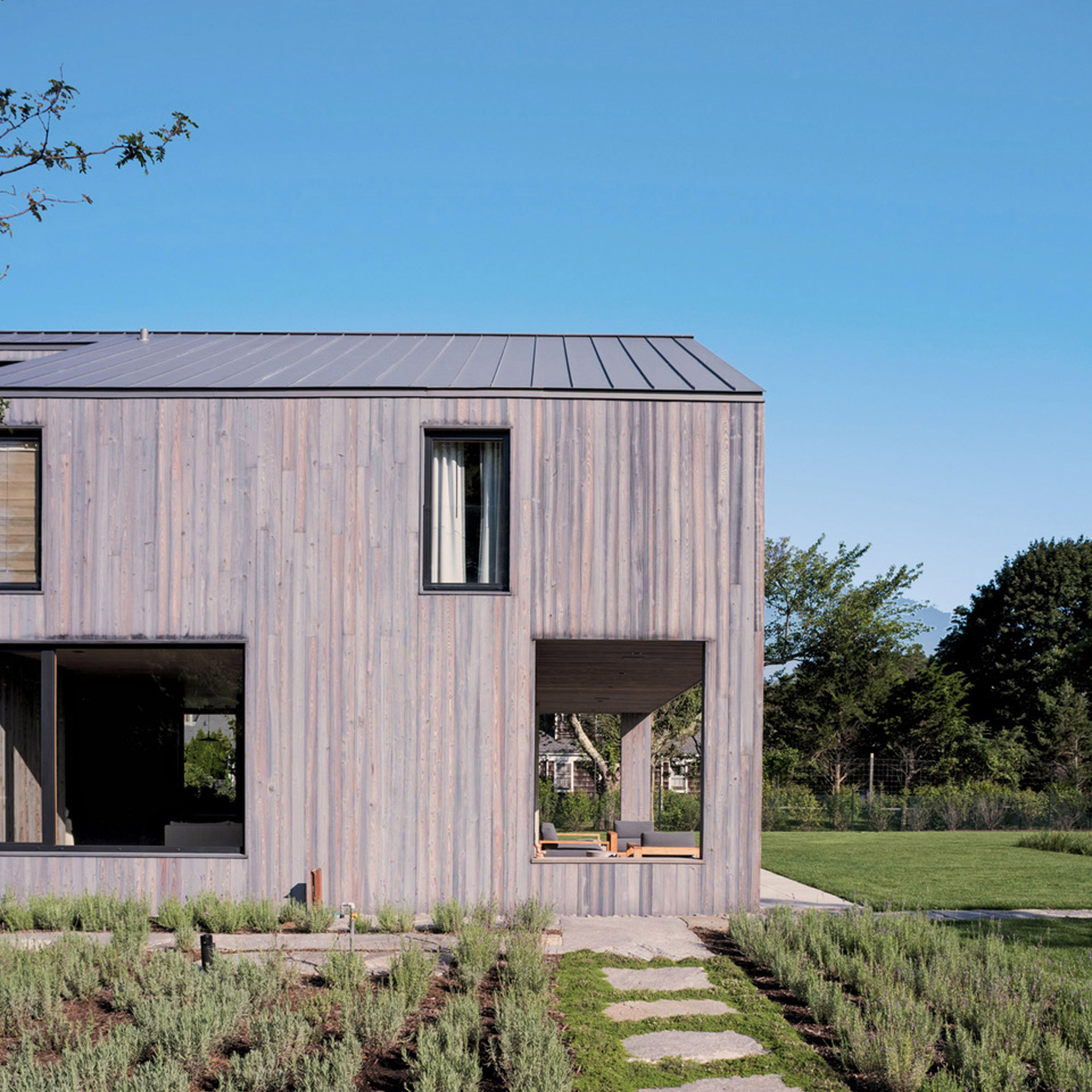

House in Amagansett by Maziar Behrooz Architecture

House in Amagansett by MB Architecture

MB Architecture designed another house in Amagansett with concrete and timber to "accommodate the owner's wish for a maintenance-free house with longevity".

The residence is perpendicular to the street to minimise its visual impact, for it is on one of the town's The Lane – a set of walkable streets perpendicular to Main Street.

Find out more about House in Amagansett ›

The post Six holiday havens on the Long Island beach town of Amagansett appeared first on Dezeen.


from Dezeen https://ift.tt/3fWwY0i

Architektur3 adds triangular timber tower to Black Forest church

St Georg church tower in Bleibach, Black Forest by Architektur3

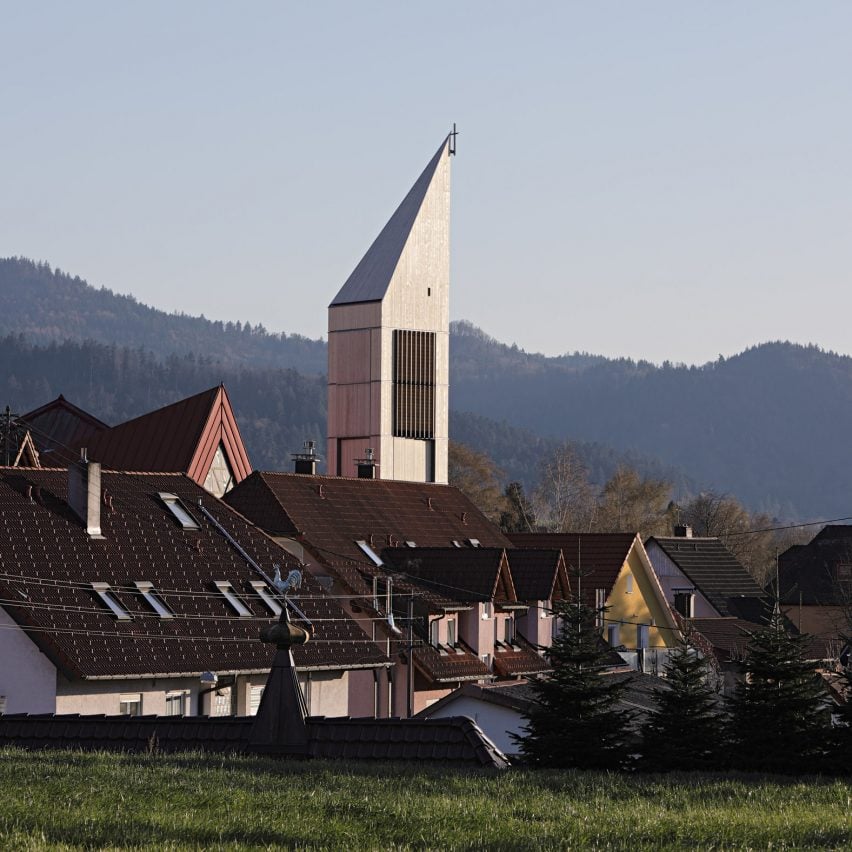
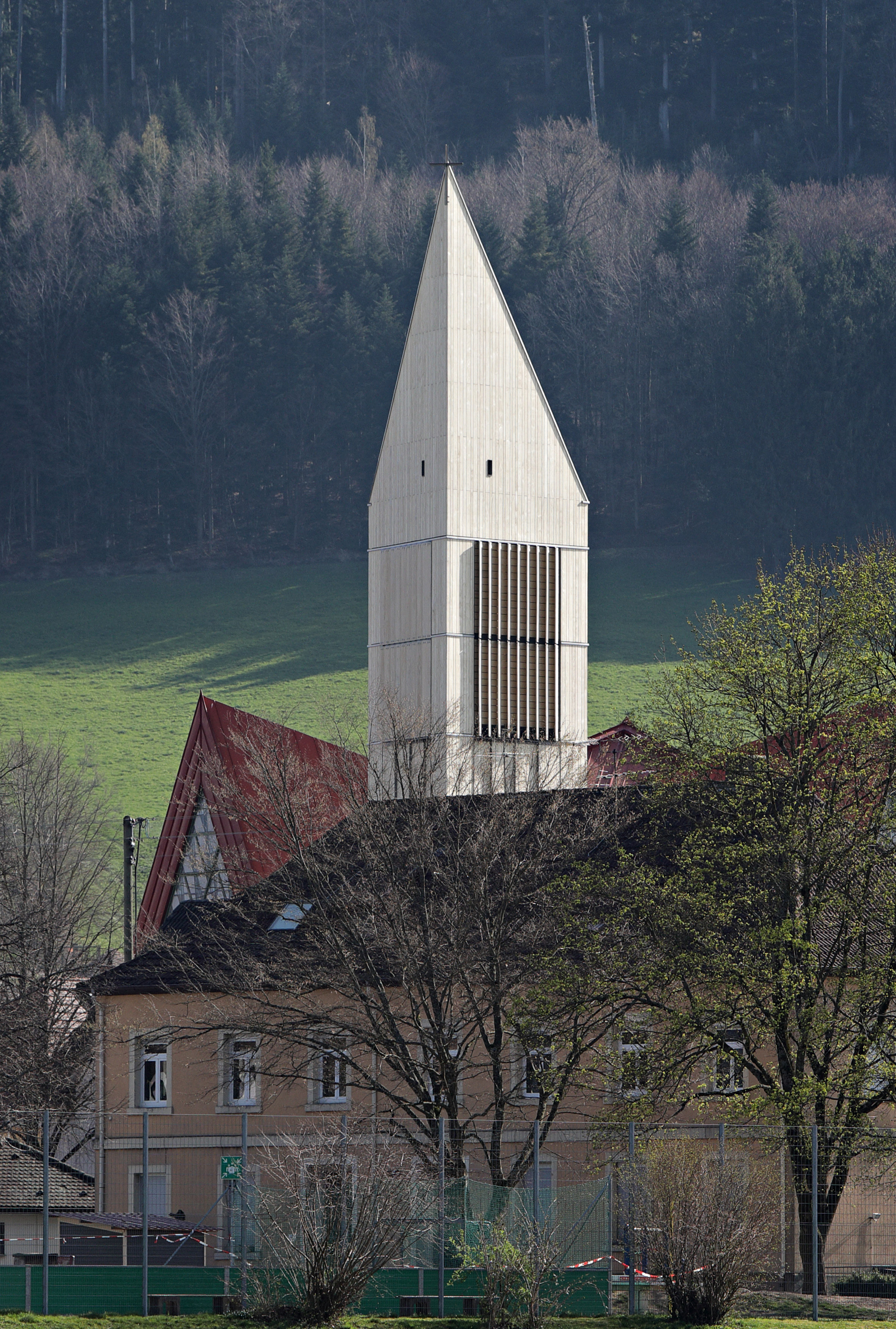
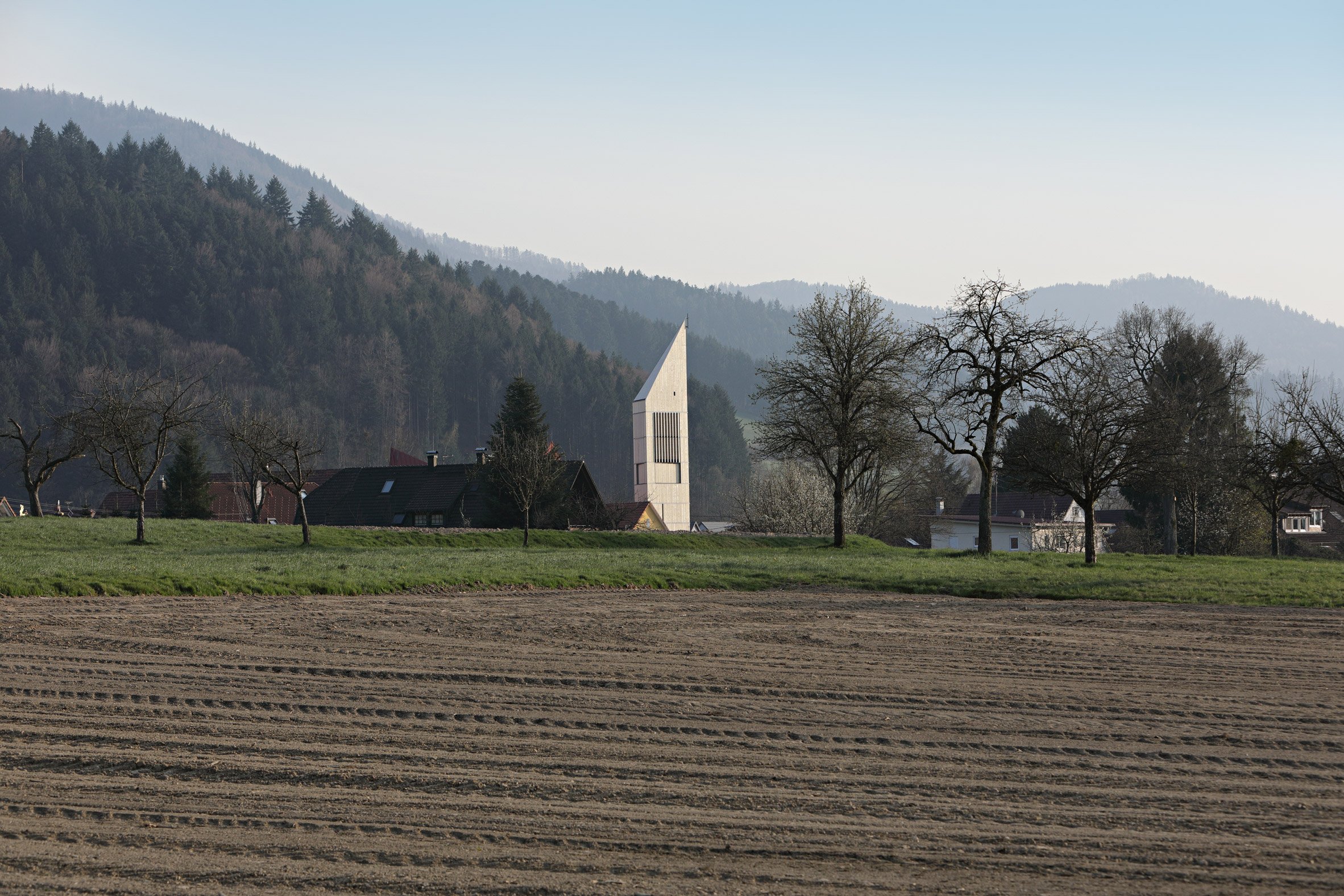
German studio Architektur3 has added a triangular tower and public viewpoint to the St Georg church in Bleibach, situated at the intersection of three valleys within the Black Forest.

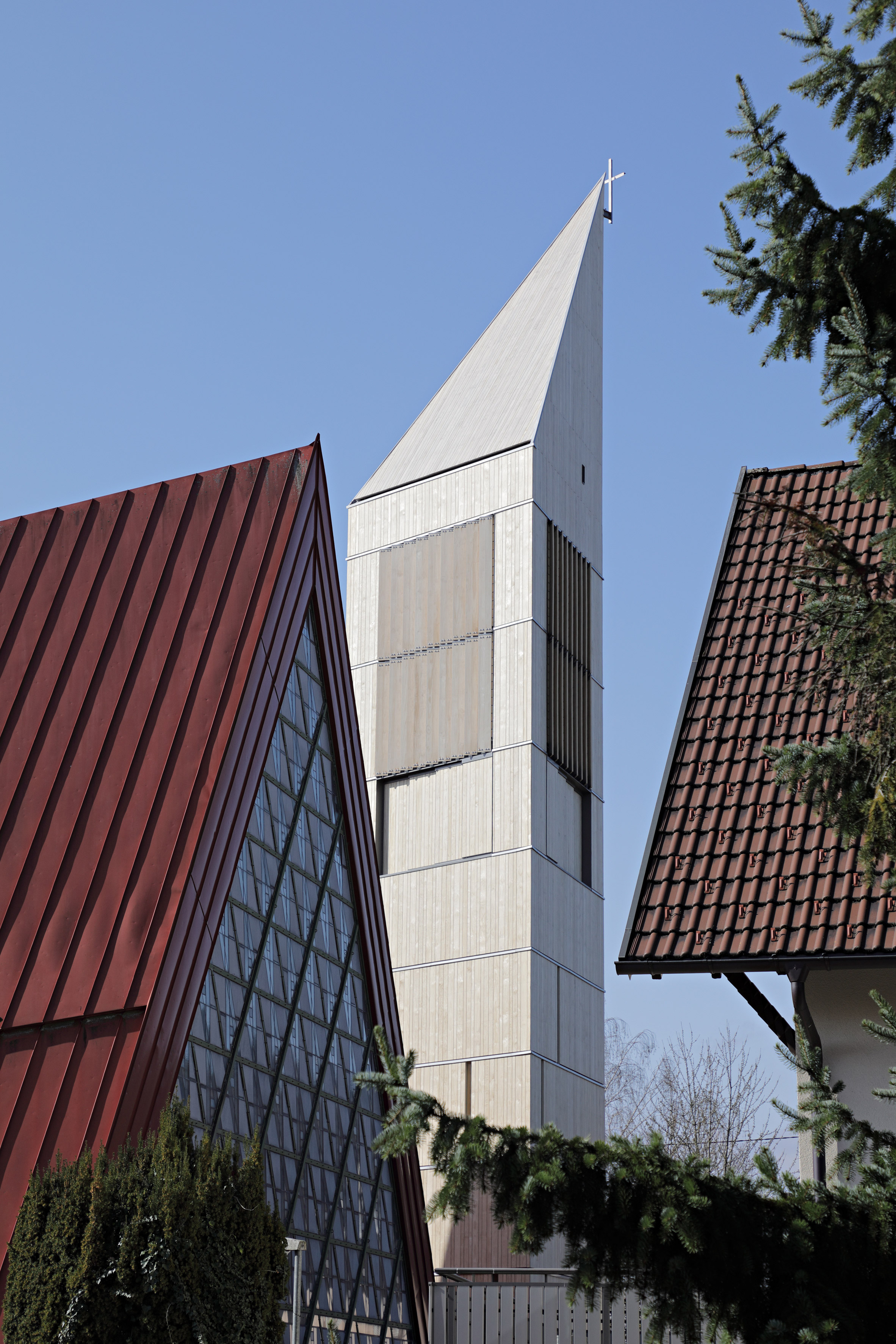
The cross-laminated timber tower was designed as the final element of the church, which is formed of a 16th century gothic choir and a large, tent-like hall that was added in the 1970s.

St Georg church tower in Bleibach, Black Forest by Architektur3

"The triangular ground plan of the tower is inspired by the design of the modern church tent, and closes off its structure on the west side," explained Architektur3 founder Klaus Wehrle.

"The steep, falling lines of the tower are also derived from the existing church and illustrate the relationship between the two buildings," he told Dezeen.

St Georg church tower in Bleibach, Black Forest by Architektur3

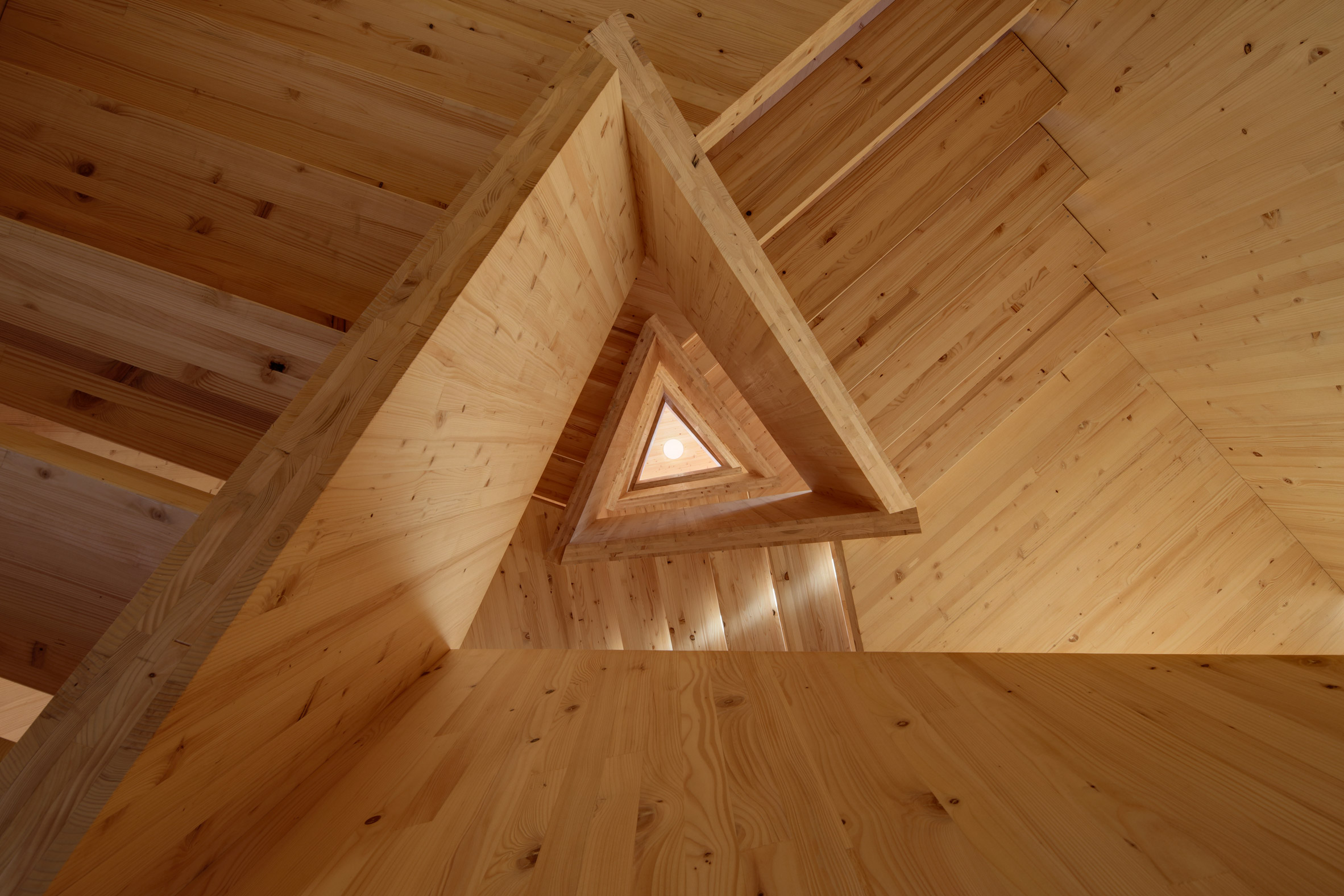
Architektur3 designed the tower's plan based upon an equilateral triangle to signify both its location – at the meeting point of three valleys within the Black Forest – and the holy trinity.

Along with being a clearly recognisable landmark, the tower contains a public viewpoint, the church's bells and is topped with a breeding space for birds and bats.

St Georg church tower in Bleibach, Black Forest by Architektur3

"The church bells, which previously damaged the gothic choir by vibrations, find their new home here," said Wehrle.

"In addition, the new church tower marks the intersection of three Black Forest valleys, gives the church more visibility and brings a new function with the viewing platform."

St Georg church tower in Bleibach, Black Forest by Architektur3

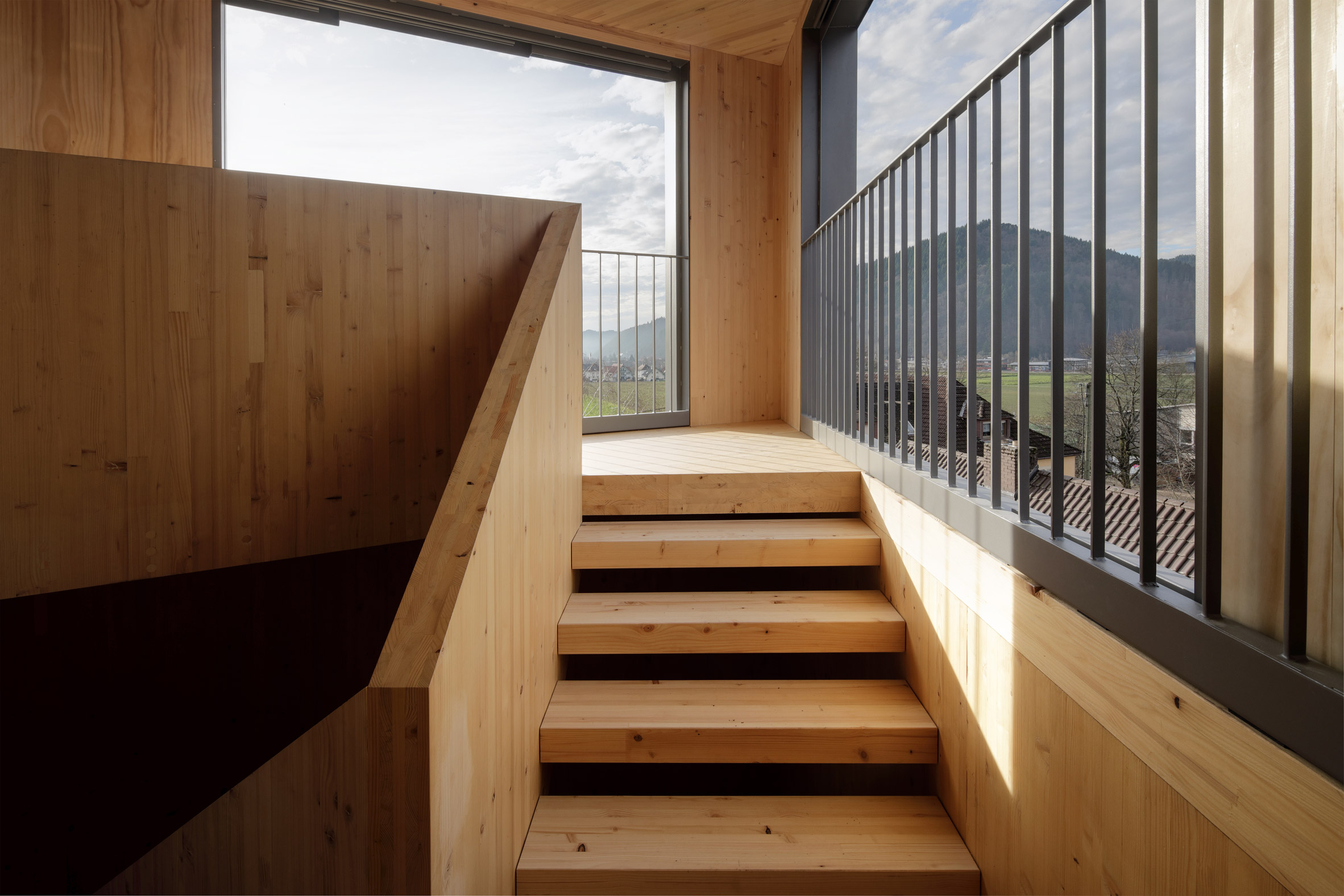
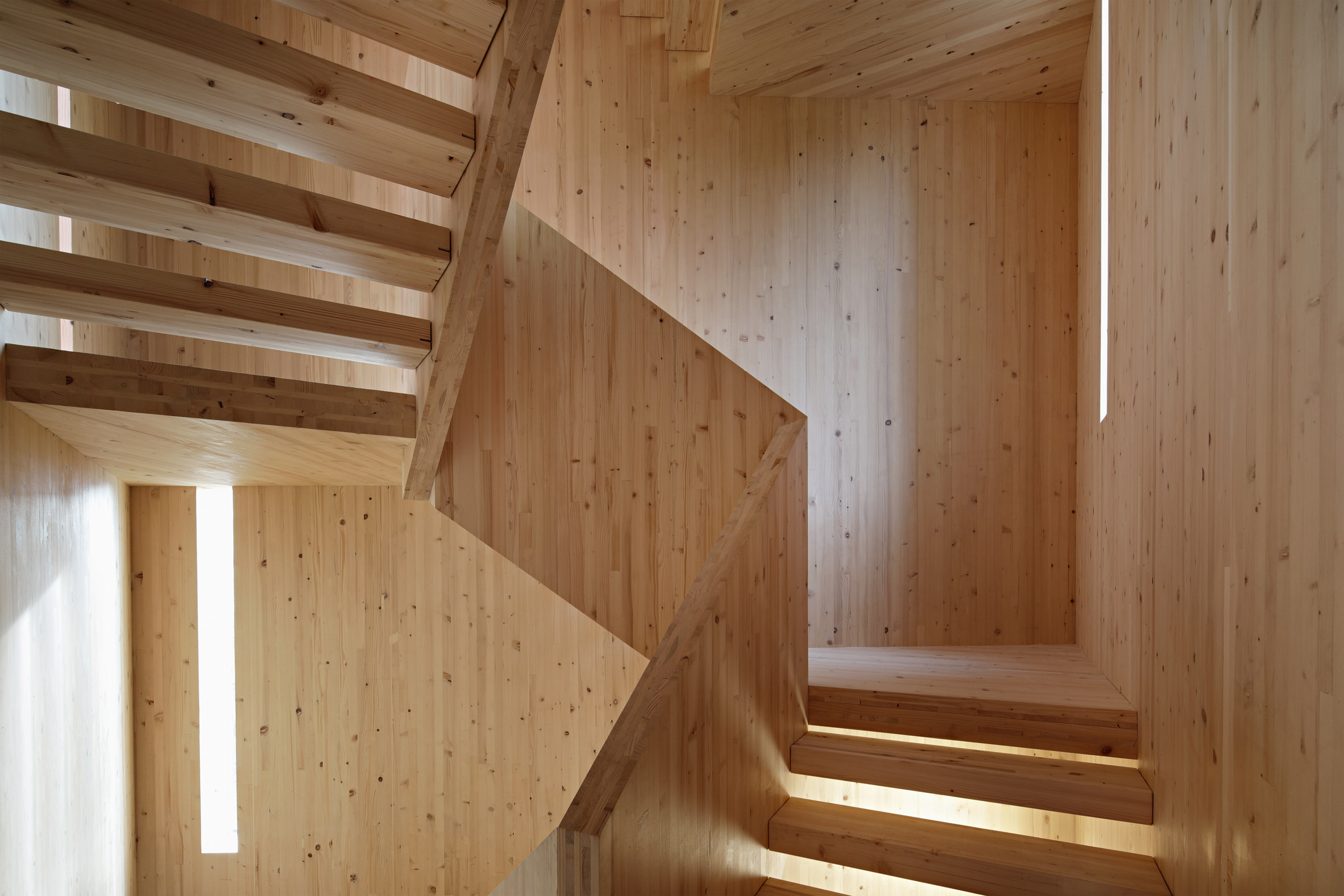
The public viewing platform, which sits below the bells, is accessed by a triangular, spiral staircase contained within the tower.

"For the church itself, the proximity to heaven has a symbolic value," said Wehrle. "It was also important to give all people the opportunity to experience the building and this important point where three Black Forest valleys intersect."

St Georg church tower in Bleibach, Black Forest by Architektur3

The 33-metre-tall tower was constructed from cross-laminated timber made from local silver fir, with Accoya used as cladding.

"The silver fir is the characteristic tree species of the Black Forest and thus a regional product," explained Wehrle. "In the processing as cross laminated plywood, this type of wood achieves excellent static values to absorb the vibrations of the church bells."

"Accoya wood has excellent environmental values and is very well suited as a facade material due to its special treatment and the resulting resistance to pests," he continued.

St Georg church tower in Bleibach, Black Forest by Architektur3

Although the tower is based on triangles, lies at the meeting of three valleys and three is a significant number in Christianity, the tower's height was not determined to make this connection.

"When determining the height of the tower, it was important to find a balanced proportion to the church stock and at the same time to be able to look out over the church roof into the valleys from the viewing platform," said Wehrle.

"The fact that the tower is exactly 33 meters-high is a coincidence with no symbolic meaning."

Espen Surnevik recently completed a porcelain-clad church in Norway with a tower inclined at 3.3 degrees, while Rocco Design Architects created a 21-storey skyscraper church in Hong Kong.

Photography is by Oliver Kern.


Project credits :

Architect: Architektur3
Design Team: Juan Santos Ortega, Sara Mormeneo Beltran, Klaus Wehrle
Engineering: Andreas Wirth
Client: Röm.-kath. Kirchengemeinde

The post Architektur3 adds triangular timber tower to Black Forest church appeared first on Dezeen.


from Dezeen https://ift.tt/3dWgG66

K916 and K907 are a pair of pared-back holiday apartments in Warsaw

K916 holiday apartment designed by Thisispaper Studio

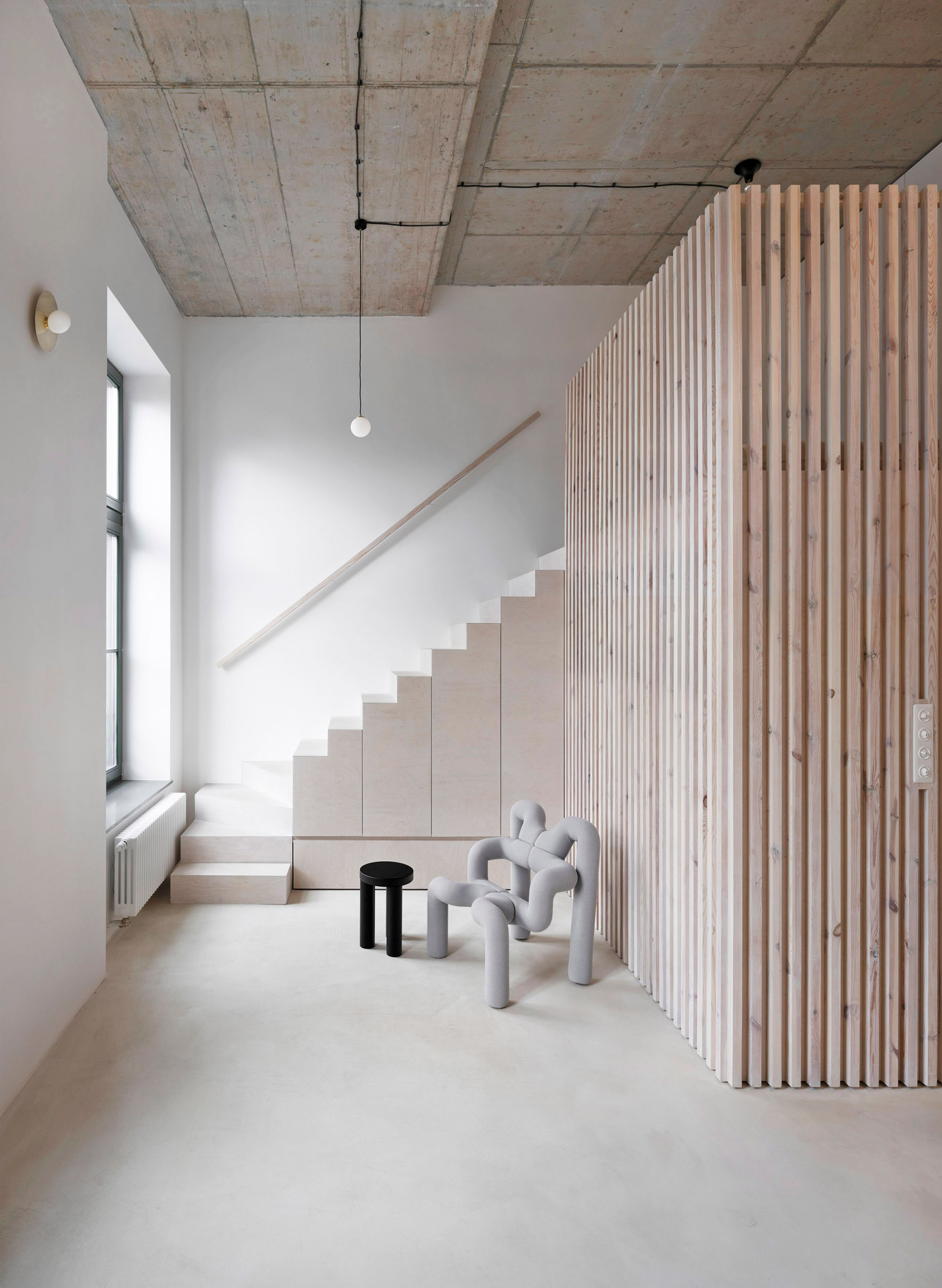
Boxy timber volumes tuck away the beds and bathrooms of these minimal holiday apartments designed by Thisispaper Studio, which lie at the heart of the Polish capital.

The two flats – named K916 and K907 – are set within an old print warehouse in Warsaw's Praga district that was originally built in 1903, but has since been converted for residential use.

K916 holiday apartment designed by Thisispaper Studio

They come as part of Thisispaper Studio's A-Place hospitality concept, which launched back in 2018 with the opening of a rentable holiday apartment in a former vodka distillery nearby.

K916 and K907 have both been finished with sparse interiors, reflecting the minimalist aesthetic that the studio says is "in the core" of its design process.

K916 holiday apartment designed by Thisispaper Studio

"We always have a desire to bring about a sort of quietness – I'm afraid that human species are overloaded with information, events and visual distractions," the studio's co-founder, Zuzanna Gasior, told Dezeen.

"What we miss during everyday travels is a peaceful moment to unwind, relax or simply pause for a while. Therefore we decided to go for an ultra-minimal look."

K916 holiday apartment designed by Thisispaper Studio

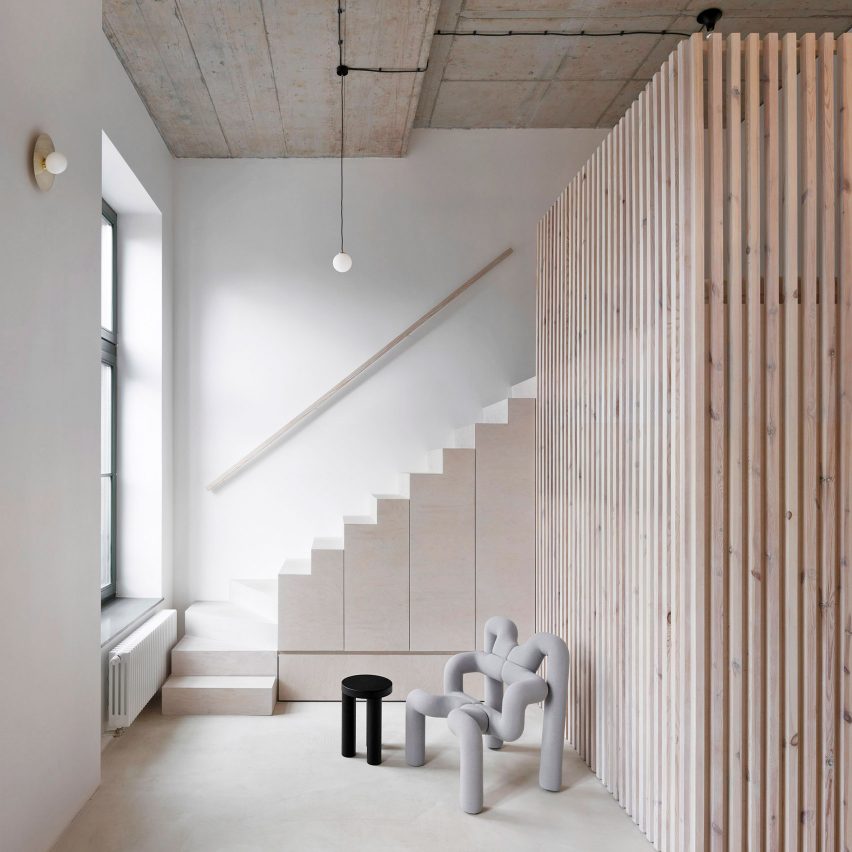
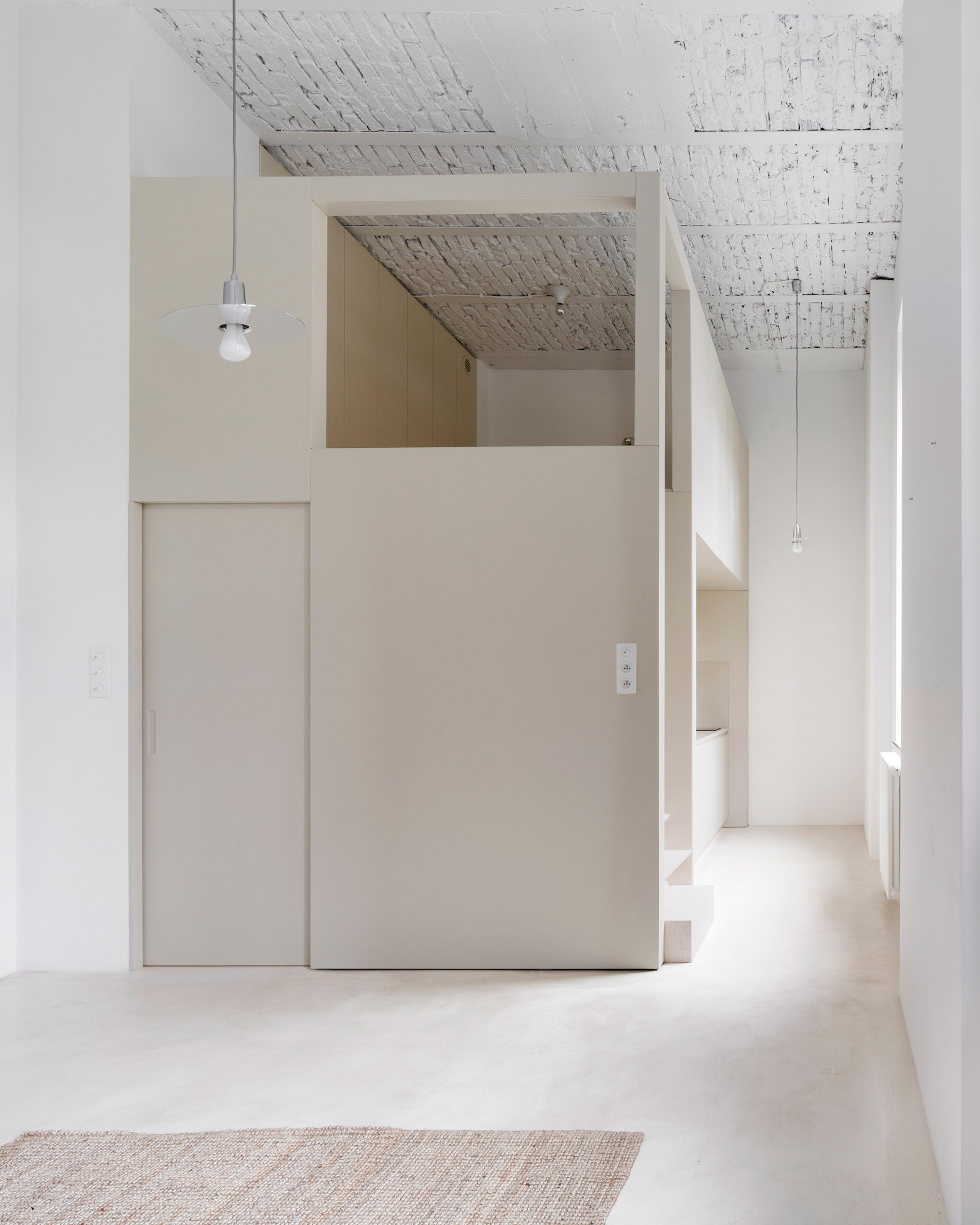
A boxy volume made from slats of pine plywood is one of the few fixtures to appear in K916.

"[Wood] warms up the interior," explained Gasior. "The existing structure of the concrete ceiling and flooring made an autonomous and raw character, so in order to bring balance we use more familiar human materials."

K916 holiday apartment designed by Thisispaper Studio

The box was purposefully designed to sit just below the ceiling, drawing attention to the lofty dimensions of the apartment.

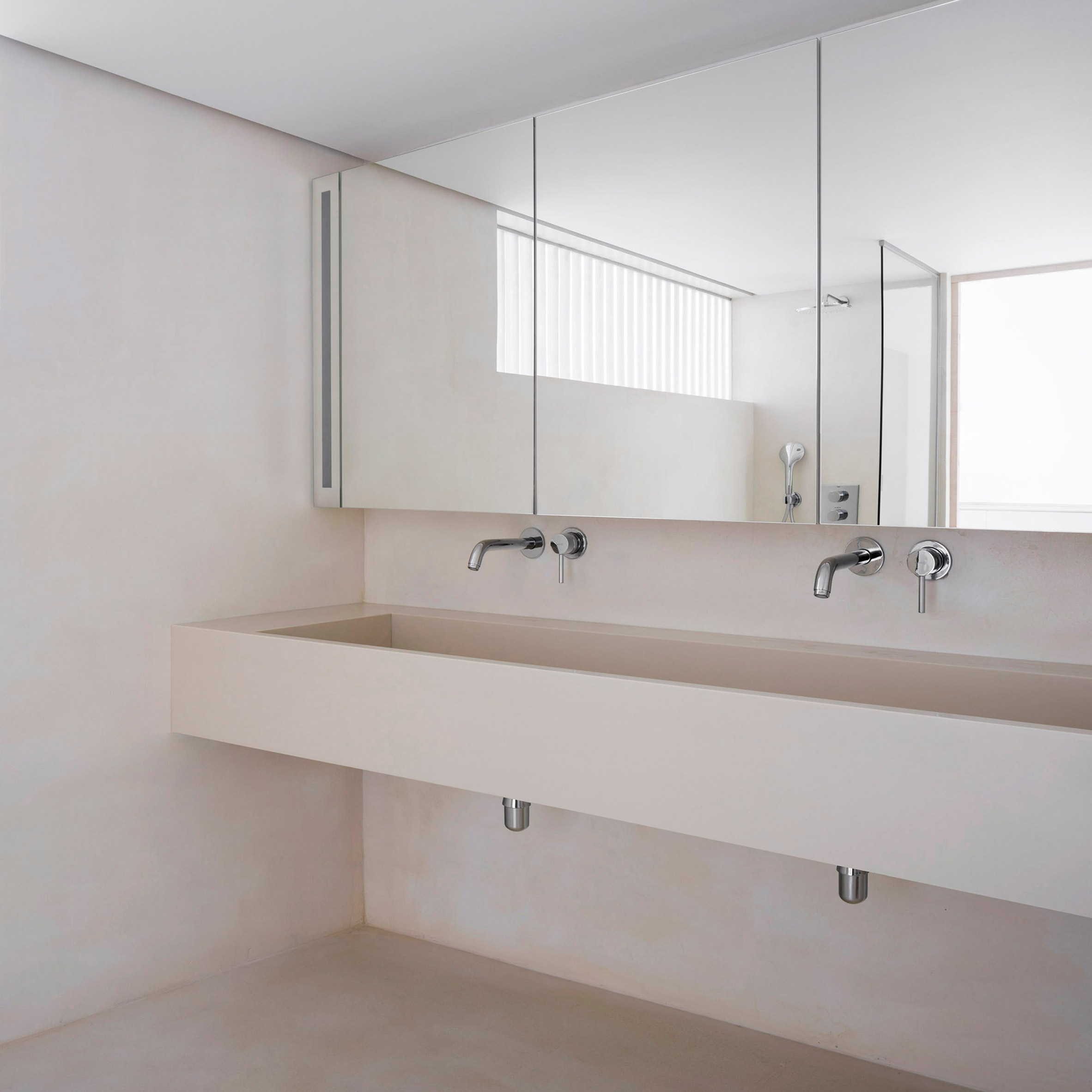
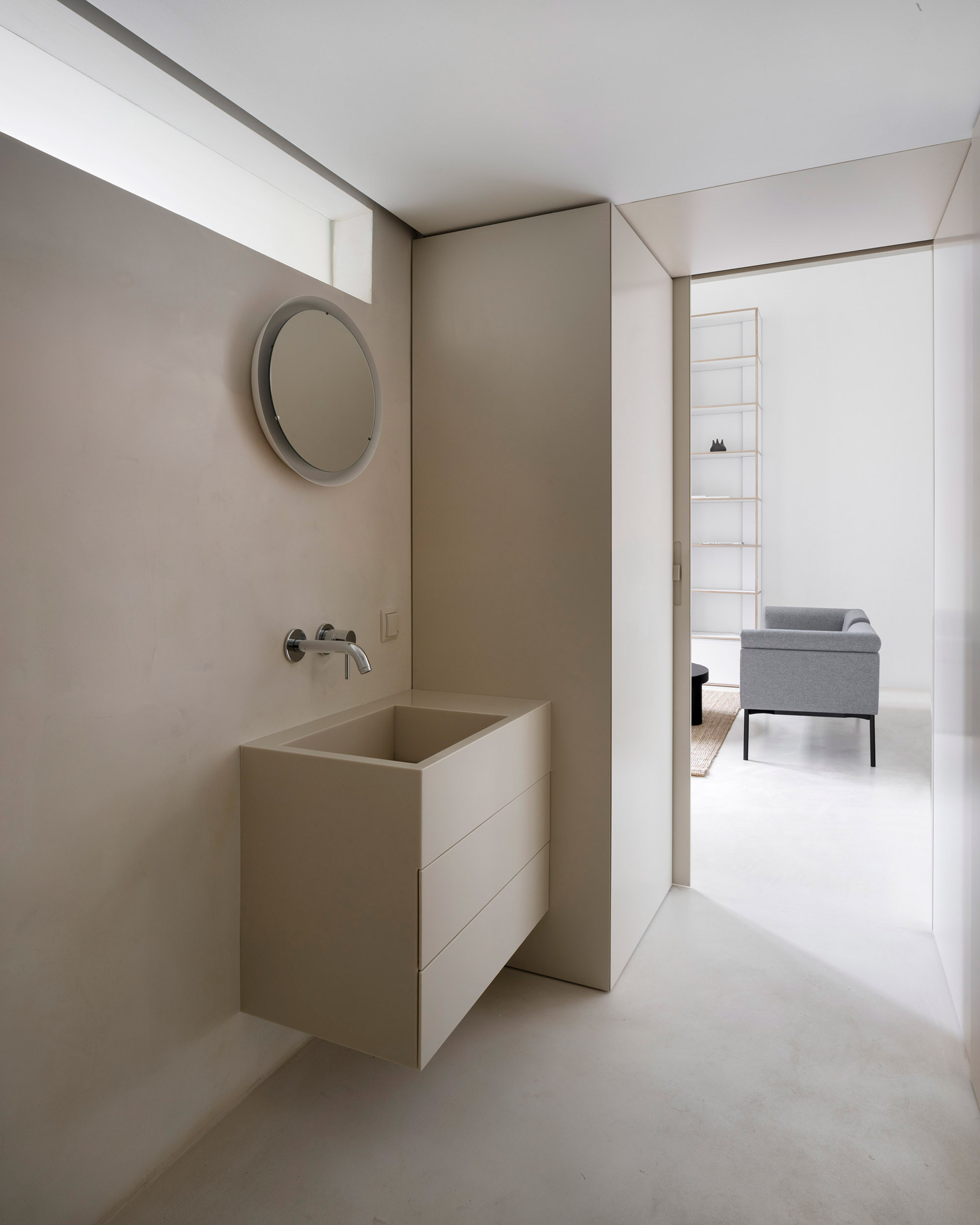
Inside, it accommodates a bathroom with a large mirror vanity cabinet and a sink basin that runs the full length of the wall.

K907 holiday apartment designed by Thisispaper Studio

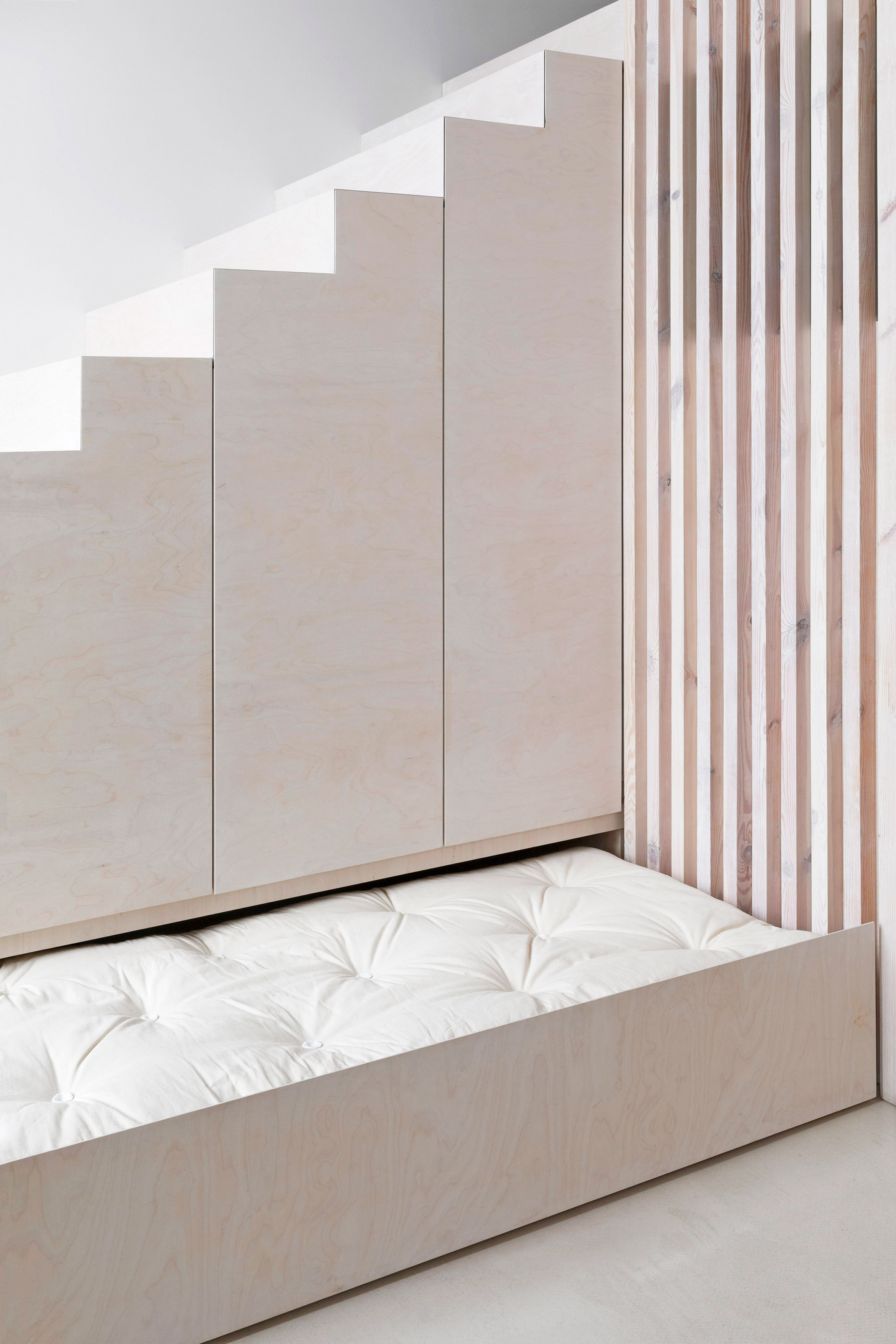
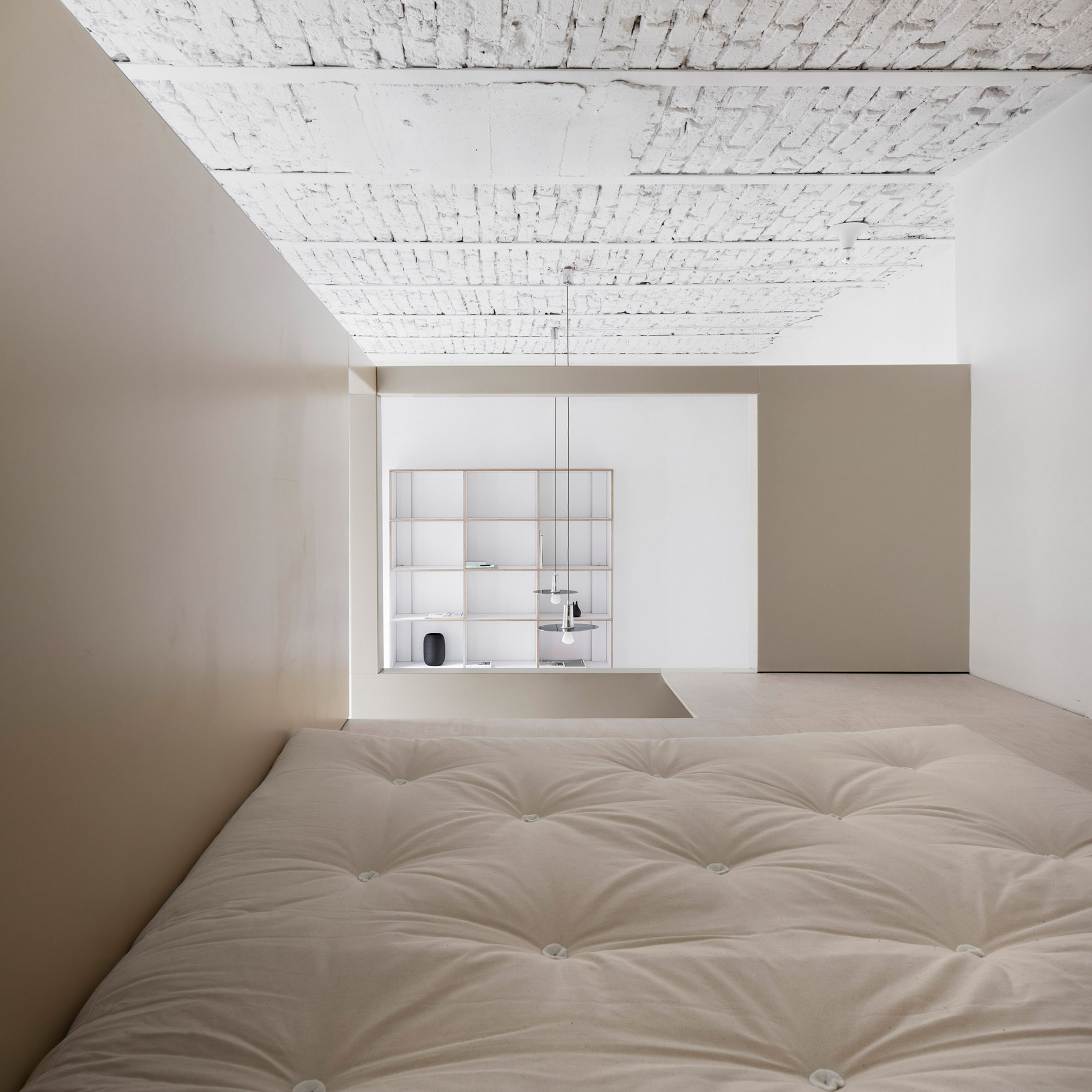
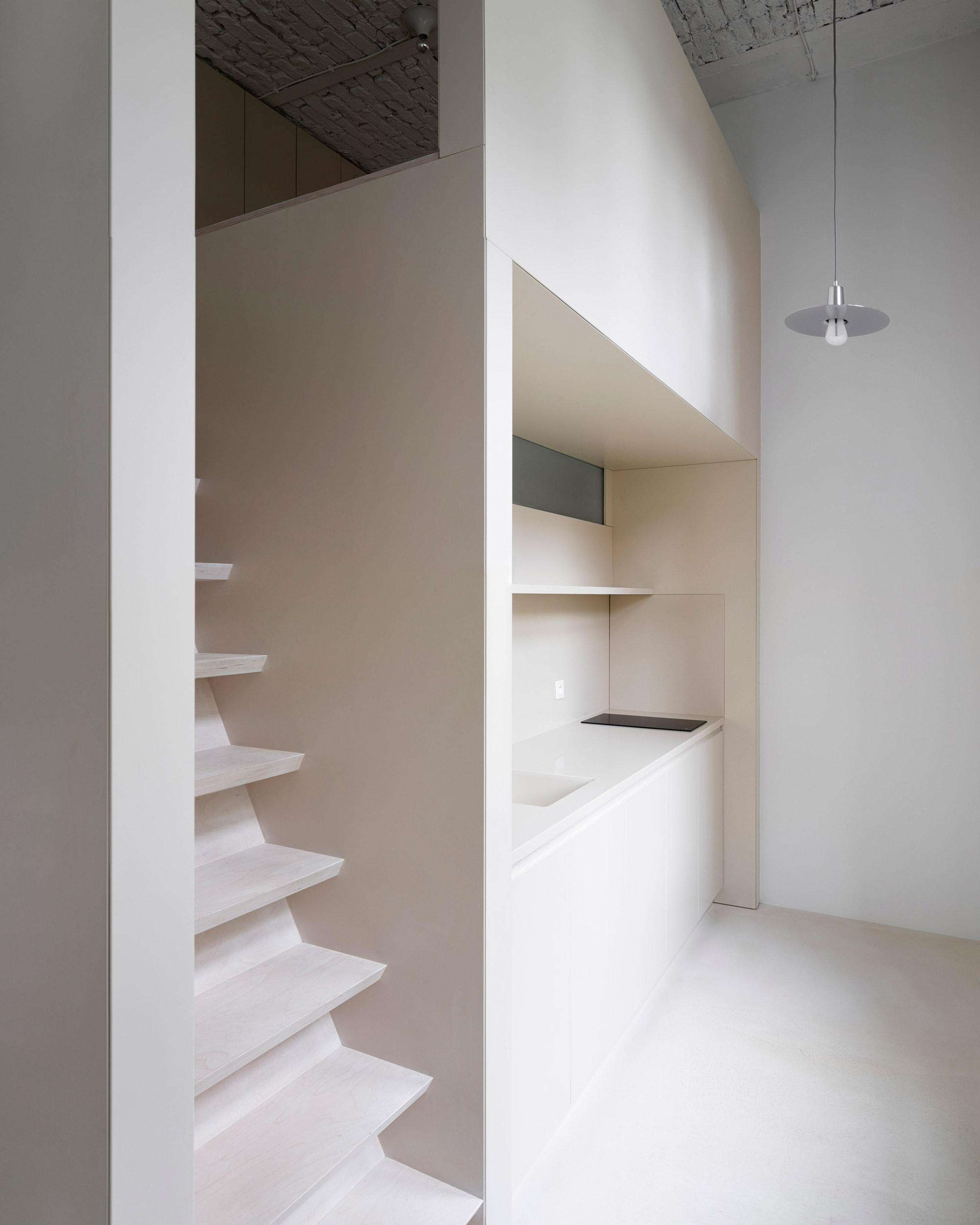
The top of the volume has been made into a mezzanine level bedroom, accessed by a short flight of steps also crafted from pine plywood.

Guests can alternatively sleep on the pull-out bed that extends from the bottom of the staircase.

K907 holiday apartment designed by Thisispaper Studio

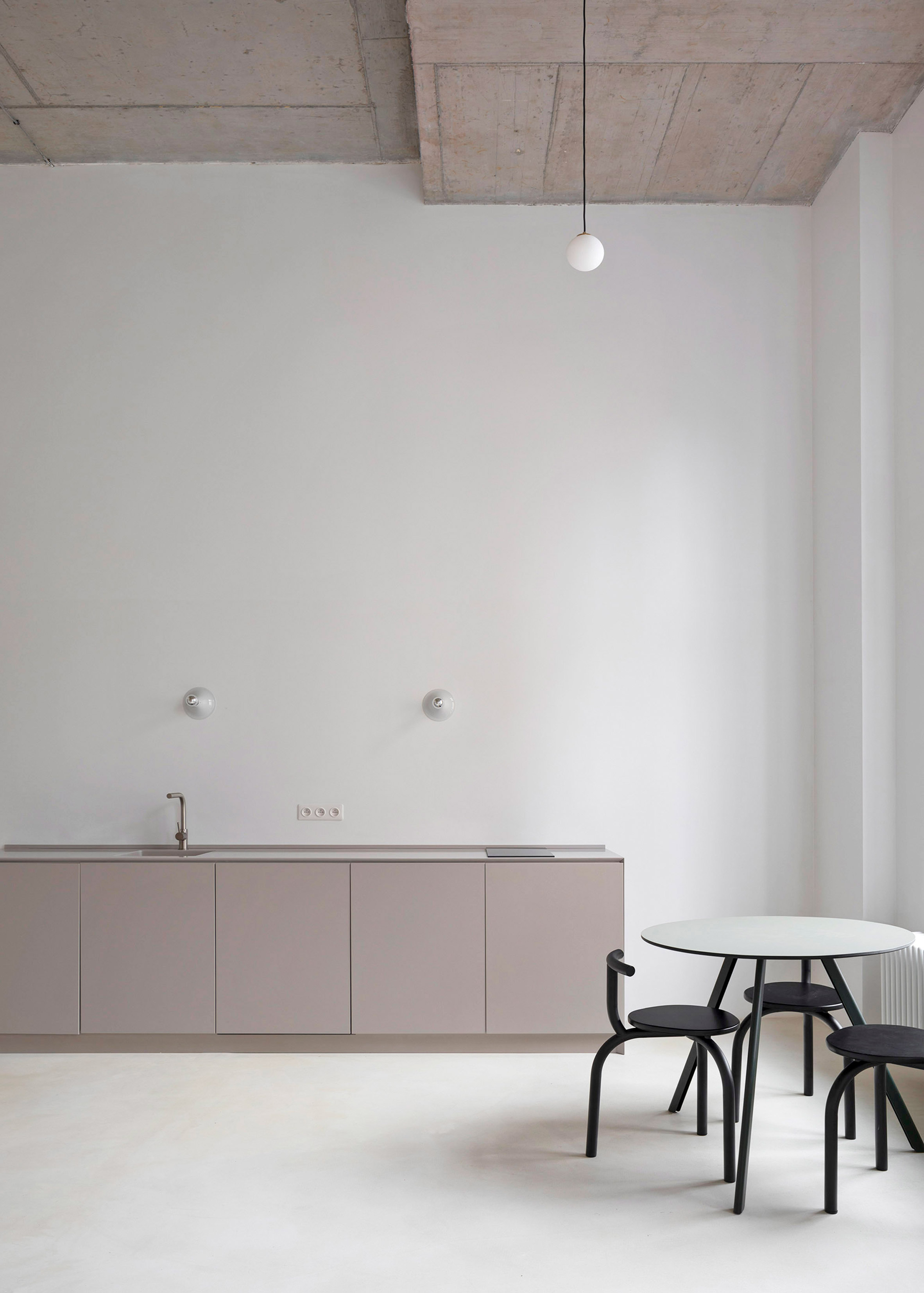
On the idea side of the rooms lies a kitchenette, complete with mauve-coloured cupboards.

A handful of furnishings have been dotted throughout, including an armchair by Norwegian designer Terje Ekstrom​for with a wobbly tubular frame, and geometric dining seats by Hayo Gebauer.

Circular brass sconces have also been mounted on the walls, while shiny chrome pendant lamps dangle from above.

K907 holiday apartment designed by Thisispaper Studio

The K907 apartment is similarly dominated by a box-shaped volume, but this is instead made from plain panels of pine plywood.

It also has a square-cut out that peeks through to the mezzanine bedroom, while below there are wash facilities and an in-built kitchen suite.

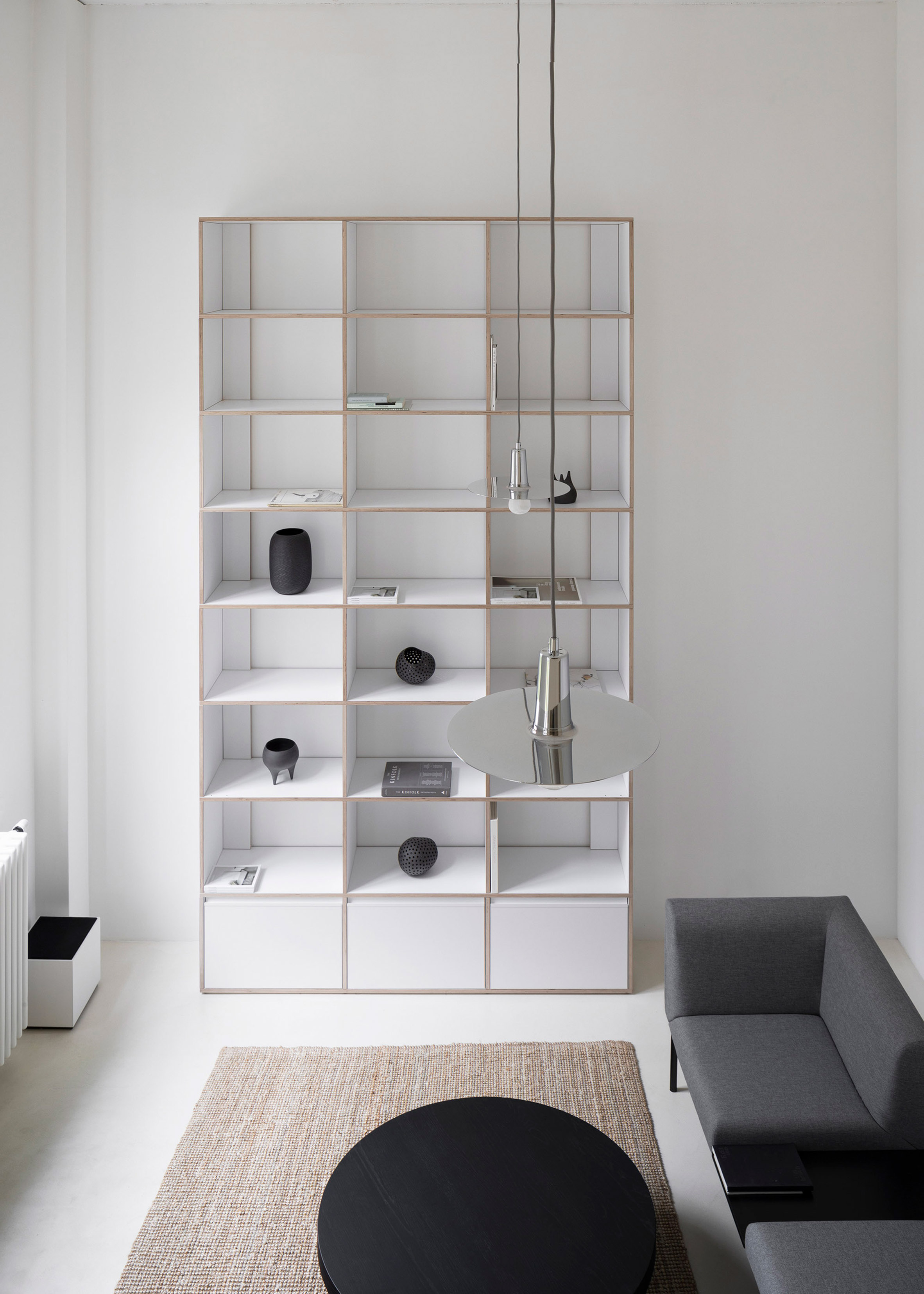
A towering gridded shelf features in the adjacent living room, which displays various black ceramic ornaments.

K907 holiday apartment designed by Thisispaper Studio

The space is otherwise dressed with a woven rug, chunky coffee table by Philippe Malouin and a dark-grey sofa by local designer Maja Ganszyniec, which appears to be split in half.

"These are objects which we desire to constantly look at, we highly appreciate their form and how they function," added Gasior.

K907 holiday apartment designed by Thisispaper Studio

Thisispaper Studio was established in 2011 by Zuzanna Gasior and Alexander Zakharov. Back in 2016, the studio converted a Soviet-era dental clinic in Warsaw into its own design store where it sold an array of books, Japanese tea and lifestyle products.

Its interior featured resin flooring, birch plywood furnishings and a floor-to-ceiling shelving unit composed of stacked hollow boxes.

Photography is by Maja Wirkus.

The post K916 and K907 are a pair of pared-back holiday apartments in Warsaw appeared first on Dezeen.


from Dezeen https://ift.tt/3674yw8

Saturday, 16 May 2020

Studio ThusThat creates objects from "overlooked" byproducts of the copper industry

Studio ThusThat creates objects from "overlooked" byproducts of the copper industry

Multidisciplinary collective Studio ThusThat explored the "invisible" material of copper as a low-carbon alternative to concrete when developing its This is Copper furniture collection.

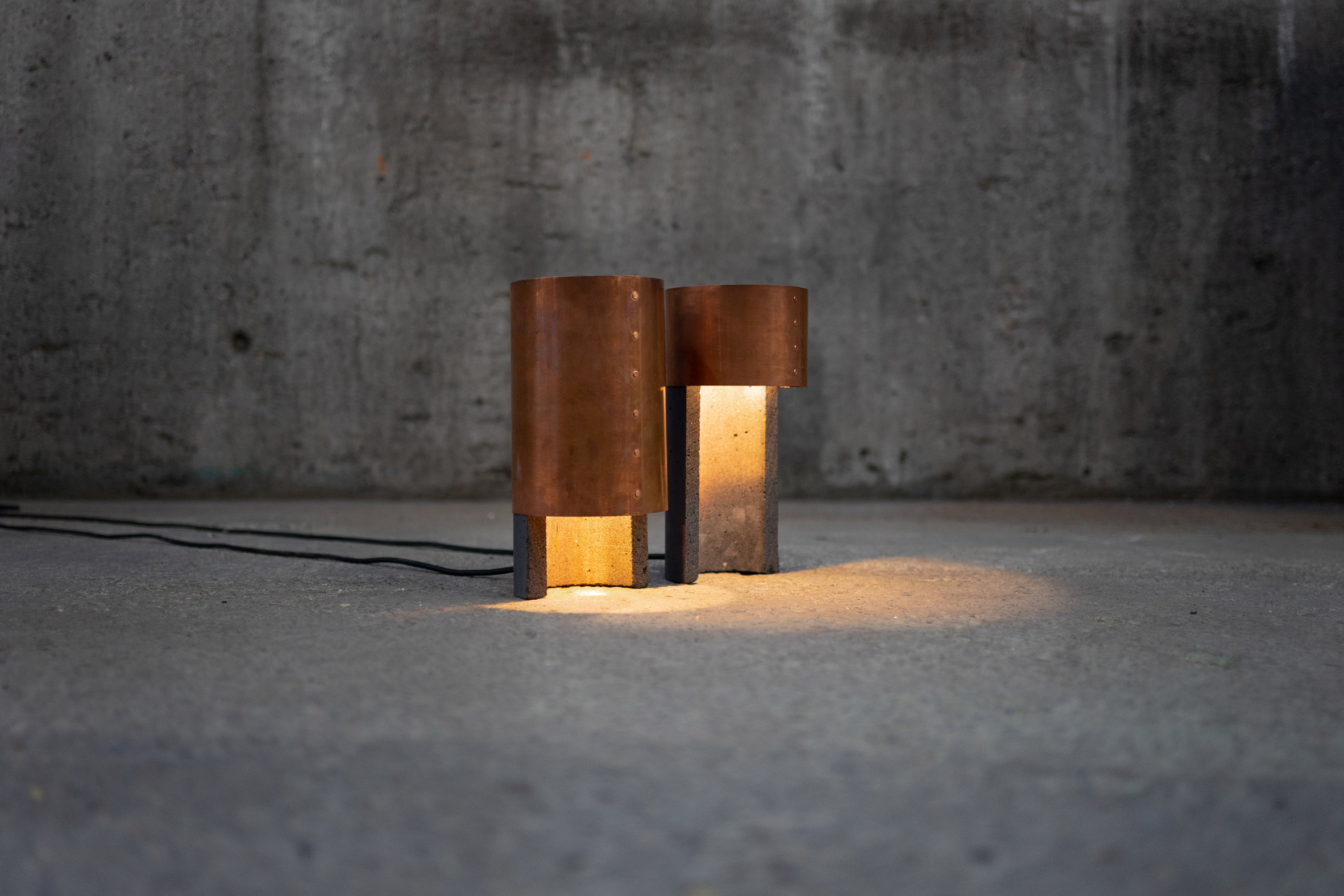
Made using waste taken from a copper factory in Belgium, This is Copper comprises a series of objects including chairs, lamps and mirrors.

Each piece aims to demonstrate the potential of copper as a more sustainable alternative to cement, the production of which accounts for around eight per cent of global CO2 emissions per year.

Studio ThusThat creates objects from "overlooked" byproducts of the copper industry
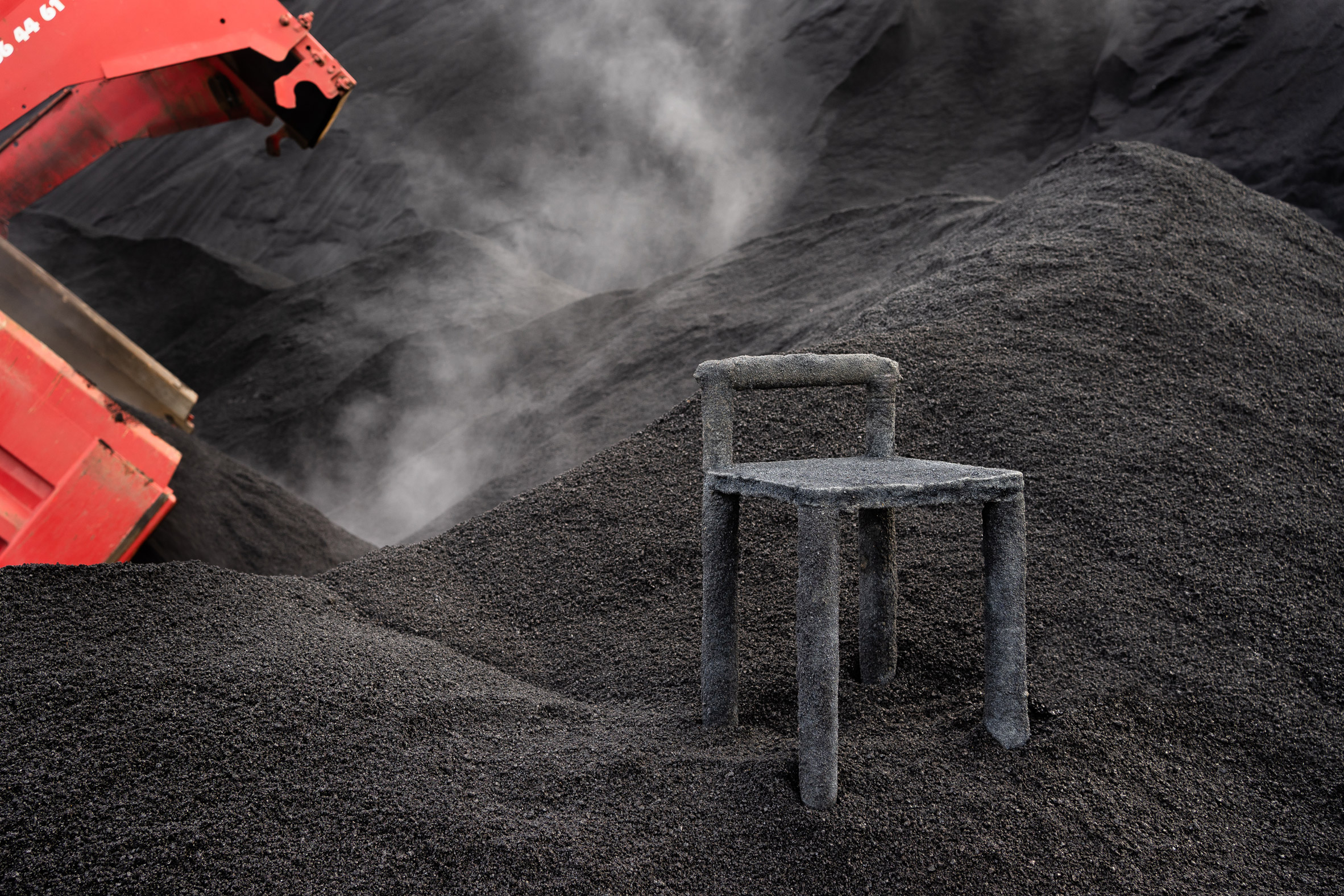
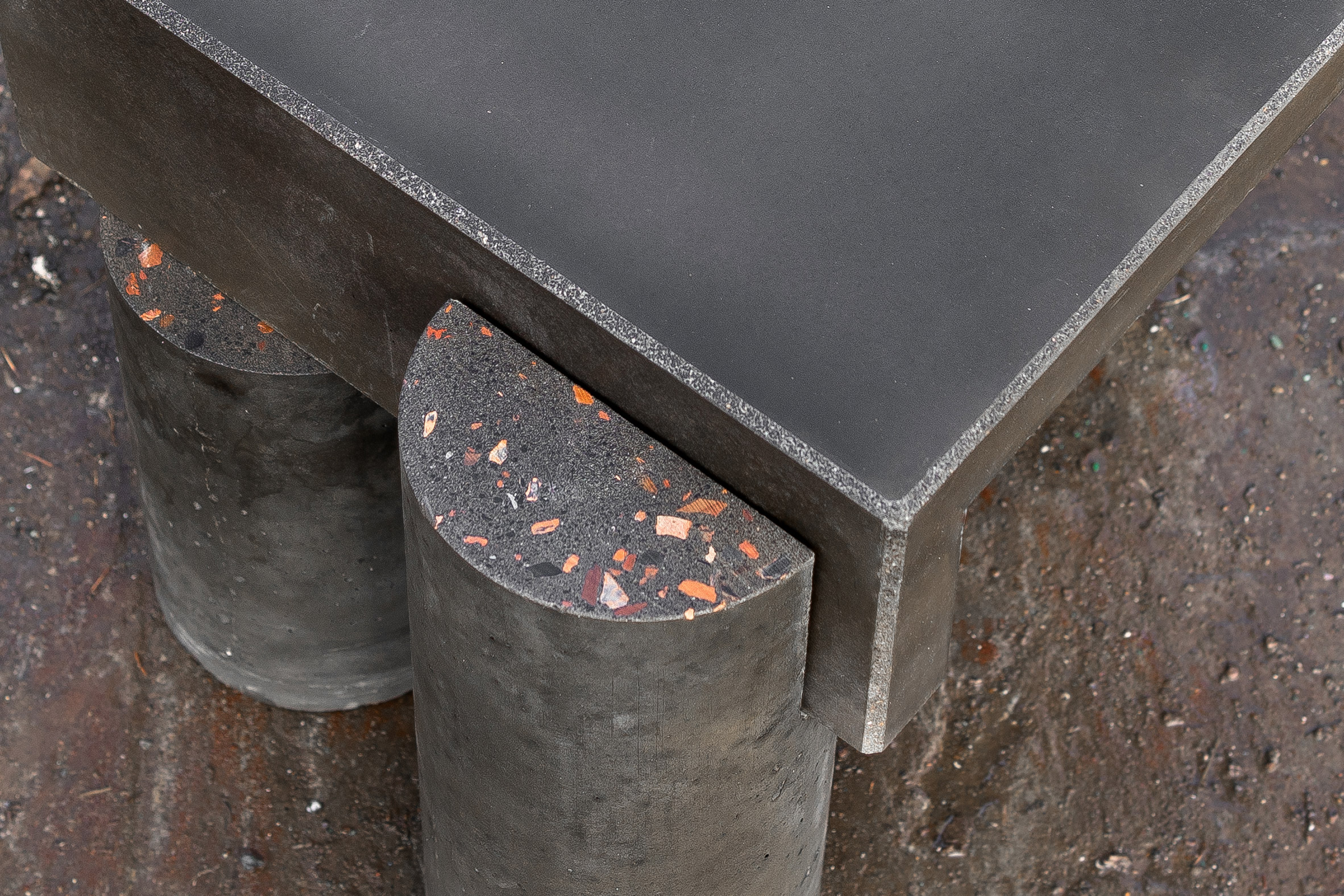
The studio used waste copper to create a collection of furniture and homeware objects, including this Column Chair

Royal College of Art (RCA) graduates Kevin Rouff, Paco Böckelmann and Guillermo Whittembury – who make up Studio ThusThat – experimented with various production processes to expose different characteristics and aesthetics of the material.

They focused on one particular waste called slag, which is the leftover impurities of the copper smelting process.

Studio ThusThat creates objects from "overlooked" byproducts of the copper industry
Studio ThusThat  used slag in a more refined, powdered form and a coarser, sand form

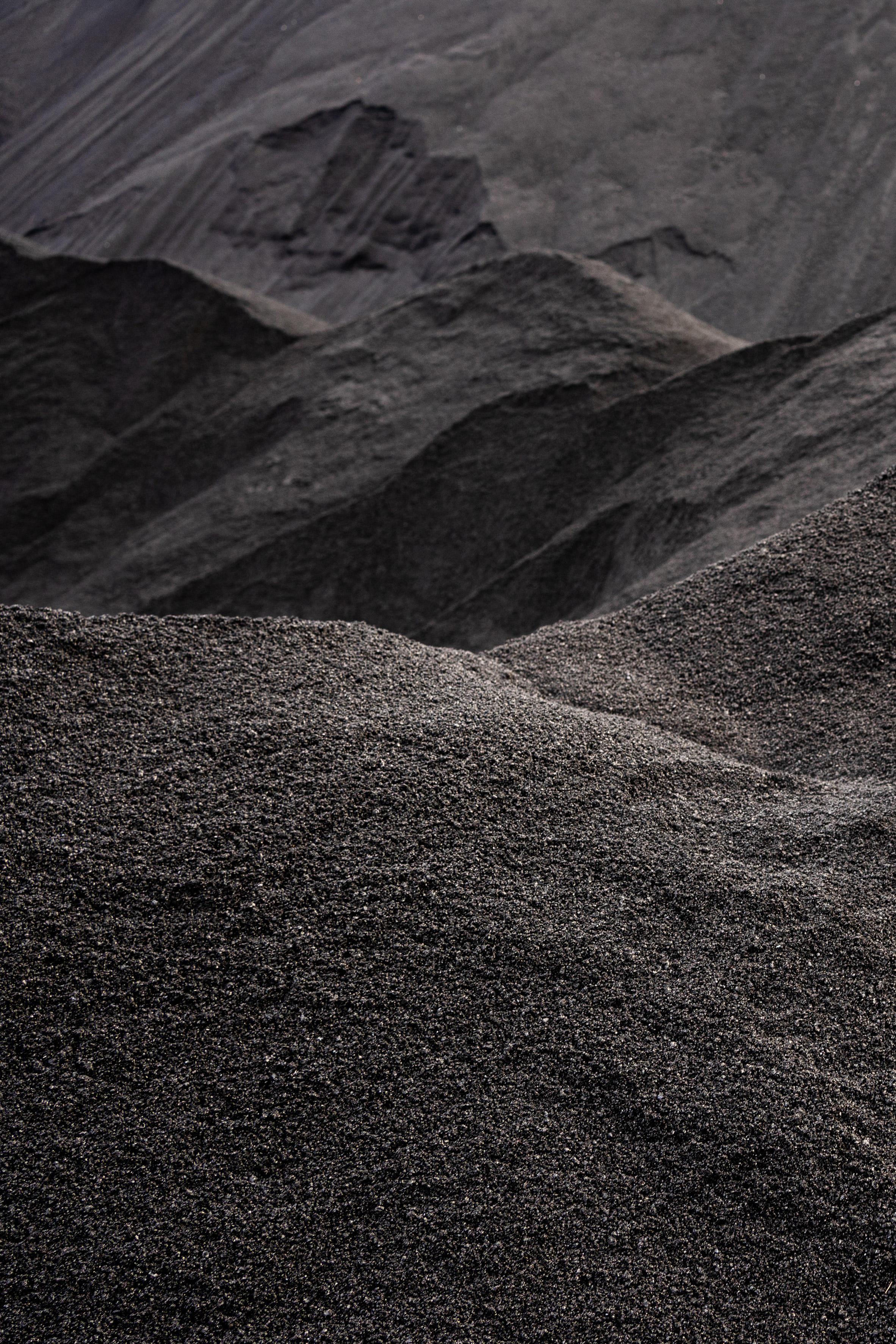
They used two forms of slag: sand and powder. In its raw form, slag looks "just like sparkly black sand".

It is poured in a molten state – which the designers describe as "man-made lava" – into water where it cools rapidly to form a black, glassy stone before shattering into small glassy pieces. It is then piled up in large, black mounds.

Due to the high temperature of the refining process, the slag is primed at a molecular level in such a way that it can be crushed into a powder and activated by an alkali.

This causes the chain reaction of internal bonds to form – resulting in a geopolymer. This means the slag can be used as both a binder and an aggregate by combining its powder and raw coarser forms.

"It replaces the need for cement entirely," said the designers.

Studio ThusThat creates objects from "overlooked" byproducts of the copper industry
The project, which also saw the studio create lamps, demonstrates the potential of copper as a low-carbon alternative to concrete

The slag geopolymer does not release CO2 in its formation, nor does it use much water, resulting in a carbon footprint that is around 77 per cent smaller than standard cement.

It also boasts a high resistance to heat and shock, corrosion and acid, as well as a high compressive strength and better durability than cement.

Studio ThusThat creates objects from "overlooked" byproducts of the copper industry
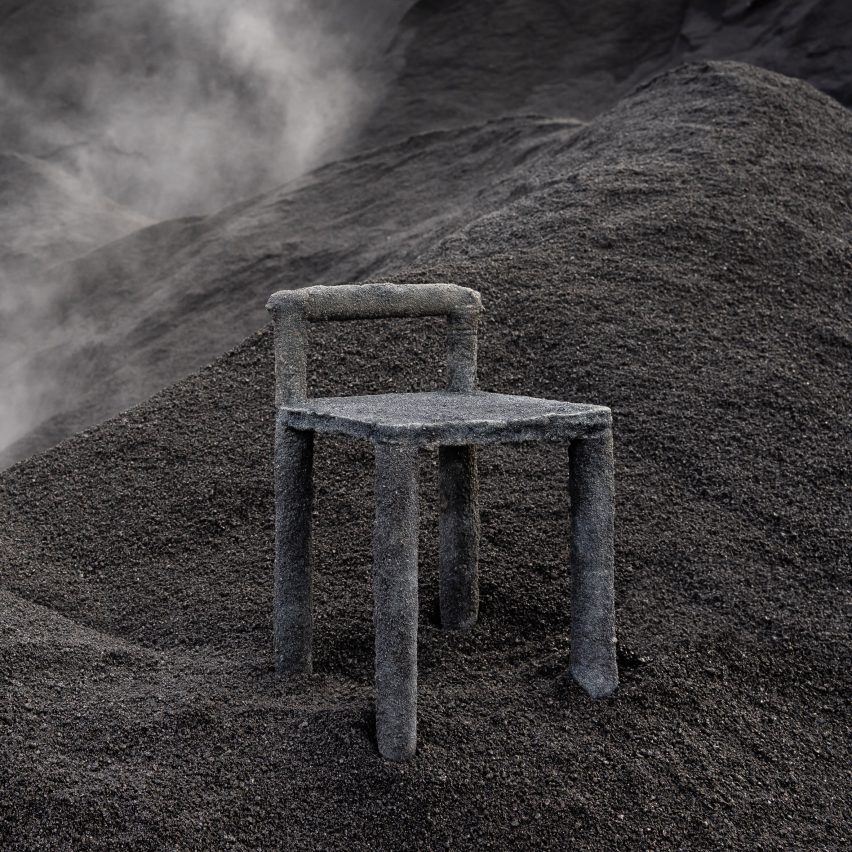
The Sparkly Black chair was cast directly into a pile of coarse copper slag

Working alongside the researchers of KU Leuven, the team explored how far they could push the material by using various techniques to reap different effects and end results.

They wanted to explore the material in its raw state when making the Sparkly Black chair, which was cast directly into a pile of coarse copper slag – similar to the traditional sand-casting process.

Studio ThusThat creates objects from "overlooked" byproducts of the copper industry
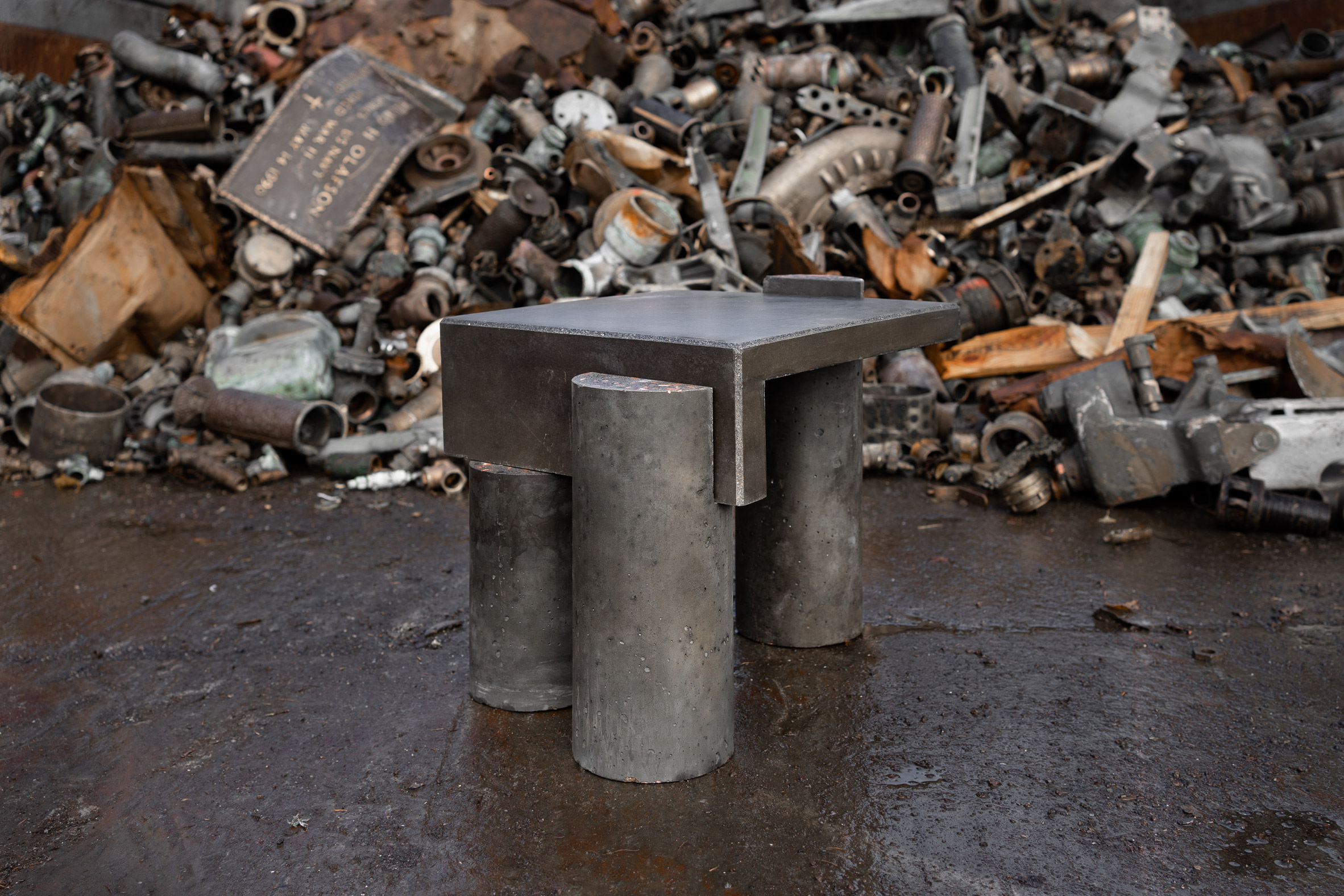
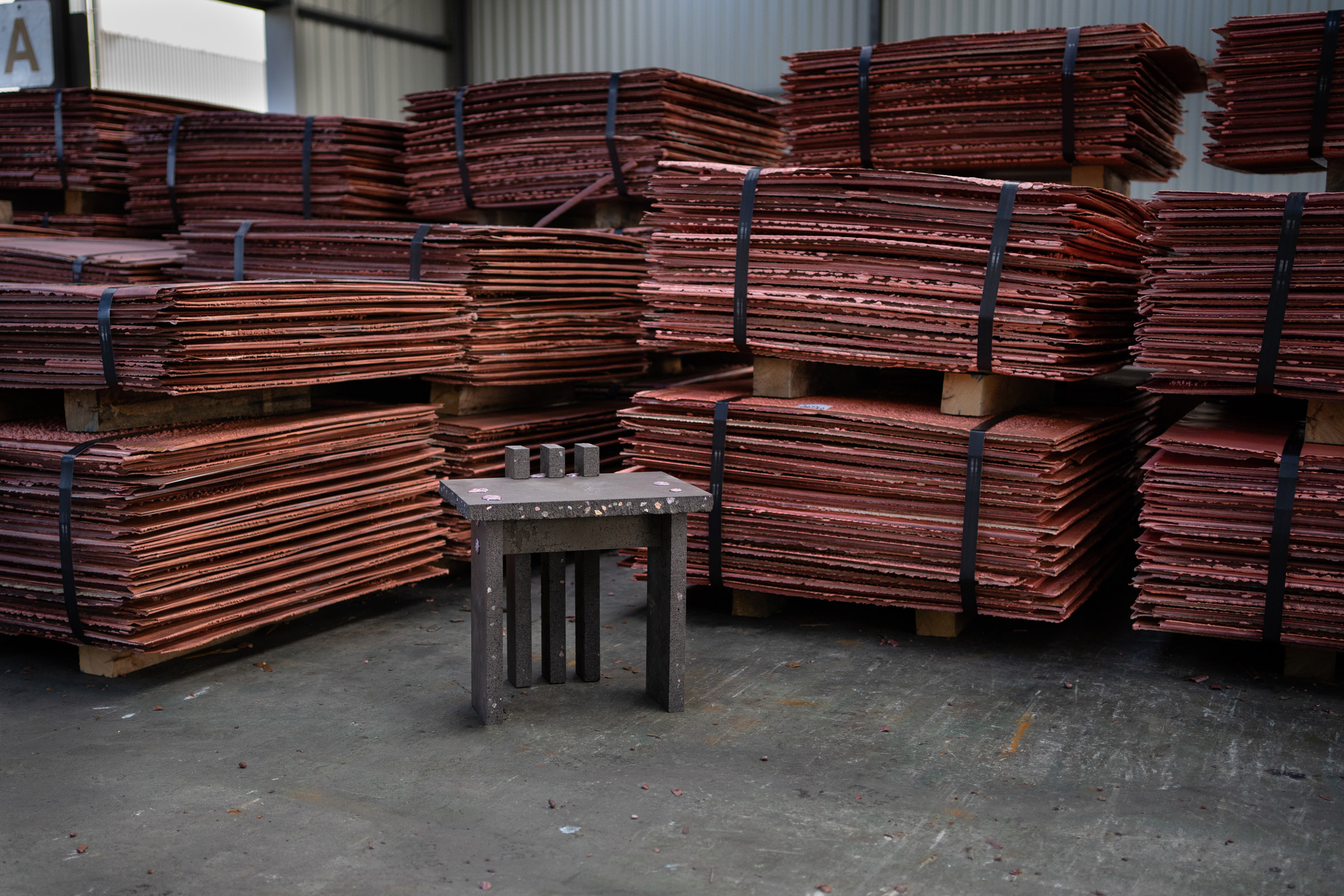
To make the Molten Chair, the designers joined slabs of copper together with molten copper

The Cobbed Chair, on the other hand, was made by shaping the mortar paste over a form by hand. As a result, it boasts a more organic, irregular form.

For the more refined, blocky Molten Chair, the designers joined slabs of copper together directly with molten copper – this thermal shock process would normally not be possible with Portland cement.

Studio ThusThat creates objects from "overlooked" byproducts of the copper industry
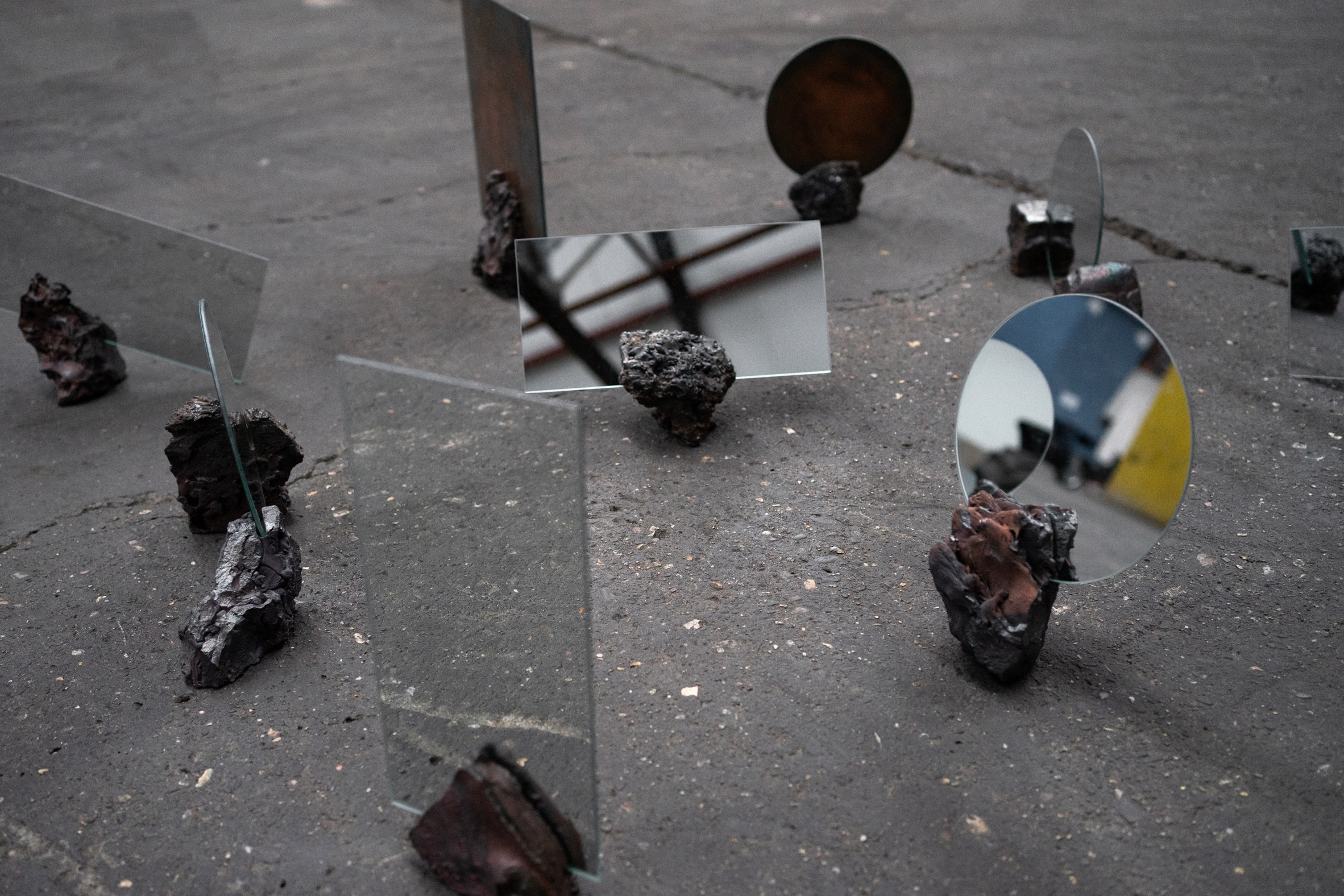
Studio ThusThat also used waste copper to create mirror holders

When starting the project, the RCA graduates asked themselves "what exactly is copper?".

"The metal we know is only part of a much wider material story," said the designers. "Mining overburden, tailings, metal concentrates, rare metals like gold and silver, sulfuric acid, sulphate solution, slag, and more."

"All of this is copper, or in other words is a direct result of processing, using, and recycling copper," they continued.

"This project exposes and proposes potential uses for these overlooked byproducts as we continue to search for new ore streams."

Studio ThusThat creates objects from "overlooked" byproducts of the copper industry
The project aims to showcase the "overlooked" potential of copper byproducts

Studio ThusThat, who are based in London and Amsterdam, were featured as the first designer in the VDF studio profiles series.

In the profile the designers explained how they hope their project will help to tell a more complete account of the primary metal.

"Studio ThusThat aims to overturn how we understand our material world by uncovering their hidden backstories, digging into their origins, and exploring that which was left behind as waste," they explained.

"Copper is ubiquitous to our modern world, yet it is largely invisible," the designers added. "It is the oldest metal mined by humankind, with ancient uses dating back 8,000 years. The metal was historically used for its malleability and antimicrobial properties (indeed, even against viruses)."

"Today, it is crucial for a renewable future: a wind turbine alone can contain up to five tonnes of copper, and 10 tonnes of the metal are needed per kilometre of high-speed railway."

Studio ThusThat previously worked with the waste taken from aluminium production, recycling toxic red mud residue into a series of earthy tableware objects for their From Wasteland to Living Room project.

The post Studio ThusThat creates objects from "overlooked" byproducts of the copper industry appeared first on Dezeen.


from Dezeen https://ift.tt/3cQBbB3

AR Copy Paste tool allows users to capture images of physical objects and drop them into a computer

AR Copy Paste by Cyril Diagne

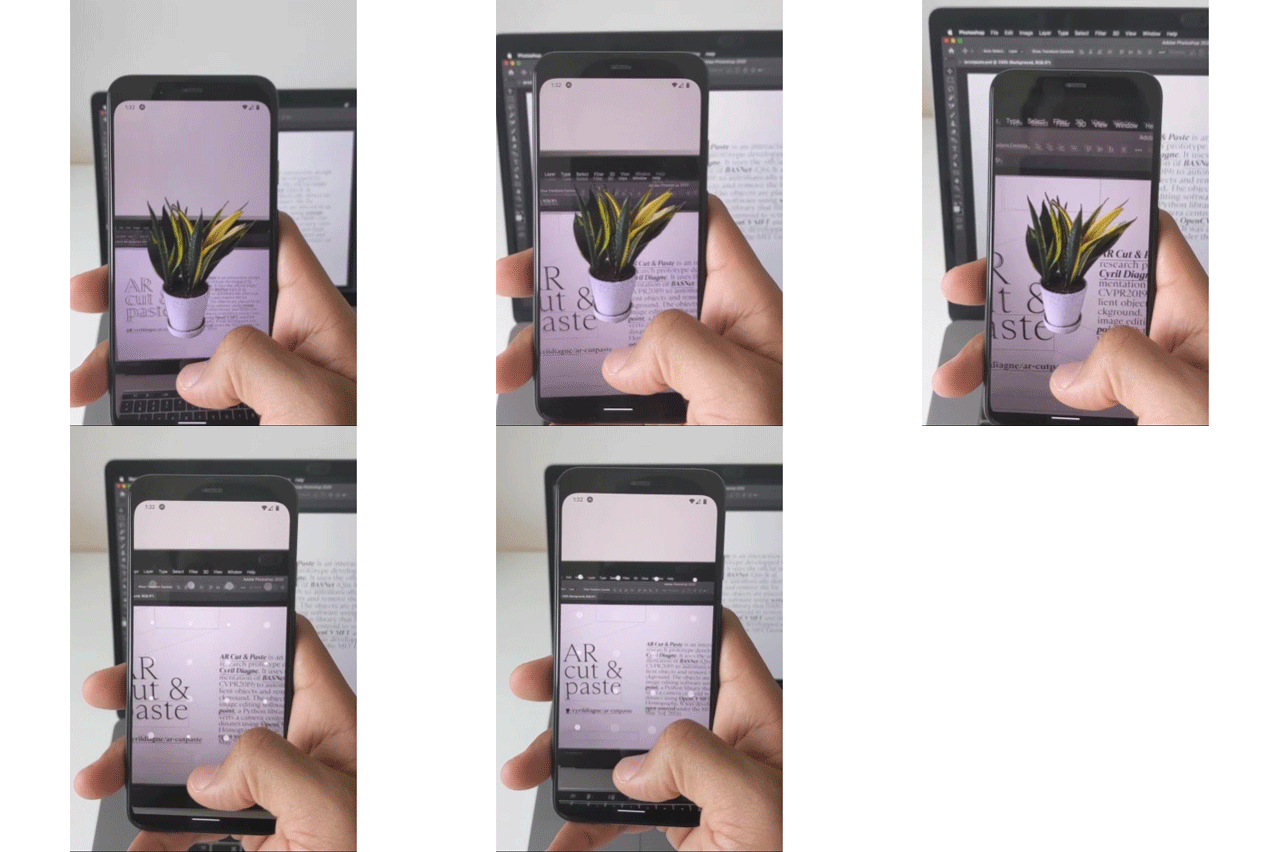
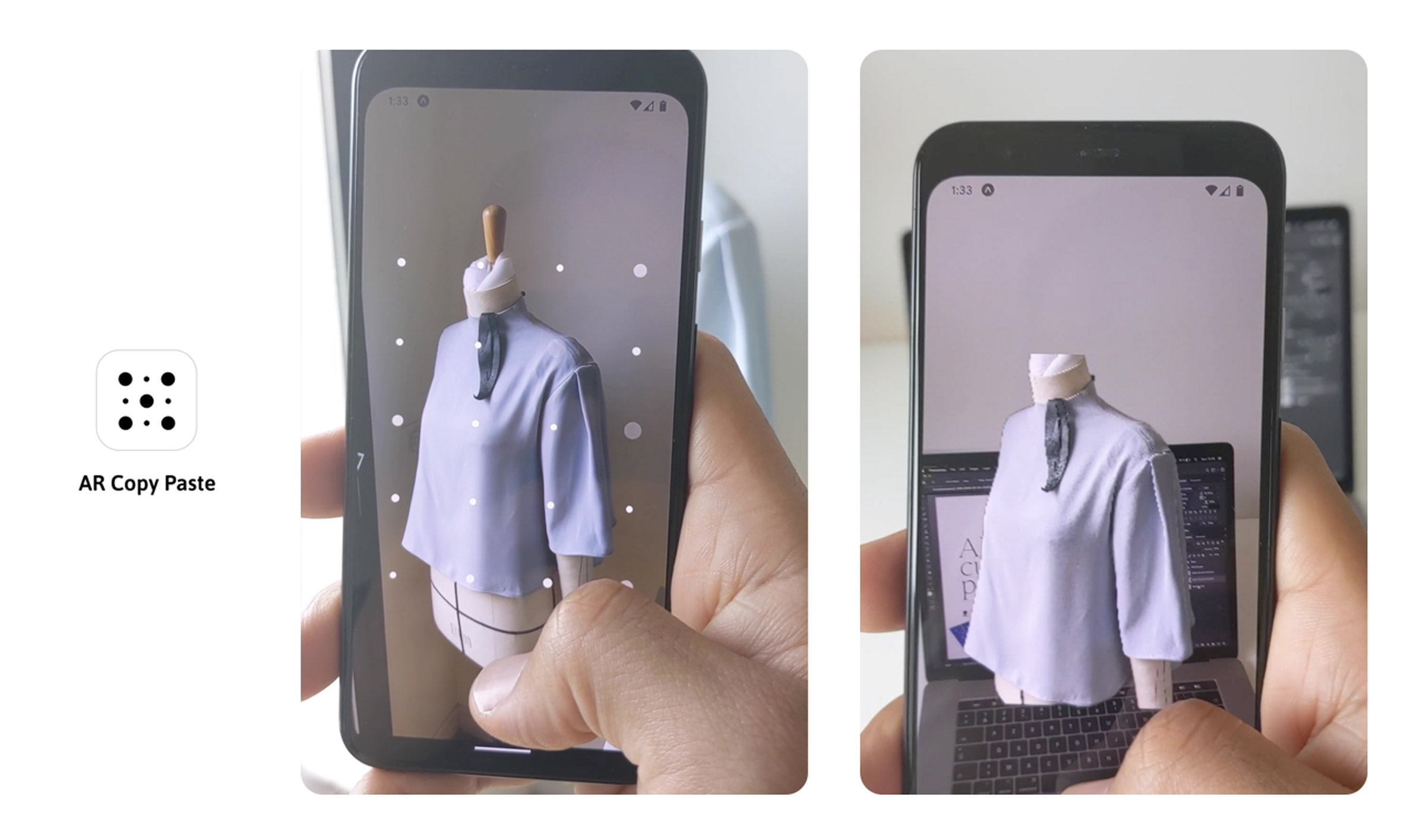
Designer and programmer Cyril Diagne has created an augmented reality tool that can capture images of real-world objects and add them to a computer program in a few seconds.

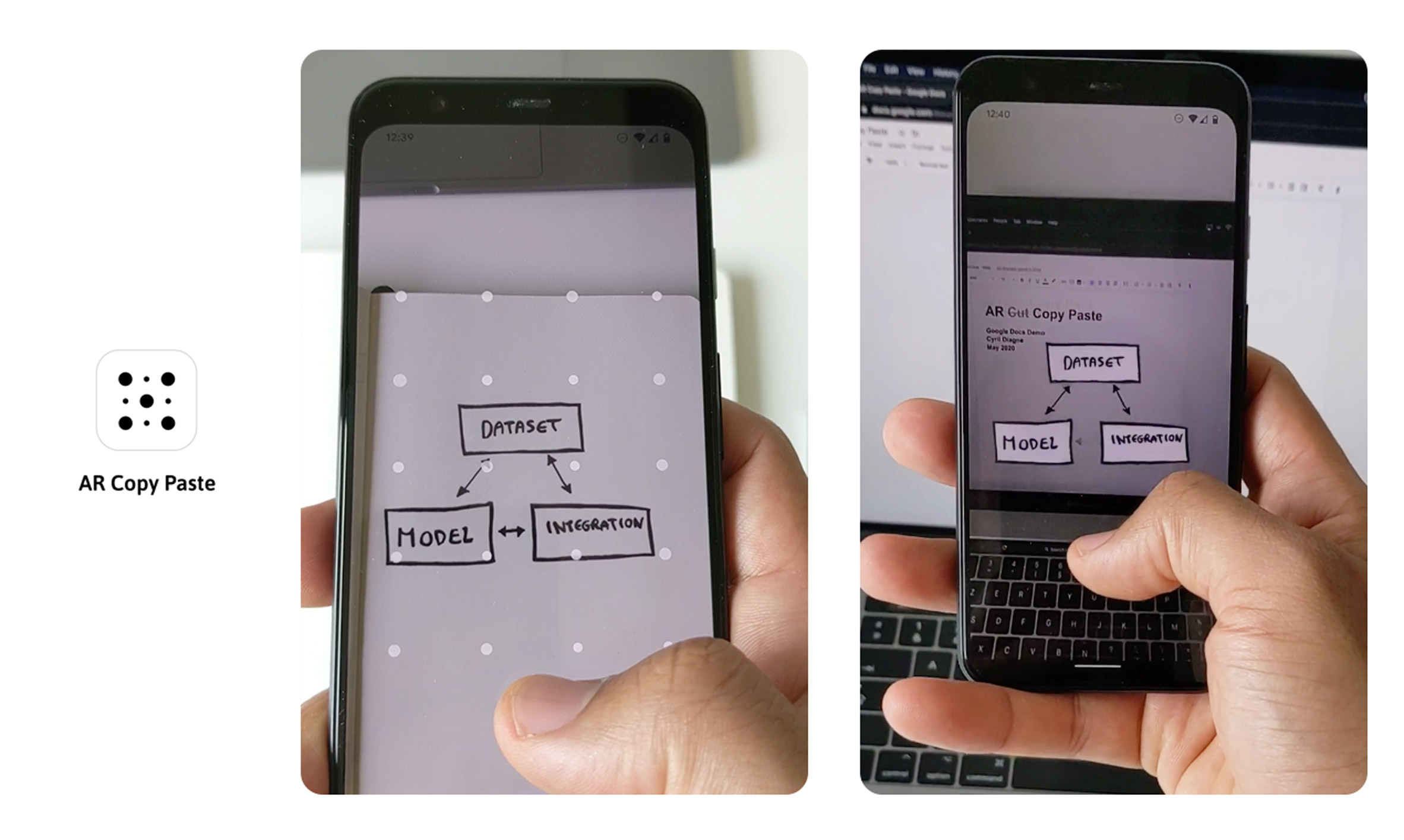
AR Copy Paste allows users to take a photo of an object in the real world and drop the image into a desktop computer program with a few simple actions on their smartphone.

The app uses augmented reality (AR) and machine learning technology to detect objects in the real world and isolate the image so that the background is automatically removed. Users then move the smartphone over their computer screen to paste the object image into a compatible computer program, such as Photoshop or InDesign.


View this post on Instagram


A post shared by Cyril Diagne (@cyril.diagne) on

Diagne previewed the prototype on Instagram


Diagne said the application has meant a process that usually takes a few minutes or hours, can now be achieved in a few seconds.

"Thanks to modern developments in machine learning, it is now possible to precisely detect people and objects around you, remove the background automatically, and transfer the result to virtually any software on your computer," Diagne told Dezeen.

AR Copy Paste can be used on Android, iOS and desktops in conjunction with a number of apps, such as Adobe Creative Suite, Powerpoint, Keynote, MS Paint and Google Docs.

The designer used open-source technologies developed as part of two research projects: the Boundary-Aware Salient Object Detection (BASNet) and Scale Invariant Feature Transform (SIFT).

AR Copy Paste by Cyril Diagne

BASNet enables the app to detect the object and remove the background, while SIFT matches coordinates on the phone with the computer screen, to ensure the object is placed where the user wants it.

"AR Copy Paste originates from personal research in interaction design, exploring how machine learning can help make our interactions with digital systems more natural," Diagne explained.

AR Copy Paste is the latest in a series of tests created by Diagne, a Google artist-in-residence.

This time he was surprised by the response to the prototype, with many saying how it could be helpful for a number of tasks like creating presentations, content for social media and online selling, and decided to turn it into an application.

AR Copy Paste by Cyril Diagne

"The use cases described by such a large and diverse group of creatives made a lot of sense and motivated a couple of friends and me to turn the prototype into a real application that anyone can use," Diagne said.

A number of projects have employed AR recently in response to the limited real-life interactions caused by coronavirus lockdowns.

Danish-Icelandic artist Olafur Eliasson has created the AR Wunderkammer works, which enables people to bringing rare natural matter, including a burning sun and a sprightly puffin, into their homes.

Designer Sebastian Errazuriz, meanwhile, launched an online exhibition that allows collectors to preview artworks in their home. Errazuriz said the project provides an example of how the pandemic will encourage new ways to be creative.

The post AR Copy Paste tool allows users to capture images of physical objects and drop them into a computer appeared first on Dezeen.


from Dezeen https://ift.tt/2Tfq7FM