Monday, 18 May 2020

Poimo is an inflatable electric-scooter that can be transported inside a backpack

Poimo is an inflatable electric scooter that can be transported inside a backpack

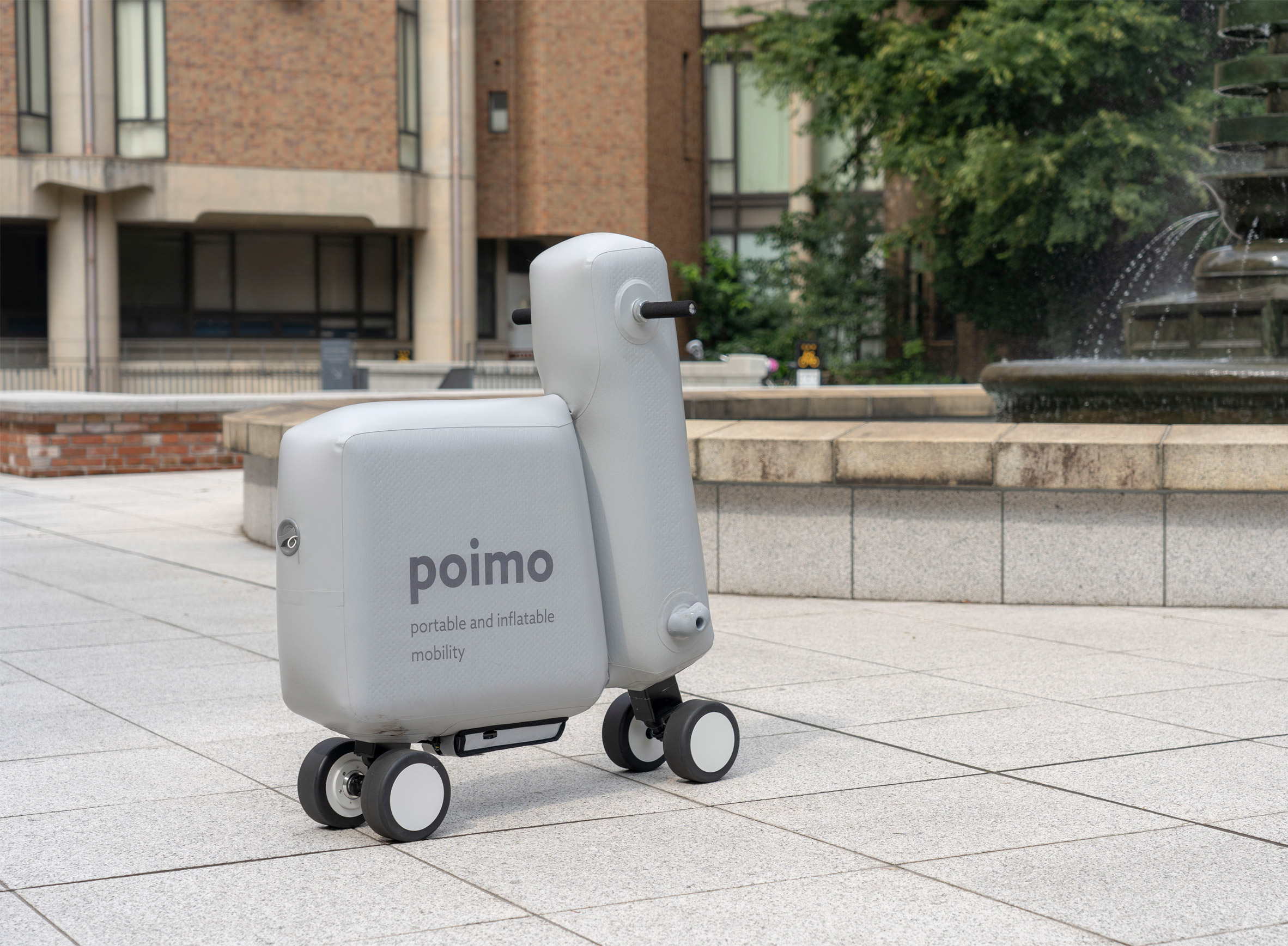
Research organisation Mercari R4D and students from the University of Tokyo have jointly developed an inflatable electric-scooter that riders can stash away inside their backpack.

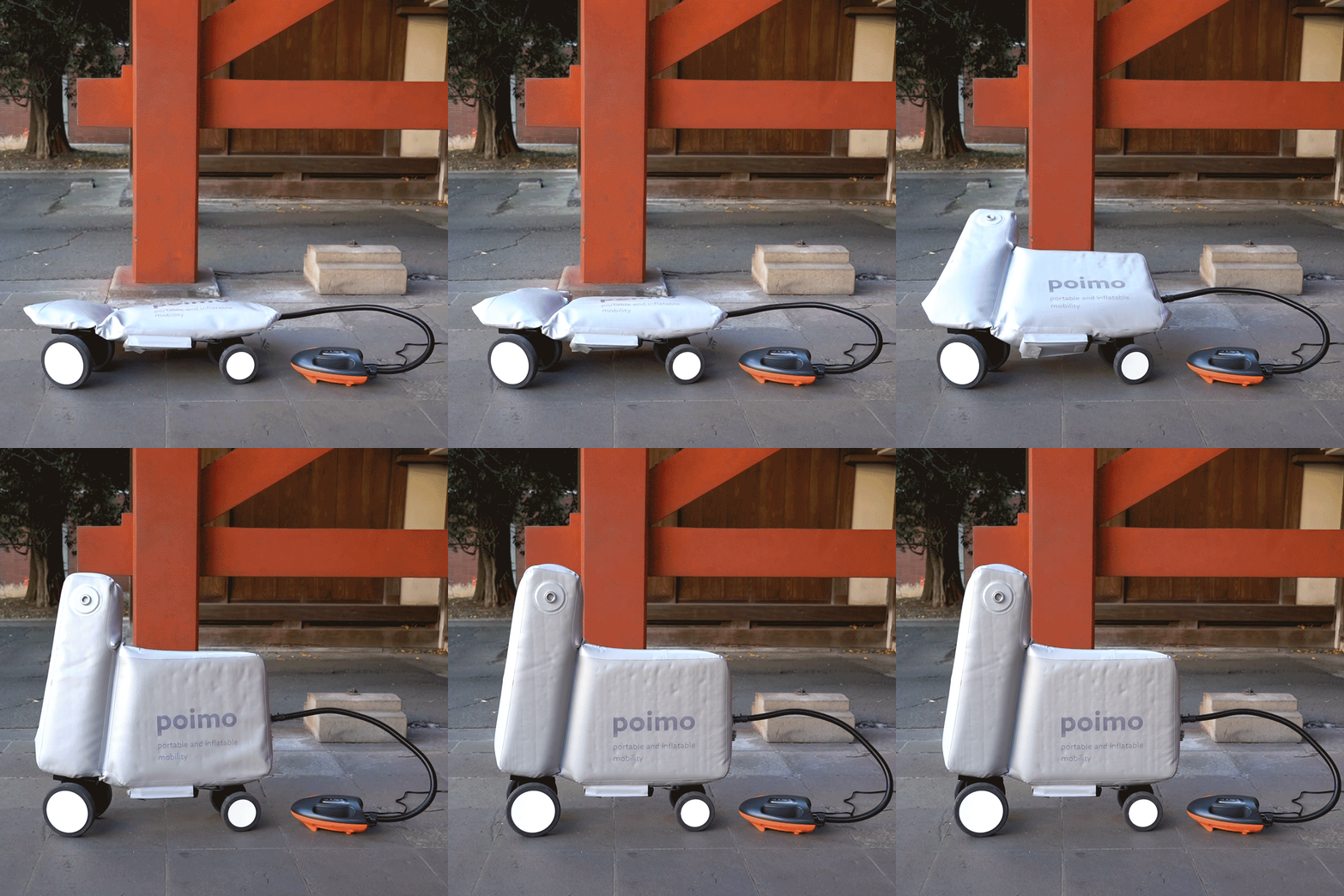
Called Poimo, which stands for portable and inflatable mobility, the scooter comprises a body made from thermoplastic polyurethane (TPU) and detachable components including handles, wheels, a battery and motor.
Poimo is an inflatable electric scooter that can be transported inside a backpack

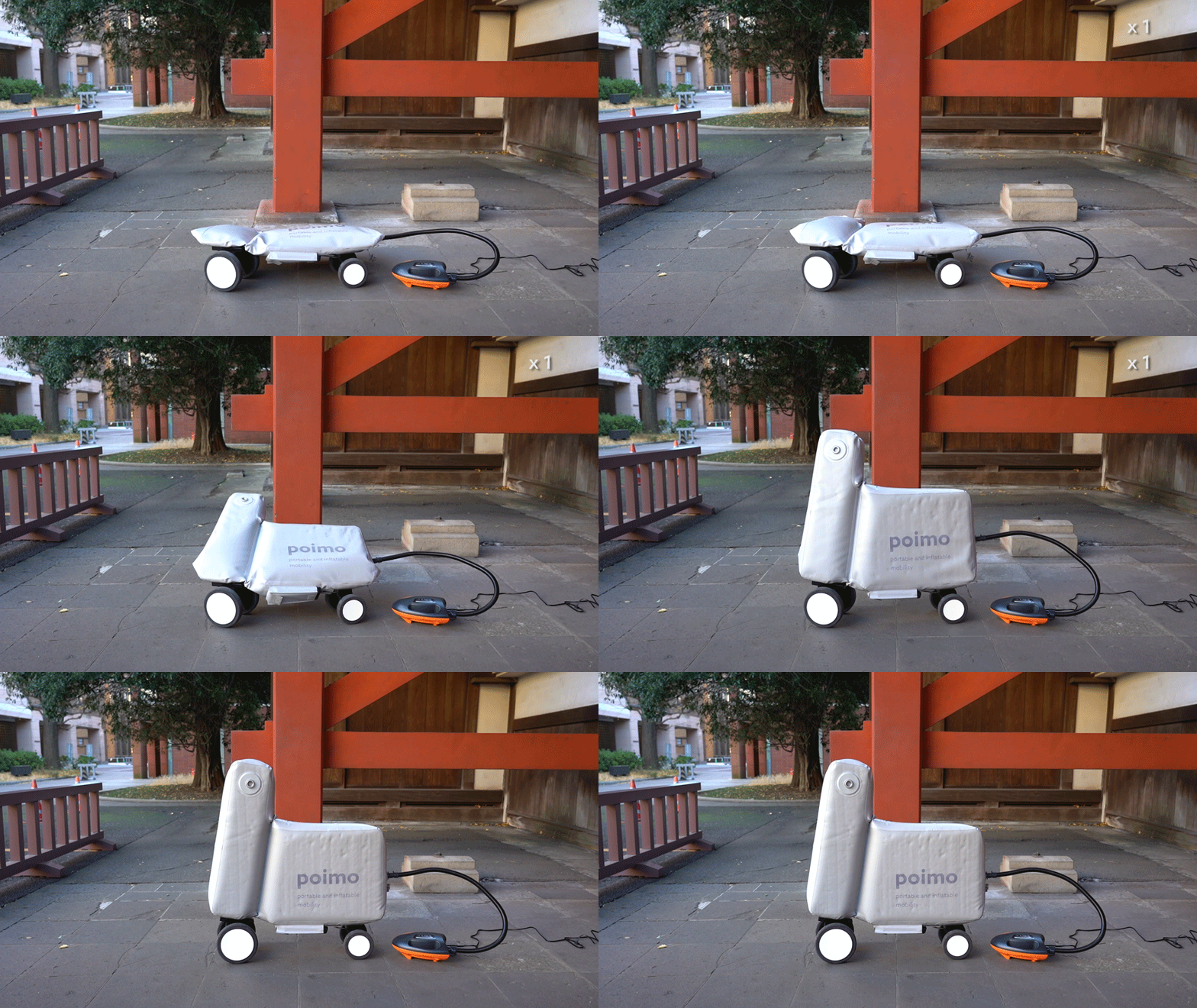
Likened by its creators to the inflatable robot Disney character Baymax, otherwise known as Big Hero 6, the body of the scooter can be inflated within minutes using a small pump.

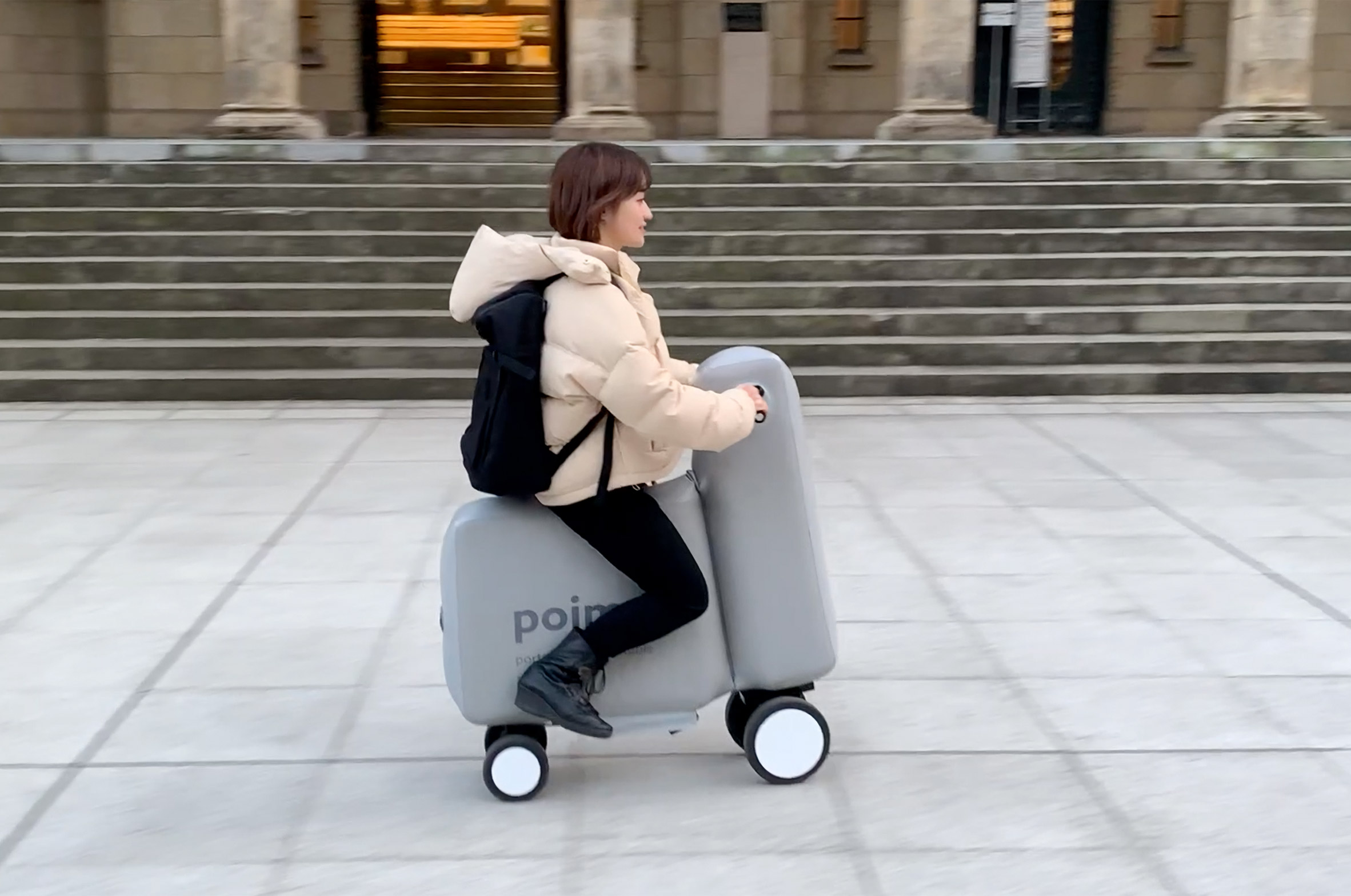
Designed for short trips around the city or last-mile journeys, the Poimo is light enough to be deflated, folded down and carried around in the user's bag, allowing them to get on and off anywhere they wish.
Poimo is an inflatable electric scooter that can be transported inside a backpack

Researcher Ryosuke Yamamura from Mercari R4D developed the wireless scooter in collaboration with four students from the University of Tokyo and designer Hisato Ogata from Takram studio.

Poimo was the result of developments in soft robotics technology and personal mobility – something the researchers call "soft mobility", designed to be soft, lightweight and inflatable.

Poimo is an inflatable electric scooter that can be transported inside a backpack

While many other micro-mobility solutions such as electric bikes, scooters or skateboards are used for last-mile journeys from a train station or bus top to the user's final destination, these designs still encounter issues in regards to portability, safety, and price.

This is down to their "rigid, heavy, and bulky properties", explained the Poimo designers.

"About 60 per cent of car trips in Japan are short distances, which is not very good in terms of congestion and greenhouse gases," they continued. "This is a similar situation in other countries."

"We believe that new mobility like Poimo is needed to replace this with short-range-only personal mobility."

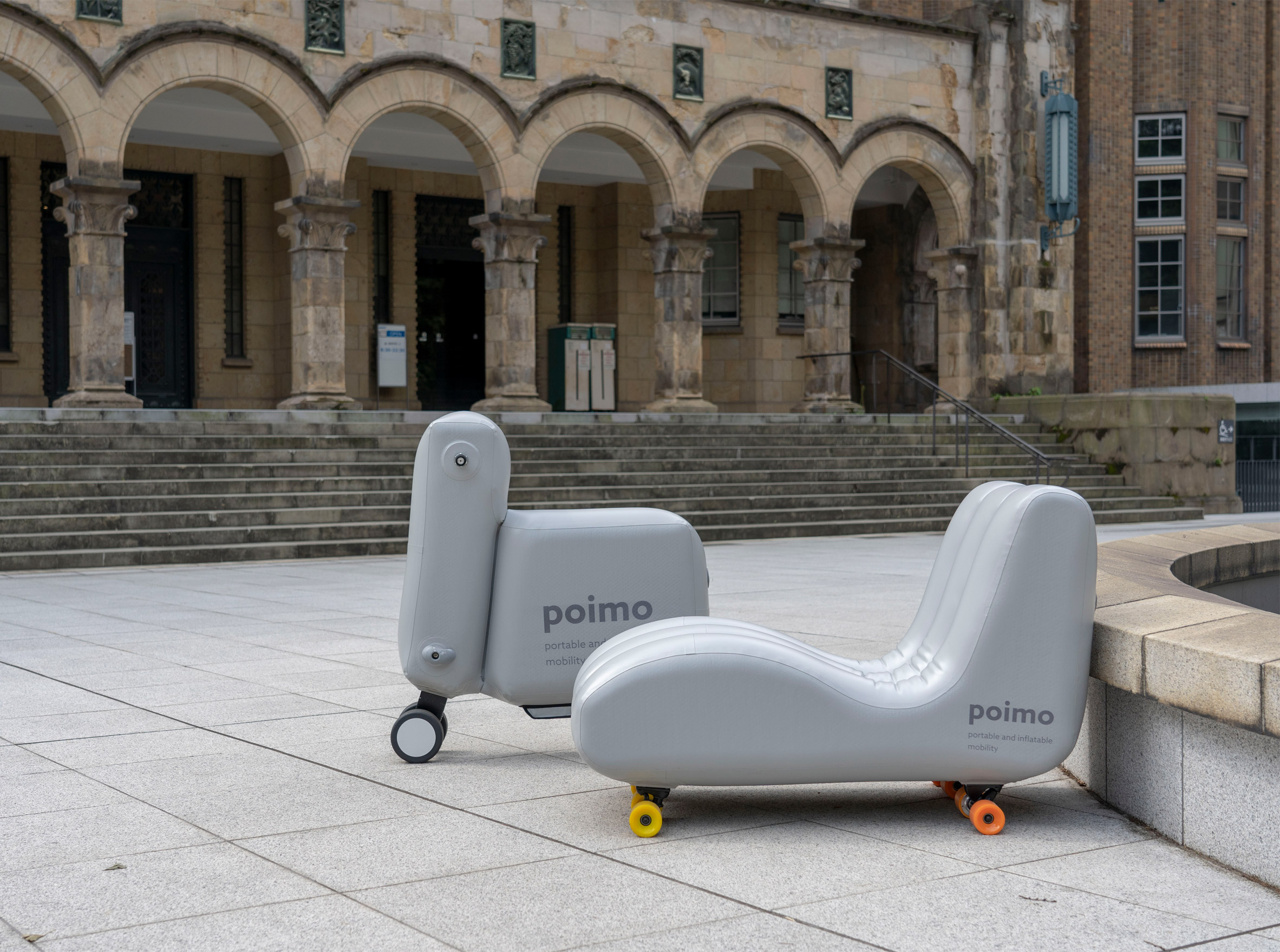
The rigid components of the scooter, which include two eight-inch front wheels, two six-inch rear wheels, a motor, a built-in wireless controller and a 70 by 110 millimetre-long battery, weigh around 5.5 kilograms in total.
Poimo is an inflatable electric scooter that can be transported inside a backpack

Poimo was born out of a discussion at a research camp attended by University of Tokyo students Hiroki Sato, Young Ah Seong, Ryuma Niiyama and Yoshihiro Kawahara.

Here they came up with the concept for an inflatable mobility solution that would be safe in a crash and portable when not in use.

According to the designers, the soft body would protect pedestrians as well as the rider in the event of an accident, creating a "new relationship between people and mobility".
Poimo is an inflatable electric scooter that can be transported inside a backpack

The inflatable characteristic of the scooter also means it can be easily customised, say the researchers. As the body is made from "pasted together" fabrics, the user can make it into whatever shape they desire.

While the scooter is currently just a prototype, Mercari R4D and the students claim that the final product will be lighter and even more portable than at present.

Electric scooters are becoming increasingly popular for city travel in a bid to alleviate the growing issue of congestion.

Layer teamed up with Chinese automotive company Nio to design its Pal e-scooter that uses artificial intelligence and machine-learning technology to autonomously take users on their preferred routes.

Hyundai also created a prototype scooter in September 2019 that folds down to the size of a backpack and weighs just 7.7 kilograms.

The post Poimo is an inflatable electric-scooter that can be transported inside a backpack appeared first on Dezeen.


from Dezeen https://ift.tt/3cHmvUp

Sunday, 17 May 2020

Kengo Kuma, Snøhetta, Marjan van Aubel and Adam Nathaniel Furman feature at VDF this week

VDF week six schedule

Week six of Virtual Design Festival features a collaboration with Prague's centre for architecture and urban planning CAMP, including a live interview with Kengo Kuma. We also team up with magazine Sight Unseen and Stockholm Design Week, plus we launch a new series of Screentime interviews featuring leading designers sponsored by Philips.

The new Screentime series, which profiles pioneering European designers, kicks off with live interviews with Marjan van Aubel and Adam Nathaniel Furman.

Our ongoing architecture Screentime series, sponsored by Enscape, continues with interviews with Harriet Harriss, Dara Huang and Eric Höweler.

Also in the schedule this week is a conversation with Ron Arad as part of our ongoing Design in Dialogue collaboration with Friedman Benda gallery.

To catch up on what you missed so far, check out the VDF weekly highlights posts looking back on what happened in previous weeks, and see the full VDF schedule. All times are UK times and are liable to change.


Monday 18 May

VDF x CAMP

Virtual Design Festival teams up with CAMP, Prague's centre for architecture and urban planning, on a day of talks from its Urban Talks series, beginning with a brand new lecture from Japanese architect Kengo Kuma.

10:00am Kengo Kuma live from Japan
1:00pm Snøhetta
3:00pm COBE
5:00pm Interboro

www.urbantalks.camp

2:00pm Screentime: Harriet Harriss

Harriet Harriss, dean of the Pratt Institute School of Architecture in New York, joins us for today's Screentime conversation in partnership with Enscape.


Tuesday 19 May

VDF x Sight Unseen

New York design magazine and platform Sight Unseen will present work from its stable of designers throughout the day. Sight Unseen co-founders Monica Khemsurov and Jill Singer will join Dezeen editor Marcus Fairs for a live interview at 4:00pm.

www.sightunseen.com

9:00am VDF x Friedman Benda

Designer Ron Arad features in the next of New York gallery Friedman Benda's Design in Dialogue interviews that we are publishing as part of VDF.

www.friedmanbenda.com

2:00pm Screentime: Dara Huang

Architect and founder of Design Haus Liberty Dara Huang features in our next live architecture Screentime interview sponsored by Enscape.

dhliberty.com


Wednesday 20 May

VDF x Stockholm Design Week

This celebration of Scandinavian design is being programmed by Stockholm Design Week and Stockholm Furniture & Light Fair.

VDF x Stockholm Design Week will present an overview of the local design scene and the Scandinavian shape of mind including video interviews, a design relay race, a behind-the-scenes look at a current exhibition exploring the outdoors, and some musical inspiration.

www.stockholmdesignweek.com

2:00pm Screentime: Marjan van Aubel

Today, we start a new series of live Screentime interviews featuring innovative European designers, which is sponsored by Philips TV and Sound. Award-winning solar designer Marjan van Aubel features in the first instalment.

marjanvanaubel.com


Thursday 21 May

2:00pm Screentime: Eric Höweler

Höweler + Yoon co-founder Eric Höweler features in today's architecture Screentime interview sponsored by Enscape.

www.howeleryoon.com


Friday 22 May

2:00pm Screentime: Adam Nathaniel Furman

London designer Adam Nathaniel Furman features in the second instalment of our Screentime design series profiling leading designers sponsored by Philips TV and Sound.

www.adamnathanielfurman.com


Virtual Design Festival is the world's first online design festival. Produced by Dezeen and running from 15 April to 30 June, it features a rolling schedule of interviews, movies, product launches, live streams and collaborations. To join the VDF mailing list or to find out more contact vdf@dezeen.com. Press information can be found here.

The post Kengo Kuma, Snøhetta, Marjan van Aubel and Adam Nathaniel Furman feature at VDF this week appeared first on Dezeen.


from Dezeen https://ift.tt/3cHhE5D

Contaminar Arquitetos designs Casa Povo to be an "inhabited and humanised cave"

Contaminar Arquitectos designs Casa Povo to be an "inhabited and humanised cave"

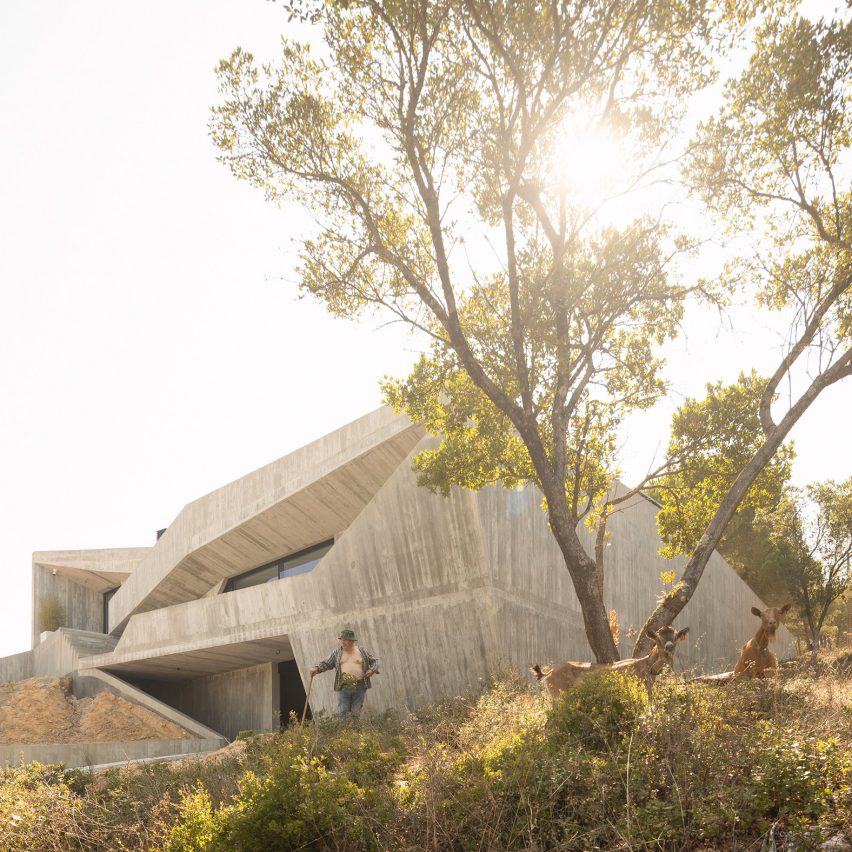
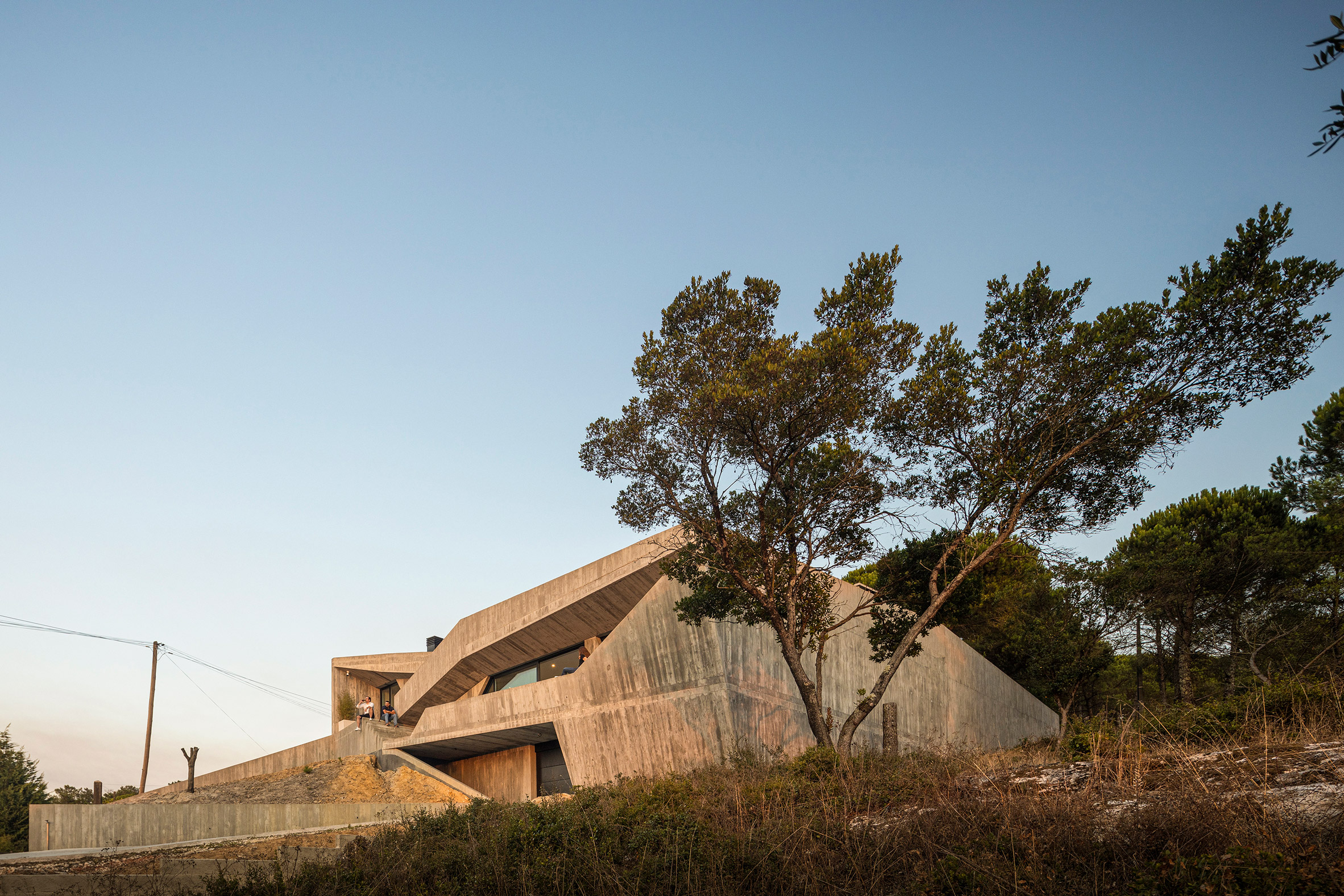
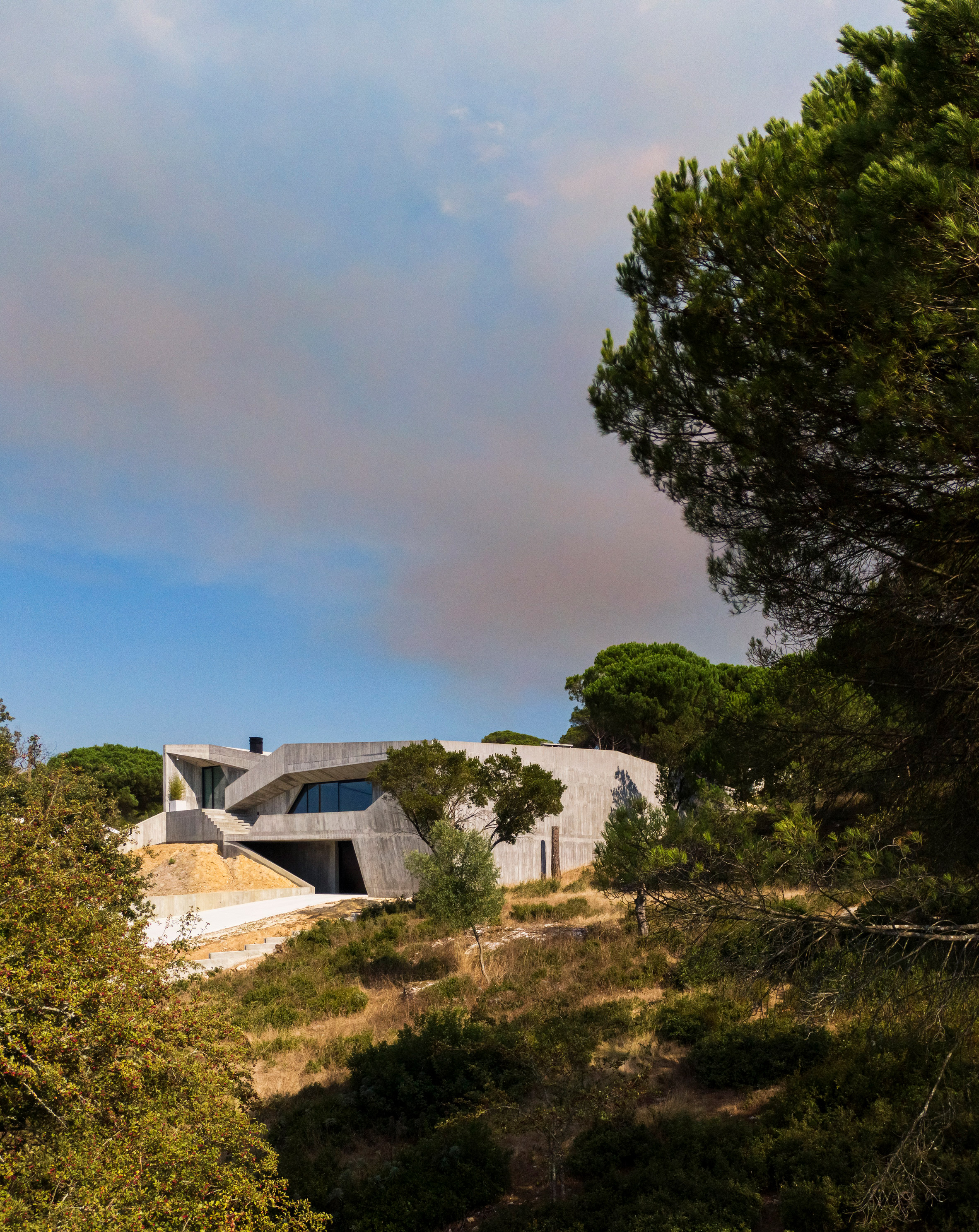
Leiria-based Contaminar Arquitetos has created a concrete house with an angular form based on caves found in the surrounding Portuguese limestone landscape.

Built in Povo, which lies on the outskirts of the city of Leiria in Portugal, the three-bedroom house was designed to complement the rugged landscape surrounding it.

Contaminar Arquitetos designs Casa Povo to be an "inhabited and humanised cave"

"The surrounding land is stone, with pine vegetation and a sloping landscape," said Joel Esperança, senior architect at Contaminar Arquitetos.

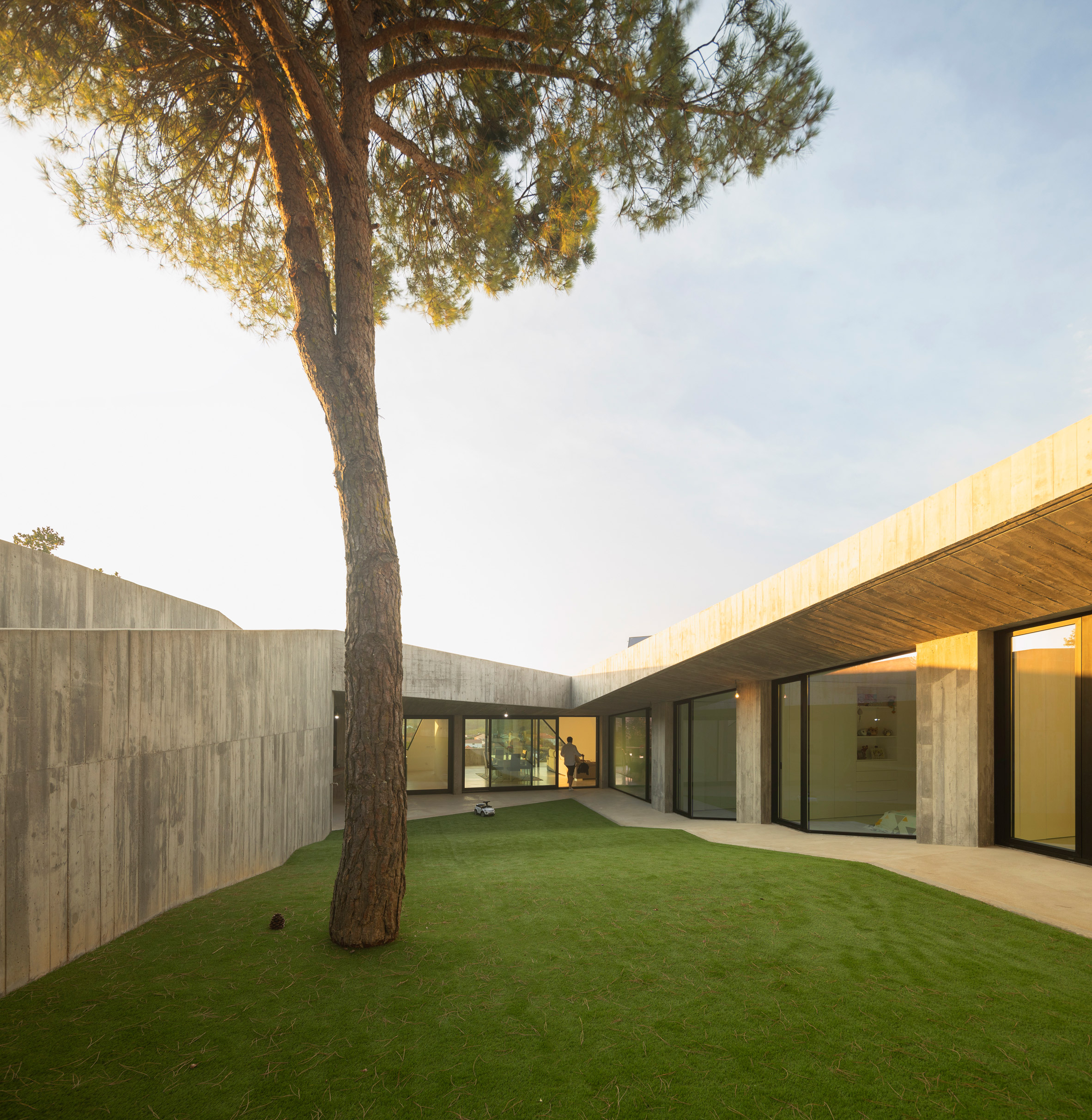
"Our intention was to adapt the house to this land and work with this unevenness," he told Dezeen. "The trees on the land have been maintained and the house outlines and embraces the site and relates to them."

Contaminar Arquitetos designs Casa Povo to be an "inhabited and humanised cave"

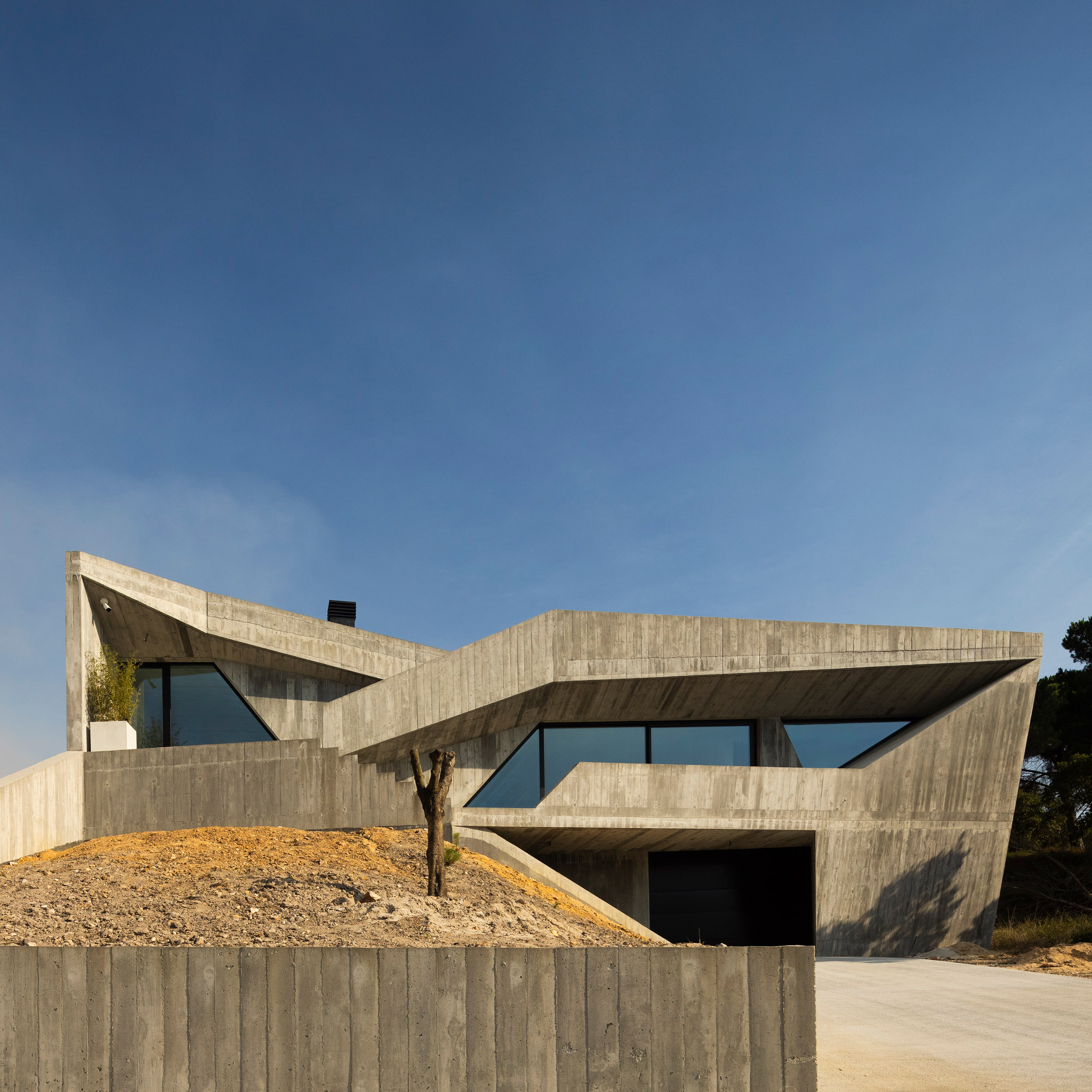
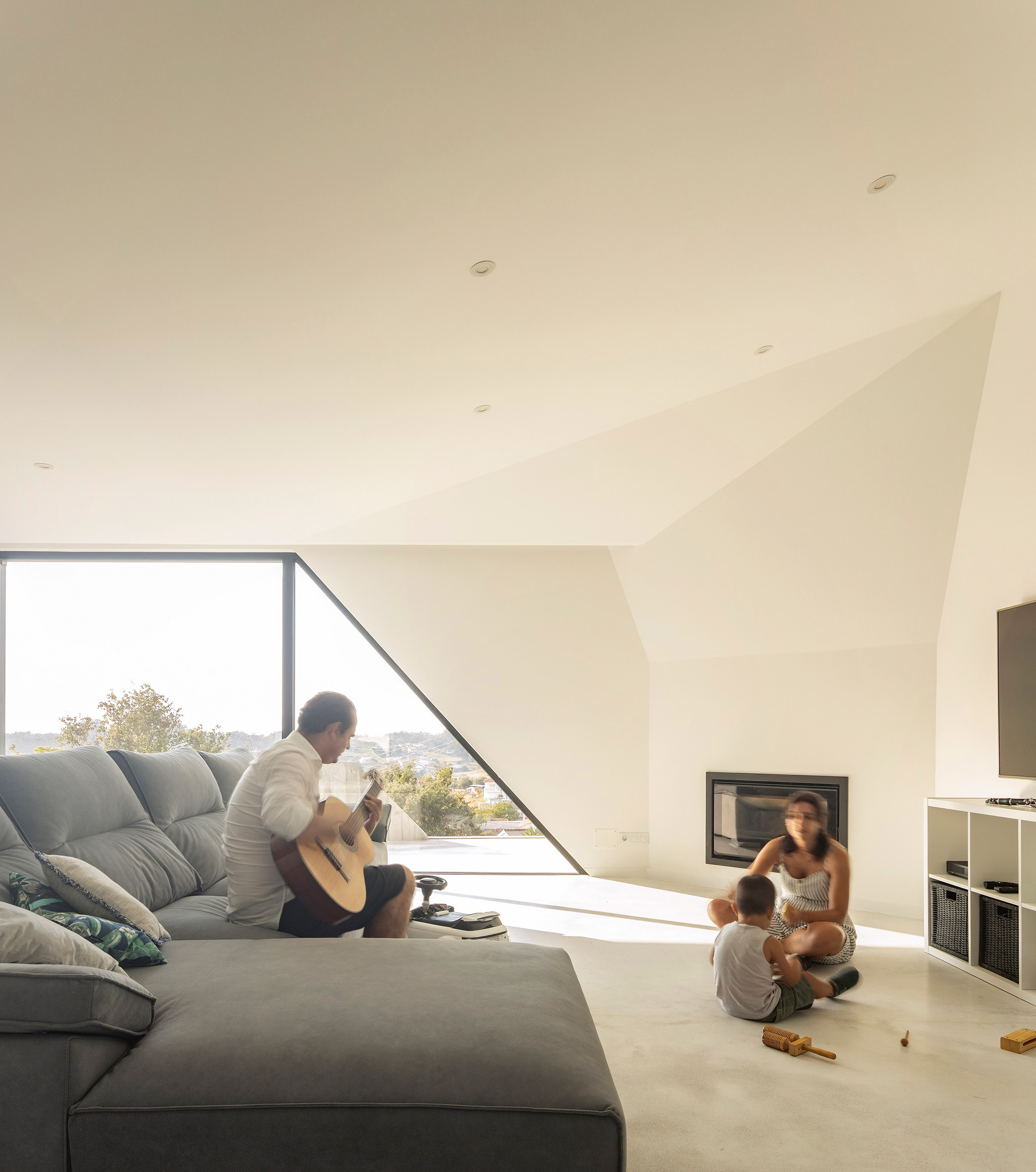
The concrete house has an angular facade cut with triangular windows, and sits low in its landscape as Contaminar Arquitetos wanted the home to take many of the attributes of a cave.

"As the negatives in the stones were one of the characteristics of the surroundings, we thought of transforming the house into a new inhabited and humanised cave," said Esperança.

"The windows are designed to appear like the gaps in the cave walls – irregular and of different shapes."

Contaminar Arquitetos designs Casa Povo to be an "inhabited and humanised cave"

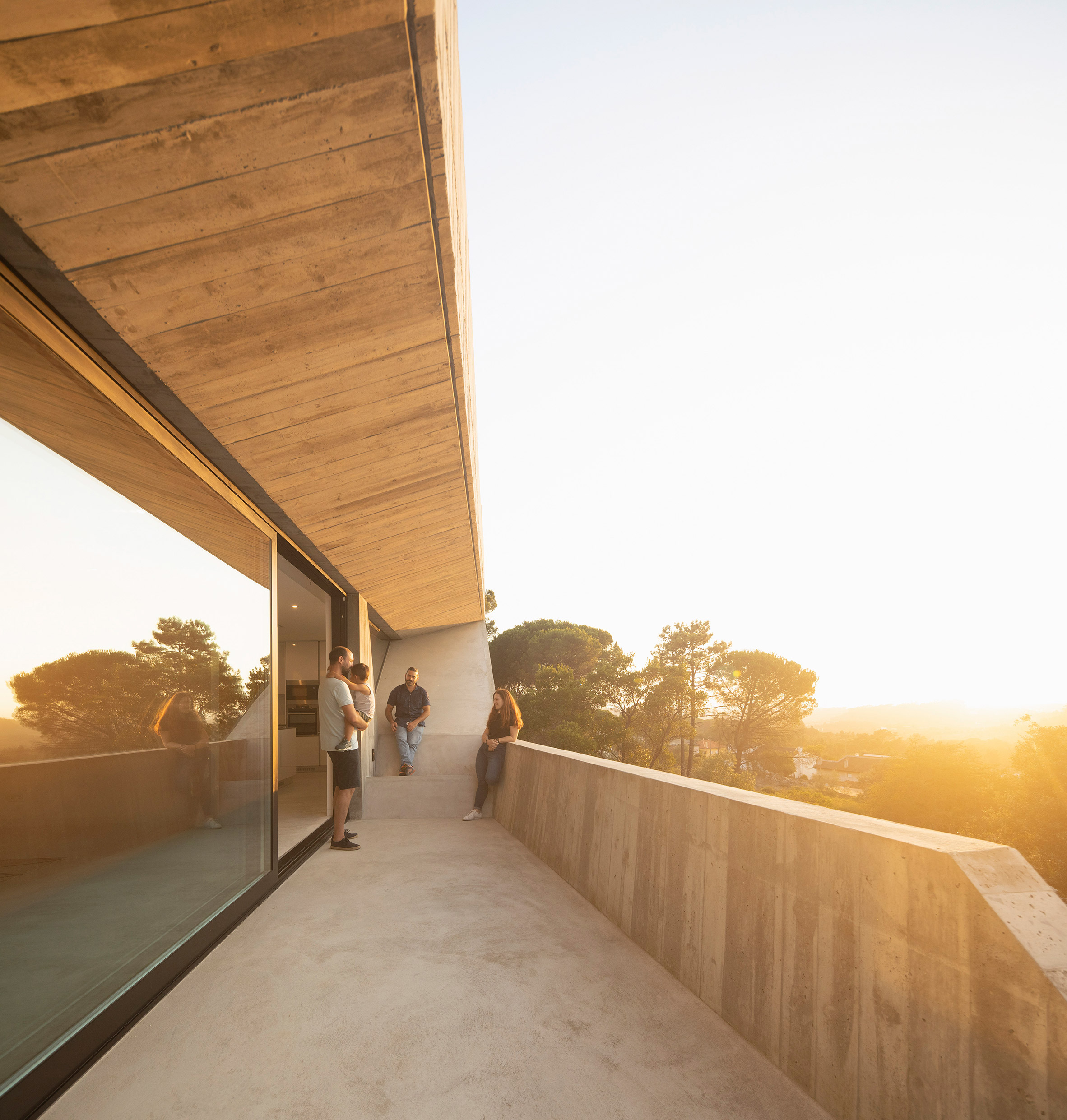
Casa Povo is built into the hillside with a garage on the lower storey and all of the living spaces arranged on the main floor above.

The home's kitchen, dining and main seating area, along with an office, are aligned along the front of the house to take advantage of the views down the hillside.

Its three bedrooms are positioned in row and are all accessed from a ramp that steps up the slope of the hill.

Contaminar Arquitetos designs Casa Povo to be an "inhabited and humanised cave"

While the home's concrete exterior is rough, Contaminar Arquitetos wanted the interiors to be more homely.

"We used concrete as, for us, it is the stone of the 21st century, and we wanted it to be expressive, rough, and textured," said Esperança.

"The exterior is dense, brutalist and tectonic, while the interior is more humanised with more delicate and comfortable materials."

Contaminar Arquitetos designs Casa Povo to be an "inhabited and humanised cave"

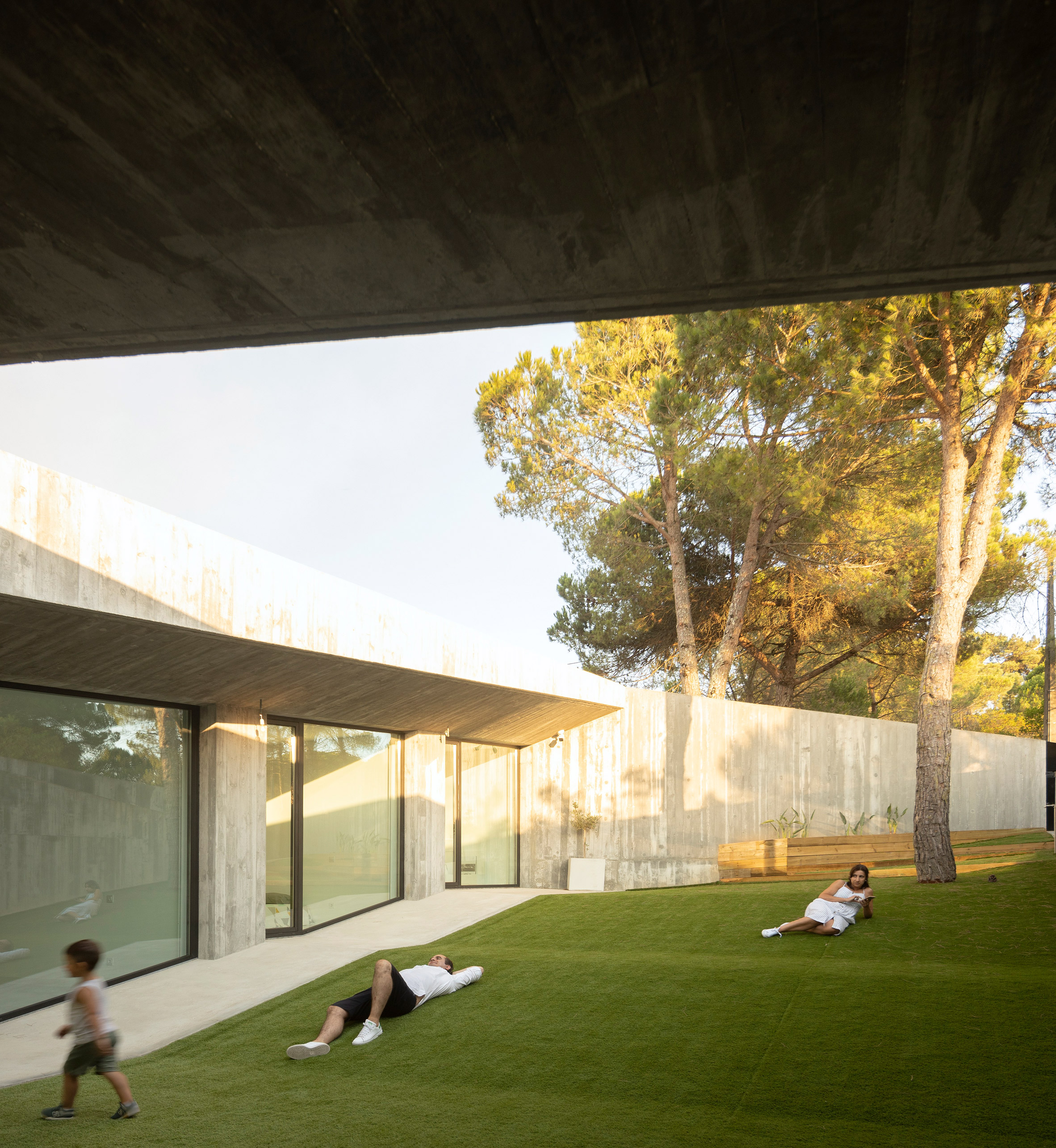
The main living spaces, all three bedrooms and one bathroom each have direct access onto a gently sloping walled garden.

This courtyard space, which contains a large fir tree, can also be accessed by a path that steps up the front facade of the house, across its roof and then down a ramp.

Contaminar Arquitetos designs Casa Povo to be an "inhabited and humanised cave"

Throughout the house and garden, the studio wanted to create interior spaces that related directly to the exterior form and landscape.

"The shapes allows us to walk into it, to be able to sit and relate to the walls and floors of the house inside and outside," said Esperança.

"For us, the cave was interpreted as a shelter with different scales and different sensations – tight and loose, high and low and other sensations.

Contaminar Arquitetos designs Casa Povo to be an "inhabited and humanised cave"

Contaminar Arquitetos is an architecture studio based in Leiria that was established by architects Esperança and Ruben Vaz along with interior designer Romeu Sousa in 2004.

Other recently completed concrete houses include Textile House in Peru by Ghezzi Novak and an ochre-coloured concrete house into French hillside designed by Tectoniques.

Photography is by Fernando Guerra.

The post Contaminar Arquitetos designs Casa Povo to be an "inhabited and humanised cave" appeared first on Dezeen.


from Dezeen https://ift.tt/2zHs32N

A Massive Wave Crashes in a Seoul Aquarium as Part of the World’s Largest Anamorphic Illusion

An enormous aquarium with perpetually crashing waves has popped up amidst an urban landscape in South Korea, but don’t expect to hear the water sloshing around if you walk by. Designed by District, the elevated tank is actually a massive anamorphic illusion. The digital media company created the public project utilizing the world’s largest advertising screen that spans 80.1 x 20.1 meters. As shown in the video, the deceptive aquarium looms over the outdoor area and splashes repeatedly into the sides.

For more of District’s illusory works, check out Vimeo and Instagram. (via Design You Trust)


from Colossal https://ift.tt/2AwPYSR

Zozaya Arquitectos tops Mexican beach house Casa La Vida with dried palm leaves

Casa La Vida by Zozaya Arquitetcos

Zozaya Arquitectos has created a traditional palapa with a dried palm roof at the centre of this house in a Mexican beach village.

Casa La Vida by Zozaya Arquitetcos

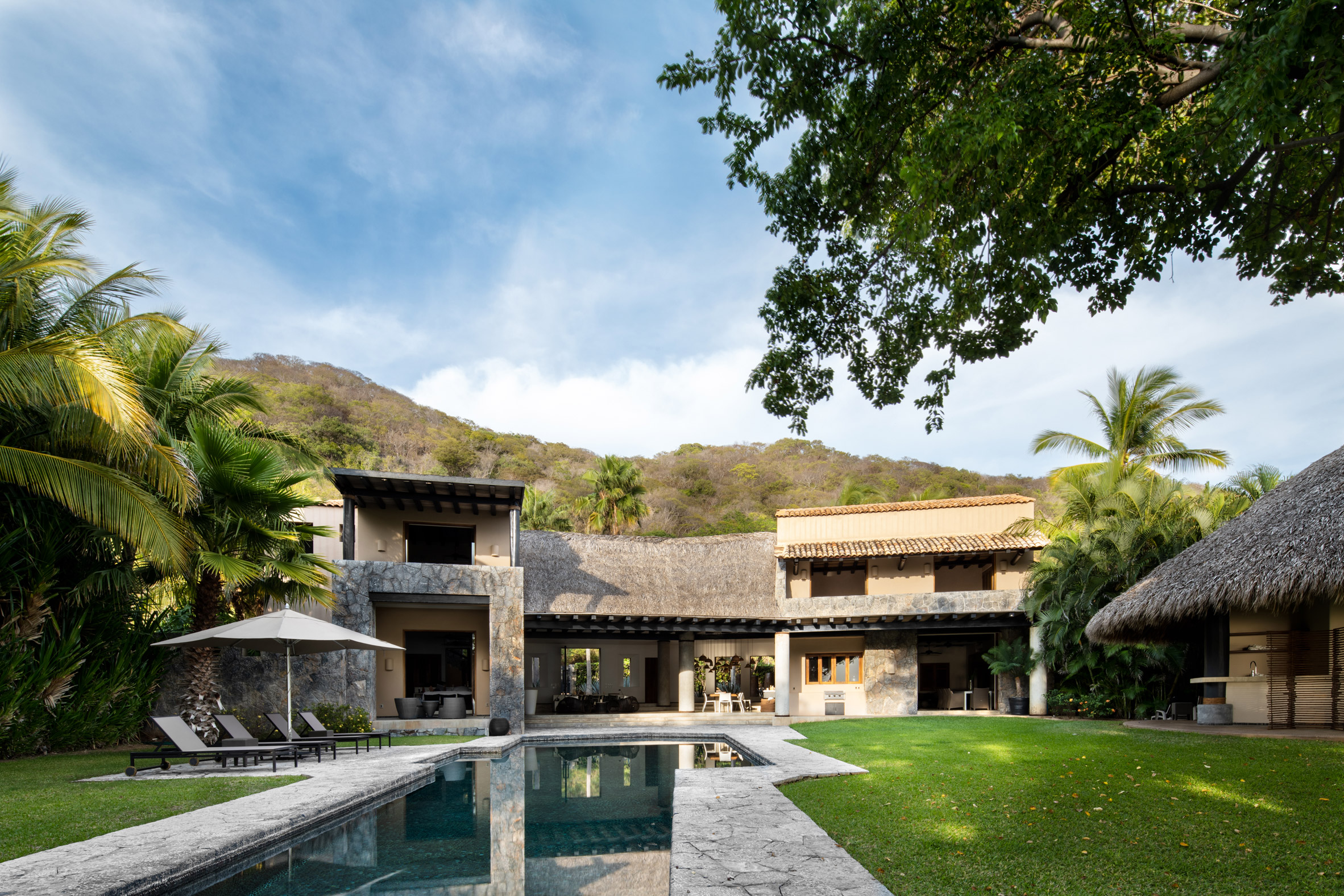
Casa La Vida sits on flat land that faces the Pacific Ocean and a hilly green landscape in Trocones, which is located near to Mexican city Zihuatanejo.

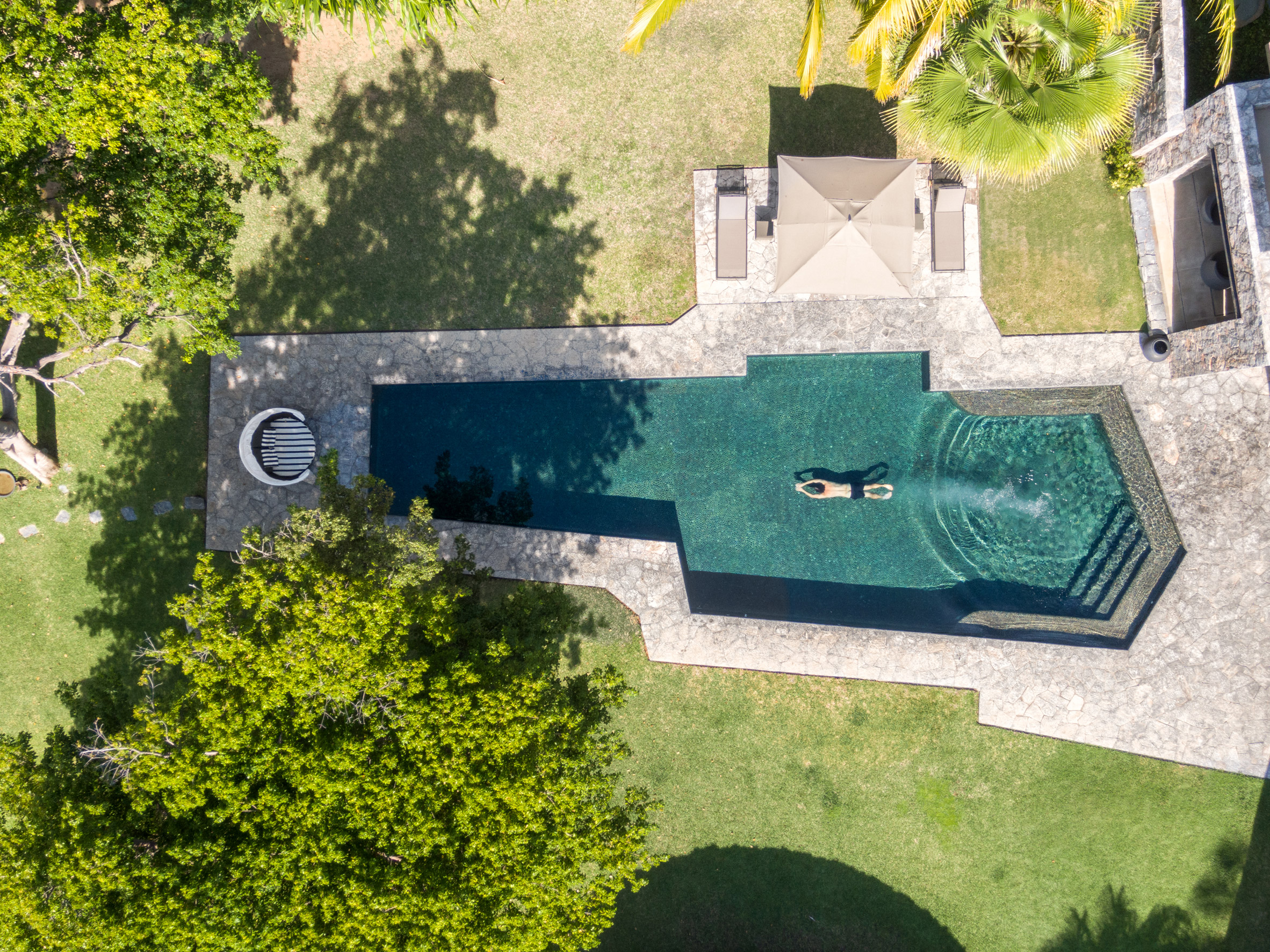
Measuring 650 square metres, the house is accompanied by a large swimming pool and round guesthouse.

Casa La Vida by Zozaya Arquitetcos

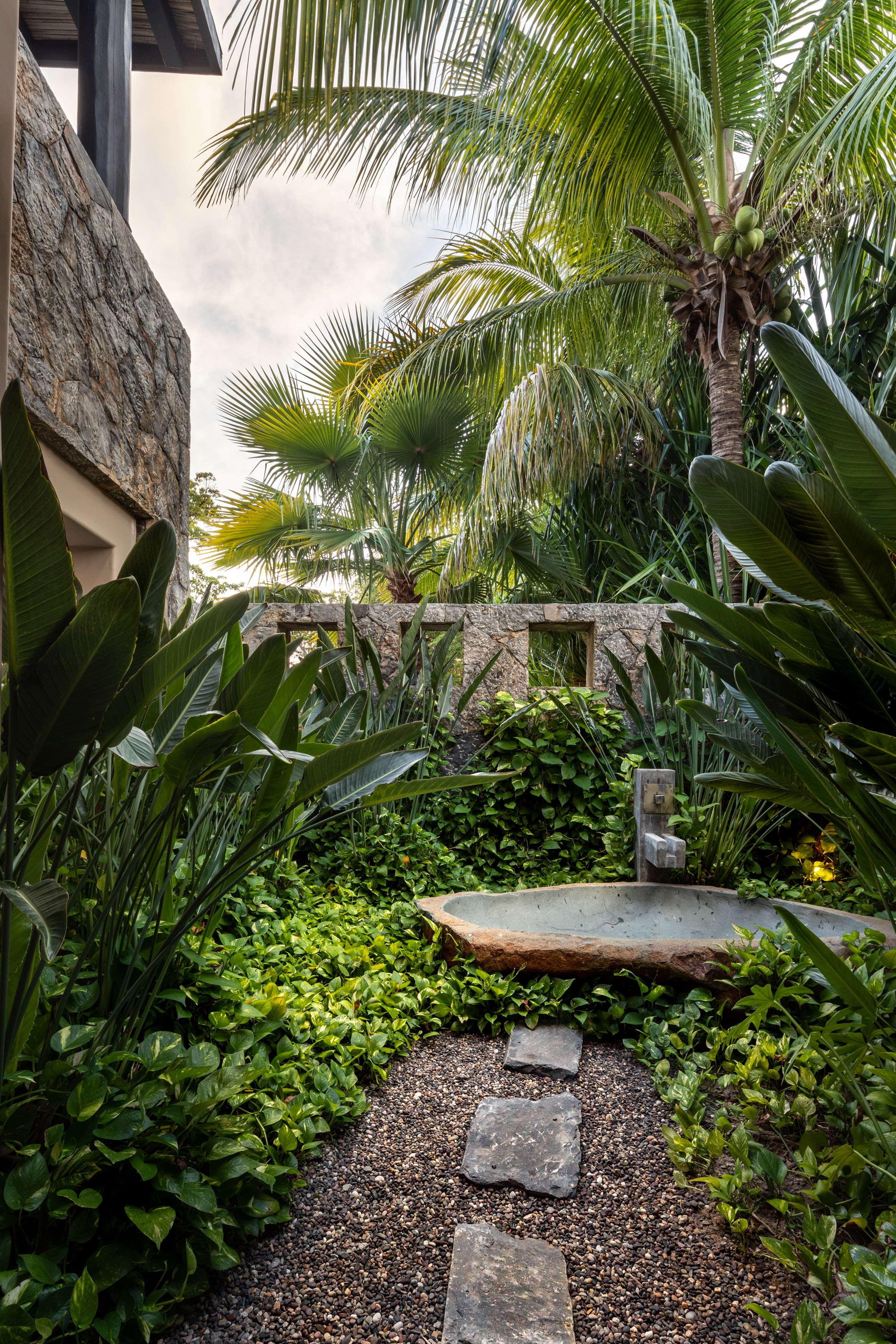
Zozaya Arquitectos designed the expansive house and circular guesthouse hut to reference traditional local architecture with materials such as dried palms, terracotta roof tiles and locally sourced stones.

"The central concept of the project was to create a contemporary house, with large spaces but preserving the already traditional Zihuatanejo style in the area, taking advantage of local materials and the excellent workmanship of our local masters," the studio said.

Casa La Vida by Zozaya Arquitetcos

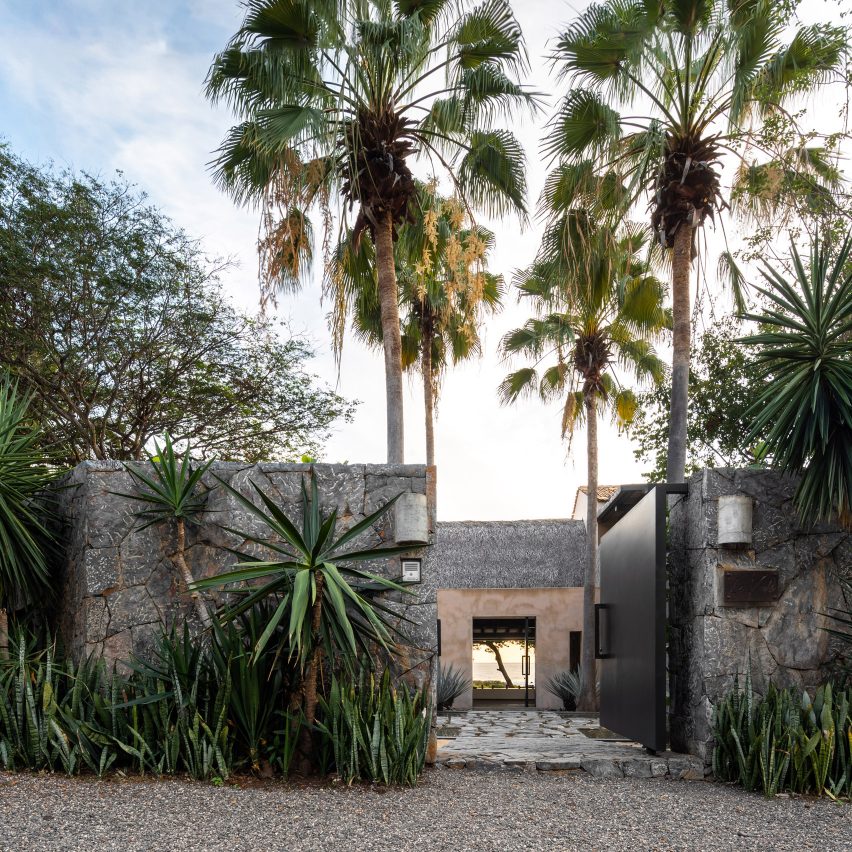
A stone wall and lush greenery conceal Casa La Vida from the road and reveal only the dry palm roof of a central palapa, a gabled structure made from dried palm leaves.

They are commonly used in the region because they provide shelter, allow for natural ventilation and reduce solar absorption.

Casa La Vida by Zozaya Arquitetcos

In Casa La Vida, the palapa separates the residence's two volumes. One structure houses the open kitchen and dining room while a large bedroom occupies the opposite end.

On the second storey, there are two other bedroom suites, each with an adjoining porch.

Casa La Vida by Zozaya Arquitetcos

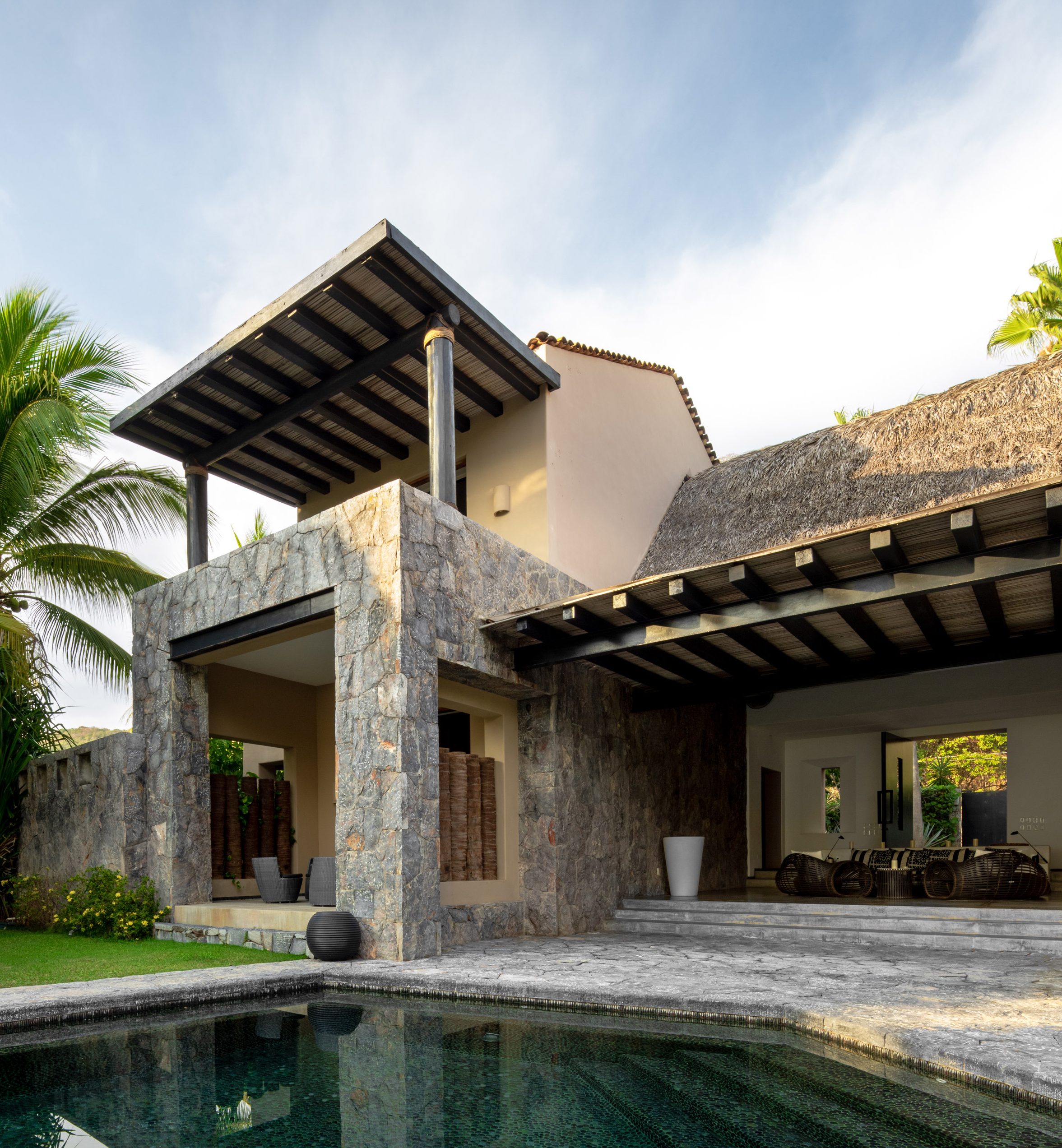
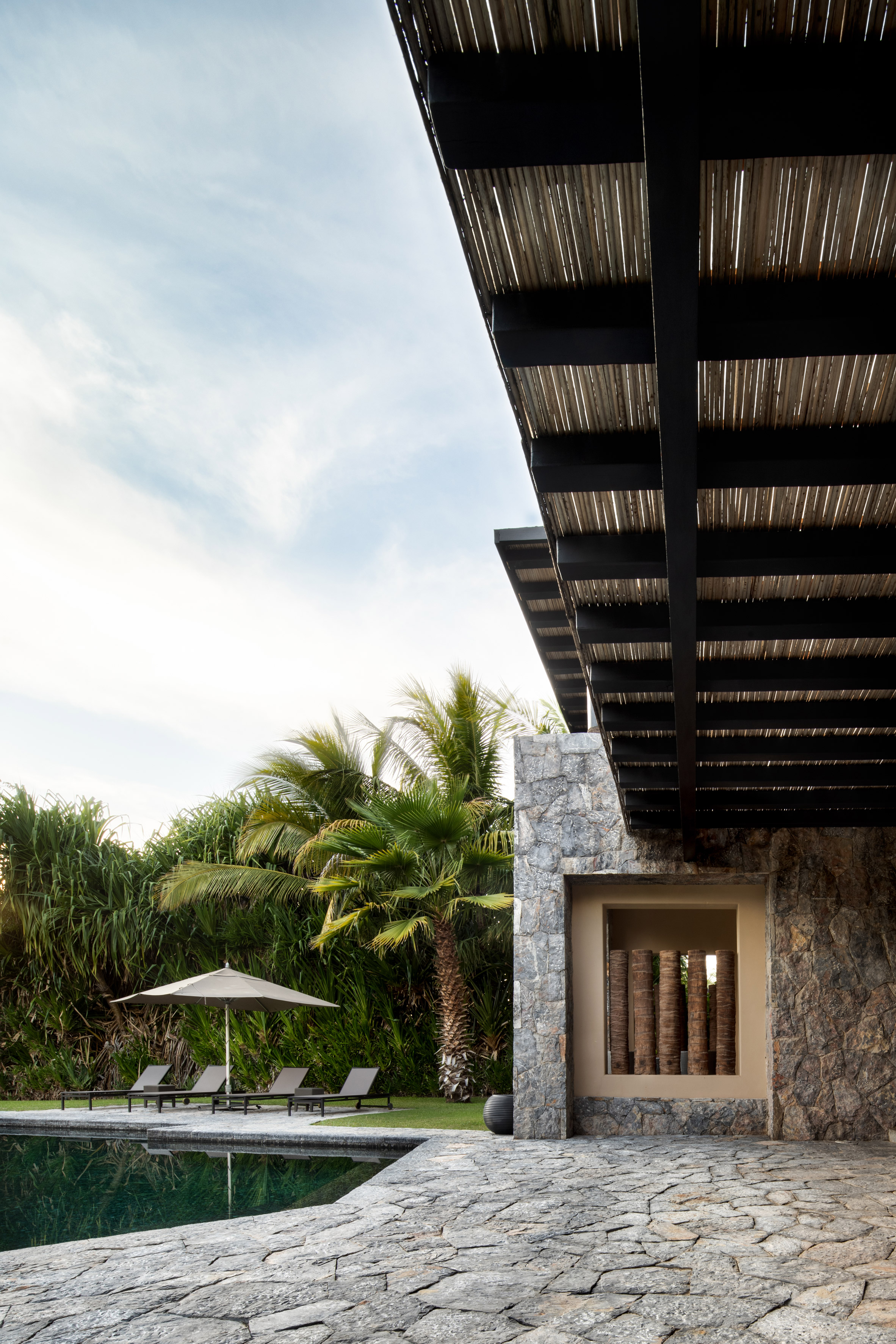
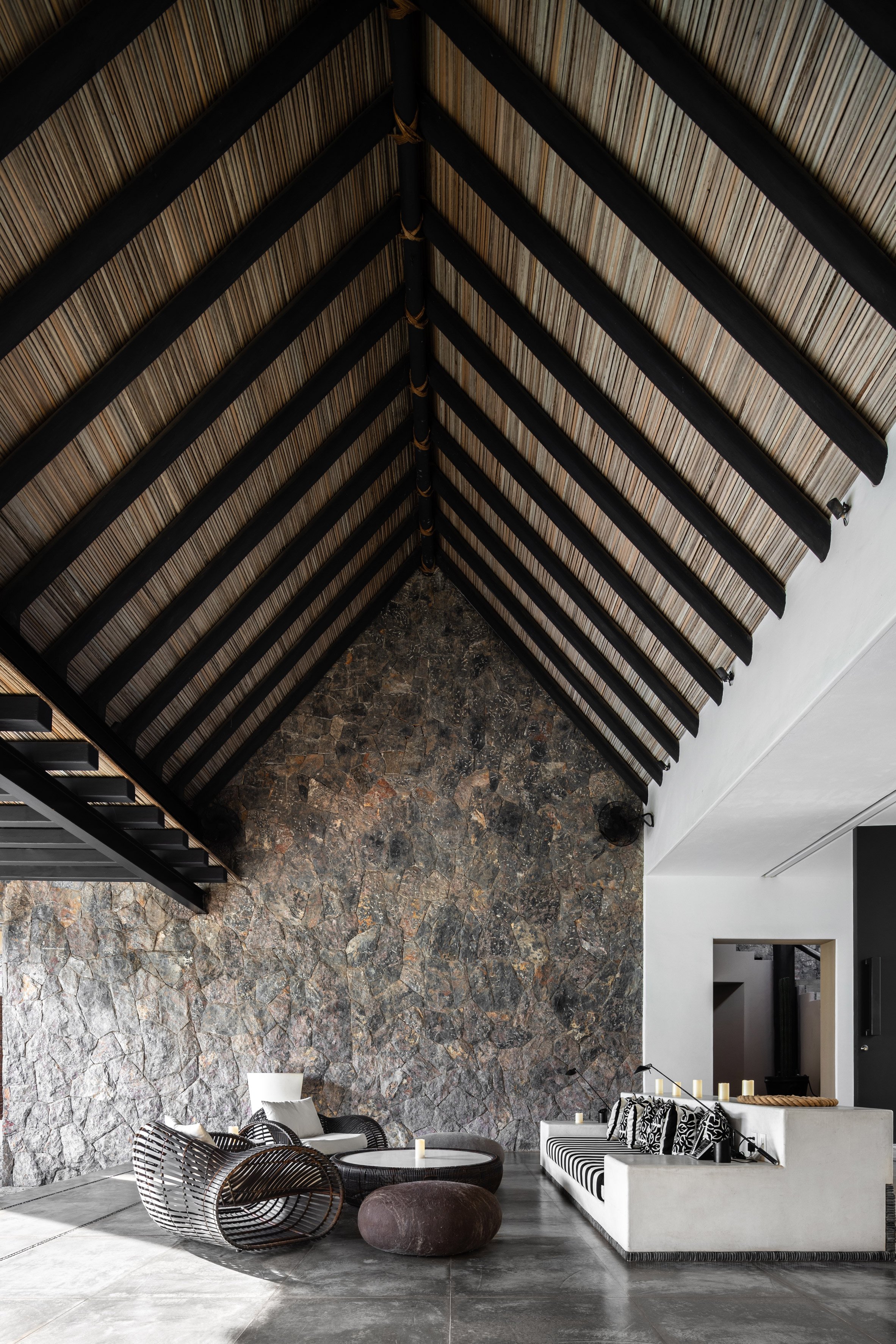
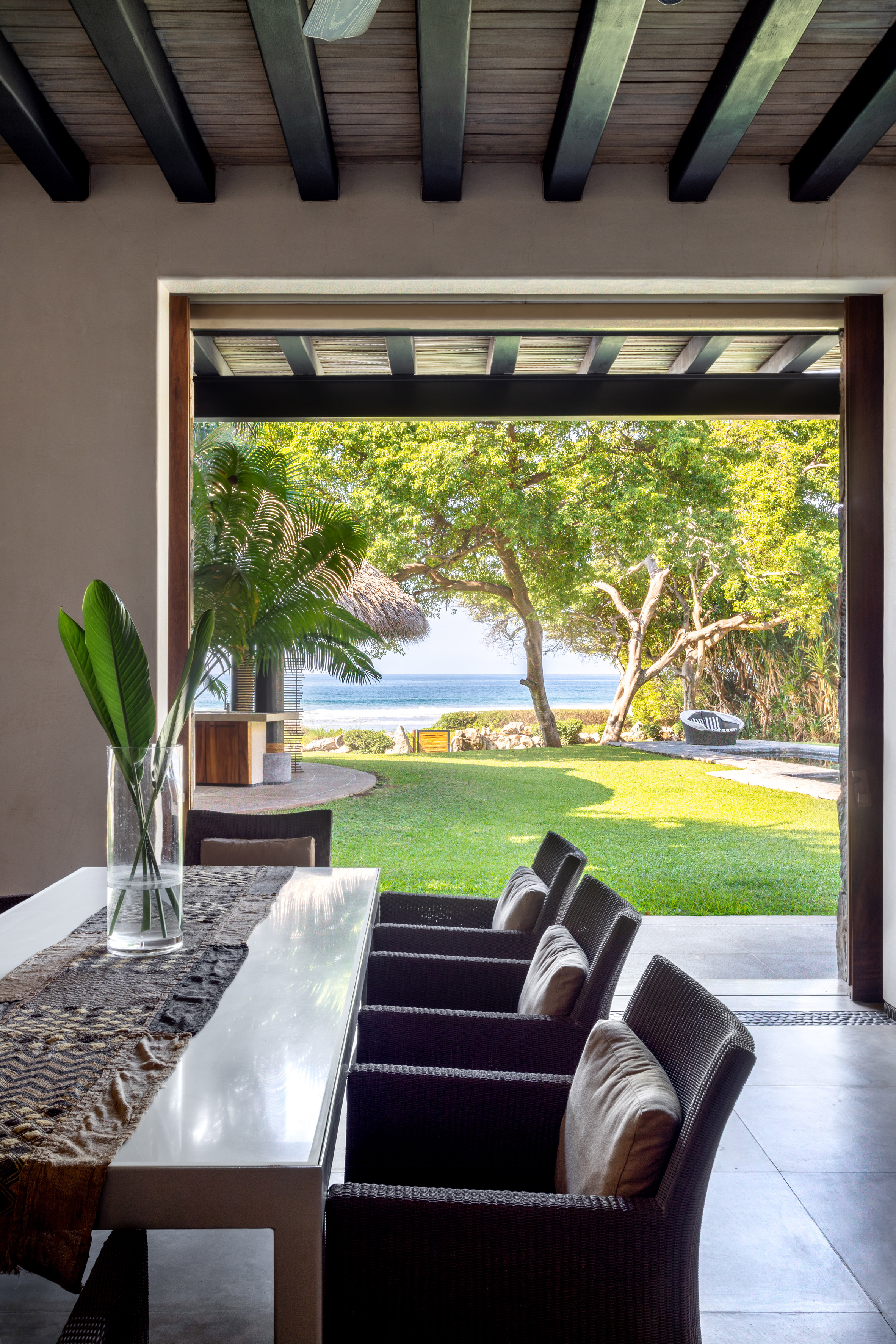
Under the thatched roof is the main living area and an additional dining area, which opens up to the backyard overlooking the pool and nearby beach. Palm-wood beams span the ceiling and local stones cover the wall of the partially enclosed space.

The assorted rocks were taken from nearby rivers and also are used to form part of the exterior and the edging around the geometric swimming pool.

Casa La Vida by Zozaya Arquitetcos

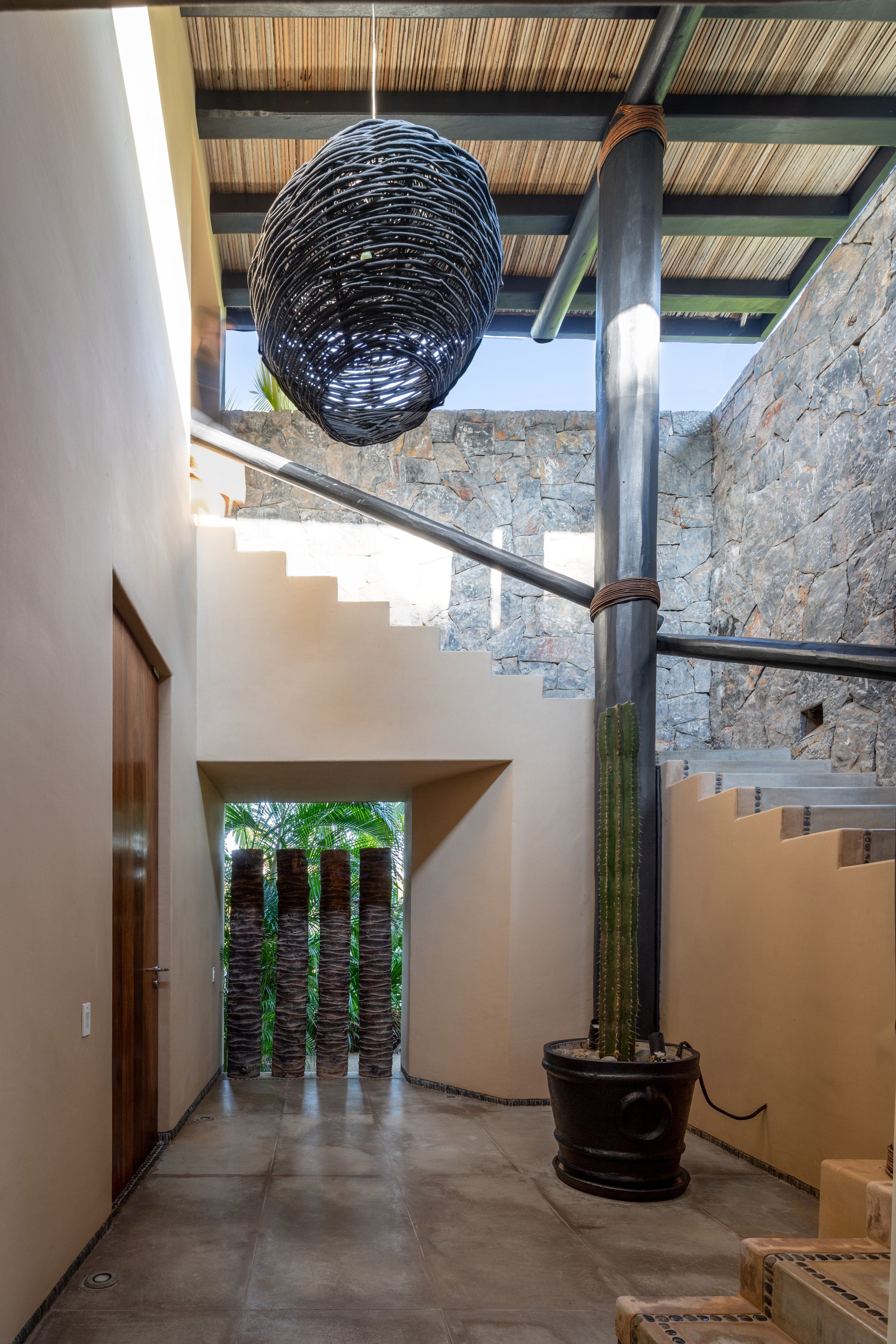
Several cutouts arranged along the walls of the ground floor form windows that direct light and a cooling breeze into the shaded interiors.

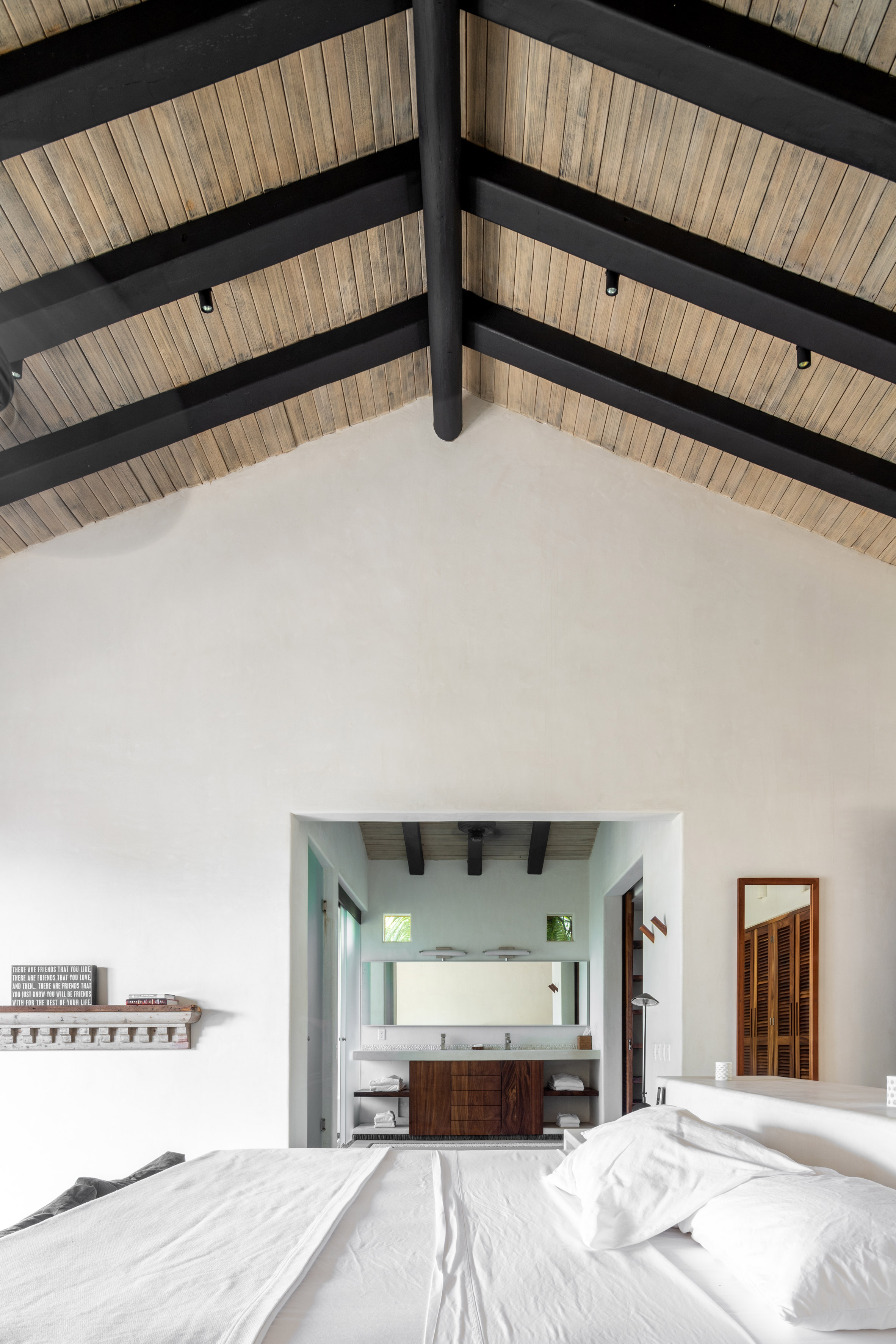
The studio has covered the floors inside with polished concrete tiles and painted the interior walls white. Pebbles, cacti plants and palm trunks are placed around the interiors as decorative elements on the windows and floors.

Casa La Vida by Zozaya Arquitetcos

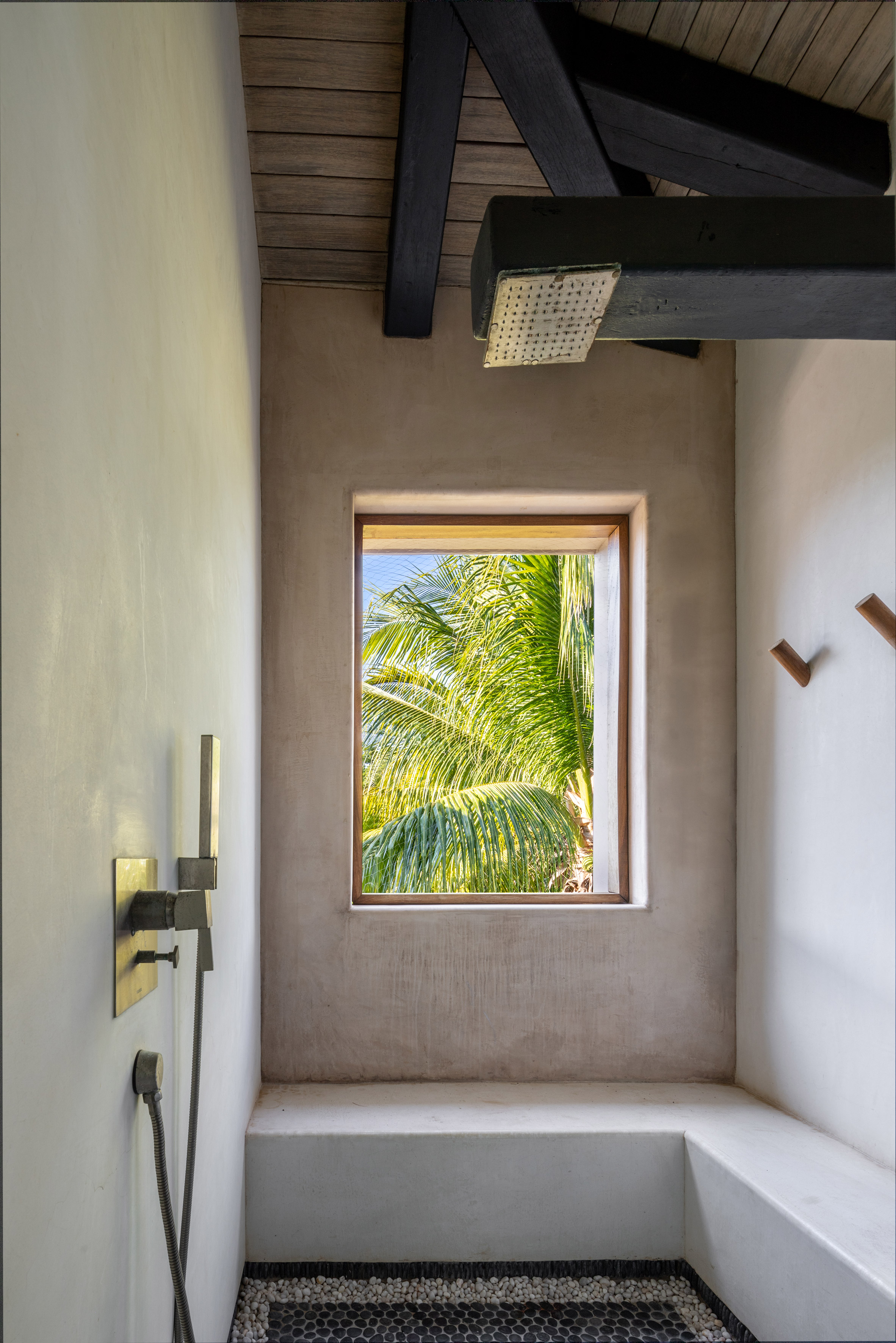
In the kitchen, a monolithic concrete island contrasts against the walls of parota wood cabinetry. Wood accents are also used on the doors, bi-fold closets in the bedrooms and on the bathroom vanity.

Casa La Vida by Zozaya Arquitetcos

A pair of black ladders connected to a platform of wood slabs forms a sleeping platform above the beds in one of the suites.

Casa La Vida by Zozaya Arquitetcos

On the edge of the property is the rounded palapa guest house shaped by a brick dome covered by a traditional thatched roof. The circular building houses a bedroom, bathroom and living areas.

Zozaya Arquitectos completed Casa La Vida in 2013, but only recently released photographs of the project. The studio has also designed a residence in Mexican beach town Zihuatanejo that has bamboo screens across its facade.

Casa La Vida by Zozaya Arquitetcos

A number of other houses in the region feature palapa roofs including a concrete house and art centre by Japanese architect Tadao Ando, a pink stucco apartment block in Tulum and a house by CDM with a curving limestone lattice wall.

Photography is by Cesar Belio and Michael Calderwood.


Project credits:

Leader of design and project: Architect, Enrique Zozaya Diaz
Project team: Luis Alonso, José Antonio Vázquez, Carlos Morales.
Construction company: Zozaya Arquitectos
Structural design: Omar Hernández

The post Zozaya Arquitectos tops Mexican beach house Casa La Vida with dried palm leaves appeared first on Dezeen.


from Dezeen https://ift.tt/365NiHP