Monday, 18 May 2020

Translucent glass house built alongside historic buildings for Lasvit's Czech Republic headquarters

Headquarters for glass company Lasvit in Nový Bor, Czech Republic, by Ov-a Architekti Studio

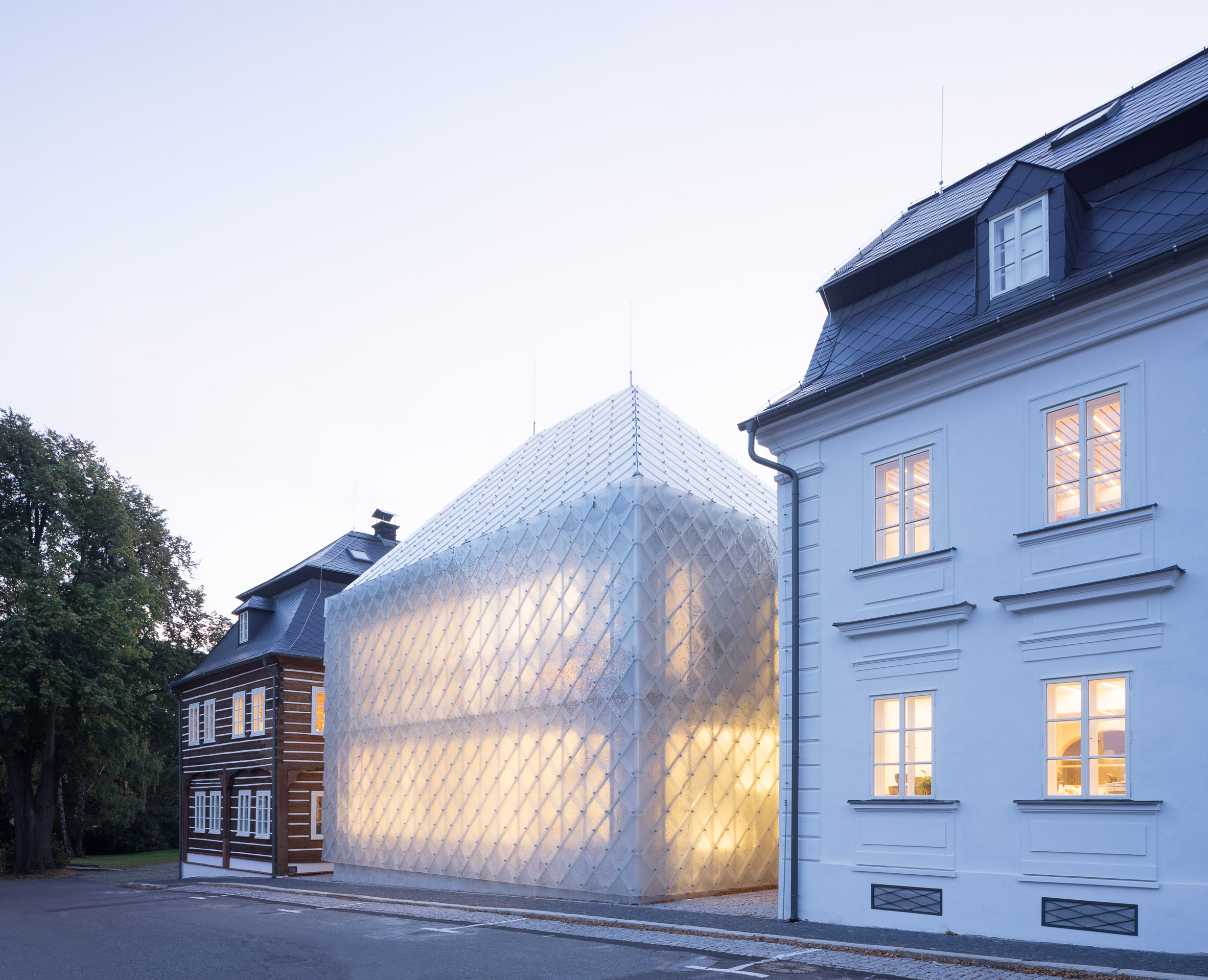
Prague studio Ov-a Architekti has built a translucent house and restored a group of 19th-century timber buildings for the office of glass company Lasvit in Nový Bor, Czech Republic.

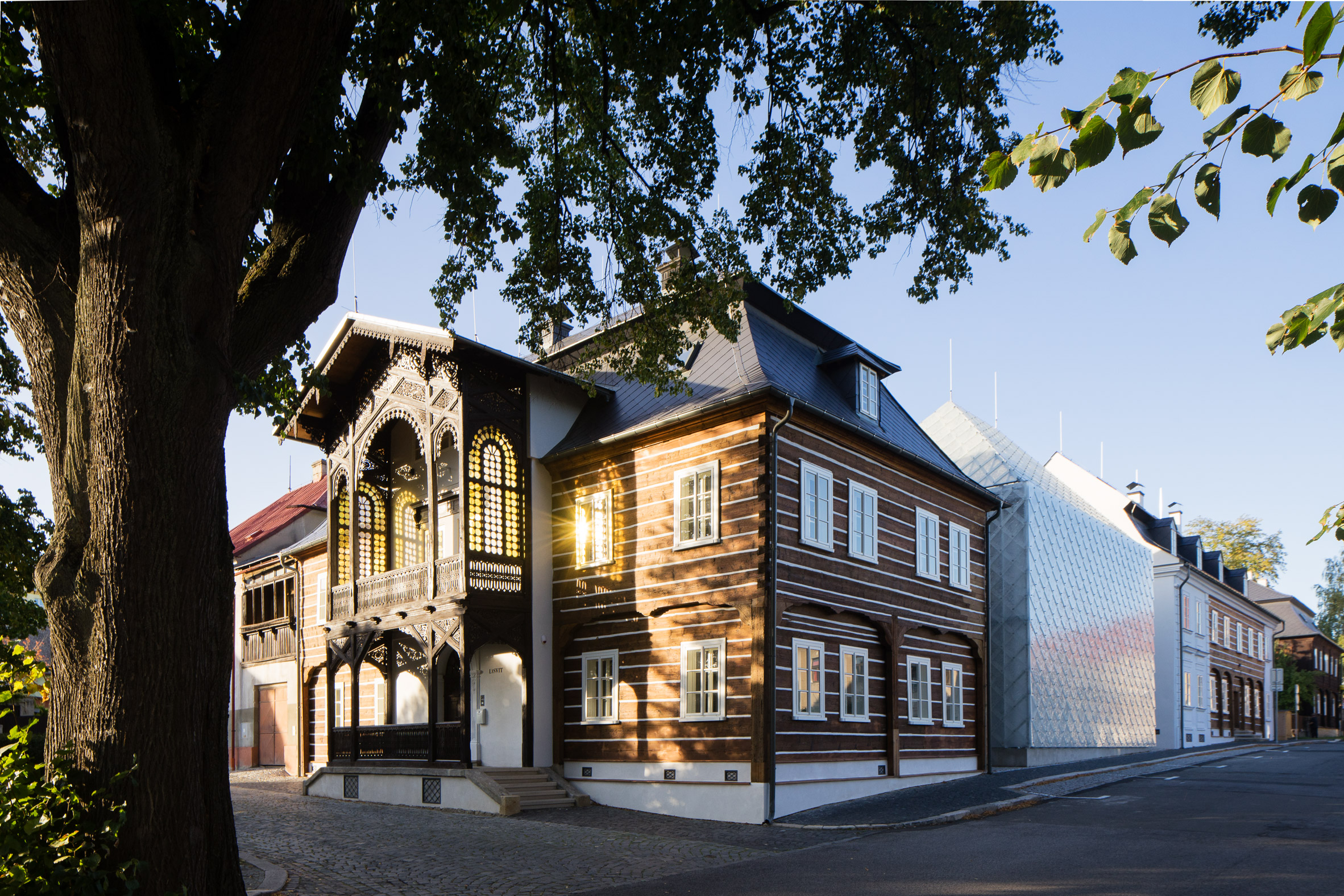
The architecture studio renovated a pair of existing houses and added black and white house-shaped additions to form the glass brand's headquarters.
Headquarters for glass company Lasvit in Nový Bor, Czech Republic, by Ov-a Architekti Studio

Lasvit wanted to continue and build on the history of the existing buildings, which were formerly used as glass workshops, and use the contemporary extensions to communicate the brand's identity.

"The client's task was to create a company headquarters that continues a strong glassmaking tradition and combines glass and light in a contemporary language," project architect Štěpán Valouch told Dezeen.
Headquarters for glass company Lasvit in Nový Bor, Czech Republic, by Ov-a Architekti Studio

"The two traditional buildings from the early 19th-century were completed with another two similarly sized and shaped abstract black and white volumes to create a harmonic and functional compound," continued Valouch.
Headquarters for glass company Lasvit in Nový Bor, Czech Republic, by Ov-a Architekti Studio

With the existing buildings stripped of adornments that were added in the 1980s and refurbished to create suitable offices, it is the new white house that is the clearest identifier of the company.

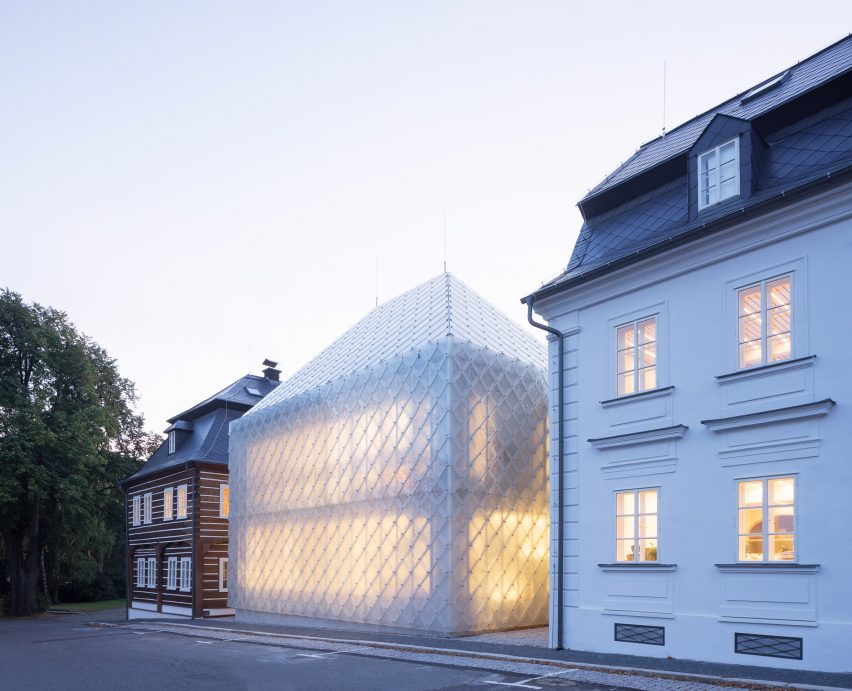
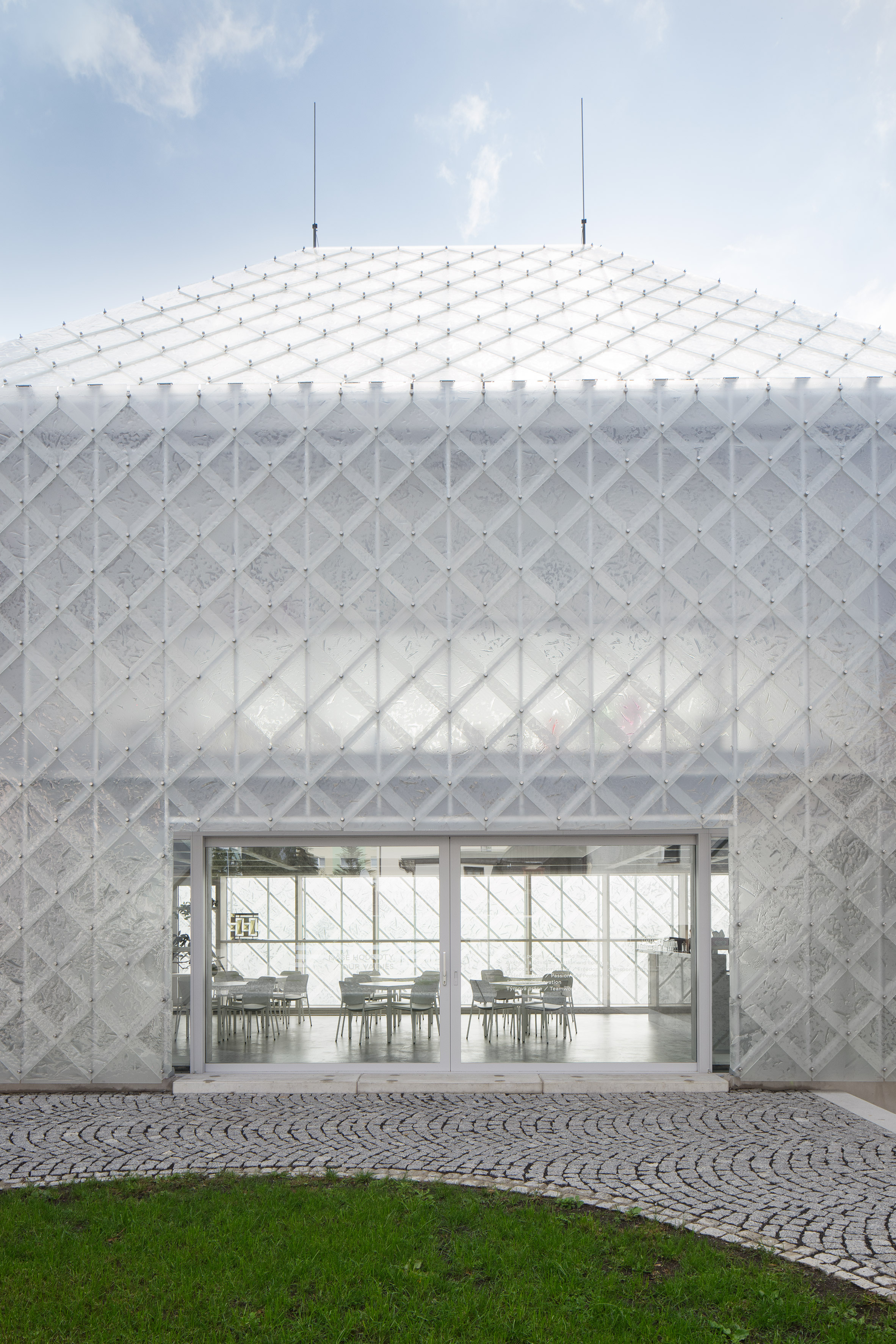
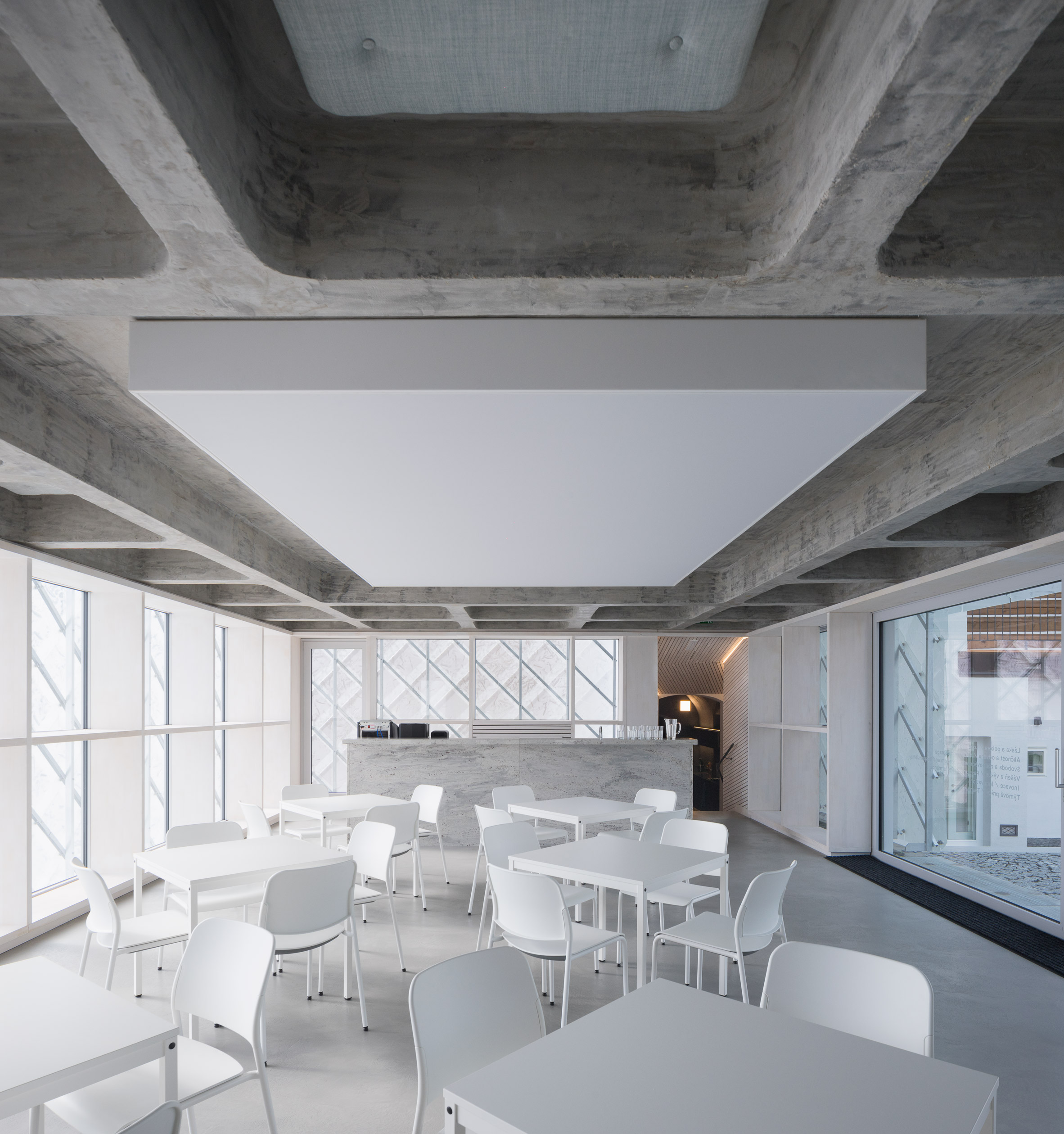
Clad in translucent glass tiles, this building connects the two renovated offices and contains a cafe on the ground floor with a meeting room and library of samples under a concrete domed roof on the level above.
Headquarters for glass company Lasvit in Nový Bor, Czech Republic, by Ov-a Architekti Studio

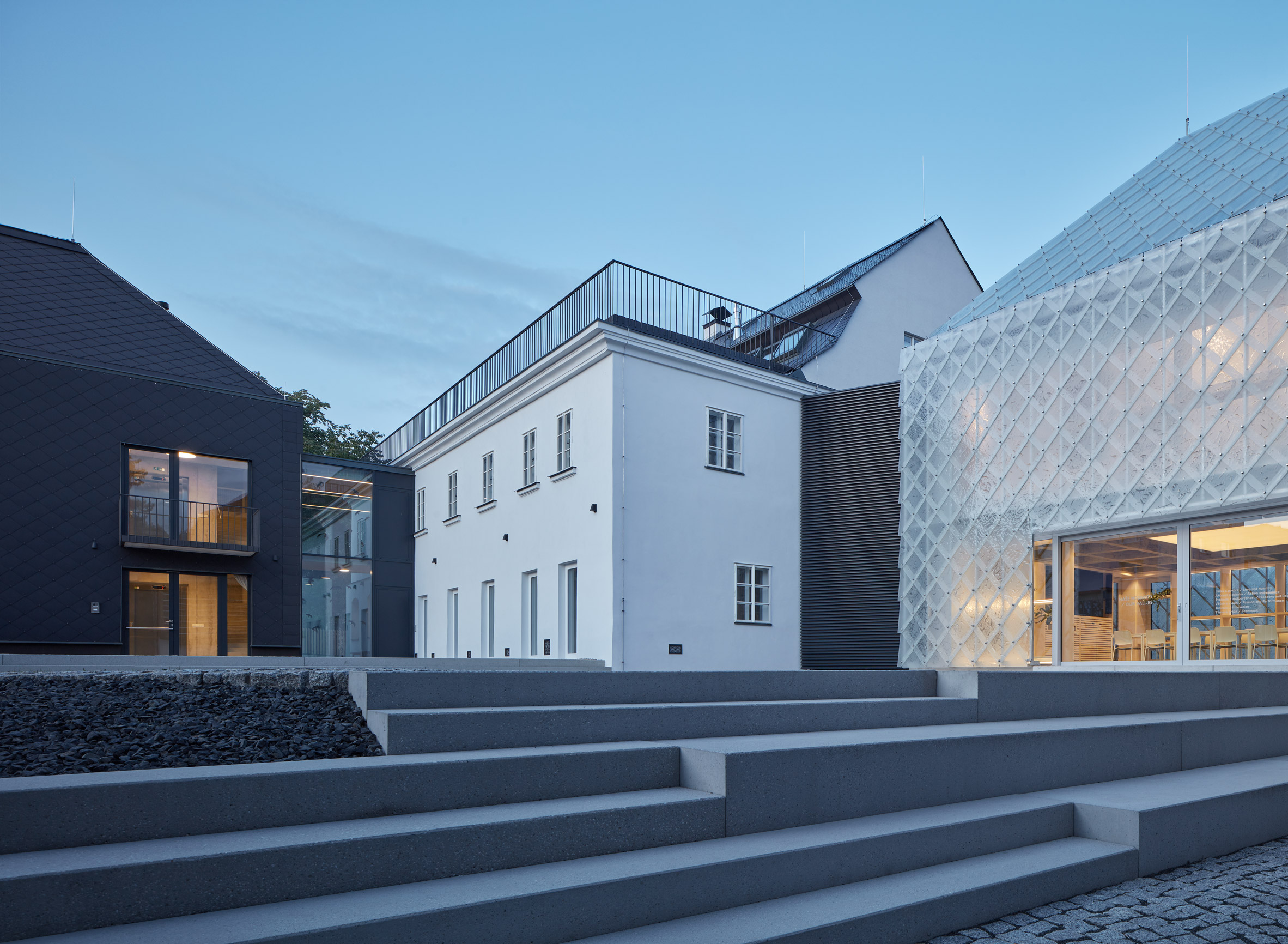
The overall form of the building, along with the imprint on the tiles, is designed to be a reinterpretation of slate-shingle-covered houses found in the Česká Lípa region.

In total, the facades are made from 1,400 tiles, which are supported on a steel frame connected to the building's concrete structure. Each of the square tiles is eight millimetres thick and weighs 7.5 kilograms. The system has been designed so that it can be utilised on other projects in the future.
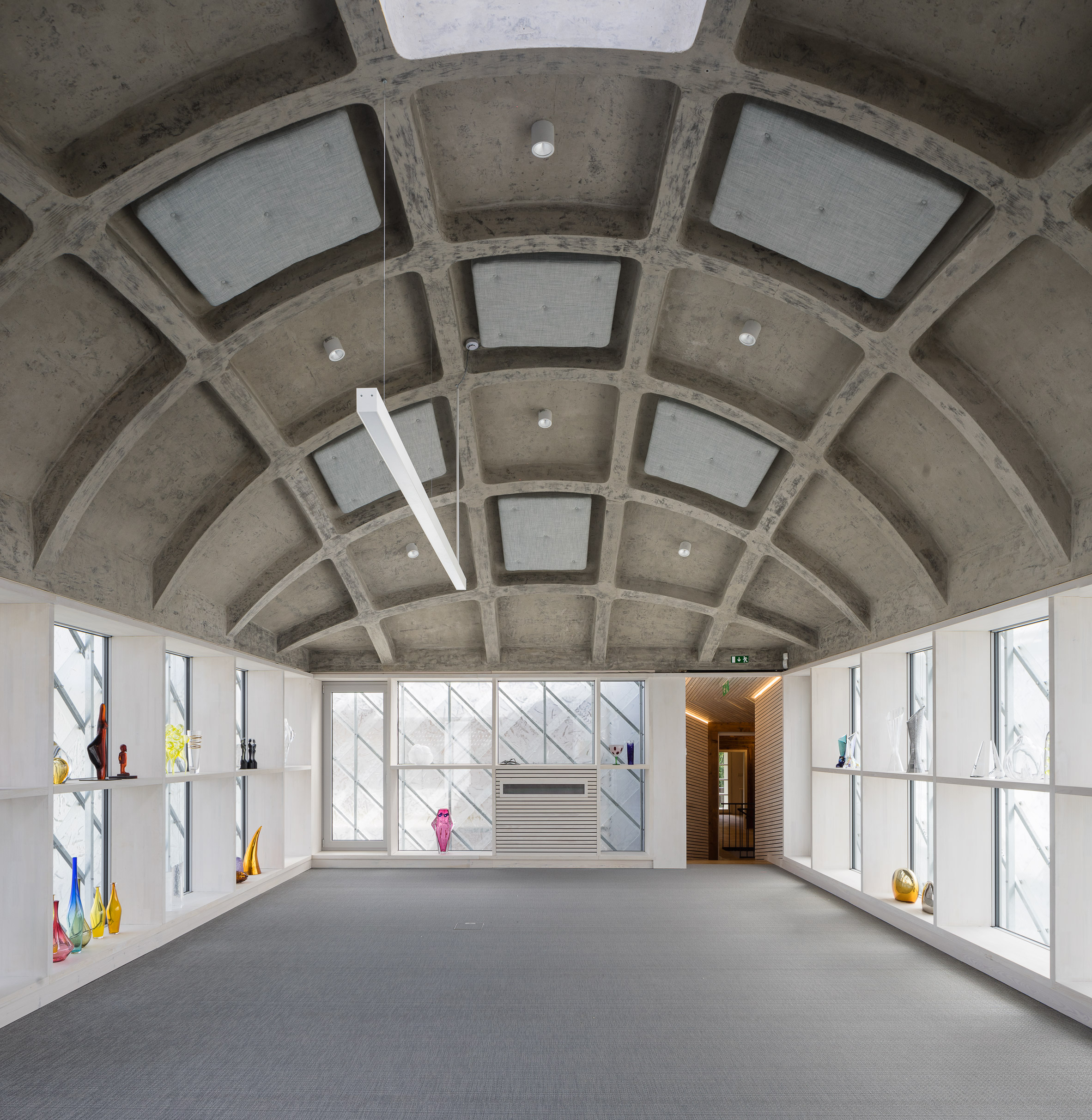
"The mantle and roof are covered with glass stencils, which were developed in collaboration with Lasvit," explained Valouch.

"It is based on the proportion and laying of slate slabs used on gables and roofs in the region. Also the texture of the glass template is based on the fracture of slate slabs."
Headquarters for glass company Lasvit in Nový Bor, Czech Republic, by Ov-a Architekti Studio

The second house-shaped addition, which is also derived from the houses in the region, is entirely clad in black metal plates.

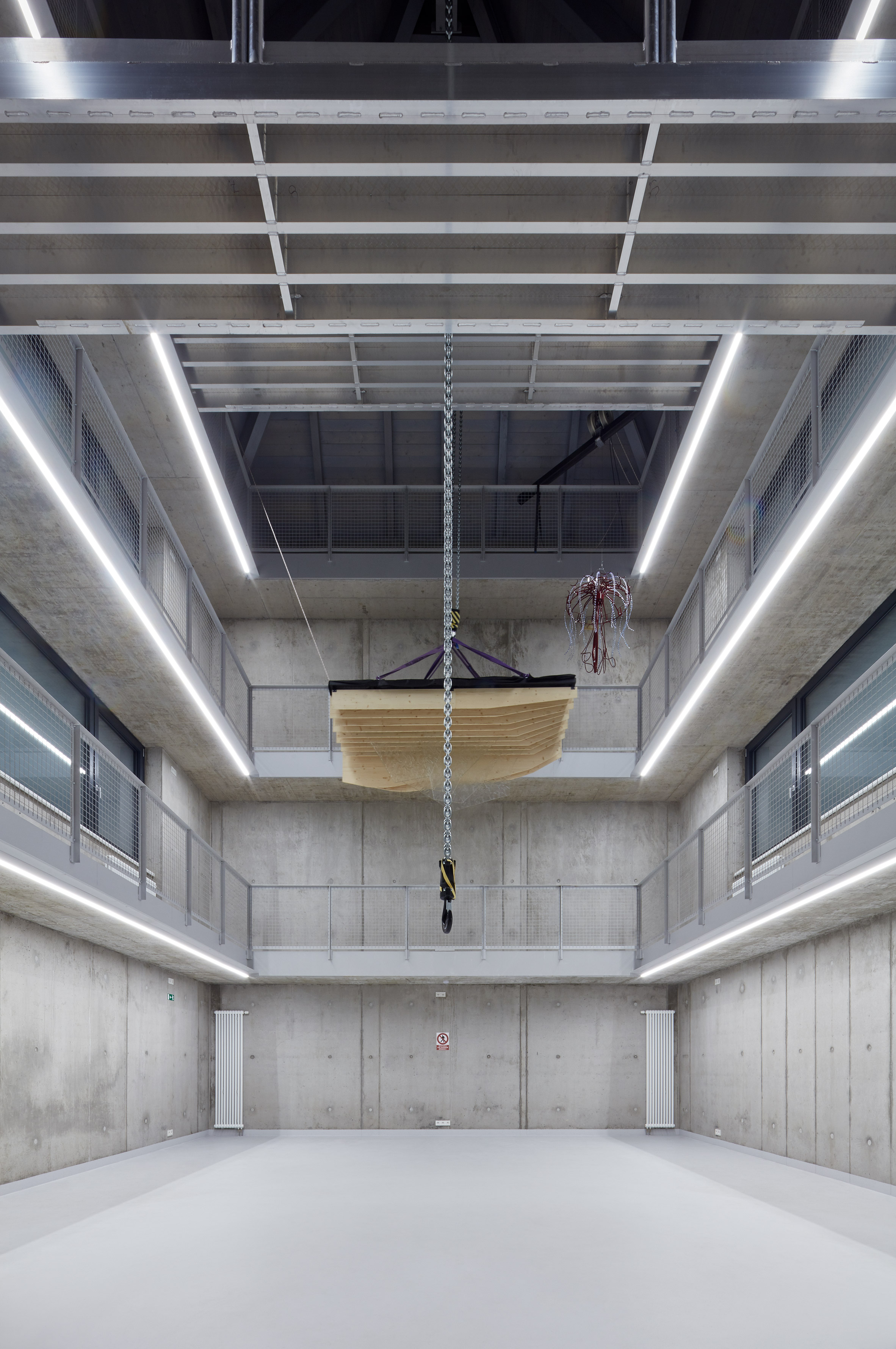
This building contains a four-storey space for the display and testing of the company's chandeliers and light-sculptures, which can weigh up to five tonnes.
Headquarters for glass company Lasvit in Nový Bor, Czech Republic, by Ov-a Architekti Studio

Lasvit intends on constructing two further buildings on the site to fully enclose the courtyard and complete the city block. One of these buildings will contain a public cafe and further offices, while the purpose of the sixth block is yet to be determined.

Czech glass brand Lasvit has previously collaborated with design firm Yabu Pushelberg to create an illuminated glass Christmas tree and made a set of miniature monsters from glassware for Milan design week in 2018.

The brand also previously collaborated with Kengo Kuma to create a collection of crackled glass lighting.

Photography is by Tomáš Souček.

The post Translucent glass house built alongside historic buildings for Lasvit's Czech Republic headquarters appeared first on Dezeen.


from Dezeen https://ift.tt/2ZbGsz0

Pedestrianisation of cities can be tool of exclusion says Interboro in VDF lecture

The final talk for Virtual Design Festival's partnership with CAMP sees Brooklyn and Detroit-based architecture studio Interboro share its views on public space interventions and urban planning.

"How can the built environment support, increase or play a role, at least, in the idea of the public sphere as one of playful interaction?" Interboro co-founder Tobias Armborst asked at his lecture for CAMP, Prague's centre for architecture and urban planning, in June 2019.

"That's something that's important to us," he added.

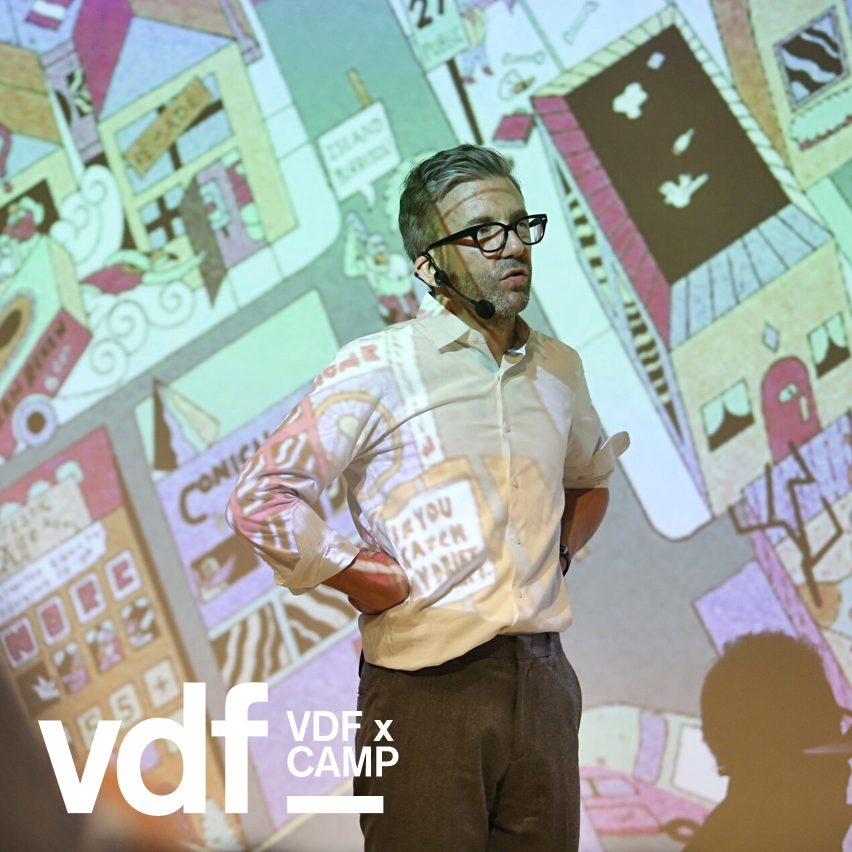
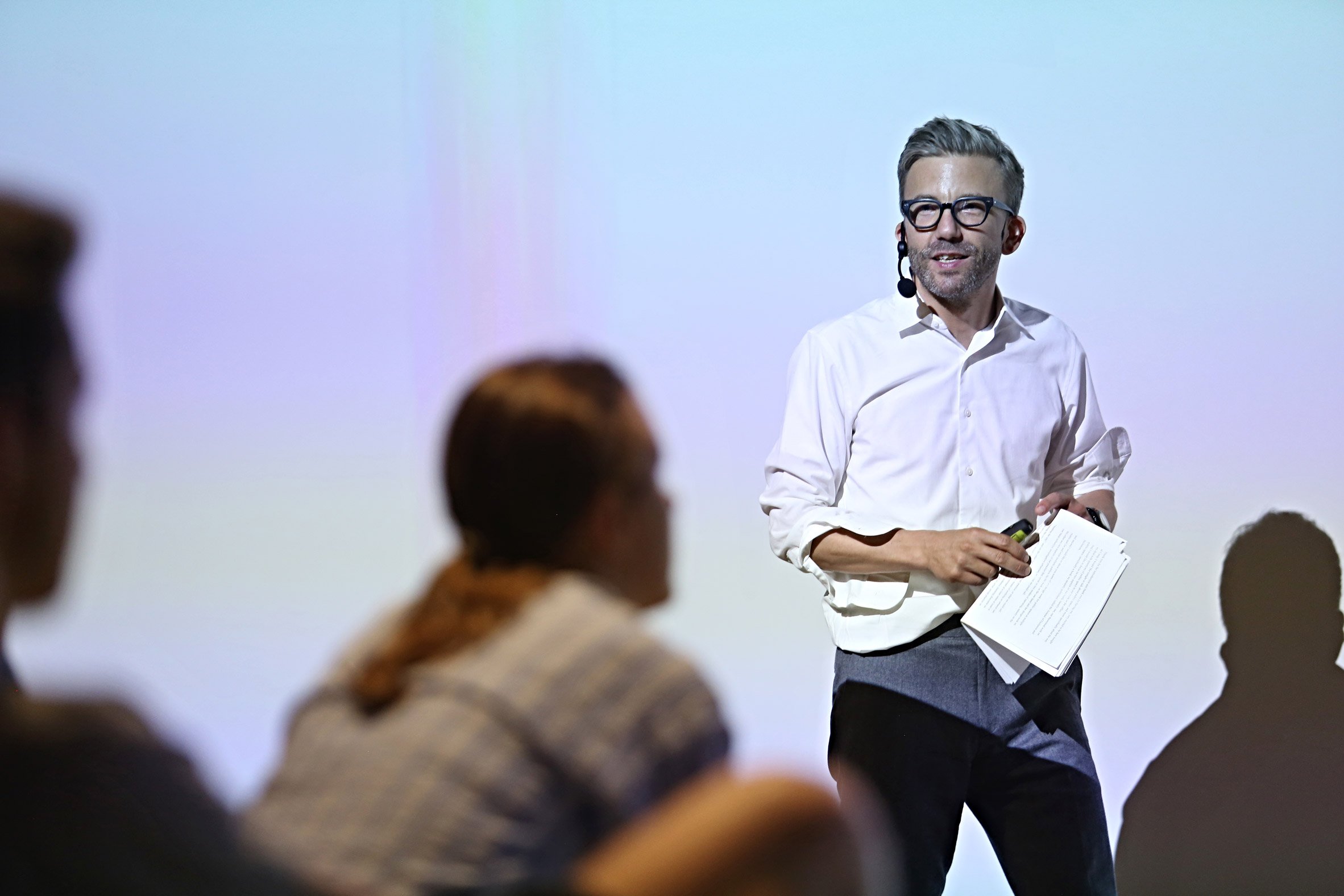
Tobias Armborst of Interboro at CAMP
Interboro co-founder Tobias Armborst spoke at CAMP

The studio, founded in the early 2000's, thinks of public space as a place of difference, not unity, where different cultural expressions and publics meet.

Its recent book The Arsenal of Exclusion and Inclusion deals with artefacts and policies that show divisions in the American landscape.

Armborst delved into the theme in his lecture, covering a number of tactics used by developers and residents to exclude neighbourhoods that differ in race and economic status from certain areas.

Planning in Detroit "a tool of exclusion"

An example is affluent Detroit suburb Grosse Point, which set up farmers markets on the streets connecting it to Detroit.

"Here is a tool of exclusion by two things that nobody could have anything against: pedestrianisation and 'Copenhageniziation,'" Armborst said.

"But the way it's used, and where it's used, turns it into a tool of exclusion, of denying access between the city and the suburb," he added.

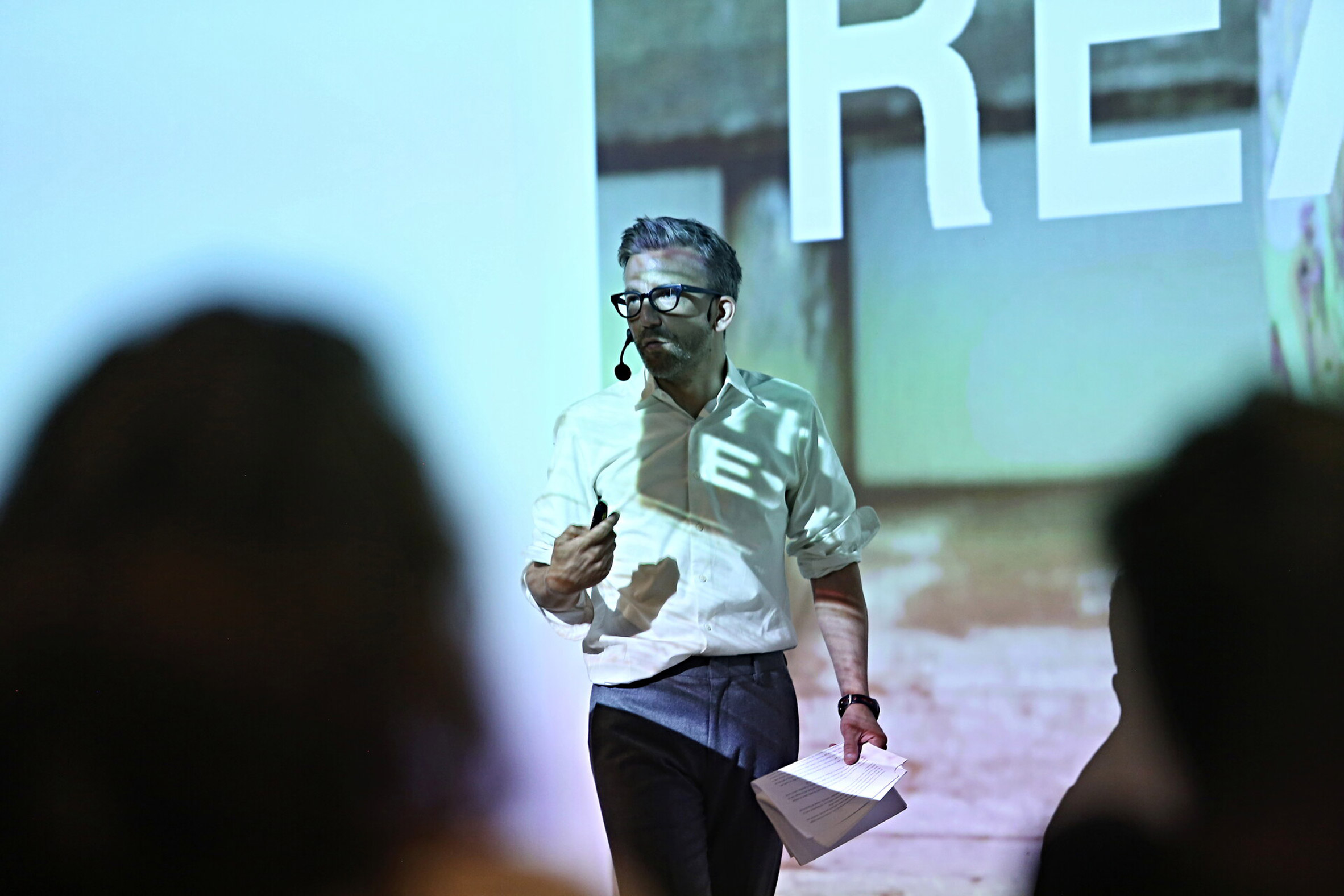
Tobias Armborst of Interboro at CAMP
Armborst spoke about inclusiveness in city design

Interboro aims to make cities more integrated and participative.

As an example, Armborst points to a planning project it undertook in Detroit's Campau/Davison/Banglatown, which sought to reconnect a part of the city that was divided by racist planning policies in the past.

"There should be participation and it shouldn't be tokenism"

"There, our work is really to increase access," Armborst said. As part of the information-gathering process, the studio found new ways to reach out to residents who wouldn't usually attend a participatory meeting.

"We decided to use the tool of an ice cream truck, a very everyday piece of infrastructure in Detroit," he explained. "We appropriated one and turned it into an engagement tool that enabled us as outsiders to gain knowledge of the neighbourhood by talking to people."

"When you're designing a public space there should be participation and it shouldn't be tokenism," Armstrong concluded.

"You should take the feedback you get along the way seriously and respond to it. It makes the design potentially better."

Photos are courtesy of CAMP.


About CAMP

CAMP, the Center for Architecture and Metropolitan Planning, is an urban planning hotspot in the heart of Prague. The gallery is housed in a modernist building designed by Czech architect Karel Prager and serves not only architects and planners, but mainly the citizens of Prague interested in the future of their city. CAMP also hosts an exhibition space with a 25m wide panoramic projection wall, enabling a unique simulation of the city.

Its monthly Urban Talks series offers lectures by world-renowned architects and urban planners.

Here's the schedule of talks we are publishing on VDF today:

10:00am Kengo Kuma live from Japan
1:00pm Snøhetta
3:00pm COBE
5:00pm Interboro

The post Pedestrianisation of cities can be tool of exclusion says Interboro in VDF lecture appeared first on Dezeen.


from Dezeen https://ift.tt/2LF98Zm

A Photographer Captures the Bizarre and Idiosyncratic Collections Displayed in Belgian Windows

All images © Jean-Luc Feixa, shared with permission

When photographer Jean-Luc Feixa moved from Toulouse to Brussels, he began noticing the cultural, linguistic, and architectural differences between the two cities. “It may seem anecdotal,” he tells Colossal, “but the windows here are much larger than in France and easily disclose the house interiors.”

On his commute, Feixa often would pass the glass openings displaying robust collections, family mementos, and items for sale. “One day, I came across a group of children who seemed to be fascinated by a LEGO construction. It was quite captivating to see them commenting on this installation for many minutes. That was the trigger,” he says.

In the seven years since his relocation, Feixa has captured dozens of windows around the Belgian city, which he recently compiled in a book titled, Strange Things Behind Belgian Windows. Each provides not only a glimpse into the residents’ lives but also the objects they both intentionally and accidentally display. From a panda bear collection to a taxidermied fox to the finish line of a bike race, the objects encompass the cutesy and the odd and are always idiosyncratic. One display in particular—the homage to Elvis Presley (shown below)—has been exemplary of Feixa’s intention.

I talked for a long time with the couple. They are absolute fans of the King, and they were very moving. They decided to share their passion from behind their window. They really represent what I tried to convey with my series, that windows can be a perfect showcase to communicate a passion, send a message, reveal a part of oneself.

Since Belgians have begun quarantine, the photographer says windows have been transformed into a more intentional form of communication. “Whether to sell masks, encouraging people to stay home, or congratulating the medical staff, I see a lot of objects appearing, and it’s great to be able to continue the project,” he says. Feixa is hoping to chronicle this unusual period in a second volume.

To see the full collection of photographs, grab a copy of the photographer’s book, and keep up with his work on Instagram. (via Design You Trust)


from Colossal https://ift.tt/3fZ4Olx

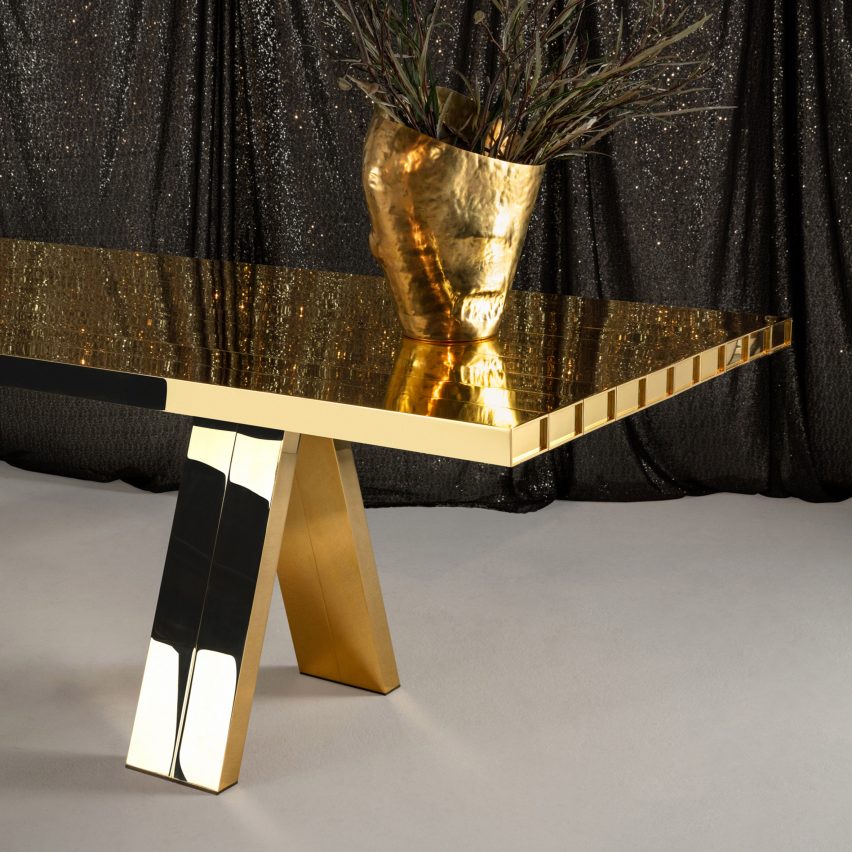
Mass Dining Table by Tom Dixon

Mass Dining Table by Tom Dixon

VDF products fair: Tom Dixon has used gold-hued brass to create the Mass Dining Table, which resembles "a monumental and heavyweight sculpture".

The Mass Dining Table is sculpted entirely from a single extruded box section of brass, which has been highly polished for an opulent finish.

It is designed by Tom Dixon with a deliberately simple form composed of a series of brass units that resemble planks – the most familiar unit in furniture construction.

According to the brand, the ambition is to transform the domestic archetype into monumental heavyweight sculpture.

"We wanted to create something super-basic in terms of construction so that it's very reduced, minimal and logical," explained the brand's founder, Tom Dixon.

"Yet simultaneously it's the opposite in aesthetics, in that it is extremely precious and desirable."

The table is the latest evolution of Tom Dixon's Mass collection, which features chunky furniture made from mango wood and clad with brass foil.

It will eventually be available as a made-to-measure construction set to allow buyers to self-build.

Product: Mass Dining Table
Brand: Tom Dixon
Contact address: customerservices@tomdixon.net 

About VDF products fair: the VDF products fair offers an affordable launchpad for new products during Virtual Design Festival. For more details email vdf@dezeen.com.

The post Mass Dining Table by Tom Dixon appeared first on Dezeen.


from Dezeen https://ift.tt/3cLhXfO

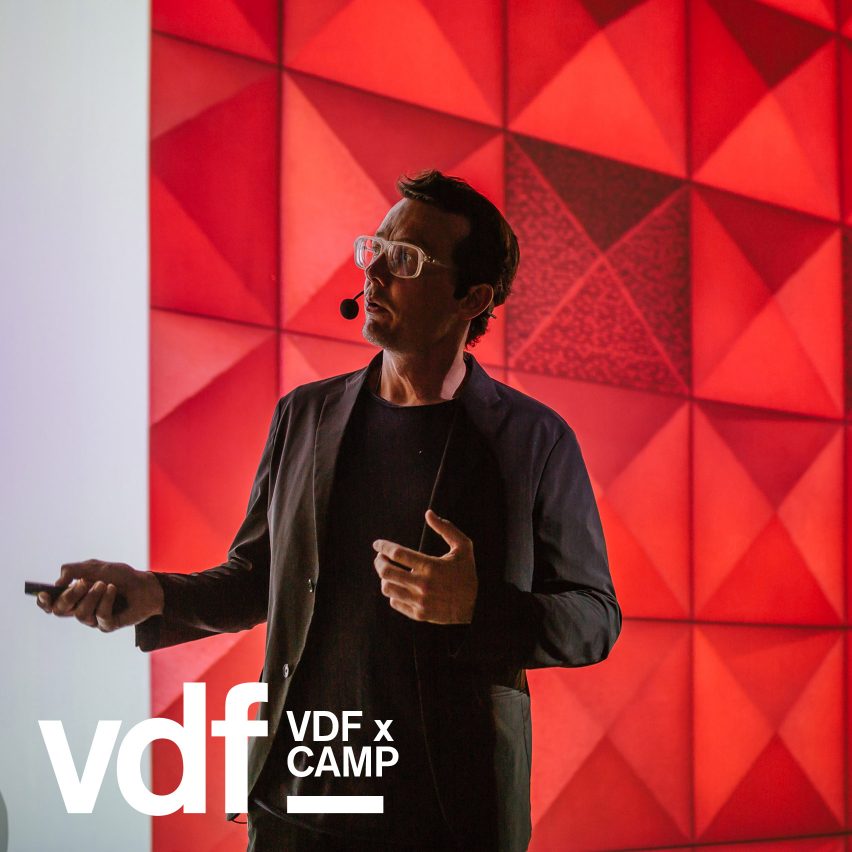
COBE's Thomas Krarup discusses making Copenhagen into an "urban living room" in VDF lecture

Thomas Krarup at CAMP

As part of today's collaboration with CAMP, VDF is showing this lecture where Danish architecture studio COBE explains how it helped make Copenhagen one of the most liveable cities in the world.

COBE, which was founded in 2006, primarily works in three fields: urbanism, architecture and public space, the studio's project director Thomas Krarup explained in this talk from CAMP in May 2018.

"We don't work like normal architects – drawing up plans which others execute – we use Lego as a metaphor to for our collective approach to creating architecture, working with landscape architects, urbanists, constructing architects, architects and also with clients and stakeholders in the neighbourhoods we build in," Krarup said.

Thomas Krarup of COBE at CAMP
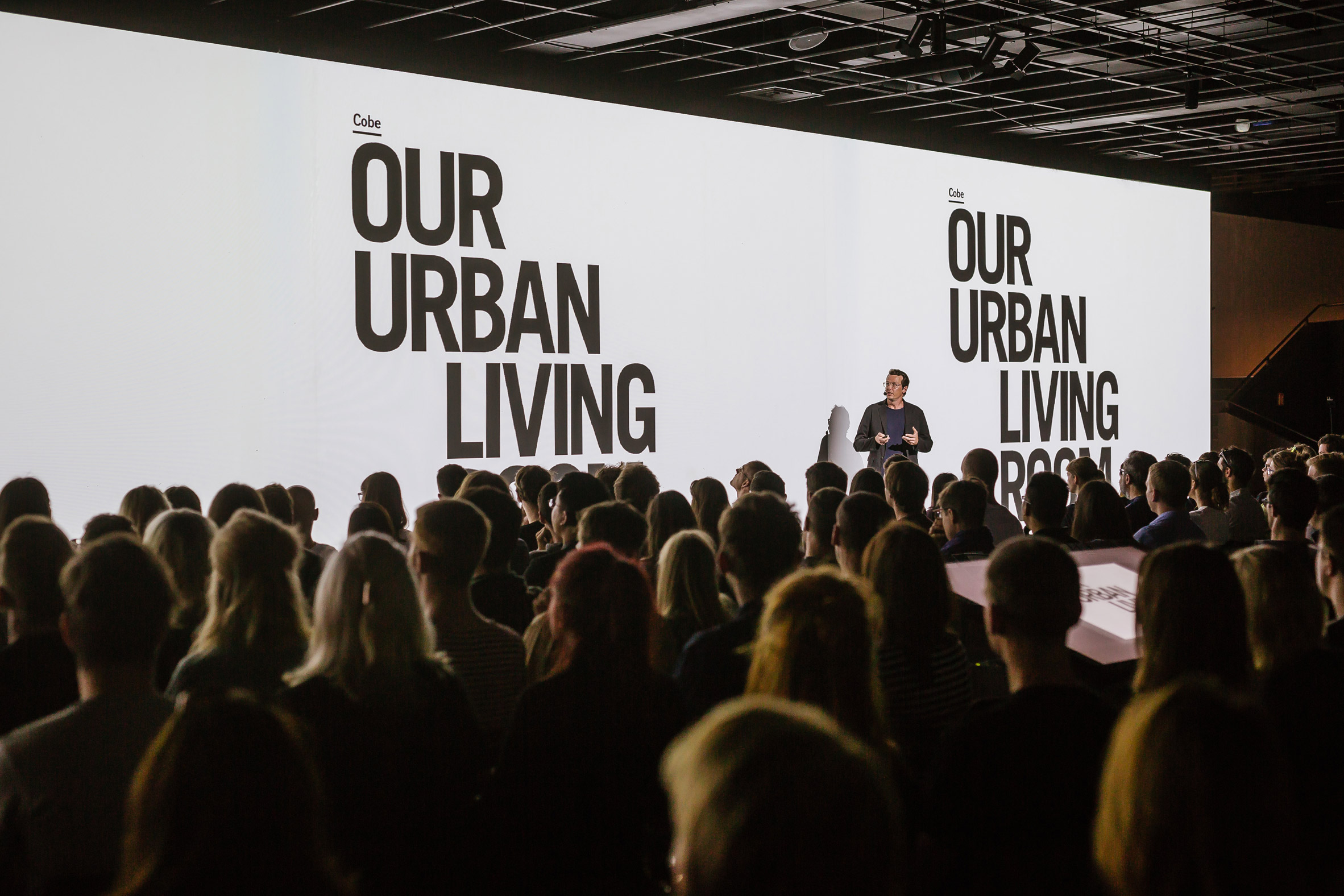
Thomas Krarup talked about COBE's book Our Urban Living Room

The studio has six principles that it applies to its work, including: "From infrastructure to public space."

Its 2018 book Our Urban Living Room tried to explain how Copenhagen went from a poor city on the verge of bankruptcy, to top the lists of the most liveable cities in the world.

COBE works extensively in Copenhagen and recently redesigned the Nørreport station, the most congested place in the city, using the way people moved in the urban area to guide its design.

"Walking patterns in the snow were profound to learn from in our approach – we tried to map how people used the space, this gave us an insight on how to reconfigure the space," Krarup explained.

"A series of islands popped up, which could be used for buildings and bicycle spots, as they wouldn't influence how people used the space."

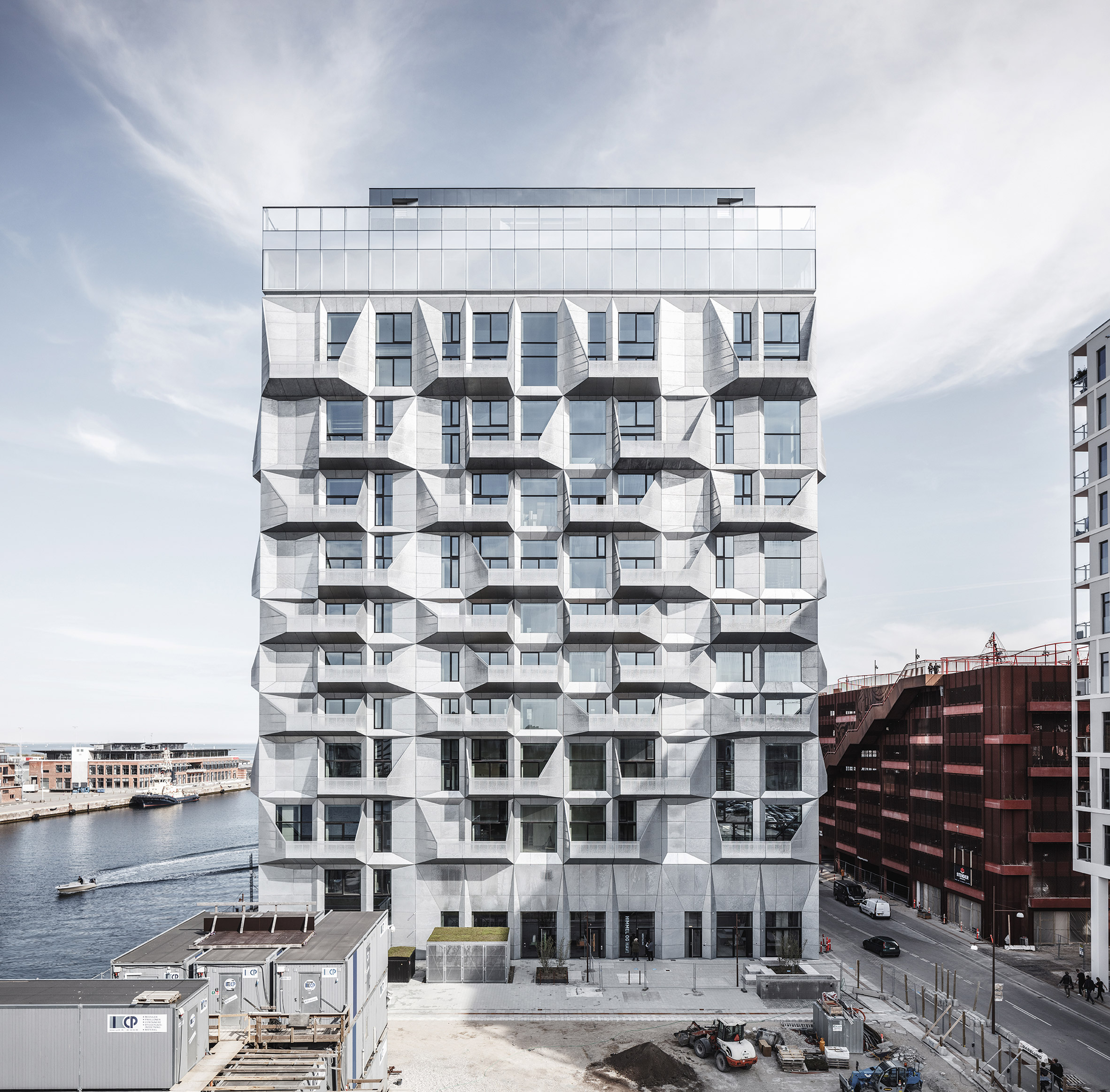
When the studio undertook the project of transforming a silo formerly used for grain storage into a residential space, it chose to keep the existing structure.

To COBE it was a unique opportunity to make use of vertical space in the city.

"Eight metres tall spaces are something that a developer wouldn't ever let you build," Krarup said. "We wanted to make the floor level public and make the view from the top accessible to the people of CPH, which does not have many tall buildings overlooking the city."

Similarly, its design for the Danish rock museum in Roskilde was built on top of an old concrete factory.

COBE's residential silo
The talk includes COBE's conversion of a grain silo in Copenhagen. Photo is by Rasmus Hjortshøj.

Another of COBE's principles is: Culture as a social engine, a motto that the studio tries to embody in its public projects.

"Something that we noticed in Copenhagen was how public buildings can bring people together in a city which is challenged by social segregation and gentrification," Krarup explained.

He quoted Winston Churchill to illustrate COBE's motto of embracing the local community: "We shape buildings, thereafter they shape us."

Krarup ended the talk by focusing on COBE's final principle, Copenhagen Tomorrow, which looks at how city planning should be conducted.

The studio won the competition to transform the city's North Harbour in 2008, and has created a phased masterplan for the project that will take 20-30 years to execute.

"We created a series of six principles to guide us through the very long planning process – the new development should consist of islands, should embrace its industrial harbour structure, the densest part must integrate as much green space as possible, everything should be accessible within a five-minute walking distance," Krarup said.

"The reason why we are very proud of the North Harbour is because we didn't only work on the large scale masterplan, but also designed the streetscapes and the pocket parks between the buildings. And we get to live in  a project that we designed," he added.

Photography is by CAMP.


About CAMP

CAMP, the Center for Architecture and Metropolitan Planning, is an urban planning hotspot in the heart of Prague. The gallery is housed in a modernist building designed by Czech architect Karel Prager and serves not only architects and planners, but mainly the citizens of Prague interested in the future of their city. CAMP also hosts an exhibition space with a 25m wide panoramic projection wall, enabling a unique simulation of the city.

Its monthly Urban Talks series offers lectures by world-renowned architects and urban planners.

Here's the schedule of talks we are publishing on VDF today:

10:00am Kengo Kuma live from Japan
1:00pm Snøhetta
3:00pm COBE
5:00pm Interboro

The post COBE's Thomas Krarup discusses making Copenhagen into an "urban living room" in VDF lecture appeared first on Dezeen.


from Dezeen https://ift.tt/3dX8RNe