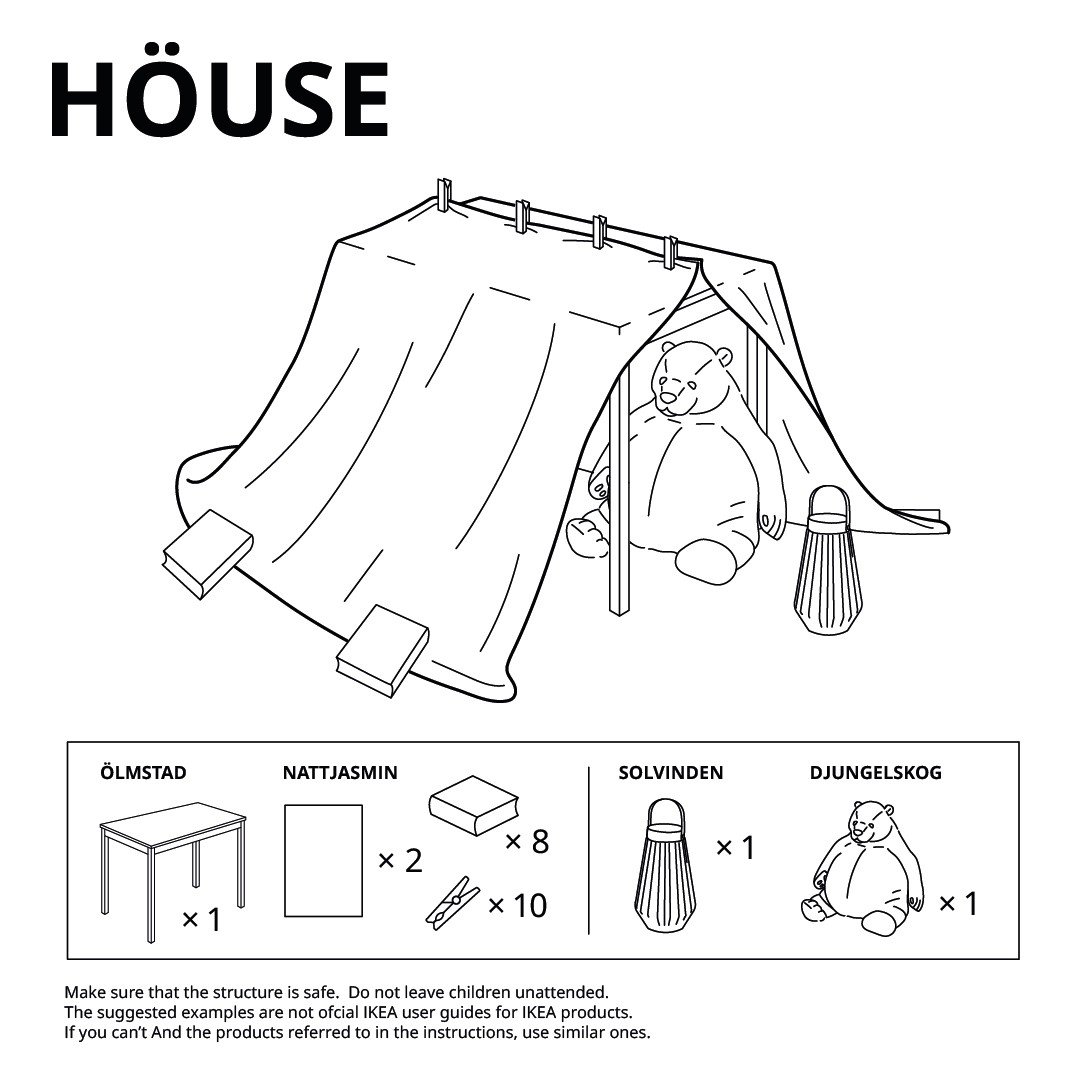
You will need pillows, pegs, books, fairy lights and a big blanket (obvs). Giant teddy bear, optional.

from It's Nice That https://ift.tt/36d2MJW
You will need pillows, pegs, books, fairy lights and a big blanket (obvs). Giant teddy bear, optional.
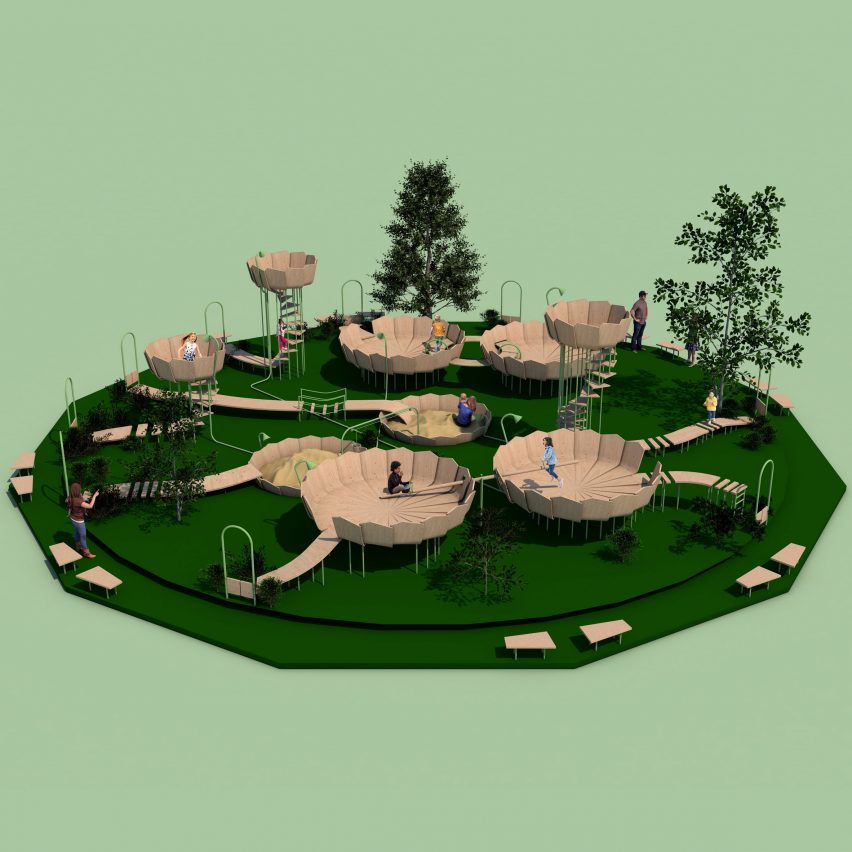
Berlin-based designers Martin Binder and Claudio Rimmele have designed a concept for an "infection-free" playground where children could play together safely during the coronavirus pandemic.
Rising to the "creative challenge" of the pandemic, designer Binder and psychologist Rimmele set out to solve the problem of creating a space that both protects its users from potential contagions while still enabling fun interactions.
The resulting Rimbin concept is a playground made up of a group of individual play areas shaped like a cluster of water-lily pads on a pond.
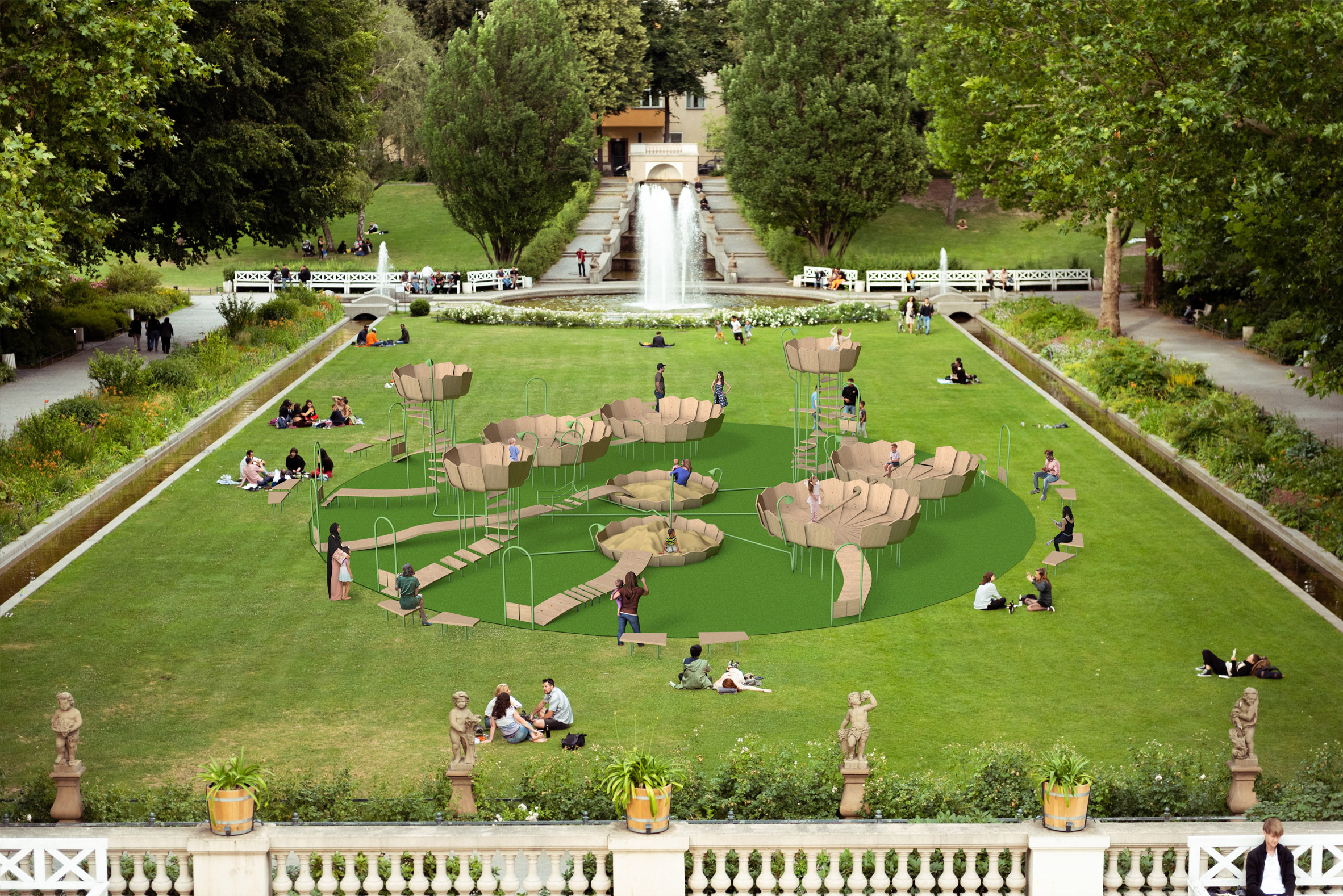
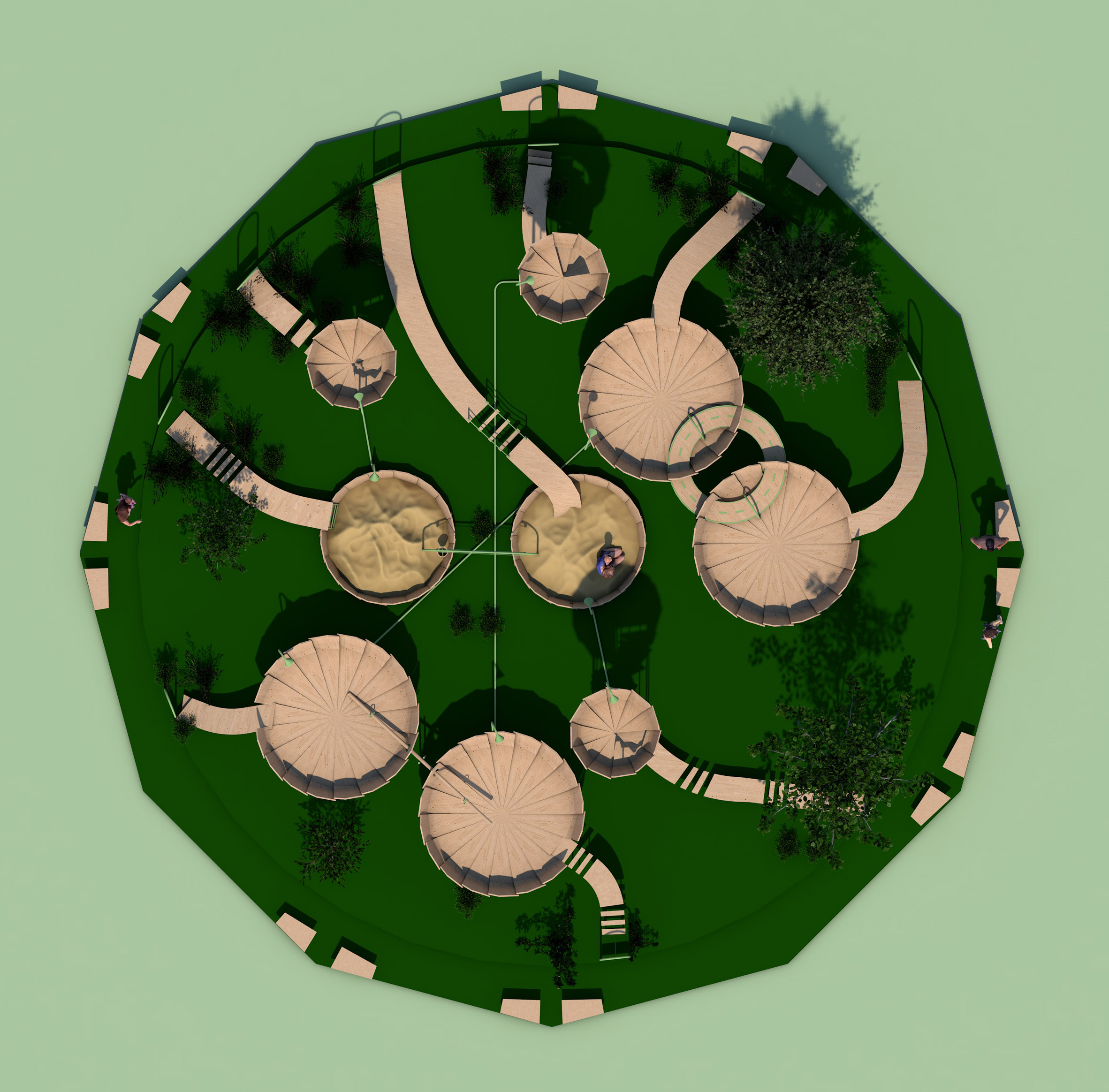
Each child can have their own playing platform, with individual paths leading to separate entrances, from which they can see and communicate with each other from a safe distance.
Users can see when an area is occupied from the entrance gate. Once inside the platform, children can communicate with one another between areas by speaking into hollow tubes.
The play platforms can accommodate different types of activities and games. Some contain sand, while others have seesaws, ladders or "horizontal hamster wheels" inside.
Elements that are exposed to direct contact with the children, like handles and tubes, are made from metal in order to be easily sanitised. The duo propose installing disinfectant dispensers to aid this cleaning process.
"Even though playgrounds have reopened in Germany, playing together with unknown children cannot be as relaxed, for the time being, without risking infection," said the creators.
"Children need interactive outdoor play," they continued. "For them, the social and physical stimuli are necessary for physical and mental development, and to learn important social skills."
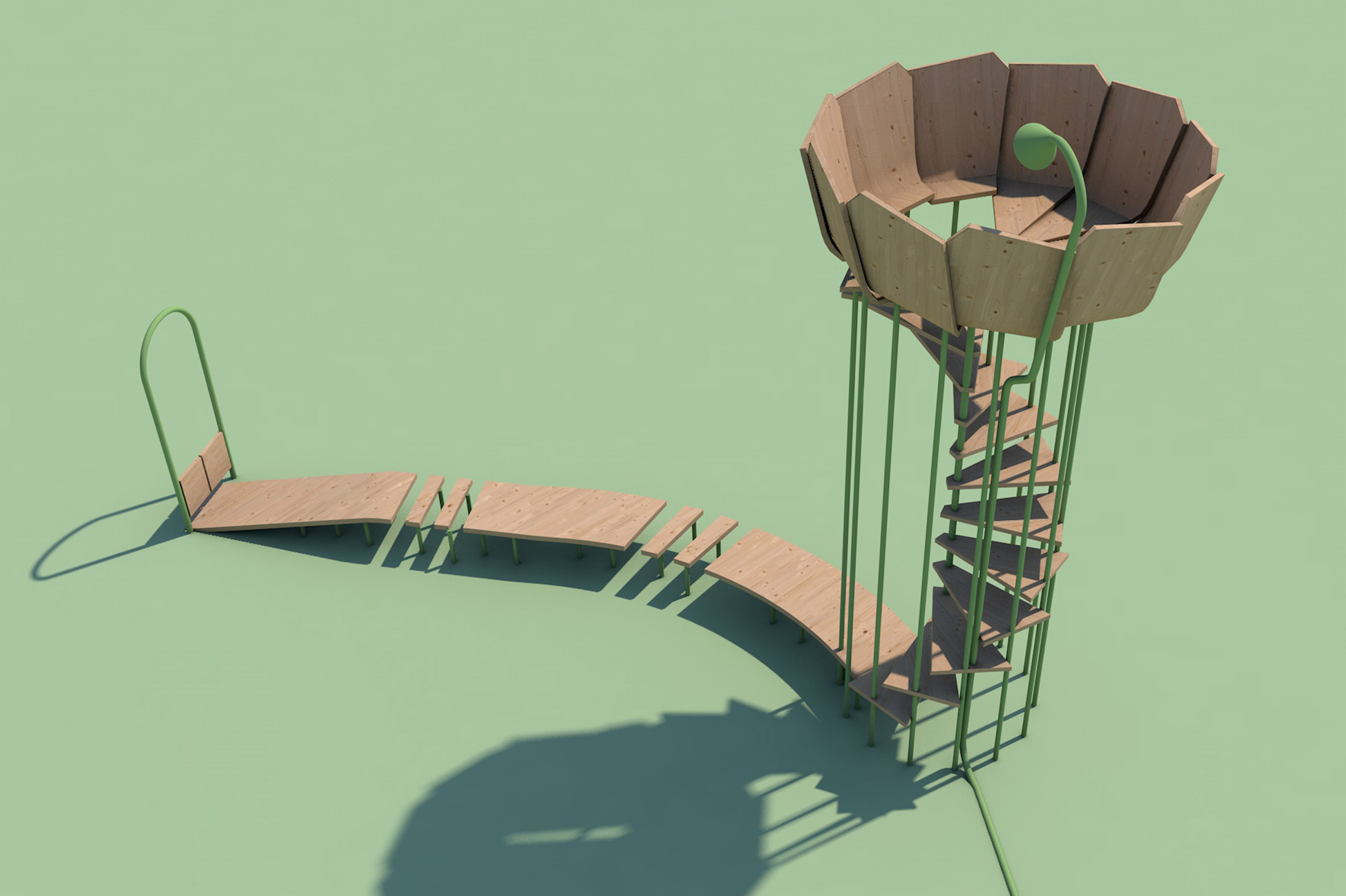
In order to better understand the needs of both parents and their children, Binder and Rimmele conducted telephone interviews with adults and kids who described their daily life during lockdown.
"For most parents it was clear that a solution must be found to offer their children more physical activity with friends in nature," they said.
"An important part of the research and development was the examination of biological forms and natural materials."
The duo based the Rimbin design on the shape of the leaf of an Amazonian water lily, which is known to be able to withstand a heavy weight.
"To demonstrate the water lily's natural carrying power, the botanist Joseph Paxton placed his own daughter on the leaf of a giant water lily around 1849," the creators explained.
"Rimbin's play areas should be as safe and stable for children as these leaves," they added.
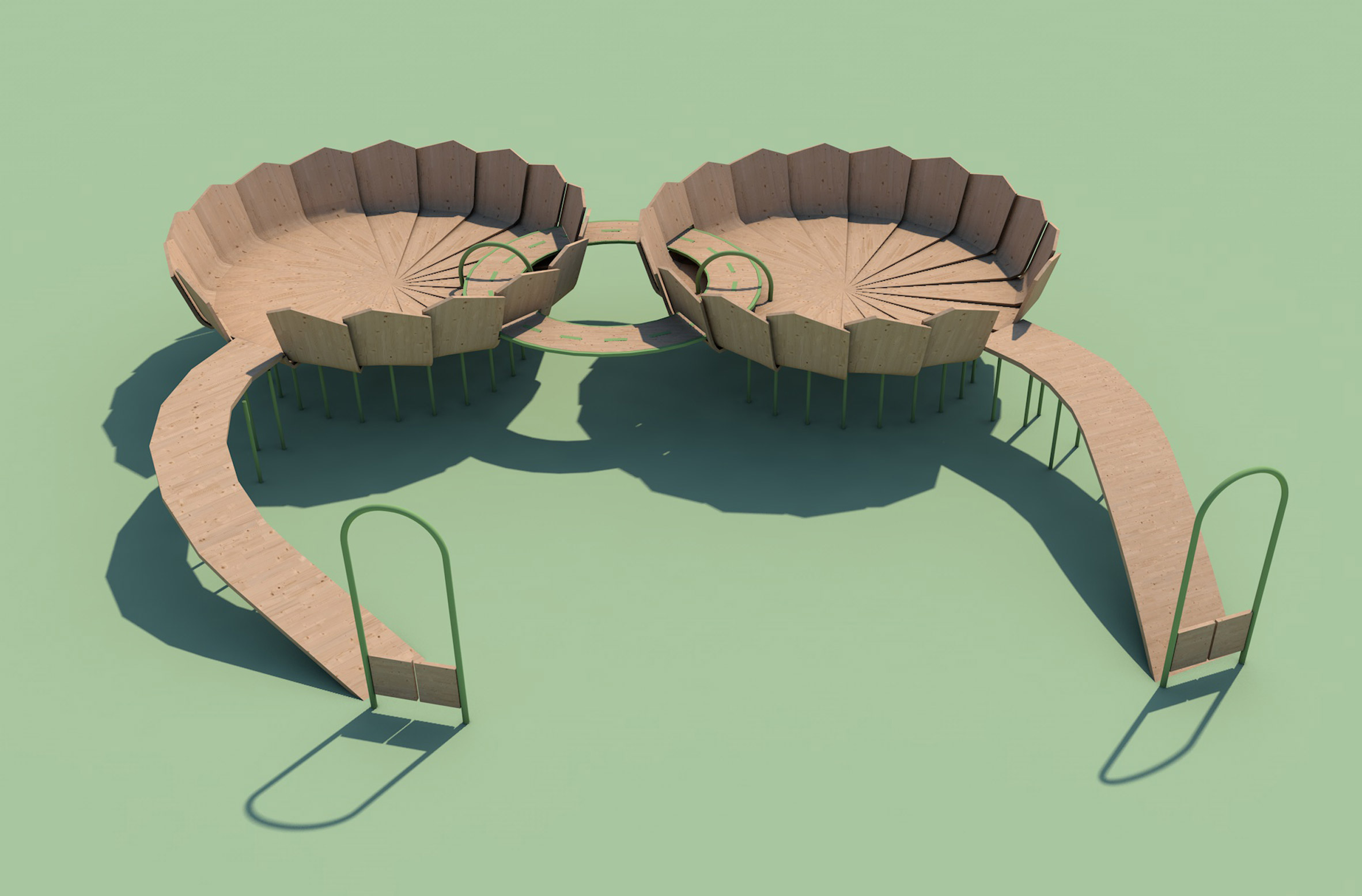
Composed of two separate words – rim, as in edge, and bin, as in container – the name Rimbin describes the concept's individual play areas. It also stands for the first syllables of each of the surnames of the designers.
Binder and Rimmele envision the playground being used both during and after the pandemic.
It comes as part of the duo's attempt to re-think, long-term, the design of playgrounds in urban areas, so that they can remain open in situations similar to the Covid-19 pandemic, should this happen again.
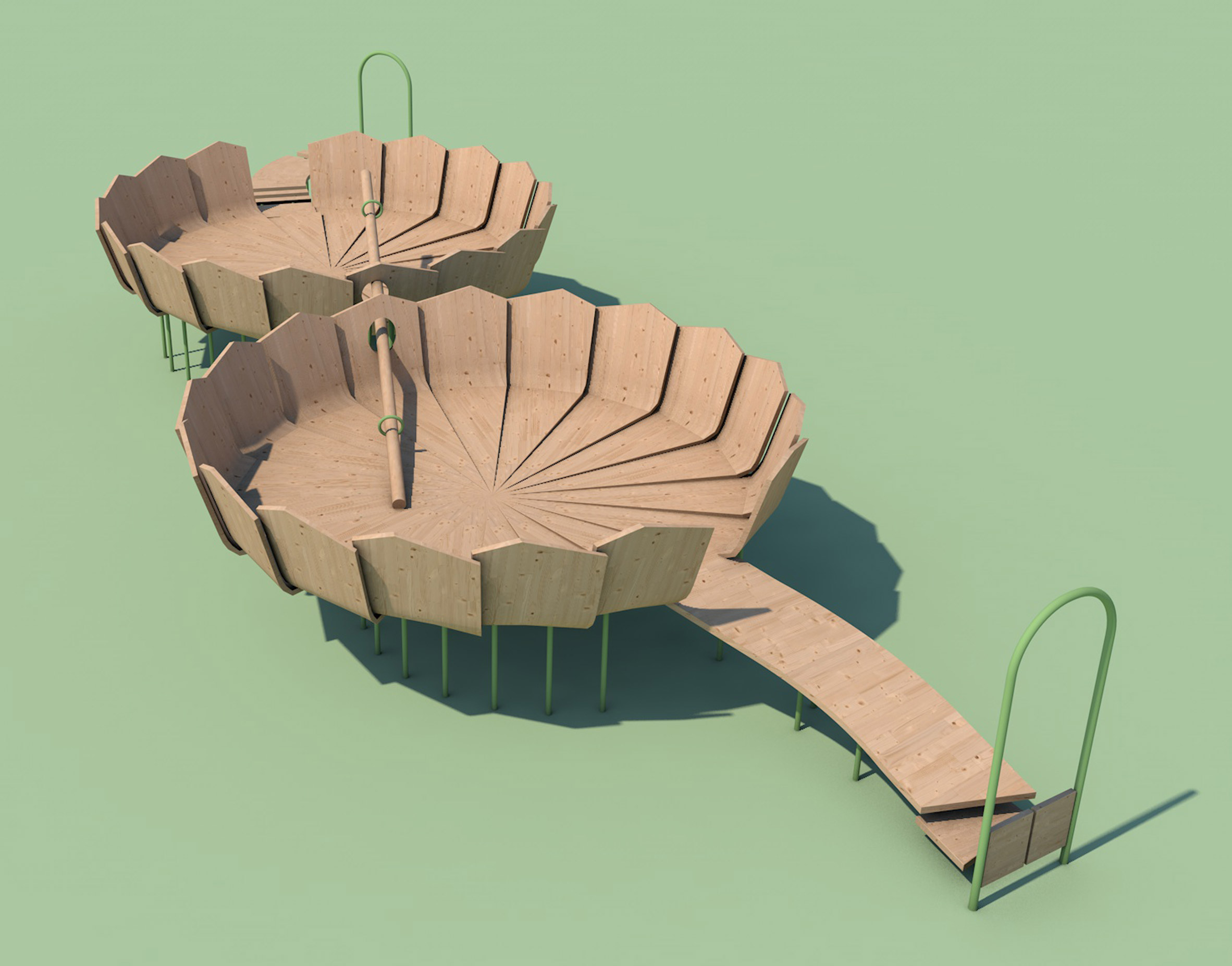
Many designers have been creating objects and concepts for children, to keep them entertained during the Covid-19 lockdown.
IKEA has designed six forts that can be built with its products such as tables and blankets, while Metaform Architects created face shields for children that can be customised with crowns, animal ears or googley eyes.
The post Rimbin is an "infection-free" playground concept designed to look like water lilies appeared first on Dezeen.

Viewing the medium as a tool for documentation, the Ghanian photographer discusses the reasons behind his practice.


As we count down the days to enter Dezeen Awards, interiors expert judge Michelle Ogundehin says she is looking forward to submissions that combine originality with sustainability.
"I'm looking for design motivated by an authentic wish to make something that looks better, functions better, contributes and pushes forward boundaries more than anything that currently exists," said the British writer, creative consultant and TV presenter.
"There is a surfeit of stuff in the world," continued Ogundehin, who is judging the interiors categories of Dezeen Awards 2020.
"There are too many things that no-one needs or that do little to improve the human condition; things made basically to satisfy only the desires of the designer."
Entry for Dezeen Awards closes 2 June. To help you with your finishing touches, we asked our judges to tell us what they're hoping to see from entrants.
Ogundehin describes herself as "an interiors obsessive, colour nut and detail queen". After training as an architect, she was editor-in-chief of interiors magazine Elle Decoration UK for 13 years.
Ogundehin is the lead judge on the BBC/Netflix series Interior Design Masters and co-presenter of Channel 4's Grand Designs: House of the year. Her first book, titled Happy Inside: How to Harness the Power of Home for Health and Happiness, was published in April 2020.
She is a regular contributor to Dezeen and numerous other international publications. She wrote Dezeen's 2020 interiors trend report, and she's hoping the entries will stand out from the crowd.
"I rather hope I don't detect any trends in aesthetic terms, it's too easy to just follow the pack,: she said. However, I would imagine that an element of ecological awareness, circular usage, and sustainability are inherent."
Enter Dezeen Awards 2020 now
To have your work seen by our stellar lineup of judges, complete your entry today to ensure that you don't miss the deadline on 2 June.
If you need help or have any questions, please contact our awards team at awards@dezeen.com.
The main image is by Ben Anders.
The post There is a "surfeit of stuff in the world" says Dezeen Awards judge Michelle Ogundehin appeared first on Dezeen.
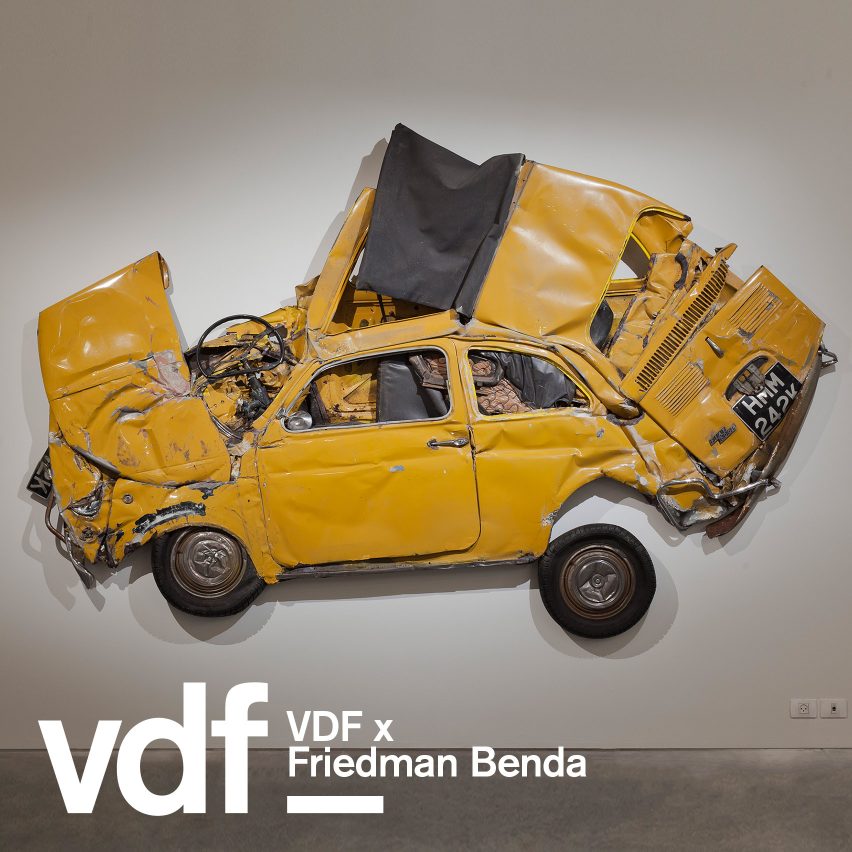
Despite creating highly collectable artworks and designing best-selling products, Ron Arad says he has never pursued commercial success in the latest talk as part of our ongoing partnership with Friedman Benda for VDF.
"People always say I'm a good entrepreneur, that I'm very good at PR," Arad told curator and historian Glenn Adamson in New York gallery Friedman Benda's Design in Dialogue interview. "On the contrary, I'm not interested in it."

Dezeen has partnered with Friedman Benda to broadcast a selection of the best conversations in its Design in Dialogue series as part of Virtual Design Festival, publishing one a week throughout May and June.
"We don't design for the business, the business is there to support our designs"
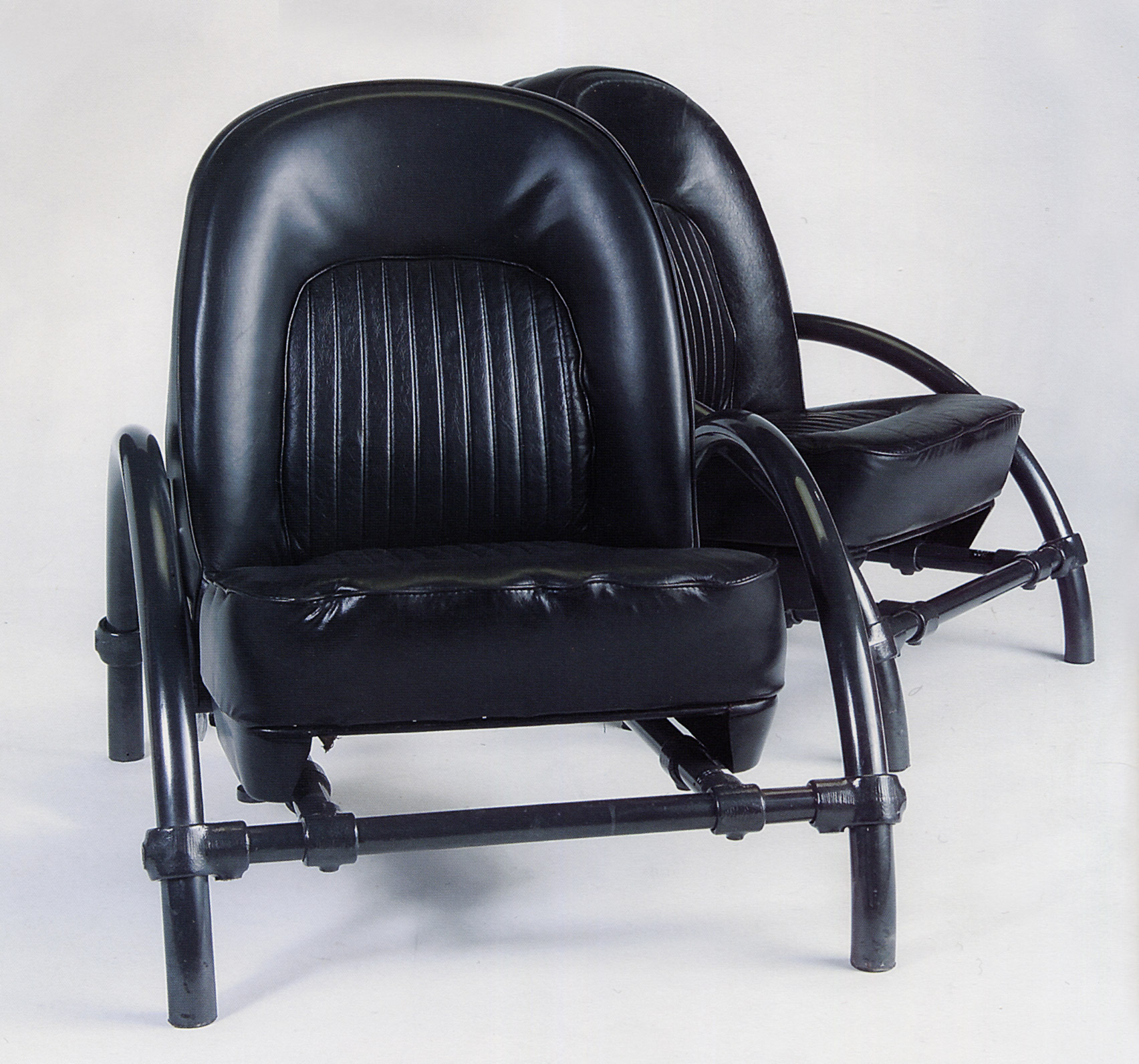
This interview features British-Israeli designer Arad, who rose to prominence in the 1980s by turning found objects into highly valuable collectors' pieces, such as his iconic Rover Chair.
He went on to design a number of extremely successful mass-produced products for major brands, such as the Tom Vac chair for Vitra and the Bookworm bookshelf for Kartell.
However, Arad rejected Adamson's suggestion that he was a shrewd businessman.
"I'm not entrepreneurial," he said. "For me, business was always a necessary evil. We don't design for the business, the business is there to support our designs."
"Ettore Sottsass has a really nice quote," Arad continued. "He said: 'Money is very jealous, if you ignore it, it will run up to you."
According to Arad, his prolific output and the range of his work is due to a lack of focus, rather than entrepreneurial ambition.
"It's because I'm lazy, it's because I'm not a methodical person," he said. "I jump from one thing to the other. I'm doing a lot because I'm lazy. I know it sounds silly."
"I made a living out of it before I knew what I was doing"
During the talk, Arad presented a number of key projects from throughout his career, including the Rover chair from 1981, which combines a car seat he found in scrapyard with a curved tubular steel frame made from a milking stall.
"It's scaffolding, slightly more refined," said Arad. "I took that and I made a living out of it before I knew what I was doing."
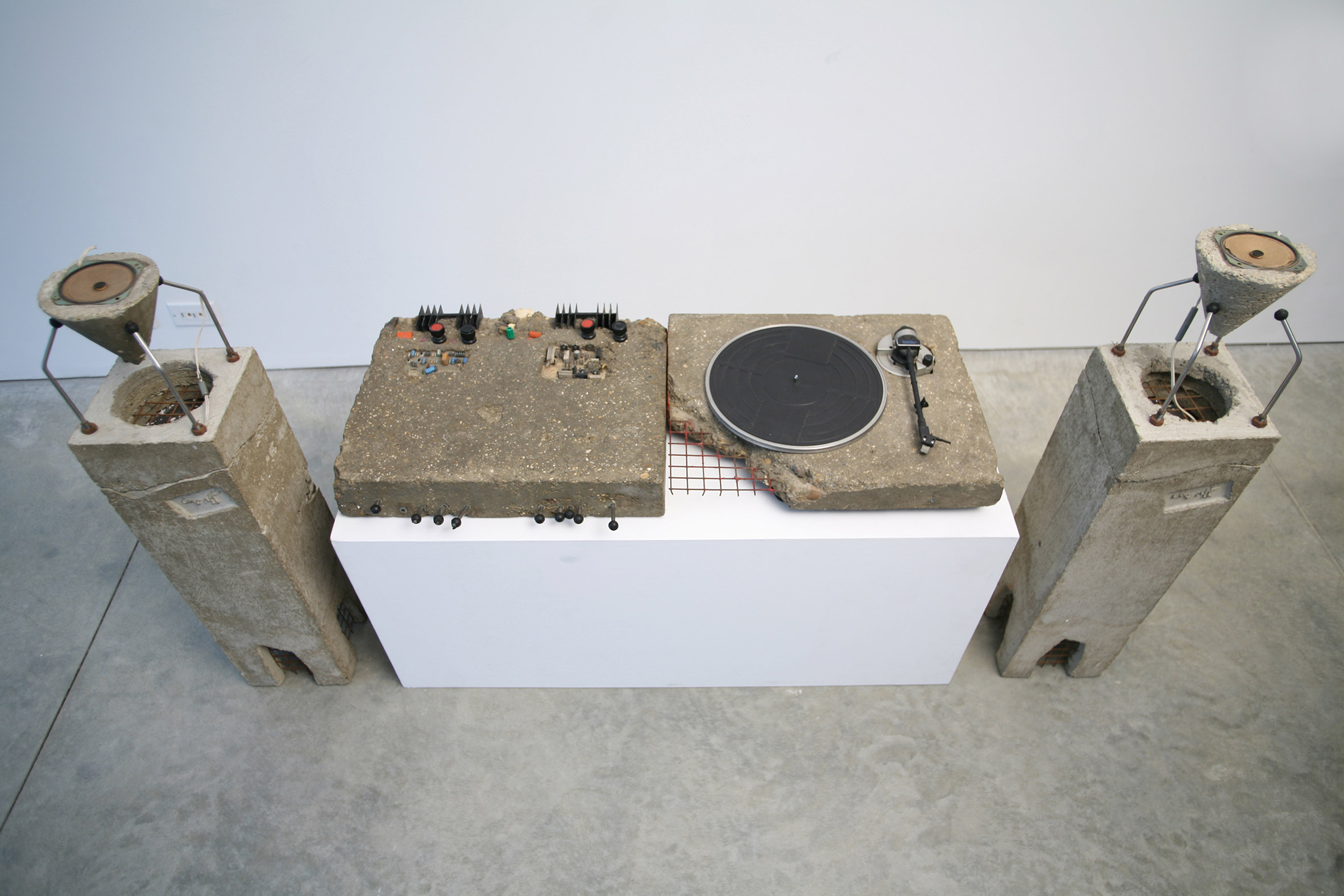
According to Arad, misinterpretations about him and his work have helped boost his career. He gives the example of his Concrete Stereo project from 1983, which features a cast concrete turntable, amplifier and speakers that have been chipped away to reveal the electronics inside.
"I thought I was showing beauty where it is normally hidden," he said. "I didn't think I was doing anything destructive, but the French called my style 'ruinism'."
Despite not being his intention, he says that the idea of him as a "ruinist" led to him being invited to take part in the Centre Pompidou's 10th-anniversary exhibition in 1986, titled Nouvelles Tendances.
"I don't mind these misinterpretations," he said. "That's an example of a misinterpretation that made them select me for something."
"They took it to be tortured by a digger"
In the video, Arad also presented his 2013 project Pressed Flowers, which comprises a series of Fiat 500 cars that have been flattened by a pneumatic metal press. The pieces were presented at Design Museum Holon at an exhibition called In Reverse.
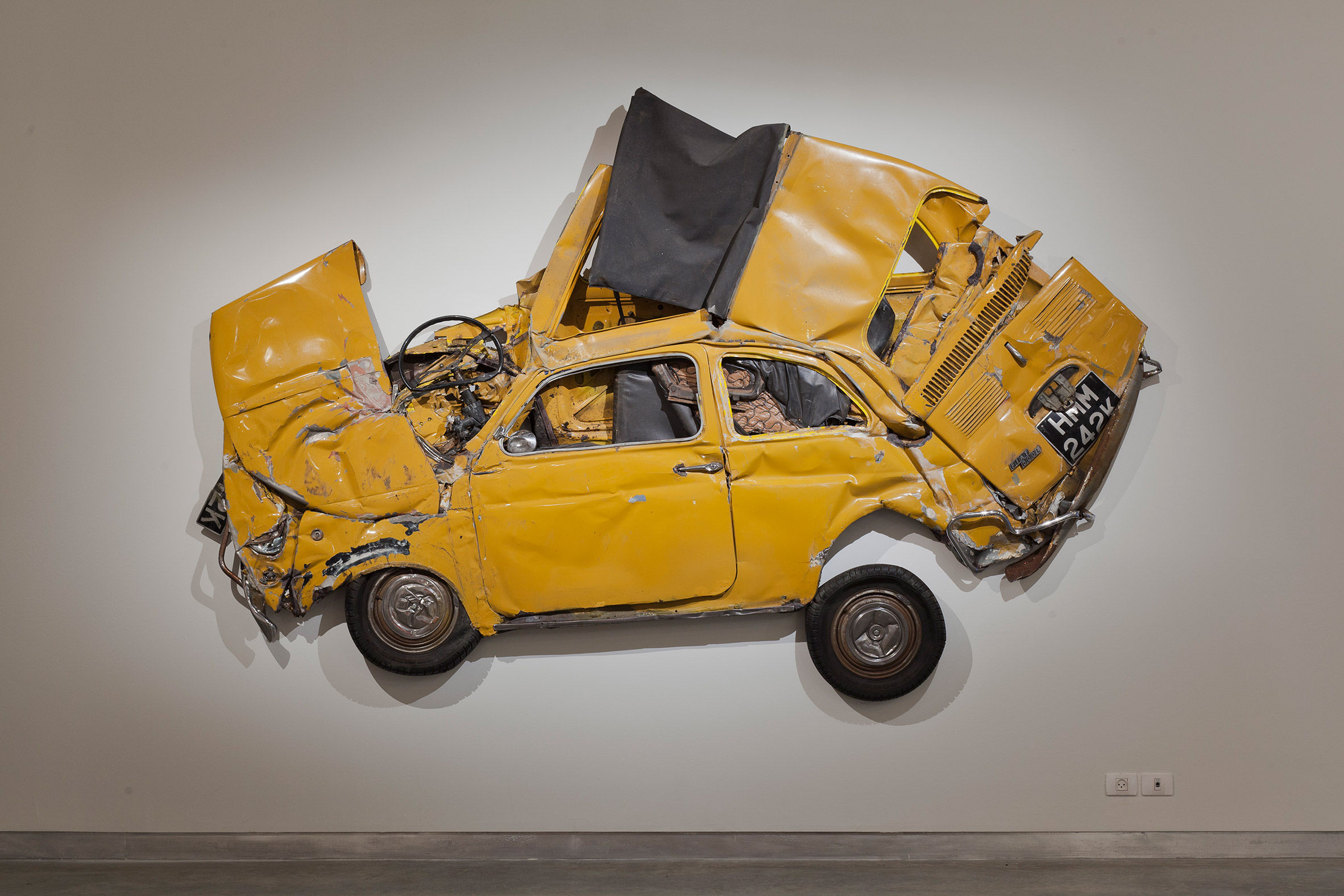
Arad insisted that he was not destroying the cars, but rather "immortalising them", showing a series of videos documenting numerous failed attempts to flatten the cars – including by running them over with a digger – which he rejected for being too destructive.
"Without even asking me, they [his fabricator] took it to be tortured by a digger," he said. "That's not what I wanted to do. I am not a ruinist!"
Eventually, Arad found a metal press at a shipyard in the Netherlands, which was strong enough to crush the cars smoothly and make them as flat as he envisioned.
"I went to my garage and told them what I wanted to do and they started crying," he recalled. "And I said: 'Listen, I am not destroying the cars, I am immortalising them'. And they understood and they prepared all these cars for me."
"We took them to Holland, to a shipbuilder. And we took them to a metal manipulating press. It took half a year to arrive there, but we pressed six cars in a day."
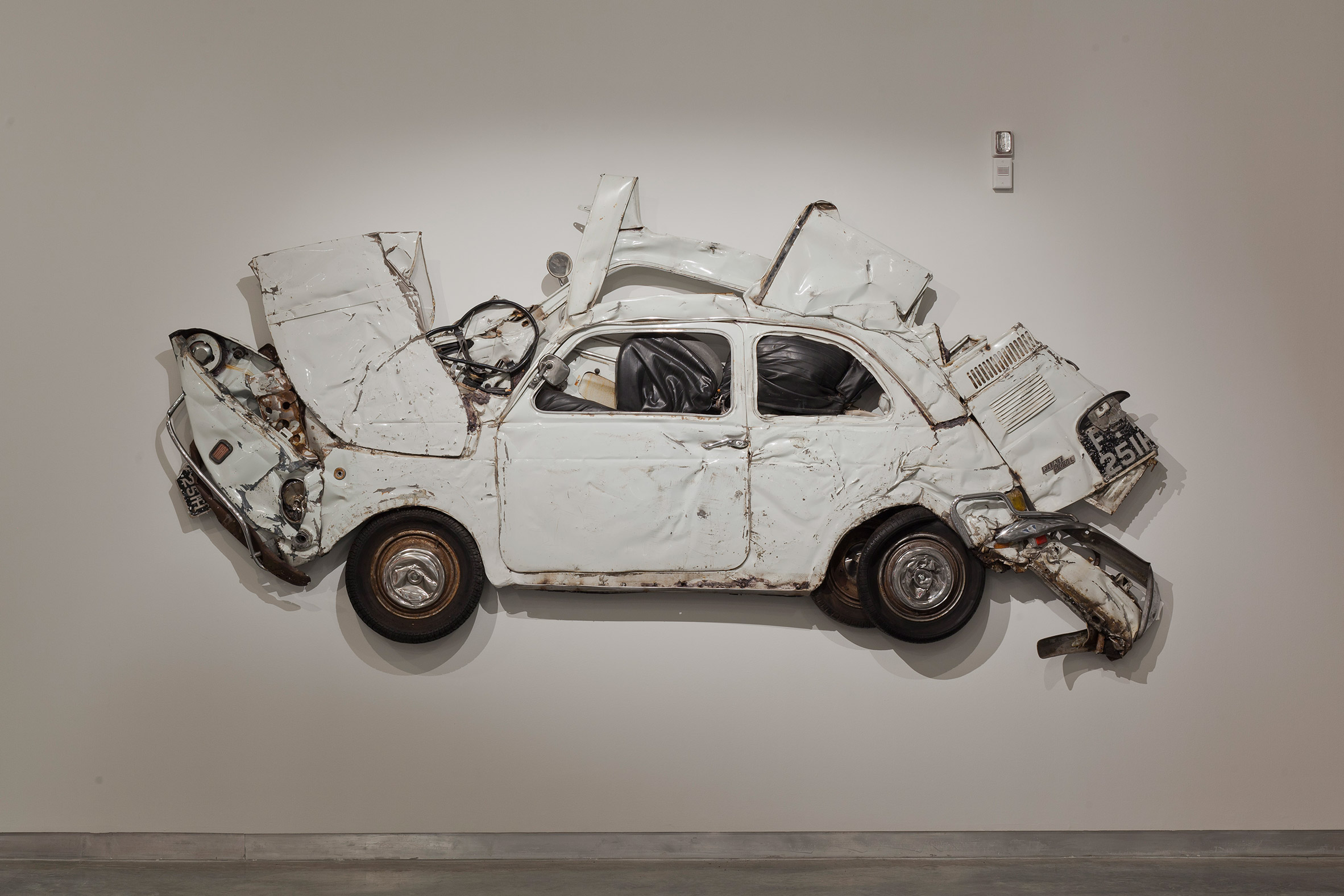
Arad also revealed that the project led to the Italian automotive giant approaching him to design its stand for the 2014 Paris Motor Show, another example of how he claims to have stumbled upon commercial success without looking for it.
"It's funny, Fiat was an amazing collaborator," Arad said. "I crushed the cars and later they asked me to design their motor show in Paris."
Design in Dialogue
Arad's conversation with Adamson is the third in a series of Friedman Benda's Design in Dialogue talks we are broadcasting as part of Virtual Design Festival.
Previous interviews in the series we have published include conversations with pioneering architect James Wines, who lamented the predominance of digitally created forms in architecture, and designer Faye Toogood, who revealed she suffers from imposter syndrome.
Last month, as part of VDF, Arad launched a new series of sculptural chairs, which were originally supposed to be exhibited at the OTI Gallery in Los Angeles before the show was cancelled due to the coronavirus pandemic.
Arad also took part in a live interview with Dezeen's editor-in-chief Marcus Fairs, in which he revealed a series of masks featuring portraits of famous artists that will be sold to raise money for the UK's National Health Service.
The post "I'm not entrepreneurial. For me, business was always a necessary evil," says Ron Arad appeared first on Dezeen.


