Tuesday, 2 June 2020

Caesar Ceramics' latest surfacing collections include wood-like porcelain tiles

Enchant by Caesar Ceramics

Caesar Ceramics has introduced four new porcelain surfacing collections at VDF products fair, including a range of tiles called Enchant that evoke aged and painted wood.

The US and Italian brand has also launched another series of wood-like surface tiles called Meet, alongside the Stoneways and Shapes of Italy ranges that both resemble stone.

All four collections are now viewable at VDF products fair, a platform that forms part of the Virtual Design Festival and offers designers and brands an affordable way to showcase their latest products.

Meet by Caesar Ceramics
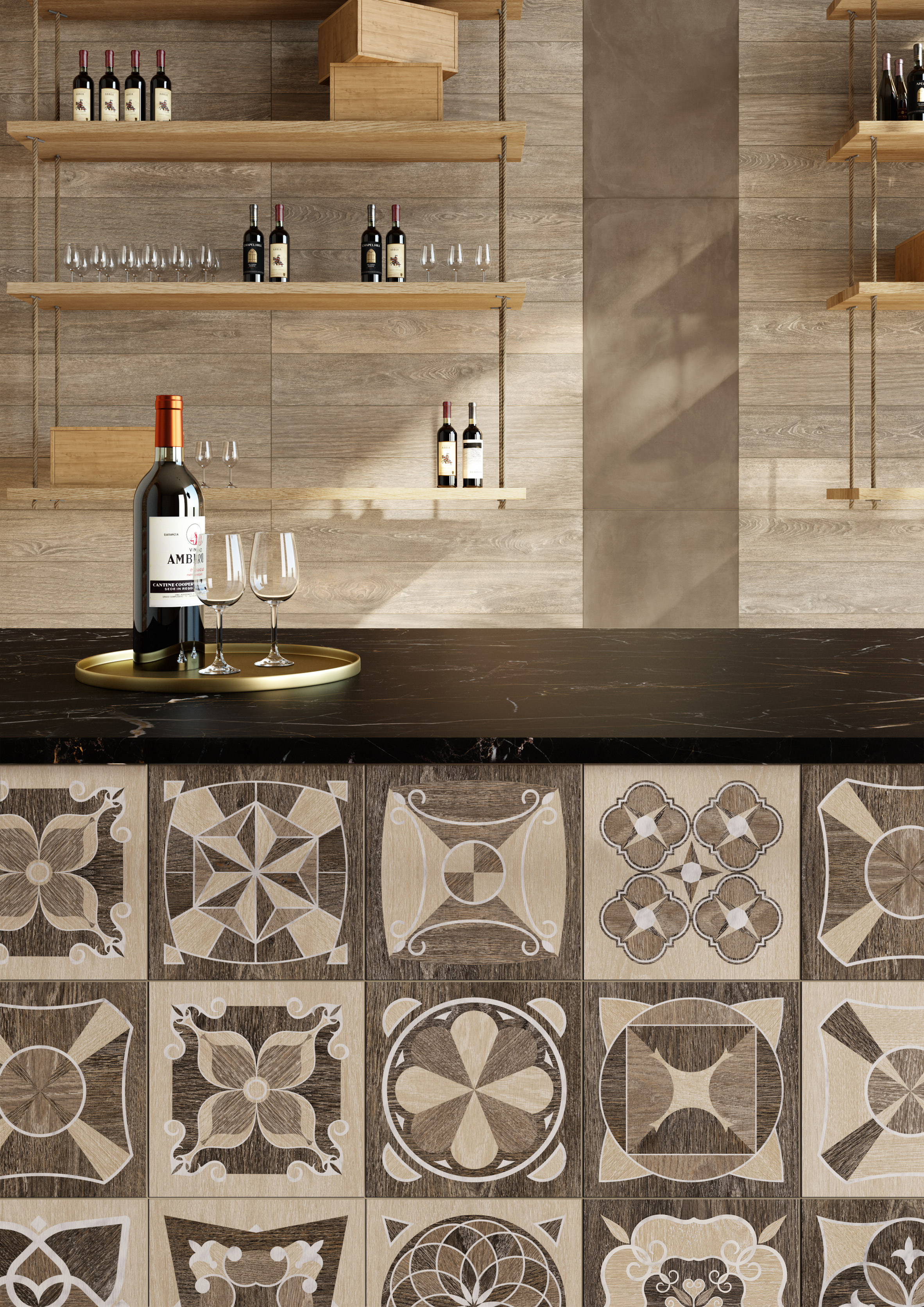
Caesar Ceramics has unveiled four surface tiles collections at VDF products fair, including the wood-like Enchant (top) and Meet (above) series

The Enchant range has been designed by Caesar Ceramics to evoke wood in an effort to help its users recreate "the feeling of a real walk through nature" in any interior space.

Meet has a similar aesthetic, intended to resemble antique wood. It also features a range of decorative square tiles that can be used as inlays.

Shapes of Italy by Caeser Ceramics
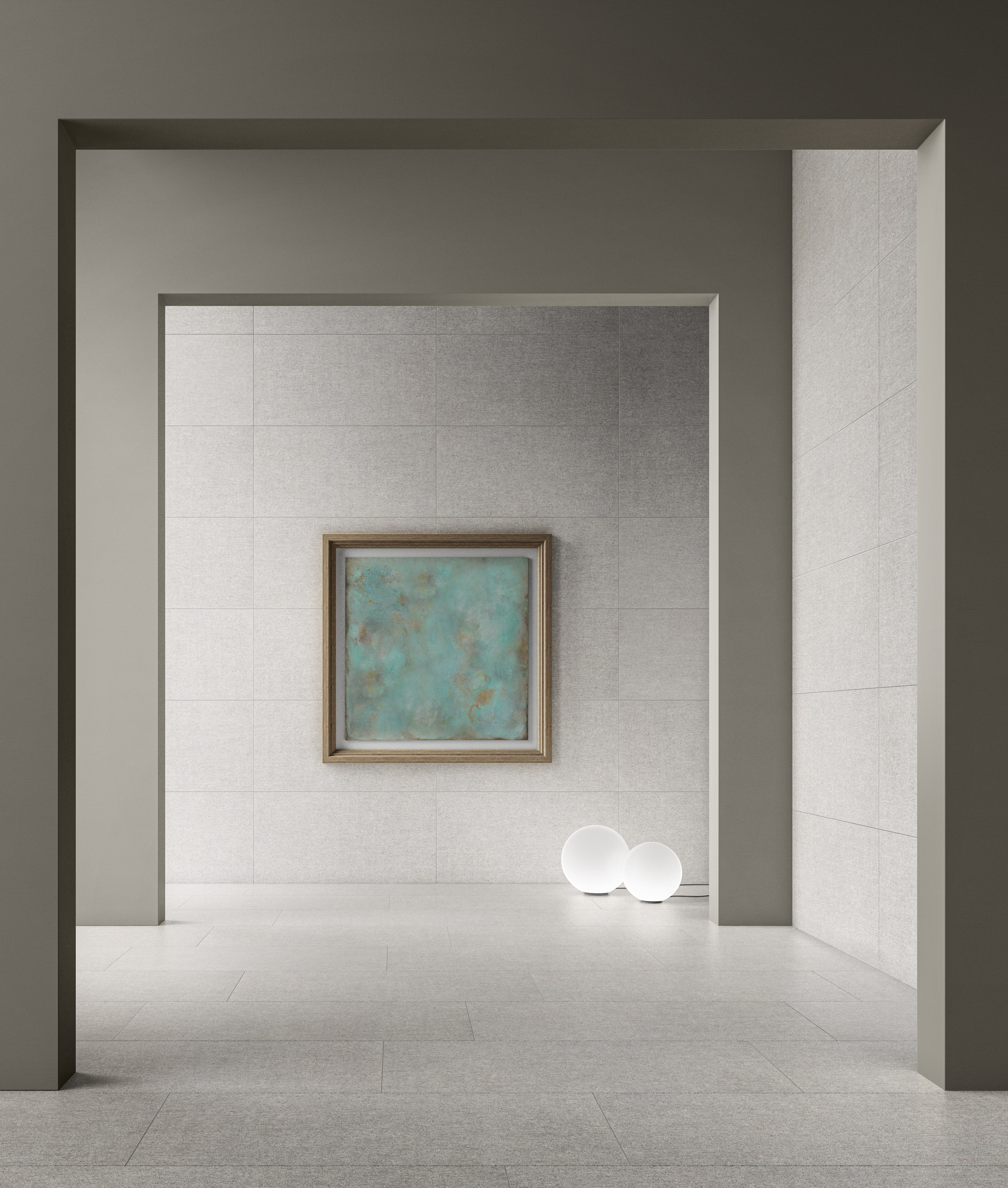
Shapes of Italy is one of two ranges at the fair that are designed to resemble stone

The other two collections at the fair, Stoneways and Shapes of Italy, are also made from porcelain but designed to resemble stone.

Stoneways tiles are adorned with detailing that resembles mineral veins found in rocks, while the Shapes of Italy range is modelled on different stones used in Italian art and architecture as a celebration of the country's cultural heritage.

All four collections by Caesar Ceramics are available with multiple colourways and are designed to be used on any interior surface.

Other brands who have unveiled new designs at the VDF products fair include Danish brands Fritz Hansen and Muuto and Austrian bike brand Vello.

More recently, British lighting brand Astro launched its three-piece Capsule Collection Volume 01, which includes a bathroom lamp with a grooming mirror.

About VDF products fair: the VDF products fair offers an affordable launchpad for new products during Virtual Design Festival. For more details email vdf@dezeen.com.

The post Caesar Ceramics' latest surfacing collections include wood-like porcelain tiles appeared first on Dezeen.


from Dezeen https://ift.tt/2MoWttC

"Consumers want touchless products to limit spread of germs" says Grohe's Patrick Speck

"Consumers want touchless products to limit spread of germs" says Grohe's Patrick Speck

Grohe's Patrick Speck discusses the potential of touchless bathroom and kitchen products in light of the coronavirus pandemic in this video produced by Dezeen as part of our VDF x Grohe collaboration.

"With the increased demand for hygiene we're having right now, we know that to minimise the risk of spreading germs and also cross-contamination, we need to reduce contact with any surface as much as we can," Speck said in the video.

Speck is the vice president of design consumer experience for the EMENA region of Japanese water technology brand Lixil, which is the parent company of bathroom and kitchen brand Grohe.


"Consumers want touchless products to limit spread of germs" says Grohe's Patrick Speck
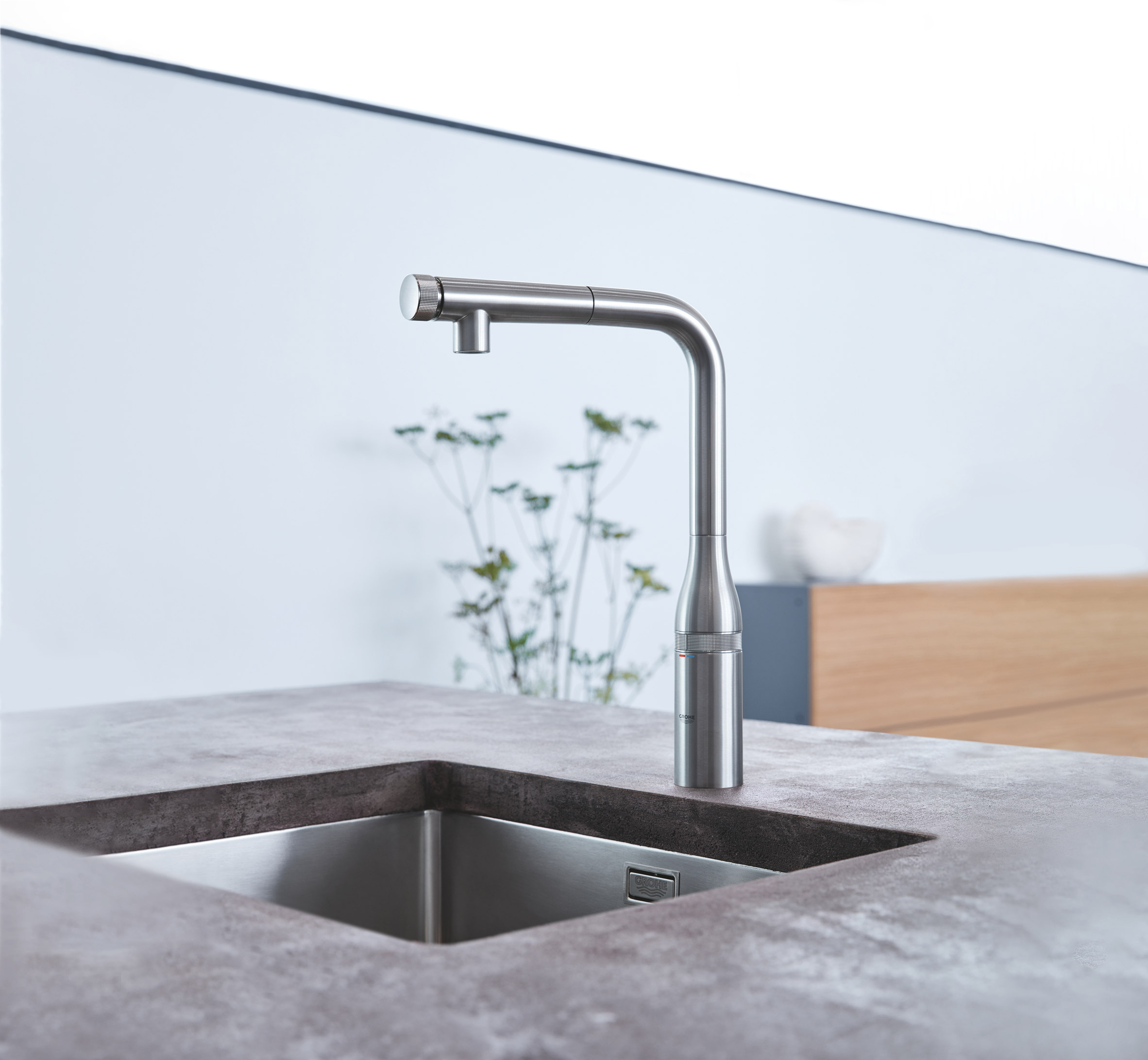
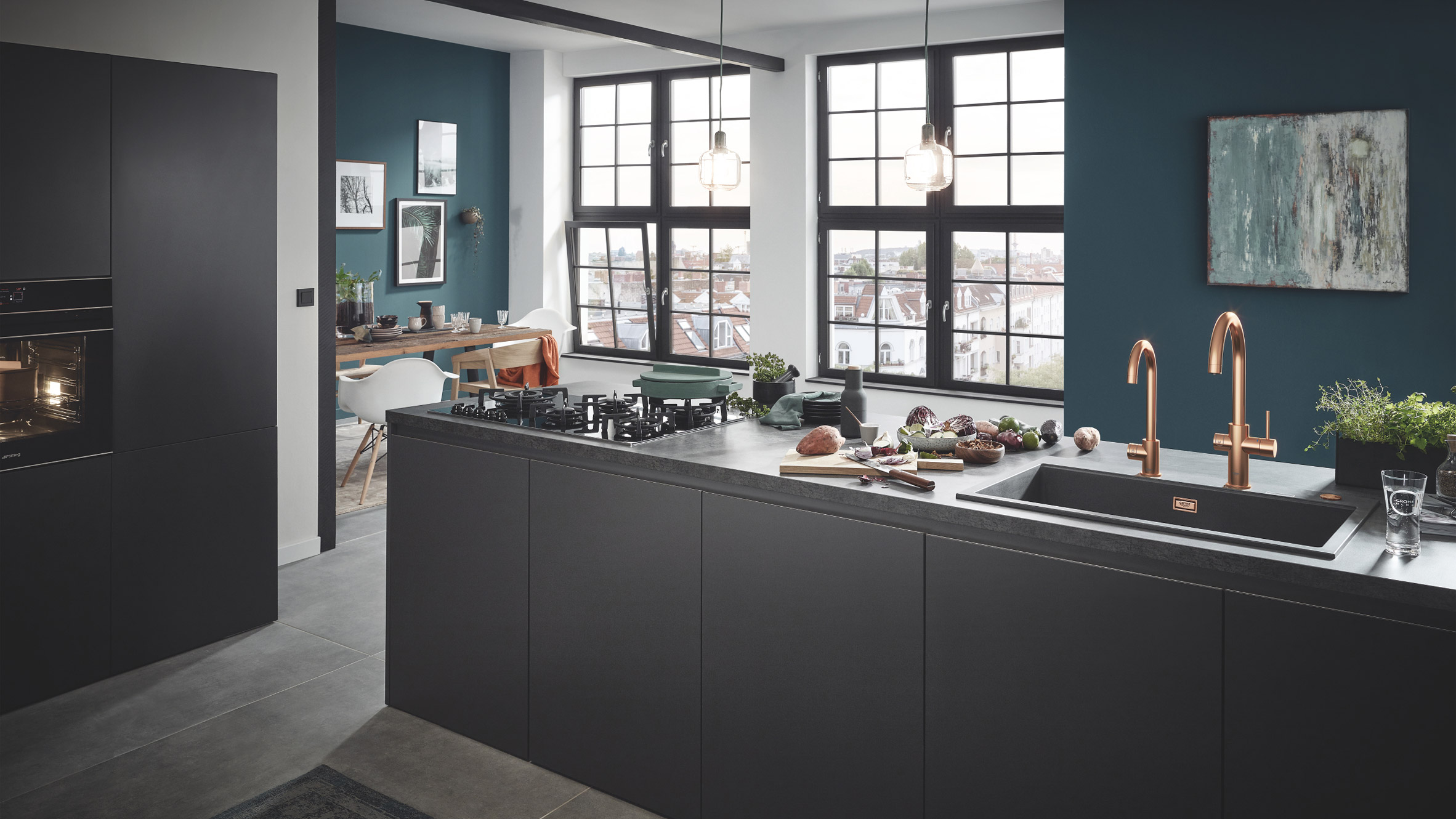
Kitchen and bathroom brand Grohe has a portfolio of touchless products

According to Speck, the solution could be touchless products such as faucets and toilets that rely on sensor technology.

"Consumers are looking for solutions such as touch-less products," he said. "It's not a new topic for us at Grohe because we have had touchless products in our portfolio for both private and public application for years."

Speck's comments mirrored those made by Lixil's chief designer Paul Flowers in an interview with Dezeen last week, in which he claimed it was "entirely feasible to create an environment which eliminates the need to touch surfaces" in order to reduce the spread of viruses.

"Whilst there are materials which are more resistant to bacteria and viruses, ultimately the best way to reduce cross-contamination is to remove the need for contact," Flowers said in the interview.

"Touchless products with sensor technology are ideal for this scenario and also reduce water consumption," he added.

In the video, Speck also explained Grohe's focus on making the company more sustainable, announcing that the brand managed in April 2020 to make all its production facilities carbon-neutral through investment in green electricity and solar technology.

"We are proud to be the first leading sanitary manufacturer to achieve carbon-neutral production," Speck said.

Speck said that Grohe is also working hard to make its design more sustainable, a well as their production.

"Sustainability is also an integral part of our design process," he said. "During the ideation phase, we carefully consider product shape, the material choice and consequently the environmental impact that you might have."

By using new technologies in its manufacturing processes, such as 3D-printing, Speck says the company is cutting its material consumption in half.

For its Icon faucet collection from 2019, the brand used 3D metal printing to reimagine the design of two of its past faucet ranges, in order to use fewer materials.

"We managed to reduce the product to the essential," Speck explained. "It uses 55% less material than the full brass version."

"Consumers want touchless products to limit spread of germs" says Grohe's Patrick Speck
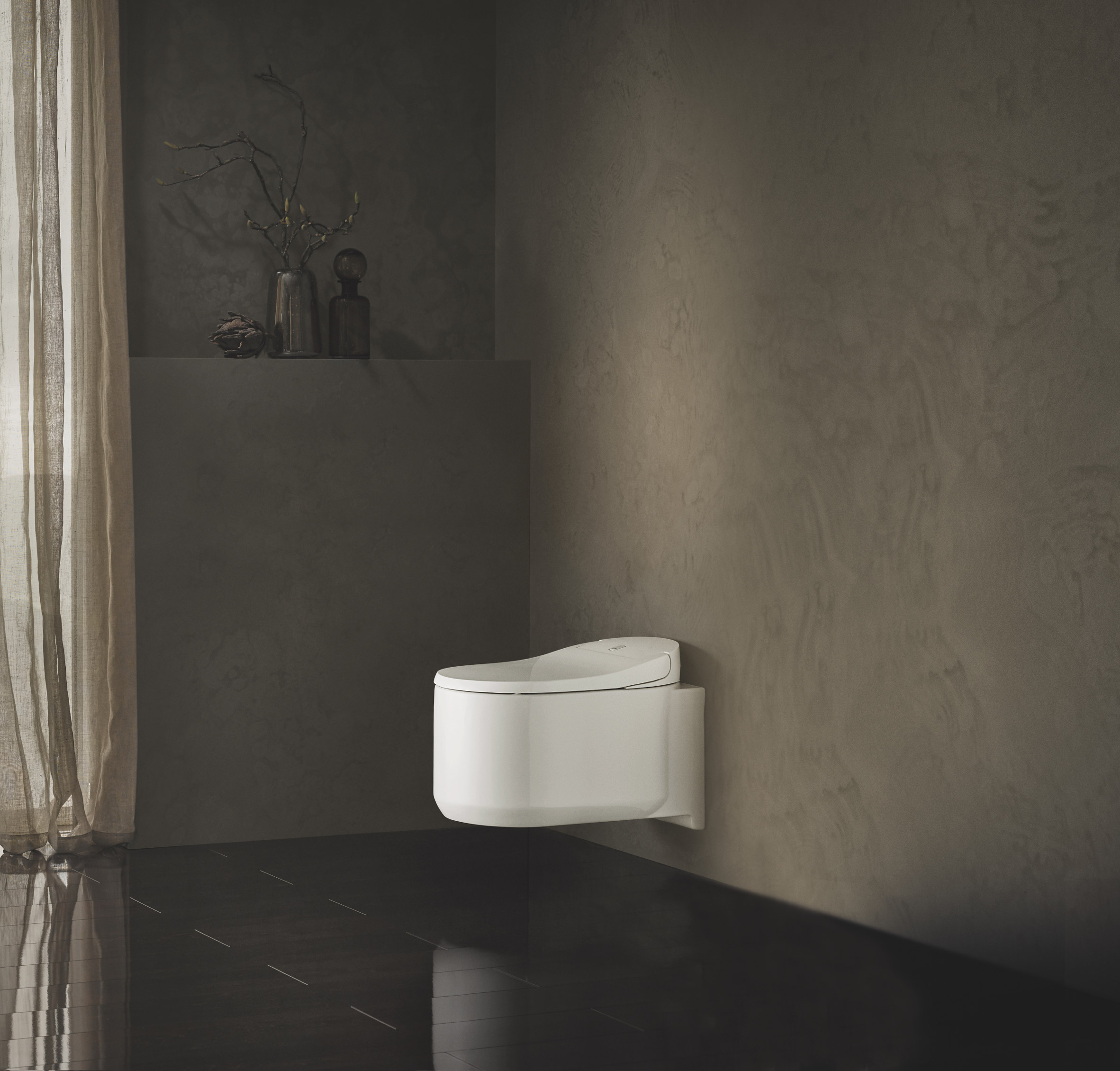
Products like Grohe's sensor-based Sensia Arena toilet reduce the need for touching surfaces

As part of its sustainability push, Grohe is also developing a new flow-restricting technology, which reduces its products' consumption of both water and plastic.

"Our Grohe EcoJoy features a flow restrictor that reduces water consumption from 10 litres-per-minute to just over five," Speck explained.

The brand is also encouraging its consumers to switch to drinking tap water in an effort to reduce reliance on bottled water and plastic water bottles, through its Grohe Blue technology, which embeds its faucets with the ability to produce both still and sparkling drinking water.

"I believe the combination of smart technology and water-efficient products can help us to tailor kitchen and bathroom experiences that are going to fulfil people's needs and help us to save our planet's resources in the future," Speck concluded.

"Consumers want touchless products to limit spread of germs" says Grohe's Patrick Speck
Grohe has seen an increase in demand for touchless products during the coronavirus pandemic

The video is part of the German bathroom and kitchen company's takeover of Virtual Design Festival today which also includes a talk with Dezeen's founder and editor-in-chief Marcus Fairs and Lixil's chief designer Paul Flowers.

Virtual Design Festival

Grohe is the headline sponsor of Virtual Design Festival, which runs from 15 April to 30 June 2020. It brings the architecture and design world together to celebrate the culture and commerce of our industry, and explore how it can adapt and respond to extraordinary circumstances.

To find out what's coming up at VDF, check out the schedule. For more information or to join the mailing list, email vdf@dezeen.com.

The post "Consumers want touchless products to limit spread of germs" says Grohe's Patrick Speck appeared first on Dezeen.


from Dezeen https://ift.tt/2zKNa4Q

Architects and designers post black squares on Instagram in support of racial equality

Architects and designers have joined over a million people around the world in posting a black square to Instagram in solidarity with those protesting for racial equality following the death of George Floyd in police custody.

David Adjaye, Jessica Walsh, Tom Dixon, Camille Walala, Yinka Ilori, Morag Myerscough, Formafantasma, Studio Drift, Charles Holland and Bec Brittain are among the thousands of architects and designers to have posted a black square on Instagram.

The majority of these posts are not accompanied by any caption. However, many of those posting the square used the hashtag #blackouttuesday, which started as an effort by music business leaders to stop activity for a day.

The hashtag has now been widely adopted by people who will make the black square their only post on Instagram for the day.

Along with the hashtag, some designers have included links to support funds that have been established for Floyd and those impacted by the protests. These include the Official George Floyd Memorial Fund along with numerous funds to pay the bail of those arrested during the protests in the USA.

Others have included the #blacklivesmatter hashtag in reference to the Black Lives Matter human rights movement, which campaigns against racism towards black people. However, users have been asked to remove this hashtag as it can be used for people to find information on current protests.

Floyd was killed in Minneapolis on Monday 25 May when a white officer knelt on his neck for eight minutes and 46 seconds. Since his death, people across the architecture and design industry have spoken out against racism in America.

The post Architects and designers post black squares on Instagram in support of racial equality appeared first on Dezeen.


from Dezeen https://ift.tt/2yUphXR

Welsh + Major uses patterned window screens for residential extension in Sydney

Darling Lane by Welsh and Major

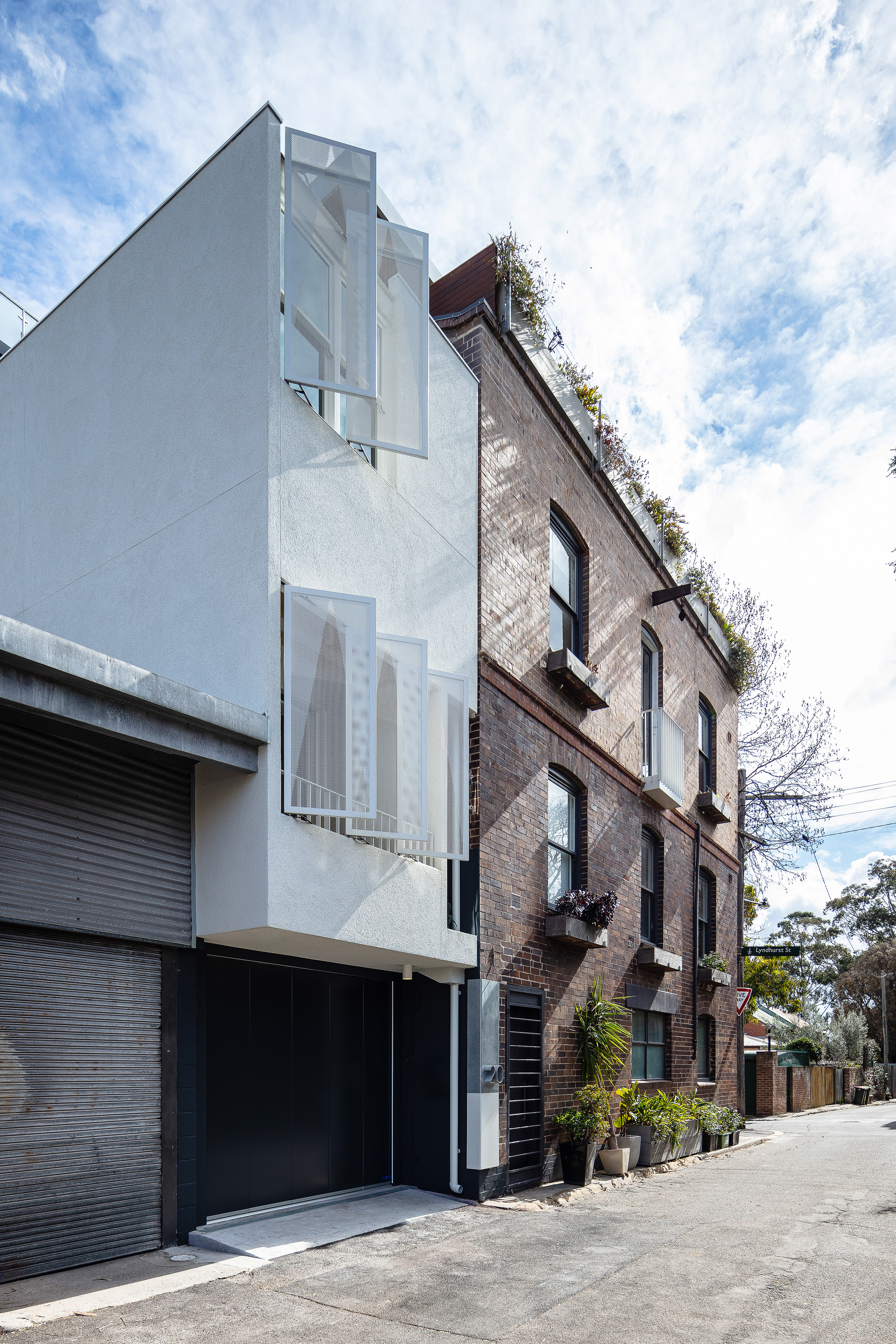
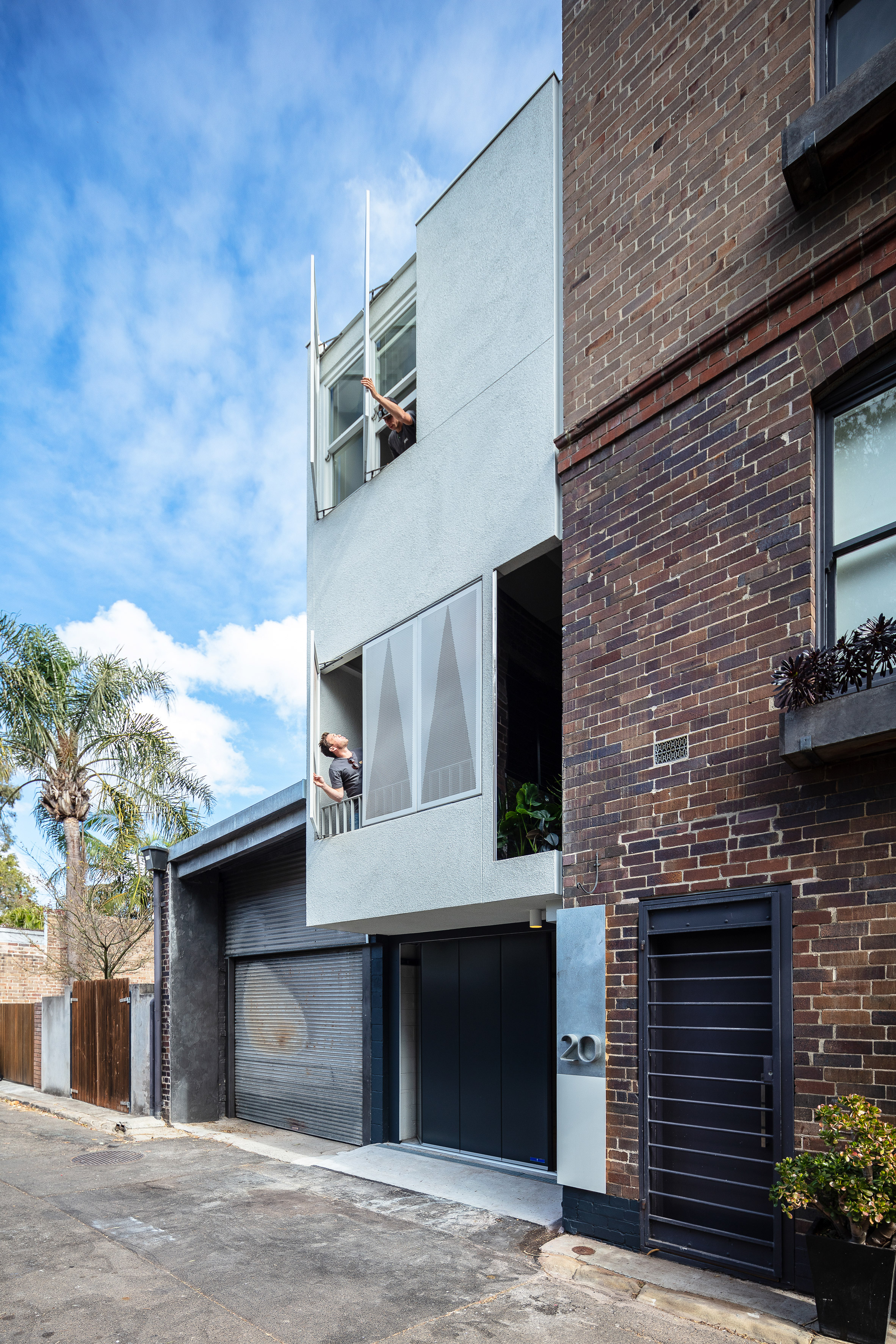
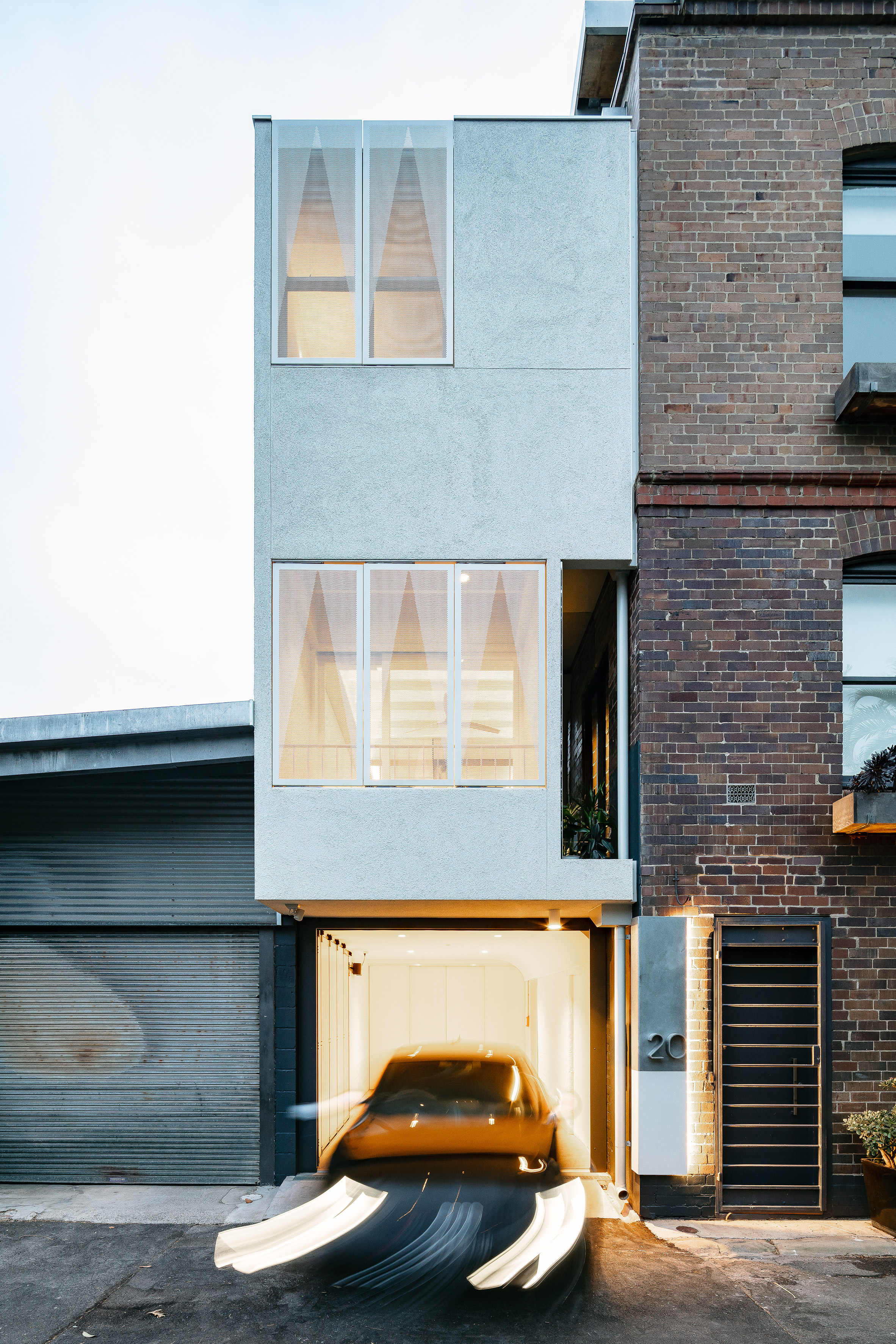
Perforated metal screens decorate this residential extension built by architecture studio Welsh + Major in a three-metre-wide gap next to a converted grain mill.

Called Darling Lane, the white-painted extension was squeezed in next to a house built in an old warehouse in Sydney, Australia.

Darling Lane by Welsh and Major

Welsh + Major used the airspace over an existing garage to build a two-storey extension to add two more rooms and a bathroom.

The architects also renovated an existing bathroom that used to be suspended from the side of the old grain mill.

Darling Lane by Welsh and Major

"The existing building is dark, textured," said Welsh + Major. "The new forms are deliberately white."

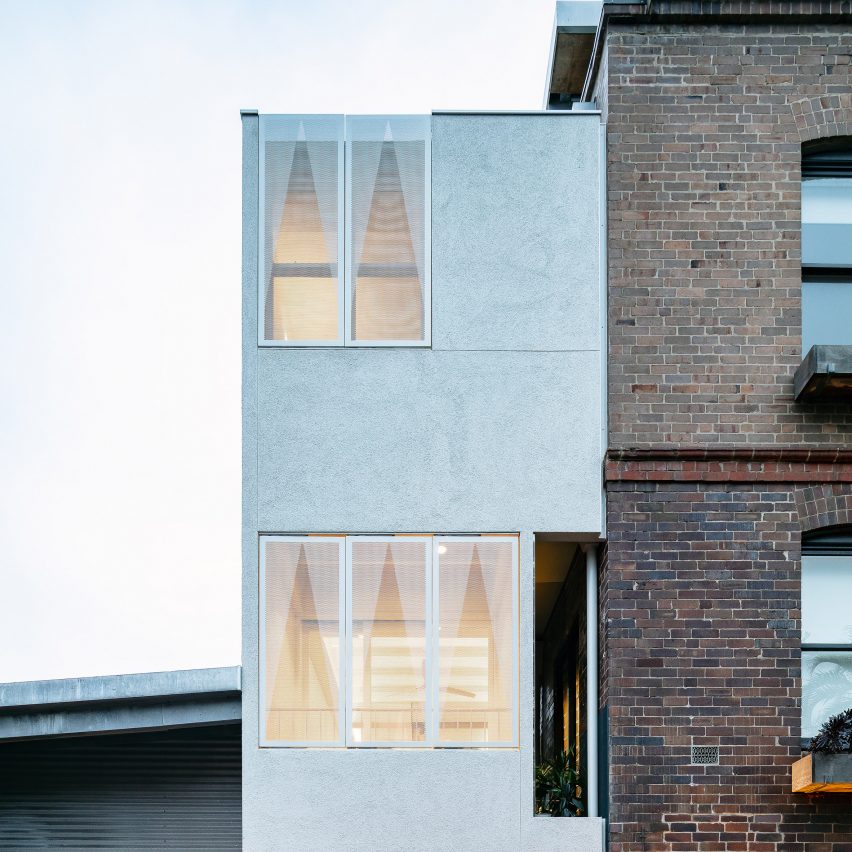
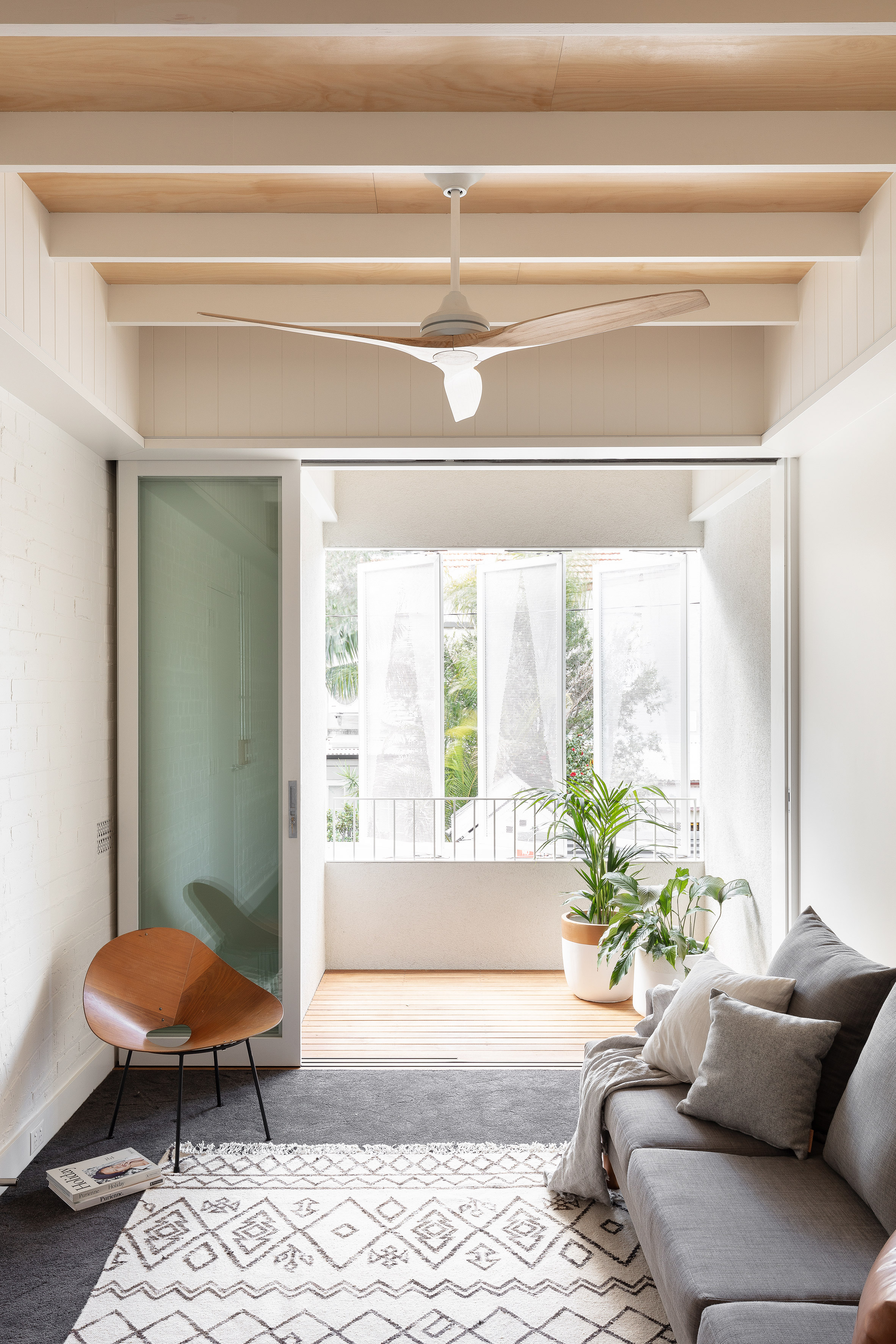
Three white perforated metal screens shade a covered balcony on the first floor of the extension. Above, a double set of screens cover a window.

Darling Lane by Welsh and Major

The triangular pattern adds interest to the facade and contrasts with the traditional brick exterior of the main house.

A black garage door on the ground floor adds contrast to the white facade above.

Darling Lane by Welsh and Major

Inside, white paint has been used to decorate both the new walls and the existing brick surfaces of the adjacent warehouse exterior.

On the first floor, pale timber floorboards cover the balcony floor, and pale wood was also used for the ceiling and the fan that dangles over the living area. Plush grey carpet covers the living room floor.

Darling Lane by Welsh and Major

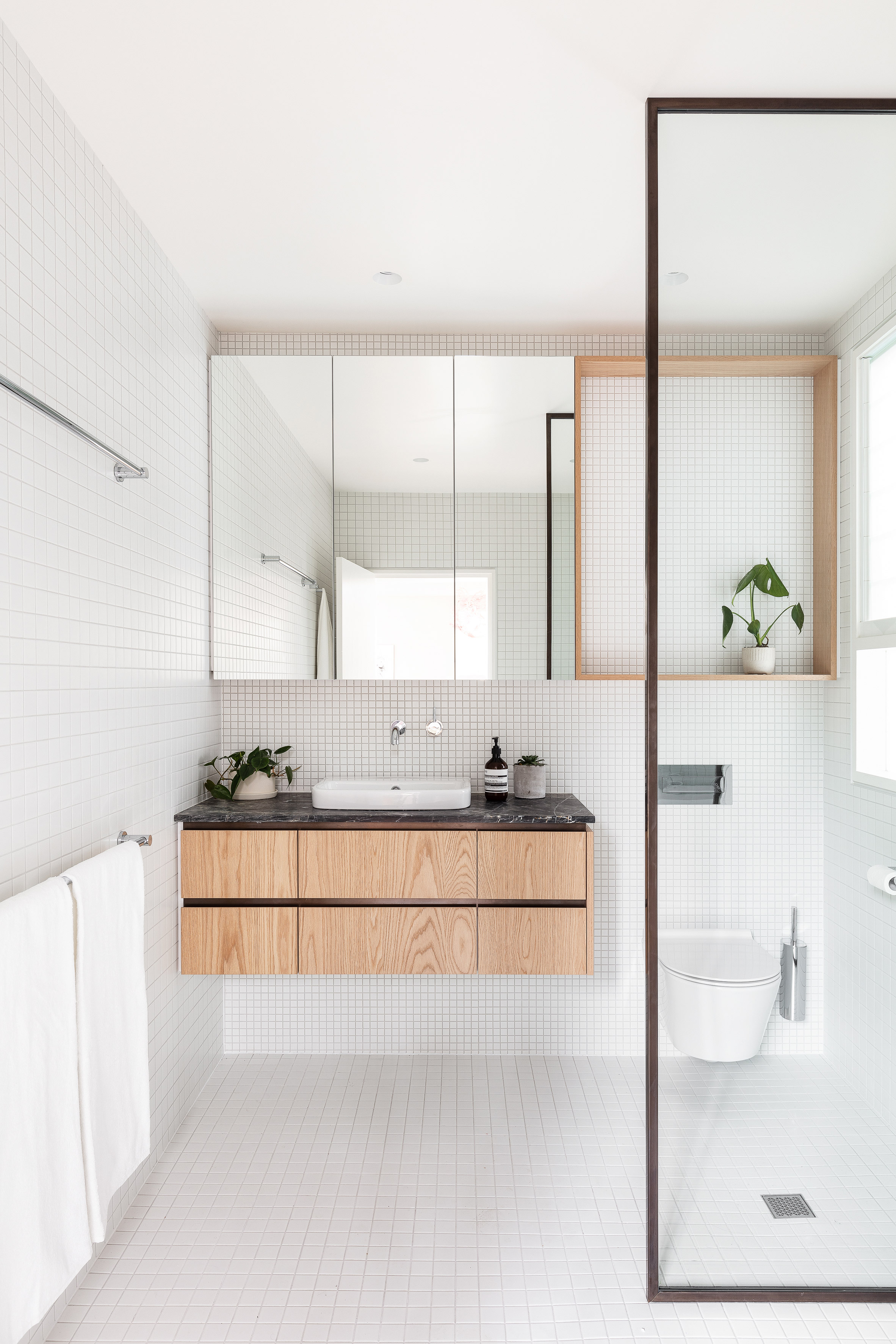
The new bathroom is tiled entirely in square white tiles, with pale wood floating cabinets topped with marble. Next to the mirrored bathroom cabinet, a wooden shelf frames a plant against the gridded tiles.

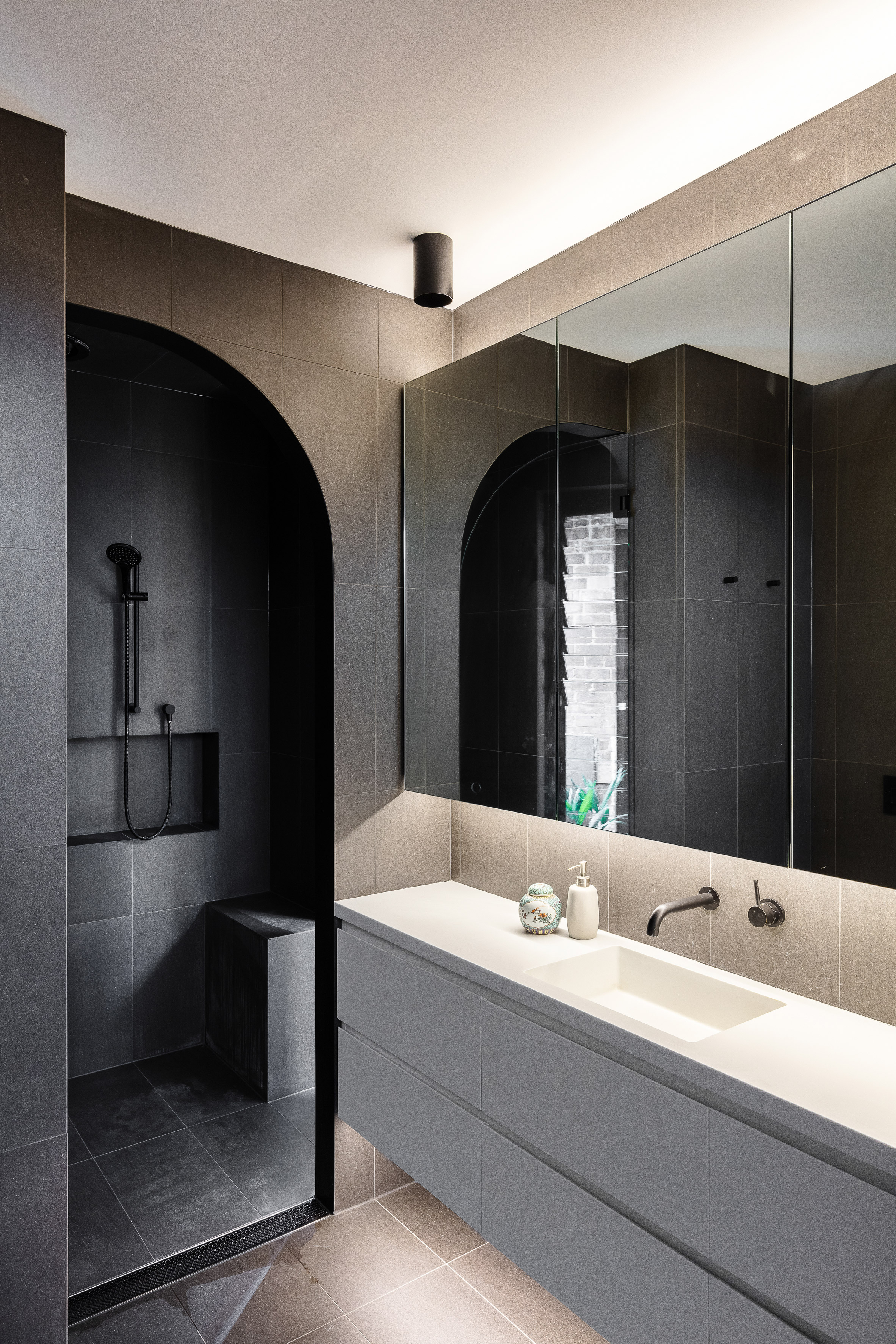
Upstairs, the renovated bathroom features dramatic dark walls and a mirrored shower alcove that creates the illusion of a full arch.

Darling Lane by Welsh and Major

Welsh + Major was founded in Sydney in 2004 by David Welsh and Christine Major. In a previous projects the studio carved out a lightwell with a tree for a house, and created a concrete den to act as a garden room.

Darling Lane joins several other projects in Sydney with all-white facades, including a house with distinctive gables, and a home punctuated by a series of arches.

Photography is by Tom Ferguson.


Project credits:

Architect: Welsh + Major Architects
Construction: HiSpec Constructions, Burton Built (black bathroom)
Structural Engineer: Cantilever Consulting Engineers

The post Welsh + Major uses patterned window screens for residential extension in Sydney appeared first on Dezeen.


from Dezeen https://ift.tt/36UL3r9

Stefano Boeri Architetti designs coronavirus-resilient neighbourhood in Tirana

Tirana Riverside, coronavirus-resilient neighbourhood in Tirana, Albania, by Stefano Boeri Architetti 

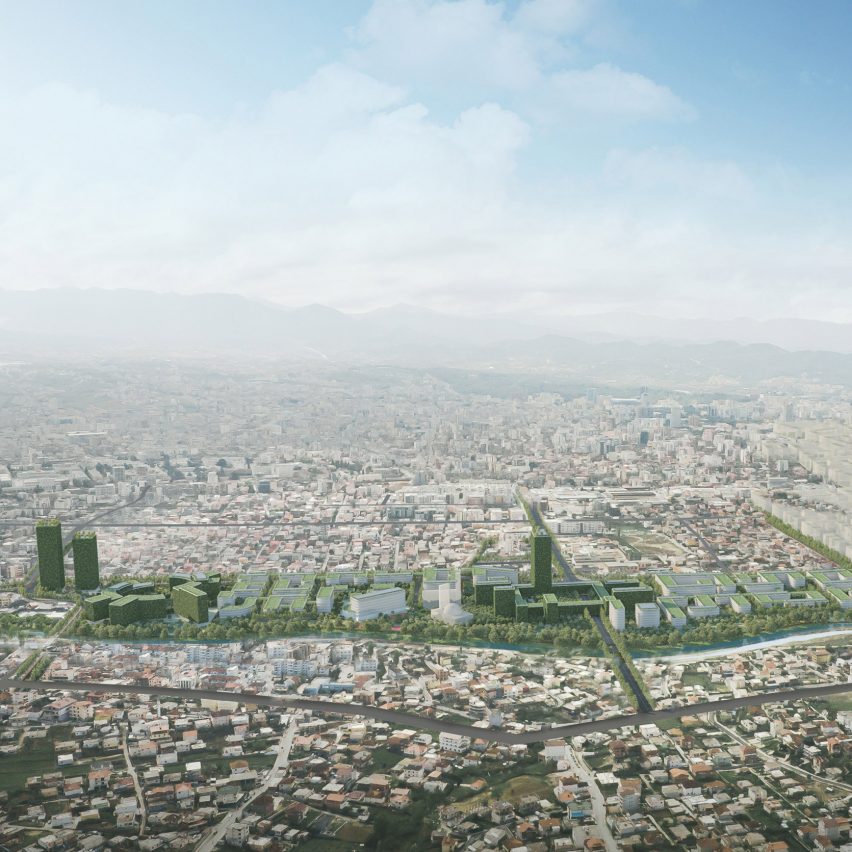
Italian studio Stefano Boeri Architetti and Albanian construction company SON-Group have revealed Tirana Riverside, a sustainable district in the capital of Albania designed to respond to post-coronavirus needs.

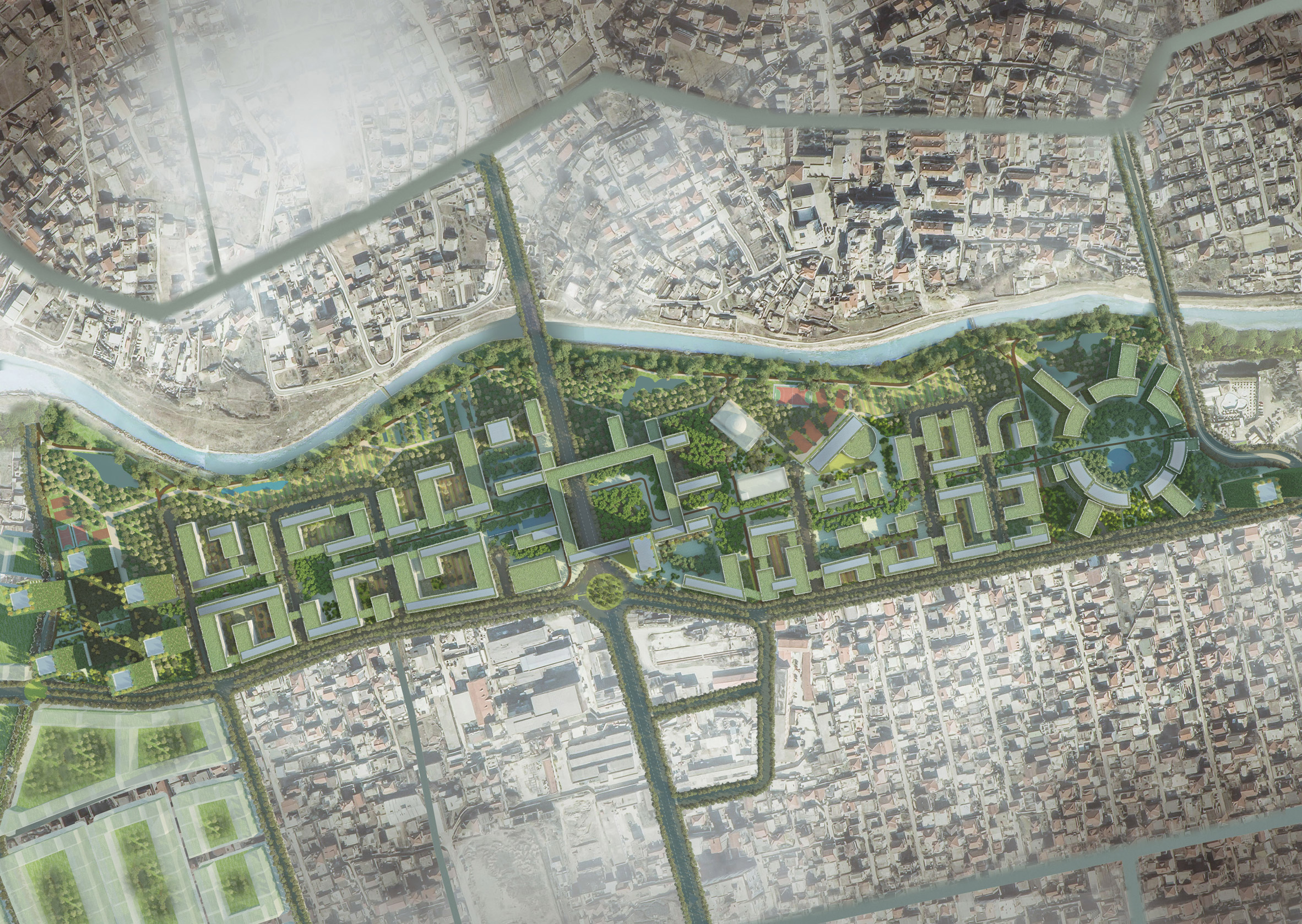
The masterplan for 12,000 residents on a publicly owned area of land close to the Tirana River is designed to be sustainable and resilient to coronavirus.

"This is the first neighbourhood in Europe to be designed in agreement with the government and the city authorities able to respond to the new needs of the post-Covid 19 pandemic phase as well as meeting all the sustainability requirements required by the current climate crisis," said Stefano Boeri Architetti.
Tirana Riverside, coronavirus-resilient neighbourhood in Tirana, Albania, by Stefano Boeri Architetti 

Tirana Riverside is one of three masterplans commissioned by the Municipality of Tirana for the 29-hectare site, where it intends to build housing, offices and shops.

For its design, Stefano Boeri Architetti and SON-Group have aimed to create a walkable "neighbourhood city" that focuses on exercise and will include smart technologies and extensive roof gardens to help prevent the spread of coronavirus.
Tirana Riverside, coronavirus-resilient neighbourhood in Tirana, Albania, by Stefano Boeri Architetti 

"This moment of great difficulty has made clear the need for a change of perspective in which humanity is forced to deeply review its relationship with nature and with the spaces it inhabits and transforms," said Stefano Boeri Architetti architects Stefano Boeri and Francesca Cesa Bianchi.

"We must think of a new era, more ecological and without fossil fuels, far from the normality that we knew before the spread of Covid-19: the normality that sadly contained the contributing factors of the situation in which we find ourselves now," they told Dezeen.

"The ideal 'neighbourhood city' contains close open green spaces accessible to all citizens, reducing the need for large movements with private petrol vehicle and favouring a micro and soft mobility powered by electricity, as an immediate solution for reducing emissions."
Tirana Riverside, coronavirus-resilient neighbourhood in Tirana, Albania, by Stefano Boeri Architetti 

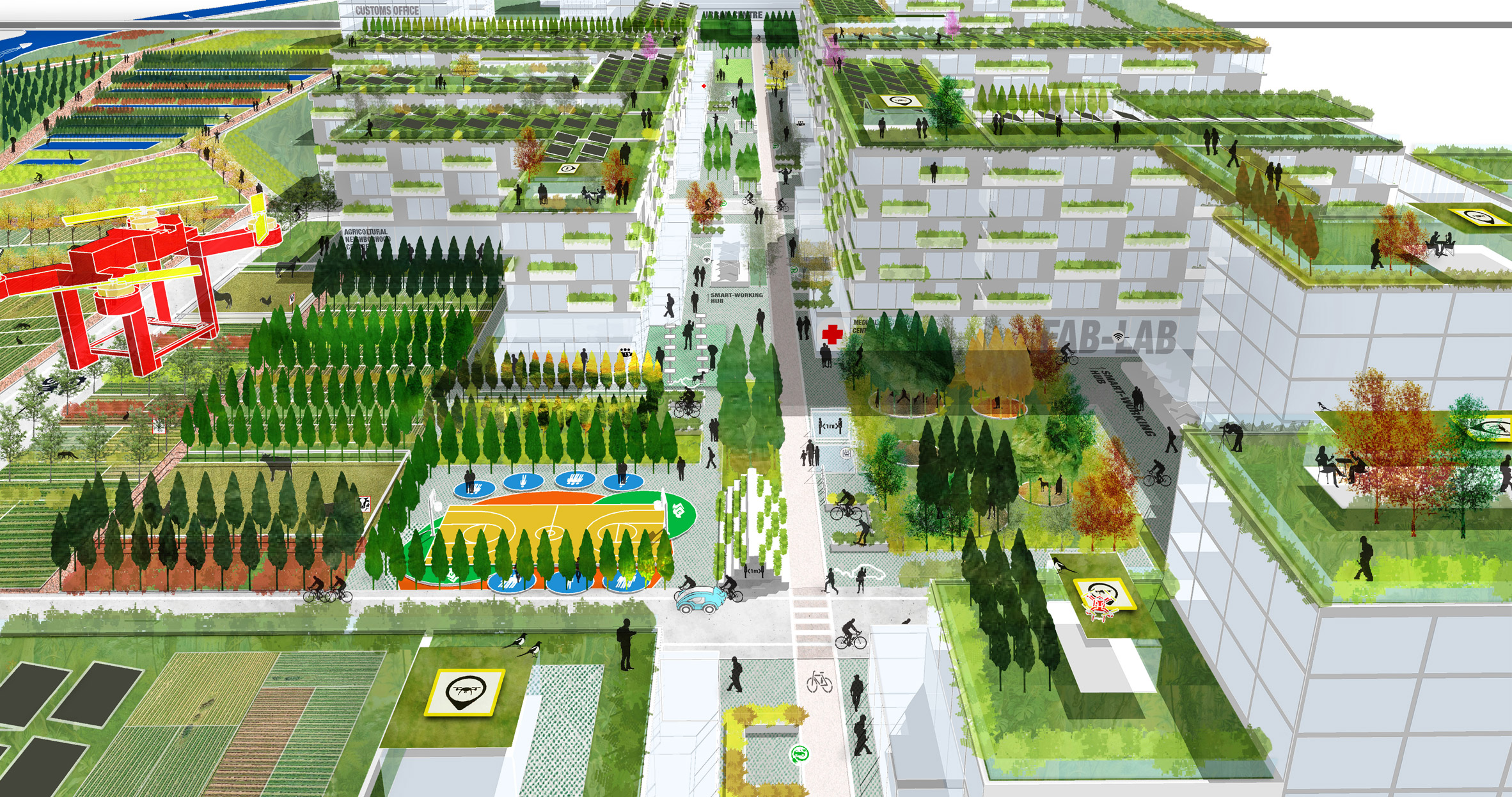
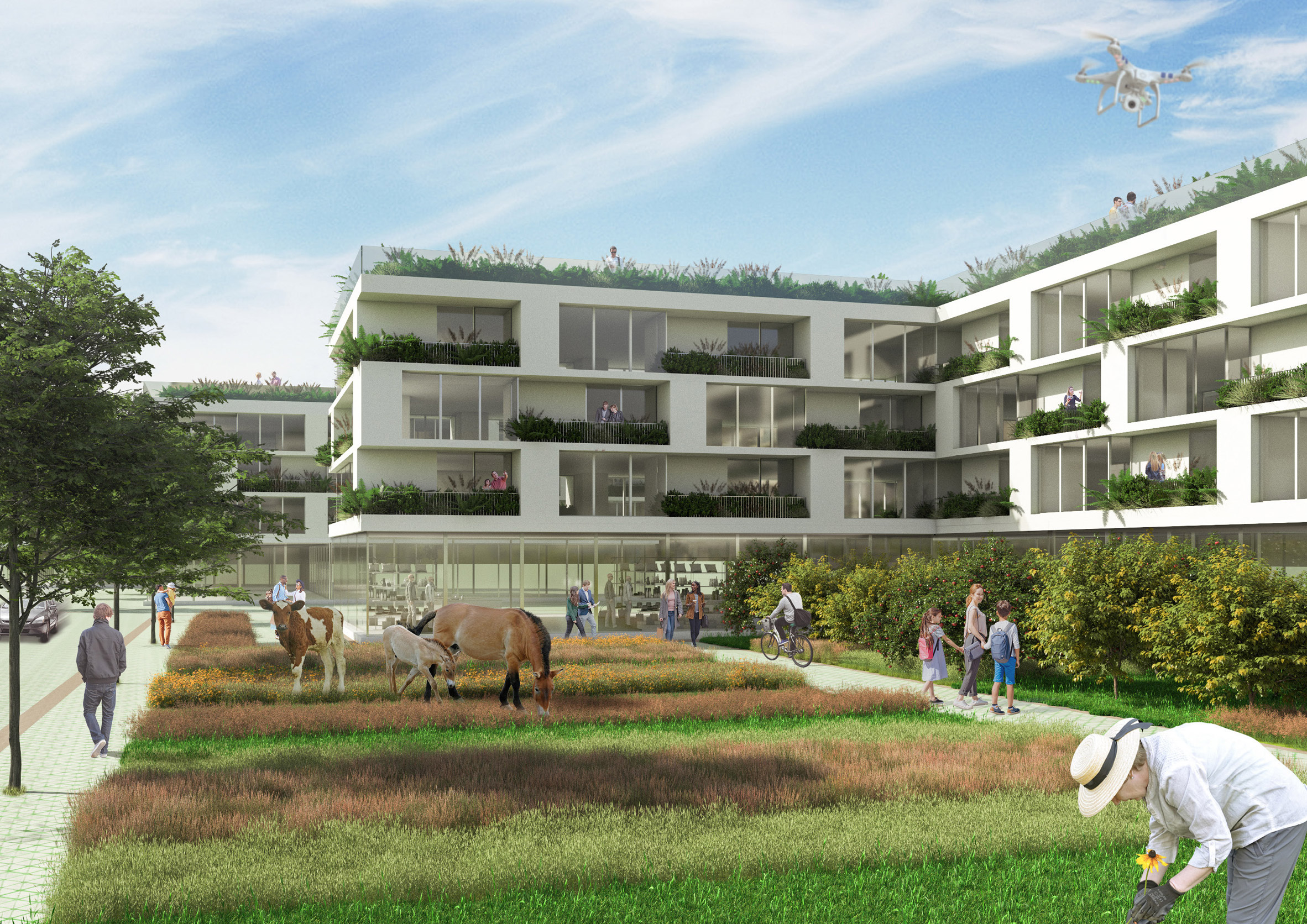
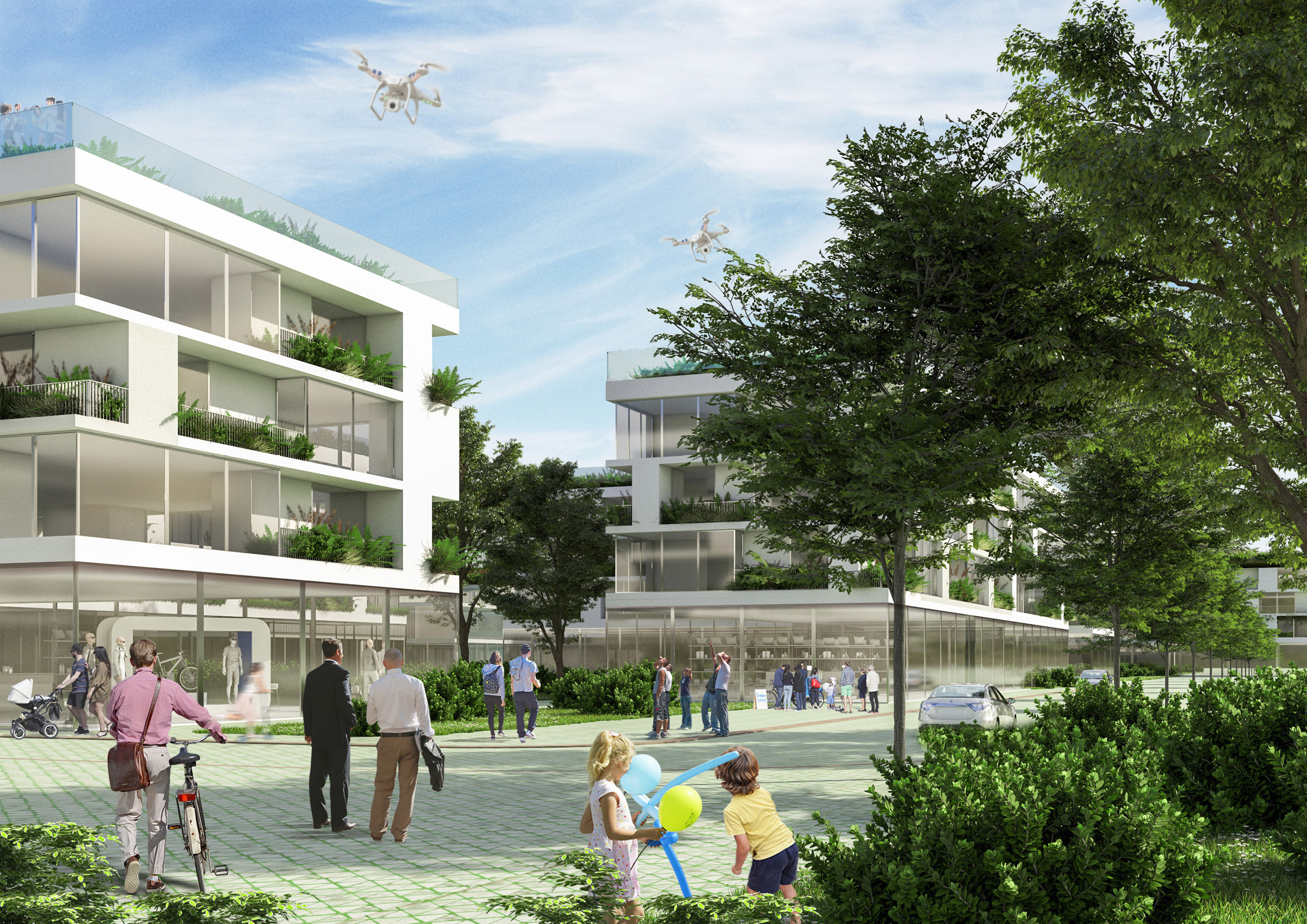
To create resilience to coronavirus, residents of Tirana Riverside will have access to all "essential services" within a walkable distance. Along with offices and housing, the development will include a school and university centre.

"We must consider the thresholds between the private sphere and the flows of the city as the first line of prevention, points of contact that become multiple garrisons on different scales and extension of the private life," explained Boeri and Bianchi.

While the ground floors of the housing blocks will contain food vending machines, the roofs will be gardens that can be used by the residents.

"We can imagine active ground floors for the reception of goods, with vending machines managed by operators in the agricultural-food sector or small health clinics for each neighbourhood; and the roofs not only as fifth facades for the reception of goods by drones, but as collective green spaces for art crafts, domestic agriculture, leisure and sport," Boeri and Bianchi said.

"The roofs, well connected among them, will become the equivalent in the near future of our residential courtyards: places of intense collective but not public life, generous but not codified, open-air but not exposed."
Tirana Riverside, coronavirus-resilient neighbourhood in Tirana, Albania, by Stefano Boeri Architetti 

Extensive parks designed by landscape architect Laura Gatti will be built as part of the development. Plants will be incorporated into the communal areas, building's facades, roofs and pedestrian bridges.

The architects see the needs of post-coronavirus developments aligning with those of sustainable developments.

"For some time now, we should have been thinking about the effects of an aggressive and superficial, invasive and overbearing attitude on natural balances: today more than ever cities have to become active nodes of ecological corridors, by absorbing nature and becoming part of an environmental, economic and integrated production with protected areas, woods, mountain and agricultural areas," said Boeri and Bianchi.

The direction to be taken is that of reducing urban congestion, expanding the common areas and bringing 'outside' what is today 'inside', providing every commercial reality of an outdoor area, with even wider sidewalks, cycle paths and increasingly narrow streets," they continued.

"Cities need to rediscover even more its open spaces creating an interconnected future capable of desynchronising the city's rhythm, avoiding big fluxes of workers and improving open-air green spaces which make the city a healthier place and also able to attract interest on environmental responsibility."

Stefano Boeri Architetti has previously designed has designed a vertical forest tower for the city of Tirana as well as a Smart Forest City that would be covered in 7.5 million plants in Mexico.


Project credits:

Architect: Stefano Boeri Architetti
Partner: Stefano Boeri, Francesca Cesa Bianchi
Team leader: Carlotta Capobianco, Andrea Zucchi
Team: Orjana Balla, Corrado Longa, Jacopo Colatarci, Yulia Filatova, Sara Gangemi, Besart Gjana, Federico Godino, Paloma Herrero Ermakova, He Ruoyu, Mattia Tettoni, Luca Tognù, Shilong Tan
Local partner: SON-Group – Ilir Bejleri
Mobility: MIC – mobility in chain – Giuseppe Vallelonga, Filippo Bissi, Alessandro Bruscaglioni
Landscape: Studio Laura Gatti Partners - Laura Gatti
Sustainability: Transsolar – Tommaso Bitossi, Clara Bondi
Structural engineering: SCE Project
MEP: ESA Engineering

The post Stefano Boeri Architetti designs coronavirus-resilient neighbourhood in Tirana appeared first on Dezeen.


from Dezeen https://ift.tt/2ZXVicM