Wednesday, 3 June 2020

Outdoor urinal designers offer solutions to pandemic public toilet problem

Lapee urinals during pandemic public toilet shortage

Coronavirus lockdowns have caused a lack of public toilet facilities for people who are social distancing outside, but designers of outdoor urinals have the answer – and France is leading the way.

The closure of public toilets along with bars, cafes and other venues with facilities means people have nowhere to go to the bathroom when they are out of their homes. In London, there are reports of desperate people using the bushes in parks.

Urinal designers are responding to the problem, and report that cities in France will soon be improving their public facilities.

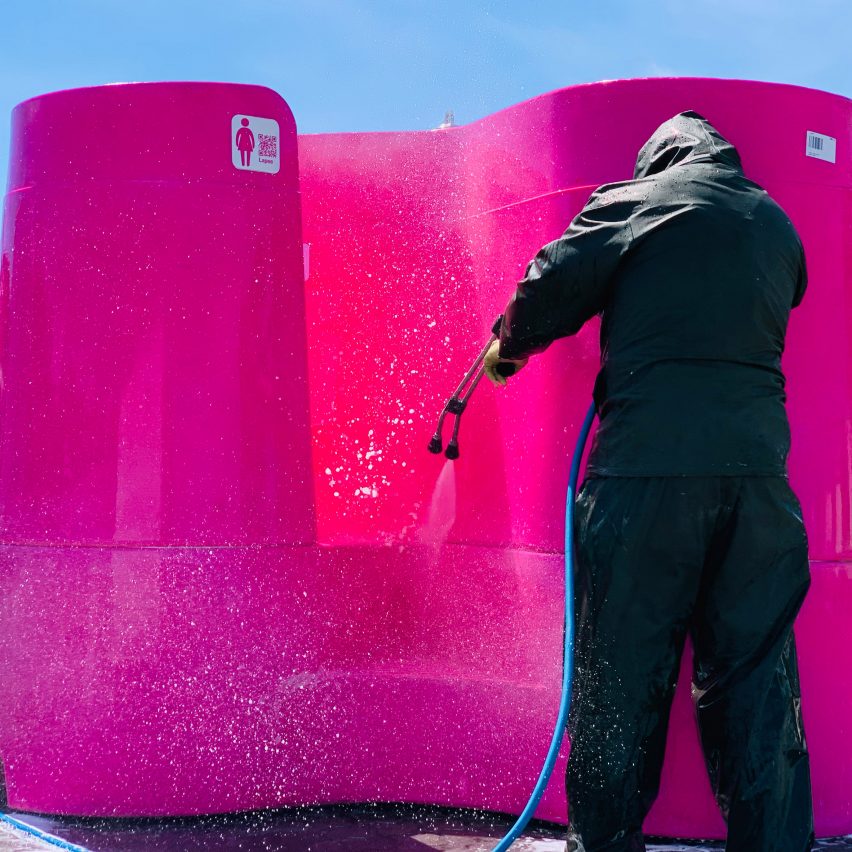
"From this week you can find Lapee in the streets of Rennes," the designers of the Lapee urinal for women and nonbinary people told Dezeen.
Lapee urinals during pandemic public toilet shortage
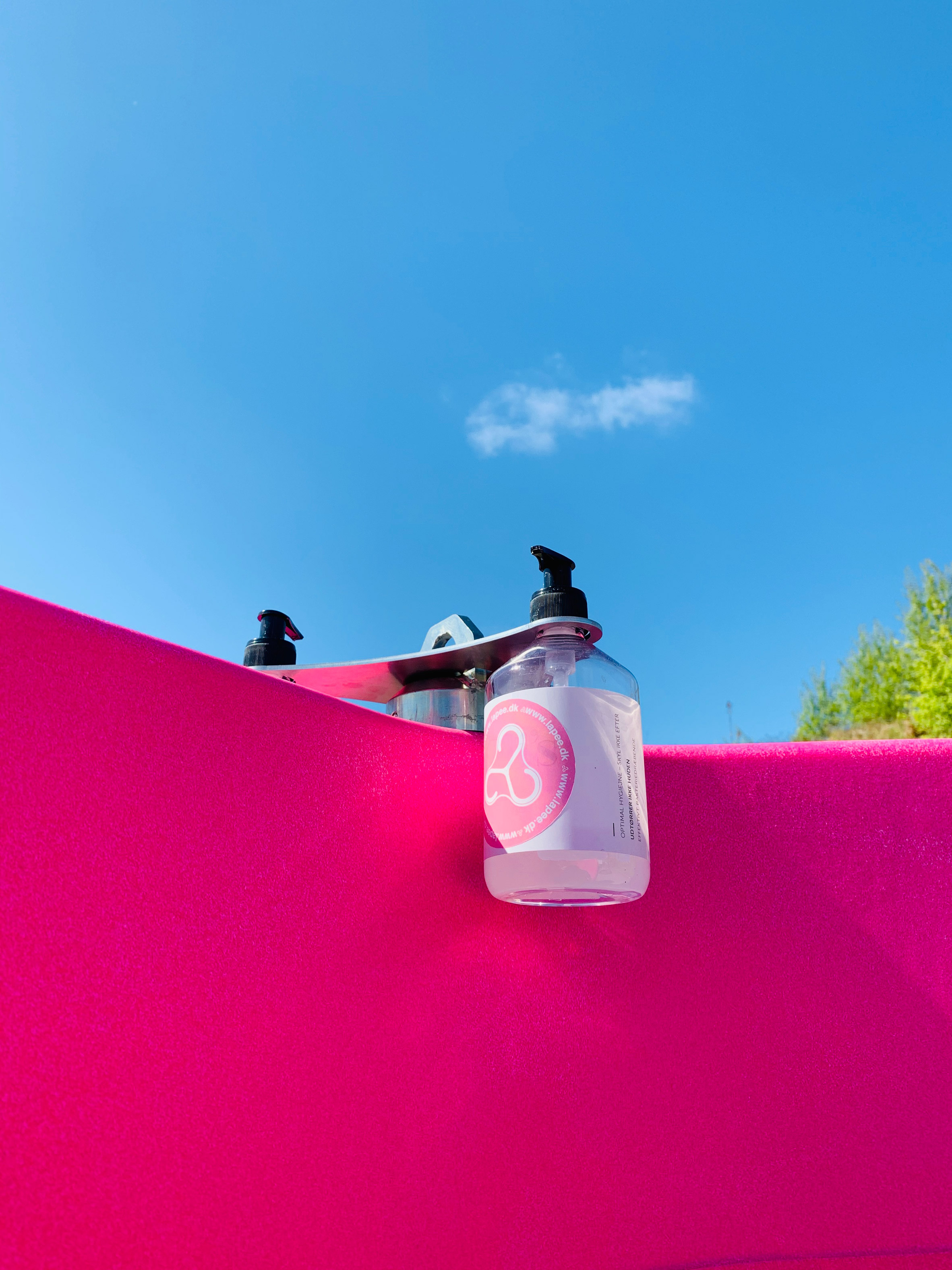
Lapee has added hand sanitiser holsters in response to the pandemic

"Lapee fits perfectly with the summer time and Covid-19 hygiene regulations," added French architect and Lapee co-founder Gina Périer. "It can be installed basically everywhere. Lapee is made for every place where there is a need for safe and hygienic solutions for womxn to pee."

French design studio Faltazi, who caused a scandal when their Uritrottoirs were installed on the streets of Paris in 2018, told Dezeen they are installing the composting urinal units in Chambéry this month.

"Our outdoor urinals respond perfectly to this problem of distancing," Faltazi co-founder Laurent Lebot told Dezeen.
Urinals in Paris's historic centre cause uproar
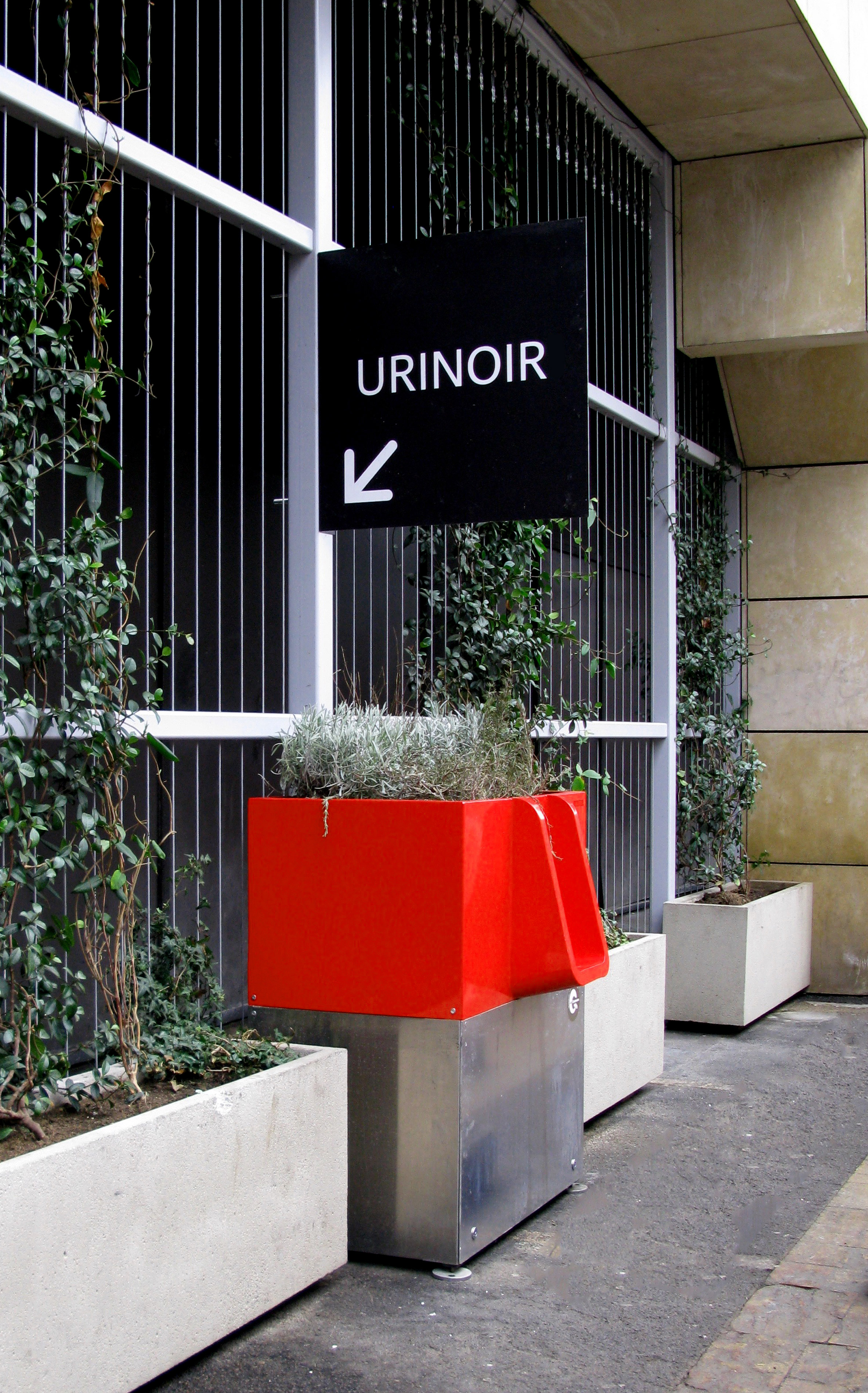
Faltazi's urinals have sawdust for composting and are topped with planters

The Uritrottoir is an environmentally-friendly outdoor urinal featuring a bright red box with a trough that funnels urine into a box of sawdust inside its metal body.

Faltazi also makes an easy-to-assemble urinal for outdoor events such as festivals.  The Uritonnoir is made by strapping funnels to straw bales, which can be composted afterwards.

"The Uritonnoirs, our country version of the Uritrottoir can, of course, be installed in parks," said Lebot. "You just have to get straw bales from farmers."
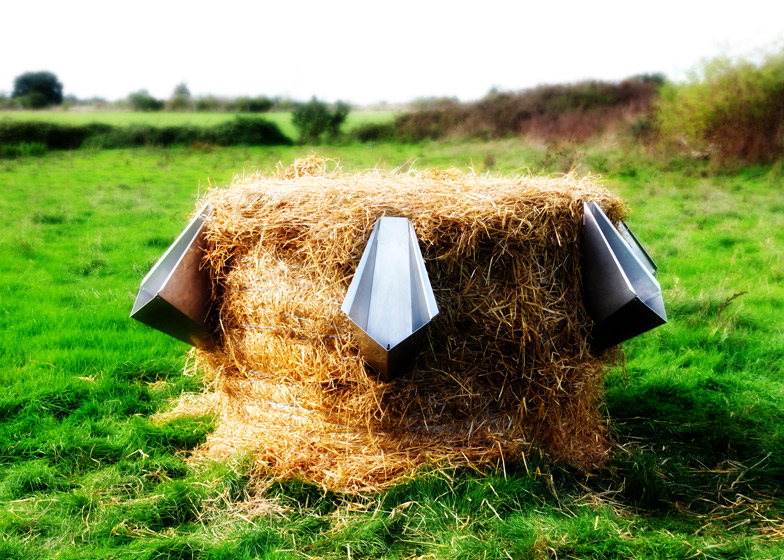
L'Uritonnoir straw bale urinal for festivals designed by Faltazi
Uritonnoir straw bale urinal for festivals designed by Faltazi

Using a Uritrottoir or Uritonnoir doesn't require touching the unit and they're used in the open air, where the level of ventilation means transmission of coronavirus is reduced.

Lapee is also touchfree, allowing the user to step up between the sheltering sides and squat to urinate. "Of course if you need some support you can always hold from its walls or support yourself with your elbows," said Périer.

"It's also a win-win situation because you can work out while you pee," she added. "But it's up to you – we see it as a completely touch-free solution. And if you end up touching surfaces, it is totally okay since we provide hand sanitiser to clean your hands."
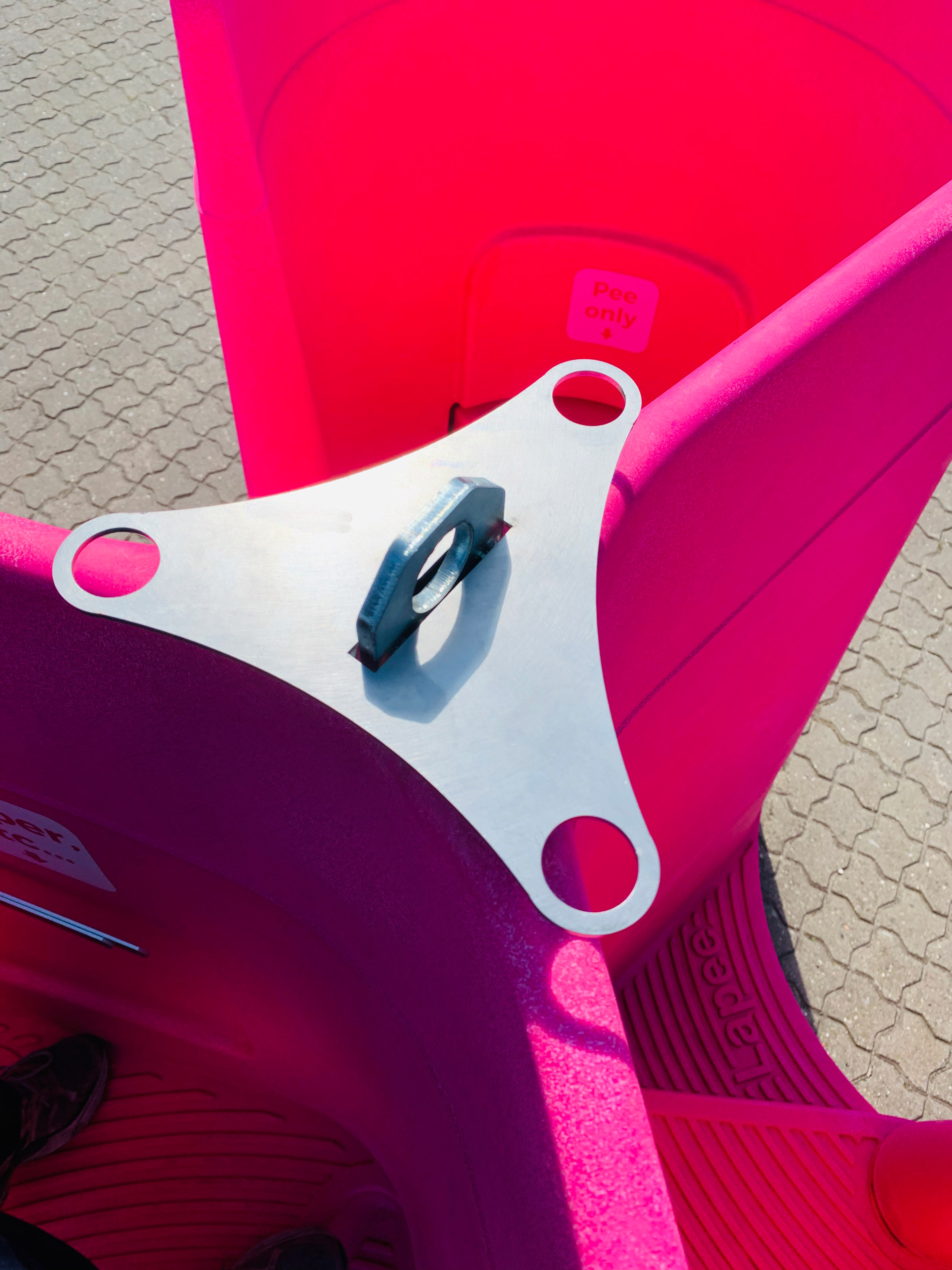
Lapee urinals during pandemic public toilet shortage
The Lapee provides a touch-free squatting toilet experience

In response to the pandemic, Lapee's designers have added a metal holster for hand sanitiser that attaches to the middle of the structuree. As a piece of industrial design, the hardwearing plastic frame was already made to withstand regular hosing down.

"You can easily spray [Lapee] with vinegar or other disinfectants. It functions as one monolith so the whole cleaning process doesn't take more than a couple of minutes," said Périer. "The material that Lapee is made from is very durable, it can last for many many years even if it's being sanitised every day."

Lapee was designed to help ease the queues at music festivals, where people who need to squat to pee have to wait longer.
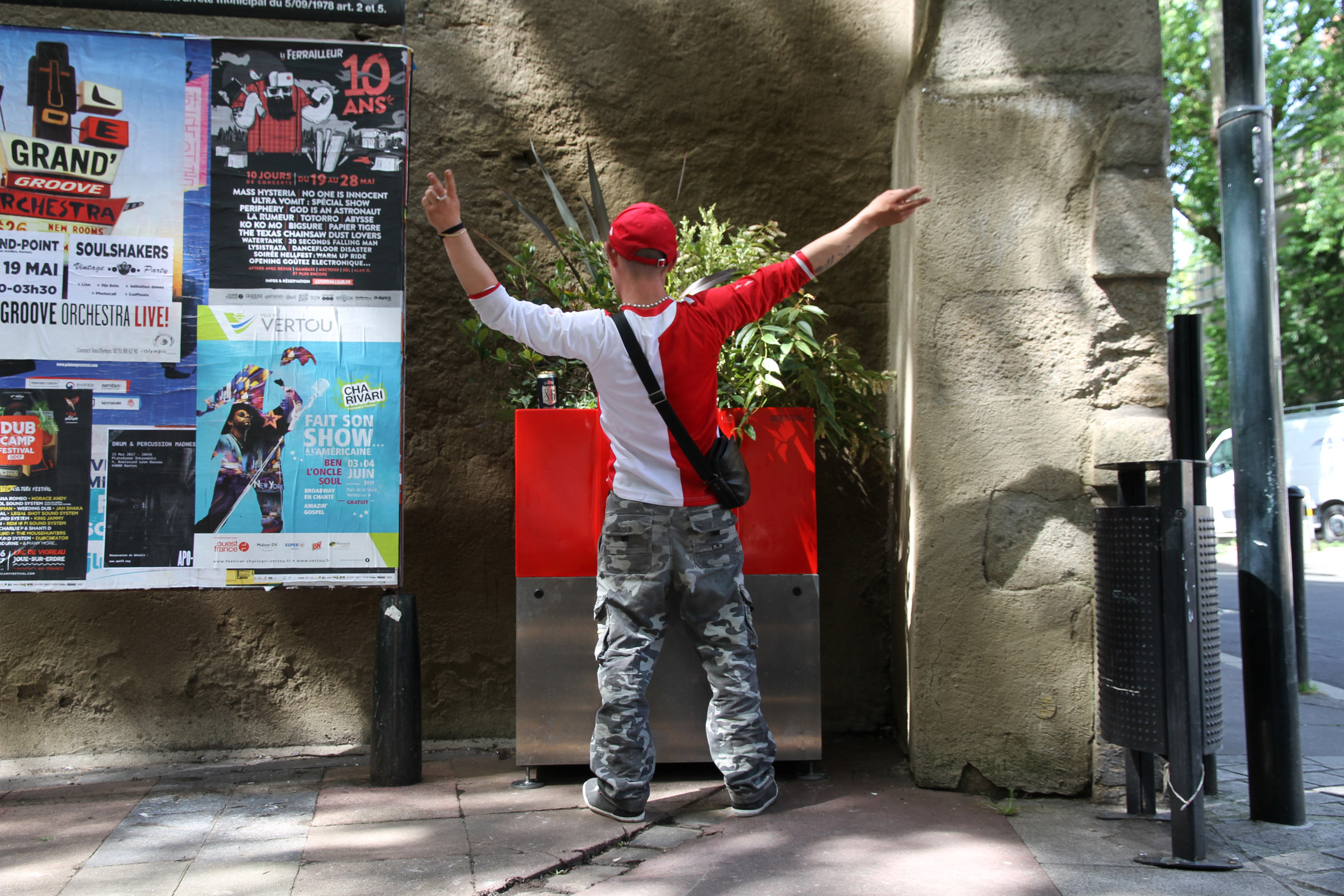
Urinals in Paris's historic centre cause uproar
Open air urinals have better ventilation

Women and people who need to squat to pee are particularly vulnerable when public toilet facilities are reduced, such as during this pandemic. There are fewer places they can use safely and higher risks of health issues such as urinary tract infections (UTIs) if they cannot go regularly. Human urine is also very bad for plants and can pollute rivers.

As a Danish company, Lapee is also in talks with Copenhagen's city government to get the urinals installed in time for the summer.

"Things are going really well for Denmark in terms of Covid-19 and summer is just around the corner. We believe people are going to be more and more outside enjoying the nice weather – of course with regulations – but still gathering in parks, hanging out by the water and visiting outdoor markets," said Périer.

"As it is a new concept it always takes a bit more time to get things done – especially through governmental procedures. But more cities will have it in the near future and we are really happy about it."

Coronavirus has lead to increased demand for touchless toilets and other bathroom equipment. "It is entirely feasible to create an environment which eliminates the need to touch surfaces," chief design officer of LIXIL told Dezeen.

Images courtesy of Lapee and Faltazi.

The post Outdoor urinal designers offer solutions to pandemic public toilet problem appeared first on Dezeen.


from Dezeen https://ift.tt/3eI3IsX

Live talk explores the past, present and future of German design brand Braun

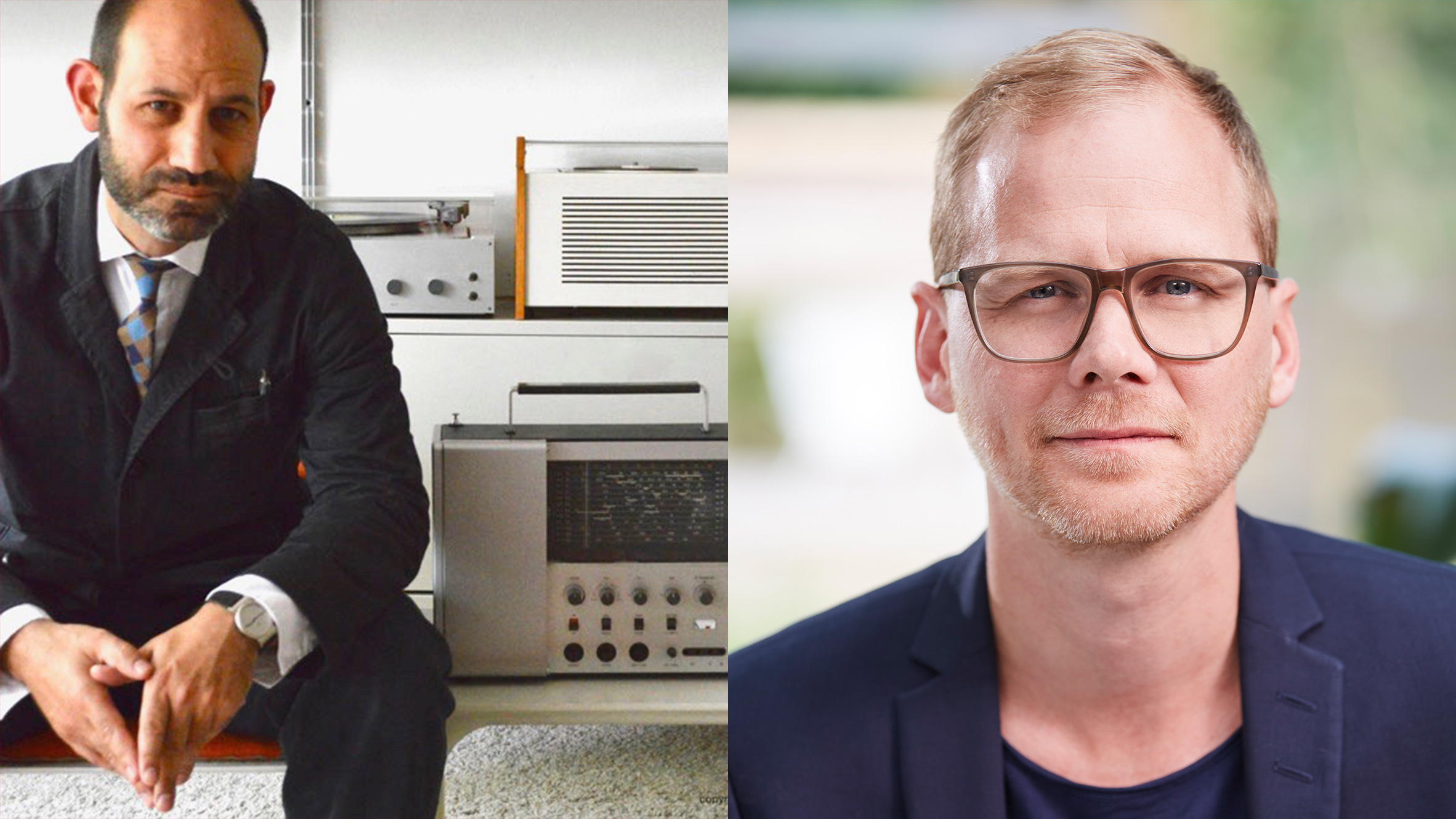
Braun designer Benjamin Wilson and German curator and writer Dr Peter Kapos speak to Dezeen in a live talk as part of Virtual Design Festival

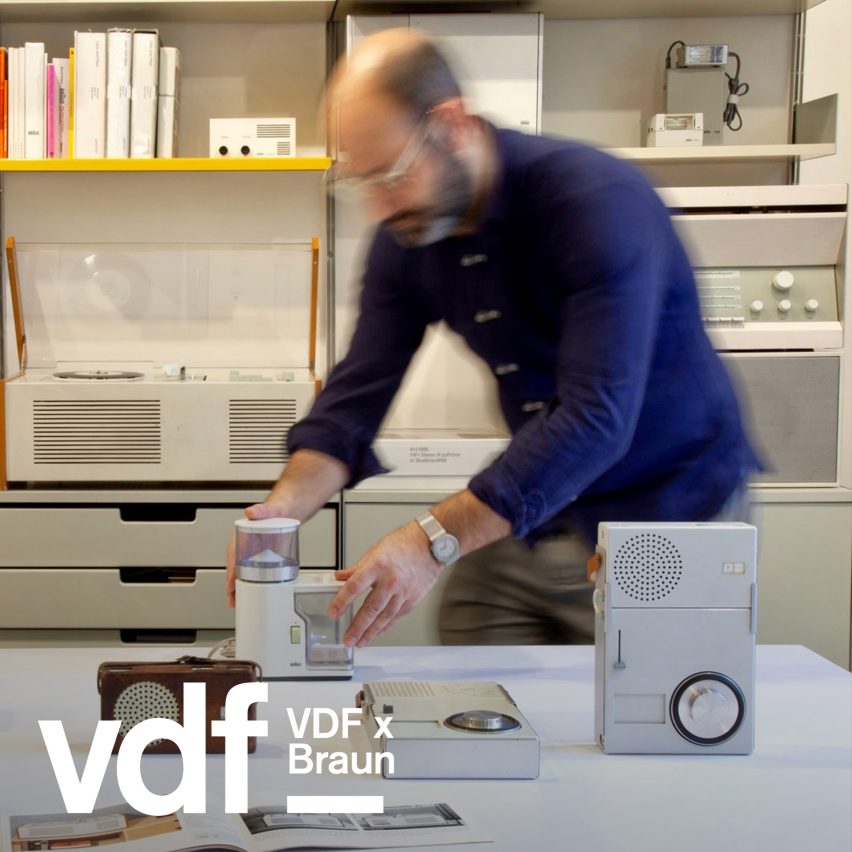
Today Virtual Design Festival teams up with Braun to present a series of talks and a competition to win a Braun speaker and watch. The collaboration kicks off at 12:00pm UK time with a live talk with designer Benjamin Wilson and curator Dr Peter Kapos about the influential brand's vision for design.

Wilson and Kapos will speak to Dezeen's founder and editor-in-chief Marcus Fairs on the themes of times of change and good design.

The conversation will probe the history of German design brand Braun, it's current products and its vision for the future, as well investigating how design has responded to societal upheavals in the past and how it can continue to do so.

The livestream is part of Braun's takeover of VDF today, which will also include a talk with Ilse Crawford at 4:00pm, as well as a competition in which the brand's LE03 speaker and a BN0265 Chronograph gentleman's watch can be won at 5:00pm.

Braun designer Benjamin Wilson and German curator and writer Dr Peter Kapos speak to Dezeen in a live talk as part of Virtual Design Festival
Braun designer Benjamin Wilson and German curator and writer Dr Peter Kapos will discuss Braun's approach to design

Wilson, an Australian industrial designer, has worked at Braun since 2003, and has led global communications for Braun's technology and design wing since 2016.

Kapos, a German curator, writer and philosopher, co-founded Systems Studio, a London-based creative agency where he acts as strategic director.

He is director of Das Programm, a research arm of Systems Studio focused on the history of Braun's designs, and has written a foreword for a book that collects the brand's iconic pieces, as well as an extended essay for Phaidon's Industrial Facility monograph on industrial designers.

Braun is renowned for its functional approach to design, and counts designer Dieter Rams and his protege Dietrich Lubs amongst its heads of design. The brand's mission to create "honest, unobtrusive, practical devices" helped establish it as one of the most influential manufacturers of the 20th century.

Virtual Design Festival

Running from 15 April to 30 June, Virtual Design Festival is the world’s first online design festival. It brings the architecture and design world together to celebrate the culture and commerce of our industry, and explore how it can adapt and respond to extraordinary circumstances.

To find out what's coming up at VDF, check out the schedule. For more information or to join the mailing list, email vdf@dezeen.com.

The post Live talk explores the past, present and future of German design brand Braun appeared first on Dezeen.


from Dezeen https://ift.tt/3duXCfk

"I just knew what was going to happen" says Li Edelkoort, the forecaster whose coronavirus predictions went viral

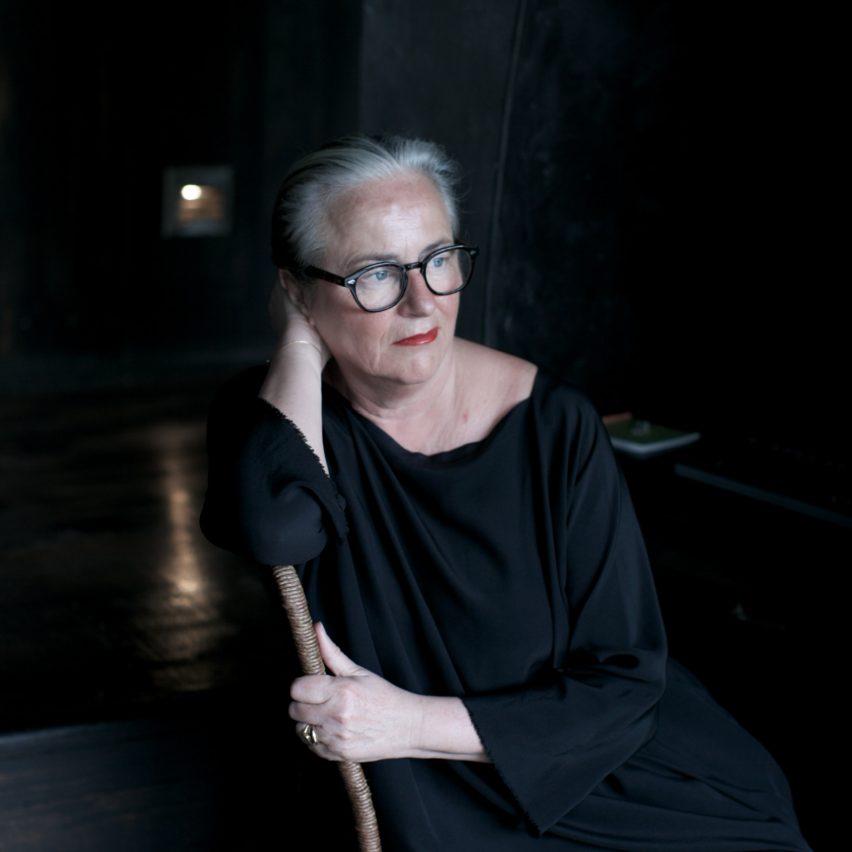
Li Edelkoort speaks to Dezeen live in our Screentime series, part of Virtual Design Festival

Trend forecaster Li Edelkoort studied fashion design but found she was better at predicting the future than drawing. She spoke to Dezeen about her career and why, at a time of crisis, she is hopeful for the future.

"There will be new words, there will be new codes, there will be new ideas of how to make and how to produce," she said, predicting that a better world could emerge from the current upheaval.

Edelkoort, one of the world's most influential forecasters, spoke to Dezeen in a live video interview in April, on the first day of Virtual Design Festival as she announced her latest venture, the World Hope Forum.

We call this thing, the World Hope Forum because it's the antidote to the World Economic Forum in Davos where only the super rich and the famous come together about more money," she said, after publishing a manifesto for the initiative on Dezeen.

"Hopefully the creative forces in this world can come together, to make new proposals and also showcase proposals that already work."

"How do we make money without making havoc?" she asked. "So that is the opportunity we have, and that's a terrific opportunity. Because, you know, we never would have had such a thing without this disaster."

"The virus is forcing us to do things which we already wanted to do"

Edelkoort spoke to Dezeen live from Cape Town, where she was waiting out the coronavirus pandemic after speaking at the Design Indaba conference.

"The virus is forcing us to do things which we already wanted to do: travelling less, buying less, wasting less, working less," she said. "But nobody knew exactly how to jump off the bandwagon. So we kept on going because that is how you do things."

Trend forecasting is a major industry these days but Edelkoort, 69, is probably the most recognisable of all its exponents, advising brands from fashion to finance and technology companies so they can pre-empt consumer trends and gain insights to help them plan ahead.

Originally working for the fashion industry, she now consults with clients including Google, Coca-Cola, Siemens and Accenture while her trend briefings and publications are attended and read by business leaders around the world.

Her presentations are like performances, with music and imagery backing up her soothing, slow delivery as she paints abstract pictures of emerging themes such as nomadism (2012) and stillness (autumn/winter 2021/2022).

They are often floatily optimistic in a New Age kind of way, although she is not afraid to call out the garment trade for its wastefulness or make apocalyptic predictions, such as when she declared the death of fashion and accused the industry of being "a ridiculous and pathetic parody of what it has been".

But her fashion clients seem to love it. "They actually enjoyed it," she said of one brand when she presented her anti-fashion manifesto at an internal seminar. "They giggled when I said all the bad things about marketing. They all started to giggle like crazy because they knew it was true."

"I dare to say things a bit earlier"

Her predictions on the impact of coronavirus, first published in Dezeen in early March, caused a global sensation. The interview has clocked up over 800,000 page views, making it by far the most popular story Dezeen has ever published.

In it, she said the pandemic offered "a blank page for a new beginning" in the longer term but would first trigger "a quarantine of consumption" that would cause immense economic hardship while forcing people to focus on simple pleasures such as reading and cooking.

Reading the interview now, many of her predictions seem obvious. But she was the first to say it. "I'm basically just a broadcaster of the mental situation of creative people," she said.

"I dare to say things a bit earlier and maybe very clearly [so] it makes sense, it resonates."

Edelkoort, whose first name Lidewij is usually shortened to Li, grew up in Wageningen, a small agricultural town in the centre of the Netherlands. One day as a youth she entered a competition to design a carnival costume organised by a local newspaper.

"It was too serious for carnival, but it was exactly what was on the podiums in Paris," she recalled. "It was actually a micro dress with a little shirt."

"I was not such a good drawer or designer but I just knew what was going to happen"

A journalist working on the paper spotted her talent and suggested she go to design school, so she enrolled on a fashion design course at Academie voor Beeldende Kunst Arnhem (Arnhem Academy of Visual Arts, now called ArtEZ), graduating in 1972.

"And we recognized while I was doing my education that I have this skill of seeing a bit more far," she said. "I was not such a good drawer or designer but I just knew what was going to happen."

At that time, trend forecasting was a little-known part of the fashion industry. The discipline had emerged in the late 1960s and early 1970s when Parisian advertising and styling companies working with fashion labels started advising their clients on consumer trends.

"It was not well known, that profession," Edelkoort recalls. "But one day a lady came to do a lecture and she spoke about the styling offices in Paris."

"I was fascinated by that story," she added. "And [the lecturer] discerned in me something like that. She said: 'you are such a person'."

After graduating, Edlekoort spent three years working as a stylist at Amsterdam's De Bijenkorf department store.

"That was my real school; my second school," she said. "I was only 21. Department stores are very, very cool sorts of knowledge banks, and everything you learn you can use for the rest of your life."

She then moved to Paris to join fashion foresight agency Nelly Rodi as a forecaster and stylist.

"Holland was so small," she remembered. "I needed to go away. So I went to Paris. And there I first worked with Nelly Rodi. She was the next school if you want; she taught me colours and yarns; she taught me how to stretch the elastic of time further."

In 1986 she established her own forecasting agency, Trend Union, which she runs to this day. Now based in New York, she publishes regular reports on trends including colour, textile, design and architecture.

In 1991, she began her ongoing relationship with design education, becoming head of the Man and Leisure department at Design Academy Eindhoven.

She became the school's chair in 1998, remaining in place until 2008 and overseeing a remarkable rise in the school's profile and influence as it transformed from being a technical school attached to local industrial giant Philips, into a pioneering laboratory exploring new ways of approaching design.

"I'm always doing things with education," she said. "That's my hobby. And then also because of the Design Academy, I became a curator and writer so my life never stops. It always evolves. I just follow the lead."

In 2011 she co-founded the School of Form, a new design school in Poznań, Poland and in 2015 she was appointed dean of hybrid design studies at Parsons School of Design in New York.

"They will be trained like no other generation"

Design students, especially those graduating this year, have been hit hard by the pandemic, with lockdown preventing them from accessing studios and workshops.

However, Edelkoort feels the pandemic could have a positive impact on the current generation of students.

"It's very beautiful to see how they work," she said. "Don't forget that all the graduates in the world are in their little rooms without machines, sometimes not even with the materials to make their work. And so they are super creative at this point trying to find a solution."

"And so they will be trained like no other generation. They will be completely independent; very good and improvising their offer and their vision."

By contrast, students who graduated in the previous decade "were very, very lost because of the society being so f*cked up," Edelkoort said. "They didn't really know how to position themselves."

"So although they will now enter a pretty terrible economic landscape, at the same time, they will have the position and the possibility and the fortune to build a society they love.

"They're hopeful," she concluded. "Things will be happening and changing and it will be magnificent. That I know."

The post "I just knew what was going to happen" says Li Edelkoort, the forecaster whose coronavirus predictions went viral appeared first on Dezeen.


from Dezeen https://ift.tt/3dGAt9X

Northeastern University showcases nine graduate designs that bring data to life

Northeastern University graduates share nine designs that bring data to life

Design graduates from Boston's Northeastern University present thesis projects including visualisations of traditional Indian dance moves and augmented-reality representations of taste in this Virtual Design Festival school show.

The nine students hail from Northeastern's MFA Experience Design and MFA Information Design and Visualisation programmes, based at the university's College of Arts, Media and Design (CAMD).


MFA Experience Design and MFA Information Design and Visualisation, Northeastern University

University: Northeastern University
Course: MFA Experience Design and MFA Information Design and Visualisation
Tutor:
Professor Paolo Ciuccarelli

Course statement: 

"Northeastern University students in the College of Arts, Media and Design's MFA Information Design and Visualisation and MFA Experience Design programmes undertake a thesis course, which offers them support in developing and producing the written component of a design thesis.

"This integrates and applies their accumulated knowledge as well as encouraging student participation within a practice and research community consisting of classmates, advisors and external professionals.

"The full 2020 MFA thesis show can be found on the Northeastern website."


Northeastern University graduates share nine designs that bring data to life

Visualising Group Therapy: Designing a Tool to Visualise Conversations and Improve Therapist Skills by Libby Thomas


"Can data visualisation help group therapists provide better therapy? In recent years, data collection has become integral to the personal and professional lives of millions around the world. Yet despite the increase in available technology and data, the process of training and supervising group psychotherapists has scarcely changed in fifty years.

"Medical charts and visualisations have historically focused on quantitative data. This thesis explores an intriguing new possibility for data visualisation in mental health care: using transcript data to visualise conversations in group therapy sessions, and ultimately using these insights to help therapists and supervisors provide better care."

Project website: northeastern.edu/mfashow/libby


Northeastern University graduates share nine designs that bring data to life

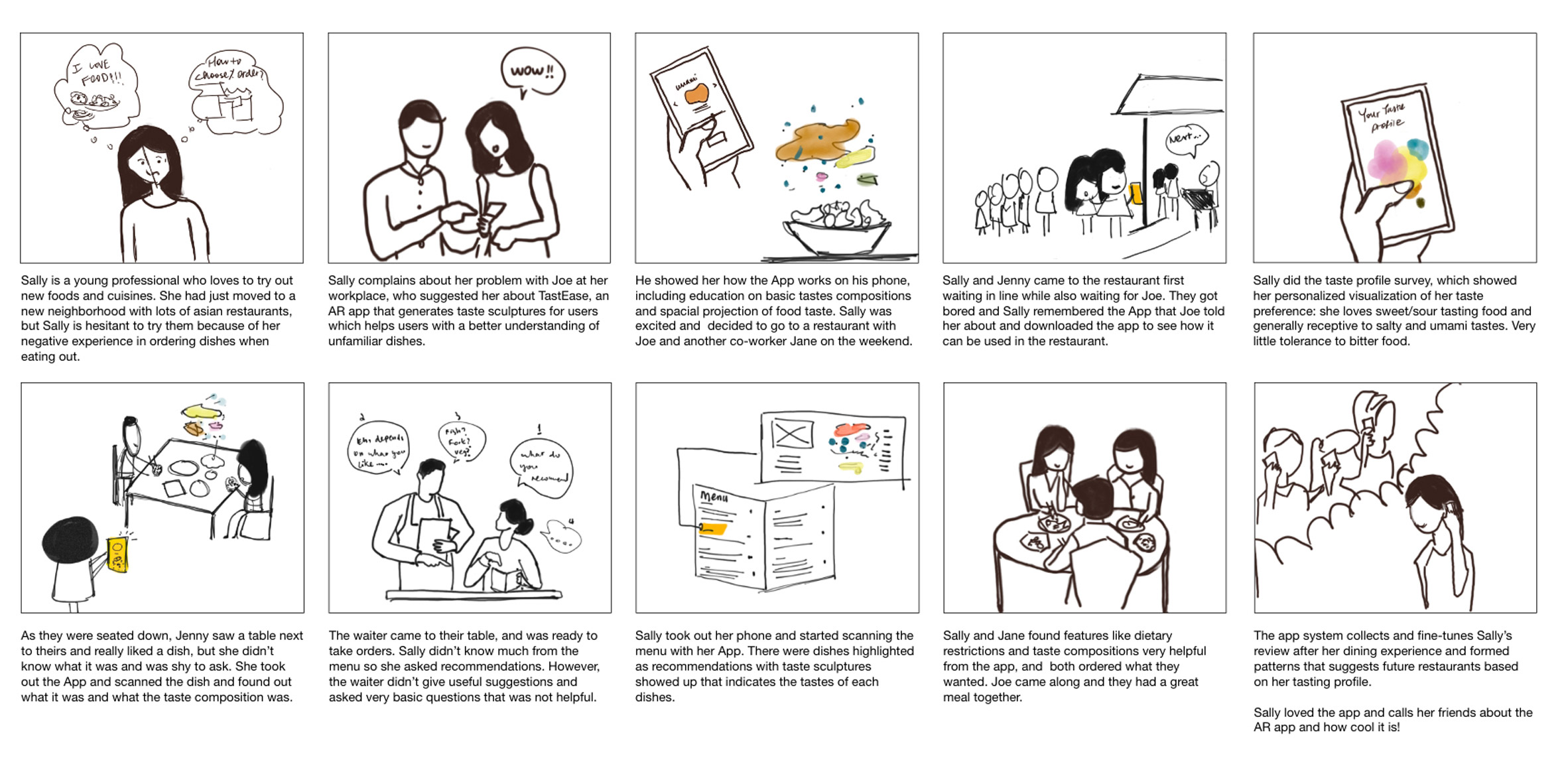
Taste in Translation: Decoding sensory information for augmented dining experiences by Anni Xu


"Human senses play an integral role in emotional processing. But taste is a sense that's hard to visualise due to its subjective and abstract nature. The lack of sensory information about food's taste, especially on restaurant menus, can make it difficult for people to imagine how unfamiliar dishes taste.

"This project explores ways of communicating sensory information from a human-centred perspective using augmented reality (AR). It uses a visual system to represent the five basic tastes, which was developed by looking at existing examples of taste visualisations and conducting experiments. The visualisations are projected through a mobile AR app where users scan a menu or dish for insights."

Project website: northeastern.edu/mfashow/anni


Northeastern University graduates share nine designs that bring data to life

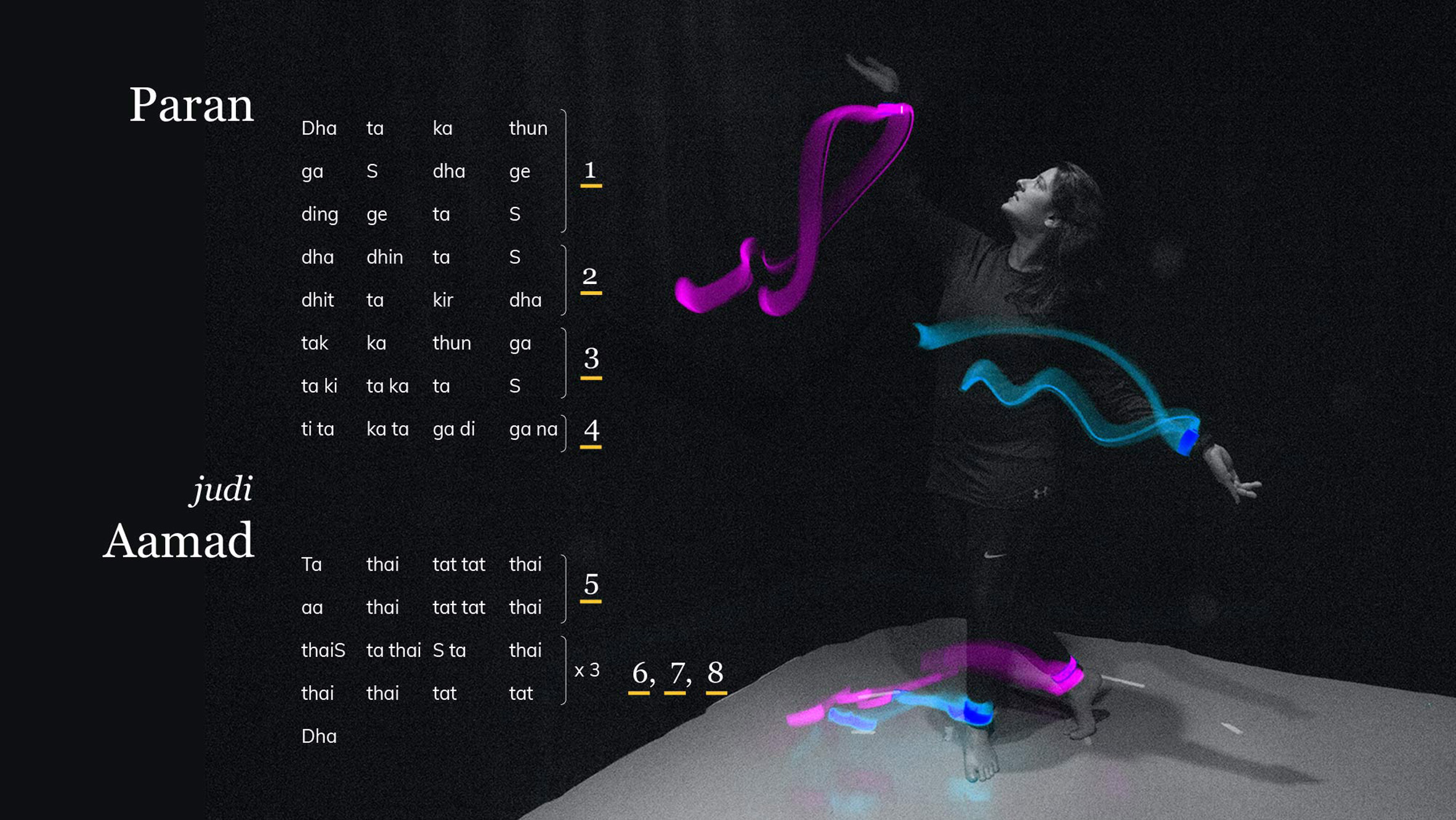
A Dancer's Trace: Visualising Movement in the Indian Classical Dance of Kathak by Arushi Singh


"This project translates the intricate movements in the Indian classical dance of Kathak into abstract, expressive visualisations using non-traditional methods of capturing movement.

"Indian classical dance has been used to communicate spiritual ideas, stories and values since as far back as 400BCE. These performances are a combination of facial expressions, well-structured movements, compelling narratives and accompanying musicals to form a unique audience experience.

"Kathak dancers leave traces of their performance in the environment after they leave. Capturing these traces encourages dance enthusiasts and curious audiences to take a more intimate look at the complex movements in these dance performances."

Project website: northeastern.edu/mfashow/arushi


Northeastern University graduates share nine designs that bring data to life

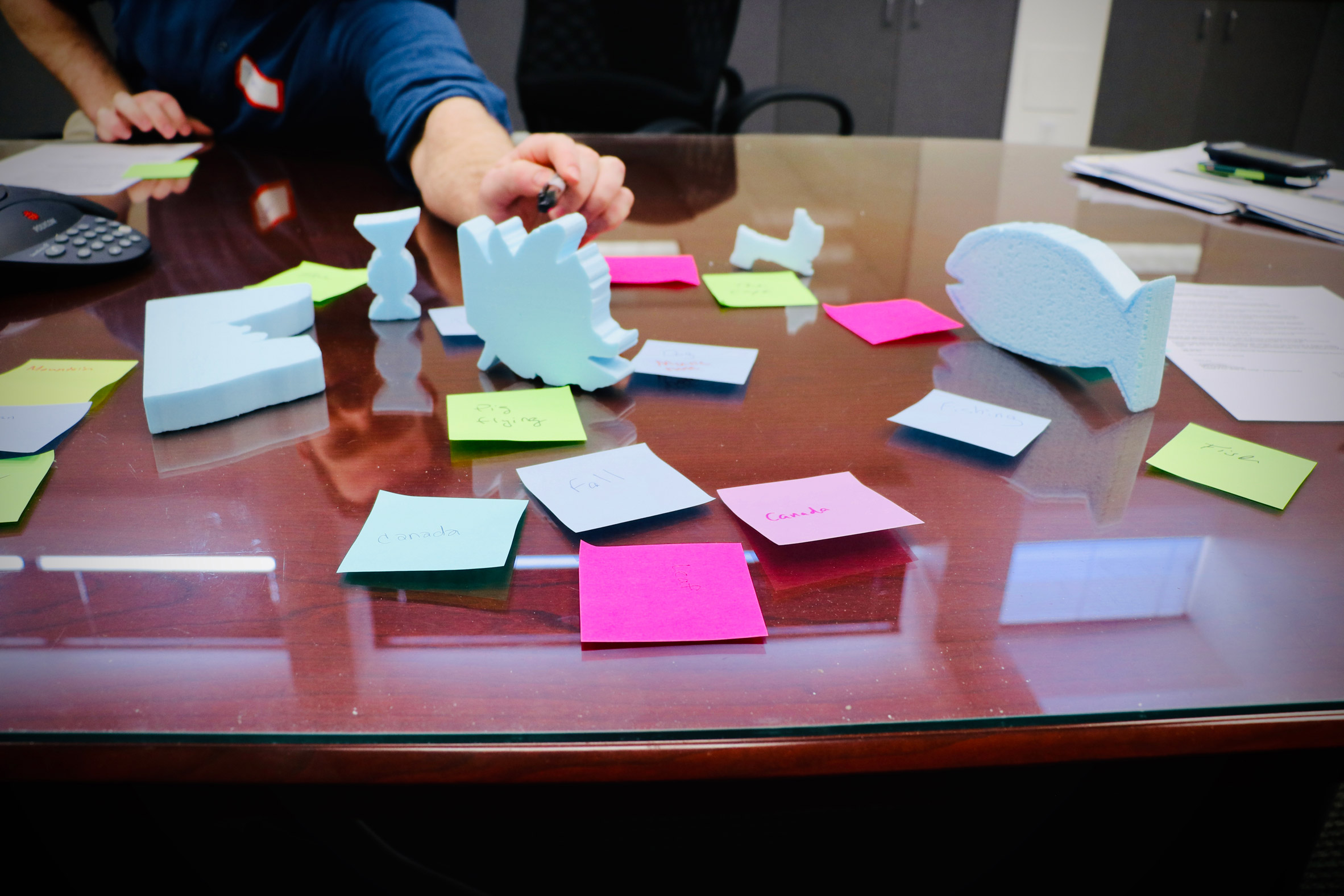
Facilitating Collaboration and Trust in Multicultural Teams: Design for Intercultural Conversations Through Evocative Objects
 by Estefania Ciliotta Chehade


"Today's workplace dynamic is changing due to globalisation and technological advancements. Understanding and embracing diversity is imperative for fostering collaboration and trust, so we have to find ways to help individuals embrace differences in a comfortable way while developing intercultural skills.

"This project proposes new strategies for productive co-working in cross-cultural teams. It exposes and develops an understanding of the challenges faced on multicultural teams and designs a set of interventions, particularly through evocative objects, conversations, and workshops. The ultimate aim is to promote awareness, reflection, and respect."

Project website: northeastern.edu/mfashow/estefania


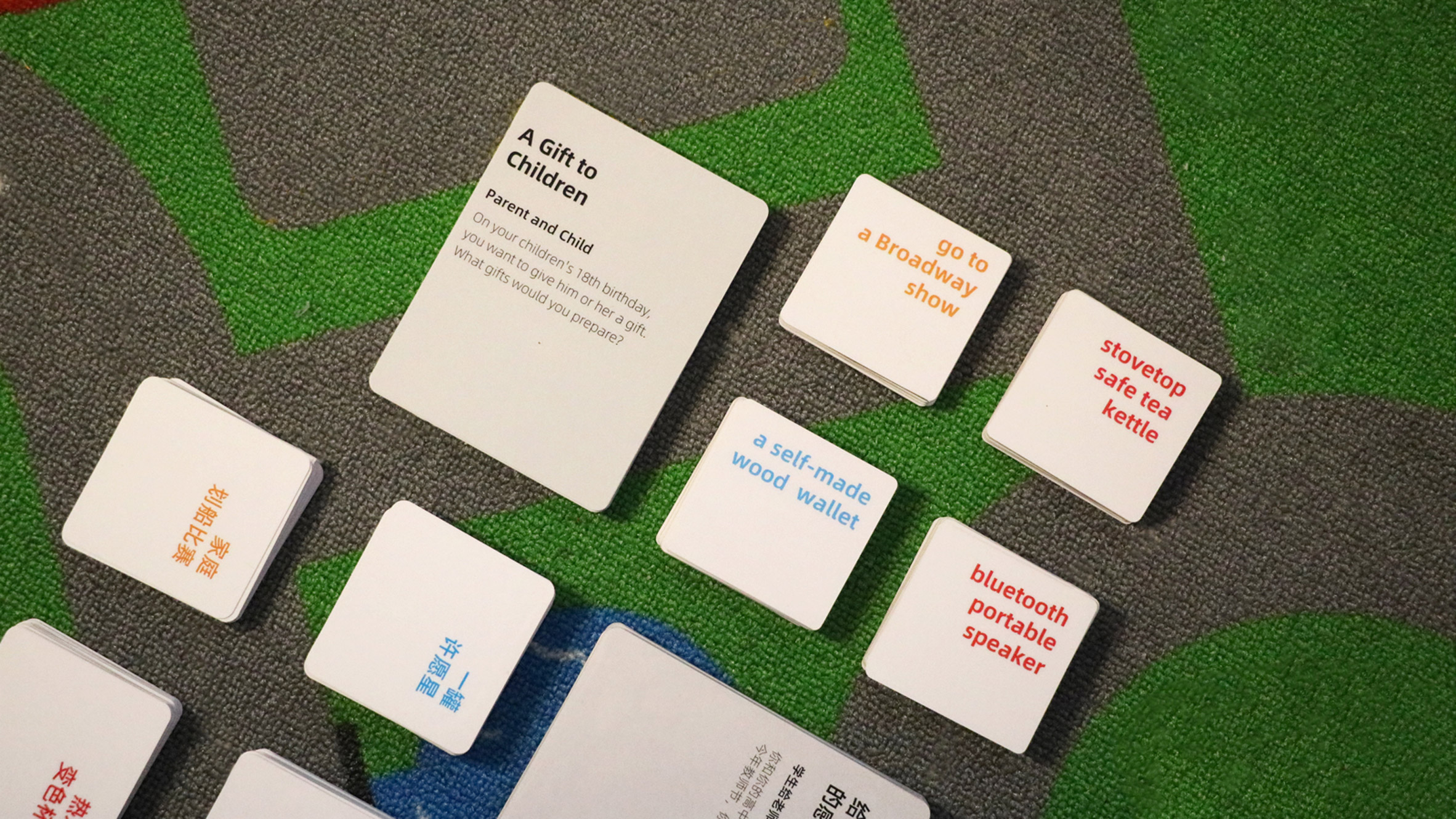
Enriching Gifts: Participatory Design Research to Understand Human Relationships by Houjiang Liu


"Gifts are emotional objects embedded with feelings, as well as reciprocal objects that invoke social interactions. In a civilised culture, they not only represent the aesthetic value of their designed appearance but also create an experience and a routine practice in cultural identity.

"The purpose of the Enriching Gifts project is to analyse gift culture and understand its pluralistic and individual values and symbolic social meanings. The project makes use of participatory design in the form of a card game, to analyse gifts and understand their values and meanings."

Project website: northeastern.edu/mfashow/houjiang


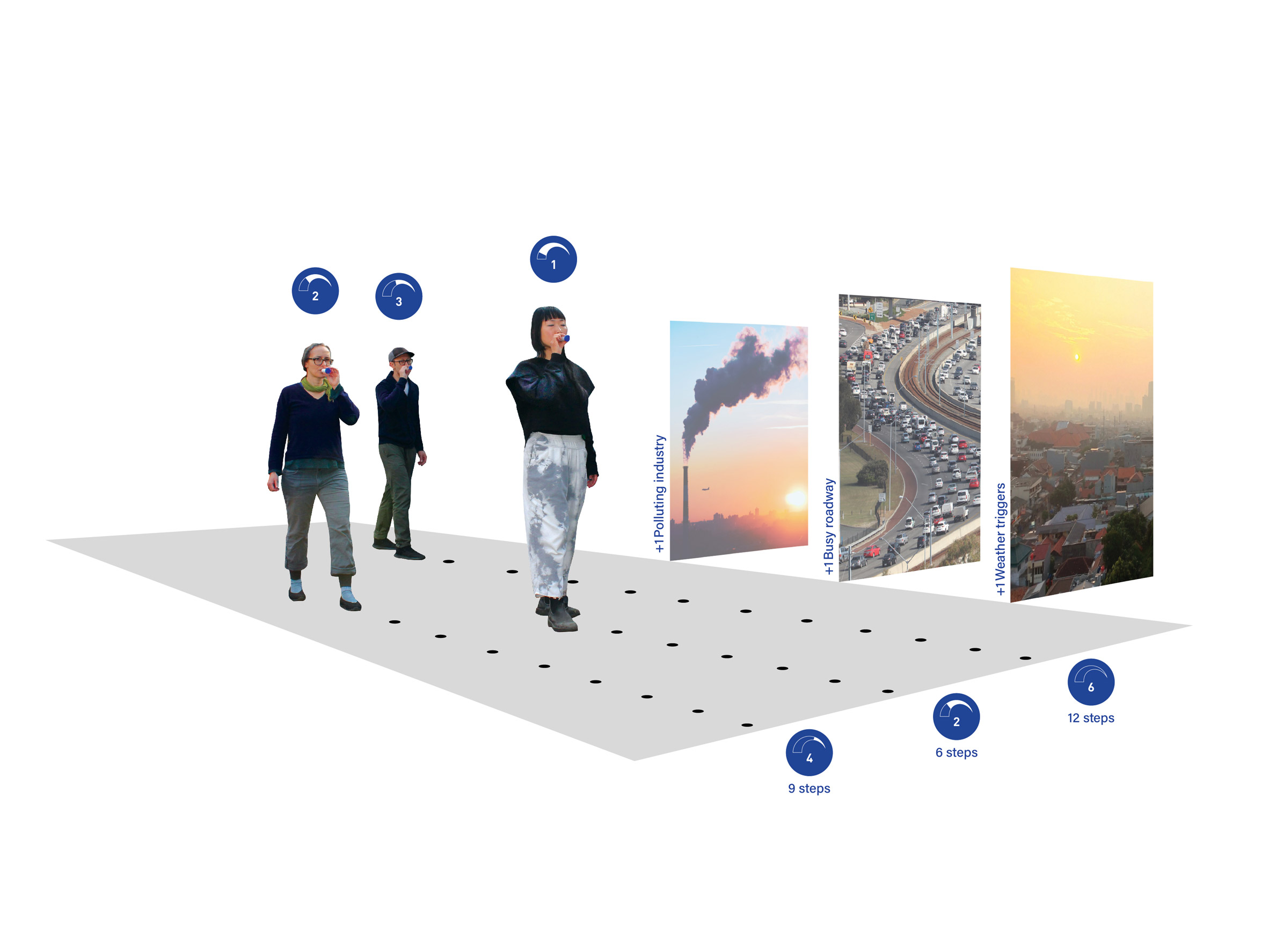
Breathing Injustice: Redesigning Asthma as a Collective Illness Experience
 by Todd Linker

"Who should be able to breathe? The Principles of Environmental Justice were first drafted in 1991 and proclaimed clean air, land, water and food to be fundamental rights. Yet more than one in ten people living in the United States have asthma, a respiratory illness that is aggravated by environmental conditions including air pollution.

"The burden of asthma is unequally distributed across geographies characterised by race, ethnicity and economic status. This project explores ways that design might help communities facing an increased burden of illness from environmental factors to form a collective understanding of illness in order to advocate for change together.
"

Project website: northeastern.edu/mfashow/todd


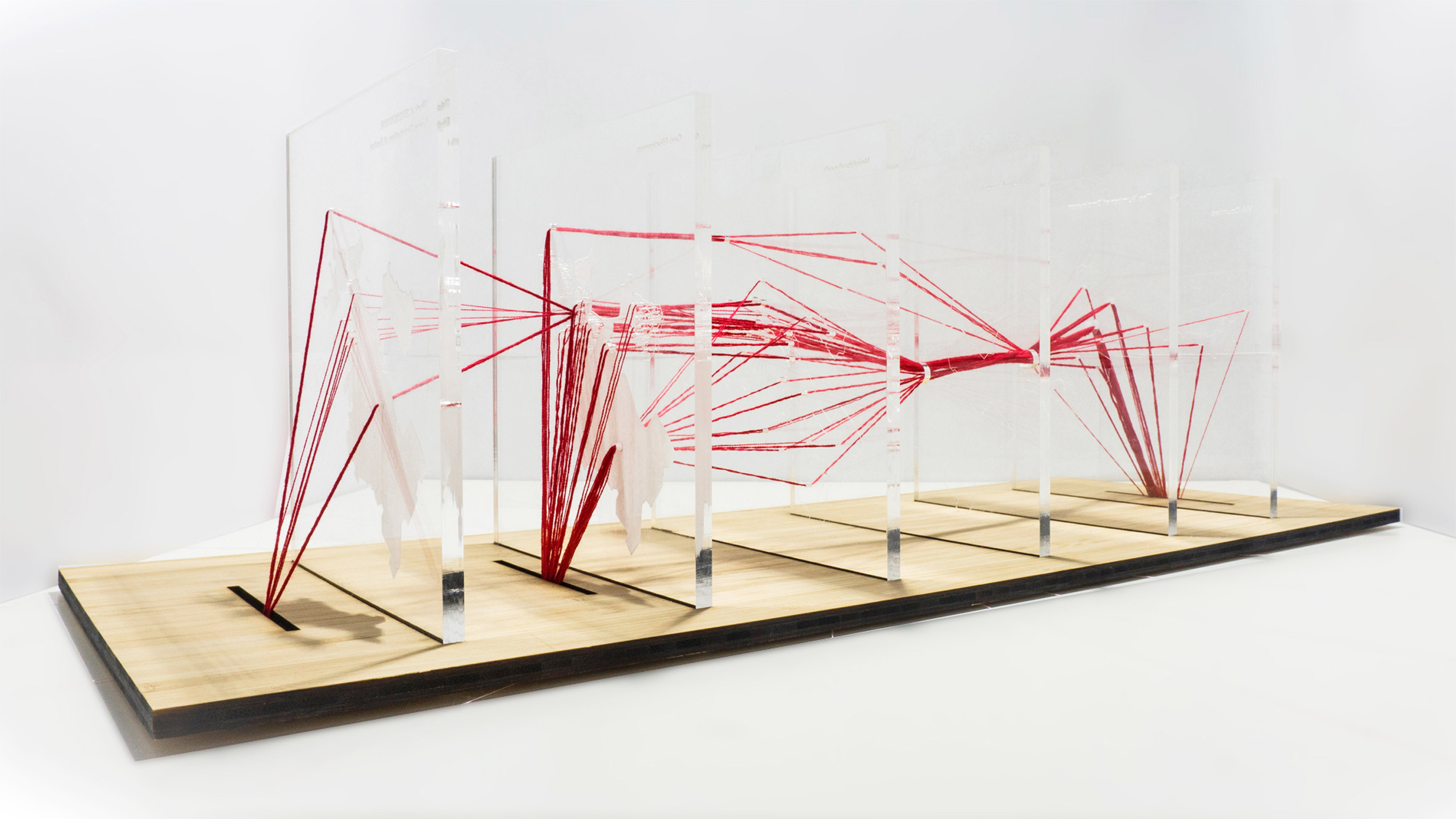
Mobility Patterns of Boston Workers: Visualising Origin to Destination Flows
 by Yinan Dong


"The Origin-Destination (O-D) pattern is a fundamental concept in transport, summarising people and vehicle movements across geographical regions. Visualising Boston employees' home and workflow is one way to understand Boston their mobility patterns.

"However, visualising O-D flow is always a challenge in terms of visual clarity when representing multi-dimensional data in a single plot. This thesis explores design approaches for O-D flow, in order to efficiently encode and communicate this spatial data.

"One of the methods discussed throughout this thesis is a 3D tree-node diagram, which analyses the workers' flow in various spatial granularities."

Project website: northeastern.edu/mfashow/yinan


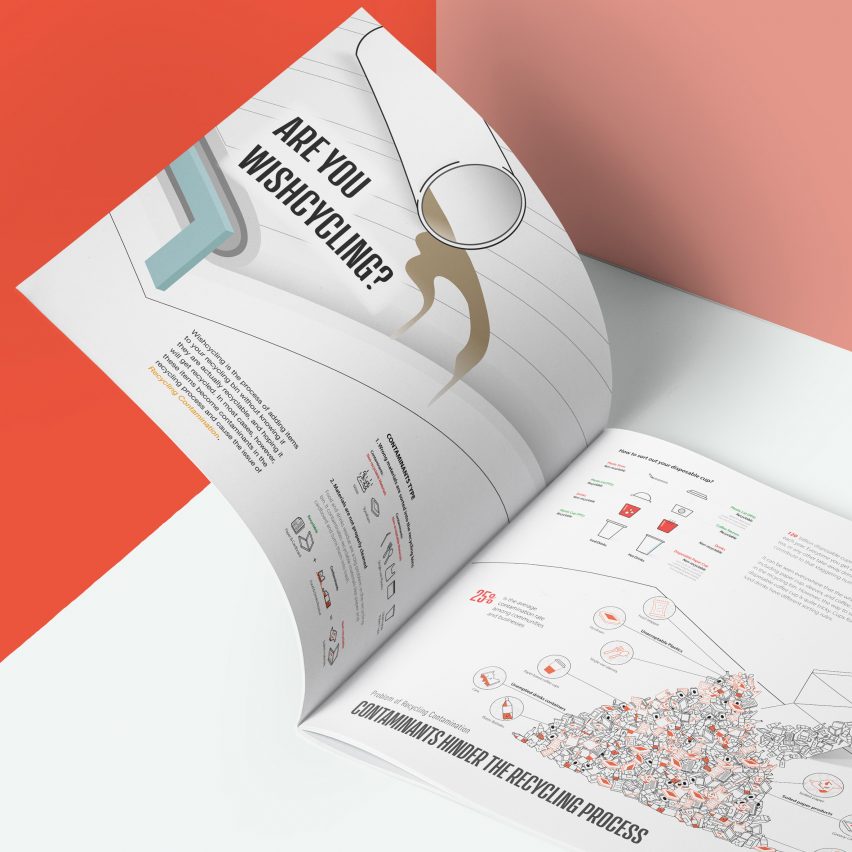
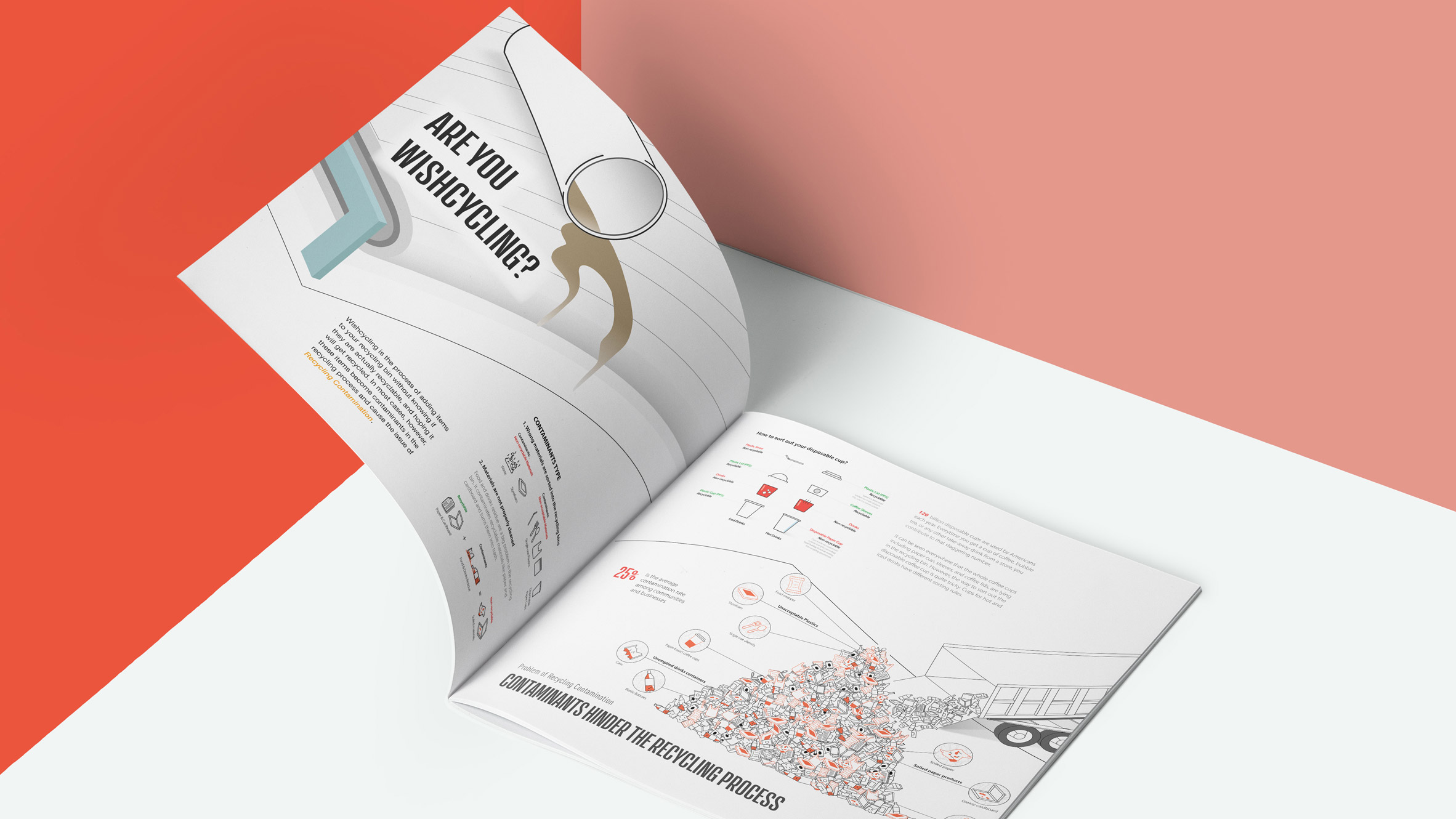
Designing For Persuasion: Rhetoric in Information Design to Communicate on Social Problems by Yuan Hua

"This thesis emphasises the cognitive changes that information design can facilitate through persuasion in response to social problems. It attempts to perform an analysis of information design centring on persuasion.

"First, it proposes a theoretical framework that models the relationships among information artefacts, audiences and designers from a communicative perspective. Then, it articulates the persuasive stages of information design — informing, nudging, and reasoning.

"Additionally, the thesis addresses the rhetorical aspect of information design by exploring concepts and practices from existing rhetorical studies. It presents the rhetorical taxonomy for information design and applies the taxonomy to the issue of recycling contamination."

Project website: northeastern.edu/mfashow/yuan


Family Portrait: Visual Atlas of Households Census by Yuqing Liu

"How have family compositions changed over time? How different can families be in many ways? Census data can be a resource for designers, whose work enables public access to unexpected or unknown information that helps people understand themselves.

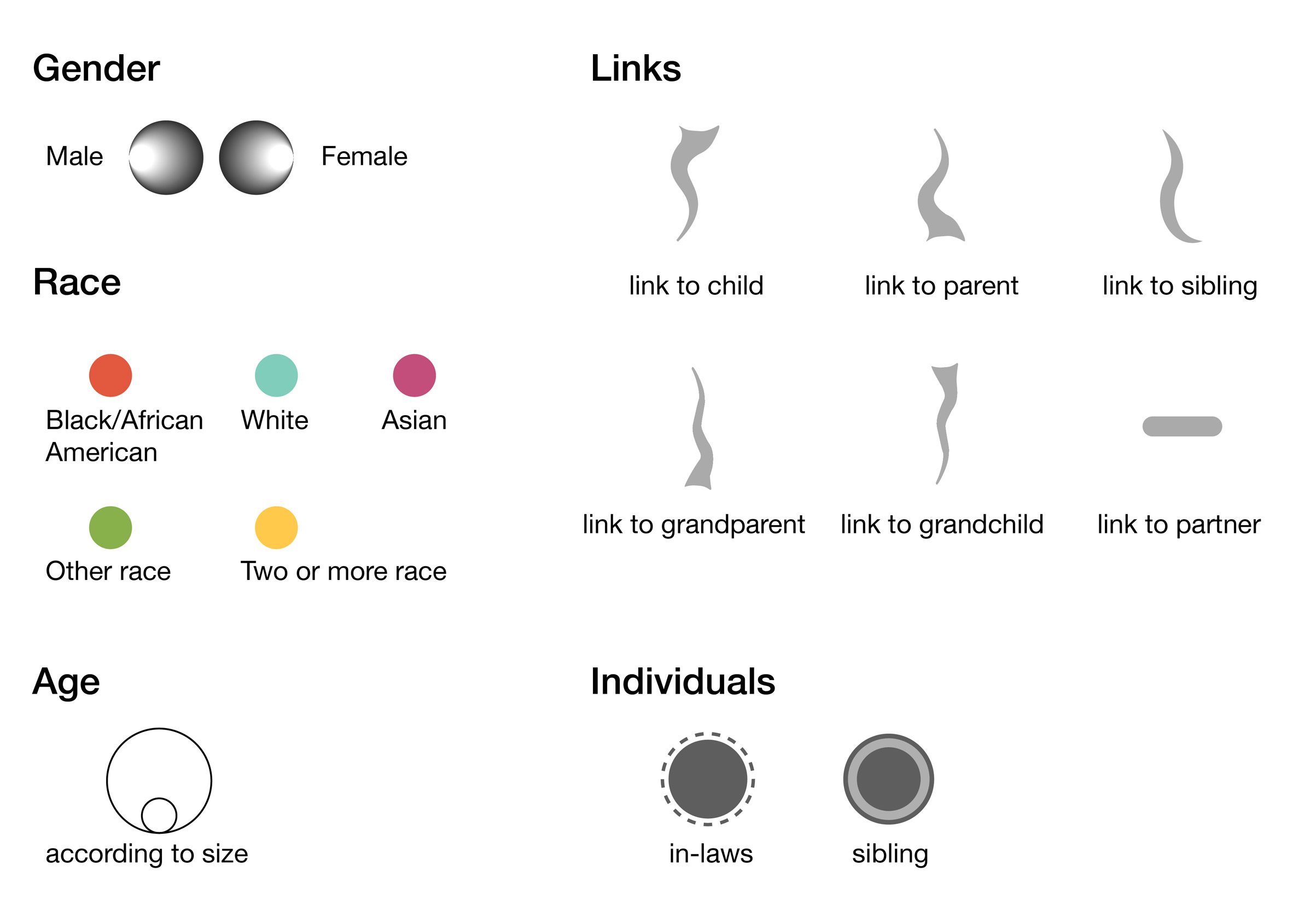
"This project examines several variables in census data, including race, age and gender for people living in Boston from 1860. This data is visualised to show different types of families in Boston, reveal how people connect and indicate less common family types that many people may not have been aware of before."

Project website: northeastern.edu/mfashow/yuqing


Virtual Design Festival's student and schools initiative offers a simple and affordable platform for student and graduate groups to present their work during the coronavirus pandemic. Click here for more details.

The post Northeastern University showcases nine graduate designs that bring data to life appeared first on Dezeen.


from Dezeen https://ift.tt/2ACGBB3

Spike Lee releases short film spotlighting police brutality, saying: “This is not new”

The film, 3 Brothers, was released on Twitter and compares scenes from the director’s 1989 film Do The Right Thing with clips of the murders of George Floyd and Eric Garner.


from It's Nice That https://ift.tt/309GzM5