Thursday, 4 June 2020

Ex-Samsung engineers develop "world's smallest LiDAR device" that makes touchscreens touchless

Ex-Samsung engineers develop "world's smallest LiDAR device" that makes screens touchless

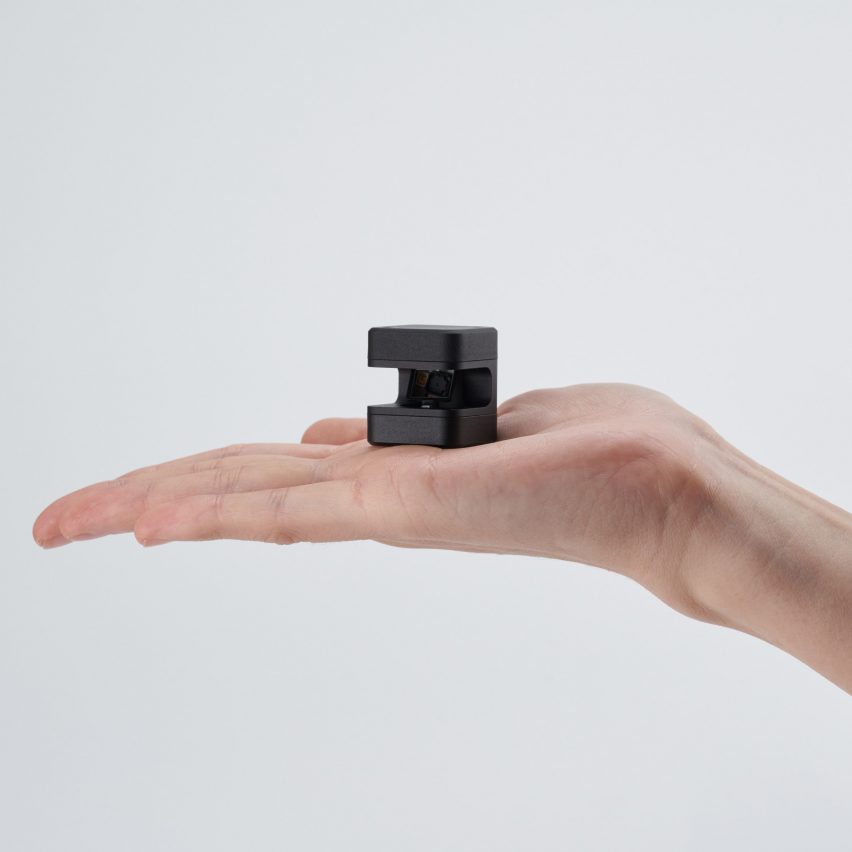
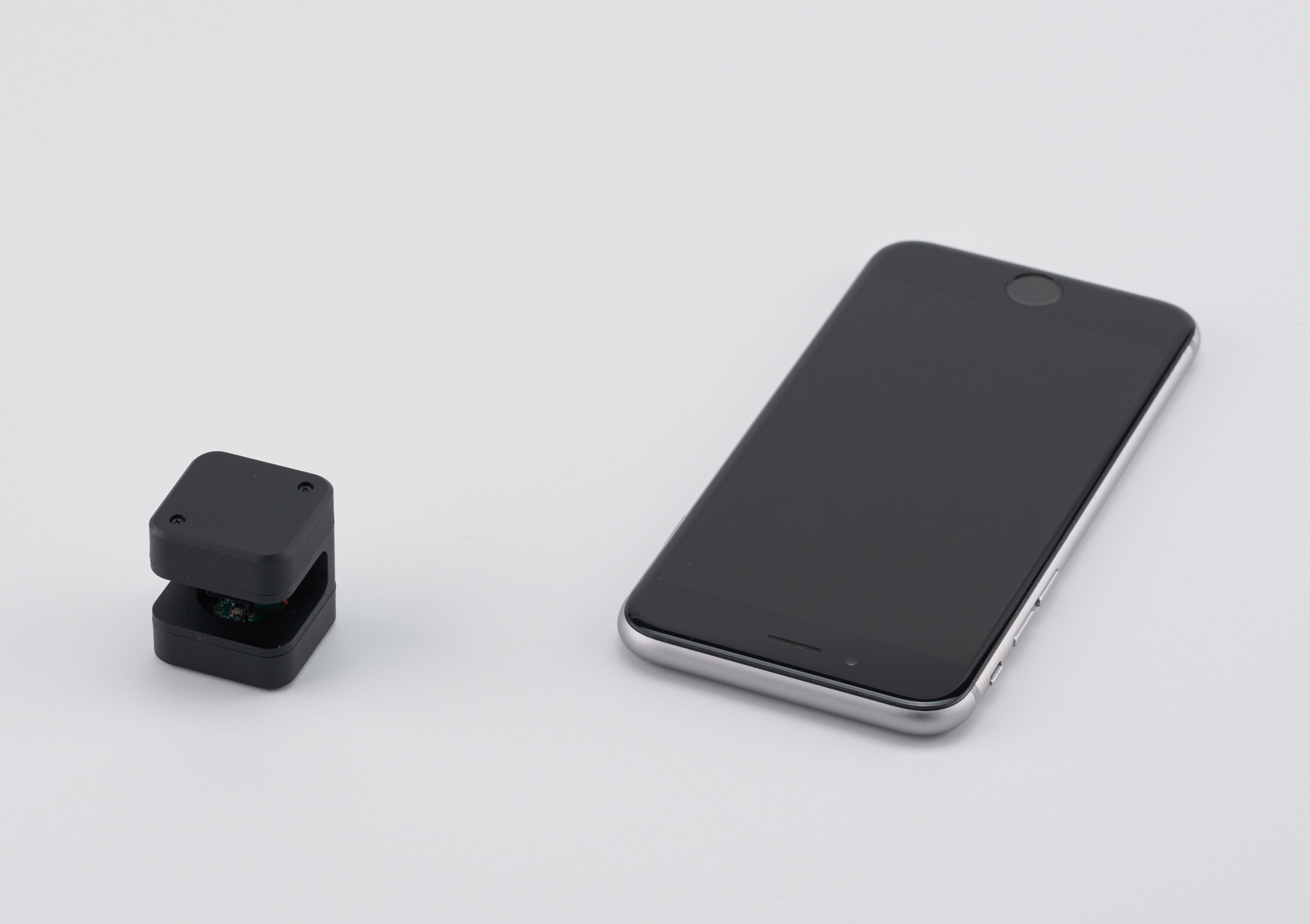
Two ex-Samsung engineers from tech company CoreDAR have designed a tiny LiDAR device called Glamos that can turn any screen into an interactive, but touchless, touchscreen.

Measuring at just 1.5 inches, the pocket-sized Glamos has been billed by its creators as the "world's smallest LiDAR device" with the least power consumption.

The motion sensor employs LiDAR (light detection and ranging) technology, typically used by autonomous vehicles to detect obstacles, to create an additional, virtual touchscreen in place of the one on the user's own device anywhere they desire.
Ex-Samsung engineers develop "world's smallest LiDAR device" that makes screens touchless

Compatible with phones, laptops, tablets, desktop computers and smart televisions, Glamos automatically scales the size of the device it is connected to.

Once connected to a device, ordinary screens are able to identify and respond to gestures made in the air, without the user having to physically touch the screen.

Ex-Samsung engineers develop "world's smallest LiDAR device" that makes screens touchless

"While experimenting with LiDAR technology at Samsung Electronics C-Lab, I saw the potentials of the technology," said CoreDAR founder Charles Lee.

"I wanted to create a LiDAR device that's smaller and more affordable – a device anyone could use anywhere."

Ex-Samsung engineers develop "world's smallest LiDAR device" that makes screens touchless

The sensor uses a rotating mirror module instead of a camera to scan its surroundings within a three-foot radius, measuring the distance between itself and other objects before transforming the data into a touch coordinate, and sending the coordinate to the display screen.

The module moves at 40 frames per second, meaning it captures the user's movement 40 times per second, and senses 180 degrees of motion.

"On laptops, you'll feel like your hands are an extension of your mouse cursor," said the creators.

Ex-Samsung engineers develop "world's smallest LiDAR device" that makes screens touchless

According to its developers, the Glamos device is particularly suited to giving presentations at the office or school, watching content without having to use the remote, or for using electronic devices when cooking to avoid getting them dirty.

It can also be used to bring mobile games to life for multi-player or a Nintendo Wii-like experience. If Glamos is connected to the user's phone, the content or game being played on the phone can be projected onto a bigger screen using an HDMI cable.

The technology can also be projected onto walls, whiteboards or in the air.

"Instead of playing Candy Crush on your tiny phone for hours, you can play it on a TV screen and turn it into an exciting social activity," said the designers.

Ex-Samsung engineers develop "world's smallest LiDAR device" that makes screens touchless

In its current form, Glamos has been released as a working prototype after over 100 iterations and tests. The creators are continuing to work on the final hardware design before taking it to mass production.

The design comes at a relevant time in light of the Covid-19 pandemic, when an increasing number of consumers are looking to touchless objects to avoid the spread of bacteria and viruses.

Chief design officer at water technology brand LIXIL, Paul Flowers, explained how demand for touchless products such as toilets and taps is growing fast in shared buildings and their common areas.

As Flowers explains, it is "entirely feasible to create an environment which eliminates the need to touch surfaces" thanks to technology like automatic doors and sensors.

The post Ex-Samsung engineers develop "world's smallest LiDAR device" that makes touchscreens touchless appeared first on Dezeen.


from Dezeen https://ift.tt/36VXraq

Wednesday, 3 June 2020

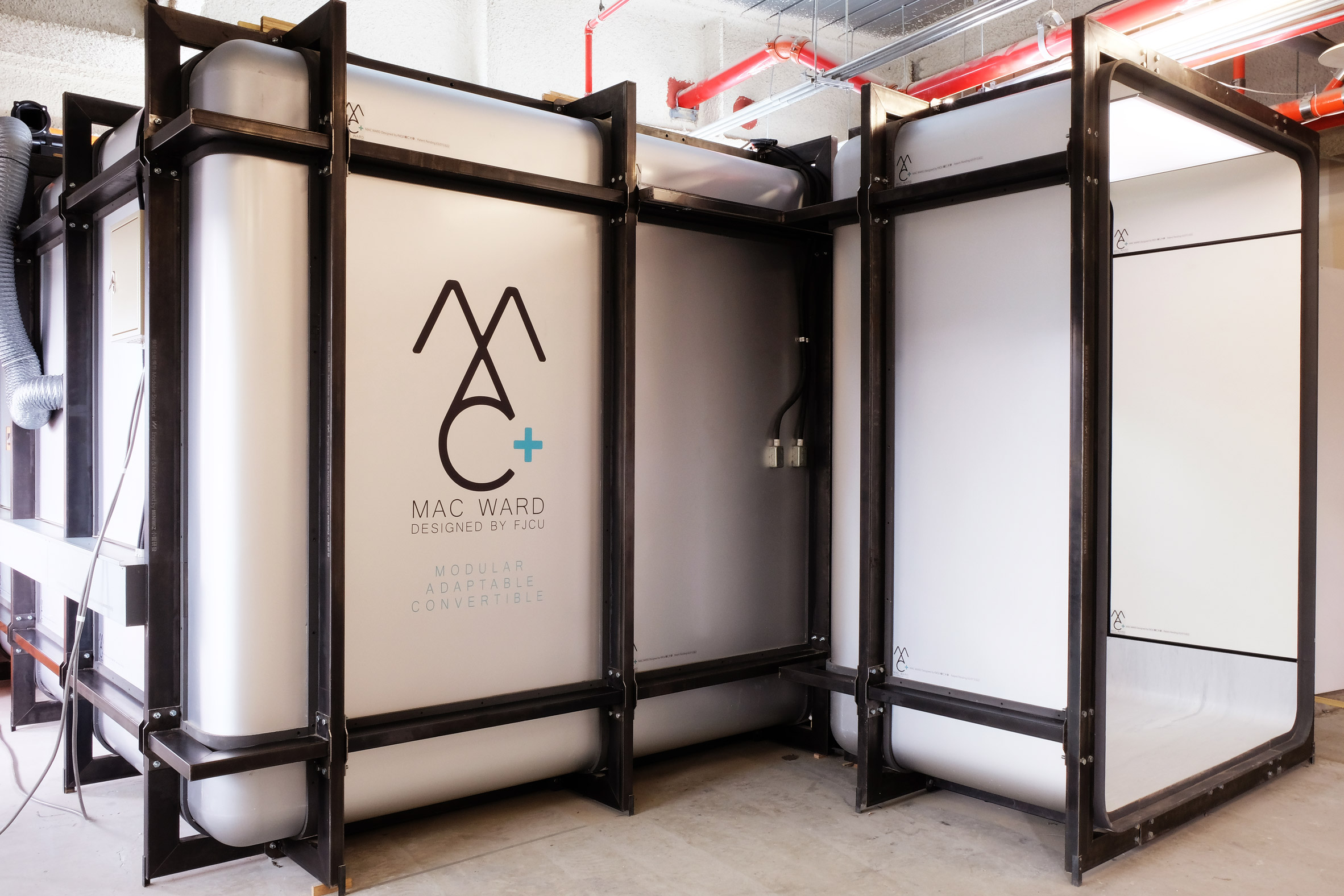
Miniwiz builds modular hospital ward prototype at Taipei hospital

Modular hospital ward concept by Miniwiz, Taiwan's government and Fu Jen Catholic University Hospital

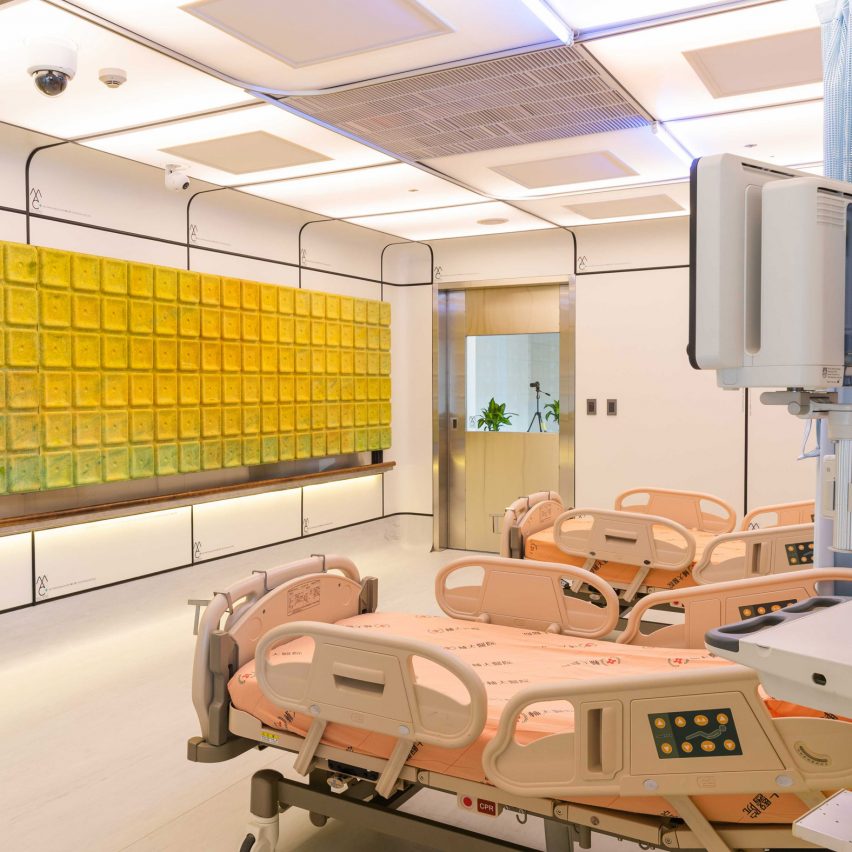
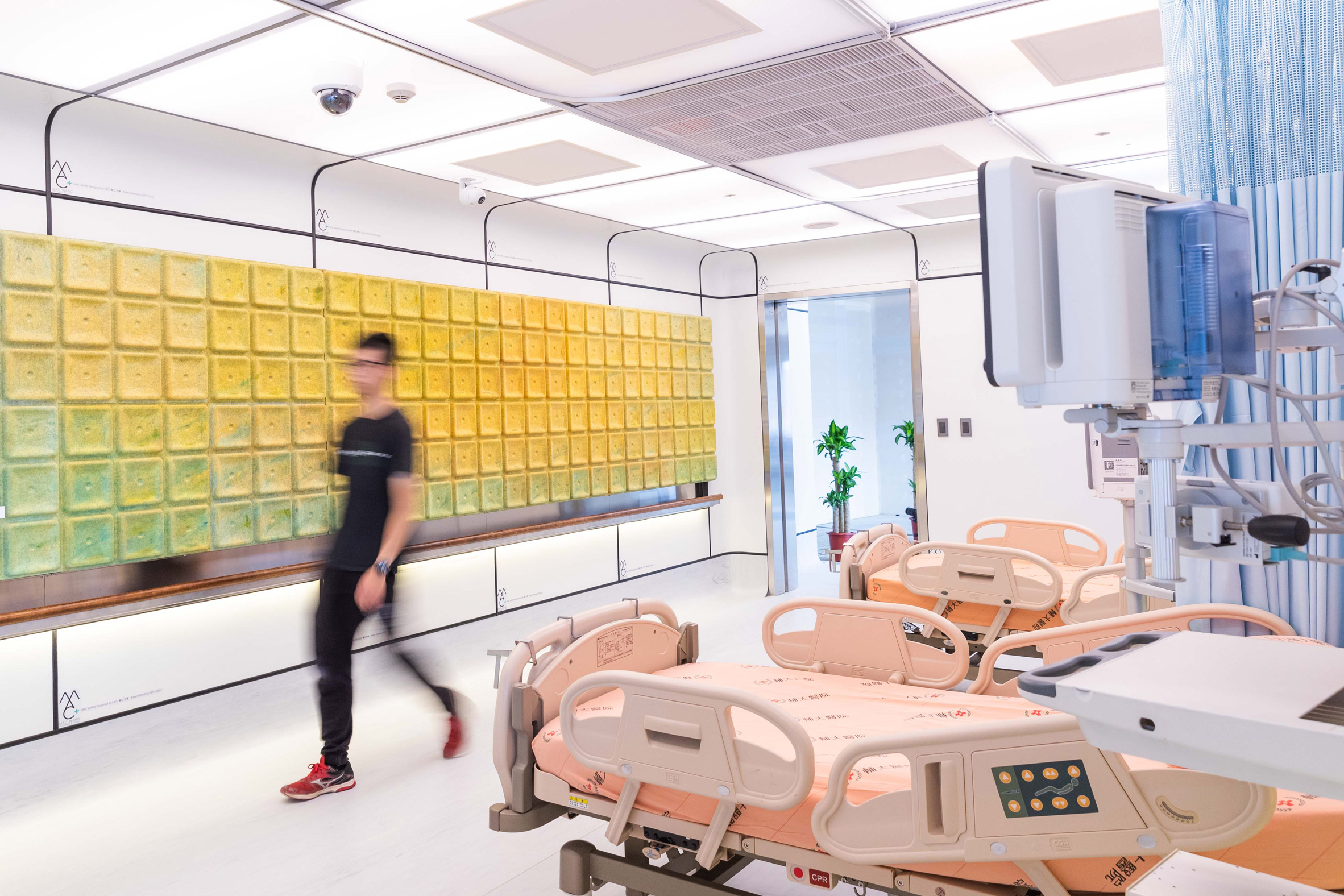
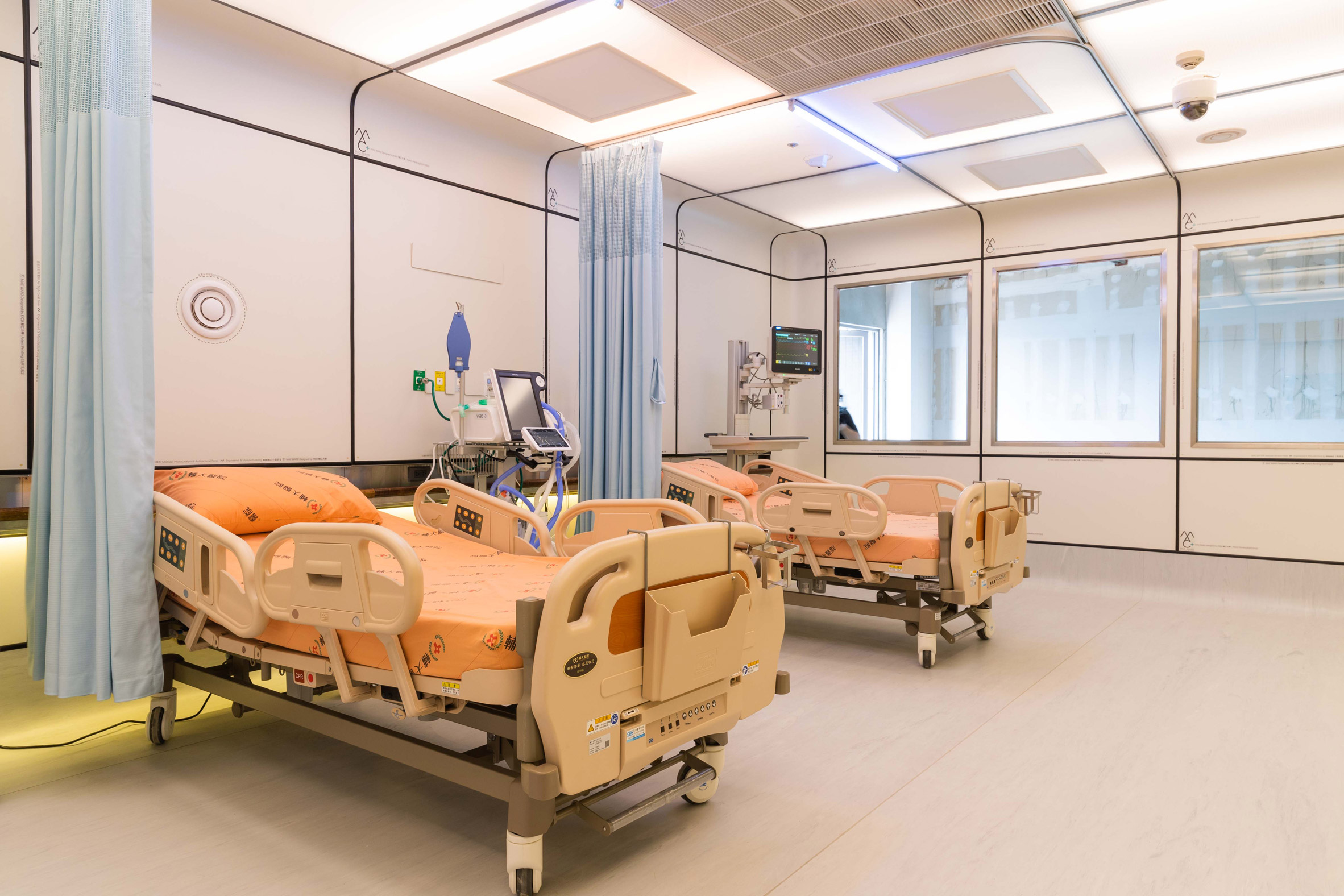
Design studio Miniwiz, Taiwan's government and Fu Jen Catholic University Hospital have created a prototype for a modular ward using recycled aluminium panels, which would allow hospitals to quickly be adapted to fight coronavirus.

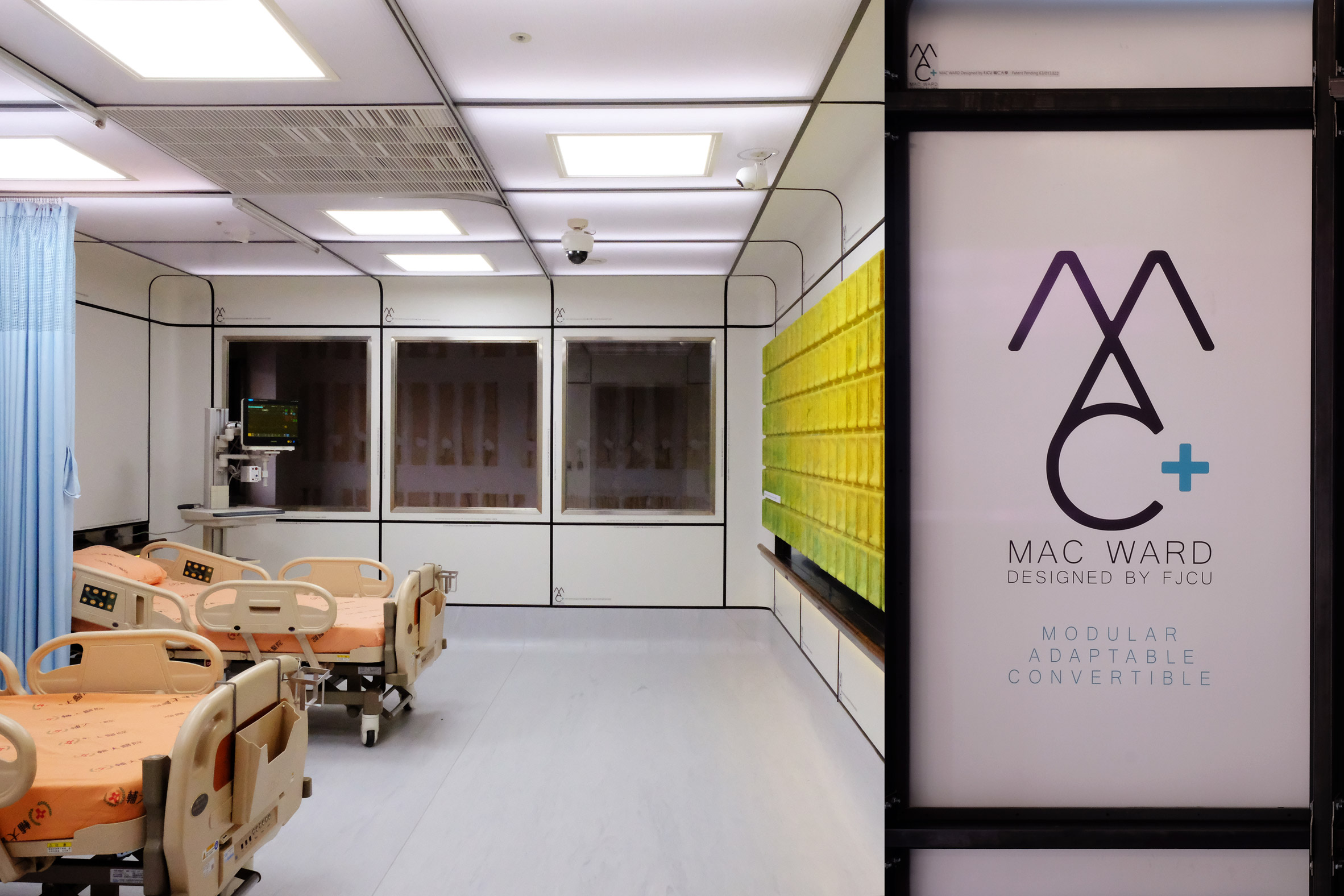
Named Modular Adaptable Convertible (MAC), the kit was developed by recycling-focused studio Miniwiz with the Center For Innovation (CFI) at Fu Jen Catholic University Hospital in Taipei, Taiwan's Ministry of Economic Affairs and the Taiwan Design Research Institute (TDRI), in response to the current pandemic.

"As the Covid-19 pandemic spreads globally, the demand for medical and hospital wards have also skyrocketed," said Miniwiz.

"To adapt to the high market demand, Miniwiz developed a MAC – Modular Adaptable Convertible – ward, which can quickly transform buildings and under-utilised space into various types of wards."

Modular hospital ward concept by Miniwiz, Taiwan's government and Fu Jen Catholic University Hospital

The modular units, which can be assembled either inside existing buildings or on land adjacent to hospitals, are designed to be an alternative to unsuitable temporary wards being utilised in some countries.

"People avoid going to hospitals to reduce any possible contamination risks," said Miniwiz. "Therefore, many countries have built temporary, mobile-cabin hospitals on the nearby outdoor areas, but these traditional units built with basic equipment and without ventilation can have high temperatures causing discomfort for the medical staff treating the patients."

Modular hospital ward concept by Miniwiz, Taiwan's government and Fu Jen Catholic University Hospital

MAC consists of a kit of interlocking parts that can be connected to create negative-pressure environments, which help control the risk of the virus spreading by containing the particles. The kit is lightweight to allow for long-distance shipping.

"With fast deployment in mind, the kit is highly mobile, and designed for air shipping, allowing the structure to be assembled within 24 hours, from component sourcing to functional wards," said Miniwiz.

Modular hospital ward concept by Miniwiz, Taiwan's government and Fu Jen Catholic University Hospital

Walls inside the prototype modular wards are built from Miniwiz's anti-viral and bacterial acoustic panels.

Made from recycled aluminium cans and polyethylene terephthalate (PET), these sound absorption panels are covered with an anti-bacterial coating and include an Ultraviolet self-cleaning system that Miniwiz said "reduces 99.9 per cent of bacteria count, while repelling viruses".

Modular hospital ward concept by Miniwiz, Taiwan's government and Fu Jen Catholic University Hospital

"Sustainable beyond concept delivery, Miniwiz will maximise the use of post-consumer single-use material including aluminium cans and PET bottles," said the studio. "These materials will then be upcycled into medical-grade antiviral/bacterial materials."

"The rPET anti-viral acoustic panel – Miniwiz's signature modular wall panel designed with curved corner for easy cleaning, recycled aluminium sheets laminated on rPET foam core, nano-grade anti-bacterial/photocatalyst coating, coupled with UV self-cleaning system, drastically reduces 99.9 per cent of bacteria count, while repelling viruses," it continued.

Modular hospital ward concept by Miniwiz, Taiwan's government and Fu Jen Catholic University Hospital

Following the completion of its prototype Miniwiz is hoping to collaborate further with Fu Jen Hospital to install additional modular units.

"There's a foreseeable collaboration with Fu Jen Hospital in the near future after completing the prototype, said the studio. "Since the news launch, we've received multiple inbound interest from healthcare providers in various countries."

Miniwiz was founded by Taiwanese architect and engineer Arthur Huang and fellow structural engineer Jarvis Liu in 2005  with the aim of showing how post-consumer waste could be recycled into useful products.

Huang argued during Milan Design Week this year, that bioplastics could be as damaging to the environment as those made from fossil fuels, if not more so.

The post Miniwiz builds modular hospital ward prototype at Taipei hospital appeared first on Dezeen.


from Dezeen https://ift.tt/3eH79zY

Children’s Imaginations Materialize as Cartoon Chaos in Paintings by Artist Kayla Mahaffey

“Picking Up the Pieces” (2019), acrylic on aluminum panel, 36 x 36

Chicago-based artist Kayla Mahaffey captures the vivid reveries occupying young minds. She juxtaposes realistically rendered figures with chaotic scenes of two-dimensional cartoon characters as they emerge from amorphous clouds and pastel commotions. Each central figure wears a distinct expression that’s reflected through the fictional world.

Many of Mahaffey’s pieces portraying children’s imaginations shown here are part of the series Off to the Races, which serves as a hopeful narration of change, she said in a statement.

As we travel through life we experience the daily trials and tribulations that help shape us into the people we are today. During this journey, we may end up hitting some bumps or may experience some rough terrain, but it’s how we deal with those situations that make the difference. We are all on the journey to greatness, each individual racing to the finish line in hope of reaching goals and prosperity. With the race may come with it mistakes and regret, but not taking part in the race leads you nowhere.

The artist shares many of her playful works, in addition to a virtual tour of her recent solo show titled Deconstructed at Thinkspace in Culver City, on Instagram.


“Safety First” (2019), acrylic on board panel, 36 x 46

“Stranded” (2019), acrylic on wood panel

“Race to the Finish Line” (2019), acrylic on wood panel, 16 x 20

“Short Fuse” (2018), acrylic on wood panel, 12 x 12

“Enjoy the Ride” (2019), acrylic on aluminum panel, 36 x 36

“Take Action” (2019), acrylic on aluminum panel, 36×36

“Daily Distractions” (2018), watercolor and acrylic on Arches watercolor paper, 18 x 24


from Colossal https://ift.tt/3cClJrj

Banners of George Floyd's last words including "Please I can't breathe" are flown over US cities

"They're Going to Kill Me" by Jammie Holmes

Dallas artist Jammie Holmes has flown banners showing the last words of George Floyd, who was killed in police custody last week, above American cities.

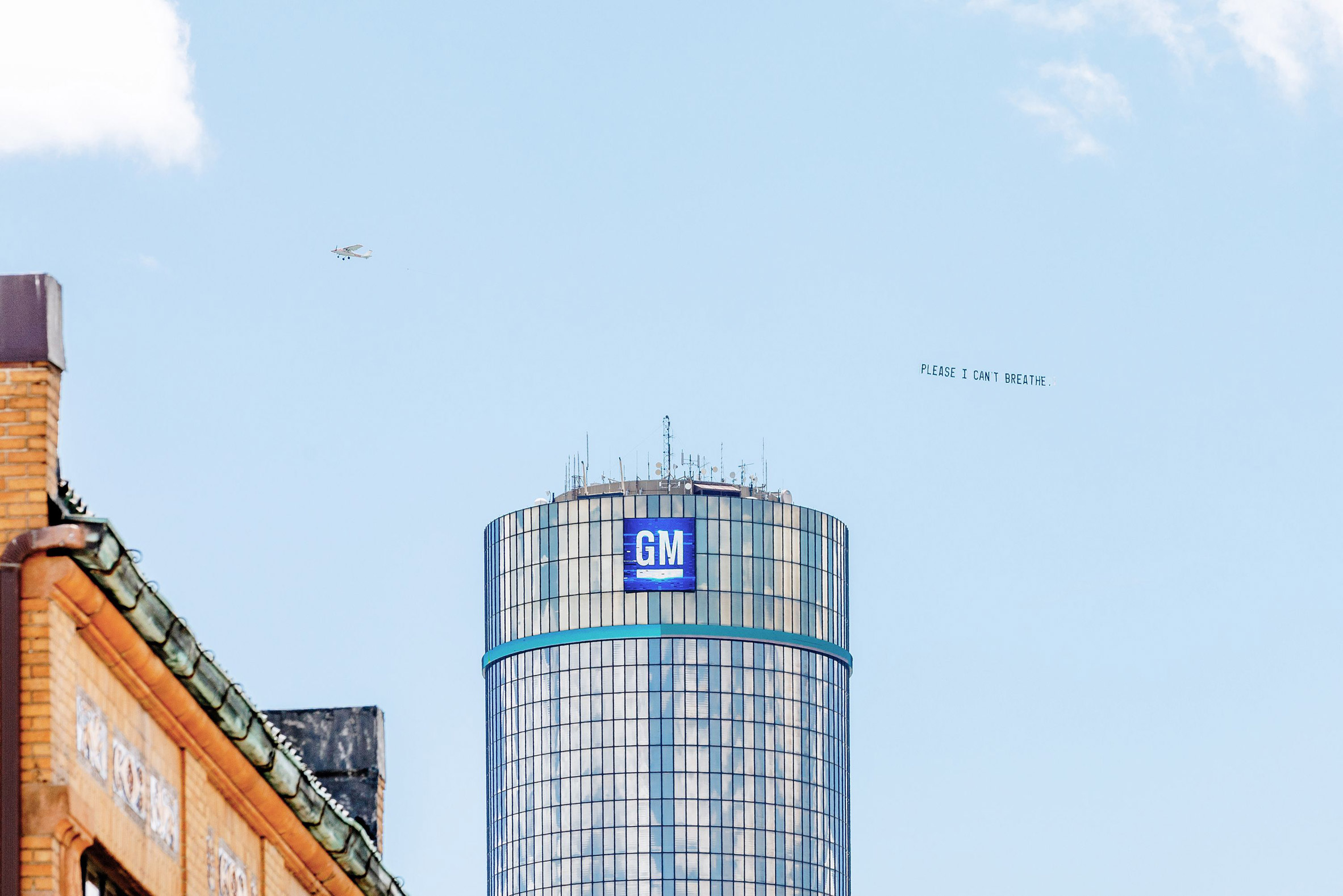
Holmes flew five different banners showing Floyd's final words over Detroit, Los Angeles, Dallas, Miami and New York City on Saturday 30 May.

Jammie Holmes has flown George Floyd's final words  over cities including Detroit

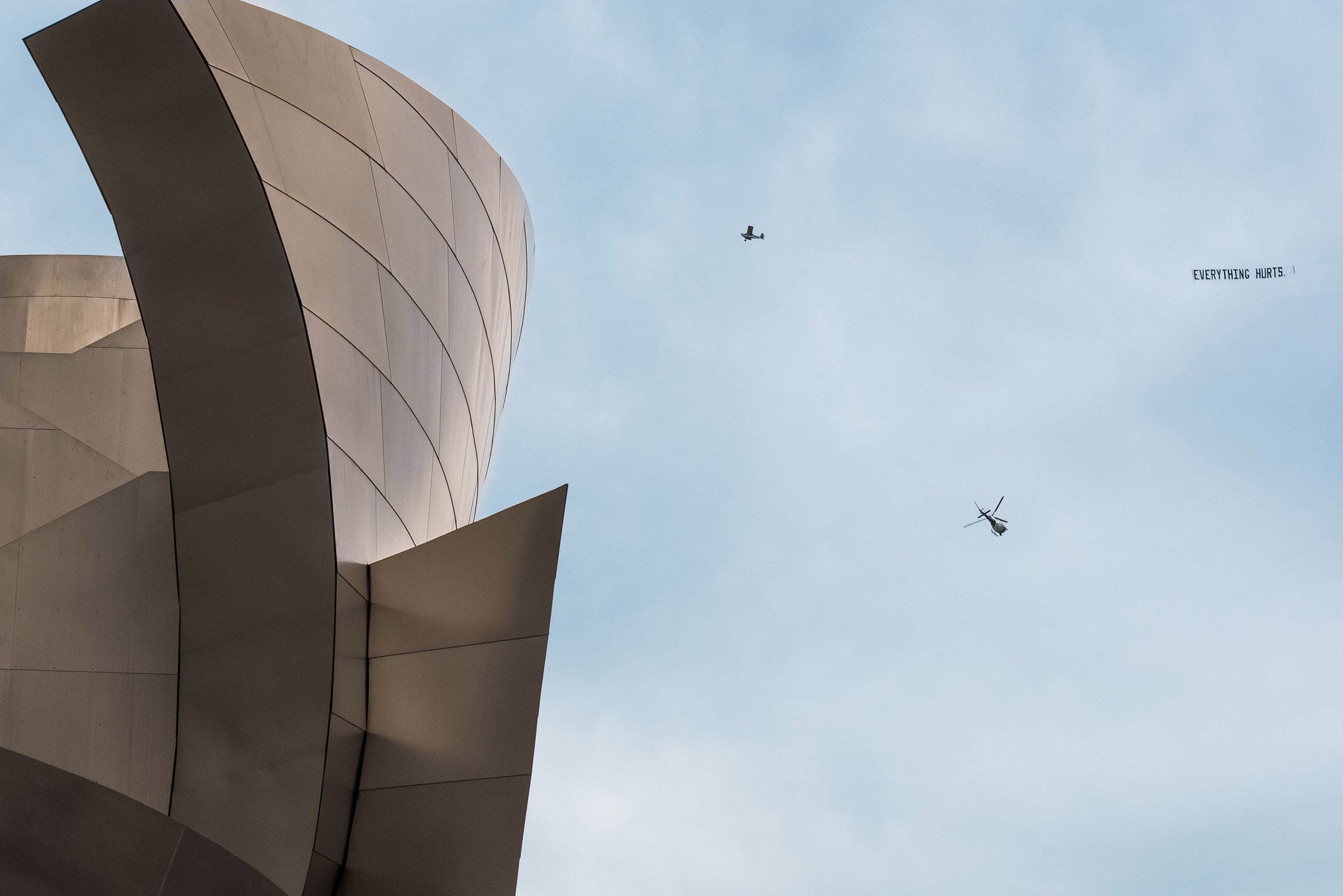
He created capitalised versions of the phrases, "Please I can't breathe", "My stomach hurts", Everything hurts" and "They're going to kill me" in black font so that they could stand out in the sky. The fifth phrase: "My neck hurts" was in red text.

In addition to spreading the words physically, he hopes that photos of the banners in flight are shared widely on social media.

"They're Going to Kill Me" by Jammie Holmes
The artist flew the phrase "They're Going to Kill Me" over New York City

"Airplanes with banners presenting Floyd's final words connected these places across the United States to support Minneapolis in a national protest against police brutality within the African American community," Holmes wrote in an Instagram caption of the images.
⁠⠀
"This presentation is an act of social conscience and protest meant to bring people together in their shared incense at the inhumane treatment of American citizens," he continued.

"The deployment of Floyd's last words in parts of its whole across the country underlines a need for unity and the conviction that what happened to George Floyd is happening all over America.⁠"

"They're Going to Kill Me" by Jammie Holmes
"My stomach hurts" was flown over Los Angeles

African-America Floyd died in Minneapolis on Monday 25 May after white police office Derek Chauvin knelt on his neck for eight minutes and 46 seconds while pinning him to the ground. Video footage captured Floyd repeatedly saying "I can't breathe".

His death sparked protests that spread from Minneapolis to cities across the country, including Santa Monica, Los Angeles, Atlanta and New York City, that have taken place daily over the past week.

Holmes' sky banners form part of a wider response from the creative industry that demands racial justice after Floyd's death in police custody.

The National Organization of Minority Architects has called on the architecture profession to "condemn racism and take an active role in eliminating racial biases" following Floyd's death.

"They're Going to Kill Me" by Jammie Holmes
In Miami he flew the phrase "Everything hurts"

Architects and designers joined over a million people around the world on Tuesday 2 June by posting a black square to Instagram in solidarity with those protesting for racial equality.

Alongside these images, some included links to support funds established for Floyd and those impacted by the protests. These include the Official George Floyd Memorial Fund along with numerous funds to pay the bail of those arrested during the protests.

"They're Going to Kill Me" by Jammie Holmes
"My neck hurts" was flown in Dallas

Graphic designers are also supporting the current protests and the wider Black Lives Matter movement by sharing illustrations and links to resources that people can use to help others and educate themselves.

Photography is courtesy of Jammie Holmes and Library Street Collective.

The post Banners of George Floyd's last words including "Please I can't breathe" are flown over US cities appeared first on Dezeen.


from Dezeen https://ift.tt/36Xu0EH

Prominent Figures of the Harlem Renaissance Featured on New USPS Stamps

All images © USPS

For those who aren’t keen on emblazoning their rent checks or letters with an American flag, the United States Postal Service recently released a stamp collection dedicated to one of the most influential periods in the nation’s history. The new set features pastel renderings of four prominent figures of the Harlem Renaissance, a profound artistic and intellectual movement that spanned the 1920s. This year marks a century since the period began and became a turning point for Black culture.

Nella Larsen is recognized most often for her two novels Quicksand (1928) and Passing (1929), which explore race relations at the intersection of gender, sexuality, and class; Educator, poet, and avid gardener Anne Spencer exemplified the far-reaching effects of the Harlem Renaissance by hosting artists and intellectuals at her home in Virginia; Arturo Alfonso Schomburg was an Afro-Latinx historian dedicated to furthering recognition of Black artists, writers, and intellectuals. His collections now are housed at the Schomburg Center for Research in Black Culture in New York City; and writer, philosopher, and educator Alain Locke is one of the most prominent thinkers of the period. He also edited and contributed to the foundational text, The New Negro.

Designed by art director Greg Breeding with art by Gary Kelley, the 55-cent forever stamps are available for purchase in sheets of 20 from USPS. (via Hyperallergic)


from Colossal https://ift.tt/2XsA2dq