Thursday, 4 June 2020

Kalon Studios wants "to think of the home as an ecosystem for a better life"

VDF x Alcova: Kalon Studios' Rugosa collection

Michaele Simmering and Johannes Pauwen of Kalon Studios discuss how the company's "non-standard" approach has proven resilient to Covid-19 and explain how sustainability plays a part in its Rugosa collection in this interview for VDF's collaboration with Alcova.

The design studio said that it has had to evolve in a rapidly shifting manufacturing landscape. "We have focused on the future of the industry rather than on its immediate realities," Kalon Studios co-founders Simmering and Pauwen said in the interview.

"We employ suppliers and makers in local markets, sourcing high-quality natural materials and avoiding toxic chemicals and off-gassing."
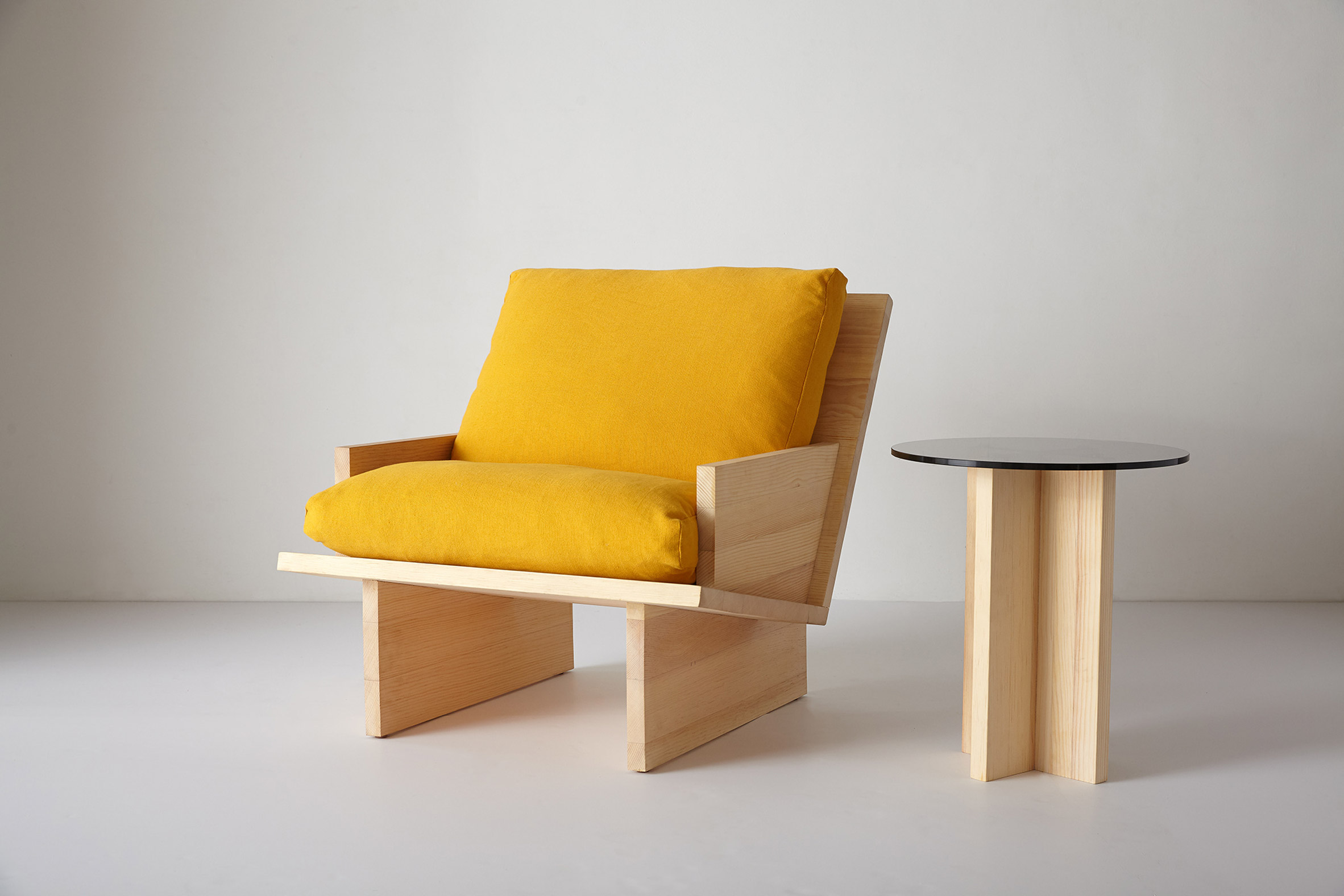
VDF x Alcova Kalon Studios Rugosa collection
Kalon Studio's Rugosa collection is designed to draw people into the living room

Kalon Studios was launched in 2007, before the 2008 recession, which wiped out the traditional model of retail and forced the studio to make the digital experience as meaningful as a showroom.

"Our online aesthetic is pared-back to give space to the materials: the dominant colours and textures come from wood or textiles," Simmering and Pauwen explained.

The studio's new collection, Rugosa, came about after a conversation about the living room, which the designers saw as having lost its purpose. "We see the living room as a place for the mind," Simmering and Pauwen said. "Our challenge was to draw people into the room."
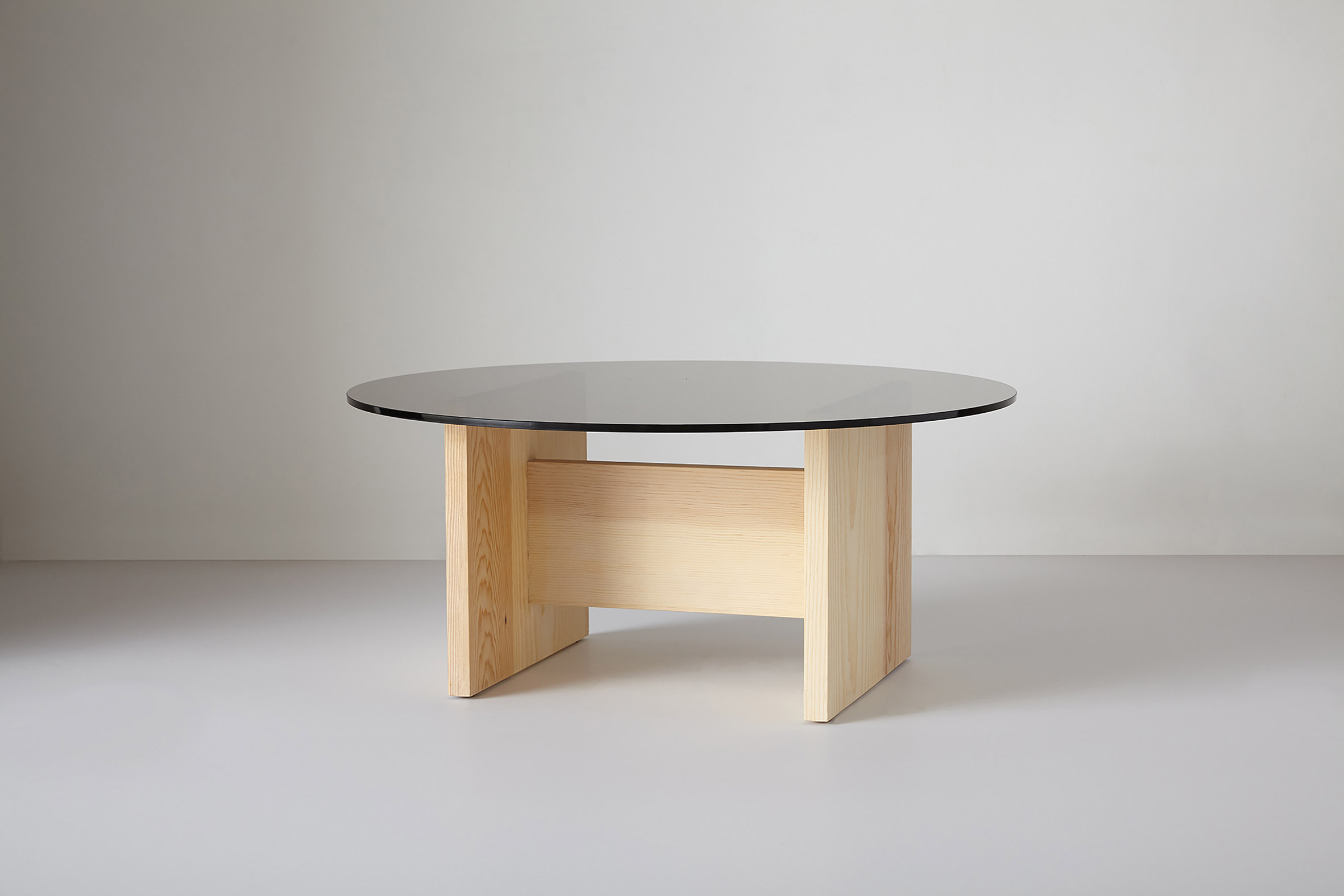
VDF x Alcova Kalon Studios Rugosa collection
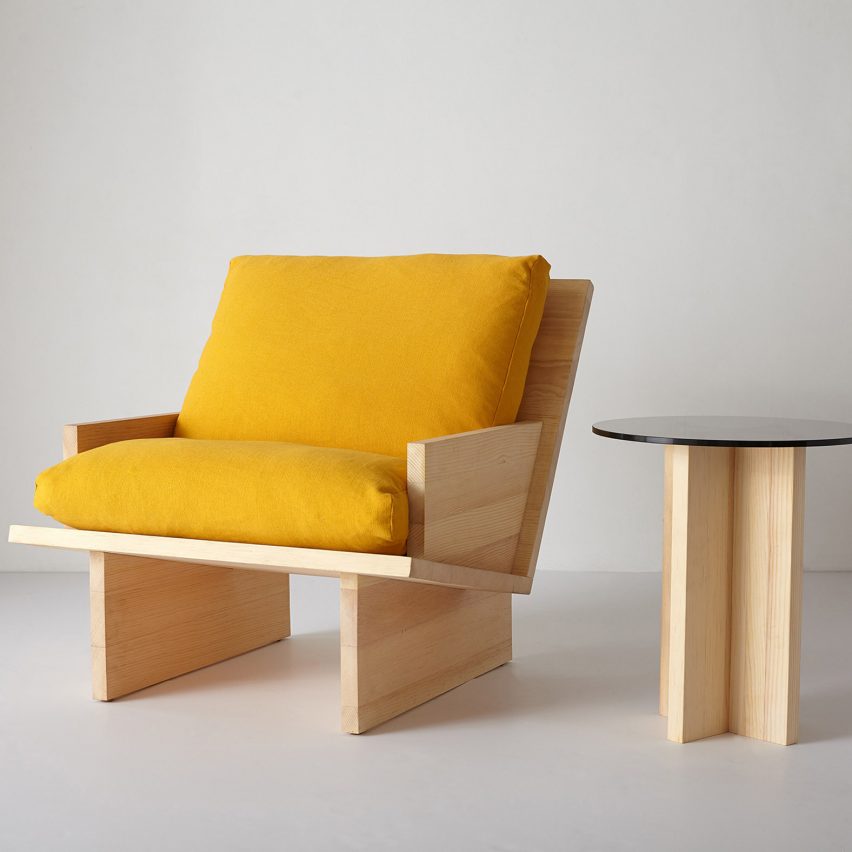
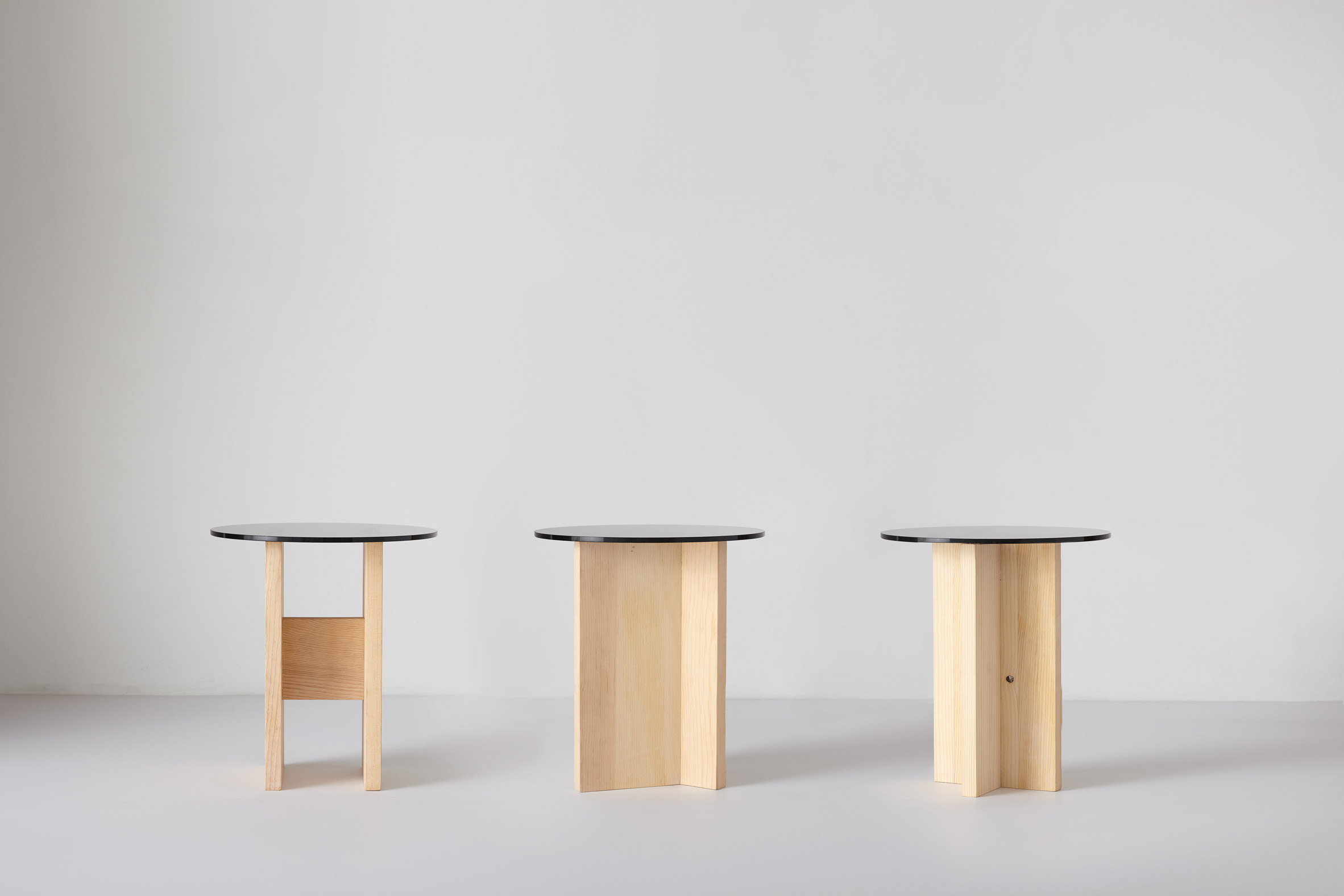
Glass and sugar pine were two of just four materials used, chosen for their inviting feel

Just four materials, each one chosen to feel soft and inviting, were used for the Rugosa collection: sugar pine, Belgian linen, feather, and glass. The designers believe that people are beginning to apply the standards they have for food and beauty products to furniture.

"Now that we have all been spending more time indoors, we hope that we can start to think of the home as an ecosystem for a better life," Simmering and Pauwen said.

As Salone del Mobile was cancelled this year due to coronavirus, Kalon is showing its new collection as part of independent design platform Alcova's VDF collaboration.

"We cherish the experience of exhibitions," the designers said. "But as strange as it feels to suddenly switch to online festivals, they do have certain advantages. Online releases give designers the flexibility to release work according to their own schedule."
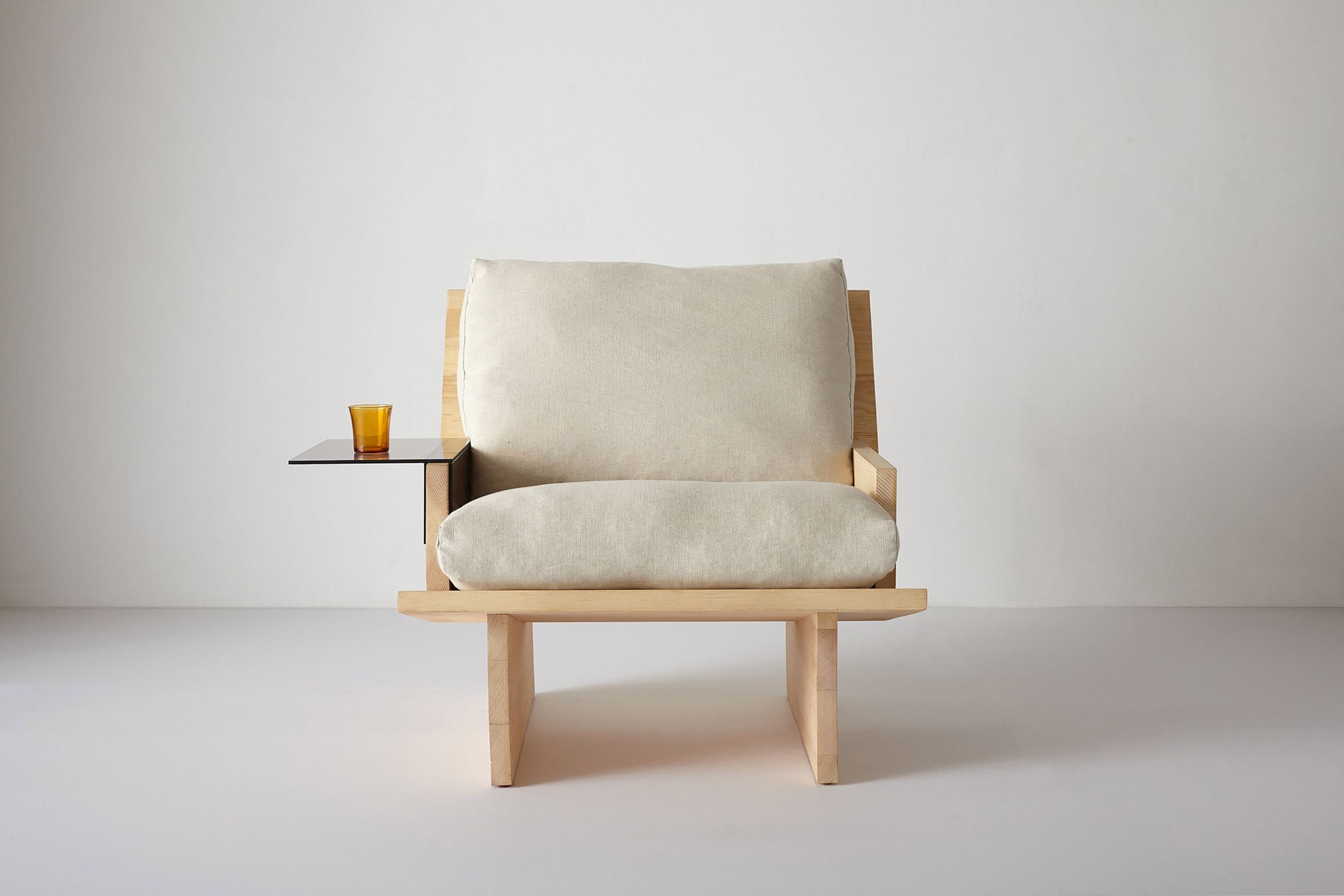
VDF x Alcova Kalon Studios Rugosa collection
Kalon Studios employs suppliers and makers in local markets

Simmering and Pauwen joined Alcova for an interview about Kalon's work and its latest collection.

VDF x Alcova
Exhibitor:
Kalon Studios
Website: www.kalonstudios.com
Email: studio@kalonstudios.com


Alcova: ​What elements of your business model have proven resilient to COVID-19?

Kalon​ Studios: We started Kalon in 2007 and have learned a lot by surviving challenges like the 2008 financial crisis and a manufacturing crisis in 2015. Since the beginning, our approach has been non-standard in almost every way and over the years we’ve fine-tuned it. In COVID, the model has proven to be resilient. From the outset, we’ve taken a cautious approach to growth, prioritizing greater control and stability. We’ve focused heavily on diversification of product, sales channels, and production resources.

As a self-funded company, we are not beholden to investors with expectations of rapid growth and with diversified sales channels, we are not bound to galleries with exclusive rights and commission fees. We feel fortunate that our small studio was already prepared to work at a distance, and because our designs are made in smaller workshops and factories, most of our production has continued safely.

We strive to maintain a dynamic set-up that can scale up or down quickly, while minimising overhead and risk. We don’t build what we know we cannot sell. We don’t generate large amounts of inventory that we would be forced to sell at a loss. We don’t rely on a single supplier for a majority of our production, because it would leave us vulnerable to the whims of that vendor.
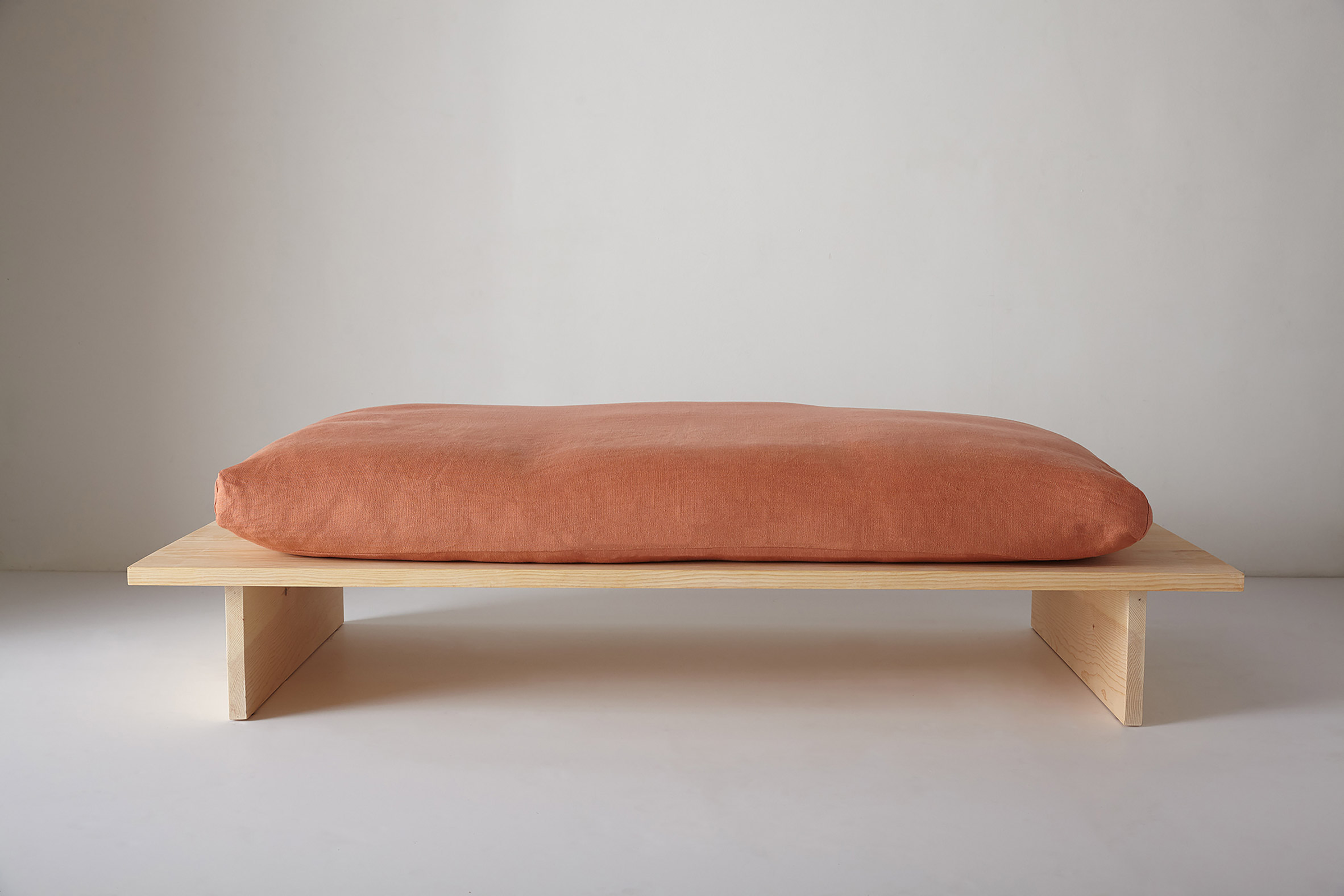
VDF x Alcova Kalon Studios Rugosa collection
The designers believe in a notion of sustainability that is not just ecological, but economic and social.

We have had to evolve in a rapidly shifting manufacturing landscape: in the past decade, the U.S. has lost most its wood working factories, and the few remaining are dedicating their resources to servicing huge companies. In order to survive, we have focused on the future of the industry rather than on its immediate realities. We employ suppliers and makers in local markets, sourcing high-quality natural materials and avoiding toxic chemicals and off-gassing. We believe in an expansive notion of sustainability that is not just ecological, but economic and social—a belief that is crucial to the longevity of any design business.

Alcova: ​How did you develop your online strategy?

Kalon Studios: ​Many designers begin with concept pieces and exhibitions, and overtime move into showrooms and then eventually into production. We did the opposite. The 2008 recession wiped out the traditional model for us: we faced a steep learning curve that did not leave endless room for free creative experimentation, but forced us to focus on developing our online presence and sales channels. Our immediate challenge was to make the digital experience as meaningful as a showroom. Over the last decade, as digital graphics and web design advanced, we’ve steadily improved our ability to communicate the quality and details of our furniture through the screen.
VDF x Alcova Kalon Studios Rugosa collection
"The real driver for us is word of mouth," Kalon Studios says

Our online aesthetic is pared back to give space to the materials: the dominant colours and textures come from wood or textiles. We write transparently about how the pieces are built, finished, and how the materials are sourced. We want to bring the viewer into the process, because many people have forgotten what it means to build a piece of furniture. The communication doesn’t end when someone chooses to buy a piece; we continue to tell the story.

Customer feedback is crucial, because it tells us if our digital representation is effective. Ultimately, words and images only get us so far; people have to feel totally happy with the pieces when they arrive. The quality should exceed their expectations and instil confidence that our brand will make every product to the same, high quality. The real driver for us is word of mouth.

Alcova: ​What does it mean to launch your new collection, Rugosa, online through the Virtual Design Festival?

K​alon Studios: We have done many online launches, and they can feel disorienting – a bit like an echo chamber. We were excited to show at Alcova and take part in the community in Milano for the first time in years. We cherish the experience of exhibitions. But as strange as it feels to suddenly switch to online festivals, they do have certain advantages. Online releases give designers the flexibility to release work according to their own schedule. Currently, many designers are struggling as showrooms remain closed or fairs are cancelled. Something is profoundly wrong if designers have everything they need to survive except access to the public.

If there’s an opportunity in this crisis, it is to look critically at things that were obviously not working, traditions that would have been too challenging to take apart before. We can now reflect as a global community and decide what to keep, what to lose, and how to put it all back together.

A​lcova: How did your focus on materiality and sustainability influence the design for Rugosa?

K​alon Studios: Rugosa began with a conversation about the living room, a space we see as having lost its purpose. We see the living room as a place for the mind. Our challenge was to draw people into the room. The collection is designed to be inviting; to sustain your mind and body for long stretches of time. Ease and comfort were our primary focus. The chair and sofa are roomy, inviting freedom of movement.

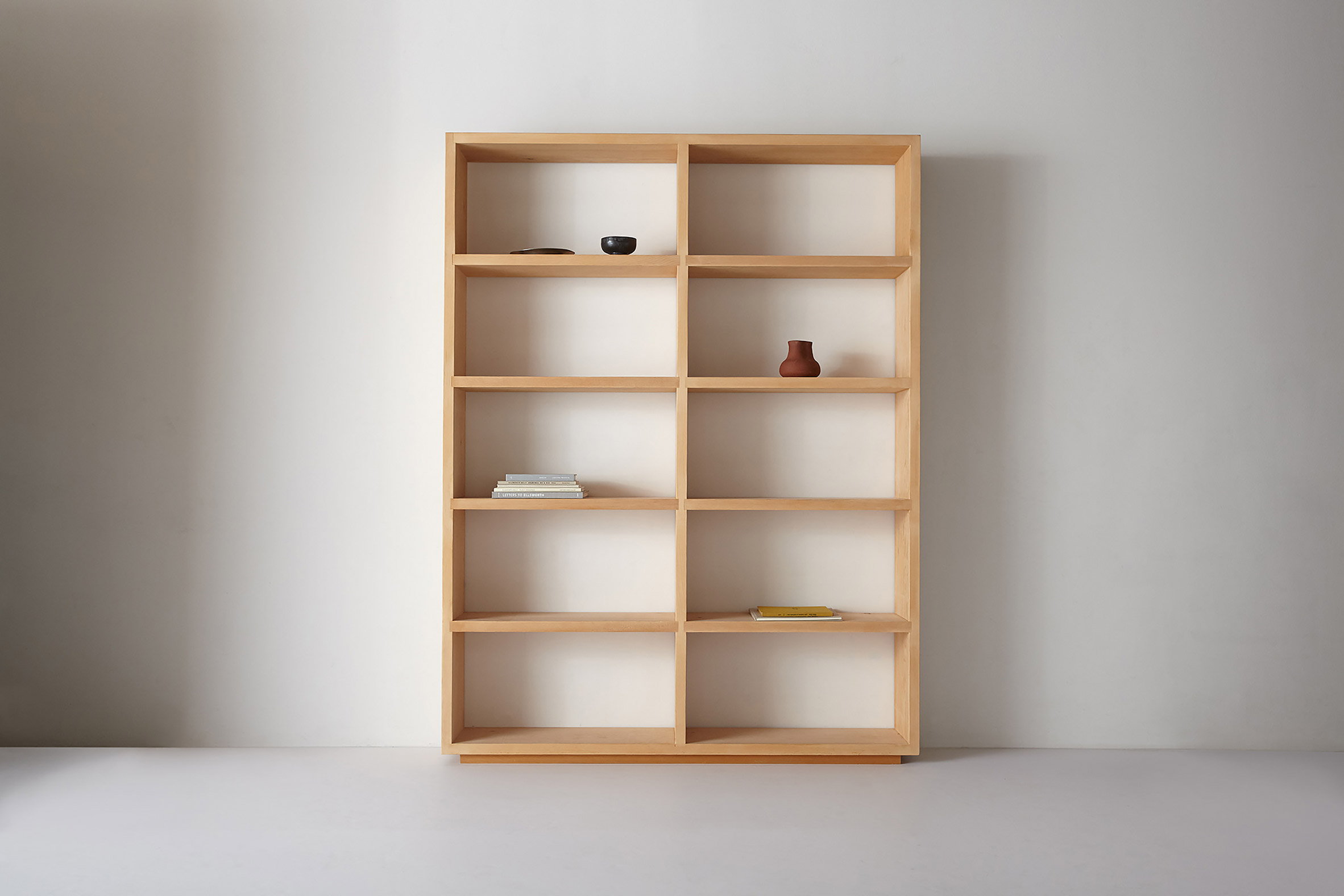
We want our pieces to elevate, not dominate, the domestic space, to give back in sensibility and ease-of-use what they take up in volume. The Rugosa bookshelf is good example, whether completely filled with books or curated as a grid of vignettes, it is a showcase for objects of meaning and reflection. The collection is more about what’s happening around the furniture than about the furniture itself. Above all, we wanted to create a space for the mind to wander.
VDF x Alcova Kalon Studios Rugosa collection
The design studio wants its pieces to elevate the domestic space

There are only four materials in the collection: sugar pine, Belgian linen, feather, and glass, and each one was chosen to feel soft and inviting, familiar rather than pretentious. We used linen because it is cool in hot weather and warm in cool weather, and we picked feather not only because it is a natural alternative to foam but also because it produces an irregular fill; to restore their shape you need to fluff the pillows and we preferred these organic, rumpled forms.

The general public has become conscious of the ingredients they put inside or on their body with food, clothing and beauty products—they are beginning to apply those standards to their furniture. Now that we have all been spending more time indoors, we hope that we can start to think of the home as an ecosystem for a better life.


Virtual Design Festival is the world's first online design festival, taking place on Dezeen from 15 April to 10 July 2020.

Alcova is a Milan-based platform established by Italian practices Space Caviar and Studio Vedèt, which champions independent design through a programme of exhibitions. The team consists of Valentina Ciuffi, Joseph Grima, Martina Muzi, Tamar Shafrir and Marco De Amicis.

The VDF x Alcova collaboration presents interviews with eight studios that were set to be featured at the platform's presentation during Salone del Mobile this year.

The post Kalon Studios wants "to think of the home as an ecosystem for a better life" appeared first on Dezeen.


from Dezeen https://ift.tt/2U6APi6

Lukas Wegwerth used lockdown to reassess the material choices in his Three+One project

Lukas Wegwerth interview for VDF x Alcova

German designer Lukas Wegwerth discusses his construction framework Three+One and how the coronavirus pandemic prompted its evolution in this interview for our VDF x Alcova collaboration.

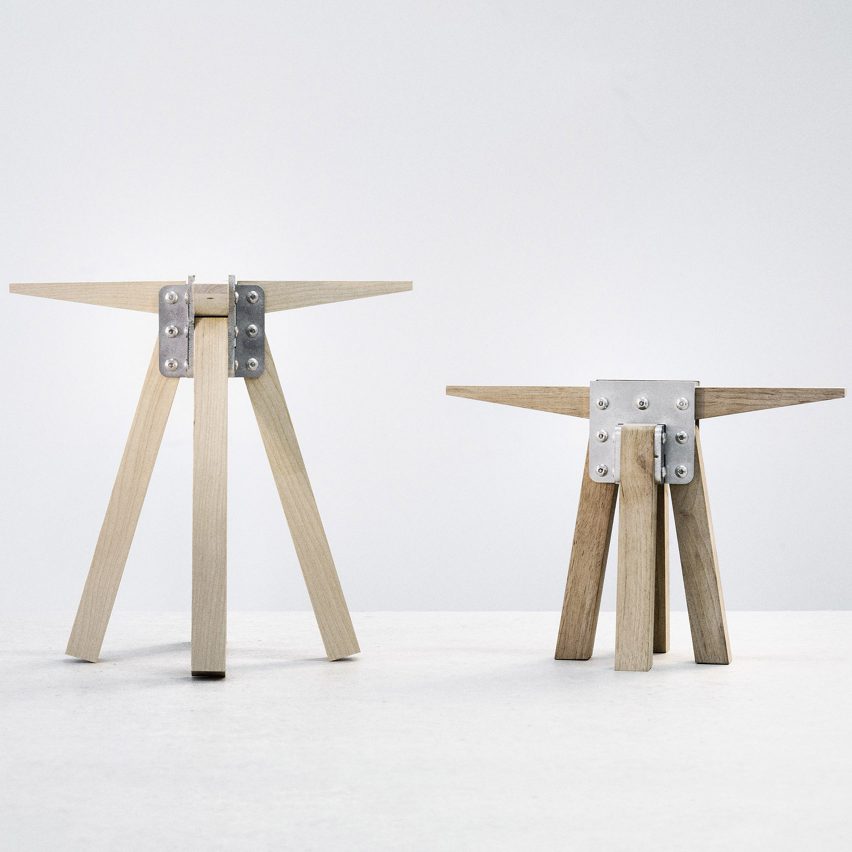
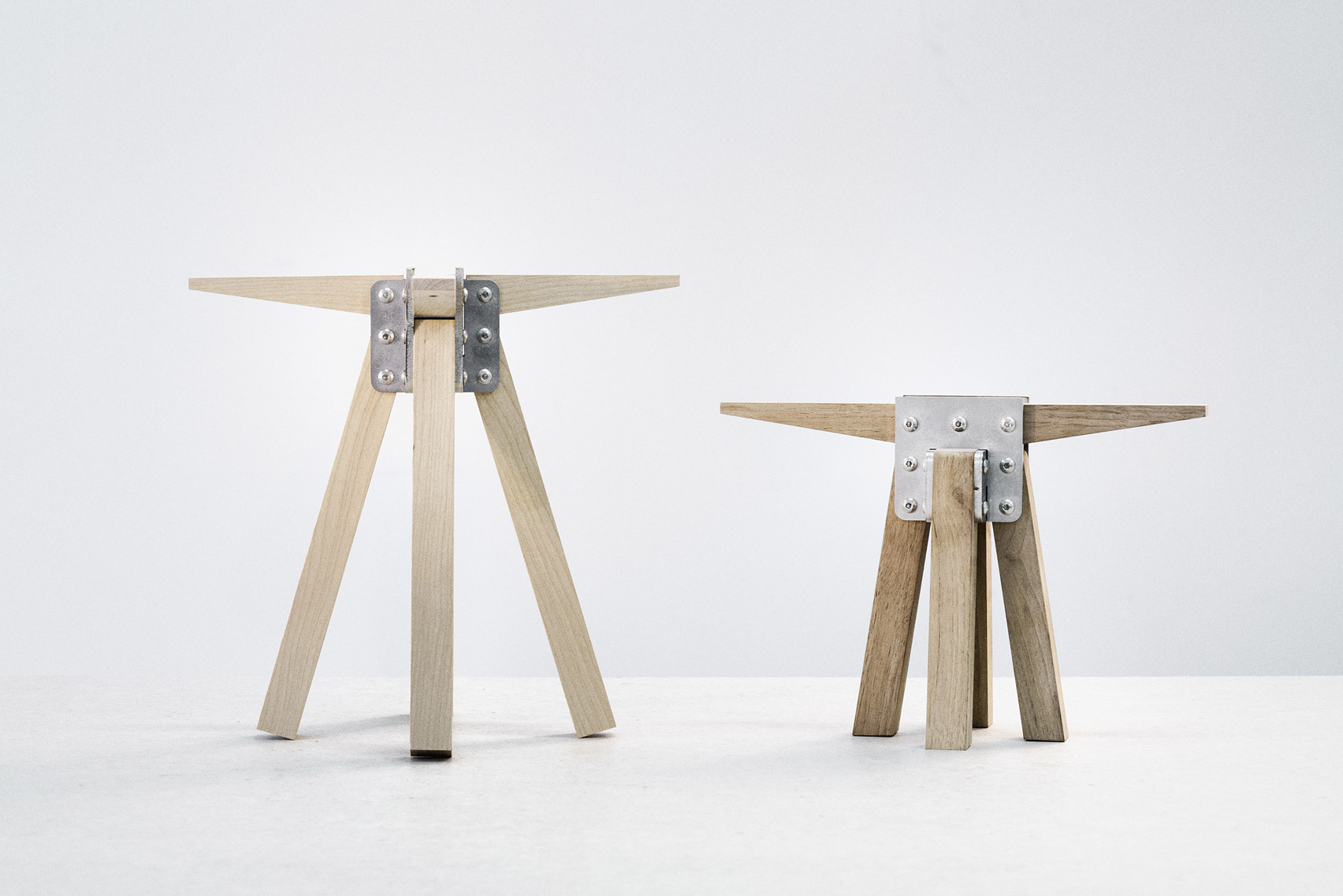
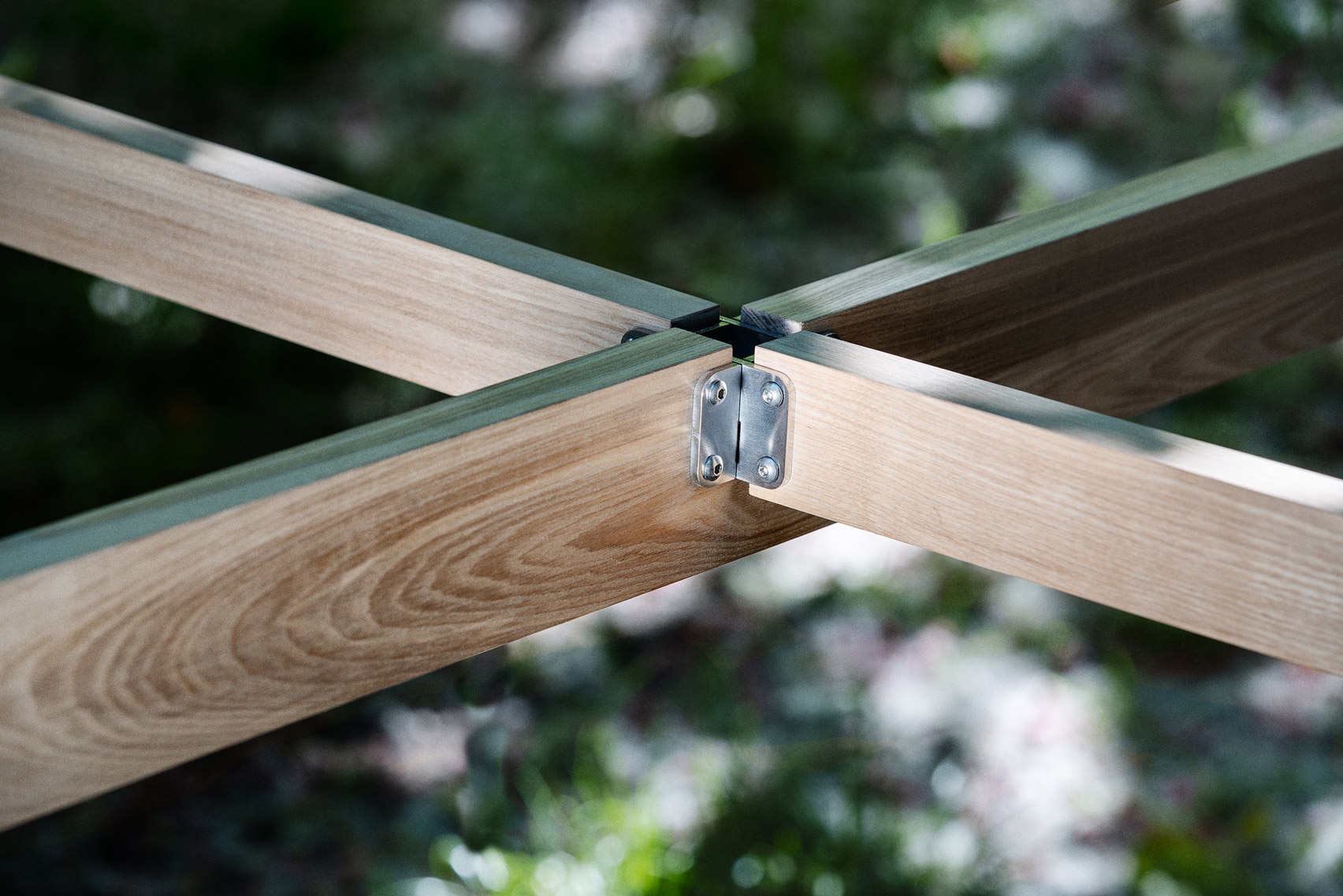
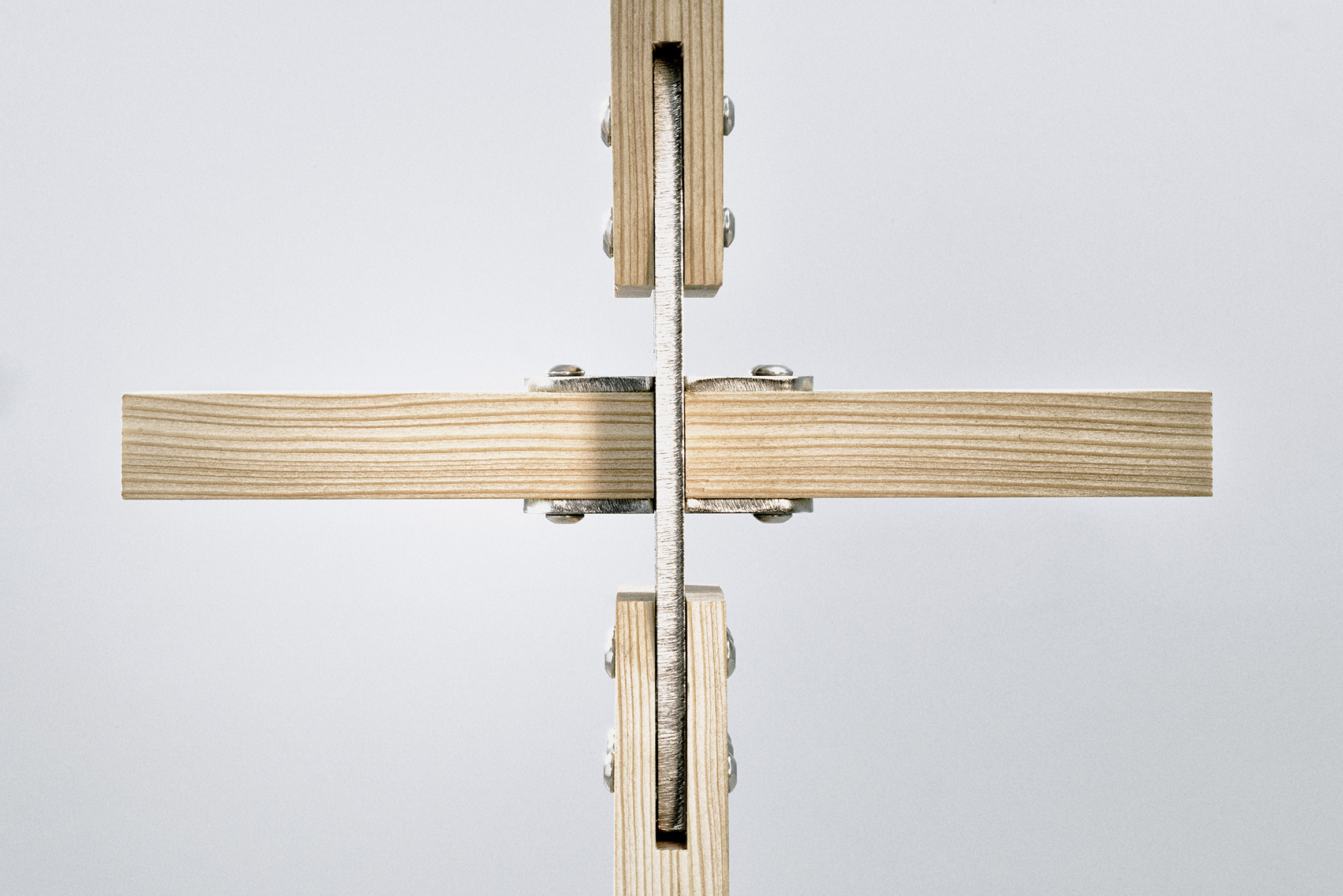
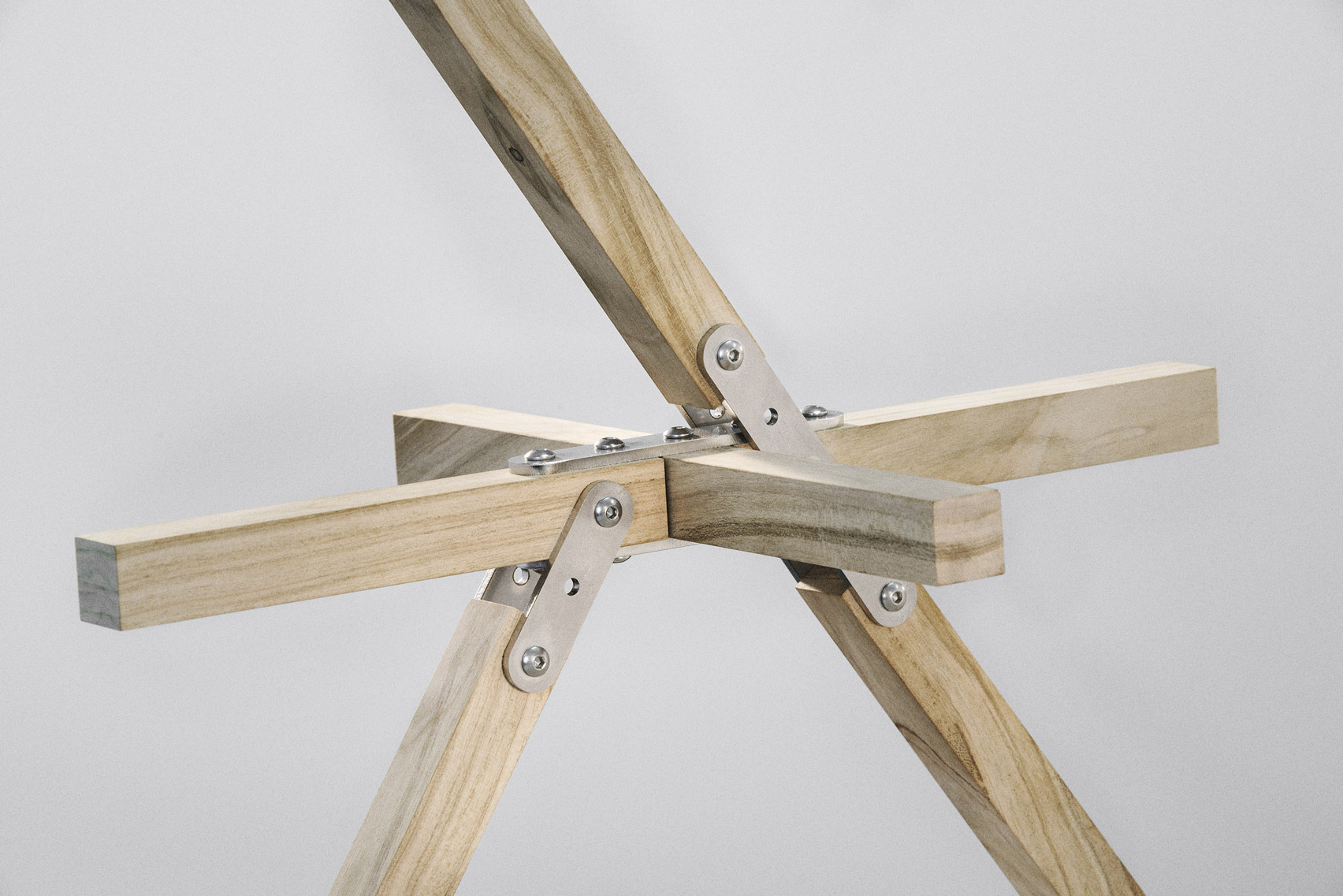
Three+One is a modular construction system developed by the Berlin-based designer as an accessible method for building furniture and architectural structures in public and private spaces.

The system was initially made using steel, but while Wegwerth was experiencing the coronavirus lockdown in Germany he immersed himself in nature and used his free time to reconsider how it could be made.

Lukas Wegwerth interview for VDF x Alcova
During the coronavirus lockdown, Lukas Wegwerth used his free time to redesigned Three+One to incorporate wooden components

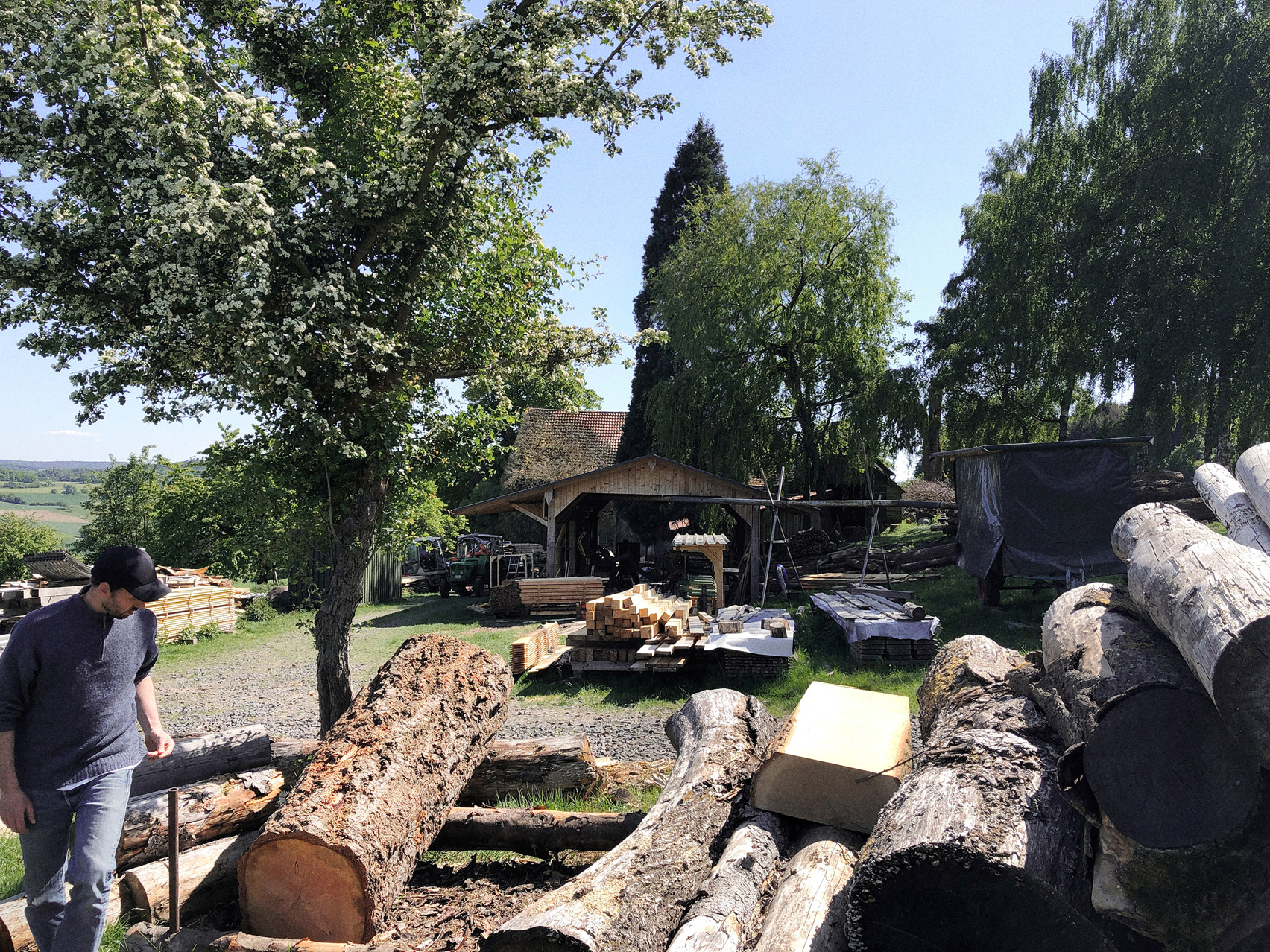
"I've been spending time in a small German village," Wegwerth told Alcova. "Spending time in this rural setting has given me space to focus more on sourcing our own materials for the studio."

"It was already our goal to reduce the amount of steel in the system, and when the lockdown took effect, the timing felt right," he said.

Now, the Three+One framework is largely composed of wooden elements made by Wegwerth using locally sourced timber. His ambition is to continue developing the product in this way.

Lukas Wegwerth interview for VDF x Alcova
The wood was locally sourced from a rural German town where he has been staying during the pandemic

Wegwerth was due to exhibit Three+One at Alcova during Salone del Mobile this year. Due to the event's cancellation in light of the coronavirus pandemic, he joined Alcova for an interview to discuss the product's development instead.

He also revealed that "in some ways, the current situation has favoured [his] business model". Although Three+One commissions from the public sector have diminished, the studio is experiencing an influx of enquiries about the product for use in domestic spaces.

"I've definitely noticed increased demand as people have more time and more attention to give to their household spaces," said Wegwerth.

"They seem increasingly invested in the design process that forms their living environment. We were already accustomed to working remotely with our clients, so we are still able to be actively involved and handle a range of needs remotely, which suits the current conditions very well."

VDF x Alcova
Exhibitor:
Lukas Wegwerth
Website: lukaswegwerth.com
Email: connect@lukaswegwerth.com


Alcova: Since February, the world seems to have turned upside down. How has the current crisis affected your work as a designer? Have you noticed an increase in interest from people looking for more meaning in their surroundings now that they are spending so much time in the homes?

Lukas Wegwerth: Interestingly, in some ways, the current situation has favoured our business model. The Three+One system we developed was very popular with museums and institutions, and obviously we have less discussion with them now that they are closed. But we are getting many more enquiries from individuals for domestic use.

Lukas Wegwerth interview for VDF x Alcova
The system was previously reliant on steel but will now be made using a combination of both materials

I've definitely noticed increased demand as people have more time and more attention to give to their household spaces. They seem increasingly invested in the design process that forms their living environment. We were already accustomed to working remotely with our clients, so we are still able to be actively involved and handle a range of needs remotely, which suits the current conditions very well.

Alcova: What about your own surroundings? Has the current crisis changed the way you work?

Lukas Wegwerth: The first way it affected my work was through a change of setting. I've been spending time in a small German village in what used to be my grandma's house, a beautiful place with a big garden, a little river running through it and a large timber-frame barn. Spending time in this rural setting has given me space to focus more on sourcing our own materials for the studio.

Nearby a friend has built his own sawmill to cut trees into timber. He was having trouble getting wood processed commercially, so he just started building his own mill and it grew and grew, and now it's working really well. As it turns out, there was a lot of demand besides his own needs, and there is a continuous flow of people coming to cut their wood. The nice thing is that this wood travels only a few kilometers from the forest to the construction site.

Watching this has made me think a lot about material choices. I realised that if my studio were here, I could probably source all the timber I need from within a radius of a few kilometres, for example, instead of having it shipped in from far away.

Alcova: You've been working for some time now on your Three+One system. Have these observations on material processes affected the recent evolution of the project?

Lukas Wegwerth: First of all, we suddenly had more time than expected to work on the project. The idea of introducing wood into a system that was previously focused on steel is not completely new. We were already thinking about how and when to do it: it was already our goal to reduce the amount of steel in the system, and when the lockdown took effect, the timing felt right.

Lukas Wegwerth interview for VDF x Alcova
Wegwerth designed the system as a straightforward method for constructing furniture and architectural structures

The new generation of prototypes emerged from that point. I still think steel is a relevant material because it allows long cycles of use and re-use, therefore, from a structural point of view, it's quite a good material. We are moving towards the approach to split the elements of the system into the connector, which needs more information and less material, and the other elements, which have a greater mass but can be produced in a low-tech way.

The latter elements could be made from wood in local workshops or even in DIY processes, rather than industrial facilities. From a logistical point of view, it also makes sense because wood is much lighter. Instead of receiving a big shipment of steel, you just receive an envelope with the connectors, and you can source the wood locally.

Alcova: Thinking about the pre-Covid and post-Covid eras, some things may never go back to how they were before. For example, domestic spaces and workspaces will probably remain to some extent hybridised – is this something you've reflected on in your design?

Lukas Wegwerth: Yes, for example, one advantage of Three+One is its incredible versatility—it can adapt to a wide range of applications and materials. Over time, we've built up a library of configurations from which we can quickly extract options for seemingly complex spatial problems. Our system is quite practical in the long run because we can always refer back to existing projects for solutions. So over time, we spend less time using design software and more time focusing on experimentation and materials.

Lukas Wegwerth interview for VDF x Alcova
During the lockdown period, he has experienced an influx of enquiries about the system from individuals for use in their households

Alcova: Do you think the current appreciation for a craft-driven approach, the focus on materiality and of local sourcing will remain?

Lukas Wegwerth: I think so – of course, I may be in a bit of a bubble because my clients tend to contact me because my work is going in precisely that direction. But it definitely feels as if there is a lot of interest around me in a new approach to design. In some cases, it even turns into a collaboration with the client, we are currently working on a kitchen with a client who insists on painting the structure himself, so we are letting him use our workshop.

Whether it's because of logistical reasons or a general design ethos we always try to include the customer in the process. And I think it makes for a totally different outcome in terms of not only the design but also the long-term relationship with these objects.


Virtual Design Festival is the world's first online design festival, taking place on Dezeen from 15 April to 10 July 2020.

Alcova is a Milan-based platform established by Italian practices Space Caviar and Studio Vedèt, which champions independent design through a programme of exhibitions. The team consists of Valentina Ciuffi, Joseph Grima, Martina Muzi, Tamar Shafrir and Marco De Amicis.

The VDF x Alcova collaboration presents interviews with eight studios that were set to be featured at the platform's presentation during Salone del Mobile this year.

The post Lukas Wegwerth used lockdown to reassess the material choices in his Three+One project appeared first on Dezeen.


from Dezeen https://ift.tt/30cOmc1

Life Stripe by Spread uses colour to turn everyday experiences into works of art

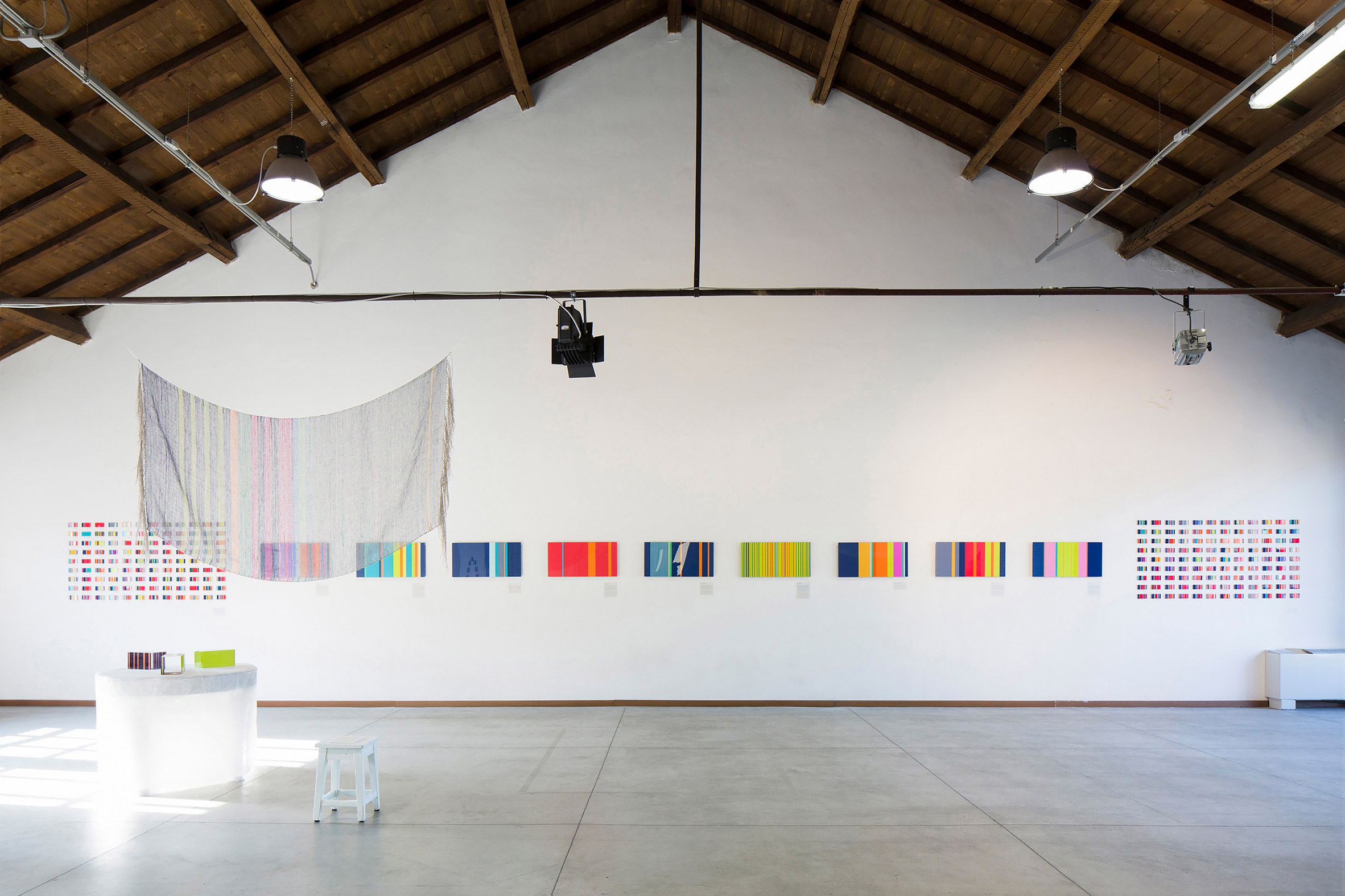
The founders of Japanese creative studio Spread reveal how they use colour as the primary medium in their work and explain how their Life Stripe project seeks to find pattern in the everyday in this interview as part of our VDF x Alcova collaboration.

Spread was founded in 2004 by Haruna Yamada and Hirokazu Kobayashi, who had previously worked in landscape design and graphic design, respectively. The studio's work ranges from branding and advertising to art installations and exhibitions.

VDF x Alcova Spread Japan
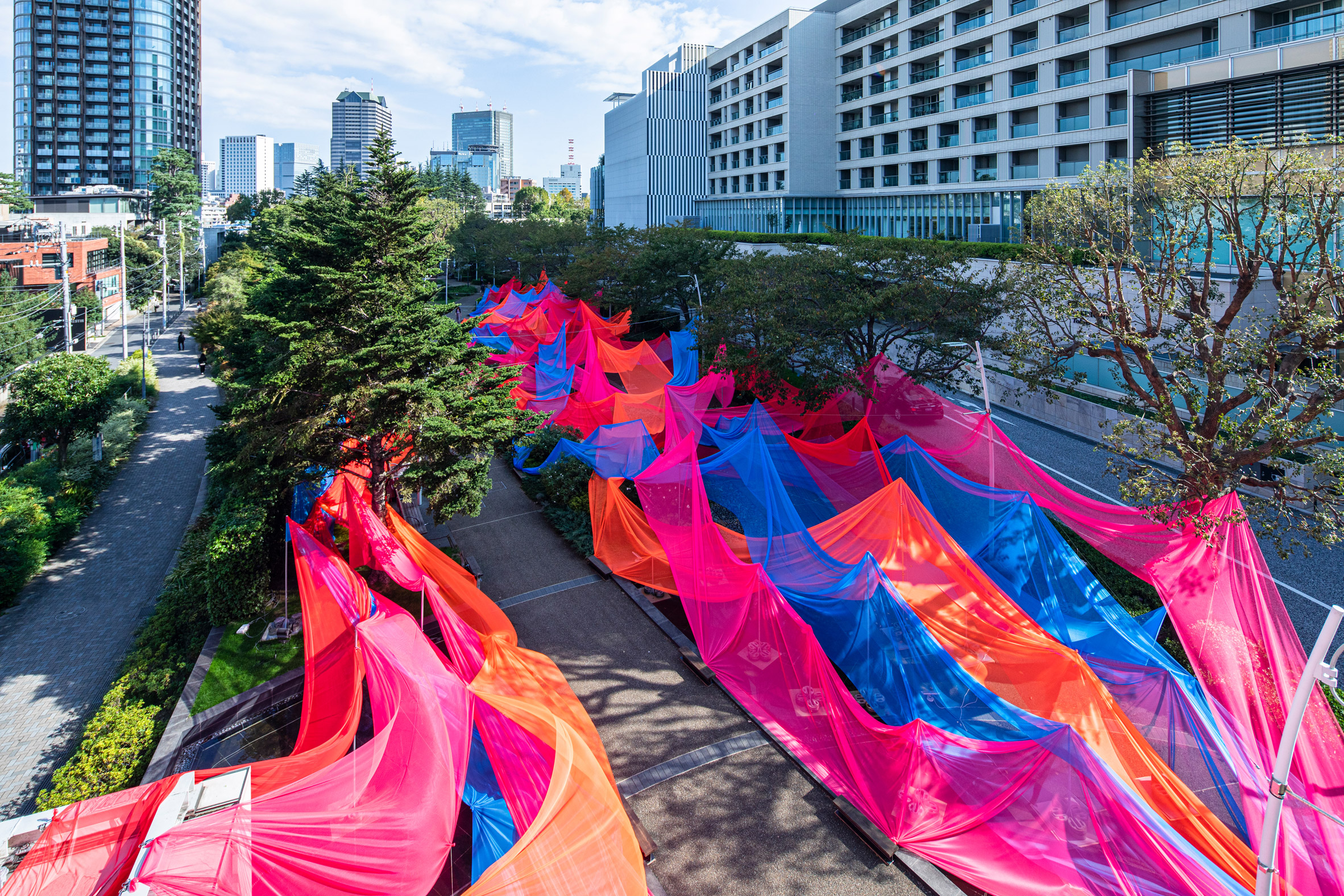
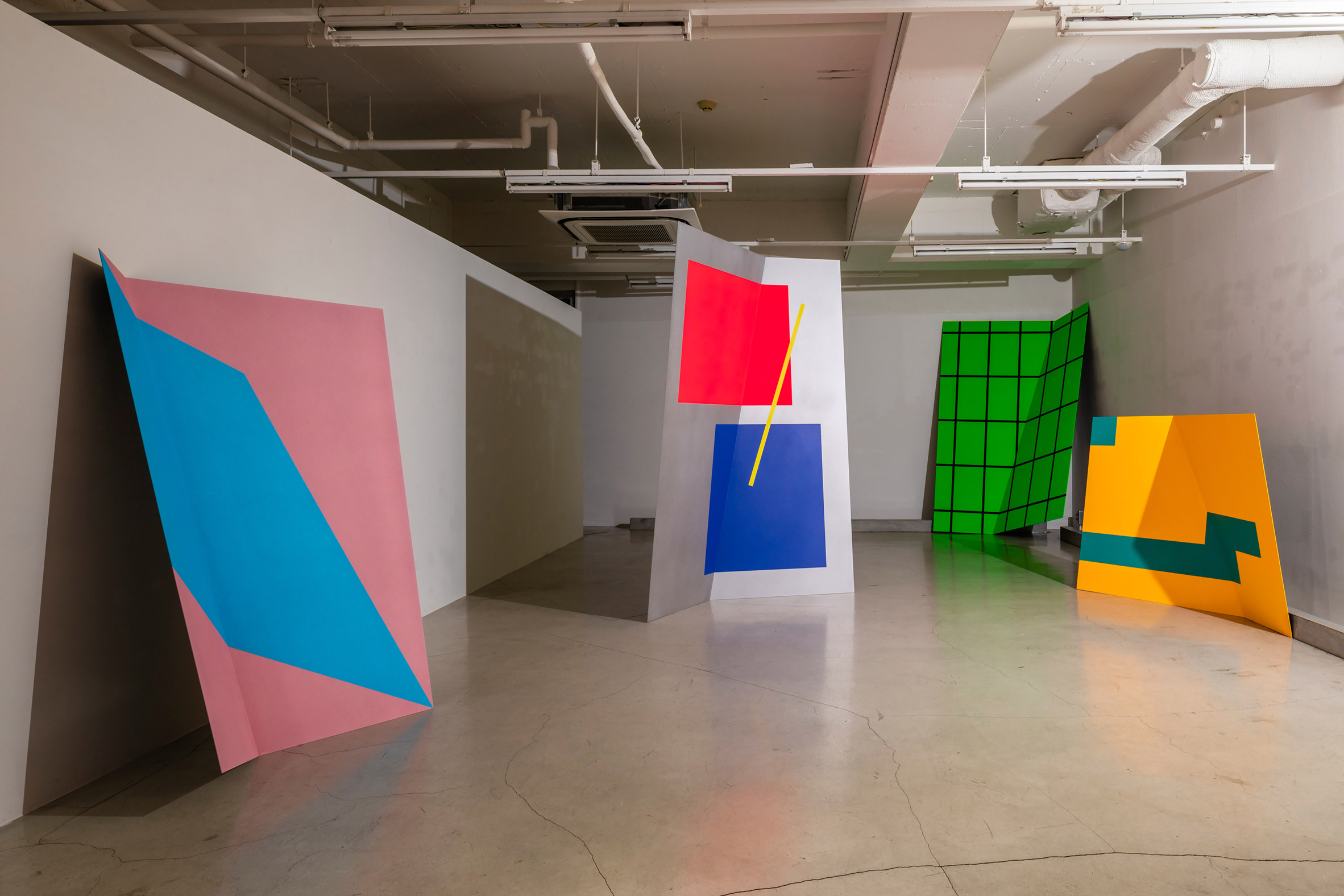
Spread's installation Roppongi Color Canyon used mesh cloths to layer colour over a walkway in Tokyo's Midtwon

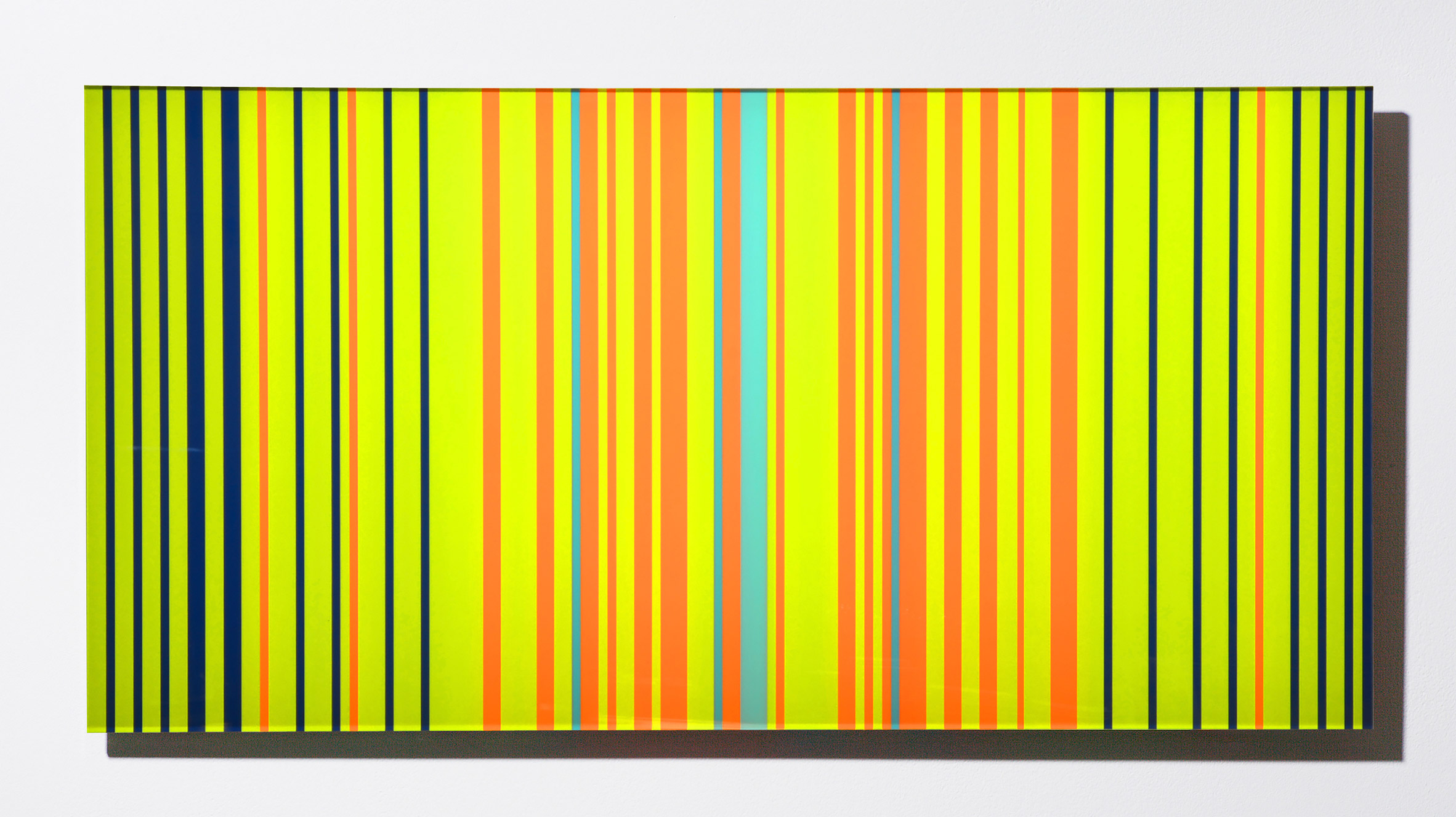
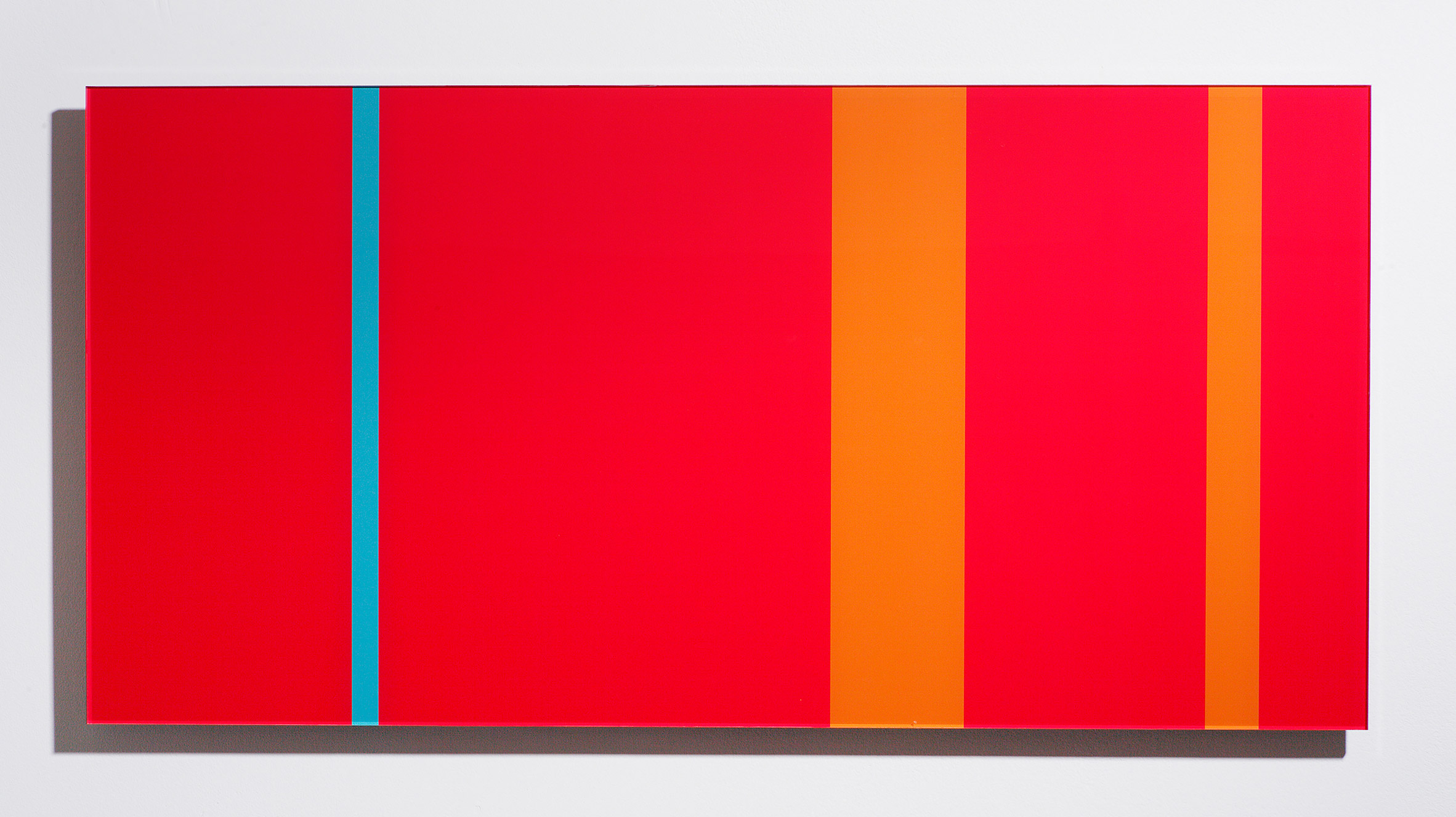
The design duo uses bright colours, inspired by the founders' honeymoon in South Africa, as large-scale elements in space. "The sunlight there was so bright, the colours so strong – we felt the power created by light," they said of their South African safari.

Spread is also informed by people like "Christo and Jean-Claude or Oliviero Toscano, who integrated design and art into the social," said the founders, who have created a number of works that use colour as abstract sensory communication that cuts across cultural and language barriers.

VDF x Alcova Spread Japan
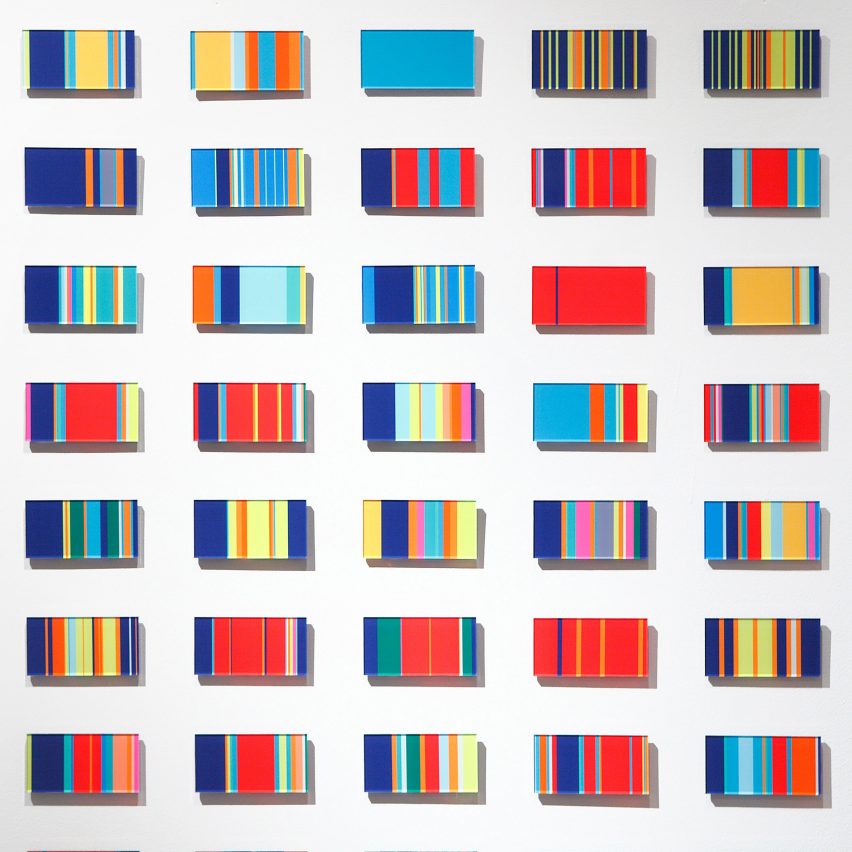
Life Stripe uses colour as a way of communicating life events

Among these is Life Stripe, which uses bands of colour to find patterns in our everyday existence.

"By recording one’s everyday actions—sleeping, dining, relaxing, working, and so on—using a palette of 21 different colours, each person experiences a form of therapy by looking at their life and the patterns within it; in that way, each person can preserve their memory, connect to their present, and cultivate their imagination all at the same time," Spread explained.

Yamada and Kobayashi spoke to Italian design platform Alcova, where their Life Stripe project was to be shown during Salone del Mobile, before the furniture fair was cancelled, about Spread's work and how design attempts to create the future.

VDF x Alcova
Exhibitor:
Spread
Website: www.spread-web.jp
Email: contact@spread-web.jp


Alcova: ​How did colour become the primary medium in your work?

Spread: ​Fifteen years ago, we visited South Africa and went on safari during our honeymoon. The sunlight there was so bright, the colours so strong—we felt the power created by light. Meanwhile, when we were students in Niigata, three hours north of Tokyo, the city was covered in snow through the winter months, an all-white flat landscape that was suddenly altered by the appearance of cherry blossoms in spring, and turned entirely green in summer. After our studies, we worked in the cosmetics industry, where the red of lipstick is not just any red, where colour is used to inspire passion and perceptions of beauty.

VDF x Alcova Spread Japan
Actions such as sleeping, dining, relaxing, working are recorded as different colours

Spread: Colour became our primary field of experimentation, although it was always central to our design disciplines in advertising graphics and urbanism. In setting up our studio, we wanted to bring together the rapid process of graphic design with the long-term project of landscape design. We were also inspired by figures like Christo and Jean-Claude or Oliviero Toscano, who integrated design and art into the social.

A​lcova: What is the role of design in inspiring change?

S​pread: Design attempts to create the future, but it is difficult to explore the future because it does not yet exist. We can only create the doorway to the future as an imagined projection. The past, on the other hand, is something we can explore freely—not necessarily as historical information, but as an experience through all five senses. When we start new projects, we extract ideas and sensations from our past experiences in travel. When we exhibited at Alcova last year, we felt a strong sense of history in the old industrial setting, while the wild vegetation and trees growing in the gaps represented to us the future. Old and new coexisted in this space, which was a perfect environment for our projects to be encountered by visitors.

VDF x Alcova Spread Japan

A​lcova: This year, you are presenting Life Stripe through Alcova in the Virtual Design Festival. What is the concept behind Life Stripe, and how does it fit into your overall studio business?

S​pread: When a person travels, they meet other people and learn more about themselves through the essential variations of human activity performed all around the world. In Life Stripe, colour is used to represent daily life as a journey. By recording one’s everyday actions—sleeping, dining, relaxing, working, and so on—using a palette of 21 different colours, each person experiences a form of therapy by looking at their life and the patterns within it; in that way, each person can preserve their memory, connect to their present, and cultivate their imagination all at the same time. As part of a growing Life Stripe collection, each person can recognise the importance of their individual life amidst the lives of others, the value of the personal perspective amidst the global view.

VDF x Alcova Spread Japan
Covid-19 has led Spread to redraw the boundaries between work and domesticity

Spread: Before COVID-19, many people left home to go to work for almost the entire day—often from 8AM to midnight in Japan. Now, we are redrawing the boundaries between work and domesticity, leisure and rest. We are forced to confront ourselves closely in a moment of stillness. In order to change, we must first gain knowledge of ourselves and each other. After COVID-19, we can feel the significance of life more deeply. Even in this moment of immobility, information travels and emotions continue to unfold. We have already started a research on how people’s lives have changed after the virus came into our world. Life Stripe is not motivated by any expectations of profit. It is a 15-year project of growth and communication with people, a way of continuing to travel in other people's lives as well as in our own.


Virtual Design Festival is the world's first online design festival, taking place on Dezeen from 15 April to 10 July 2020.

Alcova is a Milan-based platform established by Italian practices Space Caviar and Studio Vedèt, which champions independent design through a programme of exhibitions. The team consists of Valentina Ciuffi, Joseph Grima, Martina Muzi, Tamar Shafrir and Marco De Amicis.

The VDF x Alcova collaboration presents interviews with eight studios that were set to be featured at the platform's presentation during Salone del Mobile this year.

The post Life Stripe by Spread uses colour to turn everyday experiences into works of art appeared first on Dezeen.


from Dezeen https://ift.tt/2XyE0kZ

Studio Plastique investigates "complex issues as if they were supply chains"

Studio Plastique investigates social issues "as if they were supply chains"

The founders of Belgium's Studio Plastique explain how their research-based projects and material investigations aim to position design as "a tool for a world that is in transition" in this interview as part of our VDF x Alcova collaboration.

The studio's Theresa Bastek and Archibald Godts said they hope to address both our "impulsive attitude towards objects" as well as the increasing issue of "social and economic fluctuation" through a similar method of design exploration.

"We need to investigate these complex issues as if they were supply chains, mostly invisible, and only revealing themselves when they break down during emergencies," they said.

The studio, which was established by the Design Academy Eindhoven graduates in 2017, is known for research-heavy investigations into the material origins and wider technological infrastructure of our everyday lives.

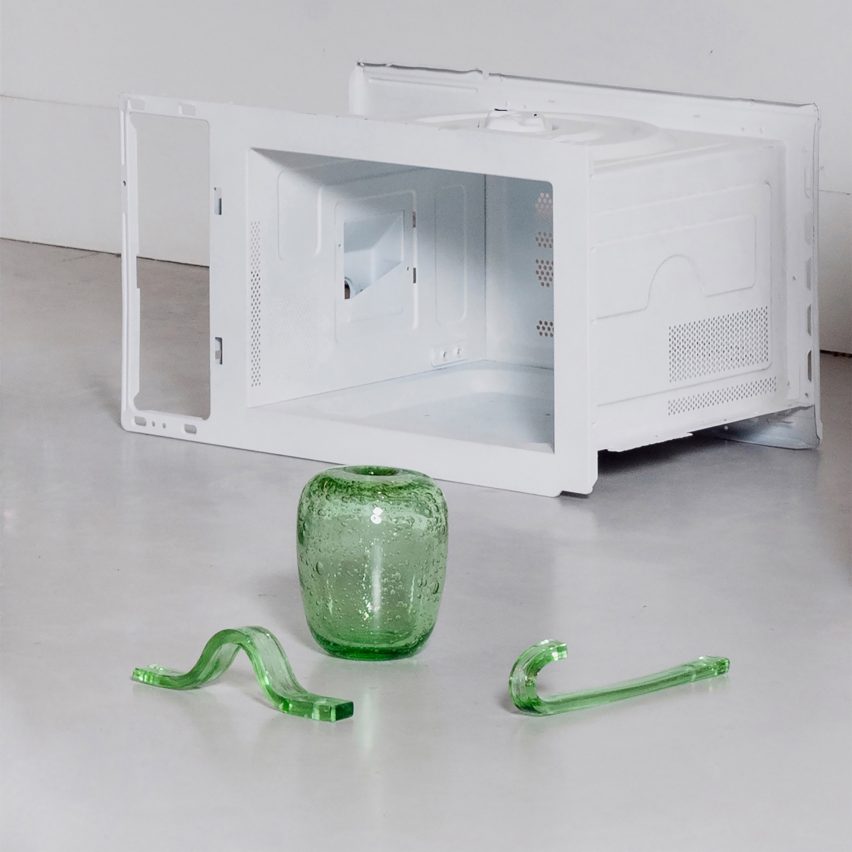
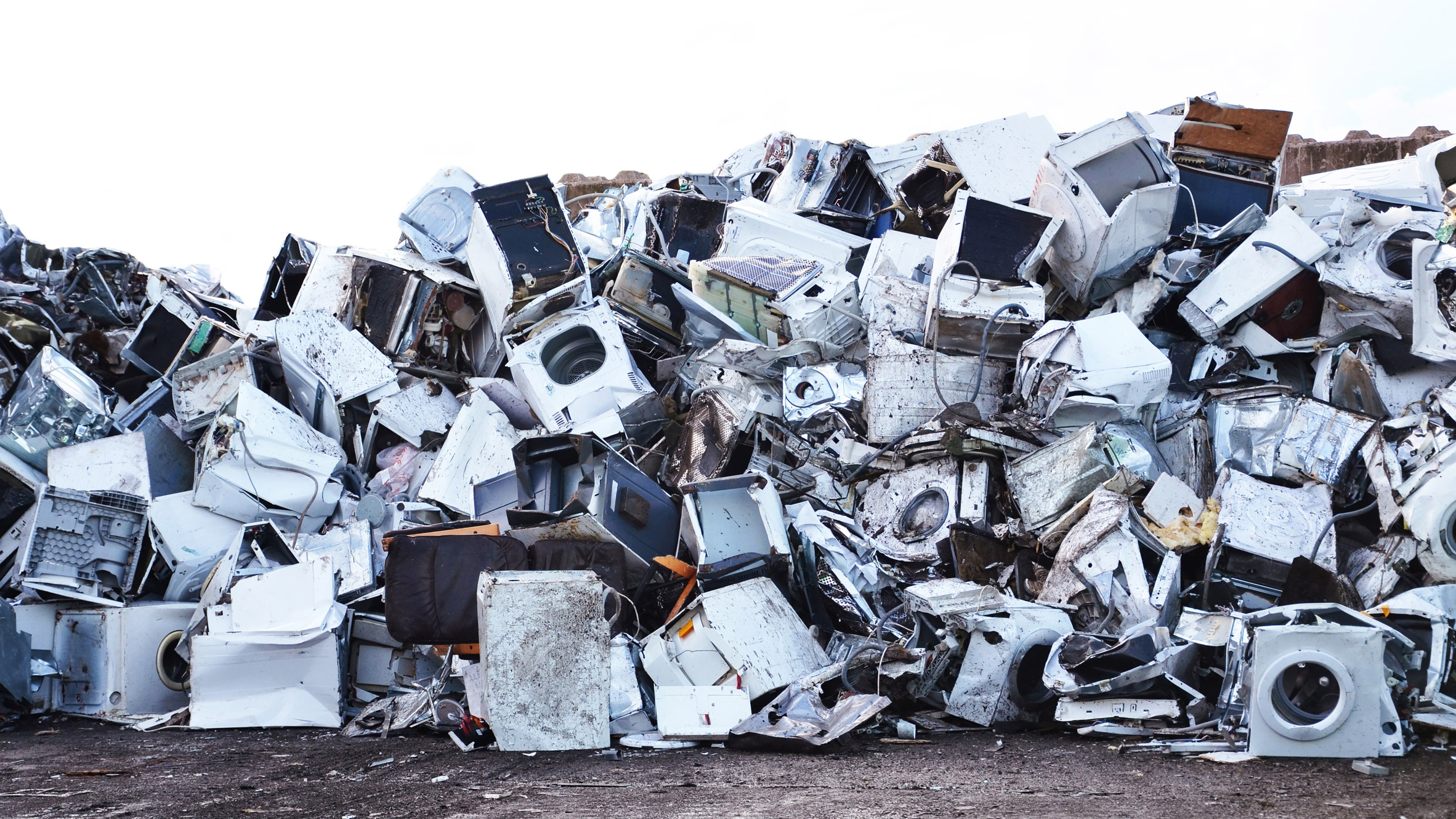
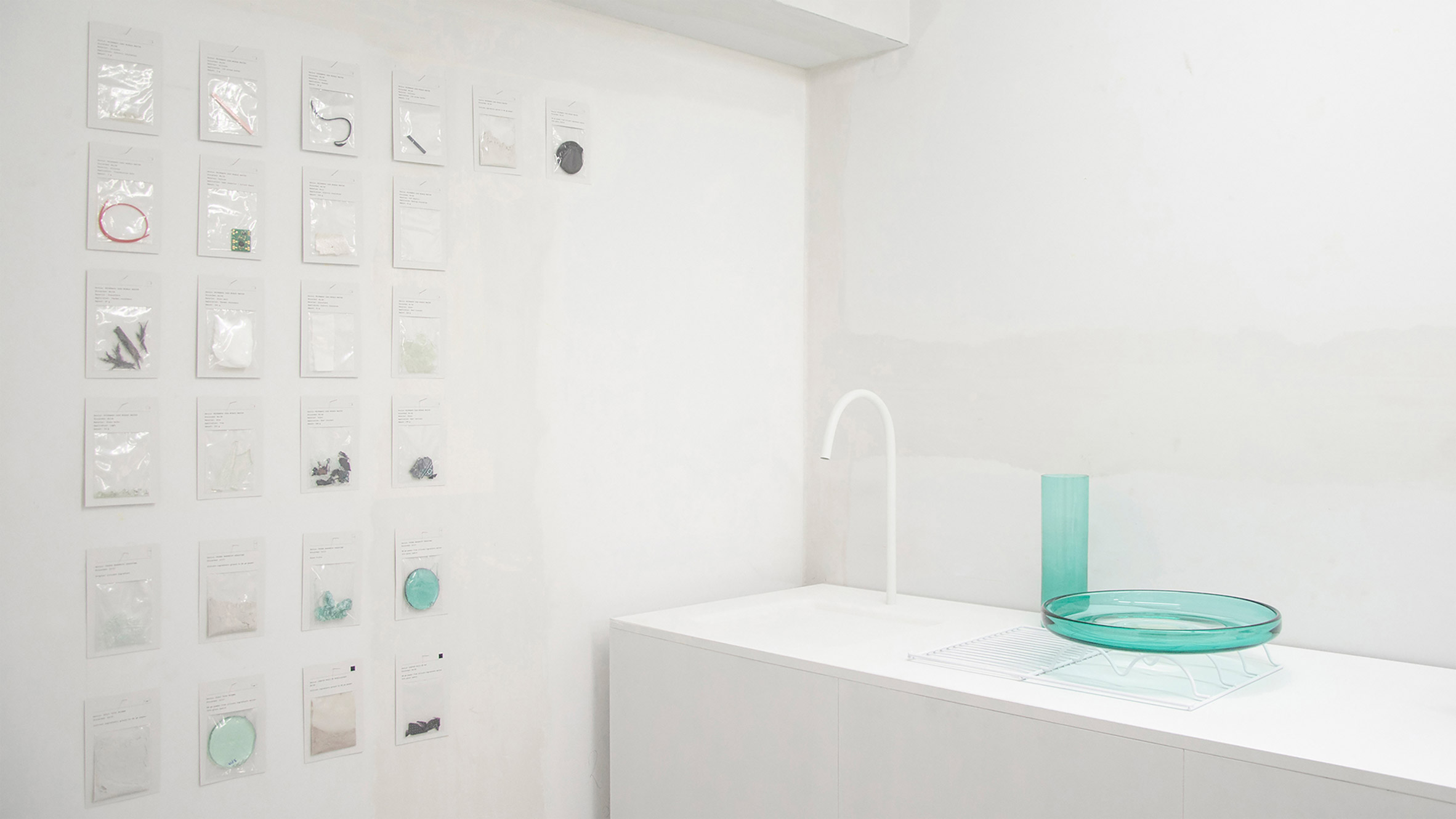
The silica used in the Common Sands project was derived from discarded kitchen appliances

To encourage a more circular use of materials, the studio has previously extracted silica – a compound found in sand and often used to create kitchen appliances – from discarded machines and repurposed it to form a series of glass tableware.

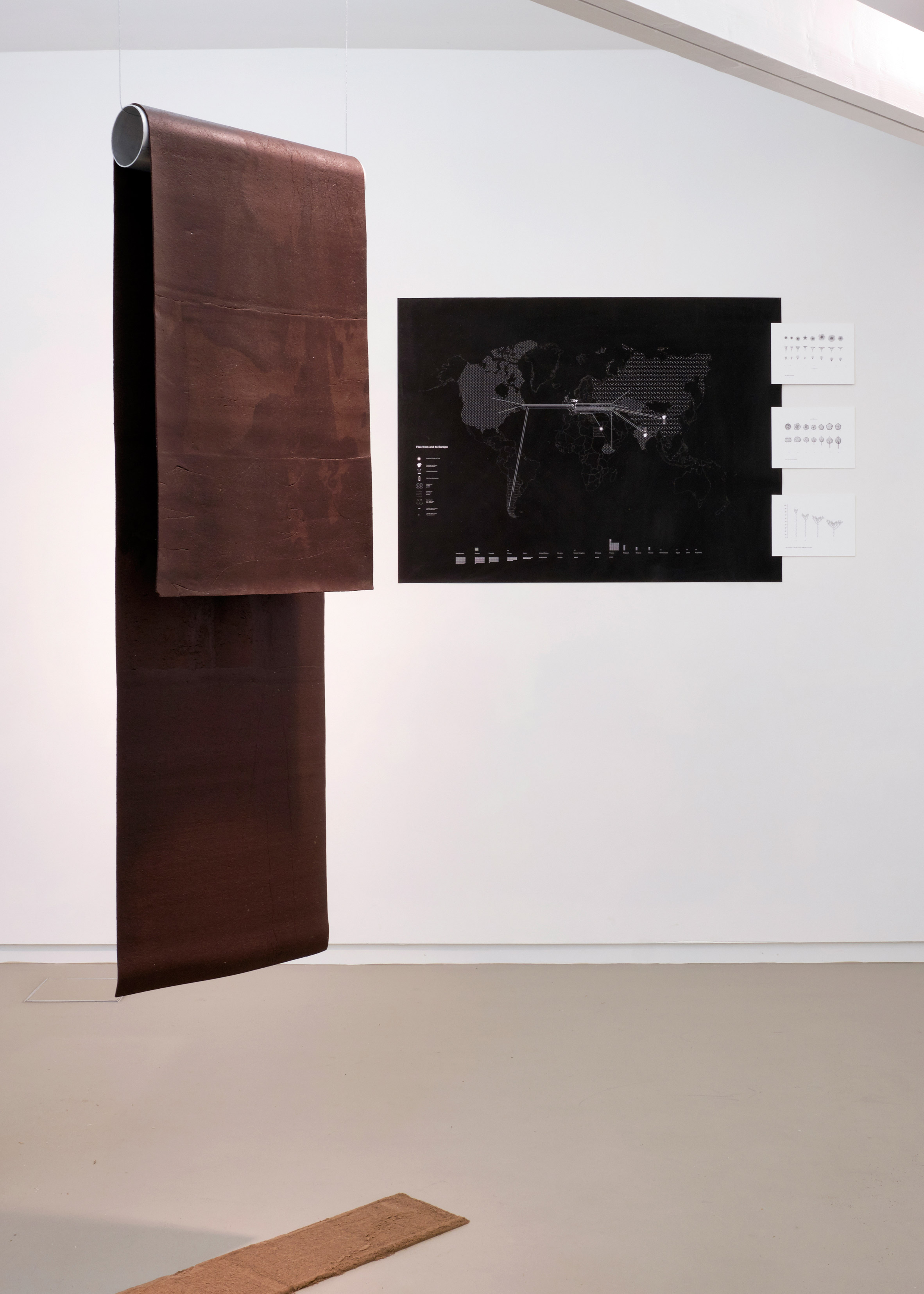
Another project saw the duo explore the material possibilities of the flax plant beyond just linen fabric and linseed oil, in order to encourage the revival of local, Western European production, which has largely been outsourced abroad.

As part of this year's Milan design week presentation by design platform Alcova, Studio Plastique was set to curate an exhibition of work from Brussels designers that are rethinking what the discipline is and what it can achieve.

With the furniture fair suspended due to the ongoing pandemic, Bastek and Godts joined the Alcova team for an interview about their work and how it has been affected by the current situation.

For it's Linen Lab project, the studio combed through the archive of flax species at the Leibniz Institute of Plant Genetics and Crop Research

VDF x Alcova
Exhibitor:
Studio Plastique
Website: studioplastique.be
Email: info@studioplastique.be


Alcova: How do you define your studio model?

Studio Plastique: We have a research-based design practice. We look mostly into existing production systems, from material cycles to the broader complex mechanisms created by human activities, local or global.

Rather than the traditional relation between design and industry, we see design as an interaction and investigation where answers are formulated more as an empathic and vernacular conversation rather than magic solutions. We look for unexplored territories where we feel society is heading, where design is needed but not yet delivered by the industry and try to bridge that gap by dragging industry actors in those directions.

Alcova: Your own work touches on many issues that have suddenly become urgent, from 5G and supply chains to education and the integration of elderly people into society. What is the starting point for your projects?

Studio Plastique: Over the past three years, we have gradually moved from self-initiated research to commissions and collaborations with companies and institutions of different sizes. We investigate our reality in terms of the gaps – material or immaterial – that we want to tackle.

On one hand, there is a manmade material condition, which features an extreme dissonance between our impulsive attitude towards objects and the resulting ecological impacts. That could lead to an investigation of sustainable material cycles, but also more abstract questions like new models of ownership of objects.

The Common Sands project and the research behind it was exhibited at Milan Design Week in 2018

On the other hand, there is an immaterial condition, an acceleration of information, of social and economic fluctuation, which people can sense intuitively but are unable to explain or even "see". That immateriality tends to make us suspicious of new technologies even if they are crucial to our everyday lives. In our project Flight Mode, we addressed the "invisible pollution" of electromagnetic radiation as a problem for design – not to be solved rationally or stylistically, but to ameliorate people's fears and instincts towards control, to explore their openness to change.

Some of our projects involve both conditions. For example, our research into education looked at the contemporary legacy of schooling standards shaped by the Industrial Revolution. What are the best practices we can learn from educational experiments around the world, in order to prepare today’s children to be members of the future society we want to create? What education and climate change have in common is our general response of neutrality, a position that we can no longer maintain.

We need to investigate these complex issues as if they were supply chains – mostly invisible, and only revealing themselves when they break down during emergencies. We have to understand the complete global infrastructure before we can situate our investigations, no matter how small or local. If we want to change the status quo as designers, we must address the present crisis in the context of broader underlying issues: we need to collaborate with specialists and be empathic to social needs in applying new tools at our disposal.

Alcova: Has your process been affected by the pandemic?

Studio Plastique: Our process has not changed much, but our long-term work will be very affected if the current restrictions are in place for an extended period of time, as field study is an important part of our research into how things are processed.

For now, we have had more time to read and listen and connect to others over online channels – if anything, people seem to be more open to sharing ideas and connecting to our research.

The Linen Lab project was exhibited at the F.E. McWilliam Gallery in Northern Ireland

At the same time, we are interested in the external effects of the current crisis on the outlooks of businesses and individuals. Is a commitment to ecological issues now seen as more of a luxury or a matter of even greater urgency?

During this period, we all had to adjust to conditions outside of our comfort zone, and perhaps that will make us more aware of the need to keep informed and more receptive to structural changes in our lives, which could be for health as much as for environmental purposes.

Alcova: What were you preparing to show at Alcova during the Salone del Mobile, and how have your plans changed?

Studio Plastique: In this case, we have been working not as designers ourselves but as curators on an exhibition of local designers from Brussels, looking for creative practices that are defining new tools and finding new applications for design.  Our goal is to show design as a tool for a world that is in transition, starting a discourse that is oriented at a broader public, that will break open the common understanding of what designers do and what tools they use.

The project explores alternative material uses for flax seeds

We want to highlight examples like Rotor, who have worked for years to recuperate architectural materials from demolished buildings, renew them through scientific methods, and bring them to market through digital retail. Such processes can be very abstract for a general audience, and that’s what we want to highlight.

Due to Covid-19, the exhibition has been delayed but will happen at a later stage. For the moment, we are contemplating what online exhibitions could mean, but they are not yet our main priority in terms of outreach. We believe space and physical sensations – even smells – are crucial elements in showing people what design can be.


Virtual Design Festival is the world's first online design festival, taking place on Dezeen from 15 April to 10 July 2020.

Alcova is a Milan-based platform established by Italian practices Space Caviar and Studio Vedèt, which champions independent design through a programme of exhibitions. The team consists of Valentina Ciuffi, Joseph Grima, Martina Muzi, Tamar Shafrir and Marco De Amicis.

The VDF x Alcova collaboration presents interviews with eight studios that were set to be featured at the platform's Milan design week presentation this year.

The post Studio Plastique investigates "complex issues as if they were supply chains" appeared first on Dezeen.


from Dezeen https://ift.tt/30cLj3z

Ex-Samsung engineers develop "world's smallest LiDAR device" that makes touchscreens touchless

Ex-Samsung engineers develop "world's smallest LiDAR device" that makes screens touchless

Two ex-Samsung engineers from tech company CoreDAR have designed a tiny LiDAR device called Glamos that can turn any screen into an interactive, but touchless, touchscreen.

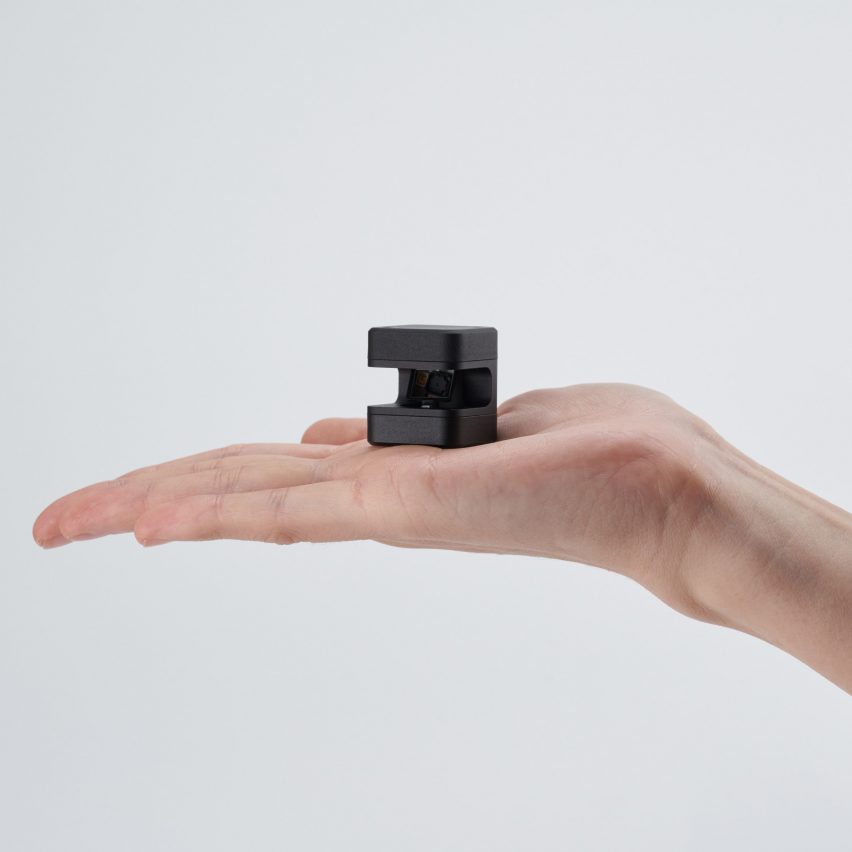
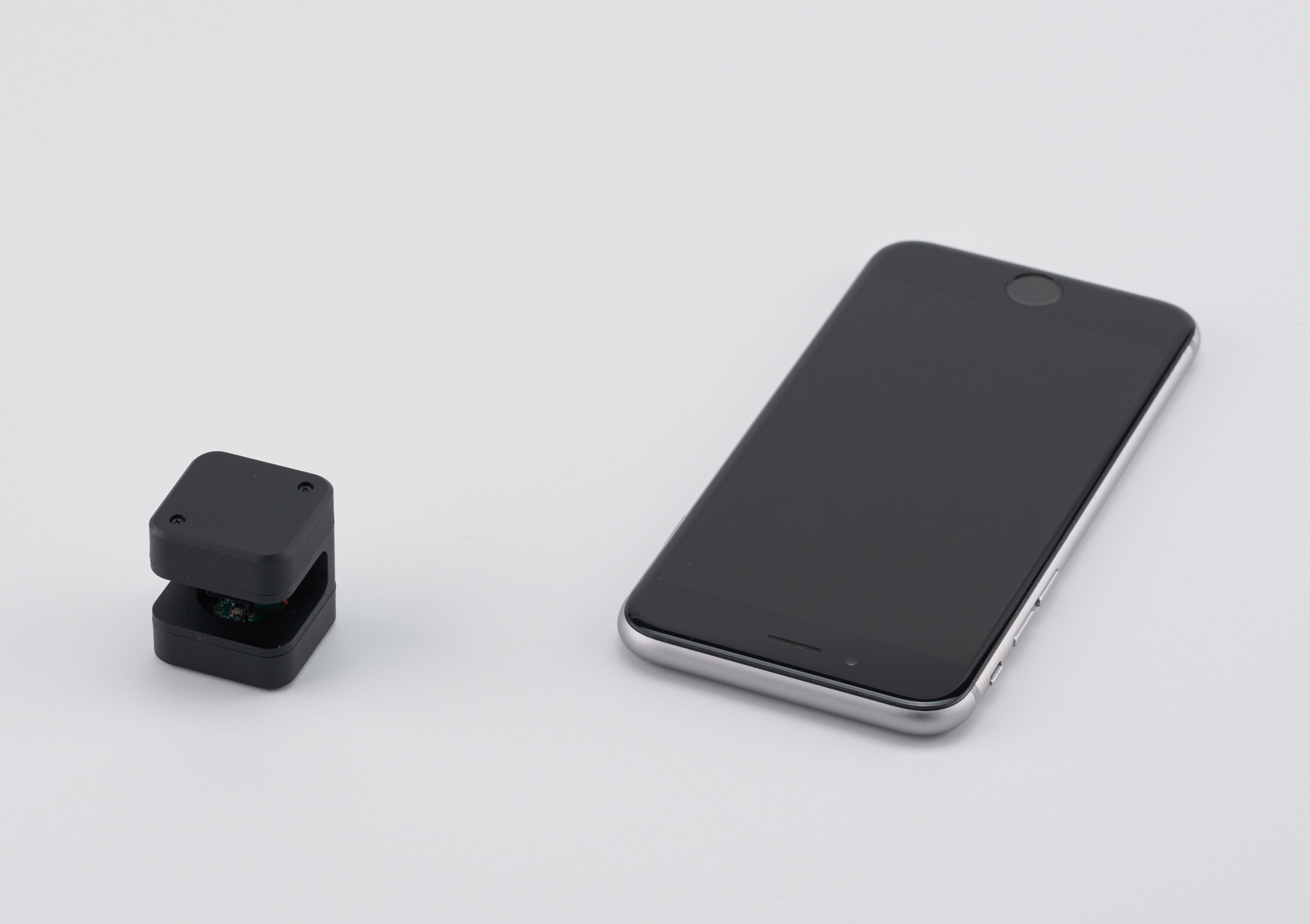
Measuring at just 1.5 inches, the pocket-sized Glamos has been billed by its creators as the "world's smallest LiDAR device" with the least power consumption.

The motion sensor employs LiDAR (light detection and ranging) technology, typically used by autonomous vehicles to detect obstacles, to create an additional, virtual touchscreen in place of the one on the user's own device anywhere they desire.

Ex-Samsung engineers develop "world's smallest LiDAR device" that makes screens touchless

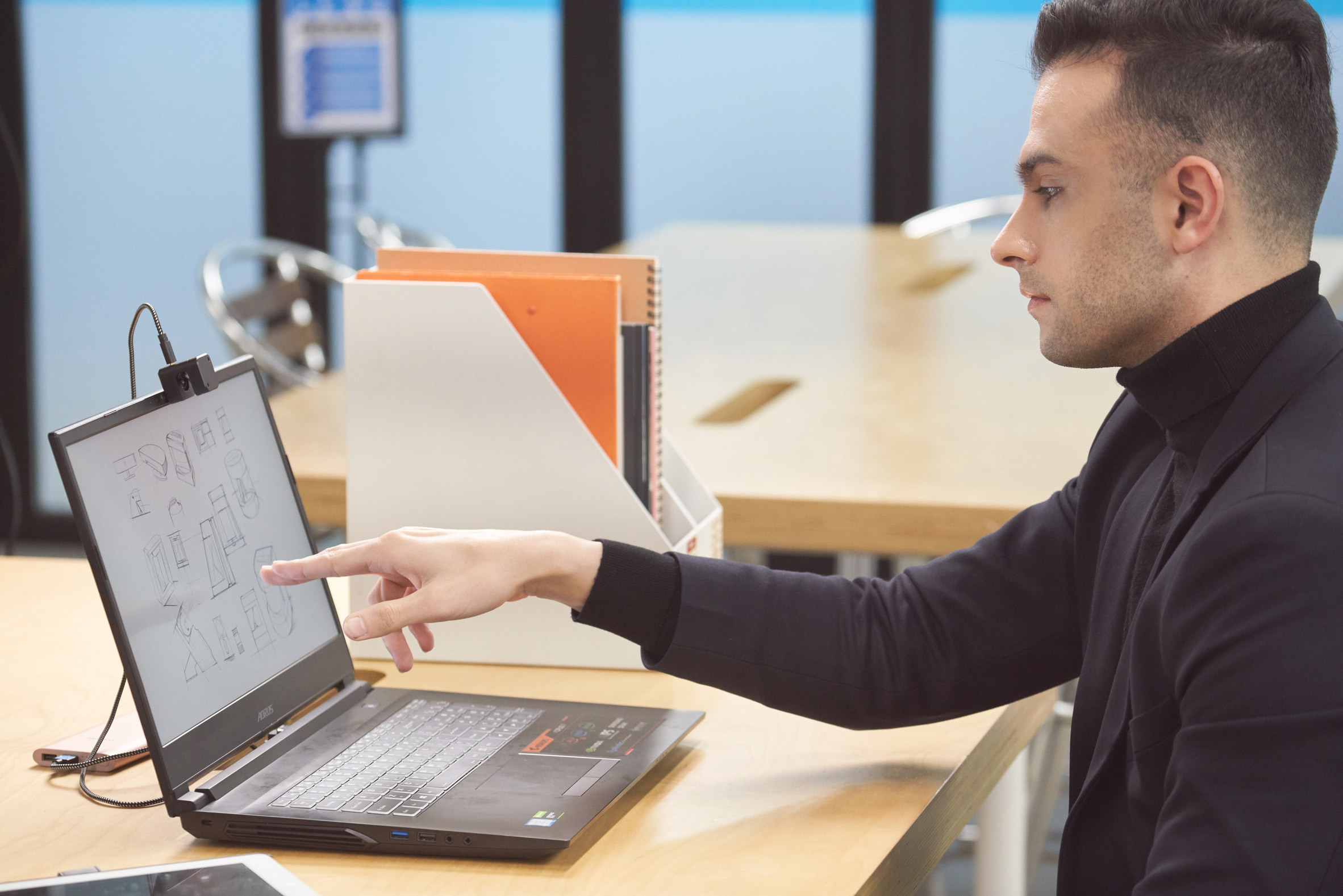
Compatible with phones, laptops, tablets, desktop computers and smart televisions, Glamos automatically scales the size of the device it is connected to.

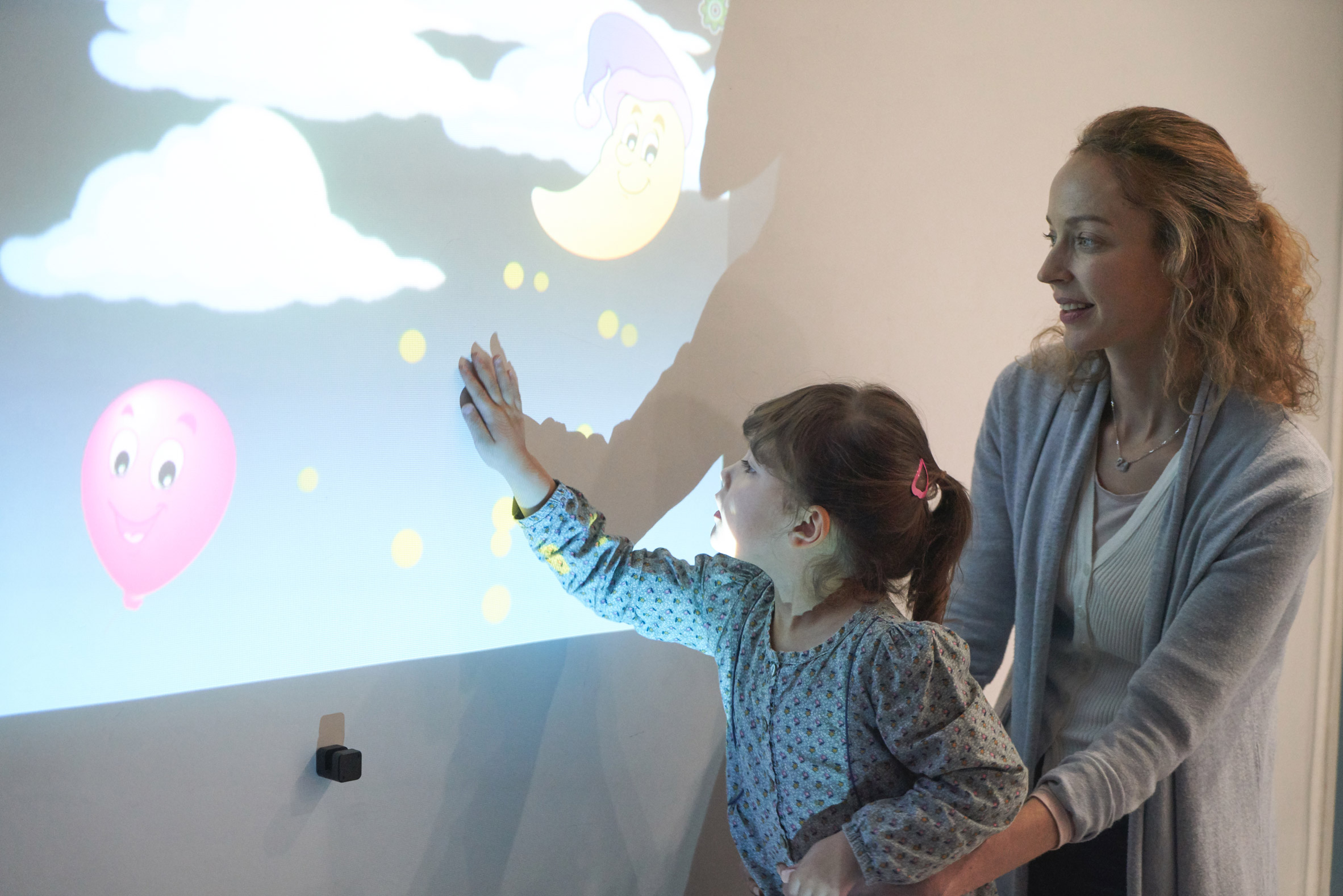
Once connected to a device, ordinary screens are able to identify and respond to gestures made in the air, without the user having to physically touch the screen.

Ex-Samsung engineers develop "world's smallest LiDAR device" that makes screens touchless

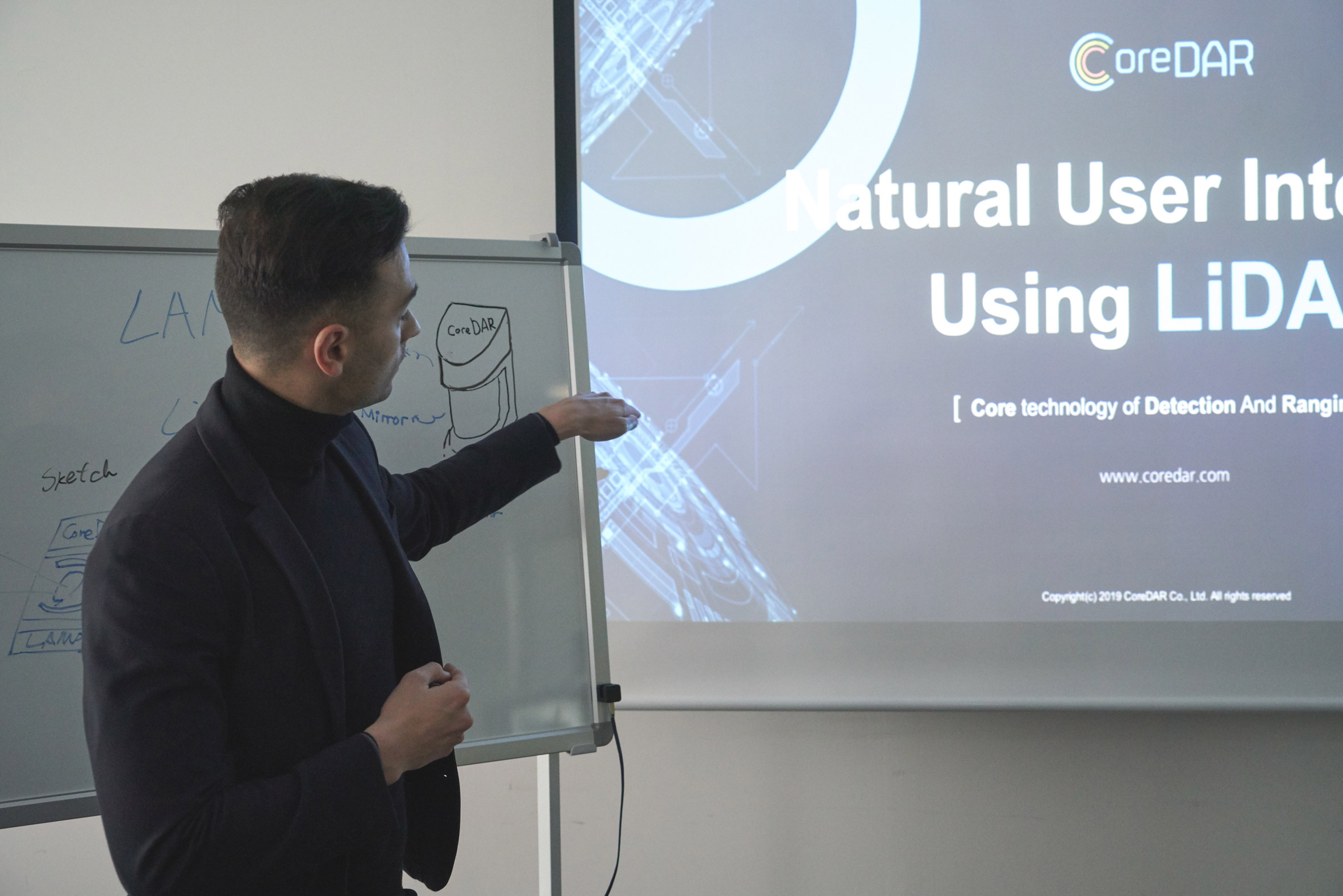
"While experimenting with LiDAR technology at Samsung Electronics C-Lab, I saw the potentials of the technology," said CoreDAR founder Charles Lee.

"I wanted to create a LiDAR device that's smaller and more affordable – a device anyone could use anywhere."

Ex-Samsung engineers develop "world's smallest LiDAR device" that makes screens touchless

The sensor uses a rotating mirror module instead of a camera to scan its surroundings within a three-foot radius, measuring the distance between itself and other objects before transforming the data into a touch coordinate, and sending the coordinate to the display screen.

The module moves at 40 frames per second, meaning it captures the user's movement 40 times per second, and senses 180 degrees of motion.

"On laptops, you'll feel like your hands are an extension of your mouse cursor," said the creators.

Ex-Samsung engineers develop "world's smallest LiDAR device" that makes screens touchless

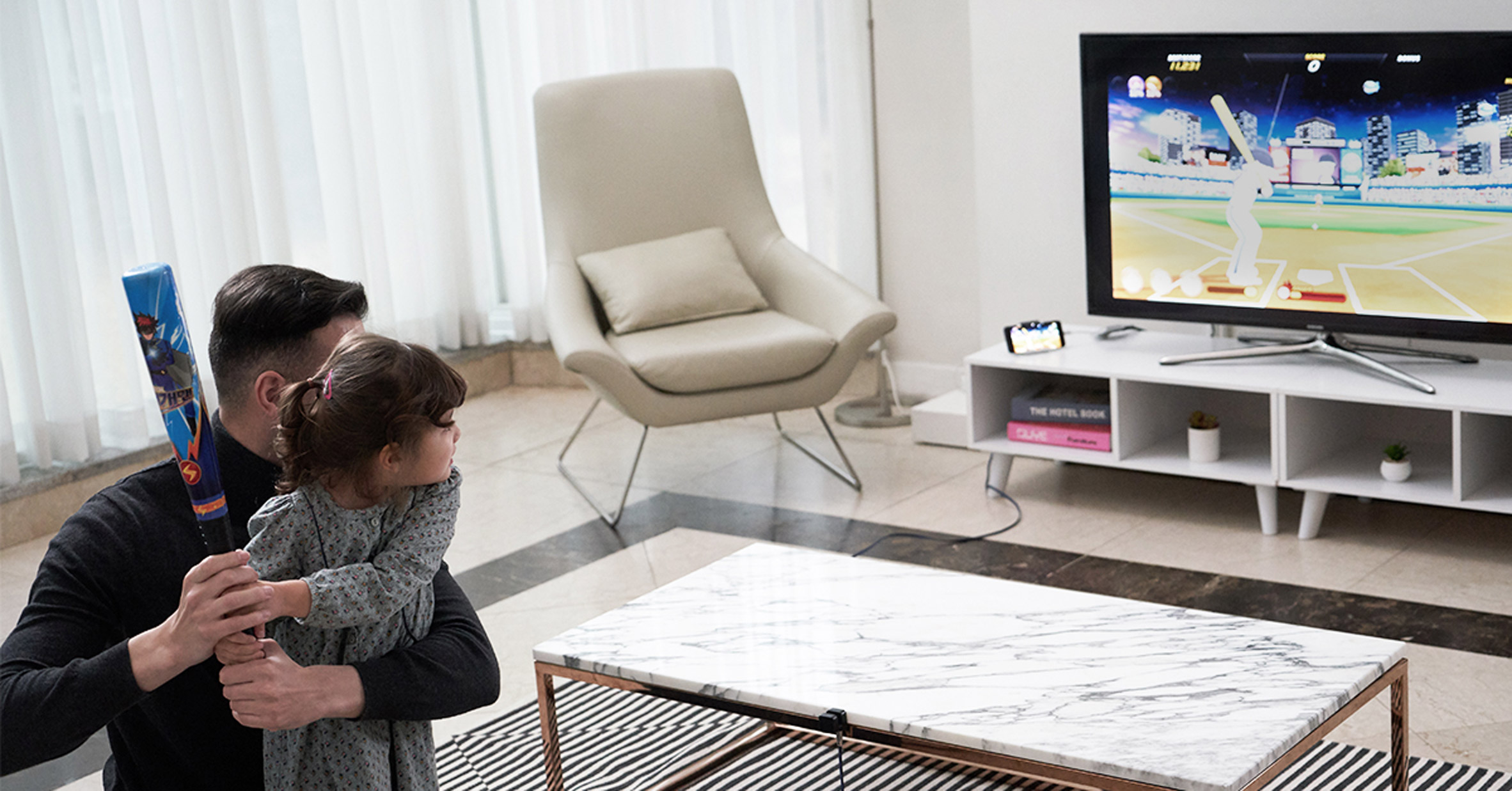
According to its developers, the Glamos device is particularly suited to giving presentations at the office or school, watching content without having to use the remote, or for using electronic devices when cooking to avoid getting them dirty.

It can also be used to bring mobile games to life for multi-player or a Nintendo Wii-like experience. If Glamos is connected to the user's phone, the content or game being played on the phone can be projected onto a bigger screen using an HDMI cable.

The technology can also be projected onto walls, whiteboards or in the air.

"Instead of playing Candy Crush on your tiny phone for hours, you can play it on a TV screen and turn it into an exciting social activity," said the designers.

Ex-Samsung engineers develop "world's smallest LiDAR device" that makes screens touchless

In its current form, Glamos has been released as a working prototype after over 100 iterations and tests. The creators are continuing to work on the final hardware design before taking it to mass production.

The design comes at a relevant time in light of the Covid-19 pandemic, when an increasing number of consumers are looking to touchless objects to avoid the spread of bacteria and viruses.

Chief design officer at water technology brand LIXIL, Paul Flowers, explained how demand for touchless products such as toilets and taps is growing fast in shared buildings and their common areas.

As Flowers explains, it is "entirely feasible to create an environment which eliminates the need to touch surfaces" thanks to technology like automatic doors and sensors.

The post Ex-Samsung engineers develop "world's smallest LiDAR device" that makes touchscreens touchless appeared first on Dezeen.


from Dezeen https://ift.tt/36VXraq