Thursday, 4 June 2020

Qwstion maximises the positive environmental impact of its work through collaboration

Qwstion interview for VDF x Alcova

The creative director and co-founder of Qwstion, Christian Kaegi, sheds light on why the sustainable Swiss brand is infiltrating the production chains of major companies in this exclusive interview for VDF x Alcova.

Founded in Zurich in 2008, Qwstion specialises in sustainable backpack design, and also develops eco-friendly plant-based materials with the goal of helping to establish a circular economy.

Kaegi told Alcova that in order to make the positive impact of its work more measurable, one of the brand's main strategies is collaboration. All of its production processes and material innovations are accessible for use by larger companies to make their own supply chains more environmentally responsible.

"Our strategy is to maximise the positive impact our material developments can have by making them available to any brand or company that wants to improve its sustainability," Kaegi said.

"We are a small brand, so even if our products and processes are sustainable, the impact will always be limited," he explained. "By making our processes available to others, however, we can enable large major brands to use more sustainable materials and have larger ecological effects."
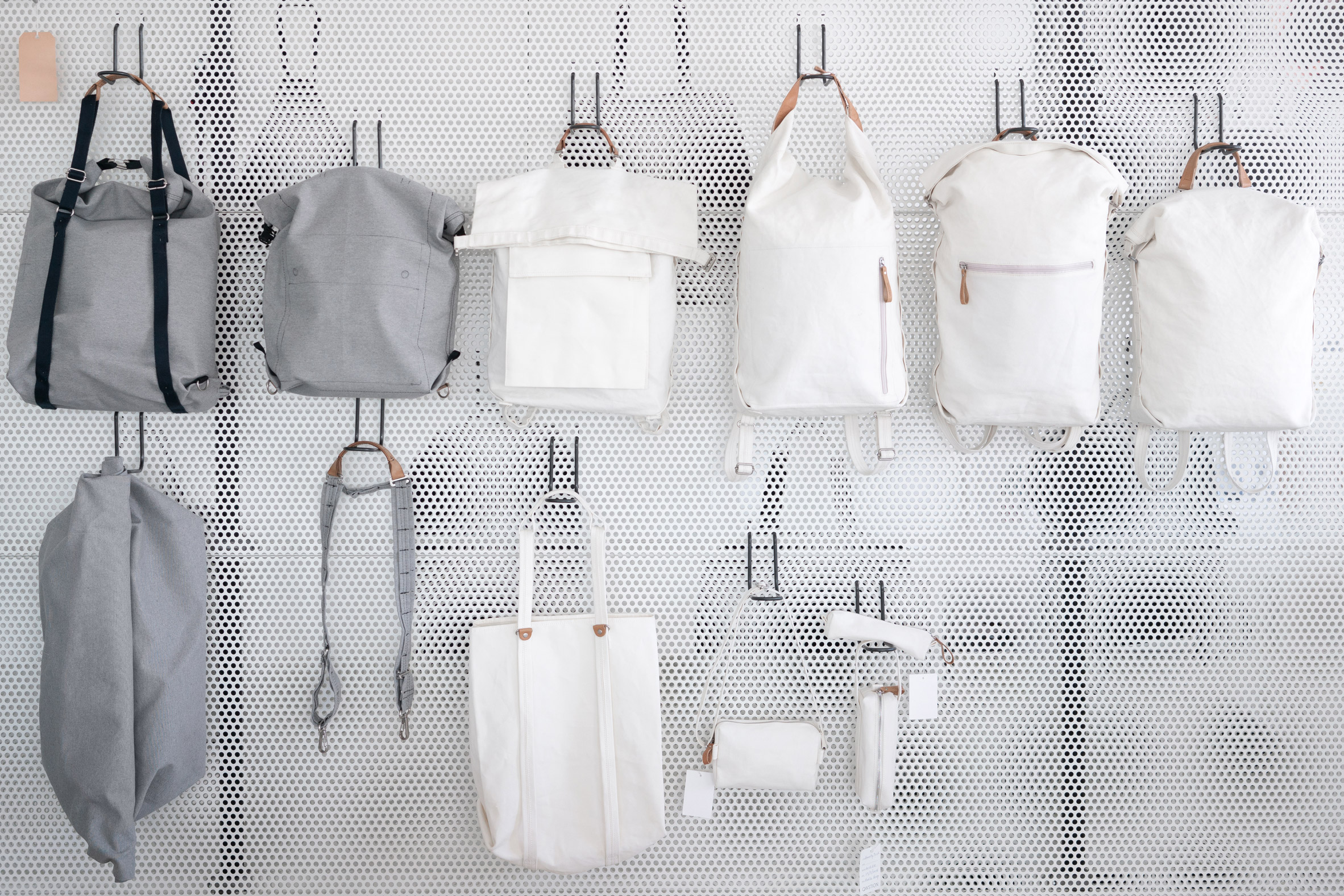
Qwstion interview for VDF x Alcova
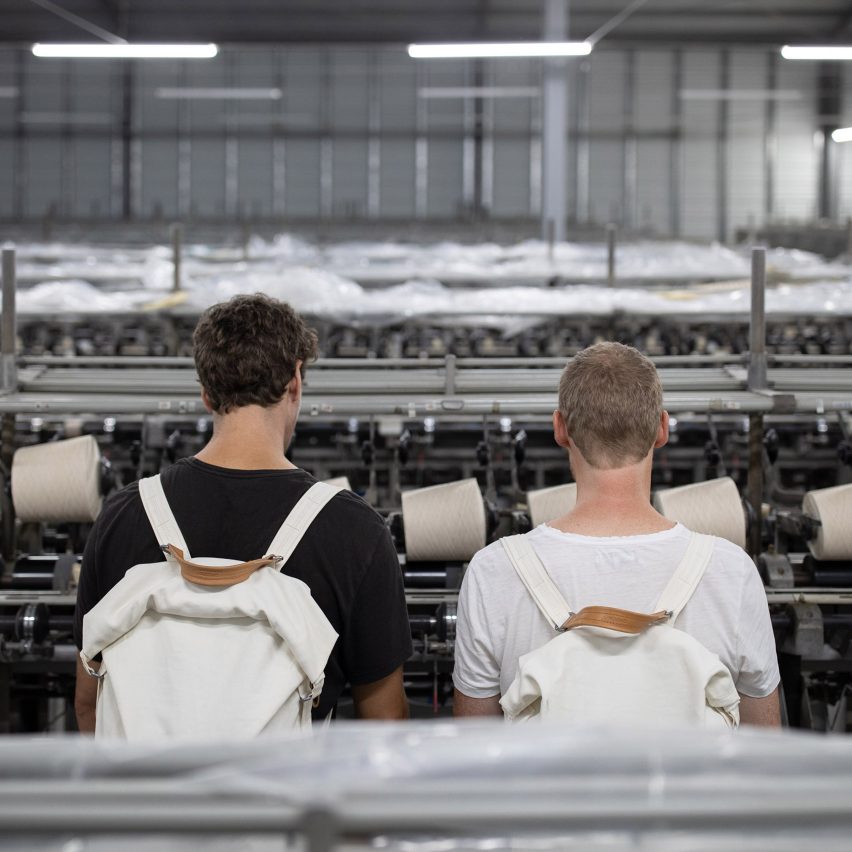
Qwstion uses its material innovations to create backpacks and accessories but also shares them with larger companies for use in their own production chains

An example of this concept is demonstrated by the brand's development of Bananatex, a durable and sustainable textile made entirely from banana plants. Qwstion has recently spun Bananatex into its own company and it is now collaborating with brands and companies internationally.

"We are currently in discussion with numerous global brands from diverse industries, including furniture, automotive, tech, and fashion, who are all interested in employing our material," said Kaegi.

"There is a potential for Bananatex across a whole range of applications that require a textile with a certain amount of durability and other technical capacities."

Qwstion was due to exhibit its products and material innovations as part of this year's Salone del Mobile presentation by design platform Alcova.

In light of the event's cancellation due to coronavirus pandemic, Kaegi joined the Alcova team for an interview instead, in which he introduces the brand, its ethos and work.

VDF x Alcova
Exhibitor:
Qwstion
Website: www.qwstion.com
Email: press@qwstion.com


Alcova: The current tragic circumstances pose huge challenges, but also open up new perspectives. Is there a new appreciation for the things we use and surround ourselves with, the stories they tell and the values they stand for?

Christian Kaegi: Definitely. The question we need to ask ourselves right now is: what do we really need? We as designers have spent the last five years incubating a number of brands based on values of sustainability and ethical consumption. But as in so many aspects of life today, there is a strong polarisation of attitudes.

Those who have a conscious approach to how and what they consume have become even more conscientious. The real challenge is how to get such questions to resonate with a much broader segment of society in the coming years.
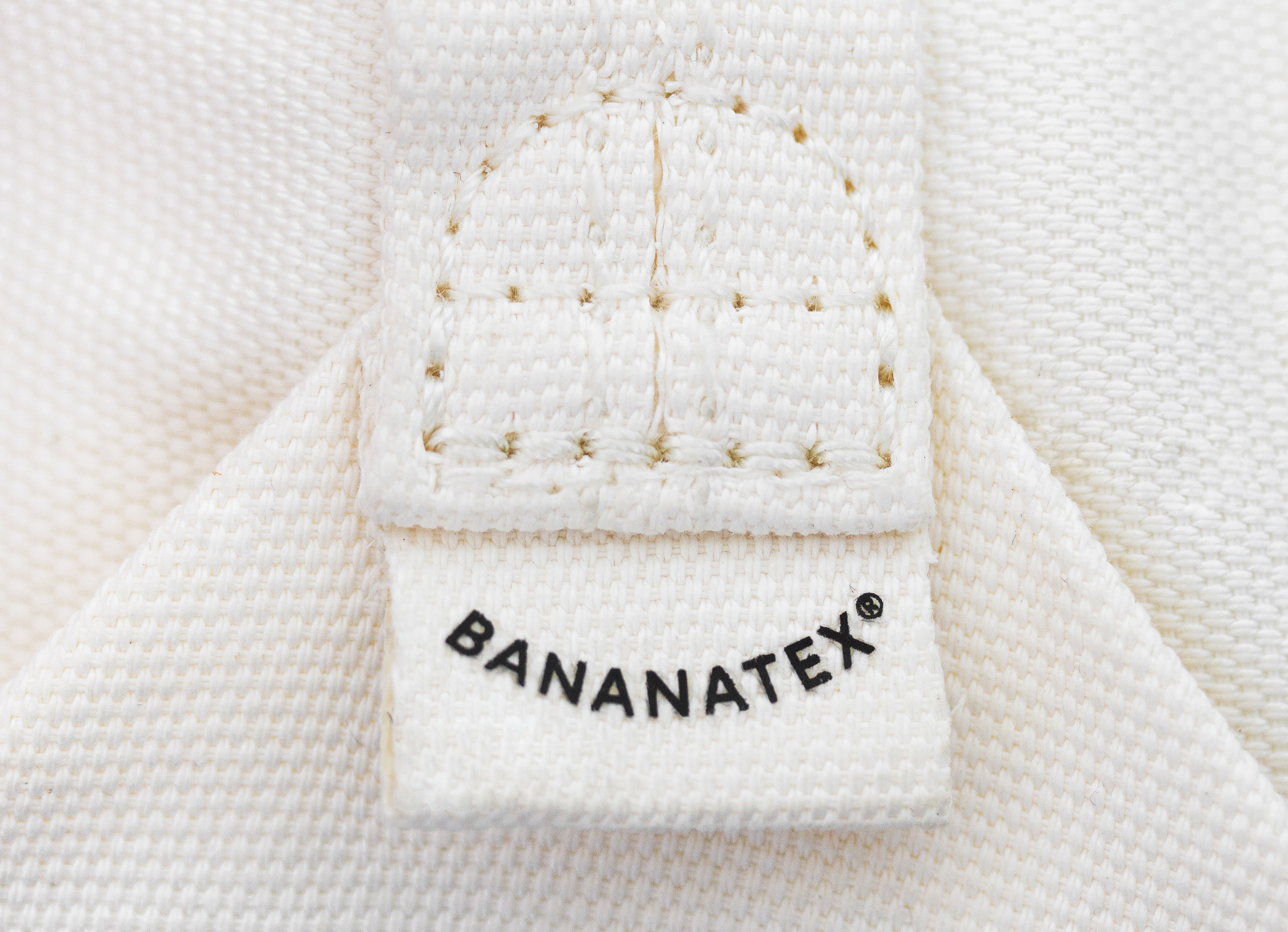
Qwstion interview for VDF x Alcova
One of its main plant-based materials is Bananatex, which is made entirely from banana plants

Alcova: What did you set out to achieve when you founded Qwstion?

Christian Kaegi: After graduating as an industrial designer and co-founding design studio Aekae right out of school, I had many questions as to where the world was heading and how products were designed and manufactured. I was interested in designing in a holistic way, starting from the very beginning, the material itself.

The standard role of consultant for clients did not provide an opportunity to do so in a comprehensive manner, so I co-founded Qwstion as a platform to search for new answers. Qwstion is a brand for everyday bags, through which we try to question current material norms and applications. One crucial factor in our path towards a circular economy has been designing our own plant-based materials to replace plastics. We want to act responsibly towards nature and our community, while remaining profitable as a business.

Alcova: One strategy implemented by your company, or companies, is not simply to act independently from the major brands, but to collaborate with them, to infiltrate their production chains and introduce the values and processes you've established in your own work. Can you tell us about that?

Christian Kaegi: That's a really important strategy, and I see that as a major possibility to actually have a measurable outcome. We are a small brand, so even if our products and processes are sustainable, the impact will always be limited. By making our processes available to others, however, we can enable large major brands to use more sustainable materials and have larger ecological effects.

We have now spun Bananatex off into a separate company, and we are currently in discussion with numerous global brands from diverse industries, including furniture, automotive, tech, and fashion, who are all interested in employing our material.
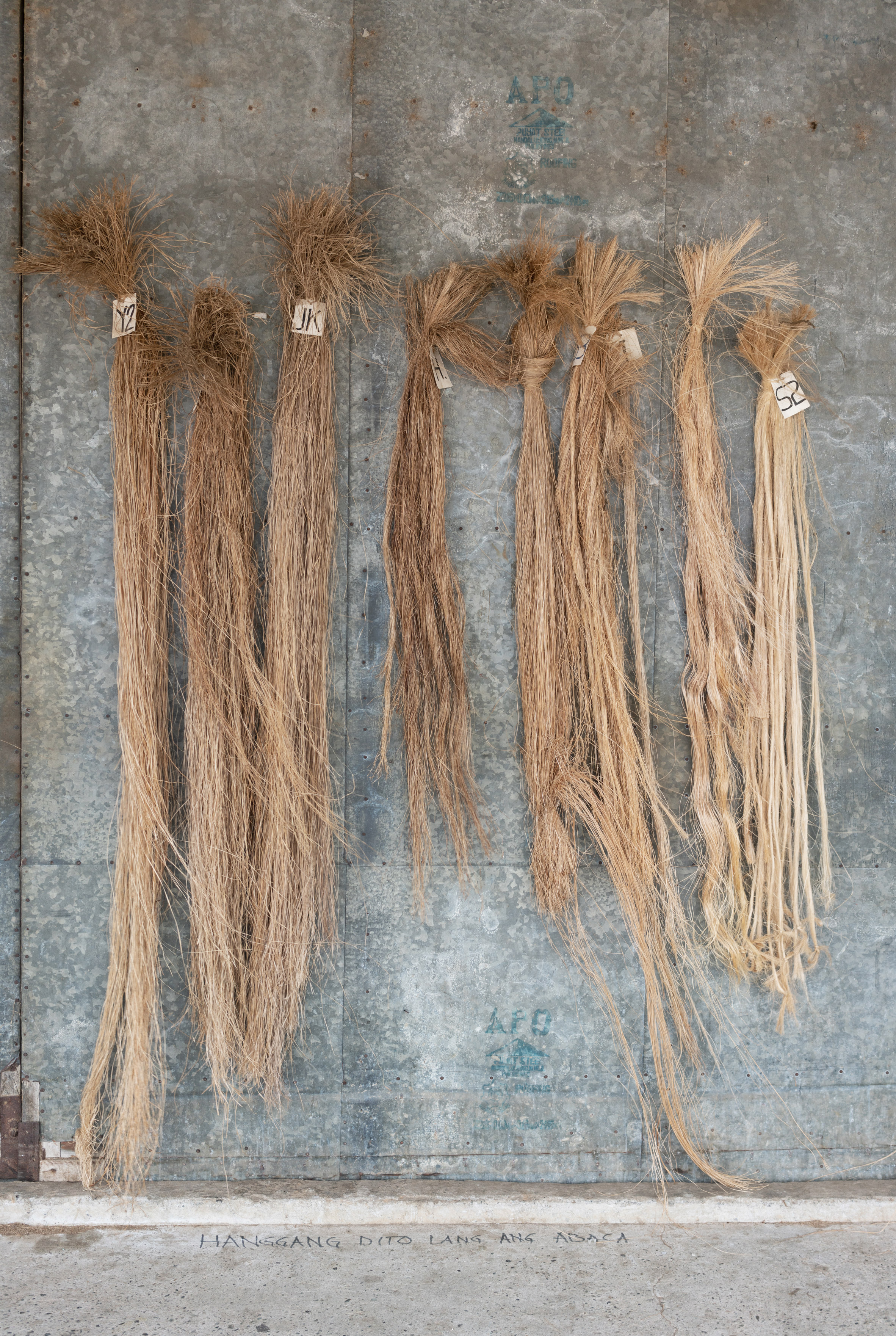
Qwstion interview for VDF x Alcova
Qwstion's sustainable innovations, like Bananatex, are available to other companies to help them become more sustainable

There is a potential for Bananatex across a whole range of applications that require a textile with a certain amount of durability and other technical capacities. Our strategy is to maximise the positive impact our material developments can have by making them available to any brand or company that wants to improve its sustainability.

Alcova: At the same time, there's another side to your strategy, which is thinking about new aesthetics and other kinds of possibilities that can be unlocked by these innovative materials. Do you think the circular economy could have its own visual language or aesthetic canon?

Christian Kaegi: Yes, definitely. If you take a radical approach to sustainability, then as a consequence a new aesthetic will emerge. If you look back to the modernist movement in the 1950s and 1960s, the ideas of letting the materials speak for themselves, reducing mass, simplifying shape and form – these principles had a significant impact on aesthetics. We believe this is equally relevant today and will be part of becoming more sustainable as a society.

Alcova: As someone whose career has already spanned multiple companies, what is your perspective on the marketplace? Will you change business models or adapt in other ways to current conditions?
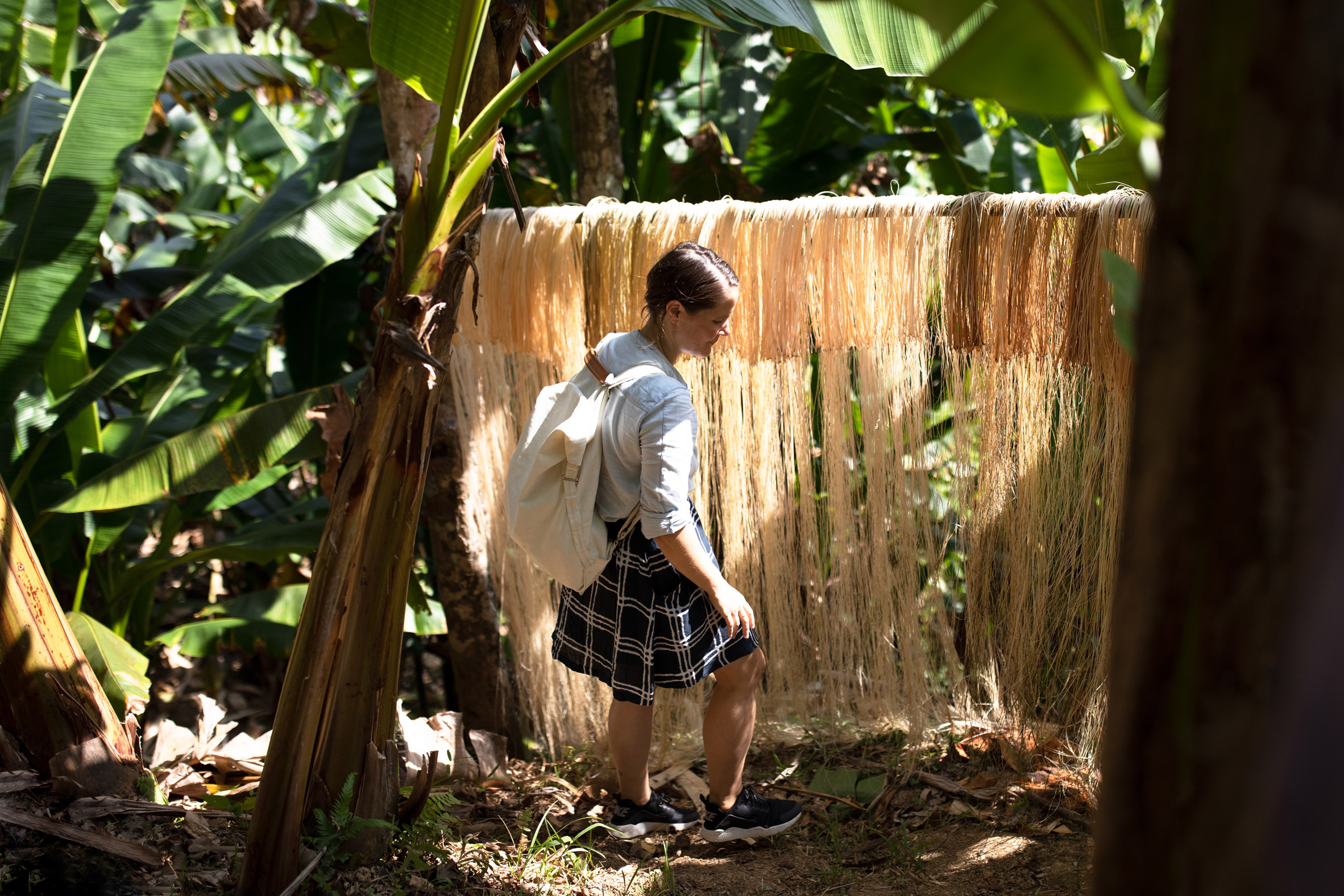
Qwstion interview for VDF x Alcova
Qwstion's main goal is to help establish a circular economy

Christian Kaegi: In the context of the circular economy, the question of ownership needs to be re-evaluated and will have an impact on our business model. Another significant question remains open: how will physical retail develop in years to come? There has been an ongoing shift from offline to online, and in the past three to four years, we have been working with many retail partners that had to close their shops due to financial pressure, perhaps because they were unable to adapt quickly enough to online business.

Due to the current crisis, that one side that has been even further challenged because most people were unable to visit stores and could only buy from home through online platforms. At the same time, people have been questioning their consumption even more than before, so the entire sector remains an open question for us. We have our own stores, which are experimental spaces in which we try new things, for instance, experimenting with possible forms of interaction between customers and brands in the future. We see these spaces as testing grounds for ideas. So we are working on new developments for our own company in that regard.

Alcova: Aside from the business aspect, what did the cancellation of this year's Salone del Mobile mean to you?

Christian Kaegi: We are social beings, and the present circumstances have in many ways stripped that element of life away for an extended period of time. I see that all around me – that what people are missing the most is social interaction, human interaction, friends, family. That's what we really need in the end.

I think that those platforms that create opportunities for social interaction will definitely remain relevant. In many ways this crisis has actually demonstrated how relevant they are. At the same time, there may just be too much on the calendar. Now that we have a bit of distance and a bit more slowness in our lives, we are also becoming more aware of what's really important.


Virtual Design Festival is the world's first online design festival, taking place on Dezeen from 15 April to 10 July 2020.

Alcova is a Milan-based platform established by Italian practices Space Caviar and Studio Vedèt, which champions independent design through a programme of exhibitions. The team consists of
Valentina Ciuffi, Joseph Grima, Martina Muzi, Tamar Shafrir and Marco De Amicis.

The VDF x Alcova collaboration presents interviews with eight studios that were set to be featured at the platform's Salone del Mobile presentation this year.

The post Qwstion maximises the positive environmental impact of its work through collaboration appeared first on Dezeen.


from Dezeen https://ift.tt/373tvcj

Helsinki to build Architecture and Design Museum as part of post-pandemic recovery plan

Helsinki to build Architecture and Design Museum as part of post pandemic recovery plan

The Finnish government will fund the construction of an architecture and design museum in the country's capital as part of its coronavirus pandemic support package.

The Architecture and Design Museum has received a contribution of 60 million Euros as part of the government's 1.3 billion Euro supplementary budget to help the country recover from coronavirus.

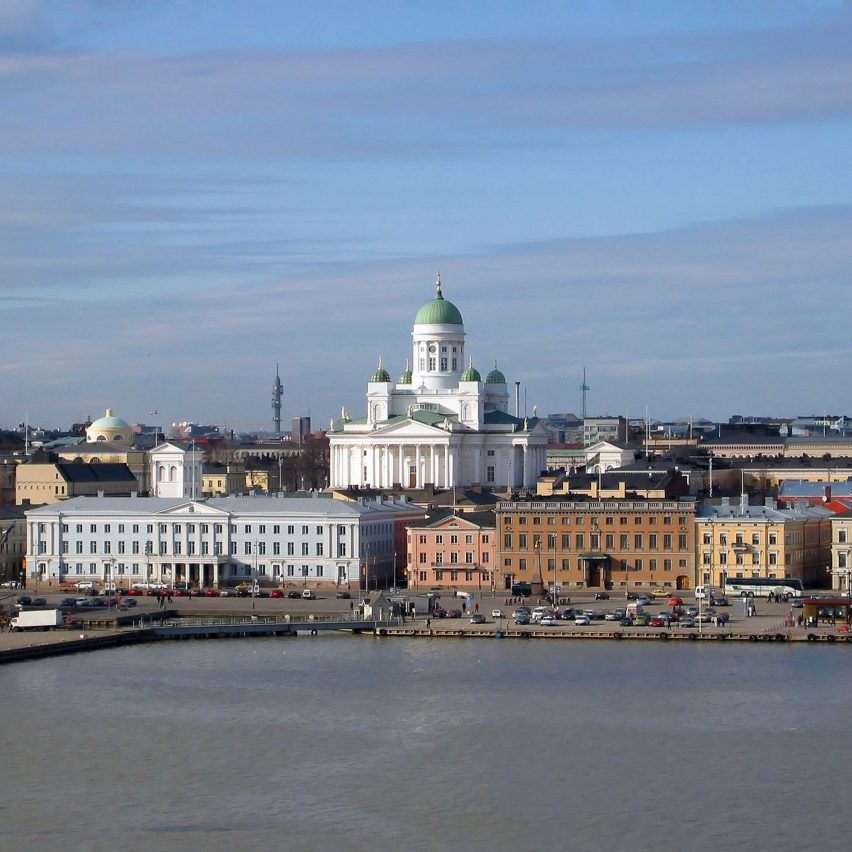
Set to be built on Helsinki's South Harbour the new museum would become the combined home of the Museum of Finnish Architecture and Design Museum Helsinki.

"It is a significant decision when the state is so strongly committed to the realization of the new Architecture and Design Museum," said Reetta Heiskanen, director of the Museum of Finnish Architecture, and Jukka Savolainen, director of the Design Museum Helsinki.

"In the museums, we are now focusing our efforts on playing our part in rebuilding Finland in the midst of the crisis that affects everyone. We will do our outmost to make the museum a place for everyone."

Momentum is now

The directors of the Museum of Finnish Architecture and Design Museum Helsinki hope that the Architecture and Design Museum will build on the momentum of several high-profile cultural projects that have completed in the city in recent years.

"The momentum is now, Finland has recently had a museum boom and also Helsinki's new central library Oodi has been well received," Heiskanen and Savolainen told Dezeen.

"Now it’s time to establish a new museum of architecture and design. Finland has all that it takes to bring attention to Nordic well-being and design."

Although the world is experiencing a global pandemic, Heiskanen and Savolainen believe that this is the right time to establish this new cultural institution.

"Core of the new museum is to make design thinking accessible to everyone," they said.

"Global problems in today's society require new types of solutions. We strongly believe that the new museum can empower everyone to take an active part in the new solutions of the future."

New museum planned to open in 2025

At present the pair of museums are located in two 19th century buildings that stand alongside each other in the Kaartinkaupunki area of the city.

This is a couple of blocks away from the South Harbour, where the proposed Architecture and Design Museum will be located.

Although a site has not yet been determined for the new building, the area being discussed includes the site of the proposed Helsinki Guggenheim museum, which was abandoned in 2016 after the Finnish government refused funding.

According to representatives from the Museum of Finnish Architecture and Design Museum Helsinki the new museum is planned to open in 2025, with the next stage of development a discussion with the national and state governments.

"In the view of the museums, the next step is joint discussions with the Ministry of Education and Culture and the City of Helsinki, and to advance the project further towards the establishment of a project organization, as well as further development of the operating model," said Heiskanen and Savolainen.

"The goal is for the museum to be open to the public in 2025."

The news of the museum was welcomed by Samuli Miettinen, founding partner of Helsinki-based JKMM, which recently completed the subterranean Amos Rex museum and has designed a disc-shaped extension to National Museum of Finland, in the city.

"The city's commitment to commissioning the new Architecture and Design Museum is hugely welcome in what is an uncertain time for many," Miettinen told Dezeen.

"It speaks of Finland’s commitment to Modern architecture and its ability to harness democratic values. A museum building, in particular, is about a common good for society and about a belief in our shared future. Architecture has a unique role in mirroring this ambition and vision, about showing us what we want from life," he continued.

"This is the spirit of Helsinki's new museum project and, as architects, we think an institution that will help get this message across is vital, especially today."

Photo of Helsinki's South Harbour is by Mikko Paananen.

The post Helsinki to build Architecture and Design Museum as part of post-pandemic recovery plan appeared first on Dezeen.


from Dezeen https://ift.tt/2Uapm13

From Lighting combines cutting-edge technology with local production

VDF x Alcova From Lighting

Independent design brand From Lighting's founders Cesare Bizzotto and Tobias Nitsche discuss how the coronavirus pandemic could change lighting design in this interview for VDF's collaboration with Alcova.

From Lighting, a lighting design brand based in Germany and Italy, had an early warning of the impact the coronavirus would have on its business.

"Our local supplier informed us that the Chinese suppliers, who are normally incredibly responsive to messages, were suddenly not answering; flights to China were cancelled, and their factories were closed," the founders said.

VDF x Alcova From Lighting
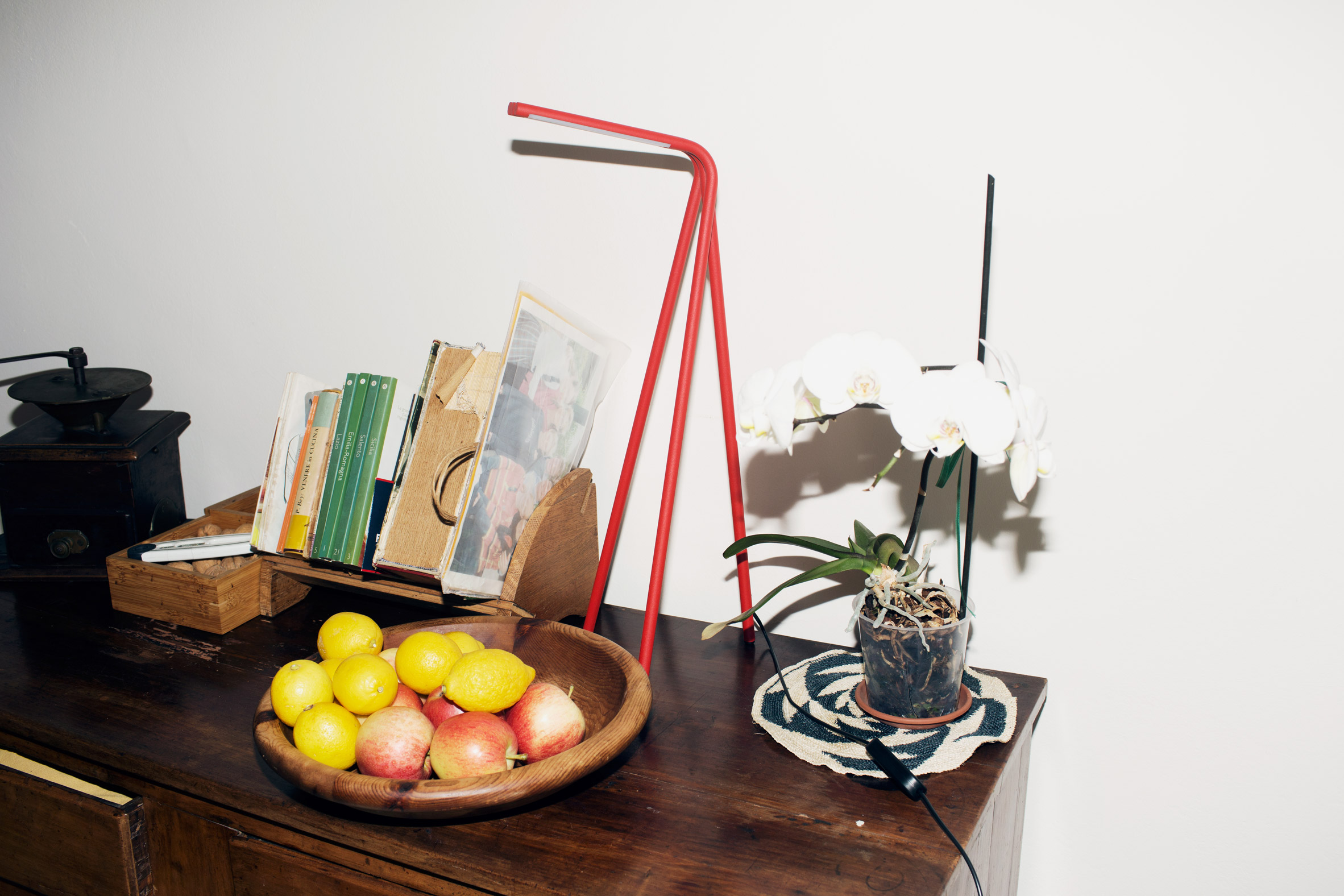
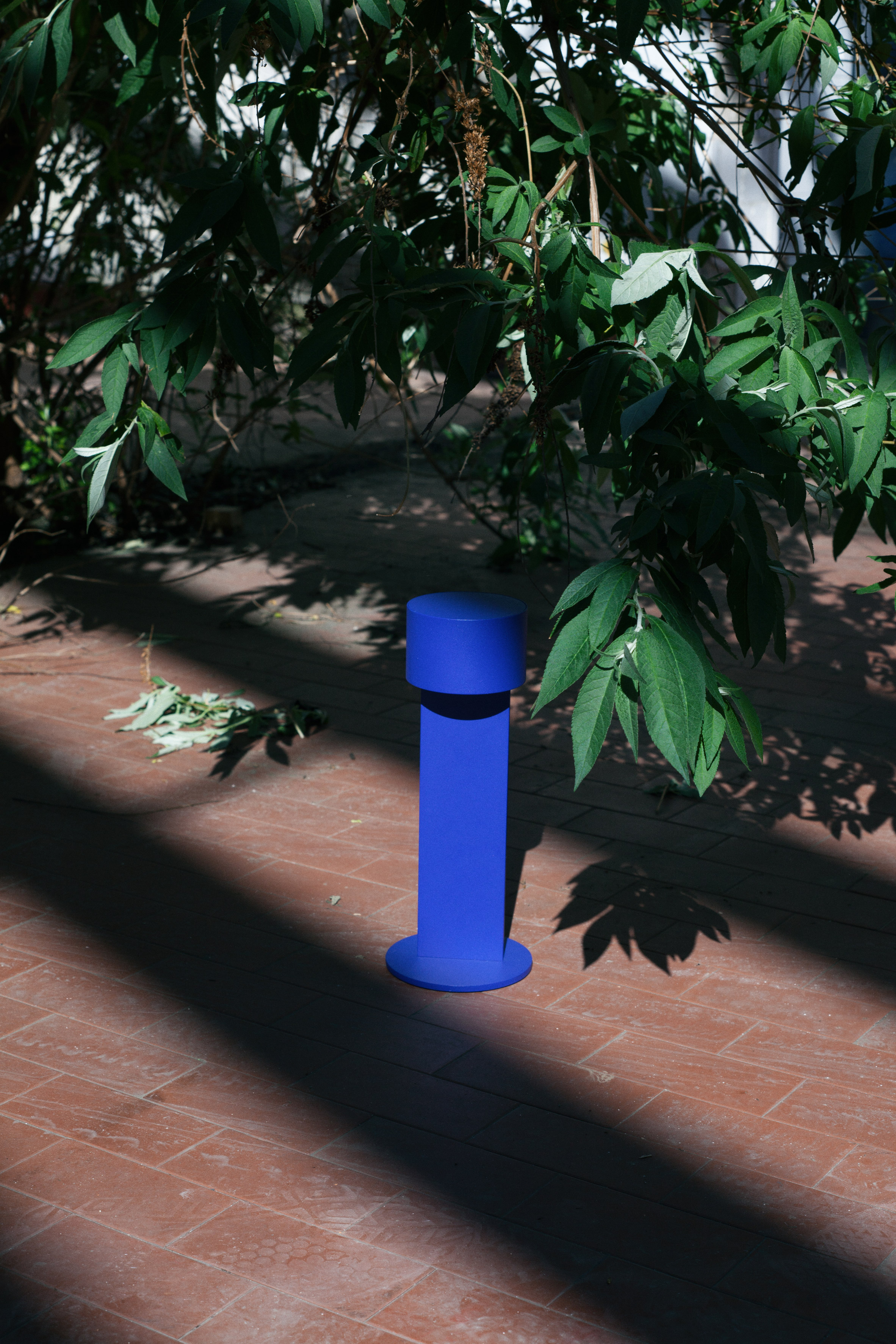
From Lighting's steel Aspect lamp echoes the shape of a tripod

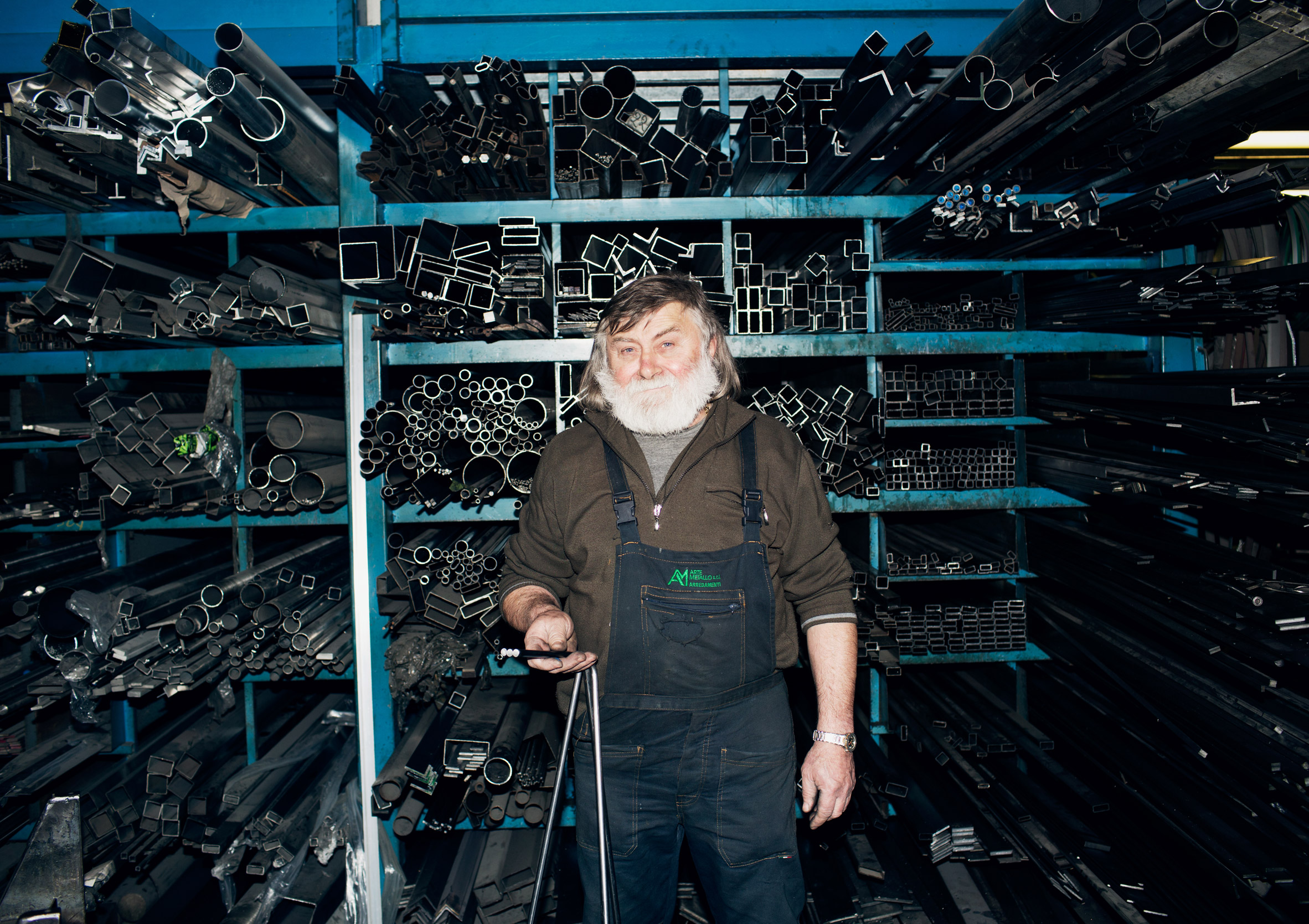
The studio, which works with a local network of industrial workshops in northern Italy, produces lamps that integrate cutting-edge technology and an ethical commitment to local manufacturing and collaborative teamwork.

The founders met when studying together and realised they were as interested in the production of their pieces as the design.

"We had a specific aesthetic in terms of design, materials, even graphic design, but equally an ethic of production that we wanted to achieve – and we were able to do so by taking advantage of the network of industrial workshops in the region around Cesare's hometown of Padova, northern Italy," From Lighting explained.

VDF x Alcova From Lighting
From Lighting works with local industrial workshops to create its products

While the lockdown in Italy affected the studio's business, it also created new opportunities, the founders said. "We had time to take on several business opportunities focused less on our products and more on our services – customisations, special orders, and product development for third parties."

"In fact, the results were so encouraging that, alongside our brand From Lighting, we are now creating a parallel structure fully dedicated to product development and production," the studio added.

Bizzotto and Nitsche believe that the shift to working from home will continue after the quarantine, and said this would have an impact on the lighting industry.

VDF x Alcova From Lighting
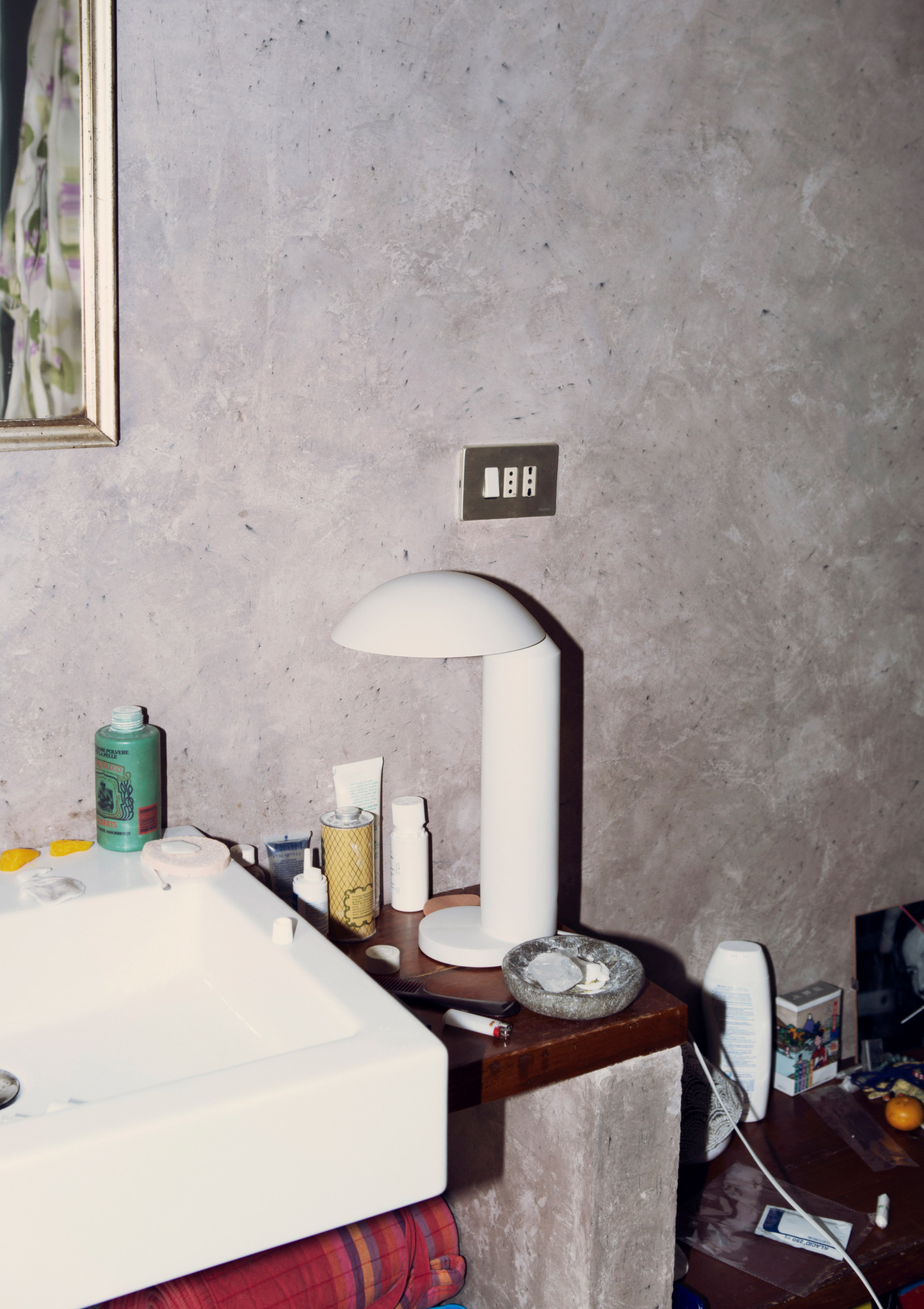
The portable Times lamp is recharged via USB cable and stays lit for up to seven hours

"Lighting has always been a crucial part of office design; lamps had to be functional and fulfil certain requirements in the shared workspace," the duo said. "But in a home office, the functional and aesthetic needs of lighting would be completely different; it would define an entirely new brief."

Fron Lighting was to have shown its pieces as part of Milan-based design platform Alcova at this year's Salone del Mobile, which was cancelled due to the coronavirus pandemic. Instead, Bizzotto and Nitsche are showing with Alcova at VDF and spoke about their work and the advantages of producing locally.

VDF x Alcova
Exhibitor:
From Lighting
Website: from.lighting
Email: info@from.lighting


Alcova:​ What were your ambitions in starting your own brand?

From Lighting: We began to collaborate as a design studio after studying together, and we quickly became interested in managing our own production as we were equally interested in design and making. We had a specific aesthetic in terms of design, materials, even graphic design, but equally an ethic of production that we wanted to achieve—and we were able to do so by taking advantage of the network of industrial workshops in the region around Cesare's hometown of Padova, northern Italy.

This accessibility to smaller-scale producers allowed us to build our company with lightness and flexibility. If you have to buy your own machine as a new company, for instance, a simple metal pipe bender, you will feel obligated to design objects with bent pipes, to use the machine at maximum capacity in order to recoup the investment. We outsource all of our production to local manufacturers who we know personally, so we can feel free in our designs while still ensuring a high standard of precision and care.

Alcova: What was the experience of the lockdown from the perspective of your company?

From Lighting: ​We had an early warning of what was to come when we were ramping up production in late January. The circuit board for one of the lamps, Times, is produced here in Italy but requires a small component that comes from China. Our local supplier informed us that the Chinese suppliers, who are normally incredibly responsive to messages, were suddenly not answering; flights to China were cancelled, and their factories were closed. The electronics supply chain was one of the first to break down, and the local industry was seriously worried while the public was still underestimating the scale of the crisis.

VDF x Alcova From Lighting
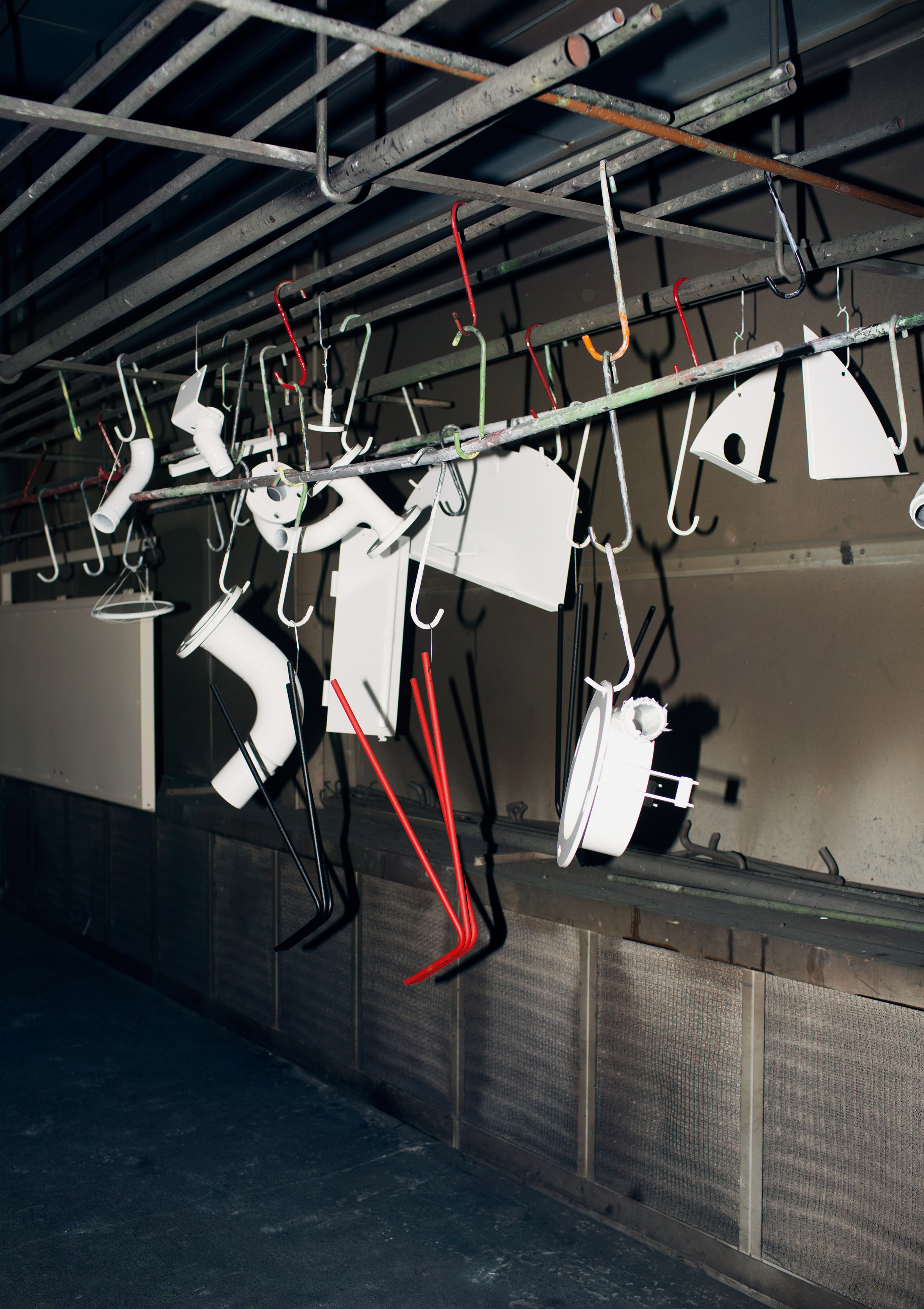
A raw version of the Aspect lamp in the workshop where it's made. Photo is by Daniel Delang

From Lighting: For the most part, we were very lucky not to be negatively impacted by the lockdown. Tobias lives in southern Germany, so we were already accustomed to collaborating through virtual channels. In the Veneto region, there were a few weeks where producers were among the few essential workers able to continue: it was quite a surreal experience to see the streets or highways completely empty. Later, when the sales venues and manufacturing sites were completely closed, we had time to take on several business opportunities focused less on our products and more on our services—customisations, special orders, and product development for third parties.

In fact, the results were so encouraging that, alongside our brand From Lighting, we are now creating a parallel structure fully dedicated to product development and production, which will increasingly be outsourced as a specialised task by larger corporations.

Alcova: ​How will the dynamic of global versus local change for industrial production due to the pandemic?

From Lighting: We have always seen great advantages in producing locally: our priority has never been to increase profits by allocating production according to the lowest international price, but instead to shorten supply chains as much as possible and work with our neighbours. This strategy had unexpected benefits in the past few months. We feel quite validated now that many societies have become painfully aware of certain material and logistical conditions of the industrialised world, and perhaps now have time to rethink them. In general, we think people will start caring more about their immediate surroundings, in terms of the design of their home interior as much as the socioeconomic life of their local community.

VDF x Alcova From Lighting
The studio's Abyss table lamp has a simple, graphic design

A​lcova: Do you predict any changes in user needs or design functions in the near future?

From Lighting​: For many people, the shift to working from home seems likely to endure past the quarantine. Some people found they were even more productive in a private, relaxed setting, and this change could definitely create demands for new kinds of objects. Lighting has always been a crucial part of office design; lamps had to be functional and fulfil certain requirements in the shared workspace. But in a home office, the functional and aesthetic needs of lighting would be completely different; it would define an entirely new brief.

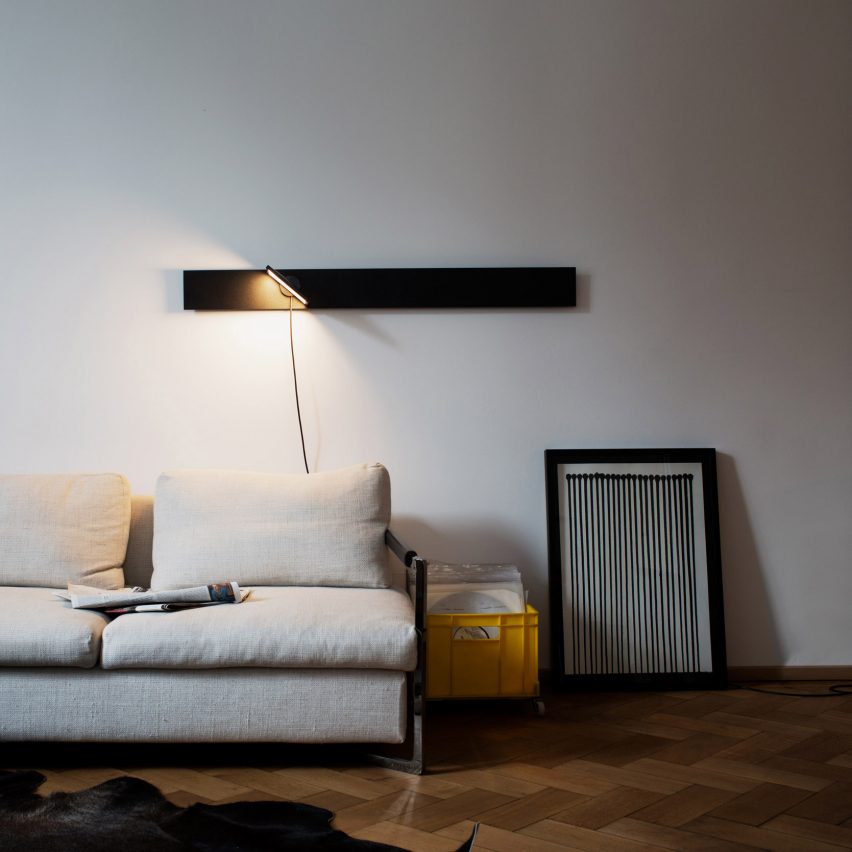
In all of our lamps, the interaction between the user and the object is a key element: Times is a cable less lamp that can be carried around with the simplicity of a candle and dimmed by turning the head, while Piazza is a magnetic wall lamp that can be moved freely across its base panel and rotated 360º to direct the light. Our lamps combine intuitive gestures with the most up-to-date technology in order to have a positive presence in people's everyday environments, and contemporary life will always be one of our main sources of inspiration.


Virtual Design Festival is the world's first online design festival, taking place on Dezeen from 15 April to 10 July 2020.

Alcova is a Milan-based platform established by Italian practices Space Caviar and Studio Vedèt, which champions independent design through a programme of exhibitions. The team consists of
Valentina Ciuffi, Joseph Grima, Martina Muzi, Tamar Shafrir and Marco De Amicis.

The VDF x Alcova collaboration presents interviews with eight studios that were set to be featured at the platform's Salone del Mobile presentation this year.

The post From Lighting combines cutting-edge technology with local production appeared first on Dezeen.


from Dezeen https://ift.tt/370USnt

Sammlung Walter is not interested in "objectifying" its products

Sammlung Walter is not interested in "objectifying" its products

In an interview published here as part of VDF x Alcova, German siblings Merle and Till Richter of Sammlung Walter spoke about how they see their fashion and furniture pieces less like products and more like experiments in the "art of fabrication".

"We see Sammlung Walter as a Gesamtkunstwerk, a universe of possibilities for ourselves as designers that leaves space for others to share and transform the work into alternative directions without limitations," said the duo.

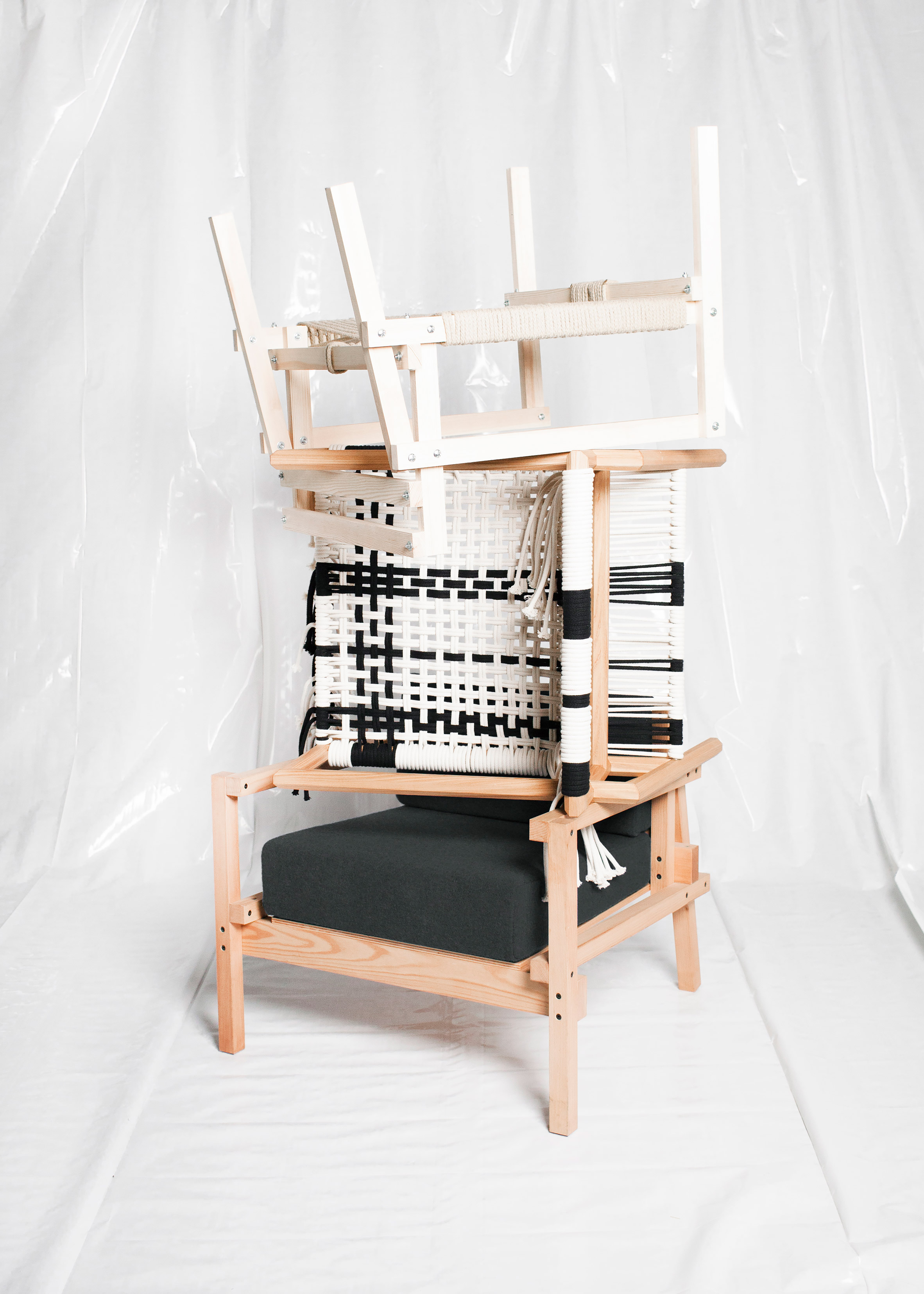
The studio, founded by Merle and Till Richter in 2018, creates three versions of each of its pieces based on three different processes – industrial mass manufacturing, slow craft production and DIY, which opens up the design to the wider public via open-source blueprints.

"We are less interested in objectifying our products than in using them as entry points to a larger discussion," they explained.

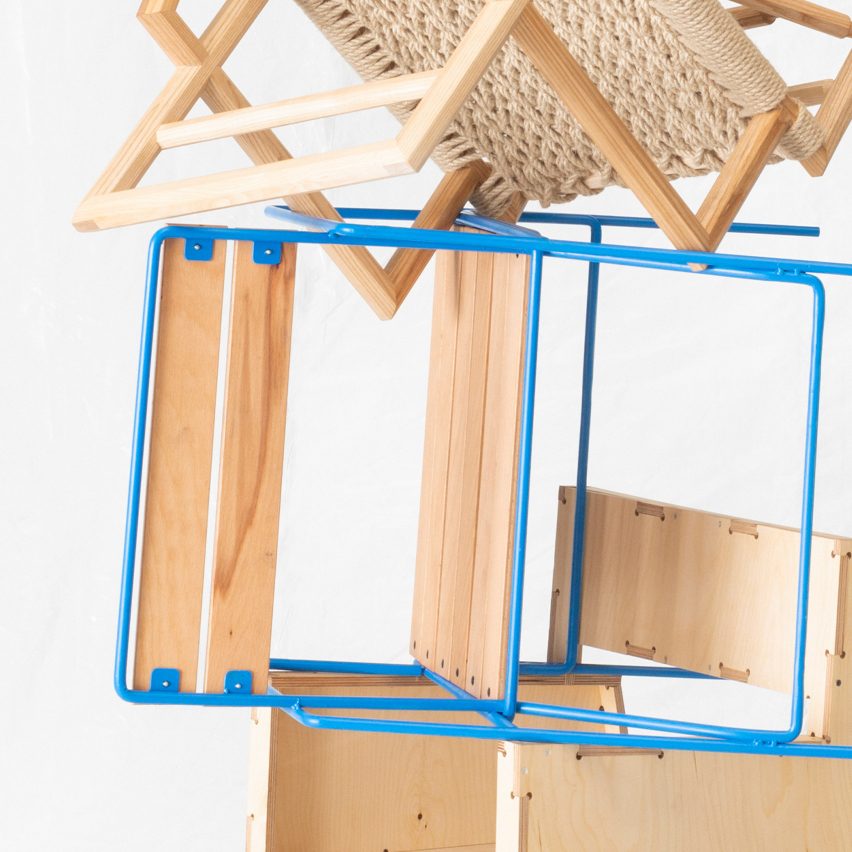
The industrial, craft and DIY versions of the WTR-001 armchair feature different upholstery

In this way, Sammlung Walter's work also represents a conversation between different design disciplines, with Till trained in carpentry and Merle in textiles.

Despite the hands-on exploration at the heart of this process, the Berlin and Hamburg-based studio is also heavily reliant on digital communication both in the design process and in the way it ultimately presents its products without a showroom.

The Alcova exhibition during this year's Salone del Mobile was set to be only the studio's second physical showcase. But with the fair suspended until 2021, the designers have joined the Alcova team for an interview instead, to share their thoughts on representing work in a virtual space.

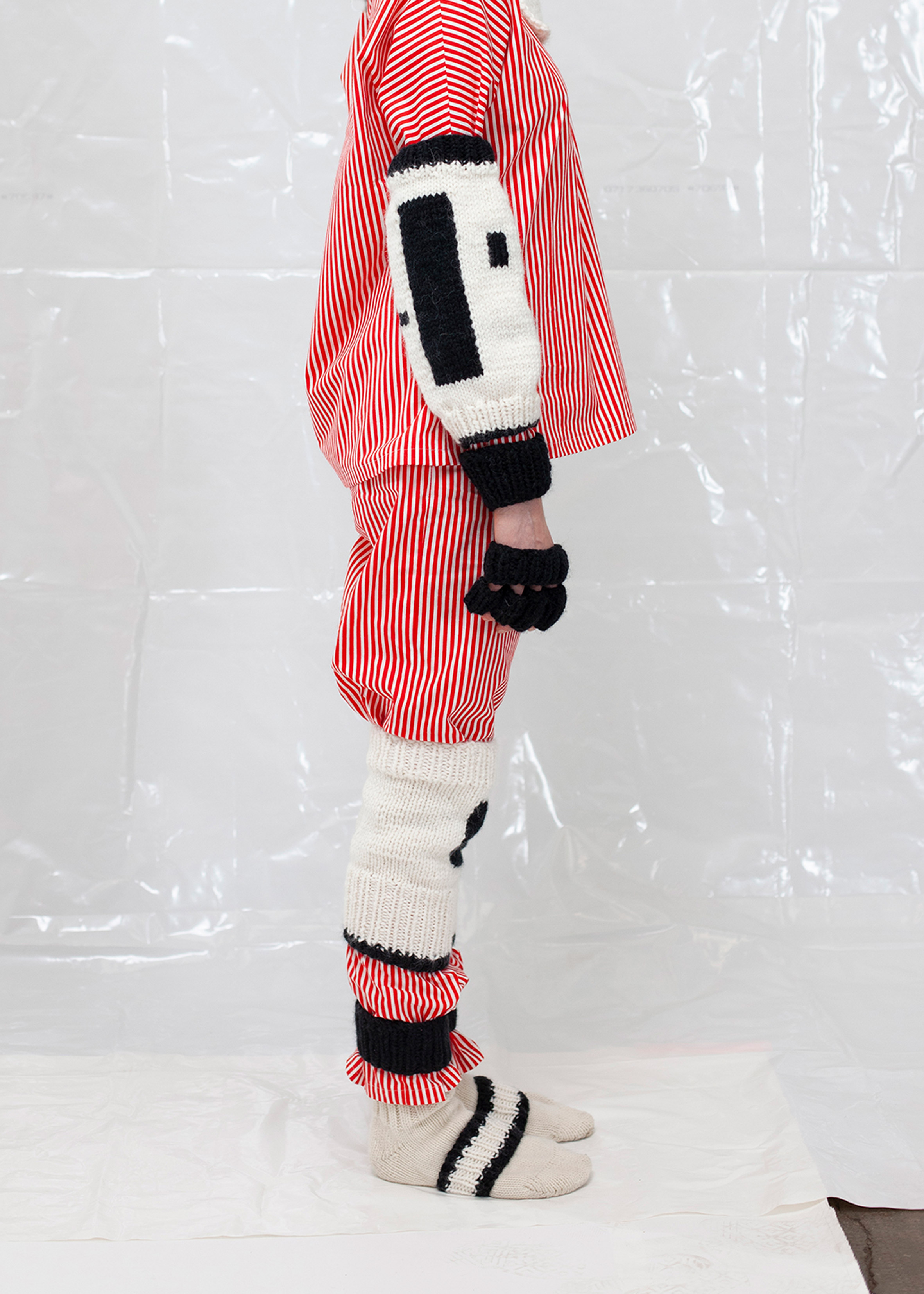
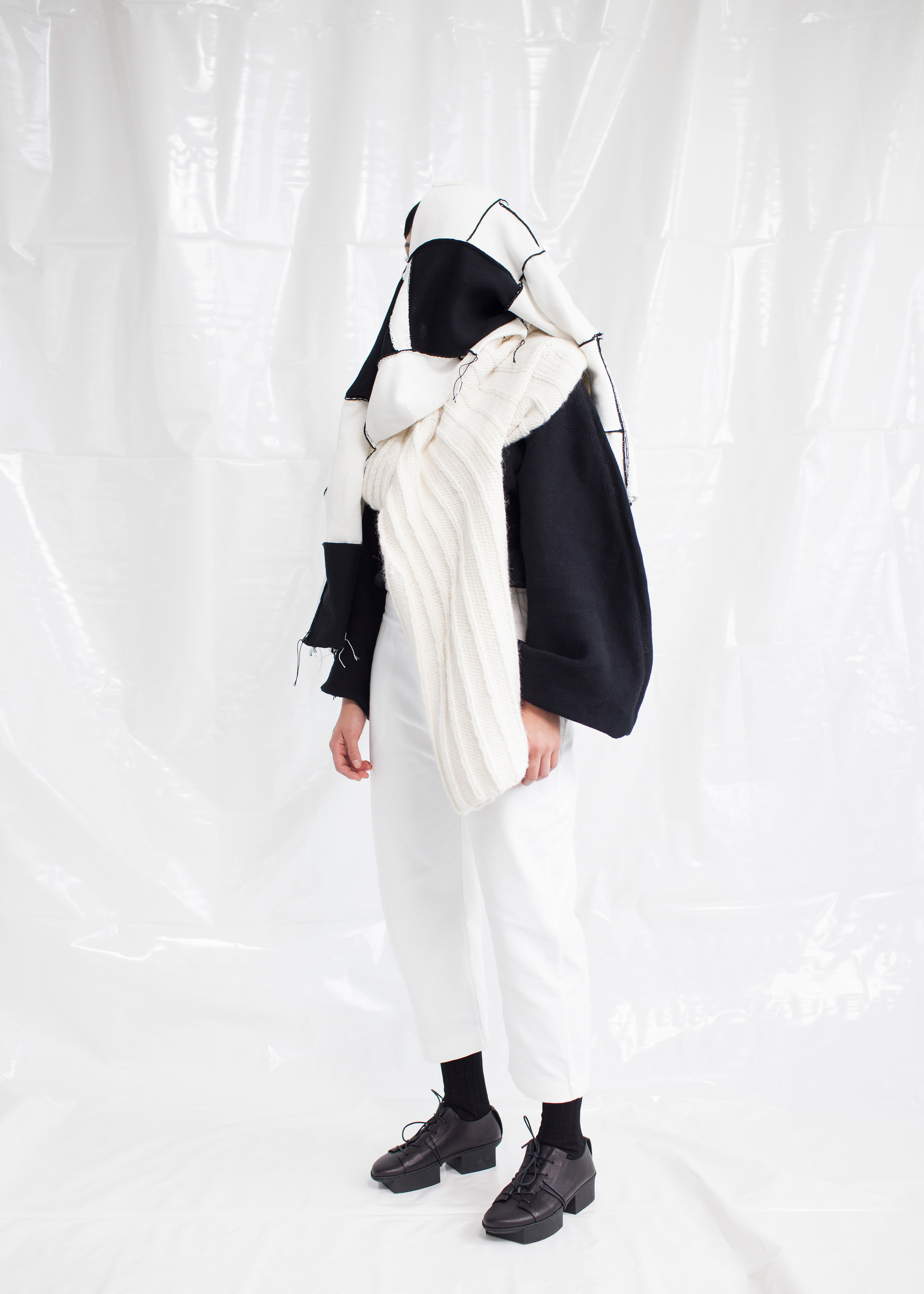
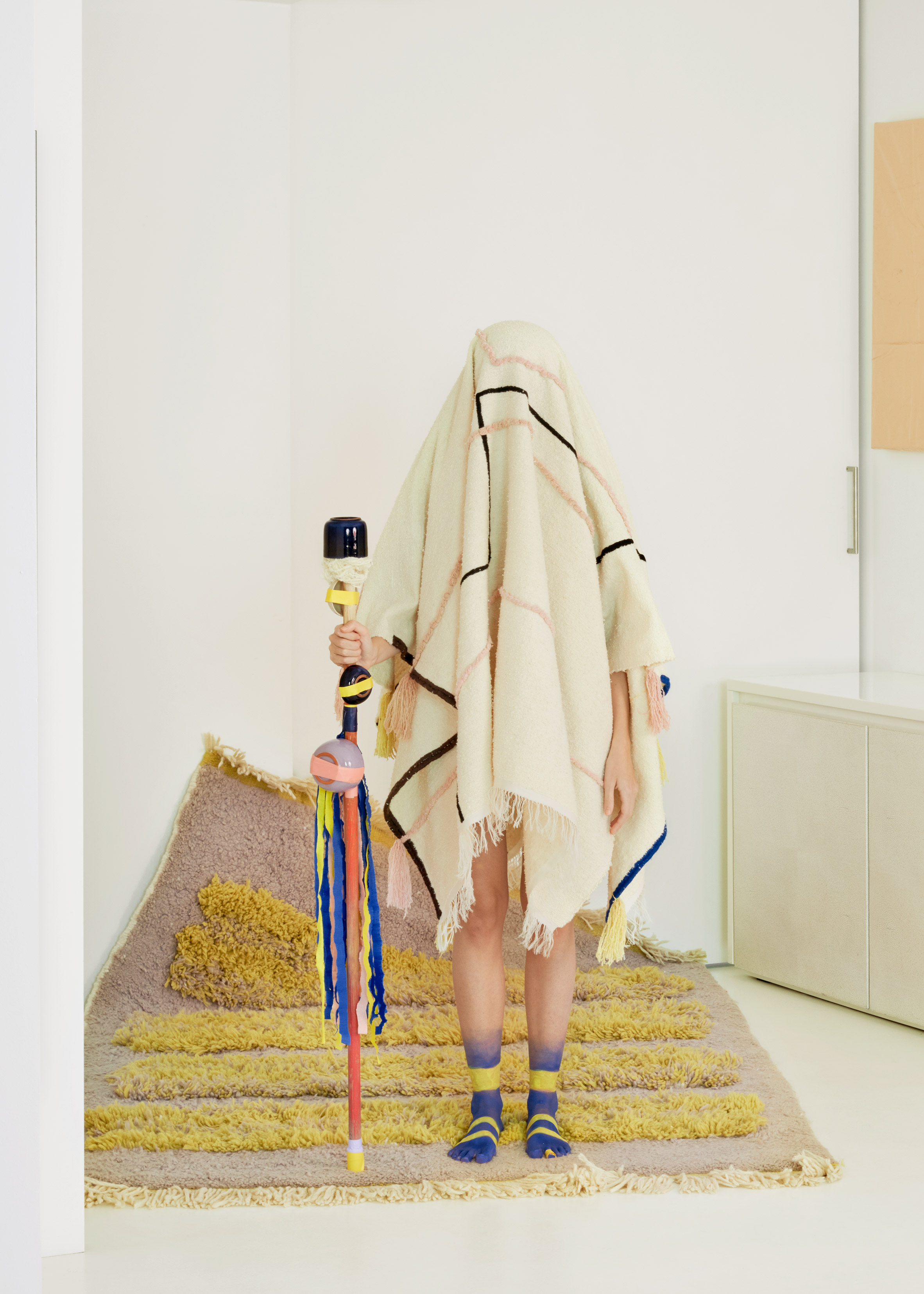
Turtleneck WMR-007-R is the craft version of this design and features knitted garments for fingers, hands, arms, legs, feet and neck

VDF x Alcova
Exhibitor:
Sammlung Walter
Website: sammlungwalter.de
Email: office@sammlungwalter.de


Alcova: Can you explain your studio concept?

Sammlung Walter: With Sammlung Walter, we want to explore how things are made, to think about their value whether they are industrially produced, expertly crafted or DIY, whether they are made for sale or as private commissions and how they construct different conditions of collaboration.

We always start from the problem of having a desired outcome but not knowing precisely how to get there or how to choose between multiple typologies of process. We explore this “art of fabrication” through two primary frameworks. The first focuses on our editions and products in three variations – DIY, industrial, and craft – and allows us to experiment with different techniques, which we can then offer to the public through our online shop.

The second is more like a lab for our projects – such as interior design for events or fabrication for artists – and for research into topics like sustainability. There is a lot of diversity in the way we work, but all of these approaches are fundamentally related and coexist in everything we do. Through that lens, we hope to encourage people to become involved in different ways.

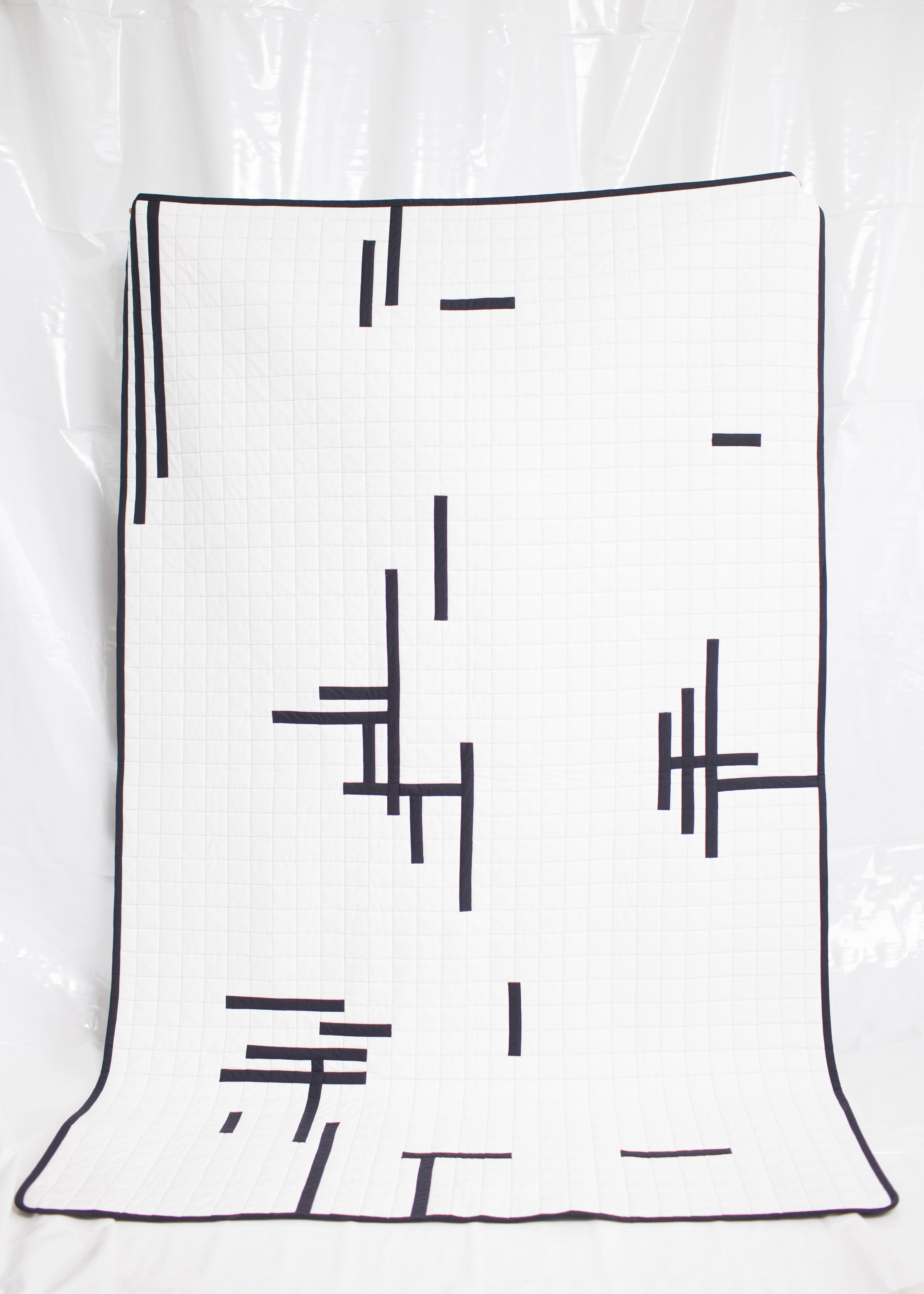
The industrially produced Quilt WMR-003-B is made up of three different cotton layers

Alcova: When you are starting a new project, how do you define these three variations – DIY, industrial or craft?

Sammlung Walter: We always start from a topic that interests us, which usually leads to a certain technique so we often explore the industrial version first. The DIY version has to translate that technique into something which is practical and understandable as an instruction set, while the craft version can explore the most intricate possibilities of the same technique.

However, the boundaries between these three modes are fluid and can be hard to pinpoint. For example, some craft pieces are entirely handmade, while others use complex CNC machinery – for us craft simply means not compromising on how something is made for the sake of practicality, even if you have 10 times as many surfaces to sand or if it takes many more hours to knit by hand than by machine.

In the industrial version, of course, the design needs to make efficient use of automated or mechanical tools as well as the logistics of packaging and assembly; and the DIY design should guide a learning exercise without being too complex or time-consuming.

The fundamental questions are, "What can I handle? Which tools can I employ? What is important about this way of producing?" We try to leave open the end result to allow ourselves space for further development – for example, to compare the value of hand-knitting versus machine-knitting on a material level firsthand, or to co-produce our pieces with other manufacturers and artists.

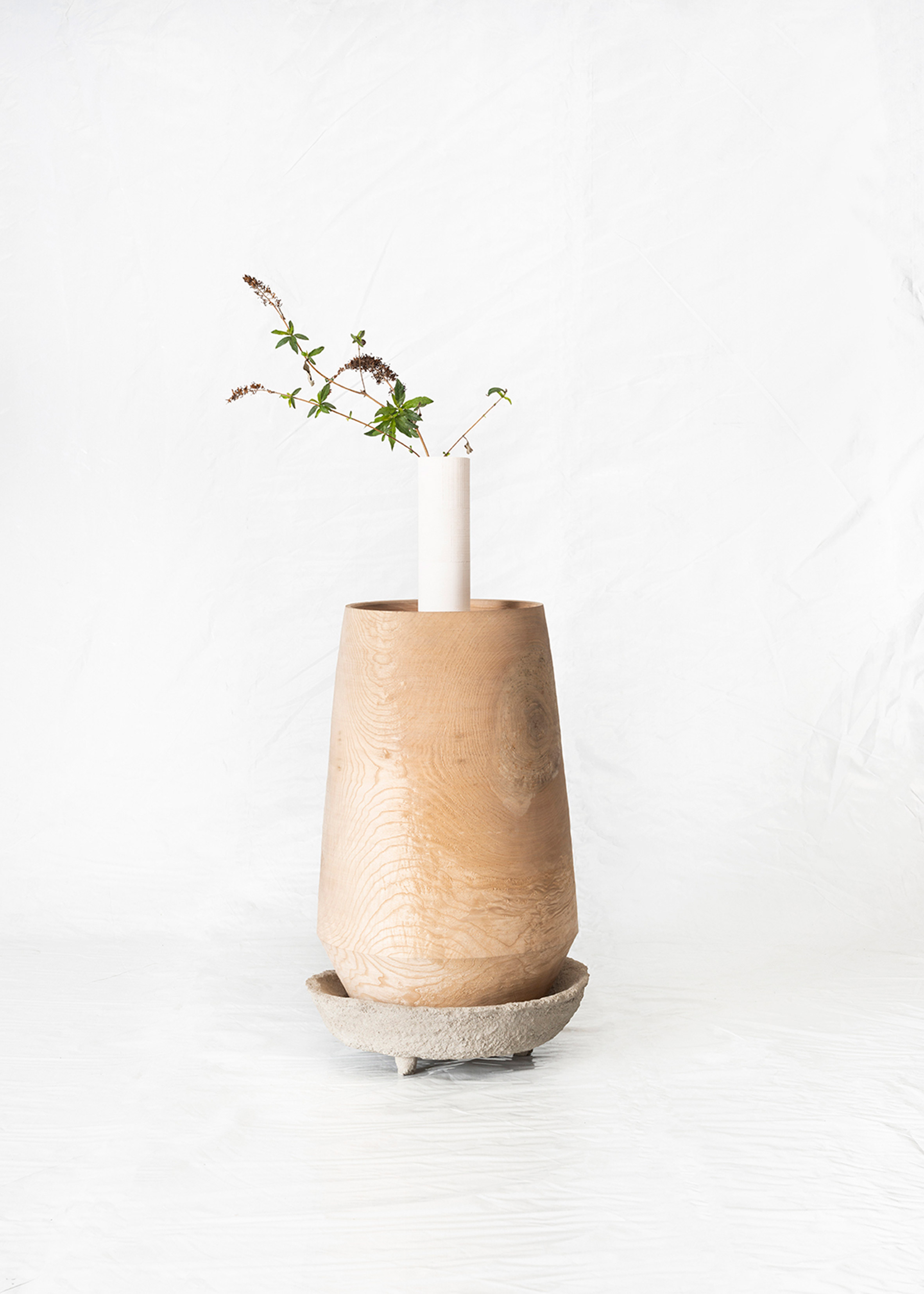
The three variations of the WTR-008 bucket feature materials from wood and 3D-printed plastic to a sand and cement mixture

Alcova: What aspects of your working model enable you to handle this diversity of projects?

Sammlung Walter: We began by bringing together different knowledge. Till studied carpentry and social design and Merle studied integrated design with a focus on textile and fashion. Generally, there is not much collaboration between product design and fashion design, as the industries and techniques are quite separate.

Our motivation to work together is not about literally combining the two disciplines in each product, but about growing our network, sparking discussion, and expanding our skill set so that Sammlung Walter can handle any kind of process that emerges from our research topics.

Because we live in different cities, we are in contact mainly through online channels for discussion and digital work, while we try to explore the physical production as much as possible through Till's workshop, which has facilities for many different materials from wood and metal to ceramics, including advanced technologies. The workshop is shared with other designers from different backgrounds, so we can consult the expertise of, say, a jeweller or an electrician over a coffee and directly apply the range of knowledge from our whole network.

Alcova: How do you use different forms of communication to introduce your work to the public?

Sammlung Walter: Our main goal is to connect to people, to start conversations or collaborations with them. We are primarily focused on visual communication because we don’t have a showroom –the first time we brought together our products as a physical collection was last year at Salone Satellite and this year at Alcova would have been the second time.

The WMR-004 Pullovers are rendered monochromatically in black and white

We see our website as a map of our research and methods and it is designed to show the range of our work with even more transparency. We always reflect on the way we present, because websites and exhibitions have an enormous influence on what viewers see in our work.

We are less interested in objectifying our products than in using them as entry points to a larger discussion. For example, we create the free DIY instructions as generic blueprints that quickly convey the main concepts to an amateur and allow them to modify the final design to their own circumstances and wishes. We also work with photographers to give new interpretations to our existing products or use design as an intersection between artworks and social gatherings.

We see Sammlung Walter as a Gesamtkunstwerk, a universe of possibilities for ourselves as designers that leaves space for others to share and transform the work into alternative directions without limitations.


Virtual Design Festival is the world's first online design festival, taking place on Dezeen from 15 April to 10 July 2020.

Alcova is a Milan-based platform established by Italian practices Space Caviar and Studio Vedèt, which champions independent design through a programme of exhibitions. The team consists of
Valentina Ciuffi, Joseph Grima, Martina Muzi, Tamar Shafrir and Marco De Amicis.

The VDF x Alcova collaboration presents interviews with eight studios that were set to be featured at the platform's presentation during Salone del Mobile this year.

The post Sammlung Walter is not interested in "objectifying" its products appeared first on Dezeen.


from Dezeen https://ift.tt/2z0tB7Z

Trame orchestrates "improbable encounters" between Mediterranean craft practices

Trame orchestrates "improbable encounters" between Mediterranean crafts

In this VDF x Alcova interview, Ismail and Adnane Tazi of homeware brand Trame discussed how their cross-cultural collections build "virtual bridges across the Mediterranean".

"By putting artisans directly in contact with designers, our brand aims to create products at prices comparable to local markets," the Morocco-born duo explained.

This guarantees "creative authorship" for craft communities on both the European and the African side of the Mediterranean sea while also providing them with access to an e-commerce platform, according to the designers.

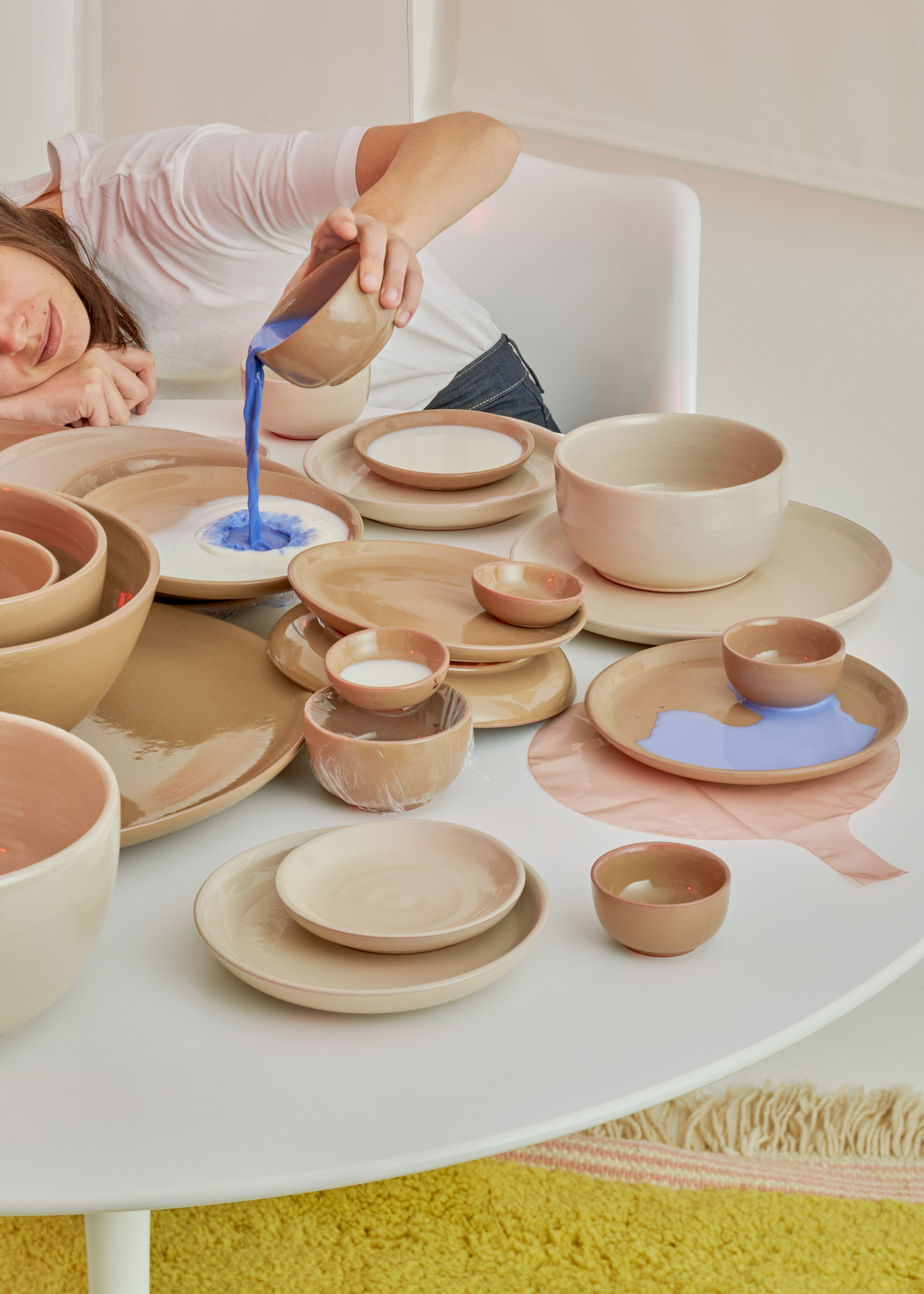
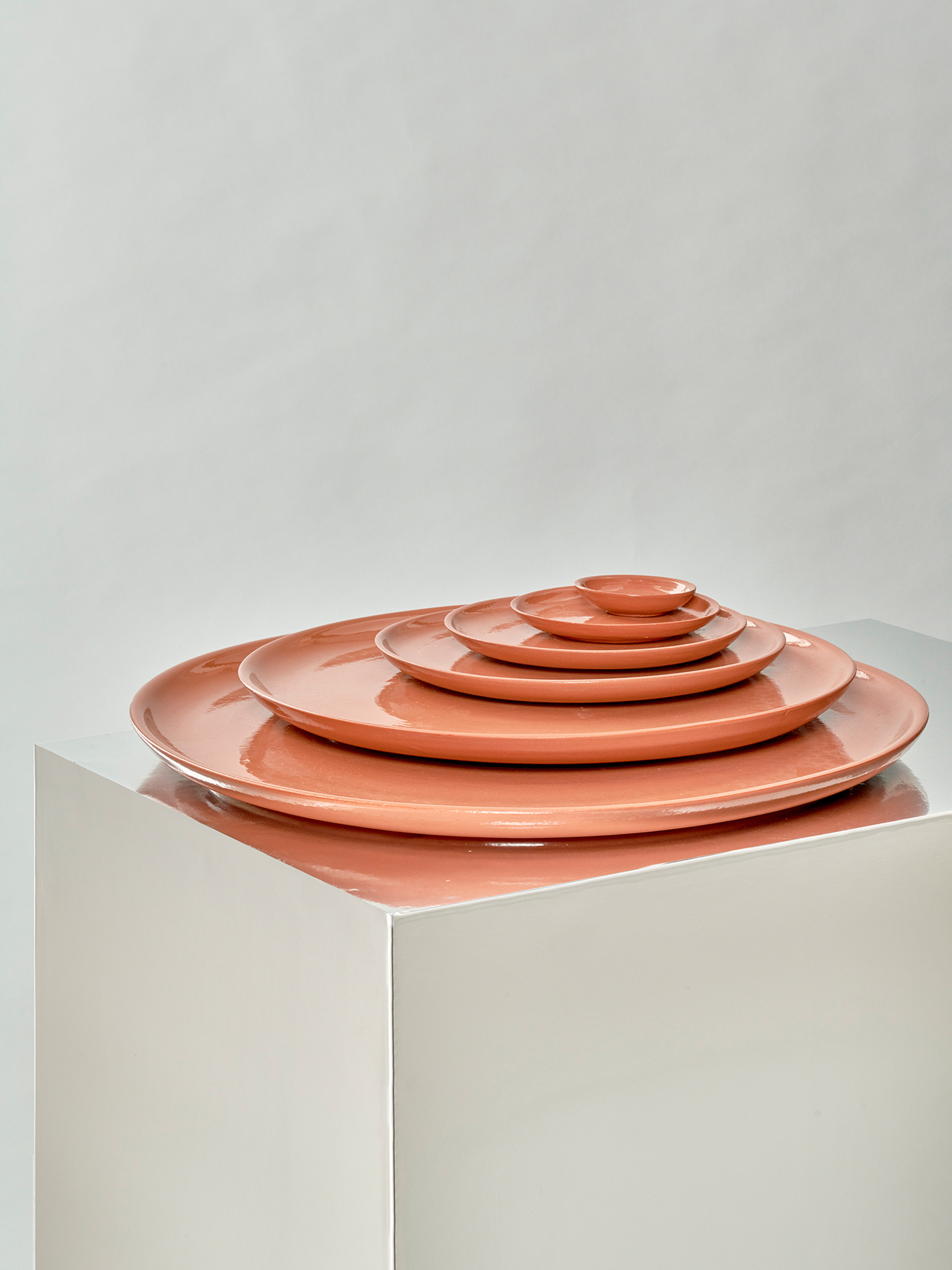
Giro is a set of ceramics designed by Julie Richoz that includes plates, cups and bowls

On a broader scale, the Paris-based brand hopes to foster a mutual exchange of different techniques and traditions.

"We are equally as interested in preserving time-bound aesthetic practices as in orchestrating improbable encounters – sometimes clashes – between different conceptions of making," said the siblings.

Trame, which was founded only a few weeks before France went into lockdown, was meant to present its latest collection during the Salone del Mobile furniture fair as part of a showcase by design platform Alcova.

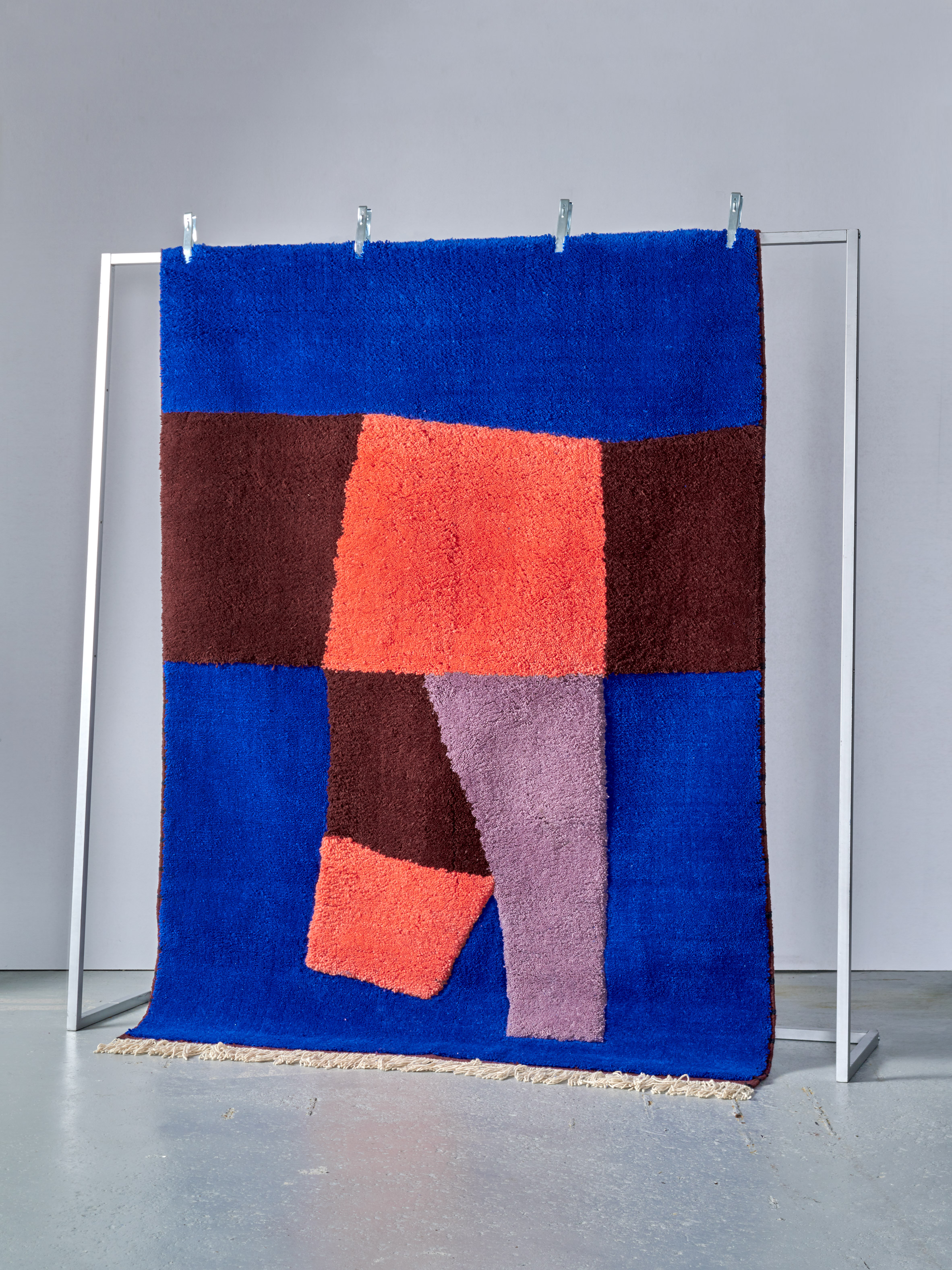
But in light of the pandemic, the Entwine series of colour-block rugs and glossy ceramics, created in collaboration with designer Maria Jeglinska, is now being presented here as part of the Virtual Design Festival.

Below, the Trame founders spoke to the Alcova team about their launch and how the brand's philosophy has taken on a new poignancy due to the physical and social constraints imposed in response to the coronavirus outbreak.

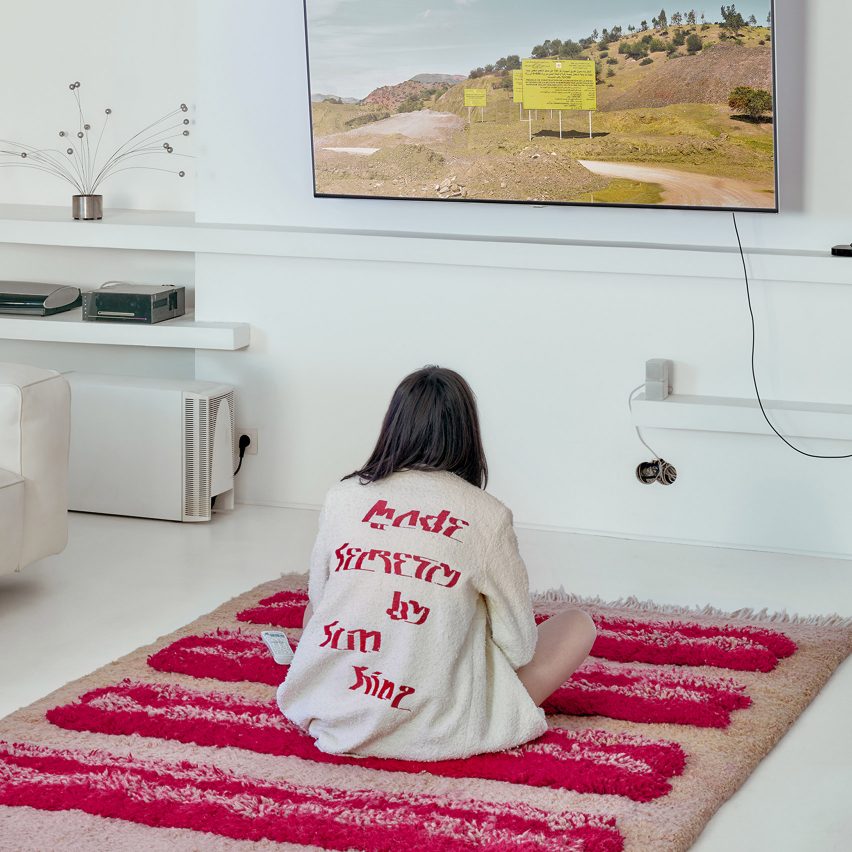
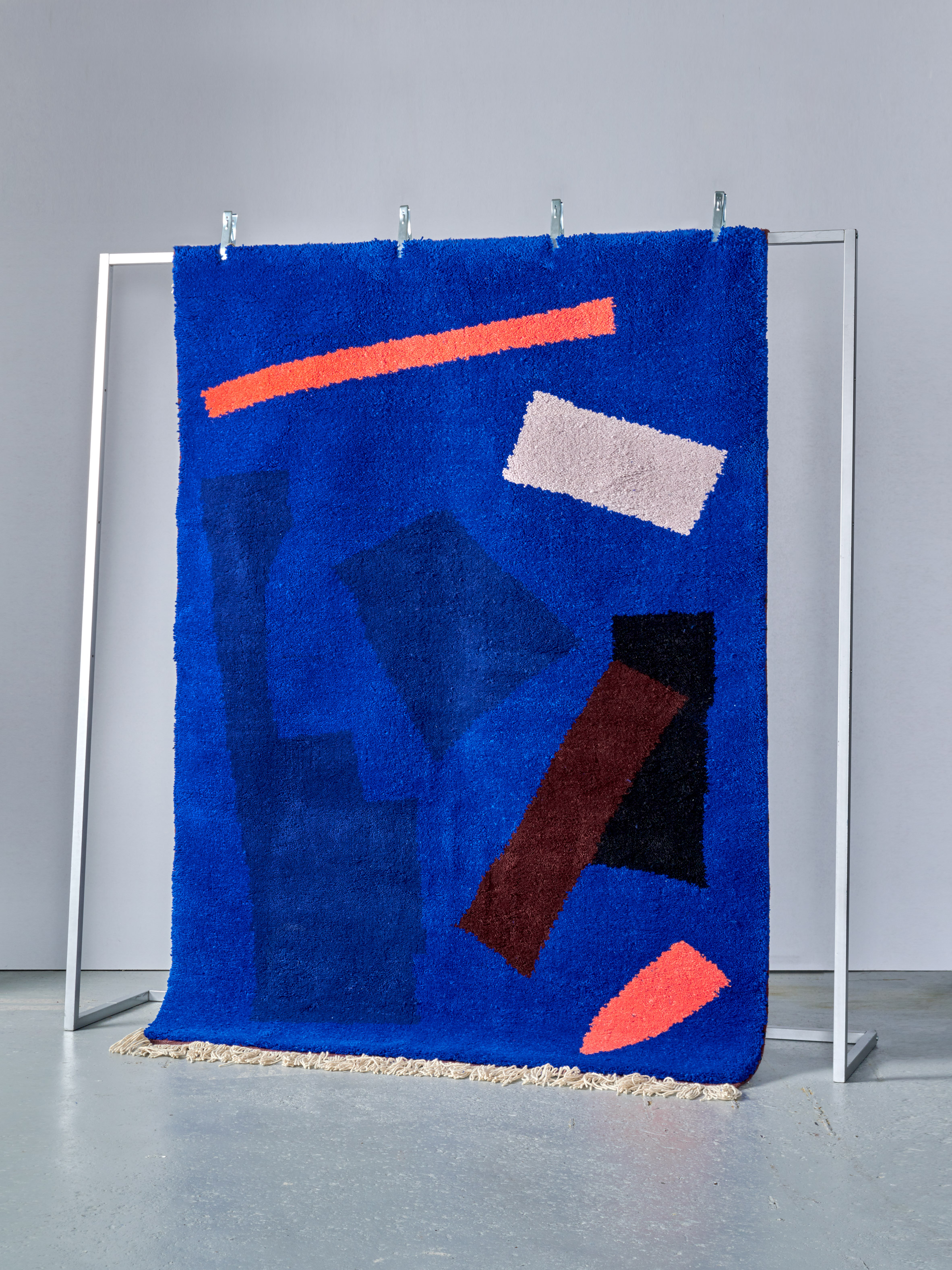
The studio's latest collection, called Entwine, features rugs by Maria Jeglinska

VDF x Alcova
Exhibitor:
Trame
Website: trameparis.com
Email: info@trameparis.com


Alcova: The narrative and business model of Trame are based on the poetics of travel and cultural exchange. Does the current crisis undermine your approach?

Trame: Our project is surely an invitation to travel but it is equally a celebration of Mediterranean culture through local craftsmanship. Since day one, in a pre-pandemic era, we have worked to promote collaboration, short-cycle production and artisan communities active in their places of origin. By putting artisans directly in contact with designers, our brand aims to create products at prices comparable to local markets but with the added investment of creative authorship, personal contact with makers and e-commerce accessibility.

In a world where we will still travel, but maybe less than before, Trame’s virtual bridges across the Mediterranean are culturally and economically even more valuable. For now, this forced pause gives us time to reflect before moving forward with our next milestone event in Paris at Le Bon Marché Rive Gauche in September.

Alcova: Has the current situation provoked new ideas or projects for Trame?

Trame: Trame’s fundamentals matter now more than ever. We are optimistic that the world will start moving again, with more awareness and with respect for limitations imposed for the common good. For our next capsule collection, we are exploring the possibility of a special project in Riace, Calabria.

The ceramics form part of Trame's larger first collection A Voyages to Meknes

Through Studio Vedèt, the Italian-based studio who guide the artistic direction of our brand, we learned of this small Mediterranean town, a famous case study of migration and integration within the larger framework of politics, economy, and industry in southern Italy.

Trame believes that cultural exchange could produce value and symbolic significance for sites like Riace and thus we are investigating possibilities for collaboration between the local artisan community and designers in the region. Now that restrictions are being eased in Europe, we hope to establish contact with local partners in the near future.

Alcova: In April, you planned to launch Entwine, a new collection of carpets and ceramics designed by Maria Jeglinska. What outcomes do you anticipate as you present your rug with Alcova through this Virtual Design Festival?

Trame: We’re convinced that the strong colours and beautiful contrasts of Maria's rugs will pierce the screens of Dezeen readers! All of our rugs are currently available through our online shop. The production of Maria’s ceramics was paused temporarily due to the pandemic crisis but they will be fully stocked for purchase by the end of the month.

The Entwine rugs were meant to be launched at Salone del Mobile in April

In general, we are enthusiastic advocates for convivial encounters in "real" space. We do not expect online connections to replace a shared physical materiality, although as a brand dedicated to e-commerce, we find other benefits in this approach. This virtual festival should continue and find its niche, in coexistence with physical gatherings when they can safely resume.

Alcova: Contemporary aesthetics and motifs versus craftsmanship with historical and local roots – how do these forces come together in your brand?

Trame: We were born and raised in Morocco and we could not fail to notice over the past few years an incredible boom in international interest regarding our local craftsmanship. But it was our conscious choice that Trame in contrast to other brands, would not be based exclusively on one ethnic artisanal tradition.

With time, our products will be manufactured not only in Morocco but also in Italy, France, Greece, Algeria and other countries around the Mediterranean. We are equally as interested in preserving time-bound aesthetic practices as in orchestrating improbable encounters – sometimes clashes – between different conceptions of making. The generosity of these collaborations leads to fruitful design outcomes that cannot be predicted in advance.

Entwine also includes a series of colour-block blankets

Alcova: Trame embraces cross-border material cultures. After the pandemic, is a future without borders even more urgent?

Trame: We think imaginative speculation is a powerful tool to find space for artistic exploration between given material realities and historical traditions. Our first collection, designed by Maddalena Casadei, Maria Jeglinska and Julie Richoz, was inspired by Madame de Blois, who was the daughter of King Louis XIV and received an engagement proposal from Moulay Ismail, one of Morocco's most influential sovereigns.

The design collection was inspired by the possibility of a marriage that ultimately never took place. How would it have altered the balance of Mediterranean power? As it happened, the trajectory of migration developed in one direction but what if it flowed the other way? After the pandemic, experts predict an increase in both border restrictions as well as migratory pressures due to economic shocks throughout global supply chains. Therefore, we believe that our message remains crucial and must be expressed even more decisively.


Virtual Design Festival is the world's first online design festival, taking place on Dezeen from 15 April to 10 July 2020.

Alcova is a Milan-based platform established by Italian practices Space Caviar and Studio Vedèt, which champions independent design through a programme of exhibitions. The team consists of
Valentina Ciuffi, Joseph Grima, Martina Muzi, Tamar Shafrir and Marco De Amicis.

The VDF x Alcova collaboration presents interviews with eight studios that were set to be featured at the platform's presentation during Salone del Mobile this year.

The post Trame orchestrates "improbable encounters" between Mediterranean craft practices appeared first on Dezeen.


from Dezeen https://ift.tt/3cqdUEU