Saturday, 4 July 2020

Envisioned Comfort furniture collection pairs velvet seats with wooden frameworks

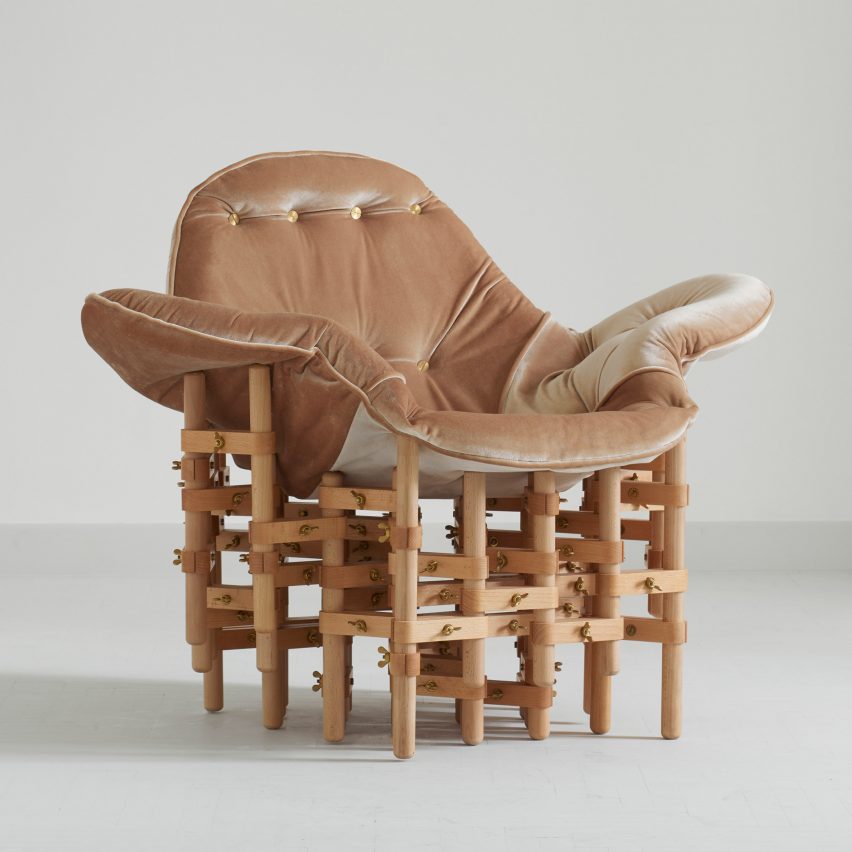
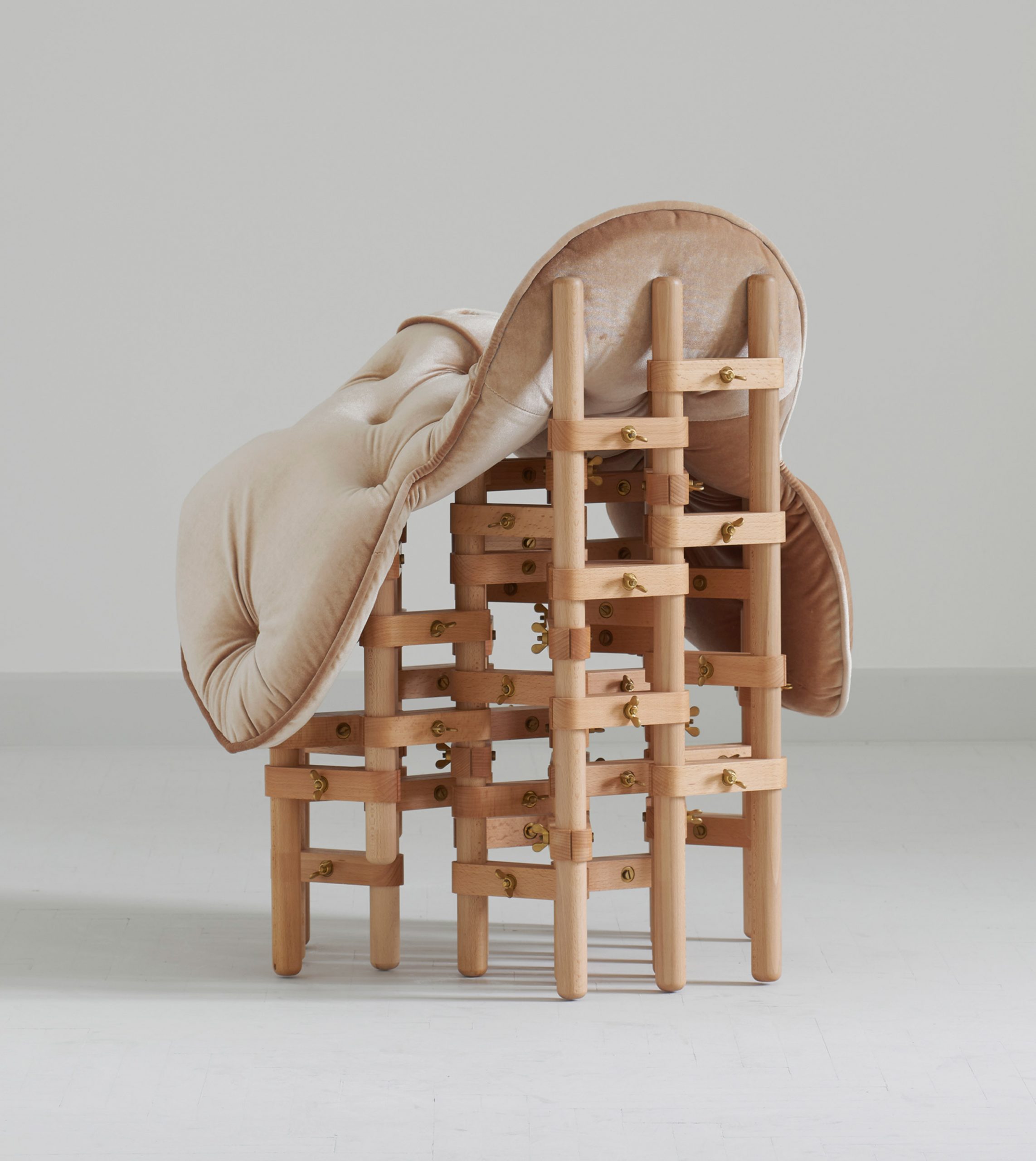
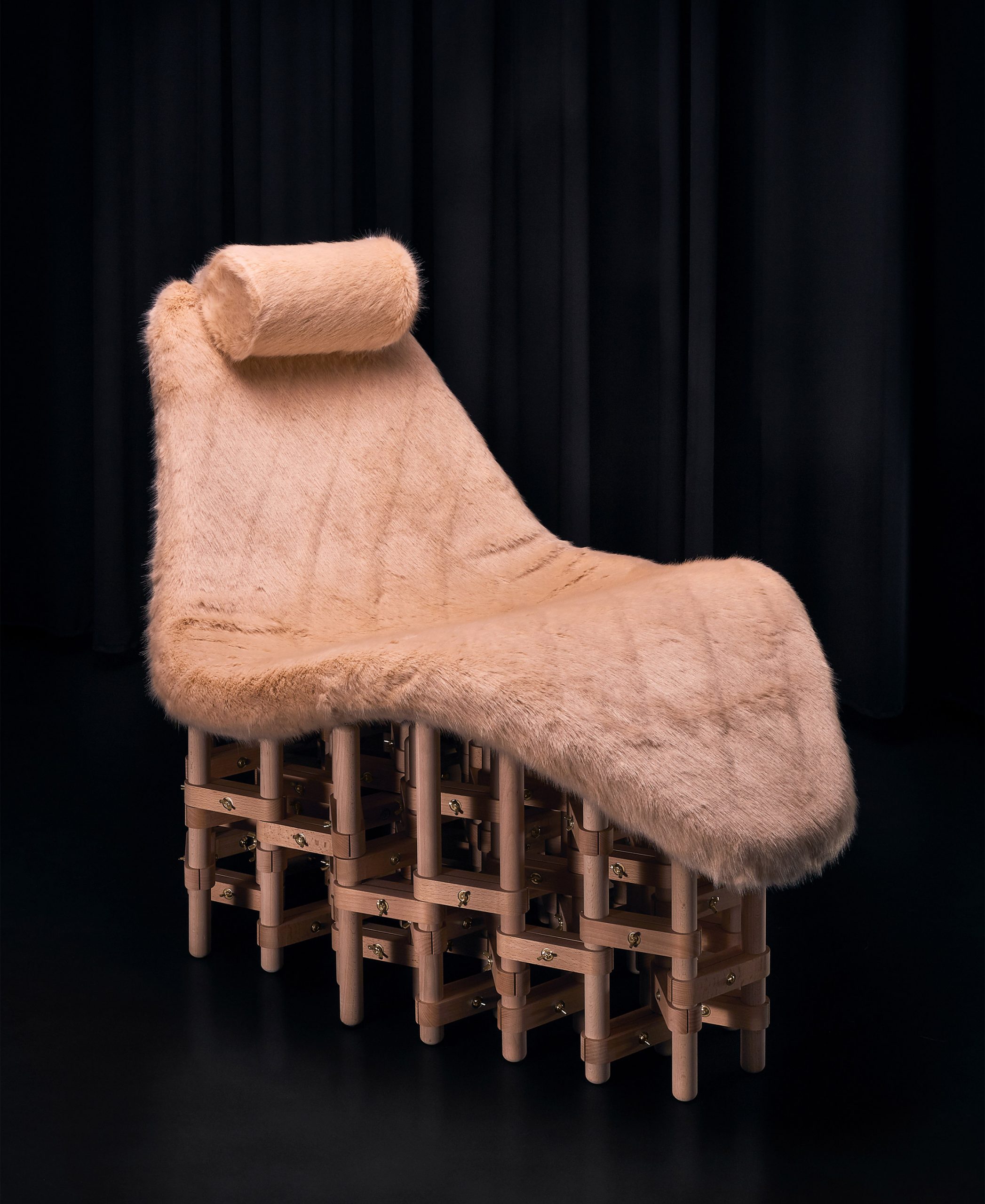
Plush, tufted velvet seats are drooped over complex frameworks of interlocking wooden poles in this furniture collection by Marija Puipaitė and Vytautas Gečas, which takes design cues from horse saddles.

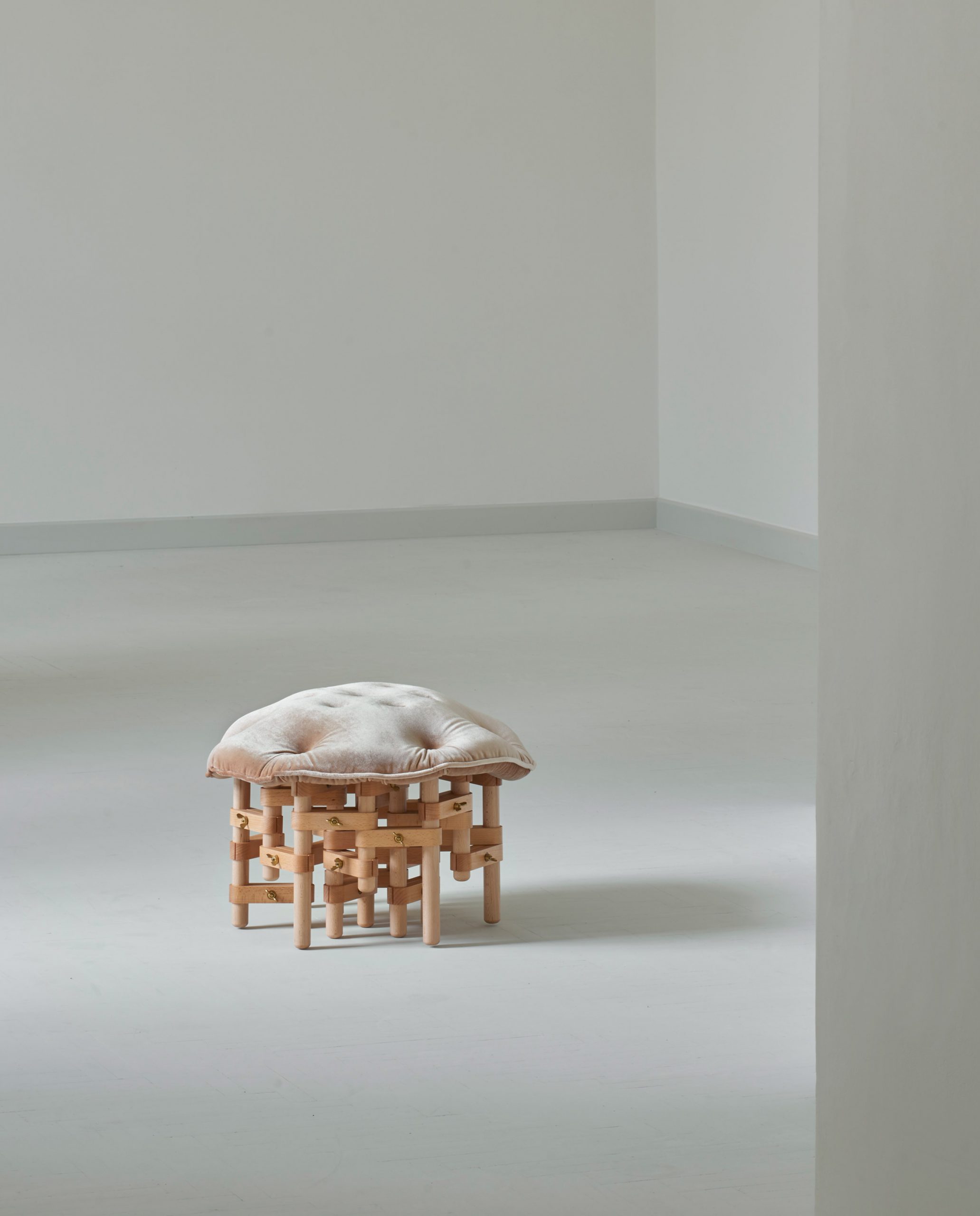
The furniture series, titled Envisioned Comfort, features a saddle chair, an armchair, a stool and a console table.

The base of each design comprises a structure of numerous beech dowels held together with wood-and-brass clasps. The poles are cut at different lengths to form undulating, ergonomic surfaces that fit the shape of the user's body.

The more poles that are incorporated into the structure, the more detailed the curves will be.
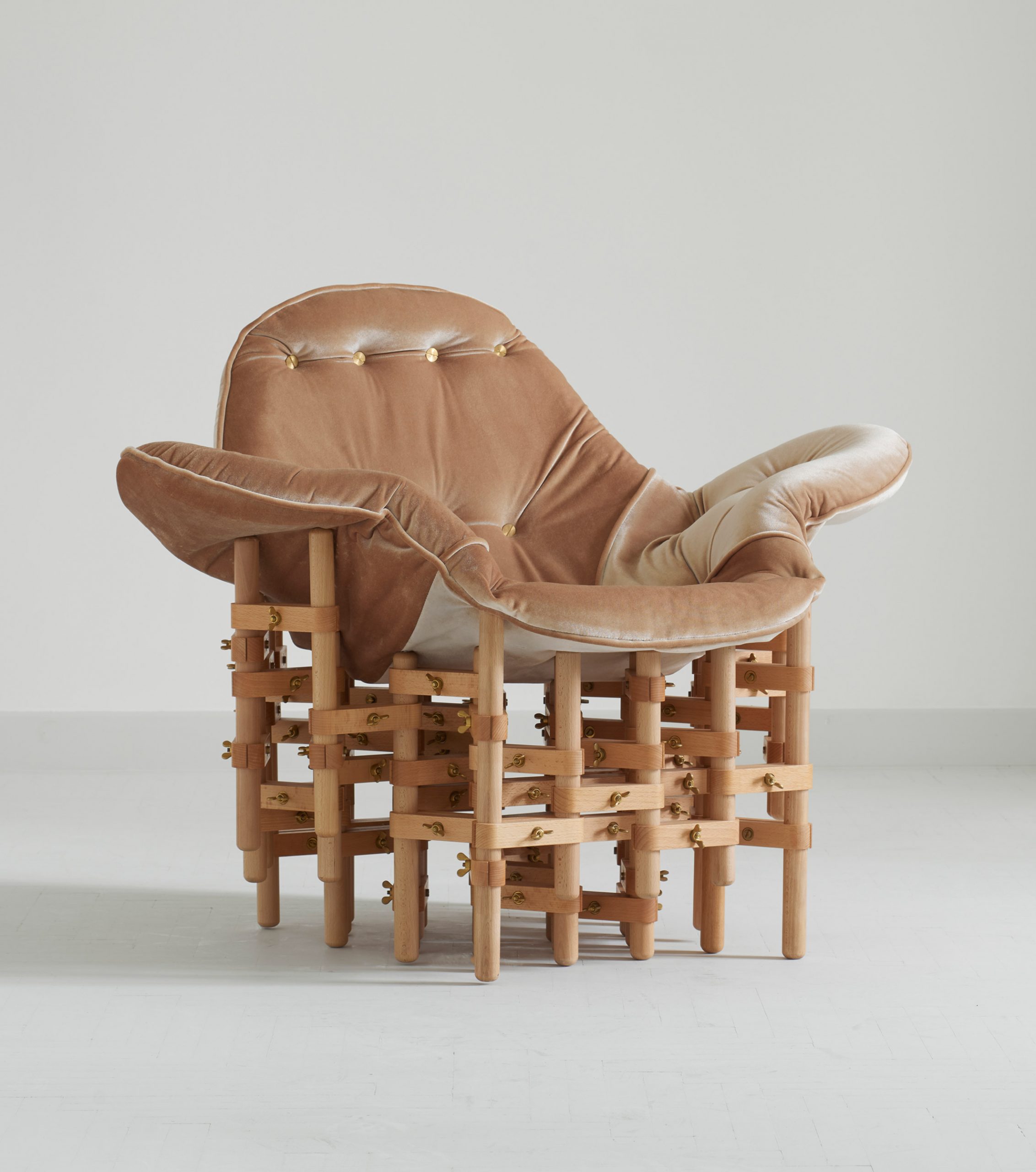
Each pole penetrates the velvet upholstery secured on top and is topped with brass "buttons", resulting in an effect similar to a traditional tufted sofa or headboard.

As the designers explain, the "rhythmical" construction invites viewers to admire the carefully crafted elements of the design.
The Lithuanian duo came together to create the collection after being invited to contribute to an exhibition under the theme of "fantasy" curated by Israeli designer Erez Nevi Pana.

"One of us had a fantasy about an object that could bring a womb-like pleasure," explained Gečas, "meaning – the ultimate satisfaction that the material environment can give."

"We merged our two different design practices into one object, taking this fantasy as a starting point," he added.
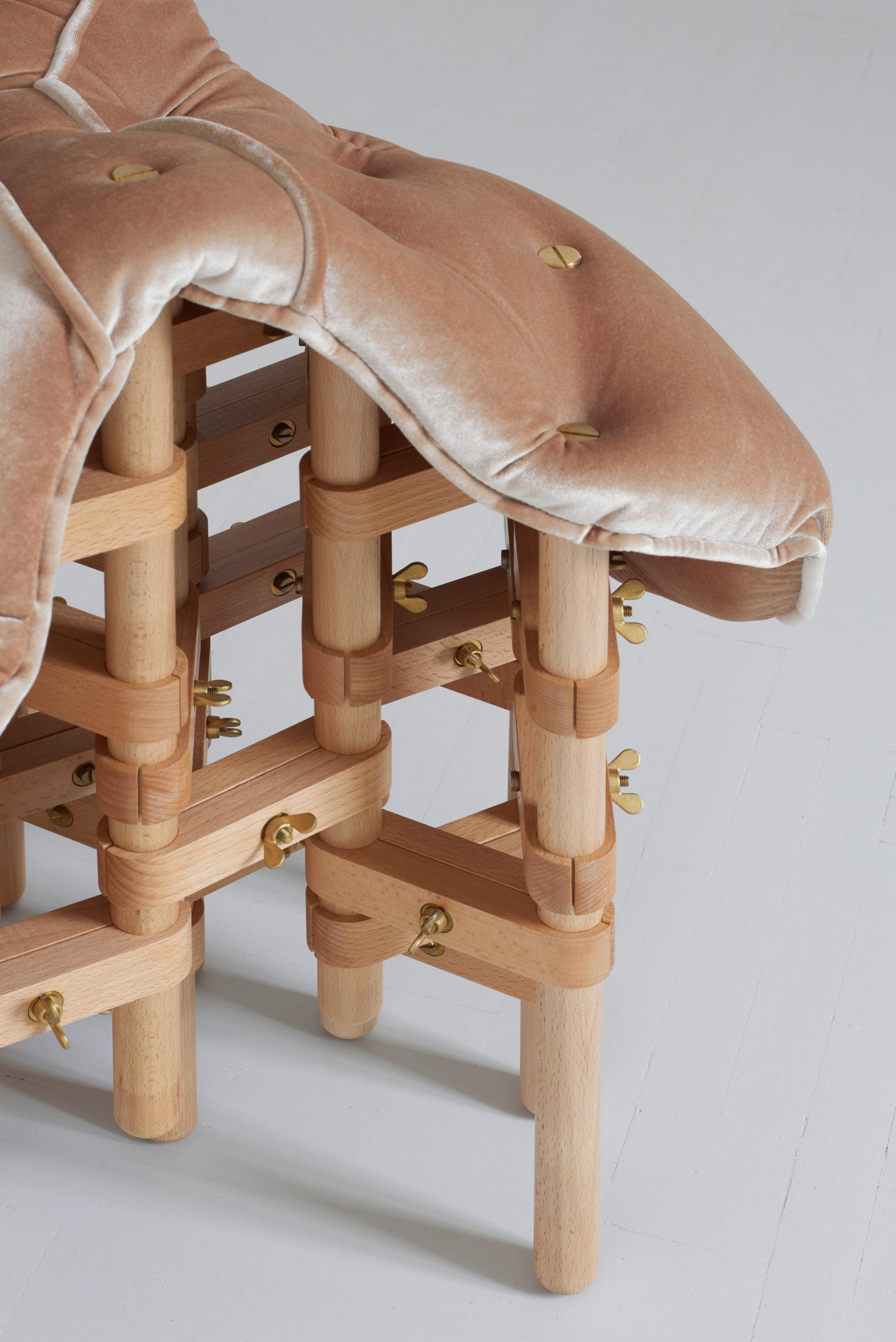
Puipaitė created the soft upholstery while Gečas developed the wooden structure. By merging their two design practices, the duo found a common point "where the construction defines and forms a fluid shape into an ergonomic entity".

The juxtaposition of plush, fabric seats against solid, gridded structures was "a purely technical solution on how to connect soft and hard parts," Puipaitė told Dezeen.

"This construction can be applied to almost any furniture you imagine," the designer added.

"On the one hand, it's a complex object with lots of elements. On the other hand – not alike other soft furniture – the pieces are completely honest and openly show the way they are built."
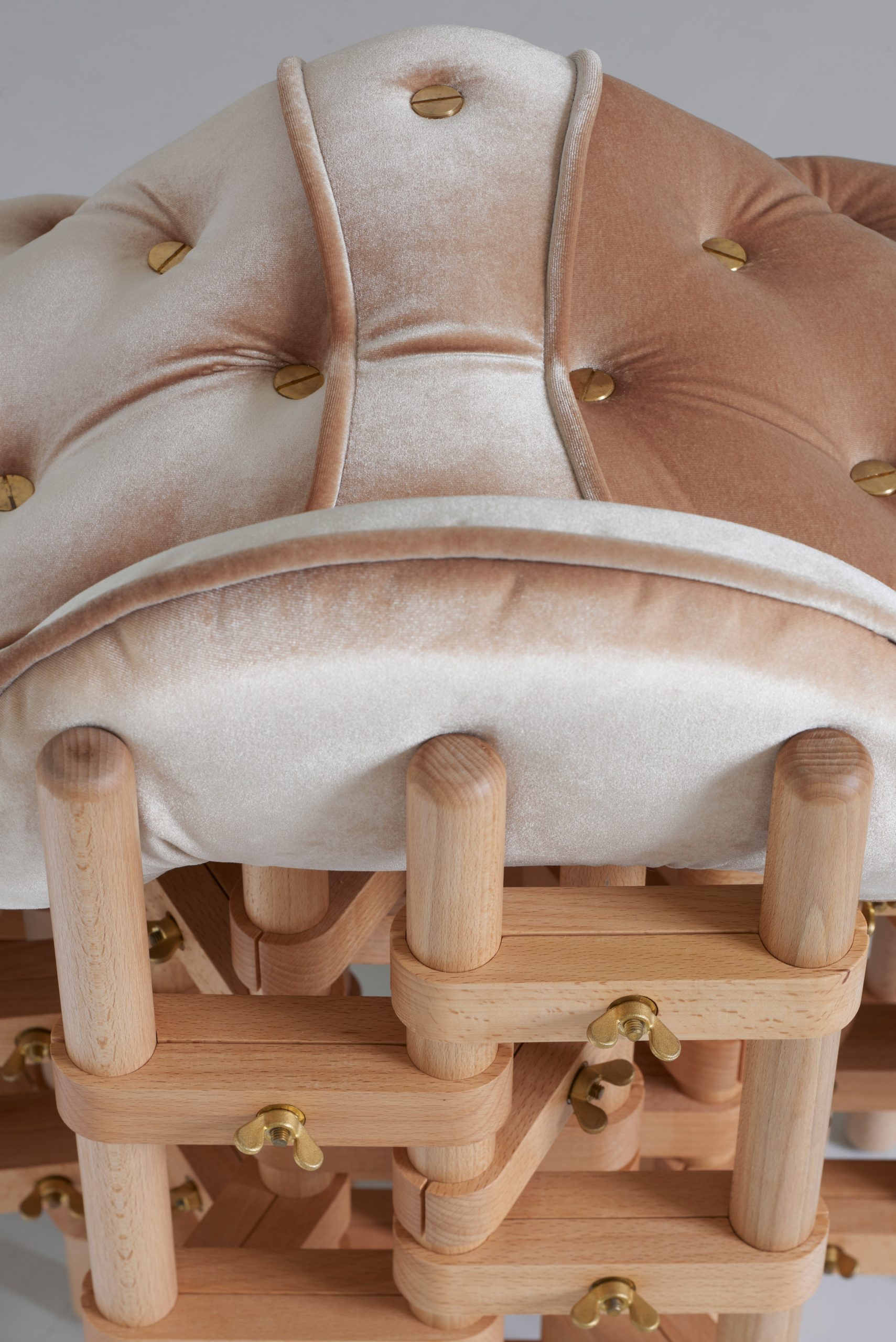
All of the furniture pieces are functional, and were designed with ultimate comfort in mind by following the natural positions and curves of the body.

"The saddle stool is exceptional," said Puipaitė. "By investigating a person's natural position when on a horse saddle, we realised that by spreading the legs out and pressing the knees to the saddle you tend to naturally sit straight instead of hunching."

"Within this collection, we show how it's possible to see all the objects more like shaped surfaces that are built for us to act on," she added.
The duo also designed a chaise lounge in 2018 as the first prototype for the series, which featured a furry upholstery instead of the current velvet versions.

The Envisioned Comfort collection was presented at the 2020 edition of Collectible Design Fair by Galerija Vartai, which took place in March in Brussels.
Previous editions of the Collectible fair have seen designers stretch slabs of recycled pearlescent polycarbonate like taffy to create furniture, or use tracing paper soaked in rice water to make stools and tables.

Photography is by Darius Petrulaitis.

The post Envisioned Comfort furniture collection pairs velvet seats with wooden frameworks appeared first on Dezeen.


from Dezeen https://ift.tt/2VNCQR5

Iceberg forms floating diving platform in New Hampshire lake

Iceberg by Bulot+Collins

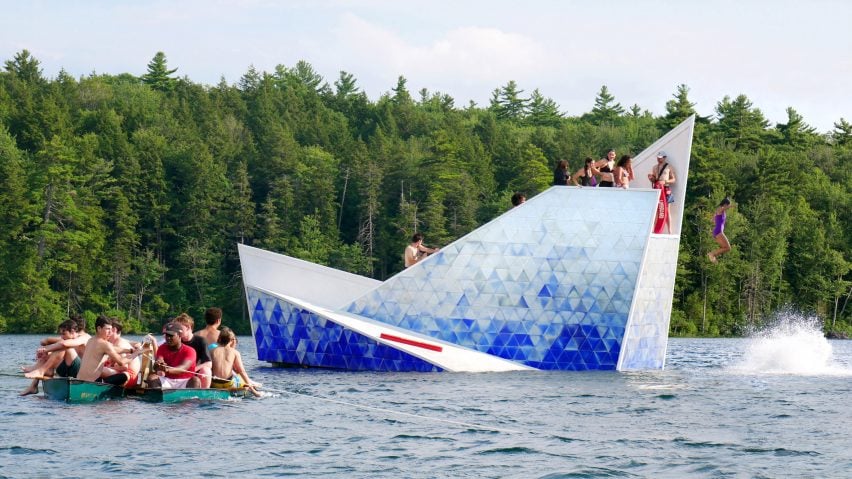
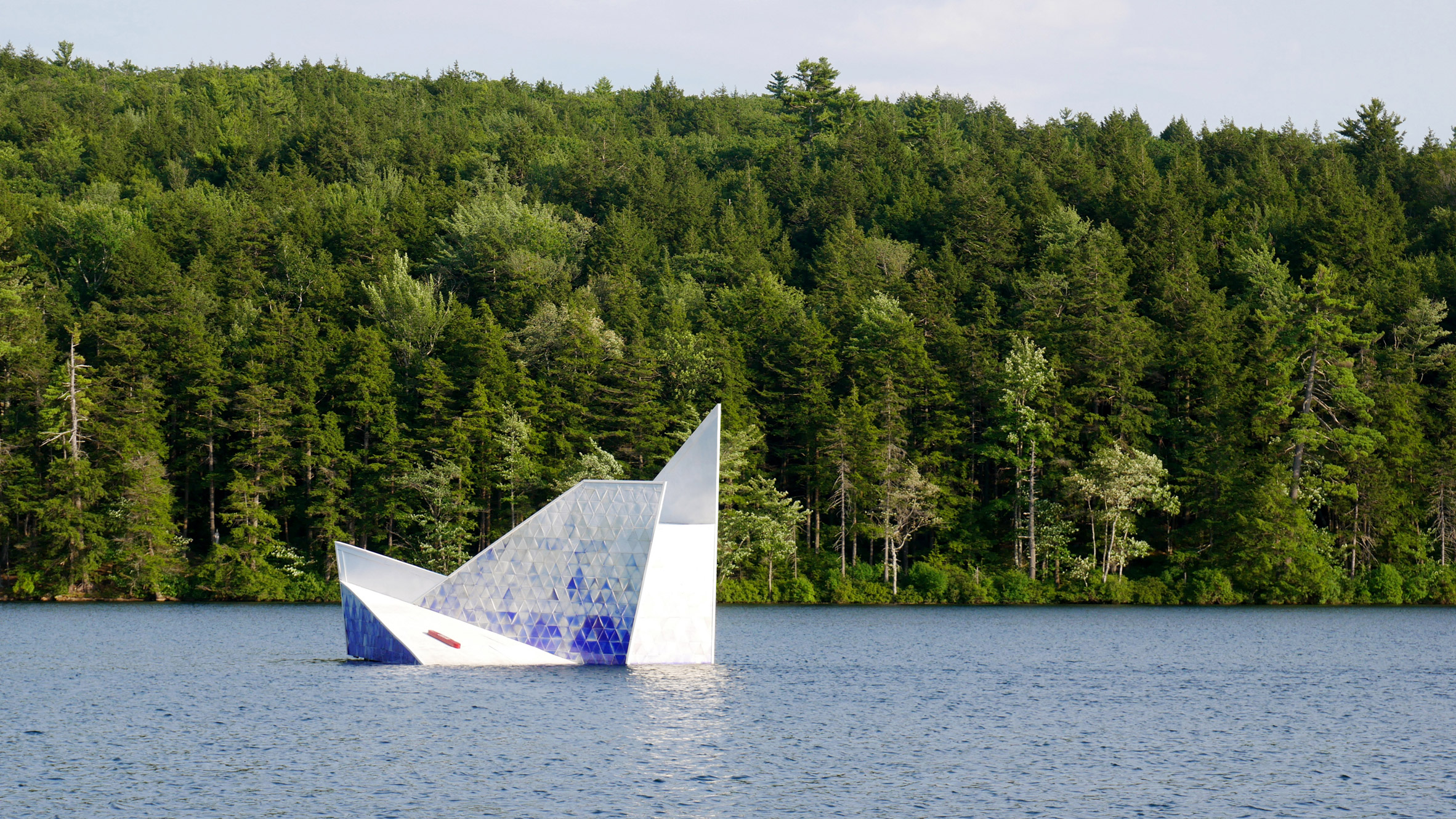
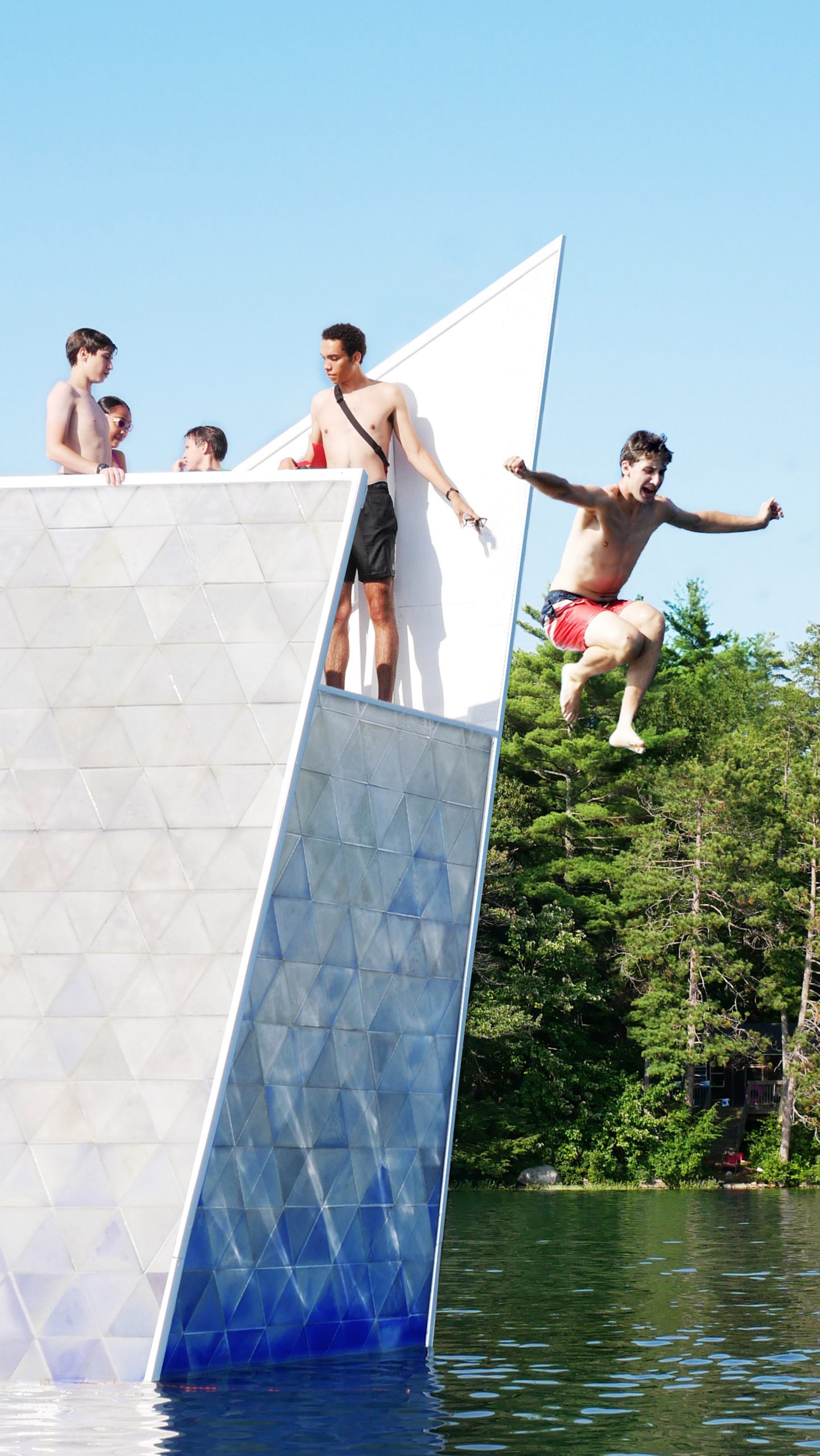
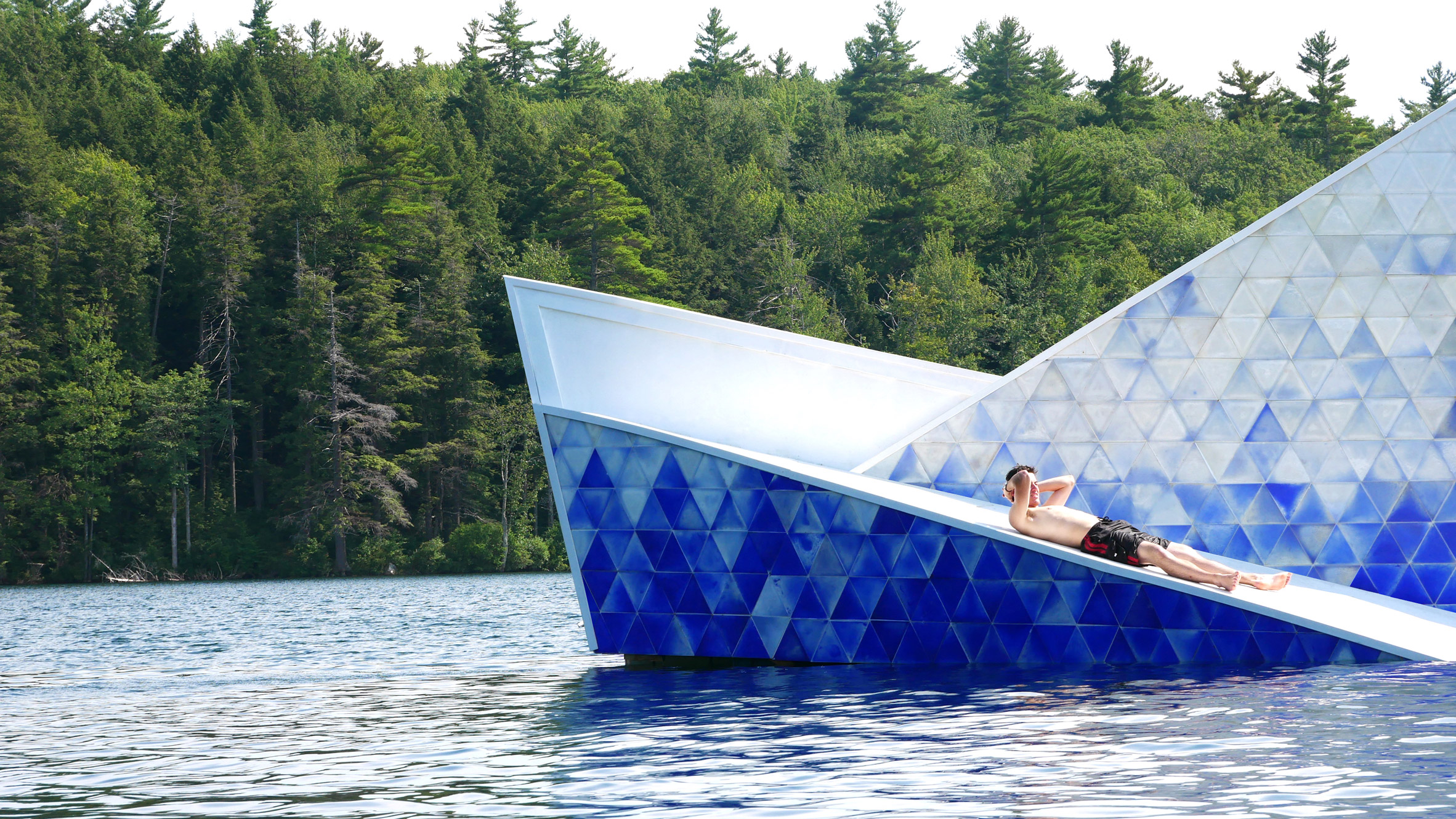
Swimmers in New Hampshire's Willy Lake can climb up this floating installation by architecture firm Bulot+Collins and dive back into the water.

Iceberg is a diving platform constructed as a play surface and place to overlook the forest landscape in the town of Strafford. Bulot+Collins created the structure with a group of children during the Beam Camp in the summer of 2019.

Iceberg by Bulot+Collins

"Rising from the middle of the lake, the Iceberg pushes further the limits of campgrounds, and offers a new vantage point on its surroundings," Bulot+Collins said.

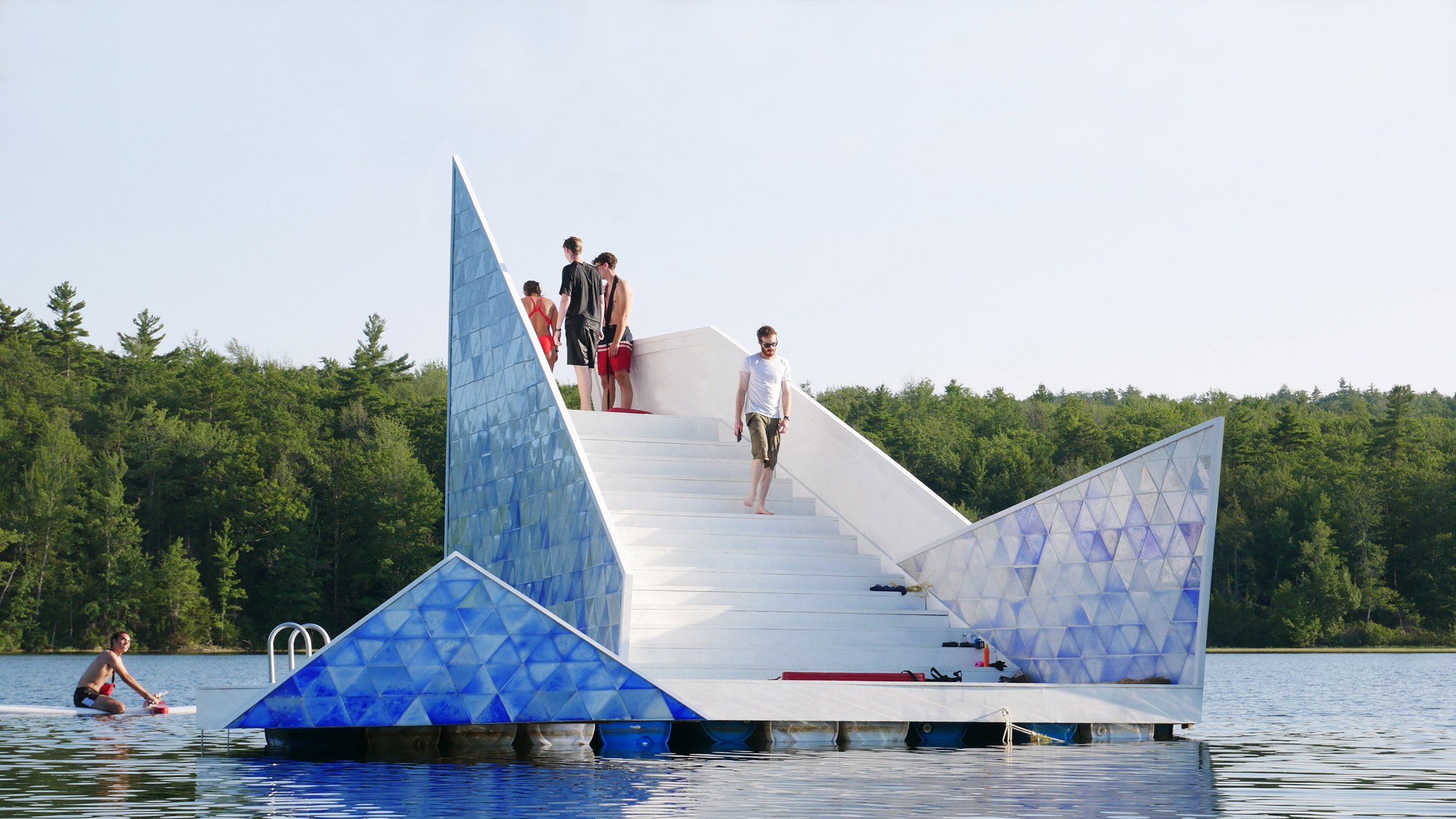
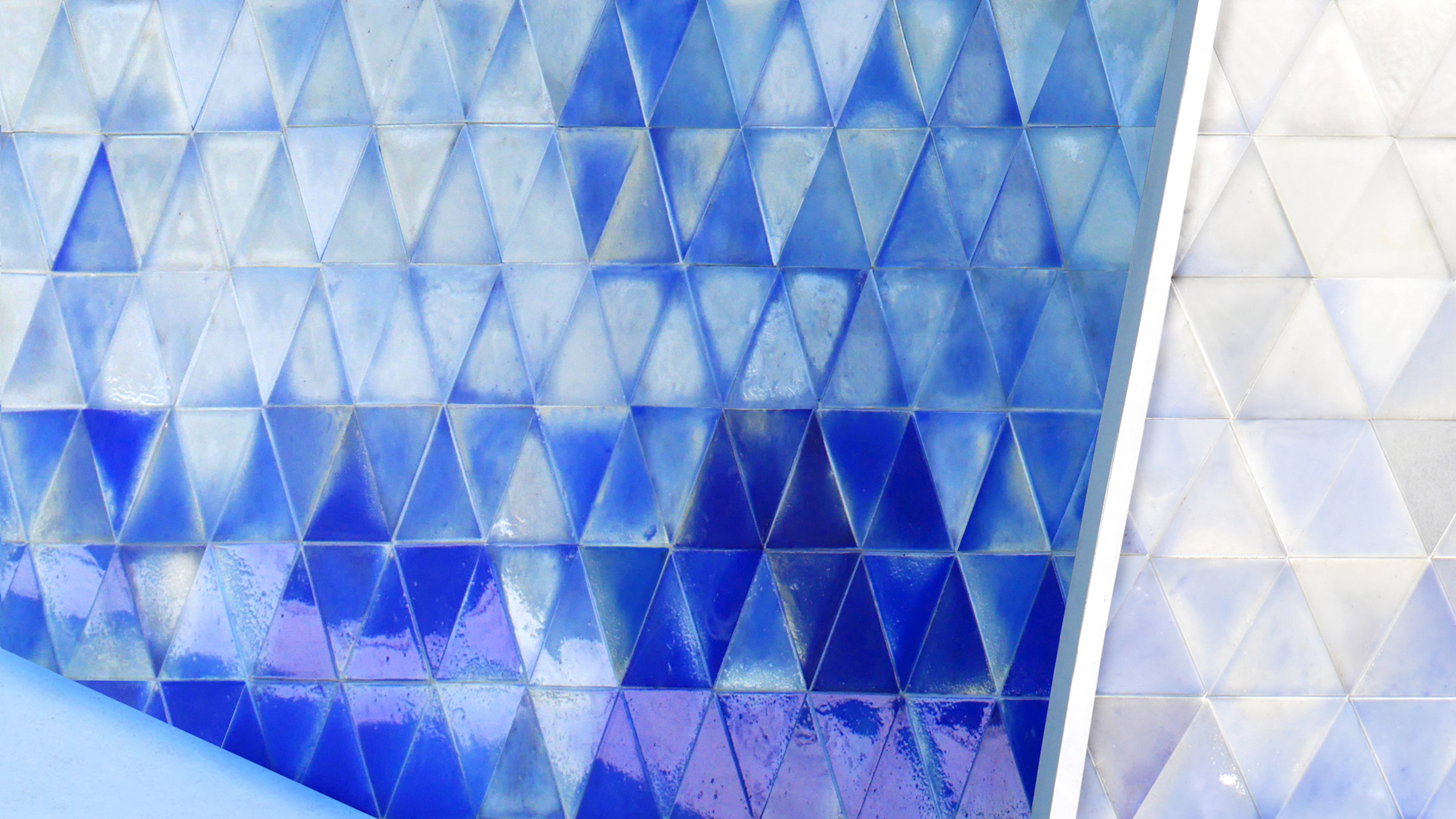
The angular sculpture has a frame constructed from locally sourced wood that rests on empty flotation barrels. The structure is clad in 1,400 handmade thermochromic tiles fabricated from recycled high density polyethylene (HDPE).

Iceberg by Bulot+Collins

To make the cladding, the studio and the campers melted and moulded recycled HDPE into triangles. The shapes were then coated with resin and a thermochromic pigment, which changes colour when exposed to temperature changes.

Depending on how the sunlight hits the installation the tiles will change from blue to white, which the studio said mimics the appearance of a melting iceberg.

Iceberg by Bulot+Collins

"Once the tiles are glued onto the structure, their glistening surface turns from different shades of blue in the cold to a polar white in the heat, so that the iceberg would appear to progressively melt under the sun,"  the studio added.

"In addition to offering a stimulating sight, the responsive quality of the structure to its environment addresses in a lighthearted and poetic manner the heavy issue of polar ice melt."

In the centre of the floating installation, there is a set of stairs that leads to a 10-foot-high (three-metre-high) diving platform where campers jump into the water.

At the base of the structure there is an additional diving point set a lower height and an area to sit or sunbathe.

Iceberg by Bulot+Collins

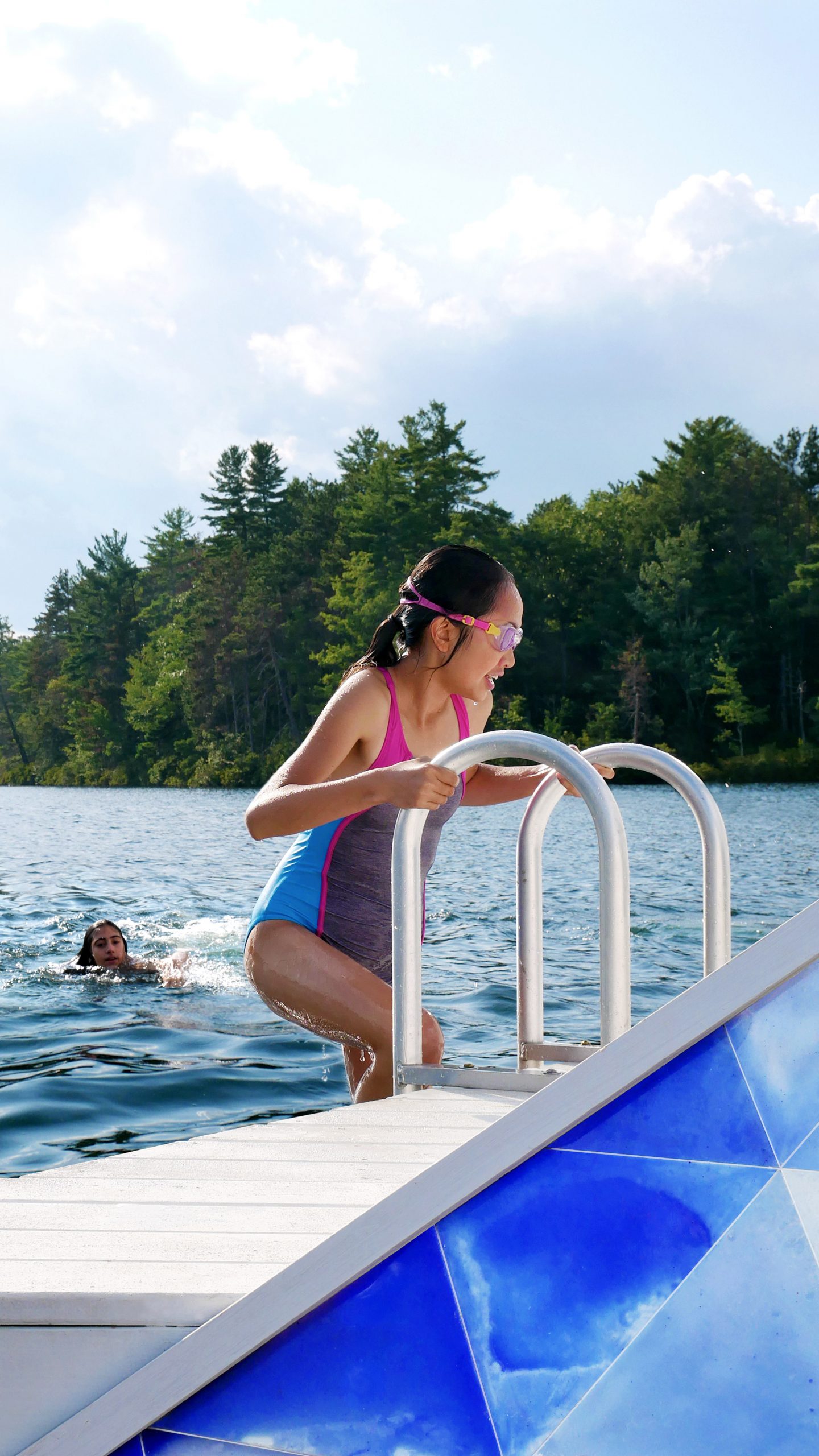
A curved metal railing and series of steps attach to the lower platform for divers and swimmers to climb back on top. To access Iceberg from the shore the campers row to it and tie their boats onto hooks attached to the edge of the structure.

Iceberg by Bulot+Collins

Iceberg was selected as part of an international design competition hosted annually by the camp and was built on-site in 2019 over a three week period by the campers, aged 10 to 17. Camp programming was cancelled this year due to the coronavirus.

"As architects accustomed to working in an environment where the designer, the client and the users are often three distinct parties, we were stimulated to have the future users play an active role in the building process of the project," the studio said.

Iceberg by Bulot+Collins

Other installations built on bodies of water include Bulgarian artist Christo's London Mastaba, a colourful sculpture in Serpentine Lake and plus sign shaped sculptures with LED lights that change colour to report on current water conditions in New York’s East River.

Photography is by Bulot+Collins.


Project credits:

Lead Architects: Lucie Bulot, Dylan Collins
Clients: Beam Camp
Built by: Beam Campers

The post Iceberg forms floating diving platform in New Hampshire lake appeared first on Dezeen.


from Dezeen https://ift.tt/2W2sTzF

This week's VDF highlights include Yinka Ilori, OMA, Patternity and drag queen Peaches Christ

This week's VDF highlights include Yinka Ilori, OMA and Patternity

Week 12 was the penultimate week of the Virtual Design Festival and featured live talks with Design Indaba's Ravi Naidoo and OMA's David Gianotten, plus designer Yinka Ilori jogging across London during a relay panel discussion.

Virtual Design Festival, the world's first online design festival, runs until 10 July. For the full schedule of upcoming events, visit dezeen.com/vdf/schedule.


Monday 29 June

VDF Sports Day with Nelly Ben Hayoun: Designer and amateur boxer Nelly Ben Hayoun hosted an "energy-induced, power fuel-propelled, 2.5 hour, live marathon show", in which a panel of guests discussed sport's impact on design as a discipline and on society and political discourse as a whole.

Among the 12 speakers was Design Indaba founder Ravi Naidoo, Google creative lab director Tea Uglow, sneaker designer Aleali May, drag artist Joshua Grannell aka Peaches Christ and designer Yinka Ilori, who jogged through London over the course of the live stream and discussed the skate park he has been working on over the last year.


Anna Murray Screentime interview for VDFTuesday 30 June

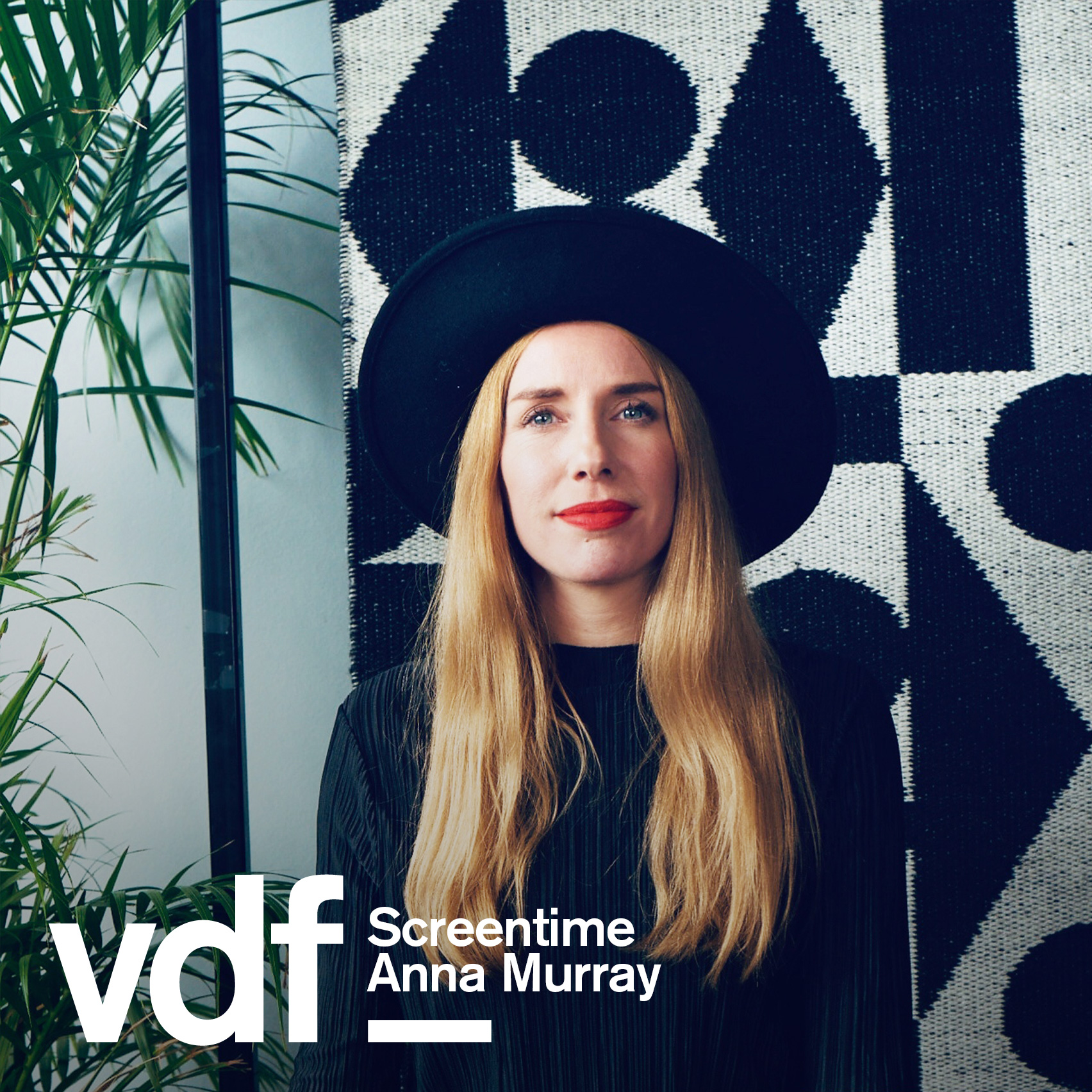
Screentime with Patternity: In the latest episode of our live interview series, Patternity's Anna Murray discussed how patterns, both visual and societal, should be used and studied to bring about "more positive ways of living".

In a short presentation, she also looked back on some of the creative studio's most significant projects, including the Life Labyrinth created for last year's London Design Festival.


Wednesday 1 July

VDF x London Festival of Architecture: Social design and urbanism practice Migrant's Bureau shared its manifesto as part of the third and final instalment of our collaboration with the LFA.

Through design interventions and community workshops, the collective aims to "interpret the migratory experiences of everyday life, recognising the influence that culture, geography and social circumstances have on lived experiences of the city and its architecture".


Thursday 2 July

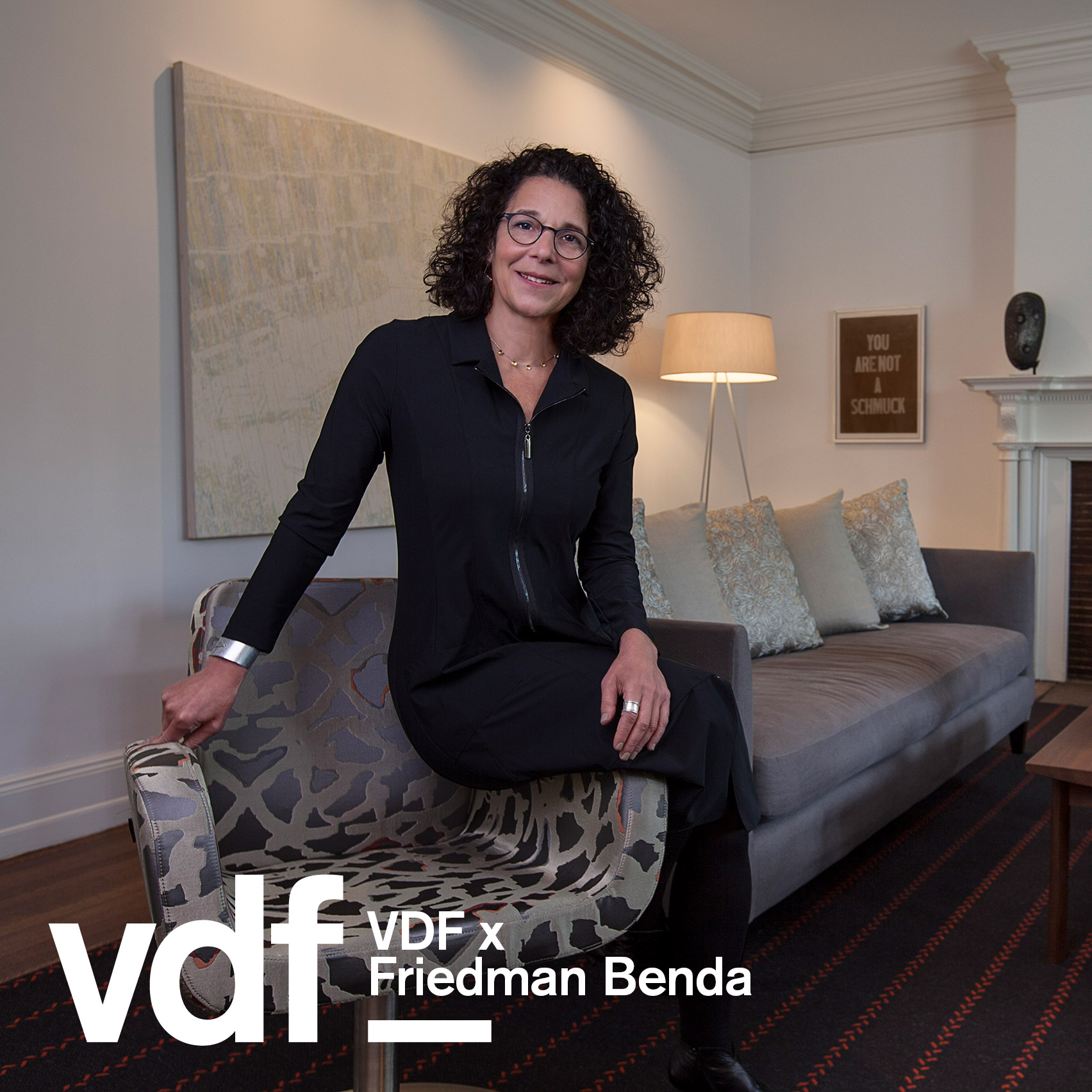
VDF x Friedman Benda: Rhode Island School of Design president Rosanne Somerson spoke to curator Glenn Adamson about how the university and its way of teaching and practising design are being transformed by the pandemic.

In the video interview, published as part of our collaboration with New York gallery Friedman Benda, Somerson describes Covid-19 as "the biggest challenge we've faced in our entire history as an institution".


VDF x The Artling Potato Head Studios resort

Friday 3 July

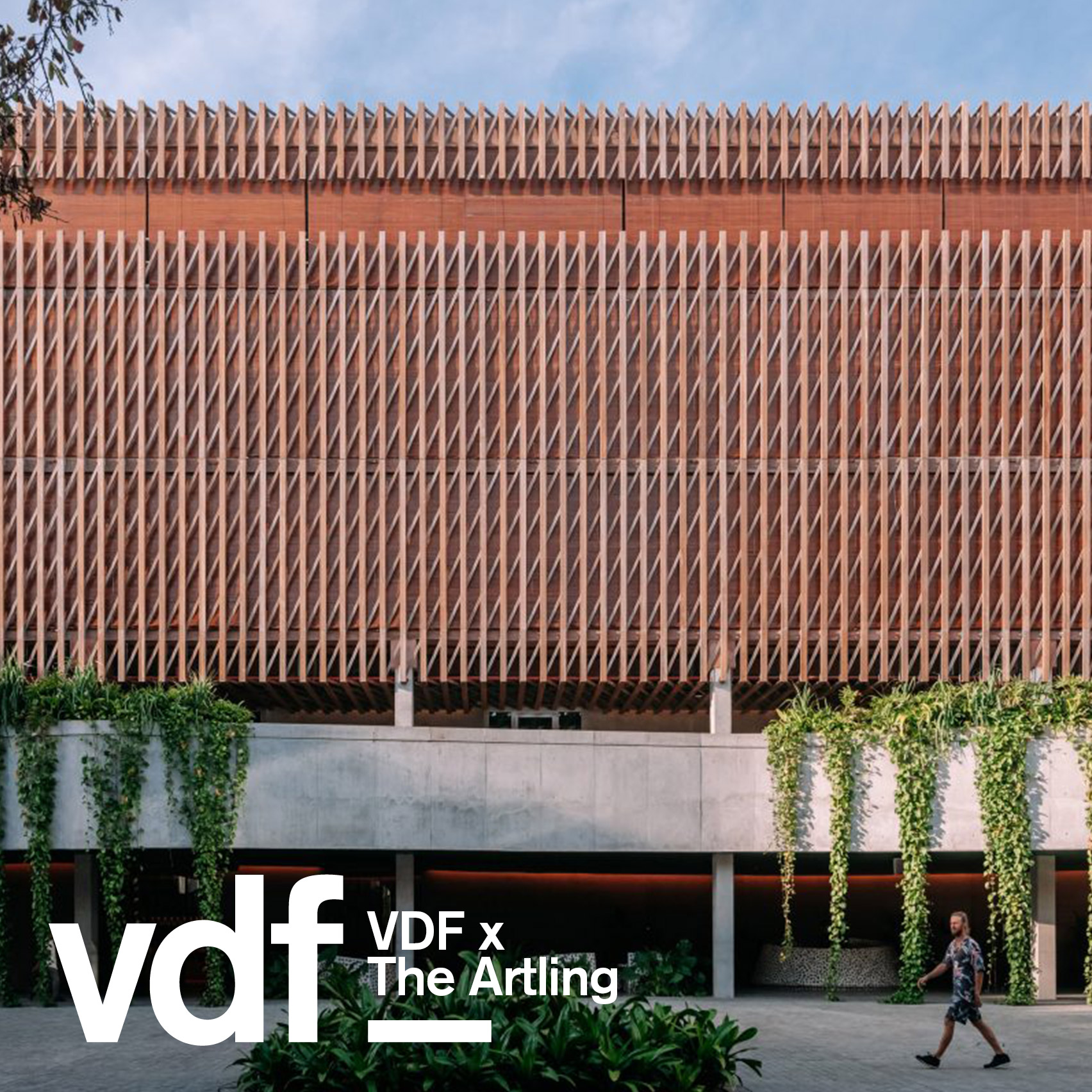
VDF x The Artling: OMA architect David Gianotten and Potato Head creative director Daniel Mitchell were among the panellists in a live-streamed discussion about how to integrate art into architecture.

The conversation was organised by Talenia Phua Gajardo of Singapore art platform The Artling and chaired by her in collaboration with Dezeen's editor-in-chief Marcus Fairs.


Previous weeks

Did you miss week 11? Read our summary of the highlights, including takeovers by the Design Museum and Serpentine Gallery as well as interviews with Carme Pinós and Rem Koolhaas.

Did you miss week ten? Read our summary of the highlights, including a live interviews with Lee Broom, a panel discussion featuring Space Copenhagen and Neri&Hu, plus the launch of our collaboration with Vitra.

Did you miss week nine? Read our summary of the highlights, including interviews Barnaba Fornasetti and Ini Archibong as well as a celebration of World Oceans Day and the 2020 AHEAD Americas awards.

Did you miss week eight? Read our summary of the highlights, including interviews with Ilse Crawford and Farshid Moussavi, plus a full-day takeover by Stockholm's ArkDes museum.

Did you miss week seven? Read our summary of the highlights, including an exclusive product launch and live interview with Tom Dixon as well as an all-star architects roundtable including Junya Ishigami and Counterspace.

Did you miss week five? Read our summary of the highlights, including interviews with Standard Architecture and Sauerbruch Hutton and the launch of an exclusive Archigram video series.

Did you miss week four? Read our summary of the highlights, including exclusive interviews with Carlo Ratti and Iris van Herpen, as well as a cocktail masterclass from the owner of Milan's Bar Basso.

Did you miss week three? Read our summary of the highlights, including a video message from Ben van Berkel and an exclusive screening of Gary Hustwit's Dieter Rams documentary.

Did you miss week two? Read the summary of the highlights from the second week, including Ron Arad, SO-IL, Kunlé Adeyemi, Nelly Ben Hayoun, Beatie Wolfe and Studio Drift.

Did you miss week one? Read the summary of the first week's highlights include live interviews with Li Edelkoort and Klein Dytham Architecture plus the now-legendary VDF launch movie.


Virtual Design Festival, the world's first digital design festival, runs from 15 April to 10 July 2020 and is sponsored by bathroom and kitchen manufacturer Grohe. For more information about VDF or to join the mailing list, email vdf@dezeen.com.

The post This week's VDF highlights include Yinka Ilori, OMA, Patternity and drag queen Peaches Christ appeared first on Dezeen.


from Dezeen https://ift.tt/3iv5ss7

Pharrell Williams partners with Pentatonic to create coronavirus cutlery set

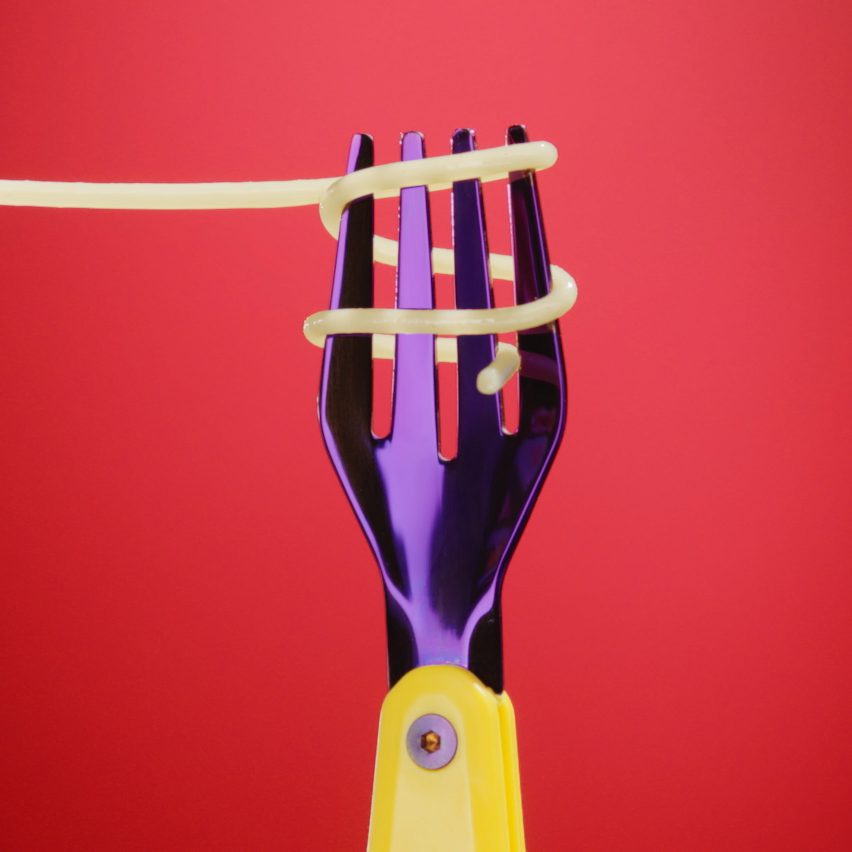
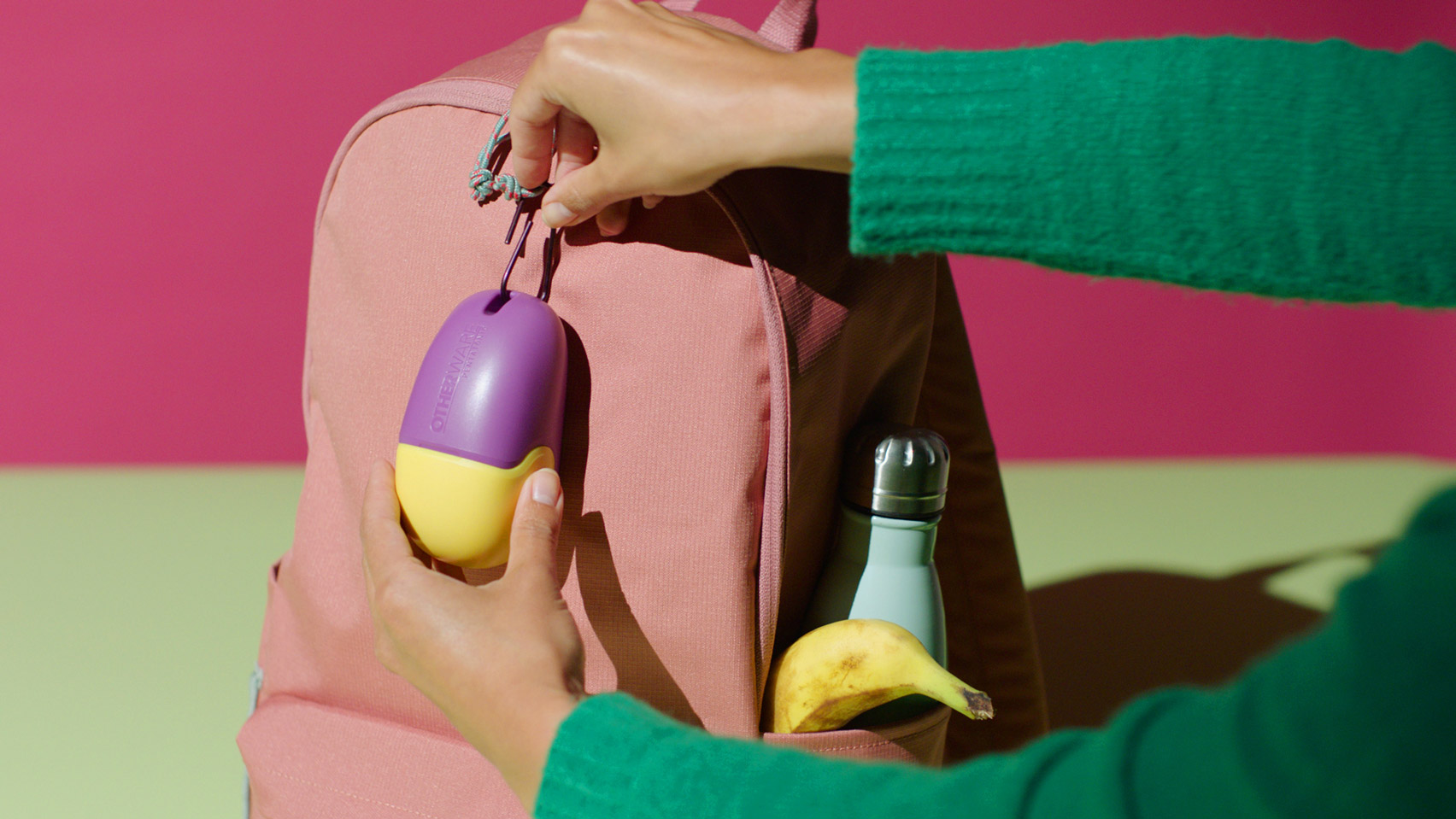
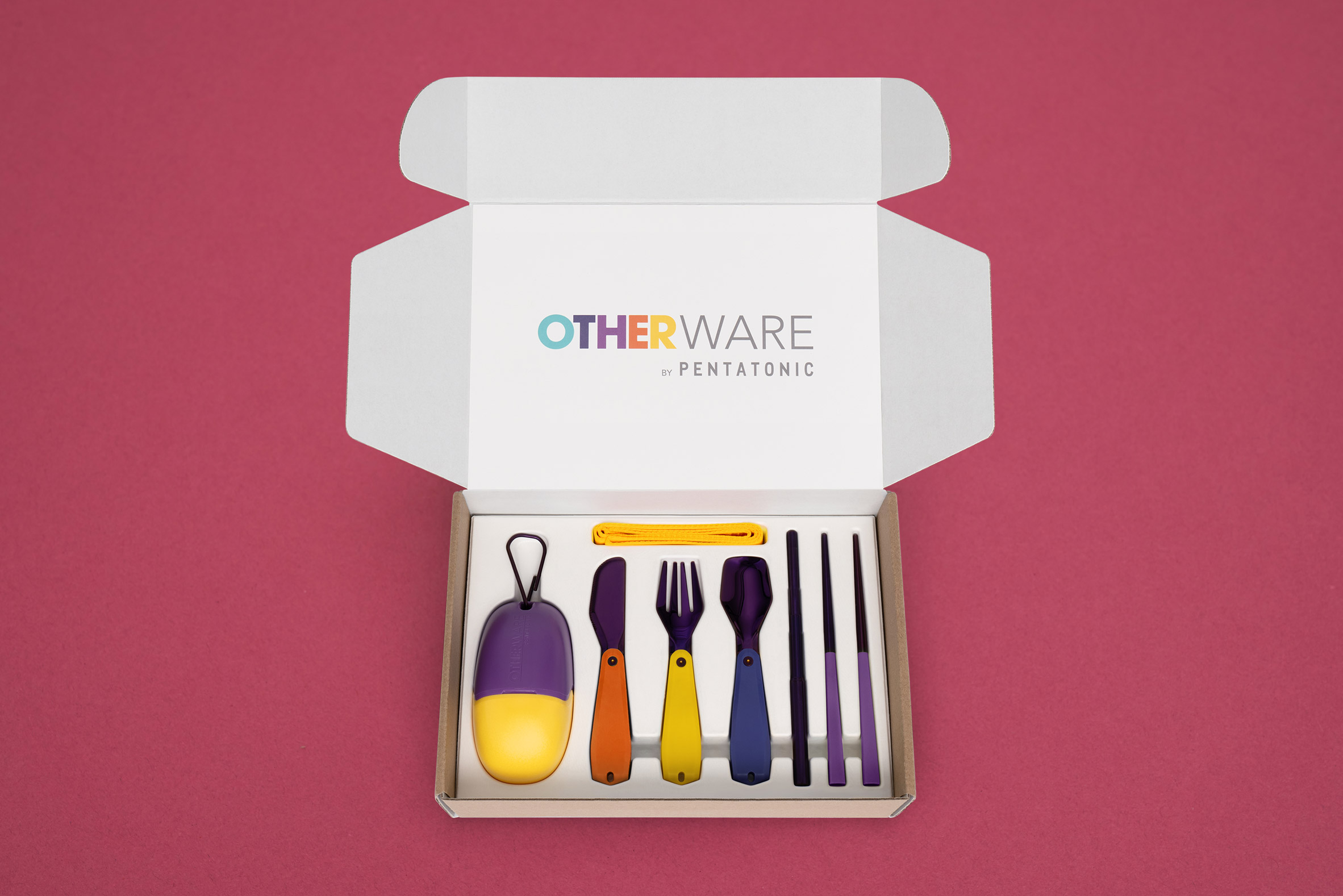
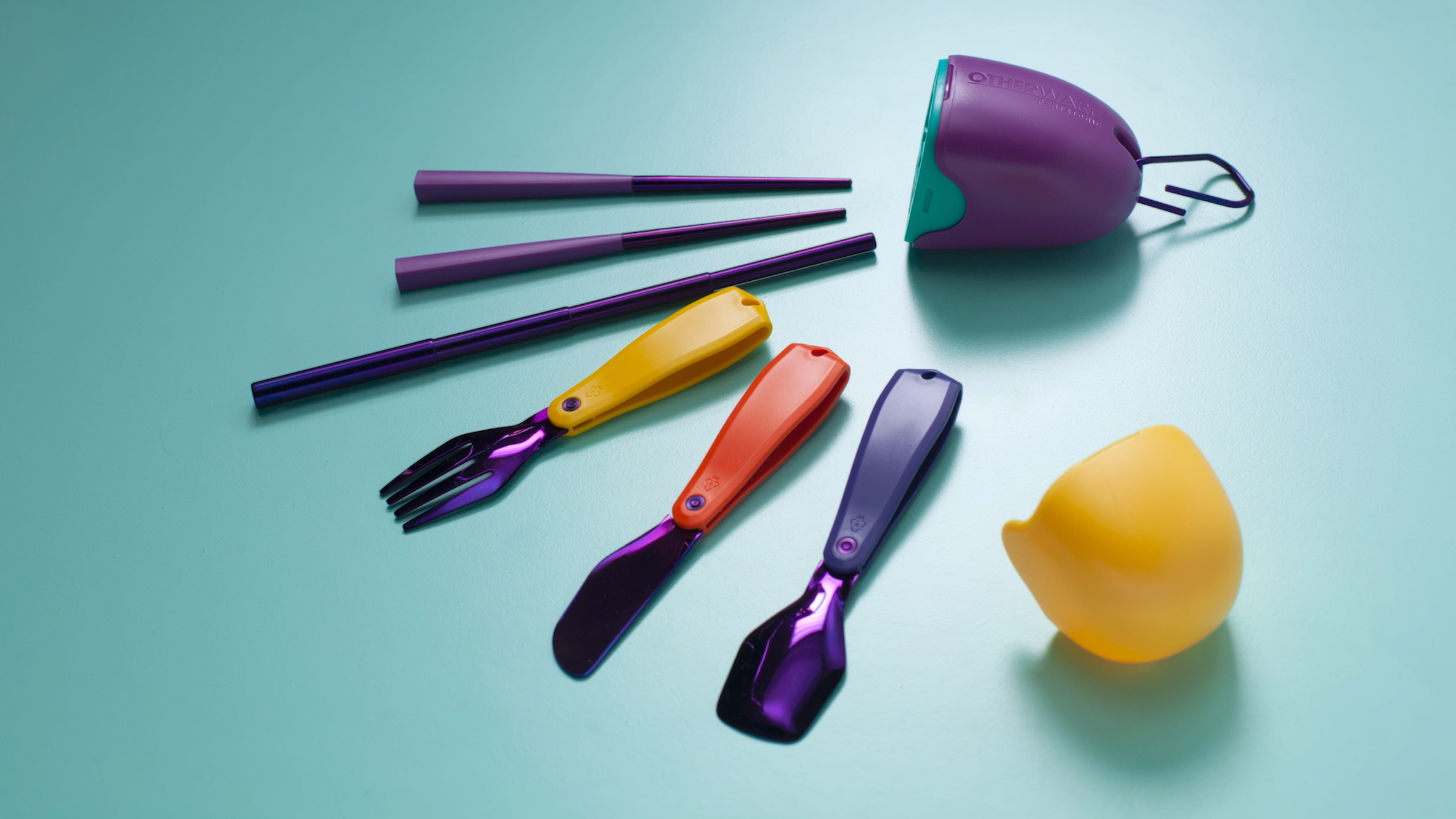
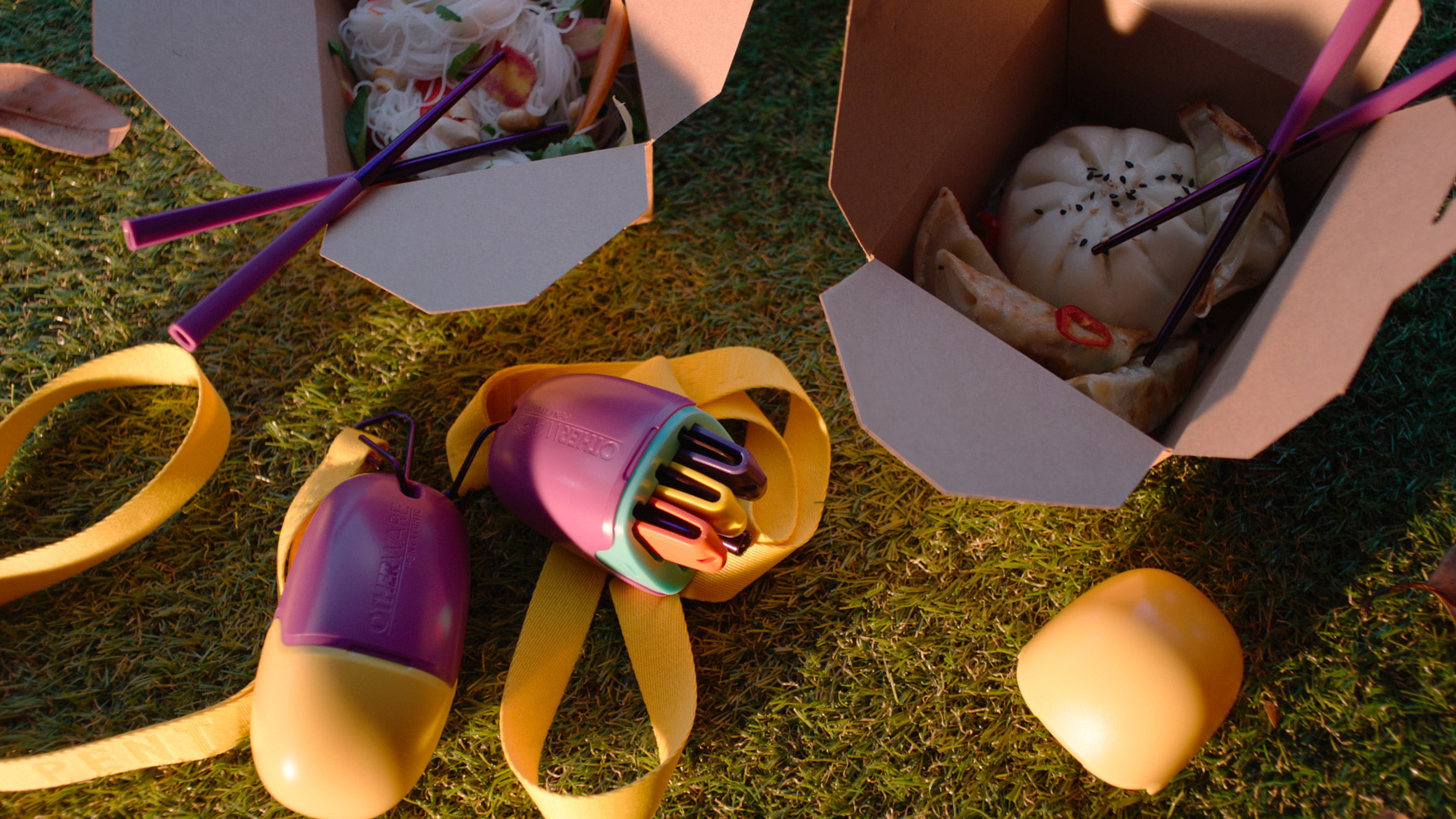
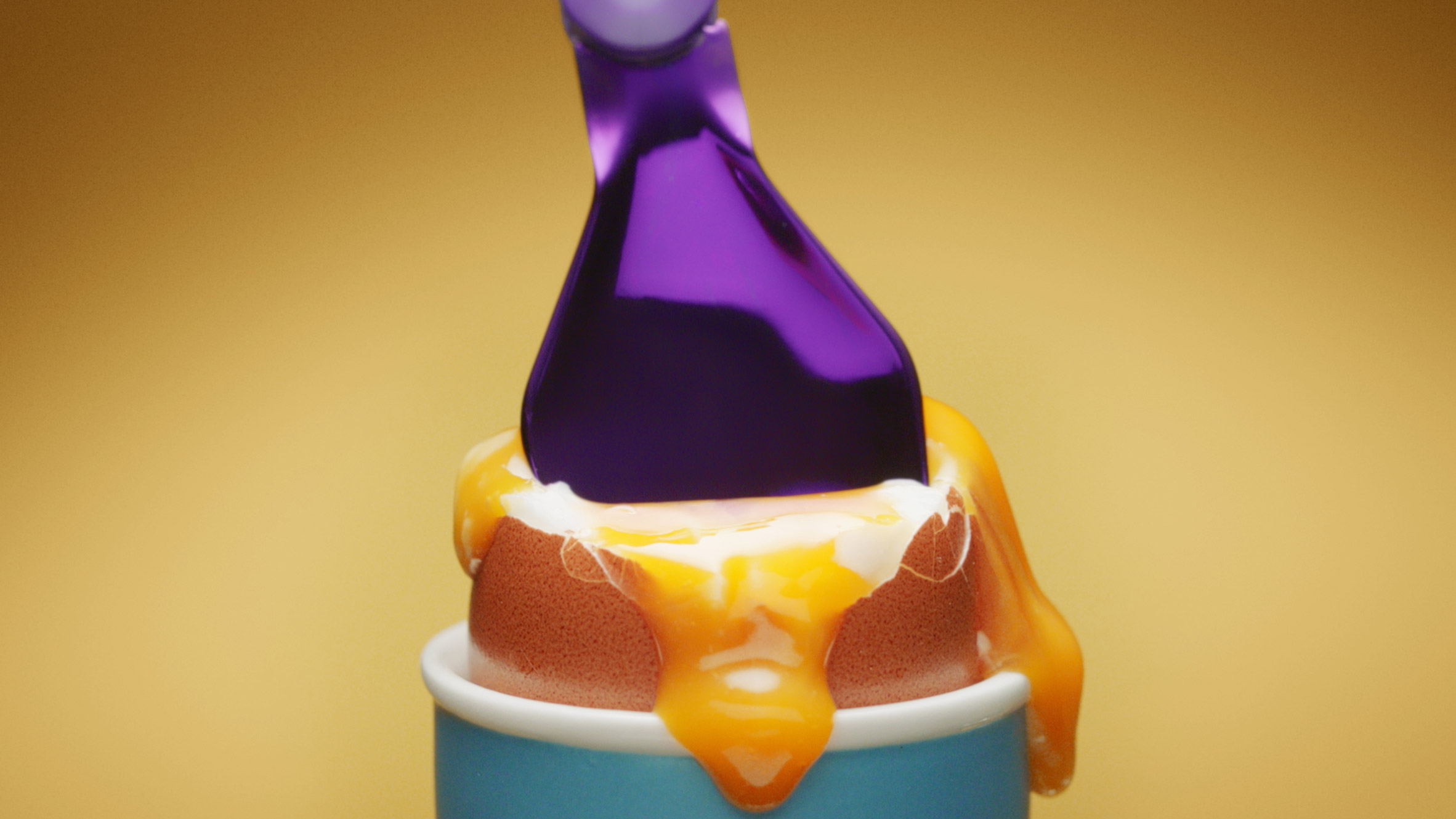
The Pebble is a bring-your-own cutlery set for the coronavirus pandemic made from recycled CDs by design studio Pentatonic in collaboration with singer Pharrell Williams' creative brand I Am Other.

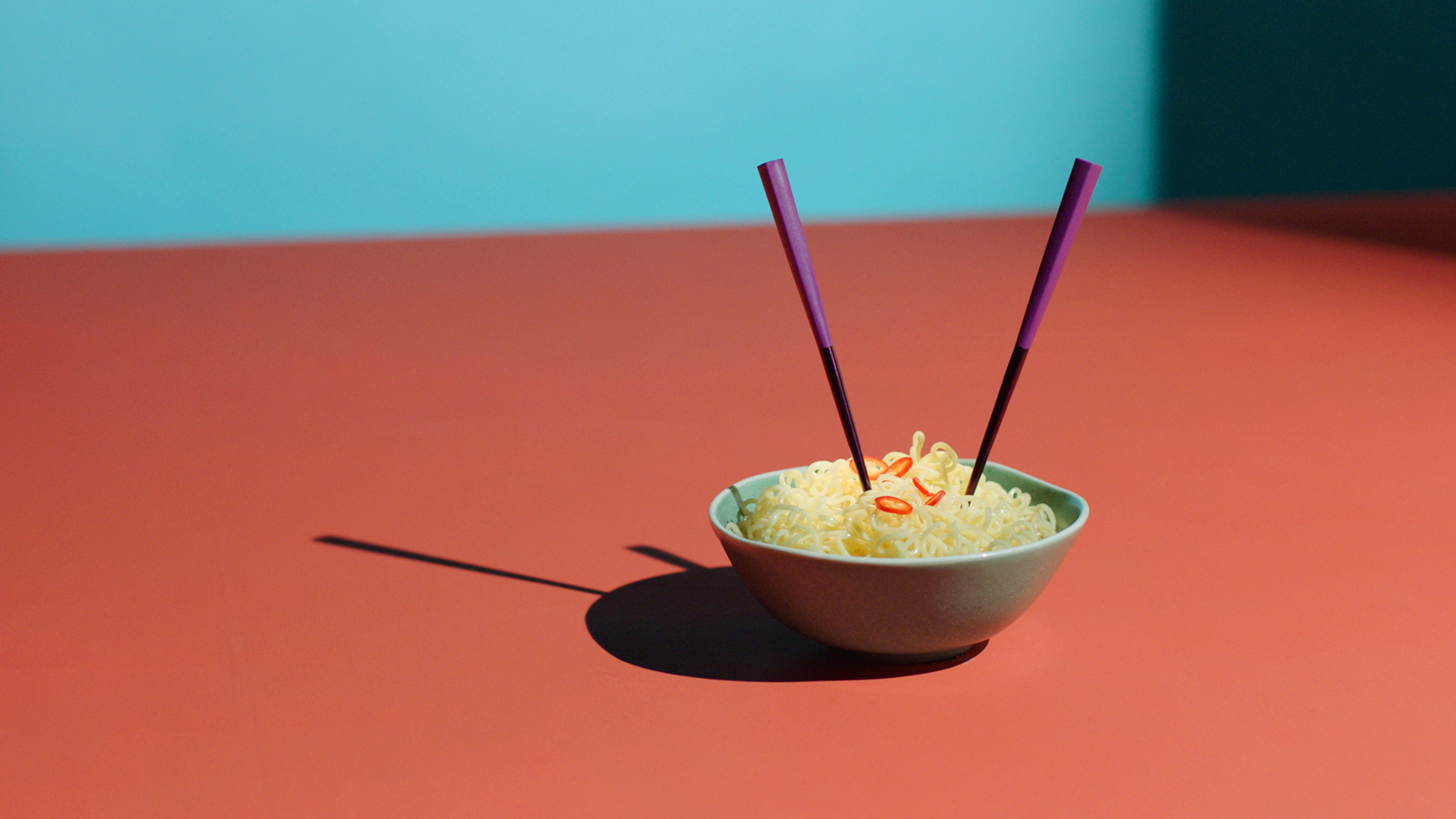
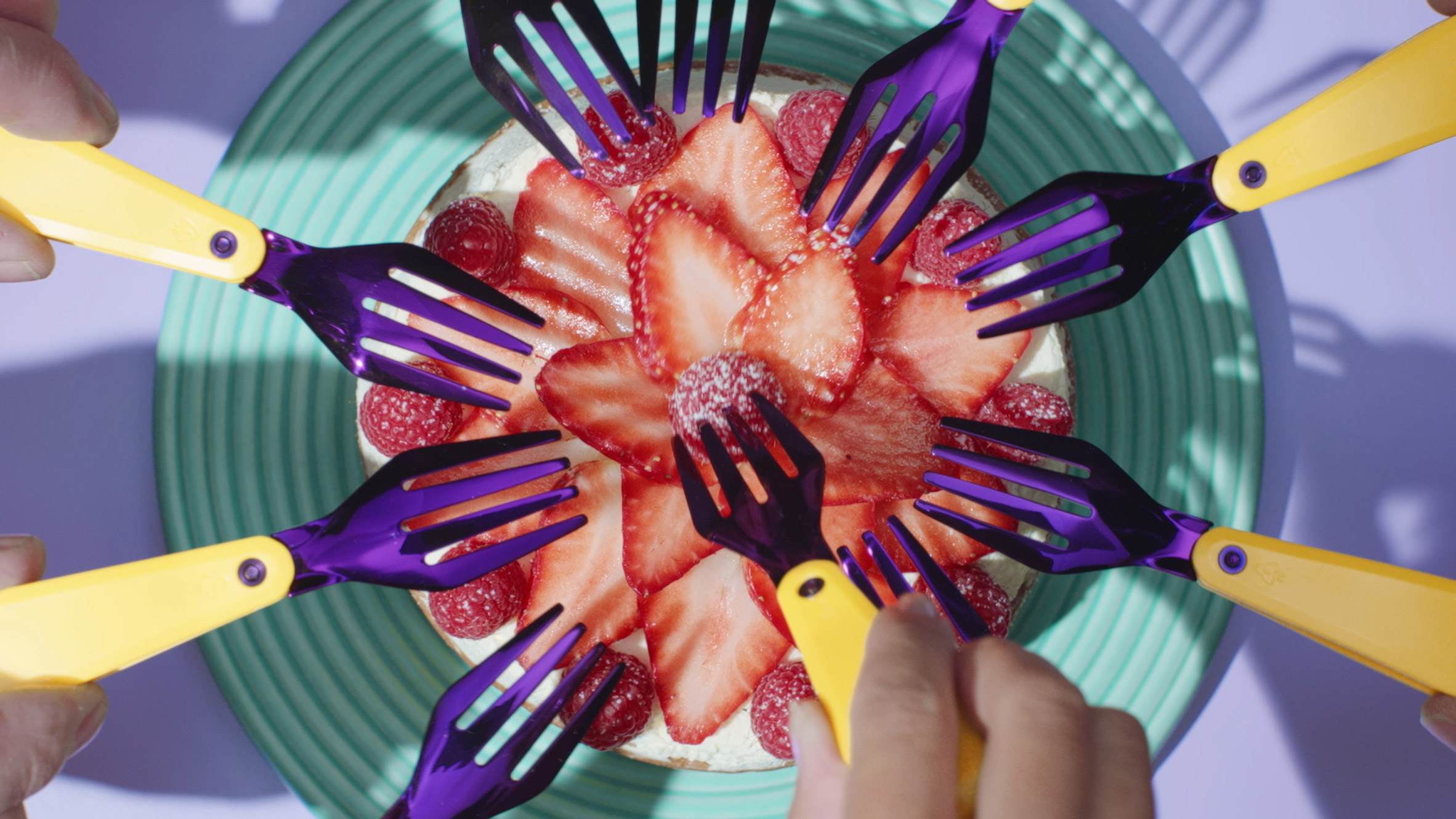
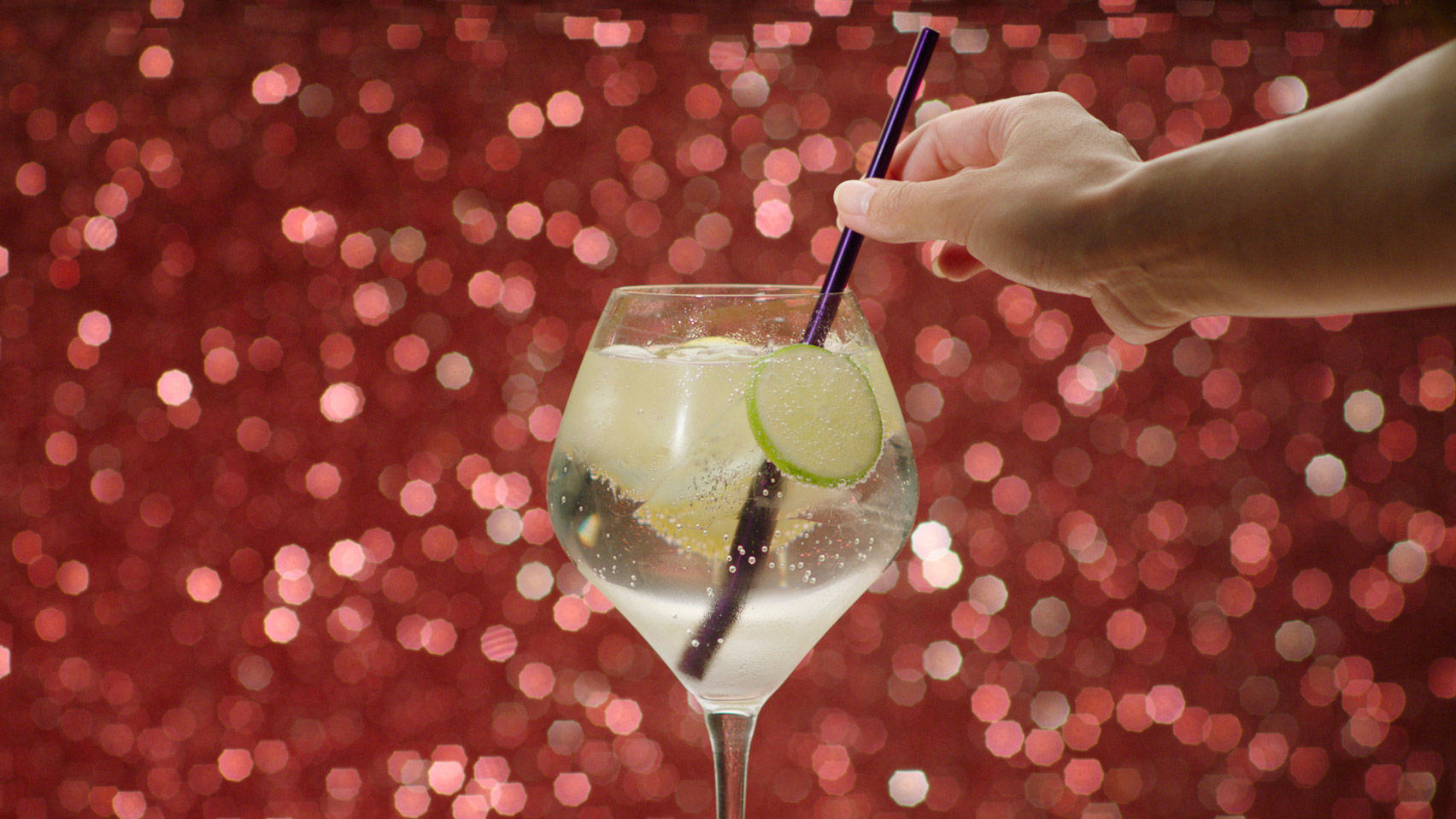
The kit comprises of a knife, a fork, a spoon, a straw and a set of chopsticks that fold away inside a smooth case that can be easily carried.

Pentatonic created The Pebble as an alternative to single-use plastic cutlery, which has seen a surge in popularity during the pandemic.

To reduce the risk of transmission, many businesses have temporarily stopped using reusable cups and cutlery. Governments have also urged people to bring their own utensils when eating outdoors with people outside their households.

The Pebble is the first item in Otherware, a collaboration between Pentatonic – a studio specialising in objects for the circular economy – and Pharrell Williams' creative brand I Am Other.

As a nod to Pharrell Williams' music career, Pentatonic made The Pebble partly out of recycled CDs. Pentatonic estimates that 10 billion CDs and DVDs have been disposed of in the USA alone since 2005 as people switch to streaming services.

"The wasted CDs are first sorted and cleaned which means separating and purifying the feedstock, removing and recycling where possible contaminants such as cases and foreign waste material," said Pentatonic cofounder Jamie Hall.

"The metallic layer is removed and the purified polycarbonate is then shredded," Hall told Dezeen.

This shredded plastic is formed into pellets, which undergo testing before colour is added.

"With the pigments added, the pellets are heated and precision-formed on high-grade custom toolings, an industrial and highly optimised process," said Hall. "Once cooled and set, the three components are manually and hygienically assembled into the Pebble case under strict clean-room conditions."

Other plastic used for producing The Pebble comes from recycled food packaging, and the utensils are made from stainless steel.

As part of the principles of a circular economy, where materials are kept in constant circulation rather than discarded, Pentatonic offers to buy back every set and repurpose it.

The collaboration between Pentatonic and I Am Other was originally meant for people looking for a sustainable option for festivals or eating on the go at work. But the pandemic has only made The Pebble more relevant, the studio said.

"A dining-set that stays with you wherever you go, offers the peace of mind of avoiding communal sources of cutlery when eating and drinking anywhere that's not home," said Pentatonic.

Single-use plastic is bad for the environment in many ways. Extracting petrochemicals threatens wildlife and ecosystems, plastic manufacturing releases emissions into the atmosphere that cause climate change, and once disposed of plastic can end up in the ocean.

"Climate change falls disproportionately on the poor, vulnerable and marginalized communities," said I Am Other partner Darla Vaughn.

"Single-use plastics are everywhere, and doing something about it, is a mutual passion point between both our organisations," Vaughn told Dezeen.

"We wanted to make a product that directly helps our audiences avoid single-use utensils in their daily lives. So we took action, and we made sure that action was a fun, creative and super relevant product."

Pentatonic has previously turned smartphones and cigarette butts into flat-pack furniture and transformed used coffee cups into chairs for Snarkitecture.

This isn't Pharell Williams' first foray into the sustainable design either. The musician has previously launched fashion collections with G Star Raw made from ocean plastic.

The post Pharrell Williams partners with Pentatonic to create coronavirus cutlery set appeared first on Dezeen.


from Dezeen https://ift.tt/3eZgTWX

Linehouse channels nostalgia for interiors of Basehall food court in Hong Kong

Basehall food hall in Hong Kong designed by Linehouse

Films from the 1970s informed the aesthetic of Basehall, an upscale food court in Hong Kong designed by studio Linehouse.

Basehall is a food hall set within Jardine House, a 52-storey skyscraper in Hong Kong that's punctuated by rows of circular windows.

Following its completion in 1972, the distinctive building was featured in a number of films. These early cinematic depictions came to influence Linehouse's interior design scheme for Basehall.

Basehall food hall in Hong Kong designed by Linehouse

"Jardine House was a landmark on the Hong Kong skyline and the tallest building in Asia for several years," said the studio.

"[Basehall] seeks to convey an atmosphere of nostalgia through its spatial arrangement and the use of materiality, lighting and detailing."

Basehall food hall in Hong Kong designed by Linehouse

The hall is split across two levels, which are each designed to have their own distinct ambience.

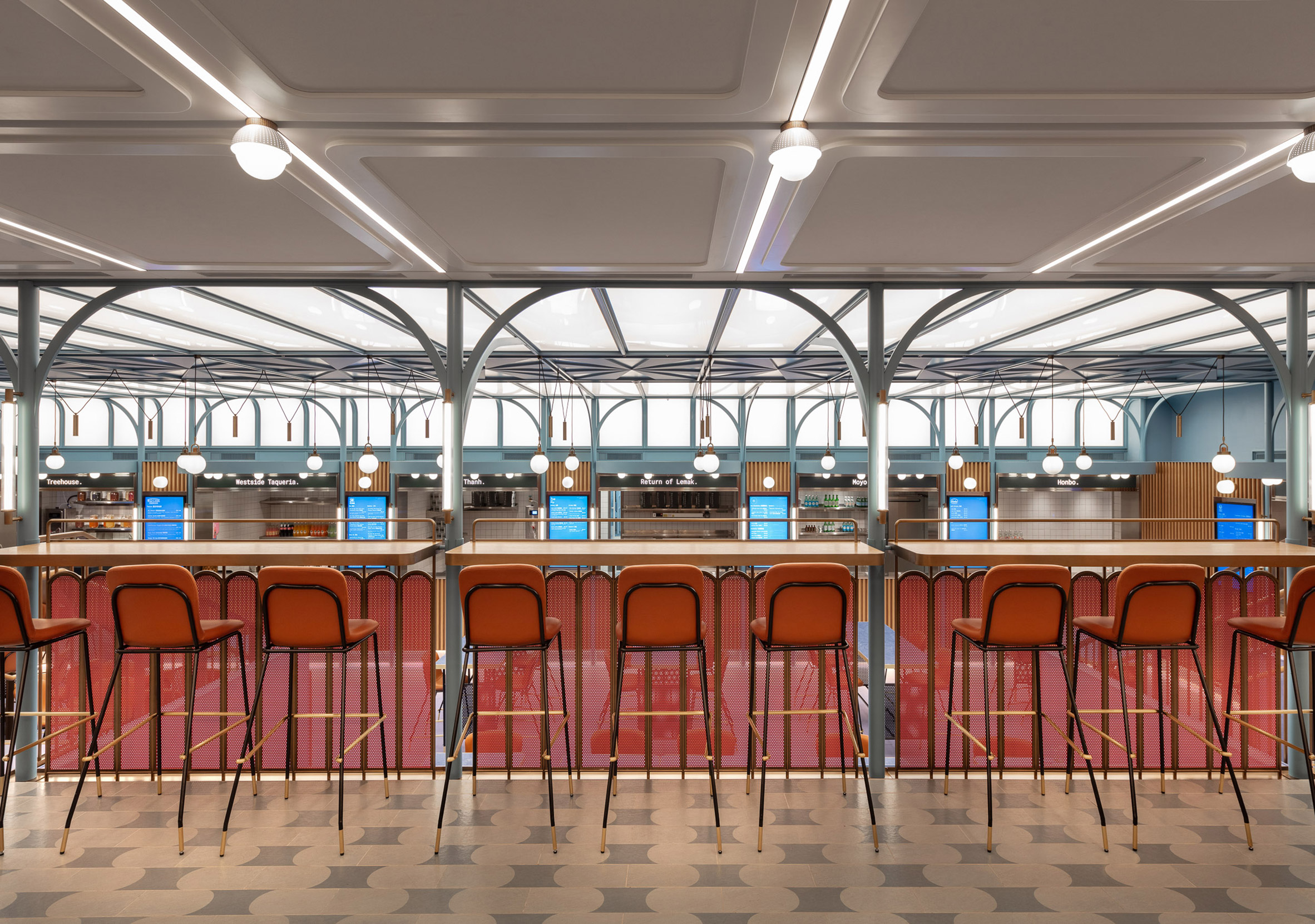
On the ground floor is a bright and buzzing "market courtyard", which offers treats from seven artisanal Hong Kong food vendors. Upstairs on the first floor is a drinks bar that's intended to have a warmer and more intimate feel.

Basehall food hall in Hong Kong designed by Linehouse

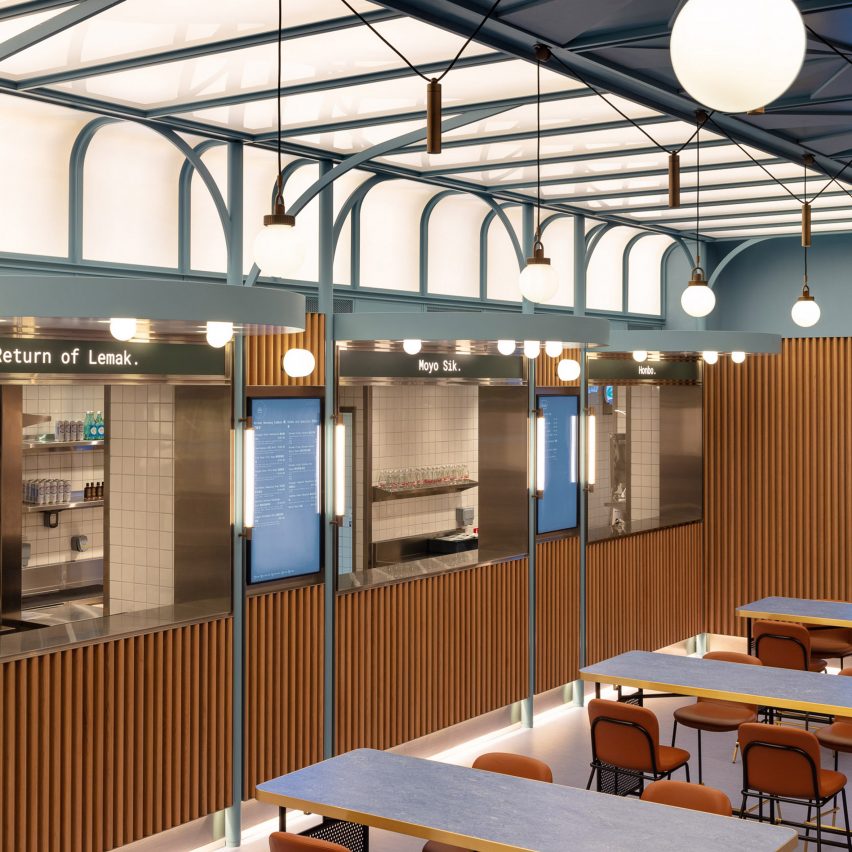
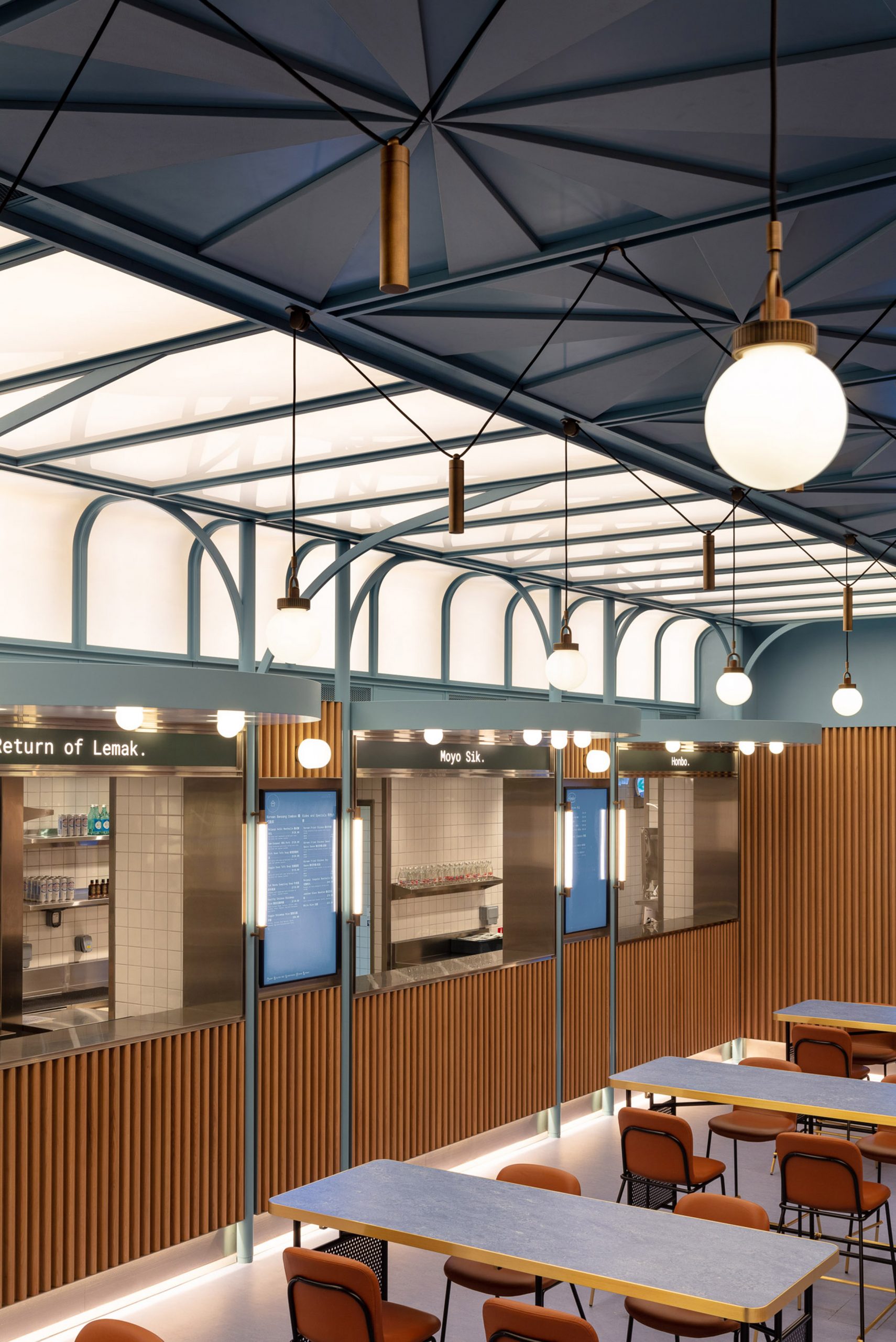
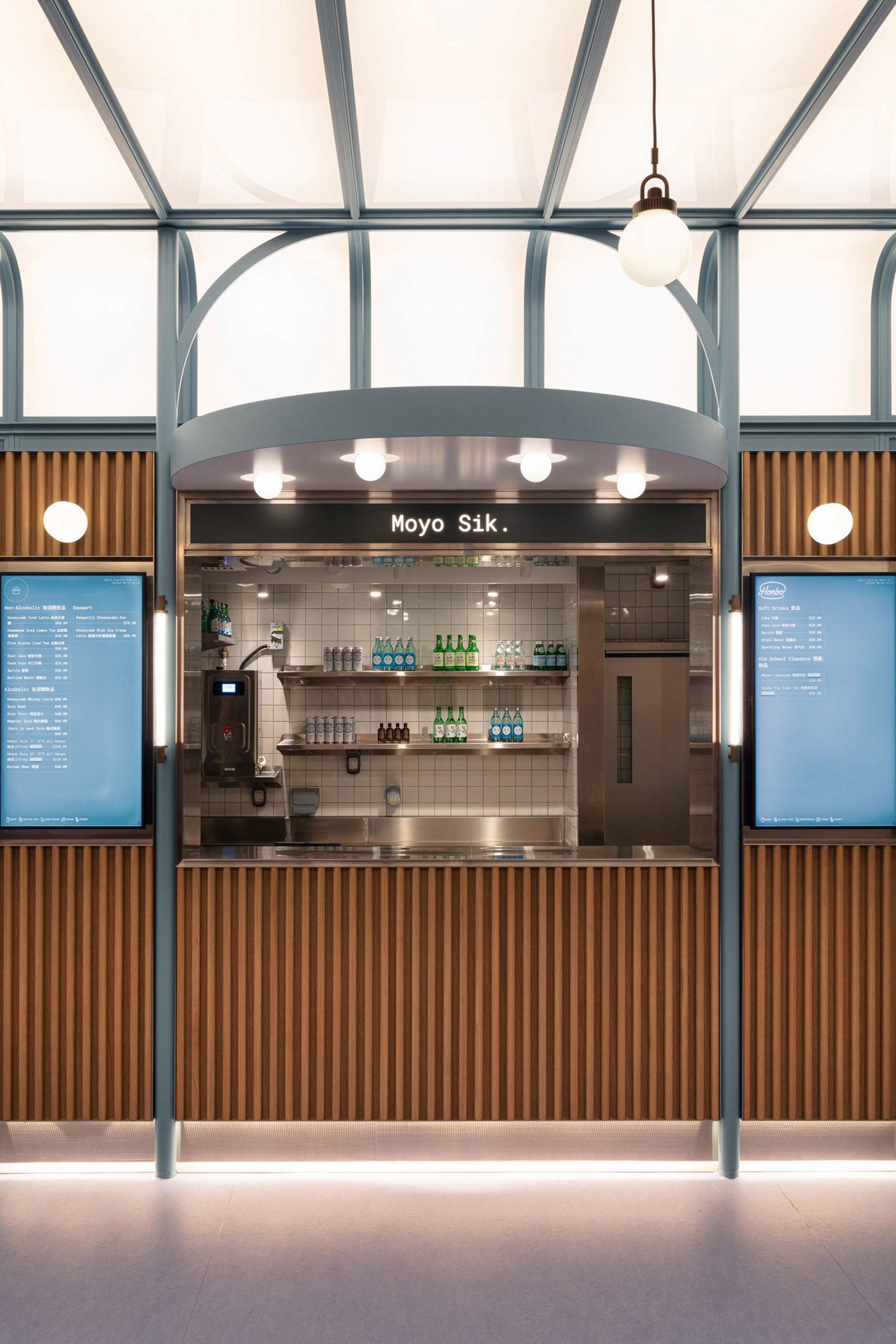
A wall clad with rounded oakwood battens runs the length of the ground floor. It's interrupted by a series of white-tile niches that accommodate the kitchens of the different food vendors.

Each niche is fronted by a powder-blue arched frame and a half-moon-shaped canopy fitted with spherical lights, matching the pendant lights that dangle from the ceiling.

Blue metalwork has then been created across the food hall's backlit ceiling.

Basehall food hall in Hong Kong designed by Linehouse

"The custom metal canopy ceiling is a highlight of the space and references traditional vaulted market hall structures," explained the studio.

"Backlighting the diffuse glass also allows for shifting light qualities throughout the day and night, creating an interior-exterior space."

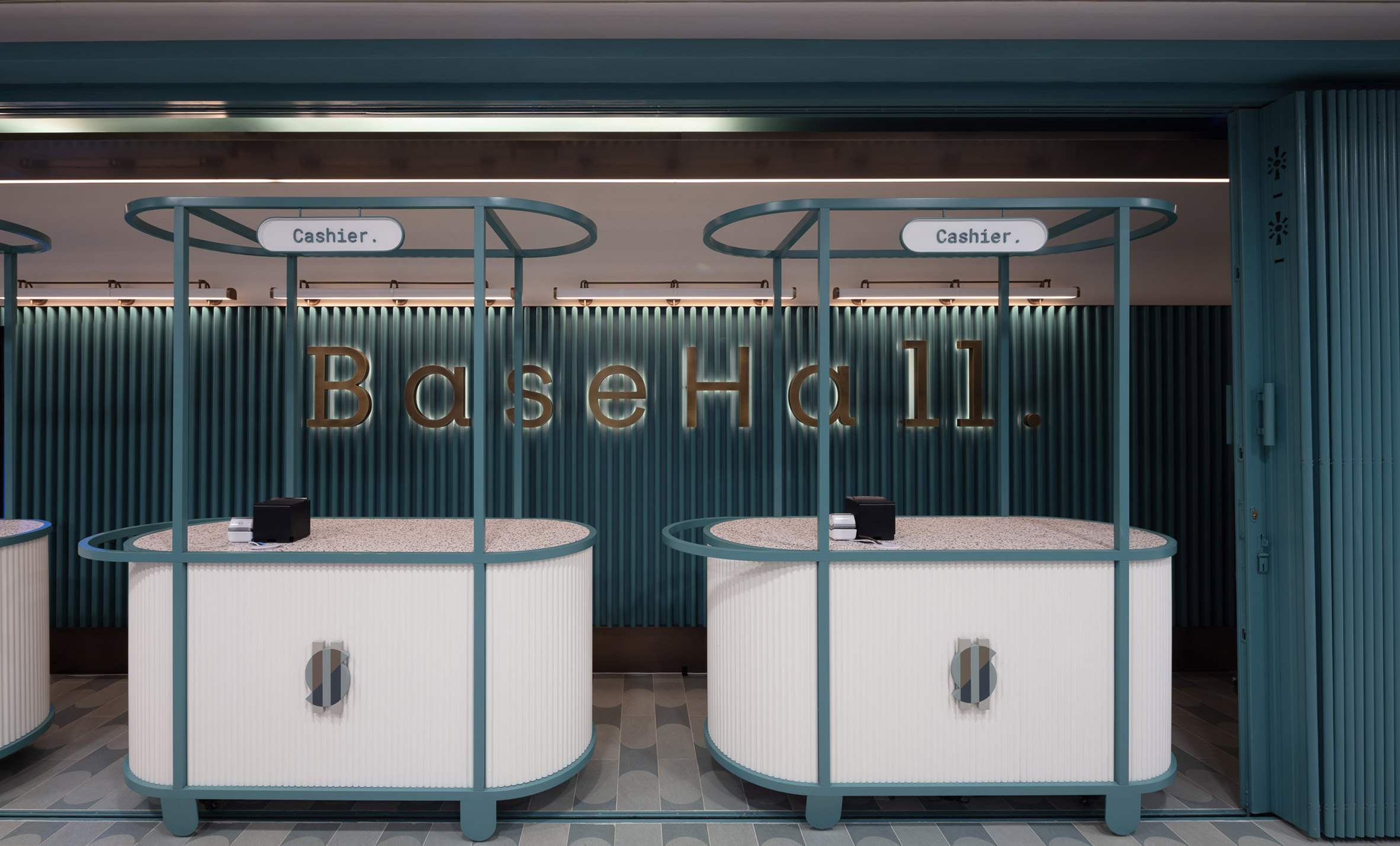
At this level, there are also a number of mobile cashier carts and even a moveable DJ booth so that the space can easily be reconfigured to host live music events or performances.

Basehall food hall in Hong Kong designed by Linehouse

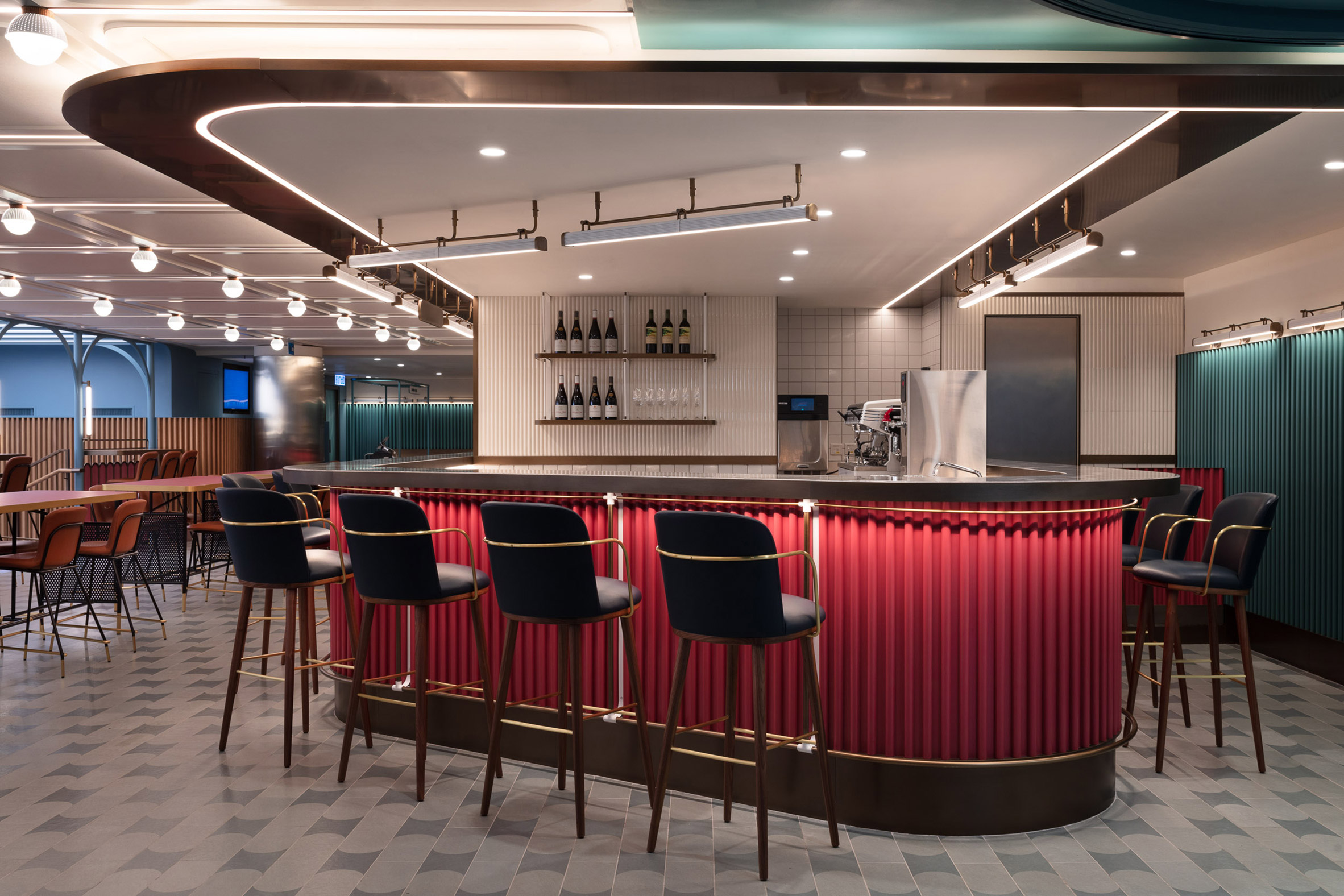
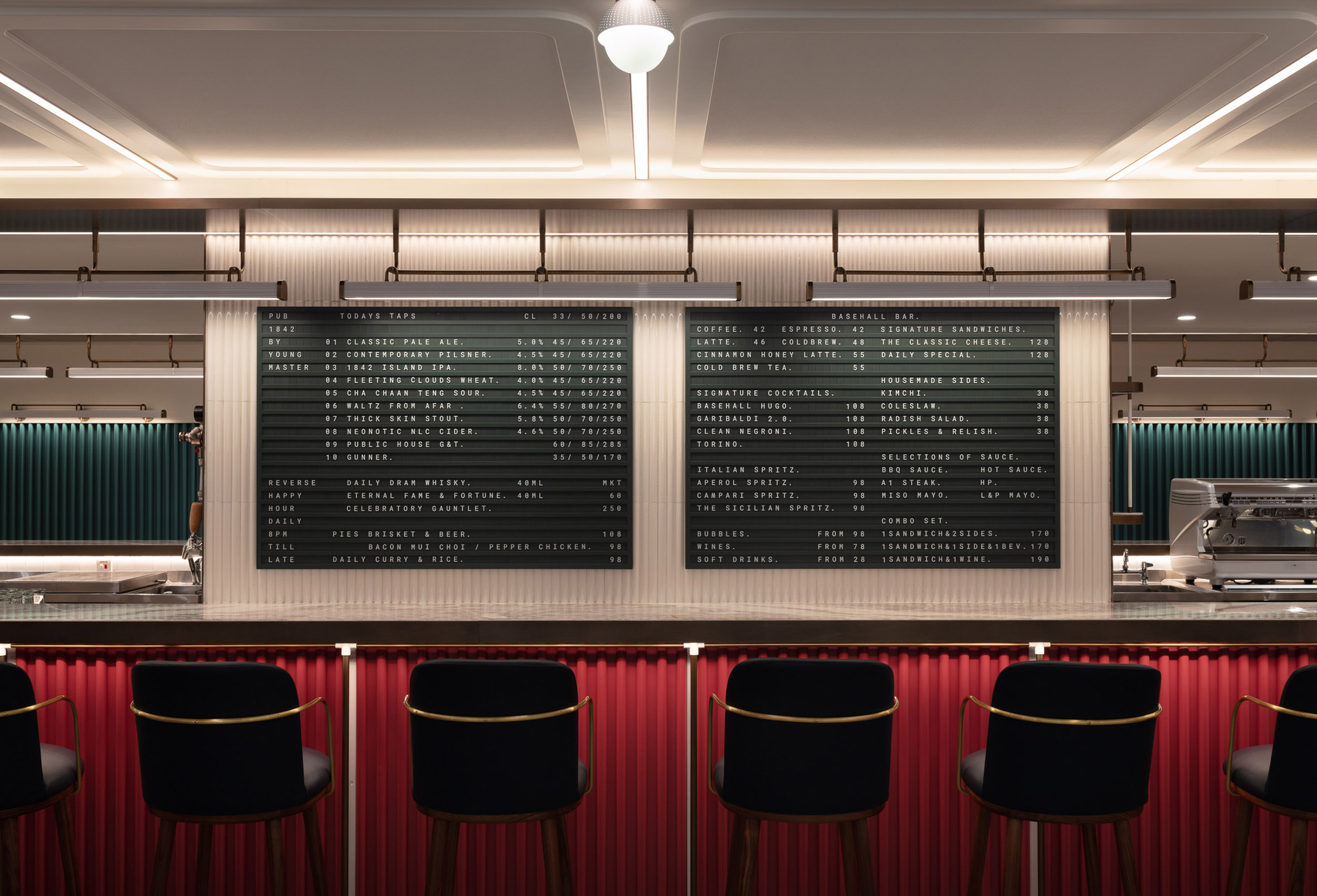
A fluted raspberry-pink bar with a reused marble countertop anchors the drinks area upstairs.

Its surrounded by black highchairs with slim brass armrests where guests can sit to watch the mixologists at work.

Basehall food hall in Hong Kong designed by Linehouse

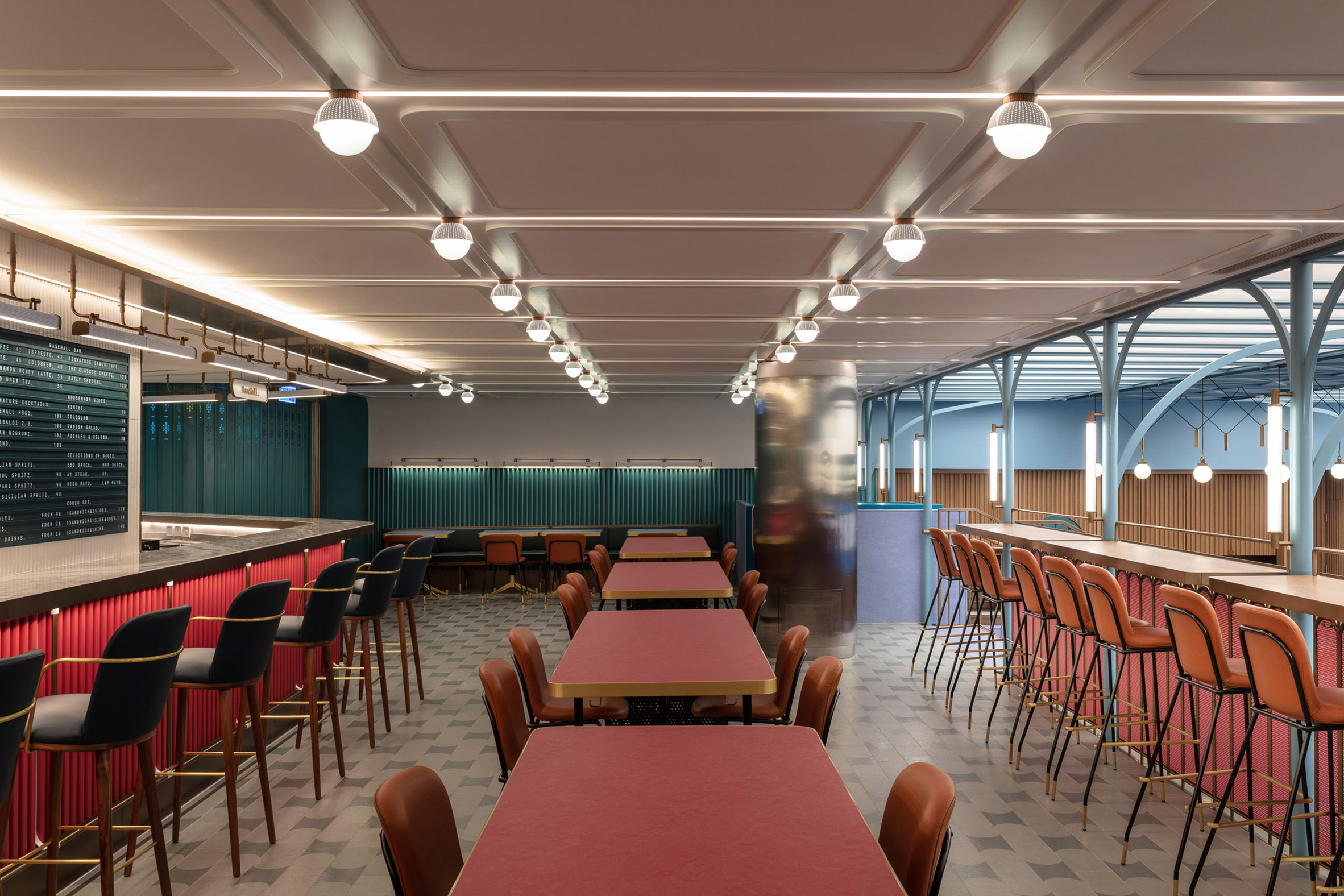
Down the centre of the space is a sequence of red brass-edged tables, while at the rear of the room is a green leather seating banquette set up against a grooved teal-blue wall.

There's also a row of orange seats directly behind the first-floor balcony balustrade offering views over the bustling crowds in the food hall below.

Basehall food hall in Hong Kong designed by Linehouse

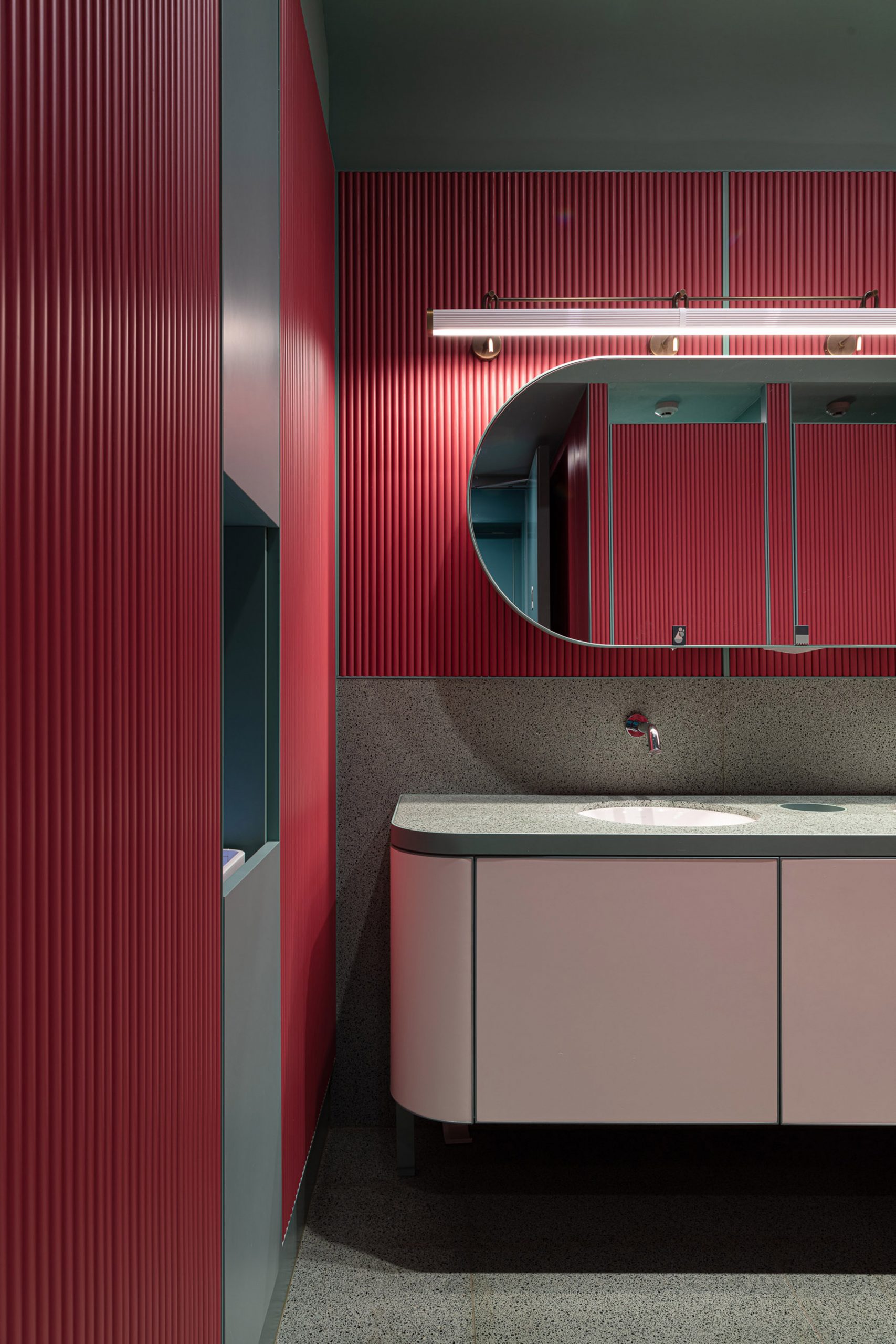
The colours applied throughout Basehall appear again in the venue's bathrooms, which feature blue terrazzo floors and sink basins.

Walls and the inside of toilet cubicles have been lined with 1,750 pink-painted recycled metal rods.

Basehall food hall in Hong Kong designed by Linehouse

Linehouse was founded in 2013 by Alex Mok and Briar Hickling, and has offices in Hong Kong and Shanghai.

This isn't the first dining spot that the studio has designed in Hong Kong – in 2018 it completed John Anthony, a dim sum restaurant named after the first Chinese-born man to be naturalised as a British citizen.

Inside, the restaurant has been decked out with materials that Anthony would have encountered on his initial journey to east London, like glazed tiles, terracotta and hand-dyed fabrics.

Photography is by Dennis Lo.


Project credits:

Interior architect: Linehouse
Branding: Hecho

The post Linehouse channels nostalgia for interiors of Basehall food court in Hong Kong appeared first on Dezeen.


from Dezeen https://ift.tt/2ZvEhos