
Working between control and freedom, the Amsterdam-based designer refers to her practice as a “dance”.

from It's Nice That https://ift.tt/3f9ZVFw
Working between control and freedom, the Amsterdam-based designer refers to her practice as a “dance”.
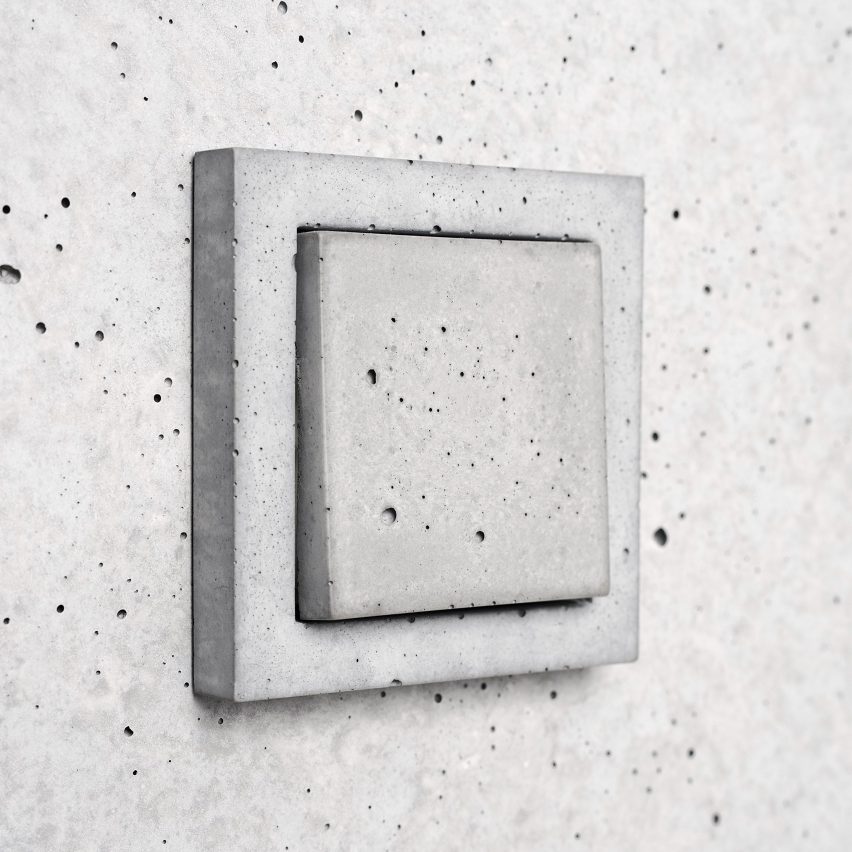
Hungarian design brand Sekhina has made a series of light switches and plug sockets from concrete as an aesthetically pleasing alternative to plastic.
Billed as the first of their kind, Sekhina founder Gábor Kasza made the concrete covers for switches and sockets after not being able to find any similar products made from the material.
"Concrete switches and sockets had to exist already – or so we thought initially; it seemed such an obvious idea, but we couldn't find them anywhere," said Kasza.
"We thought they would look and feel fantastic, so we created them," he added. "You can now find the very first completely concrete cover of switches and sockets, made from only silicates – more sustainable and more beautiful."
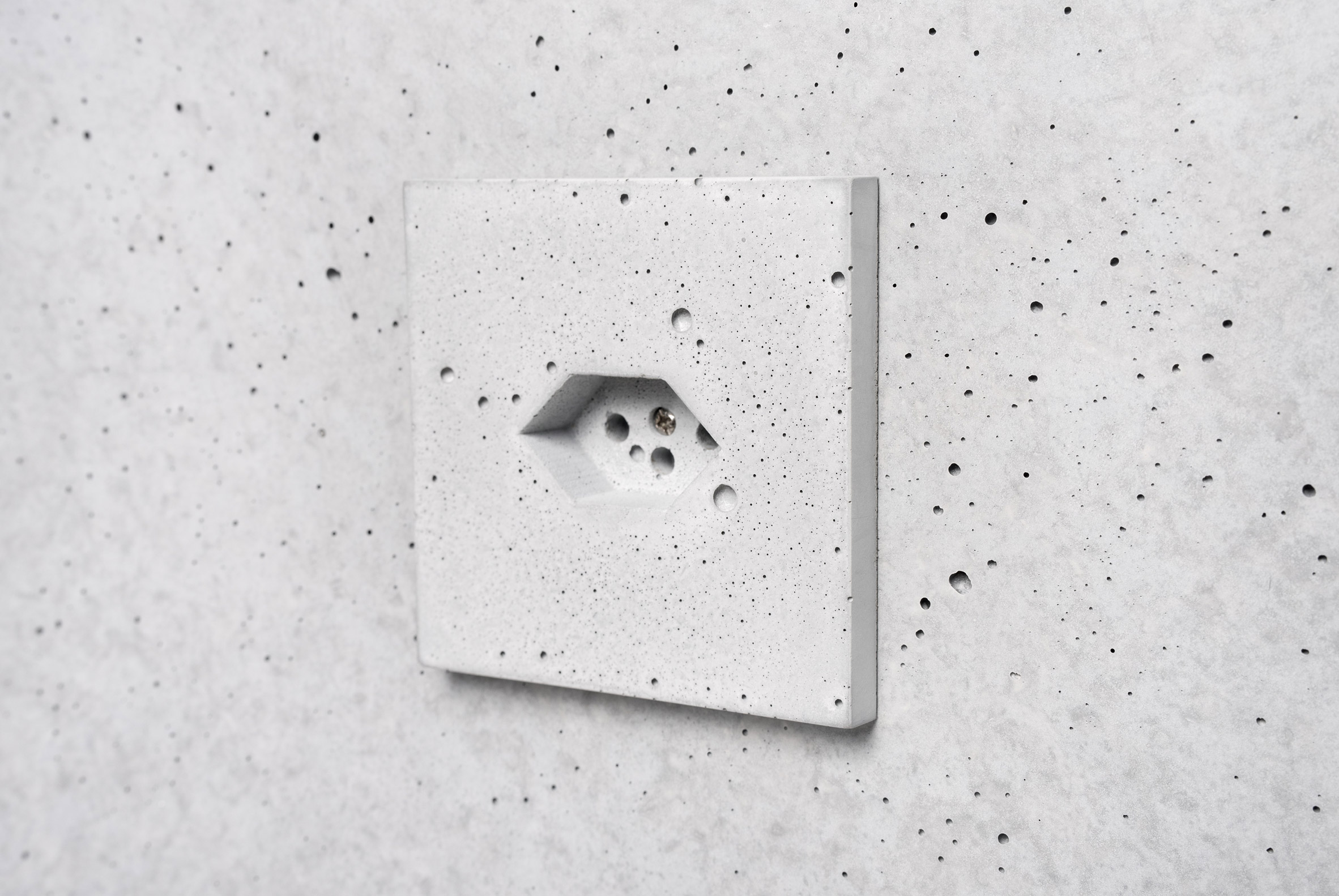
Initially drawn to the "fair-faced" complexion of concrete surfaces and objects, Kasza began developing the covers as part of his exploration of the material. He wanted to try to find a way to make light switches and sockets something that people don't want to conceal.
"A piece of plastic on the wall can be bizarre, sometimes quite terrible," he explained. "Interior designers very often try to hide switches and sockets as they blunt the general aesthetics of their work, but they're functional useful objects."
"If we have to search for a long time to find them and posture freaky poses to use them – that's not too comfortable. The answer is concrete."
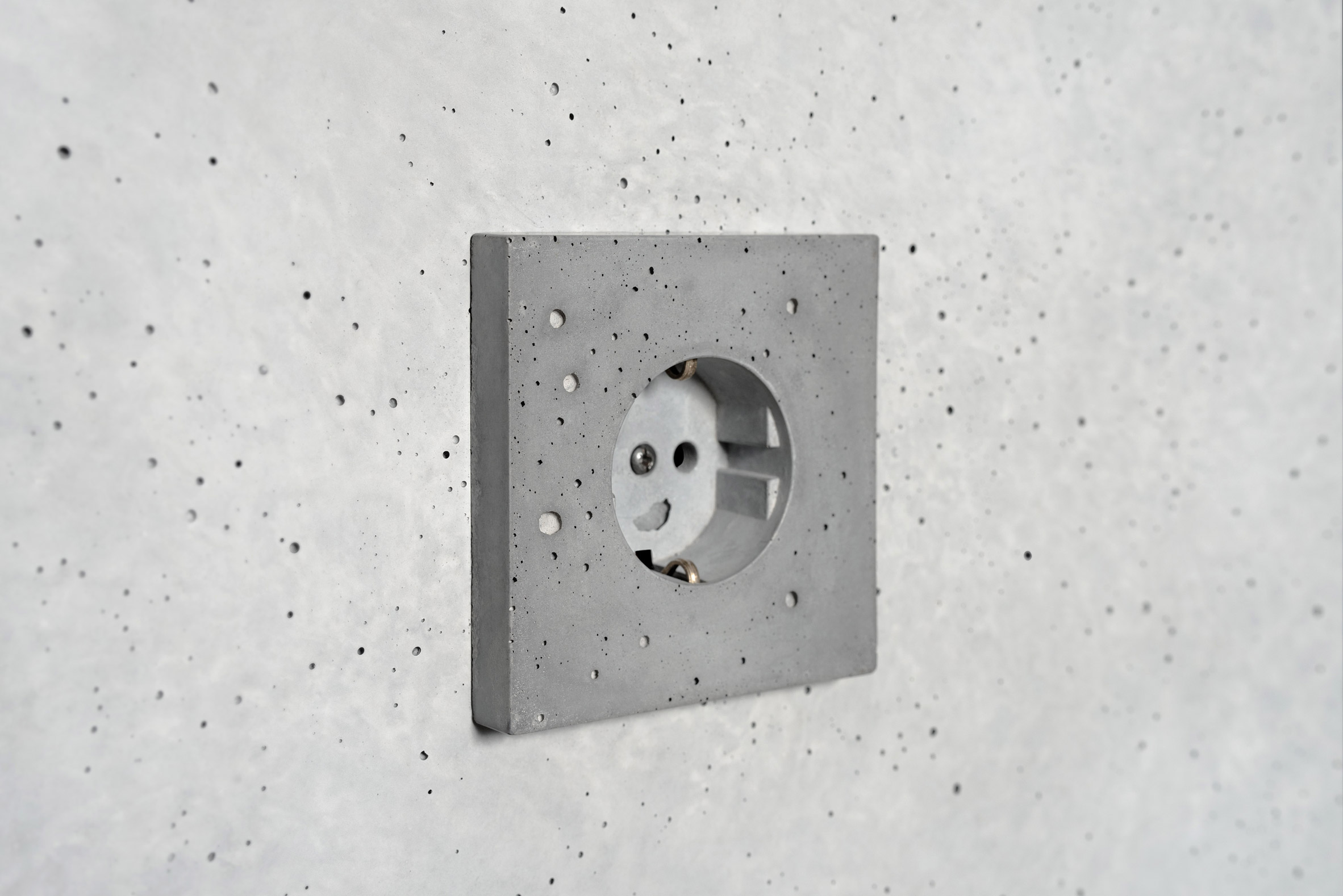
According to the designer, concrete is an appropriate material for switches and sockets due to its electrical insulating and non-flammable properties. Each piece has a unique design, featuring various bubbles and marks on its surface as a result of the moulding process.
The designs are currently prototypes and Kasza hopes he can get backing from investors to eventually mass-produce them.
Alongside the concrete switches, the designer has also created a series of polished terrazzo-style surfaces in various shades including pale pink, green and blue.
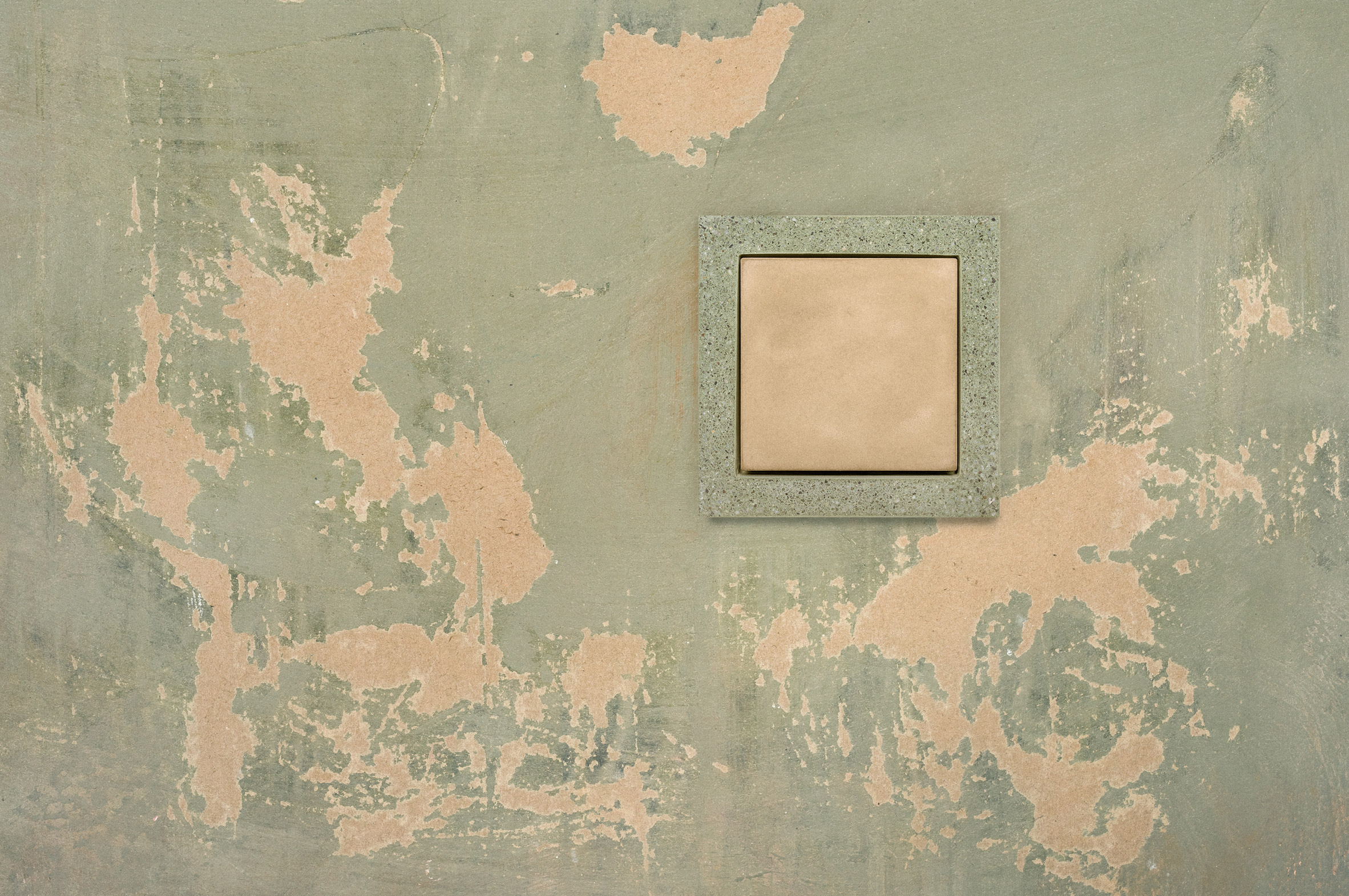
Designed to be as environmentally friendly as possible, the formula concrete switches and sockets are made from 25 per cent cement and are free from synthetic resins and contaminants.
"We know that the plastic materials of switches and sockets make up a very low percentage of global plastic pollution, but we think that all of the tiny steps to create a more sustainable future are remarkable," said the designer.
"We are very proud that we can offer a better alternative, although we know that concrete can harm the environment as well," he continued. "We do not use artificial resin nor pollutant additives – we call it a 'stone to stone' product."
To further neutralise its carbon footprint, Sekhina will be planting trees in cooperation with a chosen environmental organisation, as well as seeking advice from environment-protection specialists before starting mass-production.
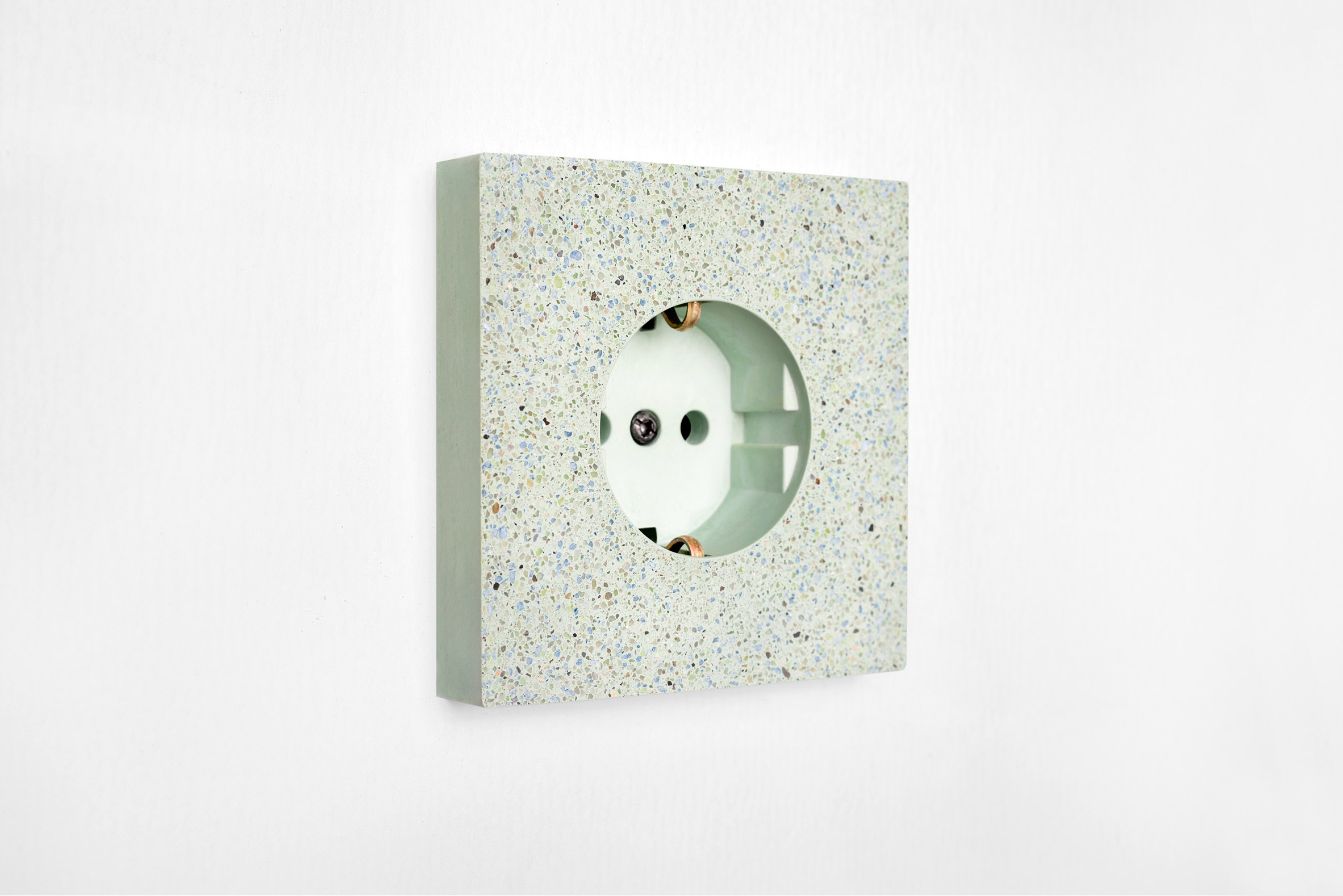
According to Kasza, the objects we touch in our day-to-day lives have a physical effect on our bodies and minds. He compares the use of concrete for switches to using a glass instead of a plastic cup.
"How many times a day do you touch light switches?" he questioned.
"If you feel it is better to wear a natural silk scarf than a nylon one and you can feel the difference between the perfume of flowers compared to a cheap toilet fragrance, then surely you will appreciate our products."
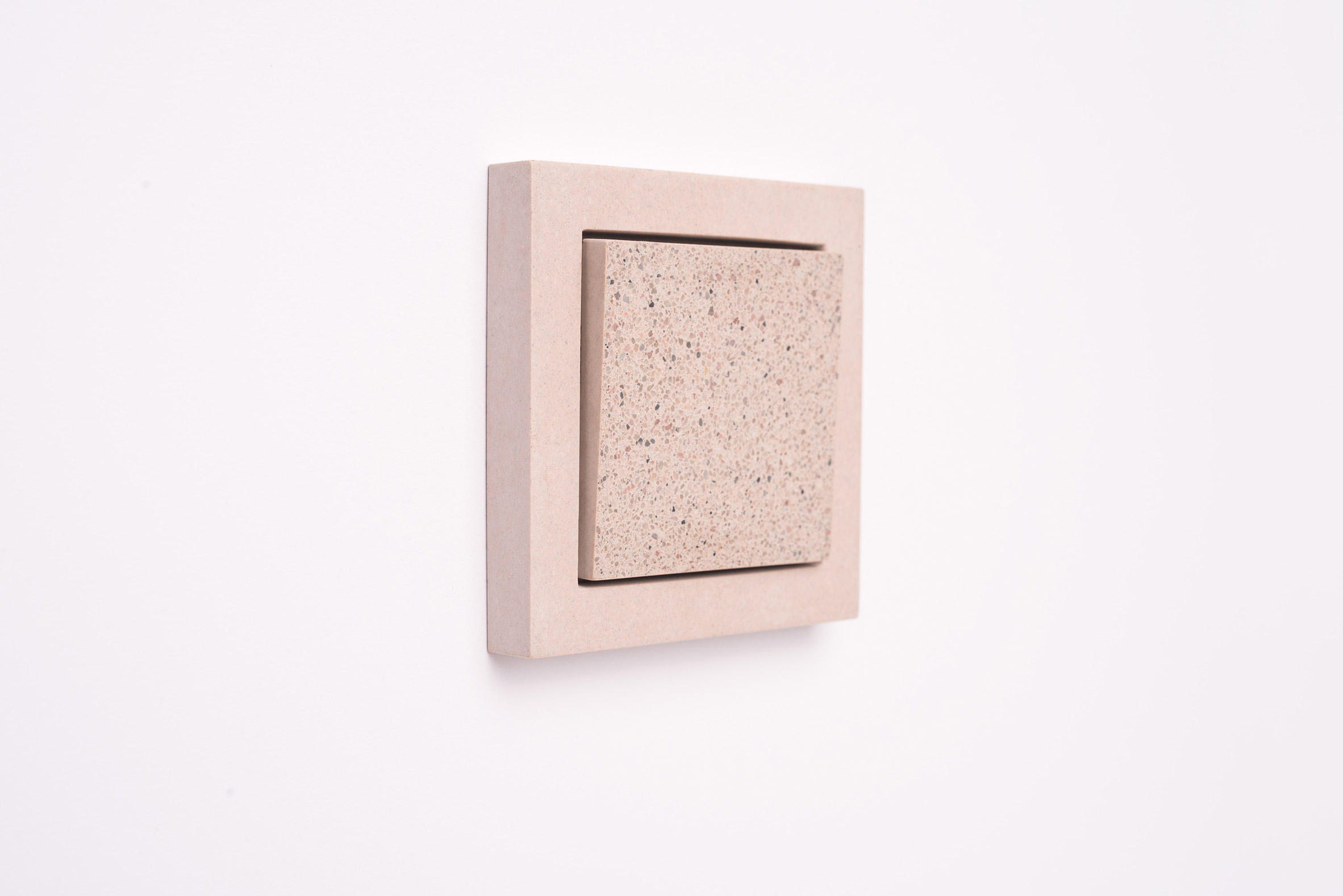
Concrete has been used to make other household objects such as bookends and doorstops, created by London designer Liliana Ovalle, as well as a collection of bathroom furniture by Marco Merendi and Diego Vencato.
New York-based Bower Studios also experimented with concrete to create a chair-top that is designed to look like it is melting over a metallic base, forming folds on the floor.
The post Sekhina designs minimal light switches and sockets from concrete appeared first on Dezeen.
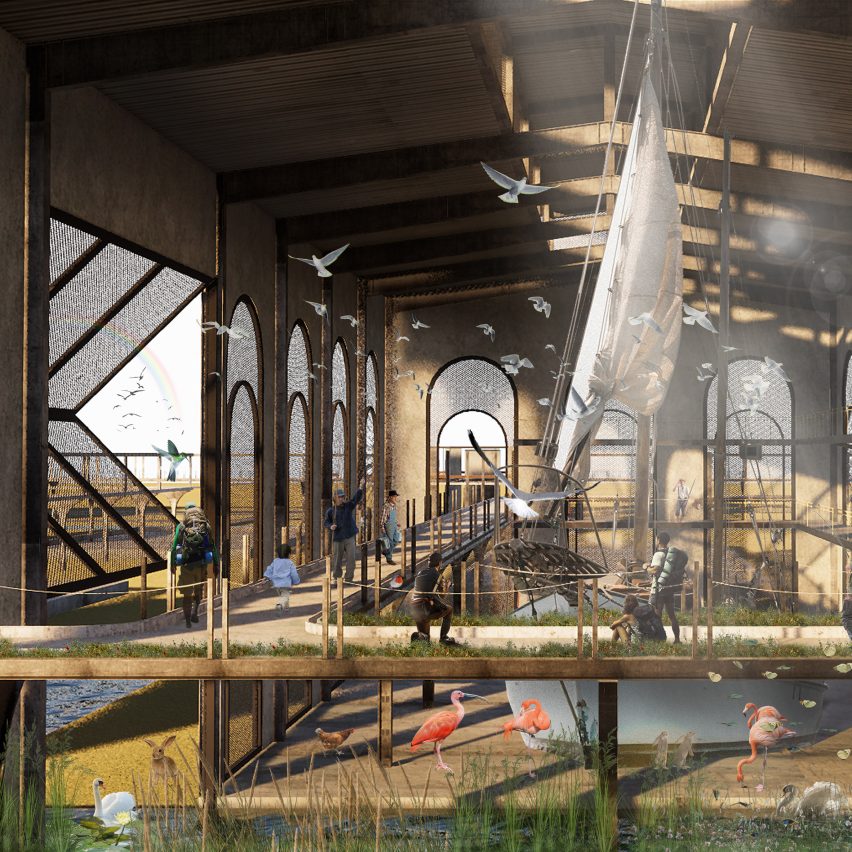
An eGaming stadium and a post-pandemic housing typology for Singapore's migrant workers are among the student projects from the National University of Singapore spotlighted in this VDF school show.
Under the title Vision 2020, NUS is exhibiting 12 thesis works from this year's Master of Architecture graduates, which "provoke, inspire and question" where the industry is headed.
The projects fall into five broad themes, which crystallised themselves as the most pressing for students – Atmosphere and Agency, Conservation and Heritage, Urban Commons and Wellness, Speculative Environments and Performative Design.
The remaining projects from the class of 2020 are also being showcased as part of NUS's virtual MArch Grad Show.
University: National University of Singapore
Course: Masters of Architecture
Virtual Exhibition: nusmarchgradshow.com
Instagram: @nusm.archgradshow
Course statement:
"The NUS Architecture school positions itself as a design and research think-tank, tackling topics such as the environment and climate change, economic and cultural changes as well as technological advancement through the lens of architecture and urban development.
"Students explore design research through mixed modes of inquiry across a core set of speciality areas – history and theory criticism, design technologies, urbanism and landscape studies. Design is pursued through multiple avenues by students and supervisors across a wide range of topics.
"As the NUS masters programme has evolved over the decades, these aspirations have forged an investigative approach that utilises architecture as an agent of change. They culminate in a collection of questions on nature – the dichotomy between the collective and the individual and the conflict between human habitation and natural ecology in light of climate change.
"This small sampling of work links to a wider collection of critical design investigations in architecture by the graduating class of 2020 at NUS."
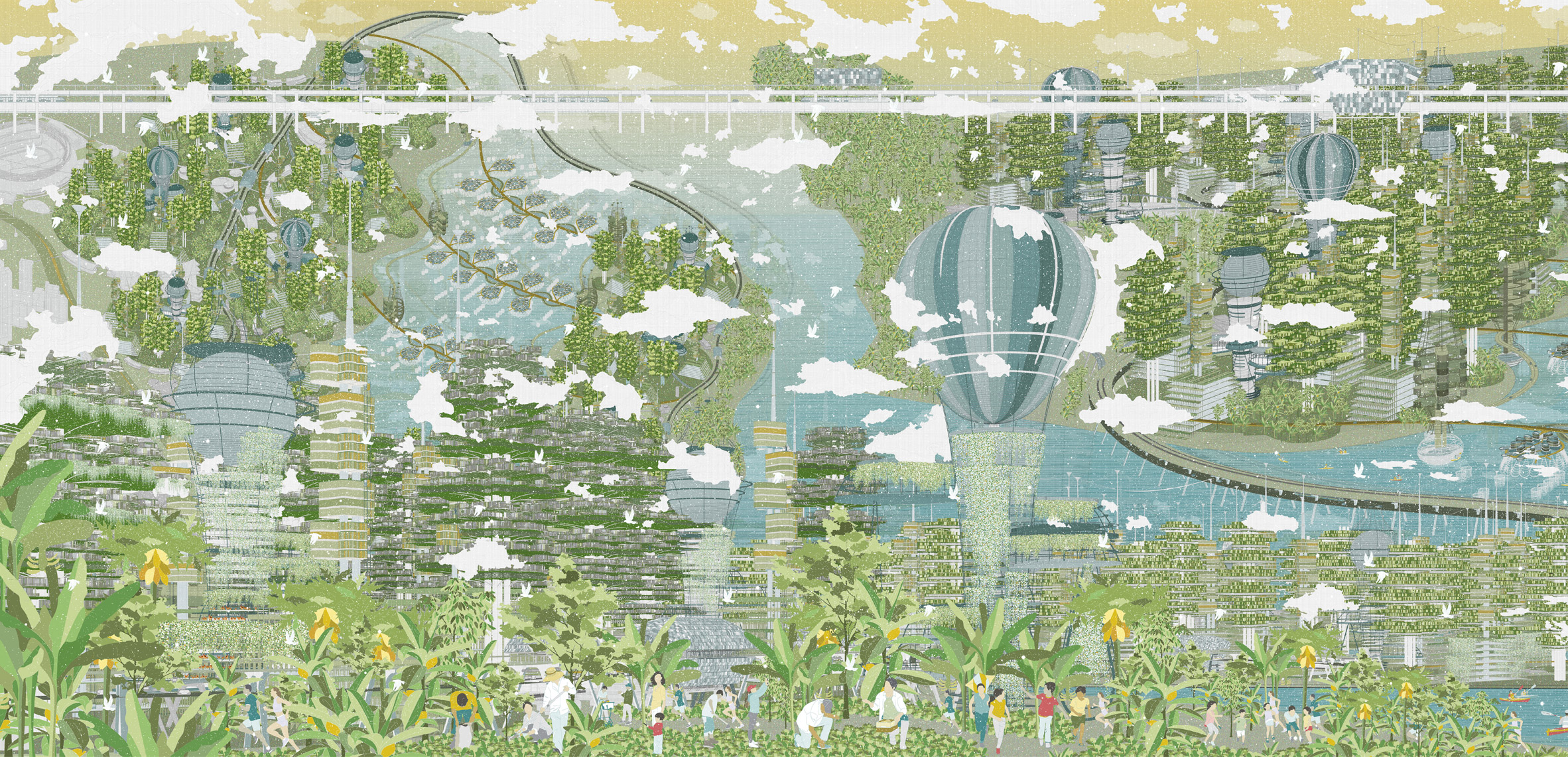
City as Ecosystems, Architecture as Scaffold by Candice Chen
Project cluster: Urban Commons and Wellness
"Cities are often perceived as harsh, man-made environments that are antithetical to nature and her abundant biodiversity. This thesis aims to challenge this preconception and show how cities can be amendable to natural ecosystems.
"City as Ecosystem, Architecture as Scaffold advances a new paradigm for homeostatic living in the future, urban neighbourhoods of Singapore. Here, architecture acts as a scaffolding for sustaining natural ecosystems through biophilic design while fostering a sense of stewardship within the community to achieve social and urban resilience towards climate change."
Site: Greater Southern Waterfront, Singapore
Thesis supervisor: Fung John Chye
Project showcase: nusmarchgradshow.com/chentingyancandice
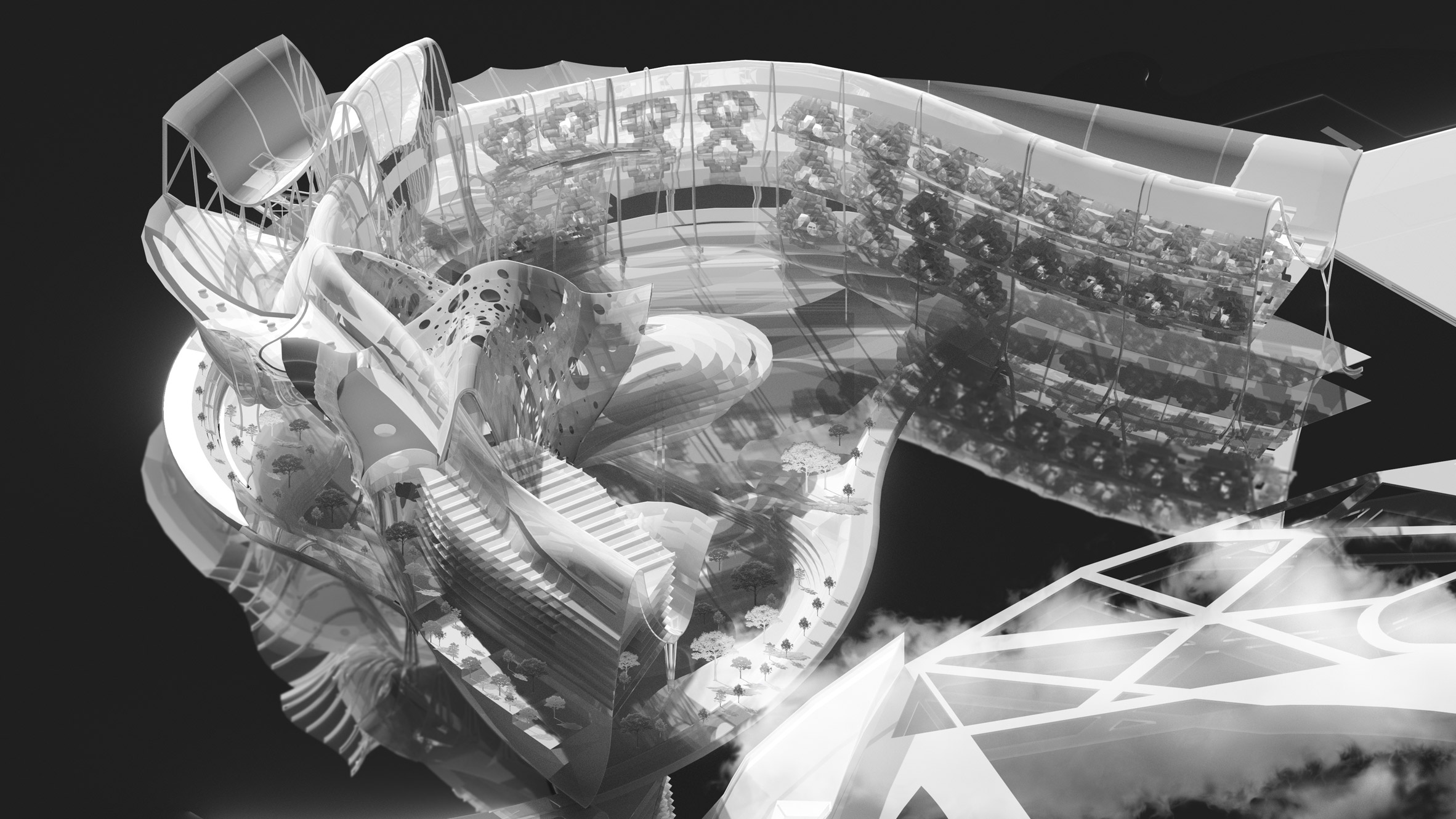
Project Metamorphosis by Fawwaz Azhar
Project cluster: Urban Commons and Wellness
"The resilience of the neighbourhoods that house our multicultural community will be affected when climate change alters our environment and when the technology of the fourth industrial revolution disrupts the way we work, live and play. While we are on the verge of the fourth revolution of cyber-physical systems, climate change also threatens our way of life here in Singapore.
"High-tech infrastructure advancements and climate change interventions have paved the way for a sustainable, future-ready typology for coastal city neighbourhoods. Called Project Metamorphosis, it thrives on a mobile and connected lifestyle."
Site: Tanjong Pagar Port, Singapore
Thesis supervisor: Fung John Chye
Website: wazworks.net
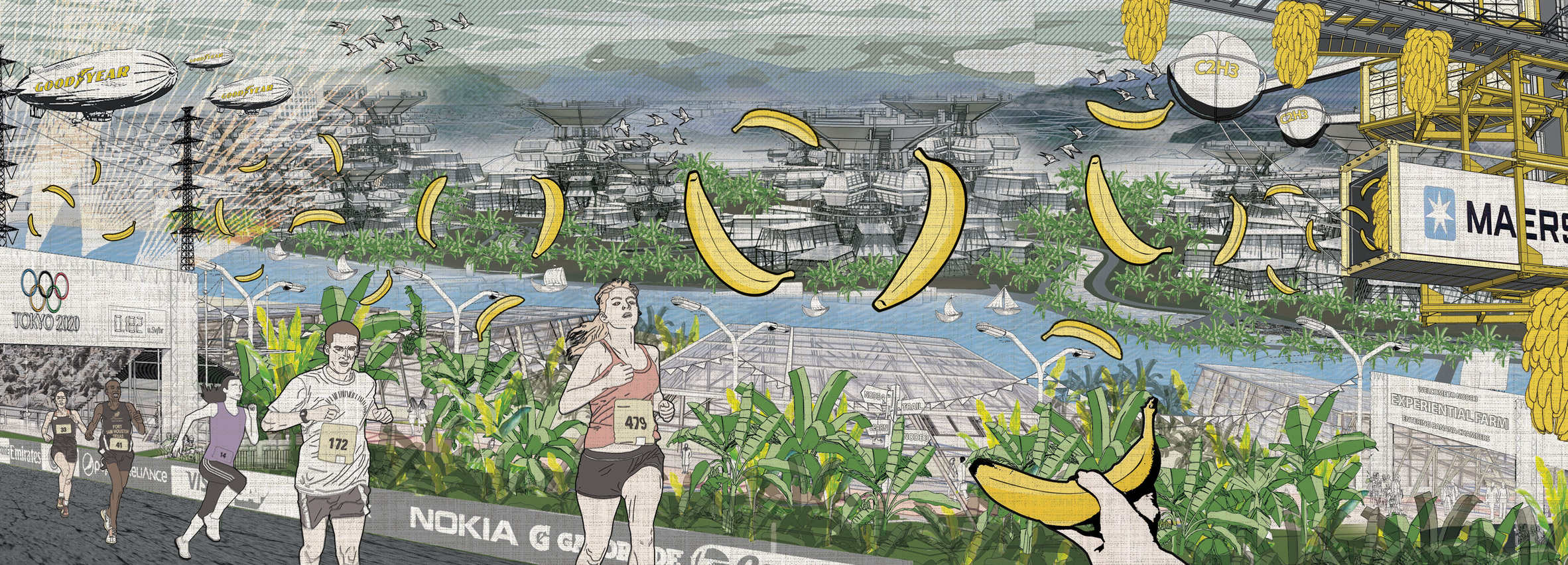
Championing Fukushima by William Tin Wai Leung
Project cluster: Urban Commons and Wellness
"The fallout from the Fukushima Daiichi nuclear disaster in March 2011 still haunts and affects locals until this day. The daily lives of victims continue to be disrupted, as many lost their homes, jobs, communities.
"This proposal uses the event of the Tokyo 2020 Olympics as an opportunity to rejuvenate the affected towns and addresses the lingering stigma surrounding the nuclear fallout. This is achieved by empowering the remaining residents in Hirono-cho and inspiring the evacuees to return to their former lives."
Site: Hirono-cho, Fukushima Prefecture, Japan
Thesis supervisor: Dr Zhang Ye
Project showcase: nusmarchgradshow.com/williamtinwaileung
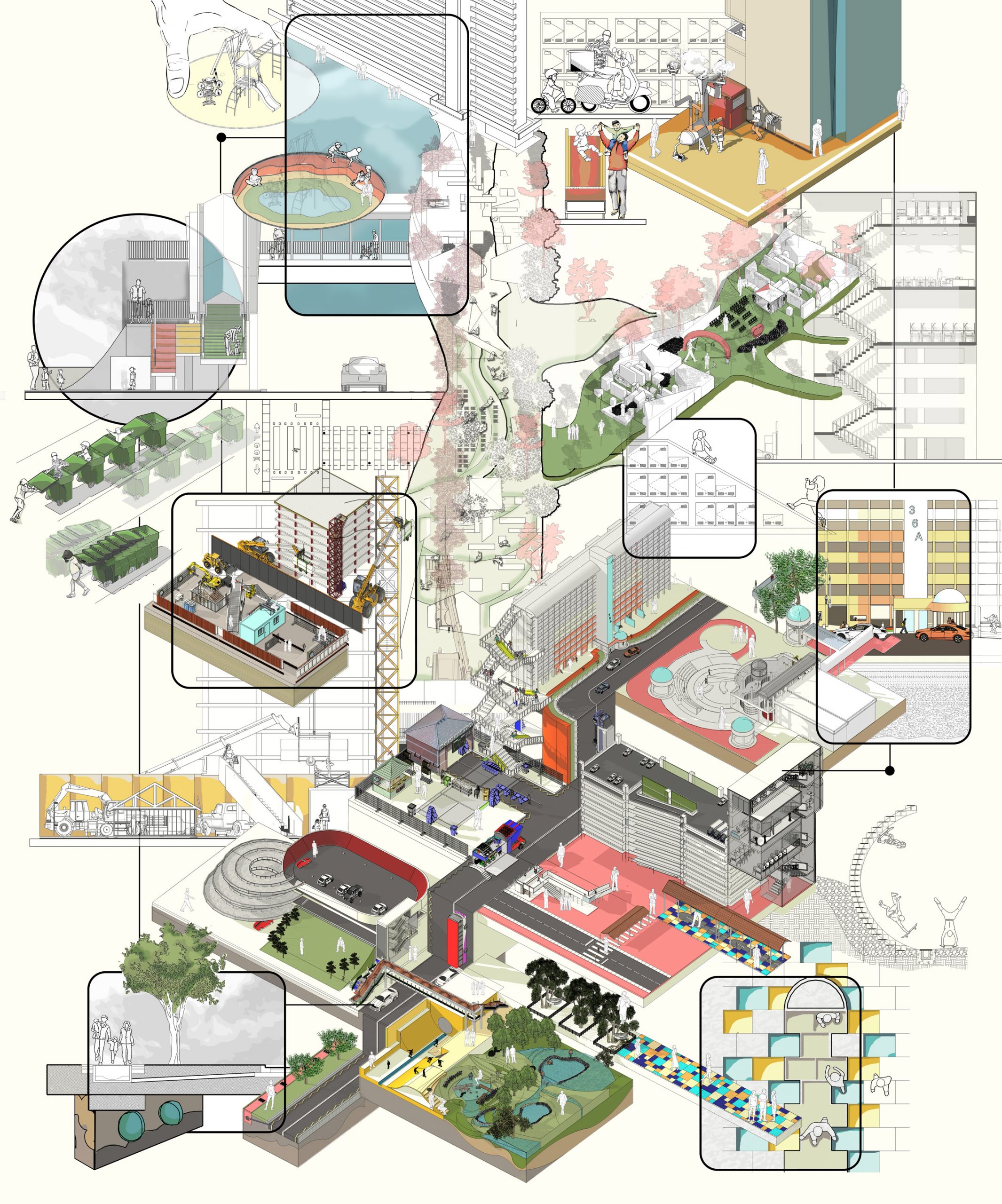
Play! A Guide to Architecture for Resilience by Tan Xin Yuan
Project cluster: Speculative Environments
"This thesis posits that housing landscapes, as a spatial and physical construct, play a pivotal role in shaping the core identity of Singapore's residents. It also calls on the state's Housing & Development Board (HDB) to fulfil its role of shaping a resilient future generation.
"This project distils the sense of identity and the memories that can be created in everyday neighbourhoods and acts as a vehicle that is reactionary to the longevity and permanence of one's psychoanalytic id. Ultimately, Play! is a guide to creating a housing typology that builds meaningful identities based on permanent qualities and values beyond the traditional pedagogy of what a school can teach."
Site: Tanglin Halt, Singapore
Thesis supervisor: Tiah Nan Chyuan
Website: xinyuantan.com
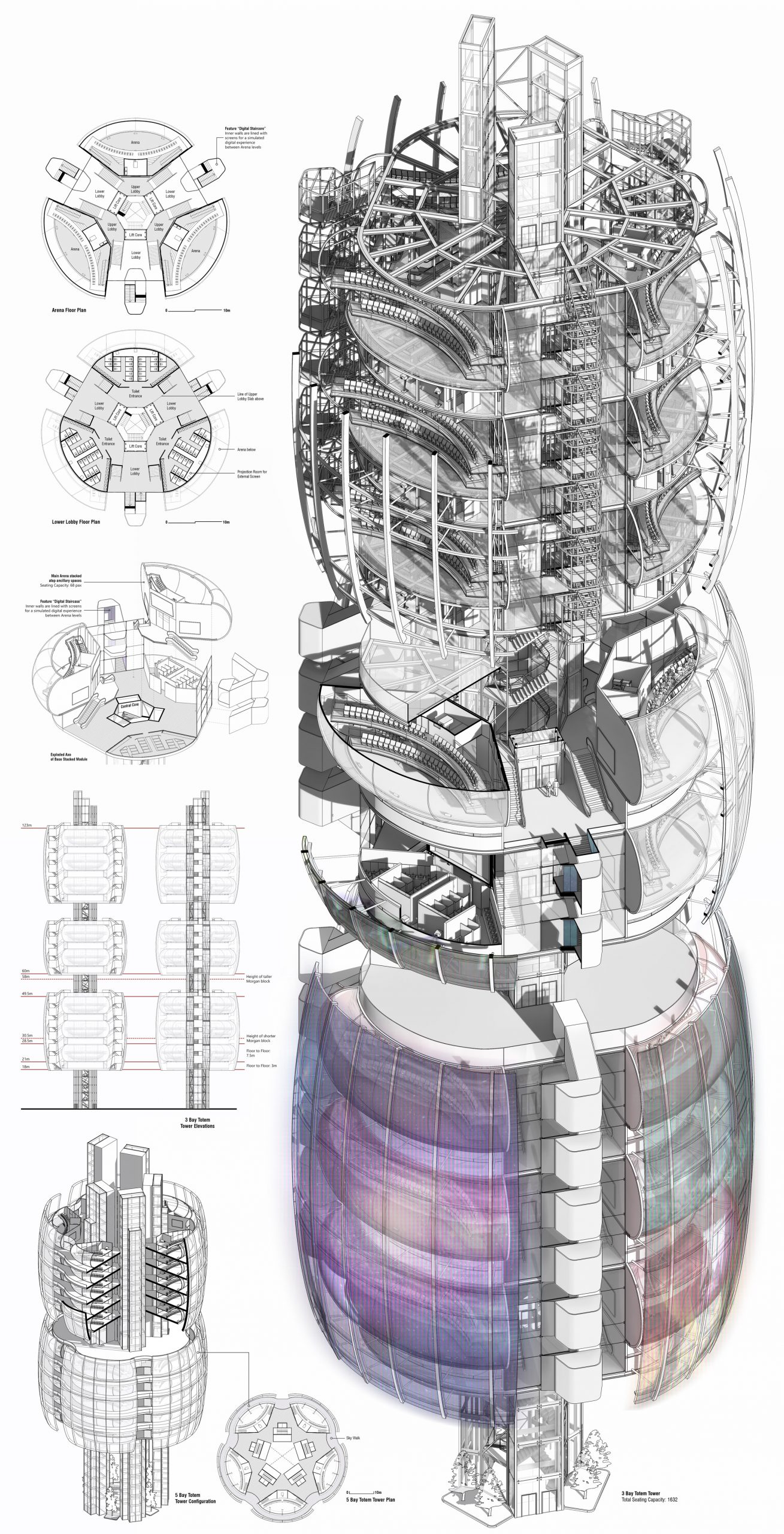
Totem: An Evolution of Spectatorship and Play by Glenn Loh
Project cluster: Speculative Environments
"Set in New York City, Totem represents a new standard for gaming spaces. The project proposes an 'urban event' that draws on the escapism that can be achieved through the act of play.
"This novel, large-scale stadium typology serves as a point of convergence for difference industry agents – creators, publishers, gamers and spectators – in a celebration of the making, playing, watching and living of games. With its distinct focus on screen and projection technology, this new hub illuminates the way forward in our increasingly digitised society."
Site: New York City
Thesis supervisor: Dr Joseph Lim
Project cluster: Speculative Environments
Project showcase: nusmarchgradshow.com/glennloh
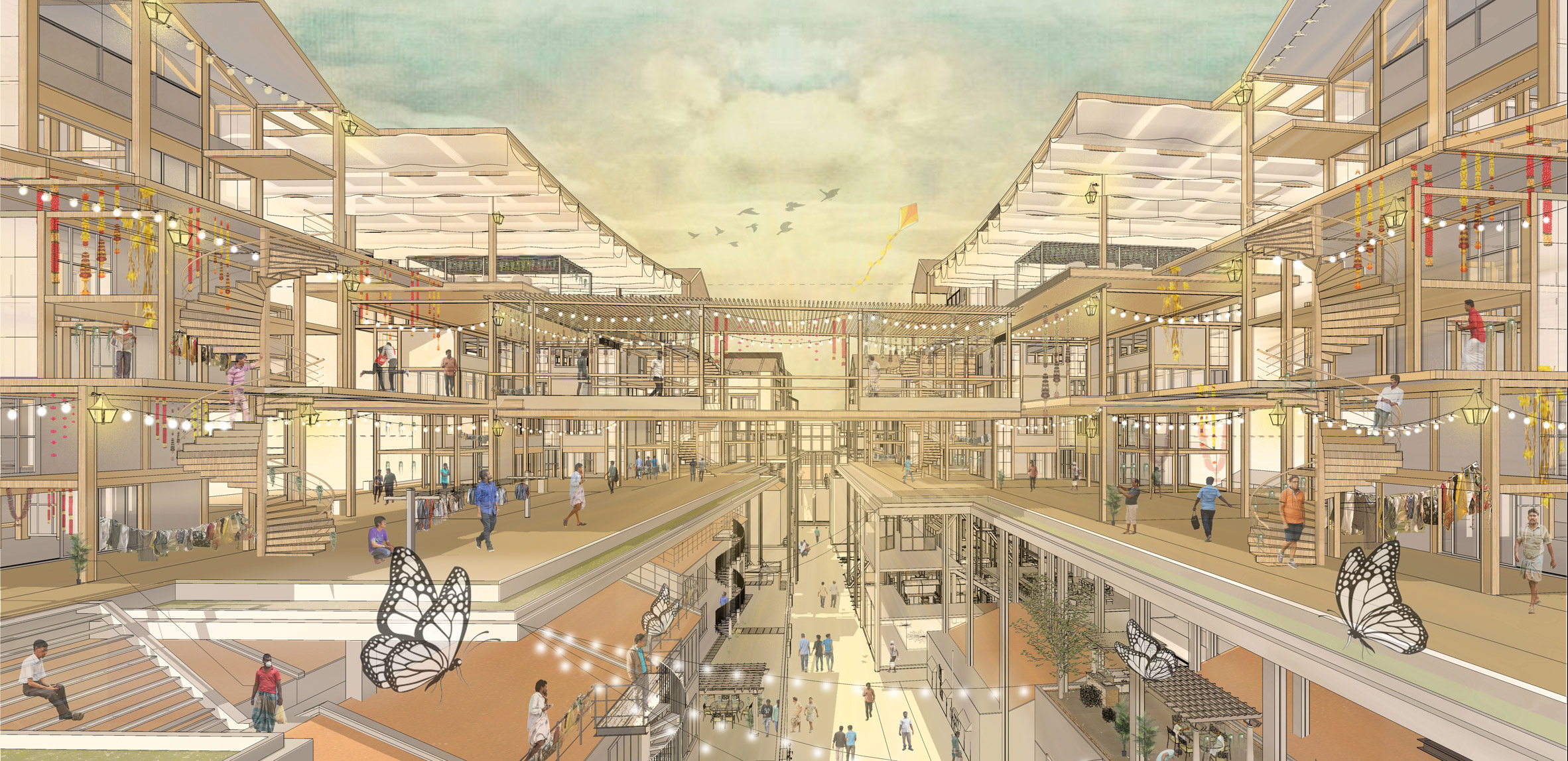
Frontlines (Backalleyways) by Khoo Hui En Vanessa
Project cluster: Speculative Environments
"The Covid-19 pandemic has brought attention to the vulnerability of migrant workers in Singapore and their relegation to the city's margins.
"Through adapting Walter Segal's self build approach to construction, this new tenancy scheme aims to provide them with a comfortable ratio of private living quarters to shared common spaces. This new township typology forms a hierarchy of shared common spaces with varying levels of flexibility in layout and configuration, in order to return spatial autonomy to the migrant tenants and build social capital among them."
Site: Lor 13/15 Geylang
Thesis supervisor: Dr. Swinal Samant
Project showcase: nusmarchgradshow.com/vanessakhoo
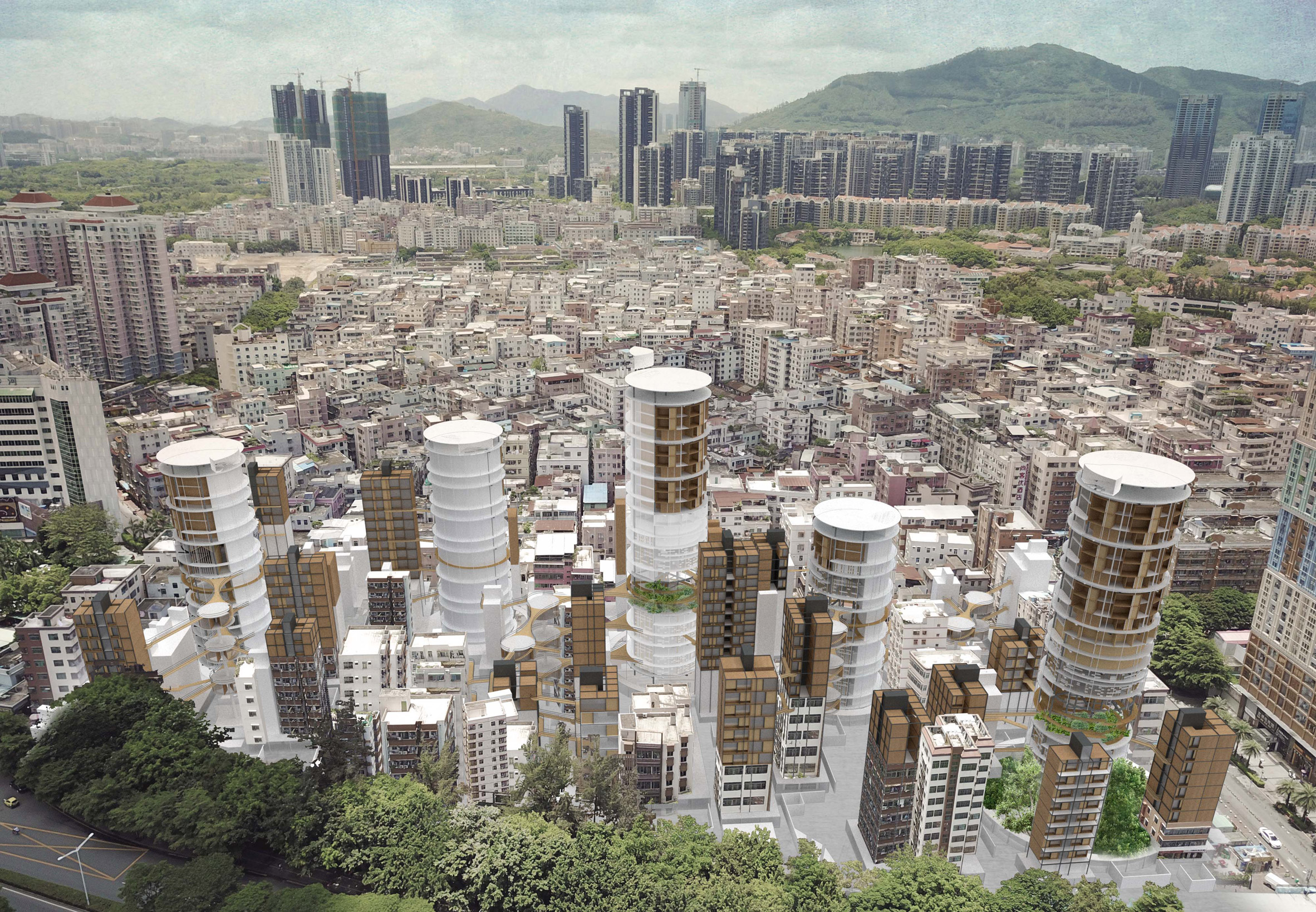
Weaving the Complex by Wang Changren
Project cluster: Performative Design
"BaishiZhou, the largest urban village in China, is facing demolition. The village has witnessed drastic urbanisation and serves as a low-cost housing enclave for migrant workers. This proposal aims to find an alternative to the current tabula rasa, or blank slate, planning mode while activating the area's commercial potential.
"First, an evolutionary algorithm is used to establish iterative, simulation-driven methodologies for bottom-up urban regeneration strategies. A palimpsest was cleared out for further design before choosing an urban fabric as a testbed for further, detailed design adaptations, which could eventually be implemented across the whole urban village."
Site: Bai Shi Zhou, China
Thesis supervisor: Dr. Rudi Stuoffs
Project showcase: nusmarchgradshow.com/wangchangren
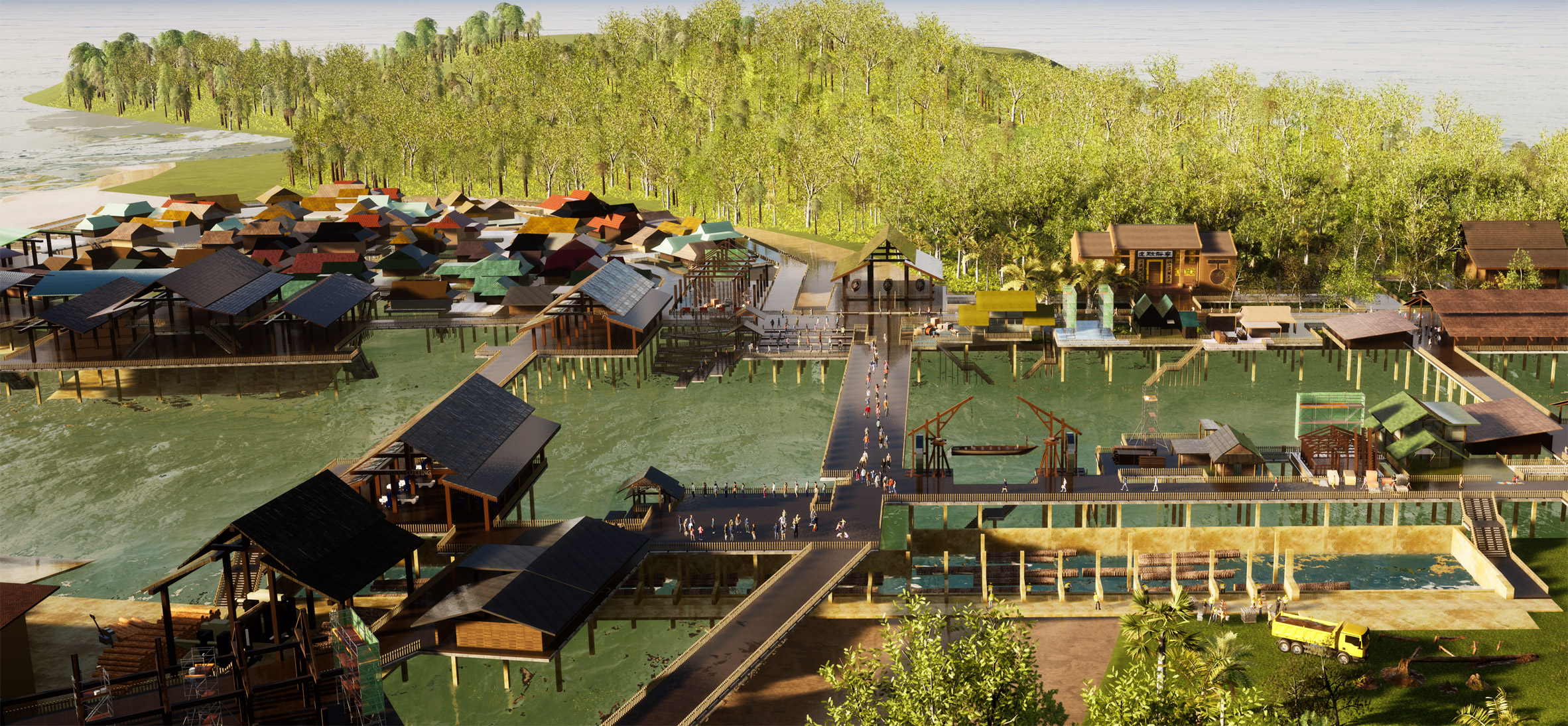
Return of the Amphibious 屿 by Gary Kwek
Project cluster: Conservation and Heritage
"屿 (yu) not only describes a terrain that disappears at high tide and temporarily emerges at low tide but also the cultural activities and spiritual fascination that humans have projected onto this phenomenon of impermanence. The Malay Archipelago contains many of these small, fragmented islets, but their 'amphibious' quality as an island has been lost through the reclamation and gentrification that accompanied the arrival of western modernity.
"This architectural intervention takes the form of a neo-vernacular village, where people can continue to define what constitutes 'vernacular' and reconnect with the amphibious identity that was a crucial part of our ancestors."
Site: Southern Islands, Singapore
Thesis supervisor: Dr. Johannes Widodo
Project showcase: nusmarchgradshow.com/garykwek
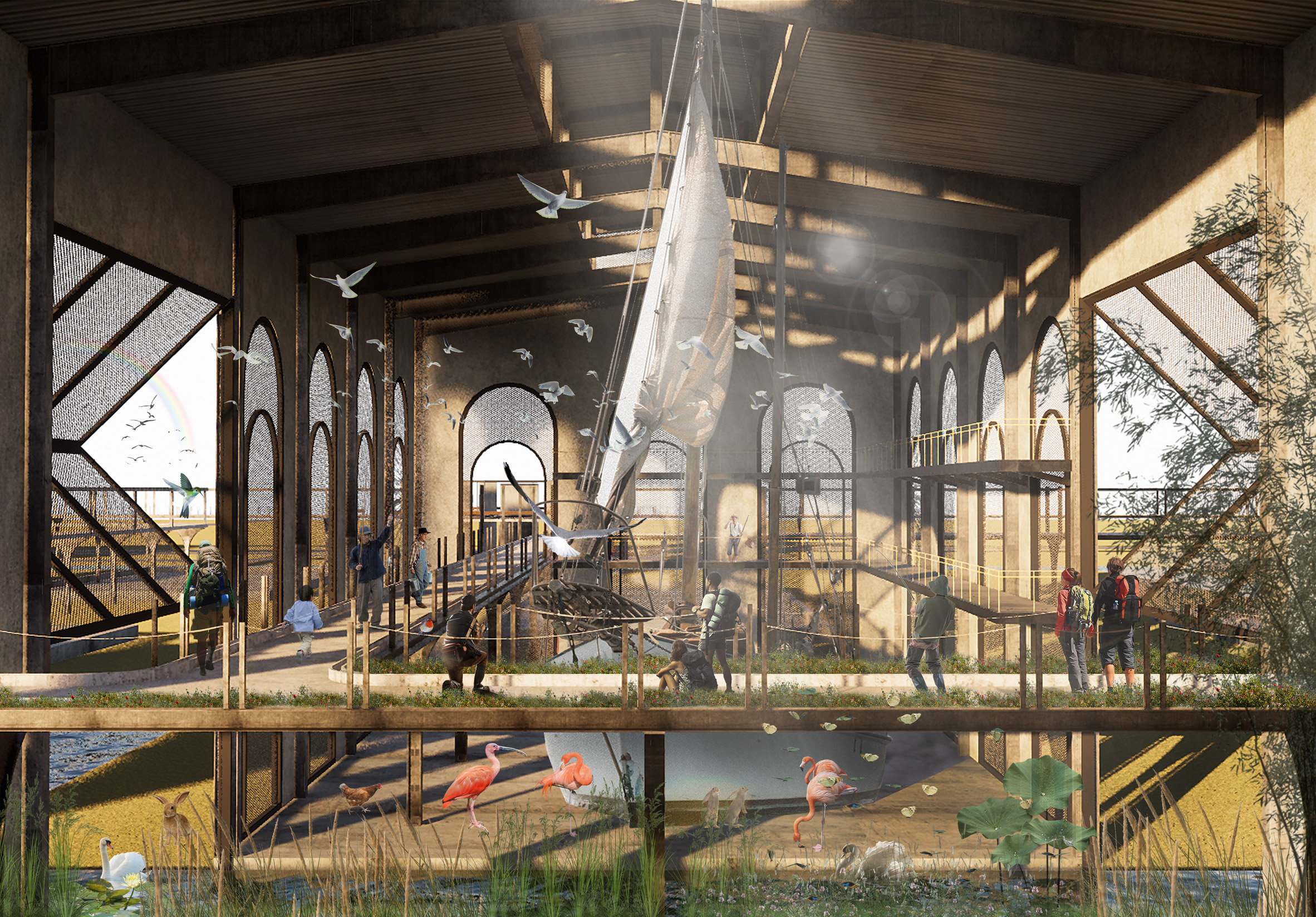
The Sanctuary by Joanne Tiaw Zuo Eng
Project cluster: Conservation and Heritage
"Kuantan is highly regarded as one of Malaysia's most significant, biodiverse coastal areas. And yet it is also one of its most contaminated. Over the last decade of industrial occupation, the topography of this fragile environment has radically transformed. Kuantan Port, shipyards and water-bound infrastructure now define a highly modified and dilapidated shoreline.
"The ongoing conflict between people power and state-backed corporate power has shed a light on the world's largest rare earth extraction plant – Lynas. Tapping into an established tourism platform, this thesis rethinks the rehabilitation of post-industrial ecology through the means of eco-tourism."
Project site: Gebeng Industrial Estate, Kuantan, Malaysia
Thesis supervisor: Ho Weng Hin
Project showcase: nusmarchgradshow.com/joannetiawzuoeng
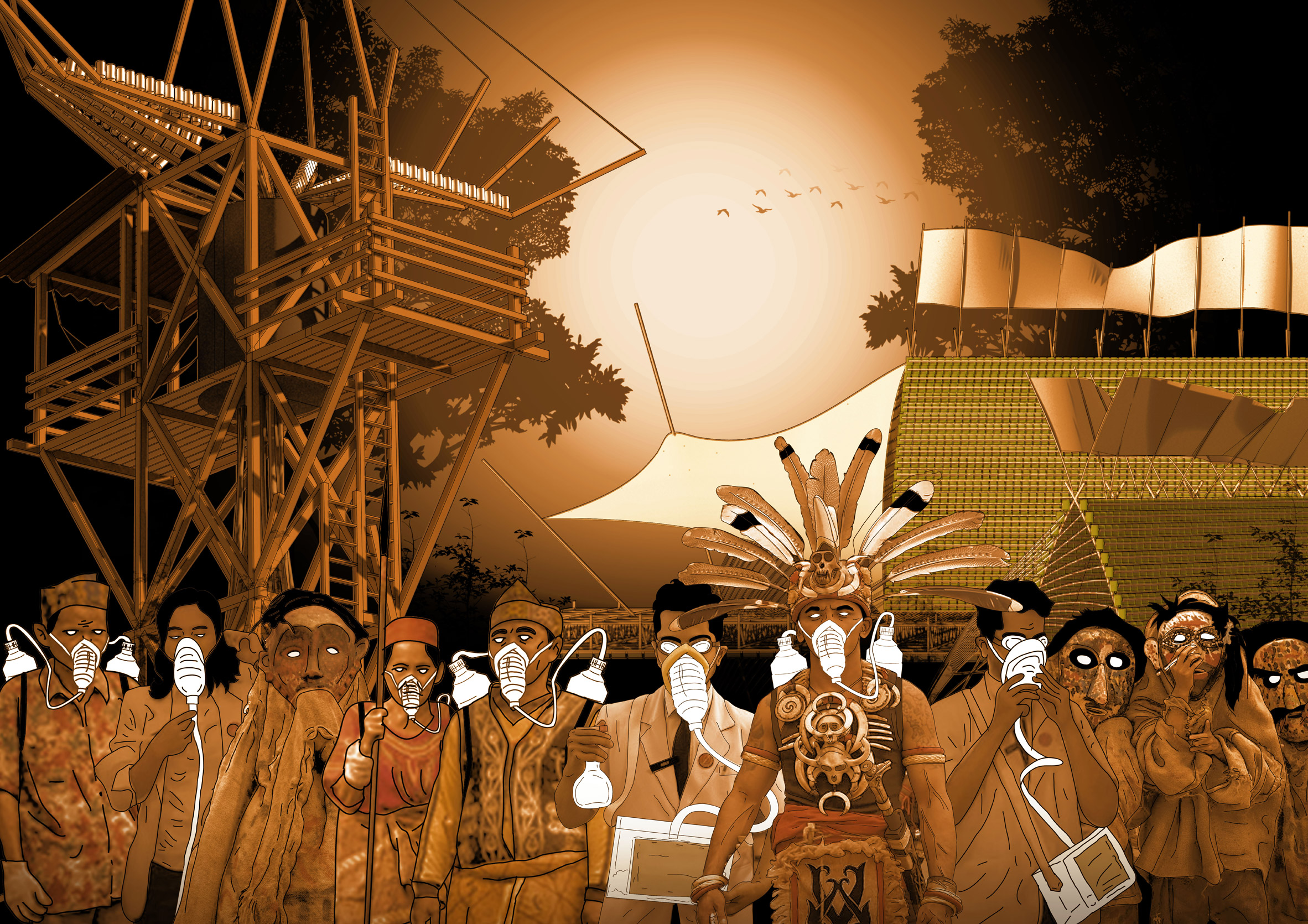
Breeding Resilience: Thriving in Orange Air by Viany Sustina
Project cluster: Atmosphere and Agency
"The project explores the process of oxygen production through a symbiotic relationship between humans and a kind of microalgae called Chlorella vulgaris. This idea is then translated into a form that aligns with the cultural and human context of the indigenous peoples of Kalimantan, Indonesia, who are plagued by raging fires and pungent haze.
"The thesis explores the site's mechanical and aesthetic opportunities, using village engineering and adhocism as a construction logic. It also maximises the silhouetted visuals created through the haze as an emerging aesthetic of resilience and adaptation, allowing them to thrive in their very own way."
Site: Desa Gohong (Central Kalimantan, Indonesia)
Thesis supervisor: Tsuto Sakamoto
Project showcase: nusmarchgradshow.com/vianysutisna
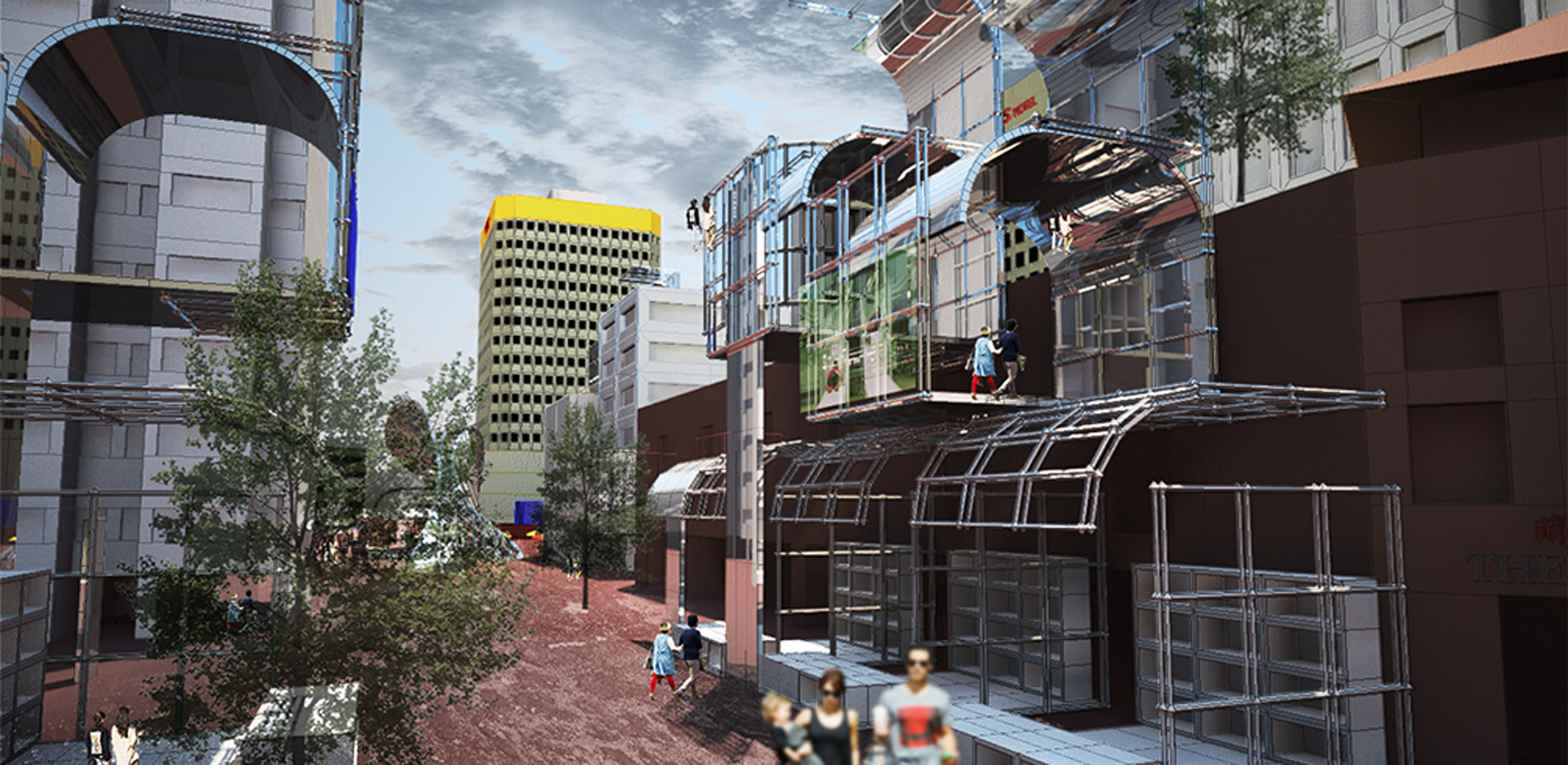
中: An Architecture of Immensity by Goh Teck Kuang Clifford
Project cluster: Atmosphere and Agency
"中 speculates about the changing role of cultural institutions in today's increasingly flattened, mediated network society. Through a study of works by esteemed Chinese artists, this thesis argues that Chinese art and cultural products are defined by the common characteristic of 'immensity' – of large-scale productions that span across time and space.
"Referencing the Koolhasian notion of Bigness, this thesis speculates how cultural spaces may change in the near future to accommodate novel cultural formats. It proposes a series of underground and street-level spaces along Middle Road as part of a speculative expansion of the China Cultural Centre, Singapore."
Site: Middle Road, Singapore
Thesis supervisor: Bobby Wong
Project showcase: nusmarchgradshow.com/cliffordgoh
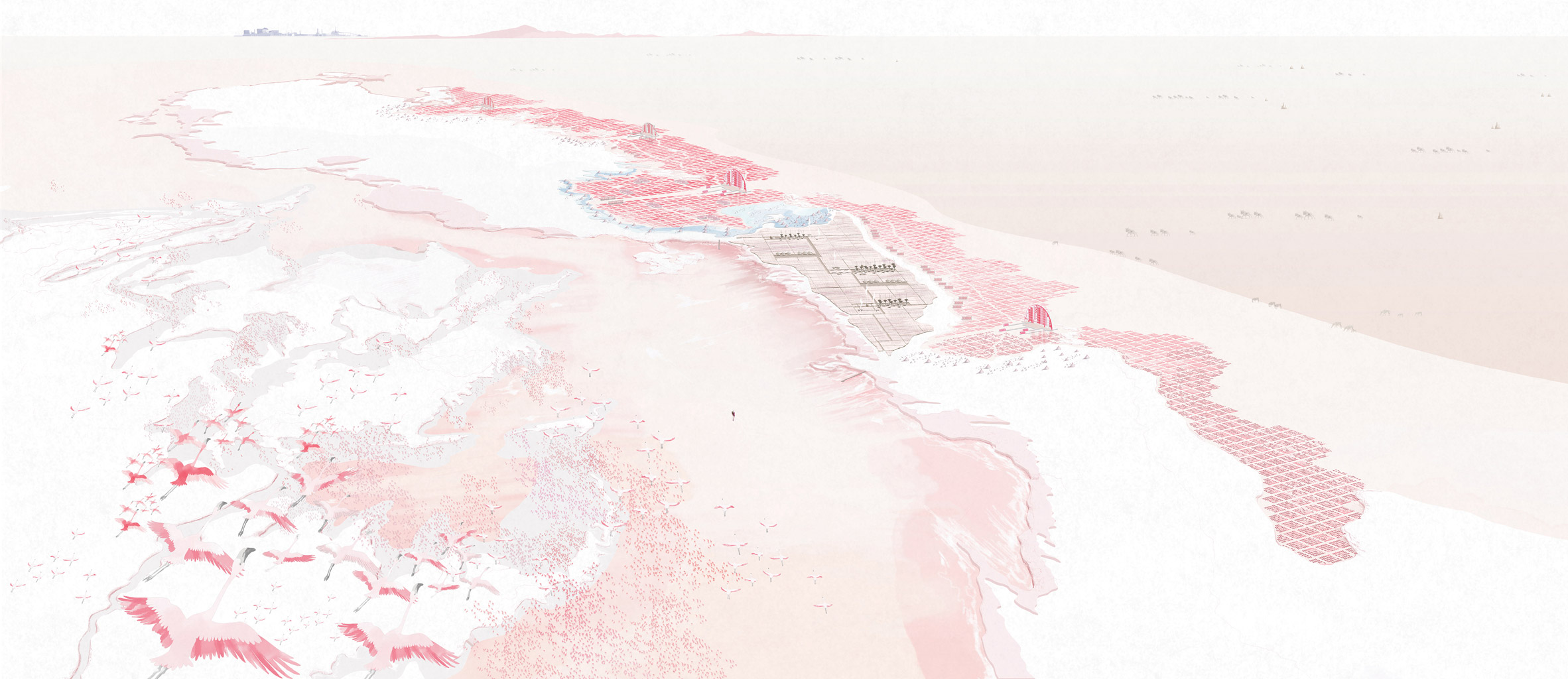
The Ethereal City of Pink by Ian Mun
Project cluster: Atmosphere and Agency
"The Ethereal City revives native Botswanan myths, fables and folklore in its practices. It capitalises on the natural shades of pink that can be found in the Sua Salt Pans, so that these ecological constructs become embedded into an architectural narrative and experience.
"In opposition to the effects of mass industrialisation, this thesis imagines an architecture, a landscape and a culture that is both constructed and organic. Pink is a shorthand for Botswanan identity and its architecture speaks of deference, independence, return and renewal."
Site: Sua Salt Pans, Sowa District, Botswana, Africa
Thesis supervisor: Dr. Lilian Chee
Teaching assistant: Wong Zihao
Project showcase: nusmarchgradshow.com/ianmun
Virtual Design Festival's student and schools initiative offers a simple and affordable platform for student and graduate groups to present their work during the coronavirus pandemic. Click here for more details.
The post Architecture graduates from National University of Singapore future-proof their city appeared first on Dezeen.
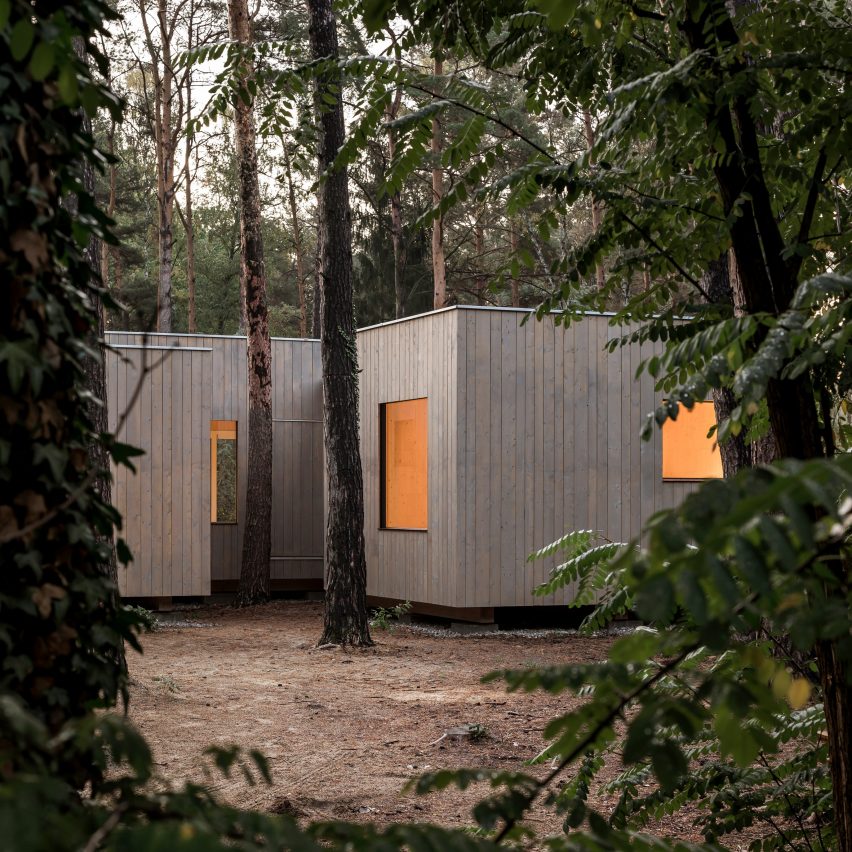
Architecture studio Zeller & Moye has built a house entirely from timber, which is arranged in five boxes to avoid existing pine trees in Klein Köris, eastern Germany.
Built in a forested area near the lakeside village of Klein Köris, the single-storey house's staggered layout was determined by the existing pine trees on the site. Zelle & Moye aimed to reduce the house's impact by avoiding these trees and raising the home above the ground.
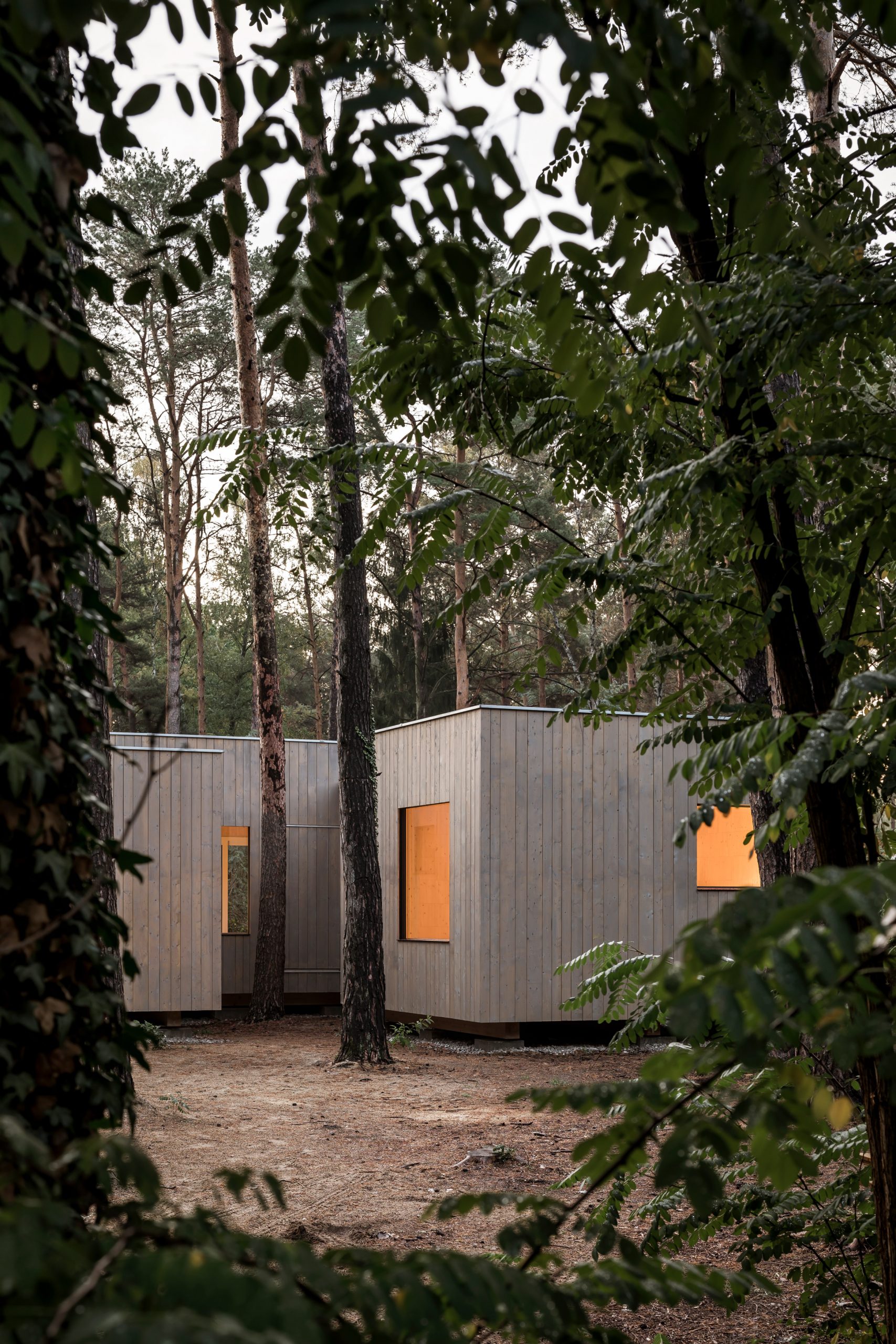
"The house hovers above the ground and intermingles with the plot's trees to minimise its impact on the surrounding nature," said Zeller & Moye co-founder Ingrid Moye.
"Thus the fragmented volumes generate external nooks along the facade," she told Dezeen.
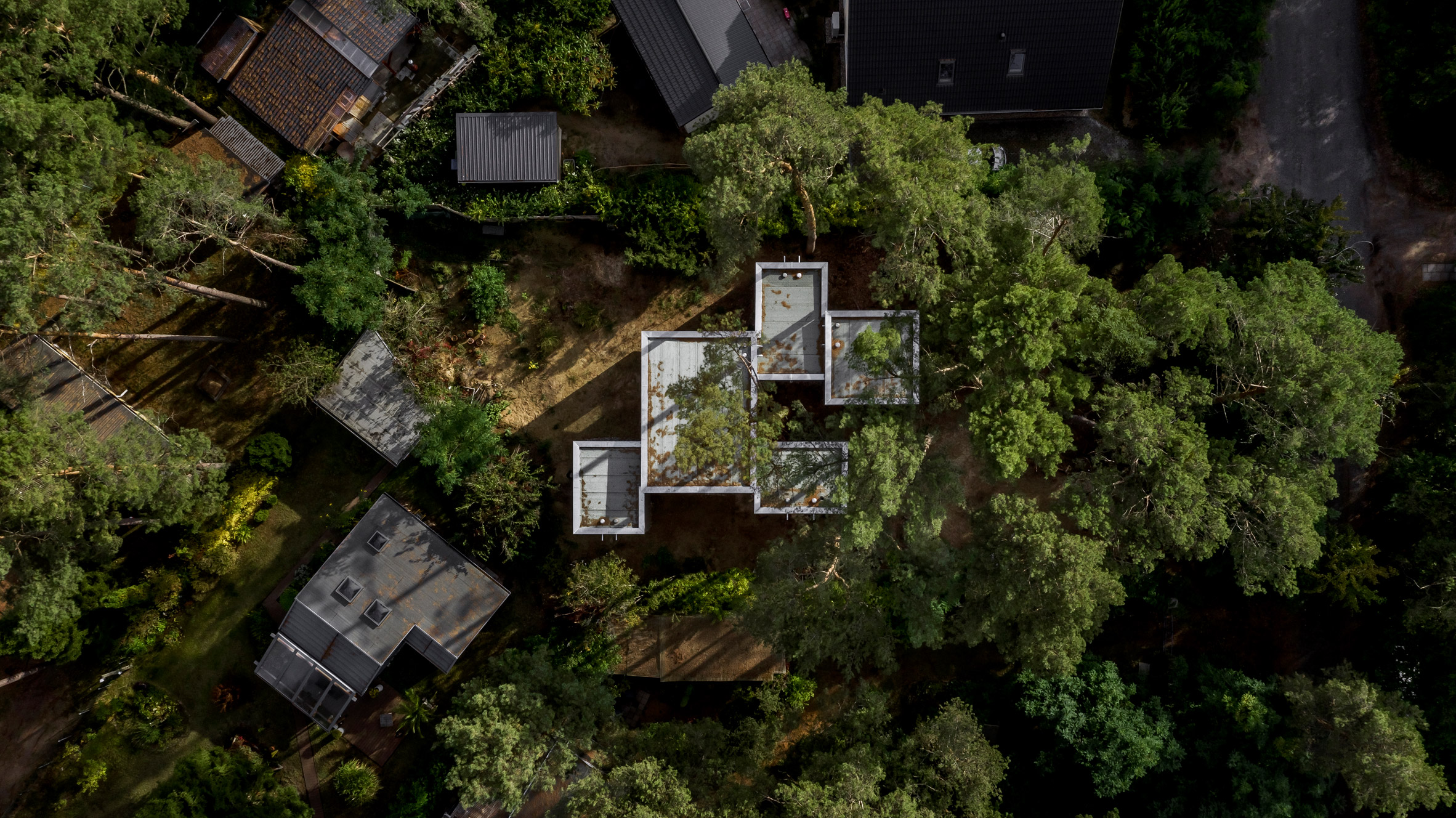
The architecture studio built the 130-square-metre house in five timber boxes.
The largest rectangular box contains the main kitchen, dining and seating area, with three flexible rooms – which are designed to be used as a bedroom, studio, workshop or guest room – and a bathroom in the other boxes.
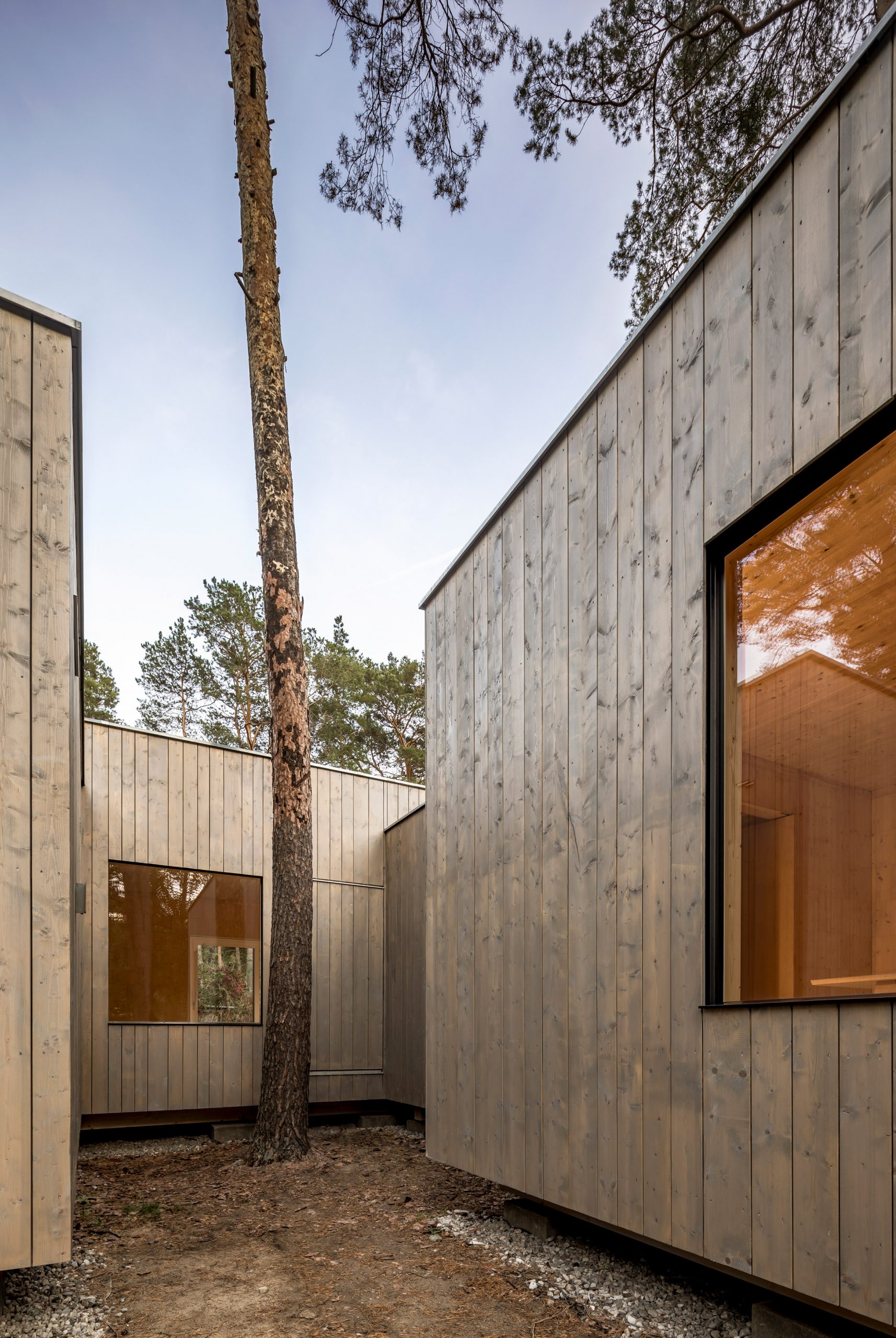
"Each box encloses one program from the brief," said Moye, who is a judge of this year's Dezeen Awards.
"The central box works as the heart of the residence as an open room for eating, dining, and living; whereas the private functions spread out into individual cubes with views across the landscape," she continued.
"The position of the boxes responds to the locations of the trees, creating enough distance to the plot's outline to provide privacy; and to generate a sensible distribution of the program in relation to the sun's orientation, accessibility and views."
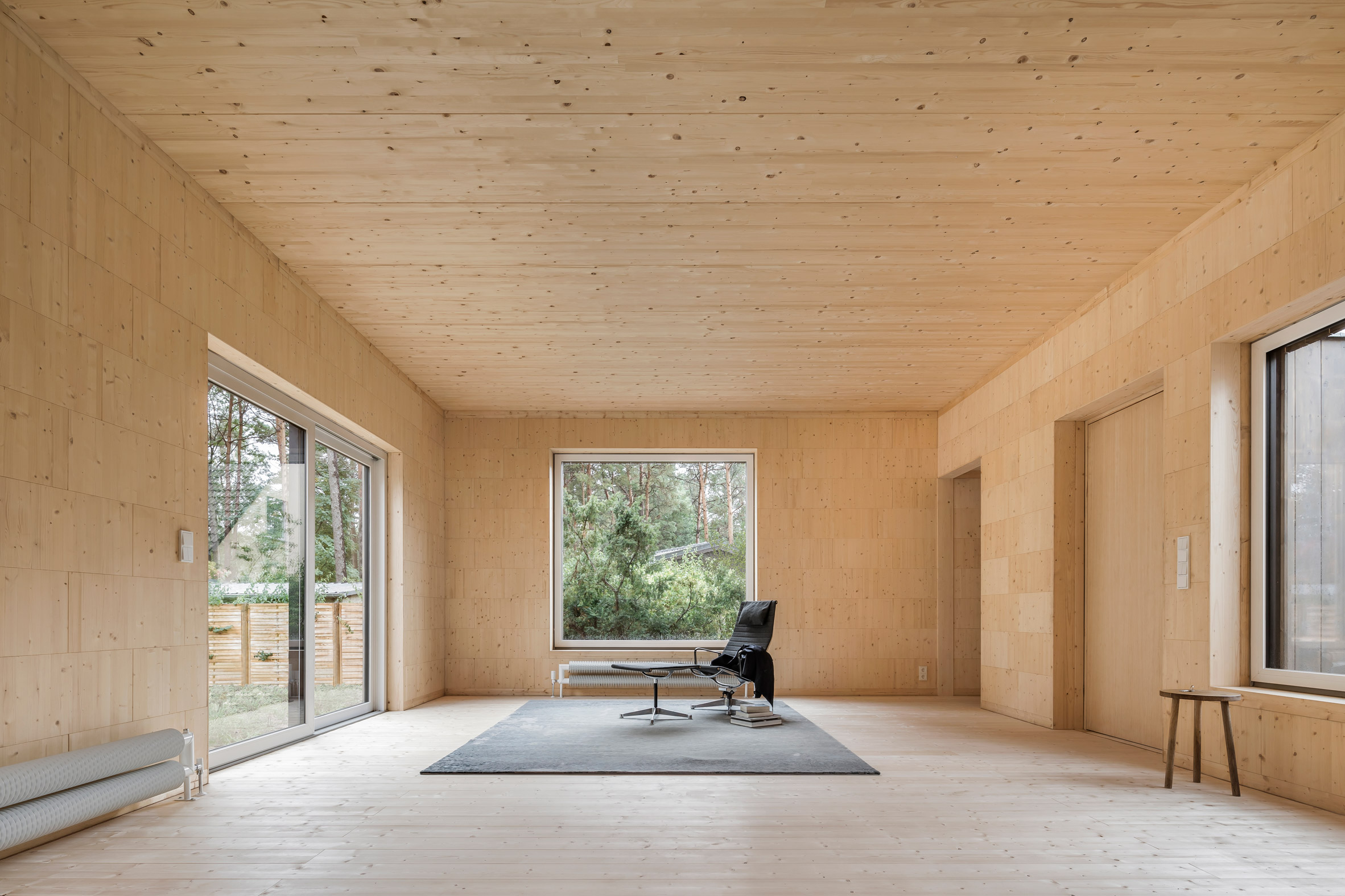
The house was constructed entirely from timber. Its structure was made from a modular wood block system used in combination with solid wood slabs, while its exterior was uniformly clad in spruce.
"The house is entirely made out of wood: from slabs and walls to the facade cladding and wood fibre-based insulation," explained Moye.
"Since the early design phases, we had the intuition of designing this house with local and natural materials that would blend into its natural context."
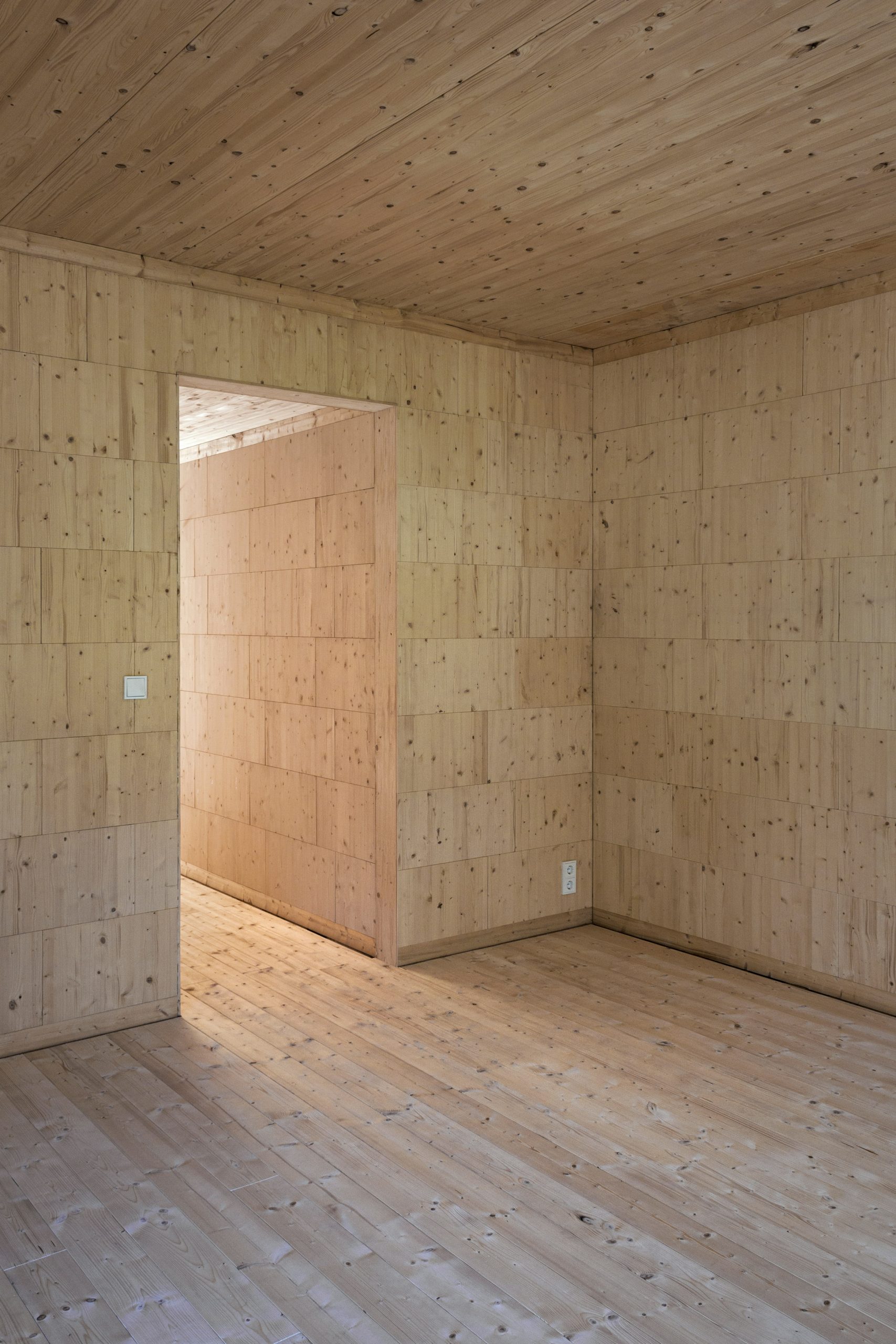
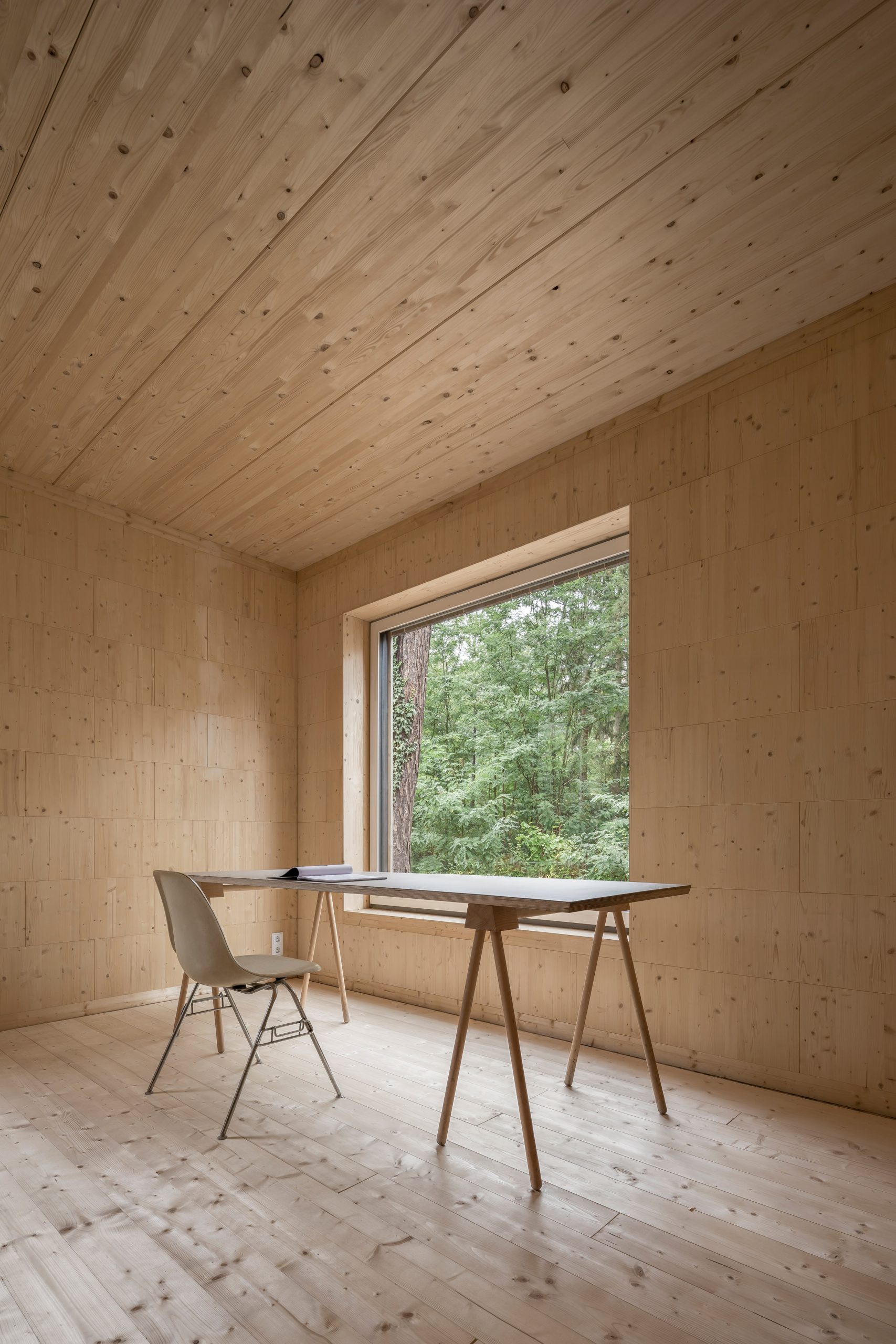
Throughout all the interior spaces the timber structure has been left exposed with large windows placed to give views onto the surrounding forest.
"The raw structure is clad on the outside with locally sourced spruce but left unfinished on the inside to provide a warm atmosphere and to express the modular building method," said Moye.
Zeller & Moye is a Mexico City and Berlin-based architecture studio that was established by Ingrid Moye and Christoph Zeller in 2013. The studio has previously created a public artwork made up of samples from more than 10,000 tree species and designed a concept for modular social housing that combines concrete and adobe bricks.
Photography is by Cesar Bejar.
The post Zeller & Moye arranges timber house around pine trees in German forest appeared first on Dezeen.
Dutch furniture brand Lensvelt presents furniture by Maarten Baas, Fabio Novembre and Studio Job at VDF products fair as part of our ongoing collaboration with the Dutch furniture brand.
The showcase forms part of our VDF x Lensvelt collaboration taking place this week. Earlier today, we broadcast a series of live talks with the brand and its collaborators, including discussions with Baas and Novembre. A further seven Lensvelt products will be exhibited at the products fair later in the week.
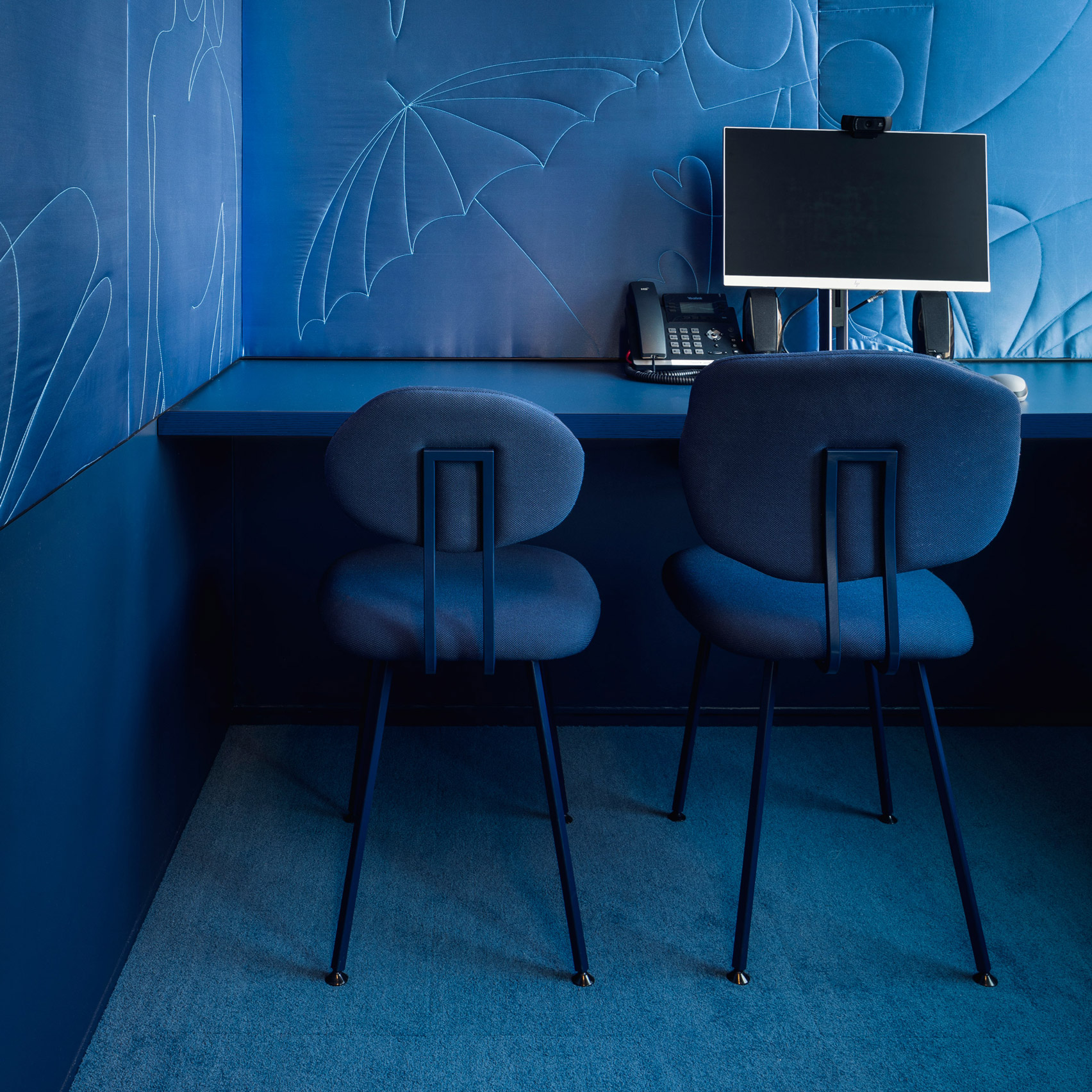
The first product Lensvelt is showcasing is its 101 Chair designed by Baas. First released in 2017 at the Salone del Mobile furniture fair in Milan, the chair is celebrated for its character and versatility.
Users can choose from a choice of eight amorphous backrests that each have a playful, hand-drawn aesthetic, as well as different frame styles such as a stackable model and a barstool edition.
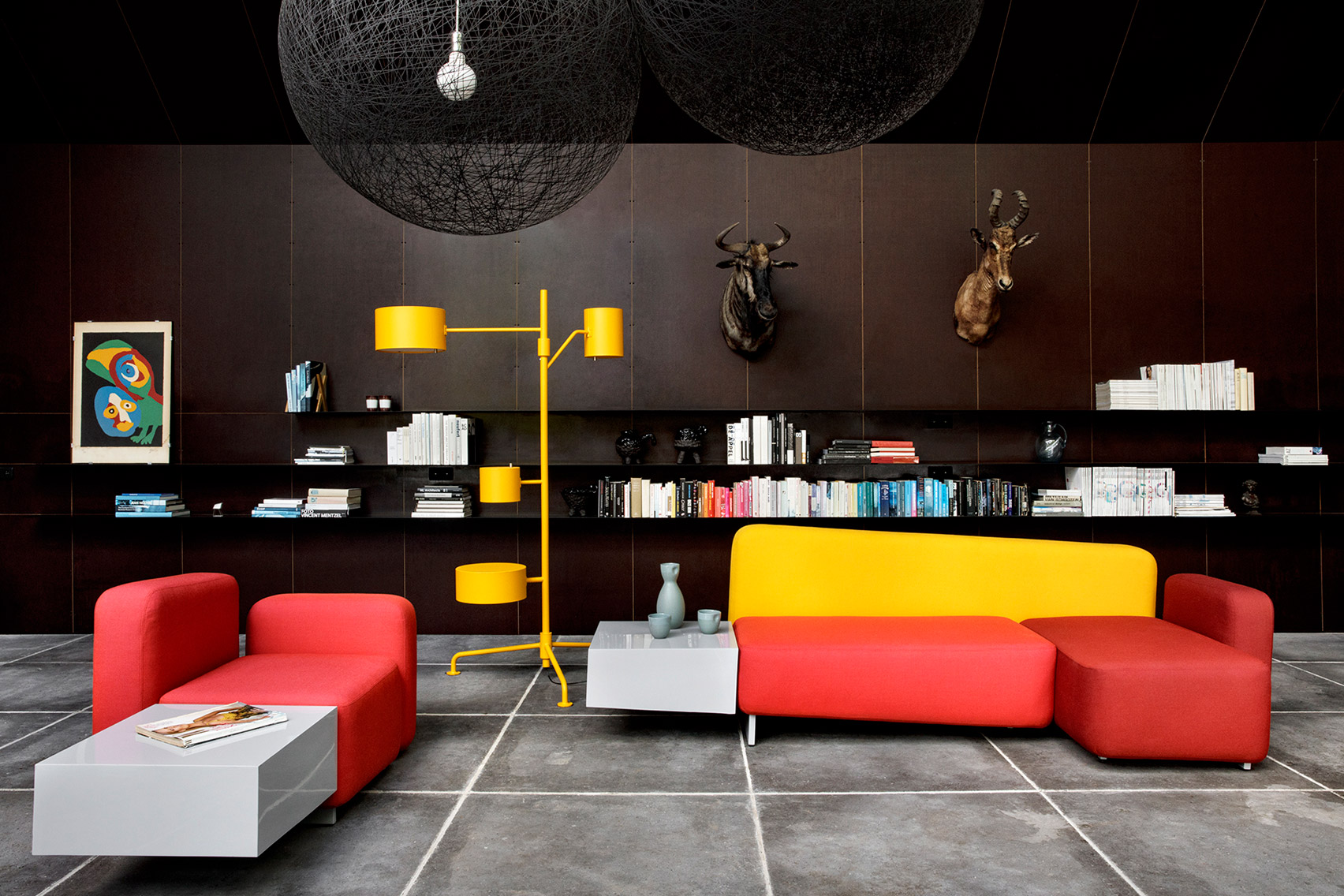
Fabio Novembre's modular New Balance sofa collection, which is intended to serve as a metaphor "for the uncertainties of our time", is also on show.
It comprises a series of modular seats, characterised by sloped bodies with uneven legs, which can be combined in various configurations. Small tables with level surfaces slot in between, helping to exaggerate the unbalanced appearance.
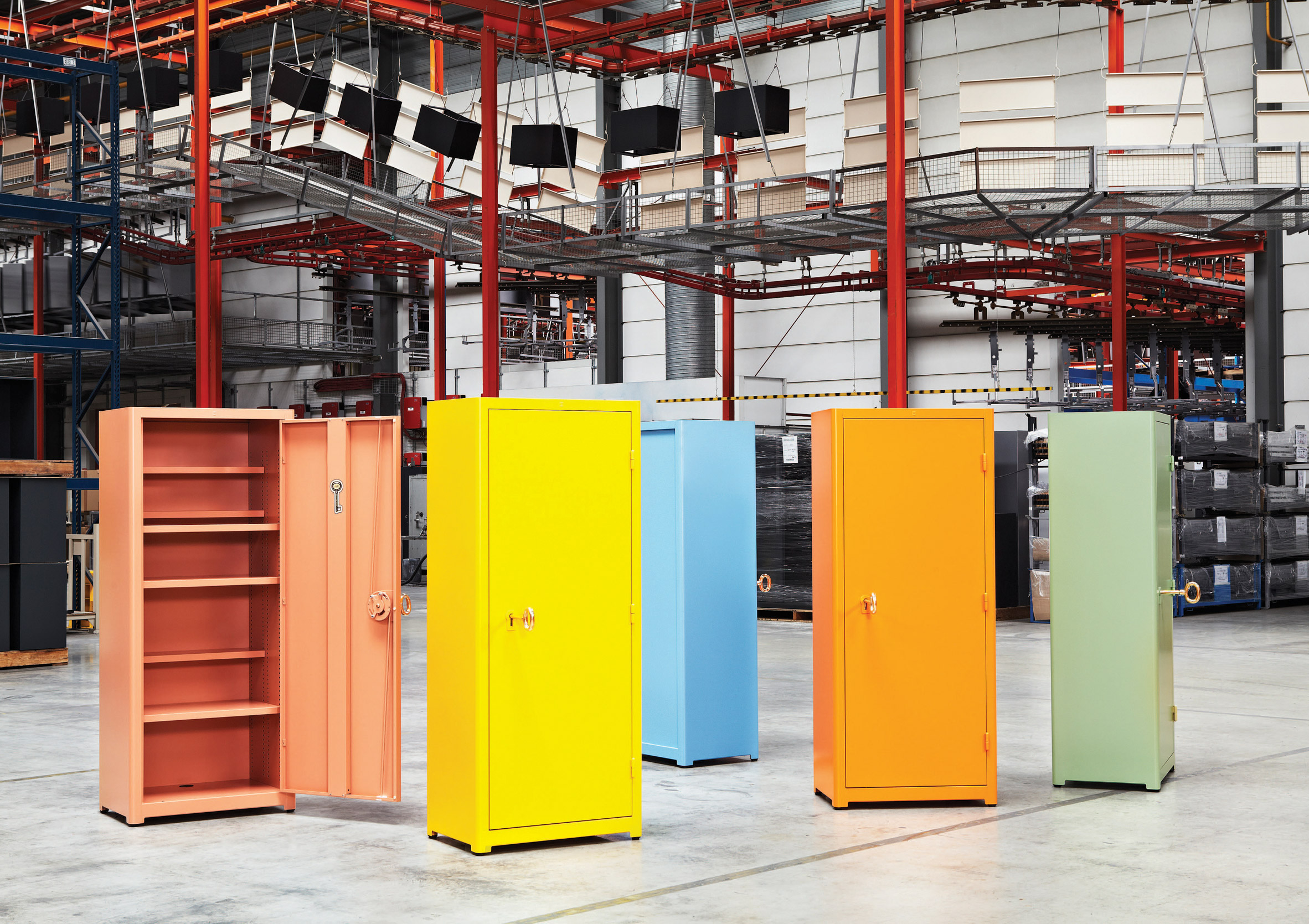
The final product in today's showcase is Lensvelt's Job Cabinet, which was designed by Studio Job with a deliberately understated form intended to evoke classic metal storage cupboards.
It is intended for use in commercial and home interiors, and its only embellishment is an oversized golden key that the brand compares to playful, exaggerated objects in fairytales.
Find out more information about all three products at the VDF products fair, which has been developed as an affordable way for designers and brands to launch new products.
Other companies exhibiting products at the fair include Danish brands Muuto and Fritz Hansen, as well as British brand Modus and US brand Herman Miller.
More recently Vitra presented four of its latest products, including designs by Jasper Morrison, Konstantin Grcic and the Bouroullec brothers.
About VDF products fair: the VDF products fair offers an affordable launchpad for new products during Virtual Design Festival. For more details email vdf@dezeen.com.
The post Lensvelt presents Maarten Baas, Fabio Novembre and Studio Job designs at VDF products fair appeared first on Dezeen.


