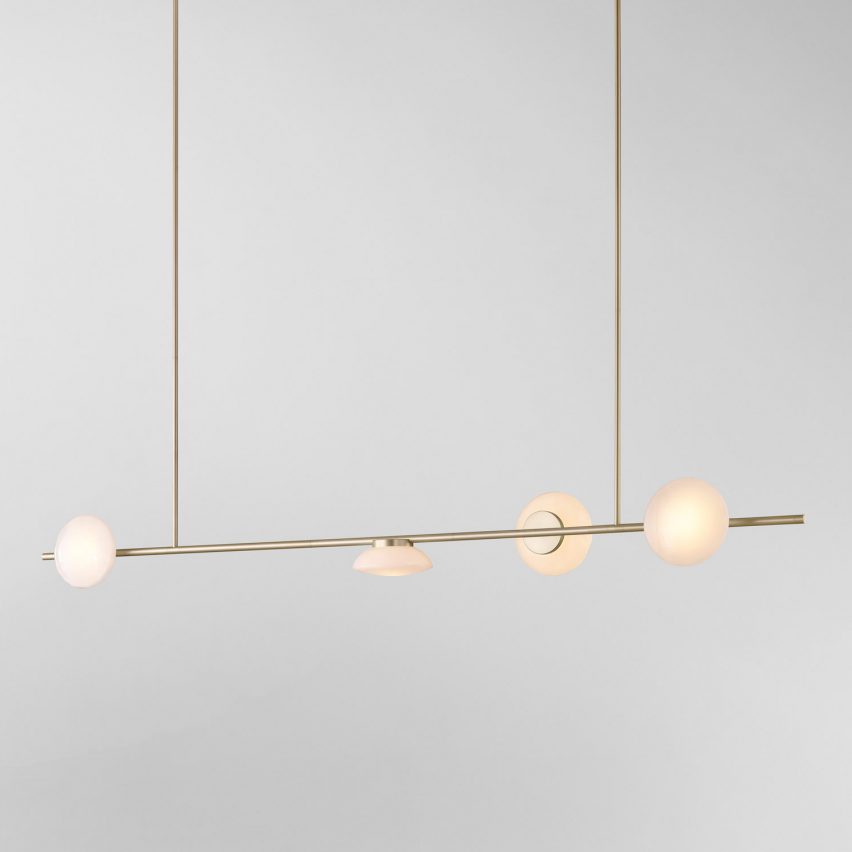
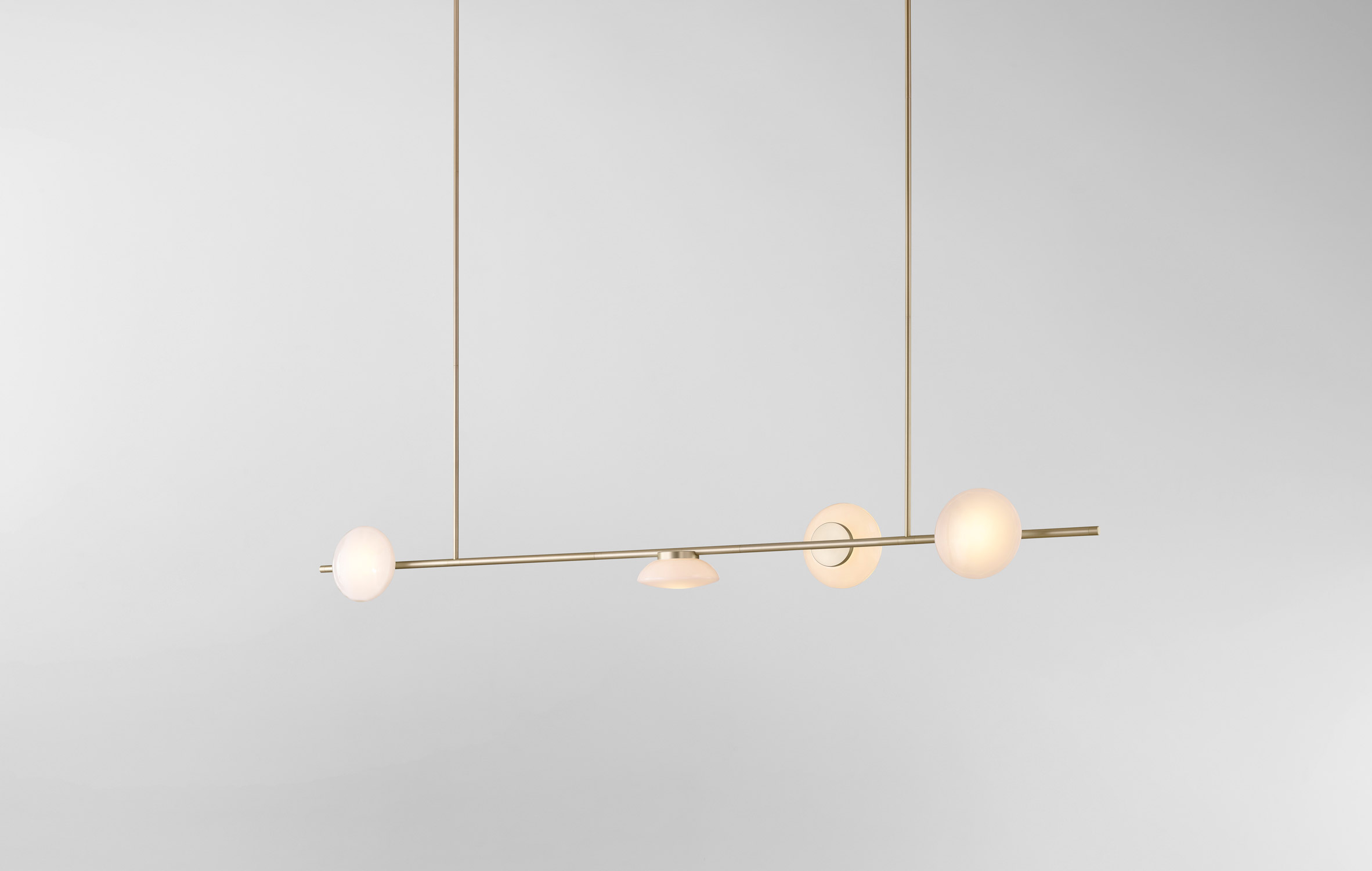
Dezeen Showroom: Melbourne design studio Ross Gardam's Ceto horizontal chandelier has a unique patterned glass that was designed to reference the rippling surface of the ocean.
The studio experimented with traditional optic glass-blowing techniques to create unique forms for the horizontal chandelier, which have a rippled-glass effect on the inside of the shade while the external shape is smooth.
Top: the chandelier on display in a room. Above: the light was designed to evoke the ocean
The Ceto chandelier's glass elements were first blown into a preliminary mold, called the optic, and then the final mold, which gives the glass its absolute form. Its shape was designed to evoke the sea.
"For me, the ocean has such a calming effect; it’s a place heavily wrapped up in childhood nostalgia and a deep feeling of tranquillity," Ross Gardam said.
"I wanted the Ceto light to act as a kind of mnemonic device, allowing you to return to this place."
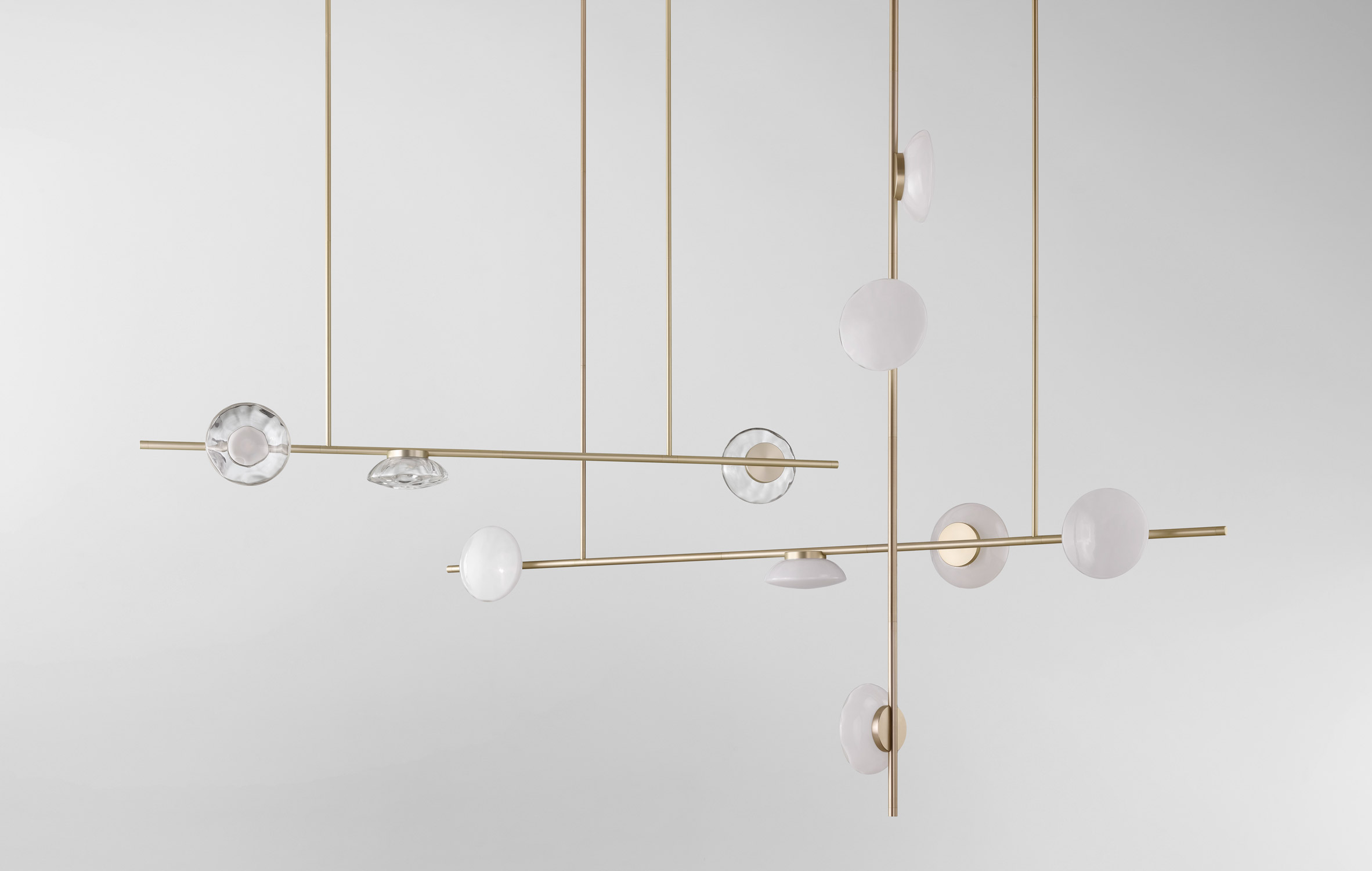
The Ceto chandelier is made from mouth-blown glass and anodised aluminium
The glass elements are completed by supporting tubes in anodised aluminium, which the glass shades appear to have been simply pressed on to.
As well as the horizontal chandelier, the Ceto collection includes other chandeliers, floor lamps, wall lighting, and pendant varieties.
The lights are produced in Ross Gardam's Melbourne studio using mouth-blown glass from Adelaide and aluminium components from Melbourne.
About Dezeen Showroom: Dezeen Showroom offers an affordable space for brands to launch new products and showcase their designers and projects to Dezeen's huge global audience. For more details email showroom@dezeen.com.
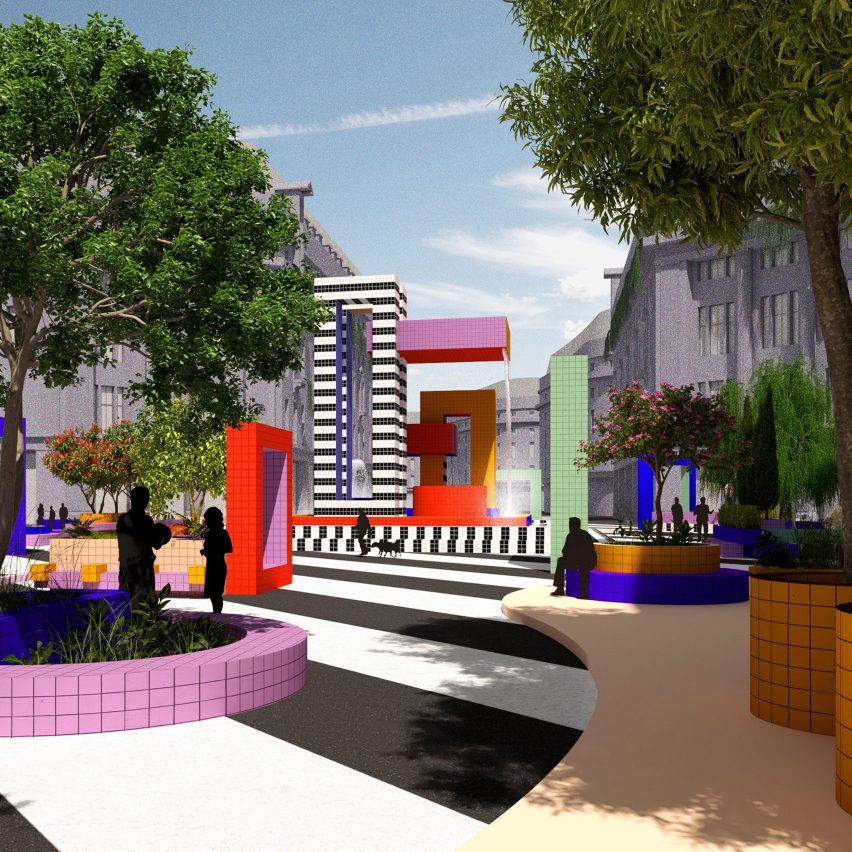
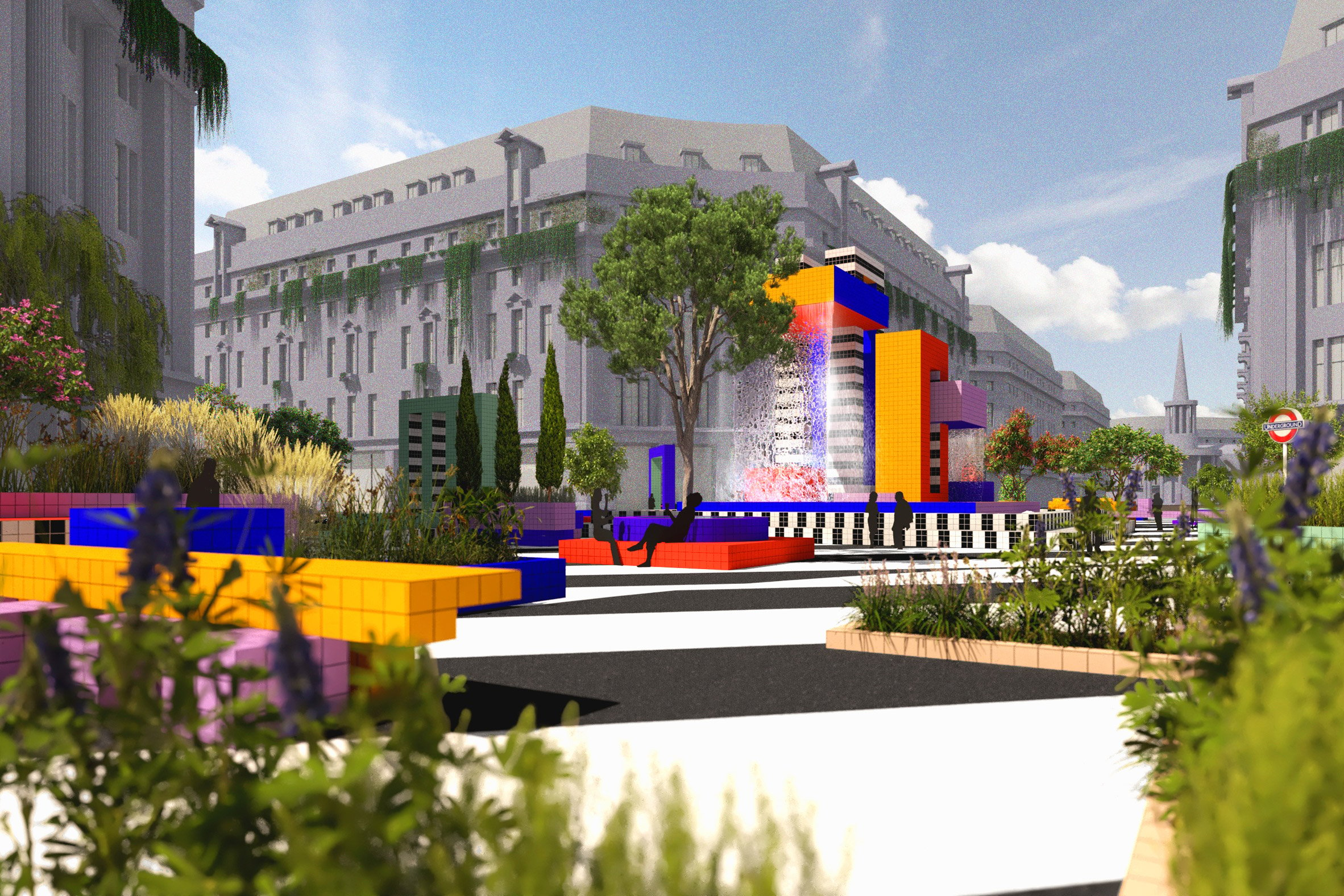
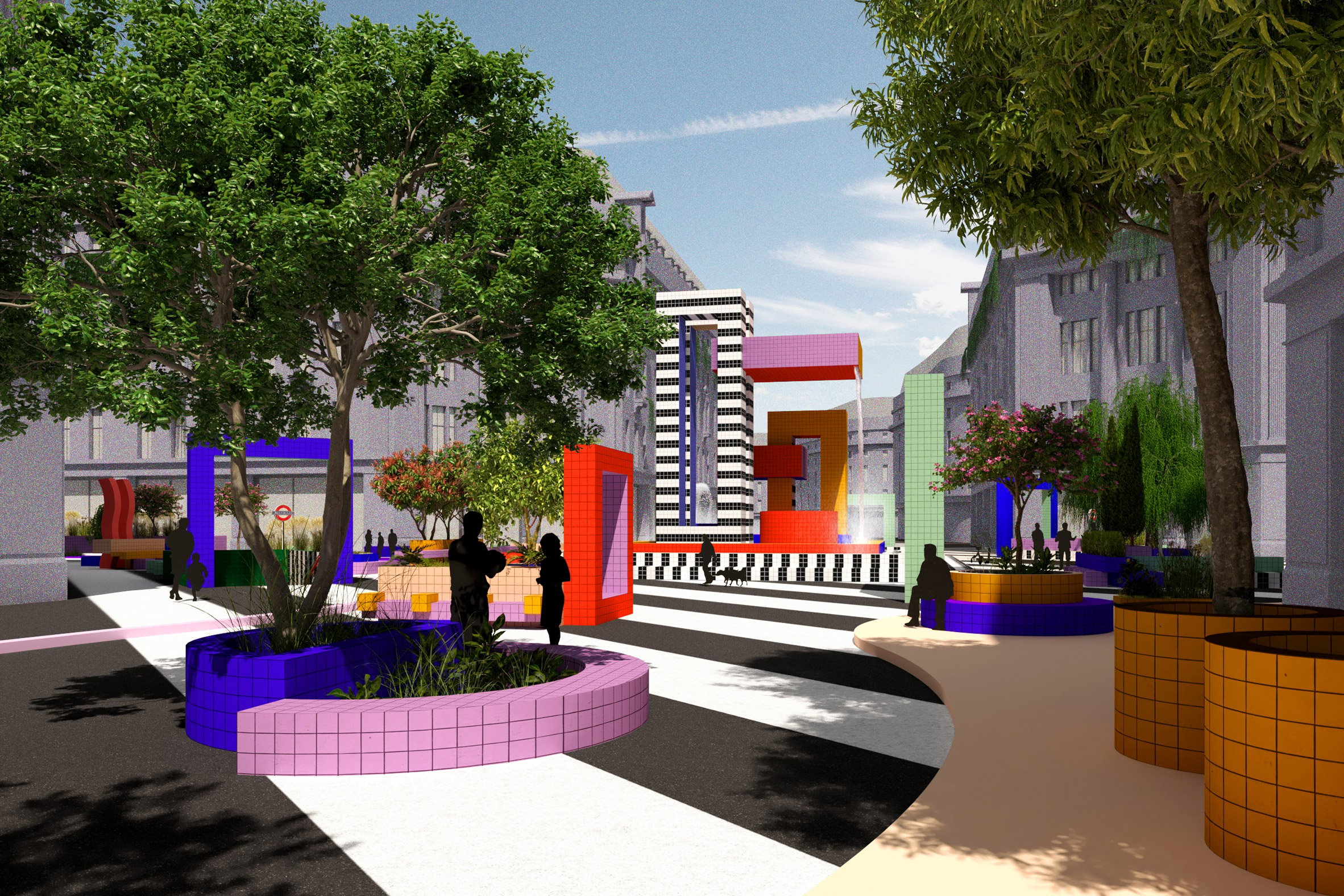
The eccentric proposal also envisions the use of patterned plant pots and geometric water features to convert the capital's busiest shopping street into a fully pedestrianised area.
Described by Walala as a "what-if portrait of the city of tomorrow", the goal of the project is to demonstrate how colour and nature could be used to create more joyful and sustainable cities.
Walala has proposed using benches and fountains to pedestrianise Oxford Street
Walala's proposal was sparked by her experience of living in London during the first national lockdown in the UK caused by the ongoing coronavirus pandemic.
Throughout this period, she enjoyed cycling through London streets that were free from traffic or had been remapped to prioritise pedestrians and cyclists. Though these changes were the result of social distancing, it led Walala to imagine a future where the capital's roads were repurposed.
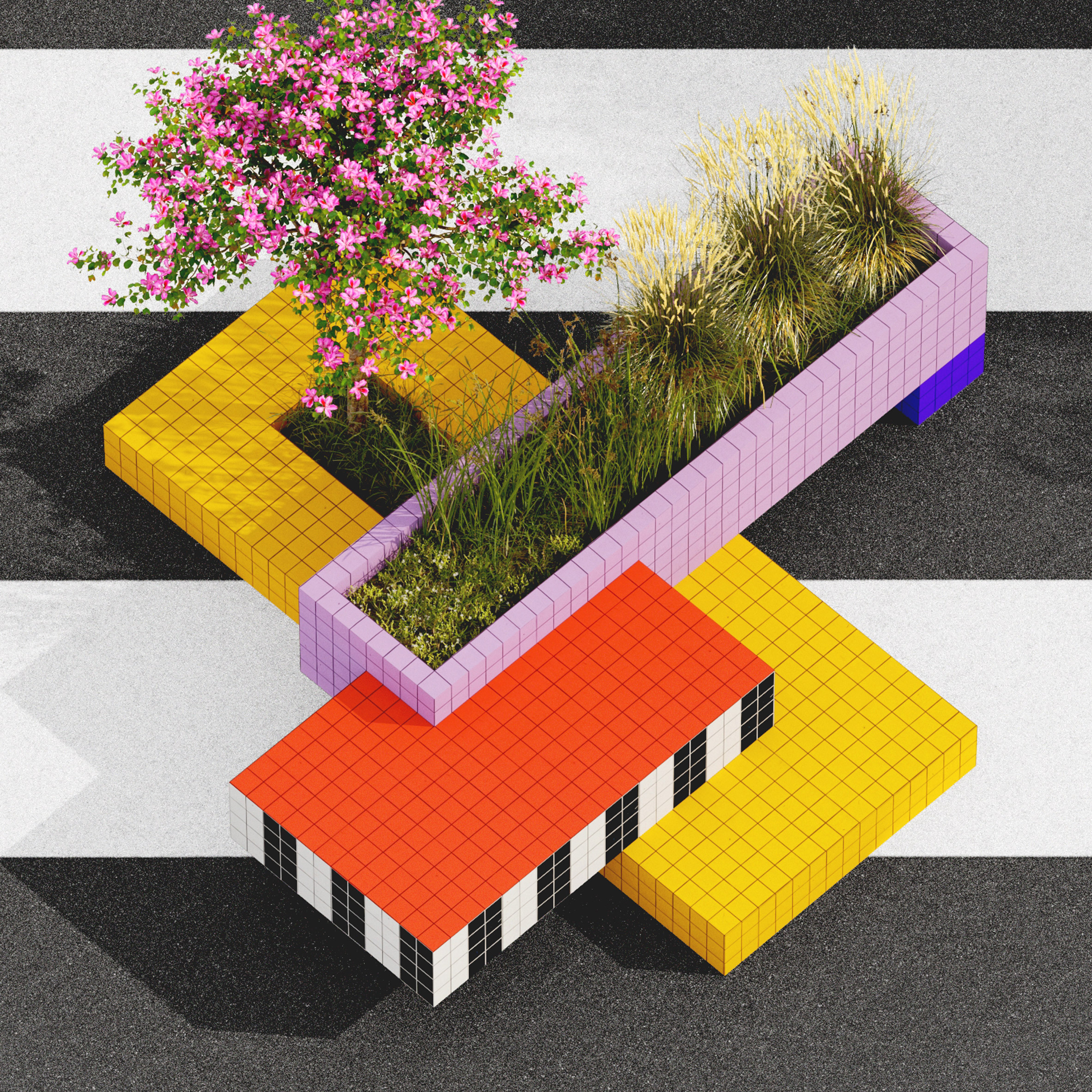
Planters with Walala's signature colourful finish also feature in the proposal
"At the beginning of lockdown earlier this year, I was cycling around the city with my partner, Julia," Walala explained in a letter accompanying the project.
"We were struck by the silence of the streets, the sense of peace that had descended on London in the absence of the traffic, and we started talking about how cities might be fundamentally different."
"This project is my what-if portrait of the city of tomorrow, and my own projection of what the London I love might one day look like," Walala continued.
"In times such as these, when the future is uncertain, strain on mental health is high, and many of us are facing tough challenges in our lives, I believe it's crucial to hang on to what hope we can for the future, and to spread joy in the present."
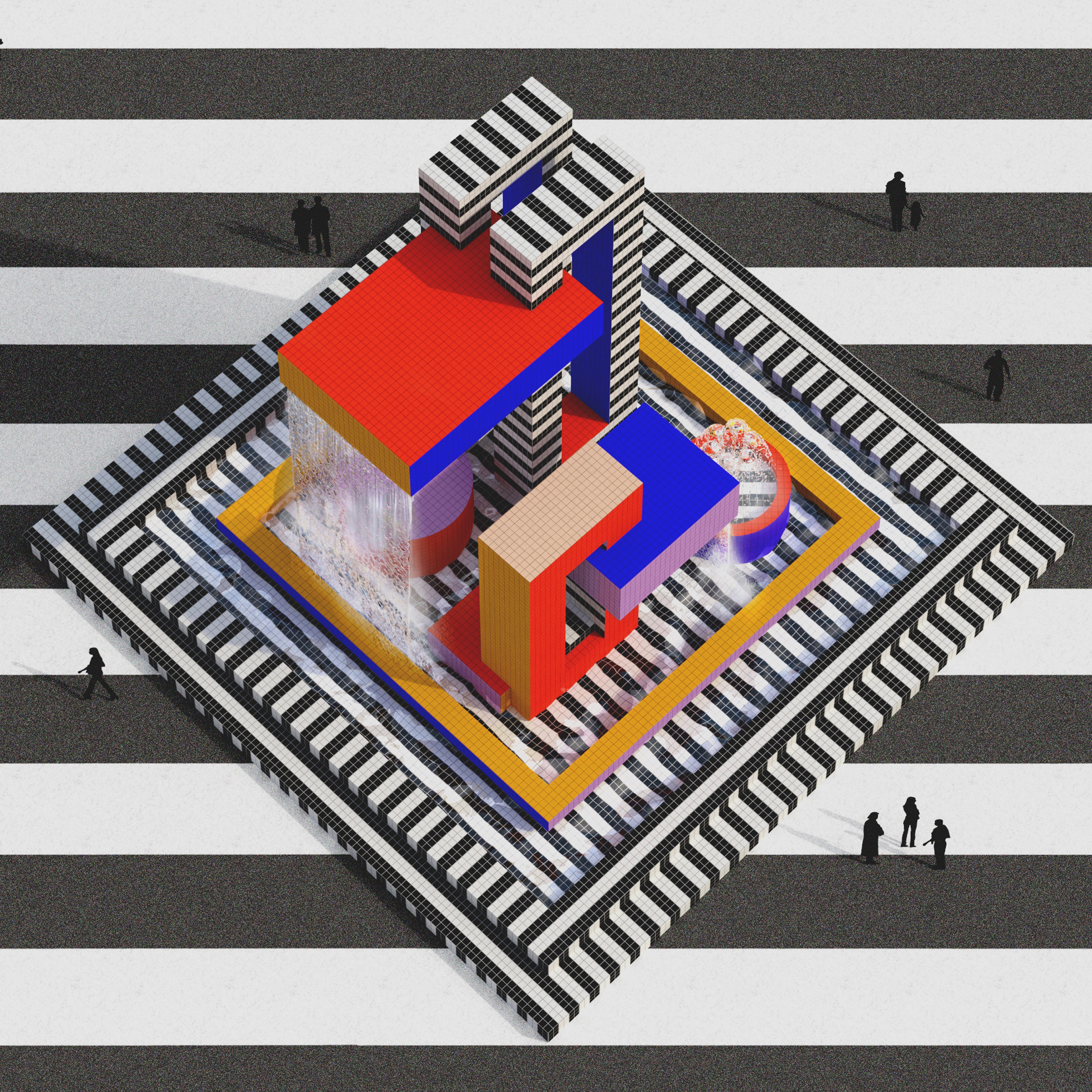
A geometric fountain is the centrepiece of the concept scheme
The centrepiece of Walala's proposal is a giant water fountain, composed of several interlocking geometric blocks.
This fountain is elevated on a stripy monochrome platform and enveloped by circular seating areas, alongside rectangular plant pots and small tubs containing trees.
She imagines rectangular planters that double as seating
Zaha Hadid Architects imagined banishing cars from the road in 2018 as part of its Walkable London proposal, for which it envisioned a network of pedestrian routes that would allow people to walk right across the capital.
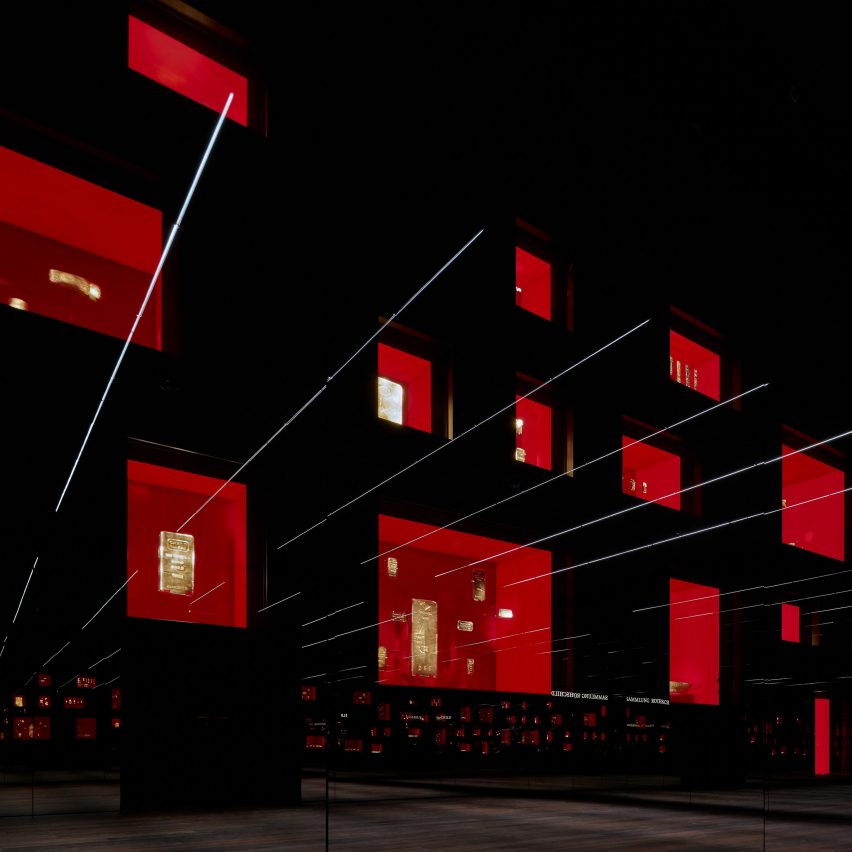
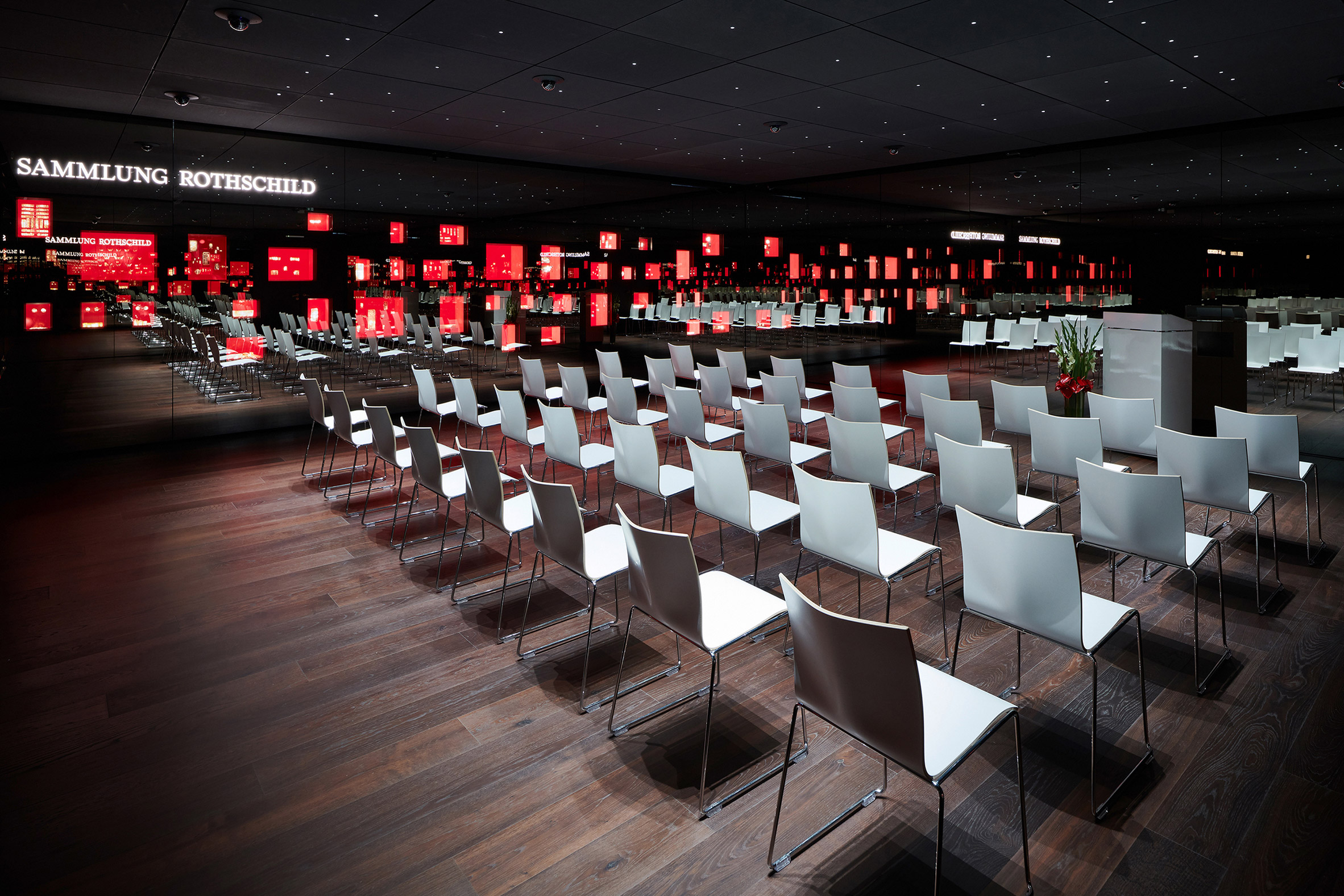
A collection of 300 pieces of gold bullion has been lit up and displayed in a room with two-way mirrored glass by German practice Pfarré Lighting Design.
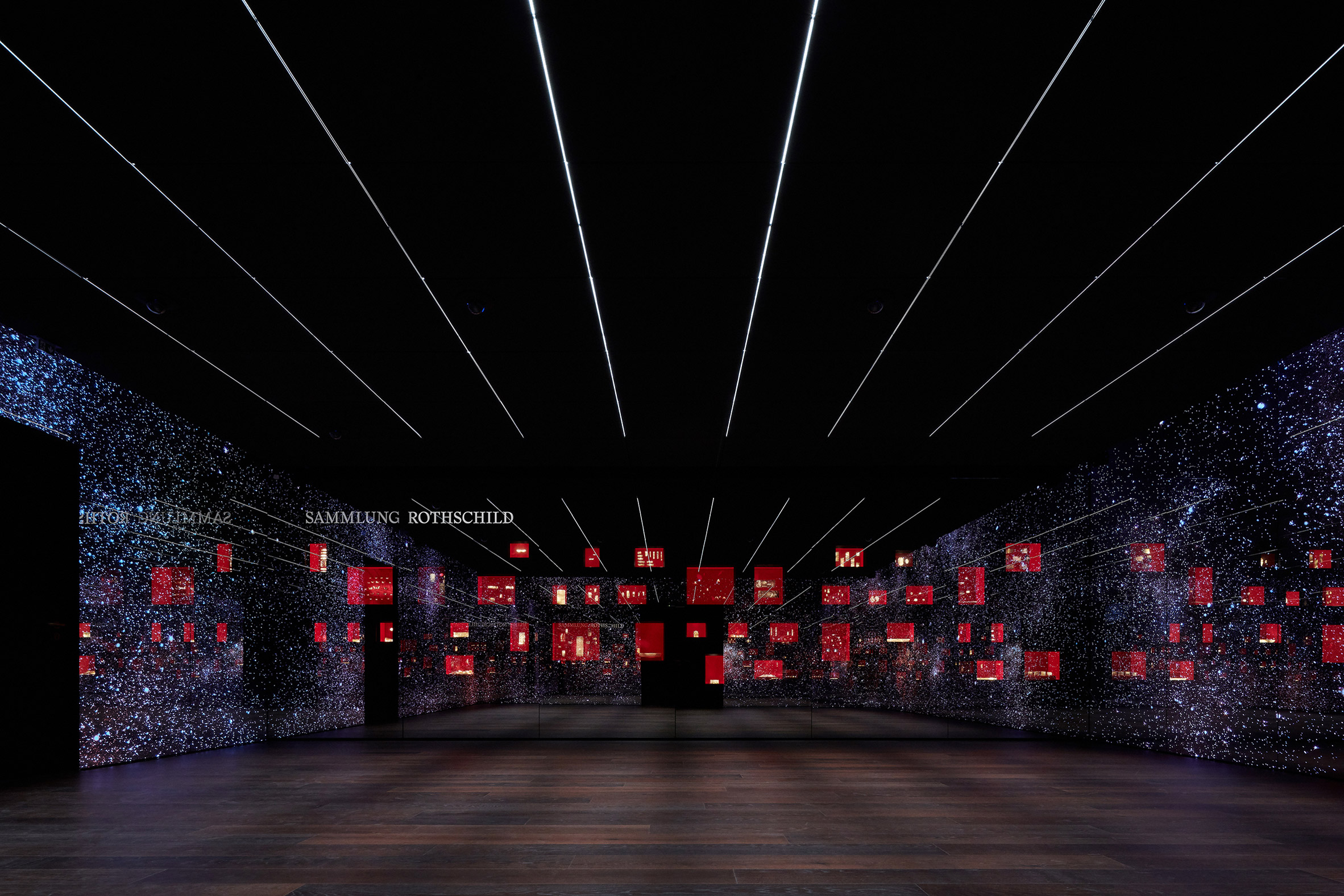
LED screens are placed behind the glass for displays
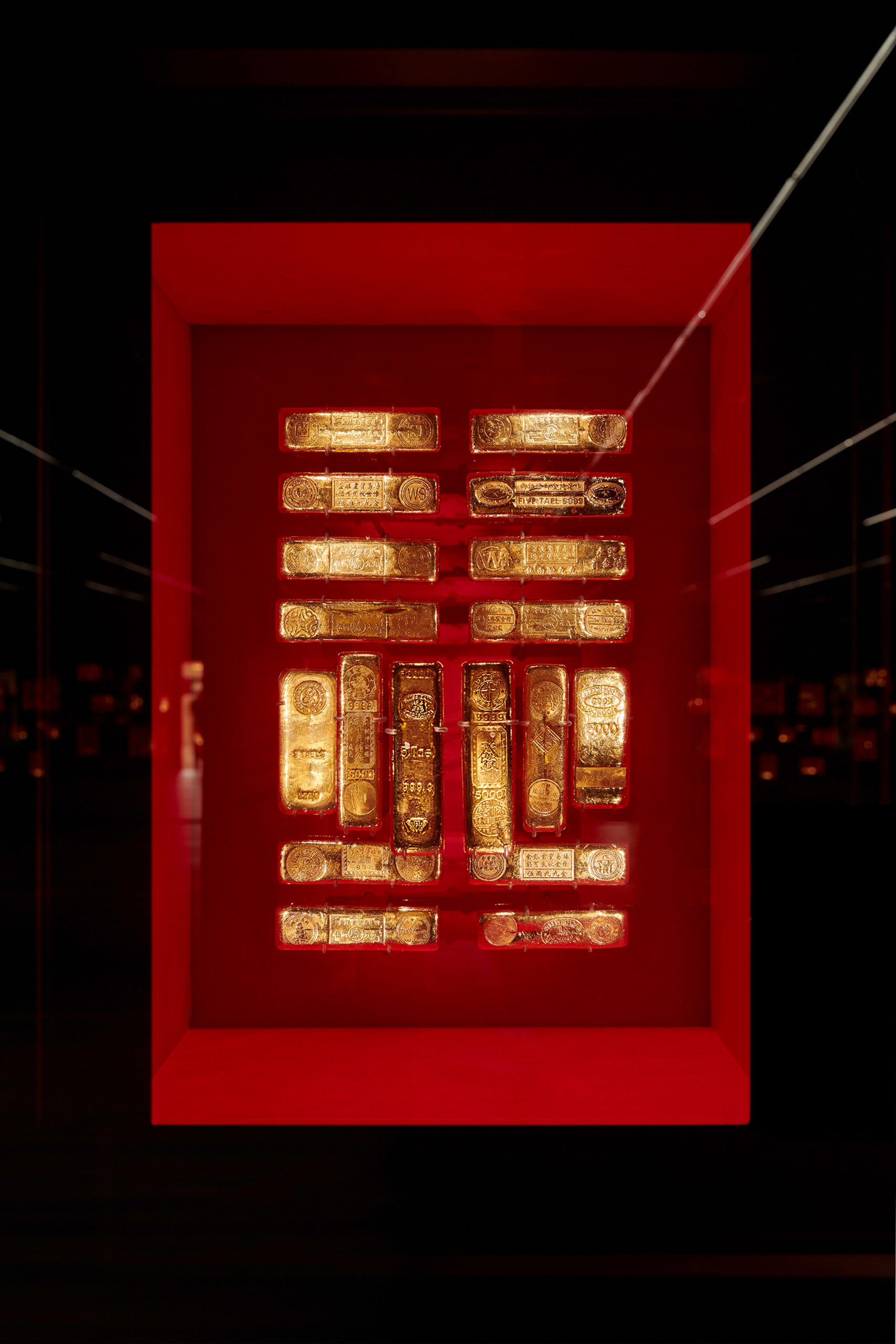
Gold bullion is a precious metal that is stored in the form of bars, ingots or special coins and kept as emergency currency or an investment.
Pfarré Lighting Design created the final showcase for the bullion in the museum, displaying the precious artefacts in a unique way and creating a space that is also suitable to hire out for events.
Three sides of the 64-square-metre room at the Goldkammer Museum are formed of two-way mirrors, a piece of glass that is reflective on one side and transparent on the other.
The intensity of light determines if something can be viewed through the reflective side.
Bullet-proof glass is sandwiched between two-way mirrors
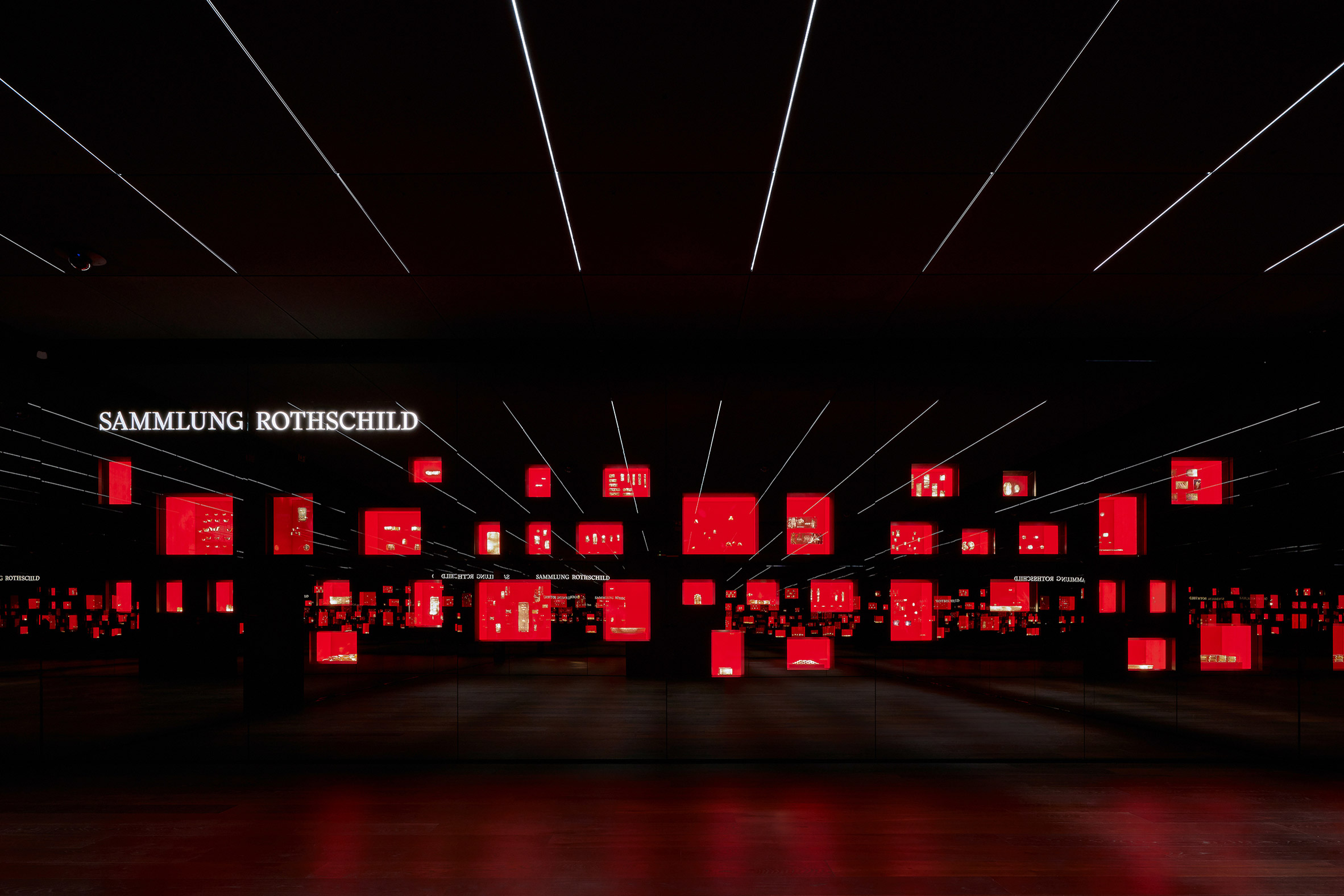
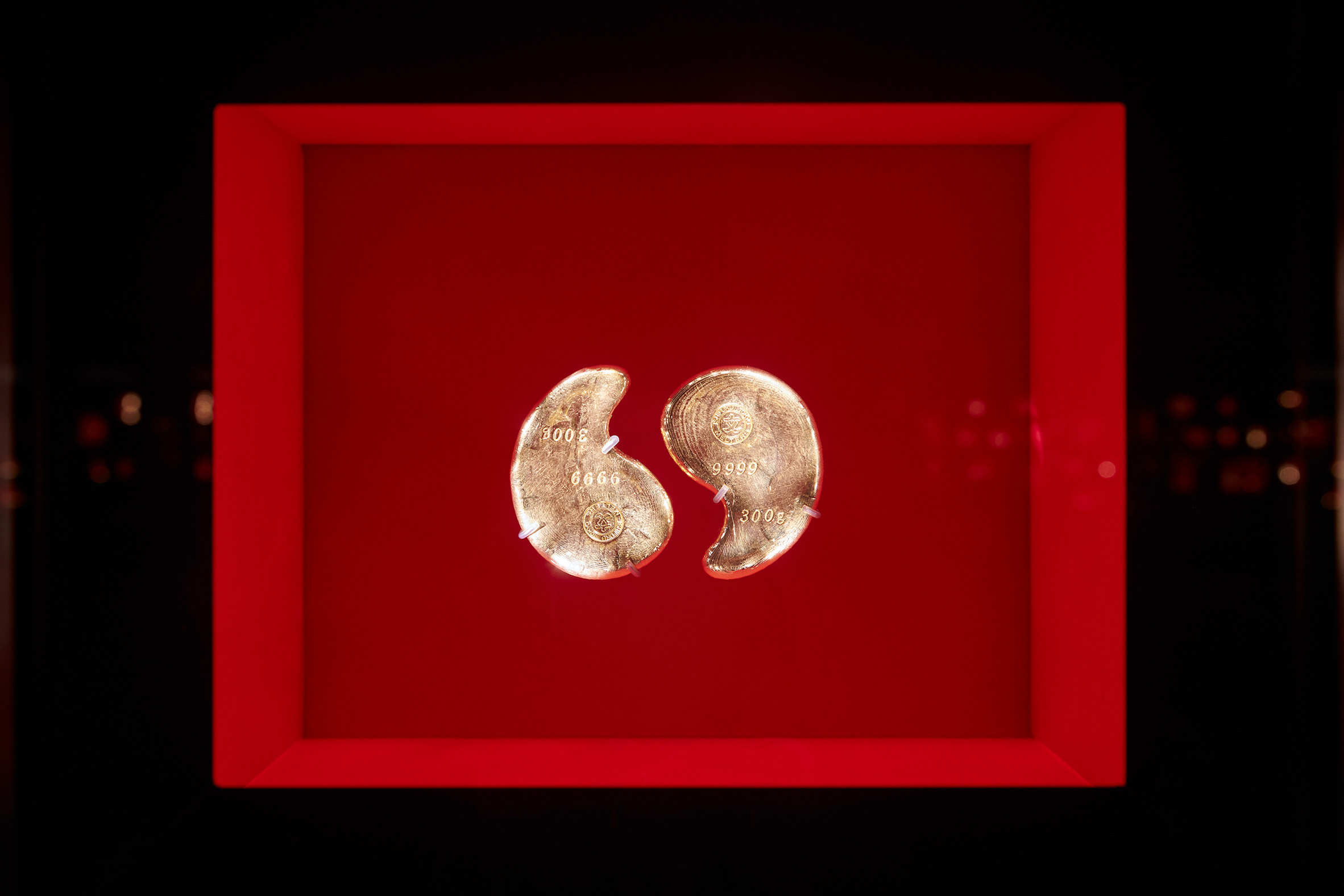
On one side of the glass, the gold bullion is displayed in 38 red vitrines that glow with LED lighting so that they appear suspended amidst the mirrored darkness to the viewer.
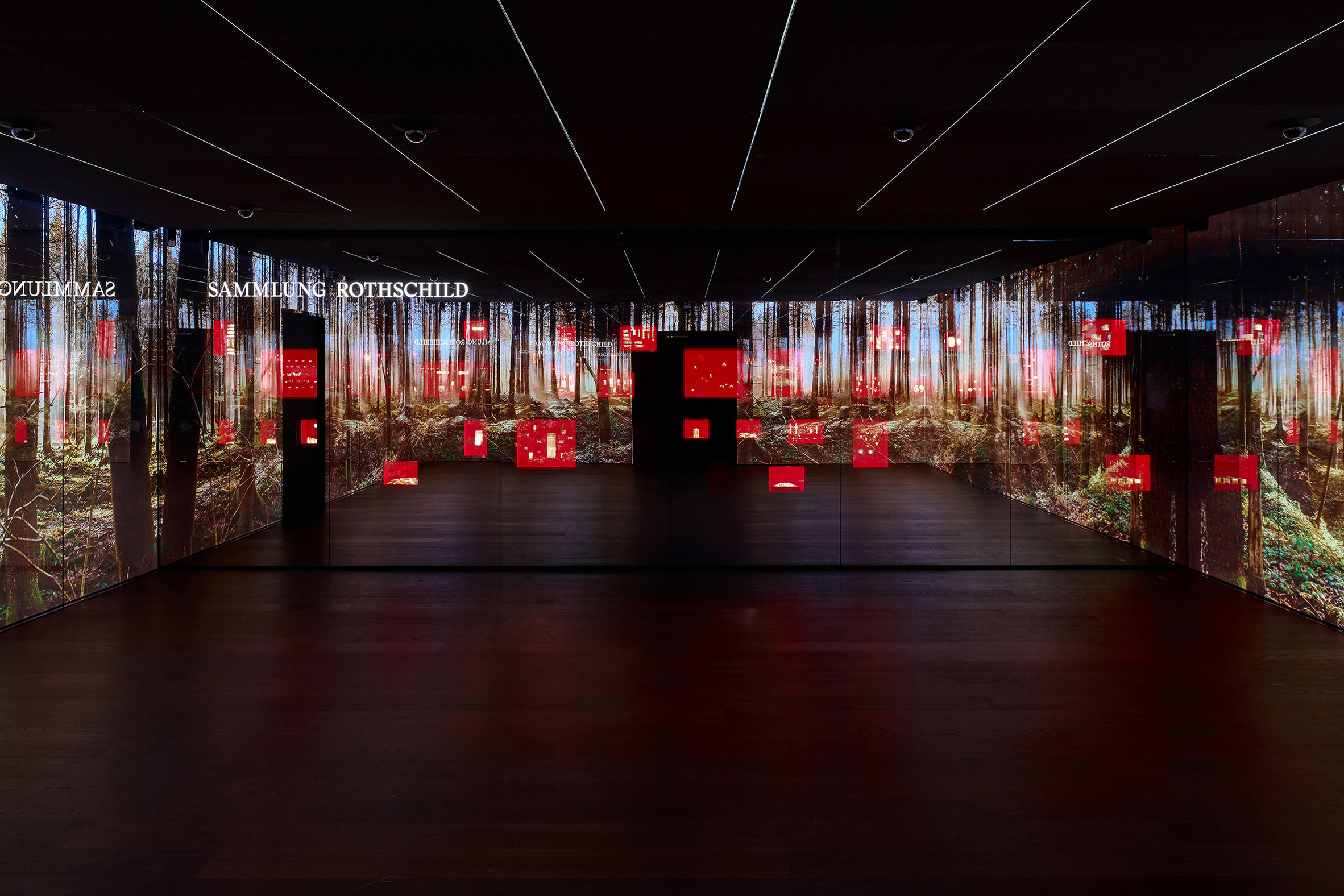
The lighting can be changed so that the exhibitions can vanish, or digital presentations can be projected onto the glass.
The Rothschild Collection can be hired for events
The walls flanking the display cases have LED screens installed behind the glass. These display information about the history of the 300 pieces of gold bullion, which come from 35 different countries.
"Due to the mirrored walls, guests can have the immersive experience of being right in the centre of the media presentation," explained Pfarré Lighting Design.
Each vitrine is lined with red silk
To add to the lighting challenge, the two-way mirrors sandwich a piece of 19-millimetre-thick bulletproof glass required to keep the valuable collection safe.
"High luminance levels have been applied to manage the thickness and absorption of the glass layers," explained Pfarré Lighting Design. "Various tests and mock-ups had to be conducted in order to elaborate the lighting typologies."
Fibre optic spotlights light up the gold pieces
Each vitrine displaying a piece of gold has backlit sides, made from LED panels covered in red silk. The designers chose a warm white light to best enhance the colours of silk and gold.
Mini fibre optic spotlights are trained on each individual gold object, lighting them up without revealing the source of the lighting. Floors and ceilings are matte black to provide contrast.
Pfarré Lighting Design was founded in 1983 by Gerd Pfarré.
Interior designer Gabriella Khalil has created Grand Cayman's first boutique hotel, the beachfront Palm Heights, filled with collectible design pieces like Mario Bellini sofas, Ingo Maurer lights and an Ettore Sottsass rug.
Khalil is the creative director and founder of Palm Heights, located on the well-known, white sand Seven Mile Beach in Grand Cayman, the largest of the three Cayman Islands in the Caribbean.
Palms Heights hotel is designed to be like a 1970s mansion
Working with designers Sarita Posada and Courtney Applebaum, the London-based interior designer developed the design aesthetic to be like a 1970s-era mansion. The trio sourced suitable designs to decorate the property from Parisian flea markets, Los Angeles and Mexico.
"The design concept was inspired by the idea of a 70s era Caribbean mansion featuring collectible unique design pieces from Marcel Breuer, Mario Bellini, artworks by Pierre Paulin, and Vladimir Kagan to name a few," said the team.
Guests rooms are decorated in an eclectic mix of materials
A number of these can be found in the guest lounge, which is intended as the heart of the 50-bedroom hotel, including a chequered Sottsass rug hung on the wall like a piece of art and a series of Maurer's Uchiwa wall lamps behind the curved reception desk.
Pieces by a range of European designers and architects like Hungarian-born Marcel Breuer, French furniture designer Pierre Chapo, Italian designers Massimo and Lella Vignelli, and Italian architect and designer Mario Bellini also decorate this space.
Each features artwork selected by Gabriella Khalil
Khalil travelled through North Africa to research textiles for the project and has included a range of patterns and materials throughout.
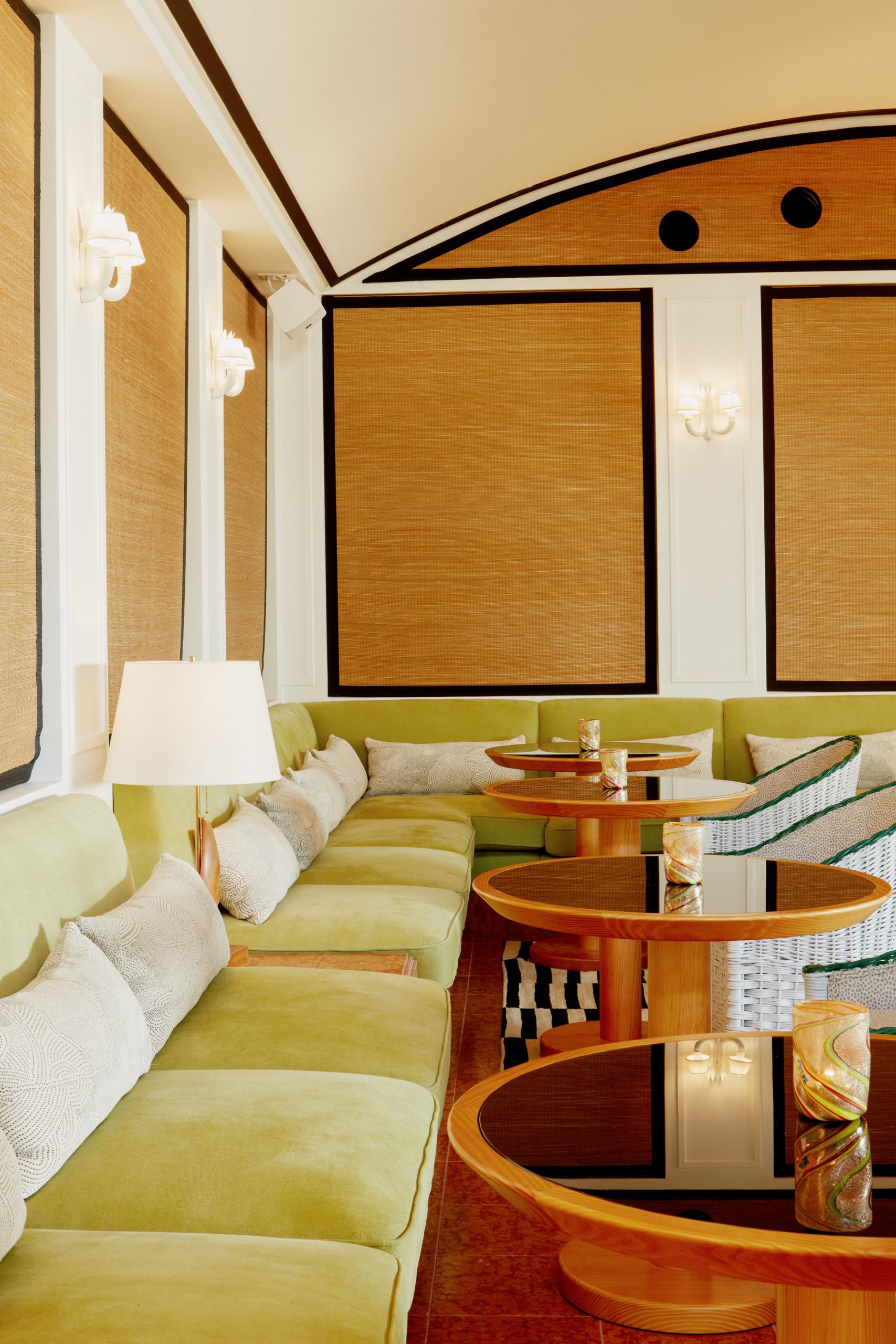
Woven fabrics with black outlines cover the walls in a sitting area, providing a contract to blush lime-green sofas running underneath. They face wooden tables and white-painted wicker chairs with green trims.
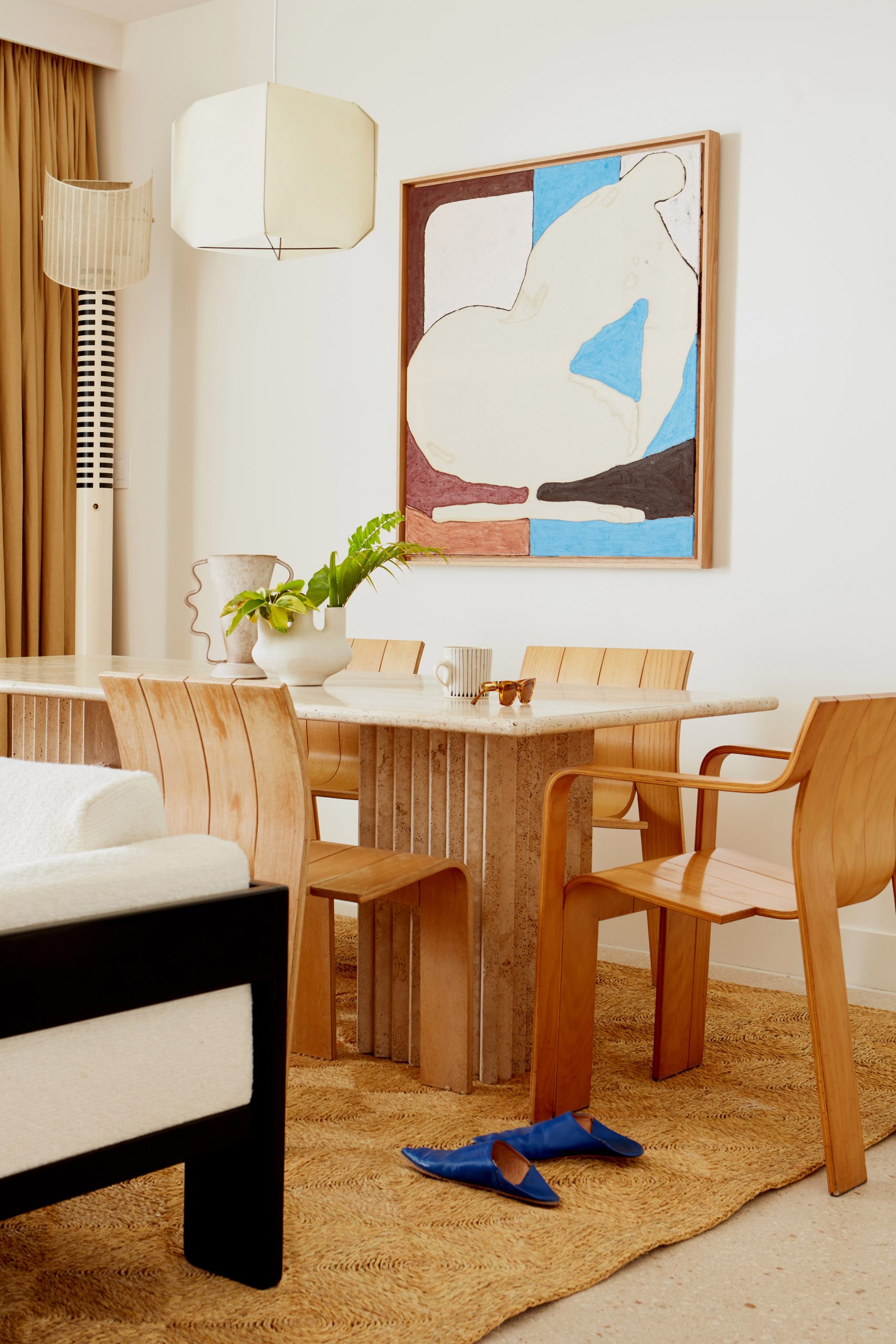
The 50 bedroom suites are similarly decorated with unique artwork and pieces from designers including French furniture designer Pierre Paulin, American furniture designer Vladimir Kagan, Scottish architect Charles Rennie Mackintosh, Italian architect Gae Aulenti and Dutch jewellery and industrial designer Gijs Bakker.
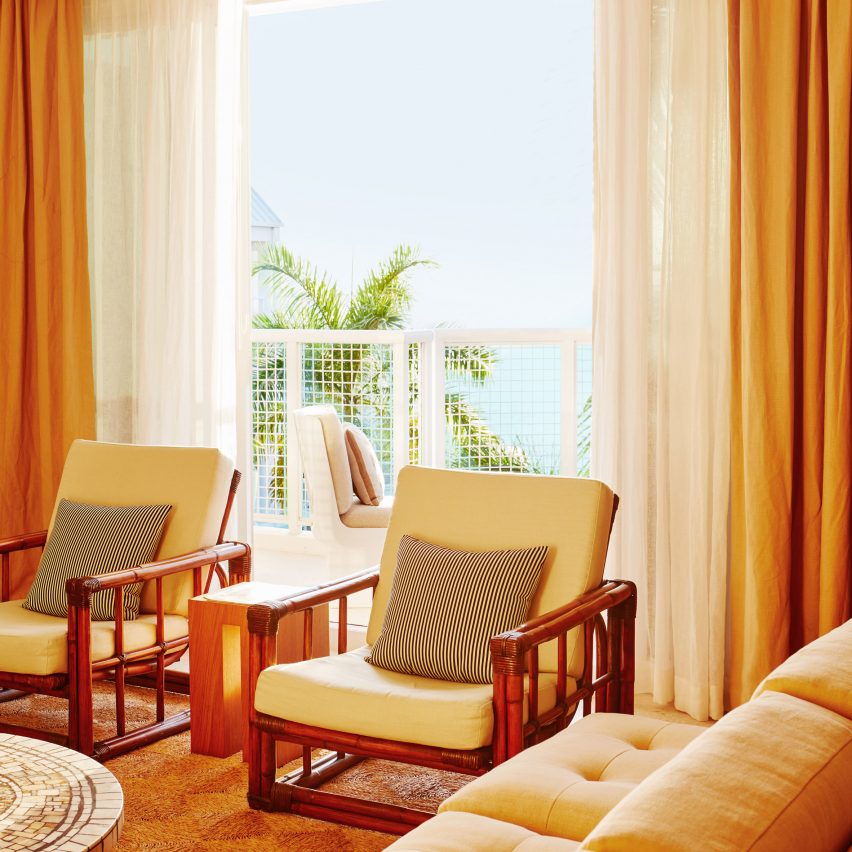
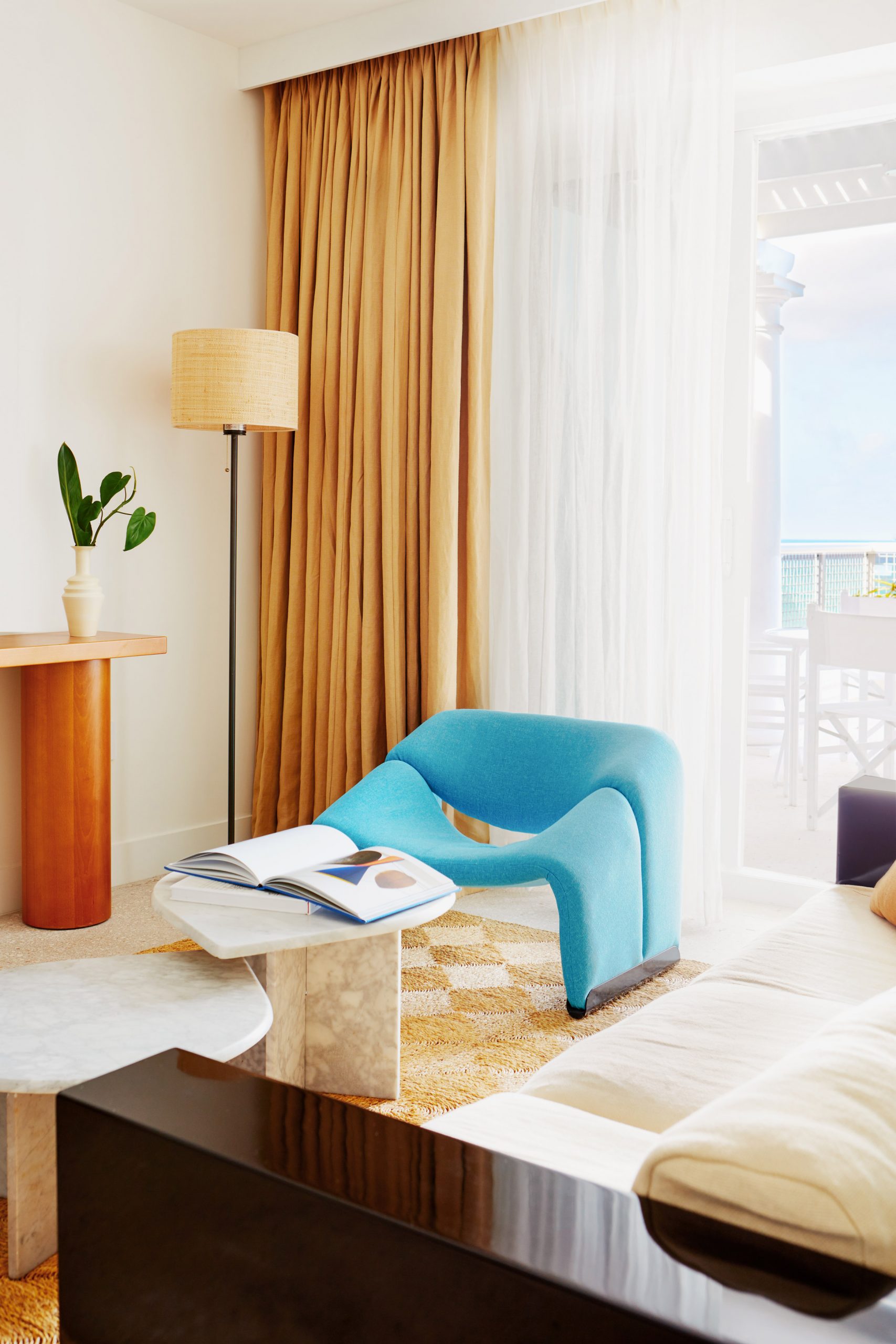
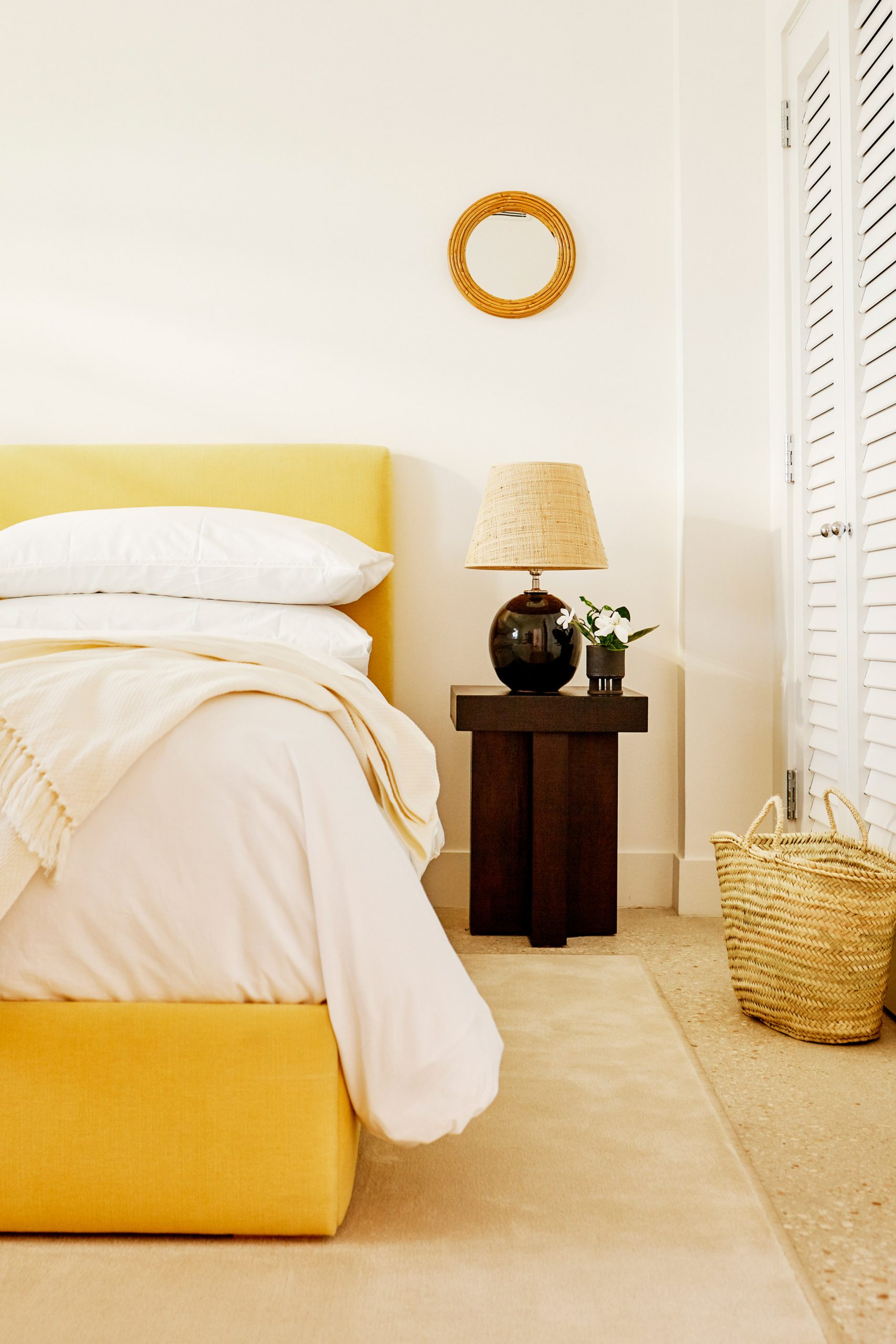
Earthy and blue hues are reminiscent of the beach
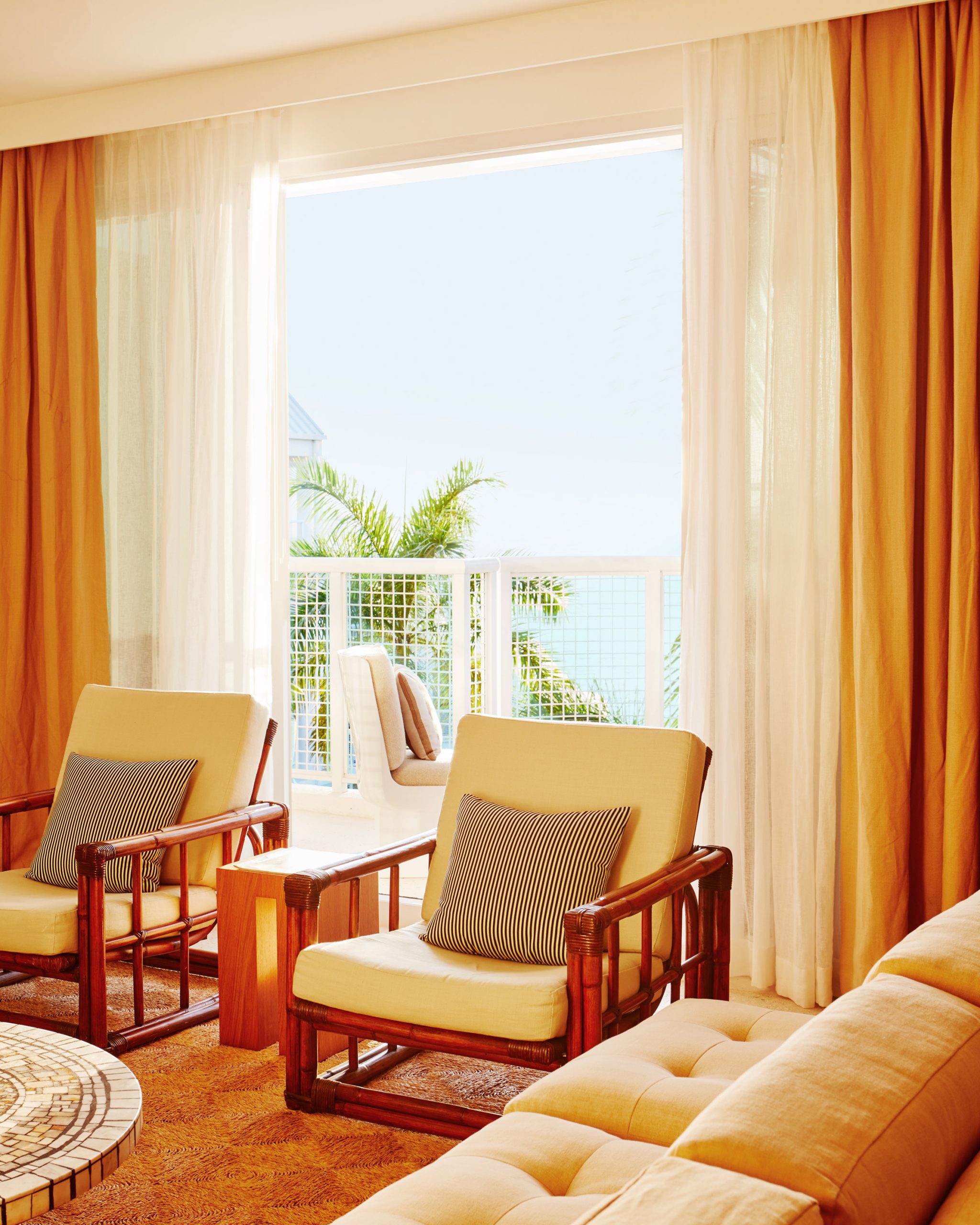
Sandy yellows and bold blue tones, reminiscent of the beach, run throughout each room. Details include pale stone flooring sourced from Italy and pale brown sofa upholstery and curtains.
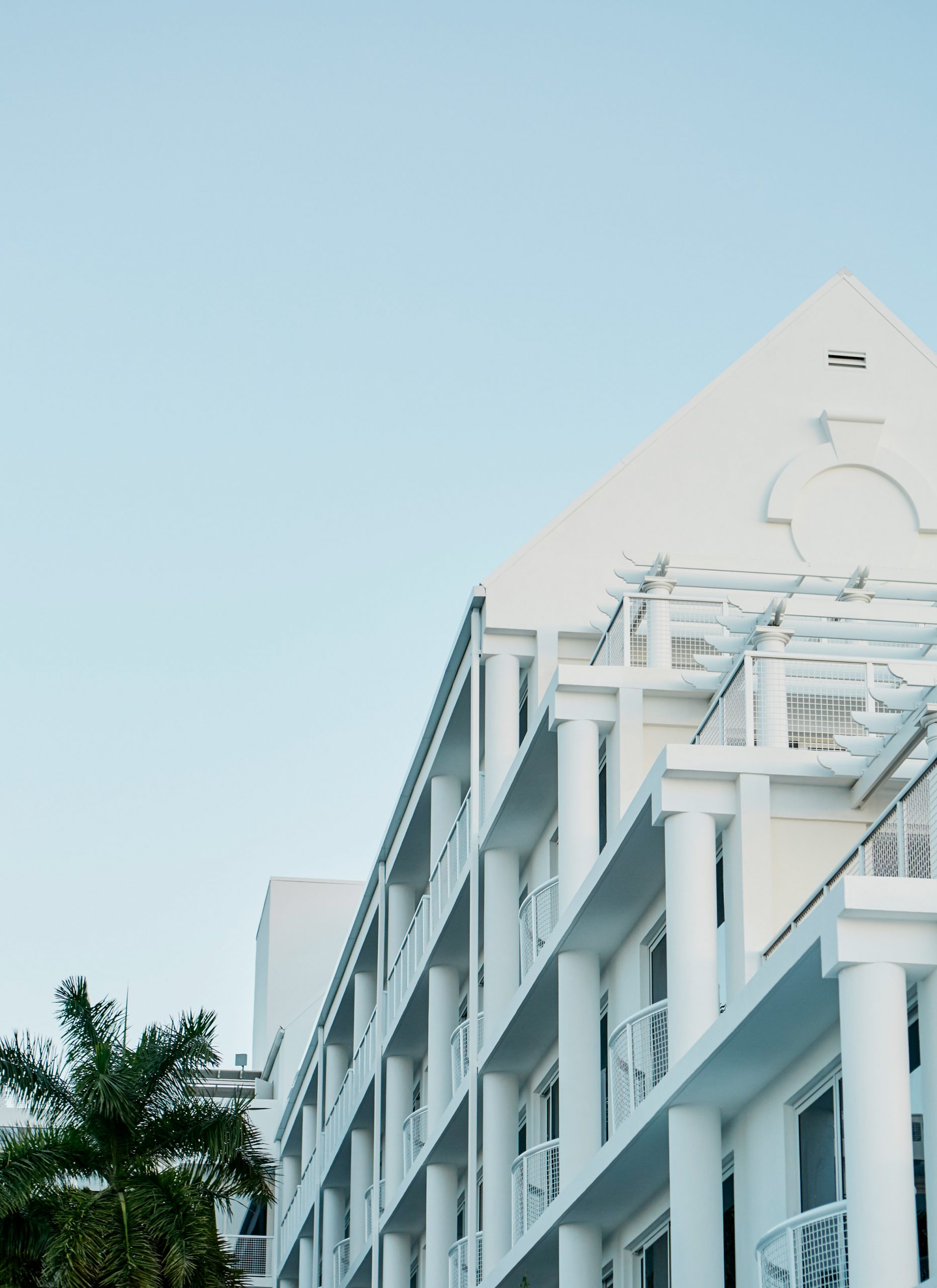
The suites open onto the balconies at the rear of the property, which is designed to stagger down towards Palm Heights' slice of the beach. Some of the suites have outdoor spaces with dining tables and sun loungers, where guests can laze and enjoy the sea views.
A range of fabrics and materials are used throughout
Eateries in the hotel include The Coconut Club, a casual beach bar, and the main restaurant Tillies, which has an outdoor area overlooking the sea and an indoor dining room.
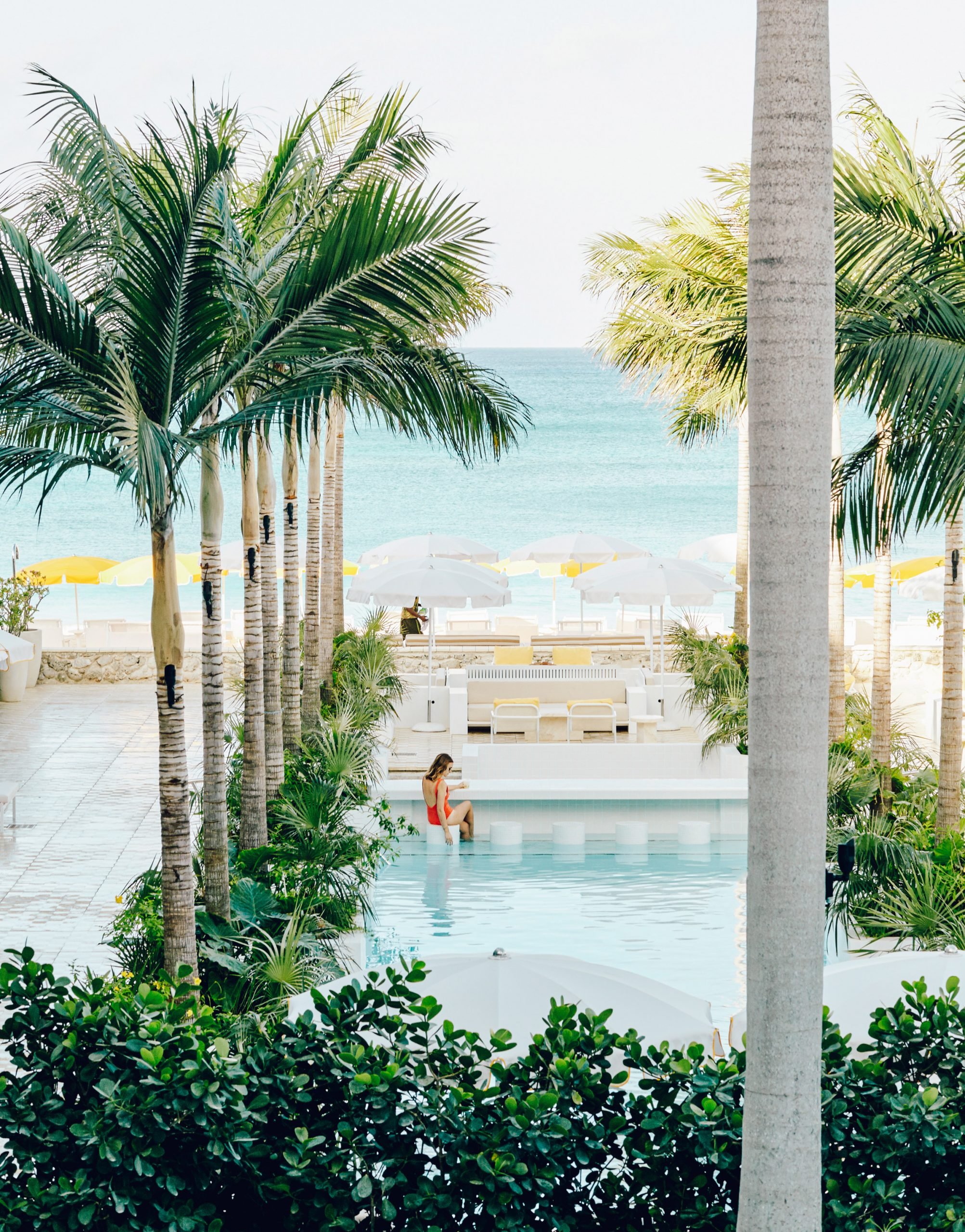
There are two swimming pools divided by green hedges to provide privacy for the guests – one of the pools is flanked by palm trees and extends towards the sea. Guests can also relax on the hotel's sun loungers on the beach, which have yellow- and white-striped umbrellas, or play ping-pong at branded tables.
The hotel has two swimming pools
Khalil is currently working with architect Dong-Ping Wong, who runs New York studio Food, to complete an outdoor wellness space called The Garden Club, which is set to open later this year.
Palm Heights is billed as the first boutique hotel in Grand Cayman.
The building staggers down towards the beach at the rear
Other recently completed boutique hotels in spectacular settings across the world include Kasiiya Papagayo, which has tented guest rooms that peek from a tropical forest in Costa Rica, and Casa Grande Hotel in Spain, which occupies 18th-century stone manor house.
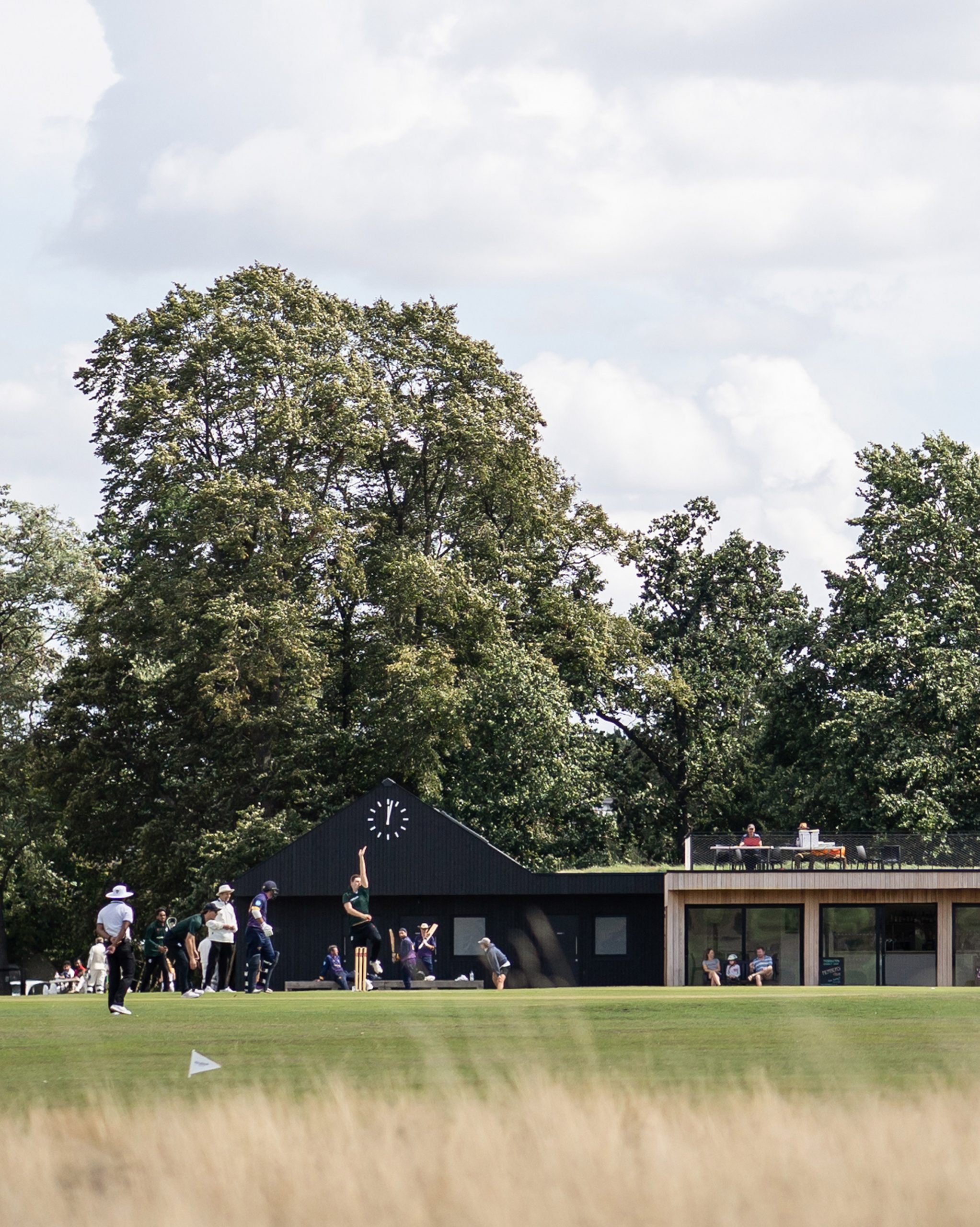
UK architecture studio Reed Watts has created a timber clubhouse for an amateur cricket team in London's Bushy Park that is designed to be both modern and familiar.
The sports pavilion was built to provide changing facilities and social spaces for Teddington Cricket Club, which has been based in Bushy Park – a Royal Park alongside Hampton Court Palace in Richmond upon Thames, south-west London – since 1863.
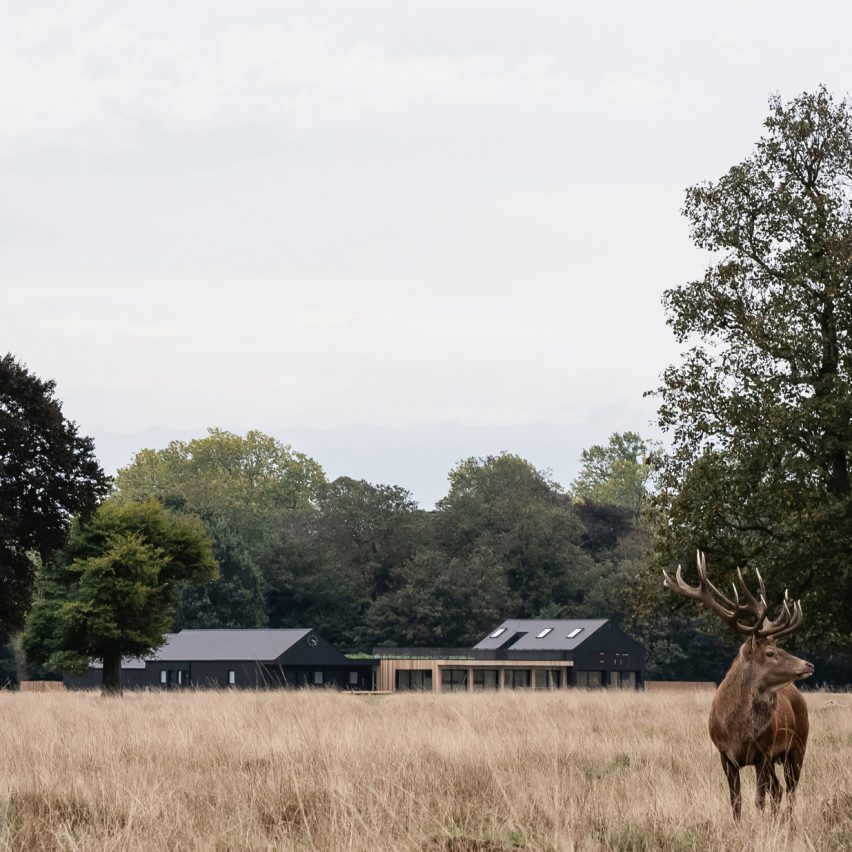
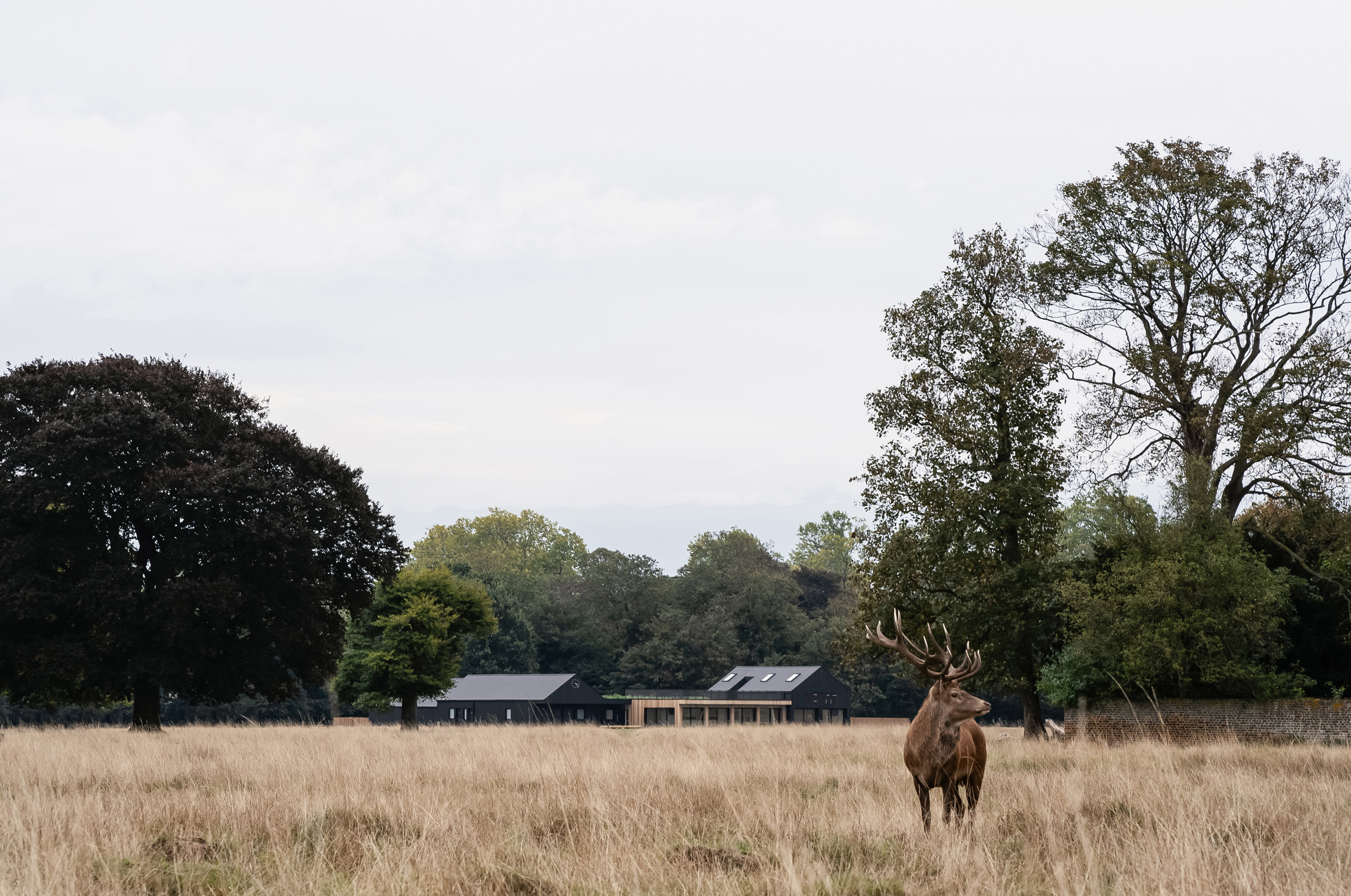
Teddington Cricket Club's pavilion is in Bushy Park
Reed Watts designed the building to replace the club's previous clubhouse in a pair of prefabricated huts that were built in world war two.
The studio wanted Teddington Cricket Club's new pavilion to reference these former structures and be respectful to its scenic location in the Royal Park.
The clubhouse is for an amateur cricket team
"The core concept responded to the dual brief of club and landowner to create a discrete but identifiable building that maintains the beautiful setting of the Bushy Park, while doubling the amount of floor space of the club's current building," explained Reed Watts' co-founder Jim Reed, who describes himself as a local resident and "reluctant part-time cricketer" who often gets roped into playing for the team.
"We were keen to design a distinctly modern structure but also one that imbued a sense of familiarity that would put users and park visitors at ease," he told Dezeen.
"The new building works better for spectators as well as players, providing better views and facilities while referencing the form of the previous clubhouse, fashioned from two Nissen Huts."
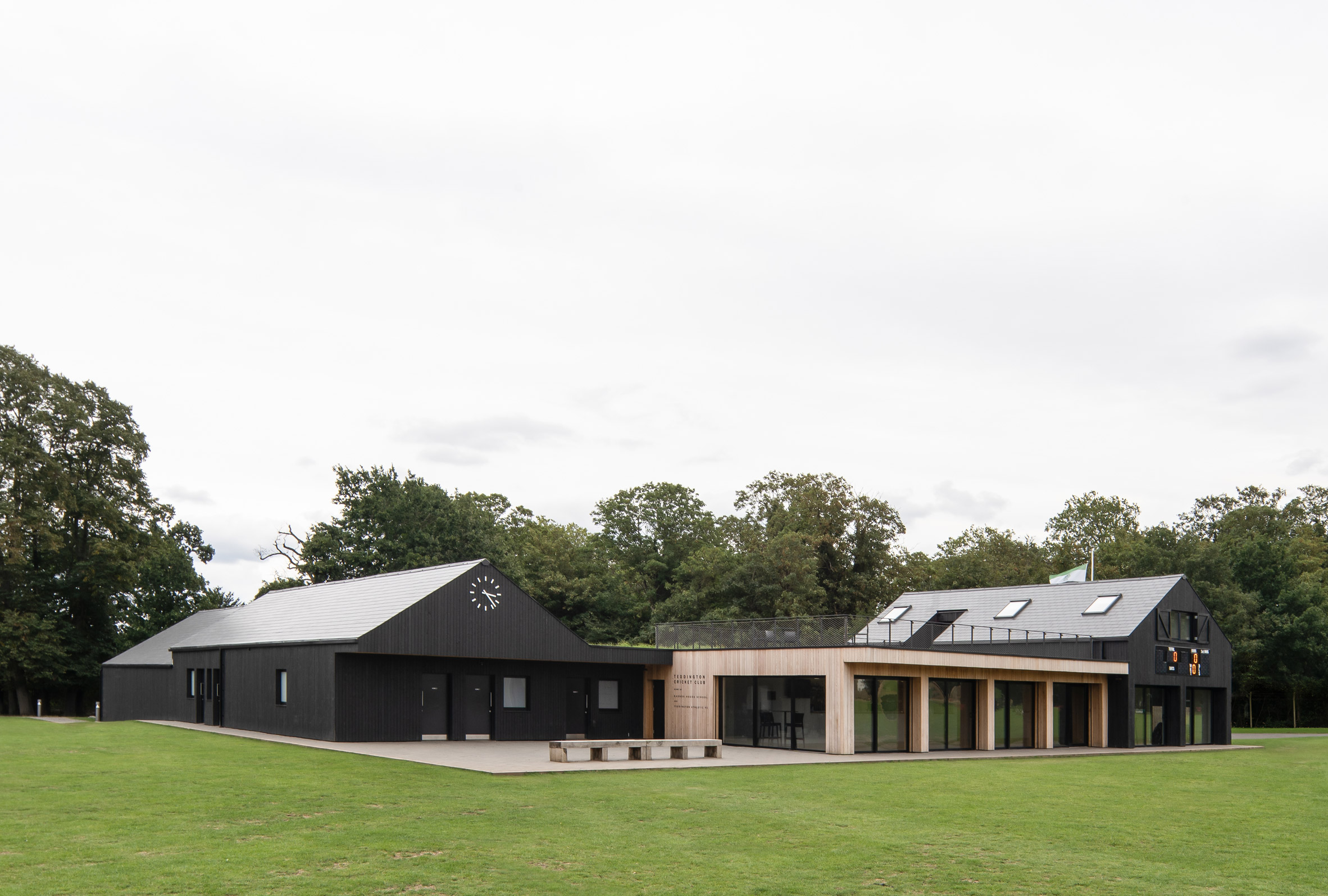
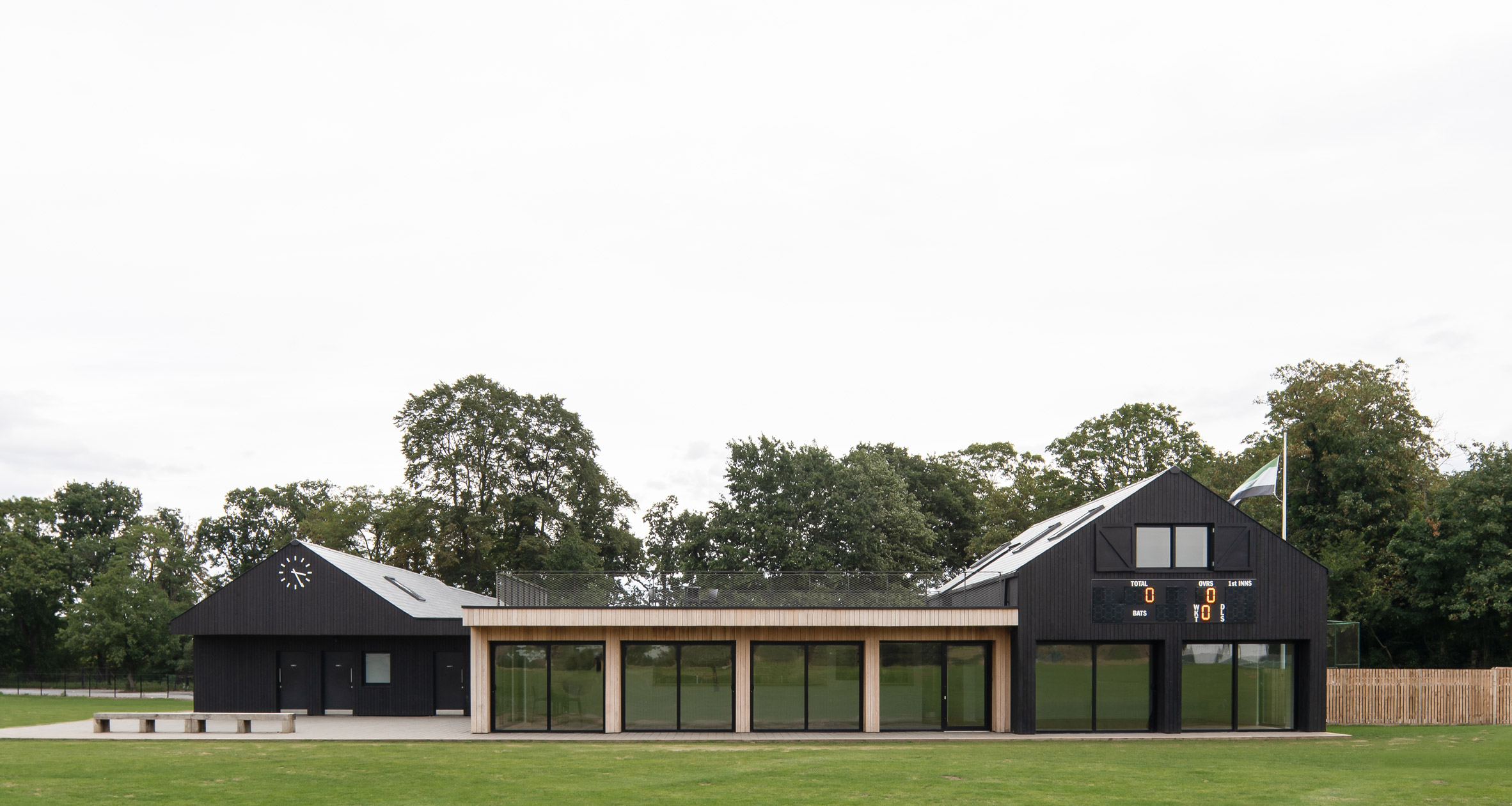
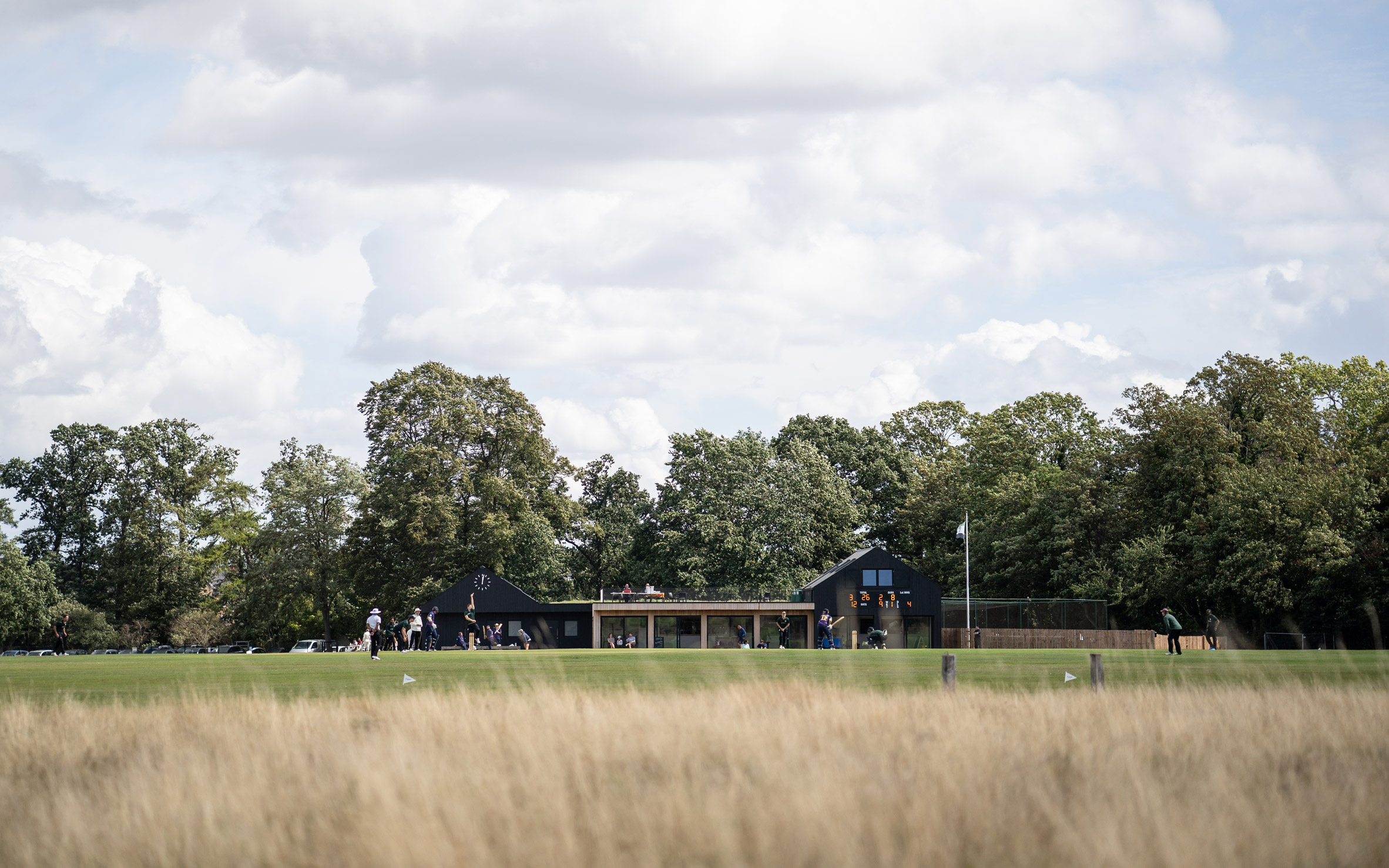
The clubhouse has three distinct elements
The clubhouse is formed from two black, pitched roof structures – one fronted by a clock and the other a scoreboard – connected by a flat-roofed section clad in natural-coloured timber.
"We kept the form simple, with little ornamentation," said Reed. "The focus is on the activity, in this case cricket – the players, umpires, clock and scoreboard."
"These are easily distinguished against the calm timber backdrop of the pavilion," he added. "There's a familiarity to it without pastiche."
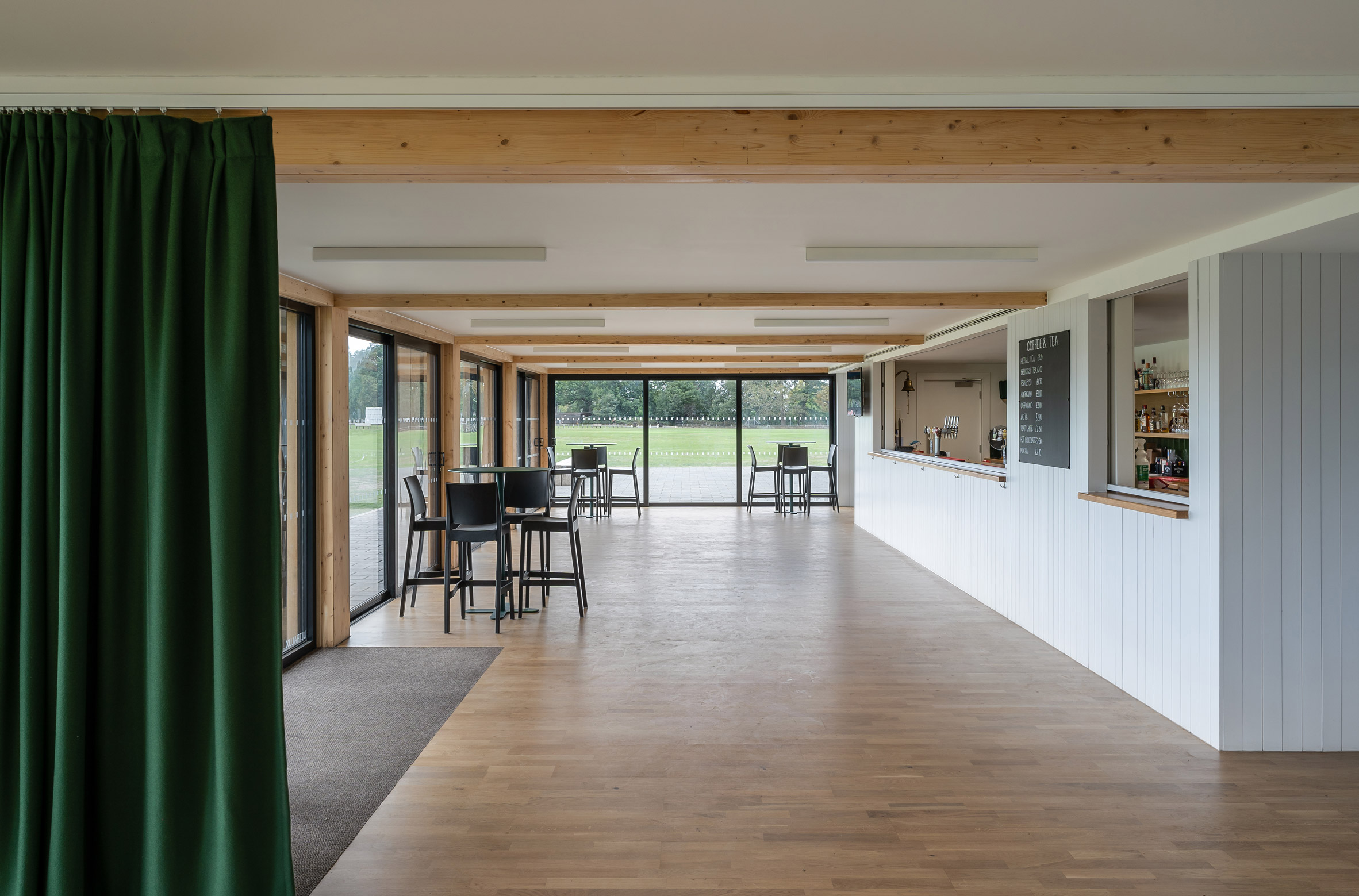
A bar has views over the cricket pitch
The central section, along with the smaller of the pitched roof structures, contains the club's public spaces, which were designed so they could also be used by the local community.
This block contains a bar and cafe with large windows to give views of the pitch, along with toilets, the club office and scorer's box. A roof terrace on top of the flat-roofed section provides an additional viewing area for spectators.
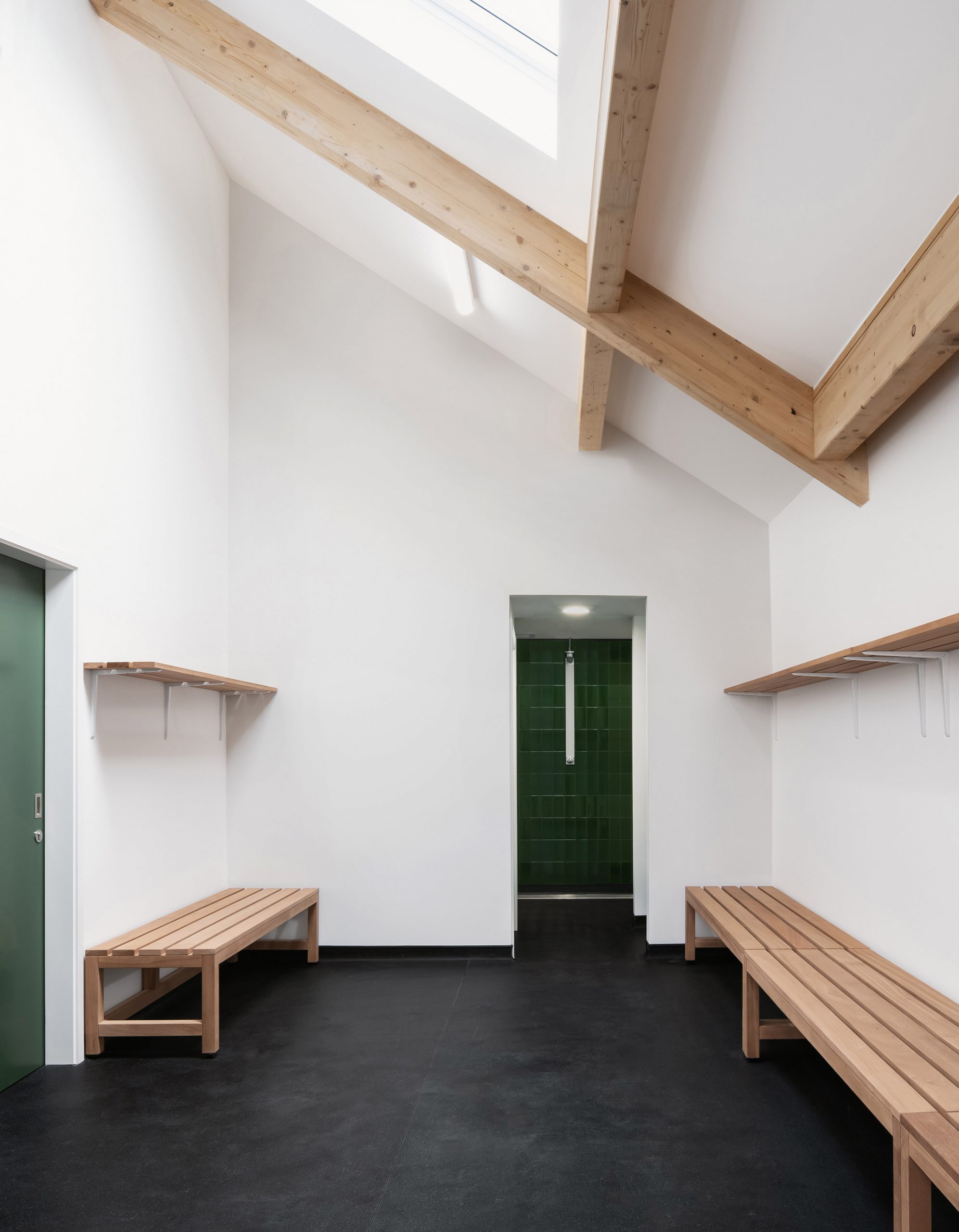
The second pitched-roof block contains four hanging rooms for players and one for match officials, as well as storage spaces for equipment.
The pavilion has a rooftop terrace
The structure combines a wooden frame with a structural insulated panel (SIP) system of walls made from timber, and is clad in larch that was stained black for the pitched-roof structures.
It also has a ground source heat pump, water storage tanks and green roofs help to help reduce the building's environmental impact.
According to the studio, this timber finish was designed to soften the building's appearance in the park.
The cricket club contains five changing rooms
"Finding an appropriate language to respond to the mature landscape setting of Bushy Park was key," explained Reed.
"The strong form of the clubhouse is softened by the Siberian larch cladding, which helps to nestle the building against the backdrop of mature trees," he continued. "The L-shaped plan also relates to the dual cricket pitches – with each flank facing a pitch - and is used to hide the training nets to the rear."
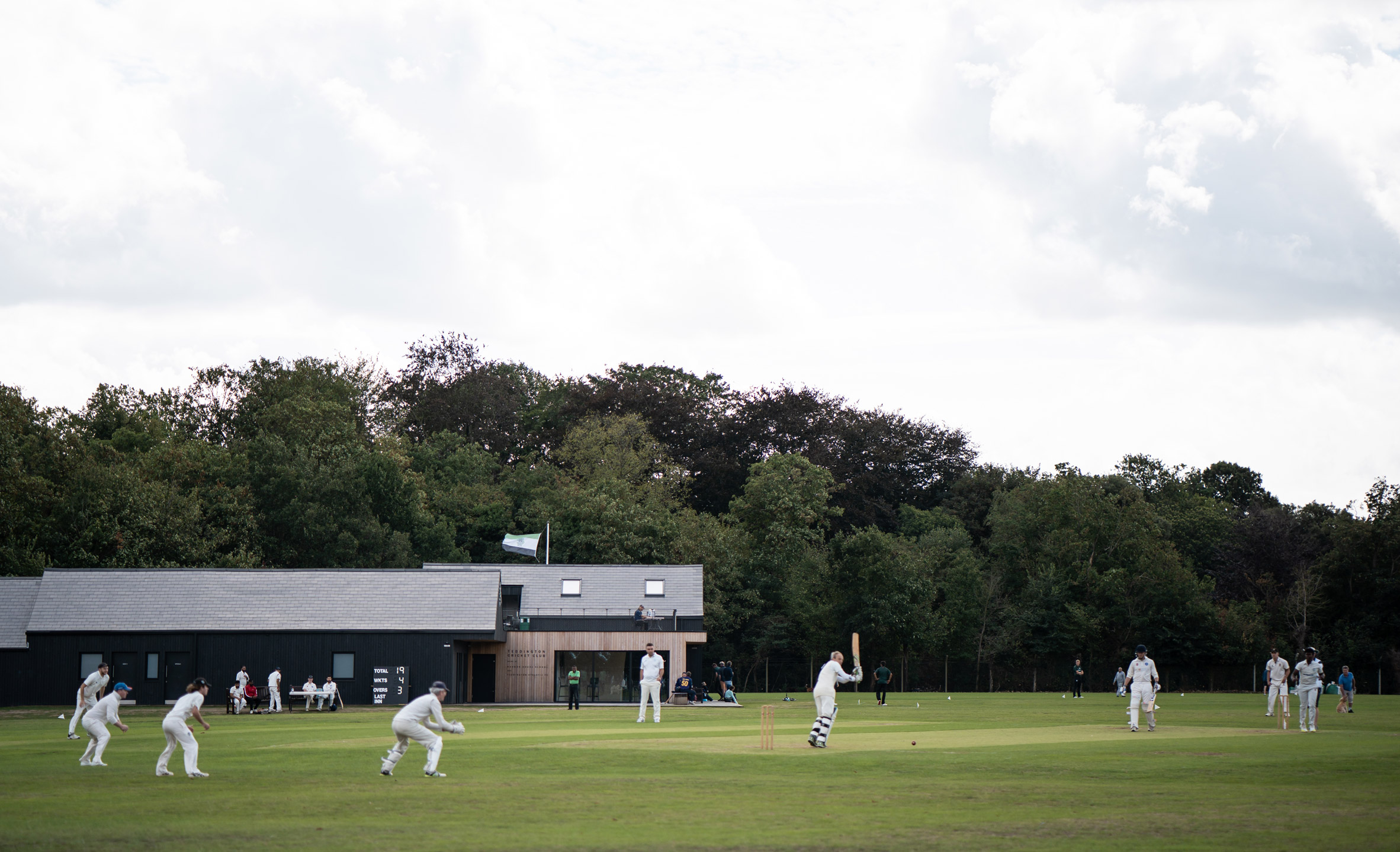
The pavilion was designed to be sympathetic to its location in a Royal Park
Overall, Reed Watts aimed to create a building that was modern but still clearly recognisable as a cricket clubhouse.
"There seemed to be an expectation that new pavilions should be reproductions of Edwardian buildings with little or no sense of place," said Reed.
"Before we became involved, this is what the club had imagined – white render, red tiles and a dovecot – a generic typology," he continued.
"We didn't think this represented the club's ambitions or values and certainly did little to respond to the landscape setting. While the new building does reference historical forms, the layout and minimal detailing are distinctly modern."
The pavilion is used by Teddington Cricket Club and the local community