Wednesday, 25 November 2020

Atelier-r
 creates Corten tourist route around ruins of Czech Republic castle

Renovation of Helfštýn Castle in Czech Republic by Atelier-r

Architecture studio Atelier-r has added a series of Corten steel bridges and platforms to provide tourist access to the ruins of Helfštýn castle in the east of the Czech Republic.

The studio carried out the major renovation of the visitor attraction, which is the second-largest castle complex in the Czech Republic after its deteriorating state had forced parts of the building to be closed to the public.
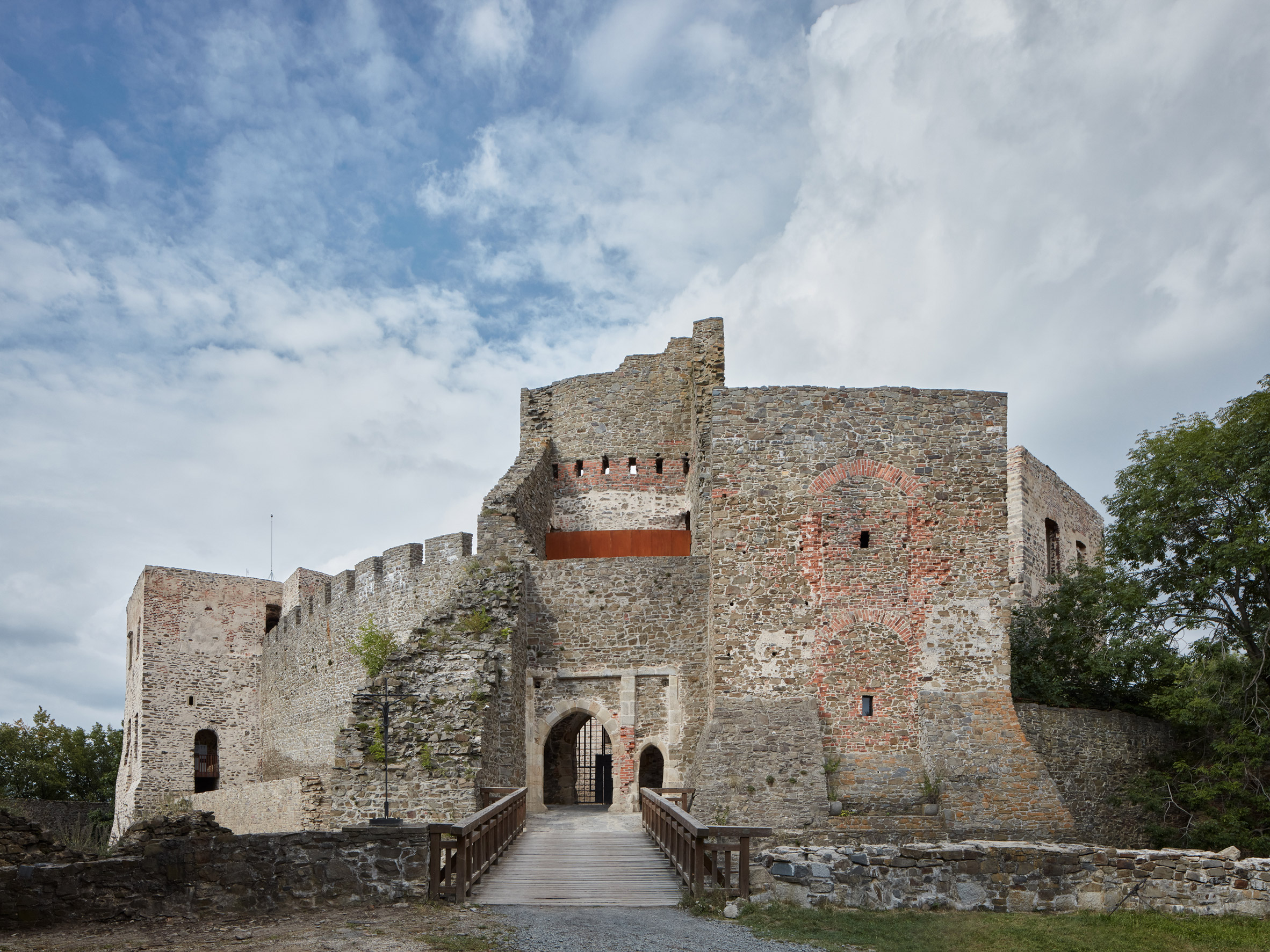
Helfštýn castle in Czech Republic
Atelier-r renovated Helfštýn castle

The majority of work was carried out on the castle's keep, which its owners and Czech Republic's national heritage institute wanted to be preserved as a ruin.

Atelier-r created a series of glass roofs that sit below the original walls so they can not be seen from outside the building to enclose some of the rooms.
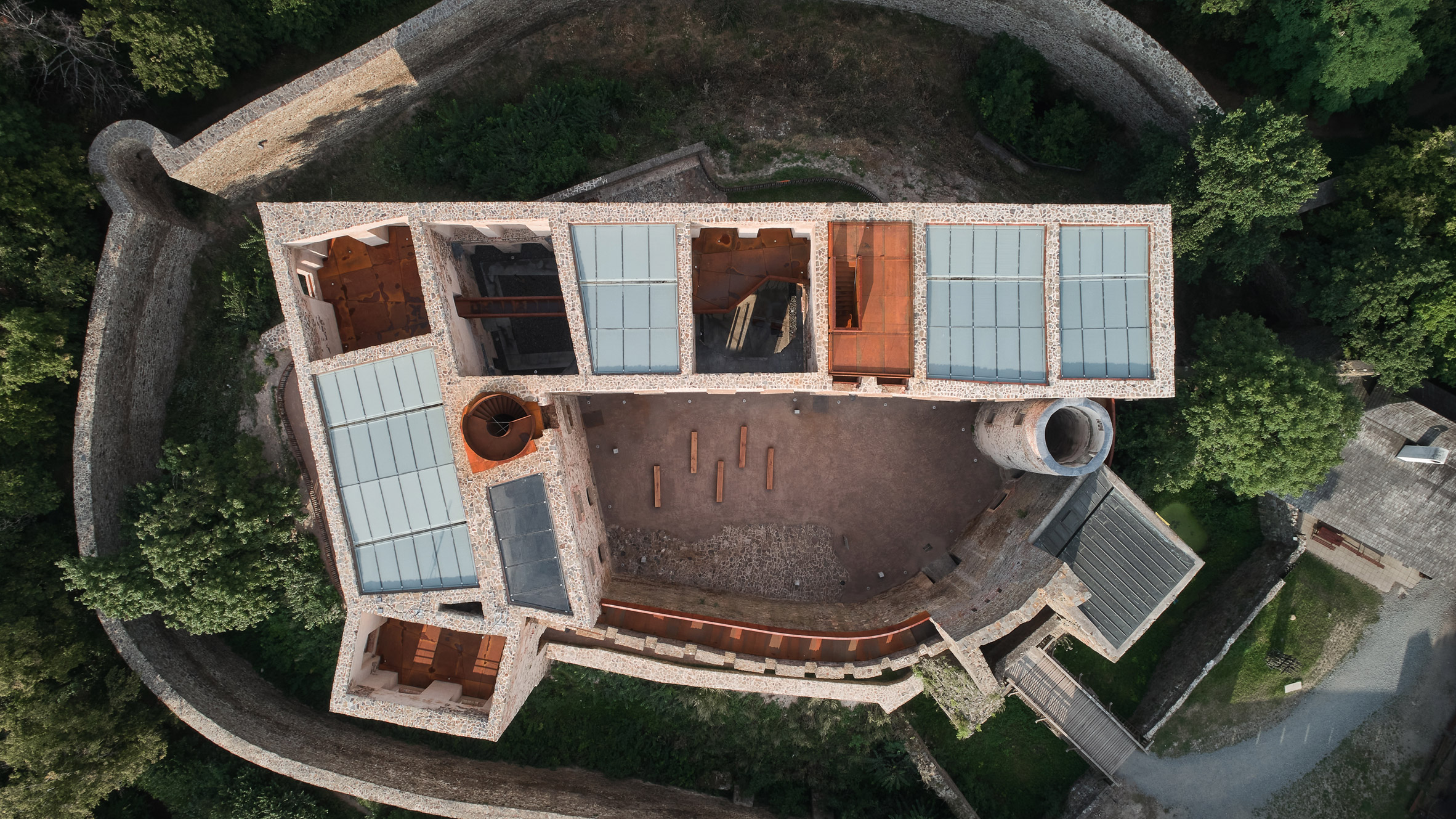
Helfštýn castle aerial view
The studio enclosed several rooms with glass roofs

"Our team strived to complement the historical building with the contemporary architecture that would fit the purpose and focus on both practical use as well as gaining an aesthetic appeal," said Atelier-r's principal architect Miroslav Pospíšil.

"We aspired to go beyond the core task of creating a suitable roof solution because we wanted to involve the visitors in the historical development of the palace," Pospíšil told Dezeen.

"This intention sparked a great idea of incorporating the contemporary architectural elements into the historical building and connecting the existing ground floor with the newly accessible higher levels of the palace."
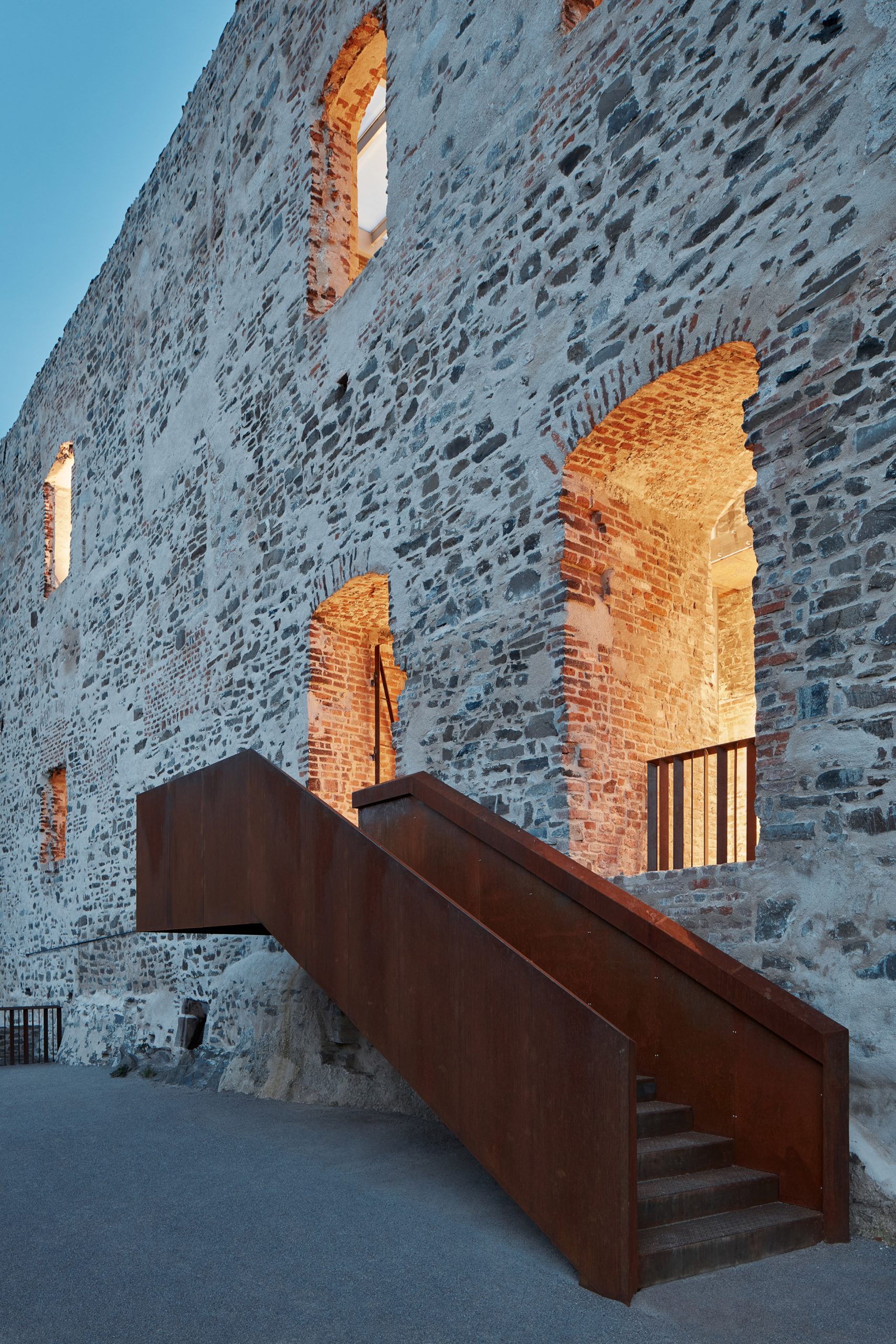
Corten entrance stair
Corten steel elements have been added to the castle

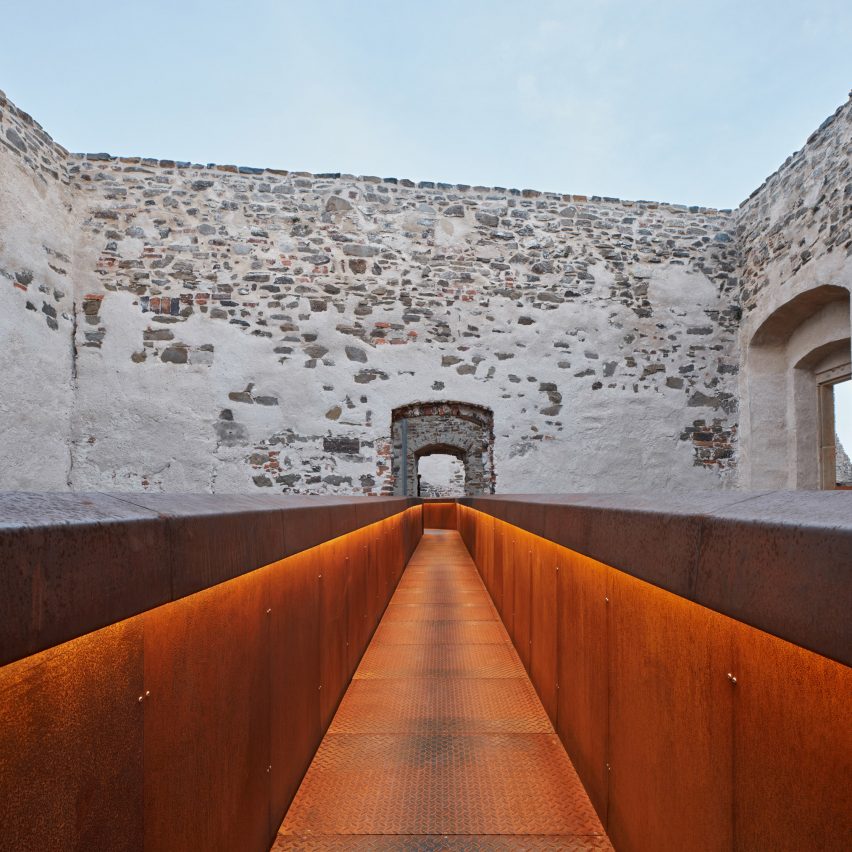
Along with the new roofs, the studio added various stairs, bridges and platforms, all made from Corten steel, to create a visitor route through the ruins.

The weathering steel elements allow visitors to see the upper levels of the castle that were previously inaccessible, with bridges passing through rooms and passages built alongside the battlements.
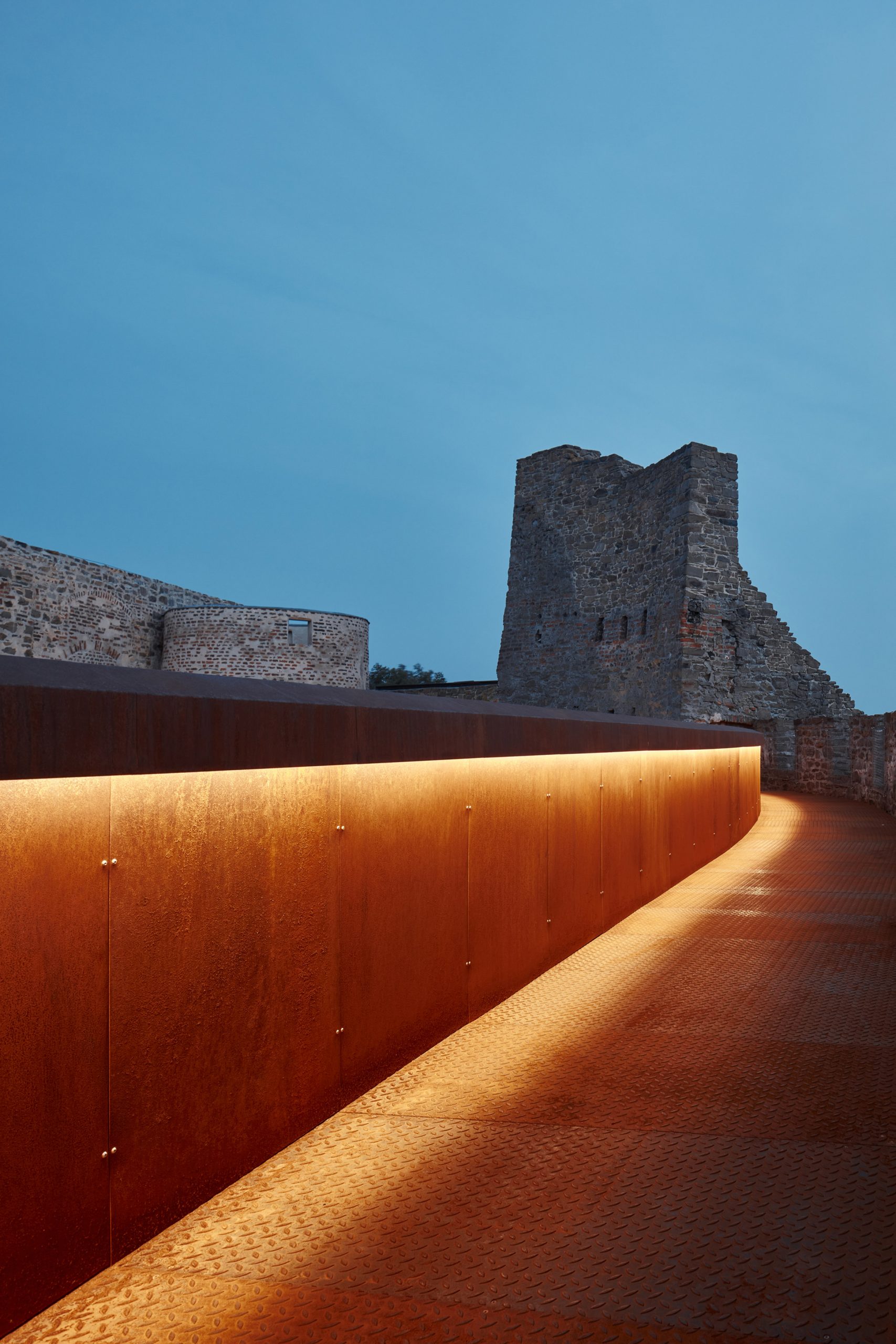
Corten walkway
Corten was also used to create a walkway along the battlements

Atelier-r chose to use the orange Corten steel so that the additions made to the ruin would be clearly identifiable.

"We believe that easily readable architecture is honest and that is important for us," said Pospíšil. "Therefore, we wanted to acknowledge and accentuate the contrast between the historical building and modern elements."
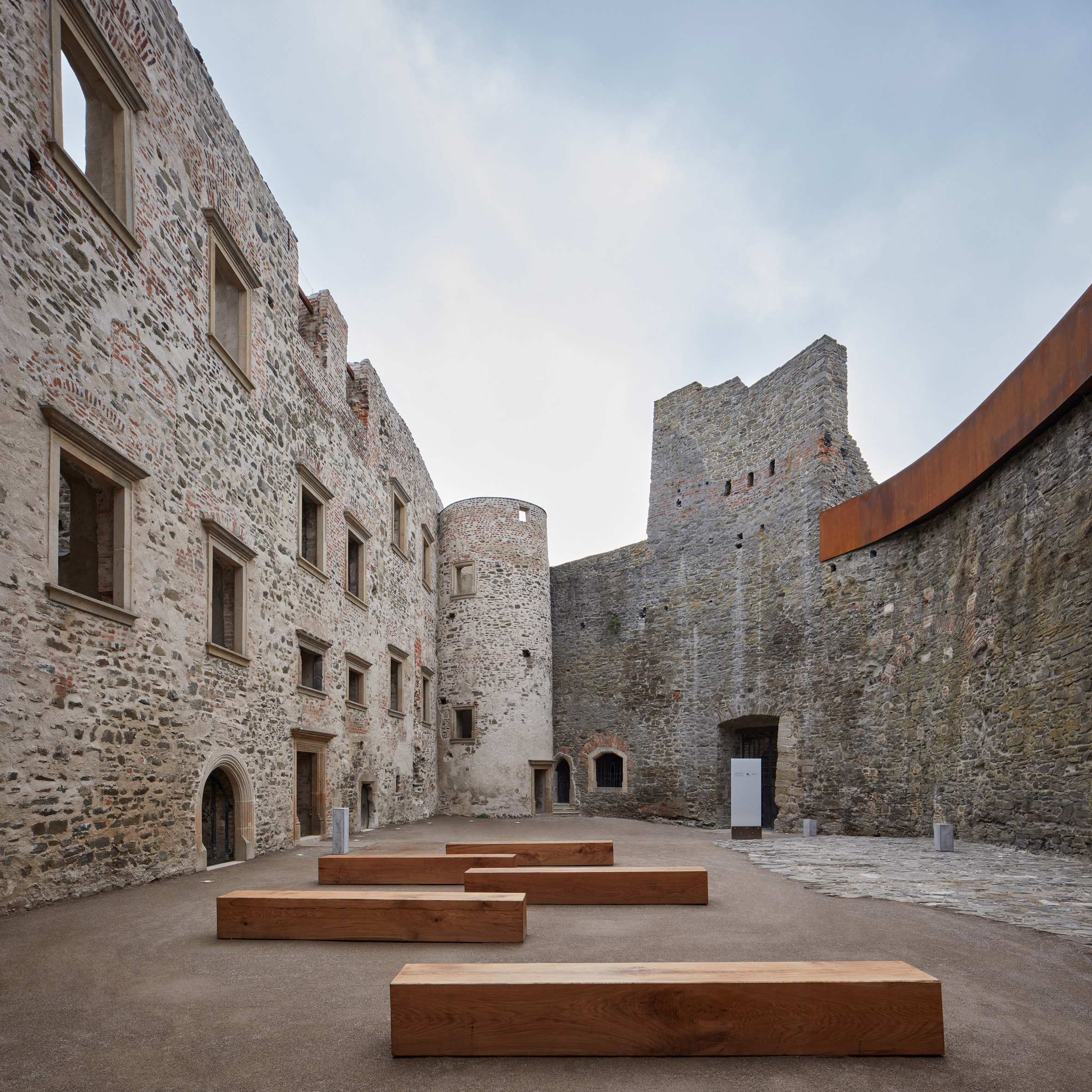
Corten additions to ruins
The Corten additions are clearly identifiable

"Our concept draws from the respect towards the historical building and it pursues a major effort to preserve the castle's authentic character," Pospíšil continued.

"New contemporary elements do not compete with the historical building, rather they create a cohesive unit in which all the elements, old and new go hand in hand."
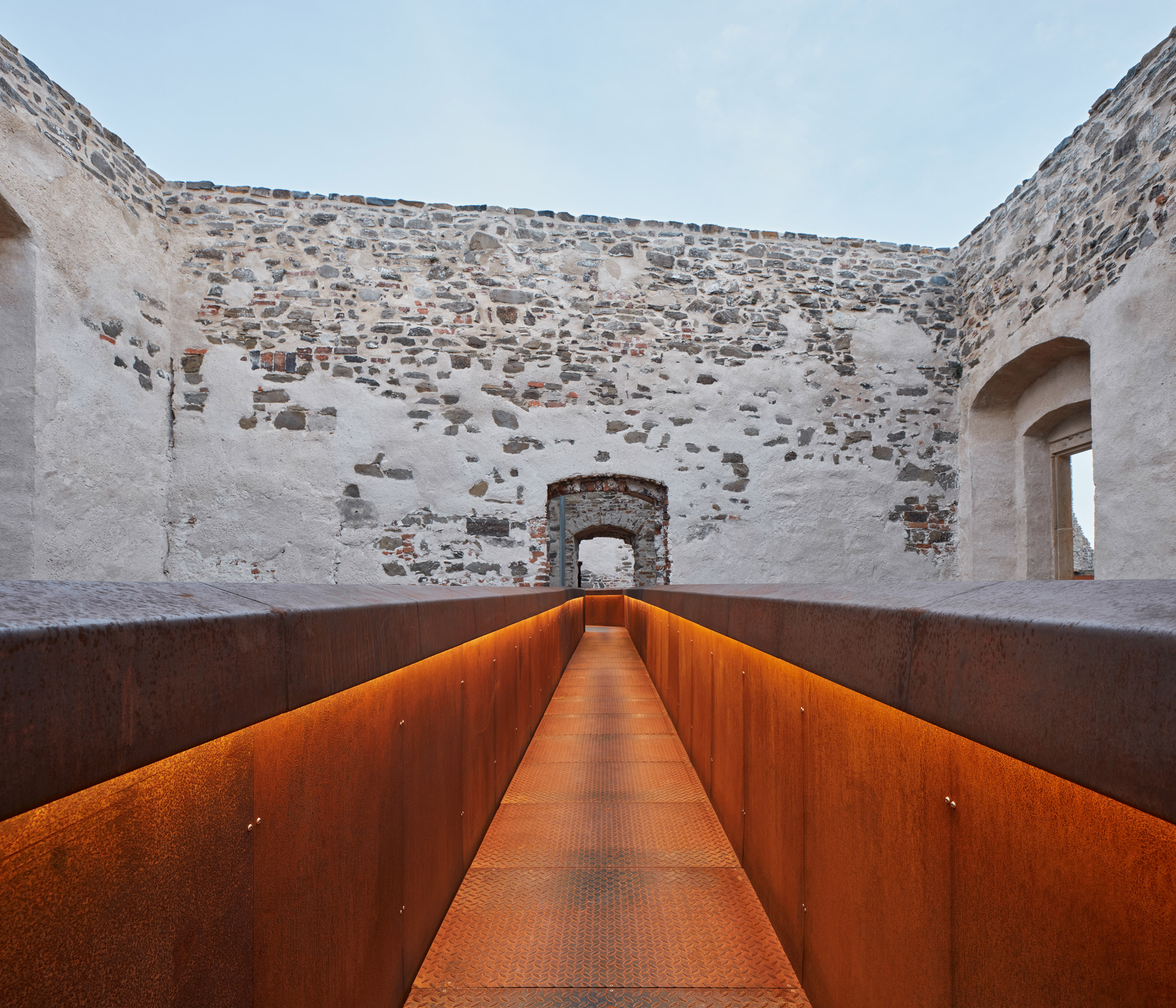
Corten bridge
Bridges cross the ruin's upper levels

The studio also believes that Cortenl was an appropriate material due to the castle's history of ironworking and the way it weathers over time.

"It was crucial to choose a material that would be timeless," explained Pospíšil. "Corten is a special alloy that undergoes corrosion, matures and matches the texture of the old historical walls.

"Moreover, Helfštýn Castle is well-renowned for its iron craftsmanship tradition, therefore it made a perfect sense to choose Corten to work with."
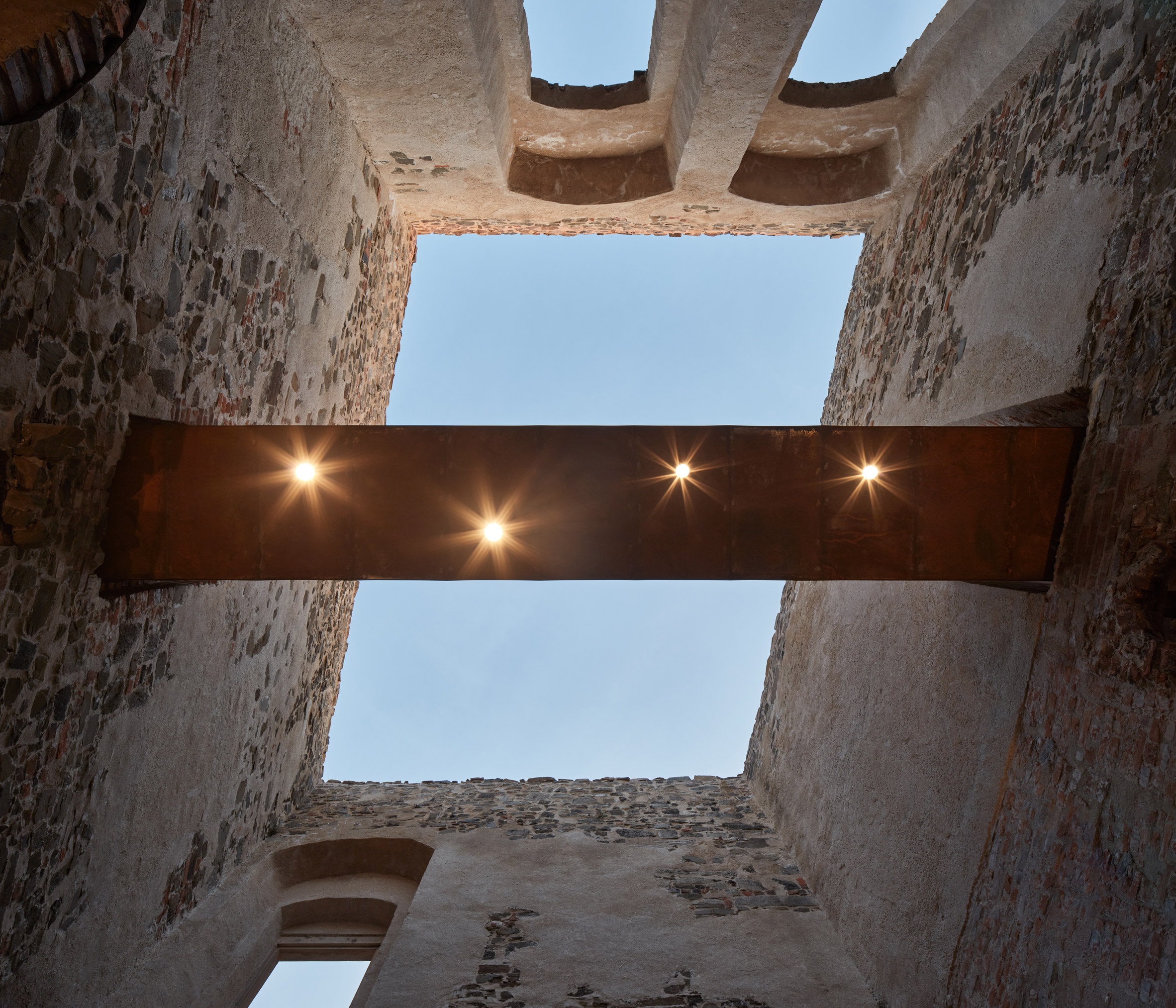
Corten bridge at Czech Republic castle
The bridges allow access to the ruin's upper levels

Overall the studio hopes that the project will allow visitors to gain a greater understanding and appreciation of the historic castle that dates back to the 13th century.

"The renovation created an attractive sightseeing route that brings the public closer to the construction details of the original palace than ever before," said the studio.

"Standing on the modern bridges, looking up the walls, you can feel the legacy of the sight as well as understand the purpose of the modern architecture within it."
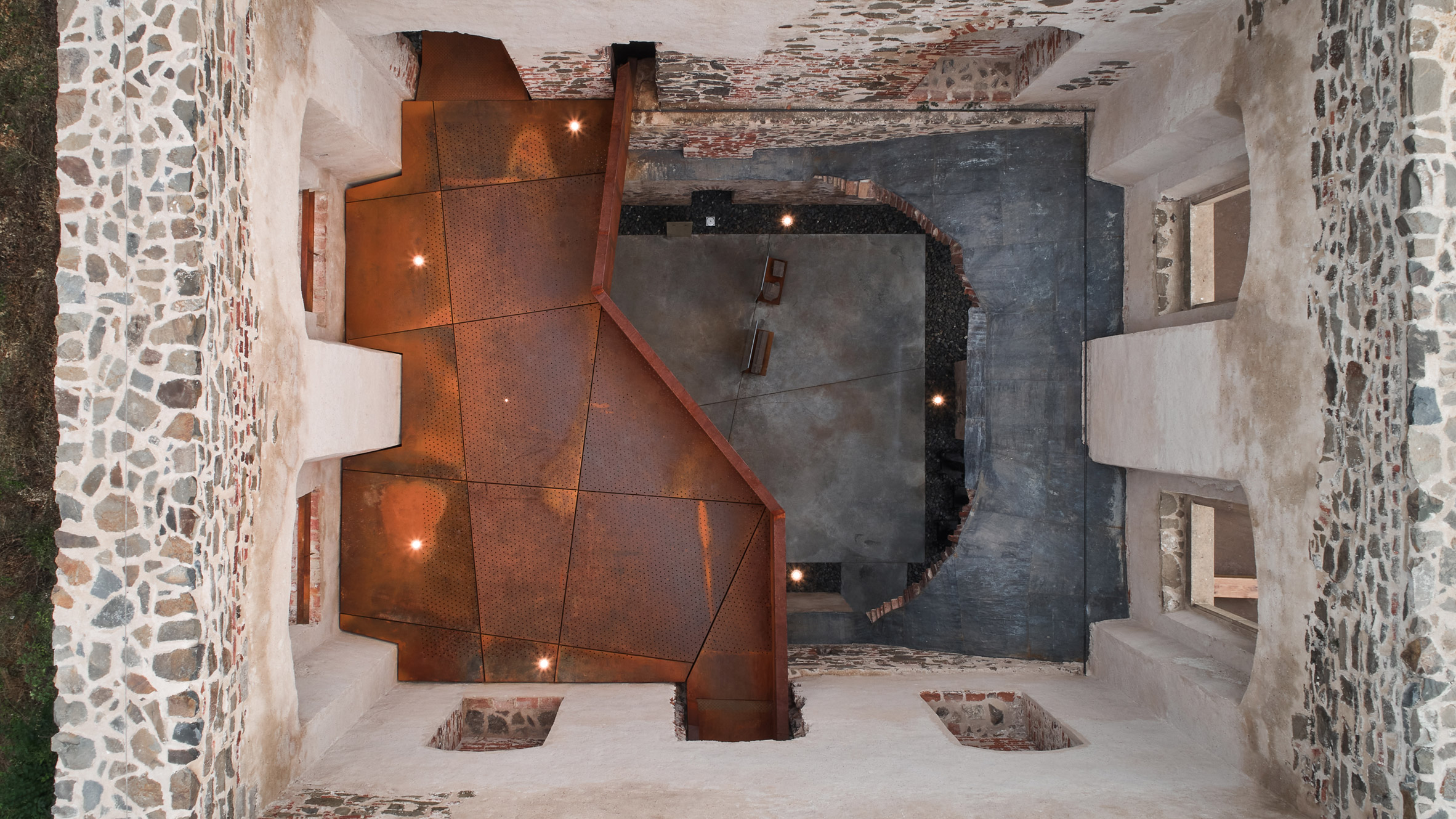
Balconies overlook lower levels

Previously William Matthews Associates and engineers Ney & Partners added a bridge to the ruins of Tintagel Castle in Cornwall, UK, while Max Dudler created a restaurant inside Heidelberg Castle in Germany.

Photography is by BoysPlayNice.


Project credits:

Design team: Robert Randys, Lucie Rohelová, Adéla Tomečková, Milena Koblihová, Daria Johanesová / Atelier-r
Structural stability of historical constructions: Ladislav Klusáček
Structural stability of newly inserted constructions: Jan Lukáš

Rehabilitation of the damp parts of historical walls: Pavel Fára
Contractors: Hochtief and Archatt Památky
Steel and corten construction: Zámečnictví Sloupský
Glass construction: Bubeník 1913

Concrete floors: AAP hranice

The post Atelier-r
 creates Corten tourist route around ruins of Czech Republic castle appeared first on Dezeen.


from Dezeen https://ift.tt/37aMli2

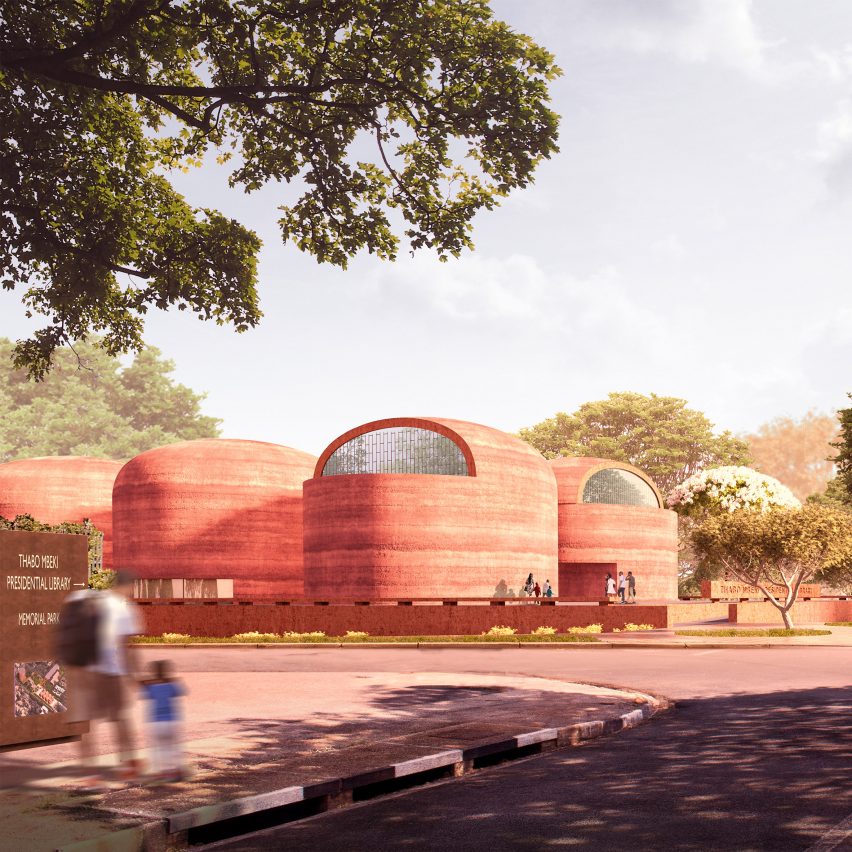
Rammed-earth domes will define Adjaye Associate's Thabo Mbeki Presidential Library

The exterior of Thabo Mbeki Presidential Library proposal by Adjaye Associates

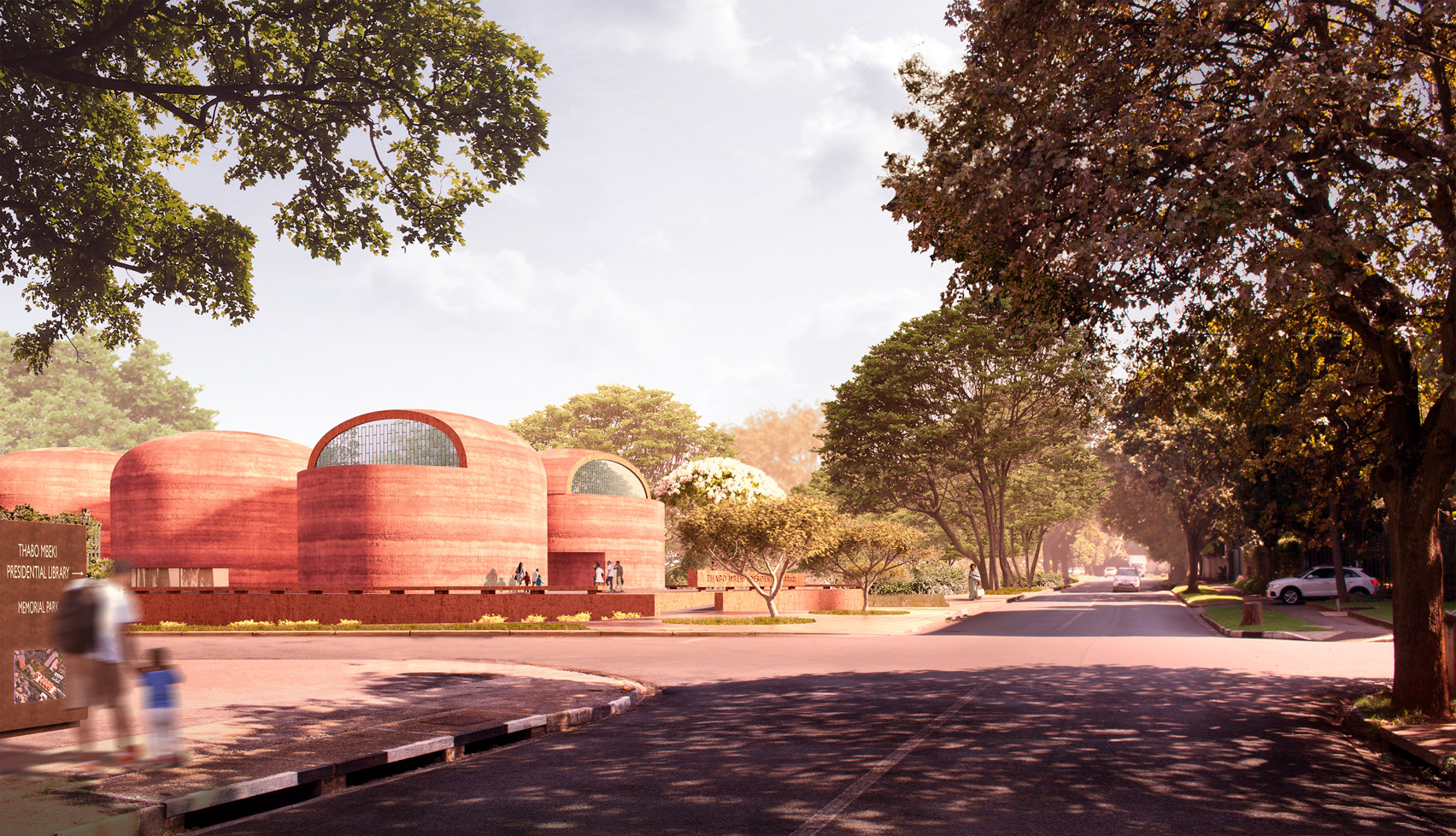
Eight domed structures built from rammed earth will distinguish the Thabo Mbeki Presidential Library that architecture studio Adjaye Associates is developing in Johannesburg, South Africa.

Set to be built in the suburb of Riviera, the library will pay homage to the country's second post-apartheid president, Thabo Mbeki, and celebrate ancient and contemporary African history.

Among its facilities will be a research centre and museum, which Adjaye Associates hopes will establish it as an "anchor point" for local and international scholars.

Street view of Adjaye Associates' proposed Thabo Mbeki Presidential Library
Eight domed structures will distinguish the Thabo Mbeki Presidential Library

"The Thabo Mbeki Centre presents an opportunity to realise the ambition of the dreams of President Thabo Mbeki to advance and empower an African renaissance," said the studio's founder, David Adjaye.

"The architecture of the library taps into the collective memory of the continent through the establishment of a new historical centre for African consciousness in which knowledge, education and sustenance are nurtured in the representation and intelligence of the continent."

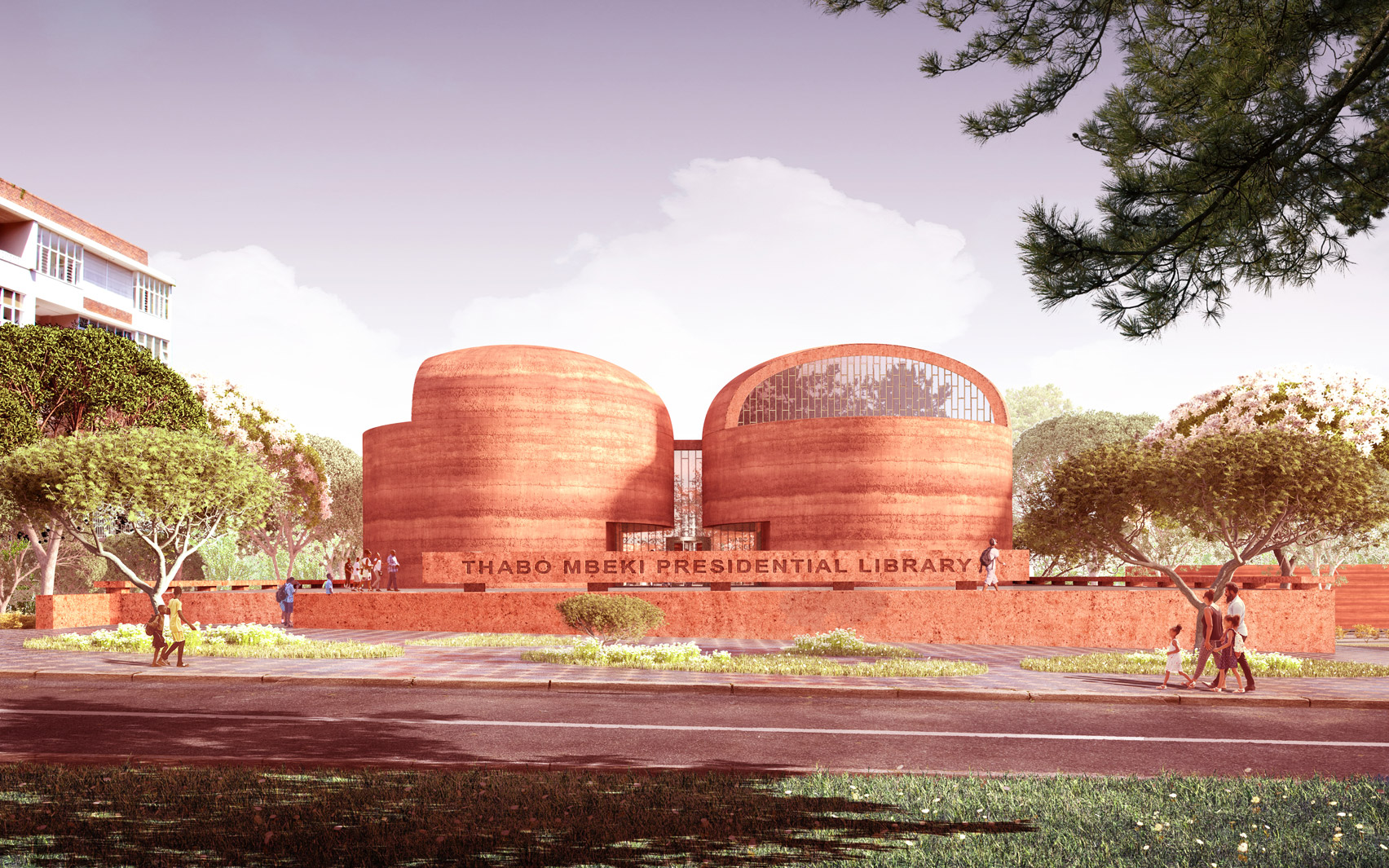
Rammed earth facades of Adjaye Associate's proposed Thabo Mbeki Presidential Library
Each dome will be made from rammed earth

Once complete, the 5,400-square-metre Thabo Mbeki Presidential Library will comprise two levels – one of which will be concealed below ground.

The upper level will be housed within the rammed-earth domes that are designed by Adjaye Associates to evoke a collection of traditional African granaries – a type of storehouse for grains.

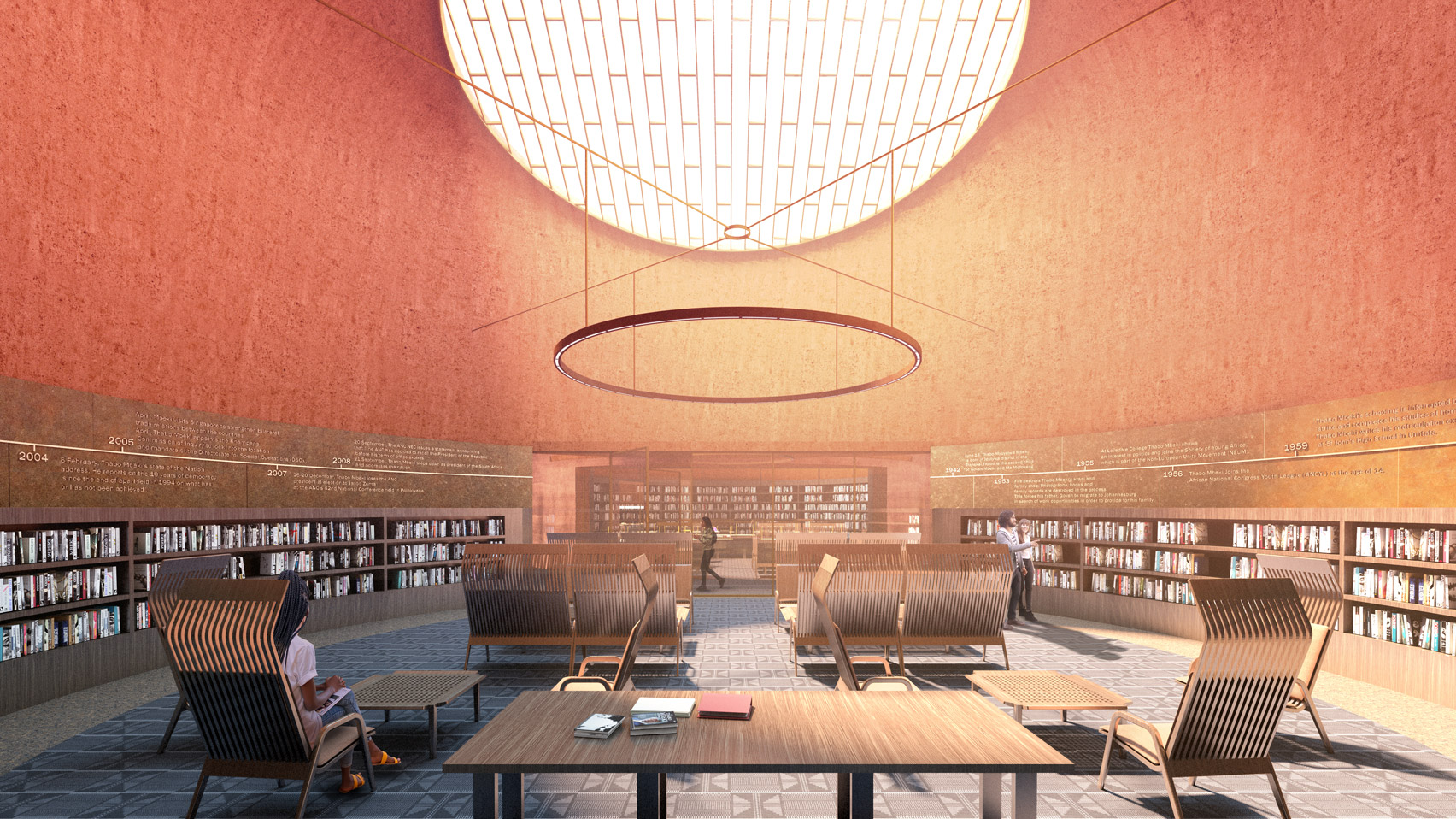
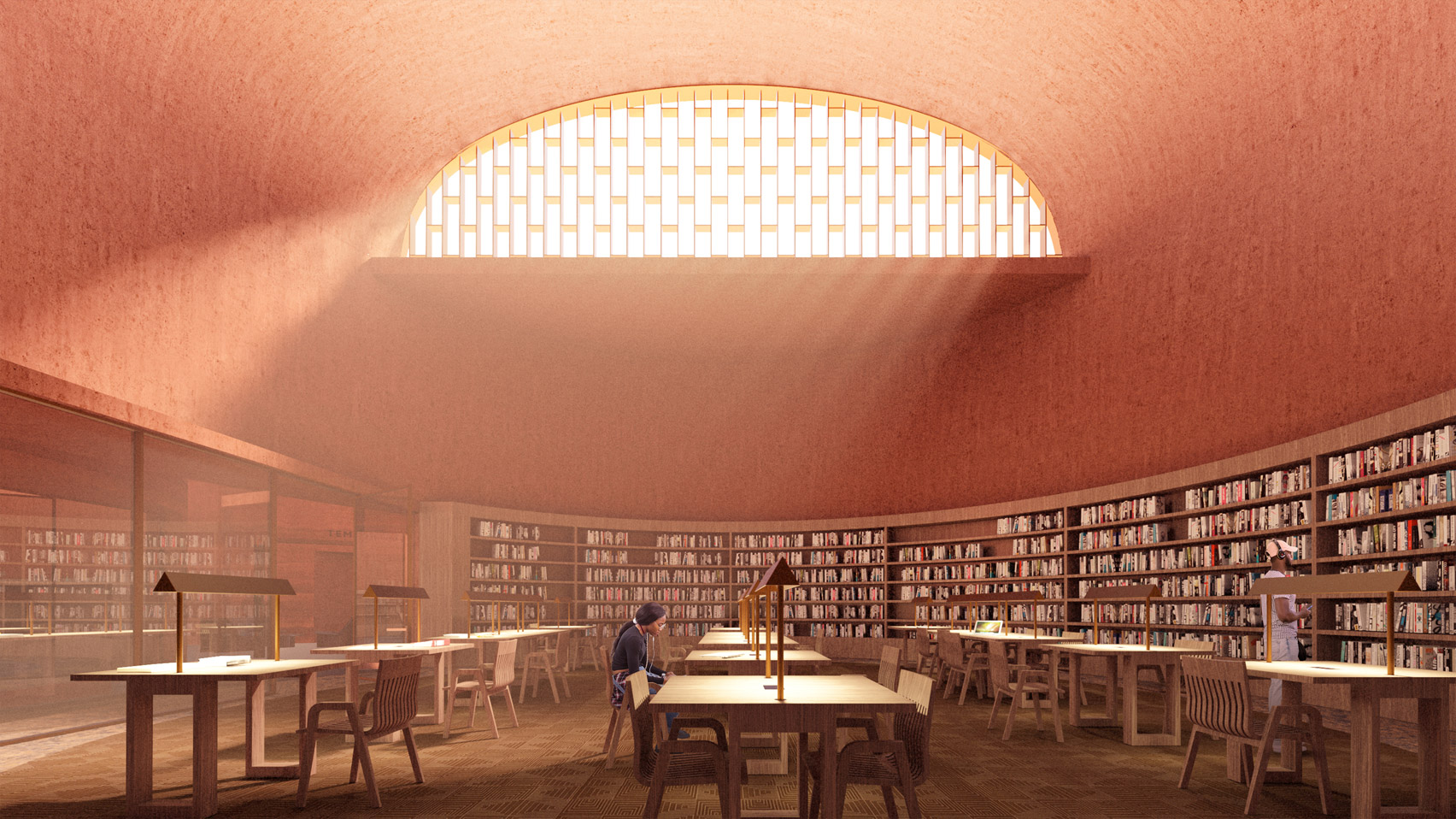
A reading room inside of Adjaye Associate's proposed Thabo Mbeki Presidential Library
A reading room will be among the library's varied facilities

Alongside the research centre and museum, the building will contain seminar rooms, a reading room, an auditorium and temporary exhibition spaces.

There will also be a cafe and shop, an area dedicated to the empowerment of women and archival spaces for the storage of artefacts belonging to historical African figures, including Mbeki.

The mud that will be used to build the rammed earth structures will all be sourced locally in an attempt to help reduce the library's embodied carbon footprint. Similarly, portions of timber cladding will be harvested from native wood species while terrazzo flooring throughout the building is to be crafted from local stone.

To minimise the building carbon emissions when in use, Adjaye Associates plans for the library to utilise rooftop photo-voltaic solar panels to generate electricity.

A geothermal heating system is also planned, and it will work in tandem with the thermal mass of the rammed earth walls to regulate the building's temperature.

Reading centre inside of Adjaye Associate's proposed Thabo Mbeki Presidential Library
Each dome will be lit by a geometric aperture at roof level

Interior details for the Thabo Mbeki Presidential Library are yet to be disclosed, though the visuals suggest the rammed earth will be exposed internally and teamed with minimal, dark wood furniture.

Each domed structure will be punctured by a unique geometric aperture at roof level, intended to create different lighting conditions and "a distinct atmosphere for each of the programs".

The domes will be connected internally by a corridor that will extend the length of the entire building, and linked to the subterranean level via a large spiral staircase on one side.

The internal corridor will be reflected externally by a large terrace that envelops the library, intended to be utilised as a public space for the community.

Adjaye Associates was founded by British-Ghanian architect Adjaye in 2000, who was the recently named the recipient of the RIBA Gold Medal for 2021. To celebrate the news, we rounded up 10 of his and his studio's most significant projects.

Elsewhere, Adjaye Associates recently revealed its proposal for the Edo Museum of West African Art in Nigeria and the Le Mémorial des Martyrs in Niger that will be a composed of a grid of 56 concrete, four-pointed-star-shaped columns.


Project credits:

Architect: Adjaye Associates
Local architect: 
MMA Design Studio
Client: Thabo Mbeki Foundation

The post Rammed-earth domes will define Adjaye Associate's Thabo Mbeki Presidential Library appeared first on Dezeen.


from Dezeen https://ift.tt/3fA1H3O

Dezeen Awards 2020 design winners to be revealed in video show today

The winners of the Dezeen Awards 2020 design categories will be announced today in the third and final show hosted by poet and broadcaster LionHeart and including a special message from Paola Antonelli. Watch the broadcast live here at 4pm GMT.

The 25-minute show will reveal the winners of the 12 design project categories before naming the winner of design project of the year.

The designer of the year and emerging designer of the year will also be named.

We'll also be announcing the winners live on Twitter:

@dezeenawards
#dezeenawards

Today's show is the third and final of three Dezeen Awards 2020 Shows that reveal all 45 Dezeen Awards 2020 winners. The architecture winners were announced on Monday 23, and interiors winners were announced yesterday, Tuesday 24 November.

Dezeen Awards is "humungous" says Paola Antonelli

In a message specially recorded for today's show, Dezeen Awards judge Paola Antonelli described the quantity of entries as "humungous".

"Welcome to the humungous design category of the 2020 Dezeen Awards," she said. "Humungous because there were dozens of entries that I, Paola Antonelli, pored over with Dozens of other jurors.

Antonelli, who is senior curator of architecture and design at MoMA in New York, explained there were entries in "lighting design, exhibition design, installations, products; made with all sorts of materials, all sorts of technologies".

"Really I had the opportunity to look at what happened in the world of design last year," she added.

Dezeen Awards 2020 design show running order

4:00pm: Dezeen Awards 2020 design show starts
4:03pm: Furniture design of the year revealed
4:04pm: Seating deaign of the year revealed
4:05pm: Lighting design of the year revealed
4:07pm: Architectural lighting design of the year revealed
4:08pm: Homeware design of the year revealed
4:09pm: Workplace design of the year revealed
4:10pm: Wearable design of the year revealed
4:12pm: Product design of the year revealed
4:13pm: Sustainable design of the year revealed
4:15pm: Graphic design of the year revealed
4:16pm: Exhibition design of the year revealed
4:18pm: Installation design of the year revealed
4:19pm: Design project of the year revealed
4:22pm: Designer of the year revealed
4:23pm: Designer of the year revealed

Winners selected by master jury

This year's interiors master jury included Organisation In Design founder Margriet Vollenburg, Rhode Island School of Design president Roseanne Samerson, South African textile designer Sindiso Khumalo, Dror Benshetrit of Studio Dror and Talenia Phua Gajardo of The Artling.

Working remotely, the judges reviewed all shortlisted projects and chose the winners using Dezeen Awards' unique trio of judging criteria that call for entries that are beautiful, innovative and beneficial.

About LionHeart

LionHeart, the host of this year's Dezeen Awards 2020 Shows, is a poet, broadcaster and architecture enthusiast. A TEDx Speaker and BBC Radio London Presenter, his poetry explores connections between the built environment and wellbeing and he has acted as the poet in residence at architecture firms including Grimshaw Architects and Squires & Partners. London-based LionHeart, whose real name is Rhael Cape, was a judge for the Dezeen Awards 2020 architecture categories.

About Dezeen Awards 2020

Dezeen Awards is our annual awards programme, now in its third year. It identifies the world's best architecture, interiors and design, as well as the studios and the individual architects and designers producing the most outstanding work.

Organised by Dezeen, the world's most popular and influential architecture and design website, Dezeen Awards is the benchmark for international design excellence and the ultimate accolade for architects and designers everywhere.

This year, more than 4,300 entries were received from over 85 countries across five continents.

To receive more information about Dezeen Awards 2021, please subscribe to our newsletter.

The post Dezeen Awards 2020 design winners to be revealed in video show today appeared first on Dezeen.


from Dezeen https://ift.tt/33gZAgb

"The heart and soul of Salone del Mobile" Manlio Armellini dies aged 83

Manlio Armellini obituary

Manlio Armellini, a tireless advocate for Italian design and one of the founding fathers of Milan's Salone del Mobile, the world's largest furniture fair, has passed away at the age of 83.

He died on November 16, 2020, after dedicating more than 40 years of his life to the furniture industry.

Armellini was involved in Salone from its inaugural edition in 1961 until his last breath, earning the fair Europe's oldest design prize, the Compasso d'Oro, for the "promotion of Italian design."

He also secured the country's highest honour, the Order of Merit of the Italian Republic, for himself.

Since becoming the fair's secretary-general in 1974, Armellini presided over an increase in visitor numbers from 67,000 to 348,000 a year and a growth in exhibition space from 97,000 to 222,000 square metres, making it the largest design fair in the world.

"With Manlio's passing, we have lost a friend whose tenacity and skill enable the Salone del Mobile to achieve successes recognised the world over," the fair's president Claudio Luti said in a statement.

"He initiated cultural projects that rubbed off on the city of Milan, he was behind and believed in the Salone Satellite project and took on board the many changes that occurred over time, unfailingly coming up with solutions and innovations to safeguard and bolster the Salone brand, which was also his home and his life, with his wife Armida by his side."

In an article for Fuorisalone, Italian writer Laura Lazzaroni described him as "the one who most of all contributed to making this fair what it is now".

"If today we have a design week envied by the whole world, an industrial sector that exports almost half of its turnover, it is undoubtedly also thanks to Manlio Armellini," she wrote.

Armellini showed a lifelong dedication to the world of design

Armellini was born on 9 October 1937 in the central Italian town of Ascoli Piceno into a family with strong ties to the country's furniture industry.

At the time, his father Tito Armellini was the director of FederlegnoArredo, an association representing the Italian wood and furniture industry, as well as the founder of the industry's longest-running financial monthly, L'industria del legno e del Mobile.

Armellini followed in his footsteps, initially working at FederlegnoArredo as well as starting his journalistic career by editing his father's publication from 1949 until 2000.

After co-founding the Salone del Mobile fair in 1961, he worked steadfastly on broadening its international appeal.

In 1965, he expanded it to include a surrounding programme of more than 40 cultural events and initiatives as well as a more robust commercial offering.

He was "the heart and soul of Salone del Mobile"

Carrying on his father's publishing legacy, Armellini also took on the role of editor at the Rassegna modi di abitare oggi magazine from 1969 to 1979.

He was the secretary-general of Salone's organiser Cosmit from 1974 before going on to become its CEO, responsible for putting on the main fair and all of its smaller subsidiaries, including Salone Satellite which showcases work by young, up-and-coming designers.

Armellini's lifelong dedication to the world of design saw him become a part of a slew of industry bodies and initiatives, from the Italian Design Association (ADI) to the general council of the Italian Forestry Association (AFI).

He was a member of the board responsible for planning the Triennale Design Museum in Milan and chaired the consulting committee for setting up the Fieramilano fairground in Rho in 2005, which would become Salone's new home.

In a statement, Cosmit described him as "the heart and soul of Salone del Mobile".

"Let us close with a wish," Lazzaroni added, "that the long-awaited next edition of the show will be dedicated to him."

The post "The heart and soul of Salone del Mobile" Manlio Armellini dies aged 83 appeared first on Dezeen.


from Dezeen https://ift.tt/2V1z6uw

Tempo sideboard by Estudio Andreu for Andreu World

Tempo sideboard by Estudio Andreu for Andreu World

Dezeen Showroom: Andreu World's in-house design team has created the Tempo sideboard collection, which is suited to both work and home environments.

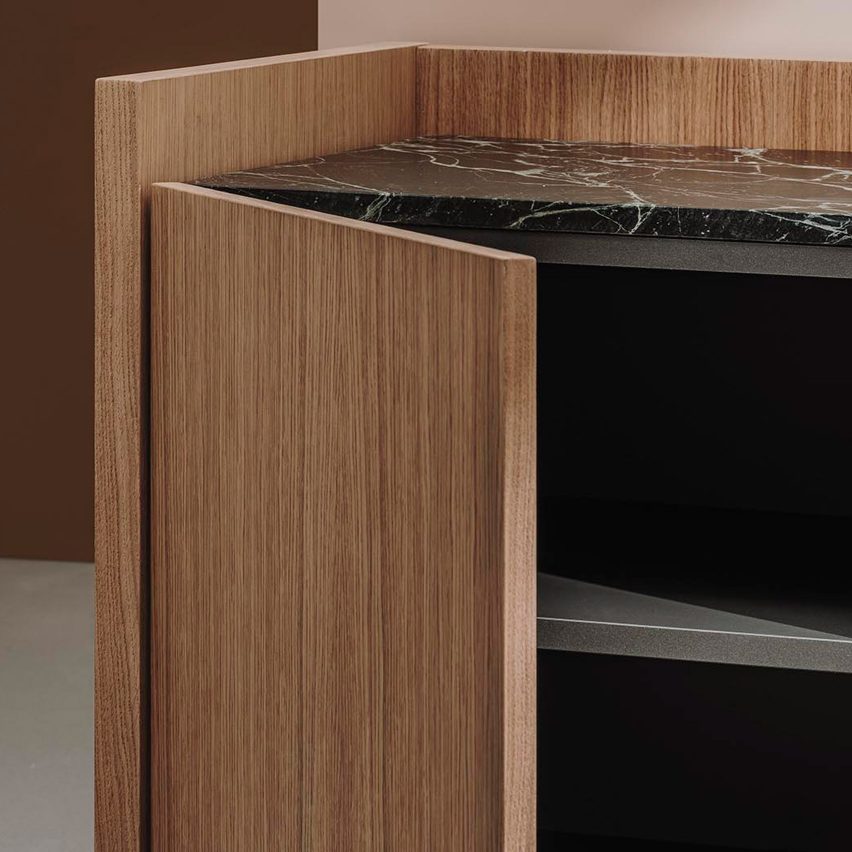
The Tempo credenza series by Estudio Andreu is available with an oak, walnut, lacquer or laminated finish, with a choice of a stone or marble top surface.

Users can choose between two bases for the sideboard: slim sheet metal legs or wooden feet. Alternatively, the item comes in a wall-hung version.

Each piece has handle-free doors and drawers to create a "clean" design to match a contemporary room aesthetic.

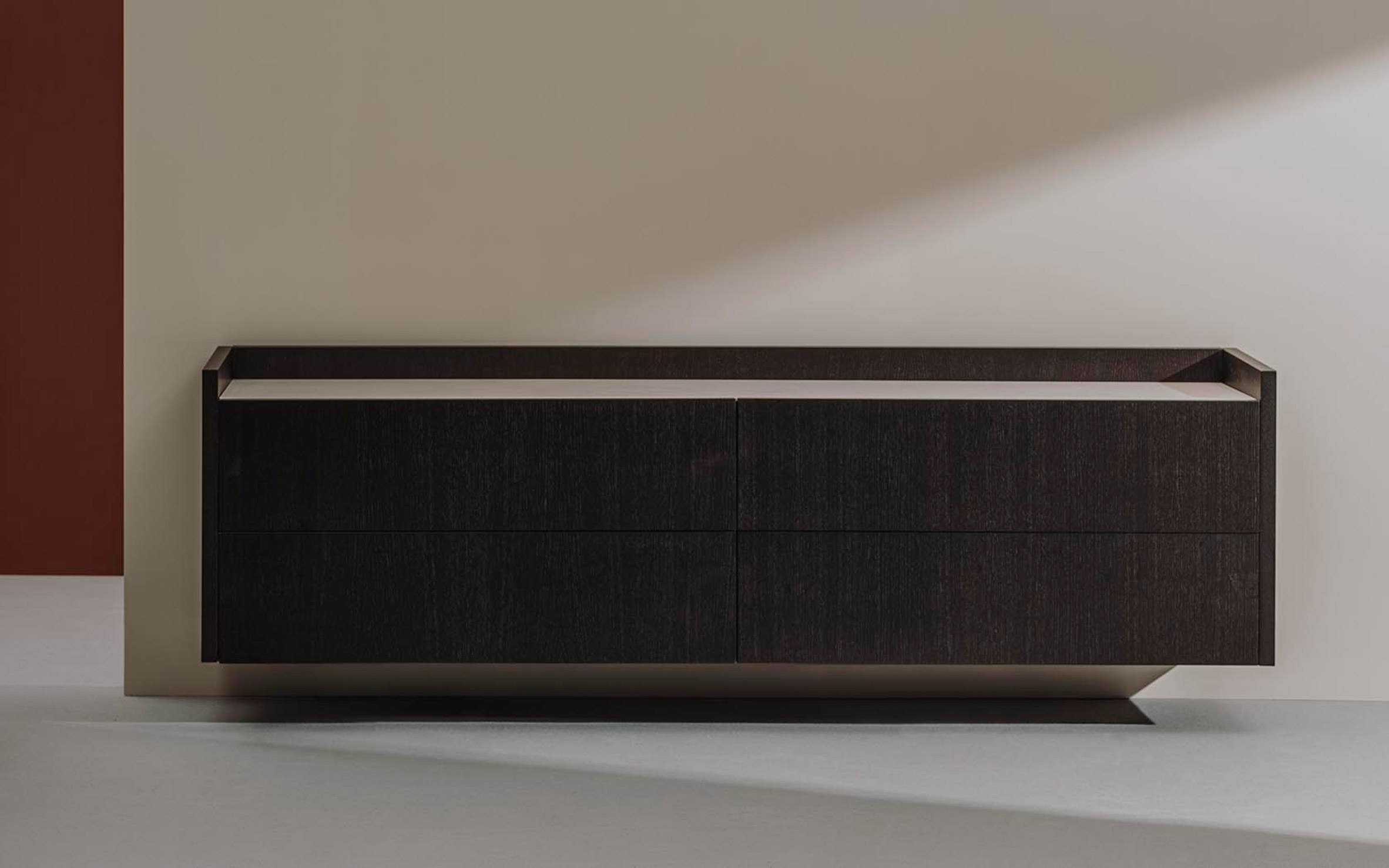
Tempo sideboard wall version in black by Estudio Andreu for Andreu World
The Tempo credenza by Estudio Andreu is also available as a wall-hung version

According to the brand, the Tempo credenza is suitable for workspaces and meeting rooms, and can also be used to separate public or private spaces thanks to "its ability to organise the environment".

The sideboard can be bought with a combination of doors and drawers or doors alone. The design comes in a larger version with either six doors, or four doors and a row of three drawers.

The smaller size has five doors or a combination of four doors and two slimmer drawers.

Product: Tempo credenza
Brand: Andreu World
Contact address: info@andreuworld.com

About Dezeen Showroom: Dezeen Showroom offers an affordable space for brands to launch new products and showcase their designers and projects to Dezeen’s huge global audience. For more details email showroom@dezeen.com.

The post Tempo sideboard by Estudio Andreu for Andreu World appeared first on Dezeen.


from Dezeen https://ift.tt/39dp4id