Wednesday, 25 November 2020

Formafantasma and Shahar Livne Design named design studios of the year at Dezeen Awards 2020

Design studio Formafantasma has been named studio of the year while material designer Shahar Livne has won the title of emerging designer of the year at Dezeen Awards 2020.

Based in Amsterdam, Formafantasma was selected from a shortlist of five studios, which was determined by our jury of 25 leading figures from the world of design.

Shahar Livne Design competed with four other studios that were on the shortlist.

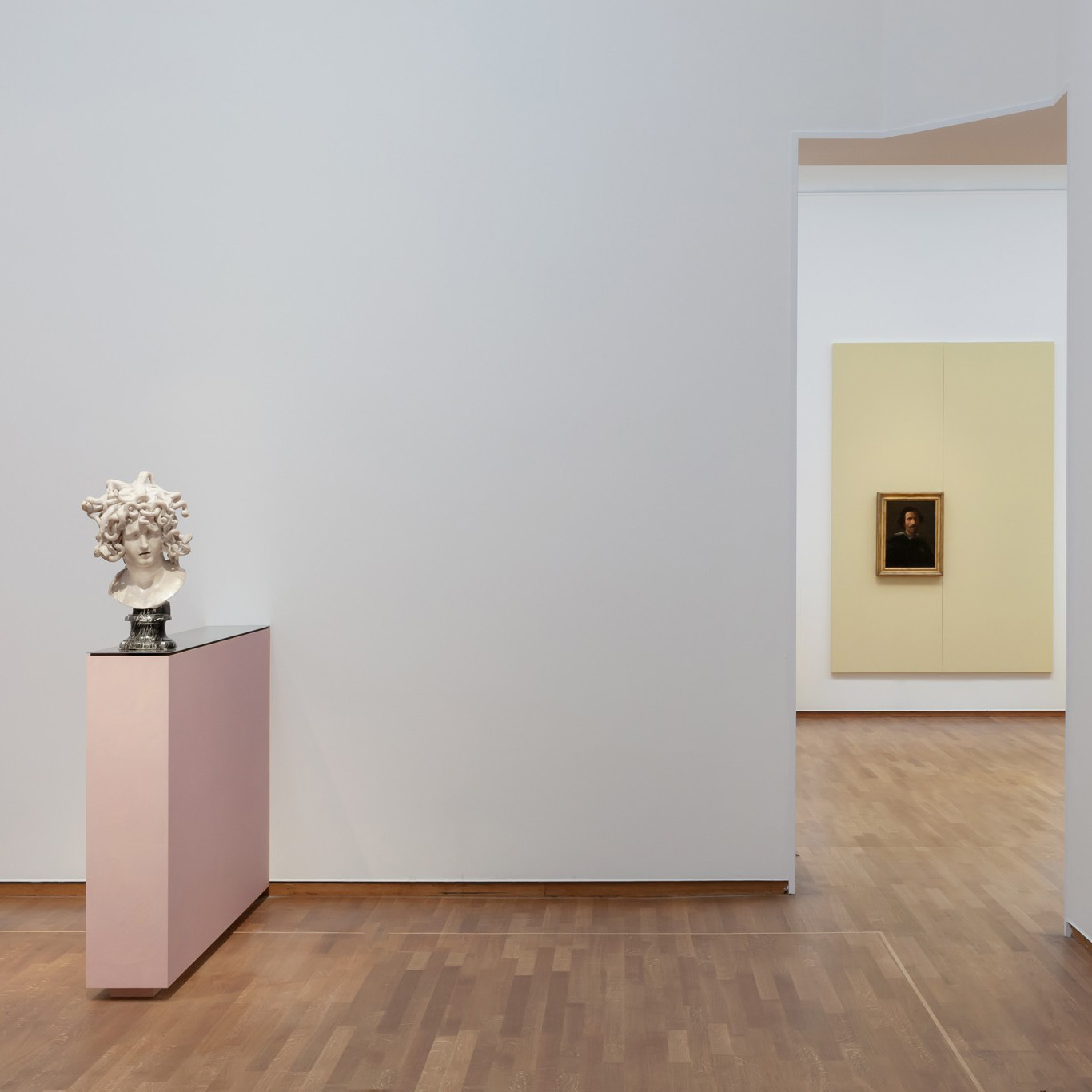
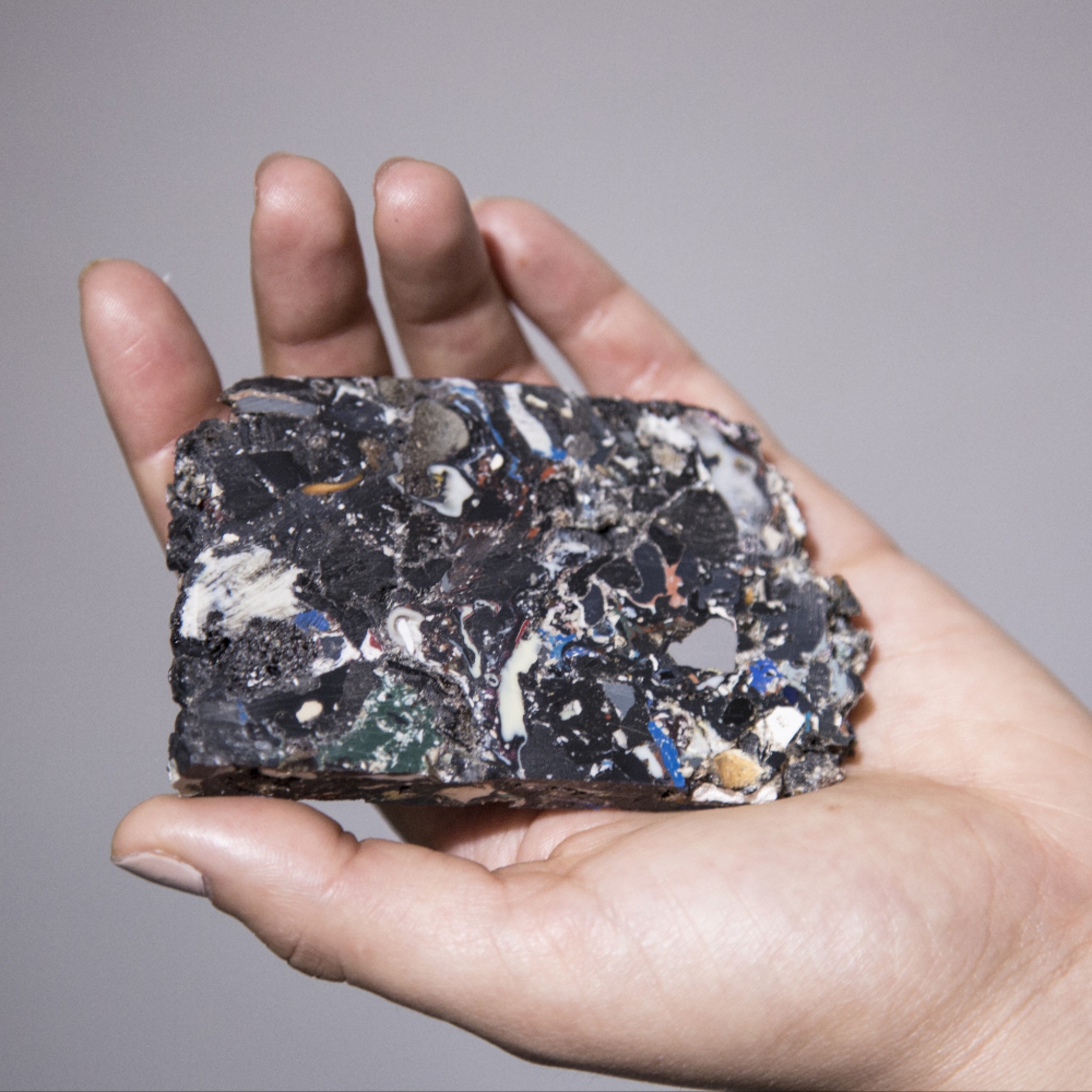
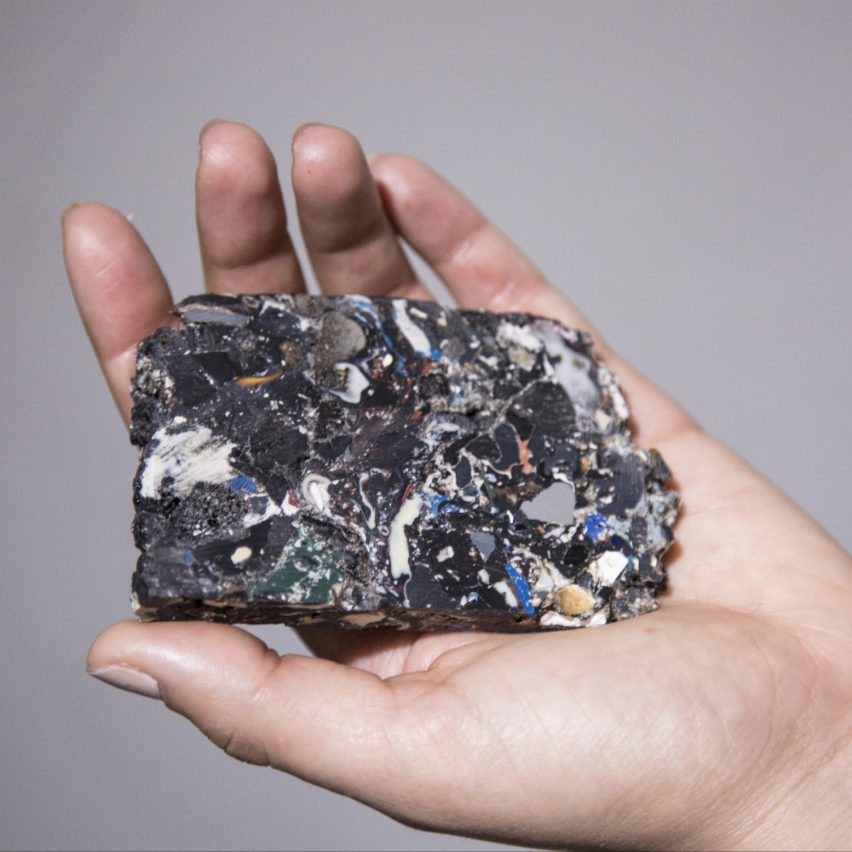
Top: Shahar Livne's project Metamorphism. Above: Exhibition at the Rijksmuseum by Formafantasma. Photo by Eddo Hartmann.

The winning studios were revealed at the Dezeen Awards 2020 design show, which was streamed on Dezeen on 25 November.

The architecture and interiors studio category winners were be revealed on 23 November and 24 November.

Formafantasma is named designer of the year

The design jury, which consisted of Margriet Vollenberg, Rosanne Somerson, Talenia Phua GajardoSindiso Khumalo and designer Dror Benshetrit, chose Formafantasma as this year's designer of the year.

They said that this studio is "a highly articulate studio whose intellectual and ethical ambitions are the driving force behind their truly sophisticated and beautiful work."

The judges were also impressed with "how the studio always delivers and keeps on surprising."

Formafantasma was founded by Andrea Trimarchi and Simone Farresin in 2009. Their projects include a research-focused exhibition at the Serpentine Sackler Gallery and a recyclable display for the Rijksmuseum in Amsterdam.

Shahar Livne turned discarded plastic into a clay-like material

The studios were chosen by this year's architecture master jury, which virtually met on 4 November. Their selections were based on evidence of strong vision and achievement, business success, client satisfaction and positive impact.

Shahar Livne Design named emerging designer of the year

Based in Eindhoven, Shahar Livne develops conceptual materials in an effort to find new and sustainable design practices.

Her projects include bio-leather shoes made from slaughterhouse waste, and the creation of lithoplast, a precious material of the future.

The judges said that "this studio stretches the limits with very powerful work" and that there is a "sense of exploration in every project."

Shahar Livne's work is a "great example of how design is about designing the future, designing how we live and how we can use our voices – to communicate to others."

The post Formafantasma and Shahar Livne Design named design studios of the year at Dezeen Awards 2020 appeared first on Dezeen.


from Dezeen https://ift.tt/3pYi7HL

Catch: The HIV Detector wins Dezeen Awards 2020 design project of the year

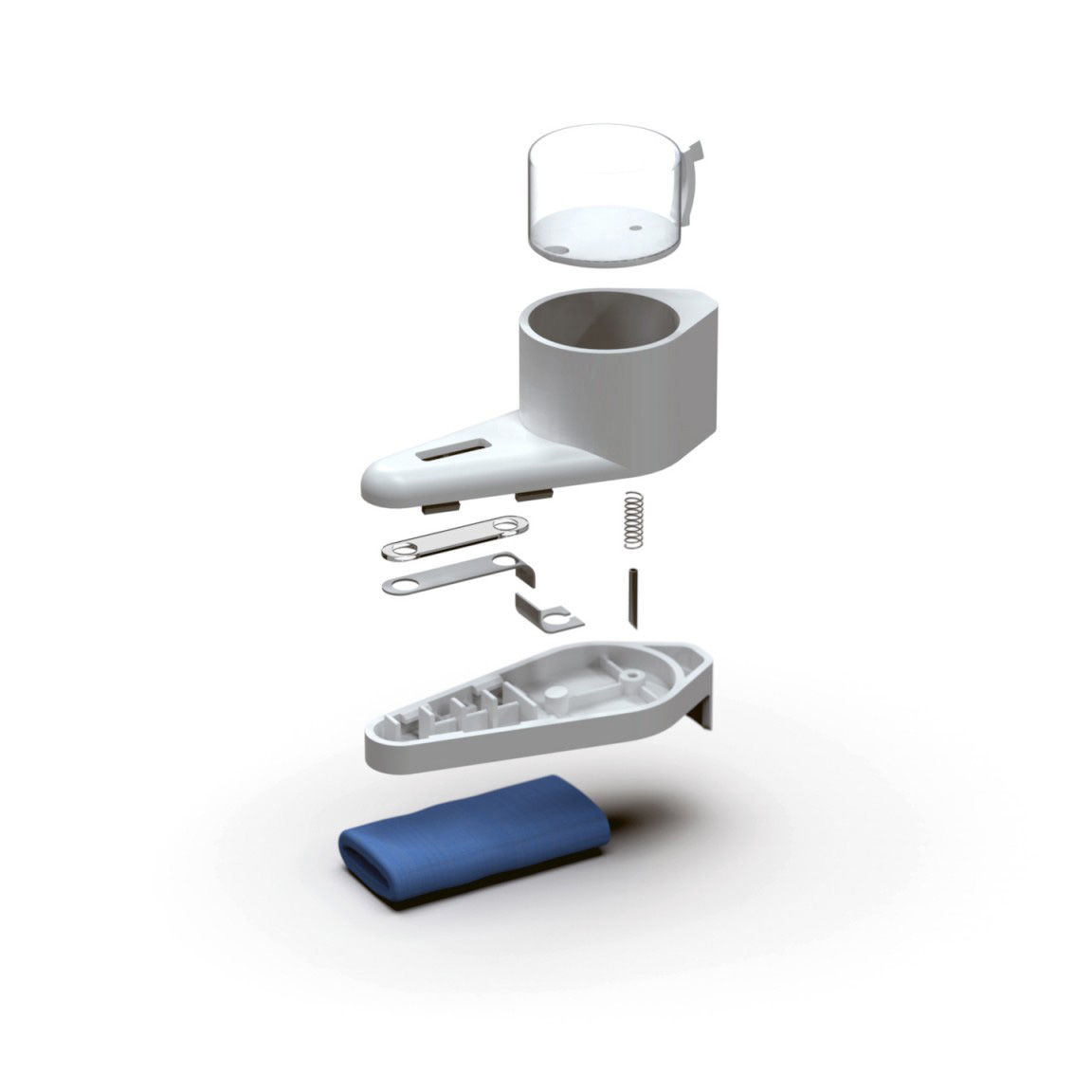
A compact, affordable device for detecting HIV by London-based designer Hans Ramzan has won the Dezeen Awards 2020 design project of the year.

Called Catch: The HIV Detector, the device "is cheap and easy to mass-produce" said Margriet Vollenburg, head of the design master jury.

It was named winner of design project of the year in the Dezeen Awards 2020 design show, where it also won in the product design of the year category.

There were 1,240 entries for the design categories at this year's Dezeen Awards, which is sponsored by Allermuir, V1, LSA, Hem and Grohe. Of these, 62 were shortlisted by our jury of 25 leading figures from the world of design.

This week, the Dezeen Awards 2020 architecture winners were revealed on Monday 23 and interiors winners on Tuesday 24 November.

To find out about Dezeen Awards 2021, subscribe to our newsletter.

Affordable device for detecting HIV
An affordable device for detecting HIV was named design project of the year

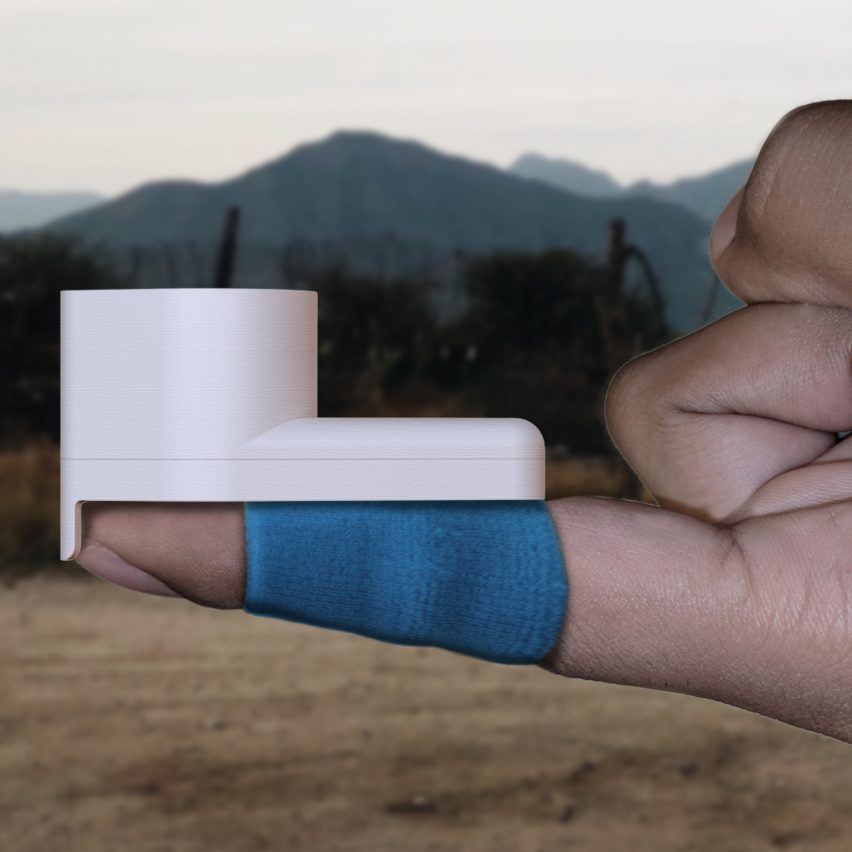
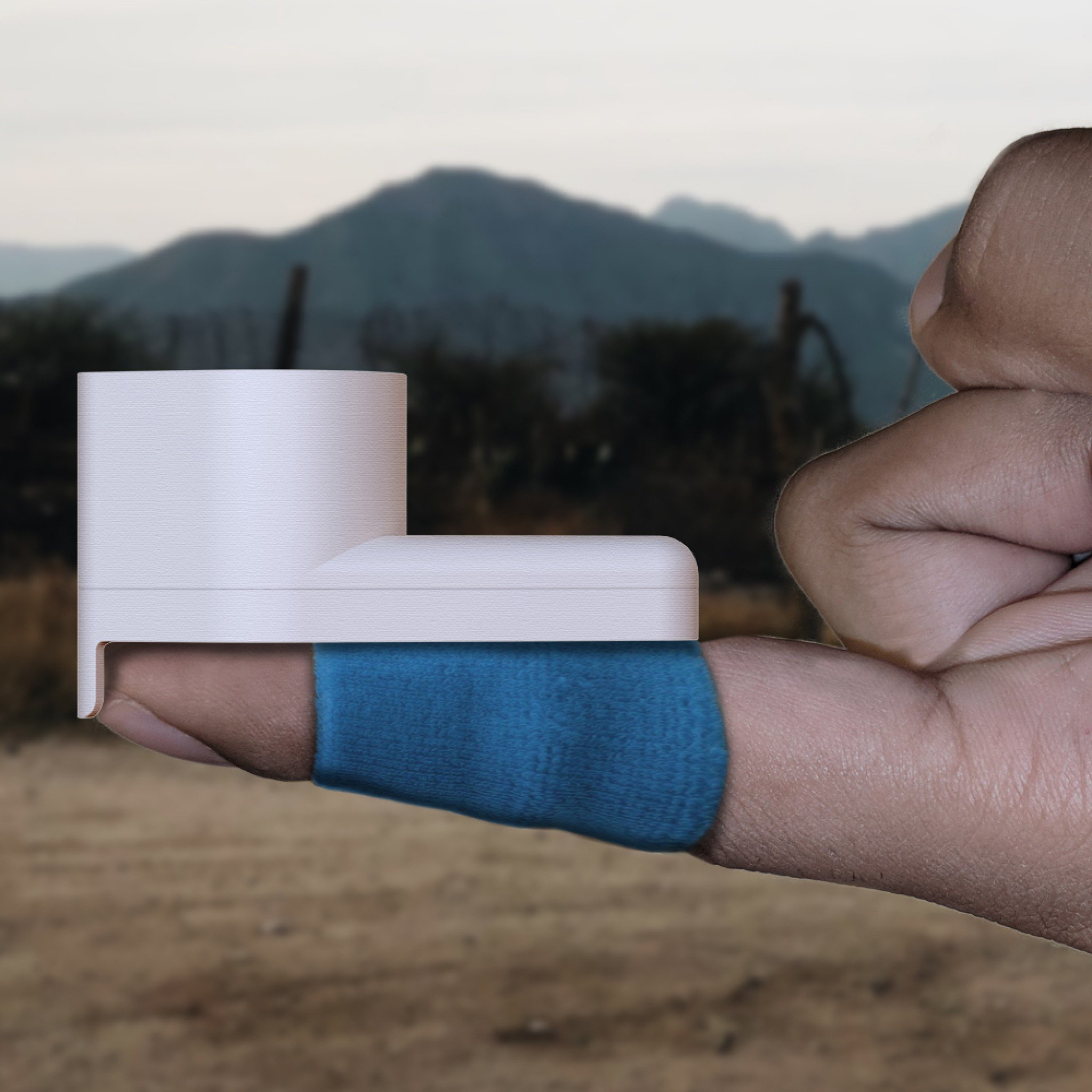
Catch: HIV Detector is a pocket-sized device that encourages people in developing countries, who have limited access to healthcare, to test themselves for HIV at home.

By allowing users to test for HIV before it develops into AIDS, this device could save millions of lives each year.

HIV detecter
It was named the winner from 1,240 entries

"Catch is very simple in its nature," said the judges on this year's design master jury, which consisted of Dror Benshetrit, Margriet Vollenberg, Sindiso Khumalo, Rosanne Somerson and Talenia Phua Gajardo.

"It is extremely intuitive, can be used by anyone and can be used by anyone," they added. "It's designed to do all the thinking for the user."

Catch was selected out of the 12 winning projects in the design categories. "It's cheap, easy to mass-produce and a powerful took in tackling HIV and AIDS in countries with limited access to healthcare," said Vollenberg.

The post Catch: The HIV Detector wins Dezeen Awards 2020 design project of the year appeared first on Dezeen.


from Dezeen https://ift.tt/2HBdUbP

Dezeen Awards 2020 design project winners revealed

Plycelain by Yuting Chang

The 12 winning design projects for Dezeen Awards 2020 have been revealed. Winners include a pocket-sized HIV home testing kit, an installation designed entirely from seaweed and postage stamps that warn of the impact of climate change.  

Other winners announced in the Dezeen Awards 2020 design show hosted by LionHeart include a furniture range made from local discarded timber, lighting for an underwater restaurant in Norway and a body-movement recognition system for people with disabilities.

Catch: The HIV Detector by Hans Ramzan was named overall design project of the year.

The design winners were decided by a master jury consisting of Netherlands-based Margriet Vollenburg, Rhode Island School of Design president Roseanne Samerson, South African designer Sindiso Khumalo, Dror Benshetrit of Studio Dror and Talenia Phua Gajardo of The Artling.

There were 1,240 entries for the architecture categories at this year's Dezeen Awards. Of these, 62 were shortlisted by our jury of 25 leading figures from the world of architecture.

This week, the Dezeen Awards 2020 architecture winners were revealed on Monday 23 and interiors winners on Tuesday 24 November.

To find out about Dezeen Awards 2021, subscribe to our newsletter.

See the winning design projects on the Dezeen Awards website or read on below:
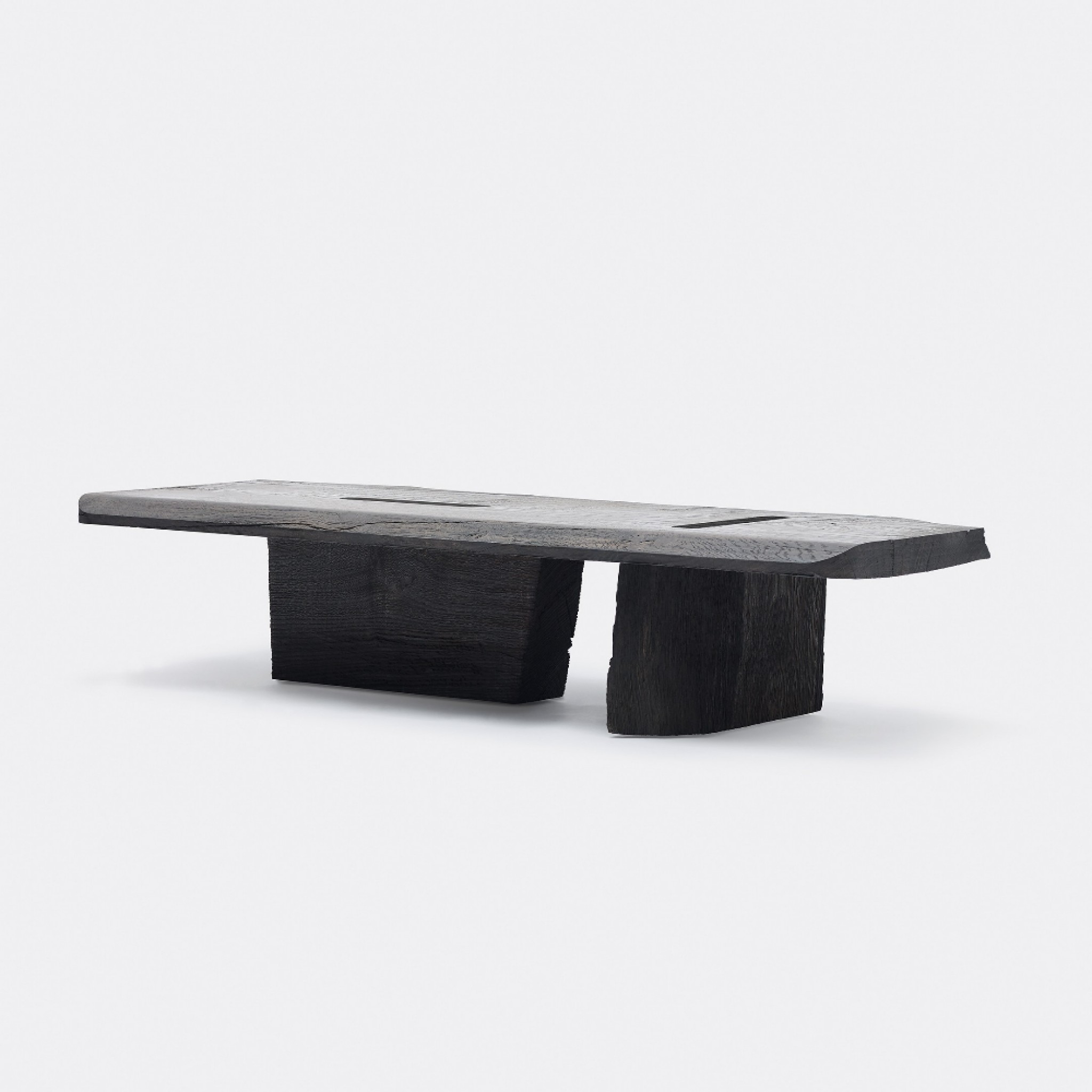
Furniture design of the year:
Essential by Viewport Studio

Essential is a furniture range that was sourced, developed and manufactured from discarded timber within a 10-mile radius of its production location.

London and Singapore-based Viewport Studio aimed to reduce the energy required to produce domestic furniture when designing this series of tables, which are made from discarded timber. The judges said that the project was "refreshing, simple and respectful".

"The fact that discarded pieces of timber are part of the core design is really interesting and also means that every piece is unique," they added. 
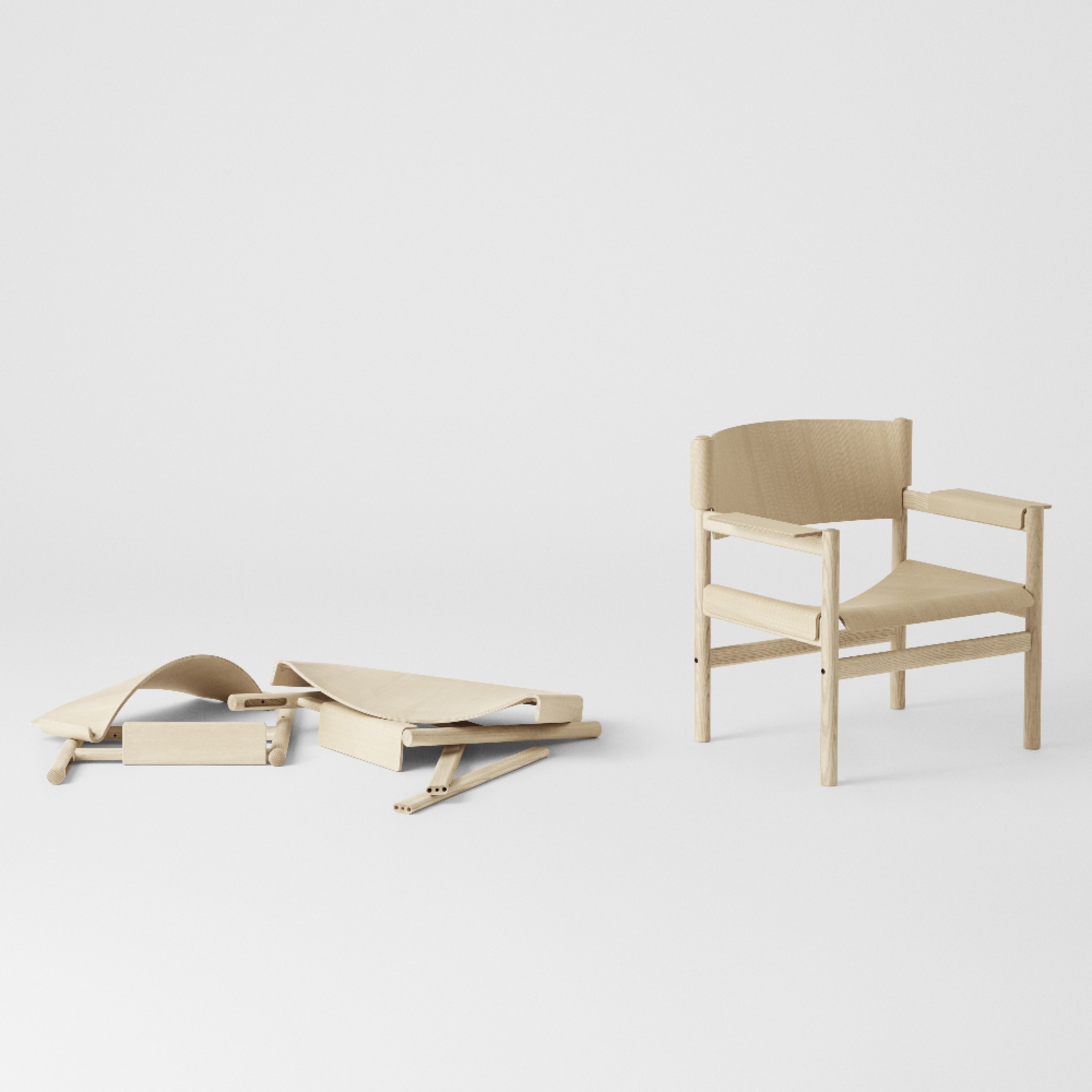

Seating design of the year:
Soft Lounge Chair by Thomas Bentzen for TAKT

The Soft Lounge Chair, designed by Thomas Bentzen for TAKT has a high level of craftsmanship which ensures a high-tactile quality. The whole system was designed sustainably and was awarded with the FSC and EU eco-label.

All components are available for replacement, and at the end of its lifecycle, it is easy to disassemble for recycling.

The design master jury said the Soft Lounge Chair "is a beautifully detailed project with a soft, neutral palette. It also comes in a flat-pack, which makes this chair a winner."

Highly commended: Bold Stool by Ming Design Studio
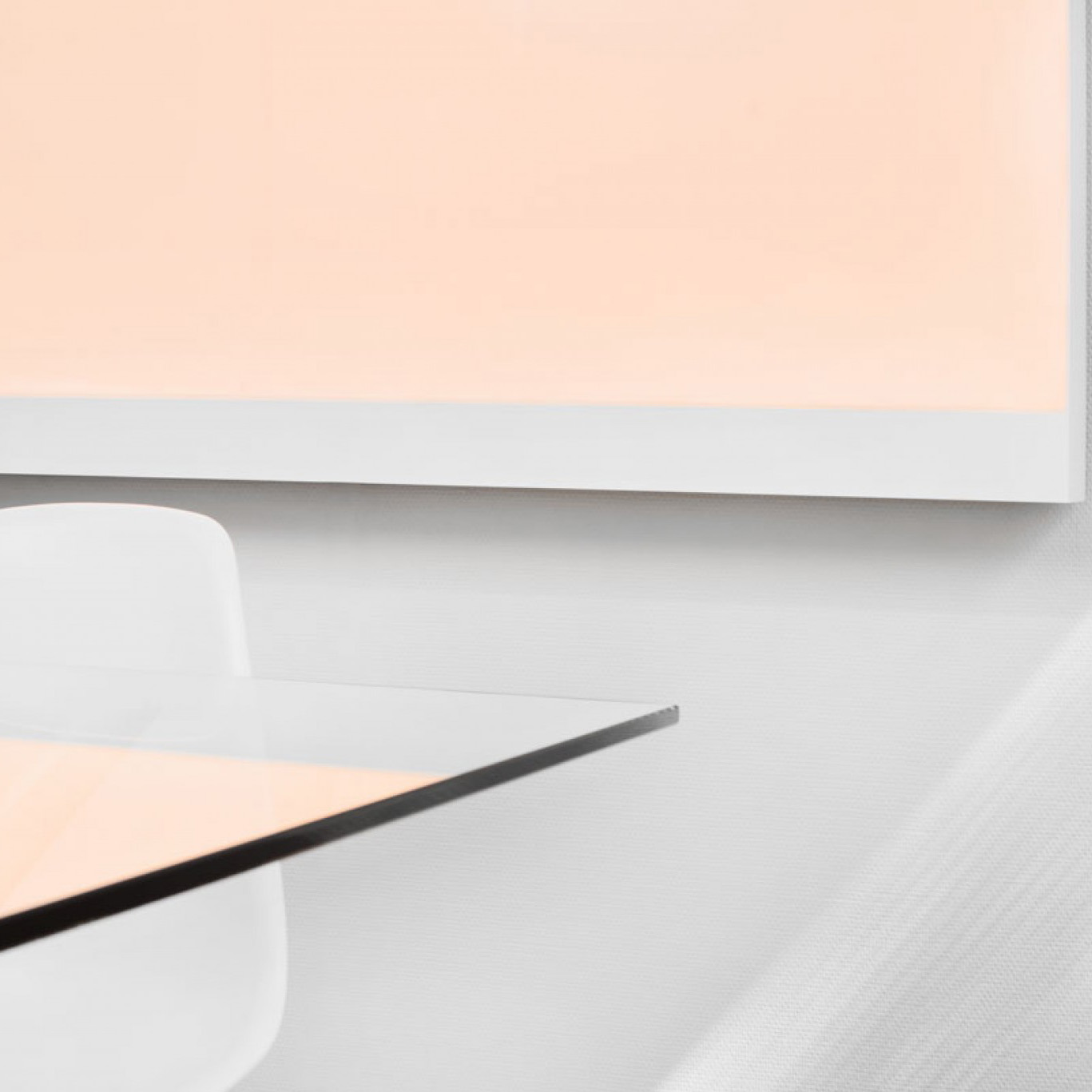

Lighting design of the year:
Light Cognitive by Light Cognitive

Finnish brand Light Cognitive created a lighting feature that mimics natural light through artificial window panes. The studio aimed to recreate natural light in indoor spaces, using artificial windows and light panels.

The company designed horizon and sky luminaires that recreate a sense of openness and connection to nature, which are adaptable to any space.

"This project addresses the importance of light in our lives," said design head judge Margriet Vollenburg.

"It is not so much about the form and shape, but more about human reactions and interventions within a space. It's about the light, not the lamp itself." 

Architectural lighting design of the year:
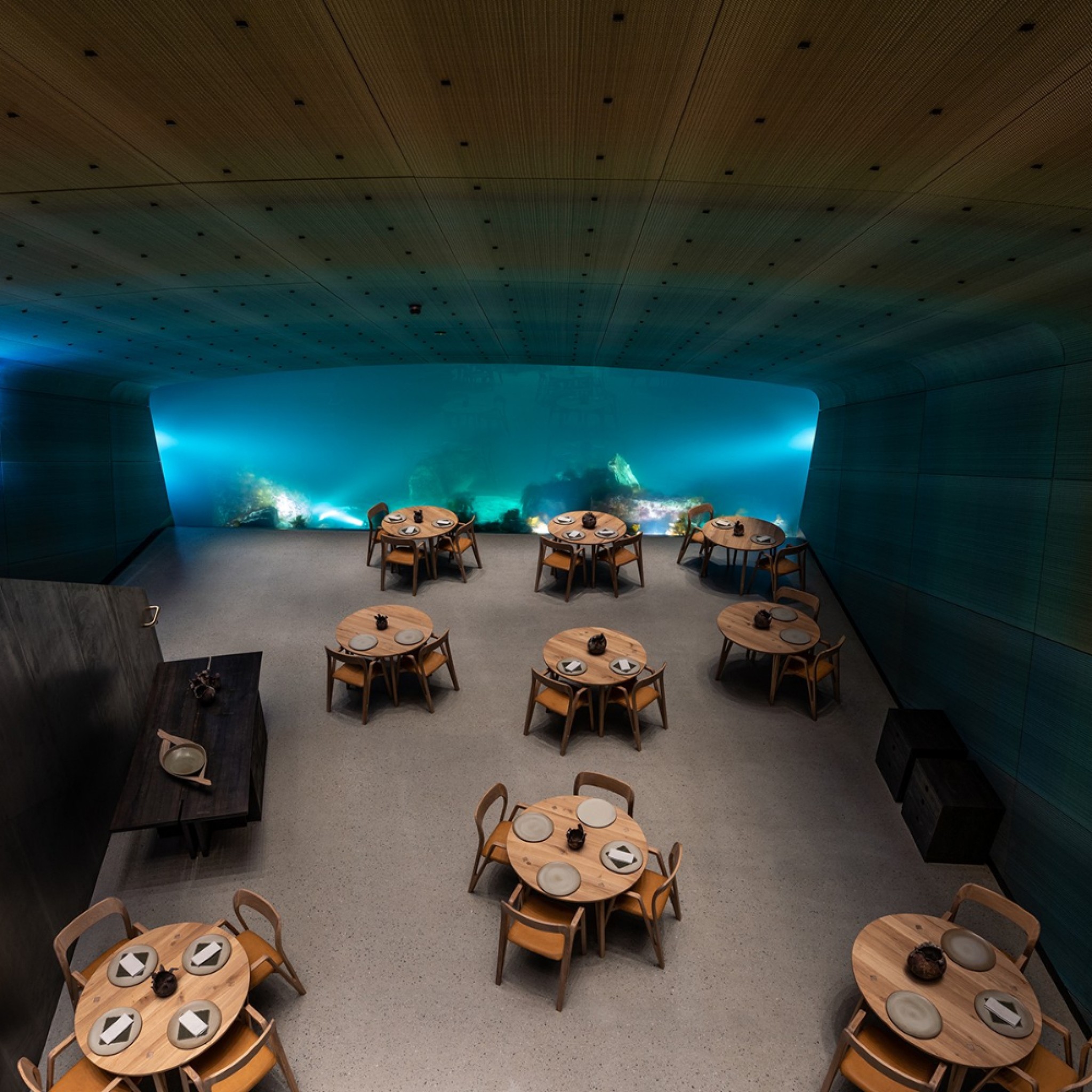
Under by Light Bureau

Light Bureau created the architectural lighting for a restaurant that has been partially submerged in southern Norway.

The design's coarse concrete structure makes it easy for mussels to cling to its surface, acting as an artificial reef, whilst unique subsea lighting scenarios attract marine life, which helps rinse the sea water and increase biodiversity.

The judges said that the project "creates a magical experience for visitors".

"It's hard to think about the impact of underground light, not to mention the complications of making this project work… but the idea of factoring in the seascape, feels like a real collaboration with nature," they added. 

Homeware design of the year:
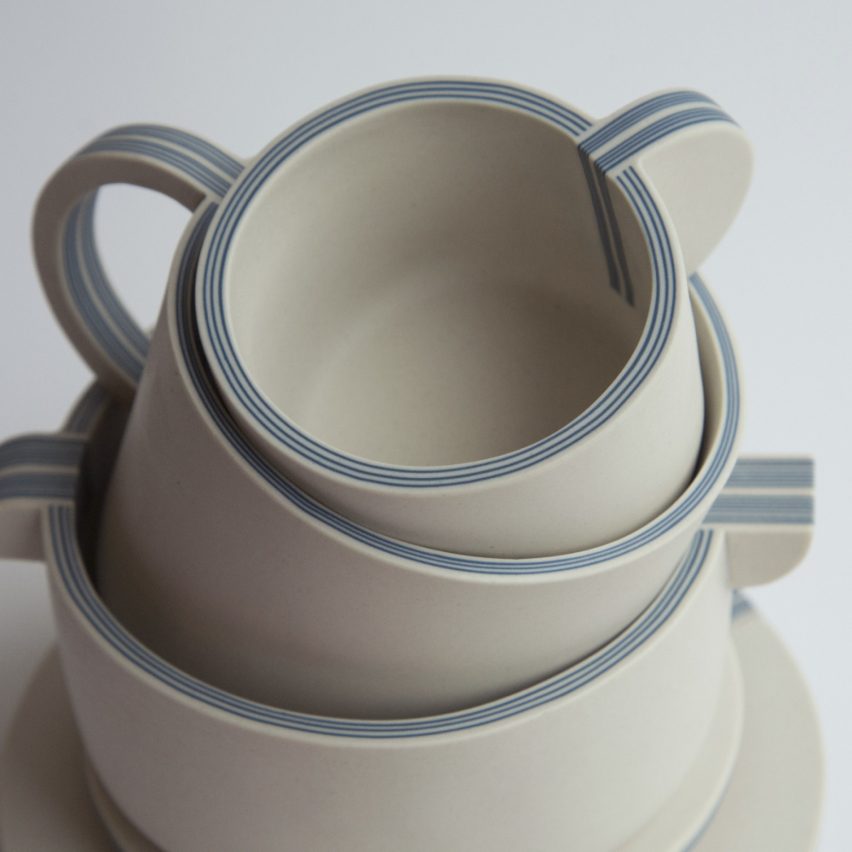
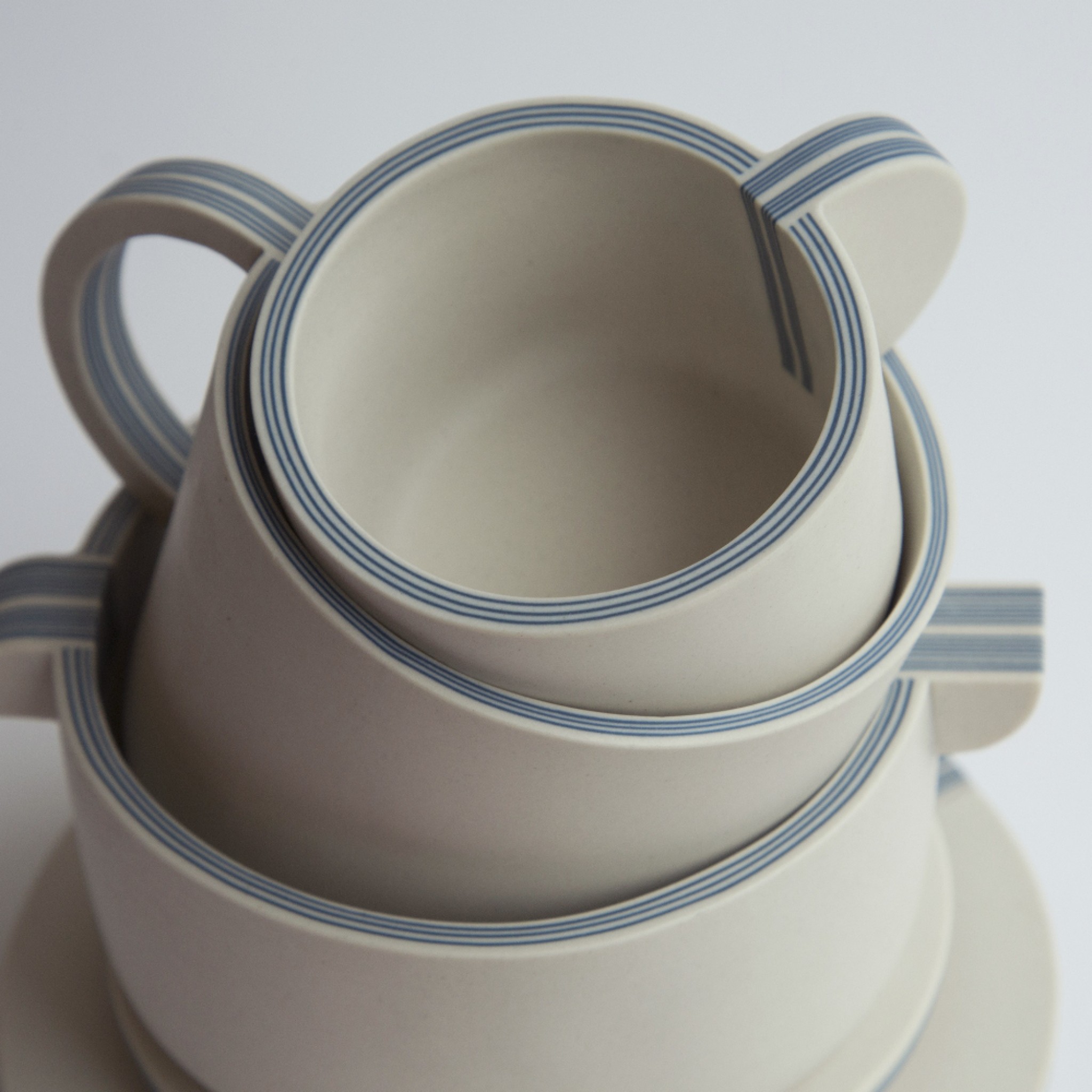
Plycelain by Yuting Chang

Taiwanese designer Yuting Chang created a ceramics collection that wears its traditional blue adornments not on the outside, but layered internally.

The delicate linework, which decorates the otherwise minimal, matte cream tableware, is built up by slip casting porcelain in alternating colours within a mould to create up to 29 layers in one piece.

The judges commented that this project "is a very unusual idea that shows innovative craftsmanship, timelessness, and the exploration of new techniques with a high aesthetic value".

Highly commended: Deepak by Katsuri Bolatia for Jaipur Rugs Company

Workplace design of the year:
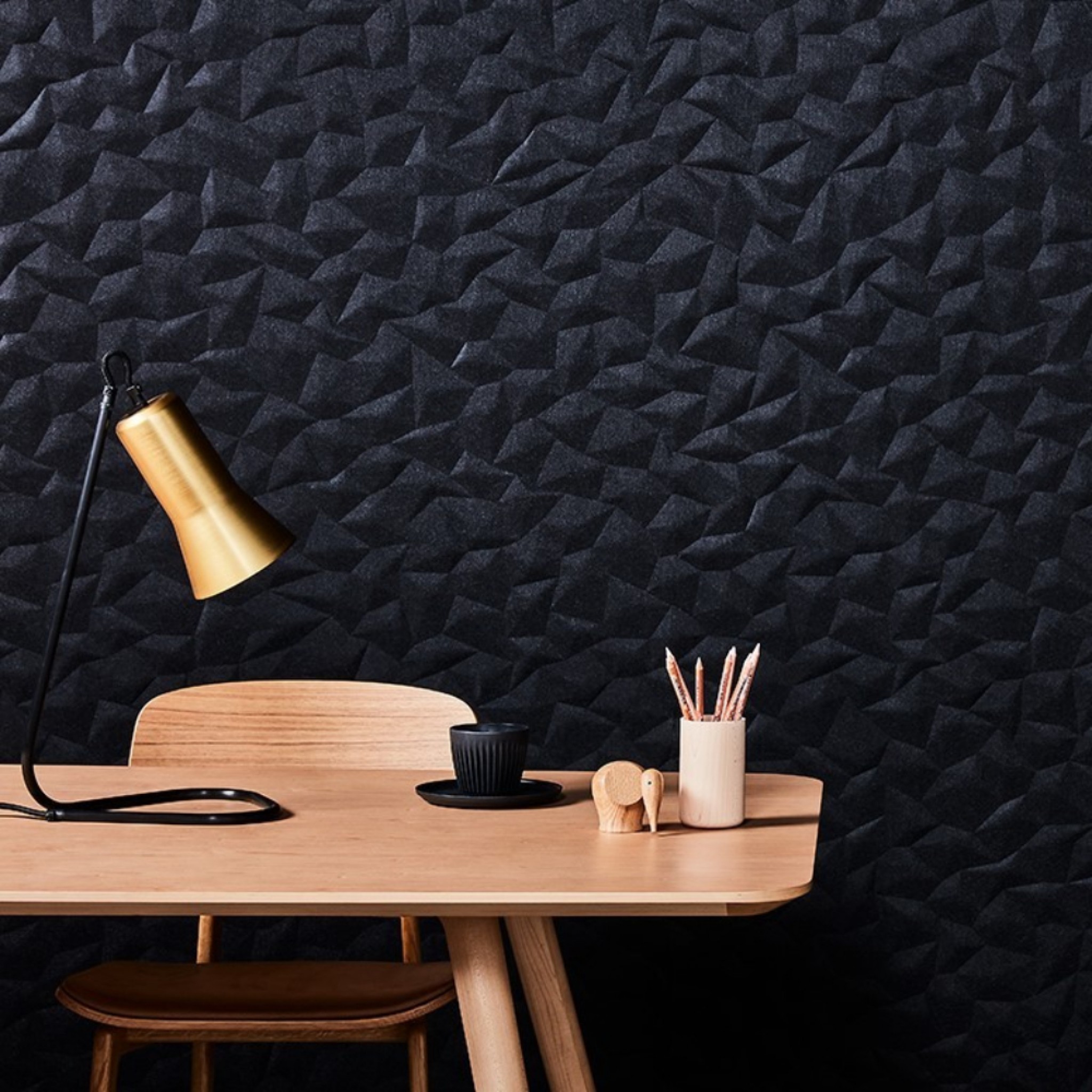
Zen and Ion Wall Panels by Woven Image

Zen and Ion is a series of tactile three-dimensional acoustic wall panels that was specially designed to provide a floor-to-ceiling acoustic solutions for commercial office interiors. The tactile wall panels reference the clean-lined, minimal aesthetic long-associated with Japan.

The judges said they liked "the way that the acoustics and the aesthetics were combined". 

They added, "in this instance, there was an attempt to define the space in sculptural terms and also give the product tactility."

Wearable design of the year:
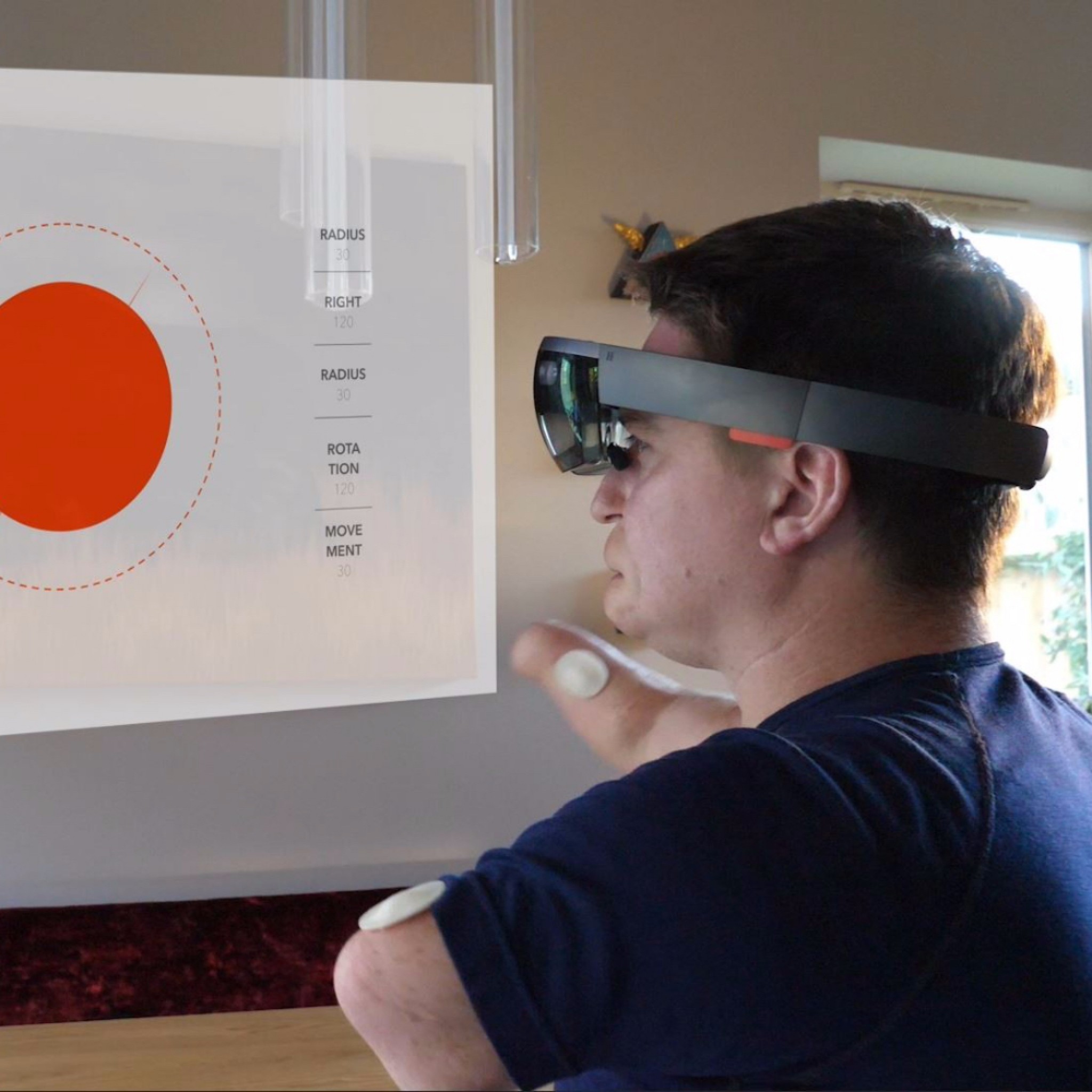
Dots by Xiaohui Wang, Valentin Weilun Gong and Lan Xiao

Three graduate designers Xiaohui Wang, Valentin Weilun Gong and Lan Xiao developed a body movement-recognition system that enables amputees and people with disabilities to use gesture-controlled smart devices more effectively.

The two-point system is able to perform the four basic manipulations in 3D interfaces: selection, positioning, scaling and rotation.

Dots would act as an add-on system to devices that use gesture-recognition. It uses an application programming interface (API) – software that allows two applications to talk to each other – to connect with a particular device and act as a controller for it.

The design master jury found this project inspirational, stating "to give someone with disability more ability and flexibility is something we should definitely be seeing far more of in design". 

Product design of the year:
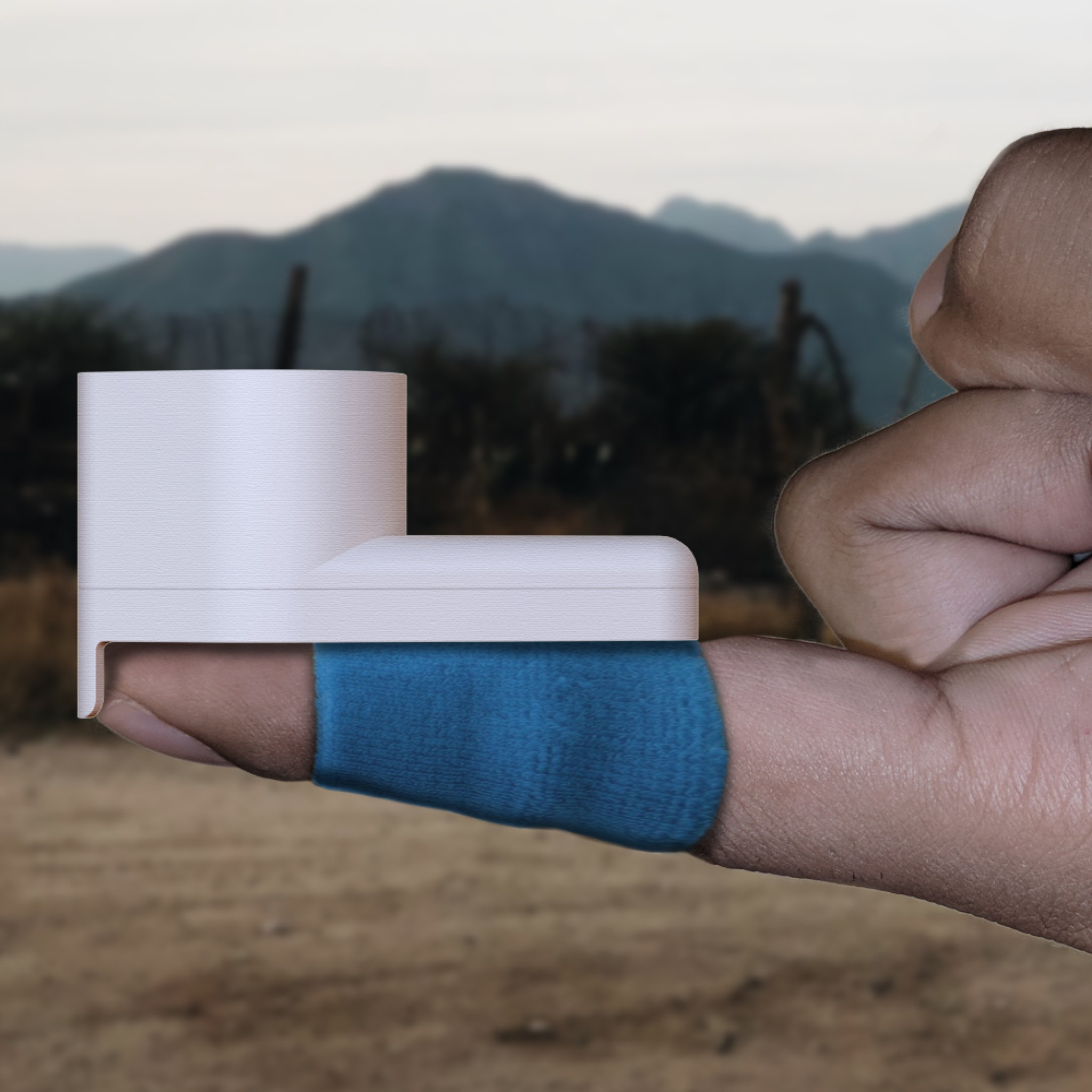
CATCH: The HIV Detector by Hans Ramzan

British product designer Hans Ramzan created a pocket-sized device that enables people to test themselves for HIV from their own home.

Costing just £4 to produce, the product was injection moulded from recycled plastic – a composite of recycled polyethylene terephthalate (PET) water bottles and regular PET, and can be easily mass produced.

This is a low-cost, simple device that can save lives," said head judge of the design master jury Margriet Vollenburg.

"It is refreshing to see such a simple and economical design offering the potential to save millions of people, particularly in regions with limited healthcare options."

Highly commended: Walking Wheelchair by Suzanne Brewer Architects

Sustainable design of the year:
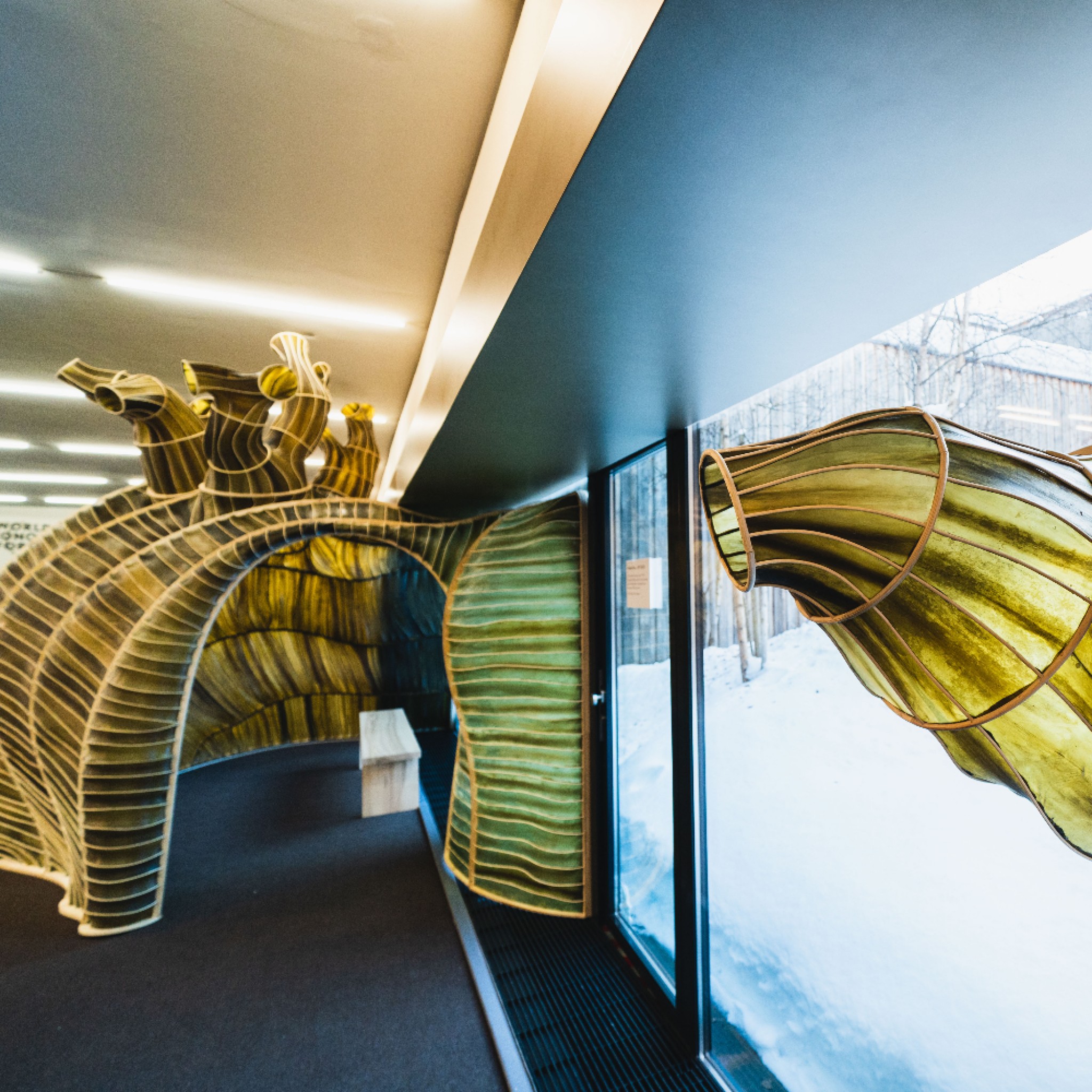
The Department of Seaweed Installation and Workshops by Julia Lohmann and Aalto University

Aalto University professor Julia Lohmann designed a pavilion made entirely of seaweed at the 50th World Economic Forum Meeting in Davos, Switzerland .

The seaweed structure was designed to encouraged world leaders to think about the role design can play in the changing world.

The judges liked this project and in particular, commented "the use of seaweed as a design material is fascinating and beautiful".

"The way the material is used is very clever and an inspiration for others to experiment with new materials and new processes," they added.

Highly commended: Blink by Richard Hutten

Graphic design of the year:
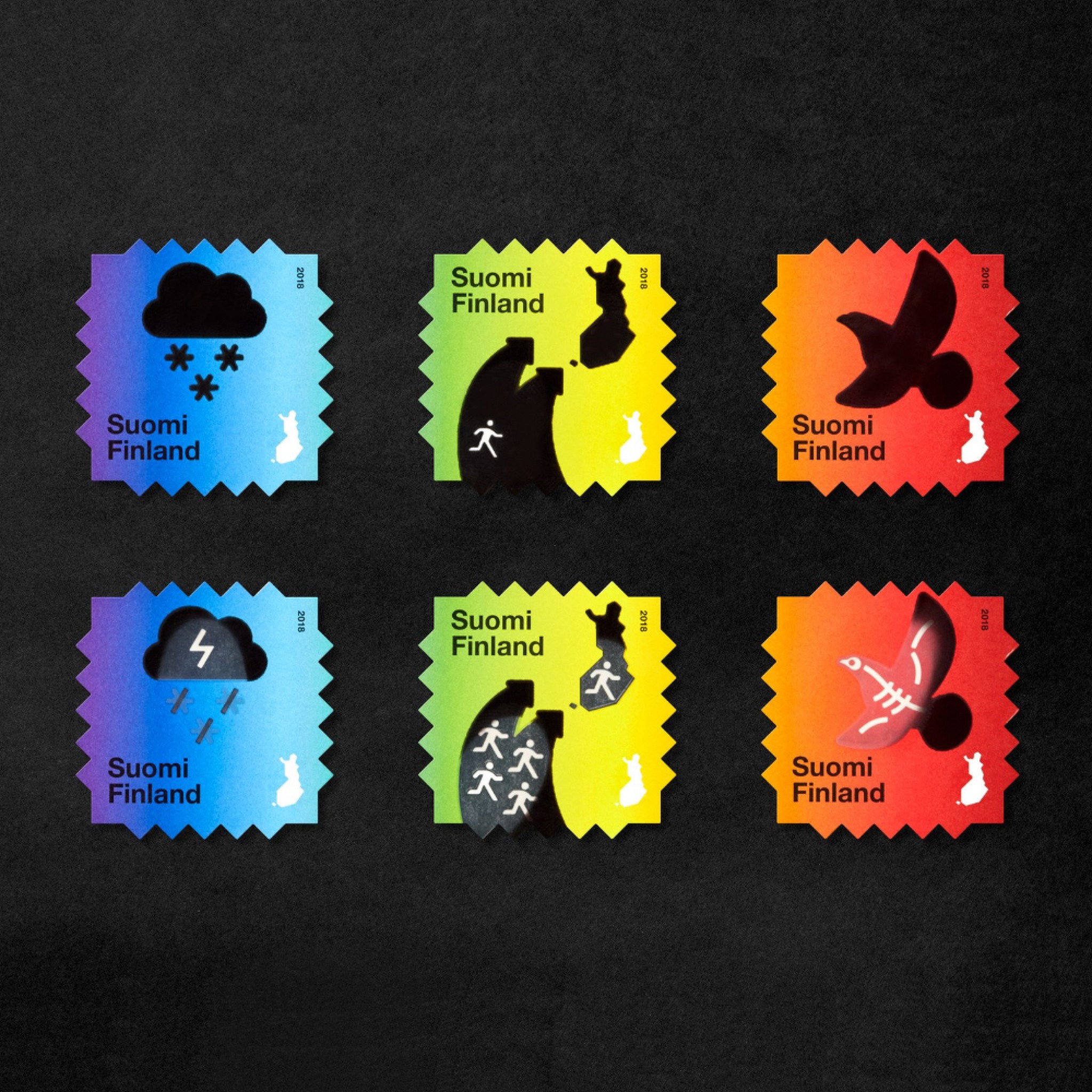
Climate Change Stamps by Berry Creative

Commissioned by the Finnish Post, the Climate Change Stamps aim to offer an innovative way of communicating the negative effects that rising temperatures will have on Finland.

When heated, the stamps reveal the possible consequences of the climate crisis. They show snow turning into rain, mass immigration due to heat-ruined areas further south, and the extinction of many of Finland's endemic species.

"The climate change stamps raise awareness of something we as designers feel very deeply about," said the judges.

"Using a simple, everyday image to promote an important sustainability message is a great initiative."

Exhibition design of the year:
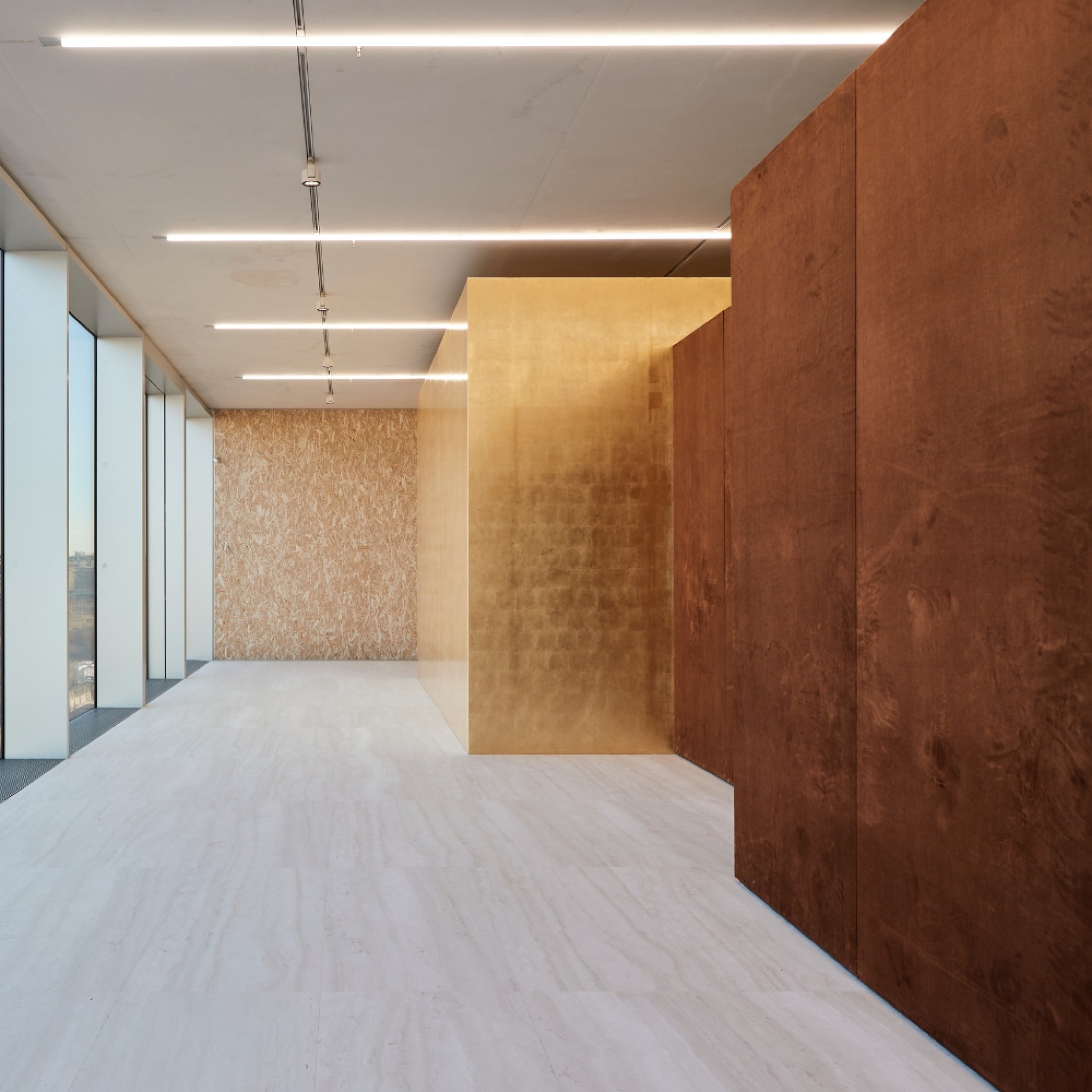
The Porcelain Room by Tom Postma Design

Commissioned by Fondazione Prada and created by Tom Postma Design, tise exhibition explores the historical context, scope and impact of Chinese exports of porcelain. It brings together more than 1,700 individual Chinese export porcelains made from the sixteenth to the nineteenth centuries.

"This is a delicate project with a high aesthetic value. It's elegant, fun and sensational, showing innovative craftsmanship that explores new techniques," said the judges.

"When experiencing this exhibition, one is transported into a different world."

Highly commended: The Gun Violence Memorial Project

Installation design of the year:
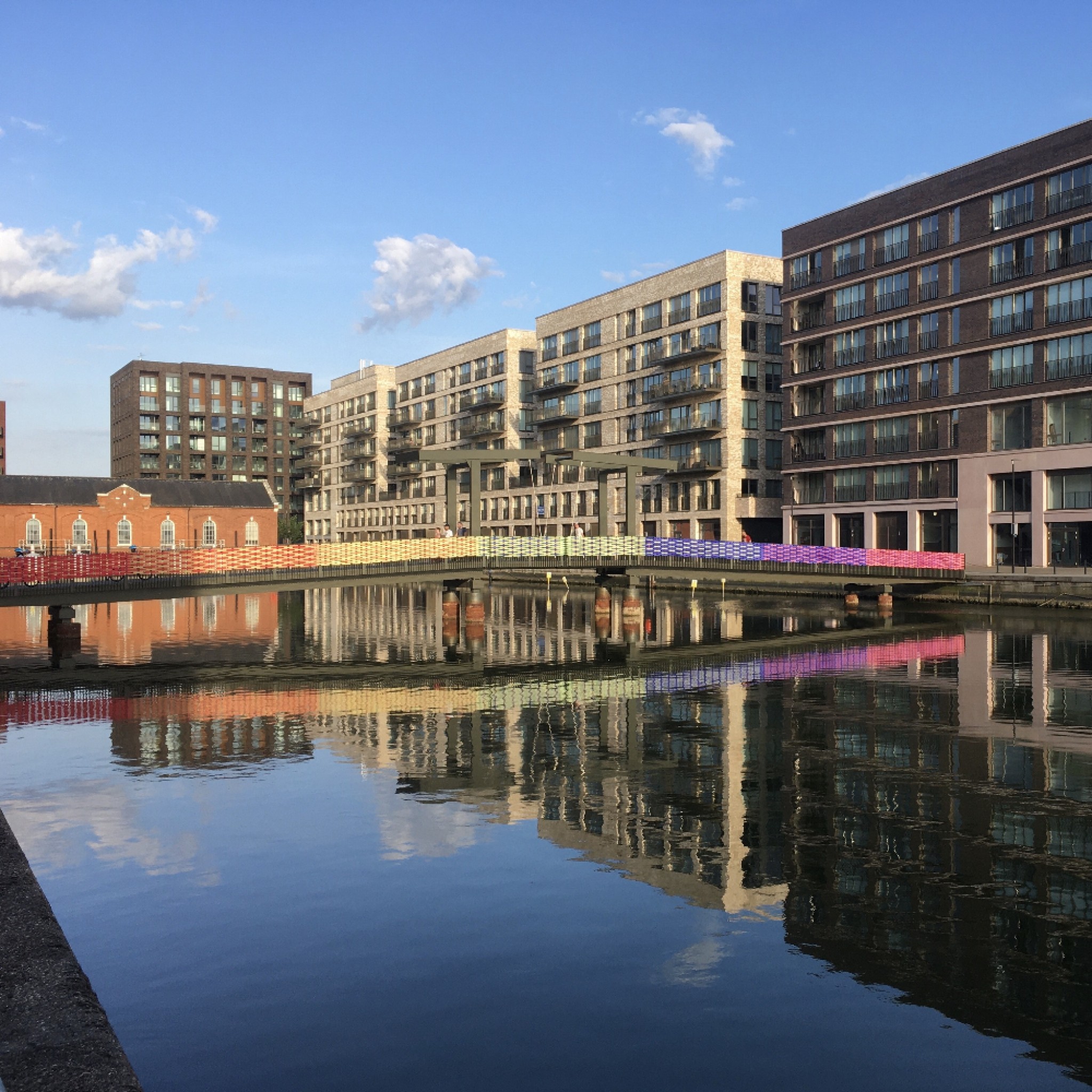
RAW Rainbow by Studio Curiosity

RAW Rainbow is a community-driven public art installation made from sustainably-sourced ribbon.

Created in response to the global pandemic, the project was initiated to bring local residents together whilst maintaining social distancing, and to bring a "message of hope".

Head judge of the design master jury Margriet Vollenburg said: "in these trying times it is particularly inspiring to see projects that encourage communal behaviour within the limits of health restrictions".

"This project builds a sense of community within the confines of difficult current circumstances," she added.

The post Dezeen Awards 2020 design project winners revealed appeared first on Dezeen.


from Dezeen https://ift.tt/2JbvlQy
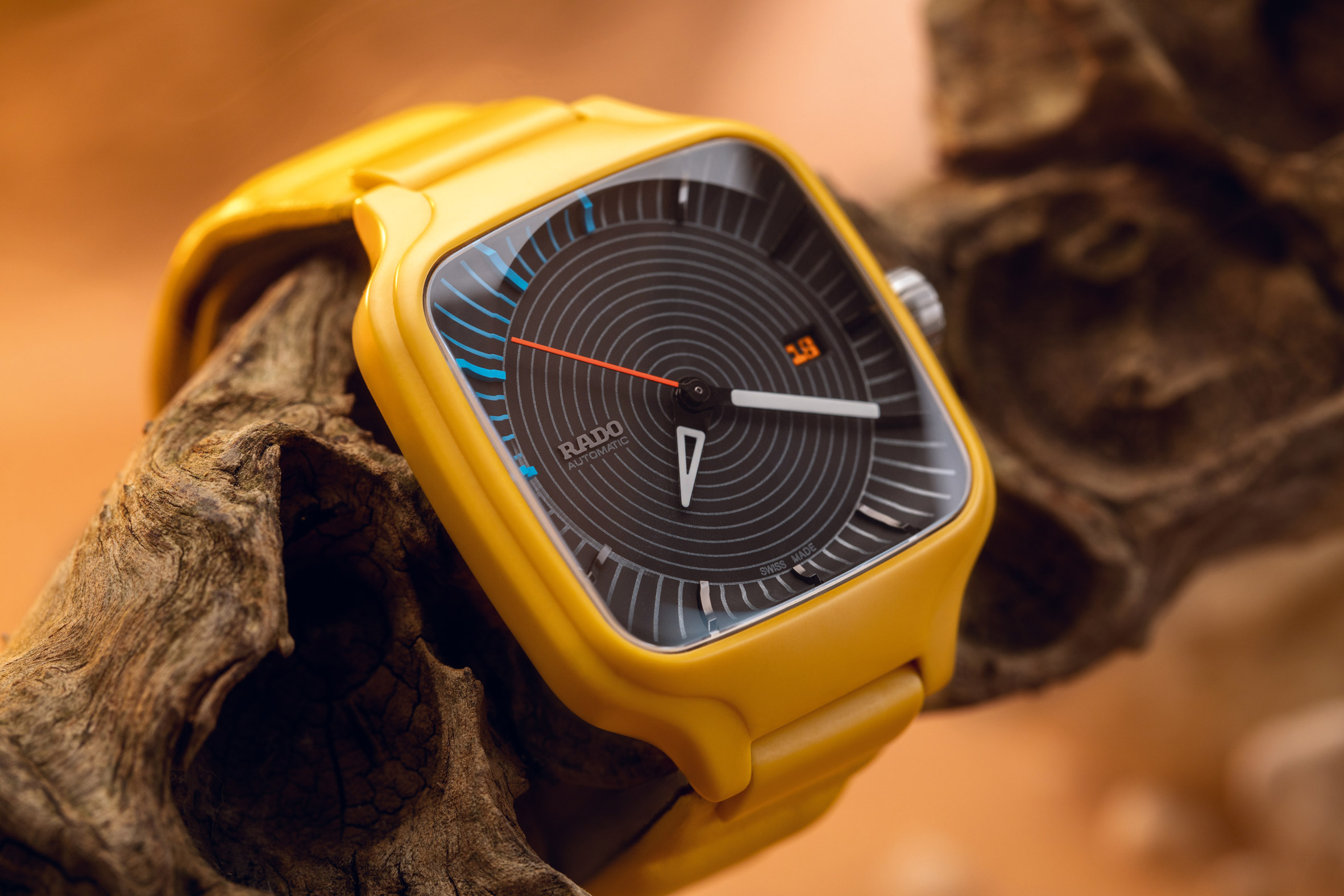
Tej Chauhan designs Rado True Square watch for a science-fiction future

Rado True Square Tej Chauhan watch

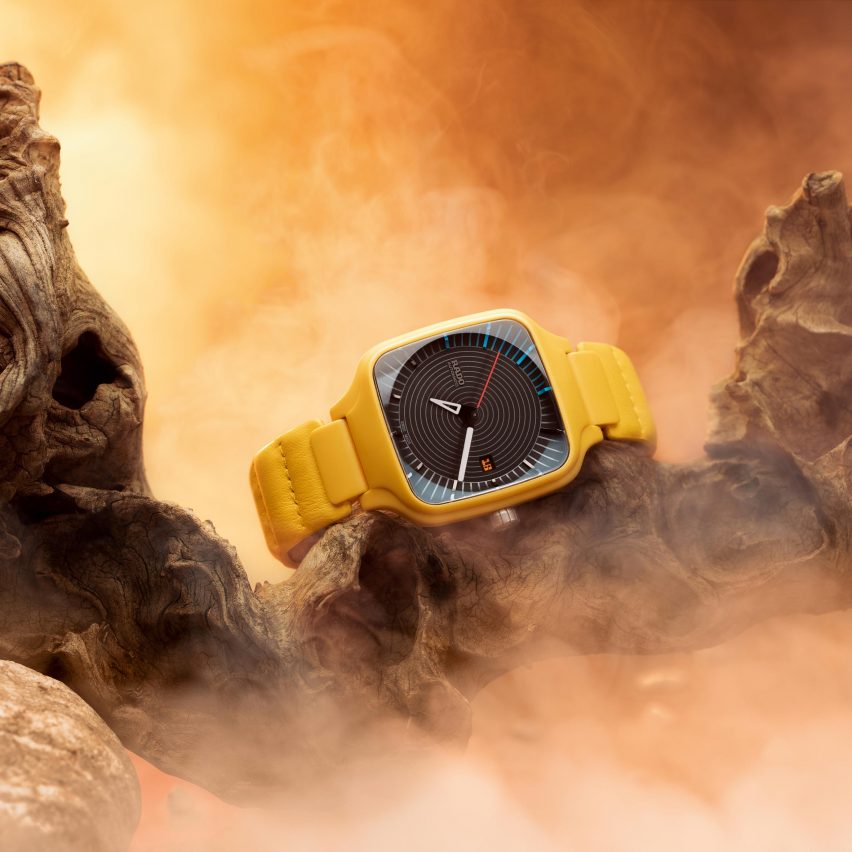
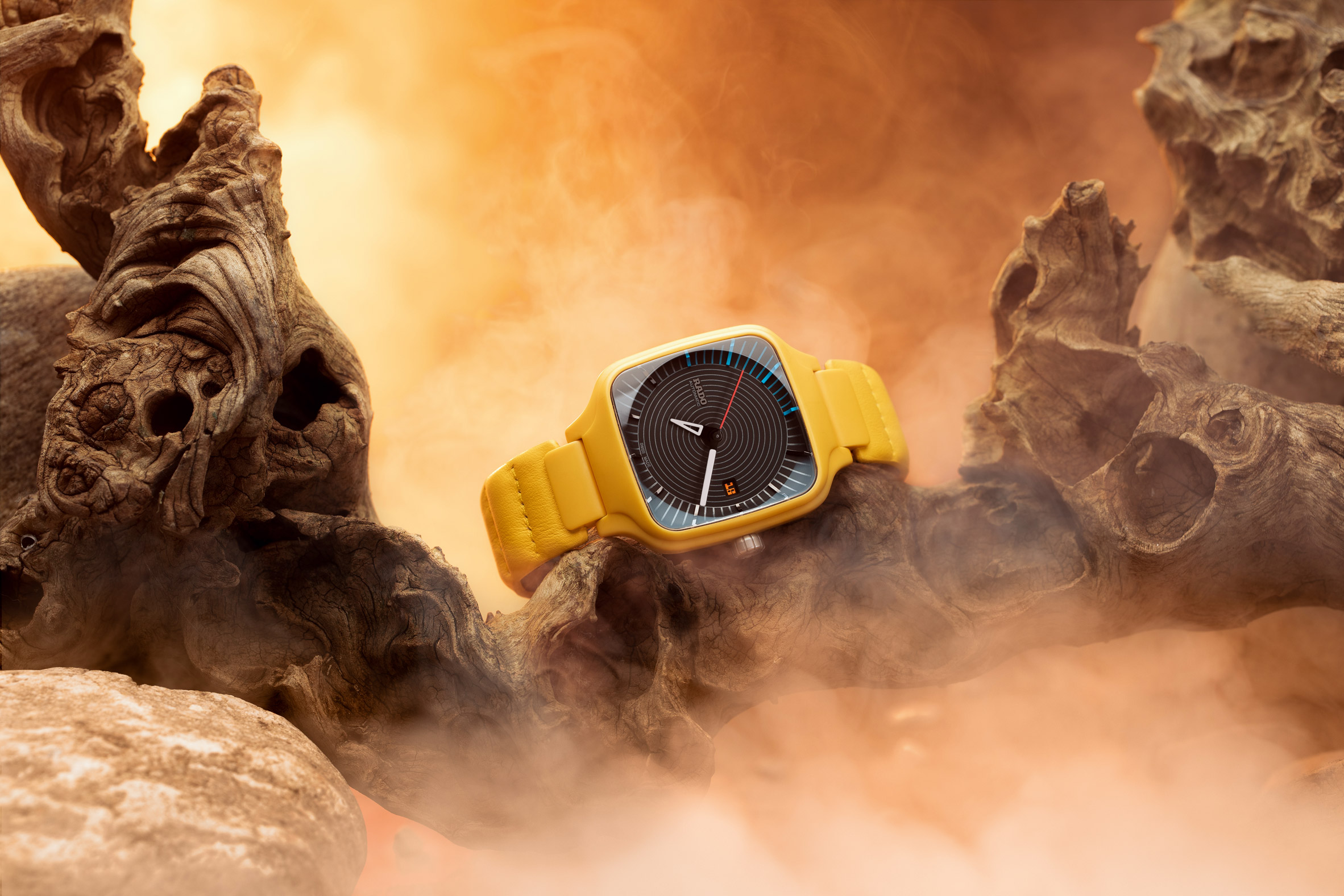
British designer Tej Chauhan has played with pop-culture visions of the future to create a sci-fi-inspired watch for Swiss brand Rado.

As one of four new watches launching during Rado Design Week on Dezeen next week, the Rado True Square Tej Chauhan has a distinctive identity thanks to its bold use of colour, texture and graphics.

Rado True Square Tej Chauhan watch
The Rado True Square Tej Chauhan is inspired by pop culture visions of the future

Chauhan took inspiration from movies like A Space Odyssey, Blade Runner and Moon to develop this design language.

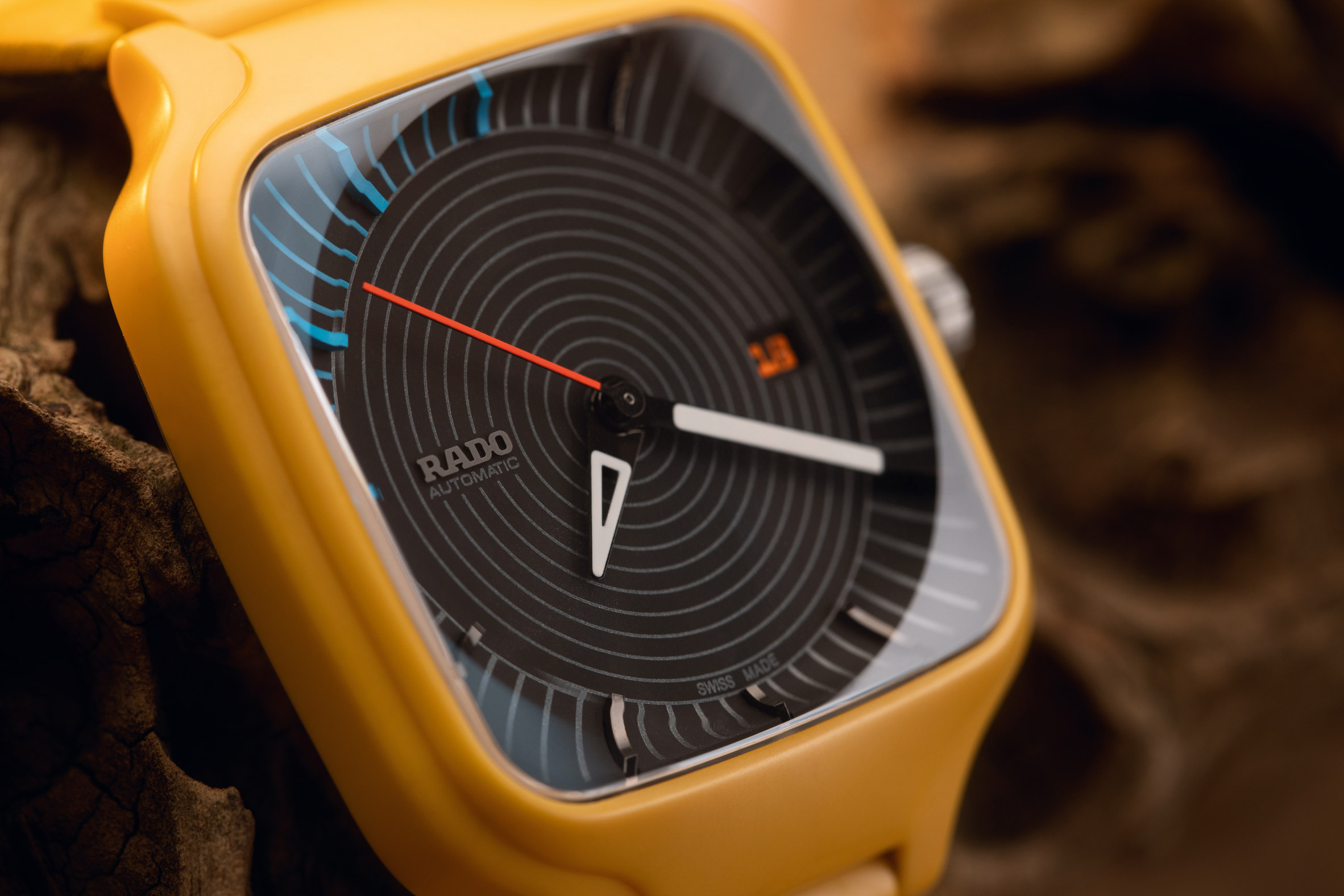
This is most apparent in the watch face, where silver-coloured concentric circles and blue indexes create a visually intricate display.

The second hand is picked out in red, while the hour hand has a triangular outline that makes it stand out. There is also a small window, where the date is displayed in a custom-designed font.

Rado True Square Tej Chauhan watch
The watch face features silver-coloured concentric circles and blue indexes

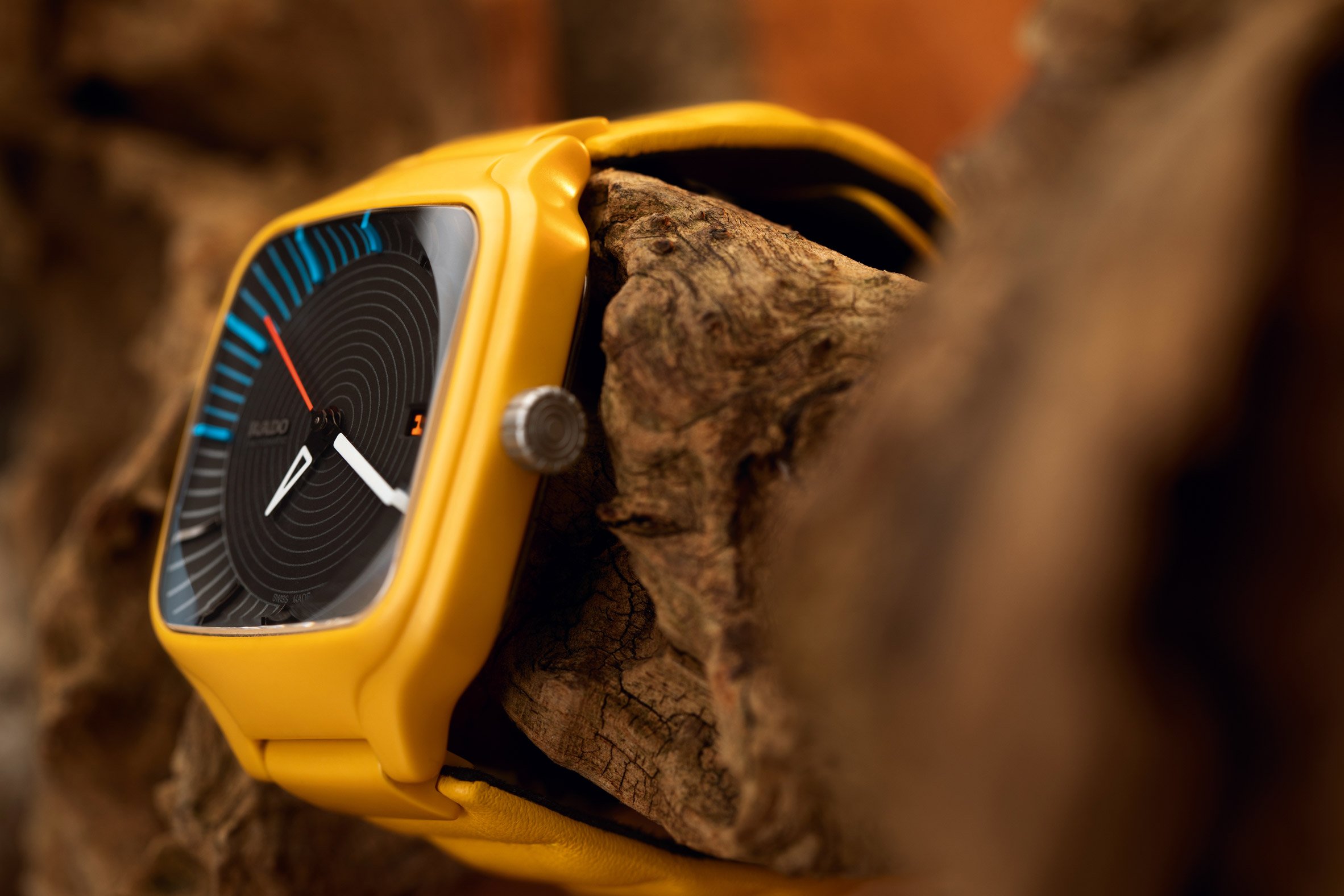
The watch case is made from Rado's high-tech injection-moulded ceramic, which gives it both a smooth, rounded shape and its striking matt yellow finish.

This same shade features on the bracelet, which is made from leather stitched into horizontal cushions. This is fastened with a stainless steel clasp that has a dark grey PVD coating.

Rado True Square Tej Chauhan watch
Both the ceramic case and leather strap come in a bold shade of yellow

Based between London and Helsinki, Chauhan typically uses these kinds of thoughtful details to bring a level of emotion to his industrial design projects.

His diverse portfolio includes everything from cutlery to smartphones, but each project is designed to create a certain type of response, whether it's amusement or wonder.

Examples include a car tyre that borrows the graphics of a Nike Air Force 1 sneaker and a seat with a cubby for a laptop.

"We strategically use shape, colour and material to bring joy to people," said Chauhan. "This common foundation of materials, colour and contrast made the collaboration with Rado an absolutely natural process."

Rado True Square Tej Chauhan watch
The second hand is picked out in red, while the hour hand is triangular

The Rado True Square Tej Chauhan is one of four watches that will launch during Rado Design Week, a week of virtual content hosted exclusively on Dezeen from 30 November to 4 December.

As well as Chauhan, Rado is debuting designs by Italian studio Formafantasma, Japanese office YOY and Indian duo Thukral & Tagra.

All four feature a square face, which is characteristic of every watch in Rado's True Square collection. It is a shape that has become iconic for the brand.

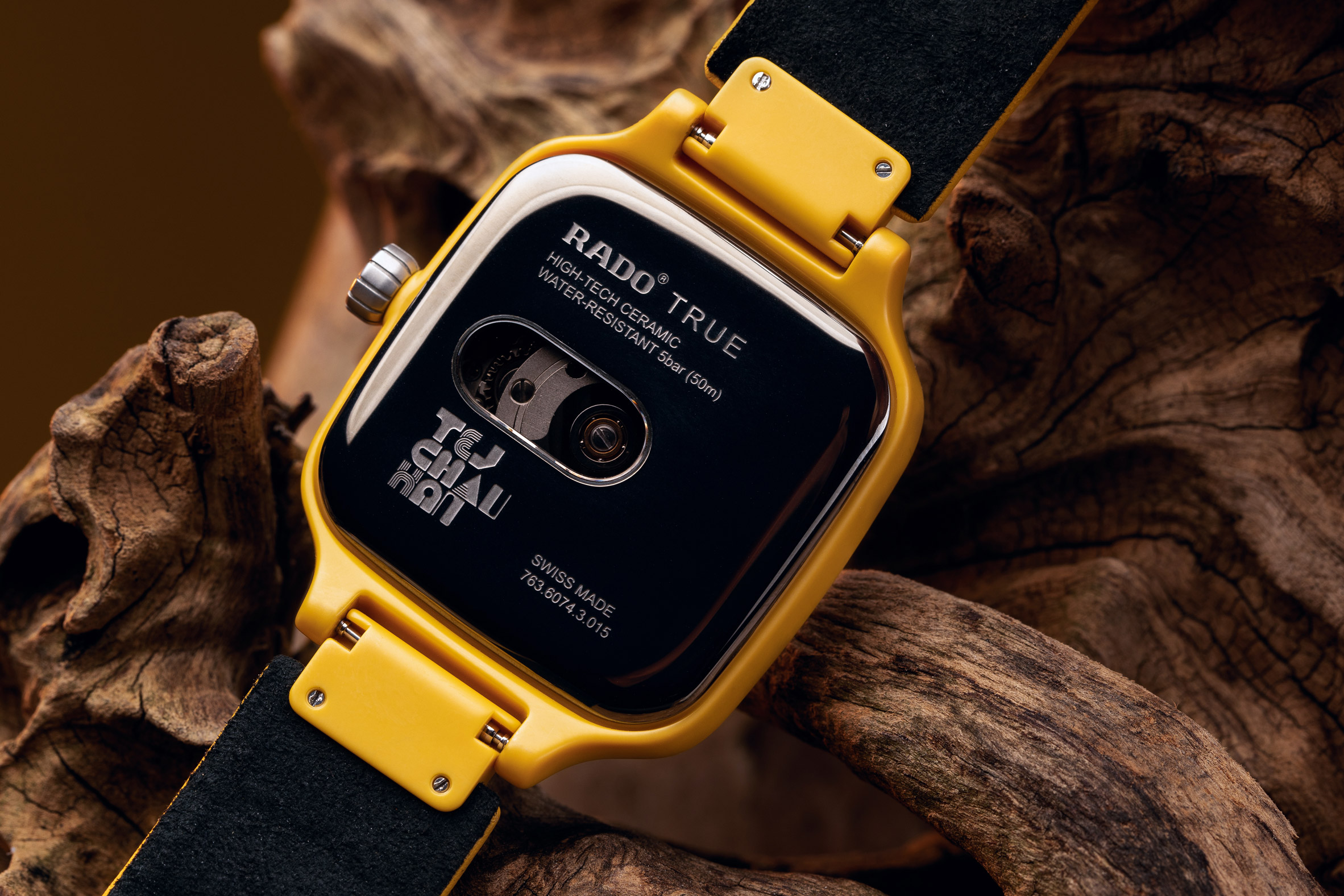
The watch is powered by a modern automatic calibre, while its front is made from faceted sapphire crystal with an anti-reflective coating, ensuring the watch is highly practical and durable.

Rado True Square Tej Chauhan watch
The watch is powered by a modern automatic calibre

More details about the Rado True Square Tej Chauhan will be unveiled during Rado Design Week.

Dezeen will broadcast videos about each of the new watches, as well as live interviews with Rado CEO Adrian Bosshard and the designers involved. Click here to see the schedule.

Rado Design Week takes place from 30 November to 4 December at www.dezeen.com/rado-design-week

The post Tej Chauhan designs Rado True Square watch for a science-fiction future appeared first on Dezeen.


from Dezeen https://ift.tt/3739sv4

Atelier-r
 creates Corten tourist route around ruins of Czech Republic castle

Renovation of Helfštýn Castle in Czech Republic by Atelier-r

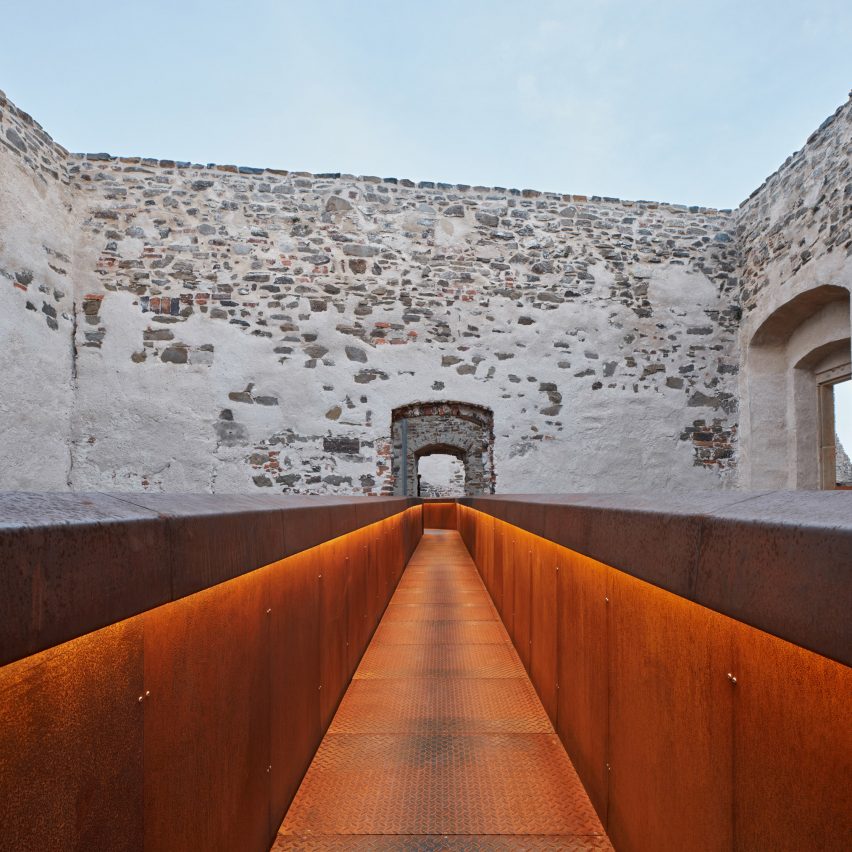
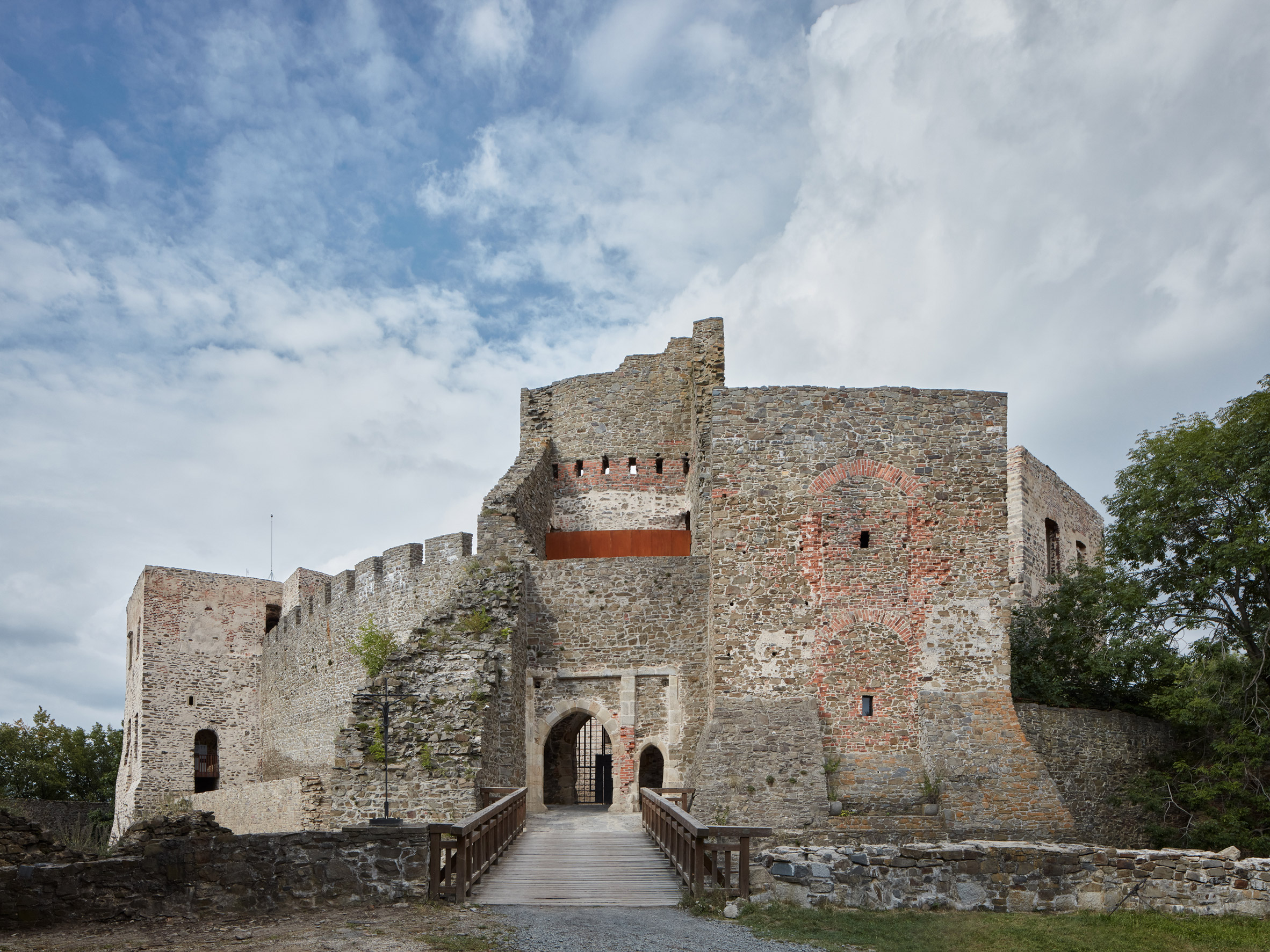
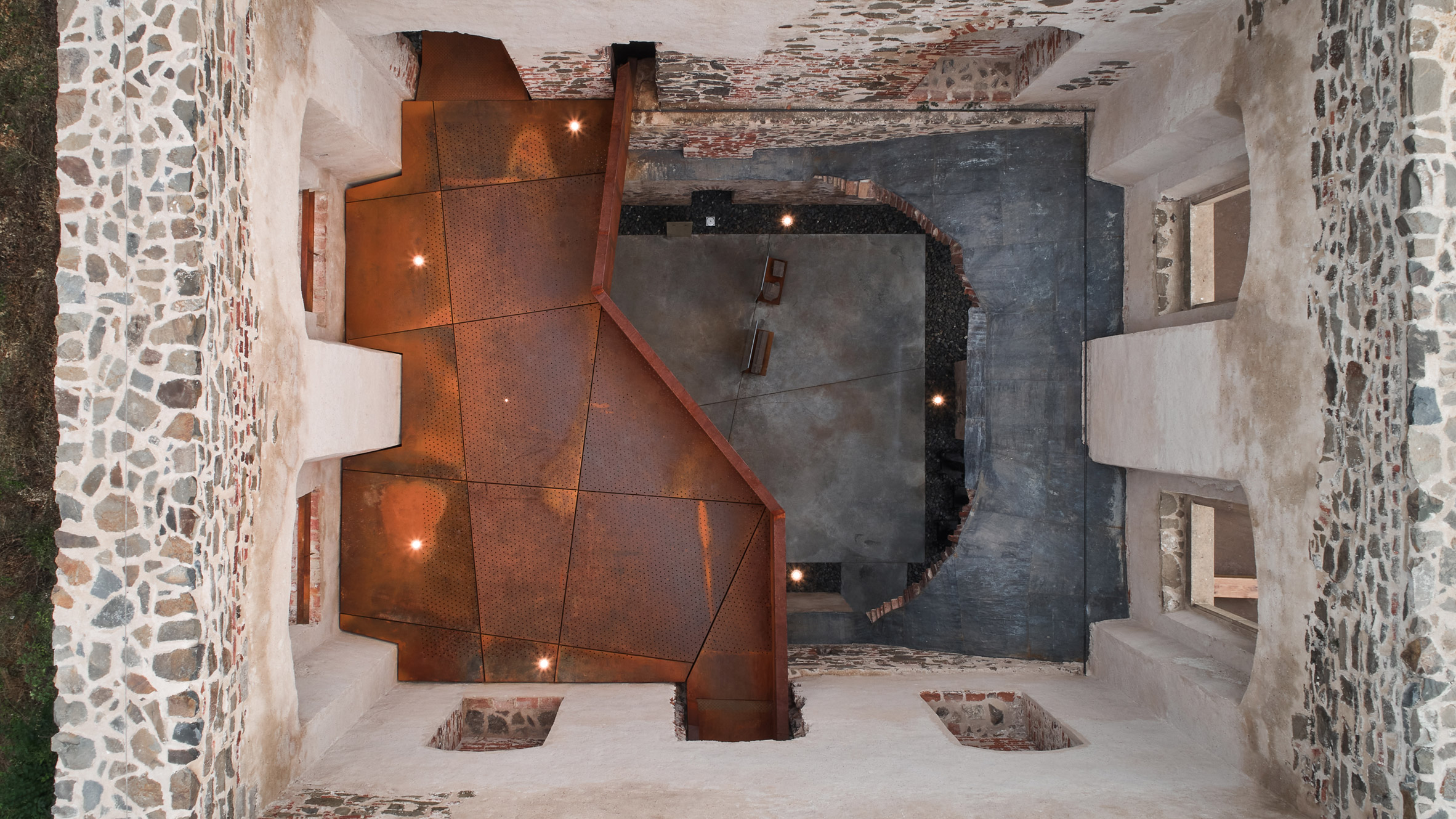
Architecture studio Atelier-r has added a series of Corten steel bridges and platforms to provide tourist access to the ruins of Helfštýn castle in the east of the Czech Republic.

The studio carried out the major renovation of the visitor attraction, which is the second-largest castle complex in the Czech Republic after its deteriorating state had forced parts of the building to be closed to the public.

Helfštýn castle in Czech Republic
Atelier-r renovated Helfštýn castle

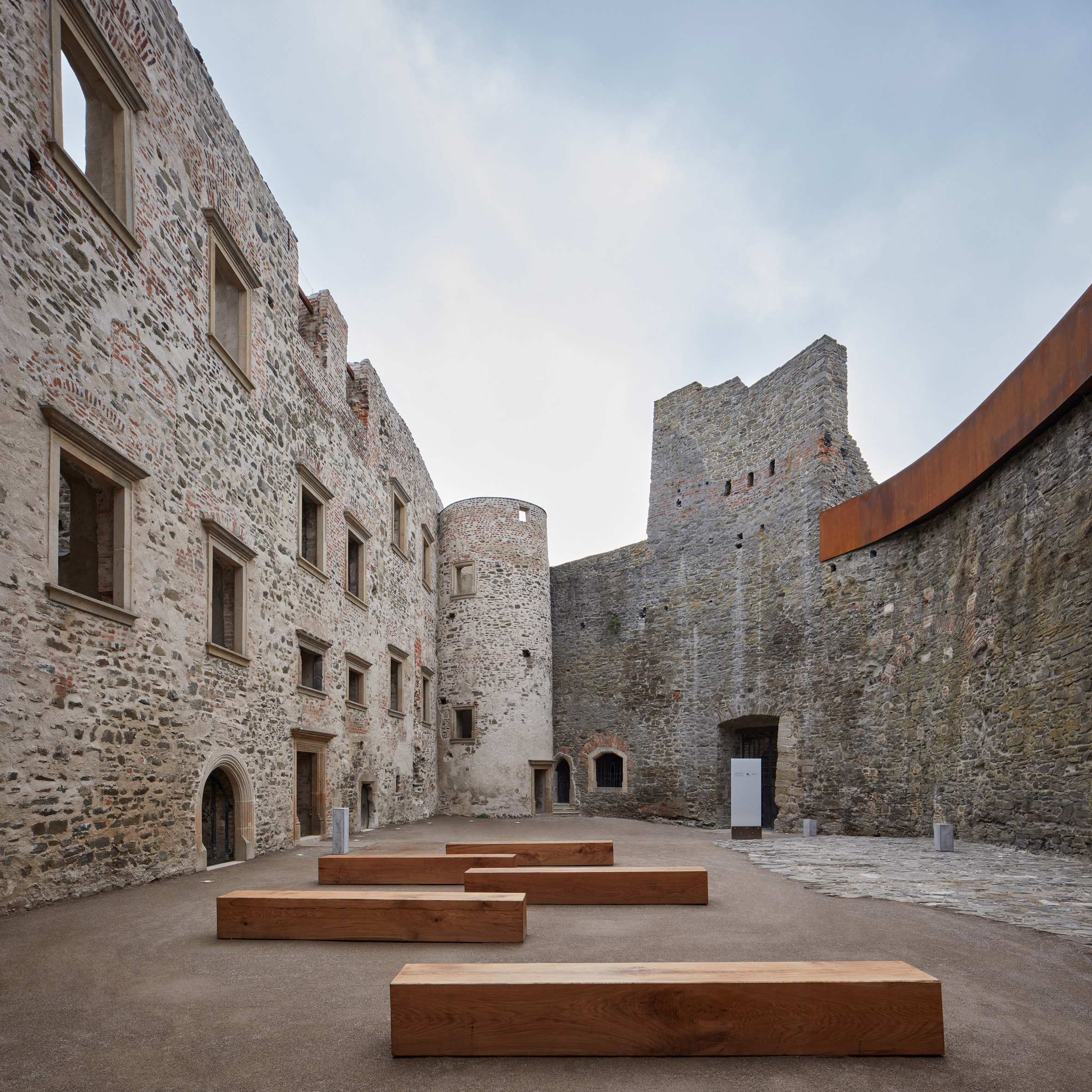
The majority of work was carried out on the castle's keep, which its owners and Czech Republic's national heritage institute wanted to be preserved as a ruin.

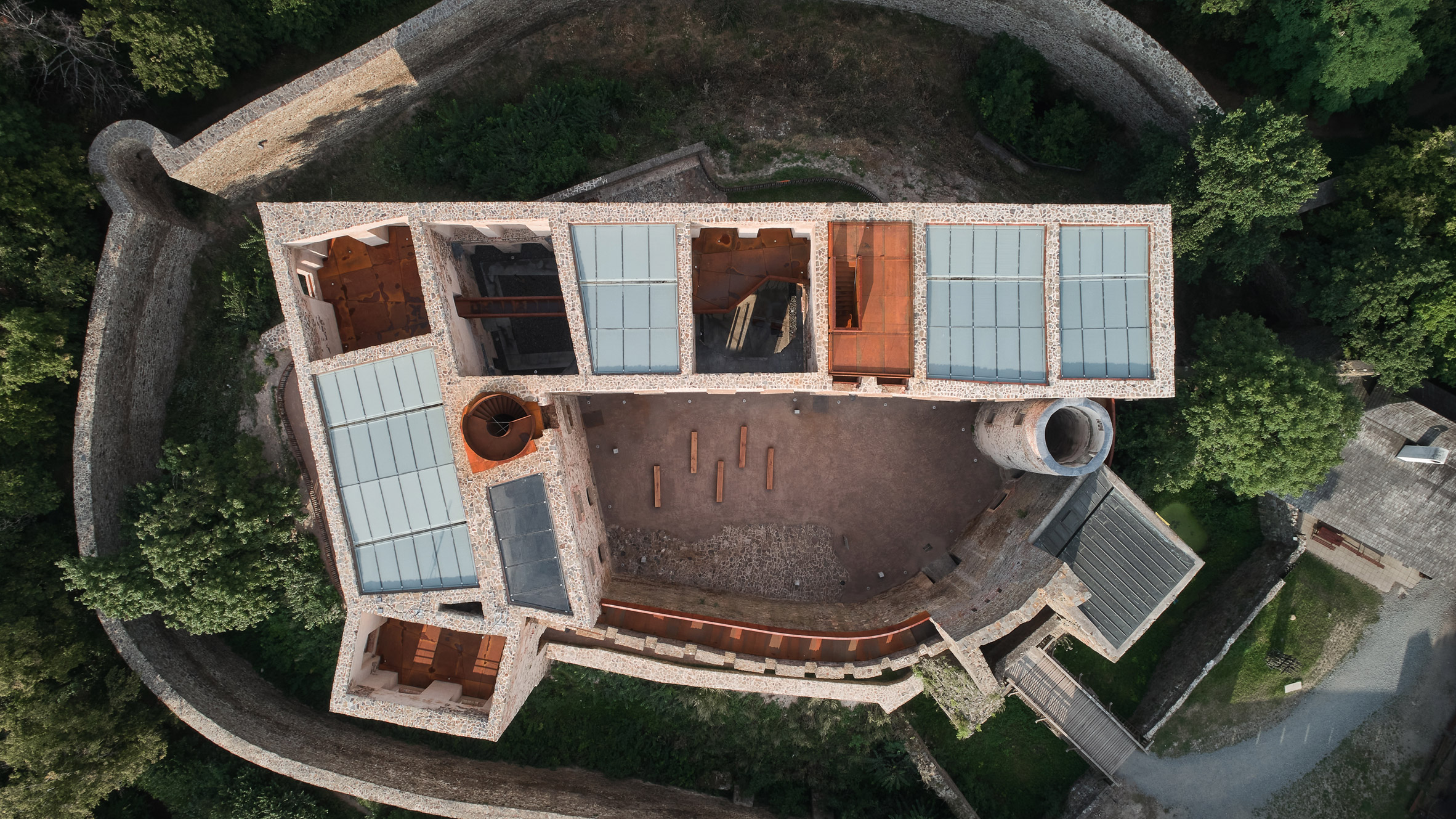
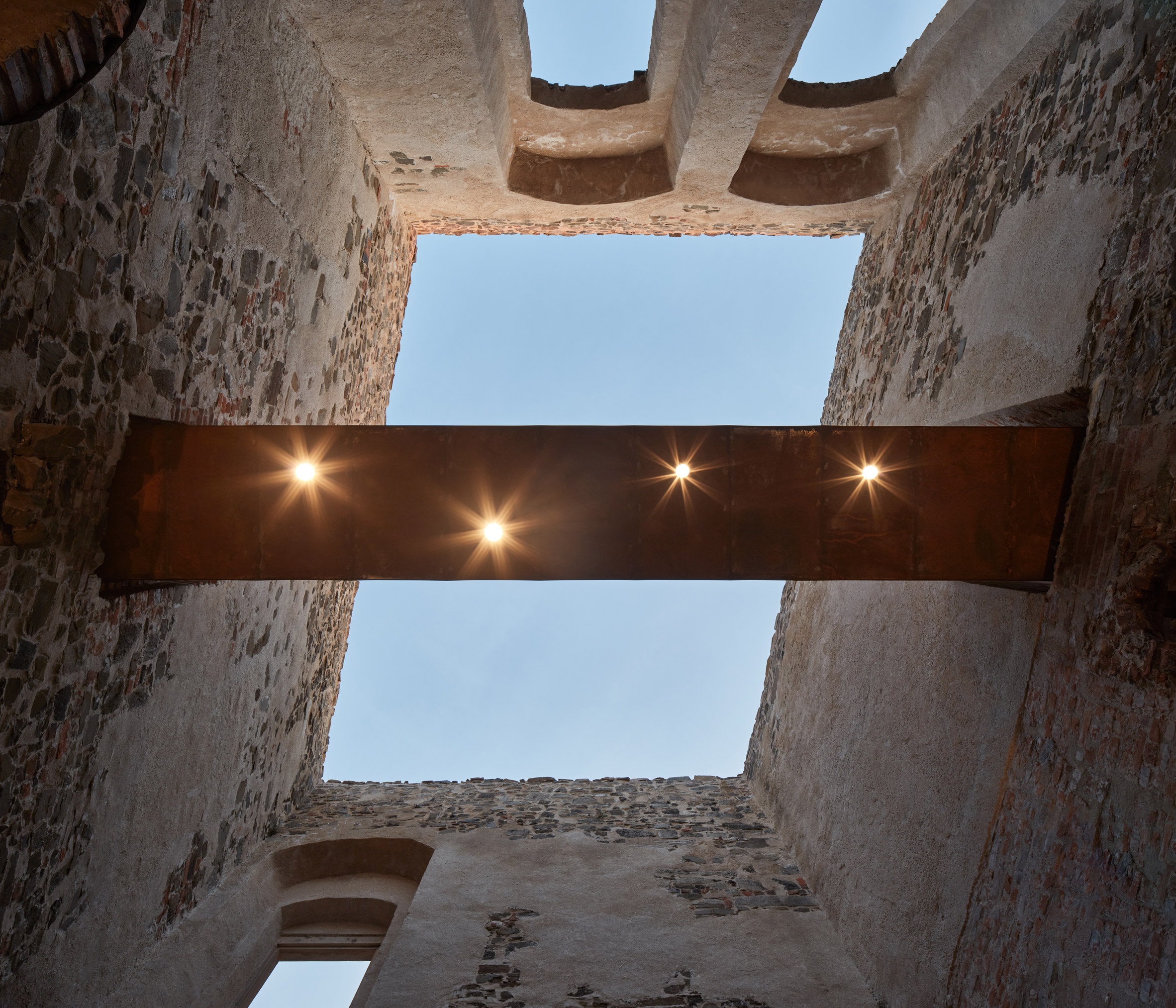
Atelier-r created a series of glass roofs that sit below the original walls so they can not be seen from outside the building to enclose some of the rooms.

Helfštýn castle aerial view
The studio enclosed several rooms with glass roofs

"Our team strived to complement the historical building with the contemporary architecture that would fit the purpose and focus on both practical use as well as gaining an aesthetic appeal," said Atelier-r's principal architect Miroslav Pospíšil.

"We aspired to go beyond the core task of creating a suitable roof solution because we wanted to involve the visitors in the historical development of the palace," Pospíšil told Dezeen.

"This intention sparked a great idea of incorporating the contemporary architectural elements into the historical building and connecting the existing ground floor with the newly accessible higher levels of the palace."

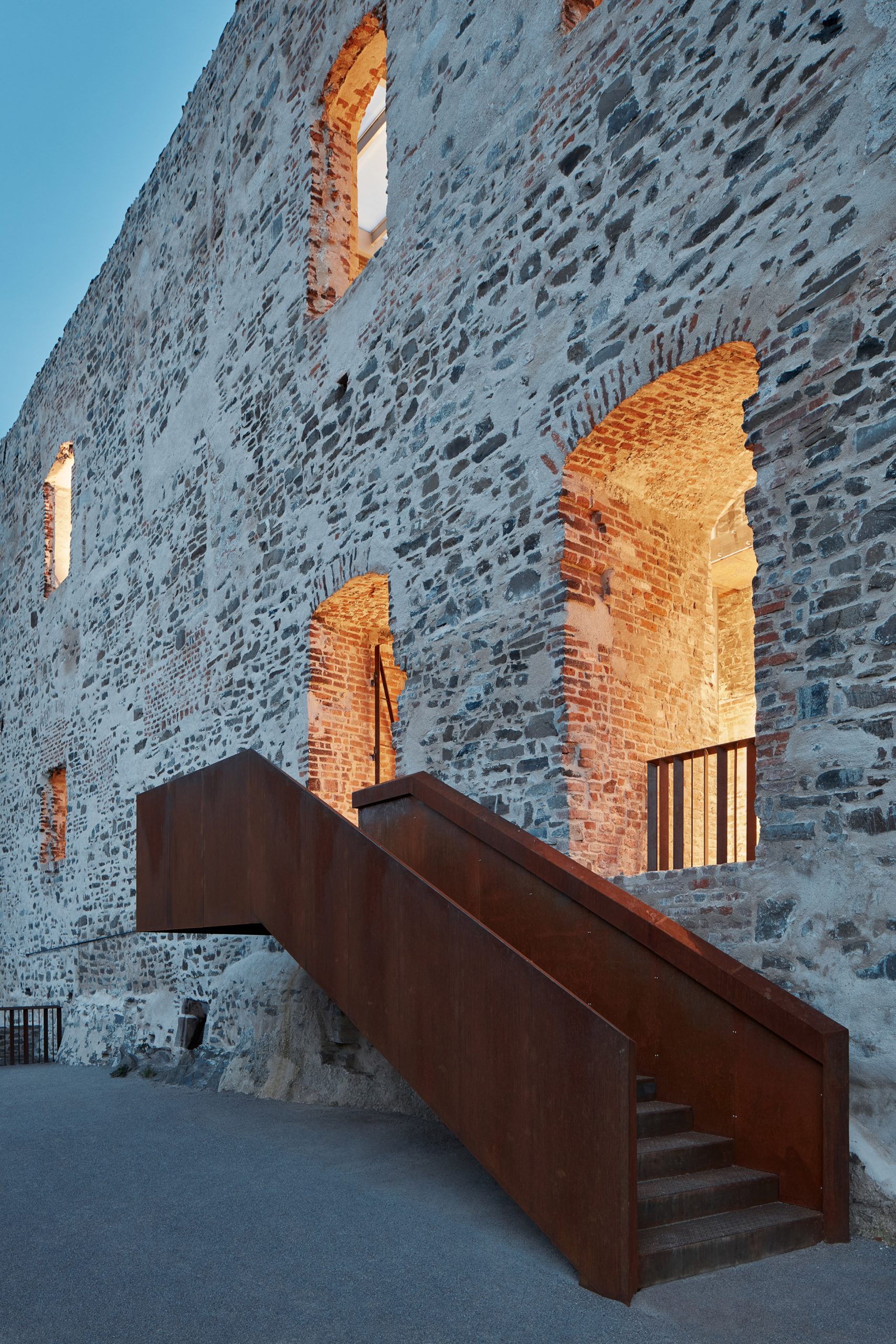
Corten entrance stair
Corten steel elements have been added to the castle

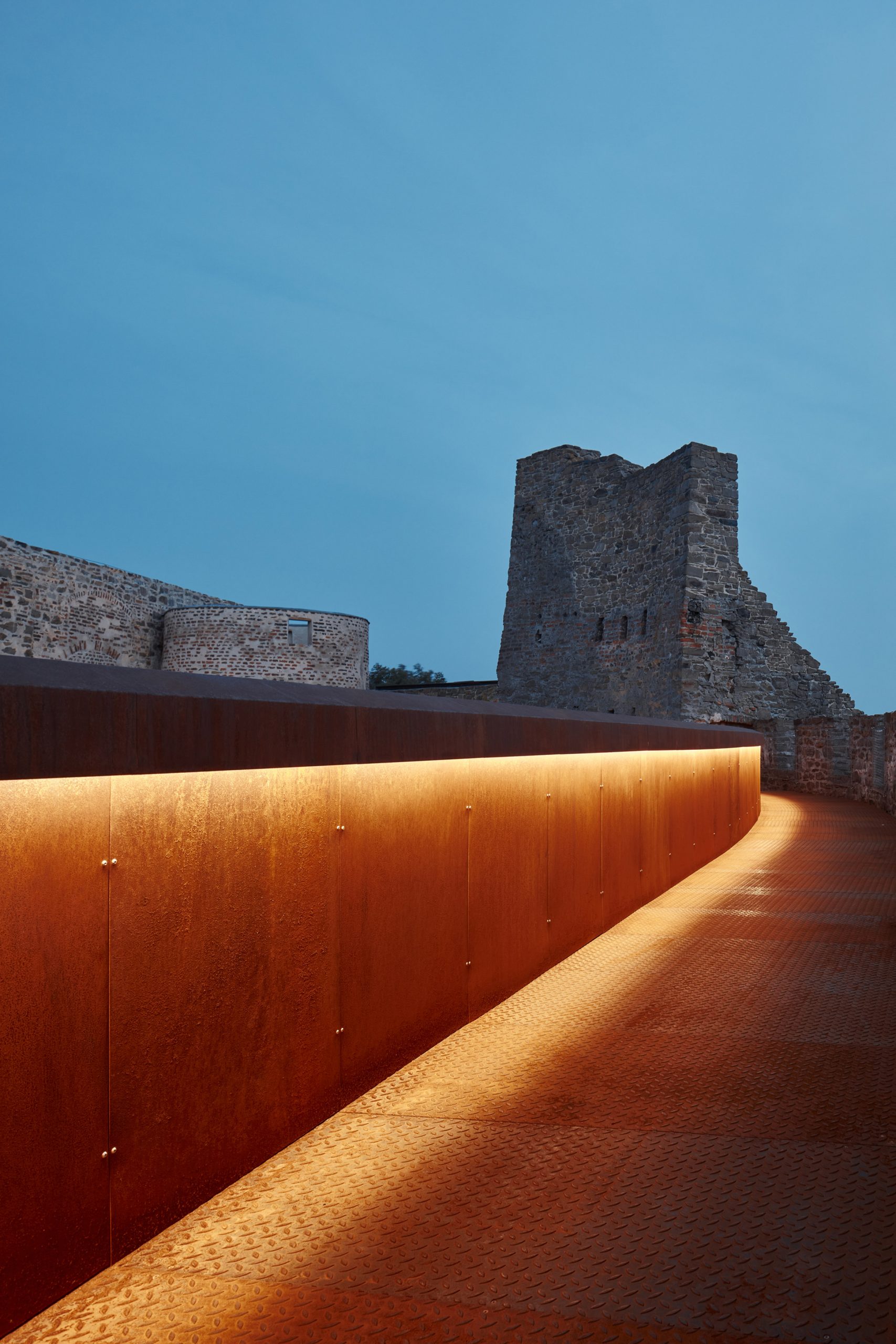
Along with the new roofs, the studio added various stairs, bridges and platforms, all made from Corten steel, to create a visitor route through the ruins.

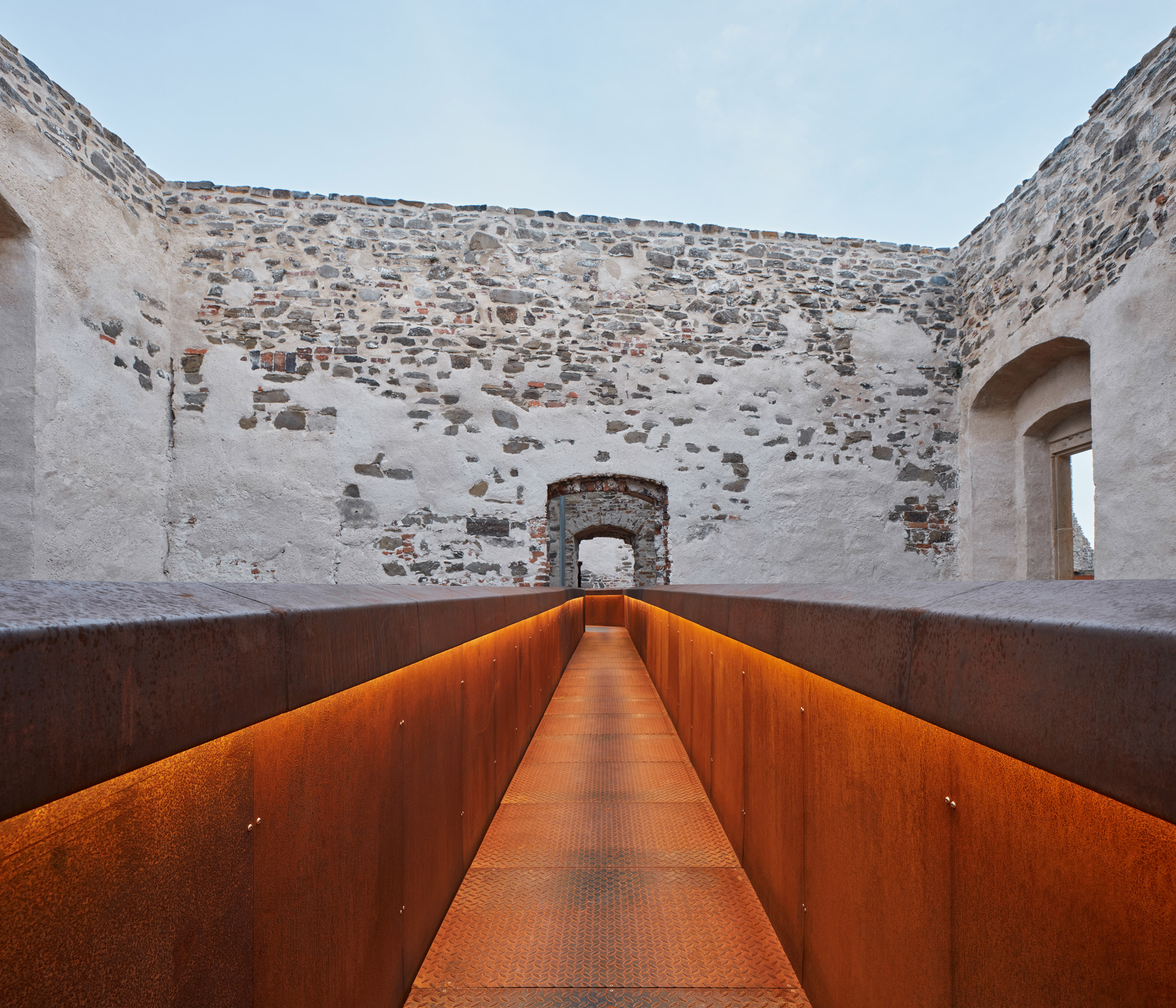
The weathering steel elements allow visitors to see the upper levels of the castle that were previously inaccessible, with bridges passing through rooms and passages built alongside the battlements.

Corten walkway
Corten was also used to create a walkway along the battlements

Atelier-r chose to use the orange Corten steel so that the additions made to the ruin would be clearly identifiable.

"We believe that easily readable architecture is honest and that is important for us," said Pospíšil. "Therefore, we wanted to acknowledge and accentuate the contrast between the historical building and modern elements."

Corten additions to ruins
The Corten additions are clearly identifiable

"Our concept draws from the respect towards the historical building and it pursues a major effort to preserve the castle's authentic character," Pospíšil continued.

"New contemporary elements do not compete with the historical building, rather they create a cohesive unit in which all the elements, old and new go hand in hand."

Corten bridge
Bridges cross the ruin's upper levels

The studio also believes that Cortenl was an appropriate material due to the castle's history of ironworking and the way it weathers over time.

"It was crucial to choose a material that would be timeless," explained Pospíšil. "Corten is a special alloy that undergoes corrosion, matures and matches the texture of the old historical walls.

"Moreover, Helfštýn Castle is well-renowned for its iron craftsmanship tradition, therefore it made a perfect sense to choose Corten to work with."

Corten bridge at Czech Republic castle
The bridges allow access to the ruin's upper levels

Overall the studio hopes that the project will allow visitors to gain a greater understanding and appreciation of the historic castle that dates back to the 13th century.

"The renovation created an attractive sightseeing route that brings the public closer to the construction details of the original palace than ever before," said the studio.

"Standing on the modern bridges, looking up the walls, you can feel the legacy of the sight as well as understand the purpose of the modern architecture within it."

Balconies overlook lower levels

Previously William Matthews Associates and engineers Ney & Partners added a bridge to the ruins of Tintagel Castle in Cornwall, UK, while Max Dudler created a restaurant inside Heidelberg Castle in Germany.

Photography is by BoysPlayNice.


Project credits:

Design team: Robert Randys, Lucie Rohelová, Adéla Tomečková, Milena Koblihová, Daria Johanesová / Atelier-r
Structural stability of historical constructions: Ladislav Klusáček
Structural stability of newly inserted constructions: Jan Lukáš

Rehabilitation of the damp parts of historical walls: Pavel Fára
Contractors: Hochtief and Archatt Památky
Steel and corten construction: Zámečnictví Sloupský
Glass construction: Bubeník 1913

Concrete floors: AAP hranice

The post Atelier-r
 creates Corten tourist route around ruins of Czech Republic castle appeared first on Dezeen.


from Dezeen https://ift.tt/37aMli2