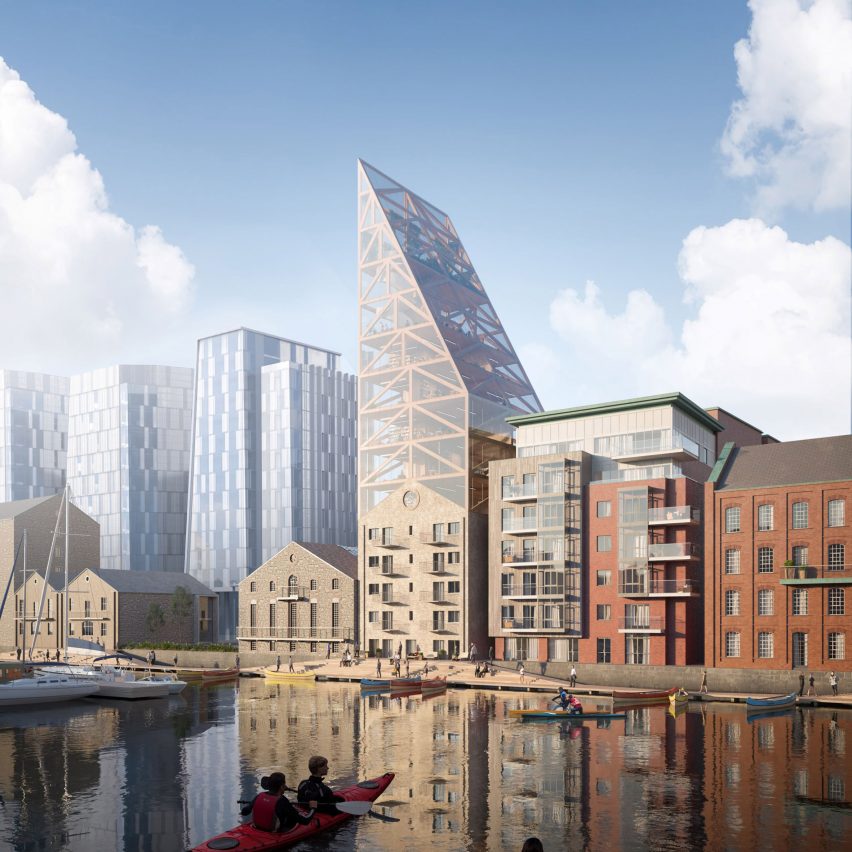
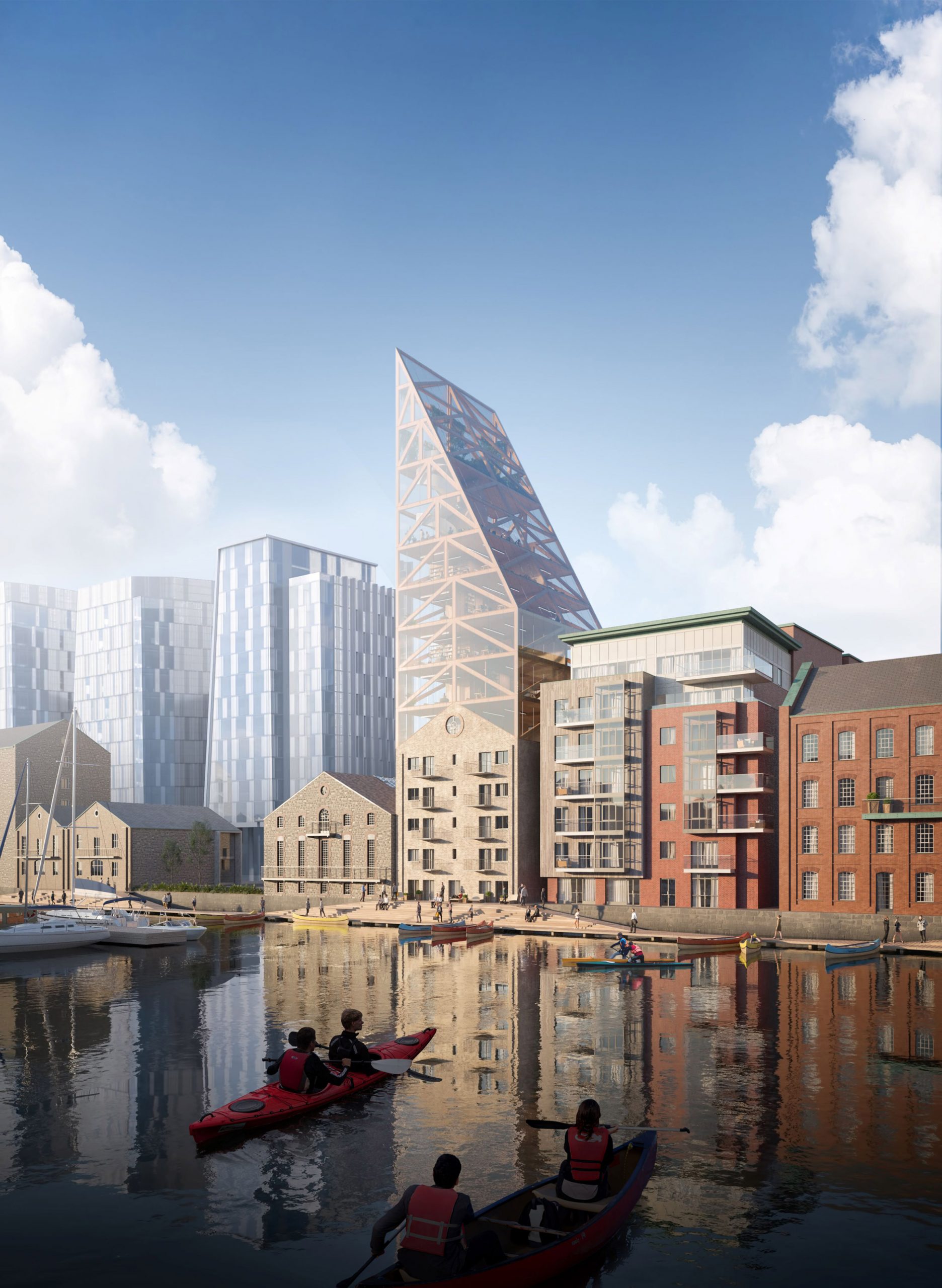
Architecture studio Urban Agency is extending an existing mill building in Dublin, Ireland, to create the 50-metres-high Dock Mill, which will be one of the tallest timber buildings in Europe.
The thirteen-storey building was commissioned by property development company Lioncor.
Top image: Dock Mill is located in Dublin's "Silicone Quarter". Above: the building will be 50 metres tall
"The brief was to design a state of the art sustainable and flexible building in the Dublin 'Silicon Quarter'," Urban Agency co-founder Maxime Laroussi told Dezeen.
To fulfil the sustainability criteria, Urban Agency chose to work with cross-laminated timber (CLT), which will suit the restrictions of the site and help with time efficiency.
Dock Mill's existing facade and the floor plates of the industrial mill will be maintained and restored. A sustainably-sourced timber extension will then be added.
"The roof is to be removed and the localised CLT columns are to be inserted in the four corners of the existing floor plate all the way to the ground floor," Laroussi said.
"From ground floor to basement level those columns are to seat on underpinned concrete perimeter walls."
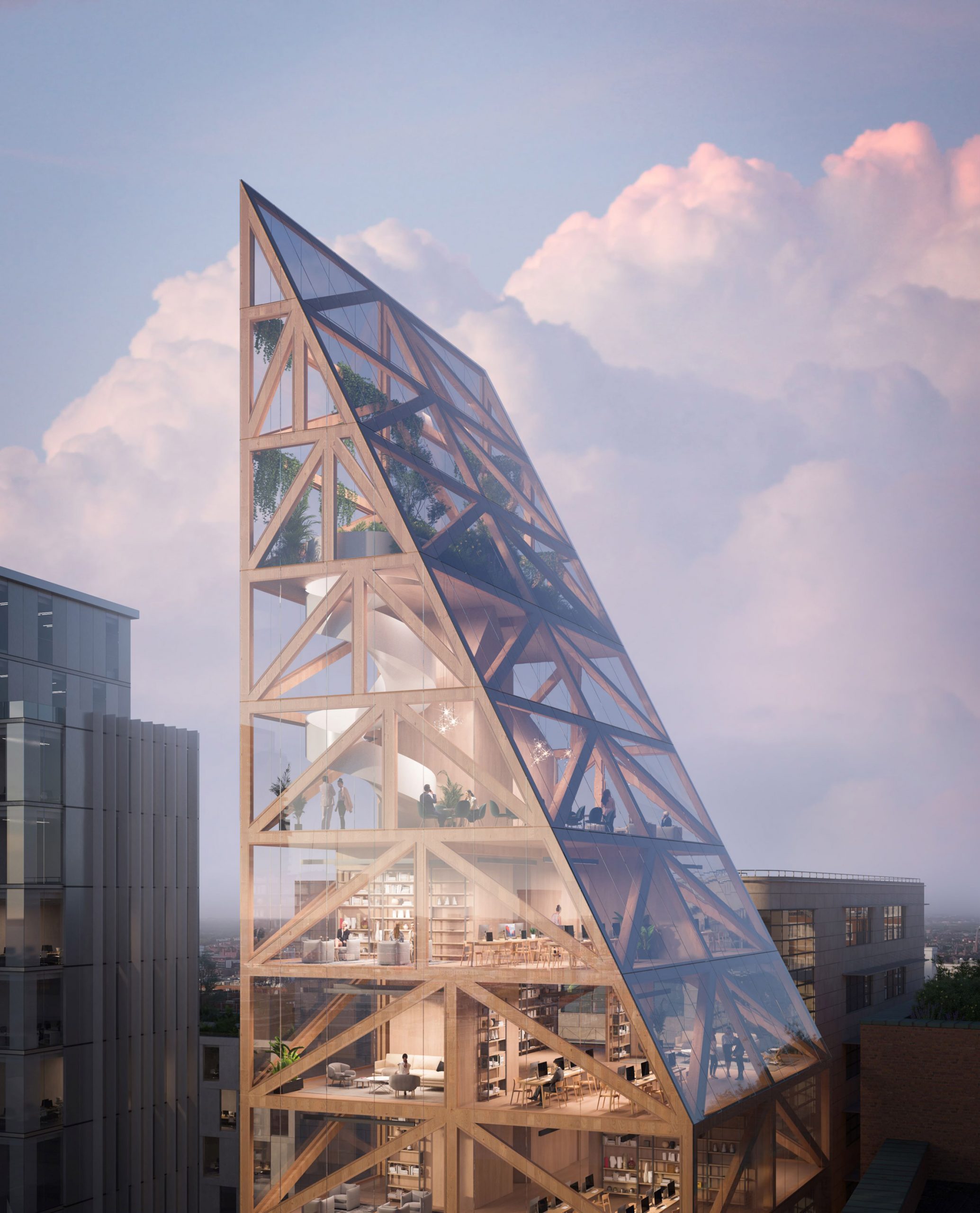
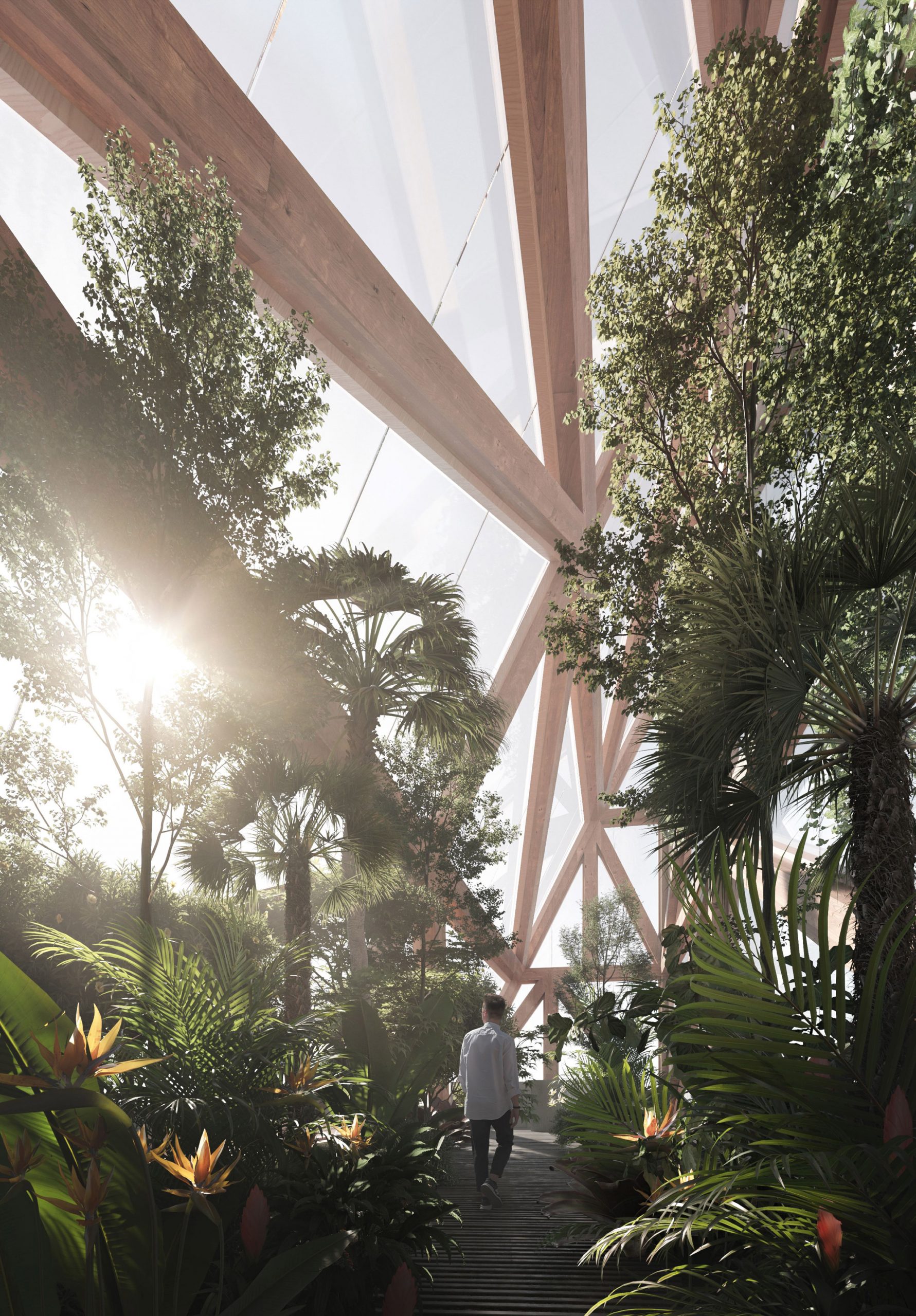
The building will house office spaces in the new timber tower, while the existing mill will be home to apartments. Its double-height top storey will have a winter garden with tall trees and plants.
A double-skin glass facade is designed to wrap the timber structure of the new extension, which the studio envisions as a "modern take on the glasshouse".
A winter garden will be located in the double-height top storey
Urban Agency also looked at the context of the surrounding Grand Canal Dock area, also known as Silicon Docks, when designing Dock Mill and added spaces for public interaction.
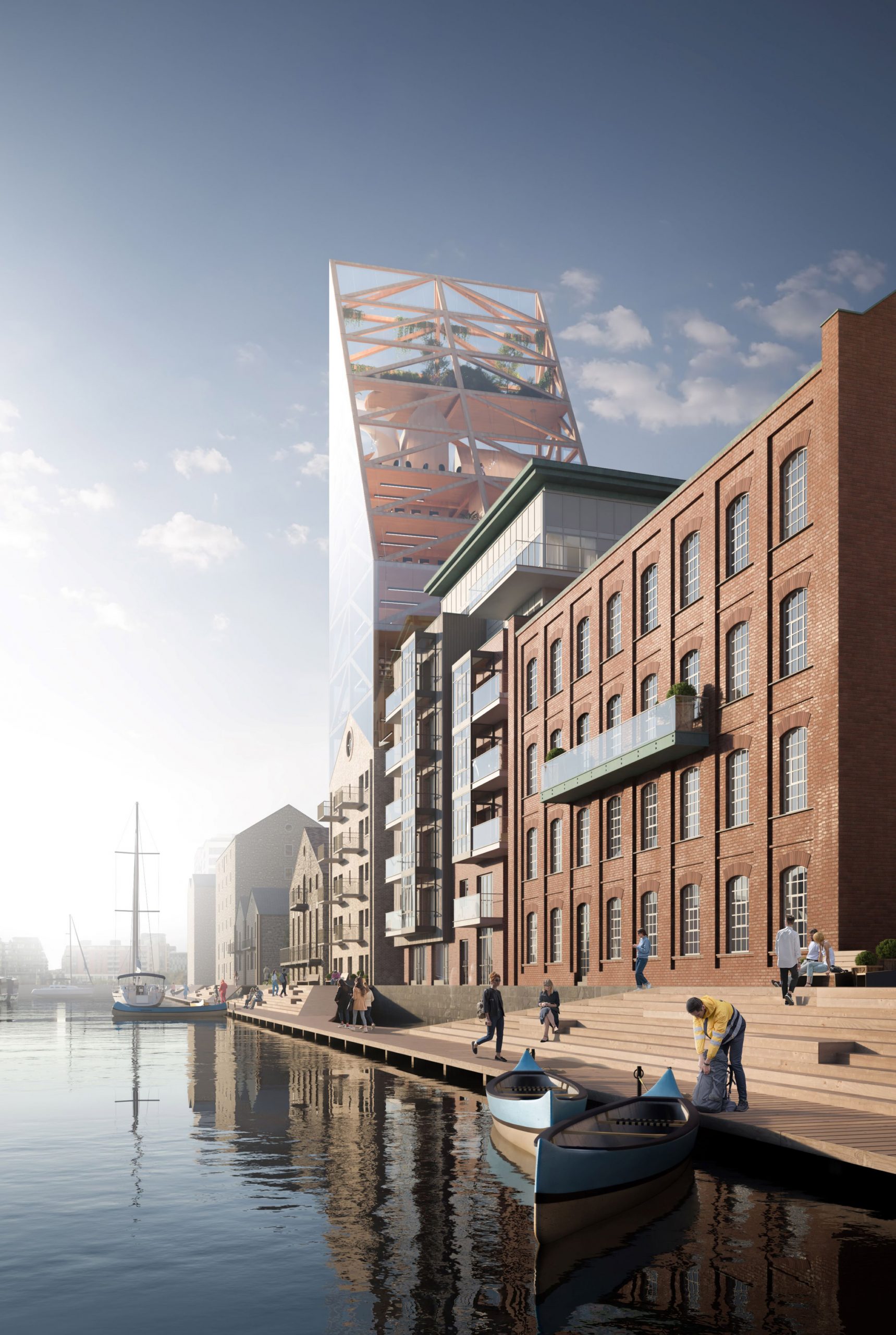
"One key design element is the creation of a new floating pedestrian public streetscape in the form of a series of undulating boardwalks and wide amphitheatre-like stepping plazas," Laroussi said.
"This, to connect all the buildings fronting Grand Canal Docks and give waterfront access to the public while creating a shortcut to the train station on the opposite side."
Urban Agency added an amphitheatre-like plaza outside Dock Mill
According to Laroussi, Urban Agency is also currently working on a number of other large timber projects. "We are currently working on a few projects in Canada, where timber buildings are really taking off as regulation has been relaxed to allow that," he said.
"The biggest challenge is always local regulation which varies from one country to another and even from a state or province to another, like in the US and Canada."
"We are still battling to get over this issue in Ireland where timber buildings are still at their infant stage, but hopefully this will lay the ground for more daring timber buildings," he added.
Trees and tall plants will decorate the winter garden
Construction of Dock Mill is estimated to begin in the fourth quarter of 2021, with completion projected to be complete in the fourth quarter of 2022. It will be the second-largest timber building in Europe when completed, behind the 18-storey Mjøstårnet in Norway by Voll Arkitekter.
The second-ever edition of Dezeen Awards, judges described it as "a strong contender in this category that has developed quickly and has a highly professional appearance" and "an impressive international awards that has developed rapidly into a respected event."
Dezeen Awards "caught the imagination of guests"
Dezeen Awards 2019 received over 4,500 entries from 88 different countries around the world, a 25 per cent increase on the previous year that the judges described as "impressive entry stats and noticeable year-on-year growth".
Judges also praised the "rigorous judging process" and the "high-level international jury".
The judges were particularly impressed by the unorthodox Dezeen Awards 2019 ceremony. Rather than organising a traditional dinner, the winners were announced at a raucous party in a Grade-II listed former courthouse featuring DJs and a brass band.
"The move away from a traditional sit-down dinner appears to have caught the imagination of guests and may create an interesting trend for other events to offer by harnessing the particular strengths of an unusual venue," the judges said.
The announcement of the Awards Awards 2020 prize coincides with the culmination of this year's edition of Dezeen Awards.
This week, we have been announcing the Dezeen Awards 2020 winners via a series of virtual shows hosted by poet and BBC London Radio presenter LionHeart.
With glimpses of the seaside to views of the Rocky Mountains, we've rounded up 10 dining rooms in American houses that would be spectacular settings for a Thanksgiving dinner.
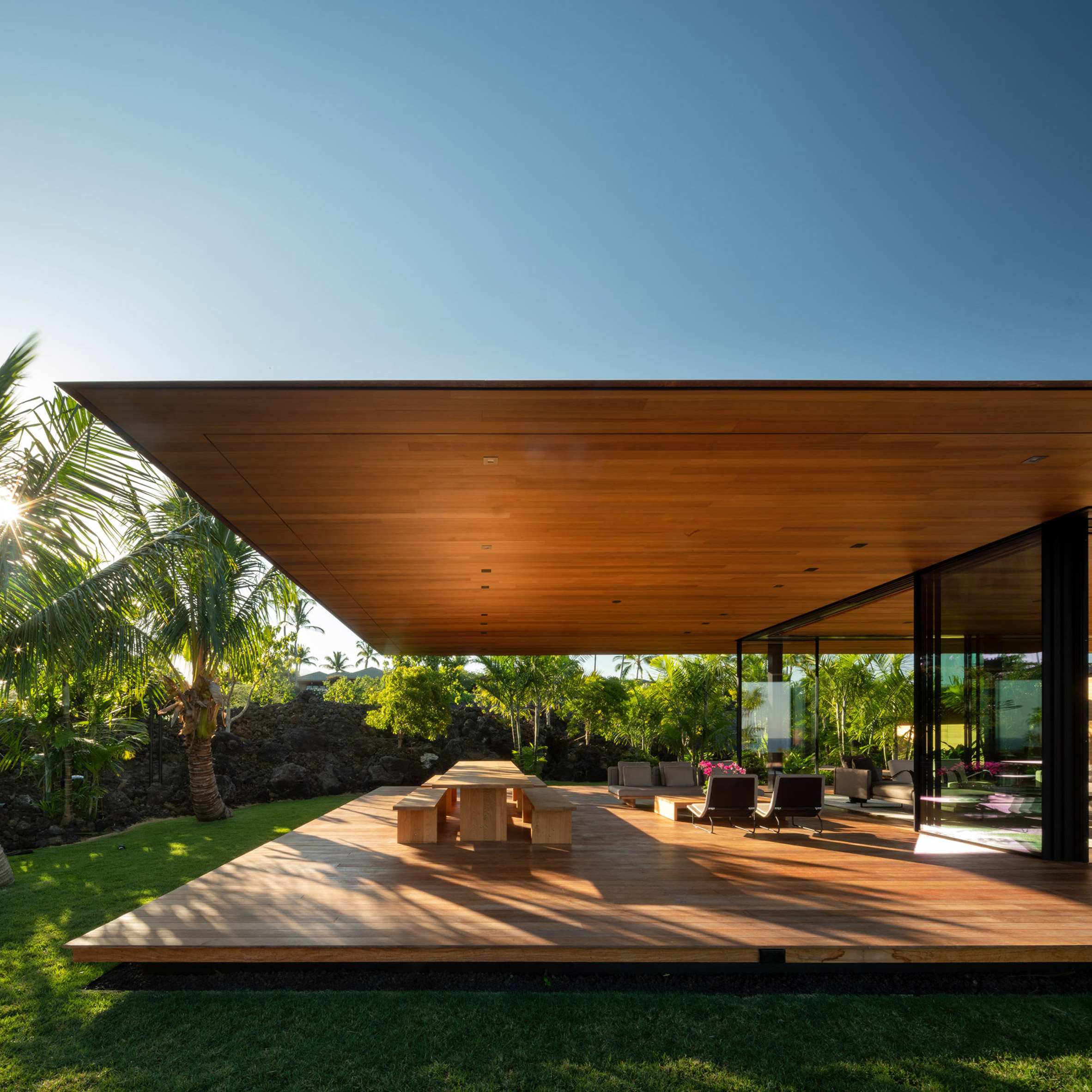
An expansive roof provides shade to a wooden deck furnished with a dining area in this residence Seattle firm Olson Kundig has completed on an old lava field in Hawaii.
Suited to a large gathering, the wood table and benches mirror the form of the surrounding wood architecture.
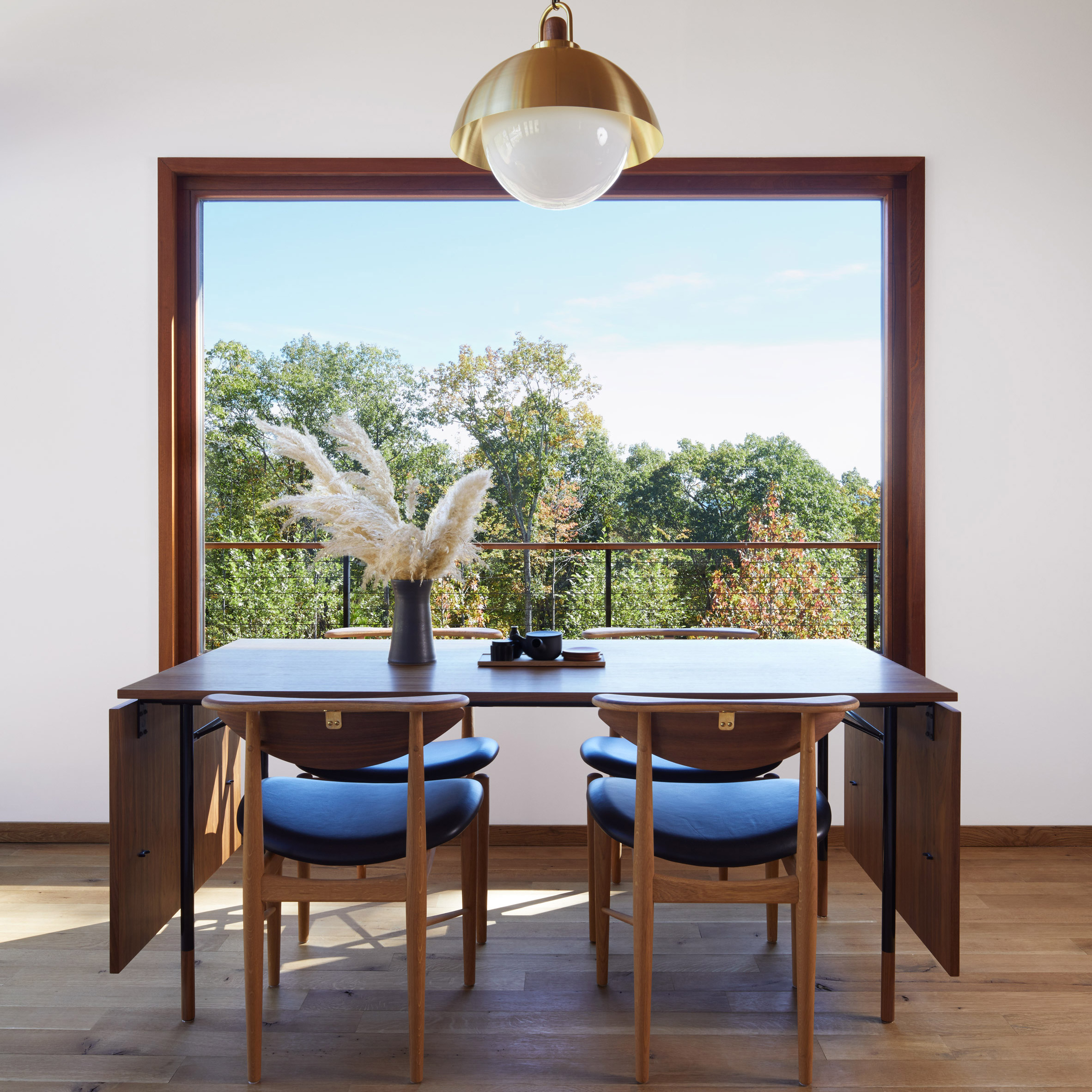
A more intimate gathering would suit this foldable Finn Juhl dining table – one of a number of Danish mid-century designs furnishing the holiday home in a Catskill Mountains development.
The table is placed to make the most of a square window framing a view of the outdoors.
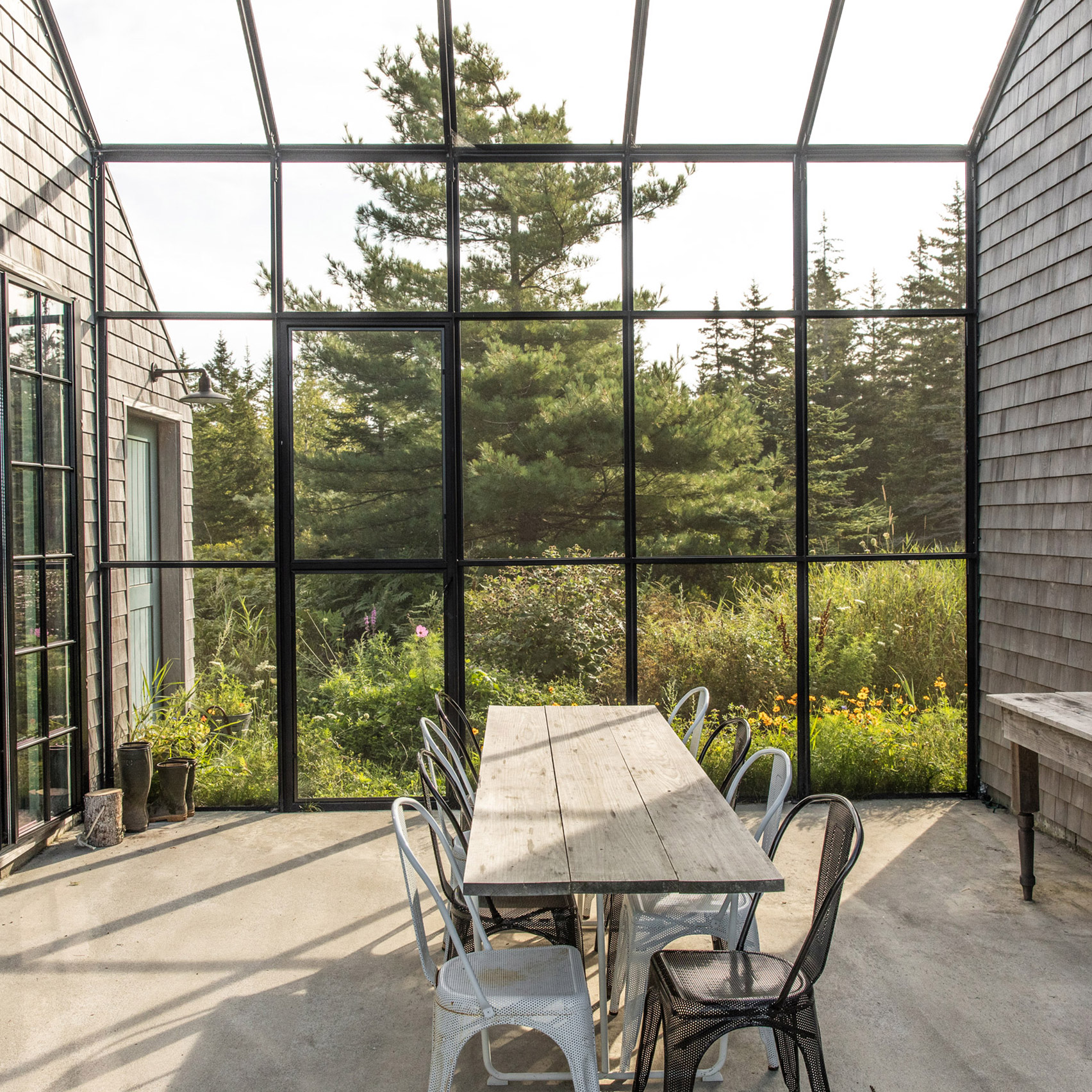
Weathered metal chairs and a weathered wood table form a simple, stripped-back setting for diners in Little Peek House.
The area is an enclosed patio that is sandwiched between two cedar volumes to form the holiday home that the founders of Berman Horn Studio built themselves on an island in Maine.
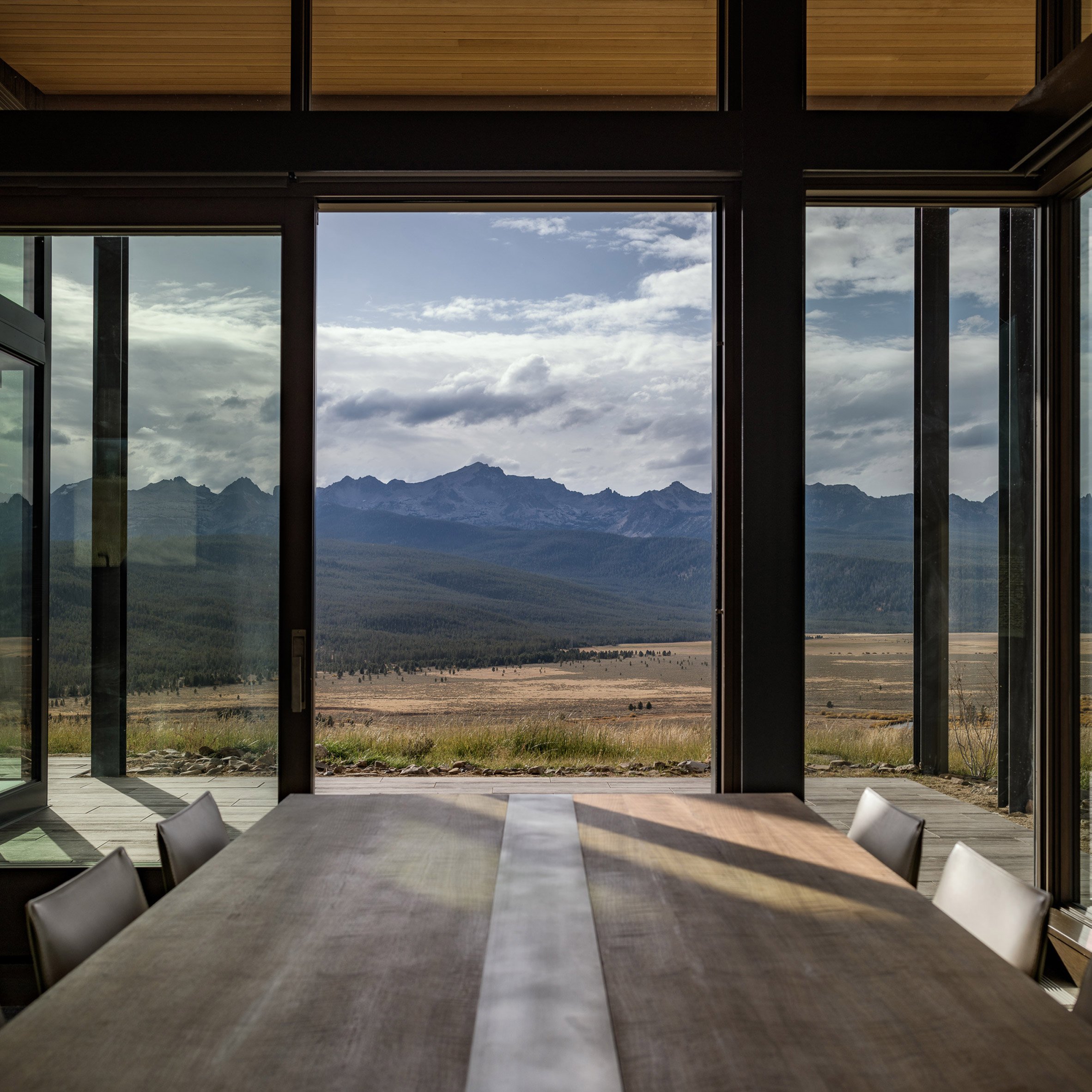
The Rocky Mountains in Idaho are visible through sliding glass doors from the dining table in this Shaw Mesa residence by Michael Doty Architects.
Metal slices through the wood table top referencing the materiality of the house, which includes charred-black timber walls and a corrugated metal roof.
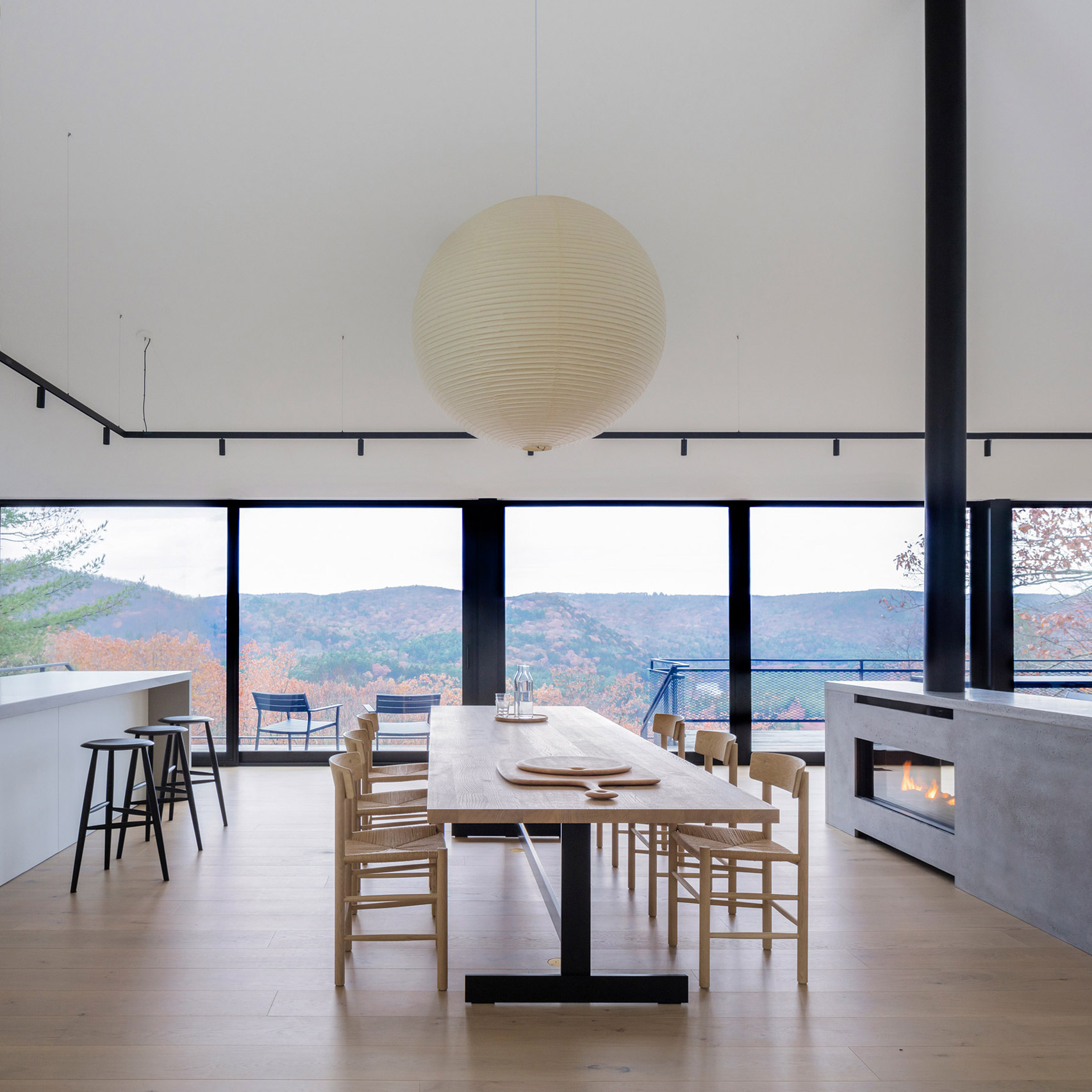
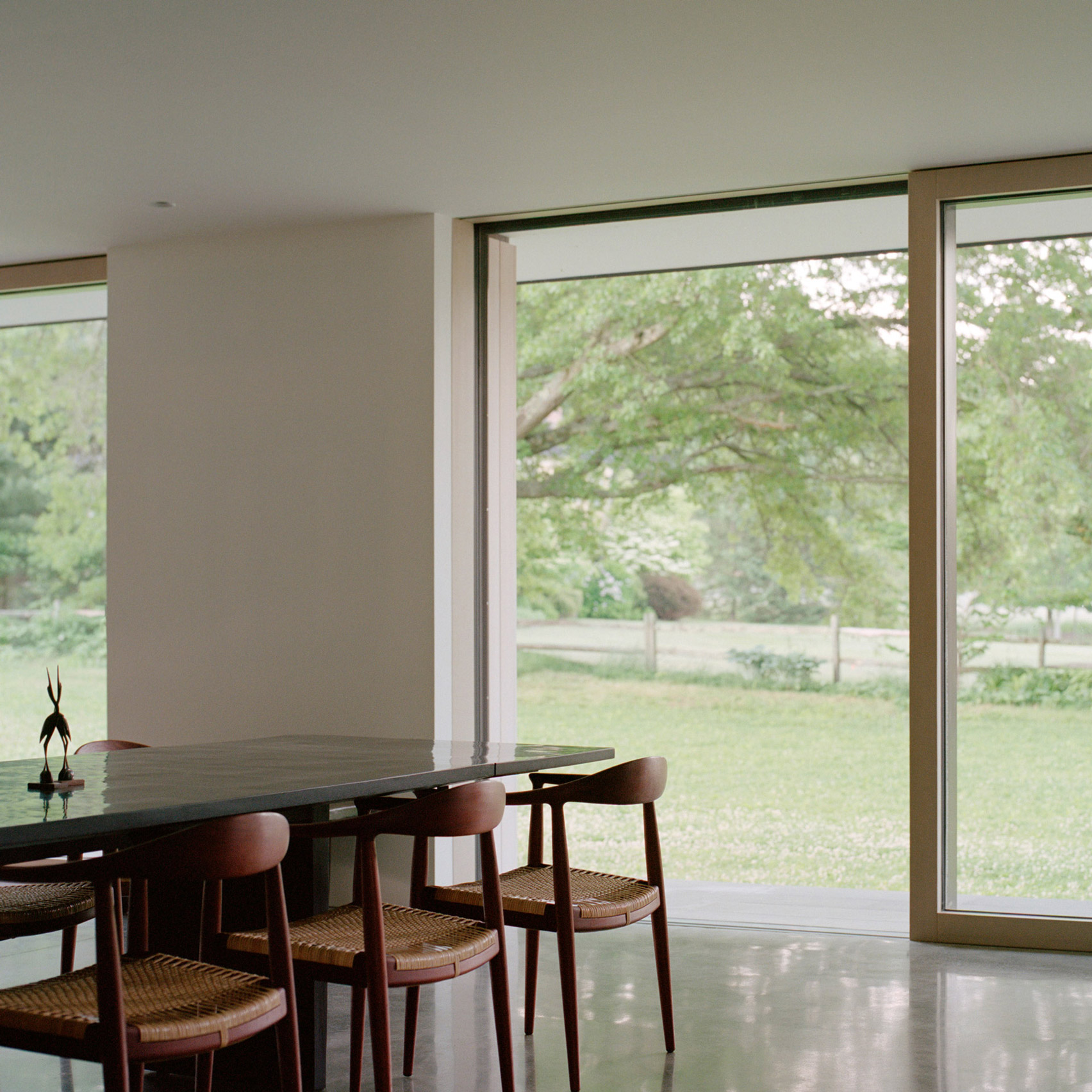
The dining room in Sheffield House is furnished with warm, red-hued wooden chairs with woven seats and a glossy black table.
With these bold hues, which provides a contrast to the house's bleached cedar exterior, the dining area provides an anchor in the open-plan living space.
The initiative is being "undermined by a few practices," according to the network, which was launched in May last year to encourage collective action from architects in the face of the climate and biodiversity emergencies.
Seventeen high-profile UK practices including Zaha Hadid Architects and Foster + Partners were founding signatories of the Architects Declare manifesto. Since then, branches of the movement have sprung up around the world.
However, the UK body admitted that its rules are too lax and the actions of some signatories have damaged its legitimacy.
"It is clear that our approach is working with most of the signatory practices but is starting to be undermined by a few practices who are not supporting the efforts of the initiative," the Architects Declare steering group told Dezeen.
"As such, we will be conducting a survey with our signatories about tightening the declaration points. We know this may lead to some practices withdrawing but we anticipate it will also strengthen the resolve amongst those practices who do want to treat this situation as an emergency."
Patrik Schumacher's views on climate change "absurd"
The steering group spoke to Dezeen following a talk organised by the Council on Tall Buildings and Urban Habitat in which Zaha Hadid Architects principal Patrik Schumacher expressed his view that "continuous growth" was needed to fight climate change and warned against radical change.
"I want to warn against those voices who are too quick to demand radical changes, to moralise, even talking about degrowth [and] breaking up global supply chains," the Architects' Journal reported Schumacher saying.
Architects Declare described Schumacher's comments as "absurd" and "completely at odds with the aims of Architects Declare".
"When leading practices make decisions or public statements that very clearly contravene the declaration, it does damage our legitimacy," said the group.
"Statements by others that dilute, contradict or muddle the declaration point can be damaging to us as an initiative."
"This is not a PR exercise"
The steering group was also critical of studios that appear to be using Architects Declare for publicity, while not engaging with the group and making decisions that go against its core aims.
"This is not a PR exercise," said the group. "We don't see why a practice would want to be a signatory if they do not want to engage positively with us and the purpose of the initiative."
The UK group now has over 1,000 signatories, while the international Construction Declares has almost 6,000 signatories in over 20 countries.
Read on for the full interview with Architects Declare:
Tom Ravenscroft: How do Patrik Schumacher's views on climate change align with Architects Declare's?
Architects Declare: We're pleased that Patrik acknowledges the great dangers of climate change and the urgent need to transform our industry. We fundamentally disagree that the route out of this emergency is to perpetuate the status quo. We also find his warning "against those voices who are too quick to demand radical changes" and his commitment to "continuous growth" completely at odds with the aims of Architects Declare.
The first declaration point is to "Advocate for faster change in our industry towards regenerative practices". Given that the Intergovernmental Panel on Climate Change gave us ten years to achieve radical reductions in greenhouse gas emissions, and we are not remotely on track, it is absurd to suggest that certain voices are too quick to demand radical change.
Tom Ravenscroft: Does Architects Declare agree that putting economic prosperity at risk is a greater danger than climate change?
Architects Declare: The level of climate change breakdown that we face puts the entire globe in great economic peril so this is a false dichotomy. We have to rethink our existing economic models so that we can live within planetary limits.
It is surprising that Patrik seems to advocate an economic ideology that is decades out of date. The idea that growth will eventually clean up the environment was comprehensively debunked in the 1990s. Similarly, the prosperity that Patrik talks about has largely benefitted the richest one per cent, while large sections of global society have seen their conditions deteriorate.
It is time to recognise that the ideology of endless growth threatens the collapse of our societies before many of our children are even halfway through their lives. As architects, we have a responsibility to implement solutions to address the planetary emergency and there is much to be learnt from economists such as Kate Raworth, who spoke at our first Architects Declare gathering.
Tom Ravenscroft: Zaha Hadid Architects is a signatory to Architects Declare. Are Patrik Schumacher's views damaging to its reputation?
Architects Declare: We ask our signatories to advocate for necessary change. When prominent representatives of signatory practices publicly speak in contradiction to the Architects Declare commitments then we feel that we must describe our position more strongly. Statements by others that dilute, contradict or muddle the declaration point can be damaging to us as an initiative.
Tom Ravenscroft: How can Architects Declare retain its legitimacy if studios like Zaha Hadid Architects and Foster + Partners seem to be making decisions that go against its core ideals?
Architects Declare: It is difficult for us to know the inner-workings of practices and how they are working to fulfil their Architects Declare commitments, however when leading practices make decisions or public statements that contravene the declaration, it does damage our legitimacy.
The principle aims of Architects Declare are to shift paradigms, to re-think our relationship with the planet and our role as architecture practices in this. This is not a PR exercise. We are working hard as a steering group to ensure that signatory practices feel supported in this necessary shift and to leverage our position to help create system change in our industry.
On a positive note, we have hundreds of practices and their representatives who are working hard to fulfil the declaration and who are establishing regional UK Architects Declare groups with us to support one another in enacting change. We also have volunteers from the profession developing guidance for signatories in the form of a practice guide, which will be released soon.
Making change happen is difficult, it can be uncomfortable, but if it is normalised and we all work together to achieve it we think it is possible. We believe that Architects Declare can have, and is having, a positive impact. We don't see why a practice would want to be a signatory if they do not want to engage positively with us and the purpose of the initiative.
Tom Ravenscroft: Will Architects Declare be more proactive in taking action, or even expelling, studios that do not follow Architects Declare's core principles?
Architects Declare: AD's core principles are outlined in our declaration, which describes important paradigm shifts with some specific measurable actions. We knew at the time of writing them in Spring 2019 that the commitments we asked of signatories were going to be a challenge for the profession to meet – particularly in terms of regenerative design, delivering whole-life carbon assessments and post-occupancy evaluations.
We know from our recent survey, and ongoing regional meetings, that most of our signatory practices are not currently meeting all of the declaration points in full, but that they are actively working towards them.
Our initial hope was that all practices would be self-aware of how well they are faring at fulfilling the declaration points, especially given that these would present unique challenges for individual practices to adapt to. Architects Declare also did not see it as realistic to develop complex guidelines and to monitor the activities of over 1,000 practices.
This would require subscriptions which would put off many practices and reduce our influence when approaching government. It is clear that our approach is working with most of the signatory practices but is starting to be undermined by a few practices who are not supporting the efforts of the initiative.
As such, we will be conducting a survey with our signatories about tightening the declaration points. We know this may lead to some practices withdrawing but we anticipate it will also strengthen the resolve amongst those practices who do want to treat this situation as an emergency.
This revision of the declaration points will also be an opportunity for us to more robustly address the issue of climate justice. Our counterpart initiatives in Australia, Canada and America have done so, and we see this as a key aspect of the paradigm shift that our current declaration fails to address.
We welcome intelligent reasoned debate based on the acknowledged facts facing our shared future. There are further challenges and debates to be had in the future, and we will continue to listen to our signatories and those positively working to address the climate and biodiversity emergency.
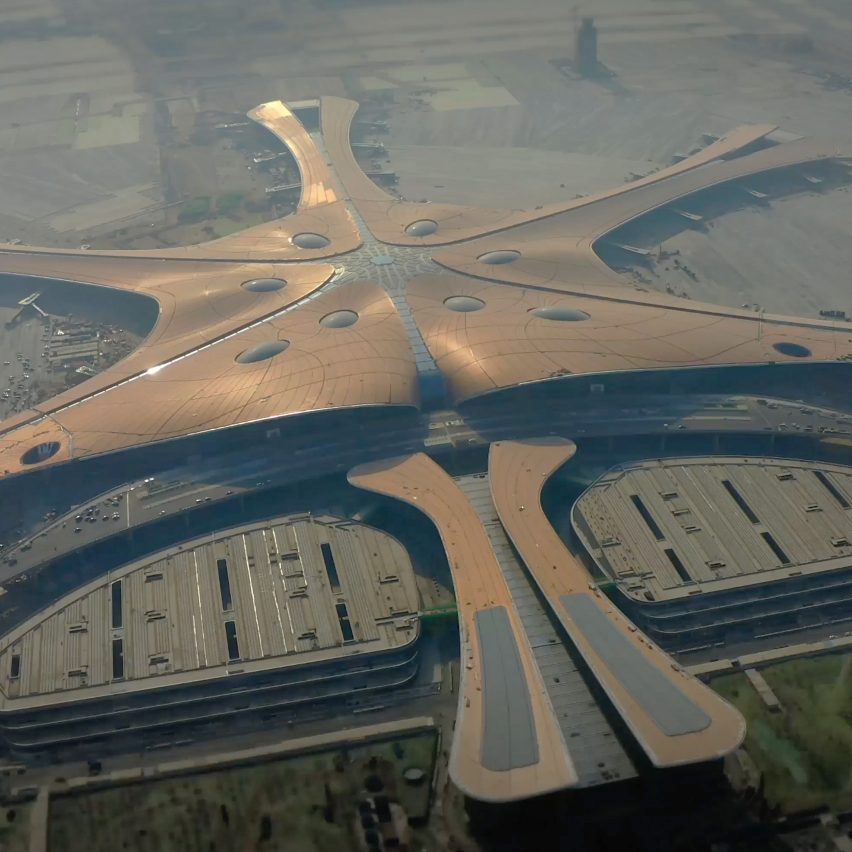
Main photo is of Beijing Daxing International Airport by Zaha Hadid Architects.
Design studio Formafantasma has been named studio of the year while material designer Shahar Livne has won the title of emerging designer of the year at Dezeen Awards 2020.
Based in Amsterdam, Formafantasma was selected from a shortlist of five studios, which was determined by our jury of 25 leading figures from the world of design.
Shahar Livne Design competed with four other studios that were on the shortlist.
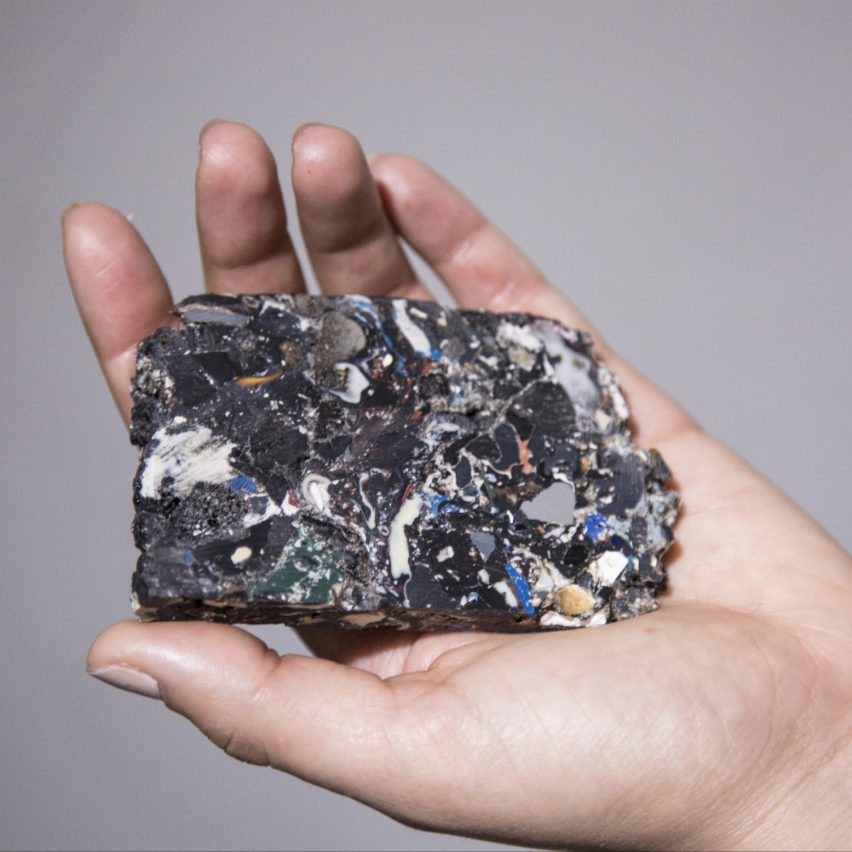
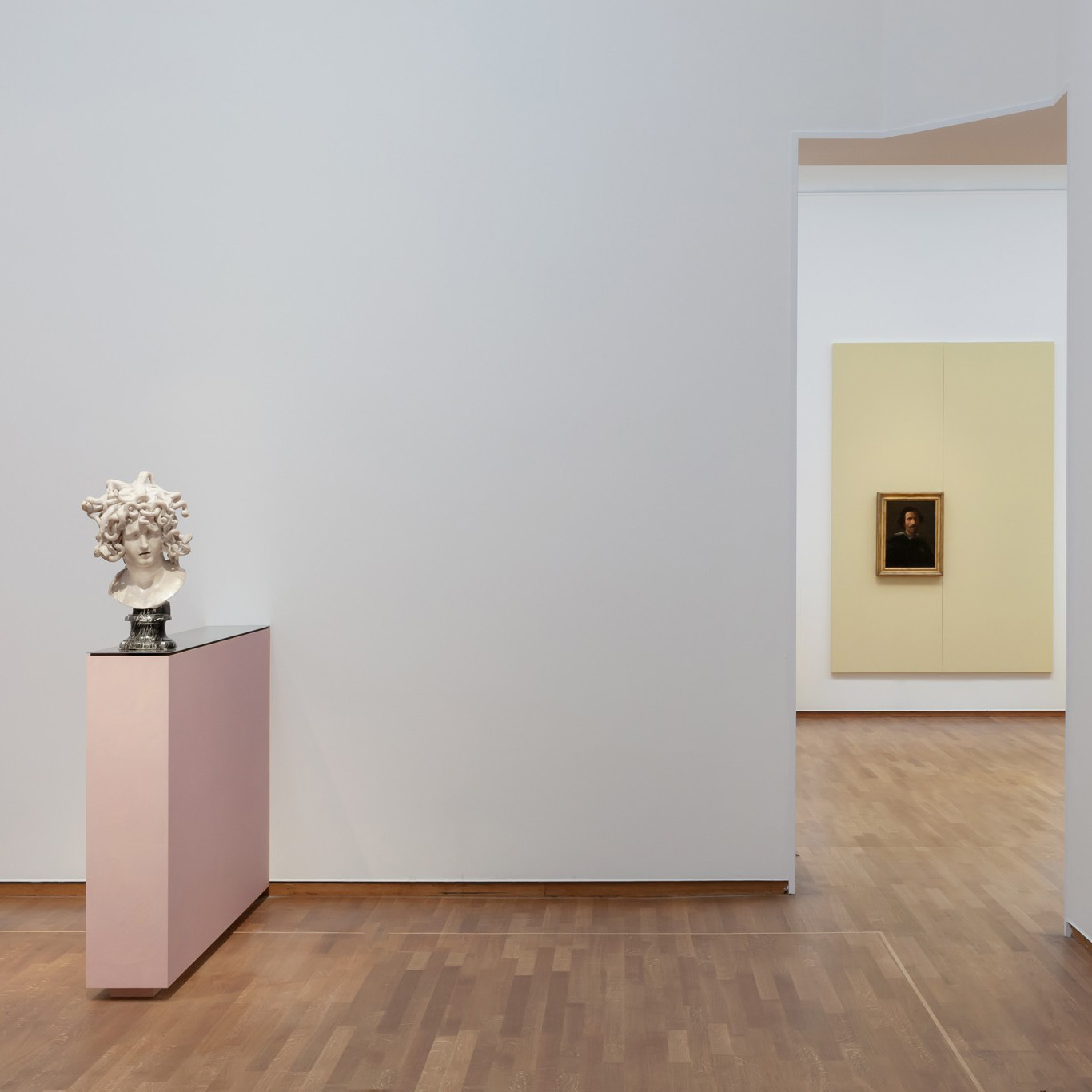
Top: Shahar Livne's project Metamorphism. Above: Exhibition at the Rijksmuseum by Formafantasma. Photo by Eddo Hartmann.
They said that this studio is "a highly articulate studio whose intellectual and ethical ambitions are the driving force behind their truly sophisticated and beautiful work."
The judges were also impressed with "how the studio always delivers and keeps on surprising."
The studios were chosen by this year's architecture master jury, which virtually met on 4 November. Their selections were based on evidence of strong vision and achievement, business success, client satisfaction and positive impact.
Shahar Livne Design named emerging designer of the year
Based in Eindhoven, Shahar Livne develops conceptual materials in an effort to find new and sustainable design practices.
The judges said that "this studio stretches the limits with very powerful work" and that there is a "sense of exploration in every project."
Shahar Livne's work is a "great example of how design is about designing the future, designing how we live and how we can use our voices – to communicate to others."